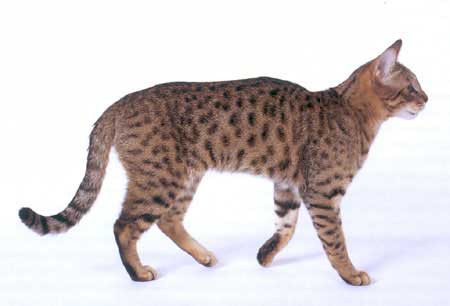
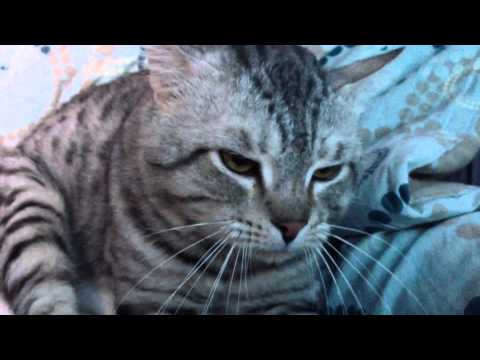
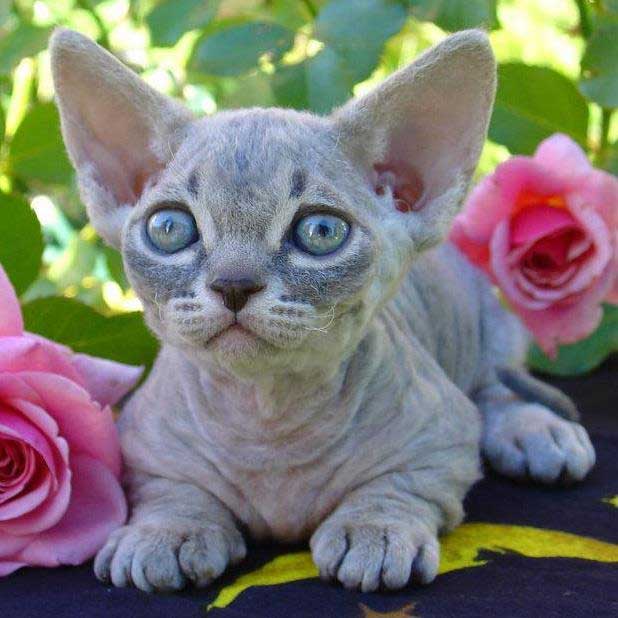
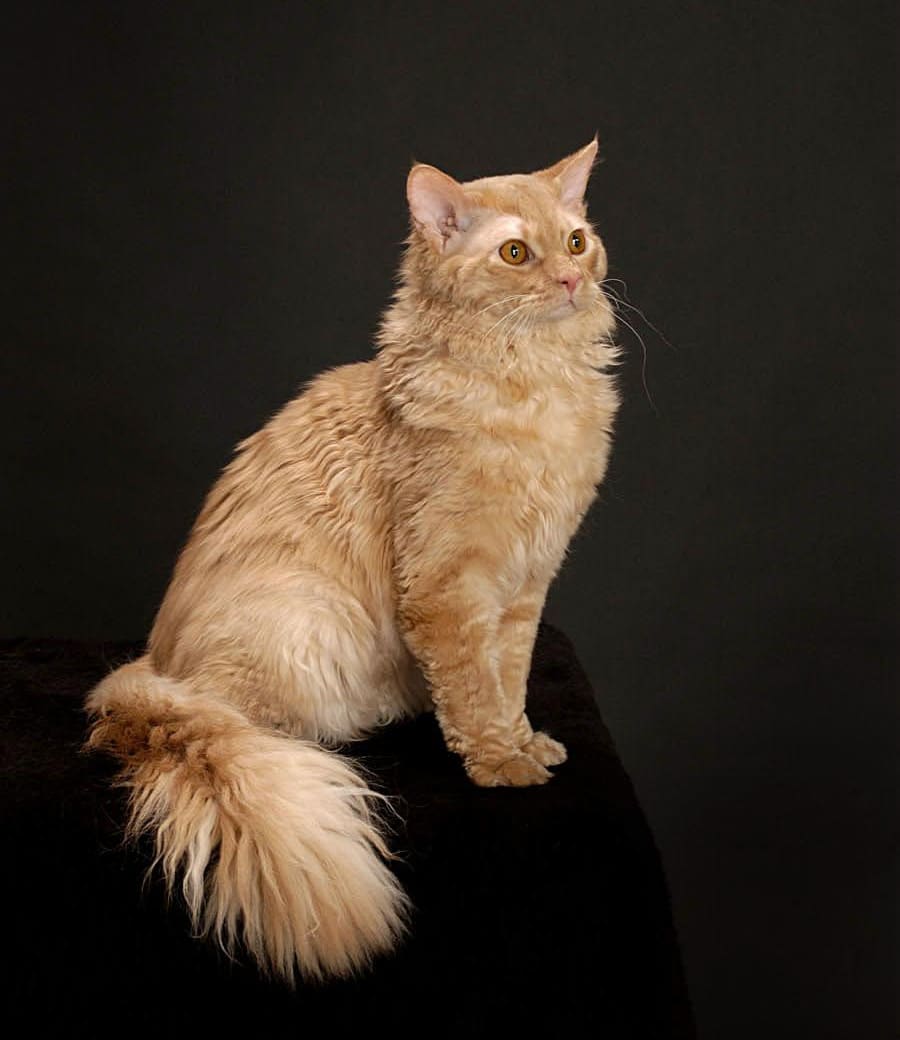
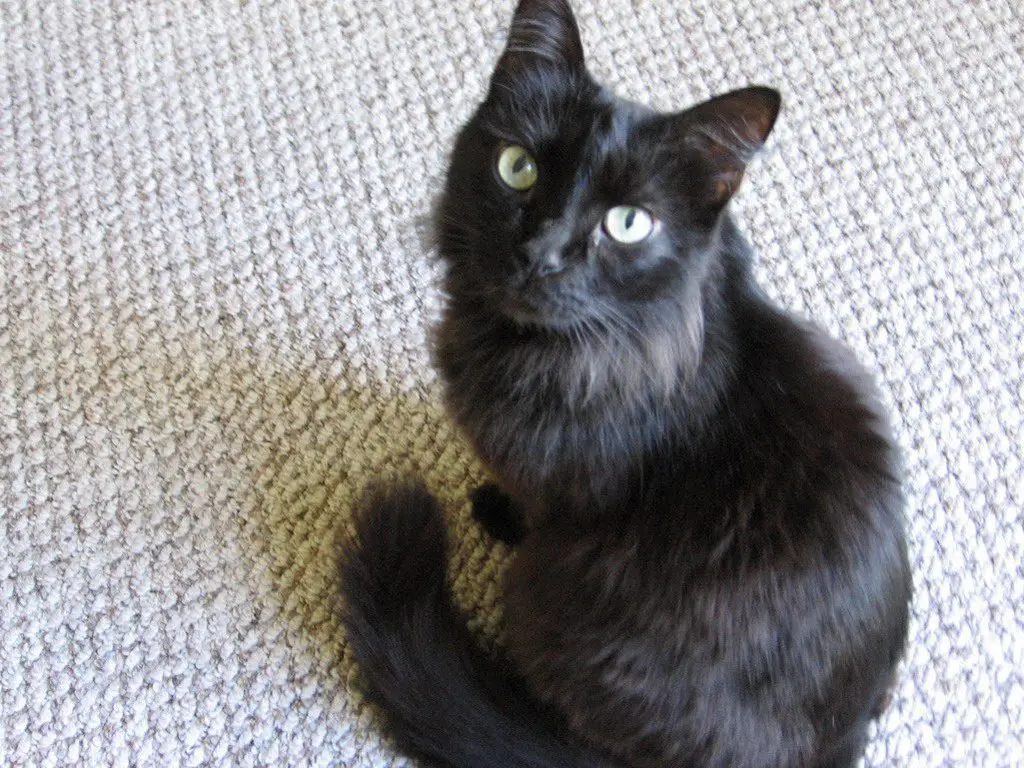
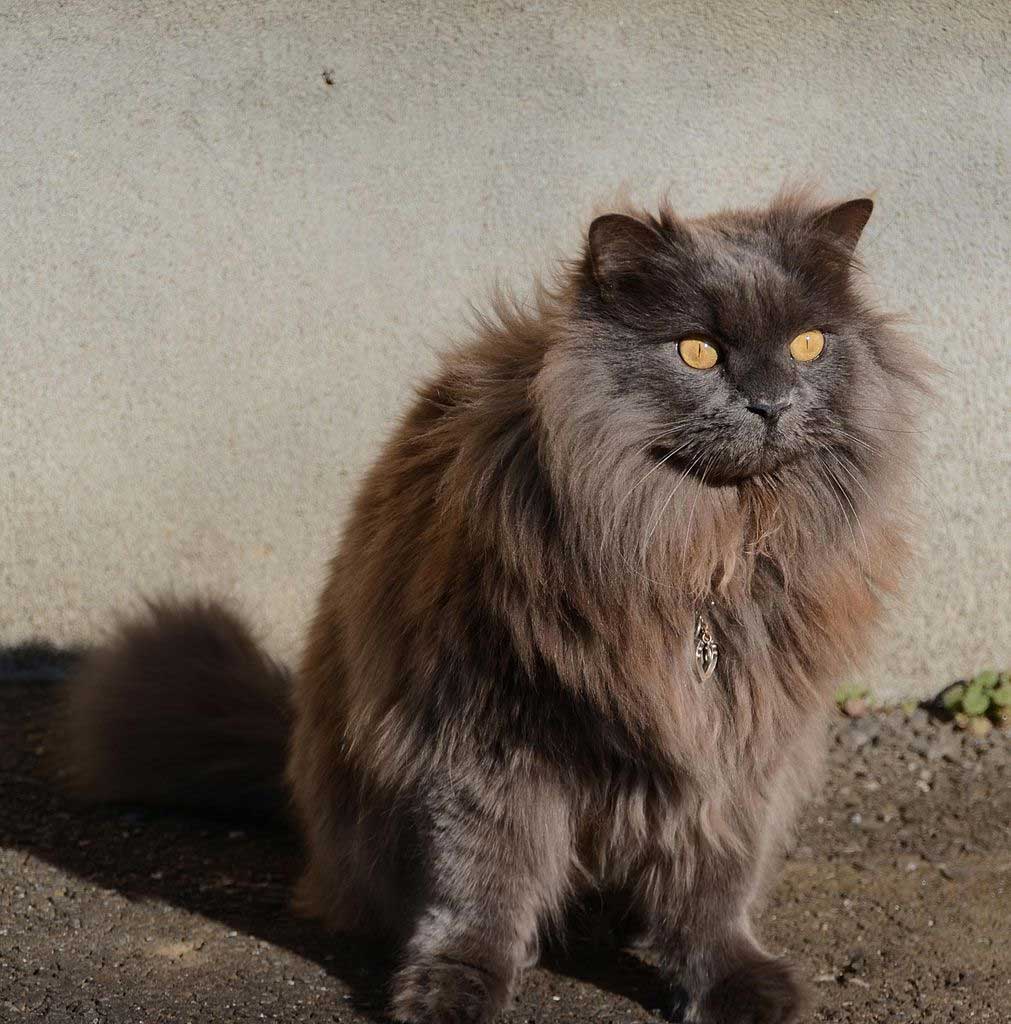
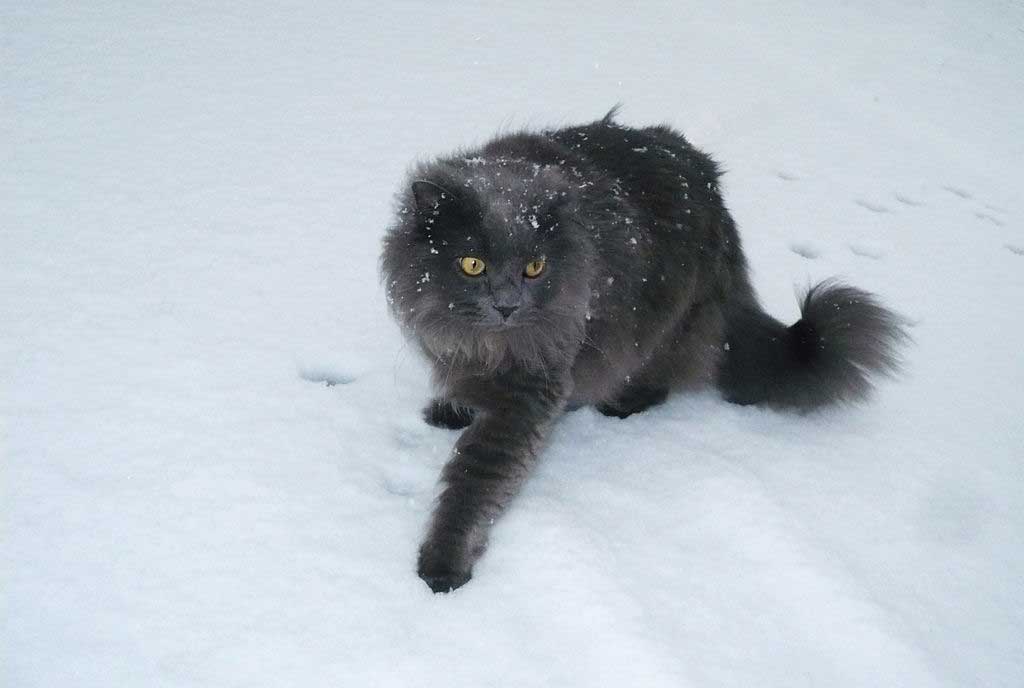
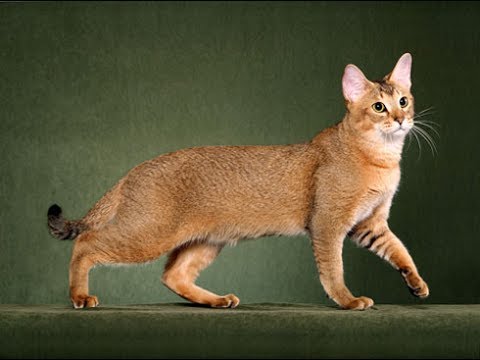
Coexistence is important that you have with your new friend. Before considering the acquisition of a cat of the breed "Somali cat" you know certain factors. You must take into account their character, their need for exercise, their interaction with other pets, their care and if you have small children, their level of tolerance towards them.
Joy
5,0 of 5 stars (based on 1 review)
Activity level
5,0 of 5 stars (based on 1 review)
Friendliness to other pets
3,0 of 5 stars (based on 1 review)
Friendliness to children
2,0 of 5 stars (based on 1 review)
Grooming requirements
3,0 of 5 stars (based on 1 review)
Vocality
1,0 of 5 stars (based on 1 review)
Need for attention
4,0 of 5 stars (based on 1 review)
Affection towards its owners
4,0 of 5 stars (based on 1 review)
Docility
1,0 of 5 stars (based on 1 review)
Intelligence
4,0 of 5 stars (based on 1 review)
Independence
3,0 of 5 stars (based on 1 review)
Hardiness
2,0 of 5 stars (based on 1 review)
History
No one knows for sure when and where the first somali cat; some advocates think that the long coat was a spontaneous natural mutation of the Abyssinian cat. Genetic studies indicate, However, that Somali probably originated around the turn of the century in England, when breeders, few breeders, they used longhair cats in their breeding programs Abyssinians.
At the end of the decade 1910 and at the end of the decade of 1940, during the aftermath of World Wars I and II, when so many races had dwindled to near extinction, breeders were forced to mix other breeds into their bloodlines abisinias to keep the race. Raby Chuffa of Selene, a Abyssinian cat male who came to the United States from Great Britain in 1953, and that appears in the pedigrees of many Abyssinians, is considered the father of the somali race on this continent; all the somalis Canadians and Americans can be traced to this cat.
The pedigree of Raby Chuffa It dates back to Roverdale Purrkins, a female Abyssinian cat English whose mother, Mrs. Mews, was of unknown ancestry and probably carried the gene for Longhair. Mrs. Mews was given to the breeder Janet Robertson by a sailor during WWII. Mrs. Mews later had two kittens: Roverdale Purrkins, registered as Abyssinian, and an unregistered black male.
Robertson used to Purrkins to start his kennel of Roverdale. Your cats and others Abyssinians of British origin were exported to Europe, Australia, New Zealand, Canada and United States. When long-haired kittens appeared in the litters of Abyssinians (which was possible whenever two Abyssinians who carried the longhair recessive gene), the kittens were discreetly given away, since no breeder wanted their Abyssinian lines to be thought to be "contaminated" with the longhair gene.
It was not until the decade of 1960 when breeders, seeing the appeal of a longhair version of a breed that was rapidly gaining popularity in North America, they began to seriously try to turn these castaways into a race of their own. At the same time, breeders of Canada, Europe, Australia and New Zealand also began working with the new breed. Some breeders of Abyssinians They wanted nothing to do with these long-haired mavericks and they didn't want to foster the connection that the name "longhair abyssinian» would produce.
the Abyssinian breeder Evelyn Mague, one of the first American breeders to work with the long haired breed after discovering that two of his Abyssinians, Lynn-Lee’s Lord Dublin and Lo-Mi-R’s Trill-By, they were carriers of the long hair gene.
He came up with the name “Somali” because Somalia borders Ethiopia., the country that used to be called Abyssinia and that gave its name to the Abyssinian cat. In 1972, Mague founded the Somali Cat Club of America and began to gather the enthusiasts of the somalis.
In 1975, the International Somali Cat Club was founded, affiliated with the CFA. La CFA. recognized the breed in 1978. Lynn Lee’s Picasso and Lynn Lee’s Pearl, two somalis from the hatchery of E. Mague, arrived in France in 1979. The FIFe approved the breed in 1982.
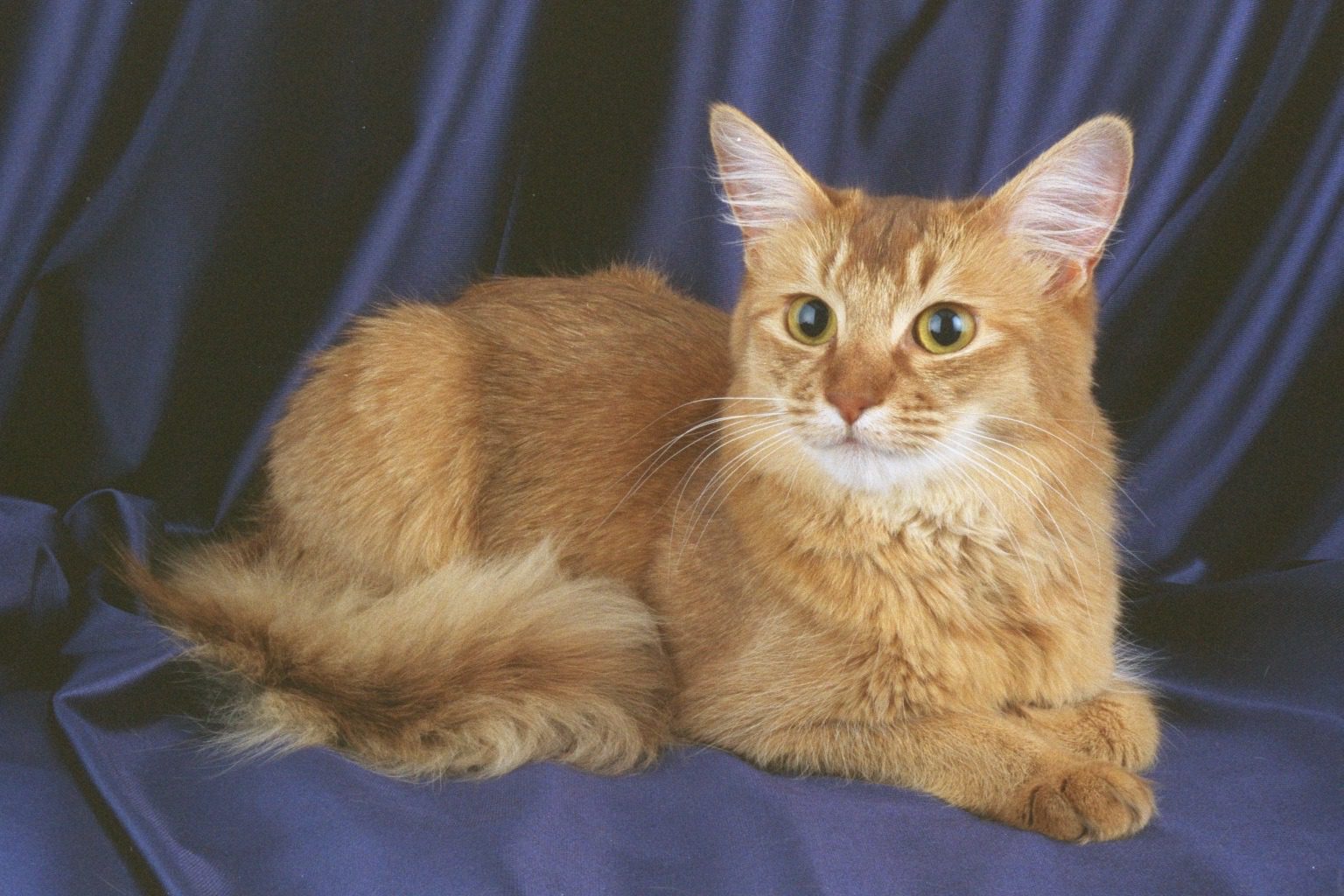
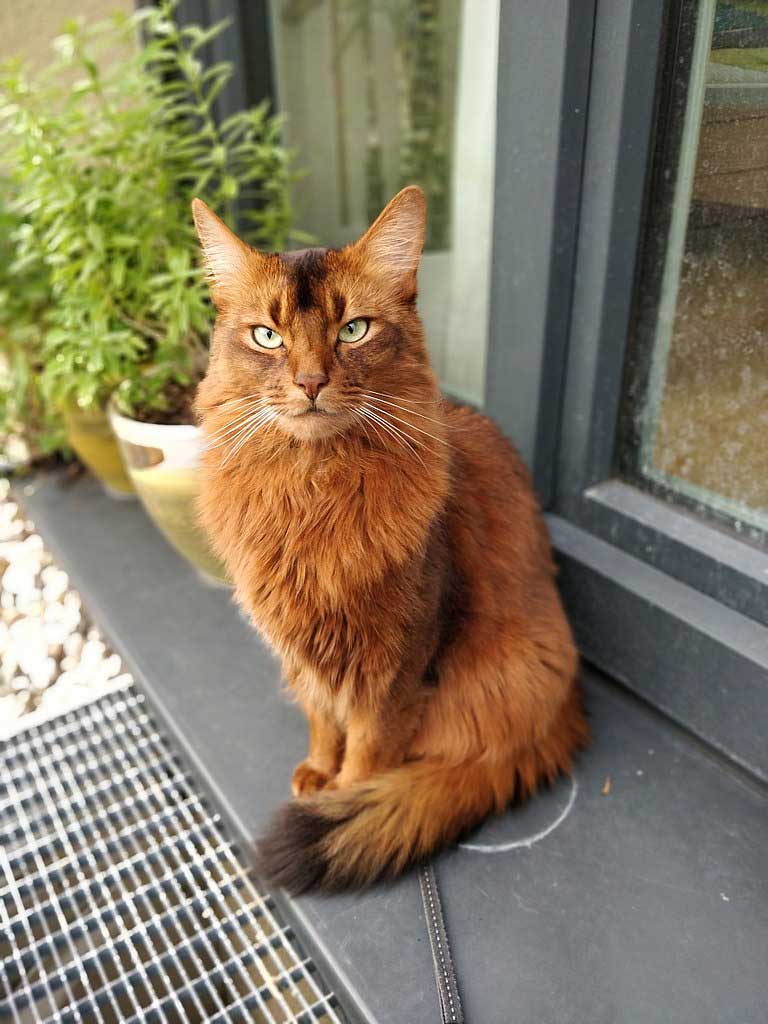
The complexion of the Somali cat It is similar to the race it comes from, with long legs and agile and muscular body. Long hair may have up to twelve alternate stripes of dark marks in each hair, What produces an impressive brightness when the cat has all the fur. As all cats, silent substantially in spring, and in the year's hottest months or in warm climates, It may seem almost of short hair. With its winter coat, the tail becomes very hairy, and thanks to its color and complexion it has earned the nickname "fox cat".
Size and weight
Size: 30 cm.
Weight: 3,5 to 5,5 kg
Breed standard
The breed standards are documents established by official bodies that list the conditions that a dog must meet. Somali cat to be fully recognized as belonging to the race:
Medium long torso, agile and elegant, showing well-developed muscle strength. The rib cage is rounded; the back is slightly arched, giving the appearance of a cat about to jump; flank is level, without it being collected. The conformation falls somewhere between the extremes of the elongated and slender types.
HEAD
Modified wedge, slightly rounded, without blueprints; the eyebrows, cheeks and profile lines show a smooth contour. A slight lift from the bridge of the nose to the forehead, which should be of a good size with a width between the ears that flows into the arched neck without interruption. The muzzle should follow a smooth contour in accordance with the skull, seen from the front profile. The chin must be complete, neither lower nor higher, with a rounded appearance. The muzzle should not be very pointed, and there should be no evidence of a bite, rash or pinch on whiskers.
EARS
Large, alerts, moderately pointed, wide and hollowed out at the base. The ears should be placed in a line towards the back of the skull. The inner ear should have horizontal strands that reach almost to the other side of the ear.; it is desirable that there are tufts.
EYES
Almond-shaped, large, bright and expressive. Skull opening not round or oriental. Eyes accentuated by dark skin on the eyelid surrounded by a light-colored area. On each of them a short dark vertical stroke with a dark pencil line that continues from the upper eyelid to the ear. The color of the eyes is gold or green, the richer and deeper the color, best.
LEGS & PAWS
Legs in proportion to the torso; oval and compact feet. When it is stopped, the Somali gives the impression of being agile and fast. Toes five in the front and four in the back.
TAIL
With a full brush, thick at the base and slightly tapered. Its length is balanced with the torso.
COAT
Very soft texture to the touch, extremely thin and double-layered. The denser the fur, best. Length: a medium length cloak, except on the shoulders, where slightly shorter length is allowed.
COLOR
Ruddy, red, blue and tawny. Warm and glowing.
Ticking: distinct and uniform, with dark colored bands contrasting with lighter colored bands on the hair shafts. Undercoat color is clear and bright relative to skin. Deeper color tones are desired, However, ticking intensity should not be sacrificed for color depth. Preference is given to cats without markings on the underparts, chest and legs; tail without rings.
Markings: darker shading along spine continuing to tip of tail; darker shading on the hocks, shading is allowed at the tip of the elbow; dark lines extending from the eyes and eyebrows, shading on cheekbones, dots and shading on whisker pads are desirable enhancements, eyes accentuated by a fine dark line, surrounded by a light colored area.
Character and skills
Under his apparent shyness, he is an intelligent cat and sometimes capable of being bold. Very alert, lively and active, it is not exuberant. He is a lovely companion, whose behavior is often compared to that of a little fox.
Tender and very affectionate, demands a lot of attention, but is said to be less possessive than the Abyssinian cat. Although he is somewhat afraid of the cold, Somali do not tolerate confinement and, Therefore, he does not like life on the flat very much. As a great hunter, a garden is better for him than a flat.
Grooming
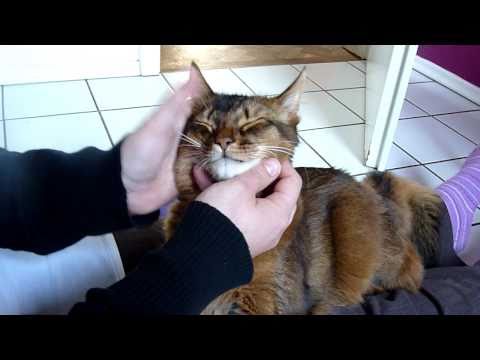
The maintenance of its coat only requires a weekly brushing. During the molting period, must be brushed daily.
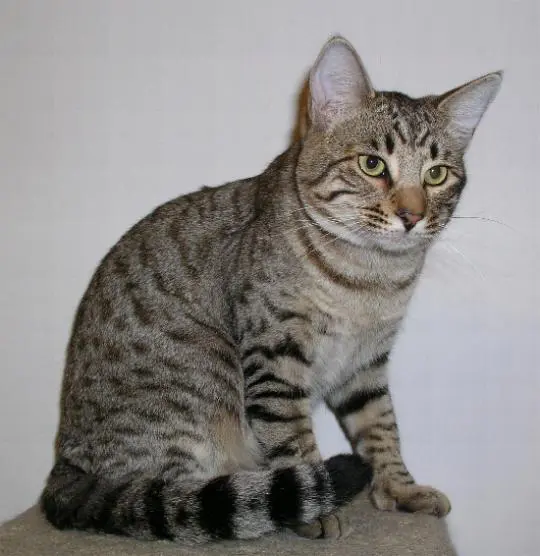
Despite his wild looks, the California Spangled cat is perfectly tame. It is one of the rarest cat breeds in the world.
Content
History
The breed name is a conjunction of California, the US state. where it originated, and Spangled, a term used to describe the round, dark spots on the plumage of some birds.
In the Decade of 1970, a Hollywood screenwriter, Paul Casey, during a trip to Tanzania, learned that the last male leopard in the region had been killed, partly because of her skin. Very saddened to learn of the local extinction of this species, he undertook on his return the creation of a domestic cat similar to the spotted wild cats of Africa, reminiscent of the leopard, with the aim of dissuading people from killing them for their skin.
As such, began a long breeding and selection program. The California Spangled cat It was thus created from crosses between Siamese twins (for its morphology), british shorthair and american shorthair (for its fur), and some stray cats from Egypt and Southeast Asia.
It took a total of fifteen years and eleven generations of cats to establish the breed as envisioned by Paul Casey and as it is still known today.: was not up 1986 when it was first introduced to the public.
Although it is recognized by some feline organizations, like TICA (The International Cat Association, one of the largest feline organizations in the world tasked with setting breed standards and pedigrees), still one of the rarest feline breeds, and even an endangered breed. In fact, Though a few enthusiasts still keep it alive, It is estimated that there are currently only a few 200 cats Californian Spangled in the world.
Physical characteristics
A California Spangled Cat – Flamingice007sg, Public domain, via Wikimedia Commons
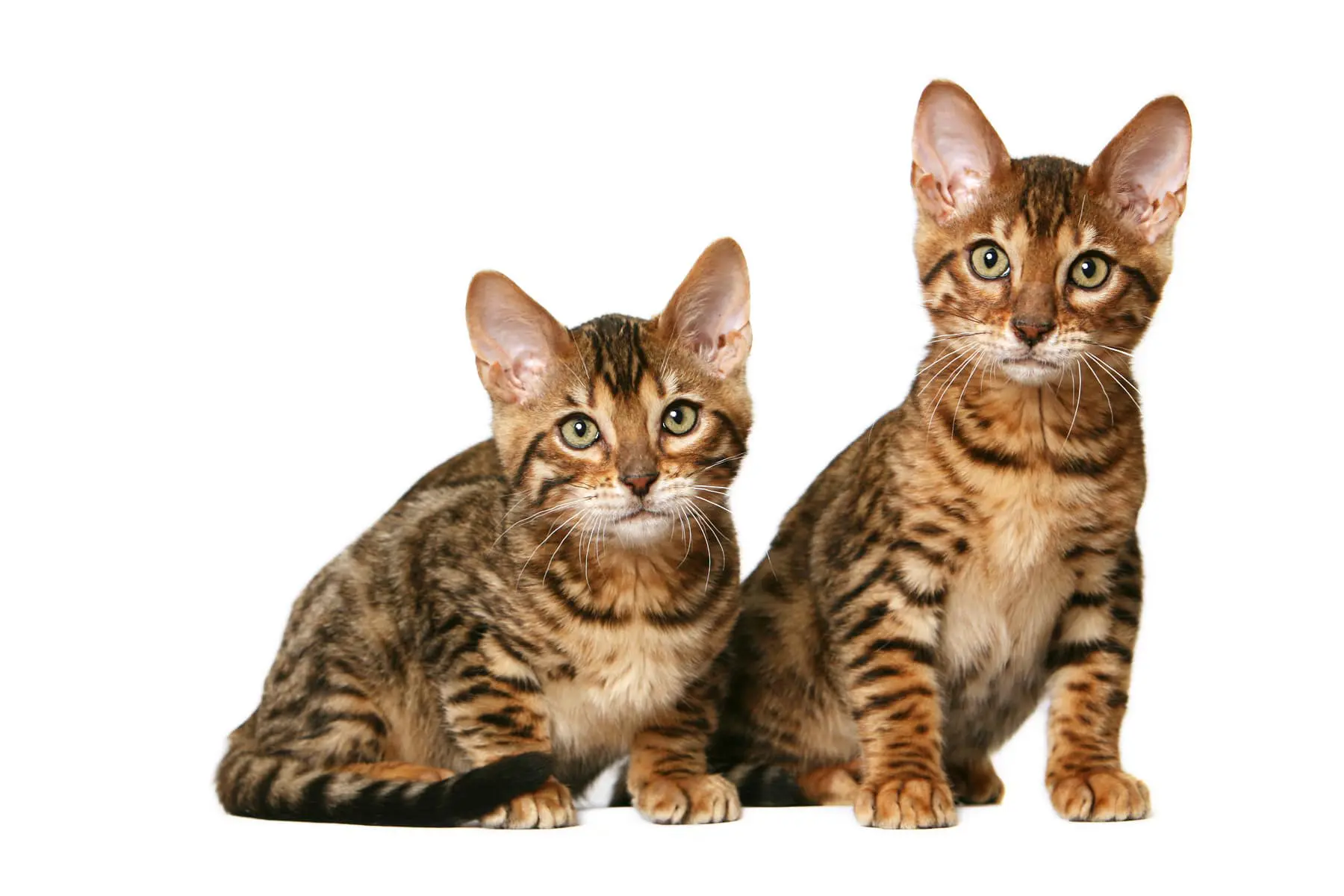
The California Spangled cat he's a lanky cat. Its body lean and muscular gives an impression of power. The tail is medium in size with rings.
The fur short can be 8 different colors: black, brown, blue, bronze, dark grey, red, gold or silver. It is "dotted" with round spots, arranged in triangle or rectangle, and evenly distributed throughout the body. Head and throat are scratched.
The head has a triangle shape, with rounded forehead. The eyes they are big, oval and slightly almond shaped, and they go from amber to brown. The ears they are medium in size and set high and back.
Size and weight
Size: 30 cm..
Male weight: 5,5 to 7 kg
female weight: 4,5 to 6 kg
Varieties
There is a variety of California Spangled cat with a white fur stained with black, which is also distinguished by its blue eyes: it's called the version Snow Leopard.
Character and skills
Despite his wild looks, the California Spangled cat is perfectly tame. Intelligent, loving and sensitive, knows how to come to receive caresses and is able to anticipate certain wishes of his master.
However, is a lively and energetic cat, very active without being aggressive, that needs a lot of activity.
Health
The California Spangled cat it is a rare breed, and at present very little is known about her. Possible hereditary diseases are still being investigated.
In any case, vaccinating your cat is essential to protect him from certain life-threatening diseases.
Life expectancy
10 to 14 years
Grooming
The beautiful coat of the Californian Splangled requires very little maintenance: a weekly brushing is enough.
For sale "California Spangled cat"
The rare is expensive, as the saying goes. The Californian Spangled It is a rare breed of cat., and it is no exception to the rule, since the price of a cat of this breed ranges between 600 and 2.000 EUR.
Characteristics "California Spangled cat"
Coexistence is important that you have with your new friend. Before considering the acquisition of a cat of the breed "California Spangled cat" you know certain factors. You must take into account their character, their need for exercise, their interaction with other pets, their care and if you have small children, their level of tolerance towards them.
Even in his homeland, United States, the Minskin remains unknown. Breeders of the breed can be counted on the fingers of one hand, so the annual number of births is extremely limited.
Content
Characteristics "Minskin cat"
Coexistence is important that you have with your new friend. Before considering the acquisition of a cat of the breed "Minskin cat" you know certain factors. You must take into account their character, their need for exercise, their interaction with other pets, their care and if you have small children, their level of tolerance towards them.
Joy
5,0 of 5 stars (based on 1 review)
Activity level
4,0 of 5 stars (based on 1 review)
Friendliness to other pets
5,0 of 5 stars (based on 1 review)
Friendliness to children
4,0 of 5 stars (based on 1 review)
Grooming requirements
1,0 of 5 stars (based on 1 review)
Vocality
3,0 of 5 stars (based on 1 review)
Need for attention
4,0 of 5 stars (based on 1 review)
Affection towards its owners
5,0 of 5 stars (based on 1 review)
Docility
4,0 of 5 stars (based on 1 review)
Intelligence
4,0 of 5 stars (based on 1 review)
Independence
2,0 of 5 stars (based on 1 review)
Hardiness
4,0 of 5 stars (based on 1 review)
History
the atypical Minskin is the result of the will of Paul McSorley, an American breeder of Munchkin based in Boston (Massachusetts) that one day he set out to create a breed of cat with no hair and short legs, hence the name he gave it, given that "min» is short for «miniature» and «skin» refers to your skin.
To achieve your goal, in 1998 crossed a specimen from his kennel with a Sphynx cat (Canadian Sphynx). In fact, the most striking feature of Munchkin cat is having very short legs, while that of the Sphynx is having skin without hair or with hair on the ends (legs, tail, ears and face mask). This crossover allowed him to combine the two characteristics he wanted.
Next, continued his breeding program by introducing the American Burmese cat and the Devon Rex. He wanted to expand the genetic pool and recover certain physical and temperamental traits of these breeds.
How the first generations did not give the expected results, Paul McSorley had to wait until July 2000 to get the first kitten that met your expectations. For the next five years, were born no less than 50 short-legged, hairless cats.
Recognition by official bodies
"Minskin cat"
Minskin kitten photo taken in Massachusetts by Minskin breed founder Paul McSorley – Paulmcsorley, CC BY-SA 3.0, via Wikimedia Commons
The short legs of the Minskin, characteristic that it shares with its ancestor Munchkin cat, correspond to a delay in the growth of bones that contain. Thus, all four limbs do not grow as large as the rest of the body, which has a medium size.
This is due to a spontaneous genetic mutation associated with a dominant gene.. In other words, an individual only needs to have one copy of the gene to have this particularity. This also implies that kittens can inherit the gene even if only one parent has it..
This morphological characteristic explains that the Munchkin has always been a source of debate and controversy. Following the example of the International Cat Association (TICA) or Livre Officiel des Origines Félines (LOOF), some feline reference organizations have recognized it, but other associations, on the other hand, refuse to take the plunge: the fact that the race is based on a genetic anomaly puts them back.
It is no wonder that the Minskin has inherited the controversies associated with his ancestor: the fact that it is a recent feline breed is by no means the only explanation why its recognition by global or national feline institutions remains almost non-existent at the moment.
The TICA was an exception and recognized it as an experimental breed in 2008. Next, closely followed by the organization's genetics committee, whose mission is to control the work of the breeders and supervise the development of the breeds. In 2019, the organization eventually reversed its decision and no longer recognizes the breed.
Popularity
The Minskin it is one of the rarest cat breeds in the world. The fact that it is not (yet?) recognized by the main feline organizations does not favor, Obviously, its development, not to mention that some breeders are reluctant to develop a breed based on a genetic abnormality.
Even in his homeland, United States, the Minskin remains unknown. Breeders of the breed can be counted on the fingers of one hand, so the annual number of births is extremely limited.
Physical characteristics
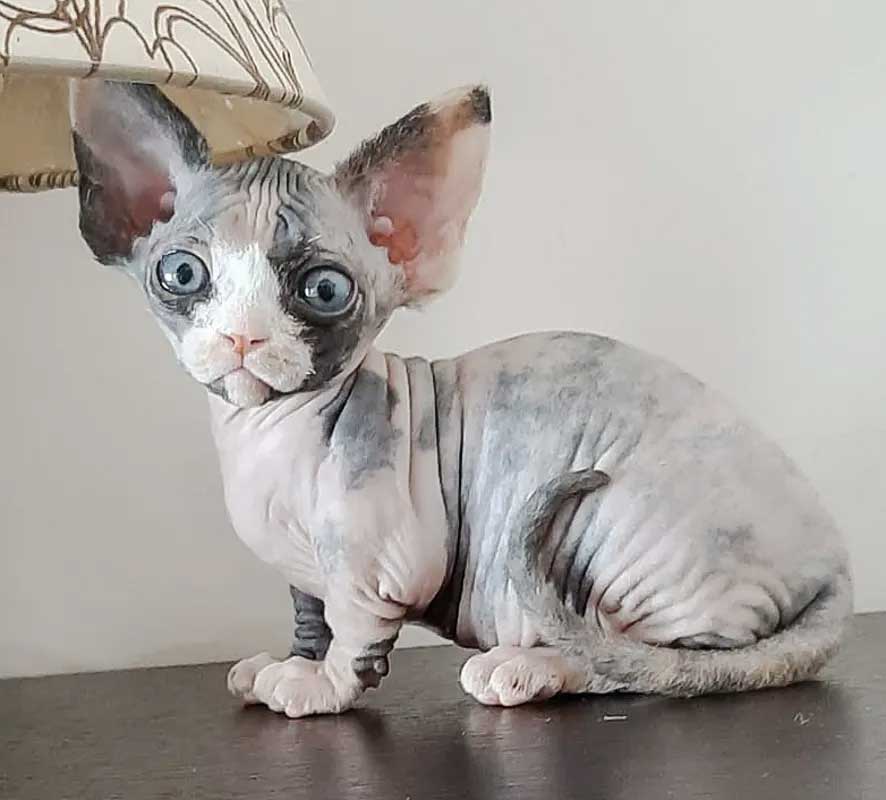
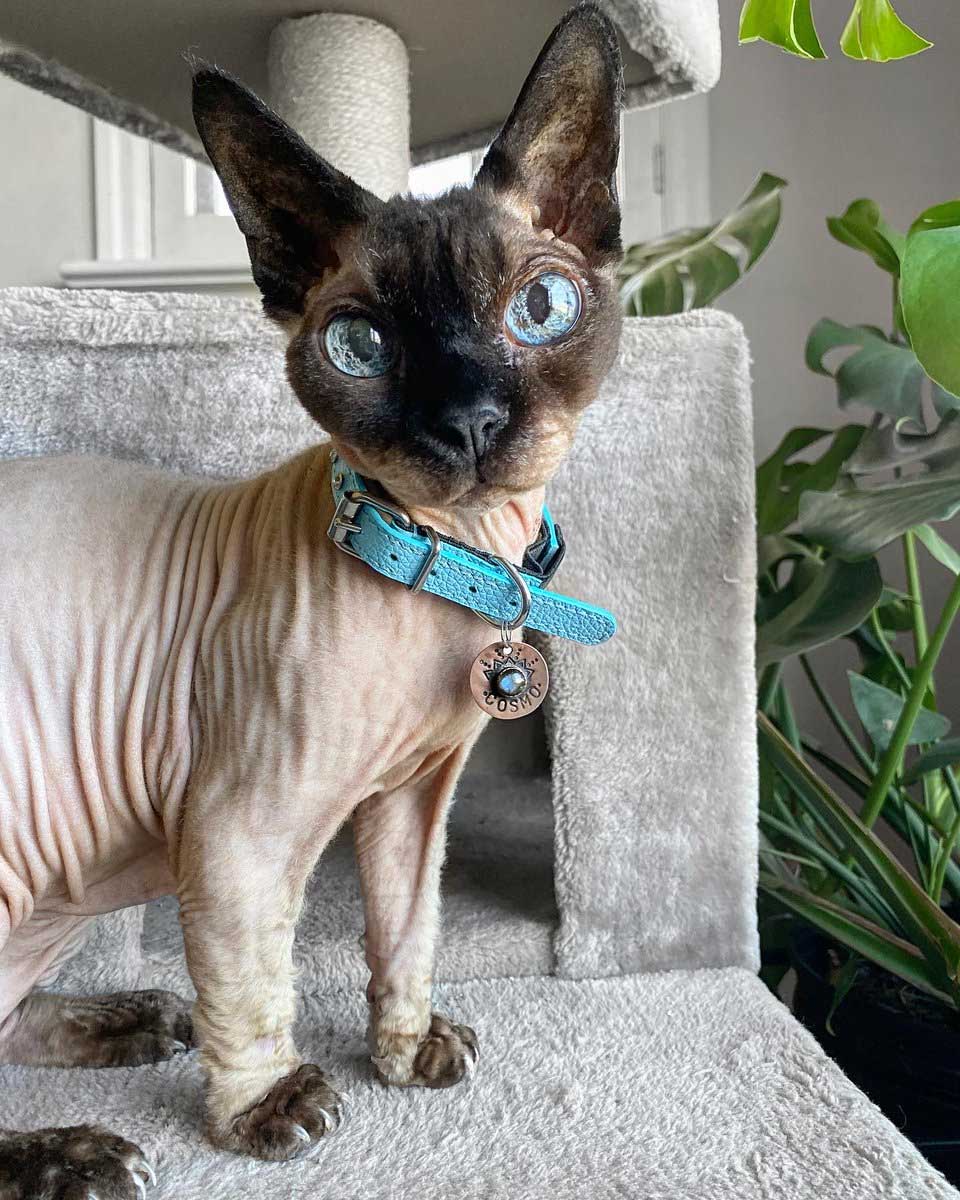
The Minskin has a particularly original look, and rarely leaves anyone indifferent. Almost hairless, it is small in size and has short legs that keep it close to the ground.
Minskin – The Discerning Cat
Size and weight
Male size: 18 to 20 cm.
female size: 18-20 cm.
Male weight: 2 to 3 kg
female weight: 2 to 3 kg
Morphology
The Minskin it is a medium length dog (semi-cobby). Long but small to medium in size, his body is made of solid bones and strong muscles. The chest is broad and strong. As it grows, keeps her cute kitty look.
The Minskin it is distinguished by its very short legs of equal length. They can make your body appear longer than it actually is, but they do not impede their agility: it is quite comparable to other cats.
The feet are round and compact, in line with the legs and pointing forwards, which gives the cat a solid foundation.
However, It should be noted that this particularity inherited from his ancestor the Munchkin cat is not exempt from debate. It is the result of a genetic mutation that corresponds to a delay in the growth of the bones of the four extremities.
Tail
The back of the Minskin it is flat and ends in a tail slightly larger than the body, tapering from base to tip. The tail is somewhat blunt.
Head
Supported by a neck well developed, the Minskin's head is wider than it is long. Its shape is rounded, so much that there is no flat surface. The profile shows a slight stop.
The ears they are especially large and are located on the top of the head or on the sides. They have a wide, open base and a rounded tip.
The eyes they are far apart, they are big, round and open. They give the dog a gentle air that melts those who cross its path, but also an alert and intelligent expression.
The nose it is neither straight nor bulky. It is prolonged in its alignment by a strong and firm chin.
Whisker pads are prominent, and the whiskers themselves can be very dense, scarce or absent altogether.
Shelter
The Minskin has short fur on the limbs (legs, tail, ears and face mask), while the rest of the body has a small barely visible down or is completely naked. But, the hair on the legs may rise a little on the shoulders, hips or hindquarters. The hair on the temples is very sparse, but sometimes there are tufts of hair at the entrance of the ears. The belly is always totally hairless.
In all cases, this peculiarity is not the result of genetic manipulation or skin disease: it simply corresponds to a natural genetic mutation that has existed for a long time in the feline species, and that in this case he has inherited from his ancestor the Sphynx cat (Canadian Sphynx). The corresponding gene is recessive: to have this particularity, an individual must carry two copies of the gene. This also means that only two parents with hairless or lightly fluffy fur can give birth to offspring that also have these characteristics. (but not necessarily all).
The skin of the Minskin may be wrinkled, especially when he's still a kitten. The texture is similar to that of cashmere.
layer colors
The coat of the Minskin can be of any pattern and color; there are no restrictions in this regard.
Character and skills
Minskin
Closeness to their owners
The Minskin not only distinguished by its unusual physique, but also because of his very affectionate character.
In fact, it is an ideal cat for a family, since he loves and seeks the company of humans, being very loving and affectionate with everyone. He is not stingy with his affection, and expresses their attachment by waiting outside the door to greet their owners when they enter. May show slight preference for human referent (the person who cares the most for you), but he is not one of those who are dedicated to a single cat, so he has a good relationship with all members of the household.
They like pampering and care, and they are very good at making themselves understood when they feel the need to be taken care of, without being too loud or intrusive.
Get satisfaction more easily because stroking it is very pleasant: her almost hairless and warm skin gives the sensation of touching cashmere. The absence of a coat makes him seek the warmth of others: doesn't hesitate to snuggle up against one of their own to warm up and soak up the sun.
Ability to endure loneliness
Very attached to his family, the Minskin can't stand being alone for hours or even days, even if you share your home with another cat or dog.
If you want to adopt this cat, I better have a more homey lifestyle, otherwise you could develop behavioral problems.
Get along with children
The Minskin it is a good companion for children, since he likes to play with them and is patient.
But, not necessarily a good companion for a very restless child. In fact, both its small size and its bare skin make it especially exposed and require it to be treated delicately.
In any case, no cat, Whatever your race, must be left alone with a very young child, without adult supervision: the safety of both partners is at stake.
Get along with strangers
As this cat is still new and underdeveloped, some character traits remain unclear. This is especially true in his relationship with unknown humans., which can vary greatly from one subject to another.
Waiting to see it clearer, it is important to ensure that you are never forced and that you always have a workaround. A cat tree is an essential accessory to allow you not only to exercise, but also observe the world around you and evaluate situations from above, so that you feel calm. If you want to meet the visitor, can approach him.
Need for exercise
Contrary to what her short-legged appearance might suggest, the Minskin is relatively athletic and has a fairly high exercise need.
He especially likes to run, and is capable of going much faster than you would expect. He also likes to climb, and here too its particular morphology does not harm it much.
All this explains that you need a certain space to be comfortable: it is not a matter of living within the four walls of a very small apartment.
Recommended activities
To the Minskin he likes children because he is very playful. It is not enough to caress it and give it affection, but you also have to challenge your intelligence through various games. Thus, it is recommended to spend twenty minutes two or three times a day playing with the dog and thus stimulate it not only physically but also intellectually.
Leave interactive toys, like puzzle, it's also a good way to keep you busy when you're out and about.
Sound level
The Minskin knows how to communicate and make himself understood by his family when he has a request to make, for example if you want a hug. But, not the type to meow excessively (or even for no reason), and the volume of his meows is quite reasonable.
In other words, does not hesitate to express himself when necessary, but he does it gently.
Adaptation to change
Moving houses or going on vacation does not have to upset a Minskin as much as he usually does with his peers. In fact, his curiosity makes him adapt quite easily to changes in his environment: he does not stop touring his new home and quickly finds his place in it.
Getting along with other cats
Usually, the Minskin has no difficulty living with a travel companion: this makes him a playmate and makes his masters' absences less painful.
But, if the two dogs have not known each other since they are puppies, it is preferable to accustom them in stages, so that everyone can find their place and feel comfortable.
It also, as the Minskin barely has hair, your skin is more prone to small wounds. So, you should check your dog's nails regularly and trim them as soon as they get too long, to prevent inadvertent scratching.
Get along with dogs
The Minskin gets along very well with canines, If and when, of course, a cat-friendly breed of dog is chosen. Sharing a home with another animal is a great way to give your Minskin a playmate and make him feel less lonely when his owners are away.
Things go better if the coexistence is established from the earliest age of the two protagonists. If that is not the case, it is better to start the relationship gradually, so that everyone finds their place and thus minimizes the risk of conflict.
In any case, it is important to regularly trim the claws of your(s) pet(s), since the absence of hair means that your skin is not really protected: could inadvertently hurt her when playing together.
Ideal home
Minskin – stealyourheartexotics.com
Apartment
The Minskin is a suitable jack for a floor, as long as it is large enough to allow you to exercise comfortably. Don't let its short legs fool you: this cat is no less athletic than any other. Can run under the ground, but that doesn't stop you from moving quickly, like any cat. He is also quite capable of climbing and jumping, and does not miss the need to find another route to get where he wants.
On the other hand, the fact that you live indoors protects you from external aggressions: cold, Sun, bad weather… In effect, your almost bare skin can easily be burned by ultraviolet rays in case of prolonged exposure to the sun, and makes you especially sensitive to cold when mercury drops.
In the garden?
Although Minskins they are perfectly in a flat, they are never happier than when they live in a big house with free access to the outside, thanks to a cat flap that allows them to come and go as they please.
But, you have to take certain precautions, due to its lack of fur. When the temperatures are low, it is useful to equip him with a cat coat and/or not leave him outside during the coldest hours. This accessory also has the advantage of protecting your skin, to avoid injury to tree branches, the bushes, etc. During the hot season, it is essential to apply a sun cream designed for felines, and it is better to avoid leaving it in the sun when it is at its peak.
as first cat?
The Minskin needs their owners to be present by their side, and his skin almost or totally devoid of hair makes it need more care and attention.
So, it is a quite demanding breed, not necessarily recommended for a first adoption.
For a person with little time?
It is clear that the Minskin not a good choice for an unavailable person, since its proximity to its humans means that it does not cope well with their prolonged absences: can cause real separation anxiety.
The problem is less likely to arise if you share your home with another cat or canine representative, but it is still true that it needs human presence and daily care.
Thus, before adopting a cat of this breed, it is important to think about the time that you will be able to dedicate, at the risk of ending up with an unhappy partner.
for an older person?
The Minskin it is very suitable for an older person, as long as you are willing to go the extra mile to take proper care of it, including daily skin care.
They are close to people, loving and cuddly, without being "drinkable". It also, although it is playful, also appreciates long rest periods.
So, cohabitation can be very beneficial for both parties.
For a person with allergies?
As the Minskin has almost hairless skin, sometimes comes across as a hypoallergenic breed.
It's about forgetting that no breed is totally hypoallergenic.. In fact, cat allergies are caused by proteins (especially the Fel d 1, the most allergenic) found in urine, tallow, saliva, perspiration and in certain skin cells. All cats produce them and, Therefore, are likely to cause an allergic reaction.
But, It is true that the fact that the Minskin almost completely hairless means that it does not shed and, Therefore, does not leave allergens everywhere in its path.
Since zero risk does not exist, an allergic person should not do without a test in real life, which consists of spending several hours with the animal you are considering adopting.
For a small budget?
What is rare is expensive, and the Minskin is no exception. So, at the time of purchase, far from a budget-friendly breed.
It also, the amount spent on their diet tends to be slightly higher than average. In effect, his lack of hair makes, to maintain a body temperature between 40° and 41°C at all times (that is to say, two degrees higher than most other races), should burn more calories, Therefore, eat more.
Grooming and caring for the "Minskin cat"
"Minskin cat"
Minskin
coat care
As the Minskin it only has hair on the limbs and the rest of the body is completely lacking or covered by a very light down, your skin is especially exposed and requires certain care.
Ideally, clean the skin daily with a soft, damp cloth to keep it healthy. Frequent bathing is also essential.
Bathroom
The Minskin you should bathe approximately once every fortnight. This is because the light fluff that covers the skin is not enough to absorb all the sebum that the dermis emits. (the underside of the skin), and the skin becomes fatty. Washing the skin removes the accumulation of oil and keeps the skin tissue soft and clean. As in the case of any cat, this requires the use of a moisturizing shampoo specially designed for felines.
Once soaped and rinsed thoroughly to avoid skin irritation, a soft towel should be used to dry the cat. An electric dryer is not appropriate, as it can cause burns.
ear care
the ears of Minskin should be checked and cleaned weekly. Removing dirt with a damp cloth will help prevent infection (starting with the ear).
This is especially important, since the Minskin has little or no hair to protect it.
Eye care
as with the ears, it is necessary to check the eyes of the Minskin weekly.
If they are not clean, it is essential to clean the corners with a damp cloth: This will prevent the accumulation of dirt., that can cause disease.
Teeth care
As in the case of any race, maintenance of the teeth of the Minskin. Helps prevent plaque build-up, that can cause not only bad breath, but also serious diseases.
Brushing once a week with a toothpaste designed specifically for small felines is a minimum, but the ideal is to do it daily.
Nail care
The length of your nails Minskin should be checked at least once a month, even if you have access to the outside. This is because natural wear and tear may not be enough.. If the claws are too long, they can get in the way, break or even hurt the dog. So, if they have grown too much, you have to cut them manually.
It also, like any cat, the Minskin you should be able to scratch whenever you feel the need. So, a scratching post is essential; otherwise, you may have no choice but to fall on the furniture or curtains.
Introduction to hairdressing
Whether the skin, the ears, the eyes, teeth or claws, caring for a Minskin it's not very complex. But, it is essential to master the correct gestures, at the risk of hurting or even injuring you. So, it is best to learn them the first time from a vet or professional groomer.
In any case, the Minskin has the advantage of loving to be handled. So, easily accept these grooming moments, And he is all the more receptive and cooperative if his master knows how to make these occasions special moments of caresses and tenderness.. Things also go better if you get used to it from a young age.
Health and nutrition
Resistance to cold and heat
The completely or almost completely bare skin of the Minskin makes it especially sensitive to low temperatures and sunlight. Although the body of the Minskin is covered by a small, almost invisible coat, this is not enough to protect you from the elements, and not just the weather.
So, during the summer months, you should apply sunscreen to your cat's body and avoid letting it go outside during the hottest hours. This will prevent sunburn, burns and possible skin cancer.
The other way, It is also essential to invest in a small coat to keep your cat warm in low temperatures, or even sickness. In any case, it is best to avoid keeping it outside during the coldest hours of winter, first thing in the morning or in the evening.
There should always be a place in the house where the cat can be kept warm, away from cold and drafts.
Diseases
As the Minskin it is a recent breed and is not yet widespread, information about your health is missing.
But, like any race, is more prone to certain diseases. In your case, is about:
The Hypertrophic cardiomyopathy, which corresponds to a thickening of the heart muscle. May cause respiratory problems, severe fatigue and difficulty exercising. It is caused by a genetic mutation and can be detected by a DNA test. But, it is impossible to know when symptoms will start to appear;
Lordosis, that is to say, an excessive curvature of the spine;
The excavated breast, a concave deformation of the rib cage. This leads to compression, which can cause breathing or heart problems;
Cutaneous mastocytosis, a skin disease causing lesions that require treatment, usually on time. The causes of this condition are not well known..
Healthy adoption
As in the case of any race, it is essential to go to a trusted breeder to have the best chance of adopting a kitten Minskin healthy. It is also a guarantee that the little feline has been raised and socialized in an environment that allows him to be healthy in the head and legs..
A serious professional will ensure that certain genetic tests are performed on the proposed breeders, to ensure that they are not carriers of a genetic disease that can be passed on to their offspring. It will not hesitate to exclude from its breeding program any individual that presents such a risk..
In addition to the results of the tests carried out on the stallions, must be able to present a certificate of good health issued by a veterinarian, as well as the list of vaccinations administered to the kitten, that have been registered in your vaccination or health card.
Maintain good health
Once adopted, the new owner is responsible for keeping the kitten healthy throughout its life.
This includes taking the dog to the vet for a regular checkup.. Once a year is enough for the first few years, but this frequency should be increased as the animal ages.
These checks allow the vet to diagnose potential problems, sometimes even before they appear (and, Therefore, treat them in optimal conditions), but also carry out the necessary vaccination reminders.
They are likely to be carried out without too much difficulty: it is known that the Minskin enjoys handling and is not one to put up a lot of resistance when examined.
The owner must also ensure that their cat is treated for parasites as often as necessary throughout the year.. This preventative effort is essential to ensure that your dog is always protected against parasites., even if I live between four walls. Although the probability is significantly lower, an indoor cat can get parasites.
Minskin – madpaws.com.au
Life expectancy
12 – 14 years.
Food
Like any other cat, the Minskin should be fed a diet that meets their nutritional needs, both quantitatively and qualitatively. This means that it differs according to your age, activity level and health status.
In any case, is distinguished by its appetite, which is slightly higher than that of most of its congeners, as it happens with his ancestor the Sphynx cat (Canadian Sphynx). In effect, his almost bare skin forces him to continuously maintain a body temperature between 40 y 41°C, that is to say, two degrees higher than most other cat breeds. As such, have to burn more calories… and, Therefore, eat more.
This is most noticeable in winter, when you need to feed more, especially if you have access to the outside. In any case, to avoid underfeeding or giving him more than he needs, it is best to consult a veterinarian to find out the daily dose to be given.
Industrial foods can perfectly meet your needs, as long as they are of good quality. On the other hand, you should avoid giving food intended for humans, Unless you select them carefully to match your needs. Not to mention the risk of foods that are popular with humans but toxic to cats.. In other words, although he knows how to soften his owners, they should refrain from systematically giving him food scraps and offering him access to bins, who does not hesitate to delve with relish if the opportunity is offered.
Last, as in the case of any small cat, it is essential that the Minskin have fresh water at your disposal at all times, so you can quench your thirst when you feel the need.
For sale "Minskin cat"
The Minskin it is a very rare recent breed. The fact that it is not recognized by any major feline organization (mainly due to the controversy over the genetic mutation associated with short legs) explain that it is difficult for him to develop.
In fact, in Europe , currently there are no breeders of the breed.
To adopt a Minskin, you have to go to the United States, your country of origin. There are only a handful of breeders there, that they usually offer their little ones between 1.500 and 2.400 USD.
But, adopting a cat abroad implies finding out about the regulations that regulate the importation of pets in the country where you live, to avoid unpleasant surprises. It also, It is important to note that administrative and transport costs will be added to the purchase price.
In any case, the latter can differ considerably depending on the reputation of the breeding, of the line from which the animal comes, but also its intrinsic characteristics, in particular its physical characteristics. This last point justifies the differences, sometimes significant, within the same litter.
Videos "Minskin cat"
This Cat Breed Looks Like A Kitten For Its Whole Life! | Cats 101
The Tennessee Rex is a new breed of naturally mutated cat that started in 2004.
Content
Characteristics "Tennessee Rex cat"
Coexistence is important that you have with your new friend. Before considering the acquisition of a cat of the breed "Tennessee Rex cat" you know certain factors. You must take into account their character, their need for exercise, their interaction with other pets, their care and if you have small children, their level of tolerance towards them.
Joy
4,0 of 5 stars (based on 1 review)
Activity level
3,0 of 5 stars (based on 1 review)
Friendliness to other pets
3,0 of 5 stars (based on 1 review)
Friendliness to children
4,0 of 5 stars (based on 1 review)
Grooming requirements
3,0 of 5 stars (based on 1 review)
Vocality
4,0 of 5 stars (based on 1 review)
Need for attention
3,0 of 5 stars (based on 1 review)
Affection towards its owners
4,0 of 5 stars (based on 1 review)
Docility
4,0 of 5 stars (based on 1 review)
Intelligence
4,0 of 5 stars (based on 1 review)
Independence
3,0 of 5 stars (based on 1 review)
Hardiness
4,0 of 5 stars (based on 1 review)
History
Franklin Whittenburg discovered the breed when a normal stray cat came into his life. He called his new pet Satin Surprise, and it gave him a real surprise.
Soon she gave birth to a litter of beautiful kittens, but two looked very different. Two red kittens were born with him curly hair, and they seemed to have a shine on their fur. The glitter couldn't be washed off the kitties, and the shine of the kittens gave the fur a satin look.
Franklin I had never raised cats, but i knew there was something unique about kittens. Contacted a cat breeder, with a cat geneticist, with the TICA and with some breeders about their kittens. After a lot of work and research, it was concluded that these kittens had a recessive gene the only one that caused not only a curly fur, but also the satin effect of the hair.
The race Tennessee Rex had begun and a new and beautiful cat was added to the fashion.
Physical characteristics
The Gato Rex Tennessee it is a medium to large cat, with a body type semi-cobby and a short thick neck. The ears are medium to moderately large in size with slightly rounded tips and broad at the base. The eyes are large almond-shaped at rest and round when alert. The eyes they can be of different colors. The nose must be straight and without relief. The chest is full with curly hair, extending from the chest to the stomach. The torso is large, long, rectangular, but not thin, very curly from the base of the ears and wavy hair towards the hips. The body he is muscular and athletic. The legs are in proportion to the body, large, round. The tail It is three-quarters of the entire body and completely curly.
Character and skills
They are affectionate cats that really want to be on your lap.. The Tennessee Rex cat wants to be part of the family and makes an effort to be in bed, on the couch or following you around the house.
They like other pets, but they will need some time to adjust to new environments and animals (but most cats are like that). In general, he is a calm cat, but it will make noise when it wants your food or your attention. Of course, we always respond to noise with love.
Grooming and care
The Tennessee Rex require some pet care. In most cases, you have to clean their ears monthly. Some do not have accumulated wax, but many do. Using a clean Q-tip in the ears about once a month will keep the ears clean..
They eat like any other normal cat, so they do not need a special diet. They get used to the litter box very quickly and love all the beds that can be provided.. Cat toys, cat trees and scratching posts are highly appreciated by the Tennessee Rex cat and will use them daily.
The Tennessee Rex cat has two types of fur: some have the shorthair and others have the Longhair. They both like to be brushed, but those with long hair need to be brushed more frequently to keep the hair fluffy.
They don't usually need a bath, but bathe the of Longhair will make the curls more prominent. The longhair cats they also show satin and curls better than short hair.
▷ The world of Pets: Dogs, cats, birds, reptiles, amphibians
The Chantilly-Tiffany Cat has only existed for a few 50 years, and has struggled to gain recognition compared to other recent cat breeds that have quickly achieved success.
Content
History
The Chantilly He is originally from the United States. His story began when, in 1967, a breeder from New York, Jennie Robinson, came across some pretty unusual items at a yard sale: two cats of an unknown breed whose owner had recently died. I buy them, motivated by the desire to save them from a worse fate.
The two animals had semi-long chocolate-colored hair and golden eyes.. They were very similar, which led Mrs. Robinson to assume that they had at least one parent in common. Estimated Thomas's age, the male, in a few 18 months and that of the female, Shirley, in a few 6 months. Neither of us was neutered.
In May of 1969, Thomas and Shirley had their first litter of 6 kittens. Like his parents, the kittens were all smooth, with a medium chocolate-colored coat and pink pads on the legs.
Jennie Robinson realized that these cats did not belong to any recognized breed.. They seemed beautiful and decided to start a breeding program. He also promoted them, showing Thomas and some of the kittens at various cat shows in the New York area in the early years 70.
In 1970, the American Cat Association (ACA) agreed to register Thomas, Shirley and her offspring as Sable Foreign Longhair.
The first litter was followed by many more, so that in just 7 years the Neotype kennel (Jennie Robinson's name for her kennel) saw the birth of some 60 kittens. Other Connecticut and Long Island breeders became interested in the new breed and bought some of the kittens, which in turn were exhibited in exhibitions.
Many professionals were convinced that the Sable Foreign Longhair He was a descendant of the Burmese cat. More concretely, they thought it was just the long-haired version. This confusion continued for many years and was later expanded.
In fact, in the mid 70, Jennie Robinson gave up breeding him Sable Foreign Longhair. He sold the cats he still owned to a Florida breeder, Sigyn Lun, which in turn started a breeding program. This breeder basically bred burmese cats, which contributed to the belief that the Sable Foreign Longhair was a Long Haired Burmese cat.
But, in some of the exhibitions in which these cats were shown, the judges commented that the name was too vague to designate a breed. Sigyn Lun decided to call them Tiffanie in reference to the eponymous theater in Los Angeles, a symbol of luxury and glamor for her. In fact, considered the cat to be the very embodiment of elegance and grace.
But, how the cat had become too weird, the ACA stopped accepting your registration.
In 1979, the International Cat Association (TICA) recognized the Burmese and formed a group with him Burmese and the Tiffanie, which was recognized at the same time. In other words, even a major international feline organization was convinced that the second was simply a long-haired equivalent of the first.
At the beginning of the Decade of 1980, Sygin Lun decided to stop raising the cat Tiffanie, that was on the verge of extinction. But a Canadian breeder probably saved the breed…
The second life of the Chantilly-Tiffany Cat started in canada, more specifically in the province of Alberta, When in 1973 a chocolate-colored cat with golden eyes came to give birth on a farm. She gave birth to a litter of kittens, all of them chocolate-colored and similar to Tiffanie. The farm was owned by a breeder, Tracy Oraas, who decided to start raising cats after falling in love with their grace and beauty.
Before embarking on this new project, and noting the similarities with the Burmese cats, tried to establish if there was any link, and got in touch with Jennie Robinson and Sygin Lun. Based on your research and the information provided to you, concluded that Tiffanie They had no relationship with the Burmese cats.
He teamed up with a Siamese breeder friend, Jan de Regt, to create a breeding program. They decided to cross the Tiffanie with the Angora cat, the Havana Brown cat Brown, the Somali cat and the Nebelung cat. In effect, given the small population of the breed, These marriages made it possible to expand the gene pool and, Therefore, develop it in the best conditions, reducing the risks of inbreeding. They also offered the possibility of diversifying the range of coat colors, since thanks to them the cinnamon colors were added, leonado, lilac and blue.
Since the beginning of the years 80, other breeders joined the program. The exchanges between all these enthusiasts allowed the Chantilly progress slowly but surely in Canada.
But, just when the information about the Chantilly it was finally clearing up, since it was no longer confused with the Burmese, in 1992 Canadian breeders were asked to choose another name. The name "Tiffanie" was used in Great Britain to refer to a new breed in development.. Although the spelling was not exactly the same, it was confusing. Tracy Oraas decided to change the name of Tiffanie for that of Chantilly to keep the idea of ​​elegance and refinement, while remembering the idea of ​​a floaty coat.
The cat regained importance in the United States in 2001, when an Illinois foodie, Anne Davenport-Parini, founded the Amorino kennel. Hershey Nugget, a handsome chocolate-colored male, he was the father of the first generation of kittens. Also in this case several matings with representatives of other races were necessary.. It's about him brown havana (for its beautiful chocolate color), The somali (for his thicker fur in his pants, the gola and the tail), the Abyssinian (origin of the somali) and, finally, the Nebelung (by the length and texture of its fur).
In 2012, the hatchery was completely destroyed by a fire. One of the surviving cats, Frosty, was purchased by a Norwegian Nebelung breeder, Norma Hubenbecker. Norma Hubenbecker tried to start a breeding program for the Chantilly, but his attempt was unsuccessful. Frosty only sired a puppy, called Acey. In 2015, Frosty died of cancer and the breeder castrated Acey, ending the experiment.
In fact, it seems that the Chantilly-Tiffany cat he wasn't exactly born under a lucky star: from its inception to today, its history has been full of pitfalls and confusion, which has inevitably greatly limited its growth.
Today, there are less than twenty breeders (concentrated in Canada and the United States) who are dedicated to the breed and give all their energy to try to develop and perpetuate it.
Chantilly recognition
The Chantilly-Tiffany Cat has only existed for a few 50 years, and has struggled to gain recognition compared to other recent cat breeds that have quickly achieved success.
Since 1967, the beginning of its history, his path has been complicated and has been strewn with pitfalls, which obviously did not facilitate its recognition by the different recalcitrant official bodies. In addition to the various twists, the latter also noted the successive name changes, which obviously didn't help things.
However, the International Cat Association (TICA) granted recognition in 1979, at the same time as Burmese: formed a group composed of these two races, considering that one was the long-haired version of the other. But, realizing that this was not really the case and that the population of Tiffanie didn't really take off, in 1992 backtracked on acknowledging the latter.
Two years later, in 1994, TICA accepted it again, this time as a different race and with the name of Chantilly… before changing my mind shortly after.
In the year 2000, another change: the organization recognized him Chantilly as an experimental breed. This allowed their representatives to appear in the halls organized under the auspices of the organization., without entering competition. A few years later, the breed suffered another setback: while admission as an experimental breed is usually the prelude to full recognition, the association simply stopped recognizing the Chantilly, due to lack of enough specimens.
The Canadian Cat Association (CCA) accepted the Chantilly as an experimental breed in 1992, and granted him full recognition in 1996. But, observing that its population did not increase -and even decreased-, downgraded her to the rank of experimental breed in 2011.
Either internationally or nationally, other important feline organizations such as the Fédération Internationale Féline (FIFé), the American Cat Fanciers’ Association (CFA), the British Governing Council of the Cat Fancy (GCCF) or the Livre Officiel des Origines Félines (LOOF) they don't recognize the Chantilly.
Like this, more than half a century after the creation of this breed, almost everything remains to be done in terms of recognition.
Physical characteristics
The Chantilly-Tiffany cat It is of medium size and semi-linear type.
Its body it is rectangular in shape with a flat back and a rounded rump. His moderate musculature is based on a medium bone structure.
The tail is proportional to the length of the body. Tapers from base to tip and has a coat of feathers.
The legs they are of equal length in front and behind. They end in oval feet.
The head it is medium in size and harmonious in outline, resting on a rather short and thick neck. The skull is rounded and the forehead a little flattened. The profile shows a slight stop just below the eyes.
The ears they are widely spaced and medium in size, slightly angled outwards and forwards. Wide at the base, tapers to a rounded tip. The breed standard states that it is desirable that they have hair on the inside.
The eyes they are also widely separated and oval in shape. Its color ranges from dark yellow, gold and amber. In any case, it is preferable that it is as intense as possible, and a green ring is accepted around the pupil. The upper lash line is straight, while the lower one is rounded.
The cheeks they are tall and prominent.
The nose it is moderately long and ends in a broad muzzle, short and square. Whisker pads are flat. The complexion is dominated by wide jaws and a slightly prominent chin..
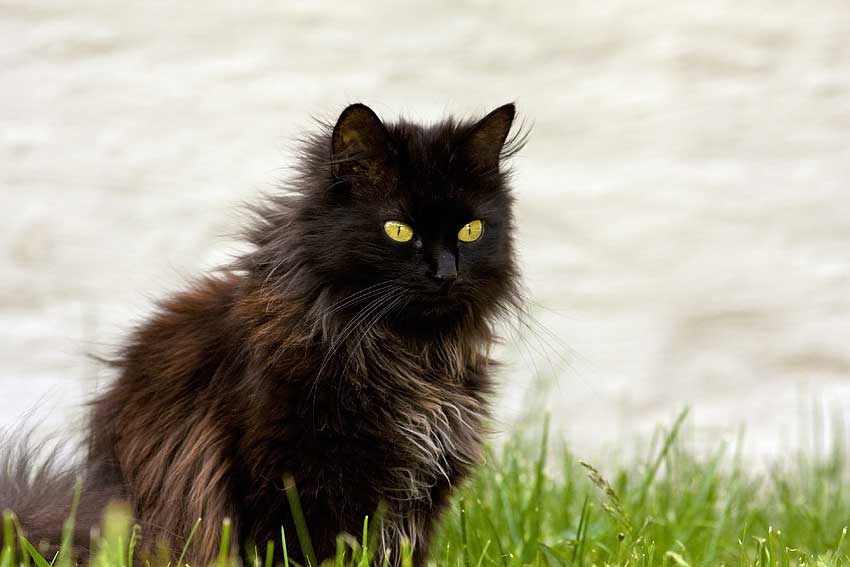
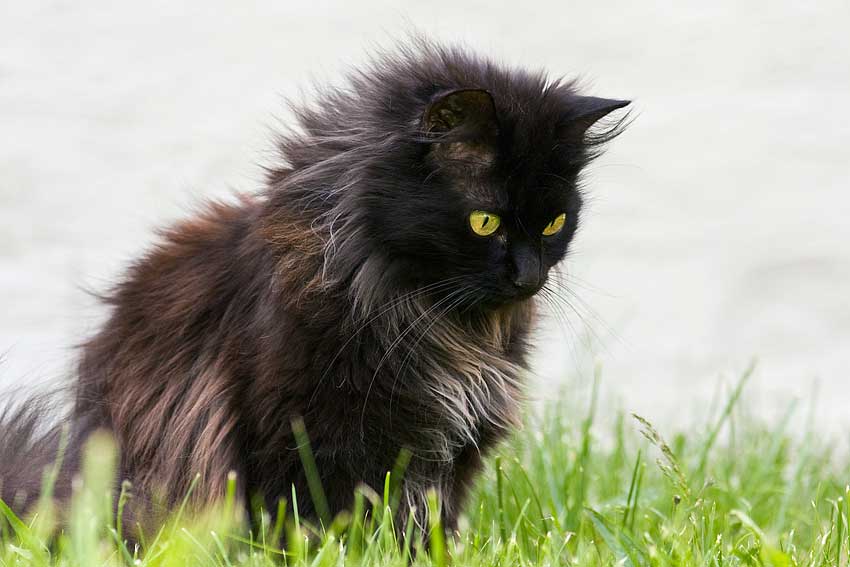
This cat has no undercoat, but it is distinguished by its semi-long coat, silky, light and very soft. This is what gives this animal its elegance, since its coat is reminiscent of an airy and vaporous whipped cream.
Should have 5 cm length, but it can be a bit longer as long as the texture remains light and silky. In any case, up to two years of age this cat does not have its final coat. The fur appears first on the tail and then on the rest of the body. The male has a fuller ruff and a heavier coat than the female.. Regardless of gender, the hair on the hind legs is similar to that of the feathers, forming a small petticoat on the legs.
Originally, the Chantilly-Tiffany cat appeared with a chocolate brown fur, which is still the most popular today. But, crosses with the Angora Cat, the Oriental, the havana, the Nebelung and the Somali have expanded the range of colors. There's also Chantilly black, blue, cinnamon, tawny and lilac. The coat patterns are also more varied: may be agouti, stained or tabby.
In all cases, the color should be bright and deep. But, lighter shades of brindle on throat and muzzle are acceptable.
Last, there is true sexual dimorphism in this breed, since the male is bigger and heavier than the female.
Size and weight
Male size: Of 25 to 30 cm.
female size: 20-25 cm.
Male weight: 4-5 kg
female weight: 3 to 4 kg
Varieties:
The Canadian Cat Association (CCA) is the only official body that recognizes the Chantilly, with experimental character, by the way. Allows crosses with the following breeds:
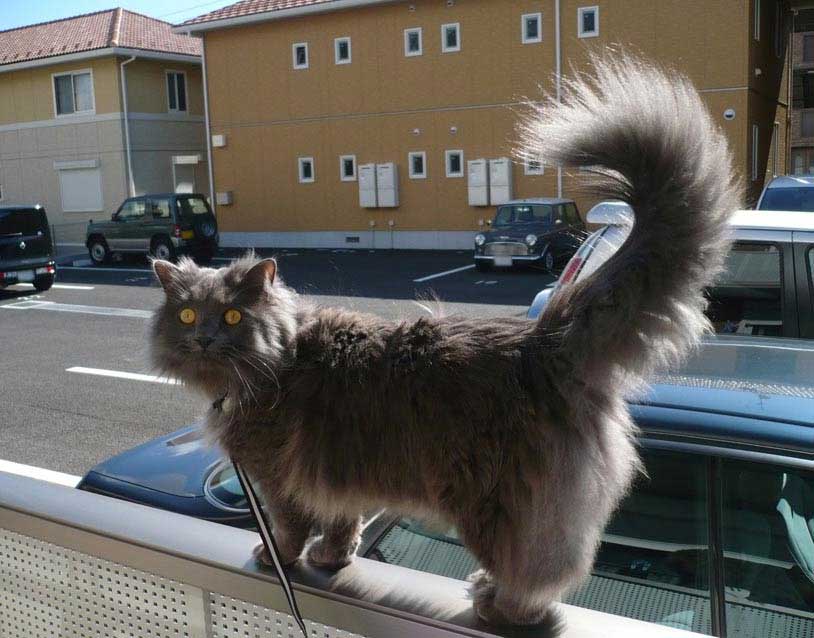
Photograph of a Tiffany cat called Kumori (Cloudy). Tsukuba, Japan –
Character and skills
The Chantilly-Tiffany cat it is an ideal cat for a family, since its balanced character makes it adorable and easy to live with.
He is especially attached to the person he considers his teacher. Devoted and faithful, follows her everywhere and scrutinizes her every move at all times. It can also be perfectly placid, for example, snuggling into or against your lap for hours, or inviting himself to her bed. He likes to be caressed and gives all the attention he receives, But it's clearly not for someone who doesn't want a "sticky" companion..
Although they have a very strong relationship with their owner, this cat has a broader love for all humans in the home, and you need your company to be happy. This makes it an excellent companion for the whole family., since it is the type of cat that establishes a good relationship with each member of the family. He will be happy to play with them or to seek pampering.
Playing is also a favorite activity, making it an excellent entertainment companion for children. You just have to make sure children treat you with respect, like any other cat. In any case, for the good of both parties, a young child should never be left alone with a cat without adult supervision, regardless of race.
Very comfortable in your family environment, the Chantilly-Tiffany cat It, on the other hand, much more reserved with strangers. Without being fearful, prefers to stay away when strangers enter its domain. A tree for cats, essential for every small cat, it is an ideal place to take refuge on those occasions.
The fact that this cat loves the company of its humans goes hand in hand with the fact that it does not like to be alone.. Obviously, not recommended for owners who are away for long periods of time. In fact, if left alone for hours, quickly becomes anxious and melancholic. Leaving him toys cannot replace the presence of the people who usually surround him and allow him to flourish..
On the other hand, having him share his home with a small companion is an interesting option. In fact, tends to live easily with another cat, delighted as he is to share moments of play with him. Living under the same roof as a dog is usually not a problem, especially if it is a breed of dog that gets along well with cats. But, in either case, it is always preferable that the two of you join at a young age: then the other is considered a full member of the family from the beginning, and the relationship is much better for it. Otherwise, it is preferable to establish coexistence gradually, to minimize the risk of problems.
The Chantilly-Tiffany cat it can also live in the same house as birds or small rodents. They are quiet, peaceful and not aggressive. But, some caution must be exercised when the animal is outside: should be kept in a separate room or cage.
It also, Even if I'm not the hyperactive type, this cat is very playful and needs his little crazy moments. Providing a variety of interactive toys is a great way to satisfy their curiosity and develop their skills.. But, this does not mean that you do not have to play with your cat: he likes very much to interact with the people around him in this way.
As long as your need for entertainment is met and you have enough space to play, the Chantilly-Tiffany cat you can live both in a flat and in a house with a garden. On this last case, It is highly recommended to install a cat flap so that you can come and go as you please.
In any case, like any cat, must have an easily accessible scratching post. In effect, scratching is a compelling need that you cannot give up; without this accessory, would have no choice but to resort to furniture or curtains, for example.
Last, the Chantilly is known to be a very talkative cat. As he follows his master throughout the day and shares his activities, does not hesitate to tell you his life and give his opinion on everything. His way of communicating is, However, nice, since its meow is not very loud and is comparable to a screech.
«Black smoke». Our cat «Sarah» outside our house in the suburb of Selfors, in Rana municipality, Nordland, Norway. – Magne Aga, CC BY-SA 4.0, via Wikimedia Commons
Health
Because the breed's population has always been very small, little is known about the health of Chantilly-Tiffany cat. But, appears to be in robust health.
It also, is able to adapt to all climates and, Therefore, to live in almost all latitudes. It is only important to ensure that you always have access to fresh water and a shady area during hot periods., and to a sheltered and warm place when the temperature is very low.
But, it is known to have a delicate digestion and is especially sensitive to cellulose, that decomposes with difficulty during assimilation and digests poorly. So, It is important not to hesitate to consult a veterinarian or a nutritionist to identify the most suitable food and, in any case, to avoid, for example, those based on corn, containing a large amount of cellulose.
It is also important that you always receive the same food, even if it is left in a cattery when its owners are away. In any case, even more than with other breeds, a change in the cat's diet (for example, for health reasons) requires a very gradual transition to the new food, so that the digestive system can gradually get used to the new food.
On the other hand, the Chantilly-Tiffany cat have an unfortunate tendency to be overweight or even obese, especially if you live indoors and, Therefore, are less likely to exercise. This problem should not be taken lightly, as excess weight can both aggravate existing diseases and cause new ones.
Ears of the Chantilly they also require special attention. In fact, the presence of hair makes it less able to clean itself in this area. Thus, wax and dirt can build up and lead to ear infections (for example, otitis).
As in the case of any race, turning to a serious breeder is the best way to adopt a healthy and well-endowed kitten. In effect, a professional worthy of the name spares no effort to socialize the little ones from a very young age and make them grow up in an ideal environment. In any case, at the time of sale, must be able to present a certificate of good health issued by a veterinarian, as well as the list of vaccines applied to the animal, registered in the health or vaccination card of this.
Once the adoption is done, it is the responsibility of the new owner to take care of the health of his little companion while he is alive. Taking the cat to the vet at least once a year is one of the golden rules to keep it healthy. In fact, this not only allows the administration of the necessary booster vaccines, but also a complete health check of the animal, which sometimes makes it possible to detect a possible problem and treat it in the best conditions. It also, do not hesitate to increase the frequency as the cat grows.
Continuing with the theme of prevention, the owner must ensure that his partner's antiparasitic treatments are regularly renewed, so that you are continuously protected. This applies even to cats that do not have access to the outdoors.: even if the risk is lower, are still exposed to certain parasites.
The Chantilly-Tiffany cat has no undercoat and sheds very little. On the other hand, their fluffy, silky fur tangles easily. Brushing every other day not only removes dead hair, it also avoids tangles, allowing the dog to maintain its appearance. During their shedding periods, in autumn and spring, it is even preferable to brush daily.
It is also essential to check your ears once a week. This is because the tufts of hair at the entrance of the ears make it difficult to clean the dog and, Therefore, facilitate the accumulation of earwax and dirt. If cleaned with a damp cloth, impurities that may become infected will be removed.
This weekly grooming session should be used to check the eyes. If they are dirty, wiping the corners of the eyes with a damp cloth is necessary to remove dirt and prevent infection.
The maintenance of a cat's teeth is also very important, whatever the race. This is because it helps prevent plaque build-up., which can cause more or less serious diseases when it becomes tartar. So, you should brush your pet's teeth at least once a week, but the ideal is to do it daily. In any case, it is essential to use a toothpaste specially designed for felines
Whether your cat lives exclusively indoors or has access to the outdoors, it is also essential to inspect your nails once a month. If the natural wear and tear is not enough and they become too long, must be trimmed manually. This will prevent them from getting in the way or even breaking and / or injuring the dog. But, It should be noted that caring for your cat's nails does not mean you don't have to provide a scratching post. If you don't, You shouldn't be surprised if your cat falls on furniture or curtains..
coat care, the ears, the eyes, the teeth and claws of his Chantilly-Tiffany cat does not require any special skills. But, it is a good idea to learn from a cat groomer or vet the first time, so you can learn the right techniques and then do it yourself. In this way, better results are achieved and the risk of injuring or even traumatizing the animal is reduced..
As long as the owner does it correctly and does not hesitate to add caresses, the grooming sessions of the Chantilly-Tiffany cat will become privileged moments between the two protagonists. In fact, by liking the proximity of its owner, delighted that they pay attention to him and even more that they caress him, you probably appreciate it. It is common for him to let you know with sweet little meows.
«Black smoke». Our cat «Sarah» outside our house in the suburb of Selfors, in Rana municipality, Nordland, Norway. – Magne Aga, CC BY-SA 4.0, via Wikimedia Commons
Food
Like any cat, the Chantilly-Tiffany cat you need a diet that matches your nutritional needs, both qualitatively and quantitatively. As such, must suit your age, your level of physical activity and your health status.
In any case, the tendency to be overweight - and even obese- forces you to carefully define your daily food intake. It also, unlike most of his peers, has difficulty regulating himself, so it is better to avoid giving free access to food, since it is likely that he will binge and eat the entire ration for the day in a few minutes. Fixed meal times are a much better solution.
Industrial cat foods are suitable, as long as they are of good quality. But, the choice should not be made at random, since your cat has a delicate digestion. In particular, avoid corn-based products, since they contain a lot of cellulose, which is difficult for the cat's body to digest. Ideally, seek the help of a veterinarian or feline nutrition specialist to identify the most appropriate.
In any case, once you have found a suitable product, it is best to avoid changing it, unless, Of course, that your health justifies it. This is true of any cat, but even more so for cats whose digestive system has a harder time adjusting to a change in diet.
Unless carefully selected, human food is not made for cats: is unlikely to meet your nutritional needs and, on the other hand, it can be a source of deficiencies or excesses. It also, in the case of Chantilly-Tiffany cat, there is also the problem of its digestion capacity. Like this, give small pieces during the meal, table scraps at the end of the table or letting him rummage through the trash is not a gift to keep him healthy. Some foods that are popular with humans are even toxic to cats.
Your propensity for obesity also means you have to control your weight by weighing it every month. If successive weighings indicate that your cat is getting fat, it is important to take him to the vet. Only a healthcare professional can reliably diagnose the cause of the problem, which may be a feeding problem, but also a disease or a reaction to medication.
Last, like any cat, the Chantilly-Tiffany cat you must have fresh water at all times.
The Chantilly-Tiffany cat it is one of the rarest cat breeds in the world, and it is almost impossible to find one outside the United States or Canada. Even in these countries, you have to be prepared to sometimes wait for many months and / or travel long distances to be able to adopt a cat of this breed.
in Canada, there are very few breeders and they usually sell their kittens between 500 and 800 canadian dollars.
One solution is to look at the United States, where there are just under a dozen breeders. The price of a Chantilly-Tiffany cat usually oscillates between 300 and 600 USD.
In the case of an adoption abroad, must take into account, However, that transport costs and administrative costs are added to the purchase price. It is also necessary to know and comply with the legislation regarding the importation of animals.
whatever the country, the asking price depends on the reputation of the breeding, from the line from which the animal descends and, above all, its intrinsic characteristics, especially the physical ones. For this reason, quantity can vary within a litter.
Characteristics "Chantilly-Tiffany cat"
Coexistence is important that you have with your new friend. Before considering the acquisition of a cat of the breed "Chantilly-Tiffany cat" you know certain factors. You must take into account their character, their need for exercise, their interaction with other pets, their care and if you have small children, their level of tolerance towards them.
Coexistence is important that you have with your new friend. Before considering the acquisition of a cat of the breed "Munchkin cat" you know certain factors. You must take into account their character, their need for exercise, their interaction with other pets, their care and if you have small children, their level of tolerance towards them.
Joy
5,0 of 5 stars (based on 1 review)
Activity level
4,0 of 5 stars (based on 1 review)
Friendliness to other pets
5,0 of 5 stars (based on 1 review)
Friendliness to children
4,0 of 5 stars (based on 1 review)
Grooming requirements
3,0 of 5 stars (based on 1 review)
Vocality
2,0 of 5 stars (based on 1 review)
Need for attention
5,0 of 5 stars (based on 1 review)
Affection towards its owners
5,0 of 5 stars (based on 1 review)
Docility
4,0 of 5 stars (based on 1 review)
Intelligence
5,0 of 5 stars (based on 1 review)
Independence
1,0 of 5 stars (based on 1 review)
Hardiness
3,0 of 5 stars (based on 1 review)
History
The Munchkin cat is a recent American feline breed, but the existence of short-legged cats has been documented several times throughout the 20th century. These may include, already in the decade of 1930, en el Reino Unido, These cats lived for four generations before disappearing during WWII. Over the years 50, in St. Petersburg (Russia), a short-legged cat appeared, nicknamed the "Stalingrad Kangaroo" for its propensity to sit on its hips and box with its small front legs. Another short-legged cat was also observed in the 1990s. 1970 in new england, United States.
But it was in 1983, in Louisiana ((UNITED STATES)UU.), when a music teacher called Sandra Hockenedel found two pregnant short-legged cats under a truck and called them Blackberry and Blueberry. Found a home for Blueberry, but he stayed with Blackberry. Blackberry gave birth to a litter of normal and short-legged kittens. One of the latter was named after Toulouse, in honor al pintor Toulouse-Lautrec, that conserved the legs of a child in the body of an adult, and gave it to her friend Kay LaFrance, who lived nearby.
All the Munchkins current descendants of the various encounters of Blackberry and Toulouse with others domestic cats. In fact, their owners allowed them to roam freely on the plantations, and their various encounters with other domestic cats resulted in many litters with kittens of the same anatomical peculiarity. Like this, a colony of short-legged cats soon developed in the area. Hockenedel and LaFrance they decided to call the cats Munchkin, in honor of the inhabitants of Munchkinlandia in Victor Fleming's film 1939 The Wizard of Oz, and they got in touch with him Dr. Solveig Pflueger for me to study them.
He discovered that the short legs of the Munchkin cat were due to a natural genetic mutation that makes the upper leg bone short. This gene is dominant, which means that it is enough for one of the two parents to be a carrier, and therefore have this physical characteristic, so a kitten is likely to have it too. Aware of possible health risks, several breeders asked the teacher David Biller, from the University College of Veterinary Medicine at the University of Kansas, to X-ray the spines of several Munchkins. He concluded that there was nothing wrong with these cats, but that the results of his work could not be considered definitive, since the breed was too new.
At the same time, breeders examined the paws of some of the older cats - also with X-rays- and found no damage to the joints or bones. They concluded that the mutation did not pose a risk to cats, sparking a debate that continues to divide cat lovers around the world..
In 1991, the Munchkin cat was presented to the general public at a cat show held at the Madison Square Garden from New York, and the breeders began to pressure the TICA (International Cat Association) to recognize the race. The TICA refused at first (in 1991), but four years later it took a turn: in 1994, granted the breed the official status of a new breed in development, despite protests from Katherine Crawford, TICA judge for many years, who resigned arguing that this recognition was an affront to ethics.
Indifferent to the heated debates that sparked, the Munchkin they continued to live their feline life and conquer the public, obtaining in particular in 2003 full recognition of the TICA, and therefore the possibility of competing in the exhibitions organized under the aegis of the organization.
This remains the only major feline association to have recognized the breed.. The American Cat Fanciers’ Association (CFA) has not taken the step, the Fédération Internationale Féline (FIFé) says he refuses to recognize a race 'based on a genetic disease', and the British Governing Council of the Cat Fancy (GCCF) has held a similar position since 1991 advising against the importation of these cats, adding that "it is not intended to recognize a race based on a genetic abnormality".
In other words, the dispute of Munchkin is far from over. But, it would be too easy to summarize, as some do, as a dispute between "retrograde feline organizations that do not accept change", on the one hand, and "feline organizations that do not think about the welfare of cats and only seek novelty", for another. All renowned feline organizations are committed to the health of the feline population, but they have different approaches: some prefer to take time to study any new mutation to make sure it is safe before recognizing a breed that carries it, while others choose to recognize it quickly to establish a framework for breeders and study the new mutation.
It's not the first time, not the last, that these debates shake up the world of cat lovers. But, if the discussions around the Munchkin cat they are so virulent and they take so long, it is mainly due to the attitude of some unscrupulous breeders who take advantage of the situation to make easy money without worrying about the health of the animals. Like this, although they know perfectly well that in that case a quarter of the litter never passes the fetus phase, some do not hesitate to raise two Munchkins, with the sole objective of not obtaining a litter with half the "normal" cats that are not sold.
At the end, despite the mistrust it generates, the Munchkin cat is present all over the world. But, due to lack of recognition and, Therefore, official registration of the breed's representatives in the registries, it is difficult to get an exact idea of its true popularity. But, the countless photos and articles on the net suggest that this cat at least arouses great curiosity.
In France, where the Livre Officiel des Origines Félines (LOOF) is one of the few national associations that recognizes the breed (in two different varieties, depending on the length of your hair) and, Therefore, keep a record, between 2011 and 2019 were registered 134 Munchkin shorthair and 198 Munchkin longhair. The trend is up, nails on 50 registrations per year, but race only represents something more than 0,1% of the country's feline population.
Physical characteristics
munchkin cat – Tasy Hong, CC0, via Wikimedia Commons
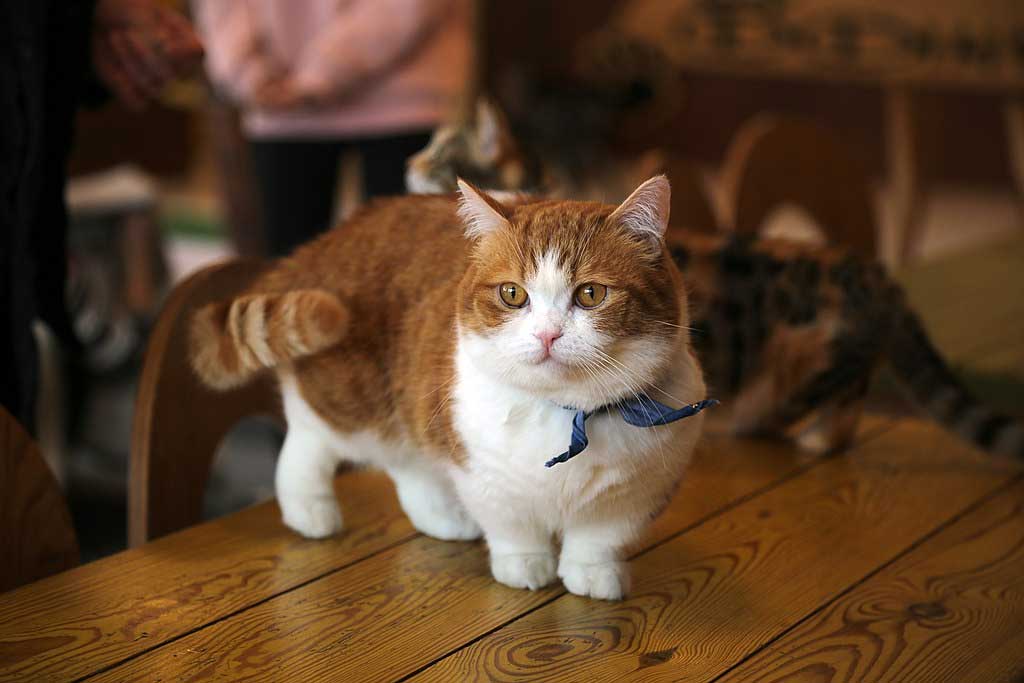
The Munchkin cat has a midline morphology semi-foreign. His body is muscular but not compact, and ends in a tapered tail about the same length as the rest of the body.
The legs they are short (between 5 and 10 cm shorter than a normal cat), and the upper bone is approximately the same length as the lower. They are straight, with a medium bone structure and proportionate musculature.
The head is slightly rounded, with cheekbones well defined. The ears are of a size proportionate to the rest of the body and end in a slight curve. The eyes they are almond-shaped and can be of any color.
The fur of the Munchkin cat can be short (Munchkin shorthair) or semi-wide (Munchkin longhair). Some organizations, as the TICA (International Cat Association), They even consider them two different breeds that compete in two different categories at cat shows., but they share the same standard. This is not the position of the LOOF (Livre Officiel des Origines Félines) French, for whom they are simply two varieties of the same breed. In any case, long hair coat has a silky texture, while the one with short hair looks shiny.
All are allowed colors and fur patterns, including the typical pattern colourpoint of the Siamese cat.
Last, the sexual dimorphism is marked, the female being smaller than the male.
But, it is important to point out that today many crosses of Gatos Munchkins with other races and others domestic cats, both long-haired and short-haired. This diversifies the breed's gene pool to avoid health problems, but it also means that the aspect of the breed is not fixed and can continue to evolve in the future.
It also, if even 2015 short legs were officially considered the exclusiveness of the Munchkin cat, and that any cat that presented this particularity and corresponded to the standard (regardless of their origins) could be recognized as Munchkin cat, It's not like that. In fact, Since this date, los «Munchkins with Persian appearance" are regarded as a breed in their own right by the TICA (The International Cat Association): the Minuet (or Napoleon).
Size and weight
Male size: 16 to 20 cm.
female size: 15 to 18 cm.
Male weight: 3 to 4 kg
female weight: 2 – 3,5 kg
Breed standard
The breed standards are documents established by official bodies that list the conditions that a dog must meet. Munchkin cat to be fully recognized as belonging to the race:
There is a Munchkins shorthaired and Munchkins longhair. The TICA (The International Cat Association), the only world association that recognizes the Munchkin cat, even consider that they are two different races. On the other hand, for the French reference body, the LOOF (Livre Officiel des Origines Félines), they are simply two varieties of the same breed.
The Long-haired Munchkin cat has the same origin as the short haired munchkin cat. It is not known if Blackberry, the original female rescued by Sandra Hochenedel in Louisiana, he had the gene for long hair, but the subsequent wide variety of crosses with pedigree and non-pedigree cats may have introduced him to this breed at an early stage, Surely with all the colors and known patterns of the feline world.
The Long-haired Munchkin cat has a semi-long, silky coat and a moderate undercoat. The hair is described as suitable for all climates, although most breeders recommend that this tiny cat be kept indoors. In other respects, the long-haired variety is very similar to short hair. It has a body size medium and rounded, wedge-shaped head and large eyes. Despite his small stature, they are very active, they have a curious nature and strong personality.
It also, the Munchkin cat has crossed with him Persian cat to create the Minuet, sometimes called Napoleon, a new breed of feline accepted by the TICA in 2016.
in addition, it has also been crossed with other cats to create new breeds. But, unlike in the Minuet, the results of these crosses are not yet recognized by any official body. This is how he crossed Munchkin cat with the :
The various organizations that recognize race allow a Munchkin cat grew up with another Munchkin cat, with a European shorthair cat (Common european cat) or with a Domestic cat (that is to say, no pedigree, but owned by a family that normally guarantees his good health). But, some people do not hesitate to break this rule and organize breeding with individuals of other breeds. How the short leg gene is dominant, some of the kittens born from these unions have short legs, so they are considered Gatos Munchkins.
Knowing this diversity of origins, it is easy to understand that it is difficult to define the character traits that are shared by all representatives of the breed. In fact, the personality of the Gatos Munchkin varies greatly from individual to individual, since they may have more or less preserved the traits of the races from which they came. Like this, some are very attached to their family, while others are much more independent. In general, they can be especially lonely or, on the other hand, very sociable.
Most individuals, However, are in the latter case, being very attached and affectionate with both adults and children.
They also greatly appreciate the company of their peers and enjoy playing with them., without its anatomical specificity being perceived as a disadvantage by any of the protagonists. They also get along perfectly with the presence of a canine companion, provided that it belongs to a breed of dog adapted to cats, and therefore refrain, for example, of chasing him around the house. On the other hand, coexistence with small animals is not recommended, since many Gatos Munchkins they have retained their hunting instincts.
It also, many owners of Gatos Munchkin have noticed that their pet has a special attraction to shiny objects, like jewels, who does not hesitate to steal and hide in a place that only he knows. They are more likely to do so because they are usually very curious and observant. There is also a point common to all representatives of the breed: they are active and surprisingly agile and lively cats. Their little legs do not prevent them from being very fast and are a definite advantage when taking a sharp turn or making a sudden change of direction. It's hard not to smile when you see a Munchkin cat running at full speed after a ball around the house and making incredible turns.
If you prefer to stay at ground level and, usually, do not venture beyond the sofa or coffee table, unlike many other breeds, it's more by choice than obligation. In fact, even though they may not be able to jump as spectacularly as their long-legged counterparts, they are especially agile and resourceful, so that they always end up finding a way to reach in several jumps the furniture that another race will have reached in one.
in addition, their short legs do not prevent them from climbing a cat tree, and they are very likely to end up on the curtain rod, leaving their owners wondering how they got so high.
The Munchkin cat has developed the habit of sitting on its hind legs, adopting a position similar to that of the suricata to observe your surroundings. This feature has already been observed in 1956 in the «Stalingrad kangaroo», a short-legged cat discovered in Russia, that is not related to the current ones Gatos Munchkin, which suggests that it is an adaptation to its physical particularity.
The Munchkin cat it is rather a breed of indoor cat, that is to say, designed for life in a flat, especially since its short legs are a disadvantage on the outside, where it is more likely to suffer accidents or predation than another breed. But, they like to be walked on a leash under the supervision of their owner.
With everything, the Munchkin cat leads a normal life as a cat and is not particularly affected by his condition. His peers consider him completely as one of their own, and he himself doesn't seem to know the difference. So, the difference is mainly in the eyes of humans.
All the Gatos Munchkins have acondroplasia, a genetic condition associated with dwarfism. But, it is not clear whether this genetic mutation, responsible for the short legs of the breed, has any other impact on the health of affected individuals.
Studies have shown that homozygous embryos (carriers of two mutated genes) are not viable and die in utero, while heterozygous individuals (carriers of a single mutated gene) they do not appear to be affected and lead a completely normal life. This means that when two intersect Gato Munchkins, the 25% of embryos fail to mature and die in the womb: it is precisely to avoid it that they allow themselves, and are even encouraged, crosses with domestic cats, versus breeding between two representatives of the breed.
It also, although this cat is recent and, Therefore, be wary of jumping to conclusions, some conditions seem to affect you especially:
The lordosis, an excessive curvature of the spine;
The excavated breast, a deformation of the rib cage inwards, causing compression leading to breathing difficulties and/or heart problems.
Last, as with any indoor cat, obesity is a serious risk to the health of the Munchkin cat. May cause other illnesses and / or aggravate existing health problems. Thus, a good owner should regularly check that his cat maintains a normal weight, and quickly correct it if it isn't.
Life expectancy
12 to 14 years
Grooming
The maintenance of Munchkin cat it's relatively easy, especially for short-haired cats. In the case of short-haired cats, just brush its coat once a week. The long-haired variety needs to be brushed a little more frequently, once every two or three days.
In both cases, It is also advisable to spend a few minutes each week checking your teeth for cavities and tartar., and quickly clean their eyes and ears with a damp cloth.
Last, when they have gotten too long, you need to trim your cat's nails, to avoid being hampered in your movements.
Food
In general, the Munchkin cat it does not pose any problem in terms of feeding and is perfectly in line with the industrial cat food available on the market. To provide your cat with all the nutrients it needs for good health, it is recommended to give him a quality food, adapted to your age and activity level.
It also, to avoid obesity risks, it is advisable to control your daily rations. If your cat is overweight, you should consult a veterinarian to establish a feeding program to help you lose weight.
For sale "Munchkin cat"
A kitten Munchkin cat it usually costs about 800 euros for a male and 700 euros for a female.
The Mojave Spotted was developed to preserve the bobcat in the mojave desert. The mojave desert is located in the southwestern United States, riding through California, Nevada and Arizona.
The Gato of the mojave desert was discovered in 1980 by April Langford, an American breeder. Your number has not been registered, but the colonies lived under bushes or in burrows to protect the young from the harsh desert climate.
The first colony he observed was in the small town of Hesperia, in southern california. All its members were very homogeneous in terms of their morphology: they were bigger than the domestic cats and they had powerful and raised bodies and very muscular legs that ended in feet polydactyls (of 6 to 7 fingers on each leg). His coat color was not uniform -silver, brown, gold or even black-, but they all had the same pattern of spots. Later, April Langford realized that the individuals of the different colonies shared the same appearance, except for the color of its fur.
April Langford decided to breed them to preserve this feline from extinction, endemic to mojave desert. He observed that it reproduced very slowly and began to disappear. But, his first attempts were unsuccessful, since these wild cats were not allowed to be tamed.
In 1984, accidentally found a litter of kittens under a juniper. How food was scarce during the winter, it seemed that their mother had abandoned them to survive herself. He decided to take them in instead of abandoning them to their fate. He placed them in a closed enclosure under a cedar and fed them a substitute for cat milk.. But, they were not domesticated and remained wild.
April Langford decided to cross them with him Bengal cat, also a spotted cat, which was a cross between a Domestic cat and European wildcat, the cat bengal leopard. The result was a cat thirteen with a spotted fur. But, even though they were born and raised in captivity, the first generations were still wild and were not domesticated.
At that time, to the polydactyl cats they were often called Hemingway cats, in honor of the famous American writer Ernest Hemingway. A Hemingway they gave him a gata polidáctila, which is known to have given birth to many litters.
Cats with six or seven toes on some legs are not a special breed.; on the contrary, they are found in many different breeds. It is simply an inherited genetic defect that can occur in any individual, regardless of race or gender. Most of the time, the sixth or seventh extra toes are on the front legs, but sometimes they are in the back, and even more rarely in all four. Far from being a disease or having any effect on the health of the animal, this particularity is rather an advantage, since it gives you greater agility.
April Langford decided to call the race he was trying to create Mojave Spotted, in reference both to its geographical origins and to the stains that its representatives present.
In the Decade of 1990, the natural habitat of mojave desert wildcat was being invaded by construction, and the feline, already in danger of extinction, was disappearing.
April Langford accelerated his breeding program by continuing to cross the Mojave Spotted with the Bengal cat, but also with him American Polydactyl Cat of other races. From 2007, these crosses are no longer necessary. In effect, the created population had reached a sufficient number of individuals to be able to continue breeding only from the cats already obtained, inbred.
It also, with the passing of the generations, the Mojave Spotted began to be tamed, although there is still a long way to go.
Breed recognition and popularity
The only organization that recognizes Mojave Spotted is the International Progressive Cat Breeders’ Alliance (IPCBA), an organization specialized in new breeds of cats.
So, no major body recognizes this cat, whether international -such as the World Cat Federation (WCF), The International Cat Association (TICA) o the International Feline Federation (FIFé)- or national, as the American Cat Fanciers’ Association (CFA), la Canadian Cat Association (CCA), el British Governing Council of the Cat Fancy (GCCF) o the Official Book of Feline Origins (LOOF) French. Given its extremely confidential distribution, there is little chance this will change in the near future.
In any case, the Mojave Spotted was created primarily as a reaction to the extinction of the mojave desert wildcat, to try to keep it another way, not with the aim of developing a new breed and spreading it as widely as possible.
Just a hatchery, Cheshire Cattery, with sede in EE.UU., participates in the development of Mojave Spotted. Giving cats are systematically neutered, to avoid parallel breeding and maintain control.
All of these factors combined limit the reputation of the Mojave Spotted.
Physical characteristics
Larger than most house cats, the Mojave Spotted it's a long and powerful body type (or long and substantial).
The body have strong bones and muscles, but the skin on the belly is slightly distended, so they are not too prominent. The back is prolonged with a tail that can be short or medium long.
The legs they are long, wide and very muscular, slightly larger at the rear than at the front. The vast majority of individuals are polydactyls, that is to say, have of 6 to 7 fingers on one or more feet. This specificity is due to a dominant gene, that is to say, it is enough for an individual to have inherited this genetic mutation from one of their parents to be thirteen. In general, the phenomenon is symmetrical, that is to say, affects both hind legs (that normally only have 4 fingers) or the front two (in which there are usually 4 fingers and a spur), the latter being the most common case. Some individuals are even polydactyls on all fours. In all cases, the claws are powerful and sharp.
The head it is quite fine, slightly oval and medium in size. Ears are medium to large, with a wide base and rounded tips. Some individuals have a tuft of hair at the base. The eyes they are big, oval and widely spaced. The snout it's wide, short and square. The leather of the nose, that is to say, the part where the nostrils meet, it is solid pink, black or brown. Last, whiskery areas are prominent.
The fur of the Mojave Spotted it's short and silky. Accepted colors and patterns are brindle, the leopard, snow leopard, the rose window, Marten, Brown, the fawn, the silver, blue and charcoal. On the other hand, the coat has dark spots that may fade with age.
But, remember that the Mojave Spotted is still a very new and developing breed. So, It is possible that, in the future, and in particular in the context of a possible recognition by some important organization, details are added about the appearance that this or that part of your body should have. It also, there may also be changes in your current appearance.
Varieties
The Mojave Spotted comes in 4 varieties:
Mojave Spotted short-tailed polydactyl;
Mojave Spotted semi-long-tailed polydactyl;
Mojave Spotted short-tailed;
Mojave Spotted medium long-tailed.
The same litter can combine representatives of the four varieties.
Apart from differences in the number of toes or the length of the tail, all individuals of the breed have the same physical appearance and temperament.
Character and skills
The Mojave Spotted developed a handful of decades ago in response to the extinction of the mojave desert wildcat. Numbers are still low, so you have to be cautious when generalizing about their temperament. But, whatever the individual observed, your wild ancestors are never far away in your family tree. Although he appreciates the company of man, this wild cat is still very independent, and only with successive generations is domestication possible. In any case, it is difficult to have him locked up, so you can't be happy in a flat, even more so when it is very active and its hunting instinct is still very present.
They need a garden to thrive, and they won't hesitate to explore beyond it if they get the chance: it is difficult to contain them in a concrete environment. In fact, being extremely curious, they usually have a strong desire to exceed the limits of their territory. Agile and athletic, they don't get tired of climbing trees, search and capture small prey, and even playing in the water, as they are one of the few cat breeds that love water.
As the breed is still new and developing, it's hard to say if he Mojave Spotted will eventually behave like most house cats, and when will, as successive selections are made. But, it is true that with each new generation, being increasingly away from the wild cat, becomes a little more tame.
Health
Since the Mojave Spotted is still very new and is in full development, information about your health and, in particular, about the possible diseases to which you are predisposed.
On the other hand, a trait inherited from European wildcat from which it descends, and that explains in part that the latter is close to extinction, is its very low fertility. the number of litters (from one to three a year) is comparable to domestic cats, but instead the number of kittens they produce (of 1 to 3 at most) is significantly less. Obviously, this is not unrelated to the fact that the number of specimens of the breed grows very slowly.
▷ The world of Pets: Dogs, cats, birds, reptiles, amphibians
Despite its wild origins, the Chausie cat has all the features of a domestic cat. Very attached to its owner.
Photo: courtneyBolton (Filckr)
Content
Characteristics "Chausie cat"
Coexistence is important that you have with your new friend. Before considering the acquisition of a cat of the breed "Chausie cat" you know certain factors. You must take into account their character, their need for exercise, their interaction with other pets, their care and if you have small children, their level of tolerance towards them.
Joy
5,0 of 5 stars (based on 1 review)
Activity level
5,0 of 5 stars (based on 1 review)
Friendliness to other pets
3,0 of 5 stars (based on 1 review)
Friendliness to children
1,0 of 5 stars (based on 1 review)
Grooming requirements
2,0 of 5 stars (based on 1 review)
Vocality
2,0 of 5 stars (based on 1 review)
Need for attention
4,0 of 5 stars (based on 1 review)
Affection towards its owners
4,0 of 5 stars (based on 1 review)
Docility
3,0 of 5 stars (based on 1 review)
Intelligence
5,0 of 5 stars (based on 1 review)
Independence
2,0 of 5 stars (based on 1 review)
Hardiness
3,0 of 5 stars (based on 1 review)
History
According to legend, the Chausie cat it is a distant cousin of wild cats domesticated in honor of the goddess Bastet in ancient Egypt. In fact, the reality is quite different, despite the eerie similarities between the Chausie real and the artistic representations of some cats of the time.
Born at the end of the years 60 or early 70 in United States, the Chausie would be the first hybrid breed resulting from the cross between a jungle cat (Felis chaus) who lived essentially in Egypt, India, Central Asia and Southeast Asia, and domestic short-haired cats of various breeds, having in common physical characteristics close to those of the Felis chaus.
The idea behind the creation of this hybrid was to create a "domesticated jungle cat" that looked like a Felis chaus but that he was as tame as a domestic cat. The Chausie cat It was intended to attract both daring people trying to domesticate real wild cats and lovers of "exotic" cats.. The bet paid off over the years 90: passionate breeders managed to stabilize the characteristic traits of the breed and consolidate the genetic stock to facilitate breeding.
Thanks to the efforts of these breeders, the International Cat Association (the TICA, an organization that lists and registers all existing cat pedigrees in the world) recognized the breed in 1995. In 2003, gave the owners of the Chausie the opportunity to present your companion in the feline shows organized under your aegis, granting him the title of New Race. But, in the news, they cannot participate in the competitions by themselves.
In France, el LEAF (Livre Officiel des Origines Félines, an association with missions similar to the TICA) follow the position of the TICA and allow owners to participate in exhibitions, but not compete.
As for the other feline associations in the world, and in particular the FIFE (Fédération Internationale Féline), they still don't recognize the breed.
Today, the breeders of Chausie cat they keep working to get new generations closer and closer physically to their wild cousin, especially through crosses with the Abyssinian cat. The breed is found primarily in the United States and Europe, but it also has a following in South Asia and India, although its dissemination is more confidential.
The Chausie it's a big cat (especially the males) with a long powerful guy and a long rectangular body. Has a sleek appearance and powerful musculature, but it is not very showy. The rib cage is wide, the legs are of medium length with stronger hind legs than most other cat breeds. The tail is shorter than that of other breeds and reaches the hock.
In the face, the Chausie has a broad, triangular head with prominent cheekbones, a rounded forehead and a long muzzle. The ears are wide at the base and wide open. Feathers are very popular with breeders of this breed. The eyes, oval in shape and slightly flattened on top, are generally golden yellow hazelnut in color. Light green tones are also accepted.
This cat's coat has a dense coat of short to medium length. The fur is reminiscent of its wild ancestor, the jungle cat Felis chaus, especially for its ticking. The more ticking (several colored stripes on the same coat), more appreciated will be the cat in the feline exhibitions.
Size and weight
Size: Of 40 to 50 cm.
Male weight: Of 6 to 11 kg
female weight: 6-9 kg
Varieties of "Chausie cat"
Currently, the standards TICA y LOOF they only recognize three colors. There may be a Chausie cat with other colors, but they cannot be registered in the LOOF and / or TICA.
Full black
The kitties Chausie negros may show slight brindle markings that disappear as the kitten grows older. Prolonged exposure to the sun can cause your black to turn brown.
Gray-haired black tabby
The black tabby pattern is a direct descendant of the wild cat Felis chaus and is exclusive to Chausie. In fact, no other domestic cat has this pattern, unless you have a wild ancestor in your family tree. So, it is easy to understand why this variety is the most sought after, since it is the most similar to the fur of the jungle cat.
The kitties, originally black, show black brindle markings as they grow, while her fur becomes lighter. The coat of the black tabby has a ticking that changes depending on the part of the body, ranging from dark mouse gray with black tips to a three-striped ticking (mouse gray, black and white) in the finest specimens. This characteristic reaches its full and definitive expression when the cat has 3 years.
Some Chausies gray-haired blacks can be mistaken for a Chausie negro when silver ticking is scarce.
Brown tabby
The brown tabby has a black tabby marking on a brown background, with stripes on the inside of the legs and on the tip of the tail. The shade of brown can vary from cat to cat, as long as it doesn't get too close to the Abyssinian. As with the first two colors, the final color of the Chausie brown ticked tabby not fixed until 3 years of age.
Despite its wild origins, the Chausie cat has all the features of a domestic cat. Very attached to his master, even exclusive, it is a sociable cat that demands a lot of attention and barely supports loneliness. Very affectionate, You can enjoy both being indoors with their owners at home and playing with the other animals in the family. This cat also adapts very well to the presence of children, for whom it can be a good playmate, provided he is taught to control his claws from a young age.
In effect, even if it is a good domestic cat, the Chausie also has a strong character, is often stubborn and may have aggressive reactions, inherited from its wild origins. Your fearlessness can also play tricks on you, especially when it goes outside. In any case, he needs a teacher capable of having authority and patience to reveal all his qualities and temper his predatory side.
True athlete, has a reputation for being a tireless gamer and spending without sparing expense. In fact, they do better in a house with a garden or in a very large apartment, that provides them with enough space and plenty of opportunities to play and run around in the absence of their owner.
Last, the Chausie cat distinguished by high intelligence and hunting instincts superior to those of other domestic breeds. It is one of those cats that likes to learn tricks, look for the ball, walk with harness… but also open taps and doors in the absence of supervision. Thus, it is recommended to use cat toys and stimulate their attention as much as possible, both for your well-being and for the living room furniture.
Care and grooming of the "Chausie cat"
The coat of the Chausie is slightly longer than that of normal domestic cats, but still easy to care. Regular brushing and removal of dead hairs ensure a shiny coat.
Indoor or outdoor cat?
Due to his offspring from a kind of wild cat, the Chausie cat he is very fond of freedom. This athletic cat also has a strong drive to move and can easily jump six feet from a standing position.. Thus, keeping them indoors is only possible under special conditions. If you cannot provide access to the outside, the cat must have a large outdoor enclosure. You must be able to live your natural instincts, ideally hunting mice and birds, to be happy. If you have your cat in an outdoor enclosure, You should be prepared to regularly receive “gifts” from your cat in the form of prey..
How much activity does he need? "Chausie cat"?
This affectionate cat likes to be around his owners and is reluctant to stay home alone. If you are a person who works, it is better to have two cats so that the animals do not get bored. A large, sturdy scratching post and several cat toys will keep them busy and provide variety around the home.. They love to play catch and chase mice and balls. You can also give your cat, water lover, a special treat with a soak in the tub or a bubbly drinking fountain. Some cats like water so much that they will even follow you into the shower.
The Chausie is a relatively recent hybrid. Thus, There is very little scientific literature on health problems specific to this breed..
But, analyzes of animals born from two different species draw a picture of pathologies that Chausies, as hybrids, can present: male infertility prevalence, fluctuating physical development (very large or very small individuals), digestive problems, behavioral instability (this cat is still more aggressive than a real house cat) and, in rare cases, heart problems due to malformations of the heart muscle.
Generations of Chausies They are classified according to their "closeness" to their wild ancestor on a scale from F1 to F4 and higher, F1 being the generation born directly from hybridization between a domestic cat (Felis sylvestris catus) and a wild cat (Felis chaus). Males of generations F1 to F3, or even F4, are generally sterile, which considerably complicates the work of breeders of Chausie to develop this breed.
Last, due to its wild origins, this cat has inherited a shorter digestive tract than other breeds. This makes them more susceptible to certain intestinal problems., including inflammation from food allergies, and predisposes them to gluten intolerance.
Life expectancy
12 to 14 years
Food
As their direct ancestors are wild animals, a high-protein diet is even more important for the breed than for other cats. Ideally, feed them their own BARF food. In this way, your cat will have all the important components of a healthy diet that it would get in the wild.
For sale "Chausie cat"
Before buying a Chausie cat, you must be absolutely sure that the hybrid cat suits you. If you can't offer enough exercise, you don't even have to think about getting a cat that likes to move. In any case, in Europe it will be difficult for you to find a breeder. The breed is not very common outside its country of origin.. If you find a breeder, you must check first if he is responsible and takes care of the health of his breeding animals. Due to its rarity, the kitties Chausie they naturally have their price. Depending on the breeder, you can spend up to 10.000 euros for a purebred F1 kitten.
To understand the Chausie cat, it is also important to know the jungle cat(Felis chaus).
The jungle cat found in nine subspecies in Asia, Middle East and Egypt.
With his black plumes in his ears, resembles a lynx, which also earned it the name "swamp fox.".
In the wild, the jungle cats they are solitary animals and they hunt at sunset.
Its habitat is mainly near water bodies or wetlands in inaccessible reed thickets or swampy riparian forests. So, they are not afraid of water and can swim excellently.
In captivity, the jungle cats they become very tame and it is said that the ancient Egyptians even trained them to hunt.