โ–ท The world of Pets: Dogs, cats, birds, reptiles, amphibians

American Eskimo
Estados Unidos - Not recognized by the FCI

The American Eskimo dog (American Eskimo o ยซEskieยป) is a descendant of the Spitz from the north of the European continent.

Esquimal Americano

Content

History

In northern europe, the Spitz smaller ones ended up becoming the different races of German Spitz. European immigrants brought their pets Spitz to United States, especially to New York, early twentieth century, ยซAll of them descendants of German Spitz largest, the Keeshond, the Pomeranian white and the Volpino Italiano.

Although white was not always a recognized color in the different breeds of German Spitz, in general it was the preferred color in the US. In a display of patriotism around the time of World War I, dog owners began to refer to their pets as American Spitz instead of German Spitz

After World War I, the little dogs Spitz came to the attention of the American public when the dogs became popular entertainers in the American circus. In 1917, the Cooper Brothers Railway Circus introduced his dogs. A dog called Stout’s Pal Pierre was famous for walking a tightrope with the Barnum and Bailey Circus in the 1930, and the sale of puppies after the show also contributed to its popularity. Due to the popularity of circus dogs, many of the current american eskimo dogs they can trace their lineage to these circus dogs.

After the Second World War, dogs remained popular pets. Postwar contact with Japan led to the importation into the United States of the Japanese Spitz, that may have been crossed with the American Eskimo at that time.

The breed was officially recognized for the first time as American Eskimo already in 1919 by the United Kennel Club (UKC) de EE.UU., and the first written record and history of the breed was printed in 1958 by the UKC. At that time there was no official breed club and no breed standard., and the dogs were accepted for registration as individual dogs, based on appearance.

In 1970 the National American Eskimo Dog Association was founded (NAEDA), and individual dog searches ceased. In 1985, breeders who wanted to register the breed in the American Kennel Club (AKC) they created the American Eskimo Dog Club of America (AEDCA). Following AKC requirements for breed recognition, the AEDCA collected the pedigree information of 1.750 dogs that now form the basis of the AKC recognized breed, that it's called American Eskimo dog.

The breed was recognized by the American Kennel Club in 1995. The herd book was opened from 2000 to 2003 in an attempt to register more lines originally registered by the UKC, and today many dogs american eskimo dogs they have double registration in both American canine clubs.

The breed was recognized by the Canadian Kennel Club in 2006

.

Physical characteristics

American Eskimo
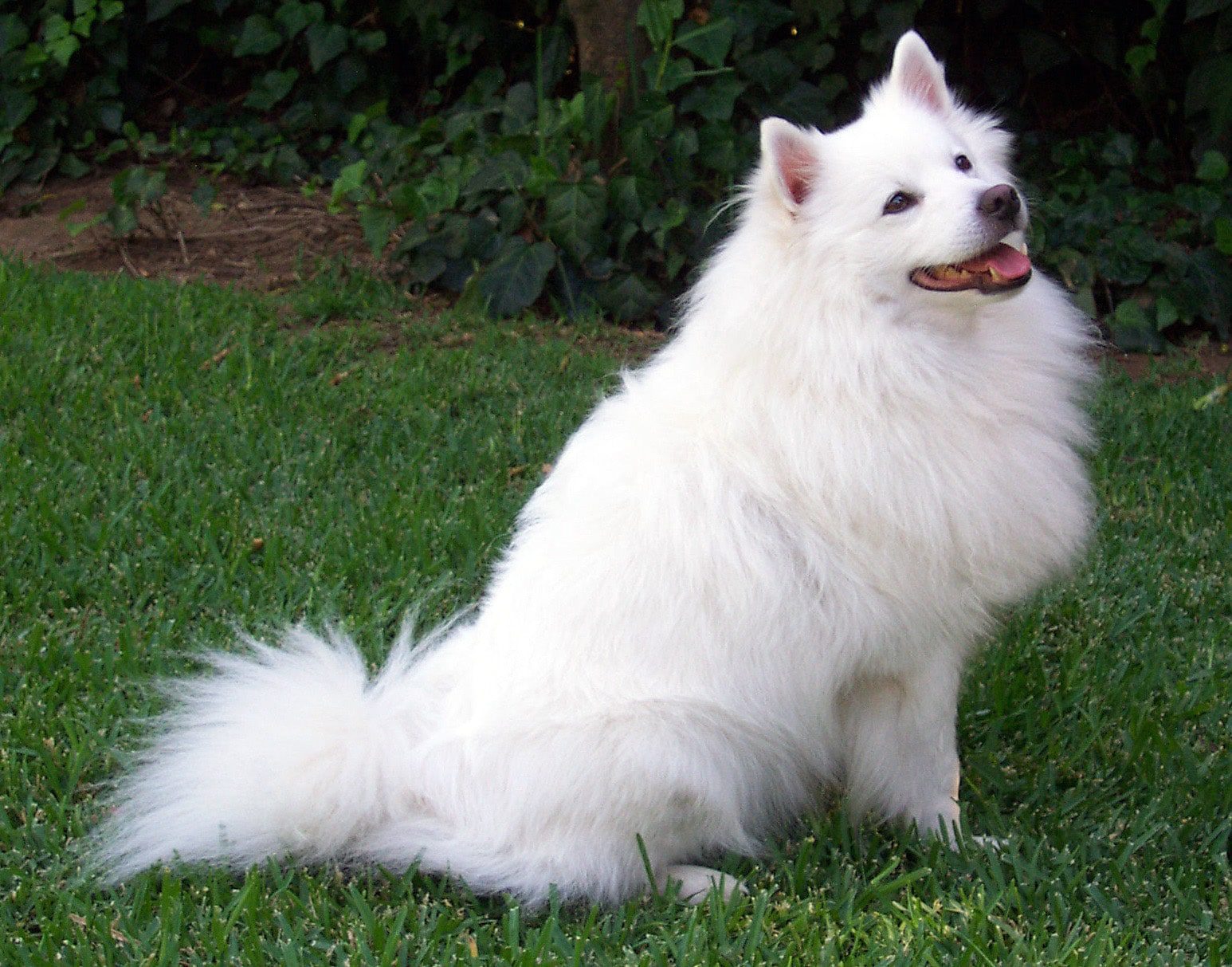
Cute pose, but she was actually a little freaked about the camera. (American Eskimo) – Christmas w/a K, CC BY-SA 2.0, via Wikimedia Commons

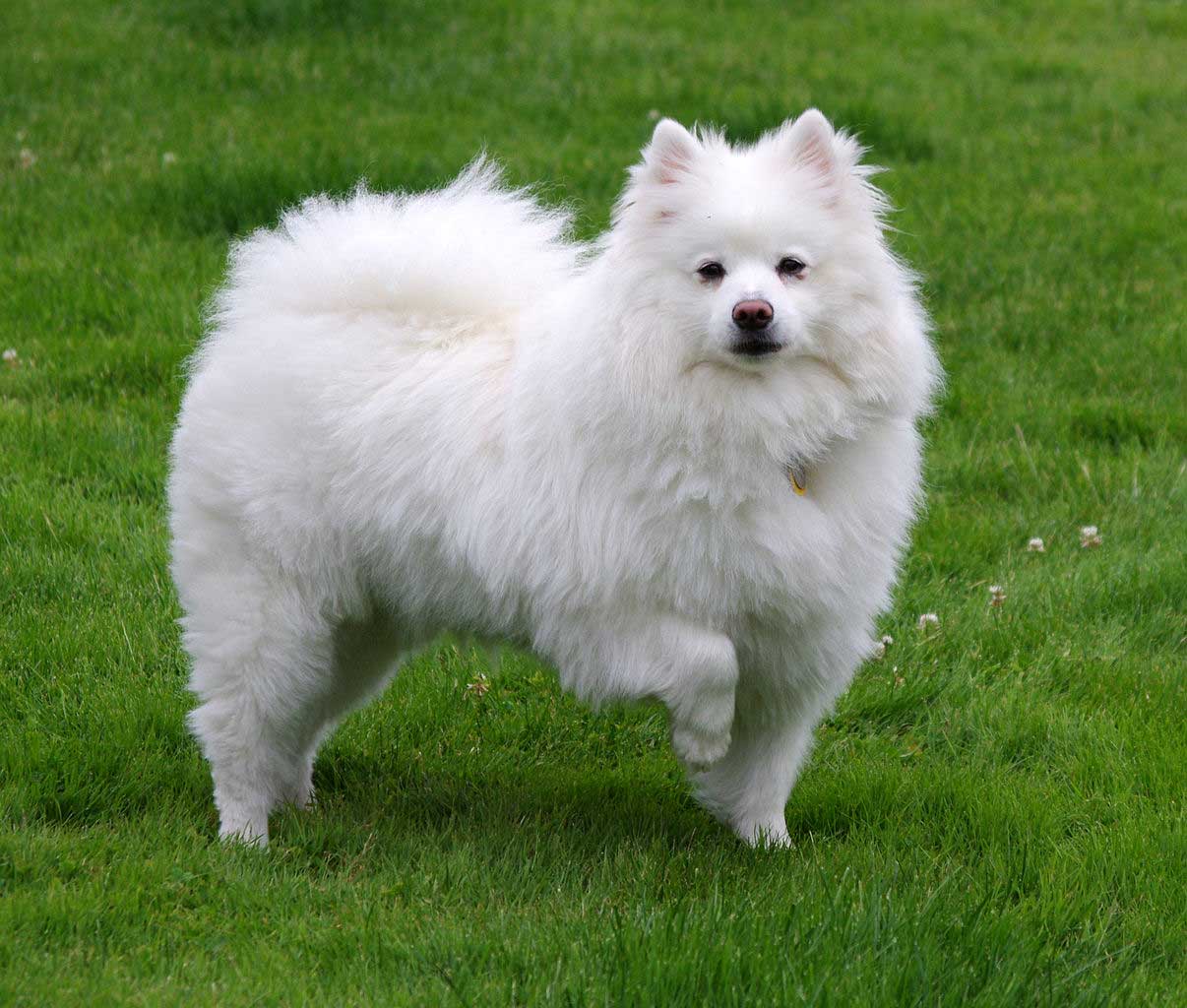
The American Eskimo dog -also known as Spitz German American– comes in three different size varieties, small to medium. The dogs of the so -called "toy size" reach a height of the cross up to 30 cm and a weight of between 2,7 and 4,5 kg. The version called "Miniature" has a cross height between 28 and 38 cm.. The weight of the dogs ranges from 4,5 and 9 kg. The largest variety, The "standard", reaches a height of 36 to 48 cm and weighs between 8 and 16 kg.

The coat of the american eskimo dog clearly resembles that of the Spitz. It is straight in position and of medium to long length. Dogs have a double coat that protects them from the wind and the elements. Approved coat colors are white and cream.

Life expectancy

The life expectancy of dogs of this breed is between 12 and 14 years.

Character and skills

The american eskimo dog considers himself a cheerful and friendly companion. He is very affectionate with his owners. He is always ready to defend his family with courage and without fear. Due to this strong bond with its congeners, these dogs are quite dependent and dependent. But, they are stubborn and, sometimes, stubborn, so they need a loving but constant education. In general, dogs are considered fairly easy to train.

It also, the American Eskimo is intelligent and capable of learning. They can be trained well and they can also learn little tricks, so they have already achieved a considerable degree of fame in the circus. These smart Spitz they need to be very busy so that the mental sub-challenge does not lead to bad behavior.

The American Eskimo he is very awake and they like to bark, so they are often used as watchdogs. But, they do not usually bite and do not show aggressiveness.

Videos "American Eskimo"

Cute American Eskimo Puppy's First Days At Home

American Eskimo Dogs | Breed Judging 2020

Alternative names:

  • Cloud Spitz
  • American Spitz
  • German Spitz
  • Cloud, Eskie
  • โ–ท The world of Pets: Dogs, cats, birds, reptiles, amphibians

    Toy Fox Terrier
    Estados Unidos Not recognized by the FCI

    The Toy Fox Terrier has inherited the character of Fox Terrier, but also of the races Toy that were used to create it.
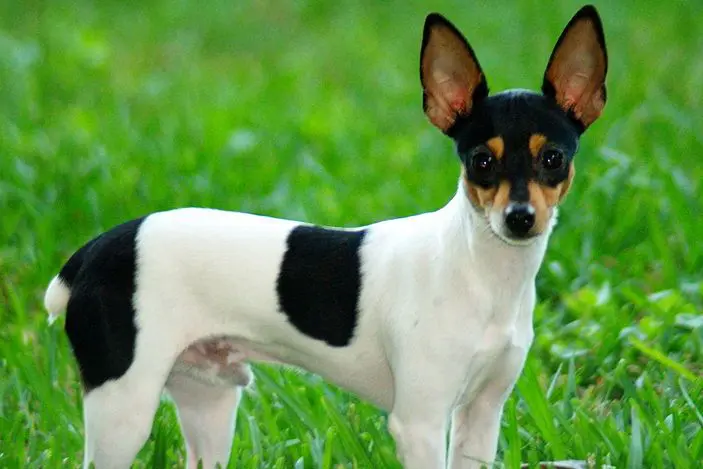
    Fox Terrier Toy

    Content

    Characteristics "Toy Fox Terrier"

    Coexistence is important that you have with your new friend. Before considering the acquisition of a dog of the breed ยซยซ you know certain factors. Not all breeds of dogs are apt to live in an apartment, you must take into account his character, their need for exercise, their interaction with other pets, their care and if you have small children, their level of tolerance towards them.

    Adaptation โ“˜

    2,0 of 5 stars (based on 1 review)

    friendly dog โ€‹โ€‹โ“˜

    3,0 of 5 stars (based on 1 review)

    hair loss โ“˜

    3,0 of 5 stars (based on 1 review)

    Affection level โ“˜

    5,0 of 5 stars (based on 1 review)

    Need for exercise โ“˜

    4,0 of 5 stars (based on 1 review)

    Social need โ“˜

    3,0 of 5 stars (based on 1 review)

    Home โ“˜

    3,0 of 5 stars (based on 1 review)

    Toilet โ“˜

    1,0 of 5 stars (based on 1 review)

    Friendly with strangers โ“˜

    3,0 of 5 stars (based on 1 review)

    barking โ“˜

    4,0 of 5 stars (based on 1 review)

    Health โ“˜

    4,0 of 5 stars (based on 1 review)

    Territorial โ“˜

    2,0 of 5 stars (based on 1 review)

    Cat friendly โ“˜

    3,0 of 5 stars (based on 1 review)

    Intelligence โ“˜

    4,0 of 5 stars (based on 1 review)

    Versatility โ“˜

    3,0 of 5 stars (based on 1 review)

    Child friendly โ“˜

    5,0 of 5 stars (based on 1 review)

    Surveillance โ“˜

    3,0 of 5 stars (based on 1 review)

    joy โ“˜

    5,0 of 5 stars (based on 1 review)

    History

    The Toy Fox Terrier originated in the United States in the first half of the 20th century.

    Your British ancestor, the Smooth Fox Terrier it was very popular in the 19th century in its country of origin for fox hunting. It was around this time, and more specifically during the second half of the century, when the first specimens crossed the Atlantic. They quickly won over the public and became popular with hunters and dog show fans alike..

    Since the beginning of the 20th century, many American breeders tried to miniaturize the Smooth Fox Terrier. His goal was to preserve his abilities to exterminate pests (Rats, mice, etc.), especially appreciated on farms, and at the same time create an easier dog to keep, requiring less exercise and food, and that I could live in the city.

    To achieve this goal, the smallest specimens were crossed with miniature dog breeds, thus guaranteeing the genetic diversity necessary to develop a globally healthy dog. The Chihuahua and the Italian Greyhound were used mainly as a complement to the Fox Terrier, but other races like him Miniature Pinscher and the Manchester Terrier miniature were also important.

    In the Decade of 1930, the breed had stabilized and the resulting dogs already had their current appearance. The United Kennel Club (UKC) American began to register specimens as Toy Fox Terrier already in 1936.

    This did not prevent many heated debates among breeders during the decade of 1940, since they did not agree on what to do next. Some advocated continuing to breed with miniature dogs, even if it meant moving away from his ancestor, el Smooth Fox Terrier, while others advocated crossing only with the latter, although this meant that the breed increased in size.

    In 1949 a breed club was created, the National Toy Fox Terrier Association, that put an end to the discussions. In fact, drafted a rule and decreed that mixtures were no longer authorized. The American Toy Terrier they could no longer interbreed with smaller breeds, not even with the Smooth Fox Terrier, so its characteristics were kept as is.
    Despite its success in the United States, was not up 2003 when the governing body of the country, the American Kennel Club (AKC), recognized race. The Canadian Kennel Club (CKC) did the same in 2006. But, not even Fรฉdรฉration Cynologique Internationale (FCI), which brings together the national associations of a hundred countries, nor the prestigious and influential British Kennel Club (KC) they have followed suit. In fact, at the global level, its recognition is still very partial.

    It also, even in your country of origin, the Toy Fox Terrier still relatively discreet. These may include, the AKC places the Toy Fox Terrier around the post 110 (of about 200) in the popularity ranking of breeds according to the number of annual registrations in the organization. This figure is even slightly below the rank 90 that occupied in the middle of the decade of 2000, shortly after its recognition, and is even lower than in the early 1990s. 2010, when I was rather on the job 100.

    Physical characteristics

    The Toy Fox Terrier it is a very small dog, who has retained the athletic build and general appearance of his ancestor, the Smooth Fox Terrier.
    Its body it is square and well built, with a solid bone structure that is not excessive. It stands on well-muscled legs, perfectly parallel when viewed from the front, and ending in small oval legs. The tail is high and is carried up. When allowed, as for example in the USA., it is usual for the tail to be cut at the level of the third or fourth vertebra. But, this practice (tail cut) is prohibited in many jurisdictions, like france, Belgium, Switzerland and Quebec.

    The head of the Toy Fox Terrier It is elegant, with balanced proportions. The ears they are a distinctive feature of the breed: they are pointed, V-shaped, located high on the skull and close together. It also, when the dog has at least 6 months of age, must be carried up, what is different from your ancestor, the Smooth Fox Terrier, where it bends forward. The specimens whose ears are not erect do not meet the standard and, therefore, cannot be registered as Toy Fox Terrier. The eyes they are well rounded, dark in color and very expressive. The snout is quite prominent and ends in a nose black, except in chocolate-colored individuals, in which it has the same color.

    The fur of the Toy Fox Terrier consists of a sparse undercoat and a thin, shiny topcoat, soft to the touch. It is evenly distributed throughout the body, although it may be a bit longer at the shoulders.

    The color white is always dominant, necessarily present in more than half of the coat. But, brands are always present: no smooth individuals. They are present even on the head and can be black in color, fire, black and tan or chocolate and tan.

    Last, the sexual dimorphism is almost non-existent in this breed: males and females are about the same size.

    Breed standard

    The breed standards are documents produced by official bodies that list the conditions that a dog must meet. Toy Fox Terrier to be fully recognized as belonging to the race:

    Varieties of "Toy Fox Terrier"

    The Toy Fox Terrier is sometimes confused with him Miniature Fox Terrier (or Mini Foxie), a breed created in Australia.
    The Mini Foxie has a breed club, the Mini Foxie Club of Australia, but it is not recognized by any official canine body, neither as a variety nor as a race, not even in your home country.

    Although both the Toy Fox Terrier as the Miniature Fox Terrier originated from the miniaturization of the Fox Terrier, the breeds used in the process were not the same. While the Toy is primarily a cross between Smooth Fox Terriers, Chihuahua and Italian Greyhound, the Miniature was created primarily by crossing Smooth Fox Terriers with Toy Manchester Terriers and Whippet. So, these dogs have different origins, which explains that they do not have the same appearance. In fact, although they are almost the same size, the Miniature Fox Terrier it's slightly heavier, since it weighs between 1 and 2 kg more than Toy Fox Terrier.

    The Miniature Fox Terrier is practically non-existent outside Australia and New Zealand.

    Character and skills

    The Toy Fox Terrier has inherited the character of Fox Terrier, but also from the toy breeds that were used to create it. In this way he manages to concentrate the qualities of the terriers and the temperament of small dogs, all in a skull barely bigger than an egg.

    He is very attached to his family and is very happy with her. You need to spend a lot of time with them, and it is not suitable for people who are out most of the day. In fact, easily suffering from separation anxiety, can quickly become destructive if left alone too often or for too long. Its small size does not prevent it from getting dirty, either pulling a vase, urinating on the carpet or biting on the remote.

    The fact that he is very dependent on his family does not mean that this dog is docile and attentive. On the other hand, is quite stubborn and authoritarian, and he likes more than anything that his people bow to his will. Despite its size, rushes to take control of the home if its owner allows it.

    Attached to his family, the Toy Fox Terrier is quite suspicious of strangers and needs time to get used to their presence. But, once you have met him, things are going very well and he appreciates the presence of people he is used to. You can easily be left with people you know for a few days if your family is away and cannot take you.

    On the other hand, not made for living with young children. Their games, sudden movements and screaming can excite or scare you, and an accident can happen quickly. It also, its size makes it very vulnerable: a fall or a blow delivered inadvertently or in a fit of anger can seriously injure you, with potentially life-long consequences. In any case, if you come into contact with young children, should never be without adult supervision.

    The Toy Fox Terrier tends to get along very well with the house cat - even if it is bigger than him- and can befriend a rodent of his size, like a rabbit. Sharing your home with another animal can be a great way to help you better cope with your owners' absences., and things work better if you have grown up with it. On the other hand, it is better not to do it with a bird, a reptile or a small rodent: his hunting instinct would have every chance of waking up one day and bringing the experience to an abrupt end.

    Relationships with other dogs are complicated and vary greatly from one individual to another, depending on your socialization. Some see other dogs as potential threats, while others see them as playmates. In any case, there is a feature that all Toy Fox Terrier have in common: are completely unaware of their size, and do not hesitate to interact with dogs of 20 times its weight. Whether to play games or to participate in a grunting and teasing contest, these situations are always risky, and their owners must be especially careful to protect them from their burning.

    Having said that, the problem may not arise very often, since the Toy Fox Terrier you don't need to spend hours on the ride every day. In fact, although he has inherited his hyperactive side from Fox Terrier, has little need to go out, so a daily walk of 20 to 30 minutes is enough for you to stretch your legs and get enough exercise. In any case, it is best to take him for a walk on a leash, both to protect him from himself and to prevent him from suddenly disappearing chasing a small animal that passes by.

    If you still feel like exercising when you return, you can always burn off your excess energy indoors, especially if he has the opportunity to play with his owner. Then, once you are tired, he likes to come to rest on his knees, or even better, in the cozy bed of a family member.

    In fact, the American Toy Terrier it is a breed of indoor dog, and it is not only its closeness to the family that makes it occupy a place in the heart of the home and that it should never be left alone outside. In fact, its small size makes it a prime target not only for thieves, but also for many predators, from weasels to hawks, foxes and vultures. This is all the more true since their survival instinct is not highly developed., which may also explain that feel free to go tell the neighbor's Great Dane what you think, thus putting themselves in danger.

    The risk is all the greater as for this dog, quite intelligent and very curious, likes to explore and discover new things, also without being really aware of its intrinsic fragility, that could play a trick on him. Thus, it is important that they always do it in the company of their owners, those who are delighted to accompany to new places, for example during a vacation. This intelligence and curiosity also makes him capable of learning many tricks and becoming a true specialist in dog sports such as agility or obedience..

    Last, if you live in a poorly soundproofed apartment, neighbors are likely to attract enmity. In fact, it is difficult for you to integrate certain basic rules of community life, and in particular the fact of respecting the tranquility of the people around: he likes to make his voice heard, which is surprisingly powerful for its size. Above all, tends to bark when he hears something, either the elevator or the neighbor's door, but also simply to remind the world that it exists. This makes him a wonderful alert dog., but in a neighbor difficult to live with.

    Education

    The socialization of the young Toy Fox Terrier is of utmost importance to your future well-being, especially since he tends to be quite suspicious of strangers. So, it is better that you have many opportunities from your first months to get acquainted with the people and animals that will be part of your life (friends, veterinary, neighbor's dog…). It also, must face all kinds of situations and stimuli in different environments, so that he is more serene in the face of novelty and does not behave in an undesirable way when he is an adult.

    Like many breeds of this size, the risk of small dog syndrome is real with the Toy Fox Terrier. In effect, blinded by the tenderness he feels for this adorable ball of fur that seems so fragile and harmless, his master does not take long to forgive him all his misdeeds and faults, included, for example, aggressive behaviors, authoritarian or possessive. But this is not a gift for him or his partner, because a dog needs to be framed and faced with some authority to know its place and be balanced. Given his propensity to do what he pleases and to take his little world by the hand, It is important, Therefore, show your dog that he decides as soon as he gets home, when it is most receptive and malleable. This allows you to quickly identify and assimilate your position in the household hierarchy., thus reducing his desire to take control once he is an adult. As such, the rules must be clear, consistent in time and space, and all family members must ensure its implementation.

    But, as long as you know how to make yourself respected, even a novice teacher can achieve great things with a Toy Fox Terrier. The dog's curiosity helps him learn new things quickly, and is usually happy to show his qualities. But, it is better that the workouts are short and frequent, instead of long boring sessions from time to time. It also, as it happens with many races, positive reinforcement methods are the most effective, since the stimuli, caresses and treats are an excellent source of motivation.

    In any case, one point that needs to be addressed early on is your propensity to bark at all times. It is advisable to try to understand the situations in which you are expected to remain silent or, at least, teach you to stop on command.

    Last, the American Fox Terrier often learn to clean quickly, but the males do not usually have a good aim, so it is advisable to reserve enough space for them.

    Health

    The Toy Fox Terrier he is a quite robust dog, with one life expectancy of 12 to 15 years quite common for its size.

    But, their thin skin and sparse fur do not protect them well from extreme weather conditions. They usually spend most of their time indoors, so they are not affected much by outside conditions, but their owners must be careful when walking them. In summer, it is better to avoid hot and sunny hours and go out in the morning or at night. In winter, or when it rains, a sweater or mackintosh for dogs can be very useful.

    Among the diseases that can affect the American Fox Terrier, are mainly found:

    • The patellar dislocation, which is usually related to a genetic predisposition, occurs when the kneecap slips out of place and locks the knee, causing a limp;
    • The Legg-Calve-Perthes disease, a necrosis of the femur that can be inherited. Causes pain and loss of mobility in the hind leg, but it is operable;
    • The von Willebrand disease, an inherited bleeding disorder that causes spontaneous and / or heavy bleeding;
    • The Hypothyroidism, a hormonal imbalance that can cause all sorts of symptoms: apathy, weight gain, severe fatigue, damaged fur, etc. Various treatments that provide a synthetic hormonal supplement can prevent the appearance of these symptoms, although they can't really solve the root problem.
    • The lens luxation, that causes it to move abnormally, causing pain and, above all, rapid loss of vision, unless it is operated on time. This condition can also be of hereditary origin;
      skin allergies, that may be caused by the environment, food or parasites, and that cause redness and itching.

    The best way to reduce the risk of adopting a puppy with a hereditary disease is to go to a breeder responsible for Toy Fox Terrier, that routinely tests all individuals you plan to use as breeders, as well as the puppies of each litter. In addition to ensuring that the puppies are well socialized from their first weeks, a serious breeder can present the results of the genetic tests carried out to his parents and even to himself. You must also present a certificate of good health issued by a veterinarian, as well as details of the vaccinations received by the puppy, registered in the health card of this (or vaccination book).

    Once the puppy comes home, it's up to the family to stay healthy. Given its fragility, it is especially important not to overload your bones and joints, especially when playing. This is especially true during the growing season., when injuries could have irreversible consequences.

    It also, even if I spend little time abroad, you are still exposed to the risk of parasites. Thus, it is important to ensure that deworming treatments are renewed throughout the year, so that the dog never ceases to be protected. This protection goes hand in hand with the protection provided by vaccines: some follow-up is also necessary at this level, so that booster shots are always given on time. The vet can be asked to take care of this at the same time as the dog's health check, which is necessary at least once a year to detect any problems as early as possible and, if required, to be able to treat it in the best conditions.

    Grooming

    The Toy Fox Terrier it is one of the easiest dog breeds to care for.

    This is especially true of its short coat., that only needs a quick weekly brushing. Even during the fall and spring molts, hair loss is limited, but it is still advisable to brush the dog every two or three days to remove excess dead hair.

    It also, do not have a specific odor, they are usually clean and spend most of their time indoors, where there is little opportunity to get dirty or even wallow in a smelly substance. Thus, it is seldom necessary to bathe the Toy Fox Terrier. Once a year is more than enough, and a mild shampoo designed specifically for dogs should be used. This is because the pH of your skin is different from that of human skin..

    every week, along with brushing, the dog's ears must be inspected and cleaned with a cloth. This prevents the accumulation of dust and dirt, which can cause infections.

    The weekly grooming session should also be an opportunity to check and clean the dog's eyes., gently rubbing them with a damp cloth to remove the marks that usually appear at the corner of the eye, where tears drain.

    Regular tooth brushing is also essential for maintaining good oral health and reducing the risk of bad breath and dental disease.. The ideal is a daily brushing, but once a week is enough. In any case, you should always use a toothpaste for dogs.

    Last, given its low level of activity and the time spent indoors, in general you have to cut your nails once a month, since natural wear and tear is not enough to file them. If you hear a clicking noise when your dog walks on hard ground, you should cut his nails because they are too long and could break or even be injured.

    Although caring for a Toy Fox Terrier it's not especially complicated, must be done correctly. This is necessary not only to be effective, but also to prevent the dog from getting hurt. So, it can be useful to learn them the first time from a professional, either a dog groomer or a vet. Better to start quickly, so that the animal integrates them from childhood as part of the routine and does not rebel.

    Food

    There is no special difficulty in feeding a Toy Fox Terrier, since industrial dog food is doing very well. But, it is important to ensure that the food is of sufficient quality and provides all the nutrients it needs, depending on your age, your health and activity level.

    Like all dogs, it is best to divide your daily ration into at least two meals, ideally one in the morning and one at night.

    In any case, although it is similar in size to a domestic cat, it is not a question of giving cat food. This is because cat food is not suitable for dogs at all., since the needs of both species are completely different. Feeding your pet cat food can cause serious health problems.

    On the other hand, although they are not especially active, the Toy Fox Terrier they are not very prone to obesity problems. But, no individual is saved, and this is even more true if he has been neutered. Too many treats, too large a serving or insufficient daily exercise will inevitably lead to weight gain. Thus, it is recommended to weigh your dog every month, to detect any variation as soon as possible.

    These variations should not be underestimated. From a human perspective, a weight gain of 300 grams may seem insignificant. In the case of a small dog that only weighs 2 or 3 kg, is very different, and it is evident that one should be alarmed if it is confirmed -or even accentuated- next time. Then it is necessary to go to the vet, to benefit from the expertise of a professional. This is because being overweight may not be related to the animal's diet or activity level., rather it may be the result of a reaction to medication or a disease. Only the vet can safely determine the cause of the problem and indicate how to remedy it..

    Whatever the cause of weight gain, it may be necessary to change the diet that is given. The same goes for food allergies, a problem this breed is prone to.

    Last, like any dog, the Toy Fox Terrier you need to be able to drink whenever you want, so a bowl of fresh water should be available at all times.

    For sale "Toy Fox Terrier"

    In United States, the price of a puppy Toy Fox Terrier round the 1.000 dollars on average, but the price range is wide, of 500 to 2.000 $.

    This is even more true in Europe, where the number of breeders is very small. It also, as the breed is not yet recognized by the various national canine organizations, none of them can provide a registration certificate attesting that the animal is purebred. The rare specimens found in Europe cannot be considered, for the moment, as true Toy Fox Terrier.
    In any case, in case of adoption abroad, It is necessary to take into account that transport costs and administrative fees are added to the purchase price, and inform yourself in advance about the current legislation and the necessary documents to import a puppy into the country.

    It also, as in the case of any race, the observed price differences can be attributed in particular to the reputation of the breeder, to the prestige of the line from which the puppy comes and its own characteristics. These may include, a puppy adopted from a champion breeder and descended from parents and grandparents who have won numerous titles commands a higher price. Even within the same litter, there may be significant differences depending on the proximity of each individual to the breed standard.

    Images "Toy Fox Terrier"

    Photos:

    1 – Toy Fox Terrier by Ltshears, CC BY 3.0, via Wikimedia Commons
    2 – Toy Fox Terrier by Flickr
    3 – Toy Fox Terrier by Flickr
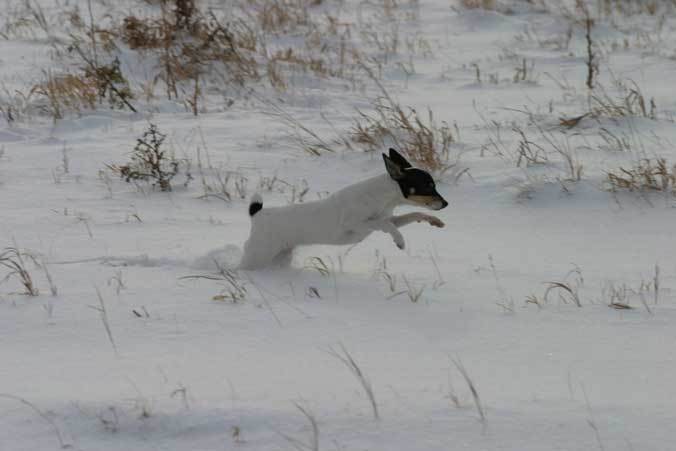
    4 – Toy Fox Terriers are happy to go out on warm winter days by Haateigh, CC BY 3.0, via Wikimedia Commons

    Videos "Toy Fox Terrier"

    Alternative names:

    1. American toy terrier, Amertoy (English).
    2. Fox Terrier Amรฉricain, American Toy Terrier (French).
    3. Toy Fox Terrier (German).
    4. American toy terrier, Amertoy (Portuguese).
    5. Toy terrier americano, Amertoy (espaรฑol).

    โ–ท The world of Pets: Dogs, cats, birds, reptiles, amphibians

    Pit bull
    Estados Unidos Not recognized by the FCI

    Pit Bull Terrier Americano

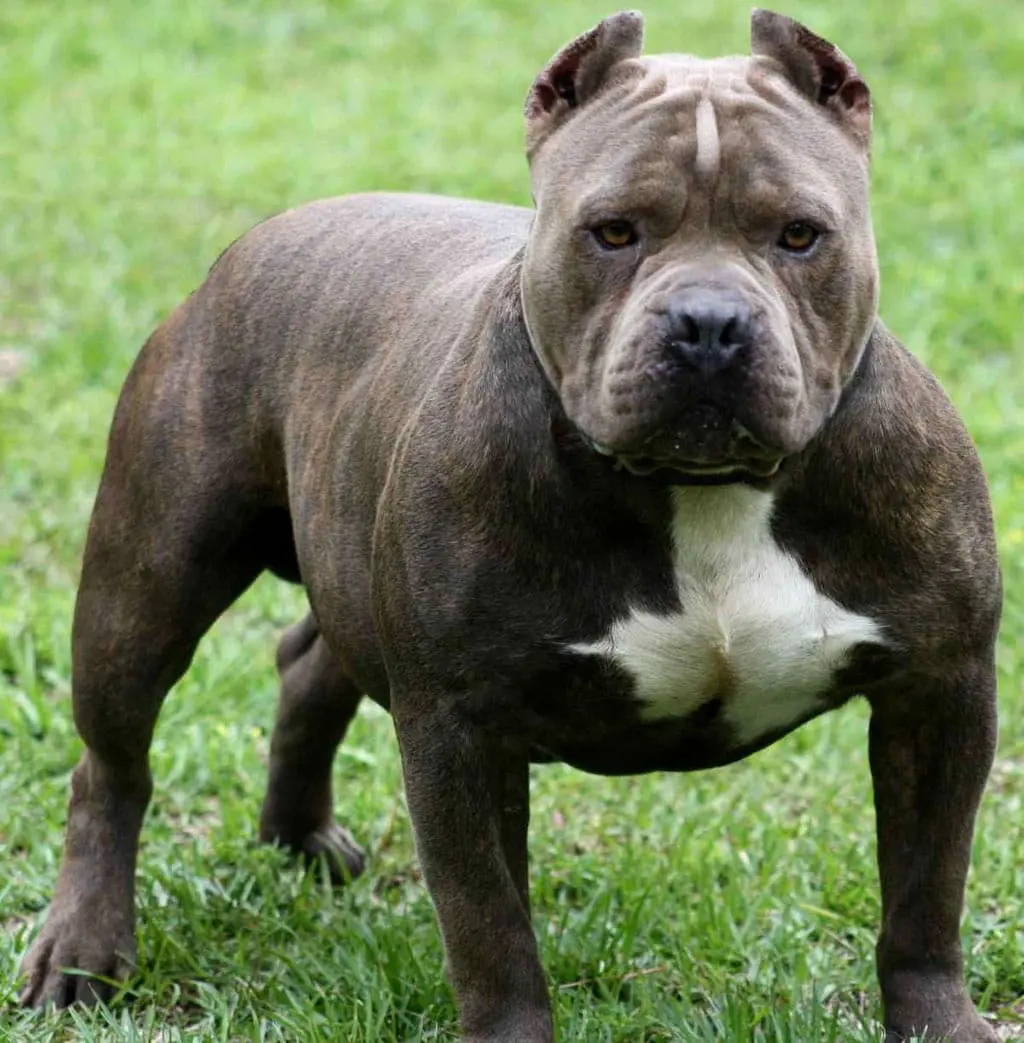
    The Pit bull in Spain it is considered potentially dangerous race.

    The Pit bull (American Pit Bull Terrier) is a pure breed of dog, originally from United States, It was forged from dogs imported from United Kingdom. Were used as fighting dogs until they were banned in 1976; they are now bred as pets and athletes in legal sports (Although it is still the favorite breed, dog fighting carried out clandestinely).

    Read all about the race by clicking on: American Pit Bull Terrier.

    • Otros nombres: American Pitbull Terrier / APBT / Pit / Pitty

    Recognized by:

    • United Kennel Club (UKC).

    โ–ท The world of Pets: Dogs, cats, birds, reptiles, amphibians

    Boykin Spaniel
    USA Not recognized by the FCI

    The Boykin Spaniel It is easy to train and has always wanted to work

    Boykin Spaniel

    Content

    Characteristics "Boykin Spaniel"

    Coexistence is important that you have with your new friend. Before considering the acquisition of a dog of the breed "Boykin Spaniel" you know certain factors. Not all breeds of dogs are apt to live in an apartment, you must take into account his character, their need for exercise, their interaction with other pets, their care and if you have small children, their level of tolerance towards them.

    Adaptation โ“˜

    5,0 of 5 stars (based on 1 review)

    friendly dog โ€‹โ€‹โ“˜

    3,0 of 5 stars (based on 1 review)

    hair loss โ“˜

    3,0 of 5 stars (based on 1 review)

    Affection level โ“˜

    5,0 of 5 stars (based on 1 review)

    Need for exercise โ“˜

    5,0 of 5 stars (based on 1 review)

    Social need โ“˜

    3,0 of 5 stars (based on 1 review)

    Home โ“˜

    5,0 of 5 stars (based on 1 review)

    Toilet โ“˜

    4,0 of 5 stars (based on 1 review)

    Friendly with strangers โ“˜

    3,0 of 5 stars (based on 1 review)

    barking โ“˜

    3,0 of 5 stars (based on 1 review)

    Health โ“˜

    3,0 of 5 stars (based on 1 review)

    Territorial โ“˜

    3,0 of 5 stars (based on 1 review)

    Cat friendly โ“˜

    3,0 of 5 stars (based on 1 review)

    Intelligence โ“˜

    3,0 of 5 stars (based on 1 review)

    Versatility โ“˜

    4,0 of 5 stars (based on 1 review)

    Child friendly โ“˜

    3,0 of 5 stars (based on 1 review)

    Surveillance โ“˜

    3,0 of 5 stars (based on 1 review)

    joy โ“˜

    3,0 of 5 stars (based on 1 review)

    History

    The Boykin Spaniel (Caniche de Pantano or Little Brown Dog) It is a breed of dog of medium size, which was bred as a spaniel for hunting wild turkeys in the swamp of the Wateree River in South Carolina, United States. It is the official dog of the State of South Carolina.

    The Boykin Spaniel descends from hunting dogs bred in the century 20 in South Carolina, EE.UU. The dogs had to be small enough to ride in the small boats used by hunters in the swamps., was that, L. Whitaker Boykin (1861-1932) experimented with different crosses races, and the dog resulting was the Boykin Spaniel, It is named.
    Legend has it that Boykin began his breeding program with a dog named "Dumpy", a friend of Boykin was found in the streets and in the development of the race it is presumed that they were used for the Chesapeake Bay Retriever, Springer Spaniel, the Cocker Spaniel, and the American Water Spaniel.

    The area in which L. Whitaker Boykin had his kennel was around Camden, South Carolina, a tourist area, This led to his race was observed by tourists who began to buy copies and little by little the Boykin Spaniel breed was divided by United States.

    The Society of Boykin Spaniel (BSS) was created in 1977 and began to keep a genealogical record in 1979. The el Spaniel was recognized by the United Kennel Club in 1985.

    In the year 1990 a group of fans formed the Club of Boykin Spaniel and the Boykin Spaniel Breeders Association of America in order to achieve breed recognition by the AKC and to gain access to spaniel hunting trials. That was the first Boykin Spaniel organization to form and maintain a โ€œCode of Ethicsโ€. In 2007, Headquarters of the Association of breeders of Boykin Spaniel in the United States it was recognized by the AKC as the official Canine Club of the breed. In December of 2009 the Boykin Spaniel officially became an AKC registered breed.

    The society Boykin Spaniel has a Code of Ethics for breeders, and sponsor events of trials of field and copies of this breed rescue. In addition to the AKC is also recognized by many Canine Clubs of minor or canine records companies, and in all entities it is promoted as a rare species of pet. But at the present time, the Boykin Spaniel is becoming one of the breeds Spaniel most common in the United States.

    Did you know??

    The fame of Boykin Spaniel is that it is the official dog of the state of South Carolina, a title conferred on him 1984.

    Physical characteristics

    The Boykin Spaniel It, slightly, largest that the English Cocker Spaniel, and much heavier due to his wide body. The height at the cross for the males is of 39,4 to 45,7 cm and weigh in 13,6 to 18,2 kg. Females are smaller than, measuring of 35,6 to 40,6 cm. to the cross and weigh in 11,4 to 15,9 kg. Although against the original form and function of the breed, some breeders have carried out trials in order to increase their size so that they are more competitive against other breeds Retriever. Buyers should be aware of the magnitude and the weight in the pedigree of the puppies before choosing a breeder if the size is a factor in the choice of your dog.

    Videos "Boykin Spaniel"

    Traditionally, his tail was cut three days after birth, leaving 1/3 its length, but these practices are already prohibited in many countries.

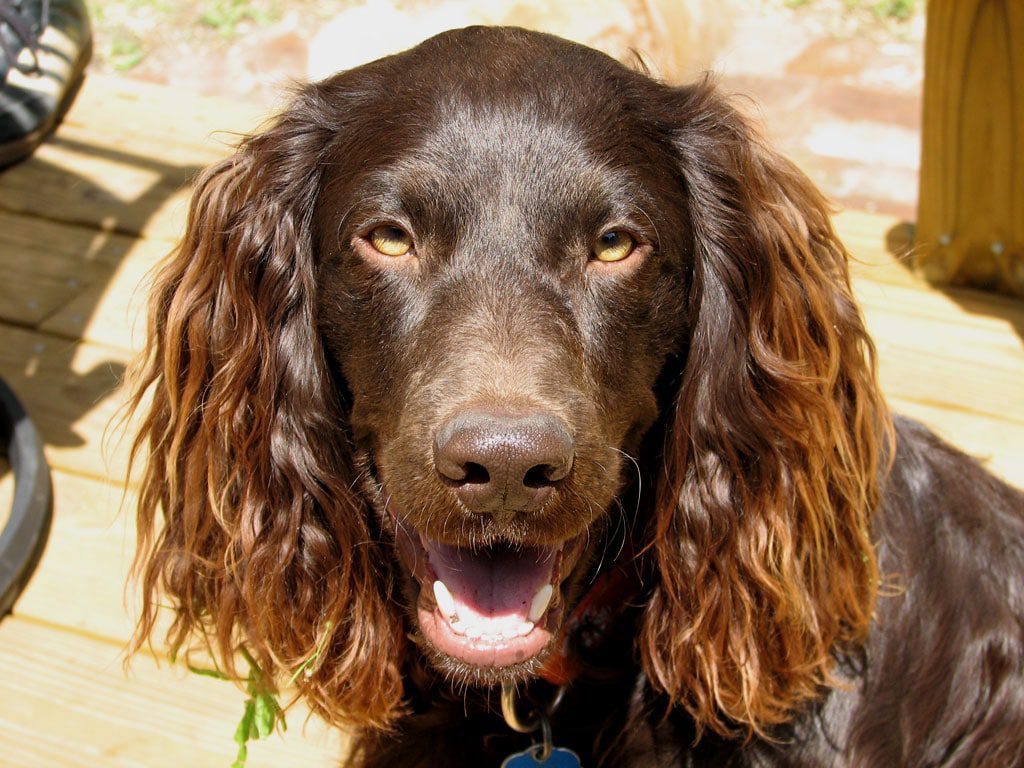
    The eyes are bright and attractive. Color varies from bright gold to a dark amber color. The puppies are born with bluish eyes and little by little they take on the characteristic amber color of the breed..

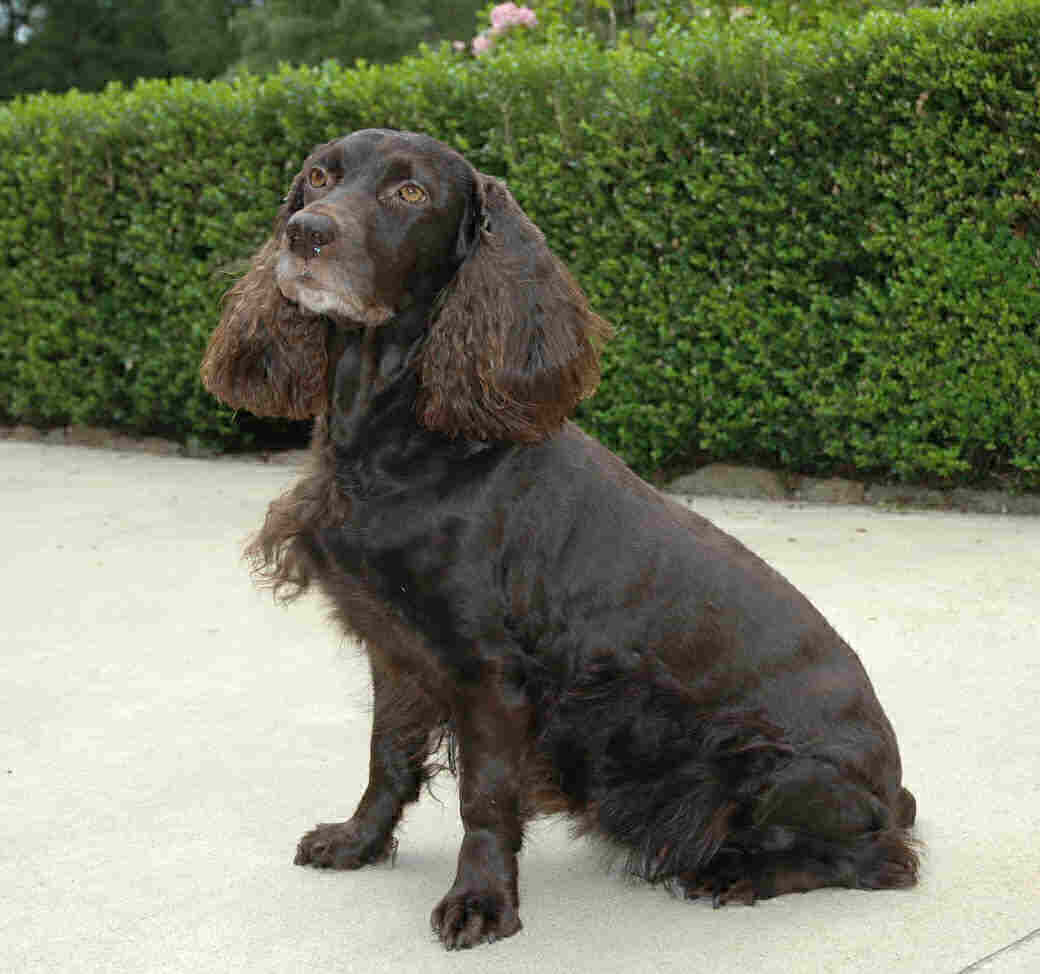
    The color of the layer is formed by different shades of Brown, which can range from liver color to chocolate. Within this range, any color is admitted.

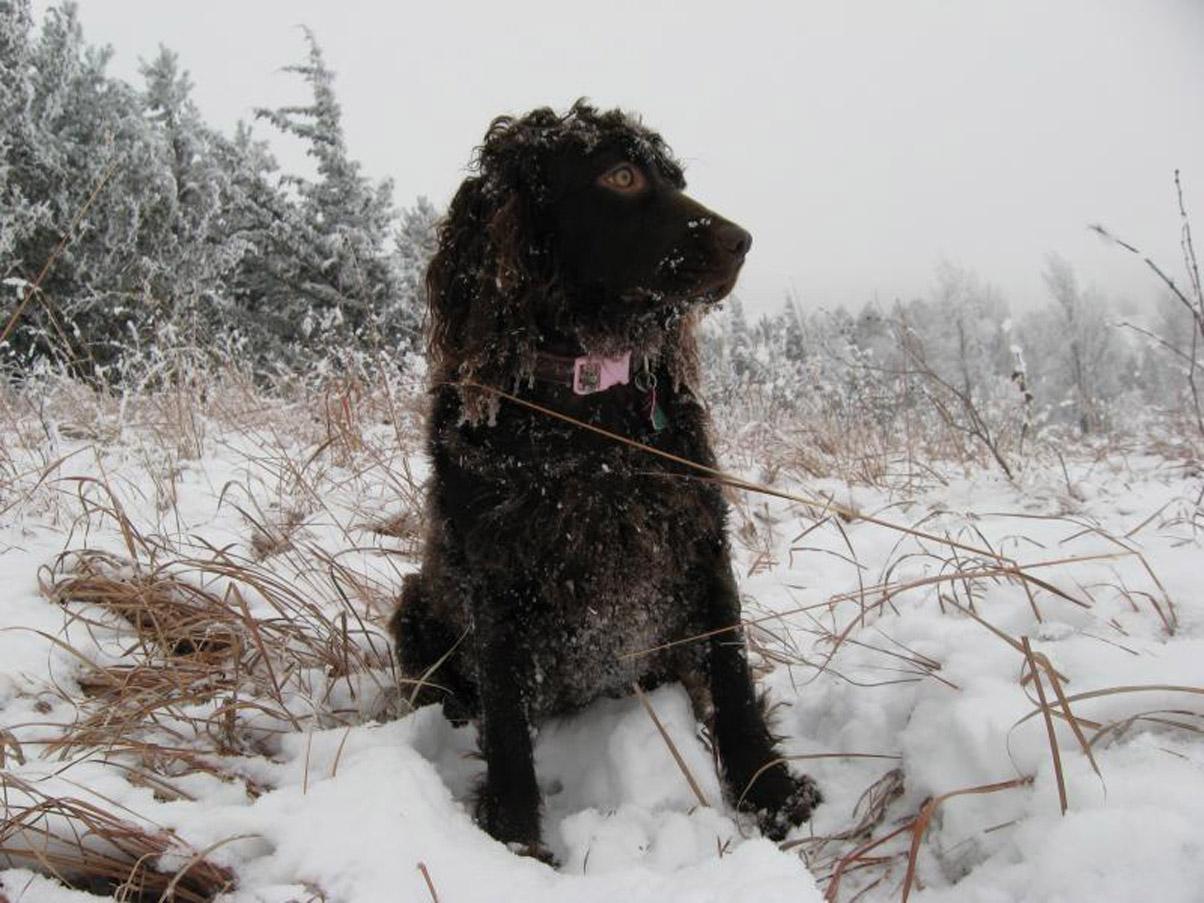
    The Boykin Spaniel, It is a dog of water which was raised to adapt to the moderate climate of Southeast United States, but his layer varies quite a bit due to the number of ancestors he has… Coat length and density varies widely due to the variety of breeds that make up the Boykin Spaniel's history., for that reason, any type of layer is acceptable, still some of them is very curly as the American Water Spaniel and others with very smooth fur as the Field Spaniel. The length is usually of 2.5 to 5.8 cm around the body. In addition all have fringes in the ears, chest and hind legs, where the density and hair length can vary. While the color of the layer is composed of various shades of Brown, It is possible that the dog a colorless Golden tone for the Red Sun above all in the ears and should not be penalized, If stands for competitions.

    The maintenance of the mantle Boykin Spaniel is minimal, you just need brushing it often, and there are few and isolated hair cuts, light shaping around the head and topline is enough. Some people let their ear hair grow quite long and that gives the feeling that they are wearing a bun like the Setter Llewellin. To the Boykin Spaniel that are used for hunting or that live in the field, often cropped them hair in the area of the belly and a little the skirt and should not be penalized, provided the proper length is maintained to protect the skin. Shave that area is somewhat improper because it can cause some layers of growth with excessive bleaching, discoloration or grayscale. Y, it could also damage the dog's skin, post your protection.

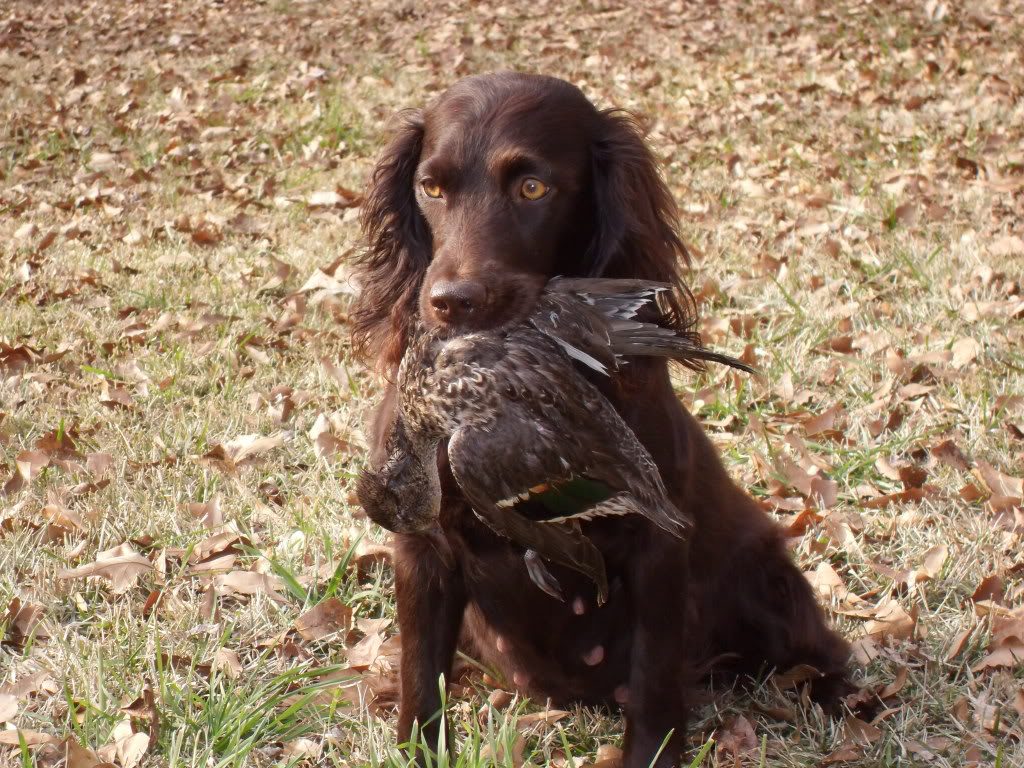
    The Boykin Spaniel he is a versatile hunter, working like a dog water and as a Hunter of mountain which can be hunted birds in flight, although that is not the style of hunting Boykin. They can be used in driving deer or in tracking and monitoring of dams of wounds. Its small size makes them easy to carry in a canoe or a small boat, often described as "the dog that doesn't rock the boat". The Boykin Sleepingl is recognized by the AKC.

    Observations

    While the Boykin Spaniel he is a dog in good health, There are common conditions with all breeds of water dogs and Retriever, they can suffer.

    The Boykin Spaniel has a probability of 37% born with hip dysplasia, according to the statistics of 2006. The disease is usually detected in the from 2 years of age. All breeders of dogs Boykin Spaniel must receive an evaluation and certification from the Orthopedic Foundation for Animals (OFA), one of the steps of the assessment is done through x-ray only to the 4 months of age the puppy.

    The breed also has a high incidence of eye problems and dislocation of patella. Skin and hair problems exist and may be associated with disorders of the thyroid or endocrine. The Cushing's disease and the Hypothyroidism are known in the breed.

    The Exercise-Induced Collapse (EIC) is a neuromuscular disease, that applies to the Labrador Retriever and closely related breeds, como ser el Chesapeake Bay Retriever y Curly Coated Retriever. In the year 2010 a research group led by Professor James Mickelson, Minnesota has been found responsible for mutation in the gene DNM1. In the same year, the research team in collaboration with the American Kennel Club Canine Health Foundation, identified in the breed Boykin Spaniel due to the presence of Exercise-Induced Collapse is several of its specimens that, they were recorded in the OFA database.

    At such news, members of the Canine Club Boykin Spaniel, They claimed a serious study of the race which resulted to 56% of the copies of Boykin Sleepingl studied had one or two copies of the gene that causes EIC. It was a devastating result because found is surprisingly high, the highest of all the races in which is currently studying for the disease.

    The first symptoms of Exercise-Induced Collapse (EIC) they are alterations in the March of the animal, rigidity in the limbs and tumbler screening walk. Sick animals show muscle weakness, and collapse to the 5-15 minutes after exercise. It is a disease which can go unnoticed stay for years if the animal is not subject to strong efforts or high stress.

    A DNA test allows for the direct detection of the mutation responsible for. DNA analysis is independent of age of the animal and can be in puppies. Not only is it possible to differentiate between animals that have or not the mutation, but those healthy animals carriers may also be detected, what is of great importance for breeding.

    According to the Code of Ethics of the Club of Boykin Spaniel and the Breeders Association Boykin Spaniel In America, all breeders of race must be subjected to their litter to tests that detect possible problems of hips, hereditary eye disease, of heart, as well as for other diseases that may have a genetic component, such as allergies, elbow dysplasia, dislocation of patella, and the presence of the gene responsible for the EIC.

    The OFA and the AKC have an extensive database called CHIC (Canine Health Information Center). To obtain a CHIC number, dogs must undergo an annual โ€œCERFโ€ test that screens their eyes, problems of patellar dislocation, and proof of hip dysplasia. The owners of the dogs must be in accordance with the publication of the results in the CERF in the OFA databases.

    There are also optional heart and blood tests. elbow dysplasia. A CHIC certification does not mean that the dog has passed their evaluations and does not have any disease, but it is simply an indication that the owner checks the health problems that his Boykin Spaniel, or race that is.

    Testing and responsible husbandry can reduce the incidence of these problems, and purchasers of puppies, for added security, they should request these test results.

    The Orthopedic Foundation for animals has been evaluated to 157 dog breeds between January of 1974 until December of 2009. The Boykin Spaniel is the thirteenth race worse rated for hip dysplasia by presenting a 34,8% of the affected copiess.

    Character and skills

    The Boykin Spaniel he is a friendly and sociable dog that thrives happily in a family environment with lots of outdoor activities. It is easy to train and has always wanted to work. Is very stable and loving children and other dogs. Can sometimes be described as very energetic and with great stamina that lasts all day. They are highly adaptable to different environments, as long as they enjoy social interaction and plenty of time to burn off excess energy. This dog is very good with children, and with other dogs, they did not get angry easily and tend to be eager to please and love to their owners.

    As with all dogs, the "Boykin Spaniel" they require daily exercise and regular care. As we said above, the cut of the layer on a regular basis is recommended especially if the dog is in the field, as the fur is soft it picks up Fox tails, Brambles and whole skewer it finds in its path. Y, Remember brushing it often to avoid the entanglements in long hair.

    ยซBoykin Spanielยป Images

    โ€œBoykin Spanielโ€ Videos

    Type and recognitions:

    • Not recognized by the FCI โ“˜
    • Federations: AKC โ“˜, ANKC โ“˜, UKC โ“˜

    Alternative names:

    1. Boykin, Swamp Poodle, LBD (Little Brown Dog) (English).
    2. Boykin Spaniel (French).
    3. Boykin Spaniel (German).
    4. Boykin spaniel (Portuguese).
    5. Boykin Spaniel (espaรฑol).

    โ–ท The world of Pets: Dogs, cats, birds, reptiles, amphibians

    Blue Lacy
    Estados Unidos Not recognized by the FCI

    Blue Lacy

    The Blue Lacy, they are strong and fast, Lightweight and proportional structure

    Content

    Characteristics "Blue Lacy"

    Coexistence is important that you have with your new friend. Before considering the acquisition of a dog of the breed ยซยซ you know certain factors. Not all breeds of dogs are apt to live in an apartment, you must take into account his character, their need for exercise, their interaction with other pets, their care and if you have small children, their level of tolerance towards them.

    Adaptation โ“˜

    3,0 of 5 stars (based on 1 review)

    friendly dog โ€‹โ€‹โ“˜

    2,0 of 5 stars (based on 1 review)

    hair loss โ“˜

    3,0 of 5 stars (based on 1 review)

    Affection level โ“˜

    3,0 of 5 stars (based on 1 review)

    Need for exercise โ“˜

    5,0 of 5 stars (based on 1 review)

    Social need โ“˜

    3,0 of 5 stars (based on 1 review)

    Home โ“˜

    1,0 of 5 stars (based on 1 review)

    Toilet โ“˜

    1,0 of 5 stars (based on 1 review)

    Friendly with strangers โ“˜

    2,0 of 5 stars (based on 1 review)

    barking โ“˜

    3,0 of 5 stars (based on 1 review)

    Health โ“˜

    2,0 of 5 stars (based on 1 review)

    Territorial โ“˜

    5,0 of 5 stars (based on 1 review)

    Cat friendly โ“˜

    1,0 of 5 stars (based on 1 review)

    Intelligence โ“˜

    5,0 of 5 stars (based on 1 review)

    Versatility โ“˜

    5,0 of 5 stars (based on 1 review)

    Child friendly โ“˜

    3,0 of 5 stars (based on 1 review)

    joy โ“˜

    4,0 of 5 stars (based on 1 review)

    Surveillance โ“˜

    5,0 of 5 stars (based on 1 review)

    Blue Lacy history

    Blue Lacy It is a breed of working dog that originated in Texas (United States) in the mid-19th century, and it is the only breed of dog that has its origin in the State of Texas.

    The breed was recognized for the first time in the year 2001 by the Texas Senate, according to Resolution No. 436 of the 77 Legislature, in which the breed is honored by being recognized as "a true Texas breed". In June of 2005, Governor Rick Perry signed legislation adopting the Blue Lacy dog โ€‹โ€‹as "Official dog of the State of Texasยซ. Until then, the mascot representing Texas was a female of breed Collie, always named with the name Diana, to approve the Blue Lacy as official dog of Texas, the queen was a representative Collie calledโ€ฆ Diana VII.

    Read more

    โ–ท The world of Pets: Dogs, cats, birds, reptiles, amphibians

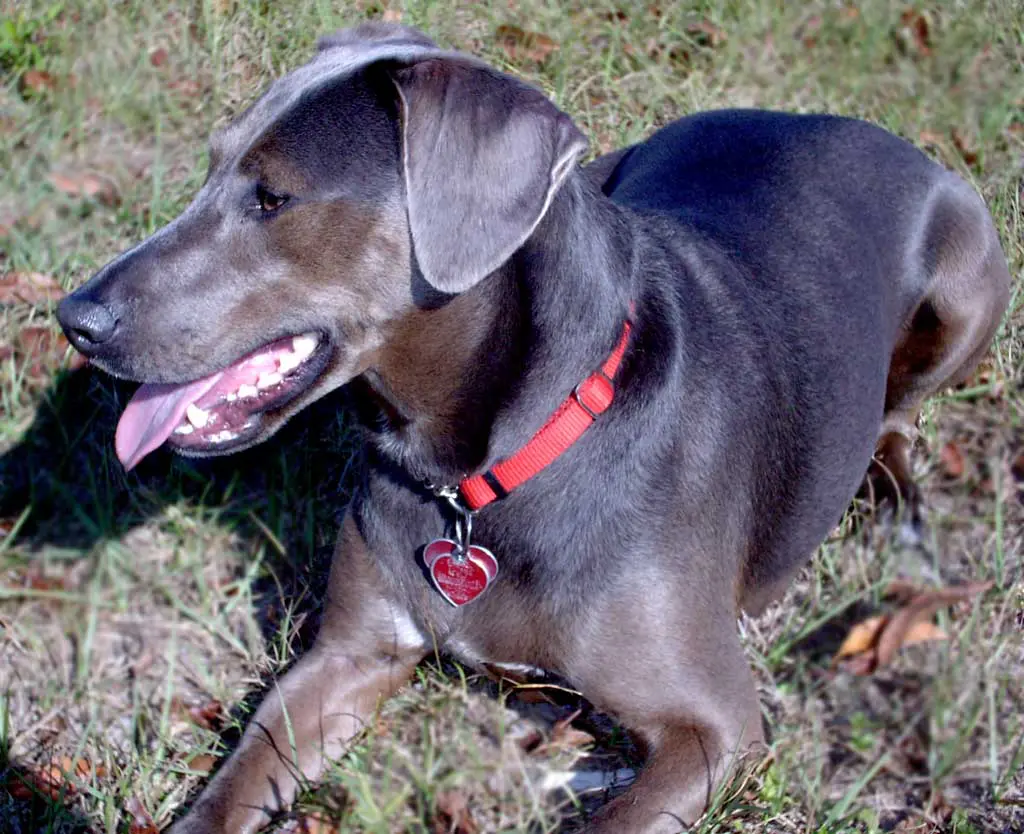
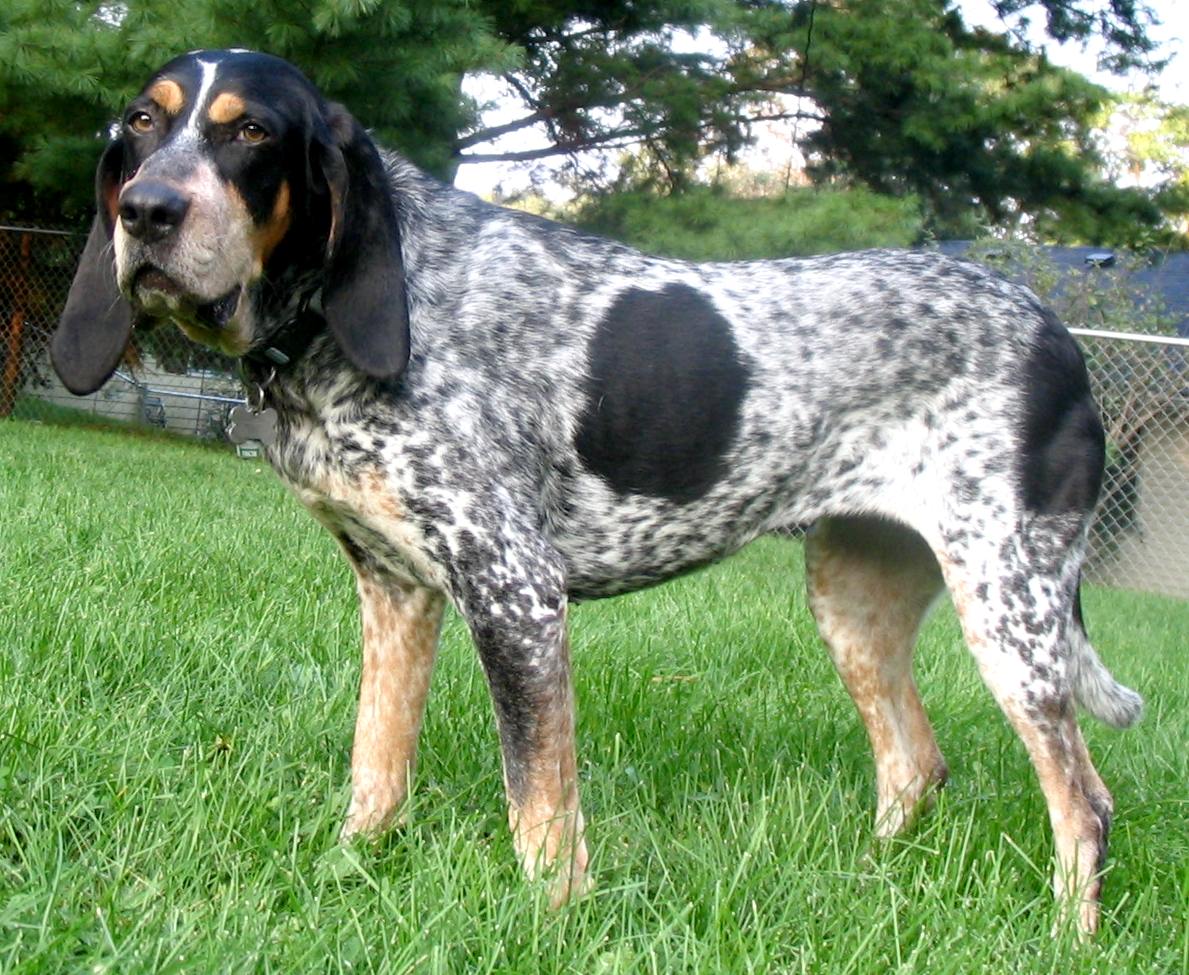
    Bluetick Coonhound
    Estados Unidos Large-size hounds

    Bluetick Coonhound
    Photo: bscrittersitter.com
    Like the other Coonhound, the Bluetick It is a race that much drooling and ladradores.

    Content

    History

    The Bluetick Coonhound It is a breed of dog of the Group of Coonhound, usually bred in the South of United States. It originated in Louisiana, fruit of the cross of a Grand Blue of Gascony, Southwest of France dog, of a English Foxhound, of the American Foxhound, and Black And Tan Virginia Foxhound.

    The Coonhound Bluetick, Although at the time it was registered, were not recognized by the United Kennel Club, as a separate breed until 1946. They are also recognized by the national canine Council of Australia and the Kennel Club of New Zealand. In April of 2009 the breed was accepted by the American Kennel Club and in December of 2009 He became eligible to compete in AKC Coonhound events.

    Did you know??

    The Bluetick can be found in various forms of pop culture. Emmylou Harris mentions a Bluetick named Gideon in her song "Red Dirt Girl", the mascot of the University of Tennessee is a Bluetick Coonhound named Smokey, and Bluetick star in a commercial for Miracle Whip.

    Physical characteristics

    The general body of the Bluetick Coonhound style is muscular and fast, thick but not built with stupidity. The head is rather high and tail carried over the back, no signs of fear or nervousness.

    Read more

    โ–ท The world of Pets: Dogs, cats, birds, reptiles, amphibians

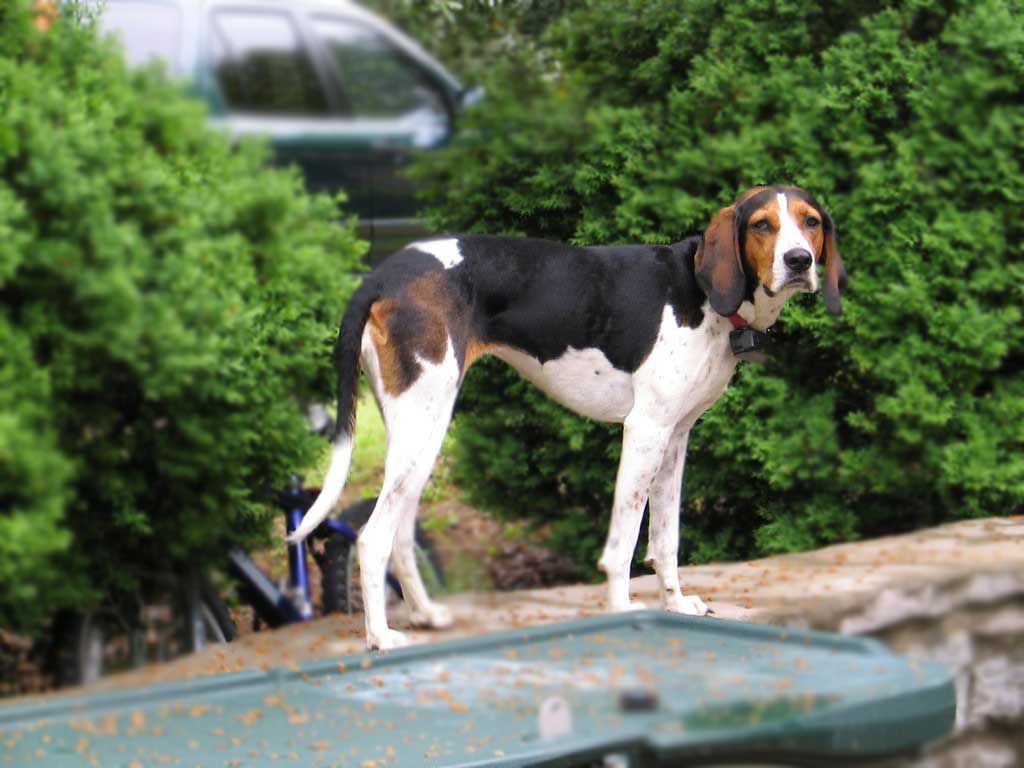
    Treeing Walker Coonhound
    Estados Unidos Not recognized by the FCI

    Treeing Walker Coonhound

    Content

    History

    The Treeing Walker Coonhound, It is a breed of dog American descendant of the English Foxhound What, was first recognized as a separate caste from the varieties of Coonhound in the year 1945.

    The race began when a stolen dog of unknown origin, Nickname "Tennessee Lead ยซ, He crossed with the dog of Mr Thomas Walker in the 19th century, responsible for importing the Foxhound English to Virginia in 1742.

    Physical characteristics

    The Treeing Walker Coonhound, they are extremely fast dogs, agile and tireless in the search for traces. They are very vocal, they have a special bark that allows their owners to easily identify their dogs at great distances.

    The Treeing Walker Coonhound has a powerful and agile body. The height of the males is of 56 to 69 cm and the females of 50 to 64 cm., they weigh between 45 and 50 kg. The ears are large compared to the head. The upper lip hangs below the lower jaw.. The Forelegs are long, straight and thin. The layer of hair is smooth and glossy and colors can occur in different combinations of cinnamon and white, black and white. Then, It may be bicolor or tricolor (the tricolour is the color preferred by breeders).

    To come in color white and cinnamon, It should never be called "red", to distinguish them from the Redbone Coonhound.

    Character and skills

    While it is very affectionate with people, the right thing for a dog of this kind is to have a life open-air, with full freedom of action, as he suffers much still locked.

    Although generally not considered suitable to live in apartments, the Treeing Walker Coonhound, It can accommodate home life, where are them many opportunities to exercise outdoors.

    In general, they are very obedient (If they are well trained) but the moment an attractive smell crosses them... it's like a Beagle or Basset Hound, they do not already recognize borders. It is essential to a dog of this breed, have serious training to include part of it in an open area, without cars or other potential dangers. This strong instinct of monitoring, is that has made them popular as hunting dogs, We must not forget its nature.

    They can be very skilled to capture small rodents such as squirrels, roof rats, possums and skunks. As well, of course, as the main characteristic of the Coonhound, in general, He is known for its ability to draw prey hiding in a tree like raccoons, Wildcats, cougars and bears...

    Usually, they are easy to train, excellent and healthy pets if they are well ejercitados. Education must be constant, because the Treeing Walker Coonhound they are extremely intelligent and will make the most of gaps in the training regimen. In various prove who made scholars of race, tested surprised how these dogs have been able to use objects as levers or tools and, in other cases they have changed the environment to perform a task (for example, move a piece of furniture to ride roughshod over a door).

    They are very intelligent and independent, If they get bored or even for pure entertainment will try to steal items from the home that they are attractive, and they will hide them somewhere, It will be normal to find treasures hidden for any corner of the House.

    He makes a splendid companion dog for an owner willing to give him proper exercise.. Because this breed requires intense exercise to match its energy level, the Treeing Walker Coonhound they can't settle for simple walks in the neighborhood, need to run freely.

    most dogs Walker are able to jump the fences of 1,8 m, so a security system suitable to our yard will be necessary.

    The Treeing Walker Coonhound, It is very sweet and loves to be with children, but due to his inexhaustible energy sometimes, They can be a bit rough..., because a proper education is needed, to learn to control your body. It is a balanced dog is good with other dogs that can live in the House.

    Once attached to the home, it will be very difficult to get our beautiful Treeing Walker Coonhound, out of our beds, the sofa or beside the fireplace. They love to sleep in after a long day, and they are the best companions to watch television.

    โ–ท The world of Pets: Dogs, cats, birds, reptiles, amphibians

    Coonhound
    Estados Unidos Coonhound types

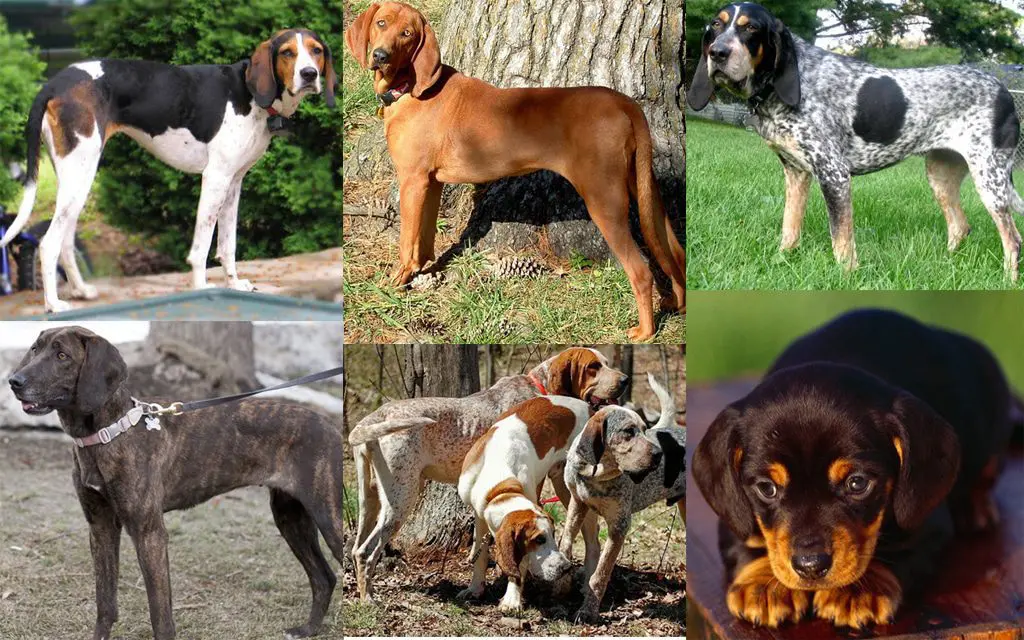
    Coonhound (the English: coon = raccoon; Hound = hound or hunting dog) It is a breed of dog of American origin which, It consists of a group of six different types of hounds. Los โ€œCoondogsโ€ (or โ€œraccoon dogsโ€, as they tend to call them) they are highly valued in United States.

    Content

    History


    in the colonial period, several hunting dogs were imported because of the popular sport of the moment, fox hunting. Various breeds of hunting dogs were imported from England, Ireland and France, and the particular mix of these different races form the initial genetic composition of dogs which became known later, as dogs Virginia.

    At the time the existing hunting dogs, were considered inadequate or rather incomplete, because he could only dedicate himself to hunting animals that hid close to the ground, but they could not with those who hid in the treetops, as raccoons, the opossums, wildcats and even bigger prey, as Cougars and bears.

    the dogs were confused, They despistaban and in turn were unable to keep track of the dam, years. At that time, to take refuge in trees escaping. It was for that reason that cross mediantes, they got a wide variety of dogs that might be able to follow the trail of animals sheltering in the treetops. Above all, raccoons.

    The race name derives from its original use in the hunt for raccoons.

    It was thus that this group of dogs were developed trying to highlight and increase their best characteristics.: an acute sense of smell, the ability of tracking, pursue tirelessly its prey regardless of human orders, both on the ground and when they hid in the treetops. Y, especially guard cornered prey until the Hunter arrived. It also, they are excellent in the delivery of all types of dam, If adequate training.

    Physical characteristics

    To race Coonhound, Throughout history, different lines of hounds have been added in order to improve their capabilities., as the tracking, and physical characteristics such as the shape of their feet, some Coonhounds have webbed toes for tackling rivers and swamps, so common in its habitual hunting territory.

    There are six individual breeds of Coonhound:

    Character and skills

    The Coonhound They can hunt individually or in packs.. In general, the hunters do not pursue their prey with the hounds, unlike organized fox hunting which do. In this case, they simply wait to hear the distinctive howl to determine if a raccoon or some other animal, It has been cornered.

    curiosidades

    In the rural area of the Colbert County, Alabama ((UNITED STATES)UU.) there is a cemetery calledKey Underwood Coon Dog Memorial Graveyardโ€, reserved specifically for the burial of raccoon dogs (Coonhound).

    A group of American troops, he chose that spot because it had been a popular hunting camp and the 4 in September of 1937 they buried a Coonhound (raccoon dog), property of the troop. Thus the cemetery was opened in memory of these precious hounds. He became an emblematic place, over time...in the 2007 more than 185 dogs were buried there.

    To be able to have a tombstone there, a corner in the cemetery, Dogs must meet three requirements:

    • The owner has to prove (by primer and pedigree) its mascot is a dog authentic Coonhound.
    • A witness must declare that the deceased is a Coonhound.
    • A member of the "Coonhunter Organization" of the place where the dog resided must be authorized by the owner to see the deceased pet and declare the dog as a true Coonhound.

    The cemetery has the same format as a graveyard of human, there you will see tombstones of all kinds and details. Each 4 September (Labor Day in the United States), For quite some time now, the Tennessee Valley Coon Hunter's Association has sponsored a meeting at the cemetery to pay tribute to the cemetery's inauguration. (on Labor Day in 1937). The celebration includes music, dance, Food and contests. They attend the event, often, local politicians.

    "Labor Day" or Labor Day, is a federal holiday observed in the United States on the first Monday in September. It has its origin in a parade held the 5 in September of 1882 in New York organized by the Nobles of the order of the Knights of labour (Knights of Labor). Inspired by a similar annual event held in Toronto (Canada). In 1884 another parade was held and the Knights of Labor they decided to do it annually.

    Other organizations, mostly the affiliated with the first international, they preferred the 1 may, date that recalls the beginning in 1886 of a strike demanding the eight-hour work day and that had led to the Haymarket Riot in Chicago, three days later, the 4 may. President Grover Cleveland believed that the holiday of the 1 May would be an opportunity for disorder. So, fearing that it would reinforce the Socialist Movement, rapidly in 1887 supported the position of the Knights of Labor and its date for Labor Day.

    Since then, unlike most countries, The United States celebrates Labor Day on a different date.