โ–ท The world of Pets: Dogs, cats, birds, reptiles, amphibians

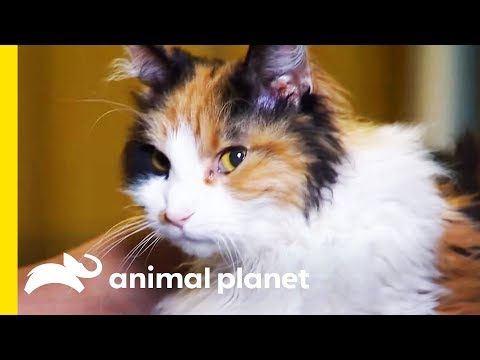
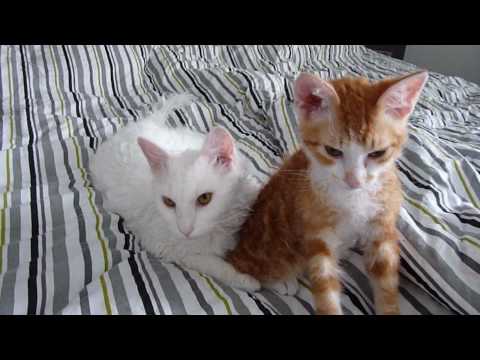
LaPerm
Federations: CFA, FIFe, TICA, WCF, ACF, GCCF

Although today it is present on all continents, the LaPerm still a rare feline breed.
Laperm
Photo by lapermcats.info

Content

Characteristics "LaPerm"

Coexistence is important that you have with your new friend. Before considering the acquisition of a cat of the breed "LaPerm" you know certain factors. You must take into account their character, their need for exercise, their interaction with other pets, their care and if you have small children, their level of tolerance towards them.

Joy

4,0 of 5 stars (based on 1 review)

Activity level

4,0 of 5 stars (based on 1 review)

Friendliness to other pets

4,0 of 5 stars (based on 1 review)

Friendliness to children

4,0 of 5 stars (based on 1 review)

Grooming requirements

2,0 of 5 stars (based on 1 review)

Vocality

1,0 of 5 stars (based on 1 review)

Need for attention

3,0 of 5 stars (based on 1 review)

Affection towards its owners

5,0 of 5 stars (based on 1 review)

Docility

4,0 of 5 stars (based on 1 review)

Intelligence

4,0 of 5 stars (based on 1 review)

Independence

3,0 of 5 stars (based on 1 review)

Hardiness

4,0 of 5 stars (based on 1 review)

History

The LaPerm is a recent breed of cat that originated in The Dalles, a small town in Oregon (Northwestern United States) located near the hunting grounds of the Wishram Indians, a Chinook tribe.

In the spring of 1982, a farm cat named Speedy, property of Linda and Richard Koehl, gave birth to a litter of six kittens. They did not know that one of the kittens, a small, hairless female, with big ears and a big heart, would become a new breed.

after two months, this kitty started showing some curly hair, what caught the attention of Linda Koehl. At four months, the kitten that was now known as Curly he had beautiful soft curly fur. To the Koehl they were amused to see such a special cat, but they accepted it without question, and Curly lived an eventful life as a farm cat.

He was about to die when, being a young cat, decided to take a nap under the hood of the station wagon. Fortunately, right after starting the car, Linda Koehl heard the panicked screams of Curly and escaped with just a few cuts.

"LaPerm"

LaPerm
Nertus ,black torbie laperm cat LaPerm cat. FiFeโ€™s first international champion – KRL LPL, CC BY-SA 4.0, via Wikimedia Commons

She grew up and gave birth to her first litter of five kittens, all males and with skin as smooth as their mother's. Intrigued, Linda Koehl He did some research and came to the conclusion that it was some kind of โ€œRexโ€ mutation., which causes some cats to have a curly coat similar to that of the rabbit Astrex. But, did not go through with this.

Curly had more litters, giving birth to new hairless kittens of both sexes. One day he disappeared and the Koehl they did not see her again.

His descendants stayed. In the following years, They lived freely and gave birth to a colony of curly-haired cats in the vicinity of the farm of the Koehl. Several visitors and neighbors convinced Linda Koehl that these cats were unique, so in 1992 decided to present four specimens at a cat show in Portland, Oregon.

To be able to register them, had to register them with a breed name, so he chose the name of LaPerm. The name of LaPerm refers to curly hair of these cats, reminiscent of the permanent fashion of the years 80, but also to tradition chinook to adopt French words by incorporating your article (for example, "apple" is "lapom" in Chinook).

These first LaPerm were enthusiastically received, and the judges told Linda Koehl that the breed was unknown and should be preserved. So, 10 years after the birth of Curly, the Koehl they began to breed LaPerms, an activity they weren't prepared for, since they had originally adopted cats to hunt pests, not for the love of the little feline. With the support of other breeders and professionals, among them Solveig Pflueger, a renowned feline geneticist, the couple was able to fulfill the dream of many professional breeders: create a new breed of cats.

The tests showed that the genetic mutation that caused the LaPerm was due to a different dominant gene than in other type cat breeds Rex (Cornish Rex, Devon Rex, etc.), that is to say, those of curly fur. The dominance of this gene is the main reason for the rapid proliferation of these new cats on the farm of the Koehl: only one parent needed to be a carrier for this mutation to potentially be passed on to kittens.

In 1997, the creation of a breed club (The LaPerm Society of America) contributed to its recognition by the main feline associations. The first to definitely do so was the International Cat Association (TICA) in 2003, followed by Cat Fancierโ€™s Association (CFA) in 2008. The Governing Council of the Cat Fancy (GCCF) and Fรฉdรฉration Internationale Fรฉline (FiFรฉ) they recognized her in 2012 and 2015 respectively.

Although today it is present on all continents, the LaPerm still a rare feline breed. in your country of origin, It is in the last positions of the ranking of breeds by number of annual registrations in the CFA. In Britain he was quite successful when he arrived in 2002, with more than a hundred cats registered each year with the GCCF up to 2008, when there was a clear decline. In the second decade of the 21st century, this figure was more like twenty per year. In France, it's even weirder, with solo 20 LaPerm registered in the Official Book of Feline Origins (LOOF) between 2003 and 2018.

Physical characteristics
LaPerm
Kururu, Type: LaPerm Flickr

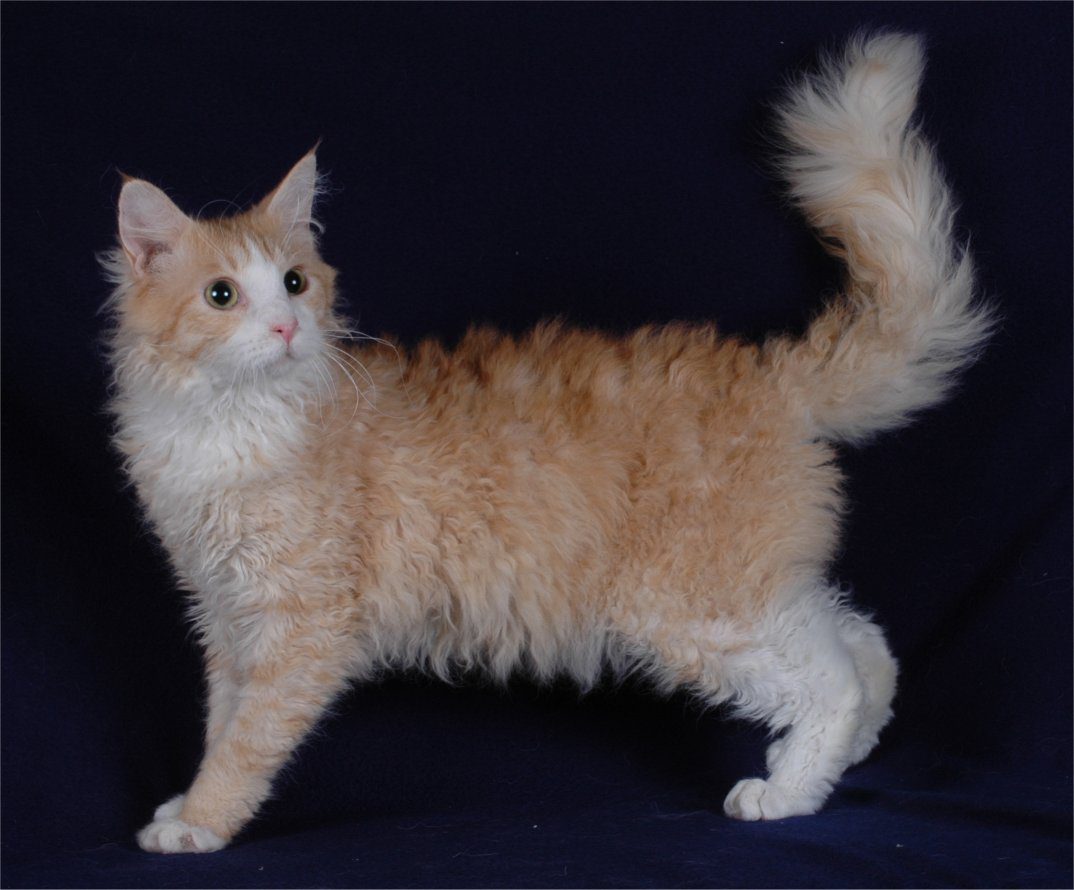
The LaPerm it is a cat of size small to medium with a body long and thin, with hips slightly higher than shoulders. The legs and tail they are also quite long, like the rest of the body.

The head has a triangular shape, with rounded contours. The eyes, large, beautiful and incredibly expressive, they can be yellow, copper, green or blue. The ears, quite large and located in the prolongation of the head, They are provided inside and preferably end in a plumage similar to that of the lynx.

The standard LaPerm allows all colors and fur patterns, but the turtle, brindle and red are the most common. In any case, It is undoubtedly the fur that makes him unique. LaPerm: soft and silky, has a distinctive texture reminiscent of mohair or sheep's wool. It can be simply wavy or form corkscrew-shaped curls.

There are also two varieties of the breed, since they can be short or long hair.

In any case, kittens can be born hairless, with straight hair or with curly hair. They usually have their definitive fur around the 6 months of age, although some initially straight-haired kittens only become curly after the first year.

Some, However, keep hair straight throughout their life. This is because, even though both parents are LaPerms, each of them can carry a single gene for curly hair (and how this gene is dominant, it is enough for them to have this feature). So, each of their offspring has a one in four chance of not inheriting the gene that causes this trait.

By the way, despite what you sometimes hear, curly hair LaPerm does not make it a hypoallergenic cat breed. In fact, cat allergy is caused by dead skin, not for the hair.

Last, the sexual dimorphism it is quite marked, the female being smaller than the male.

Size and weight

  • Male size: 22 to 26 cm.
  • female size: 20-24 cm.
  • Male weight: 3 to 4 kg
  • female weight: 2,5-3,5 kg

Varieties of "LaPerm"

The LaPerm it comes in two varieties: the Longhaired LaPerms and the LaPerm Shorthair.

Some organizations consider them as two different races. It is the case of the Fรฉdรฉration Internationale Fรฉline (FiFรฉ) and of the International Cat Association (TICA). But, for others, as the American Cat Fanciers’ Association (CFA) and the British Governing Council of the Cat Fancy (GCCF), they are two varieties of the same breed.

Character and skills

"LaPerm"

LaPerm
Two LaPerm cats – LaPerm2, CC BY-SA 3.0, via Wikimedia Commons

The LaPerm He is loving and devoted to his family. Loves interacting with humans, but it is not a very demanding cat. On the other hand, tends to follow the trend and adapt to the behaviors and initiatives of his master: if he throws a ball, run after her for fun; but if you put it on your lap, curls up quietly. He is also very tactile and loves to show his affection by touching his owner's face with his paw., or rubbing face to face. He also loves to be stroked and can't get enough of purring while scratching between his ears..

Even if I am not the type to ask for attention, do not forget to provide games and affection, and of course avoid leaving him alone in his corner. Otherwise, you will not be able to develop a strong bond with your family members, which is a shame for both him and them.

Playful and sociable, gets along very well with children who have learned not to pull their whiskers, her tail or her pretty curls. Usually, He also has no problems living with other dogs or with dogs accustomed to cats..

On the other hand, it is not advisable to expect it to coexist peacefully with rodents: in fact, do not forget that not long ago he was a farm cat whose main occupation was hunting mice and other rodents. So, no wonder he retained his hunting skills.

Curious, to the LaPerm loves to explore the environment or observe what members of his family are doing, either sitting up high or following them around the house. It also, its nimble legs allow it to open a door or snatch that coveted item, so make sure that the most fragile and / or precious objects are well protected.

Activos, they like to run around the house and climb on the furniture. They like to be able to go outside and have a good time before going in to rest. But, he can live in a flat as long as he can play and run around.

Last, prefers to listen rather than speak and reserves its meows for cases of extreme urgency, for example, when your bowl is empty.

Grooming and caring for the "LaPerm"

The fur of him LaPerm it is surprisingly tangle free and easy to care for: a simple weekly hairstyle is enough to keep the coat shiny.

On the other hand, although she changes very little in general, sometimes he does it a lot: then daily brushing is necessary to remove dead hair and allow new coat to grow faster.

It also, so that your cat stays healthy and maintains its natural beauty, You should take advantage of brushing sessions to check that your teeth, eyes and ears are clean. At the same time, they should be cleaned with a damp cloth to remove any dirt that could cause an infection.

If wear and tear and the use of a scratching post are not enough, it is necessary to cut your cat's nails with a nail clipper if they are too long.

Health and nutrition

LaPerm
the laperms with their hair cuts – Flickr

The LaPerm it is a robust breed, which benefits from a breeding program based on numerous crosses with individuals with a healthy and varied genetic heritage, to the point that today no specific genetic disease is known.

We need to remember, However, that this breed is still new and rare, so there is not enough hindsight or data to make definitive statements about it.

A well-identified risk is that of Obesity of cats. In fact, although the cat does not normally have a tendency to overeat and may, Therefore, have food at your disposal at all times, the owner should regularly check that his partner is not getting too fat, and consult a vet if this is the case.

Life expectancy

Of 12 to 15 years

Food

The LaPerm It is not demanding when it comes to feeding and it does very well with the industrial cat food available on the market, either food or croquettes.

To keep them healthy, you have to give them a quality diet, appropriate to your age and activity level, and that it contains all the nutrients and vitamins they need.

Like most other breeds, the LaPerm is capable of self-regulation and, therefore, can be left with food constantly available. But, there is a risk of obesity, so you have to do regular checks to make sure you are not getting too fat, and you have to consult a vet if this happens.

For sale "LaPerm"

The price of a kitten LaPerm varies between the 800 and 1200 EUR, without there being a significant difference between a male and a female.

But, this breed is quite confidential, so it can be difficult to find a breeder of LaPerm with kittens available.

Videos "LaPerm"

These Curly Cats Are The Perfect Affectionate Companion | Cats 101
La Perm Cat love

โ–ท The world of Pets: Dogs, cats, birds, reptiles, amphibians

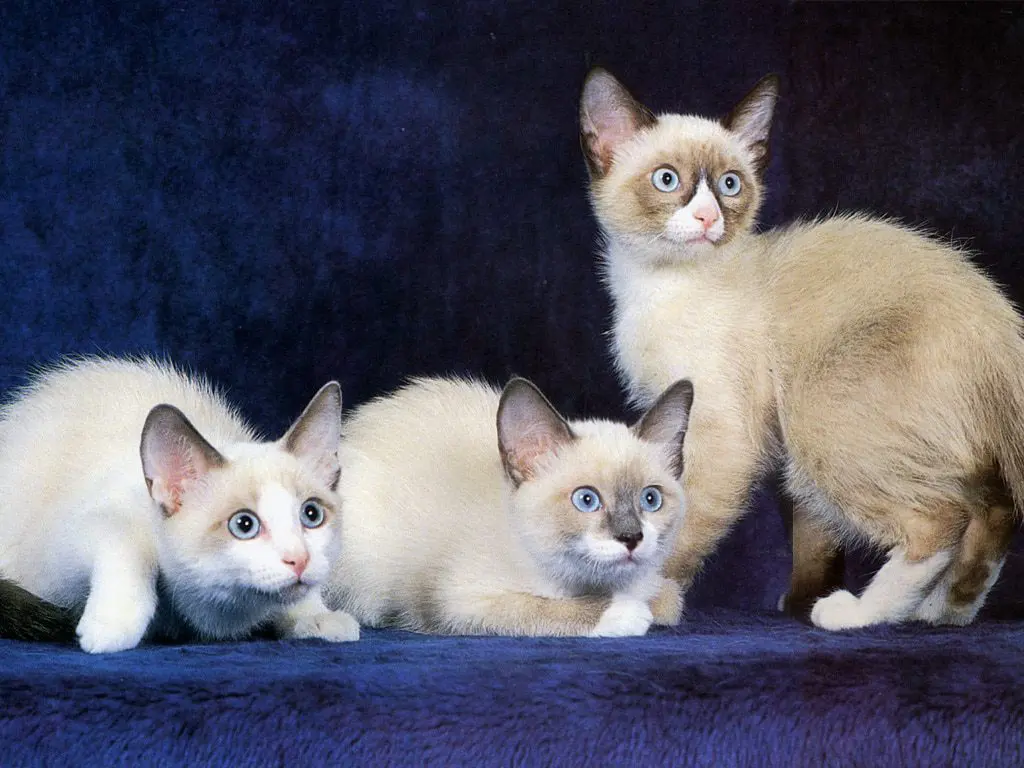
Snowshoe cat
Federations: LOOF, ACFA, TICA, FIFรฉ

Content

Characteristics "Snowshoe cat"

Coexistence is important that you have with your new friend. Before considering the acquisition of a cat of the breed "Snowshoe cat" you know certain factors. You must take into account their character, their need for exercise, their interaction with other pets, their care and if you have small children, their level of tolerance towards them.

Joy

5,0 of 5 stars (based on 1 review)

Activity level

4,0 of 5 stars (based on 1 review)

Friendliness to other pets

4,0 of 5 stars (based on 1 review)

Friendliness to children

4,0 of 5 stars (based on 1 review)

Grooming requirements

3,0 of 5 stars (based on 1 review)

Vocality

4,0 of 5 stars (based on 1 review)

Need for attention

4,0 of 5 stars (based on 1 review)

Affection towards its owners

5,0 of 5 stars (based on 1 review)

Docility

3,0 of 5 stars (based on 1 review)

Intelligence

4,0 of 5 stars (based on 1 review)

Independence

4,0 of 5 stars (based on 1 review)

Hardiness

3,0 of 5 stars (based on 1 review)

History

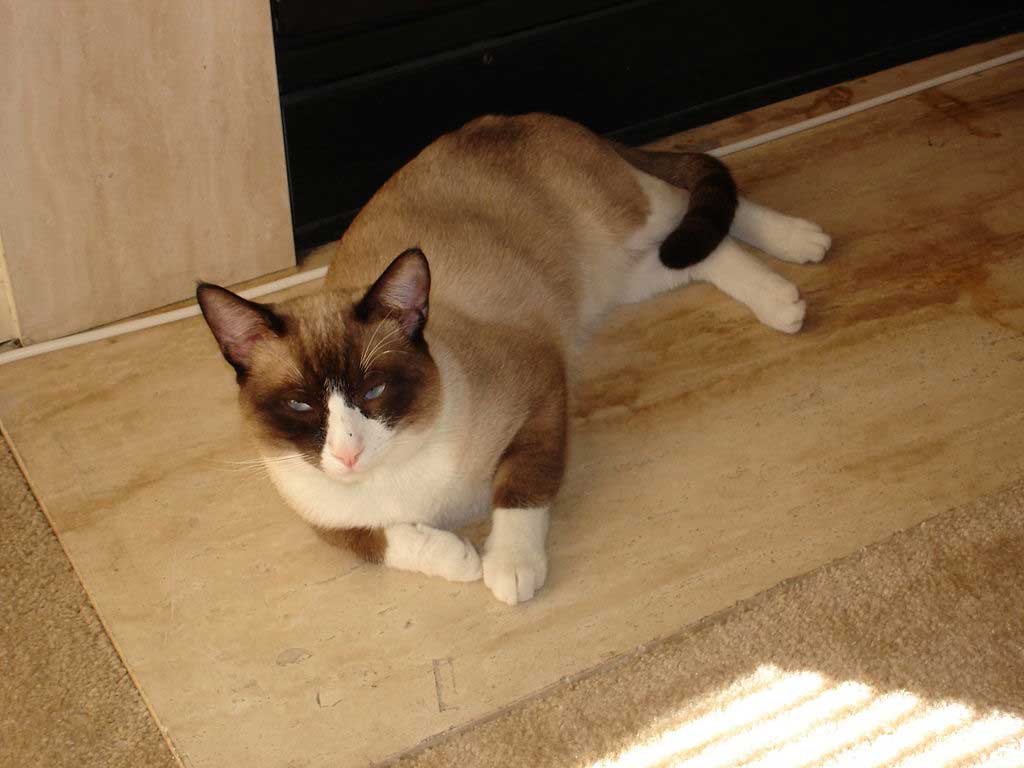
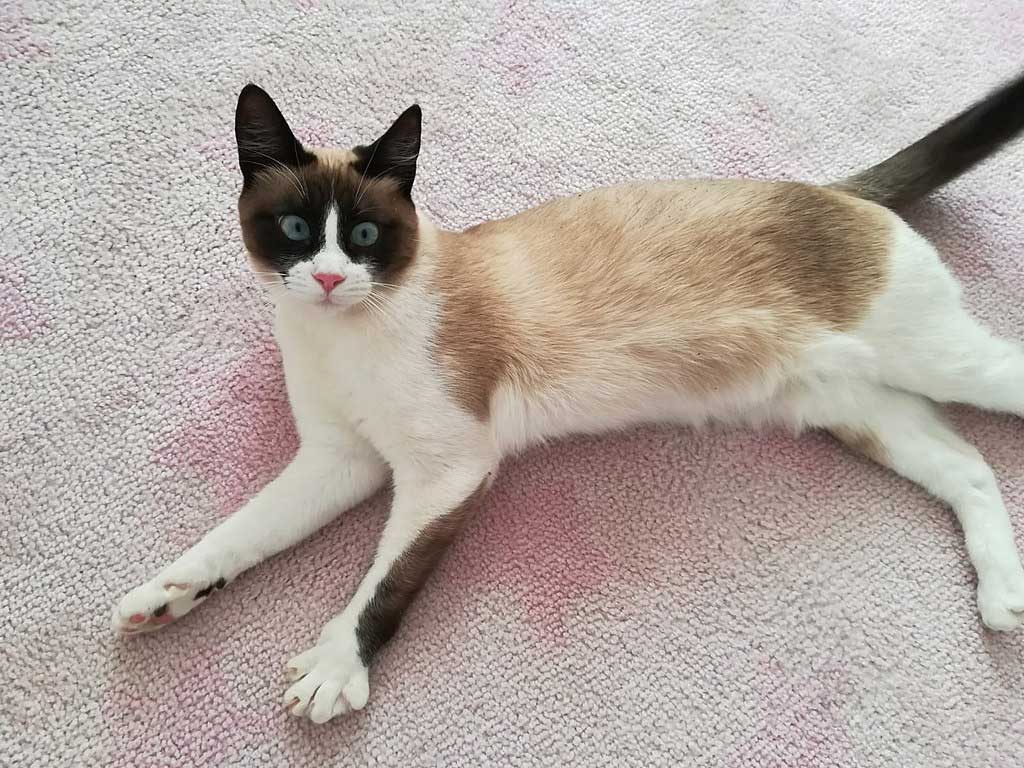
The Snowshoe cat as we know it today originated in the United States in the 1980s. 1960, but the first Siamese white-legged appeared as early as the nineteenth century. In fact, numerous photographs from the Victorian era show that these cats already existed in Great Britain. More recently, in the decade of 1950, some appeared Siamese cats with white paws under the name of Silver Laces, but they soon disappeared from circulation.

Over the years 60, Dorothy Hinds-Daugherty, a breeder of Siamese from philadelphia ((UNITED STATES)UU.), discovered that three kittens in a litter had white tips on all four paws. Seduced by this new look, decided to cross a Siamese cat with a American shorthair cat bicolor. The resulting kittens did not have the patternpointยป (light colored body and dark colored tips), but they did carry the corresponding gene. So when they crossed cats Siamese, produced kittens with the desired appearance.

"Snowshoe cat"

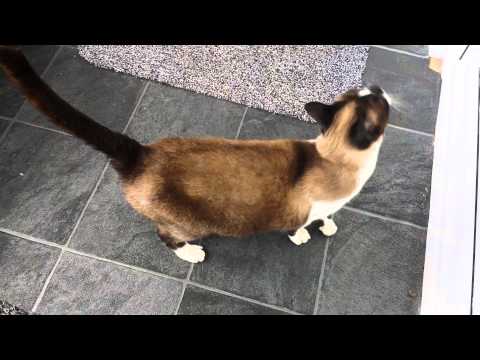
Gato Snowshoe
Male Snowshoe cat – Editor.els.dc, CC BY-SA 4.0, via Wikimedia Commons

Dorothy Hinds-Daugherty decided to baptize these cats with the name of Snowshoe, in reference to its white paws, that give the impression that they have just walked through fresh snow. Although there is little written record of his work, it is accepted that he continued to cross these cats with siamese cats and the American shorthair cat, but also with him Sacred Cat of Burma (Birman), aiming to get a cat of type Siamese with white legs and a more rounded body.

One of these crosses with a American shorthair cat (black with white markings on the belly, the legs and the face) resulted in the white โ€œVโ€ shaped mark on the face, which is now a characteristic of the breed.

But, Dorothy Hinds-Daugherty stopped breeding and interest in the breed diminished, so in 1977 there was only one breeder, Vikki Ollander. He had already drawn up the first breed standard and was struggling to develop it. Then he received the support of Jim Hoffman and Georgia Kuhnell, who decided to raise themselves to Snowshoes. They were soon joined by other breeders and got the breed recognized by the American Cat Breeders Federation. (CFF) in 1983.

The Snowshoe arrived in Britain at the same time, and the first kennel of Snowshoe It was established in 1986. Soon a small group of breeders got together to form a breed club in the country., the Snowshoe UK Club. The Snowshoe cat received experimental breed status from the Governing Council of the Cat Fancy (GCCF), the main feline organization in the country. But, just like in the United States, interest declined rapidly to the point that in 1998 Maureen Shackell she had become the only breeder in the whole country. Joined him Mollie Southall, and together, with a handful of copies, decided to revive the Snowshoe cat and recruit other breeders to form a breed club.

In 1995, the TICA (International Cat Association, one of the most important organizations in the world) finally recognized the Snowshoe and granted him the right to compete in cat shows organized under his auspices. The Governing Council of the Cat Fancy (GCCF) waited until 2003 to accept the Snowshoe as a race in its own right, and Fรฉdรฉration Internationale Fรฉline (FIFรฉ) did the same in 2004. curiously, the Cat Fanciersโ€™ Association (CFA), the main American organization, still does not recognize the race, despite its local origins and the fact that every other organization in the country does: the American Association of Cat Enthusiasts (AACE), the American Cat Fanciers Association (ACFA) and Cat Fanciers Federation (CFF).

In France, the first litter of Snowshoe born in 2006, but it is still a very rare feline breed, with solo 43 specimens registered in the Official Book of Feline Origins (LOOF) between 2006 and 2019.

In fact, both in France and elsewhere, including your country of origin, still rare. The number of annual registrations in the British GCCF is certainly higher than in France, but the number is still limited: less than a hundred births a year (and even less than 50 in some years), and the trend seems even downward from 2015.

Physical characteristics

Snowshoe cat
Mr Slinky.–Champion Snowshoe cat with puurrfect markingsCooseman22 at the English Wikipedia project, CC BY-SA 3.0, via Wikimedia Commons

The Snowshoe it is a cat foreign medium-sized.

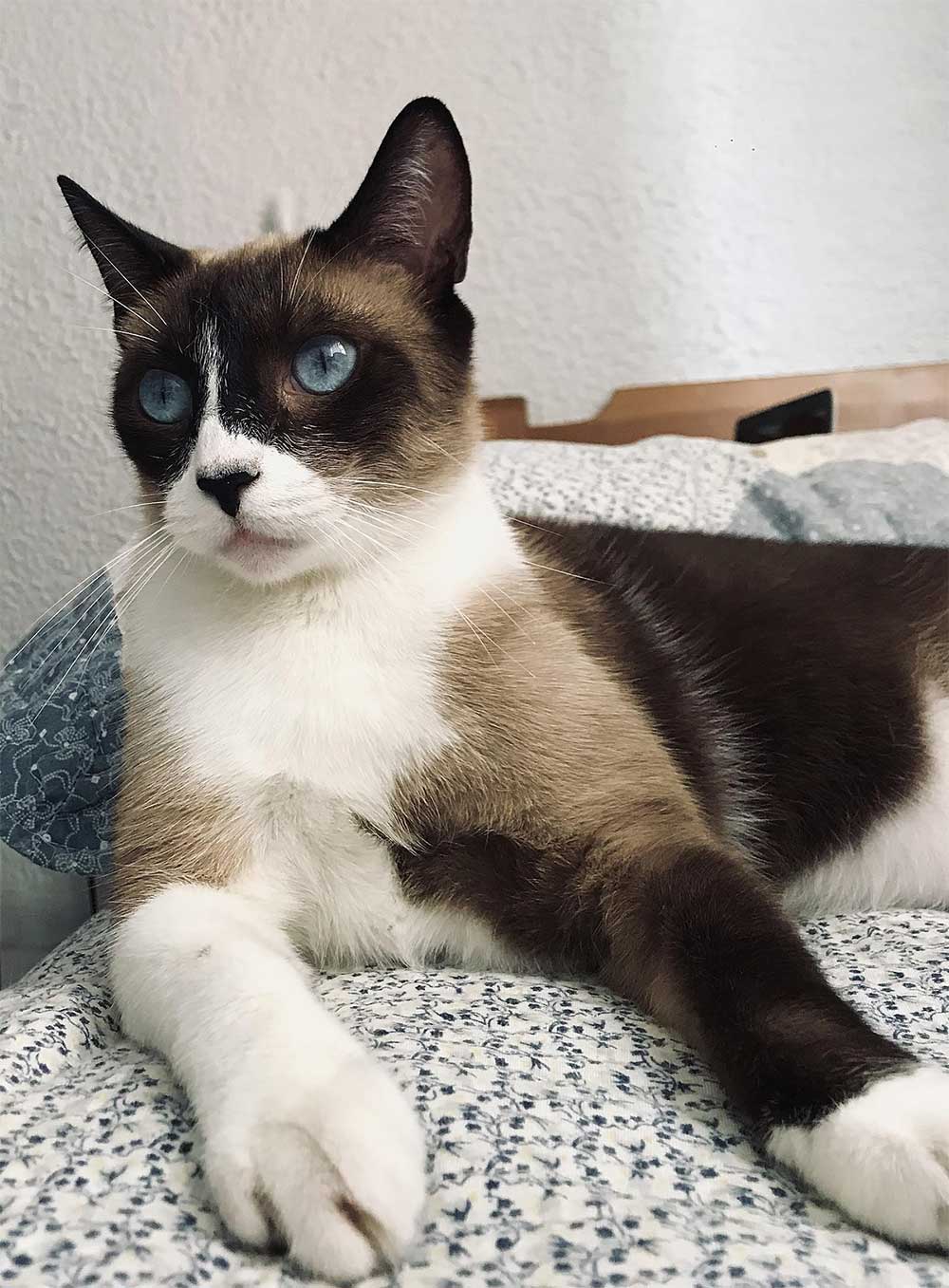
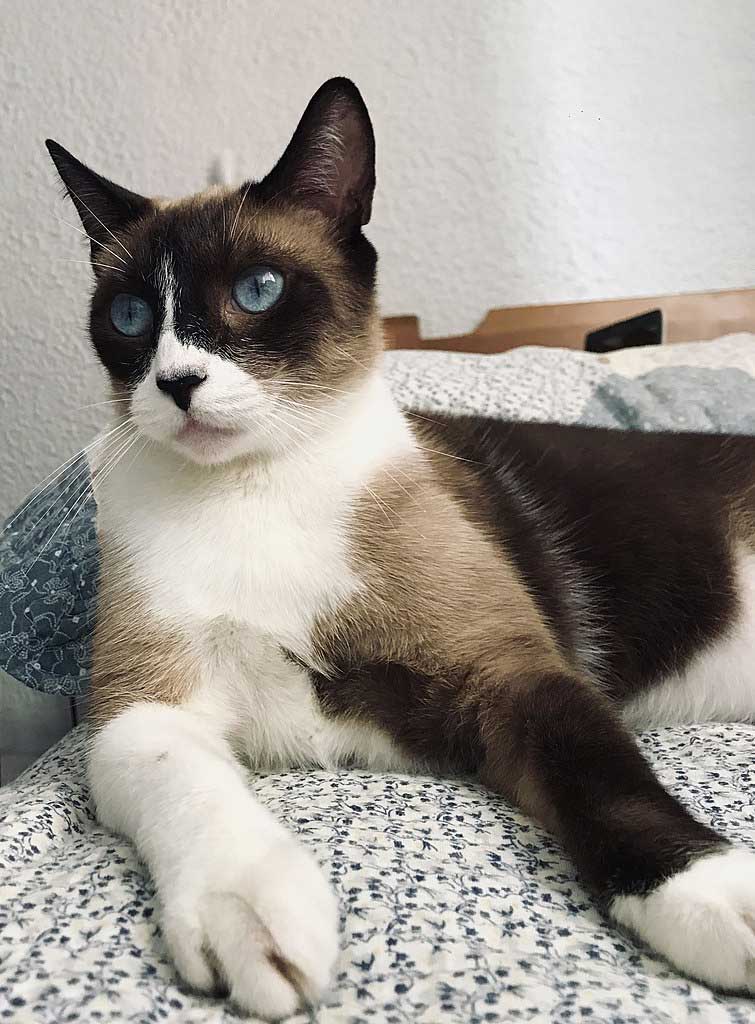
It has a balanced appearance, a muscular body without being corpulent and great flexibility. His long and muscular legs are those of an athlete made to run and jump. Its tips are white, which gives the impression that the cat is wearing socks, or just walked through the snow, hence its name. The tail is sharp and of a length proportional to the rest of the body.

The head of the Snowshoe cat is shaped like a rounded triangle, with gently contoured cheekbones. It has a more or less well-defined marking in the shape of an inverted V, it should be white. The ears they are medium in size and rounded at the tip. The eyes they are also medium size, larger and rounder than the Siamese, but smaller than those of the Persian. They can be various shades of blue.

The fur is short, soft to the touch and dense. All are allowed colors of fur of the Siamese.

The kitties Snowshoe they are born completely white. Dot mark (darker fur on tail, the legs and the head) begins to appear within a few weeks and develops as the kitten grows.

The white markings on the tips of the legs and on the face differ from kitten to kitten. While the best show specimens have the same size stockings and a perfect V between the eyes, the vast majority of Snowshoes have more random marks, with different socks on each foot.

But, the sexual dimorphism is well marked in this breed, the female being smaller than the male.

Size and weight

  • Male size: 24 to 28 cm.
  • female size: 22-25 cm.
  • Male weight: 4-6 kg
  • female weight: 3 to 5 kg

Breed standard

The breed standards are documents produced by official bodies that list the conditions that a dog must meet. Snowshoe to be fully recognized as belonging to the race:

Character and skills

Snowshoe cat
Eight-month-old Snowshoe female puppy – Educasadocerrato, CC BY-SA 4.0, via Wikimedia Commons

The Snowshoe gets along well and is affectionate with the whole family, but he is quick to choose his favorite human to spend most of his time with. He likes to be with his owner, whether sitting on the couch watching TV or lying at the desk working. This attachment makes him not tolerate loneliness and does not adapt to a person who is absent often.

They are sociable and get along well with other dogs and with other people, and can live in harmony in a home with other animals. But, have a possessive streak and may resent the fact that their owner is paying attention to another animal instead of them.

On the other hand, it is a breed of cat that adores children and, if they have been trained to behave well in the presence of an animal, can spend hours playing with them before taking a nap next to them.

The Snowshoe is intelligent, making it possible to teach your cat tricks, how to go looking for an object. But, it is the ability to teach his owner that makes him such a special companion. The owners of a Snowshoe cat they quickly learn when they want a reward, when they want to play or when they want to be scratched between their ears.

Active, this cat likes to take advantage of his physical abilities by running and jumping. Although they can live in a flat, Ideally, they should have access to an outdoor area where they can exercise freely.

The Snowshoe is also attracted to water and will play with a dripping faucet for a while. They also don't miss the opportunity to admire the eddies in the sink or toilet when someone flushes the toilet.. Some cats even accompany their owners in the shower, and others have learned to swim.

Another peculiarity of this cat is its propensity for kleptomania. Likes to pick up personal items, walk them around for a bit and then put them in one of your favorite spots, usually near your water bowl or in a sink.

Last, It is a breed of cat that meows a lot.: discuss any topic, whether it's dinner time or the newscaster's dress that its owner wants to see quietly. His voice is quite soft and melodic.

Health

The Snowshoe is a robust cat breed with little susceptibility to genetic diseases.

But, there have been some cases of renal polyquistosis, a genetic disease that causes the formation of numerous cysts in the kidneys. The existence of a genetic test for this disease can considerably reduce the risks, since a responsible breeder will systematically analyze the individuals that he considers for breeding and will exclude from breeding those that are carriers.

The Snowshoe has also inherited from Siamese a tendency to squint or have a crooked tail. But, these are purely cosmetic considerations and do not pose a threat to the cat's health.

But, like any indoor cat, the Snowshoe may be vulnerable to the greatest scourge of modern house cats: the Obesity. Although it is not especially prone to it, any responsible owner must ensure that their cat is healthy and does not gain more weight than it should.

Life expectancy

Of 12 to 15 years

Grooming

"Snowshoe cat"

Gato Snowshoe
Male Snowshoe cat – Editor.els.dc, CC BY-SA 4.0, via Wikimedia Commons

The maintenance of Snowshoe It is easy. In effect, as he is used to taking care of his fur himself, a simple weekly brushing to remove dead hairs and distribute the skin's protective sebum well is amply sufficient.

To make sure you stay healthy, it is advisable to take advantage of this grooming session to check their eyes and ears, and clean them if necessary.

It is also a good time to brush your cat's teeth to prevent plaque and the problems it can cause.. Having said that, more frequent brushing is ideal.

Last, when wear and tear and / or the use of a scratching post are not enough and your claws have become too long, must be trimmed with nail clippers to avoid injury.

Food

The Snowshoe it does not present any difficulties in terms of feeding and can be fed with commercial industrial cat food. But, it is important to ensure that the food is of good quality and provides all the nutrients and vitamins that the cat needs.

It also, to fully meet your needs, you must make sure that he eats a diet adapted to his age and activity level, and that the daily amounts recommended by the manufacturer or the veterinarian are respected.

Even if the Snowshoe not particularly prone to obesity, excessive weight gain is a warning sign that the owner should not ignore. If required, You have to go to the vet to rule out a disease and establish a more appropriate diet with him..

Last, like any cat, you must have fresh water at all times.

For sale "Snowshoe cat"

A kitten Snowshoe it costs about 1.200 EUR, and females tend to be somewhat more expensive than males.

Kit Kat the Snowshoe | Purring

Holly the Snowshoe Cat Personality

โ–ท The world of Pets: Dogs, cats, birds, reptiles, amphibians

American Polydactyl Cat
Hemingway Cat

The American Polydactyl Cat is specifically bred to have extra fingers, for his temper, your good health, and its color or size.
American Polydactyl
Photo: Wilkipedia

Content

History

A "Polydactyl Cat" is a cat with a physical congenital anomaly called polydactyly (or polidactilismo, also known as hyperdactyly), a type of genetic mutation that makes the cat born with more fingers than usual in one or more of its legs.

These cats are very hardy and can survive even in time of snow.

They reached the United States on Board of ships in the colonial era. Stayed them for sailors who considered as the lucky pets when they were in the sea.

Historically, polydactyly represented the 40% of the population registered among Maine Coon. Stated that the extra toes acted as snowshoes, to help these cats resistant to negotiate the snowfall in the harsh winters of New England.

The cats polydactyls It can be found in any race, but the American Polydactyl Cat is specifically bred to have extra fingers, for his temper, your good health, and its color or size.

Physical characteristics

How many fingers can a cat have on one paw??

American-Polydactyl

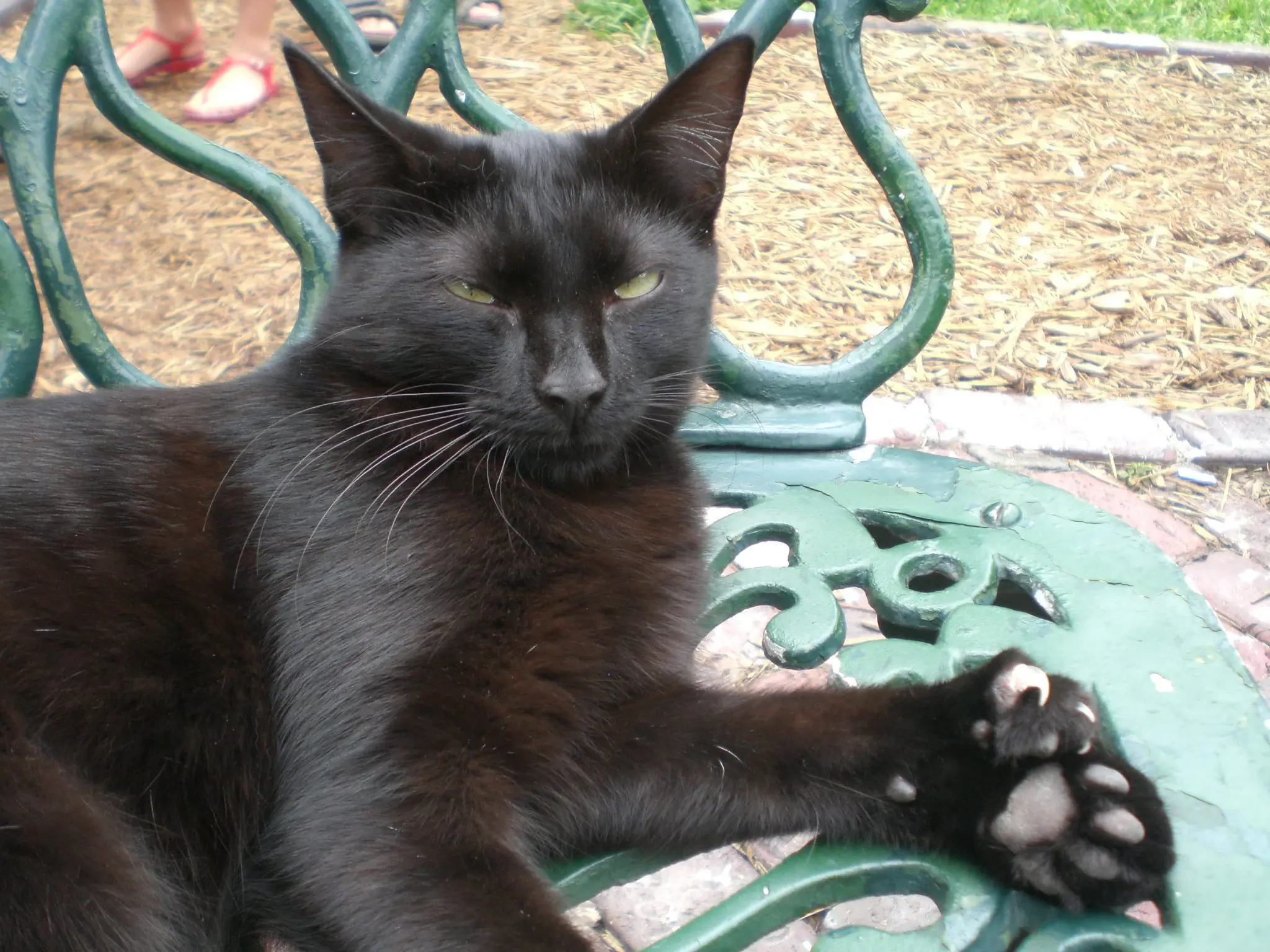
Some american polydactyl cats they have up to seven. Perhaps the most famous American polydactyl cats were those that Ernest Hemingway wrote about., and as a result this breed is sometimes known as the Hemingway cat or mitten cat..

The American Polydactyl Cat he is medium to large in size and has a strong and muscular body.

  • Their heads they are wide, with a modified and medium-sized stop.
  • Its nose and your snout they are medium in size and the chin has a square look.
  • The ears they are wide and have a pointed tip. Times, The american polydactyl cat used as a stallion has highly developed cheeks.
  • The rounded eyes of the American Polydactyls are set at an angle, and any color or combination of colors is acceptable.
  • The same goes for the color of the coat and the length of the coat., as long as the hairs are attached to the body.
    The american polydactyl cat long-haired must have a hair soft and silky.
  • The bodies of the American polydactyls they are rectangular in shape, well muscled on a medium bone structure. Their breasts are well rounded and wide.
  • Some american polydactyl cats have tail short, and these cats have shorter bodies than those with long tails.
  • The legs of the american polydactyls they are straight and robust, and cats with tails have significantly longer hind legs than front legs.
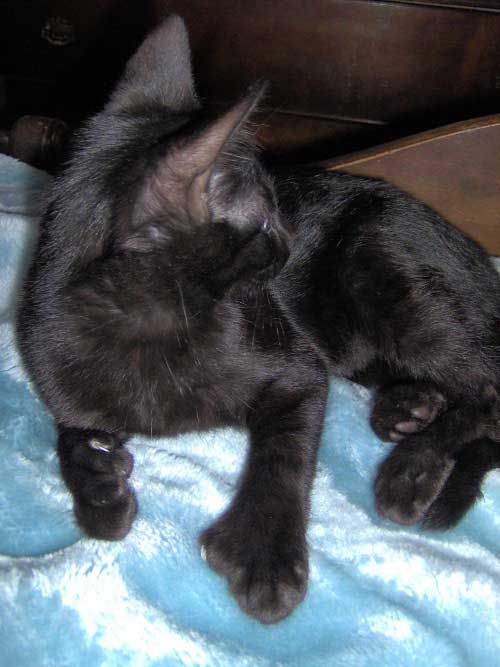
  • Of course, the characteristic feature of american polydactyl cat are their feet with extra fingers. One of the extra finger shapes looks like a thumb, and for this reason the american polydactyl cats They are also known as "cats with thumbs". The other conformation is that of another three-toed foot attached to the cat's five-toed foot.. The extra toes can be found only on the front feet or only on the rear feet, or all feet may have extra toes.
  • Character and skills

    American-Polydactyl

    The american polydactyl cat It is very similar to any other cat in terms of its personality and care. But, many owners have observed that their american polydactyl cats seem to have a more relaxed and gentle personality than other cats that have had. These cats are quite hardy and can survive even in snowy climates.

    The American polydactyl cat adapts very well to life indoors or outdoors, or a combination of both. They are outgoing pets, and they are said to be loving and patient even with children.

    Alternative names:

    1. Hemingway Cat, Mitten Cat, Extra Toed Cat, Six-Toed Cat, Big Foot Cat (English).
    2. Chat d’Hemingway, Chat ร  moufles, Chat ร  orteils supplรฉmentaires, Chat ร  six orteils, Chat ร  gros pieds (French).
    3. Hemingway-Katze, Handschuh-Katze, Katze mit zusรคtzlichen Zehen, Katze mit sechs Zehen, Katze mit groรŸen FรผรŸen (German).
    4. Gato de Hemingway, Gato com luvas, Gato com dedos dos pรฉs extra, Gato com seis dedos dos pรฉs, Gato com pรฉs grandes (Portuguese).
    5. Gato Hemingway, Gato de manopla, Gato de dedos extra, Gato de seis dedos, Gato de pies grandes (espaรฑol).

    โ–ท The world of Pets: Dogs, cats, birds, reptiles, amphibians

    Singapura cat
    Federations: LOOF, CFA, ACF, ACFA, TICA, WCF

    as the number of Singapura cats it is rather small, you must ensure that both parents do not weigh less than 2,5 kg. You should also check the pedigree carefully before buying., as inbreeding can greatly reduce the life expectancy of Singapura cats.
    Photo: wilkipedia

    Content

    Characteristics "Singapura cat"

    Coexistence is important that you have with your new friend. Before considering the acquisition of a cat of the breed "Singapura cat" you know certain factors. You must take into account their character, their need for exercise, their interaction with other pets, their care and if you have small children, their level of tolerance towards them.

    Joy

    5,0 of 5 stars (based on 1 review)

    Activity level

    4,0 of 5 stars (based on 1 review)

    Friendliness to other pets

    3,0 of 5 stars (based on 1 review)

    Friendliness to children

    3,0 of 5 stars (based on 1 review)

    Grooming requirements

    1,0 of 5 stars (based on 1 review)

    Vocality

    2,0 of 5 stars (based on 1 review)

    Need for attention

    5,0 of 5 stars (based on 1 review)

    Affection towards its owners

    4,0 of 5 stars (based on 1 review)

    Docility

    1,0 of 5 stars (based on 1 review)

    Intelligence

    4,0 of 5 stars (based on 1 review)

    Independence

    3,0 of 5 stars (based on 1 review)

    Hardiness

    2,0 of 5 stars (based on 1 review)

    History

    ยซSingapuraยป is the Malay name for Singapore. The name has also been given to a small cat considered the smallest domestic cat in the world and originally from the Southeast Asian city-state located at the southern tip of the Malay Peninsula.

    In Singapura, brown or dark brown color is widespread in the genetic makeup and is characteristic of the local population of domestic cats. But, the fur of the Singapura is usually quite pale, and its origin story is not simple at all. It's not easy to find out.

    Historically, the most widely accepted version was that of the International Cat Association (TICA), starring an American geophysicist, Hal Meadow, who was in Singapore at the beginning of the years 70, working for an oil company. His wife, Tommy, had been a judge of Cat Fanciersโ€™ Association (CFA) and was interested in breeding cats - he had bred the Burmese, to the Abyssinian and Siamese-, as well as by genetics - he had carried out genetic experiments with mice and rats -. Due to the interests of Tommy, Thing sent him three brown cats from Southeast Asia during a visit to the city-state in 1971. He had obtained them from the crew of a ship that had adopted them and in which he had sailed.

    In 1974, When Thing He was posted to Singapore for work reasons, he moved with his wife and cats: two burmese and three descendants of those who had been sent from Asia three years earlier. In 1975, upon his return to the United States, the Meadow they brought a Burmese and five brown cats, including two kittens born in Singapore. Hal y Tommy Meadow started a breeding project to create a new breed to be called Singapura.

    In 1980, Barbara Gilbertson, one of the first breeders of the Singapura cat, brought another cat to America, call Chiko, that he had obtained from SPCA (Society for the Prevention of Cruelty to Animals) from Singapore, and that was included in the breeding program. Finally, in 1987, another breeder named Gerry Mayes traveled to Singapore to get some local stray cats, Known as "sewer cats" to the public due to their tendency to seek refuge in the city drainage system. These specimens were registered in the TICA and were incorporated into the breeding project of the Singapura.

    Controversy

    Singapura cat
    Raw Singapura and Pedigreed Singapura side by sideStraits Singapuras, CC BY-SA 4.0, via Wikimedia Commons

    But, with the passage of time, other versions have emerged about the origin of the breed, that have caused controversy. The Meadows they first claimed to have captured one of their precursor cats in the vicinity of a Thai restaurant in Singapore and to have removed the other two from a nest found on the city's waterfront. This initial story was finally dismantled by a series of key events.

    First of all, when the enthusiastic breeder Gerry Mayes traveled to Singapore in 1987 to bring "sewer cats", discovered that Meadow, when they arrived in 1974, had brought with them - and registered with the Singapore Ministry of National Development- Abyssinians and burmese. It also, No one on the ground seemed to have ever seen cats on the streets of Singapore that looked like the "gutter cats" described by Hal y Tommy Meadow.

    Gerry Mayes he wondered if the Singapuras of Meadow were actually descended from Abyssinians and burmese that they had brought to Singapore. This did not stop him from bringing several cats from Singapore to the United States., but they could not be registered with the CFA as Singapuras, as they did not meet the breed criteria of the CFA. TICA agreed to register them. After five generations, the descendants of these cats are now recognized by the CFA as Singapuras.

    around that same time, Lucy Koh, who had been collaborating with the Singapore Cat Club for a long time, undertook research and found very few cats in Singapore that met the criteria of the Singapura cat. He even claimed to have found a real Singapore cat, call Baby Bull, he had dark brown fur, much darker than the Singapuras ivory and sepia color Meadow. And what is more important, its size was much larger.

    It also, Lucy Koh claimed to have a copy of a letter from 1975 of Tommy Meadow to the editor of Cat World Magazine, a month before she and her husband left Singapore. In this letter, allegedly declared his intention to achieve fame by passing American cats as singapurenses.

    A third event that raised questions about the true origins of the Singapura happened in 1991. In that year, the Singapore Tourism Promotion Board (STPB) decided to grant the Singapura cat the national mascot title. After a contest to find the best nickname, the tourism body renamed it โ€œKucintaยซ, a crossword puzzle consisting of ยซkucinยป ("cat" in Malay) y ยซcyntaยป (ยซamorยป). Kucinta It also means "the one I love". Thus, the small feline's new name means "love cat", and is often known as the "Singapore love cat".

    The STPB had asked Lucy Koh your opinion about him Singapura. He gave them his opinion that it was a american cat hybrid. I affirm that Tommy Meadow -participating in the Feline Society of Singapore (SFS) as a registrar- he had created the breed standard himself and had changed the procedures for registering cats at the SFS. By refusing to give credit to this information, the STPB resorted to Tommy Meadow to give his version, what was it, of course, very different. Of course, the STPB did not want to give up its great promotional campaign based on the use of the kitten as a national emblem.

    Seeing this, Lucy Koh told the story to Sandra Davie, reporter of Singapore Strait Times. The reporter investigated and ended up publishing an article stating that, far from having rescued Singapore's stray cats, as he had stated, Tommy Meadow Instead, he had created Singapura in Houston (Texas), hybridizing Abyssinians with burmese.

    A true novel by Le Carrรฉ

    Summoned to appear before the CFA to explain itself, the breeder adapted her version stating that the cats that created the breed were, In fact, those that her husband sent her in 1971, when I was already working in Singapore. Apparently, found the cats on or near the docks in Lo Yang District. To justify your previous lies, claimed that Thing I was then on a very discreet mission, if not secret, for the oil company that had hired him. In other words, his interlocutors were almost immersed in a real spy novel.

    Tommy Meadow he also denied having raised Abyssinians during the time he was in charge of raising the Singapura. He also developed several responses to counter his critics' arguments.. It seems that his explanations were accepted by the feline associations, since the Singapura is still recognized by most of them. The CFA went so far as to affirm that, Regardless of whether the mating of the original cats occurred on the streets of Singapore or Michigan, the breed's gene pool originated in Southeast Asia, as in the case of Burmese and the Abyssinian.

    In any case, having died in 2004, Mrs Meadow you will never have the opportunity to provide new information about the history of this feline breed with which you were so closely linked.

    Recognition by feline associations and notoriety

    In 1979, TICA recognized the Singapura as a "natural" race (non hybrid) and allowed him to compete in championships. The CFA recognized the breed in 1982, but he didn't pass her for the championships until 1988. In United States, the breed is also recognized by the American Cat Fanciers’ Association (ACFA).

    In Europe, the Governing Council of the Cat Fancy (GCCF) and Fรฉdรฉration Internationale Fรฉline (FIFรฉ), the main feline associations of Great Britain and Europe, they also recognize it.

    So there is unanimity, despite the controversy surrounding the breed.

    The Singapura It remains a rare breed, above all because feline associations - in particular the CFA- They consider it a "natural" breed and, Therefore, crossing is not allowed. So, the number of their representatives can only increase very slowly. According to the CFA, the world population of Singapuras it was about 5.000 individuals in 2006. In France, fewer than fifty births are registered per year.

    Physical characteristics

    Singapura
    Oyster and Hudson – Flickr

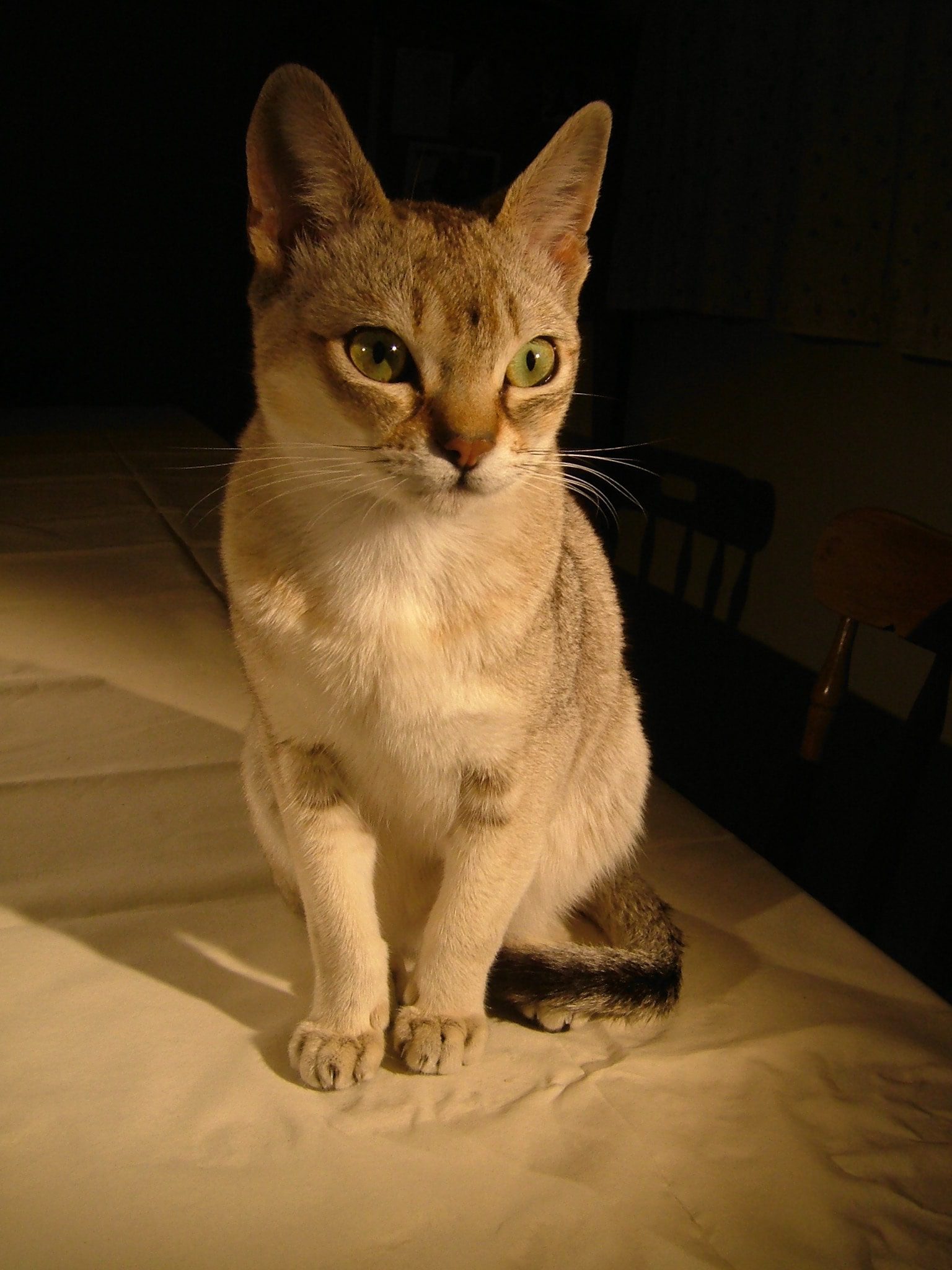
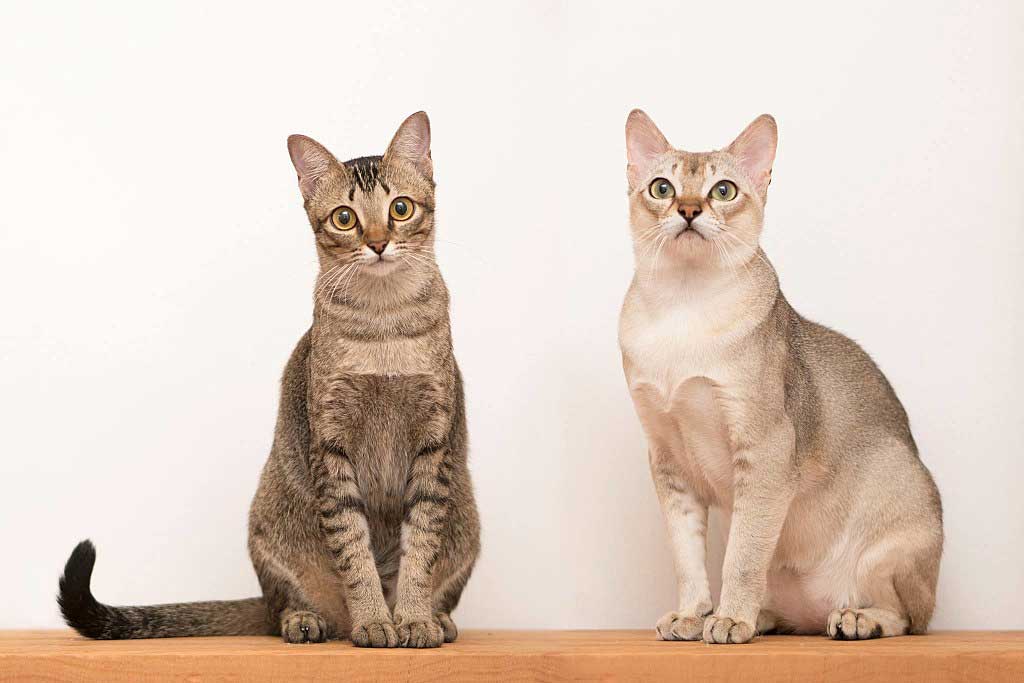
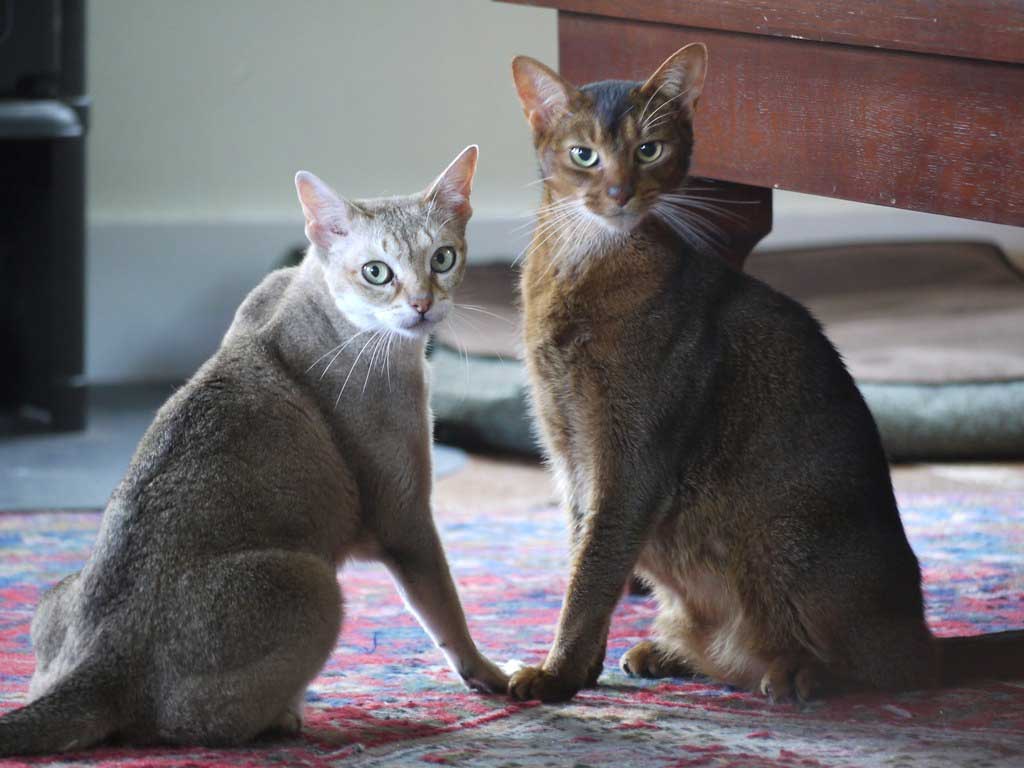
    The Singapura it's a small cat. It is even known as the smallest domestic cat in the world. The adult female weighs about 2 kg, while the male can reach a weight of about 3,5 kg.

    It is a somewhat stocky and muscular cat: as such, It is considered medium and semi-rigid.. Its head it is round and has large eyes hazelnut-colored almonds, brown, green or yellow. The ears they are wide at the base, deep and quite large for its size, ending slightly pointed. The tail it is thin and slightly shorter than the body, with rounded tip.

    The fur is short, very fine and bright and is of the type ticked tabby, that is to say, hair strands are alternately light and dark shades. The bottom of the animal, including throat, muzzle and chin, are of a lighter shade.

    In addition to his unusually large eyes and ears for his size, the third remarkable physical characteristic of the Singapura cat is the color cuttlefish from its fur. It is a coat with beige to dark brown reflections on a deep ivory background..

    Size and weight

    • Size: 25 cm.
    • Weight: Of 2 to 4 kg

    Breed standard

    The breed standards are documents established by official bodies that list the conditions that a dog must meet. Singapura to be fully recognized as belonging to the race:

    Character and skills

    Singapura
    This is a picture of a female cat of the breed singapura, crouchingUser:Renamed user 51g7z61hz5af2azs6k6, CC BY-SA 3.0, via Wikimedia Commons

    The Singapura he's a beautiful little fellow, loving and lively. It is a lively cat, energetic and very active, who is also very affectionate and friendly, since he loves human company. They love to lie on their owner's lap or shoulders and are delighted to show their affection, and expect the same in return.

    Intelligent and curious, they love to play and climb on shelves and cabinets to get a good look at their surroundings. Throughout his life, her youthful and playful temperament never leaves her. This explains that it adapts very well to the presence of children or other domestic animals., who are welcome playmates for him. But, like any other breed of cat, should not be left alone in the presence of a very young child.

    The Singapura cat he is also known for being very calm. He doesn't meow very often and his voice is quite discreet..

    If we add to this that they like the heat and that they are reluctant to go outside when it is cold, we have the ingredients of an ideal domestic cat. But, his need for activity makes it essential to provide him with a tree and cat toys to keep him from destroying the floor, especially when left alone for a while.

    They don't like to be alone and they don't get along. So, you better have a home where you are not left alone too often or for too long, and in which at least one person spends some time with him every day.

    Grooming and Care "Singapura cat"

    "Singapura cat"

    Singapura
    Singapura cat in Singapore – Straits Singapuras, CC BY-SA 4.0, via Wikimedia Commons

    The short and fine coat of the Singapura It does not require a lot of care. Brushing the cat's coat weekly is enough.

    Daily brushing of the cat's teeth is also recommended to prevent periodontal disease.

    Last, the cat's ears should be examined weekly and, if required, clean them with a cotton ball or soft cloth soaked in a mixture of half and half cider vinegar and warm water.

    Indoor or outdoor cat?

    Thanks to its small size, cats Singapura can be easily kept in a small flat. It would be great if you could provide a cat proof balcony or, even better, a garden. But, even without this welcome change, the Singapura you will feel right at home if the floor is designed accordingly and there are enough opportunities to play and climb.

    Much more important to him Singapura that the opportunity to spend time outdoors is the company of a companion and that his owners do not leave him alone for an unnecessarily long time, then it can be kept as an indoor cat without any problem.

    How much activity does he need? "Singapura cat"?

    Whether it is a female Singapura like a male Singapura, don't underestimate the high energy level and intelligence of this breed. So, a feline companion is almost essential, so that the Singapura, with its social nature, never be completely alone and can thus also dissipate energy during playful confrontations and fast chase runs.

    But, the Singapura cat is very people-oriented and should not be left alone for a long time. It is much more important that caregivers take time every day for play sessions and cuddles. Especially hunting and intelligence games go well with representatives of the breed Singapura.

    Health and nutrition

    How this breed has a very limited gene pool, it is very possible that hereditary or congenital diseases occur in the Singapura. But, is considered robust and not prone to disease.

    For the moment, according to him Governing Council of the Cat Fancy (GCCF), the leading British feline association, only the progressive retinal atrophy and pyruvate kinase deficiency as diseases to which the Singaporea is especially susceptible.

    As the name of the disease indicates, cats affected by progressive retinal atrophy experience gradual deterioration of vision due to retinal atrophy. The pyruvate kinase deficiency can cause some form of anemia in affected animals. This can cause lethargy., diarrhea, loss of appetite and weight, and affect the appearance of the cat's coat. The disease can even lead to premature death of the animal.

    Both can be detected by genetic testing, allowing serious breeders of the Singapura cat identify and eliminate individuals carrying the defective genes from their breeding grounds. Any prospective buyer should require proof that the kitten they wish to adopt has been tested negatively..

    It is interesting to note that these two diseases are also present in the Abyssinian cat. The Abyssinian is the only breed of cat in which progressive retinal atrophy has been shown to be congenital. It is also one of the two races suspected of being the cause of Singapura

    Last, it has also been reported that the female Singapura have a predisposition to uterine inertia. In cats affected by this failure of the reproductive system, contractions are insufficient to allow expulsion of the fetus when the cat gives birth, and then a caesarean section is necessary. As there is no test to detect this disease, It is important to be vigilant when giving birth to a Singapura for the first time and seek veterinary assistance if possible. If you are found to have this condition, it is recommended that she be spayed or neutered, as any future childbirth would be risky for her and her unborn babies.

    Life expectancy

    11 to 15 years

    Food

    Feed a Singapura cat not particularly difficult. You just have to make sure that the food is balanced and of good quality, asking a breeder of Singapura or a vet if necessary.

    As with any other race, it is important to bear in mind that the nutritional needs of the cat change throughout his life.

    Last, as the Singapura does not tend to overeat and is usually content with the amount of food that he needs, it is a breed not prone to feline obesity.

    For sale "Singapura cat"

    If you are thinking of adopting a kitten Singapura, you should know that this cat can reach an age of 12 years and more. During this period of time, be prepared to provide a loving home for her and give her the right time and care.

    Since the breeders of Singapura are scarce, it is not easy to find a suitable breeder, but the search is worth it, because the Singapura, extremely sociable, it is a perfect family cat that will give you many joys. Of course, it is important that you are prepared to keep it with one or more cats, because only then will the little bundle of energy really feel at home.

    By the way, the breeders of Singapura renowned charge between 700 and 1500 euros for healthy kittens and vet checked with papers.

    Videos "Singapura cat"

    Lily Before Bedtime - Baby Singapura Kitten Talking (Smallest Cat Breed)

    Singapore cats

    โ–ท The world of Pets: Dogs, cats, birds, reptiles, amphibians

    Balinese cat
    Recognized by the CFA, FIFe, TICA, ACF, ACFA/CAA, CCA-AFC, GCCF

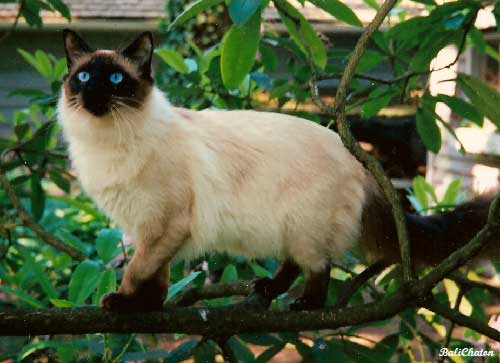
    The Balinese cat can boast of having among his close relatives the famous Siamese cat.
    Balinรฉs
    Photo: aboutpedigreecats.com

    Content

    Characteristics "Balinese cat"

    Coexistence is important that you have with your new friend. Before considering the acquisition of a cat of the breed "Balinese cat" you know certain factors. You must take into account their character, their need for exercise, their interaction with other pets, their care and if you have small children, their level of tolerance towards them.

    Joy

    5,0 of 5 stars (based on 1 review)

    Activity level

    4,0 of 5 stars (based on 1 review)

    Friendliness to other pets

    3,0 of 5 stars (based on 1 review)

    Friendliness to children

    3,0 of 5 stars (based on 1 review)

    Grooming requirements

    2,0 of 5 stars (based on 1 review)

    Vocality

    5,0 of 5 stars (based on 1 review)

    Need for attention

    5,0 of 5 stars (based on 1 review)

    Affection towards its owners

    4,0 of 5 stars (based on 1 review)

    Docility

    1,0 of 5 stars (based on 1 review)

    Intelligence

    5,0 of 5 stars (based on 1 review)

    Independence

    1,0 of 5 stars (based on 1 review)

    Hardiness

    2,0 of 5 stars (based on 1 review)

    History

    The origins of the breed as such are in the United States and go back to the years 50, but the first references to this type of cat are much older. In fact, a Chinese tapestry from several centuries ago already depicted long-haired cats with features Siamese. More recently, in 1871, Penny Illustrated magazine mentioned a long-hair Siamese, and in 1928 the American Federation of Cat Fans (CFF) accepted the registration of a long-hair Siamese.

    In the Decade of 1950, Marion Dorsey and Helen Smith, of the creators of Siamese Americans based in California and New York respectively, they became interested in these long-haired kittens and decided to start a dedicated breeding program. The program was successful and resulted in Balinese cat what do we know today.

    Despite what its name may suggest, the Balinese cat It, in effect, an american cat breed. The name was chosen by Helen Smith to highlight its grace and elegance, similar to that of the ballerinas on the island of Bali

    Already in 1961, the Federation of Cat Fans (CFF) recognized this new breed, and the Cat Fan Association (CFA) did the same in 1970. In 1979, this same CFA set a new standard for a breed called Javanese, whose characteristics were those of Balinese cat, and that it simply allowed covering the coat colors not accepted by the latter's standard. In fact, the Balinese standard had been established by accepting the same colors as the Siamese cat, that is to say, seal, blue, chocolate and lilac.

    That same year 1979, the International Cat Association (TICA) also recognized the Balinese cat, antes de ser seguida for the International Feline Federation (FIFรฉ) in 1983 and, later, por el British Governing Council of the Cat Fancy (GCCF) in 1986.

    Today, but the Balinese cat is present and recognized throughout the world, still a relatively uncommon cat. in your country of origin, United States, the CFA statistics indicate that it is in the second half of the breed table based on the number of annual registrations. In France, each year less than 20 ejemplares en el Official Book of Feline Origins (LOOF). In Great Britain, GCCF figures even show a very steep decline, mainly due to the appearance of new races: Enrollments in the organization went from 150 to 200 per year at the beginning of the decade 2000 less than 50 at the end of the Decade of 2010.

    Physical characteristics

    Balinese cat
    Old-Style Balinese Seal Point – Mary Desmond, CC BY-SA 3.0, via Wikimedia Commons

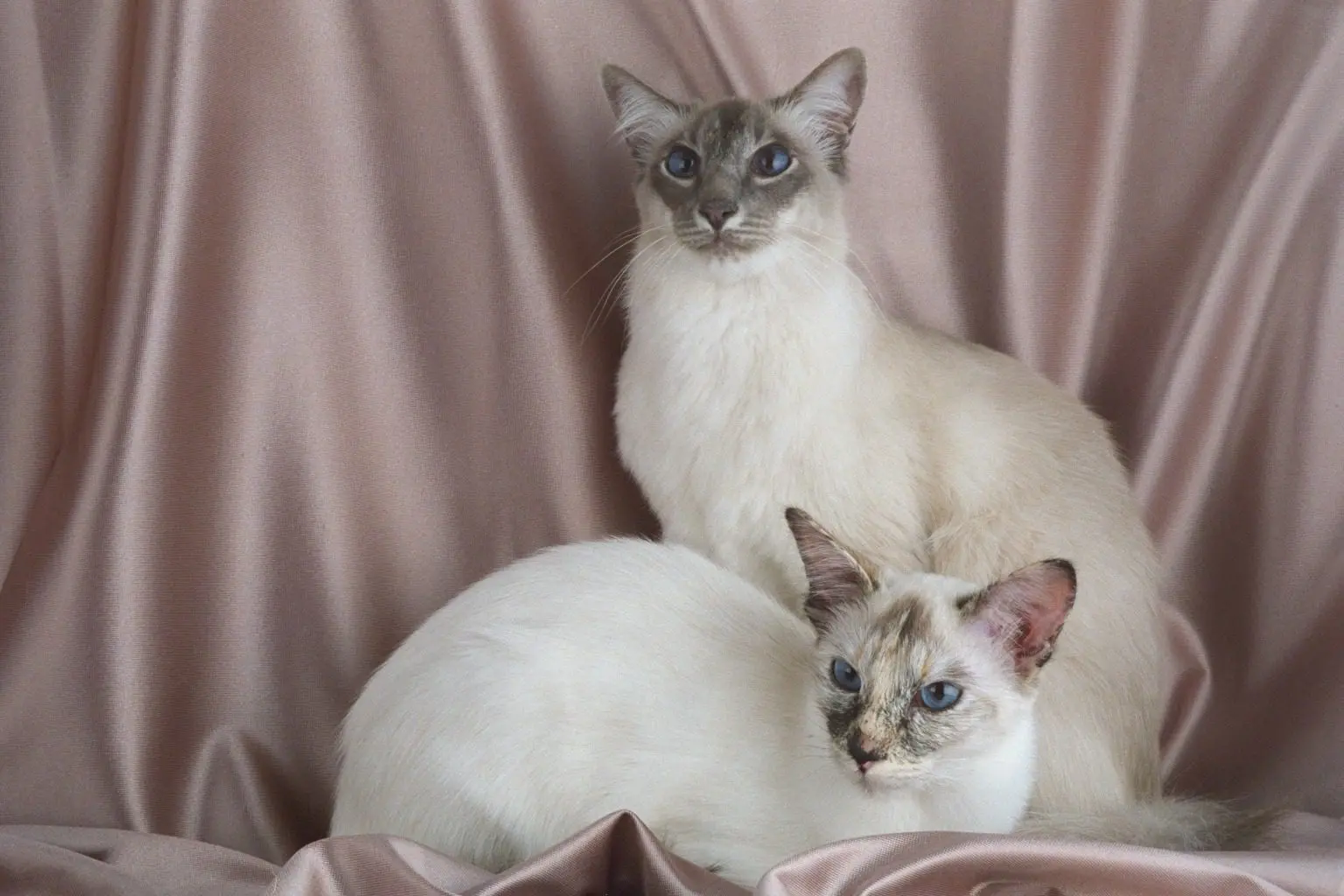
    Muscular but slim, the Balinese cat seems very delicate and flexible in its movements.

    With a weight between three and four kilos, the Balinese cats belong to the medium-sized breeds.

    Males balinese they can weigh a little more and are around five kilos.

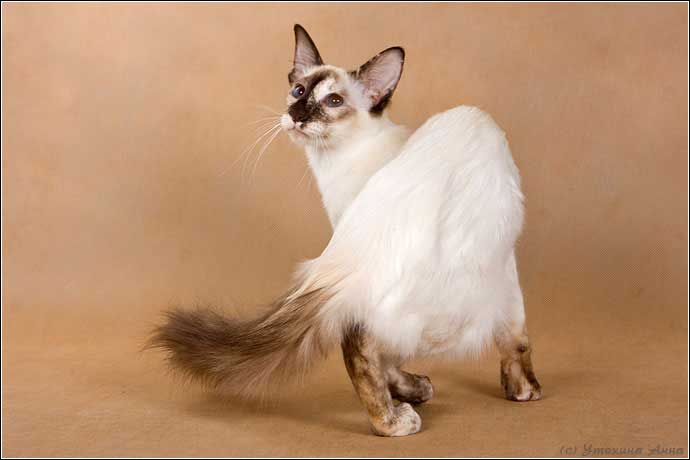
    While the body, face and character are similar to those of the Siamese cat original, coat length differs considerably, which is particularly evident in the bushy tail of the balinese. But, from the start of breeding, the balinese has changed a bit and, with its elongated body and its triangular face, has been adapted to the modern variant of the Siamese cat.

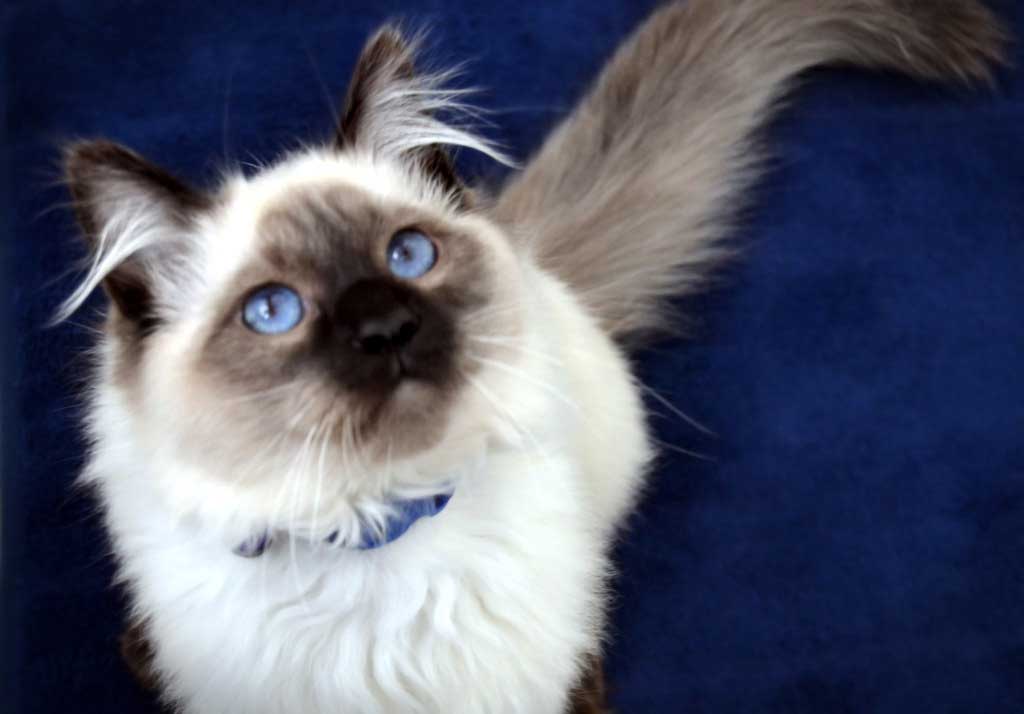
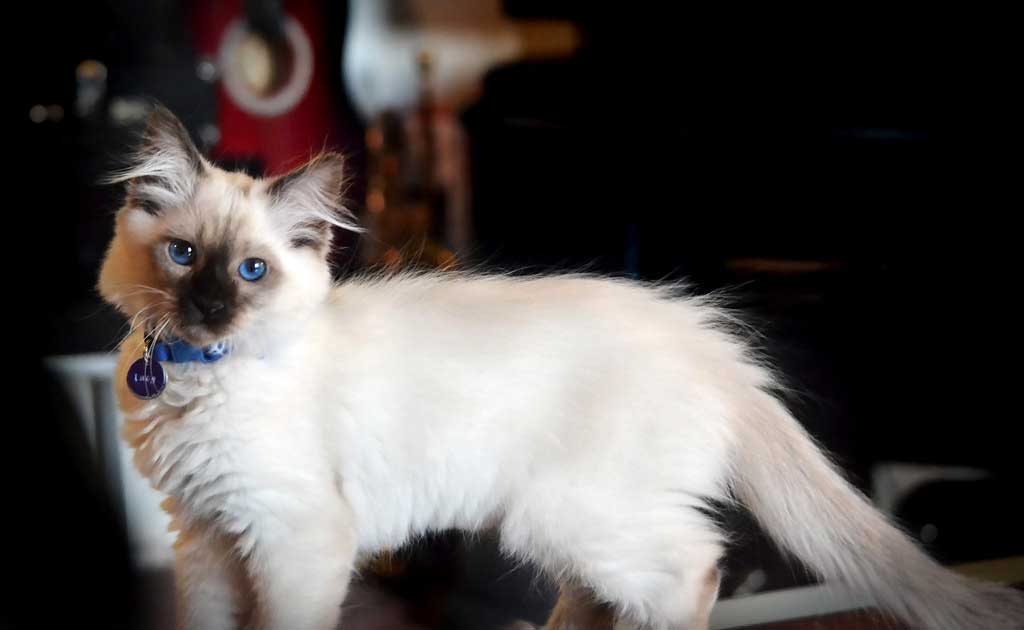
    If you want to buy Balinese cats, nowadays you will only find a few breeders that breed this breed in its original breeding way. In most breeders, cat lovers can buy the modern shape of the Balinese cat, whose body is narrower and its head is more wedge-shaped. A distinctive feature of Balinese cat it's her bright blue eyes, that seem especially alive and vibrant.

    The only coat pattern allowed is colourpoint: the body is one color, but the tips are a darker and different color. Although the only colors allowed in the original CFA standard, written in 1970, are accepted for the Siamese, that is to say, the seal, the blue, the chocolate and lilac, the vast majority of current standards also allow the cream, The candy, red, apricot and other non-traditional colors.

    blue eyes, of a unique beauty, are present regardless of coat color and are characteristic of the appearance of the balinese.

    Last, sexual dimorphism is moderately marked, the male being slightly larger than the female.

    Varieties of "Balinese cat"

    Balinese cat
    Ghislaine of Chrysanthe, balinese cat, female, chocolate tortie point – Photographer:Anna Utekhina, CC BY-SA 3.0, via Wikimedia Commons

    The case of a Balinese cat with colors other than the seal, the blue, chocolate and lilac divide cat lovers from all over the world, as well as various organizations. While the International Cat Association (TICA) and the British Feline Fantasy Governing Council (GCCF) consider that these cats are indeed balinese, the American Cat Fan Association (CFA) consider from 1979 that all "Balinese" of different colors constitute a different race: that of Javanese cat.

    Despite the official merger in 2008 of the two breeds under the standard balinese of the CFA, the term Javanese still commonly used in the US. to define the balinese different colors from the original standard.

    This term was chosen in reference to the island of Java, neighbor of the island of Bali, in Indonesia: is a nod to the fact that the Javanese its near to balinese.

    Character and skills

    Balinese cat
    20-week old Balinese kitten – Flickr

    The balinese he is a very cuddly cat, who is lovingly attached to his family and does not leave their eyes. They demand a lot of attention, they follow their owner everywhere and constantly seek to play with him or be petted by him. It is sociable, accepts other pets without difficulty and enjoys the company of children, provided they have been taught to behave with animals.

    His constant need for attention makes him not tolerate loneliness well, and you can quickly adopt destructive behavior if you feel that your family does not give you the attention you deserve. So, not suitable for a teacher who is absent often.

    It is reputed to be sensitive to human emotions, and knows how to comfort a sad man or, on the other hand, share your moments of joy. They also know how to interpret voice intonations, so reprimands can hurt your sensitive nature, while encouragement reinforces the bond they have with their family.

    Activos, agile and curious, to the balinese they love to explore the corners of the house. These may include, you can crawl out from under your bed with a toy you lost weeks ago or find that old photo that fell behind your living room closet years ago. But, one of his favorite activities is to climb on the shoulders of one of the family members.

    He is also very smart and playful, making you an excellent candidate for teaching your cat tricks. It is very possible that he will learn something by himself, and then come proudly show your family what you can do.

    Despite his high energy level, It is a breed of cat that lives very well in an apartment -if the apartment is not tiny- and does not need outer space.

    Last, one of the main characteristics of the Balinese cat is your propensity to be vocal. They seem to have an opinion on everything, and they do not stop making it known, commenting from his food to what is on television or the cover of the book his master wants to read in a low voice. Although he has no problem giving long monologues, you expect to be listened to and risk starting over if you think your family has not paid attention to what you are saying. Both in terms of activity level and volume, they are definitely not one of the calmest cat breeds.

    Care "Balinese cat"

    Balinese cat
    Seal Point Balinese kitten at 13 weeks of age – Flickr

    The Balinese cat it is an easy-care breed of cat, since its long and silky coat does not tend to knot and sheds very little. So, a simple brushing once a week is enough.

    This brushing session is an opportunity to check that your teeth and eyes are clean., and to pay special attention to their ears, which often need to be cleaned with a damp cloth. It also, make sure its claws are not too long, and trim them if necessary.

    Indoor or outdoor cat?

    The Balinese cat not necessarily a cat that should be kept outside, since these graceful animals are sensitive to cold. But, as the balinese it is one of the most active cat breeds, your house should be as big as possible and, above all, be equipped with many climbing possibilities. The ideal is to have a well-protected balcony or garden, that can also be used for running. To the balinese cats they also like to get inspired by climbing trees outdoors, and a small pool of water and other play opportunities are always welcome for this breed of cat.

    How much activity does he need? "Balinese cat"?

    If you decide to have a balinese, it does not matter if it is a puppy or an adult, you should take your time with him. Intelligent breed cats are very affectionate and like to be the center of attention, so they will gladly dispense with the company of other cats, but not from human attention.

    So, the Balinese cat he needs a lot of pampering and you also have to take time to keep him busy. The balinese is very receptive to training and learns very quickly, which is why search games are so easy for him balinese how to learn new tricks or intelligence games. However, in regards to scratching opportunities, climb and play, you should also make sure your cat has quiet places to retreat to, since animals tend to prefer places where they have their favorite humans in sight.

    Health and nutrition

    The balinese is an exceptionally long-lived breed of cats, since many reach or exceed the 20 years of age.

    Despite this overall robustness, are at increased risk for certain diseases:

  • The progressive retinal atrophy (ARP), a retinal disease that causes blindness in cats;
  • The amyloidosis, a disease that causes kidney failure and is often fatal;
  • Achalasia or megaesophagus, a gastrointestinal disorder that can cause food blockages;
  • Squint, a vision disorder without serious consequences for the animal;
  • Acromelanismo, a genetic disease that causes changes in coat color based on skin temperature.
  • Last, obesity is a major risk to the health of the balinese, but can easily be avoided with a vigilant and responsible owner.

    Life expectancy

    15 to 20 years

    Food

    When it comes to feeding, should focus on a protein-rich diet. So, a high-quality cat food with a high meat and protein content is essential. Especially since balinese cats they are very active and need a lot of energy, a good diet is essential. As an alternative, can feed your balinese on a soft diet, but you should thoroughly familiarize yourself with the subject and also seek advice from a veterinarian, because only with the right composition can the needs of the cat be met in a specific way.

    For sale "Balinese cat"

    If you want to get a "Balinese cat", you should know that they are very affectionate and that these intelligent purebred cats want to keep busy. Do not underestimate the necessary care of the coat.. If you are thinking of buying a Balinese cat, should only be done by a reputable and responsible breeder.

    Responsible breeders ensure that the Balinese cats are raised in a family and are well socialized. It also, if you want to buy a cat of this breed, you should know that good breeders do not place their balinese in new homes before the end of the imprinting period.

    If you want to buy a Balinese cat, do not respond to ads from amateur breeders offering purebred cats for sale without papers. The balinese kittens should only be purchased from an experienced breeder who is a member of a breeding club. Since experienced breeders only sell cats that have been vet checked and are healthy, should expect to pay between 900 and 1100 euros for a balinese kitten.

    If you want to give a new home to a Balinese cat adult, with a bit of luck you can also find it in shelters and animal protection organizations. Also in this case you will have to pay a nominal fee.

    Videos "Balinese cat"

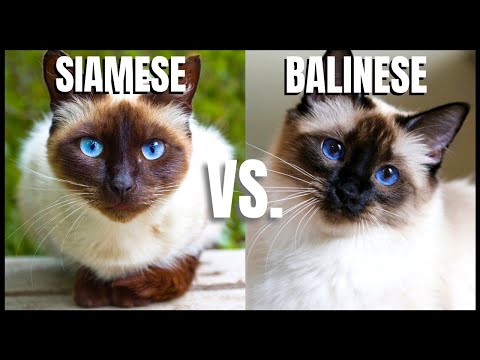
    Siamese Cat VS. Balinese Cat
    Siamese Cat VS. Balinese Cat
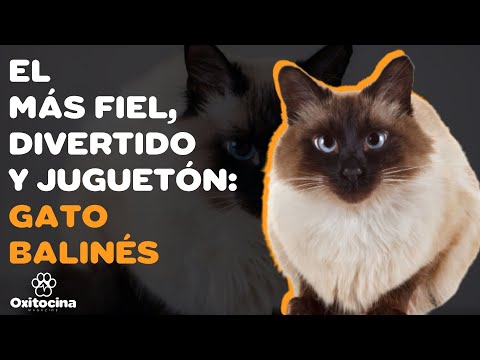
    6 things you should know about the Balinese cat
    6 cosas que debes saber sobre el gato Balinรฉs

    Alternative names:

  • Long-haired Siamese
  • Thai Siamese
  • โ–ท The world of Pets: Dogs, cats, birds, reptiles, amphibians

    Havana brown cat
    Federations: CFA, TICA, AACE, ACFA/CAA, CCA-AFC

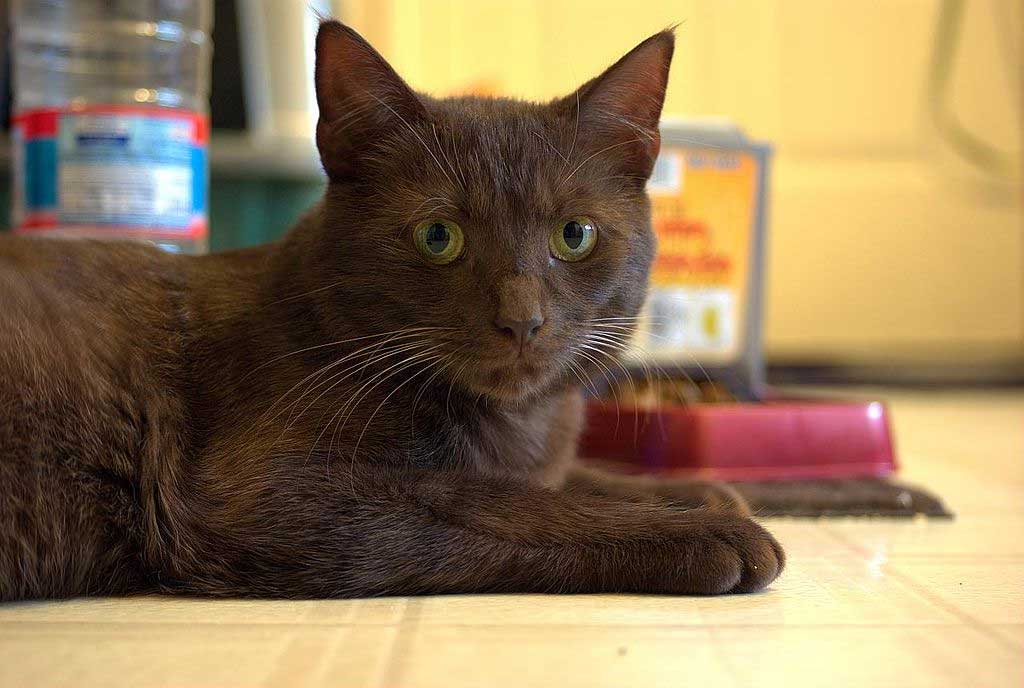
    The Havana brown he is an affectionate cat, friendly and intelligent. It also, unlike its ancestor the Siamese, it is quite calm and serene.

    Habana marrรณn

    Content

    Characteristics "Havana brown cat"

    Coexistence is important that you have with your new friend. Before considering the acquisition of a cat of the breed "Havana brown cat" you know certain factors. You must take into account their character, their need for exercise, their interaction with other pets, their care and if you have small children, their level of tolerance towards them.

    Joy

    4,0 of 5 stars (based on 1 review)

    Activity level

    3,0 of 5 stars (based on 1 review)

    Friendliness to other pets

    3,0 of 5 stars (based on 1 review)

    Friendliness to children

    3,0 of 5 stars (based on 1 review)

    Grooming requirements

    1,0 of 5 stars (based on 1 review)

    Vocality

    1,0 of 5 stars (based on 1 review)

    Need for attention

    5,0 of 5 stars (based on 1 review)

    Affection towards its owners

    4,0 of 5 stars (based on 1 review)

    Docility

    3,0 of 5 stars (based on 1 review)

    Intelligence

    5,0 of 5 stars (based on 1 review)

    Independence

    2,0 of 5 stars (based on 1 review)

    Hardiness

    3,0 of 5 stars (based on 1 review)

    History

    The Havana brown He is a descendant of the famous Siamese. Its origins date back to the fourteenth century in the Kingdom of Siam, current Thailand. The brown cats were described and represented together with the Siamese and the Korat cat in numerous manuscripts of poems and paintings found in the city of Ayutthaya, which was then the capital of the kingdom. They were considered very beautiful, but above all, good luck charms for their owners.

    These chocolate-colored felines were among the first to be imported from Siam to the UK, where they arrived at the end of the 19th century. The texts of this time, like the writings of an English breeder named Madame French and passages from Frances Simpson's book of 1903 The Cat Book, describe a Siamese cat with brown fur and blue-green eyes.

    It is probable that not all imported cats of this color were of the same breed and that among them there were burmese, Siamese and the Tonkinese cat (a cruce enters Burmese and Siamese). But, it is difficult to differentiate the breeds from the available writings and drawings.

    In any case, It was at this time that the term โ€œSwiss Mountain Catsโ€ was coined to designate cats with this peculiarity. But, historians cannot establish whether it covered all chocolate-colored specimens imported from Thailand in the late 19th century, or only those of one or more specific races.

    Brown cats were exhibited in Europe in the late 19th and early 20th centuries. At an exhibition held in England in 1888, one of them won the first prize, which tends to show that felines of this type enjoyed a certain visibility and popularity at the time. This is corroborated by the fact that in 1928, in another exhibition held in Great Britain, the British Siamese Cat Club went on to award a special prize to the chocolate-colored specimens.

    Just two years later, in 1930, god a ride, promoting only the breeding of cats Siamese blue-eyed. But, a large majority of brown individuals had green eyes and not blue, so they were suddenly excluded from competitions organized under the aegis of the organization. Logically, breeders began to abandon this color, and the number of individuals wearing it drastically decreased.

    This decline continued until the years 50, when a group of British breeders, among which were Baroness Miranda Von Ullman and Anne Hargreaves, they set out to give these cats a new life. They studied the inheritance of the chocolate gene and launched a breeding program based on their research.. New crosses were made between Siamese chocolate-colored, domestic cats blacks and the Russian Blue Cat, which resulted in the tan brown as we know it today. The first kitten regarded as a Havana brown was born in the UK in 1952 and it was called Elmtower Bronze Idol. Result of a cross between a Siamese cat seal point carrier of the chocolate gene and a black cat also carrier of the gene, became one of the founders of the breed.

    The main British feline organism, the Governing Council of the Cat Fancy (GCCF), recognized the new breed in 1958 as Chestnut Brown Foreign. Twelve years later, in 1970, was replaced by the Havana brown. There are two opposing hypotheses to explain the choice of this name: the first is that it refers to its brown color similar to tobacco, while the other claims that it comes from a breed of rabbit of the same color called Havana.

    Even before its official recognition in Great Britain, the breed had taken its first steps in the United States. In fact, after coming into contact with Mrs.. From Ullman, an American breeder named Elsie Quinn imported two cats into 1956. A selection process was started somewhat different from that of the United Kingdom, so soon the American and English types were differentiated. This is still the case today, the first being more massive than the second, whose morphology is long and thin, apparently modeled on that of the Siamese.

    The Cat Fanciersโ€™ Association (CFA) accepted the breed in 1964, and The International Cat Association (TICA) did the same in 1979. Both took the North American version of the breed as a reference., whose features differed significantly from the British model recognized by the GCCF: the latter had a longer and thinner oriental morphology. Despite this formalization of the existence of two very different types of cats, the name remained the same for all bodies: Havana brown. In 1983, the TICA accepted the lilac color in its standard, whereas until then only the color chocolate was allowed. Quite consistently, decided at the same time to change the name with which he recognizes the breed, in favor of him Havana. In France, the Livre Officiel des Origines Fรฉlines (LOOF) did the same and began to accept the lilac color, but kept the denomination Havana brown.

    In United States, the beginning of the years 90 was characterized by the loss of interest in breeding this breed, whose number dropped a lot. The breed became especially rare and, at the end of the decade, the CFA only had 12 hatcheries and some 130 representatives of the breed throughout the country.

    The situation worried some breeders, who feared that the cats would disappear. They contacted Dr.. Leslie Lyons, who was then working at the California Veterinary Genetics Laboratory, so that with your help they could develop a breeding program. The analyzes of the genome of the Havana brown revealed excessive inbreeding. In other words, a healthy development of the breed was only possible if new individuals were introduced in the breeding programs.

    Thus, the breeders asked the CFA to open the breed to new crosses, what was accepted by the organization in 1997. Since that year, it has been possible to cross the brown Havana with siamese cats Seal Point and Chocolate Point, Oriental Longhair cat, as well as with domestic cats blacks and blues not beggars in the United States. If the individuals born from these crosses are brown, are recognized by the CFA as Havana brown. On the other hand, regardless of its color, if they cross paths with the Havana brown, their offspring is considered by the organization as Havana brown.

    This show turned out to be a success: expanded the breed's gene pool and kept it healthy, at the same time that it allowed to continue increasing the number of dogs in the country. These authorizations are still valid today., but they are still exclusive to the United States, since organizations from other countries do not allow these crossings.

    But, the surge in popularity was short-lived, and the Havana brown is now at the bottom of the CFA's annual enrollment rankings, in the post 42 of 45 in 2018, after falling steadily in previous years. These may include, early in the decade 2010, rather occupied the position 30 or 35.

    But, the problem of the lack of diversity in the different lines also arose in other places, like the UK. During the decade of the 90, some changes in the selection of Havana brown and the Siamese modified the quality of the fur of the latter and other morphological parameters, what some people did not like.

    In 1996, a breeder named Joan Judd expressed concern about the future of the breed, What, in addition to these changes away from its original appearance, suffered from a clear lack of representation. He wrote an article explaining, among other things, that the Havana brown couldn't survive without an influx of foreign blood. Under your direction, a small group of breeders, among which were Mrs.. P. Sharp-Popple, la Sra. S. Miller and Linda and Charlie Spendlove, selected some specimens and developed a joint breeding program called Pure Havana. As such, the Sr. and mrs. Spendlove imported a subject from the French breeding of Claire Rassat. Christened St Evroult Gatsby, was initially registered with the GCCF as a Havana brown.

    In view of its traditional pattern, breed enthusiasts Havana brown The modern model did not look favorably on the five litters it produced and complained to the GCCF, requesting that St Evroult Gatsby be removed from the breeding program. But, they came across a number of enthusiasts who had noticed the qualities of the traditional model through this small group of cats, and defended him before the association. The GCCF then proposed that these cats form a new breed, which was baptized as Suffolk and officially recognized by the organization in 2014. So, the Suffolk is considered a separate breed from the Havana brown, although it is very similar to him. It can be chocolate or lilac color. 13 Suffolks were registered with the organization in 2018, and 35 in 2019.

    In France, the Havana brown is very underrepresented. The number of people registered each year in the LOOF does not exceed fifteen, for a total of 108 between 2010 and 2019.
    Worldwide, its total population is estimated to be no more than a thousand, so it is still a rare feline breed.

    Physical characteristics

    "Havana brown cat"

    Habana brown
    Un chat de race Havana Brown – Dave Scelfo from Point Pleasant Beach, NJ, USA, CC BY-SA 2.0, via Wikimedia Commons

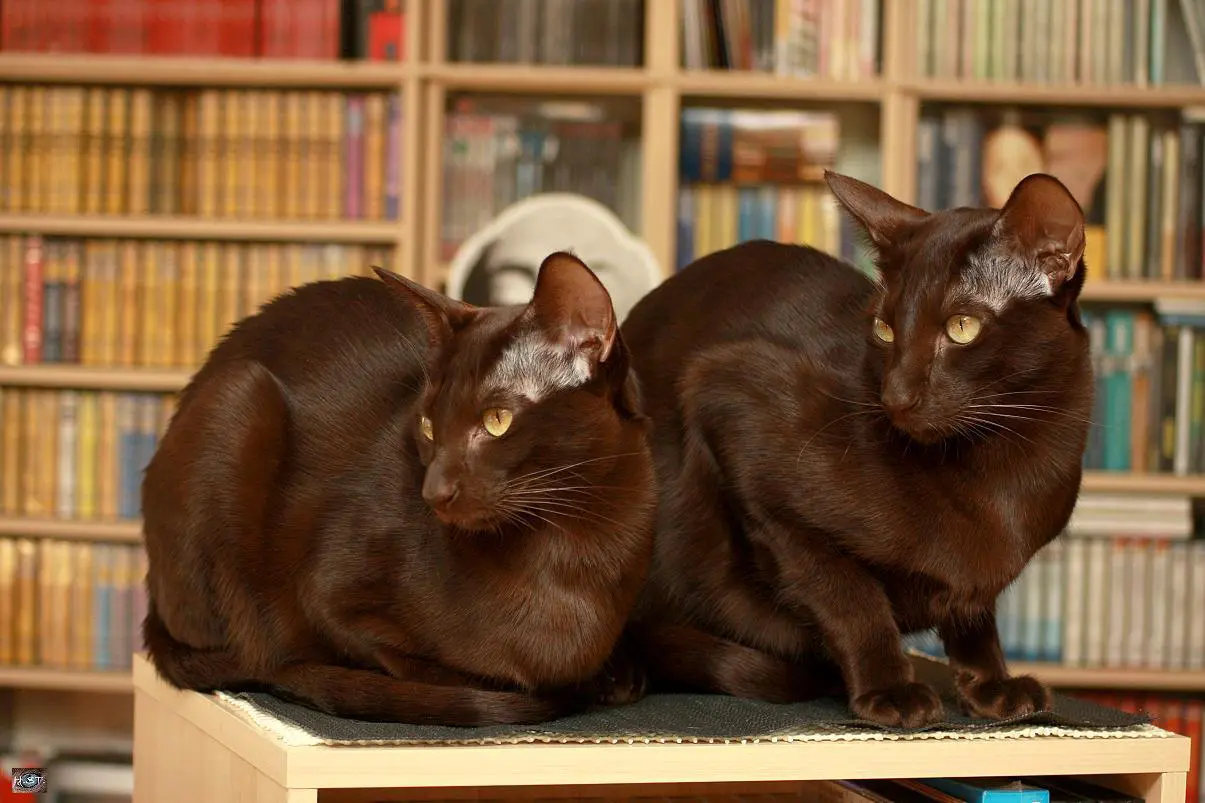
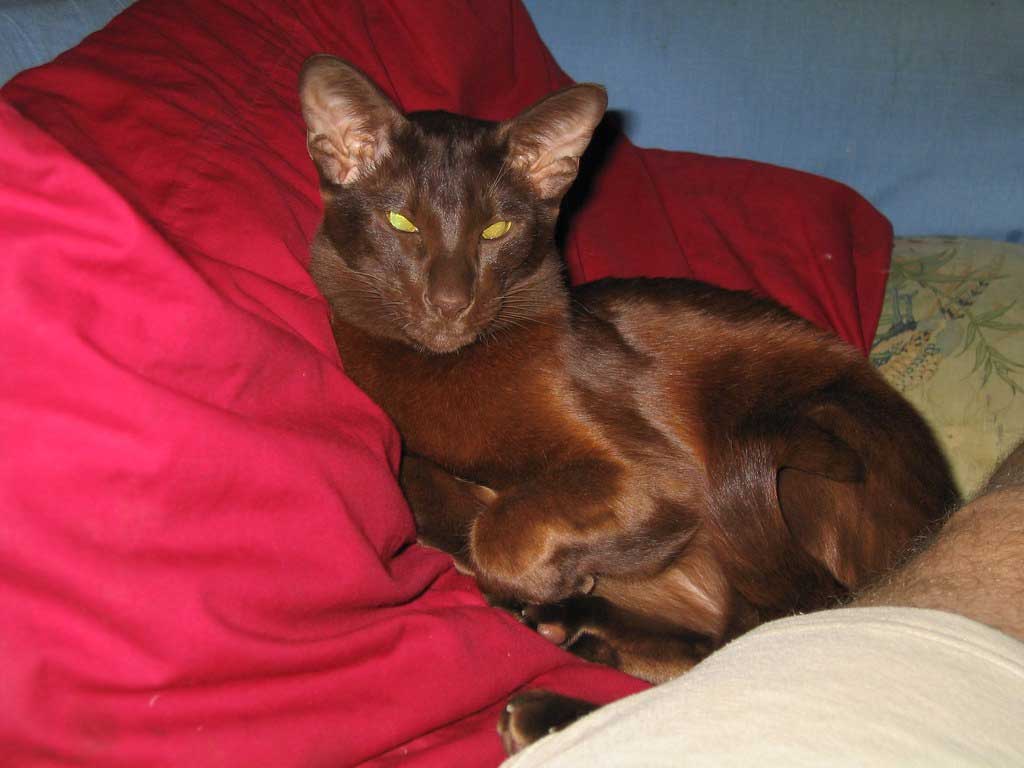
    The Havana brown it is a medium size cat, long-legged, with good muscles and strong bones.

    The legs are straight. They are finer and more delicate in females than in males. They also have the most developed muscles, so its slenderness and length are less striking than in the female.

    Regardless of gender, the hind legs they are longer than the front ones. The feet they are oval shaped, compact and the pads are pink.

    However, keep in mind that there are two versions of the Havana brown: the american and the english. The first is usually more muscular and massive than the second, that preserves the longest and slimmest body of the oriental cats.
    In both cases, the tail is fine and of medium length.

    The neck It is also medium in size and proportional to the size of the body. View from the top, the head it is longer than it is wide, and ends in a rounded nose with a clear break on either side of it. This is a distinctive trait of the breed, which must be clearly visible. The chin is well developed and square. Ideally, it should form a nearly perpendicular angle to the nose.

    The ears they are wide and rounded at the tip. Are leaning forward, which gives the appearance of being always alert.

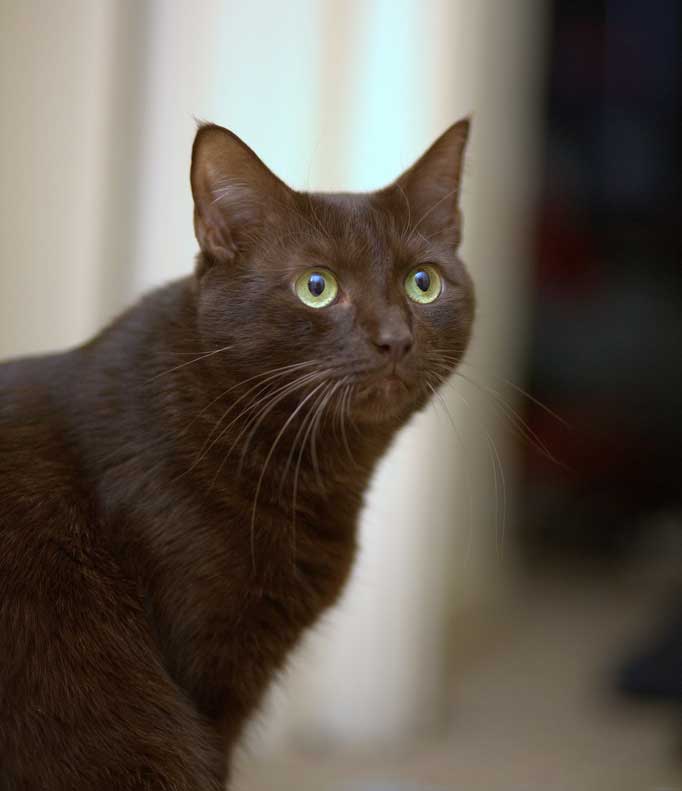
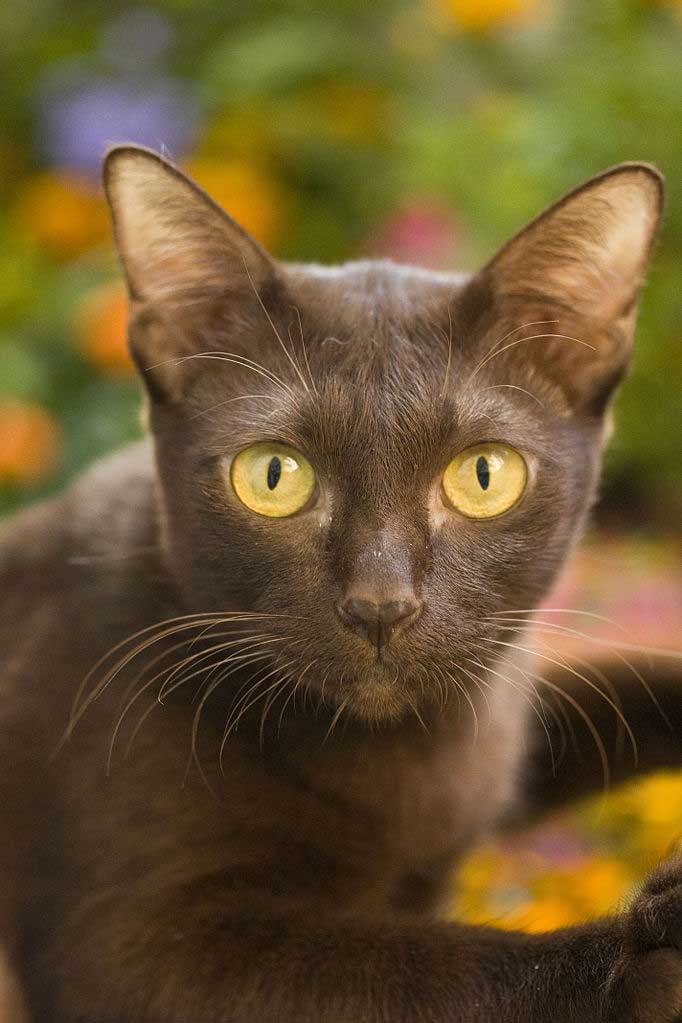
    The eyes they are medium in size and oval in shape, wide apart and bright. They give you an alert and always expressive expression and are necessarily green, accepting all shades of this color.

    The fur of the Havana brown it is made up of short hair, smooth and shiny. All shades of brown accepted, but a reddish brown color is generally preferred (Mahogany) to a blackish brown color. Some organizations, like LOOF and TICA, they also accept lilac, But not all. Whatever the color of the cat's coat, should be uniform throughout your body. Kittens can be born with tabby markings, but these normally disappear as they grow.

    The whiskers they are also brown.

    Last, the sexual dimorphism it is quite marked, being the male heavier than the female, although its size is quite similar.

    Size and weight-

    • Male size: Of 25-30 cm.
    • female size: 25-30 cm.
    • Male weight: 3,5-4,5 kg
    • female weight: 2,5-3,5 kg

    Varieties of "Havana brown cat"

    Havana Brown
    Havana Brown – Dave Scelfo from Point Pleasant Beach, NJ, USA, CC BY-SA 2.0, via Wikimedia Commons
    The Havana brown cat It was developed mainly in the United Kingdom and the United States. But, the selections made and the breeding programs applied were significantly different between these two countries, so over the years two different models emerged: the Havana brown of English type and the of American type.

    The former has a very long morphology and is close to its cousins โ€‹โ€‹and ancestors from the East, especially the Siamese. It is a very fine and muscular cat.

    As for him Havana brown American, it is more solid and round, deviating from the elongated morphology to sometimes approach the semi-free type. Although more rectangular and strong, it is no less elegant.

    Another example is the Suffolk, created in the early 21st century by British enthusiasts of the Havana brown who opposed the evolution that the race was experiencing in their country. The Suffolk it's a kind of Havana brown traditional, as opposed to the modern version that is now in the country. The GCCF recognized his work in 2014, recognizing it as a breed in its own right.

    Character and skills

    The Havana brown he is an affectionate cat, friendly and intelligent. It also, unlike its ancestor the Siamese, it is quite calm and serene.

    He is also more adaptable than most of his peers., since it is not one of those who are scared by a change of environment, for example. This flexibility makes it a good option for someone who wants to take their cat on vacation or is moving frequently., for example.

    To be happy and at ease, this constantly seeking attention-loving companion needs a lot of interaction with humans. He likes to follow his master around the house and accompany him in housework. So, needs an owner who is present often and who does not fail to show him that he loves him every day. This makes it a very good cat breed choice for an older person., and a very bad one for an active person who spends most of his time away from home.

    Very tactile, does not shy away from contact with its owner. On the other hand, you like to physically interact with him, with a marked tendency to touch him stretching the leg to attract his attention. He also uses his paw a lot to examine things that are interesting to him.

    These qualities make it an ideal cat for children., especially since he never tires of playing for hours.

    On the other hand, can be exclusive, as close to its owners as it is shy and distant with strangers, at least at the beginning.

    Usually, they get along very well with other animals, including dogs, provided they are gradually introduced or, even better, from an early age. But, it is advisable to take some precautions if you are brought to live with rodents, birds or fish, since the Havana brown is a great player and his ability to find in any object -or small animal- an exciting toy is awesome. Be careful to store her socks and other small items that are easy to transport, or you may not see them again. Having said that, the games he likes the most are those that involve interaction with their owner. It is an excellent candidate to teach your cat tricks, and also excels at solving puzzles.

    Last, if he is not as talkative as the Siamese, nevertheless likes to chat with its owners through soft meows.

    Havana brown
    Havana brown – Flickr

    Grooming and caring for the "Havana brown cat"

    The Havana brown it is an easy-care cat.

    Needs weekly brushing but sheds very little, except during the shedding season in spring and fall, when more frequent brushing is necessary - often daily- to prevent hair from accumulating in the house. Finishing brushing with a felt or hand cloth helps remove dead hair that has resisted brushing. Bathing is seldom necessary.

    Ears and eyes should also be checked regularly, ideally once a week, to avoid infections, and get cleaned up as soon as needed.

    Your weekly maintenance session is also an opportunity to brush your cat's teeth., in order to avoid the formation of tartar and all the risks that it entails. Having said that, the ideal is a more regular brushing.

    Last, Since the Havana brown he does not usually go abroad much -if he does-, the natural wear of its claws is usually insufficient. So, they need to be examined regularly to trim them when they get too long, in order to prevent them from being hindered in their movements and / or injuring themselves. It is highly recommended that you provide him with a scratching post so that he can wear them down himself and don't have to do it as often.

    If your pet is used to being handled from a young age, will perfectly accept these different treatments.

    Indoor or outdoor cat?

    He loves to play and run around the house and spends a lot of time, but it is a perfect indoor cat, fully satisfied with a life in a flat, as long as their owners are present and they have enough games to keep busy. Even if I have access to the outside, it's not where you like to spend most of your time. So, you don't need a garden to adopt a cigar, that is something sensitive to cold.

    How much activity does he need? "Havana brown cat"?

    The Havana brown they are not sleepy. You should offer your roommate some job opportunities. This is important to this intelligent breed when you are away.. This domestic cat loves to play with his human. Learning little tricks is not a problem. This need for activity can be exhausting after a day at work.. An alternative would be a cat companion of the same age and temperament as a balance.

    Health and nutrition

    "Havana brown cat"

    Habana brown
    Havana brown – Maewboran, CC BY-SA 4.0, via Wikimedia Commons

    The Havana brown enjoys, in general, Of good health.

    But, may be prone to developing calcium oxylate stones in the urinary tract. If it is not attended on time, can lead to blockage of the cat's urinary tract. Cats prone to this problem should drink plenty of water to avoid stone formation as much as possible.

    Some cats can also suffer from upper respiratory tract infections, that is to say, those that affect the nose, sinuses, pharynx and larynx, When you are young. Among them is chlamydia, for which there is a vaccine, which can be a smart investment to maximize the chances of keeping your cat healthy. In general, the general symptoms of a respiratory infection are fever, sneezing, tos, watery eyes or a runny nose.

    Last, the Havana brown is sensitive to cold. In any case, it is not an outdoor cat, but it is important to ensure that it does not come out when the temperatures are very low.

    Life expectancy

    15 years

    Food

    A quality industrial cat food is perfectly suitable for the Havana brown, that is not a demanding cat. As with any cat, you simply have to adapt the daily ration to your level of physical activity and your age.

    In any case, not the type of cat who likes to eat too much: is a teether and very rarely suffers from obesity. Once you've made sure your cat is no exception that proves the rule, food can be left at your disposal at all times without risking health problems, since it is capable of self-regulation.

    On the other hand, an individual prone to urinary stone problems should be encouraged to drink heavily. As in the case of any cat, fresh water must be available at all times, but the owner can add some milk, tuna juice or ice cubes to the water bowl to encourage the cat to drink more.

    For sale "Havana brown cat"

    In Europe, the price of a kitten Havana brown usually oscillates between 900 and 1100 EUR. The price difference between male and female cats is quite small, normally it does not exceed one hundred euros.

    In North America, the price range is much wider, oscillating between 600 and 1.500 $.

    whatever the country, the main parameters that affect the price are its greater or lesser conformity with the breed standard, the reputation of the cattery and the origins of the kitten. Another important factor is color: a Havana brown reddish, for example, is more prized than a blackish brown specimen and, Therefore, likely to sell at a higher price.

    In any case, what is rare is usually expensive, and this cat is no exception. There are few hatcheries of Havana brown in North America, and even less in Europe. So, it can be quite difficult for a future owner to find their rare gem.

    Videos "Havana brown cat"

    TOP 10 HAVANA BROWN CATS BREEDS
    TOP 10 HAVANA BROWN CATS BREEDS
    Coco Chanel - Chocolate Cat - Havana Brown - Siamese - Kitten - Gorgeous
    Coco Chanel – Chocolate Cat – Havana Brown

    Alternative names:

    โ–ท The world of Pets: Dogs, cats, birds, reptiles, amphibians

    Bengal cat
    Recognized by the CFA, FIFe, TICA, WCF, ACF, ACFA/CAA, CCA-AFC, GCCF, NZCF

    Despite his wild looks, the Bengal cat it's a domestic cat, affectionate and very attached to humans

    Bengala

    Content

    History

    The Bengal cat is a recent breed of cat that, despite its name, has nothing to do with the Bengal tiger. In 1963, Jean Sugden Mill, an American breeder, managed to cross a Leopard cat (or Felis Prionailurus Bengalensis, a Southeast Asian feline with the appearance of a leopard but the dimensions of a cat) with a domestic cat, who gave birth to two kittens, one of which was a female named Kin Kin. Against all odds, this female was not sterile and was able to interbreed with her father, giving birth to a litter of kittens, some of which were black, while others had a spotted brown fur.

    It was this first crossing, in 1963, the one that marked the true beginning of Bengal cat, by developing a breeding program to create a new breed in its own right. In fact, if there were already in the past crossing experiments between a domestic cat and Leopard cat, following the example of those already documented in 1889 in the book Our Cats and Everything About Them of Harrison Weir, an English artist with a passion for cats, they did not intend to create a new breed of domestic cat.

    For personal reasons, Jean Sugden Mill could not continue with this experiment, and nowadays none Bengal descend from this line. When he wanted to resume this project a decade later, the Endangered Species Ordinance had made it illegal to import the Leopard cat, so I could no longer acquire this animal to resume these crosses. But, in 1971, the Dr. Willard Centerwall, director of the genetics laboratory at Loma Linda University (California), had started a hybridization program between the domestic cat and the Leopard cat for scientific purposes, with the aim of testing the resistance of these hybrids to the virus of the feline leukosis, a disease that does not affect Asian leopards.

    Bengal cat
    Hereโ€™s our crazy little kitten at 5 months – Sean McGrath from Saint John, NB, Canada, CC BY 2.0, via Wikimedia Commons

    At the end of the year 70, Jean Sugden Mill acquired 8 first generation hybrids Dr. Centerwall and a Mau imported directly from India called Millwood Tory de Delhi. A long and difficult selection process began, during which other well-established breeds were used, as the Burmese cat, the Siamese cat, the American shorthair cat, the Abyssinian cat and the Egyptian Mau, to convert to Bengal cat in what is today: a domestic cat with the wild appearance of Felis Bengalensis, from which he inherited his name.

    But, There is another theory that attributes the name of ยซBengalยป a William Engler, zoo keeper and active member of the Long Island Ocelot Club. Interested in these hybrids since the early years 70, it is said that he was the first to speak of Bengal, and the term comes from his own name: Bill Engler.

    Jean Sugden Mill presented his Bengalis in various feline exhibitions in 1985, and the success was immediate. In 1986, the TICA (International Cat Association) officially recognized this new breed. The GCCF (Governing Council of the Cat Fancy) British followed him in 1997, then the FiFe (International Feline Federation) did the same in 1999, while the CFA (Cat Fanciers’ Association) American waited until 2018 to do the same.

    The Bengal cat had a quick success, especially in France. The first specimen was imported in 1989, and the breed was recognized that same year by the Association Nationale des Cercles Fรฉlins de France (ANCFF). Many breeders were quickly interested, to the point that today the breeding of Bengals is flourishing in France (and internationally recognized), with more than 1000 active creators, that is to say, that have registered at least one litter in the last two years.

    Since 2016, in the framework of meteoric growth, the Bengal cat it has even placed itself on the podium of the most popular cat breeds in France, with more than 3.000 kittens registered every year in the LOOF (Livre Officiel des Origines Fรฉlines), versus just over a hundred at the beginning of the years 2000.

    This great popularity of Bengal it is rather a French specificity. In the United Kingdom, for example, where it suffered a legal restriction until 2007, it is rather between the 15th and the 20th position in the ranking of the most popular breeds, with an average of 300 specimens registered annually with the GCCF, that is to say, some 10 times less than in France.

    In United States, the Bengali entered the Top 20 of America's most popular cat breeds when the CFA finally recognized it in 2018, despite its late recognition and the fact that it is prohibited in some places, like New York City or the State of Hawaii.

    Physical characteristics

    The Bengal cat it is a domestic cat that has retained the general appearance of a wild leopard. It is a fairly large cat with a long, muscular body, hind legs slightly larger than forelegs and a thick tail with a rounded tip, all of which gives it a classy look. As such, belongs to the long and powerful morphological type.

    Bengal cat
    Bengal cat – Flickrgailhampshire

    The head is wide, with small rounded ears and large round or oval eyes that express curiosity and intelligence.

    The fur is short, dense and silky to the touch. Emblematic of the breed, the fur is reminiscent of its wild ancestor, the Leopard cat, with random rosettes or horizontal scrolls. In both cases, these marks are bicolor and well marked.

    Different standards accept many colors, the most common being brown-black, including all gold variations, bronze, copper and mahogany. But, there are also many specimens with an ivory or creamy white color, as well as some rarer ones with a beautiful silver gray.

    Size and weight

  • Size: Of 30 – 35 cm.
  • Male weight: 4,5 – 7 kg
  • female weight: 3,5 – 5,5 kg

  • Varieties "Bengal cat"

    There are two varieties of Bengal: the stained and marbled.

    In the first, rosettes must be large, clear, bicoloured, different and randomly arranged throughout the body.

    The latter has elongated horizontal marks in the form of scrolls that are reminiscent of the veins of marble., bicolor and different.

    There are also specimens with long or semi-long hair, sometimes called Bengal Kashmir. For the moment, only the TICA has recognized this cat as an experimental breed.

    Character and skills

    Bengal cat
    Bengal cat

    Despite his wild looks, the Bengal cat it's a domestic cat, affectionate and very attached to humans, whose company constantly seeks. In fact, he is never far from where his master is, To make sure you don't miss anything that happens!!

    He is also very sociable with other cats and dogs, provided they are also used to cats. But, they may still have some wild reactions, especially towards small domestic rodents, those who can be mistaken for prey and chase.

    It is a very active and curious cat, who spends his time playing, chasing, fucking, exploring… before coming to rest near his master. He especially likes cat trees, that allow you to jump from one platform to another and settle in a high place to observe your environment from the highest. This energy expenditure is not unique to puppies: the Bengali is hyperactive and playful even as an adult, and is not the ideal companion for an older person who wants a quiet animal. Having said that, can be perfectly adapted to life in a flat, as long as you receive the necessary care… and that your family is not offended by the possible mischief you may cause.

    Lively, explorers and playful, they can also be occasionally destructive. This is especially true in the case of females., which tend to be more excessive than males, both in their games and in their displays of affection. To minimize this risk, it is advisable to ensure that the Bengali get all the care you need: if you are left alone too often without occupation throughout the day, it is likely that he will find a way to remind his master of his existence, and this will not necessarily be in a pleasant way for this one…

    The Bengal cat it is also a very intelligent breed, able to adapt and learn quickly. So, if a light turns on by itself at night or if a door that had been left closed is found to be open, there is no reason to believe that it is the work of a ghost: your partner has simply learned to press the switch or turn the handle. This makes him a good candidate for teaching your cat tricks and training.. In fact, it is not uncommon to see a Bengali who has learned to use the toilet or to take things to the owner. But, do not lose sight that it is still a cat, with his independent and stubborn character: although this may give results, training (for example with clicker, which is very suitable) requires a lot of patience.

    It also, it is a breed of cat that loves water. This characteristic has been inherited from its ancestor the Leopard cat, who is an excellent fisherman. Some individuals do not hesitate to follow their master even under the shower!! It is logical that aquarium enthusiasts know that the inhabitants of an open aquarium are likely to end up in the clutches of this experienced hunter.…

    Last, the Bengali It, in general, a pretty talkative cat, with a wide range of sounds, ranging from chirping to a low, hoarse noise reminiscent of certain big cats.

    Care "Bengal cat"

    Bengal cat
    Or is it a tiger? – ReflectedSerendipity from United Kingdom, CC BY-SA 2.0, via Wikimedia Commons

    The BengalIt is an easy-care breed of cats, since it is only necessary to brush the cat's fur to remove dead hair and distribute the oil from the skin once a month. It also, it is seldom necessary to bathe your cat.

    As in the case of all cats, regular check-ups of teeth, the ears and eyes will help avoid the risk of infection.

    Last, its claws may be clipped from time to time, when necessary.

    Indoor or outdoor cat?

    The athletic Bengalis need a lot of exercise to feel comfortable. It is best to offer them a large house with a garden where they can roam.. If you decide to keep them inside, it should also provide them with enough space and opportunities to play and climb.

    These freedom-loving animals don't feel comfortable in small city flats. A sturdy cat tree or climbing track should fit the floor.

    The "Bengal cat" have great jumping ability and no lift is out of reach. Definitely, you should take this into account before bringing a Bengal cat to your house. Especially when they get bored, big cats tend to wreck the floor. In general, it is advisable to maintain a Bengal like a free animal and provide you with enough to do indoors. With outdoor cats, can you be prepared for these cats, otherwise so loving, go for a walk for two days in a row.

    How much activity does he need? "Bengal cat"?

    Due to their offspring from wild cats, the Bengal cats belong to the very active cat breeds. They are persistent climbers and need a lot of exercise. The best place for them to vent is the scratching post., during hunting games or, ideally, in the open air.

    Regular hunting games with a rod, hunting mice or balls along with your human are also a great activity. Mental stimulation with smart toys or learning little tricks is essential so that cats do not get bored.

    If you are often away from home, cats need company. They get along better with other cats. It is one of the few breeds of cats that loves water so it will easily be entertained by a leaky faucet.

    Health and nutrition

    The Bengali has a fairly robust health, having inherited from Leopard cat remarkable longevity for a domestic cat.

    But, have a predisposition to certain diseases:

  • The Hypertrophic cardiomyopathy (MCH), a disease that makes it difficult for the heart to circulate blood;
  • The Chronic anemia, a genetic disease that can be detected by any decent Bengal breeder by a simple test;
  • The Progressive Retinal Atrophy (ARP), another genetic disease that can also be detected by a simple test, allowing carriers to be excluded from breeding;
  • The cataract, an opaque film on the cornea of โ€‹โ€‹the eye that can cause blindness in the most severe cases.
  • It also, being quite large and very active, are prone to Hip Dysplasia.

    Last, it is important to know that, unlike his ancestor the Leopard cat, the Bengal not immune to feline leukosis.

    Life expectancy

    12 to 16 years

    Food

    The Bengal fits perfectly in commercial cat food, both croquettes and canned wet food. But, it is important to make sure your Bengal cat eat a quality food that contains all the essential nutrients necessary for their development.

    There should always be enough food and fresh water. But, no risk of obesity in cats; on the one hand, because they are quite active, and on the other, because they are able to regulate their own weight.

    For sale "Bengal cat"

    Bengal cat
    Bengal cat

    If you want to have a Bengal cat, you should know that this breed is one of the most expensive. For a healthy kitten you will pay between 1000 and 2000 EUR in a serious breeder. The price mainly depends on the type of leopard coat.

    The Bengal cats with pedigree and physical characteristics that make them suitable for breeding are priced between 2000 and 3000 EUR.

    Breeders also differentiate between the three categories of companion animals, breeding and exhibition. as creator, usually only kittens showing small deviations from breeding targets are obtained. In the purchase contract you have to agree not to use the cat for breeding.

    Criticism of the breeding of "Bengalis"

    Critics of breeding "Bengal cat" they believe that it is irresponsible to cross a wild animal with a domestic cat just to obtain a certain coat pattern. According to animal rights advocates, the first mating is even a torture brood, since complications often arise at birth. Many of these wild cat hybrids continue to display the character traits of a wild animal.. So, before acquiring a cat of this type, you must be very sure that, even though you have inherited the activity from your ancestors, will be able to lead a life appropriate to his species.

    Characteristics "Bengal cat"

    Coexistence is important that you have with your new friend. Before considering the acquisition of a cat of the breed "Bengal cat" you know certain factors. You must take into account their character, their need for exercise, their interaction with other pets, their care and if you have small children, their level of tolerance towards them.

    Joy

    5,0 of 5 stars (based on 1 review)

    Activity level

    5,0 of 5 stars (based on 1 review)

    Friendliness to other pets

    2,0 of 5 stars (based on 1 review)

    Friendliness to children

    2,0 of 5 stars (based on 1 review)

    Grooming requirements

    1,0 of 5 stars (based on 1 review)

    Vocality

    2,0 of 5 stars (based on 1 review)

    Need for attention

    4,0 of 5 stars (based on 1 review)

    Affection towards its owners

    4,0 of 5 stars (based on 1 review)

    Docility

    1,0 of 5 stars (based on 1 review)

    Intelligence

    5,0 of 5 stars (based on 1 review)

    Independence

    2,0 of 5 stars (based on 1 review)

    Hardiness

    3,0 of 5 stars (based on 1 review)

    Videos "Bengal cat"

    These Beautiful Bengal Cats Are Incredibly Intelligent | Cats 101
    These Beautiful Bengal Cats Are Incredibly Intelligent | Cats 101
    Benji the Bengal Cat: from Kitten to Adulthood
    Benji the Bengal Cat: from Kitten to Adulthood

    โ–ท The world of Pets: Dogs, cats, birds, reptiles, amphibians

    Highlander cat (Highland Lynx)
    Federations: TICA

    The Highlander cat is a relatively new breed, the first litter back to the year 2004. This race is a little rare, to remove doubts it is registered with the International Cat Association (TICA) as a new preliminary certification.

    Content

    Characteristics "Highlander cat (Highland Lynx)"

    Coexistence is important that you have with your new friend. Before considering the acquisition of a cat of the breed "Highlander cat (Highland Lynx)" you know certain factors. You must take into account their character, their need for exercise, their interaction with other pets, their care and if you have small children, their level of tolerance towards them.

    Joy

    5,0 of 5 stars (based on 1 review)

    Activity level

    5,0 of 5 stars (based on 1 review)

    Friendliness to other pets

    4,0 of 5 stars (based on 1 review)

    Friendliness to children

    4,0 of 5 stars (based on 1 review)

    Grooming requirements

    3,0 of 5 stars (based on 1 review)

    Vocality

    2,0 of 5 stars (based on 1 review)

    Need for attention

    3,0 of 5 stars (based on 1 review)

    Affection towards its owners

    4,0 of 5 stars (based on 1 review)

    Docility

    4,0 of 5 stars (based on 1 review)

    Intelligence

    4,0 of 5 stars (based on 1 review)

    Independence

    3,0 of 5 stars (based on 1 review)

    Hardiness

    4,0 of 5 stars (based on 1 review)

    History

    The Highland Lynx, better known today as Highlander cat, it was created in 1993 by crossing two hybrid cat breeds, the Jungle Curl and the Desert lynx. But, despite its exotic name, This breed of cat does not have an iota of blood from its distant wild cousin, the Lynx. The desire to create a Domestic cat with the appearance of a wild cat with curved ears was the main reason for its creation and for the choice of its name.

    Since the appearance of the breed, the breeders of Highland Lynx they have continued to select and perfect the physical features of this very special cat to distinguish it from its parent, the Desert lynx cat.

    Your efforts are beginning to pay off. Like this, although the highland lynx is still considered by the Rare and Exotic Feline Registry as a subgroup of the Desert lynx cat, as the Alpine Lynx and the Mohave Bobs, is starting to emerge at feline shows as a breed in its own right. The name change in 2005 to Highlander was seen by the breeder community as a strong sign of demarcation.

    The 1 in May of 2008, the breed was recognized by the International Cat Association (TICA) to participate in the feline shows organized under his auspices in the preliminary class of new breeds, reserved for new breeds that can enter competitions, but do not participate in them. Eight years later, in 2016, rose to the category of New Advanced Race, which means that he could compete but not win any official prize. The application of the breed to participate in presentations as a competition breed (final status which means official recognition) is being considered in 2019. It should be noted that the TICA divides the Highlander in two varieties: the Highlander Shorthaire for short-haired specimens, and the Highlander Longhair. Other international feline associations, as the Fรฉdรฉration Internationale Fรฉline (Fife), the Cat Fanciers Association wave Word Cat Federation they still don't recognize the breed.

    Despite TICA approval and resulting visibility, the Highlander not yet widely distributed outside its country of origin, United States. There are some breeders of Highland Lynx in Canada and Europe (France and UK), but your number remains confidential.

    Physical characteristics

    Highlander
    Highlander CatDigitalDirt, CC BY-SA 4.0, via Wikimedia Commons
    The Highland Lynx has a physical look that is sure to attract attention when you walk into a room. With his muscles, his curved ears, its short tail and brindle fur reminiscent of its distant wild cousins, the Highlander He is as imposing as his cousin the Desert lynx cat, if not more.

    Bigger than the average cat, the Highlander has a body powerful, with well-defined muscles that show in every movement. Its torso is quite developed and its long hind legs end in large feet with prominent joints.

    The polydactyly in cats, that is to say, having more "toes" on each paw than normal, It is very common in Highlanders, regardless of kinship. This feature does not pose any risk to the animal's health.. On the other hand, it can even be an advantage, as it provides more stability in your movements.

    Another physical feature of Highlander is your tail naturally shortened, to the point of having only between 5 and 15 centimeters in length. It also, it is thick and can be straight or curly. This anomaly does not influence the cat's daily behavior or its health either.. He even tends to wag his tail to express his mood, like a dog.

    Last, the head and the face of Highlander are generally longer than wide. Its forecrown long, their nose wide and its chin deep and pronounced form a rather rectangular face. The Greats eyes oval and flattened can vary in color between gold, blue and green, and they are especially expressive. The ears, with wide bases and curved tips, are placed high on the skull, alerts and open. This last characteristic develops in the first months after the birth of the kittens., who initially have straight ears.

    Last, a wide variety of coat colors and patterns are accepted. Those with short hair tend to have a softer and denser coat than those with long hair..

    Size and weight

    • Size: 25 to 40 cm.
    • Male weight: 5 to 11 kg
    • female weight: 4 to 7 kg

    Varieties of "Highlander cat (Highland Lynx)"

    The standard of the Highland Lynx accepts all feline coat colors: ebony, blue, Brown, leonado, chocolate, lilac, Red and cream, as well as all silver variants, sepia, snow, mink and cameo.

    But, the breeders of Highlander They currently prefer three coat patterns to maintain the "wild" look of the breed.:

    The leopard pattern
    • It consists of a tabby with dark spots on the flanks and belly of the cat. The size of the spots can vary, but they must be evenly distributed. Rosette-shaped spots are preferable (almost full circle, with a center lighter than the edges). A dark dorsal line, ideally made up of small spots, should travel the length of the cat's spine to the tail. The face has brindle markings. Ghost spots (marks that fade as the cat sheds and ages) are preferred for snow colors, cuttlefish and mink.
    The leonado pattern
    • The coat is brindle all over the body, with more pronounced brindle markings on the legs, tail and face. Collar markings are usually present on the neck and chest, but they are not essential.
    The marbled pattern (the cloudy leopard)
    • It is a variation of the brindle brand, but with horizontal guidelines instead of vertical. Colors must be contrasted, with well-defined shapes and contours. The belly is stained.

    Accepted Highlanders smooth or brindle, but they are less desirable, as they are closer to the look of a Domestic cat.

    Character and skills

    Highland cat
    Highland cat reclined – TAnthony, CC BY-SA 4.0, via Wikimedia Commons
    Despite his wild looks, the Highlander is far from sharing the temperament of his cousins, starting with his circumspection and shyness. In fact, it's the opposite. In fact, it is one of the most affectionate cat breeds. This character trait, as well as its tendency to follow its owner everywhere, has earned him the nickname "cat-dog".

    A giant with a kind heart, quickly becomes familiar with his new surroundings and soon demands a lot of attention and caresses from everyone who enters his home. This applies even to strangers, those who do not hesitate to touch, if you are encouraged to do so. Sometimes he even goes out to party with his master and follows him around when he comes back from work., without the noise and the drool. In other words, not a suitable breed of cat for a master who is away often, that you would do better to opt for an independent cat.

    On the other hand, unlike other affectionate cat breeds, the Highlander not talkative: shows your affection through your movements and attitude, not through your voice.

    This personable and patient character makes them ideal for a family with children., provided they are not too agitated in your presence. Moderating the ardor of the youngest is all the more necessary since the mountaineer has an excellent memory and, Therefore, tends to run away from people with whom the first exchanges have been random.

    It is possible to have more than one cat at home, since the Highlander is generally sociable with other cats. But, it is important to avoid bringing two unsterilized males together.

    Cohabitation of your cat with a dog should not be a problem either, since they also get along very well with dogs, sharing the same devotion to their master. In fact, It is not uncommon to see that they quickly start playing together once they have been introduced..

    It also, his intelligence and excellent memory make him a perfect student to teach your cat tricks and games, like the recovery of balls. An indoor cat perfectly adapted to life in an apartment and not to that of a garden cat, however requires distractions and activities between two naps. Playing with your cat on a regular basis will allow him to channel his energy while maintaining his powerful muscles, and it will prevent you from destroying everything in the house to get your attention.

    Last, the Highland Lynx he is a water-loving cat, whether it's watching a faucet run for hours or getting sprayed during a gaming session.

    Health

    The Highland Lynx is a new breed of cat and breeders have not yet identified any specific disease.

    However, It's recommended that, before making any purchase, the cat's parental history and vaccination record is checked to ensure that all its vaccinations are up to date.

    Grooming

    Depending on the hair length of the Highland Lynx, maintaining the cat's coat may require more or less work. The longer the coat, more regularly you will need to brush your cat (about twice a week), to help you groom. In any case, it is best to accustom your cat to being brushed from a young age, since older cats do not appreciate this type of attention if they are not familiar with it.

    It is also important to monitor and maintain your cat's ears. Dirt or excess wax can collect in the cartilage folds, causing discomfort and infections. Cleaning your cat's ears regularly will go a long way in preventing this problem..

    Food

    The Highland Lynx does not have a special sensitivity to food. It also, provided that the food is of good quality and is adapted to the dietary and energy needs of the cat, there is no risk of him becoming overweight.

    However, keep in mind that the Highlander tends to drink more than other cats. So, it is even more important that they always have access to fresh water.

    For sale "Highlander cat (Highland Lynx)"

    The price of a kitten Highland Lynx ranges between 700 and 900 EUR.

    Videos "Highlander cat (Highland Lynx)"

    Highlander | Cats 101
    Highlander | Cats 101
    Meet Gadget the Highlander Cat
    Meet Gadget the Highlander Cat

    Alternative names:

    • Highland Lynx, Highlander Shorthair