โ–ท The world of Pets: Dogs, cats, birds, reptiles, amphibians

Continental Toy Spaniel
Francia Bรฉlgica FCI 77 . Continental Toy Spaniel and others
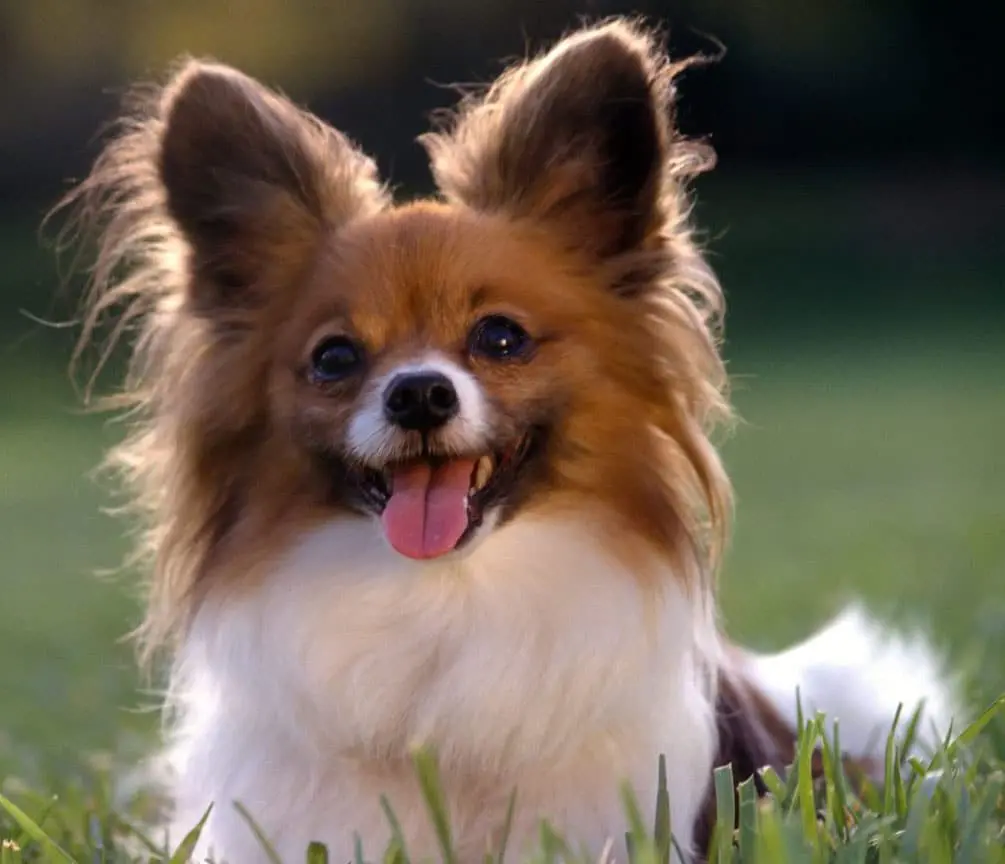
Papillรณn

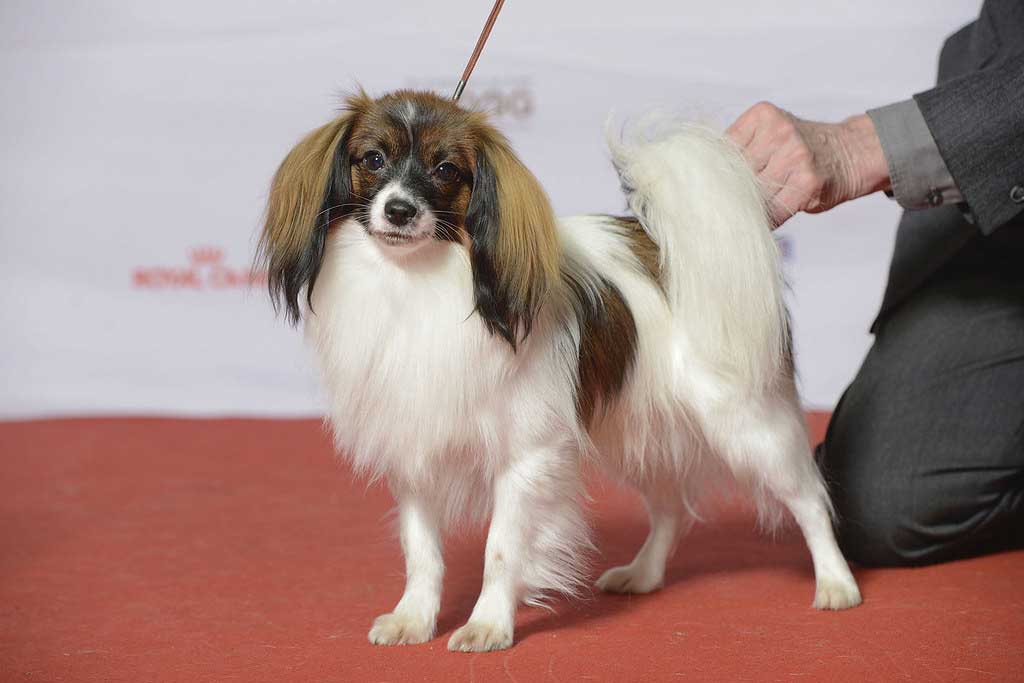
The Continental Toy Spaniel He was recognized by the AKC in 1935. The variety of drooping ears is called Phalรจne.

Content

History

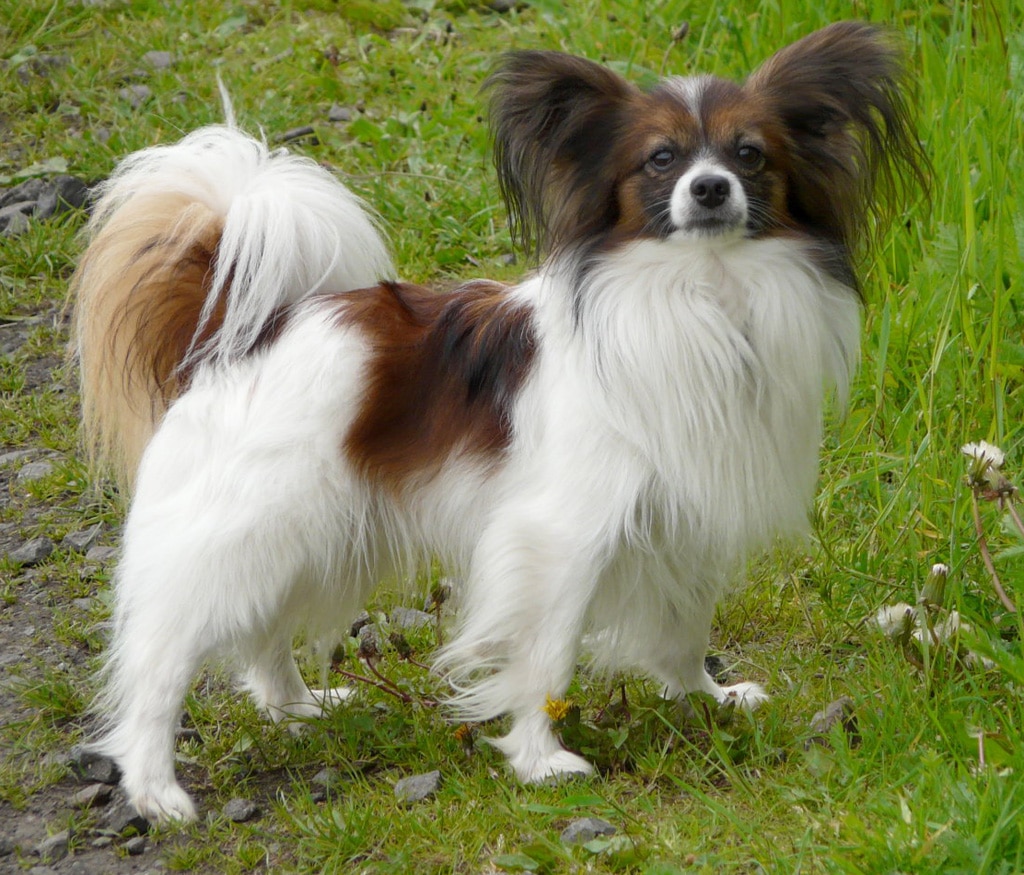
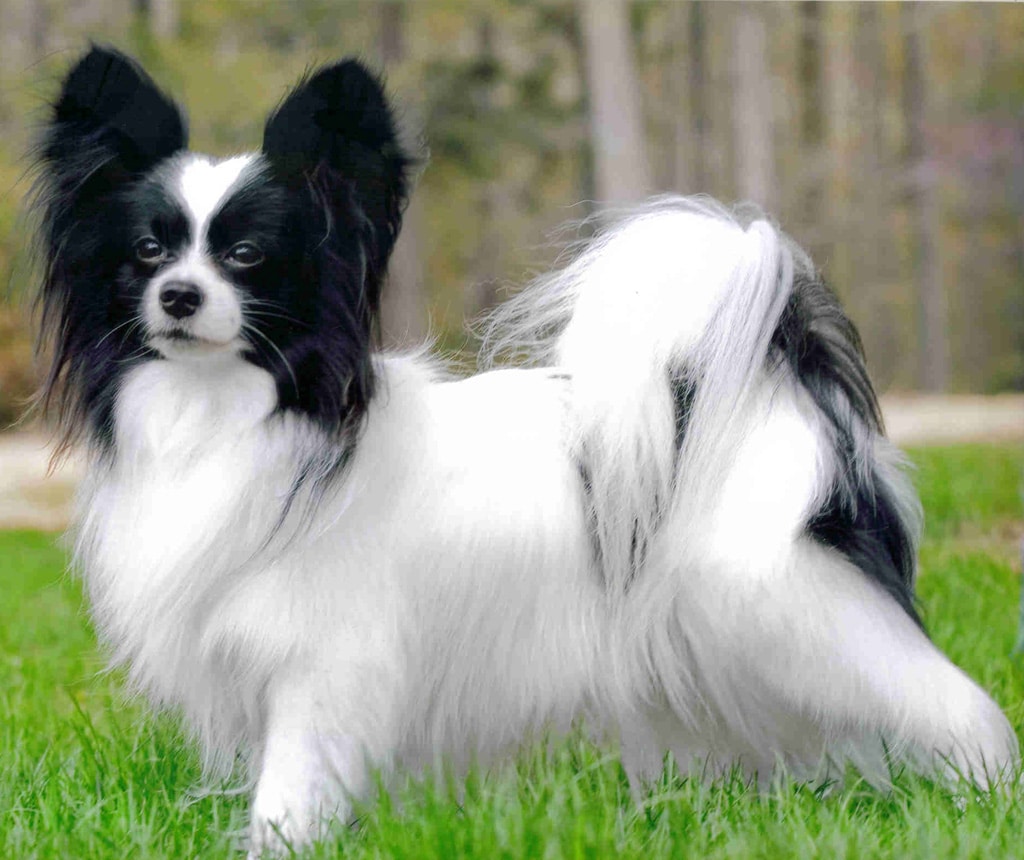
The Continental Toy Spaniel (in French: Butterfly), water dog is a breed of dog of the type. One of the oldest of the Toy Spaniel, It is named after its resemblance to the butterfly, in its ears, large with long hair and fringes, It emulates open wings of a butterfly.

The history of Continental Toy Spaniel is traced through various works of art. The first Toy Spaniels which resembles the Continental Toy Spaniel you are in italy. Vicelli Tiziano painted these small dogs in many famous paintings, about 1500, as the Venus of Urbino (1542). Other renowned artists to have painted these small dogs are Watteau, Gonzรกlez Coke, Fragonard, Paolo Veronese, and Mignard.

A painting of the Wallace Collection, London, appears a Continental Toy Spaniel portrayed with the family of Louis XIV. As well, Papillon dogs appear in paintings of European royal families and the families of merchants of the time paintings. The race was very popular in England, France and Belgium, which are considered countries of origin by the FCI.

The history of Continental Toy Spaniel and its long association with royalty have led to many stories about the breed. Marie Antoinette is said to have gone to the guillotine, clinging to her small dog under her arm, a Continental Toy Spaniel. But, Tradition says that Marie Antoinette's dog was a small dog belonging to the Water Dogs which had been brought to the French court from Spain on the back of pack mules. according to history, her puppy was saved and was treated in a building in Paris that, currently called the Papillon House.

The Continental Toy Spaniel He was recognized by the AKC in 1935. In the news, the Continental Toy Spaniel can be seen competing in obedience and agility.

Physical characteristics

Colors

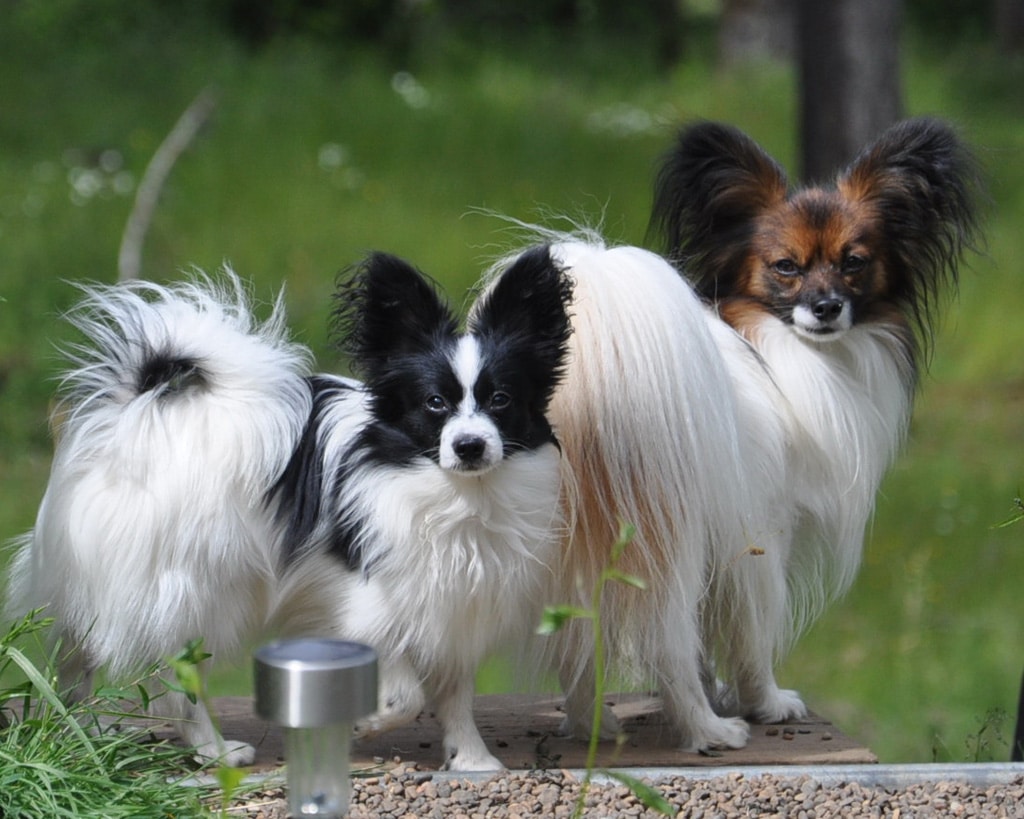
  • S – black and white
  • S – Lemon and white
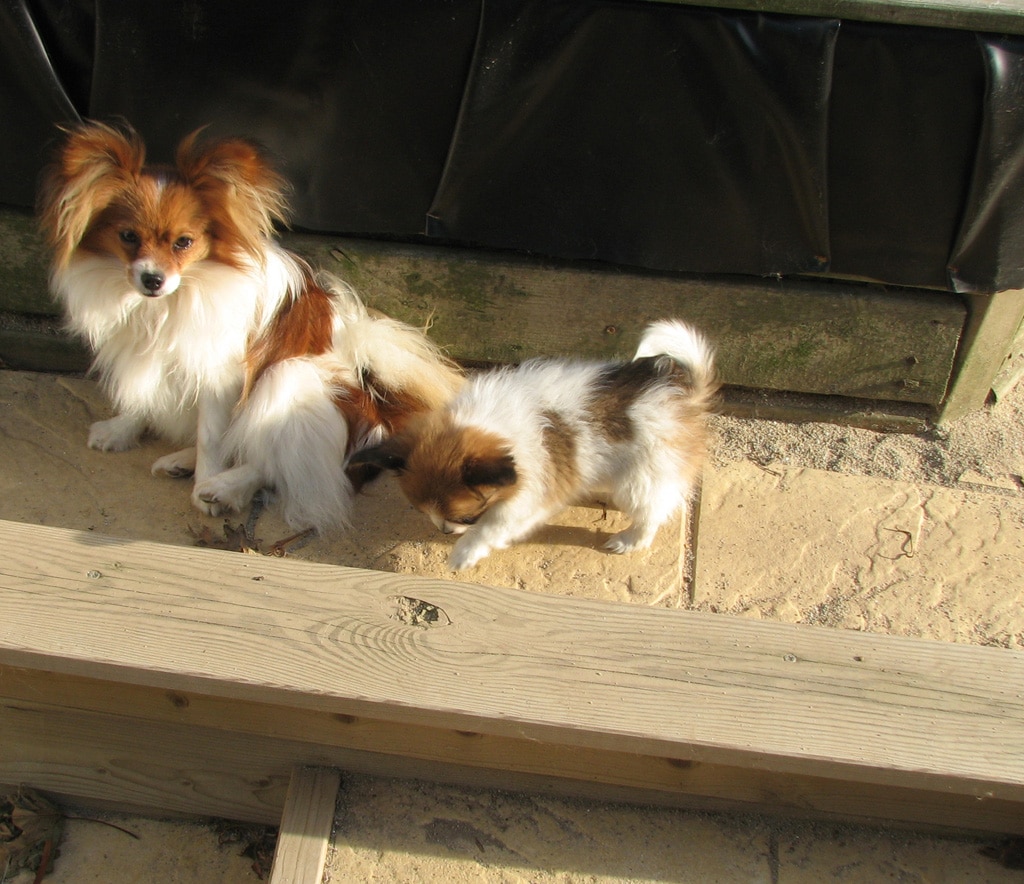
  • S – White and Red
  • S – Sable and white
  • S – Black and white as

Colors

  • A – Brown black and white
  • A – Black red and white
  • A – Brown and white
  • A – Black & Fawn
  • A – Red

Colors

  • A – Red, Sable and white
  • A – Sand
  • A – White
  • A – White and Brown
  • A – Silver and white

Markings

  • A – Black marks
  • A – Mask black
  • A – red marks
  • A – Sand
  • A – the marks fire
Phalรจne
PHALENE, Vittoriaโ€™s Come Along

To the Continental Toy Spaniel with floppy ears it is called Phalรจne (from French: moth). His small head is slightly rounded. The snout is a little short, fine, narrowing towards the nose. The eyes are dark, size medium, round, with a thin black border that, often extends into the Union of the eyelids to ears. The large ears may be erect or fall with the rounded tips.

They have the long tail of high insertion, covered with long, fine hair. The hair is smooth, long, fine, a single layer, and on the chest, the ears and the back of the queue have longer hair, as if it were a wheel.

The color of the coat is white with patches of any color. A mask of a color other than white covers both ears and the eyes from back to front..

The most distinctive of Continental Toy Spaniel it's his big fringed ears, It seems to the wings of a butterfly. They can also be registered, the American Kennel Club supports the following colors and markings, the types specified as S-standard, or A-alternative for use in shows and competitions:

There are two variations of this race, that of the fully erect ears of the Continental Toy Spaniel more common, and the lop-eared Spaniel type (ears of Phalรจne). But, the American Kennel Club and the International Cynological Federation consider variation Phalรจne and the Continental Toy Spaniel common, as the same race. The height is of 20 to 28 cm., and the weight of approximately 3.5 kg.

Observations

in brood, a specimen of the variety should never be crossed Continental Toy Spaniel with variety Phalรจne, because there is a considerable risk that arise with ears semierguidas either mixed puppies.

This detail, It must be taken into account for those people who wish to participate in show ring since that difference in the ears is penalized as a serious lack.

Character and skills

The temperament of Continental Toy Spaniel is very affectionate, docile and even at times, absorbent.

Is - by definition- a service dog is will be looking for pampering continuously, which makes it an ideal dog for older people, Since his love everyday waste and their small size are an infallible weapon against loneliness.

In general, is a quiet dog, is very patient and just ladra.

It adapts with total tranquility to any situation, the only thing that will interest him is to be next to his owner.

While they will not display aggressiveness to strangers, nor give exaggerated signs of love. They should not be shy or aggressive, that is not common in the breed.

They need a daily walk. The game really like, and it is good that there is time for fun, but long walks are necessary to be a good state of health.

Life expectancy Continental Toy Spaniel round the 16 years.

Y, as last detail, is an excellent Hunter of mice.

Education

The globally obedient and loyal character of the Continental Toy Spaniel makes you a good candidate for a first adoption. In particular, his intelligence makes him quickly understand and memorize the association between orders and actions. This makes it easier to learn the basic commands, but it also makes him an ideal student for a master who wants to go further and teach his dog tricks. Very intelligent, the dog Continental Toy Spaniel trains easily.

But, to use your intelligence and learn, must be willing to do it. In fact, pampered and treated like a prince for centuries, has maintained a certain propensity to do only what he wants. So, special emphasis should be placed on learning obedience early in your education, as it is the key to unlocking everything else and exploiting its full potential. But, it's not a matter of rushing: given its sensitivity and its closeness to its humans, punishing the dog for being recalcitrant would have every chance of backfiring, by weakening the bond that binds him to his master. Better to see it upside down, and reward him (with stimuli, treats or even caresses) every time he does what is expected of him. This is the very basis of the positive dog training method., and the value you place on everything that comes from your human referent only makes the use of rewards more effective. Like this, knowing how to show firmness (and if patience is necessary) to set and enforce limits upon arrival at home, it is better to share beauty with gentleness and rewards to make your education a success.

It also, the fact that he is sociable both with humans and with other animals does not exempt him from being socialized from his earliest age, at the risk of behaving differently. Make you meet lots of people (friends, neighbors, delivery man, veterinary…) and get used to meeting other animals (dogs, cats, rodents, birds…) it is essential to avoid any tendency to aggression once he is an adult and to hope to at least partially curb his hunting instinct. At the same time, exposing him to all kinds of noises and smells in all kinds of places allows him to be calm and balanced afterwards, and therefore perfectly capable of finding and holding its place alongside humans.

Health

Despite her fragile appearance, the Continental Toy Spaniel it is generally quite robust. Most people have few health problems and enjoy a good life expectancy, at least equal to that of other dogs of this structure.

His coat lacking undercoat, However, makes it little resistant to cold. On the other hand, has less difficulty in strong heat.

The health problems to which you are particularly predisposed are:

  • hereditary cerebellar ataxia, a rare genetic disorder whose outcome is usually fatal;
  • progressive retinal atrophy, which gradually causes the dog's weight due to neuronal degeneration of the eye responsible for vision.It is an incurable hereditary disease;
  • the opening of the fontanel, when a soft spot on the top of the head does not close completely.This genetic problem means that a head injury can be fatal;
  • von Willebrand's disease, an inherited condition that affects platelets and leads to a bleeding disorder: Therefore, a simple cut can cause excessive bleeding;
  • patellar luxation, which can cause pain in the knee of the animal and promote the development of arthrosis. Continental Toy Spaniel explains why you are predisposed to this problem;
  • the waterfall, giving the eye a milky or crystalline appearance, and can cause blindness. In some cases, corrected by surgery;
  • entropion, a malformation of the eyelid that causes painful lesions of the cornea in the animal;
  • collapsed windpipe, an irreversible condition that causes breathing problems and worsens over time;
  • follicular dysplasia of the black hairs, a skin condition that causes hair loss (alopecia);
  • dental problems, like all dogs of this size., the small size of its mouth favors the formation of tartar, and all the troubles that go with it (gingivitis,periodontosisโ€ฆ);
  • broken bones, especially in puppies, that are particularly fragile and must be handled with care;
  • hypoglycemia, which is characterized by a decrease in blood sugar levels. The animal is then in a state of great weakness and fatigue. In the most severe cases, may fall into a coma.

The fact that many of these conditions are inherited underscores the difference that adopting from a serious breeder Continental Toy Spaniel.In fact, a professional worthy of the name should be able to provide not only a certificate of good health established by a veterinarian, as well as the details of the vaccinations received by the animal (recorded in your health record or immunization record), but also and especially the results of the genetic tests carried out on the parents or the child on these diseases.

Having said that, making sure you adopt a healthy puppy is of little interest if you don't do everything you can to keep it that way. In this sense, prevention plays a fundamental role: wear it regularly (At least once a year) to a veterinarian for a health check allows, in particular, make sure you are up to date on your vaccinations, but also detect a possible problem as soon as possible.

Life expectancy

Of 14 to 15 years

Grooming

Although the Continental Toy Spaniel it's a long-haired dog, the absence of undercoat makes their coat relatively easy to maintain. In fact, this particularity implies that very little is detached, except during their molting periods, in spring and autumn. Daily brushing is necessary during these periods, but twice a week is more than enough the rest of the time.

As long as the coat is brushed enough, does not tend to get dirty or smell bad. So, unless it got especially dirty, wash the dog 2 or 3 times a year is usually enough. Always use a shampoo specially designed for dogs, since the pH of your skin is not the same as that of humans.

As in the case of any dog, their ears should be checked and cleaned once a week to reduce the risk of infection.

Since they are especially prone to eye diseases, your eyes should also be thoroughly cleaned weekly.

It also, regular tooth brushing, at least once a week, It is essential to limit the formation of tartar and avoid all the risks that this entails. Do not neglect this maintenance, as it is prone to dental problems.

Last, your nails grow quickly: therefore, generally need to be cut once a month. Otherwise, run the risk of disturbing or even breaking and injuring you.

Of course, all coat maintenance, the eyes, the ears, the dog's teeth and nails should not be done randomly: it is important to know how to proceed. It is important to know how to do it well. The first time, It may help to see a veterinarian or professional groomer to learn how to do this..

It also, so that the sessions go as well as possible, it is important to accustom your pet to all these manipulations from an early age.

Food

The Continental Toy Spaniel can be fed industrial dog food, as long as it is of good quality and adapted to their age, size and activity level, so that it provides you with all the nutrients you need.

Even if your dog is not predisposed to being overweight due to his activity level, you have to make sure that his daily intake does not exceed his needs and weigh him regularly, for example, Once a month. In the event that a discrepancy is confirmed or even worsens from one moment to the next, it doesn't take long to take him to a vet: he will be able to identify the medical origin (disease, side effect of a medication…) or dietary origin (unsuitable products or given in excessively large quantities) of the problem, and define how to remedy it. By the way, It's important to put attention on 300 or 400 grams of extra is not much for a human, but they represent for a small dog like Continental Toy Spaniel a significant percentage of your weight, and therefore clearly require to be alarmed.

By the way, treats can work wonders in the context of your education, but they can also work against you by promoting weight gain if given in large amounts. To limit this risk, the ideal is to deduct your caloric intake from your daily ration. Last, like any dog, the Continental Toy Spaniel must have access to clean, fresh water at all times.

Use

Unlike many dog รขโ‚ฌโ€นรขโ‚ฌโ€นbreeds that were originally developed for hunting or herding, the Continental Toy Spaniel has served from the beginning as an ideal companion dog, being gentle, affectionate and calm. From the 15th century, they were the perfect companion of noble ladies in the royal courts of Europe.

This role of faithful companion dog is still the most frequent today, and needs to be very close to his family. But, not to be confused with a lap dog that spends most of its time sleeping: has a lot of energy, and needs a master active enough to allow him to spend it every day.

His past and present success as a companion dog owes much to his attractive appearance.. It's no wonder that many owners try to display them at dog shows, so it is common to find them as sample dogs.

His intelligence and physical abilities are above average for a dog of his size., which makes them ideal competitors in dog sports such as agility, the flyball, obedience and rally-obedience.

It also, His level of vigilance and the fact that he is not one of those who spend hours sleeping during the day make him a good alert dog., that does not stop warning in case of unusual presence.

Last, His closeness to humans and ability to quickly become friends with them combine with his sensitivity to make him an excellent therapy dog., gifted to calm the most fragile people with his simple presence. They can be found in hospitals, mental health centers and rehabilitation centers.

How much does a โ€œPapillรณnโ€ cost??

The price of a puppy Continental Toy Spaniel it's average 1200 EUR.

But, there may be a more or less important difference from one individual to another, based on your lineage, the prestige of the kennel from which they come, its intrinsic characteristics (and, in particular, of its greater or lesser conformity with the standard, which means that within the same litter there may be significant price differences), as well as their sex, since females tend to cost more than males.

Characteristics "Continental Toy Spaniel"

Coexistence is important that you have with your new friend. Before considering the acquisition of a dog of the breed "Continental Toy Spaniel" you know certain factors. Not all breeds of dogs are apt to live in an apartment, you must take into account his character, their need for exercise, their interaction with other pets, their care and if you have small children, their level of tolerance towards them.

Adaptation โ“˜

2,0 of 5 stars (based on 1 review)

friendly dog โ€‹โ€‹โ“˜

4,0 of 5 stars (based on 1 review)

hair loss โ“˜

3,0 of 5 stars (based on 1 review)

Affection level โ“˜

5,0 of 5 stars (based on 1 review)

Need for exercise โ“˜

2,0 of 5 stars (based on 1 review)

Social need โ“˜

4,0 of 5 stars (based on 1 review)

Home โ“˜

3,0 of 5 stars (based on 1 review)

Toilet โ“˜

3,0 of 5 stars (based on 1 review)

Friendly with strangers โ“˜

3,0 of 5 stars (based on 1 review)

barking โ“˜

3,0 of 5 stars (based on 1 review)

Health โ“˜

4,0 of 5 stars (based on 1 review)

Territorial โ“˜

1,0 of 5 stars (based on 1 review)

Cat friendly โ“˜

3,0 of 5 stars (based on 1 review)

Intelligence โ“˜

4,0 of 5 stars (based on 1 review)

Versatility โ“˜

2,0 of 5 stars (based on 1 review)

Child friendly โ“˜

4,0 of 5 stars (based on 1 review)

Surveillance โ“˜

2,0 of 5 stars (based on 1 review)

joy โ“˜

5,0 of 5 stars (based on 1 review)

Images of the โ€œPapillรณnโ€

Videos of the ยซPapillรณnยป

Type and recognitions:

  • FCI CLASSIFICATION:
  • Group :
  • Section : . .

Federations:

  • FCI – Group 9: Section 9: Continental Toy Spaniel and others โ“˜
  • AKCToy โ“˜
  • ANKC – Group 1 (Toy) โ“˜
  • CKC – Group 5 โ€“ (Toy) โ“˜
  • โ€‹KC – Toy โ“˜
  • NZKCToy โ“˜
  • UKC – Group 8 – Companion dog โ“˜

FCI breed standard "Continental Toy Spaniel"

Origin:
France, Belgium

Date of publication of the valid original standard:
17.9.1990

Use:

Toy dog.


General appearance:

Fancy Little Spaniel, normal and harmonious structure. Her hair is long, and the muzzle moderately long and shorter than the skull. It's lively and funny, although robust and haughty demeanor. Free and elegant passage. The body is slightly longer than tall.


Behavior / temperament:

----

Head:

In proportion to the body, and proportionally lighter and shorter than the Large and Medium Spaniel.

Cranial region:
  • Skull: Not very rounded, either seen in profile or from the front, and sometimes has a slight hint of a middle groove.
  • Depression links (Stop) : quite sharp. In thicker dogs, this depression is minor, although observable; in smaller dogs, is clearly marked, but it never comes abrupt.

facial region:

  • Truffle : Is small, black, rounded, although slightly flat on top.
  • Snout : It is shorter than the skull; is thin and pointed; the side face is not too hollowed out. Must not be lifted.
  • Caรฑal nasal : Rectilinear.
  • Lips : Highly pigmented, slim and close together.
  • Jaws/Teeth : Quite strong teeth, well and normally applied.
  • Language : It should not be visible; the fact that it is constantly visible, or that the dog does not keep it in the mouth once it is touched, constitutes a fault.
  • Eyes : They are quite big, they are wide open, and are shaped like a wide almond. They are not prominent and are found on the lower part of the head. The internal angle of the eyes is located at the intersection of the skull and the muzzle. They are very expressive and dark in color; the eyelids are highly pigmented.
  • Ears : The integument is quite fine, although resistant. Whether it be the oblique ear, or drooping ear, when it is examined by hand, the cartilage should not end in a point that is too sharp. The ears are set on the back of the head, far enough apart from each other so that the slightly rounded shape of the skull is observable.
  • Drop-eared variety (PHALENE). During rest, the high-set ear appears well above the eye line., and, although fall, has enough mobility. It is provided with wavy hairs that can be very long, what gives the dog a beautiful appearance.  
  • Variety with straight ears (PAPILLON). High-set ear; the conchial cartilage is wide open and oriented to one side; The inner edge of the conchial cartilage forms an angle of about 45ยฐ with the horizontal. Under no circumstances should the ear point up, since it would look like the Pomeranian's ear, and this should not be accepted in any way. The interior of the conchial cartilage has fine, wavy hairs.. The longest hairs barely exceed the edge of the ear; the external face, on the contrary, is covered in long hairs that form dangling bangs, which widely exceed the edge of the ear.

The crossing of these two varieties often produces semi-eared?upright and with drooping tips; this mixture of traits is considered a serious fault.

Neck:

Medium length, slightly arched at the nape.

Body:

  • top line : It's not too short, nor arched, nor sunk; However, it should not be flat either.
  • Pork loin : Strong and slightly arched.
  • Breast  : Width, quite deep. Its perimeter, measured between the last two ribs, should be approximately equivalent to the height at the withers. The ribs are well sprung.
  • Belly : Slightly collected.

Tail:

Set quite high; it is rather long with thick bangs, that forms a beautiful plume. When is the dog alert, is elevated in the plane of the spine and arched, so that the tip can rub against the back. It should never kink, nor sit stretched out on the back.

Tips

The limbs are straight, firm, pretty thin. The dog must not appear upright. Viewed from behind or from the front, the members are parallel.

Former members

  • Shoulder : well developed, well attached to the trunk.
  • Arms : They are the same length as the scapula and are attached to it at a normal angle. Tight to the chest.
  • Carpo : Profile, can be seen.

Later members

  • Hocks : Normally angled.
FEET : Quite long; well poised on the soles, they are called "hare feet". Strong nails, preferably black, are lighter in dogs with brown or white fur (white nails in white dogs, or white legs are not a fault if the dog is well pigmented in other parts of the body). The fingers are wiry and the pads are resistant; between them there is a fine and abundant hair that exceeds the end of the foot and forms a point.


Movement:

Haughty and free step, with ease and elegance.

Mantle

Fur

No undercoat of hairs, the fur is abundant, shiny and wavy (not to be confused with curly); not smooth, if not rather resistant, with silky reflections, flat-set, quite fine and a bit kinky due to waviness. The appearance of the hair resembles that of the English Spaniel, but it differs clearly from the hair of the Pekingese Spaniel. On the other hand, must not bear any resemblance to the Pomeranian. The hair is short in the face, the snout, the front of the limbs and the bottom of the hock. It is of medium length over the body, lengthening at the neck to form a collar and a well-wavy neckline that descends on the chest; forms fringes on the ears and on the back of the forelimbs. Over the back of the thighs are wide trousers in loose tufts. Small strands of hair can be found between the fingers that slightly exceed them, as long as they don't give the foot a look of heaviness, but on the contrary give it a thinner and elongated appearance. As an indication, Dogs with a well developed coat have a hair of 7,5 cm at the cross and fringes of 15 cm in the tail.

Color

All colors are allowed on a white background. On the body and the extremities, white should predominate in relation to color. The white color is appreciated on the head, prolonged by a more or less wide list. A white mark on the underside of the head is acceptable., but if white predominates, this is considered a foul. In all cases, the lips, the eyelids and especially the nose must be pigmented.


Size and weight:

  • Height to the cross : About 28 cm..
  • Weight : Two categories :
  • 1. Less than 2,5 kg in males and females.
    2. Of 2,5 to 4,5 kg in males, of 2,5 to 5 kg in females.
    Minimum weight : 1,5 kg.


    Fouls:

    Any deviation from the above mentioned criteria is considered to lack, and the gravity of this refers to the degree of deviation to the standard and its impact on the health and well-being of the dog.

    • flat skull, apple-shaped and bulky, like the little english spaniel.  
    • Too much or too little naso-frontal depression.
    • Nose that is not black.
    • Arched nasal bridge, or concave.
    • Lip discoloration.
    • The upper prognathism and especially the lower.
    • Small eyes,  too round,  or prominent; light eyes;  eyes whose whites are visible when the dog looks straight ahead.
    • Discoloration at the edges of the eyelids.
    • Sunken or carp back.
    • Curled tail resting on the back, or that falls to the side (this refers to the bones and not the bangs, that by its length falls in strands).
    • Arched forelimbs.
    • Nude carpus.
    • Loose hind limbs.
    • Hind limbs that,  seen from behind, they would move away from the vertical at the knees, hocks and feet.
    • The presence of single or double dewclaws on the hind limbs is considered an aesthetic fault. It is advisable to remove them.
    • Feet bent outward or inward.
    • Nails that do not reach the ground.
    • Sparse fur, soft, or bulky; straight set hair, straight hair, o lanudo.  Undercoat of hairs pointing to a cross with the Pomeranian.

    ELIMINATING fAULTS:

    • Aggressive or fearful dog.
    • Pink truffle, or with pink spots.
    • Excessive upper or lower prognathism, to the point that the incisors no longer touch.
    • Paralyzed tongue, or constantly visible.

    Any dog โ€‹โ€‹showing clear signs of physical or behavioral abnormalities must be disqualified..


    N.B.:

    Males should have two normal-appearing testicles fully descended into the scrotum..

    Source: F.C.I - International Cynological Federation

    Alternative names:

    1. Epagneul Nain Continental, Papillon, Butterfly dog, Squirrel dog (English).
    2. Papillon (French).
    3. Ursprรผnglich Epagneul Nain Continenta, Schmetterlingshรผndchen, Papillon und Phalรจne, Fรผr den Papillon (German).
    4. Borboleta, Papillon (Portuguese).
    5. Epagneul papillรณn, Spaniel continental enano, Spaniel Continental enano de compania (espaรฑol).

    โ–ท The world of Pets: Dogs, cats, birds, reptiles, amphibians

    Russkiy Toy
    Rusia FCI 352 . Continental Toy Spaniel and others
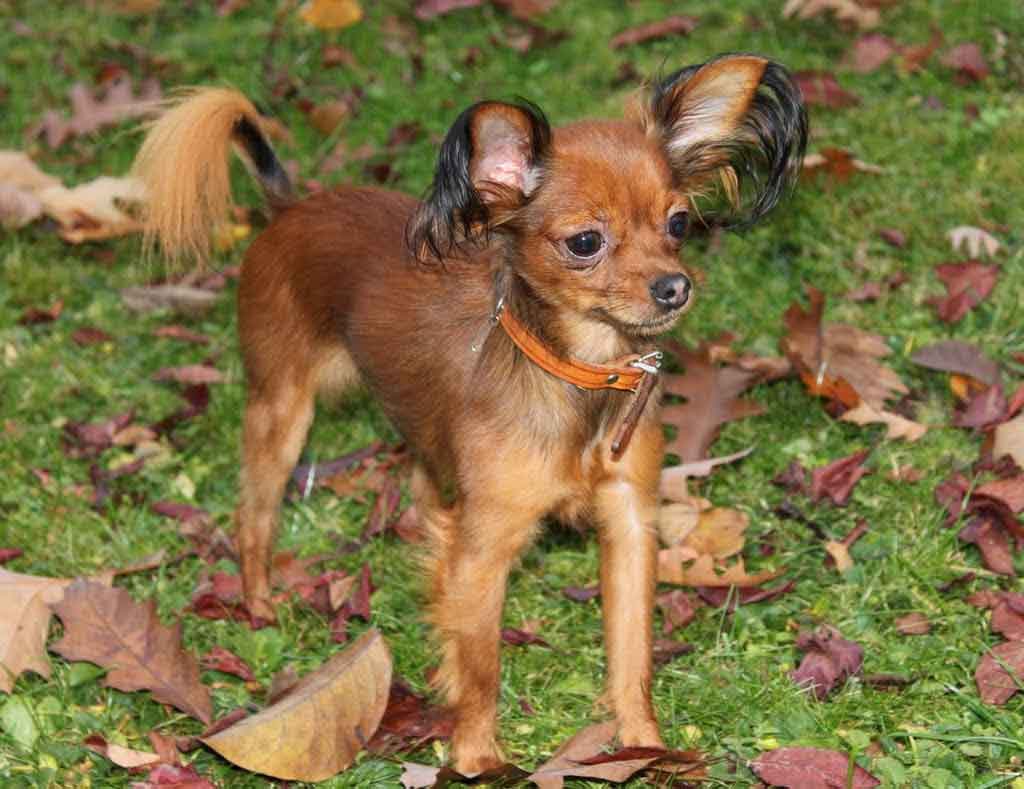
    Russkiy Toy

    The Russkiy Toy he is incredibly loving and close to his family, with which you want to spend as much time as possible.

    Content

    History

    The "Little Russian Dog" is a recent dog breed, but its history began in the 18th century, in Russia, with the importation of many English Toy Terrier. One of them was even adopted by Emperor Peter I the Great (1672-1725), during the last years of his life and his reign.

    During the 18th and 19th centuries, the popularity of Toy Terrier rose among the Russian aristocracy. They became an essential element, and by the early 20th century they had clearly become a status symbol. Participating in cultural events and social gatherings with a well-behaved little dog became the norm of the good society of the time.

    Although many of these dogs were imported from Great Britain, most were born in Russia, and a loose breeding program had already begun to gradually differentiate them from their ancestors. Present at Russian dog shows for some time, they began to officially call each other Russian toy terriers at an exhibition held in St. Petersburg in 1907, where they were exposed 11 specimens.

    The revolution of 1917 I was going to change things: associated with the aristocracy, the Russian Toy Terrier experienced a sudden and brutal decline, that left him on the brink of extinction. A few breeders tried to preserve the breed, but they faced many difficulties at a time when dog breeding was run by the regime, which instead encouraged the development of dogs that could be used by the military.

    The death of Josef Stalin in 1953 eased restrictions and some Moscow breeders, St. Petersburg, Svendlosk and Irkutsk were able to revive the breed. But after 40 years, there were no more specimens with perfectly known ancestry and pure characteristics, so they had to start from scratch, from individuals with characteristics similar to those previously known.

    The year 1958 marked a turning point for the breed, when a guy named Chicky was born with long hair and fringed ears and tail. Until then, all representatives of the breed had a smooth and short coat. The breeder Yevghenina Zharova wanted to preserve these characteristics and crossed him with a female with a longer than average coat and started a specific breeding program.. His initiative was crowned with success: starting at 1966 and the creation of a specific standard, these dogs were considered as belonging to a breed other than the Russian Toy Terrier and they were called Moscow Longhaired Toy Terrier.

    The year 1988 marked another turning point, because the Russian Cynological Federation (RKF), the reference organization in Russia, then decided to unify short hair and long hair again under the same standard, considering them as two varieties of the same breed.

    In the following years, after the fall of the iron curtain in 1989, the first copies of Russian Toy Terrier They were able to go out to conquer Europe and the breed began to develop, in particular in Finland and in the Eastern countries.

    But, the opening of the borders also brought about the entry of new breeds into Russia, who replaced local dogs in the hearts of dog lovers. As a result, in the decade of 1990, this dog was again on the brink of extinction in Russia. But, on the one hand, had already been imposed abroad and, for another, Russian breeders managed to maintain enough gene pool in their country to keep the breed healthy.

    In the first decade of 2000, things sped up. In 2006, the Fรฉdรฉration Cynologique Internationale (FCI) recognized the breed provisionally and gave it the official name of Russkiy Toy, removing the name of Terrier. Two years later, in 2008, a breed club was founded in the United States (Russian Toy Club of America), and that same year the United Kennel Club (UKC) American also accepted the breed. El American Kennel Club (AKC) did the same in 2010 by including it in your Foundation Stock Service (FSS), a step prior to full recognition.

    In 2017, the Russkiy Toy obtained the definitive recognition of the FCI, as well as the famous Kennel Club (KC) British. In fact, today it is recognized by most of the large national canine organizations – is the case, in particular, del Canadian Kennel Club (CKC), for example.

    Today, the AKC is present in almost all of Europe, but it is still rare in the United States, which explains why the final recognition of the AKC is still pending.

    In Great Britain, annual records around the KC have been around 50 since the acceptance of the breed in 2017.

    This figure is higher in France, where they were registered between 100 and 150 births in the French Stud Book (LOF) in 2010, which shows that this dog, although it remains relatively discreet in the country, has managed to find its audience.

    Photo: One Russkiy Toy of 20 meses by Skest at German Wikipedia, CC BY-SA 3.0, via Wikimedia Commons

    Physical characteristics

    The Russkiy Toy bears his name well, as it belongs to the smallest dog breeds in the world on the particular sides of the Chihuahua, of which it shares several characteristics.

    Its square body with a raised belly is higher at the neck than the rump. The extremities, fine boned and lean muscled, they are quite long, giving the impression that they are high on the legs. The tail is relatively short, carried in the shape of a sickle or saber, and fringed in the case of long-haired dogs. In areas where tail docking is permitted, docked tail is accepted, as long as a stump is left with 2 to 4 vertebrae.

    The head is small in proportion to the body, with a clearly marked stop. The muzzle is pointed and ends in a preferably black nose. The eyes are large, round and very expressive. your colour must be as darkest as possible. The ears, which are a distinctive feature of the breed, They are set high and sustained. Big and thin, they form two isosceles triangles in the skull. The long-haired variety is covered with long, thick hair that falls in a plume shape.

    This dog has no undercoat. But, upper hair differs from dog to dog, to the point that there are two varieties of the breed: the one with straight hair is short, smooth and shiny, while the one with long hair has a medium length (of 3 to 5 cm.). The latter also have fringes on their ears and tail., that cover the entire outside of the ear when mature.

    Multiple coat colors are allowed: black and tan, Brown and fire, Blue and fire, lilac and fire, and red with blue, brown or black. There are also some smooth dogs: his fur is red, leonado or cream. The most common color is black and tan.

    Last, there is no real sexual dimorphism in this breed: males and females are roughly the same size and appearance.

    Size and weight

    Size: 20 – 28 cm.
    Weight: 1 – 3 kg

    Varieties

    National and international canine associations usually distinguish between two varieties of Russkiy Toy: the of smooth hair, sometimes called shorthair, and the of Longhair. Although it is not usual, since the breeders of Russkiy Toy they usually specialize in one or the other, these varieties can be crossed: then mixed litters are obtained, composed of both short-haired and long-haired individuals.

    The long-haired variety, with its specific fringes on the ears, is the most sought after by fans, and also the most common. It has a semi-long coat (between 3 and 5 cm.) in the body, while the tail and ears are covered with long, thick fur that forms characteristic fringes.

    The straight hair variety, on the other hand, has a short smooth shiny looking top coat. Historically, the first representatives of the breed were all short-haired.

    None of the varieties of Russkiy Toy has undercoat. In general, apart from its fur, are perfectly identical in character and physical characteristics.

    Character and skills

    The Russkiy Toy he is incredibly loving and close to his family, with which you want to spend as much time as possible. Your attachment can even turn into possessiveness and, if i wasn't well socialized, can be overtly threatening (insofar as your size allows) towards those who get too close to their master. He also tends to distrust strangers, at least at the beginning: if you see that they are invited to the house, quickly curious to know more about them.

    If you are able to stay alone for a few hours, will quickly become anxious if absent for a long time (especially if this happens almost every day) and can then behave destructively. The presence of a small companion in the home can be a pertinent solution to help you not see time pass when your master is at work and reduce the risk of separation anxiety.. Usually, your pet will get along with other animals, already be partners, cats, rodents or reptiles, and this is usually the case even with those who do not live in your house. But, be careful not to be disturbed or scared by this barking and hyperactive puppy. And don't forget that a cat is usually much bigger, quick and better armed in case of discussion…

    In any case, lives perfectly in an apartment, as long as your need for exercise is met. The latter is also relatively consistent due to its size., since it is necessary to travel it at least half an hour a day. In other words, carry you in a bag, in a dog stroller or even in the arms of its owner is not the best gift that can be given, since you need to stretch your legs. But, if you live in a house with a garden in the country, it can be dangerous to leave it alone in the garden, because its size makes it a potential prey for many wild animals: birds Raptors, foxes, weasels…

    Like other miniature dog breeds, not really aware of the latter, so it is able to put itself in dangerous situations. No doubt, for example, to provoke a dog that weighs more than 20 times its weight, without worrying about the possible consequences. So, it is better to lead him on a leash when he goes out and teach him to curb his burning.

    To the smart Russkiy Toy he likes to be stimulated intellectually. Dog games and puzzles can be a great way to keep him busy while his owners are out and about., and loves to learn new tricks. You can also participate in dog sports such as obedience and agility, but its small size makes it difficult to compete.

    On the other hand, not recommended for families with young children. In effect, its small size and its fragility mean that it can be easily mistreated by the little ones, and the accident risks are very real – for the two protagonists, In addition. You can be seriously injured by a small car thrown at you in a moment of anger, just as he can respond by biting if his tail or ears are pulled. It also, a dog should never be left alone unsupervised with a young child, and that is valid whatever your race.

    Last, the Russkiy Toy barks often. Its high-pitched voice is an excellent alarm in case of threat, but it is also likely to quickly anger the neighbors.

    Education

    Like all its fellow men, the Russkiy Toy needs to be socialized from the first weeks. This is all the more important as you tend to be cautious: only successful socialization can allow you to become a sociable and balanced adult. So, need to meet many people (family, friends…) but also other animals, be it dogs, cats or rodents.

    The fact that he is intelligent and likes to be liked greatly facilitates his education. Learning to clean and remember orders is usually not a problem. If the family is patient and firm, it is possible to go much further, since they can also learn many tricks.

    Positive reinforcement is the best method to reach and educate the best possible Russkiy Toy. The moods, caresses and treats are real motivations for him, and quickly learns to do everything possible to satisfy his Master.

    In fact, the Russkiy Toy It is a breed of dog adapted for a beginner, but his master must never forget that a dog needs a leader to direct him. This leadership role, it is he who must exercise it. Your partner needs limits, which must be immutable, taxes from a very young age and consistent over time, as well as from one family member to another. If he is allowed to do what he wants when he is little, or if the rules are different depending on the day of the week or the person, you don't know what to expect and your behavior is affected.

    This is the famous "small dog syndrome", common to all miniature breeds: little by little adopts unacceptable attitudes (do not leave space on the sofa, growl at his master, steal food…) but ignored by their master, who remains as if hypnotized by his small and "cute" companion. As nothing stops you, this laxity encourages him to push the limits further and further, to the point of gradually taking control of the house. The longer the owner waits to take control of the situation and allow bad habits to take root, the more difficult it will be for him to put his partner back in order. To avoid this, rules should be clear and instilled from the start, and then apply in all circumstances, without exception. In the same logic, it is not advisable to hold him in your arms too often, especially if it is about moving with him when he could just as well walk next to his master, because not only does it not help him to live his dog life and spend, but it can also provoke a tendency to dominate.

    Health

    The Russkiy Toy is particularly robust and poses little risk of disease.

    But, it is sensitive to extreme temperatures and must be protected from both heat and cold. When the thermometer is rising, you should limit your activities to the coolest hours and not let it stay too long in the sun, while adog coatnot too much when you have to go out in cold weather. In any case, has no vocation to spend most of his time outdoors: its natural place is inside the house.

    Among the conditions that can affect the breed, the most commons are:

    • impacted tooth, when a milk tooth does not fall out and therefore does not give way to a growing adult tooth. This is a fairly common problem, which is solved without great difficulty by a veterinarian;
    • the patellar dislocation, a kneecap problem: leaves its position and forces the dog to limp to move. This problem is relatively common in all small dogs and, sometimes, requires surgery;
    • the progressive retinal atrophy, degeneration of eye tissues leading to total blindness It is an inherited disease and carriers are normally excluded from reproduction, so it's still pretty rare;
    • the Legg-Calvรฉ-Perthes disease, which attacks the hip and causes necrosis that causes stiffness and pain., this disease is very rare and can be operated to relieve the pain caused.

    But, the main risk to the health of the Russkiy Toy comes from its small size and fiery character, which can be the cause of many fractures. The fall of a book on its paws, A career that ends in a collision with a chair or an agitated argument with a larger fellow can end in the emergency room., your family must be constantly vigilant.

    Another risk you are particularly exposed to is obesity, and once again only your master can help you.You need to monitor your weight regularly and act at the first signs of overweight, adjusting both your portion sizes and your activity level.

    As with any race, the adoption of a creator of Russkiy Toy serious and responsible greatly increases the probability of obtaining a healthy puppy The professional must provide a certificate of good health issued by a veterinarian, Submit medical history or vaccination record, in which the vaccines administered to the animal are recorded, and make available the results of genetic tests performed to parents. a small one.

    Of course, this does not guarantee that you will stay healthy for your entire life To maximize the chances of this being the case, prevention is essential: it is advisable to wear regularly (At least once a year) take your dog to the vet for a routine checkup.This not only identifies the beginning of a possible problem, it also ensures that you don't miss your shot reminders.

    Life expectancy

    12 to 13 years

    Grooming

    Either for the straight-haired variety or for the long-haired variety, the maintenance of the coat of the Russkiy Toy is simple. In effect, a weekly brushing is enough to avoid knots and remove possible dirt. Muda little, but it may be helpful to increase the frequency of brushing to 2 or 3 times a week when applicable, in spring and autumn.

    How he tolerates the bathroom well, clean it every 1 or 2 months to rid it of all impurities and make sure it doesn't mess up the house is usually not a problem either. You just have to make sure you use a specific shampoo for dogs, and in no case a product made for humans.

    The rest is a matter of course. These may include, their weekly grooming session should also be an opportunity to check and clean their eyes and ears with a damp cloth. This will prevent debris and dirt from accumulating, thereby reducing the risk of infection.

    You should also take the opportunity to brush your dog's teeth with a special toothpaste for dogs, although twice a week (or even daily) it's even better. This will help prevent tartar buildup., that can cause bad breath, cavities and other problems.

    Last, although it has gone out enough, their claws tend to grow faster than they wear out. Thus, it is necessary to trim them with a simple nail clipper when they have become too long, to prevent them from getting in the way or even breaking. A monthly cut is usually sufficient. The first time, you can learn how to do it with a vet or a groomer, to avoid doing it wrong.

    Food

    The Russkiy Toy perfectly fits commercially available industrial dog foods. You just have to be careful to choose a product adapted to dogs of this size, especially if you eat kibble. You also have to choose food of sufficient quality and establish an adapted daily ration to provide it with all the nutrients it needs., especially considering your activity level and your age.

    In any case, cat food, although it certainly is the perfect size for its size, not at all adequate. Too rich, are likely to cause rapid and dangerous weight gain.

    This is especially true since obesity is a very real problem for this breed whose needs are often much lower than their family thinks.. It is necessary to scrupulously follow the daily rations recommended by the manufacturers or the veterinarian, and regularly weigh your dog to quickly detect too large a variation. A weight gain of 200g is negligible for a human, but for a Russkiy Toy this is around the 10% of their normal weight.

    In case of unjustified weight gain, it is advisable to react without delay, adjusting both the dog's daily ration and activity level. If this doesn't help, a visit to the vet is necessary to explore the possibility of a disease and to develop a more appropriate diet if this is not the problem.

    Last, like all dogs, the Russkiy Toy you should always have access to a bowl of fresh water, so you can quench your thirst whenever you want.

    Use

    The Russkiy Toy is above all – and also always – a companion dog, made to spend most of his time with his family. Playful and affectionate, perfectly capable of apartment living, represents an ideal option for those who have little space to offer their dog, but on the other hand they may be available to dedicate time.

    His affectionate character also makes him a very good therapy dog, able to spend hours by his master's side if he needs it, and to help you with your mere presence.

    His natural distrust of the unknown and his propensity to bark make him an excellent alert dog., but its size prevents it from being a true watchdog, although his bravery is not questionable.

    Last, it is common to find it at dog shows, where your success is not denied. They can also participate in dog sports competitions, like obedience, but its small size is definitely a disadvantage.

    How much does a "Russkiy Toy"?

    The price of a puppy Russkiy Toy is of some 1500 EUR, but this average hides great disparities. In effect, depending on the reputation of the kennel, of the prestige of their ancestors but also and above all of their intrinsic physical characteristics, can go from 800 euros for the copies with some small defects up to almost 4000 euros for those intended for breeding and/or exhibitions. On the other hand, there are no big price differences according to gender.

    Characteristics "Russkiy Toy"

    Coexistence is important that you have with your new friend. Before considering the acquisition of a dog of the breed "Russkiy Toy" you know certain factors. Not all breeds of dogs are apt to live in an apartment, you must take into account his character, their need for exercise, their interaction with other pets, their care and if you have small children, their level of tolerance towards them.

    Adaptation โ“˜

    2,0 of 5 stars (based on 1 review)

    friendly dog โ€‹โ€‹โ“˜

    5,0 of 5 stars (based on 1 review)

    hair loss โ“˜

    1,0 of 5 stars (based on 1 review)

    Affection level โ“˜

    5,0 of 5 stars (based on 1 review)

    Need for exercise โ“˜

    3,0 of 5 stars (based on 1 review)

    Social need โ“˜

    5,0 of 5 stars (based on 1 review)

    Home โ“˜

    3,0 of 5 stars (based on 1 review)

    Toilet โ“˜

    1,0 of 5 stars (based on 1 review)

    Friendly with strangers โ“˜

    3,0 of 5 stars (based on 1 review)

    barking โ“˜

    4,0 of 5 stars (based on 1 review)

    Health โ“˜

    4,0 of 5 stars (based on 1 review)

    Territorial โ“˜

    3,0 of 5 stars (based on 1 review)

    Cat friendly โ“˜

    3,0 of 5 stars (based on 1 review)

    Intelligence โ“˜

    4,0 of 5 stars (based on 1 review)

    Versatility โ“˜

    2,0 of 5 stars (based on 1 review)

    Child friendly โ“˜

    5,0 of 5 stars (based on 1 review)

    Surveillance โ“˜

    3,0 of 5 stars (based on 1 review)

    joy โ“˜

    4,0 of 5 stars (based on 1 review)

    Images "Russkiy Toy"

    Photos:

    1 – ยซLittle Russian dogยป by Ernst Vikne, CC BY-SA 2.0, via Wikimedia Commons
    2 – ยซLittle Russian dogยป puppy, 4 months old by Shamanofthistown, CC BY-SA 3.0, via Wikimedia Commons
    3 – ยซLittle Russian dogยป short hair, smooth coat, brown and tan by NiaNike, CC BY-SA 4.0, via Wikimedia Commons
    4 – A short haired ยซLittle Russian dogยป by Ernst Vikne, CC BY-SA 2.0, via Wikimedia Commons
    5 – Two ยซLittle Russian Dogยป, one with short hair and one with long hair by Ernst Vikne, CC BY-SA 2.0, via Wikimedia Commons
    6 – ยซLittle Russian dogยป Daniel, Rostov del Don by Sofiya357, CC BY-SA 3.0, via Wikimedia Commons

    Videos "Russkiy Toy"

    Type and recognitions:

    • FCI CLASSIFICATION:
    • Group :
    • Section : . .

    Federations:

    • FCI – Group 9: Section 9: Continental Toy Spaniel and others โ“˜
    • AKCToy โ“˜
    • CKC – Group 5 โ€“ (Toy) โ“˜
    • โ€‹KC – Toy โ“˜
    • UKC – Group 8 – Companion dog โ“˜

    FCI breed standard "Russkiy Toy"

    Origin:
    Russia

    Date of publication of the valid original standard:
    21.02.2006.

    Use:

    Toy dog.


    General appearance:

    A fancy little dog, lively, high legged, with thin bone and dry muscles. Only somewhat definite sexual dimorphism.

    important proportions: Square construction. The height at the elbows is only slightly higher than half the height at the withers.. The chest is deep enough.


    Behavior / temperament:

    Active, very happy, neither cowardly nor aggressive. Behavior is significantly different between males and females.

    Head:

    Small compared to the body.

    Cranial region:
    • Skull: Tall but not wide (the width at the level of the zygomatic arches does not exceed the depth of the skull).
    • Stop (Naso-frontal depression): Clearly pronounced.

    facial region:

    • Nose: Small, black or according to the color of the coat.
    • Snout: Clean and sharp, slightly shorter than the skull.
    • Lips: Fine, dry, tight and dark or according to the color of the coat.
    • Jaws / Teeth: Small and white. Scissor bite. Lack of 2 incisors is allowed on each jaw.
    • Cheeks: Only somewhat pronounced.
    • Eyes: So big, round, slightly prominent, inserted well apart and facing straight forward. Dark eyelids or according to the color of the coat, tight.
    • Ears: Large, fine, high insertion, upright.

    Neck:

    Long, clean. Carried high, slightly arched.

    Body:

    • top line: Gradual fall from withers to insertion of tail.
    • Cross: Slightly pronounced.
    • Back: Strong and straight.
    • Pork loin: Short and slightly arched.
    • Rump: The rump is somewhat rounded and slightly sloping..
    • Breast : The chest is oval and deep enough and not too wide.
    • Bottom line and abdomen: Retracted abdomen and stretched flanks, forming a curved line from the chest to the flanks.

    Tail:

    amputee: (only two or three vertebrae are left), carried high. In countries where tail docking is prohibited by law, it is left natural. Without amputating: sickle-shaped, It should not be lower than the top line level..

    Tips

    Fine, clean. Seen from the front the limbs are straight and parallel.

    Former members

    • Blades: The scapulae are moderately long and not very sloping.
    • Humerus: Forms an angle of 105 degrees with the scapula. The length of the humerus is approximately the same as that of the scapula.
    • Elbow: In line with the body.
    • Forearm: Long and straight.
    • Carpo: Cleansed.
    • Metacarpus: Almost vertical.
    • Previous feet: Small, oval neither in nor out, fingers together and arched. Nails and pads black or according to the color of the coat.

    Later members

    Seen from behind the hindlimbs are straight and parallel, but a little more separated than the previous members. The knee and hock with sufficient angulation.

    • Thighs: Clean and developed muscles.
    • Leg: The femur and leg are the same length.
    • Hock: Sufficiently angled.
    • Metatarsus: Vertical.
    • Hind feet: Arched, a little narrower than the front feet. Nails and pads black or according to the color of the coat.

    Movement:

    Easy, straight ahead and fast. No change should be noticed in the top line when in motion.

    Mantle

    Fur

     Exist 2 guys for the breed, short hair and long hair.

    • Short hair: short, glued, bright, no under-hair or peeling patches.
    • Long hair: the body is covered with moderately long hair (3 โ€“ 5 cm.) straight or slightly wavy, glued, that does not hide the natural figure of the body. Hair on the head and front of the limbs is short and close together. Notable fringes on the back of the limbs. The feet have long hair, silky that completely hides the nails. The ears are covered with thick hair forming fringes. Dogs over 3 years present these fringes, with which they completely cover the edge and tip of the ears. Body hair should not look messy or be too short (less than 2 cm.).

    Color

    black and tan, Brown and fire, Blue and fire. Also red in any shade with or without black or brown carbon. Stronger hues are preferable for all colors.


    Size and weight:

    • Height to the cross: Males and females: 20 โ€“ 28 cm. (tolerance +/-1 cm.)
    • Weight: Males and females: until 3 kg.


    Fouls:

    Any deviation from the aforementioned criteria is considered as a fault and the severity of this is considered to the degree of the deviation to the standard and its consequences on the health and well-being of the dog..

    • Shy behavior.
    • Pincer bite or incisors tilted forward.
    • Semi-erguidas ears. This condition in long-haired dogs with heavy fringes is allowed but not desired..
    • Low tail insert.
    • Presence of bald patches in short-haired dogs.
    • Too long or too short hair in long-haired dogs.
    • Small white spots on the chest or fingers.
    • Negro, solid brown or blue. Burnt marks too large or with dark shading.

    disqualifying fouls:

    • Aggressiveness or extreme shyness.
    • Enognathism or pronounced prognathism. Absence of 1 canine; absence of more than 2 incisors on each jaw.
    • hanging ears.
    • Short members.
    • Many bald patches on short-haired dogs.
    • Long-haired dogs: absence of fringes on the ears and presence of curly hair.
    • White cloak, white spots on the head, abdomen and above the metacarpals; large white patches on the chest or throat, presence of brindle markings.
    • Size greater than 30 cm.. the smallest to 18 cm..
    • Weight less than 1 kg.

    Any dog โ€‹โ€‹showing clear signs of physical or behavioral abnormalities must be disqualified..


    N.B.:

    Males should have two normal-appearing testicles fully descended into the scrotum..
    Only functionally and clinically healthy dogs, with the typical conformation of the breed, should be used for parenting.

    Source: F.C.I - International Cynological Federation

    Alternative names:

    1. Russian Toy Terrier, Russian Terrier, Moscow Toy Terrier, Moscovian Miniature Terrier, Toychik (English).
    2. Toychik, Toy-chic (French).
    3. Russischer Zwergspaniel, Moskauer Langhaariger Toy Terrier (ะผะพัะบะพะฒัะบะธะน ะดะปะธะฝะฝะพัˆะตั€ัั‚ะฝั‹ะน ั‚ะพะน-ั‚ะตั€ัŒะตั€) (German).
    4. (em russo: ะ ัƒััะบะธะน ั‚ะพะน-ั‚ะตั€ัŒะตั€) (Portuguese).
    5. Miniatura ruso, Toy Terrier ruso (espaรฑol).