 FCI 157 - Molossoid - Dogo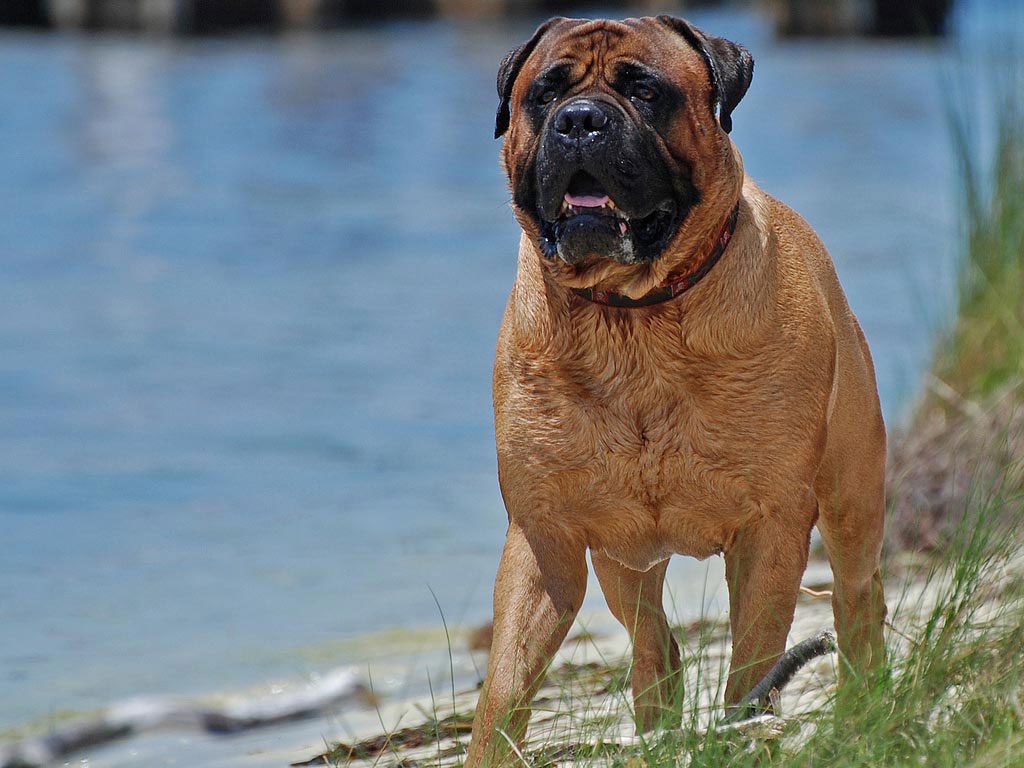
Content |
|---|
Characteristics "Bullmastiff"
Coexistence is important that you have with your new friend. Before considering the acquisition of a dog of the breed "Bullmastiff" you know certain factors. Not all breeds of dogs are apt to live in an apartment, you must take into account his character, their need for exercise, their interaction with other pets, their care and if you have small children, their level of tolerance towards them.
Adaptation ⓘ3,0 of 5 stars (based on 1 review)
|
friendly dog ⓘ1,0 of 5 stars (based on 1 review)
|
hair loss ⓘ4,0 of 5 stars (based on 30 reviews)
|
|---|---|---|
Affection level ⓘ3,0 of 5 stars (based on 1 review)
|
Need for exercise ⓘ2,0 of 5 stars (based on 1 review)
|
Social need ⓘ3,0 of 5 stars (based on 1 review)
|
Home ⓘ3,0 of 5 stars (based on 1 review)
|
Toilet ⓘ2,0 of 5 stars (based on 1 review)
|
Friendly with strangers ⓘ3,0 of 5 stars (based on 1 review)
|
barking ⓘ2,0 of 5 stars (based on 1 review)
|
Health ⓘ5,0 of 5 stars (based on 1 review)
|
Territorial ⓘ5,0 of 5 stars (based on 1 review)
|
Cat friendly ⓘ1,0 of 5 stars (based on 1 review)
|
Intelligence ⓘ3,0 of 5 stars (based on 1 review)
|
Versatility ⓘ3,0 of 5 stars (based on 1 review)
|
Child friendly ⓘ3,0 of 5 stars (based on 1 review)
|
Surveillance ⓘ2,0 of 5 stars (based on 1 review)
|
joy ⓘ5,0 of 5 stars (based on 1 review)
|
History
The Bullmastiff It is a British breed of dog, as believed, comes from the crossing between races English mastiff and Bulldog.
The race originated official in Britain at the end of the 19th century and the first standard (description of the set of racial characteristics) data of 1924, date on which was adopted by the British Kennel Club. Subsequently, the American Kennel Club, the Canadian Kennel Club, the Kennel Club Sheiko, the Australian Kennel Club and the Federation Cynologique Europèene itself drafted other standards, similar in concept, although, some of them show some differences.
In the past, the Bullmastiff It was used in England as guardian of the large private landowners hunting grounds, in order to pursue and apprehend poachers; the dog Peiki developed its activity of harassment and demolition pushing the thieves with the weight of his body and throwing them on top, to immobilize them, without using his powerful mouth. The reason why the attack of this dog materialized in the use of bodily force but not in the bite was given by the Forest Laws that have prevailed since the 12th century in England..
It should be said that even when the breed is officially defined as originating in the United Kingdom, the truth is that long before its adoption as such race by part of the Kennel Club and the making of his racial standard (that has changed very little since its adoption in the year 1924), the truth is that in the Iberian Peninsula there were specimens of similar morphology, as evidenced by engravings by Goya (c.1800) and, even more so the oil of great proportions, titled «Patio of horses of the old square of Madrid, "before the run", Manuel Castellanos, dating of 1853 and that it portrays two dogs that well could pass through Bullmastiff modern.
In fact, much earlier, There were already "Bull Dogs" in the Iberian Peninsula that were highly appreciated for their bravery and power.; so much so that Catherine of Aragon herself, When he travelled to England to marry Henry VIII took, as part of his regalia, several of these animals to be used beyond, hobby that became very fashionable then and that continued to be highly appreciated in the times of Elizabeth I and Mary Stuart.
Physical characteristics
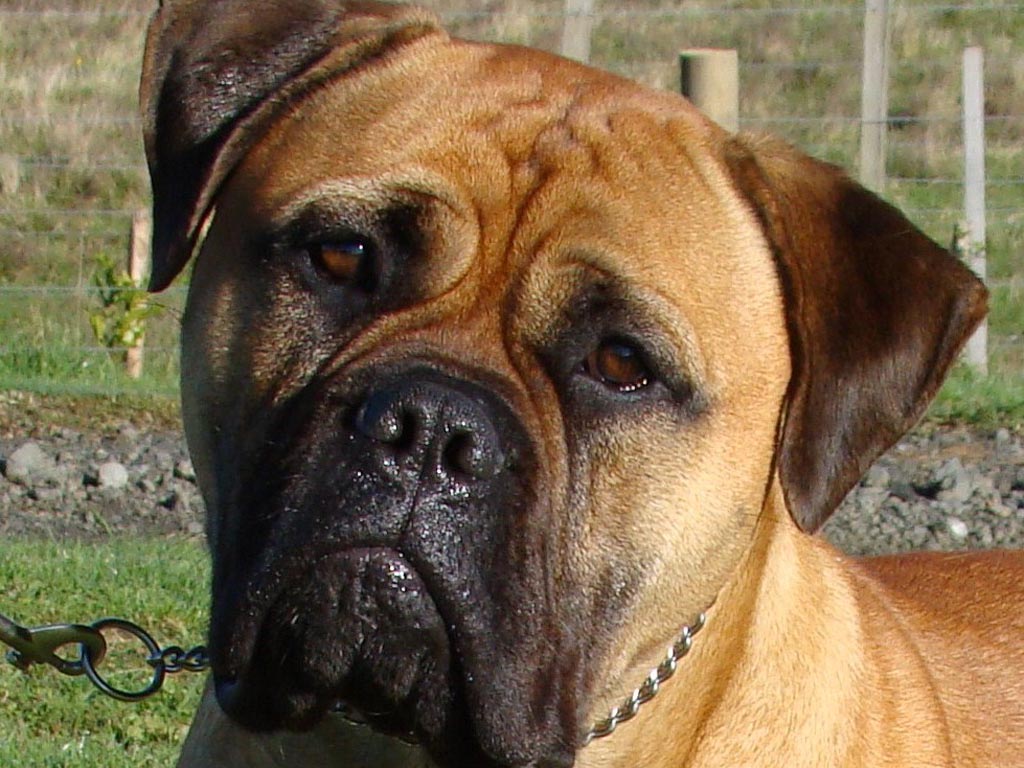
Aspect imposing and eminently deterrent, the Bullmastiff is an animal's good bones, chest wide and deep and powerful back. His head, square viewed from any angle, with ears darker than the mantle and preferably black color v, on which dominates a nose medium length and width, covered with a black mask that extends towards and around the eyes which have to be equally dark (preferably color hazelnut, Brown, dark brown or black, never yellow or amber), intense and deep look, is its main and most characteristic hallmark. Short hair, his cloak can be Griffon, covering all shades from sand to liver red, or striped.
the typical male, when it reaches its full physical development, for the three and a half years of age, comes to measure between 63,5 and 68,5 cm to the cross with a weight between 49,5 and 59,5 kg. The adult female, completed eighteen months, usually weigh in 41 to 49,5 kg and measured between 61 and 66 cm..
Observations
Cleaning and maintenance of a Bullmastiff is simple, because it is a short hair dog, with an annual moult in spring. A session of vigorous brushing hair and against the grain, three times in a week will be enough to keep your hair clean and bright and prevent body odor. The baths, alter the pH of the skin are fully desaconsejados and if you ever needed to bathe him, it is essential to do it with neutral pH shampoo and warm water, abundantly clarified to remove all SOAP residue and then drying thoroughly throughout the body.
Character and skills
still today, its form of attack and defense is characteristic, and it is very much appreciated, because well measured its strength and never attacks to draw blood. And it is this trait that distinguishes it from other trotting breeds that are much more easily and prompt in the bite, inferring great damage to their prey, whether other dogs, other animals or people.
It is essential that the exercise is very controlled during the critical stage of growth (until the 15-16 months males and the 10 months females), to prevent musculoskeletal problems in adults. For this reason you must avoid overweight in the puppy.
Training in attack is totally discouraged.
Smart guardian, discreet, effective and with great capacity of discrimination, is little barking, very home, and only moderately active, so it adapts perfectly to the floor and city life.
Unlike other trotting races, It is characterized by accepting orders imposed all the members of the House, even the little ones and not be "one-owner dog", which facilitates its coexistence with the family.
Did you know??
Although affectionate and sweet nature, The Bullmastiff is a great guard dog with mind of its own. Assertive need an experienced owner and. The Bullmastiffs can be willful and is not likely to be put off once they wake.
Bullmastiff Education
What is important is loving but consistent parenting from day one. A dog school with puppy training and further development are very important for Bullmastiffs in socialization. Especially if you are kept as a single dog. All environmental situations should be practiced with him at first so that he can handle them later with confidence.. The Bullmastiff can be well motivated with his voice and can train with goodies. Once you have internalized a command, will be happy to do it.
Bullmastiff Care and Health
The Bullmastiff's coat is short and thick. A pimple glove is ideal for removing loose hair and an appropriate brush is suitable for grooming the coat. Ears should be checked regularly. It is also important to check regularly for ticks, fleas and other parasites. After each ride, clean the dog. If you find a tick that has already bitten your dog, you can remove it with tick tweezers. If you don't dare to do this, you should go to the vet. If the dog often shakes its head or tries to scratch with its paw, a walk to the vet is recommended.
Breed-specific diseases
The Bullmastiff belongs to the heavy dog ​​breeds. Hip joint dysplasia is a typical disease of this breed. The so-called rolling songs (ectropión/entropión) can also occur, bitches can suffer from tumors of the mammary gland. Tears of the cruciate ligaments can occur if they occur too early and too much stress on the puppy / young dog's age.
Nutrition / Food
The Bullmastiff is an "omnivore" and eats any type of food. Unfortunately also what you find outside. Otherwise, is satisfied with dry food or BARF and tasty extras in the bowl. These include cottage cheese, eggs and noodles.
Bullmastiff life expectancy
Bullmastiff life expectancies vary.. As long as the Bullmastiff is healthy and is maintained and treated accordingly, has a high life expectancy of 10 years or more.
Buy a Bullmastiff
A Bullmastiff's decision should be long and well considered. Serious breeders can be found through the FCI (Federation Cynologique intenationale). It is advisable to contact several breeders and organize a visit. A serious breeder will accept a visit to himself and his dogs. He will answer any questions that may arise and will have all the documents available for inspection.. So both parties have the chance to get to know each other and exchange information and get a picture of the upbringing of dogs and puppies.. A responsible breeder will continue to accompany and support their puppies and their families..
Once you have decided on a breeder and all questions have been clarified to your satisfaction, nothing stands in the way of a new family member moving out.
Bullmastiff pictures
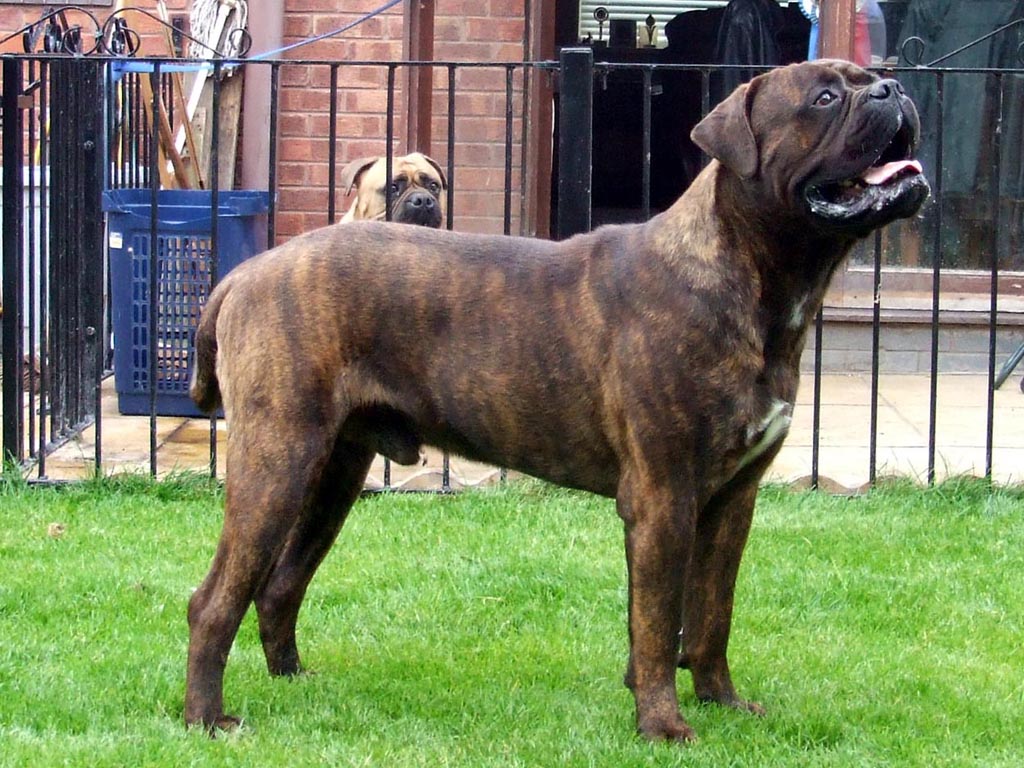 dogs-wallpapers
 fanpop.com
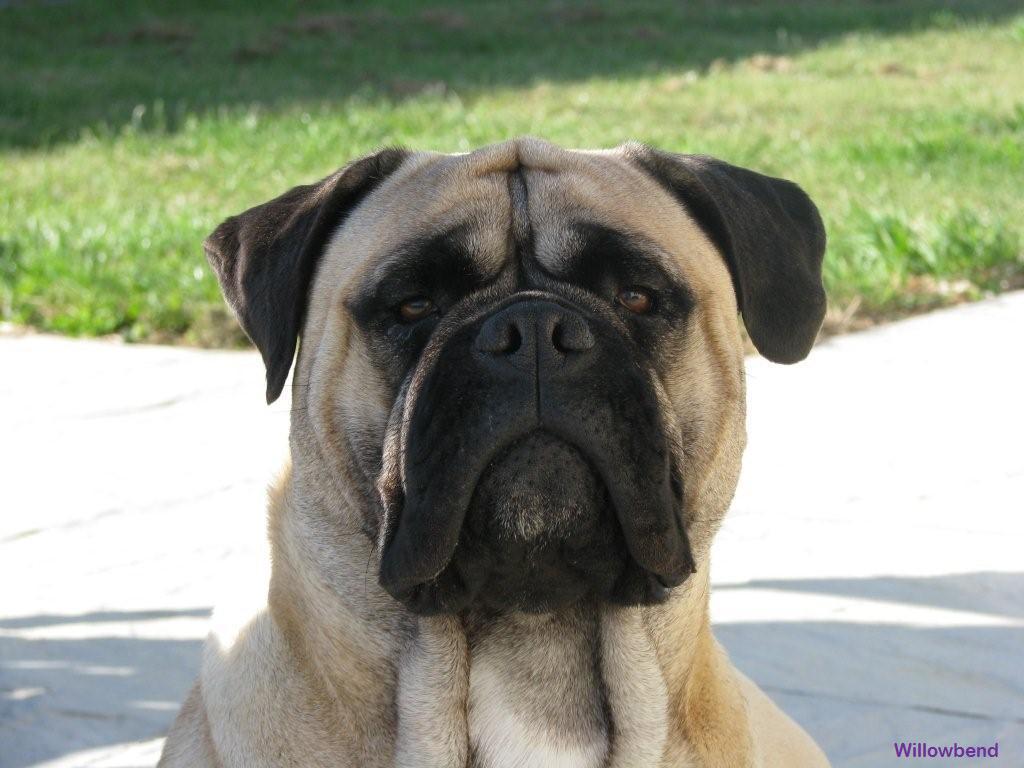 dogs-wallpapers
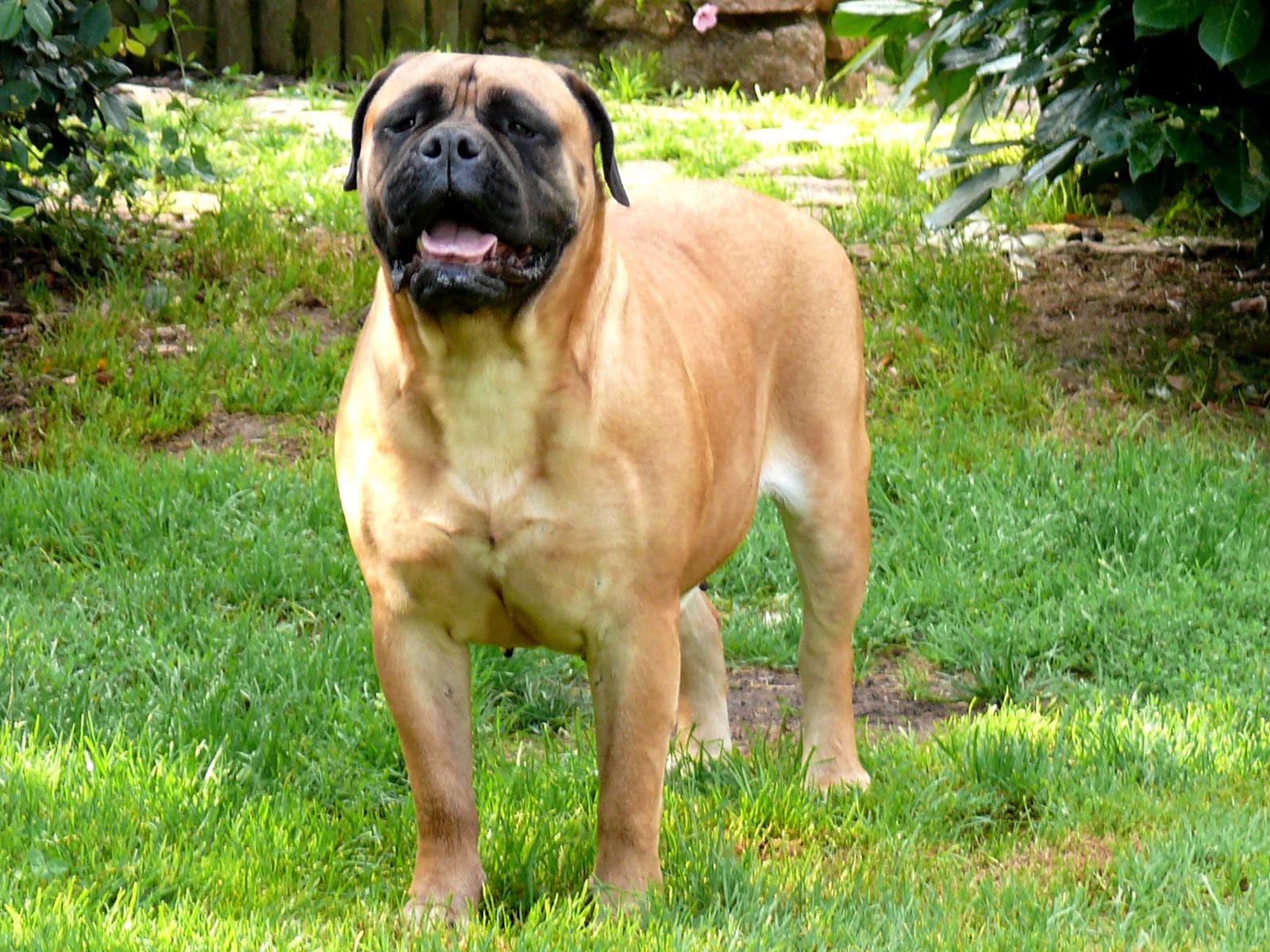 willowbendbullmastiffs
 fanpop.com
 dogs-wallpapers
 freewebs.com
 bullmastiffdog.net
bullmastiff videos
 Dogs 101- Bull-mastiff
 Bull-mastiff dogs
 About the Bull-mastiff
 Bull-mastiff Playdate | Too Cute
 Bullmastiff Dog Breed 101
Type and recognitions:
- FCI CLASSIFICATION:
- Group :
- Section : . .
Federations:
FCI ⓘ, AKC ⓘ, ANKC ⓘ, CKC ⓘ, KC ⓘ, NZKC ⓘ, UKC ⓘ
FCI breed standard "Bullmastiff"
Use:
guard dog
General appearance:
Powerful and symmetrical in construction. Show great strength, although its appearance is not heavy. It is a robust and active dog.
Is spirited, alert and faithful. It is strong, Active, reliable and heavy duty.
Head:
---- Skull: Viewed from any angle, the skull is wide and square. They can be observed many folds when the dog shows interest, but not when it is at rest. Wide and deep.
- Depression links (Stop): Pronounced.
facial region:
- Truffle: Wide; the Windows are wide open. Chata; the profile being or pointed, or raised.
- Snout: Well open nostrils. Is short. The distance from the tip of the nose to the naso-frontal depression corresponds to approximately one third of the length from the tip of the nose to the center of the occiput. Width is below the eyes and maintains approximately the same amplitude to the tip of the nose. It is obtuse and square, forming a right angle to the top line of the face, and at the same time proportionate to the skull.
- Lips: They are not hanging, and never below the lower jaw.
- Jaws / Teeth: Lower jaw wide to its end. Level (Bite in clamp, edge to edge) desired, a slight lower prognathism is accepted without preference. The canines are large and well separated. Other teeth are strong and well applied on a regular basis.
- Cheeks: The cheeks are bulky.
- Eyes: Dark or hazelnut, medium-sized. They are separated by the amplitude of the snout, It presents a slight median furrow. Clear or yellow eyes are extremely undesirable.
- Ears: They are v-shaped, they are set high and folded; they are well separated at the level of the back of the head, thus imparting to the skull a square appearance, which is very important. The ears are small and of a color darker than the rest of the body. When is the dog alert, the tips of the ears are at the same level of eyes. They do not accept the ears in pink.
Neck:
Well arched, not very long and well muscled; its circumference is almost equal to skull.Body:
- Back: Short and straight, providing a compact look, but not so much as to interfere with movement. Does not accept the back concave or convex.
- Pork loin: Wide and muscled; flanks are quite deep.
- Breast : Wide and deep, well descended between the forelimbs. Deep sill.
Tail:
High implementation. It is strong at the base and gradually decreases until the tip, reaching the Hock. It is straight or bent, but without “hound” type. The crooked tail is very undesirable.Tips
PREVIOUS MEMBERS:
- General appearance: Front view separate presenting a right front.
- Shoulder: Inclined, strong, muscular, Although not overloaded.
- Metacarpus: Straight and strong.
- Previous feet: Well arched. Cat foot with rounded toes and hard pads. Desirable dark nails. Crushed toes are very undesirable.
LATER MEMBERS:
- General appearance: Strong and muscular.
- Leg: It is well developed, denoting strength and activity.
- Hocks: Moderately angled. Cow hocks are a serious misconduct.
- Hind feet: Well arched. Cat foot with rounded toes and hard pads. Desirable dark nails. Crushed toes are very undesirable.
Movement:
Denotes strength and determination. When they move in a straight line, or front members, or hind limbs must be crossed or bending. The right forelimb and hind limb left should stand up and support at the same time. The vigorous push of the hind limbs does not alter the firmness of the back line, thus denoting a harmonious and balanced movement.Mantle
- Fur: It is short and hard to the touch. It protects the animal from the climatic conditions. It is smooth and close to the body. Long hair, woolly or silky is very undesirable.
COLOR: Any shade of Brindle, Fawn or red; the color should be pure and clear. Accepts a slight white mark on the chest, but other white markings are undesirable. Black Mask is essential, harmoniously joining the black markings around the eyes that contribute to the expression.
Size and weight:
Height to the cross :
- Males: 64 – 69 cm..
- females: 61 66 cm..
Weight:
- Males: 50 – 59 kg
- females: 41 – 50 kg
Fouls:
Any deviation from the aforementioned criteria is considered as a fault and the severity of this is considered to the degree of the deviation to the standard and its consequences on the health and well-being of the dog..
FALTAS DESCALIFICANTES:
- Aggressive or fearful dog.
- Any dog showing clear signs of physical or behavioral abnormalities must be disqualified..
Males should have two normal-appearing testicles fully descended into the scrotum..
TRANSLATION : Brígida Nestler / Original version : (IN)
Technical supervision : Miguel Angel Martinez
Alternative names:
1. Bullmastiff (English).
2. bull mastiff (French).
3. Bullmastiff (German).
4. Bullmastiff (Portuguese).
5. Bullmastiff (español).
 FCI 315 - Molossoid - Dogo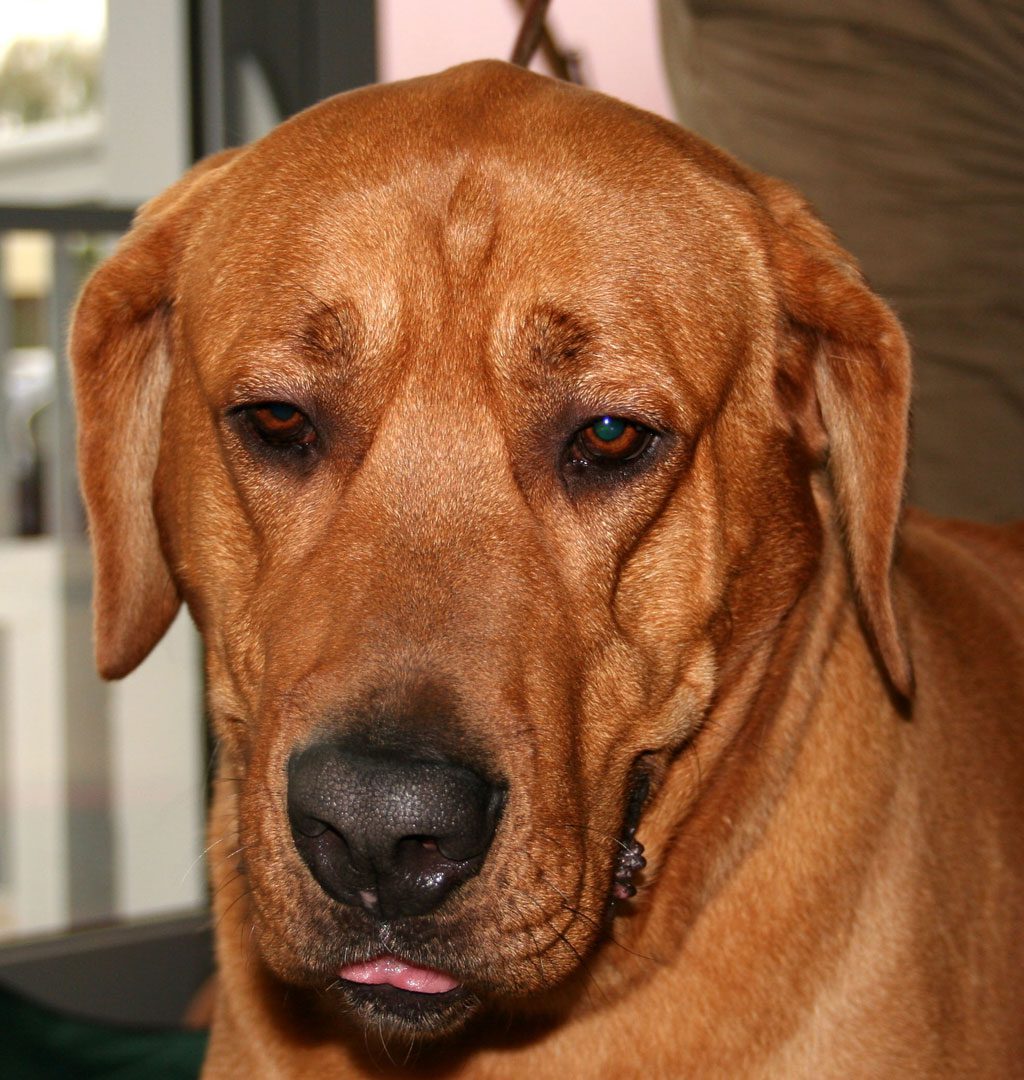
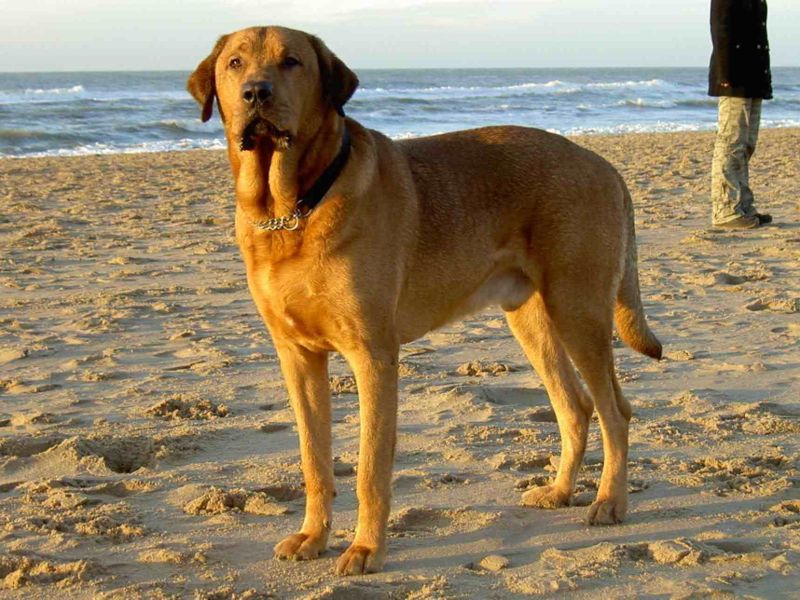
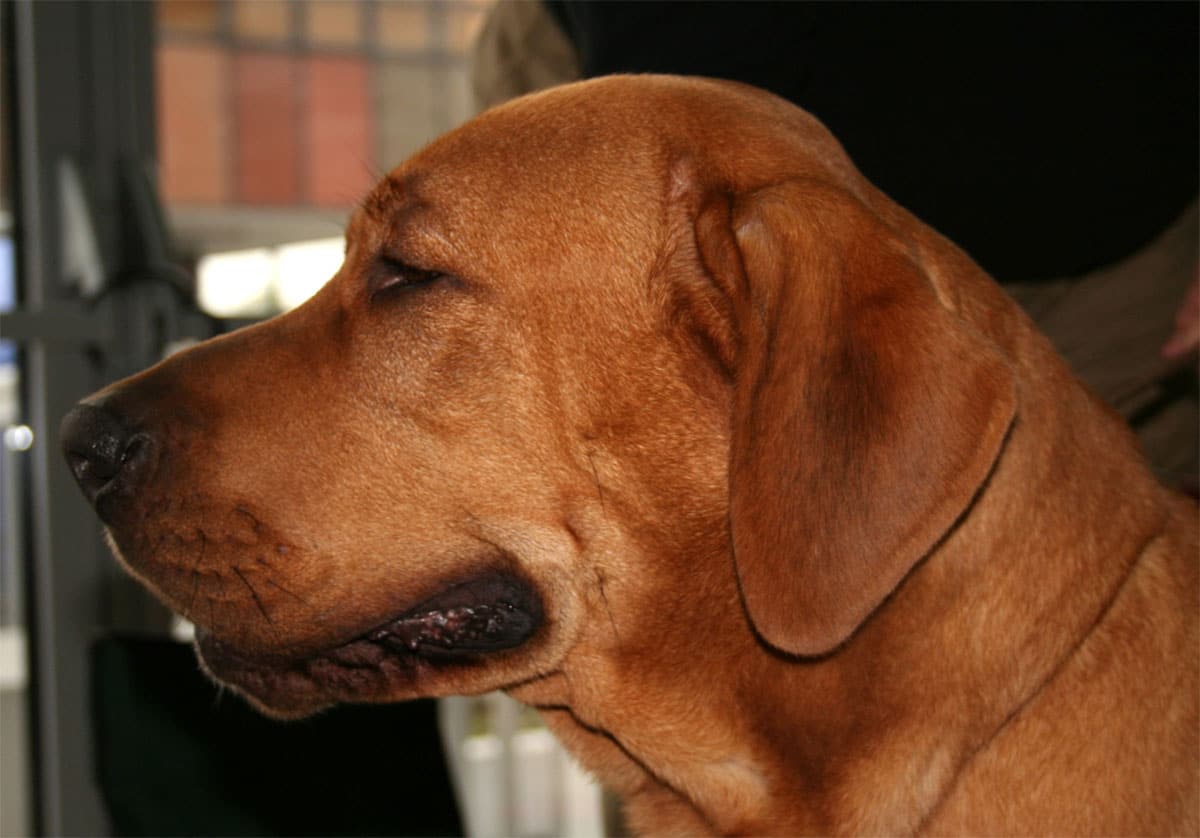

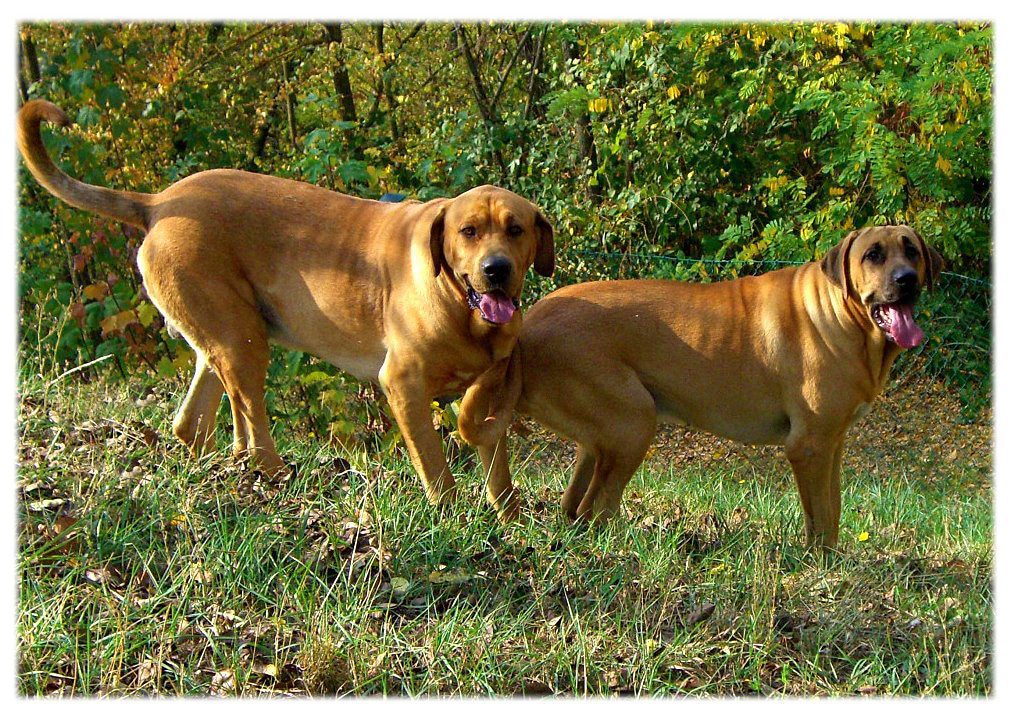

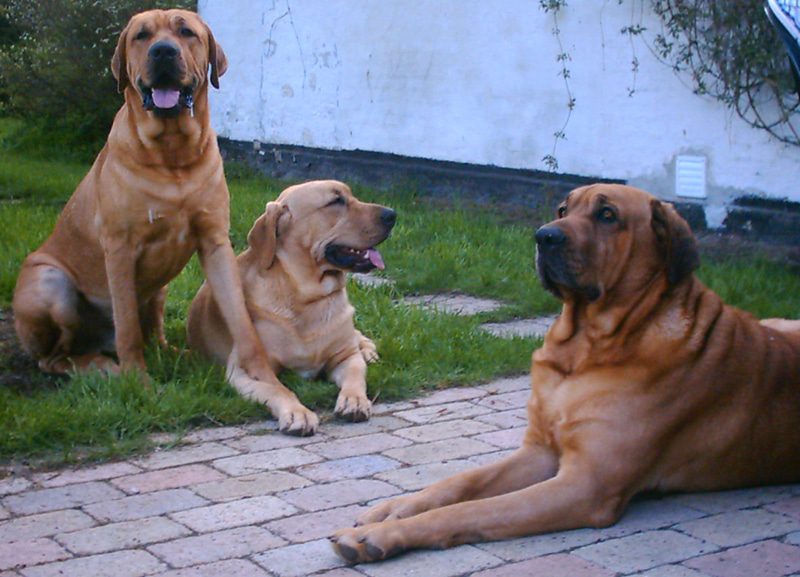

 Broholmer give me your love. Cat really loves dog
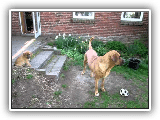 Broholmer – Old Danes' Elle and Wilma
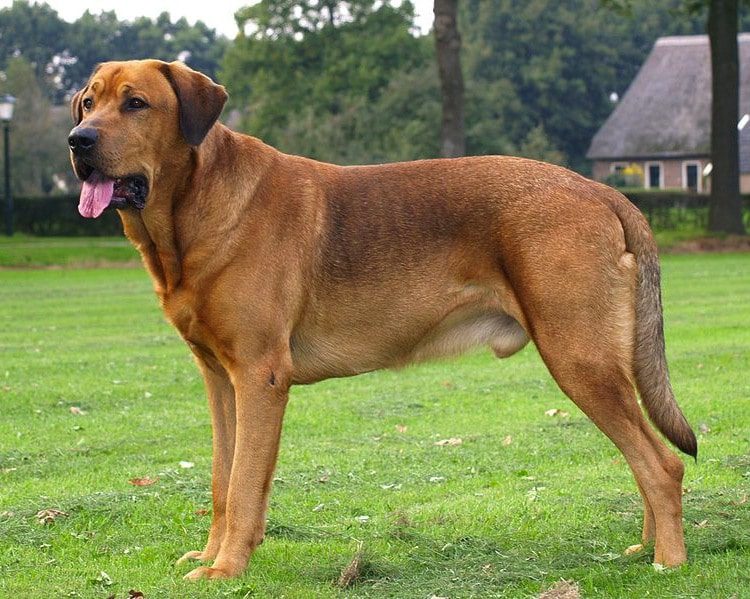
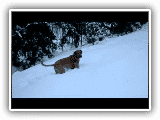 Broholmer Rode (Great Master Weaver Of Dreams) Age of 8 months
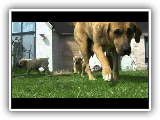 2.Broholmer from kennel Vesternæs. (www.vesternaes.com)
 FCI - Broholmer