40 to 50 cm.. length and a weight of approximately 550 gr.
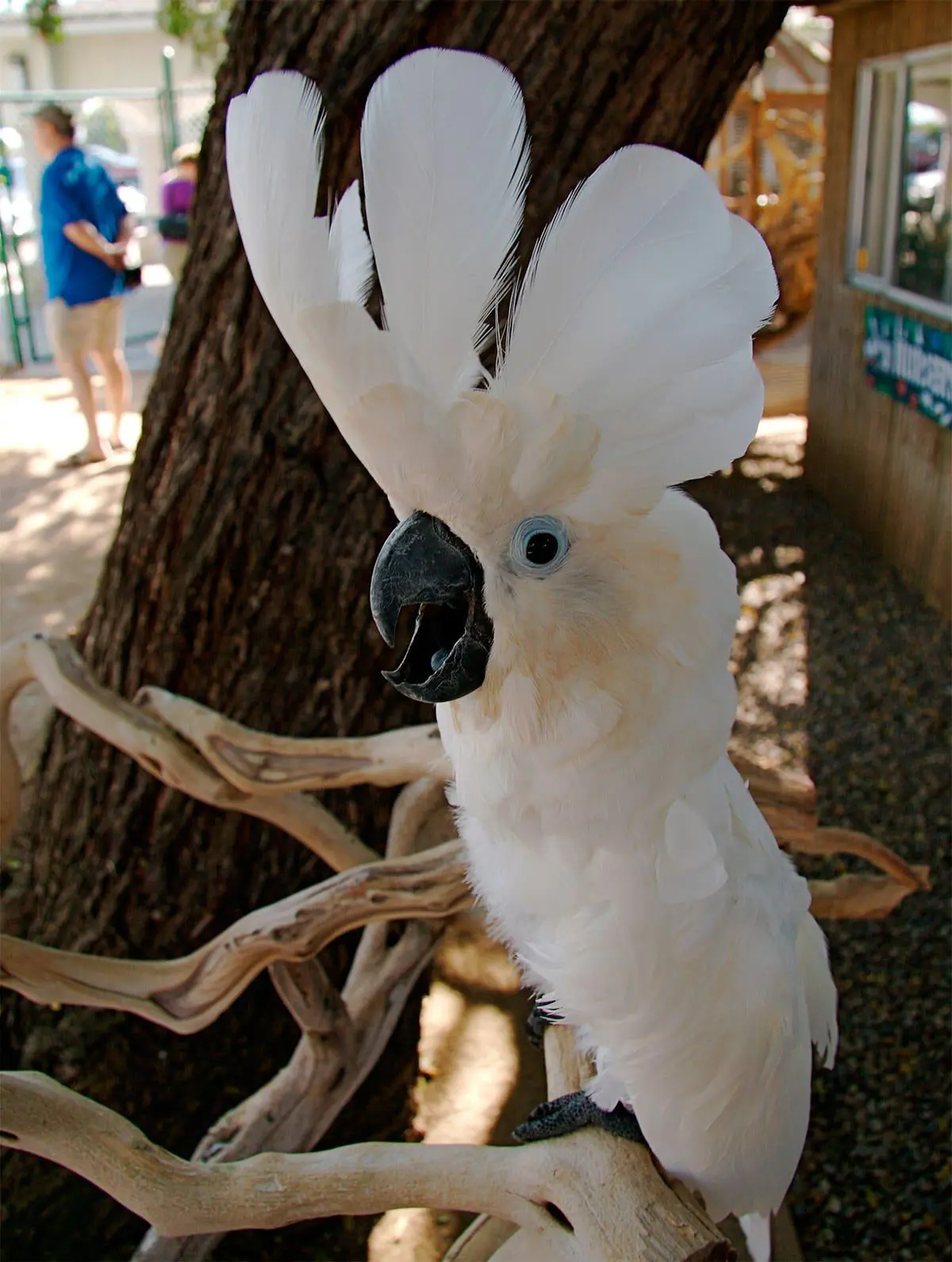
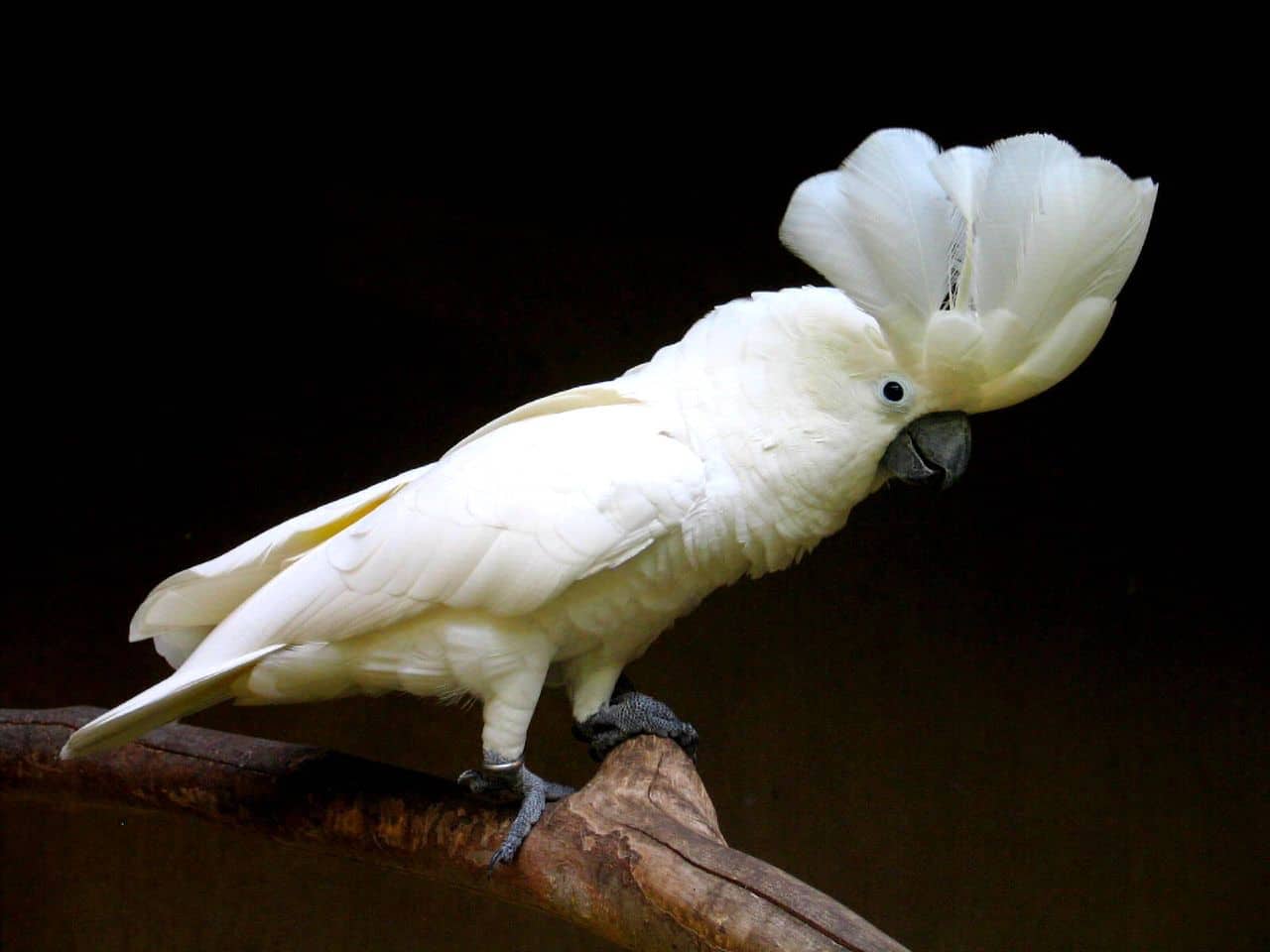
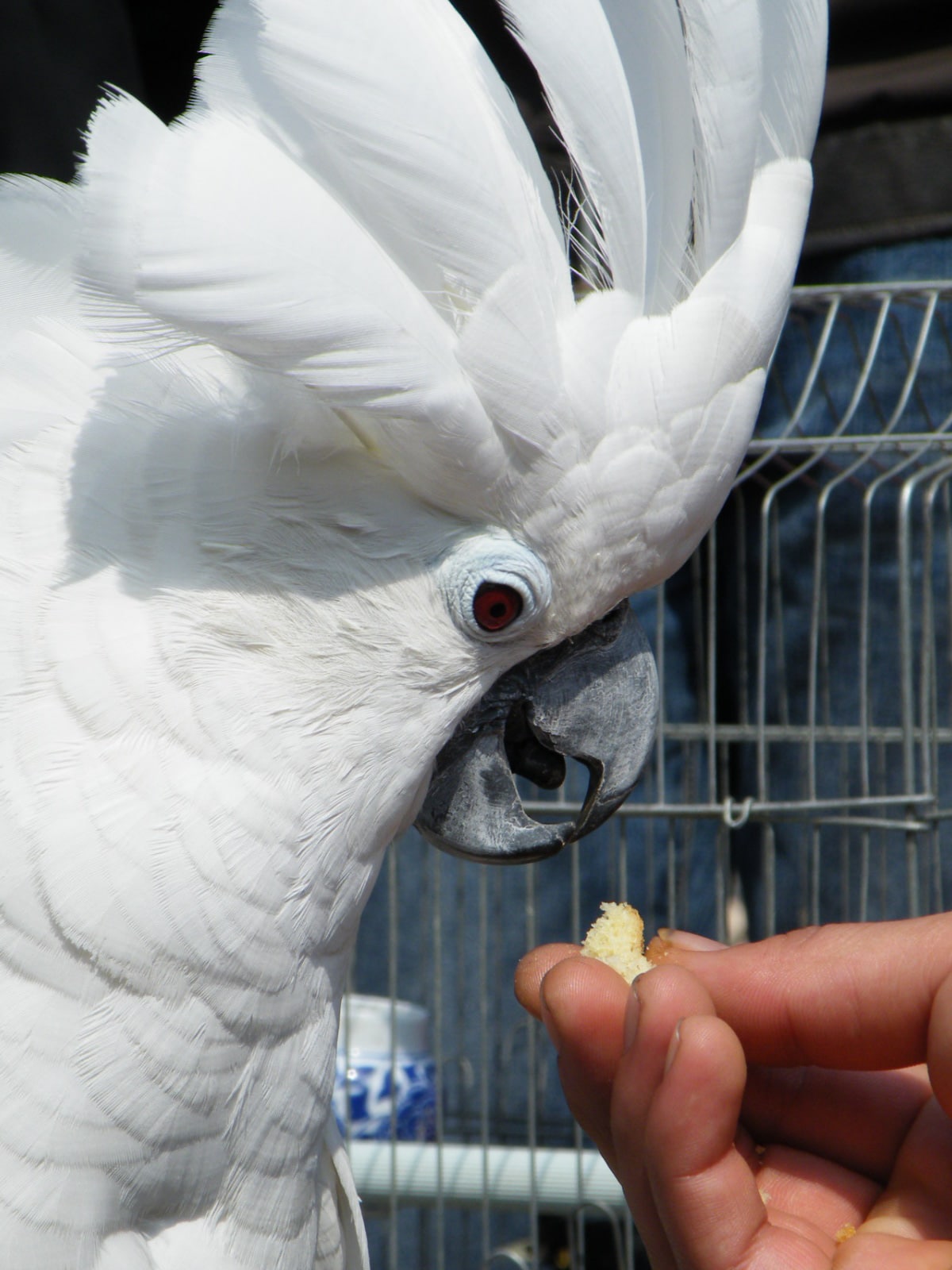
The White cockatoo(Cacatua alba) is completely white, with yellowing below wings, bill black and legs dark gray.
The eye ring is blue.
It has a crest exuberant, that is elevated or low, Depending on your state of mind. The wings They are tapered or rounded.
If he irises is brown, then it is male, if reddish, it is female. The females has bill smaller.
They usually fly solo, in pairs, small groups, or in flocks of up to fifteen birds. In the afternoon, they gather in groups of up to fifty birds. even though they are social, with the exception of mating pairs, usually, they do not form close ties with others. As a result, There is no firmly defined order of dominant position in the community. Son day and they tend to be sedentary, Although some can be nomadic and wander in search of food.
The white cockatoos they are very bright and curious birds. They have the ability to use tools, as the use of a branch to scratch your back. They are monogamous, with couple bonds lasting lifetime. They can fall into a deep depression if you lose your partner.
They live in lowland forests below 900 m, as well as in mangrove forests, plantations and agricultural land.
they are particularly common around the edge of clearings and rivers. They spend most of their time in the tops of the trees. The secondary vegetation high is its preferred habitat.
White Cockatoo Reproduction:
It nests in the hollows of trees. They lay two eggs and two birds hatch for a few 28 days. The larger hatchling tends to take dominance over the smaller hatchling, which will not be able to survive.. The chicks leave the nest to the 84 days old and are independent around 15-18 weeks. These birds reach sexual maturity at the age of 3-4 years.
White Cockatoo feeding:
In nature it feeds mainly on Tree fruits. They are often seen feeding on papaya, Durian, complexioned and rambutan. It has also seen them will eat crickets and lizards. They often feed on corn that grows in the fields, sometimes doing considerable damage.
Distribution:
Size of its range (reproduction / resident): 51.400 km2
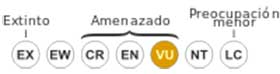
Appears as vulnerable by the IUCN and placed in Appendix II in 1981.
In their natural environment, the white cockatoo is a species vulnerable Due to the decrease in number due to habitat loss natural, as well as for the capture for the illegal bird trade. There are restrictions on the number of birds that can be exported, but BirdLife International He says that this is being exceeded by up to 18 times the agreed number in some areas.
It can cause substantial damage to Corn crops.
World population: 43,000 – 183,000 individuals.
The White Cockatoo in captivity:
The White cockatoo You can live more than 60 years. It is very common in poultry farming and it is perhaps one of the most frequent pet cockatoos.
They are sympathetic, calm, beautiful, sweets and easy to domesticate. Bred to porridge they are usually wonderful pets, You can play some words but are not good talkers. These birds in captivity require mental stimulation almost constant. They are in constant motion, up and doing gymnastics. When lack of mental stimulation, often they are become neurotic, booting the feathers to the point of causing areas of baldness.
They are known for being very affectionate with their human companions, acting more like a dog than a bird in this regard as.
In the absence of a partner, captive white cockatoos will bond with their keeper as if that person were their mate.
Alternative names:
– White cackatoo, Great White Cockatoo, White Cockatoo, White-crested Cockatoo (ingles).
– Cacatoès blanc, Grand Cacatoès blanc (French).
– Weißhaubenkakadu (German).
– Catatua-branca (Portuguese).
– Cacatúa Alba, Cacatúa Blanca, Cacatúa Copete Blanco, Cacatúa de Goffin (español).
– Avibase
– Parrots of the World – Forshaw Joseph M
– Parrots A Guide to the Parrots of the World – Tony Juniper & Mike Parr
– Birdlife
– avimarparrots.es
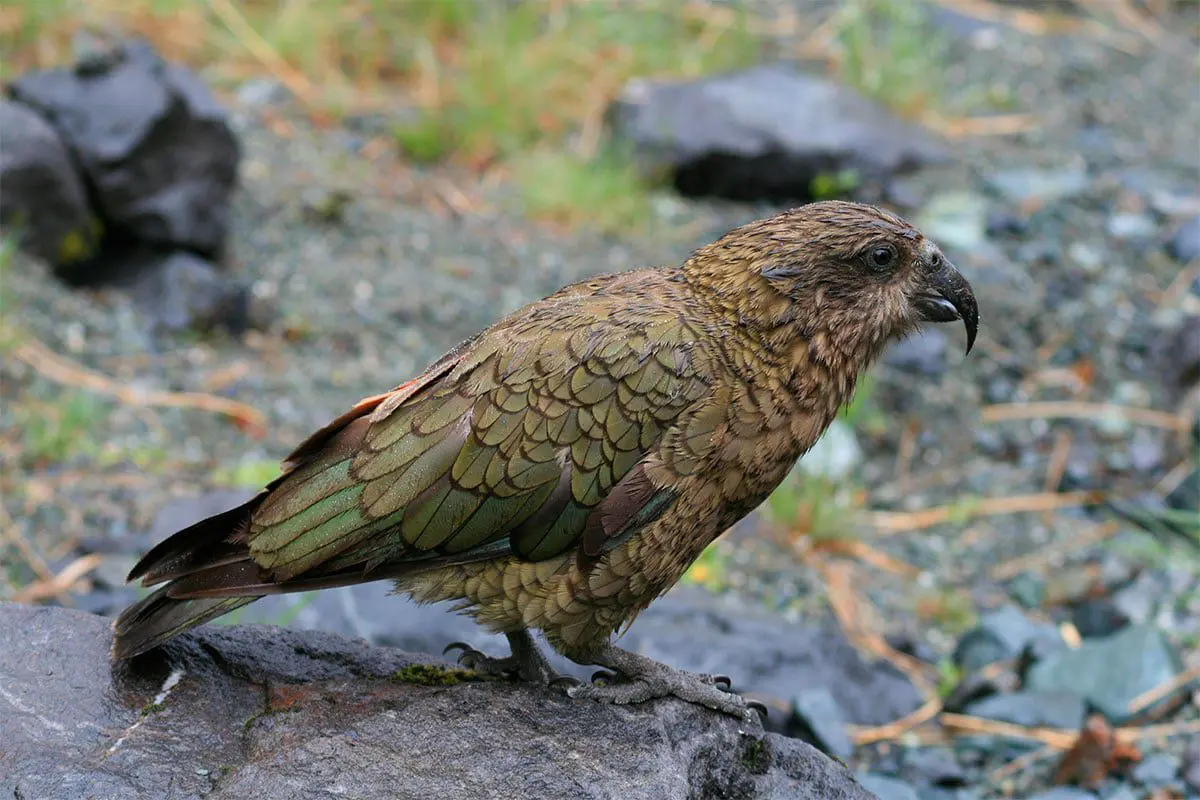
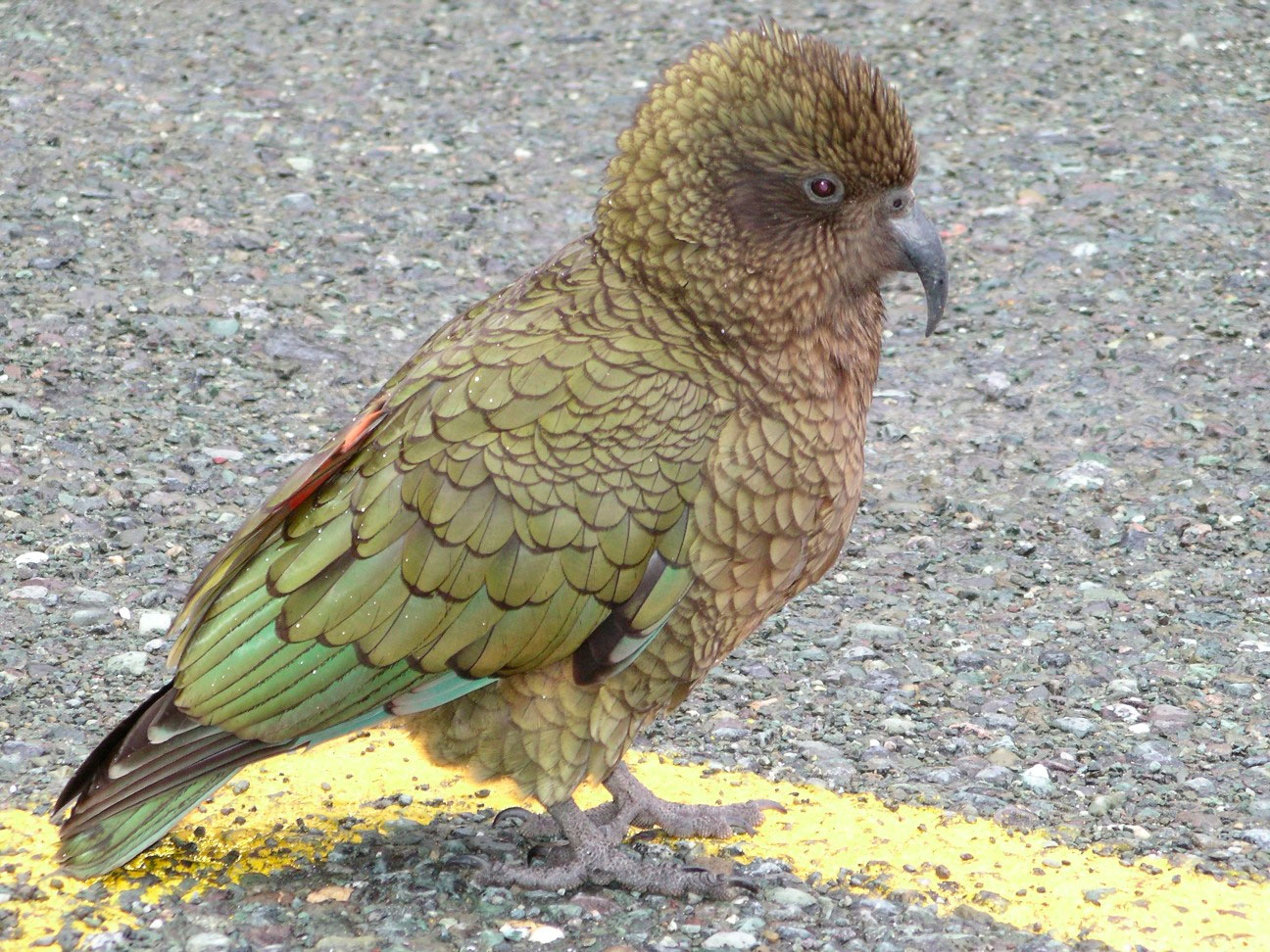
The Kea(Nestor notabilis) It is a bird of the family Strigopidae of 48 cm.. length and an average weight of 922 g..
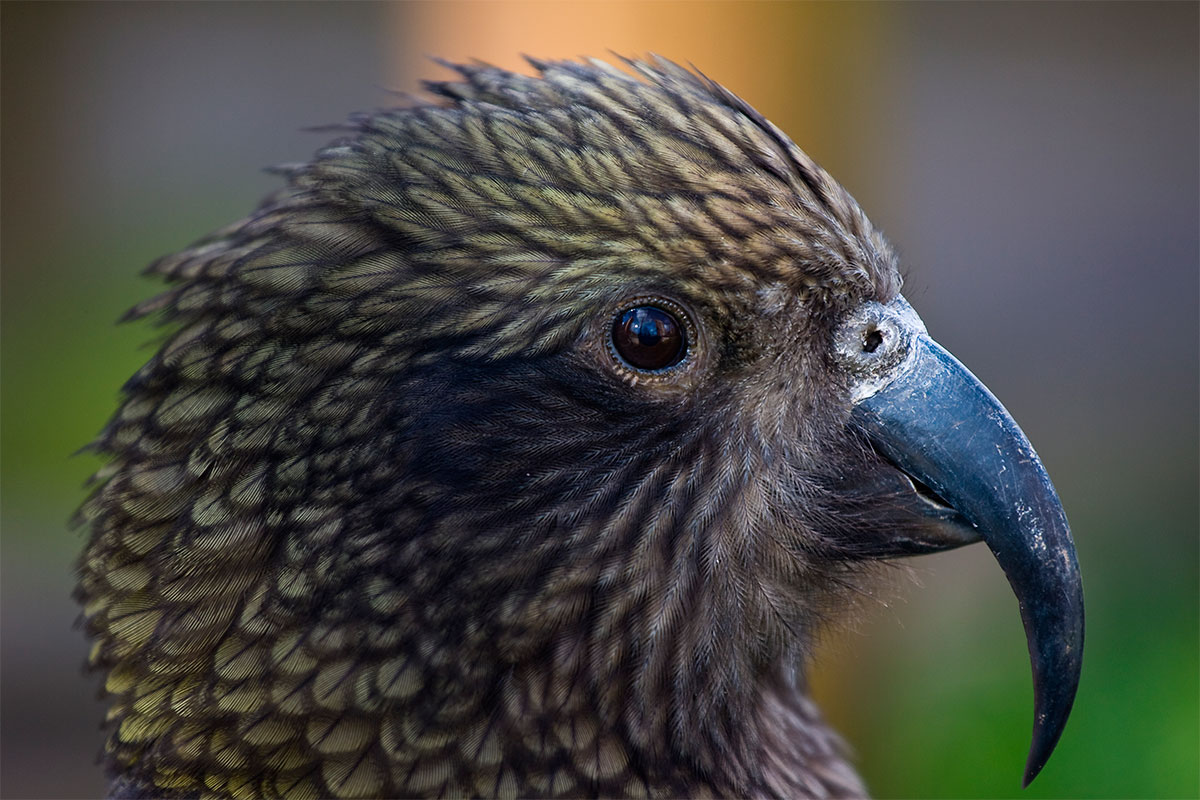
Its head is olive brown color; narrow feathers of the crown with a few finely marbled black stripes; ear-coverts and lores more uniform dark brown; feathers of the neck slightly yellowish, with stripes and edges of brownish black color . Mantle and uppertail-coverts Green bronze with black stripes and Crescent-shaped rims; back and rump orange-red, with stripes and Tips blackish.
Flight feathers, primaries and greater coverts, drenched strongly with blue turquoise in them vane outer (more green in high schools); vane internal primaries, excluding the color lemon yellow. Wing feathers and axillary reddish color; underparts of the flight feather brown, with yellow bars in the vane internal primaries, excluding the orange color in the vane the secondary internal internal.
Their underparts feathers Brown olive light, with a ridge of dark brown. Upper, the tail, bathed in a bluish green tone, with bars in the vane internal orange yellow color and a blackish subterminal band with Tips lighter; undertail, the tail, olive-yellow color, with a dark subterminal band; the tips of the stripes of the tail feathers extend slightly beyond the network.
The bill brown-black color; cere dark brown; irises dark brown; legs blackish gray.
The males they are larger and have upper jaws longer than females (an average of 12 to 14% more).
The young birds they have the rump greener, yellow the Ceres, with rings perioftalmicos yellow, a pale base in the lower jaw, and legs pale yellow.
The nude parties yellow are lost after two years after three in the male and female.
The Kea (Nestor notabilis) they live at an altitude between 600-2400 m.
They are commonly found near tourist attractions. But, its main habitat is in the tree line between 950 and 1.400 m.
They mark a certain preference for deep canyons whose walls are covered in forests of beeches (Nothofagus cliffortioides). At higher altitudes, that is it can be observed in subalpine Shrublands. The species It is considered as monotype.
It is a bird family and curious. He likes to live close to the houses and feel the human presence. His mischievous behavior and his sharp intelligence earned him the title of «clown of the mountains«.
It's a joy for tourists, that compensates for, in part, the wrong bad reputation that had in the past.
During the period of nesting, the pair is the basic social unit, but for the rest of the year, It is a species very gregarious they live in family groups, feeding in flocks of 30-40 birds, often in landfill sites.
The males are polygamous, each can have a harem of some 4 females. Dominant males are not necessarily the oldest.
Establishing a hierarchy is tricky. Adults often dominate subadults but it can also happen that a young dominates an adult.
The Kea established territories that are resizable. These can be overlaid on the periphery, but the nucleus or the central part situated, near the nest, It has an inviolable space that is defended with aggression.
During the nesting season, breeding birds are sedentary, and never will they move away to more than one kilometre from the nest. On the other hand, the non-breeding birds are very mobile, and some have been seen more of 60 km of where they were ringed.
Reproduction of "Kea":
The strong conjugal bonds and fidelity to the nesting site are the two basic rules of the Kea, that is manifested by the fact that the nest often takes several years to be completed. But, unpaired males can visit the nests and try to mesh with females.
The breeding season extends July-January. The female lays 2 to 4 white eggs in a burrow or cavity covered with some sticks, leaves and MOSS. The site is often found at the base of a cornice, but they also use stone blocks placed above the tree line.
The eggs are deposited a few days apart and only the female incubates for a period that varies between 21 and 28 days. In the meantime, the male stands guard nearby and is responsible for feeding his partner. Initially, bring enough food to also supply the calf, but after a few weeks, the female leaves the nest, in order to help you in your task.
The chicks, covered with a white marker, they leave the nest after 13 to 14 weeks. They continue to be fed by the parents during 1 month to 6 weeks. In January and February, immediately after the nesting season, the Kea they tend to congregate in large flocks which can contain 50 or more individuals.
Food of "Kea":
During the summer, the Kea they can be active even during the night. In winter they are reduced to more modest altitudes below the elevation of snow. Some groups choose to stay in the mountains near ski resorts.
The Kea feed of carrion, in particular sheep. Contrary to its reputation, they never attack healthy sheep. have a diet mainly vegetarian and they fed both in trees and on the ground. Your menu includes leaves, outbreaks, estate, seeds, berries, flowers, nectar and insects. In summer they also eat beetles, worms, lobsters and land snails.
The dominant males they are known to find its food in campsites and parking areas.
Distribution:
Size of the area of distribution (reproduction / resident): 63.300 km2
endemic to the South Island of New Zealand (Although vagrants have been recorded in the North Island, for example, in the Tararua mountains), finding, mainly, between 950 m and 1.400 m above sea level in forests and subalpine scrub.
The populations of the Kea they appear as stable and they can range between 1000 and 5000 specimens.
The concentration of birds around tourist spots leaves a false impression, giving the impression of being a fairly ordinary parakeet.
Due to the false reputation he had for attacking sheep, This bird was hunted by farmers and thousands of birds were exterminated between 1860 and 1970.
Since 1988, the Kea is fully protected, What does not prevent, sometimes, their capture and sale as a pet.
The "Kea" parrot in captivity:
Very rare in captivity.
As indicated sources, a captive male for Kea was still alive after 47 years in the Antwerp Zoo. It showed signs of old age. Other Kea in the bristol zoo, of at least, 43 years of age showed no signs of aging.
In captivity, These birds can be raised from the 4 years of age
– Avibase
– Parrots of the World – Forshaw Joseph M
– Parrots A Guide to the Parrots of the World – Tony Juniper & Mike Parr
– Birdlife
– Photos:
(1) – An adult Kea in Fiordland, New Zealand by Mark Whatmough – Wikipedia
(2) – Kea at Twycross Zoo, England. Close up of head and neck By Paul Reynolds from UK (IMG_7147_080227_40DUploaded by snowmanradio) [CC BY 2.0], via Wikimedia Commons
(3) – A Kea at Mount Aspiring National Park, New Zealand By Rosino (scary keaUploaded by Snowmanradio) [CC BY-SA 2.0], via Wikimedia Commons
(4) – Male Kea (Nestor notabilis) on road to Milford Sound, New Zealand By User:Velela [Public domain], via Wikimedia Commons
(5) – Nestor notabilis By Aidan Wojtas from Wellington, New Zealand (Running KeaUploaded by snowmanradio) [CC BY-SA 2.0], via Wikimedia Commons
Origin: Bangladesh, Bhutan, Cambodia, China, India, Indonesian, Laos, Myanmar (Burma), Nepal, Thailand, Viet Nam
Character: Sociable
Life expectancy: 15 to 20 years.
Height: Of 33 to 38 cm..
Content
Description:
33 to 38 cm.. length between 133 and 168 g. of weight.
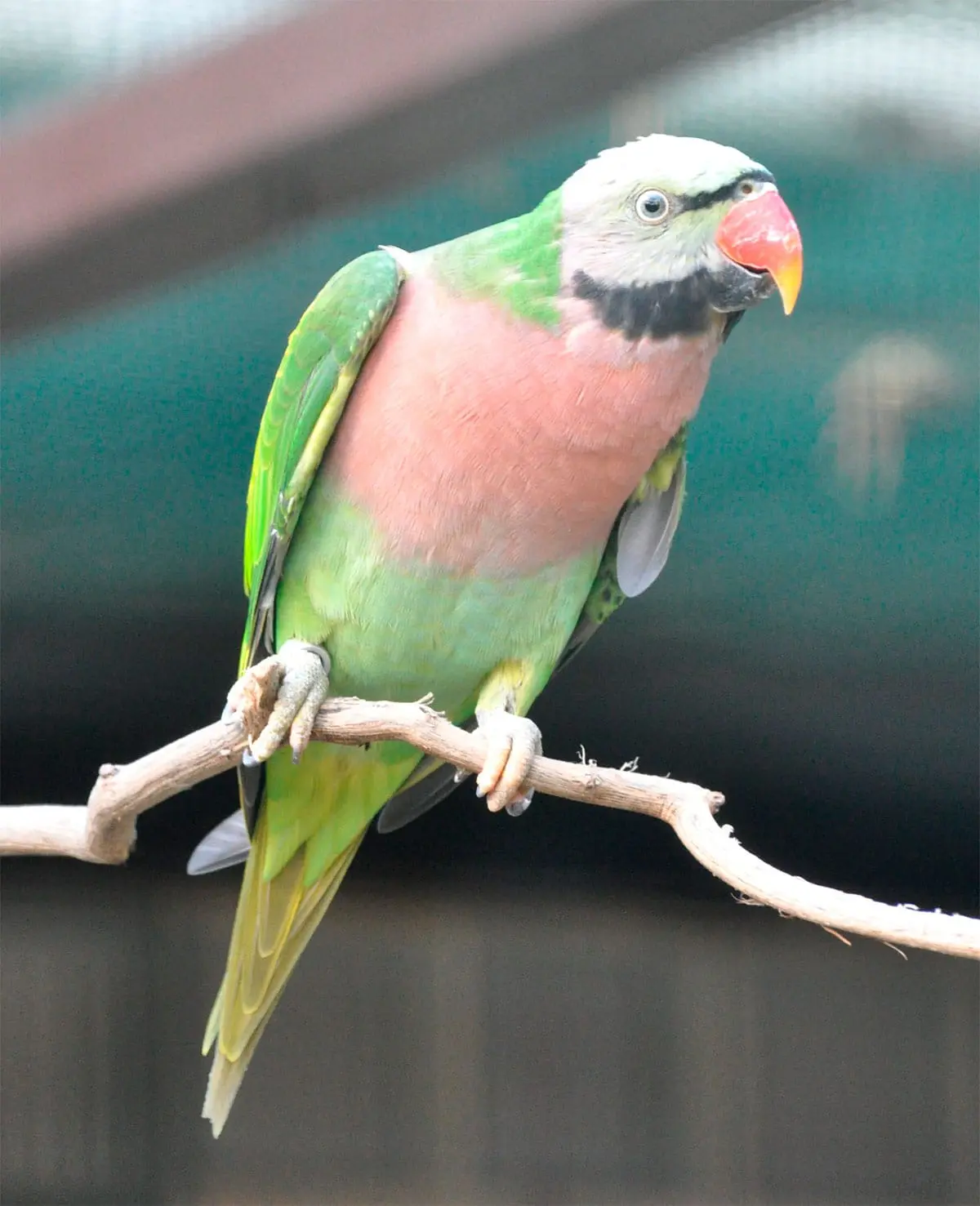
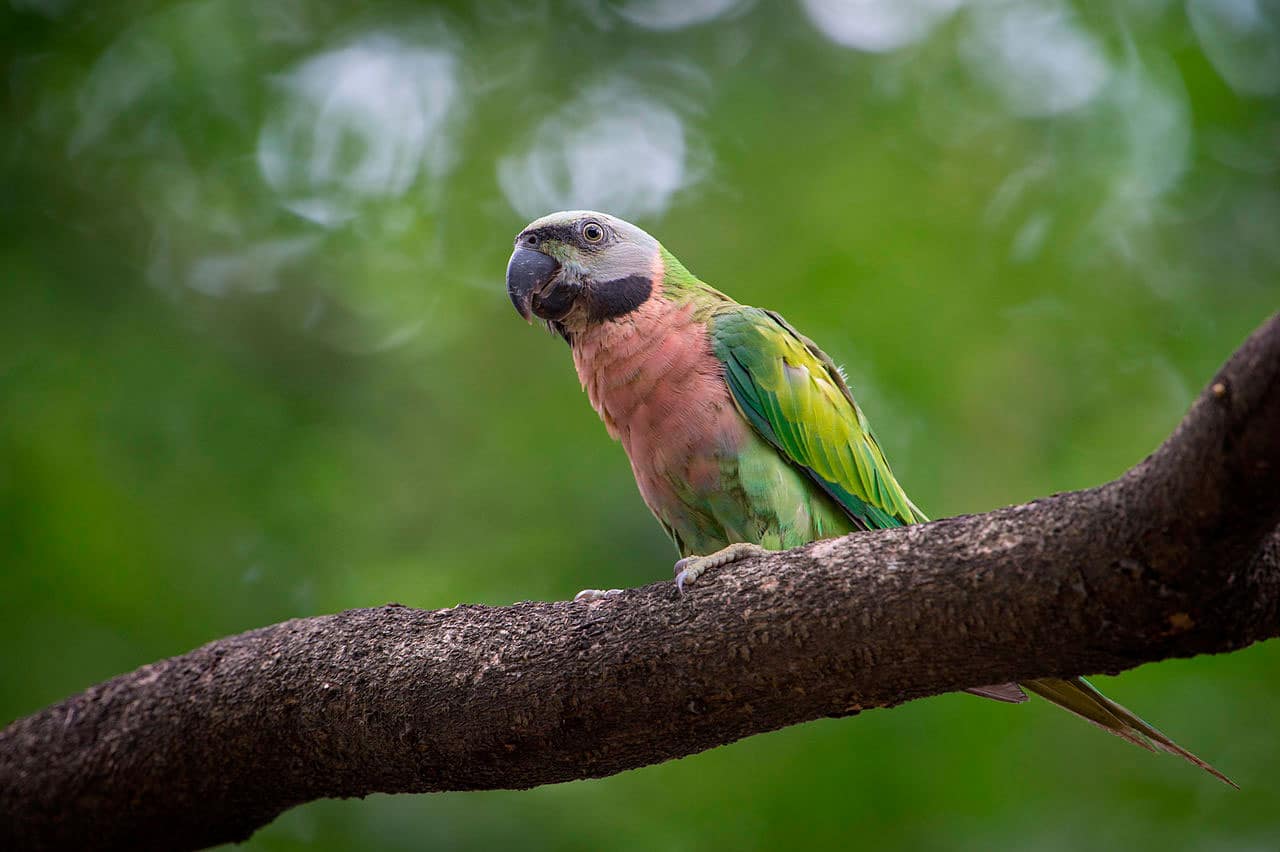
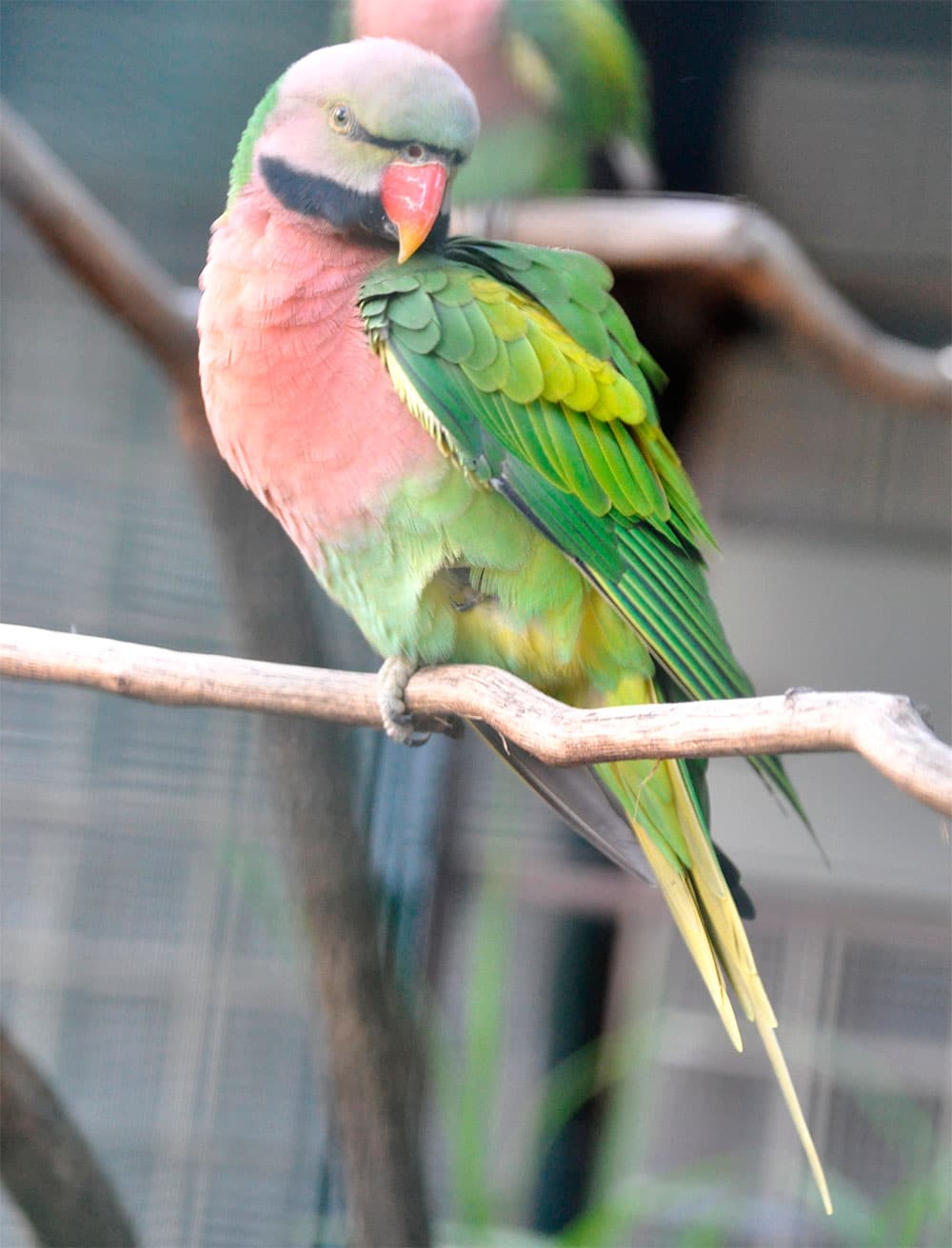
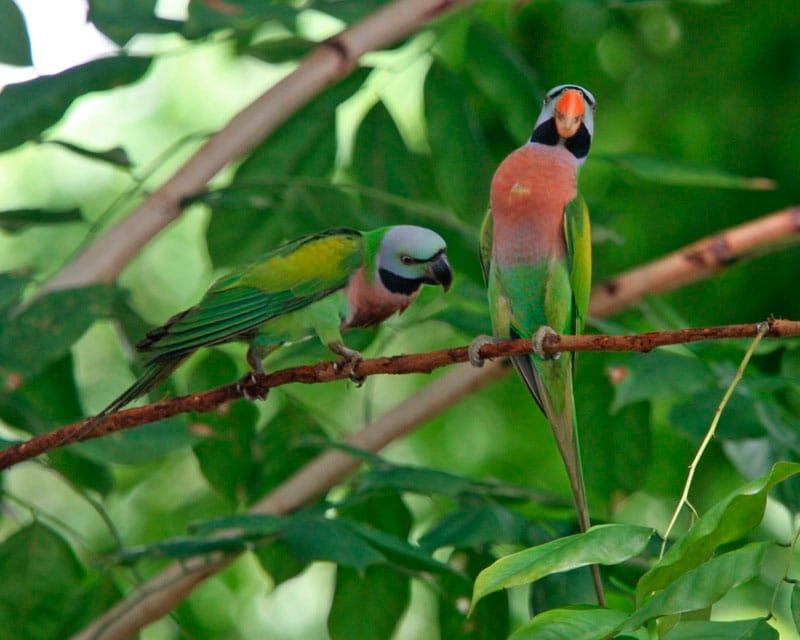
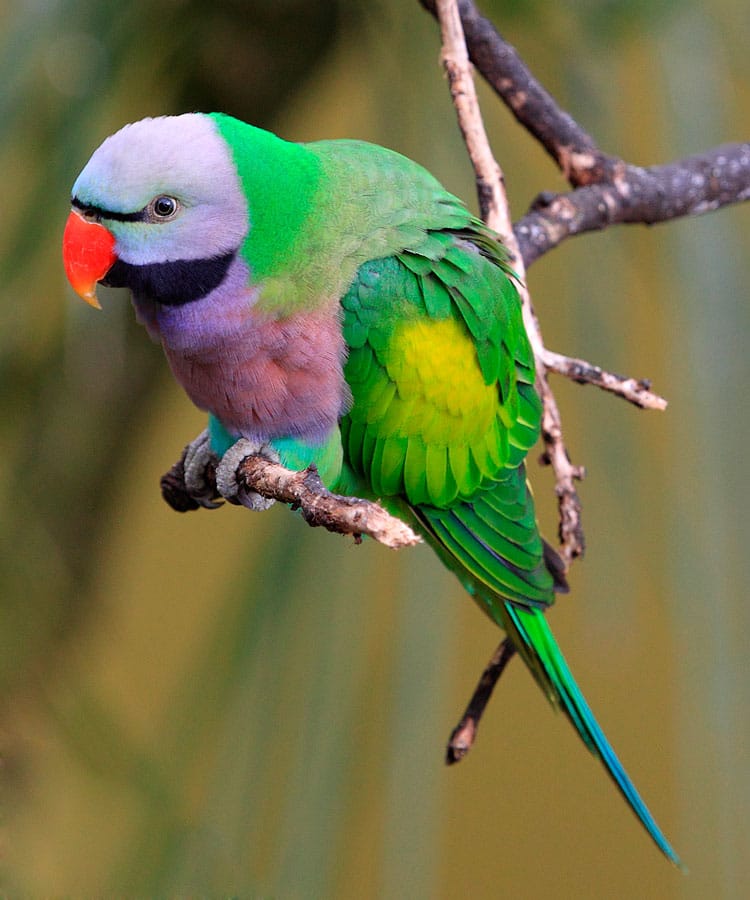
The Red-breasted Parakeet(Psittacula alexandri) is a bird with a form attractive, thin, and with a long and narrow tail. Its plumage is green, the overall tone of the head is grey, the bill red, and with brands distinctive in the head and face. The area around the eyes is greenish, with a pretty bluish tint. It has a fine line along its forecrown and wide stripes in their cheeks. Plumage in the chest, the throat and the top abdomen is salmon-pink color, extending halfway from the vent.
The female It has a shade bluish through the region of the face. In general, they have a pink color more off above the chest and the feather half of its tail they are shorter than the of the male.
The immature birds they have the tail shorter, the bill Pink, and incomplete rays of the cheek they are easily distinguished.
Between the young birds hard identification between males and females, However, breeders have managed to identify them correctly. The head of the female bows in a more uniform manner from the cere to the rear of the head. The young males they tend to be flatter in the forecrown. The females They seem to have a face darker than blue.
(Oberholser,1919) – Length: 36 cm.. Similar to the Psittacula alexandri fasciata (including sexual dimorphism in staining of the bill) but larger and paler.
(Oberholser, 1912) – Length: 36 cm.. As the Psittacula alexandri fasciata but with the belly blue (especially in males), the upper part of the abdomen darker and the lores, forecrown and bottom of the abdomen strongly impregnated with the pale blue.
Psittacula alexandri dammermani
(Chasen & Kloss, 1932) – Length: 36 cm.. Perhaps, on average, larger that the Psittacula alexandri fasciata. The pink color of the chest It is darker than the species nominal. In the female, the pink color extends from the throat at the sides of the neck. The bill larger than that of the species nominal. Both jaws Red in both sexes.
Psittacula alexandri fasciata
(Statius Müller, 1776) – Length: 33 cm.. Upper chest and abdomen is dark pink with violet tone, the head is bluish-grey way more uniform. The areas of the eyes and forehead with greenish hue. The females, part of the difference of the bill, nor have the violet tonality in the pink of the chest.
Psittacula alexandri kangeanensis
(Hoogerwerf, 1962) – Length: 33 cm.. More grey the head (less blue). Bill larger than that of the species nominal and both jaws Red in both sexes.
Psittacula alexandri major
(Richmond, 1902) – It is more large, of 38 cm.. length. Similar to the Psittacula Alexandri Fasciata but something more pale and the head is without bluish tone gray.
Psittacula alexandri perionca
(Oberholser, 1912) – Length: 37 cm.. As the Psittacula alexandri fasciata (including sexual dimorphism in the coloration of the bill) but paler and larger, without the Green tint around the eyes.
Habitat:
Usually, they live below 2.000 m (rarely above 345 metres in Nepal) all types or forest and wooded areas, including dry forest, secondary-humid deciduous forest, mangroves, coconut and mango groves , areas planted with trees (including hills of shifting cultivation), parks and urban areas. In the region of the Himalaya avoids the dense green forests.
Gregaria, usually in flocks of 6-10 birds, less frequently in groups of 50 and very exceptionally in thousands, larger flocks during garbage collection (for example, the mango or rice), sometimes mixed with the Slaty-headed Parakeet wave Gray-headed Parakeet. They form communal roosts in the tall trees, bamboo or sugarcane scrub areas.
Reproduction:
The Red-breasted Parakeet nests in natural cavities or old hole made by woodpeckers or barbets, usually at a height between 3 and 10 m, often in loose colonies. The hole is filled with wood shavings.
The laying is of 2 to 4 eggs.
The breeding season is between December and April, Depending on the location and the altitude; in Java, breeding has been recorded in every month, except for April.
Food:
Diet Red-breasted Parakeet includes wild figs and other fruits, fruit trees and wild, flowers and nectar (especially, for example, of the Parkia speciosa and Erythrina variegata), dried fruits (for example, chestnuts Castanea), fruit (for example, Mango), berries, seeds (for example Albizia), leaves and cereals such as rice and corn, by causing serious damage to crops, especially for rice.
Distribution:
Size of the area of distribution (reproduction / resident): 2.570.000 km2
The Red-breasted Parakeet are distributed from the central area of the Himalaya until Indochina, China and West of Indonesian. From the lowlands of the Himalaya in the North of India, approximately to the East of Dehradun, through Nepal, Sikkim and North of Bhutan in the southwest of Yunnan, China; to the South by Assam, Manipur and Nagaland, India, until Bangladesh and to the East by Burma (including Mergui archipelago), Indochina, Malacca Peninsula, around 9°N (a record of 1889 in the Kelantan River at approximately 5°N suggests a contraction in its distribution) of Guangxi and Provinces of Canton and Hainan Island, to the South of China.
They are also distributed in Islas Andaman and Indonesian in Java, Bali, Karimun Java, Kangean, Borneo South (where it was probably introduced from Java) and Simeulue, Nias and Banyak, West of Sumatra.
Getaways captive birds eggs were found in Singapore and a single record (presumably an escape) in Hong Kong.
Resident but with some local movements dependent on food supply.
It is the most common parrot in some parts of its range., but with a substantial decrease in Thailand and Laos in recent years and local extinctions (for example, Java and Bali), because of the live poultry trade; the nominal subspecies may be at risk as a result of his capture. A small number in captivity out of range (mainly the nominal species and fasciata).
(Statius Müller, 1776) – Continental Asia from the North of India through the Himalaya lower, Burma including the Mergui archipelago, Thailand and Indochina to the South of China, including Hainan
The population of the Red-breasted Parakeet It is suspected in a moderate to fast global decline, due to the unsustainable levels of exploitation and the destruction of their habitat. This suspicion is supported by widespread anecdotal evidence that in many parts of its range decreases.
Threats:
– The declines and local extinctions in recent decades in the population of the Red-breasted Parakeet have been attributed in large part to his capture to the trade in live birds (Juniper and Parr 1998).
– The hunt they are considered the main threats to the species in Nepal, where it is also threatened by the loss of forests (C. Inskipp and HS Baral in litt. 2011).
– His nasal voice makes the species a popular in Nepal cage bird, and their vocal habits during the breeding season, together with the tendency to form large flocks when not raising, they make susceptible to trappers. These factors lead to illegal hunting and his capture in protected areas; they are also persecuted by farmers due to their raids on crops (C. Inskipp and HS Baral in litt. 2013).
– Similarly, in Bangladesh, the species is captured for the cage bird trade It is also likely that they are affected by the removal of large trees (P. Thompson in litt. 2012).
– Almost the total disappearance of the species from the North of Laos, It is believed that it is mainly due to the loss of habitat through conversion to agriculture (JW Duckworth in litt. 2011).
– Loss and fragmentation of forests is likely to accelerate in Cambodia in the near future, given that many of the large agro-industrial concessions have been awarded recently (H. Rainey in some. 2011).
Conservation Actions:
– The species is listed in the Appendix II of CITES.
The Red-breasted Parakeet is a bird Smart and outgoing that is gaining increasing worldwide popularity. These parrots are sociable and playful, and if they are properly socialized, they can be a few excellent pets. They can be a bit aggressive and authoritarian, If it is not properly discipline. They need a good cage for a large size, with a lot of toys to avoid boredom.
Although this bird is linked with the Rose-ringed Parakeet, they are very different in personality. The Red-breasted Parakeet It is softer and not so noisy, although she has been described as "feisty". It is usually more quiet than other Psittacula. Also are great eaters and you accept easily new foods other birds may be thrown away.
You can get to imitate some sounds, even words, Although not as clear as the some of the larger parrots, example the Grey Parrot. But, according to some sources, they can speak more clearly than the Rose-ringed Parakeet.
Regular handling is important at an early age, since they can become aggressive, If not are well socialized and manipulated.
If you want a small Parrot with personality, the Red-breasted Parakeet It can be the ideal ave. But, It is still a "stubborn" and "stubborn" bird.. It is not surprising considering his intelligence. Obedience training is recommended. On the other hand it is one voracious chomping and should it be should provide plenty of toys to chew.
Like other parrots, need company, and if they will not be in an Aviary with other birds, We must be able and willing to spend large amounts of time with them.
In nature, this bird is often seen in flocks of 10 to 50 individuals. These flocks, often, they are heard before to be seen. This is a fact that must be taken into account before deciding to buy one Red-breasted Parakeet. Breeding females can be put in 3 to 4 eggs in each clutch, with an incubation approximately 22 days.
With regard to its longevity, according to sources, We need to know that a specimen lived 23,3 years in captivity.
Captive breeding:
The Red-breasted Parakeet commonly bred in captivity. They reach maturity between 2 and 3 years of age. The birds must be matched at a young age. The female can sometimes dominate males. The procession begins at the end of winter and the females can be seen calling males for food. In the wild they breed between the months of December and April, Although this is variable, Depending on the climate and altitude.
A thick-walled hollow trunk, It can be used as nest. If not available, any commercially available nesting box should suffice.
They require long aviaries, more than wide, due to its long tail and its type of flight (powerful, linear). Also like a protected breeding area. The entrance door to the Aviary must be on the opposite end. We must place leaves of Palm on the bird front and leafy branches on the back to protect the young fledged when they hit the walls of the Aviary and fall on your floor. If this is not done, many of the young people will die from injuries in the head or severely damage their hair. Young hatchlings do not have great control when they start to fly; they can be left with the parents during 9 months, but then you must be separated.
Diet during breeding It is very important. We can use sunflower seeds germinated, soaked chickpeas, Apple diced, celery, raw or boiled corn and green feed. Supplementation with multiple vitamins and liquid calcium is especially important prior to egg laying..
Alternative names:
– Red-breasted Parakeet, Banded Parakeet, Bearded Parakeet, Indian Red-breasted Parakeet, Moustached Parakeet, Pink-breasted Parakeet, Red breasted Parakeet, Rose-breasted Parakeet (English).
– Perruche à moustaches (French).
– Bartsittich, Rosenbrustsittich (German).
– Periquito-de-bigode (Portuguese).
– Cotorra de Pecho Rosado, Cotorra Pechirroja (español).
– Avibase
– Parrots of the World – Forshaw Joseph M
– Parrots A Guide to the Parrots of the World – Tony Juniper & Mike Parr
– Birdlife
– Photos:
(1) – Moustached Parakeet in the Walsrode Bird Park, Germany By Quartl (Own work) [CC BY-SA 3.0], via Wikimedia Commons
(2) – Red-breasted Parakeet at Brooklands Zoo, New Plymouth, New Zealand By Dave Young (originally posted to Flickr as bird) [CC BY 2.0], via Wikimedia Commons
(3) – Red-breasted Parakeet (Psittacula alexandri fasciata). Coutrtship – male on right. Changi Village, Singapore. 2 January 2006 By Lip Kee Yap [CC BY-SA 2.0], via Wikimedia Commons
(4) – Moustached Parakeet in the Walsrode Bird Park, Germany By Quartl (Own work) [CC BY-SA 3.0], via Wikimedia Commons
(5) – Female of Red-Breasted Parakeet (Psittacula alexandri) at Bangkok, Thailand By Jason Thompson (Flickr: Red-Breasted Parakeet (Female)) [CC BY 2.0], via Wikimedia Commons
(6) – Plate from Zoological illustrations, Volume 1, 2nd series By William Swainson [Public domain], via Wikimedia Commons
Origin: Venezuela, Guyana, Suriname, Brazil, Bolivia, Peru
Character: Sociable
Life expectancy: 30 years
Height: 30 cm..
Content
Description:
30 cm.. length and a weight between 130 and 170 g..
The Red-shouldered Macaw(Diopsittaca nobilis) along with the other two subspecies belong to the Group of the small macaws often called dwarf macaws or mini macaws parrots.
They have forecrown, front of the crown and top of the eyes blue; rest of the head and upperparts, including the wings and the top of the tail, grass-green. Rojas the carpal joints and the leading edge of the wing
. Lesser and medium underwing-coverts red; large underwing-coverts brown; underside of flight feather Golden olive.
The underparts green, but more yellowish than the upper. The bottom of the tail Golden olive.
Bill blackish; bare skin of the lores and top of the cheeks white; irises orange-brown; black legs.
Both sexes similar; Perhaps a little smaller females.
The immature with the head completely Green: has no red color in the carpal joints.
With they are distributed in a variety of open wooded habitats, including savannah with scattered shrubs and palm trees (for example of Mauritia) in Suriname, morichales and the coast plantations in Guyana, closed with palm groves of Mauritia on the inside of Brazil and margins of caatinga in the northeast of Brazil with palm groves of Mauritia.
A persistent feature in its preferred habitat is the presence of palm trees., especially of the genus M. flexuosa, Orbignya martiana and Maximiliana maripa (the latter especially in the southern region of the Amazon). Also observed in wetlands with palms, gallery forests and cultivated areas.
Avoid large expanses of closed canopy forests, but they can be seen around human settlements and it is common in the city of Georgetown, Guyana.
They reach the 1.400 metres in Venezuela, to the South of the Orinoco.
Gregarious, often in large flocks outside breeding season; If not in couples.
Reproduction:
Nest in tree cavities, termite tree or in holes of palmas. Copulations registered in the month of October to the South-West of Brazil; Probably engender between February and June in Guiana. Clutch four eggs in captivity. The average period of incubation is of 24 days, the chicks leave the nest about 54 days after birth.
Food:
Its diet, probably, It is similar to its closest relatives, nuts are included in the, seeds, fruits and flowers, but with some signs of favorite seeds; known his preference for flowers of Terminalia argentea and Erythrina glauca, as well as the berries Cordia and fruits Euterpe. They also feed cereals and fruits in cultivated fields and are considered as one plague in some areas.
Distribution:
Size of the area of distribution (reproduction / resident): 910.000 km2
endemic to northeast South America, from the East of the Andes toward the center of Brazil.
In East Venezuela they are distributed, mainly, to the South of the Orinoco (Delta Amacuro and parts of Bolívar), also at the East end of Monagas.
The few records of Trinidad they are probably elopements captive birds.
Are distributed through of the Guianas, in areas of seasonal forests (mainly near the coast) and in Brazil to the North of the amazon in Roraima, Amapá and North of For. Returns disjoint inside of Brazil, to the South of the Amazon from the southeast of For and maranhão the wetlands of Mato Grosso and to the South by the dry northeast in Piauí, Bahia and, according to reports south of Alagoas until Holy Spirit, Rio de Janeiro and Northwest of São Paulo (with a population introduced in the City of São Paulo).
They occupy the Center and East of Bolivia and Southeast of Peru, where there are records in the Heath pampas.
In general residents, with seasonal movements in some coastal areas (for example Guianas) and distributed irregularly, to the North of amazon, where they remain scattered on the basis of suitable habitat.
In general common, especially in the Centre and northeast of Brazil, although rare in Guianas.
Distribution 3 subspecies:
Diopsittaca nobilis cumanensis
(Lichtenstein, 1823) – Northwest of Brazil, to the South of the Amazon River, from Alagoas and West of Bay until maranhão and Southeast of For, and South to the Centre of goias.
• Red List category of the UICN current: Least concern
• Population trend: Stable
Global population size has not been quantified, but this species is described as «quite common» (Stotz et to the., 1996).
The population of Red-shouldered Macaw suspected to be stable in the absence of evidence of any reduction or substantial threats.
Currently capture and trade of wild individuals is illegal.
"Red-shouldered Macaw" in captivity:
Quite common.
They are the smaller macaws commercially available pet and enough popular due to its small size (only a little bigger that a cockatoo) and for its excellent ability to imitate sounds.
In captivity, These birds are sociable and friendly.
The Red-shouldered Macaw they are easy to breed in captivity birds. They have proven to be prolific breeders and they have brought successfully for many years. In his book "All about parrots«, the author Arthur Freud He points out that the first Red-shouldered Macaw It was bred in captivity in the United Statess in the year 1939 and again in 1940, the Lord and Lady Vance Wright. But it was the British success during the year 1949 by EMT Vane, the best known. In fact Vane received the first breeding metal from the British Avicultural Society’s for his achievements with the Red-shouldered Macaw.
The Red-shouldered Macaw are commonly held as pets, but their number has been declining in nature due to the habitat destruction and to his capture to the pet market.
With regard to its longevity, according to sources, It is known that a specimen lived 22,9 years in captivity.
– Avibase
– Parrots of the World – Forshaw Joseph M
– Parrots A Guide to the Parrots of the World – Tony Juniper & Mike Parr
– Birdlife
– Photos:
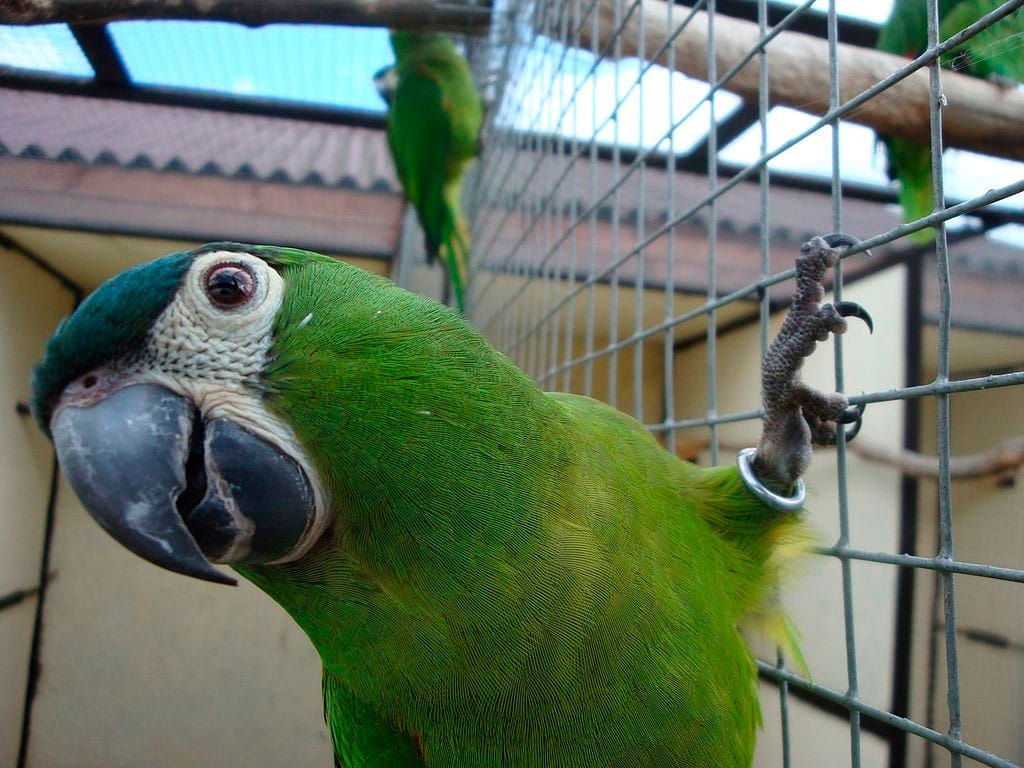
(1) – A Red-shouldered Macaw at Parque das Aves, Foz do Iguaçu, Brazil. This subspecies is also know at the Noble Macaw By Chad Bordes (Picasa Web Albums) [CC BY 3.0], via Wikimedia Commons
(2) – The photograph shows a Hahn’s Macaw (D. n. nobilis) pet parrot perching on a finger By derivative work: Snowmanradio (talk)Diopsittaca_nobilis_-pet-2.jpg:Evenprime at en.wikipedia. Photo by Walter Maier. Picture of family pet. Later version(s) were uploaded by Snowmanradio at en.wikipedia. (Diopsittaca_nobilis_-pet-2.jpg) [GFDL or CC-BY-SA-3.0], from Wikimedia Commons
(3) – Two Red-shouldered Macaws in the Pantanal, Mato Grosso, Brazil By Nori Almeida (originally posted to Flickr as Pantanal 2009) [CC BY 2.0], via Wikimedia Commons
(4) – Long-wing Macaw or Hahn’s Macaw); two in a cage By TJ Lin (originally posted to Flickr as DSCN9927) [CC BY-SA 2.0], via Wikimedia Commons
(5) – Two Red-shouldered Parrots at Lisbon Zoo, Portugal By Jorge Andrade from Rio de Janeiro, Brazil (Lisbon zoo (107)Uploaded by snowmanradio) [CC BY 2.0], via Wikimedia Commons
(6) – Red-shouldered Macaw (Diopsittaca nobilis), also known as the Noble Macaw By Snowmanradio (Own work) [CC BY-SA 3.0 or GFDL], via Wikimedia Commons
(7) – A Red-shouldered Macaw at Bird Park, Kaluga region, Zhukovsky District, Russia By Remiz [CC BY-SA 2.0], via Wikimedia Commons
(8) – Three Red-shouldered Macaws at a zoo By DSuàr (To be coldUploaded by Snowmanradio) [CC BY-SA 2.0], via Wikimedia Commons
(9) – Red-shouldered Macaw (this subspecies is also known as Hahn’s Macaw) at Jungle Island, Miami, USA By Chris Acuna from Miami, USA [CC BY 2.0], via Wikimedia Commons
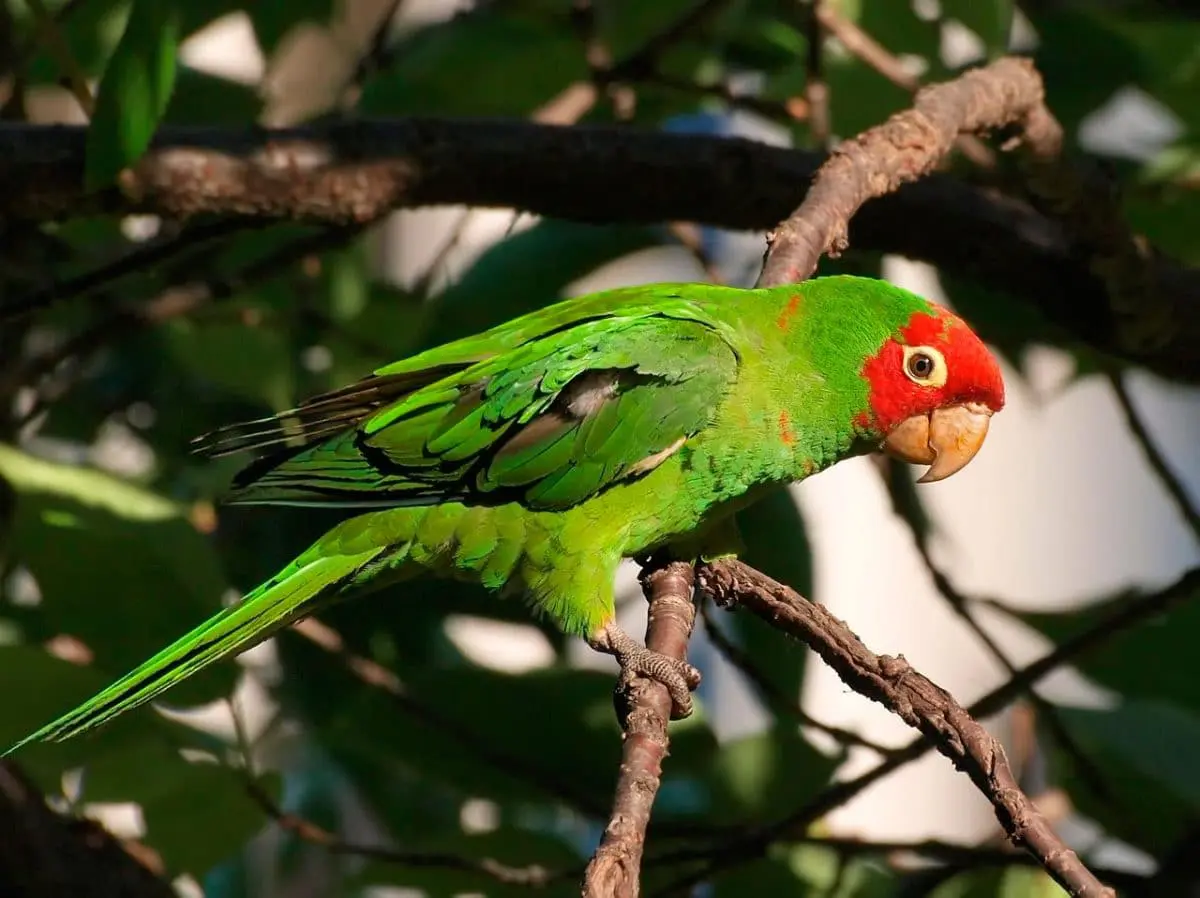
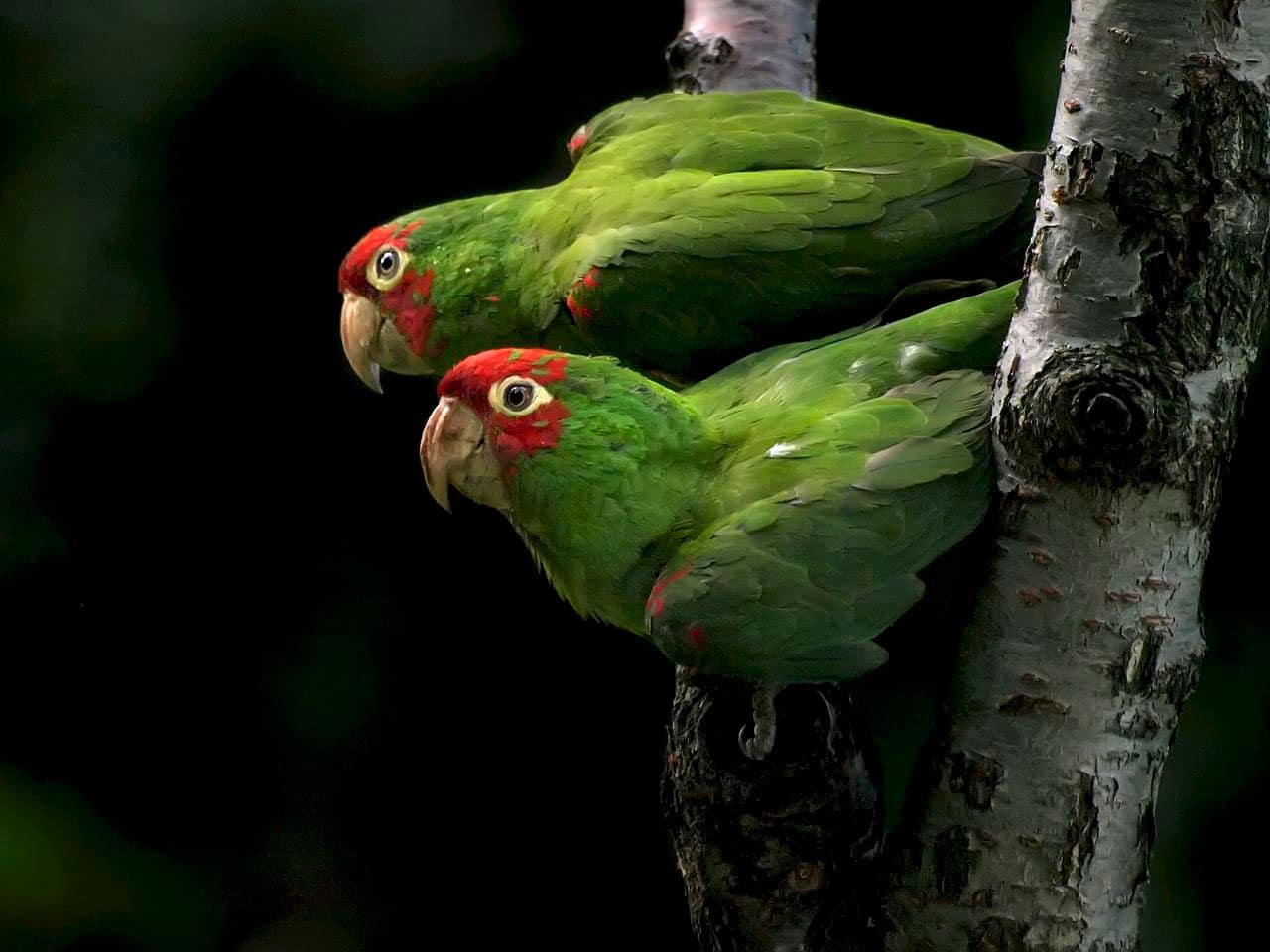
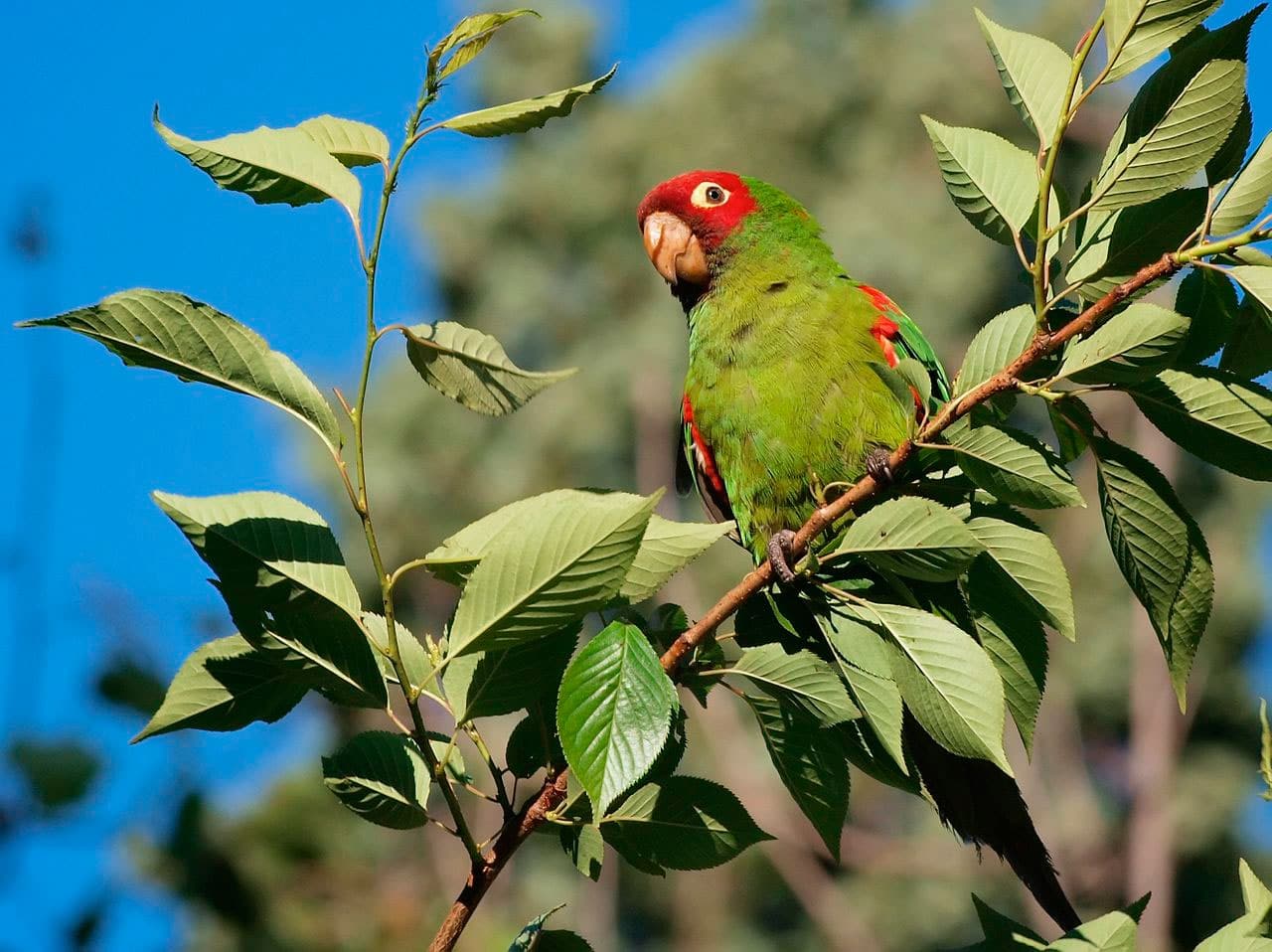
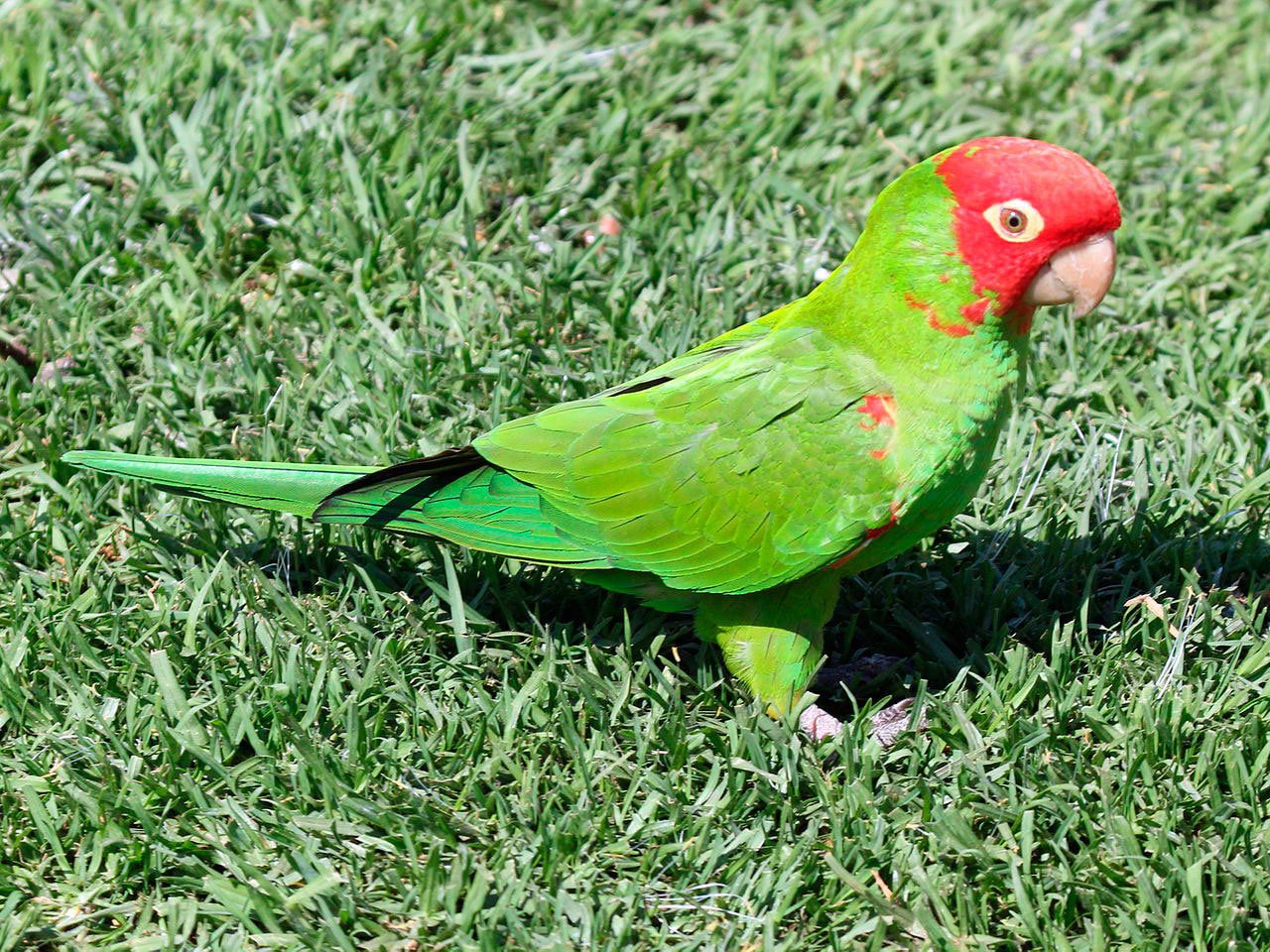
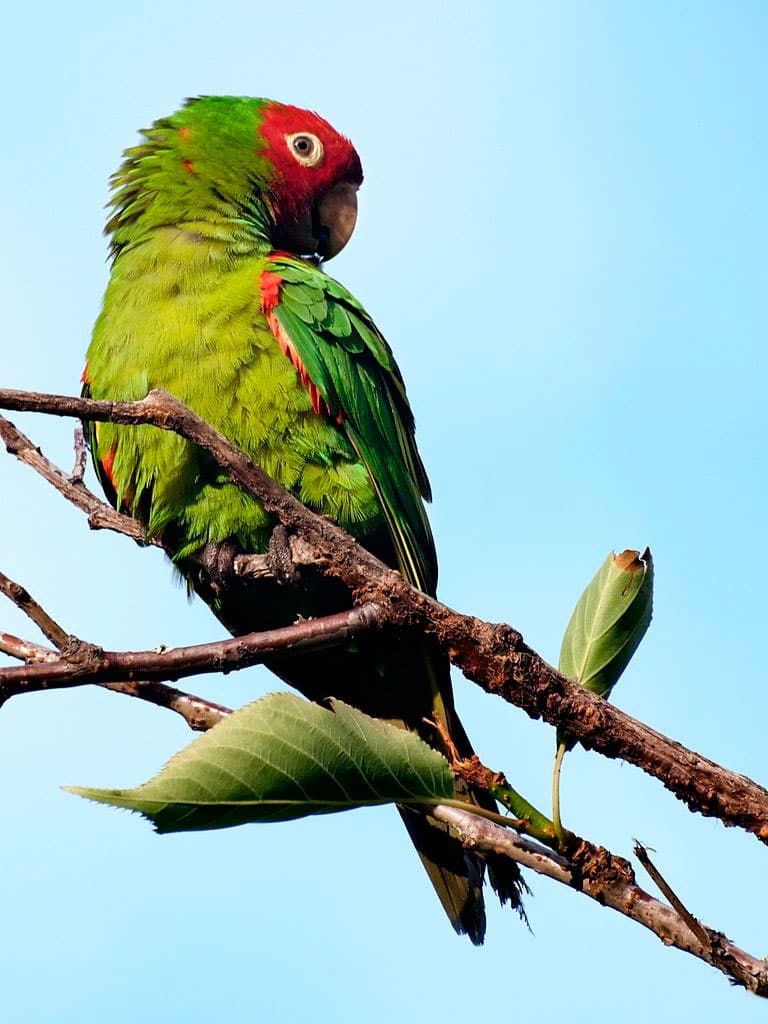
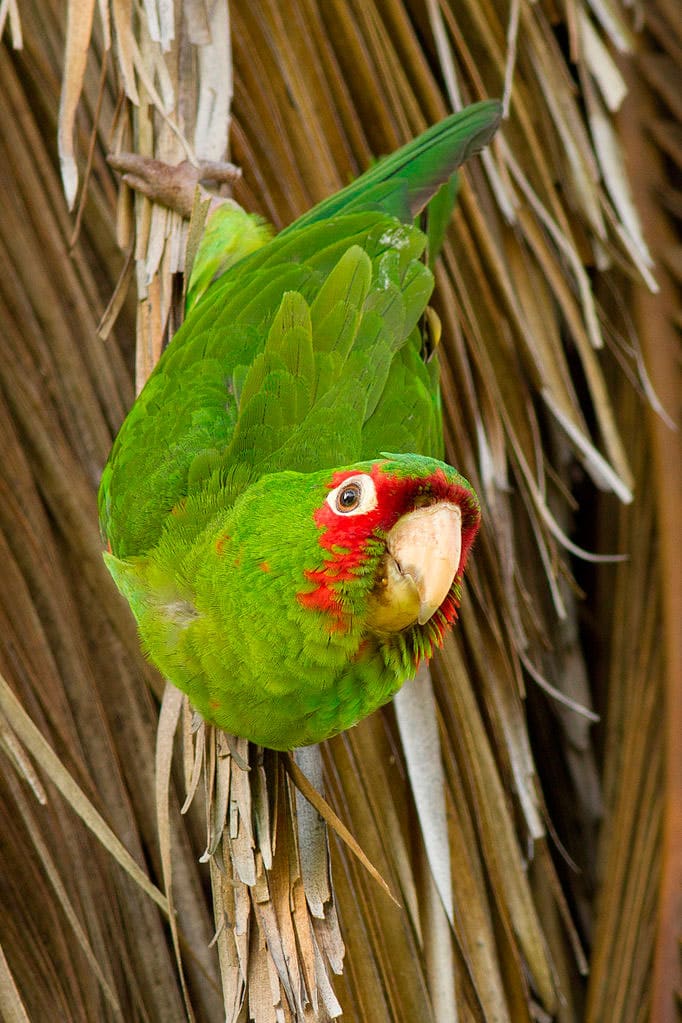
The Red-masked Parakeet(Psittacara erythrogenys) It is very similar to birds Scarlet-fronted Parakeet and to the Mitred Parakeet, but smaller and with more red area in the face, extending continuously up to the throat and nape.
Has the forecrown, crown, lores, the cheeks and the area around the eyes, bright red, generally forming a complete red mask to join to the chin (Sometimes the mask extends up to the throat). Since the nape up to the uppertail-coverts dark green, sometimes with scattered red feathers. The upperwing-coverts children with some feathers of red and the bend of wing red; remaining upperwing-coverts dark green, with dye Emerald to them vane outer the primary. The flight feather Brown Gold below; underwing-covertsminors, bright red, the greater coverts yellowish brown. The underparts brighter yellowish green, sometimes with mottled red and almost always with the the thighs red. Upper, the tail dark green; by below grayish brown.
The bill color pale horn; bare periophthalmic off-white; irises yellow; legs distant.
The Red-masked Parakeet It occupies a wide range of vegetation types, from arid zones to rainforests, Since the sea level to altitudes 2.500 m, Although its usual habitat is below of the 1.000 m, in humid forests, deciduous forests, areas of dry thorny scrub and arid with cactus; They also live in degraded forest, areas cultivated with scattered trees, and around the urban areas. They tend to prefer arid and semi-arid habitats, not avoiding moist forest habitats.
Outside the breeding season, is a bird gregarious; in general, observed in pairs or in groups of up to 12 individuals, forming groups of up to 200 birds in the places where their communal roosts are. Formerly registered flocks of thousands of birds in Guayaquil, Ecuador.
Often associated in mixed flocks with the Grey-cheeked Parakeet(Brotogeris pyrrhoptera) and also observed in mixed flocks with the Bronze winged Parrot(Pionus chalcopterus).
Reproduction Red-masked Parakeet:
Nests in holes of mature trees, for example of Ceiba trichistandra or Cochlospermun vitifolium, There are also records of nests in termite mounds, with a report in a nest on a cliff. The breeding season in the southwest of Ecuador recorded during the rainy season (January-March). The laying, between 2 and 4 eggs. The female the incubated eggs during 23 to 24 days. The pups they are born very little developed, blind and naked. They are fed with food previously digested by their mothers.
Food Aratinga of Guayaquil:
Few details exist about food preferences of the Red-masked Parakeet, Although seasonal movements from the more arid areas are probably related to food supply.
In Ecuador, the distribution of the Red-masked Parakeet is limited to the lowlands of the peaceful, Western slope of the Andes and valleys, Although it is apparently absent from the eastern slope; similar pattern in the Peru most Eastern records in the basin of the amazon (Valley of the Utcubamba River) to 77° 54’W.
The seasonal movements to and from the more arid areas, otherwise, residents.
Usually considered to be common (described as the most common parrot in various locations in the province of Gold, Ecuador), but numbers fluctuate widely in some locations due to irregular seasonal movements. In some areas there has been a very drastic decrease of copies, reflecting the combined effects of the loss of habitat and your capture for the trade in live birds, for example, in Guayas, Ecuador.
There are at least eight protected areas, of which seven are in Ecuador.
There are leaks in Spain; so also in EE. UU., with breeding populations in the California cities of San Diego, Los Angeles, San Gabriel, Sunnyvale and San Francisco, You can see them eating fruits of cultivated tropical plants, and nesting in Palm trees.
Maintained in captivity at the local level (where is the most common Parrot kept in captivity) and commercialized in large quantities at the international level, especially since Peru.
Conservation:
State of conservation ⓘ
Near Threatened ⓘ(UICN)ⓘ
• Red List category of the UICN current: Near-threatened
• Population trend: Decreasing
The size of the population This species has not been estimated officially, but, in the absence of sufficient data, It is suspected that it may be in around the 10.000 specimens, more or less equivalent to 6.700 mature individuals.
The population of the species is suspected that it may be subjected to a moderately rapid decrease, due to its capture for him pet trade together with the loss of habitat and fragmentation. Further research is required.
Conservation Actions Underway:
Appendix II of CITES.
Conservation Actions Proposed:
Carry out surveys to get an estimate of the population.
The current threat of trade research.
Enforcing trade restrictions.
Census of population and monitoring.
Monitor the rates of loss and fragmentation of habitat.
Study its ability to persist in altered and fragmented habitats.
The Red-masked Parakeet in captivity:
Shy and distrustful. Little common in captivity outside its area of distribution.
They may live until 25 years, Although the average tends to be between 10 and 15 years.
Their diet: fruit as, Apple, pear, orange, bananas, grenades, Kiwi, papaya, cactus fruits, they form a 30 percent of the diet. Vegetables, such as: Carrot, celery, green beans and peas in the pod, sweet corn on the cob, green leavess, such as: chard, lettuce , Kale, healer, Dandelion, Aviary grass, spray millet, mixture of small seeds, such as: Millet and small amounts of oats, buckwheat, safflower and hemp.
This species is found threatened from the wild bird trade local in Peru and Ecuador, where are rates of mortality due to mismanagement and stress high.
Never buy these birds in the illegal trade, Since these tend to come from its natural environment and it must be remembered that the Red-masked Parakeet is one endangered species.
Alternative names:
– Red-masked Parakeet, Red Masked Conure, Red masked Parakeet, Red-headed Conure, Red-headed Parakeet, Red-masked Conure (English).
– Conure à tête rouge, Conure à tête cerise, Conure à tête écarlate, Perriche à tête rouge, Perruche à tête rouge (French).
– Guayaquilsittich (German).
– Periquito-de-cabeça-vermelha (Portuguese).
– Aratinga de Guayaquil, Loro de cara roja, Periquito de Cabeza Roja, Perico Cara Roja (español).
– Loro de cara roja (Chile).
– Cotorra de Cabeza Roja (Peru).
– Perico caretirrojo (Ecuador).
– Avibase
– Parrots of the World – Forshaw Joseph M
– Parrots A Guide to the Parrots of the World – Tony Juniper & Mike Parr
– Birdlife
– Feather wind
– Photos:
(1) – A feral Red-masked Parakeet (also known as the Red-masked Conure and Cherry-headed Conure) in San Francisco, USA By Ingrid Taylar [CC BY 2.0], via Wikimedia Commons
(2) – Red-masked parakeet, Aratinga erythrogenys. Two birds in a tree in San Francisco, California By Jef Poskanzer (Flickr) [CC BY 2.0], via Wikimedia Commons
(3) – Red-masked Parakeet (Psittacara erythrogenys) at the Presidio, San Francisco, California By Frank Schulenburg (Own work) [CC BY-SA 4.0], via Wikimedia Commons
(4) – Red-masked parakeet (Aratinga erythrogenys). A juvenile parrot which is mostly green and just starting to get some red feathers on its head By Eliya Selhub (Flickr) [CC BY 2.0], via Wikimedia Commons
(5) – Red-masked Parakeet preening on a branch in San Francisco, USA By Ingrid Taylar from San Francisco Bay Area – California, USA [CC BY 2.0], via Wikimedia Commons
(6) – Red-masked Conure at Birds of Eden, South Africa By Dick Daniels (http://carolinabirds.org /) (Own work) [CC BY-SA 3.0 or GFDL], via Wikimedia Commons
(7) – A feral Red-masked Parakeet (also known as the Red-masked Conure and Cherry-headed Conure) in San Francisco, USA By Ingrid Taylar [CC BY 2.0], via Wikimedia Commons
(8) – Two feral Red-masked Parakeets in San Francisco, USA By Ingrid Taylar from San Francisco Bay Area – California, USA (Wild in SFUploaded by Snowmanradio) [CC BY 2.0], via Wikimedia Commons
(9) – Several Red-masked Parakeets eating a discarded apple in San Francisco, USA By Ingrid Taylar from San Francisco Bay Area – California, USA (A Big Find for ParrotsUploaded by Snowmanradio) [CC BY 2.0], via Wikimedia Commons
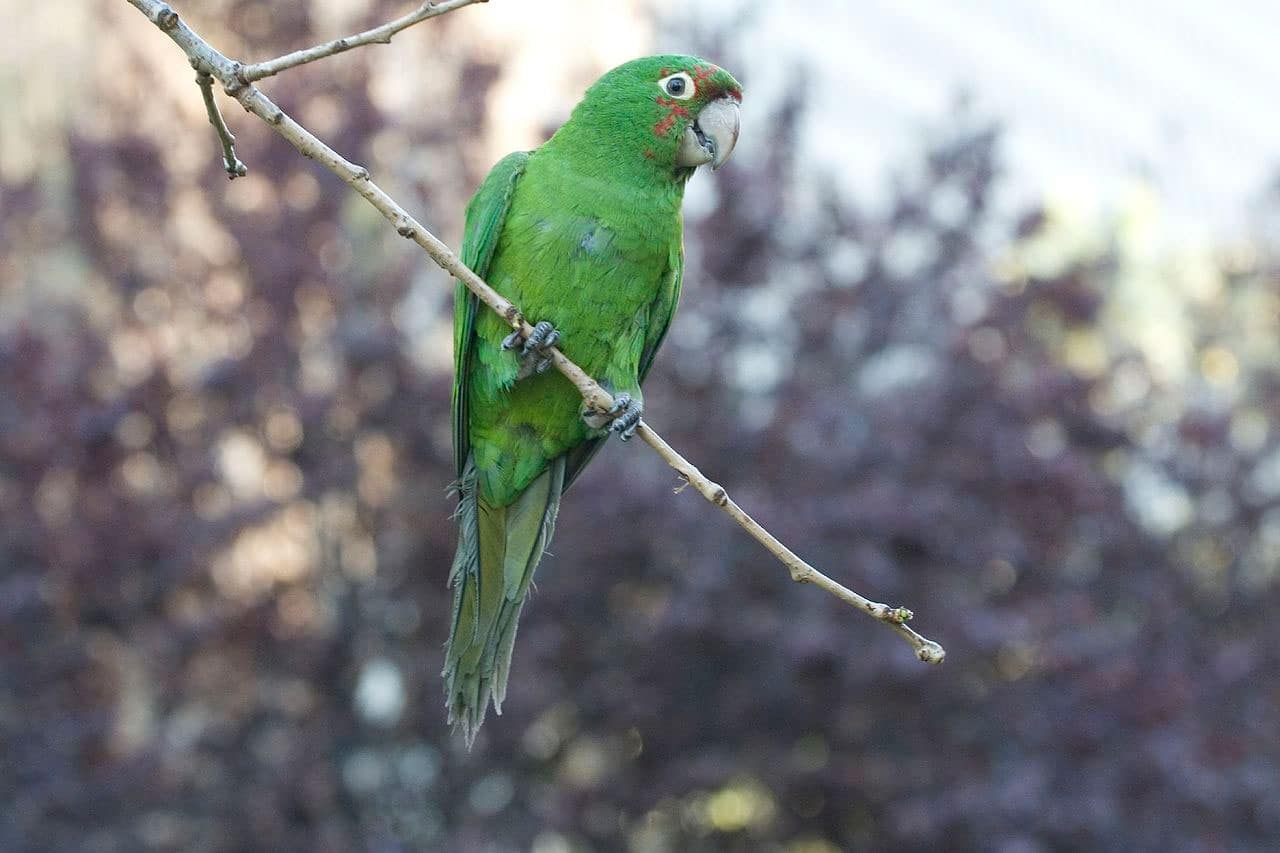
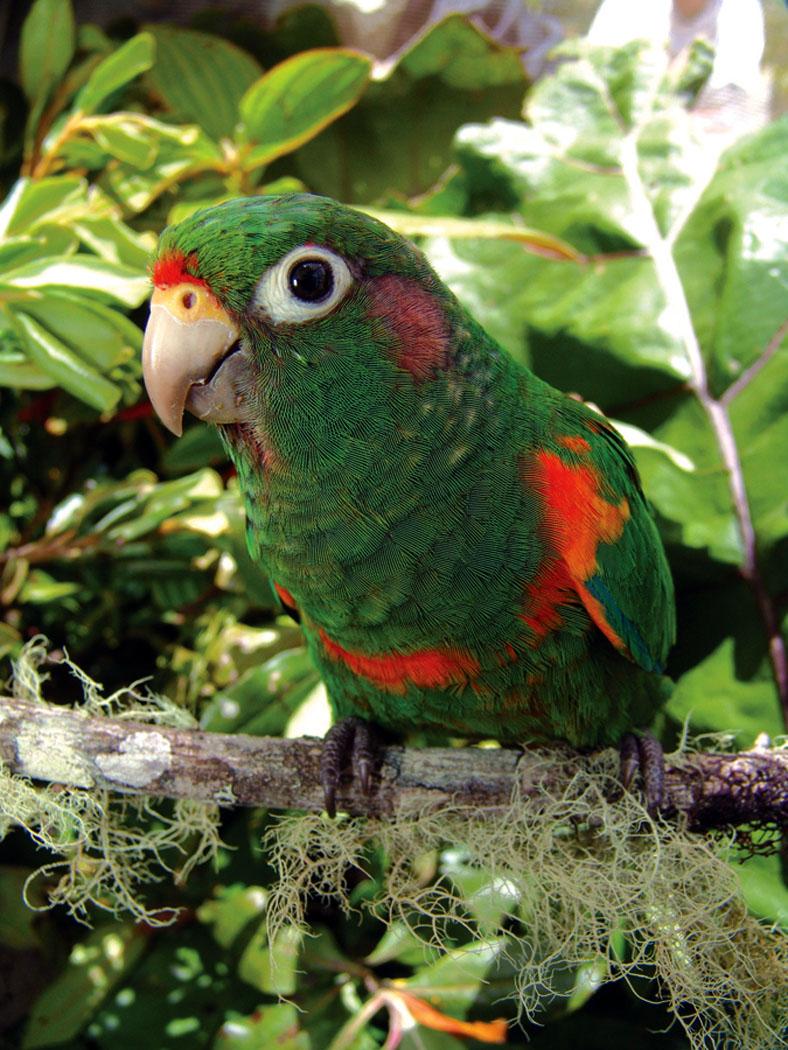
The Santa Marta Parakeet(Pyrrhura viridicata) It, in general, green, with a characteristic red stripe in the middle of the chest which continues until shoulder and armpit. The scales of the chest is less evident; the flight feathers blue. Band front narrow red in the forecrown and behind the eye with red and yellow dye. Tail over green and below red opaque.
Bill color bone; brown iris; pale black legs. It has no sexual dimorphism.
It inhabits in humid mountain forest, clouded forest, pastures and edges, from 1900 to 2800 m. They fly at dawn and at dusk in compact and numerous flocks on the canopy of the forest. Is les has observed flying over them clear adjacent and each time more visiting them mulberry plantations.
The species rests and nests in couples and in lesser proportion in groups of three individuals in cavities of Palms of bouquetCeroxylon ceriferum (Arecaceae).
Reproduction:
The period reproductive is starts in December and lasts until June, the cavities are visited on average 4 to 5 times a day. There is a sexual dimorphism and a low reproductive success can be associated with displacement or predation by the Aratinga wagleri wagleri (Scarlet-fronted Parakeet) or the Santa Marta Toucanet (Aulacorhynchus lautus prassinus) – Ramphastidae.
Food:
Twelve plant species are incorporated into the diet so far known to the Santa Marta Parakeet, It consists mainly of flowers and fruits, the inflorescence of the Croton bogotanus (Euphorbiaceae) is their main source of food. It forages in groups of size variable, presenting an integration and disintegration of subgroups throughout the day. A sentinel system was observed.
Distribution:
Size of the area of distribution (reproduction / resident): 1,600 km2
Endemic species of Sierra Nevada de Santa Marta, to the northeast of Colombia. The towns registered include The Summit, is of Taquiña on the basis of the Páramo of Mamarongo in the Guajira, and Cerro Quemado in the mountains of San Lorenzo.
Will produce some movements altitudinal seasonal. Almost all the habitat forest subtropical is designated as reserve forest or Park national, but the clearing for plantations of marijuana has been extensive, similar to the use of herbicides to combat it. So it only remains for the 15% the original forest (especially in the hillsides North), including only 200 the preferred height of the species km2. Fairly common within this very restricted range, but the population probably below of the 5.000 birds.
Conservation:
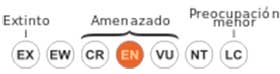
State of conservation ⓘ
Endangered ⓘ(UICN)ⓘ
• Current category of the Red List of the UICN: In danger of extinction.
• Population trend: Decreasing.
Rationale for the Red List category
The range of this species and its small population are probably decreasing as a result of habitat loss. So, qualifies as in danger.
Justification of the population
The population It has been estimated for a long time between 5.000 and 10.000 individuals, equivalent approximately to 3.300-6.700 mature individuals. The density of population is of 1 Ave per km2 (Botero-Delgadillo et to the. 2012). Assuming that the 680 km2 of habitat are fully occupied, the population total is calculated that is 2,900-4,800 birds, which is equivalent to 1,933-3,200 mature individuals; But, with occupation part is likely to remain less than 2.500 birds (Botero-Delgadillo et to the. 2012).
Justification of trend
Se sospecha una decrease moderate and continuous of the population on the basis of the rates of habitat loss.
Threats
only one left 15% the original vegetation of the Sierra Nevada de Santa Marta, to a large extent on the slope North, where this species is found (LM Renjifo, Com. 1993, 2000).
The main current threat is the expansion of plantations of non-native trees, such as the of Pine and eucalyptus, in addition to the clearing of land for livestock (C. Olaciregui in litt. 2012).
· Historically, the conversion of forests in plantations of marijuana and coca was also a major threat (LG Olarte in litt., 1993, com LM Renjifo. Comm., 1993, J. Fjeldså verbally they 2000, pers LM Renjifo. Comm., 2000, C. Olaciregui in litt. 2012), that is compounded by the Government with application of herbicides in the sierra (LG Olarte in litt., 1993, com LM Renjifo. Comm., 1993, 2000).
Other threats that followed the human migration to the area Since the Decade of 1950 hereafter include slash & burn (Dinerstein et to the., 1995, Snyder et to the. 2000, Salazar and Strewe undated, PGW Salaman in litt. 1999).
· It is known to be hunted in the cold river valley, and in the San Pedro district individuals in mulberry plantations have skyrocketed. The species not found in the local bird trade (Strewe 2005).
"Santa Marta Parakeet" in captivity:
Not marketed for captive.
Alternative names:
– Santa Marta Parakeet, Santa Marta Conure (English).
– Conure des Santa Marta, Perriche de Santa Marta, Perruche de Santa Marta (French).
– Santa-Marta-Sittich, Santa Marta Sittich, Sittich (German).
– Santa Marta Parakeet (Portuguese).
– Cotorra de Santa Marta, Perico Oliva, Periquito de Santa Marta (español).
Avibase
Parrots of the World – Forshaw Joseph M
Parrots A Guide to the Parrots of the World – Tony Juniper & Mike Parr Birdlife
Oliveros rooms, H.. 2005. Population and ecological evaluation of the Santa Marta parakeet Parrot parakeet in the sector of San Lorenzo, Sierra Nevada de Santa Marta, Colombia. (ProAves.org)
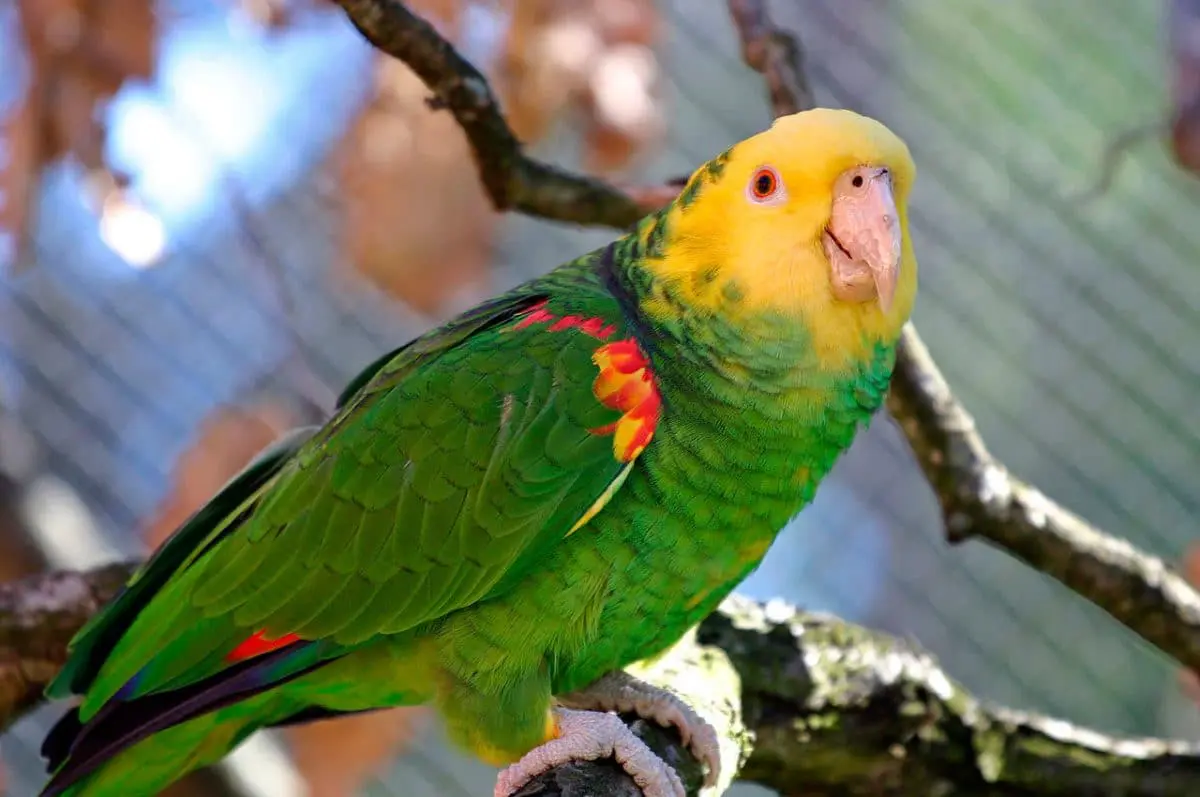
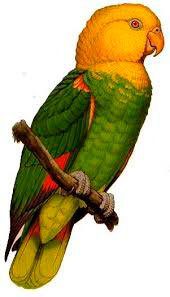
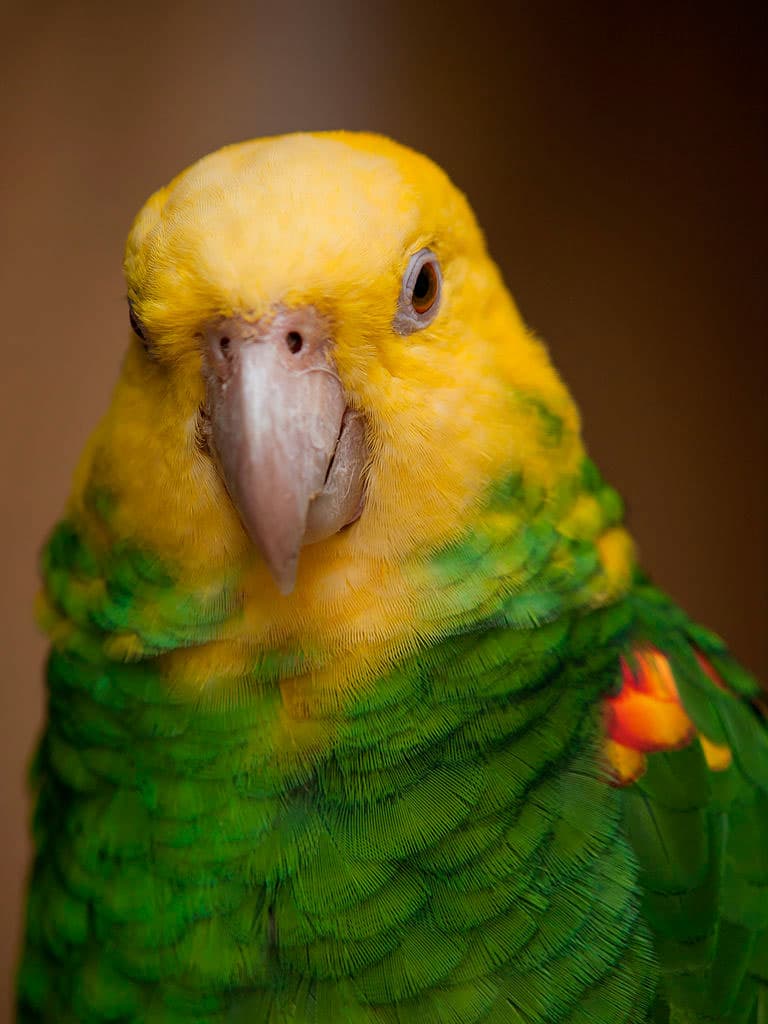
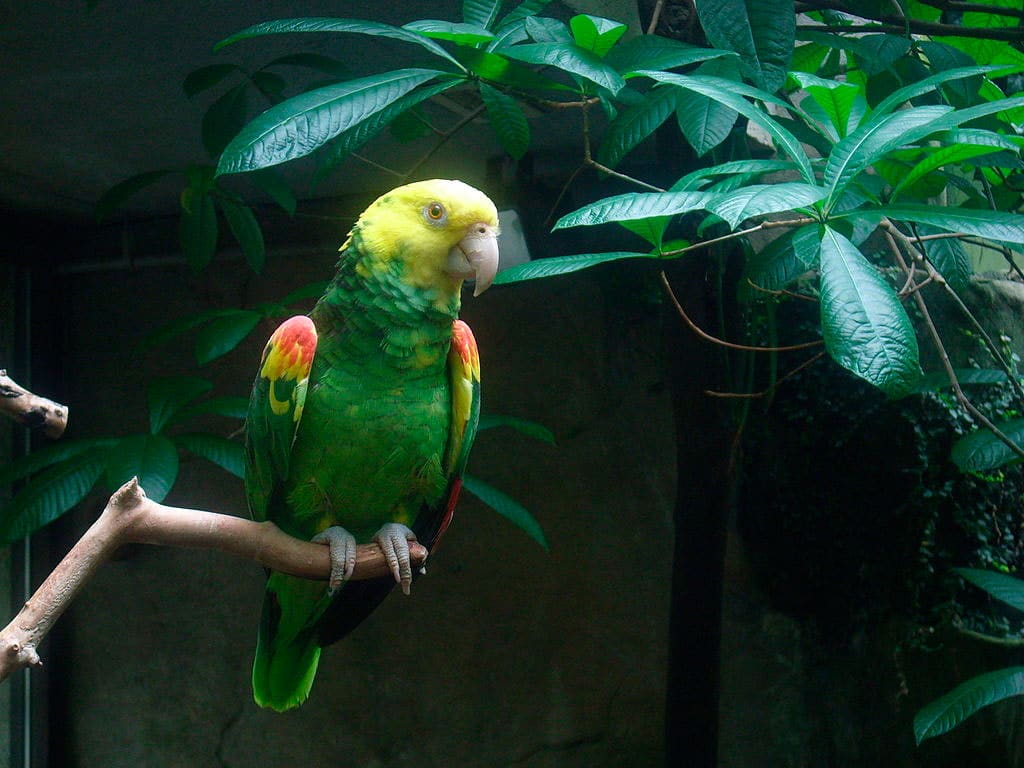
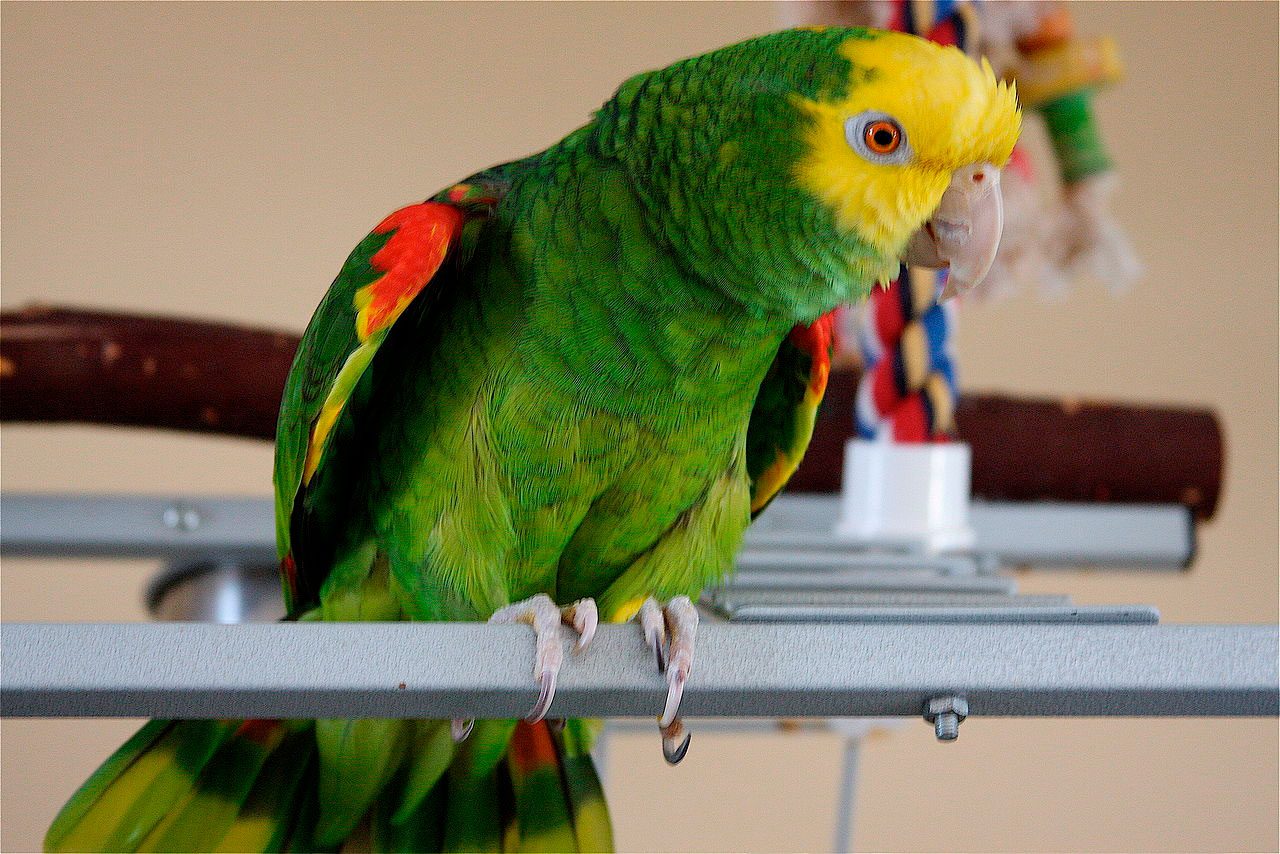
The Yellow-headed Parrot(Amazona oratrix) has head and nape bright yellow; sides neck sometimes with scattered green feathers.
Upperparts green grass with ends of darker green in some feathers; uppertail-coverts paler. Wing coverts green, sometimes with paler yellow margins on some feathers; edge front of the wing
and carpal area with red marks and / or yellow variables. Primaries and secondaries green at the base (more emerald than coverts), blue at the tips; five base outer secondaries bright red, forming a speculum. Under wings green. The chin is bright yellow, the throat variable green and dark blue suffusion margins in the feathers of some birds; chest and belly green with yellowish suffusion in some birds, bluish suffusion in other; the thighs with yellow feathers in some birds. Tail green with red tips yellow and green at the base of the innerwebs of the lateral feathers. Bill gray horn; bare periophthalmic whitish; irises orange; legs grey.
Both sexes are similar.
Immature It is very green part with little or no yellow in the head without red and yellow in the wings.
Sound of the Yellow-headed Parrot.
Geographic Variation:
All birds puerto Barios at the East end of Guatemala show yellow concentrate lores and crown. While it described as near the subspecies belizensis, the birds of puerto Barios at the northwest end of Honduras They may represent another subspecies of oratrix (not yet formally described) provisionally named guatemalensis (see belizensis below). The hondurensis, described below, It was widely regarded as a subspecies of undescribed Yellow-crowned Parrot (Amazona ochrocephala), but now treated at the southern end as a cline (gradual change of phenotypic traits of the same species due to environmental influences and conditions) Yellow decreasing in head Group of birds yellowhead.
Description 3 subspecies:
Amazona oratrix belizensis
Monroe,BL Jr & Howell,TR, 1966) – Less yellow in the head that the nominal species, without yellow on the throat. Cheeks green, bare periophthalmic grayish-white and probably on average smaller. Fowl Guatemala, to the Northwest of Honduras, sometimes show yellow in head as a patch wide in front of the crown and around eyes, and perhaps they represent a species not yet described (known as guatemalensis); although some birds also show yellow feathers on nape (see geographic variation in Yellow-naped Parrot (Amazona auropalliata).
Amazona oratrix hondurensis
(Lousada & Howell,SNG, 1997) – Yellow on head limited to forecrown and in front of the crown, some birds show patch yellow in nape. One bill paler and more extensive yellow on the nape and the head subspecies caribea of the Yellow-naped Parrot. The patch Yellow crown It is also rounded or triangular, against a narrowband subspecies caribea. The subspecies panamensis of the Yellow-crowned Parrot has a bill darker and lacks the patch yellow in nape.
The Yellow-headed Parrot frequent savannas, Bosques Tropicales deciduous (including clear), dense forests of thorns, marshy forests peaceful, flood forest evergreen, dense gallery forest, forests Pinus caribea (Belice) and cultivated land with trees, mainly in lowlands below 500 m.
Mainly observed in pairs or in large groups in communal roosts and feeding areas favorites. They snuggle into pine-covered ridges in Belice, moving to nearby humid forests to feed. Apparently, only flocks form in Tamaulipas.
Reproduction:
The Yellow-headed Parrot put their nests in cavities of trees 6-15 meters and in the holes of the palmeras Roystonea. Along the Pacific coast of Michoacán in Mexico, the Yellow-headed Parrot nests in trees Astronium graveolens, Brosimum allicastrum and at least five other species of trees (T. Monterrubio-Rico et al., In 2007)
In Belice, preferred pines nest. Breeding season in the months of February to May in the south, to June in the north (for example in Tamaulipas). Clutch, usually 2-3 eggs, they are incubated between 27 and 28 days. The young leave the nest at eight weeks.. On average, only 1.2 hatchlings reach adulthood in each clutch.
They can cause damage to crops, including corn, mango and green bananas.
Distribution and status:
Size of its range (breeding/resident ): 1.020.000 km2
The Yellow-headed Parrot It is confined to Central America in Mexico, Belice, the east end Guatemala and the Northwest corner of Honduras. They are distributed by the slope of peaceful of Mexico in Colima, Michoacán, Warrior, Oaxaca (two disjunct populations on the slopes of peaceful and of the Gulf on Isthmus region) and Chiapas. also observed in the shed Gulf from the central and southern Tamaulipas, to the East of San Luis Potosi, Puebla, Veracruz, Tabasco and Campeche, as well as in Belice and around puerto Barios at the East end of Guatemala to the northwest corner of Honduras in the Sula Valley.
Distribution in the east of its range poorly documented, with dubious appearances Campeche and in the region of Petén in the North of Guatemala, confirmed only 1993.
Reports Yellow-headed Parrot outside the normal range Mexico (for example, City of Mexico) probably involving leaks. Wild populations Miami (Florida) and Puerto Rico.
local residents, and rare sparsely distributed along most of its distribution (perhaps locally common in parts of Belice) with diminished by the loss of habitat populations and their capture for live bird markets.
The population of Sula Valley survives as remainder. marketed widely both within and outside the species range, being one of the most searched Neotropical parrots pet (reputedly one of the best talkers). The most drastic falls have probably been in the northeast of Mexico, where habitat loss has been more rapid and severe. The wild population is probably less than 7.000 individuals (1994).
• Current category of the Red List of the UICN: In danger of extinction.
• Population trend: Decreasing.
• Population size: 4700
Rationale for the Red List category
This species qualifies as in danger of extinction due to demographic decline very fast. The population is now so small that it is likely to fall (but still very significant) rates decrease in the future (Collar et al., 1992).
Justification of the population
The population It was estimated 7.000 copies in 1994. This is roughly equivalent to 4.700 mature individuals.
Justification of trend
It is estimated that the population of the species is declining very fast, due to the loss and degradation of habitat and the levels of capture and persecution. On the coast of Michoacán, Mexico, it is estimated that the species occupies the 45.6% its estimated historical distribution (Monterrubio-Rico et al ., 2007 ). Throughout all Pacific coast of Mexico, its historical range has contracted by a 79% (Monterrubio-Rico et al ., 2010). The population of Punta de Manabique It decreased by 30% between 1994 and 2001 mainly due to the Poaching of nests (our man 2003 , Eisermann in a bit., 2007).
Threats
• The habitat loss It has been extensive, with the 80% lowlands of Tamaulipas cleared for agriculture and pasture, and growing settlements along the Autopista del Oeste in Belice (Somerville 1997).
• In Belice, where much of the suitable habitat is outside the sistema national protected area, the regions occupied by species remain under heavy development pressure (B. Miller in a little ., 2007).
• Las palm savannas at the only known breeding site in Guatemala They are used for no intensive cattle grazing (our man 2003), who is still a threat here (Fundary et al ., 2006).
• Many thousands of Individuals of this species are exported illegally from Mexico and some from Belice each year, and it is popular in domestic markets (Low 1995b, Miller and Miller 1997, Somerville 1997).
• The illegal internal traffic is intense in Mexico and may represent the 38% of recent species loss distributive (T. Monterrubio-Rico et al., In 2007).
• In the Mexican states of Michoacán, Warrior and Oaxaca, They are mainly pups those taken to the pet trade (T. Monterrubio-Rico et al., In 2007).
• In Guatemala, It is reported that Local military authorities are complicit in the illegal trade of this species, and poachers frequent nest nesting site of the species (our man 2003, Eisermann in some). It also, has reported its hunting for food from local fishermen in Guatemala (our man 2003, Eisermann in some ., 2007).
• In Belice, It is hunted and persecuted by damage to crops (SNG Howell in some 1998) and it remains a victim of the illegal pet trade, whose capture involves logging nesting (B. Miller in a little ., 2007).
• It is estimated that its extension around the coast of Michoacán It has decreased 1.507 km2 , of which 576 km2 can not be attributed to habitat loss and, therefore, They may be due to the poaching for trade (Monterrubio-Rico et al., 2007).
Conservation Actions Underway
• CITES Appendix I.
• In Mexico It is distributed in nine protected areas (T. Monterrubio-Rico et al., In 2007).
• The only one breeding population known in Guatemala It was declared Wildlife Refuge in 2005, but effective protection is difficult due to organized crime in the area (Eisermann in some ., 2007).
• There are several awareness campaigns nationally in Mexico (Roberson y Carratello, 1997).
• It is bred in captivity, but the reintroduction of captive bred birds is unfeasible (Baja 1995b).
Conservation Actions Proposed
• Carry out surveys for an updated estimate of population size.
• Monitor rates of habitat loss and degradation.
• Monitor hunting levels, catch and trade.
• Apply the trade restrictions.
• To protect effectively as key sites Las Colorados Ranch, Soto La Marina / Fishing, Tamaulipas, orange river, focused on Las Abritas (San Luis Potosi) and Punta de Manabique.
• Survey to identify other important sites.
• Investigate habitat use and local movements.
• Continue zooming awareness campaigns.
• Develop structured captive breeding programs and investigate the possibility of future release.
"Yellow-headed Parrot" in captivity:
The Yellow-headed Parrot are popular in domestic markets.
protected by CITES Appendix I (Species that are endangered. Prohibited international trade of specimens of those species, except when the import is non-commercial purposes).
In Mexico It is listed as endangered in both the NAME-059-SEMARNAT-2001, as in the NAME-059-SEMARNAT-2010, and by the Article 60 Bis of the General Law on Wildlife removal of specimens from the environment is prohibited, marketing, tenure, import, export, use of any of its parts. They are up 9 years in prison and fines very high who are surprised by the Profepa with specimens of this species in their possession and do not have papers proving their legal provenance.
Should be avoided in all cases buy this or any of the protected species by different appendices CITES.
Alternative names:
– Yellow-headed Amazon, Yellow-headed Parrot, Yellow-headed Parrot (Mainland) (English).
– Amazone à tête jaune, Amazone à tête jaune (continentale), Amazone à tête jaune (forme continentale) (French).
– Gelbkopfamazone (German).
– papagaio-de-cabeça-amarela (Portuguese).
– Loro Cabeza Amarilla, Amazona cabecigualda (español).
– Avibase
– Parrots of the World – Forshaw Joseph M
– Parrots A Guide to the Parrots of the World – Tony Juniper & Mike Parr
– Birdlife
– Photos:
(1) – A Yellow-headed Amazon (also known as the Double Yellow-headed Amazon) in an aviary By Ernst Vikne (IMG_4451.JPG) [CC BY-SA 2.0], via Wikimedia Commons
(2) – Yellow-headed Amazon at Baltimore Aquarium, USA By Christine Schmidt from Laurel, USA (Parrot pair) [CC BY 2.0], via Wikimedia Commons
(3) – Yellow-headed Amazon, also known as the Yellow-headed Parrot or Double Yellow-headed Amazon, at Lion Country Safari, West Palm Beach, Florida, USA. Photograph is a close up of head By Duncan Rawlinson from Vancouver, BC (Parrot) [CC BY 2.0], via Wikimedia Commons
(4) – Yellow-headed Amazon (Amazona oratrix) playing on his cage by Mbtskysurfer at English Wikipedia [GFDL or CC BY 3.0], via Wikimedia Commons
(5) – Yellow-headed Amazon (Amazona oratrix) also known as the Yellow-headed Parrot, Double Yellow-headed Amazon. Two parrots on a perch By Gary Denness (originally posted to Flickr as Parrot Portrait) [CC BY-SA 2.0], via Wikimedia Commons
(6) – Yellow-headed Amazon (also known as the Yellow-headed Parrot and the Double Yellow-headed Amazon) at Vancouver Aquarium, Canada By Lizzy Foulkes (originally posted to Flickr as Hello, Goregous) [CC BY-SA 2.0], via Wikimedia Commons
(7) – A Yellow-headed Amazon at Palmitos Park, Gran Canaria, Canary islands, Spain By William Warby (Flickr: Parrot) [CC BY 2.0], via Wikimedia Commons
(8) – A Yellow-headed Amazon in Jungle Island, Miami, Florida, USA By Humberto Moreno (Parrot Jungle, Miami) [CC BY 2.0], via Wikimedia Commons
(9) – Yellow-headed Amazon (also known as the Yellow-headed Parrot and the Double Yellow-headed Amazon) at Dallas World Aquarium, USA By texas_mustang (Dallas Aquarium 2008 with Meredith) [CC BY 2.0], via Wikimedia Commons
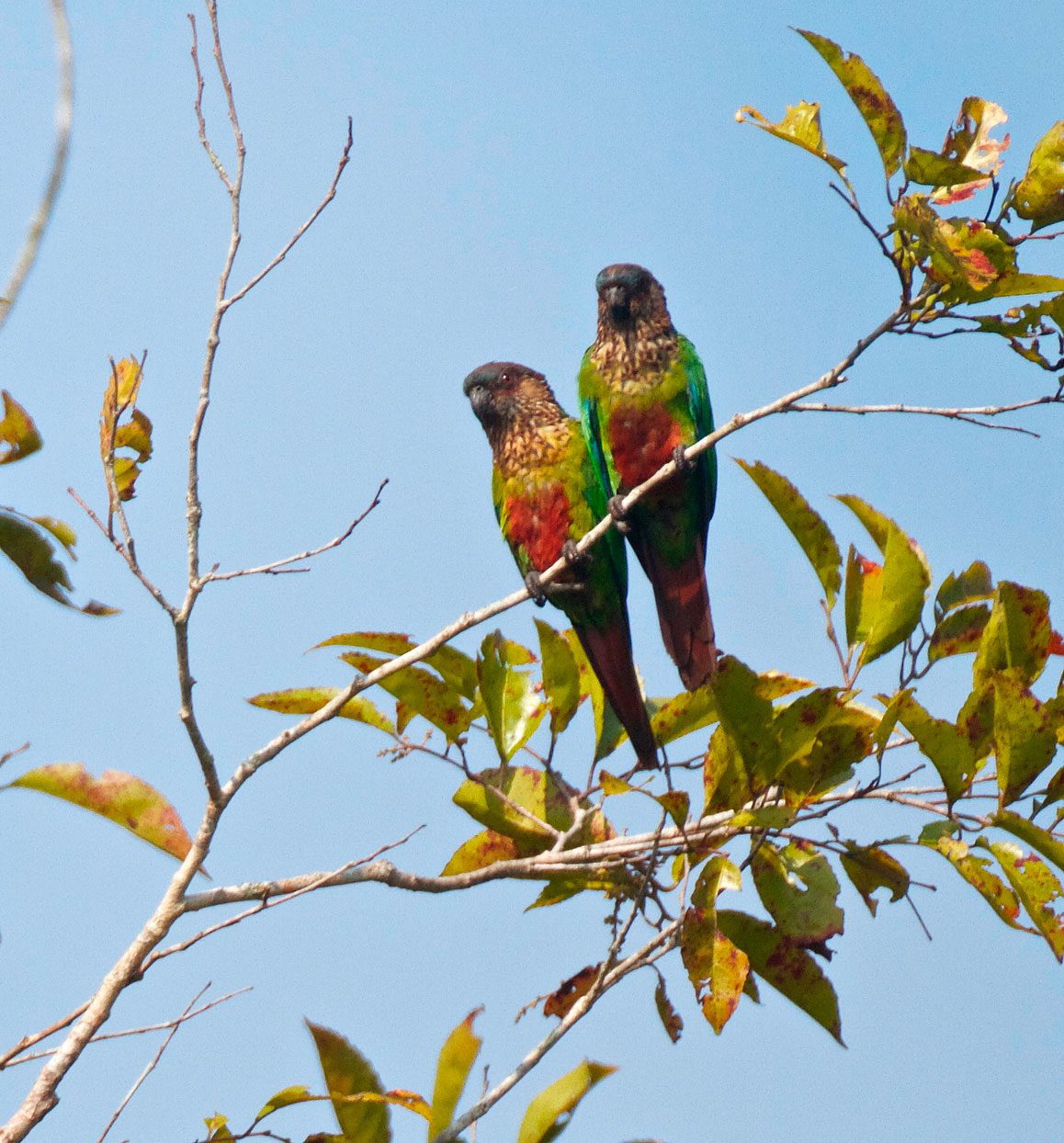
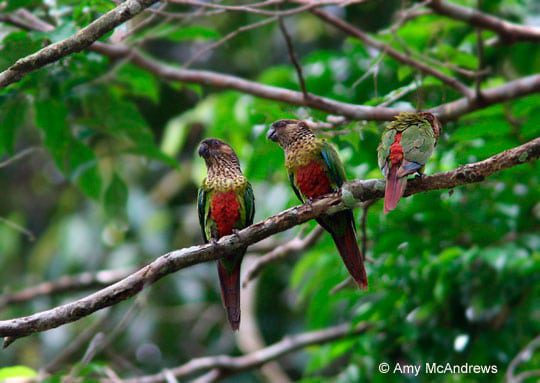
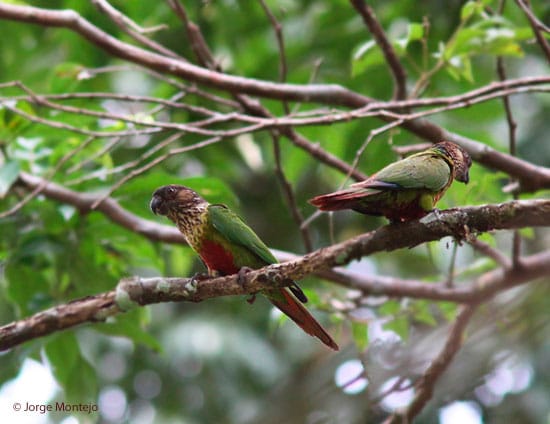
The Hellmayr's Parakeet(Pyrrhura amazonum) It is a mainly green parakeet; the area from crown at the nape it is dark brown; the belly, the rump and tip tail, They are dark red; below, the tail It is also dark red.
They have a patch whitish in ear-coverts; a blue band in front of eyes. The face It is dark reddish brown; the upper region chest It is greenish gray with gray scalloping; the bottom of the chest It is scaled with yellowish effect; the in bend of wing green; brown-red patch in the center of abdomen; of remiges blue (visible only in flight). Orbital ring blackish; the cheeks and ocular region are dark brown. Bill grey-black; eyes orange brown.
(Arndt, 2008 parrots[Arndt]) – Little or no blue on the front of the crown. Slightly smaller and paler than the Pyrrhura amazonum snethlageae
Pyrrhura amazonum snethlageae
– perico madeira – (Joseph & Bates,JM, 2002) – The bare periophthalmic is of color beige.
Habitat:
They are distributed in tropical moist forests and adjacent habitats. It´s social. Observed in pairs or groups. It is quite common in most of its range and inhabits several protected areas.. The Pyrrhura amazonum amazonum It is in the Amazon National Park, For, Brazil, while the Pyrrhura amazonum lucida It is in the The Cristalino State Park, Mato Grosso, Brazil.
Reproduction:
They build their nests in tree cavities.
Food:
With feed seed, flowers, fruit, berries and nuts. They are also considered local pests, as they regularly raid cornfields and orchards, occasionally causing considerable damage.
Distribution:
Size of its range (players / residents): 392.000 km2
– perico madeira – (Joseph & Bates,JM, 2002) – Basin of the Madeira River in Brazil and North of Bolivia.
Conservation:
State of conservation ⓘ
Endangered ⓘ(UICN)ⓘ
• Current category of the Red List of the UICN: In danger of extinction.
• Population trend: Decreasing.
• Population size : Unknown.
Justification of the Red List of the Category
Based on a model of deforestation in the amazon basin, and their potential susceptibility to capture for the bird trade, It is suspected that the population of the Hellmayr's Parakeet It has declined rapidly over three generations, and therefore it has been classified as danger of extinction.
Justification of the population
Recent world population is unknown given taxonomic divisions.
Justification trend
This species is suspected that he has been able to lose 43,0 to 52,1% of suitable habitat within their distribution over three generations (18 years) based on a model of deforestation of the Amazon(Soares-Filho et to the . 2006, Bird et to the. 2011). Given the susceptibility of this species to capture, It suspected population decline by 50% in three generations.
Threats
The main threat to this species is that it is accelerating the Deforestation in the Amazon basin for livestock and soybean production, provided by the expansion of the road network (Soares-Filho et to the. 2006, Bird et to the. 2011).
The changes proposed by the Forest code of Brazil they reduce the percentage of land that a private owner has a legal obligation to keep as forest and include an amnesty for owners who deforested before July 2008 (who would later be absolved of the need to reforest illegally cleared land) (Bird et to the. 2011).
His capture for bird trade wild can represent a significant threat.
Conservation actions and ongoing research
It is not known any.
The proposed conservation and research actions
Expand the network of protected areas to effectively protect IBA.
Effectively manage the resources of existing protected areas and new, the use of new opportunities for financing the management of protected areas with the common goals of reducing carbon emissions and maximize biodiversity conservation.
conservation on private lands is also essential, through the expansion of market pressures for rational land management and prevention of logging on land not suitable for agriculture (Soares-Filho et to the. 2006).
Campaign against proposed changes to Forest code of Brazil that would lead to a decrease in the width of protected riparian forest areas such as Permanent Preservation Areas (APPs), that function as vital corridors in fragmented landscapes.
"Hellmayr's Parakeet" in captivity:
It is a bird in danger of extinction. Each captive specimen of this species which is capable of reproducing, must be placed in a well-managed captive breeding program and not sold as a pet, in order to ensure its long-term survival.




![Kea [Nestor Notabilis]](https://www.mascotarios.org/wp-content/plugins/wp-youtube-lyte/lyteCache.php?origThumbUrl=https%3A%2F%2Fi.ytimg.com%2Fvi%2F-EYSL93A6Ik%2F0.jpg)
















_-head_-Twycross_Zoo-8.jpg)
.jpg)

_-running_-Lake_Brunner_-NZ-6.jpg)


.jpg)


_pet_on_perch.jpg)
_-_2_on_perch.jpg)

.jpg)

