Origin: Guatemala, Honduras, El Salvador, Nicaragua
Character: shy
Life expectancy: 35 to 40 years.
Height: 28 cm..
Content
Description:
28 cm.. length and 130 g. of weight.
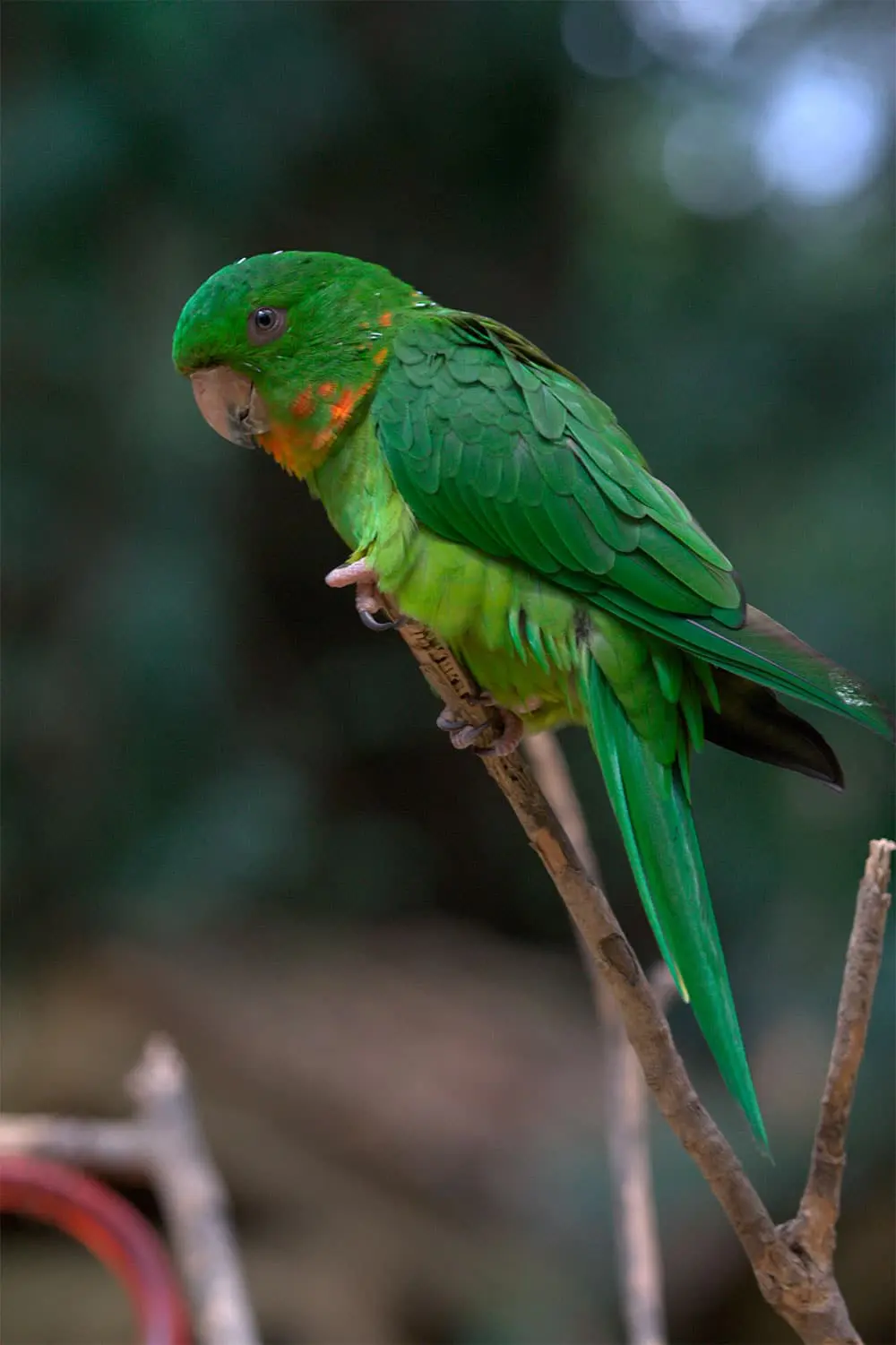
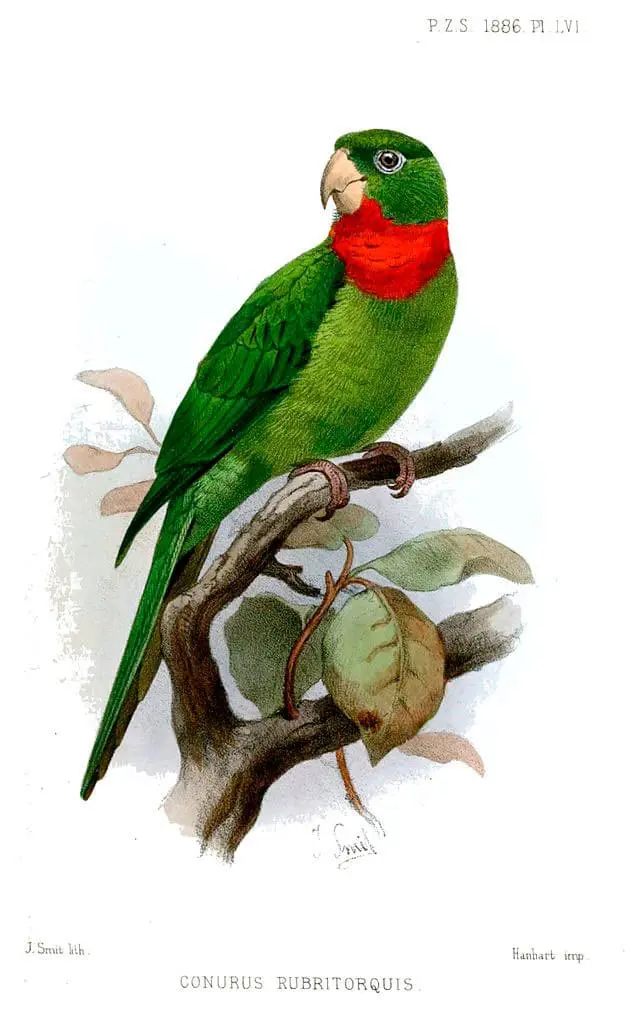
The Red-throated Parakeet(Psittacara rubritorquis) they have a plumage, in general, green, with yellow tones in the underparts; orange-red in the throat and on the front of the neck, with yellow-orange feathers scattered; variety of pens of color red orange scattered in the part low of them cheeks and both sides of the neck; blue tint on primary coverts and vane outer of the flight feather; underwing-coverts brighter yellowish green; below, the flight feather yellow color without brightness.
The bill color horn. Bare area of the eye ring grayish brown. The irises orange.
The male and female are similar.
The immature with the throat red, absent in the cheeks and both sides of the neck. The irises brown.
The Red-throated Parakeet is located in altitudes that range between the 600 and 1.800 m, in a variety of wooded areas, Save the rainforest.
They can be observed in humid forests, Open with weeds and growing areas areas in Guatemala; forests of Pinus sp in Nicaragua.
Is in flocks outside the breeding season, and couples during courtship and nesting season. Larger congregations are produced when food is abundant.
Reproduction:
The nesting takes place in tree cavities, cracks in rocks, holes from woodpeckers, holes in buildings or in tree termite mounds.
The breeding season is between the months of January and August and the laying tends to be of 3-4 eggs.
Food:
With feeds seed, nuts, berries and fruits. It can also feed on cultivated seeds and corn..
Sometimes, considered a pest to crops.
Distribution:
Size of the area of distribution (reproduction / resident): 139.000 km2
Distributed by the Eastern Highlands of Guatemala and El Salvador (apparently only a record) to the South by Honduras to the North of Nicaragua.
Conservation:
State of conservation ⓘ
Minor Concern ⓘ(UICN)ⓘ
• Red List category of the UICN current: Least concern
• Population trend: Stable
The size of the world population It has not been quantified, but this species is described as «quite common» (Stotz et to the. 1996).
The population of Red-throated Parakeet suspected to be stable in the absence of evidence of any reduction or substantial threats.
– Avibase
– Parrots of the World – Forshaw Joseph M
– Parrots A Guide to the Parrots of the World – Tony Juniper & Mike Parr
– Birdlife
– Photos:
(1) – Red-throated Parakeet (Aratinga rubritorquis) also called Red-throated Conure at Macaw Mountain Bird Park and Nature Reserve, Copan, Honduras By Lauri Väin [CC BY 2.0], via Wikimedia Commons
(2) – A Red-throated Parakeet (also called Red-throated Conure) at Macaw Mountain Bird Park, Copan Ruinas, Honduras By Sarah and Jason (originally posted to Flickr as IMG_6987) [CC BY-SA 2.0], via Wikimedia Commons
(3) – Two Red-throated Parakeets at Kakegawa Kacho-en, Kakegawa, Shizuoka, Japan By Takashi Hososhima from Tokyo, Japan (Green with envyUploaded by snowmanradio) [CC BY-SA 2.0], via Wikimedia Commons
(4) – Psittacara rubritorquis by Psittaciformes .NL – pinterest
(5) – Psittacara rubritorquis by Bellas Aves de El Salvador
(6) – Conurus rubritorquis by Joseph Smit [Public domain], via Wikimedia Commons
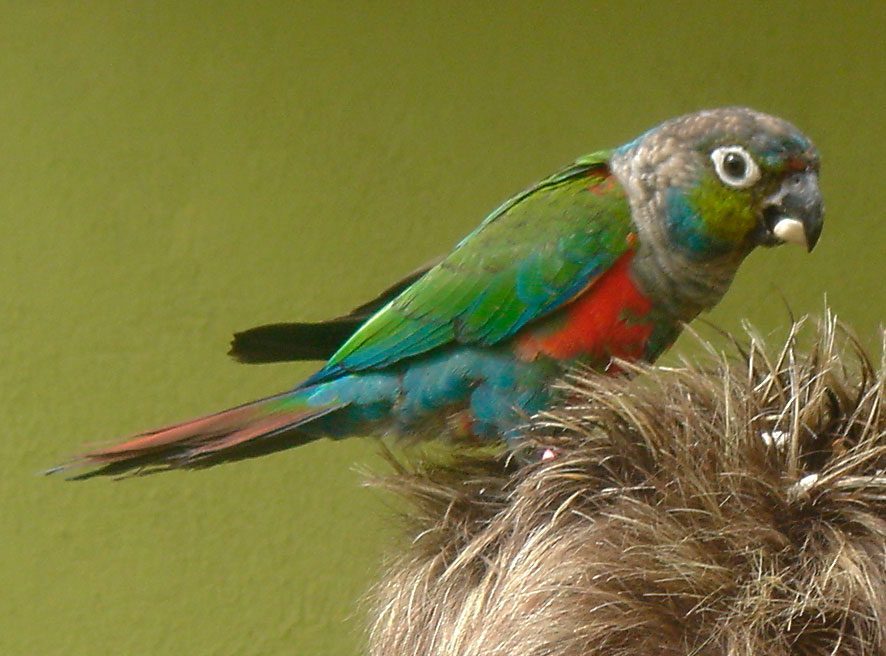
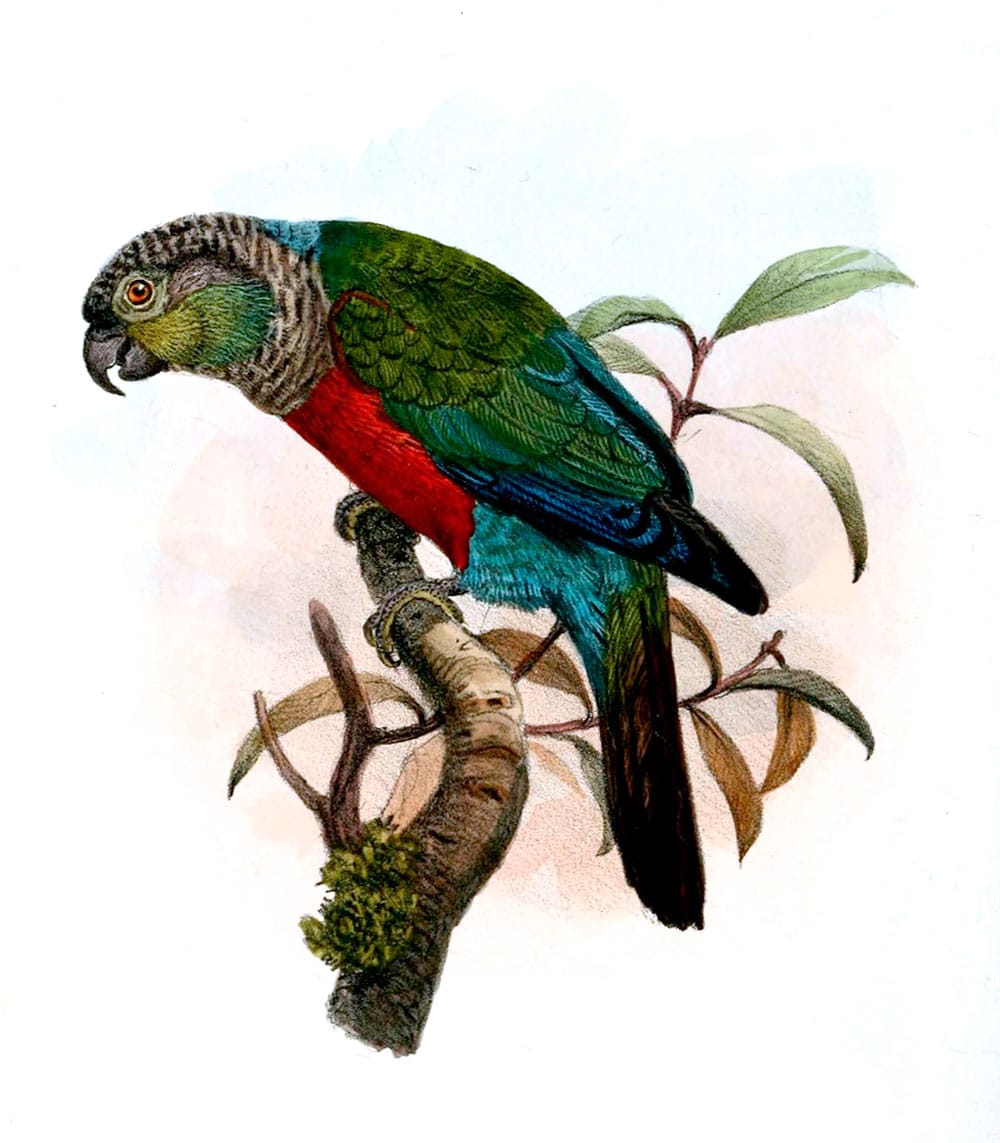
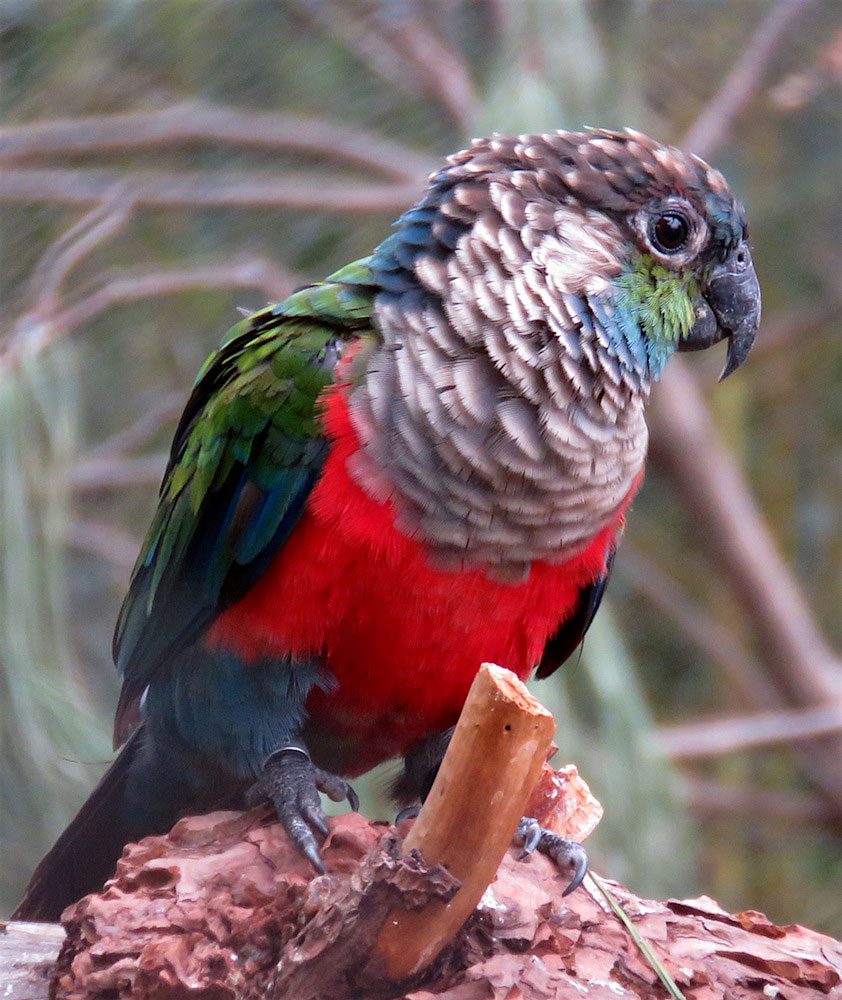
The Crimson-bellied Parakeet(Pyrrhura perlata) has the lores and cheeks of color yellowish-olive with dye Brown; The forecrown, the crown and back neck Dark Slate with velvety probes, giving a mottled appearance, especially in parts where increases the blue at the bases of the feathers.
The upper mantle is blue; robe bottom up to the uppertail-coverts green. Scapulars green at the base, blue down; the lesser wing coverts, olive green; the medium-sized and large coverts, with a predominance of the color blue. The flight feather, blue top, secondaries with green in the outerweb; slate grey dark below.
Underwing-coverts bright red. Sides of the neck, the throat and the top of the chest, with a predominance of brown color, with some brands blue and tips velvety, giving a scaly appearance; The under chest and most of the belly bright crimson; Flanks, the thighs and undertail-coverts, Blue with greenish tint. Upper, the tail, with predominance of color Brown, shades of green and some blue feathers; below, the tail, dark gray.
The bill brown-black color; eye ring whitish grey; Iris dark brown; legs black slate.
Both sexes similar.
Immature they lack the bright crimson color on the underparts; Sometimes with dark margins in the scapulars.
The Pyrrhura perlata was formerly known as Pyrrhura rhodogaster.
They generally inhabit humid forests on dry land., clear forest, secondary and probably drier formations in the North of Mato Grosso and have been registered also dominated by fig trees in eastern forests of Bolivia.
Usually views in small flocks and, sometimes in mixed groups with the Golden-winged Parakeet and Painted Parakeet. Larger family groups have been reported previously. They have often been seen descending into rivers and streams to bathe and drink..
Reproduction:
With reproduce between August and November, probably in April and June, They nest in tree cavities. Incubation period: 24-25 days.
The put in captivity is of 3-9 eggs, being 5 the average.
They can be found in Brazil, in the area of the great South-Central amazon basin, in West For and in the western area of amazon, in the river basins Madeira and South of the Tapajós, to the extreme north of Mato Grosso, Rivers Roosevelt and Aripuanã.
Observed in adjacent parts of Bolivia and probably widely distributed east of Rio Mamoré in hand me and Santa Cruz.
In general common, but perhaps decreasing due to the loss of forests in some parts of its area of distribution (for example, along the river JI-Paraná in Rondà´nia, Brazil).
Conservation:
State of conservation ⓘ
Vulnerable ⓘ(UICN)ⓘ
• Current category of the Red List of the UICN: Vulnerable
• Population trend: Stable
Justification of the population:
The size of the world's population has not been quantified, but this species is described as "quite common» (Stotz et to the., 1996).
Justification of trend:
It is suspected that this species has lost 23-30.3% of habitat within its distribution area for three generations (18 years), based on a model of Amazon deforestation (Soares-Filho et to the., 2006, Bird et to the., 2011). Given the susceptibility of species the hunting and capture, they suspected that the population of Crimson-bellied Parakeet will decrease by ≥ 30% during three generations.
"Crimson-bellied Parakeet" in captivity:
Not very common in captivity. Its diet ideal would be based on fruits such as: apples, Pears, oranges, bananas, grenades, cactus fruits , which form the 30 percent of their food, vegetables, such as: carrots, celery, green beans, pea in the pod, fresh corn, green leaves, such as: chard, lettuce, dandelion, chickweed, healer, millet; a mixture of seeds as such: Canary Islands, small amounts of wheat and millet, oats, safflower and hemp, Sunflower, cooked beans and legumes and cooked corn.
Es una ave muy playful a la que le encanta bañarse, so toys and a shallow bowl of water should be provided. Moderate voice, but when are they excited can be somewhat noisy. It is not aggressive with other species.
Price per couple: 500-600 EUR
Alternative names:
– Crimson-bellied Parakeet, Crimson bellied Parakeet, Crimson-bellied Conure, Pearly Conure, Pearly Parakeet, Rose-bellied Conure, Rose-breasted Conure, Rose-breasted Parakeet (English).
– Conure à ventre rouge, Conure perlée, Perriche à ventre rouge, Perruche à poitrine cramoise, Perruche à ventre rouge (French).
– Rotbauchsittich, Blausteißsittich, Blausteiss-Sittich, Rotbauch-Sittich (German).
– Tiriba-de-barriga-vermelha (Portuguese).
– Catita cola granate, Cotorra Ventirroja, Cotorra Ventrirroja, Perico de Pecho Rojo, Perico Perla (español).
– Catita cola granate (Paraguay).
– Avibase
– Parrots of the World – Forshaw Joseph M
– Parrots A Guide to the Parrots of the World – Tony Juniper & Mike Parr
– Birdlife
– Photos:
(1) – Crimson-bellied Parakeet (Pyrrhura perlata) also called the Crimson-Bellied Conure By derivative work: Snowmanradio (talk)Juan_Caparrós_cabeza. JPG: Juan Caparrós [CC BY-SA 3.0 or GFDL], via Wikimedia Commons
(2) – A Crimson-bellied Parakeet (also known as the Crimson-bellied Conure) captive by Pyrrhura_perlata_-captive-8a.jpg: Nori Almeidaderivative work: Snowmanradio [CC BY 2.0], via Wikimedia Commons
(3) – Crimson-bellied Conure in the Walsrode Bird Park, Germany By Quartl (Own work) [CC BY-SA 3.0], via Wikimedia Commons
(4) – Parrot by pixabay Crimson
(5) – Pyrrhura perlata by Florin Feneru – Flickr
(6) – Conurus rhodogaster=Pyrrhura perlata by Joseph Wolf [Public domain], via Wikimedia Commons
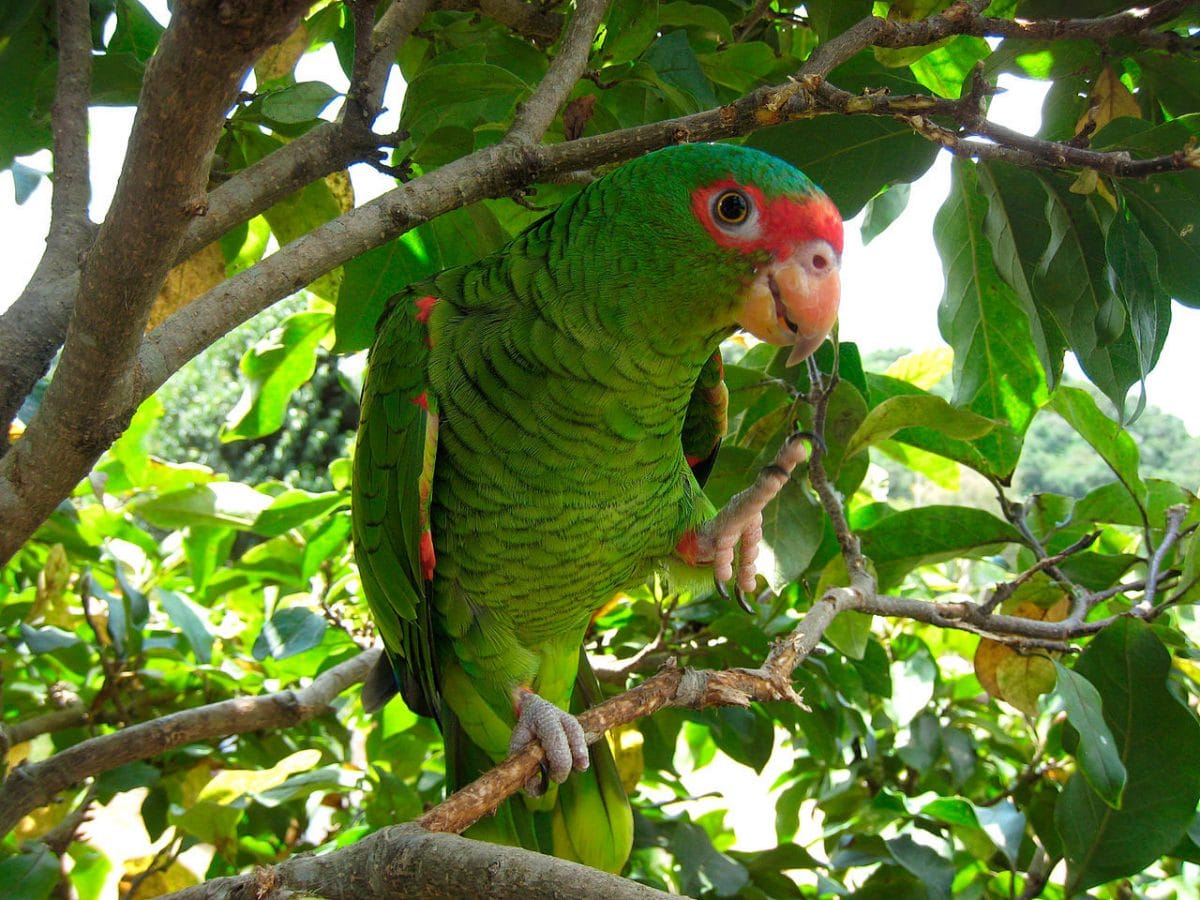
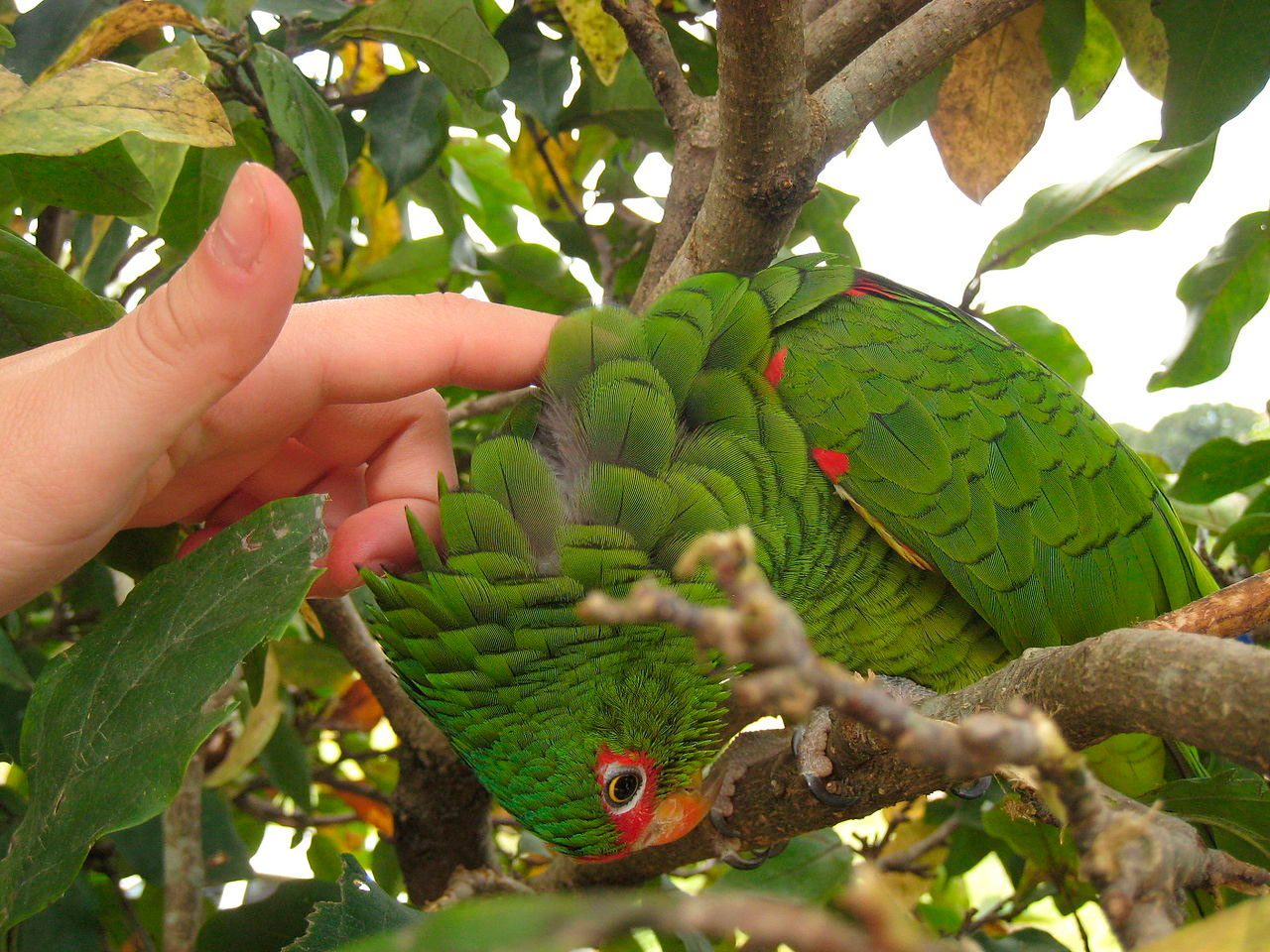
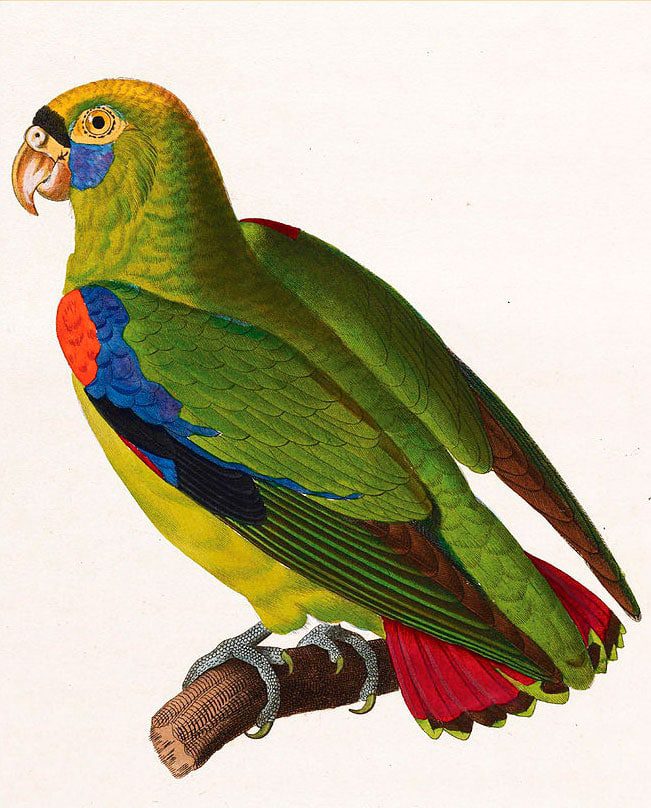
The Red-spectacled Parrot(Amazona pretrei) has the forecrown, lores, fore crown and upper cheeks up to the ear-coverts, bright red; back of the crown, nape, the mantle, back and rump, green with a narrow terminal band black in most feathers; scapulars green; uppertail-coverts pale green. Leading edge of wing, carpal area, alula and primary coverts, bright red; other coverts, narrow green with black tips.
Flight feathers, violet blue green tips. Under wings green. The underparts they are mostly green, slightly tinged with yellowish, with black tips on most feathers giving a scalloped effect; the thighs red; undertail-coverts pale yellowish green. Tail green with broad pale yellowish-green tip and patches of red on base of innerwebs of the three feathers outermost. The bill pale yellow with pale orange based on upper jaw; bare periophthalmic white; iris orange; legs gris pardusco.
The female probably it shows much less red in the wing
with the carpal edge and primary coverts, mostly or completely green. Immature apparently similar to female adult.
Note Taxonomy:
It´s monotype. It is sometimes considered conspecific with Amazona tucumana, but they are best treated as forming a superspecies.
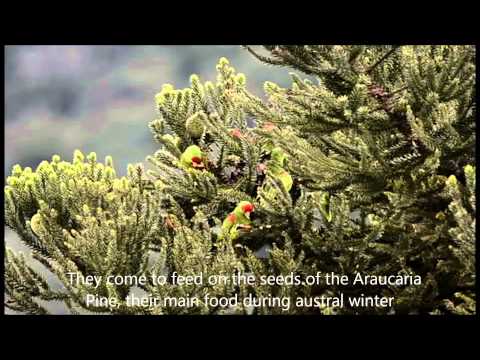
This rider is strongly associated with forests Araucaria angustifolia for use as roosts non-breeding season. It prefers open savanna forests and low riparian forests for reproduction, with trees and conifers of the genus Podocarpus, Scutia and Celtis and where they are absent Araucaria angustifolia. Most records place her at altitudes between 300-1.000 m, but they are distributed and breed at lower elevations in southern Rio Grande do Sul.
They disperse in pairs during breeding but are highly gregarious outside of breeding season. They form large concentrations community, often in plantations pinus exotic and Eucalyptus. The largest winter meetings coincide with the ripening seeds araucaria. flocks of 30 to 50 birds, composed of young adults and newborns, They may meet before the dispersion, from breeding areas to winter quarters.
Reproduction:
The Red-spectacled Parrotnest in tree hollows, for example, Casearia, Ouillaja brasiliensis and Ficus. With reproduce at the end of September to January, with young people and fledglings, usually, in early December in the south. Clutch 2-4 eggs.
The diurnal movements cover up 100 km, perhaps in relation with the availability of food.
Distribution and status:
Size of its range (breeding/resident ): 95.400 km2
This species is endemic to South Brazil and distributed only in the states of Rio Grande do Sul and Santa Catarina (Martínez, 1996). Some individuals have been recorded in the forests Missions, in the northeast of Argentina (Chebez 1994) and they have recently also been reported from Paraguay (sec Lowcn et al., 1997).
Reductions in seed supply Araucaria They may have been the cause of change in the feeding of Ecological Station Aracuri-Esmeralda in 1991 (Municipality of many capons) to areas around Southeast Santa Catarina. Here the remaining forest patches of Araucaria They can provide enough seed to feed the populations Red-spectacled Parrot. The intensive cattle grazing and agriculture have almost eradicated habitat Araucaria. These habitat impacts have reduced natural regeneration and may also have reduced the number of nesting sites in old trees..
a census in 1994 It estimated the total population of the Red-spectacled Parrot in 10.000 individuals, Repeated surveys have shown the sizes of the nearby population 12.600 individuals in 1996. and about 16.300 individuals in 1997 (J. Martinez in litigation 1997, N. Prestes in the proceedings 1997).
Conservation:
State of conservation ⓘ
Vulnerable ⓘ(UICN)ⓘ
• Current category of the Red List of the UICN: Vulnerable.
• Population trend: Decreasing.
Rationale for the Red List category
The combination of a comparison of population estimates 1971 and 1997 and deforestation rates over the same period suggest that the species has declined rapidly, qualifying the species as Vulnerable. Current threats loss of habitat and capture suggest that this decline is likely to continue.
Justification of trend
Se sospecha una continued rapid population decline due to destruction, degradation and fragmentation of habitat and illegal trade.
Conservation Actions Underway
• Appendix I and II of CITES.
• This species is considered Vulnerable nationwide (Silveira y Straube 2008, MMA 2014) and protected Brazilian law.
• There are breeding populations in five reserves and two southern winter feeding sites are protected. (Wege and Long 1995).
• Nevertheless, less than 1% Annual range, and less than 4% of each seasonal range is within protected areas (Marini et al., 2010).
• Provided artificial nests but not occupied (Snyder et to the ., 2000).
• Since 1991 It is conducting a campaign public awareness (Prestes et al . , 1997, Snyder et to the . 2000).
Conservation Actions Proposed
• Carry out surveys to obtain an estimate of the population size updated.
• Carry out periodic surveys to assess the population trends.
• Study the current levels of off-take for the trade.
• Apply the law to collectors and, especially, dealerships, Looking for vehicles between December and February (Prestes et al ., 1997).
• Continue the campaign of sensitization.
The Red-spectacled Parrot in captivity:
Unknown until years 80, when a few reached Europe; not well known elsewhere.
relatively silent compared to other Amazonian species. Inquisitivas although generally quiet. have a nice nature, but they can occasionally be quite noisy, especially first thing in the morning and evening. They become confident relatively quickly. outside the breeding season, They can be set in a colony system. chewing hard and excellent flying and stair climbers, so they need ample opportunities for exercise.
– Avibase
– Parrots of the World – Forshaw Joseph M
– Parrots A Guide to the Parrots of the World – Tony Juniper & Mike Parr
– Birdlife
Photos:
(1) – Red-spectacled Amazon that is kept as a pet in Caxias do Sul, Rio Grande do Sul, Brazil By Marie (originally posted to Flickr as Perroquet familial) [CC BY-SA 2.0], via Wikimedia Commons
(2) – A pet Red-spectacled Amazon in a parrot cage. It is 32 cm land and 295 gm in wt By Amazona_pretrei_-bird_cage-8c.jpg: Andrea O Guimarães derivative work: Snowmanradio [CC BY-SA 2.0], via Wikimedia Commons
(3) – Red-spectacled Amazon that is kept as a pet in Caxias do Sul, Rio Grande do Sul, Brazil. Some of its wing feathers are clipped By Amazona_pretrei_-Rio_Grande_do_Sul_-Brazil-8e.jpg: Mariederivative work: Snowmanradio [CC BY-SA 2.0], via Wikimedia Commons
(4) – Red-spectacled Amazon that is kept as a pet in Caxias do Sul, Rio Grande do Sul, Brazil By Marie [CC BY-SA 2.0], via Wikimedia Commons
(5) – Amazona pretrei, a native of the southernmost Brasil. Specimen in Palmitos Park, Gran Canaria By Bjoertvedt (Own work) [CC BY-SA 3.0 or GFDL], via Wikimedia Commons
(6) – A pet Red-spectacled Amazon in captivity. It has a ring on its right leg By Andrea O Guimarães (originally posted to Flickr as I’m watching you) [CC BY-SA 2.0], via Wikimedia Commons
(7) – Red-spectacled Amazon that is kept as a pet in Caxias do Sul, Rio Grande do Sul, Brazil By Marie (originally posted to Flickr as Temporaire) [CC BY-SA 2.0], via Wikimedia Commons
(8) – Red-spectacled Amazon that is kept as a pet in Caxias do Sul, Rio Grande do Sul, Brazil By Marie (originally posted to Flickr as Calins… :)) [CC BY-SA 2.0], via Wikimedia Commons
(9) – A pet Red-spectacled Amazon in a parrot cage. It is 32 cm land and 295 gm in wt By Andrea O Guimarães [CC BY-SA 2.0], via Wikimedia Commons
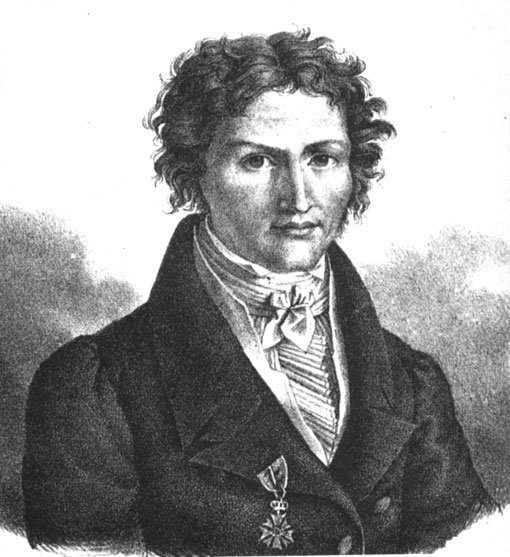
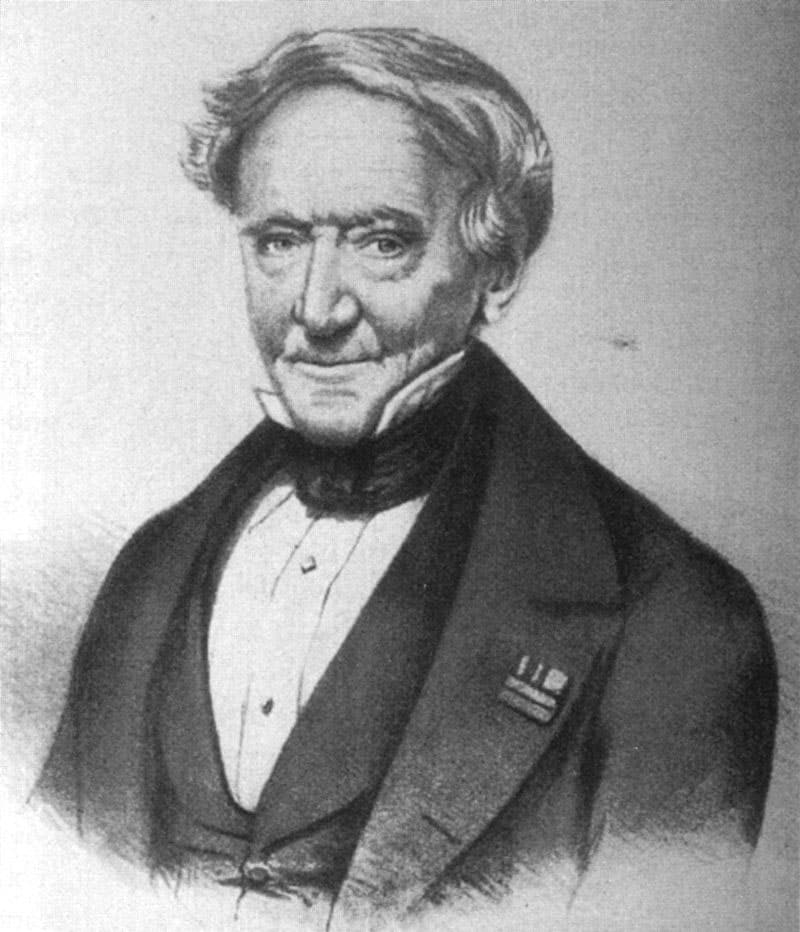
(10) – Amazona pretrei = Psittacus pretei = Priest Parrot By Jean-Gabriel Prêtre (1768–1849) [Public domain], via Wikimedia Commons
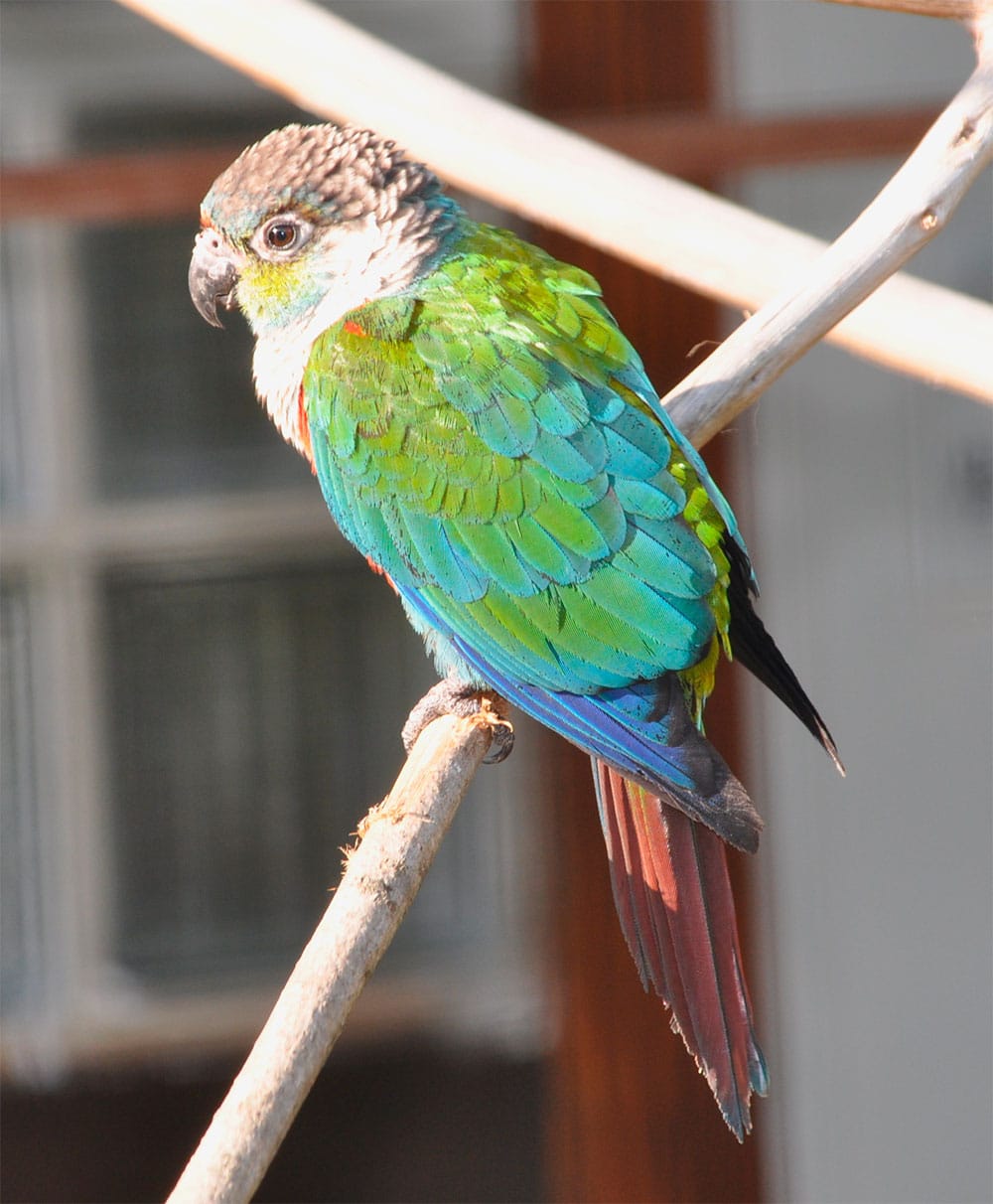
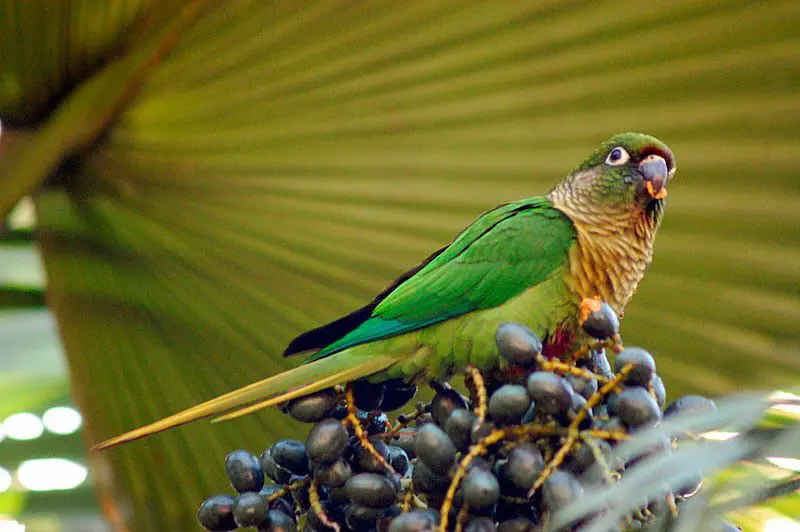
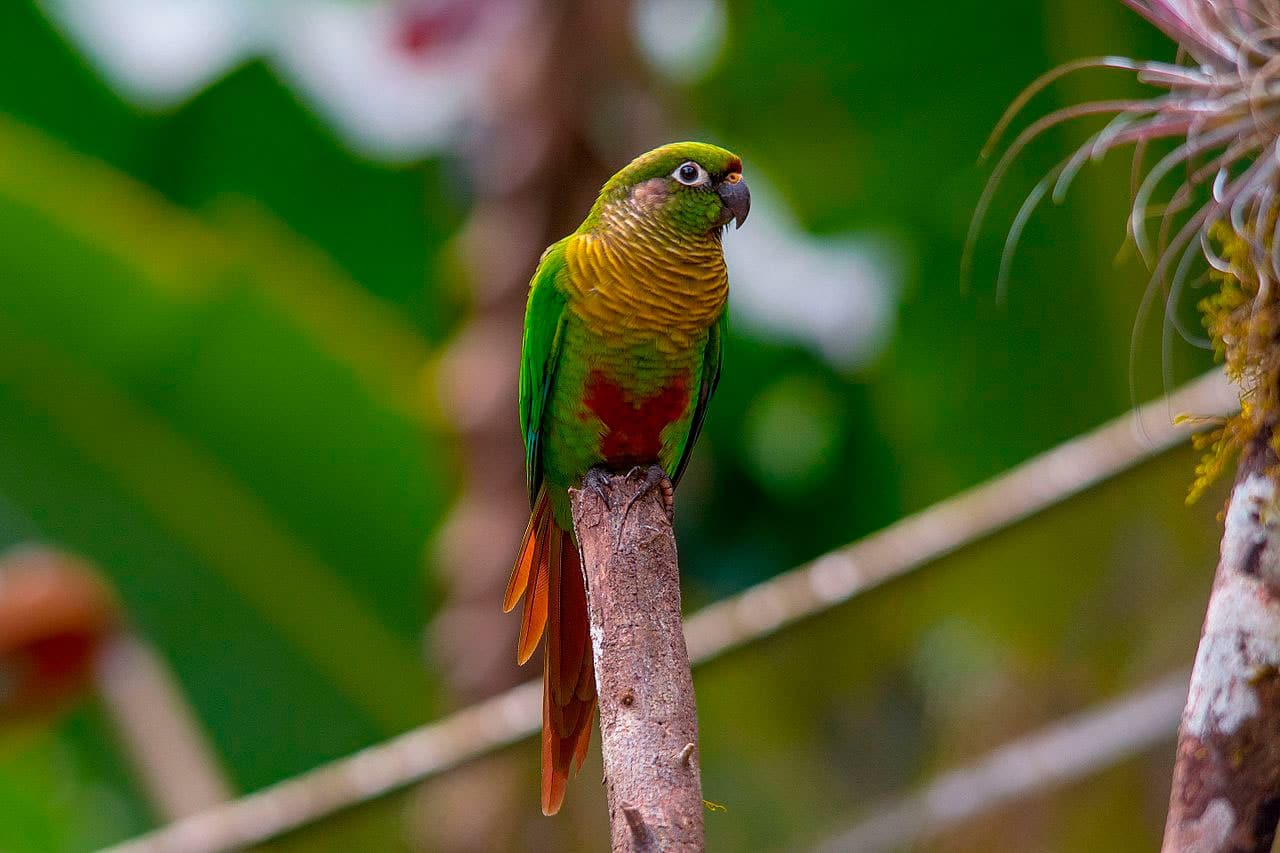
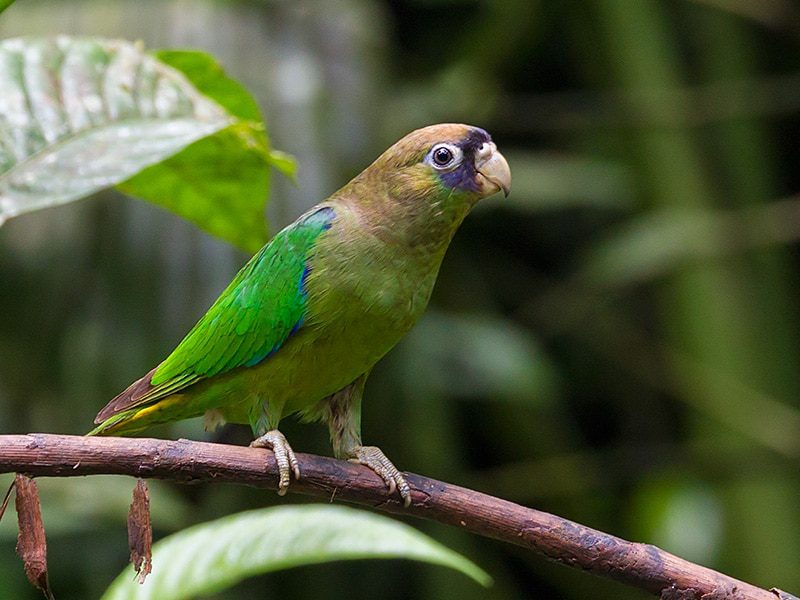
The Maroon-bellied Parakeet(Pyrrhura frontalis) has a frontal band matte red close with a few more bright red feathers behind cere; lores blackish; feathery cheeks and crown, greyish green blackish tips; ear-coverts olive green.
The upperparts They are green grass with a small area reddish at the bottom of the back. Primary coverts bluish green; wing-coverts grass-green, some feathers sometimes with olive tint. Primaries blue in the outerweb. green in the innerwebs, with dark tips; secondaries, mainly green. Sides of neck, throat and chest, brown oliváceo, feathers subterminally brown and black black tips, giving the whole a scalloped effect; lower breast green with a patch brown in the center of belly; flanks, the thighs and undertail-coverts, green. Upper, green tail in basal half, Shaded bronze to reddish tones on the tips; below, the tail is opaque brown.
Bill grey, sometimes paler in base mandible; yellow cere; bare periophthalmic whitish grey; irises dark brown; legs dark gray.
Both sexes are similar. The incipient brown lacks the belly. Immature paler than adult with irises darker.
Taxonomic note:
Closely related to Blaze-winged Parakeet(Pyrrhura devillei), with which it can be conspecific (populations or races that belong to the same species). It has been suggested that the species may also be conspecific with Green-cheeked Parakeet(Pyrrhura molinae).
Sound of the Maroon-bellied Parakeet.
Description 2 subspecies:
Pyrrhura frontalis chiripepe
(Vieillot, 1818) – As the nominal, but the upper surface of the tail It is completely green olive. Some orange-red markings on the bend of wing in some birds.
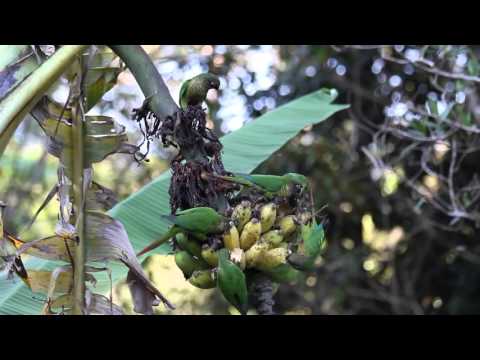
The Maroon-bellied Parakeet They extend through several forest habitats, forests, margins and marshy habitats, including the remaining patches Araucaria (for example, in Rio Grande do Sul). In the Paraguayan Chaco They seem almost confined to coastal areas of growth over the Paraguay River and its main tributaries. In Southeast Brazil They are mainly distributed in the highlands, to 1.400 meters above sea level; in other parts of the lowlands up near 1.000 m, where they are generally tolerant to disturbance, even reaching visit urban parks in the city of Assumption, Rio de Janeiro and São Paulo, and feeding in gardens (Rio Grande do Sul). gregarious, usually in flocks of 6-12 birds (until 40).
Reproduction:
They nest in the cavity of the trees. The breeding season It covers the months from October to December. Clutch 5-6 eggs.
The female incubated one for almost 30 days. The young leave the nest after about 45 days, after which they continue to be fed for some time by the two members of the couple.
Size of its range (reproductive / residents): 2.690.000 km2
The Maroon-bellied Parakeet It is endemic in Southeast South America, from the southeast of Brazil to the North of Argentina.
In Brazil They can be observed from south Bay ,through coastal states, until Rio Grande do Sul, and west, in the southeast of Minas Gerais, Brazil and South of Mato Grosso, through Paraguay (extension of records suggests its presence throughout the west end), North of Uruguay and North of Argentina, in Missions, Currents, Formosa, Chaco and sporadically in the past, in the North of Santa Fe (a population in Buenos Aires probably descended from leaks), and southeastern Bolivia.
Resident. Locally common to very common (for example, in Missions) but rare elsewhere (for example Currents) and extinguished in places due to conversion of forests for agriculture.
With He commercialized in large quantities with substantial late eighties exports averaging over 5.000 birds per year. There is a large captive population.
Distribution 2 subspecies:
Pyrrhura frontalis chiripepe
(Vieillot, 1818) – Central and southern Paraguay, northern Uruguay and northern Argentina.
Pyrrhura frontalis frontalis
(Vieillot, 1818) – Subspecies nominal. Southeastern Brazil from southern Bahia to Rio Grande do Sul including southeastern Minas Gerais and south and southeast of Mato Grosso.
Conservation:
State of conservation ⓘ
Minor Concern ⓘ(UICN)ⓘ
• Red List Category: Least concern
• Population trend: Stable.
Rationale for the Red List category
This species has a extremely large range and, therefore, it does not approach the thresholds for Vulnerable at the discretion of the distribution area size (Extension <20,000 km2 combinada con un tamaño de rango decreciente o fluctuante, extensión o calidad del hábitat o tamaño de población y un pequeño número de lugares o fragmentación severa). La tendencia de la población parece ser estable, por lo que la especie no se aproxima a los umbrales de Vulnerables bajo el criterio de tendencia poblacional (> 30% decline over ten years or three generations). The population size has not been quantified, but it is not believed to be close to the thresholds for Vulnerable under the criterion of population size (<10.000 individuos maduros con un declive continuo estimado> 10% in ten years or three generations or a population structure). For these reasons, the species is evaluated as least concern.
Justification of the population
The size of the world's population has not been quantified, but this species is described as «common» (Stotz et to the., 1996).
Justification of trend
They suspected that the population is stable in absence of evidence of any decline or threatens substantial.
Threats
The species has been marketed strongly: from 1981, when it was included in Appendix II of CITES, 52.523 individuals captured in the wild have been recorded in international trade (Trade database of UNEP-WCMC CITES, January 2005).
"Maroon-bellied Parakeet" in captivity:
The species is listed in Appendix II of the CITES.
There is a large captive population. They are intelligent birds, friendly and active. Readily they adapt to human contact and are easy to train. They are among the quietest cotorras, but its powerful high-pitched voices can become very annoying. Like other parakeets, They tend to express emotion with a series of loud cries, chillidos.
– Avibase
– Parrots of the World – Forshaw Joseph M
– Parrots A Guide to the Parrots of the World – Tony Juniper & Mike Parr
– Birdlife
– Photos:
(1) – RED-BROWN TIRIBA Botanical Garden of São Paulo By Dario Sanches [CC BY-SA 2.0], via Wikimedia Commons
(2) – Maroon-bellied Conure (Pyrrhura frontalis) on a wooden stump. Botanical Garden of São Paulo By Dario Sanches [CC BY-SA 2.0], via Wikimedia Commons
(3) – Pyrrhura frontalis Ilhabela-SP By Dario Sanches from São Paulo, Brazil (Maroon-bellied parakeet ( Pyrrhura frontalis)) [CC BY-SA 2.0], via Wikimedia Commons
(4) – Maroon-bellied Conure (Pyrrhura frontalis) – São Paulo Forest Garden By Dario Sanches [CC BY-SA 2.0], via Wikimedia Commons
(5) – Pyrrhura frontalis – Track dos Tucanos – Tapirai-SP IBA: Paranapiacaba Forest Massif By Jairmoreirafotografia (Own work) [CC BY-SA 4.0], via Wikimedia Commons
(6) – Parrots A Guide to the Parrots of the World – Tony Juniper & Mike Parr
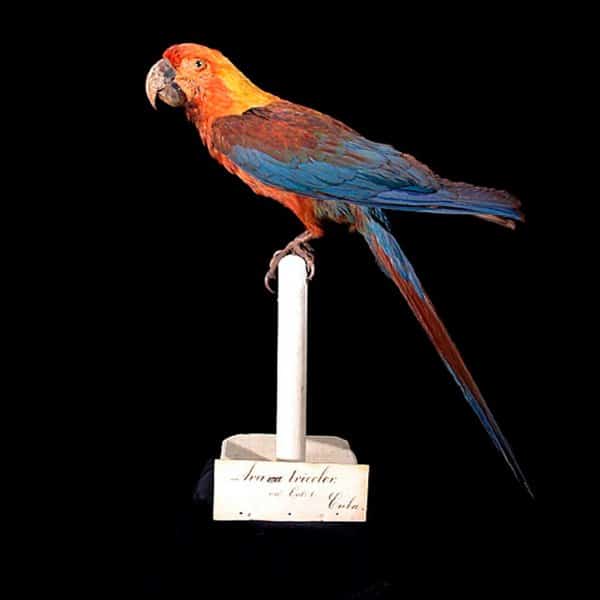
The Cuban Macaw (Ara tricolor) ave a great era, had a length between 45 and 50 centimeters, the "forehead" was reddish and orange and the nape.
around the eyes had white areas devoid of feathers. Cara, abdomen, chest and the thighs They were also orange and legs and the tip of the bill brown. The upper portion was a brownish red with festooned with feathers in green, while feathers below tail, on top of this and the lower back region they were blue. Also of this color combined with purplish red were the wings.
The external appearance of both male and the female It was the same. As for the flight, as described, when taking off it opened and exhibited its splendid tail to its full extent in a truly magnificent spectacle.
Habitat:
Little is known about the habits Cuban Macaw. Local people reported the Cuban naturalist, born in Germany, Juan Gundlach (1876) What anidaba in the holes of the palm trees and lived in pairs and family groups. He noted that it had a strong vocalization similar to that of Central American macaws. (Gundlach 1893).
apparently small populations bred in scattered locations.
Reproduction:
Little is known about the reproduction of this species, except that they nested in the holes of the palm trees and lived in pairs and family groups.
Food:
They ate fruits, Palmas, tree seeds cinnamon (Meliá azedarach), tender shoots and buds (Wiley & Kirwan 2013).
Olson & Suarez (2008) skull suggest that the tablet back-ventral, in other macaw is an adaptation for a strong muscle attachment, is an indication that this species feeds on palm nuts extremely hard shell, and distribution of birds may have been closely related to the availability of this food source.
Distribution:
Distributed in the past by the island of Cuba, and probably the Isle of youth. It is said that there were large populations in the Zapata Swamp to the South of Matanzas. There is no evidence of the historical existence of this guacamayo or another Hispaniola, where it has hinted at the existence of this species (although possibly they were observed on that island, with the last individuals registered in 1820.
Conservation:
• Current category of the Red List of the UICN: Extinct.
• Population trend: extinguished.
Justification of the Red List of the Category
This species was known in the island of Cuba, but hunting led to its population to extinction. The last reports of the species date from 1885.
Its extinction was caused by his hunting as food and the felling of trees for nesting capture young birds and their use as pet (Forshaw and Cooper 1989).
It is said that the last specimen known to have existed was shot down in La Vega, about the Zapata Swamp in 1864. Then testimonies of sightings occurred up 1885 which were not confirmed.
"Cuban macaw †" in captivity:
It is believed that the Cuban Macaw was quite common in Cuba. First he began to increase his capture in order to give them to the Kings of Spain. As the nineteenth century progressed increased human population and this not only cut down the trees and forests deforested, but he also hunted the bird for food – despite the fact that its meat tasted bad – he plundered its nests to take from pets young birds. This is how their habitats were eliminated, until he ended up becoming extinct.
Alternative names:
– Cuban Macaw, Hispaniolan Macaw, Hispaniolan or Cuban Macaw, Hispaniolan, Cuban or Jamaican Macaw (English).
– Ara d’Hispaniola, Ara tricolore, Ara tricolore ou A. de Cuba, Ara tricolore, A. de Cuba ou A. de Gosse (French).
– Dreifarbenara (German).
– arara-vermelha-de-cuba (Portuguese).
– Guacamayo cubano (español).
scientific classification:
Johann Matthew Bechstein
– Order: Psittaciformes
– Family: Psittacidae
– Genus: ARA
– Scientific name: Ara tricolor
– Citation: (Bechstein, 1811)
– Protonimo: Ara tricolor
• Avibase
• Parrots of the World – Forshaw Joseph M
• Parrots A Guide to the Parrots of the World – Tony Juniper & Mike Parr
• Birdlife
• cubaconecta
Photos:
(1) – Ara tricolor, recreación digital By Digitally treated by Rod6807 from the original image of Peter. [CC BY-SA 3.0], via Wikimedia Commons
(2) – Cuban Macaw. Eleven-Thirteenths Natural Size—from specimen in Liverpool Museum By John Gerrard Keulemans (1842 – 1912) [Public domain], via Wikimedia Commons
(3) – Now tricolor Bechstein, 1811 by Huub Veldhuijzen van Zanten / Naturalis [CC BY-SA 3.0], via Wikimedia Commons
(4) – Now tricolor Bechstein, 1811 Huub Veldhuijzen van Zanten / Naturalis Biodiversity Center [CC BY-SA 3.0], via Wikimedia Commons
(5) – Ara tricolor By Bechstein, 1811 [CC BY-SA 3.0], via Wikimedia Commons
(6) – Watercolour by Jacques Barraband (circa 1800) of a Cuban Red Macaw (Ara tricolor) by Jacques Barraband [Public domain], via Wikimedia Commons
▷ The world of Pets: Dogs, cats, birds, reptiles, amphibians
28-31 cm. length and 120-140 weight g
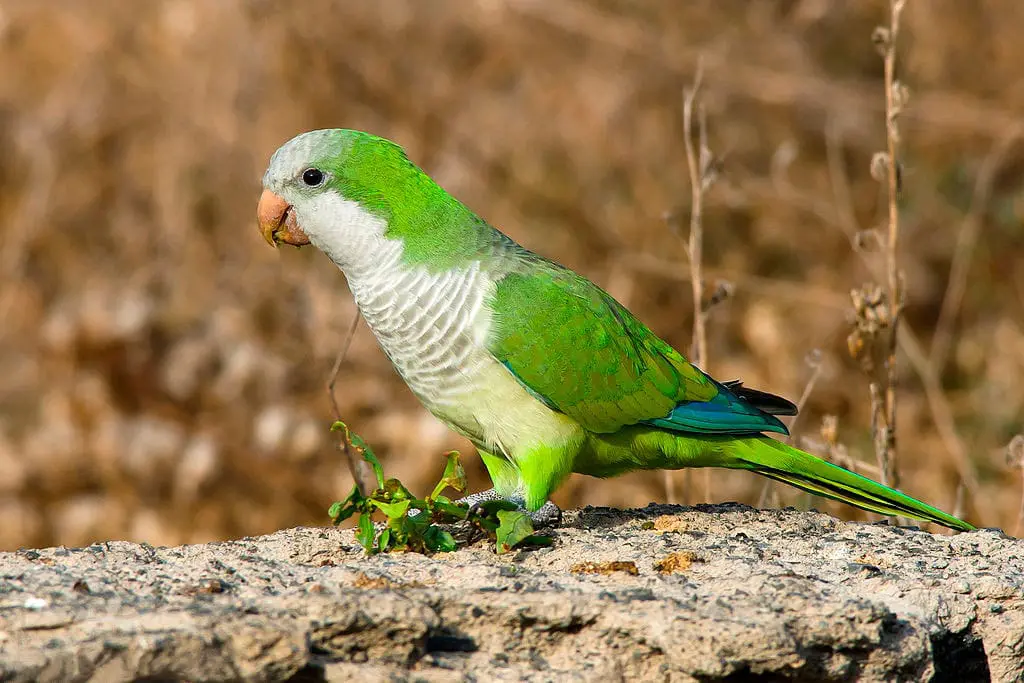
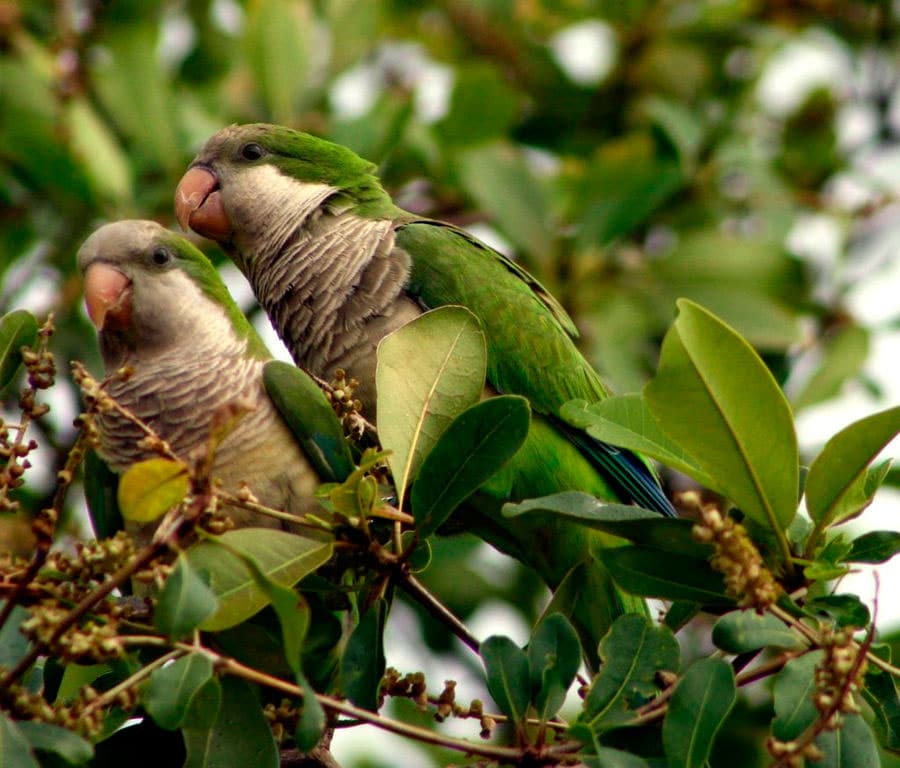
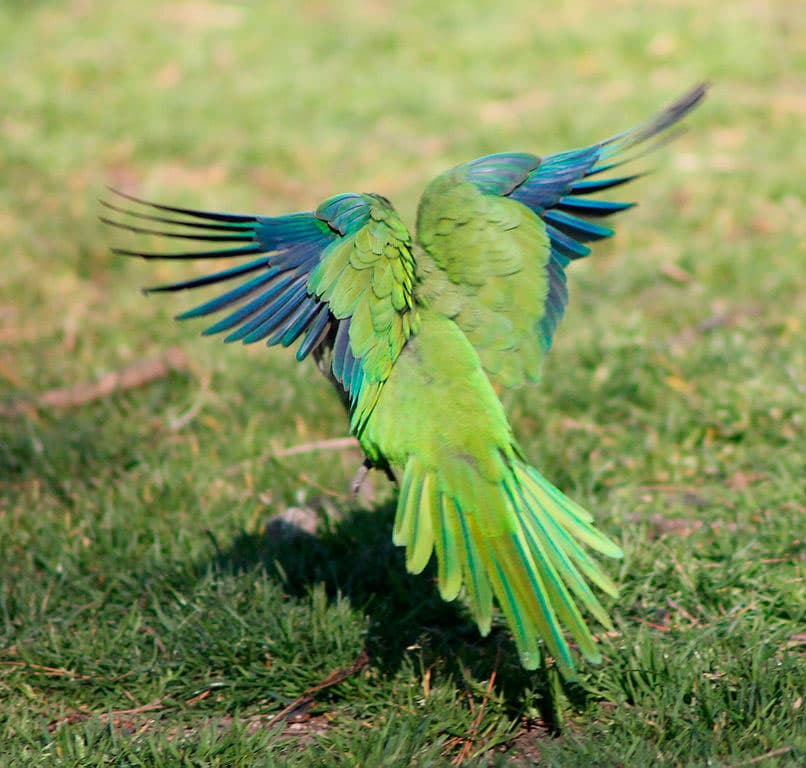
The Monk Parakeet(Myiopsitta monachus) has the forecrown (up to the half of the crown), the lores and cheeks, pale ash gray; the rear of the crown and nape, grass-green, fading to green, slightly more off, in the the mantle, the back and scapulars; rump green. Primary coverts, blue; other coverts, green. Flight feathers Blue by up. Under the wings has the lesser coverts green, the coverts more large and innerwebs of the the flight feathers, blue. Throat and upper area of the chest, ash gray, with pale edges to the feathers, giving a beaming effect; lower area of the chest, pale yellow; Abdomen, the thighs and vent, pale green.
Upper, the tail is green with blue in the Center; below, pale bluish-green. Bill color horn; Brown of the irises; legs grey. Both sexes are similar. Immature has the front green-tinted.
The Monk Parakeet is, mainly, in dry wooded areas or fields open with trees, such as gallery forest, isolated thickets, palm groves, forests, linens and areas with thorny thickets with Cactus, also in land cultivation and in urban areas with trees, mainly below 1.000 m.
They tend to be observed in pairs or flocks of 30-50 individuals; with much larger gatherings out of breeding season. Rest communally, Sometimes the nests, While you are not playing.
Note:
There are reports of transmission lines damaged by birds while nesting. In general, in the area in which have been introduced these birds, the impacts are associated mainly to the behaviors of nesting. This species of birds build large, bulky nests in communications and transmission towers, and distribution poles. In the towers of transmission represent simply a problem of maintenance and does not affect the communications, but in electrical installations can cause blackouts and fires since the nests can create electrical circuits. This problem is intensified in the rainy season and humid climates.. The nests of these birds can cause significant damage to the facilities power including a decrease in electrical reliability, damage to equipment and loss in income due to power outages caused by nests, an increase in maintenance and operating costs associated with removing nests and repairing damaged structures as well as public safety issues (ISC 2011).
It's the only one, between the parrots, It builds, usually, his nest with twigs (commonly from Celtis shrubs) in branches of tree (sometimes in telephone poles, etc.). Sometimes build nests alone (especially in those areas more dry), Although they are usually communal (until 100 nests, usually around 10) combined to form large structures cluttered of several meters of width, with inputs from the side or by under. Each nest It is built with remains of chewed branches. The nests are sometimes used by them Spot-winged Falconet (Spiziapteryx circumcincta) and other birds, to nest and rest. One nest can get to to weigh 50 kilos and be formed by more than 20.000 remained.
The breeding season, in your area natural's distribution, is between October-December. The clutch generally 4-6 eggs, Although according to some sources, the laying You can understand between 1-11 eggs.
Food:
Its diet includes a wide range of seeds wild and cultivated, wild fruits, as well as various plant material including grass seeds and grains, stems of cactus, estate vegetables and fruits cultivated, sometimes also insects and their larvae. Feeds, both in trees as in the soil, sometimes with other species including pigeons and birds of the genus Molothrus.
Distribution:
Size of the area of distribution (reproduction / resident): 2720000 km2
The Monk Parakeet lives in the lowlands of the South of South America, to the East of the Andes front Bolivia to Rawson Department (Chubut) in Argentina.
Observed in the East and North of Bolivia in the southeast of Peace, to the south, in Cochabamba, West of Santa Cruz, North of Chuquisaca and possibly in other areas (for example, Tarija), Paraguay and South of Brazil, in the South and West of Mato Grosso, Mato Grosso from the South and two-thirds of the southwest of Rio Grande do Sul, in all the Uruguay and in the Argentina, to the South of Rio Negro and probably to the North of Chubut.
Usually common and abundant in Uruguay and Rio Grande do Sul (although it does not play there). It is the most common parrot in much of its range and largely local expansion is due to the plantations of Euralyptus in areas without trees, partial deforestation in other areas, the Elimination of predators and the expansion of crops.
Pursued in several areas, Although the overall effect on its population is apparently slight.
Wild populations established in many towns outside of the range, including Puerto Rico, Florida, New York City (where there are fears it could become a major agricultural pest) and several cities more than them EE.UU. There have also been populations of the Monk Parakeet in Rio de Janeiro (Brazil), berlin (Germany), Austria, Belgium, Italy, Spain (including the Islas Canarias) and several places over the Mediterranean.
Is a trade in these birds, both local, as international, with large numbers of this species in captivity.
• Current category of the Red List of the UICN: Least concern.
• Population trend: Increasing.
Justification of the population
Global population size has not been quantified, but this species is described as «common» (Stotz et to the., 1996) and ‘common to abundant‘ (pit et to the., 1997).
Justification of trend
The population is suspected to have increased as a consequence of the creation of new areas of habitat suitable (pit et to the., 1997).
Threats
The species has been marketed strongly: from 1981, When is included in the Appendix II of the CITES, they have been 710.686 individuals captured in the Middle wild for the Commerce International (database CITES from the UNEP-WCMC, January 2005).
"Monk Parakeet" in captivity:
Renowned for her beauty and intelligence, the Monk Parakeet is a pet people, especially in North America, since the 1960's (ISC, 2011). Can learn to imitate great amount of words, but at the same time are very bustling, demanding of attention and affection, with much character, and very territorial, by what not is rare that attack to their own owners when the manipulated or manipulate your cage. In captivity is reproduced with ease, but to the have many colonies in State Wildlife, not be usually stimulate its reproduction in captivity.
Its life expectancy It 3-10 years in freedom and 25 to 35 years in captivity (Álvarez-Romero et al., 2008).
Before trying to acquire one of these birds as a pet, you should know that in many countries its sale is prohibited as it is classified as species invasive.
MINISTRY OF AGRICULTURE, FOOD AND ENVIRONMENT
Royal Decree 630/2013, of 2 of August, which regulates the Spanish catalog of invasive alien species.
Invasive exotic species: exotic species that is introduced or set to an ecosystem or natural or semi-natural habitat, and is an agent of change and threat to native biodiversity, due to its invasive behaviour, or because of the risk of genetic contamination.
Article 7. Effects of the inclusion of a species in the catalogue.
The inclusion of a species in the catalogue, According to the article 61.3 of the law 42/2007, of 13 of December, entails the prohibition generic in its possession, transport, traffic and trade of exemplary living or dead, of their remains or propagules, including the trade exterior. This prohibition is limited to the scope of application specified for each species in the annex.
– Avibase
– Parrots of the World – Forshaw Joseph M
– Parrots A Guide to the Parrots of the World – Tony Juniper & Mike Parr
– Birdlife
– Wikipedia
– Photos:
(1) – A Monk Parakeet (also known as the Quaker Parrot) on Gran Canaria, Canary Islands, By Juan Emilio Spain from Las Palmas, Spain [CC BY-SA 2.0], via Wikimedia Commons
(2) – An argentina Parrot (Myiopsitta monachus) in Madrid (Spain) by Luis García [GFDL or CC BY-SA 3.0 It], via Wikimedia Commons
(3) – An argentina Parrot (Myiopsitta monachus) en el Parque del Retiro de Madrid (Spain) by Luis García [GFDL or CC BY-SA 3.0 It], via Wikimedia Commons
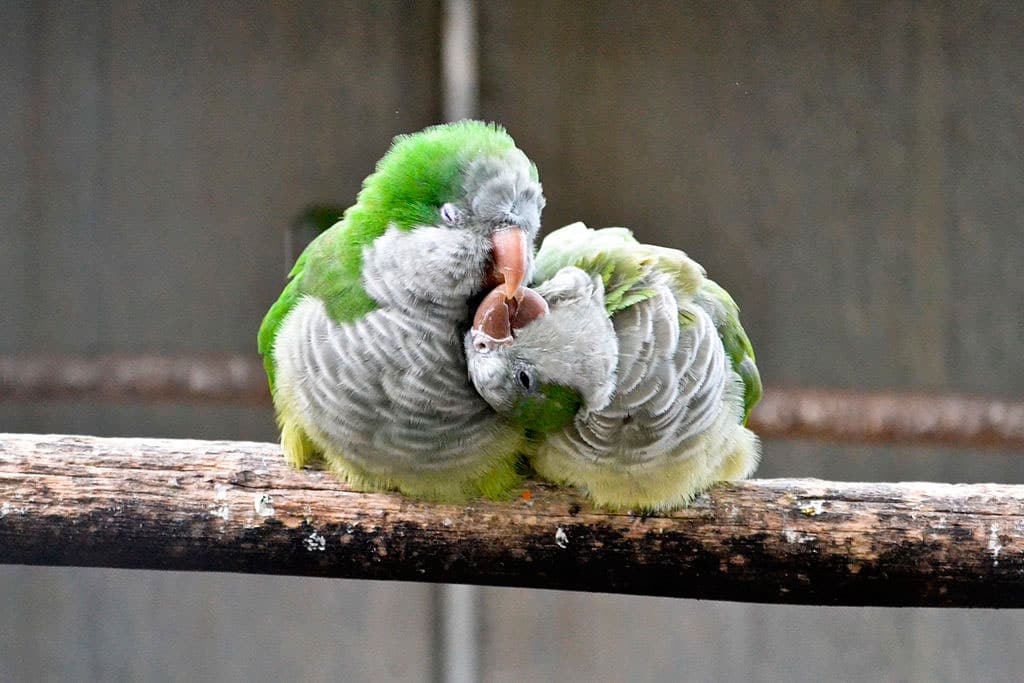
(4) – Two Monk Parakeets (also known as the Quaker Parrot) in Funchal, Madeira. It looks like the bird with its beak facing upwards is trying to obtain food from the other parrot By straman from Brussels, Belgium [CC BY 2.0], via Wikimedia Commons
(5) – A Monk Parakeet (also known as the Quaker Parrot) in Punta del Diablo, Rocha, Uruguay By Cláudio Dias Timm from Rio Grande do Sul [CC BY-SA 2.0], via Wikimedia Commons
(6) – Monk Parakeet (Myiopsitta monachus) Old San Juan, Puerto Rico Ujorge at English Wikipedia [CC BY-SA 3.0], via Wikimedia Commons
(7) – Photography taken in Uruguay By Dario Niz (http://avesdeuruguay.blogspot.com/) [CC BY 3.0], via Wikimedia Commons
(8) – Monk Parakeets (also known as the Quaker Parrot) in Boynton Beach, Florida, USA By Maureen Leong-Kee [CC BY-SA 2.0], via Wikimedia Commons
(9) – Monk Parakeet (also known as the Quaker Parrot) nest colony By Eduardo Merille [CC BY-SA 2.0], via Wikimedia Commons
Origin: Colombia, Venezuela, Trinidad and Tobago, Guyana, Ecuador, Peru, Brazil
Character: Sociable
Life expectancy: 15 to 20 years.
Height: 15 to 16 cm..
Content
Description:
15 to 16 cm.. tall and 60 g. weight.
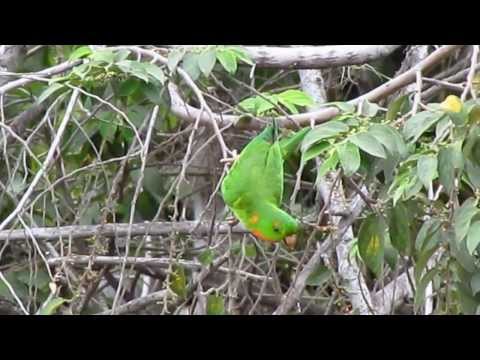
The Scarlet-shouldered Parrotlet(Touit huetii) is distinguishable flight, by the armpit and shoulders Scarlet Red, tip wings black, tail ends with deep red with black brim and yellow-green central part, forecrown black and smacking blue; at rest, It is notorious blue stain wing
.
Eye ring white; their bill yellowish; eyes dark brown.
The female with the tail totally green. The only thing different in the females is that the lateral feathers of their tail are green / yellow with black tips.
It inhabits in humid jungles (in the canopy), semi-humid and forest edges, until the 400 m (locally until the 1200 m). Fly in large flocks, migrates in high Amazonia, perhaps following the fruiting of some kind of plants.
The species is apparently Nomad, bird rarely found in the same area for little more than a few weeks.
Reproduction:
The nests They are communal in the treetops.
It is believed to be played during the month of April Venezuela, and between September and December in northern Mato Grosso, Brazil.
Food:
It feeds on fruits, seeds, berries and small nuts.
Distribution:
Size of the area of distribution (reproduction / resident): 6.060.000 km2
The Scarlet-shouldered Parrotlet It has a very disjunct range in northern South America. It is known from southern Venezuela, as well as the northeast of the country, with both populations considered rare and local, although often it recorded along the Caño Colorado east of the state Monagas (pit et to the., 1997, Hilty 2003, Restall et al., 2006).
There is a population in neighboring Guyana, Suriname and North of Brazil in Roraima and the northern states of amazon, extending at least occasionally in Trinidad*, Trinidad and Tobago.
Records Trinidad, in 1974, 1975 and 1980, probably correspond to wandering flocks (pit et to the., 1997).
It is a local and rare species in eastern Colombia. Another is the northernmost town in eastern Ecuador, where it is again rare (Del Hoyo et al., 1997, Restall et al., 2006). This strip continues to the east of Peru, through the west end of Brazil north of Bolivia. They can also be seen in brazilian amazon, from Rondônia east to west maranhão, with one record Manaus (pit et to the., 1997).
Conservation:
State of conservation ⓘ
Vulnerable ⓘ(UICN)ⓘ
• Current category of the Red List of the UICN: Vulnerable.
• Population trend: Stable.
Rationale for the Red List category
Based on a model of future deforestation in the amazon basin and its susceptibility to hunting and habitat fragmentation, It is suspected that population of this species will decrease rapidly during the next three generations and, therefore, It has risen to Vulnerable.
Justification of the population
The population size World has not been quantified, but this species is described as «uncommon and patchily distributed» (Stotz et to the., 1996).
Justification of trend
It is suspected that this species has lost 24,4-28,8% of habitat within its distribution over three generations (15 years) starting from a model of deforestation Amazon (Soares-Filho et to the., 2006, Bird et to the., 2011). Given the susceptibility of the species to hunting and / or entrapping, It is suspected that population of this species will decrease by ≥ 30% during three generations.
"Scarlet-shouldered Parrotlet" in captivity:
Not found in captivity.
Videos "Scarlet-shouldered Parrotlet"
Alternative names:
– Scarlet-shouldered Parrotlet, Huet’s Parrot, Huet’s Parrotlet, Red-winged Parrotlet, Scarlet shouldered Parrotlet (English).
– Toui de Huet (French).
– Schwarzstirnpapagei, Kronenpapagei, Schwarzstirn-Papagei (German).
– apuim-de-asa-vermelha, apuim-de-encontro-vermelho, curiquinha, periquitinho-de-fronte-negra (Portuguese).
– Cotorrita Alirroja, Lorito de Alas Rojas, Periquito Frentinegro (español).
– Periquito Frentinegro (Colombia).
– Periquito de Ala Roja (Peru).
– Periquito Azul Alirrojo (Venezuela).
Of approximately 35 cm.. height and an average weight of 257 g.
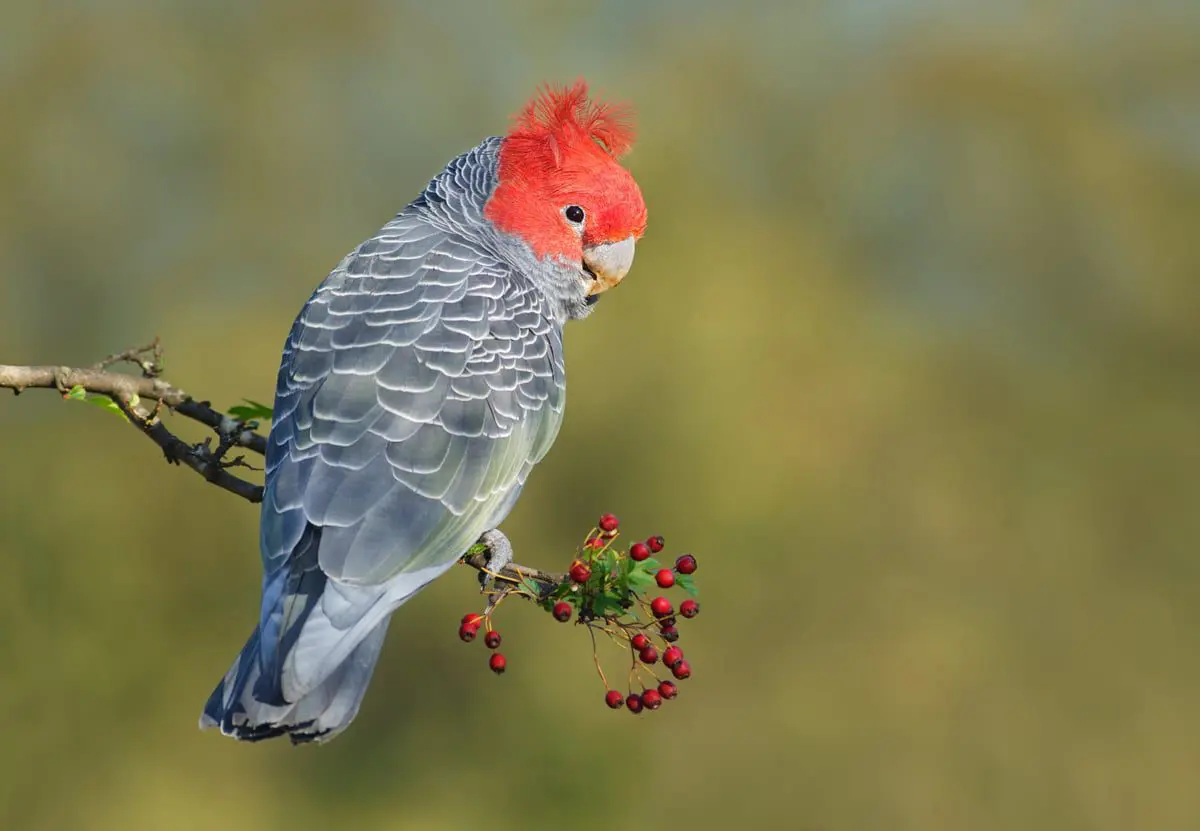
The Gang-gang cockatoo(Callocephalon fimbriatum) it's a little cockatoo, robust, with one crest Dim, large wings wide, and tail short. Son gregarious but relatively calm.
The males of the Gang-gang cockatoo they are immediately recognizable by their head and crest scarlet. The remaining plumage is slate grey.
The females they have the head and crest grey. The feathers of the part inferior of the body are lined with green Orange and yellow, giving a scaly appearance. The tail also has stripes horizontal white. Otherwise, is identical to the male.
The juveniles they are similar to the females, they differ in their top, the head Red and one crest shorter and less twisted.
The Gang-gang cockatoo not can confuse it with other species of parrots. In flight, However, sometimes their shape resembles to the cacatúa Galah.
During the summer are found in the forests of mountain and areas with understory of shrubs dense. In Winter they will move to more dry and low altitudes, more open forests. They can often be seen along the roads and in parks and gardens in urban areas. They require high hollow trees for nest.
Reproduction:
Forman couples monogamous. The female chooses a hole in the right tree and both sexes prepare the nest for egg-laying. They line the sides of the hole with sawdust and chewing dust. Both sexes incubate the eggs and care for the young. Parents feed their young for four to six weeks after hatching. Feather.
Family groups are commonly seen feeding together during the breeding season.. In some cases, nurseries will be formed’ where have several couples nested together, their young perch together in the same tree, While their parents seek for food.
Food:
With feed mainly seeds trees and shrubs, native and introduced, with a preference for the eucalyptus, beards and thorns. They also eat berries, fruit, dried fruits, insects and their larvae.
They are mainly arboreal, they perch on the ground only to drink and forage among the fallen fruits or cones.
They feed in flocks of up 60 birds out of breeding season. Feed in pairs or small family groups during the breeding season.
They are able to use exotic plants as food in the urban areas.
Distribution:
Size distribution (reproduction / resident): 333.000 km2
They are endemic to the South-East of Australia. They are widespread in the East of New South Wales, from the Central slopes and plateaus to the South Coast, along the northeastern regions of Victoria to Seymour, with some records in the East of Melbourne, mornington peninsula and Southwest Gippsland.
Have also been introduced in the Kangaroo Island to the South of Australia.
Conservation:
State of conservation ⓘ
Minor Concern ⓘ(UICN)ⓘ
• Current category of the Red List of the UICN: Least concern.
• Population trend: In increased.
Is come affected negatively by deforestation and the removal of mature trees (potential breeding sites). A population is classified as threatened: in the Valley Cove Lane, New South Wales.
The the rest of the population It is suspected that it may be increasing and now will spend the winter in the suburbs of Canberra.
The world population are estimated at more of 20,000 individuals.
"Gang-gang cockatoo" in captivity:
It´s very rare in poultry and hard to find as a pet.
Son Smart and playful, but they have a great tendency to suffer from software. They are very destructive for what need of abundant toys to not attack against the furniture of the House.
When you get bored, they are often automutilan as a way to fight against boredom.
Its life expectancy You can overcome the 60 years.
 Minor Concern ⓘ
(UICN)ⓘ
Minor Concern ⓘ
(UICN)ⓘ























_-eating_fruit.jpg)
_-on_stump.jpg)

_-Sao_Paulo.jpg)


_15.jpg)
_21.jpg)


