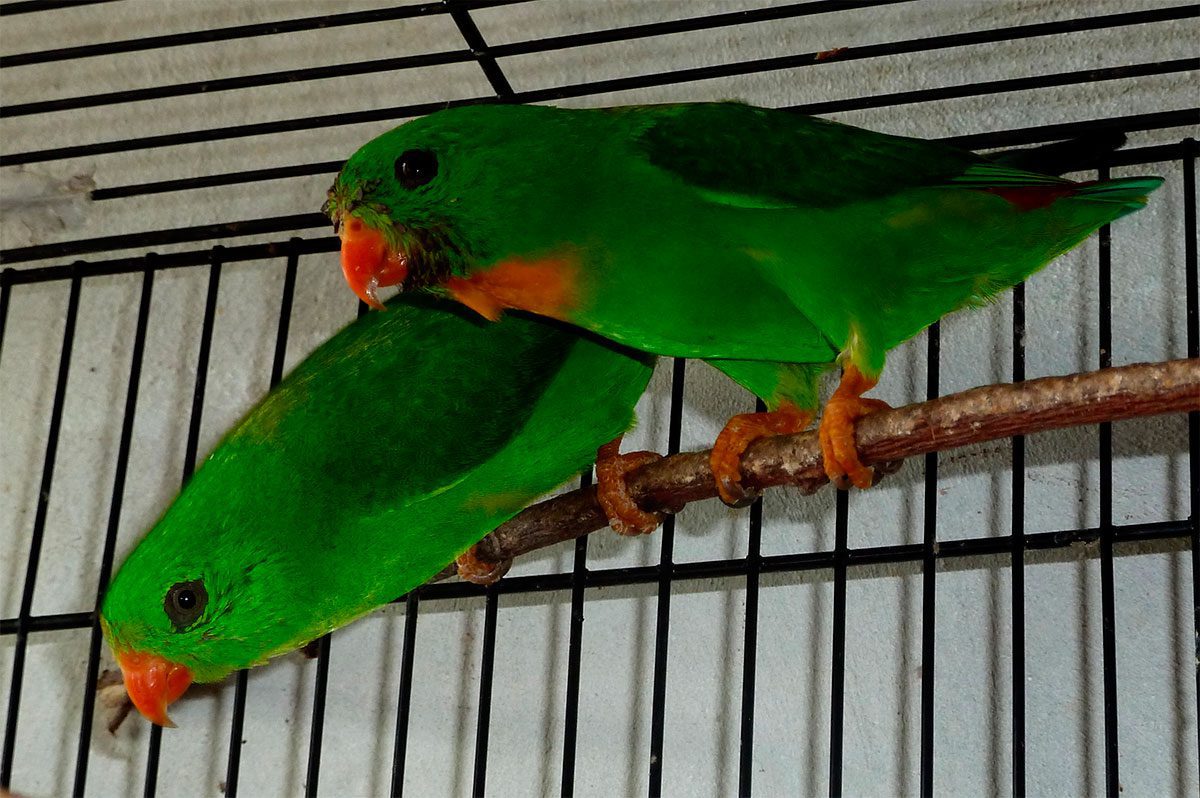
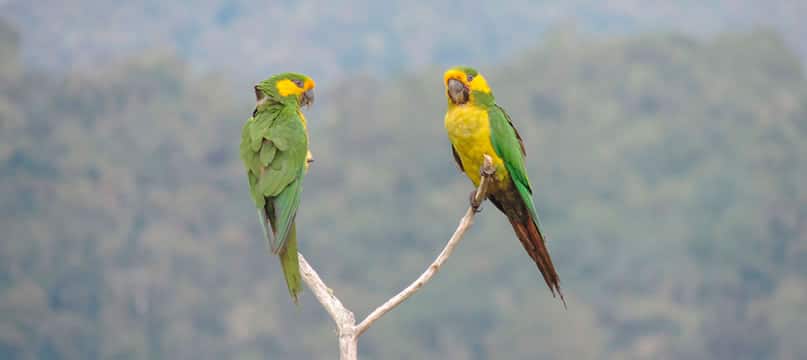
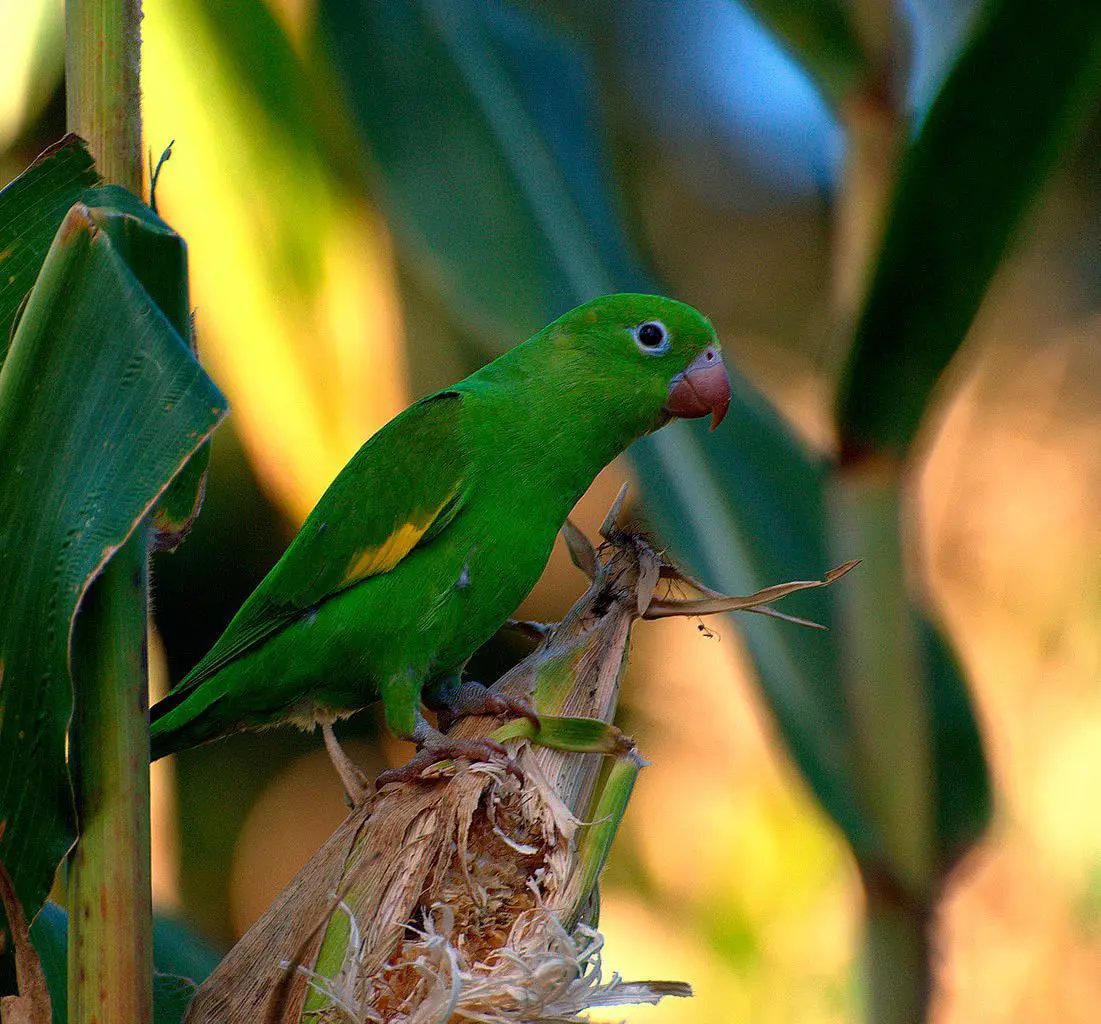
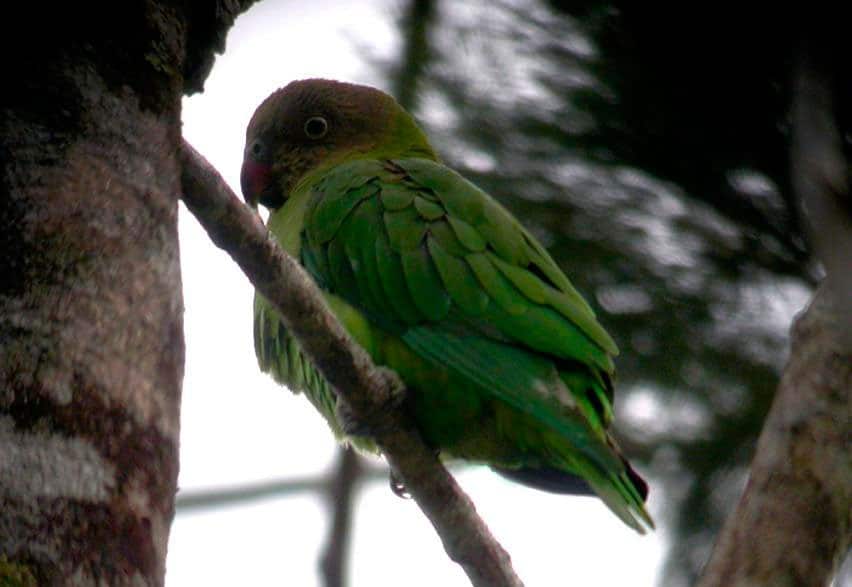
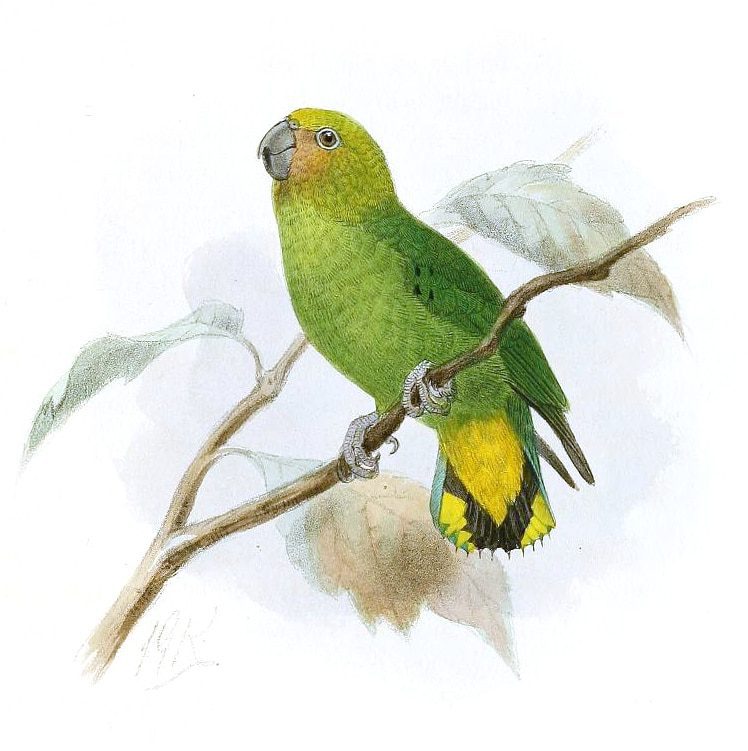
The head of the Yellow-throated hanging parrot(Loriculus pusillus) is bright green.
Upperparts green with yellow orange washing pale in the mantle; rump and uppertail-coverts, bright red. Wings green above, undertail, Turquoise with coverts green. Throat bright yellow, rest of the underparts bright green. Feathers of the tail green above, with side coverts yellowed and pale blue below. The bill orange; irises yellowish white; legs oranges.
Female and immature with yellow throat very small.
Reported along the edges of the forest, and in the marshy forests of the lowlands to 1.850 meters above sea level.
Possibly Nomad in response to local plant phenology.
The species shows great activity, climbing acrobaticamente on the canopy at time of collection, and resting and sleeping mouth below as well as other members of the genus.
The birds are alone, in pairs or in groups of up to eight individuals.
Larger groups sometimes gather in trees to feed.. Although discrete, the Yellow-throated hanging parrot They attract attention, since when flying between the trees they beat their wings emitting a characteristic buzz, accompanied by shrill calls.
Reproduction:
The laying tends to be of two eggs, deposited in the hollow of a tree, Palm or arbol-helecho, from time to time in an old nest of a barbet or Woodpecker. The nesting in West Java It was recorded between March and May.
Food:
They feed on nectar, fruit (including the Ficus figs), leaves and flower buds, as Cassia and Erythrina.
Distribution:
Size of its range (breeding/resident): 167.000 km 2
Endemic to Java and Bali, where it is usually uncommon. The world's population is thought to be superior to 10.000, but it may have decreased due to the logging of forests
Conservation:
• Current IUCN Red List category: Near threatened
• Population trend: Decreasing
The world population It has not been quantified, It is thought to be above 10.000 specimens. The species is generally described as rare throughout its area of distribution (pit et to the., 1997).
There are no data on population trends; However, the species is suspected decreasing at a moderately fast pace, due to the loss and degradation of its habitat.
"Yellow-throated hanging parrot" in captivity:
Rare in captivity.
Alternative names:
– Yellow-throated Hanging-Parrot, Javan Hanging-Parrot, Little Hanging-Parrot, Yellow throated Hanging Parrot, Yellow-throated Hanging Parrot (ingles).
– Coryllis à gorge jaune (French).
– Elfenpapageichen (German).
– Lorículo do Java (Portuguese).
– Lorículo de Java, Lorículo Javanés (español).
32 cm.. length and an approximate weight of 140 g..
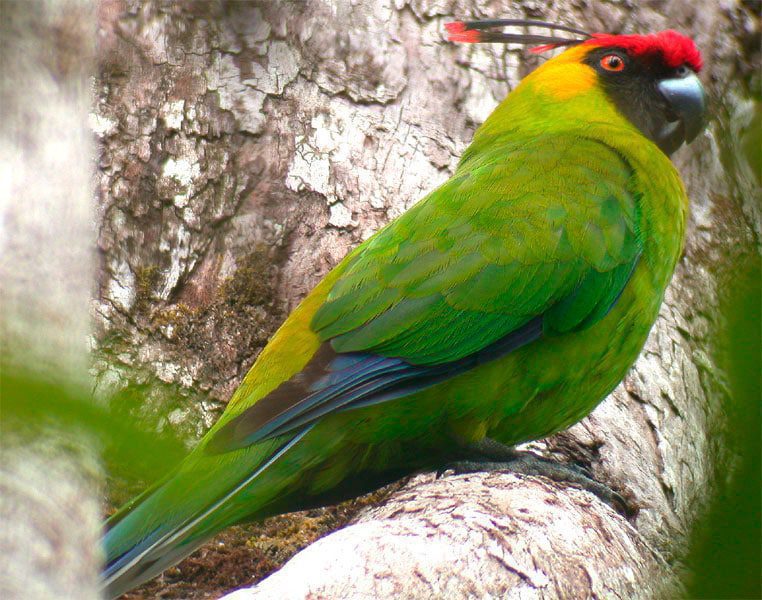
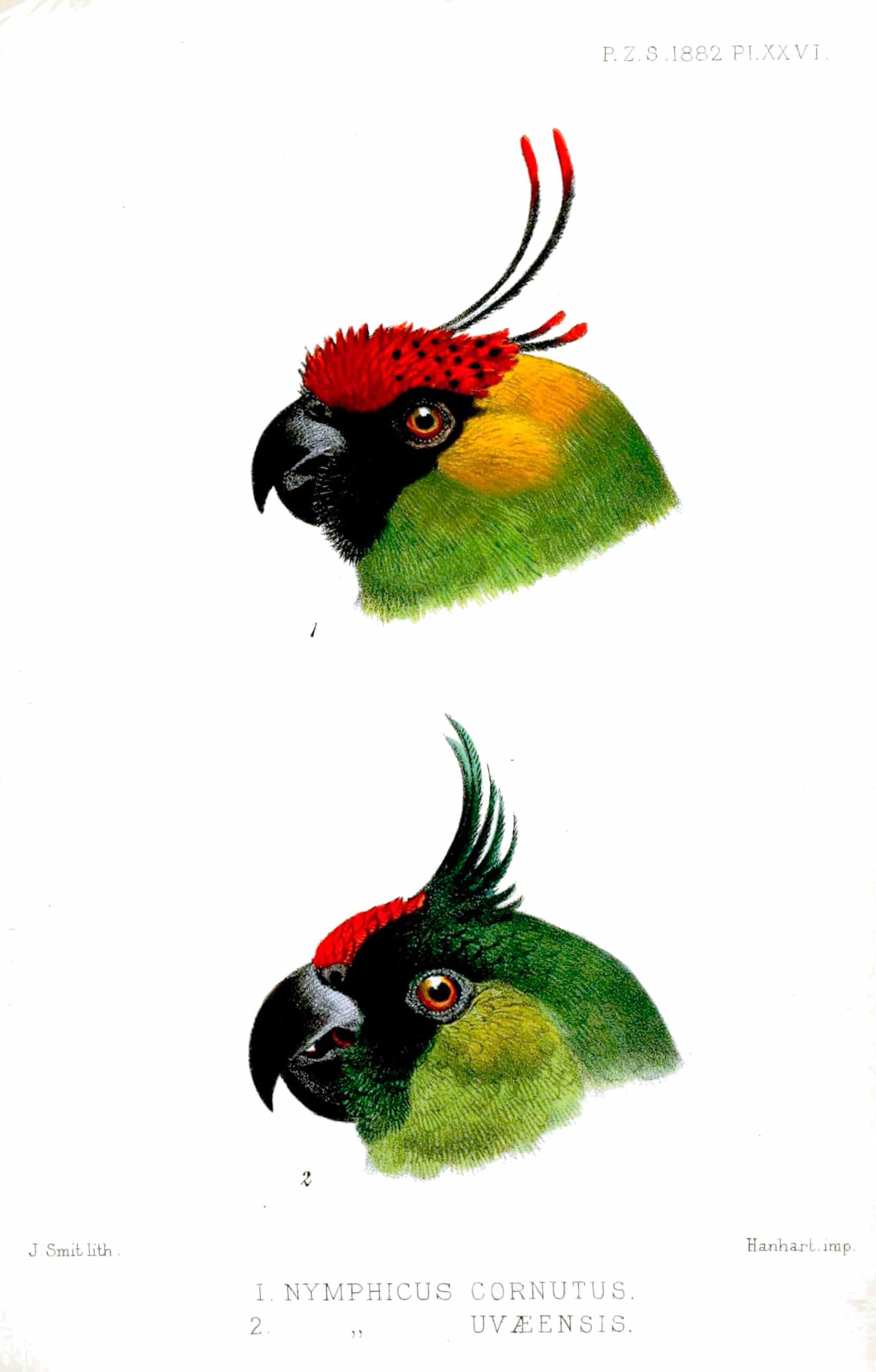
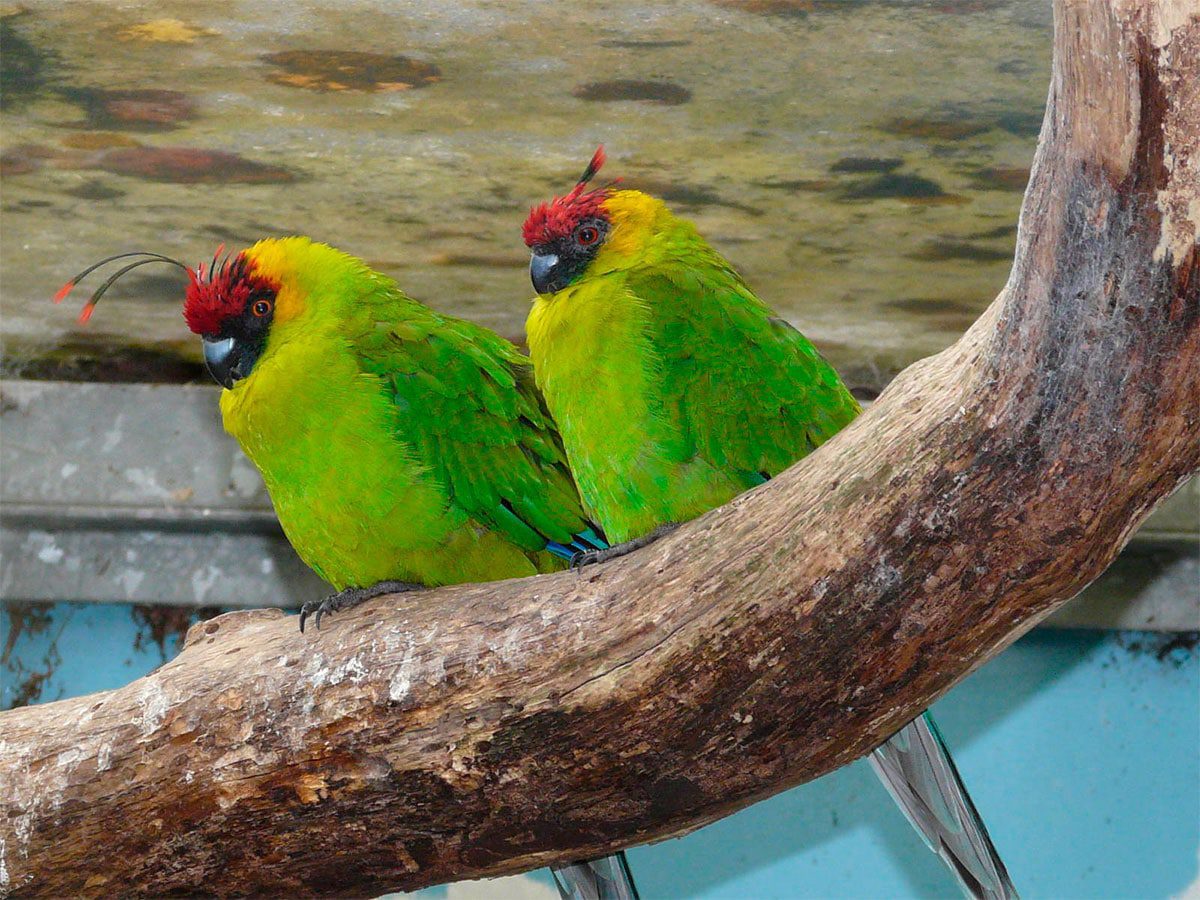
The Horned Parakeet(Eunymphicus cornutus) has a considerable size. It is an incredibly colorful and distinctive bird.. The forecrown is bright red. The front of the crown It has a set of Red curly feathers with black bases. Two long black feathers with Scarlet trim emerge from the center of the crown. The area of the mumps is orange-yellow, that contrasts sharply with the lores and the sides of the cheeks that are black.
The bottom of the cheeks has a greenish black color. Neck and back of the crown bright orange yellow, Turning is gradually to colour green yellow or green bright in the part superior of the the mantle.
The upperparts are green, with the exception of the rump that is greenish-Orange.
The wings covers are green. The primaries are blue-purple on the vane outer, Blackish in the vane inner. The secondaries they are darker on the outer rim.
The underparts is greenish. The lower parts are yellowish green clear. The undertail- coverts they have a slightly bluish in tips. The upper part of the tail is green with strong blue pink, the bottom is dark gray.
The bill It is blue-grey with black tip, irises orange. The legs are black.
Male and female are similar.
The youth they have more gray and less developed facial ornaments. The ear-coverts are pale green, the back of the neck olive green. The bill is color Horn and the irises They are brown.
Taxonomic status:
Until very recently, was generally considered conspecific with the species Eunymphicus uvaeensis. Monotypic.
(Layard,THE & Layard,ELC) 1882 – Of, approximately, 32 cm length. Green color, with the face and dark green head, front with a small red bow and a thin and small dark green Crest. The nape and neck of greenish-yellow, chest and abdomen yellowish green.
The Horned Parakeet frequent, as a priority, humid forests. They are also areas that are regenerated and scrublands.
The preferred habitat of these birds are the kauris forests (Agathis australis), which are evergreens that are found mainly in the North of New Caledonia. But, They also appreciate the mixed forests with trees of the family Araucaria angustifolia. This species It can live up to the 1200 m. Avoid coconut plantations and areas close to the coast.
endemic to New Caledonia. Its distribution is highly fragmented. These birds are present in the 57% the mountains in the North of the island and in the 42% the mountains of the South. Probably they are very common in the central channel.
The Horned Parakeet they tend to be very prudent, remaining in silence most of the time, and making it difficult to, Therefore, its location.
These parrots they live in pairs or in small flocks of up to ten individuals. When resent, They fly a distance of 100 meters or more before landing at the top of a tree. They rest in the canopy or in the cavity of a tree an hour before dawn., just before starting its activity.
During courtship, the Horned Parakeet, he tries to seduce the female with repeated head inclinations, erect their feathers, shaking his crest and emitting cries intermittently.
Reproduction:
The time of reproduction extends from October to December. The nest is often found in a cavity or on a tree branch healthy, of all of the species of Metrosideros myrtacee. You can also build the nest in the soil, under a rock or under a fallen tree.
The female lays of 3 to 4 eggs, but, generally, only two chicks manage to develop.
In captivity, the incubation lasts a few 21 or 22 days. The young leaves the nest after 5 to 6 weeks.
Food:
The Horned Parakeet they are almost exclusively vegetarian. They feed on flowers, dried fruits, fruit, berries and seeds that are found in shrubs and trees. Also like ripe papaya.
Distribution:
The Horned Parakeet It is endemic to the main island of New Caledonia in the Southwest Pacific, where due to the poor coverage of observers, the status of the species may vary. It is probably stable, but may be threatened to some degree due to trade .
Recent check-ins at Blue River Provincial Park (The Blue River) indicate that it is relatively common in the park. It is almost certainly more common in less accessible areas, over 470 m.
The Horned Parakeet It has a small population that probably has been declining for many years with unknown reasons.
Current populations are threatened by habitat degradation and, probably, by the introduction of other mammals, particularly rats. Fortunately, his capture and poaching do not constitute a significant threat for this species.
Considering their low numbers and the small size of their territory, It classified as vulnerable.
Some of the measures taken for their conservation is the start control against introduced predators. Increase the area of suitable habitat to protect their status and establish captive breeding populations for future reintroductions.
"Horned Parakeet" in captivity:
Very rare poultry.
According to sources, a sample lived during 19,7 years in captivity
Parrots A Guide to the Parrots of the World – Tony Juniper & Mike Parr
Birdlife
Photos:
(1) – Horned Parakeet By Tunpin.ong (Own work) [CC BY-SA 3.0], via Wikimedia Commons
(2) – Horned Parakeet, Nymphicus cornutus (above) and Uvea Parakeet, Nymphicus uvaensis (below Proceedings of the Zoological Society of London 1882 By Joseph Smit (1836-1929) [Public domain], via Wikimedia Commons
(3) – Horned parakeet by AlexKant – zoochat
(4) – A adult bird perched on a branch by Tomasz Doroń – Lynx
(5) – A bird perched in a tree by Josep del Hoyo – Lynx
(6) – Feeding on papaya in a garden by Julien Baudat-Franceschi – Lynx
42 cm.. of length and a weight of 285 g..
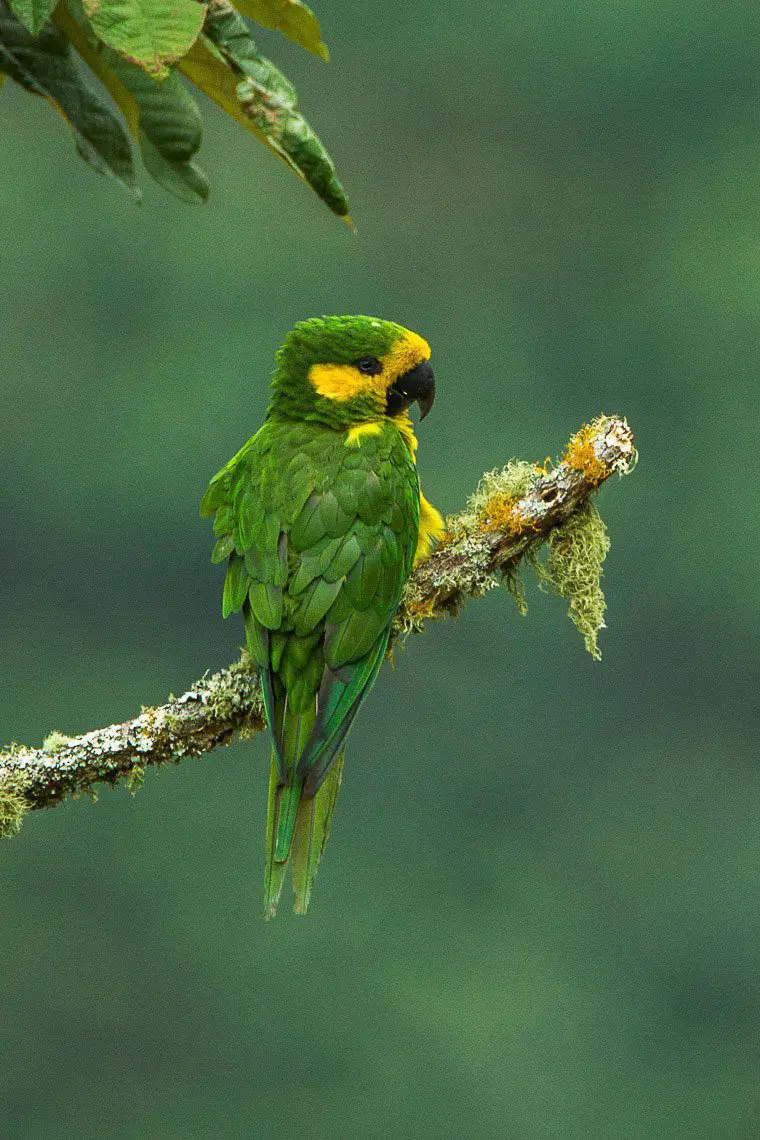
The Yellow-eared Parrot or Yellow-eared Parrot(Ognorhynchus icterotis) is a parrot of medium-sized; has the crown green grass with Emerald suffusion; the forecrown with a wide yellow stripe that extends to the lores, upper cheeks and below the eyes up to the ear-coverts; bottom of the cheeks and both sides of the neck green.
The upperparts, upperwing-coverts and flight feather are green grass. Under the wings yellowish green in coverts, yellowish in the flight feather. The underparts yellowish with increasingly darker green dye in the belly, the the thighs and area of the vent.
Upper, the tail green; down off red. The head is large in proportion to the body, with bill thick, blackish. Orbital ring, pale grey; Orange the irises; legs grey.
Both sexes similar.
The immature not described.
Sound of the HTTPS://www.mascotarios.org/wp-content/themes/generatepress_child/sonidos/Yellow-eared Parrot.mp3.
Habitat:
Video – "Yellow-eared Parrot" (Ognorhynchus icterotis)
yellow-eared parrot project 10 years - Ognorhynchus icterotis - ProAves
They inhabit in the humid montane forests in the subtropical high and low temperate zones, sometimes frequent partially cleared areas.
Associated to the wax Palms (Ceroxylon quindiuense), Although the dependence of these species is uncertain since the birds remain absent from those areas in which these palms are abundant. Move, generally, in pairs or small flocks and perform migrations altitudinal and latitudinal, not specified, outside the breeding season.
Reproduction:
They fly in stable couples and they always nest in old nests.
There are reports of nests on wax Palms (Ceroxylon quindiuense) to 25 metres in height child in the month of may in the North of Tolima and conditions of reproductive birds have been seen in the month of March in Huila. Breeding season July to October in Ecuador.
One of the most unique behaviors in reproduction of the Yellow-eared Parrot is the assistance of a third adult ave sharing the duties of parents, known as "breeding assistants", they have been observed assisting parents in parenting, feeding and caring for the chicks.
Clutch of four eggs.
Food:
It is known that they feed on las Palmas Ceroxylon quindiuense and Ceroxylon alpinum but it probably takes fruits of all other species of this genus; other reported foods include fruits of the Saurauia tomentosa and Sapium.
The Yellow-eared Parrot they sometimes feed in more open areas, returning the forest to rest.
Distribution:
Size of its range (breeding/resident): 168.000 km2
Its distribution is discontinuous.
Limited to the North of the Andes, in the North of Ecuador and West Colombito between 1.200 and 3.400 meters above sea level, (mostly between 2,500-3,000 m).
With distributed (or distributed) in the three chains of the Andes in Colombia; records in the West of the Andes, from a small area in the South, to the North of Cauca and possibly Valle del Cauca; in the Central Andes, from the western slope of Antioquia, Caldas and Cauca and in the eastern slope, in Tolima and Huila; in the East of the Andes from the West side and the East of the basin in Norte de Santander, on the eastern slope of Cundinamarca and in the header of the Magdalena River Valley, in Huila.
It is likely that they led by seasonality, with the evidence that are present in Ecuador in the months of November and Colombia during the rest of the year.
Formerly considered common and in some places even abundant, but now is very scarce and local.
Drastic reduction of its population in the century 20 due to deforestation on a large scale on much of its distribution area and perhaps decrease of species of Quindio wax Palm.
Recent records sporadic and the species may now be confined in a few localities in Colombia, including the region of the Munchique national natural park (West of the Andes in Cauca), where some forests remain unchanged, at the front of the Magdalena River Valley, and in the Northwest of the Andes, in Ecuador.
The total population of the Aratinga Orejigualda is very small and in danger of extinction.
Very rare in captivity and remaining birds could be at risk of capture. Appendix I. critical.
Conservation:
• Red List category of the UICN current: In danger of extinction
• Population trend: Growing
The current population It is thought that you understand 1.103 individuals. But, a maximum of only 212 individuals have bred in recent years (Fundación ProAves in litt., 2010), therefore, This figure is used for the current population of mature individuals. The rest of the population is assumed cautiously being too young to reproduce.
Due to the intensive action conservation of the population has grown from 81 to 1.103 individuals in 2009, of which 212 they are mature (Fundación ProAves in litt., 2010).
Threats:
– Its distribution area It seems to be strongly restricted by the expansion of exotic forests, Since only occurs in the native forest (CEIA et to the., 2009).
– It has been a considerable loss and fragmentation of habitat (90-93% of Montane forest in Colombia) throughout its area of distribution (Salaman et al the 1999b, Snyder et to the., 2000.); But, several significant areas of habitat are maintained within their historic range, which suggests additional causes of impairment (Krabbe 1998, PGW Salaman in litt., 1999).
– The mortality of the Quindio wax Palm (Ceroxylon quindiuense) It is accelerating and the logging in adjacent areas increases its susceptibility to disease (Krabbe 1998, Salaman et to the. 1999to, Salaman et to the. 1999b, PGW Salaman in litt., 1999).
– The Quindio wax Palm they are incredibly long-lived and slow growing (some more of 500 years of age) (Salaman 2001), and are being exploited unsustainably for use in the celebrations of the Domingo de Ramos within the range of the species.
– In Ecuador, their hunting was prolific as food source (Krabbe and Sornoza 1996, Salaman et to the., 1999b), and capture has had any impact on Colombia, Although the species is very difficult to keep in captivity (Salaman et to the. 1999b, Salaman 2001).
Conservation Actions Underway:
– CITES Appendix I and II.
– The traditional breeding place in Ecuador He has bought and is being reforested (Snyder et to the., 2000).
– Surveys were conducted at the beginning of 2008 in Ecuador to determine the status of the species there (O. Jahn in litt., 2007).
– It hopes that an awareness campaign for people who live in close, stop parrots feed hunting (Krabbe 1998).
– In Colombia, awareness to reduce the pressure of the hunting and the impact of the processions of the Domingo de Ramos, It has involved poster campaigns, environmental education, community workshops, radio and school visits (Waugh, 2004).
– In combination with actions on the ground, such as surveys, fencing of sites of play to allow the regeneration of the wax Palm, the restoration of the habitat and the provision of artificial nest boxes (Salaman 2001, the ProAves Foundation in litt. 2012), the size of the population of the species has increased significantly (Waugh's 2004, the ProAves Foundation in litt. 2010, 2012).
– In San Luis of Cubarral, the use of artificial nests started in 2011, and it was reported that the population has increased as a result (by O. Cuts in litt. 2013).
– More information about conservation efforts is provided by Salaman et to the. (2006).
Conservation Actions Proposed:
– Search additional subpopulations, with a focus on the definition of the State within the Intag Valley, Ecuador (PGW Salaman in litt., 1999, Snyder et to the., 2000), and prepare maps of habitats of the massif of the The Ruiz-Tolima volcano (Salaman et to the . 1999b).
– Purchase and further protect habitat (Salaman et to the. 1999b, PGW Salaman in litt., 1999, Snyder et to the., 2000).
– Continue with the current program of successful conservation efforts in Colombia, and extend it into any subpopulation identified inside of Ecuador in the future.
In the news, the Yellow-eared ParrotIt is not a bird to keep captive, but you run the risk of being easy prey for poachers, Since It shows no fear toward humans.
In May of the 2000, a nest It was looted to remove a fledgling and use it as pet. But, this practice is apparently not common.
Alternative names:
– Yellow-eared Parrot, Yellow eared Parrot, Yellow-eared Conure, Yellow-eared Parakeet (ingles).
– Conure à joues d’or, Perriche à joues d’or, Perruche à joues d’or (French).
– Gelbohrsittich, Gelbohr-Sittich (German).
– Papagaio-de-crista-amarela (Portuguese).
– Aratinga Orejigualda, Loro Amarillo, Loro Orejiamarillo (español).
– Loro orejiamarillo, Perico de páramo o Catarnica (Colombia).
– Loro caripero (Ecuador).
– Avibase
– Parrots of the World – Forshaw Joseph M
– Parrots A Guide to the Parrots of the World – Tony Juniper & Mike Parr
– Birdlife
– Photos:
(1) – Yellow-eared Parrot – Colombia_S4E5367 by Francesco Veronesi – Flickr
(2) – Yellow-eared Parrot In the Yellow-eared Parrot Reserve near Jardin, Colombia by Joseph Blowers – Flickr
(3) – YELLOW-EARED PARROT Immature by Bryant Olsen – Flickr
(4) – YELLOW-EARED PARROTS by Bryant Olsen – Flickr
(5) – Reserva Natural de las Aves Loro Orejiamarillo – ProAves
(6) – Ognorhynchus icterotis Syn: Psittacara icterotis By J. Davernes (biodiversitylibrary.org) [Public domain], via Wikimedia Commons
20-25 cm.. length and 72 g. of weight.
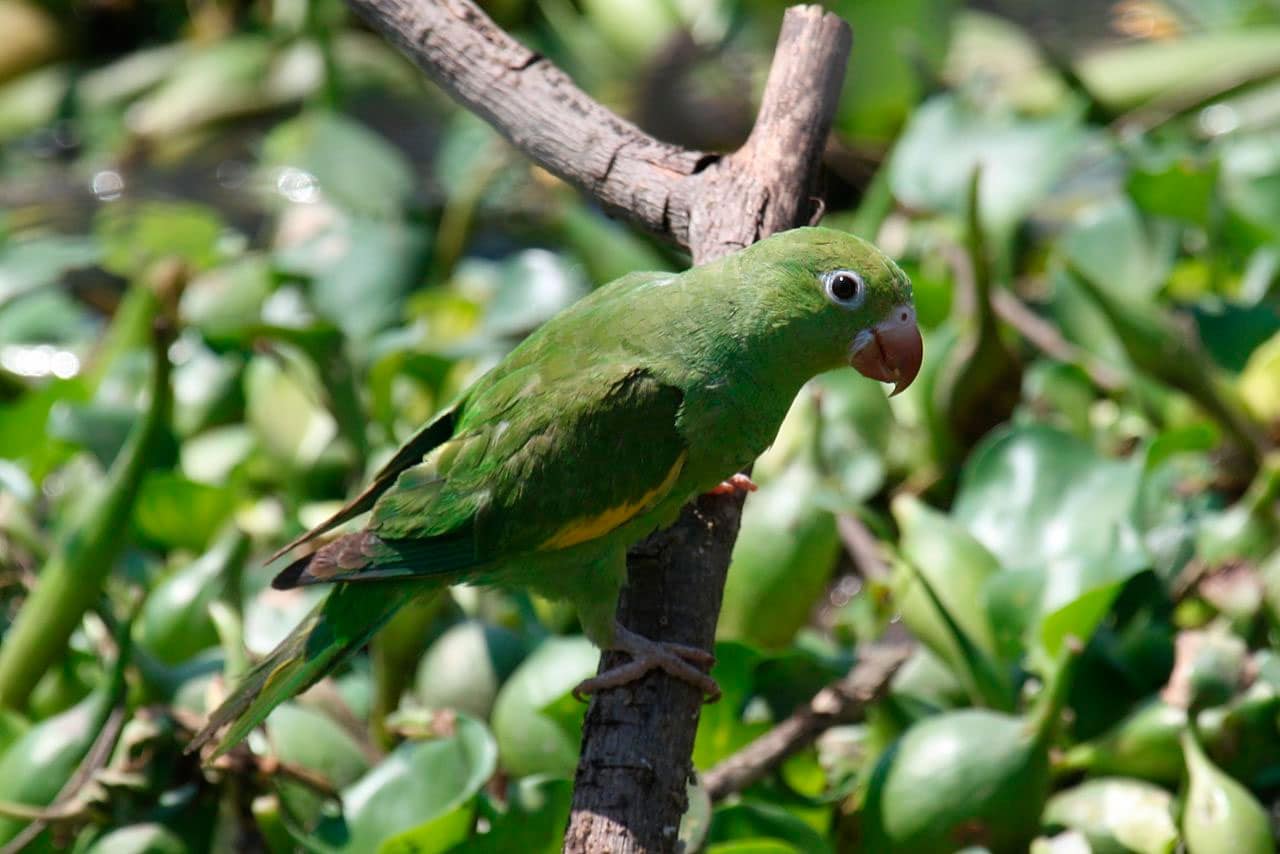
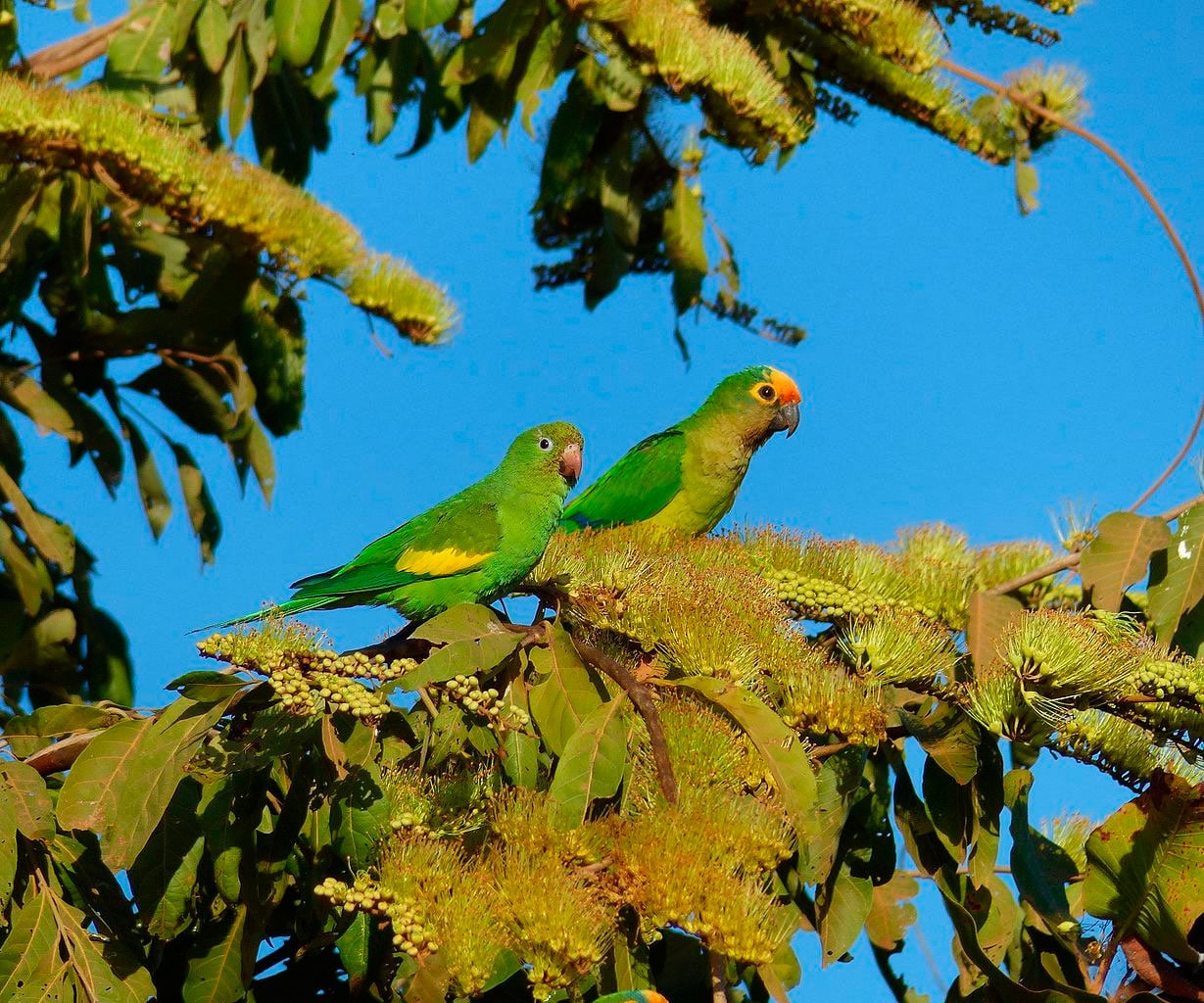
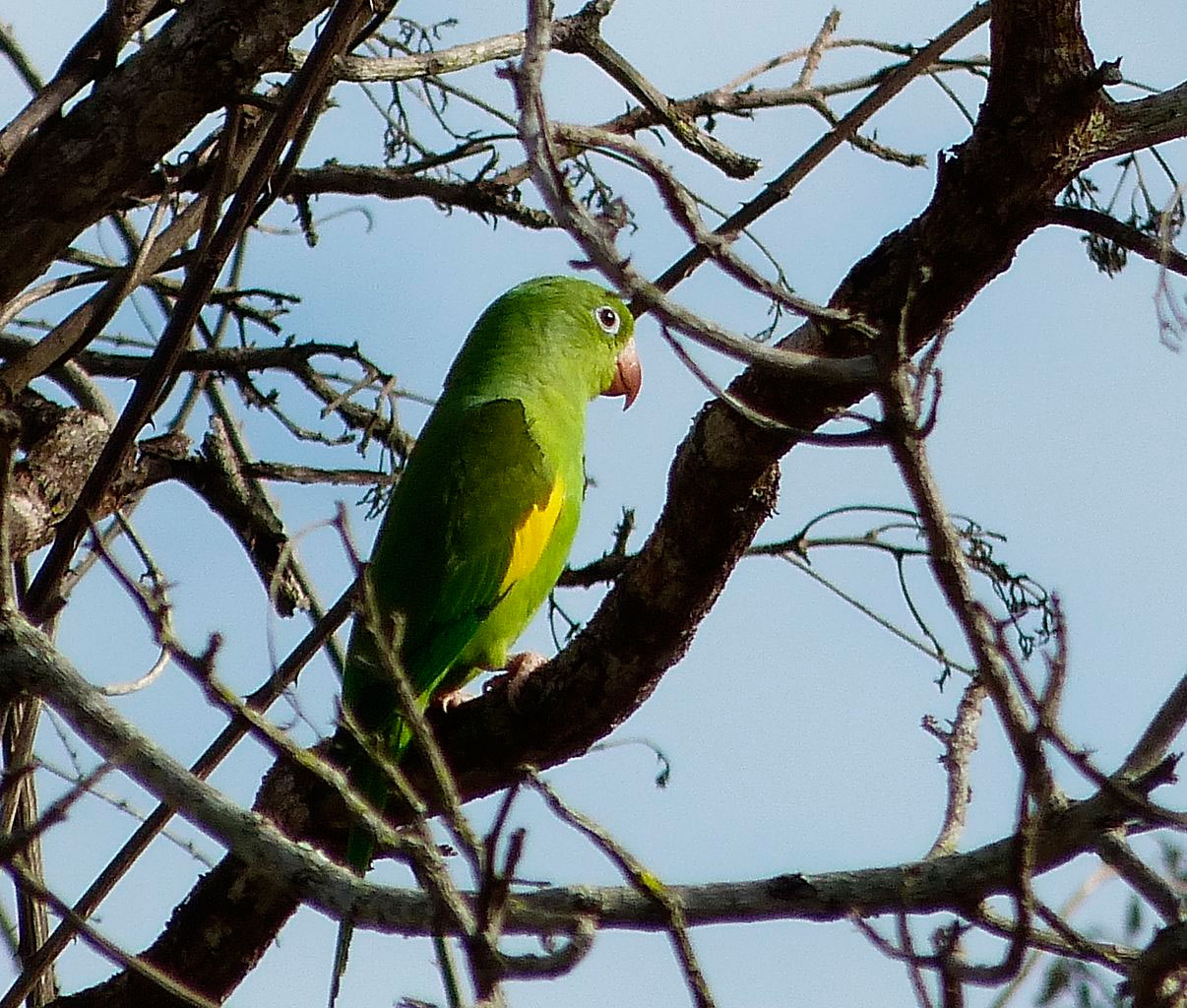
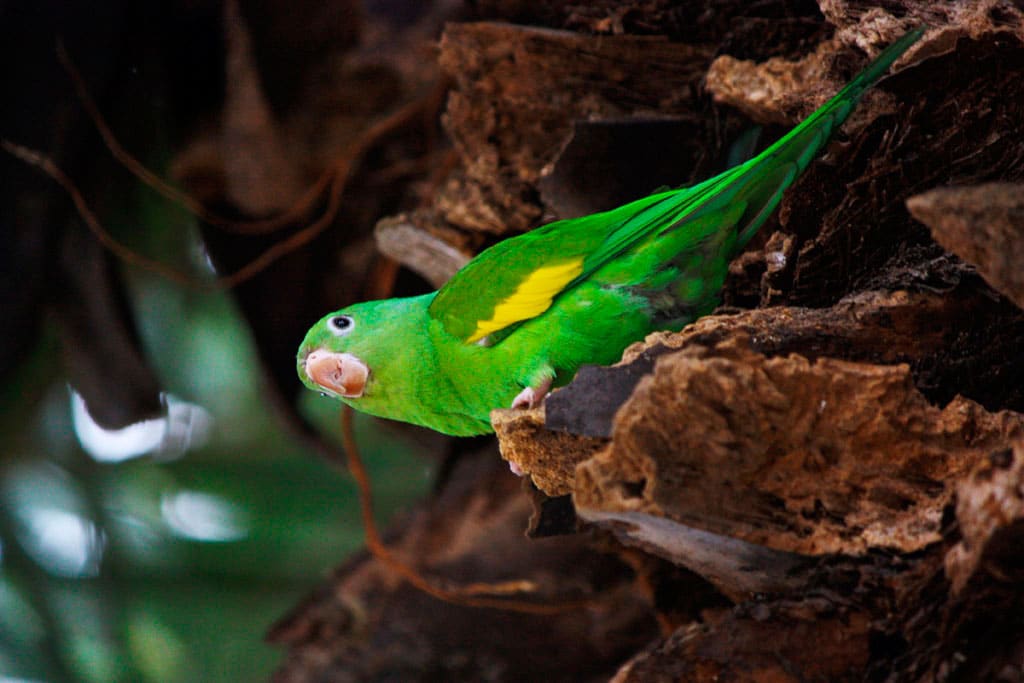
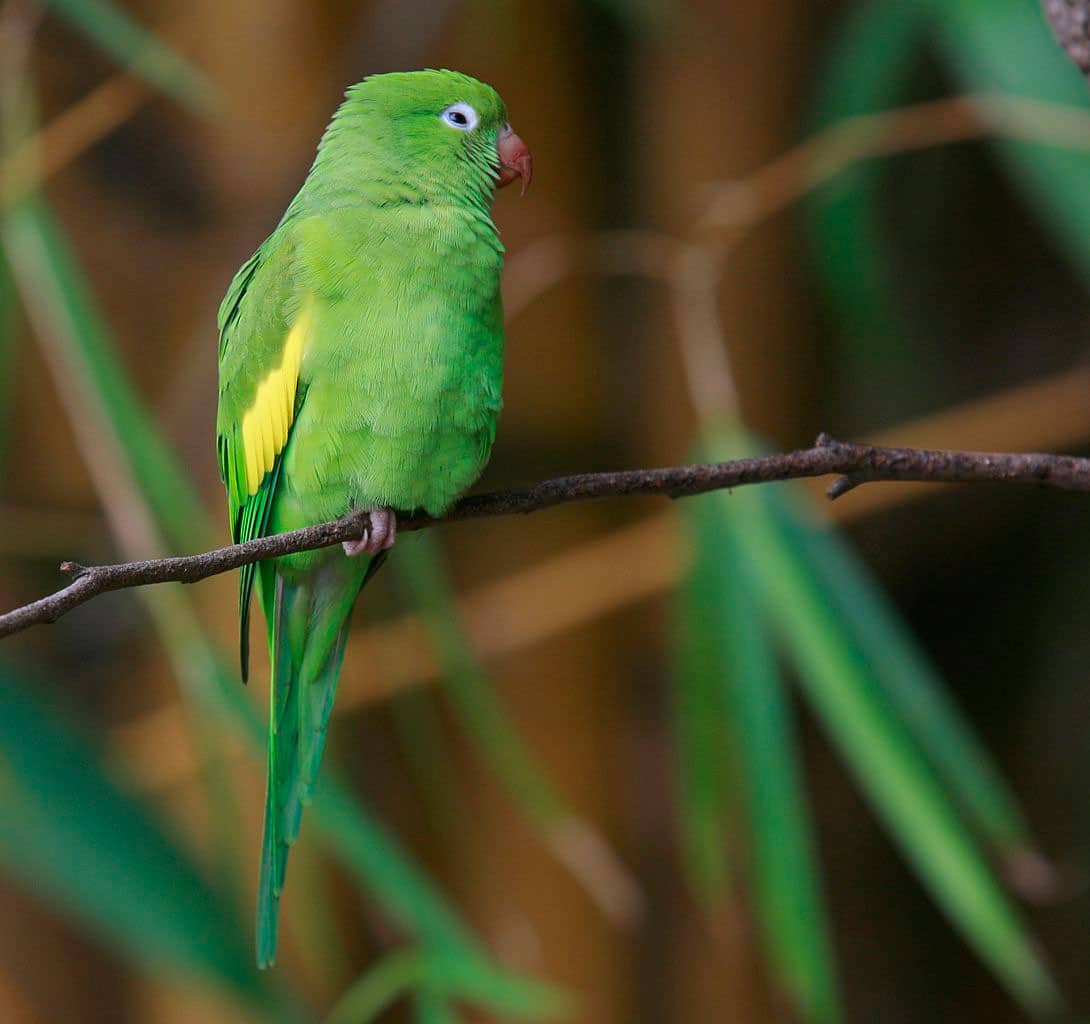
The Yellow-chevroned parakeet(Brotogeris chiriri) has a plumage, in general, bright green; the underparts They are of a paler green and lower coverts are yellowish-green.
The wings They are of a slightly darker green, with the yellow border, visible when wings remain bent or when the bird is in flight. Their bill, hook-shaped, is orange-brown and legs and feet, pinkish gray. The eye rings They are creamy white and eyes dark browns.
It is intimately related to the Canary-winged Parakeet(Brotogeris versicolurus). In fact, it was considered conspécifica (owned or belonging to the same species) until 1997.
The females sexually dimorphic and are not to be sexed, either surgically or by DNA.
The immature are similar to adults but have the tail shorter and the bill It is a darker brown.
Taxonomic note:
Until 1997, some taxonomists considered the Canary-winged Parakeet and Yellow-chevroned parakeet belonging to the same species. Even though the Yellow-chevroned parakeet It has the same secondary covert yellow feathers that can be seen in the Canary-winged Parakeet – no white in the primary wing feathers.
They are mainly below 1000 m, locally up 2500 meters in a variety of habitats including humid forests, seasonal and coastal, Pantanal, savannah and city parks. reported to 2500 meters in arid areas.
Usually, traveling in flocks; in such small groups as 2 to 4 birds, but they have been observed to 20. They are described as small parrots assets, entertaining to watch.
Reproduction:
Nest usually in the cavities of trees or in tree termite nests. They also form nesting tunnels in dead palm fronds..
Once a nest It has been located and correctly "prepared" by the couple, It is performed the laying, between 4 and 5 eggs. after breeding, the Yellow-chevroned parakeet they form large communal huts until the next breeding season.
Food:
In their natural habitats, feed of seeds (including outbreaks), fruit as berries and figs and flowers. Also consume nectar, insects and their larvae. Often they are seen visiting barreiros (areas where there is soil rich in minerals) and the banks of the rivers to feed on the soil.
Distribution:
Size of its range (breeding/resident ): 5,670,000 km2
Distributed inside East Brazil to the East of Bolivia, Paraguay and North of Argentina, in Formosa, Chaco, Missions and North of Currents. Introduced populations in Miami, Florida and California.
Distribution 2 subspecies:
Brotogeris chiriri behni
(Neumann, 1931) – Center of Bolivia to the Northwest of Argentina, in Salta.
• Current category of the Red List of the UICN: Least concern.
• Population trend: Stable.
Rationale for the Red List category
This species has a extremely large range and, therefore, it does not approach the thresholds of vulnerability under the criteria of size range (Extension <20,000 km2 combinada con un tamaño de rango decreciente o fluctuante, extensión / calidad de hábitat o tamaño de población y un pequeño número De lugares o fragmentación severa). La demographic trend appears to be stable and, therefore, the species does not approach the thresholds Vulnerable under the criteria of population trend (> 30% decline over ten years or three generations). The population size has not been quantified, but it is not believed to be close to the thresholds for Vulnerable under the criterion of population size (<10.000 individuos maduros con un descenso continuo estimado> 10% in ten years or three generations or a population structure). For these reasons the species is evaluated as the least concern.
Justification of the population
The size of the world's population has not been quantified, but this species is described as «quite common» (Stotz et to the., 1996).
Justification of trend
They suspected that the population is stable in absence of evidence of any decline or threatens substantial.
"Yellow-chevroned parakeet" in captivity:
Today is Rare.
Since the late sixties to mid-seventies, more than 260.000 these were parakeets imported from South America for the pet trade. At that moment, the Yellow-chevroned parakeet It was the most imported parrot. They settled in California (Los Angeles, San Francisco) self-sustaining populations Yellow-chevroned parakeet released or escapes; populations also in Florida (Miami), as well as Connecticut and New York City.
The Chirirí Kitten appears to be better suited to its adopted habitat than its closely related cousin., the the Canary-winged Parakeet(Brotogeris versicolurus).
The Canary-winged Parakeet It has declined considerably since the early 80, while the Yellow-chevroned parakeet It has established itself in different habitats.
In 2002, the population of Yellow-chevroned parakeet in the area of Los Angeles, California It was estimated at 400 individuals. In the Florida, They have prospered more than any other place in the United States – there have been huge flocks, several hundred of them. The species is also quite established in the city center Rio de Janeiro, Brazil, which he was also introduced.
– Avibase
– Parrots of the World – Forshaw Joseph M
– Parrots A Guide to the Parrots of the World – Tony Juniper & Mike Parr
– Birdlife
– Photos:
(1) – A Yellow-chevroned Parakeet in Sarutaiá, Sao Paulo, Brazil By Dario Sanches [CC BY-SA 2.0], via Wikimedia Commons
(2) – A pet Yellow-chevroned Parakeet By Wagner Machado Carlos Lemes from Goiânia, Brazil [CC BY 2.0], via Wikimedia Commons
(3) – A Yellow-chevroned Parakeet perching in a tree By Paulo Barradas (Brotogeris chiririUploaded by Sno whom You nradio) [CC BY 2.0], via Wikimedia Commons
(4) – A Yellow-chevroned Parakeet in Goiânia, Goiás, Brazil By Delcio Gonçalves from Goiânia, Brazil (A corn diferenteUploaded by Snowmanradio) [CC BY 2.0], via Wikimedia Commons
(5) – Parakeet yellow meeting. Photo taken in the hinterlands of the Sucuriú River By Deusdedith de Souza Alves Filho DehAlves (Own work) [CC BY-SA 4.0], via Wikimedia Commons
(6) – Yellow-chevroned Parakeet (Brotogeris chiriri)(Left) and Peach-fronted Parakeet (Aratinga aurea)(Right) on Combretum flowers By Bernard DUPONT from FRANCE [CC BY-SA 2.0], via Wikimedia Commons
(7) – A Yellow-chevroned Parakeet in Brazil By Alastair Rae (Flickr: Yellow-chevroned Parakeet) [CC BY-SA 2.0], via Wikimedia Commons
(8) – A Yellow-chevroned Parakeet in Bonito, Mato Grosso do Sul, Brazil. It is perching on the stem of a mango, which it has been eating By Alexandre Pereira [CC BY-SA 2.0], via Wikimedia Commons
(9) – A Yellow-chevroned Parakeet on Erythrina velutina By Derek Keats from Johannesburg, South Africa (… on Erythrina velutina) [CC BY 2.0], via Wikimedia Commons
The Flores Lorikeet(Trichoglossus weberi) is generally Green; light green / blue stripes on the forecrown and lores, the rest of the head with brighter green stripes; underwing-coverts yellow / green. The chest and the thighs are yellowish or reddish. The bill It is orange-red and irises orange-red. The legs son grises. Smaller size than other species Trichoglossus.
The youth they are similar to adults.
taxonomy:
Sometimes you think you're closer Olive headed Lorikeet(Trichoglossus euteles). With one exception, so far it has been treated as a subspecies within the complex Coconut Lorikeet(Trichoglossus haematodus), but differs in its chest rather pale green; abdominal patch medium green; head dark green with streaks of bright green; small size (less than a Scarlet-breasted Lorikeet (Trichoglossus forsteni) relatively small). Monotypic.
Sound of the Flores Lorikeet. (1)
(1) Some species are under extreme pressure because of traps and harassment. The open availability of high-quality recordings of these species may make the problems even worse.. For this reason, transmission and download of these recordings is off. Recorders are free to share in xeno-edge, but they will have to approve access to these recordings.
Habitat:
It's more common in the lowlands, but it is up 2400 meters above sea level. Wide variety of areas including settlements, forests, coconut plantations, Savanna, eucalyptus forests and mangroves.
It is found in mixed flocks with other parrots; small and noisy groups. Nomads, since they depend on flowering trees. It perches communally in groups of hundreds of birds.
Reproduction:
Birds have been recorded in conditions reproduction in June and is reported reproduction between February and August (White and Bruce 1986, Reeve y Rabenak 2016).
It will nest on the ground in some of the predator-free islands.
Food:
It feeds mainly from nectar, but also feeds on figs, insects and can be found around artificial feeding stations.
Distribution:
Extension of the distribution (breeding/resident): 25.500 km2
The Lori Flores are endemic to the flower island, Indonesian, where it is described as common(pit et to the. 1997).
Conservation Lori Flores:
1. Current red list category of the UICN: Near-threatened.
2. The population trend: Decreasing.
3. Population size : 10000-19999 individuals.
Rationale for the Red List category
It is believed that this species has recently split a moderately small population (approaching 10.000 mature individuals), forming one subpopulation, inferring that is suffering moderately rapid decreases due to the pressure of capture and loss of habitat. So, It has been classified as Near threatened, but more information on population size, trends and threats can lead to a reassessment of their status.
Justification of the population
It is believed that the population of Flores Lorikeet It is moderately small (that is to say, approaching 10.000 mature individuals).
Justification trend
They suspected that the population is declining due to loss of habitat and unsustainable levels of exploitation.
Threats
The habitat destruction through the combined impacts of firewood collection, commercial logging, timber extraction for construction materials and clearance for agriculture may represent the most relevant threat.
The loss and fragmentation of forests It is already extensive in Flowers, where no semi-permanent forest below the 1.000 meters is included within the protected areas published in the Official Gazette. These threats are exacerbated by the expansion of human population, with large volumes of wood needed for housing construction, and the fact that the application of the laws by the government is little or no.
The moist deciduous forest is being cleared extensively through land grabbing and the establishment of agricultural areas, a factor that is inevitably reducing the range and population of this species. Forest clearing continues in the coastal belt to make way for crops, and illegal logging continues in protected areas.
It is presumed that the capture for trade in wild birds It represents an additional threat, as for other subspecies of the complex (Trichoglossus haemotodus).
Conservation actions and research in progress
Appendix II of the CITES. CMS Appendix II. It has been recorded in the Mbeliling Forest Reserve(Reeve y Rabenak 2016).
Proposed Research and Conservation Actions
1 – Estimate the population and assess population trends and scale of the pressure catch.
2- Conduct a species-specific study to identify important sites, in order to provide protection.
3- Carry out research on their status and habitat use (with special attention to feeding ecology and forest fragmentation) so that long-term management of the species facilitate.
4- Monitor trade to investigate whether this represents a significant threat.
5- Initiate campaigns sensitization to get the support of local people in forest protection.
In captivity:
In captivity it is kind enough rare de lori. He was raised for the first time Great Britain, in 1969, in Germany in 1984.
Because of its endangered status, Any suitable specimen can not be released back into their natural habitat (native range) It should preferably be placed in a breeding program well managed to ensure the continued survival of this species.
Alternative names
– Flores Island rainbow lory, Flores Lorikeet, Leaf Lorikeet, Rainbow Lorikeet (Leaf) (English).
– Loriquet à tête bleue (Weber), Loriquet à tête bleue (weberi), Loriquet de Flores, Loriquet de Weber (French).
– Flores Blauwangenallfarblori, Flores-Allfarblori, Webers Lori (German).
– Periquito-arco-íris (weberi) (Portuguese).
– Lori de Flores, Lori Arcoiris (weberi) (español).
1. Avibase
2. Parrots of the World – Forshaw Joseph M
3. Parrots A Guide to the Parrots of the World – Tony Juniper & Mike Parr
4. Birdlife
Photos:
(1) – Flores Lorikeet, Trichoglossus (haematodus) weberi, at New Port Aquarium, Cincinnati, USA by derivative work: Snowmanradio (talk)Trichoglossus_haematodus_weberi_-New_Port_Aquarium-8.jpg: Serge Melki [CC BY 2.0], via Wikimedia Commons
(2) – Weber’s Lorikeets (Trichoglossus haematodus weberi) at Newport Aquarium by Ltshears [CC BY-SA 3.0 or GFDL], from Wikimedia Commons
(3) – Fig. 1: Flores Lorikeet (Trichoglossus = Psitteuteles Weber Weber)
Fig. 2: Olive-headed Lorikeet (Trichoglossus euteles = Psitteuteles euteles) by A Weber’s lorikeet (Trichoglossus weberi) at the Jerusalem Biblical Zoo by SuperJew [CC BY-SA 4.0], from Wikimedia Commons
(4) – Trichoglossus haematodus weberi Buttikofer, 1894 bt Huub Veldhuijzen van Zanten / Naturalis Biodiversity Center [CC BY-SA 3.0]
(5) – Weber’s lorikeet, Picture taken at Loro Parque in Puerto de la Cruz / Tenerife by Dominik Deobald – Flickr
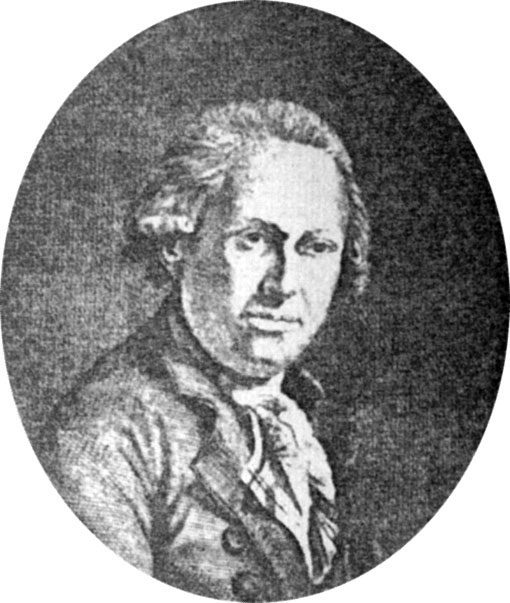
(6) – Johann Buttikofer [Public domain], via Wikimedia Commons
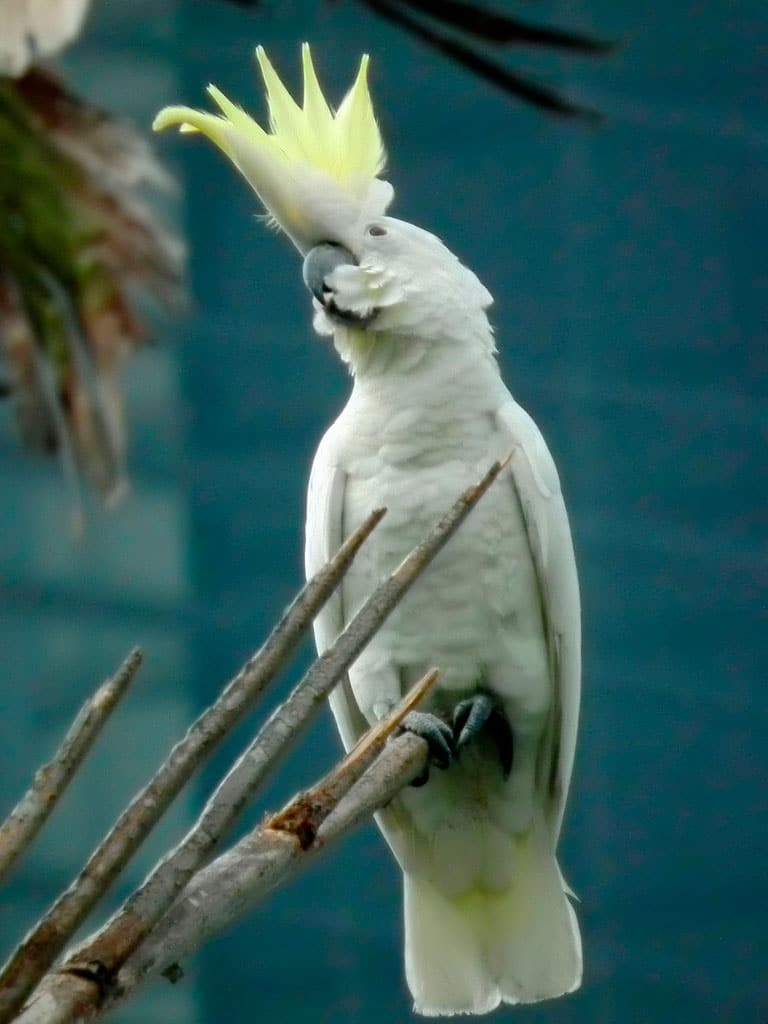
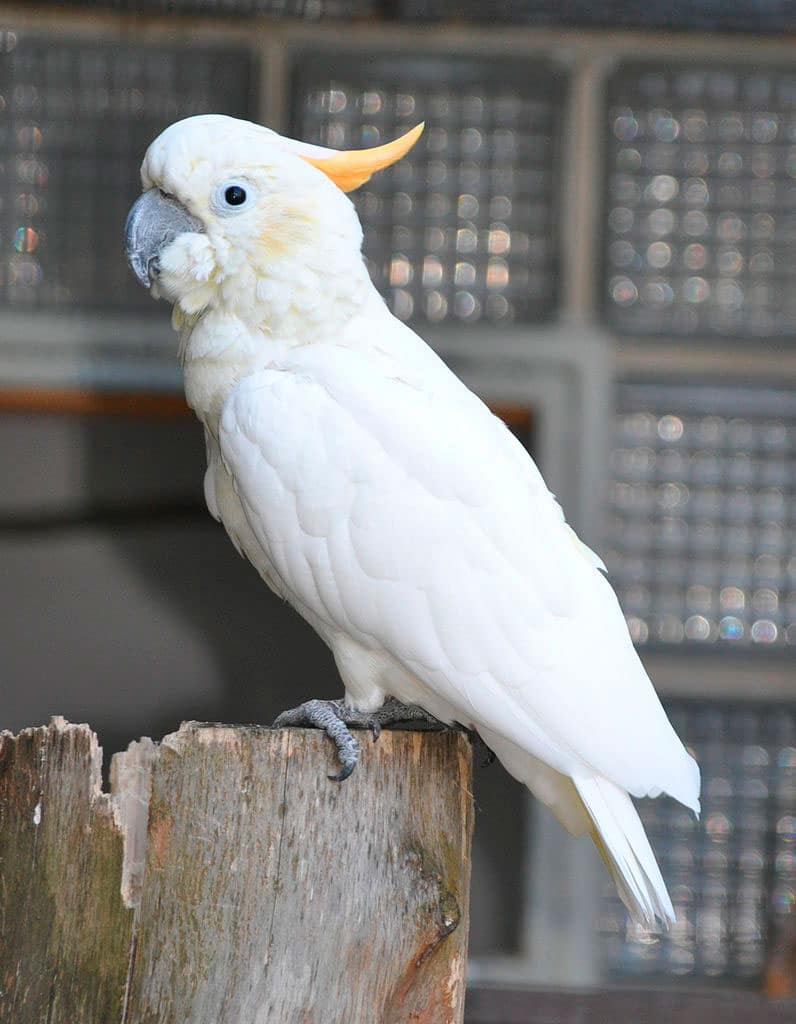
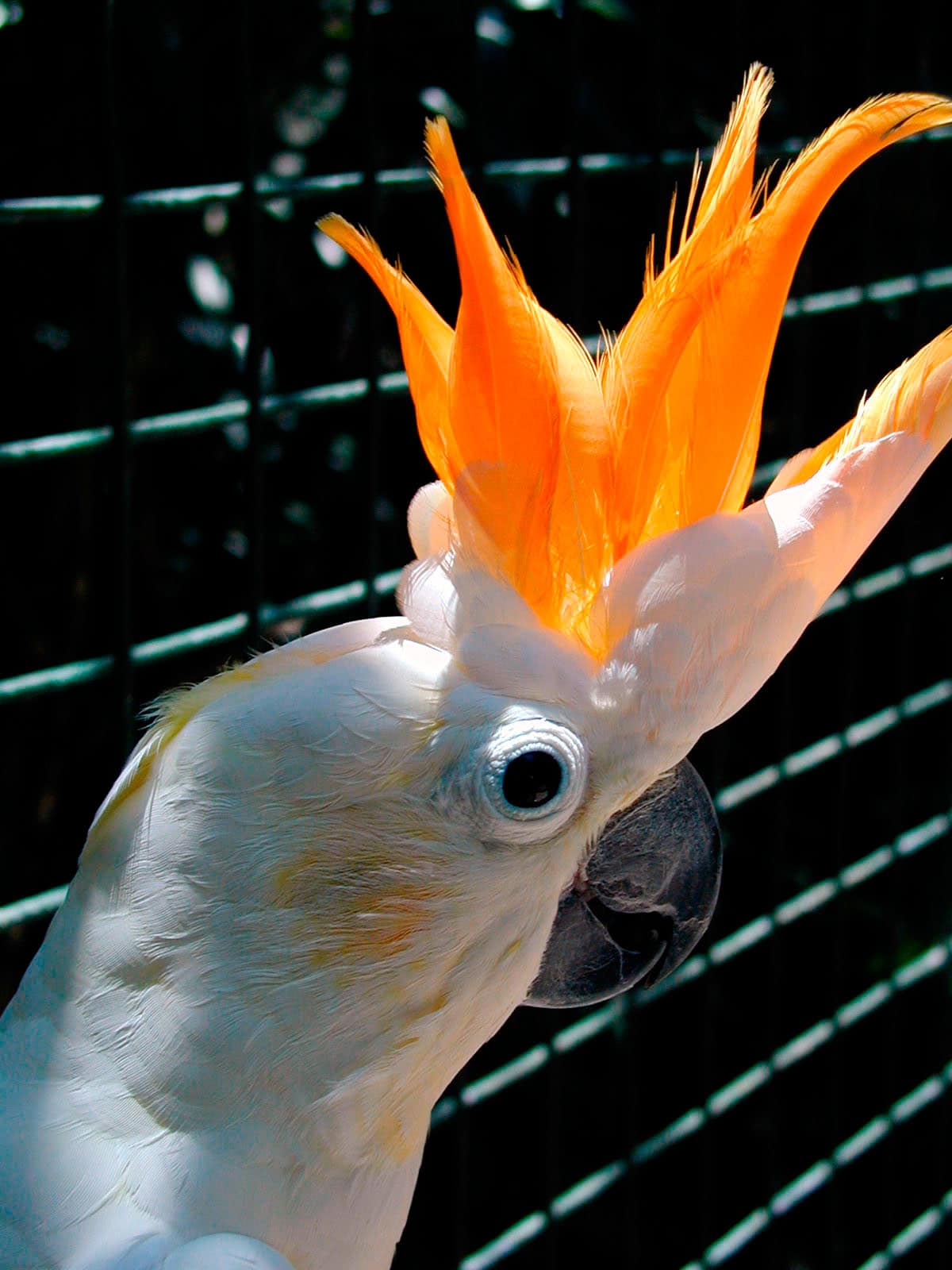
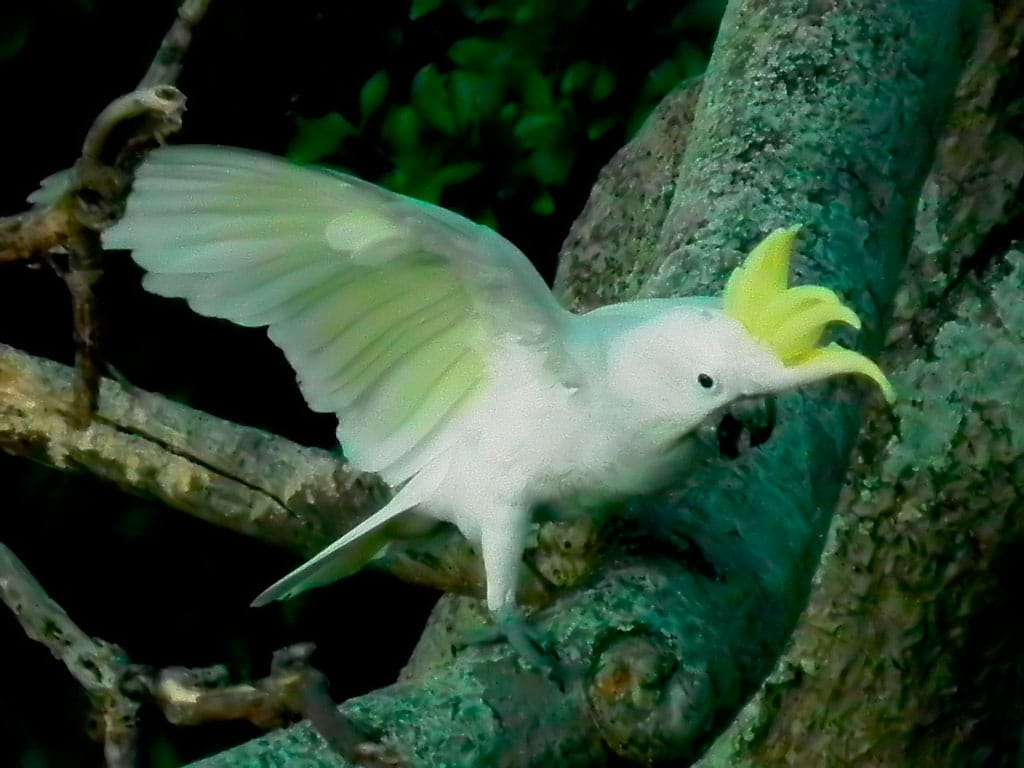
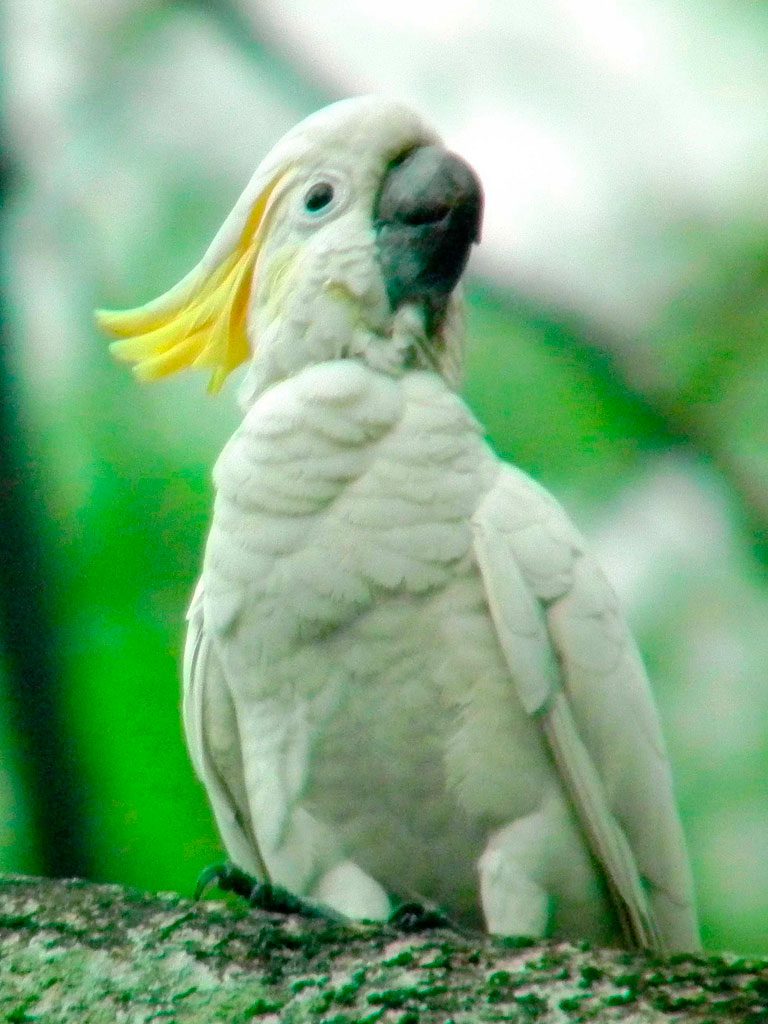
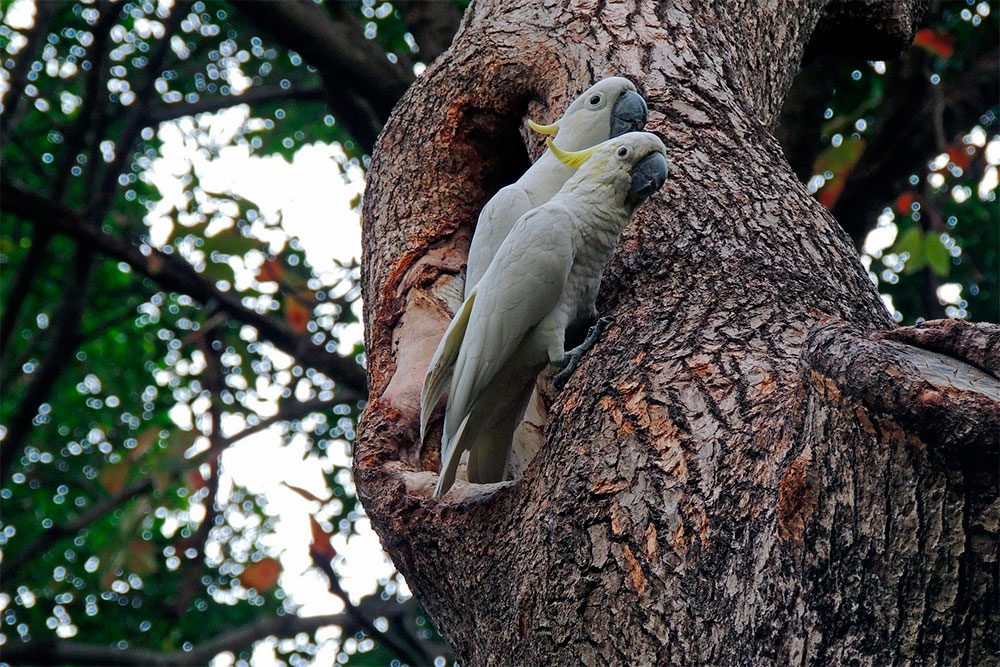
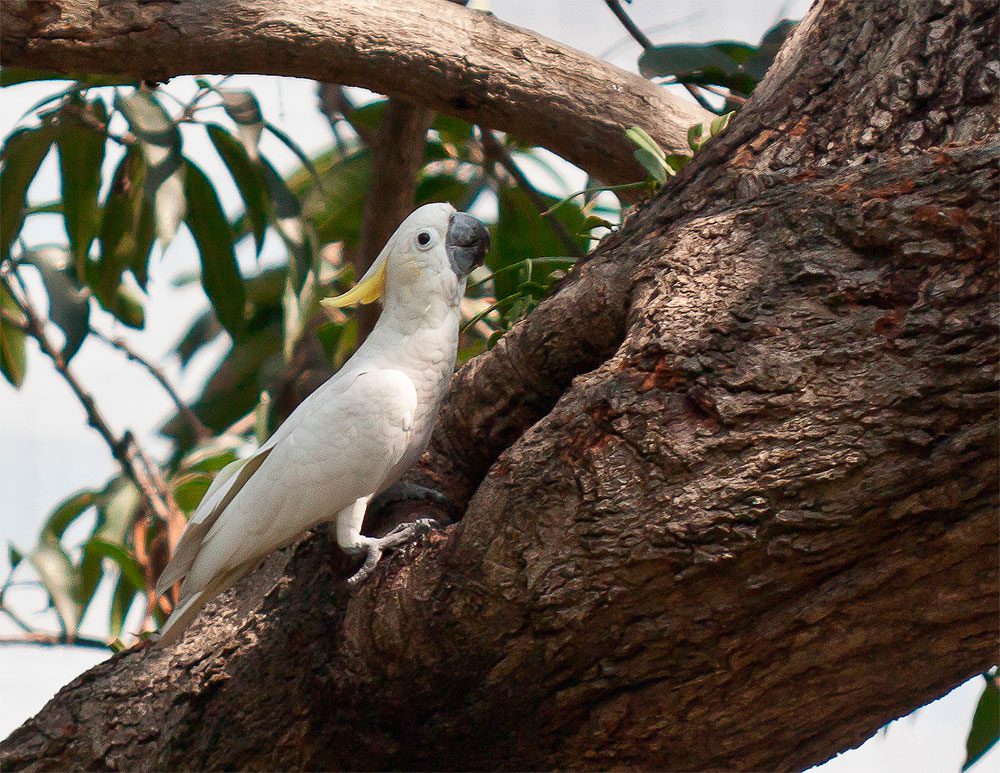
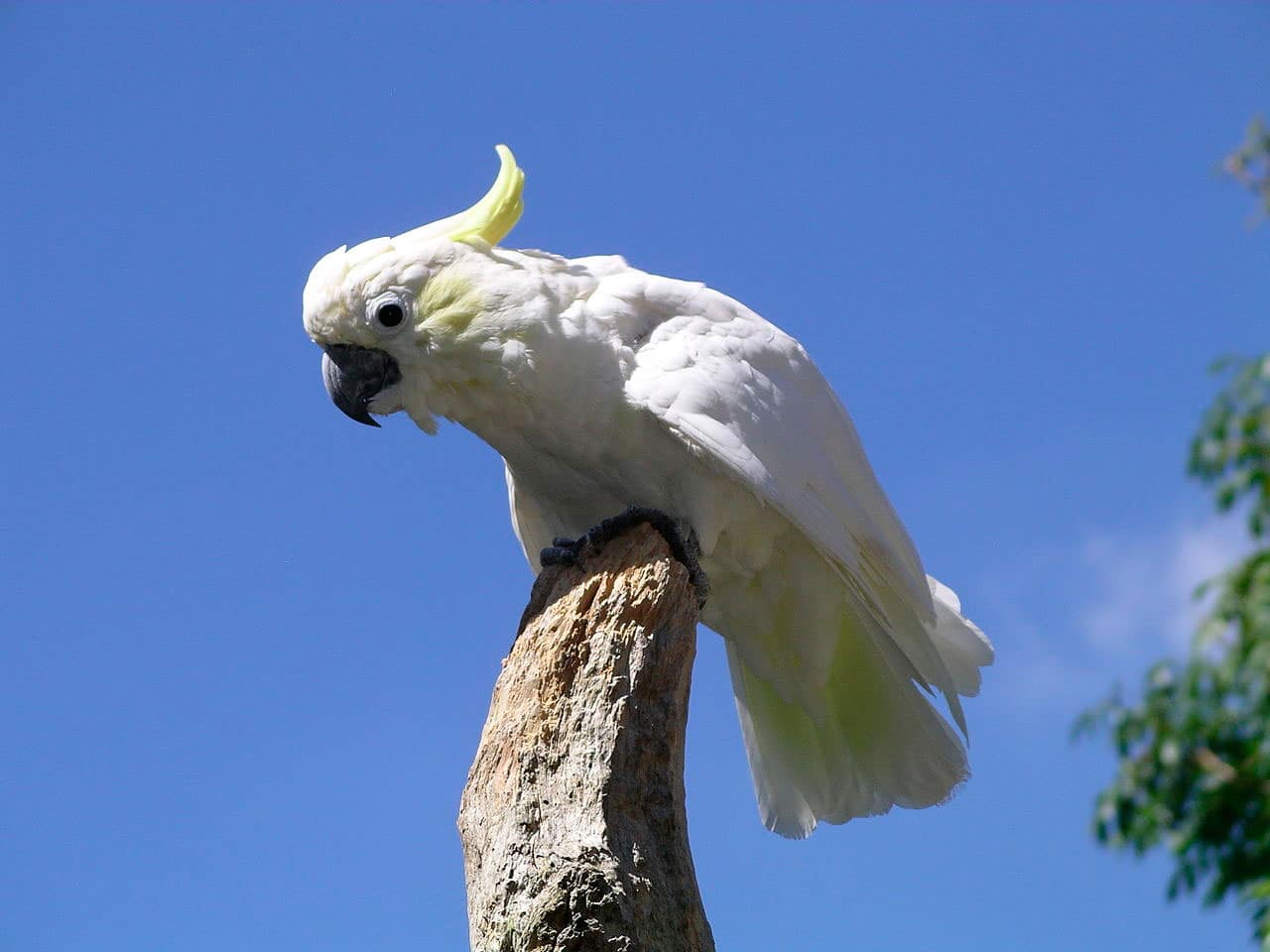
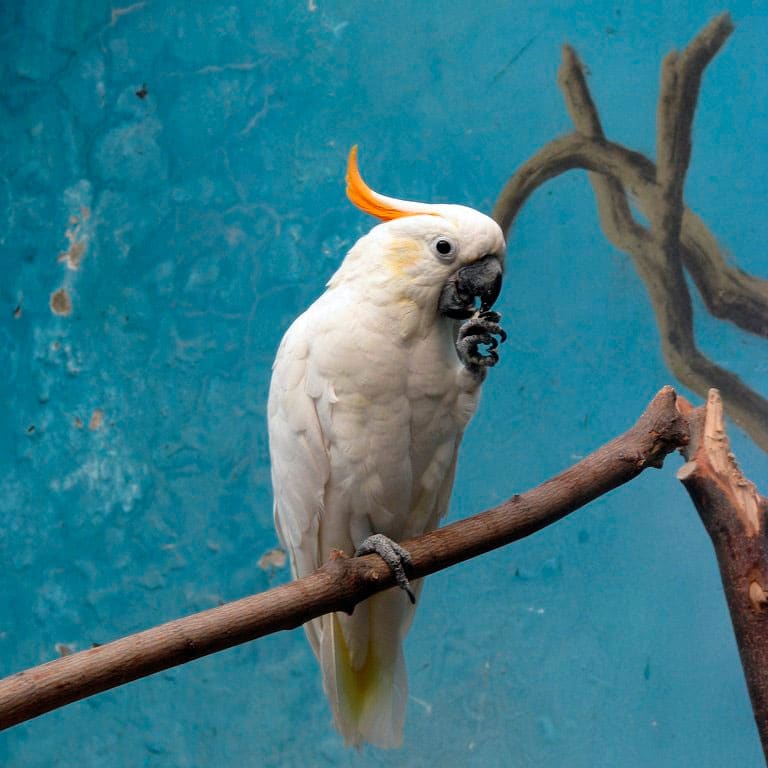
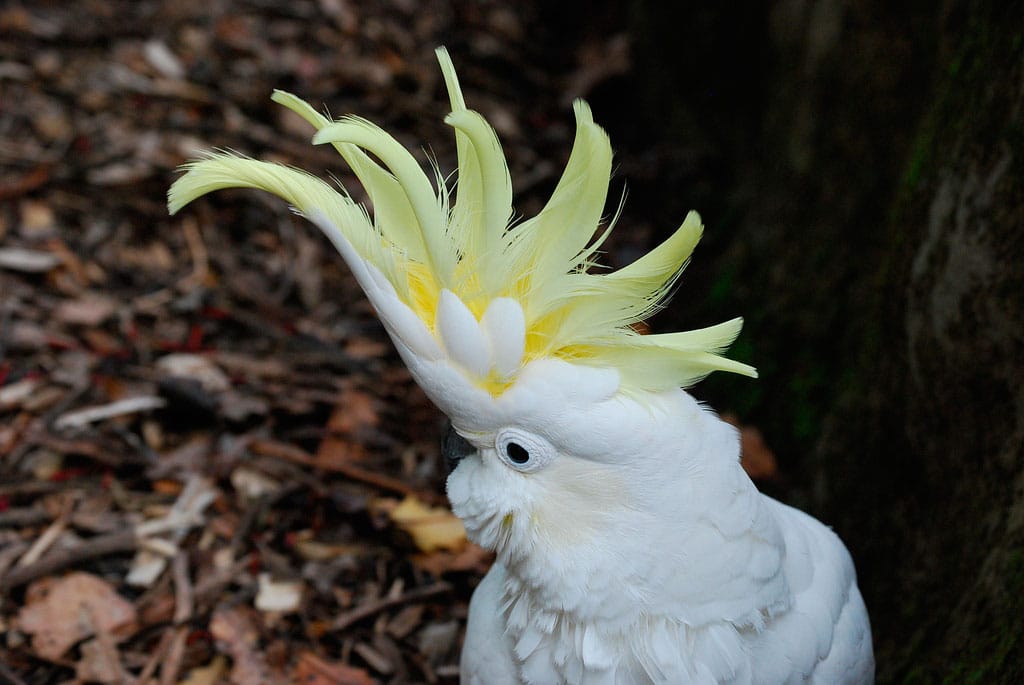
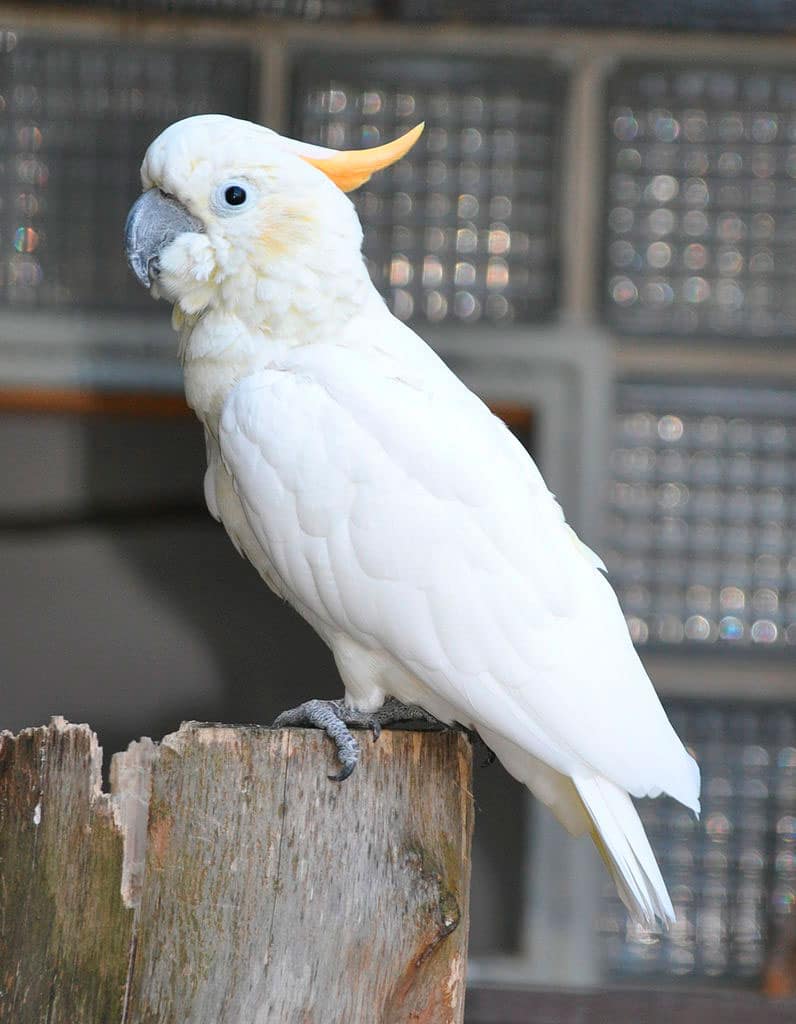
The Yellow-crested cockatoo(Cacatua sulphurea) It is distinguished by its long, thin yellow erectile crest, that curves forward, and extending upward, above the nape, when it folded. The front of his crown and main feathers crest, are white. The rest of your plumage It is also white, except in yellow suffusion ear-coverts, under the wings and in the innerwebs of the undertail-coverts. The bases of the hackles and underparts, They are yellowed; some birds show a slight yellow tone, particularly on chest and the belly. The bill It is black; eye ring pale bluish; irises dark brown; legs grey. The female is similar to the male but with the irises reddish and slightly smaller.
The young birds They show both sexes irises dark taupe, although females They begin to acquire the red coloration in the first year. The bill and legs immature are also lighter.
(Oberholser, 1917) – Similar to the parvula, but largest.
Cacatua sulphurea citrinocristata
Cacatua sulphurea citrinocristata
(Fraser, 1844) – Slightly larger than the nominal, with one crest orange & ear-coverts orange yellow. Additional research may provide a basis for improving this subspecies to a specific status..
Cacatua sulphurea parvula
(Bonaparte, 1850) – Similar to the nominal species, but with the ear-coverts paler and less yellow on yellow feathers underparts. the size of the bill in this subspecies it increases clinically towards the west.
They inhabit at the edges of the forest, wooded areas, farmland, cocoteros, semi-arid areas and forests until the 800 m (locally 1.200 m).
The Yellow-crested cockatoo usually they found in pairs or small groups of up to ten individuals, although they may meet in larger flocks to feed on fruit trees. They can form flocks with Eclectus Parrot(Eclectus roratus).
They tend to be noisy and visible, but can be difficult to spot when moving silently in the canopy, and they are more often in flight. The groups who leave their resting places in the montane forest areas frequently displace forage at lower altitudes including cultivated fields. Pairs may hover conspicuously above the forest canopy searching for fruitful trees, allowing a reasonably close approach when resting on a branch.
The crest It is generally stands when landing, or when an individual is making calls from a perch. Like most of the Cockatoos They enjoy a bath in the rain.
Reproduction:
Specimens of Yellow-crested cockatoo on the island of button in State reproductive during the months of September and October, although Nusa Tenggara the breeding It occurs in the months of April and May. The female It lays two or three white eggs in the hollow of a tree, and incubation lasts around 28 days with both parents participating. Chicks they leave the nest to 10 weeks and are dependent parent for about two months.
Food:
They feed in trees and soil. Its diet It includes seeds, corn (Zea mays) of cultivated fields, fruit, berries, egg yolks, flowers and nuts (including large coconuts (cocos nucifera)).
Distribution and status:
Size of its range (breeding/resident ): 1.360.000 km2
The Yellow-crested cockatoo They are confined Indonesian, where they can be seen in the lowlands Isla Celebes (virtually extinct in the north), islands in the Flores sea, in Nusa Tenggara and isolated islands Masalembu in the Java Sea.
introduced in Singapore and Hong Kong. The species is found in both wooded areas and cultivated and is scarce throughout its range. It is estimated that the world population total is less than 40.000 birds and is decreasing. Although populations of the nominal subspecies and of the subspecies parvula may still be close to 10.000 specimens, the citrinocristata subspecies It has an estimated population between 800 and 7.200 only individuals, having declined by 80% between the years 1986 and 1989, while the distinctive subspecies abbotti It is now represented by only nine individuals in nature.
Although habitat loss is clearly a factor in Sumba, where distribution appears to be linked to the extent of primary forest (is only about 15% the original forest), trade is the main threat to the species as a whole. Trade data show that exported almost 100.000 birds in years 1980-1992. The export citrinocristata subspecies It was banned in 1992 by local authorities, and 26 birds were confiscated in September of that year. There are probably at least 50 individuals of each subspecies in public collections and more than 2.000 in private aviculture, although the numbers for the subspecies abbotti They are unknown.
(Fraser, 1844) – Sumba, where it can be seen in the remaining forest around left, or east of the island, where it may still be locally common; an expedition of the Manchester Metropolitan University found it common in the remaining forest areas in 1990, with the greatest discovery of birds, a group of five birds, found in primary forest near Tabundung
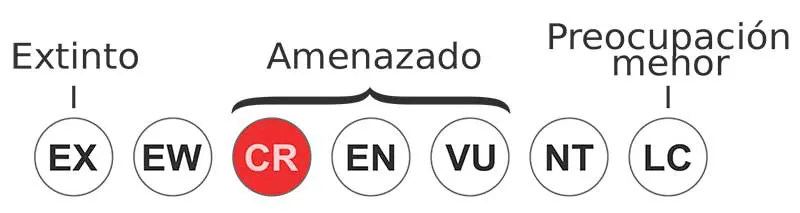
• Current category of the Red List of the UICN: critically endangered.
• Population trend: Decreasing.
Its crashing fall It is almost entirely attributable to the unsustainable exploitation for domestic and international trade. Logging to the conversion of forests for agriculture as well as the use of pesticides for land and large-scale.
Justification of the population
Based on recent surveys in various parts of the range of the species, C. Trainor in some (2007) It has been estimated the world population in less than 7.000 individuals: 3.200-5.000 en Sumba (though perhaps only 562 in 2012, Burung Indonesia en preparación), 500 en Komodo, 200-300 en Timor Leste, 200-300 en Sulawesi, 20-50 in West Timor, 40-70 Flores, 50-100 en Sumbawa, 100 in Rinca and other 700 birds in total. The best data is located in the band 2.500-9.999 individuals, equivalent to 1.667-6.666 mature individuals, rounded here to 1.500-7.000 mature individuals.
Conservation actions and research in progress
CITES Appendix I (2005). It has developed and adopted a recovery plan cooperative and has prepared an update 2012 (D. Mulyawati in some. 2012). The populations are found in various protected areas, It is the most important Rawa Aopa Watumohai (55 copies in 2011 [Waugh 2013]) and National Parks Caraente (en Sulawesi), supporting up 100 individuals (transgressed 2006) , Reserva Natural de Wildlife en Pulau Moyo, Komodo National Park and two national parks in Sumba: Manupeu-Tanadaru y Laiwangi-Wanggameti. Nini Konis Santana National Park declared in Timor has a 100 estimated birds (Trainor et al., Without date) . In Rawa Aopa Watumohai nests they have been protected from predators by removing vegetation pendant necklaces and installation of plastic around the tree trunks nesting (Waugh 2013). Moratoriums on international trade are in effect, although it is likely that a large proportion of trade is a national. Several subpopulations of Sulphur-crested Cockatoo have increased in Sumba between 1992 and 2002, due to conservation efforts (including local education, ecotourism and law enforcement), although densities remained below those typical for other cockatoo species (Cahill et al ., 2006) . Capture for trade has declined dramatically in Sumba through a variety of awareness and protection measures of the community (D. Mulyawati in some. 2012).
Following the surveys of 2008 and 2009, the Indonesia Parrot Project and Konservasi Kakatua Indonesia have started meetings with community leaders and villagers in Masakambing and Masalembu, as well as with the military and local police, to raise awareness and gain support for Sulphur-crested Cockatoo conservation (Metz et al. Al., 2009) . A conservation program-awareness-pride has also begun to involve adults and school Archipelago Masalembu (Metz et al. , 2009, Translating et al., 2009) And in Southeast Sulawesi (Anon., 2012). A "village regulation" was written to catch, possess or transport the species and initiate measures to reduce habitat destruction and employ a former village chief to guard and protect nests and study Sulphur-crested Cockatoos (Translating et al., 2009) . Moronone community in Rawa Aopa Watumohai NP, where four members of the village have been hired as Forest Wardens (Anon., 2012), have established similar community-based regulations. The guards protect the species against poachers and perform monitoring activities (Waugh 2013). The pest status of the species can be addressed by planting crops to compensate for losses and to act as a "sacrifice culture", for example, sunflower fields are used to attract the species out of other crops (Waugh 2013). Mangrove restoration is also being used to increase nesting habitat available (Waugh 2013). a repeat of the population census is planned abbotti , together with studies on its biological history and ecology (Metz et al., 2009) .
Proposed Research and Conservation Actions
Carry out further studies (including Roti, but also more studies on Alor and Pantar) to identify the most appropriate action for conservation areas and to periodically monitor key population surveys repeating ago 8-10 years. Provide relevant support for protected areas and conservation initiatives within its range and protect nests when possible. Strengthen the protection of forest Poronumbu, Sumba, declaring Nature Reserve (Translating y Agustina 2012). Strengthen control, the enforcement and monitoring of trade and establishing greater management of captive populations. Improve law enforcement in designated protected areas and other key areas for trade, including ports, markets, etc. Promote widespread community conservation initiatives. These may include, en la isla de Pasoso, Sulawesi Central, work to protect the Sulphur-crested Cockatoo should involve all five families living on the island and introduce community involvement programs for children and adults on several other islands where the species occurs (Translating y Agustina 2012). The recommendations formulated specifically for the protection of the species in the Komodo National Park consisted of carrying out an annual monitoring, maintain regular patrols, sensitize local communities and studying human activities and impacts within the park (Imansyah et al ., 2005, Benstead 2006) . Conduct ecological research to clarify options for management and conservation. Other objectives should be to study the abundance and distribution of nest holes and water sources.. The provision of artificial sources of water near the nesting sites, that is to say, water ponds, It is essential for the species on the island of Komodo and may also be necessary to protect the nests of young Komodo dragons in Komodo (Translating y Agustina, 2012).
"Yellow-crested cockatoo" in captivity:
The male Yellow-crested cockatoo It is especially aggressive with the female, sometimes to kill her. This phenomenon is known in many cockatoo species..
among the white cockatoos, this is somewhat difficult to breed in captivity. As a pet can be a formidable partner provided it has been raised for that purpose and to provide much attention.
It is very difficult for them to disconnect in the presence of their owners and entertain themselves without seeking continuous interaction.
Great ability to imitate human sound within the world of cockatoos.
Note: Because of its status, CRITICALLY ENDANGERED, only controlled captive breeding is recommended in an attempt to recover this species in the wild.
– Avibase
– Parrots of the World – Forshaw Joseph M
– Parrots A Guide to the Parrots of the World – Tony Juniper & Mike Parr
– Birdlife
– Photos:
(1) – Cacatua sulphurea by Charles Lam – Flickr
(2) – Citron-crested Cockatoo(Cacatua sulphurea citrinocristata) in the Walsrode Bird Park, Germany By Quartl (Own work) [CC BY-SA 3.0], via Wikimedia Commons
(3) – A Yellow-crested Cockatoo at Auckland Zoo, New Zealand By Ashleigh Thompson (originally posted to Flickr as Captain) [CC BY 2.0], via Wikimedia Commons
(4) – Cacatua sulphurea citrinocristata, Citron-crested Cockatoo. Photograph of upper body and crest By Ruth Rogers (originally posted to Flickr as Citron Cockatoo) [CC BY 2.0], via Wikimedia Commons
(5) – Citron-crested Cockatoo (Cacatua sulphurea citrinocristata). The glass between the camera and this parrot makes the picture just a little bit blurry By Alexander Tundakov (originally posted to Flickr as White Parrot) [CC BY 2.0], via Wikimedia Commons
(6) – Photo of Lesser Sulphur-crested Cockatoo (wings clipped) By Snowmanradio, with permission from Tropical Birdland, Leicestershire, England. (Own work) [GFDL or CC BY-SA 3.0], via Wikimedia Commons
(7) – Yellow-crested Cockatoo (Cacatua sulphurea) at the KOBE Oji Zoo by opencage.info
(8) – Lesser Sulphur-crested Cockatoo (wings clipped) By Snowmanradio, with permission from Tropical Birdland, Leicestershire, England. (Own work) [GFDL or CC BY-SA 3.0], via Wikimedia Commons
(9) – Yellow-crested Cockatoo (Cacatua sulphurea) by Darren – Flickr
(10) – Yellow-Crested Cockatoo, Cacatua sulphurea by Sek Keung Lo – Flickr
(11) – Cacatua sulphurea by Charles Lam – Flickr
(12) – Cacatua sulphurea by Charles Lam – Flickr
(13) – Cacatua sulphurea by Pichon Charles Lam – Flickr
(14) – A painting of a Yellow-crested Cockatoo, also known as the Lesser Sulphur-crested Cockatoo, (originally captioned «Plyctolophus sulphureus. Lesser Sulphur-crested Cockatoo») by Edward Lear 1812-1888. [Public domain], via Wikimedia Commons
31 to 32 cm.. length and a weight of just 300 g..
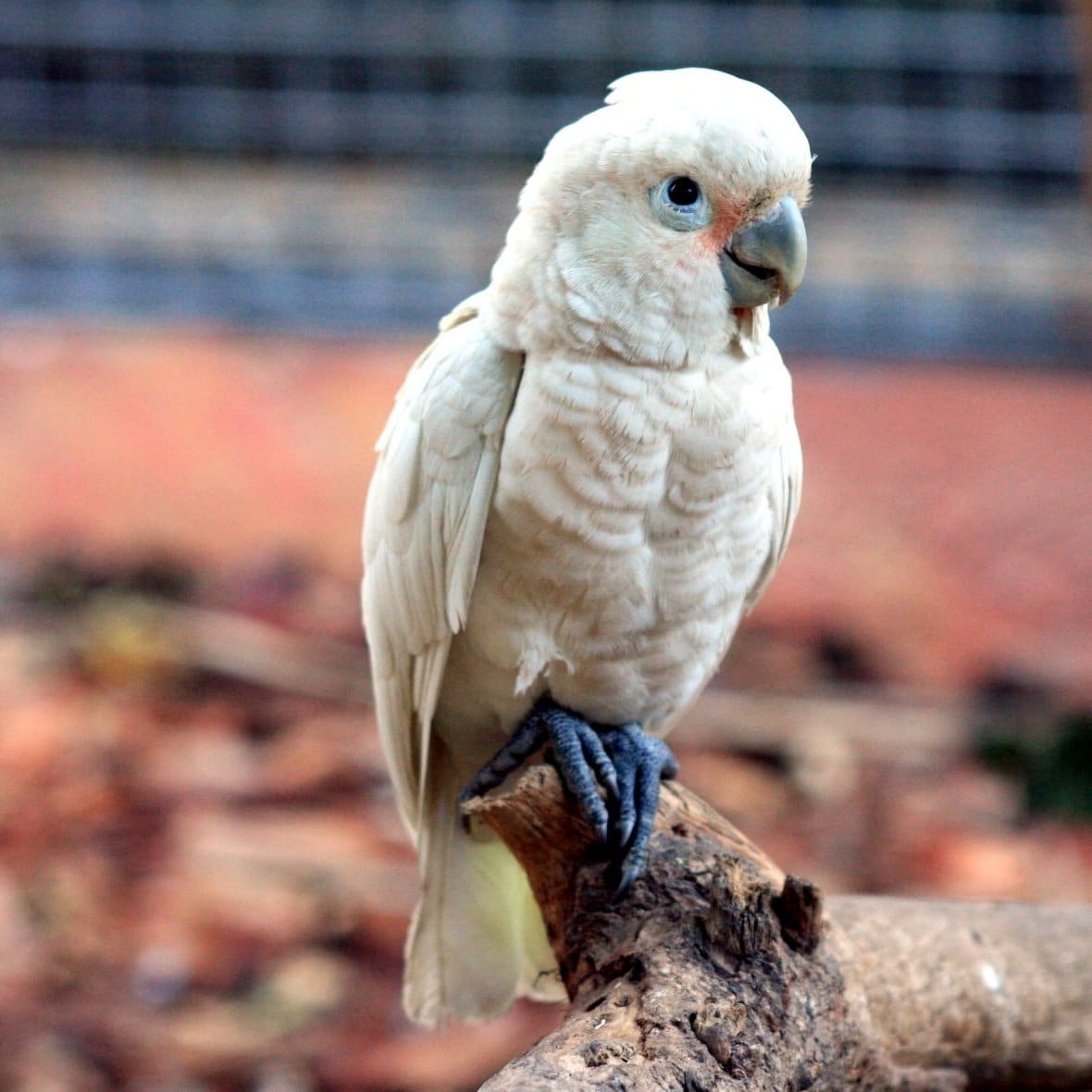
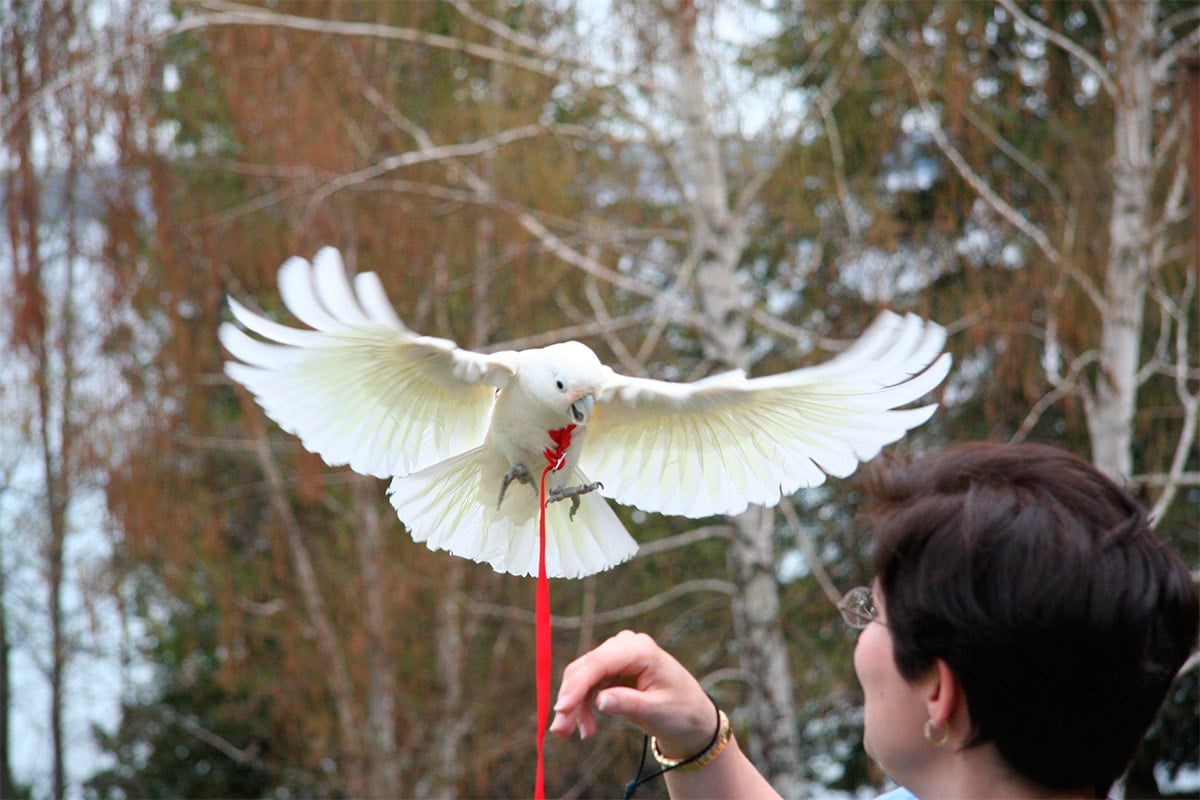
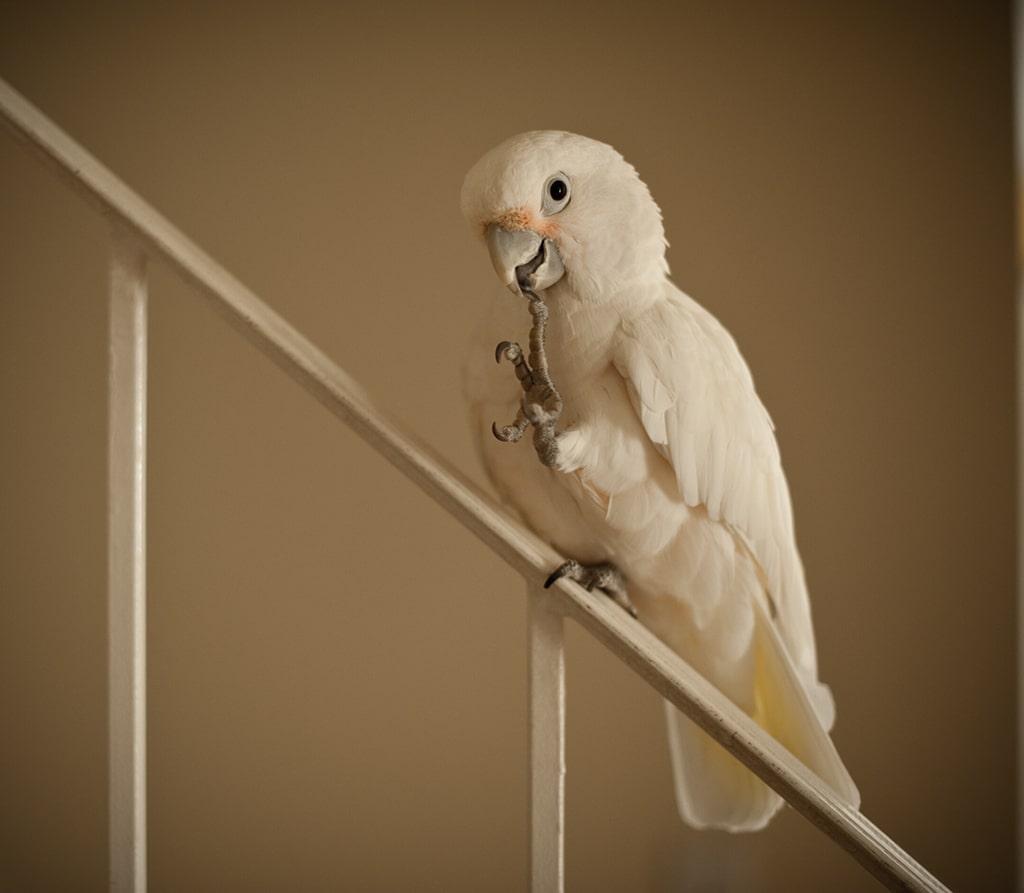
The Tanimbar corella(Cacatua goffiniana), like all family members Cacatuidae, is a species crestada, meaning it has a collection of feathers on its head which can go up or down at will; his body is covered with white feathers with some feathers or salmon pink between bill and eyes.
The deepest parts of the feathers of the crest and of the neck They are also the pink, but the color is hidden by the white color of the more superficial. The bottom of its wings and feathers of the tail They have a yellowish hue. The bill It is pale gray and eyes range from brown to black.
There is a clear sexual dimorphism and, often, merge with the blood cockatoo(Cacatua sanguinea) due to their similar appearance.
Riparian forests, thickets of acacias and eucalyptus with short grass or pasture with scattered groups of trees.
Reproduction:
The start is two to three eggs, generally deposited in the hollow of a tree. The incubation, that is shared by two birds, lasts a few 30 days. The chicks they leave the nest about ten weeks after hatching, and feeding by the parents continues for another few weeks.
Size of the area of distribution (reproduction / resident): 9.100 km2
The Tanimbar Cockatoo It is a species of cockatoo endemic to the forests of Yamdena, Larat and Selaru, all the islands of the Tanimbar Islands of Indonesian. This species has been introduced in the Kai Islands, Indonesian, Puerto Rico and Mexico.
Conservation:
State of conservation ⓘ
Near Threatened ⓘ(UICN)ⓘ
• Current IUCN Red List category: Near-threatened.
• Population trend: Decreasing.
In the Decade of 1970, Japanese loggers ravaged the Islands. Many birds were stunned and disoriented and were captured for pet trade. Although many died from stress during transport, there is still some hope after this ecological disaster, since many cockatoos managed to reproduce in the programs of captive breeding. So, there are now more specimens in captivity than in their natural habitat.
This species has a range very small, but its population is severely fragmented or restricted to a few places. Despite suffering from the pressure of his capture, seems to have maintained a large population. But, the degradation of the habitat, trapping and continuous persecution is likely to be causing a moderate reduction of the population. Therefore it is classified as Near-threatened.
There is a conservation plan in endemic parrots Tanimbar Islands, Indonesian, financed by LORO PARQUE FUNDACIÓN
"Tanimbar corella" in captivity:
You can show a fearful beginning, but you quickly get used to their caregiver, turning into a very cockatoo sweet, playful, sometimes inquisitive and very active. Enjoy being observed, being the center of the world, like all cockatoos. His cry is not nice, but this little cockatoo is quickly forgiven everything as his antics and bad manners will surprise us and make us laugh.
Has the continuing need to fly so you need a large space.
Curiosities:
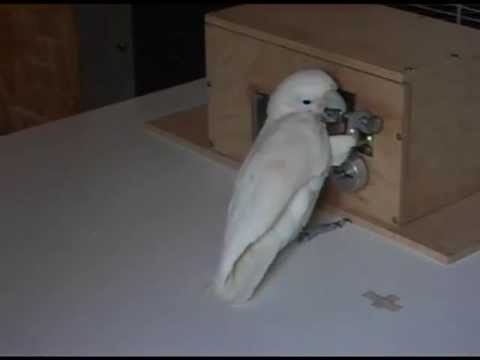
A Tanimbar corella, without previous training, open five types different locks:
The incredible mechanical intelligence of the Tanimbar cockatoos 1
The crown of the Yellow-capped Pygmy-Parrot(Micropsitta keiensis) is yellow ocher, with a warm brown in forecrown; lores, chin and area under the eyes, brown; coverts outpus, dark green, tending to lighter green on cheeks and throat.
Upperparts, dark green with center at wing-coverts and feathers of black color with a black colored margin extrecho; flight feather black with vane Green external; feathers wings green. The underparts are yellowish-green, with fine dark stripes; undertail-coverts yellow and green. Upper, the tail It is iridescent, slightly greenish blue in the Center, Foreign feathers blackish with yellow spot on the ends. Under, the tail dark blue and yellow.
Bill dark grey; irises brown; legs dark gray.
Both sexes similar. Immature like females but with bill pale yellow.
(Rothschild, 1911) – Similar a nominal, but darker.
Micropsitta keiensis chloroxantha
(Oberholser, 1917) – The mature more muted. The underparts with red markings male, dyed yellowish in female.
Habitat:
It inhabits in the forests of lowlands, in secondary growth and, sometimes around inhabited areas and coconut trees. The ecology species is similar to that of the Buff-faced Pygmy-Parrot. The birds are alone, in pairs or in small groups, and they can be distributed by undergrowth to some 20 meters above the ground. They climb on trunks and branches, and they can go down head, in inverted position, sometimes.
Reproduction:
Nest and roost Termites in tree cavities, they excavate the cavity by themselves; tunnel passageways go up and may bend before reaching nest-chamber. up the laying two white eggs deposited in a cavity unlined (dimensions around 20 cm x 15 cm.), and they can be occupied by other adults roost (up to four) during the breeding season. The exact role of these visiting birds is unknown, It is thought that they can help with the tasks of nest. nesting It has been recorded from October to March
Food:
With feed lichen, fungi, seeds, fruits and insects. Most of the lichen is collected directly from the surface of the bark of trees..
Distribution:
Size of its range (breeding/resident): 763.000 km2