▷ The world of Pets: Dogs, cats, birds, reptiles, amphibians

Korat cat
Federations: LOOF, CFA, ACF, ACFA, TICA, FIFé, WCF

Known as a good luck messenger in his native Thailand, the Korat cat has always been a very popular wedding gift. This tradition continues today.

Korat

Content

Characteristics "Korat cat"

Coexistence is important that you have with your new friend. Before considering the acquisition of a cat of the breed "Korat cat" you know certain factors. You must take into account their character, their need for exercise, their interaction with other pets, their care and if you have small children, their level of tolerance towards them.

Joy

4,0 of 5 stars (based on 1 review)

Activity level

4,0 of 5 stars (based on 1 review)

Friendliness to other pets

3,0 of 5 stars (based on 1 review)

Friendliness to children

3,0 of 5 stars (based on 1 review)

Grooming requirements

1,0 of 5 stars (based on 1 review)

Vocality

2,0 of 5 stars (based on 1 review)

Need for attention

4,0 of 5 stars (based on 1 review)

Affection towards its owners

5,0 of 5 stars (based on 1 review)

Docility

1,0 of 5 stars (based on 1 review)

Intelligence

4,0 of 5 stars (based on 1 review)

Independence

2,0 of 5 stars (based on 1 review)

Hardiness

2,0 of 5 stars (based on 1 review)

History

The Korat is originally from Siam (current Thailand) and is one of the oldest breeds of domestic cats.

The first references appear in the Tamra Maew, or "Book of Cat Poems", a manuscript written in the city of Ayutthaya between 1350 (when the kingdom of Siam was founded) and 1767 (when the city was sacked by the Burmese invaders). At the end of the 19th century, King Rama V (1869-1910) asked the monk Somdej Phra Buddhacharm Buddhasarmathera to reproduce this text on paper Khoi, version kept in the National Library in Bangkok.

This work describes 17 cats that bring good luck to their masters, and other 6 that bring bad luck. The Korat cat It is one of the most valued lucky cats in the country., and many traditions are associated with it; for example, it is given to brides as a guarantee of a happy marriage, and usually appears in ceremonies to attract rain for the cultivation of rice. Apparently, at that time, the Korat He was a "town cat", unlike in the Siamese cat, which was mainly adopted by the nobility of the kingdom of Siam.

The first Korats appeared in Great Britain in the late 19th century and are mentioned in the Book of Cats published in 1903 by Frances Simpson, Judge and feline historian. They were shown at cat shows as "blue Siamese", but this did not convince the judges, They had a different perception of Siamese. As a result, they were unsuccessful and disappeared from the country at the beginning of the 20th century.

But, the Korat returned to the western world in 1959, When Jean Johnson brought to the United States a couple of Korats (Nara and Darra) that her Foreign Service colleagues gave her husband when he left Thailand. Based in Oregon, his kennel Cedar Glen then imported other specimens at the beginning of the years 60 and was the first in the West to start a breeding program for Korat. Not in vain, the breed was officially recognized in 1966 by the CFA (Cat Fanciers’ Association), the main feline organization in the country.

The Korats they returned to the UK (and to europe) in 1972, and the first copies appeared in France in 1979. The recognition of the race by the TICA (International Cat Association) arrived that same year, and the FiFé (International Cat Federation) did the same the following year, in 1980.

Although today it is recognized by the vast majority of organizations, the Korat still a rare breed of cat in the western world. In United States, appears in the last positions of the breed classification according to the number of annual registrations in the CFA, and it hardly does any better in the UK, with less than a hundred individuals enrolled annually in the GCCF – a figure that also tends to decrease year after year. In France, the records in the Livre Officiel des Origines Félines (LOOF) were almost non-existent until 2010, but since 2013 some are registered 50 kittens a year.

Physical characteristics
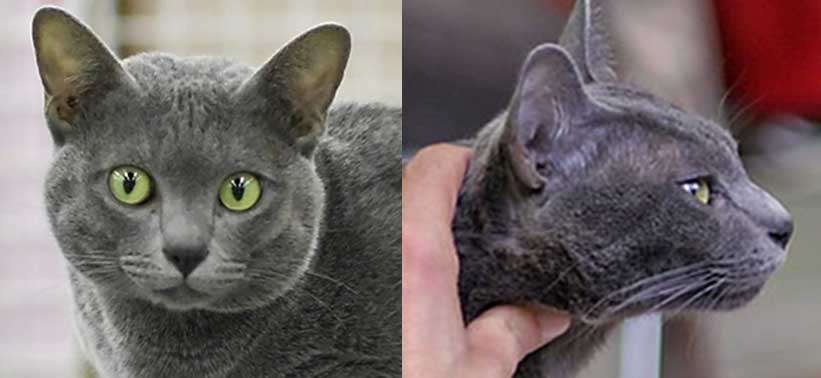
Korat
Korat Yog-Hurt’s Atlach-Nacha at Turok Cat Show – Yog-Hurt's_Atlach-Nacha_at_Turok_Cat_Show.JPG: HeikkisiltalaGIC_Lucky_Uffe_at_cat_show_Hyvinkää.JPG: Heikkisiltaladerivative work: Abujoy, CC BY-SA 3.0, via Wikimedia Commons

The Korat it is a medium size cat, semilineal, with a medium-length tail that tapers to the tip. His powerful and muscular body makes him heavier than he seems, especially when fully grown, around the 3 years. But, this does not prevent him from being an agile cat.

Its head looks quite unusual: seen from the front, it has a heart shape, with ears large, round tip and high implantation. Their eyes large, round and expressive look oversized for your head, but they retain the typical "oriental" inclination when closed or half closed. Kittens usually have yellow-amber eyes, but they turn green when they mature.

The fur it's short to medium, without Undercoat. Fine and closed, tends to bristle on the back when in motion. The coat is a uniform silvery blue color, no shading, marks or stains. The coat is glossier at the root, then tints to a darker blue and ends with a pronounced silver sheen. In the extremities of the body, where the hair is shorter, this silver glow is more intense.

The sexual dimorphism is moderately marked, the female being slightly smaller than the male.

Size and weight

  • Male size: 22 – 28 cm.
  • female size: 20 – 26 cm.
  • Male weight: 3,5 – 4,5 kg
  • female weight: 2,5 – 4 kg

Varieties:

In the Korat a recessive gene has appeared that can cause the silvery-blue color to fade, so it is not uncommon for kittens to be born with a purple-lilac color. This unrecognized variety is known as thai lilac.

Character and skills

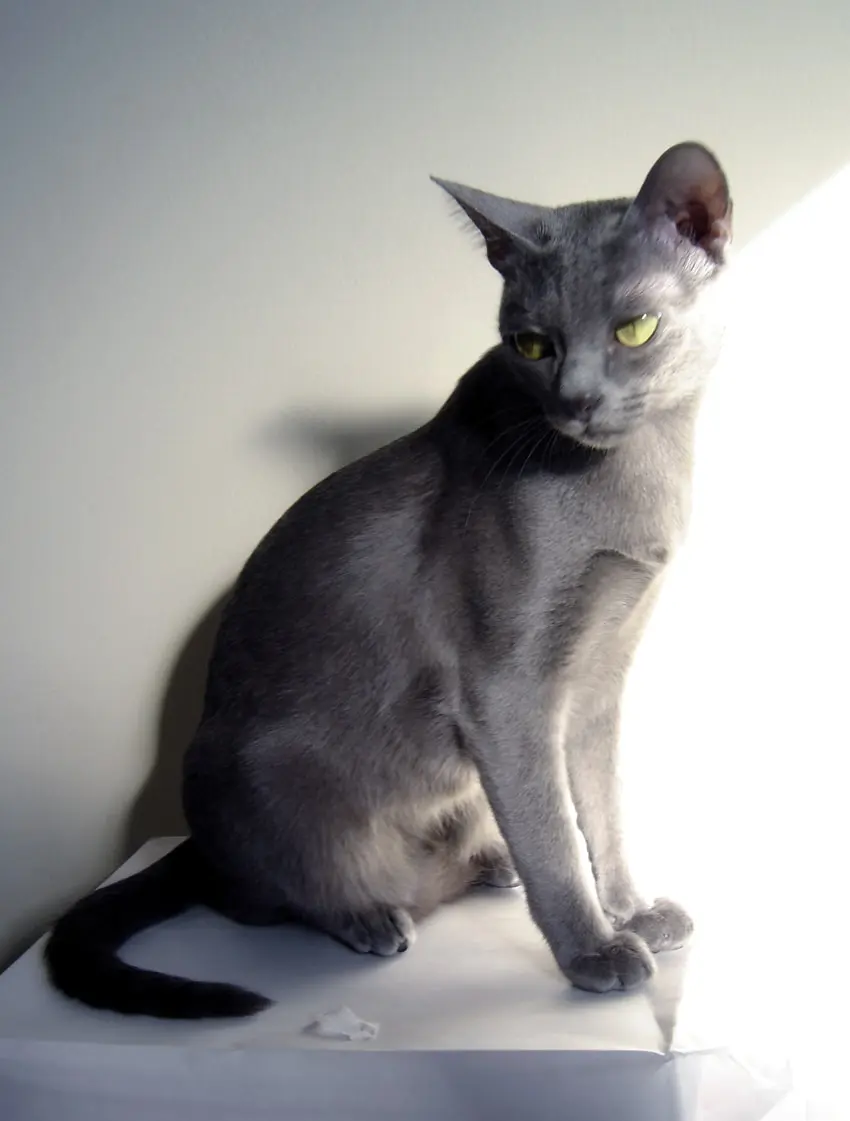
Korat
Sitting female Korat cat with typical bulbous green eyes and blue sheen – Heikkisiltala, CC BY 3.0, via Wikimedia Commons
gentle and affectionate, the Korat he is unfailingly loyal to his master, whose company constantly seeks. He likes pampering, and spends most of the time near him to receive caresses and attention. It is not a breed of cat that easily supports loneliness: he does not like to stay home without his family, and if you have to stay there too long and too often, he runs the risk of shutting down and losing his usual affection.

The Korat it is also a breed of cat that adapts to children, appreciating playing with them and spending time with them. On the other hand, does not seek the company of other cats: between their fellow humans and the humans in their family, your preference is quite found. Its calm character makes it normally tolerate the presence of other cats or dogs accustomed to cats in its territory without problems., as long as it remains the main focus of its owner's attention. On the other hand, coexistence with birds or small rodents is not recommended.

Lively and playful, likes to chase a ball or chase paper balls thrown by their owner. But, no matter how active it is, he is not the destructive type and is perfectly comfortable in a flat without going out as long as his family takes the time to play with him.

By the way, noise and commotion are not for him either. Although they can tolerate the noise of a television or computer, they are likely to be startled by a loud ringing phone or if a family member starts listening to loud music.

It is a very intelligent and docile cat, that can be trained relatively easily and that respects, for example, the places that are forbidden, like the dining room table, the kitchen or the clothes closet. Last, the Korat it's not very noisy. Instead of meowing, often chooses to attract attention by rubbing around the paws or nibbling on the balls of the feet. But, they don't shut up: if they think they have something important to say, they do not hesitate to do it.

In short, its qualities and characteristics combine to make it a suitable breed as a first cat for someone with sufficient availability, but that will also delight an experienced owner.

Grooming and caring for the "Korat cat"

When it comes to coat care, cats Korat they do not have any complications. Their short coat, fine and silky does not require any special care. Regular brushing with a soft brush or comb is sufficient. The silver gray cloak with its silver hair tips has no undercoat, so it only needs to be brushed more frequently during the coat change season. However, it is worth brushing the Korat regularly, since this affectionate cat enjoys any kind of attention.

Being a house cat that does not explore the outside much, even when you have free access to it, it doesn't get very dirty, so it is generally not necessary to bathe him.

Indoor or outdoor cat?

Like al European shorthair cat (Common european cat), to the cats Korat they love to be outdoors and roam. So, it is perfect if you live in a rural area and you can grant them free access. It is possible to keep them only inside. If you are willing to spend a lot of time with your new housemate and can offer them a safe garden or at least a safe outside area, the Korat you will feel comfortable even without access to the outside.

How much activity does he need? "Korat cat"?

Purebred cats are very active cats that need adequate exercise and opportunities to climb and, If it is possible, access to the outside. But even if you can give them free access, love getting attention and are reluctant to stop playing and snuggling together. Basically, if you have a Korat at home, you will discover that he likes to be with you in everything you do and seeks your closeness. Ideally, allow the Korat have a partner of your own, so that in case of doubt, always have a playmate available.

Health and nutrition
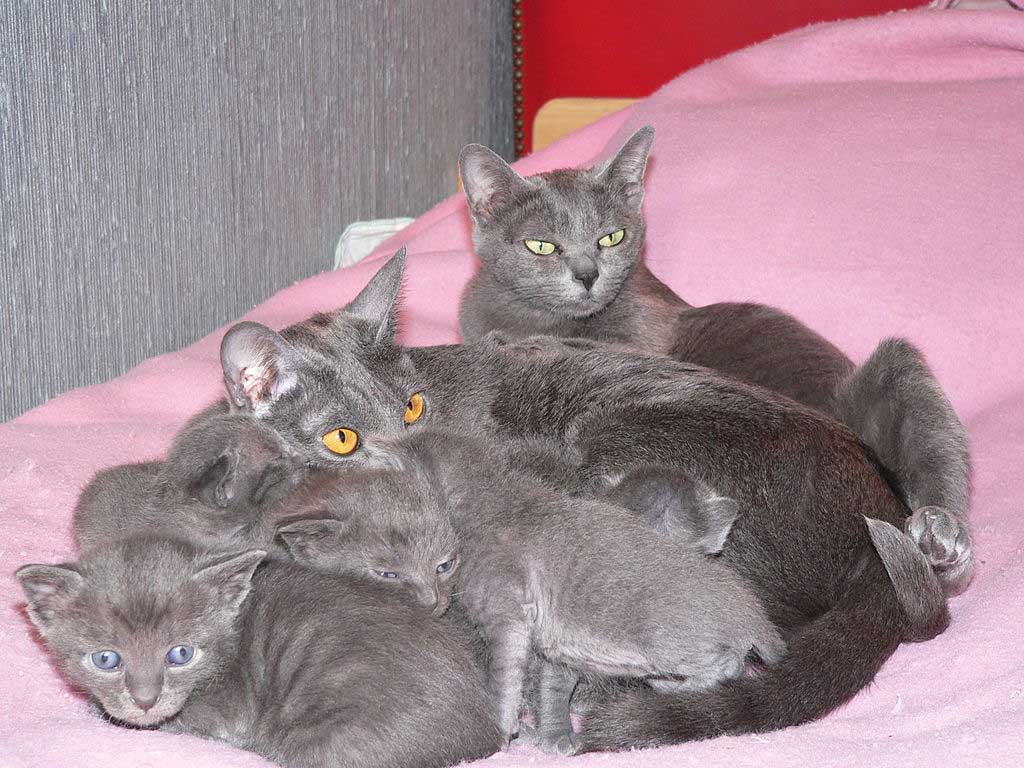
Korat
Korat breed cat family – fr:User:Epita, Max BOUCHE for the KORAT CLUB DE FRANCE, CC BY 2.5, via Wikimedia Commons
The Korat it is a robust cat breed, but it can be affected by certain health problems, starting by :

  • The gangliosidosis, an inherited disease that attacks the nervous system and causes paralysis. Can be detected by a parent and / or kitten test, but any Korat breeder worthy of this name is in charge of eliminating this risk by discarding any carrier individual from reproduction.;
  • the Hypertrophic cardiomyopathy (CMH), a syndrome that makes it difficult for the heart to circulate blood, with potentially very serious consequences for the key.

It also, the Korat appears to be more sensitive than other breeds to certain vaccines. So, it is advisable to ensure that the vet, when taking care of cat vaccinations, know this particularity of the Korat and take all necessary precautions.

Life expectancy

Of 12 to 15 years

Food

Not so difficult, the Korat can be fed with cat food from the market, which are croquettes or paté boxes. But, it is necessary to ensure the quality of the feed, which should provide you with all the essential nutrients for your good health.

like most cats, the Korat is capable of self-regulation, and you can thus permanently leave food at your disposal – at the same time as fresh water – without rushing over her like a hungry man. But, care must be taken that the daily ration given is reasonable, to avoid the risk of the cat becoming overweight or obese, which can cause various diseases and health problems. If required, do not hesitate to consult a veterinarian to choose a suitable diet, depending on the cat's lifestyle.

For sale "Korat cat"

The price of a kitten Korat often haunt them 1.400 EUR. There is no significant price difference between a male and female kitten.

As the number of breeders of Korat is relatively small, you will have to be prepared for waiting times. But the wait is worth it, because Korat cats are robust cats that are not affected by overbreeding and convince with their character.

Videos "Korat cat"

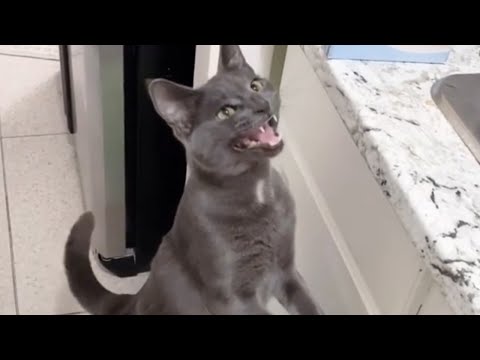
Cute Korat Cat Meowing - Adorable Grey Korat Kittens Purring

Jake The Korat Makes The Purr-fect Therapy Cat | Cats 101

Alternative names:

  • Si sawat
  • The goal
  • Khorat
  • Maeo Dok-Lao
  • Bluish gray cat
  • Lucky cat

  • ▷ The world of Pets: Dogs, cats, birds, reptiles, amphibians

    LaPerm
    Federations: CFA, FIFe, TICA, WCF, ACF, GCCF

    Although today it is present on all continents, the LaPerm still a rare feline breed.
    Laperm
    Photo by lapermcats.info

    Content

    Characteristics "LaPerm"

    Coexistence is important that you have with your new friend. Before considering the acquisition of a cat of the breed "LaPerm" you know certain factors. You must take into account their character, their need for exercise, their interaction with other pets, their care and if you have small children, their level of tolerance towards them.

    Joy

    4,0 of 5 stars (based on 1 review)

    Activity level

    4,0 of 5 stars (based on 1 review)

    Friendliness to other pets

    4,0 of 5 stars (based on 1 review)

    Friendliness to children

    4,0 of 5 stars (based on 1 review)

    Grooming requirements

    2,0 of 5 stars (based on 1 review)

    Vocality

    1,0 of 5 stars (based on 1 review)

    Need for attention

    3,0 of 5 stars (based on 1 review)

    Affection towards its owners

    5,0 of 5 stars (based on 1 review)

    Docility

    4,0 of 5 stars (based on 1 review)

    Intelligence

    4,0 of 5 stars (based on 1 review)

    Independence

    3,0 of 5 stars (based on 1 review)

    Hardiness

    4,0 of 5 stars (based on 1 review)

    History

    The LaPerm is a recent breed of cat that originated in The Dalles, a small town in Oregon (Northwestern United States) located near the hunting grounds of the Wishram Indians, a Chinook tribe.

    In the spring of 1982, a farm cat named Speedy, property of Linda and Richard Koehl, gave birth to a litter of six kittens. They did not know that one of the kittens, a small, hairless female, with big ears and a big heart, would become a new breed.

    after two months, this kitty started showing some curly hair, what caught the attention of Linda Koehl. At four months, the kitten that was now known as Curly he had beautiful soft curly fur. To the Koehl they were amused to see such a special cat, but they accepted it without question, and Curly lived an eventful life as a farm cat.

    He was about to die when, being a young cat, decided to take a nap under the hood of the station wagon. Fortunately, right after starting the car, Linda Koehl heard the panicked screams of Curly and escaped with just a few cuts.

    "LaPerm"

    LaPerm
    Nertus ,black torbie laperm cat LaPerm cat. FiFe’s first international champion – KRL LPL, CC BY-SA 4.0, via Wikimedia Commons

    She grew up and gave birth to her first litter of five kittens, all males and with skin as smooth as their mother's. Intrigued, Linda Koehl He did some research and came to the conclusion that it was some kind of “Rex” mutation., which causes some cats to have a curly coat similar to that of the rabbit Astrex. But, did not go through with this.

    Curly had more litters, giving birth to new hairless kittens of both sexes. One day he disappeared and the Koehl they did not see her again.

    His descendants stayed. In the following years, They lived freely and gave birth to a colony of curly-haired cats in the vicinity of the farm of the Koehl. Several visitors and neighbors convinced Linda Koehl that these cats were unique, so in 1992 decided to present four specimens at a cat show in Portland, Oregon.

    To be able to register them, had to register them with a breed name, so he chose the name of LaPerm. The name of LaPerm refers to curly hair of these cats, reminiscent of the permanent fashion of the years 80, but also to tradition chinook to adopt French words by incorporating your article (for example, "apple" is "lapom" in Chinook).

    These first LaPerm were enthusiastically received, and the judges told Linda Koehl that the breed was unknown and should be preserved. So, 10 years after the birth of Curly, the Koehl they began to breed LaPerms, an activity they weren't prepared for, since they had originally adopted cats to hunt pests, not for the love of the little feline. With the support of other breeders and professionals, among them Solveig Pflueger, a renowned feline geneticist, the couple was able to fulfill the dream of many professional breeders: create a new breed of cats.

    The tests showed that the genetic mutation that caused the LaPerm was due to a different dominant gene than in other type cat breeds Rex (Cornish Rex, Devon Rex, etc.), that is to say, those of curly fur. The dominance of this gene is the main reason for the rapid proliferation of these new cats on the farm of the Koehl: only one parent needed to be a carrier for this mutation to potentially be passed on to kittens.

    In 1997, the creation of a breed club (The LaPerm Society of America) contributed to its recognition by the main feline associations. The first to definitely do so was the International Cat Association (TICA) in 2003, followed by Cat Fancier’s Association (CFA) in 2008. The Governing Council of the Cat Fancy (GCCF) and Fédération Internationale Féline (FiFé) they recognized her in 2012 and 2015 respectively.

    Although today it is present on all continents, the LaPerm still a rare feline breed. in your country of origin, It is in the last positions of the ranking of breeds by number of annual registrations in the CFA. In Britain he was quite successful when he arrived in 2002, with more than a hundred cats registered each year with the GCCF up to 2008, when there was a clear decline. In the second decade of the 21st century, this figure was more like twenty per year. In France, it's even weirder, with solo 20 LaPerm registered in the Official Book of Feline Origins (LOOF) between 2003 and 2018.

    Physical characteristics

    LaPerm
    Kururu, Type: LaPerm Flickr

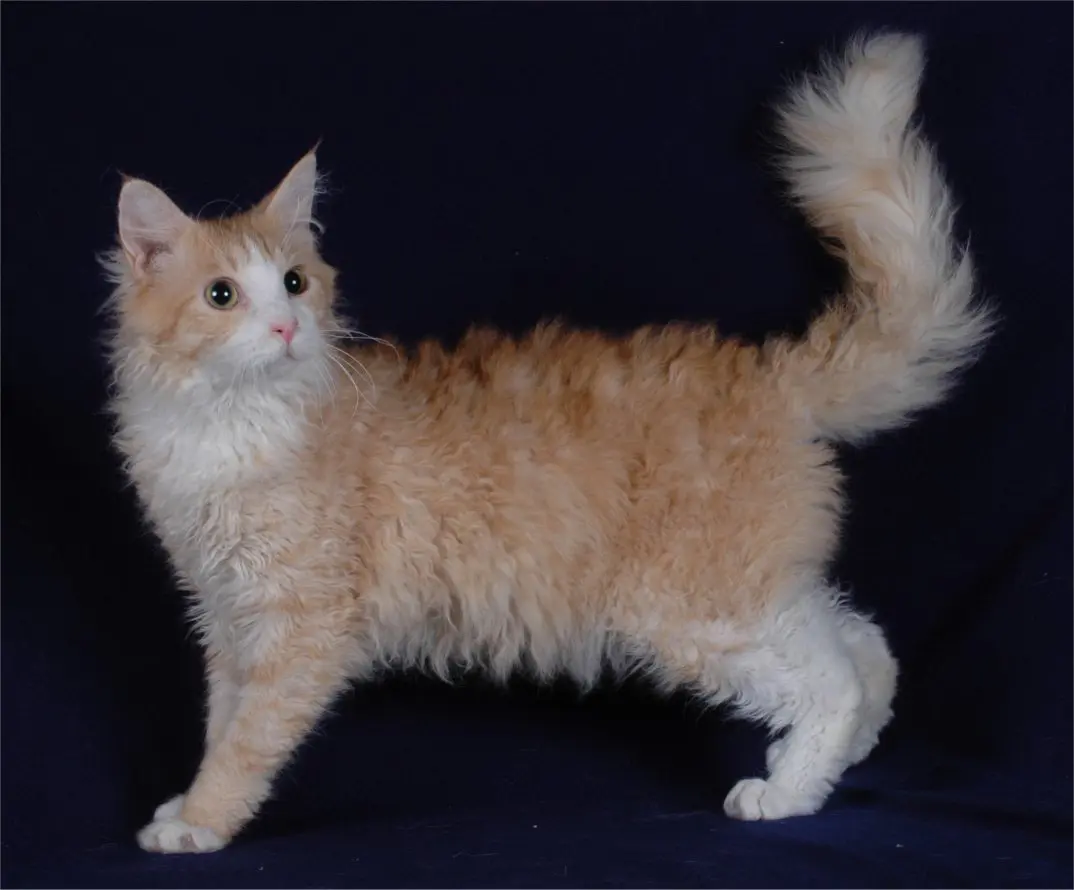
    The LaPerm it is a cat of size small to medium with a body long and thin, with hips slightly higher than shoulders. The legs and tail they are also quite long, like the rest of the body.

    The head has a triangular shape, with rounded contours. The eyes, large, beautiful and incredibly expressive, they can be yellow, copper, green or blue. The ears, quite large and located in the prolongation of the head, They are provided inside and preferably end in a plumage similar to that of the lynx.

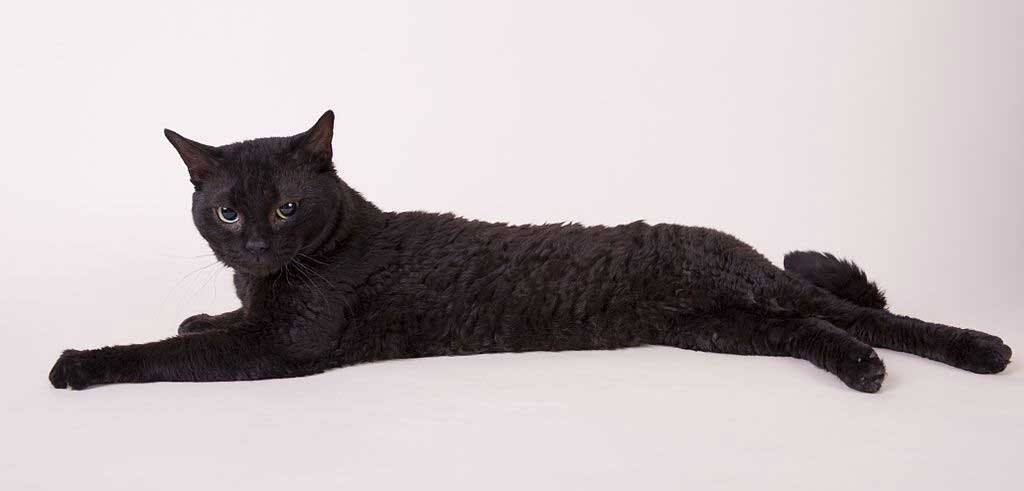
    The standard LaPerm allows all colors and fur patterns, but the turtle, brindle and red are the most common. In any case, It is undoubtedly the fur that makes him unique. LaPerm: soft and silky, has a distinctive texture reminiscent of mohair or sheep's wool. It can be simply wavy or form corkscrew-shaped curls.

    There are also two varieties of the breed, since they can be short or long hair.

    In any case, kittens can be born hairless, with straight hair or with curly hair. They usually have their definitive fur around the 6 months of age, although some initially straight-haired kittens only become curly after the first year.

    Some, However, keep hair straight throughout their life. This is because, even though both parents are LaPerms, each of them can carry a single gene for curly hair (and how this gene is dominant, it is enough for them to have this feature). So, each of their offspring has a one in four chance of not inheriting the gene that causes this trait.

    By the way, despite what you sometimes hear, curly hair LaPerm does not make it a hypoallergenic cat breed. In fact, cat allergy is caused by dead skin, not for the hair.

    Last, the sexual dimorphism it is quite marked, the female being smaller than the male.

    Size and weight

    • Male size: 22 to 26 cm.
    • female size: 20-24 cm.
    • Male weight: 3 to 4 kg
    • female weight: 2,5-3,5 kg

    Varieties of "LaPerm"

    The LaPerm it comes in two varieties: the Longhaired LaPerms and the LaPerm Shorthair.

    Some organizations consider them as two different races. It is the case of the Fédération Internationale Féline (FiFé) and of the International Cat Association (TICA). But, for others, as the American Cat Fanciers’ Association (CFA) and the British Governing Council of the Cat Fancy (GCCF), they are two varieties of the same breed.

    Character and skills

    "LaPerm"

    LaPerm
    Two LaPerm cats – LaPerm2, CC BY-SA 3.0, via Wikimedia Commons

    The LaPerm He is loving and devoted to his family. Loves interacting with humans, but it is not a very demanding cat. On the other hand, tends to follow the trend and adapt to the behaviors and initiatives of his master: if he throws a ball, run after her for fun; but if you put it on your lap, curls up quietly. He is also very tactile and loves to show his affection by touching his owner's face with his paw., or rubbing face to face. He also loves to be stroked and can't get enough of purring while scratching between his ears..

    Even if I am not the type to ask for attention, do not forget to provide games and affection, and of course avoid leaving him alone in his corner. Otherwise, you will not be able to develop a strong bond with your family members, which is a shame for both him and them.

    Playful and sociable, gets along very well with children who have learned not to pull their whiskers, her tail or her pretty curls. Usually, He also has no problems living with other dogs or with dogs accustomed to cats..

    On the other hand, it is not advisable to expect it to coexist peacefully with rodents: in fact, do not forget that not long ago he was a farm cat whose main occupation was hunting mice and other rodents. So, no wonder he retained his hunting skills.

    Curious, to the LaPerm loves to explore the environment or observe what members of his family are doing, either sitting up high or following them around the house. It also, its nimble legs allow it to open a door or snatch that coveted item, so make sure that the most fragile and / or precious objects are well protected.

    Activos, they like to run around the house and climb on the furniture. They like to be able to go outside and have a good time before going in to rest. But, he can live in a flat as long as he can play and run around.

    Last, prefers to listen rather than speak and reserves its meows for cases of extreme urgency, for example, when your bowl is empty.

    Grooming and caring for the "LaPerm"

    The fur of him LaPerm it is surprisingly tangle free and easy to care for: a simple weekly hairstyle is enough to keep the coat shiny.

    On the other hand, although she changes very little in general, sometimes he does it a lot: then daily brushing is necessary to remove dead hair and allow new coat to grow faster.

    It also, so that your cat stays healthy and maintains its natural beauty, You should take advantage of brushing sessions to check that your teeth, eyes and ears are clean. At the same time, they should be cleaned with a damp cloth to remove any dirt that could cause an infection.

    If wear and tear and the use of a scratching post are not enough, it is necessary to cut your cat's nails with a nail clipper if they are too long.

    Health and nutrition

    LaPerm
    the laperms with their hair cuts – Flickr

    The LaPerm it is a robust breed, which benefits from a breeding program based on numerous crosses with individuals with a healthy and varied genetic heritage, to the point that today no specific genetic disease is known.

    We need to remember, However, that this breed is still new and rare, so there is not enough hindsight or data to make definitive statements about it.

    A well-identified risk is that of Obesity of cats. In fact, although the cat does not normally have a tendency to overeat and may, Therefore, have food at your disposal at all times, the owner should regularly check that his partner is not getting too fat, and consult a vet if this is the case.

    Life expectancy

    Of 12 to 15 years

    Food

    The LaPerm It is not demanding when it comes to feeding and it does very well with the industrial cat food available on the market, either food or croquettes.

    To keep them healthy, you have to give them a quality diet, appropriate to your age and activity level, and that it contains all the nutrients and vitamins they need.

    Like most other breeds, the LaPerm is capable of self-regulation and, therefore, can be left with food constantly available. But, there is a risk of obesity, so you have to do regular checks to make sure you are not getting too fat, and you have to consult a vet if this happens.

    For sale "LaPerm"

    The price of a kitten LaPerm varies between the 800 and 1200 EUR, without there being a significant difference between a male and a female.

    But, this breed is quite confidential, so it can be difficult to find a breeder of LaPerm with kittens available.

    Videos "LaPerm"

    These Curly Cats Are The Perfect Affectionate Companion | Cats 101

    La Perm Cat love

    ▷ The world of Pets: Dogs, cats, birds, reptiles, amphibians

    German Rex
    Federations: FIFé, LOOF, WCF

    The German Rex It is one of the rarest and most difficult cat breeds to find..
    German Rex

    Content

    Characteristics "German Rex"

    Coexistence is important that you have with your new friend. Before considering the acquisition of a cat of the breed "German Rex" you know certain factors. You must take into account their character, their need for exercise, their interaction with other pets, their care and if you have small children, their level of tolerance towards them.

    Joy

    4,0 of 5 stars (based on 1 review)

    Activity level

    4,0 of 5 stars (based on 1 review)

    Friendliness to other pets

    4,0 of 5 stars (based on 1 review)

    Friendliness to children

    5,0 of 5 stars (based on 1 review)

    Grooming requirements

    1,0 of 5 stars (based on 1 review)

    Vocality

    3,0 of 5 stars (based on 1 review)

    Need for attention

    3,0 of 5 stars (based on 1 review)

    Affection towards its owners

    5,0 of 5 stars (based on 1 review)

    Docility

    4,0 of 5 stars (based on 1 review)

    Intelligence

    4,0 of 5 stars (based on 1 review)

    Independence

    2,0 of 5 stars (based on 1 review)

    Hardiness

    5,0 of 5 stars (based on 1 review)

    History

    The German Rex It, as the name reflects, a breed of German cat. In 1930, in a village in the Prussian region of Königsberg (today Kaliningrad, in Russia), Ema Schneider's family had a curly-haired cat. Named Munk and born from a cross between a Angora cat and Russian Blue Cat, it is said to be the first Rex (name given in reference to Astrex rabbits, who also have curly hair) of the modern era. But, specialists consider that Munk is not the true creator of the breed German Rex, since it was never part of a breeding program and its descendants have not been identified.

    German Rex
    black german rex male – Bebopscrx, CC BY-SA 3.0, via Wikimedia Commons
    The first german Rex officially appeared in the summer of 1951, when Dr.. Rose Scheuer-Karpin discovered a curly-haired black cat in the gardens of the hospital where she worked, la Hufelandklinik. Assuming it was a new mutation, he adopted Lämmchen ("little lamb" in German) and thus became the first breeder of german Rex.

    The first litters of Lämmchen y Blackie, another cat adopted by Mrs Scheuer-Karpin, produced straight-haired kittens. But in 1957 The first two curly-haired kittens were born from the union between Lämmchen and one of these kittens named Fridolin.

    When Lämmchen he crossed paths with another farm cat in the neighborhood, gave birth to three straight-haired kittens. Rose Scheuer-Karpin decided to stay with one of them, who he called blackie 2. Lamb and Blackie 2 they in turn produced kittens with curly hair, and it was clear that the gene responsible for the mutation was recessive. In other words, to have curly hair and, Therefore, be a Rex, the kitten must receive a mutated gene from each of its parents. On the other hand, an individual who has inherited only one mutated gene keeps his coat smooth, but you can pass on this gene and give birth to curly-furred kittens if crossed with a curly-furred individual, or even with an individual with smooth fur but also a carrier of the recessive gene.

    Lämmchen died in 1964, leaving many cats carrying the gene, which were the basis for the development of the breed and were exported to various countries. This was the case in Great Britain, where they met him Cornish Rex, in order to diversify the gene pool of this breed. In France, Marco Polo, A male german Rex property of Professor Letard, It was the first to be exhibited in public in 1960 in a contest organized by the Feline Club of Paris.

    But, due to the lack of a well-structured breeding program, and probably also to the almost simultaneous appearance of other breeds of curly-haired cats in Great Britain, the german Rex developed very little and was even on the brink of extinction in the early years 70.

    In fact, although it was recognized by the Fédération Internationale Féline (FIFé) and the Livre Officiel des Origines Félines (LOOF) french in 1982, and then for the World Cat Federation (WCF, based in Germany), the german Rex remains confidential. Not recognized by several major organizations, as the British Governing Council of the Cat Fancy (GCCF) or The International Cat Association (TICA), and is rarely present outside of its home country and its German-speaking neighbors (Switzerland and Austria).

    La Cat Fanciers’ Association (CFA) does not recognize the German Rex as a race in its own right, considering that it is actually a Cornish Rex and registering their representatives as such.

    In France, no individual with LOOF has been registered between 2003 and 2018, which makes it without a doubt one of the rarest cat breeds. All over the world, the cumulative number of registrations in the organizations that recognize it barely exceeds a few dozen a year.

    Physical characteristics

    The German Rex It is a medium-sized cat with a strong, muscular body and slender legs.. With regard to its height, corresponds to a European shorthair cat (Common european cat). The tail, average length, ends in a slightly rounded tip. On head round settle some ears slightly rounded with a wide base.

    The most striking feature of the breed is the soft fur and regularly wavy. Due to the lack of top coat, the undercoat plush has a velvety appearance like that of a mole.

    All the colors are allowed, except for chocolate, cinnamon and all its variations. It can also have any coat pattern: bicolor, tricolor, striped, but there should be no bald spots on the fur. The whiskers they are slightly shorter than in other cats and slightly curved.

    Character and skills

    German Rex

    German Rex
    German Rex – I, Bebopscrx, CC BY-SA 3.0, via Wikimedia Commons

    The german rex they are affectionate and form a strong bond with their family, often seeking your attention. They do not tolerate arousal and noise very well, but they are just as reluctant to be alone.

    They are sociable and enjoy the company of other dogs and may even befriend a dog used to cats.. So, it is usually not a problem when adopted by a family that already has animals, except if these are small rodents or birds, in which case some caution must be exercised.

    As a playful and active cat, can be an excellent companion for a child, provided that he has learned to interact with him and respect him. But, if the child is small, you should never be left alone with the animal without adult supervision; this applies to all cats, regardless of race.

    It also, although they are active and love to run, the German Rex it is a breed of cat suitable for a flat environment, to which it fits perfectly. They prefer the cozy comfort of a heated home to the sometimes harsh weather conditions of the outside world, but they enjoy napping on a sunny balcony in summer.

    Intelligent, he likes to be stimulated with games, whether it's going to find an object thrown by its owner or trying to solve a puzzle for cats. Likes family fun and rarely refuses to chase a fake stuffed mouse or roll a ball of yarn around the house.

    Once he's satiated, he likes to cuddle with his owner, that can thus enjoy the softness of its toothed fur and its reassuring purr.

    At the end, His character is very similar to that of his cousin the Cornish Rex.

    Grooming and caring for the "German Rex"

    The German Rex it is an easy cat to care for, since its beautiful coat only needs a weekly brushing to maintain its shine.

    During this grooming session, it is also important to check that the teeth are healthy and without cavities, that the eyes are clean and that the ears have not accumulated dirt. If this is the case, cleaning with a damp cloth will prevent the appearance of infection.

    Last, a cat's nails should be trimmed regularly with a nail clipper, but the time interval between these manicures varies from individual to individual, depending on your level of activity and whether you use a scratching post to a greater or lesser extent.

    Health and nutrition

    German Rex
    German Rex – I am looking for 4 legs
    The German Rex is a healthy cat breed with no known risk of genetic disease. But, keep in mind that, due to its rarity, it is difficult to collect sufficient and reliable information to draw a definitive general conclusion.

    Due to its fine fur, the German Rex, just like the cat Sphynx, you need more energy to maintain your body heat. For this reason, needs more food than other breeds. However, make sure you don't overfeed them and provide all the important nutrients.

    Obesity can cause various heart and/or joint problems. So, it is advisable to weigh your cat regularly to ensure that it maintains a reasonable weight, and consult a vet if you are overweight.

    Life expectancy

    12 to 14 years

    For sale "German Rex"

    The price of a kitten German Rex varies between the 800 and 1.000 EUR, without there being a significant difference between males and females.

    But, the German Rex is a very rare breed of cat, hard to find even in your home country, and there are few kittens available.

    Videos "German Rex"

    German Rex cat catches flies
    German Rex Katze fängt Fliegen
    HTTPS://youtu.be/mfHZSyO_ePw
    German Rex. Pros and Cons, Price

    Alternative names:

    ▷ The world of Pets: Dogs, cats, birds, reptiles, amphibians

    European Burmes cat
    Federations: GCCF, LOOF, FFH

    burmes europeo

    Content

    History

    The European Burmes cat has the same origins as the American Burmese cat, that goes back to Wong Man, led cat of Burma to America in 1930. Imported American cats, descendants of Wong Mau, to Great Britain, and the Brown was recognized in 1952, but after the race was divided to take different forms in both sides of the Atlantic. In Europe, breeders preferred a more typically oriental look, and they were also interested in a wider color scale.

    The Cat Fanciers Association began registering Burmese in 1936, but suspended records on 1947 because breeders continued to use conjoined twins in their breeding programs. Records resumed in 1953, after this practice was discontinued.

    In Europe, However, the development of Burmese took a different path. In Great Britain, where the broodstock shortage was even greater than in the United States, the Siamese Red Point and the British Shorthair cat were used in breeding programs, and his genetic contribution included additional colors: red, cream, brown-turtle, chocolate-turtle, blue-turtle and lilac-turtle. With the time, they met as European Burmes cat.

    The color blue, a recessive trait carried by cats imported from America, accepted a few years. The reddish colors and the turtle, It resulted from an accidental crossing, they were recognized in the Decade of 1970. Great Britain cats were exported to Europe, Africa, Australia and New Zealand in the Decade of 1950. Therefore, the breed in these countries follows the European type. The FIFé allows green eyes, but the GCCF considers it a defect.

    On both sides of the Atlantic, the Burmese cat still listed among the most popular breeds, but looks better in Europe, where short hair cats prevail over copies of long hair.

    Physical characteristics

    European Burmese
    Share Alois de Arkhitekton, European Burmese male presented at a cat show in Siilinjärvi, Finland – Heikkisiltala, CC BY 3.0, via Wikimedia Commons

    The European Burmes cat, as the American Burmese cat, characterized primarily by the sepia pattern of fur, which gradually transforms into dark, uniform tips at the roots, without markings striped cat.

    The coat is short and thin, glued to the body and do not need daily care. Thin legs hold a fairly weak body, but muscular, surprisingly heavy for its size.

    The head is the feature in which the European Burmes cat differs more than the American type. It has a wedge and the snout is blunt; the eyes are separated, they are round and just ripped.

    It is a medium-sized cat that usually weighs between 2 and 3 kg, sometimes more.

    Varieties:

    Most organizations that recognize the European Burmes cat they do not allow the crossing with other races in the framework of their breeding.

    This is the position taken by the Fédération Internationale Féline (FIFé) and the Governing Council of the Cat Fancy (GCCF).

    The Livre Officiel des Origines Félines (LOOF) French is an exception, since it authorizes the mating with the Burmilla cat, to expand the genetic background of this breed.

    It also, the European Burmes cat is itself the origin of two races:

    the Burmilla cat, resulting from mating with the Persian cat;
    the Gato Tiffanie, resulting from a cross with the Himalayan cat.

    Popularity of "European Burmes cat"

    The European Burmes cat is quite successful in Europe, and this is especially true in the country where it was developed: Great Britain. Since 2004, ranks fifth in the breed ranking based on the number of annual registrations at the country's leading feline institution, the Governing Council of the Cat Fancy (GCCF). But, is in clear decline: while at the end of the 90 more than 3.000 kittens per year in the organization (which allowed him to occupy the fourth position in the ranking), this figure has been divided by three since then, and now around a thousand.

    In France, the European Burmes cat not as successful as in Great Britain and ranks 35 (of about 70) in the breed classification of the Official Book of Feline Origins (LOOF) based on the number of births registered each year. This number is around fifty, what, just like in britain, reflects a certain decline: in the decade of 2000, it was rather on the order of 60 to 80. The American Burmese cat not far behind, since it occupies the position 40, nails on 30 or 40 registrations per year.

    In Switzerland, the European Burmese occupies the tenth place in the statistics of the Fédération Féline Helvétique (FFH) since the years 90. But, while in the decade of 2000 there were some 70 registrations per year, this figure has dropped in the following decade and is now more of 40.

    Character and skills

    European Burmese
    European Burmese – asi02, CC BY-SA 2.0, via Wikimedia Commons

    When it comes to personality, the European Burmese and the Burmese cat are aligned. The European Burmese is energetic and friendly. Has the charm and determination of his ancestors Siamese, and enjoy the conversation as much as that breed, but her voice is soft and sweet, which contradicts his tendency to run the home with an iron paw sheathed in velvety fur. He is very intelligent and seeks human company., so it is not the most suitable for a home where you will be alone most of the day. If there are no humans around to stimulate your intellect, make sure he has another pet for company. Get along well with other cats and dogs, but, of course, other Burmese (of any type) will be your best friend.

    The European Burmese he is a very curious cat. It is hoped that you will explore your home thoroughly and get to know all its corners. He is playful and remains so into adulthood. Stimulate their smart mind with interactive toys and teach them tricks that allow them to show off in front of the public. Besides sitting, turn around, say hello and come, can learn to reach for a small toy or walk on a leash. With proper early conditioning, car rides and vet visits will be a breeze.

    One European Burmes cat it is a good choice if you are not opposed to total loss of privacy. This cat will want to participate in everything you do, from reading the newspaper and working on the computer to preparing meals and watching television. Of course, will sleep in bed with you and can even snuggle under the covers. When i'm sitting, will be on your lap or right next to you, waiting expectantly for me to caress you. Yes, he ignores them, will scold you. Guests will receive your undivided attention, and those who say they don't like cats are likely to win.

    A female of European Burmese is the very definition of queen status. Likes attention and likes to be in command. Males are calmer and are content to fill the lap. Whatever your choice, you may soon find yourself longing for another.

    Children and other pets

    The European Burmese, active and sociable, It is a perfect option for families with children and for dogs that accept cats.. Play fetch as well as any retriever, learns tricks with ease and loves the attention he receives from children who treat him with politeness and respect. Live peacefully with cats and dogs that respect your authority. Always introduce pets slowly and under controlled circumstances so that they learn to get along.

    Health

    Both pedigreed cats and catsmixed raceshave different incidences of health problems that may be genetic in nature.The European Burmes cat is generally healthy, although they can be prone to gingivitis and can be sensitive to anesthesia.The following diseases have also been observed in this breed:

    • Aqueous humor lipemia, a transient milky appearance of the eye during infancy, that usually resolves on its own.
    • Dermoide corneal, the presence of skin and hair on the surface of the cornea, that can be successfully corrected surgically.
    • Gangliosidosis, an enzyme deficiency A test has been developed to detect the disease.
    • Orofacial pain syndrome, indicated by exaggerated licking and chewing movements and pawing the mouth Discomfort may increase when the cat is excited or stressed, and cats are often reluctant to eat because the activity is painful. Some cats must wear an Elizabethan collar and have their paws bandaged to prevent injury. Some cases resolve on their own and then recur. The cause and outcome are unknown. mode of inheritance. Pain relievers and anticonvulsants may help, as well as consultation with a veterinary dentist to rule out dental disease.
    • Congenital peripheral vestibular disease causing head tilt, lack of balance, rapid eye movements and uncoordinated gait in kittens Some kittens with the condition can also be deaf.
    • Hypokalemic polymyopathy, muscle weakness caused by low levels of potassium in the blood, sometimes seen in Burmese kittens Signs include general weakness, stiff gait, reluctance to walk and head tremors. Can be treated with orally administered potassium supplements.
    • Flat chested kitten syndrome, a deformity that can range from mild to severe Kittens that survive to adulthood usually show no signs once they reach maturity.
    • twisted glue, usually as a result of a coccyx deformity; it does not cause pain or discomfort.
    • Osteoarthritis of the elbow, an early-onset arthritis in the elbow that limits the cat's activity or mobility.
    • Endocardial fibroelastosis, a heart condition in which the left ventricle of the heart thickens and stretches the heart muscle. The signs usually develop when a kitty has 3 SA week 4 months of age, a good reason to wait until 4 months to bring a kitten home.
    • Dilated cardiomyopathy, enlarged heart.
    • Mellitus diabetes, an endocrine condition caused by a defect in insulin secretion or insulin action that results in high blood sugar levels.
    European Burmese
    European Burmese

    care and grooming

    The soft, short coat of the European Burmese easily cared for with weekly brushing or combing to remove dead hair and distribute skin oil. A bath is seldom necessary.

    Brush your teeth to prevent periodontal disease. The best is daily dental hygiene, but a weekly brushing is better than nothing. Clean the corners of the eyes with a soft, damp cloth to remove any discharge. Use a different area of ​​the cloth for each eye so as not to run the risk of spreading any infection. Check the ears weekly. If they look dirty, clean them with a cotton pad or soft cloth moistened with a mixture of cider vinegar and warm water at 50%. Avoid using cotton buds, that can damage the inside of the ear.

    Keep the litter box spotless. As all cats, the European Burmese they are very demanding with bathroom hygiene.

    It is a good idea to keep a European Burmes cat as an indoor cat to protect it from diseases transmitted by other cats, from dog attacks and other dangers faced by outdoor cats, like being hit by a car. The European Burmese who go abroad also run the risk of being stolen by someone who wants to have such a beautiful cat without paying for it.

    Characteristics "European Burmes cat"

    Coexistence is important that you have with your new friend. Before considering the acquisition of a cat of the breed "European Burmes cat" you know certain factors. You must take into account their character, their need for exercise, their interaction with other pets, their care and if you have small children, their level of tolerance towards them.

    Joy

    5,0 of 5 stars (based on 1 review)

    Activity level

    4,0 of 5 stars (based on 1 review)

    Friendliness to other pets

    3,0 of 5 stars (based on 1 review)

    Friendliness to children

    3,0 of 5 stars (based on 1 review)

    Grooming requirements

    1,0 of 5 stars (based on 1 review)

    Vocality

    4,0 of 5 stars (based on 1 review)

    Need for attention

    4,0 of 5 stars (based on 1 review)

    Affection towards its owners

    5,0 of 5 stars (based on 1 review)

    Docility

    1,0 of 5 stars (based on 1 review)

    Intelligence

    4,0 of 5 stars (based on 1 review)

    Independence

    2,0 of 5 stars (based on 1 review)

    Hardiness

    3,0 of 5 stars (based on 1 review)

    Videos "European Burmes cat"

    European Burmese cat❤️ Breeding cattery Freya Way*RU
    European Burmese cat❤️ Breeding cattery Freya Way*RU
    Harvey lilac European Burmese Cat at Play
    Harvey lilac European Burmese Cat at Play

    ▷ The world of Pets: Dogs, cats, birds, reptiles, amphibians

    Geoffroy's cat
    Leopardus geoffroyi

    The Geoffroy's cat it is a relatively unknown species to the general public, but not without reason. In fact, remains first and foremost a wild cat.
    Geoffroy's Cat
    Geoffroy’s Cat – Charles Barilleaux from Cincinnati, Ohio, United States of America, CC BY 2.0, via Wikimedia Commons

    Content

    History

    The Geoffroy's cat (Leopardus geoffroyi) is a small and little known spotted wild cat native to central and southern South America. Etienne Geoffroy Saint- Hilary (1772-1844), 19th century French zoologist who gives his name to Geoffroy's cat, studied this animal when he was a professor of zoology in Paris. During your study, identified five subspecies based on their geographic dispersion:

    • Leopardus geoffroyi geoffroyi – Central Argentina
    • Leopardus geoffroyi euxantha – North of Argentina, West of Brazil
    • Leopardus geoffroyi leucobapta – Patagonia
    • Leopardus geoffroyi paraguae – Paraguay, southeast of Brazil, Uruguay
    • Leopardus geoffroyi salinarum – Northwest and central Argentina

    Physical characteristics

    "Geoffroy's cat"

    Gato de Geoffroy
    Geoffrey's cat, taken at the Cincinnati Zoo. Photo by Greg Hume – Greg Hume, CC BY-SA 3.0, via Wikimedia Commons

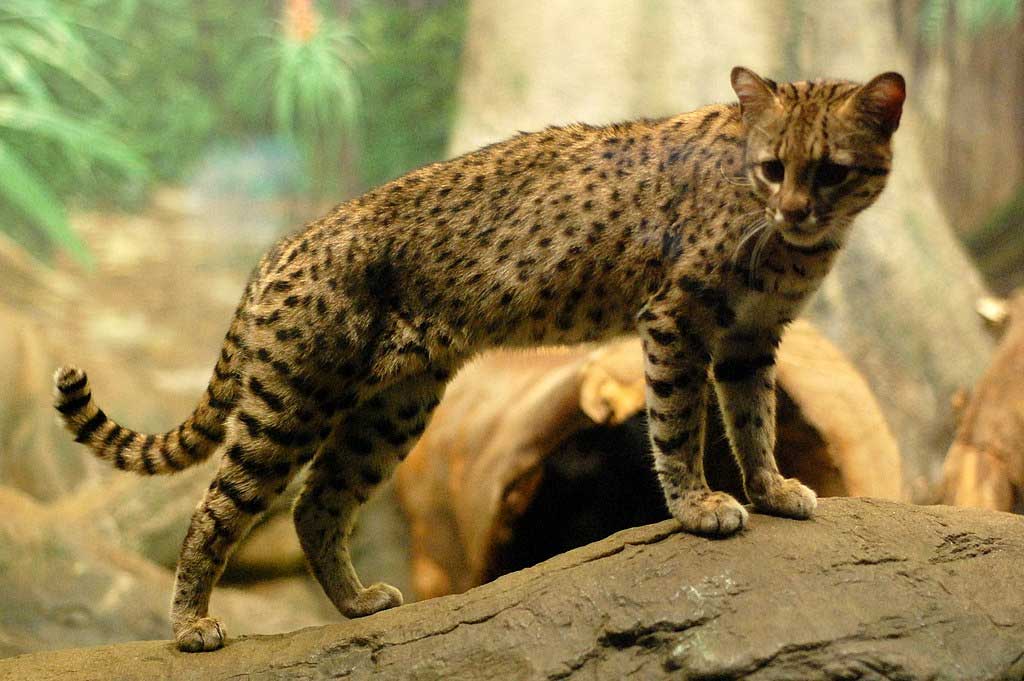
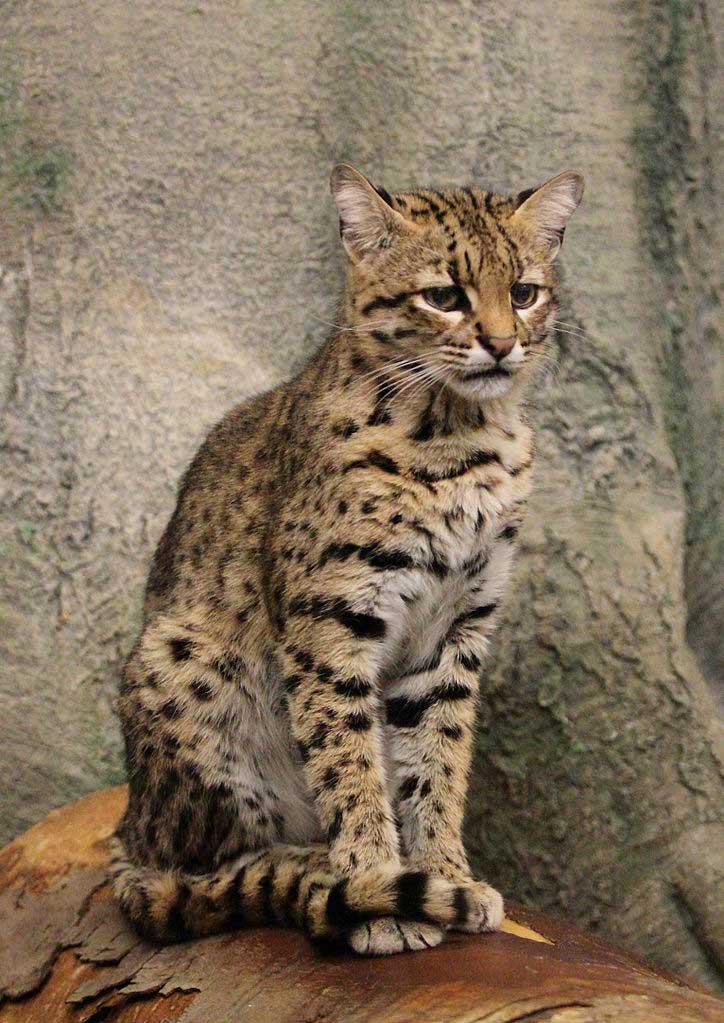
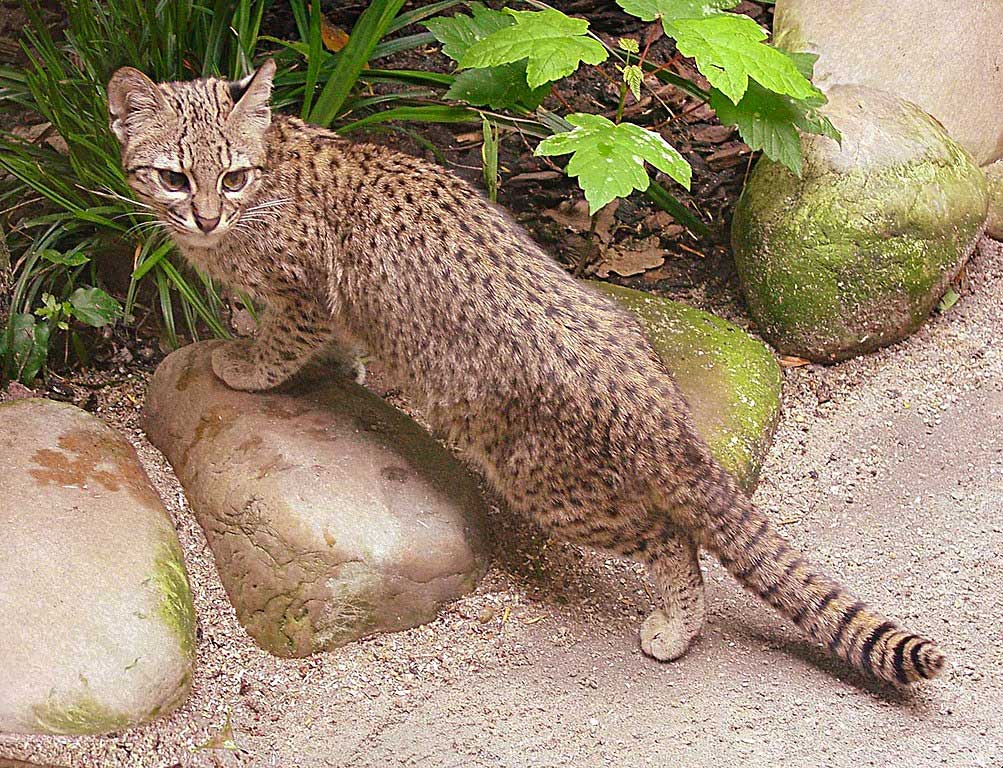
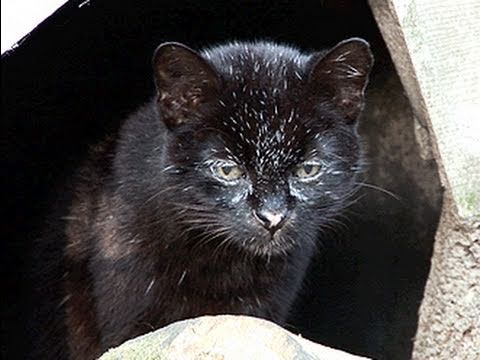
    The Geoffroy's cat has small black spots that evenly cover its fur with little variation in size and spacing. Its fur varies from an orange-brown color in the northern areas to a gray color in the southernmost areas with numerous shades between them., but completely black coats have been found to be common. Like most wild cats, the fur on its belly is pale in color ranging from cream to white. Its tail and limbs are covered with dark rings, almost equally spaced.

    The Geoffroy's cat is the size of an average domestic cat, with an average of about 60 centimeters (24 inches) from the head to the base of the tail and an average of about 30 centimeters (12 inches). Males weigh an average of 4,5 kg (10 pounds), while females weigh an average of 3,6 kg (8 pounds), although individuals weighing up to 7,7 kg (17 pounds).

    When samples were compared between regions, only the mass of the male cat varied with geographic location. Those found in the southern part of their range are usually larger than those in the north, although no correlation was found between body mass and latitude.

    Unusual among wild cats and cats in general, it has been observed that geoffroy's cats stand up on their hind legs to scan the surrounding area. Some individuals from geoffroy's cats live more than 20 years in captivity, but, average, wild cats usually live up to 14 years.

    Habits and skills

    Geoffroy's cat
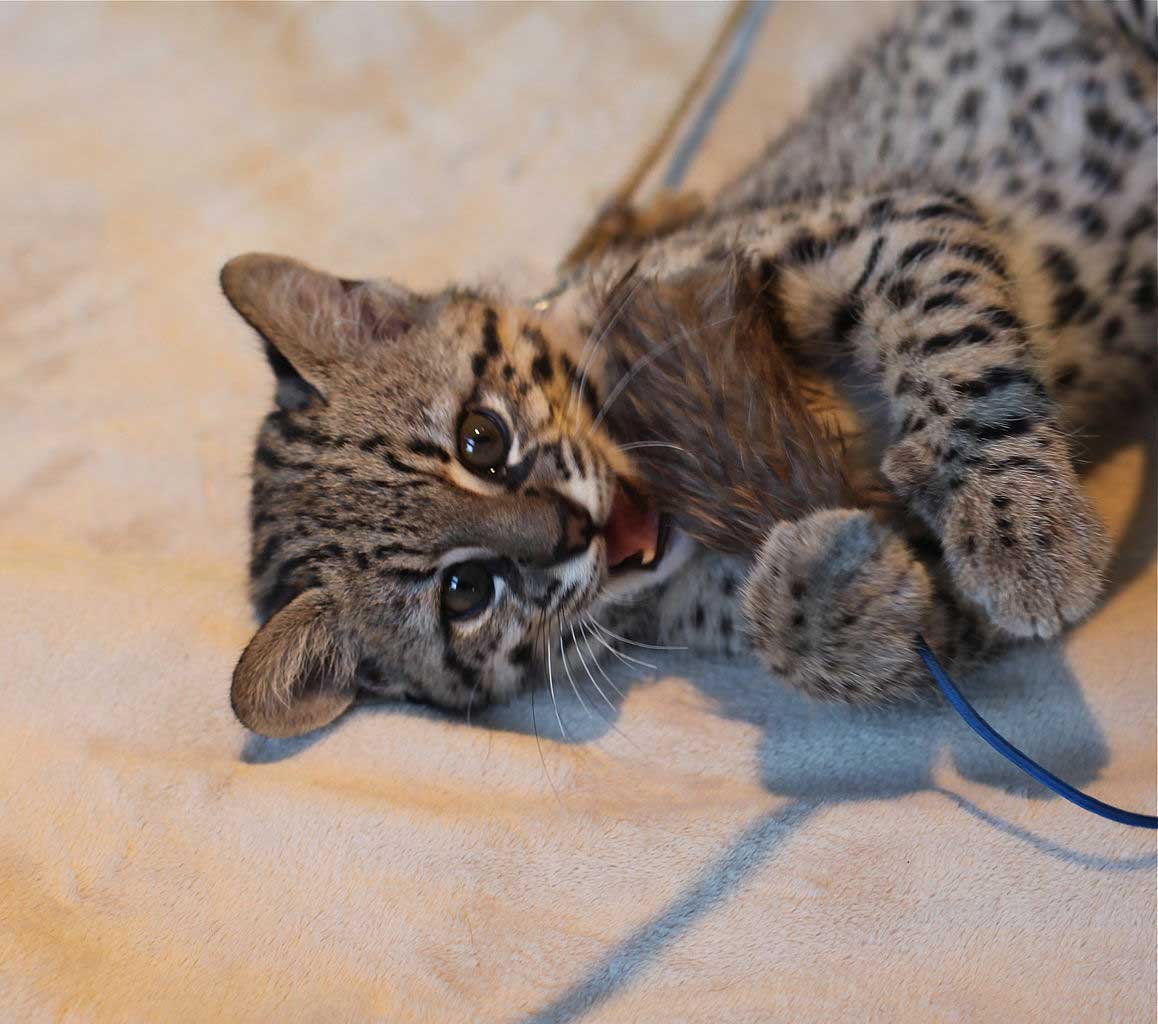
    Baby Geoffrey’s Cat – Steve Jurvetson from Menlo Park, USA, CC BY 2.0, via Wikimedia Commons

    The geoffroy's cats are nocturnal and their activities peak in the middle of the night. They tend to spend most of their time on the ground, but they are able to climb trees and can swim very well, since the locals call them "fishing cats" for their ability to easily enter the water.

    Like lonely hunters, the Geoffroy's cat only comes into contact with others during the mating season. It has been described as an opportunistic predator, which means that it will feed on whatever is most abundant in its area or easiest to prey. Small mammals are their most frequent prey, representing at least the 63,3% of their primary diet in each season, while birds are the most hunted during the warmer seasons.

    The geoffroy's cats they tend to use grasslands and marshes for hunting and lounging and use forest views to mark their scent. Seasonal differences in their diet were markedly greater between the warmer and colder seasons., suggesting that the diet was limited by seasonal fluctuation and prey availability.

    Distribution

    The geoffroy's cats they inhabit the grasslands of the Andes pampas, in the deserts and semi-deserts of Mount, in the dry forests and savannas of the Gran Chaco landscape, from southern Bolivia to the Strait of Magellan, at a height of up to 3.300 meters above the sea level. The total size of the range of these cats is, on average, of about 8,83 km2, while the main habitat these cats frequently visit only encompasses 1,46 km2. When observed in nature, the geoffroy's cats who lived in habitats modified by ranches and cattle grazing were more active, they had wider ranges and traveled greater distances than those found in protected areas.

    Conservation status

    Geoffroy's Cat
    Leopardus geoffroyi (Geoffroy’s Cat), Karlsruhe Zoo, Germany – Daf-de, CC BY-SA 3.0, via Wikimedia Commons

    In the news, the Geoffroy's cat is almost threatened and, though not in immediate danger, you are at risk.

    The geoffroy's cats suffer from very high hunting pressure outside their protected area, which currently constitutes one of its greatest threats to conservation. But, the exploitation of their skins for the illegal fur trade industry between the years 60 and 80, it is estimated that some 350.000 skins only between 1976 and 1978.

    Since the middle of the years 80, hunting and trade in their skins have decreased significantly, but it's still one of your biggest threats. In a recent study using camera traps, It is estimated that the population density of the Geoffroy's cat is of some 9-40 individuals for each 100 km2. Although the population size is currently unknown, we believe the population is declining and thinning. But, they are still occasionally killed when seen as pests or as predators of livestock. These skins can be seen in circulation within the local illegal trade.

    In the center of Argentina, man-made mortality represents the 62% of the known deaths of the Geoffroy's cat, including poaching, death by domestic dogs and collisions with vehicles. Another factor contributing to their danger is the overwhelming demand for them by the exotic pet trade.

    The "Geoffroy's cat" in captivity

    The Geoffroy's cat it is a relatively unknown species to the general public, but not without reason. In fact, remains first and foremost a wild cat: if it can withstand the presence of man in its natural environment or even be bred in captivity, It is unlikely, on the other hand, that can be tamed.

    Nonetheless, these cats are illegally caught and bred with domestic cats, which produces hybrid cats and reduces the total population. Critical forests and habitats are rapidly being lost to human causes, like deforestation, but unlike other species that depend heavily on their habitat, the Geoffroy's cat has learned to adapt and to use open areas as well. Currently, the Geoffroy's cat is protected in Argentina, but due to the lack of information available on its natural history, it is not possible to develop an adequate and scientifically sound conservation strategy to protect this animal.

    Videos "Geoffroy's cat"

    GEOFFROY CAT Species Spotlight

    Geoffroy's Cat: The Ghost of South America's Salt Flats

    ▷ The world of Pets: Dogs, cats, birds, reptiles, amphibians

    Clippercat
    Registration: CATZ

    Content

    What are Clippercats?

    They are a recently recognized breed, which is being developed under strict guidelines.

    In a nutshell, the Clippercat is the New Zealand shorthair cat and / or the Australian longhair cat. with polydactyl feet. Poly– means "many" and Dactulos – means "fingers".

    Cats usually have 5 claws on its front legs.. (4 plus a snail claw) and 4 on each hind leg. Cats with the polydactyl mutation can have between 5 and 7 fingers on the front legs and between 4 and 7 in the rear.

    History

    In New Zealand and Australia, between the years 1850 and 1900, a large number of immigrants arrived on the Clipper ships that sailed the seas between England and the Antipodes.

    Many of these ships docked in Auckland and the Hauraki Gulf, where today we find the highest concentrations of polydactyl cats.

    Following the CATZ Inc policy of inclusion and establishment of rules for the responsible registration of cats, these cats, which are a natural mutation, and an expression of an incomplete autosomal dominant gene, They can now be registered with CATZ Inc under the breed name "Clippercats", formerly called Antipodean cat, with the addition of the polydactyl mutation..

    Unlike the United States.UU., the Clippercats (Polydactyls of Domestic / Antipodean origin) cannot be raised with others Clippercats, and there are strict guidelines set by the Registry for their breeding to ensure that all Clippercats recorded are the Heterozygous form of this mutation.

    Right now, if you have a polydactyl cat, you can register it in the open registry as Clippercat, if you meet very specific guidelines.

    Breeding conventions include recording the number of toes on each foot and the breed standard includes both a limit on the number of toes allowed and restricts the structure of the feet to three accepted structural formats..

    The Clippercats they can only be bred with short hairs / New Zealander longs and the breed standard calls for the New Zealand SH / LH type with the addition of the polydactyl mutation.

    The Clippercats cannot be crossed with any other currently recognized championship breed.

    Where do polydactyls come from??

    The polydactyl cats they have a long and interesting history. For many centuries they have roamed south-west Britain and there is evidence of polydactyl cats in countries as far away as Norway, although reports in Europe are few and far between, due mostly to the perceived relationship between cats and witchcraft.

    The polydactyly is a trait allowed in the breed of Pixie Bob cat, which is classified as a natural breed, and that competes in the TICA championship, the International Cat Association. (USA)

    It was also a dominant trait in many of the early Maine Coons, and it was considered that it helped those cats to overcome the heavy snows of the winters of the State of Maine. Breeders, However, selected to remove the trait from that specific breed.

    There are several reports of a folklore in southern England, which states that when people found cats with too many fingers, They offered them to the captains of the ships, who apparently considered them "lucky cats" and very suitable for a sailor's life. They were also considered gifted buzzards and, thanks to your extra fingers, more fit for life on mobile covers.

    Large populations of cats with this mutation were seen in and around the Boston area, where they were commonly called "Boston thumb cats". An article published in the magazine «Cat Watch» from Cornell University in 1998 analyzed the studies carried out on polydactyl cats between 1940 and 1970 and tentatively concluded that the trait probably occurred in cats that came from England to the Boston area with the Puritans in the mid-17th century. These studies focused on the unusually high concentration of polydactyls in that area., and in other east coast ports with strong shipping links to the British Isles, like Halifax and Yarmouth, and in Nova Scotia, where there were also higher concentrations of polydactyl cats.

    The author Ernest Hemingway is also recorded as a gift from a ship captain polydactyl cat of the race Maine Coon cat, and this cat is believed to be the progenitor of the many polydactyl cats now cared for in the trust established for them on the author's home island in the Florida Keys. Apparently, This led to the polydactyl cats They were sometimes called "Hemingway cats.".

    There are currently three separate private registries in the United States where polydactyl breeders can register their specimens.. These cats are often called "American Polydactyl Cat«.

    But, it would be very conceited to consider them solely native to the United States, when its story is rather associated with the many boat cats that traveled with immigrants from England and Europe to the United States and other parts of the world between 1620 and 1900. Even the famous "Mayflower" was a merchant ship before its well-known voyage to the United States.. and in those days he made several trips between England and Norway before being chartered by the pilgrims.

    Source: catzinc.org

    ▷ The world of Pets: Dogs, cats, birds, reptiles, amphibians

    Chinese Harlequin Cat
    Category VI - TICA

    Alrlequín chino
    Photo: unitedcats.com

    Content

    History

    This feline breed is listed as one of the category VI breeds. under the clause 307.7 of the TICA rules (International Cat Association). The Chinese Harlequin Cat has, of course, the word "Chinese" in the name, but I don't think this cat is from China or a Chinese feline breed. The TICA, from what i see, does not explain the meaning of Category VI, except it's the lowest category. The first four categories are Established Breeds (category 1), Natural breeds (category 2), Variant Breed / Mutation (category 3) and Domestic Hybrid Breed (category 4).

    The color pattern of the chinese harlequin is called Van. This pattern is also found in cats Turkish van, but this cat is long-haired.

    It is a domestic breed, hair short, bicolor: a predominantly white cat, but with a black tail and black spots on the head and body.

    The Chinese Harlequin Cat can be found elsewhere in China, but they are rare. They are accepted as a thoroughbred by the International Cat Association.

    They are represented in a large number of ancient Chinese art.

    It said that it was an attempt to re-create the old Chinese cat, a race that disappeared.

    Character and skills

    The Chinese Harlequin Cats they are known for their kind and sweet personality, and they are very popular as pets. Unlike many other cat breeds, this breed is very active and playful, and they love to play and explore. It also, they are very friendly and easy to train, so they are a good option for families with children and other pets. But, it is important to note that the Chinese Harlequin Cats require regular care, including proper nutrition, exercise and regular veterinary care.

    ▷ The world of Pets: Dogs, cats, birds, reptiles, amphibians

    Ragdoll cat
    Federations: LOOF, CFA, ACF, ACFA, TICA, FIFé, WCF

    Ragdoll
    Photo: Wilkipedia

    Content

    Characteristics "Ragdoll cat"

    Coexistence is important that you have with your new friend. Before considering the acquisition of a cat of the breed "Ragdoll cat" you know certain factors. You must take into account their character, their need for exercise, their interaction with other pets, their care and if you have small children, their level of tolerance towards them.

    Joy

    3,0 of 5 stars (based on 1 review)

    Activity level

    2,0 of 5 stars (based on 1 review)

    Friendliness to other pets

    4,0 of 5 stars (based on 1 review)

    Friendliness to children

    4,0 of 5 stars (based on 1 review)

    Grooming requirements

    4,0 of 5 stars (based on 1 review)

    Vocality

    2,0 of 5 stars (based on 1 review)

    Need for attention

    2,0 of 5 stars (based on 1 review)

    Affection towards its owners

    4,0 of 5 stars (based on 1 review)

    Docility

    5,0 of 5 stars (based on 1 review)

    Intelligence

    4,0 of 5 stars (based on 1 review)

    Independence

    2,0 of 5 stars (based on 1 review)

    Hardiness

    3,0 of 5 stars (based on 1 review)

    History

    The Ragdoll cat He is originally from California, United States. At the beginning of the Decade of 1960, Ann Baker, a breeder of persian cats, a white cat began to cross, semi-wild and looking like Turkish Angora cat call Josephine with several street cats. Josephine gave birth, among others, to two cats named Buckwheat and Fugianna.

    They were large and docile in temperament and tended to relax completely when picked up., becoming real "Ragdolls".

    Two males were added to the breeding program of the Mrs. Barker: Blackie, a black guy looking like Burmese cat, and Daddy Warbucks, dark in color and with white tips of the legs. These five cats interbred and gave rise to the breed Ragdoll as we know it today.

    Aware that he had a new breed of cat on his hands, Ann Baker decided not to have her recognized by feline associations and, Instead, chose to register the trademark Ragdoll and create your own record, the International Ragdoll Cat Association (IRCA), in 1971. At the same time, prohibited anyone from using the name Ragdoll, breed these cats outside the strict conditions imposed to preserve the purity of the breed or register them with another feline association.

    Although the eccentric claims of Ann Baker about what Josephine was genetically altered by aliens in a car accident are not credible, it seems likely that he had a unique genetic makeup, probably a natural genetic mutation, which was later passed on to their offspring.

    The eccentricities of Ann Baker sparked dissension among other breeders of the Ragdoll cat, especially because of the high level of inbreeding caused by the strict restrictions imposed by. In 1975, Denny and Laura Dayton they were among the first to distance themselves from the breed and attempt to give it a legitimate existence under the umbrella of recognized feline associations. They drew up the standard that was used later when it was recognized by the Fédération Internationale Féline (FIFé) in 1991 and for the American Cat Fanciers’ Association (CFA) in 1993.

    In the meantime, the Ragdoll had arrived in Britain already in 1981, when breeders Pat Brownsell and Lulu Rowley they imported the first specimens and began to breed this cat that little by little would conquer British cat lovers. A few years later, in 1986, made its appearance in France.

    In the news, the Ragdoll is recognized by most major national and international feline associations: is the case, in particular, of the Governing Council of the Cat Fancy (GCCF) British, of the Livre Officiel des Origines Félines (LOOF) French, of the International Cat Association (TICA) and of the World Cat Federation (WCF).

    Well established in both North America and Europe, and its success is undeniable. In United States, it is one of the most popular breeds in terms of number of registrations in the CFA, and even ranked first in 2018. In the United Kingdom, has firmly established itself in second place since 2010; with about 3.000 kittens registered every year, it only represents around the 15% of the country's cat population.

    It is also one of the five most popular cat breeds in France., and its growth is dazzling: While in 2003 less than 100 specimens in the LOOF, in 2010 more than 1.000 and in 2019 more than 2.600, surpassing the Persian for the first time. So, represents almost the 6% of births registered in the country.

    Physical characteristics

    Ragdoll
    Ragdoll

    The Ragdoll it is one of the largest breeds of domestic cats, but it grows slowly and in fits and starts, and does not reach maturity until four years.

    Has a kind of body long and mighty. His body is wide and imposing, with a solid bone structure and supported by medium-sized muscular legs that end in legs round and wide. The tail is quite long and tapers slightly towards the tip.

    The head forms an equilateral triangle viewed from the front. Profile, the rounded forehead is prolonged with a slide-shaped depression at the nose. The ears are size medium, point forward and end in a rounded shape. The eyes they are big, oval and of an intense blue color that rarely leaves you indifferent.

    The fur of the Ragdoll, composed of a sparse undercoat and a medium length topcoat, it is silky and close to the body. Tends to elongate in winter and is densest in the back of the body, and the queue is particularly crowded. It also, some dogs have a well-developed mane.

    The fur tends to be colourpoint (a light color and dark tips), but it can also be gloved or bicolor. In United States, the CFA (Cat Fanciers’ Association) also allows pattern van, or Seychelles, which is a white individual with a colored tail and head, and spots on the body. The colors allowed by the standards of the different organizations that recognize the breed are the seal, the blue, chocolate, the lilac, red and cream. These colors can be found in tortoiseshell patterns (black and Red) or tabby (striped), which gives rise to a large number of possible combinations and, Therefore, to as many cats with different appearances.

    Last, the sexual dimorphism it is very marked, being the male much more imposing than the female.

    Size and weight

    • Male height: Of 30 to 35 cm.
    • Female height: 28-32 cm.
    • Male weight: 5-9 kg
    • female weight: 4-7 kg

    Breed standard

    The breed standards are documents established by official bodies that list the conditions that a dog must meet. Ragdoll to be fully recognized as belonging to the race:

    Character and skills

    Ragdoll
    Male Ragdoll, about three years old, with prototypical tabby patterns in the head region – BlackIceNRW, CC BY-SA 3.0, via Wikimedia Commons

    Docile and devoted, the Ragdoll he loves the company of his family and follows them around the house, greeting them at the door when they arrive. He is a gentle and loving companion, who just wants to get into his master's lap to warm him up and relax him with a lot of purring after a hard day's work.

    Very sociable, he has no problem greeting guests. If they take it in their arms, he behaves as he would with his masters: relax all your muscles, which reminds us why it's called "Ragdoll".

    Its quiet character, relaxed and easygoing makes it an excellent choice for a cat breed with children, especially if they have learned to interact with an animal. But even if they are not treated with respect, for example, if they are carried around the house for a long time, it is very rare that they remove their claws. And if there is a cat that is willing to be dressed like a doll and then carried in a stroller, it's the ragdoll. Of course, make sure that the child does not cross the line and abuse their indulgent nature.

    It is not a problem of coexistence with other dogs, as long as they don't chase you around the house. It can even live with small rodents or fish, but it is advisable not to tempt the devil: the Ragdoll still a feline, and his hunting instincts can resurface at any moment.

    Its flexible and calm personality makes it a cat that adapts well to changes and is capable of living in almost any environment. A move with a cat goes much better if it is a Ragdoll that a race that does not share this quality. The owner can also perfectly consider taking his cat on vacation, without fear that your partner will be completely disoriented and not enjoy the change of scenery. It is also possible to take your cat around your holiday destination on a leash, since it is something that this breed accepts very well.

    Despite its impressive size, the Ragdoll adapts perfectly to life in a flat, as long as you have everything you need: the warmth and comfort of a cozy home, the affection of his family and a little space to play. Even if you live in a house and have free access to the outside, it's more of an indoor cat: rarely goes outside to explore the garden or surroundings.

    On the other hand, his closeness to humans and his patience make him suitable for friendship with anyone, and turn you into a excellent therapy cat. His presence and willingness to interact with people also means that he can be a real comfort to his owner when he is going through a difficult time., and he knows that he has a support in him that he can trust in those circumstances. On the other hand, It is not for someone who likes to be alone and does not want a companion who is a little "clingy", who prefers to opt for a more independent breed.

    The Ragdoll is moderately active, but enjoy chasing a cloth mouse, especially because he retains a playful side throughout his life. They are also able to learn some tricks, especially if the owner uses positive reinforcement techniques with praise and treats. It also, if given the opportunity, they love to play fetch for an object thrown by its owner, how would a dog. But don't expect him to constantly jump on the kitchen table or climb on furniture.: prefers to run rather than jump and does not venture beyond the living room sofa or bed. Like this, unlike most of his peers, does not seek a high position to observe its surroundings from above, but choose a place that facilitates contact with your family.

    It also, against a legend, not insensitive to pain, and reacts like any other cat if someone steps on its tail: cries out in pain and then walks away with a reproachful look at the offender.

    Last, has a soft and musical voice, but he rarely uses it, except when you order your food.

    Health

    "Ragdoll cat"

    Ragdoll
    Male Ragdoll of 4 months. Blue mitted with a blaze – CalistaZ, CC BY-SA 3.0, via Wikimedia Commons

    The Ragdoll cat it is a fairly robust breed with few genetic predispositions.

    But, you are not immune to certain health problems. Among the possible risks, the most common are:

    • The feline hypertrophic cardiomyopathy, a growth of heart tissue that can have serious consequences. But, from 2007 there is a DNA test to detect the responsible gene, so serious breeders of Ragdoll have taken all precautions to minimize this risk;
    • Bladder lithiasis, that is to say, stone formation in the bladder;
    • The urolitiasis, what is stone formation in the urethra.

    These last two conditions can cause the cat to be unable to urinate, a serious situation that requires the urgent intervention of the veterinarian.

    Life expectancy

    Of 12 to 15 years

    Grooming

    The Ragdoll it is a breed of cat that is easy to care for: the brushed once a week removes dead hairs and knots that may form. This session is usually appreciated by the receiver, who enjoys the attention and caresses he receives.

    Although they do not shed excessively (especially because its undercoat is not very abundant), it is advisable to increase the frequency of grooming sessions during their shedding periods, in autumn and spring.

    The teeth, the eyes and ears should also be checked and maintained once a week to make sure they are clean and free of infection.

    It also, depending on wear and tear and how often your dog uses the scratching post, its claws need to be trimmed more or less frequently.

    Last, keep in mind that, given its size, a large litter box is necessary so that she can turn over without difficulty.

    Food

    Ragdoll
    Ragdoll

    The Ragdoll it does not pose any difficulties in terms of feeding and adapts very well to industrial cat foods available on the market. But, food must be of good quality, adapted to your age and activity level, to provide you with everything you need to stay healthy.

    Kittens of this breed can experience large growth spurts, so it is important that they always have food at their disposal to develop properly. This is especially true as they are capable of self-regulation., so the risk of being overweight is very limited. This is not a sign of obesity, but a normal morphological characteristic of the breed.

    Adults are also capable of self-regulation and can also have food at all times without this generally posing a problem.

    But, your dog's weight should be monitored regularly and a veterinarian should be consulted in the event of a pronounced increase.

    What is the price of a "Ragdoll cat"?

    The price of a kitten Ragdoll round the 1100 euros on average, whether it is a male or a female.

    But, this stocking hides a fairly wide range of prices, since it goes from the 600 euros of the cats with the characteristics furthest from the standard up to almost 3.000 euros of the specimens belonging to a prestigious lineage and destined for their physical attributes to shine in feline exhibitions.

    Interesting data

    Do "Ragdolls" have a reduced sense of pain?

    Since the Ragdoll hangs limply when caught and lets everything hang over him, some researchers assumed the breed has a lower sense of pain than other cats. For some time, experiments were done on the poor animals. It is even believed that the founder of the breed, Ann Baker, made this claim to better market his breed. At the end, the tests led to the conclusion that there are no differences with other cats.

    The "Ragdolls" on social networks

    Their funny and clumsy character makes cats Ragdoll be real stars on the internet. There is hardly a compilation of "funny cat videos" in which this breed does not appear.. The Ragdolls most famous on Instagram are the three cats Lola, Nina and Olan, whose day to day you can follow under the name of @ladylolathecat. The three cats live with their owner in a floating house and delight 139.000 subscribers almost daily with funny videos and images.

    When I hugged the cat tightly, I got annoyed by saying 'Ang'.

    3 Minutes of a Ragdoll Cat Being a Ragdoll Cat