โ–ท The world of Pets: Dogs, cats, birds, reptiles, amphibians

Austral Parakeet
Enicognathus ferrugineus

Austral Parakeet

Content

Description:

28โ€“36 cm. length.

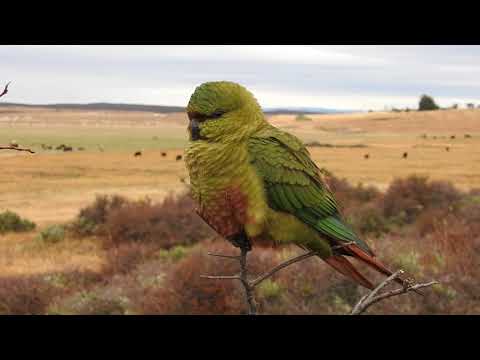
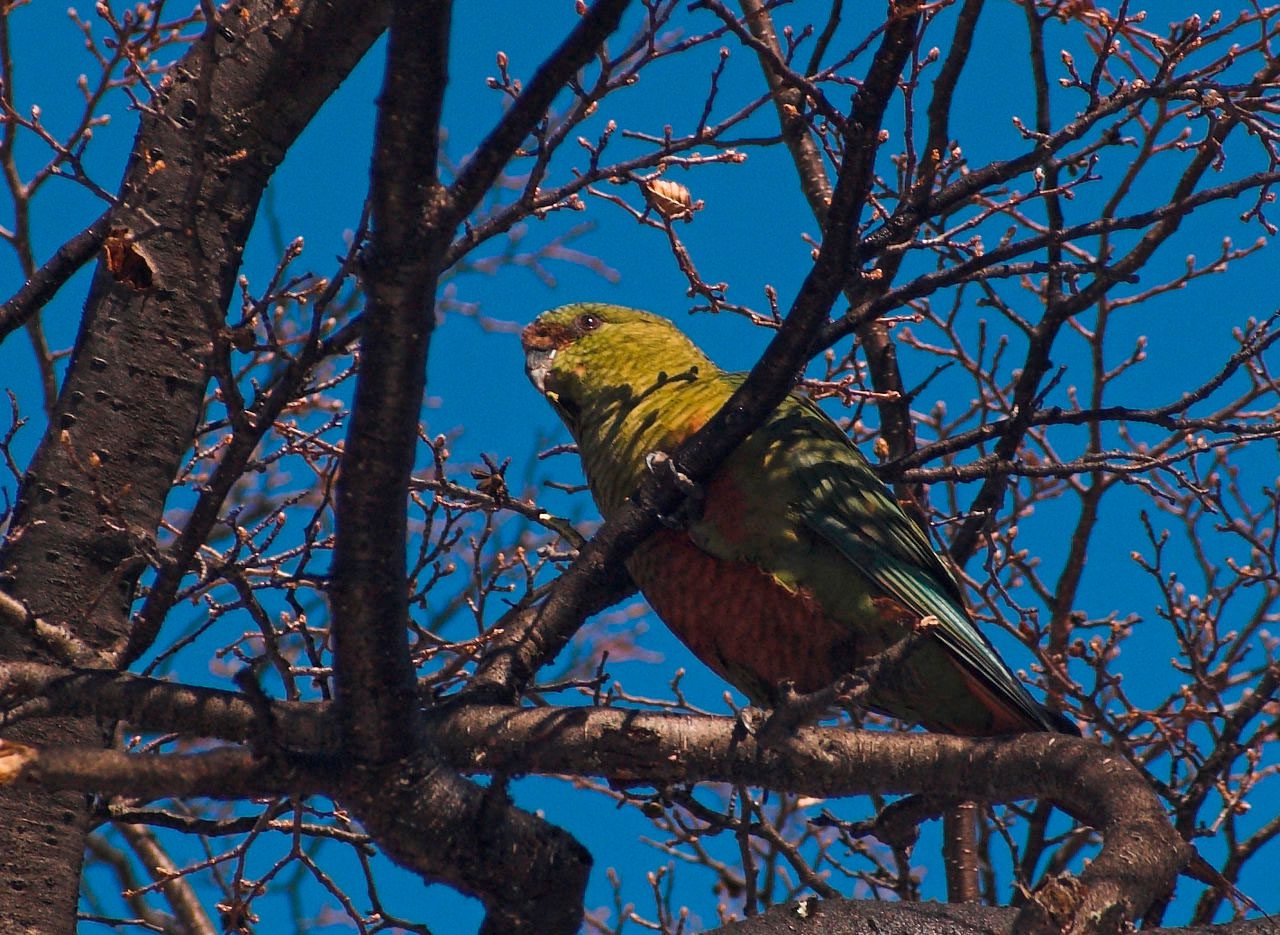
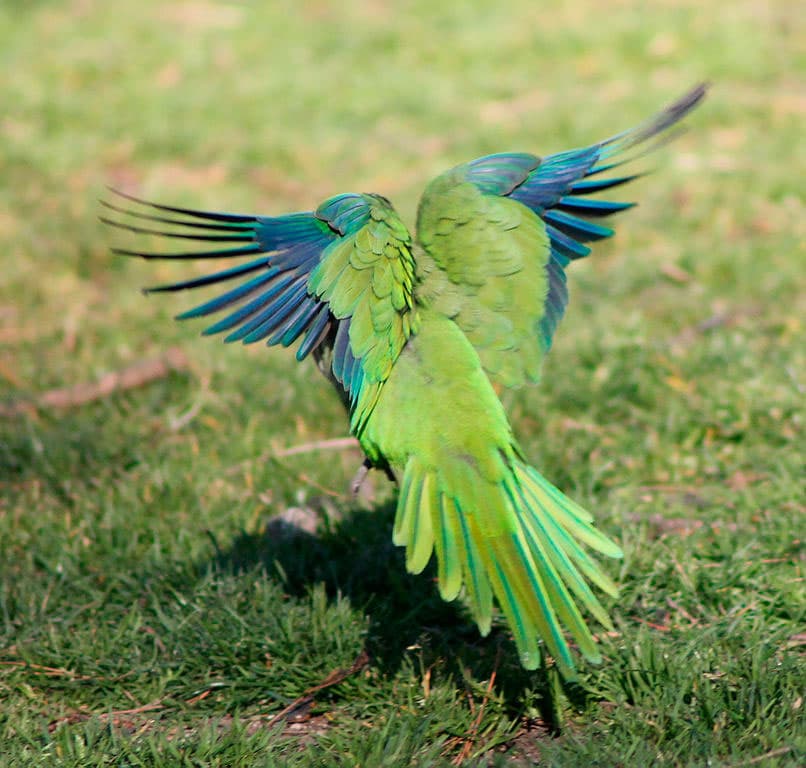
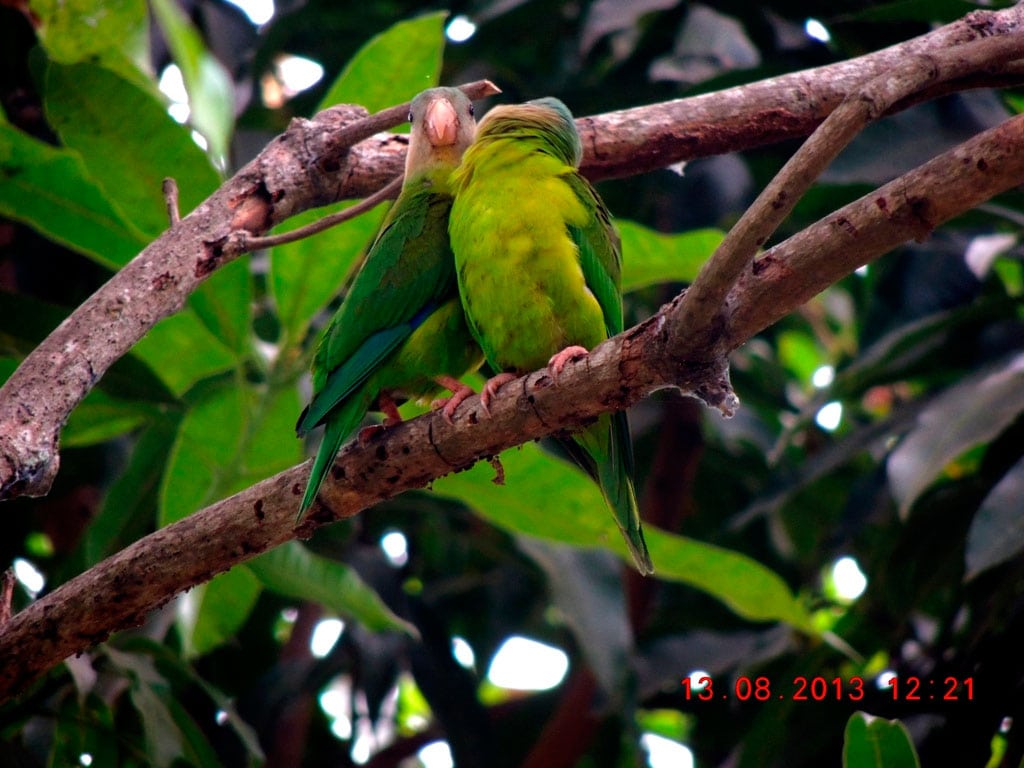
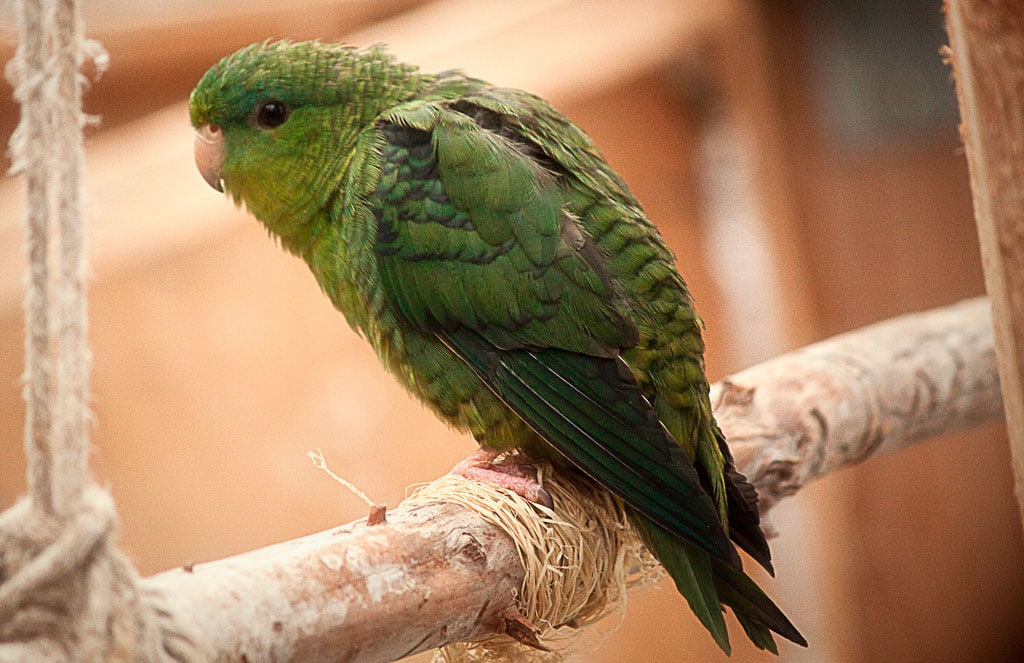
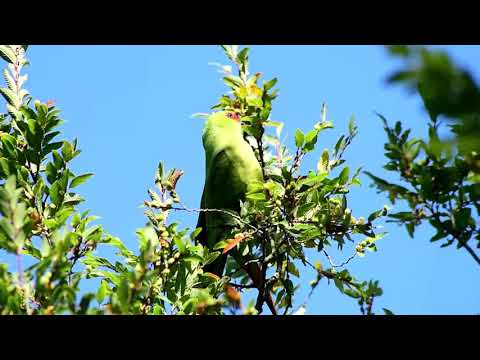
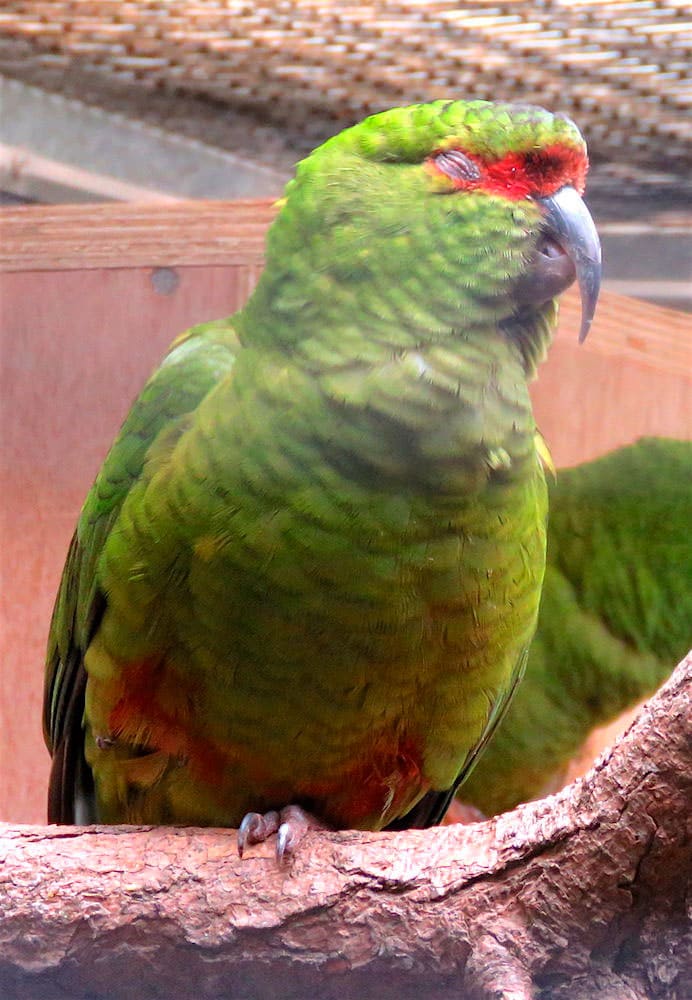
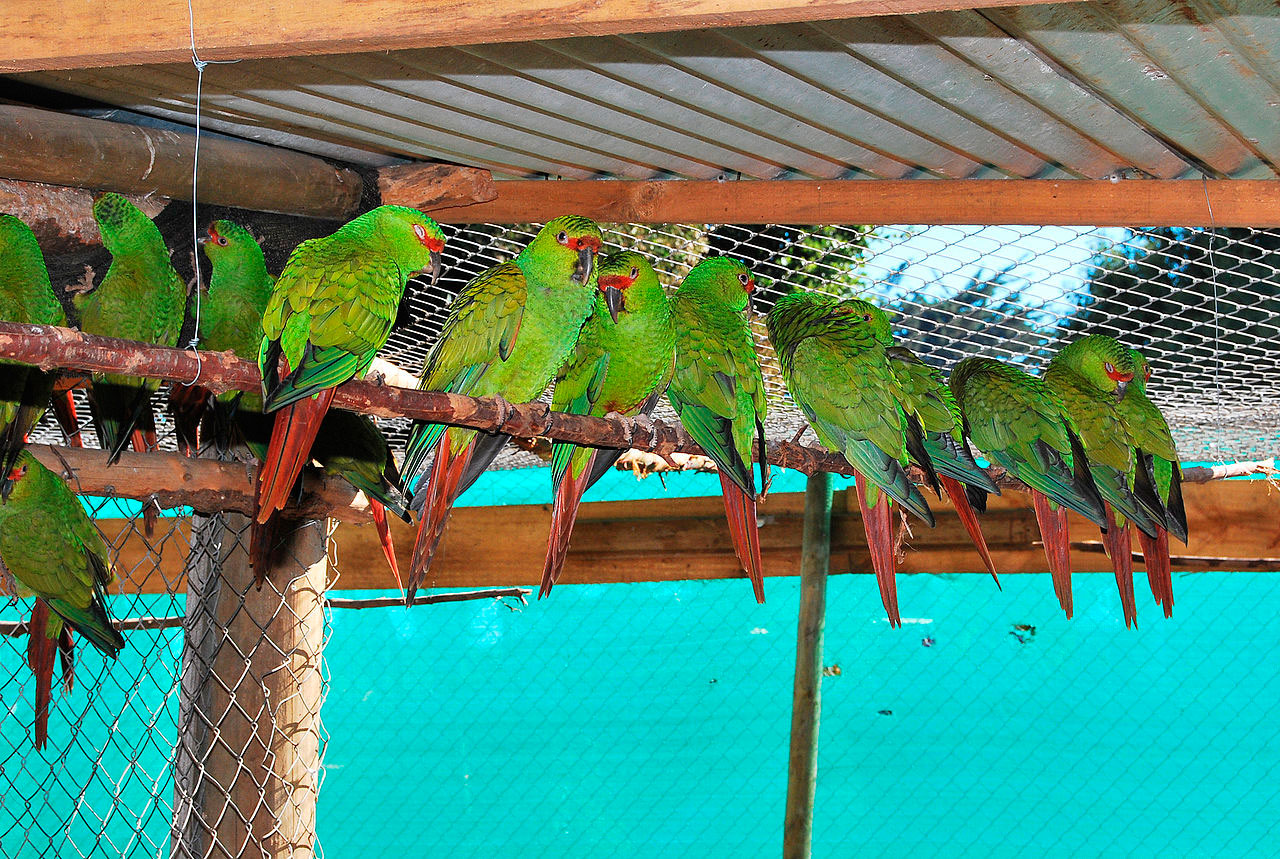
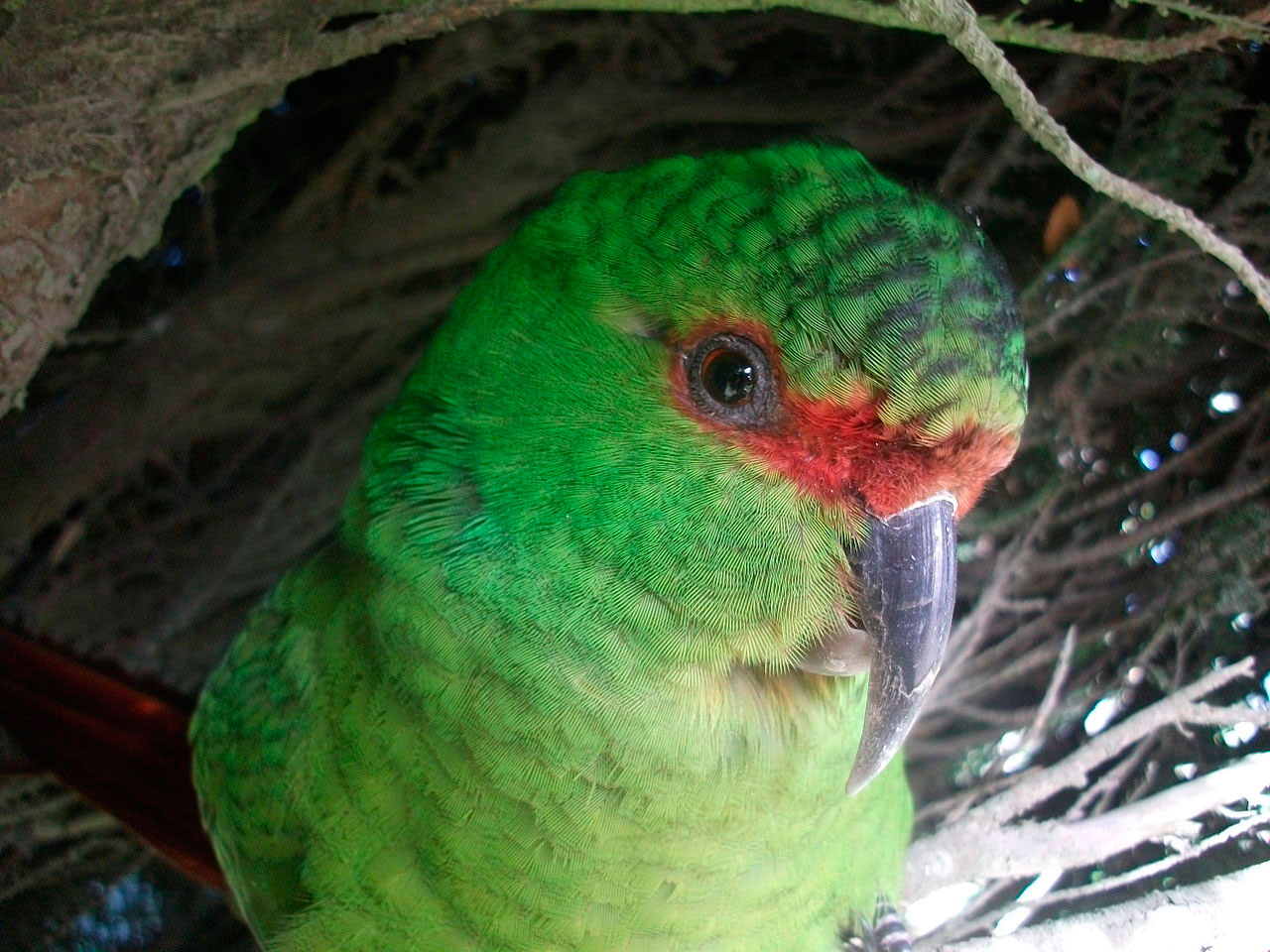
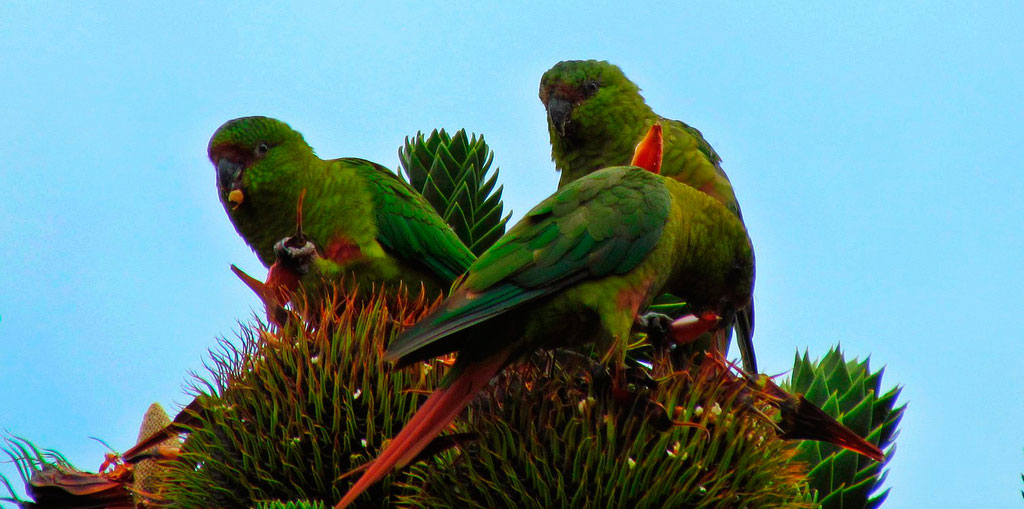
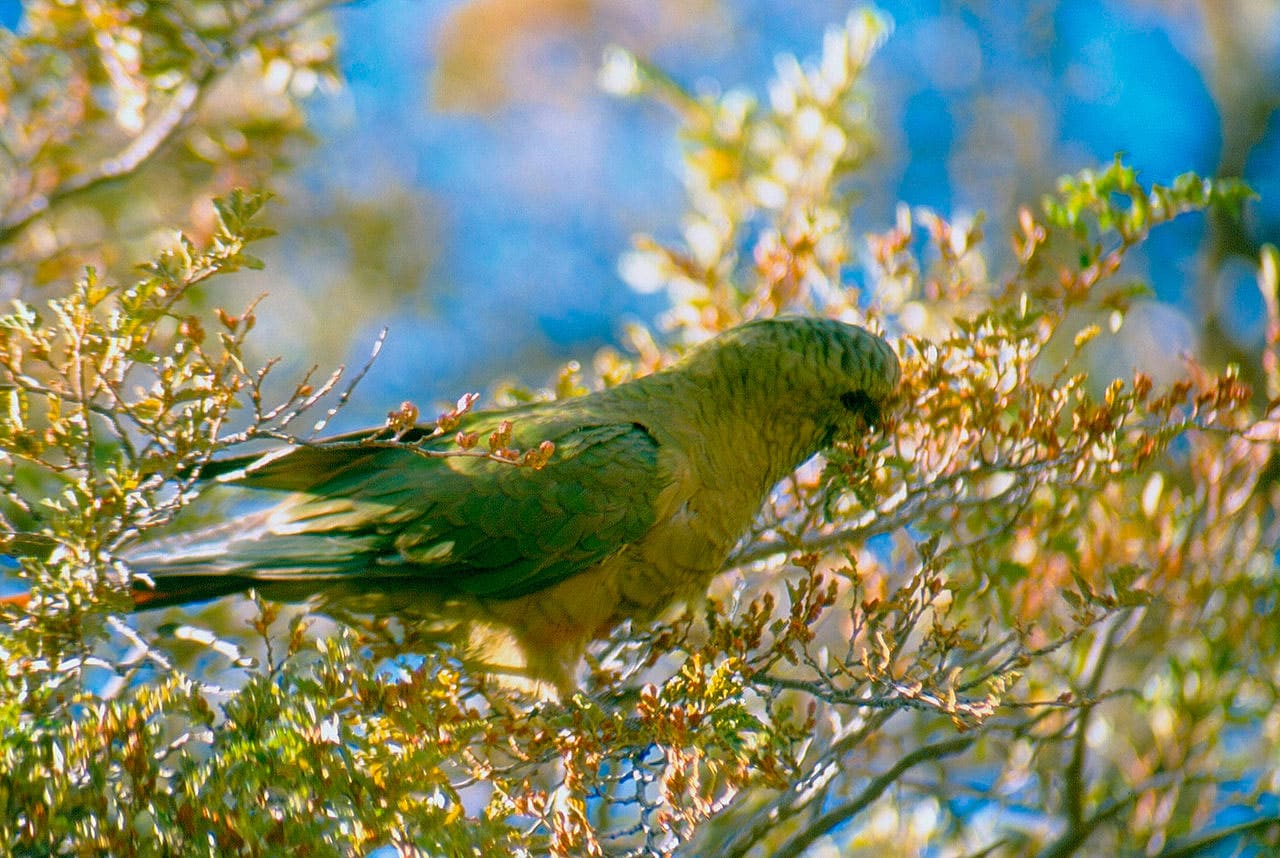
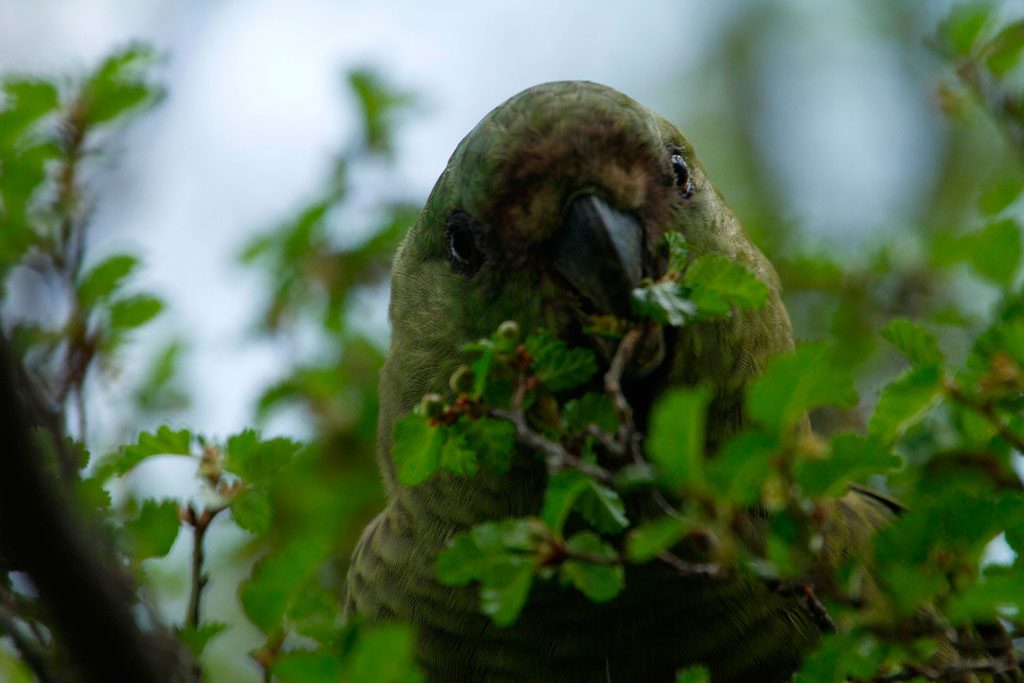
The Austral Parakeet (Enicognathus ferrugineus), is mostly green; the lores and forecrown rather dull brick-red; the front of the crown with yellow and green feathers in the center, and edges dark green olive feathers central part of the crown.

The feathers of the upperparts They are olive green with darker edges, giving a scalloped effect. The upperwing-coverts They are olive color with dark margins. Flight feathers green with metallic blue suffusion. Underwing-coverts green with dark tips; bottom of the flight feather pale grey. The underparts They are mainly pale green olive, with darker margins (except in the the thighs) and a large opaque red spot on the central belly. In the long run tail It is dark red off above; pale grayish below. The upper jaw horn is dark colored with a black tip; the bottom is dark horn-colored; irises reddish brown; legs dark gray.
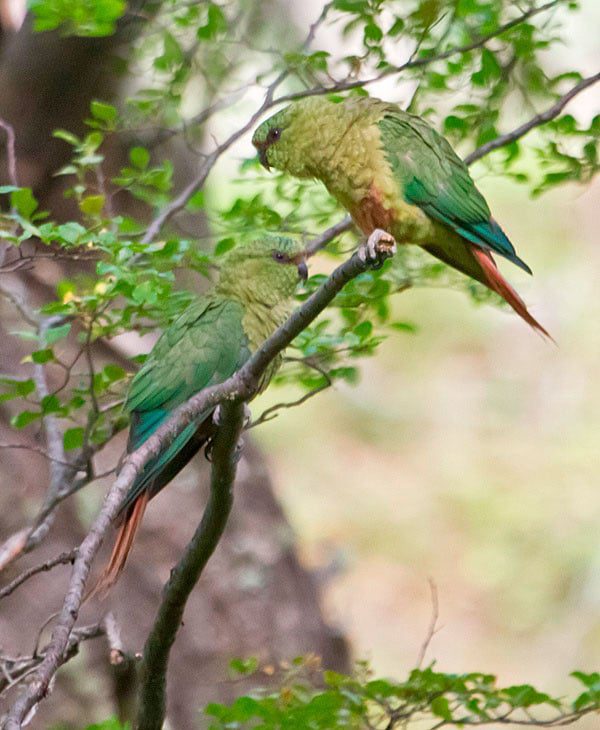
Austral Parakeet

Both sexes are similar. The immature It has a duller red on the head and patch in the belly red less dense and less extensive.

  • Sound of the Austral Parakeet.

Subspecies description:

  • Enicognathus ferrugineus ferrugineus

    (Statius Mรผller, 1776) – Nominal.


  • Enicognathus ferrugineus minor

    (Chapman, 1919) – Smaller and darker than the nominal, with a abdominal patch Red less extensive (sometimes absent).

Habitat:

Video – "Austral Parakeet" (Enicognathus ferrugineus)

Cachaรฑa (Enicognathus ferrugineus)

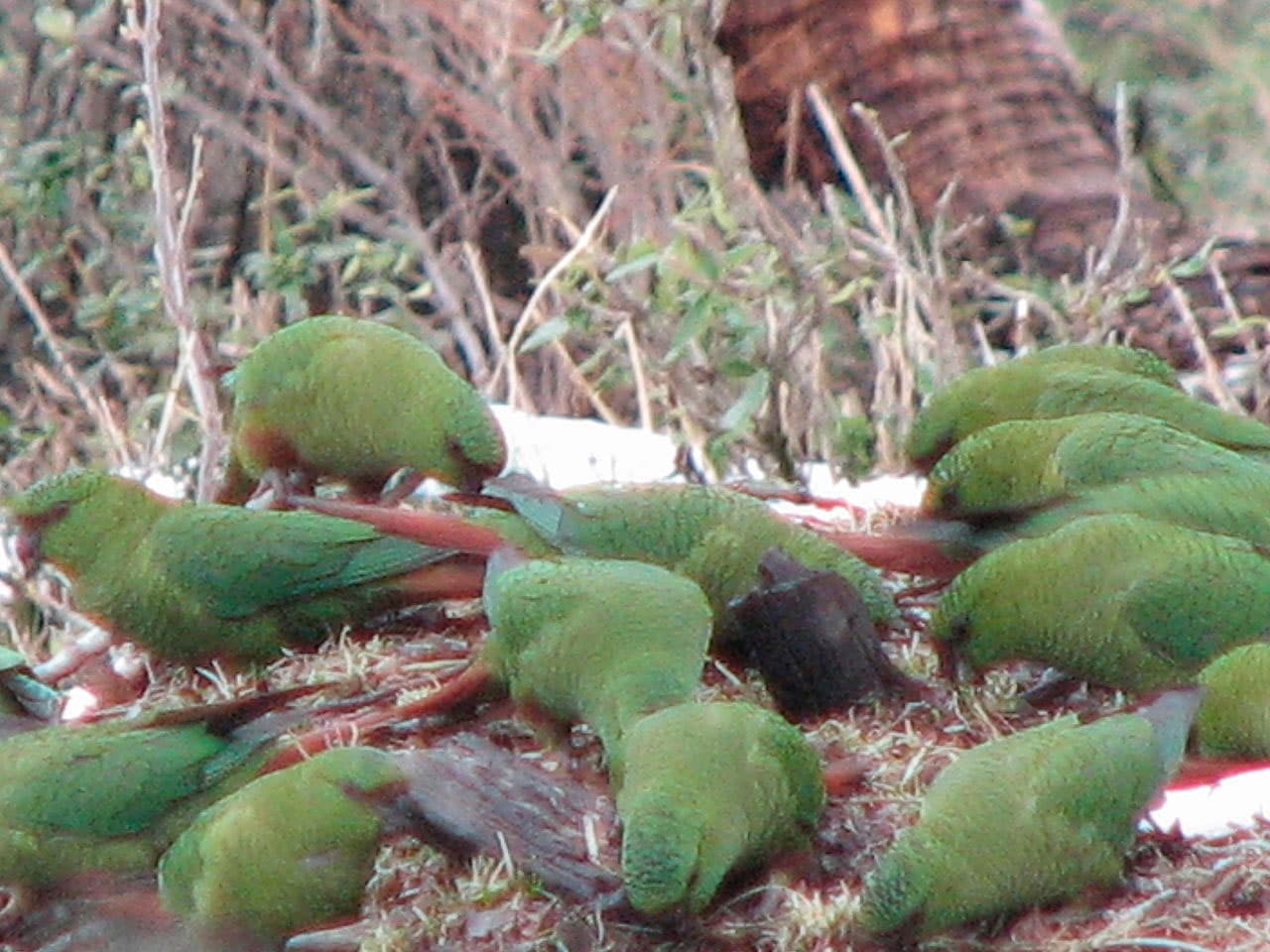
The Austral Parakeet occurs mainly in forests, including forests of Nothofagus, Araucaria and Quercus, but also in more open habitats with shrubs Berberis darwinii and Drimys winteri, also they visit cultivated areas, mainly at sea level in the southern part of the range, may reach 1200 meters and even 2.000 meters north. Observed in flocks of 10-15 individuals, coming to meet more than 100 birds outside the breeding period; flocks of 10 or more in Fire land with reports of attacks caused by Red-backed Hawk (Geranoaetus polyosoma).

In April and before the arrival of winter flocks leave the mountains to take refuge in lower valleys of lower altitude.

Reproduction:

They nest in the cavity of the trees, filling very deep holes with twigs and branches where building nests are no cavities available. The breeding season It comprising the months of November to December. Clutch 4-8 eggs. To the 26 days the chicks are born, emplumรกndose to 7-8 weeks.

Food:

predominantly eat seeds (can cause damage to grain crops). Its diet includes herbaceous and bamboo seeds, Drimys winteri, acorns and nuts Araucaria, fruit, berries and sprouts p. Nothofagus and bulbous roots.

Distribution and status:

Extending its range (reproduction / residents): 2.010.000 km2

Distributed by the south end of South America, psittacine distribution is the southernmost in the world.

They can be observed from Land of Fire north through Chile to province Oโ€™Higgins and east of Andes in Argentina, extending through Santa Cruz, Chubut, Black river Western and Neuquรฉn Western.

Usually residents, even in the extreme south, although the foothills move to raise (at least in Land of Fire) with some predictable local movements in the north. generally common, It is very abundant in the wooded coast Land of Fire. Large areas remain intact habitat and inhabiting several large protected areas.

Very rare in captivity.

Subspecies distribution:

Conservation:

State of conservation โ“˜


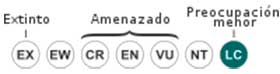
minor concern Minor Concern โ“˜ (UICN)โ“˜

โ€ข Current category of the Red List of the UICN: Least concern.

โ€ข Population trend: Stable.

โ€ข Population size : Unknown.

Justification of the Red List of the Category

This species has a very large range, and therefore does not approach the thresholds for Vulnerable under the range size criterion. The trend population seems to be stable, and therefore the species does not approach the thresholds for Vulnerable according to the population trend criterion. (> 30% decrease of more than ten years or three generations). The population size has not been quantified, but are not believed to approach the thresholds for Vulnerable based on population size criteria (<10.000 individuos maduros con una disminuciรณn continua estimada en> 10% in ten years or three generations, or in a particular population structure). For these reasons, the species is evaluated as Least concern.

Justification of the population

The world's population has not been quantified, but this species is described as ‘quite common‘ (Stotz et to the. (1996).

Justification trend

The population suspected to be stable in the absence of evidence of any reduction or substantial threats.

"Austral Parakeet" in captivity:

Very rare in captivity.

Chilean law prohibits the purchase, sale and possession of this magpie.

If you have a Austral Parakeet I recommend you give it to SAG or the Center for Rehabilitation of Wildlife of Codeff (rehabilita@codeff.cl, background: 777 25 34 – Santiago), because in that place you will come across many other parrots of the same species that suffered the same process, and specialized people who care very well, TO THEN RETURN THEM TO THEIR NATURAL HABITAT.

Alternative names:

– Austral Conure, Austral Parakeet, Emerald Conure, Emerald Parakeet, Magellan Conure, Magellan Parakeet (English).
– Conure รฉmeraude, Conure magellanique, Perriche magellanique, Perruche magellanique (French).
– Smaragdsittich, Smaragd-Sittich (German).
– Periquito-austral (Portuguese).
– Cachaรฑa, Cachaรฑa austral, Cotorra Austral, Cotorra Cachaรฑa (espaรฑol).

scientific classification:

Formerly separated from the monospecific genus Microsittace.

– Order: Psittaciformes
– Family: Psittacidae
– Genus: Enicognathus
– Scientific name: Enicognathus ferrugineus
– Citation: (Statins Mulller, 1776)
– Protonimo: Psittacus ferrugineus

Images Austral Parakeet:


Species of the genus Enicognathus

Sources:

– Avibase
– Parrots of the World โ€“ Forshaw Joseph M
– Parrots A Guide to the Parrots of the World – Tony Juniper & Mike Parr
– Birdlife

– Photos:

(1) – Austral Parakeet (also known as Austral Conure or Emerald Parakeet) in Torres del Paine National Park, Chile By Miguel Vieira [CC BY 2.0], via Wikimedia Commons
(2) – Two Austral Parakeets in Tierra del Fuego, Argentina By Francesco Veronesi [CC BY-SA 2.0], via Wikimedia Commons
(3) – Austral Parakeet (Enicognathus ferrugineus) seen near Laguna Onelli, Glaciers National Park, Santa Cruz, Argentina By Fabienkhan (Personal Picture) [CC BY-SA 2.5], via Wikimedia Commons – credit : Fabien Dany – www.fabiendany.com
(4) – Cachaรฑas in San Martin de los Andes, Province of Neuquen, Argentina By Ignsal (Own work) [Public domain], via Wikimedia Commons
(5) – An Austral Parakeet in Magallanes Province, Chile By Paulo Fassina (Parrot EatingUploaded by Snowmanradio) [CC BY-SA 2.0], via Wikimedia Commons
(6) – Austral Parakeet – Torres del Paine National Park, Chile by Eleanor Briccetti – Flickr

– Sounds: Bobby Wilcox, XC236937. accessible www.xeno-canto.org/236937
โ–ท The world of Pets: Dogs, cats, birds, reptiles, amphibians

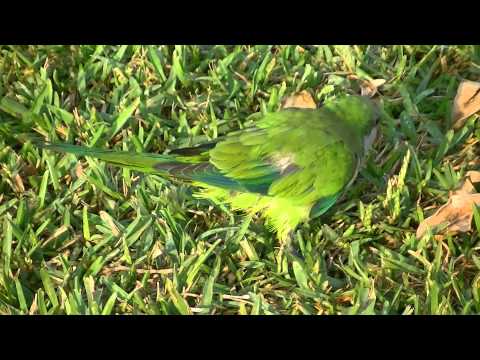
Monk Parakeet
Myiopsitta monachus

Monk Parakeet

Content

Description:

28-31 cm. length and 120-140 weight g
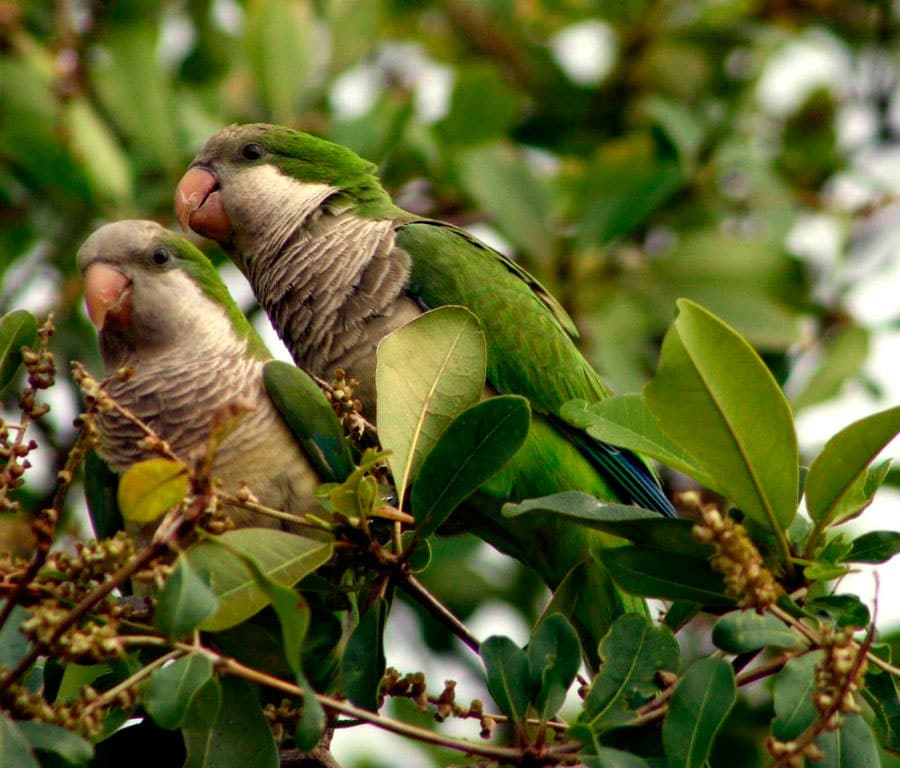
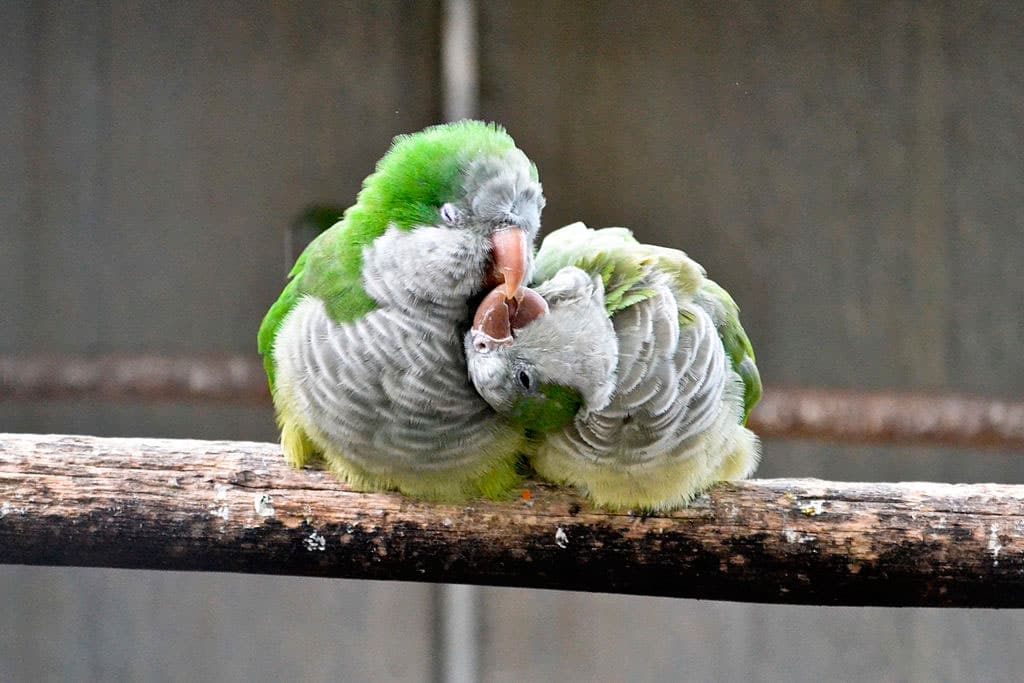
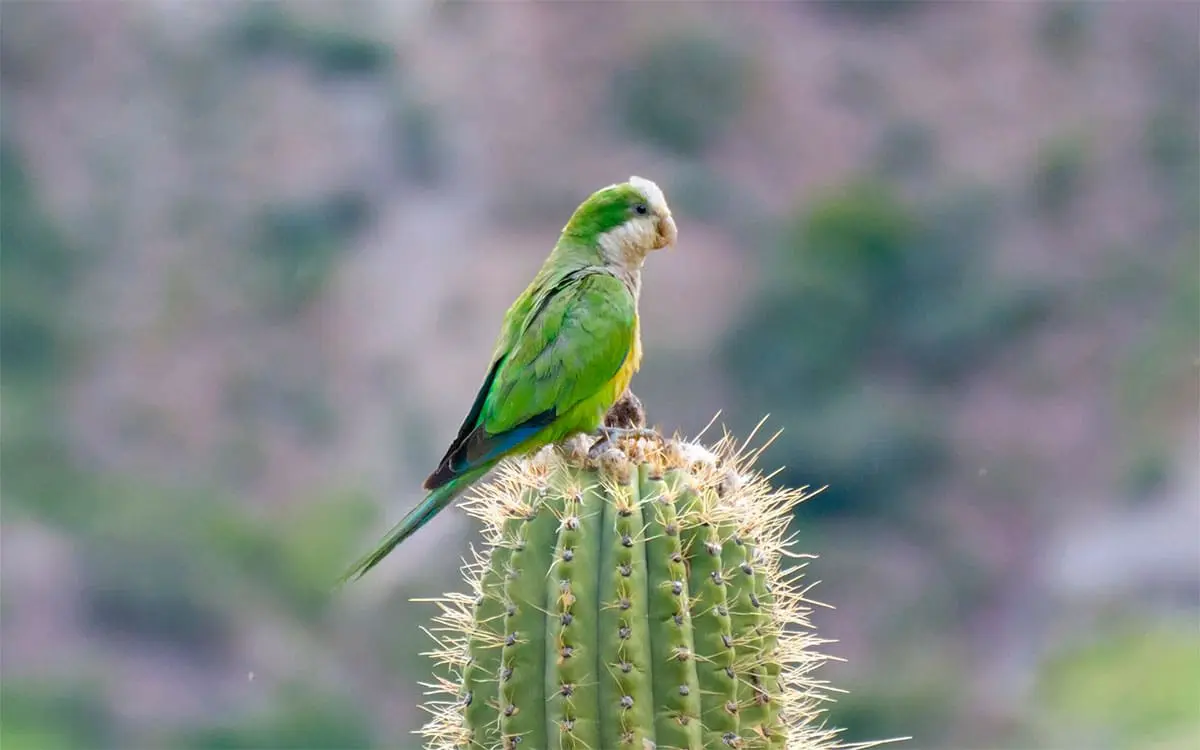
The Monk Parakeet (Myiopsitta monachus) has the forecrown (up to the half of the crown), the lores and cheeks, pale ash gray; the rear of the crown and nape, grass-green, fading to green, slightly more off, in the the mantle, the back and scapulars; rump green. Primary coverts, blue; other coverts, green.
Flight feathers Blue by up. Under the wings has the lesser coverts green, the coverts more large and innerwebs of the the flight feathers, blue. Throat and upper area of the chest, ash gray, with pale edges to the feathers, giving a beaming effect; lower area of โ€‹โ€‹the chest, pale yellow; Abdomen, the thighs and vent, pale green.

Upper, the tail is green with blue in the Center; below, pale bluish-green.
Bill color horn; Brown of the irises; legs grey.
Both sexes are similar.
Immature has the front green-tinted.

Subspecies description:

  • Myiopsitta monachus calita

    (Jardine & Selby, 1830) – Less of the nominal species (27cm.) with wings more blue and head dark gray.

  • Myiopsitta monachus cotorra

    (Vieillot, 1818) – Very similar to the subspecies Myiopsitta monachus calita, but supposedly more bright, belly least yellow.

  • Myiopsitta monachus monachus

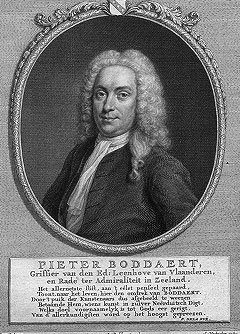
    (Boddaert, 1783) – Nominal.

Habitat:

Video – "Monk Parakeet" (Myiopsitta monachus)

ARGENTINE PARROT: Myiopsitta monachus (www.riomoros.com)

The Monk Parakeet is, mainly, in dry wooded areas or fields open with trees, such as gallery forest, isolated thickets, palm groves, forests, linens and areas with thorny thickets with Cactus, also in land cultivation and in urban areas with trees, mainly below 1.000 m.

They tend to be observed in pairs or flocks of 30-50 individuals; with much larger gatherings out of breeding season. Rest communally, Sometimes the nests, While you are not playing.

Note:

    There are reports of transmission lines damaged by birds while nesting. In general, in the area in which have been introduced these birds, the impacts are associated mainly to the behaviors of nesting. This species of birds build large, bulky nests in communications and transmission towers, and distribution poles. In the towers of transmission represent simply a problem of maintenance and does not affect the communications, but in electrical installations can cause blackouts and fires since the nests can create electrical circuits. This problem is intensified in the rainy season and humid climates.. The nests of these birds can cause significant damage to the facilities power including a decrease in electrical reliability, damage to equipment and loss in income due to power outages caused by nests, an increase in maintenance and operating costs associated with removing nests and repairing damaged structures as well as public safety issues (ISC 2011).

Source: Naturalist

Reproduction:

It's the only one, between the parrots, It builds, usually, his nest with twigs (commonly from Celtis shrubs) in branches of tree (sometimes in telephone poles, etc.). Sometimes build nests alone (especially in those areas more dry), Although they are usually communal (until 100 nests, usually around 10) combined to form large structures cluttered of several meters of width, with inputs from the side or by under. Each nest It is built with remains of chewed branches. The nests are sometimes used by them Spot-winged Falconet (Spiziapteryx circumcincta) and other birds, to nest and rest. One nest can get to to weigh 50 kilos and be formed by more than 20.000 remained.

The breeding season, in your area natural's distribution, is between October-December. The clutch generally 4-6 eggs, Although according to some sources, the laying You can understand between 1-11 eggs.

Food:

Its diet includes a wide range of seeds wild and cultivated, wild fruits, as well as various plant material including grass seeds and grains, stems of cactus, estate vegetables and fruits cultivated, sometimes also insects and their larvae. Feeds, both in trees as in the soil, sometimes with other species including pigeons and birds of the genus Molothrus.

Distribution:

Size of the area of distribution (reproduction / resident): 2720000 km2

The Monk Parakeet lives in the lowlands of the South of South America, to the East of the Andes front Bolivia to Rawson Department (Chubut) in Argentina.

Observed in the East and North of Bolivia in the southeast of Peace, to the south, in Cochabamba, West of Santa Cruz, North of Chuquisaca and possibly in other areas (for example, Tarija), Paraguay and South of Brazil, in the South and West of Mato Grosso, Mato Grosso from the South and two-thirds of the southwest of Rio Grande do Sul, in all the Uruguay and in the Argentina, to the South of Rio Negro and probably to the North of Chubut.

Usually common and abundant in Uruguay and Rio Grande do Sul (although it does not play there). It is the most common parrot in much of its range and largely local expansion is due to the plantations of Euralyptus in areas without trees, partial deforestation in other areas, the Elimination of predators and the expansion of crops.

Pursued in several areas, Although the overall effect on its population is apparently slight.

Wild populations established in many towns outside of the range, including Puerto Rico, Florida, New York City (where there are fears it could become a major agricultural pest) and several cities more than them EE.UU. There have also been populations of the Monk Parakeet in Rio de Janeiro (Brazil), berlin (Germany), Austria, Belgium, Italy, Spain (including the Islas Canarias) and several places over the Mediterranean.

Is a trade in these birds, both local, as international, with large numbers of this species in captivity.

Subspecies distribution:

Conservation:

State of conservation โ“˜


minor concern Minor Concern โ“˜ (UICN)โ“˜

โ€ข Current category of the Red List of the UICN: Least concern.

โ€ข Population trend: Increasing.

Justification of the population

Global population size has not been quantified, but this species is described as ยซcommonยป (Stotz et to the., 1996) and ‘common to abundant‘ (pit et to the., 1997).

Justification of trend

The population is suspected to have increased as a consequence of the creation of new areas of habitat suitable (pit et to the., 1997).

Threats

The species has been marketed strongly: from 1981, When is included in the Appendix II of the CITES, they have been 710.686 individuals captured in the Middle wild for the Commerce International (database CITES from the UNEP-WCMC, January 2005).

"Monk Parakeet" in captivity:

Renowned for her beauty and intelligence, the Monk Parakeet is a pet people, especially in North America, since the 1960's (ISC, 2011). Can learn to imitate great amount of words, but at the same time are very bustling, demanding of attention and affection, with much character, and very territorial, by what not is rare that attack to their own owners when the manipulated or manipulate your cage. In captivity is reproduced with ease, but to the have many colonies in State Wildlife, not be usually stimulate its reproduction in captivity.
Its life expectancy It 3-10 years in freedom and 25 to 35 years in captivity (รlvarez-Romero et al., 2008).

Before trying to acquire one of these birds as a pet, you should know that in many countries its sale is prohibited as it is classified as species invasive.

MINISTRY OF AGRICULTURE, FOOD AND ENVIRONMENT

Royal Decree 630/2013, of 2 of August, which regulates the Spanish catalog of invasive alien species.

Invasive exotic species: exotic species that is introduced or set to an ecosystem or natural or semi-natural habitat, and is an agent of change and threat to native biodiversity, due to its invasive behaviour, or because of the risk of genetic contamination.
Article 7. Effects of the inclusion of a species in the catalogue.

  1. The inclusion of a species in the catalogue, According to the article 61.3 of the law 42/2007, of 13 of December, entails the prohibition generic in its possession, transport, traffic and trade of exemplary living or dead, of their remains or propagules, including the trade exterior. This prohibition is limited to the scope of application specified for each species in the annex.

Alternative names:

– Monk Parakeet, Monk Parakeet (Monk), South American monk parakeet (English).
– Perriche veuve, Conure veuve (French).
– Mรถnchsittich, Mรถnchssittich, Sรผdamerikanischer Mรถnchsittich (German).
– catorra, catorrita, Caturrita, papo-branco, periquito-do-Pantanal (Portuguese).
– Cata Aliazul, Cotorra, Cotorra Argentina, Cotorra Comรบn, Cotorrita, Perico Monje (espaรฑol).
– Cotorra (Argentina).
– Cotorra argentina (Chile).
– Cotorrita (Paraguay).
– Cotorra, Cotorra Comรบn (Uruguay).
– Periquito (Venezuela).

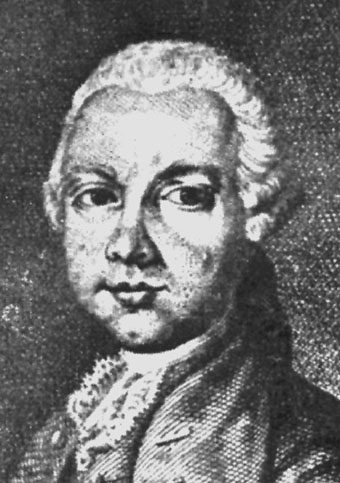
Pieter Boddaert
Pieter Boddaert

scientific classification:


– Order: Psittaciformes
– Family: Psittacidae
– Genus: Myiopsitta
– Scientific name: Myiopsitta monachus
– Citation: (Boddaert, 1783)
– Protonimo: Psittacus monachus


Monk Parakeet images:


Species of the genus Myiopsitta

โ–ท The world of Pets: Dogs, cats, birds, reptiles, amphibians

Grey-cheeked Parakeet
Brotogeris pyrrhoptera

Catita Macareรฑa

Content

Description:

20 cm.. height.
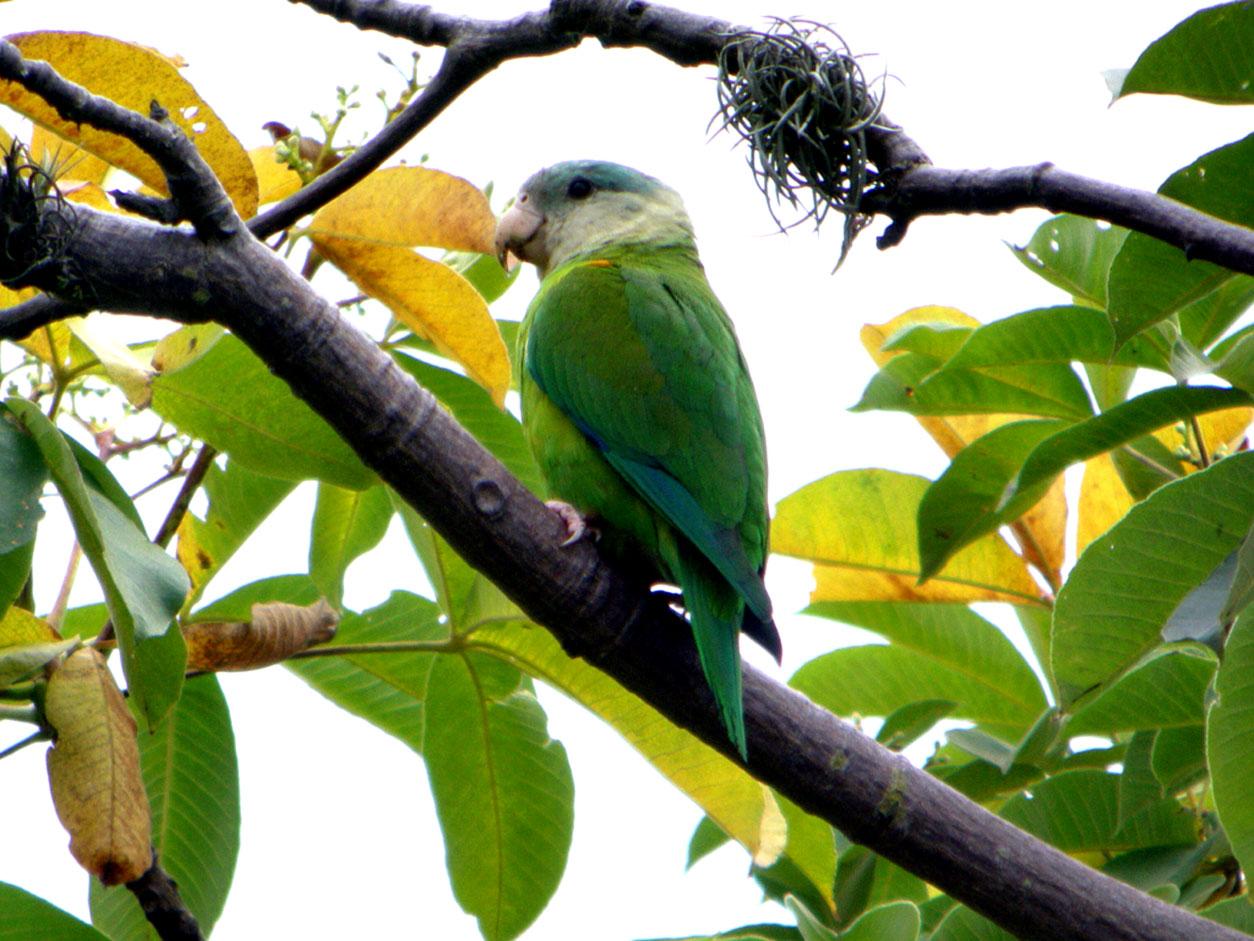
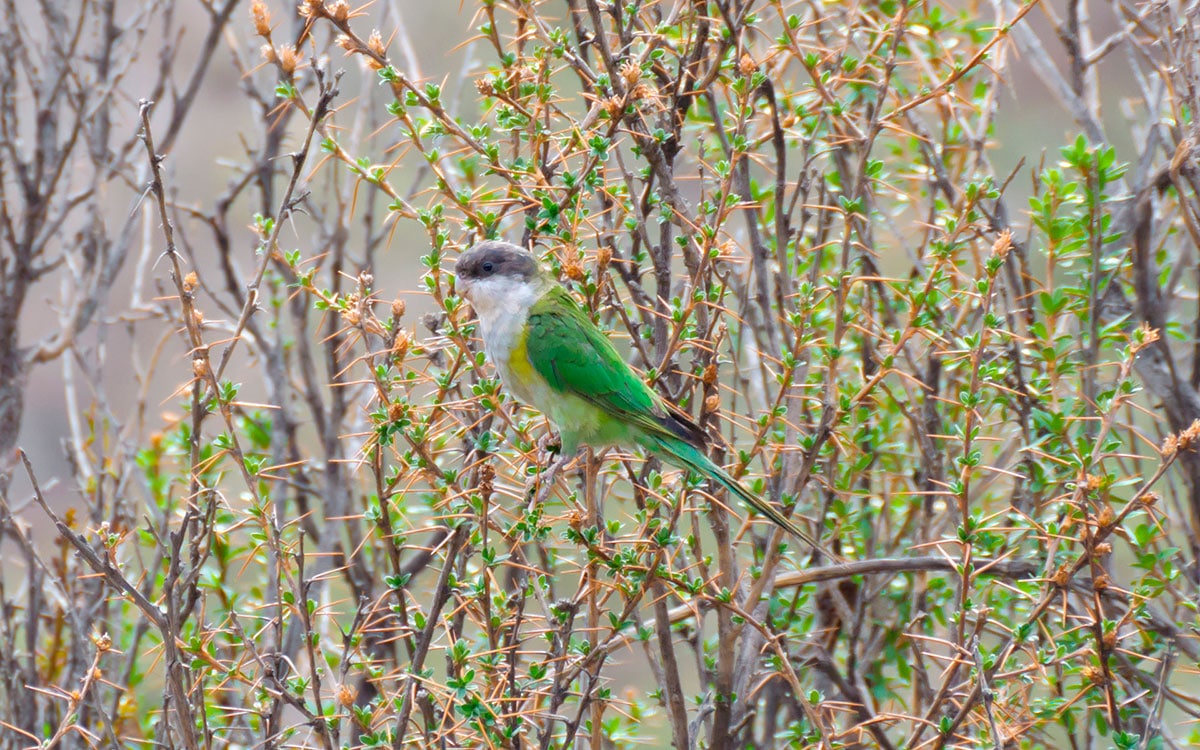
The Grey-cheeked Parakeet (Brotogeris pyrrhoptera) discovered in 1801. Is difference for them cheeks and sides neck grey, crown up to almost the nape, blue, bill yellowish, armpit reddish orange (only visible in flight), tail long and pointed, the rest of the body green.

The immature they have the crown greenish blue and the bill blackish.

hybrid species:

    Brotogeris [erythrogenys x pyrrhoptera] (hybrid)
    Brotogeris [chevroned x pyrrhoptera] (hybrid)
    Brotogeris [pyrrhoptera x jugularis] (hybrid)

Habitat:

Video – "Grey-cheeked Parakeet"

It inhabits in humid forest, semi-wet, secondary, formations of semi-deciduous forest and cultivated areas, until 1500 m. Has also seen it is in the banana plantations. Flies in pairs or small groups up to of 12 individuals, sometimes associated with other parrots.

Reproduction:

Nest in hollows and termite mounds on large trees and apparently be reproduced between January and March. It is still unknown why the termites tolerate their presence.

Their eggs, they are around for 2 cm.. x 1,6 cm.. they settle in sunsets of four to six eggs in a nest filled with MOSS. The female incubates them for a few 25-26 days, While the male mounts guard out of the nest.

Food:

Feeds of flowers and seeds large trees including Erythina, Chorisia and cavanillesia platanifolia, Cecropia catkins, fruits of Ceiba and Ficus figs. Sometimes they feed of banana.

Distribution:

Size of the area of distribution (reproduction / resident): 9.300 km2

The Grey-cheeked Parakeet distributed over the southwest of Ecuador and Northwest corner of Peru, from the Valley of the chone river, Manabi, to the South up to Gold and Loja in Ecuador, and Tumbes and Piura in Peru.

The populations more large is found in the coast of Manabi and Guayas, and at the border between Ecuador and Peru (Juniper and Parr, 1998).

There was a large decrease in the population during the 20TH century, at the beginning of the year 1980 (Best et to the., 1995, Juniper and Parr 1998), with 59.320 birds imported by countries CITES between 1983-1988. In 1995, the population Wild was estimated in 15.000 birds, mainly in Ecuador (Best et to the., 1995). This represents a very crude c.70% decline in 10 years, although it is still locally common in some remains of its habitat. (Juniper and Parr 1998).

Counts of investigations in the Cerros de Amotape National Park and in the Tumbes national reserve they revealed a descent of the 33,2% between 1992 and 2008 (Anon. 2009).

Conservation:

State of conservation โ“˜


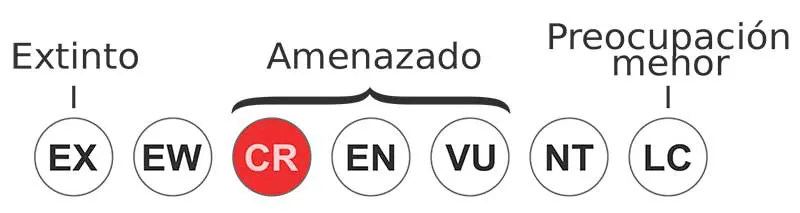
critical hazard critically endangered โ“˜ (UICN)โ“˜

โ€ข Current category of the Red List of the UICN: In danger of extinction.

โ€ข Population trend: Decreasing.

The main threat to this species is the wild bird trade. The habitat It is also losing out by logging, Agriculture and overgrazing. Its persecution as a pest crops can be also significant.

Is expected that the rate of decline is more slow in the next 10 years.


"Grey-cheeked Parakeet" in captivity:

Most of the existing populations are found in the houses of individuals such as pets. Because of this, effort has been made to save this species of Brotogeris.

Alternative names:

– Gray-cheeked Parakeet, Gray cheeked Parakeet, Grey cheeked Parakeet, Grey-cheeked Parakeet (English).
– Toui flamboyant, Perroquet ร  flancs orangรฉs, Perroquet de Perico, Perruche ou (French).
– Feuerflรผgelsittich (German).
– Periquito-de-bochecha-cinza (Portuguese).
– Catita Macareรฑa, Periquito de Alas Naranjas (espaรฑol).
– Perico de Mejilla Gris (Peru).


scientific classification:

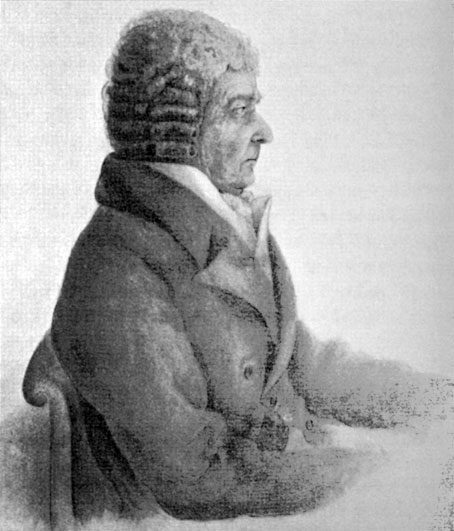
John Latham
John Latham

– Order: Psittaciformes
– Family: Psittacidae
– Genus: Brotogeris
– Scientific name: Brotogeris pyrrhoptera
– Citation: (Latham, 1801)
– Protonimo: Psittacus pyrrhopterus


Images Grey-cheeked Parakeet:


Species of the genus Brotogeris

Sources:

– Avibase
– Parrots of the World โ€“ Forshaw Joseph M
– Parrots A Guide to the Parrots of the World – Tony Juniper & Mike Parr
– Birdlife
– Parrot Book, parrots and macaws Neotropical

– Photos:

(1) – Grey-cheeked Parakeet (also known as the Fire-winged Parakeet) at El Empalme (also known officially as Velasco Ibarra), a town located in Guayas, Ecuador By markaharper1 [CC BY-SA 2.0], via Wikimedia Commons
(2) – Periquito macareรฑo (Brotogeris pyrrhoptera), Quito, Ecuador by Diego Delso [CC BY-SA 4.0], via Wikimedia Commons
(3) – Grey-cheeked Parakeet (Brotogeris pyrrhoptera) in captivity in Cuenca, Ecuador By Beatrice Murch (originally posted to Flickr as Grey headed parrot) [CC BY 2.0], via Wikimedia Commons
(4) – A pet Grey-cheeked Parakeet By Juano80 (Own work) [Public domain], via Wikimedia Commons
(5) – Grey-cheeked Parakeet Brotogeris pyrrhoptera in Rรญo Milagro in Yaguachi. Prov. Guayas. ECU by Ronald Navarrete-Amaya – Flickr

– Sounds: (xENO-singing)

โ–ท The world of Pets: Dogs, cats, birds, reptiles, amphibians

Red-tailed black cockatoo
Calyptorhynchus banksii

Red-tailed black cockatoo

Content

Description

55 to 60 cm.. length between 570 and 870 weight g.

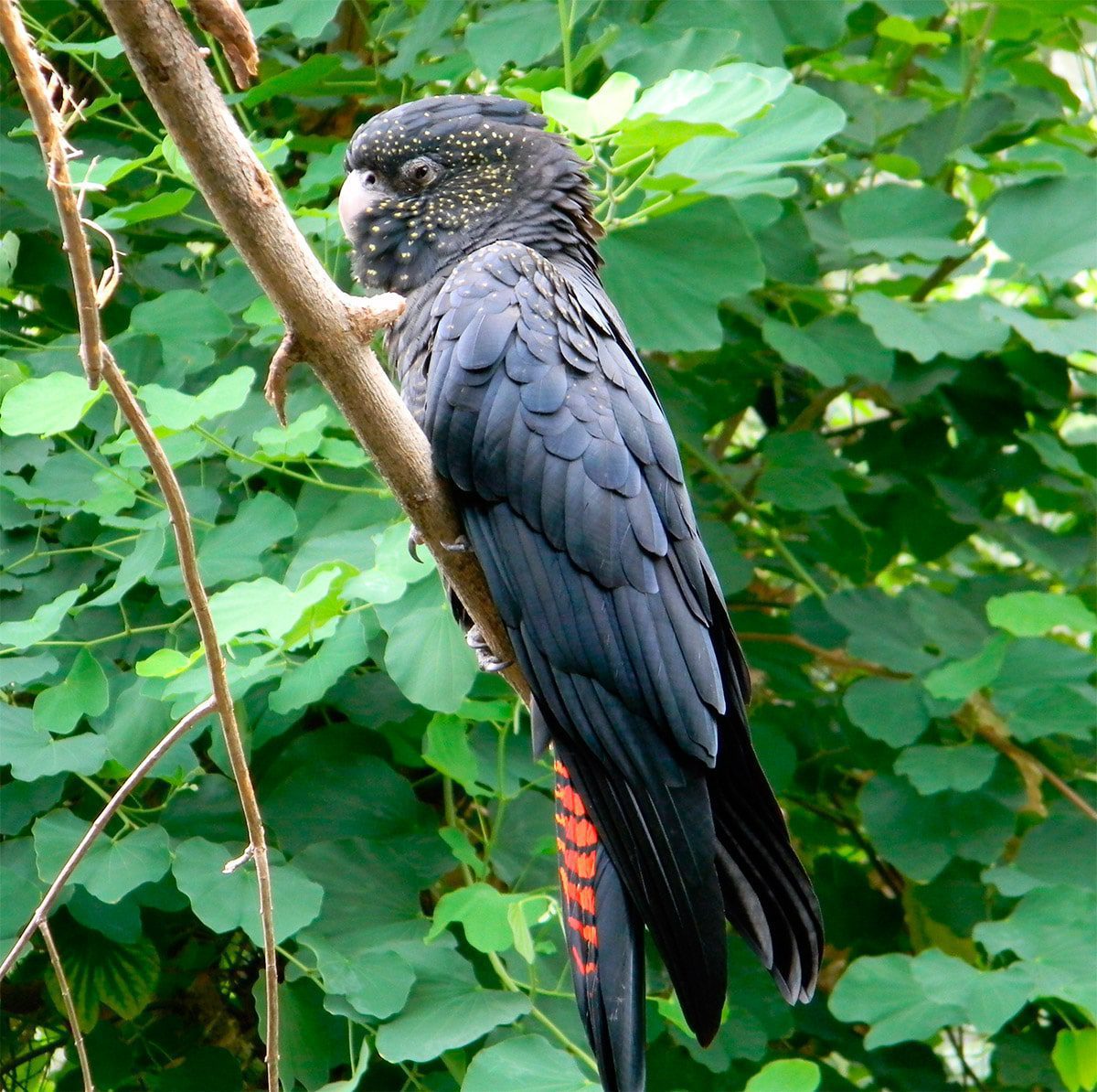
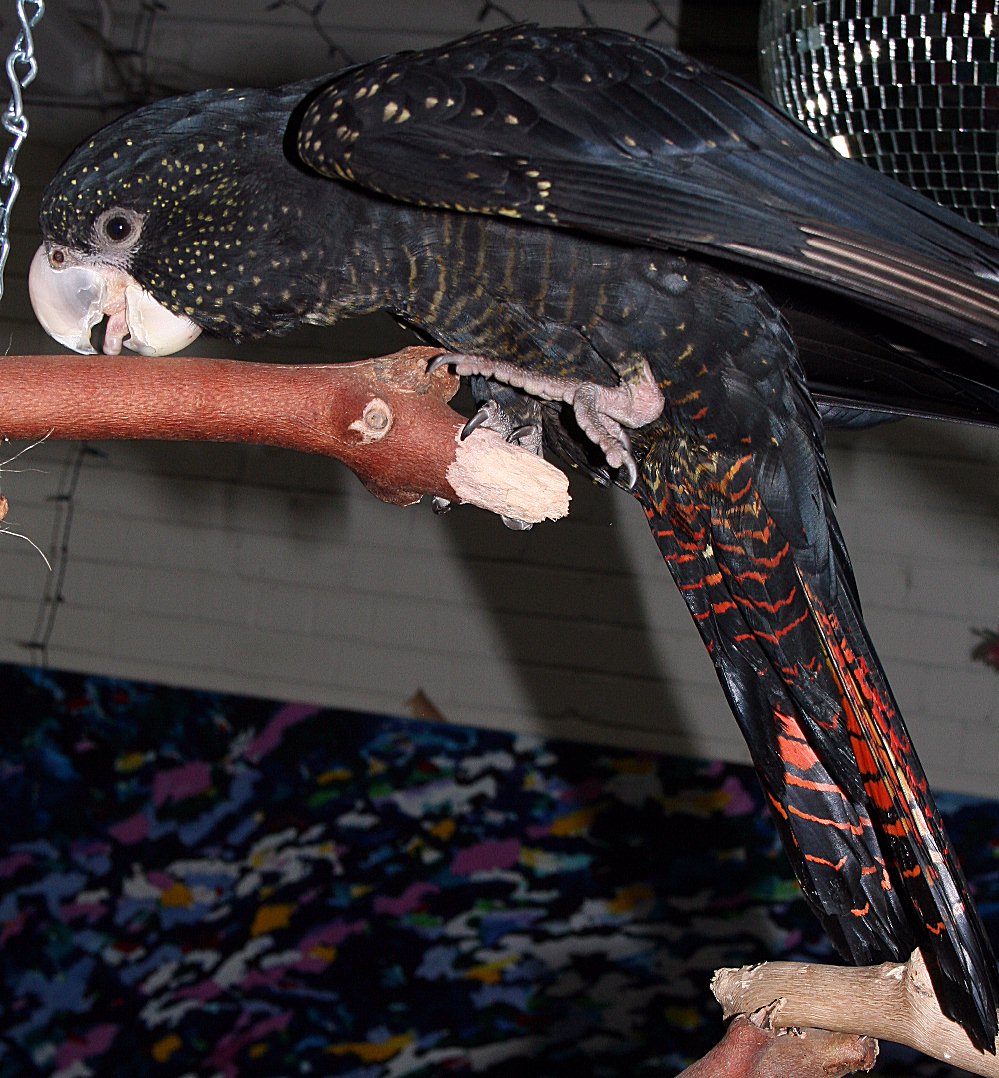
The adults of the Red-tailed black cockatoo (Calyptorhynchus banksii) present sexual dimorphism. The male is entirely black, with the exception of the sides of the tail that are of color red glossy. The upper part of the head It is a long Ridge which starts from the front and goes up to the nape. The bill is grey dark.

The females they are slightly smaller. Show a plumage blackish brown with yellow-orange stripes on the tail and the chest. The cheeks and wings they are covered with small yellow spots. The bill is of color bone pale. Lower parts to the tail coverts they are finely excluded in beige.

The youth are similar to the females until they reach the maturity sexual, around the 4 years. Gradually, as they approach this age, YM will acquire their feathers red which gradually replaced their initial feathers in yellow.

Description 5 subspecies

They differ from each other mainly by the size of their beak.

  • Calyptorhynchus banksii banksii

    (Latham, 1790) – Nominal. Grand. Bill dark grey.


  • Calyptorhynchus banksii graptogyne

    (Schodde, Saunders,DA & Homberger, 1989) – It is the smaller of the 5 Subspecies.


  • Calyptorhynchus banksii macrorhynchus

    (Gould, 1843) – Large as it nominal.


  • Calyptorhynchus banksii naso

    (Gould, 1837) – They have wings that seem to be more long and pointy.


  • Calyptorhynchus banksii samueli

    (Mathews, 1917) – Have a size and bill smaller.

Habitat:

Wide variety of habitats. Grasslands and scrub, from the dense rainforests to the forests of acacia and eucalyptus.
Nestbox, These birds are generally dependent on the old eucalyptus, although according to which regions regions, the variety of trees for nesting, could be different.

To feed, flocks of these cockatoos, they penetrate in agricultural lands and orchards, becoming a real plague.
In all parts of the Australian mainland, have been observed seasonal movements.
In the North, most cockatoos flee from high humidity areas during the rainy season.
In other parts of the continent, We are seeing movements directly related to food.
In South Australia, the movements are carried out in the South-North direction and are not necessarily linked to the stations.

Reproduction:

It nests in the hollow of the following trees: MARRI, Jarrah, Wandoo, Karri and Bullich. Eggs are laid on the bottom of a hollow log, up dry branches, between March and December. The cavity can have a depth of one to two meters. The diameter of the entry may vary from 25 to 50 centimeters.

The laying is of an only egg (In rare cases two). The incubation runs by features of the female and lasts between 29 and 31 days.
At birth the chicks are covered by a little and yellow plumage. Most of the time, the second calf is abandoned and eventually dies from lack of food. The surviving offspring is fed by both parents..

Food:

It feeds mainly from seeds, in particular those of Eucalyptus Marri (E. calophylla). Chew small branches, grabs clusters with its legs and โ€œchewsโ€ them to extract the seeds. Strip the remains to the soil, at the foot of the tree. It is a great vegetarian, also eats berries, fruit, some insects and larvae. Occasionally it feeds on plants or varieties introduced as the radish wild, turnips or melons.

Distribution:

Size of the area of distribution (reproduction / resident): 8.680.000 km2

endemic to Australia, where in drier areas.
They are especially prevalent in the northern part of the country. In the South, they are less abundant and more dispersed.

The WPT (World Parrot Trust) contributed funds to a project in the South of Australia for help to save to these birds.

Distribution 5 subspecies

They differ from each other mainly by the size of their beak.

Conservation:

State of conservation โ“˜


minor concern Minor Concern โ“˜ (UICN)โ“˜

โ€ข Current category of the Red List of the UICN: Least concern.

โ€ข Population trend: Decreasing.

In the past it was common, but now it has become rare, It is distributed unevenly in areas that have been significantly reduced.
The decrease is caused by the deforestation, the competition for the nesting with species native and exotic, as well as the fires.

It is believed that the world's population exceeds the 100.000 individuals.
the subspecies graptogyne was estimated to be in less of 1.000 individuals in 1989.
Only the subspecies of the Southwest, Calyptorhynchus banksii naso, is listed as "Vulnerable".

The subspecies Calyptorhynchus banksii banksii is not classified as threatened in all regions.

"Red-tailed black cockatoo" in captivity:

Excellent with a very devoted owner. It can be quite noisy. It has a moderate ability to imitate human sound.
There has been an increase in captive birds in Australia. It is very rare as bird cage.
They can live in 50 to 100 years in captivity. The variety Calyptorhynchus banksii naso, of 25 to 50 years.

Alternative names:

– Red-tailed Black-Cockatoo, Banksian Cockatoo, Banks’s Black Cockatoo, Black Cockatoo (English).
– Cacatoรจs banksien, Cacatoรจs de Banks (French).
– Rabenkakadu (German).
– Cacatua-negra-de-cauda-vermelha (Portuguese).
– Cacatรบa Colirroja, Cacatรบa Fรบnebre de Cola Roja (espaรฑol).

John Latham
John Latham

scientific classification:


– Order: Psittaciformes
– Family: Cacatuidae
– Genus: Calyptorhynchus
– Scientific name: Calyptorhynchus banksii
– Citation: (Latham, 1790)
– Protonimo: Psittacus Banksii


Images Red-tailed Cockatoo:


Species of the genus Calyptorhynchus
  • Calyptorhynchus banksii
  • —- Calyptorhynchus banksii banksii
  • —- Calyptorhynchus banksii graptogyne
  • —- Calyptorhynchus banksii macrorhynchus
  • —- Calyptorhynchus banksii naso
  • —- Calyptorhynchus banksii samueli
  • Calyptorhynchus lathami
  • —- Calyptorhynchus lathami erebus
  • —- Calyptorhynchus lathami halmaturinus
  • —- Calyptorhynchus lathami lathami

  • Sources:

    – Avibase
    – Parrots of the World โ€“ Forshaw Joseph M
    – Parrots A Guide to the Parrots of the World – Tony Juniper & Mike Parr
    – Birdlife

    – Photos: Laslovarga (commons.wikimedia.org), Wikipedia, Scarlet23 (Wikipedia), Uploaded by Casliber (Wikipedia), Uploaded by Peter Campbell (Wikipedia)

    – Sounds: Nigel Jackett

    โ–ท The world of Pets: Dogs, cats, birds, reptiles, amphibians

    Rose-ringed Parakeet
    Psittacula krameri


    Cotorra de Kramer

    Content

    Description:

    Cotorra de Kramer

    Of 40 cm., length and a weight between 116 and 140 g..

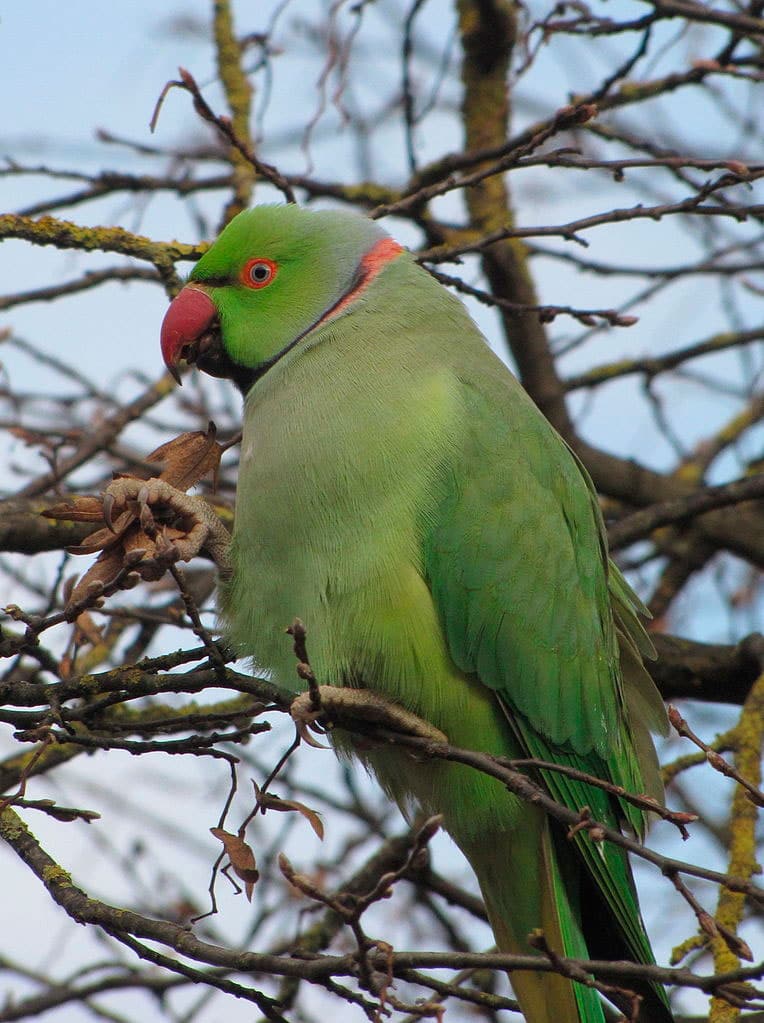
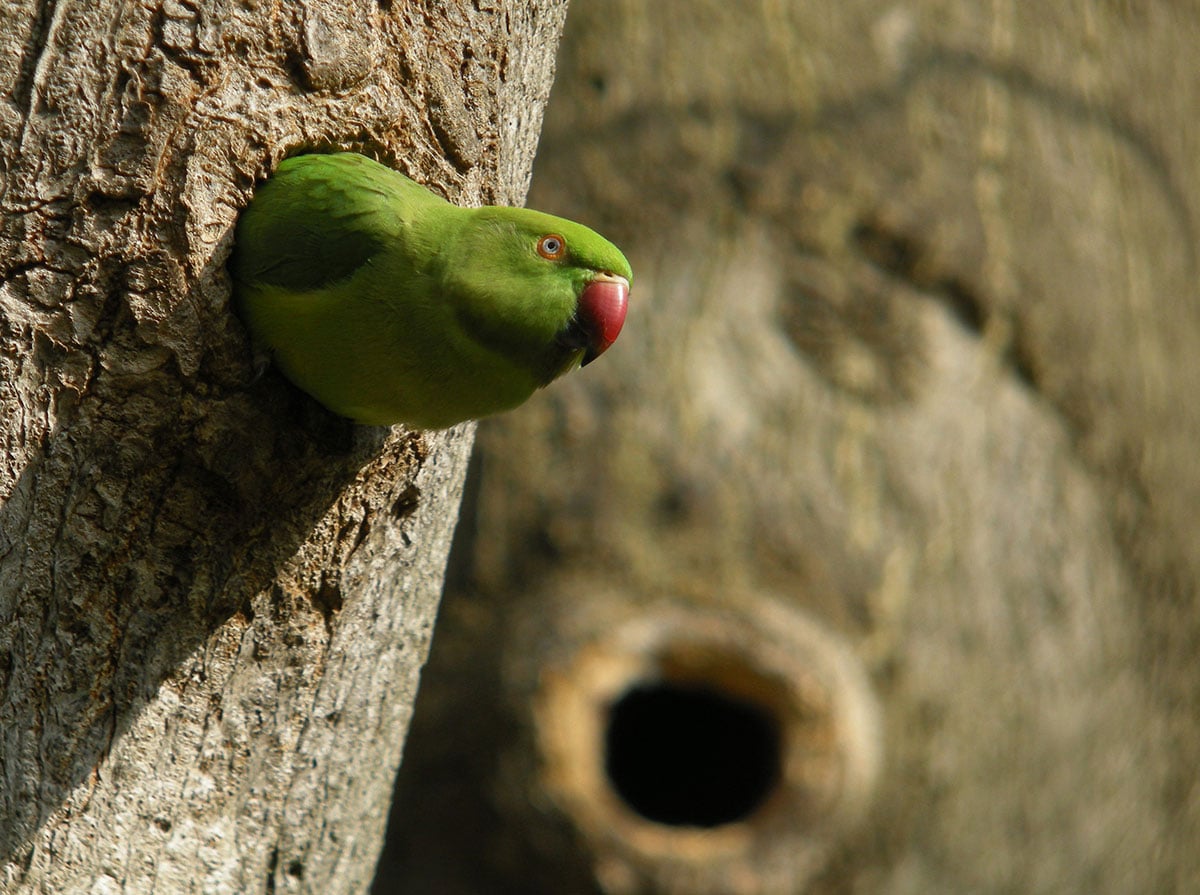
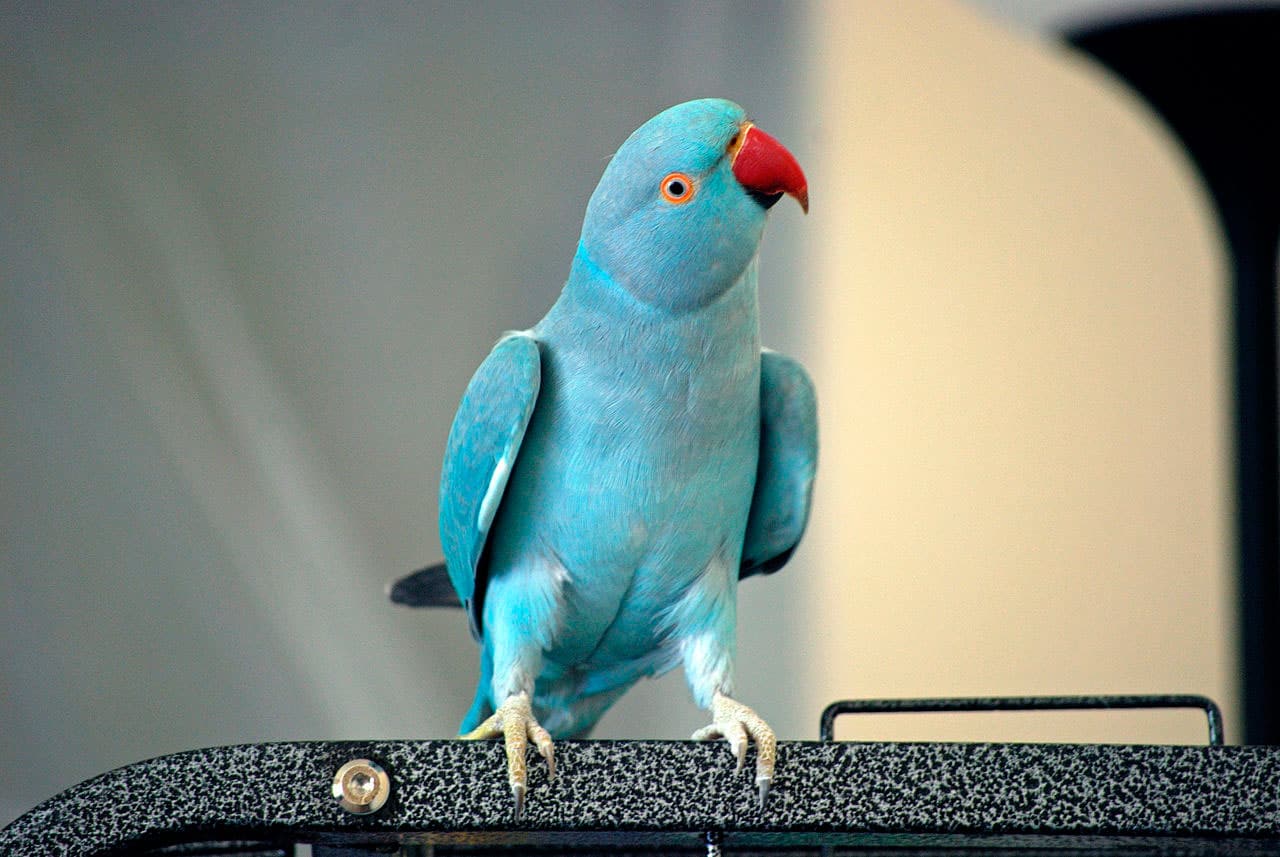
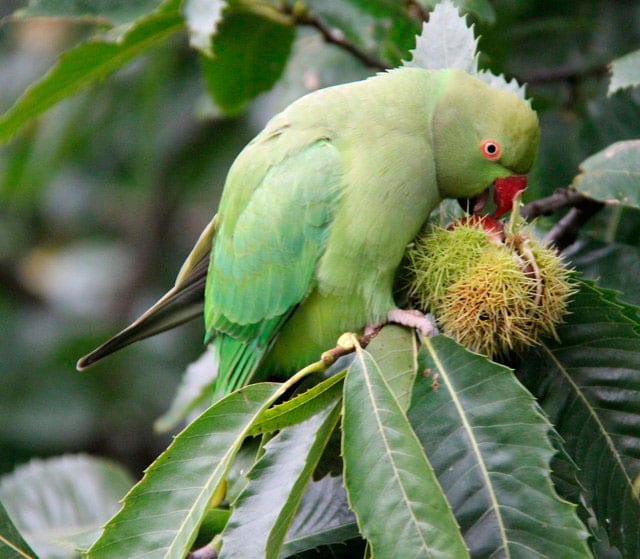
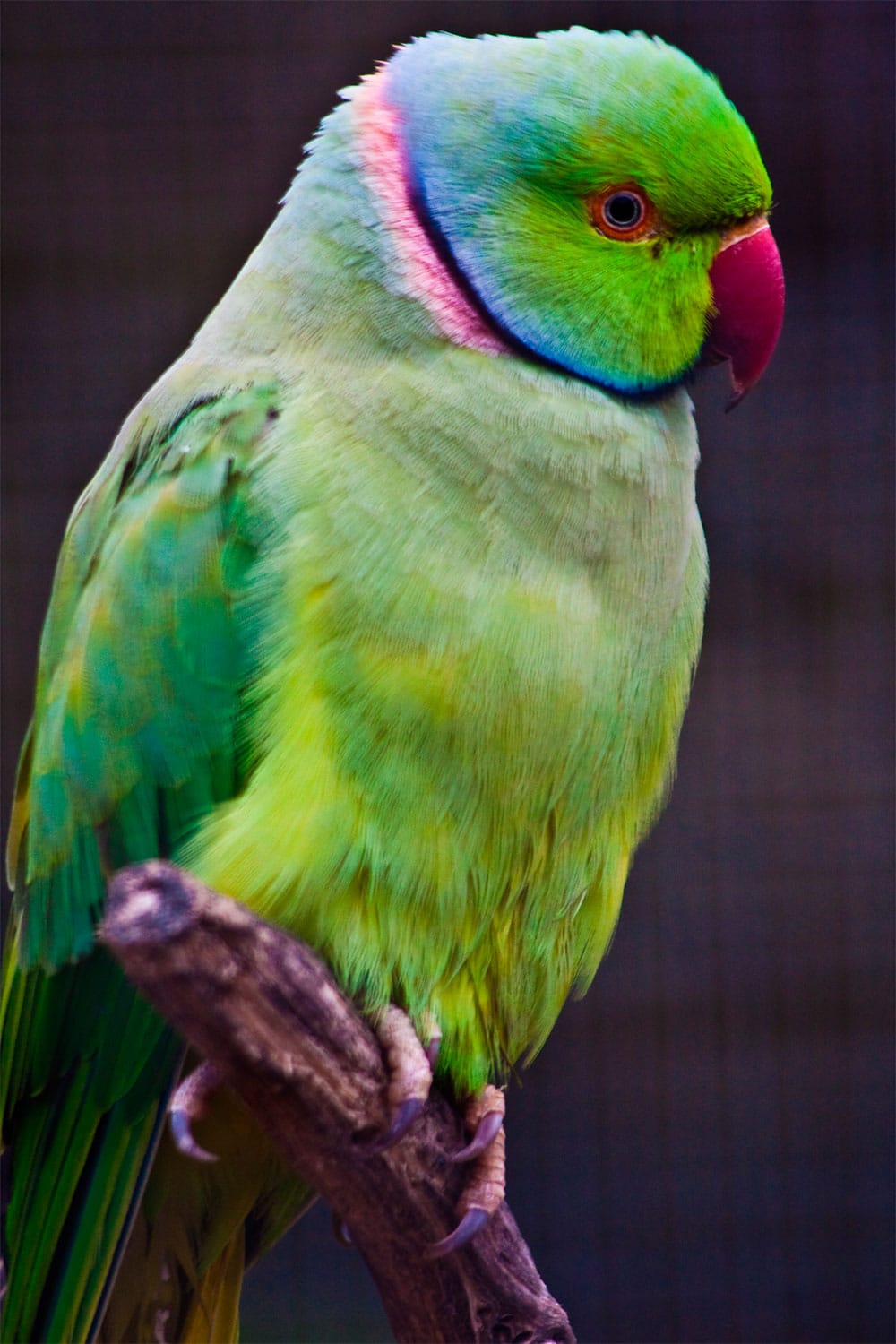
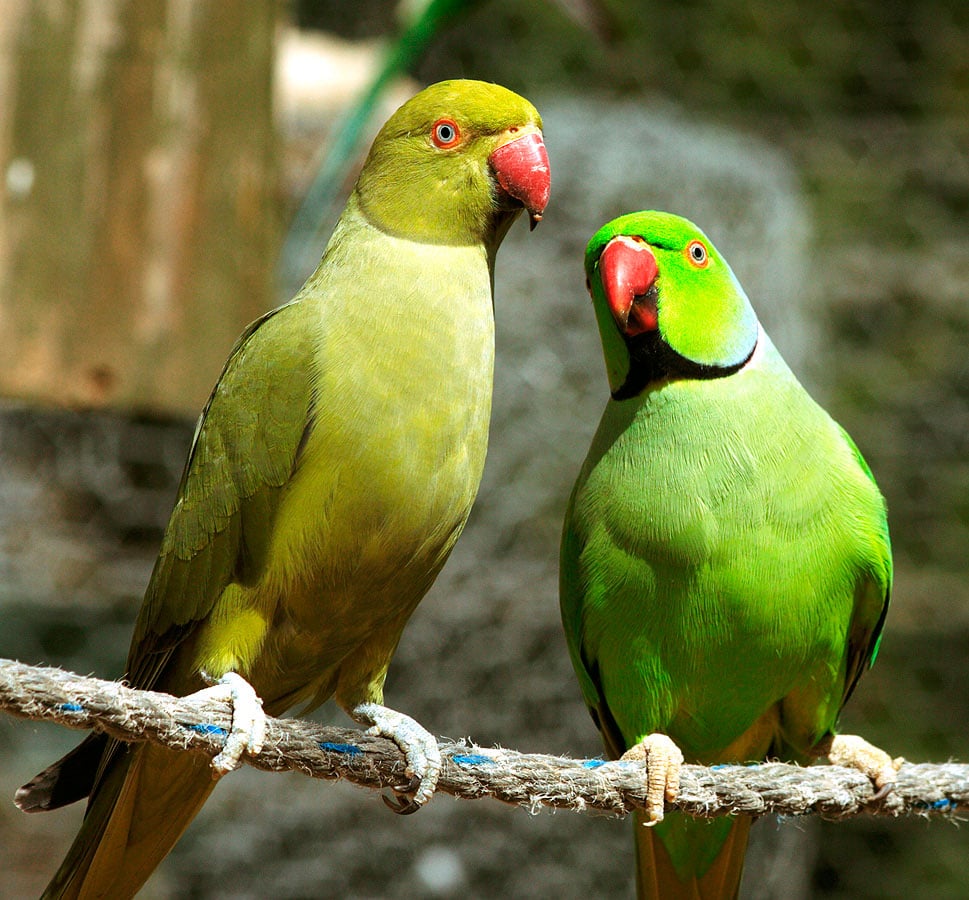
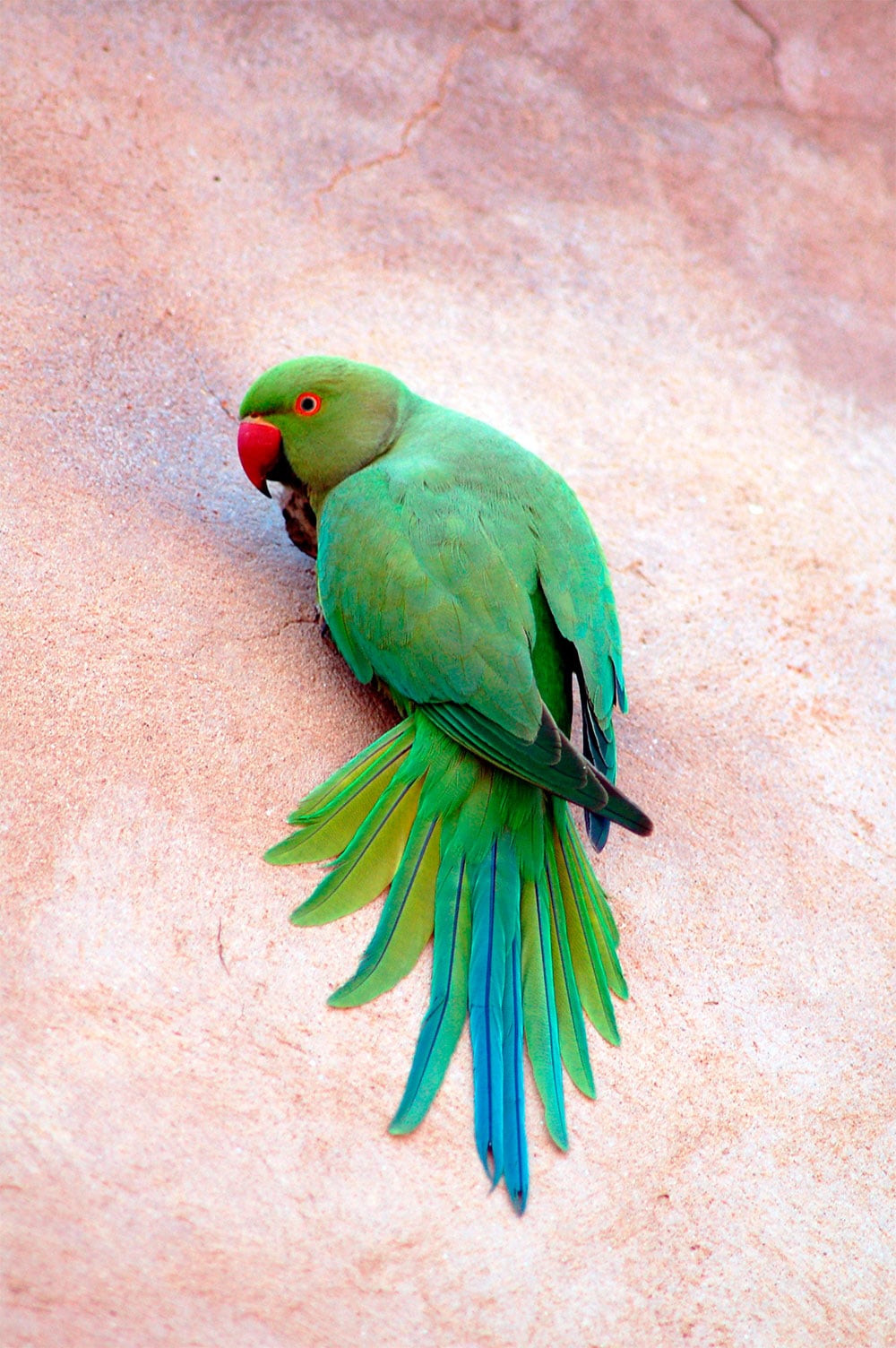
    The Rose-ringed Parakeet (Psittacula krameri) has the forecrown, fore crown, the cheeks and lores bright yellowish green; narrow dark line between cere and the eye ring; the back of the crown, the nape and the sides of the neck, pale lavender gray, broken on the sides of neck with narrow black stripes; contiguous black markings with wide black stripes on the bottom of the cheeks merging the chin a solid black.

    Pink collar in the back of the neck, the mantle and back light green tinged with olive; rump and uppertail-coverts slightly brighter. Lesser and medium upperwing-coverts light green (darker than the body); large coverts dark green; primaries and secondaries dark green with darker (almost black) margin to the vane inner. bottom of the feathers flight gray; underwing-coverts brighter yellowish green. Underparts brighter yellowish green. Upper, the tail centrally blue with yellowish tips, green side; undertail, the tail centralmente negruzca, yellow-olive laterally.

    Crimson in the upper jaw tipped in black, the lower jaw of color stream blackish; cere whitish: irises yellowish white; legs pink, with 4 fingers ending in nails strong in black, two of these fingers are directed forward and two backward so called zigodactilia, which it allows them to easily climb.

    The female lacks the neck black, brands in the chin and the cheekbone, of the collar pink and blue suffusion of neck; It has shorter central feathers tail.

    The They are similar to immature females but with the bill a little paler, irises greyish; the males acquire the characteristic Pink collar in the third year.

    Subspecies description
    Subspecies
    • Psittacula krameri borealis (Neumann, 1915) – Larger than the species nominal, with upper jaw all red and black marks on the lower jaw. Bluish suffusion in neck, behind ear-coverts; more than grayish bottoms species nominal.

    • Psittacula krameri krameri (Scopoli, 1769) – The species nominal

    • Psittacula krameri manillensis

    • Psittacula krameri manillensis (Bechstein, 1800) – Larger than other subspecies, slightly paler and more yellow than the subspecies borealis. Different facial markings that species nominal. Under the mandible black.

    • Psittacula krameri parvirostris (Souance, 1856) – Of head and cheeks yellowish least the species nominal. Bill small upper jaw brighter red, less blackish towards the tip. The birds living in eastern Sudan They are intermediate between subspecies appearance parvirostris and species nominal.

    Habitat:

    The Rose-ringed Parakeet It is a very adaptable bird. It is located in a variety of forest types Forest, from secondary forests, wet, riparian forests, mangroves, open farmland with scattered trees, to parks and gardens in urban areas.

    They can live at altitudes 1.600 metres in Asia and 2.000 metres in Africa.

    gregarious, especially out of breeding season, coming to form large noisy flocks sometimes several thousand birds. Communal roosts, often with Crows, Mynas or other parrots.

    Reproduction:

    The Rose-ringed Parakeet It is not a territorial bird and, sometimes vaguely colonial while breeding.

    It nests in natural tree cavities or holes extended, in cracks in rocks or walls built; in Africa, always nest atop a tree.

    The breeding season, mainly, It covers the months from January to April, although offspring have been recorded in the month of July.

    typical setting 3 to 4 eggs, although they have been registered you put six eggs.
    23 days of incubation and 45 days of stay in the nest of the hatchlings.

    Food:

    Diet Rose-ringed Parakeet It includes a variety of cereals, herbs, seeds, vegetables, fruits, flowers and nectar, wild and cultivated; feeding varies seasonally,for example, in the Indian state of Punyab, They feed on weed seeds from April to June and sorghum between the months of August and January.

    Inflingen crop damage, especially citrus, sunflower and corn.

    In Africa feed of fruits, for example, of Boolean, Tamarindus, Adansonia, Psidium, Acacia white and Slassus.

    In Asia, their diet consists of seeds of Acacia arabica, Prosopis spicigera, Casuarina equisetifolia and Crotalaria medicaginea and fruits of Morus alba, Bridiela retusa, Dalbergja, Ficus, Xanthium, Meliรก and Albizia.

    Distribution:

    Size of the area of distribution (reproduction / resident): 27800000 km2

    The Rose-ringed Parakeet they are the parrots more widely distributed around the Old world. They are native to tropical africa, north of the humid forest zone, and much of Asia meridional.

    In West Africa (Mauritania, Senegal, Gambia, Guinea-Bissau), the east, through Mali, South of Niger, North of Ivory Coast, North of Ghana, Burkina Faso, Togo and Benin to the North of Nigeria and Cameroon, South of Chad, North of the Central African Republic, from southern Sudan to the North of Uganda and Ethiopia, Djibouti and Northwest of Somalia.

    In Asia, from the West of Pakistan, South of Nepal through the India, Bangladesh and Sri Lanka to downtown Burma.

    Many introduced populations are distributed by EE.UU., England, Germany, Netherlands, North of Egypt, Kenya, coastal area Ivory Coast (possibly wild relict), South Africa (Natal and Zululandia), Mauritius, Arabian Peninsula, Singapore, Macao and China, in the surroundings of Hong Kong.

    Mainly sedentary, but apparently with some seasonal movements in most parts of the African range (for example, temporary visitors during the rainy season in southern areas Mauritania).

    Common to abundant in Africa and part of Asia; quite common in Burma.

    Residents and especially sedentary. Widely bred in captivity.

    Subspecies distribution
    Subspecies
    • Psittacula krameri borealis (Neumann, 1915) – distributed by Pakistan, through North India, around of 20 ยฐ norte, Nepal and Bangladesh until Burma. He also believed to belong to this subspecies distributed parts of birds Middle East, Mauritius, Macao and parts of Southeast China.

    • Psittacula krameri krameri (Scopoli, 1769) – The species nominal

    • Psittacula krameri manillensis (Bechstein, 1800) – Distributed by South India, about 20 ยฐ north and Sri Lanka. Observed in wild populations England, elsewhere Europe, EE.UU. and Singapore, They seem to belong to this subspecies.

    • Psittacula krameri parvirostris (Souance, 1856) – Distributed by this Sudan through North Ethiopia until Djibouti and North of Somalia

    Conservation:

    State of conservation โ“˜


    minor concern Minor Concern โ“˜ (UICN)โ“˜

    โ€ข Current Red List of UICN: Least concern

    โ€ข Population trend: Growing

    The size of the world's population has not been quantified, but the species, according to sources, It common to abundant throughout their natural range (pit et to the. 1997), while the population Japan it has been estimated between 100 and 10,000 introduced breeding pairs ( Brazil 2009).

    Its population It increased in the twentieth century, in relation to the expansion of agriculture.

    Nest protection and brood handling has helped the Rose-ringed Parakeet recover.

    Invasiveness in Spain

      Because of its colonizing potential and constitute a serious threat to native species, habitats or ecosystems, This species has been cataloged in the Spanish Catalog of Invasive Exotic Species, approved by Royal Decree 1628/2011, of 14 November, It is banned in Spain its introduction into the wild, possession, transport, trade and commerce.

    "Rose-ringed Parakeet" in captivity:

    The Rose-ringed Parakeet is a bird with character that raised since childhood can become a docile pet, although its tendency is to be a fearful and aggressive bird. Form unstable pairs, something that affects their behavior. It is unlikely that this species has an affectionate behavior with their caregiver, with few exceptions.

    To enjoy it Patience is needed and above all to have knowledge about this species, not to be disappointed if things are not progressing as expected.

    The Rose-ringed Parakeet It is a bird that must be handled daily and this, throughout his life, with the aim of being able to achieve an โ€œoptimalโ€ dressage. In fact, Naturally that tends to become suspicious if the time is not paid regularly. We have to "fight" against this tendency to touch it, manipularla, caress, etc … He does not like human contact, other interaction need not destroy your confidence.

    It is a bird that is in great need of occupation. She is active and loves to be stimulated. Learns tricks easily and is always ready to learn, which makes it a bird very interactive with his master, despite being reluctant to hugs.

    The Rose-ringed Parakeet she is also a bird that will tend to trust only the person who takes care of her every day.

    If we do not put enough games available in your area, it can be very destructive, He likes to chew and grind objects with their powerful beak, which would cause us a serious problem … it is also important to periodically renew the games to avoid boredom.

    They have a powerful screech and are quite noisy.
    Still not much of a conversationalist, You can learn to say a few words.

    It could eventually transmit diseases such as psitacosis.

    With regard to its longevity, according to sources, a Rose-ringed Parakeet lived during 34 years in captivity. In captivity, these birds are known to breed, approximately, to the 2 years of age.

    Alternative names:

    – Rose-ringed Parakeet, Green Long-tailed Parakeet, Long-tailed Parakeet, Ring-necked Parakeet, Rose Ringed Parakeet, Roseringed Parakeet, Senegal Long-tailed Parakeet (English).
    – Perruche ร  collier, Perruche de Kramer, Perruche verte ร  collier (French).
    – Halsbandsittich, Kleiner Alexandersittich (German).
    – Periquito-de-colar, Periquito-rabijunco (Portuguese).
    – Cotorra de Kramer, Cotorra Verde de Collar, Periquito de Collar, Periquito de Kramer, Alejandrino comรบn, Cotorra de Collar, Cotorra de Collar Verde, Cotorra de la India, Periquito de Collar (espaรฑol).


    scientific classification:

    Giovanni Antonio Scopoli
    Giovanni Antonio Scopoli

    – Order: Psittaciformes
    – Family: Psittaculidae
    – Genus: Psittacula
    – Scientific name: Psittacula krameri
    – Citation: (Scopoli, 1769)
    – Protonimo: Psittacus krameri


    Images Rose-ringed Parakeet:

    Videos "Rose-ringed Parakeet"


    Especies del gรฉnero Psittacula

    Rose-ringed Parakeet (Psittacula krameri)


    Sources:

    – Avibase
    – Parrots of the World โ€“ Forshaw Joseph M
    – Parrots A Guide to the Parrots of the World – Tony Juniper & Mike Parr
    – Birdlife
    – Wikipedia

    – Photos:

    (1) – A male Rose-ringed Parakeet (also known as the Ringnecked Parakeet) in Richmond Park, London, England By London looks (originally posted to Flickr as ring neck parakeet) [CC BY 2.0], via Wikimedia Commons
    (2) – A Rose-ringed Parakeet at Agra Fort (Red Fort of Agra), Agra, India By Leigh Harries from London, UK (Parakeet, Red Fort, AgraUploaded by Snowmanradio) [CC BY-SA 2.0], via Wikimedia Commons
    (3) – Two Rose-ringed Parakeets (also known as the Ringnecked Parakeet) at Canberra Walk In Aviary, Gold Creek Village, Canberra, Australian Capital Territory, Australia By Richard Taylor (originally posted to Flickr as IMG_6777) [CC BY 2.0], via Wikimedia Commons
    (4) – A male Rose-ringed Parakeet at Seaview Wildlife Encounter, Seaview, Isle of Wight, UK By Garry Knight from London, England (Blue Ring-Nosed ParakeetUploaded by Snowmanradio) [CC BY-SA 2.0], via Wikimedia Commons
    (5) – Ring necked Parakeet (Psittacula krameri), Kew Gardens ยฉ Copyright Christine Matthews and licensed for reuse under this Creative Commons Licence. – geograph
    (6) – Rose-Ringed Parakeet (Psittacula krameri). Pet parrot having the blue colour mutation By Tanya Dropbear (originally posted to Flickr as ยซAm I true blue?ยป) [CC BY 2.0], via Wikimedia Commons
    (7) – Rose-Ringed Parakeet (also known as the Ringnecked Parakeet) in Hong Kong By Charles Lam (originally posted to Flickr as Asking for Food…) [CC BY-SA 2.0], via Wikimedia Commons
    (8) – Rose-ringed Parakeet Psittacula krameri in Narsapur, Andhra Pradesh, India By J.M.Garg (Own work) [GFDL or CC BY-SA 4.0-3.0-2.5-2.0-1.0], via Wikimedia Commons
    (9) – Rose-Ringed Parakeet (Psittacula krameri), Woluwe Park, Brussels by Frank Vassen – Flickr
    (10) – SeoBirdlife
    (11) – Female on left and male on right (Psittacula krameri manillensis) By J.M.Garg (Own work) [GFDL or CC BY-SA 3.0], via Wikimedia Commons

    – Sounds: Josรฉ Carlos Sires (Xeno-canto)

    โ–ท The world of Pets: Dogs, cats, birds, reptiles, amphibians

    Barred Parakeet
    Bolborhynchus lineola

    Catita Barrada

    Content

    Description:


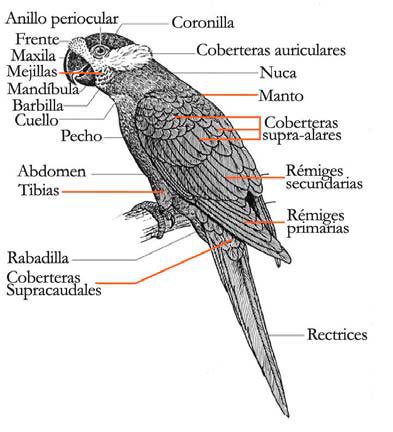
    Anatomy-parrots

    They measure 17 cm. long and weigh between 47 and 55 g.
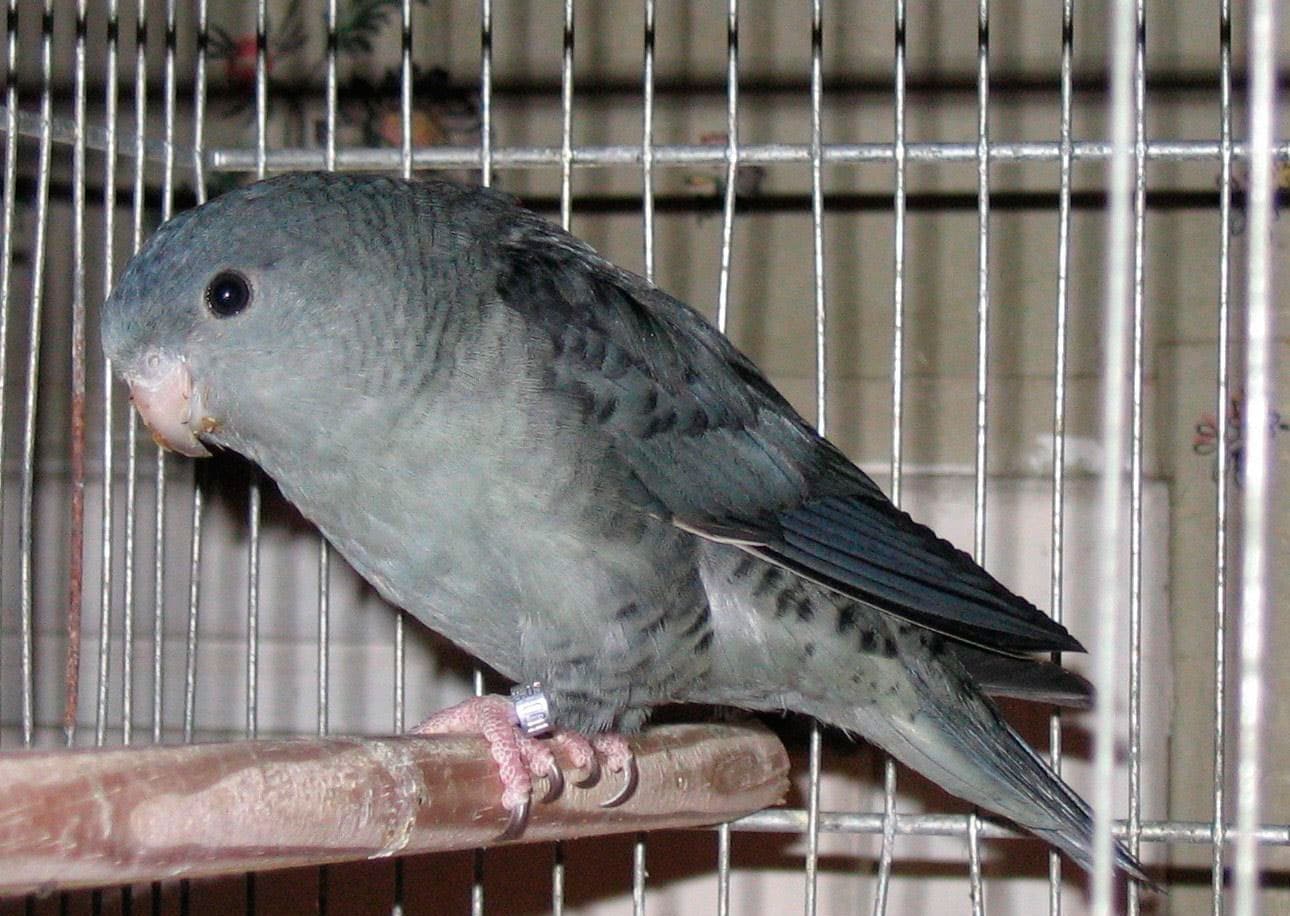
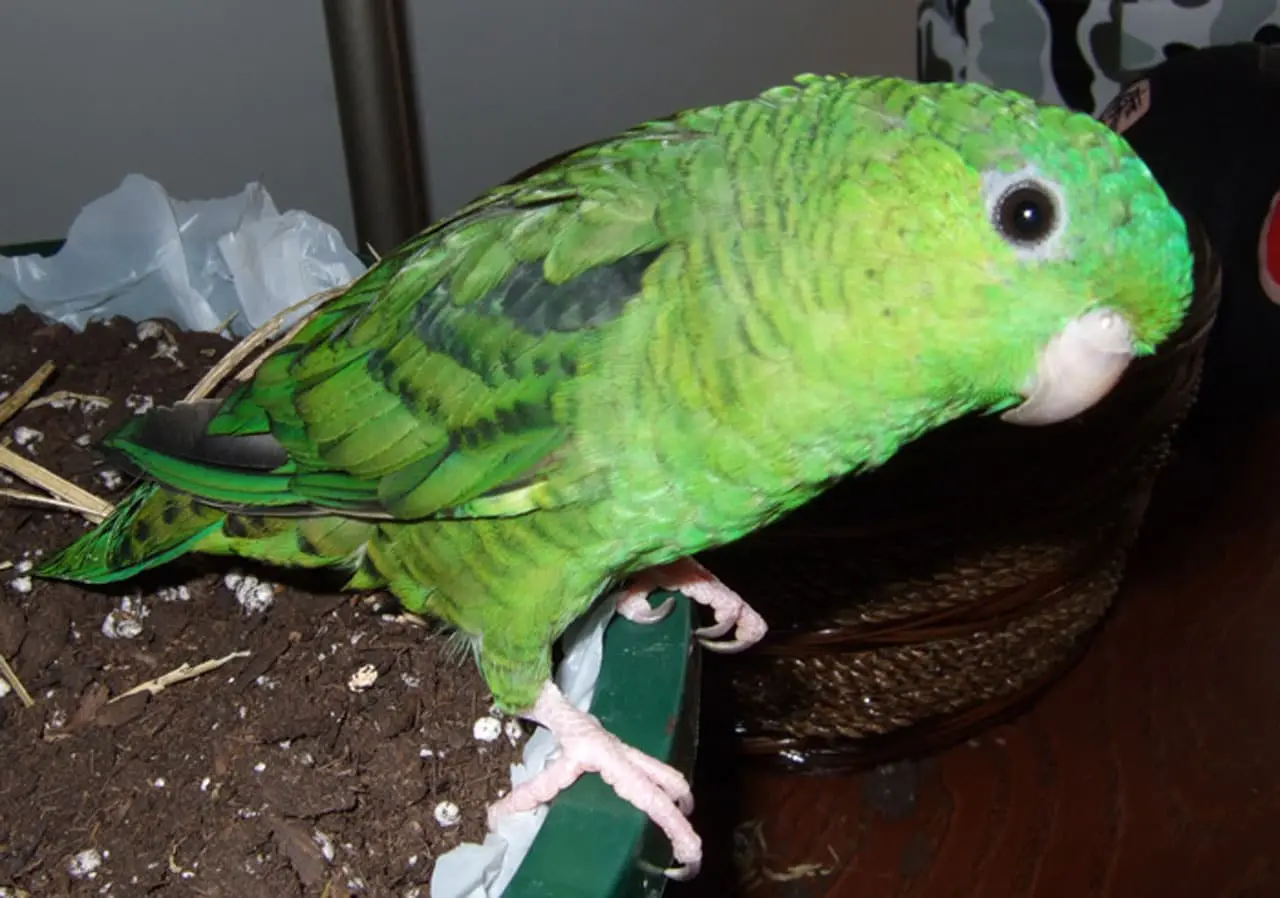
    The Barred Parakeet (Bolborhynchus lineola) has a size similar to the of a Sparrow. The tail and wings they are pointed. Slightly different sexes: in males, the eyes they are brown, the eye ring grey, the bill and legs flesh-colored. The head and underparts they are bright green, with a tenuous beaming on the sides and the tail coverts. The wings they have very marked black bars at the shoulder and patch black(not always visible), the upperparts they are green with a beaming widely dispersed black in the nape and back.
    The females and juveniles they present a beaming more pardo. A wide black border and dark green bottom; the irises Dark coffee and legs pink (Howell and Webb, 1995).

    Subspecies description:

    • Bolborhynchus lineola lineola

      (Cassin, 1853) – The nominal


    • Bolborhynchus lineola tigrinus

      (Souance, 1856) – Dark green, Crown and bright green front and the rough black is more intense.

    Habitat:

    Rare and unpredictable. It lives in humid forests, subandinos and Andean cloud forests, open areas, from 900 at 2900m. They are nomads, with numerous flocks (150 or more individuals) following the fruition of the โ€œchusqueโ€ (This chusquea). In small groups or in pairs during the dry season in Central America.

    Reproduced in elevations of 1500 meters or more and, like most parrots, they prefer to raise their chicks in a hollow tree or limb trunk. In the winter after the breeding season, the Barred Parakeet often descends to lowland forests. This season, Many feed on partially cleared areas, areas cultivated and in them sheets.

    Registered at altitudes from 900 to 2.400 m. in Mexico; by under 1.500 m. in Honduras, Although below 600 After the playback meters; above 1.500 m especially in the West of Panama, although there are records there and in Costa Rica below the 600 m; between 900 and 1,500 m. in Venezuela, between 1,600 and 2,600 m. in Colombia, and until 2.900 m. in the South of Ecuador.

    Little known about the habits of these small wild parrots. Since they are small, they like to live high in the treetops, and they are very well camouflaged in their environment, still very hard to see in nature. It also, they are not as noisy as other parrots, which makes them difficult to detect. Most frequently observed during the flight, because they often emit a chirp while flying, What can attract the attention of an observer of birds.

    Reproduction:

    It nests colonies, in tree hollows, Although you can to occur in crevices in Rocky escarpments, probably during the dry season in Costa Rica; during the month of December in Panama; July-August in Colombia.

    Food:

    Reported foods that make up their diet include Myrtis, Heliocarpus and Miconia, catkins of Cecropia and bamboo seeds; they occasionally forage in cultivated areas, where has observed them is consuming corn.

    Distribution:

    Distributed in South of Mexico to western Panama and separated by the Andes, from Venezuela until Peru.

    In Mexico they can be observed on the Atlantic slope, in the Highlands of Veracruz, Oaxaca, Chiapas and possibly (There is only a record) in Warrior, also seen in the South of Guatemala (a record from time to time) and in the Highlands of Honduras, with a single bird observed in Nicaragua, specifically in Saint Mary of Ostuma; also registered in those areas mountain of Costa Rica (not seen in areas of the Northwest, for example in the Cordillera de Guanacaste) and in the West of Panama (apparently absent from Central and Eastern).

    Distributed through them Andes, to the Northwest of Venezuela in the Federal District, Tรกchira and Merida; scattered locations of Colombia, in subtropical areas of the Western Andes, Central and Eastern and in the massif of Santa Marta; Ecuadorian Andes, with records recent in the South; Peruvian Andes, in Huanuco, Ayacucho and Cuzco, with birds, possibly of this species, observed in the North.

    Scattered records, e irregular, as well as a strong nomadic tendency (movements perhaps related to bamboo planting) they indicate that their appearances may be continuous.

    Apparently, is one local and rare species over much of its range, Although according to reports, is quite common in Honduras and even locally abundant in the Talamanca mountain range in Costa Rica.

    Deforestation in parts of its range, Although these birds travel on cleared land and distributed (at least from time to time) in protected areas, which suggests a low risk population at present.

    There is a captive specimens outside their countries of origin.

    Subspecies distribution:

    • Bolborhynchus lineola lineola

      (Cassin, 1853) – The nominal


    • Bolborhynchus lineola tigrinus

      (Souance, 1856) – Mountains from northwestern Venezuela and Colombia to southern Peru

    Conservation:

    State of conservation โ“˜


    minor concern Minor Concern โ“˜ (UICN)โ“˜

    โ€ข Red List category of the UICN current: Least concern.

    โ€ข Population trend: Stable.

    Partners in Flight estimated the total population of Barred Parakeet in a number ranging from 50,000-499,999 individuals (A. Panjabi in litt., 2008).


    The population This species is suspected of being stable in the absence of evidence of any reduction or substantial threats.


    "Barred Parakeet" in captivity:

    It is of a species that is has adapted well to the life in captivity, tough enough, its reproduction is expanding.

    They are perfect apartment birds due to its arrangement and you need only basic things of life. Son kind and happy of being with the people, but they can be kept entertained with toys and swings when there is nobody around.

    Is an Ave. moderately long-lived and if is of good health, Food and hygiene can live during 12 or 14 years.

    Limited ability for speech.

    They have developed many and striking mutations of color in poultry, including blue, olive, cobalt, Slate (or mauve), turquoise, lutino (bright yellow with red eyes), cremino, cinnamon, Silver, purple …

    Alternative names:

    – Barred Parakeet, Catherine Parakeet, Lineolated Parakeet (English).
    – Toui catherine, Perruche catherine, Perruche rayรฉe (French).
    – Katharinasittich, Katharina Sittich (German).
    – Periquito-catarina (Portuguese).
    – Catita Barrada, Catita Manchada, Chocoyo Listado, Perico Barrado, Perico Listado, Perico rayado, Periquito Barrado, Periquito Listado, Periquito saraviado (espaรฑol).
    – Periquito Barrado (Colombia).
    – Perico Listado, Periquito listado (Costa Rica).
    – Perico rayado (Honduras).
    – Perico rayado (Mexico).
    – Chocoyo Listado (Nicaragua).
    – Perico Barrado (Peru).
    – Perico Barreteado (Venezuela).

    scientific classification:

    – Order: Psittaciformes
    – Family: Psittacidae
    – Genus: Bolborhynchus
    – Scientific name: Bolborhynchus lineola
    – Citation: (Cassin, 1853)
    – Protonimo: Psittacula lineola

    Images ยซCatita Barradaยป:

    Videos "Barred Parakeet"


    Species of the genus Bolborhynchus

    Sources:

    – Avibase
    – Parrots of the World โ€“ Forshaw Joseph M
    – Parrots A Guide to the Parrots of the World – Tony Juniper & Mike Parr
    – Birdlife

    – Photos:

    (1) – A Barred Parakeet (also known as Lineolated Parakeet) in captivity By Timo Helgert (originally posted to Flickr as greenguy.) [CC BY 2.0], via Wikimedia Commons
    (2) – Two pet Barred Parakeets (also known as Lineolated Parakeet) perching on a parasol By Lisa Lenscap (originally posted to Flickr as sistas) [CC BY-SA 2.0], via Wikimedia Commons
    (3) – Barred Parakeet (Bolborhynchus lineola) also known as Lineolated Parakeet or Catherine Parakeet By Lisa Lenscap [CC BY-SA 2.0], via Wikimedia Commons
    (4) – Perruche Catherine de couleur mauve By Weena (Own work) [GFDL, CC-BY-SA-3.0 or CC BY-SA 2.5-2.0-1.0], via Wikimedia Commons

    – Sounds:

    โ–ท The world of Pets: Dogs, cats, birds, reptiles, amphibians

    Cliff Parakeet
    Myiopsitta luchsi

    Cliff Parakeet

    Content

    Description:

    Cliff Parakeet

    26-28 cm.. length and a weight between 120 and 140 g..
    The Cliff Parakeet (Myiopsitta luchsi) It has a medium size and is mainly green; the front of the crown, lower face and the chest, They are whitish, becoming bright yellow on the lower chest and the belly; the primaries and tail (medium-sized long), They are bright metallic blue.
    Similar Monk Parakeet has less extensive white color crown, pale yellow instead of bright yellow in the belly and the pale gray chest It has a scaling effect that give centers feathers dark.

    Bill color horn.

    The immature They are similar to adults but with forecrown gray tinged with green.


    Taxonomic note:

        This species was described in 1868 by Finsch as Bolborhynchus luchsi, with specimens from Bolivia. Later, the species was transferred to the genus Myiopsitta and the name Myiopsitta luchsi It was used apparently to 1918 by Cory. From 1943, Bond & de Schauensee and they treat it as a subspecies of monachus (Myiopsitta monachus luchsi), approach that has been followed by all modern authors, but Necklace (1997) finally he considers that the morphological characters and their way of nesting are sufficient to raise again species level.

    Habitat:

    Video – "Cliff Parakeet" (Myiopsitta luchsi)

    It shares the same habitat with another endemic parrot, the Red-fronted Macaw (Ara rubrogenys), although both species do not compete because they feed on different plants.

    They found in dry woodland or open fields including fields with trees gallery woods, isolated groups of trees, Palm trees, forests, savannah and scrubland thorny cactus. It is also found in cultivated areas. Visitors from some urban areas. Until 3000 m.

    Reproduction:

    The breeding season occurs between December and March in crevices in cliffs, constructing a bulky nest branches. Unlike Monk Parakeet (Myiopsitta monachus), the Cliff Parakeet does not nest commonly, but often the nests are placed immediately adjacent to each other. The female is in charge of making this nest, as well as its maintenance.
    Couples are for life. The laying is of 5 to 8 eggs per clutch, and incubation lasts a few 26 days. At six weeks old chicks can now leave their nest.

    Food:

    It feeds on seeds of various fruits, including those of fruits cactus Neocardenasia herzogiana and seeds of the Acacia furcatispina; It is also known to feed on cultivated corn.

    Distribution:

    Size of its range (breeding/resident): 148.000 km2

    Restricted to xerophytic vegetation, near cliffs in intermountain valleys of eastern Andes of Bolivia, from the southeast of Peace, South of Cochabamba and West Santa Cruz, to the North of Chuquisaca and possibly other areas.

    Its range is very similar to the Red-fronted Macaw (Ara rubrogenys).

    Conservation:

    State of conservation โ“˜


    minor concern Minor Concern โ“˜ (UICN)โ“˜

    โ€ข Current category of the Red List of the UICN: Least concern.

    โ€ข Population trend: Unknown.

    Justification of the population

    The size of the population has not been estimated, but the species has been described as ยซquite commonยป (pit et to the., 1997) and "possibly quite rare" (Juniper and Parr 1998).

    Justification of trend

    Population trends are difficult to determine due to uncertainty about the extent and severity of threats to the species..
    However, like many parrots, They face the traffic of wildlife and wild captivity. Also they suffer direct and immediate consequences of the destruction of their habitat by deforestation and the advance of the agricultural frontier.

    Conservation Actions Underway

    The species is listed on Appendix II of CITES.

    "Cliff Parakeet" in captivity:

    Quite common. Very sociable, but shy with the human being.
    It is able to vocalize or imitate words, although this quality is far from possessing the capabilities of some genera of the same family.

    Alternative names:

    – Cliff Parakeet, Bolivean monk parakeet, monk parakeet, Monk Parakeet (Cliff) (English).
    – Perriche des falaises, Conure de Luchs, Conure des falaises, Conure des rochers (French).
    – Luchssittich, Bolivien Mรถnchsittich, Bolivien-Mรถnchsittich (German).
    – Cliff Parakeet (Portuguese).
    – Cotorra Boliviana (espaรฑol).

    Friedrich Hermann Otto Finsch
    Friedrich Hermann Otto Finsch

    scientific classification:


    – Order: Psittaciformes
    – Family: Psittacidae
    – Genus: Myiopsitta
    – Scientific name: Myiopsitta luchsi
    – Citation: (Finsch, 1868)
    – Protonimo: Luchs Bolborrhynchus


    Images ยซBolivian Parrotยป:

    Videos ยซBolivian Parrotยป:


    Species of the genus Myiopsitta

    Sources:

    – Avibase
    – Parrots of the World โ€“ Forshaw Joseph M
    – Parrots A Guide to the Parrots of the World – Tony Juniper & Mike Parr
    – Birdlife
    – FAUNA – Psittacidae

    – Photos:

    (1) – Bolivian Parrot, Bolivia, Sud Chichas, Churquipampa by giorgetta.ch
    (2) – Bolivian Parrot, Bolivia, Sud Chichas, Cerro Elefante by giorgetta.ch
    (3) – Bolivian Parrot, Bolivia, Sud Chichas, Churquipampa by giorgetta.ch
    (4) – A couple of Bolivian parrots in their nest located in the chalky wall of Churquipampa where its waters fall almost freely 330 meters to the creek. The female is arranging the main entrance of the nest while the male takes delight in watching her work by giorgetta.ch
    (5) – Bolivian Parrot, Bolivia, Sud Chichas, Churquipampa by giorgetta.ch
    (6) – Myopsittacus luchsi = Myiopsitta (monachus) luchsi, Cliff Parakeet, sometimes treated as a subspecies of the Monk Parakeet by John Gerrard Keulemans [Public domain], via Wikimedia Commons

    – Sounds: Andrew Spencer (Xeno-canto)

    โ–ท The world of Pets: Dogs, cats, birds, reptiles, amphibians

    Slender-billed Parakeet
    Enicognathus leptorhynchus

    Slender-billed Parakeet

    Content

    Description:

    40 to 42 cms. length and 200 to 250 g. of weight.
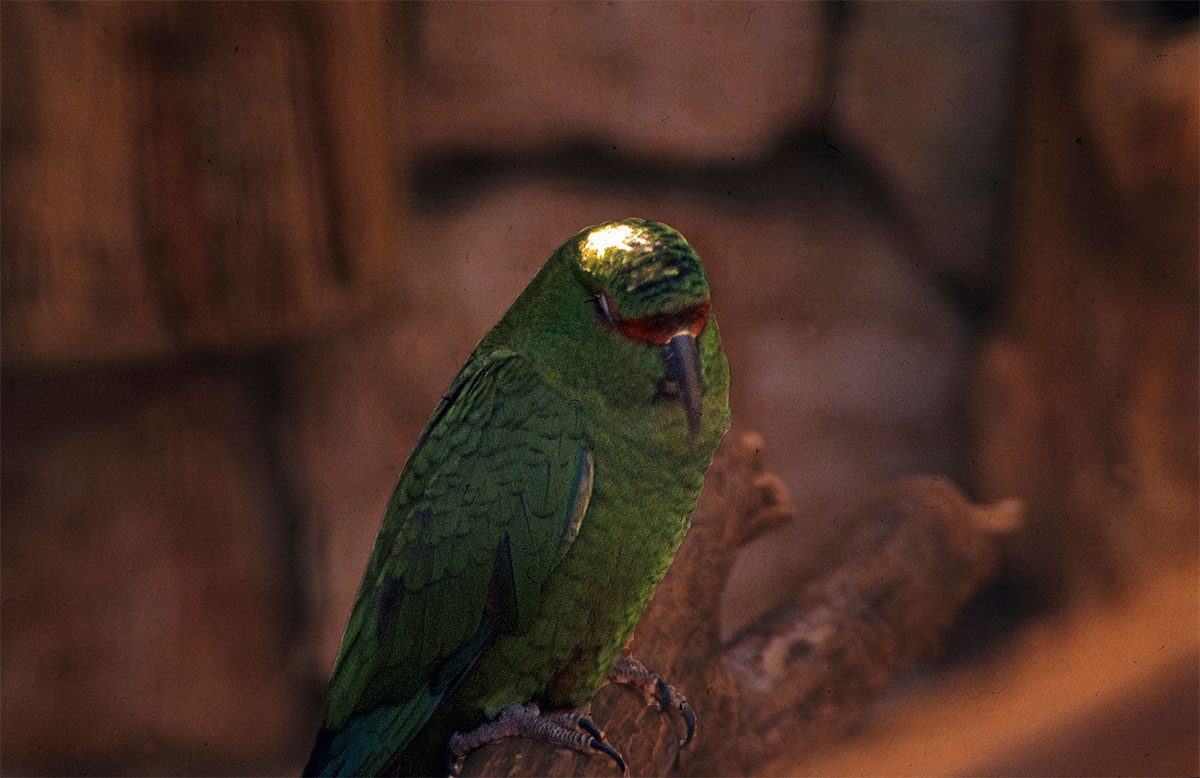
    The Slender-billed Parakeet (Enicognathus leptorhynchus) has the lores, forecrown and a narrow ring feathers around the eyes bright crimson red; cheeks and sides neck, green; feathers of the crown, the nape, the the mantle and back, with dark green margins producing a scalloped effect (more pronounced in the crown, where the feathers are brighter and more emerald).

    Scapulars, rump and uppertail-coverts They are green. Primary coverts green with blue suffusion; other coverts green. Flight feathers green-blue above with dark margins in innerwebs near the tips; light gray below. Underwing-coverts brighter yellowish green. Underparts yellowish green with patch dull red in centre of belly. Upper, the long tail red is off; greenish toward the tip; undertail, dull red suffused greyish.

    Slender-billed Parakeet

    The upper jaw It is dark gray with colored tip horn, the lower jaw is horn; Strait bare periophthalmic grey; irises orange-red; legs grey.

    Both sexes are similar.

    Immature darker, with the upper jaw shorter, less red in the face little or no red on belly.

    • Sound of the Slender-billed Parakeet.

    Habitat:

    Video – "Slender-billed Parakeet" (Enicognathus leptorhynchus)

    CHOROY PARROT EATING

    The Slender-billed Parakeet dwells in wooded areas, mainly Nothofagus and Araucaria, although they can be seen in more open cultivated fields or pastures, especially in winter. Its range is from sea level in winter to 2.000 meters in summer. Usually in flocks, of a few individuals to several hundred, even in breeding season; large communal concentrations sometimes composed of several thousand birds.

    Reproduction:

    Nests generally treeholes, often at a certain height and several couples using the same tree; very deep holes fill them with twigs to raise the base level. Occasionally nidifican in rock crevices, building the nest with twigs (for example, bamboo thicket This chusquea) if there is no tree cavities available. breeding season in November-December. Clutch 5-6 eggs.

    Food:

    Its diet It consists of seeds of wild and cultivated plants (They are sometimes considered a pest), including grains and thistles, seed cones araucaria (March April) open with its elongated peaks, acorns, seeds of Nothofagus and bulbous roots. generally place vigilantes while the rest of the birds feed.

    Distribution and status:

    Distribution area (breeding / resident): 195.000 km2

    The Slender-billed Parakeet It is confined to the center Chile, from the South of Santiago through coastal lowlands and valleys on the slopes of hills peaceful, south to the Chiloe Island and maybe Palena River in the North of Aysen; They can also be seen in Isla Mocha off the southwest coast bio bio.

    made some movements altitudinal seasonal, with moving from coastal lowlands to the foothills of the hills between spring and autumn bird (September-May).

    Quite common, although in recent decades its population has suffered a decline due to, fundamentally, deforestation, his capture and the Newcastle disease.

    Less frequent and perhaps only sporadic in the northern and southern ends of its range.

    Caught locally as pets, although quite rare in captivity outside Chile.

    Conservation:

    State of conservation โ“˜


    minor concern Minor Concern โ“˜ (UICN)โ“˜
    1. Current red list category of the UICN: Least concern.
    2. The population trend: Stable.
    3. Population size : Unknown.

    (classified in Appendix II of CITES)

    Justification of the Red List of the Category

    This species has a range very large, and as a result does not approach the thresholds for Vulnerable under the range size criterion (extent of occurrence <20.000 km2). La tendencia de la population seems to be stable, and therefore the species does not approach the thresholds for Vulnerable according to the population trend criterion. (> 30% decrease of more than ten years or three generations). The population size It has not been quantified, but are not believed to approach the thresholds for Vulnerable based on population size criteria (<10.000 individuos maduros con una disminuciรณn continua estima en> 10% in ten years or three generations, or in a particular population structure). For these reasons, the species is evaluated as Least concern.

    Justification of the population

    The world population It has not been quantified, but the species according to sources is locally common (pit et to the., 1997).

    Justification trend

    The population suspected to be stable in the absence of evidence of any reduction or substantial threats.

    "Slender-billed Parakeet" in captivity:

    Virtually unknown until 1976.

    It is a nice and noisy bird, whose docility and cunning behavior have meant it to be hunted down and captured to commercialize as pets, very common but absolutely illegal practice, because they are removed from their natural means of inhabitancy in South Chile, which they can not be replaced in urban areas and in captivity. People who do sell through a network of illegal trafficking. However, it is a rare bird watching in captivity outside Chile.

    In captivity, according to sources, a specimen lived 15,3 years.

    Alternative names:

    – Chilean Parakeet, Long-billed Conure, Long-billed Parakeet, Slender billed Parakeet, Slender-billed Conure, Slender-billed Parakeet, Slight-billed Conure, Slight-billed Parakeet (English).
    – Conure ร  long bec, Perriche ร  long bec, Perruche ร  long bec (French).
    – Langschnabelsittich, Langschnabel-Sittich (German).
    – Periquito Delgado-faturado (Portuguese).
    – Choroy, Cotorra Choroy (espaรฑol).


    scientific classification:

    Admiral Phillip Parker King
    Admiral Phillip Parker King

    Order: Psittaciformes
    Family: Psittacidae
    Genus: Enicognathus
    Scientific name: Enicognathus leptorhynchus
    Citation: (King, PP, 1831)
    Protonimo: Psittacara leptorhyncha

    Images Slender-billed Parakeet:


    Species of the genus Enicognathus

    Sources:

    • Avibase
    • Parrots of the World โ€“ Forshaw Joseph M
    • Parrots A Guide to the Parrots of the World – Tony Juniper & Mike Parr
    • Birdlife
    • surmagico

    – Photos:

    • (1) Enicognathus leptorhynchus (Slender-billed parakeet), Vogelpark Walsrode Taken sometime during 1985 by Rรผdiger Stehn – Flickr
    • (2) Enicognathus leptorhynchus Paso Mamuil by Malal xerofito – Flickr
    • (3) they choroy, recovering after being stoned Austral By Blizzard (Own work) [CC BY-SA 4.0], via Wikimedia Commons
    • (4) Slender-billed Parakeets rehabilitating in a Parque Tumbes in a large aviary, Talcahuano, Bio Bio Region, Chile. In January 2012, about a 100 parrots were rescued from a pet shop in La Granja, Santiago Province, Chile. They were rehabilitated for about three months before being released to the wild. By Municipality of Talcahuano [CC BY-SA 2.0], via Wikimedia Commons
    • (5) Enicognathus leptorhynchus – thin-beaked conure – Slender-billed conure – long-billed conure Florin Feneru – Flickr
    • (6) A painting of a Slender-billed Parakeet (originally captioned ยซPsittacara leptorhyncha Long-billed. Parrakeet-Maccaw.ยป) by Edward Lear 1812-1888 [Public domain], via Wikimedia Commons

    – Sounds: Ross Gallardy, XC296142. accessible www.xeno-canto.org/296142