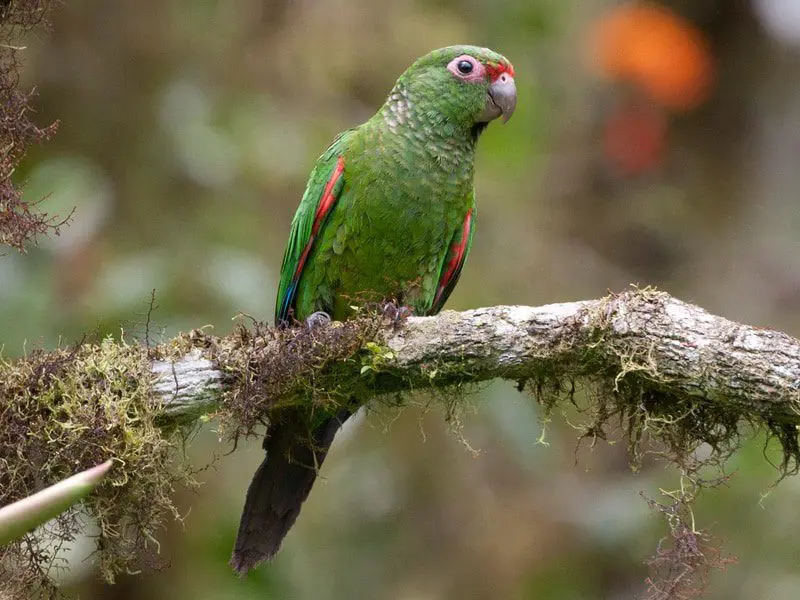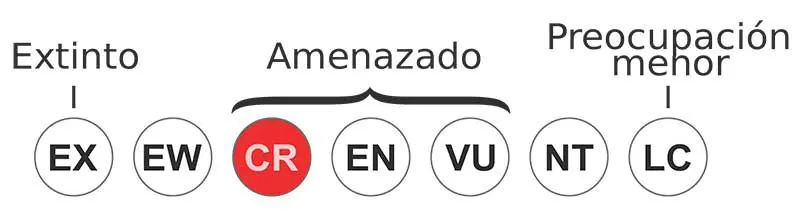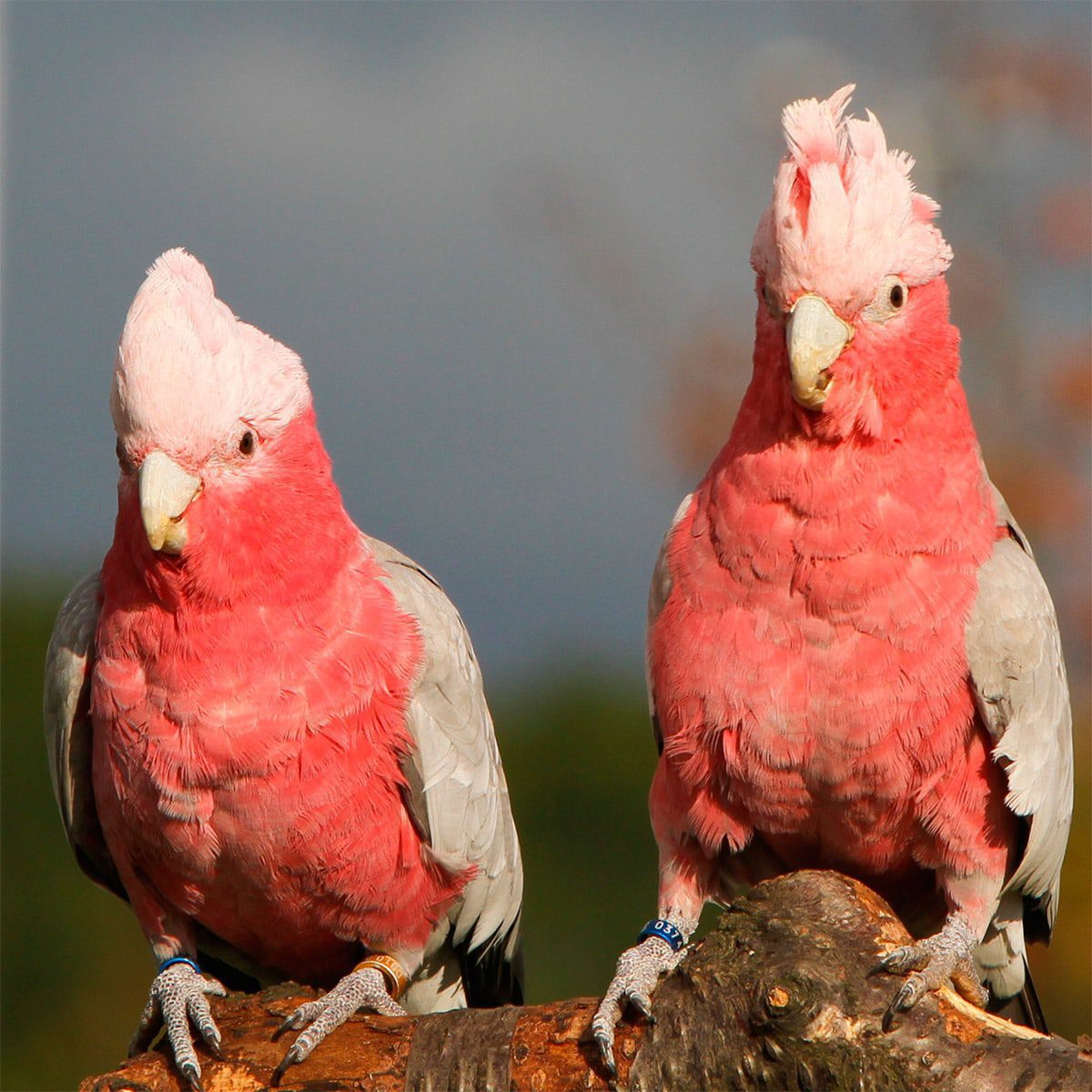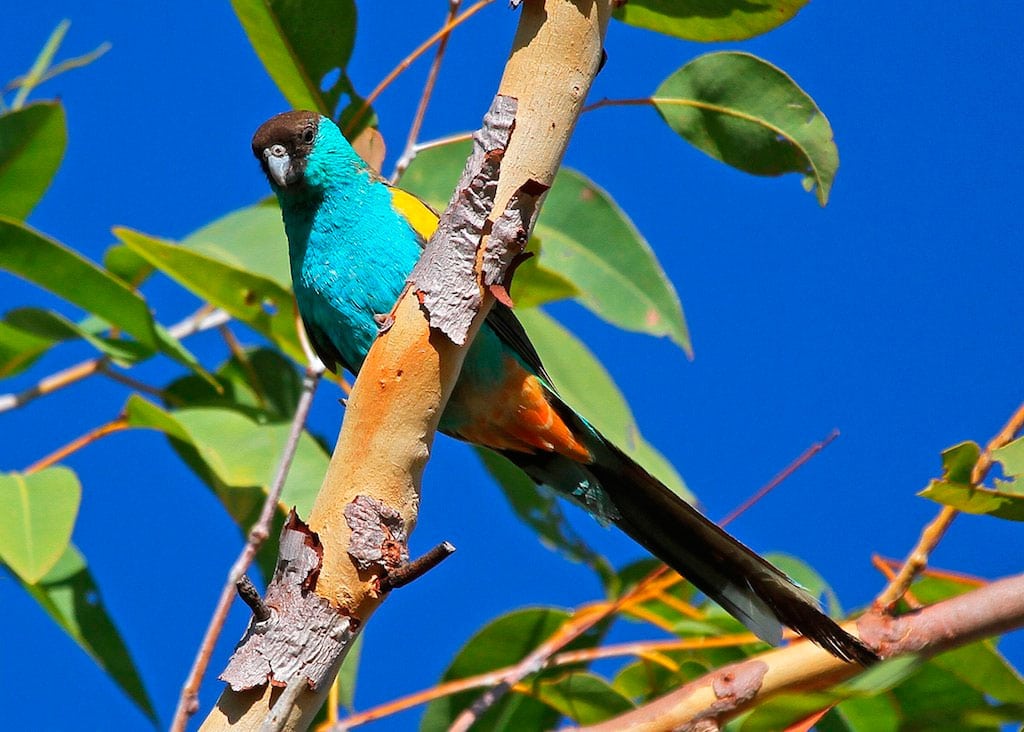
โ–ท The world of Pets: Dogs, cats, birds, reptiles, amphibians

Festive Parrot
Amazona festiva

Amazona festiva

Content

Description


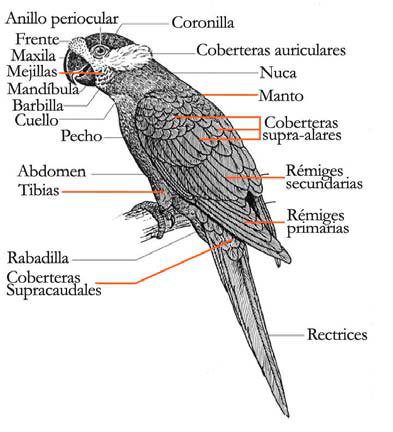
Anatomy-parrots

38-41 cm.. tall and 370g. weight.
The Festive Parrot (Amazona festiva) has the cheeks and sides neck Green with strong blue diffusion; lores and a close frontal band red; feathers above and behind them eyes blue; Forehead rather yellowish green. Crown Green but darker; Feathers of the nape of color green with a band terminal dark. Mantle, scapulars, top of the back and uppertail-coverts dark green; Rump and the greater part of the low back bright red. Primary coverts Violet Blue. Other coverts dark green.

Amazon-festive-6

Edge carpal of the wing and margin of the outerweb of the primaries, blue; innerwebs black; secondaries dark blue-tipped, secondaries more interior Green. Underwing-coverts green. Chin and throat blue; Breast and belly green; coverts infra-flows brighter yellowish green. Tail green, of paler green yellowish at the tip; Trace reddish at the base of some feathers.

The bill color cuerno-marron; Iris yellow, legs dark grey.

Both sexes are similar.

Immature have irises dark and show a less intense color in the head. Its back low is practically Green; some of the pens outside of it tail they have a red base.

Subspecies description

  • Amazona festiva bodini

    (Finsch, 1873) – It has a broadband Violet Blue and red in the front behind the eyes.


  • Amazona festiva festiva

    (Linnaeus,1758) – The nominal.

Habitat:

Video – "Festive Parrot" (Amazona festiva)

Festive Amazon "Charlie"

The Festive Parrot they attend primary and secondary lowland forests, mainly vรกrzea, swamp forest and River Islands, as well igapรณ (permanently flooded forest), usually are found near the water and can prevent forests of Earth firm, although also reported in gallery forests and savannahs with scattered trees.

Observed in cocoa plantations in Brazil. At altitudes of 500 metres in Colombia and 100 metres in Venezuela. Usually in small flocks with larger meetings occasionally reported. Flocks of up to 50 birds are about Leticia between the months of May-June. Tend to gather is by the afternoon and in the evening in products communal.

Reproduction:

It nests in hollow of trees dead between mayo to June.
A breeding pair averages 3 eggs in each clutch and the incubation period is generally about 28 days.

Food:

Usually in numerous flocks, little of its power is known.

Distribution:

The Festive Parrot found in the North of South America mainly as two large populations disjunct in the basins of the amazon and Orinoco.

A population occupies the Northwest of Guyana (very few records) and Venezuela in southern Apure in the Meta River and a half Orinoco to Delta Amacuro.

The second extends from parts of the lowlands of the East (Colombia including the lower part of the Casanare River, lower Meta River and Vaupes River towards the South through the amazon of Ecuador (where birds are reported in Napo River, but few recent records) and northeast of Peru, and further to the East through the West of Brazil, from Rio Branco, Black river and bottom of the Madeira river up to the Basin Amazon East in Amapรก and For and at the mouth of the amazon on Ilha Mexiana (where is its status uncertain).

Probably in its greater part resident, Although sporadic Bird on the edge of its distribution area in Ecuador and Guyana, They suggest seasonal movements outside their range, obviously low in Guyana and local in Venezuela, Ecuador and Peru, but more common in parts of the Amazonia occidental in Brazil and locally the Amazona more common in some areas Colombia (for example by of Leticia).

Pursued to the trade in live birds in parts of its area of distribution (for example, Peru). Its swampy habitat is not much in demand for agriculture, by what does not seems to have a contraction apparent large scale of its population.

Subspecies distribution:

  • Amazona festiva bodini

    (Finsch, 1873) – It is from Colombia to the basin of the Orinoco of Venezuela


  • Amazona festiva festiva

    (Linnaeus, 1758) – The nominal.

Conservation:

State of conservation โ“˜


Near-threatened Near Threatened โ“˜ (UICN)โ“˜

โ€ข Current category of the Red List of the UICN: Least concern.

โ€ข Population trend: Decreasing.

While it has declined locally, still fairly common throughout much of its range, and may even be close to cities as Manaus and Iquitos.

The size of the world population It has not been quantified, but this species is described as ยซRareยป

Consequently, is considered of least concern by BirdLife International and the IUCN , Although it was categorized as vulnerable in 2012, because of patterns of deforestation in the Amazon rainforest and the susceptibility to hunt, predicts that the population will decrease quickly during the next three generations.

Festive Parrot in captivity:

Very rare in captivity.

His temperament is extremely excitable. Males tend to be aggressive. Good to excellent imitator.

It feeds on the sunflower seeds or other provided you ,fruit, vegetables etc..

Alternative names:

Festive Parrot, Festive Amazon, Red-backed Amazon, Red-backed Parrot (English).
Amazone tavoua, Amazona festiva (French).
Blaubartamazone (German).
Papagaio-da-vรกrzea, papa-cacau, tauรก, tavua (Portuguese).
Amazona de Lomo Rojo, Amazona Festiva, Lora Festiva (espaรฑol).
Lora Festiva (Colombia).
Loro de Lomo Rojo (Peru).
Loro Lomirrojo (Venezuela).


scientific classification:

Carl Linnaeus
Carl Linnaeus

Order: Psittaciformes
Family: Psittacidae
Genus: Amazona
Scientific name: Amazona festiva
Citation: (Linnaeus, 1758)
Protonimo: Psittacus festivus


Festive Parrot Images:


Species of the genus Amazona


Sources:

  • Parrot Book, Parrots and macaws Neotropical
  • avibase

Photos:

(1) – Festive Amazon at Loro Parque, Teneriffe By derivative work: Snowmanradio (talk)Festive_Amazon_BW. JPG: Berthold Werner (Festive_Amazon_BW. JPG) [Public domain], via Wikimedia Commons
(2) – A Festive Amazon at Tulsa Zoo, USA. This subspecies is known as Bodinus’ Amazon By Christopher G from Tulsa Oklahoma, USA (Amazon Parrot) [CC BY-SA 2.0], via Wikimedia Commons
(3) – A pet Festive Amazon By Tutu … F. Lopes (originally posted to Flickr as โ™ ) [CC BY 2.0], via Wikimedia Commons
(4) – Two Festive Amazons in an aviary at a bird park in Kaluga Oblast, Russia. They are the subspecies Amazona festiva bodini, common name Bodinus’ Amazon. They are probably jostling for room on their perch By Remiz [CC BY-SA 2.0], via Wikimedia Commons
(5) – Festive Parrot By derivative work: Snowmanradio (talk)Amazona_festiva-8.jpg: frank wouters [CC BY 2.0], via Wikimedia Commons

Sounds: Sergio Chaparro Herrera

โ–ท The world of Pets: Dogs, cats, birds, reptiles, amphibians

Green Rosella
Platycercus caledonicus


Green Rosella

Content


Anatomy-parrots

Description

37 cm.. length between 127 and 142 g. of weight.

The Green Rosella (Platycercus caledonicus) has the forecrown and lores bright red; a crown of a showy color yellow, marked in red and dotted with of Brown olive dark towards the part rear; area low of them cheeks and throat of color blue cake; ear-coverts a bright yellow, with the edges more dark. Strong contrast between the yellow and the dark area of the crown; Brown olive uniform in the the mantle, with fine dark green stripes on their feathers; feathers of the rump and uppertail-coverts have a diffusion of color yellow orange.

Curve of the wing blue; lesser coverts black; corbeteras internal Middle, black, lined in green dark, the light blue external; greater coverts Blue with feathers Interior black finished off with edges of color green; secondaries Blackish with vane blue externals (innermost with green edge); primaries Brown dark with vane external and dark blue margins; tertiary Brown dark with stripes Green.
Under, the wings blackish, with coverts and axillary blue.

The underparts is of color yellow with a tone clear of Orange and with small spots of color orange on the periphery of the area anal. Upper, the tail olive-green tipped off blue, lateral feathers of color blue pale with them tips white; undertail, the tail of color blue pale with them tips white.

Bill White grey; irises dark brown; legs grey.

The female It is smaller than the male and has the bill smaller; also shows more often a wash of orange-red in the upper part of the chest.

The immature they are more muted than adults, show more green in wing-coverts and have them upperparts of color grey olive and yellow olive in them underparts. Plumage adult is reached after the first comprehensive molt, in a few 15 months.

Subspecies description:

  • Platycercus caledonicus caledonicus

    (Gmelin, JF, 1788) – The species nominal


  • Platycercus caledonicus brownii

    (Kuhl, 1820) – Too little differentiated with the species nominal, according to some experts, to justify the recognition as subspecies.

Habitat:

The Green Rosella they are in all types of forest habitats in the territory in which they reside. But, more and more often, they come in orchards and gardens in urban areas, finding favorable conditions in those places to nest and feed themselves. But, its main habitat are still sclerophyllous forests and thickets. Apparently, on Hunter island, they have a strong preference for small ravines filled with piles of rocks.

Like most of the island birds that live in a small area, to the Green Rosella It is cataloged as sedentary. But, the specimens that live in altitudes of up to 1500 meters in the Alpine regions, they make altitudinal movements and approaching at low altitude towards the coastal regions in winter season. At the end of the nesting season, young birds roam in small flocks which do not exceed more of 4 or 5 individuals. The Green Rosella be associated at times with them Eastern Rosella (Platycercus eximius). Although they are not shy, These parrots take precautions and are very cautious When venturing to Earth to find their food. They prefer to stay in the foliage for this activity. Like most of the parrots, the female is attached to your partner by strong ties conjugal it last for many years. They maintain and strengthen these links practicing processions which are very similar to the one of other parrots.

Reproduction:

The Green Rosella nest during the period from September to February. The nest It is usually placed in a cavity of any branch or hollow tree trunk, normally a eucalyptus. They also occupy, exceptionally, the walls of old buildings. They use abandoned nests of sparrows into disuse.

The spawning usually contains between 4 and 6 eggs and your incubation takes a few 19 days. The chicks are altricial and leave the nest only after 3 weeks after hatching. No additional information on the care and development of the offspring.

Food:

The Green Rosella they eat mainly eucalyptus seeds, Mirto, acacia, ragwort large aromatic flowers, canaigre, Solanaceae (Solanum) and pimelea. Most flowers are toxic to pets.

These parakeets also eat many types of seeds of grasses and shrubs, some of which are at higher altitudes.

Do not disdain the berries of coprosma and the Hawthorn, they represent an important part of their diet in winter. The menu is sometimes supplemented with psyllids they are small homoptera and insect larvae .

Distribution:

Size of the area of distribution (reproduction / resident): 68.100 km2

The Green Rosella they are endemic in Tasmania. Also found in the larger islands of the Bass Strait, that is to say, on isla King and Flinders island. Has also been recorded in the Maatsuyker island, front South of Tasmania.

Birds coming from leaks can be found around Sydney.

The species is common and widespread within its range, with a stable world population of more than 50.000 specimens.

One small number in captivity.

The Green Rosella is protected, but it can be killed with a permit when they cause damage to crops.

The population living in the North of Tasmania It is sometimes differentiated under the name brownii, but this so-called subspecies differences are not as marked enough to consider it as such.

Destribuciรณn subespecies:

  • Platycercus caledonicus caledonicus

    (Gmelin, JF, 1788) – The nominal species

  • Platycercus caledonicus brownii

    (Kuhl, 1820) – isla King.

Conservation:


minor concern


โ€ข Current category of the Red List of the UICN: Least concern

โ€ข Population Trend: Decreasing

The size of the world population It has not been quantified, Although estimated at more of 50.000 specimens. The species according to sources, it is common throughout its small range (pit et to the. 1997).

The population is suspected that it may be declining due to the habitat destruction in course of King Island (pit et to the. 1997).

The Green Rosella It may cause damage to the apple orchards and, Although protected, It can be controlled under a system of licensing.

"Green Rosella" in captivity:

It is not a popular Aviary bird, possibly due to its lack of color and its aggressive reputation.

Alternative names:

Green Rosella, Caledonia Parrot, Green Parrot, Mountain Parrot, Tasmanian Rosella, Yellow-bellied Parakeet, Yellow-bellied Parrot, Yellow-breasted Parakeet, Yellow-breasted Parrot (ingles).
Perruche ร  ventre jaune (French).
Gelbbauchsittich (German).
Rosela-da-caledรดnia (Portuguese).
Perico de Tasmania, Rosela Verde (espaรฑol).

scientific classification:

Order: Psittaciformes
Family: Psittaculidae
Genus: Platycercus
Scientific name: Platycercus caledonicus
Citation: (Gmelin, JF, 1788)
Protonimo: Psittacus caledonicus

ยซTasmanian parakeetยป images:

Videos "Green Rosella"

————————————————————————————————

"Tasmanian parakeet" (Platycercus caledonicus)


Sources:

Avibase
– Parrots of the World โ€“ Forshaw Joseph M
– Parrots A Guide to the Parrots of the World – Tony Juniper & Mike Parr
– Birdlife

Photos:

(1) – A Green Rosella at Tasmanian Devil Conservation Park, Tarana, Tasmania By rockmasterp (Beautiful ParrotUploaded by snowmanradio) [CC BY-SA 2.0], via Wikimedia Commons
(2) – Green Rosella (also known as Tasmanian Rosella) in Tasmania, Australia By Sammy Sam (Picasa Web Albums) [CC BY-SA 3.0], via Wikimedia Commons
(3) – Green Rosella (also known as Tasmanian Rosella) in Tasmania, Australia By Sammy Sam (Picasa Web Albums) [CC BY-SA 3.0], via Wikimedia Commons
(4) – Green Rosella (Platycercus caledonicus), Collinsvale, Tasmania, Australia By JJ Harrison (jjharrison89@facebook.com) (Own work) [CC BY-SA 3.0], via Wikimedia Commons
(5) – Green Rosella (also known as Tasmanian Rosella) in Tasmania, Australia By Sammy Sam (Picasa Web Albums) [CC BY-SA 3.0], via Wikimedia Commons

Sounds: Marc Anderson (Xeno-canto)

โ–ท The world of Pets: Dogs, cats, birds, reptiles, amphibians

Hispaniolan Parakeet
Psittacara chloropterus

Aratinga de la Espaรฑola

Content

Description:


Anatomy-parrots

32 cm. of length and a weight of 150 g..

The Hispaniolan Parakeet (Psittacara chloropterus) has the head whole and both sides of the neck green grass with some scattered red feathers; the upperparts and upperwing-coverts Green with external ends of the Middle coverts red. Primary and secondary dark green with bluish-green tips on margins vane inner. The underwing-coverts yellowish brown in the flight feather, more grayish towards the tip; coverts Green except smaller and medium-sized external coverts, they are red and the primarys which are green and Red.

The underparts brighter yellowish green, usually with scattered red feathers.
Upper, the tail dark green and below, grayish brown.
The bill color horn; bare periophthalmic whitish: irises yellowish; legs grayish brown.

Ilustraciรณn de Psittacara euops y Psittacara chloropterus

Both sexes similar.

The immature has less red and more green in underwing-coverts, No red on the upper surface of the bend of wing and grey at the base of the bill and on the cutting edge.

  • Sound of the Hispaniolan Parakeet .

Subspecies description:

Psittacara chloropterus maugei
  • Psittacara chloropterus chloropterus
  • (Souance, 1856) – The species nominal.

  • Psittacara chloropterus maugei โ€ 
  • (Souance, 1856) – Similar to the species nominal, but with a duller green in the underparts; more red in the large underwing-coverts.

Habitat:

Video – "Hispaniolan Parakeet" (Psittacara chloropterus)

Wild baby Hispaniolan Parakeet (Aratinga chloroptera) at nest hole. AVI

This species covers all types of natural habitats from arid lowland forests, to sheets of palmas, but obviously prefers upland forest (including the dominated by Pinus), to 3.000 meters above sea level, scarce, Perhaps because of the persecution, in the adjacent cultivated areas.

In general, observed in pairs or in small flocks, but sometimes in meetings of more than one hundred, at least in the past, When were most abundant. Discernible couples even within large flocks.

Reproduction:

They build their nests in tree cavities, including old holes made by woodpeckers, as well as in arboreal termite mounds.

The laying compose it between 3 and 5 eggs, exceptionally 7.

Food:

There are few details about the diet of the Hispaniolan Parakeet, but it is apparently similar to the fellow and and depends on local availability of fruits, seeds, nuts, outbreaks, flowers and beads; Some reported foods include Ficus figs and corn.

Distribution:

confined in Haiti and Dominican Republic, la Espaรฑola, Greater Antilles. Previously in the Mona Island (Psittacara chloropterus maugei), extinct between 1892 and 1901, probably as a result of the pressure due to the hunting and, possibly, the perturbations by the explosions in the guano mine; possibly, also distributed in Puerto Rico, and its, probably, at the end of the century 19, due to loss of habitat and hunting.

In Hispaniola It is subject to a significant and continuous decrease, due to destruction of habitat, trade and persecution, especially in Haiti, where possibly is extinct.

In Dominican Republic still distributed in a few upland areas, for example, Cordillera Central.

Possibly small wild populations in Puerto Rico and Florida. A small number in captivity; the international trade small volume, probably, keep going.

Subspecies distribution:

  • Psittacara chloropterus chloropterus
  • (Souance, 1856) – The species nominal.

  • Psittacara chloropterus maugei โ€ 
  • (Souance, 1856) – Formerly distributed by the Mona Island and, possibly, Puerto Rico, but the last recorded specimen was in 1892. Currently extinct.

Conservation:

State of conservation โ“˜


Vulnerable Vulnerable โ“˜ (UICN)โ“˜

โ€ข Red List category of the UICN current: Vulnerable

โ€ข Population trend: Decreasing

There is no new data on the evolution of the population; But, the species is suspected that it may be in decline, slow to moderate due to the hunting, capture and habitat loss.

Habitat loss and persecution as crop pest they are the greatest threats to this species. Is exploited for the local and international trade, Although only reported 12 individuals for international trade between 1991 and 1995 (Snyder et to the., 2000).

The number of copies of Hispaniolan Parakeet ranges between 1500 and 7000.

Conservation Actions Underway

โ€ข Appendix II of CITES.

โ€ข In the Dominican Republic, is legally protected against the hunt, but this legislation is not applied properly (Snyder et to the., 2000).

โ€ข A education strategy with community participation has been launched for the protection of this species (Vasquez et to the., 1995).

โ€ข Las interactions between this species and the Olive-throated Parakeet (Eupsittula nana), due to the recent increase in the number of the latter in the Sierra de Bahoruco [S. Latta in litt., 1998] ), they are being investigated (Anon. 2007).

โ€ข A group of volunteers for the protection of the parrot will work reforming the damaged nests. (Anon. 2007)

Conservation Actions Proposed.

โ€ข Clarify the status of the species in Haiti.

โ€ข Study ecology and reproductive success to determine the natural limiting factors.

โ€ข Comply with current legislation in the Dominican Republic.

The Hispaniolan Parakeet in captivity:

Rare in captivity and legally protected in Dominican Republic against the hunt and capture.

Alternative names:

Hispaniolan Parakeet, Haitian Paroquet, Hispaniolan Conure, San Domingo Conure (inglรฉs).
Conure maรฎtresse, Perruche maรฎtresse (francรฉs).
Haitisittich (alemรกn).
Periquito-de-hispaniola (portuguรฉs).
Aratinga de la Espaรฑola, Perico , Periquito Antillano, Periquito de la Espaรฑola (espaรฑol).
Perico, Xaxavi (Repรบblica Dominicana).

scientific classification:

Order: Psittaciformes
Family: Psittacidae
Genus: Psittacara
Scientific name: Psittacara chloropterus
Citation: (Souancรฉ, 1856)
Protonimo: Psittacara chloroptera

Images Hispaniolan Parakeet:


Species of the genus Psittacara

Sources:

Avibase
Parrots of the World โ€“ Forshaw Joseph M
Parrots A Guide to the Parrots of the World – Tony Juniper & Mike Parr
Birdlife

Photos:

(1) – Haitisittich Psittacara chloropterus Aufnahme in La Romana By Martingloor (Own work) [CC BY-SA 4.0], via Wikimedia Commons
(2) – Haitisittich Psittacara chloropterus By Martingloor (Own work) [CC BY-SA 4.0], via Wikimedia Commons
(3) – Haitisittich Psittacara chloropterus Aufnahme in La Romana By Martingloor (Own work) [CC BY-SA 4.0], via Wikimedia Commons
(4) – Perico de la Hispaniola / Aratinga chloroptera by Carlos De Soto MolinariFlickr
(5) – Perico de la Hispaniola / Aratinga chloroptera by Carlos De Soto MolinariFlickr
(6) – Evopsitta maugei. Illustrations from Iconographie des perroquets non figurs dans les publications de Levaillante et de M. Bourjot Evopsitta maugei = Aratinga chloroptera maugei == Psittacara chloropterus maugei By 48 hand-coloured lithographic plates by E. Blanchard and J. Daverne (pl. I-XV) or Juliot of Tours (XVI-XLVII, 79). [Public domain], via Wikimedia Commons
(7) – Psittacara euops Syn: Evopsitta euops & Psittacara chloropterus Syn: Psittacara chloropter bzw. Psittacara euops St. Domingue By Charles Emile Blanchard (1819โ€“1900) (biodiversitylibrary.org) [Public domain], via Wikimedia Commons

Sounds: Lance A. M. Benner (Xeno-canto)

โ–ท The world of Pets: Dogs, cats, birds, reptiles, amphibians

Glossy black cockatoo
Calyptorhynchus lathami


Glossy black cockatoo

Content

Description

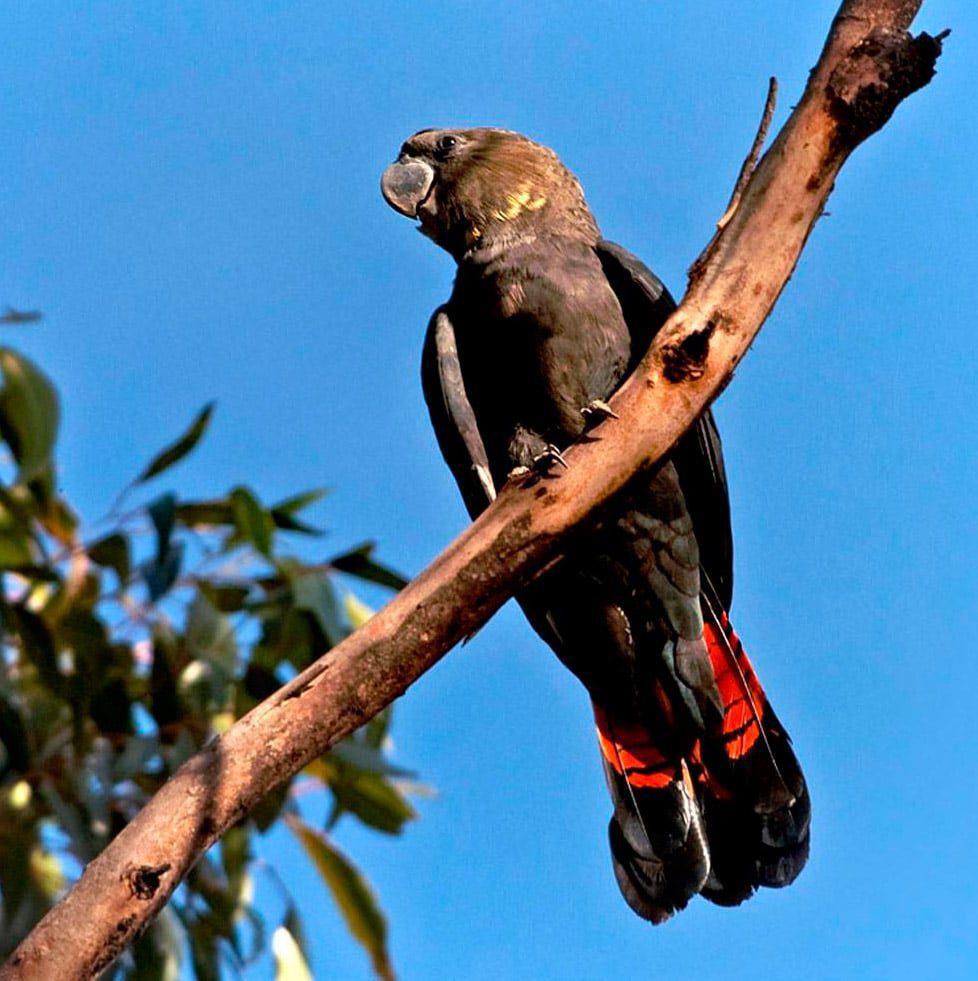
46 to 51 cm.. height and between 400 and 500 g. of weight.
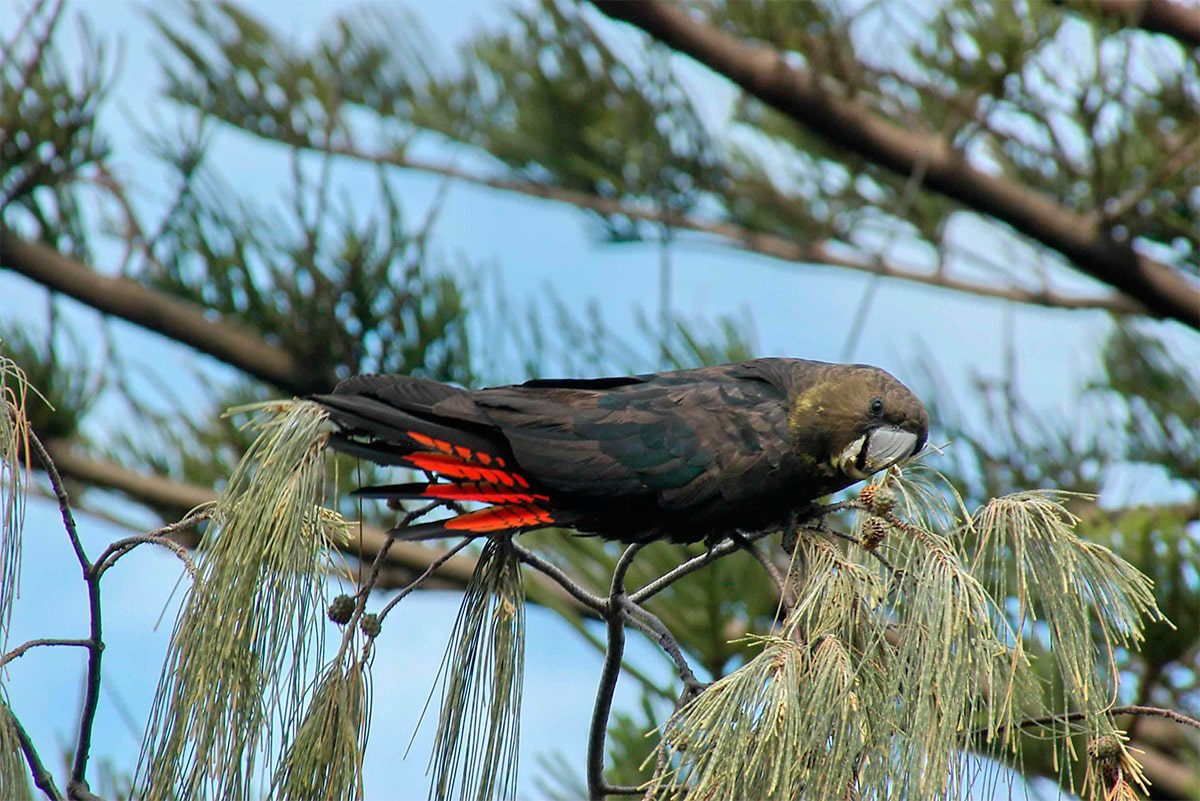
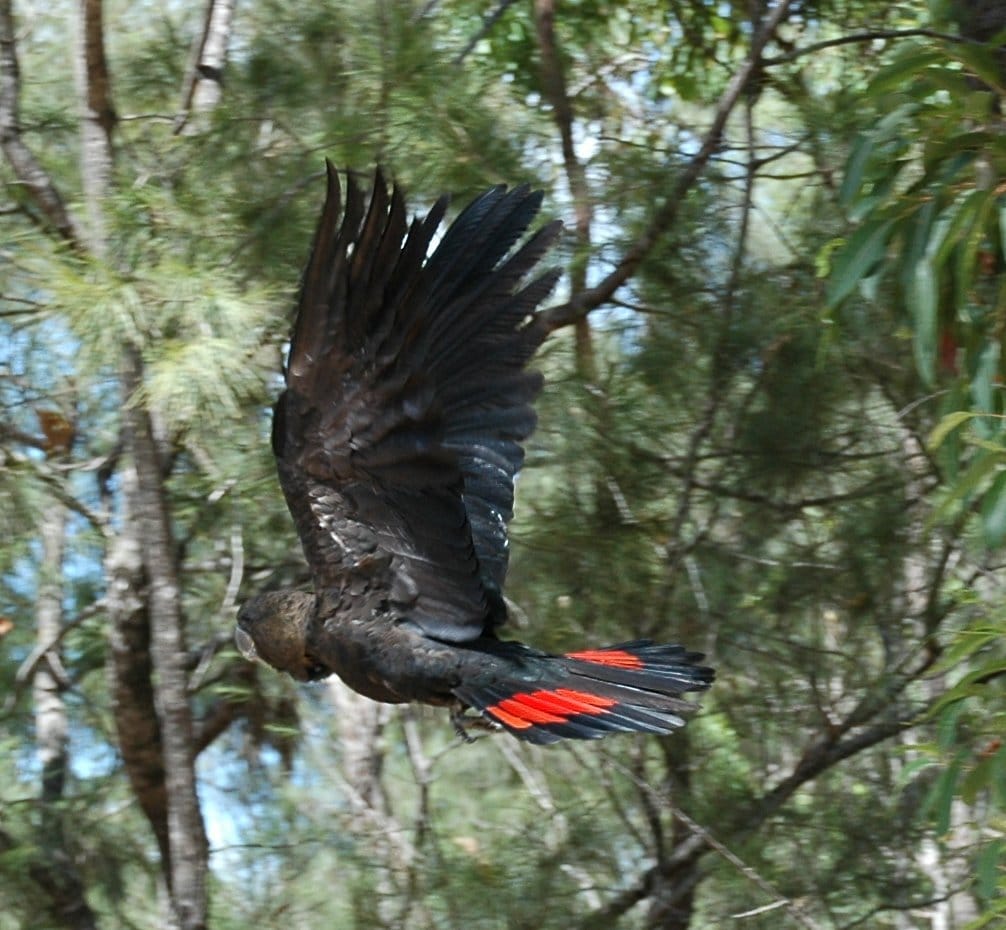
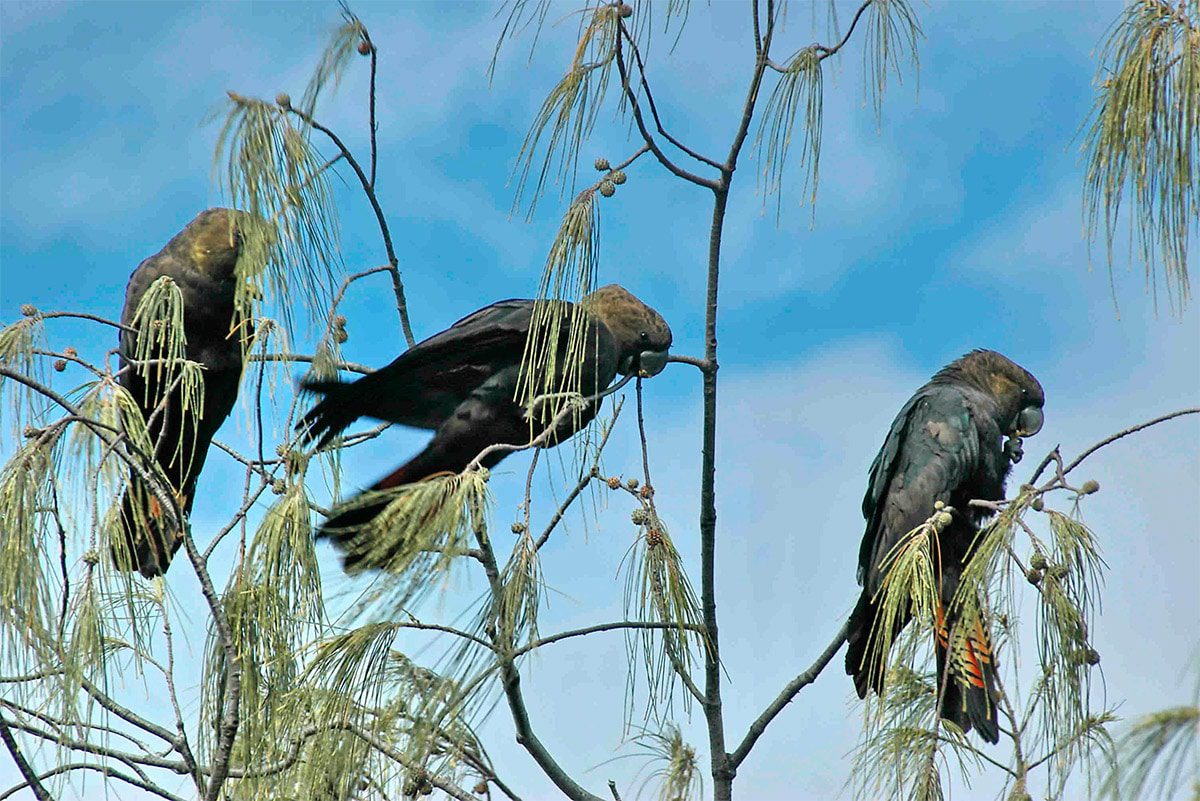
The Glossy black cockatoo (Calyptorhynchus lathami) is the smallest of the 5 black cockatoos and is restricted to the East coast of Australia (a population isolated also is reproduced in the Islands Kangaroo).
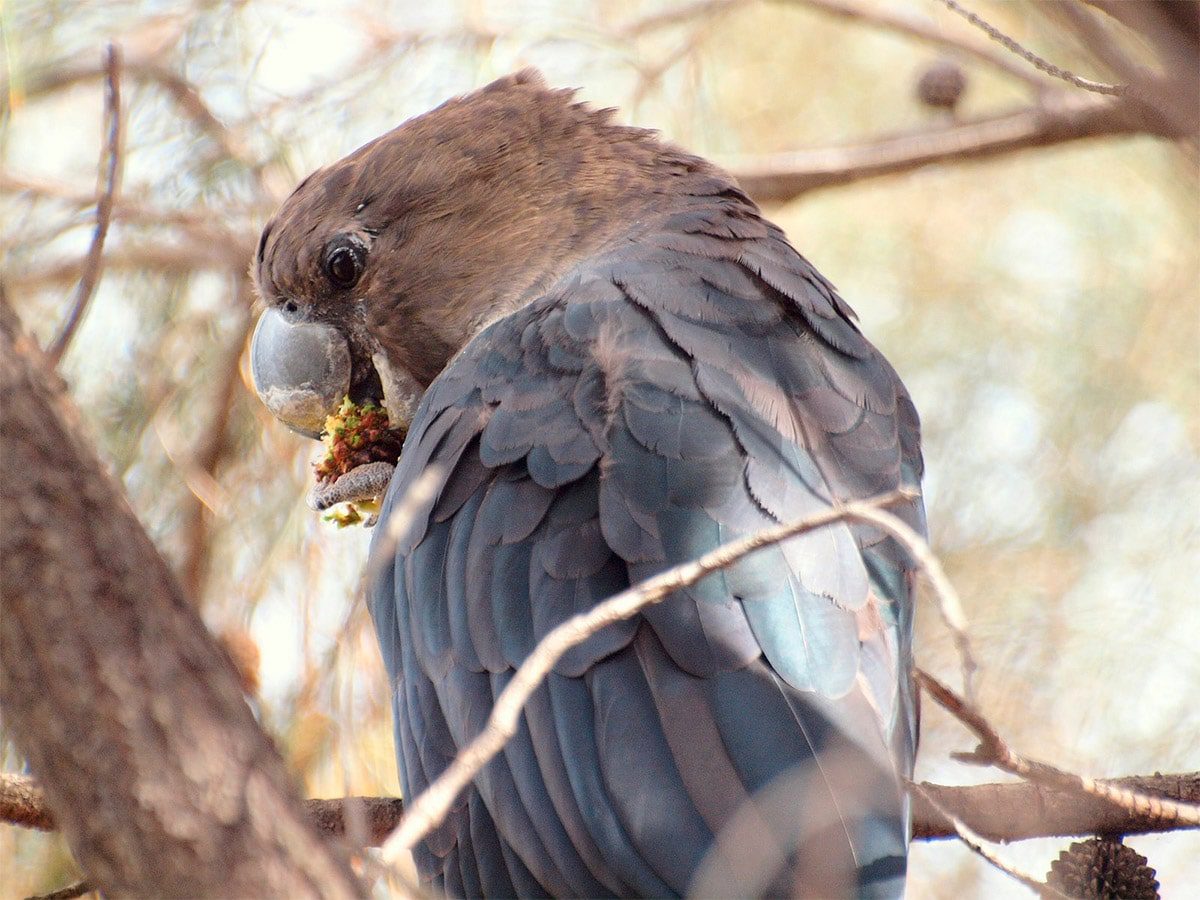
The male is brown-black color with a small crest rounded and bright Scarlet spots in the tail. The female shows spots irregular in color yellow in it head, The Scarlet patches in the tail they are permeated by narrow black bars and edges of pale yellow on the underparts of the wings.
The immature they are similar to the females, but they lack the yellow markings on the head and show different yellowish tones in the feathers, the chest and in the belly.

Subspecies description

  • Calyptorhynchus lathami lathami

    (Temminck, 1807) – The nominal.


  • Calyptorhynchus lathami halmaturinus

    (Mathews, 1912) – Medium-size ones 48 cm. length and 510 to 515 weight g, with a wing of approximately 90 cm.. The of adults they are mainly black, dark brown in the head, the neck and the bottom of the body, and Red panels (in males) or orange-red with bars Black (in females) on tail. The female adult is also conspicuous in the head. These patches are absent from most males., Although they can be expressed faintly in a few individuals (Higgins 1999).

    The immature are similar in appearance to the male adult, but have small stains yellow in it head; spots or bars yellow in the chest, belly and flanks; yellow or orange spots on the wing (mainly on the bottom); Red or orange-yellow panels with black bars at the tail; One bill pale grey (instead of dark); And a ring of skin around the eye pale grey (instead of grey dark) (Higgins 1999, L. Pedler 2007, com. Pers.).


  • Calyptorhynchus lathami erebus

    (Schodde & Mason,IJ, 1993) – The only difference with the nominal species resides in that has the bill shorter.

Habitat:

Video – "Glossy black cockatoo" (Calyptorhynchus lathami)

Glossy-black Cockatoo (Calyptorhynchus lathami ) HD Video clip 1/3

Areas forested frequently dominated by casuarinas of which are highly dependent for its food. These are small shrubs commonly known as the Sheoaks, wood for beef (Beefwood) or Australian pine. These shrubs are widespread in tropical and subtropical regions.

They are also distributed in open humid forests, difficult terrain where deforestation has not been too great. They have an imperative for natural tree cavities to nest.

Reproduction:

Forman couple during all the life. The couple has relationships throughout the year. This type of family of them parrots prefers to nest in cavities natural of the eucalyptus, whether dead or in full vitality. The nest usually placed at an altitude that ranges between the 3 and 30 meters above the ground. The cavity is filled with leaves and branches. Sometimes, together with other breeding pairs, they share the same tree year after year.

In New South Wales the season extends from March to August. The spawning It consists of a single egg white. It is the female that takes charge of most of the tasks.: It prepares the nest and incubates herself. Never leave the nest until the small is reached the age of one week. In most cases, the male provides the female with food and assistance until the young can fend for itself, normally four months which remains with them until the next breeding season.

Food:

It feeds almost exclusively on the seeds several species of She-oak (Casuarina and Allocasuarina). You can also sometimes eat larvae of wood-boring. They feed in threes, less frequently in pairs, small groups or flocks of up to 60 birds. They can be detected by the snapping of their beaks and the remains of the casuarina cones and twigs that fall.

Distribution:

Size distribution (reproduction / resident): 770.000 km2

The species is Rare Although widespread in suitable forests of the central coast and forest habitats of Queensland and in the interior of the southern plateaus and Plains of the Midwest's New South Wales, with a small population in the Riverina. There is an isolated population in the Kangaroo Island, South of Australia.

Subspecies distribution

  • Calyptorhynchus lathami lathami

    (Temminck, 1807) – The nominal.


  • Calyptorhynchus lathami halmaturinus

    (Mathews, 1912) – Kangaroo Island (South of Australia)


  • Calyptorhynchus lathami erebus

    (Schodde & Mason,IJ, 1993) – It is from Australia (the central eastern coastal area of Queensland)

Conservation:

State of conservation โ“˜


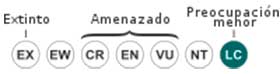
minor concern Minor Concern โ“˜ (UICN)โ“˜

โ€ข Current category of the Red List of the UICN: Least concern.

โ€ข Population trend: Decreasing.

Like most parrot species, the Glossy black cockatoo is protected by the Convention on international trade in endangered species of Fauna and Flora Silvestres ( CITES ), with its inclusion in the list of the Appendix II of vulnerable species, What makes the import, the export and trade of animals captured in the wild is illegal.

Justification of the population

Garnett and Crowley (2000) estimated the size of the population in the following way: 12.000 individuals of the subspecies lathami, 70 breeding pairs of the subspecies halmaturinus (equivalent to 140 individuals) and 5.000 individuals of the subspecies erebus giving a total of 17.140 individuals.

Justification of trend

They suspected that the population is declining in general Since the largest subpopulation, lathami, It is slowly decreasing throughout its range. However it is believed that the subspecies Erebus is increasing and the subspecies halmaturinus It is increasing as a result of conservation efforts in the Island Ganguro (Garnett and Crowley 2000).

"Glossy black cockatoo" in captivity:

Like the other black cockatoos, the Glossy black cockatoo (Calyptorhynchus lathami) is extremely rare in the poultry. In Australia It has attained breed in captivity.

Alternative names:

Glossy Black-Cockatoo, Casuarina Cockatoo, Casuarine Cockatoo, Latham’s Cockatoo, Leach’s Black-Cockatoo, Leach’s Red-tailed Cockatoo, Nutcracker (English).
Cacatoรจs de Latham, Cacatoรจs noir รฉtincelant (French).
Braunkopfkakadu (German).
Cacatua-preto-brilhante (Portuguese).

scientific classification:

Order: Psittaciformes
Family: Cacatuidae
Scientific name: Calyptorhynchus lathami
Genus: Calyptorhynchus
Citation: (Temminck, 1807)
Protonimo: Psittacus Lathami

Images Calyptorhynchus lathami:


Species of the genus Calyptorhynchus
  • Calyptorhynchus banksii
  • —- Calyptorhynchus banksii banksii
  • —- Calyptorhynchus banksii graptogyne
  • —- Calyptorhynchus banksii macrorhynchus
  • —- Calyptorhynchus banksii naso
  • —- Calyptorhynchus banksii samueli
  • Calyptorhynchus lathami
  • —- Calyptorhynchus lathami erebus
  • —- Calyptorhynchus lathami halmaturinus
  • —- Calyptorhynchus lathami lathami

  • Sources:
    Avibase
    – Parrots of the World โ€“ Forshaw Joseph M
    – Parrots A Guide to the Parrots of the World – Tony Juniper & Mike Parr
    – Birdlife

    Photos: commons.wikimedia.org, The Glossy Black Conservancy,

    Sounds: Nigel Jackett (Xeno-canto)
    โ–ท The world of Pets: Dogs, cats, birds, reptiles, amphibians

    Eastern Rosella
    Platycercus eximius


    Eastern Rosella

    Content


    Anatomy-parrots

    Description

    30 cm.. length between 95 and 120 g. of weight.

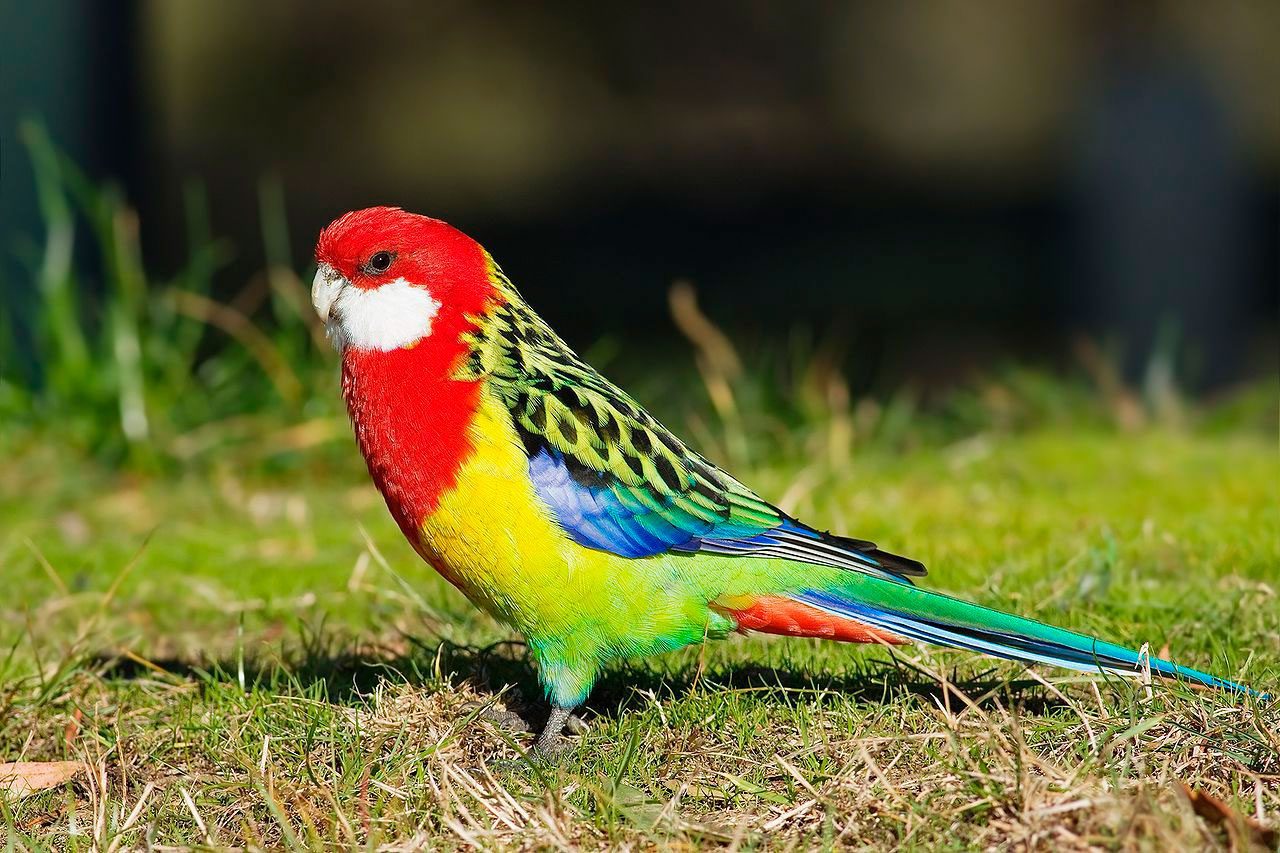
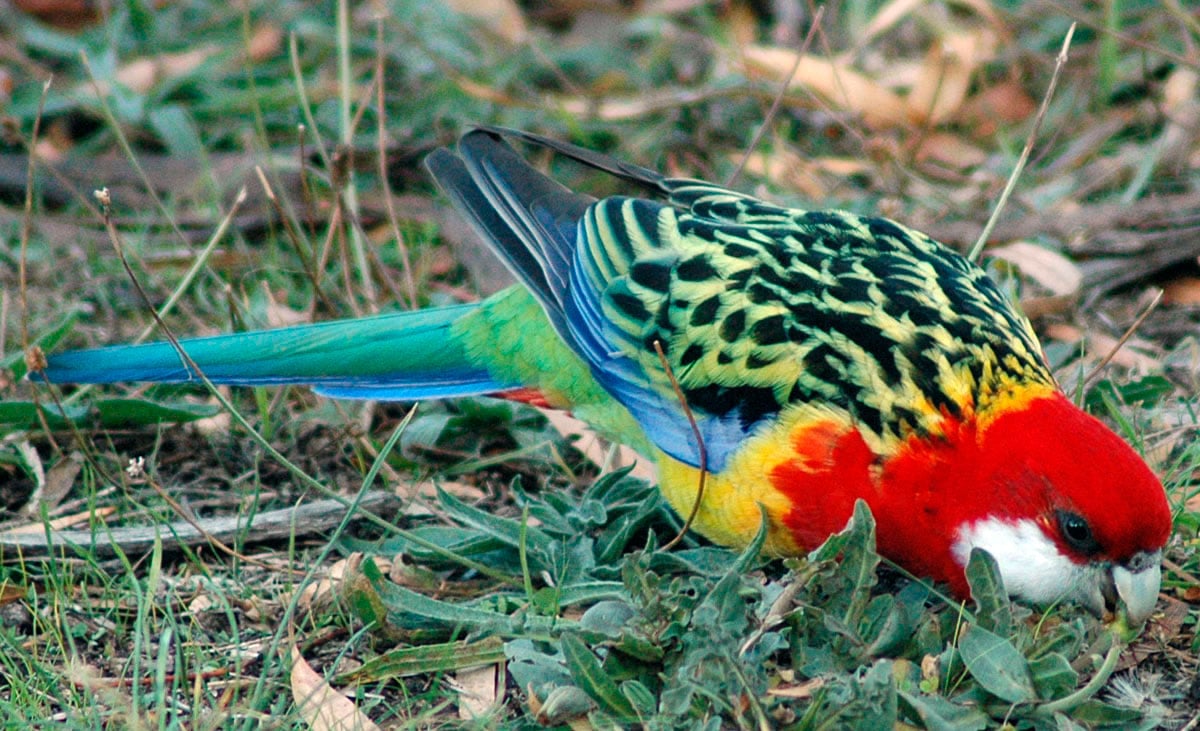
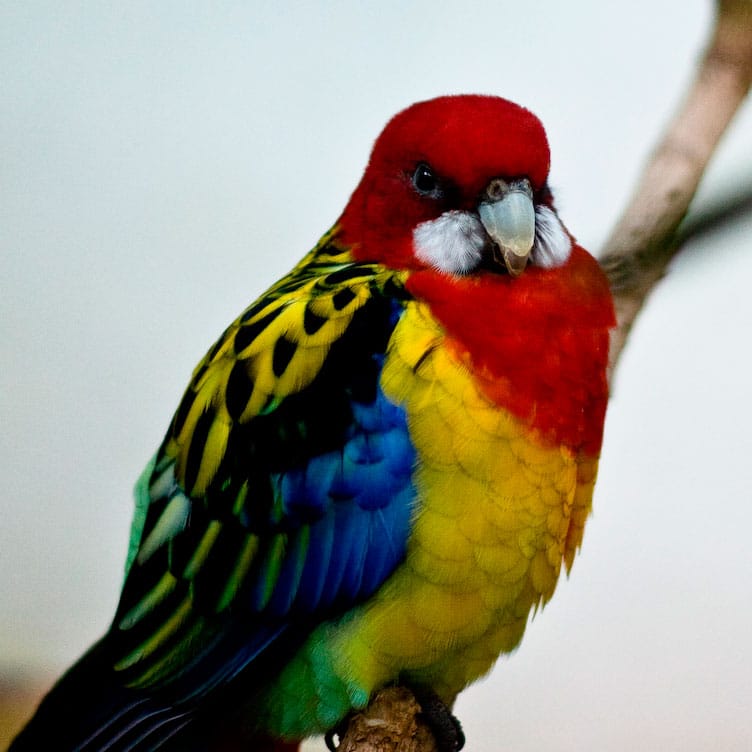
    The males of the Eastern Rosella (Platycercus eximius), has bill white. The lower area of the cheeks and chin are white, that contrasts sharply with the rest of the head and the chest that are of color red glossy. Upper abdomen shows a beautiful color yellow that is again gradually of color green pale in its part lower. The coats are of color red. The the mantle feathers, the back and scapulars are of color black with a broad edge yellow, giving these regions a highly scaled appearance. The median are black. The blankets, out of them coverts secondary and flight feather are bluish grey. The rump is bright green. The central feathers of the tail are green bottle, While the outer feathers of the tail are bluish grey with white tips.

    The irises They are brown, legs grey.

    The female looks like your partner, but the Red of the head and the chest is less bright.

    The underparts has a thin white stripe.

    The youth they are a copy in Pale tones of the female. They have a little bit of green on the back of the head.

    Subspecies description:

    • Platycercus eximius diemenensis

      (North 1911) – Of 30 cm.. length. Head and chest color much more dark and white cheek much more large. Female as the nominal species.


    • Platycercus eximius elecica

      (Schodde & Short 1989) – Of 33 cm.. length. It is something more than the nominal species, the red and the chest and the head is slightly more dark, the black feathers of the neck, back and shoulders have a very broad bright yellow bordered. Area of the rump and coverts bluish-green supracaduales. Female with back and neck with hints. Your obispillo is bluish green


    • Platycercus eximius eximius

      (Shaw 1792) – The nominal.

    Habitat:

    The Eastern Rosella they tend to be fairly common in all habitats of open forests, including agricultural land, urban parks and gardens. They are usually in little populated wooded areas, rows of trees along streams, shrub and scrub savannahs ยซMalleeยซ.

    They are common in cultivated areas and can invade orchards where you can cause severe damage.

    In many areas, It is the most widespread species of parrot, You can even nest in the trees lining the streets of towns and cities. Wherever possible, they avoid dense forests and mountainous areas, where is replaced by the Crimson Rosella. The habitat of the Eastern Rosella usually less to 1.250 m above sea level.

    Breeding pairs are sedentary in their territories, While young and immature form bands of up to 25 birds that roam the area. very commonly, the multicolored parrot can be seen perched on power lines or poles lining the sides of the roads in the outskirts of cities.

    On the floor were fed more frequently than other types of rosella Parrot. In flight, they are quite noisy and therefore very easy to detect. But, When they are on the ground, they are not always easy to observe.

    They feed on, sometimes, in the company of Red-rumped Parrot (Psephotus haematonotus) but never be with them organized mixed flocks.

    Reproduction:

    The Eastern Rosella They nest in the months from August to February, but also from time to time in April and may.

    Pairs mate for life and is the female which chooses the nest site, usually in a hole or cavity of a eucalyptus branch. Sometimes the place to start may be an old stump, an any fence post, a fallen log, a rabbit hole, the nest of a Rainbow Bee-eater. Optionally, the Eastern Rosella also used the abandoned nest of the Blue-winged Kookaburra, some termite mound, ferns in facades of houses, rock walls, old buildings and an old nest of pomatostome.

    The bottom of the nest is filled with sawdust or small wood shavings..

    Spawning includes 4-9 eggs (generally 5) which are incubated during 19 days. The female is solely in charge of incubation and her partner is responsible for supplying. The chicks stay lasts a few 35 days.

    Food:

    The Eastern Rosella has a mainly vegetarian diet. Consumed mainly eucalyptus and acacia seeds, Although also seeds of a variety of greenery bushes. Berries, leaves and sprouts are also part of its menu.

    During the summer, eats some insects and their larvae. Take the seeds that are dispersed in fields and roads. It penetrates into the orchards where causes some damage.

    Distribution:

    The Eastern Rosella lives confined to the southeast of Australia where is spread around Gympie, Bribie Island and the Darling Downs district in the extreme southeast of Queensland, in the South through New South Wales, coming towards the inside of Moree, Parkes, Griffith and There is a, and reaching Victoria where is it absent only in the Northwest region, and West up to Edenhope.

    In the southeast of South Australia the species is largely limited to the area between Bordertown and Salt Creek, but a population caused by birds in captivity is also distributed by the Lofty Mountains.

    In Tasmania, the species is widespread, Although barely wide and sparsely distributed, and have been faced with the King Island in the bass strait.

    There are small introduced populations in the South Island of New Zealand, concentrated around Dunedin (includes some Crimson Rosella mixed with oriental hybrids) and in the Banks Peninsula, and a larger population in the North Island, that extends from the northern end of the island, along the West Coast through Raglan, New Plymouth and the interior of Pirongia and Taupo. They can also be found Eastern Rosella in the districts of Wellington and Lower Hutt, in the Tararua mountains, about Gisborne and along the Coromandel Peninsula, but are rare in the South of Auckland.

    The world population is more of 500.000 birds, and stable or increasing.

    There is some competition with nesting places with the Common Starling (Sturnus vulgaris) in Tasmania.

    Moderate multicolored parrot in captivity.

    The species has benefited before the spread of agriculture, and although protected by law, they can be killed under license.

    Subspecies distribution:

    • Platycercus eximius diemenensis

      (North 1911) – Own East of Tasmania.


    • Platycercus eximius elecica

      (Schodde & Short 1989) – Present in the northeast of New South Wales and the southeast of Queensland.


    • Platycercus eximius eximius

      (Shaw 1792) – The nominal.

    Conservation:


    minor concern


    โ€ข Current category of the Red List of the UICN: Least concern

    โ€ข Population Trend: Growing

    The size of the world's population has not been quantified, Although it is estimated above 500.000 birds.

    Throughout its distribution area, except Tasmania, the Eastern Rosella East are very common birds. Unlike in the Crimson Rosella, that like dense forests, the Eastern Rosella they have benefited from deforestation that took place for the establishment of new pastures or areas of cereals.

    "Eastern Rosella" in captivity:

    Very common in captivity, It is probably the most popular of the Rosellas.

    The Eastern Rosella they are coveted because of the beautiful colors of plumage.

    They are intelligent birds and can be trained to whistle a large repertoire of melodies., and you can even learn how to pronounce some words.

    These parakeets can make good pet birds but require a great deal of care and attention., In addition to devices and toys to keep them mentally stimulated. They are wild birds which are not always adapted to live as a family pet, and even the hand reared parrots are never fully domesticated. They generally do not tolerate caresses or cuddling and tend to react by stinging when you try to handle them like this.. Many breeders believe that the best way to keep this type of bird is in great aviaries where can fly freely, in pairs to meet their social needs and with minimal human interaction. Although they tend to be aggressive with other species Bird by should not be treated so integrate them to mixed aviaries.

    Its diet poultry includes seeds, fruits like Apple, PEAR and grape, and vegetables such as lettuce, grass, and silver beet.

    A sample of Eastern Rosella lived 27,4 years in captivity. In captivity, these animals have been able to play, approximately, to the 2 years of age..

    Alternative names:

    Eastern Rosella, White-cheeked Rosella (ingles).
    Perruche omnicolore (French).
    Rosella, Buntsittich (German).
    Rosela-multicolorida (Portuguese).
    Perico Multicolor, Rosela Comรบn (espaรฑol).

    scientific classification:

    Order: Psittaciformes
    Family: Psittaculidae
    Genus: Platycercus
    Scientific name: Platycercus eximius
    Citation: (Shaw, 1792)
    Protonimo: Psittacus eximius

    Images ยซMulticolored Parakeetยป:

    Videos "Eastern Rosella"

    ————————————————————————————————

    ยซMulticolored Parakeetยป (Platycercus eximius)


    Sources:

    Avibase
    – Parrots of the World โ€“ Forshaw Joseph M
    – Parrots A Guide to the Parrots of the World – Tony Juniper & Mike Parr
    Wikipedia
    – AnAge: The Animal Ageing and Longevity Database – Anagรฉ entry for Platycercus eximius
    – Birdlife

    Photos:

    (1) – Eastern Rosella (Platycercus eximius), male, Queenโ€™s Domain, Hobart, Tasmania, Australia By JJ Harrison (jjharrison89@facebook.com) (Own work) [CC BY-SA 3.0], via Wikimedia Commons
    (2) – Eastern Rosella (Platycercus eximius), female, Queenโ€™s Domain, Hobart, Tasmania, Australia By JJ Harrison (jjharrison89@facebook.com) (Own work) [CC BY-SA 3.0], via Wikimedia Commons
    (3) – Eastern Rosella (Platycercus eximius) at Woodland Park Zoo, Seattle, USA By Platycercus_eximius_-Woodland_Park_Zoo-6. jpg: Nickderivative work: Snowmanradio [CC BY 2.0], via Wikimedia Commons
    (4) – Eastern Rosella at Hobart Domain, Tasmania (grazing) By KeresH (Own work) [GFDL, CC-BY-SA-3.0 or CC BY-SA 2.5], via Wikimedia Commons
    (5) – Eastern Rosella (Platycercus eximius diemenensis), The Queenโ€™s Domain, Hobart, Tasmania, Australia By JJ Harrison (jjharrison89@facebook.com) (Own work) [GFDL 1.2 or CC BY-SA 3.0], via Wikimedia Commons

    Sounds: Peter Woodall (Xeno-canto)
    โ–ท The world of Pets: Dogs, cats, birds, reptiles, amphibians

    Golden-capped Parakeet
    Aratinga auricapillus

    Aratinga Testadorada

    Content

    Description:


    Anatomy-parrots

    Of 30 cm.. of length and a weight of 130 g..
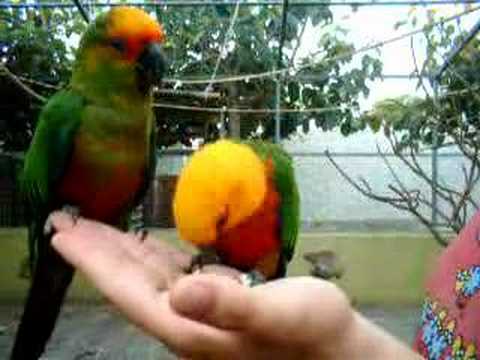
    The Golden-capped Parakeet (Aratinga auricapillus) It is often treated as the same species as the Sun Parakeet (Aratinga solstitialis) and Jandaya Parakeet (Aratinga jandaya).

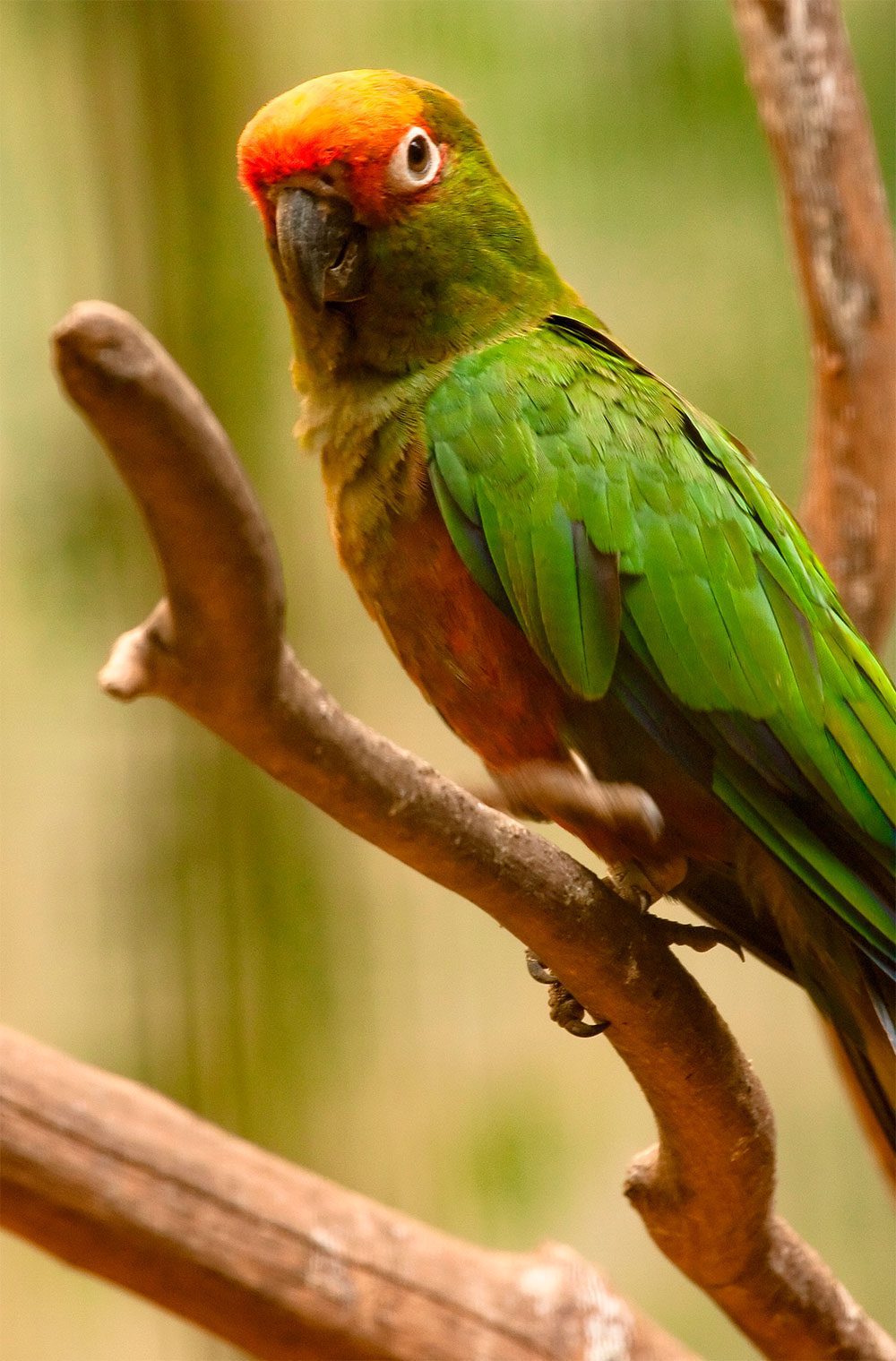
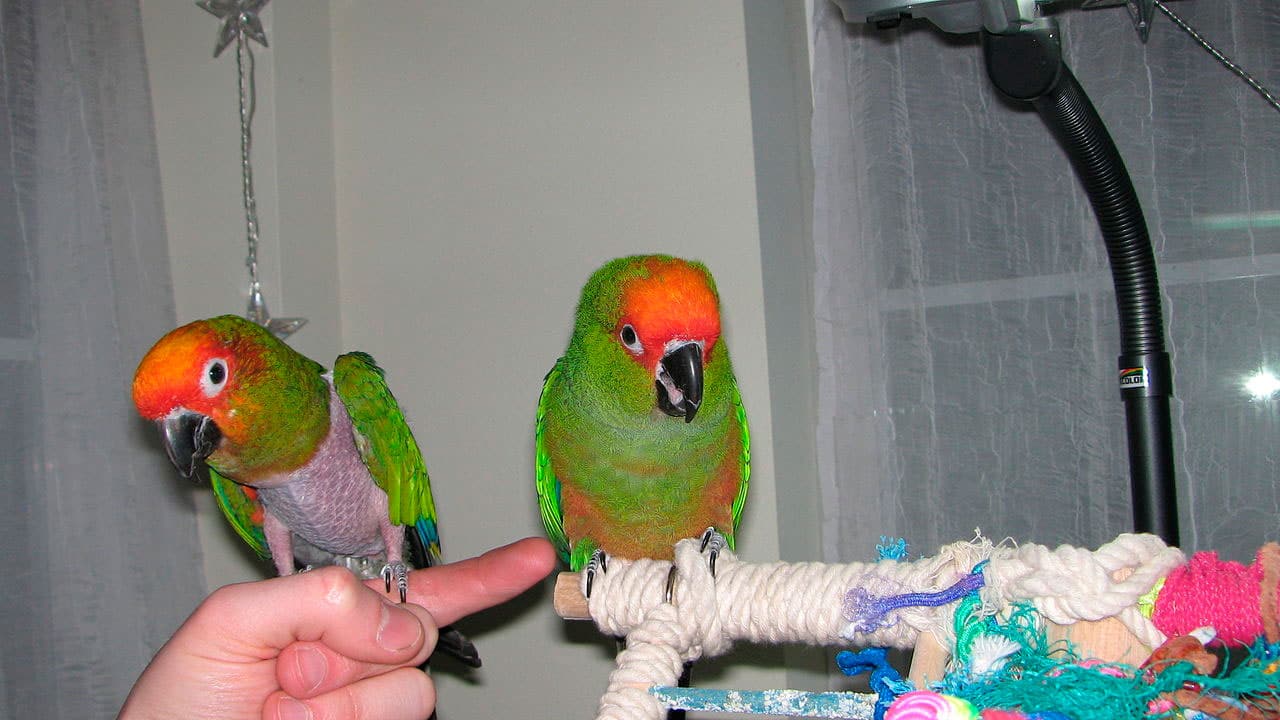
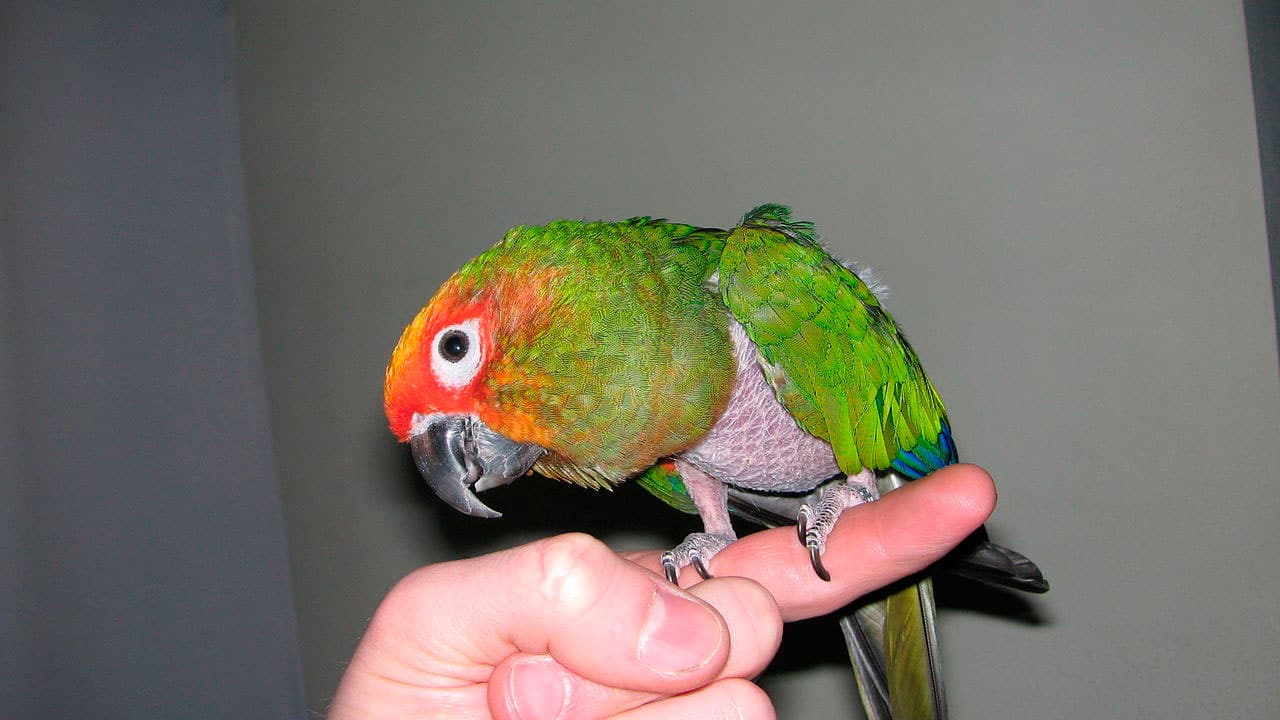
    The lores, frontal band and ocular region of this kind are of color red glossy; the crown is bright golden yellow; ear-coverts, cheeks and both sides of the neck, green. The area of the nape and the the mantle are pale green: the back and the top of the rump with different hues of green and tips of red or orange; floor area of the rump and uppertail-coverts, green; the small and medium-sized upperwing-coverts, green; the large coverts and primaries, secondaries, vane outer and tips from them primaries, blue.

    Underwing-coverts, orange-red; underside of flight feather grey. The chin and throat yellowish green with orange discoloration on the top of the chest and deep color red pale in the belly; vent, the thighs and undertail-coverts, green. Upper, the tail, of colour brownish with them tips blue, sometimes with the vane external foreign blue feathers; undertail, the tail, grey.

    The bill, grey-black; grey, the bare skin of the bare periophthalmic; irises yellowish; legs grey.

    Both sexes similar.

    Immature It has little or nothing red in the rump, more off the yellow colour of the crown; the top of the chest is greener and less extensive red on the belly.

    Subspecies description:

    • Aratinga auricapillus auricapillus

      (Kuhl, 1820) – The species nominal.


    • Aratinga auricapillus aurifrons

      (Spix, 1824) – The upperparts totally green (without red margins on the feathers of the back and Hip top). More green in the upper zone of the chest, lacking Orange dye of the nominal species.

    Habitat:

    Video – "Golden-capped Parakeet" (Aratinga auricapillus)

    aratinga jendaya y auricapilla

    They live in forests, as well as in the clearings and edges of the same, including coastal moist Atlantic evergreen forests and inland closed-type deciduous forests. They prefer primary formations.

    Scarce or absent grassland with trees or secondary vegetation, including from the vicinity of the remaining original forests. Observed to 2.180 m (Parque nacional do Caparaรณ, to the South of Holy Spirit). gregarious, usually observed in flocks of 12-20 individuals, more rarely in groups of up to 40.

    Reproduction:

    There are few details on the reproductive ecology of this species., Although probably nest in the months of November-December.

    Implementation size in captivity is of 3-5 eggs.

    Food:

    Diet Golden-capped Parakeet includes various seeds and fruits. Reported foods include the corn, okra and fruits red sweet unspecified.

    considered a pest of crops in some areas before its abrupt population decline.

    Distribution:

    The Golden-capped Parakeet (Aratinga auricapillus) are distributed in the area South-East of Brazil; from the North of Bay, Eastern part of Goiรกs and Minas Gerais, Brazil, to the East and South, on the East coast of Brazil (Holy Spirit, Rio de Janeiro, Sรฃo Paulo, Paranรก and possibly, Santa Catarina).

    The observations in Rio Grande do Sul, apparently they are wrong, although the species can still be found in the extreme east of Mato Grosso from the South.

    A single record in 1918 in Paraguay, near the border with Paranรก, Presumably coming from some exhaust.

    Usually rare and irregular distribution, residents, extinct in many places with their current range defined by the remaining forests.

    He greater stronghold population of the species is located in Minas Gerais, Brazil, where the species was considered common in 1987 in several areas. They are very rare or they have become extinct in Santa Catarina, Paranรก, Sรฃo Paulo, Rio de Janeiro and Espirito Santo, and scarce in Goiรกs and Bay.

    The decrease in the population is must to the continuous logging of forests and to their captures for the trade of birds.

    There are several protected areas with populations of the Golden-capped Parakeet, such as the Monte Pascoal National Park (Bahia) and Parque Estadual do Rio Doce (Minas Gerais, Brazil).

    Rare in captivity, mostly out of Brazil.

    Subspecies distribution:

    Conservation:

    โ€ข Red List category of the UICN current: Near-threatened

    โ€ข Population trend: Decreasing

    The size of the population of the Golden-capped Parakeet It has not estimated formally and in the absence of sufficient data, it is estimated that you there are more than 10.000 specimens, more or less equivalent to 6.700 mature individuals; But, detailed research is required.

    The population the species is suspected that it may be in decline due to the continuous loss of habitat and to his capture to the pet trade.

    โ€ข There has been extensive and ongoing clearance and fragmentation of suitable habitat for this species., for use as coffee plantations, soybean and sugarcane in Sao Paulo, and livestock in Goiรกs and Minas Gerais, Brazil (Snyder et to the., 2000).

    โ€ข The capture for trade, He has probably had a significant impact, since it was relatively common in the illegal Brazilian markets in the mid-1990s. 1980, importing hundreds of birds to Western Germany in the decade of 1980. But, the precise effect is obscured by large numbers of captive-bred birds, that presumably see reduced pressure on wild populations remaining (LF Silveira in litt., 1999).

    โ€ข Despite its tendency to nest, times, near human settlements, It is apparently not the most favoured species for the pet trade (VT Lombardi in litt. 2011).

    โ€ข There are no records of persecution in response to crop degradation..

    Conservation Actions Underway:

    Conservation Actions Proposed:

      โ€ข Survey to locate important new populations and define the limits of their current range..

      โ€ข Study to determine its population dynamics and dispersal capacity., as well as provide a detailed analysis of their habitat requirements in different sites.

      โ€ขEnsure the protection of key reserves.

      โ€ข Protect species under Brazilian law.

    "Golden-capped Parakeet" in captivity:

    Rare in captivity, mostly out of Brazil.

    Their life expectancy is about 30 years.

    Alternative names:

    Golden-capped Parakeet, Flame-capped Conure, Flame-capped Parakeet, Gold-capped Conure, Golden capped Parakeet, Golden-capped Conure (English).
    Conure ร  tรชte d’or, Conure ร  tรชte dorรฉe, Perriche ร  tรชte d’or, Perruche ร  tรชte d’or (French).
    Goldkopfsittich, Goldkappensittich (German).
    jandaia-de-testa-vermelha, cara-suja, jandaia, periquito-de-cabeรงa-vermelha (Portuguese).
    Aratinga Testadorada, Maracanรก corona dorada, Periquito de Cabeza Dorada (espaรฑol).
    Maracanรก corona dorada (Paraguay).

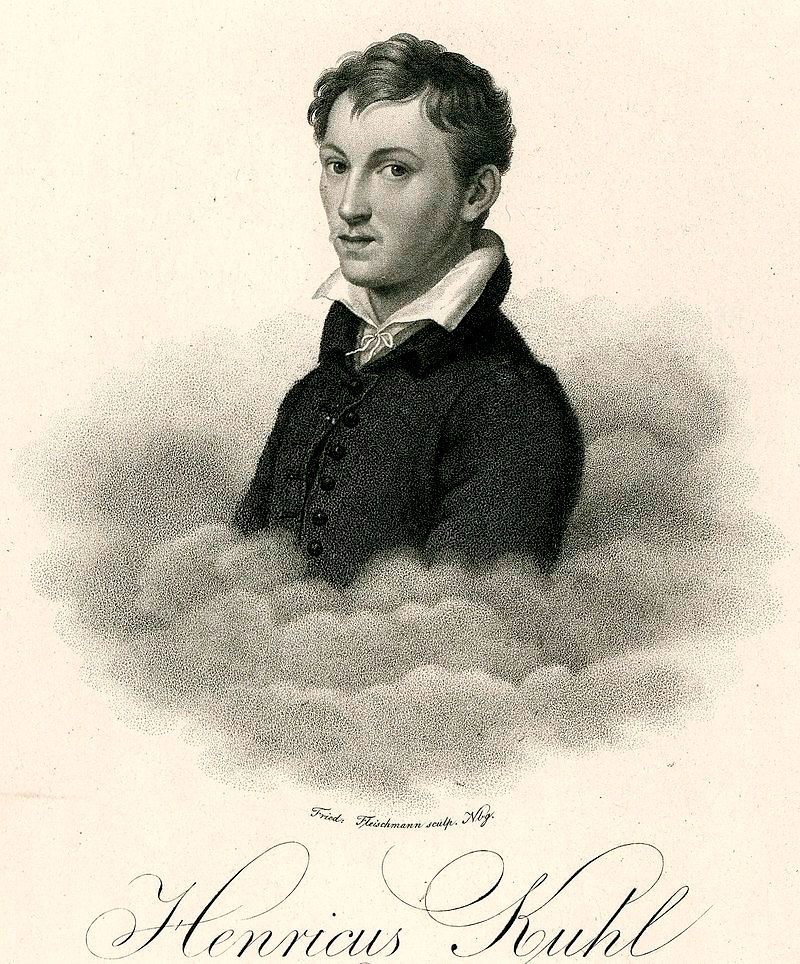
    Kuhl, Heinrich
    Heinrich Kuhl

    scientific classification:


    Order: Psittaciformes
    Family: Psittacidae
    Genus: Aratinga
    Scientific name: Aratinga auricapillus
    Citation: (Kuhl, 1820)
    Protonimo: parrot auricapillus


    Golden-capped Parakeet images:


    Species of the genus Aratinga

    Sources:

    Avibase
    – Parrots of the World โ€“ Forshaw Joseph M
    – Parrots A Guide to the Parrots of the World – Tony Juniper & Mike Parr
    – Birdlife

    Photos:

    (1) – A Golden-capped Parakeet at Jurong Bird Park, Singapore By Peter so (Golden-capped ParakeetUploaded by Snowmanradio) [CC BY-SA 2.0], via Wikimedia Commons

    (2) – Picture of a Golden-capped Parakeet in the zoo of Wrocล‚aw (Poland) By Nicolas Guรฉrin (messages) (Own work) [GFDL or CC BY-SA 3.0], via Wikimedia Commons
    (3) – A Golden-capped Parakeet (also known as Golden-capped Conure) in Seattle, Washington, USA By Matthew Wilson (Picasa Web Albums) [CC BY-SA 3.0], via Wikimedia Commons
    (4) – Two Golden-capped Parakeets (also known as Golden-capped Conures) in Seattle, Washington By Matthew Wilson (Picasa Web Albums) [CC BY-SA 3.0], via Wikimedia Commons
    (5) – A Golden-capped Parakeet (also known as Golden-capped Conure) in captivity By Patrick Hawks from Sint Maarten (Bird is the wordUploaded by snowmanradio) [CC BY 2.0], via Wikimedia Commons

    Sounds: Douglas Meyer (Xeno-canto)

    โ–ท The world of Pets: Dogs, cats, birds, reptiles, amphibians

    Gang-gang cockatoo
    Callocephalon fimbriatum


    Gang-gang cockatoo

    Content

    Description

    Of approximately 35 cm.. height and an average weight of 257 g.
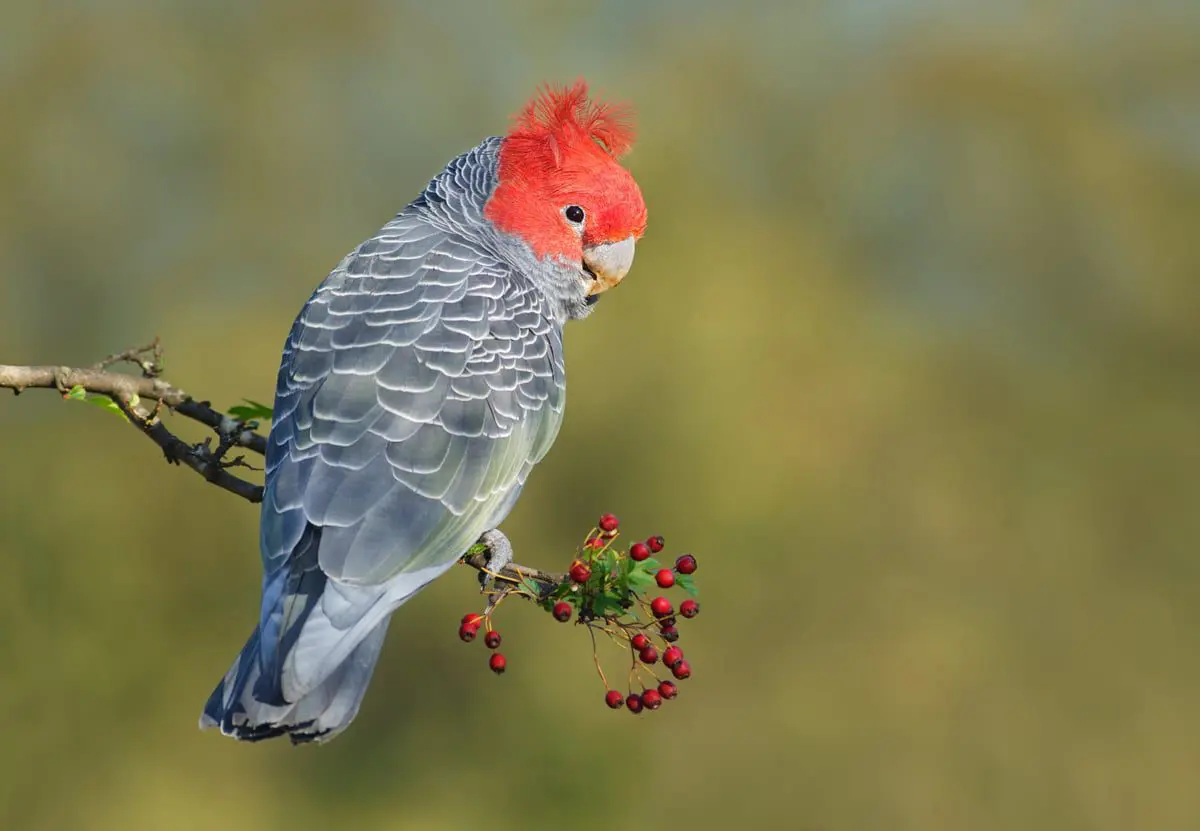
    The Gang-gang cockatoo (Callocephalon fimbriatum) it's a little cockatoo, robust, with one crest Dim, large wings wide, and tail short. Son gregarious but relatively calm.
    The males of the Gang-gang cockatoo they are immediately recognizable by their head and crest scarlet. The remaining plumage is slate grey.
    The females they have the head and crest grey. The feathers of the part inferior of the body are lined with green Orange and yellow, giving a scaly appearance. The tail also has stripes horizontal white. Otherwise, is identical to the male.

    The juveniles they are similar to the females, they differ in their top, the head Red and one crest shorter and less twisted.
    The Gang-gang cockatoo not can confuse it with other species of parrots. In flight, However, sometimes their shape resembles to the cacatรบa Galah.

    Habitat:

    Video – "Gang-gang cockatoo" (Callocephalon fimbriatum)

    Gang- gang Cockatoo (Callocephalon fimbriatum)

    During the summer are found in the forests of mountain and areas with understory of shrubs dense. In Winter they will move to more dry and low altitudes, more open forests. They can often be seen along the roads and in parks and gardens in urban areas. They require high hollow trees for nest.

    Reproduction:

    Forman couples monogamous. The female chooses a hole in the right tree and both sexes prepare the nest for egg-laying. They line the sides of the hole with sawdust and chewing dust. Both sexes incubate the eggs and care for the young. Parents feed their young for four to six weeks after hatching. Feather.

    Family groups are commonly seen feeding together during the breeding season.. In some cases, nurseries will be formed’ where have several couples nested together, their young perch together in the same tree, While their parents seek for food.

    Food:

    With feed mainly seeds trees and shrubs, native and introduced, with a preference for the eucalyptus, beards and thorns. They also eat berries, fruit, dried fruits, insects and their larvae.

    They are mainly arboreal, they perch on the ground only to drink and forage among the fallen fruits or cones.

    They feed in flocks of up 60 birds out of breeding season. Feed in pairs or small family groups during the breeding season.

    They are able to use exotic plants as food in the urban areas.

    Distribution:

    Size distribution (reproduction / resident): 333.000 km2

    They are endemic to the South-East of Australia. They are widespread in the East of New South Wales, from the Central slopes and plateaus to the South Coast, along the northeastern regions of Victoria to Seymour, with some records in the East of Melbourne, mornington peninsula and Southwest Gippsland.
    Have also been introduced in the Kangaroo Island to the South of Australia.

    Conservation:

    State of conservation โ“˜


    minor concern Minor Concern โ“˜ (UICN)โ“˜

    โ€ข Current category of the Red List of the UICN: Least concern.

    โ€ข Population trend: In increased.

    Is come affected negatively by deforestation and the removal of mature trees (potential breeding sites). A population is classified as threatened: in the Valley Cove Lane, New South Wales.

    The the rest of the population It is suspected that it may be increasing and now will spend the winter in the suburbs of Canberra.

    The world population are estimated at more of 20,000 individuals.

    "Gang-gang cockatoo" in captivity:

    Itร‚ยดs very rare in poultry and hard to find as a pet.

    Son Smart and playful, but they have a great tendency to suffer from software. They are very destructive for what need of abundant toys to not attack against the furniture of the House.

    When you get bored, they are often automutilan as a way to fight against boredom.

    Its life expectancy You can overcome the 60 years.

    Alternative names:

    Gang-gang Cockatoo, Cockatoo Corella, Helmeted Cockatoo, Red-crowned Cockatoo, Red-headed Parrot (English).
    Cacatoรจs ร  tรชte rouge, Cacatoรจs gang-gang (French).
    Helmkakadu, Helm-Kakadu (German).
    Cacatua-gang-gang (Portuguese).
    Cacatรบa Gang Gang, Cacatรบa Gang-gang (espaรฑol).

    scientific classification:

    Order: Psittaciformes
    Family: Cacatuidae
    Scientific name: Callocephalon fimbriatum
    Genus: Callocephalon
    Citation: (Grant,JB, 1803)
    Protonimo: Psittacus fimbriatus

    Images Gang-gang Cockatoo:


    Sources:
    Avibase
    infoexoticos
    – Birdlife

    – Photos: Jan Wegener, Marbiz (Panoramio), papouch.webzdarma.cz, Benjamint444 (commons.wikimedia.org)

    – Sounds: (Xeno-canto)
    โ–ท The world of Pets: Dogs, cats, birds, reptiles, amphibians

    Golden-shouldered Parrot
    Psephotellus chrysopterygius


    Golden-shouldered Parrot

    Content


    Anatomy-parrots

    Description

    26 cm. length between 54 and 56 g. of weight.

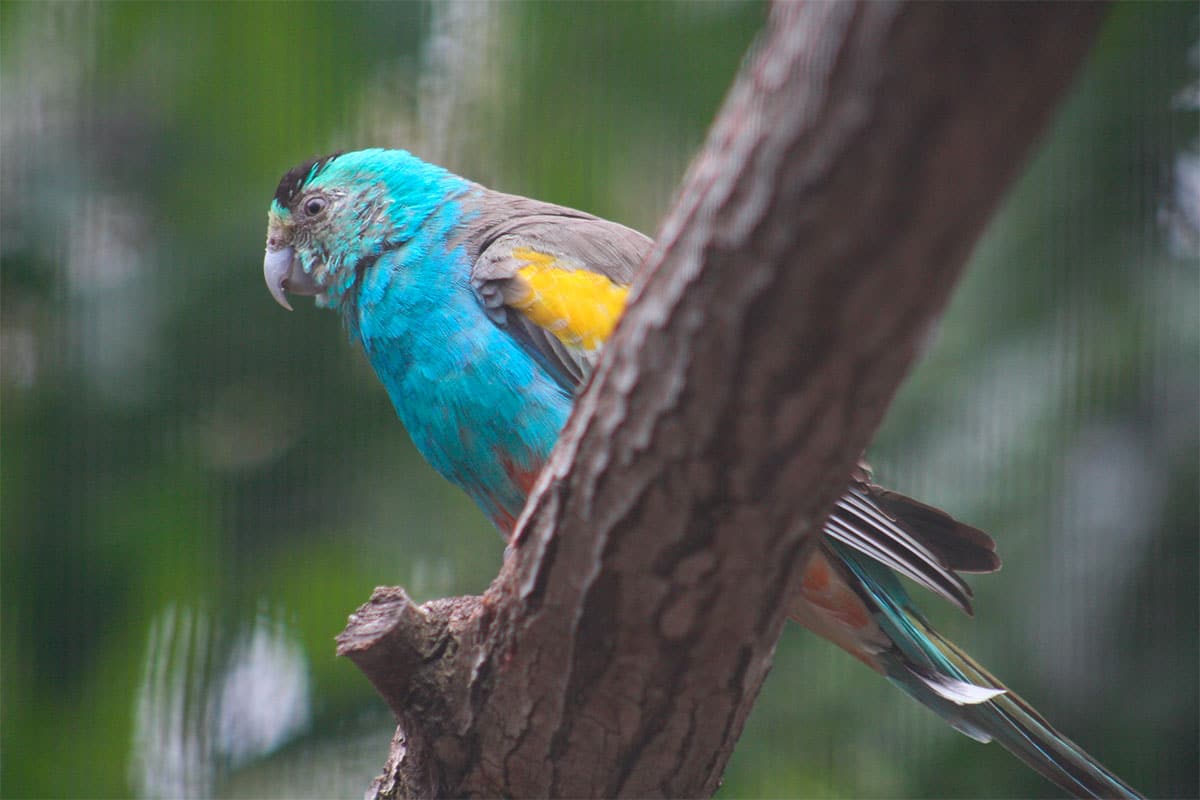
    The Golden-shouldered Parrot (Psephotellus chrysopterygius) males have a pileum black, the forecrown, the lores and orbital area yellow, slightly with blue-green tones. The black of the pileum merges gradually with the greyish Brown of the the mantle, with some blue on the back neck pink. The rump shows a beautiful turquesa color that contrasts slightly with the green color of the tail view from above.

    The median bright yellow, they form a visible band in the wings. The greater coverts they have a dominant brown-black color with some small patches of Turquoise Blue clear.

    The flight feather they are blackish with a turquoise-colored border around the vane outer. The underparts is blue. The lower parts are turquoise blue, except the lower abdomen and the lower part of the tail, that are red with bases and white finishes. The central tail feathers they usually have a bluish-black-tipped bronze color. The lateral tail feathers they are blue-green with white tips. The underside of tail is white with a dark blue finish. The bill is pale-grey. The irises are dark brown, the legs brownish grey.

    The females they have a yellowish-grey colour, along with opaque Brown wash on the top. It also, they have the forecrown yellowish. The flanks, bottom of the chest and Hip they are shaded light blue. The belly is whitish grey with red spots. You can see a pale bars on the wings.

    The immature are similar to the females, although young male they have a dark CAP and the cheeks more blue. Young people acquire their adult plumage final at the age of 16 months.

    Habitat:

    Golden-shouldered Parrot

    The Golden-shouldered Parrot they are birds sedentary. But, just after the nesting season, they can make short trips that lead to mangroves. At the time of playback, mainly frequent open forests of eucalyptus and logging and whose undergrowth is covered with a thick layer of grass. Within these areas, the Golden-shouldered Parrot nest, mainly, along with small partially invaded by water bowls. In the territory should, mandatory, Haber mounds of earth made by termites, which are essential for the nesting of this species.

    The Perico Aligualdor, usually, they live alone, in pairs or small family groups, but they also sometimes gather in flocks of up to 30 individuals. These birds feed and quench your thirst first thing in the morning or in the evening. They rest on the foliage during the hottest times of the day. The Golden-shouldered Parrot they tend to feed on the ground, where venture with confidence. They find refuge in trees if bother them. They walk up to small pools of water where bathing and quench your thirst.

    Reproduction:

    The time of reproduction extends from April to August. During courtship, the male makes short flights around the female, rising from the front a short feather Crest and waving his chest feathers.

    The Golden-shouldered Parrot they dig their nests in a termite mound still damp from recent rains.

    There are two types of termite mounds that are usually used by this species:

    – built by termites type conical termite mounds Scopulus

    – semicircular termite mounds built by termites of the type laurensis.

    The first are usually their favorite because the temperature is most constant, while in semicircular termite mounds, they often have the entrance North, which sometimes causes large thermal contrasts. The mound may contain several nesting rooms. The nest entrance is located between 45 and 125 cm above the ground. A long tunnel 15 to 60 cm ends into a round hole in one 25 cm long.

    The Golden-shouldered Parrot It lives in symbiosis with a moth:
    The Trisyntopa Scatophaga that at the same time it lays its eggs in the nest of the parakeet. The larvae feed on feces and feathers of the juveniles, helping to keep the nest clean waste.

    The female lays of 4 to 7 eggs who is responsible for incubating single for almost 20 days. The young man takes around 5 weeks to acquire all their feathers and leaving the nest. A week after hatching, the male joins the female to feed the young. He stands guard at the top of the nest for long periods of the day.. When he brings the food, notifies the female's arrival, emitting loud cries. When it is time to leave the nest, the young are able to fly into the tunnel without landing.. After the trip, continue to be fed by adults for at least 2 weeks. They remain in the family group for quite some time. To the dispersal of family groups, young males are away more of their places of birth than young females.

    Food:

    outside the breeding season, the Golden-shouldered Parrot they have a diet almost exclusively vegetarian. Subsist on grass seeds Panicum or Eragostris. They often feed on fallen seeds of different plants.. during the rainy season, When these resources become scarcer, It is likely that it depends on the species of plants that can be found throughout the year.

    Distribution:

    endemic to northeastern Australia, where is distributed only in a small area north of the rรญo Morehead and South of Musgrave, to the North of Queensland. There are currently at least four populations, each with between 30 and 100 birds, so the world's population can be of no more than 500 individuals, or 150 breeding pairs. Other more recent sources estimate the spawning in around 2.500 individuals mature (Garnett et to the., 2011).

    A record of 1980 It extended its known range North to the pascoe river, but in general it has contracted markedly in recent 100 years, prior records were situated towards the South, until around Normanton.

    They were largely trapped in the past, especially since the mid of 1960 until the beginning of 1970. But, grazing and burning of crop residues, the spread of tea trees Leptospermum, predation by cats and the disruption of nests by tourists, It may have played one major role in the decline of the species.

    Despite the fact that is protected, probably some catches continue.
    Some individuals in captive.

    Conservation:


    Endangered


    โ€ข Current category of the Red List of the UICN: Danger

    โ€ข Population Trend: Decreasing

    The breeding population has been estimated at around 2.500 individuals mature (Garnett et to the., 2011)

    Historically, There were three confirmed breeding populations: from Coen to Port Stewart, According to sources taken in the decade of 1920, rรญo Musgrave-Moorhead where the population has shrunk considerably and continues to decline, and to the West of Chillagoe where the population persists, with a stable trend. In general, the population is suspected that it may now be decreasing (Garnett and Crowley 2000), Although the likely rate of decline has not been estimated.

    The species has suffered terribly from poaching in the Decade of 1960 and the early 70 Although this bird is protected, such practices still exist.
    Today, the Golden-shouldered Parrot faced with new threats: the development of new agricultural land and the destruction of traditional habitats where they were distributed.

    "Golden-shouldered Parrot" in captivity:

    The Golden-shouldered Parrot It has always been a rare guest of aviaries in the world. But, There are now more birds in captivity than exist in the wild., which demonstrates the difficulties encountered by these birds in their natural habitat.

    This species is not recommended for beginners; prices already are high enough to discourage potential buyers, only the true, virtually "professional" fans remain.

    A small group composed of one male and seven females of Golden-shouldered Parrot they came to Britain in 1897. These birds were forerunners, but the first known result of successful reproduction dates of 1961. Is inscribed with the name of Alan Lendon an Australian.
    The second reproductive success corresponds to a German W. Etterich, This was in 1966. R. Burkard from Zurich achieved it in 1968. It also, in 1954, a so-called Australian breeder Edward Hallstrom got sixteen hybrids after the mating of two males of Golden-shouldered Parrot with females of Hooded Parrot.
    Nowadays there are many impure birds in hobby aviaries and that is a shame. These are mostly young hybrid females. These birds do not have the opaque yellow band on the front and, Therefore, one can easily recognize, female purebred if they have the yellow tape and a bronze-colored Crown clear.

    The Golden-shouldered Parrot does not resist well a temperate maritime climate; are very sensitive to cold humidity. Apart from that, it is a peaceful and active bird, she is not shy and quickly forges a friendship with her caretaker. His voice is melodious, with what does not bother the neighbors. You spend much time on the ground and like, often, bathing. They are aggressive during breeding with other birds and it is not appropriate to keep them outside with other species.; interactions with other birds are often problematic.

    Alternative names:

    Golden-shouldered Parrot, Antbed Parrot, Anthill Parrot, Chestnut-crowned Parakeet, Chestnut-crowned Parrot, Golden shouldered Parrot, golden-shouldered parakeet, Golden-shouldered Parrot (chrysopterygius), Golden-winged Parakeet, Golden-winged Parrot (ingles).
    Perruche ร  ailes d’or, Perruche ร  ailes d’or (chrysopterygius) (francรฉs).
    Goldschultersittich (alemรกn).
    Periquito-de-asas-douradas (portuguรฉs).
    Perico Aligualdo, Perico de Alas Amarillas, Loro Hombroamarillo, Periquito de Espalda Dorada (espaรฑol).

    scientific classification:

    Order: Psittaciformes
    Family: Psittaculidae
    Genus: Psephotellus
    Scientific name: Psephotellus chrysopterygius
    Citation: Gould, 1857
    Protonimo: Psephotus chrysopterygius

    Images "Golden-shouldered Parrot"

    Videos "Golden-shouldered Parrot"

    ————————————————————————————————

    ยซPerico Aligualdoยป (Psephotellus chrysopterygius)


    Sources:

    Avibase
    – Parrots of the World โ€“ Forshaw Joseph M
    – Parrots A Guide to the Parrots of the World – Tony Juniper & Mike Parr
    – Birdlife

    Photos:

    (1) – Male Golden-shouldered Parrot at Lone Pine Koala Sanctuary, Brisbane, Queensland, Australia By TheGirlsNY (originally posted to Flickr as Pretty bird) [CC BY-SA 2.0], via Wikimedia Commons
    (2) – Golden-shouldered Parakeet (Psephotus chrysopterygius) – watercolor, Romain Risso By Gossipguy (Own work) [CC BY-SA 3.0], via Wikimedia Commons

    Sounds: Phil Gregory (Xeno-canto)