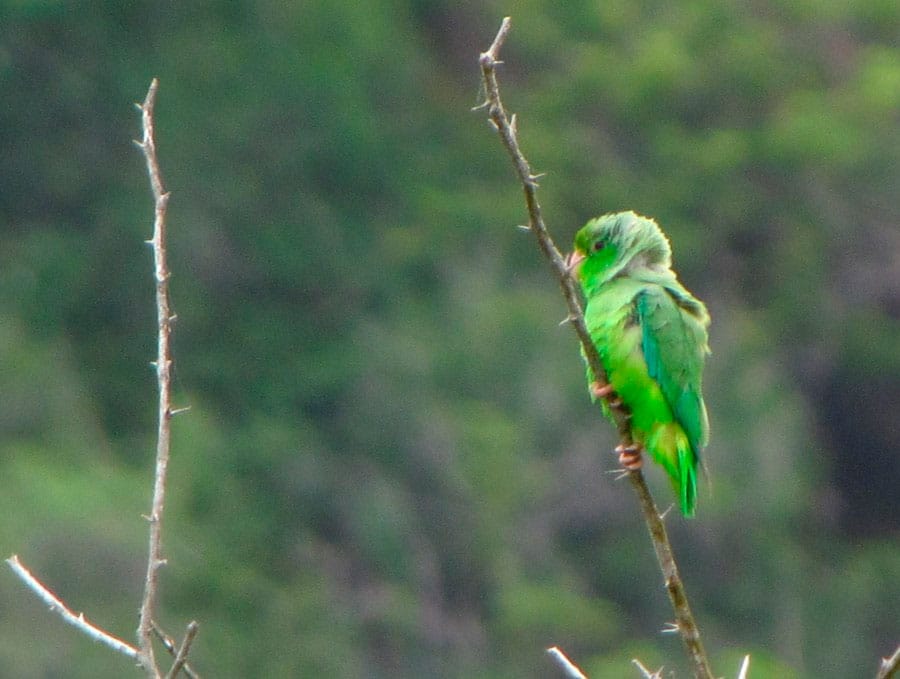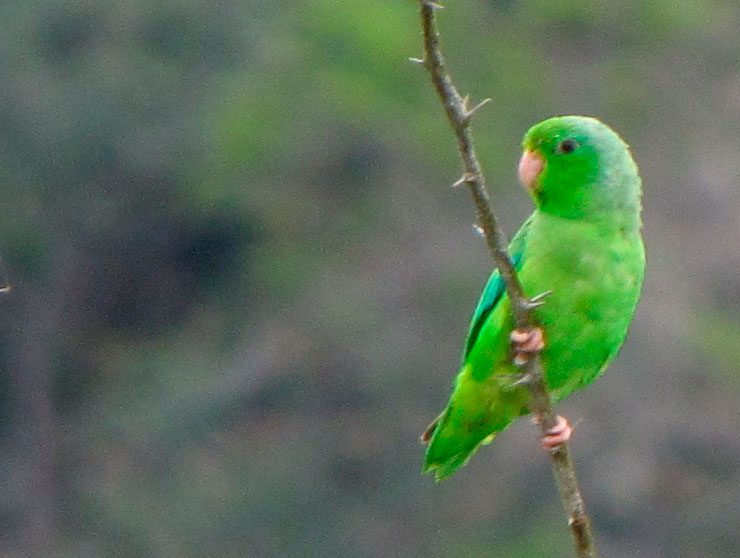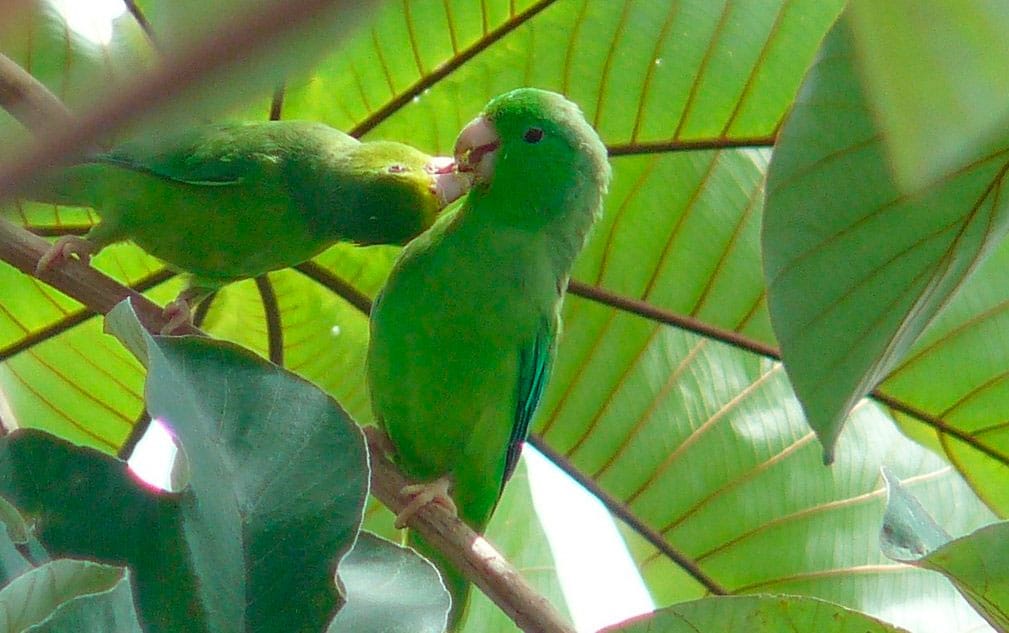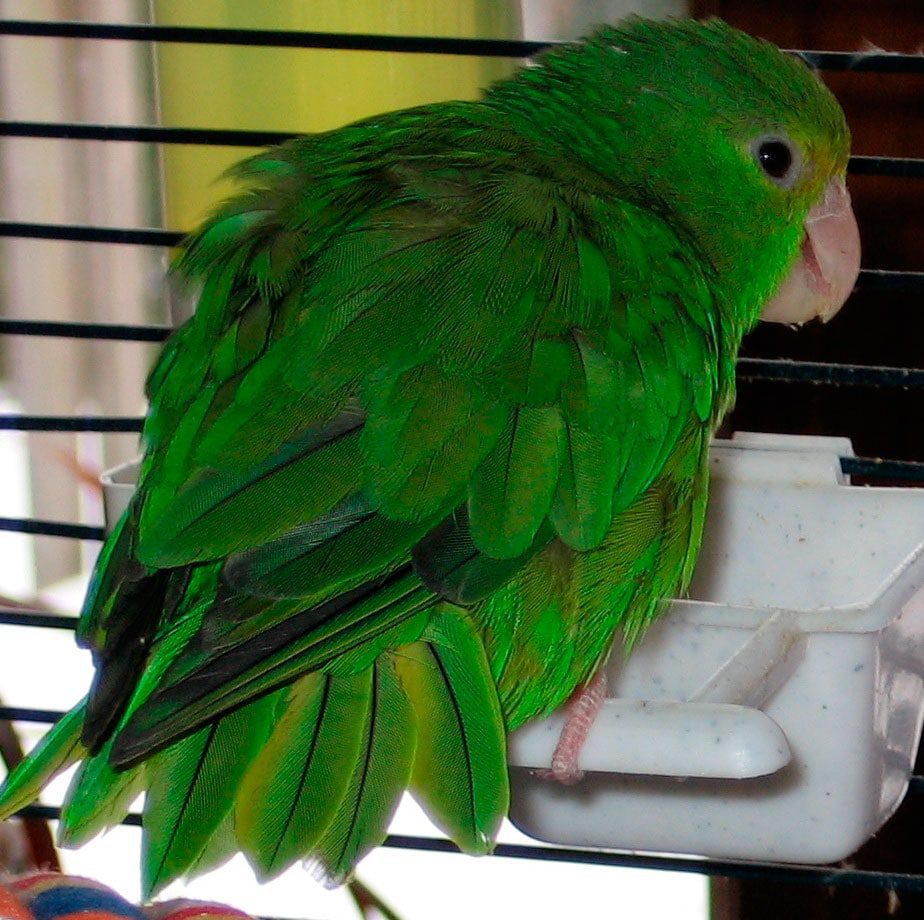
โ–ท The world of Pets: Dogs, cats, birds, reptiles, amphibians

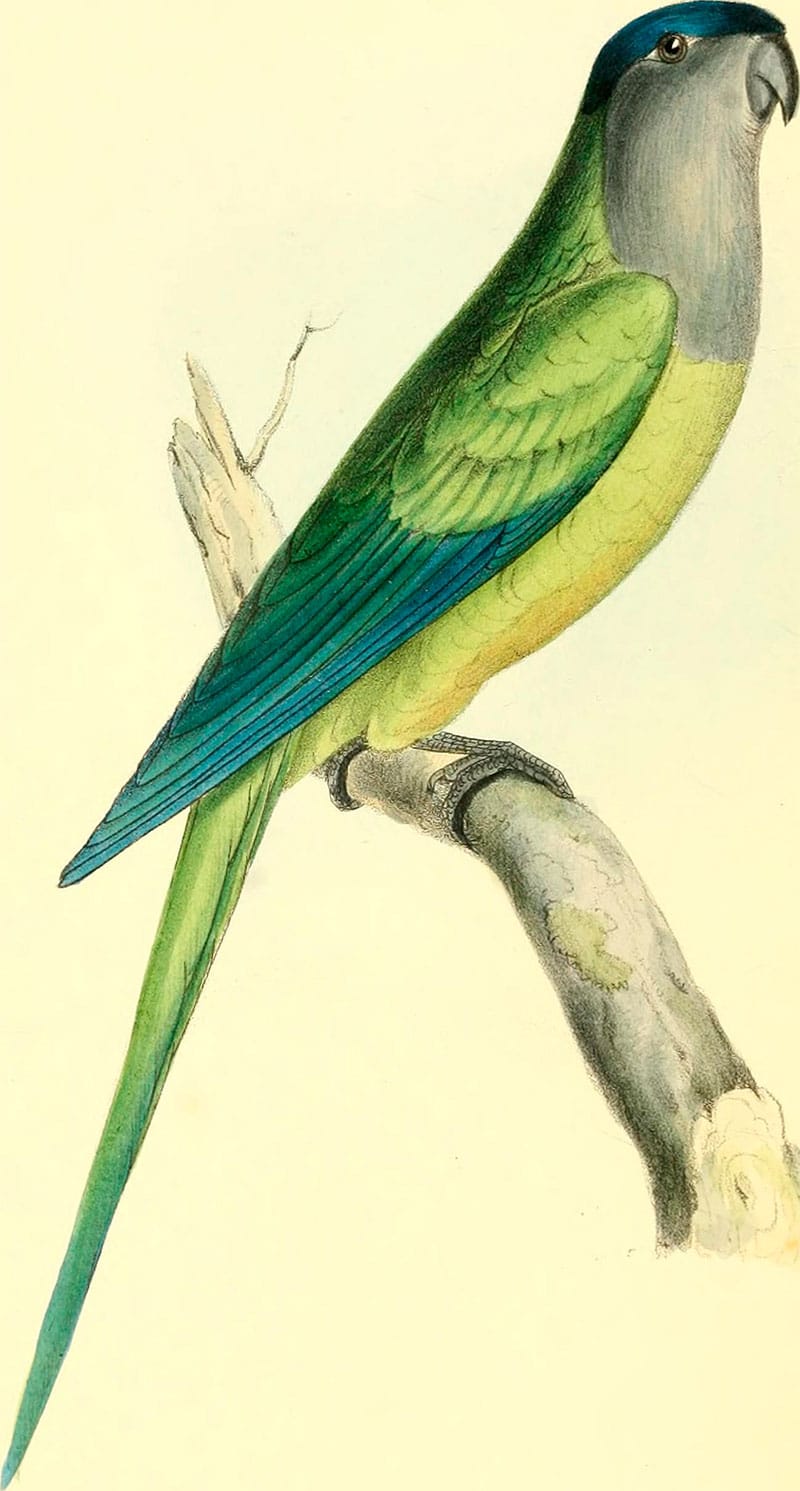
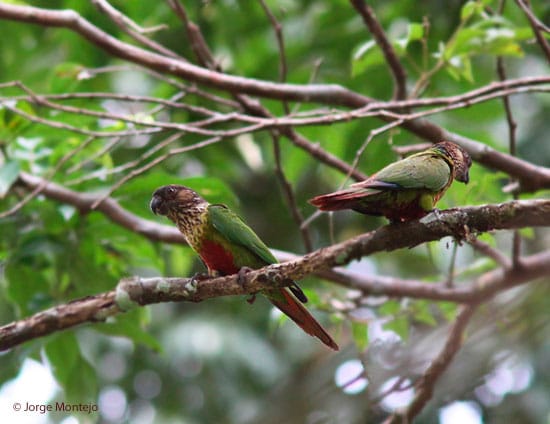
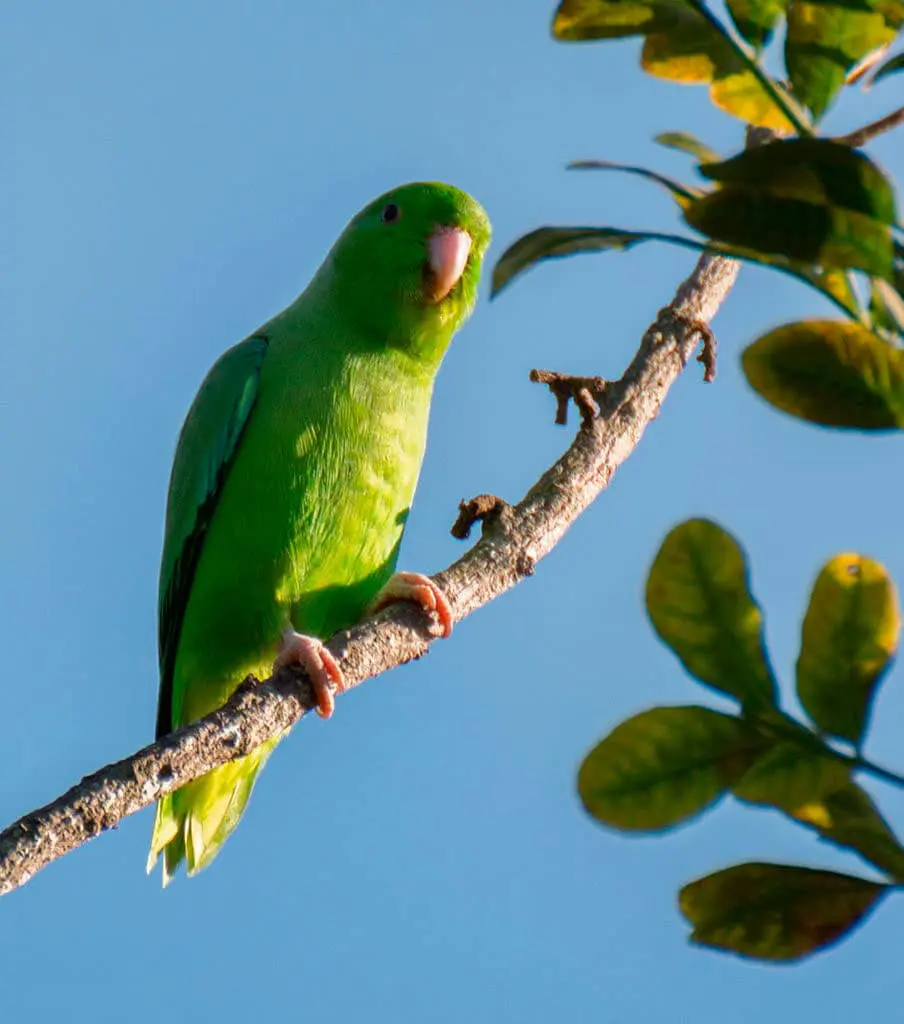
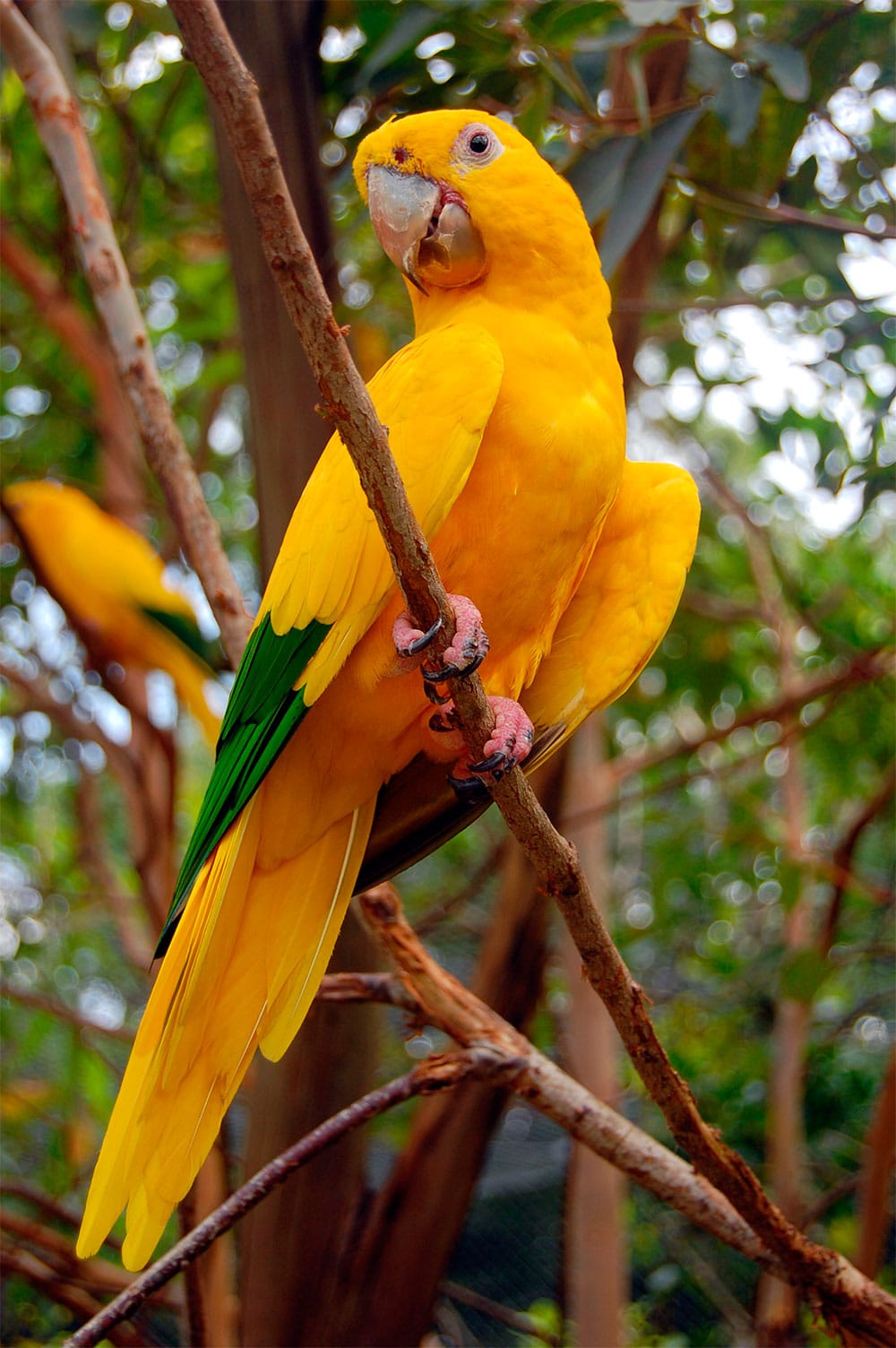
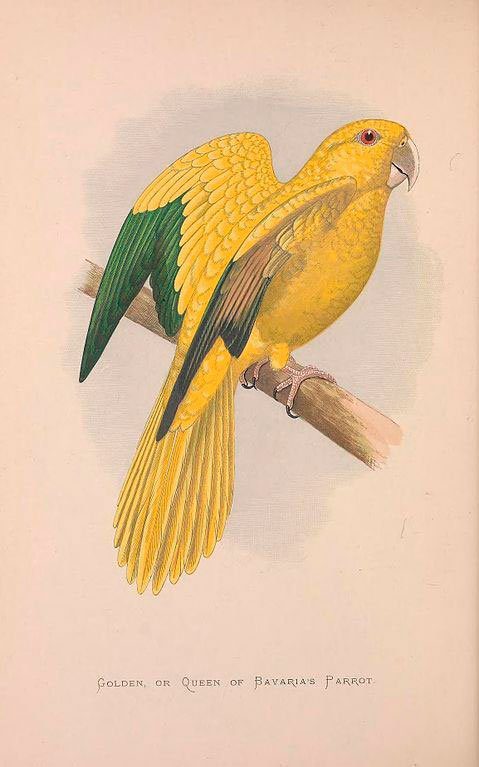
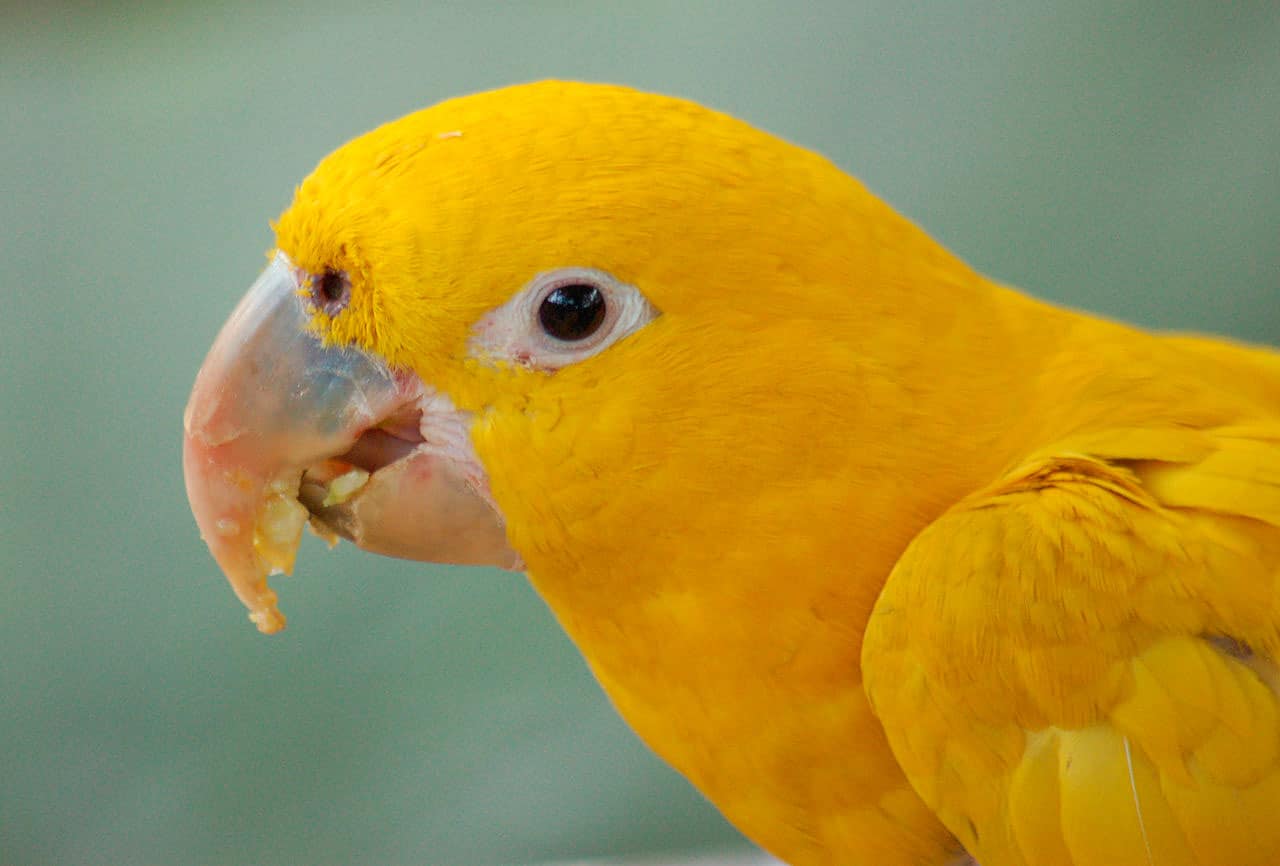
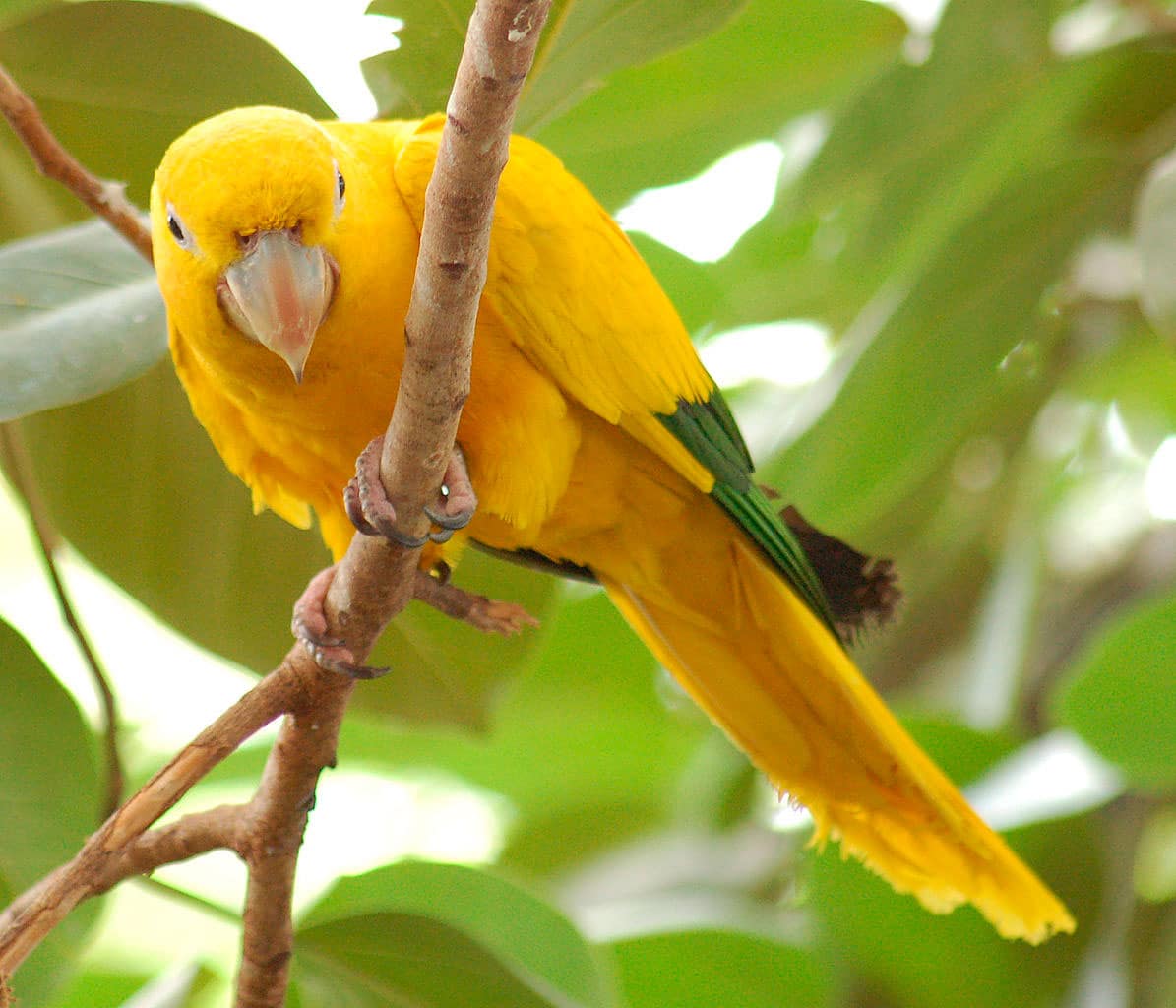
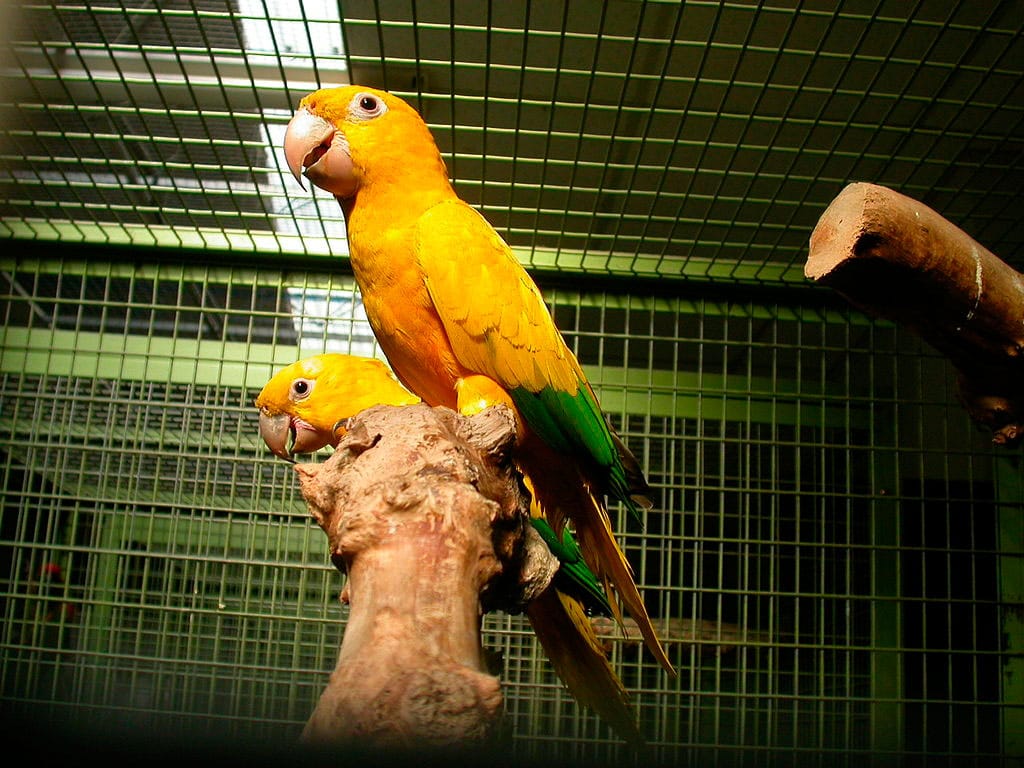
Golden-capped Parakeet
Aratinga auricapillus

Aratinga Testadorada

Content

Description:


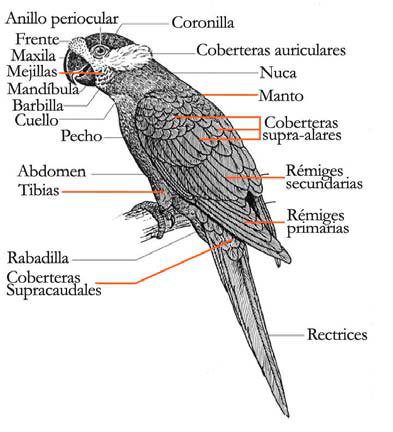
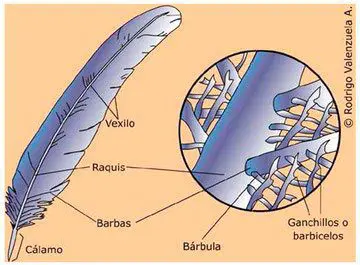
Anatomy-parrots

Of 30 cm.. of length and a weight of 130 g..
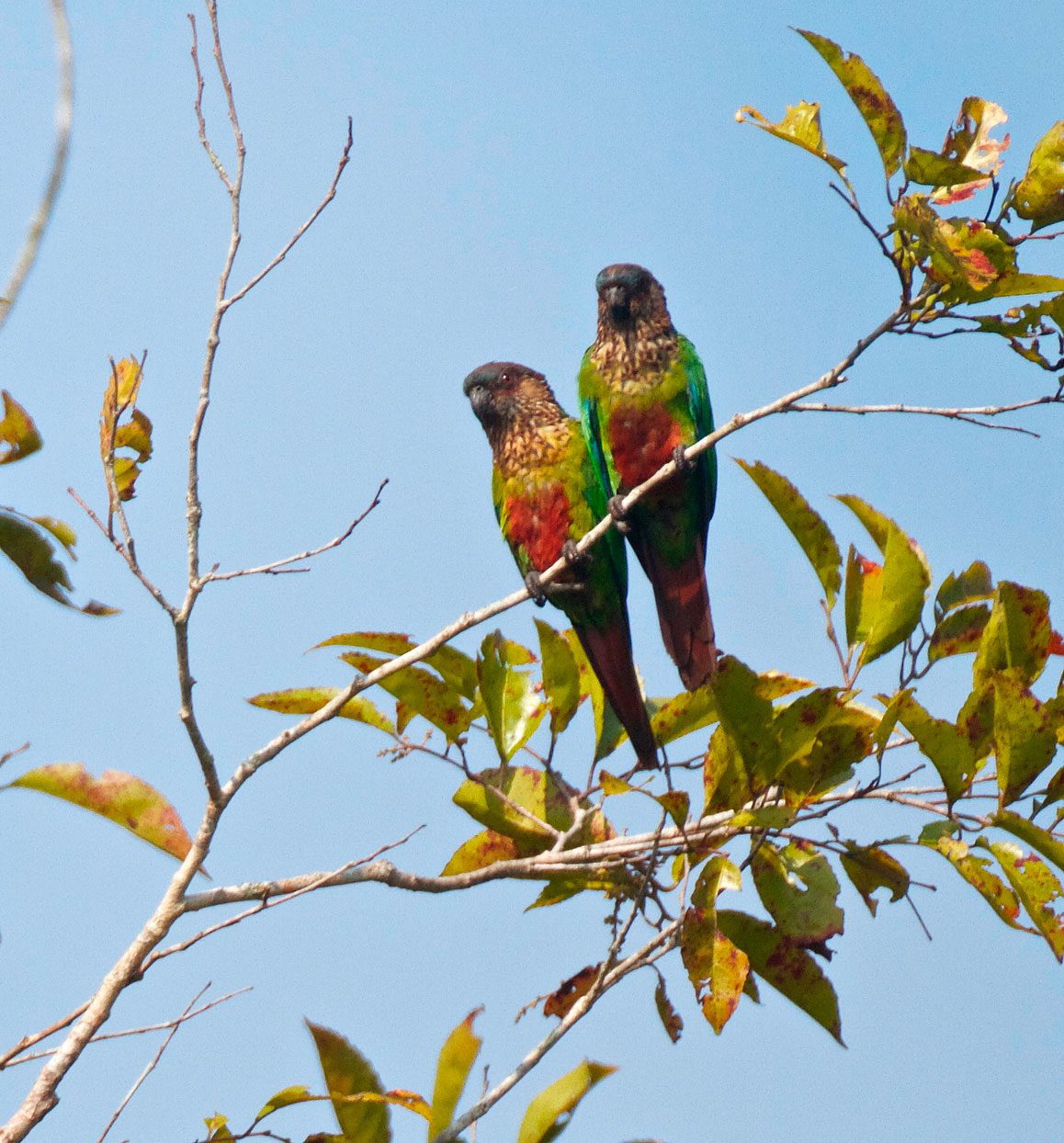
The Golden-capped Parakeet (Aratinga auricapillus) It is often treated as the same species as the Sun Parakeet (Aratinga solstitialis) and Jandaya Parakeet (Aratinga jandaya).

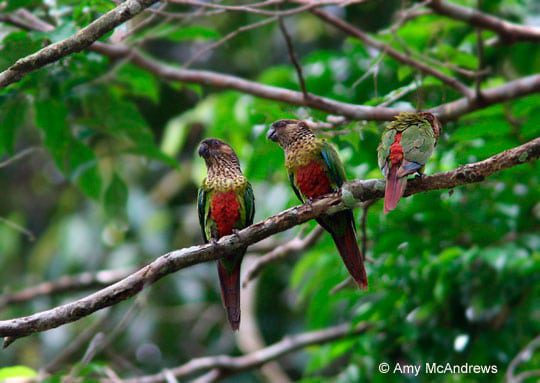
The lores, frontal band and ocular region of this kind are of color red glossy; the crown is bright golden yellow; ear-coverts, cheeks and both sides of the neck, green. The area of the nape and the the mantle are pale green: the back and the top of the rump with different hues of green and tips of red or orange; floor area of the rump and uppertail-coverts, green; the small and medium-sized upperwing-coverts, green; the large coverts and primaries, secondaries, vane outer and tips from them primaries, blue.

Underwing-coverts, orange-red; underside of flight feather grey. The chin and throat yellowish green with orange discoloration on the top of the chest and deep color red pale in the belly; vent, the thighs and undertail-coverts, green. Upper, the tail, of colour brownish with them tips blue, sometimes with the vane external foreign blue feathers; undertail, the tail, grey.

The bill, grey-black; grey, the bare skin of the bare periophthalmic; irises yellowish; legs grey.

Both sexes similar.

Immature It has little or nothing red in the rump, more off the yellow colour of the crown; the top of the chest is greener and less extensive red on the belly.

Subspecies description:

  • Aratinga auricapillus auricapillus

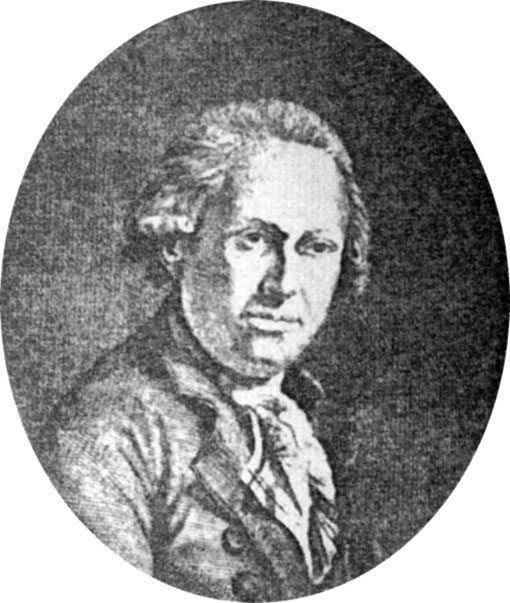
    (Kuhl, 1820) – The species nominal.


  • Aratinga auricapillus aurifrons

    (Spix, 1824) – The upperparts totally green (without red margins on the feathers of the back and Hip top). More green in the upper zone of the chest, lacking Orange dye of the nominal species.

Habitat:

Video – "Golden-capped Parakeet" (Aratinga auricapillus)

aratinga jendaya y auricapilla

They live in forests, as well as in the clearings and edges of the same, including coastal moist Atlantic evergreen forests and inland closed-type deciduous forests. They prefer primary formations.

Scarce or absent grassland with trees or secondary vegetation, including from the vicinity of the remaining original forests. Observed to 2.180 m (Parque nacional do Caparaรณ, to the South of Holy Spirit). gregarious, usually observed in flocks of 12-20 individuals, more rarely in groups of up to 40.

Reproduction:

There are few details on the reproductive ecology of this species., Although probably nest in the months of November-December.

Implementation size in captivity is of 3-5 eggs.

Food:

Diet Golden-capped Parakeet includes various seeds and fruits. Reported foods include the corn, okra and fruits red sweet unspecified.

considered a pest of crops in some areas before its abrupt population decline.

Distribution:

The Golden-capped Parakeet (Aratinga auricapillus) are distributed in the area South-East of Brazil; from the North of Bay, Eastern part of Goiรกs and Minas Gerais, Brazil, to the East and South, on the East coast of Brazil (Holy Spirit, Rio de Janeiro, Sรฃo Paulo, Paranรก and possibly, Santa Catarina).

The observations in Rio Grande do Sul, apparently they are wrong, although the species can still be found in the extreme east of Mato Grosso from the South.

A single record in 1918 in Paraguay, near the border with Paranรก, Presumably coming from some exhaust.

Usually rare and irregular distribution, residents, extinct in many places with their current range defined by the remaining forests.

He greater stronghold population of the species is located in Minas Gerais, Brazil, where the species was considered common in 1987 in several areas. They are very rare or they have become extinct in Santa Catarina, Paranรก, Sรฃo Paulo, Rio de Janeiro and Espirito Santo, and scarce in Goiรกs and Bay.

The decrease in the population is must to the continuous logging of forests and to their captures for the trade of birds.

There are several protected areas with populations of the Golden-capped Parakeet, such as the Monte Pascoal National Park (Bahia) and Parque Estadual do Rio Doce (Minas Gerais, Brazil).

Rare in captivity, mostly out of Brazil.

Subspecies distribution:

Conservation:

โ€ข Red List category of the UICN current: Near-threatened

โ€ข Population trend: Decreasing

The size of the population of the Golden-capped Parakeet It has not estimated formally and in the absence of sufficient data, it is estimated that you there are more than 10.000 specimens, more or less equivalent to 6.700 mature individuals; But, detailed research is required.

The population the species is suspected that it may be in decline due to the continuous loss of habitat and to his capture to the pet trade.

โ€ข There has been extensive and ongoing clearance and fragmentation of suitable habitat for this species., for use as coffee plantations, soybean and sugarcane in Sao Paulo, and livestock in Goiรกs and Minas Gerais, Brazil (Snyder et to the., 2000).

โ€ข The capture for trade, He has probably had a significant impact, since it was relatively common in the illegal Brazilian markets in the mid-1990s. 1980, importing hundreds of birds to Western Germany in the decade of 1980. But, the precise effect is obscured by large numbers of captive-bred birds, that presumably see reduced pressure on wild populations remaining (LF Silveira in litt., 1999).

โ€ข Despite its tendency to nest, times, near human settlements, It is apparently not the most favoured species for the pet trade (VT Lombardi in litt. 2011).

โ€ข There are no records of persecution in response to crop degradation..

Conservation Actions Underway:

Conservation Actions Proposed:

    โ€ข Survey to locate important new populations and define the limits of their current range..

    โ€ข Study to determine its population dynamics and dispersal capacity., as well as provide a detailed analysis of their habitat requirements in different sites.

    โ€ขEnsure the protection of key reserves.

    โ€ข Protect species under Brazilian law.

"Golden-capped Parakeet" in captivity:

Rare in captivity, mostly out of Brazil.

Their life expectancy is about 30 years.

Alternative names:

Golden-capped Parakeet, Flame-capped Conure, Flame-capped Parakeet, Gold-capped Conure, Golden capped Parakeet, Golden-capped Conure (English).
Conure ร  tรชte d’or, Conure ร  tรชte dorรฉe, Perriche ร  tรชte d’or, Perruche ร  tรชte d’or (French).
Goldkopfsittich, Goldkappensittich (German).
jandaia-de-testa-vermelha, cara-suja, jandaia, periquito-de-cabeรงa-vermelha (Portuguese).
Aratinga Testadorada, Maracanรก corona dorada, Periquito de Cabeza Dorada (espaรฑol).
Maracanรก corona dorada (Paraguay).

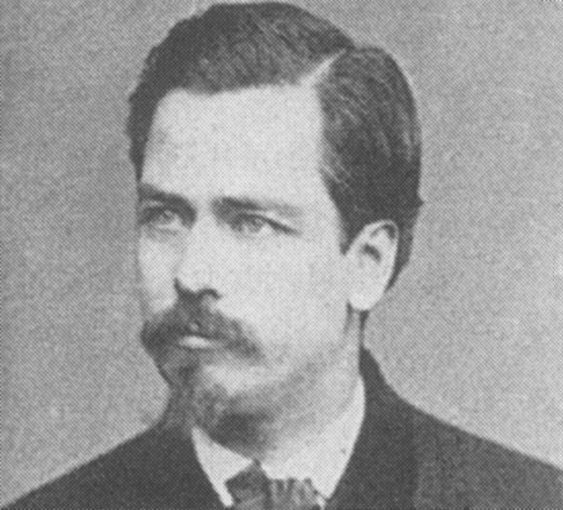
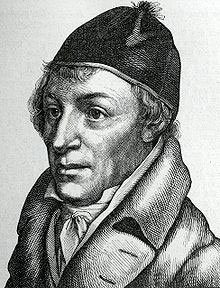
Kuhl, Heinrich
Heinrich Kuhl

scientific classification:


Order: Psittaciformes
Family: Psittacidae
Genus: Aratinga
Scientific name: Aratinga auricapillus
Citation: (Kuhl, 1820)
Protonimo: parrot auricapillus


Golden-capped Parakeet images:


Species of the genus Aratinga

Sources:

Avibase
– Parrots of the World โ€“ Forshaw Joseph M
– Parrots A Guide to the Parrots of the World – Tony Juniper & Mike Parr
– Birdlife

Photos:

(1) – A Golden-capped Parakeet at Jurong Bird Park, Singapore By Peter so (Golden-capped ParakeetUploaded by Snowmanradio) [CC BY-SA 2.0], via Wikimedia Commons

(2) – Picture of a Golden-capped Parakeet in the zoo of Wrocล‚aw (Poland) By Nicolas Guรฉrin (messages) (Own work) [GFDL or CC BY-SA 3.0], via Wikimedia Commons
(3) – A Golden-capped Parakeet (also known as Golden-capped Conure) in Seattle, Washington, USA By Matthew Wilson (Picasa Web Albums) [CC BY-SA 3.0], via Wikimedia Commons
(4) – Two Golden-capped Parakeets (also known as Golden-capped Conures) in Seattle, Washington By Matthew Wilson (Picasa Web Albums) [CC BY-SA 3.0], via Wikimedia Commons
(5) – A Golden-capped Parakeet (also known as Golden-capped Conure) in captivity By Patrick Hawks from Sint Maarten (Bird is the wordUploaded by snowmanradio) [CC BY 2.0], via Wikimedia Commons

Sounds: Douglas Meyer (Xeno-canto)

โ–ท The world of Pets: Dogs, cats, birds, reptiles, amphibians

Gang-gang cockatoo
Callocephalon fimbriatum


Gang-gang cockatoo

Content

Description

Of approximately 35 cm.. height and an average weight of 257 g.
The Gang-gang cockatoo (Callocephalon fimbriatum) it's a little cockatoo, robust, with one crest Dim, large wings wide, and tail short. Son gregarious but relatively calm.
The males of the Gang-gang cockatoo they are immediately recognizable by their head and crest scarlet. The remaining plumage is slate grey.
The females they have the head and crest grey. The feathers of the part inferior of the body are lined with green Orange and yellow, giving a scaly appearance. The tail also has stripes horizontal white. Otherwise, is identical to the male.

The juveniles they are similar to the females, they differ in their top, the head Red and one crest shorter and less twisted.
The Gang-gang cockatoo not can confuse it with other species of parrots. In flight, However, sometimes their shape resembles to the cacatรบa Galah.

Habitat:

Video – "Gang-gang cockatoo" (Callocephalon fimbriatum)

Gang- gang Cockatoo (Callocephalon fimbriatum)

During the summer are found in the forests of mountain and areas with understory of shrubs dense. In Winter they will move to more dry and low altitudes, more open forests. They can often be seen along the roads and in parks and gardens in urban areas. They require high hollow trees for nest.

Reproduction:

Forman couples monogamous. The female chooses a hole in the right tree and both sexes prepare the nest for egg-laying. They line the sides of the hole with sawdust and chewing dust. Both sexes incubate the eggs and care for the young. Parents feed their young for four to six weeks after hatching. Feather.

Family groups are commonly seen feeding together during the breeding season.. In some cases, nurseries will be formed’ where have several couples nested together, their young perch together in the same tree, While their parents seek for food.

Food:

With feed mainly seeds trees and shrubs, native and introduced, with a preference for the eucalyptus, beards and thorns. They also eat berries, fruit, dried fruits, insects and their larvae.

They are mainly arboreal, they perch on the ground only to drink and forage among the fallen fruits or cones.

They feed in flocks of up 60 birds out of breeding season. Feed in pairs or small family groups during the breeding season.

They are able to use exotic plants as food in the urban areas.

Distribution:

Size distribution (reproduction / resident): 333.000 km2

They are endemic to the South-East of Australia. They are widespread in the East of New South Wales, from the Central slopes and plateaus to the South Coast, along the northeastern regions of Victoria to Seymour, with some records in the East of Melbourne, mornington peninsula and Southwest Gippsland.
Have also been introduced in the Kangaroo Island to the South of Australia.

Conservation:

State of conservation โ“˜


minor concern Minor Concern โ“˜ (UICN)โ“˜

โ€ข Current category of the Red List of the UICN: Least concern.

โ€ข Population trend: In increased.

Is come affected negatively by deforestation and the removal of mature trees (potential breeding sites). A population is classified as threatened: in the Valley Cove Lane, New South Wales.

The the rest of the population It is suspected that it may be increasing and now will spend the winter in the suburbs of Canberra.

The world population are estimated at more of 20,000 individuals.

"Gang-gang cockatoo" in captivity:

Itร‚ยดs very rare in poultry and hard to find as a pet.

Son Smart and playful, but they have a great tendency to suffer from software. They are very destructive for what need of abundant toys to not attack against the furniture of the House.

When you get bored, they are often automutilan as a way to fight against boredom.

Its life expectancy You can overcome the 60 years.

Alternative names:

Gang-gang Cockatoo, Cockatoo Corella, Helmeted Cockatoo, Red-crowned Cockatoo, Red-headed Parrot (English).
Cacatoรจs ร  tรชte rouge, Cacatoรจs gang-gang (French).
Helmkakadu, Helm-Kakadu (German).
Cacatua-gang-gang (Portuguese).
Cacatรบa Gang Gang, Cacatรบa Gang-gang (espaรฑol).

scientific classification:

Order: Psittaciformes
Family: Cacatuidae
Scientific name: Callocephalon fimbriatum
Genus: Callocephalon
Citation: (Grant,JB, 1803)
Protonimo: Psittacus fimbriatus

Images Gang-gang Cockatoo:


Sources:
Avibase
infoexoticos
– Birdlife

– Photos: Jan Wegener, Marbiz (Panoramio), papouch.webzdarma.cz, Benjamint444 (commons.wikimedia.org)

– Sounds: (Xeno-canto)

โ–ท The world of Pets: Dogs, cats, birds, reptiles, amphibians

Golden-shouldered Parrot
Psephotellus chrysopterygius


Golden-shouldered Parrot

Content


Anatomy-parrots

Description

26 cm. length between 54 and 56 g. of weight.

The Golden-shouldered Parrot (Psephotellus chrysopterygius) males have a pileum black, the forecrown, the lores and orbital area yellow, slightly with blue-green tones. The black of the pileum merges gradually with the greyish Brown of the the mantle, with some blue on the back neck pink. The rump shows a beautiful turquesa color that contrasts slightly with the green color of the tail view from above.

The median bright yellow, they form a visible band in the wings. The greater coverts they have a dominant brown-black color with some small patches of Turquoise Blue clear.

The flight feather they are blackish with a turquoise-colored border around the vane outer. The underparts is blue. The lower parts are turquoise blue, except the lower abdomen and the lower part of the tail, that are red with bases and white finishes. The central tail feathers they usually have a bluish-black-tipped bronze color. The lateral tail feathers they are blue-green with white tips. The underside of tail is white with a dark blue finish. The bill is pale-grey. The irises are dark brown, the legs brownish grey.

The females they have a yellowish-grey colour, along with opaque Brown wash on the top. It also, they have the forecrown yellowish. The flanks, bottom of the chest and Hip they are shaded light blue. The belly is whitish grey with red spots. You can see a pale bars on the wings.

The immature are similar to the females, although young male they have a dark CAP and the cheeks more blue. Young people acquire their adult plumage final at the age of 16 months.

Habitat:

Golden-shouldered Parrot

The Golden-shouldered Parrot they are birds sedentary. But, just after the nesting season, they can make short trips that lead to mangroves. At the time of playback, mainly frequent open forests of eucalyptus and logging and whose undergrowth is covered with a thick layer of grass. Within these areas, the Golden-shouldered Parrot nest, mainly, along with small partially invaded by water bowls. In the territory should, mandatory, Haber mounds of earth made by termites, which are essential for the nesting of this species.

The Perico Aligualdor, usually, they live alone, in pairs or small family groups, but they also sometimes gather in flocks of up to 30 individuals. These birds feed and quench your thirst first thing in the morning or in the evening. They rest on the foliage during the hottest times of the day. The Golden-shouldered Parrot they tend to feed on the ground, where venture with confidence. They find refuge in trees if bother them. They walk up to small pools of water where bathing and quench your thirst.

Reproduction:

The time of reproduction extends from April to August. During courtship, the male makes short flights around the female, rising from the front a short feather Crest and waving his chest feathers.

The Golden-shouldered Parrot they dig their nests in a termite mound still damp from recent rains.

There are two types of termite mounds that are usually used by this species:

– built by termites type conical termite mounds Scopulus

– semicircular termite mounds built by termites of the type laurensis.

The first are usually their favorite because the temperature is most constant, while in semicircular termite mounds, they often have the entrance North, which sometimes causes large thermal contrasts. The mound may contain several nesting rooms. The nest entrance is located between 45 and 125 cm above the ground. A long tunnel 15 to 60 cm ends into a round hole in one 25 cm long.

The Golden-shouldered Parrot It lives in symbiosis with a moth:
The Trisyntopa Scatophaga that at the same time it lays its eggs in the nest of the parakeet. The larvae feed on feces and feathers of the juveniles, helping to keep the nest clean waste.

The female lays of 4 to 7 eggs who is responsible for incubating single for almost 20 days. The young man takes around 5 weeks to acquire all their feathers and leaving the nest. A week after hatching, the male joins the female to feed the young. He stands guard at the top of the nest for long periods of the day.. When he brings the food, notifies the female's arrival, emitting loud cries. When it is time to leave the nest, the young are able to fly into the tunnel without landing.. After the trip, continue to be fed by adults for at least 2 weeks. They remain in the family group for quite some time. To the dispersal of family groups, young males are away more of their places of birth than young females.

Food:

outside the breeding season, the Golden-shouldered Parrot they have a diet almost exclusively vegetarian. Subsist on grass seeds Panicum or Eragostris. They often feed on fallen seeds of different plants.. during the rainy season, When these resources become scarcer, It is likely that it depends on the species of plants that can be found throughout the year.

Distribution:

endemic to northeastern Australia, where is distributed only in a small area north of the rรญo Morehead and South of Musgrave, to the North of Queensland. There are currently at least four populations, each with between 30 and 100 birds, so the world's population can be of no more than 500 individuals, or 150 breeding pairs. Other more recent sources estimate the spawning in around 2.500 individuals mature (Garnett et to the., 2011).

A record of 1980 It extended its known range North to the pascoe river, but in general it has contracted markedly in recent 100 years, prior records were situated towards the South, until around Normanton.

They were largely trapped in the past, especially since the mid of 1960 until the beginning of 1970. But, grazing and burning of crop residues, the spread of tea trees Leptospermum, predation by cats and the disruption of nests by tourists, It may have played one major role in the decline of the species.

Despite the fact that is protected, probably some catches continue.
Some individuals in captive.

Conservation:


Endangered


โ€ข Current category of the Red List of the UICN: Danger

โ€ข Population Trend: Decreasing

The breeding population has been estimated at around 2.500 individuals mature (Garnett et to the., 2011)

Historically, There were three confirmed breeding populations: from Coen to Port Stewart, According to sources taken in the decade of 1920, rรญo Musgrave-Moorhead where the population has shrunk considerably and continues to decline, and to the West of Chillagoe where the population persists, with a stable trend. In general, the population is suspected that it may now be decreasing (Garnett and Crowley 2000), Although the likely rate of decline has not been estimated.

The species has suffered terribly from poaching in the Decade of 1960 and the early 70 Although this bird is protected, such practices still exist.
Today, the Golden-shouldered Parrot faced with new threats: the development of new agricultural land and the destruction of traditional habitats where they were distributed.

"Golden-shouldered Parrot" in captivity:

The Golden-shouldered Parrot It has always been a rare guest of aviaries in the world. But, There are now more birds in captivity than exist in the wild., which demonstrates the difficulties encountered by these birds in their natural habitat.

This species is not recommended for beginners; prices already are high enough to discourage potential buyers, only the true, virtually "professional" fans remain.

A small group composed of one male and seven females of Golden-shouldered Parrot they came to Britain in 1897. These birds were forerunners, but the first known result of successful reproduction dates of 1961. Is inscribed with the name of Alan Lendon an Australian.
The second reproductive success corresponds to a German W. Etterich, This was in 1966. R. Burkard from Zurich achieved it in 1968. It also, in 1954, a so-called Australian breeder Edward Hallstrom got sixteen hybrids after the mating of two males of Golden-shouldered Parrot with females of Hooded Parrot.
Nowadays there are many impure birds in hobby aviaries and that is a shame. These are mostly young hybrid females. These birds do not have the opaque yellow band on the front and, Therefore, one can easily recognize, female purebred if they have the yellow tape and a bronze-colored Crown clear.

The Golden-shouldered Parrot does not resist well a temperate maritime climate; are very sensitive to cold humidity. Apart from that, it is a peaceful and active bird, she is not shy and quickly forges a friendship with her caretaker. His voice is melodious, with what does not bother the neighbors. You spend much time on the ground and like, often, bathing. They are aggressive during breeding with other birds and it is not appropriate to keep them outside with other species.; interactions with other birds are often problematic.

Alternative names:

Golden-shouldered Parrot, Antbed Parrot, Anthill Parrot, Chestnut-crowned Parakeet, Chestnut-crowned Parrot, Golden shouldered Parrot, golden-shouldered parakeet, Golden-shouldered Parrot (chrysopterygius), Golden-winged Parakeet, Golden-winged Parrot (ingles).
Perruche ร  ailes d’or, Perruche ร  ailes d’or (chrysopterygius) (francรฉs).
Goldschultersittich (alemรกn).
Periquito-de-asas-douradas (portuguรฉs).
Perico Aligualdo, Perico de Alas Amarillas, Loro Hombroamarillo, Periquito de Espalda Dorada (espaรฑol).

scientific classification:

Order: Psittaciformes
Family: Psittaculidae
Genus: Psephotellus
Scientific name: Psephotellus chrysopterygius
Citation: Gould, 1857
Protonimo: Psephotus chrysopterygius

Images "Golden-shouldered Parrot"

Videos "Golden-shouldered Parrot"

————————————————————————————————

ยซPerico Aligualdoยป (Psephotellus chrysopterygius)


Sources:

Avibase
– Parrots of the World โ€“ Forshaw Joseph M
– Parrots A Guide to the Parrots of the World – Tony Juniper & Mike Parr
– Birdlife

Photos:

(1) – Male Golden-shouldered Parrot at Lone Pine Koala Sanctuary, Brisbane, Queensland, Australia By TheGirlsNY (originally posted to Flickr as Pretty bird) [CC BY-SA 2.0], via Wikimedia Commons
(2) – Golden-shouldered Parakeet (Psephotus chrysopterygius) – watercolor, Romain Risso By Gossipguy (Own work) [CC BY-SA 3.0], via Wikimedia Commons

Sounds: Phil Gregory (Xeno-canto)

โ–ท The world of Pets: Dogs, cats, birds, reptiles, amphibians

El Oro Parakeet
Pyrrhura orcesi


Cotorra de El Oro

Content

Description:

22 cm. of long and 73 g. of weight.

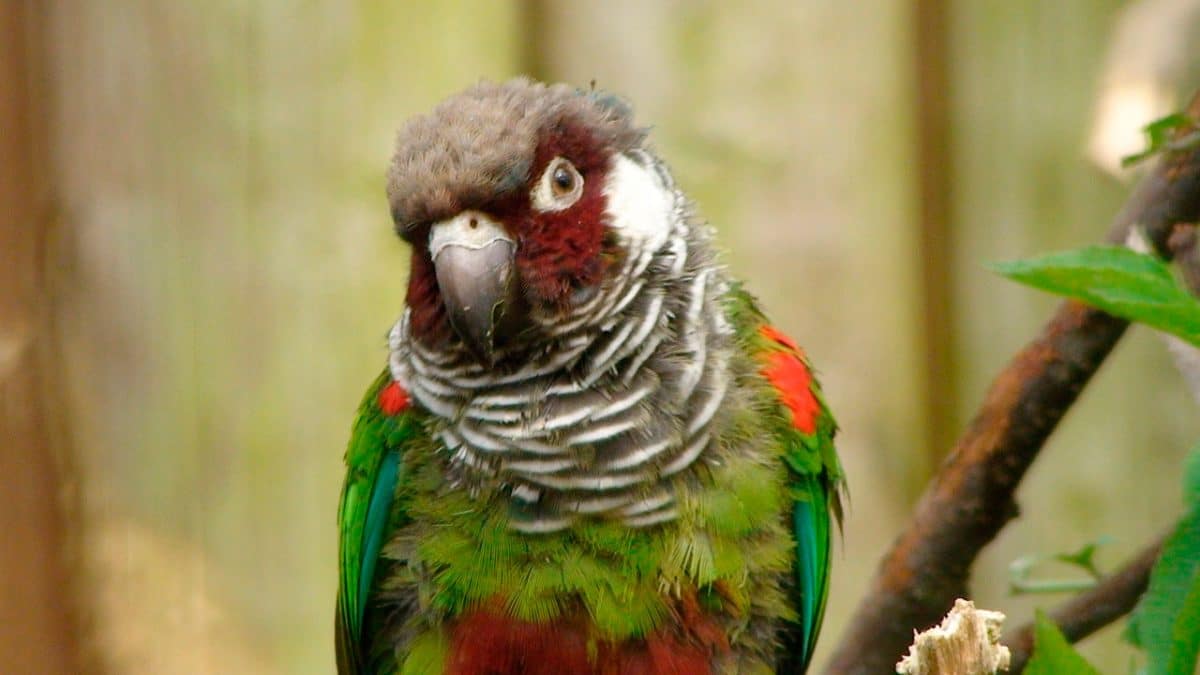
The El Oro Parakeet (Pyrrhura orcesi) is a bird relatively striking, with mostly green plumage. Has the forecrown red; feathers on the sides of the neck with the white base; Red patch from the shoulder up to the half of the wing , end of the wing blue (more visible in flight), tail above with a reddish tint and below completely red except the base.

Beak and legs blackish.

The females It is thought that less red have around the face.

the youth they are generally paler and lack much of the red marks that are seen in adults.

Habitat:

It inhabits in the very humid tropical forest between 800-1.200 m (occasionally at altitudes as low as 300 m). It has been reported that he tolerates some habitat fragmentation (Schaefer and Schmidt 2003). Performs seasonal movements. Are usually distributed in groups of 4-15, Although it has been observed in flocks of up to 60 birds. They may be closely related with the Maroon-tailed Parakeet (Pacific) (Pyrrhura melanura pacifica) and the Maroon-tailed Parakeet (Pyrrhura melanura)

The rest sites They seem to change frequently and are generally located between 2 and 24 meters above the ground, in natural cavities in trees or open branches.

It is extremely noisy and conspicuous when flying.

Reproduction:

As is a species discovered recently, very little is known about its ecology.

Seems to prefer the Dacryodes peruviana family Burseraceae for nest (Garzon 2007), and communal, sharing the tasks of incubation between several birds, Although a couple exhibited a behavior of pre-anidamiento in the cavity of a small tree Meliaceae in 1997 (Snyder et to the. 2000), and reported nests in natural cavities of 1,8-24 m above the ground in a variety of tree species (Schaefer and Schmidt 2003).

The time of incubation is of approximately 31 days.

The main breeding station seems to be between November and March (Garzon 2007), although it is difficult to specify because with the effects of 'El Niรฑo' they mate between December and January.

Movements seasonal altitudinal down to forests have been reported in the Buenaventura reserve (T. Schaefer in litt., 2007).

Food:

Discreetly feeding in the canopy, composing your diet of various fruits (including fig Ficus spp.), Fruits and flowers Cecropia (Snyder et to the., 2000).

Distribution:

Size distribution (reproduction / resident) 750 km2

The El Oro Parakeet is an endemic bird. They inhabit in the western slope of the Andes, in the southwest of Ecuador (in Caรฑar, Azuay, Gold and Loja), where was discovered in 1980.

Apparently, its population is limited to an area of only 100 km from North to South, and a maximum of 5-10 km wide (Juniper and Parr 1998), with its highly fragmented Habitat and with a population estimated in less than 1.000 individuals (Garzon 2007).

Its population in the town of Buenaventura has remained stable since 2002-2007 (Juniper and Parr 1998), estimated in 171 birds in period 2005-2006 (2007 Garzon, HM Schaefer in litt. 2012).

Conservation:

State of conservation โ“˜


critical hazard critically endangered โ“˜ (UICN)โ“˜

โ€ข Current category of the Red List of the UICN: In danger of extinction

โ€ข Population trend: In decline.

The El Oro Parakeet is in danger of extinction due to deforestation and extreme forest fragmentation for cattle ranching, What causes the habitat degradation. This degradation destroy sites of nesting and feeding that these birds need to survive and reproduce at a healthy pace.

Population estimated in less than 1.000 individuals.

The habitat limited only to the Andes, to the West of Ecuador and because of this, sensitivity to the destruction of the Habitat is very heavy. Protection for some of the habitat of this species has been established in the Book ecological Buenaventura. In reserves, bird houses have been built in trees to help promote reproduction and has had some success. Other projects have been proposed to evaluate the size of the population.

BUENAVENTURA RESERVE REPORT

"El Oro Parakeet" in captivity:

Don't usually see in the poultry farming.

Alternative names:

El Oro Parakeet, El Oro Conure (English).
Conure d’Orcรฉs, Conure d’Orcรจs, Perruche d’El Oro (French).
Orcessittich, Orces Sittich, Orces-Sittich (German).
Tiriba-do-el-oro (Portuguese).
Cotorra de El Oro, Perico de orcรฉs (espaรฑol).

scientific classification:

Order: Psittaciformes
Family: Psittacidae
Genus: Pyrrhura
Scientific name: Pyrrhura orcesi
Citation: Ridgely & Robbins, 1988
Protonimo: Pyrrhura orcesi

Images "El Oro Parakeet"

Videos "El Oro Parakeet"


Especies del gรฉnero Pyrrhura

El Oro Parakeet (Pyrrhura orcesi)


Sources:

  • Avibase
  • Parrots of the World โ€“ Forshaw Joseph M
  • Parrots A Guide to the Parrots of the World – Tony Juniper & Mike Parr
  • Birdlife

Photos:

(1) – fjocotoco.org

โ–ท The world of Pets: Dogs, cats, birds, reptiles, amphibians

Galah
Eolophus roseicapilla


Cacatรบa Galah

Content

Description

Measured around 35 centimeters and between 240 and 330 g. weight.
In the Galah (Eolophus roseicapilla) adult, the front, the hoopoe and the cap they form a joint undercover pale pink in white which contrasts slightly with the back of the neck darker. The face, neck and underparts they are deep pink.
The bottom of the flanks, the the thighs and mantas subcaudales are grey clear. The upperparts They show a grey pigeon which is slightly paler on the rump and in their flow rates. Tertiary they are grey and dark grey and medium the flight feather.
The upper part of the tail It is pale grey with a darker terminal tips. The bottom of the tail is uniformly Brown.

The bill is horn. The bare periophthalmic is greyish Red. The irises shows a dark brown hue. The legs are grey.

The female is similar to fellow, outside of the irises red.

The youth can distinguish is from the adults by their underparts grey infiltrated.

Subspecies description

  • Eolophus roseicapilla roseicapilla:

    The species nominal


  • Eolophus roseicapilla albiceps:

    Differs from the nominal by their larger size, the crest whitish instead of pink, and eye ring Red instead of greyish white.


  • Eolophus roseicapilla kuhli:

    It has a plumage paler and a crest shorter.

Habitat:

Video – "Galah" (Eolophus roseicapilla)

Ave wants to do everything her human mom does I Soul Mates | the dodo

In the North of its distribution area, the Galah frequent mountain forests, While much further South, most tend to live in the temperate forests of the lowlands.
During the summer season, It is more common in high altitude forested areas., staying mainly in small cool and shady ravines, always near a river.

In Winter, He moved to arid forests in more moderate altitudes. At this time of the year, also visit the parks and urban gardens.

The Galah It is a bird of open areas, always avoiding the dense forests.

During the nesting season they live in pairs or in small family groups, but the rest of the year, gather in large flocks where food resources are important. Sometimes can gather up to 1.000 birds in the pastures where they feed.

They are sentinels responsible to give the alarm in case of danger.
The power stations are separated by many miles of the rest areas.
In the evening devoted to drinking and perform aerial stunts before joining the residence. Occasionally it can be active and noisy at night.

Reproduction:

In the North, the reproduction has place between February and June.

During the courtship, the male Struts before his partner making bows, shaking his head, producing low notes and showing a repertoire of stunts.

Most of the time, the nest is a natural cavity in a eucalyptus, between 2 and 20 meters above the ground.
The cacatรบa Galah You strum the bark of the trunk around the hole which is the entrance of the nest. This practice is sometimes so excessive that they cause the death of the tree. Cliffs can also be used as a place of nesting.

The same couples usually are mate during all their life and are loyal to the same nesting sites for several consecutive years.

The spawning includes 2-6 eggs. The female lays an egg every one or two days and the incubation period is about 25 days. Both parents incubate at the same time, and they provide assistance to young people. They feed their young every 3 hours, sounding his beak to regurgitate the food. The young remain in the nest during 7 u 8 weeks.

While they are able to fly quickly when they come out of the nest, their survival rate is small. The first days after the flight, they return to the nest for the night. Shortly after, large nurseries are formed in which the parents continue to feed their young.

From time to time, the Galah It has a second litter in a season.

Food:

Consume a wide variety of plants, such as oats or wheat seed or the other many herbaceous plants. In addition to that, They also eat insects and their larvae, berries, outbreaks, flowers and seeds of eucalyptus.

They feed almost exclusively on Earth.

Distribution:

Size distribution (reproduction / resident): 14400000 km2

endemic to Australia where it occupies the entire continent. Most of its population lives in the south-east of New Welsh of the South and in the State of Victoria. In other places, is less abundant.

Subspecies distribution:

  • Eolophus roseicapilla roseicapilla:

    (Western Australia, South of the great desert of sand and probably in the Simpson Desert in the southern part of the territory of the North)


  • Eolophus roseicapilla albiceps:

    (Tasmania and Southeast of Australia, heading north to the 20 degrees latitude South and East)


  • Eolophus roseicapilla kuhli:

    (to the North of the of Australia, from the District of Kimberley to the cape york peninsula)

Conservation:

State of conservation โ“˜


minor concern Minor Concern โ“˜ (UICN)โ“˜

โ€ข Current category of the Red List of the UICN: Least concern.

โ€ข Population trend: In increased.

Although it has a beneficial action stopping the spread of some weeds, the Galah have a considerable potential of destruction and is considered a pest in most of Australia.

Crops, especially cereals, they suffer great losses each year. They often cause the destruction of the trees where they nest or establish their residences. The world population It is estimated in more than 5 millions of individuals and the number is constantly growing.

This remarkable species not is protected in all the regions and can be killed if it causes too much agricultural loss.

"Galah" in captivity:

Itร‚ยดs very common in poultry around the world, for being one of the easiest cockatoos both to raise and to care for and for being highly demanded as a pet both for its physical appearance and for its more manageable character than that of other cockatoos. Her offspring should take into account the different subspecies, Therefore we will avoid possible hybridization between them.

Son parrots extroverts, friendly, playful and affectionate. However, they are still cacatuidos, They therefore require more attention than other psittacine species to be happy animals. Its speaking ability is fairly high within the group of cockatoos, with males that better mimic. It is considered that it might also noisy, especially if you are bored or if it has been poorly educated or poorly maid, so you will have to always buy weaned and well socialized specimens. When they are young and still take porridge his voice is very unpleasant.

They possess a behavior that is similar to the of the small Cockatiel. Males are more talkers and possess a strong character. The females., on the other hand, they are silent and less dominant. They are most appropriate, Therefore, to be adopted as pets.

The males they may become aggressive in mating season.

They have a high tendency to obesity, thing very significantly decreases their hope and quality of life, by what control seriously its diet, providing low number of fats and allowing to do much exercise.

Its life expectancy formerly was around the 15-18 years, probably due to a bad diet popular ignorance of your requirements. Today there is talk of animals up to 40 years of life.

If we opt for a cockatoo for the home, a pink may be the best alternative: less demanding than her sisters, slightly less noisy and, If we chose a female, We have the gentleness and docility secured.

Its price market round the 1.000 โ‚ฌ.

Alternative names:

Galah, Rose Cockatoo, Roseate Cockatoo, Rose-breasted Cockatoo, Willock (ingles).
Cacatoรจs rosalbin, Galah (French).
Rosakakadu (German).
Cacatua-galah (Portuguese).
Cacatรบa Galah, Cacatรบa Rosa (espaรฑol).

scientific classification:

Order: Psittaciformes
Family: Cacatuidae
Scientific name: Eolophus roseicapilla
Genus: Eolophus
Citation: (Vieillot, 1817)
Protonimo: cockatoo roseicapilla

Images Galah Cockatoo:


Sources:
Avibase
Oiseaux
– kktwas
faunatura

Photos: de.wikipedia.org , commons.wikimedia.org, David Cook Wildlife Photography (kookr), Richard.fisher

Sounds: nick talbot (Xeno-canto)

โ–ท The world of Pets: Dogs, cats, birds, reptiles, amphibians

Hooded Parrot
Psephotellus dissimilis

Hooded Parrot

Content


Anatomy-parrots

Description

25,5 to 28 cm.. length and a weight between 50 and 60 g..

The Hooded Parrot (Psephotellus dissimilis) is a very striking species, restricted to the dry forests of the North of Australia. The male has a pileum black, their underparts are Turquoise with a patch in the shoulders golden yellow.

The females are pale green with a pale turquoise diffusion in the cheeks, abdomen and cadwas.

The Golden-shouldered Parrot, with which it is closely linked, is very similar in appearance, but they are only observed in the Cape York Peninsula, in the North of Queensland, and males differ in their tones slightly. The Hooded Parrot does the yellow colour in the forecrown or in the lores and the yellow markings of the shoulders and reddish of the belly, they are smaller than. The females they are very similar, but the Golden-shouldered Parrot It shows a faint red marks on the area, white, bass belly, has the undertail- coverts Bluish, bluish color of the belly is absent and the undertail- coverts They have a pinkish tone; also has a Brown Suffusion in the crown, a forecrown yellowish and the cheeks they are greener.

The Northern Rosella shares territory with the Hooded Parrot and also has a pileum black, but it lacks of the underparts Turquoise and yellow markings on the wings.

The Hooded Parrot they have an elegant flight, and males they are very bright with a Flash of bright yellow showing in the wings. The flight fast and slightly wavy. Bird perch, times, phone cables, and can make long flights at high altitude.

Providing more detail to its description, the Hooded Parrot has the pileum, lores and the area below and in front of the eyes, black, merging into grey-brown colour in the the mantle (darker uppers than the Golden-shouldered Parrot). The rump is turquoise blue and the uppertail-coverts green. Wing coverts golden yellow (grey dark in vane inner).

Flight feathers Blackish with difusion-verde turquoise at the edge of the vane outer (thin yellow color at the outer edge). feathers of the wings and bend of wing bluish green; underside of flight feather blackish brown. The cheeks, the neck and the chest Turquoise, lightly coated with emerald green; rest of the underparts Turquoise with the exception of undertail- coverts they are orange-red with yellow tips. Uppertail dark bars.

Central feathers of the tail Green bronze with black tips, side green blue with white tips, with a blackish central bar; undertail, the tail apparently light blue with black tips when it is closed. Bill pale grey; irises dark brown; legs light brown.

The female is usually pale, a light yellowish green, with wing-coverts a bright yellowish-green, flight feather blackish, and a turquoise color broadcasting in the rump, from the top of the breast to belly, and vaguely in the cheeks. Subcaudales coverts bathed in Pink salmon; pale marks in the wings.

The immature they are like the females, but males have the head darker and the cheeks bright. Adult plumage they would earn in the second annual moult.

The very young birds they have the peaks yellow.

Habitat:

Sedentary, although some early records of the Melville Island probably related to post-breeding dispersal. Scattered sparsely through the open dry forests, flooded Plains, especially grasslands of Malaleuca-dominated and Spinifex Triodia, grasslands with termite mounds, also in rows of eucalyptus trees along watercourses and the rocky ridges.

Usually, they are in pairs or in small groups, but after the breeding season, from September (end of the dry season) onwards, they may gather in groups of up to 100 birds feeding.

Reproduction:

Egg-laying range from late January until mid-April, at the end of the rainy season, and the nest is a tunnel in a Termite Mound. The direction and height of the entrance of the nest is variable, but nest chamber temperatures are more stable inside larger mounds. A recent study of nesting ecology in the Northern Territory showed a density of 0,45 to 0,70 nests per square kilometer, with a 50% from eggs producing hatchlings. Between two and six eggs make up the clutch, and are incubated for around 20 days for the female. In about five weeks the young leave the nest.. The females., sometimes, they roost far from their nests during the heat of the day.

Food:

The diet is composed, mainly, of pasture seeds seasonal during the dry season and perennial plants during the wet season. Variation in the ability to master feeding techniques for different seed types may explain the apparent early dispersal of immatures in the wet season.. Birds feed quietly on the ground, resting in foliage near water during the heat of the day. When drinking, they often walk into the water along banks of sand. They are sometimes seen feeding on road verges, often in association with the Black-faced Woodswallow (Artamus cinereus).

Distribution:

Endemic to North of Australia where is located in the western part of Arnhem Land, Northern Territory, from the South of the alligator river, to the southwest of Pine Creek and the South-East of Include. The birds also disperse further east and west to the rivers. Roper and upper area of the Daly.

The Hooded Parrot formerly extended eastward to the MacArthur river, but its territory, covering the Kakadu National Park, has recently been hired.

In general, It Rare. Although now it is fully protected. Capture is believed to it has been a problem in the past. Burning and grazing may limit the availability of herbs seeds during the dry season.

Mining also threatens the habitat of the species. There are a moderate number of birds in captivity.

Conservation:


minor concern


โ€ข Current category of the Red List of the UICN: Least concern

โ€ข Population Trend: Stable

The world population is estimated at 20.000 specimens (Garnett and Crowley 2000).

Population trends have not been quantified, but populations seem to be stable, without descents recent (Garnett and Crowley 2000).

The species remains common in areas under park management. Aboriginal and National, where grazing is minimal and where there are programs that guarantee their survival, or around the Rocky slopes, where is the availability of food in the rainy season relatively assured.

"Hooded Parrot" in captivity:

Although the popularity of the Hooded Parrot has increased considerably in the last decade, this species is still quite unknown in aviculture. The main reason is, probably, that they are not easy to care for and reproduce in captivity, due to its high demands care and difficulty it in terms of its food supply. The Hooded Parrot they are not recommended for a beginner breeder birds.

No one knows exactly when these birds were imported for the first time to Europe, but it was probably at the beginning of the last century. In the autumn of 1912 English Hubert Astley was the one who obtained the first satisfactory breeding result with the Hooded Parrot, got 4 young people from a litter of 5. in the netherlands, the Dr. Polak It also had results before the second world war. Once the pups are born, they were taken along with a couple of Red-rumped Parrot (Psephotus haematonotus) with which they grew up without any problem.

There is a variety of the Hooded Parrot because different crosses with other species such as Mulga Parrot (Psephotellus varius) and the the Golden-shouldered Parrot (Psephotellus chrysopterygius). So, we must pay attention to the characteristics when we are going to buy a pair of future reproducers of this species. If you have doubts about the purity of certain birds, consult with a person who is familiar with this type of parrots.

In terms of the behavior, the Hooded Parrot adapt to the European climate relatively well, although they are sensitive to cold and wet weather. They are quiet birds, enable, not shy and quickly adapt to their caregiver. His voice is not worrying. Love these birds being on the ground, where spend much time. They love to swim and are not rodents of wood. During the breeding season they are aggressive towards other birds.. Even outside the breeding season, It is not advisable to fit them with their peers or keep them with other bird species. Young birds together may stay in a birdhouse. As a basic rule, Ave predict an area of one square meter.

It is not known exactly how these birds can live, according to sources, one specimen was still alive after 18 years in captivity

Alternative names:

Hooded Parrot, Antbed Parrot, Anthill Parrot, Black-hooded Parakeet, Black-hooded Parrot, Golden-shouldered Parrot, Hooded Parakeet (ingles).
Perruche ร  capuchon noir (French).
Collettsittich, Hooded Sittich (German).
Periquito-encapuzado (Portuguese).
Perico Capirotado, Periquito encapuchado (espaรฑol).

scientific classification:

Order: Psittaciformes
Family: Psittaculidae
Genus: Psephotellus
Scientific name: Psephotellus dissimilis
Citation: Collett, 1898
Protonimo: Psephotus dissimilis

Images ยซCapitola Parakeetยป:

Videos "Hooded Parrot"

————————————————————————————————

ยซPerico Capirotadoยป (Psephotellus dissimilis)


Sources:

Avibase
– Parrots of the World โ€“ Forshaw Joseph M
– Parrots A Guide to the Parrots of the World – Tony Juniper & Mike Parr
– Birdlife

Photos:

(1) – A male Hooded Parrot, about 30 km south of Pine Creek, Northern Territory, Australia By birdphotosneill (Hooded ParrotUploaded by snowmanradio) [CC BY 2.0], via Wikimedia Commons
(2) – A pair of Hooded Parrots, about 30 km south of Pine Creek, Northern Territory, Australia By birdphotosneill (Hooded ParrotsUploaded by snowmanradio) [CC BY 2.0], via Wikimedia Commons
(3) – A pair of Hooded Parrots about 30 Km south of Pine Creek, Northern Territory, Australia. The male is in the foreground By birdphotosneill (Hooded ParrotsUploaded by snowmanradio) [CC BY 2.0], via Wikimedia Commons
(4) – By originally posted to Flickr as parkiet xxx and uploaded to commons at Psephotus_dissimilis_(female)_-Burgers_Zoo-8a.jpg: frank woutersderivative work: Snowmanradio (Psephotus_dissimilis_(female)_-Burgers_Zoo-8a.jpg) [CC BY 2.0], via Wikimedia Commons
(5) – Male Hooded Parrot (Psephotus dissimilis) – Sylvan Heights Waterfowl Park in Scotland Neck, North Carolina By SandyCole (Own work) [CC BY-SA 3.0 or GFDL], via Wikimedia Commons

โ–ท The world of Pets: Dogs, cats, birds, reptiles, amphibians

Fiery shouldered Parakeet
Pyrrhura egregia


Fiery shouldered Parakeet

Content

Description:

Fiery shouldered Parakeet

25 cm.. height.

The Fiery shouldered Parakeet (Pyrrhura egregia) has a close frontal band brown; crown, lores, rear area of the neck and upper cheeks, brownish; ear-coverts reddish brown; feathers on the sides of the neck basically green with subterminal band of color beige, narrow dark tips giving a scaly appearance to the whole.

The upperparts Green with dark and narrow edges to some feathers. carpal area and front edge of the wing , Orange with yellow marks; primary coverts usually blue but sometimes colored yellow shiny; upperwing-coverts green. Outerwebs of flight feather, blue. Underwing-coverts marked with yellow orange; bottom of the flight feather gray. feathers in the throat and the chest basically green with the subterminal band Hazelnut color and dark tips, giving a scaly appearance; underparts green, with most of the feathers of the belly Brown at the base and green-tipped, sometimes forming a brown patch. Upper, the tail Brown very dark, green at the base; by down gray.

The bill color horn; skin peri-oftalmica naked white; brown the irises; legs Brown-Black.

Both sexes are similar.

The immature It has much less yellow and orange in the upperwing-coverts and infra-alares; the crown Green and flakes in the chest and on the sides of the neck less pronounced.

Subspecies description:

  • Pyrrhura egregia egregia

    (Sclater,PL, 1881) – The nominal.


  • Pyrrhura egregia obscura

    (Zimmer & Phelps,WH 1946) – Similar to the species nominal but with the upperparts darker green and the underparts also slightly more dark. Patch Brown in the belly less frequent and less prominent.

Habitat:

The species inhabits in humid premontane forests and dense secondary forest on the Tepuis, between 700 to 1800 m. usually in flocks of 7-25 birds.

Reproduction:

Little information on the breeding; is reproduce between March and April with fledged young people between May-June. Period of incubation: 23 Dias.

Food:

There is no information about the diet, except that birds visit Amerindian villages from July to August to feed of fruit of, for example, guavas mature.

Distribution:

Size distribution (reproduction / resident): 49.400 km2

Distribution restricted to the Tepui region in the north-eastern interior of South America. The species is known from Venezuela on Gran Sabana to the southeast of Bolรญvar, in the Mount Roraima and Arabopo and from the Mount Auyan-tepui and the Mt. Ptari-tepui.

Can be found in adjacent areas of the West of Guyana, for example, in the surroundings of the Camaran River and top of the Mazaruni River, the Merume mountains and Pacaraima mountains to the South of Annai.

The reports of Suriname still no confirmed. Probably are distributed in the northeast of Roraima, Brazil.

Inaccessible range and few details about his status, but apparently quite common. Large part of the range Venezuelan included in the Canaima National Park.

Small quantities exported from Guyana to end of the years eighty and subsequently bred in captivity.

Subspecies distribution:

Conservation:

State of conservation โ“˜


minor concern Minor Concern โ“˜ (UICN)โ“˜

โ€ข Current category of the Red List of the UICN: Least concern.

โ€ข Population trend: Decreasing.

Justification of the population

The population size World has not been quantified, but this species is described as ยซquite commonยป (Stotz et to the., 1996).

Justification of trend

It is suspected that this species has lost 3.3-10.5% of habitat suitable within their distribution during three generations (18 years), based on a model of Amazon deforestation (Soares-Filho et to the., 2006, Bird et to the., 2011). Given the susceptibility of the species to hunt or capture, It is suspected that will decrease in <25% durante tres generaciones.

"Fiery shouldered Parakeet" in captivity:

Intelligent, relatively calm and playful. Young birds are very shy.
They are aggressive with other birds and it is very rare in captivity, with small quantities exported from Guyana at the end of the 1980s and subsequently raised in captivity.

Price per couple: 300-400 EUR.

Alternative names:

Fiery-shouldered Parakeet, Fiery shouldered Parakeet, Fiery-shoulderd Conure, Fiery-shouldered Conure (English).
Conure aile-de-feu, Perriche aile-de-feu, Perruche aile-de-feu (French).
Feuerbugsittich, Feuerbug-Sittich (German).
tiriba-de-cauda-roxa (Portuguese).
Cotorra Egregia, Perico de Cola Morada, Perico colimorado (espaรฑol).
Perico de Pantepui (Venezuela).


scientific classification:

Philip Sclater
Philip Sclater

Order: Psittaciformes
Family: Psittacidae
Genus: Pyrrhura
Scientific name: Pyrrhura egregia
Citation: (Sclater, PL, 1881)
Protonimo: conurus outstanding


Fiery shouldered Parakeet images:

Videos "Fiery shouldered Parakeet"

Fiery shouldered Parakeet (Pyrrhura egregia)


Sources:

Avibase
– Parrots of the World โ€“ Forshaw Joseph M
– Parrots A Guide to the Parrots of the World – Tony Juniper & Mike Parr
– Birdlife

Photos:

(1) – Demerara Conure By Gazelle74 (Own work) [CC BY-SA 4.0], via Wikimedia Commons
(2) – Demerara female ยซat workยป. These little parrots love to gnaw at wood, paper and many other things By Gazelle74 (Own work) [CC BY-SA 4.0], via Wikimedia Commons
(3) – Fiery-shouldered Parakeet (Pyrrhura egregia) by Margareta Wieser. A pair perching on a branch – HBW
(4) – Fiery-shouldered Parakeet (Pyrrhura egregia) by Andrew Emmerson. An adult bird – HBW
(5) – Fiery-shouldered Parakeet (Pyrrhura egregia) by Andrew Emmerson. An adult preening – HBW
(6) – Conurus egregius ยป = Pyrrhura egregius (Fiery-shouldered parakeet) by John Gerrard Keulemans [Public domain], via Wikimedia Commons

Sounds: (Xeno-canto)

โ–ท The world of Pets: Dogs, cats, birds, reptiles, amphibians

Iris Lorikeet
Psitteuteles iris


Iris Lorikeet

Content

Description

20 cm.. length and a weight between 65 and 75 gr.

The Iris Lorikeet (Psitteuteles iris) It has three subspecies recognized including the nominal, the extent and gradation of red and purple coloration in the head varies among the three subspecies:

  • Psitteuteles iris iris

    The Iris Lorikeet (Psitteuteles iris) has a plumage, in general, Green with stripes of color green light in the underparts.

    The forecrown, lores and zone extending in a narrow line around the Crown rear, red.
    Cheeks yellowish green. The eye-stripe and headphones feathers purple.
    Center of the crown, Turquoise, extending it until it nape in a large yellow-green necklace.
    The chest and abdomen are yellowish-green. The feathers of the neck and the chest they have dark green edges. Wings and tail green.
    Bill and irises orange. The legs greyish black.

    It presents sexual dimorphism. The Red coloration of the female on head It is more off and less extensive that in the male.


  • Psitteuteles iris rubripileum

    It has all the forecrown and crown Red and the headphones feathers Violet Blue.


  • Psitteuteles iris wetterensis

    Larger, the crown It is red and mixed with Violet Blue variable extension. The cheeks they are dark green. The chest bright yellow contrast with the Panza green.

Note:

It has placed at times as subspecies to the Neopsittacus. The validity of the subspecies Psitteuteles iris rubripileum, is questionable, and it was claimed that the differences with the nominal species It may be due to age or individual variation.

Habitat:

Found up to a height of 1.500 meters above the sea level.

The Iris Lorikeet They inhabit monsoon forests, plantations and agricultural land with flowering trees.
Although they are apparently more common in the higher elevations, its local abundance is based on the availability of trees with flowers for food, as is the case with most Lori.
The flight of the Iris Lorikeet fast and slightly wavy.

Reproduction:

Little is known about the breeding ecology of this species in its natural environment.. A record of a captive calf states that the laying is of two eggs, with a period of incubation of 23 days and emancipation some nine weeks more afternoon.

Food:

Feeds of nectar of the flowers Sesbania sp.

Distribution:

Size of the area of distribution (reproduction / resident): 31.300 km2

Endemic to the Islands Wetar and Timor (Indonesian).

Subspecies distribution:

  • Psitteuteles iris Iris

    : West of Timor.


  • Psitteuteles iris Rubripileum

    : It is from Timor.


  • Psitteuteles iris Wetterrensis

    : Wetar island.

Conservation:


Near-threatened


โ€ข Current IUCN Red List category: Near threatened

โ€ข Population trend: Decreasing

There are no data on population trend; But, the species is suspected to be in decline due to the capture and the degradation of the habitat.

Previously considered common, but not found in the Island of Wetar during a search in 1990, found only in two places during a study of nine weeks in the jungle in Timor West in 1993. Considered main many that the Olive headed Lorikeet and the Coconut Lorikeet in East Timor. World population around 10.000 specimens. VULNERABLE.

"Iris Lorikeet" in captivity:

Quite rare.

Alternative names:

Iris Lory, Iris Lorikeet (ingles).
Loriquet iris, Loriquet d’Iris (French).
Irislori (German).
Lรณris-รญris (Portuguese).
Lori de Goldie, Lori Iris, Tricogloso Iris (espaรฑol).

scientific classification:

Order: Psittaciformes
Family: Psittaculidae
Scientific name: Psitteuteles iris
Citation: (Temminck, 1835)
Protonimo: Psittacus iris

Images ยซLori Irisยป:

————————————————————————————————

ยซIris Truckยป (Psitteuteles iris)


Sources:

Avibase
– Parrots of the World โ€“ Forshaw Joseph M
– Parrots A Guide to the Parrots of the World – Tony Juniper & Mike Parr
– BirdLife.org

Photos:

1 – By Dirk (originally posted to Flickr as DSC_7897) [CC-BY-2.0], via Wikimedia Commons
2 – By Dirk (originally posted to Flickr as DSC_2608) [CC-BY-2.0], via Wikimedia Commons
3 – By Asim Bharwani (originally posted to Flickr as San Diego Zoo) [CC-BY-2.0], via Wikimedia Commons
4 – By tinyfroglet [CC-BY-2.0], via Wikimedia Commons
5 – By Liam from Washington DC, USA (IMG_9040Uploaded by snowmanradio) [CC-BY-2.0], via Wikimedia Commons

Sounds: Filip Noel (Xeno-canto)