โ–ท The world of Pets: Dogs, cats, birds, reptiles, amphibians

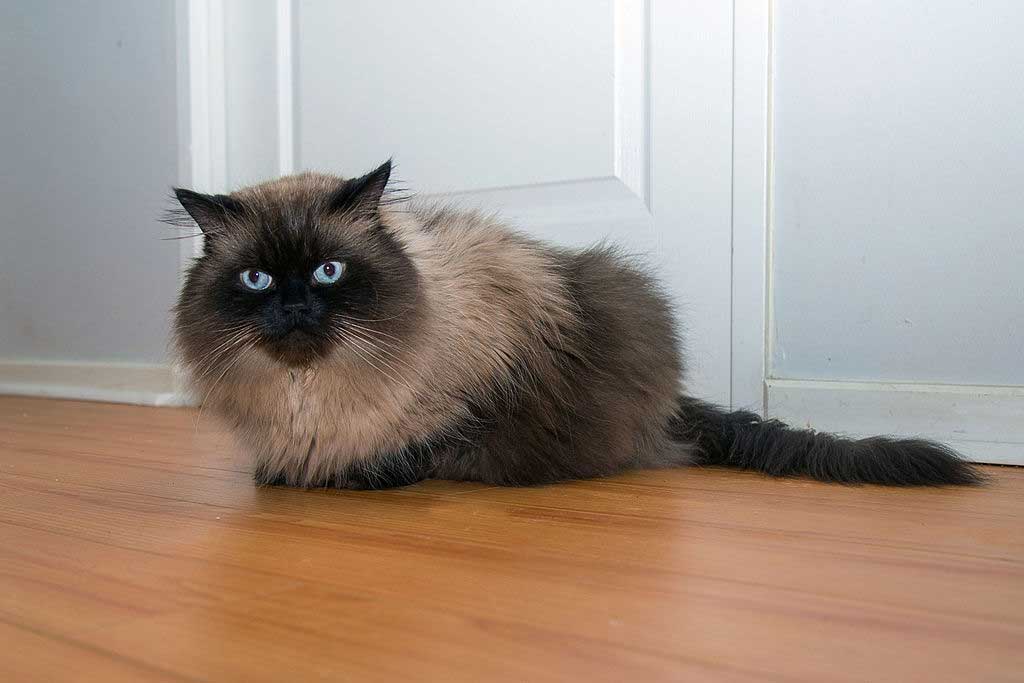
Highland fold cat
Federations: TICA, LOOF

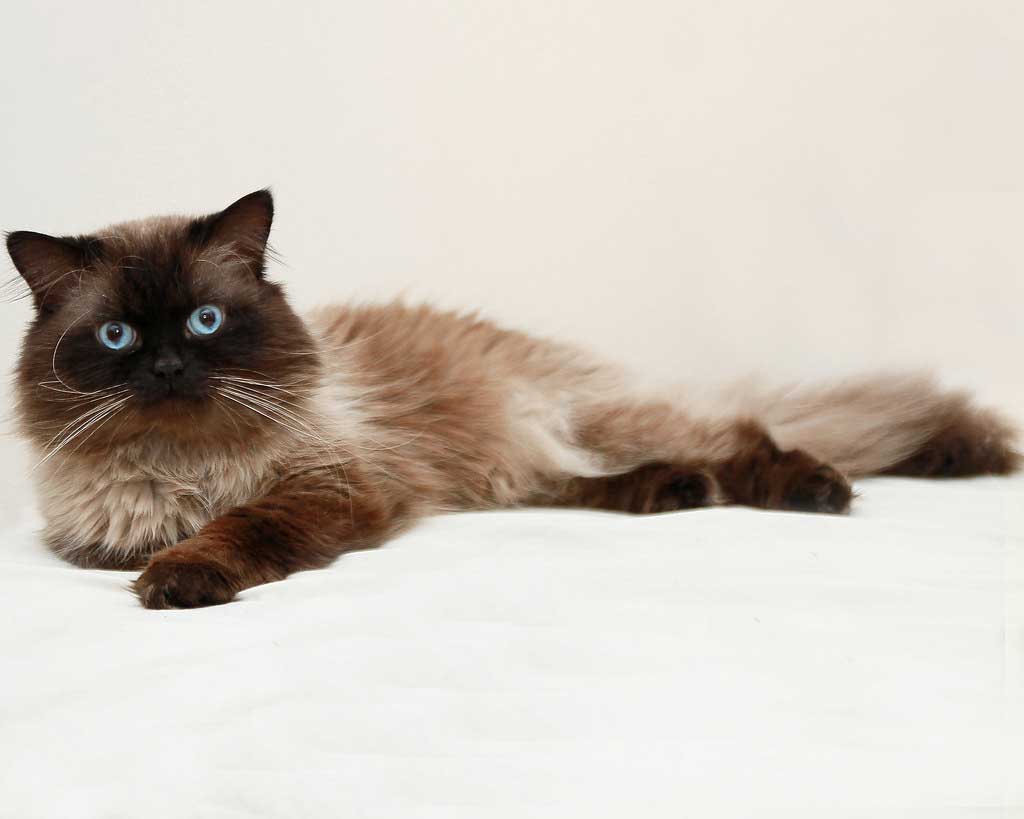
The Highland fold He is also known for his amazing poses: can be seen sleeping on his back, sitting on its hindquarters or standing on its hind legs.
Highland fold
Highland fold – hillspet

Content

Characteristics "Highland fold cat"

Coexistence is important that you have with your new friend. Before considering the acquisition of a cat of the breed "Highland fold cat" you know certain factors. You must take into account their character, their need for exercise, their interaction with other pets, their care and if you have small children, their level of tolerance towards them.

Joy

5,0 of 5 stars (based on 1 review)

Activity level

4,0 of 5 stars (based on 1 review)

Friendliness to other pets

4,0 of 5 stars (based on 1 review)

Friendliness to children

5,0 of 5 stars (based on 1 review)

Grooming requirements

5,0 of 5 stars (based on 1 review)

Vocality

1,0 of 5 stars (based on 1 review)

Need for attention

2,0 of 5 stars (based on 1 review)

Affection towards its owners

5,0 of 5 stars (based on 1 review)

Docility

4,0 of 5 stars (based on 1 review)

Intelligence

3,0 of 5 stars (based on 1 review)

Independence

4,0 of 5 stars (based on 1 review)

Hardiness

5,0 of 5 stars (based on 1 review)

History

The history of Highland fold cat is inextricably linked to that of your partner, the Scottish fold, what is a Highland shorthair.

Their common ancestor appeared in 1961 in a little Scottish town called Coupar Angus, near the mountainous regions of the north of the country (the Highlands). Call Susie, this white cat with her ears folded forward is the origin of all cats Highland fold cat. He might have remained anonymous on the MacRae farm where he lived if a herdsman named William Ross hadn't noticed his distinctive ears.. In 1963 adopted Snooks, one of Susie's daughters, who also had white fur and folded ears.

But, folded ears in cats are nothing new. Specimens of this type had already been reported in the past., and already in 1796 John Hinton wrote in his Universal Knowledge Magazine about wild cats that lived in China and displayed such attributes.. In the 19th century, it is said that several sailors brought this type of cats from Asia, and in 1975, in his book The Guide to the Cats of the World, Loxton claimed that these forward-folding-eared cats had always existed in China..

But it was Susie and her daughter Snooks who originated the breed. Highland fold. In their first litter, Snooks gave birth to a male named Snowball - in reference to his white fur- which in turn was crossed with Lady May, a white short haired british. All five kittens from this union had folded ears., And so began the story of the Scottish fold.

Originally named "Lops" by William Ross and his wife Mary, the breed was named after Scottish fold in 1966, cuando el Governing Council of the Cat Fancy (GCCF) granted it official recognition and allowed its exhibition in feline exhibitions, where it had a great success. At the same time, a breeding program was created.

But, the work done by various English geneticists, as Peter Dyte and Oliphant Jackson, revealed a relationship between curved ears and arthritis propensity in cats. Already concerned about the possible increased risk of ear infections and deafness caused by this anatomical feature (fears that were later proven unfounded), the GCCF decided on 1971 revoke your previous decision and, Therefore, stop accepting this breed.

In the news, the GCCF continues to maintain its position of not recognizing the Highland fold (nor its short-haired equivalent, the Scottish fold), arguing that the folded ears are due to a genetic mutation that is linked to potentially disabling bone problems for the animal. In this arbitration he had the support of the British Veterinary Association.

The salvation of the race came from the United States, Where, in 1970 The doctor. Neil Todd had imported three of Snooks' daughters to Newtonville, Massachusetts, to study their genetic mutations. But, he soon left his research project and one of these cats, called Denisla Hester, was hosted by Salle Wolf Peters, a cat breeder Manx.

Everything followed quickly, so that in 1972 the breed was presented at an exhibition organized by the Cat Fanciersโ€™ Association (CFA), one of the leading organizations in the country. The interest was immediate and several breeders decided to develop the breed. The CFA supported them in their efforts and in 1974 allowed the registration of these cats as an experimental breed.

Aware of the risk of osteoarthritis associated with the genetic mutation that caused the folded ears, American breeders followed the recommendations of Dr.. Oliphant Jackson and brought new blood to the breed, crossing it abundantly with the American shorthair cat and the European shorthair cat (Common european cat), crosses that are still allowed today. This diversification effort paid off: arthritis cases decreased. In 1978, the CFA definitively recognized the Scottish fold. The TICA (International Cat Association) did the same the following year, in 1979.

From the beginning, long hairs have appeared in litters of Scottish fold, and Susie and her daughter Snooks were likely carriers of a recessive gene for long hair, that was passed on but could only be expressed if the kitten received another recessive gene for long hair. Probable crosses with the Persian Cat, as well as the crosses with the European shorthair cat (Common european cat) which in turn were the result of crosses with Persians, contributed other long-haired genes, so that individuals born with long hair became increasingly common.

From the years 80, began to arouse real interest and recognition from some organizations. But, even today, this recognition varies greatly between countries and cat organizations.

The CFA considers them as a simple variety of the Scottish fold, while the TICA grants them from 1979 full breed status, under the name of Scottish Fold longhair. On the other hand, some organizations do not recognize them at all, neither as a variety nor as a race. Is the case, for example, of the FIFรฉ (Fรฉdรฉration Internationale Fรฉline) and the British GCCF.

In France, the Livre Officiel des Origines Fรฉlines (LOOF) considers it as a separate breed, denominada Highland Fold. It also, the Highland fold without folded ears have also been recognized by the LOOF as a distinct breed since 2009, and they are registered as Highland Straight.

The Highland fold came to France in the decade of 1980, but it took time to become a success. In the early years of the 21st century, for example, there were still no more than fifteen registrations a year at the LOOF, and about forty at the end of his first decade. Then this figure grew exponentially until it reached about 250 copies a year ten years later. The Highland Straight, recognized only from 2009, experienced an even more spectacular increase, going from a score of individuals registered in the first year to almost 500 at the end of the Decade of 2010, that is to say, twice as much as him Highland fold.
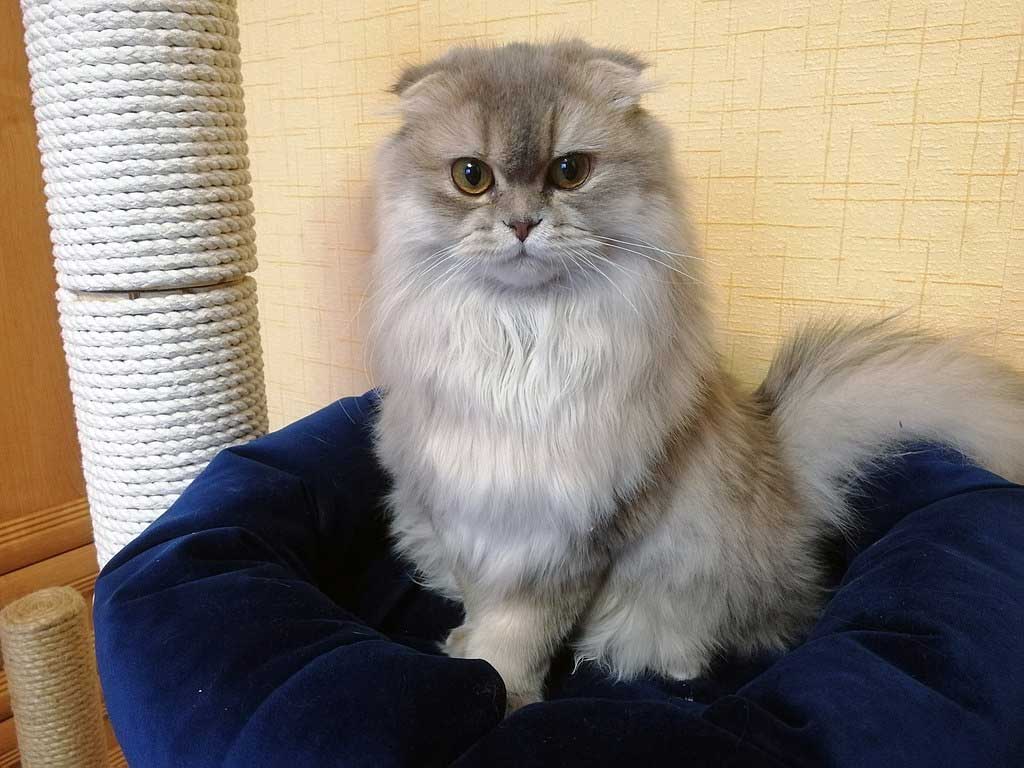
Highland Fold
Highland Fold breed kitten, female, 8 months old – Aqetz, CC BY-SA 3.0, via Wikimedia Commons

Physical characteristics

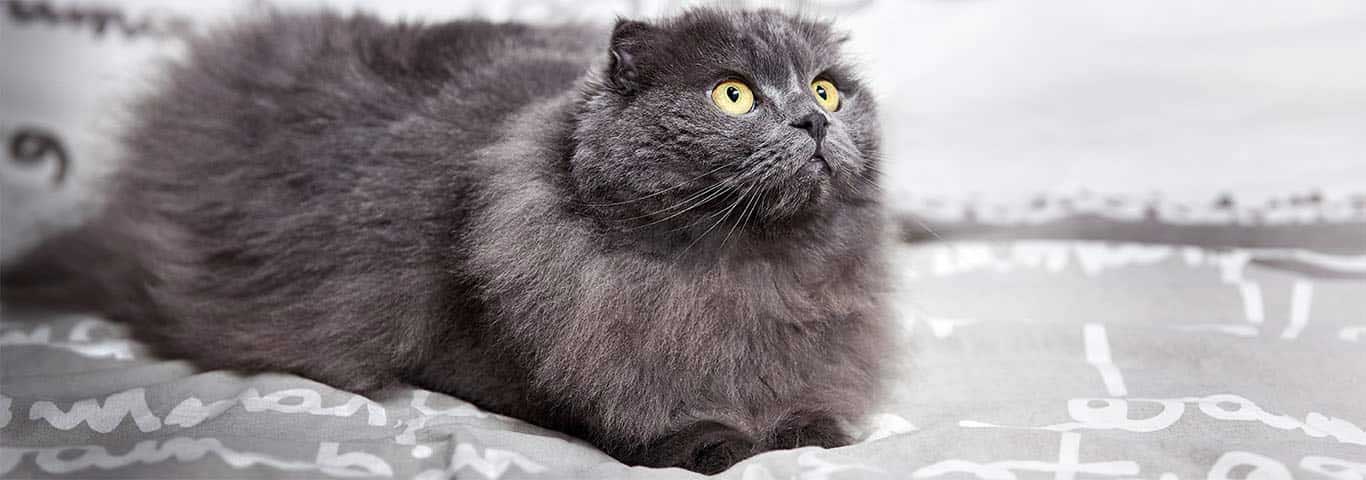
The Highland fold it is a medium-sized cat with strong bones, looking agile and flexible despite her curvaceous body. The body is supported by legs relatively short and robust and is prolonged with a rather long and tapered tail that ends in a curve.

Its chin and their jaws well defined, as well as their cheekbones prominent, dan a su head a round shape. Their eyes, which are usually coppery in color but can be many other colors, especially blue in the case of white fur cats, they are also wide and round.

But it is the ears, short and rounded, the ones that make the famous Highland fold. Fall forward, folding in on themselves, hence the ยซFoldยป of his name. They are also very mobile and expressive, being able to turn or straighten when lurking.

But, all kittens are born with straight ears, and only from 3 weeks start to double, at least some of them. Those who keep their ears straight are Highland Straight and can be crossed again with Highland fold: some of their descendants will have folded ears and, Therefore, will be Highland fold.

It also, the fur is what differentiates the Highland of the Scottish fold. While they both have a dense undercoat, the top layer of Highland fold is medium to long, with a silky texture. The throat, the breeches and the tail are very complete. According to the norm of Livre Officiel des Origines Fรฉlines (LOOF), all fur colors and patterns are allowed.

Last, the sexual dimorphism it is well marked, females being smaller than males.

Size and weight

  • Male size: 23 to 28 cm.
  • female size: 20-25 cm.
  • Male weight: 4-6 kg
  • female weight: 2,5-4 kg

Varieties of the "Highland fold cat"

Some feline organizations consider that the Highland fold it is simply a long-haired variety of the Scottish fold, not a breed in its own right.

On the other hand, the straight eared specimens are called Highland Straight and are considered a breed in their own right by various organizations, like the LOOF (Livre Officiel des Origines Fรฉlines) and the TICA (The International Cat Association), que lo denomina Scottish Straight longhair. Other associations recognize it as a variety, and others just don't recognize it at all.

Whatever your recognition, these cats are essential to the health of the breed Highland fold, as they can be bred with them to give birth to new cats with folded ears, while minimizing the risk of genetic diseases. Kittens born from such a union are carriers, at most, of a gene that causes this particularity, while those born from a mating between two Highland fold could carry this gene twice, situation leading to osteochondrodysplasia of varying severity.

Character and skills
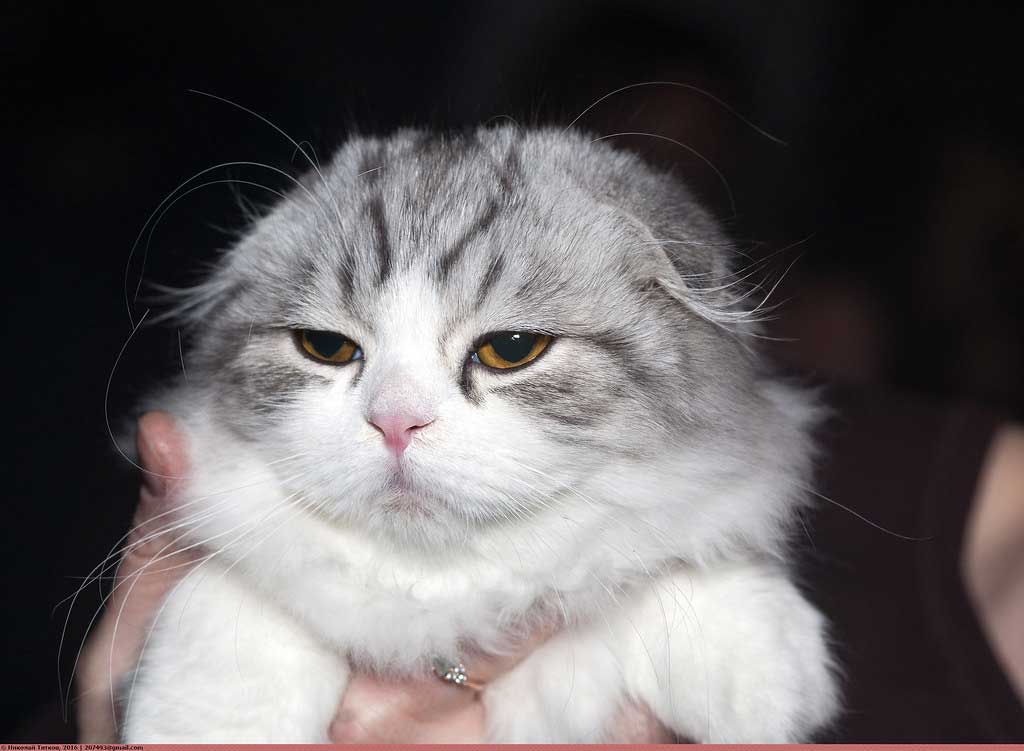
Highland fold
Highland fold shorthair Sheerfold Jon – Flickr
Loyal and loving, the Highland fold he is close to his family. But, they usually have a favorite human, with whom they spend the most time and show more affection. Despite your great need for attention, they are not demanding companions or require a lot of time. In fact, content with following a master who has no time to play with him, or you sleep peacefully next to someone who has made you understand that you are too heavy to sleep on your lap.

It is also a breed of cat that adapts perfectly to children who know how to behave with animals, and enjoy receiving their attention. They are sociable and enjoy the company of other cats., as well as dogs used to cats, who can be excellent playmates for them. But, it is not advisable to try to live with rodents, reptiles or birds, as he will soon mistake them for prey.

To the Highland fold he likes company and easily suffers from loneliness. The presence of other animals is a great way to make the day go by when your family is working., and the extra attention at night helps make up for the fact that it has been neglected for several hours. But, this is not enough if you are absent for a long time. One Highland fold staying alone for a long weekend is likely to suffer from separation anxiety, which can lead to destructive behavior.

The Highland fold He is also known for his amazing poses: can be seen sleeping on his back, sitting on its hindquarters or standing on its hind legs. They also like to drink tap water instead of the fish tank., and some use their legs to eat.

They are incredibly agile, allowing them to pick up objects on the fly or open cupboard doors without difficulty. Skill games are a great way to keep your cat physically stimulated., while the various puzzles for cats help develop their intelligence.

Last, the Highland fold not heard often, and when it does, it is necessary to listen carefully, since his meow is very soft.

Grooming and caring for the "Highland fold cat"

The Highland fold it is a demanding breed of cat to maintain: its dense coat should be brushed two or three times a week to maintain its shine and prevent knots from forming.

It is also advisable to check your eyes and teeth weekly to avoid any risk of infection. You also have to pay special attention to the ears, which should be cleaned with a damp cloth.

Last, if natural wear and tear and the use of a scratching post are not enough for your claws and they become too long, must be trimmed with a nail clipper.

How much activity does he need? "Highland fold cat"?

Its moderate activity level makes it an ideal flat cat, but his family must not forget to play with him daily.

Health and nutrition

In general, the Highland fold it is a healthy breed of cat, to the point that many specimens have more than 15 years.

But, are more prone to certain diseases:

  • The osteocondrodisplasia, which affects bone and cartilage development and can cause disabling osteoarthritis at an early age. The first symptoms are usually stiffness in the hind legs and/or tail;
  • Hypertrophic cardiomyopathy, an abnormal enlargement of heart tissue that causes heart problems;
  • The polykinetic kidney disease, a genetic disorder that causes numerous cysts in the kidneys, which can now be detected with a DNA test.

It is important to know that the breeding of two Highland fold it is prohibited by the different feline organizations. This is because the gene responsible for the folded ear mutation is dominant., that is to say, the kitten only needs to receive this gene from one parent to have this trait. But, all individuals carrying two mutated genes are affected by osteochondrodysplasia, to a greater or lesser degree. For this reason, miscegenation should be avoided at all costs Folds, and any breeder of Highland fold that does not respect this rule must be rejected.

The only options allowed are between a Fold and Straight (an identical cat with straight ears), a Fold and European shorthair cat (Common european cat), or a Fold and American shorthair cat. These crosses give rise to litters with a 50% kittens with folded ears.

It must be taken into account that the number of kittens per litter is usually lower than that of other breeds of cats..

Life expectancy

Of 12 to 15 years

Food

The Highland fold is not picky and does well with commercial cat food. But, These must be of good quality and adapted to your age and activity level to ensure that you receive the nutrients and vitamins you need.

How they are normally capable of self-regulation, they can have food available in their bowl at all times. But, check your weight at regular intervals to make sure you are not getting too fat, and you have to consult a veterinarian to establish a feeding program adapted to your needs if this is the case.

For sale "Highland fold cat"

The price of a kitten Highland fold it is on average about 1000 EUR.

But, this average hides large price differences between kittens with physical characteristics that are far from the standard, that can be found around the 500 EUR, and those whose prestigious lineage and characteristics predestine them for feline shows, whose price exceeds 2000 EUR.

In any case, there is no significant price difference between male and female kittens.

Videos "Highland fold cat"

Chat Highland Fold - 4 MN - Jean-Loup CRETIN
Chat Highland Fold
Midori highland fold

Alternative names:

โ–ท The world of Pets: Dogs, cats, birds, reptiles, amphibians

Mekong Bobtail cat
Federations: WCF

The Mekong Bobtail cat still a rare breed of cat, since at the beginning of the decade of 2010 its population barely exceeded 600 registered copies.
Bobtail Mekong
Photos By Sinitsyn

Content

Characteristics "Mekong Bobtail cat"

Coexistence is important that you have with your new friend. Before considering the acquisition of a cat of the breed "Mekong Bobtail cat" you know certain factors. You must take into account their character, their need for exercise, their interaction with other pets, their care and if you have small children, their level of tolerance towards them.

Joy

5,0 of 5 stars (based on 1 review)

Activity level

5,0 of 5 stars (based on 1 review)

Friendliness to other pets

3,0 of 5 stars (based on 1 review)

Friendliness to children

5,0 of 5 stars (based on 1 review)

Grooming requirements

1,0 of 5 stars (based on 1 review)

Vocality

2,0 of 5 stars (based on 1 review)

Need for attention

4,0 of 5 stars (based on 1 review)

Affection towards its owners

5,0 of 5 stars (based on 1 review)

Docility

4,0 of 5 stars (based on 1 review)

Intelligence

4,0 of 5 stars (based on 1 review)

Independence

2,0 of 5 stars (based on 1 review)

Hardiness

5,0 of 5 stars (based on 1 review)

History

The Mekong Bobtail it is a natural breed originating from Thailand, for which it has long been known as Thai bobtail. It has been present in Southeast Asia for many centuries, and legend has it that his courage led the kings of Siam to use him as a guard to protect the treasure chamber from possible theft.

In the 19th century, these cats were considered symbols of loyalty. Royalty used to gift them to the nobility to reinforce their good relations. So it is not surprising that, at the end of the 19th century, el rey Somdetch Phra Paramindr Maha Chulalongkorn, better known as Rama V, give away 200 from them to Tsar Nicholas II of Russia.

Several of them were Mekong Bobtail, that sparked some interest in Russia, so more specimens were imported in the following years. These cats and their descendants are the origin of the breed we know today.. In other words, although it is basically a Thai cat breed, it was the Russians who allowed it to develop and flourish, without modifying it.

But, the breed could not develop under the communist regime, and it was not until the decade of 1980 when Olga Mironova, a renowned cat specialist, took an interest in her and decided that she should be recognized. With the help of Ludmila Esina, Russian breeder and cat specialist, drew up the first standard and adopted the name Mekong Bobtail, in tribute to the river that runs through Southeast Asia.

This cat was first presented at an international feline show in November 2003, during the ยซRoyal Canine Grand Prixยป held in Moscow. A few months later, in august 2004, received the recognition of the World Cat Federation (WCF). WCF has not been followed by other organizations since., so it remains the only major feline association that recognizes the breed.

In fact, the Mekong Bobtail cat still a rare breed of cat, since at the beginning of the decade of 2010 its population barely exceeded 600 registered copies. The vast majority are in the former Soviet countries, mainly in Russia and Ukraine. It is almost non-existent in Western Europe and North America.

Gato Bobtail Mekong
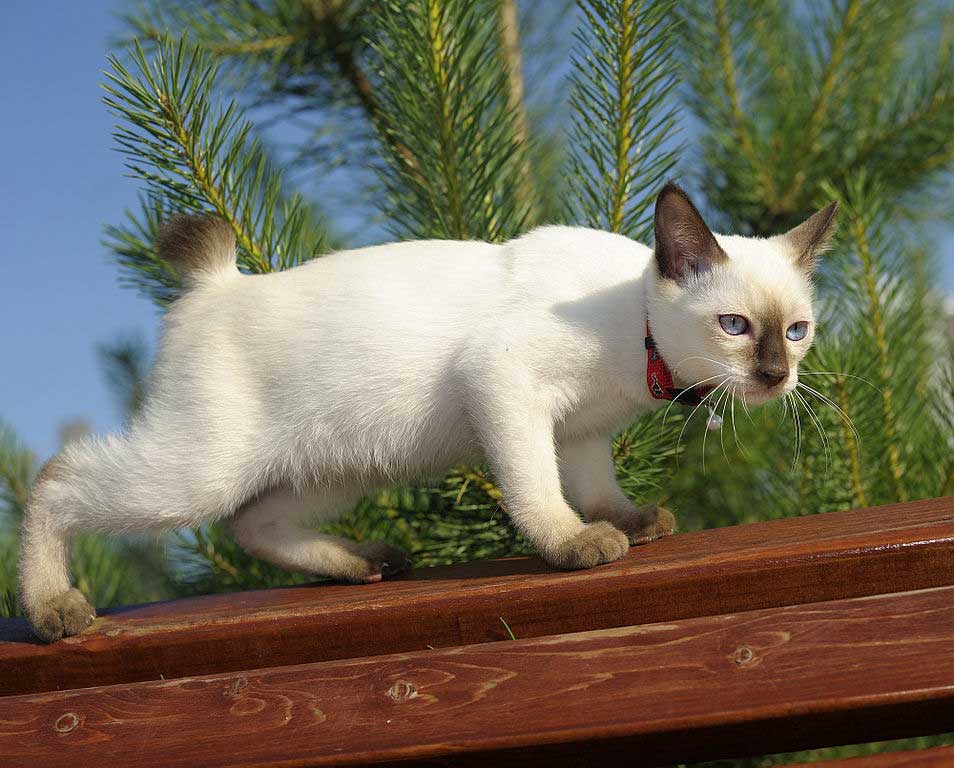
MEKONG BOBTAIL cat of rare lynx-point colour Dona Miya Ayutthaya. Cofein Pride cattery (WCF). – Alex opryatin, CC BY-SA 3.0, via Wikimedia Commons

Physical characteristics

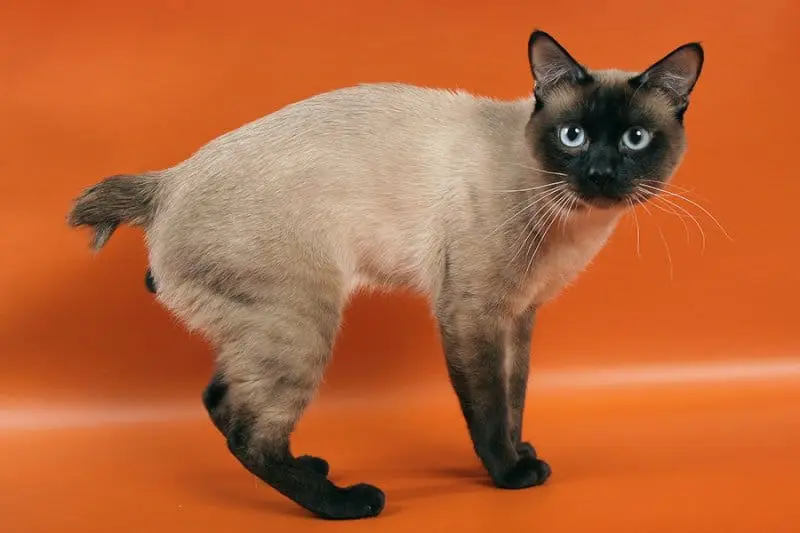
The body structure of the Mekong Bobtail is similar to that of Siamese cat. With its long, muscular body and its long, thin legs, has preserved the refined elegance of Thai cats. The strong stature in combination with the beautifully modeled head give the animal a noble appearance. The characteristic feature is the short tail. It is a quarter the length of the body and has different combinations of curves and folds. According to the international breed standard, its length is at least three vertebrae.

The coat color of the Mekong Bobtail reminds of the Siamese cat. Belonging to typical cats point, breed standard allows all colors point no target. Cats often appear with sandy to cinnamon colored fur. The coat is soft and silky to the touch. Hugs the body closely. The effect is produced because the purebred cat has hardly any undercoat.

If you look at the cat's face, you will notice the large ears with the rounded tips. They perch on top of the animal's head and give it an attentive impression. This is enhanced by the slightly outwardly curved ears.. Similar to the Siamese, the breed is characterized by its large, oval eyes. Its deep blue color contributes to the exotic beauty of this rare breed of cat..

Last, sexual dimorphism is well marked, being the males larger than the females.

Size and weight

  • Height: 30 cm.
  • Weight: Of 3 to 5 kg

  • Character and skills

    The Mekong Bobtail cat he is an affectionate cat who enjoys the company of humans. They are very faithful and devoted to their owner and constantly seek their company.. Demands a lot of attention, that returns multiplied by a hundred in affection.

    Sociable and curious by nature, this cat loves to hang out with new people, especially if they give you the attention you seek. Calm and balanced, it is an ideal cat breed for children, as long as, of course, have learned to behave with animals: his patience has limits and he runs the risk of biting, even more than scratching, to those who amuse themselves by pulling their tail or whiskers.

    The sociability of Mekong Bobtail spreads to other animals, and enjoy the company of other dogs, as well as other cats. The presence of other animals in the home is an option to be seriously considered by any owner who has to be away for long periods of time each day., since it is a breed of cat that does not tolerate loneliness. On the other hand, coexistence with small rodents or reptiles should be avoided, since his hunting instinct can overcome his good manners at any moment.

    On the other hand, the Mekong Bobtail easily adapts to a new environment, and traveling by car with your cat should not be a problem. So, they are an ideal option for those who move regularly or want to take their cat on vacation.

    Active and athletic, to the Mekong Bobtail he loves to run around the house, jump on the furniture and perch on the closet. With this energy level, ideally they should have access to the outdoors, where they can run and have fun before returning to their owner to rest quietly. But, can live in a flat, as long as his owner makes sure he gets enough exercise by playing with him often, or even taking him out on a leash.

    If you have free access to the outside, it is recommended to put a necklace with a locket in which your name and phone number appear, In addition, of course, of the essential identification of the cat by chip or tattoo. In effect, although he is very close to his master and wants nothing more than to return to his side, his curiosity and the fact that he likes the company of humans can take him away from home; the risk is that you realize too late that you don't know how to get home

    Last, it is a breed of cat that usually meows, either to let its owner know that it is time to eat or that it is time to open the door to go chase the birds.

    Gato Bobtail Mekong
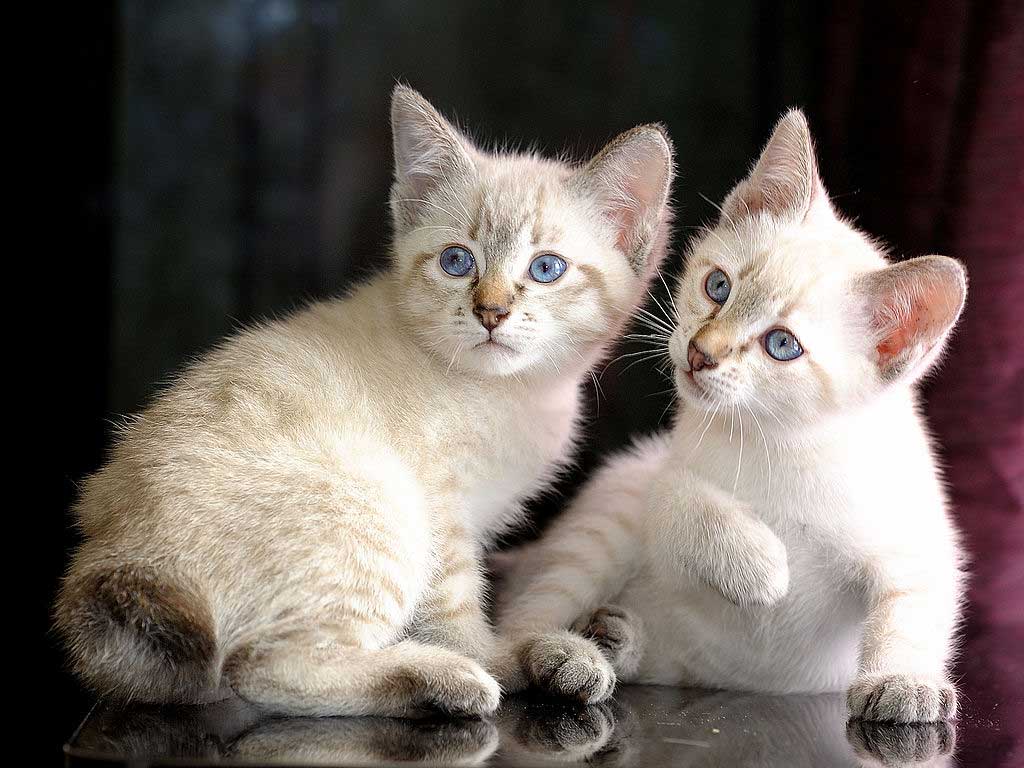
    Rare MEKONG BOBTAIL kittens, color tabby-point. Mekong bobtail hatchery Cofein Pride – Alex opryatin, CC BY-SA 3.0, via Wikimedia Commons

    Health

    The Mekong Bobtail it is a robust breed with no known genetic predisposition to disease.

    But, can be prone to several conditions common to all cats:

  • The feline idiopathic cystitis, a common bladder infection in cats that can have serious consequences if left untreated;
  • Various eye problems: secretion, redness or even a color change in the eyes;
  • Gastrointestinal disorders: vomiting, flatulence, diarrhea or constipation. These problems are usually due to diet and can pass within a few days or persist for several weeks..

  • It also, as with any breed, care must be taken to avoid being overweight or obese, that could cause serious health problems. Adequate nutrition and sufficient activity levels will normally avoid this problem..

    Grooming

    The Mekong Bobtail cat is a low maintenance cat breed. His short-haired coat only needs to be brushed once a week to remove dead hairs and keep it looking its best..

    It is advisable to prolong the grooming session a bit to take time to check the teeth, ears and, above all, the cat's eyes to make sure they are clean. They can be cleaned with a damp cloth.

    Last, depending on the activity level of the cat and the use of the scratching post, nails may need to be trimmed with nail clippers.

    Gato Bobtail Mekong
    Rare MEKONG BOBTAIL chocolate tip color – Talestra of Cofein Pride – Alex opryatin, CC BY-SA 3.0, via Wikimedia Commons

    For sale "Mekong Bobtail cat"

    The price of a Mekong Bobtail cat is of some 20.000 hryvnia in Ukraine or 50.000 rubles in Russia, what corresponds to some 700-800 EUR.

    As this breed is not yet common in Europe and America, it is usually necessary to import it. In this case, the cost of transport and possible customs duties must be added to the purchase price.

    Videos "Mekong Bobtail cat"

    Mekong Bobtail
    A litter of five little ones Mekong Bobtail discover a new game that seems to captivate them.
    Mekong bobtail play with circuit roller ball

    โ–ท The world of Pets: Dogs, cats, birds, reptiles, amphibians

    Savannah cat
    Federations: TICA, CCA-AFC, LOOF

    Before buying a Savannah cat, you must bear in mind that it is considered the most expensive breed of domestic cat in the world.
    Photo: blogs.inlandsocal.com

    Content

    Characteristics "Savannah cat"

    Coexistence is important that you have with your new friend. Before considering the acquisition of a cat of the breed "Savannah cat" you know certain factors. You must take into account their character, their need for exercise, their interaction with other pets, their care and if you have small children, their level of tolerance towards them.

    Joy

    5,0 of 5 stars (based on 1 review)

    Activity level

    5,0 of 5 stars (based on 1 review)

    Friendliness to other pets

    4,0 of 5 stars (based on 1 review)

    Friendliness to children

    4,0 of 5 stars (based on 1 review)

    Grooming requirements

    1,0 of 5 stars (based on 1 review)

    Vocality

    3,0 of 5 stars (based on 1 review)

    Need for attention

    3,0 of 5 stars (based on 1 review)

    Affection towards its owners

    5,0 of 5 stars (based on 1 review)

    Docility

    3,0 of 5 stars (based on 1 review)

    Intelligence

    5,0 of 5 stars (based on 1 review)

    Independence

    2,0 of 5 stars (based on 1 review)

    Hardiness

    5,0 of 5 stars (based on 1 review)

    History

    The Savannah is a breed of cat created in the United States in the decade of 1980. It is the result of the crosses between domestic cats (generally Egyptian Mau, Ocicat, Oriental shorthair cat and Domestic Shorthair) and servales males (Leptailurus serval). The latter is a medium-sized African wild cat with long legs., long neck and large oval ears. It shares a common ancestor with the lion and, having managed to adapt to various habitats, lives in the savannas, the forests or wetlands of your home continent.

    The first Savannah was born the 7 in April of 1986. It was a kitten, daughter of a Siamese cat and serval male. It was named "Miracle" for Judee Frank, the breeder who owns the cat. It must be said that it was really a near miracle for the breeder, since he didn't know that his Siamese I was pregnant. At that moment, housed a Serval quite fragile that, Obviously, was responsible for the "miracle". Later, the Mrs. Suzi Mutascio He acquired the miraculous female and renamed her โ€œSavannah.โ€, name that the breed also received.

    Patrick Kelly, another passionate breeder domestic cats wild looking, heard about Savannah and wanted to create a new race based on the "miracle". As such, got in touch with Joyce Sroufe, an Oklahoma breeder specializing in breeding feral cats, including serval. He agreed to participate in the project and began to cross short-haired domestic cats with servales. So, all the kittens he offered for adoption were first generation hybrids (called F1). Your firsts Savannah They were born in 1994.

    In 1996, in an effort to gain recognition for the breed, Patrick Kelly and Joyce Sroufe, In colaboration with Karen Sausman -a breeder of Bengalis– drafted a proposed standard for the Savannah, presented to the International Cat Association (TICA), the world's largest purebred domestic cat registration body. But, at the same time, this organization announced a moratorium on the recognition of new breeds.

    This did not prevent other enthusiasts from taking an interest in savannah farming in the following years., and the breed became more and more popular. An association was even created in the year 2000 to promote the breed before the TICA. Originally called Savannah International Member & Breeder Association (SIMBA), this organization is now called simply Savannah Cat Association.

    In February of 2001, TICA accepted the registration of the Savannah and allowed them to be displayed in cat shows, but not that they competed. That year more than a hundred. In 2006, the Canadian Cat Association (CCA) recognized the breed and its standard, which allowed to register the Savannah and participate in feline exhibitions organized under his authority. Regarding the TICA, was not up 2012 when he agreed to grant the same full recognition to the new breed.

    In any case, as it usually happens with hybrid breeds, only dogs are allowed in cat shows Savannah from the third generation (F3). This generation is of special interest, since it is the one that can compete that theoretically has the highest percentage of Serval (although this rate may vary depending on the individual).

    But, This generation is not recognized or cataloged by the American Cat Fanciers’ Association (ACFA) and Cat Fanciers’ Association (CFA) in United States; nor for him Governing Council of the Cat Fancy (GCCF), the World Cat Federation (WCF) and Fรฉdรฉration Internationale Fรฉline (FIFรฉ) in Europe.

    Today, the Savannah cat is present all over the world, mostly in North and South America, Europe, Japan and Malaysia. But, is prohibited in some countries, like australia, where it was banned in 2008. Its great predatory capacity could pose a threat to the maintenance or even the survival of certain native species., with which it could compete if individuals were found in nature.

    Some states, counties or cities in the United States also prohibit the possession of Savannah in its territory. Sometimes all representatives of the breed are prohibited, but sometimes only to the first generations. In other cases, a permit is required to own this cat. In summary, sometimes it's hard to navigate…

    Physical characteristics

    Savannah cat
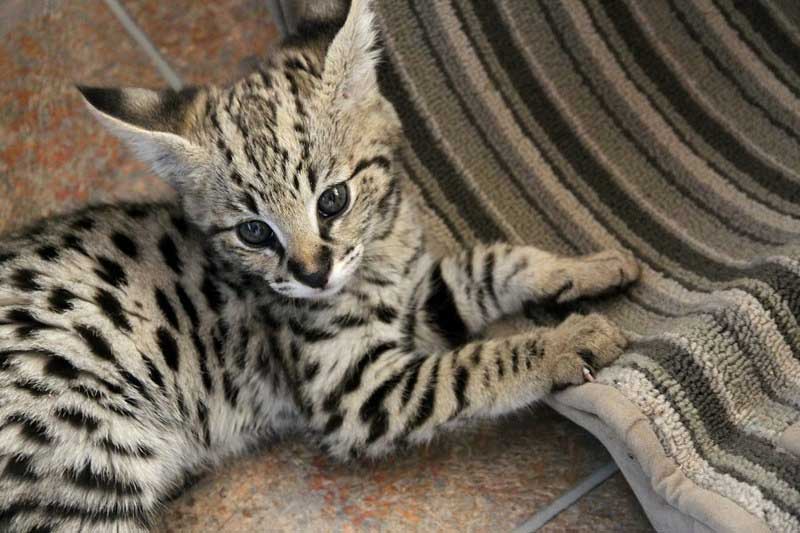
    F1 Savannah cat – Flickr

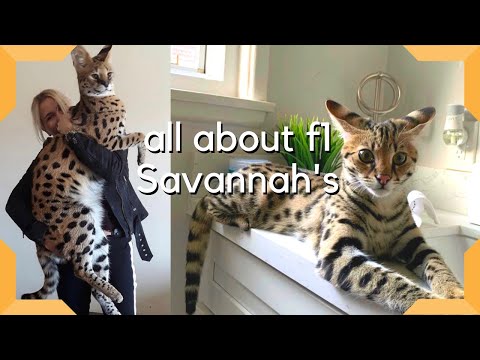
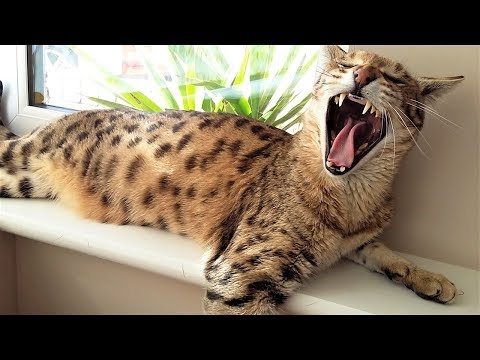
    The Savannah is very large: in fact, a male was recognized in 2017 like the tallest cat in the world, with 48,3 centimeters at the withers. In fact, this breed has inherited several characteristics from its wild relative: it is a tabby cat with a spotted coat, a slim body, muscular and graceful, a head small, long legs, large ears and a slightly short tail. This is a type semi-foreign.

    But, is significantly smaller than the Serval, and it also shows a noticeable difference in size from one generation to another. In fact, as they move away from the first generation of hybrids, the Savannah tend to be shorter in height and weight, between 6 and 9 kg. It also, in all generations, females are smaller than males.

    There are some color variations in the Savannah. They can be inherited from one or both parent races. According to the standards of the International Cat Association (TICA), accepted colors are

    Brown spotted tabby

    The Savannah of this color are the most popular among breed enthusiasts, probably because its fur is the most similar to that of the serval. Your background color can be wheat, marten or saber, while its spots vary from orange brown to black and dark brown. Inside this fur color, it is rare to find adult cats with completely black noses.

    Silver Spotted Tabby

    This color is probably the second most popular. The background color of the coat ranges from very pale silver, almost white, even dark silver. Stains vary from carbon black to ink black. In some individuals, can cover a large area and be accompanied by hives; This pattern is called "marbled". Some individuals of this color have a completely black nose.
    The genetic inheritance of Silver Spotted Tabby comes from domestic cats that contributed to hybridization.

    Smoke

    The Savannah of this color variation are black, but the root of her hair is white, which gives them a lighter coloration.

    Black Savannah cat

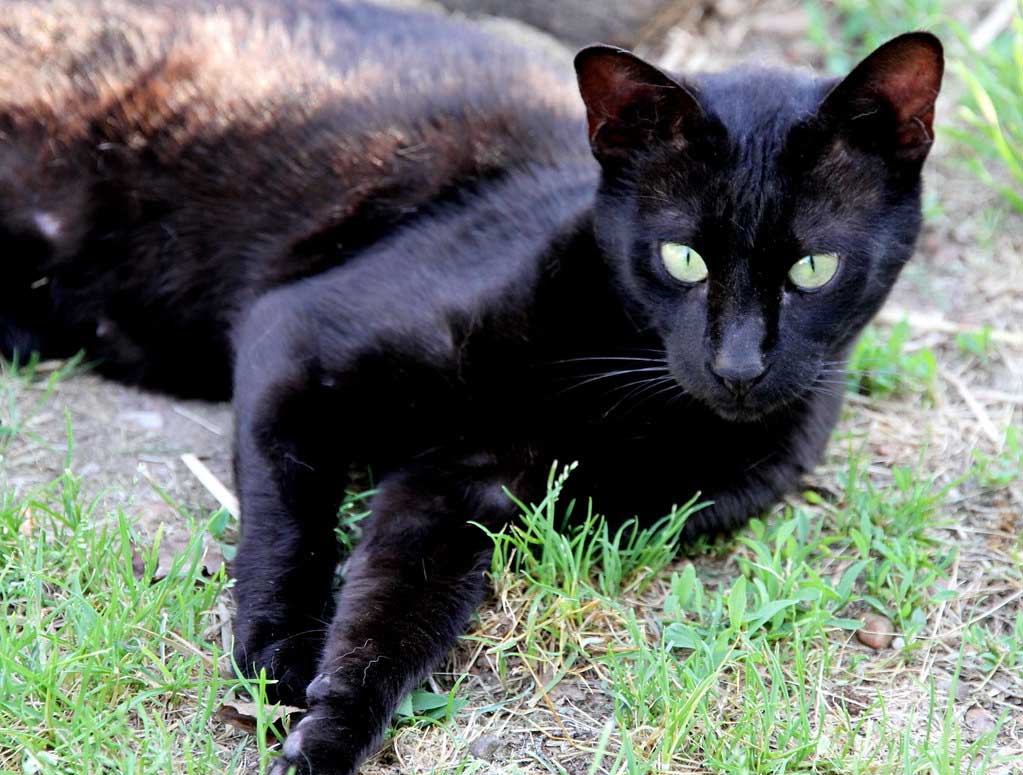
    There is a servales melancholy, that is to say, blacks, in the nature. The corresponding color variation in the Savannah cat has been inherited from the genetic background of some servales with this property. Cats of this color are spotted, although their spots are usually visible only under strong light. These Savannah they always have a black nose.

    But, in addition to those accepted by the TICA, there are other colors. Cats with these colors can even be registered with the association. In fact, sometimes they are more popular with some fans of the Savannah than officially accepted colors. It is about the following colors:

    Snow

    This coat goes from white to light gray, and the spots are light brown. The aquamarine blue of his eyes is the most noticeable feature of the Savannah snow. Although it is not accepted by the TICA, this rare color is highly prized by some breed enthusiasts.

    Lavender

    The color lavender (ranging from cream to peach) is dotted with grayish spots. Again, this is a very rare color.

    Size and weight

    • Size: Of 40 to 45 cm.
    • Weight: Of 6 to 12 kg

    Breed standard

    The breed standards are documents established by official bodies that list the conditions that a dog must meet. Savannah to be fully recognized as belonging to the race:

    Character and skills

    Savannah cat
    F4 Melanistic Savannah cat – Flickr

    Despite his semi-wild ancestry, the Savannah is known to be a good-natured cat, affectionate, Gentile, loyal and playful from the first generations. He is also extremely smart, active and curious. It must be said that the serval, is contributing to your genetic makeup, It is a wild cat with a very familiar character and easy to tame. In some parts of Africa, in rural areas, servals can be used as companion cats or as hunting aids.

    In fact, the owners of a Savannah often happily report that their pet is distinguished by character from any other breed of domestic cat.

    Although they are not unhappy on the inside, they greatly enjoy the outdoors, allowing them to have fun climbing trees or hunting, and thus exhaust their unlimited energy. If you have your cat indoors, the best thing is that he has a large home where he can run, jump and climb with ease. A cat tree is essential to keep it active and prevent it from damaging furniture and curtains.

    If you've gotten used to it from the start, can be easily walked on a leash. Like its relative the serval, the Savannah is one of the few domestic cats that enjoys frolicking in the water.

    In general, to the Savannah loves the company of humans, as well as other pets in the home. They really enjoy being hugged and played with. But, la Savannah Cat Association (SCA) recommends that a first generation cat (F1) not be placed in a home with minor children. Young children love to pet and cuddle animals, but a Savannah F1 is a size that does not lend itself to such displays of affection. Although normally, when a cat is fed up, it just walks away, This SCA recommendation is a simple -but very wise- precautionary measure..

    The association also suggests that small rodents or pet birds should not be left within reach of a savannah., since this could have a bad destiny for them. It also, owners who have an aquarium at home should ensure that it has a secure lid. If that is not the case, they can find their cat swimming among the fish, especially because Savannah they are water-loving cats.

    Another precaution recommended by the SCA is for the owner to ensure that his Savannah do not have free access to the outside. If it escapes, the chances of me coming home are very low, and their chances of long-term survival in the wild would also be low. It has been established that a Savannah indoor can live up to 18 years, while their life expectancy in the wild is reduced to about 18 months.

    Grooming and caring for the "Savannah cat"

    Savannah cat
    Pregnant F1 Savannah cat – Flickr

    The smooth and short coat of the Savannah cat it is very easy to care for and does not require any special care. A weekly brushing is enough.

    It also, as to the Savannah He likes water, can be bathed easily at times.

    Indoor or outdoor cat?

    The Savannah cat he is a hunter, jumper and climber much more skilled than other domestic cats. So, if kept as an indoor cat, needs a space above average, as well as varied and solid climbing opportunities.

    It is also possible that the big cat is delighted to have a secure outdoor enclosure or garden.. With a little patience and a lot of practice, can also be taught to Savannah to walk on a leash. It is not advisable to keep the F1 to F4 generations as outdoor cats, as they are very valuable and also excellent hunters.

    How much activity does he need? "Savannah cat"?

    Due to his enormous agility and his great intelligence, the Savannah cat needs a lot of attention and activity. He does not like to be home alone and loves to follow his owner around the house. He likes to be the center of attention and will confidently tell you when he wants you to keep him busy..

    An especially exciting activity for the Savannah cat is playing with the water or taking a bath in the bathtub. Some breeds like water so much that they will follow you into the shower. The cunning cats also learn to look for toys with gusto and run wildly all over the floor..

    Health and nutrition

    "Savannah cat"

    Gato Savannah
    Matahah Me Al (Motzie ) is F2 savannah – Galawebdesign, CC BY 3.0, via Wikimedia Commons

    In general, the Savannah is in good health.

    But, two hereditary diseases are known in this breed, that have their origin in the domestic cats that contributed to their birth. Are the progressive retinal atrophy and pyruvate kinase deficiency (a type of anemia). Both can be revealed by genetic testing, allowing serious breeders of Savannah identify and remove individuals carrying the defective genes from your breeding program. Any prospective buyer should require proof that the kitten they wish to adopt has been tested negatively.

    The Savannah Cat Association (SCA) also advises owners of this breed of cats not to remove their claws. The declawing, which consists of the amputation of the last phalanx of the fingers, can cause pain that can last for the rest of the cat's life. Nail removal is not recommended for all breeds of cats, and is especially contraindicated for Savannah, due to the large amount of energy you need to expend, for example, clawing a cat tree.

    It also, cats of this breed should be watched carefully when they are sick, as they can become dehydrated and lose weight quickly.

    Last, the Savannah fear the cold.

    Food

    In general, the Savannah does not require any special diet. As with other cat breeds, it is only necessary to ensure the quality of the food that is offered.

    But, for the Savannah of the first generation after hybridization (F1) and of the second generation (F2), some breeders recommend serving the animal a daily meal of raw poultry.

    Other breeders recommend feeding all Savannah with a diet consisting of raw meat - minced- chicken and beef. But, this diet is discussed by some of your colleagues, they point out that it requires a good knowledge of nutrition, and that all the necessary ingredients must be added for a complete and balanced diet. If adopted, this practice should be done with caution, as over-supplementation can be harmful.

    For sale "Savannah cat"

    Before buying a Savannah cat, you should know that it is considered the most expensive breed of domestic cat in the world.

    Depending on the generation, will pay between 1.000 and 10.000 euros for a kitten. Other difficulties may arise, especially when buying a cat from the F1 to F4 generation. These animals are not very easy to conserve and are subject to the Washington Convention on International Trade in Endangered Species. So that, if you want to import a cat from the USA. or from another non-EU country, there are many requirements, such as tenure and confinement permits.

    Gato Savannah Gato Savannah Gato Savannah

    Interesting data

    Criticism of breeding "Savannah cats"

    The detractors of the breeding of the Savannah believe that mating a wild animal with a domestic cat for the sole purpose of obtaining a particular coat pattern is irresponsible.

    As the gestation periods of cats and servales They are different, every generation of F1 is born prematurely.

    The mortality rate, as well as stress for the mother, is therefore extremely high. Many of the so-called wild cat hybrids they continue to show the characteristics of a wild animal even after generations. So, keeping them species-appropriate is not possible for everyone.

    Video Longest cat – Meet the Record Breakers

    youtu.be/TcTbsegeyug

    In Australia and New Zealand, the Savannah they are even prohibited from entering the country because they can endanger biodiversity. So the question arises whether it is really necessary to travel a path that nature did not foresee., just to get a breeding goal.

    Famous cats ยซSavannahยป

    One of the Savannah cats most famous in the world is Scarlettโ€™s Magic, of United States. Received the Guinness record the largest living domestic cat in 2010, with a shoulder height of 45,9 cm.. She was also the longest domestic cat in the world, with a length of 108,51 cm..
    But, the current record is held by the cat Maine Coon Ludo with a length of 118,33 cm..

    Videos "Savannah cat"

    Savannah Cat : The Most Expensive Pet in the world / Largest cat breed F1 Savannah savannah-cats.com

    5 Reasons for NOT OWNING a F2 Savannah cat

    Alternative names:

    • Gato de la Sabana

    โ–ท The world of Pets: Dogs, cats, birds, reptiles, amphibians

    Asian Smoke Cat
    Registered by the GCCF

    At the beginning, he was known as Cat Burmoire because its origin seems to come from the cross between the Burmilla cat and the European Burmese Cat.
    Asian Smoke Cat
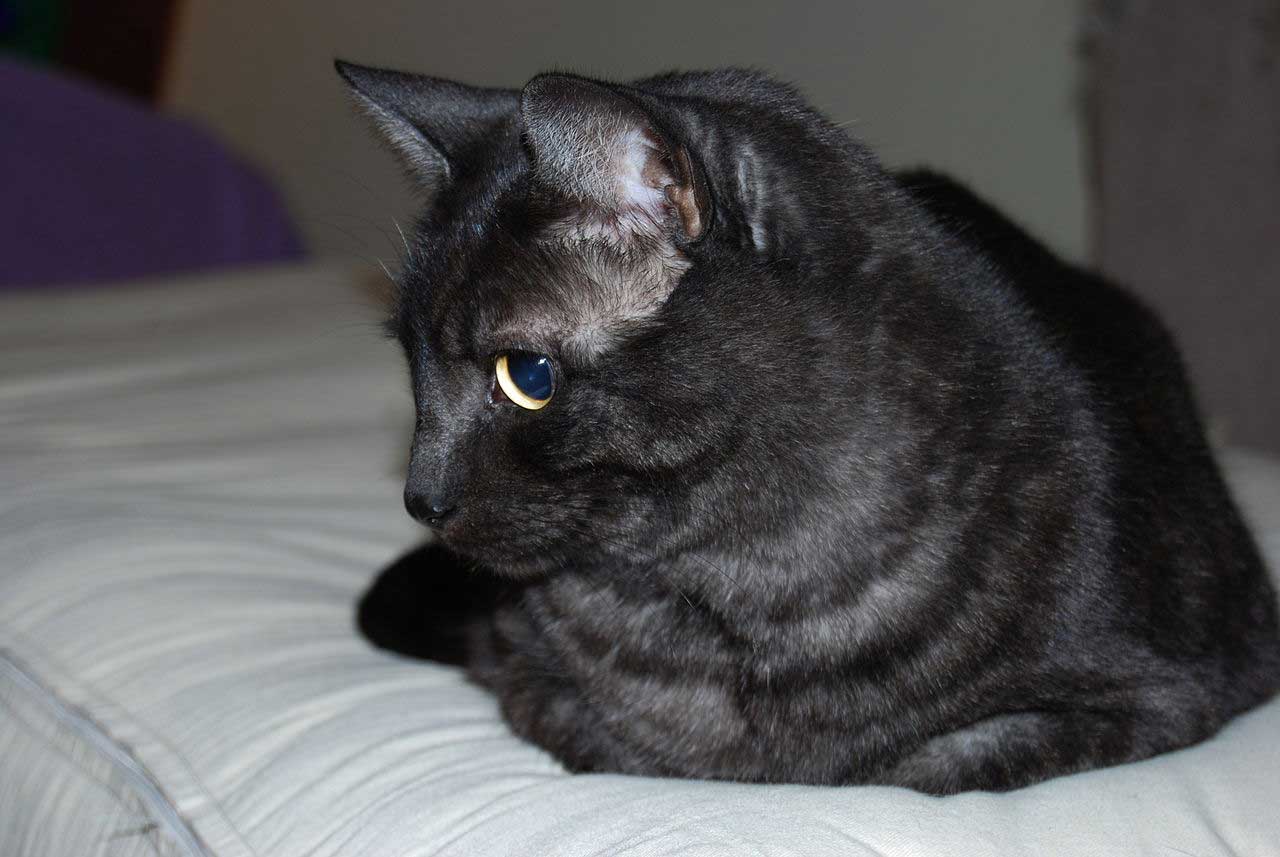
    Asian cat – Asian smoke (black) colour – Pigeon-camera, Public domain, via Wikimedia Commons

    Content

    History

    It was developed in Great Britain, through crosses of this breed with others that will provide its unique characteristics. The goal was that he could hunt mice.

    In a time when old, low-ceilinged houses were plentiful, the presence of these small rodents was worrisome. For this reason, At the end of the 19th century, they began to look for a way to create new breeds of cats that were faster, quieter and with better hunting instincts and other qualities that serve to eliminate these annoying pests.

    But, due to the large number of races that emerged at that time, people considered this cat much more than just a rodent hunter. Maybe because of its beauty or because of its friendly nature, the truth is that the villagers of the time began to contemplate the possibility of having it as a pet.

    Precisely at this moment, the Asian Smoke Cat began to gain popularity. And is that her beauty, very similar to that of a tiger, and her beautiful personality, along with how quiet it is, made many people want to have one at home.

    Physical characteristics

    It is a very muscular medium-sized cat, especially in the area of รขโ‚ฌโ€นรขโ‚ฌโ€นthe legs and chest. Thus, has an air of imposing superiority over other races. This, added to its elegance when it moves, makes him one of the most wanted cats in the world.

    Has a rounded head, pointed ears and round but slanted eyes. Although their eyes can vary in color, they are always greenish or yellowish.

    Colors

    It also, its pelage is short, soft and can be in multiple colors and patterns. Accepted colors are blue, chocolate, the lilac, the reddish, The candy, the cream and the black.

    However, feline clubs accept some special specimens if they have a very different color. We refer to those that resemble the Burmese cat and have white or silver tones.

    in addition, its tail is neither thick nor extremely hairy. It also, it is wide at its base and narrow at its end. Looking at your limbs, it should be noted that the rear ones are slightly longer than the front ones, an advantage when it comes to running and jumping.

    Character and skills

    The Asian Smoke Cat has a calm and friendly character. So, can be easily adapted to home environments. It does not matter if they are formed by a single member or by large families. It adapts to all types of people and can also live with other animals without problems.

    This cat is tolerant and docile, ideal for children because they always want to play and are never aggressive. A curious fact is that it is somewhat more intelligent than other cats, which will make you unconsciously prefer the smartest member of the family.

    Health and care

    The health of the Asian Smoke Cat is generally healthy and without much predisposition to congenital diseases. Some of the most common difficulties that can affect you are hair loss, as well as visual defects, including cornea (that is to say, a small wart with hair in the corneal eye area) and cataracts.

    Proper coat care does not require extreme grooming, as it is not very long and is not prone to unnecessary tangles. A regular brushing can be enough to give you a shiny and healthy look..

    Although the amount of hair is not very excessive, as a cat it can suffer at some point from hair in the digestive system. If this is the case, a paraffin solution can be used as a remedy.

    Life expectancy

    10 – 15 years.

    โ–ท The world of Pets: Dogs, cats, birds, reptiles, amphibians

    Balinese cat
    Recognized by the CFA, FIFe, TICA, ACF, ACFA/CAA, CCA-AFC, GCCF

    The Balinese cat can boast of having among his close relatives the famous Siamese cat.
    Balinรฉs
    Photo: aboutpedigreecats.com

    Content

    Characteristics "Balinese cat"

    Coexistence is important that you have with your new friend. Before considering the acquisition of a cat of the breed "Balinese cat" you know certain factors. You must take into account their character, their need for exercise, their interaction with other pets, their care and if you have small children, their level of tolerance towards them.

    Joy

    5,0 of 5 stars (based on 1 review)

    Activity level

    4,0 of 5 stars (based on 1 review)

    Friendliness to other pets

    3,0 of 5 stars (based on 1 review)

    Friendliness to children

    3,0 of 5 stars (based on 1 review)

    Grooming requirements

    2,0 of 5 stars (based on 1 review)

    Vocality

    5,0 of 5 stars (based on 1 review)

    Need for attention

    5,0 of 5 stars (based on 1 review)

    Affection towards its owners

    4,0 of 5 stars (based on 1 review)

    Docility

    1,0 of 5 stars (based on 1 review)

    Intelligence

    5,0 of 5 stars (based on 1 review)

    Independence

    1,0 of 5 stars (based on 1 review)

    Hardiness

    2,0 of 5 stars (based on 1 review)

    History

    The origins of the breed as such are in the United States and go back to the years 50, but the first references to this type of cat are much older. In fact, a Chinese tapestry from several centuries ago already depicted long-haired cats with features Siamese. More recently, in 1871, Penny Illustrated magazine mentioned a long-hair Siamese, and in 1928 the American Federation of Cat Fans (CFF) accepted the registration of a long-hair Siamese.

    In the Decade of 1950, Marion Dorsey and Helen Smith, of the creators of Siamese Americans based in California and New York respectively, they became interested in these long-haired kittens and decided to start a dedicated breeding program. The program was successful and resulted in Balinese cat what do we know today.

    Despite what its name may suggest, the Balinese cat It, in effect, an american cat breed. The name was chosen by Helen Smith to highlight its grace and elegance, similar to that of the ballerinas on the island of Bali

    Already in 1961, the Federation of Cat Fans (CFF) recognized this new breed, and the Cat Fan Association (CFA) did the same in 1970. In 1979, this same CFA set a new standard for a breed called Javanese, whose characteristics were those of Balinese cat, and that it simply allowed covering the coat colors not accepted by the latter's standard. In fact, the Balinese standard had been established by accepting the same colors as the Siamese cat, that is to say, seal, blue, chocolate and lilac.

    That same year 1979, the International Cat Association (TICA) also recognized the Balinese cat, antes de ser seguida for the International Feline Federation (FIFรฉ) in 1983 and, later, por el British Governing Council of the Cat Fancy (GCCF) in 1986.

    Today, but the Balinese cat is present and recognized throughout the world, still a relatively uncommon cat. in your country of origin, United States, the CFA statistics indicate that it is in the second half of the breed table based on the number of annual registrations. In France, each year less than 20 ejemplares en el Official Book of Feline Origins (LOOF). In Great Britain, GCCF figures even show a very steep decline, mainly due to the appearance of new races: Enrollments in the organization went from 150 to 200 per year at the beginning of the decade 2000 less than 50 at the end of the Decade of 2010.

    Physical characteristics

    Balinese cat
    Old-Style Balinese Seal Point – Mary Desmond, CC BY-SA 3.0, via Wikimedia Commons

    Muscular but slim, the Balinese cat seems very delicate and flexible in its movements.

    With a weight between three and four kilos, the Balinese cats belong to the medium-sized breeds.

    Males balinese they can weigh a little more and are around five kilos.

    While the body, face and character are similar to those of the Siamese cat original, coat length differs considerably, which is particularly evident in the bushy tail of the balinese. But, from the start of breeding, the balinese has changed a bit and, with its elongated body and its triangular face, has been adapted to the modern variant of the Siamese cat.

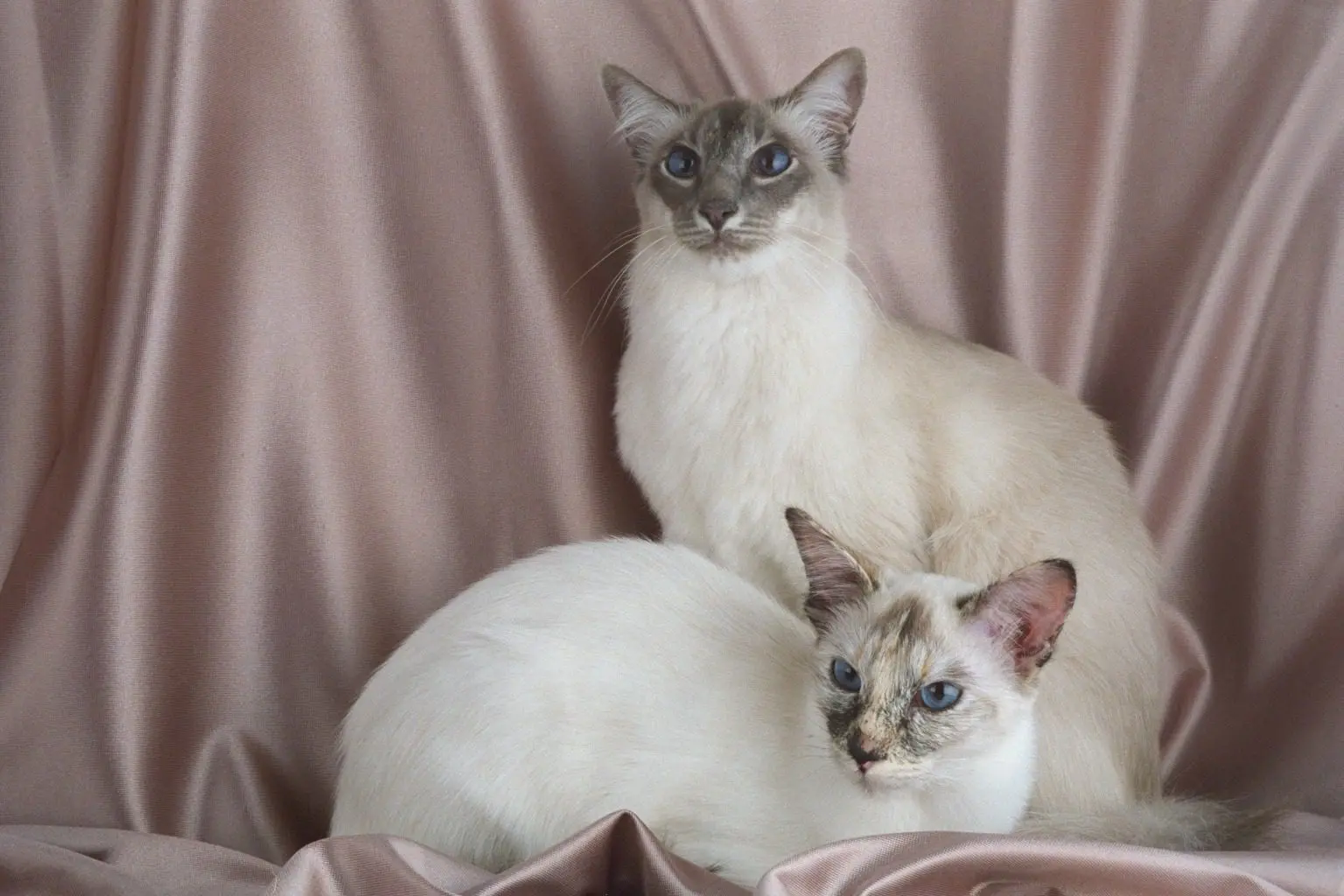
    If you want to buy Balinese cats, nowadays you will only find a few breeders that breed this breed in its original breeding way. In most breeders, cat lovers can buy the modern shape of the Balinese cat, whose body is narrower and its head is more wedge-shaped. A distinctive feature of Balinese cat it's her bright blue eyes, that seem especially alive and vibrant.

    The only coat pattern allowed is colourpoint: the body is one color, but the tips are a darker and different color. Although the only colors allowed in the original CFA standard, written in 1970, are accepted for the Siamese, that is to say, the seal, the blue, the chocolate and lilac, the vast majority of current standards also allow the cream, The candy, red, apricot and other non-traditional colors.

    blue eyes, of a unique beauty, are present regardless of coat color and are characteristic of the appearance of the balinese.

    Last, sexual dimorphism is moderately marked, the male being slightly larger than the female.

    Varieties of "Balinese cat"

    Balinese cat
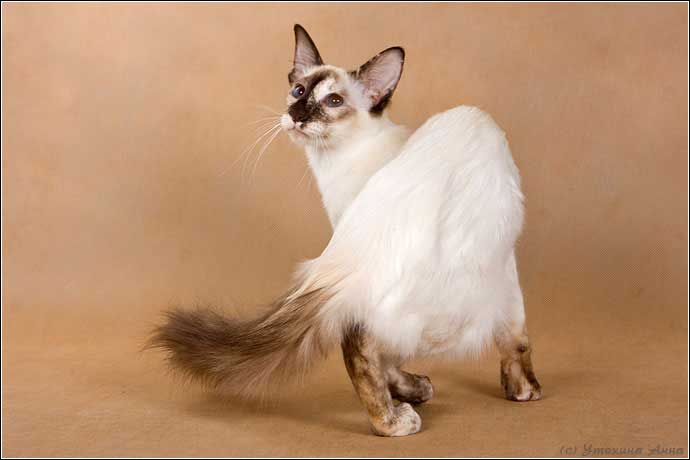
    Ghislaine of Chrysanthe, balinese cat, female, chocolate tortie point – Photographer:Anna Utekhina, CC BY-SA 3.0, via Wikimedia Commons

    The case of a Balinese cat with colors other than the seal, the blue, chocolate and lilac divide cat lovers from all over the world, as well as various organizations. While the International Cat Association (TICA) and the British Feline Fantasy Governing Council (GCCF) consider that these cats are indeed balinese, the American Cat Fan Association (CFA) consider from 1979 that all "Balinese" of different colors constitute a different race: that of Javanese cat.

    Despite the official merger in 2008 of the two breeds under the standard balinese of the CFA, the term Javanese still commonly used in the US. to define the balinese different colors from the original standard.

    This term was chosen in reference to the island of Java, neighbor of the island of Bali, in Indonesia: is a nod to the fact that the Javanese its near to balinese.

    Character and skills

    Balinese cat
    20-week old Balinese kitten – Flickr

    The balinese he is a very cuddly cat, who is lovingly attached to his family and does not leave their eyes. They demand a lot of attention, they follow their owner everywhere and constantly seek to play with him or be petted by him. It is sociable, accepts other pets without difficulty and enjoys the company of children, provided they have been taught to behave with animals.

    His constant need for attention makes him not tolerate loneliness well, and you can quickly adopt destructive behavior if you feel that your family does not give you the attention you deserve. So, not suitable for a teacher who is absent often.

    It is reputed to be sensitive to human emotions, and knows how to comfort a sad man or, on the other hand, share your moments of joy. They also know how to interpret voice intonations, so reprimands can hurt your sensitive nature, while encouragement reinforces the bond they have with their family.

    Activos, agile and curious, to the balinese they love to explore the corners of the house. These may include, you can crawl out from under your bed with a toy you lost weeks ago or find that old photo that fell behind your living room closet years ago. But, one of his favorite activities is to climb on the shoulders of one of the family members.

    He is also very smart and playful, making you an excellent candidate for teaching your cat tricks. It is very possible that he will learn something by himself, and then come proudly show your family what you can do.

    Despite his high energy level, It is a breed of cat that lives very well in an apartment -if the apartment is not tiny- and does not need outer space.

    Last, one of the main characteristics of the Balinese cat is your propensity to be vocal. They seem to have an opinion on everything, and they do not stop making it known, commenting from his food to what is on television or the cover of the book his master wants to read in a low voice. Although he has no problem giving long monologues, you expect to be listened to and risk starting over if you think your family has not paid attention to what you are saying. Both in terms of activity level and volume, they are definitely not one of the calmest cat breeds.

    Care "Balinese cat"

    Balinese cat
    Seal Point Balinese kitten at 13 weeks of age – Flickr

    The Balinese cat it is an easy-care breed of cat, since its long and silky coat does not tend to knot and sheds very little. So, a simple brushing once a week is enough.

    This brushing session is an opportunity to check that your teeth and eyes are clean., and to pay special attention to their ears, which often need to be cleaned with a damp cloth. It also, make sure its claws are not too long, and trim them if necessary.

    Indoor or outdoor cat?

    The Balinese cat not necessarily a cat that should be kept outside, since these graceful animals are sensitive to cold. But, as the balinese it is one of the most active cat breeds, your house should be as big as possible and, above all, be equipped with many climbing possibilities. The ideal is to have a well-protected balcony or garden, that can also be used for running. To the balinese cats they also like to get inspired by climbing trees outdoors, and a small pool of water and other play opportunities are always welcome for this breed of cat.

    How much activity does he need? "Balinese cat"?

    If you decide to have a balinese, it does not matter if it is a puppy or an adult, you should take your time with him. Intelligent breed cats are very affectionate and like to be the center of attention, so they will gladly dispense with the company of other cats, but not from human attention.

    So, the Balinese cat he needs a lot of pampering and you also have to take time to keep him busy. The balinese is very receptive to training and learns very quickly, which is why search games are so easy for him balinese how to learn new tricks or intelligence games. However, in regards to scratching opportunities, climb and play, you should also make sure your cat has quiet places to retreat to, since animals tend to prefer places where they have their favorite humans in sight.

    Health and nutrition

    The balinese is an exceptionally long-lived breed of cats, since many reach or exceed the 20 years of age.

    Despite this overall robustness, are at increased risk for certain diseases:

  • The progressive retinal atrophy (ARP), a retinal disease that causes blindness in cats;
  • The amyloidosis, a disease that causes kidney failure and is often fatal;
  • Achalasia or megaesophagus, a gastrointestinal disorder that can cause food blockages;
  • Squint, a vision disorder without serious consequences for the animal;
  • Acromelanismo, a genetic disease that causes changes in coat color based on skin temperature.
  • Last, obesity is a major risk to the health of the balinese, but can easily be avoided with a vigilant and responsible owner.

    Life expectancy

    15 to 20 years

    Food

    When it comes to feeding, should focus on a protein-rich diet. So, a high-quality cat food with a high meat and protein content is essential. Especially since balinese cats they are very active and need a lot of energy, a good diet is essential. As an alternative, can feed your balinese on a soft diet, but you should thoroughly familiarize yourself with the subject and also seek advice from a veterinarian, because only with the right composition can the needs of the cat be met in a specific way.

    For sale "Balinese cat"

    If you want to get a "Balinese cat", you should know that they are very affectionate and that these intelligent purebred cats want to keep busy. Do not underestimate the necessary care of the coat.. If you are thinking of buying a Balinese cat, should only be done by a reputable and responsible breeder.

    Responsible breeders ensure that the Balinese cats are raised in a family and are well socialized. It also, if you want to buy a cat of this breed, you should know that good breeders do not place their balinese in new homes before the end of the imprinting period.

    If you want to buy a Balinese cat, do not respond to ads from amateur breeders offering purebred cats for sale without papers. The balinese kittens should only be purchased from an experienced breeder who is a member of a breeding club. Since experienced breeders only sell cats that have been vet checked and are healthy, should expect to pay between 900 and 1100 euros for a balinese kitten.

    If you want to give a new home to a Balinese cat adult, with a bit of luck you can also find it in shelters and animal protection organizations. Also in this case you will have to pay a nominal fee.

    Videos "Balinese cat"

    Siamese Cat VS. Balinese Cat
    Siamese Cat VS. Balinese Cat
    6 things you should know about the Balinese cat
    6 cosas que debes saber sobre el gato Balinรฉs

    Alternative names:

  • Long-haired Siamese
  • Thai Siamese
  • โ–ท The world of Pets: Dogs, cats, birds, reptiles, amphibians

    Chartreux cat (Carthusian)
    Federations: LOOF, CFA, ACF, ACFA, TICA, FIFรฉ, WCF

    chartreux-cat

    Content

    Characteristics "Chartreux cat (Carthusian)"

    Coexistence is important that you have with your new friend. Before considering the acquisition of a cat of the breed "Chartreux cat (Carthusian)" you know certain factors. You must take into account their character, their need for exercise, their interaction with other pets, their care and if you have small children, their level of tolerance towards them.

    Joy

    3,0 of 5 stars (based on 1 review)

    Activity level

    3,0 of 5 stars (based on 1 review)

    Friendliness to other pets

    4,0 of 5 stars (based on 1 review)

    Friendliness to children

    4,0 of 5 stars (based on 1 review)

    Grooming requirements

    2,0 of 5 stars (based on 1 review)

    Vocality

    1,0 of 5 stars (based on 1 review)

    Need for attention

    3,0 of 5 stars (based on 1 review)

    Affection towards its owners

    4,0 of 5 stars (based on 1 review)

    Docility

    4,0 of 5 stars (based on 1 review)

    Intelligence

    4,0 of 5 stars (based on 1 review)

    Independence

    3,0 of 5 stars (based on 1 review)

    Hardiness

    4,0 of 5 stars (based on 1 review)

    History

    The Chartreux cat, also called Carthusian Cat, it is an ancient cat breed: exists for several centuries (at least the XVIII), but its history is quite difficult to trace. In fact, only recently has genetic research been able to prove its Persian origin.

    But, the vagueness of its history has allowed the existence of various accounts, before genetics has been able to clarify the true context of its appearance. The most popular is that it was created and raised in the Middle Ages by the monks of the Grande Chartreuse monastery, located north of Grenoble, in southeastern France. It is said that in his spare time, between prayers and the making of a famous green liquor, the monks were engaged in developing a calm breed of cat with a low-pitched meow, so as not to disturb during meditation sessions and moments of recollection. But, this beautiful story is really just a legend, since no written record of the monastery mentions the presence of any cat in its bosom. Another version is that the Carthusian cat was brought from the Near East by knights returning from the crusades between the 11th and 13th centuries..

    Whatever the true story of its appearance, its presence in Europe was first documented in the 18th century. In the Dictionnaire universel du commerce, de l’histoire naturelle et des arts et mรฉtiers, written by the Frenchman Jacques Savary des Brรปlons and published in 1723, we find the first reference to the name Chartreux in reference to the blue-robed cats. The author especially insists on his beautiful skin, which at that time was highly coveted for clothing.

    It is also mentioned in the Systema naturae, written by Carl von Linnรฉ and published in 1735. This Swedish naturalist, who initiated the scientific classification of species, dio al Chartreux el nombre latino de Felis catus coeruleus. Georges-louis leclerc, Earl of Buffon, Nor did he stop including it in his monumental Natural History, published in 1749 and the fruit of several decades of work. In fact, one of the volumes lists the four breeds of cats that were common in various European countries at the time: the domestic cat, Angora, the spanish cat and the Chartreux.

    But, some speculate that this cat - or at least one of its ancestors- was mentioned long before, in 1558, by the poet Joachim du Bellay. The latter owned a gray feline named Belaud, whom he described in his poem Epitaphe d’un chat like an excellent rat catcher. But, This description is too vague to suggest with certainty that it was a Carthusian cat. The fact that du Bellay specifies that it is "white below as an ermine" suggests even the opposite..

    According to the book Le chat des Chartreux published in 1980 and written by Jean Simonnet, a breed enthusiast, the Chartreux is originally from the Middle East, and an animal identified as the Syrian Cat by the Italian naturalist Ulisse Aldrovandi (1522-1605) is probably one of your ancestors. The book even includes an illustration - based on Aldrovandi's research- of this stocky blue Syrian cat with copper and almond eyes. The drawing also shows a mouse curled up at his feet., symbolizing the cat's strong hunting instinct. It was for this particular reason that the Chartreux cat became popular and that his descendant became a popular companion.

    The Chartreux it was probably brought to Europe by merchant ships from the Near East, more specifically from Persia (the current Iran), and quickly established itself as a French feline breed.

    Its survival in Europe is proof of its great strength. In the 18th century (or even long before), lived mainly on the street and was used in stables, shops or houses for your hunting skills. But, her beautiful skin was used in the textile industry, so it was hunted for many years and had to learn to adapt.

    Until the beginning of the 20th century, groups of stray cats with typical features of Chartreux continued to roam the streets of Paris and other parts of France, for example some Breton islands and the Massif Central. It was not until after World War I that lovers of the country's feline species decided to preserve the breed.. A great deal of work was done to gather as many individuals as possible with similar characteristics, and in the process a standard was developed.

    You can't talk about the origins of the Chartreux not to mention sisters Christine and Suzanne Lรฉger who, in 1920, discovered a group of blue shorthair cats in the town of Palais, in Belle-รŽle-en-Mer, off the coast of Brittany. This group, then wild, lived near the local hospital, -casually directed- by a religious order. The townspeople called them "the hospital cats.". Captivated by the beauty of these felines, the two sisters also began to work on the development of the breed, which was first shown at a cat show in Paris in 1931.

    The breed quickly became very popular with the public, but the Second World War was about to decimate it. After the war, none of these cats were found in the wild, but there were still some domesticated representatives. They were crossed with the British Shorthair cat blue, the Russian Blue Cat and the Persian cat, in order to maintain bloodlines without the risk of inbreeding problems.

    These crosses came very close to Chartreux cat and to the British Shorthair cat, that ended up being very similar. The Fรฉdรฉration Internationale Fรฉline (FIFรฉ), that in 1949 had recognized the Chartreux as a breed in its own right, came to merge the two standards in 1970, considering that the two cats were now one. Many enthusiasts of the Chartreux they expressed their discontent, especialmente a tal Jean Simonnet, who set out to restore the race to its former characteristics. In fact, the Chartreux has a shagier coat texture than the British Shorthair cat. It is also less massive, taller and has longer ears and tails. Simonnet founded a breed club in 1977, the Club of Chartreux cat, which still exists today and continues to work for the preservation of the breed. Thanks to these works, the cat regained its original appearance and continues today to correspond to the descriptions established at the beginning of its history. In 1977, FIFรฉ decided to separate the two races again and the Chartreux had its own standard. Today, the organization prohibits crosses between both races; a Chartreux cat can only be crossed with a Chartreux, and the same goes for the British Shorthair cat.

    The Chartreux entered the United States in 1970 by Helen Gamon de La Jolla, who imported the first representative from France to California and then started a breeding program. Still today, many of the lines present in North America are the result of his work.

    The International Cat Association (TICA) recognized the Chartreux in 1979, and the Cat Hobbyists Association (CFA) did the same in 1987.

    The Chartreux cat still a relatively unknown breed in North America, occupying the position 35 of 42 in the ranking of the most popular cat breeds in the United States, according to the number of annual registrations in the CFA. There has even been a certain decrease in interest, passing the post 25 to the 30 at the beginning of 2010.

    Not much better in Canada, with little more than 50 cumulative births registered with the Canadian Cat Association (CCA) between 2016 and 2018.

    The Chartreux cat, on the other hand, is much more present in what is considered its country of origin, that is to say, France. With an average of just over 2.000 births per year registered in the Livre Officiel des Origines Fรฉlines (LOOF), is even among the 10 favorite feline breeds of the French, representing something more than 4% of the population of purebred cats in the country.

    But, even in europe, its popularity does not seem to have really crossed the borders of France. In Switzerland, bordering country with France and partly francophone, only a few are registered 60 births per year in the Fรฉdรฉration Fรฉline Helvรฉtique (FFH). This figure is in decline, since there were more than 100 since the beginning of the decade of 2000 until mid 2010.

    The situation is not much better in Britain, with less than 50 records per year in the Governing Council of the Cat Fancy (GCCF). But, This can be explained by the fact that the body has only recognized race since 2017.

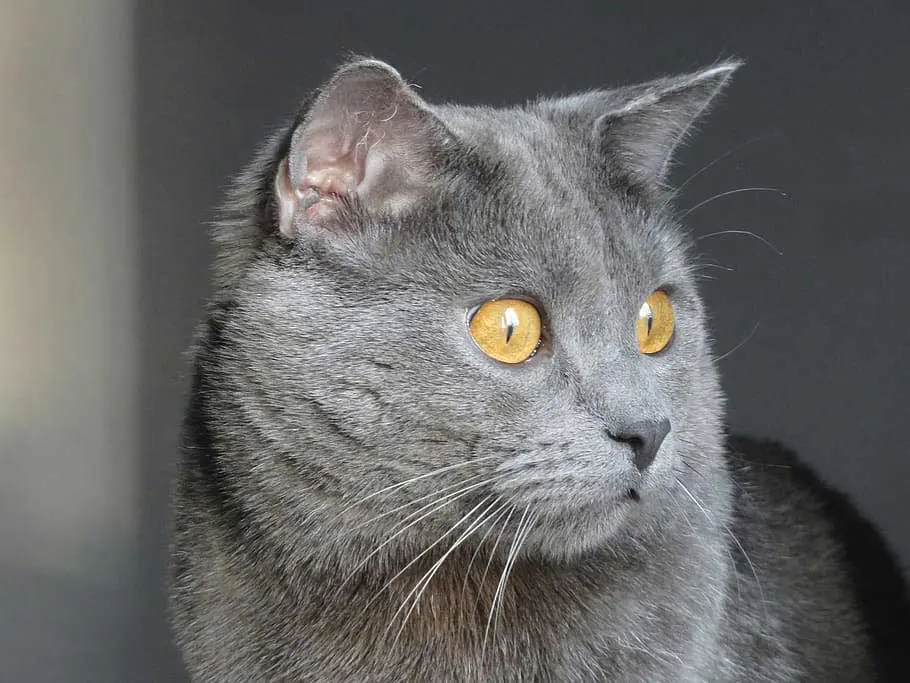
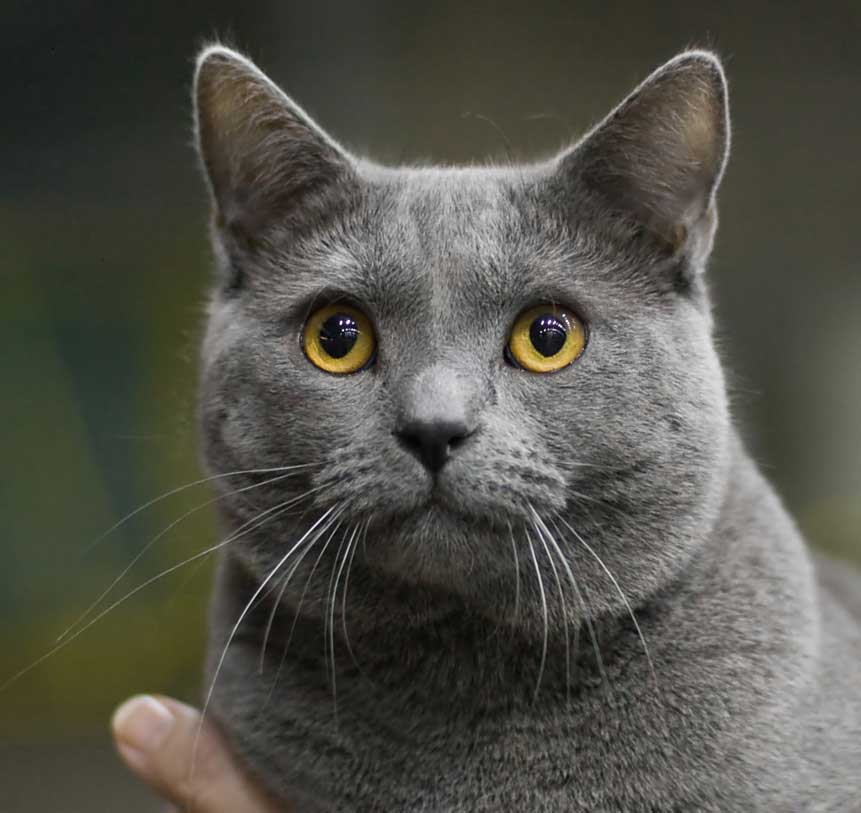
    Chartreux cat
    Chartreux cat

    Physical characteristics

  • The Chartreux is a medium-sized cat with a general appearance that, without being rough, it's quite primitive, what gives it robustness and solidity. It is medium in size, with broad shoulders and a deep chest. Despite these physical characteristics, not at all clumsy, it is extremely flexible and agile.
  • The legs they are relatively short, straight and very robust. Feet are round, medium-sized, and they seem quite small compared to their muscular overall look. This feature sometimes leads to an unflattering comparison to a potato on a stick..
  • The tail It is of medium length, heavy at the base and tapers to the rounded tip.
  • The head it is round and wide, with a powerful jaw and well-furnished cheeks. Your forehead is quite straight, just like your nose, which is medium length. It has a friendly expression, and the shape of his mouth could suggest that he smiles constantly.
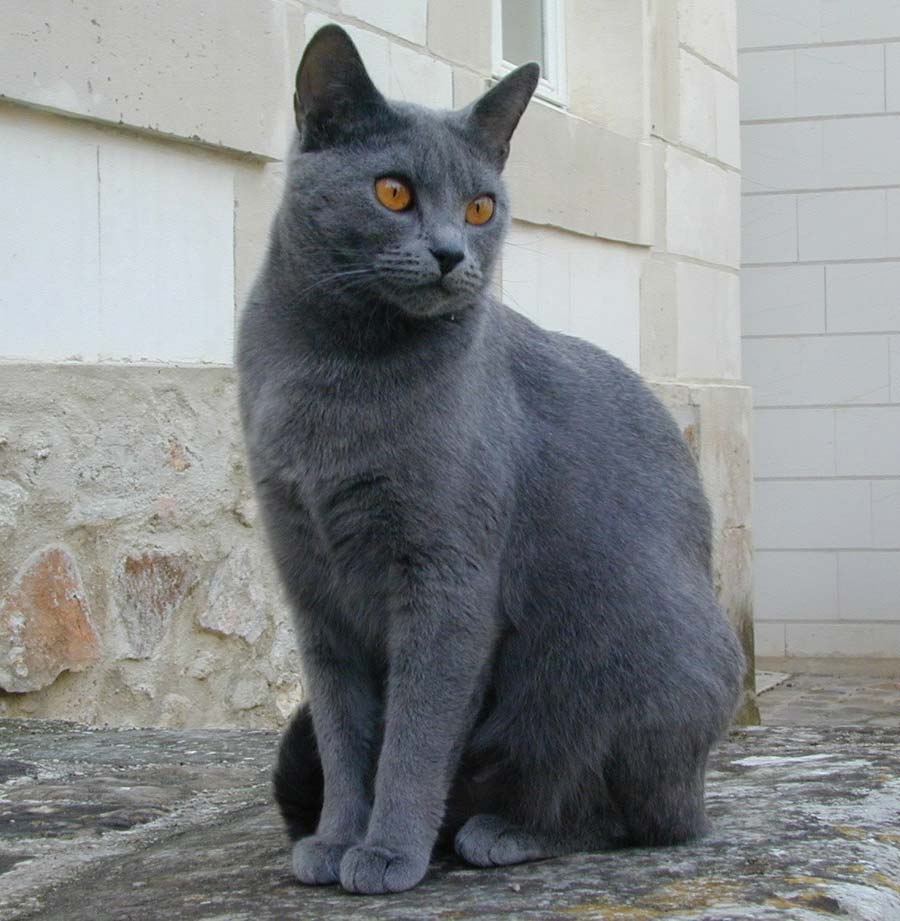
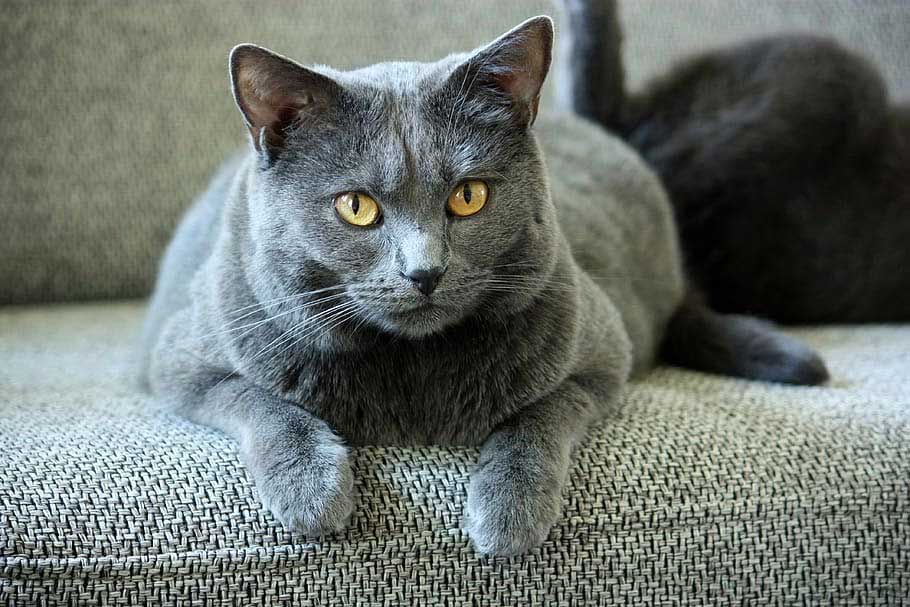
  • Their ears they are medium in size and are placed high on the head. The eyes are rounded and wide, which gives a lively and intelligent expression. Slightly curved up, they can be orange, copper or gold, and they must be bright. The color of the eyes, along with the charcoal fur, is the hallmark of this cat, along with coat color.
  • The fur consists of a very dense undercoat and a short, slightly woolly topcoat. The coat of the Chartreux is especially water-repellent, which protects you from both moisture and water. But, the appearance and the amount of coat depend on both the age and the sex of the individual. These may include, an adult male has a full coat, while females and juveniles under 2 years have a softer and finer coat.

  • In any case, the cat's coat color is the same: blue, uniform, no stains and preferably shiny. All shades of blue are accepted, and slight silver reflections are appreciated. In kittens, slight tabby tones can be seen, but these should disappear as they approach adulthood.

    Last, It should be noted that the Chartreux grows slowly, and only reaches full physical maturity among 4 and 5 years of age. This is especially true of the male., whose growth is slower than that of the female.

    This breed is also characterized by a sexual dimorphism very marked, since the male is usually much heavier and taller than the female.

    Size and weight

  • Male size: Of 27 – 33 cm.
  • female size: 25 – 30 cm.
  • Male weight: 4 – 7 kg
  • female weight. 3 – 5 kg

  • Chartreux cat
    Chartreux cat

    Character and skills

    The Chartreux cat could be compared to a mime: quiet but very communicative.

    Before they were used as hunters, are now employed as an excellent family company, although they continue to show their predatory abilities to protect the house and garden from rodents (and from vermin in general) whenever the opportunity presents itself. Its popularity as a pet is not free, as this loyal and very loving friend quickly finds a place in the home. They are known to live alongside their owners and have a sometimes close relationship with them, following them around the house and being aware of everything that happens.

    When they get home, never fails to greet them with his enigmatic smile and soft purr. Itร‚ยดs, in effect, a purring cat of the first order, who knows very well how to express his satisfaction and well-being by this means. This well-being can also be communicated: this is the miracle of purr therapy.

    Apart from this propensity to purr a lot, the Chartreux cat not at all a noisy companion. It's not the kind of animal that meows all the time, for example to order food. But, often opens his mouth and pretends to make noises, but no sound comes out.

    The Chartreux much appreciates the attention, especially if it comes in the form of stroking and scratching under the chin or between the ears. But, as with food, they are not usually the kind that ask for it, content with what is given to them. It is important to get used to observing and paying attention to it, since he is not one of those who express his discontent, your discomfort or even your suffering, for example when you are the victim of a health problem.

    In general, has a uniform personality (neither exuberant nor too shy) and is much more adaptable than most of his peers. These characteristics make it the favorite of truckers looking for animal company on long trips..

    They can easily stay home alone while their owner is at work, but they are even happier if they have a playmate to entertain them during those times. They are quite sociable and generally get along well with other cats.. Living with a dog is also possible, as long as he is not too aggressive with him. On the other hand, in view of his strong hunting instinct, trying to get it to share the same roof as a rodent or bird is not recommended, since the experience could be a failure.

    Inside to the family, this feline tends to form a very strong bond with a particular person. But, remain friendly and cuddly with everyone else. As for the children, get along with them, as long as they are calm with him. So, it is necessary to teach them to behave with this cat, who especially does not like being carried around the house by unruly children. Having said that, even though i'm irritated, is never aggressive: if you feel embarrassed by someone's behavior, it just walks away.

    If a stranger comes to the house, does not rush to greet him, like some cats do, not the kind of event to blow it up. Has a little trouble accepting the newcomer, but then he goes on quietly with his life, without looking too annoying.

    Your character traits, in particular their calm and collected character and the fact that they love to spend time on their owner's lap, make them an ideal cat breed for seniors. But, do not ignore the need for activity of this playful animal with a highly developed sense of humor. They love to playfully interact with their humans and are especially fond of feathery toys that swirl in the air., which stimulates one of your strongest instincts: the hunter. In the same line, chasing balls is also one of his favorite activities. He is a great climber and is known to be capable of impressive stunts during play sessions..

    In addition to physical exercise, likes to stimulate himself with games that test his great intelligence. It is this intelligence that makes him quickly recognize your name and teach you tricks.. But, do not deprive yourself of learning by yourself, as when it comes to inserting drawers or opening doors… Wide awake and always alert, he is fascinated by everything that happens inside and outside the house. Loves looking out the window or watching TV shows, for example.

    Don't be fooled by its quiet and discreet character. They are cunning and clever with their paws, But they will soon flee from their owners when curiosity wins them over and the opportunity presents itself.. In fact, has an amazing ability to find ways to get out of the house, including opening doors or shutters.

    It follows from the above that you need an environment with many stimuli and that access to the outdoors is highly recommended for your physical and psychological well-being..

    As long as they are comfortable on their legs, the Chartreux they are easy to conform and are not the boisterous type. It is fairly easy to train and understands basic household rules very quickly.. He even seems especially aware of them, as if he wanted to preserve his reputation as a polite and respectful partner.

    Chartreux cat
    IC Blue Melody Flipper [NO] macho EX1 CACIB, Carthusian male featured in Vantaa feline show in 2008. – Heikki Siltala – catza.net, CC BY 3.0, via Wikimedia Commons

    Grooming and caring for the "Chartreux cat (Carthusian)"

    The Chartreux it is an easy cat to care for. Apart from their shedding periods (in spring and autumn), she changes very little, and a weekly brushing is more than enough. It is better to comb than brush your cat's fur to maintain its beautiful woolly texture. Another days, just run your hand through its fur to remove the little hair that falls out, and he loves it!

    A bath is seldom necessary, but if you have to, either because it has become dirty or because a harmful product has been spilled on its fur, you have to let some time pass: their fur, which is especially waterproof, it takes a long time to get really wet.

    Otherwise, as with any cat, the eyes should be examined once a week and cleaned with a cloth soaked in water.

    The same goes for the ears.: weekly cleaning is recommended to limit the risk of infection.

    Last, you need to maintain your cat's nails by trimming them when necessary, normally every fortnight. In very active and activist people, this may not be necessary, since natural wear will take effect; However, it is advisable to check them regularly to avoid them becoming too long and hindering your movements or even injuring you.

    Indoor or outdoor cat?

    Like any indoor cat, the Chartreux he is delighted to go abroad, but their desire to do it is not so developed. But, if you can give the cat a safe opportunity to explore the outdoors, should let you do it. Like outdoor cats, they spend a lot of time outside and the males, in particular, they have a great territory. When the opportunity presents itself, the gray cat likes to hunt mice or other small animals to take them to its owner. The robust and dense coat keeps the velvet paws warm outside even in winter, which makes them ideal cats for the outdoors. But, if they are given enough space and opportunities for activity, they can also be happy as indoor cats.

    How much activity does he need? "Chartreux cat (Carthusian)"?

    One Carthusian cat with access to the outside you can easily entertain yourself and like to take long walks in nature. If you only stay inside, you will have to offer them appropriate activities as a substitute. These beautiful cats are happy to accept smart toys and also like to chase toy mice or balls. At an early age, with a little patience, the cat can even be taught to recover. But, the Chartreux he is an easy and calm cat, you don't need to be constantly entertained. Especially in old age, prefer to lie down in a warm place and enjoy the peace and quiet.

    Health and nutrition

    The Chartreuxx is in good general health. It is a robust cat breed, who doesn't get sick often.

    But, is especially exposed to certain diseases:

  • The renal polyquistosis, characterized by the appearance of cysts that compress the kidney tissue and prevent the proper functioning of the kidneys. This inherited disease can be detected by genetic testing. So, when adopting a kitten from a breeder in Chartreux, it is strongly advised to ask for the results of genetic tests on the subject to minimize the probability of adopting an individual who develops the disease;
  • The struvite stones, which consist of the formation of "pebbles" in the urine. If these stones get stuck in the urethra, difficulty urinating, vomiting, coma and even death in the most severe cases. In general, females are more affected by this disease than males;
  • Patella luxation, a malformation that causes the patella to slip out of the femoral groove. Mild cases are not really a problem, since they are not painful, but severe cases cause lameness and can be relieved with surgery.

  • Chartreux cat
    Chartreux cat

    Life expectancy

    13 to 16 years

    For sale "Chartreux cat (Carthusian)"

    You buy a Carthusian cat, will commit to the animal for a long time, with a life expectancy of more than 15 years.

    Before buying, you must make sure and know all the characteristics of the breed. If you want to buy a Carthusian cat purebred and healthy, it is best to go to a reputable breeder. Ideally, go to a breeder who is a member of the Association of Breeders and Lovers of the Chartreux and have experience in breeding. Here you will pay a higher price, 700 EUR, but you will be guaranteed to get a healthy, purebred kitten.

    Videos "Chartreux cat (Carthusian)"

    Carthusian cat (Chartreux) - homemania

    Cats 101 - Chartreux

    Alternative names:

    1. Chartreux cat (English).
    2. Chat Chartreux, Chat des Chartreux (French).
    3. Kartรคuser Katze, Kartรคuser, Malteserkatze (German).
    4. Gato Chartreux, Cartuxo (Portuguese).
    5. "Gato Chartreux (Cartujo)", Cartujo (espaรฑol).

    โ–ท The world of Pets: Dogs, cats, birds, reptiles, amphibians

    Donskoy (Don Sphynx)
    Federations: LOOF, TICA, FIFรฉ, WCF

    The Donskoy they are very loyal; in fact, their loyalty is often compared to that of dogs.

    Don Sphynx

    Content

    Characteristics "Donskoy (Don Sphynx)"

    Coexistence is important that you have with your new friend. Before considering the acquisition of a cat of the breed "Donskoy (Don Sphynx)" you know certain factors. You must take into account their character, their need for exercise, their interaction with other pets, their care and if you have small children, their level of tolerance towards them.

    Joy

    4,0 of 5 stars (based on 1 review)

    Activity level

    4,0 of 5 stars (based on 1 review)

    Friendliness to other pets

    4,0 of 5 stars (based on 1 review)

    Friendliness to children

    4,0 of 5 stars (based on 1 review)

    Grooming requirements

    2,0 of 5 stars (based on 1 review)

    Vocality

    2,0 of 5 stars (based on 1 review)

    Need for attention

    4,0 of 5 stars (based on 1 review)

    Affection towards its owners

    5,0 of 5 stars (based on 1 review)

    Docility

    5,0 of 5 stars (based on 1 review)

    Intelligence

    4,0 of 5 stars (based on 1 review)

    Independence

    2,0 of 5 stars (based on 1 review)

    Hardiness

    3,0 of 5 stars (based on 1 review)

    History

    Until the end of the years 80, the Canadian sphynx it was the only known hairless cat. The discovery of Donskoy in Russia this situation changed. This cat is also known as Don Sphynx or Don Hairless, in reference to the place where it first appeared and its resemblance to the Sphynx cat.

    The history of the appearance of Donskoy It is worthy of a children's story: in 1987, in the city of Rostov-on-Don, located in southwestern Russia, near the Sea of รขโ‚ฌโ€นรขโ‚ฌโ€นAzov and the Black Sea, a teacher named Elena Kovaleva took in a kitten that had been mistreated by children who had used it as a soccer ball. Called her Varvara. As the kitten grew, he started to lose his hair, suggesting skin diseases or parasitic infections such as ringworm. Various treatments were administered to try to fix the problem, But it was in vain. When Varvara gave birth to her first litter of kittens a few years later, some were born with hair and others without hair.

    As the kittens grew, those born with hair also began to lose it, as his mother had done. This particularity caused a strong rejection by its owners, that most of them decided to abandon them because they considered that they were in poor health. It was then that a breeder named Irina Nemikina, seduced by these original looking cats, decided to recover one of them and start a breeding program to make it a breed in its own right. The cat in question and its descendants then interbred with the Persian cat, European shorthair cat and the Siberian cat to expand the range.

    The gene responsible for the hairlessness of Donskoy (Don Sphynx) is dominant, meaning both parents don't have to be hairless for their offspring to be. For this reason, the cats obtained from these crosses kept the particularity of their ancestor Varvara, although they also had the blood of long-haired cat breeds in their veins, like persian. This genetic characteristic distinguishes the Donskoy of the Sphynx, that it can only transmit its hairless appearance to its offspring if both parents have this characteristic: en el Donskoy, the gene that causes this morphological characteristic is recessive.

    The Donskoy also crossed with him Oriental shorthair cat to create a hairless oriental: that's how he was born Peterbald cat in 1994 in St. Petersburg, the city that gave it its name.

    The Don Hairless It was recognized in 1997 by the World Cat Federation (WCF), and then in 2005 by the The International Cat Association (TICA). But, was not up 2016 when the latter allowed him to participate in cat shows organized under its auspices. The International Feline Federation (FIFรฉ) also recognized the breed in 2011. On the other hand, the Cat Fanciers’ Association (CFA) y el Governing Council of the Cat Fancy (GCCF) they have not yet taken the step.

    Hereinafter, some organizations will not allow any crossing of the Donskoy with other breeds. This is the case of the WCF and the Livre Officiel des Origines Fรฉlines (LOOF) French. The TICA allows crossing with street cats.

    Despite its recognition by some leading organizations, the Don Sphynx still one of the rarest cat breeds. These may include, in France, only 126 cats have registered in the LOOF between 2003 and 2019. More broadly, worldwide, currently there are only about fifty breeders of Donskoy (Don Sphynx), while there are more than 1500 for him Sphynx.

    Donskoy
    Donskoy – Nickolas Titkov from Moscow, Russian Federation, CC BY-SA 2.0, via Wikimedia Commons

    Physical characteristics

    The Donskoy (Don Sphynx) is a midline cat with a semi-foreal subtype. He has an unusual physique, compact, elegant and athletic. His muscular form, strong bone structure and relatively broad torso and rump give an impression of strength. Groin area and abdomen are well defined, so that the abdomen resembles a "belly" where fat is stored during the winter. In fact, despite the impression of vulnerability given by the absence of fur, the Don Sphynx is actually a robust breed.

    They have skin dotted with "wrinkles", but very pleasant to the touch, as it is warm and velvety. These numerous wrinkles are characteristic of the breed and are due to its great elasticity.. They are mostly seen on the head, cheeks, the double chin and under the chin, as well as on the top of the head, with vertical pleats on the forehead, that separate the ears and then spread out in horizontal folds around the eyes. In the body, hug the base of the neck, the chest, the base of the tail, the back and the side of the legs, and then they go from the flanks to the lower abdomen and groin.

    There are four varieties of Donskoys: one is born and remains hairless (the Rubber Bald), another is born with hair that is losing as it grows (the Flocked), a third keeps hair only in some places on the body (the Velour), and the latter retains much of its fine fur as an adult (the Brush).

    In all four cases, the lightest coat of the Donskoy (Don Sphynx) makes it a hypoallergenic cat breed, which means that the risk of cat allergy is much lower than with other breeds. But, you have to know that there is no zero risk and that all cats can cause an allergic reaction, even the ones who are completely naked.

    It also, it is the only breed that potentially acquires winter fur. During this time of year, a soft fur may appear on the chest, as well as hair on the tips of the legs. When the weather heats up, this fur disappears again, and the cat returns to its usual appearance.

    In addition to this feature, the skin of the Don Hairless has original similarities with that of humans: sweat in hot weather and can even tan in the sun.

    Their Paws they are shorter than the rear ones, but they are still well proportioned to the rest of the body. At the end of the Paws there are surprisingly long fingers separated by membranes, with large inward curved foot pads. The set does not differ from the fingers of a monkey. The tail is moderately long, fine and sharp from base to tip.

    The head is V-shaped and angular. The eyes are almond-shaped and the ears they are very big.

    Last, this breed is characterized by a certain sexual dimorphism. Males tend to be longer and more muscular than females. It also, have stronger cheeks and a neck, wider shoulders and head.

    Size and weight

    • Male size: 20-25 cm.
    • female size: 20-23 cm.
    • Male weight: 3-7 kg
    • female weight: 3-7 kg

    Varieties of "Donskoy (Don Sphynx)"

    Contrary to what his hairlessness as an adult might lead you to believe, actually exist 4 varieties of Donskoy (Don Sphynx), 3 of which have fur at birth, before it disappears totally or partially:

    • The Donskoy Rubber Bald completely hairless from birth and remain so throughout their lives;
    • The Donskoy Flocked is born with a light down that is similar to that of a Siamese cat touch. This may go away over time and the cat may bald.;
    • The Donskoy Velour is usually born bald on the top of the head and with a soft, wavy coat all over the body. During the first year of life, the hair becomes progressively stiffer and disappears, except for the hair on the head, legs and tail. Some individuals lose their hair completely and go hairless like the Donskoy Rubber Bald;
    • The Donskoy Brush retains part of its fur as an adult. The coat is usually smooth, but it can also be wavy. Baldness usually appears on the head, upper neck and back.
    Cat Sphynx
    Cat Sphynx – Dmitry Makeev, CC BY-SA 4.0, via Wikimedia Commons

    Character and skills

    If the appearance of Don Sphynx can arouse surprise, and even some negative preconceptions for their originality, worth going further. In fact, this cat is not only distinguished by its appearance: he is also endowed with immense qualities that make him an especially appreciated life partner.

    The Don Sphynx not only is he a smart cat, but also has a temperate and affectionate character. The absence of fur does not prevent him from enjoying the caresses. It also, its soft and warm fur is very pleasant to the touch. It also, with his good character, grooming your cat will not become a test of strength, since it is easy to handle.

    Being active, especially curious and lively, explores its environment with enthusiasm and is very prone to inventing all kinds of games in search of new stimuli.

    The Donskoy it is also a very sociable breed of cat. Enjoy the company of its owners and the visitors that pass by, whose attention you would like to have.

    His sociability is not limited to humans, since he is also willing to share his space and time with other animals. It is, Therefore, of a breed of cat suitable to live with a dog or other pet, which may simply be one of your companions. It is even especially advisable to offer him a playmate in case of long and frequent absences, to avoid being isolated at home too often and for too long. In the end, he is in great need of company, whatever form it takes.

    It must be said that this cat has plenty of affection, and is particularly loyal to its owners. He deserves the nickname "dog cat", since it likes to follow its owners in all their daily activities. This closeness to its owner also means that it is possible to teach your cat commands or tricks., that you will probably gladly carry out.

    The other side of the coin of his kindness and his total lack of aggressiveness is that he is not very suspicious of the danger that possible attacks from other cats or other animals could represent.. For this reason, it is a recommended cat for life in a flat rather than for life outdoors.

    Care "Donskoy (Don Sphynx)"

    Due to the lack of hair, the care of Donskoy they are somewhat more complex. It is recommended to bathe the animals every fortnight approximately. There is no consensus on the exact procedure for bathing. The use of a mild body soap or mild facial soap is often recommended.. It is important to use a neutral pH soap. Too frequent baths should be avoided. If the correct pH is not respected, skin problems may occur.

    With the time, a thin film of sebum forms on the skin because there is no fur to absorb the oil produced. The film provides some protection, but it looks unsightly. It can be cleaned in the shower or with the help of a damp cloth.. If a cloth is used, cleaning is done quickly. But, the effect is less durable than in the shower. You can use a microfiber cloth and water to clean. Soap should not be used. How animals are used to bathing from an early age, showering is usually not a problem. The water should be lukewarm.

    You can place your Donskoy in the shower tray and have a towel spread out. Spread some washing lotion on the cat's back. Now you have to run a little water down your back and then you can massage the lotion. Avoid getting water into the nose, mouth, ears or eyes. Rinse the water well and place the cat on the prepared towel. It is important that you dry the cat well.

    It also, as with any other race, it is important to check the condition of your ears at least once a week. Dirt or excess earwax can accumulate in the cartilage folds and cause discomfort or even infection.. Cleaning your cat's ears whenever they look dirty will go a long way in preventing this from happening..

    Similarly, it is advisable to check your cat's eyes once a week to detect any abnormalities or infections, and clean them when necessary.

    donskoy
    Male donskoy/don sphynx – ooznu, CC BY-SA 2.0, via Wikimedia Commons

    Indoor or outdoor cat?

    Keep your Don Sphynx inside. These cats are not only susceptible to problems with extreme temperatures, but also, because they are rare, someone may be tempted to steal them.

    It also, Your cat's friendly nature means she may not assess dangers properly.

    How much activity does he need? "Donskoy (Don Sphynx)"?

    To the Donskoy they love to be manipulated by humans and will always want to be the center of attention when you are at home. It is vital to understand that the breed needs company, so this is not the best cat to adopt if you are away for long periods of the day due to work commitments or if you travel a lot.

    The Donskoy es an intelligent and inquisitive gato, so you'll also want to provide an environment where the breed can explore and seek new adventures on their own. The strategic use of smart and interactive toys can help keep your cat stimulated and satisfied..

    Health and nutrition

    The Donskoy have an elevated body temperature and, Therefore, is better protected against infection.

    The Donskoy adults are relatively immune to many diseases. But, make sure that the cat does not stay in a drafty place. They suffer much less from heart disease than their peers. The heart is healthy and strong in many representatives of the breed.

    People with allergies to cats or cat hair do not usually react allergic to it. Donskoy. But, it has been observed that people who did not previously have an allergy may have allergic reactions specifically to Don Sphynx.

    Since when buying a cat you commit to the animal, you must exclude the possibility that it is allergic. Maybe you know a cat of this breed in your circle of acquaintances and you can try to get in touch with him. Or you can ask a breeder or animal shelter to check the cat's reaction..

    The Donskoy they have no eyelashes, so dust can quickly build up around the eyes. It is usually discharged through tear fluid., which is present in large quantities. In cats of this breed, eye slits are narrower, which means that tear fluid can collect in the corners of the eyes.

    Donskoy Sphinx
    Kitty of the sort Donskoy Sphinx – Alex Rave, CC BY-SA 2.5, via Wikimedia Commons

    Life expectancy

    Of 12 to 15 years

    Food

    The Donskoy has no particular sensitivity to food: is quite happy with industrial cat food.

    But, due to its lack of fur, has more difficulty than other breeds in regulating its body temperature and, Therefore, you should eat more at low temperatures to compensate. So, your diet should not only be of good quality, but also rich. Having said that, despite your greed, it is not a breed of cat with a pronounced risk of being overweight.

    For sale "Donskoy (Don Sphynx)"

    The price of a kitten Donskoy ranges between 1200 and 1500 EUR. This high price compared to most other breeds is largely due to their great rarity..

    There does not appear to be any significant price difference between the two breeds, nor between males and females. But, the number of representatives of the breed and transactions is reduced, so it remains uncertain to extract any general rule.

    Videos "Donskoy (Don Sphynx)"

    Cats 101 Animal Planet - Don Sphynx ** High Quality **
    Cats 101 Animal Planet – Donskoy
    Donskoy cat or Don Sphynx or Russian Hairless.

    Alternative names:

    • Don Hairless, Don Sphynx, Russian Hairless, Donskoy

    โ–ท The world of Pets: Dogs, cats, birds, reptiles, amphibians

    Himalayan cat
    Federations: ACFA, TICA, WCF

    The Himalayan cat it is an extremely sweet pet, playful and gentle that can be adapted to practically any type of home.

    Himalaya

    Content

    Characteristics "Himalayan cat"

    Coexistence is important that you have with your new friend. Before considering the acquisition of a cat of the breed "Himalayan cat" you know certain factors. You must take into account their character, their need for exercise, their interaction with other pets, their care and if you have small children, their level of tolerance towards them.

    Joy

    3,0 of 5 stars (based on 1 review)

    Activity level

    1,0 of 5 stars (based on 1 review)

    Friendliness to other pets

    4,0 of 5 stars (based on 1 review)

    Friendliness to children

    4,0 of 5 stars (based on 1 review)

    Grooming requirements

    5,0 of 5 stars (based on 1 review)

    Vocality

    1,0 of 5 stars (based on 1 review)

    Need for attention

    4,0 of 5 stars (based on 1 review)

    Affection towards its owners

    5,0 of 5 stars (based on 1 review)

    Docility

    5,0 of 5 stars (based on 1 review)

    Intelligence

    2,0 of 5 stars (based on 1 review)

    Independence

    2,0 of 5 stars (based on 1 review)

    Hardiness

    2,0 of 5 stars (based on 1 review)

    History

    Also know as Colourpoint Persian, the Himalayan cat It is a breed of cat that combines the colors of the Siamese cat with the Traditional Persian cat. It is a cross between semi-long-haired Siamese twins and blue and black persian cats.
    Some feline associations, as the American Cat Fanciers’ Association (ACFA), they consider it a separate breed, while others, as the Cat Fanciers’ Association (CFA), they see it rather as a variety of Persian cat, from which it only differs in the color of the coat. Its name is due to the similarity of its coloration with that of a domestic rabbit also called Himalaya.

    Its origins date back almost a century., when breeders dreamed of combining the colors of the Siamese Cat with the Traditional Persian cat. At the beginning of the year 30, in United States, the Dr. Clyde Keeler, researcher at Harvard University School of Medicine, undertook a hybridization program for this purpose, in collaboration with a breeder, the Mrs. Virginia Cobb. The results were not entirely satisfactory and the experiment was interrupted by the Second World War.. After the war, another passionate breeder, the Mrs. Marguerita Goforth, took the torch and managed to create a ยซColourpoint Persian catยป which was recognized in 1957 by the CFA and ACFA as a new breed called ยซHimalayanยซ. At that time, the breeder had to prove the existence of three generations of ยซColorpointยป pure so that this line was accredited as a new breed and could participate in competitions and championships.

    In the meantime, in Britain, Brian Sterling-Webb, another enthusiastic breeder, worked for a decade on the development of a similar hybrid that, in 1955, was registered as a separate breed called ยซColorpoint longhair cat" for him Governing Council of the Cat Fancy (GCCF).

    Over the next decade, the popularity of Himalayan cat grew significantly. But, breeders began to interbreed only with himalayan. As a result, the characteristics inherited from Persian cat they were lost in favor of individuals with a less flattened face. This led some breeders over the years 70 to use occasionally pure persian cats at the crosses, in order to increase again the characteristics of this breed in the Himalayan cat. This was so successful that the cats resulting from this selection ended up having all the characteristics to compete in competitions. Persian cat. Inevitably, the question arose: should he Himalayan cat still consider themselves a breed unto themselves?

    In response to this question, the CFA decided on 1984 consider the Himalayan as a subdivision of the Persian cat, keeping your name. It was followed by World Cat Federation (WCF). But the ACFA, as well as the International Cat Association (TICA), they kept it as a separate race.

    Today, the Himalayan cat still a very popular cat in North America, but less in Europe.

    Physical characteristics

    Himalayan cat
    Himalayan cat – Joseph Morris, CC BY-SA 4.0, via Wikimedia Commons
    The Himalayan cat, like the persian, it is a solid and round cat, with short legs, short tail and small, rounded ears. According to American Cat Fanciers Association (ACFA), must have five fingers in front and four behind.

    As with the Persian, There are two types of himalayan: the classic โ€œbaby faceโ€ and the flatter โ€œPekingese faceโ€, which gets its name from its similarity to the dog Pekingese.

    Most of the cat's coat is white or cream in color, but there are some varieties, according to the different shades of the tips of the coat and the extremities of the body.

    Size and weight

    • Size: 30 cm.
    • Weight: Of 3 to 6 kg

    Varieties of "Himalayan cat"

    Distinguished by the color of the extremities of the body and the tips of the coat, the main Himalayan varieties are

    Blue Point:
    • the tips of the fur are blue, like feet, the ears, tail and face. The rest of the body is slightly bluish white, and the eyes are bright blue.
    Lilac Point:
    • In this variety, the extremities of the body and the tips of the coat are paler and lilac than blue. The rest of the body is whiter and brighter than in the Blue Point.
    Seal Point:
    • The extremities of the body and the tips of much of the body are black or dark brown (similar to the color of the seal, that inspired his name). It is the variety whose color is most similar to that of the Siamese.
    Chocolate Point:
    • The tips of the body and the tips of the coat of this variety are chocolate brown, a shade lighter than Seal Point. The rest of the fur is also whiter and brighter than that of the Seal Point. The color of the foot pads is a characteristic that strongly distinguishes the two varieties.: those of the Chocolate Point they are pink, while his Seal Point are dark brown.
    Red Point o Flame Point:
    • The dominant color of the limbs and points of this cat is red, which can be orange. The rest of the body is white or cream.
    Cream Point:
    • This variety of Himalayan is a diluted version of Flame Point. The coloring of the mask and the extremities is reddish or pale orange, while the rest of the body is white or slightly cream.

    Character and skills

    Himalayan cat
    Himalayn cat named โ€˜Monte.’ Flickr
    The Himalayan cat it is a wonderful indoor cat. They are gentle, calm and sweet temperament, and they also have a playful side. Like him Siamese cat, to the himalayan he loves to play fetch, and a crumpled piece of paper or a cat toy will entertain them for hours, or until your next nap.

    The Himalayan cat They are devoted and depend on their humans to accompany and protect them. They crave affection and love to be petted and groomed., which is lucky, since all owners of this breed of cat spend part of the day doing just that.

    Like his Persian brethren, they are docile and will not harass you for attention like some breeds do. They have the same level of activity as the Persian cat and they are not noisy like the Siamese cat.

    Grooming and caring for the "Himalayan cat"

    If you are not willing to spend some time on daily grooming, the Himalayan cat probably not the right cat for you. Since they have long, silky hair that tangles and weighs down easily, the fur of the himalayan should be brushed with a sturdy, wide-toothed comb daily. This will remove and prevent tangles and mats, and will help remove dirt, dust and debris. It is also recommended that the Himalayan cat visit a professional groomer every few months to make sure his coat is healthy and clean. The good news is that himalayan they love to receive the attention of their owners, which makes grooming easy and is an excellent bonding experience for the owner and his feline companion.

    You can protect your legs and your furniture by trimming your nails Himalayan regularly. Examine your legs weekly and trim them if necessary to keep them healthy and injury free. Also spend time a week examining your cat's ears. The pointed ears of the Himalayan are susceptible to trapping dirt and debris, which can lead to infections and other ear problems in the future. If you find debris in your cat's ears, use a pet ear cleaner and a cotton pad to remove them carefully. Never use a cotton swab in your cat's ears, as it can severely damage the delicate structures of the inner ear. If the ears are very red or swollen, very dirty or smell funny, take him to the vet asap.

    The himalayan have low exercise needs, but they are extremely playful and will do mischief if they get bored. You can keep them entertained and engaged by providing plenty of cat toys and a few minutes of play each day.. Like the Himalayan they have such a playful personality, something as simple as a ball of paper will keep you entertained for hours.

    How much activity does he need? "Himalayan cat"?

    The himalayan you need to exercise to stay in top shape. Likes to play with their owners and will play with interactive toys, chase balls and attack mice with catnip, but you may have to chase him to get him exercising on a daily basis.

    Health and nutrition

    Himalayan
    Himalayan – Aaa803287, CC BY-SA 4.0, via Wikimedia Commons
    The Himalayan cat you are prone to certain skin diseases: seborrhea, cheyletiellosis and dermatophytosis (had).

    It also, like the persian, may have a tendency to be overweight. So, you need to pay attention to your diet, to avoid any risk of obesity in the cat.

    It also, due to his persian heritage, may be a carrier of the gene that causes renal polyquistosis. This inherited disease causes cysts to develop slowly and progressively in the kidneys.. But, the presence of the offending gene can be detected by genetic testing. So, before adopting a kitten of this breed, it is advisable to check with the breeder of himalayan that this genetic test has been performed and has given a negative result. If not done, it is a wise precaution to demand that it be done.

    It also, the flattened shape of the face may predispose to himalayan certain health problems. These may include, you may be prone to breathing problems due to narrow nostrils. They can also suffer malocclusion (misaligned teeth) or abnormal watering.

    The himalayan you can also suffer the feline hyperesthesia syndrome (a little-known disease that causes behavior problems).

    Last, the length of their coat can cause hair ingestion problems, what ends up creating hairballs in the stomach of the cat (tricobezoares), causing pain and / or digestive problems.

    Food

    As the Himalayan cat have a tendency to be overweight, special attention should be paid to your diet.

    Some companies have developed a range of foods specially adapted to the needs of the Persian cat (and therefore of himalayan). Available in the form of croquettes or cans, these foods offer a low-fat diet that contributes to the health of the cat, while helping to maintain a silky coat and limit hairball formation. Some of the kibbles available on the market are shaped to fit the brachycephalic jaw of the Persian and of the himalayan.

    The quality of the products in the market varies, so make sure that the ones you offer your dog are reliable. The ingredient list on the packaging can help you, but you can also ask the breeder for advice himalayan or your vet.

    For sale "Himalayan cat"

    The kitties himalayan (pet quality) cost between 700 and 1400 EUR, depending on coat colors and bloodline. the kitten's quest himalayan perfect begins with the search for a reputable breeder. One Himalayan cat known breeding sites, with good color and perfect proportion can cost between 1500 and 3000 EUR,

    Videos "Himalayan cat"

    Cats 101: Himalayan
    Cats 101: Himalayan
    TOP 10 HIMALAYAN CATS BREEDS
    TOP 10 HIMALAYAN CATS BREEDS

    Alternative names: