The Yorkshire Terrier, call Yorkie To abreviate, comes from the north of England and Scotland. Here it served for centuries as a versatile house and garden dog.. Its territory was later the settlements of the working poor, that were built en masse with industrialization. The little houses were small, conditions were tight. There was no room for a big dog. The little terriers were exactly the right fit here and served the town for many years as watchdogs and hunters.. Keeping rats and mice away small, driving away a marten or fox that wanted to attack the chickens or pigeons, occasionally killing a rabbit; the Yorkie proved to be a useful helper. It is even said that the old Yorkie has gone to the rabbit hole to hunt. Despite its rather delicate appearance, the Yorkshire Terrier it's a complete dog. Basically, it is a concise breed with a sometimes stubborn and fearless temperament. At the same time, has served as a lap dog for over 150 years.
Its current form as "Yorkshire Terrier»With very long and silky hair it is the result of a directed exhibition breeding. It also, their ancestors were normally much larger than the current ones or even the Toy Yorkies.
In ancient documents, even 6 KG as the weight of a Yorkshire Terrier. Like the other little British Isles terriers, the Yorkie ultimately originates from a single large gene pool of those terriers from early working class settlements. Only through deliberate artificial separation, that is to say, the separation of the brood, became the many terrier breeds that are genetically separate today. Already in 1873 the Yorkshire Terrier was recognized as a breed of dog by the Kennel Club.
according to records, the Yorkshire Terrier was the first most popular breed in the United States in 2002. His first appearance in a canine exposition took place around 1880, and immediately found great acceptance in the public. It currently ranks first in the English breeds, and it is one of the most widespread companion dogs in the world.
The Australian Silky Terrier not appropriate to live with other smaller pets.
Content
History
The Australian Silky Terrier is a native of Australia dog, Although the types and ancestral breeds were of Great Britain. The ancestors of the Australian Silky Terrier include the Yorkshire Terrier (originating in England and Scotland before being considered) and the Aussie (descended from wire-haired Terriers brought from Britain to Australia in the 19th century 19), but the records do not indicate whether early dogs were simply Terrier Australian born with silky fur, or if there was an attempt to create a breed apart.
In accordance with the American Kennel Club, the race began at the end of the 19th century, being result of crosses between a Yorkshire Terrier and Aussie. At the beginning, the breed became known as “the sydney silk”, since it was located mainly in the city of Sydney, Australia. Although most Australian breeds are listed as working dogs, el Australian Silky Terrier, is considered to be, was raised –mainly- to be an urban pet and companion of the family, but also It is a breed known for killing snakes in Australia.
Until 1929, the Terrier australiano, the Silky Terrier Australian and the Yorkshire Terrier they were not clearly defined, in the same litter, three dogs could be born of breeds that over time were considered, different. According to existing information, they were separated by the appearance in different types once they raised separately.
After 1932 in Australia, miscegenation was tweaking, and in 1955 the name of the race officially became Australian Silky Terrier. The breed was recognized by the national canine Council of Australia, in 1958 in the Toy group.
During and after World War II American soldiers who had been sent to Australia, return to United States, they brought with them several Australian Silky Terrier. Photographs in the newspapers of the time (1954), They show the soldiers, back to home wearing their pets Australian Silky Terrier, and this caused a rise in popularity to the race, and hundreds of Australian Silky Terrier were imported from Australia to the United States.
The American Kennel Club He acknowledged the race as the Silky Terrier in 1959, like the United Kennel Club ((UNITED STATES)UU.) in 1965, and the Canadian Kennel Club. The breed is recognized by all major canine clubs of the English speaking world, and internationally by the International Cynological Federation as breed number 236.
Physical characteristics
The Australian Silky Terrier is a Terrier, but is usually placed in the Group of dogs Toy type, instead of the Terrier group, due to its small size. The Federation Cynologique Internationale has a special section of the Terrier group that includes only the smaller dogs, While other canine clubs, place the breed in the Toy group, but universally everyone agrees that the breed type is Terrier.
His mantle's hair is grey, Griffon's soft texture and bluish, smooth and long. It requires constant maintenance and brushing. An Australian Silky Terrier should be about 23 to 25 cm to cross and weighs between 3.6 and 8 kg, Although the steps may vary between the different federations. It should be a little bit longer than that width (about one-fifth longer than the height at the cross).
El Australian Silky Terrier, small, almond-shaped eyes. according to the rules, the eyes are considered to lack. The ears are small and erect. It has a tail of high adjustment and small feet, almost like a cat. The hair should be long. The hair on the face and ears is usually cut.
This breed must have with a Barber every three weeks and their teeth should be brushed. Terriers are notorious for having tooth and gum problems..
The layer of Silky Terrier is very susceptible to tangles and mats and requires daily brushing and the hairstyle. This breed requires a deep commitment to the owners. To keep the shiny fur, regular washing is necessary. Using an avocado and oatmeal shampoo will help relieve itchy skin., characteristic dryness of this breed.
Character and skills
The Silky Terrier has a very lively character and will bark at any stranger immediately. He is smart and also an excellent watchdog, announcing unwanted intruders with a squeaky bark.
Due to its small size, also suitable for an apartment in the city, but also appreciates extensive exercise in nature. He makes a very nice roommate and an excellent pet for everyone who likes a small dog with a big heart.
The Silky Terrier can bring much joy to the sick or the elderly, that can even be tied to the house, at least if the dog still gets proper exercise from relatives or good neighbors.
Like most other terriers, the Silkies they are very alert and anxious. Hunting instinct is generally well developed, so the dog should always have enough opportunity to move.
Because despite his pretty appearance he Silky Terrier it is not a lap dog, but a typical terrier that needs movement and family connection. It is a happy and uncomplicated companion dog, with a lot of temperament and joy of movement, but fortunately it is easy to train.
As the Silky Terrier also has a distinctive personality, a consistent and loving education is essential.
«Australian Silky Terrier» Education
Although the Silky Terrier australiano it's a miniature terrier, still has the typical terrier stubbornness. That's why you should show him a firm upbringing. If this is practiced, he "Silky» will become a simple and obedient companion, but – can't get out of your skin – can also kill a rat or mouse from time to time. His intelligence can be promoted by brain work and he can also be taught little tricks.
Care and diseases «Australien Silky Terrier»
Although her hair doesn't shed much, the mantle of your Silky Terrier australiano needs a lot of care. Needs to be brushed daily to keep its long coat silky. But the straight and split hair makes brushing relatively easy, if you don't let it get tangled.
Common diseases:
Seasonal dermatitis (inflammation of the skin caused mainly by malassezias), drug intolerance (glucocorticoids), cataract, urinary tract diseases (cystine stones).
Date of publication of the valid original standard:
08.10.2012
Use:
Toy Terrier / Service dog
General appearance:
It's compact, moderately low, moderately long, with a refined structure but with enough substance to suggest the ability to hunt and kill domestic rodents. The silky coat, smooth and parted in half for a neat appearance.
Behavior / temperament:
Must exhibit Terrier characteristics, manifesting a sharp vivacity, activity and healthy condition.A majestic and courageous small Terrier who has no rival as a companion dog..
Head:
The head is of moderate length, slightly shorter from the tip of the nose to the region between the eyes, that from the same position to the occiput. The head must be strong, with Terrier characteristics, being moderately wide between the ears.
Cranial region:
Craging: Flattened and no roundness between the eyes, it is provided with a tuft of fine and silky hair that does not cover the eyes (a long fall of hair on the front face or cheeks is objectionable).
Storp (naso-frontal depression): Definite but moderate.
facial region:
Trufa: It must be black.
Lips: Adherent and thin.
Jaws / Teeth: Strong jaws, even and not clenched teeth; upper incisors closely overlap lower incisors (scissor bite).
Ojors: They are small, oval, never round or prominent; its color should be as dark as possible with an expression of sharp intelligence.
Obars: They must be small, “V” shaped; the pavilion is fine; set high in the skull; he wears them upright and they are totally devoid of long hair.
Neck:
Medium length, refined and slightly arched, gracefully inserted on the shoulders. Well covered with long silky hair.
Body:
It should be moderately long in proportion to the height of the dog.
Línand the top: Level at all times (both standing and moving.
Itmor: It must be strong.
Pecho: Of moderate depth and width. Well arched ribs, extended back to a strong loin.
Tail:
Napamputated, it is set high and carried erect, but not too high. It should not be provided with feathers.
Without amputation, the first three vertebrae must be erect or slightly curved, but never curved on the top line. Must not be screwed. Its long, giving an appearance of balance sheet. According to the description of the docked tail, the non-docked tail should also be free of feathers.
Tips
PREVIOUS MEMBERS:
ApGeneral arience: They have finely delineated and rounded bones; are straight and well positioned under the body without showing weakness in the metacarpals.
Hormbros (Blades): Fine and well placed back, well adapted with well angulated arms and very close to the ribs.
Elbows: They do not deviate outward or inward.
Pinis previous: Small, with good pads, fingers well together; nails must be black or very dark.
LATER MEMBERS:
Thigh (Femur): Well developed.
Knees: They must be well angled.
Corvejones: Well angled, Seen from behind they should be well placed below and parallel to each other.
Pinis later: Small, with good pads, fingers well together; nails must be black or very dark.
Movement:
Must be free, straight, showing no loosening in the shoulders or elbows, no outward or inward deviations of the feet and pasterns. The hind limbs should give a thrust with ample flexibility in the knees and hocks.. Seen from the back, the movement should not be too narrow or too wide.
Mantle
Fur: Smooth, fine and shiny, silky texture. The length of the coat must not be such as to impede the movement of the dog and must allow light to see under the dog. Front and back feet must be free of long hair.
Color: All shades of blue and tan are acceptable, the more intense the colors and the more clearly defined the better. Silver and white are not accepted. In the tail the color should be blue to very dark. It is desirable that the head lock is blue or fawn in color. The blue and tan color distribution should be as follows: fire around the base of the ears, muzzle and sides of cheeks; blue from base of skull to tip of tail, in the forelimbs up to near the carpal joint and in the hindlimbs near the hock joint; A tan line is shown below the knees and the carpal and tibiotarsal joints to the fingers and around the anus. The blue color of the body must be free of tan or tan color. Fire marks must be free of smudges.
Black color is allowed in puppies, but the blue color must have set at the 18 months of age.
Size and weight:
Alturto the cross:
Males: 23 – 26 cm.
females: may be slightly lower
Pthat: Weight in proportion to size.
Fouls:
Any deviation from the aforementioned criteria is considered as a fault and the severity of this is considered to the degree of the deviation to the standard and its consequences on the health and well-being of the dog..
FALTAS SEVERAS:
Línand the superior conquered the convex.
FALTAS DISQUALIFYING:
Agextreme shyness.
Any dog showing clear signs of physical or behavioral abnormalities must be disqualified..
N.B.:
Males should have two normal-appearing testicles fully descended into the scrotum..
Only functionally and clinically healthy dogs, with the typical conformation of the breed, should be used for parenting.
In Great Britain they are increasingly rare and in the rest of Europe they are disappearing.
Content
History
The English Toy Terrier (black and tan) is closely related to the Manchester Terrier. It was originally called Black and Tan Terrier and was usually even larger than current specimens. They deliberately mated with him Italian Sighthound and only the smallest dogs were used for breeding.
They were originally kept in London as rat catchers. Due to its size, they were often put in a purse or coat pocket, where they should protect themselves from pickpockets. In the time of Queen Victoria it was very popular as a lap dog.
Physical characteristics
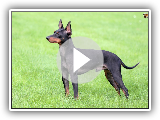
The English Toy Terrier (black and tan) he is a well balanced dog, elegant, compact, neat and clean construction.
Has a body weight of about 3,6 kg. The height of his body is about 30 cm.. With this size, the English toy terrier It is one of the smallest representatives of the group of terriers. So, falls in section 4 "Dwarf Terriers".
This breed is characterized by a slim body. All four legs are straight and very delicate. But, at the same time, the representatives of these Terriers are sporty and muscular, so they can easily accompany you on long walks.
At first sight, the little dog's large, upright ears stick out. The dog's muzzle is long and reminiscent of larger terriers. The eyes of the English toy terrier they are alert and awake. All the Toy Terriers ingleses They have the hair pattern "black and fire", what does black and tan mean. Most of the coat is black, but there are tan marks on some parts of the body. So the dog always has tan markings on his face and chest.. The coat of a English toy terrier it's short and smooth.
Character and skills
Today the English Toy Terrier (black and tan) belongs to the rare breeds and there are only a few breeders. And that, although this little terrier can be kept well even in city apartments. He is very close to his family and continues to be a good guardian, but tends to bark a little. He usually gets along well with children and is a tireless playmate. The little terrier also gets along with other dogs.
To the English Toy Terrier (black and tan) loves long walks and ball games. It can even be a good companion for shorter and not too fast jogging rounds.
The English Toy Terrier (black and tan) they still show typical terrier features. They are brave, testy, lively, alert and cheerful. They learn quickly, but they also need some consistency up front. They still have a hunting instinct, so from the beginning you must work to direct this instinct in an acceptable way.
Health and life expectancy
The English Toy Terrier (black and tan) tend to be a bit nervous, but otherwise they are quite healthy dogs. They can come to live off 13 to 15 years.
Similar breeds and relatives
The English Toy Terrier (black and tan) es similar al Manchester Terrier, the Italian Sighthound, the German Pinscher and the Doberman.
English Toy Terrier Care
This little terrier has an easy-care coat that never really needs to be washed. Once your English Toy Terrier has been lying, you can wash it with clean water. You should only use a dog shampoo if it is very dirty. Too frequent use of shampoos destroys the natural protective layer of the coat, what can cause skin diseases.
Its English toy terrier he is a robust dog that does not normally need a jacket. In very low temperatures it may be useful to protect your dog with a well-fitting jacket. Especially very small dogs get hypothermia when they are in the snow for a long period of time.. The jacket should fit well and not get in the way of your dog when he runs and plays.
Check your teeth English Toy Terrier regularly. Tartar can form here, which in the long run can lead to painful inflammation of the teeth. Care, a soft dog toothbrush can be used for brushing. A toothpaste for dogs is harmless and usually tastes quite good to animals.. Make sure to slowly and gently get your English Toy Terrier used to brushing their teeth..
The correct nutrition of the English Toy Terrier
The English toy terrier it is a very robust breed that gets along well with most foods. Due to its small body size it is important to provide the English toy terrier of enough energy. As such, for example, you can choose a type of food specially developed for small breeds. Small dogs have a greater renewal of energy than large ones. Another way of feeding is to give the dog fresh food or homemade food. Here too care must be taken to ensure sufficient calorie intake.
feed your English toy terrier several times a day, since the small dog can only absorb small amounts. Although healthy dogs usually have good teeth, the food components should not be too large.
Because the English toy terrier he is an adorable dog, many people tend to pamper him. But, many human foods are not suitable for dogs. So, their English toy terrier should only be fed with leftover food if it does not contain sugar or spices.
Suitable accessories for the English Toy Terrier
You don't need many accessories for your English toy terrier for everyday use. For food and water your dog needs at least two bowls. The water bowl should always be full and accessible to your dog.
Like the Toy Terriers ingleses they are very delicate animals, you should buy a well fitted harness. It is also important to use a light lead line. Pull lines are less suitable if your dog has not yet learned not to pull on the leash. A good alternative is to use a lightweight traction strap, that gives your dog freedom of movement.
To the playful English toy terrier loves to learn. So you can do a lot of sports with it which is also suitable for very small dogs. Dummies and other retrieval toys are good for training. It also, you English toy terrier will have a lot of fun with chew toys, that also support dental health.
Last, but no less important, should provide your English toy terrier a comfortable dog bed. There are several dog beds, almost all of them suitable. Whether your terrier is allowed on the couch or in bed, you can also give him a dog blanket there.
It is very important that you secure your English toy terrier in the car. An adapter for the belt buckles can be attached to the harness. This prevents skipping while driving and reduces the risk to your dog in the event of an accident. An alternative is to accustom your dog to a transport box. You can also take him on the train in a transport box if he is used to it.
FCI breed standard "English Toy Terrier (black and tan)"
Origin:
United Kingdom
Date of publication of the valid original standard:
26.03.2009
Use:
Terrier
General appearance:
Well balanced, elegant, compact, neat and clean construction.
Behavior / temperament:
Toy dog (Toy), With the characteristics of the terriers. Alert, Remember that historically this dog could cruelly drive in the rats holes. Never overly nervous.
Head:
It is long, close, wedgeless without giving much emphasis to the cheese muscles; under the eyes is very full.
Cranial region:
Craging: Plano.
Stop: Little noticeable.
facial region:
Trufa: black.
Horcico: The muzzle gradually tapers to give the wedged shape, profile view very similar to looking from the front. Although it may give an impression of prognathism, it is not desirable to have a pointy appearance.
Labios: Well compressed.
Jaws / Teeth: Upper and lower jaw form a perfect and tight closure. Strong JAWS, with a perfect scissor bite, regular and complete, that is, the inner face of the upper incisors is in close contact with the outer face of the lower incisors and the teeth are placed perpendicularly in the maxillae. Uniform and strong teeth.
Cheeks: No emphasis of the muscles.
Ojors: Dark to black, without having light shadows on the iris. Of sizerelativelysmall, almond shape and oblique position, they are bright andnot prominent.
Obars: In the shape of a candle flame, slightly pointed, positioned very high and at the back of the skull, proportionally very close. A good reference point for size can be obtained by bending the ear forward, should not reach the eye. From nine months of age, ears must be erect. The entire pinna of the ear should point towards the front. The leather of the ear is thin.
Neck:
Long, with grace, slightly arched. The neck line descends on the shoulders in an elegant decline. Double chin is undesirable.
Body:
Compact, with head and limbs provided, producing a perfect balance.
Espalda: Little arched from behind the shoulders to the loins, The upper line later falling on the root of the tail.
Itmor: Well up.
Pecho: Narrow and deep with well sprung ribs.
Tail:
Thick at the root, tapering towards the tip. Low-set, without reaching below the hocks. Tail carried high excessively is undesirable.
Tips
PREVIOUS MEMBERS: Forelimbs fall straight from the shoulders, with the elbows close to the chest, making the front straight. Very desirable fine bone structure
Hormbros: Well positioned back.
Elbows: Well glued.
LATER MEMBERS: Well rounded loins and slightly rounded buttocks lead to good knee angulation. It is undesirable that the front extremities appear stuck under the body.
Corvejones: Positioned low, without twisting outward or inward.
PinIt: Refined, compact, with fingers wide apart, well arched with jet black nails; the middle fingers of the forelimbs are longer than the others; hind feet have the appearance of cat's feet. Hare's foot is undesirable.
Movement:
The ideal movement is similar to an extended trot. You don't want the "Hackney" step. Dragging is also undesirable. Agile hindlimb action, combining ease and precision with a good push, should be fluid to indicate firmness.
Mantle
Fur: Thick, closed and glossy. High density of short hair is required.
Color: black and tan. The black must have the coloration of ebony, and the fire must remember the firm chestnut color. The colors neither spill nor fade but meet abruptly, forming clear and defined lines in the division of colors.
The forelimbs are tan colored up to the carpal joint in front, following the inside and back of the forelimb down to the elbows; small black lines (brush strokes) on each finger, and a definite black mark (thumb mark) in the center of each metacarpus, also under the chin. The hind limbs are tan in front and inside, with a black bar that divides the tan color in the center of the legs. Much tan color on the outside of the hind limbs (breeching the falda) is undesirable. The muzzle is tan. The truffle is black, continuing the black color on the nasal bridge, forming a curve under the eyes to the base of the throat. Has a fire mark over each eye, and a small one on each cheek. The lower jaw and throat are also tan colored; The line of the lips is black. The hair inside the ears is fire. Tan behind the ears is undesirable. Each side of the chest has a little tan coloring, as well as the perineum and under the root of the tail. White patches are totally undesirable anywhere.
Size and weight:
The ideal weight is 2,7 to 3,6 kg (6 to 8 English pounds).
The ideal height at the withers is 25 to 30 cm. (10 to 12 inches).
Fouls:
Any deviation from the aforementioned criteria is considered as a fault and the severity of this is considered to the degree of the deviation to the standard and its consequences on the health and well-being of the dog..
FALTAS DISQUALIFYING:
Aggressiveness or extreme shyness.
Any dog showing clear signs of physical or behavioral abnormalities must be disqualified..
N.B.:
Males should have two normal-appearing testicles fully descended into the scrotum..
Only functionally and clinically healthy dogs, with the typical conformation of the breed, should be used for parenting.
Itlatest changes are in bold.
TRADUCCION: Federation Canófila Mexicana, A.C.
Source: F.C.I - International Cynological Federation
Alternative names:
1. ETT, English toy terrier (English).
2. Toy terrier anglais noir et feu (French).
3. English Toy Terrier (German).
4. English Toy Terrier (Portuguese).
5. Terrier miniatura negro y fuego, English toy terrier, Toy Terrier inglés, TERRIER INGLÉS DE JUGUETE NEGRO Y FUEGO (español).
.png "Great Britain") FCI 86 . Toy Terriers
FCI 86 . Toy Terriers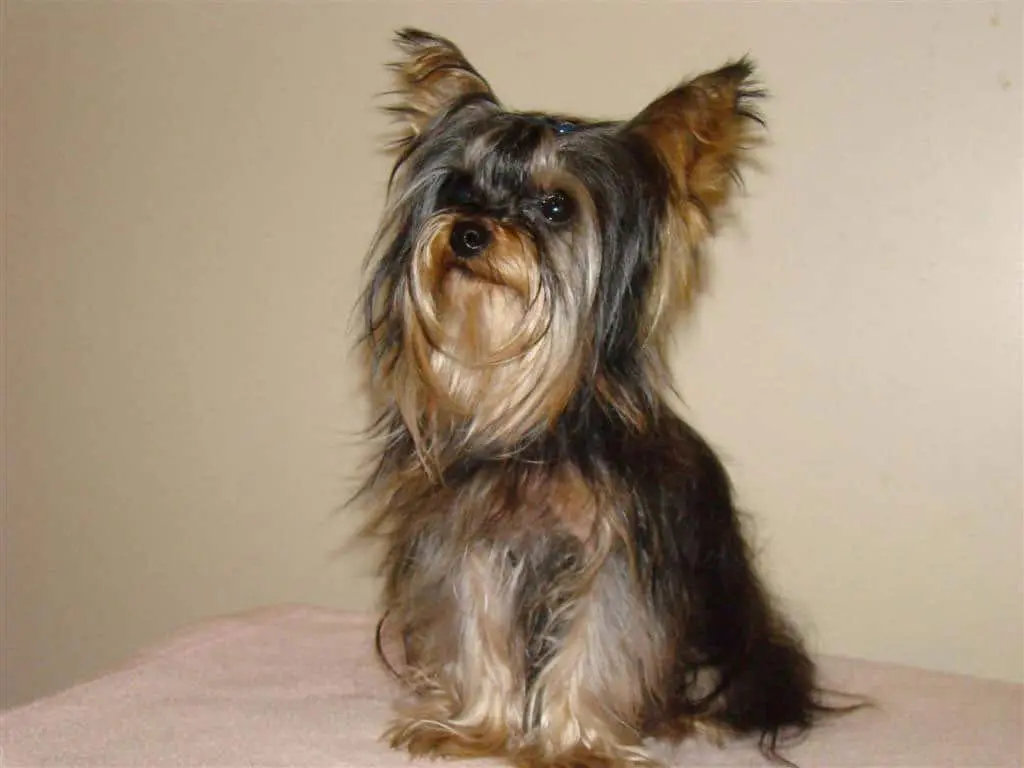
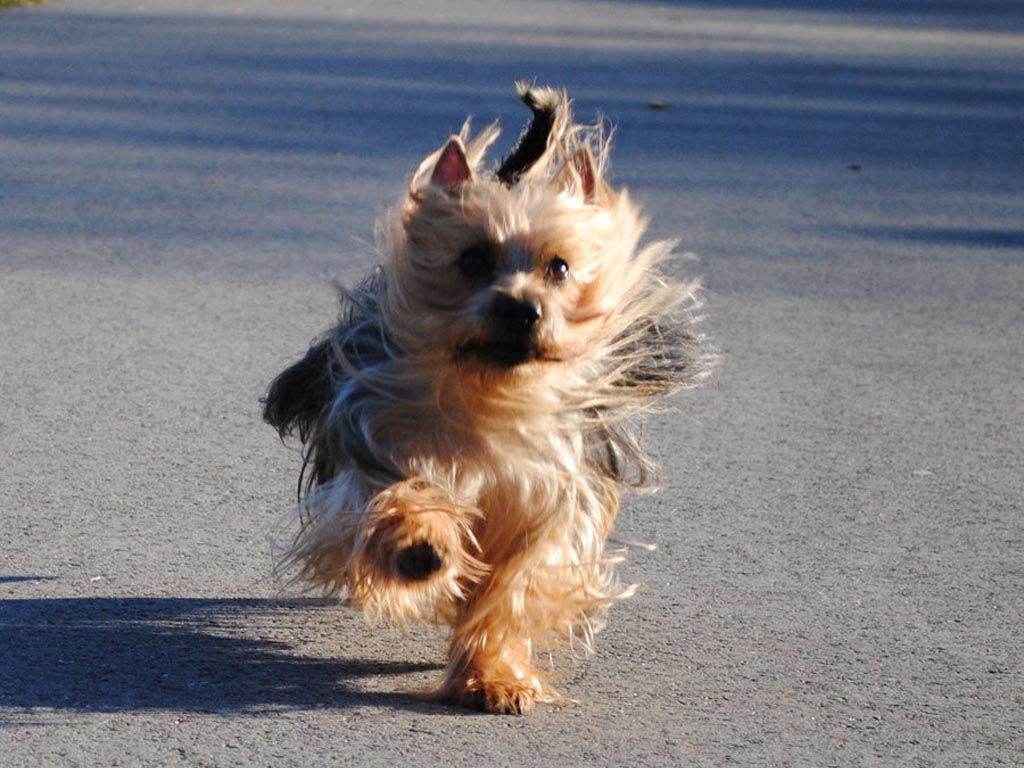
 FCI 236 . Toy Terriers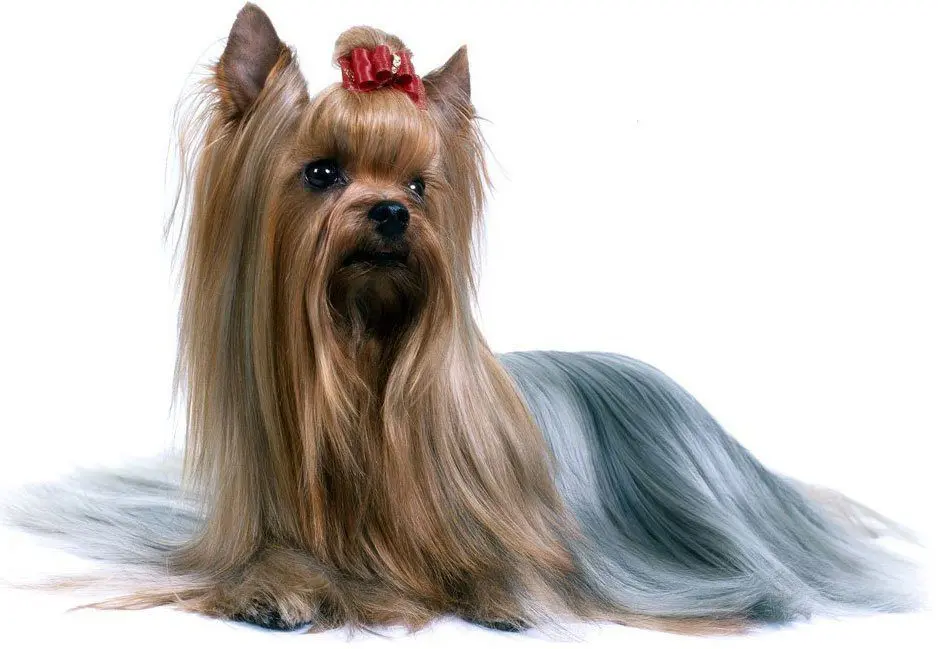




 Dogs 101 – Silky Terrier
 Australian silky terrier playing
 Australian Silky Terrier YakoGor
 Yorkie «maximus» vs Silky terrier » Scamper»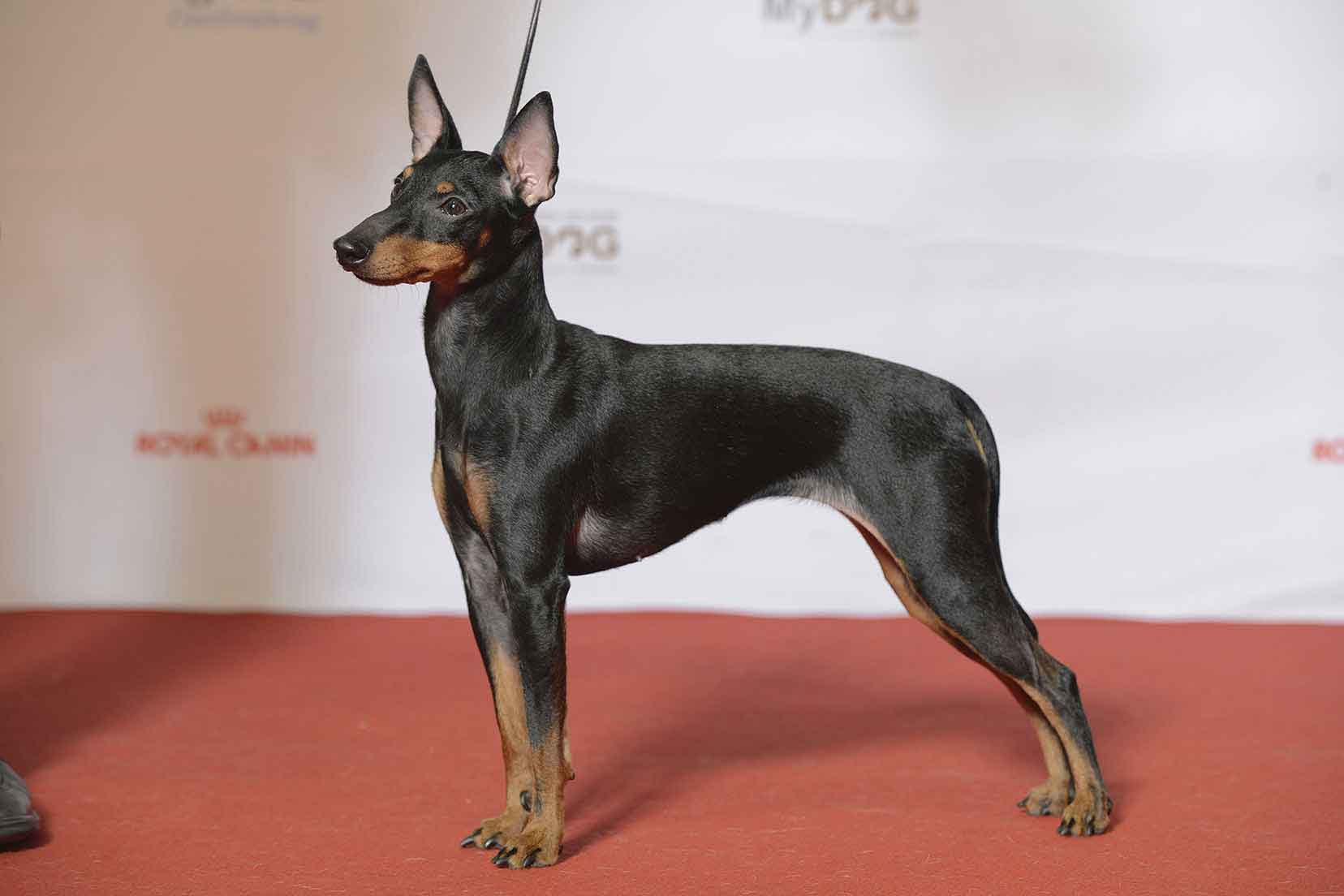


 English Toy Terrier Puppies
 Crufts 2017 | Best of Breed winner Nick Gourley and English Toy Terrier Coco
 English Toy Terrier ETT
 Miniature English Terrier / Breed of dog
.jpg)
_puppy.jpg)


