โ–ท The world of Pets: Dogs, cats, birds, reptiles, amphibians

East Siberian Laika
Rusia FCI 305 - Nordic Hunting Dogs

Laika de Siberia Oriental

The East Siberian Laika it is popular in its native Russia not only as a hunting dog, but also as a draft and sled dog.

Content

History

The home of this impressive and robust pedigree dog is -as its name implies- in the forested area of รขโ‚ฌโ€นรขโ‚ฌโ€นEastern Siberia, more precisely in the vast area between Yenisei and peninsula de Kamchatka.

The East Siberian Laika was first mentioned by name in 1947, when the Cynology Congress of Alliances in the former Soviet Union established four breed standards for different Laikis (plural of Laรฏka). Besides him East Siberian Laika, these other races like the West Siberian Laika and the Russo-European Laika, have been somewhat better known, just like him Yakutian Laika and the Siberian Husky, so this breed was not yet recognized by the FCI.

Ancestors of the East Siberian Laika:

Hunting and sled dogs of the high arctic

It is assumed that the history of the ancestors of the Laรฏka goes way back. The origin of the Laika rousso dates back to the sleds and hunting dogs of the high arctic. The East Siberian Laika, as described in today's breed standard, was created by crossing Ewenkish, Lamutsker, Amur and other races of Laรฏka. The main focus of the breeding efforts was training their hunting skills. A natural hunting instinct, courage and a lively temperament, as well as excellent sensory perceptions, a particularly good sense of smell and orientation should characterize the offspring.

In his native Russia, the East Siberian Laika mainly used for squirrel hunting, martens and feather hunting. But it is also appreciated as a draft and sled dog. By the way, "He is not related to the dog."Laรฏkaยซ, who became world famous as the first dog in space. This bitch was probably a mix of Husky and Terrier.

Physical characteristics

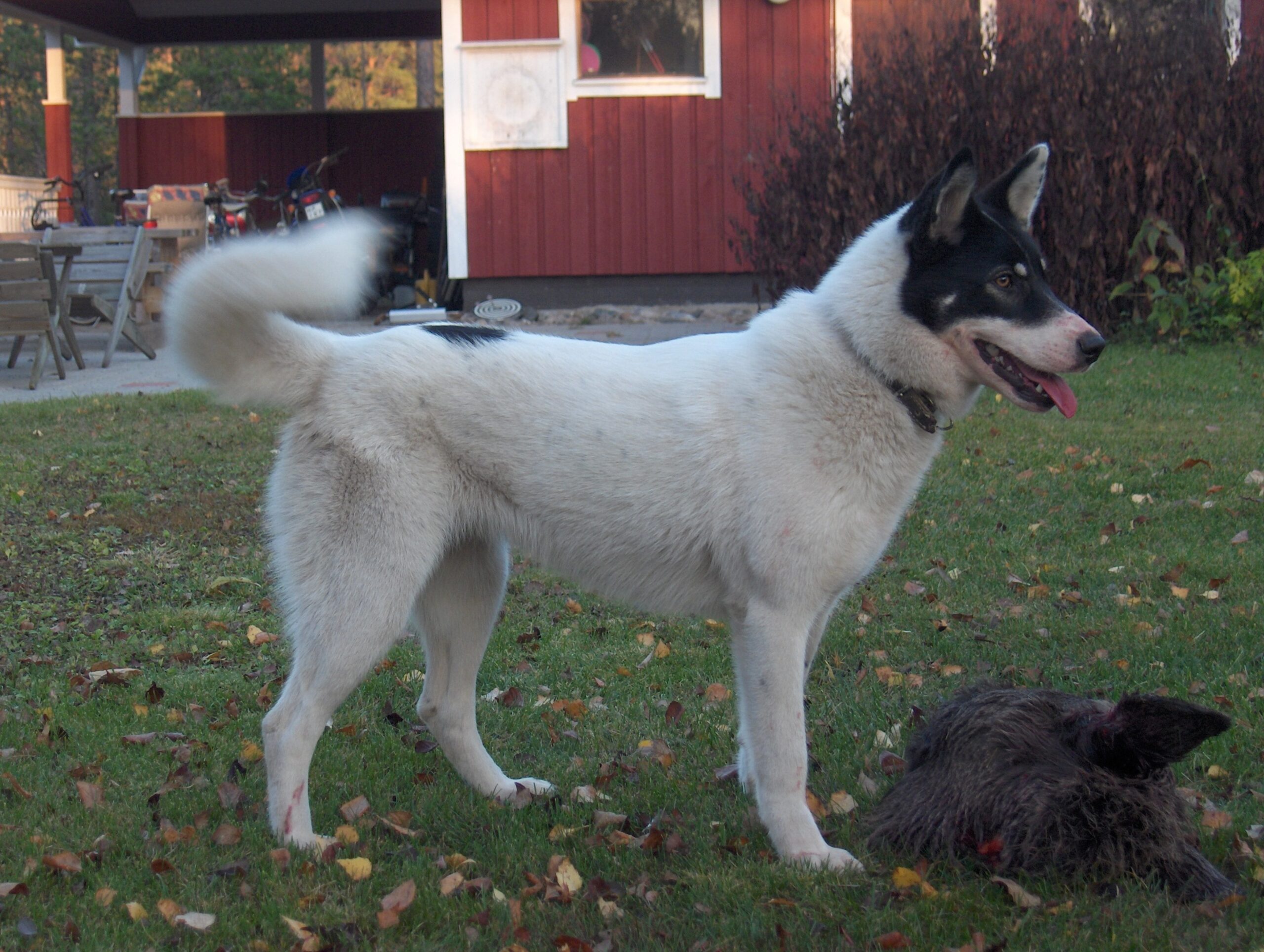
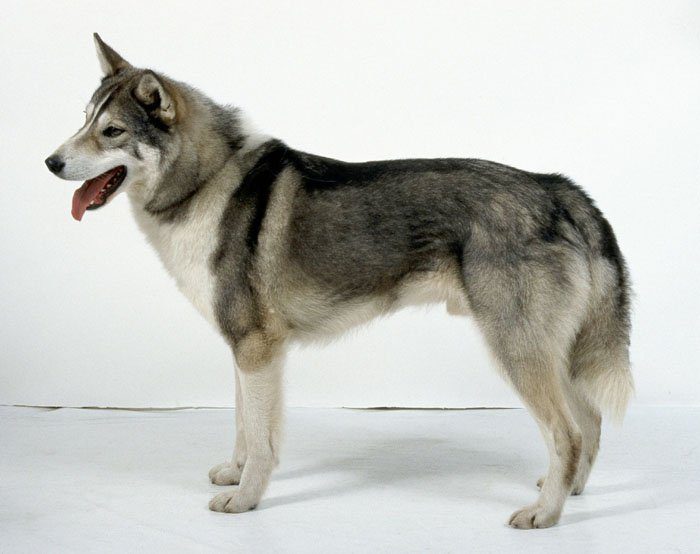
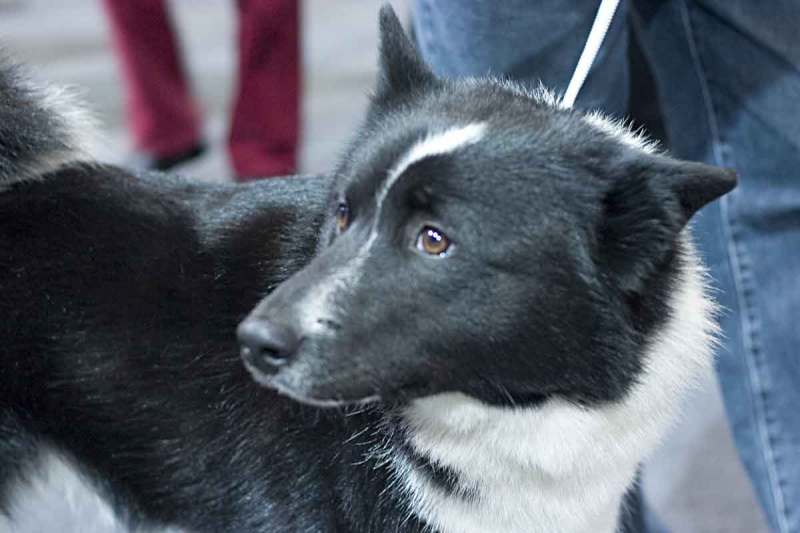
With a height at the cross of 53 to 65 cm el East Siberian Laika belongs to the medium and large breeds. His muscular body and strong physique quickly give an impression of the stocky build of this wolfhound.. From the harsh climate of its native Siberia, the hard hairs on its coat and the dense and soft undercoat protect. On the neck and shoulders the abundant coat forms the typical collar of the Laรฏka. Males, where the fur at the withers is even more abundant, They also stand out for a kind of mane.

Many color variations

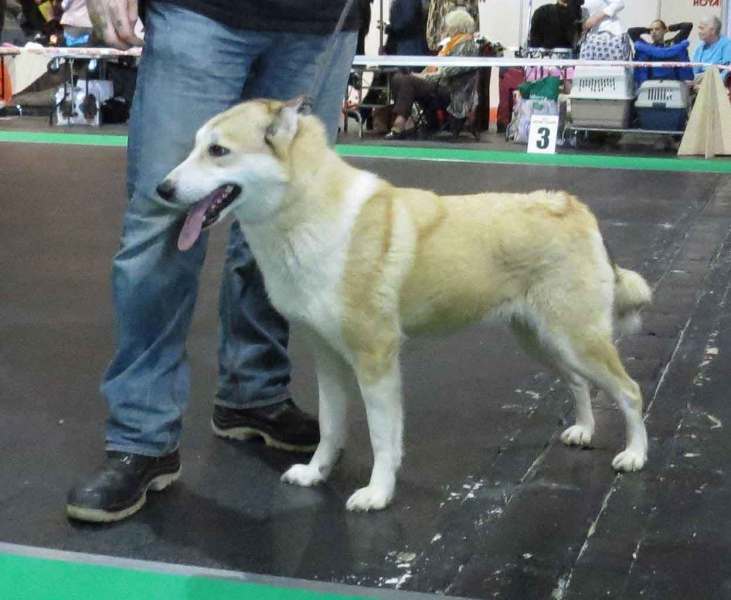
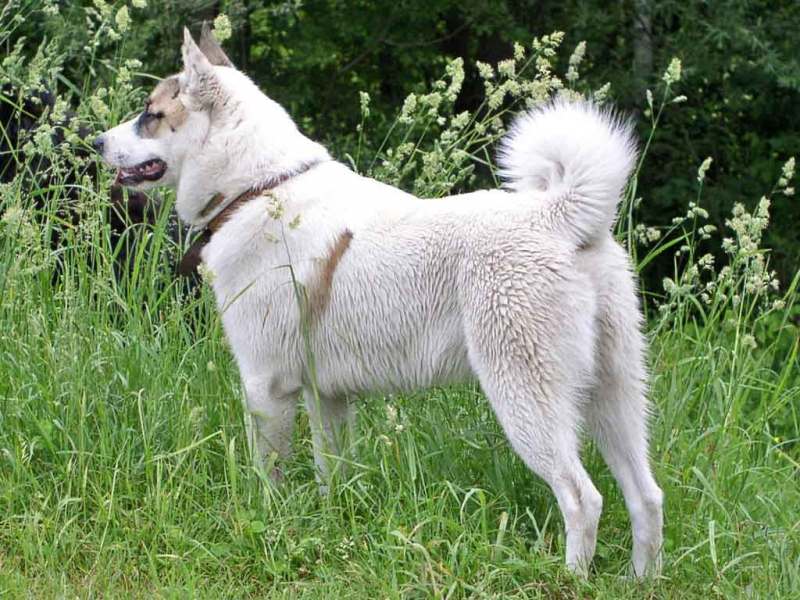
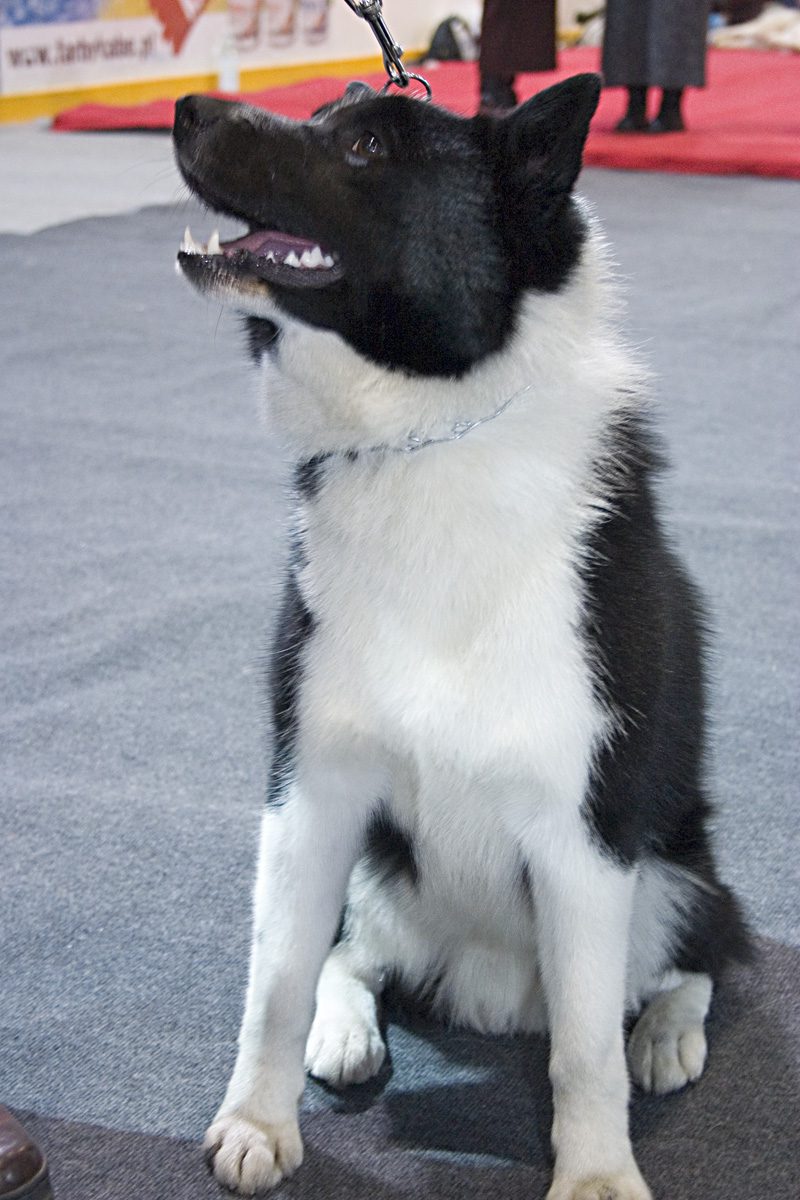
Regarding its fur, many different variations possible. So black tones are possible, White, grey, reddish, colored fox and colored wolf. Variations of pied or spotted according to the Russian standard and the FCI.

Other distinctive features of the East Siberian Laika are the ears standing, placed laterally and the tail rolled.

Character and skills

The Russian word ยซlajatjยป (layat), from which the racial name is derivedLaikaยซ, means "bark". And in fact, loud barking is a fundamental characteristic of this Russian hunting dog. Like a so-called poking dog, finds its prey on its own and keeps it in control with its distinctive barks until the hunter arrives and is able to kill the prey. He is very self-confident and courageous and proves to be an independent worker., robust and persevering while hunting. Unlike other breeds of hunting dogs, as the Gray Norwegian Elkhound, the East Siberian Laika never strays too far from its controller. Each 20 or 30 minutes he looks for contact with him and makes sure he continues his search.

Independent hunter and trusted companion

In combination with your intelligence, his lively temperament and physical strength, This close โ€œleader bondโ€ allows it to be used in many different ways.. Like this, the East Siberian Laika it is popular in its native Russia not only as a hunting dog, but also as a draft and sled dog, as a companion dog and guard dog. Despite its independence, the East Siberian Laika shows himself within his family as a balanced and confident companion, that enjoys the most of the caresses of its humans. In contact with children the proud Laรฏka is playful and considerate. Due to its original behavior, However, children should only be allowed to play with the strong dog under supervision.

Not a beginner dog

Despite his balanced nature and basically friendly nature, the East Siberian Laika a dog is not for beginners. Your innate hunting instinct, its great independence as well as its pronounced need for movement would quickly overwhelm inexperienced owners. So, the keeping of this breed should be reserved to specialists who have experience in dealing with similar breeds and who know how to educate and train such an original dog.

Health and typical diseases of the East Siberian Laika

The owners of a East Siberian Laika they don't have to fear high bills for veterinary expenses. The breed is considered extremely robust and healthy. The typical diseases of the breed are hardly known. But, as with all big dogs, breeders and owners should pay attention to healthy hip development. Later diseases of hip or elbow dysplasia (HD o ED), that are often hereditary, but which are also the result of improper maintenance and feeding.

Nutrition of the East Siberian Laika

As in humans, nutrition plays a decisive role in the healthy development of the dog. Although the East Siberian Laika it is considered very robust and healthy by nature, for this to continue, you need a balanced diet that provides you with all the essential nutrients in the right composition. As a descendant of the wolf, the Laรฏka also needs mostly meat. But just like the wolf, that also eats all the prey including the stomach contents, hair and bones, the dog must also get vegetables, rice, fruit (and bones) additional.

It depends on the proper ratio

When preparing food, attention should be paid to the correct ratio of food and the respective nutrients. An excess of certain vitamins and minerals can be just as harmful as a deficiency. If you want to be sure of exactly what your dog needs, you can ask the vet for a detailed diet plan. This plan takes into account not only age, the weight and sex of the breed, but also activity levels, the accommodation conditions and the health status of each dog.

Caring for the East Siberian Laika

The East Siberian Laika is not very demanding not only in terms of food but also in terms of attention. Coarse and soft hair repels dirt well and only needs a brush two to three times a week. During this process, dead hair is removed and coarse dirt is brushed. The East Siberian Laika rarely need a bath – and only if the dirt cannot be combed in another way. Dog shampoo should also be used sparingly to prevent stretching of the skin's natural protective layer..

Fitness to have with an East Siberian Laika

Like all races of Laรฏka, the East Siberian Laika was bred primarily as a working and utility dog. Since its origin, it is used to working hard and independently and to moving freely in nature.. An attitude as a house and companion dog would contradict his nature and certainly would not do justice to this demanding dog.. Who wants to keep him Laรฏka in the city despite everything, you have to make sure you don't just exercise a lot, but also a suitable occupation that challenges and satisfies you not only physically but also mentally.

Is the Laika suitable for dog sport?

For dog sports, This Laรฏka is suitable only conditionally. Like a hunting dog, you still attach great importance to your independence. Although proximity to his humans is important to him, maintains its independence. One should not expect blind obedience or a pronounced "willingness to please" from a true Laรฏka, like the one brought by many other breeds of domestic dogs. But, with his strong body and agile movements, naturally brings good conditions for use in the dog sports field.

Closeness and trust from the beginning

Whether hunting dog, sledge dog, dog shooting, watchdog or companion dog only: the East Siberian Laika is a demanding four-legged friend, requiring a lot of exercise and activity. But, do not forget that he also likes to be close to his humans. A pure kennel attitude does not do this breed justice. One Laรฏka must be firmly integrated into the family from the beginning and experience a lot of contact with their humans and other animals. If you build a close relationship of trust and socialize your Laรฏka comprehensively already in the puppy stage, will experience the original pedigree dog, despite its roots, as a very balanced and loving partner, for whom extensive fondling is almost as important as independent work.

Buying an East Siberian Laika

If you are interested in a purchase of a East Siberian Laika outside russia, you will probably have a hard time finding a breeder near you. But, When in doubt it is worth the long drive to Russia to meet and understand this Laรฏka in its natural environment. After all, the East Siberian Laika It is not a dog that you should buy as a companion dog "just like that". Plus plenty of time and space to get out, its maintenance and education requires a lot of knowledge, patience and assertiveness. Compared to other dog breeds, This Laรฏka has a hard time asserting himself as an apartment dog. But, who is convinced that a East Siberian Laika is the right dog and whoever is looking for a purebred dog, you have to accept long roads and long waiting periods for a puppy. The costs, just for the purchase of the puppy, they are with this breed some 1.300 to 1.500 EUR.

Characteristics "East Siberian Laika"

Coexistence is important that you have with your new friend. Before considering the acquisition of a dog of the breed "East Siberian Laika" you know certain factors. Not all breeds of dogs are apt to live in an apartment, you must take into account his character, their need for exercise, their interaction with other pets, their care and if you have small children, their level of tolerance towards them.

Adaptation โ“˜

2,0 of 5 stars (based on 1 review)

friendly dog โ€‹โ€‹โ“˜

3,0 of 5 stars (based on 1 review)

hair loss โ“˜

4,0 of 5 stars (based on 1 review)

Affection level โ“˜

4,0 of 5 stars (based on 1 review)

Need for exercise โ“˜

5,0 of 5 stars (based on 1 review)

Social need โ“˜

4,0 of 5 stars (based on 1 review)

Home โ“˜

5,0 of 5 stars (based on 1 review)

Toilet โ“˜

3,0 of 5 stars (based on 1 review)

Friendly with strangers โ“˜

4,0 of 5 stars (based on 1 review)

barking โ“˜

5,0 of 5 stars (based on 1 review)

Health โ“˜

2,0 of 5 stars (based on 1 review)

Territorial โ“˜

5,0 of 5 stars (based on 1 review)

Cat friendly โ“˜

2,0 of 5 stars (based on 1 review)

Intelligence โ“˜

3,0 of 5 stars (based on 1 review)

Versatility โ“˜

3,0 of 5 stars (based on 1 review)

Child friendly โ“˜

3,0 of 5 stars (based on 1 review)

Surveillance โ“˜

4,0 of 5 stars (based on 1 review)

joy โ“˜

5,0 of 5 stars (based on 1 review)

Images "East Siberian Laika"

Photos:

1 – East Siberian Laika, young dog. The picture was taken by PrzemekL during World Dog Show 2006 in Poznan. by No machine-readable author provided. PrzemekL assumed (based on copyright claims). / Public domain
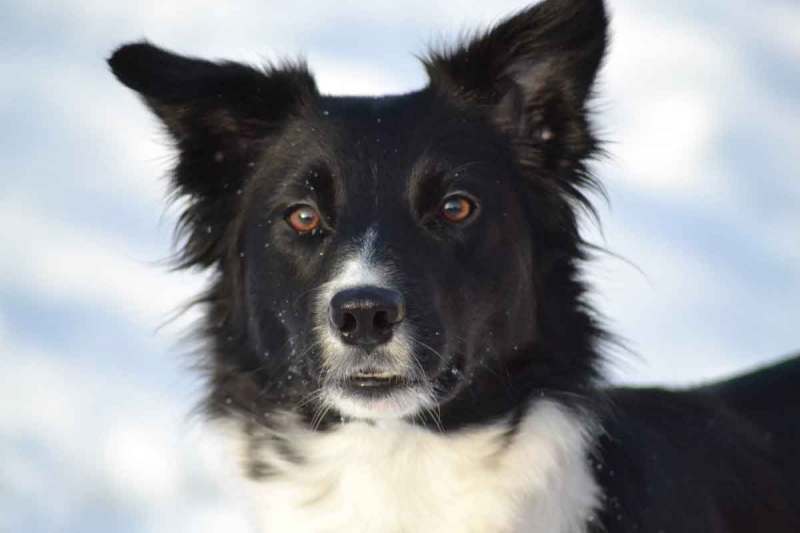
2 – East siberian laika by Myrtle / CC BY-SA
3 – East Siberian Laika, bitch. The picture was taken by PrzemekL during World Dog Show 2006 in Poznaล„ by No machine-readable author provided. PrzemekL assumed (based on copyright claims). / Public domain
4 – East Siberian Laika agouti by Canarian / CC BY-SA
5 – East Siberian Laika fawn & white by Canarian / CC BY-SA
6 – East Siberian Laika Sable & white, head profile by Canarian / CC BY-SA

Videos "East Siberian Laika"

Type and recognitions:

  • FCI CLASSIFICATION:
  • Group :
  • Section : . .

Federations:

  • – FCI – Group 5 – Section 2 Nordic Hunting Dogs. โ“˜

FCI breed standard "East Siberian Laika"

Origin:
Russia

Date of publication of the valid original standard:
13.10.2010.

Use:

Hunting dog for multiple uses.


General appearance:

Medium-sized dog with a strong and compact build. The length of the body, from the sill to the ischium is slightly higher than its height at the withers. The head is rather big and strong.

Well developed muscles. Strong bone structure, more powerful in males than in females. Clearly pronounced sexual dimorphism.

IMPORTANT PROPORTIONS:

  • Males usually rectangular to rectangular, somewhat longer females.
  • Format index (height / long)
  • Males: 100/104-109
  • females: 100/106-111
  • Height at withers exceeds height at withers by 1-2 cm. (males) either equals or exceeds the height at the croup in 1 cm. (females). The length of the muzzle is slightly less than half the length of the head.
  • The height from the floor to the elbow is equal to half the height at the withers.


Behavior / temperament:

Lively, balanced temperament. A vigorous dog with a well-developed sense of smell for detecting prey and a pronounced passion for hunting., especially large prey. Very independent while hunting. Friendly, kind and trusting towards people.

Head:

Strong, rather large in proportion to the body, wedge shape, forming an equilateral triangle viewed from above. The cranial region is relatively wide, especially in males.

Cranial region:
  • Skull: The length of the skull is slightly greater than its width. Superciliary arches only slightly developed, sagittal crest and occiput well pronounced.
  • Depression links (Stop): Gradual and moderately pronounced.

facial region:

  • Nose: Medium size black. In white and fawn dogs a brown nose is tolerated.
  • Snout: The length of the muzzle is slightly less than the length of the skull. Viewed from the side the muzzle is wedge-shaped, moderately blunt.
  • Lips: Moderately tight but not pendulous.
  • Jaws / Teeth: White teeth, large, strong, well developed and evenly positioned. Full dentition (42 teeth) according to the dental formula, scissor bite.
  • Cheeks: Pronounced but not exaggerated cheek bones.
  • Eyes: Medium size, Oval shaped, inclined, never sunken or protruding with a truthful and friendly expression. The eyes are dark brown or in shades of brown according to the color of the hair.
  • Ears: erect, Mobile, โ€œVโ€ shape with pointed or slightly rounded edges. Well spaced placement at eye level. Slightly developed pavilion. Inside of the ears well covered with hair.

Neck:

Muscular, dry, round or slightly oval across. The length is equal to that of the head or a little less. The neck is inserted at an angle of approximately 40ยฐ to 50ยฐ from the horizontal.

Body:

  • top line: Firm and straight leaning from the withers towards the insertion of the tail.
  • Cross: Well developed, pronounced, especially in males, rising above the top line in 1 โ€“ 2 cm., moderately developed in females.
  • Back: Right, strong, well muscled, moderately wide.
  • Pork loin: Short, moderately wide, well muscled and slightly prominent,
  • Rump: Wide, slightly tilted, relatively long.
  • Breast : Width, deep (chest reaches the tips of the elbows or 1-2 cm below, especially in males), long, oval transversely.
  • Bottom line and belly: Withdrawn, the lower line from the chest to the abdominal cavity is slightly raised.

Tail:

Coiled or sickle-shaped with bearing on the back. A sickle-shaped tail is acceptable without touching the back or semi-erect. When fully stretched it reaches the hock joint or 1-2 shorter cm.

Tips

PREVIOUS MEMBERS: Slender and muscular limbs, seen from the front are straight, moderately separated and parallel. Its height from elbow to floor is equal to half the height at the withers.

  • Shoulder: The scapulae are long, muscular and moderately inclined.
  • Forearm: Long, moderately oblique, muscle. The angle between the scapula and the forearm is well pronounced.
  • Elbows: Well on the body; well-developed elbow tips positioned parallel to the axis of the body.
  • Arm: Straight, dry, muscle, round, viewed from the front moderately separated and parallel.
  • Metacarpus: Not long, slightly inclined viewed from the side.
  • Previous feet: Round or slightly oval, arched with fingers close together.

LATER MEMBERS:

  • General appearance: Muscular with well defined angulations of all joints. Seen from behind the limbs are straight and parallel.
  • Thigh: Moderately long, placed slightly oblique.
  • Knee: Well angled.
  • Leg: Long, laid oblique, no shorter than thigh.
  • Metatarsus: Placed almost vertical. Seen on side, a perpendicular line from the back of the thigh to the floor falls tightly together in front of the hock, the slightly separated from this.
  • Hind feet: Round or slightly oval, fingers arched and tight together. The hind foot is slightly smaller than the fore foot.

Movement:

Free movement. The typical movement is a long range trot, alternating with a gallop or walking step.

Mantle

SKIN: Sufficiently thick and elastic, no folds or subcutaneous tissue.

  • Fur: Hard and straight outer hair. Well developed undercoat, soft, thick and woolly. Hair on head and ears is bushy, short and bright. The hair on the shoulders and neck is longer than on the body forming a collar. On the cheekbones it forms lateral whiskers. In males the hair on the withers is longer.
    • The limbs are covered with short hair, hard and bushy that is only slightly longer on the back of the forelegs. The hair on the back of the hind legs forms pants without having feathers.
    • There is a protective brush-like hair growth between the fingers. The tail is profusely covered with straight, hard hair that is somewhat longer at the bottom without forming feathers..
  • Color: The most typical colors are black and tan, black, black and white, white and white with spots. Slight staining in the base color tones are allowed on the extremities.


Size and weight:

  • Males: 57 โ€“ 64 cm..
  • females: 53 โ€“ 60 cm..


Fouls:

Any deviation from the aforementioned criteria is considered a fault and its severity is considered to the degree of deviation from the standard and its consequences on the health and well-being of the dog and the dog's ability to perform its traditional task..

  • Deviations of sexual characteristics.
  • Prominent foreface or pointed snout.
  • Partial absence of pigmentation on the nose, lips and eyelids.
  • Pale pigmented nose.
  • Absence of no more than 4 premolars PM1 โ€“ PM 2.
  • Pincer bite after 6 years of age.
  • Small teeth set apart.
  • Light or amber eyes in dogs with a completely black coat.
  • big ears, low insertion, weak bearing, insufficient hair inside.
  • Neck too oval.
  • Weak or hooded back.
  • Long loin, straight, arched back.
  • horizontal or upright group.
  • Chest with flat ribs, Strait, absence of sill, shallow.
  • Right shoulders, curved forelimbs, elbows turned in or out.
  • Right or weak pasterns.
  • East-west feet, feet with dove toes.
  • Hind limbs slightly lacking correct angulation, cow hock.
  • Spread or weak feet, insufficient hair development between the fingers.
  • Spurs on hind limbs
  • Restricted movement.
  • Color spots in the same hue as the base color on the body and head

SERIOUS FAULTS:

  • Obvious deviations from sexual characteristics.
  • Slight intolerance towards people.
  • Obese or thin.
  • Rough head.
  • Short snout, pointed.
  • Stop very deep or difficult to see
  • Absence of more than 4 premolars, including PM 1 & PM 2.
  • Round, bulging eyes.
  • Ears with round tips, overdeveloped pavilion.
  • Square body.
  • Over built.
  • Light bones.
  • Hind limbs over angled or right.
  • Narrow back, knees or hocks turned outward.
  • Heavy movement, irregular or pasuqueo.
  • Wrinkled skin, loose.
  • Long hair on the back of the forelimbs and pronounced feathers on the back of the thigh and tail.
  • Wavy Cloak, curly or too long, hair parted in the middle of the back and withers during the molt.
  • Splashed on the body that does not have the hue of the base color.
  • Size deviation by plus or minus 2 cm..

FALTAS DESCALIFICANTES:

  • Aggressiveness or extreme shyness.
  • Any dog โ€‹โ€‹showing clear signs of physical or behavioral abnormalities must be disqualified..
  • Wrong bite.
  • Twisted mouth.
  • Absence of 4 or any more teeth, including PM 1, PM 2 o M 3, excess incisor.
  • Eyes gazeos, spotted eyes.
  • Broken or semi-broken ears.
  • Stump tail.
  • Hair too short or too long, absence of undercoat.
  • Coat color that is genetic brown, blue genetic, tabby or albino.


N.B.:
  • Males should have two normal-appearing testicles fully descended into the scrotum..
  • Only functionally and clinically healthy dogs, with the typical conformation of the breed, should be used for parenting.

Source: F.C.I - International Cynological Federation

Alternative names:

1. Vostotchno-Sibirskaia Laika (English).
2. Vostotchno-Sibirskaia Laika (French).
3. Vostotchno-Sibirskaia Laika (German).
4. (em russo: ะ’ะพัั‚ะพั‡ะฝะพัะธะฑะธั€ัะบะฐั ะปะฐะนะบะฐ) (Portuguese).
5. Vostotchno-Sibirskaia Laika (espaรฑol).

โ–ท The world of Pets: Dogs, cats, birds, reptiles, amphibians

West Siberian Laika
Rusia FCI 306 - Nordic Hunting Dogs

Laika de Siberia Occidental

in your country of origin, Russia, the West Siberian Laika has been bred as a hunting dog for centuries.

Content

History

The "West Siberian Laika" (Zapadno-Sibirskaรฏa Laรฏka), is the product of crossbreeding between the closely related species of Laรฏka de Chanteisk and Mansijak with Russian hunting dogs from the north of the Urals and Western Siberia. Outside its area of origin in areas mainly populated by hunters, This race has widely spread to central areas of Russia; This type of dog that abounds on these sites, they are reared in large installations. In different hunting regions there are special kennels for raising the West Siberian Laika.

Recognition by the FCI

Since 1980 the Russo-European Laika just like him East Siberian Laika have been recognized as independent breeds by the FCI in addition to the West Siberian Laika. But, the Yakutian Laika, as well as other types of Laรฏka, as the Jezdoraja Laika, the Nenezker Weather or the Karelo-Finnish Laika, are not internationally recognized until now. Within the FCI the three breeds of Laรฏka are classified in the group 5, Together with the Gray Norwegian Elkhound and the Karelian Bear Dog, form the Section 2 "Nordic Hunting Dogs" within this group.

Physical characteristics

It is a hunting dog of variable utility, but also shooting or for sledge. Is medium-sized, Slim and strong Constitution. Her bone structure is well developed, is not mass or rough. Muscle is strong and well developed. It has a strongly coiled tail, He takes her on the back or the back.

Its fur is hard, short, with developed internal fluff. The outer layer is thick and straight. The internal fluff is abundant and dense hair's outer layer which gives a distant and leafy appearance. In the head, You ears and part of limb hair is short. On the cross, neck and back of legs the hair is longer than forming a collar in the region of the neck and a beard in the cheek area; the rear extremities presents some feathers.

Is white, salt and pepper, Red or gray in all colors. Allow the color black, also spotted or with the same color plates.

Strong similarity to the wolf

With the often hairier males, it even produces a kind of mane. This feature is reminiscent of a wolf, with which the Laรฏka not only share the pointed and high ears, narrow wedge-shaped head and small oblique eyes, but also strong teeth and coat color, often similar to wolf.

Assorted coat colors and a typical striped tail

But, the colors of him West Siberian laika they are very diverse according to the wide area of โ€‹โ€‹distribution of the breed and the large number of local traits, ranging from pure white to black, pepper and salt, the color of the wolf, reddish brown, grey, the pied or the spotted. characteristic of all races Russian Laika is the striking striped tail, worn both on the side and on the back.

Character and skills

Independent hunter and close ally.

Like most hunting dogs, the West Siberian Laika also has some independence. Not only in hunting, but also as a watchdog, companion dog or sled dog, sometimes acts independently and autonomously. But, this does not mean that it cannot adapt to its humans. On the contrary: the Laรฏka feels closely connected to her reference person and always seeks their proximity. Even when hunting, never strays too far from his guide and makes sure each 20 or 30 minutes of hunter following.

The intense relationship with humans allows him Laรฏka – despite its original roots – be used as a herding dog, protection, guard or shooting.

Life in the family

Once an owner has earned the trust of his Laรฏka, even the most demanding training goals can be achieved. It is important that the West Siberian Laika has a firm place in his "pack" from the beginning and is allowed to participate closely in the life of his people. In doing so, bonds closely with its "pack leader", but also shows himself as a patient and loving companion when dealing with other family members, especially with the children. If you socialize early and comprehensively, living with other dogs and pets usually works without problems.

Activities ยซLaika of Western Siberiaยป

Despite these characteristics, the West Siberian Laika is and remains primarily a working dog, for whom his โ€œjobโ€ is as important as his people. A life as a pure domestic and family dog รขโ‚ฌโ€นรขโ‚ฌโ€นcertainly does not do justice to its nature.. Only if you can sufficiently demonstrate your stamina, agility, speed and intelligence, will present himself at home as a calm and balanced companion.

The West Siberian Laika wants to be "needed" and, therefore, you should definitely be given a task that challenges you both physically and mentally. Owners who don't run their Laรฏka like the hunter he is, they must provide for sufficient substitute employment, for example, in sport form (Agility), training dog sport, runway and nose work or training as a rescue dog.

Health ยซWest Siberian Laikaยป

Unlike many other dog breeds, which often developed rather by coincidence, Russian dogs already had very early exact ideas about the useful characteristics of this breed. The baby of him West Siberian Laika was soon put under strict controls and took place in central state approved breeding stations. In order to preserve the excellent qualities of hunting, officially organized tests were introduced. Dogs that did not meet the high usage requirements were systematically excluded from breeding..

Healthy and robust working dogs

Strict breeding requirements and tough selection led to the good hunting dog qualities and excellent sensory perceptions of dogs being preserved to this day. At the same time, high concentration on utility ensured that outward appearances became less of an affair. A breeding of pure beauty, that as the examples of other dog breeds show, often led to health problems, was avoided in the West Siberian Laika. Hereditary diseases typical of the breed, with which fashionable dogs often fight, are not known in this original breed. Even generalized joint diseases, such as dysplasia of the hip joint (HD), rarely occur in this Laรฏka.

Nutrition ยซLaika de Siberia Occidentalยป

Dog owners shouldn't change their diet too often either.. Although the West Siberian Laika is not very picky about his diet, the constant changes in the food plate could overload even his robust stomach. As a descendant of the wolf, dogs don't need many different foods to stay healthy. Unlike us humans, that we should have a diet as varied as possible and whose menu includes meat, fish and vegetables, as well as potatoes, noodles and other cereal products, dogs need meat above all. Both their teeth and their digestion are oriented to the processing of foods based on meat. Different types of meat and changing tastes are, by the way, desirable with respect to this main ingredient.

Discover our selection of dog food.

Pay attention to your dog's nutritional needs. Whether you feed your dog moist meat, dry, raw (BARF) or cooked, it is important that the quantity and content of the food meets the specific nutritional needs of your dog. These requirements depend on very individual criteria such as race, size, age, activity level and health status and may vary accordingly. If the composition is correct, a Laรฏka adult can get by on one or two meals a day. after feeding, the feeding bowl should be cleaned and should only be available again the next day or for the next meal. It is better to avoid snacking between meals or the constant administration of treats. But, fresh drinking water should always be available for your dog.

Buying a West Siberian Laika

With his healthy nature, robust and original, the West Siberian Laika satisfies many dog โ€‹โ€‹lovers' desire for something "wild" in our modern, civilized everyday lives. And finally, but not less important, the wolf appearance of this breed fascinates people. This natural beauty, coupled with excellent hunting performance, made of him West Siberian laika one of the most popular dog breeds of the former Soviet Union already in 1960.

How much does a โ€œWest Siberian Laikaโ€ puppy cost??

In Europe, the Time to fall still rarely seen. So it is extremely difficult outside of Russia to get a purebred Laika from a proven breeding line.. Long, arduous roads and a comparatively high puppy price between 1.300 and 1.500 EUR are the rule. Even if you have found a suitable breeder after a long search, you may be advised not to buy a Laรฏka. Don't be surprised if during the first meeting you are asked very personal questions about your profession., their living conditions, your future plans and marital status. For committed and serious breeders, the welfare of dogs is, as a last resort, more important than financial benefit. After all, keeping such a demanding animal takes a long time, experience and space.

People who are mainly attracted by the appearance and originality of this Laรฏka they must therefore carefully consider whether their living conditions and character really fit this breed. If in the end you are still convinced that the West Siberian Laika is the correct breed, You must prepare well for the purchase of the new "family member". Not only are you doing yourself a favor, but above all the dog, because this Laรฏka He demands all the attention of his handler and does not tolerate a change of owner very well..

Care for the ยซWest Siberian Laikaยป

Although the West Siberian Laika he is a very robust dog, you need not only a healthy diet but also proper care to stay healthy and vital. Its hard and soft top layer repels dirt and water well, but you still need to brush regularly (about twice a week). During the change of coat, you Laรฏka should be brushed daily to remove dead hair and strands. In general, owners of this dog breed should not be bothered by dog โ€‹โ€‹hair in the house, because although the West Siberian Laika he is basically a very clean dog, lose a lot of hair, that spreads across the sofa, the carpet and the floor. In addition to the toilet, the claws should be regularly shortened and the ears, teeth and feet should be checked and cleaned.

Keeping

Regarding the attention, the time required can be manageable, but the use of a Laรฏka alone takes a lot of time (free). Who chooses a West Siberian Laika should therefore not have to work full time. This human-oriented working dog is not cut out for long periods of solitude. As an original hunting dog needs a lot of career, an appropriate task and lots of contact with your reference person. A hatchery in a small town flat is, therefore, as unsuitable as a kennel. The Siberian breed dog feels more comfortable in a house with a large fenced garden, where you can be close to your humans at all times.

No dog for beginners

Also for the education of this Laรฏka a close relationship between dog and human is a basic requirement. If your dog trusts you, can trust your competence and sovereignty as โ€œpack leaderโ€ and is assured of your closeness and love, will follow you willingly – despite its original roots as an independent hunting dog. But in order to reliably fulfill the role of a competent leader of the pack, technical knowledge is required, consistency and strength of character. The West Siberian Laika certainly not a beginner dog.

Characteristics "West Siberian Laika"

Coexistence is important that you have with your new friend. Before considering the acquisition of a dog of the breed "West Siberian Laika" you know certain factors. Not all breeds of dogs are apt to live in an apartment, you must take into account his character, their need for exercise, their interaction with other pets, their care and if you have small children, their level of tolerance towards them.

Adaptation โ“˜

2,0 of 5 stars (based on 1 review)

friendly dog โ€‹โ€‹โ“˜

3,0 of 5 stars (based on 1 review)

hair loss โ“˜

5,0 of 5 stars (based on 1 review)

Affection level โ“˜

4,0 of 5 stars (based on 1 review)

Need for exercise โ“˜

5,0 of 5 stars (based on 1 review)

Social need โ“˜

4,0 of 5 stars (based on 1 review)

Home โ“˜

5,0 of 5 stars (based on 1 review)

Toilet โ“˜

3,0 of 5 stars (based on 1 review)

Friendly with strangers โ“˜

3,0 of 5 stars (based on 1 review)

barking โ“˜

5,0 of 5 stars (based on 1 review)

Health โ“˜

2,0 of 5 stars (based on 1 review)

Territorial โ“˜

4,0 of 5 stars (based on 1 review)

Cat friendly โ“˜

3,0 of 5 stars (based on 1 review)

Intelligence โ“˜

3,0 of 5 stars (based on 1 review)

Versatility โ“˜

4,0 of 5 stars (based on 1 review)

Child friendly โ“˜

3,0 of 5 stars (based on 1 review)

Surveillance โ“˜

4,0 of 5 stars (based on 1 review)

joy โ“˜

4,0 of 5 stars (based on 1 review)

Images "West Siberian Laika"

Photos:

1 – ยซLaika de Siberia Occidentalยป by https://commons.wikimedia.org/wiki/File:West_Siberian_Laika.jpg
2 – ยซLaika de Siberia Occidentalยป by ecured
3 – Riga, Baltic Winner -2013, 9-10 Nov by Thomas / CC BY-SA
4 – Riga, Baltic Winner -2013, 9-10 Nov by Thomas / CC BY-SA
5 – First-generation (F1) wolf-dog hybrid from Wildlife Park Kadzidlowo, Poland (photos: A. Krzywinski) by Maris Hindrikson et al / CC BY
6 – This is a 4 month old West Siberian Laika female pup. It is at this stage when a WSL pups unique natural hunting instincts become evident by Meribelles at English Wikipedia / CC BY-SA

Videos "West Siberian Laika"

Type and recognitions:

  • FCI CLASSIFICATION:
  • Group :
  • Section : . .

Federations:

  • – FCI – Group 5 – Section 2 Nordic Hunting Dogs. โ“˜

FCI breed standard "West Siberian Laika"

Origin:
Russia

Date of publication of the valid original standard:
13.10.2010.

Use:

Variable Utility Hunting Dog.


General appearance:

Medium to medium large dog, substantial with a strong and defined structure. The length of the body, measured from the sill to the buttock is slightly higher than the height measured from the withers to the floor. higher than the height measured from the withers to the floor.

Clearly pronounced sexual dimorphism. Males are larger than females and clearly male. Well-developed muscles and strong bones.

PROPIMPORTANT ORTIONS:

The length of the body exceeds its height at the withers by 100 to 103-107%, in males and in 100 to 104-108% in females.

Height at withers exceeds height at croup by 1-2 cm. (males) and is equal to or exceeds the height at the croup in 1 cm. (females). The length of the head considerably exceeds its width.

The length of the muzzle is equal to or slightly less than half the length of the head.

The length of the extremities from floor to elbow slightly exceeds half the height at the withers.


Behavior / temperament:

Lively, balanced temperament. A vigorous dog with a well-developed sense of smell to detect prey. A pronounced passion for hunting, alert, sensitive. He is just as enthusiastic about hunting birds as he is hunting wild animals. Confident and alert to strangers.

Head:

Thin, wedge shape, proportionate to the size of the dog. Its shape is similar to that of an equilateral triangle, view from above. The cranial region is moderately wide, lower in females than in males.

Cranial region:
  • Craging: Elongate, obviously longer than wide. Seen from the front flat or slightly rounded. The nasal bridge is parallel to the top line of the skull. Sagittal crest and occiput well pronounced. The occipital area of รขโ‚ฌโ€นรขโ‚ฌโ€นthe skull is rounded. Superciliary arches slightly developed.
  • Dnaso-frontal depression (Stop): Slightly pronounced.

facial region:

  • Trufa: Medium size, black. In white dogs a lighter color (Brown) of the truffle is tolerated.
  • Horcico: Moderately pointed widening in the mouth area. The length of the muzzle is half or slightly shorter than the
  • head length. Seen on side, muzzle is moderately wedge-shaped.
  • Labios: Tight.
  • Jaws / Teeth: Whites, large, strong, well developed, evenly placed without being overcrowded. Complete dentition according to dental formula (42 teeth), scissor bite.
  • Cheeks: Sharp cheek bones.
  • Ojors: Not big, Oval shaped, inclined, insert somewhat sunken (more than in the other Laika) with a determined and intelligent expression. The color of the eyes is dark brown or brown according to the color of the hair.
  • Obars: erect, high insertion, โ€œVโ€ shape with pointed edges, Mobile. Slightly developed pavilion.

Neck:

Muscular, dry and long. The length is equal to the length of the head. Oval. Neck insertion is approximately 45ยฐ โ€“ 55ยฐ from the horizontal line.

Body:

  • Lรญnand the top: Firm and solid, slight inclination from the withers to the insertion of the tail.
  • Cruz: Well pronounced, especially in males.Back: Strong, straight, well muscled, moderately wide.
  • Itmor: Short, moderately wide, well muscled with a slight arch.
  • Glikeness: Wide, moderately long, slight incline.
  • Pecho: Moderately deep, width (chest reaches elbow level), long, oval-shaped.
  • Lรญnand the bottom / belly: Withdrawn; the lower line rises slightly from the chest to the abdominal cavity.

Tail:

Tightly coiled; carried on the back or hip. If it is fully stretched, it reaches the hock joint or it may be 1 โ€“ 2 shorter cm.

Tips

PREVIOUS MEMBERS:

  • ApGeneral arience: Seen straight ahead, placement moderately apart and parallel. Its height from the elbow to the floor is slightly higher than the height at the withers.
  • Hormbros: Long and well sloped.
  • Antarm: Long, placed obliquely, muscle. Good angulation between the scapula and the forearm.
  • Elbows: Well on the body, well developed elbow tips set back, parallel to the body axis.
  • Brazo: Long, straight, not rough, muscle, oval.
  • Metacarpus: Not long, slightly sloping viewed from the side. Dewclaws are unwanted.
  • Pinis previous: Oval, arched, fingers well together. Somewhat longer middle fingers.

LATER MEMBERS: Muscular, strong with well defined angulations of all joints. Seen from behind the limbs are straight and parallel.

  • Thigh: Moderately long, oblique placement.
  • Knee: Well inclined.
  • PinScheme: Moderately long, oblique placement, no shorter than thigh.
  • Metatarsus: Vertical placement. Seen from the side a perpendicular line from the back of the thigh to the floor should fall just in front of the metatarsus. Dewclaws are unwanted.
  • Pinis later: Somewhat smaller than the previous ones. Oval, arched with fingers close together. Somewhat longer middle fingers.

Movement:

Libre, energetic. The typical movement is a short trot alternating with a gallop..

Mantle

PIEL: Thick and elastic with no folds or little subcutaneous tissue.

  • Plink: Bushy outer hair, hard and straight. Well developed undercoat, soft, thick and woolly. The hair on the head and ears is short and bushy.

The hair on the shoulders and neck is longer than on the body forming a necklace. On the cheekbones it forms lateral whiskers. In males the hair on the withers is longer.

Limbs covered with short hair, hard and bushy that is somewhat longer in the back of the forelimbs. The hair on the back of the hind legs forms pants without having feathers.

There is a protective brush-like hair growth between the fingers. The tail is profusely covered with straight, hard hair that is somewhat longer at the bottom without forming feathers..

  • Colorr: Gray with reddish brown, red with reddish brown, grey, red, fawn and reddish brown in all shades. Pure white or particolor, that is to say, white with patches of any of the aforementioned colors similar to the base color.


Size and weight:

Alturto the cross:

  • Males: 55 โ€“ 62 cm..
  • females: 51 โ€“ 58 cm..


Fouls:

Any deviation from the aforementioned criteria is considered a fault and its severity is considered to the degree of deviation from the standard and its consequences on the health and well-being of the dog and the dog's ability to perform its traditional task..

  • Deviations of sexual dimorphism.
  • Slightly nervous or lack of confidence towards strangers
  • Absence of pronounced sagittal crest or occiput, roman nose
  • Light colored eyes.
  • Pale pigmentation of the truffle, lips or eyelid
  • Absence of teeth: absence of no more than 4 premolares considering PM1 & PM 2.
  • Pincer bite after 6 years of age.
  • Low ear insert, soft with a weak bearing, still
  • Horizontal Croup, levemente wolves
  • Right shoulders, elbows turned in or out
  • Chest with flat ribs, slightly sunken chest.
  • Flatfoot, open foot.
  • Stained (roano) in the same shade as the base color on the head and limb
  • Absence of undercoat, absence of collar and side whiskers (except for a natural change)
  • Restricted movement.
  • Exceeding the maximum height in + 2 cm in females, 2 cm below the minimum in males

FALTAS GRAVES:

  • Obvious deviations of sexual dimorphism.
  • High excitability.
  • Males of female type, male type females.
  • Obesity or thinness.
  • Abrupt stop, snout with upturned nose, short snout, loose lips.
  • Lack of pigmentation in the nose, lips, eyelids.
  • Round eyes, horizontal placement, protruding, yellow eyes, loose eyelids
  • Absence of teeth, small, separate placement
  • Ears spread to the sides of the head, round tips, too big, overdeveloped pavilion.
  • Sunken back, back encarpado.
  • Long loin, Strait, sunken or arched, over built.
  • Sunken chest.
  • Tail that is too long or too short or does not touch the back or hips
  • Obvious feet this- West, pigeon foot or arched forehead. Low hocks
  • Posterior over angled or right, knees turned out, cow hock or narrow on the back.
  • Heavy movement, restricted, forced or prim.
  • Too long hair on the back of the forelegs, pronounced feather on thigh and tail.
  • Wavy, curly, soft or too long, hair parted on the back and on the cross.
  • Excessive staining (roano) in the same shade as the base color on the head and limbs.
  • Staining of a different color than the base color.
  • Black or black and white color.
  • Size deviation by more than +/- 2 cm.; height at withers less than height at croup.

FALTAS DISQUALIFYING:

  • Aggressiveness or extreme shyness.
  • Any dog โ€‹โ€‹showing clear signs of physical or behavioral abnormalities must be disqualified..
  • Wrong bite.
  • Twisted mouth.
  • Absence of 4 or more teeth, including PM 1 o M3. Incisor excess
  • Eyes gazeos, stained eyes.
  • Drooping or semi-dropping ears.
  • Feathered tail, otter tail, saber-shaped tail, muรฑรณn.
  • Hair too short or too long.
  • Brown genetic hair color, blue genetic, striped, albino.


N.B.:
  • Males should have two normal-appearing testicles fully descended into the scrotum..
  • Only functionally and clinically healthy dogs, with the typical conformation of the breed, should be used for parenting.

Source: F.C.I - International Cynological Federation

Alternative names:

1. WSL, Zapadno-Sibirskaรฏa Laรฏka (English).
2. Zapadno-Sibirskaรฏa Laรฏka (French).
3. Zapadno-Sibirskaรฏa Laรฏka (German).
4. Zapadno-Sibirskaรฏa Laรฏka (Portuguese).
5. Zapadno-Sibirskaรฏa Laรฏka (espaรฑol).

โ–ท The world of Pets: Dogs, cats, birds, reptiles, amphibians

Russo-European Laika
Rusia FCI 304 - Nordic Hunting Dogs

Russo-European Laika

The Russo-European Laika It is characterized by its great sense of direction and its tendency to avoid confinement.

Content

History

The Laรฏka it is an original breed of dog from the far north. They are spread across the entire land mass of Eurasia, from Finland to the Bering Sea. The Laรฏka, in its three variants, It is the breed of dog with the largest closed range of all. In the first place it was called a hunting dog. In the villages of Siberia, However, it is useful in many ways. In addition to his role as a hunting dog, He is a protection dog and watchdog and has even proven himself as a sled dog..

Some associate a dog named "Laika" with the history of space travel. Because the dog Laika was the first living being sent into space by humans. His heat death in the cramped Soyuz capsule was planned from the start. But Laika is also the name of a breed of dog. Most of these dogs are extremely robust and intelligent with a huge gene pool.. The Laรฏka It is a breed of dog that has been recognized by the canine world since very early. From the time around 1880 there are several descriptions about these dogs. At that time the animals were already participants in Moscow dog shows.. For thousands of years they had enormous economic and cultural importance. Large parts of Siberia were able to develop by humans only with the help of these dogs.

In the Middle Ages to modern times the Laรฏka played a central role in the fur trade, what made old russia rich. The Laรฏka he was the best hunter of martens. ยซThe hunting dogs of the Sable they must be fugitives, with an exquisite nose, thin face and ears, and possess great acuity and intelligence." This is what it says in old reports.. Today, hunting wild boar and other game animals is the specialty of this breed. By the way, The name comes from the Russian word ยซlajatยป to ยซbarkยป. The Laรฏka seek and chase the game quietly at first. Once they have caught it, they start barking loudly so the hunter can find it – hence the name.

Until the years 40, the Laรฏka they were raised according to the old tradition. Without any more preambles, the most suitable specimens were taken for common work with and for humans. They were then provided with a standard for modern pedigreed dog breeding..
In 1947 Four races of Laika were established by the Russian Congress of Cynologists, three of them are recognized by the FCI today:

Then there is the Finnish Spitz, that the Russians call the Karelo-Finnische Laika. But the Laรฏka it has nothing to do with the spitz as we know it. They have a completely different nature, although they may look similar on the outside. The races of Laรฏka are very similar to each other and often only differ in detail.

Here we describe the Russo-European Laika, which has found a certain diffusion especially in eastern Germany. This still has its roots in GDR times.. Since 1950 the Laรฏka have been hunters here. Last, but not less important, many of those who worked in the construction of pipelines in the vastness of the Soviet Union brought the race Laรฏka To Germany.

Physical characteristics

The Russo-European Laika is a dog's size medium, strong, with a slightly longer and dense coat. On the head and ears the hair is short and dense. The construction is almost square. The Laika wears its well feathered tail on its back. The head is reminiscent of a European Spitz with wide awake eyes. Wears it upright like a triangle with pointed ears. The official FCI standard describes a strong dog: ยซThe muscles are dry and well trained. A strong bone structure. Sexual differences are clearly marked.. The height at the withers is between 52 and 58 centimeters in males. Bitches are a 2 smaller cm. No weight given. The coat color doesn't really play a role with the Laรฏka. In the Russo-European Laika black with white are considered the typical colors.

Character and skills

The Laรฏka is a thoroughbred hunting dog. Has a distinctive sharpness of play, defend the prey, it's focused, but not sharp.

The characteristics that recommend it as a hunting dog and that allow it to survive in the harsh living conditions of Siberia, do not facilitate its maintenance as a companion and family dog. So, serious breeding expressly attaches importance to a good socialization of the puppies already at the breeder.

As a thoroughbred hunter you have a high level of initiative and want to work independently and with perseverance.. Some experience is needed, consistency and patience to direct this independent head. Otherwise, he would follow his thoughts and instincts at the right opportunity and hunt on his own.

Needs a busy master or caregiver who is able and willing to allow a lot of movement. Worth it. The Laรฏka they are really big dogs: Highly intelligent, docile and seemingly unlimited capacity. You have to merge very closely with this dog. Then follow your caregiver without contradictions. It is a fantastic experience of nature to roam the landscape with this wide awake dog.

The ideal is, if you can lead him on the hunt. The Laรฏka is not a guard dog, but he is willing to defend his family effectively. In front of other dogs he has no interest or is even dominant; seems to feel he is far superior to most of the local domestic dogs with his rustic body control and keen emergency senses.

A true Laika, not bred for exhibitions, embodies a wonderful piece of Nordic nature.

Fitness

The Laรฏka not at all a dog for beginners. It has high demands on its maintenance, that stem from your destiny as a hunting dog. It also, it is a very independent working dog. If one wants to have the clear leading role as a human, this requires a lot of understanding of the dog. This opens up the possibility of a very special intimate relationship between man and dog., which is not based on submission but on mutual respect and true friendship. In addition to his passion for hunting, can also be used for the agility and other sports with dogs. Here, too, he shows himself to be enormously powerful but also demanding.. So it is not enough to go only once a week with him to dog sports. Monotonous reps aren't your thing either.

On the other hand, is not picky about attitude. But, a property (well secured) must be available, because at Laรฏka he likes to stay out, what is not to be confused with kennel maintenance. During the hunt, the animal never loses contact with its guide.. Shows an extraordinary sense of direction, a vital feature in the vastness of Russia. So almost always find – if you want – an exit from the property, and again. A proper hunting guide is ideal. Otherwise, need a teacher or a lover of outdoor sports. The breed is extremely robust and adaptable, but it is not a dog for a flat.

Education of the ยซEuropean Russian Laikaยป

The Russo-European Laika can be well trained for a very experienced dog owner. But you have to get involved with him very intensely. He is open and honest and likes to work with his master and mistress, although their "will to please" is limited. Not a partner for any kind of tricks. Has no problems and is frugal in daily handling, whenever you have your workload on hunting or dog sports.

Care and health of the ยซEuropean Russian Laikaยป

The Russo-European Laika it is absolutely easy to clean. Just needs a little grooming here and there, during the coat change a little more.

Nutrition

The Laรฏka is free of problems in its nutrition.

The life expectancy of the ยซEuropean Russian Laikaยป

It is not for the world of cacina exhibitions, the Laรฏka healthy breed can easily reach the 12 years and much more with a good physical condition.

Buy a Laika

As a buyer you should make sure you get a Laika from a breeder who does not inbreed and only allows natural mating.. Other practices are diametrically opposed to respect and love for these original and robust dogs. If you are interested in a Laรฏka, The first thing you should do is check if you want and can spend a close life, common and sporting with these dogs for at least the next ten years. Then you should get information from a local breeder, that is affiliated with a nodic dog club. A puppy of this breed costs around 1.000 EUR.

Typical diseases ยซEuropean Russian Laikaยป

The Laรฏka it is a very healthy and extremely robust breed of dog, as long as he's not unilaterally bred by a supposed beauty in the dog show business. Hardly any other breed of dog today is lucky enough to have access to such a large population., naturally original, to a genetic potential as great as the Laรฏka in the vastness of Russia. It can only be hoped that this great opportunity will be seized by the breeding clubs..

Characteristics "Russo-European Laika"

Coexistence is important that you have with your new friend. Before considering the acquisition of a dog of the breed "Russo-European Laika" you know certain factors. Not all breeds of dogs are apt to live in an apartment, you must take into account his character, their need for exercise, their interaction with other pets, their care and if you have small children, their level of tolerance towards them.

Adaptation โ“˜

4,0 of 5 stars (based on 1 review)

friendly dog โ€‹โ€‹โ“˜

1,0 of 5 stars (based on 1 review)

hair loss โ“˜

3,0 of 5 stars (based on 1 review)

Affection level โ“˜

5,0 of 5 stars (based on 1 review)

Need for exercise โ“˜

5,0 of 5 stars (based on 1 review)

Social need โ“˜

1,0 of 5 stars (based on 1 review)

Home โ“˜

2,0 of 5 stars (based on 1 review)

Toilet โ“˜

2,0 of 5 stars (based on 1 review)

Friendly with strangers โ“˜

2,0 of 5 stars (based on 1 review)

barking โ“˜

5,0 of 5 stars (based on 1 review)

Health โ“˜

5,0 of 5 stars (based on 1 review)

Territorial โ“˜

5,0 of 5 stars (based on 1 review)

Cat friendly โ“˜

2,0 of 5 stars (based on 1 review)

Intelligence โ“˜

4,0 of 5 stars (based on 1 review)

Versatility โ“˜

3,0 of 5 stars (based on 1 review)

Child friendly โ“˜

1,0 of 5 stars (based on 1 review)

Surveillance โ“˜

5,0 of 5 stars (based on 1 review)

joy โ“˜

5,0 of 5 stars (based on 1 review)

Images "Russo-European Laika"

Photos:

1 – Russo-European Laika by https://pxhere.com/de/photo/540768
2 – Russo-European Laika by https://pxhere.com/de/photo/962571
3 – Russo-European Laika by https://pxhere.com/de/photo/828184
4 – Russo-European Laika male on Dog Show in Katowice, 2006 by Konrad Loesch / CC BY
5 – Russo-European Laika by Timarflex / CC BY-SA
6 – Russo-European Laika by tracey r / CC BY

Videos "Russo-European Laika"

Type and recognitions:

  • FCI CLASSIFICATION:
  • Group :
  • Section : . .

Federations:

  • – FCI – Group 5 – Section 2 Nordic Hunting Dogs. โ“˜

FCI breed standard "Russo-European Laika"

Origin:
Russia

Date of publication of the valid original standard:
13.10.2010

Use:

Variable Utility Hunting Dog.


General appearance:

Medium-sized dog of medium to strong build. Overall impression is of a square-built dog. The length of the body (point of shoulders to point of ischium) is the same as your height at the withers.

Anyway, the length of the body may be slightly greater than the height at the withers. The muscles are well developed. Strong bone structure. Clearly pronounced sexual dimorphism.

PROPIMPORTANT ORTIONS:

Square males, somewhat longer females.

Format index (height / long)

  • males: 100/100-103
  • females: 100/100-105

Height at withers exceeds height at croup by 1-2 cm in males and is equal to or exceeds the height at the croup in 1 cm in females.

The length of the muzzle is slightly less than half the length of the head. The distance from the floor to the elbow is somewhat greater than the distance from the withers to the elbow.


Behavior / temperament:

insurance, balanced temperament with well developed sense of smell and prey detection

Head:

Thin, wedge shaped top view, triangular and longer than wide.

Cranial region:
  • Craging: Relatively wide with well pronounced occiput.
  • Depression links (Stop): Slightly protruding brow ridges giving the impression of a pronounced stop, but it is never sharply pronounced.

facial region:

  • Trufa: Medium size, the nose is black in all the colors of the mantle.
  • Horcico: Slim and pointed. The length of the muzzle is slightly less than the length of the skull. Muzzle planes (nasal bones) and the skull are parallel.
  • Labios: Snug and tight.
  • Jaws / Teeth: White teeth, large, strong, fully developed and evenly laid. Full dentition (42 teeth) according to dental formula, scissor bite.
  • Cheeks: Well developed, clearly pronounced cheek bones and muscles.
  • Ojors: They are not big, oval shape with moderately oblique eyelids. Neither sunken nor protruding with a lively and intelligent expression. Dark brown or brown in all hair colors.
  • Obars: erect, they are not big, Mobile, high insertion, โ€œVโ€ shape, pointy.

Neck:

Muscular, thin and dry, crosswise long- oval. Its length is equal to the length of the head. The neck is inserted approximately between 45 โ€“ 50ยฐ from horizontal.

Body:

  • Cruz: Well developed, very well pronounced, especially in males.
  • Espalda: Right, strong, muscular, moderately wide.
  • Itmor: Short, width, good musculature, slightly arched.Rump: Wide, moderately long, slightly tilted.
  • Pecho: Width, deep, transversely oval, reaching elbow level.
  • Lรญnlower ea and belly: Noticeably withdrawn. The lower line from the chest to the abdominal cavity is well pronounced

Tail:

May be sickle or curled; touch the back, thigh or hock. When stretched it reaches the hock joint or 2-3 cm. less.

Tips

PREVIOUS MEMBERS: Thin limbs, muscular, viewed from the front or side. Moderately separated and parallel. The height of the forelimbs from the elbow to the floor is slightly higher than half the height at the withers.

  • Hormbros: Long, well-sloped scapulae.
  • Antarm: Long, well placed back, muscle. The angle between the scapula and the forearm is well pronounced.
  • Elbow: Well on the body. The elbows are well developed and set back, parallel to the body axis.
  • Brazo: Straight, delgado, oval shaped muscle. Seen from the front moderately separated and parallel.
  • Metacarpus: Short, slightly inclined viewed from the side. Preferably without dewclaws.
  • Pinis previous: Oval, arched and closed fingers.

LATER MEMBERS: Muscular, with very well defined angulations of all joints. Seen from behind the limbs are straight and parallel.

  • Thigh: Moderately long, oblique placement.Knee: Well angled.
  • PinScheme: No shorter than thigh, oblique placement.
  • Metatarsus: Placed almost vertical. Seen on side, a perpendicular line from the hock to the ground should fall just in front of the metatarsus. The presence of dewclaws is not desirable.
  • Pinis later: Oval, arched and closed fingers.

Movement:

Free movement.

Mantle

  • Plink: The outer hair is hard and straight. Well developed undercoat, thick, soft, thick and woolly. The hair on the head and ears is short and bushy. The hair on the shoulders and neck is longer than on the body and forms a collar, on the cheekbones forming lateral whiskers. The hair on the withers is also somewhat longer, especially in males.
    • Limbs covered with short hair, hard, bushy that is somewhat longer in the back. The hair on the hind limbs forms pants without feathers.
    • There is the growth of a protective hair between the fingers.
    • The tail is profusely covered with straight, hard hair that is slightly longer at the bottom, no true feathers.
  • Colorr: The most typical color is black and white or black and white. Solid black as well as solid white can occur.


Size and weight:

Height of the cross

  • Males: 52-58 cm.
  • females: 48-54 cm.


Fouls:

Any deviation from the aforementioned criteria is considered a fault and its severity is considered to the degree of deviation from the standard and its consequences on the health and well-being of the dog and the dog's ability to perform its traditional task..

  • Deviation of sexual characteristics.
  • apple head, antecara celebrities, cheeks not developed enough.
  • Superciliary arches too developed.
  • Partial absence of truffle pigmentation, lips, eyelids.
  • Lips that are pendulous.
  • Bite in clamp, small teeth, marked or with separate placement.
  • Absence of more than one of the PM1 and PM2
  • Big eyes, small, round, non-oblique placement, sunken or protruding, color clear.
  • Weak back, narrow or steep.
  • Long loin, narrow or arched.
  • Group plan, narrow or steep.
  • Narrow chest, plane, barrel shaped or shallow.
  • Right pasterns, weak.
  • Jack's foot, hare, Open.
  • Restricted movement.
  • Thick skin, loose or with pleats.
  • Insufficient undercoat, absence of a collar and side whiskers.
  • Grayish, spotting or splashing on the head and extremities, in the same shade as the base color.
  • Height 2 cm above the established limit.

FALTAS GRAVES:

  • Strong deviations in sexual characteristics
  • Light or heavy bones, thick body.
  • Obesity or thinness.
  • Head too long, underdeveloped or abrupt stop.
  • Snout curved up, too long, tosco.
  • Truffle depigmentation, lips and eyelids.
  • Absence of more than 4 premolars, including PM1.
  • big ears, low insertion, not mobile
  • Ears with round edges, overdeveloped pavilion.
  • Shallow chest.
  • East-west defined feet, pigeon foot or arched forehead.
  • Shoulders set too straight or too slanted.
  • Narrow back with knees turned out, too close or too wide, posterior over angled or straight.
  • Heavy movement, forced or prim.
  • Long hair on the back of the forelimbs, obvious feathers.
  • Atypical hair during shedding.
  • Fire marks (red) over head and limbs, different from base color.

FALTAS DISQUALIFYING:

  • Aggressiveness or extreme shyness.
  • Any dog โ€‹โ€‹showing clear signs of physical or behavioral abnormalities must be disqualified..
  • Wrong bite, absence of teeth (other than PM1 and M3) including a pincer bite before 6 years of age.
  • Eyes gazeos, stained or of a different color.
  • Hanging or semi-hanging ears.
  • Congenital short tail, in saber or tail is otter.
  • Hair on tail too short, too long or feathering.
  • All other color than accepted.


N.B.:
  • Males should have two normal-appearing testicles fully descended into the scrotum..
  • Only functionally and clinically healthy dogs, with the typical conformation of the breed, should be used for parenting.

Source: F.C.I - International Cynological Federation

Alternative names:

1. Laฤญka (English).
2. Laฤญka (French).
3. Russisch-Europรคischer Laรฏka, Laฤญka (German).
4. Laika (Portuguese).
5. Laika (espaรฑol).