FCI 324 - Large-sized Hounds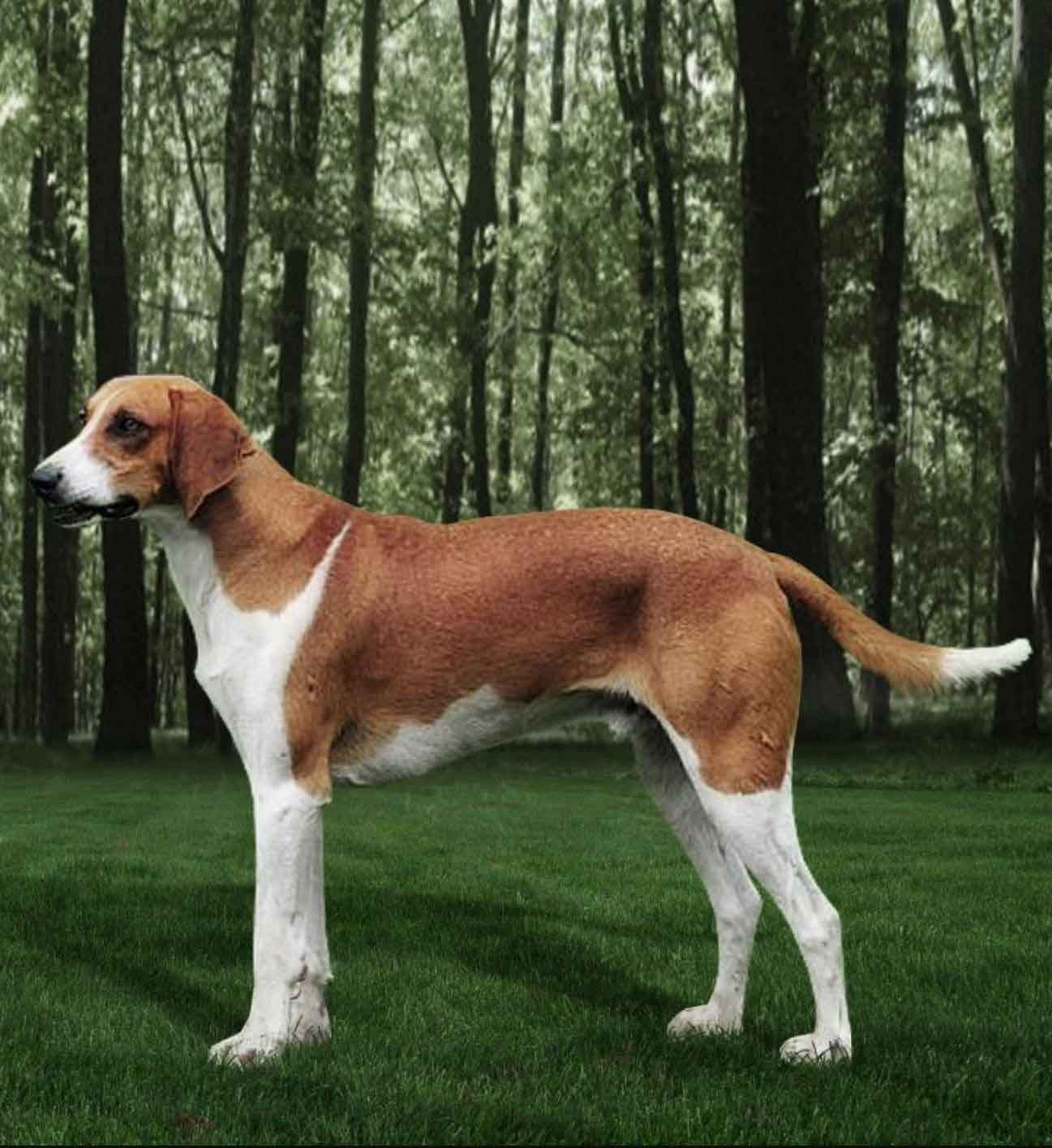
Content |
|---|
History Great Anglo-French White and Orange Hound
It probably dates from the 16th century and is originally from France, the Great Anglo-French White and Orange Hound comes from the cross between English Foxhound, French dogs and the addition of a contribution most likely from the Billy.
The addition of English and French blood produced a versatile all-rounder hunting dog that was particularly prized towards the end of the 19th century..
The boar, the Fox, deer and roe deer have been part of their specialties ever since.
Along with the Great Anglo-French White and Black Hound and the Great Anglo-French Tricolour Hound, it is one of the three French breeds that have been crossed with English blood.
Physical Characteristics Great White and Orange Anglo-French Hound
The Great Anglo-French White and Orange Hound it is a quite strong and powerful dog, with more English blood on his head than his tricolor counterpart. His eyes are big, brown and dark. The ears are quite thick, slightly turned and quite short. Its tail is quite long and sometimes slightly spied on.
His hair is short and not too thick, lemon white or orange white, as long as the orange is not too dark, tending towards red.
Height: 60 to 70 cm..
Weight: Of 30 to 35 kg.
Character and skills Great Anglo-French White and Black Hound
Solitary or in a pack, brave, tenacious, rapid, gentle and friendly, the Great White and Orange Anglo-French Hound is a sociable hunting dog with an obedient nature.
Usually, they are easy to learn, like your socialization.
Tenacious, vigorous, brave and fast in the hunt, they are tender and gentle with their family, including children in the home.
Health Great Anglo-French White and Black Hound
Quite robust and very solid, this large dog generally enjoys very good health.
He rarely gets sick and his longevity is still appreciable for a dog of his size..
The breed is not affected by any genetic defects or diseases.
Caring for Great Anglo-French White and Black Hound
Brush him from time to time, to remove dead hairs and keep the coat healthy and beautiful, It is more than enough.
Training Great Anglo-French White and Black Hound
Its socialization is easy, but your education must remain firm and adequate, although it requires less firmness than the other breeds in its category, because it is less dominant by nature than the other two.
His great intelligence also facilitates his education.
Exercise Great Anglo-French White and Black Hound
The Great Anglo-French White and Orange Hound is an extremely vigorous working dog, accustomed to very intense physical exercise. When not hunting, he must be given the opportunity to expend his excessive energy. This dog is an infamous cat hunter, so it should never be released without a leash until it is in a closed and secure area.
During the hunting season it is advisable to offer the dog some type of exercise that emulates its hunting behavior.. It is worth remembering that if the Great Anglo-French White and Orange Hound lacks opportunities to vent, will gradually turn into a rebellious animal, hyperactive and destructive.
Videos "Great Anglo-French White and Orange Hound"
|
HTTPS://youtube.com/watch?v=J0DEDEqOimA&list=PLcj6J71Gt710QwEM_fhrp9Eq6e4x6w06H&index=2
Horus sucht ein Zuhause
|
HTTPS://youtube.com/watch?v=UJjm2cAT46s
Grand Anglo Français Blanc et Orange ?? Everything Dog Breeds ??
|
|---|
Type and recognitions:
- FCI CLASSIFICATION:
- Group :
- Section : . .
Federations:
- – FCI – Group 6: Scent hounds, and related breeds. – Section 1.1: Large-sized Hounds. ⓘ
- – Central Canine Society ⓘ
FCI breed standard "Great Anglo-French White and Orange Hound"
Use:
Hound
General appearance:
It is a fairly strong and robust dog.. In his head the English blood stands out more than in that of his tricolor counterpart..
---
Head:
It is quite short and big.- Craging: It is rather wide and flat, without occipital bulge. The eyebrows are not prominent.
- Dnaso-frontal depression (Stop): Well marked.
facial region:
- Trufa: It is black or brown-orange in color.
- Snout: Rather short nasal passage.
- Belves: They extend beyond the lower jaw and give the muzzle a slightly square appearance..
OJOS: They are large, brown and dark.
OREJAS: Fairly long implantation in the plane of the eye line or slightly higher. They are rather thick, slightly crooked and rather short.
Neck:
It is straight and has a slight dewlap.Body:
- Espalda: Wide and muscular.
- Pork loin: Wide and rather short.
- Rump: Rather rounded.
- Pecho: Quite high and low. Long, slightly rounded ribs.
- Flalso: Massifs.
Tail:
It is quite long and sometimes spindly (towards the tip of the tail around some longer and thicker hairs slightly separated in the shape of a spike).Tips
PREVIOUS MEMBERS:
- Ageneral appearance: They're strong, wide and well plumb.
- Shoulder: They are close to the chest, but they are very muscular.
- Pinis previous: Rather rounded.
LATER MEMBERS:
- Thighs: Muscular and thick.
- Corvejones: Somewhat angled and are located close to the ground.
- Hind feet: Rather rounded.
Movement:
This is a dog that moves easily.Mantle
PIEL: White with orange or yellow spots.
Plink: Short and not very thick.
Codor: White – lemon or white – orange, provided the orange is not too dark (pulling red)
Size and weight:
Altura to the cross: Of 60 to 70 cm..
Fouls:
Any deviation from the aforementioned criteria is considered as a fault and the severity of this is considered to the degree of the deviation to the standard and its consequences on the health and well-being of the dog..
- Constitutional defects.
- Partial depigmentation of the truffle
- Nasal cane too narrow.
- Upper or lower prognathism.
- light eyes.
- Excess double chin.
- Tail curled or drawn to one side.
- Fur of another color than the established one (black or red hair).
FALTAS DISQUALIFYERS:
- Aggressiveness or extreme shyness.
- Any dog showing clear signs of physical or behavioral abnormalities.
- Males should have two normal-appearing testicles fully descended into the scrotum..
- Only functionally and clinically healthy dogs, with the typical conformation of the breed, should be used for parenting.
Alternative names:
1. Chien Français Blanc et Orange (English).
2. Français blanc et orange (French).
3. Français blanc et orange (German).
4. Grande sabujo francês branco e laranja (Portuguese).
5. Français blanc et orange (español).
 FCI 84 - The hound par excellence
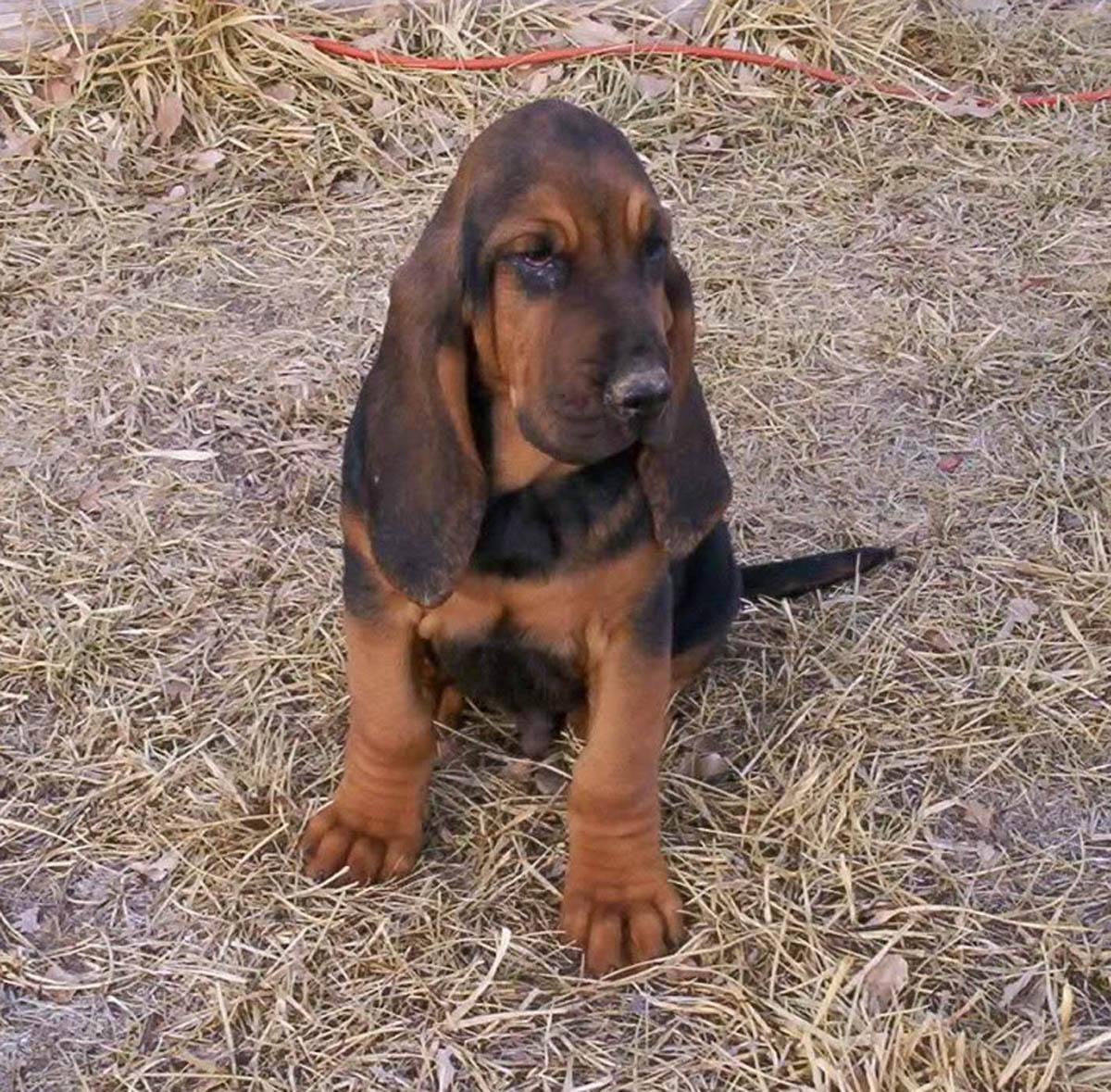
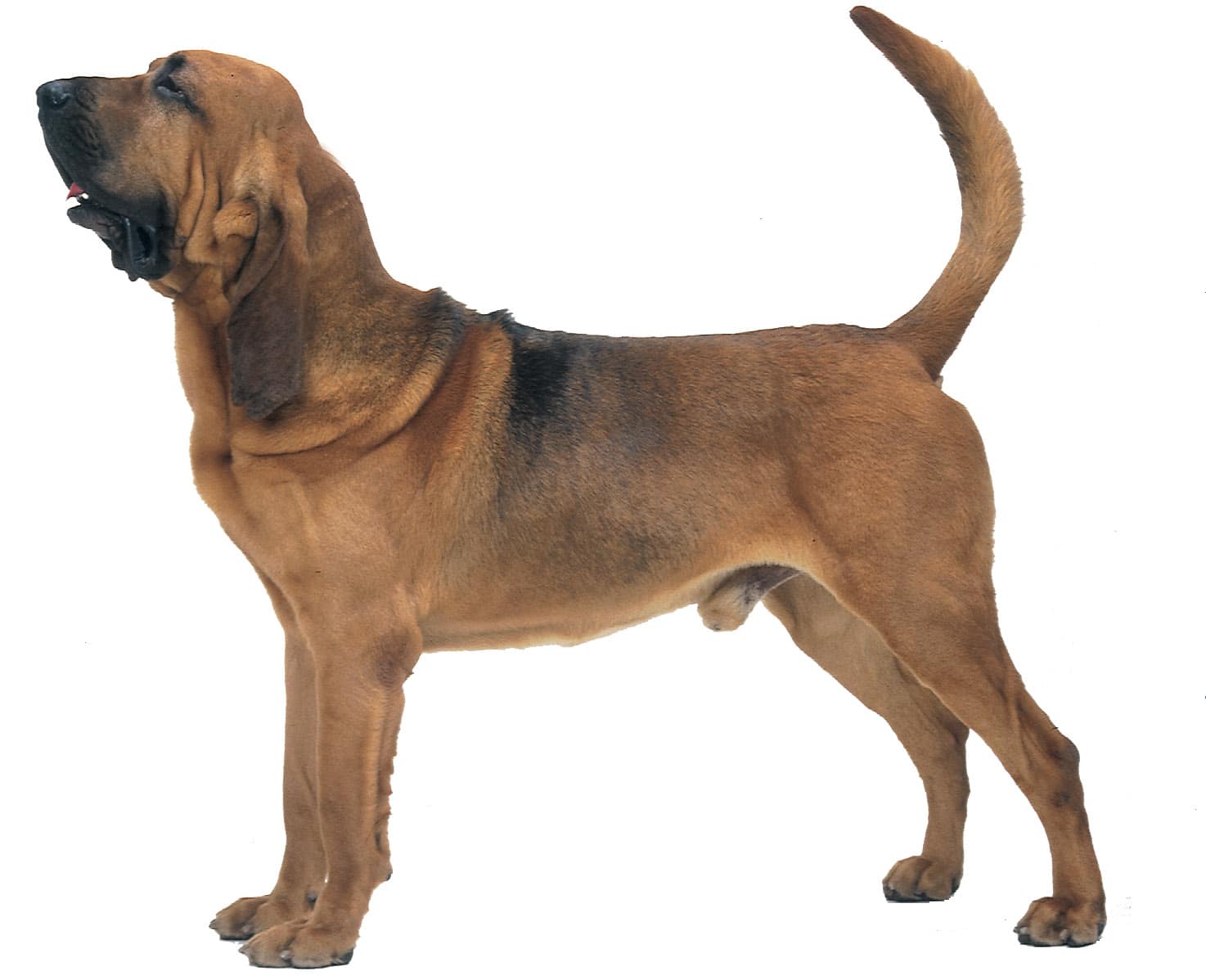
 Bloodhound
 BLOODHOUND PUPPIES by Eduardo Durán Haedo




 Will the Silly Bloodhound
 Toddler and dog play the blues
 FCI - Bloodhound