 FCI 99 . Braque Type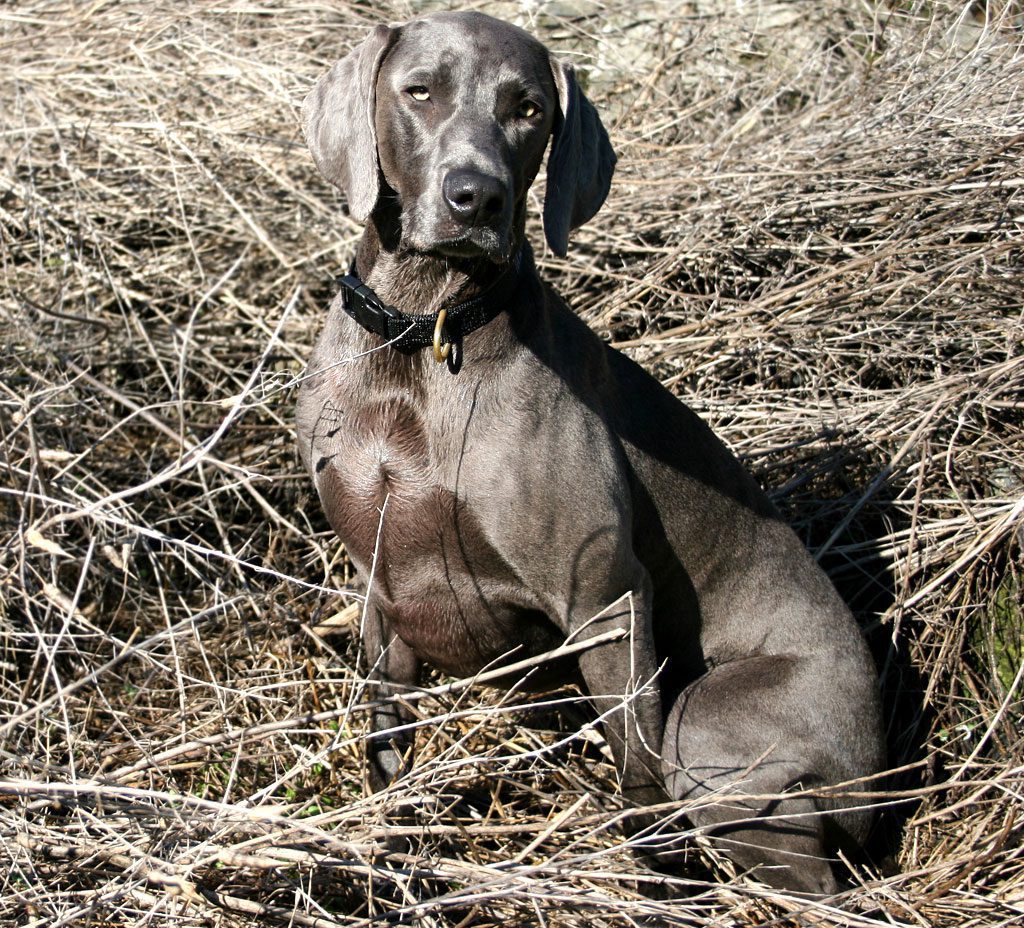
Content |
|---|
History
The Weimaraner is a specially equipped with dog as a dog collector.
The history of Weimaraner begins with Grand Duke Carl August and the nobles of the court of Weimar, known as the hunter among kings and the king among hunters, you have selected the gray race silver for hunting in forests. According to German tradition, not only the time annulled the traces of the origin of the breed, but they were perhaps cancelled deliberately by the nobles of the time, so that this magnificent specimen is exclusive to the court of Weimar. The theory today proves that it comes from France and indirectly from North Africa.. It is thought this because of the colour of the fur, similar to the race of Saint Louis.
Gray color is a recessive inherited trait, so it follows that it was selected to obtain it. We know today as the Silver ghosts or grey ghosts thanks to the American soldiers who watched them move gracefully through the German camps.
Head with slightly pronounced occipital bone, similar to the implant of the ears, are also present in the Grey Saint Louis Hound. Do not cut tail has a particular curvature that resembles the tail of the Saluki. Exceptional smell, can be considered a characteristic inherited from the ancients Leithund of Tracia, that take us back to a time before the creation of the Weimar Republic.
In the 13th century, Louis IX of France, returning from a crusade to North Africa, He brought with him copies of which later was called it the grey dog in Saint Louis, widely used in France for tracking and capture of pieces in the Woods. This breed did not live with the other dogs, lived with their caregivers, which may explain the union with man and the need to be in the family of the Weimaraner current. In the 15th century, other grey dogs were brought to Europe from Asia.
Finally the Grand Duke Carl August, passionate about all dog, Select race, search and find old french lines, and following the trend of the time, a versatile and agile dog, and probably crosses with him Old Spanish Pointer and some other races. These crossing comes from the Long hair Weimariano, which was officially accepted by the German club in 1935.
At the end of the nineteenth century, the Weimaraner he was the king of hunting dogs, he was a shy and somewhat fearful dog, that he should be treated well and gently, talking in a low tone. In 1882 the Weimaraner It was already a well known and established breed thanks to its versatility, and it was used by professional hunters and Rangers. The official recognition of the breed was not easy to obtain, but finally in 1897 born German Club. After the Second World War, the American zone had banned hunting and possession of firearms, and that is why many Weimaraner were exported. In 1951 the selection was resumed on the basis of a standard and performance in the field.
For many years made assumptions of the origin of this breed, evaluating that they were the result of crosses with German Shorthaired Pointer, Bloodhound, Pointer and even a genetic mutation of the German Shorthaired Pointer. The home is today clearer, Thanks to the studies of this race fans, paintings of the era and to the study of the genetics of colour. After World War II export, It explains the boom in United States of the race.
The real development of the race was in the years 50, When the Weimaraner was considered a dog of good taste, high class, almost human intelligence, ranks 21 in the Classification of dogs according to their functional and obedience intelligence. Stanley city’ s: "The Intelligence of Dogs". Some examples accompanied Grace Kelly, Eisenhower, Brad Pitt and Roy Rogers.
Physical characteristics
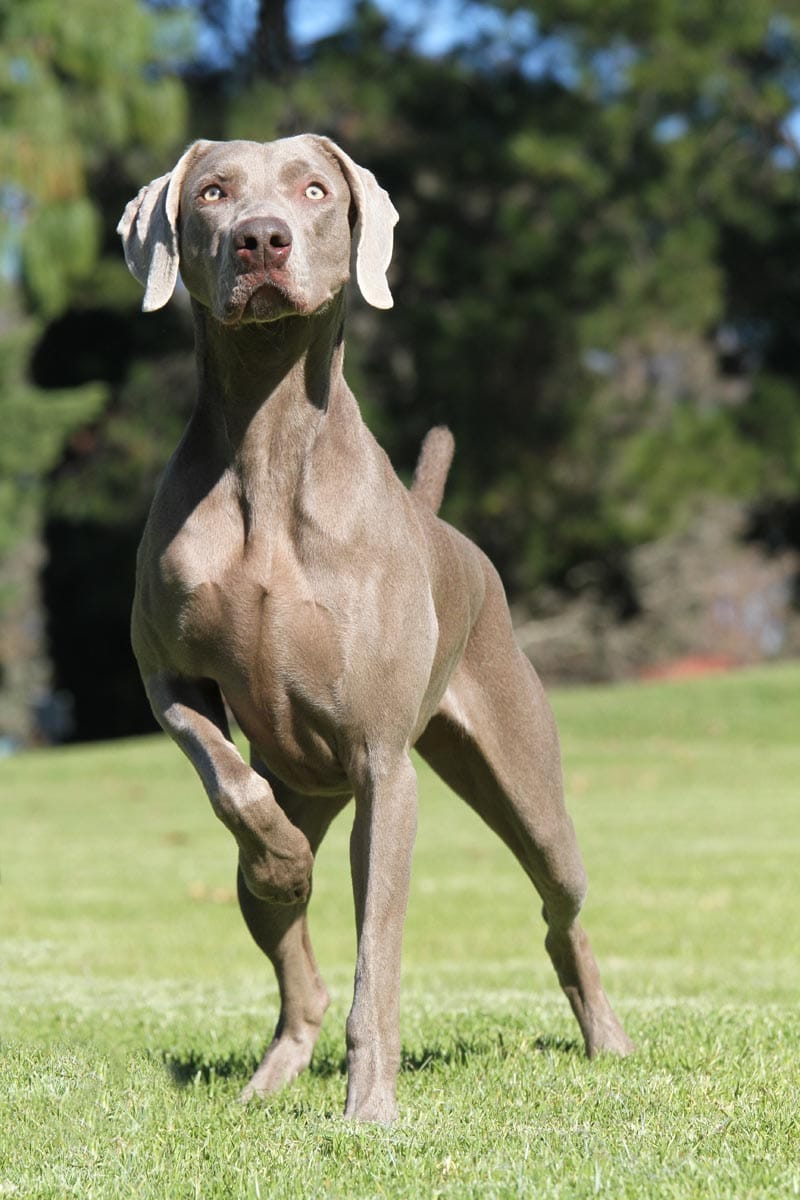
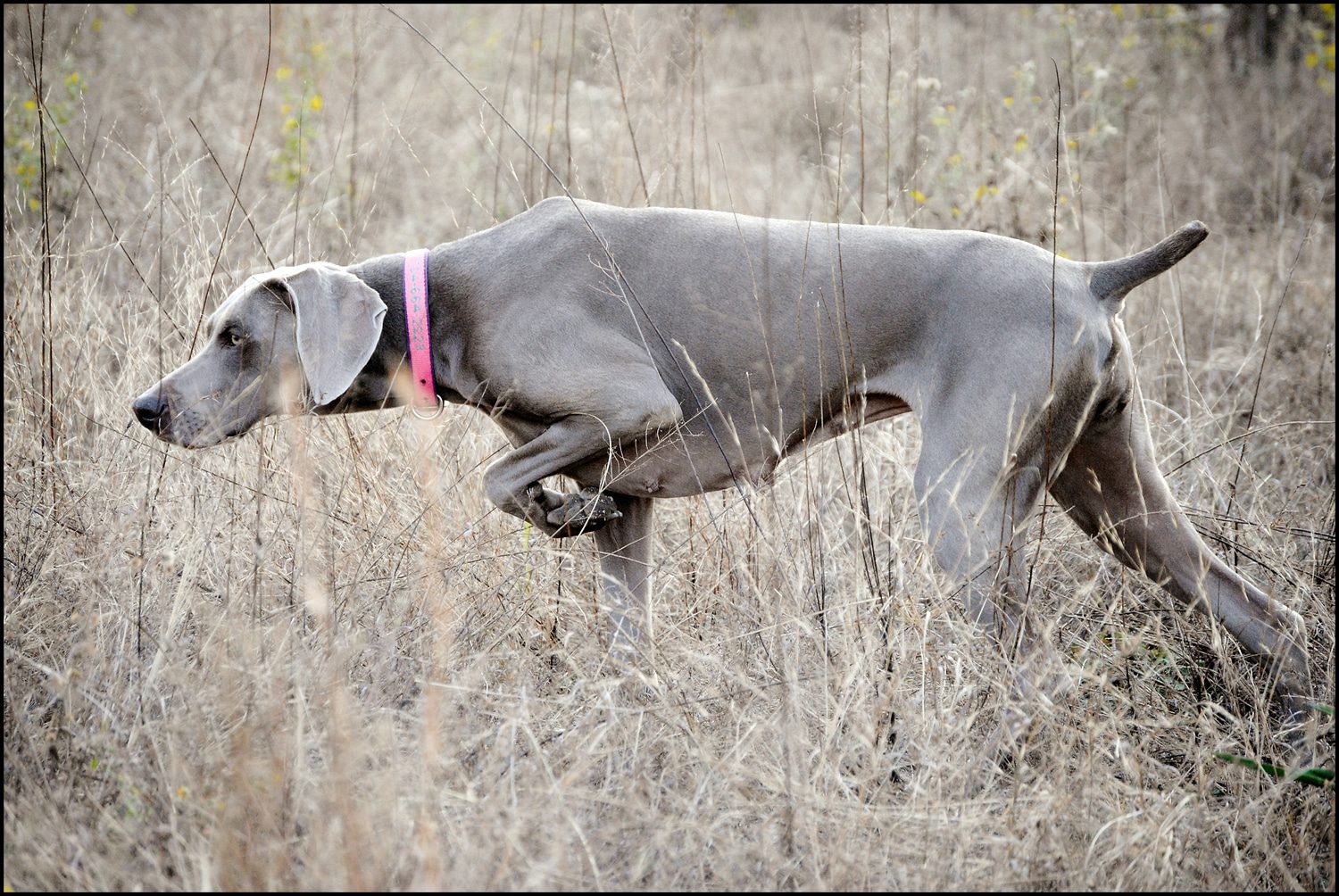
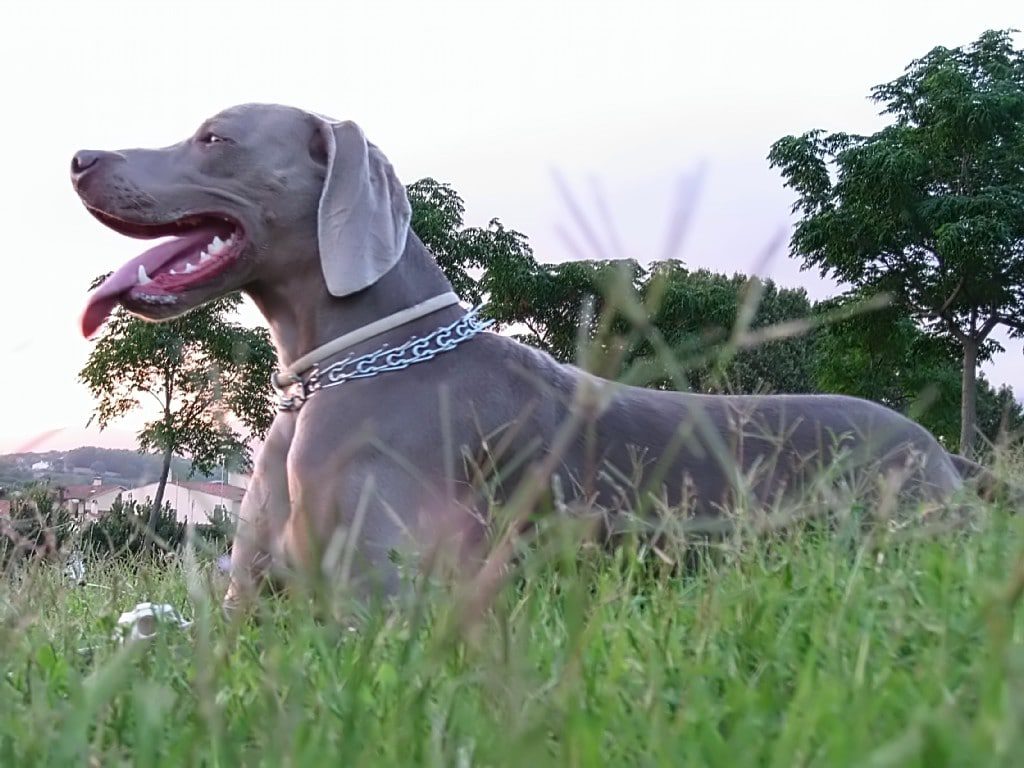
The Weimaraner It is a medium-sized to large hunting dog. The males measure of 59 to 70 cm. (ideal size: 66 cm.) and weigh in 30 to 40 kg; the females of 57 to 65 cm. (ideal size: 62 cm.) and weigh in 25 to 35 kg. It is a robust dog, harmonious, vigorous, of powerful muscles. They need daily activity, because your energy level is high.
Their short, thick fur, very well protects from moisture which allows it to be an effective Hunter in swampy areas.
The coat is composed of different layers, And there are several types...
- Short hair: It can be, short and thin, short and dense, very short (but longer and bulk to the breeds of dogs that can compare); Smooth and regular "straight and regular hair.
- Wire-haired: medium length, thick, straight; Smooth and regular "straight and regular hair.
- Long hair: "from above" hair with smooth and wavy hair; It is long and straight at the start of the ear; woolly hair is supported at the tips of the ears; the hair of the flanks must of 3 to 5 cm long; It tends to be longer at the base of the neck, the upper part of the chest and belly; It fits rather less long developed towards the bottom; grown plume tail; "You will deliver" hairy; the less long head hair (the final growth of fur occurs often after two years of age).
- The color of the fur stands out as having various shades of grey: silver grey, black or grey roe deer and grey mouse. The head and ears are generally clearer. Only tolerate some white spots in small amounts in the chest and feet. Often, in the middle of the back there is a strip of hair slightly darker and with another texture, called "eagila line" more or less wide.
The head of the Weimaraner is moderately long, provided to the body; wider in the male than the female, Although the width of the top of the head is proportionate to the total length of the head. The length from the tip of the snout to the line joining the inner corners of the eyes is slightly longer than that from this line to the occiput.. There is a cavity in the temples. Slightly apparent occipital bone. The cigomática arch is very recognizable behind the eyes. The snout is long and powerful, especially in males. The base of the front (stop) is extremely short. Lips surpass the mandible without never be mixture and are incarnated as the palate. There are small wrinkles at the corners of the lips. The cheeks are clearly pronounced and muscular.
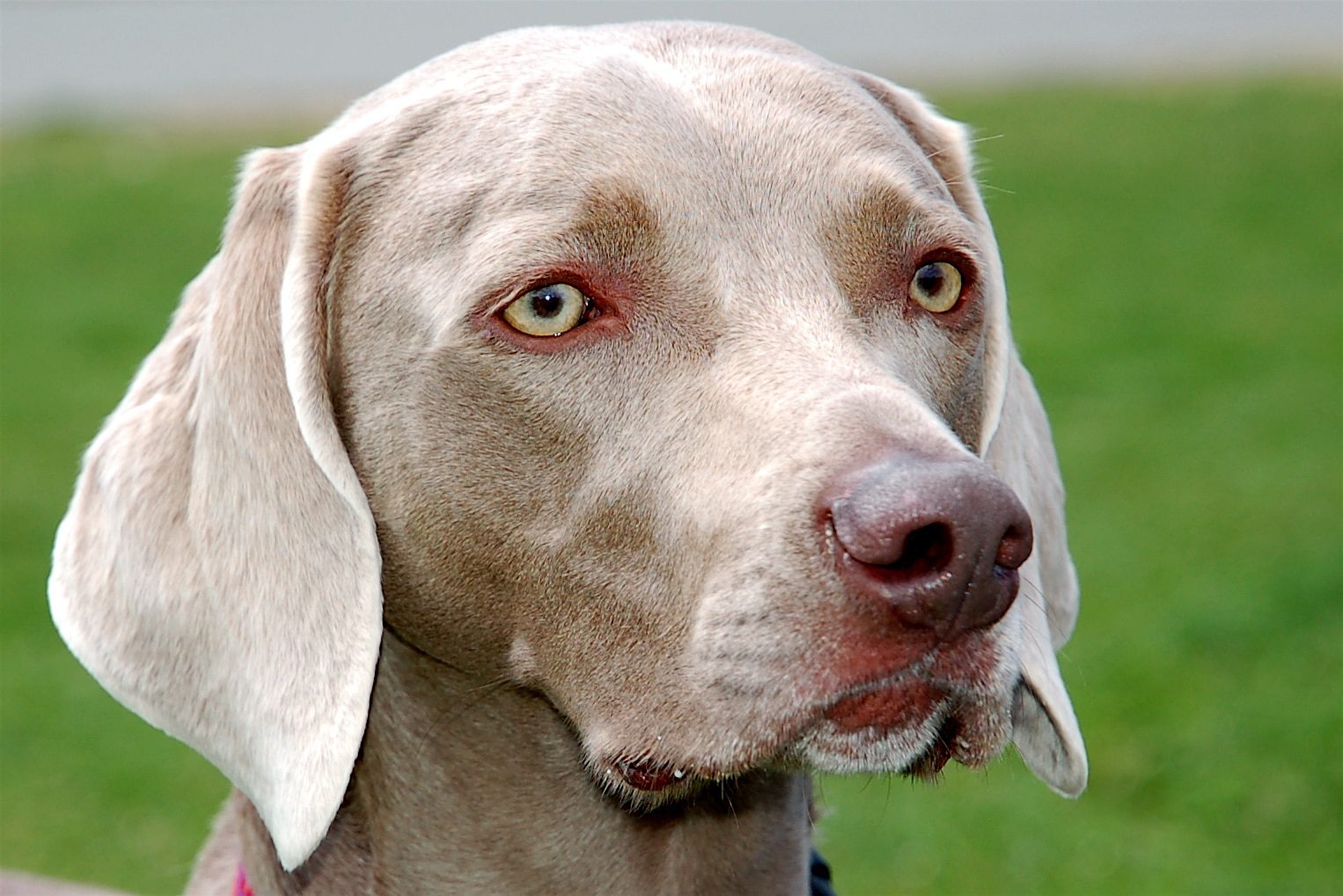
The ears are wide and quite long, arriving at the corner of the mouth, rounded at the tips; in the sample they are slightly rotated forward, curved; implanted slightly above the eye line. The truffle is dark incarnate, that becomes gradually grey back.
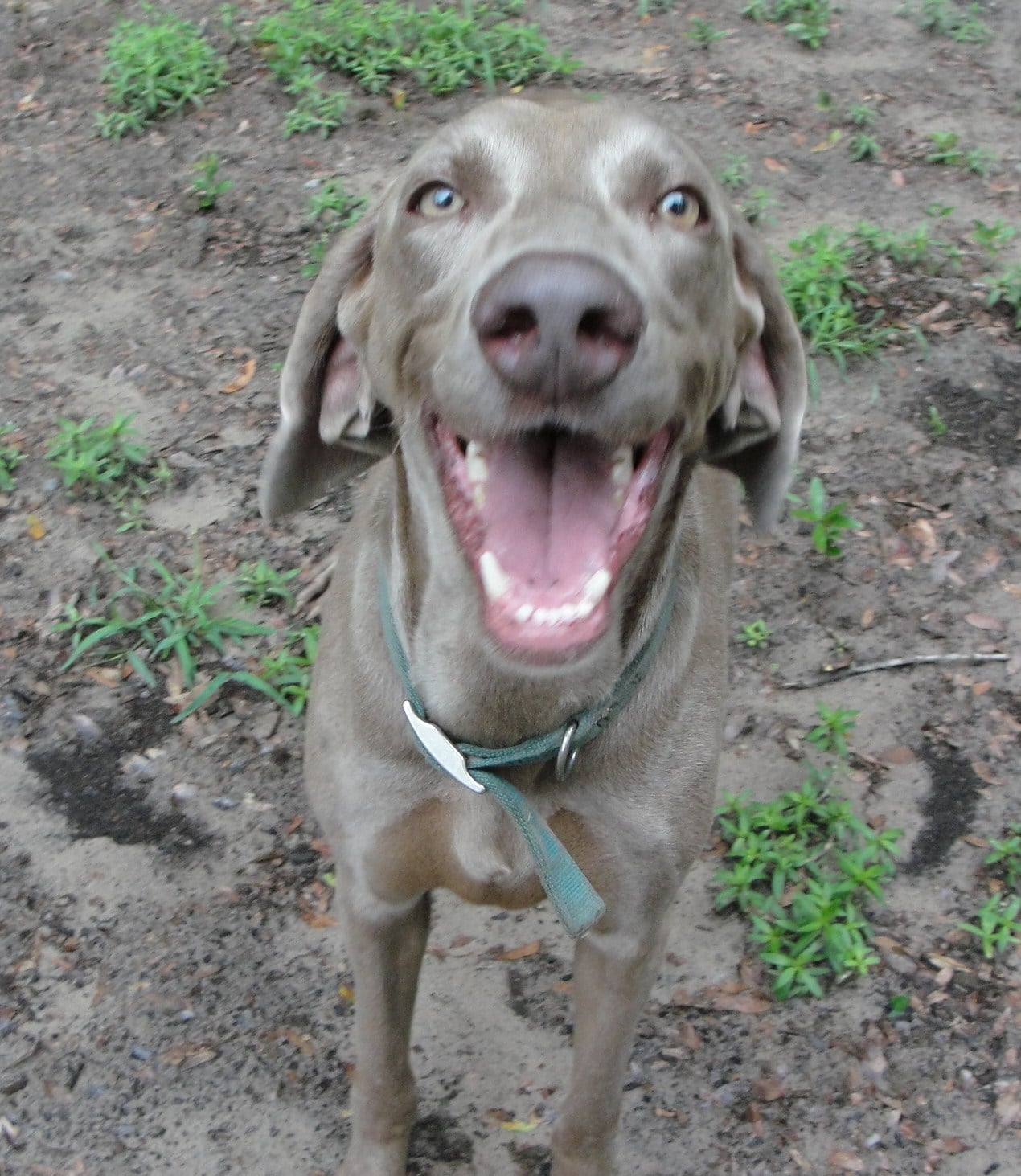
The eyes and the eyes, in general, they are intelligent expression, curious, friendly. The color of the eyes changes as they grow, When they are puppies have them blue, but for the three months they are a turquesa-verdoso tone, to be amber in adulthood.
Did you know??
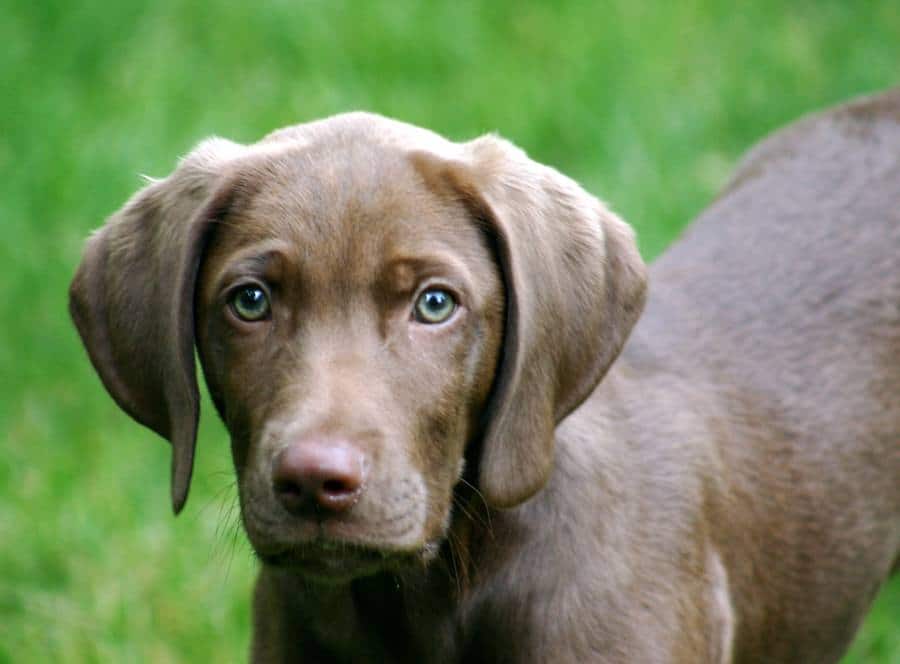
The Weimaraner "Blue" cannot compete on the American exhibition track, but the color is considered normal and is not associated with any health problems. The Weimaraner "Brown", on the other hand, no son Weimaraner pure breed, but mixtures Pointer / Braco German Shorthair
Character and skills
This Germanic sample dog stands out for its great elegance and versatility that it is suitable for all types of terrain and for all types of hunting.
His character is quiet and affectionate. Their submission and balance make have an easy training, besides being great as a companion dog.
It has also gained appreciation of los monteros by worth for all seasons and temperatures. Today they recorded more than 500 Puppies per month. In the United States race is revalued in all directions: tracking, capture of prey, guide dog, drug trafficking, Guarda, agility and companion of life. They are easy to train and behave very well as guard dogs. They are affectionate and obedient.
Health
The Weimaraner are generally healthy, but like all races, are prone to certain health conditions. Not all Weimaraner will contract some or all of these diseases, but it is important to be aware of them if you are considering this breed.
If you are buying a puppy, find a good breeder who will show you the health clearances of the puppy's parents. Health clearances show that a dog has been tested and cleared for a particular condition.
Care
The first thing to know about him Weimaraner is that it is a domestic dog. Not made for the kennel or backyard life, and it's not made for apartment living either. This highly active dog needs a large, safe yard where he can run, and an active family that gives you the exercise and mental stimulation you need.
A sense of humor also helps, especially when you see how you Weimaraner has remodeled your garden in its efforts to get rid of mice, moles and bugs. You will be proud of yourself for your good efforts, so don't forget to praise him while you calculate in your head how long, money and effort it will take to put the garden back the way you like it. You may want to monitor him more closely and provide him with additional exercise..
The Weimaraner they need a couple of hours of daily exercise if they want to avoid barking, recreational chewing and digging. Play fetch and other running games, take him for a jog or a walk, teach him to run alongside his bike or get him involved in a dog sport like agility or flyball. Y, of course, you can always take him hunting.
Make sure your patio is leak proof. The Weimaraner They are Houdinis when it comes to confinement, and they are very good at learning to open doors and gates and jump or dig under fences. That is another reason why they are best kept as domestic dogs..
In the House, a Weimaraner mature and well trained will be his shadow, from the bedroom to the bathroom and from the kitchen to the den. a puppy of Weimaraner is challenging and requires careful supervision. Can be a destructive chewer and difficult to train. Box training is a good idea.
The Weimaraner of any age with separation anxiety, which is not unusual for this breed, They can become destructive and can "dig" on their carpet or sofa in an attempt to create a safe nest.
The Weimaraner they are very intelligent, and they are also independent thinkers. That combination can make them a challenge when it comes to training.. Be consistent and firm, but soft. The Weimaraner is sensitive and does not respond well to anger, But he must be able to say "no" and say it seriously. Keep training sessions short and interesting, and always end them when you've done something right so I can praise you for a job well done. Last, but not less important, keep your sense of humor. Its Weimaraner may or may not do what I ask, depending on many factors, but will always disobey with style.
Grooming
One Weimaraner it is one of the easiest breeds to care for. Even when he's been running through the mud, dirt seems to fall off it. Weekly brushing with a bristle brush should keep their fur and skin healthy. The Weimaraner they shed their fur, but brushing will help keep hair loose from your clothes and furniture. For your Weimaraner glasses, clean it with a chamois. Bathe when necessary. Likes to wallow in anything stinky, so it may be more often than would normally be necessary.
All breeds with floppy ears tend to have problems with ear infections. Check your ears Weimaranerr weekly and clean them with a cotton swab moistened with a cleanser recommended by your veterinarian. Never insert cotton swabs or anything else into the ear canal, as it could damage it. Its Weimaraner you may have an ear infection if the inside of your ear smells bad, looks red or tender, or if you frequently shake your head or scratch your ear.
Brush your teeth Weimaraner at least two to three times a week to remove tartar buildup and the bacteria that lurk inside. Daily brushing is even better if you want to prevent gum disease and bad breath.
Trim the nails once or twice a month if your dog doesn't wear them down naturally. If you can hear the click of nails on the ground, they are too long. Short, well-trimmed nails keep the paws in good condition and prevent scratching when the Weimaraner jumps enthusiastically to greet him.
Start getting used to your Weimaraner to have it brushed and examined when it's a puppy. Handle your feet frequently – dogs are sensitive to their feet – and look inside your mouth and your ears. Make grooming a positive experience full of praise and rewards, and will lay the groundwork to facilitate veterinary examinations and other manipulations as an adult.
While you clean him, check for sores, rashes or signs of infection such as redness, tenderness or inflammation of the skin, in the ears, nose, mouth and eyes, and on the feet. Eyes must be clear, no redness or discharge. Your careful weekly exam will help you detect possible health problems early.
Food for a Weimaraner
The proper diet for a Weimaraner may vary depending on its age., weight, activity level and individual health of each dog. But, I can provide you with some general guidelines.. It is important to remember that it is always advisable to consult with your veterinarian to obtain personalized advice on your pet's diet..
Puppy:
Weimaraner puppies require a nutrient-rich diet for their growth and development.. Look for specific foods for large breed puppies, since these usually have an adequate balance of calcium and phosphorus for bone development.
-
Dry food for large breed puppies: Should contain high quality protein, fat, essential vitamins and minerals. Be sure to follow the manufacturer's recommendations for daily amounts.
-
Wet Food: You can complement the diet with quality wet food. This can help meet the puppy's hydration needs..
Adult:
When your Weimaraner reaches adulthood, usually around 1-2 years, you can switch to a diet formulated for large breed adults.
-
Dry food for adults of large breeds: Look for a food that contains a balanced amount of protein, fats and carbohydrates. The daily amount will depend on your dog's weight and activity level..
-
Wet food or mixed diets: You can continue to include quality wet food in the diet or combine it with dry food..
Viejo (Senior):
As your Weimaraner ages, your nutritional needs may change. Diets for older dogs often contain ingredients that promote joint and cardiovascular health.
-
Dry food for older dogs: Look for foods formulated for senior dogs, that may contain supplements such as glucosamine and chondroitin for joint health.
-
Wet food for older dogs: You can also provide quality wet food to help maintain good hydration..
Quantities:
Exact amounts of food will vary depending on the brand of food., your dog's activity and overall health. Always follow the guidelines provided by the manufacturer on the food package, and adjust as needed based on your Weimaraner's weight and activity level.. Monitor your weight and adjust the amount of food as needed to maintain a healthy weight.
Remember that it is crucial to monitor your dog's health and adjust his diet as necessary throughout his life.. It also, fresh water must always be available. Always consult with your veterinarian for specific recommendations for your individual Weimaraner..
Characteristics "Weimaraner"
Coexistence is important that you have with your new friend. Before considering the acquisition of a dog of the breed "Weimaraner" you know certain factors. Not all breeds of dogs are apt to live in an apartment, you must take into account his character, their need for exercise, their interaction with other pets, their care and if you have small children, their level of tolerance towards them.
Adaptation ⓘ5,0 of 5 stars (based on 1 review)
|
friendly dog ⓘ5,0 of 5 stars (based on 1 review)
|
hair loss ⓘ3,0 of 5 stars (based on 1 review)
|
|---|---|---|
Affection level ⓘ5,0 of 5 stars (based on 1 review)
|
Need for exercise ⓘ5,0 of 5 stars (based on 1 review)
|
Social need ⓘ5,0 of 5 stars (based on 1 review)
|
Home ⓘ1,0 of 5 stars (based on 1 review)
|
Toilet ⓘ1,0 of 5 stars (based on 1 review)
|
Friendly with strangers ⓘ5,0 of 5 stars (based on 1 review)
|
barking ⓘ3,0 of 5 stars (based on 1 review)
|
Health ⓘ1,0 of 5 stars (based on 1 review)
|
Territorial ⓘ3,0 of 5 stars (based on 1 review)
|
Cat friendly ⓘ5,0 of 5 stars (based on 1 review)
|
Intelligence ⓘ5,0 of 5 stars (based on 1 review)
|
Versatility ⓘ5,0 of 5 stars (based on 1 review)
|
Child friendly ⓘ5,0 of 5 stars (based on 1 review)
|
Surveillance ⓘ5,0 of 5 stars (based on 1 review)
|
joy ⓘ3,0 of 5 stars (based on 1 review)
|
Weimaraner pictures
 grchasweimclub.org
 weimaranerdog.org
 weimaranerpics.com
 fjweis.com
 grouseridge.NET
 Weimaraner.es
 dogs-at.blogspot.com
 lukedom.com
 DailyKos.com
 versaweimaraners.com
 Weimaraner.es
 weimaraner.e
Videos Weimaraner

 Dogs 101 – Weimaraners
 Weimaraners (A Tribute)
 How to keep a weimaraner busy!!
 My Weimaraner Bob trying to get me out of bed
Type and recognitions:
- FCI CLASSIFICATION:
- Group :
- Section : . .
Federations:
FCI ⓘ, AKC ⓘ, ANKC ⓘ, CKC ⓘ, KC ⓘ, NZKC ⓘ, UKC ⓘ
FCI breed standard "Weimaraner"
Use:
According to its hunting purpose as a versatile dog, the Weimaraner must possess all the talents that are required required by him, and be able to be used for all work in the forest and water field, in performance oriented, before and after shot.
General appearance:
Dog hunting medium to large. Suitable for different types of jobs, so beautiful, tendinoso, with strong muscles. Rate differences between the male and female must be clearly marked.
important proportions
* Over the body : Height to the cross : 12 : 11.
* Proportions of the length of the head : From the tip of the nose to the stop slightly longer than from stop to occiput.
* Former members : The distance from the elbow to the half of the metacarpal bone almost the same as that of the elbow to the cross.
It is a versatile hunting dog, manageable, energetic and passionate with a systematic and emphatic search although it is not excessively temperamental. Olfaction remarkably fine. Eager for the dam and wild animals, It is alert, without being aggressive. Best sample and the water activity. remarkable tendency to activity after shooting.
Head:
---- Skull: In harmony with the size of the body and the facial region. In the male it is wider than in the female, although in both the relationship between width of the skull with the total length of the head should have good proportions. In the middle of the forehead there is a collapse. Mildly to moderately labeled occiput. Eyes behind the arc is visible superciliar.
- Depression links (Stop) : very mild.
facial region:
- Truffle: Grand, protruding the lower jaw. Color dark meat gradually changing to gray color on its back.
- Snout: Long, especially strong in males, with a look of almost angular profile. The muzzle and canine area approximately equally strong. Straight nose cane, sometimes slightly arched but never concave.
- Lips: moderately overlapping, flesh colored as the palate. Small labial commissure.
- Jaws/Teeth: Strong jaws. Complete denture, regular and strong. Scissor bite.
- Cheeks: Muscular and well marked. "Dry head".
Eyes: amber, from dark to light with a smart look. In puppies are blue sky. Round, just bent. Lids well adherent.
Ears: Wide and fairly long, arriving at the corner of the mouth, with rounded tips. When the dog is attentive the bends slightly forward, folded.
Neck:
Consignment and noble appearance, The arched upper profile line. Muscular, almost round, not too short and dry. Widening towards men with a harmonic insert towards the back line and chest.Body:
- top line: From the arched line of the neck, on the cross well marked, with a smooth transition to a relatively long back.
- Cross: Well marked.
- Back: Strong and muscular, without subsidence. The back should not be higher. A slightly longer back is not considered a fault.
- Rump: Pelvis long with a placement somewhat inclined.
- Breast : Strong, but not too wide, deep enough, almost to the level of the elbows and long enough. Well arched without having barrel-shaped; Ribs long and well marked antepecho.
- Bottom line and belly: slightly upward, Although the belly is not withdrawn.
Tail:
Little lower insert of the back line, compared with other races. Tail strong and well covered with hair. Hanging at rest; when attentive during work horizontally or slightly higher.Tips
Former members
* As a whole: senior members, tendinosos, straight and parallel, but not far apart.
* Shoulder: Long and oblique, well pasted, strong muscles. Good angulation of the joint scapulohumeral.
* Arm: Leaning placement, long enough and strong.
* Elbow: Free and straight. Should not deflect or outward or inward.
* Forearm: Long and straight.
* Carpo: Strong, keyed up.
* Metacarpus: tendinoso, with slightly oblique positioning.
* Front feet: Strong. Placed towards the midline of the body. Toes tight and arched. The longest central fingers are a characteristic of the race and therefore a foul should not be considered. Light colored nails dark gray. Pads well pigmented and tough.
Later members
* As a whole: senior members, sinewy or well muscled. Placed in parallel, without tipping either in or out.
* Thigh: long enough, strong, with good musculature.
* Knee: Strong, tense.
* Metatarsus: tendinoso, placed almost perpendicular.
* Hind feet: Strong and compact, No Spurs. The rest as forefeet.
Movement:
Displacement in all movements must cover the surface well and be fluid. forelegs and later placed in parallel. Gallop long low. On the trot, right back stays. Amble step is unwanted.Mantle
Skin: Resistant, attached to the body, but not in excess.
Fur
- Short hair: The outer layer short (although longer and more dense than in most comparable races), strong, well furred and well adherent to the body. Without or with very little undercoat.
- Long hair: outer layer of soft and long hair with or without undercoat. Straight or slightly wavy. Hair in the attachment of the ear. At the tip of a velvety ears hair is allowed. Hair along the sides of 3-5 cm.. At the bottom of the neck, forechest and belly usually a little longer. Good pens and trousers, although shorter towards the bottom. Cola with a good strip of hair. The area between the fingers covered with hair. The hair on the head is less long. Occasionally may occur, crossbreeding in dogs descendants, an external medium length hair, dense and well adhered, Tagid Internal Lanilla and Less developed feathers and pants.
Color: Silver grey, gray deer or gray mouse as well as transitions between these shades. In general the head and ears of a lighter color. Only small white markings are permitted on chest and toes. Occasionally in the middle of the back a dark "more or less marked" line of eel ". Dogs that manifest yellowish red marks can obtain the "good" classification. Fire red markings or color are a severe lack.
Size and weight:
Height to the cross
* Males: 59 to 70 cm. (ideal measure : 62-67 cm.).
* females: 57 to 65 cm. (ideal measure : 59-63 cm.).
Weight
* Males: Approximately from 30 until 40 kg.
* females: Approximately from 25 until 35 kg.
Fouls:
Any deviation from the above criteria is considered missing and the seriousness is considered to the extent of the deviation to the standard.
Serious misconduct
* Deviations marked on the type. Sexually atypical.
* Marked variations in the size and proportions.
* Cara : Marked variations eg. very prominent lips, short snout or pointed.
* Jawbones and teeth : Absence of more than two PM1 or M3.
* Eyes : minor defects, especially mild and unilateral defects of the eyelids.
* Ears : Noticeably short or long, without duplicity.
* Loose skin on neck (Spada). Large variations in shape and musculature.
* Back : Noticeably concave or convex. too development.
* Breast
, abdomen : Barrel-shaped chest, depth or length of chest insufficient. Retracted abdomen.
* Serious Posture Anomalies, such as angulation poor, outwardly inclined elbows, open feet.
* Tips barrel-shaped or cow.
* defective movements in each of the gaits, lack of range or push. Ambling movement.
* General deficiencies as eg. skin too thin or too thick.
* Transitions between variations hair specified in the standard.
* Lack of hair on the abdomen and ears (leather ears). LANOSO HAIR DISTRIBUTED IN THE VARIETY OF SHORT HAIR. Poor or very wavy coat on the long hair variety.
* Deviations between the gray tones such as yellow or brown. Tan markings.
* Notable differences in size and weight. ( For example more than 2 cm.).
* Other serious deficiencies.
* Minor deficiencies in character.
ELIMINATING fAULTS
* Markedly atypical, above all heavy or weak.
* Absolutely disproportionate.
* Absolutely atypical, as eg. skull like the bulldog.
* Cara: Absolutely atypical, as eg. concave nasal cane.
* Jaws / teeth: Prognathism, enognatismo. Absence of dientes.Weimaraner
* Eyes: Entropion, ectropion.
* Ears: Absolutely atypical as P.EJ.: raised.
* Gill marked.
* Back: Strongly convex or concave. overdeveloped.
* Breast
, abdomen: Chest with a strong barrel-shaped or malformed.
* Stunted or poorly trained members.
* chronic lameness.
* Marked inability during movements.
* Defects and deformities of the skin.
* Total or partial lack of coat.
* Another color other than gray. Tan markings expanded. White spots elsewhere than the chest or feet.
* Measures clearly higher or lower than those set.
* Any other malformation. Diseases, which can be considered as eg hereditary. from epilepsy.
* Faults in temperament as eg. SHYE THE FEARING.
Males should have two normal-appearing testicles fully descended into the scrotum..
The latest modifications are in bold type
Alternative names:
1. Weimaraner Vorstehhund, Raner, Grey Ghost (English).
2. Braque de Weimar (French).
3. Weimaraner (German).
4. Weimaraner (Portuguese).
5. Weimaraner, Weimi, Weimarán (Chile), Fantasma gris, Fantasma de plata (español).
 FCI 133 - 134 . Braque Type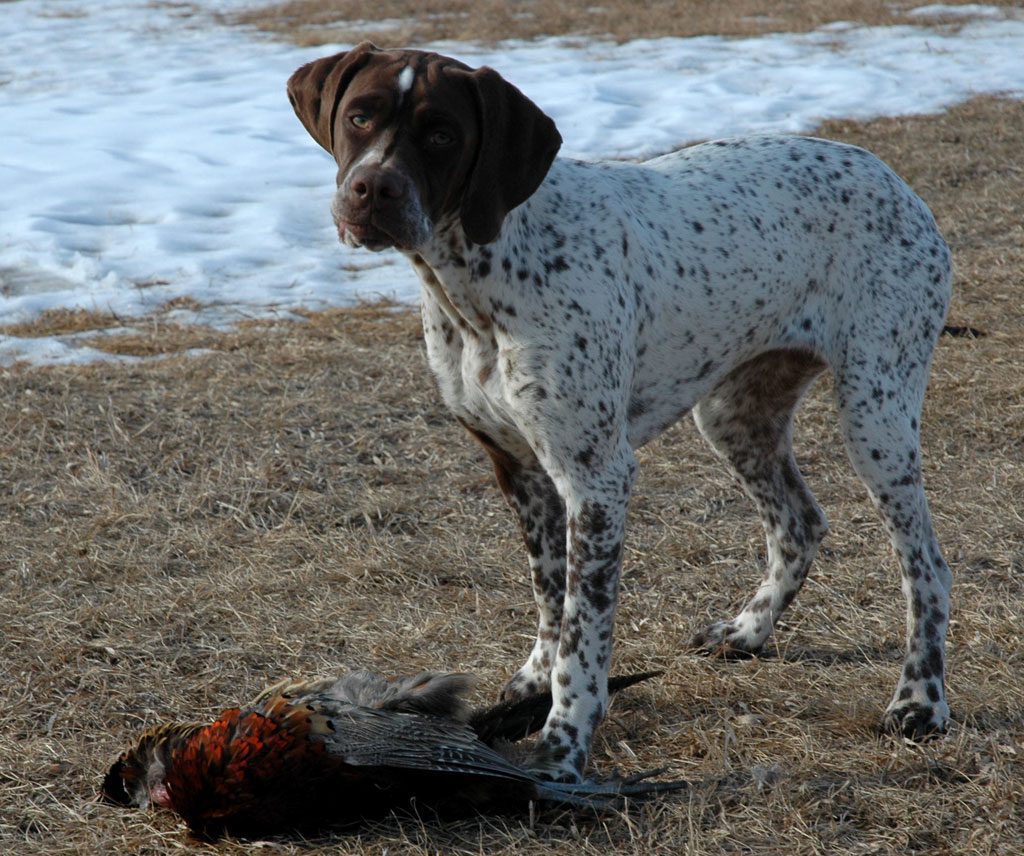


 Falco Braque francais of 3 month
 Braque Francais Elof of the balingue
 Ga????? ?p?to? ?????to??? Braque Francais Pyreneen
 Braque Francais Pups
 FCI –
FCI – 
 FCI 202 . Braque Type.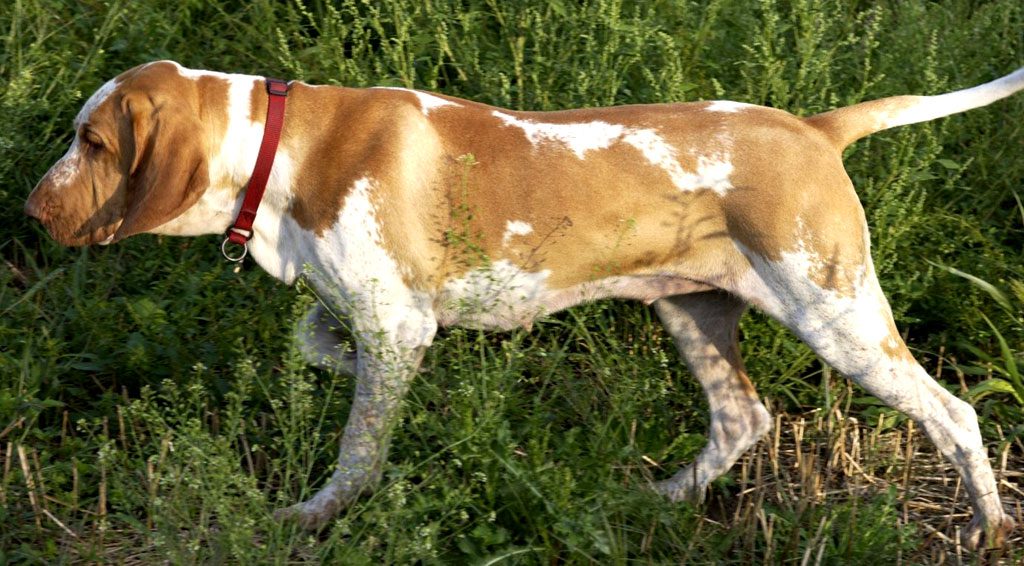

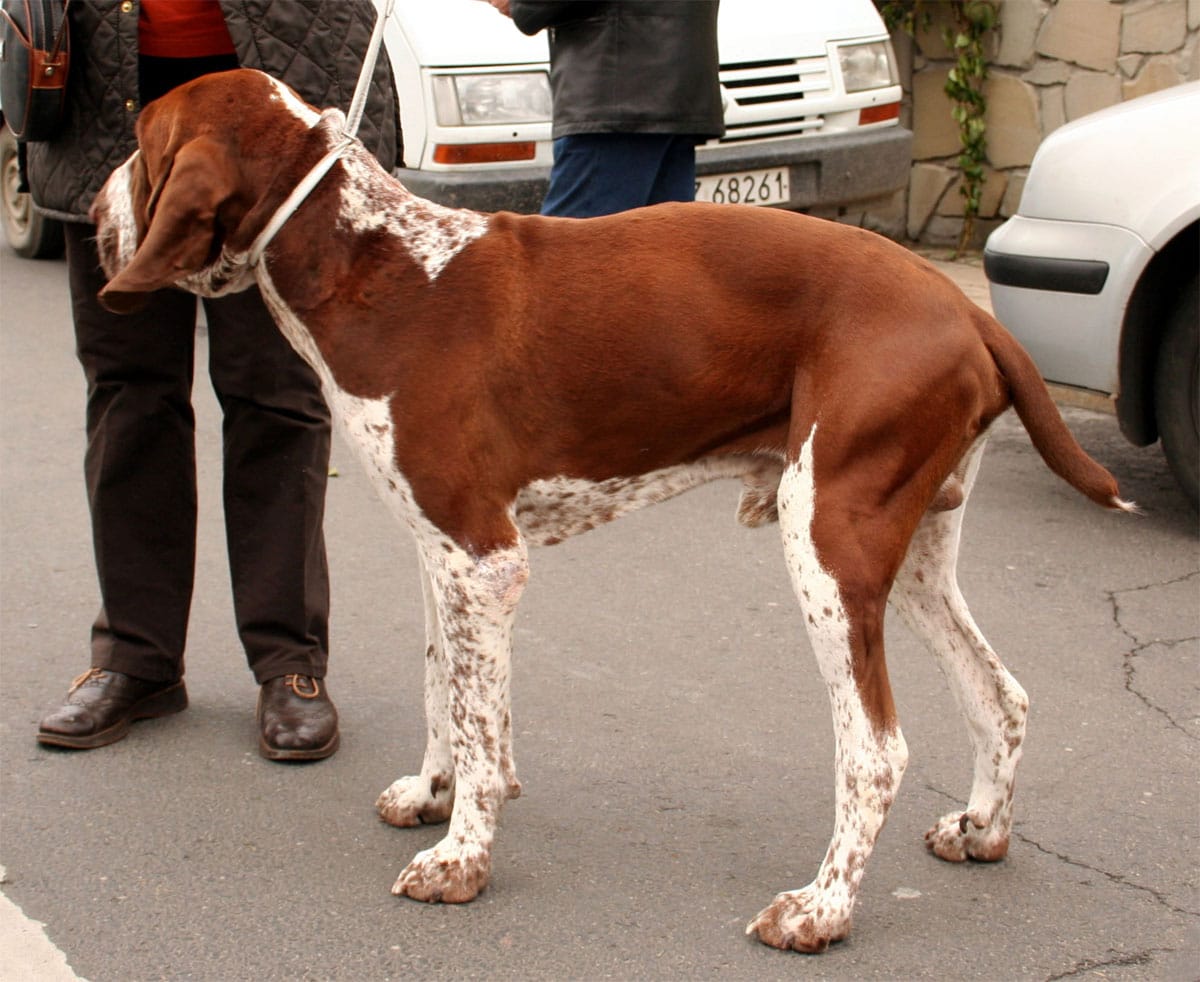


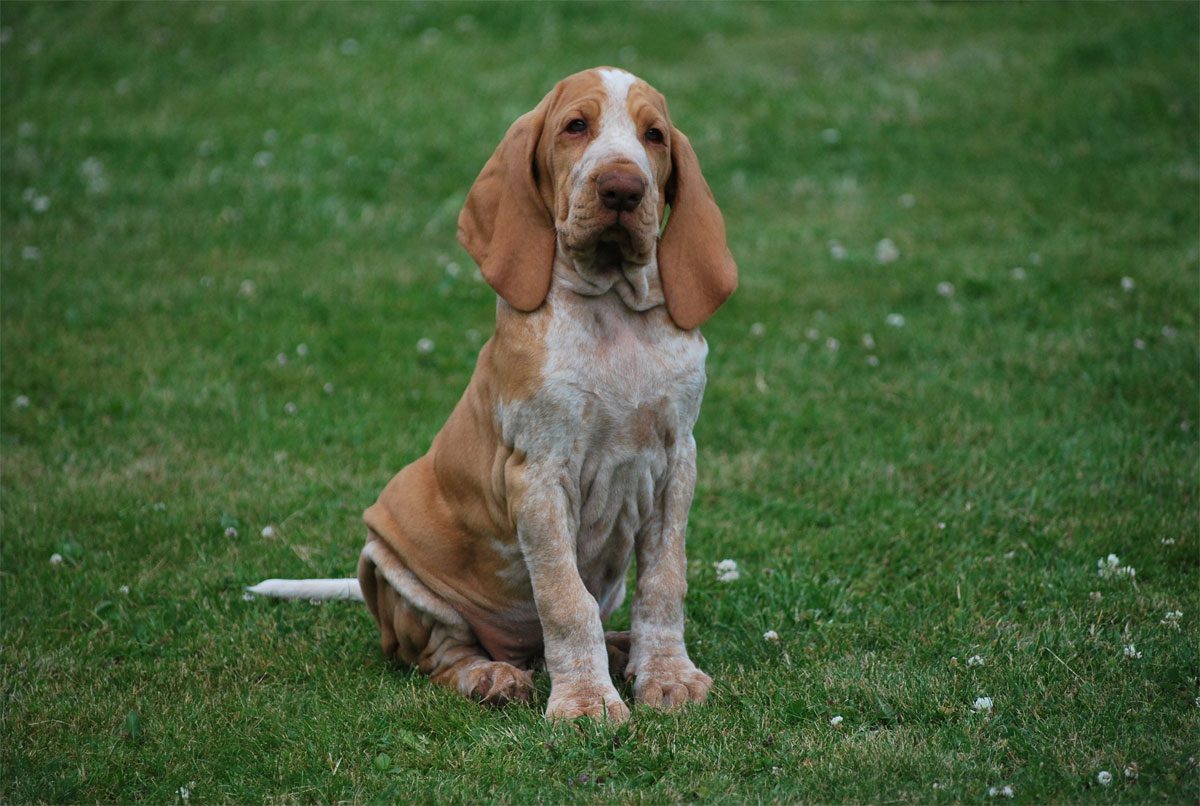

 Bracco Italian meets chicken
 Bracco Italiano – the dog more’ beautiful in the world. MC.wmv
 Italian Bracco
 Bracco Italian shoes (Fiona- 6 months) REAL RACE !!! (Dog X Horse)