โ–ท The world of Pets: Dogs, cats, birds, reptiles, amphibians

Portuguese Pointer
Portugal FCI 187 . Braque Type
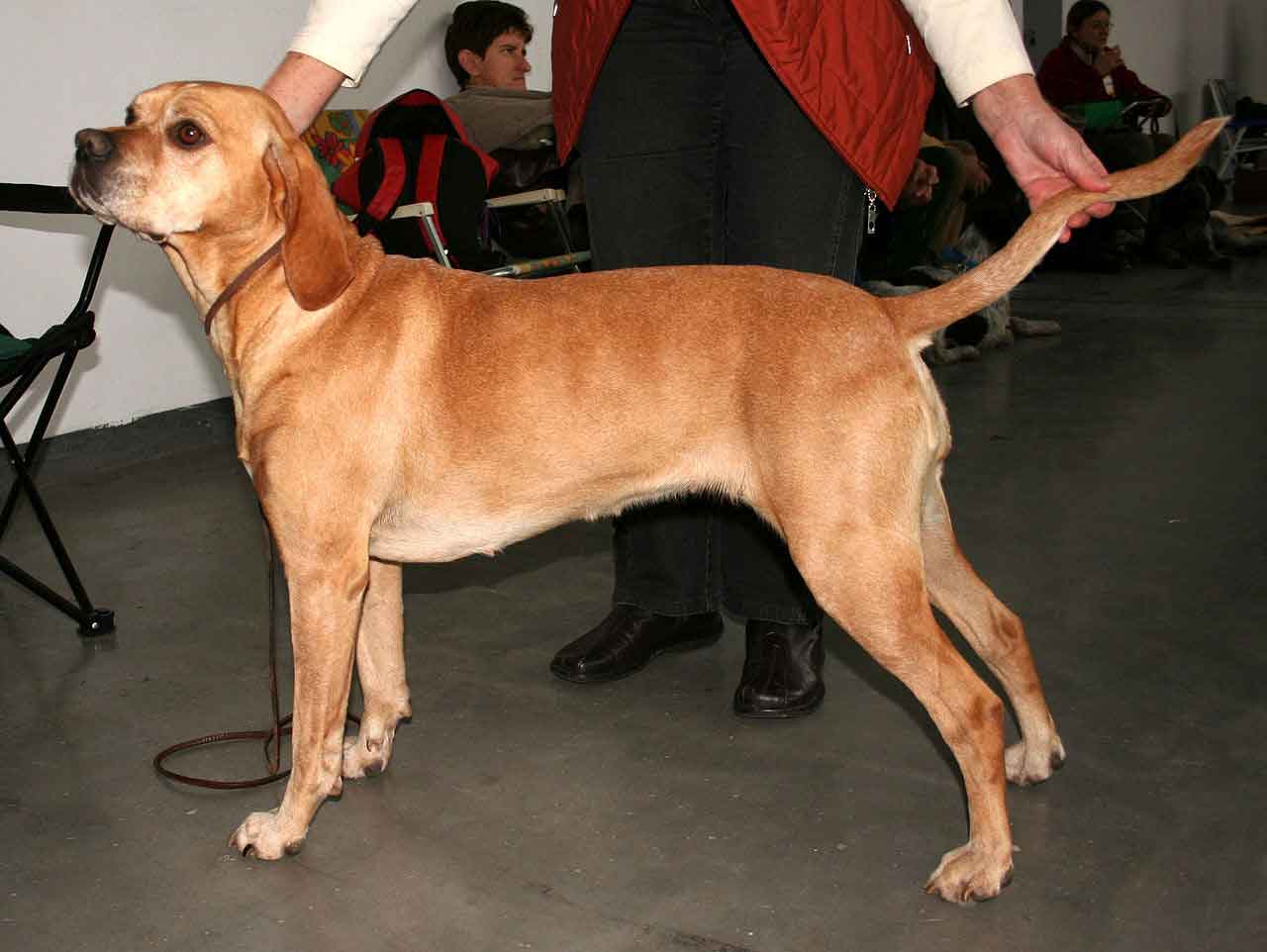
Portuguese Pointer

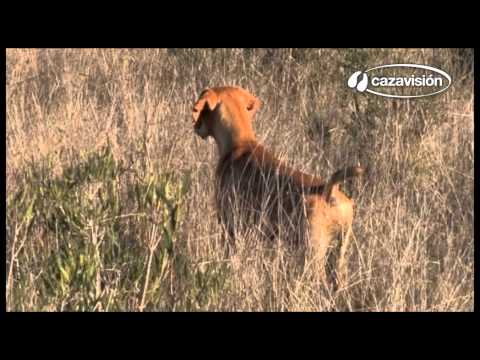
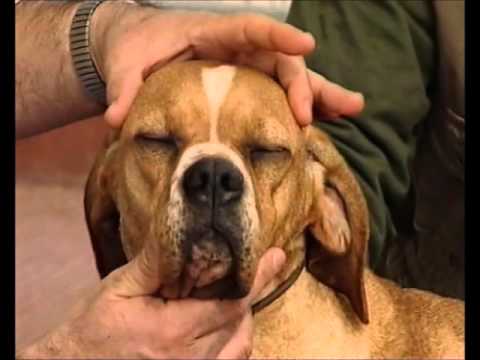
The Portuguese Pointer He is extremely affectionate and very attached to children, it is also a very submissive dog.

Content

Characteristics "Portuguese Pointer"

Coexistence is important that you have with your new friend. Before considering the acquisition of a dog of the breed "Portuguese Pointer" you know certain factors. Not all breeds of dogs are apt to live in an apartment, you must take into account his character, their need for exercise, their interaction with other pets, their care and if you have small children, their level of tolerance towards them.

Adaptation โ“˜

4,0 of 5 stars (based on 1 review)

friendly dog โ€‹โ€‹โ“˜

2,0 of 5 stars (based on 1 review)

hair loss โ“˜

2,0 of 5 stars (based on 1 review)

Affection level โ“˜

5,0 of 5 stars (based on 1 review)

Need for exercise โ“˜

4,0 of 5 stars (based on 1 review)

Social need โ“˜

3,0 of 5 stars (based on 1 review)

Home โ“˜

4,0 of 5 stars (based on 1 review)

Toilet โ“˜

1,0 of 5 stars (based on 1 review)

Friendly with strangers โ“˜

2,0 of 5 stars (based on 1 review)

barking โ“˜

2,0 of 5 stars (based on 1 review)

Health โ“˜

2,0 of 5 stars (based on 1 review)

Territorial โ“˜

4,0 of 5 stars (based on 1 review)

Cat friendly โ“˜

2,0 of 5 stars (based on 1 review)

Intelligence โ“˜

3,0 of 5 stars (based on 1 review)

Versatility โ“˜

4,0 of 5 stars (based on 1 review)

Child friendly โ“˜

3,0 of 5 stars (based on 1 review)

Surveillance โ“˜

3,0 of 5 stars (based on 1 review)

joy โ“˜

2,0 of 5 stars (based on 1 review)

History

The Portuguese Pointer arose from Perdigueiro Peninsular, an ancient breed of Iberian dogs, its presence is documented since the 10th century, Its first appearance in art is on a Visigothic-Arab tombstone of the Church of San Juan Bautista de Tomar. Its evolution was the result of several factors such as adaptation to the climate, the type of hunting, the terrain and the selection introduced through the Portuguese cultural specificity.

In the fourteenth century, It was bred in the royal kennels and used for hunting Altaria, being known as ยซPodengo de mostraยป, showing already the possibility of stopping before the hunt. In the 16th century (reign of D. Sebastian) its use by the popular classes was common (although prohibited). The constant bleeding in the working arms caused by the discoveries, the abandonment of the fields, hunger and change of habits, led the population to resort more to hunting for food and, as a result, to the use of Pointing Dogs, that they were "prohibited" for causing, thanks to its excellent qualities, serious damage to the vested interests of the royal house and the nobility.

In the 18th century, Many English families established a presence in the Porto region in the business of wine production and came into contact with the breed being brought to England where it played an important role in the origin of the English Pointer.

At the end of the 19th century it suffered a certain decline, due to serious social upheavals and new tastes and contacts with the outside world, that gave projection to the foreign races that were then in fashion. But it is still represented in art objects (tinaja painted by D. Fernando II of Saxe-Coburg, Pena-Sintra), painting of King D.Luis and the princes in hunting clothes in the Palace of Ajuda, Lisbon), painting of a hunting trip of an Englishman in the Douro (Quinta de Gatรฃo, Duero) or in artistic ceramics by the Real Fรกbrica do Rato (Pimenta Palace, Lisbon).

Only in 1920 some breeders strove to save the breed, locating some of the dogs in the inaccessible north of Portugal. The Portuguese pedigree book was then established in 1932 and the breed standard in 1938. For at least a thousand years, this dog always had the same square head, triangular ears and compact look.

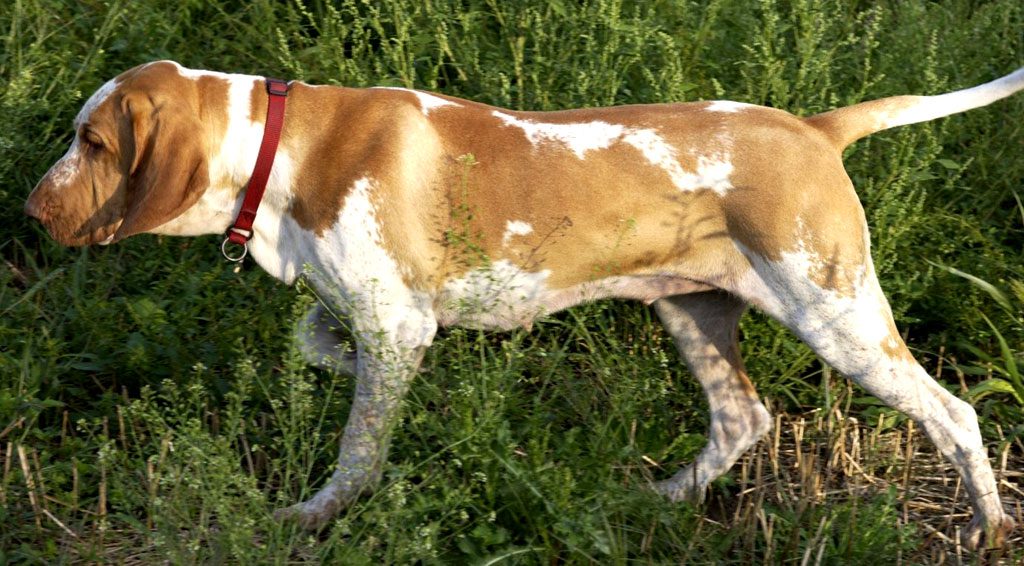
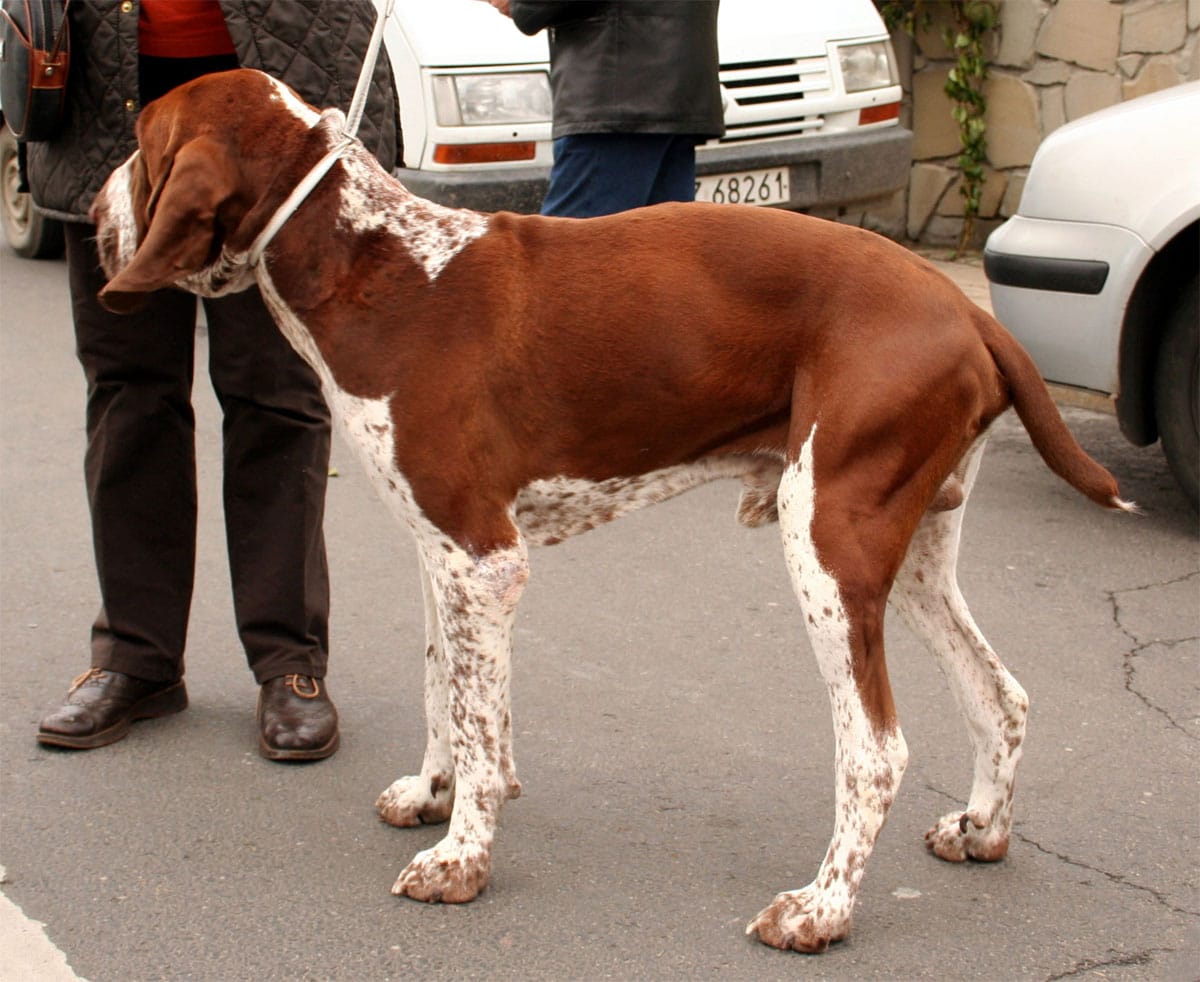
Photo: ยซPortuguese Retrieverยป during the Dog World Show in Poznaล„. by Pleple2000, CC BY-SA 3.0, via Wikimedia Commons

Physical characteristics

The Portuguese Pointer comes in average proportions, straight, good guy, robust but with a harmonic conformation allied to the manifest elasticity of the movements.

The head is proportionate in relation to the body, well shaped and harmonious; seems to be big on the set. A little thick, However, it is neither bony nor thick and has loose and thin skin.

The coat is short and thick in most dogs., with a velvety texture on the ears and face .

Yellow in light varieties, common and dark, solid or white spotted on the head, the neck, chest and footwear.

In males, the height at the withers is 52 to 60 centimeters, the weight is 20 to 27 kg. In females the height is 48 to 56 centimeters and the weight is 16 to 22 kg.

Character and skills
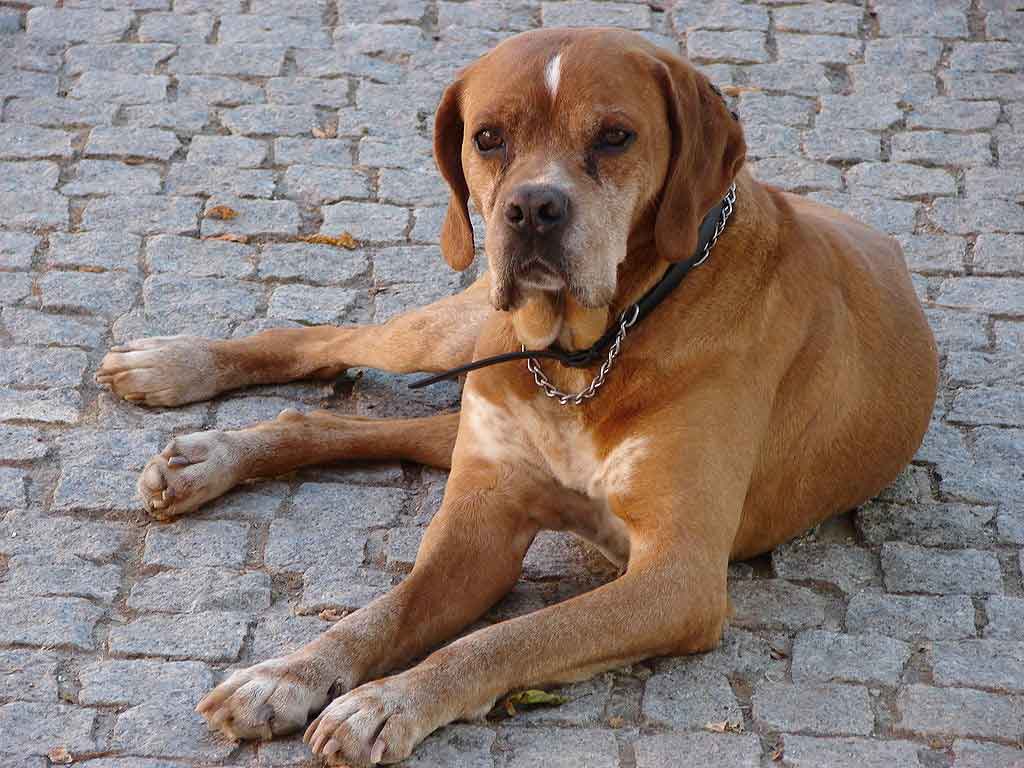
Portuguese Pointer
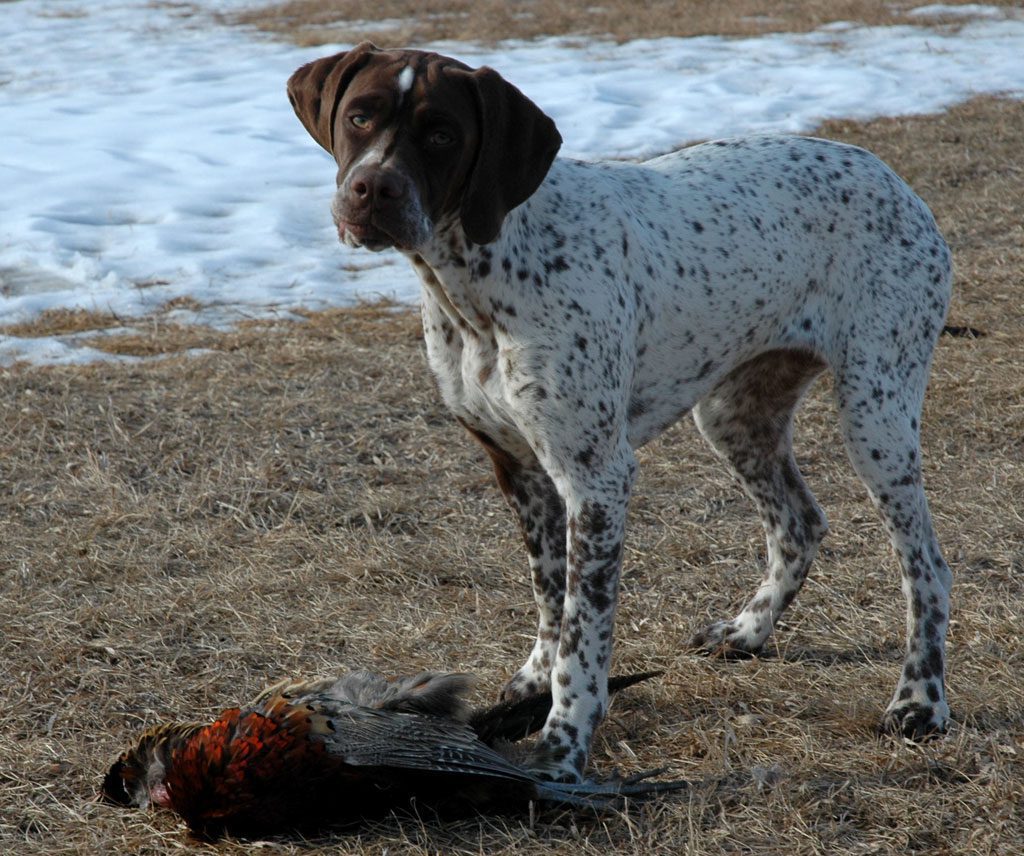
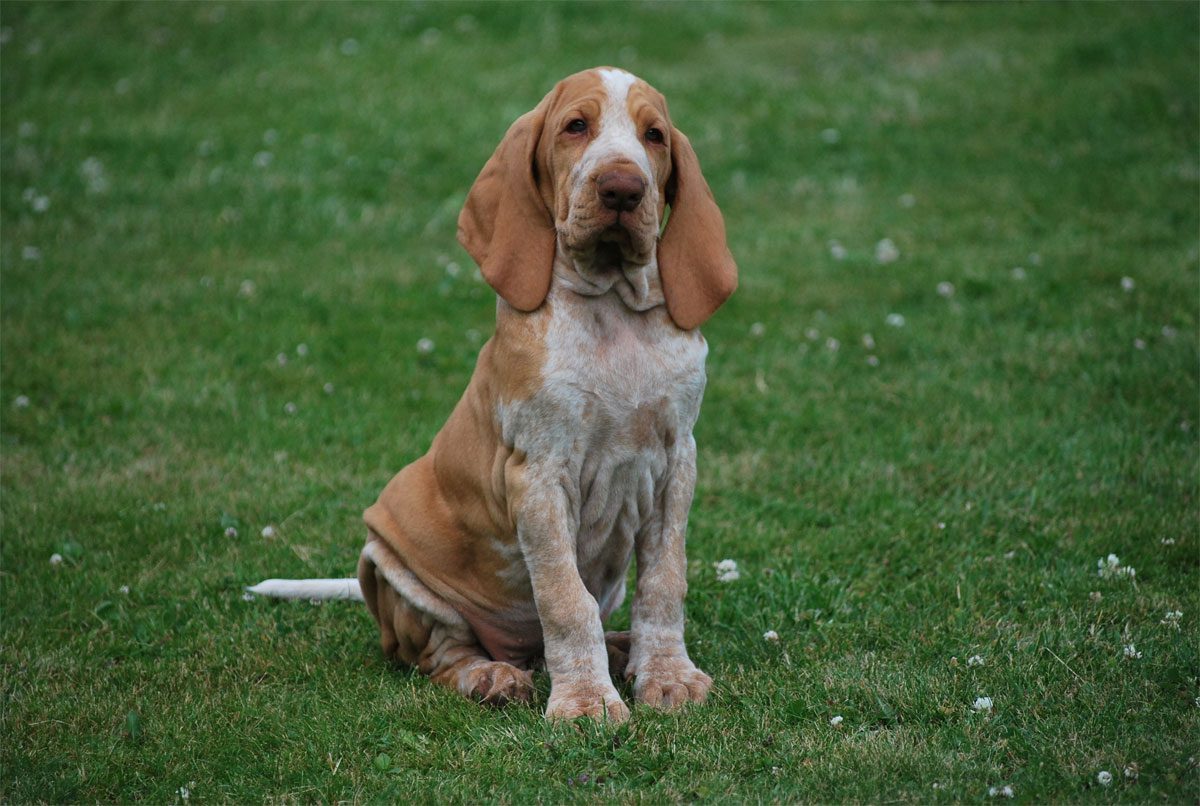
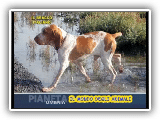
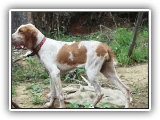
An image of a โ€œPortuguese Retrieverโ€, a Portuguese hunting dog breed. The animal in the photo had 11 years when it was photographed.

The Portuguese Pointer he is an extremely gentle and affectionate dog, with great delivery capacity and very resistant. It is quiet, very sociable and a bit petulant in relation to other dogs. Works with vivacity and persistence and is curious by nature. He always keeps in touch with his hunter.

He moves with an easy step and is graceful. It is versatile in its function and very adaptable to various terrains, climates and types of hunting.

Extremely affectionate and very attached to children, it is also a very submissive dog. Can, for lack of education, do not obey gestures or orders. But, it's easy to train.

Health

The Portuguese Pointer has an average life expectancy of 14 years. It is considered a hardy breed with no specific health problems.. But, hip dysplasia, lunation of the patella, cancer and autoimmune diseases are potential health problems for dogs of this size.

Videos "Portuguese Pointer"

The Portuguese partridge, a versatile dog.
O Perdigueiro portuguรชs, um cรฃo polivalente
Main characteristics of the Portuguese Perdigueiro
Main characteristics of the "Portuguese Perdiguero"

Type and recognitions:

  • FCI CLASSIFICATION:
  • Group :
  • Section : . .

Federations:

  • – FCI – Group 7: Pointing Dogs. – Section 1: Continental Pointing Dogs. 1.1: Braque Type โ“˜
  • – AKC – Bracco โ“˜

FCI breed standard "Portuguese Pointer"

Origin:
Portugal

Date of publication of the valid original standard:
04.11.2008

Use:

---


General appearance:

Extremely kind and affectionate, strong, of great resistance and devotion. Calm and very sociable but somewhat haughty towards other dogs. curious by nature, work with persistence and vivacity. Always an enthusiastic hunting dog, staying in close contact with the hunter.


Behavior / temperament:

Extremely kind and affectionate, strong, of great resistance and devotion. Calm and very sociable but somewhat haughty towards other dogs. curious by nature, work with persistence and vivacity. Always an enthusiastic hunting dog, staying in close contact with the hunter.

Head:

Proportionate to body size, well built and harmonious in its dimensions. It gives the impression of being bigger than it is. Something big never bony nor fleshy. Loose, thin skin cover without forming wrinkles. Straight in profile and square seen from the front. Converging superior longitudinal craniofacial axes.

Cranial region:
  • Skull : Square, almost flat in its top line seen from the front and slightly arched in its profile. With a length that should not exceed 6 / 10 of the total length of the head, Therefore it gives us a 60 % cephalic index.
    Seen from the front, the foreface is flat, high, wide and symmetrical, slightly arched in profile. Well-developed superciliary ridges. Wide but not deep front pleat. Barely visible occipital protuberance.
  • Depression links (Stop) : Well defined (90 โ€“ 100ยบ).

facial region:

  • Truffle : The angle between the bridge of the nose and the upper lip is 90ยบ.. Good conformation nose, well developed with large nostrils, moist and wide open. black.
  • Snout : Rectilinear and horizontal, appropriately wide with the same width throughout its length that is 4 / 10 the length of the head.
  • Lips : Pendulous upper lip, square in profile forming a right angle to the bridge of the nose, semicircular on the edge seen in profile; seen from the front it forms a sharp angle at the lower edge. Upper lip joint is loose, folded corners with drooping edges. Moderate mouth opening with irregular pigmentation of the membranes (Oris), normal occlusion allowing natural overlap of the upper lip.
  • Jaws / Teeth : Healthy, correct, full dentition, scissor bite.
  • Cheeks : Parallel. Barely noticeable retrocommissural fold with complete parotid area (Ej.: Well filled under the ears).

Eyes : Expressive, happy talk, brown, of a darker color than hair, oval shape tending to be round, big but too much, level insertion completely occupying the orbit. Thin, wide-open eyelids with black pigmentation.

Ears : Inserted above eye level at the back of the head, pendants, almost flat surface with one or two longitudinal folds when in attention. Triangular, wider at the base than at the tips in a proportion of 2.5 to 1 and with rounded tips. The length of the ears should be slightly longer than the length of the skull. Fine, soft, covered with fine hair, bushy and very short.

Neck:

It is straight, slightly arched at the top, not very thick, rather elongated and has a short dewlap along the underside. It should be attached to the head in an elegant way, following an inclination of approximately 90ยฐ; its union to the thorax must be without appreciable transition, so that it constitutes a harmonious and perfect whole.

Body:

  • top line : Rectilinear, rising slightly from the rump to the withers.
  • Cross : It is not very high.
  • Back : Short, wide, rectilinear and slightly inclined towards the lumbar region, to which it must join without appreciable transition.
  • Pork loin : Short, very wide, very muscular and slightly arched, in perfect union with the rump.
  • Rump : Its amplitude is proportional to the lumb region
  • ar. It has a harmonious conformation and a slightly oblique axis, so it is slightly fallen
  • Breast : It is tall and wide; the broad thoracic cavity should be more developed in depth and length than in width. Descends to the elbow. It is delimited by very wide and well-fitted ribs that draw a well-pronounced curve at the top., imparting to the thoracic cavity the shape and cross section of a front horseshoe, whose lateral faces join below.
  • Bottom line and belly : Slightly elevated from sternum to groin. The thin belly joins the hip forming a circumference; The distance that separates the hip from the last rib gives the flanks a short and well-united appearance.

Tail:

  • Natural: of medium length exceeding below the hock. Right, middle insertion, thick at the base tapering slightly towards the tip. Well inserted in perfect continuity with the line of the rump. At rest it hangs naturally but never between the thighs. In movement it rises horizontally or slightly above the top line but never vertically or in the shape of a sickle.. Side to side movement.
  • amputee: To cover the genitals without going over them.


Tips

PREVIOUS MEMBERS : Rights seen from the front and perfectly parallel to the line of the body. Profile view, plumb and giving a general appearance of great stability, support and easy, natural movement.

  • Shoulder : They're long, medium inclination. Well placed and with strong muscles. Scapula โ€“ humerus angle 120ยบ.
  • Arms : They appear attached to the chest. Its length must be in relation to the scapula and the angulation is proportional..
  • Elbows : Separated from the thorax by the armpit, the elbows should be well lowered and clearly outlined, but without convergence, nor divergence in relation to the chest. Radius โ€“ humerus angle 150ยบ.
  • forearms : They are separated from the trunk; they are long, straight and, from the static point of view, They appear clearly perpendicular to the ground, both seen from the front, as in profile.
  • Carpi : In perfect continuity with the forearm.
  • Metacarpus : Widths, slightly oblique and of appropriate length.
  • Previous feet : Proportional to the size of the members, tending to be more round than long but without resembling climbing shoes. Well-shaped fingers, tight, uniform and robust to provide good support. Strong, well-developed pads with a black skin, thick, hard and resistant. Strong nails, hard, preferably black.

LATER MEMBERS : Plumb seen from behind and perfectly parallel to the line of the body, normal poise seen in profile.
Thighs: Preferably long, widths, muscular. The gluteus forms a curve, but the least accentuated, long and with somewhat elastic muscles. Hip-femur angle: 95ยบ.

  • Knee : It is located a little below the abdomen, but not very separate from it. It is slightly protruding and somewhat deviated outwards..
  • Femur โ€“ tibia angle: 120ยบ.
  • Leg : Well aligned; Its length is proportional to the length of the thigh. Its obliquity should be in proportion to the inclination of the rump.
  • Hock : It is normally angled and in an appropriate position.. Must be well built, width, and strong. Tibia โ€“ tarsus angle 145ยบ.
  • Metatarsals : They are short, vertical, almost cylindrical, regular size and thin.
  • Rear foot : Identical to the previous one but a little longer.

Movement:

With normal steps, easy and elegant. Versatile in its work and adaptable to different terrains, time or sport. The movement is changing between a simple suspended gallop and an extended, rhythmic trot..

Mantle

HAIR : It must be short, strong, glued and dense. It's not very soft.
It is well distributed throughout the body and is almost uniform except in the armpit., in the region of the anus and near the genital parts, where it is sparse and softer. It is fine and flat on the head, especially in the ears, where it is very soft to the touch, as if it were velvet. There is no presence of an internal layer of hairs.

COLOR : Yellow in shades from light, medium to dark, solid or with white spots on the head, neck, chest, lower extremities of the limbs, under the elbows and hocks and on the tip of the tail if it is not docked.


Size and weight:

Height to the cross :

  • Males 56 cm..
  • females 52 cm..

With a tolerance of 4 cm more or less.

Weight :

  • Males : 20-27 Kg.
  • females : 16-22 Kg.


Fouls:

Any deviation from the above criteria is considered missing and the seriousness is considered to the extent of the deviation to the standard and their effect on the health and welfare of the dog.

โ€ข Behavior : Shyness
โ€ข Head : skull relationship / snout slightly different from 6/4. Strait. Pronounced occipital Protuberance. Very developed frontal sinus. Pronounced front crease. Presence of wrinkles.
โ€ข Nose: Any other color that is not black.
โ€ข muzzle: short or long.
โ€ข Lips: Non-square upper lip. Non-perceptible commissure. Incorrect pigmentation of mucous membranes.
โ€ข Jaws / Teeth: Bite in clamp.
โ€ข Eyes: Small, clear, expressionless, too round.
โ€ข Ears: Middle insertion, very big or very small, pointed edges.
โ€ข Neck: Too short. No double chin or too much double chin.
โ€ข Body: insufficient breast development.
โ€ข Cola: Too short if it is natural, insertion too low or with an atypical bearing. (vertical or sickle-shaped)-
โ€ข Limbs and Feet: Tilted in or out, open foot.
โ€ข For the: Soft.

SEVERE FAULTS

โ€ข Behavior : too shy.
โ€ข Head: skull relationship / very different snout 6 / 4. Stop visible only, Parallel upper facial skull axes.
โ€ข muzzle: Tilted.
โ€ข Eyes: Inclined. Squint. (look this / West, crossed)
โ€ข Ears: Fleshy, low insertion excessive folds.
โ€ข Body: Saddled or saddled top line. Croup too inclined. Leather too long, round chest. Agalgado.
โ€ข For the: White spots outside the limits described by the standard.
โ€ข Size: Below or above established limits.

MISS PLAYOFFS

โ€ข Behavior : Aggressive or fearful dog.
โ€ข Head : Atypical head with convex snout, too wide or too cut, very narrow skull. Divergent upper facial skull longitudinal axes.
โ€ข Nose : Total absence of pigmentation.
โ€ข Jaws : Upper or lower prognathism.
โ€ข Eyes : uneven eyes, both in the form, as in size. Eyes gazeos, congenital blindness...
โ€ข Deafness : Congenital or acquired.
โ€ข Body : Completely atypical showing signs of some crossbreeding with another breed.
โ€ข For the : Different from the characteristic of the breed.
โ€ข Color : albinism, any other color than described above.

Any dog โ€‹โ€‹showing clear signs of physical or behavioral abnormalities must be disqualified..


N.B.:

Males should have two normal-appearing testicles fully descended into the scrotum..

Source: F.C.I - International Cynological Federation

Alternative names:

1. Perdigueiro Portuguรชs, Portuguese Pointer Dog (English).
2. Perdigueiro Portugais (French).
3. Perdigueiro Portuguรชs, Portugiesisch (German).
4. Perdigueiro portuguรชs (Portuguese).
5. (Perdigueiro Portuguรชs en portuguรฉs) (espaรฑol).

โ–ท The world of Pets: Dogs, cats, birds, reptiles, amphibians

German Wirehaired Pointer
Alemania FCI 98 . Braque Type

Braco Alemรกn de Pelo Duro

The German Wirehaired Pointer is very affectionate, active and intelligent.

Content

History

The German Wirehaired Pointer (Drahthaar) es una raza de origen alemรกn.

In this long-haired Hunter dog is gathers the blood of hounds, hunters of birds, water dogs and hunting with Falcons and therefore has a tendency to great versatility.

The origin of this breed has barely a century. A group of breeders set out to obtain Pointing Dogs hard hair. Pointing Dogs rough-haired Germans, the Pudelpointer, the Griffon and the German Shorthaired Pointer they contributed to the formation of the breed. Some experts added to the Airedale Terrier and to the Italian Rough-Haired Hound to this list of participants in the creation of the German Wirehaired Pointer.

As of the year 1879 pure breeding was carried out and the essential characteristics of the breed were established.

In the year 1897, the Baron Schorlemer established the first standard of the German Wirehaired Pointer and this was the basis for the current pure breeding. It became one of the main hunting breeds in Germany in the latter part of the 20th century..

Physical characteristics

It is strong, muscular, under, of flowing lines, is medium-sized. Heavy dogs are not desirable. Some specimens are likely to develop hip dysplasia, ear infections, genetic eye diseases and skin cancer.

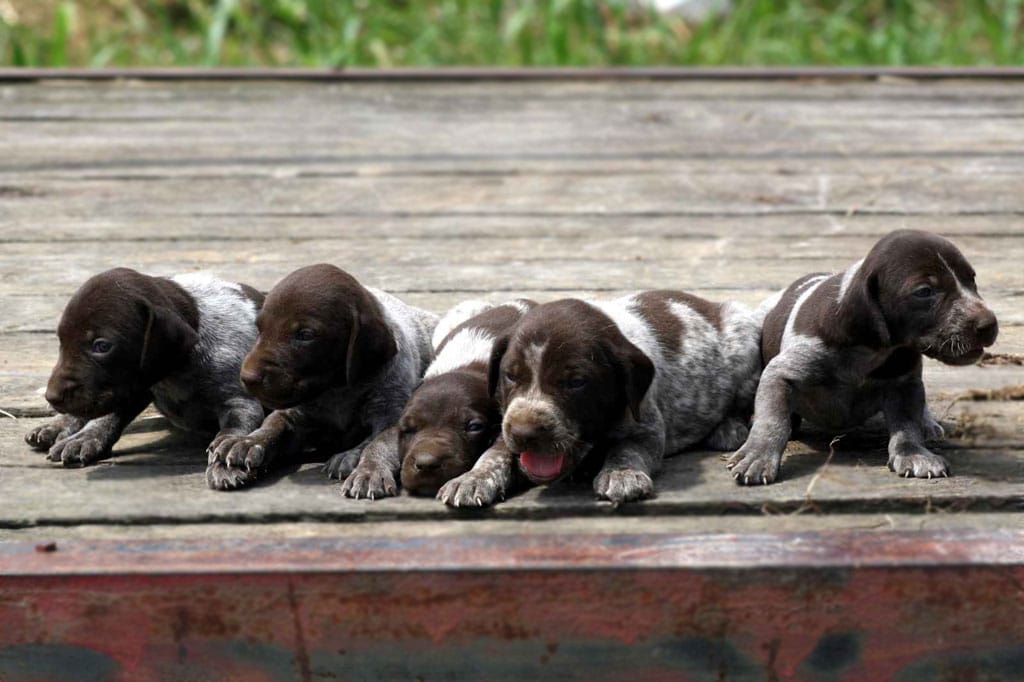
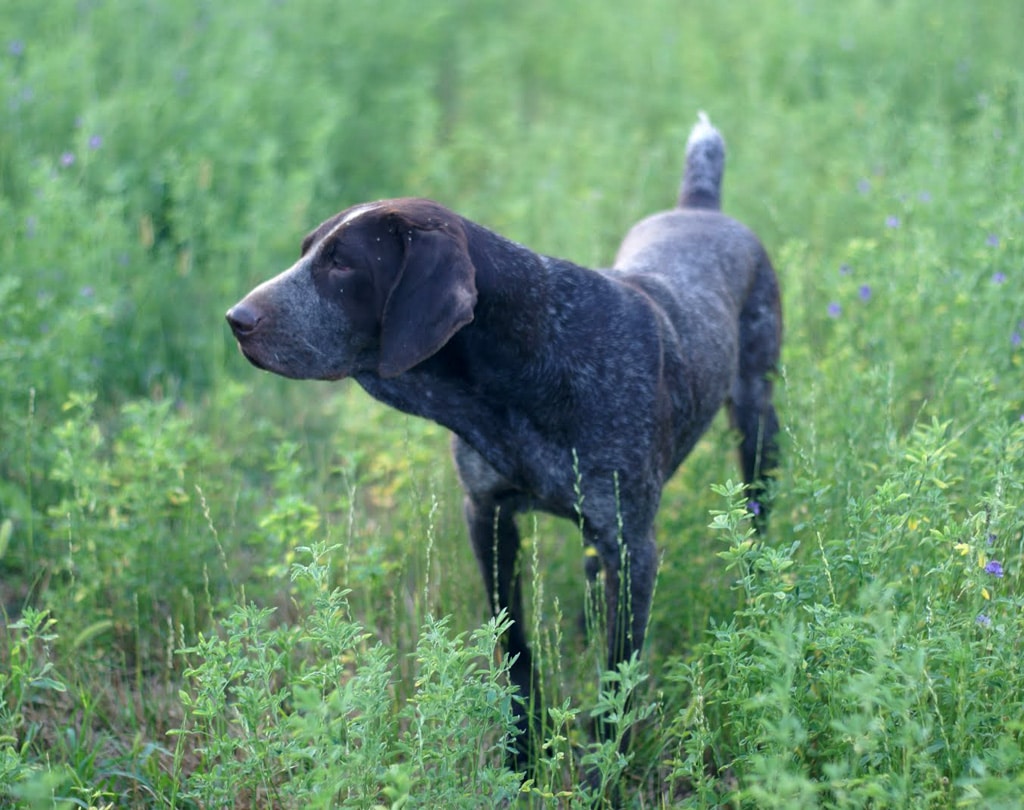
Coat colors vary, can be solid liver color, black and white with liver markings, liver color with white markings, solid black and a mixture of three colors.

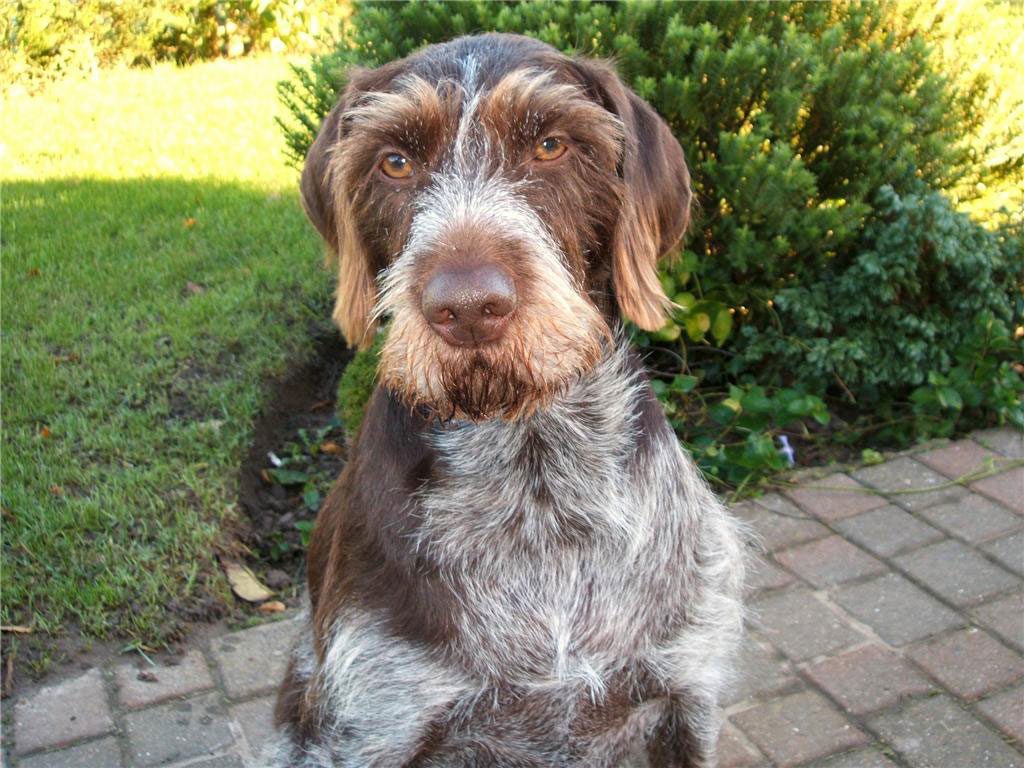
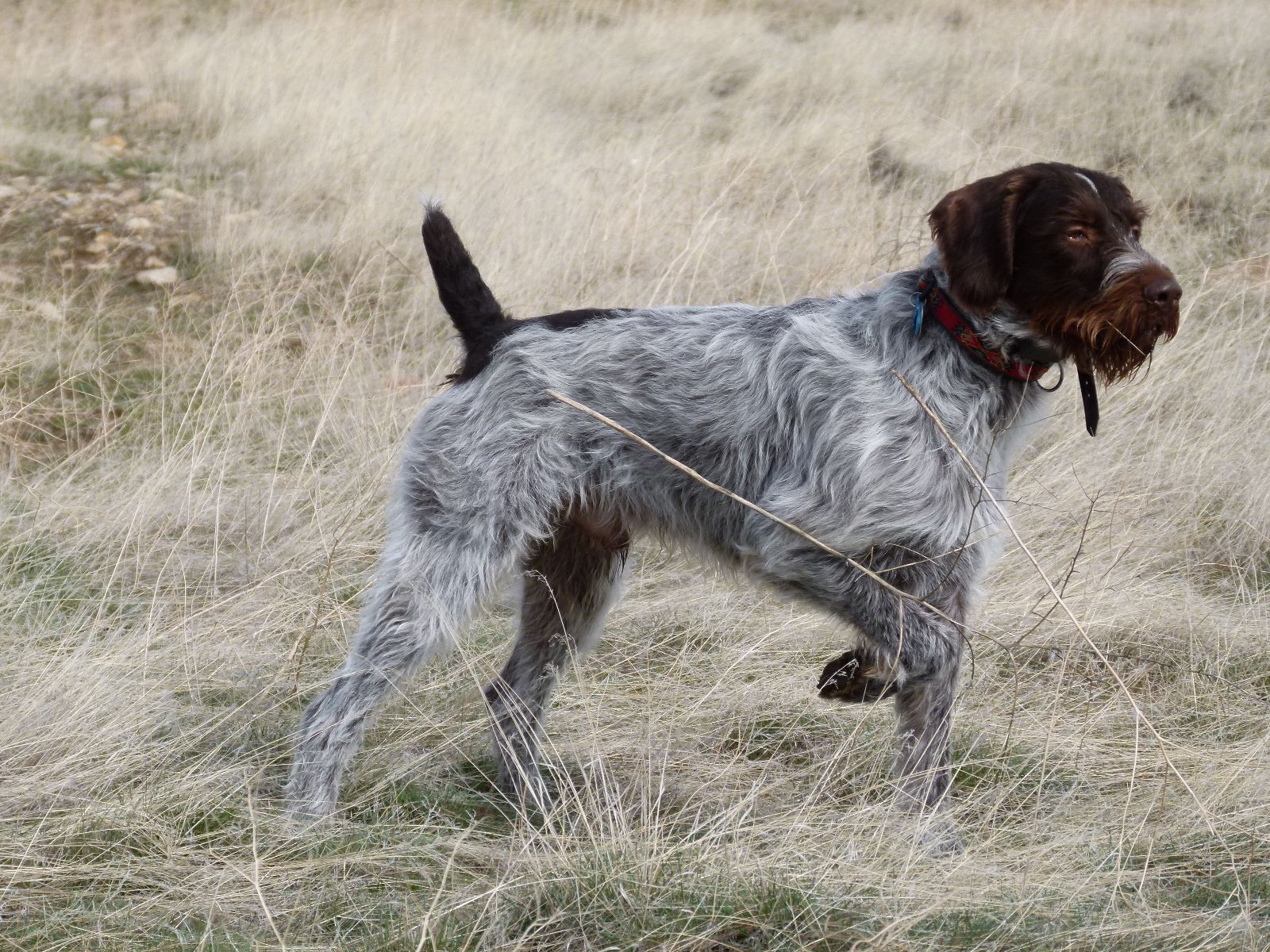
The coat of the German Wirehaired Pointer, has as the most distinctive characteristic of the breed, the functional hirsute. A dog must have a correct fur to be of the correct type. The layer is resistant to weathering and, to some extent, water repellent. The inner layer is dense enough to insulate you from the cold winter, but it is fine in summer. The distinctive outer layer of the breed is straight, hard, rough to the touch and lisa. In the ears, the head and legs the hair is smoother.

The weight of the males is of 34 to 40 kg. And in females, of 30 to 36 kg. Measuring the males of 61 to 68 cm and females 57 to 64 cm..

Character and skills

The German Wirehaired Pointer is very affectionate, active and intelligent. It seems that you have always wanted to learn and is very loyal to his family, You need a reference person who knows how to set the limits. Like it to be occupied and enjoy working with its owner. They are friendly with people who know and reserved with strangers, They must be socialized at an early age.

They need plenty of exercise, any type of game that includes searching for objects on any type of terrain, will be your happy Pointer. It has a very fine sense of smell that allows it to track and recover any object both on land and in the water..

Characteristics "German Wirehaired Pointer"

Coexistence is important that you have with your new friend. Before considering the acquisition of a dog of the breed "German Wirehaired Pointer" you know certain factors. Not all breeds of dogs are apt to live in an apartment, you must take into account his character, their need for exercise, their interaction with other pets, their care and if you have small children, their level of tolerance towards them.

Adaptation โ“˜

3,0 of 5 stars (based on 1 review)

friendly dog โ€‹โ€‹โ“˜

4,0 of 5 stars (based on 1 review)

hair loss โ“˜

2,0 of 5 stars (based on 1 review)

Affection level โ“˜

5,0 of 5 stars (based on 1 review)

Need for exercise โ“˜

4,0 of 5 stars (based on 1 review)

Social need โ“˜

4,0 of 5 stars (based on 1 review)

Home โ“˜

2,0 of 5 stars (based on 1 review)

Toilet โ“˜

2,0 of 5 stars (based on 1 review)

Friendly with strangers โ“˜

4,0 of 5 stars (based on 1 review)

barking โ“˜

4,0 of 5 stars (based on 1 review)

Health โ“˜

4,0 of 5 stars (based on 1 review)

Territorial โ“˜

3,0 of 5 stars (based on 1 review)

Cat friendly โ“˜

2,0 of 5 stars (based on 1 review)

Intelligence โ“˜

4,0 of 5 stars (based on 1 review)

Versatility โ“˜

3,0 of 5 stars (based on 1 review)

Child friendly โ“˜

5,0 of 5 stars (based on 1 review)

Surveillance โ“˜

2,0 of 5 stars (based on 1 review)

joy โ“˜

4,0 of 5 stars (based on 1 review)

Photos ยซGerman Wirehaired Pointerยป

Videos ยซBraco Alemรกn de Pelo Duroยป

Type and recognitions:

  • FCI CLASSIFICATION:
  • Group :
  • Section : . .

Federations:

FCI โ“˜, AKC โ“˜, ANKC โ“˜, CKC โ“˜, โ€‹KC โ“˜, NZKC โ“˜, UKC โ“˜

  • FCI nomenclature race "German Wirehaired Pointer"

  • FCI breed standard "German Wirehaired Pointer"

    Origin:
    Germany

    Date of publication of the valid original standard:
    25.10.2000

    Use:

    According to the objective, it was the creation of a versatile hunting dog, the German Wirehaired Pointer, must display all qualifications required for field hunting work, the forest and in the water, before and after shot.


    General appearance:

    Pointer dog of noble appearance, with hard fur, perfect skin protector, with attentive and energetic expression. Your movements must be harmonic, fluids, broad and full of strength.

    IMPORTANT PROPORTIONS: Body length and withers height should preferably be equal. The length of the body can exceed the height of the withers up to 3 cm..


    Behavior / temperament:

    companies, with self-control, balanced, unafraid of the hunt. Must not be shy or aggressive.

    Head:

    proportionate to body size and gender. The axes of the skull and nasal bridge are slightly divergent..

    Cranial region:
    • Skull: Plano, only slightly rounded on the sides; moderately wide; the supra-orbital arch visibly developed.
    • Fronto-nasal depression (Stop): Very notorious.

    facial region:

    • Truffle: Strongly pigmented corresponding to coat color; well open nostrils.
    • Snout: Long, broad, strong and deep. Slightly convex muzzle.
    • Lips: Thick, adjacent and not hanging. Good pigmentation corresponding to the color of the hair.
    • Jaws/Teeth: Big teeth. Strong JAWS, with an even and complete scissor bite, that is to say that the upper incisors fall exactly in front of the lower ones, the teeth being implanted perpendicular to the jaws. The dental formula consists of 42 parts.

    EYES: as dark as possible, neither bulging nor sunken, with a lively and alert expression. Well adjoining eyelids, with well-pigmented edges.

    EARS: Medium-sized, high and wide implantation, in the twisted.

    Neck:

    Medium length, heavily muscled; slightly arched topline, clean bottom line.

    Body:

    • top line: Straight and slightly drooping. Cross: notorious.
    • Back: Strong, well muscled. Loins: Short, widths, muscular.
    • Rump: Long and wide, slightly droopy and well muscled. wide pelvis.
    • Breast : Broad and deep, with well-known sill and the sternum reaching as far back as possible. Well arched ribs.
    • bottom line: Dry, forming a graceful arc back; slightly tucked abdomen.

    Tail:

    Following the back line, preferably carried horizontally or slightly upwards, without looking steep. Neither too thick nor too thin. For use in hunting, the tail is conveniently shortened. (In those countries where the law prohibits amputation, the tail can appear natural: should reach to the hock and be carried slightly saber-shaped).

    Tips

    PREVIOUS MEMBERS:

    • General appearance: Seen from the front, straight and parallel; seen from the sides, well positioned under the body. The distance from the floor to the elbows should be about the same as the distance from the elbows to the withers.
    • Shoulder: Shoulder blade tilted and directed backwards, heavily muscled. Good angulation between the scapula and the arm.
    • Arm: as long as possible, dry, good muscular.
    • Elbows: Adjacent to the body, without being twisted in or out, with good angulation between the arm and forearm. Forearm: Dried, perpendicular, strong bone.
    • carpal joint: Strong.
    • Metacarpus: Moderately forward leaning.
    • Previous feet: Oval, closed, with well-pigmented pads, thick enough, compact and resistant. Parallel position without turning in or out, both in static and in motion.

    LATER MEMBERS:

    • General appearance: Seen from behind, straight and parallel, with good knee and hock angulations. Strong bones.
    • Thighs: Long, broad and muscular, with good angulation between
    • pelvis and thigh.
    • Knee: Strong, with good angulation between thigh and leg. Legs: long, muscular and sinewy.
    • Hock: Strong.
    • Metatarsus: Short, perpendicular position.
    • Hind feet: Oval, well closed, with well-pigmented pads, thick enough, compact and resistant. parallel position, no turning in or out, both in static and in motion.

    Movement:

    Large, with good previous tread and good push; movement of the fore and hind limbs straight and parallel; distinguished bearing.

    Mantle

    SKIN: Tight, well adherent, no formation of wrinkles and folds.

    Fur: Wire-haired (wire), dense and tight. The outer shell is about 2 to 4 cm length. With a dense internal waterproof fleece. Body contours should not be hidden under longer fur. The hair, Due to its hardness and density, it should offer good protection against inclement weather and against injuries.. The lower parts of the extremities, as well as the chest and abdomen must have shorter and yet dense hair. The head and ears have shorter and denser hair., but no softer. Highlighted eyebrows and a noticeable beard, not very long and with even harder hair, increase the energetic expression of the face.

    Color:

    • speckled brown, with or without plates.
    • splattered black, with or without plates
    • Brown with or without white marking on the chest.
    • light roan (mixture of dominant white with brown or black hairs).

      Other colors are not acceptable.


    Size and weight:

    cross height:

    • Males 61 - 68 cm..
    • females 57 - 64 cm..


    Fouls:

    Any deviation from the above mentioned criteria is considered to lack, and the gravity of this refers to the degree of deviation to the standard and its impact on the health and well-being of the dog.

    SERIOUS FAULTS:

    • Short snout, thin or pointed.
    • weak bite.
    • very loose eyelids.
    • Overturned or convex back.
    • Markedly overbuilt dog.
    • Obviously twisted elbows in or out.
    • Cow hocks, very close together or clubbed legs both in static and in movement. continuous amble step, walking or jogging, numb or stumbling.
    • thin cloak, insufficient undercoat.

    FALTAS DESCALIFICANTES:

    • Aggressiveness or extreme shyness.
    • Any dog โ€‹โ€‹showing clear signs of physical or behavioral abnormalities.
    • weak temper, not stable to shot or shy; aggressiveness, restless temper, dog biting out of fear.
    • Upper or lower prognathism, twisted bite. Missing teeth except PM 1; canine tips too close together.
    • Entropion or ectropion, different colored eyes.
    • Without birth tail or with stump, twisted tail.
    • wrong pigmentation.


    N.B.:
    • Males should have two normal-appearing testicles fully descended into the scrotum..
    • Only functionally and clinically healthy dogs, with the typical conformation of the breed, should be used for parenting.

    The latest changes are in bold.

    Source: F.C.I - International Cynological Federation

    Alternative names:

    1. Deutsch Drahthaar, Deutscher Drahthaariger, Vorstehhund Drahthaar (English).
    2. Chien d’arrรชt allemand ร  poil long (French).
    3. auch Deutsch-Drahthaar (German).
    4. Drahthaar (Portuguese).
    5. Braco Alemรกn de Pelo Duro (espaรฑol).

    โ–ท The world of Pets: Dogs, cats, birds, reptiles, amphibians

    Slovakian Wirehaired Pointers
    Eslovaquia FCI 320 . Braque Type

    Slovakian Wirehaired Pointers

    The Slovakian Wirehaired Pointers in an obedient and easy to train dog.

    Content

    History

    The Slovakian Wirehaired Pointers is a relatively new breed. It dates back to the end of the decade of 1950, in Czechoslovakia after World War II and is believed to have been developed using the Weimaraner, the German Wirehaired Pointer and the Cesky Fousek.

    At any given time, the Slovaks who developed the breed asked the Club Weimaraner from Germany to recognize this dog under the name of Rough-haired Weimaraner, but the request was rejected.

    The resulting dog is a true wonder, that combines the talents of a hunting dog (on the plains, in the woods and in the water), a working dog and a companion dog. Adapts to all climates.

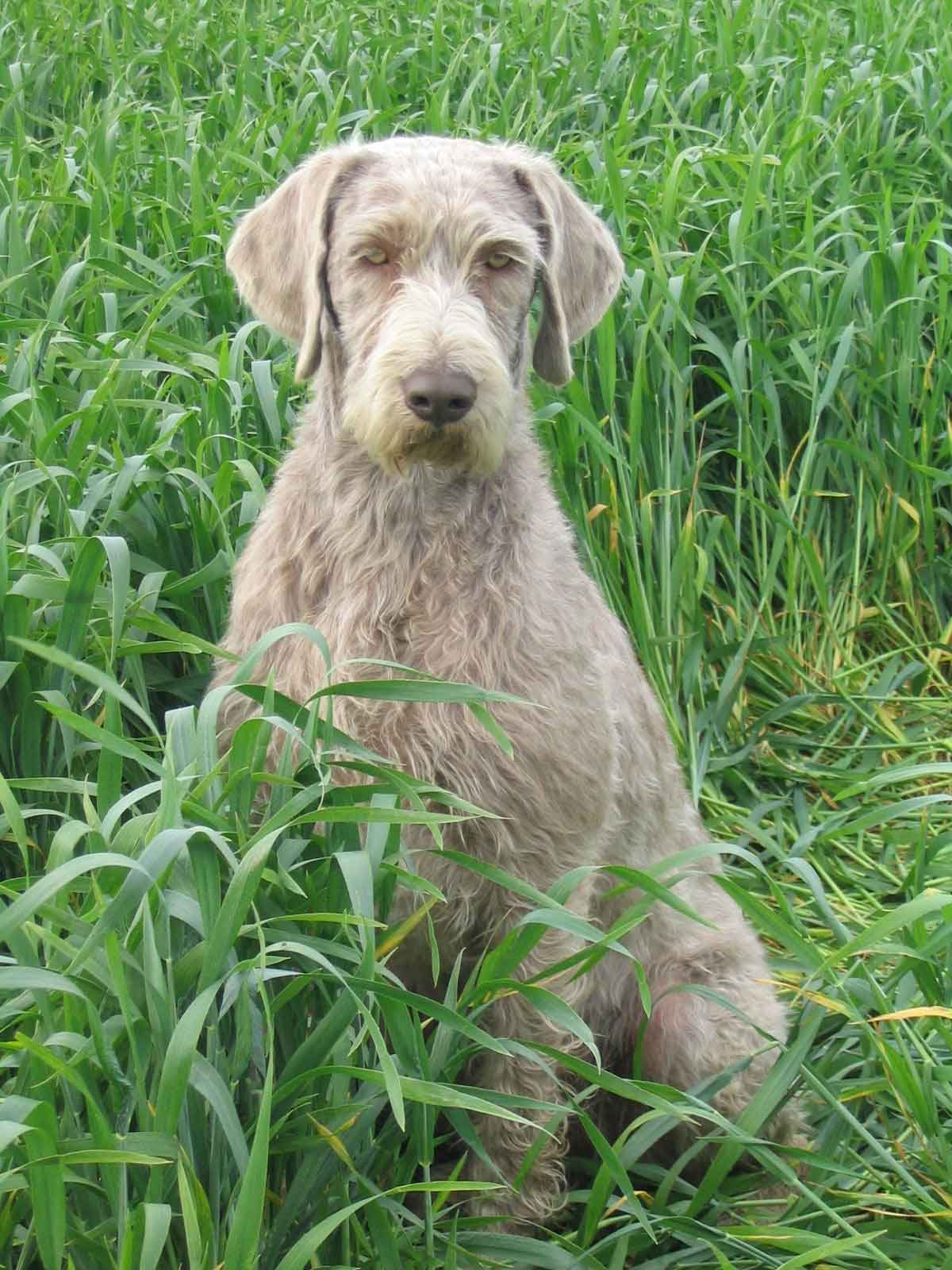
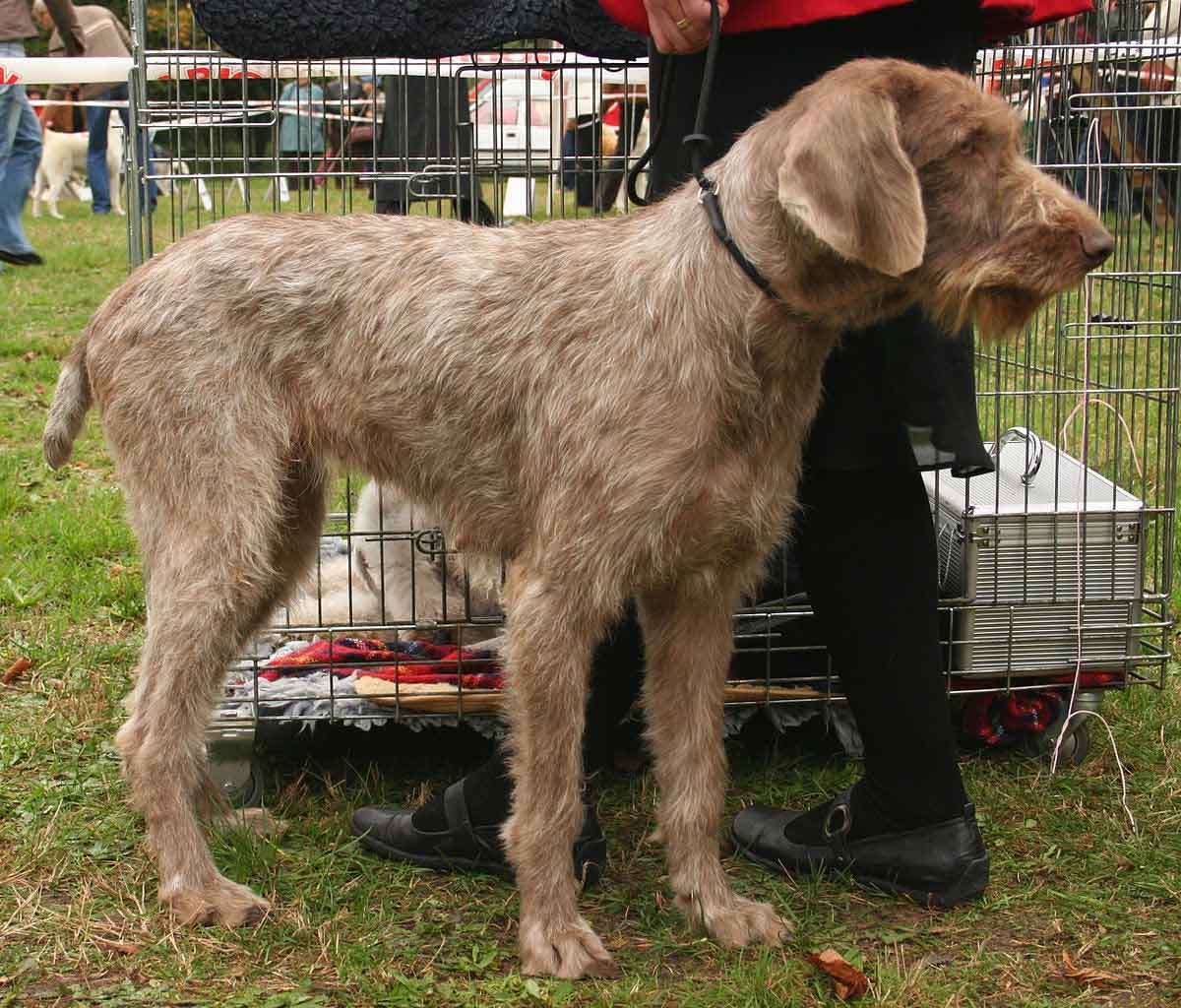
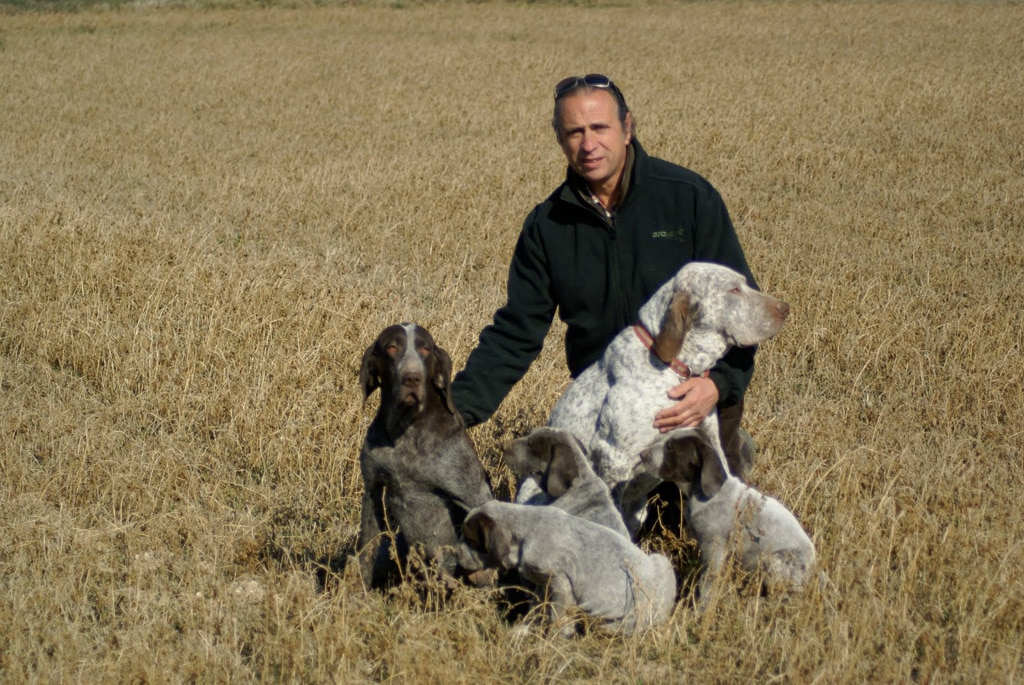
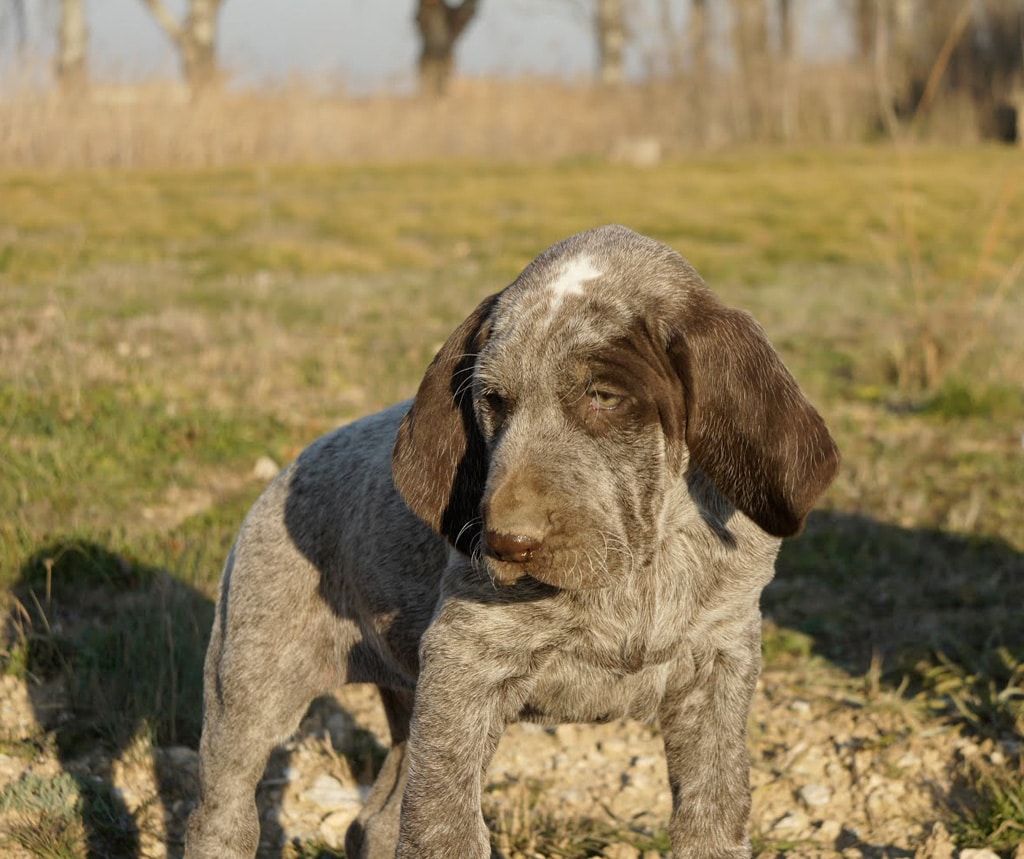
    Photo: Slovakian Wire-haired Pointing Dog by Ing. Urban Michal (breeders HP), Public domain, via Wikimedia Commons

    Physical characteristics

    The Slovakian Wirehaired Pointers it's a tall braco, solidly built and not too heavy. This breed is bred to be a working dog, with nobility in its forms. Tail is cut to half length when permitted by law. It stands rather high, worn at rest and in horizontal action. The eyes are almond-shaped, amber, with a clever expression. In puppies and young dogs, are blue. Dropped ears sit above the eye, they are rounded and not too long.

    Slovakian Wirehaired Pointers
    "Stilling hard hair" during the exhibition of dogs in Rybnik – Stone, Poland

    The undercoat consists of a short, fine down that normally falls off in summer. The top layer is about 4 cm long, hard, straight and well laid. At the bottom of the muzzle, hairs are longer and softer and form a mustache. above the eyes, are more pronounced and are obliquely erect. The forehead and occiput are covered with short, hard hair. They are short and soft on the ears. The tail is well provided with hair, but it is not brushed. The basic color is "gray": is a sand shaded with brown. White markings are allowed on the tips of the legs and on the chest. Smaller or larger dark spots can mark gray. There is also a speckled coat.

    Character and skills

    The Slovakian Wirehaired Pointers described in the FCI standard as easy to train and compliant. They are selected for their work characteristics as Pointer dogs. They hunt on the plains, forests and water. They work mainly after the shot, searching and recovering the game.

    The Slovakian Wirehaired Pointers it's animated, happy and eager to please. He has a lot of energy and is very intelligent., but gets bored easily. This can sometimes make training a bit difficult., and should work to make training sessions fun, interesting and not very long. They need a steady and consistent hand in disciplining with structure and limits.. Harsh words or physical punishment should be avoided. They have a strong bond with their families, and may develop separation anxiety without proper conditioning.

    the Slovakian Wirehaired Pointers they are the happiest doing things with their owner. This makes the breed a great candidate as a canine companion for owners who love walks., cycling or jogging. It is imperative that they have opportunities to run free, preferably in a fenced area, since his hunting instinct is very strong, and the dog will not be able to resist the urge to chase the prey.

    Health

    The Slovakian Wirehaired Pointers it is a generally healthy breed, and responsible breeders examine their breeders for health conditions such as elbow and hip dysplasia, progressive retinal atrophy and cataracts.

    Grooming

    The Slovakian Wirehaired Pointers requires only a minimum of grooming to maintain its good condition. Wiping them with a damp cloth is usually sufficient between baths.. Using a grooming glove or comb on your coat during the fall season can help keep the amount of hair shedding in your home down.. Toenails should be trimmed every four weeks. A dental care regimen should start at an early age to avoid problems later in life.

    Characteristics "Slovakian Wirehaired Pointers"

    Coexistence is important that you have with your new friend. Before considering the acquisition of a dog of the breed "Slovakian Wirehaired Pointers" you know certain factors. Not all breeds of dogs are apt to live in an apartment, you must take into account his character, their need for exercise, their interaction with other pets, their care and if you have small children, their level of tolerance towards them.

    Adaptation โ“˜

    4,0 of 5 stars (based on 1 review)

    friendly dog โ€‹โ€‹โ“˜

    4,0 of 5 stars (based on 1 review)

    hair loss โ“˜

    2,0 of 5 stars (based on 1 review)

    Affection level โ“˜

    2,0 of 5 stars (based on 1 review)

    Need for exercise โ“˜

    4,0 of 5 stars (based on 1 review)

    Social need โ“˜

    3,0 of 5 stars (based on 1 review)

    Home โ“˜

    3,0 of 5 stars (based on 1 review)

    Toilet โ“˜

    2,0 of 5 stars (based on 1 review)

    Friendly with strangers โ“˜

    3,0 of 5 stars (based on 1 review)

    barking โ“˜

    2,0 of 5 stars (based on 1 review)

    Health โ“˜

    4,0 of 5 stars (based on 1 review)

    Territorial โ“˜

    4,0 of 5 stars (based on 1 review)

    Cat friendly โ“˜

    2,0 of 5 stars (based on 1 review)

    Intelligence โ“˜

    4,0 of 5 stars (based on 1 review)

    Versatility โ“˜

    4,0 of 5 stars (based on 1 review)

    Child friendly โ“˜

    4,0 of 5 stars (based on 1 review)

    Surveillance โ“˜

    3,0 of 5 stars (based on 1 review)

    joy โ“˜

    5,0 of 5 stars (based on 1 review)

    Videos "Slovakian Wirehaired Pointers"

    Dog Breed Video: Slovakian Rough Haired Pointer
    Dog Breed Video: Slovakian Rough Haired Pointer
    Slovakian wire haired pointer - training
    Slovakian wire haired pointer – training

    Type and recognitions:

    • FCI CLASSIFICATION:
    • Group :
    • Section : . .

    Federations:

    • – FCI – Group 7: Pointing Dogs. – Section 1: Continental Pointing Dogs. 1.1: Braque Type โ“˜
    • – โ€‹KC – gundog โ“˜
    • – AKC – Group: Foundation Stock Service โ“˜

    FCI breed standard "Slovakian Wirehaired Pointers"

    Origin:
    Slovakia

    Date of publication of the valid original standard:
    06.01.1995

    Use:

    Pointing Dogs.


    General appearance:

    This is a moderate force animal. Although it is a working dog, His appearance is noble. The color of the outer hair of hairs is "gray" and the hair is hard. It must be suitable for work in plain, in the forest and in the water and especially for work after the shot, To search and bring wounded hunt. It is an obedient and easy to train dog.

    IMPORTANT PROPORTION :
    The correlation between the height to the cross and the length of the trunk must be 10:9 in males and 10:8 in females. This animal must be solidly constituted, But not coarse appearance.


    Behavior / temperament:

    It must be suitable for work in plain, in the forest and in the water and especially for work after the shot, To search and bring wounded hunt. It is an obedient and easy to train dog.

    Head:

    It's quite long, thin, No folds on the skin and keep proportion to the body.

    Cranial region:
    • Skull : It has a rectangular shape; Superciliar arcades must be pronounced; The front groove is visible. The occipital bump is palpable to touch.
    • Depression links (Stop) : Moderately inclined (about 45 ยฐ).

    facial region:

    • Truffle : Is large and dark. The Windows are wide open.
    • Snout : It has approximately the same length as the skull. Is high and wide. The nasal helm is straight.
    • Lips : Moderately developed. They are well glued and are dark.
    • Jaws / Teeth : Uniform and robust jaw. The teeth are well developed. The joint is in the form of scissors.

    Eyes : They have almond and are well sunk in the orbits. They are amber and intelligent expression. In puppies and young dogs are blue. The eyelids are dark.

    Ears : They are convenient length and inserted above the eye region. The root is wide and the tips are round.

    Neck:

    Is medium length, delgado, No folds on the skin. It is well muscular and is high in the region of La Cruz.

    Body:

    • top line: As a whole, The dog is very compact and rather bulky. The back is straight and the neck is inserted high. The dog wears the head up.
    • Cross : It is well pronounced and is well linked to the back.
    • Back : Straight, well muscled. Solid, very slightly inclined back.
    • Rump : Is wide and quite long, It is not too high or very oblique.
    • Breast : It is quite long and wide. It has oval shape and saves proportion with the rest of the body. Descend to the elbows. The ribs are well -tight and the plunder is well developed.
    • Belly and flanks : They are moderately retracted.

    Tail:

    It is moderately thick and rather high insertion. When the dog is at rest, carries it down and when it is in action, carries it in horizontal direction. The tail is very hairy, but not in the form of a brush. It is trimmed at half of its length.

    Tips

    PREVIOUS MEMBERS : As a whole, they are well developed. FRONT VIEWS THE PROFILE, They are approved.

    • Shoulder : Well developed and muscular. The shoulder blade is oblique.
    • Scapulo-Humeral angle : Is 110 ยฐ.
    • Elbow angle : It is 135 ยฐ. Steering : Vertical, thin and marked musculature.
    • Carpo : It is almost vertical : Quite thick, relatively short and almost vertical.
    • Front feet : They are round, the fingers are well together and arched. The nails and pads are dark. Internal fingers should be eliminated.

    LATER MEMBERS : Together and profile, They are well angled. Seen from the back, they are leaden.

    • Thighs : They are quite long, wide and well muscled.
    • Lame-femoral angle : From 80 ยฐ to 85 ยฐ
    • A fรฉmoro-Tibial-Tibial (knee) : Between 125 ยฐ and 130 ยฐ.
    • Leg : Wide, quite long and very muscular.
    • Hock angle : Between 125 ยฐ and 135 ยฐ.
    • Metatarsus : It is almost vertical.
    • Rear feet : They are round, the fingers are well together and arched. The nails and pads are dark. The spur must be eliminated.

    Movement:

    Is balanced and agile. During the work in the plain, The gallop dog.

    Mantle

    SKIN : It is not very thick. Is elastic and without folds. Its color is gray.

    HAIR : The inner hair is presented in the form of a short and fine hair. I usually change it during the summer. The outer hair of hairs measures some 4 cm.; Hair is hard, smooth and stuck. The hairs under the snout are longer and softer and form a beard. Above the eyes the hairs are more marked and are presented obliquely. The forehead and occipucio are covered with short and hard hair. They are short and soft about the ears. The tail is very thick.

    COLOR : Base color is chestnut shaded sand (It is called "Gray"), With lighter or darker varieties, With or without white marks on the limbs and chest. Also "gray" with more or less large spots and eventually mottled.


    Size and weight:

    Height to the cross : It is of 62 โ€“ 68 cm in males and 57 โ€“ 64 cm in females.


    Fouls:

    Any deviation from the aforementioned criteria is considered as a fault and the severity of this is considered to the degree of the deviation to the standard and its consequences on the health and well-being of the dog..

    SERIOUS FAULTS

    โ€ข Tough appearance and lack of elegance.
    โ€ข Head too big.
    โ€ข Very long or very thick ears.
    โ€ข Convex back.
    โ€ข Very long or silky hair.
    โ€ข Very short hair, No beard.
    โ€ข Too clear color, pulling Blancuzco.
    โ€ข Size too big or too small, Regarding the provisions of the standard.

    MISS PLAYOFFS

    Aggressive or fearful dog.
    All anatomical defects, such as upper or lower prognathism, entropion, ectropion, irregular position of the limbs.
    Any other base color other than the "gray" (Chestnut shaded sand color).
    Any dog โ€‹โ€‹showing clear signs of physical or behavioral abnormalities must be disqualified..


    N.B.:

    Males should have two normal-appearing testicles fully descended into the scrotum..

    Source: F.C.I - International Cynological Federation

    Alternative names:

    1. Slovak Rough-haired Pointer, Slovakian Wirehaired Pointer (English).
    2. (Nom d’origine : Slovensky Hrubosrsty Stavac), Griffon d’Arrรชt Slovaque ร  poil dur (French).
    3. SHS, Slovenskรฝ hrubosrstรฝ stavaฤ (German).
    4. Braco eslovaco de pรชlo duro, (em eslovaco: Slovenskรฝ hrubosrsty stavac) (Portuguese).
    5. Grifรณn de muestra eslovaco de pelo duro (espaรฑol).

    โ–ท The world of Pets: Dogs, cats, birds, reptiles, amphibians

    Weimaraner
    Alemania FCI 99 . Braque Type

    Braco de Weimar

    The Weimaraner It is a medium-sized to large hunting dog.

    Content

    History

    The Weimaraner is a specially equipped with dog as a dog collector.

    The history of Weimaraner begins with Grand Duke Carl August and the nobles of the court of Weimar, known as the hunter among kings and the king among hunters, you have selected the gray race silver for hunting in forests. According to German tradition, not only the time annulled the traces of the origin of the breed, but they were perhaps cancelled deliberately by the nobles of the time, so that this magnificent specimen is exclusive to the court of Weimar. The theory today proves that it comes from France and indirectly from North Africa.. It is thought this because of the colour of the fur, similar to the race of Saint Louis.

    Gray color is a recessive inherited trait, so it follows that it was selected to obtain it. We know today as the Silver ghosts or grey ghosts thanks to the American soldiers who watched them move gracefully through the German camps.

    Head with slightly pronounced occipital bone, similar to the implant of the ears, are also present in the Grey Saint Louis Hound. Do not cut tail has a particular curvature that resembles the tail of the Saluki. Exceptional smell, can be considered a characteristic inherited from the ancients Leithund of Tracia, that take us back to a time before the creation of the Weimar Republic.

    In the 13th century, Louis IX of France, returning from a crusade to North Africa, He brought with him copies of which later was called it the grey dog in Saint Louis, widely used in France for tracking and capture of pieces in the Woods. This breed did not live with the other dogs, lived with their caregivers, which may explain the union with man and the need to be in the family of the Weimaraner current. In the 15th century, other grey dogs were brought to Europe from Asia.

    Finally the Grand Duke Carl August, passionate about all dog, Select race, search and find old french lines, and following the trend of the time, a versatile and agile dog, and probably crosses with him Old Spanish Pointer and some other races. These crossing comes from the Long hair Weimariano, which was officially accepted by the German club in 1935.

    At the end of the nineteenth century, the Weimaraner he was the king of hunting dogs, he was a shy and somewhat fearful dog, that he should be treated well and gently, talking in a low tone. In 1882 the Weimaraner It was already a well known and established breed thanks to its versatility, and it was used by professional hunters and Rangers. The official recognition of the breed was not easy to obtain, but finally in 1897 born German Club. After the Second World War, the American zone had banned hunting and possession of firearms, and that is why many Weimaraner were exported. In 1951 the selection was resumed on the basis of a standard and performance in the field.

    For many years made assumptions of the origin of this breed, evaluating that they were the result of crosses with German Shorthaired Pointer, Bloodhound, Pointer and even a genetic mutation of the German Shorthaired Pointer. The home is today clearer, Thanks to the studies of this race fans, paintings of the era and to the study of the genetics of colour. After World War II export, It explains the boom in United States of the race.

    The real development of the race was in the years 50, When the Weimaraner was considered a dog of good taste, high class, almost human intelligence, ranks 21 in the Classification of dogs according to their functional and obedience intelligence. Stanley city’ s: "The Intelligence of Dogs". Some examples accompanied Grace Kelly, Eisenhower, Brad Pitt and Roy Rogers.

    Physical characteristics

    The Weimaraner It is a medium-sized to large hunting dog. The males measure of 59 to 70 cm. (ideal size: 66 cm.) and weigh in 30 to 40 kg; the females of 57 to 65 cm. (ideal size: 62 cm.) and weigh in 25 to 35 kg. It is a robust dog, harmonious, vigorous, of powerful muscles. They need daily activity, because your energy level is high.

    Their short, thick fur, very well protects from moisture which allows it to be an effective Hunter in swampy areas.

    The coat is composed of different layers, And there are several types...

    • Short hair: It can be, short and thin, short and dense, very short (but longer and bulk to the breeds of dogs that can compare); Smooth and regular "straight and regular hair.
    • Wire-haired: medium length, thick, straight; Smooth and regular "straight and regular hair.
    • Long hair: "from above" hair with smooth and wavy hair; It is long and straight at the start of the ear; woolly hair is supported at the tips of the ears; the hair of the flanks must of 3 to 5 cm long; It tends to be longer at the base of the neck, the upper part of the chest and belly; It fits rather less long developed towards the bottom; grown plume tail; "You will deliver" hairy; the less long head hair (the final growth of fur occurs often after two years of age).
    • The color of the fur stands out as having various shades of grey: silver grey, black or grey roe deer and grey mouse. The head and ears are generally clearer. Only tolerate some white spots in small amounts in the chest and feet. Often, in the middle of the back there is a strip of hair slightly darker and with another texture, called "eagila line" more or less wide.

    The head of the Weimaraner is moderately long, provided to the body; wider in the male than the female, Although the width of the top of the head is proportionate to the total length of the head. The length from the tip of the snout to the line joining the inner corners of the eyes is slightly longer than that from this line to the occiput.. There is a cavity in the temples. Slightly apparent occipital bone. The cigomรกtica arch is very recognizable behind the eyes. The snout is long and powerful, especially in males. The base of the front (stop) is extremely short. Lips surpass the mandible without never be mixture and are incarnated as the palate. There are small wrinkles at the corners of the lips. The cheeks are clearly pronounced and muscular.

    The ears are wide and quite long, arriving at the corner of the mouth, rounded at the tips; in the sample they are slightly rotated forward, curved; implanted slightly above the eye line. The truffle is dark incarnate, that becomes gradually grey back.

    The eyes and the eyes, in general, they are intelligent expression, curious, friendly. The color of the eyes changes as they grow, When they are puppies have them blue, but for the three months they are a turquesa-verdoso tone, to be amber in adulthood.

    Did you know??

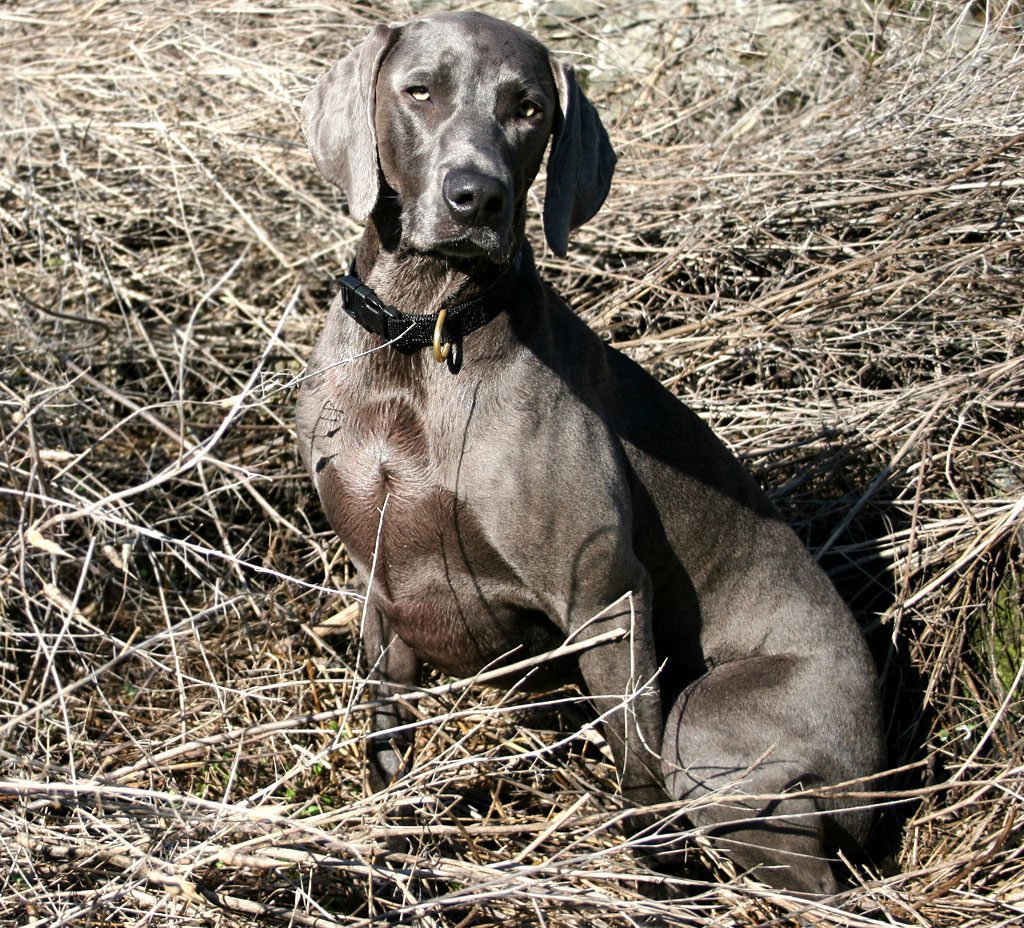
    The Weimaraner "Blue" cannot compete on the American exhibition track, but the color is considered normal and is not associated with any health problems. The Weimaraner "Brown", on the other hand, no son Weimaraner pure breed, but mixtures Pointer / Braco German Shorthair

    Character and skills

    This Germanic sample dog stands out for its great elegance and versatility that it is suitable for all types of terrain and for all types of hunting.

    His character is quiet and affectionate. Their submission and balance make have an easy training, besides being great as a companion dog.

    It has also gained appreciation of los monteros by worth for all seasons and temperatures. Today they recorded more than 500 Puppies per month. In the United States race is revalued in all directions: tracking, capture of prey, guide dog, drug trafficking, Guarda, agility and companion of life. They are easy to train and behave very well as guard dogs. They are affectionate and obedient.

    Health

    The Weimaraner are generally healthy, but like all races, are prone to certain health conditions. Not all Weimaraner will contract some or all of these diseases, but it is important to be aware of them if you are considering this breed.

    If you are buying a puppy, find a good breeder who will show you the health clearances of the puppy's parents. Health clearances show that a dog has been tested and cleared for a particular condition.

  • Hip Dysplasia: It is an abnormality of the hip joint. It can affect one or both sides. Dogs with hip dysplasia may or may not show any clinical signs. Although the tendency to hip dysplasia is believed to be hereditary, diet is also believed, rapid growth and the environment contribute to this condition.
  • Gastric dilation-volvulus (GDV), also called swelling or torsion: It is a life-threatening disease in large, deep-chested dogs, especially if they are fed one large meal a day, eat quickly, drink large volumes of water after eating and exercise vigorously after eating. Some think that elevated food plates and type of food may be a factor in causing this as well.. It is more common among older dogs. GDV occurs when the stomach is dilated with gas or air and then twisted (torsion). The dog is unable to burp or vomit to rid itself of excess air in its stomach, and the normal return of blood to the heart is prevented. Blood pressure drops and the dog goes into shock.. Without immediate medical attention, the dog can die. Suspect swelling if the dog has a distended abdomen, salivates excessively and gags without vomiting. May also be restless, depressed, lethargic and weak with a rapid heart rate. It is important that you take your dog to the vet as soon as possible.
  • Von Willebrand disease (VWD): It is an inherited blood disorder caused by a deficiency in the coagulation factor VIII antigen. (factor von Willebrand). The main sign is excessive bleeding after injury or surgery. There may also be other signs, like nosebleeds, bleeding gums or bleeding in the stomach or intestines. Most dogs with von Willebrand disease lead normal lives.. If you feel this is a concern, your vet can run tests to determine if your dog has it.
  • Distiquiasis: This is a condition where the dog has an extra row of eyelashes, usually on the lower eyelid, causing irritation to the cornea and tearing.
  • Entropion: This defect, which is usually obvious at six months of age, causes the eyelid to roll inward, irritating or injuring the eyeball. One or both eyes may be affected. If your Weimaraner has entropion, you may notice rubbing your eyes. The condition can be surgically corrected if necessary.
  • Factor XI deficiency: It is another bleeding disorder that is usually minor, but can become severe after trauma or surgery.
  • Hypothyroidism: Hypothyroidism is caused by a thyroid hormone deficiency and can produce signs including infertility, Obesity, mental dullness and lack of energy. The dog's hair can become rough and brittle and begin to fall out, while the skin becomes hard and dark. Hypothyroidism can be very well controlled with a daily thyroid replacement pill. Medication must continue throughout the dog's life.
  • Progressive retinal atrophy (PRA): It is a degenerative eye disorder that eventually causes blindness due to the loss of photoreceptors in the back of the eye. The (PRA) detected years before the dog shows signs of blindness. Fortunately, dogs can use their other senses to compensate for blindness, and a blind dog can live a full and happy life. Just don't make a habit of moving furniture from side to side. Reputable breeders have their dogs' eyes certified annually by a veterinary ophthalmologist and do not breed dogs with this disease.
  • Immune-mediated disease: A small percentage of the puppies of Weimaraner react to vaccines, particularly to combination vaccines, with fever, an elevated white blood cell count and swollen tissues and joints. Reactions occur most frequently between 12 and 16 weeks of age.
  • Care

    The first thing to know about him Weimaraner is that it is a domestic dog. Not made for the kennel or backyard life, and it's not made for apartment living either. This highly active dog needs a large, safe yard where he can run, and an active family that gives you the exercise and mental stimulation you need.

    A sense of humor also helps, especially when you see how you Weimaraner has remodeled your garden in its efforts to get rid of mice, moles and bugs. You will be proud of yourself for your good efforts, so don't forget to praise him while you calculate in your head how long, money and effort it will take to put the garden back the way you like it. You may want to monitor him more closely and provide him with additional exercise..

    The Weimaraner they need a couple of hours of daily exercise if they want to avoid barking, recreational chewing and digging. Play fetch and other running games, take him for a jog or a walk, teach him to run alongside his bike or get him involved in a dog sport like agility or flyball. Y, of course, you can always take him hunting.

    Make sure your patio is leak proof. The Weimaraner They are Houdinis when it comes to confinement, and they are very good at learning to open doors and gates and jump or dig under fences. That is another reason why they are best kept as domestic dogs..

    In the House, a Weimaraner mature and well trained will be his shadow, from the bedroom to the bathroom and from the kitchen to the den. a puppy of Weimaraner is challenging and requires careful supervision. Can be a destructive chewer and difficult to train. Box training is a good idea.

    The Weimaraner of any age with separation anxiety, which is not unusual for this breed, They can become destructive and can "dig" on their carpet or sofa in an attempt to create a safe nest.

    The Weimaraner they are very intelligent, and they are also independent thinkers. That combination can make them a challenge when it comes to training.. Be consistent and firm, but soft. The Weimaraner is sensitive and does not respond well to anger, But he must be able to say "no" and say it seriously. Keep training sessions short and interesting, and always end them when you've done something right so I can praise you for a job well done. Last, but not less important, keep your sense of humor. Its Weimaraner may or may not do what I ask, depending on many factors, but will always disobey with style.

    Grooming

    One Weimaraner it is one of the easiest breeds to care for. Even when he's been running through the mud, dirt seems to fall off it. Weekly brushing with a bristle brush should keep their fur and skin healthy. The Weimaraner they shed their fur, but brushing will help keep hair loose from your clothes and furniture. For your Weimaraner glasses, clean it with a chamois. Bathe when necessary. Likes to wallow in anything stinky, so it may be more often than would normally be necessary.

    All breeds with floppy ears tend to have problems with ear infections. Check your ears Weimaranerr weekly and clean them with a cotton swab moistened with a cleanser recommended by your veterinarian. Never insert cotton swabs or anything else into the ear canal, as it could damage it. Its Weimaraner you may have an ear infection if the inside of your ear smells bad, looks red or tender, or if you frequently shake your head or scratch your ear.

    Brush your teeth Weimaraner at least two to three times a week to remove tartar buildup and the bacteria that lurk inside. Daily brushing is even better if you want to prevent gum disease and bad breath.

    Trim the nails once or twice a month if your dog doesn't wear them down naturally. If you can hear the click of nails on the ground, they are too long. Short, well-trimmed nails keep the paws in good condition and prevent scratching when the Weimaraner jumps enthusiastically to greet him.

    Start getting used to your Weimaraner to have it brushed and examined when it's a puppy. Handle your feet frequently – dogs are sensitive to their feet – and look inside your mouth and your ears. Make grooming a positive experience full of praise and rewards, and will lay the groundwork to facilitate veterinary examinations and other manipulations as an adult.

    While you clean him, check for sores, rashes or signs of infection such as redness, tenderness or inflammation of the skin, in the ears, nose, mouth and eyes, and on the feet. Eyes must be clear, no redness or discharge. Your careful weekly exam will help you detect possible health problems early.

    Food for a Weimaraner

    The proper diet for a Weimaraner may vary depending on its age., weight, activity level and individual health of each dog. But, I can provide you with some general guidelines.. It is important to remember that it is always advisable to consult with your veterinarian to obtain personalized advice on your pet's diet..

    Puppy:

    Weimaraner puppies require a nutrient-rich diet for their growth and development.. Look for specific foods for large breed puppies, since these usually have an adequate balance of calcium and phosphorus for bone development.

    1. Dry food for large breed puppies: Should contain high quality protein, fat, essential vitamins and minerals. Be sure to follow the manufacturer's recommendations for daily amounts.

    2. Wet Food: You can complement the diet with quality wet food. This can help meet the puppy's hydration needs..

    Adult:

    When your Weimaraner reaches adulthood, usually around 1-2 years, you can switch to a diet formulated for large breed adults.

    1. Dry food for adults of large breeds: Look for a food that contains a balanced amount of protein, fats and carbohydrates. The daily amount will depend on your dog's weight and activity level..

    2. Wet food or mixed diets: You can continue to include quality wet food in the diet or combine it with dry food..

    Viejo (Senior):

    As your Weimaraner ages, your nutritional needs may change. Diets for older dogs often contain ingredients that promote joint and cardiovascular health.

    1. Dry food for older dogs: Look for foods formulated for senior dogs, that may contain supplements such as glucosamine and chondroitin for joint health.

    2. Wet food for older dogs: You can also provide quality wet food to help maintain good hydration..

    Quantities:

    Exact amounts of food will vary depending on the brand of food., your dog's activity and overall health. Always follow the guidelines provided by the manufacturer on the food package, and adjust as needed based on your Weimaraner's weight and activity level.. Monitor your weight and adjust the amount of food as needed to maintain a healthy weight.

    Remember that it is crucial to monitor your dog's health and adjust his diet as necessary throughout his life.. It also, fresh water must always be available. Always consult with your veterinarian for specific recommendations for your individual Weimaraner..

    Characteristics "Weimaraner"

    Coexistence is important that you have with your new friend. Before considering the acquisition of a dog of the breed "Weimaraner" you know certain factors. Not all breeds of dogs are apt to live in an apartment, you must take into account his character, their need for exercise, their interaction with other pets, their care and if you have small children, their level of tolerance towards them.

    Adaptation โ“˜

    5,0 of 5 stars (based on 1 review)

    friendly dog โ€‹โ€‹โ“˜

    5,0 of 5 stars (based on 1 review)

    hair loss โ“˜

    3,0 of 5 stars (based on 1 review)

    Affection level โ“˜

    5,0 of 5 stars (based on 1 review)

    Need for exercise โ“˜

    5,0 of 5 stars (based on 1 review)

    Social need โ“˜

    5,0 of 5 stars (based on 1 review)

    Home โ“˜

    1,0 of 5 stars (based on 1 review)

    Toilet โ“˜

    1,0 of 5 stars (based on 1 review)

    Friendly with strangers โ“˜

    5,0 of 5 stars (based on 1 review)

    barking โ“˜

    3,0 of 5 stars (based on 1 review)

    Health โ“˜

    1,0 of 5 stars (based on 1 review)

    Territorial โ“˜

    3,0 of 5 stars (based on 1 review)

    Cat friendly โ“˜

    5,0 of 5 stars (based on 1 review)

    Intelligence โ“˜

    5,0 of 5 stars (based on 1 review)

    Versatility โ“˜

    5,0 of 5 stars (based on 1 review)

    Child friendly โ“˜

    5,0 of 5 stars (based on 1 review)

    Surveillance โ“˜

    5,0 of 5 stars (based on 1 review)

    joy โ“˜

    3,0 of 5 stars (based on 1 review)

    Weimaraner pictures

    Videos Weimaraner

    Dogs 101 - Weimaraners

    Type and recognitions:

    • FCI CLASSIFICATION:
    • Group :
    • Section : . .

    Federations:

    FCI โ“˜, AKC โ“˜, ANKC โ“˜, CKC โ“˜, โ€‹KC โ“˜, NZKC โ“˜, UKC โ“˜

    FCI breed standard "Weimaraner"

    Origin:
    Germany

    Date of publication of the valid original standard:
    19.03.2015

    Use:

    According to its hunting purpose as a versatile dog, the Weimaraner must possess all the talents that are required required by him, and be able to be used for all work in the forest and water field, in performance oriented, before and after shot.


    General appearance:

    Dog hunting medium to large. Suitable for different types of jobs, so beautiful, tendinoso, with strong muscles. Rate differences between the male and female must be clearly marked.

    important proportions

    * Over the body : Height to the cross : 12 : 11.
    * Proportions of the length of the head : From the tip of the nose to the stop slightly longer than from stop to occiput.
    * Former members : The distance from the elbow to the half of the metacarpal bone almost the same as that of the elbow to the cross.


    Behavior / temperament:

    It is a versatile hunting dog, manageable, energetic and passionate with a systematic and emphatic search although it is not excessively temperamental. Olfaction remarkably fine. Eager for the dam and wild animals, It is alert, without being aggressive. Best sample and the water activity. remarkable tendency to activity after shooting.

    Head:

    ---

    Cranial region:
    • Skull: In harmony with the size of the body and the facial region. In the male it is wider than in the female, although in both the relationship between width of the skull with the total length of the head should have good proportions. In the middle of the forehead there is a collapse. Mildly to moderately labeled occiput. Eyes behind the arc is visible superciliar.
    • Depression links (Stop) : very mild.

    facial region:

    • Truffle: Grand, protruding the lower jaw. Color dark meat gradually changing to gray color on its back.
    • Snout: Long, especially strong in males, with a look of almost angular profile. The muzzle and canine area approximately equally strong. Straight nose cane, sometimes slightly arched but never concave.
    • Lips: moderately overlapping, flesh colored as the palate. Small labial commissure.
    • Jaws/Teeth: Strong jaws. Complete denture, regular and strong. Scissor bite.
    • Cheeks: Muscular and well marked. "Dry head".

    Eyes: amber, from dark to light with a smart look. In puppies are blue sky. Round, just bent. Lids well adherent.

    Ears: Wide and fairly long, arriving at the corner of the mouth, with rounded tips. When the dog is attentive the bends slightly forward, folded.

    Neck:

    Consignment and noble appearance, The arched upper profile line. Muscular, almost round, not too short and dry. Widening towards men with a harmonic insert towards the back line and chest.

    Body:

    • top line: From the arched line of the neck, on the cross well marked, with a smooth transition to a relatively long back.
    • Cross: Well marked.
    • Back: Strong and muscular, without subsidence. The back should not be higher. A slightly longer back is not considered a fault.
    • Rump: Pelvis long with a placement somewhat inclined.
    • Breast : Strong, but not too wide, deep enough, almost to the level of the elbows and long enough. Well arched without having barrel-shaped; Ribs long and well marked antepecho.
    • Bottom line and belly: slightly upward, Although the belly is not withdrawn.

    Tail:

    Little lower insert of the back line, compared with other races. Tail strong and well covered with hair. Hanging at rest; when attentive during work horizontally or slightly higher.

    Tips

    Former members

    * As a whole: senior members, tendinosos, straight and parallel, but not far apart.
    * Shoulder: Long and oblique, well pasted, strong muscles. Good angulation of the joint scapulohumeral.
    * Arm: Leaning placement, long enough and strong.
    * Elbow: Free and straight. Should not deflect or outward or inward.
    * Forearm: Long and straight.
    * Carpo: Strong, keyed up.
    * Metacarpus: tendinoso, with slightly oblique positioning.
    * Front feet: Strong. Placed towards the midline of the body. Toes tight and arched. The longest central fingers are a characteristic of the race and therefore a foul should not be considered. Light colored nails dark gray. Pads well pigmented and tough.

    Later members

    * As a whole: senior members, sinewy or well muscled. Placed in parallel, without tipping either in or out.
    * Thigh: long enough, strong, with good musculature.
    * Knee: Strong, tense.
    * Metatarsus: tendinoso, placed almost perpendicular.
    * Hind feet: Strong and compact, No Spurs. The rest as forefeet.

    Movement:

    Displacement in all movements must cover the surface well and be fluid. forelegs and later placed in parallel. Gallop long low. On the trot, right back stays. Amble step is unwanted.

    Mantle

    Skin: Resistant, attached to the body, but not in excess.

    Fur

    • Short hair: The outer layer short (although longer and more dense than in most comparable races), strong, well furred and well adherent to the body. Without or with very little undercoat.
    • Long hair: outer layer of soft and long hair with or without undercoat. Straight or slightly wavy. Hair in the attachment of the ear. At the tip of a velvety ears hair is allowed. Hair along the sides of 3-5 cm.. At the bottom of the neck, forechest and belly usually a little longer. Good pens and trousers, although shorter towards the bottom. Cola with a good strip of hair. The area between the fingers covered with hair. The hair on the head is less long. Occasionally may occur, crossbreeding in dogs descendants, an external medium length hair, dense and well adhered, Tagid Internal Lanilla and Less developed feathers and pants.

    Color: Silver grey, gray deer or gray mouse as well as transitions between these shades. In general the head and ears of a lighter color. Only small white markings are permitted on chest and toes. Occasionally in the middle of the back a dark "more or less marked" line of eel ". Dogs that manifest yellowish red marks can obtain the "good" classification. Fire red markings or color are a severe lack.


    Size and weight:

    Height to the cross

    * Males: 59 to 70 cm. (ideal measure : 62-67 cm.).
    * females: 57 to 65 cm. (ideal measure : 59-63 cm.).

    Weight

    * Males: Approximately from 30 until 40 kg.
    * females: Approximately from 25 until 35 kg.


    Fouls:

    Any deviation from the above criteria is considered missing and the seriousness is considered to the extent of the deviation to the standard.

    Serious misconduct

    * Deviations marked on the type. Sexually atypical.
    * Marked variations in the size and proportions.
    * Cara : Marked variations eg. very prominent lips, short snout or pointed.
    * Jawbones and teeth : Absence of more than two PM1 or M3.
    * Eyes : minor defects, especially mild and unilateral defects of the eyelids.
    * Ears : Noticeably short or long, without duplicity.
    * Loose skin on neck (Spada). Large variations in shape and musculature.
    * Back : Noticeably concave or convex. too development.
    * Breast , abdomen : Barrel-shaped chest, depth or length of chest insufficient. Retracted abdomen.
    * Serious Posture Anomalies, such as angulation poor, outwardly inclined elbows, open feet.
    * Tips barrel-shaped or cow.
    * defective movements in each of the gaits, lack of range or push. Ambling movement.
    * General deficiencies as eg. skin too thin or too thick.
    * Transitions between variations hair specified in the standard.
    * Lack of hair on the abdomen and ears (leather ears). LANOSO HAIR DISTRIBUTED IN THE VARIETY OF SHORT HAIR. Poor or very wavy coat on the long hair variety.
    * Deviations between the gray tones such as yellow or brown. Tan markings.
    * Notable differences in size and weight. ( For example more than 2 cm.).
    * Other serious deficiencies.
    * Minor deficiencies in character.

    ELIMINATING fAULTS

    * Markedly atypical, above all heavy or weak.
    * Absolutely disproportionate.
    * Absolutely atypical, as eg. skull like the bulldog.
    * Cara: Absolutely atypical, as eg. concave nasal cane.
    * Jaws / teeth: Prognathism, enognatismo. Absence of dientes.Weimaraner
    * Eyes: Entropion, ectropion.
    * Ears: Absolutely atypical as P.EJ.: raised.
    * Gill marked.
    * Back: Strongly convex or concave. overdeveloped.
    * Breast , abdomen: Chest with a strong barrel-shaped or malformed.
    * Stunted or poorly trained members.
    * chronic lameness.
    * Marked inability during movements.
    * Defects and deformities of the skin.
    * Total or partial lack of coat.
    * Another color other than gray. Tan markings expanded. White spots elsewhere than the chest or feet.
    * Measures clearly higher or lower than those set.
    * Any other malformation. Diseases, which can be considered as eg hereditary. from epilepsy.
    * Faults in temperament as eg. SHYE THE FEARING.


    N.B.:

    Males should have two normal-appearing testicles fully descended into the scrotum..

    The latest modifications are in bold type

    Source: F.C.I - International Cynological Federation

    Alternative names:

    1. Weimaraner Vorstehhund, Raner, Grey Ghost (English).
    2. Braque de Weimar (French).
    3. Weimaraner (German).
    4. Weimaraner (Portuguese).
    5. Weimaraner, Weimi, Weimarรกn (Chile), Fantasma gris, Fantasma de plata (espaรฑol).

    โ–ท The world of Pets: Dogs, cats, birds, reptiles, amphibians

    Braque Francais
    Francia FCI 133 - 134 . Braque Type

    Braco Francรฉs

    The Braque Francais little is raised outside its country of origin, and therefore it is not easy to find a puppy.

    Content

    History

    The "French Pointer" is a breed of dog native to France.. It was developed in the Pyrenees region near the border with Spain France. It is rare to see him outside their region of origin.

    The Braque Francais is a direct descendant of one of the oldest known pointer dog breeds. This race was already described in S. XIV por Gaston Phebus, Count of Foix and Bรฉarn. It also, he is quoted by a large number of ancient authors who praised his bravery and fineness of nose. He is currently an excellent show dog, of the best. Though morphologically it has changed throughout its history, He has lost none of their skills and their effectiveness at the time.

    There are two types of Braque Francais: The Braque franรงais, type Gascogne, that its size varies between 58 and 69 cm., and the Braque franรงais, type Pyrรฉnรฉes, with a little less size, varying it between 47 to 58 cm.. But both dogs are strong but at the same time elegant and powerful.

    Physical characteristics

    It has a short hair that can occur in two colors: Brown spotted white or unicolor Brown. Black is not supported in the Braque Francais.

    The Braque Francais It, in general, of medium-sized, muscular body and pretty light. The length of the muzzle is slightly shorter than its skull, This being almost flat or slightly rounded.

    The nose is Brown and is glued to his lips, eyes dark brown or yellow brown. The tail It is left to the natural, whether short or long. The fur It is short and fine with white with brown or black spots or patches. Its weight going from 25 to 35 Kg. and height of 56 to 69 cm to the cross.

    Character and skills

    They are excellent companions for children and other dogs. They use their nose to sniff high into the air to pick up even the smallest odor particles..

    The ideal temperament of Braque Francais described as "kind", joyful, sweet and submissive. It should not be subjected to severe training methods. The individual temperament of the dogs may vary, However, all dogs must be well socialized with people and other animals at an early age in order to be a good pet.

    Feel real passion for hunting, being excellent collectors. Particularly suitable for the quail hunt, Partridge and the Woodcock.

    It is difficult to find a puppy outside its country of origin.

    In general his life extends to the 12 to 14 years, sometimes more.

    ยซFrench Pointerยป Images

    ยซFrench Pointerยป Videos

    More information: gundogmag

    Type and recognitions:

    • FCI CLASSIFICATION:Group –> 7 / Section –> 1 – Continental Pointing Dogs. 1.1 Braque Type
    • FCI 134 (Braque franรงais, type Pyrรฉnรฉes) – 133 (Braque franรงais, type Gascogne)
    • Federations: FCI โ“˜, CKC โ“˜, UKC โ“˜

    • Estรกdar FCI Braque franรงais, type Pyrรฉnรฉes

    • Espaรฑol
      FCIFCI – Braco francรฉs tipo Pirineos
      Bracco
      English
      FCIFCI – French Pointing Dog – Pyrenean type
      French
      Franรงais
      FCIFCI – Braque franรงais – type Pyrรฉnรฉes
      Braque
      Deutsch
      FCIFCI – Franzรถsischer Vorstehhund โ€“ Typ Pyrenรคen
      French
    • Estรกdar FCI Braque franรงais, type Gascogne

    • Espaรฑol
      FCIFCI – Braco francรฉs tipo Gascuรฑa
      Bracco
      English
      FCIFCI – French Pointing Dog – Gascogne type
      French
      Franรงais
      FCIFCI – Braque franรงais – type Gascogne
      Braque
      Deutsch
      FCIFCI – Franzรถsischer Vorstehhund โ€“ Typ Gascogne
      French

      Alternative names:

      1. Braque Francais, de Grande Taille (English).
      2. braque franรงais, type Gascogne, braque franรงais, type Pyrรฉnรฉes (French).
      3. Franzรถsischer Vorstehhund, Braque franรงais, Typus: Gascogne, Braque franรงais, Typus: Pyrรฉnรฉes (German).
      4. Braco Francรชs (Portuguese).
      5. Braco francรฉs o del Pirineo (espaรฑol).

    โ–ท The world of Pets: Dogs, cats, birds, reptiles, amphibians

    Italian Pointing Dog
    Italia FCI 202 . Braque Type.

    Braco Italiano

    The Italian Pointing Dog is a friendly dog, energetic and playful to which loves to play.

    Content

    History

    The Italian Pointing Dog has been called the Pointer oldest european, and its history dates back to the 4th or 5th century BC.. Although the exact ancestral origins are unknown, it is generally accepted that the Italian Pointing Dog was first a cross between the Italian short-haired Segugio and the asian mastiff, that has been extinct since then. The breed was developed in northern Italy, with two different varieties: the white and orange variety known to be from the Piedmont region and the brown and reddish variety from Lombardy.

    in the medieval period, the breed had become established and the Italian aristocracy exported the Bracco across the old world. The popularity of Bracco reached its peak during the Renaissance, and remained in considerable numbers until the beginning of the 20th century, when they faced a steep decline.
    At the end of the 19th century, the Italian Pointing Dog faced extinction. Over the years, crosses with Hounds and poor breeding resulted in dogs too heavy to do their job, and the breed suffered from various health problems. Diligent breeding selection and care helped rebuild the breed. In the Decade of 1920, it was decided to unify the two variations of the breed to preserve genetic diversity.

      First of all, the Piedmontese Pointer he was a lighter color and build dog, and originated in the Piedmont region of Italy, as its name suggests. This dog was used for work in the mountains, which reflected his conformation and temperament. The Piedmontese dog was smaller than its counterpart from Lombardy, and his hunting style was reminiscent of some Western European pointers, since he was traveling at a gallop. This dog was mainly white, with or without orange markings.
      On the other hand, the Lombard Pointer it was a brown dog with a heavier body type. This dog was used for hunting in the swampy lowlands, and it was a trotting breed. These large dogs were bred for both their visual appeal and their natural hunting ability..

    Shortly after the race was officially unified, the working standard was written and published, and in 1949 was founded in Italy the Societa Amatori Bracco Italiano. When the Italian conformation standard was published, incorporated aspects of both race types, which resulted in notable variability within the standard. The breed standard had been in existence for over a century before being compiled into this single document.

    The Italian Pointing Dog was brought to the UK in the late 1980s 1980, but the United States did not experience the Italian Pointing Dog up to approximately 1994. In 2001, the Italian Pointing Dog was accepted into the AKC Foundation Stock Service. In 2005 The first national โ€œMeetingโ€ was held and in 2007 the Bracco Italiano Club of America was founded.

    Physical characteristics

    The Italian Pointing Dog It must be athletic and powerful in its appearance, more like a cross between a German Shorthaired Pointer and a hound, but in matters, differs much from the race mentioned.

    It has hanging upper lips and long ears that create a serious expression. Your body should be "almost square", which means that its height to the cross should be almost the same as the length of his body. But, it shouldn't actually be square as this would lose much of its powerful grace. The tail can be can be cut, Although this is controversial in Italy.

    The fur is short, dense and glossy. The texture must be pretty hard, Although somewhat softer in the head, the neck, the ears, legs and feet. Moulting occurs twice a year, and brushing helps in the Elimination of dead hairs layer.
    The fur consists of the different combination of three colors: white, Orange and Brown, years. At that time, You can find copies of the following keys: White and orange, Orange and Brown, Brown with patches of another colour (white or orange) in the face, the ears, the base of tail and body. The black color is not supported.

    The weight of the Italian Pointing Dog is of 25 to 40 kg. The height at the cross in the males is of 58 to 67 cm. and in the females of 55 to 62 cm..

    Character and skills

    It is a dog friendly, energetic and playful. She loves other dogs, loves to play, is an active race, physical exercise is necessary, to feel happy and have a balanced mind. They get along well with children.

    The training of a Italian Pointing Dog requires patience and a calm nature, next to the coach.

    Other British breeds of show are more likely to search for the presence of prey with high speed, However the Italian Pointing Dog it's slower, but on the other hand it can be used on any type of terrain, both mountainous and plain. It is very smart with a surprising ability to learn.

    It can be an excellent pet, because of its docile nature.

    Health

    The Italian Pointing Dog it is a healthy breed in general, and responsible breeders screen their cattle for health conditions like hip and elbow dysplasia, eye abnormalities such as entropion, ectropion and cataracts, and kidney disorders such as renal amyloidosis. To avoid orthopedic stresses on their rapidly growing bodies, the puppies of Italian Pointing Dog should be fed a balanced meal and should not run on hard surfaces such as concrete or perform repeated high-impact exercises until at least one year of age.

    Check the long, pendulous ears of the Italian Pointing Dog to detect ear infections, and use a vet-recommended ear cleaner once or twice a week to keep the ear clean and dry to prevent infection.

    Grooming

    The Italian Pointing Dog they are easy to prepare. Their short coats require minimal care and their long ears require routine cleaning to minimize the risk of ear infections.. It also, an occasional bath will keep them clean and in good repair. Your nails should be trimmed regularly with a nail clipper or grinder to avoid overgrowth, breaking and cracking. Teeth should be brushed regularly.

    Exercise and training

    The Italian Pointing Dog is a moderate to high energy breed that requires daily exercise and mental stimulation. This can be accomplished by running freely in a safe, enclosed space or through scheduled exercises such as daily jogs.. Are needed at least 30 minutes of exercise per day, but more preferred. It also, to be happy, they need time each day to spend with their family doing an organized workout or playing a game.

    One Italian Pointing Dog need a calm and patient coach who is gentle but firm. This breed can be slightly independent, but for the most part, they are eager to please and are excited when they see that they have made you happy. They are best suited for a home that will use their hunting skills and give them a job to do. But, instead of hunting, training for dog sports such as agility, Obedience and rally can also be a great way to give your dog the physical and mental stimulation he needs.

    Characteristics "Italian Pointing Dog"

    Coexistence is important that you have with your new friend. Before considering the acquisition of a dog of the breed "Italian Pointing Dog" you know certain factors. Not all breeds of dogs are apt to live in an apartment, you must take into account his character, their need for exercise, their interaction with other pets, their care and if you have small children, their level of tolerance towards them.

    Adaptation โ“˜

    4,0 of 5 stars (based on 1 review)

    friendly dog โ€‹โ€‹โ“˜

    3,0 of 5 stars (based on 1 review)

    hair loss โ“˜

    3,0 of 5 stars (based on 1 review)

    Affection level โ“˜

    5,0 of 5 stars (based on 1 review)

    Need for exercise โ“˜

    3,0 of 5 stars (based on 1 review)

    Social need โ“˜

    4,0 of 5 stars (based on 1 review)

    Home โ“˜

    3,0 of 5 stars (based on 1 review)

    Toilet โ“˜

    2,0 of 5 stars (based on 1 review)

    Friendly with strangers โ“˜

    4,0 of 5 stars (based on 1 review)

    barking โ“˜

    3,0 of 5 stars (based on 1 review)

    Health โ“˜

    3,0 of 5 stars (based on 1 review)

    Territorial โ“˜

    3,0 of 5 stars (based on 1 review)

    Cat friendly โ“˜

    2,0 of 5 stars (based on 1 review)

    Intelligence โ“˜

    3,0 of 5 stars (based on 1 review)

    Versatility โ“˜

    3,0 of 5 stars (based on 1 review)

    Child friendly โ“˜

    4,0 of 5 stars (based on 1 review)

    Surveillance โ“˜

    3,0 of 5 stars (based on 1 review)

    joy โ“˜

    3,0 of 5 stars (based on 1 review)

    ยซItalian Shorthaired Pointerยป Images

    Videos ยซBraco Italianoยป

    Type and recognitions:

    • FCI CLASSIFICATION:
    • Group :
    • Section : . .

    Federations:

    FCI โ“˜, AKC โ“˜, ANKC โ“˜, CKC โ“˜, โ€‹KC โ“˜, NZKC โ“˜, UKC โ“˜

    FCI breed standard Italian Pointing Dog

    FCIFCI - Italian Pointing Dog
    Bracco

    Alternative names:

    1. Italian Pointer, Italian Pointing Dog, Bracco (English).
    2. Braque italien (French).
    3. Italienischer Vorstehhund (German).
    4. Bracco italiano (Portuguese).
    5. Pointer italiano. (espaรฑol).

    โ–ท The world of Pets: Dogs, cats, birds, reptiles, amphibians

    Burgos Pointer
    Espaรฑa FCI 90 . Braque Type

    Perdiguero de Burgos

    The Burgos Pointer is smart and learns easily, above all, tracking tasks.

    Content

    History

    The Burgos Pointer It is a breed of dog Spain. Originally from Castile, especially in the province of Burgos, This rustic breed is intended for hunting and has exceptional characteristics for hunting small game..

    It is an ancient breed from the Castilian tableland, is widespread, and according to some connoisseurs of the breed, it is likely that it has participated in the creation of other breeds of hunting dog, not only Spain.

    The truth is that lot of documented material that speaks of this breed there is. Veterinary geneticist, Josรฉ Manuel Sanz rudder, has dedicated several lines to the history of this breed and in a document that appears cited in many web, speaks of the Origins and Ancient History (Until 1911). You can read the complete material on the website of the Spanish Association of el Perro Perdiguero de Burgos. Here we will only mention what refers to the word ยซPerdigueroยป and to the different theories about the origin but very briefly…

    "The word ‘perdiguero‘ It occurs frequently in classical texts on venatoria and its reference corresponds to the generic Hunter dog of partridges, "perdicero" or "perdigero", but it cannot be lightly assumed that this dog was a Burgos Pointer. In numerous current texts we can read various theories about the origin of the race. The more absolute confusion arises from a whole once analysed separately. The most common mistakes that demonstrate a poor work of research are as follows:

    • Associate the word perdiguero the race Burgos Pointer.
    • Believing that the Pointing Dogs, as the Spanish classics tell us, they were Burgos Pointers and forget that they were other races.
    • Define like Burgos Pointer to the dogs that authors from Velรกzquez to Goya have been captured in numerous canvases where hunting dogs are reproduced.
    • Define incomprehensibly and lightly when Burgos Pointer as the origin of English Pointer, either in a display of patriotic enthusiasm, consider him further as the father of all European Braquesยซ.

    "The authors, as often happens, they do not manage to agree on the theories about the origins of animals and while some affirm that the sample dog is originally from Italy, others say that France or Spain (according to the nationality of the author) which they were born.

    On the formation of the current dog Burgos Pointer the news is null and we can only apply the parameters that are studied to form a race, they are:

    • Time and place of training.
    • Genetic basis provided the race.
    • Adaptation to the environment in which is born.
    • Geographical isolation and inbreeding operated.

    With regard to the first of them, not a breed created by man ex process are being, with measured doses of one or another blood, both the time and the place of training are uncertain. A race not be based in short periods of time and having no initial selection at a single point, "We cannot think that the place of birth has only been a certain place."

    (Author: Josรฉ Manuel Sanz rudder).

    Physical characteristics

    While the Burgos Pointer, It is not as robust and defined muscular level, like its relative the English Pointer, their appearance shows the strength of the race.

    It has the ears long and the tail It tends to be cut one-third of its original length.

    Its fur It has variants that can form different ranges within the basic color. The basic colors of the hair are the white and the liver. These colors mingle regularly, giving variegated layers that tend to liver, gray liver, mosqueados in liver and other various combinations, depending on whether the liver or white color is predominant and depending on whether the white spots are open or closed.

    It is a very common feature (Although non-binding layer), that have a clear white spot on the forehead and the ears always spotted with a homogeneous liver color. Liver-colored hairs can form sharp, well-defined liver-colored patches, regularly distributed by the layer of the animal

    Its the mantle is short, thick and soft. The hair is thinner in the head, ears and limbs.

    The skin is elastic, but not printing, thick, abundant, pinkish spotless. All Oris they will be Brown, never black.

    The height males will of 62 to 67 cm and females 59 to 64 cm to the cross. Thinking of 25 to 30 kg.

    It is an animal that as all, It requires a dose of daily exercise. A long walk, and a few races in the open air will keep you happy.

    Character and skills

    It is a very friendly and quiet dog, not afraid easily. It is smart and learns easily, especially in tracking work.

    It is not a dog that adapts very well to urban environments.

    It is used for small game (rabbits, hares, etc.).

    It's perfect for hunting in any field (no matter how hard it is), since it has an enviable physical resistance and a great speed.

    The Burgos Pointer it is highly appreciated by hunters who want a rustic dog, hard in any terrain and type of hunting, obedient, strong and above all excellent winds and method of hunting, due to his calm and poise in the search, as well as his sample and his impeccable collection.

    Although used for small game pieces not dismisses pieces of hunting trail, in which he demonstrates great bravery.

    Characteristics "Burgos Pointer"

    Coexistence is important that you have with your new friend. Before considering the acquisition of a dog of the breed "Burgos Pointer" you know certain factors. Not all breeds of dogs are apt to live in an apartment, you must take into account his character, their need for exercise, their interaction with other pets, their care and if you have small children, their level of tolerance towards them.

    Adaptation โ“˜

    3,0 of 5 stars (based on 1 review)

    friendly dog โ€‹โ€‹โ“˜

    3,0 of 5 stars (based on 1 review)

    hair loss โ“˜

    2,0 of 5 stars (based on 1 review)

    Affection level โ“˜

    3,0 of 5 stars (based on 1 review)

    Need for exercise โ“˜

    4,0 of 5 stars (based on 1 review)

    Social need โ“˜

    3,0 of 5 stars (based on 1 review)

    Home โ“˜

    2,0 of 5 stars (based on 1 review)

    Toilet โ“˜

    1,0 of 5 stars (based on 1 review)

    Friendly with strangers โ“˜

    3,0 of 5 stars (based on 1 review)

    barking โ“˜

    2,0 of 5 stars (based on 1 review)

    Health โ“˜

    3,0 of 5 stars (based on 1 review)

    Territorial โ“˜

    4,0 of 5 stars (based on 1 review)

    Cat friendly โ“˜

    2,0 of 5 stars (based on 1 review)

    Intelligence โ“˜

    4,0 of 5 stars (based on 1 review)

    Versatility โ“˜

    3,0 of 5 stars (based on 1 review)

    Child friendly โ“˜

    4,0 of 5 stars (based on 1 review)

    Surveillance โ“˜

    2,0 of 5 stars (based on 1 review)

    joy โ“˜

    4,0 of 5 stars (based on 1 review)

    Images: Burgos Pointer

    Videos: Burgos Pointer

    Type and recognitions:

    • FCI CLASSIFICATION:
    • Group :
    • Section : . .

    Federations:

    • – FCI – Group 7: Pointing Dogs. – Section 1: Continental Pointing Dogs. 1.1: Braque Type โ“˜

    FCI breed standard "Burgos Pointer"

    Origin:
    Spain

    Date of publication of the valid original standard:
    26.05.1982

    Use:

    Hair and Feather Pointer Dog. The Perdiguero de Burgos is highly appreciated by hunters who want a rustic dog., hard in any terrain and type of hunting, obedient; strong and above all excellent winds and method of hunting, due to his calm and poise in the search, as well as his sample and his impeccable collection. Although used for small game game, does not discard the trail of game pieces, in which he demonstrates great bravery.


    General appearance:

    Hunting dog of good size, eumetric and medioline. Well developed head, compact trunk and strong limbs. Droopy ears and short hair. Longitudinal diameter as close as possible to the height at the withers. Proportionality and functional harmony must be sought, both in static and in motion


    Behavior / temperament:

    Rustic, balanced, calm and sitting; turns out to be a great show dog, especially suitable for hunting hair and feathers. Fresh look, very noble, it is a breed of excellent character, docility and intelligence.

    Head:

    As a whole : Big and strong, well developed skull; strong face and muzzle and corkscrew ears.

    The cranium, seen from above, It must be moderately rectangular with a progressive decrease towards the nose, without giving feeling of pointed snout. The ratio of the length of the skull to that of the face is 6:5. The craniofacial lines are divergent.


    Cranial region:
    • Skull : Width, strong, domed and convex profile; well marked central groove, shallow occipital crest. Accused frontal sinuses.
    • Depression links (Stop) : Soft, little sharp.

    facial region:

    • Truffle : dark brown, wet, big and wide with wide open windows.
    • Snout : Straight profile or with a very slight curve towards the nose. Width throughout its length, it should not give the impression of being pointed. Wide muzzle.
    • Lips : Sagging without sagging. The upper one will cover the lower one well. The bottom is marked labial commissure. The mucous membranes must be brown.
    • Jaws / Teeth : Strong teeth, white and healthy; scissor bite. All premolars exist.
    • Eyes : Medium, macaroons, preferably dark hazelnut, noble and sweet look, sometimes giving a feeling of sadness. The skin of the eyelids is moderately thick, pigmented like the mucous membranes in brown. The lower eyelid should be as close as possible to the eyeball.
    • Ears : long, drooping and triangular in shape. Inserted at eye line level, at rest they fall gracefully in corkscrew. Without exerting traction, they must reach the corner of the mouth and will not reach the nose.. Soft and soft to the touch, they have fine skin and hair; marked venous network. In higher insertion care and flatter frontal conformation.
    • Palate : Pink mucous with well marked beads.

    Neck:

    Strong and powerful; wide part at the head and continues with a slight widening to the trunk. Slightly arched top edge. Lower border with well defined dewlap that, starting from both lip corners, It is presented double without being exaggerated.

    Body:

    • As a whole : Square, strong and robust, powerful chest and ribs, giving a feeling of power and agility.
    • Cross : Well defined.
    • top line : Straight and horizontal or desirable with a slight drop from the withers. Never saddled and no oscillations during movement.
    • Back : Powerful and muscular.
    • Pork loin : Medium-, broad and muscular, giving a feeling of power.
    • Rump : Wide and strong. Its inclination will be less than 45ยฐ with respect to the dorsal lumbar line and the floor.. Height at the croup equal to or less than the height at the withers;
    • Breast : Wide and deep, reaches elbow level; muscular and powerful. Tip of the sternum marked. Well developed ribs, rounded, not flat. Well marked and wide intercostal spaces as we move towards the floating ribs. The chest perimeter must be equal to the height at the withers plus ยผ of it.
    • Bellies and flanks : Belly moderately tucked towards the genitals. Low sides and well marked flanks.

    Tail:

    Thickness birth and average insertion. It is amputated between a third and a half of its length.

    Tips

    PREVIOUS MEMBERS :

    • As a whole : Perfectly Plumb, straight and parallel. Strong bones with short pasterns and well developed feet.
    • Shoulder : Moderately oblique, muscular. The scapula should be approximately the same length as the arm
    • Arm : Strong and well muscled; its length will be 2/3 of the forearm.
    • Elbows : Glued to the trunk.
    • Forearm : Strong bone, with marked tendons. Straight and well plumb. Its length is double the total length from the carpus to the ground.
    • Metacarpus : Seen little laterally inclined, is practically the continuation of the forearm. Strong bone.
    • Front feet : Of cat, tight fingers, high and strong phalanx. dark nails. Robust plantar tuber, very wide and hard pads. Moderate interdigital membrane.
    • Angles : Scapulo-humeral angle close to 100ยฐ,Humero-radial angle close to 125ยฐ.

    LATER MEMBERS :

    • As a whole : Powerful and muscular, strong bone and well poised with correct angles, well marked and angulated hocks, giving a feeling of power and solidity.
    • Thigh : Very strong and with a clear appreciation of the muscles, well marked and developed. Its length is ยพ of the leg.
    • Leg : Long and strong of bone twice the length of the metatarsal.
    • Hocks : Well marked with clear appreciation of the tendon.
    • Metatarsus : Strong bone and perpendicular to the ground.
    • Rear feet : Cat as in the forelimbs, although slightly more elongated.
    • Angles : Coxo-femoral angle close to 100ยฐ,Femoro-tibial angle close to 120ยฐ ,Open hock angle greater than 130ยฐ.

    Movement:

    The typical gait of the breed is an economical trot, loose and powerful without tendency to laterity and without ambling.

    Mantle

    SKIN :
    Elastic but not detached, thick, abundant, pinkish spotless. All mucous membranes will be brown, never black.

    HAIR : Bushy, medium thickness, short, smooth and distributed throughout the body to the interdigital spaces. Finer on the head, ears and limbs.

    COLOR : The basic hair colors are white and liver.. These colors are mixed unevenly, giving marbled layers in liver, gray liver, liverwort and various other combinations, depending on whether the liver or white color is predominant and whether the white spots are more widespread or closed. A very common feature of the coat, although not necessary, It is the clear white spot on the forehead and the ears always stained with a homogeneous liver color.. Liver-colored hairs can form clear, well-defined spots of that color distributed irregularly across the animal's coat.. The same can happen with white hairs that can form gaps of this color on the coat without being extremely extended.. Black colorations or fires on the eyes and limbs are never allowed.


    Size and weight:

    Height to the cross :

    • Males of 62 to 67 cm.,
    • females of 59 to 64 cm..

    A high rate of sexual dimorphism is observed in this breed., being the males more homogeneous and the females of more variable height and less corpulent in general.


    Fouls:

    Any deviation from the aforementioned criteria is considered as a fault and the severity of this is considered to the degree of the deviation to the standard and its consequences on the health and well-being of the dog..

    MINOR FAULTS

    โ€ข Profile of the snout fleshy without excess.
    โ€ข Absence of any premolar.
    โ€ข Pincer bite.
    โ€ข Conjunctiva ligerรญsimamente visible.
    โ€ข Belfos or double chin that, without being excessive, are very marked.
    โ€ข Poorly solid dorso-lumbar line.
    โ€ข Metacarpos, weak metatarsals or feet, but not excessively.
    โ€ข Scars, wounds and abrasions during hunting season.

    SERIOUS FAULTS

    โ€ข Light appearance, fragile or excessively heavy and lymphatic.
    โ€ข Parallel craniofacial axes.
    โ€ข Poor or small heads.
    โ€ข Narrow skull.
    โ€ข Pointed snout.
    โ€ข Absence of several premolars and canines not due to trauma.
    โ€ข Very pronounced ectropion or entropion, light eyes.
    โ€ข Ears that are too long or set too low.
    โ€ข Belfos or exaggerated jowls.
    โ€ข Saddled dorso-lumbar line.
    โ€ข Height at the rump noticeably higher than the height at the withers.
    โ€ข Incorrect positions, weak or deviant.
    โ€ข Detached elbows.
    โ€ข Cow hocks.
    โ€ข Wavy or very long hair.
    โ€ข Unbalanced character.

    MISS PLAYOFFS

    โ€ข Aggressive or fearful dog.
    โ€ข Decidedly convergent craniofacial axes.
    โ€ข Depigmentation in the truffle.
    โ€ข Broken or black nose.
    โ€ข Any degree of lower prognathism.
    โ€ข Excessive upper prognathism.
    โ€ข Albinism in the coat accompanied by the mucous membranes.

    Any dog โ€‹โ€‹showing clear signs of physical or behavioral abnormalities must be disqualified..


    N.B.:

    Males should have two normal-appearing testicles fully descended into the scrotum..

    Source: F.C.I - International Cynological Federation

    Alternative names:

    1. Perdiguero de Burgos, Burgalese Pointer (English).
    2. Retriever de Burgos, Braque de Burgos, Perdiguero (French).
    3. Burgos-Hรผhnerhund (German).
    4. Pointer espanhol, Pointer de Burgos (Portuguese).
    5. Perdiguera (espaรฑol).

    โ–ท The world of Pets: Dogs, cats, birds, reptiles, amphibians

    Pudelpointer
    Alemania FCI 216 . Braque Type

    Pudelpointer

    The Pudelpointer has a great passion for water and swimming, which probably comes from the Poodle's influence on his selection.

    Content

    History

    It was the German Baron Von Zedlitz, a real foodie, who created the Pudelpointer towards the end of the 19th century.

    The Pudelpointers are Pointing Dogs hard hair, whose genetic origins date back to a cross between a English Pointer and Pudelhund, without any other race of Pointing Dogs. Although the Poodle it was only used to create the first strains, his qualities as a hunter have been preserved until today.

    The first crossing of a Pudelhund and English Pointer to establish the new breed took place in Germany in 1881. The father was a English Pointer property of Kaiser Federico III called tell and mother, a Poodle named molly, belonged to a famous Teutonic author on the subject of hunting dogs, Hegewald.

    The genes of Poodle, like race, seemed to have been more dominant in transmission. To alter this, many more were introduced Pointers What Poodles in the breeding program to arrive at what the Pudelpointer is today. During the first 30 years of parenting, they only used 11 Poodles instead of more than 80 Pointers. After that initial time period, only the occasional reintroduction of the Pointer. After WWI and WWII, the breed was severely reduced and the reintroduction of the English Pointer became important to rebuild the brood.

    The first Pudelpointers in North America were imported into 1956. After the foundations of the breed were laid, in 1977 The Club of the Pudelpointer from North America.

    Combined with the exceptional abilities of the English Pointer to work on the plains, that is to say, a fine and receptive nose even at a distance, a quick search that covers a lot of ground and firm stops, we have created a versatile and genetically strong hunting dog that meets the requirements of hunting.

    Germany is very careful in preserving the health of the breed, with increased vigilance against hip dysplasia and epilepsy. It also, the Pudlepointers currently play an important role in hunting events, since only dogs that have successfully participated in them are registered in the pedigree registry.

    Photo: Pudelpointer by https://www.akc.org/dog-breeds/pudelpointer/

    Physical characteristics

    The Pudlepointer It is a breed of dog weighs between 20 and 30 Kg., measured between 53 and 66 cm.. on the shoulder and comes with liver colored fur, brown and occasionally black. The ideal coat is hard, lean and dense.

    The Pudelpointer it is a large hunting dog that weighs between 20 and 30 Kg and measures between 53 and 66 cm.. The ideal type has the construction of a heavy pointer. The tail extends the rump in a regular line without breaking.. The tail can be shortened for hunting and, if the law allows it, the length should reach the lower edge of the vulva in females or cover the testicles in males. The length of the skull is equal to that of the muzzle. The ears are medium in size, hanging ears are high and close to the head. The tip of the ear is slightly rounded. Located on the sides, eyes are large and dark amber.

    Covering the whole body, medium length hair is rough, close and close to the body, with a thick undercoat. The head has a beard and a toupee with curly streaks. The hair must provide protection against the cold, water and injuries. The coat is solid black, brown or dead leaf. White spots are allowed. These dogs shed very little hair.

    Character and skills

    Of the English Pointer, inherited the subtle nose, the burning and the lively gait. The Poodle gave him the vivacity of the spirit, the talent of transporter and the taste of water.

    Energetic dog, very enthusiastic tracker and retriever at work, is comfortable on all terrains and can tolerate all weather conditions quite easily.

    Health

    Germany, the country of origin of the Pudelpointer, attaches special importance to the health status of the breed with special emphasis on the prevention of hip dysplasia (HD) and epilepsy in the breed. Some dogs may face these health challenges in their lives, but most of the Pudelpointers they are healthy dogs. Working with a responsible breeder, future owners can get the education they need to learn about specific health concerns within the breed.

    Grooming

    The Pudelpointer has a close layer, flat, hard and rough of medium length with a dense undercoat; as a result, seasonally shed. Beyond regular weekly grooming, the occasional bath will keep you clean and looking your best. Grooming can be a wonderful bonding experience for you and your dog..

    Strong, fast-growing nails should be trimmed regularly with nail clippers or a nail buffer to prevent excessive growth., breakage and cracking. Ears should be checked regularly to prevent buildup of wax and debris, which can result in infection. Teeth should be brushed regularly.

    Exercise

    The Pudelpointer, as a hunting breed, need regular exercise. Exercise options may include backyard playtime, preferably fenced, or being taken for walks several times a day. Exercise can also be done in the form of indoor activities, like the hideout, chase a ball rolling on the ground or learn new tricks. Certain outdoor activities such as swimming, hiking or retrieving Frisbees or balls can provide a good outlet for expending energy.

    Note: The Pudelpointer absolutely love water! Training for dog sports such as agility, obedience, and the rally can also be a great way to give your dog exercise.

    Characteristics "Pudelpointer"

    Coexistence is important that you have with your new friend. Before considering the acquisition of a dog of the breed "Pudelpointer" you know certain factors. Not all breeds of dogs are apt to live in an apartment, you must take into account his character, their need for exercise, their interaction with other pets, their care and if you have small children, their level of tolerance towards them.

    Adaptation โ“˜

    3,0 of 5 stars (based on 1 review)

    friendly dog โ€‹โ€‹โ“˜

    4,0 of 5 stars (based on 1 review)

    hair loss โ“˜

    1,0 of 5 stars (based on 1 review)

    Affection level โ“˜

    4,0 of 5 stars (based on 1 review)

    Need for exercise โ“˜

    4,0 of 5 stars (based on 1 review)

    Social need โ“˜

    4,0 of 5 stars (based on 1 review)

    Home โ“˜

    3,0 of 5 stars (based on 1 review)

    Toilet โ“˜

    2,0 of 5 stars (based on 1 review)

    Friendly with strangers โ“˜

    4,0 of 5 stars (based on 1 review)

    barking โ“˜

    3,0 of 5 stars (based on 1 review)

    Health โ“˜

    4,0 of 5 stars (based on 1 review)

    Territorial โ“˜

    2,0 of 5 stars (based on 1 review)

    Cat friendly โ“˜

    2,0 of 5 stars (based on 1 review)

    Intelligence โ“˜

    4,0 of 5 stars (based on 1 review)

    Versatility โ“˜

    3,0 of 5 stars (based on 1 review)

    Child friendly โ“˜

    4,0 of 5 stars (based on 1 review)

    Surveillance โ“˜

    2,0 of 5 stars (based on 1 review)

    joy โ“˜

    3,0 of 5 stars (based on 1 review)

    Videos "Pudelpointer"

    Pudelpointer - TOP 10 Interesting Facts
    Pudelpointer – TOP 10 Interesting Facts
    Martha the Pudelpointer - Deliver to Hand
    Martha the Pudelpointer – Deliver to Hand

    Type and recognitions:

    • FCI CLASSIFICATION:
    • Group :
    • Section : . .

    Federations:

    • – FCI – Group 7: Pointing Dogs. – Section 1: Continental Pointing Dogs. 1.1: Braque Type โ“˜
    • – CKC – Grupo 1 – Sporting Dogs โ“˜
    • – UKC – Gun Dogs โ“˜

    FCI breed standard "Pudelpointer"

    Origin:
    Germany

    Date of publication of the valid original standard:
    09.11.2004

    Use:

    Hunting dog. Variable with all the characteristics required for the breed. Useful for the field, forest and water.


    General appearance:

    Ideally, its structure should show the type of a heavy Pointer with a not too long brown coarse coat., dark brown, color of dry leaves or black which protects its entire body.

    IMPORTANT PROPORTIONS :

    โ€ข The relationship between the length of the body and the height at the withers must be 10 to 9.
    โ€ข The ratio of the length of the skull from the occipital protuberance to the stop is equal to the length of the snout from the stop to the nose..


    Behavior / temperament:

    neither shy nor aggressive. Quiet character, controlled and balanced. Marked hunting instinct without fearing prey or being sensitive to being shot.

    Head:

    Harmonious length and width according to your height and sex.

    Cranial region:
    • Skull: Plano, just a little rounded on the sides, moderately wide, clearly developed eyebrow arch.
    • Depression links (Stop) : Marked.

    facial region:

    • Truffle: Its color corresponds to the color of the hair, heavily Pigmented. Well open nasal Windows.
    • Snout : Harmonious relationship between its length and width. It should not be narrow or end in a point. Straight nasal bridge.
    • Lips : Tight, not hanging. In no way should you drool.
    • Jaws / Teeth : Big teeth, strong jaws with a perfect scissors bite, regular and complete in which the upper incisors close in front of the lower ones without losing contact and the teeth are placed vertically in the jaw. With 42 teeth according to the dental formula.

    Eyes : Placed on the sides, large, dark amber tones with a lively expression. Eyelids well covered with hair and close to the eyeball.

    Ears : Medium-sized, High insertion hangs flat and close to the sides of the skull; They are not fleshy; well covered with hair and rounded ends.

    Neck:

    Long Middle, strong muscles. The neck line is slightly domed without showing a double chin..

    Body:

    • top line : Right.
    • Cross : Marked.Back : Short, straight, rigid with strong muscles.
    • Pork loin : With strong muscles.
    • Rump : Long and moderately inclined, with good musculature.
    • Breast : Wide and deep. Ribs well sprung but not barrel-shaped.
    • Bottom line and belly : retracted back, forming an elegant arch. Delgado.

    Tail:

    The transition from the rump is even in a line without interruption. Right tail, should not be carried upwards. Cover of rough hair without forming a flag. The tail, for hunting purposes and in accordance with animal protection, In the case of females, it is amputated to the lower edge of the vulva and in males, covering the testicles. In countries where amputation is prohibited by law, the tail can be left natural.. It should reach the joint of the hoof and its carriage should be straight or slightly saber-shaped, somewhat above the top line..

    Tips

    PREVIOUS MEMBERS :

    In general: Seen from the front straight and parallel, seen from the side, limbs straight and well placed under the body. Strong joints and bones.
    Shoulder : Well-fitted and muscular scapulae. Shoulders and forearm form a correct angle.
    Arm : Long, well muscled and dry.
    Elbow : Placed well under the body, well adjusted without turning in or out.
    Forearm : Long, well developed muscles, dry and placed vertical. Arm and forearm form a correct angle.
    Articulation of the carpus : Strong.
    Metacarpus : something directed forward.
    Previous foot : Round to oval, closed. Strong and durable pads. The hair on the feet and fingers should not be too long.

    LATER MEMBERS :

    In general : Hindquarters seen from behind straight and parallel, well muscled, strong bones.
    Thigh : Long, width, well muscled.
    Knee : Strong. Thigh and leg form a correct angle.
    Warm-tarsal joints : Strong, very well angled.
    Metatarsus : Short, vertical placement.
    Rear foot : Round to oval, closed. Strong and durable pads. The hair on the feet and fingers should not be too long.

    Movement:

    Harmonic, elastic, with good reach and thrust. Steps that cover the surface well. Forelimbs and hindlimbs straight and parallel, maintaining an upright posture.

    Mantle

    SKIN : Tight, footprint, without forming folds.

    HAIR : Cerrado, glued, hard, medium length with abundant undercoat. The length of the outer hair above the withers is 4 โ€“ 6 cm.. The head with a beard and chip-type curls on the forehead. The hair on the belly is closed and dense. The hard and dense coat should provide, as much as possible, good protection against inclement weather and injuries..

    COLOR : Unicolor.

    โ€ข Brown.
    โ€ข Colors of dry leaves.
    โ€ข Negro.

    Small white marks allowed.


    Size and weight:

    Height to the cross :

    • Males : 60 to 68 cm.,
    • females : 55 to 63 cm..


    Fouls:

    Any deviation from the aforementioned criteria is considered a fault and the severity of it is considered to the extent of the deviation from the standard and its consequences on the health and well-being of the dog..
    In particular :

    โ€ข Sunken or steep back.
    โ€ข Elbows turned outward or inward.
    โ€ข Cow's hooves, sickle or together both standing and moving.
    โ€ข Stiff movement or with short steps.
    โ€ข Hair that is too long, too thin, absence of inner fleece.

    DISQUALIFYING FOULS:

    โ€ข Shyness towards prey, nervousness, aggressiveness, teether out of fear.
    โ€ข Unsuitable temperament for hunting, especially fear of being shot.
    โ€ข Prognathism, enognatismo, crossbite. Narrowly placed canines.
    โ€ข Lack of teeth except P1.
    โ€ข Entropion, ectropion of any type.
    โ€ข Upper eyelids without eyelashes as well as eyelids devoid of hair.
    โ€ข Short hair.
    โ€ข Absence of beard.
    โ€ข Any other color or markings of another color than that described by the standard.

    Any dog โ€‹โ€‹showing clear signs of physical or behavioral abnormalities must be disqualified..


    N.B.:

    Males should have two normal-appearing testicles fully descended into the scrotum..

    Source: F.C.I - International Cynological Federation

    Alternative names:

    1. Pudelpointer (English).
    2. Pudelpointer (French).
    3. Pudelpointer (German).
    4. Pudelpointer (Portuguese).
    5. Pudelpointer (espaรฑol).