

.png "United Kingdom")
 FCI 2 - Setter
Content |
|---|
History
The origins of the English Setter they are quite confusing, but they seem to date back to the Middle Ages. It is believed to be descended from the Oysel Dog and ancient Spanish flagger breeds that were brought to England.. The breed settled around 1860 thanks to the work of Edward Laverack and after R. Purcell Llewellin, two breeders who established a selective breeding program to stabilize English setters.
Laverack bred a practically pure line of very willful and elegant dogs. Llewellin crossed the Laverack dogs with the English Setter and then with him Setters Gordon. From these crosses a strain especially competent for hunting emerged.
It was at this time that the English Setter began to be recognized internationally. Came to france, and more generally to continental Europe, in 1880. But, was not up 1963 when the breed was officially recognized by the FCI.
Its great hunting qualities make it the most widely used pointer in France today.. He usually wins national and international hunting contests. But, it is also appreciated for its beauty, and is featured frequently at dog shows. So, we distinguish between lines of beauty and lines of work, depending on the use made of the animal.
Physical characteristics
The English Setter is the type of Pointing Dogs medium in size with a solid and compact body.
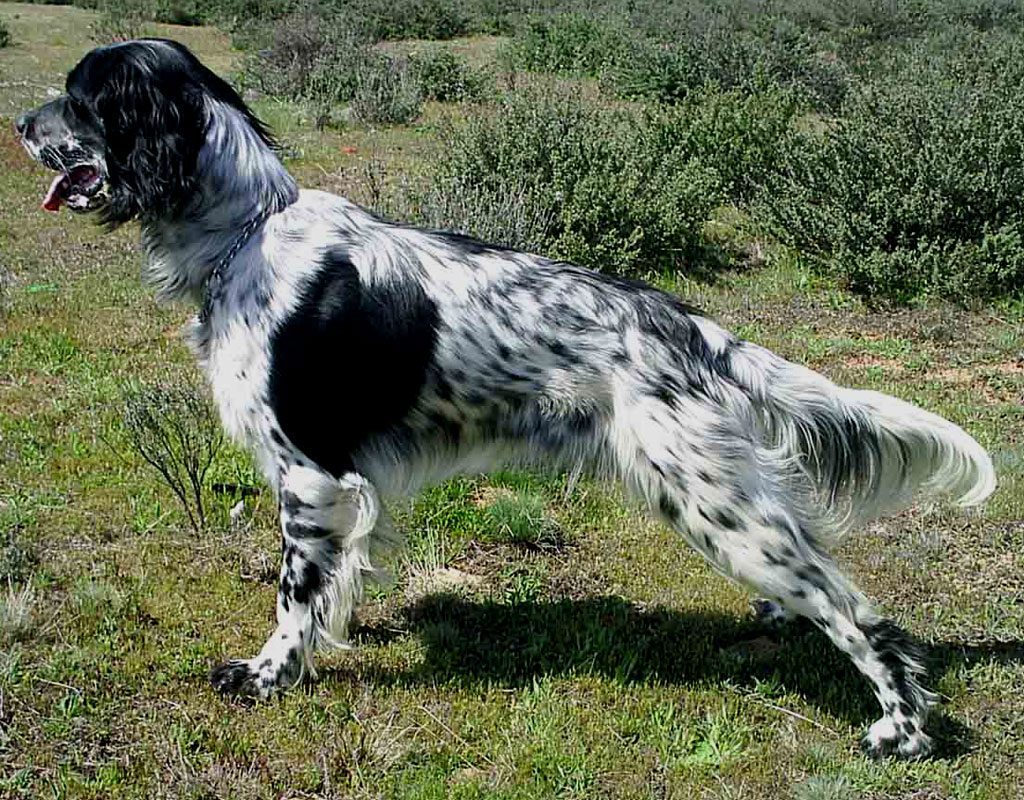
Its coat is flexible and smooth, with fringes on the ears, the chest, legs and tail. Five coat colors are allowed: black and white, Orange and white, lemon and white, brown and white and tricolor.
The tail is of medium length, carried low and placed on the back.
Size and weight
-
▷ Male size: Of 65 to 68 cm.
▷ female size: Of 61 to 65 cm.
▷ Male weight: Of 18 to 23 kg
▷ female weight: Of 18 to 22 kg
Character and skills
The English Setter he is a very friendly partner, even with children or other dogs. But, living with small animals requires early socialization so you don't see them as prey.
It is an excellent companion dog, easy to live with and completely devoted to his family, which he will cover with affection. Intelligent, friendly, Tender, quiet, playful and faithful, will brighten up your home. Sensitive and very attached to his master, can't stand loneliness.
By your selection, it's mostly a hunting dog, so you need activity. A house with a garden in the country is ideal for him. But, an urban life in an apartment is possible, as long as it provides you with enough opportunities to exercise: two outputs of 30 minutes a day is a minimum. He will also be happy to accompany his master on bike rides or jogging. In any case, It is not a recommended dog for an elderly or very sedentary person.
Last, hunting instinct is generally highly developed in the English Setter. If it is intended for this use, it is advisable to adopt a puppy from a line of work. In fact, beauty lines are selected with aesthetic criteria and, Therefore, are potentially less effective. But, in any case, it is a breed that tends to dig and chase prey: fencing your ground is strongly recommended to prevent any dog ​​escape.
Education
Very intelligent, the English Setter has a good aptitude for dressage. But, need a gentle education (although not without firmness), because his sensitivity does not admit brutality. Brutality would make him fear.
Like any hunting dog, learning to remember will be essential so that you do not get carried away by your instincts.
Health
The English Setter is in fairly robust overall health.
But, their floppy ears make them prone to canine ear infections, especially because they are dogs that do not hesitate to get into the water. It can also be affected by skin diseases such as atopy.
Last, this breed has a predisposition to congenital deafness, thyroid problems or hip dysplasia. The latter being partially hereditary, it is advisable to check the health of the stallions with the breeder of English Setter.
Grooming
The English Setter requires weekly brushing. During the molting period, which takes place twice a year, should be even daily. It also, her fringes of hair should be trimmed to maintain her signature look. This operation can be done at home or entrusted to a dog groomer.
Under normal circumstances, it is not necessary to bathe the dog. But, when hunting, the English Setter does not hesitate to get into the water, sometimes muddy: in this case, it may be convenient to provide him with a dog shampoo to help him regain his whiteness.
It also, you have to check your floppy ears after every outing, especially if the dog has been swimming, to avoid any ear infection.
Use
The english setter is originally a hunting dog (Pointing Dogs). Today, it is also highly appreciated as a companion dog.
It also, its beauty and elegance make it a recognized show dog.
Life expectancy
14 years
Characteristics "English Setter"
Coexistence is important that you have with your new friend. Before considering the acquisition of a dog of the breed "English Setter" you know certain factors. Not all breeds of dogs are apt to live in an apartment, you must take into account his character, their need for exercise, their interaction with other pets, their care and if you have small children, their level of tolerance towards them.
Adaptation ⓘ2,0 of 5 stars (based on 1 review)
|
friendly dog ⓘ4,0 of 5 stars (based on 1 review)
|
hair loss ⓘ3,0 of 5 stars (based on 1 review)
|
|---|---|---|
Affection level ⓘ5,0 of 5 stars (based on 1 review)
|
Need for exercise ⓘ5,0 of 5 stars (based on 1 review)
|
Social need ⓘ5,0 of 5 stars (based on 1 review)
|
Home ⓘ3,0 of 5 stars (based on 1 review)
|
Toilet ⓘ3,0 of 5 stars (based on 1 review)
|
Friendly with strangers ⓘ2,0 of 5 stars (based on 1 review)
|
barking ⓘ3,0 of 5 stars (based on 1 review)
|
Health ⓘ3,0 of 5 stars (based on 1 review)
|
Territorial ⓘ2,0 of 5 stars (based on 1 review)
|
Cat friendly ⓘ2,0 of 5 stars (based on 1 review)
|
Intelligence ⓘ4,0 of 5 stars (based on 1 review)
|
Versatility ⓘ3,0 of 5 stars (based on 1 review)
|
Child friendly ⓘ5,0 of 5 stars (based on 1 review)
|
Surveillance ⓘ2,0 of 5 stars (based on 1 review)
|
joy ⓘ5,0 of 5 stars (based on 1 review)
|
Images "English Setter"
 1
1
 2
2
 3
3
 4
4
 5
5
 6
6
Photos:
1 – English Setter, Dogs Show Racibórz RAVEN WHITE Magenta by I, Lilly M, CC BY-SA 3.0, via Wikimedia Commons
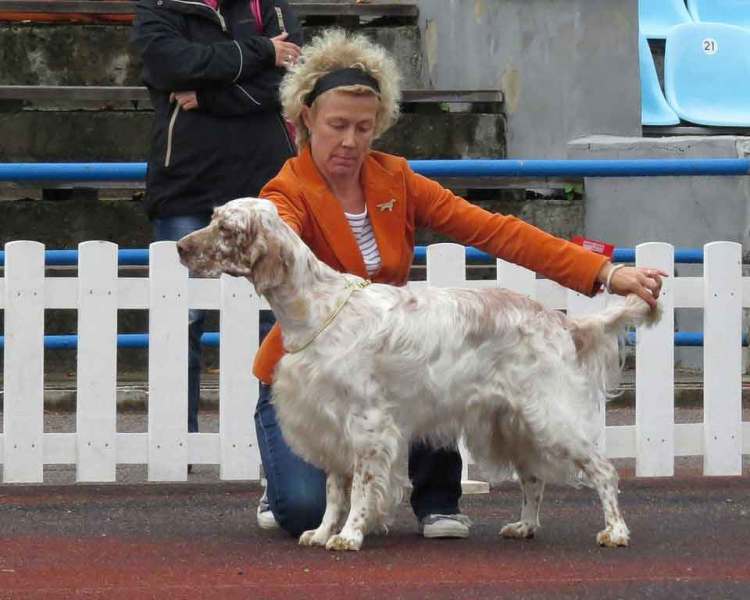
2 – English Setter in Tallinn, duo CACIB, 17-18 Aug 2013 by Thomas, CC BY-SA 3.0, via Wikimedia Commons
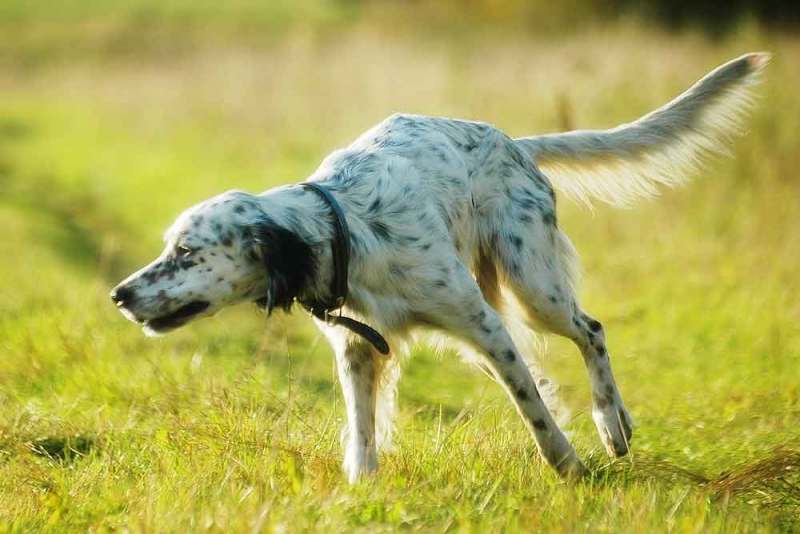
3 – English setter working in the field by Dmitry A. Mottl, CC BY-SA 3.0, via Wikimedia Commons
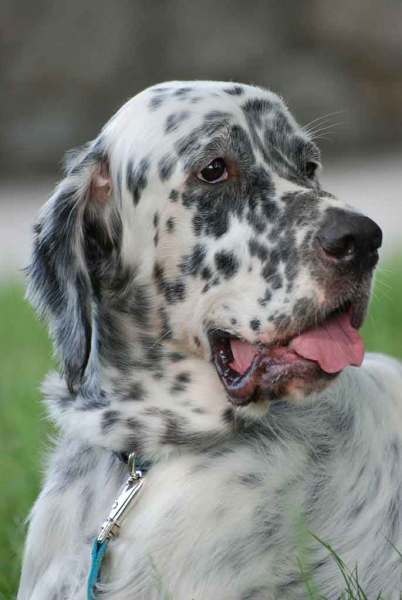
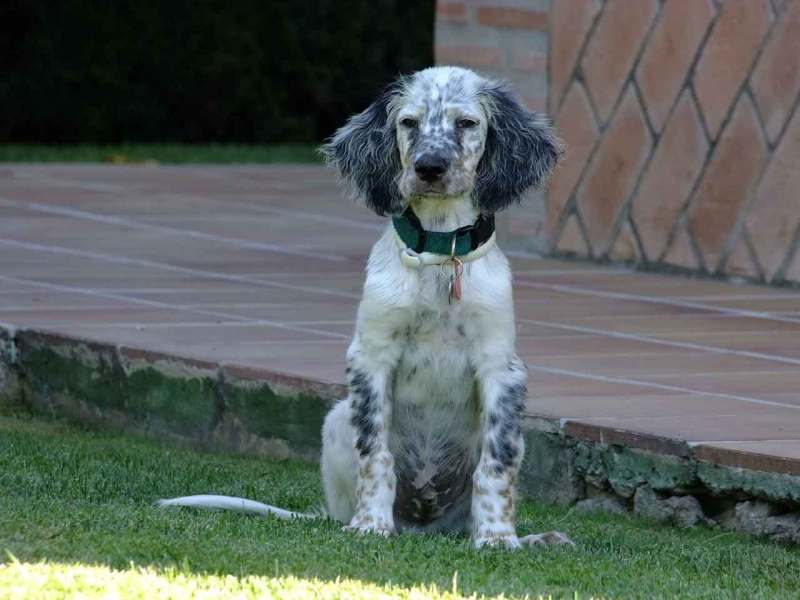
4 – English Setter Puppy at 2 and a half months of age by Immotilla, CC BY-SA 4.0, via Wikimedia Commons
5 – English Setter by Villa16, CC BY-SA 3.0, via Wikimedia Commons
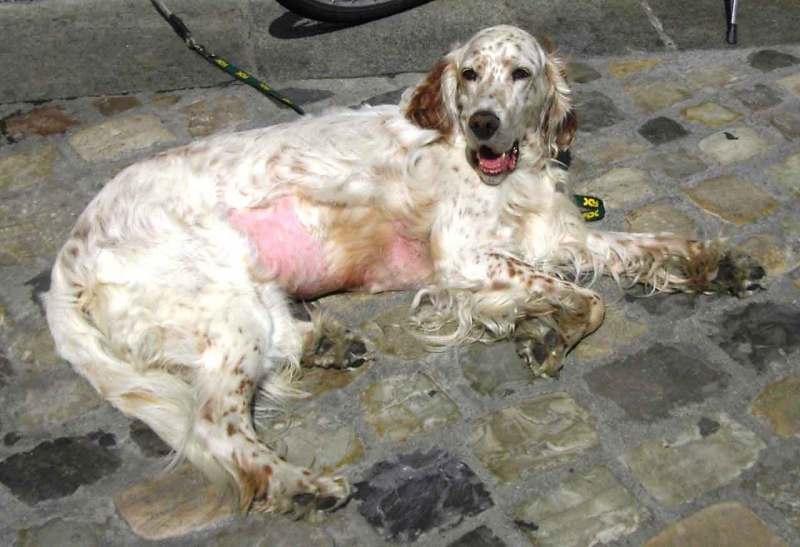
6 – Liver belton English Setter. by Canarian, CC BY-SA 3.0, via Wikimedia Commons
Videos "English Setter"
 English Setter Field Tests | Too Cute!
 The English Setter – Bests of Breed
 the english setter – Hunting dogs.
 Setter Ingles – Royal Canin Dog Breeds
Type and recognitions:
- FCI CLASSIFICATION:
- Group :
- Section : . .
Federations:
- – FCI – Group 7: Pointing Dogs. – Section 2: Continental Pointing Dogs. 2.1: Pointer ⓘ
- – AKC – Sporting ⓘ
- – ANKC – Group 3 (Gundogs) ⓘ
- – CKC – Sporting Dogs ⓘ
- – KC – Sports ⓘ
- – NZKC – Gundog ⓘ
- – UKC – Gun Dogs ⓘ
FCI breed standard "English Setter"
Use:
Pointing Dogs.
General appearance:
Medium-sized, sharp contour, elegant appearance and movements.
Very friendly and personable. Very active and with a keen sense for hunting.
Head:
carried high, long and reasonably dry.- Skull: It is oval in shape between the ears, which provides enough cavity to the brain; clearly defined occipital protuberance.
- Depression links (Stop): Well defined.
facial region:
- Truffle: must be black or liver, depending on hair color. Wide nostrils.
- Snout: Moderately tall and quite square. The distance from the stop to the tip of the nose should be equal to the distance the skull has between the occipital bone and the eyes.
- Lips: Not very hanging.
- jaws and teeth: Jaws, of almost equal length, they are strong, with perfect bite, regular and complete in scissors. I.e., that the internal face of the upper incisors is in contact with the external face of the lower incisors, and placed at right angles to the jaws. full dentition is desirable.
Eyes: The English setter's eyes are bright, sweet and expressive look. Its color varies from hazelnut to dark brown., the more dark best. lighter eyes are accepted only in those Belton liver-colored specimens. The eyes should be oval in shape and not protruding.
Ears: They should be of moderate length, low insertion, hang folded forming well defined folds, stuck to the cheeks, velvety at the ends and its upper part should be covered with fine and silky hair.
Neck:
The neck of the English setter is rather long, muscular y seco, slightly arched at the top. The junction with the head must be clearly marked. should be wider and more muscular towards the back, although it should never have a double chin or be hanging, but to have an elegant appearance.Body:
Of moderate length.
- Back: Short and straight.
- Pork loin: Large, slightly pummeled, strong and muscular.
Tail:
Insertion almost in line with the back, medium length, that does not reach the height of the hocks. The tail of the English setter should not be crooked or knotty, but slightly curved or scimitar-shaped, but in no case with a vertical trend. With long hanging fringes. The fringes should start slightly below the base of the tail, getting longer from the middle, then gradually taper towards the tip. Long hair, bright, soft and wavy, but never curly. In motion it whips and is not carried higher than the level of the back.Tips
Former members:
- Shoulder: Well laid back and oblique backs.
- Elbows: Well lowered and close to the body.
- forearms: Straight, very muscular and with round bones.
- Metacarpus: Short, strong, round and straight.
Later members: Well muscled members, especially the leg. Long from hip to hock.
- Thigh: Long.
- Femoro-tibio-patellar joint (knee): well angled.
- Hocks: well descended, without drifting in or out.
Pies: The English setter must have good pads, strong, with fingers well arched and together, covered with a lot of hair.
Movement:
The movement of the English setter is free and graceful, characterized by speed and endurance. Free movement of the hocks exhibiting a powerful drive from the hind limbs. Seen from the back, hip joints, knee and hock should be in line. the head is naturally carried high.Mantle
Fur: It should be slightly wavy from the back of the head to the level of the ears, but never curly. In general, the English setter's coat should be long and silky. The back of the thighs and the forelimbs almost to the feet must be fringed.
Color:
- black and white (azul Belton),
- Orange and white (naranja Belton),
- Lemon and white (belton lemon),
- Liver and white(Belton liver) or tricolor; that is to say, blue Belton and fire or liver Belton and fire.
Those specimens of English setter that do not have large colored spots on their body are preferred, but mottled (Belton) scattered throughout the body.
Note from the Standards Commission:
"Belton" is the special name used to describe the characteristic mottling of the English Setter's coat.. Belton is a Northumberland town. This designation was raised and defended in the book on the English Setter by Mr. Edward Lavarack, breeder who had a preponderant influence on the current appearance of the breed.
Size and weight:
- The males between 65 and 68 cm.. (25,5 - 27 inches).
- The females among 61 and 65 cm.. (24 - 25,5 inches).
Fouls:
Any deviation from the aforementioned criteria is considered as a fault and the severity of this is considered to the degree of the deviation to the standard and its consequences on the health and well-being of the dog., and the dog's ability to perform its traditional task.
FALTAS DESCALIFICANTES:
• Aggressiveness or extreme shyness.
• Any dog showing clear signs of physical or behavioral abnormalities.
• Males must have two normal-appearing testicles fully descended into the scrotum..
• Only functionally and clinically healthy dogs, with the typical conformation of the breed, should be used for parenting.
Alternative names:
1. Lawerack, Llewellin (or Llewellyn) Setter (English).
2. Setter Laverack (French).
3. Englischer Setter (German).
4. (em inglês: English Setter) (Portuguese).
5. Setter Llewellin (o Llewellyn), Setter Lawerack (o Laverack) (español).
 FCI 38 - Sheepdogs


 Breed All About It – Cardigan Welsh Corgi
 Cardigan Welsh Corgi – AKC Dog Breed Series
 Dogs 101- Cardigan Welsh Corgi
 CARDIGAN WELSH CORGI ALL ABOUT HERDING


