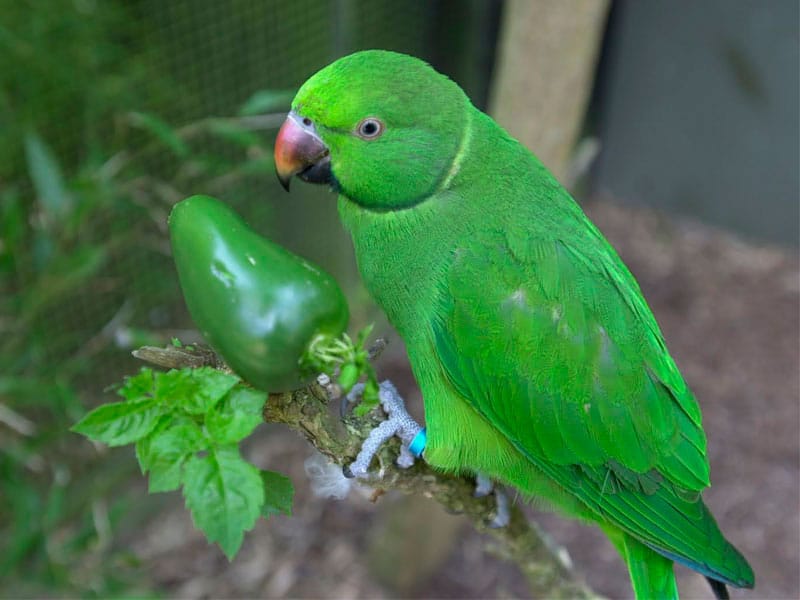
โ–ท The world of Pets: Dogs, cats, birds, reptiles, amphibians

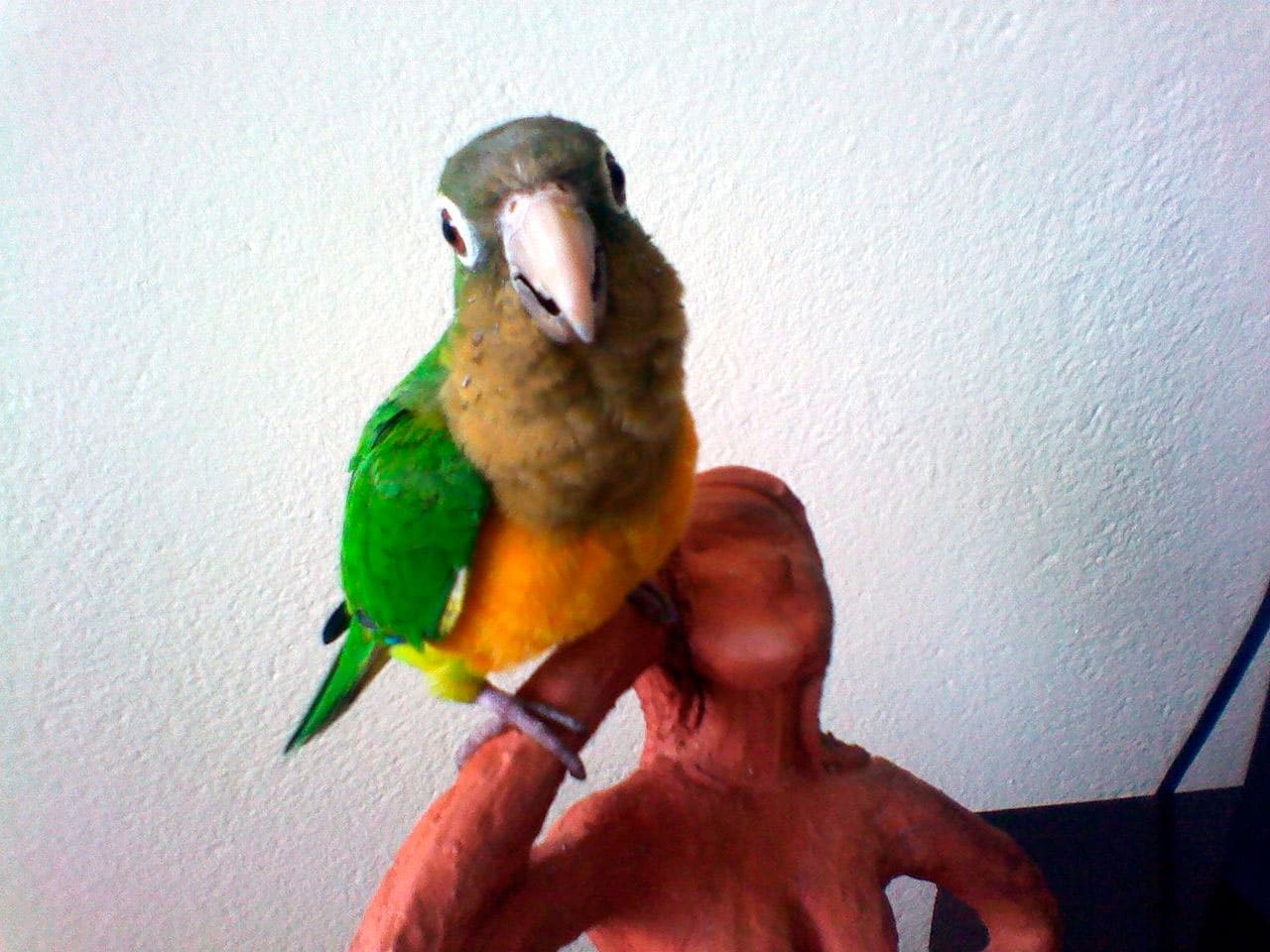
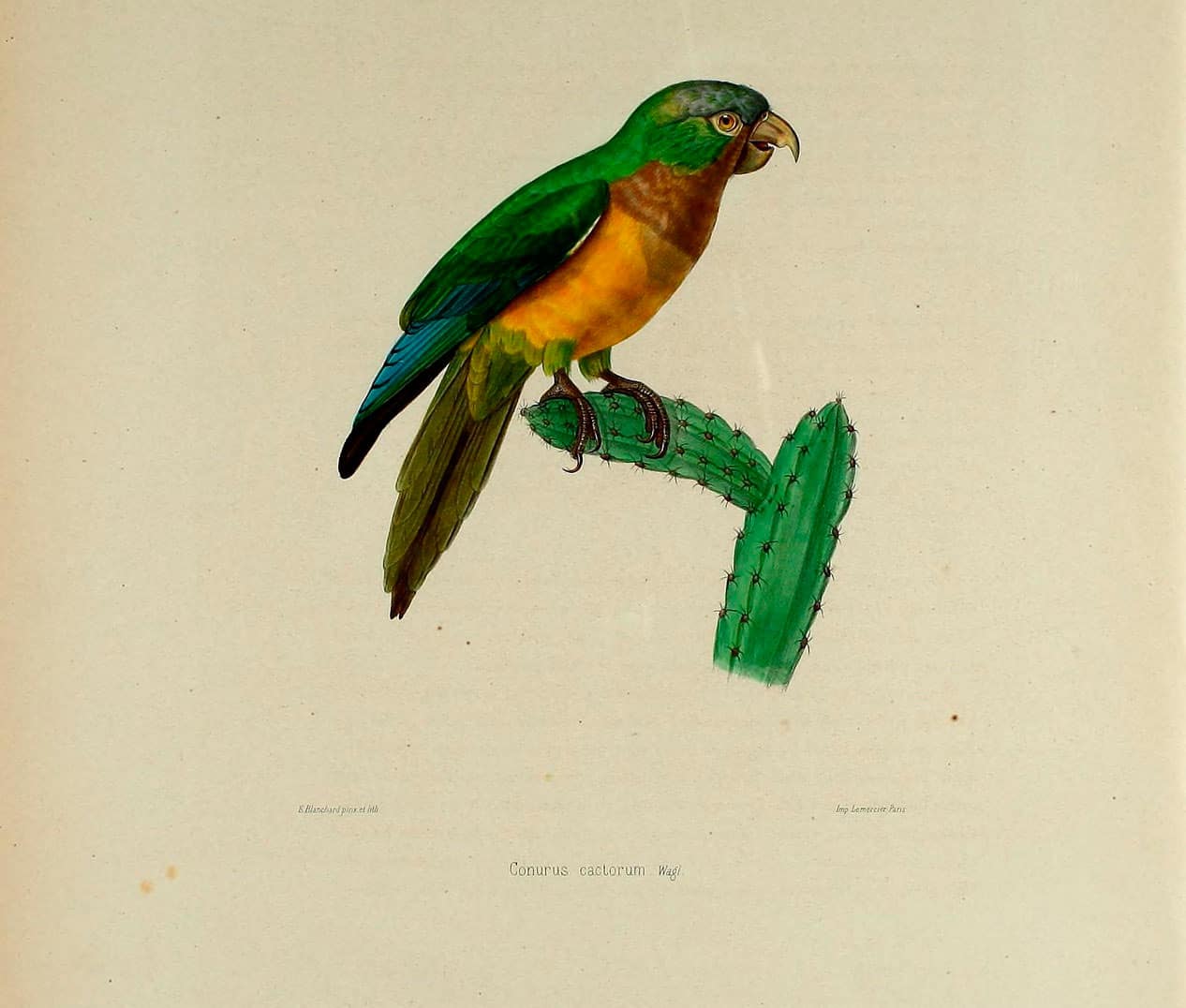
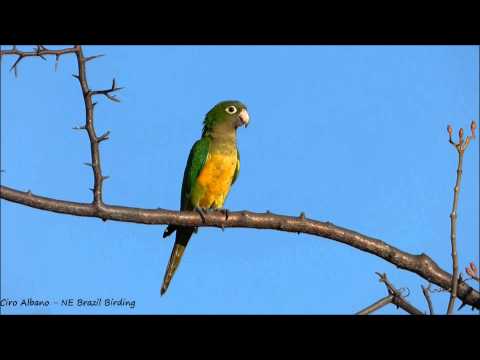
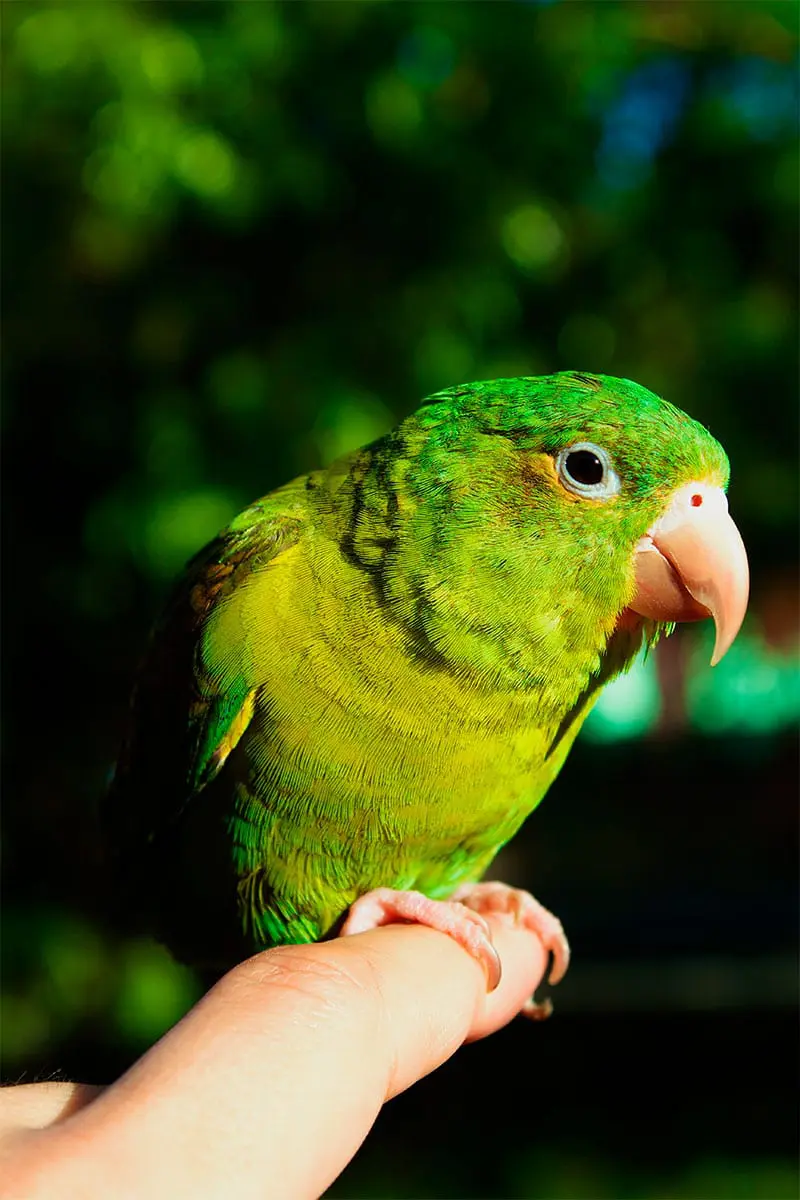
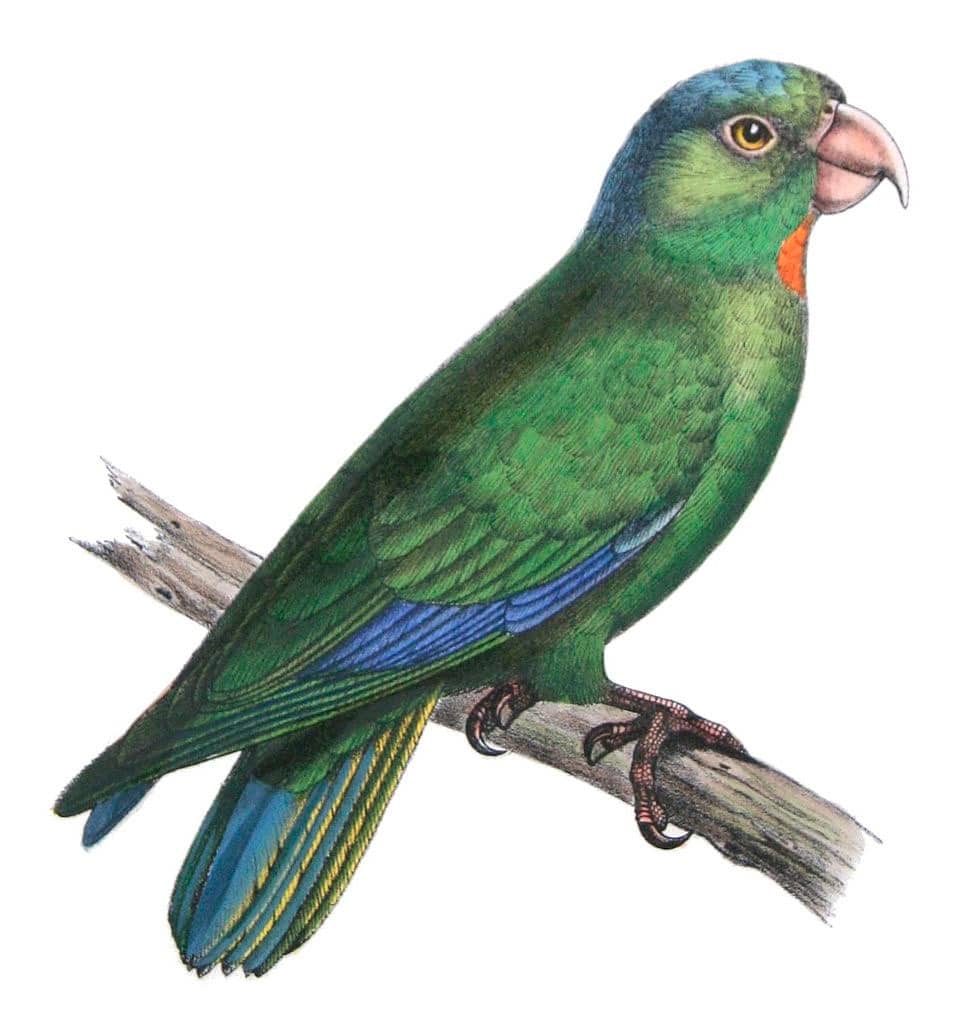
Golden-tailed Parrotlet
Touit surdus

Golden-tailed Parrotlet

Content

Description:

Golden-tailed Parrotlet

16 cm.. length.

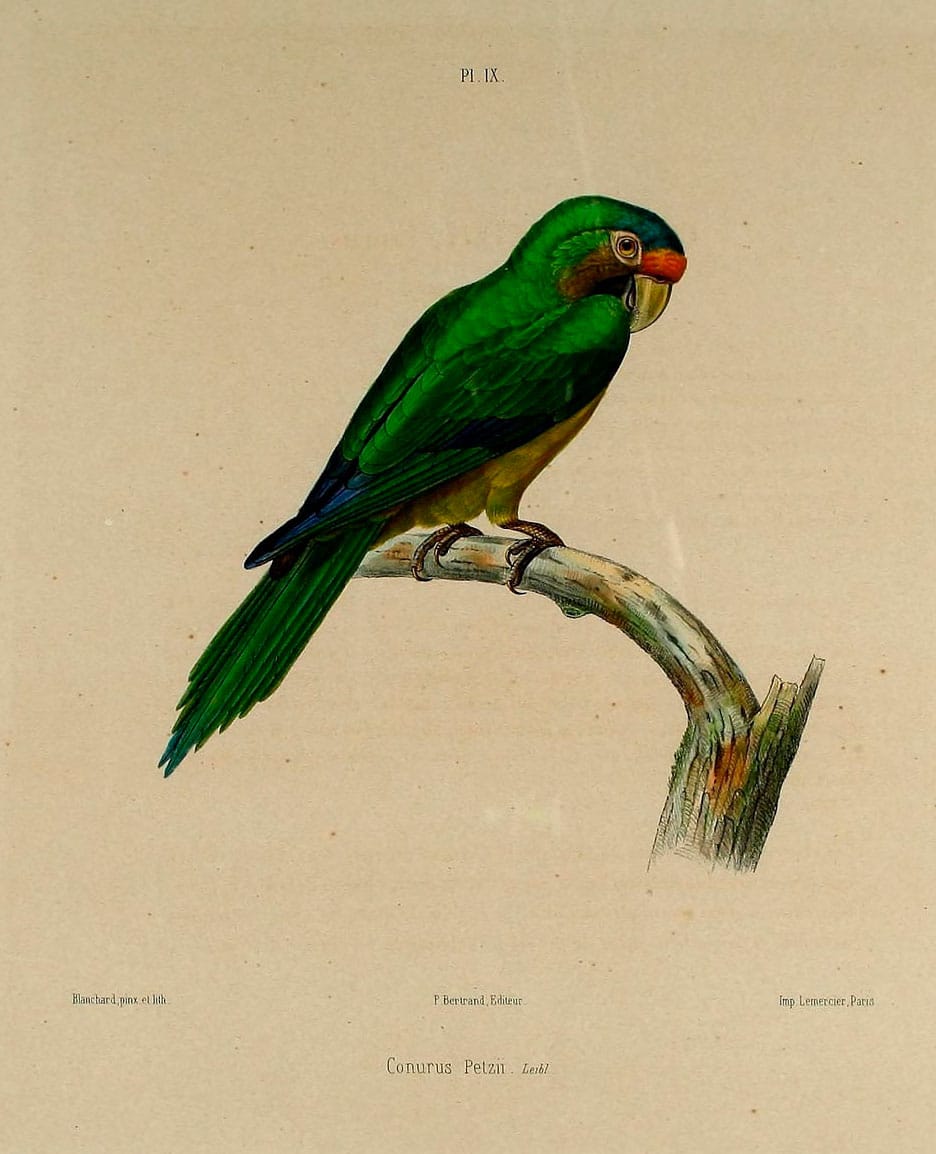
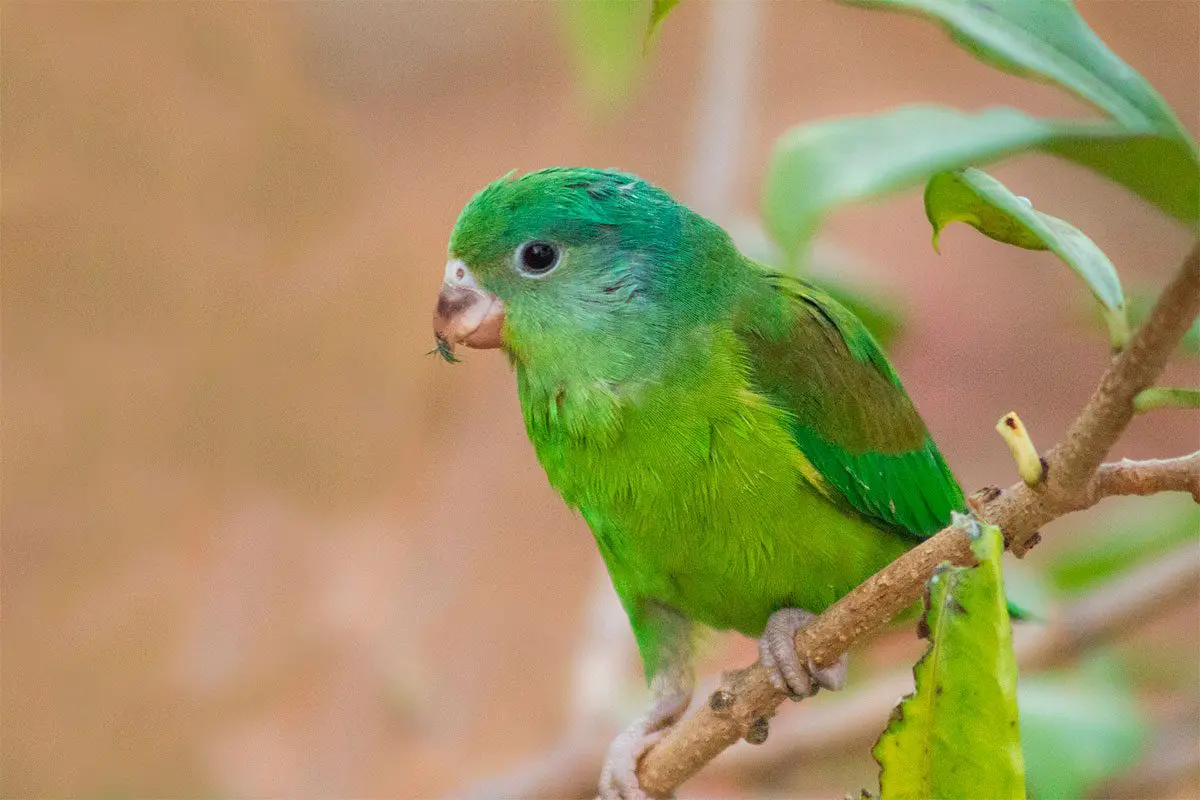
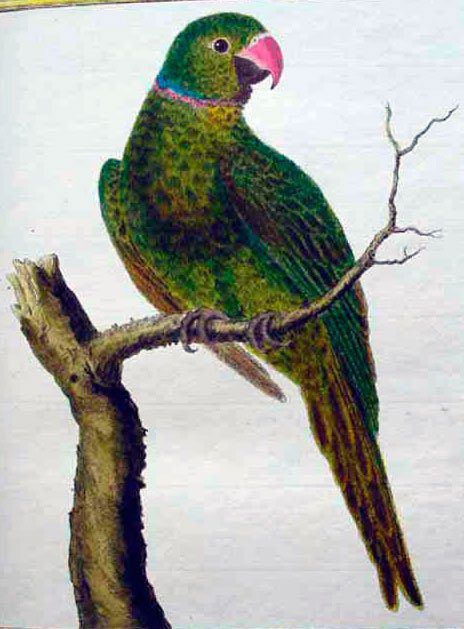
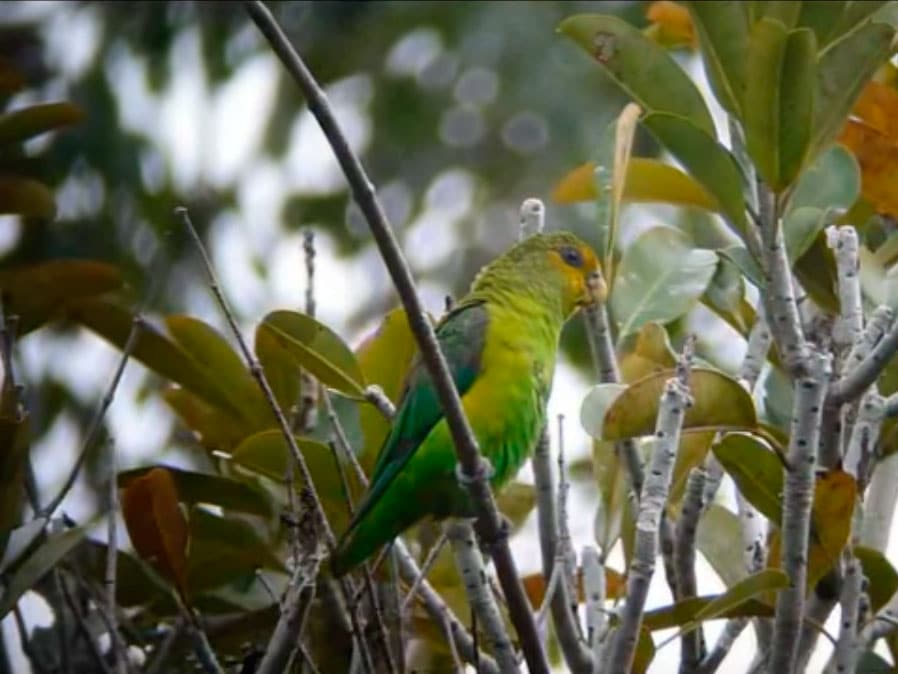
The Golden-tailed Parrotlet (Touit surdus) has a plumage mostly green; the forecrown, lores, supercilii area and cheeks, They are yellowed; crown, rear area of the neck, ear-coverts and sides neck, green with dark narrow margins, giving a scaly appearance.

Mantle and back, green with rump and uppertail-coverts slightly brighter, more emerald. Scapulars and inner tertials, warm brown: primary coverts, dark brown, rest of the coverts green. The the flight feathers They are brown above with narrow green margins to outerweb; brown opaque below. Blue feathers Carpal edge of the wing. Underwing-coverts green. Chin yellowish; chest brighter yellowish green, brighter in the belly and in the undertail-coverts. Tail, centrally green with faint black markings at tips, laterally golden-yellow with narrow black tips on upper surface.. The bill yellow horn; gray irises, legs grey.

The female perhaps duller below, with lateral feathers tail greener and green tips and margins. Immature not described.

Description 2 subspecies:

The subspecies Touit surdus chryseurus it has been proposed to birds of northeastern range on the basis of dubious lateral tail feathers more brownish and smaller.

  • Touit surdus chryseurus

    (Swainson, 1823) – Side tail feathers, brown / yellow; smaller.


  • Touit surdus surdus

    (Kuhl, 1820) – Nominal.

Habitat:

They live mainly in evergreen forests lowland, although occasionally they extend to the adjacent lower mountain slopes. Birds have been observed in the canopy of a secondary forest fragment surrounded by open fields; Other reports suggest that birds visit fruiting trees in deforested areas to feed.

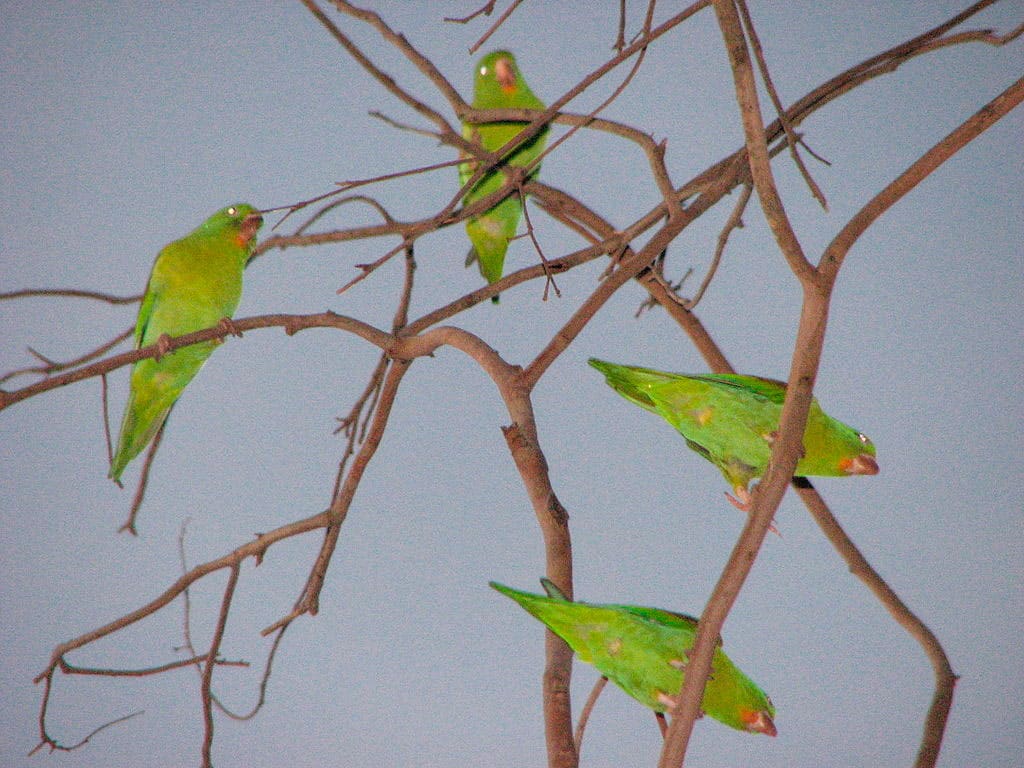
You can visit, occasionally, cocoa plantations where trees shade the crop plants, but this has not been tested. They are to 700 m in Alagoas and to 800 m in Espirito Santo, Rio de Janeiro and Sรฃo Paulo. The Brown-backed Parrotlet They seem to live in flocks (mainly 6-12), perhaps you composed of family groups.

Recent observations suggest that this species is resistant habitat alteration.

Reproduction:

The reproduction of this species practically is not registered. A female observed in September Alagoas, He was not in breeding condition.

Food:

Foods reported in feed Brown-backed Parrotlet are fruits Spondias lutea and Rapanea schwackeana

Distribution:

Size of its range (breeding/resident ): 1.680.000 km2

The distribution of the Brown-backed Parrotlet It extends through Atlantic forests of eastern Brazil, including coastal areas of the northeastern states of Paraรญba, Pernambuco and Alagoas with a record Camocim in the North of Cearรก, where there are fragments of humid forest in coastal areas.

Exist sporadic records but widespread (mainly) on the shores of Bay and Espirito Santo, and in Rio de Janeiro, for example in Teresopolis, around the Itatiaia National Park, new Freiburg and Cabo Frio, with some reports Sรฃo Paulo southwest to Cardoso Island, near the border with Paranรก. The reports of For and Goiรกs They are not substantiated and they are probably wrong. The apparent seasonal distribution of the species in some areas suggests migration trends.

They seem to be distributed at low densities and (except a report in the lower basin tiete river in Sao Paulo) It was considered a rare species in the nineteenth century. Like other members of the genus is, without a doubt, ave a difficult to observe, and often overlooked. But, many ancient villages are no longer inhabited, with forests completely eliminated or severely degraded lowland, especially in the north of the mountain range, where you can be almost extinct. In the news They are distributed in several protected areas.

Distribution 2 subspecies:

Conservation:

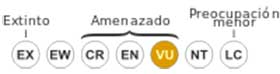
State of conservation โ“˜


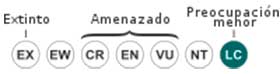
Vulnerable Vulnerable โ“˜ (UICN)โ“˜

โ€ข Current category of the Red List of the UICN: Vulnerable.
โ€ข Population trend: Decreasing.

Population size: 2500-9999 specimens.

Rationale for the Red List category

This species is classified as Vulnerable because its population is small and declining rapidly due to continuous deforestation. It has been found that it is more resistant to forest fragmentation of what was thought first, and may be sub-registered instead of actually little, especially in the southern part of its range.

Justification of the population

The species is generally rare; Its population is located in the band 2.500-9.999 mature individuals, equivalent to 3.750-14.999 individuals, rounded here to 3.500-15.000 individuals.

Justification of trend

rapid and continuous population decline is suspected on the basis of continuous destruction and fragmentation of habitat.

Conservation Actions Underway

CITES Appendix II. It is considered Vulnerable nationally in Brazil (MMA 2014). And protected by Brazilian law. There have been numerous protected areas: Hewn Stone Biological Reserve (Alagoas), Monte Pascoal National Park and Serra das Lontras, Biological Reserve and Private Reserve Serra Nice (Bahia), Great stream, Sooretama and Augusto Ruschi), Desengano State Park and Itatiaia National Park (Rio de Janeiro)

Conservation Actions Proposed

Examine the historical towns and proper habitat to clarify the distribution. Research ecology and seasonal movements. designate murici in Alagoas biological reserve and ensure their protection de facto. Consolidate protected areas distributed.

"Golden-tailed Parrotlet" in captivity:

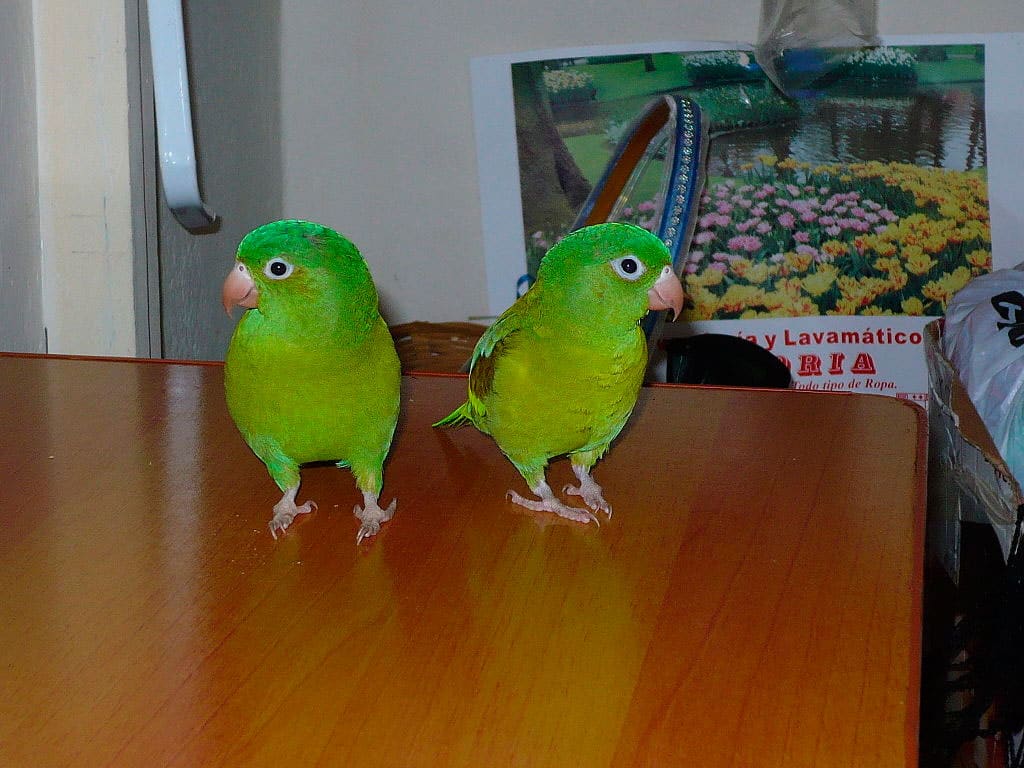
Rare and unknown in captivity. Any captive individual (it can not be released) It should be part of a conservation program well managed to ensure continuity of this species.

Alternative names:

Golden-tailed Parrotlet, Golden tailed Parrotlet (English).
Toui ร  queue d’or (French).
Gelbschwanzpapagei, Gelbschwanz-Papagei (German).
Apuim-de-cauda-amarela, papagainho, periquitinho, periquitinho-surdo (Portuguese).
Cotorrita Sorda, Lorito de Cola Dorada (espaรฑol).


scientific classification:

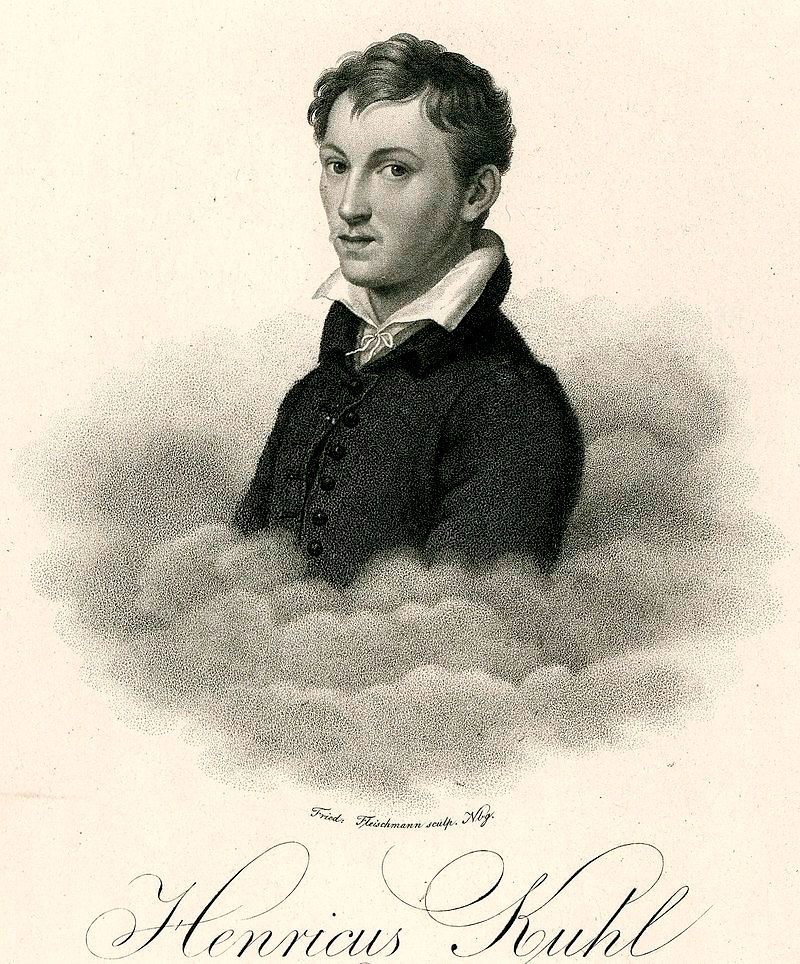
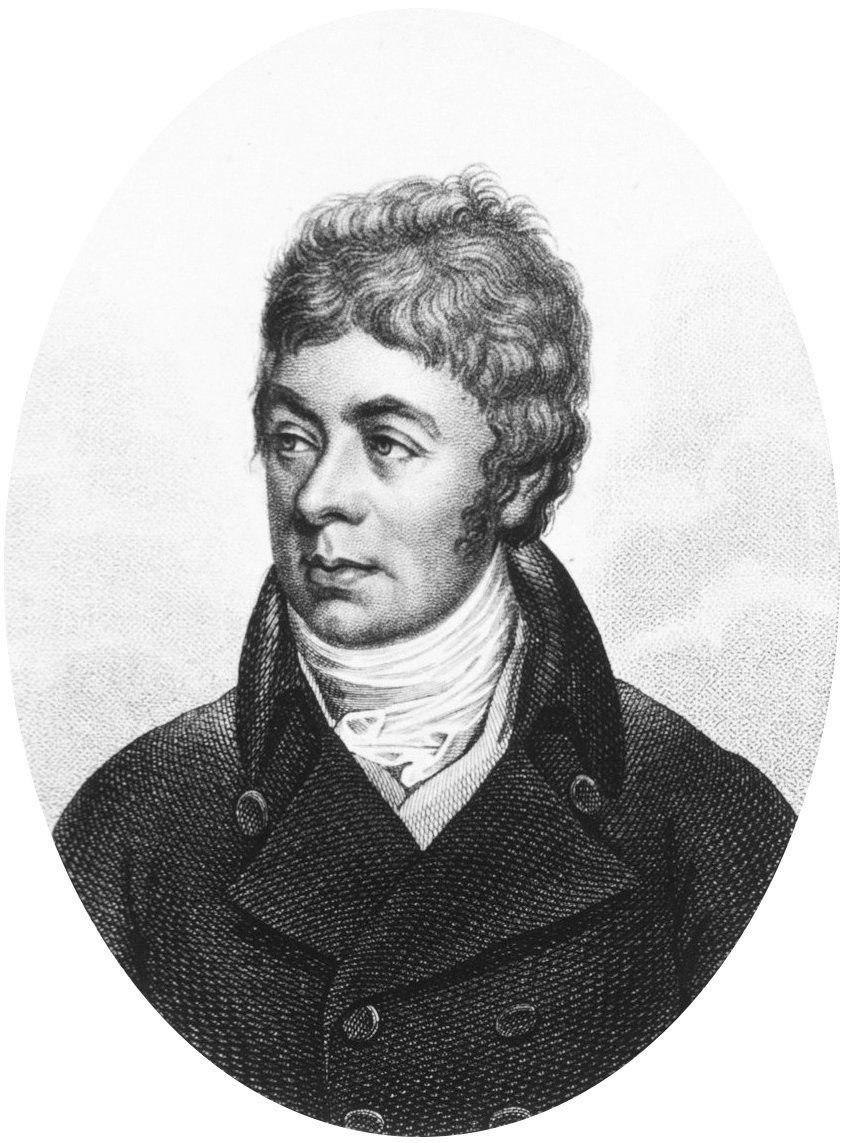
Kuhl, Heinrich
Heinrich Kuhl

Order: Psittaciformes
Family: Psittacidae
Genus: Touit
Scientific name: Touit surdus
Citation: (Kuhl, 1820)
Protonimo: parrot deaf


Images Golden-tailed Parrotlet:

Videos of the "Golden-tailed Parrotlet"

Golden-tailed Parrotlet (Touit surdus)


Species of the genus Touit


Sources:

  • Avibase
  • Parrots of the World โ€“ Forshaw Joseph M
  • Parrots A Guide to the Parrots of the World – Tony Juniper & Mike Parr
  • Birdlife
  • parrots.org

  • Photos:

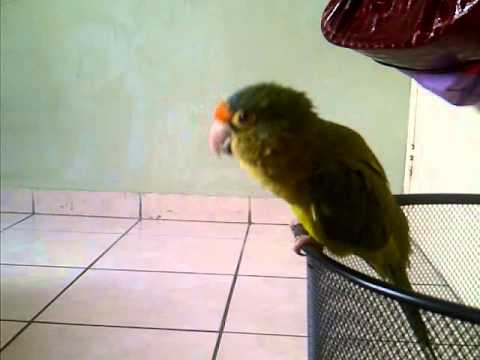
(1) – Golden-tailed Parrotlet – Touit surdus – Golden-tailed parrotlet by Ciro Albano

youtube.com/watch?v = ZaWxtXYx6U

(2) – Urochroma deaf By Blanchard, Emile; Bonaparte, Charles Lucian; Bourjot Saint-Hilaire, Alexandre; Le Vaillant, Franรงois; Souancรฉ, Charles de. [CC BY 2.0 or Public domain], via Wikimedia Commons

โ–ท The world of Pets: Dogs, cats, birds, reptiles, amphibians

Orange-fronted Parakeet
Eupsittula canicularis

Orange-fronted Parakeet

Content

Description:


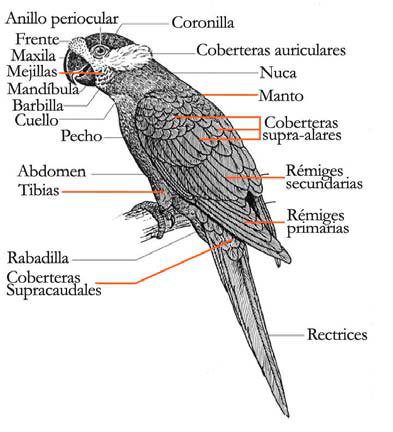
Anatomy-parrots

20,5 cm. length and 80 g. of weight
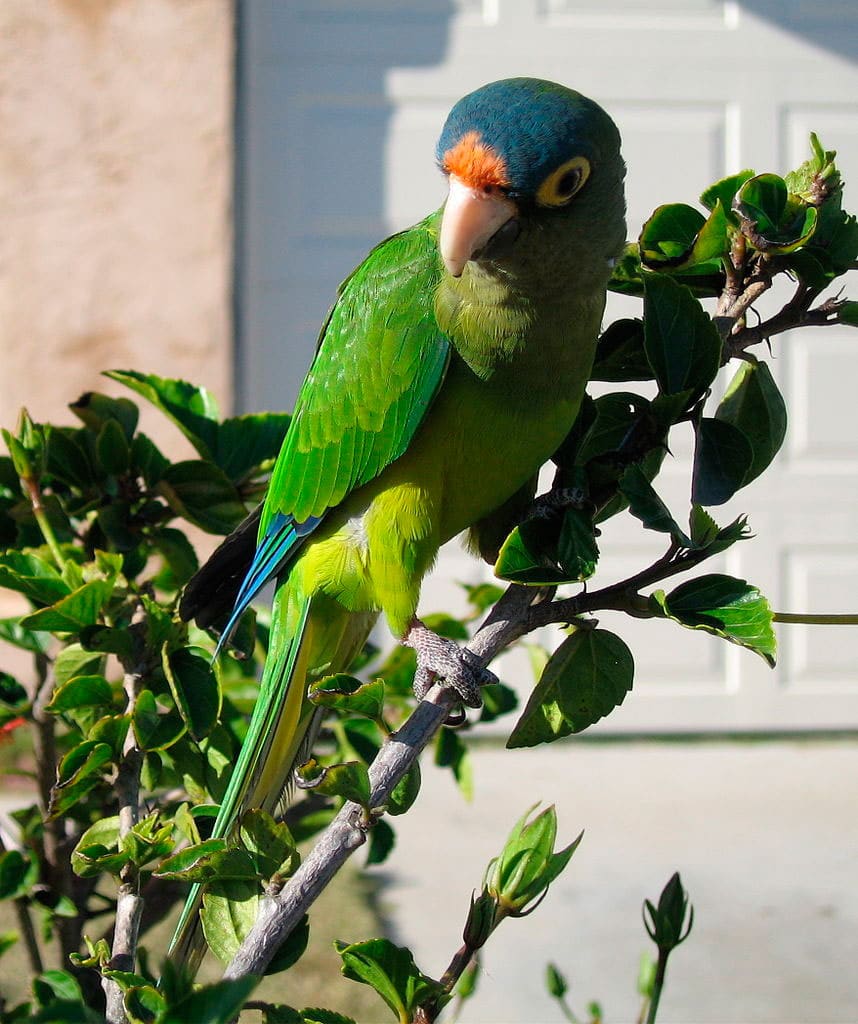
The Orange-fronted Parakeet (Eupsittula canicularis) It has in forecrown a wide band orange-red which extends over the lores and the part front of it crown; the rest of the crown is blue, fading from nape up to the upperparts in a shade of green grass.

Upperwing-coverts green. Flight feathers, at the top, blue on the outerweb; spiked green and black borders innerwebs; undertail, grey. Underwing-coverts brighter yellowish green. Throat, the sides of neck and the chest a shading pale yellow and pale olive olivรกceo in belly and in the undertail-coverts. Upper, the tail green with blue tip; undertail, pale yellow olive.

Bill color pale horn; cere whitish; bare periophthalmic whitish: irises pale yellow; legs grey-brown.
Both sexes are similar. The immature has a front patch Orange much smaller and irises brown.

  • Sound of the Orange-fronted Parakeet.

Description 3 subspecies:

Orange-fronted Parakeet

  • Eupsittula canicularis canicularis

    (Linnaeus, 1758) – Subspecies nominal.


  • Eupsittula canicularis clarae

    (Moore,RT, 1937) – Similar to the species nominal but with the frontal band Orange smaller, lores Blue and sides of the lower jaw dark gray.


  • Eupsittula canicularis eburnirostrum

    (Lesson,PA, 1842) – Similar to the species nominal but the sides of the lower jaw They are gray and belly It is yellower.

Habitat:

Video – "Orange-fronted Parakeet" (Eupsittula canicularis)

orange fronted parakeet / aratinga canicularis

They inhabit in fields slightly woody or open areas with scattered trees lowland ASAL, including thorny deciduous forests and tropical forests; the Orange-fronted Parakeet They are more abundant below 600 m, even they reach 1.500 meters in the high arid lands of central Honduras after breeding, forming flocks near the 50 birds, sometimes many more.

The Orange-fronted Parakeet They are well adapted to partially clear habitats, reposing in plantations Palma and handle, often near cities. Communal roosts have been observed in the company of the White-fronted Parrot
(Amazona albifrons) in riparian forests Guatemala. Usually arboreal.

Reproduction:

An active termitero, usually Nasutitermes nigriceps, It is the preferred place to nest construction of Orange-fronted Parakeet; Several couples sometimes dig holes next few other; also they use tree cavities (for example, hole made by woodpeckers).

Reproduction March to May in Oaxaca, Mexico; January-may in El Salvador; during the dry season in Costa Rica.
The laying is of 3 to 5 eggs). Only the female incubates. The incubation lasts around 30 days. The chicks leave the nest to 6 weeks.

Food:

In its natural habitat the the diet of the Orange-fronted Parakeet includes seeds of Ceiba and Inga, fruits of Ficus, Bursera and Brosimum, and flowers of Gliricidia and Combretum. Sometimes they invade causing farmland damage in maturation corn and the banana.

Distribution and status:

Size of its range (reproduction / resident): 1.490.000 km2

They live in the shed peaceful of Central America, from northwest Mexico to the Northwest of Costa Rica. The Frentinaranja Aratinga can be seen from Sinaloa and West Durango, south along the lowlands of Mexican Pacific until Chiapas and Guatemala, El Salvador, Honduras and Nicaragua, until Costa Rica, lthough there is a recent contraction of their distribution in the northwest.

Habitat in the mountains of Caribbean It is limited to Comayagua Valley in the Honduran central highlands. Resident very common; Partially nomadic after breeding when birds can move to higher altitudes.

What introduced species They are located around the city of Miami (Florida), around town New York City and in the South of Texas, around town Santa Ana (United States).
They can also be seen in City of Mexico.

The capture for trade in live birds apparently led to a decrease in their number, as well as the contraction of the scope of its population in Costa Rica and possibly elsewhere; however the volume for international trade bird cage is small.

Distribution 3 subspecies:

  • Eupsittula canicularis canicularis

    (Linnaeus, 1758) – Subspecies nominal. shed peaceful Southwestern Mexico, from the Tehuantepec isthmus and Chiapas through the west region Central America to the Northwest of Costa Rica.


  • Eupsittula canicularis clarae

    (Moore,RT, 1937) – Sinaloa and West of Durango ell towards south to Michoacรกn, Mexico.


  • Eupsittula canicularis eburnirostrum

    (Lesson,PA, 1842) – lowlands peaceful South of Mexico, from the east Michoacรกn until Oaxaca. The range in relation to the Eupsittula canicularis canicularis, is uncertain

Conservation:

State of conservation โ“˜


minor concern Minor Concern โ“˜ (UICN)โ“˜

โ€ข Current category of the Red List of the UICN: Least concern.

โ€ข Population trend: Stable.

Justification of the Red List of the Category

This species has a very large range, and therefore does not approach the thresholds for Vulnerable under the range size criterion (extent of occurrence <20.000 kilรณmetros2 combinado con un tamaรฑo gama disminuciรณn o fluctuante, hรกbitat medida / calidad, o tamaรฑo de la poblaciรณn y un pequeรฑo nรบmero de localidades o fragmentaciรณn severa). The trend of the population appears to be stable, and therefore the species does not approach the thresholds for Vulnerable according to the population trend criterion. (> 30% decrease of more than ten years or three generations). The size of the population is very large, and therefore does not approach the thresholds for Vulnerable under the criterion of population size (<10.000 individuos maduros con una disminuciรณn continua estimada en> 10% in ten years or three generations, or a specified population structure). For these reasons, the species is evaluated as Least concern.

Justification population

Partners in Flight estimate the total population in 500,000-4,999,999 individuals (A. they Panjabi in a little. 2008).

Justification trend

The population is suspected to be stable in the absence of evidence of any reduction or substantial threats.

"Orange-fronted Parakeet" in captivity:

Becoming less common. Its population has declined in many areas because of its capture for the illegal pet trade.
Protected by the Appendix II of CITES.

Alternative names:

Half-Moon Conure, Half-Moon Parakeet, Orange fronted Parakeet, Orange-fronted Conure, Orange-fronted Parakeet, Petz’s Conure (English).
Conure ร  front orange, Conure ร  front rouge, Conure de Petz , Perriche ร  front rouge, Perruche ร  front orange, Perruche ร  front rouge, Perruche de Petz (French).
Elfenbeinsittich (German).
Periquito-de-testa-laranja (Portuguese).
Aratinga Frentinaranja, Conuro Frente Anaranjada, Perico de Frente Anaranjada, Perico Frente Naranja, perico frente-naranja, Perico Frentinaranja, Periquito Centroamericano, Periquito naranjera (espaรฑol).
Perico frentinaranja (Costa Rica).
Periquito naranjera (Honduras).
perico frente naranja, perico frente-naranja, Perico Frentinaranja (Mexico).
Perico Frentinaranja (Nicaragua).


scientific classification:

Carlos-Linnaeus
Carl Linnaeus

Order: Psittaciformes
Family: Psittacidae
Genus: Eupsittula
Scientific name: Eupsittula canicularis
Citation: (Linnaeus, 1758)
Protonimo: Psittacus canicularis

Images Orange-fronted Parakeet:


Especies del gรฉnero Eupsittula
  • Eupsittula nana
  • —- Eupsittula nana astec
  • —- Eupsittula nana nana
  • —- Eupsittula nana vicinalis
  • Eupsittula canicularis
  • —- Eupsittula canicularis canicularis
  • —- Eupsittula canicularis clarae
  • —- Eupsittula canicularis eburnirostrum
  • Eupsittula aurea
  • Eupsittula pertinax
  • —- Eupsittula pertinax aeruginosa
  • —- Eupsittula pertinax arubensis
  • —- Eupsittula pertinax chrysogenys
  • —- Eupsittula pertinax chrysophrys
  • —- Eupsittula pertinax griseipecta
  • —- Eupsittula pertinax lehmanni
  • —- Eupsittula pertinax margaritensis
  • —- Eupsittula pertinax ocularis
  • —- Eupsittula pertinax paraensis
  • —- Eupsittula pertinax pertinax
  • —- Eupsittula pertinax surinama
  • —- Eupsittula pertinax tortugensis
  • —- Eupsittula pertinax venezuelae
  • —- Eupsittula pertinax xanthogenia
  • Eupsittula cactorum
  • —- Eupsittula cactorum cactorum
  • —- Eupsittula cactorum caixana

  • Sources:

    Avibase
    – Parrots of the World โ€“ Forshaw Joseph M
    – Parrots A Guide to the Parrots of the World – Tony Juniper & Mike Parr
    – Birdlife

    Photos:

    (1) – Orange-fronted Parakeet or Orange-fronted Conure (Aratinga canicularis) also known as the Half-moon Conure. Photo taken in a front garden, San Diego, USA By derivative work: Snowmanradio (talk)Aratinga_canicularis_-pet-4.jpg: awnisALAN [CC BY 2.0], via Wikimedia Commons
    (2) – A wild Orange-fronted parakeet (Aratinga canicularis) along the beach of the Gulf of Papagayo (Papagallo), Costa Rica. The parakeet was seen in a group of 3 birds feeding on seeds of this tree By Cwood1 Charlene Wood (Own work) [CC BY-SA 3.0], via Wikimedia Commons
    (3) – Orange-fronted Parakeet or Orange-fronted Conure (Aratinga canicularis) also known as the Half-moon Conure. Photo taken in a front garden, San Diego, USA By awnisALAN (originally posted to Flickr as [1]) [CC BY 2.0], via Wikimedia Commons
    (4) – Two Orange-fronted Parakeets in Costa Rica By Don Faulkner (Orange-fronted ParakeetUploaded by snowmanradio) [CC BY-SA 2.0], via Wikimedia Commons
    (5) – A pair of Orange-fronted Parakeets in Rincรณn de la Vieja Volcano National Park, Costa Rica By Brian Ralphs from Berkhamsted, Hertfordshire, UK (Orange-fronted ParakeetsUploaded by snowmanradio) [CC BY 2.0], via Wikimedia Commons
    (6) – Iconographie des perroquets :.Paris :P. Bertrand,1857.. by Biodiversity Heritage LibraryFlickr

    Sounds: Bernhard Kroeger, XC67365. accessible www.xeno-canto.org/67365

    โ–ท The world of Pets: Dogs, cats, birds, reptiles, amphibians

    Cactus Parakeet
    Eupsittula cactorum

    Cactus Parakeet

    Content

    Description:


    Anatomy-parrots

    25 cm.. length and 75-90 g. of weight.

    The Cactus Parakeet (Eupsittula cactorum) has the forecrown, lores lower cheeks and brown off; crown with slaty tinge; sides neck, the nape and upperparts up to the rump grass-green.

    The primary coverts They are bluish green in the outerweb, the remaining are green grass. Flight feathers (above) green on innerwebs, blue green on outerweb, blue black at the tips (below) gray. Underwing-coverts greenish yellow. Throat and upper breast dull brown; lower breast and belly fairly bright orange-yellow, the thighs and vent greenish-yellow color. Uppertail green, four distal blue central feathers; undertail gray.

    Cactus Parakeet

    upper jaw horn, greyish at base and lower jaw; perioftรกlmico patch naked white; irises brown-orange; gray-gray legs.

    Both sexes similar. Immature paler than adult, with crown green, more olive upper chest and throat, and the irises darker.

    • Sound of the Cactus Parakeet.

    Subspecies description:

    • Eupsittula cactorum cactorum

      (Kuhl, 1820) – Nominal.


    • Eupsittula cactorum caixana

      (Spix, 1824) – Generally paler than nominal, with belly yellow instead of orange.

    Habitat:

    Video – "Cactus Parakeet" (Eupsittula cactorum)

    Cactus Parakeet - Caatinga Parakeet - Eupsittula cactorum -

    Its distribution area closely matches the dried vegetation and prickly caatinga Northeast Brazil, but it encompasses higher drier semi-desert areas created by overgrazing and dry forests (caatinga arborea) and seasonal savannah lusher (closed). Usually in pairs or (mainly outside the breeding season) flocks of up to 20 birds, most abundant where food is abundant (as rice crops).

    Reproduction:

    Crianza undocumented released. Clutch six eggs in captivity.

    Food:

    The diet includes seeds, fruits (including cactus), berries, dried fruits, flowers and cocoons, taken both trees and shrubs and soil. Sometimes it attacks crops (for example rice, grapes and corn).

    Distribution and status:

    Population expansion (breeding/resident): 1.220.000 km2

    Distributed by the interior Northeast Brazil. The Cactus Parakeet extending from the drier parts of Bay and adjacent northeast Minas Gerais, Brazil north through Piauรญ and Southeast of maranhรฃo, up to Pernambuco and Paraรญba, passing by Rio Grande do Norte and Cearรก. Absent in coastal areas: a record of Bethlehem at the mouth of amazon in For It seems wrong or possibly refers to a leak.

    It is usually common (the most common parrot in some localities) with a stable population, although the decline is inevitable in some areas due to massive loss of habitat by agriculture and plantations of exotic trees. Continuing degradation and conversion caatinga by grazing and cultivation they represent a long-term threat. Present in the Serra da Capivara National Park. Any Local persecution due to predation crop. Atrapada to trade small numbers in captivity.

    Subspecies distribution:

    Conservation:

    State of conservation โ“˜


    minor concern Minor Concern โ“˜ (UICN)โ“˜

    โ€ข Current category of the Red List of the UICN: Least concern.

    โ€ข Population trend: Stable.

    โ€ข Population size : Unknown.

    Rationale for the Red List category

    The trend population seems to be stable and, therefore, the species does not approach the thresholds for Vulnerable under the criterion of population trend (> 30% decrease in ten years or three generations). The population size has not been quantified, but it is not believed to approach the thresholds for Vulnerable under the criterion of population size (<10.000 mature individuals with an estimated continuous decrease in> 10% in ten years or three generations, or with a specific population structure). For these reasons, the species is evaluated as Least concern.

    Justification of the population

    The size of the world's population has not been quantified, but this species is described as ยซquite commonยป (Stotz et to the. (1996).

    Justification trend

    It is suspected that the population is stable the absence of evidence of any reduction or substantial threat.

    Threats

    Local persecution because of the invasion of crops. This species is also trapped for pet bird trade.

    "Cactus Parakeet" in captivity:

    Young birds are removed from their nest before they can fly, and then sold, for example, at the fair in inner cities.
    These birds can become very tame, and it is not rare to see a Cactus Parakeet living "freely" in the owner's house, as a member of the family so to speak. It however is seeing a rare bird in captivity outside their range. It is not as common as other more familiar species of aratinga. It also, usually they reach very high prices.

    The illegal trade It has greatly reduced the population of these Aratingas in nature, and threatens the survival of the species in many areas. Habitat destruction appears to be a minor problem.

    For more information – Loro Parque

    Alternative names:

    Caatinga Conure, Caatinga Parakeet, Cactus Conure, Cactus Parakeet (English).
    Conure des cactus, Perriche des cactus, Perruche des cactus (French).
    Kaktussittich (German).
    Aratinga-vaqueira, giguilim, Jandaia-gangarra, merequรฉm, periquito-da-caatinga, periquito-gangarra (Portuguese).
    Aratinga Cactรกcea, Aratinga de los cactos, Periquito de los Cardones (espaรฑol).


    scientific classification:

    Kuhl, Heinrich
    Heinrich Kuhl

    Order: Psittaciformes
    Family: Psittacidae
    Genus: Eupsittula
    Scientific name: Eupsittula cactorum
    Citation: (Kuhl, 1820)
    Protonimo: Psittacus cactorum


    Images Cactus Parakeet:


    Especies del gรฉnero Eupsittula
  • Eupsittula nana
  • —- Eupsittula nana astec
  • —- Eupsittula nana nana
  • —- Eupsittula nana vicinalis
  • Eupsittula canicularis
  • —- Eupsittula canicularis canicularis
  • —- Eupsittula canicularis clarae
  • —- Eupsittula canicularis eburnirostrum
  • Eupsittula aurea
  • Eupsittula pertinax
  • —- Eupsittula pertinax aeruginosa
  • —- Eupsittula pertinax arubensis
  • —- Eupsittula pertinax chrysogenys
  • —- Eupsittula pertinax chrysophrys
  • —- Eupsittula pertinax griseipecta
  • —- Eupsittula pertinax lehmanni
  • —- Eupsittula pertinax margaritensis
  • —- Eupsittula pertinax ocularis
  • —- Eupsittula pertinax paraensis
  • —- Eupsittula pertinax pertinax
  • —- Eupsittula pertinax surinama
  • —- Eupsittula pertinax tortugensis
  • —- Eupsittula pertinax venezuelae
  • —- Eupsittula pertinax xanthogenia
  • Eupsittula cactorum
  • —- Eupsittula cactorum cactorum
  • —- Eupsittula cactorum caixana

  • Sources:

    • Avibase
    • Parrots of the World โ€“ Forshaw Joseph M
    • Parrots A Guide to the Parrots of the World – Tony Juniper & Mike Parr
    • Birdlife

    • Photos:

    (1) – A pet Caatinga Parakeet in Riachรฃo do Jacuรญpe, Baiano northeast, Brazil By Paulo Marcos from Painted-BA, Brazil (Periquito MartinsUploaded by snowmanradio) [CC BY 2.0], via Wikimedia Commons
    (2) – Caatinga Parakeet (also known as Cactus Parakeet) in Brazil By Phillipe (Picasa Web Albums) [CC BY-SA 3.0], via Wikimedia Commons
    (3) – Eupsittula cactorum – cactus conure – Cactus conure – conure cactus by Florin FeneruFlickr
    (4) – Parakeet CAATINGA (Eupsittula cactorum) by Cantosdanatureza WITH
    (5) – Cactus Parakeet โ€” aratinga cactacea by Animal Encyclopedia 2
    (6) – Cactus parakeet – conographie parrots :.Paris :P. Bertrand,1857.. biodiversitylibrary.org/page/47804387

    โ–ท The world of Pets: Dogs, cats, birds, reptiles, amphibians

    Orange-chinned Parakeet
    Brotogeris jugularis

    Orange-chinned Parakeet

    Content

    Description:

    catita-churica-7

    17 to 20 cm.. height.
    The Orange-chinned Parakeet (Brotogeris jugularis) has the forecrown, crown, back of the neck and upper cheeks, bright green with blue tinge; lores and lower cheeks, duller green with olive tinge. feathers in the the mantle and the top of the back, olive-green with more green tips; Scapulars Green tipped bronce-marrones; lower back and rump, bluish green. Lesser coverts and median, foliage color, with a patch large in the shoulder; Primary coverts blue, greater coverts green. Flight feathers greenish blue above, Blue-Green below with less yellow in the underwing-coverts.
    Bright orange stain in the throat, which flying becomes very evident. Underparts brighter yellowish green, more blue from the belly up to the undertail-coverts. Upper, the tail bluish green; by below more pale and yellowish.

    Bill color pale horn; bare periophthalmic whitish; irises dark brown; legs pink.

    The plumage of both sexes are similar.

    Description 2 subspecies:

    • Brotogeris jugularis exsul

      (Todd, 1917) – Has the back and rump olive, and dorsally the wing darker, In addition the stain in the neck smaller.

    • Brotogeris jugularis exsul
      Brotogeris jugularis exsul

    • Brotogeris jugularis jugularis

      (Statius Mรผller, 1776) – Nominal.

    Habitat:

    The Orange-chinned Parakeet prefer, generally, forests or partially wooded habitats with bushes, deciduous forest, dry and wet, plantations, edge of light and areas cultivated or grasslands with trees large. It tolerates human presence and it attends the parks and gardens in cities. Most numerous in partially deforested areas, mainly in tropical zone, Although it amounts to subtropical vegetation zones in (for example, the Cordillera de Guanacaste, Costa Rica. Observed at altitudes of 500 m (Guatemala), 900 m (Honduras), 1.360 m (El Salvador), 1.200 m (Costa Rica), 1.000 m (Venezuela). Usually, in pairs or small groups, with large gatherings where abundant food. More gregarious outside of breeding season. Rest communally on rubbers (Ficus sp.) or palms.

    Son very good flying, in nature there have been flights of up to 45 kilometres per hour.

    Reproduction:

    Nest from May to July in tree hollows (including old Woodpecker nests) and termite mounds. A laying, usually, compose of four to six white eggs, What hatch after a few 26 days of incubation. The chicks leave the nest about 42 days after birth.

    Sometimes colonial. Reproduction reported in March in Mexico; January in El Salvador; February-April in Panama; January-March in Colombia.

    Food:

    Feeds of seeds and fruits trees of Bombax, Ficus, Muntingia, Byrsonima, Cecropia, Ceiba, flowers and nectar of Erythrina, raft and guava. It feeds mainly in the canopy. They can be destructive crops (for example, Mango).

    Distribution:

    Size of the area of distribution (reproduction / resident): 781.000 km2

    This parakeet occupies the lowlands of the southern Pacific slope of Mexico, in Oaxaca and Chiapas (reports of Warrior dubious) and areas adjacent to Guatemala and El Salvador, lowlands of the Honduran Pacific, and slopes of the Pacific and Caribbean Nicaragua.

    In Costa Rica is mainly a bird of your side of the peaceful, but comes into the lowlands of the Caribbean adjacent, to the South of the Lake Cocibolca, spreading through the Pacific lowlands and the Caribbean from Panama, including the Islands Coiba and Cebaco.

    Are also distributed to the West of the Andes in Colombia, to the south, to Atrato River and in the Caribbean lowlands of the region of Santa Marta and Serrania del Perija and further South, to the top of the Magdalena River Valley and lowlands of Norte de Santander and Arauca.

    In Venezuela It extends from the North of the Orinoco in Zulia, Tรกchira North, Merida Western, the coastal mountains Yaracuy and Carabobo and in the lowlands of Portuguese, Cojedes, barinas, Apure and Guarico.

    The Orange-chinned Parakeet are, mainly, residents although they roam locally in some areas (for example, in El Salvador after breeding season).

    Usually of common to abundant though apparently uncommon at the local level (for example, Oaxaca).

    Captured for the trade and common in captivity in countries of the range.

    Distribution 2 subspecies:

    Conservation:

    State of conservation โ“˜


    minor concern Minor Concern โ“˜ (UICN)โ“˜

    โ€ข Current category of the Red List of the UICN: Least concern.

    โ€ข Population trend: Stable.

    Justification of the population

    Partners in Flight estimate your total population in 500,000-4,999,999 individuals (A. Panjabi in litt., 2008).

    Justification of trend

    They suspected that the population is stable in absence of evidence of any decline or threatens substantial.

    "Orange-chinned Parakeet" in captivity:

    Very common in captivity does time. It is a bird very shy and easily alarmable but with the passage of time creates a good emotional relationship with his owner. It can be aggressive with other smaller parrots.

    Alternative names:

    Orange-chinned Parakeet, Bee Bee Parakeet, Brown-shouldered Parakeet, Mexican Parakeet, Orange chinned Parakeet, Tovi Parakeet (English).
    Toui ร  menton d’or, Perruche ร  front orange, Perruche tovi, Toui ร  menton jaune (French).
    Tovisittich, Goldkinnsittich (German).
    Periquito-de-queixo-laranja (Portuguese).
    Catita Churica, Chocoyo Barbinaranja, Perico Ala Amarilla, perico ala-amarilla, perico barbinaranja, Periquito Barbinaranja, Periquito Bronceado, Periquito de Alas Doradas (espaรฑol).
    Periquito Bronceado (Colombia).
    Periquito barbinaranja (Costa Rica).
    perico barbinaranja (Honduras).
    perico ala amarilla, perico ala-amarilla, Periquito Barbinaranja (Mexico).
    Chocoyo Barbinaranja (Nicaragua).
    Perico Ala Marrรณn (Venezuela).

    scientific classification:

    Order: Psittaciformes
    Family: Psittacidae
    Genus: Brotogeris
    Scientific name: Brotogeris jugularis
    Citation: (Statius Mรผller, 1776)
    Protonimo: Psittacus jugularis

    Images Orange-chinned Parakeet:


    Species of the genus Brotogeris

    Sources:

    Avibase
    – Parrots of the World โ€“ Forshaw Joseph M
    – Parrots A Guide to the Parrots of the World – Tony Juniper & Mike Parr
    Birdlife

    Photos:

    (1) – A pet Orange-chinned Parakeet in Panama By Nelson de Witt from USA (IMG_2058Uploaded by Snowmanradio) [CC BY-SA 2.0], via Wikimedia Commons
    (2) – An Orange-chinned Parakeet feeding in Panama By Brian Gratwicke (Flickr: Orange-chinned Parakeet) [CC BY 2.0], via Wikimedia Commons
    (3) – Orange-chinned parakeets in Panama City, Rep. of Panama. Aproximadamente tres o cuatro meses de edad By Ricaurte Puga (Own work) [GFDL or CC BY-SA 4.0-3.0-2.5-2.0-1.0], via Wikimedia Commons
    (4) – Brotogeris jugularis en El Salvador tomando Coca Cola By Kevinmenendez (Own work) [GFDL or CC BY 3.0], via Wikimedia Commons
    (5) – This is the smallest parakeet in El Salvador know as Catalnica, Perico de Lesson, Orange-chinned Parakeet (Brotogeris Jugularis) By ceasol (Flickr) [CC BY-SA 2.0], via Wikimedia Commons
    (6) – Orange-chinned Parakeet | Brown wing parakeet (Brotogeris jugularis exsul) by Fernando FloresFlickr
    (7) – Conurus jugularis Dev. & Cast. = Brotogeris jugularis (Mรผller, 1776) by Francis de Laporte de Castelnau [Public domain], via Wikimedia Commons

    Sounds: (Xeno-Canto)

    โ–ท The world of Pets: Dogs, cats, birds, reptiles, amphibians

    Yellow-tailed black cockatoo
    Calyptorhynchus funereus

    Yellow-tailed black cockatoo

    Content

    Description

    55 to 65 cm.. length and a weight of up to 900 g..
    The Yellow-tailed black cockatoo (Calyptorhynchus funereus) stands out clearly by its plumage mostly black, patch yellow in cheek and yellow panels in tail.

    The body feathers They are lined with yellow giving it a scalloped appearance. It has a crest short and moving on top of her head.
    The female It has a yellow stain on the cheek more defined and larger than the male, Bello to singr pale gray (Pink in males)
    The juveniles has plumage duller overall.
    The bill top of immature male black obscures two years old, While the lower peak black four years.

    Description 3 subspecies

    • Calyptorhynchus funereus funereus

      (Shaw, 1794) – Nominal. Larger and tail longer dark mottled.


    • Calyptorhynchus funereus whiteae

      (Mathews, 1912)


    • Calyptorhynchus funereus xanthanotus

      (Gould, 1838) – Smaller size, tail shorter dark mottled.

    Habitat:

    Variety of types habitats, including forests of eucalyptus, heaths, subalpine areas, pine plantations and occasionally in urban areas.
    They are often seen flying in pairs or trios formed by a pair and their young., although outside the breeding season they can join in more numerous flocks.

    Reproduction:

    have a long breeding season, that varies throughout its range, although Tasmania in general it is from October to February. Both sexes construct the nest in holes of mature trees, high, generally eucalyptus. Fill the hole of wood chips. The same tree can be used for many years.

    One or two eggs form a clutch. Only the female incubates the eggs, While the male supplies the food. Both parents help rear the chicks, Although usually only one chick survives. The chicks leave the nest about three months after hatching and remain in the company of their parents until the next breeding season.

    Food:

    Seeds native trees, terrestrial plants and pine cones. Some insects also part of their diet. Unlike other cockatoos, a significant proportion of the diet up wood borers worms. The bird put his ear against the surface of dead trees to hear the sound of worms. If a worm is detected, the bird will use their powerful beaks to pull pieces of the tree until you get to the meal, often leaving a pile of wood chips at the base of the tree. These scars on dead trees are a common sight in the forests of Tasmania.

    Distribution:

    Size of its range (breeding/resident ): 2.700.000 km2

    It is up to the 2000 meters throughout Southeast Australia, from South Eyre Peninsula to the east-central Queensland.
    Your number is declining in parts of its range due to habitat fragmentation and loss of large trees used for breeding.
    In Tasmania is common and nomadic. They can be seen in many parts of the state and in the larger islands Bass Strait.

    Distribution 3 subspecies

    Conservation:

    State of conservation โ“˜


    minor concern Minor Concern โ“˜ (UICN)โ“˜

    โ€ข Current category of the Red List of the UICN: Least concern.

    โ€ข Population trend: Stable.

    This species has a very large range, and therefore not approaching the threshold of vulnerable. Not threatened worldwide. CITES II. As with most other cockatoos, its long-term existence depends on the continued availability of hollow trees for nesting,

    The population is estimated at at least 25.000 birds.

    The population trend appears to be stable.

    "Yellow-tailed black cockatoo" in captivity:

    In the poultry industry this species is extremely rare and expensive. In Australia It has attained breed in captivity.
    Like all cockatoos, they come to live over 40 years.

    Alternative names:

    Yellow-tailed Black-Cockatoo, Black Cockatoo, Common Black-Cockatoo, Funeral Cockatoo (English).
    Cacatoรจs funรจbre, Cacatoรจs noir ร  queue jaune (French).
    Gelbohrkakadu, Gelbschwanz-RuรŸkakadu, RuรŸkakadu (German).
    Cacatua-negra-de-cauda-amarela (Portuguese).
    Cacatรบa Fรบnebre Coliamarilla, Cacatรบa Fรบnebre de Cola Amarilla (espaรฑol).

    George Shaw
    George Shaw

    scientific classification:


    Order: Psittaciformes
    Family: Cacatuidae
    Genus: Calyptorhynchus
    Scientific name: Calyptorhynchus funereus
    Citation: (Shaw, 1794)
    Protonimo: Psittacus funereus


    Images Cockatoo Fรบnebre Coliamarilla:


    Sources:

    www.parks.tas.gov.au
    avibase
    Birdlife

    Photos: David Cook

    Sounds: Nigel Jackett

    โ–ท The world of Pets: Dogs, cats, birds, reptiles, amphibians

    Dusky lory
    Pseudeos fuscata

    Lori Sombrรญo

    Content

    Description

    23-28 cm.. height and a weight between 140 and 190 gr.

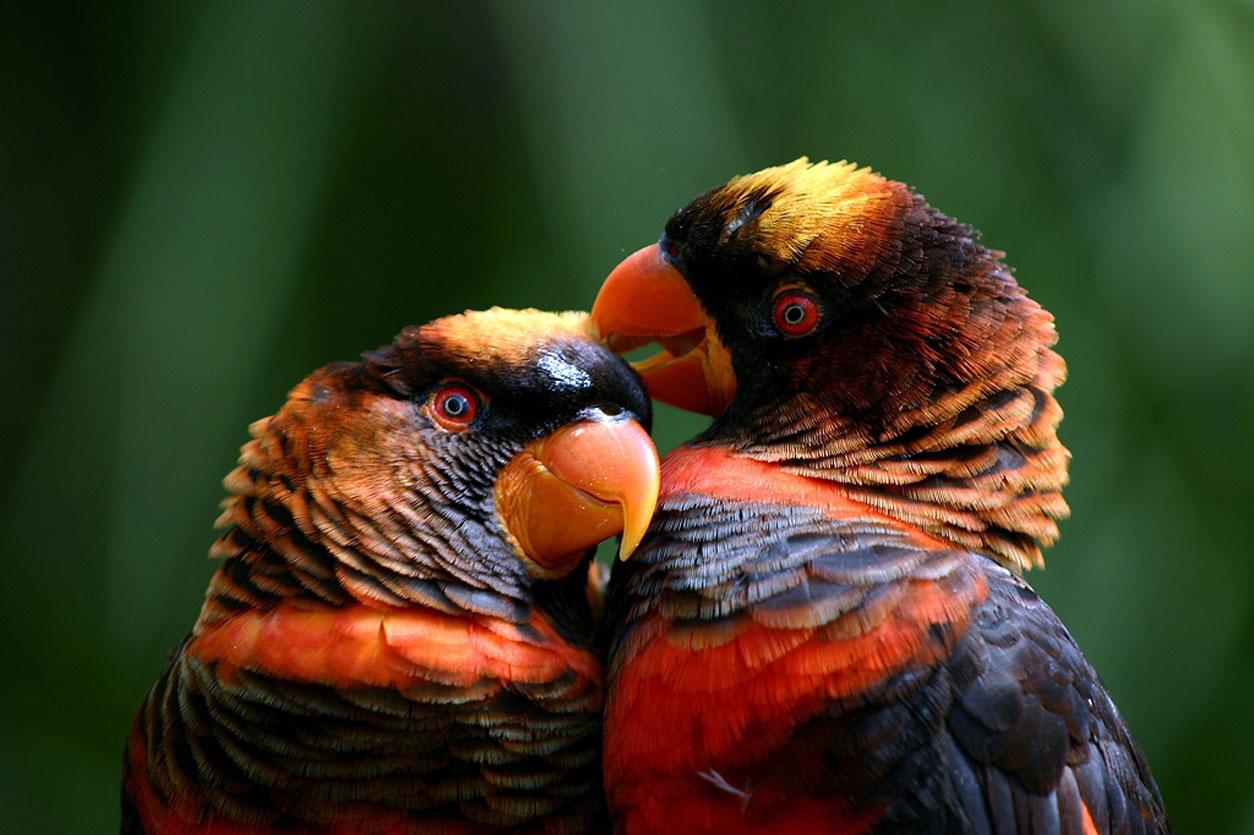
    The plumage of the Dusky lory (Pseudeos fuscata) It is difficult to describe since there are many differences in tonality between one and the other specimens.. Some are of a very dark brown color, almost black and others have a much lighter shade. In addition the same happens with the two bands that cross you the chest Since the species goes through three phases: red, Orange and yellow, according to age, gender and the place of origin.

    Characteristic of this species is the area of โ€‹โ€‹bare skin under the lower jaw until the birth of the throat. The lower wing coverts are orange and the lower flows dark blue. The obispillo is a silvery-white the bill is bright orange. The irises is orange and the legs dark.

    There is no sexual dimorphism and the only way to differentiate male and female will be through DNA, Although some authors (Tomas Arndt) they are running that adult females lack the white feathers of the obispillo.

    Habitat:

    The Dusky lory they are quite widespread and locally common in primary forests , that is to say, those who have not undergone any transformation. But they are also found in wooded areas, up to an altitude of 2.400 m, During regeneration, especially those with large mature trees.

    They are also distributed among residual tree beds during their flowering period., including those located in the parks and gardens in cities.

    They are occasionally present in the lightly wooded Savannah or plantations of teak and coconut trees.

    They normally reside in the landscape of hills or slopes steep slightly from low and middle mountain.

    Itร‚ยดs gregarious and when flies or are fed in the cup of them trees full of flowers it makes in groups of 20 to 100 individuals or more.

    Reproduction:

    The nesting season It is very different depending on the region: It extends from November to April in the mountainous areas of East, While in Irian Jaya, the Indonesian part, they do in July.

    The Dusky lory they prefer to nest in tall trees in the mountain area, the choice of a hole at high altitude on Earth probably do to protect itself against potential predators.

    If the site is of your liking, reuse it for many years consecutively. Male and female participate in the work, the enlargement of the entrance or the cavity itself. Even if the nest has been used in the past, There are always minor changes to be carried out.

    Although this species is quite common, We really know very little about its reproduction in the wild. In captivity, the female lays two eggs which are incubated for approximately 24 days. As in most New Guinea lories, the reproductive cycle is very long, about 70 days.

    Food:

    Consumes mainly nectar and perhaps the pollen it accumulates in plants of the genus schleffera or tree Rudraksha (Elaeocarpus sphaericus). Also consume flowers and fruits. It can be seen in large flocks in mango plantations and other cultivated trees. Feeds, occasionally, teak moth (Hyblaea puera).

    Distribution:

    The Dusky lory It has its area of distribution largely of New Guinea, except the mountains more high of the interior and the peaks more high of the mountains of Parotia.

    They are present in Salawati on the Western Islands of papua and further to the East in the Yapen island on Cenderawasih Bay.

    Conservation:


    minor concern


    – Current IUCN Red List category: Least concern

    – The population trend: Stable

    The species are not threatened. Common and very sociable, It often forms bedrooms that can reach thousand of birds.

    A wild population estimated above 100.000 individuals.

    In some parts of the southeast of New Guinea, its density may be superior to 30 birds per square kilometer.

    "Dusky lory" in captivity:

    Are birds enough prolific and sociable you adapt easily to captivity.

    Contrary to other parrots that eat mainly seeds and nuts; The loris require a greater percentage of fruits, outbreaks, nectar and pollen in your diet. In fact, in the nature, they can feed a maximum of 640 flowers in a day. They also feed on seeds.

    It is usually aggressive with other species of lory. Easy to startle with strangers.

    Alternative names:

    Dusky Lory, Dusk-orange Lory, Dusky-Orange Lory, White-rumped Lory (ingles).
    Lori sombre, Lori ร  dos blanc (French).
    WeiรŸbรผrzellori (German).
    Lรณris-dusky (Portuguese).
    Lori Sombrรญo, Lorito crepuscular (espaรฑol).

    scientific classification:

    Order: Psittaciformes
    Family: Psittaculidae
    Scientific name: Pseudeos fuscata
    Genus: Dusky
    Citation: (Blyth, 1858)
    Protonimo: those darkened

    Images "Lori Mson":


    "Lori bleak" (Pseudeos fuscata)


    Sources:

    Avibase, mundoexotics, Oiseaux.NET

    Photos: Wikimedia, birdsville.NET.au, Dick Daniels – Tampaโ€™s Lowry Park Zoo, Dusky Lory – Woburn Safari Park (Wikimedia),

    Sounds: BAS van Balen (Xeno-canto)

    โ–ท The world of Pets: Dogs, cats, birds, reptiles, amphibians

    Reunion Parakeet
    Psittacula eques

    Cotorra de Mauricio

    Content

    Description:

    Cotorra de Mauricio

    42 cm.. length and a weight between 167 and 193 g..

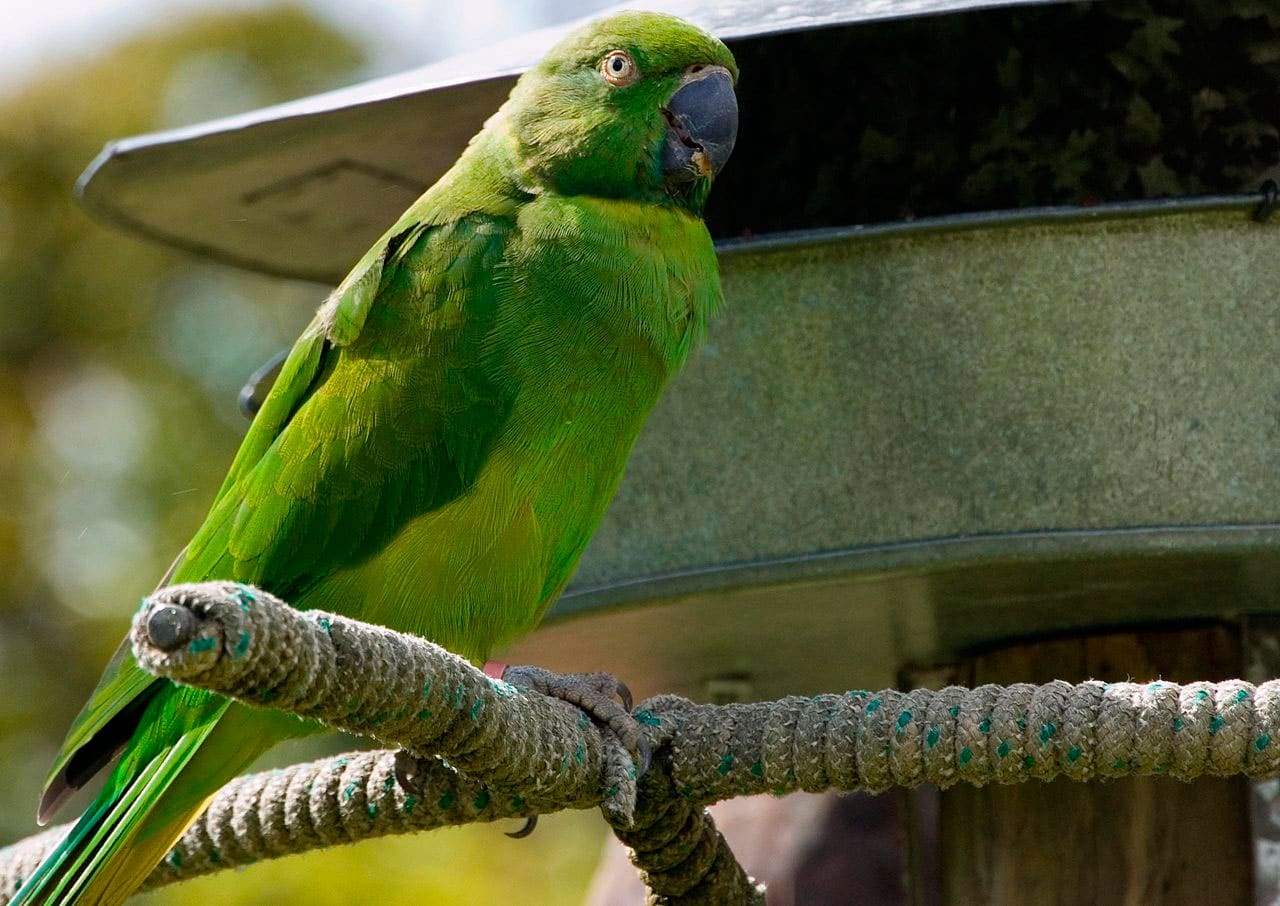
    The Reunion Parakeet (Psittacula eques) has the Lords and cheeks grass-green, deepening the emerald green upper cheeks, the forecrown and crown; wide swaths shaped mustache on the bottom of the cheeks and chin, fading on the sides of neck; narrow black stripes on the neck lined up with bluish patches on ear-coverts and sides neck and below by pink lines extending to the back of the neck, without getting to form an collar full.

    Upperparts, including upperwing-coverts, emerald green. Underparts paler and yellowish. Uppertail green; the undertail pale brown.

    upper jaw red, lower negruzca; irises pale yellow to greenish yellow; legs blackish.

    The female lacks black moustachial stripes, as well as black, pink and blue marks on the sides of neck; dark green tones cheeks with yellowish green at the collar of the back of the neck; dark (almost black) the upper jaw.

    The immature they are like the females, but the fledging bill It is red in both sexes, turning darker in females later.

    Description 2 subspecies:

    • knight knight knight โ€ 

      (Boddaert, 1783) – Nominal. Extinct.


    • Psittacula eques echo

      (Newton,A & Newton,E, 1876) – On the edge of the extinction.

    Habitat:

    The Reunion Parakeet It is closely linked to the native vegetation. A part of the population is in an area of รขโ‚ฌโ€นรขโ‚ฌโ€นupland forest containing some of the largest samples, for example, Canarium paniculatum, Syzygium contractum, Mimusops maxima and Labourdonnaisia left in the Mauritius. Scrub forests lower level are also important, especially for food.

    They are generally solitary, but they can also be seen in pairs or small groups (especially after breeding), but the extreme shortage should limit the normal social behavior.

    Reproduction:

    The Reunion Parakeet nests in cavities of large native trees (often Mimusops but also Calophyllum or Canarium) generally between 6-10 meters above the ground. The inlet has a diameter between 10-15cm.

    The peak in the egg laying It is late September to early October, although it may take place between August to November, is composed of 2 to 4 eggs. The female incubated eggs for three to four weeks, while teammate bring your food. Both parents then provide for the young until they leave the nest in about two months old.

    Food:

    The feeding of the Reunion Parakeet It is composed of a wide range of native plant parts, including outbreaks include, sprouts, leaves, flowers, fruits, seeds, remained, sap and bark. Introduced plants rarely eat. Plants which include feed Calophyllum, Canarium paniculatum, Tabernaemontana mauritiana, Diospyros, erythrospermum monticolum, Eugenia, Labourdonnaisia, Mimusops trials, M. petiolaris, Nuxia verticillata and Protium obtusifolium.

    The main feeding areas vary with the season.

    Distribution:

    Size of the area of distribution (reproduction / resident): 60 km2

    endemic to Mauritius, Indian Ocean, but also he lived before the Rรฉunion. The rest of the birds confined to the last fragments of native forest vegetation.

    In a time, widely distributed, but now reduced to a small relict population in the plateau south-west, around the Black River Gorges National Park and the Monte Cocotte.

    Mainly sedentary, but with some slight seasonal changes depending on availability of food.

    The main cause, apparently, the decline in the population of the Reunion Parakeet long-term, It is the loss of habitat (natural vegetation used for agriculture and forestry), nest predation by introduced species such as Crab-eating Macaque (Macaca fascicularis) and black rat (Rattus rattus) , competition with Rose-ringed Parakeet (Psittacula krameri) (introduced on 1886) and the effects of disease and storms.

    The total area of รขโ‚ฌโ€นรขโ‚ฌโ€นhabitat available It is 50km2. Population between 7-11 birds in 1984, aumentando a 30 birds in the wild and 8 in captivity 1995, with between 40-50 wild birds 1996. An intensive conservation program that includes captive breeding in Mauritius (first successful reproduction 1993-1994), predator control with veterinary assistance for wild birds, ecological research and habitat protection, It is getting a considerable increase in the population of the Reunion Parakeet.

    The National Park currently protect the last natural forests, but continuous invasion of exotic flora, It remains a long-term threat.

    Distribution 2 subspecies:

    Conservation:

    State of conservation โ“˜


    Endangered Endangered โ“˜ (UICN)โ“˜

    โ€ข Current Red List of UICN: Danger

    โ€ข Population trend: Growing

    At the end of the breeding season between 2011/2012, the population was estimated at approximately 580 birds (V. Tatayah in some. 2012).

    The population of the Reunion Parakeet It is estimated that it has experienced a very rapid increase in recent 23 years (three generations).

    The previous decline in the distribution of this species is for the serious destruction and its native habitat degradation (Jones 1987 Greenwood 1996).

    The population decreased probable total of several thousand individuals, as a result of the forest destruction and the replacement of their feeding habitat, upland dwarf forests, plantations (Jones et al., 1998).

    In 1996, only the 5% the island was covered with native vegetation (Jones et al. 1998).

    The areas of native forests remaining in the highlands still being highly degraded by cyclones, the influences of forestry practices of the past, the spread of introduced plants like Peruvian guava (Invasive cattleianum), privet (Ligustrum robustum) and Pomeroy (Syzygium jambos), as well as the effect of wild mammals introduced as boars (Sus scrofa) and the Timor deer (Cervuss) (Greenwood 1996, Thorsen y Jones 1998).

    The production of native fruit, from which the parrot feeds, and regeneration is possible trees nest, because, poor (Greenwood 1996).

    Recent research suggests that the food shortage due to deterioration of native forest is the main cause of nest failure; although exotic species can provide an abundant source of food, They are not available throughout the year, not even throughout the breeding season (Thorsen y Jones 1998).

    The crab-eating macaque (Macaca fascicularis) and black rats (Rattus rattus) are among a number of introduced tree species representing a threat for the Reunion Parakeet, raiding nests and competing for native fruits (Greenwood 1996).

    The European bee (Apis melรญfera), yellowjackets (Polistes hebraeus), termites, the common loptail (Phaethon lepturus), the introduced common mine (Acridotheres tristis) and Rose-ringed Parakeet (Psittacula krameri), They are all competing for nesting sites and can move active breeding pairs (Thorsen y Jones 1998, C. Jones in little. 2000, V. Tatayah in some. 2012).

    The decline in the number of old native trees, that perish damaged by storms and senescence, They have intensified competition for nesting cavities (Jones et al., 1998).

    Infestations fly larvae in the nests can be severe in some years and, without intervention, would kill many young people (C. Jones in a bit., 2000).

    Beak and Feather Disease (PBFD), It has been found in more than 20% of birds sampled, and at least 50% birds observed with PBFD It is believed to have died, However, a considerable number of specimens have been seen to recover from the disease (Richards 2010). Pesticides do not seem to have significantly affected the species (Greenwood 1996).

    According to Mauritius Wildlife Foundation (MWF), trying to stop this worrying phenomenon, the origin of evil is attributed to the imported parrots, mostly the Grey Parrot (Psittacus erithacus) and Coconut Lorikeet (Trichoglossus haematodus).

    The species has been the subject of a conservation program from 1973 (Jones et al. 1998). The spectacular increase in the population of the species in recent years is undoubtedly due to an intensive program to manage the wild population., combined with a program captive breeding great success since the season 1993/4 Playback (Jones et al., 1998).

    "Reunion Parakeet" in captivity:

    The Reunion Parakeet is the only survivor of the species Psittacula They are inhabiting the islands in the South Indian Ocean, about Madagascar. It is one of the parrots World's rarest existing.

    Some specimens bred in captivity (Hand rearing) for reintroduction into the wild; else not bred in captivity.

    In the news, the aviary captive population is 18 birds, with successful reproduction of a couple. The place of the old aviary, where the extraordinary work has been achieved in very primitive conditions, now it is being replaced with a new space, once completed this spring, It will house up 12 breeding pairs of the Reunion Parakeet, a large flight cage 60 meters for immature.

    Alternative names:

    Mauritius Parakeet, Echo Parakeet, Maruitius parakeet, Mascarene Parakeet, Mauritian Parakeet (English).
    Perruche de Maurice, Perruche ร  longue queue (French).
    Mauritiussittich (German).
    Periquito-de-maurรญcio (Portuguese).
    Cotorra de Mauricio (espaรฑol).

    scientific classification:

    Order: Psittaciformes
    Family: Psittaculidae
    Genus: Psittacula
    Scientific name: Psittacula eques
    Citation: (Newton, A & Newton, E, 1876)
    Protonimo: Palaeornis echo

    Reunion Parakeet Images:

    Videos "Reunion Parakeet"


    Especies del gรฉnero Psittacula

    Reunion Parakeet (Psittacula eques)


    Sources:

    Avibase
    – Parrots of the World โ€“ Forshaw Joseph M
    – Parrots A Guide to the Parrots of the World – Tony Juniper & Mike Parr
    – Birdlife

    Photos:

    (1) – Echo parakeet (Psittacula eques echo), the rarest Parrokeet in the world, saved from extinction by captive breeding programme at the Durrell trust Blackwater Gorge By colin houston [CC BY 2.0], via Wikimedia Commons
    (2) – By Wildlife Preservation Canada – link
    (3) – Echo Parakeet, Mauritius by Tara – Miles to the wild
    (4) – Echo Parakeet, Mauritius by Tara – Miles to the wild
    (5) – Female Echo Parakeet (Psittacula eques) by Johannes Fischer – Mauritius January – July 2013, Petrin, Camp Field Station and Brise Fer
    (6) – Psittacula type illustration of a knight on horseback (Martinet in Buffon, 1779) By Franรงois-Nicolas Martinet [Public domain], via Wikimedia Commons

    Sounds: George Sangster (Xeno-canto)

    โ–ท The world of Pets: Dogs, cats, birds, reptiles, amphibians

    Military Macaw
    Ara militaris

    Guacamayo Militar

    Content

    Description:

    70 to 85 cm.. length and a weight between 900 and 1100 g..
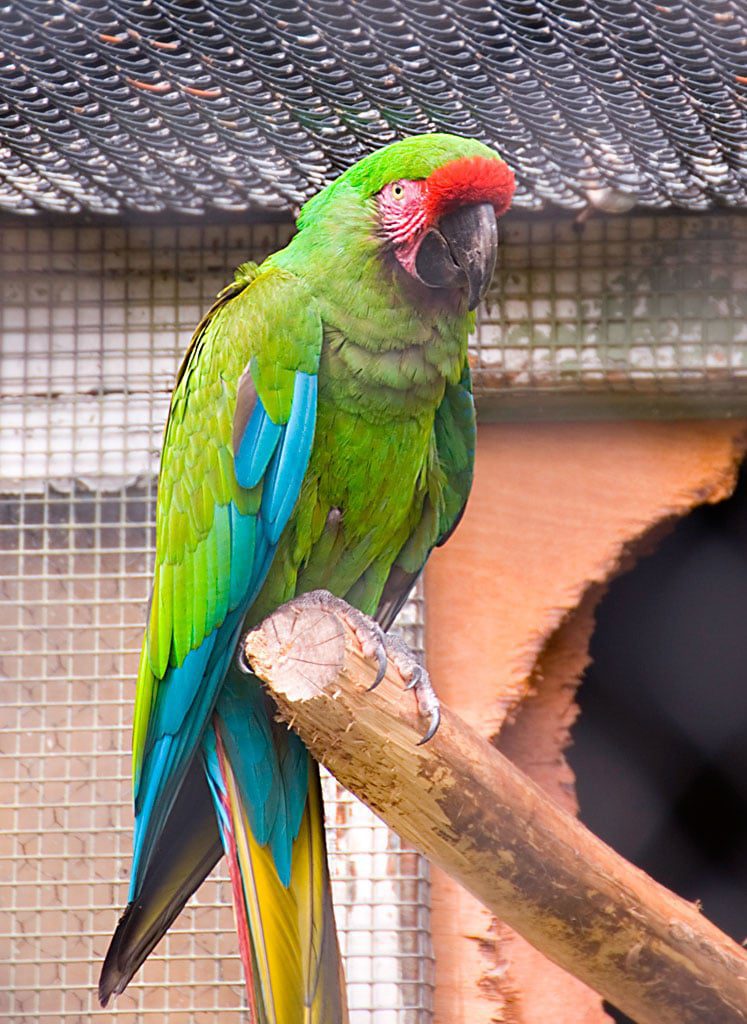
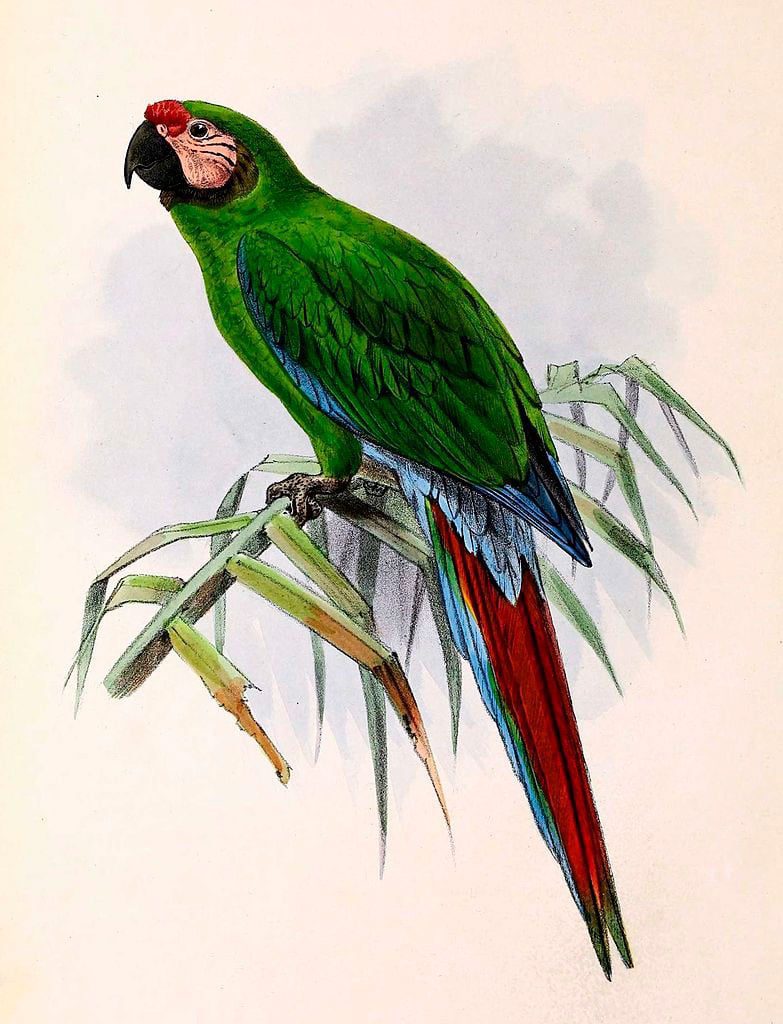
    The Military Macaw (Ara militaris) has a dark green color. The head is a green slightly clearer and the crown blue. The back and the top of the wings they have a slightly greenish tone. The rounding of the wings, the edge of the wings and flight feather exterior are light blue.

    Illustration military Macaw

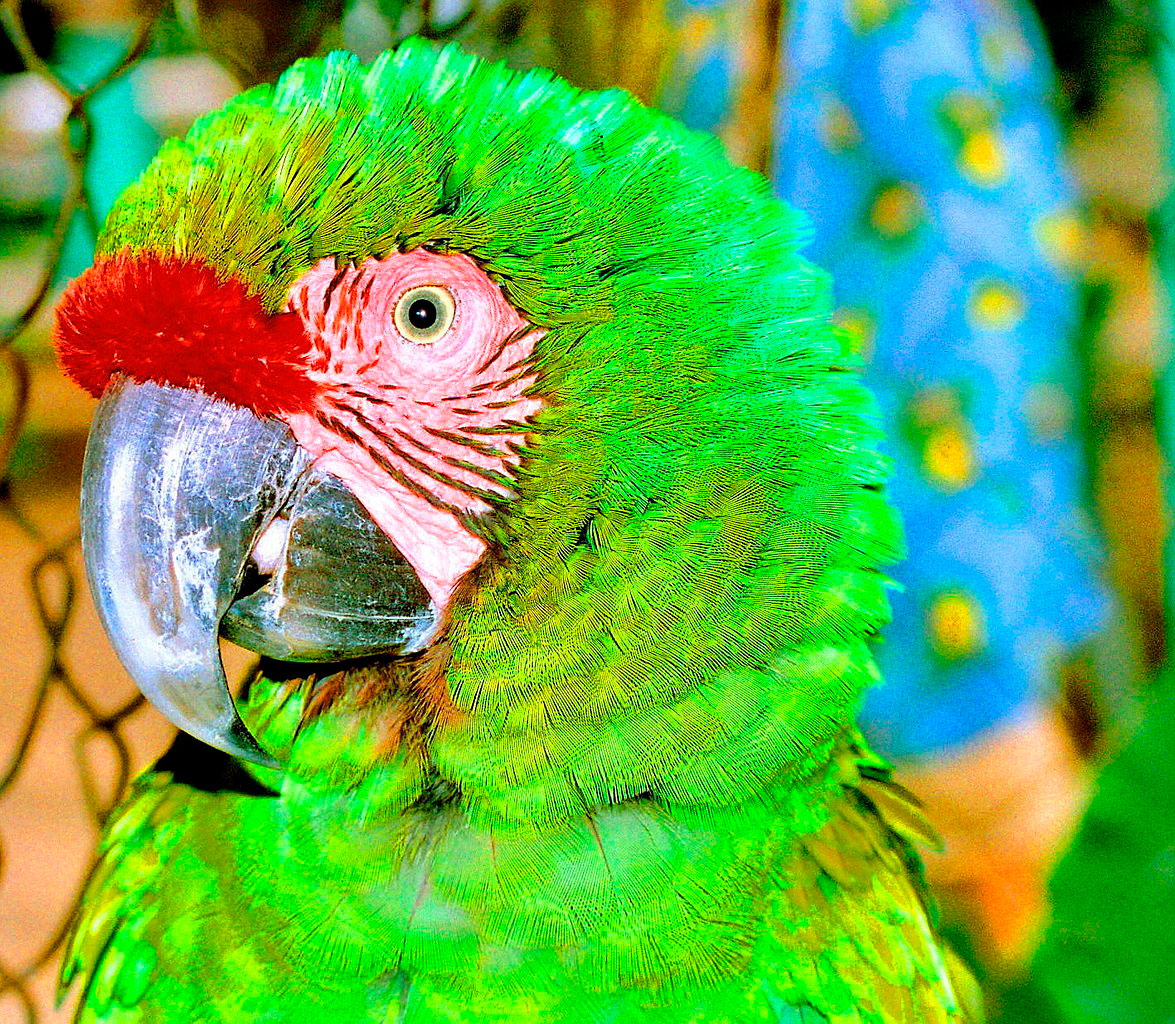
    The forecrown it is bright red in color and there are a series of purplish-brown lines of feathers on a background of bare skin, since the nose to behind eyes and in the cheeks.

    The area of the throat and a narrow strip below the cheeks are olive brown in colour. Breast and belly green; undertail- coverts pale blue.

    Upper, the tail orange-red with the ends of the feathers blue; undertail, the tail olive green yellowish.

    The eyes has irises yellow. The bill is dark gray, legs dark grey.

    Both sexes similar.

    Immature not described but as other large macaws, irises probably Brown, tail shorter and the bare facial skin clearer.

    Subspecies description:

    • Ara militaris bolivianus

      (Reichenow, 1908) – It differs from the species nominal by the throat reddish brown. The headphones feathers they have a base of reddish and blue present in the wings and at the end of the feathers is a more intense tone.


    • Ara militaris mexicanus

      (Ridgway, 1915) – Almost identical to the species nominal but larger.


    • Ara militaris militaris

      (Linnaeus, 1766) – The nominal species

    Habitat:

    The Military Macaw they can be mainly observed in foothills of mountainous terrain in woodlands with cannons fields, mostly between 500 and 1, 500 meters above sea level, at the local level to 2.000 m, (3,100 m reported in Peru, to 2,400 m in Bolivia), but also at sea level in the Pacific of Mexico and in the region of Santa Marta, Colombia.

    In Mexico, most are distributed in isolated highlands in semi-arid and arid forests, as well as in forests Quercus and Pinus; sometimes in humid, riparian lowland formations, with altitudinal movements to lower altitude to dense scrub forests between November and January.

    Observed in humid forests in the Colombian Andes.

    In Venezuela, in the rainforest, in some mountainous areas 600 m, sometimes also in more open dry forests.

    Usually in pairs or small flocks (until 10 birds), but much larger swarms reported in flights to the roosts. Communal roosts on cliffs or in trees.

    Reproduction:

    Nest, usually, in crevices of cliffs; sometimes in large trees (for example, Acer, Pinus or Enterolobium).

    In Mexico It has been observed to the Military Macaw making use of old nests of the Imperial Woodpecker (Campephilus imperialis) in dead pine.

    Breeding pairs are for life.

    The egg laying takes place in the month of June in Mexico. They are of two to three eggs that it will take 24 days to hatch, and where the young will remain with the parents for about a year.

    The first flights the chicks are produced between the 97 and 140 days old and reach sexual maturity to the 3 or 4 years of age.

    Food:

    The diet of the Military Macaw It consists of a wide variety of fruits and nuts, including fruit of the Melia azedarach, Ficus and seeds of the Hura crepitans.

    Distribution:

    Size of the area of distribution (reproduction / resident): 276.000 km2

    distributed by Mexico, In addition to several separate populations of South America, heading south to northwest of Argentina.

    Widely distributed in Mexico from Sonora (where they have been observed at 28ยฐ 45'N) and Chihuahua in the North, until Chiapas, in the South and the East, where the birds may be geographically isolated.

    Absent from the lowlands of the Caribbean; ancient appearances in Guatemala not confirmed.

    In Colombia to the West of the Andes to the South of Dagua, of the Magdalena River Valley, and on the West side of the Andes, to the East of the Sierra Nevada de Santa Marta, in the North, through the East of the Ecuadorian Andes until Huanuco in the Peruvian Andes.

    Also distributed by the North of Venezuela on Serrania del Perija and from Northwest of Zulia until Federal District.

    In Peru, mostly, observed in the East of the Andes, above all in the Maraรฑรณn region, where at least, formerly, It was a common migrant from the slope of the peaceful between September-October(reported on the west slope at 6ยฐ 50'S) to feed on the fruit available seasonally.

    In the East of the slopes of the the Bolivian Andes, in Santa Cruz de la Sierra, Chuquisaca and Tarija and Northwest corner of Argentina in Salta and possibly Jujuy.

    Seasonal movements in many areas, for example, visitors to the West of Caquetรก in Colombia, from the western slope of the Andes up to this.

    Rare in the South of Mexico (in Chiapas possibly extinct), more numerous in the East and Northwest, where flocks of several hundred birds were reported at the end of 1970.

    Very local in the Andes and at risk in Venezuela due to habitat loss and trade.

    Fairly common in the North of the region of Santa Marta, but sporadic in other parts of Colombia.

    Flocks of up to 60 birds observed in the Manu National Park in Peru and in the Amborรณ National Park of Bolivia.

    Very rare in Argentina with only sporadic reports in recent years. Recent declines due to low habitat and bird trade, a large number of birds in captivity.

    Subspecies distribution:

    • Ara militaris bolivianus

      (Reichenow, 1908) – South of Bolivia and Northwest of Argentina.


    • Ara militaris mexicanus

      (Ridgway, 1915) – Mexico


    • Ara militaris militaris

      (Linnaeus, 1766) – The species nominal

    Conservation:


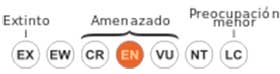
    Vulnerable

    โ€ข Current Red List of UICN: Vulnerable

    โ€ข Population trend: Decreasing

    The population size is estimated, provisionally, You can be in the band between 10.000 and 20.0000 individuals.

    It is suspected that the population This species can be decreasing due to ongoing habitat loss and capture for national trade.

    The loss of habitat and especially the national trade they are major threats to this species, even within the reserves (Snyder et to the. 2000).

    In 1991-1995, 96 wild-caught specimens were found in the international trade, with Bolivia and Mexico, possibly, major exporters (Chebez 1994, D. Brightsmith in litt., 2007).

    In Mexico, remains one of the most sought after species for the illegal trade of birds in cage; between 1995 and 2005, was the fifth country with the most parrots seized by the Environmental Control Agency from the country, becoming the fourth with more seizures between 2007 and 2010 (JC Cantรบ in litt. 2010).

    In many areas it nests in hard-to-reach cavities in cliff faces., that provide some protection against the pressures of plundering of nests. But, the plundering of nests is a serious threat in Jalisco and Nayarit, where the species nests in tree cavities (C. Bonilla in litt. 2007, K. Renton in litt., 2007).

    In Jalisco, Mexico, These macaws were not found in deforested areas, even when it was abundant the Hura polyandra (an important source of food), leaving, in the news, as trees to provide shade for cattle (Renton 2004).

    An analysis of the GARP believes that the species has undergone a 23% loss of habitat within its distribution area in Mexico (Rios Munoz 2002).

    A subpopulation in the Valle del Cauca, Colombia, account for less than 50 mature individuals, little is to be lost as a dam is expected to flood the only nesting cliff (ProAves Foundation 2011).

    "Military Macaw" in captivity:

    Very popular in poultry.

    Although the Macaw Militar is present for more than one century in Europe, He has never enjoyed special interest among the fans, It's a shame, Since it is a being Intelligent. The main reason should be your little flamboyant plumage; especially compared to the one of other macaws. Other failures affect its presence in aviaries: is very loud and has a strong tendency to gnaw.

    The power of their vocal organ is much higher than of any other species of Macaw. On the other hand it also good qualities: is very applied to learn, has a great talented imitator and presents an intelligence out of the ordinary.

    With regard to its longevity, according to sources, a specimen lived 46 years in captivity. In captivity, these animals have been known that they can raise some 5 years of age.

    Alternative names:

    Military Macaw (English).
    Ara militaire (French).
    Soldatenara (German).
    Arara-militar (Portuguese).
    Guacamaya Verde, Guacamayo Militar, Guacamayo Verde, Papagayo verde (espaรฑol).
    Guacamaya verde oscura (Colombia).
    Guacamayo verde (Venezuela).
    Guacamayo militar (Ecuador).
    Maracan, Paraba militar (Bolivia).
    Jarcia, Sarea (Chaka).
    Panicco (Cofรกn.).

    Carl Linnaeus
    Carl Linnaeus

    scientific classification:


    Order: Psittaciformes
    Family: Psittacidae
    Genus: ARA
    Scientific name: Ara militaris
    Citation: (Linnaeus, 1766)
    Protonimo: parrot military


    Images Military Macaw:

    Videos "Military Macaw"


    Species of the genus Ara


    Sources:

    Avibase
    – Parrots of the World โ€“ Forshaw Joseph M
    – Parrots A Guide to the Parrots of the World – Tony Juniper & Mike Parr
    – Birdlife

    Photos:

    (1) – Military Macaw (Ara militaris) at London Zoo, England By jon hanson (originally posted to Flickr as military macaw) [CC BY-SA 2.0], via Wikimedia Commons
    (2) – Military Macaw Ara militaris in captivity at Occidental Grand Xcaret Resort, Yucatan, Mexico By Tony Hisgett (originally posted to Flickr as Green Parrot) [CC BY 2.0], via Wikimedia Commons
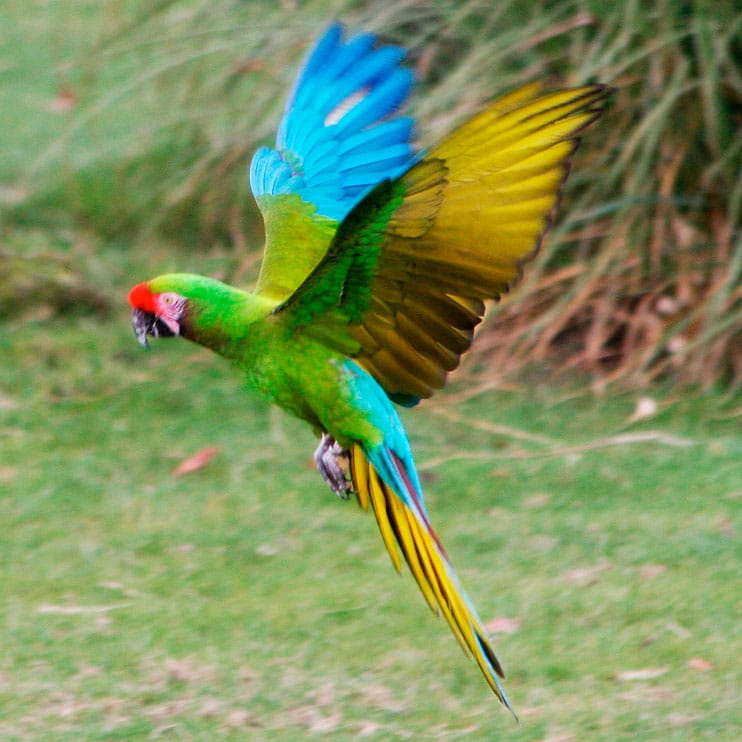
    (3) – Military Macaw flying at Whipsnade Zoo, Bedfordshire, England By Ara_militaris_-Whipsnade_Zoo_-flying-8a.jpg: Alex Smithderivative work: Snowmanradio [CC BY 2.0], via Wikimedia Commons
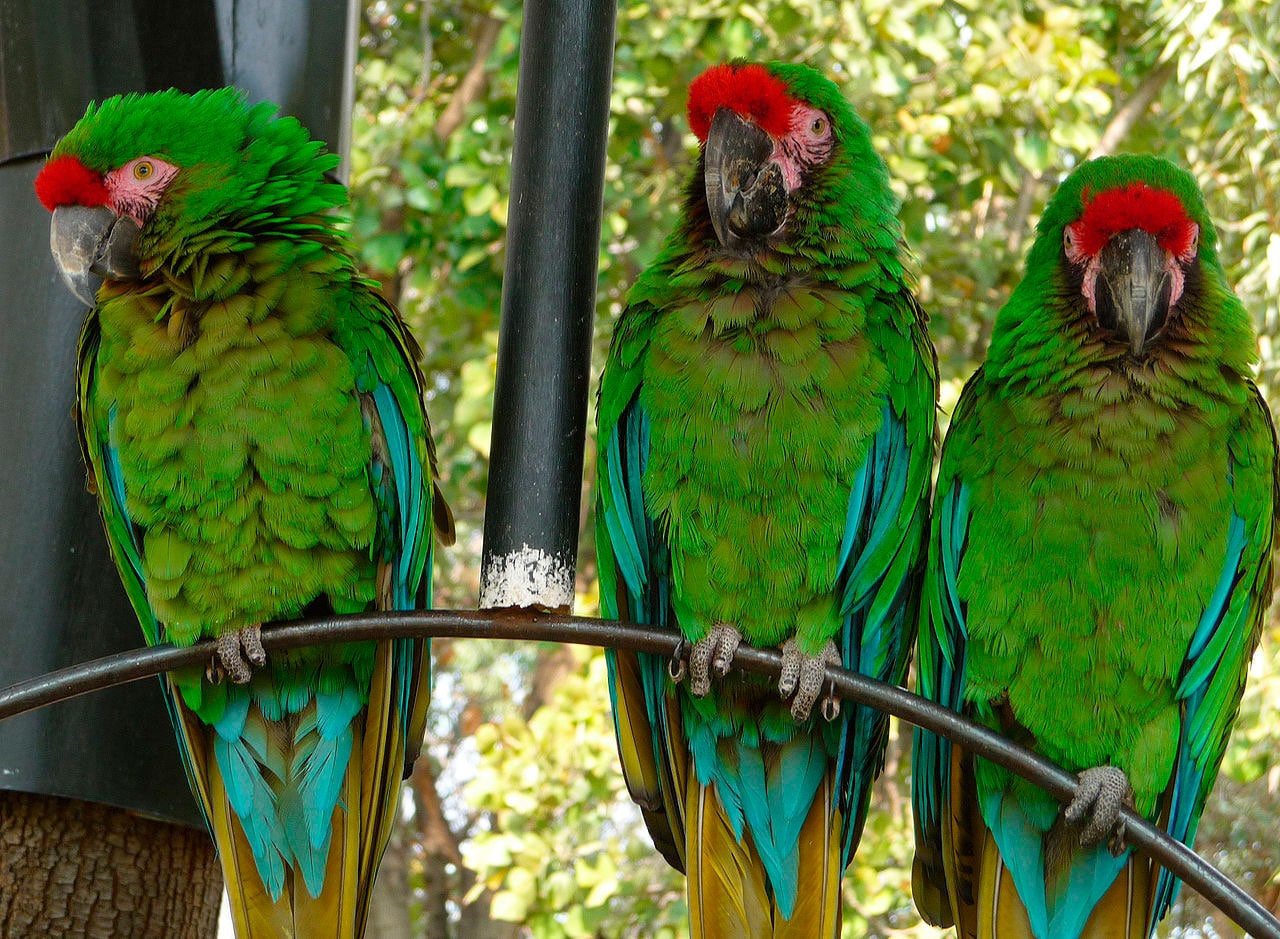
    (4) – Three Military Macaws at Zoolรณgico Los Coyotes, Mexico By Gary Denness (originally posted to Flickr as Squawk No Evil) [CC BY 2.0], via Wikimedia Commons
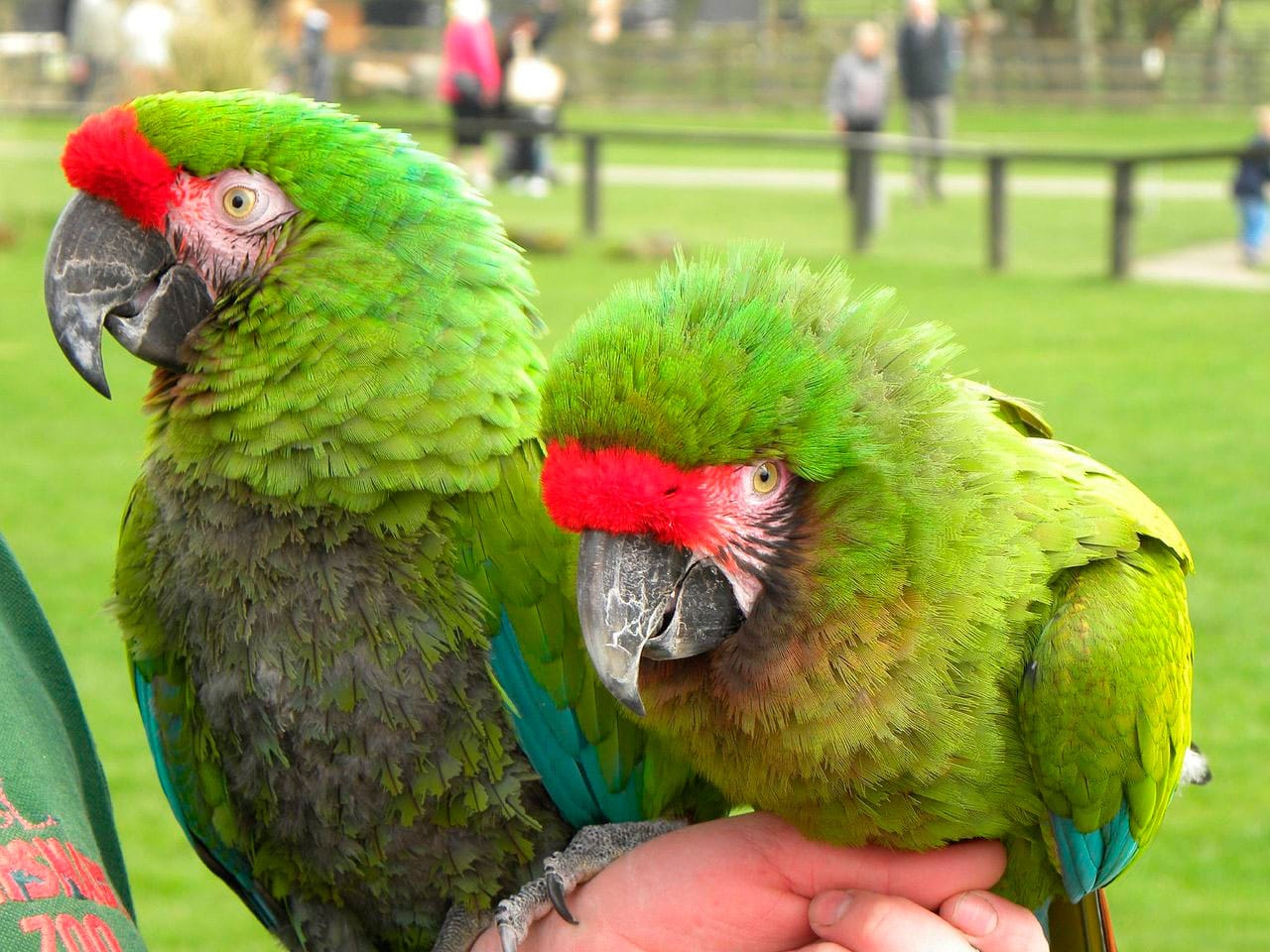
    (5) – Two Military Macaws at Whipsnade Zoo, Bedfordshire, England. The macaw on the left has damaged feathers on its chest and abdomen probably because of a feather plucking habit By Mark Fosh (originally posted to Flickr as Macaw) [CC BY 2.0], via Wikimedia Commons
    (6) – Two Military Macaws at Moody Gardens, Galveston, Texas, USA By joannapoe (originally posted to Flickr as 2005-06-18_11-52-47) [CC BY-SA 2.0], via Wikimedia Commons
    (7) – A Military Macaw at Whipsnade Zoo, Bedfordshire, England. Some of its feathers are damaged probably due to feather plucking By William Warby from London, England (Military MacawUploaded by Snowmanradio) [CC BY 2.0], via Wikimedia Commons
    (8) – Military Macaws in Mexico By Gregg (originally posted to Flickr as YOU WANT SOME?) [CC BY-SA 2.0], via Wikimedia Commons
    (9) – Military Macaw (Ara militaris). Details of the head and face By Mary Mueller (Flickr) [CC BY 2.0], via Wikimedia Commons
    (10) – Arara militaris by John Gerrard Keulemans [Public domain], via Wikimedia Commons

    Sounds: (Xeno-canto)