Origin: Peru, Guyana, Brazil, Venezuela, Colombia, Ecuador, Bolivia
Character: Divertida.
Life expectancy: 30 to 40 years
Height: 21 to 23 cm..
Content
Description:
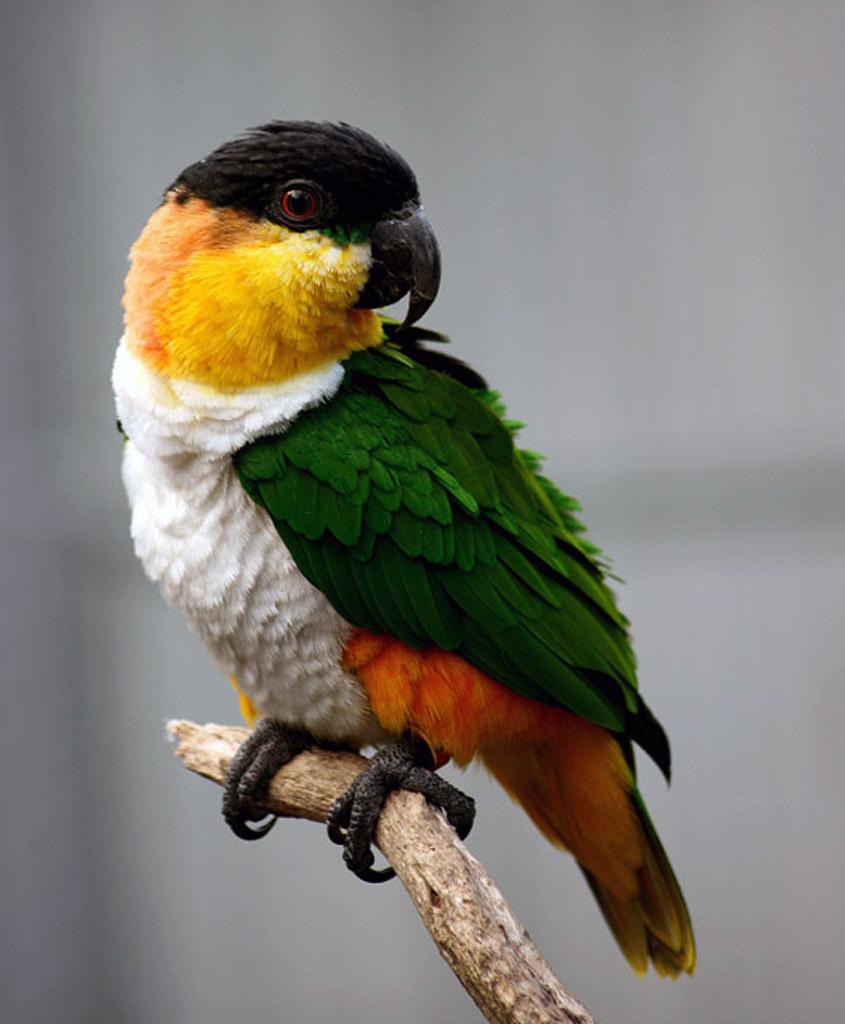
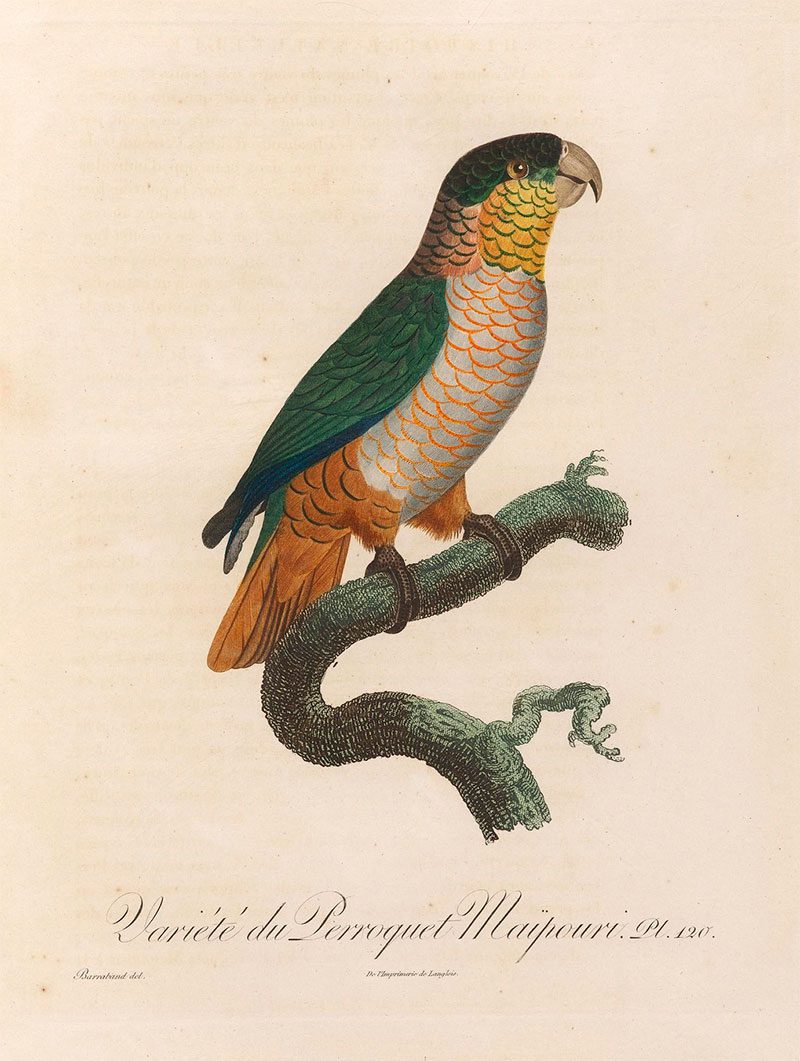
The Black-headed Parrot(Pionites melanocephalus) measures of 21 to 23 cm.. height.
Unmistakable by crown black, chest and belly white, the latter with yellow sides (very visible on the fly). Breast
bright yellow, nape orange acanelada, back and rump green. Tip pens of wings They are blue and dark go the closer they get to the body.
Legs and bill dark gray.
The youth They have bluish green spots on the nape, with chest and belly yellowish.
There is no sexual dimorphism in this species. The identification of genus must be performed by DNA testing or a surgical probe.
(Berlepsch, 1890) – It has bright yellow in the throat, the thighs and tail.
Habitat:
It inhabits humid jungles, semi-wet, swampy, gallery woods, stubble and crop to the 1000 m. Walks in small flocks between 3 to 10 individuals, feed in the canopy, very rare in stratum low forest.
Reproduction:
Its laying is of 2 to 4 eggs and the breeding season It is from December to February in French Guiana, april in Venezuela, April to May Colombia, October to November Suriname.
Food:
Feeds of seeds several species of plants cellulose, plants, flowers and leaves. There is also evidence of some insects in your diet.
Distribution:
She can be seen in the wild along the Amazonia, from the North of the Amazon River, bordering south to northeastern Peru, also in the Guyanas.
(Berlepsch, 1890) – South of Colombia to the East of Ecuador and northeast of Peru.
Conservation:
State of conservation ⓘ
Minor Concern ⓘ(UICN)ⓘ
Although not in danger of extinction Its population has declined significantly. The illegal marketing is the main theory against its appearance and adaptation in an environment foreign to its natural environment. Poaching of pigeons and felling of trees are common in the south of the country.
"Black-headed Parrot" in captivity:
Popular poultry farming. They adapt easily to the bird or Aviary cages. You need a degree quite high commitment and attention by the owner. The like to interact with other birds and people. The love to play with toys and can be quite noisy. An interesting feature of the Black-headed Parrot It is their habit of rolling on his back and play with toys help of their paws.
He manages to replace their jungle habitats in parks or green areas of large cities.
Its price is quite high compared to other species due to its striking plumage and friendliness..
Alternative names:
– Black headed Parrot, Black-crowned Parrot, Black-headed Caique, Black-headed Parrot(English)
– Cotorra pechiblanca, Loro cacique o Loro mocho (Colombia)
– Perico calzoncito (Venezuela)
– Loro coroninegro (Ecuador)
– Chirricles cabeza negra (Peru)
– Grünzügelpapagei, Grünzügel-Papagei (Germany)
– Lorito Chirlecrés, Lorito Chirlicrés, Lorito Gordo de Cabeza Negra (Spain)
– Caïque à tête noire, Caïque maïpouri (France)
– cabeça-preta, maipuré, marianinha-da-cabeça-preta, Marianinha-de-cabeça-preta (Brazil)
40 to 50 cm.. length and a weight of up to 900 gr.
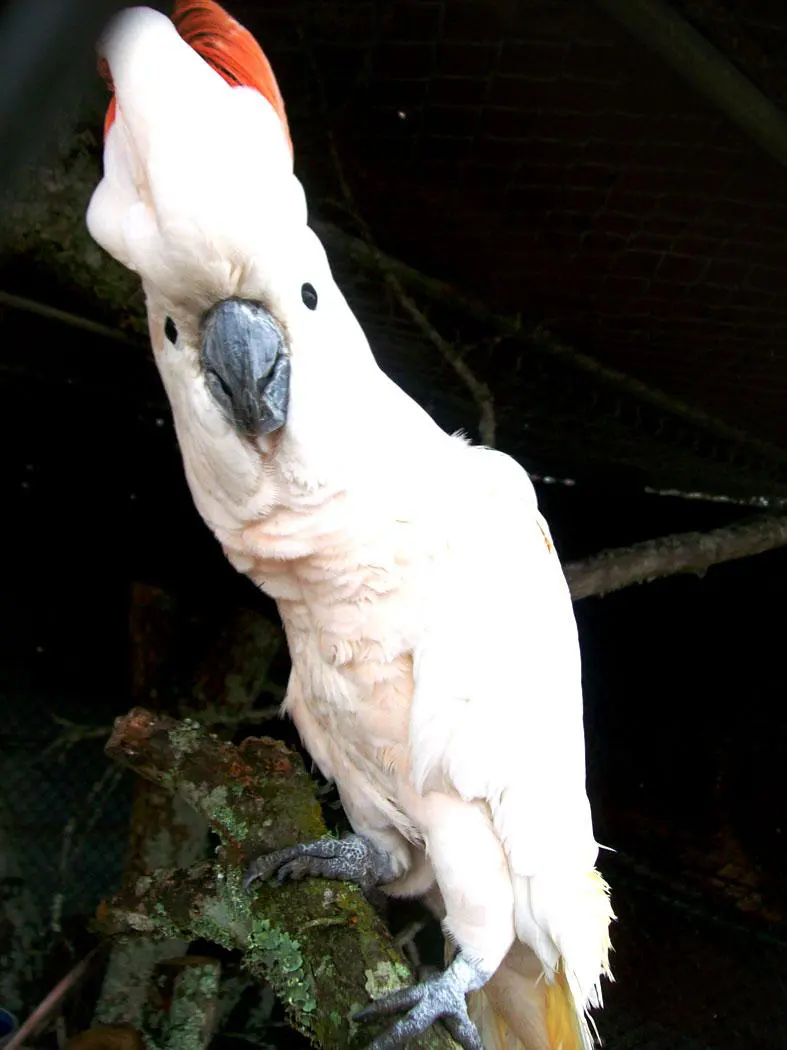
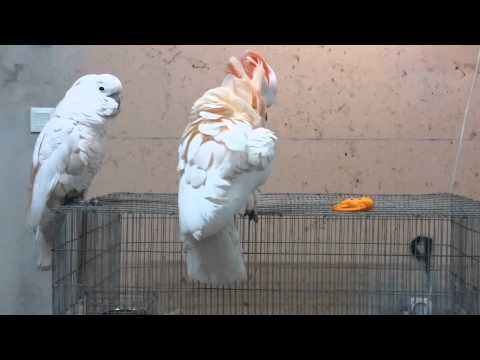
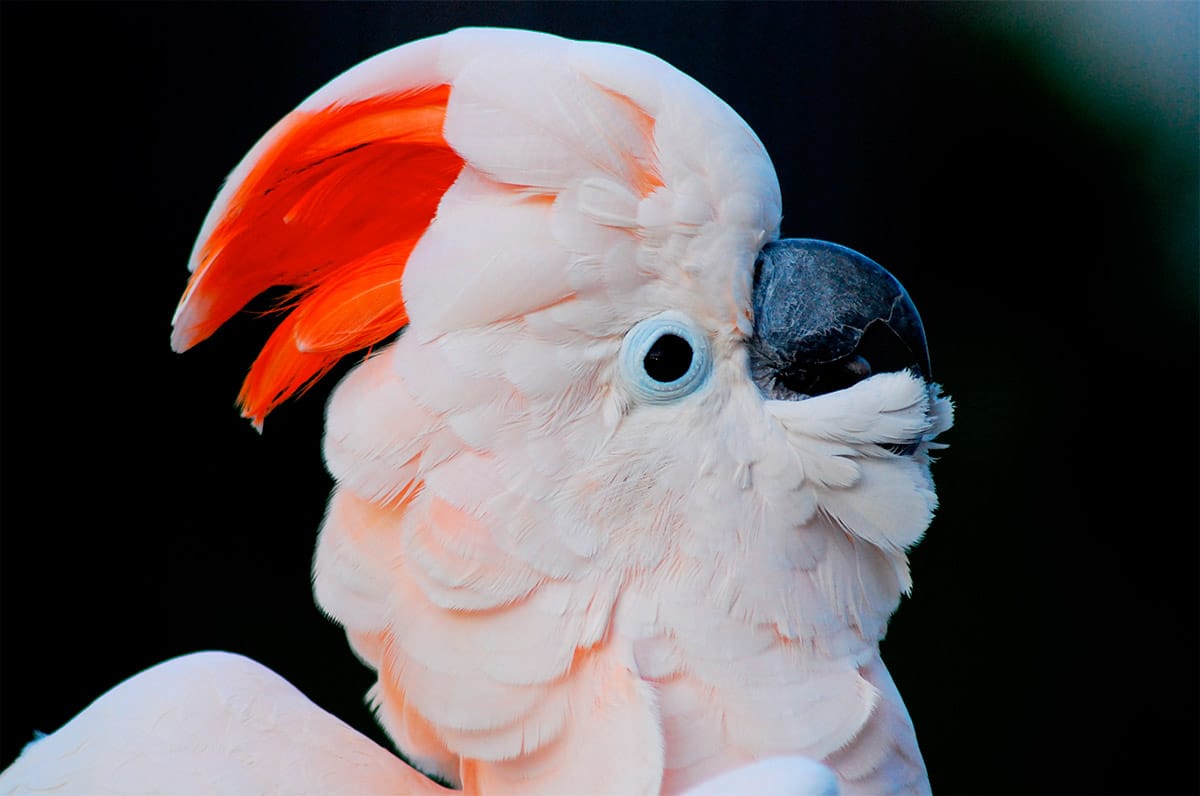
The plumage of the Salmon-crested cockatoo(Cacatua moluccensis) is predominantly white, except the tuft, that consists of red feathers that is usually when the bird is excited.
The interior of the wings is light salmon color. The the tail feathers they have a yellow-orange and pink color at the base.
The bill is strong, curved and black. The legs also are of color black. A skin bare of color white blue surrounds them eyessexual dimorphism It is in the color of your eyes. Males have dark eyes while females have them red.
The immature are like adults.
It shows preference for forests. It is from sea level up to the 1200 metres of elevation. In noisy roosts, during the breeding season, alone or in couples; at other times are found in groups of up to 16 birds. Species usually shy. You enable in the early morning and at dusk.
Reproduction:
The breeding season exact in the nature is unknown, but the activity of nesting It has observed in mayo, July and August, When the birds are usually seen alone or in pairs. The nests are built in large trees, taking advantage of holes in the trunks to 25 meters above the ground. The implementation size in captivity is from one to three, usually two, the eggs, they are incubated by both parents for 28 to 29 days.
Food:
With feeds fruit, grains, seeds, berries, vegetables and dried fruits. It has a peak strong, able to break the hard shells.
Probably also feed on insects and their larvae and from time to time in the coconut plantations, where Peck young fruits, to reach the water and the meat of the content.
Distribution:
Size of the area of distribution (reproduction / resident): 33.800 km2
Lives in the Plains to low height in the islands of the South of the Moluccas in Indonesian, Islands of Ceram, Saparua and Haruku.
It was introduced on the neighbouring island of Ambon.
Conservation:
State of conservation ⓘ
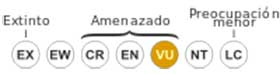
Vulnerable ⓘ(UICN)ⓘ
• Current category of the Red List of the UICN: Vulnerable.
• Population trend: Decreasing.
Is in the list of species at risk of CIPA (International Council for the protection of birds). It became part of the I in 1989 of the CITES and, in Europe, is covered by the program of protection of the species in extinction (EEP).
Their main threats they are the illegal trade (in great measure responsibility of Indonesian) and deforestation, that has led to a dramatic loss of habitat.
In 1982, exported a total of 6.413 birds, around the 15% of all local poultry exports, Since this species is still very desired as a companion bird.
Although the international trade reported fell to zero in the Decade of 1990, them hunters will have maintained very active and the birds are sold openly in Indonesian.
Just 62.400 Salmon-crested cockatoo in the world according to the FWS Federal Register.
In the news Loro Parque Foundation has a "field project" underway for its protection and survival in its country of origin, We hope that this great work to proceed and succeed.
"Salmon-crested cockatoo" in captivity:
In captivity is quite rare and face, but he has adapted well and plays smoothly in the spaces provided.
As a pet is simply exceptional for its docility. The only drawback is the noise it emits at times when its demands are not immediately met.
Despite their exceptional behavior, we should not consider the possession of this cockatoo as a cage bird of this wonderful bird. Trade can lead in a few years to extinction.
Alternative names:
– Salmon-crested Cockatoo, Moluccan Cockatoo, Rose cackatoo (ingles).
– Cacatoès à huppe rouge, Cacatoès des Moluques (francés).
– Molukkenkakadu (alemán).
– Cacatua-das-molucas (portugués).
– Cacatúa Copete Encarnado, Cacatúa Moluqueña, Cacatúa de las Molucas (español).
46 cm. length and a weight between 680 and 800 g..
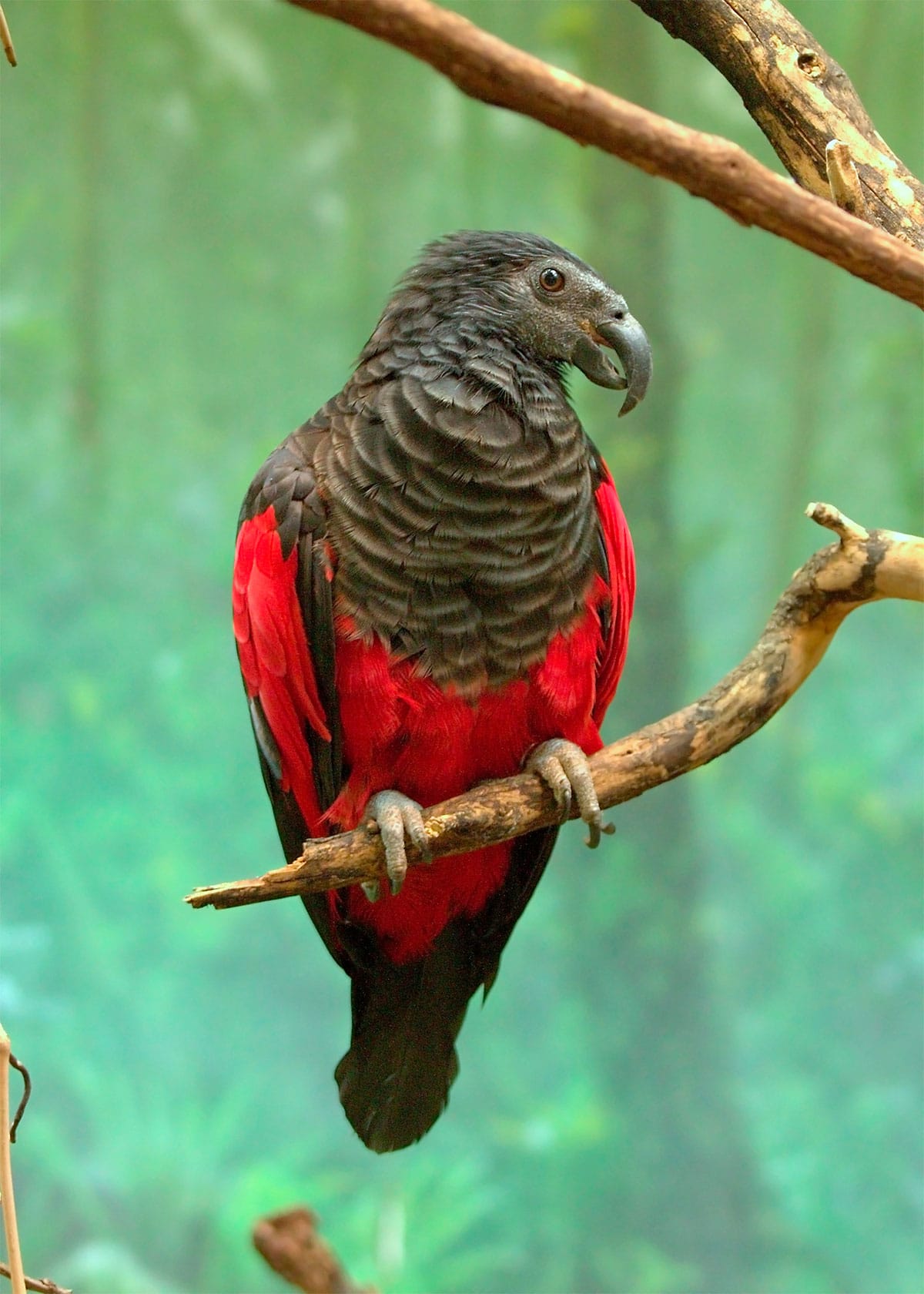
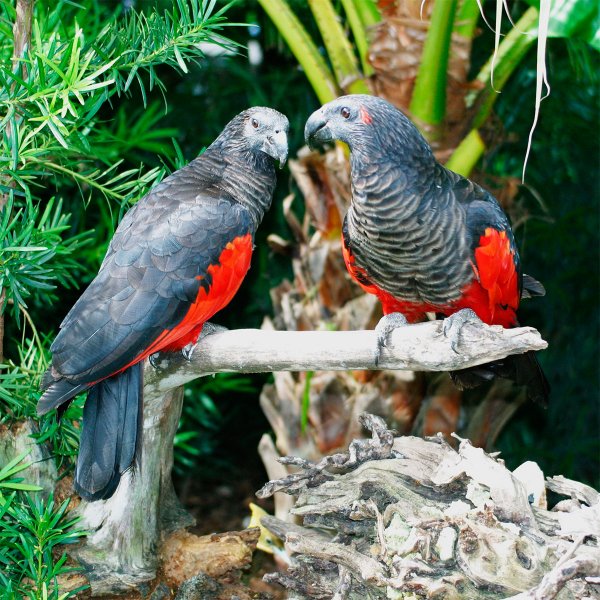
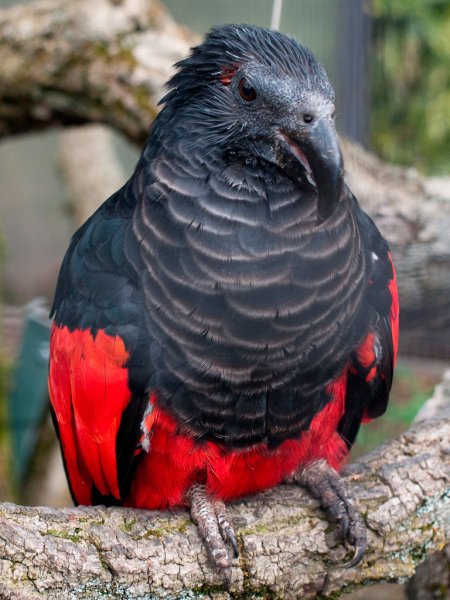
The head of the Pesquet's Parrot(Psittrichas fulgidus) is black, front without feathers, may be covered with small ruffled black feathers with a patch of stiff red feathers on the front of the legs ear-coverts. Nape, the mantle, back and tail blackish brown with fine pale edges.
Uppertail Red with black bases. Upper, black flight feathers, with large and medium-sized external coverts (except the innermost) and vane external Central flight feathers, red; Black primary coverts. Under, Black tail with red in the lower and medium coverts. More Brown on the top breast than in the rest, with a wavy effect to pale fringes to the feathers; belly, flanks and coverts red infracaudales. Upper, the black tail.
black beak; black skin of the face; dark brown irises; Blackish grey legs.
The female It lacks the red patch on the side of the head and is slightly smaller on average.
The Pesquet's Parrot are found mainly in the primary and secondary montane rain forest at an altitude between 600 and 1.200 m. However there are to the 2.000 m, and are occasional at altitudes as low as 50 m.
The species is thought, generally, they have a low density of population, finding the highest concentrations in forest areas relatively calm, where the birds are free from persecution.
These large and showy parrots, They are commonly found in pairs or in groups of up to 20 individuals, perched, usually, at the top of the exposed trees, or loud flying through or above the canopy.
Jump nervously around the Bush with quick flapping, and they can stay in the tops of emergent trees during a rain. It has been flying to settle on a solitary tree in the midst of the darkness.
Reproduction:
Reproductive habits in nature are unknown, but birds in breeding conditions have been observed in the months of February to May. In captivity a pair was observed to courting; There was a two-egg-laying, which were incubated by the female during 31 days, and the only chick, yellowish white, was fed by both parents.
During their feeding, the base of the beak can become covered with fruit pulp, and it is likely that extension of the exposed facial skin has evolved to avoid that feathers absorb from food scraps.
Distribution:
Size of the area of distribution (reproduction / resident): 278.000 km2
The species is unevenly distributed in montane forests, and is considered uncommon in most areas. World population is thought to be in decline, mainly due to hunting for food and feathers (that are more appreciated even than the feathers of the bird of paradise Paradisaeidae).
The introduction of weapons has significantly increased the pressure of the species in more densely populated areas. Live bird trade and habitat loss, It is also thought that they represent potential threats. There are a small number in captivity.
Conservation:
• Current category of the Red List of the UICN: Vulnerable
• Population trend: Decreasing
It is estimated that their population may be setting to the 42,000 birds.
This species is under severe pressure from the hunt for obtaining their colorful feathers, and to one degree lower for trade and meat. Hunting for feathers has increased with population growth and the increasing number of tourists. As a whole, These factors are suspected of being leading to a rapid and continuous reduction of the population of this species.
Conservation Actions Proposed:
– Conduct surveys to improve the accuracy of the estimate of the population.
– Investigation of the basic ecology of the species, especially any of their food.
– Investigate the trade in feathers.
– Monitor numbers at surveyed sites, as the crater of the mountain and Kikori.
– Numbers of monitors marketed domestically and internationally.
– Transport Control of threatened species in domestic flights.
– Run an education program to discourage tourists from buying feathers and artifacts.
– Investigate adequacy of a program to replace artificial or dyed feathers (Mack and Wright 1998) .
"Pesquet's Parrot" in captivity:
extremely rare.
Birds, even bred hand, may be difficult and aggressive with their caregiver; they can be a bit uncomfortable mainly due to their diet of fruit.
Alternative names:
– Pesquet’s Parrot, Vulturine Parrot (ingles).
– Psittrichas de Pesquet, Perroquet de Pesquet (French).
– Borstenkopf (German).
– Papagaio-de-pesquet (Portuguese).
– Loro Aguileño (español).
Among 55 and 61 cm.. of length and a weight of 224 g..
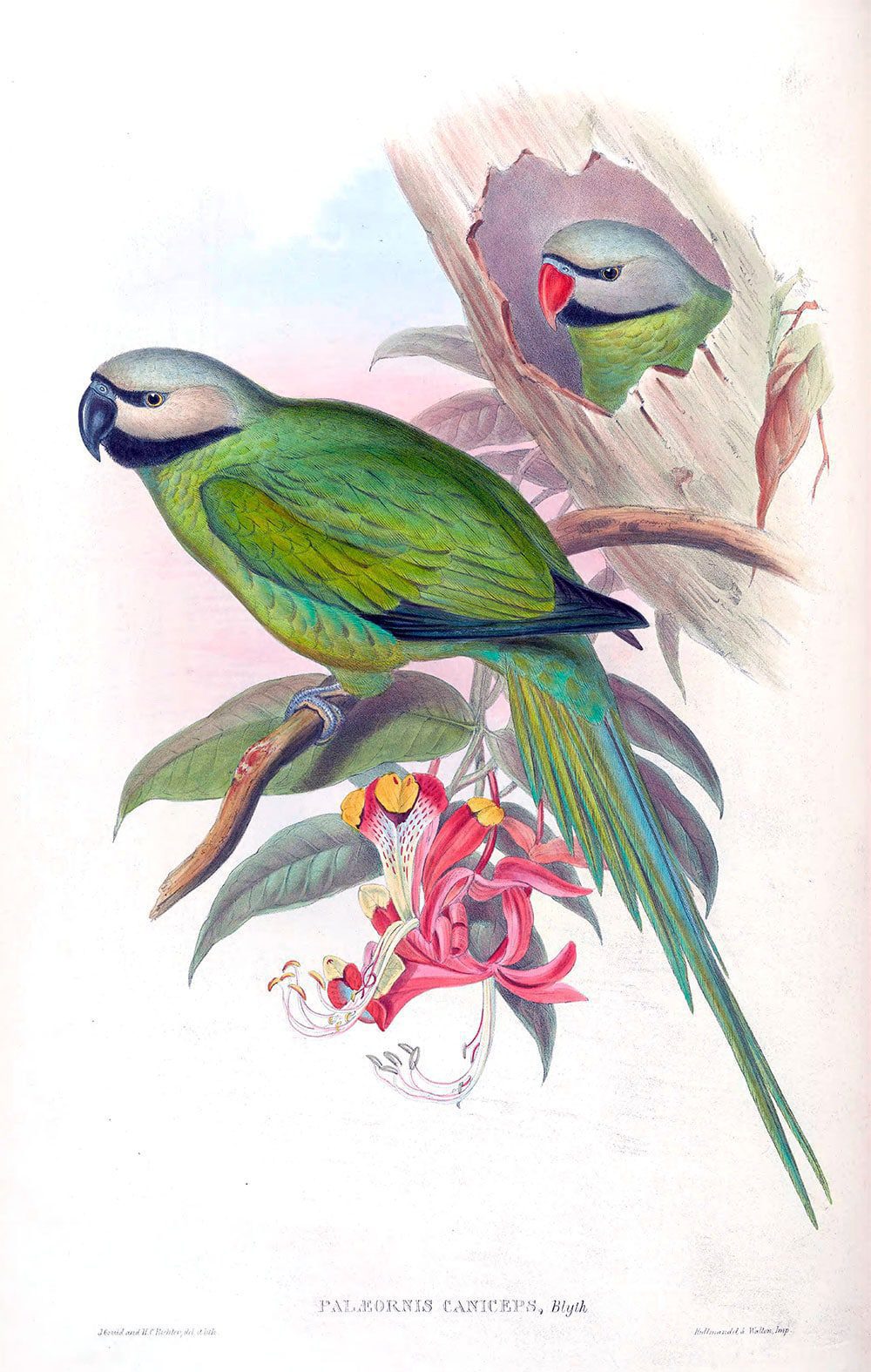
The Nicobar Parakeet(Psittacula caniceps) has the crown, upper cheeks and ear-coverts pale grey; stripe black in the region perioftalmica through the lores up to the forecrown; the lower cheeks and the chin are black. Nape and upper mantle pale gray bathed in blue; rest of the upper region green grass pale.
Upperwing-coverts green; primaries and secondaries Green with dark tips. Underwing-coverts green. Underparts green, slightly paler than upper parts. The elongated feathers central tail green with grey tinge, outer green.
upper jaw coral red, the lower black; cere dark grey; irises orange-red; legs dark gray.
The female has the bill black, the grey of the head and nape more strongly impregnated with blue, and tail slightly shorter.
The immature similar to females.
Habitat:
The Nicobar Parakeet it is difficult to locate visually among the dense foliage, Although its presence is revealed by their distinctive calls. Their flight is fast and direct.
They inhabit in the high rainforest. Generally held among the dense foliage on canopy, about everything when not fully.
They are perhaps most abundant in the coastal forests than inside.
Has also been recorded in areas with plants of Areca catechu and coconut plantations, which suggests a considerable tolerance of the species in habitats modified.
Usually, observed in pairs or in small groups.
Reproduction:
Unknown breeding habits.
Food:
Unknown diet except for the fruits of Pandanus, abundant in the inhabited islands of the Nicobar archipelago.
Distribution:
Size of the area of distribution (reproduction / resident): 1,100 km2
endemic to the Nicobar Islands, located in the Indian Ocean and belonging to the India. Registered since Great Nicobar, Montschall and Kondul. Resident. His status is unknown but they are potentially at risk due to habitat loss due to the expansion of rice cultivation; also affected its population because of the bird trade, Although there is little local use of these birds as pets and there are no known international traffic.
The population of the Nicobar Parakeet It is suspected that It may be waning as a result of the destruction of habitat due to the tsunami of the 2004 (K. Sivakumar in litt. 2007), due to the development of the island, and because the capture for the wild bird trade. But, more research is needed to establish with precision the trends.
Probably between 10,000 – 15,000 specimens on freedom.
The main threats to the Nicobar Parakeet They come because of the large number of birds that are trapped for the cage bird trade.. On the other hand, the increase of settlements on the Islands It has led to increased pressure on natural resources and the planned development projects may seriously affect the habitat of this species. The tsunami of 2004 It destroyed large tracts of coastal forest that may have caused a further decline in the population. But, the data remains scarce, and the rate of regeneration of these forests is unknown (K. Sivakumar in litt., 2007).
Conservation Actions Proposed:
– Determine the impact of the trade in the species.
– Calculate the rates of forest loss.
– Protect remaining habitat areas.
– Assess the impact of the tsunami of 2004.
"Nicobar Parakeet" in captivity:
There is not much information available; probably brought for the London Zoo at the beginning of 20th century; kept as pets, at an unknown number, by the local population of the Nicobar Islands
Since the Nicobar Parakeet is a species so rare, It is not recommended to keep them captive, it is preferable to place them in a breeding program well managed by expert hands.
Alternative names:
– Nicobar Parakeet, Blyth’s Parakeet (English).
– Perruche des Nicobar, Perruche de Blyth (French).
– Graukopfsittich (German).
– Periquito-de-nicobar (Portuguese).
– Cotorra de Nicobar (español).
Origin: Colombia, Ecuador, Bolivia, Peru, Venezuela, Guyana, Suriname, Trinidad and Tobago
Character: Activos
Life expectancy: 40 years.
Height: 50 to 51 cm..
Content
Description:
50 to 51 cm.. length and a weight between 292 and 390 g.
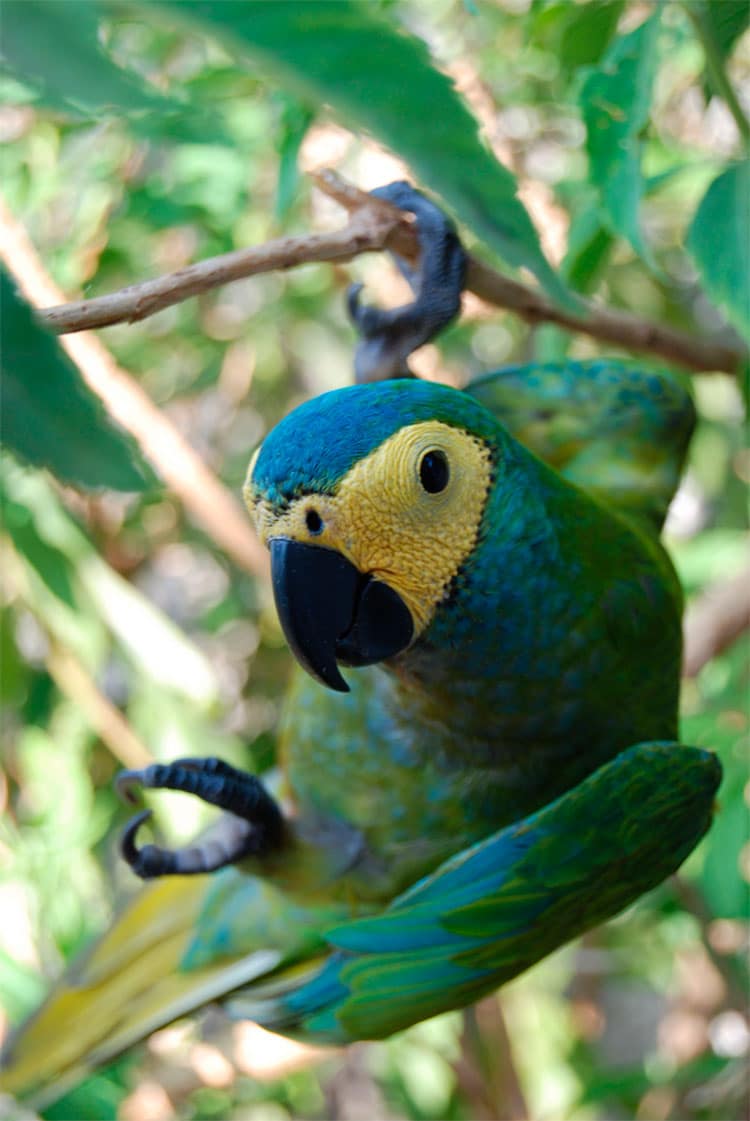
The Red-bellied Macaw(Orthopsittaca manilatus) is a medium-sized Macaw; has the forecrown and crown a bright blue, gradually faded to blue-green color in the area of the nape and on both sides of the neck. The the mantle and scapulars are green grass with impregnations color olive and yellow edges, producing, altogether, a flaky effect; the back and rump are green grass, with some feathers tipped pale bluish. The uppertail-coverts grass-green. The lesser and median coverts green grass impregnated with green olive with yellowish margins; alula and primary coverts green with vane outer blue; large inner coverts green.
The flight feather bordered with blue and green tips. Under, the wings with coverts yellowish-green and flight feather yellowish. The feathers of the throat and top of the chest are pale grey blue in the Center and yellowish-green in the margins; those of the lower area of the chest and top of the belly without tones pale in the Center, but with some feathers with margins off dark red; belly dark red; undertail-coverts bluish green. Upper, the tail green color in the Center with yellowish margins; upor down yellow.
Bill black; nude part of lores and cheeks yellowish white; irises dark brown; legs dark gray.
Sexes similar, the males, possibly, bigger.
Immature clear tip in the bill and smaller patch of dark red color of the belly.
Lives in Savanna and flooded forest, where there are Palm trees, in altitudes close to the 500 m. Very dependent from the Palma de moriche or aguaje(Mauritia flexuosa), which feeds, staying almost invisible due to its Green plumage.
Occasionally wander in by cultivated areas and have been in the mangroves.
gregarious, flocks of more of 100 observed birds. Usually, they rest in the branches of the Mauritia Palms, where they remain hidden among the foliage of leaves.
Reproduction:
They nest in holes of las palmas dead found near or surrounded by water, often use the nests of the Orange-winged Parrot (Amazona amazonica), of Trinidad and Tobago.
The breeding season is from February to September in Trinidad and Tobago; from February to may in Colombia; from February to June in Guyana. The size of the put is of 2 to 6 eggs with a period of incubation of approximately 27 days. The young begin to feather already in the eleventh week. Take an average of 2 to 3 years to mature, remaining during that period very close to their parents.
Food:
Usually feeds on the fruits of the Palm tree Mauritia flexuosa they are present during the season dry when other fruits are scarce, as well as other palm trees such as Roystonea oleracea and Euterpe.
The Red-bellied Macaw communicate with each other with calls when there is a localized food source.
They roost in Palm trees full of fruit and used its beak to peel hard fruits to expose the pulp. Son, unlike most parrots, seed predators, but partially, since they eat the fruit, leaving intact the endocarpio (Darnell and Bergstrom 2002; Janzen 1981; Kristosh and Marcondes Machado-2001).
Some lick attempt to fly with the seed at its peak, and unintentionally may fall between two palm trees. Seed drop and feeding behavior, in order to avoid damaging the seed, It makes these macaws and other psittacidas agents of seed dispersal.
Distribution:
Size of the area of distribution (reproduction / resident): 7.150.000 km2
The Red-bellied Macaw is distributed to the North of South America to the East of the Andes.
In Colombia its range is from Goal and West of Vaupés until Putumayo and amazon, spreading northeast of Venezuela until Trinidad and Tobago and Guianas, where apparently, they are restricted to coastal areas.
Are distributed to the East of Ecuador, Northeast of Peru, North of Bolivia and much of the Brazilian Amazon, to the East of For and from the West of Bay and Goiás until Mato Grosso. Apparently absent most of Venezuela and North of the Amazon basin of Brazil, in the basin of the Black river.
A small population reported in the North of São Paulo, Brazil.
Probably residents in some areas, although migratory in others, for example, in the Northwest of Bolivia, where been observed have to these macaws in the months of September to November, being absent from November to January.
Share on a local scale; the distribution is closely related to the palms of Mauritia. Probably stable population. But, in the northeast of Brazil fruit Mauritia It is used in the manufacture of confectionery products and the trunks of the palms for some construction purposes..
Rare in captivity.
Conservation:
• Red List category of the UICN current: Least concern.
• Population trend: Stable.
Global population size has not been quantified, but this species is described as quite common.
The populations of the Red-bellied Macaw they depend of the Palms Mauritia for food and nesting. These trees are widely used for construction, and that is why you can have bad consequences for the future of the species.
These birds are threatened by the felling of these Palm trees and capture for the pet trade. But, This species tends to be common in most of their habitats, with the exception of Colombia, Guyana and Venezuela, where it is threatened by Habitat loss.
"Red-bellied Macaw" in captivity:
Rare bird cage.
It is extremely difficult to keep these birds alive in captivity., because, mainly, to your excitable personality, and its diet low in fat and high in carbohydrates.
The export and import for the pet trade often brings with it a mortality of the 100%; captive-bred chicks have a very low survival rate. A high percentage die at an early age kidney disease. Its acquisition as a pet is very questionable.
The only country that exports these birds in recent years is Guyana.
Due to the lack of commercial availability of nuts of moriche Palm, peeled unsalted peanuts have been used as a staple in the diet of these birds in captive. They should not be fed with the typical commercial seed, especially fat seeds such as of the Sunflower.
A nutritional analysis of the natural diet of the Red-bellied Macaw He revealed that this was made up of high levels of beta carotene, of carbohydrates and zero fat. This explains its propensity to obesity in captivity. Almost all parrots usual diets are too high in fat content, with what the Vitamin A supplements in the form of beta carotene they are essential.
Deficiencies of Vitamin A are usually made to notice very quickly, giving rise to many serious diseases, being able to get to many of them deadly.
The beta carotene is the only way Vitamin A that do not require fat to be absorbed. The successful reproduction This species only has been able to achieve by adjusting your diet.
The pups fed by hand are much quieter than adults and are able to metabolize fat more efficiently than adults. Once weaned, they remain in need of a very low fat diet.
There are no data of your longevity in captivity, Although in nature, possibly, they can live around the 40 years.
Is not a bird to keep in captive. A responsible attitude should be to place these beautiful birds in breeding programs so that future generations can enjoy them..
(1) – Red-bellied Macaw Orthopsittaca manilata in Goiânia, Brazil By A C Moraes (originally posted to Flickr as Tocci) [CC BY 2.0], via Wikimedia Commons
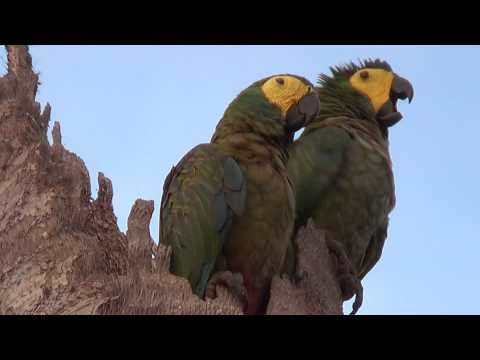
(2) – Two Red-bellied Macaws flying near the Amerindian Reservation of Santa Mission, Guyana By Feroze Omardeen [CC BY 2.0], via Wikimedia Commons
(3) – A little girl in San Martin, Peru with a pet juvenile Red-bellied Macaw on her right shoulder By Michael Nickel (originally posted to Flickr as girl with lorito) [CC BY 2.0], via Wikimedia Commons
(4) – Buchirroja Guacamaya ( Orthopsittaca manilatus) by Marcello Magnussen – wiki_aves_colombia
(5) – Buriti maracana chicks in the nest, Orthopsittaca manilatus by Osvaldo Scalabrini
Of 31 to 38 cm.. length and a weight between 219 and 275 g.
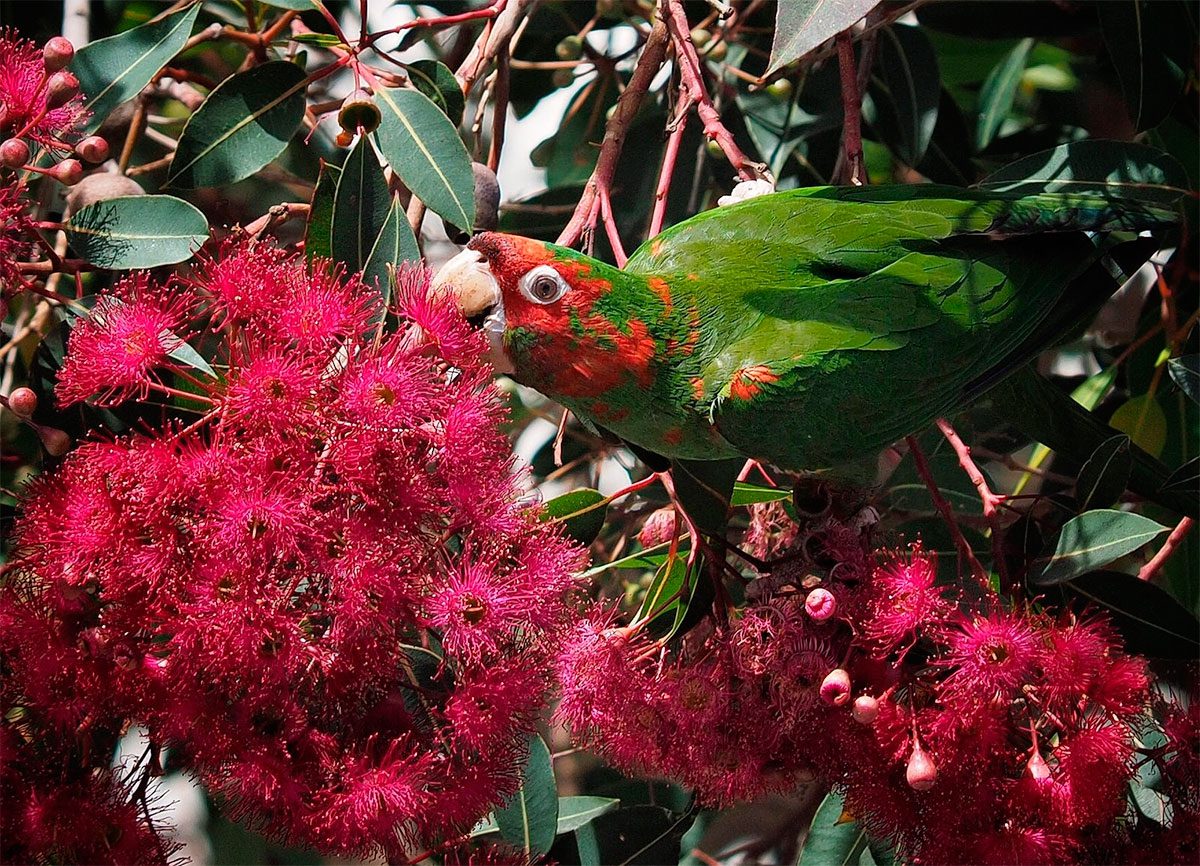
The Mitred Parakeet(Psittacara mitratus) It has a reddish-brown forehead with a bright red fusion on the front of the crown; the lores and cheeks to the rear of the eyes, bright red; the sides of neck dark green with scattered red feathers. The upperparts from the back of the crown up to the uppertail-coverts, dark green with some scattered red feathers (especially in the nape).
Upperwing-coverts and flight feather, at the top, green, sometimes with one or two dark red feathers on the bend of wing; flight feather color marron-oliva below. Underwing-coverts opaque green. The underparts, dull, Green pale with dye olive, usually with scattered red marks, especially in the the thighs. Upper, the tail dark green with Brown tips; Brown down.
The bill off-white; bare periophthalmic creamy white; irises beige color; legs distant.
Both sexes similar.
The Immature with fewer red feathers on the head, in special, in the cheeks and Brown, not Orange, the irises.
(Arndt, 2006) – Front band Red that extends to the lores and Strait, e incomplete bare periophthalmic; upper zone of the cheeks and ear-coverts, green.
They usually inhabit in areas of dry subtropical vegetation, There are also records in temperate zones: montane deciduous forest, cloud forests drier, cultivated areas, hills covered with tall grass, areas populated with scattered trees and fields, as well as sheets of legumes dry grasslands with patches of forests of Prosopis.
Often can be seen near high and steep rock walls. Usually, at altitudes of 1.000 to 2.500 Metros in Argentina, Although there are records to 4.000 metres in the Peru. Rarely, or never, descends to the lowlands. Commonly seen in groups of 2 to 3 birds, but until 100 individuals outside the breeding period.
Reproduction:
They nest in cliffs or hollow trees. There has been a egg laying in Oran, Argentina. Probably the clutch is between 2 and 3 eggs.
Food:
It usually feeds in areas of Virgin forest, but also full of grain crops in populated areas. This and other parrots migrate to the Lerma Valley in the Northwest of Argentina for feeding of the berries in maturity during the month of October.
Distribution:
The Mitred Parakeet are distributed in the southwest of South America, from the South of Peru through the Center-West of Bolivia, to the North of Argentina. Observed in the great valleys of the center of the Peru, from Huanuco until Cuzco. Disintegrated in the valleys of the Eastern Andes in the Centre-West of Bolivia, where there are records in Peace, Santa Cruz, Cochabamba, Oruro, Padilla and South of Sucre, to the Northwest of Argentina in Jujuy, Salta, Tucumán and South of Catamarca, until La Rioja and Córdoba.
In general residents, Although some with seasonal movements in the North of Argentina and Bolivia.
Locally distributed within its range, Although most widespread in the South of Cochabamba, Bolivia. In Argentina, generally common, abundant in some locations (apparently more numerous in Catamarca and Salta), but perhaps decreasing.
Maintained in captivity and sold in large quantities at the international level (mainly from Bolivia) at the end of 1980.
Subspecies distribution:
Psittacara mitratus chlorogenys
(Arndt, 2006) – Its habitat ranges from the North and centre of Peru, in the Valley of the Utcubamba River and surrounding Highlands in amazon and North of Cajamarca, as well as in the eastern valleys of the Andes, in Huanuco and Junin..
• Red List category of the UICN current: Least concern
• Population trend: Stable
The size of the world population Mitred Parakeet It has not been quantified, but this species is described as «common» but of irregular distribution (Stotz et to the., 1996).
The population suspected to be stable in the absence of evidence of any reduction or substantial threats, Although it has been the subject of intense trade: from 1981 When it was included in the Appendix II, 158,149 individuals were captured in the wild and reported in the international trade (UNEP-WCMC trade database CITES, January 2005).
"Mitred Parakeet" in captivity:
This bird is usually available in pet stores or breeders.
They are known to be very attached to their owners. Very playful, they can also become good conversadoras and are considered the more strong and lively group of Aratinga parrots. The Mitred Parakeet It is good for owners who want a large bird and is easy to care for and handle. Can entertain herself if you give it a lot of toys, but they also enjoy interacting and playing with his human flock.
Parrots A Guide to the Parrots of the World – Tony Juniper & Mike Parr
Birdlife
Photos:
(1) – A feral Mitred Parakeet in Fort Lauderdale, Florida By http://www.birdphotos.com (Own work) [CC BY 3.0], via Wikimedia Commons
(2) – Mitred Parakeet (Aratinga mitrata), Inka Trail to Machu Picchu, Peru By D. Gordon E. Robertson (Own work) [CC BY-SA 3.0 or GFDL], via Wikimedia Commons
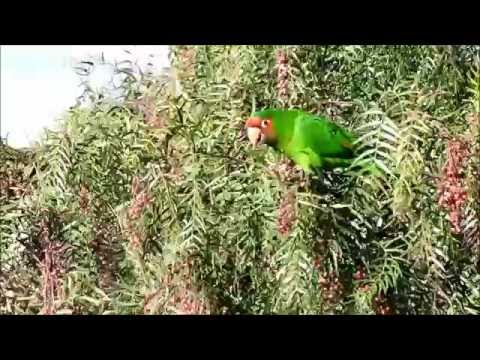
(3) – Mitred Parakeet by vil.sandi – Flickr
(4) – Mitred Parakeet (Psittacara mitrata) by Gregory "Slobirdr" Smith – Flickr
(5) – Member of an escaped flock roughly 35-50 strong in Sunnyvale, CA By Shravans14 (Own work) [CC BY-SA 4.0], via Wikimedia Commons
(6) – A pair of parakeets in the escaped flock in Sunnyvale, AU. This flock has been around for at least 20 years By Shravans14 (Own work) [CC BY-SA 4.0], via Wikimedia Commons
(7) – Wild parrot (Mitred Parakeet) in Redondo Beach. (Aratinga mitrata) by Ingrid Taylar – Flickr
(8) – A pet Mitred Parakeet (also known as the Mitred Conure) By Lee (originally posted to Flickr as Gaspar4) [CC BY-SA 2.0], via Wikimedia Commons
(9) – A wild SoCal parrot (Mitred Parakeet) eating Bottlebrush in Redondo Beach. This bird is part of a local flock that frequents the neighborhood by Ingrid Taylar – Flickr
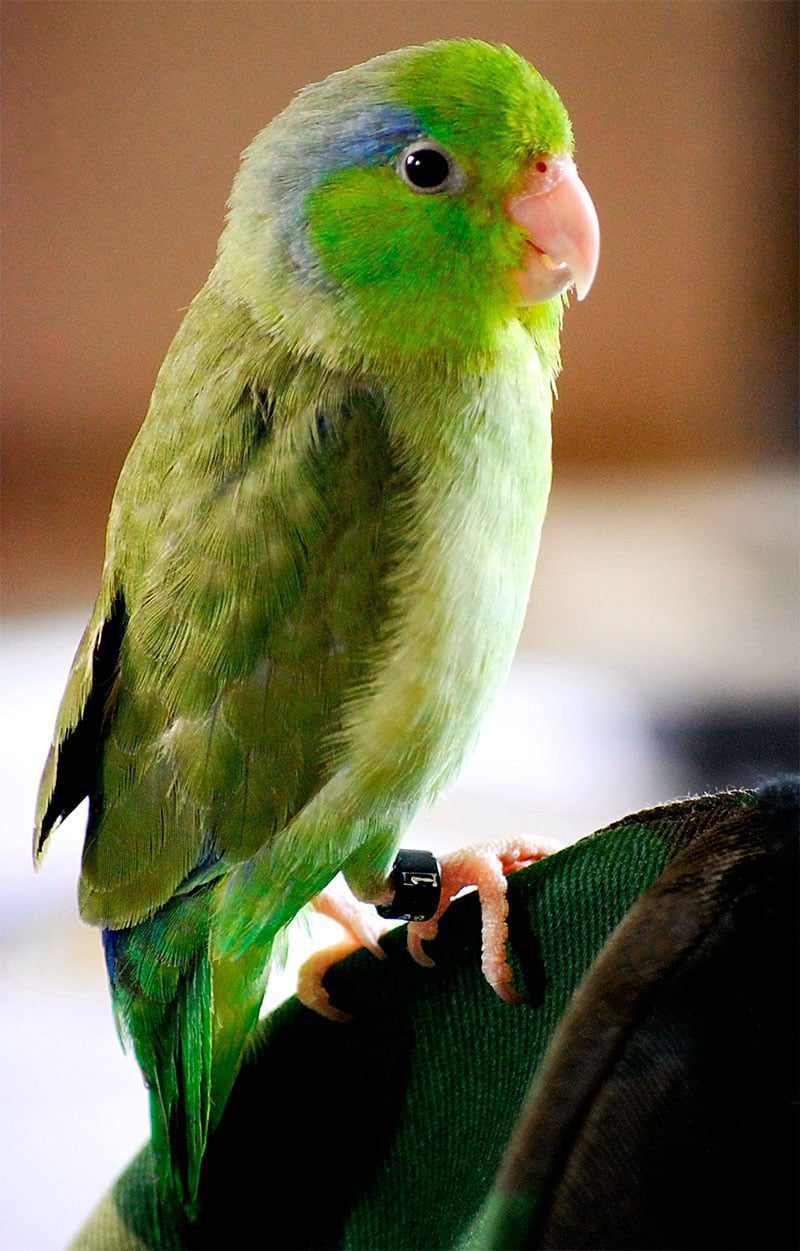
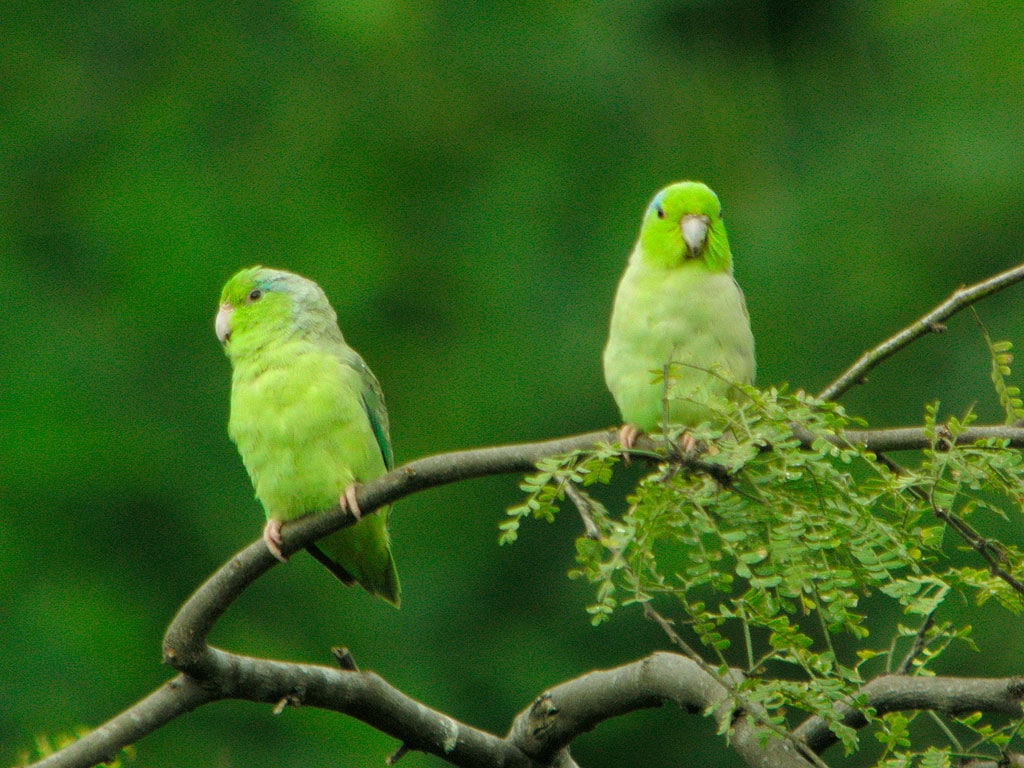
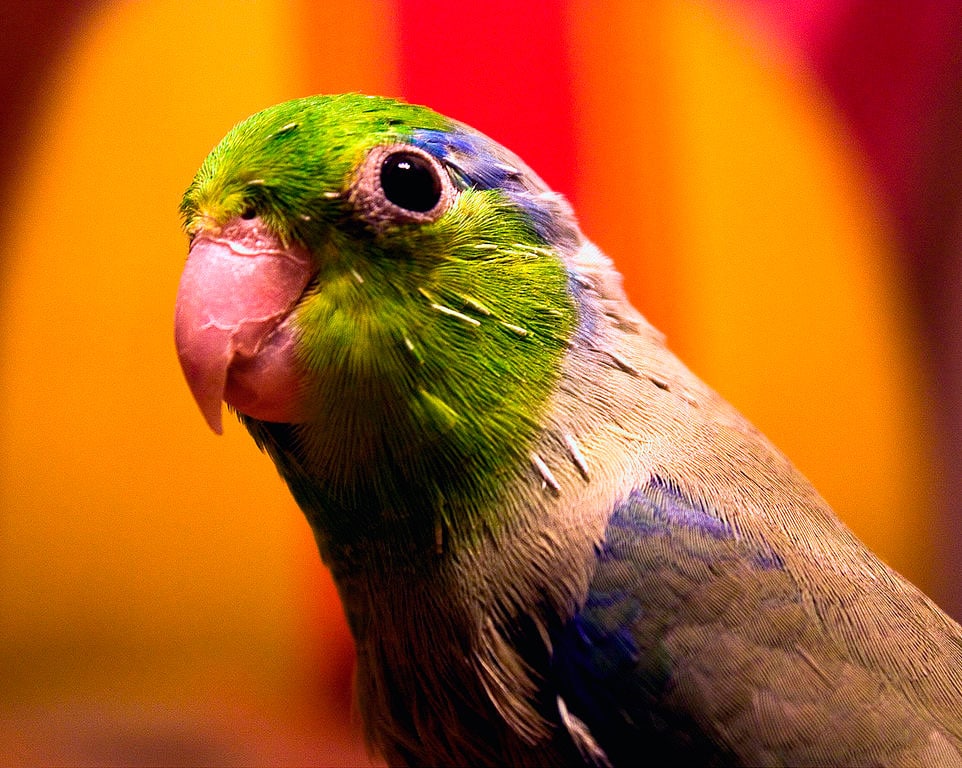
The Pacific Parrotlet(Forpus coelestis) It is a small bird, chubby with a tail short and finished in tip. Distinguishable in flight by the blue and Brown on the inside of the wings. It has blue behind the eye and in the middle of the wing
at the top. The female does blue stain on the top of the wing
and the blue behind the eye is paler. The Immature males they are similar to the adult male, but more pale and with back brownish.
The Pacific Parrotlet frequent most dry woodland habitats, such as scrub thorny, bosque deciduous, dense thickets of Captus with balsa trees, plantations of banana and mango, riparian zone, irrigated fields in Savannah and gardens, although their preferred areas are those of humid tropical vegetation such as the coastal mangales.
Older records of this species are from below sea level of 1.000 m, but are to 2.150 meters on the West side of the Andes in Huancabamba, is of Piura, Peru, and a 1.370-1.650 meters in the South of Loja, Ecuador.
Usually gregarious; they form large flocks where abundant food.
Reproduction:
It nests in the cavity of trees, in cactus, fence posts, pipes or the nests of the Pale-legged Hornero(Furnarius leucopus), of the Tie Neck Pijuí(Synallaxis stictothorax) or Fasciated Wren(Campylorhynchus fasciatus).
The breeding season includes the months of January to may. Sometimes, they breed a second time throughout the year. The laying of eggs 4-6.
Food:
The diet of the Pacific Parrotlet includes seeds grass, berries, fruit (example, of Tamarindus, Amaranthus spinosus) and cactus fruits. It forages among the vegetation and land.
Distribution:
Size of the area of distribution (reproduction / resident): 147.000 km2
irregularly common, sometimes abundant; most numerous in arid areas. The population has apparently not yet been severely affected by the trade in live birds or the conversion of natural and semi-natural habitats for the Agriculture. The species is probably Forpus most numerous in captivity.
Conservation:
State of conservation ⓘ
Minor Concern ⓘ(UICN)ⓘ
• Current category of the Red List of the UICN: Least concern.
• Population trend: Stable.
Justification of the population
The size of the world population It has not been quantified, but this species is described as «common» (Stotz et to the., 1996).
Justification of trend
Suspected that the population is stable in absence of evidence of any decline or threatens substantial.
"Pacific Parrotlet" in captivity:
Colorful, charming and intelligent. These small birds have become in very popular pets in recent years. Its small size and quiet nature make of the Pacific Parrotlet an ideal choice for people living in apartments. Nicknamed “pocket parrots” in the pet trade, These parakeets are actually the smallest of the family of parrots, and they are as smart as many larger species. Some learn to speak quite well, Although the species is not particularly known for the ability to speak.
An interesting fact upon the Pacific Parrotlet is that its closest relative is the Amazon parrot. Although the two species differ greatly in size, owners often report striking similarities between them. Despite being small birds, they are by no means “low maintenance birds”. While it is true that they are, course, easy to clean, in comparison with the larger birds, However require your daily care to keep them docile, socialization at an early age is the key to be in a future good behavior.
They have tendency to obesity. They must be able to get out of their cages, spread your wings, and exercise your muscles to maintain your physical and mental health.
Their metabolism is very high, and they should have food available at all times. They are known for their appetite voracious, and occur in one diet varied that consists in fruits and vegetables fresh, small seeds such as millet, the high-quality commercial pellets, and protein sources from hard boiled egg.
Parrots A Guide to the Parrots of the World – Tony Juniper & Mike Parr
Birdlife
Parrot Book, Parrots and macaws.
Photos:
(1) – Male Green Pacific Parrotlet, named Jackson By Susan C. Griffin (Own work) [CC BY-SA 3.0], via Wikimedia Commons
(2) – Pacific Parrotlets (also known as Lesson’s Parrotlet and Celestial Parrotlet) at Wilhelma Zoo, Stuttgart, Germany By Undertable [CC BY 2.0], via Wikimedia Commons
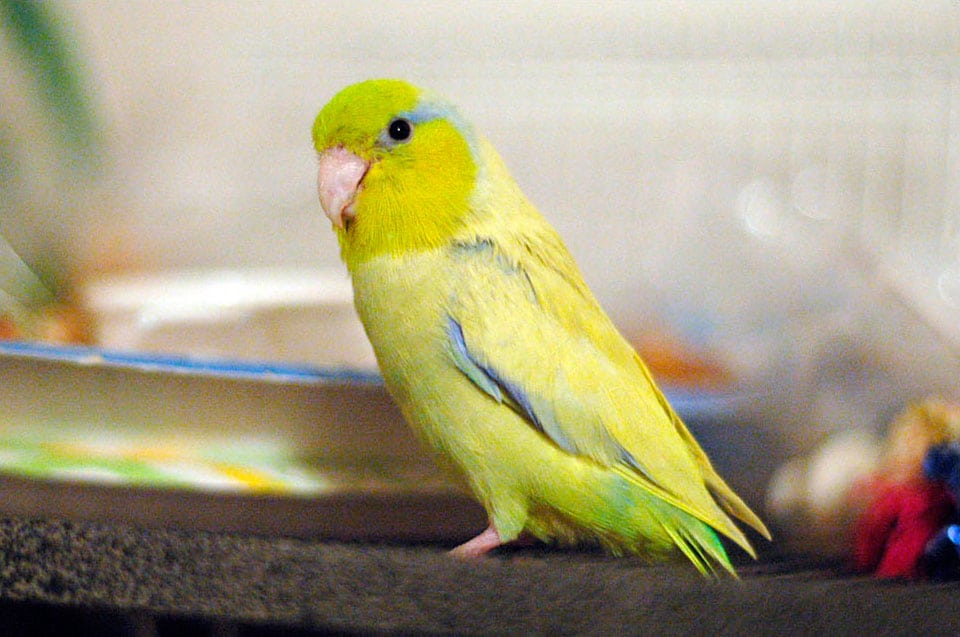
(3) – A pet Pacific Parrotlet – yellow colour mutation By Becky Wetherington (originally posted to Flickr as 82/365 – Good bird.) [CC BY 2.0], via Wikimedia Commons
(4) – A pet male Pacific Parrotlet (also known as Lesson’s Parrotlet and Celestial Parrotlet) By Erin Purcell (originally posted to Flickr as [1]) [CC BY 2.0], via Wikimedia Commons
(5) – Pacific Parrotlet (also known as Lesson’s Parrotlet and Celestial Parrotlet) in El Empalme, El Oro Province, coastal SW Ecuador By markaharper1 [CC BY-SA 2.0], via Wikimedia Commons
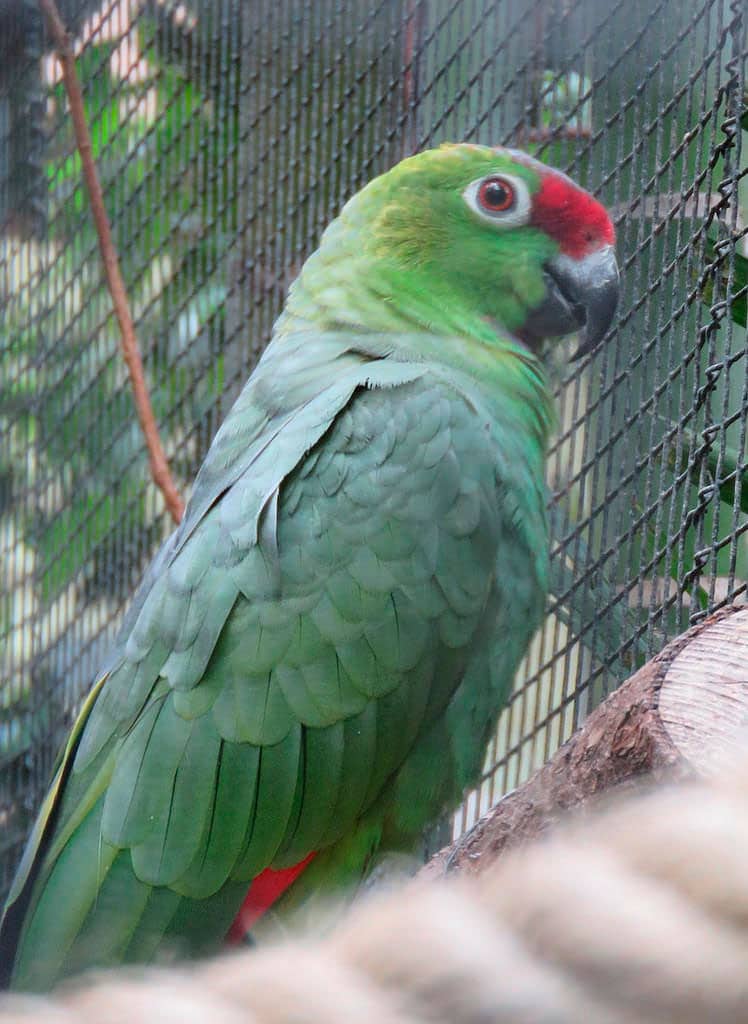
The Diademed Parrot(Amazona Diadema) It is generally green, with black edges to feathers crown, to the mantle and the chest; crown green to nape; the back of the green neck, mauve margin; feathers of the cere and forecrown, red; yellow-green, less yellow in upper cheeks, up to the ear-coverts; secondaries red on the bases, the green rest; tail green; eye ring pale yellow; eyes oranges; bill dark grey.
It is likely to frequent a variety of habitats from lowland forest species, including edges evergreen forest, as well as modified areas containing scattered trees or plantations (Del Hoyo et al., 1997, pit et to the., 2016).
They are in loose flocks or pairs, are gregarious When feed.
Reproduction:
The laying is of 2-3 eggs. Breeding season, It is supposed to be in early: January-March.
Food:
It feeds mainly from fruits and seeds, even some cultivated species (Del Hoyo et al., 1997), although there are no published data (Del Hoyo et al., 2016).
Distribution:
Size of its range (breeding/resident): 71.800 km2
Endemic low Black river and the northern margin of Amazon River, in the states of amazon and Northwest of For, in Brazil.
Conservation Amazona diadema:
State of conservation ⓘ
Endangered ⓘ(UICN)ⓘ
• Current category of the Red List of the UICN: In danger of extinction.
• Population trend: Decreasing.
Rationale for the Red List category
Based on a model of future deforestation on amazon basin and susceptibility to this new species capture, it is suspected that its population will suffer a very fast along three generations descent from 2002, so it is in danger of extinction.
Justification of trend
This species is expected to lose between 49 and 55% suitable habitat within its distribution throughout three generations (37 years) starting at 2002, based on a model of Amazon deforestation (Soares-Filho et to the). Given its susceptibility to capture, It is suspected that species decline by 50-79% during this time.
Threats
• The main threat to this species is the accelerating deforestation in the Amazon Basin as land is cleared for ranching and soy production, provided by the expansion of the road network, together with his susceptibility to capture (Soares-Filho et to the. 2011).
• The species is assumed to experience some pressure catch, probably mainly for internal trade, since this species is rare in aviculture (Del Hoyo et al ., 1997, pit et to the ., 2016).
• Proposed changes to the Brazilian Forest Code reduce the percentage of land to a private owner is legally obliged to keep as forest (including, critically, a reduction in the width of forest buffers with perennial vapors) and include an amnesty for owners who deforested before July 2008 (That they would later be absolved of the need to reforest illegally vacated land) (Bird et to the., 2011).
Conservation Actions Underway
• No specific conservation actions are known for this species, although part of their habitat is protected.
• It is distributed in the Jau National Park where it is rare or uncommon (Borges et al ., 2001, Borges & Almeida 2011).
Conservation Actions Proposed
• Carry out surveys to estimate the size of the population.
• Monitor deforestation rates in the range using remote sensing techniques.
• Study the level of Trapping threat.
• Increase the area of suitable habitat that receives protection effective.
• Boost changes in laws related to deforestation and forest protection.
The Diademed Parrot in captivity:
Rare in aviculture.
Each captive specimen of this species which is capable of reproducing, It is placed in a well managed captive breeding program and not be sold as a pet, in order to ensure its long-term survival.
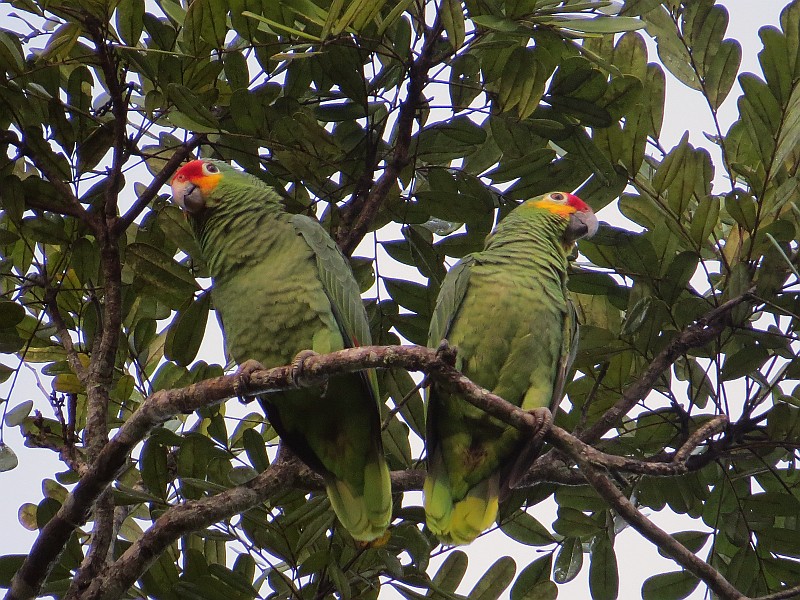
(1) – diadem parrot. Red lored parrot. 11 November 2015, Tikal, Guatemala by ze_da_binha
(2) – Diademed Parrot – amazon with tiara – Diademed amazon – amazon tiara By Florin Feneru from Orpington, UK (Diademed Parrot) [CC BY 2.0], via Wikimedia Commons
(3) – A Red-lored Amazon at Loro Parque, Cross port, Tenerife, Spain. This subspecies is also called the Diademed Amazon By Carlos Urdiales [CC BY-SA 2.0], via Wikimedia Commons
(4) – A Red-lored Amazon at Xcaret Eco Park, Riviera Maya, Mexico. Photographed as it started to rain By Tomasz Wagner from Burnaby, BC, Canada (Parrot – Amazona autumnalis) [CC BY-SA 2.0], via Wikimedia Commons
(5) – Diademed amazon (Diademed Parrot) Loro Parque, Tenerife by Florin Feneru – Flickr
(6) – PL. XXXI I Chrysolis diadema (î^wl By Blanchard, Emile; Bonaparte, Charles Lucian; Bourjot Saint-Hilaire, Alexandre; Le Vaillant, François; Souancé, Charles de. [CC BY 2.0 or Public domain], via Wikimedia Commons
 Minor Concern ⓘ
(UICN)ⓘ