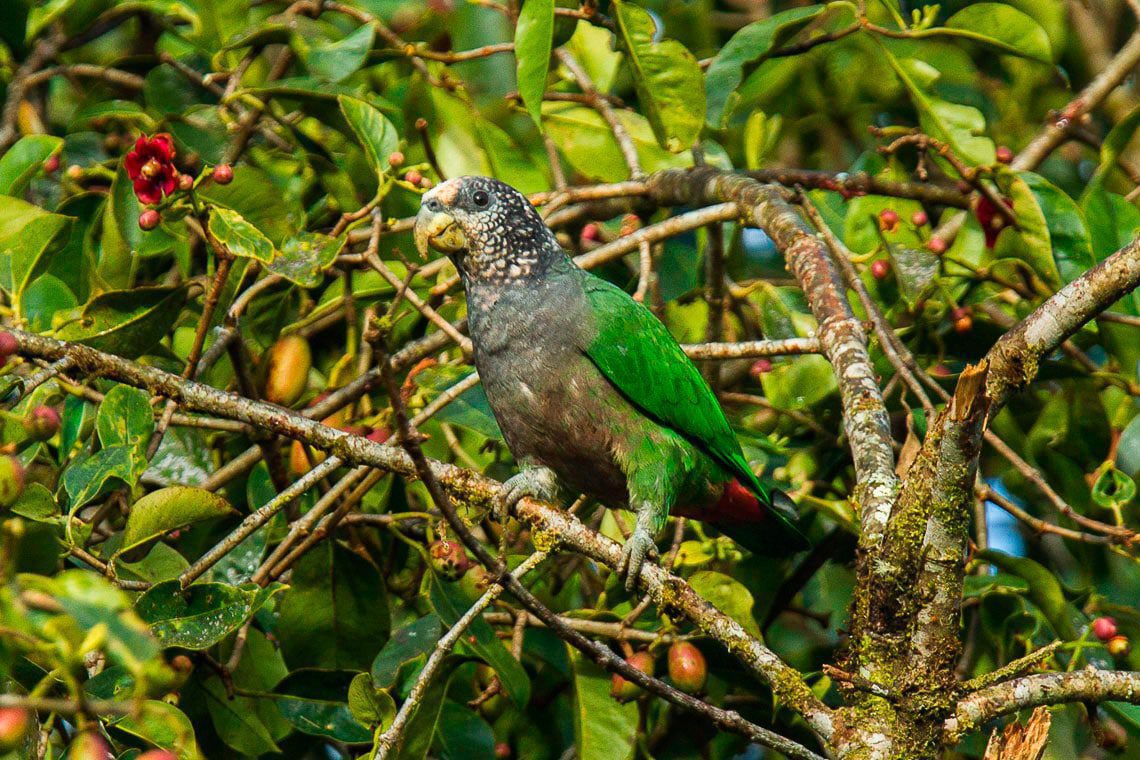
The White-capped Parrot(Pionus seniloides) It is easily identifiable by the "peak" yellow, head usually white, with the crown with reddish speckles, feathers of the nape and sides of the head with dark blue edges and red dyes which gives the appearance of flake.
Breast
with greenish blue edges, under belly and internal base tail red.
Iris of color Brown and legs gray-green.
The youth have crown and chest green, and green spots on the sides of the head and neck.
Note:
Previously he was treated as a subspecies of the species Pionus tumultuosus, that is to say, Pionus tumultuosus seniloides. A midyear 2014 it is considered as own species.
It is a kind Rare. It inhabits in humid jungle and edges, from the 1900 to 3000 m. It is mainly a species of temperate zone, but you can descend to lower elevations.
Like most highland parrots, the White-capped Parrot are rather nomads, widely wandering in search of fruits and seeds (now perhaps more as a result of extensive deforestation). Usually observed in flocks 3-25 birds, sometimes more. More active with grey weather, overcast skies. Difficult to see while feeding or resting in the upper canopy. Its silhouette in flight resembles a Amazona but with the beating of wings deepest.
Reproduction:
It nests in tree hollows.
Food:
Feeds of seeds, fruit of Turpinia paniculata and plants of the family Clusiaceae; sometimes in cornfields, causing damage to their crops.
Distribution:
Size of its range (reproduction / resident): 1.020.000 km2
Live west of Venezuela (from the border Trujillo–Lara) through the East of the Andes of Colombia (rare in the western Andes), and on both sides of the Andes in Ecuador and Northwest of Peru (west to Cajamarca and this, at least until Freedom)
Conservation:
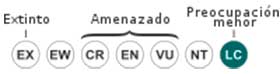
• Current category of the Red List of the UICN: Least concern.
• Population trend: Decreasing.
Justification of the population
The size of the world population It has not been quantified, but this species is described as «quite common«, but irregular distribution (Stotz et to the., 1996).
Justification of trend
They suspected that the population is declining due to the continuous habitat destruction.
"White-capped Parrot" in captivity:
Rare in captivity. In Europe they arrived first at the beginning of the century 20 and then the early 70. In captivity, However, They were raised for the first time in the second half of the 80.
Alternative names:
– White-capped Parrot, Speckle-faced Parrot (White-capped), White-headed Parrot (English).
– Pione givrée (French).
– Greisenkopfpapagei, Glatzenkopfpapagei, Greisenkopf-Papagei (German).
– White-capped Parrot (Portuguese).
– Loro de Cabeza Blanca, Loro seniloide, Loro gorriblanco (español).
– Cotorra Cabeciblanca (Venezuela).
– Avibase
– Parrots of the World – Forshaw Joseph M
– Parrots A Guide to the Parrots of the World – Tony Juniper & Mike Parr
– Birdlife
– Parrot Book, Parrots and macaws Neotropical
– parrots.org
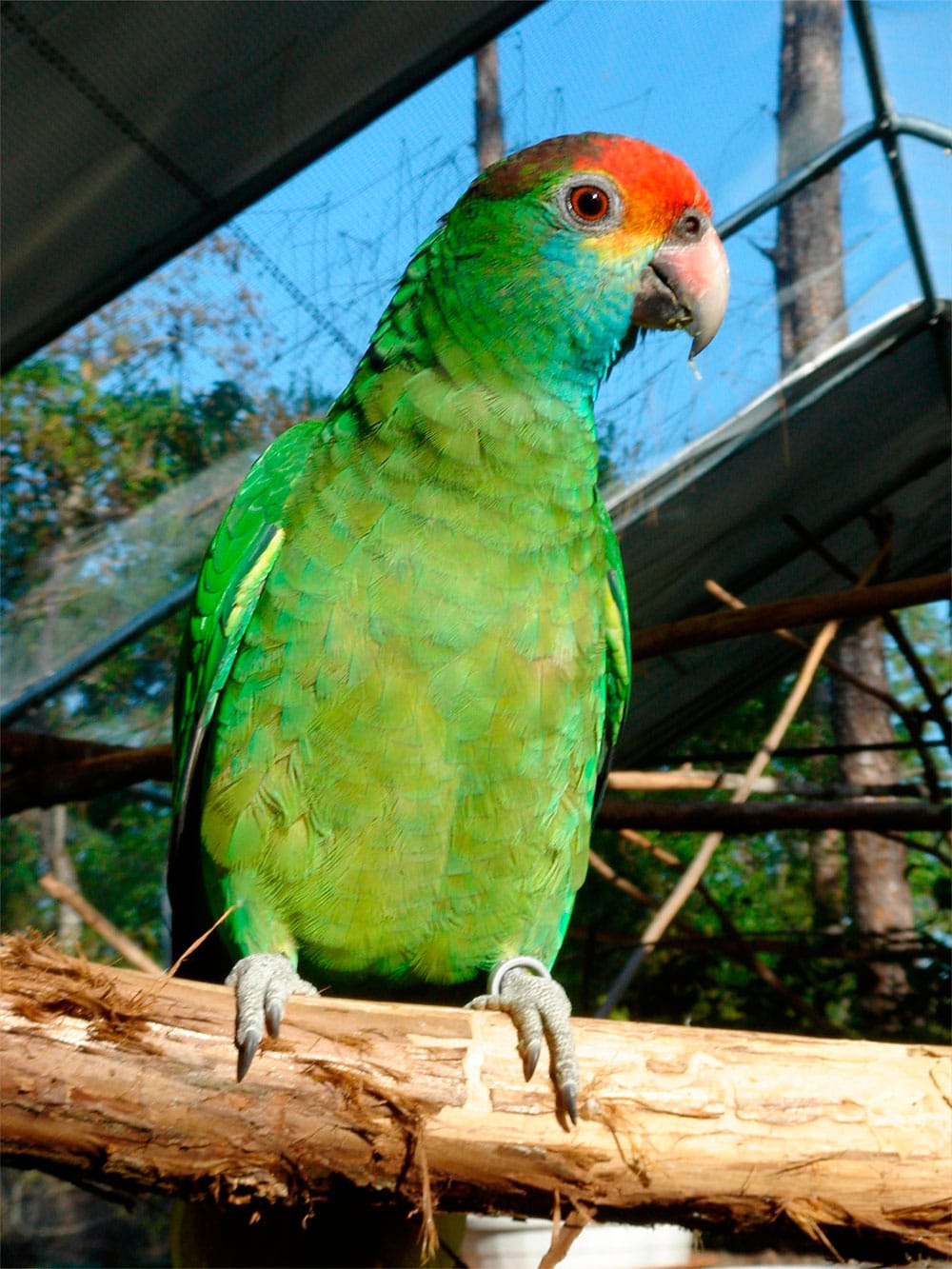
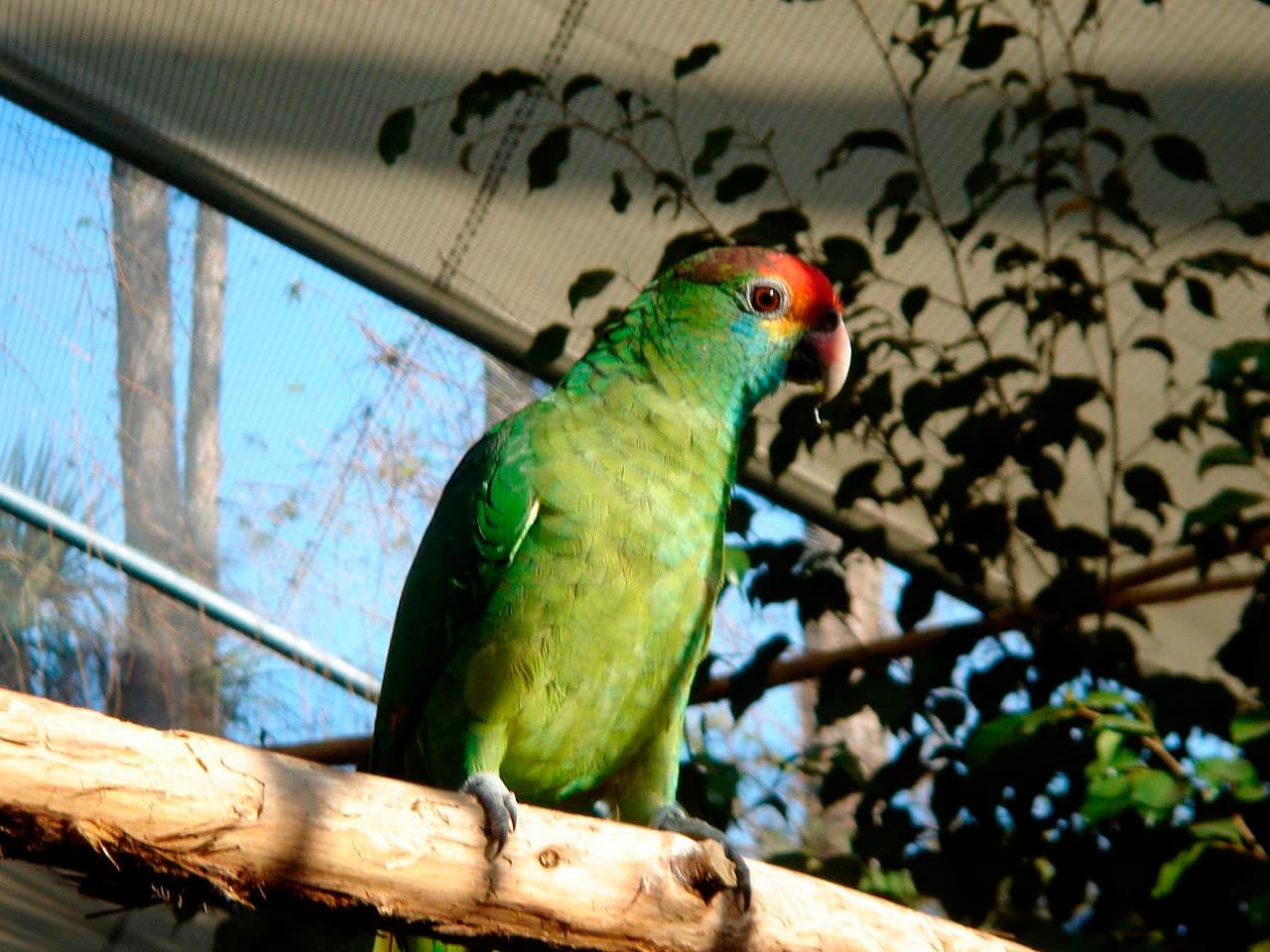
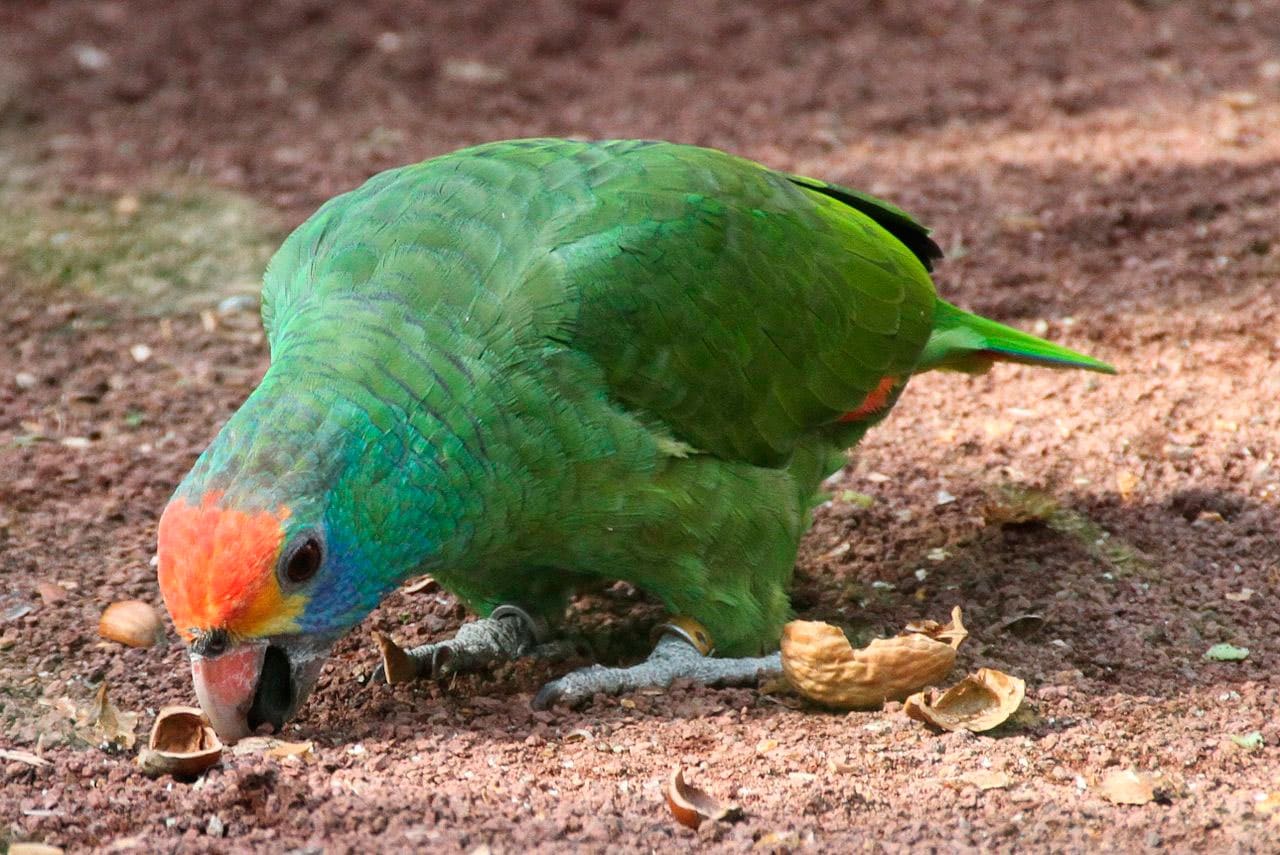
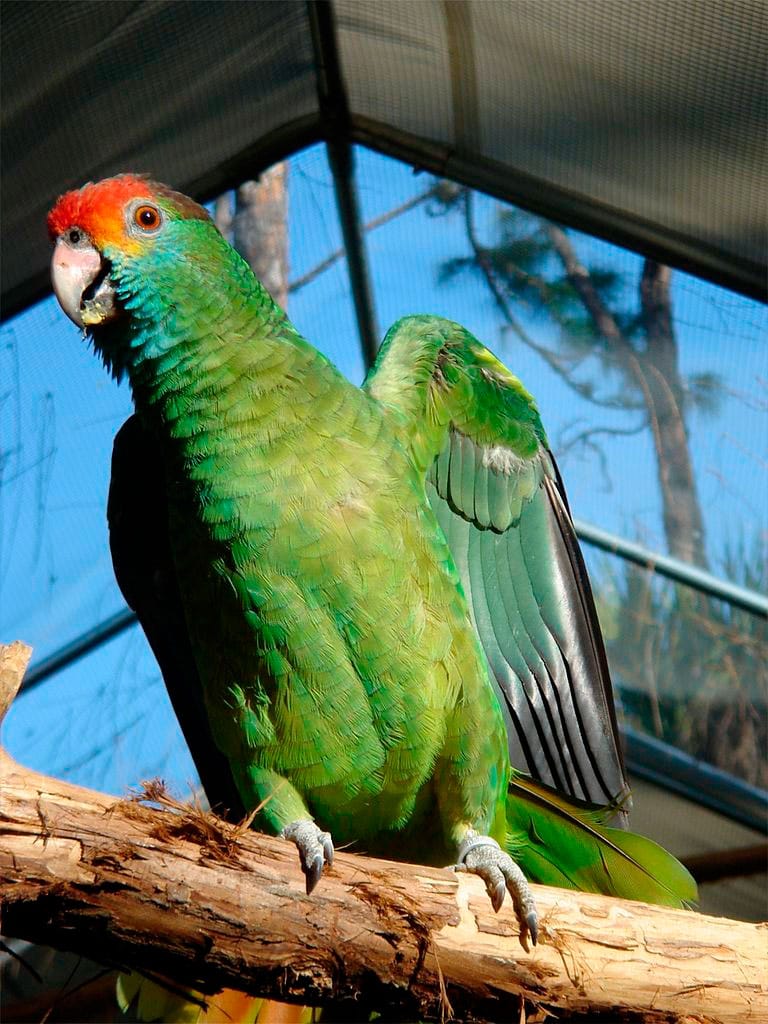
The Red-browed Parrot(Amazona rhodocorytha) has the forecrown and front of the crown, bright red; back of the crown, green with brownish purple tips; lores oranges; lower cheeks and throat, pale blue; ear-coverts and sides neck, green with plenty of blue; nape green with black tips. Upperparts green, some feathers showing faint dark tips. Wing coverts green with yellow on the carpal edge. Primaries dark grey; three outermost secondary, red at the base, other green with violet blue tips. Underwing-coverts green. Underparts green, paler and more yellowish than above, with some feathers showing faint pale blue tips (especially in the belly and around the thighs). The tail It is green with yellow tip and a large patch in red subterminal innerwebs of the lateral feathers. Bill color pale horn; irises orange; legs grey.
Both sexes are similar. Immature It is less extensive in red head and in the tail, and the red color is confined to only the first two secondaries.
Taxonomic note:
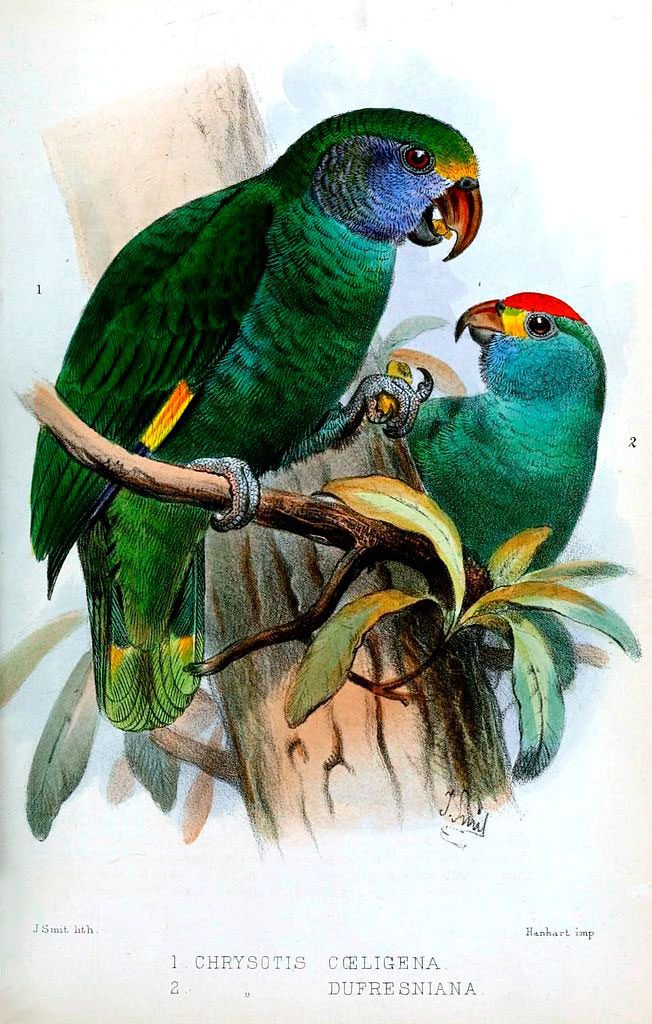
The Red-browed Parrot It has been widely treated as conspecific with Blue cheeked Parrot(Amazona dufresniana) and Red-tailed Parrot(Amazona brasiliensis). According to reports, the birds of Alagoas show the throat orange, suggesting a racial differentiation. It has not proposed any subspecies.
The Red-browed Parrot mainly inhabits moist lowland forests, but forests also date from the highlands (perhaps seasonally) inside (for example, in Serra do Mar and east of Minas Gerais, Brazil) up to approximately 1.000 m. Although records on the edges of forests, probably not adapt to the conditions created, even partial deforestation. They sleep communally on tall trees in forest.
Reproduction:
The eggs possibly they hatch in October and pairs with their young have been observed in January.
In captivity, sunsets four eggs are common; the incubation hard 24 days, with the young leaving the nest 34 days after hatching.
Food:
Feeds of fruit, seeds, berries and cocoons they get in the treetops; It has also been registered to Red-browed Parrot feeding is of papaya, jaca, Mango, cacao, banana and coffee plantations.
Distribution and status:
Size of its range (breeding/resident): 2.700 km2
The Red-browed Parrot It was first discovered in northern Sao Paulo at the beginning of the year 90.
This is an Amazon of Atlantic tropical forests of Brazil, in the East of Alagoas and further south, until Rio de Janeiro. No records between Alagoas and northeast of Bay, but if southwards and into neighboring areas, to the East of Minas Gerais, Brazil, through Espirito Santo until Rio de Janeiro.
Obviously, he suffered a drastic decline in its geographical expansion and its population since European settlement. Today they live confined to the last remaining fragments of the Atlantic tropical forests. Possibly extinct Alagoas, where the last native lowland forests were cleared in the 1990s 1980, although still quite common in at least one protected area Espirito Santo.
• Current category of the Red List of the UICN: In danger of extinction.
• Population trend: Decreasing.
• Population size : 600-1700
Rationale for the Red List category
This species is endangered because of their severely fragmented and declining population. There remains a proper dismantling of Atlantic forest habitat and capture for the bird trade cage is an additional threat. It is considered nationally in peligro de extinctionn in Brazil.
Justification of the population
The species has a small population located in the band 1,000-2,499 individuals in total. This is equivalent to 667-1.666 mature individuals, rounded here to 600-1.700 mature individuals.
Justification of trend
It is suspected continued rapid population decline based on habitat destruction and fragmentation and capture for domestic and international pet trade.
Threats
less than 10% of original forest cover remains in Bahia and Espírito Santo, and only 2% en Alagoas (Brown and Brown 1992, Conservation International 1995), mainly due to conversion to plantations and pastures. In fact, now it is estimated that less than 1% the general habitat of this species remains (Klemann-Júnior et al., 2008). In janeiro river, many fragments of important habitats are being cleared, especially around the Desengano State Park. The collapse of the cocoa economy in southern Bahia has resulted in increased logging by landowners and colonization of reserves by former plantation workers. (Snyder et to the., 2000). If the seasonal movement of birds is confirmed, this would multiply the problems of habitat loss. In the breeding season 1998-1999, 174 nestlings were captured, especially reservation, for domestic and international trade of birds in cages (Brown and Brown 1992), While 664 individuals were recorded in captivity at the Center for Reintroduction of Wild Animals 2005-2006 and others were found in private cages (L. Klemann-Júnior a little., 2007). Illegal trade is apparently the main threat to the species in Espírito Santo (Klemann-Júnior et al., 2008b). Memories containing feathers have been on sale outside the Monte Pascoal National Park (Sweeney 1996). a pest species is considered in some plantations of papaya, coffee and cocoa (Klemann-Junior 2006, L. Klemann-Júnior a little., 2012).
Conservation Actions Underway
CITES Appendix I and II and protected by Brazilian law. Considered endangered in Brazil to 2014 (Klemann-Júnior et al., 2008), It is now classified as Vulnerable (MMA 2014). They live in 14 Reservations (Wege and Long 1995 , RB Pineschi by C. Yamashita in some. 2000), but most of them provide minimal habitat protection and none are effective against poaching. The ex situ population is managed under a European species survival plan (Sweeney 1996) and Curitiba Zoo (L. Klemann-Júnior a little. 2012), which together with Loro Parque Foundation, Foundation Rare Species Conservation and Environmental Idéia, have successfully developed a captive breeding program (Reinschmidt and Waugh 2005 , L. Klemann-Júnior a little. 2007, 2012) .
Conservation Actions Proposed
Survey to locate additional populations. Protect forests where the species is found outside reserves in Rio de Janeiro. Effectively protect habitat and birds within reserves and further develop the captive breeding population. Enforce laws against trafficking, especially on roads connecting the Monte Pascoal National Park with the rest of southern Brazil (Snyder et to the., 2000). Mapping the current distribution of the species within its extent of occurrence. Identify priority areas for conservation. Investigate dietary requirements and nesting. Estimate the range of the house of the species. Study the impact of fragmentation of forests within its population. Implement an education program (L. Klemann-Júnior a little. 2012).
The Red-browed Parrot in captivity:
Suffering from a continuous illegal trade in which the birds are highly valued.
protected by CITES Appendix I, where they are included all endangered species. Trade in specimens of these species is authorized only under exceptional circumstances..
Each captive specimen of this species which is capable of reproducing, It is placed in a well-managed program captive breeding and not be sold as a pet, with the order to ensure their survival long-term.
The captive breeding, although difficult, It has been successful in United States and Europe and overall management plan for captive birds of this species is underway. The reintroduction into the wild of captive populations can become an important conservation strategy in the future.
(1) – Red-browed Amazon (Amazona rhodocorytha) at Rare Species Conservatory Foundation, USA By Duncan Rawlinson (originally posted to Flickr as DSC00744) [CC BY 2.0], via Wikimedia Commons
(2) – Red-browed Amazon (Amazona rhodocorytha) in a zoo By Duncan Rawlinson (originally posted to Flickr as [1]) [CC BY 2.0], via Wikimedia Commons
(3) – Red-browed Amazon (Amazona rhodocorytha) at a zoo By Duncan Rawlinson (originally posted to Flickr as [1]) [CC BY 2.0], via Wikimedia Commons
(4) – Red-browed Amazon at Rare Species Conservatory Foundation, Florida, USA By Ruth Rogers (originally posted to Flickr as P8120449) [CC BY 2.0], via Wikimedia Commons
(5) – Red-browed Amazon (Amazona rhodocorytha). Parrot in a zoo By Duncan Rawlinson (originally posted to Flickr as [1]) [CC BY 2.0], via Wikimedia Commons
(6) – Red-browed Amazon (Amazona rhodocorytha) at Rare Species Conservatory Foundation, USA By Duncan Rawlinson (originally posted to Flickr as [1]) [CC BY 2.0], via Wikimedia Commons
(7) – Red-browed Amazon (Amazona rhodocorytha) in the Loro Parque zoo of Tenrerife (Spain) By Bjoertvedt (Own work) [CC BY-SA 4.0], via Wikimedia Commons
(8) – Red-browed Amazon (Amazona rhodocorytha) at Rare Species Conservatory Foundation, USA By Duncan Rawlinson (originally posted to Flickr as DSC00736) [CC BY 2.0], via Wikimedia Commons
(9) – The red-browed Amazon parrot Amazona rhodocorytha at Rare Species Conservatory Foundation, USA By Duncan Rawlinson from Vancouver, BC (Flickr) [CC BY 2.0], via Wikimedia Commons
(10) – Blue-cheeked Amazon (left); Red-browed Amazon (right) Proceedings of the Zoological Society of London (too.. 1880, plate IX) – Wikipedia
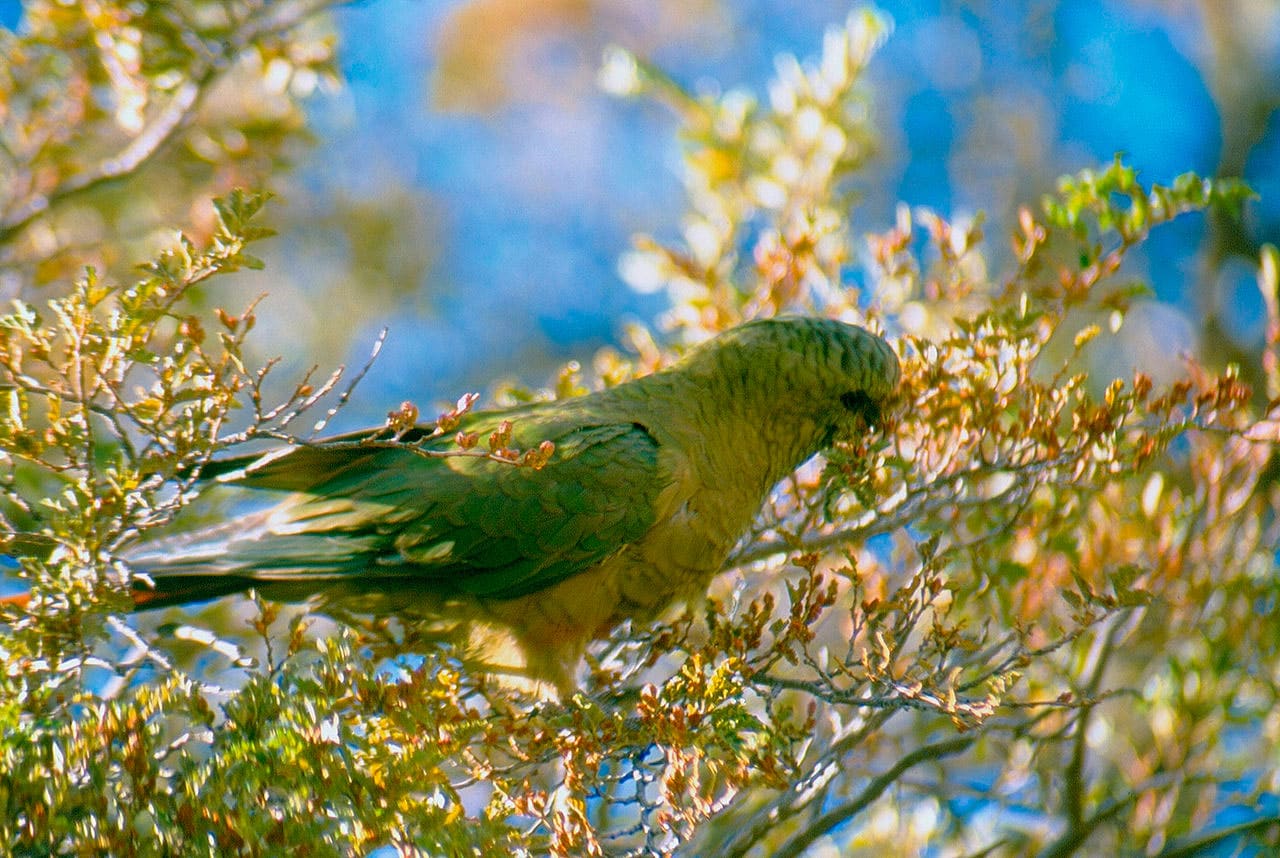
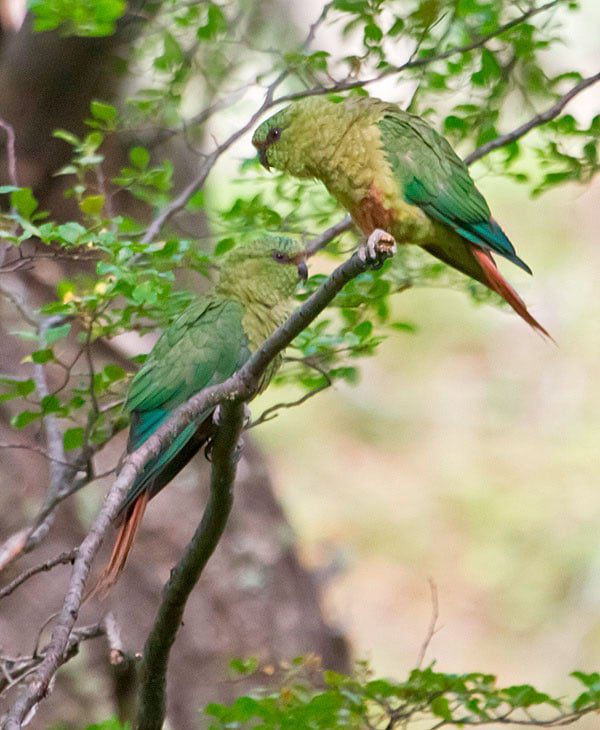
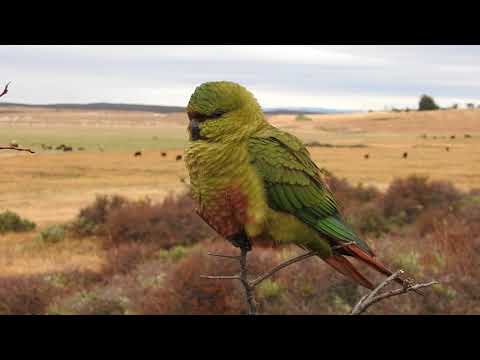
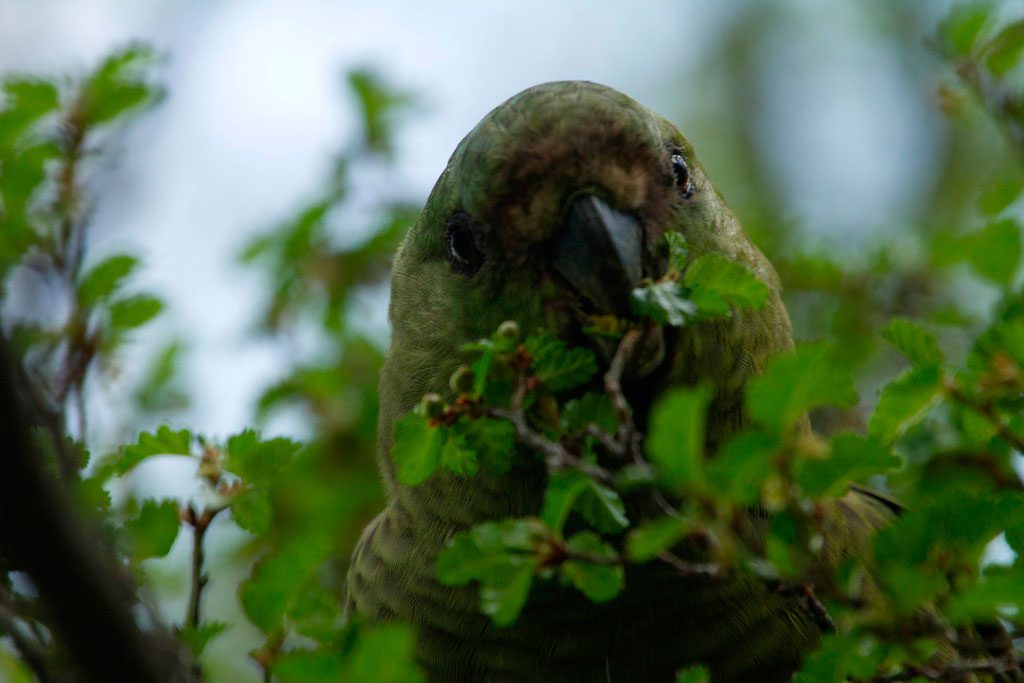
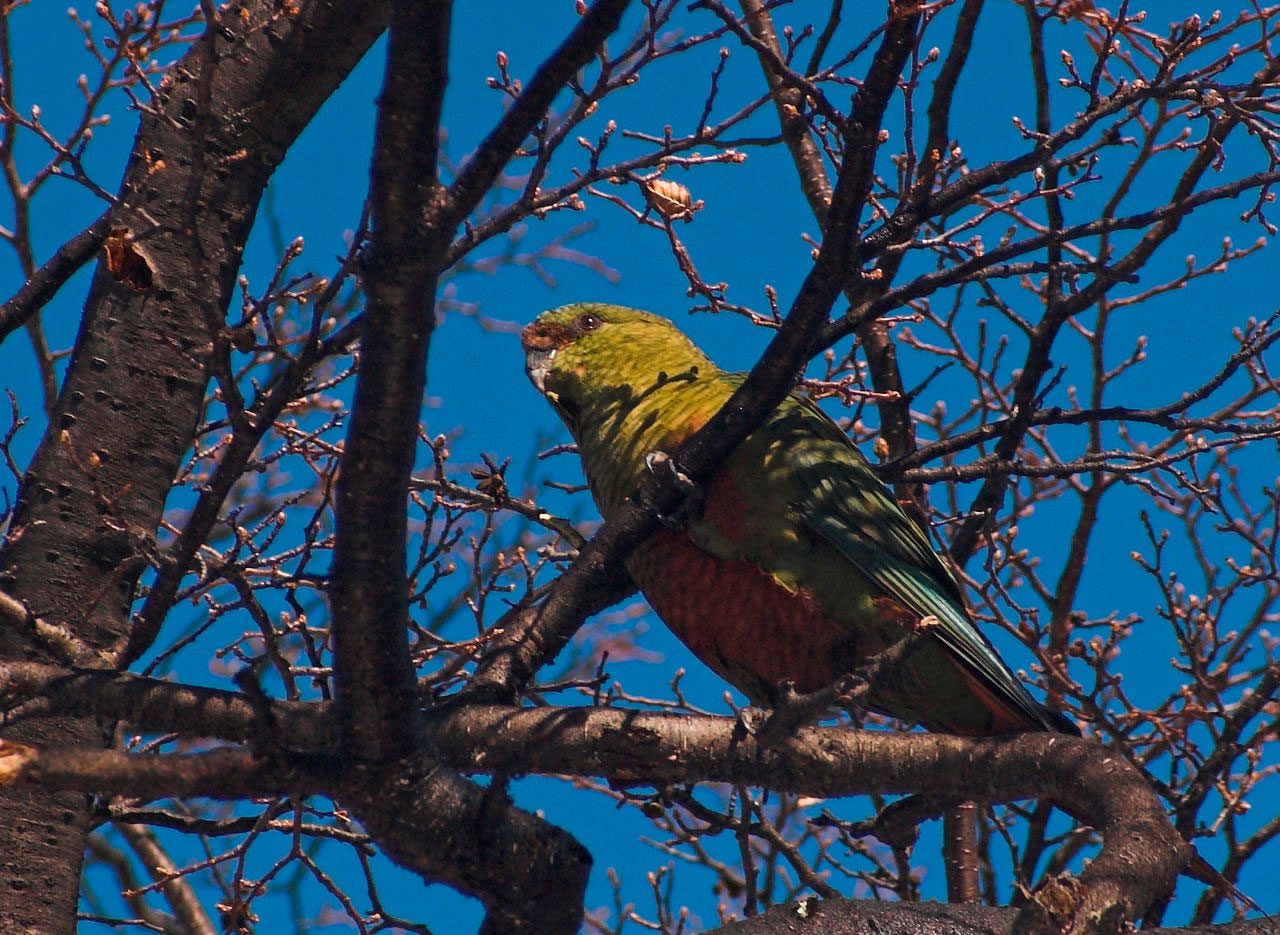
The Austral Parakeet(Enicognathus ferrugineus), is mostly green; the lores and forecrown rather dull brick-red; the front of the crown with yellow and green feathers in the center, and edges dark green olive feathers central part of the crown.
The feathers of the upperparts They are olive green with darker edges, giving a scalloped effect. The upperwing-coverts They are olive color with dark margins. Flight feathers green with metallic blue suffusion. Underwing-coverts green with dark tips; bottom of the flight feather pale grey. The underparts They are mainly pale green olive, with darker margins (except in the the thighs) and a large opaque red spot on the central belly. In the long run tail It is dark red off above; pale grayish below. The upper jaw horn is dark colored with a black tip; the bottom is dark horn-colored; irises reddish brown; legs dark gray.
Both sexes are similar. The immature It has a duller red on the head and patch in the belly red less dense and less extensive.
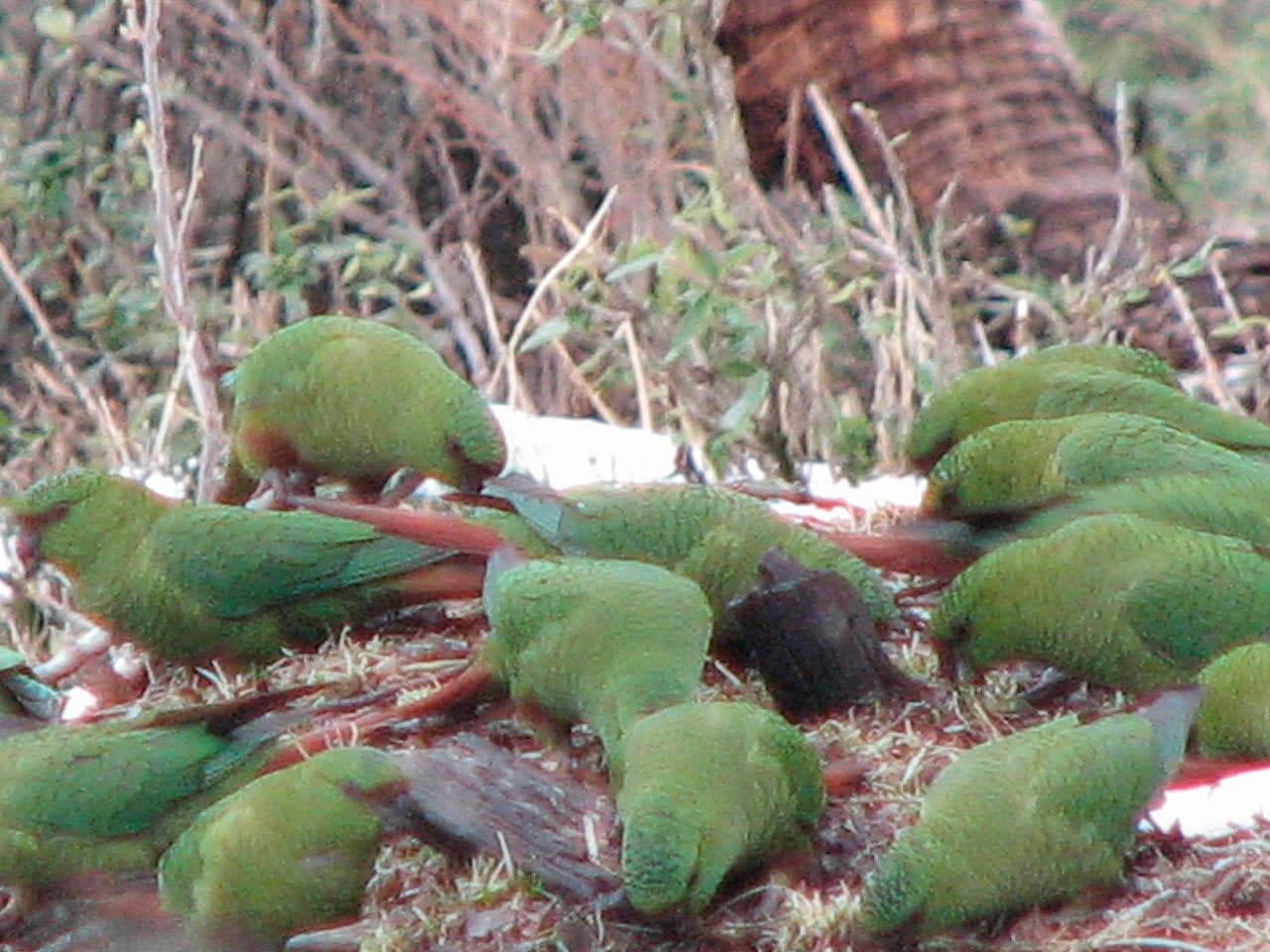
The Austral Parakeet occurs mainly in forests, including forests of Nothofagus, Araucaria and Quercus, but also in more open habitats with shrubs Berberis darwinii and Drimys winteri, also they visit cultivated areas, mainly at sea level in the southern part of the range, may reach 1200 meters and even 2.000 meters north. Observed in flocks of 10-15 individuals, coming to meet more than 100 birds outside the breeding period; flocks of 10 or more in Fire land with reports of attacks caused by Red-backed Hawk (Geranoaetus polyosoma).
In April and before the arrival of winter flocks leave the mountains to take refuge in lower valleys of lower altitude.
Reproduction:
They nest in the cavity of the trees, filling very deep holes with twigs and branches where building nests are no cavities available. The breeding season It comprising the months of November to December. Clutch 4-8 eggs. To the 26 days the chicks are born, emplumándose to 7-8 weeks.
Food:
predominantly eat seeds (can cause damage to grain crops). Its diet includes herbaceous and bamboo seeds, Drimys winteri, acorns and nuts Araucaria, fruit, berries and sprouts p. Nothofagus and bulbous roots.
Distribution and status:
Extending its range (reproduction / residents): 2.010.000 km2
Distributed by the south end of South America, psittacine distribution is the southernmost in the world.
Usually residents, even in the extreme south, although the foothills move to raise (at least in Land of Fire) with some predictable local movements in the north. generally common, It is very abundant in the wooded coast Land of Fire. Large areas remain intact habitat and inhabiting several large protected areas.
Very rare in captivity.
Subspecies distribution:
Enicognathus ferrugineus ferrugineus
(Statius Müller, 1776) – Nominal. Aisén at the southern end of Chile and South of Chubut at the southern end of Argentina until Land of Fire.
• Current category of the Red List of the UICN: Least concern.
• Population trend: Stable.
• Population size : Unknown.
Justification of the Red List of the Category
This species has a very large range, and therefore does not approach the thresholds for Vulnerable under the range size criterion. The trend population seems to be stable, and therefore the species does not approach the thresholds for Vulnerable according to the population trend criterion. (> 30% decrease of more than ten years or three generations). The population size has not been quantified, but are not believed to approach the thresholds for Vulnerable based on population size criteria (<10.000 individuos maduros con una disminución continua estimada en> 10% in ten years or three generations, or in a particular population structure). For these reasons, the species is evaluated as Least concern.
Justification of the population
The world's population has not been quantified, but this species is described as ‘quite common‘ (Stotz et to the. (1996).
Justification trend
The population suspected to be stable in the absence of evidence of any reduction or substantial threats.
"Austral Parakeet" in captivity:
Very rare in captivity.
Chilean law prohibits the purchase, sale and possession of this magpie.
If you have a Austral Parakeet I recommend you give it to SAG or the Center for Rehabilitation of Wildlife of Codeff (rehabilita@codeff.cl, background: 777 25 34 – Santiago), because in that place you will come across many other parrots of the same species that suffered the same process, and specialized people who care very well, TO THEN RETURN THEM TO THEIR NATURAL HABITAT.
– Avibase
– Parrots of the World – Forshaw Joseph M
– Parrots A Guide to the Parrots of the World – Tony Juniper & Mike Parr
– Birdlife
– Photos:
(1) – Austral Parakeet (also known as Austral Conure or Emerald Parakeet) in Torres del Paine National Park, Chile By Miguel Vieira [CC BY 2.0], via Wikimedia Commons
(2) – Two Austral Parakeets in Tierra del Fuego, Argentina By Francesco Veronesi [CC BY-SA 2.0], via Wikimedia Commons
(3) – Austral Parakeet (Enicognathus ferrugineus) seen near Laguna Onelli, Glaciers National Park, Santa Cruz, Argentina By Fabienkhan (Personal Picture) [CC BY-SA 2.5], via Wikimedia Commons – credit : Fabien Dany – www.fabiendany.com
(4) – Cachañas in San Martin de los Andes, Province of Neuquen, Argentina By Ignsal (Own work) [Public domain], via Wikimedia Commons
(5) – An Austral Parakeet in Magallanes Province, Chile By Paulo Fassina (Parrot EatingUploaded by Snowmanradio) [CC BY-SA 2.0], via Wikimedia Commons
(6) – Austral Parakeet – Torres del Paine National Park, Chile by Eleanor Briccetti – Flickr
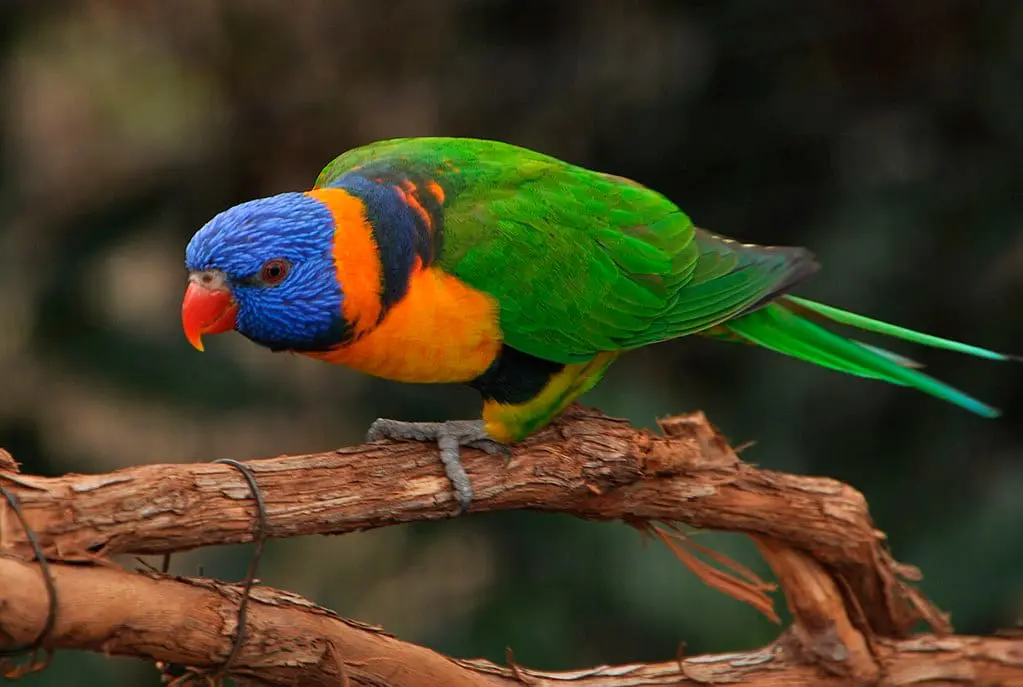
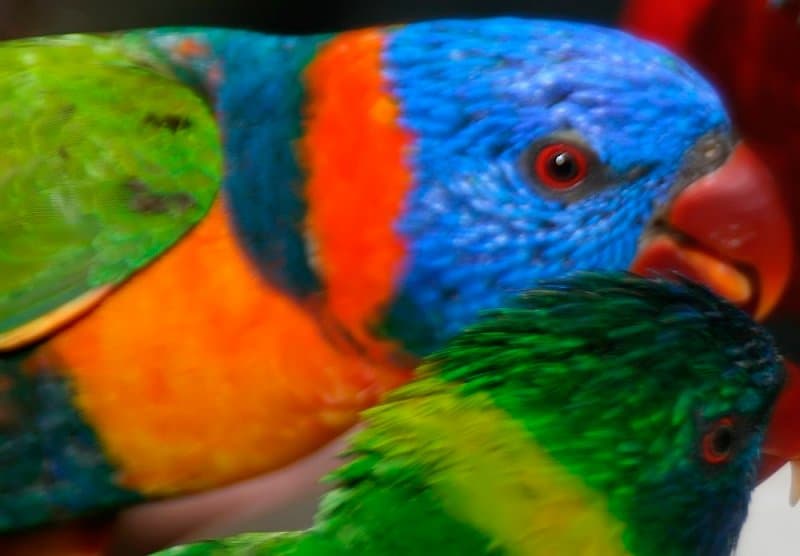
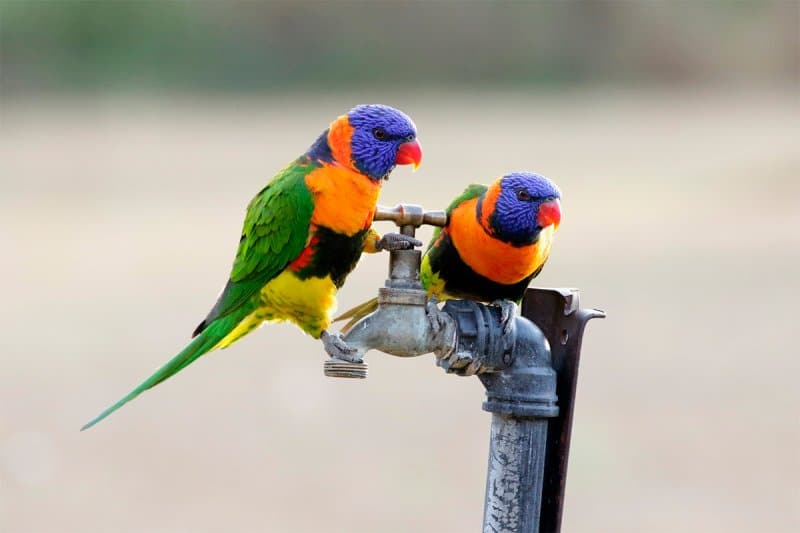
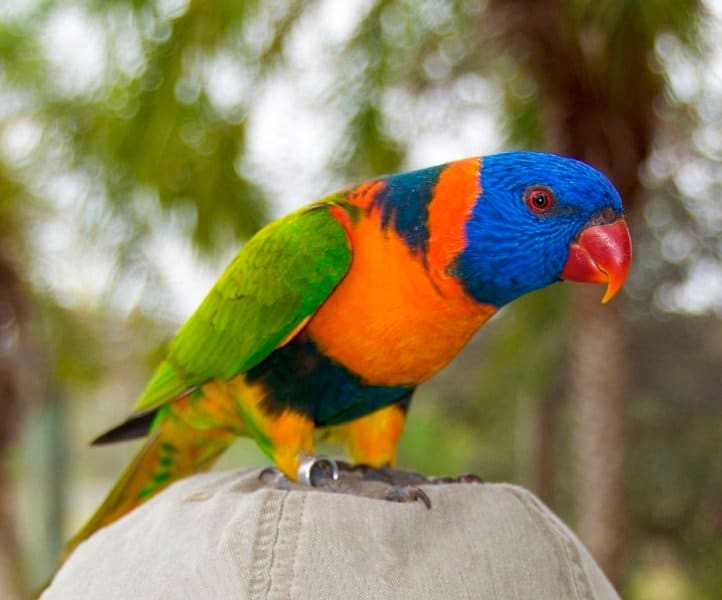
The Red-collared Lorikee(Trichoglossus rubritorquis) they have the head violet / blue with purple / blue streaks on face; throat and sides of the nape blackish; neck orange / red; chest yellow / orange without sweeping; abdomen dark green; the thighs green / yellow until undertail-coverts; upperparts and tail green; underwing-coverts orange; yellow and broadband under the wing
. Bill orange / red. Eyes dark orange.
The youth they are similar to adults.
taxonomy:
Occasionally he treated in Australian literature as a separate species of Coconut Lorikeet(Trichoglossus haematodus), but this is only appropriate review, as here, the whole complex of Rainbow Lorikeet: differs from Rainbow Lorikeet(Trichoglossus moluccanus) in his collar Orange Fire vs. pale green; Blue neck vs. green; vs belly black. blue; and of the Scarlet-breasted Lorikeet(Trichoglossus forsteni) in his collar Orange Fire vs. yellowish green; nape blue vs. red crab; nape blue vs. dark blue or green; larger size.
Species Monotypic.
Sound of the Red-collared Lorikee.
Habitat:
There have been no large-scale seasonal movements are common throughout the year in some places.
It's more common in lowlands, but it is up 2400 meters above sea level. They can be observed in a wide variety of areas including settlements, forests, coconut plantations, Savanna, eucalyptus forests and mangroves. They are in mixed flocks with other parrots; small and noisy groups. Nomads, since they depend on flowering trees. It perches communally in groups of hundreds of birds.
Reproduction:
Reproductive biology very similar to that of the Coconut Lorikeet(Trichoglossus haematodus). May-January season in Northern Territory. The laying Typically two or three eggs.
Food:
Diet very similar to the Coconut Lorikeet(Trichoglossus haematodus) which feeds on nectar, fruit, flowers and insects, including Pandanus spiralis. It can also be found around artificial feeding stations.
I necked Lori distribution:
Extension of the distribution (breeding/resident): 1.100.000 km2
North Autóctono Australia, which they inhabit the lowlands. Integrated or hybridized with Coconut Lorikeet(Trichoglossus haematodus) on queensland peninsula, Australia, in southwest Cape York.
Red-collared Lorikeet Conservation:
Rationale for the Red List category
1. Current red list category of the UICN: Least Concern..
2. The population trend: Decreasing.
3. Population size : It is unknown.
This species has a extremely large distribution area, and therefore does not approach the thresholds Vulnerable under the criterion of size range (Extent of Occurrence <20,000 km2 combined with a decreasing area size or fluctuating distribution, extension / habitat quality, or population size and a small number of places or severe fragmentation).
While the trend of the population seems to be decreasing, the decline is not believed to be rapid enough to approach the Vulnerable thresholds according to the population trend criterion (decrease of more than 30% in ten years or three generations).
The population size has not been quantified, but it is not believed to approach the thresholds Vulnerable under the criterion of population size (<10.000 mature individuals with an estimated continuous decrease in> 10% in ten years or three generations, or with a specific population structure). For these reasons, the species is assessed as Least concern.
Justification of the population
Global population size has not been quantified, but the species is described as abundant (pit et to the. 1997).
Justification trend
It is suspected that the population is declining due to unsustainable levels of exploitation.
Threats
The species has been the subject of a intense trade: from 1981, When it was included in the Appendix II of the CITES, they have been 100.388 individuals caught in international trade (UNEP-WCMC CITES Trade Database, January 2005).
In captivity:
In Europe, this species of lori has been largely imported from early last century, and in 1910 it managed to raise in the zoo London (four years later, the first calf in France). Currently it is rare outside Australia. Life expectancy: 20 years in nature, 15-25 years in captivity.
Alternative names
– Australian rainbow lory, Rainbow Lorikeet (Red-collared), Red collared Lorikeet, Red-collared Lorikeet (English).
– Loriquet à col rouge, Loriquet à collier rouge, Loriquet à tête bleue (à col rouge), Loriquet à tête bleue (rubritorquis) (French).
– Australischer Blauwangenallfarblori, Darwin-Allfarblori, Rotnackenlori (German).
– Periquito-arco-íris (rubritorquis), Lóris-de-colar-rojo (Portuguese).
– Lori cuellirrojo, Lori Arcoiris (rubritorquis) (español).
1. Avibase
2. Parrots of the World – Forshaw Joseph M
3. Parrots A Guide to the Parrots of the World – Tony Juniper & Mike Parr
4. Birdlife
Photos:
(1) – A Red-collared Lorikeet at Cincinnati Zoo, Ohio, USA by Fr. Ted Bobosh [CC BY-SA 2.0], via Wikimedia Commons
(2) – A Red-collared Lorikeet at Cincinnati Zoo, Ohio, USA by Ted [CC BY-SA 2.0], via Wikimedia Commons
(3) – Red-collared Lorikeet standing on a man’s cap at Lion Country Safari, Florida, USA by derivative work: Snowmanradio (talk)Trichoglossus_haematodus_rubritorquis_-Lion_Country_Safari-6.jpg: Duncan Rawlinson from Vancouver, BC [CC BY 2.0 or CC BY 2.0], via Wikimedia Commons
(4) – Red-collared Lorikeet (Trichoglossus rubritorquis) in the Walsrode Bird Park, Germany by Quartl [CC BY-SA 3.0], from Wikimedia Commons
(5) – Red-collared Lorikeet (Trichoglossus haemotodius rubritorquis) by Geoff Whalan – Flickr
(6) – Red-collared Lorikeet (Trichoglossus haemotodius rubritorquis) by Geoff Whalan – Flickr
(7) – Red-collared Lorikeet (Trichoglossus haematodus rubritorquis) by Graham Winterflood – Flickr
(8) – Trichoglossus haematodus rubritorquis Location taken: Lion Country Safari, Loxahatchee, Florida Photo by David J. pole [CC BY-SA 4.0], via Wikimedia Commons
(9) – Red-collared Lorikeet (Trichoglossus haemotodius rubritorquis) by Geoff Whalan – Flickr
(10) – A painting of a Red-collared Lorikeet (originally captioned «Trichoglossus rubritorquis. Scarlet-collared Parrakeet by Edward Lear [Public domain]
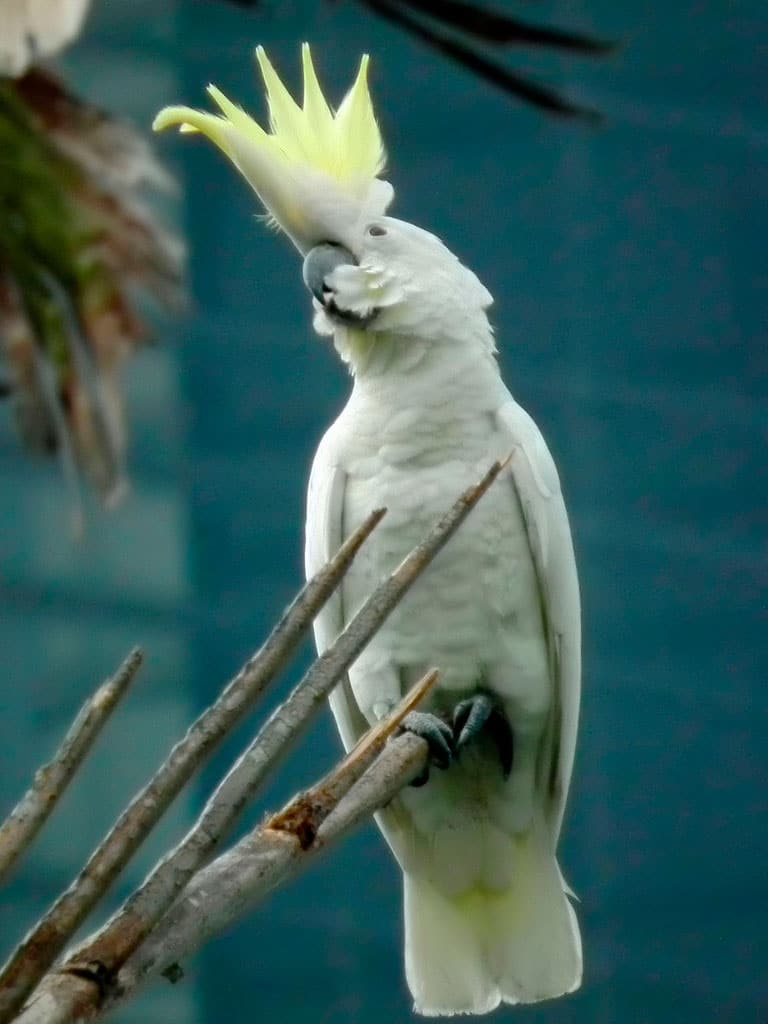
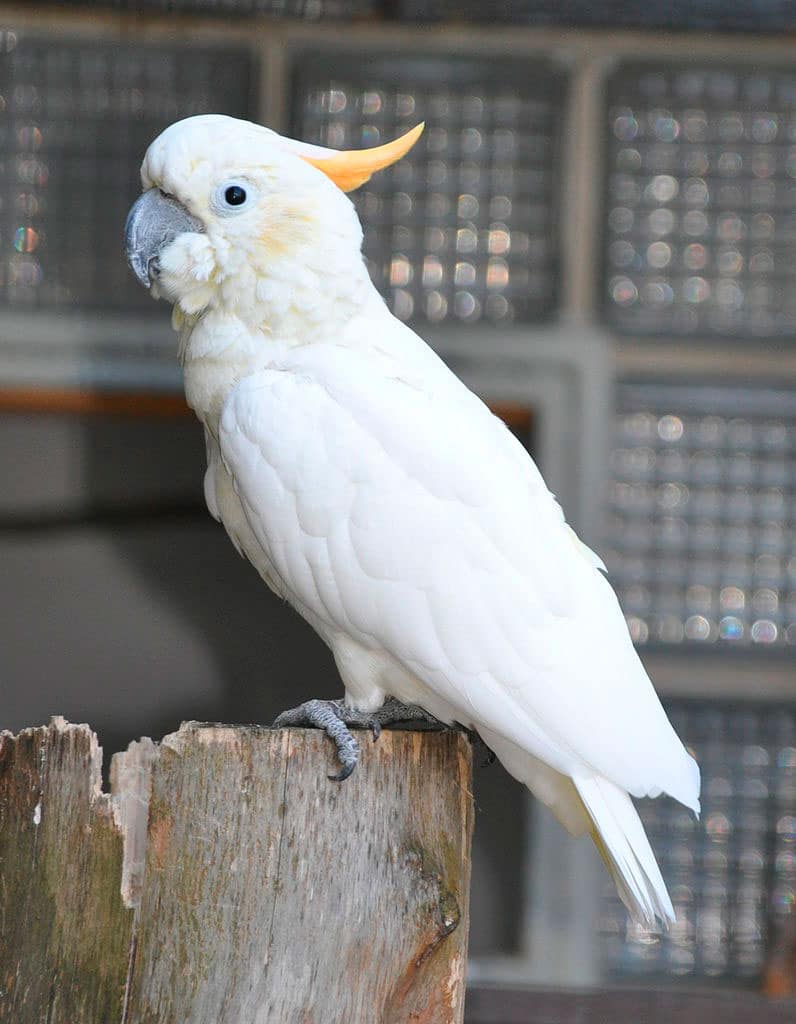
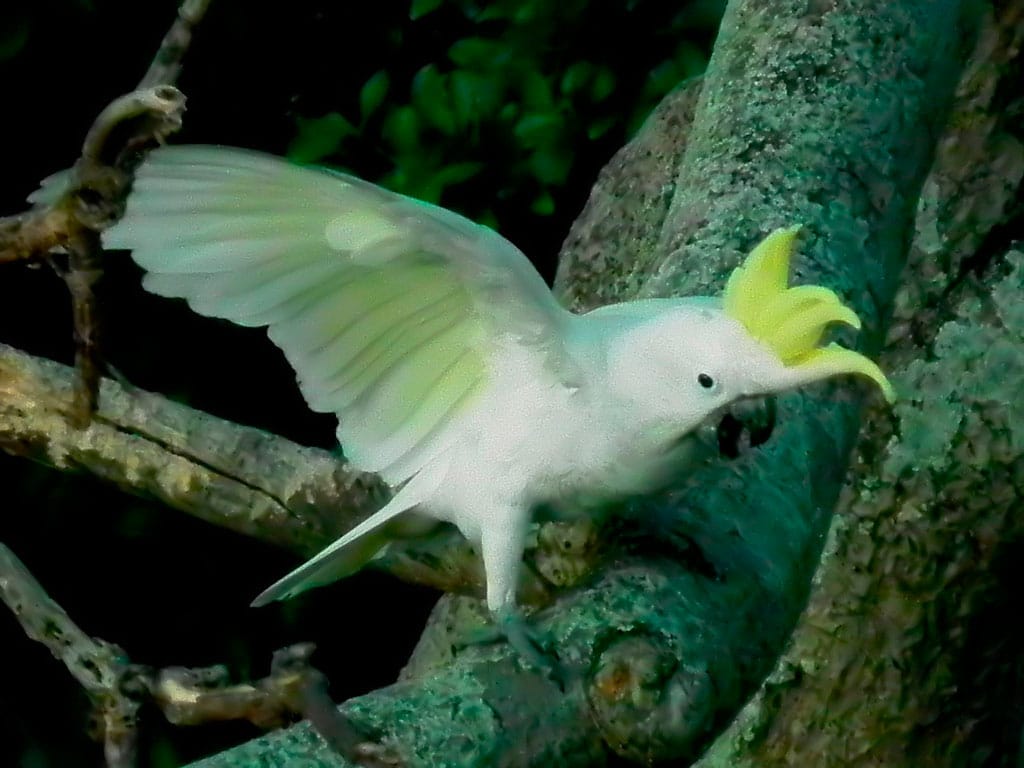
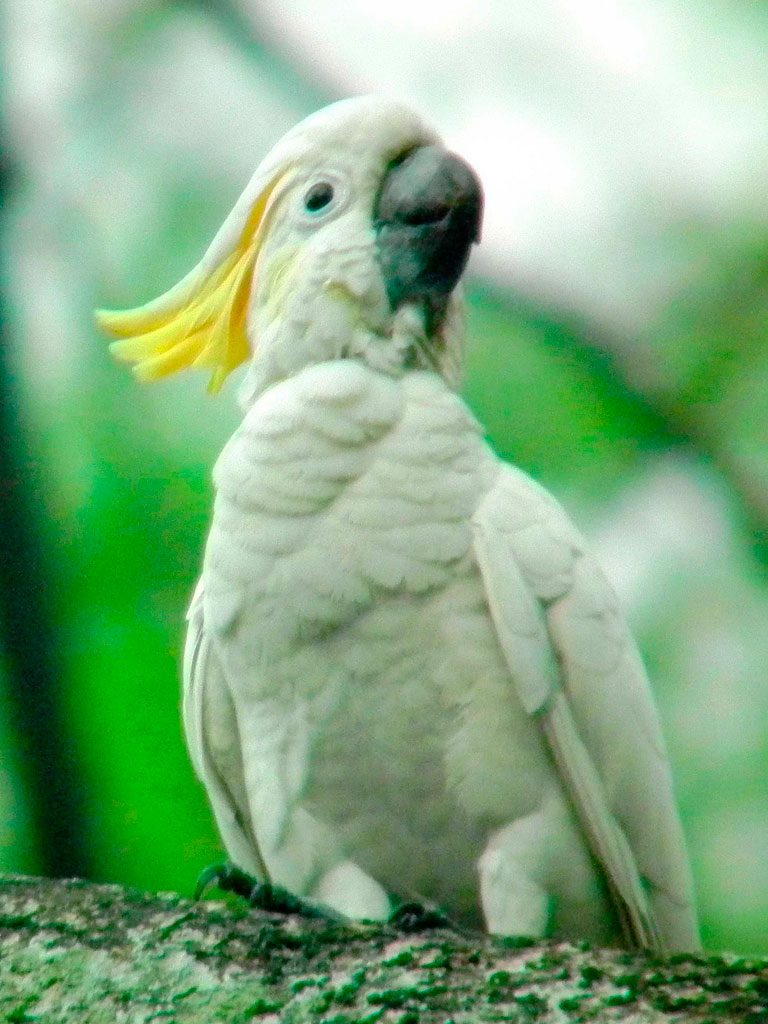
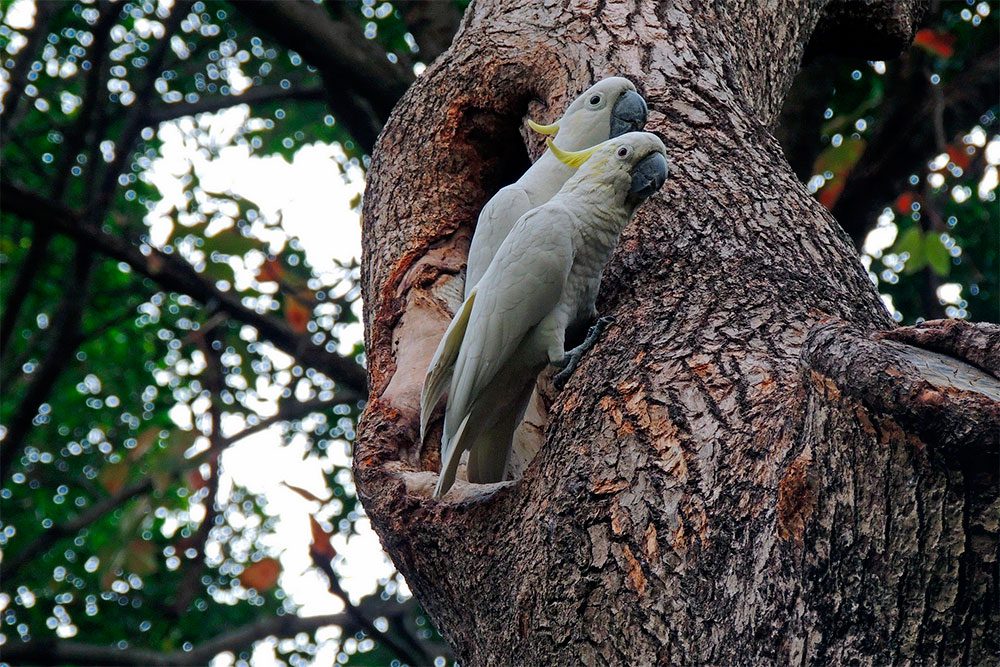
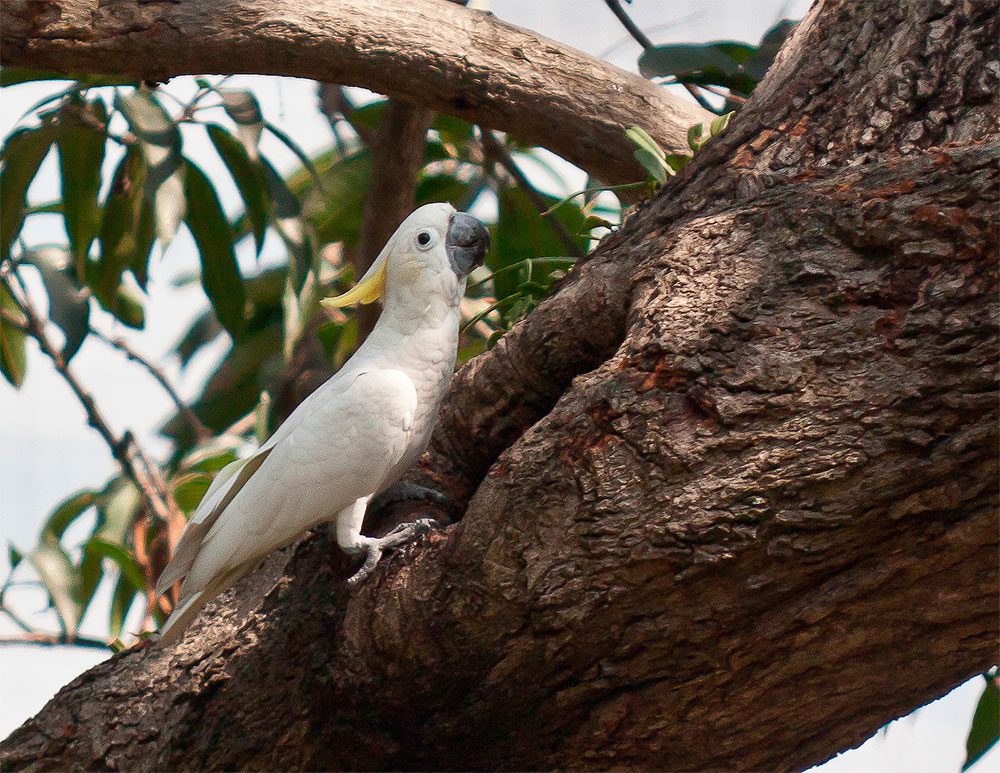
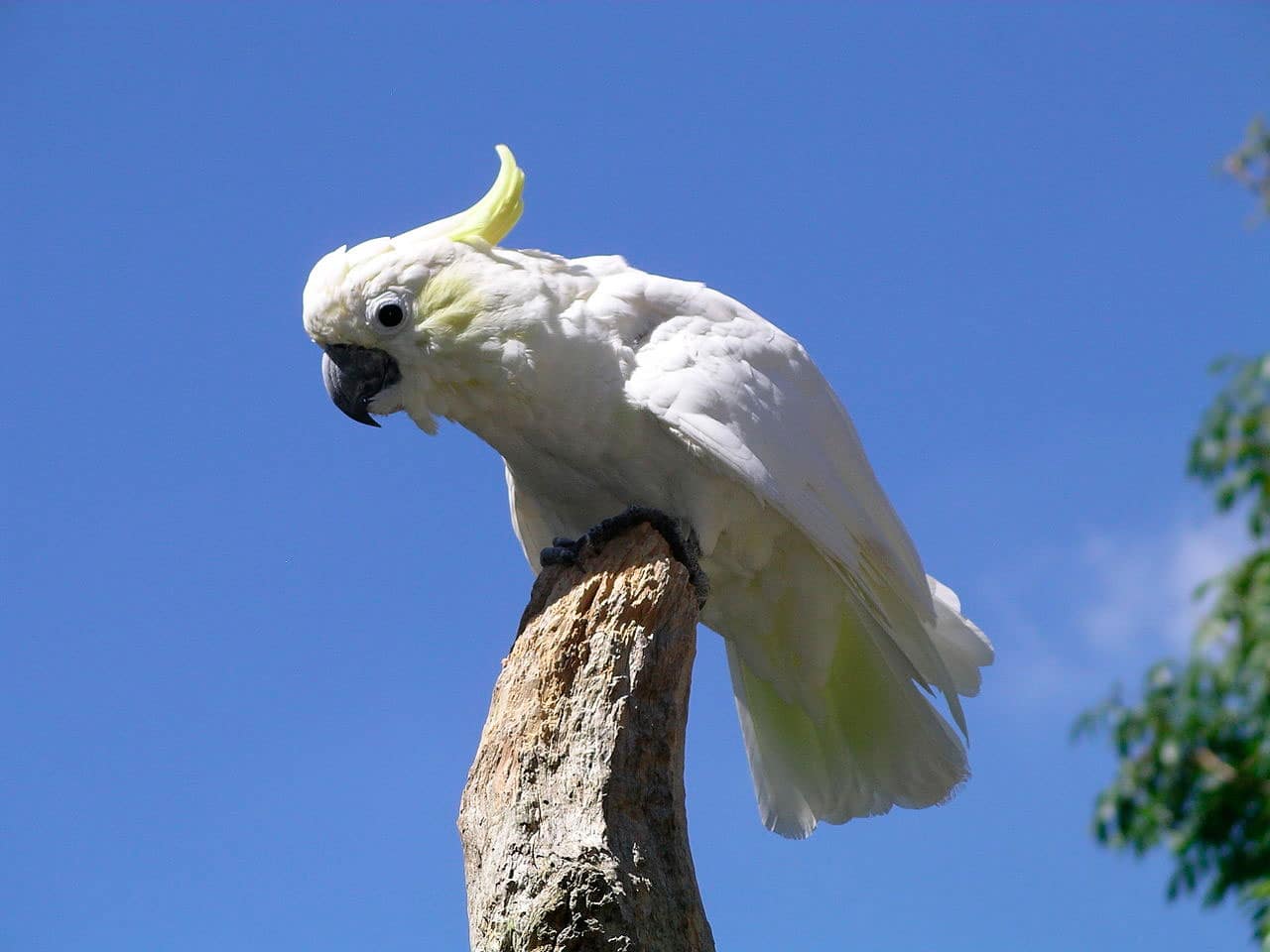
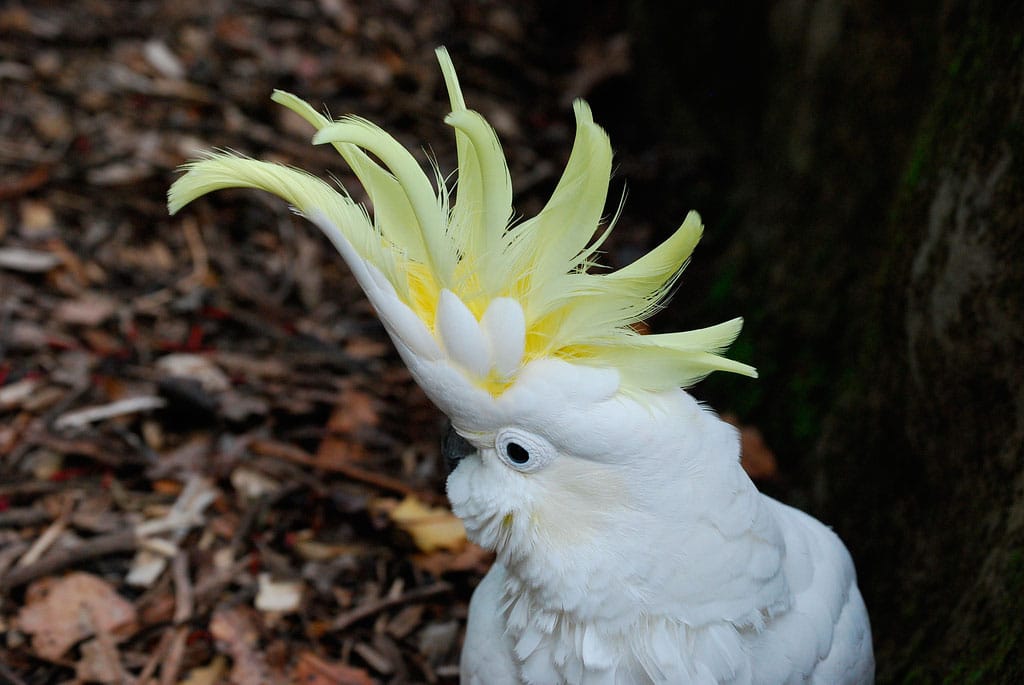
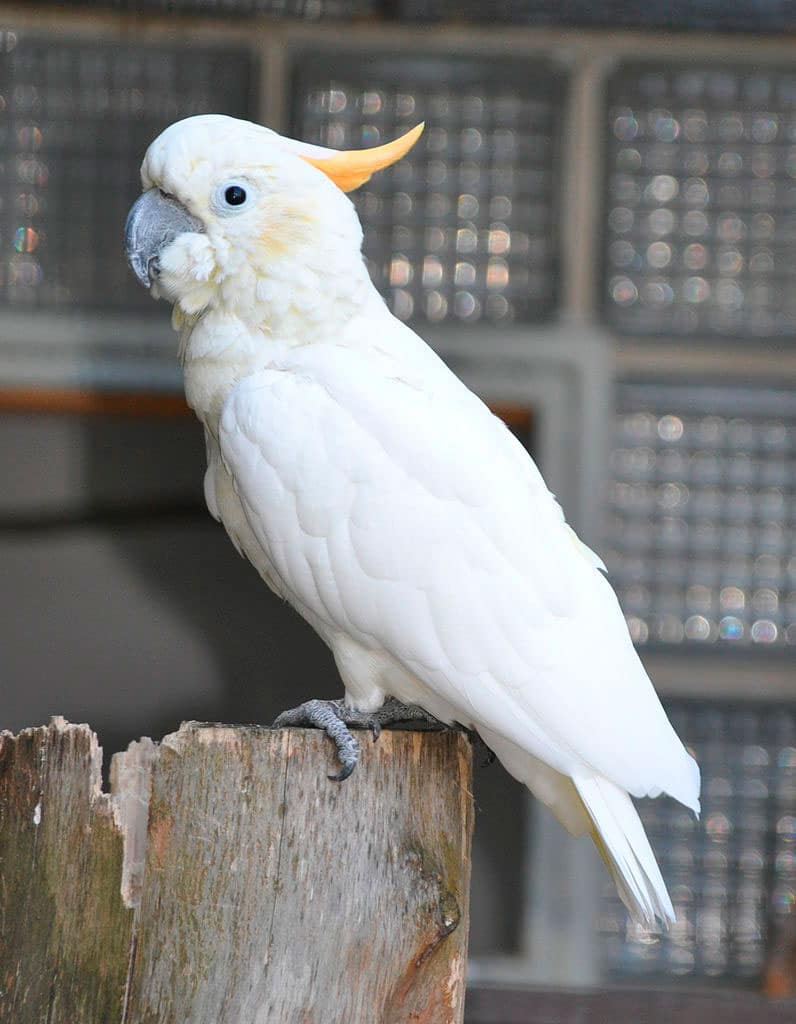
The Yellow-crested cockatoo(Cacatua sulphurea) It is distinguished by its long, thin yellow erectile crest, that curves forward, and extending upward, above the nape, when it folded. The front of his crown and main feathers crest, are white. The rest of your plumage It is also white, except in yellow suffusion ear-coverts, under the wings and in the innerwebs of the undertail-coverts. The bases of the hackles and underparts, They are yellowed; some birds show a slight yellow tone, particularly on chest and the belly. The bill It is black; eye ring pale bluish; irises dark brown; legs grey. The female is similar to the male but with the irises reddish and slightly smaller.
The young birds They show both sexes irises dark taupe, although females They begin to acquire the red coloration in the first year. The bill and legs immature are also lighter.
(Oberholser, 1917) – Similar to the parvula, but largest.
Cacatua sulphurea citrinocristata
Cacatua sulphurea citrinocristata
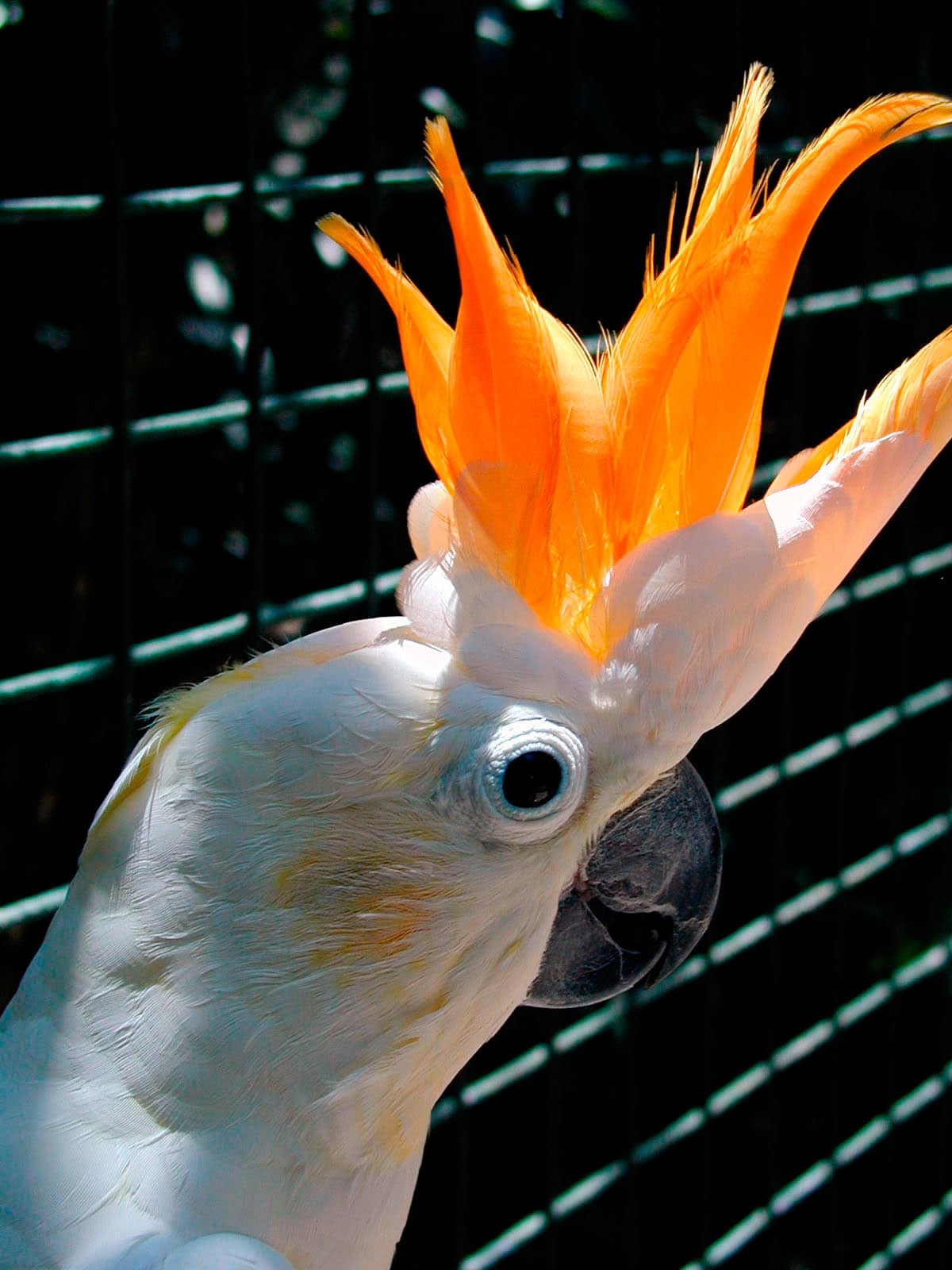
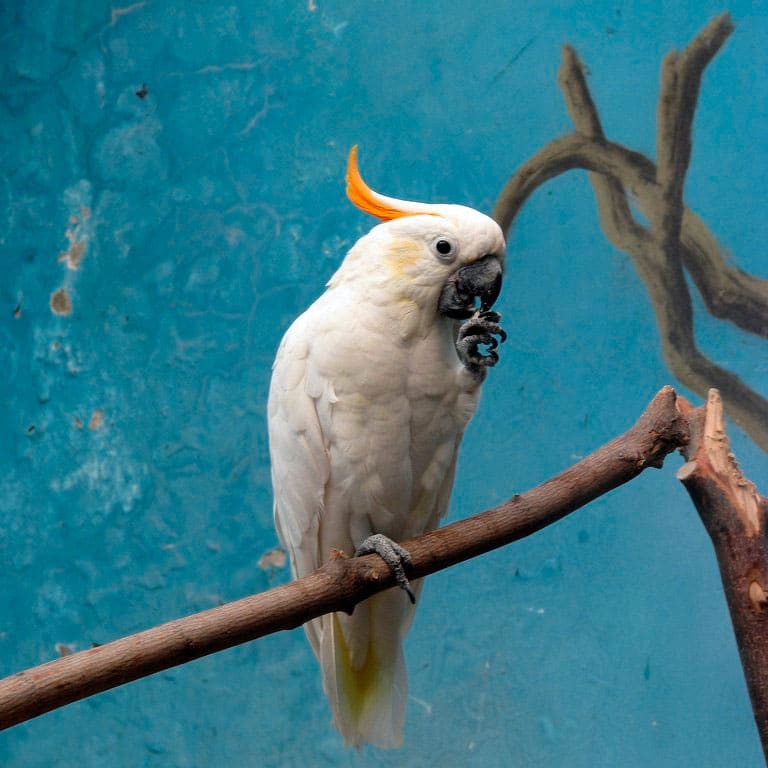
(Fraser, 1844) – Slightly larger than the nominal, with one crest orange & ear-coverts orange yellow. Additional research may provide a basis for improving this subspecies to a specific status..
Cacatua sulphurea parvula
(Bonaparte, 1850) – Similar to the nominal species, but with the ear-coverts paler and less yellow on yellow feathers underparts. the size of the bill in this subspecies it increases clinically towards the west.
They inhabit at the edges of the forest, wooded areas, farmland, cocoteros, semi-arid areas and forests until the 800 m (locally 1.200 m).
The Yellow-crested cockatoo usually they found in pairs or small groups of up to ten individuals, although they may meet in larger flocks to feed on fruit trees. They can form flocks with Eclectus Parrot(Eclectus roratus).
They tend to be noisy and visible, but can be difficult to spot when moving silently in the canopy, and they are more often in flight. The groups who leave their resting places in the montane forest areas frequently displace forage at lower altitudes including cultivated fields. Pairs may hover conspicuously above the forest canopy searching for fruitful trees, allowing a reasonably close approach when resting on a branch.
The crest It is generally stands when landing, or when an individual is making calls from a perch. Like most of the Cockatoos They enjoy a bath in the rain.
Reproduction:
Specimens of Yellow-crested cockatoo on the island of button in State reproductive during the months of September and October, although Nusa Tenggara the breeding It occurs in the months of April and May. The female It lays two or three white eggs in the hollow of a tree, and incubation lasts around 28 days with both parents participating. Chicks they leave the nest to 10 weeks and are dependent parent for about two months.
Food:
They feed in trees and soil. Its diet It includes seeds, corn (Zea mays) of cultivated fields, fruit, berries, egg yolks, flowers and nuts (including large coconuts (cocos nucifera)).
Distribution and status:
Size of its range (breeding/resident ): 1.360.000 km2
The Yellow-crested cockatoo They are confined Indonesian, where they can be seen in the lowlands Isla Celebes (virtually extinct in the north), islands in the Flores sea, in Nusa Tenggara and isolated islands Masalembu in the Java Sea.
introduced in Singapore and Hong Kong. The species is found in both wooded areas and cultivated and is scarce throughout its range. It is estimated that the world population total is less than 40.000 birds and is decreasing. Although populations of the nominal subspecies and of the subspecies parvula may still be close to 10.000 specimens, the citrinocristata subspecies It has an estimated population between 800 and 7.200 only individuals, having declined by 80% between the years 1986 and 1989, while the distinctive subspecies abbotti It is now represented by only nine individuals in nature.
Although habitat loss is clearly a factor in Sumba, where distribution appears to be linked to the extent of primary forest (is only about 15% the original forest), trade is the main threat to the species as a whole. Trade data show that exported almost 100.000 birds in years 1980-1992. The export citrinocristata subspecies It was banned in 1992 by local authorities, and 26 birds were confiscated in September of that year. There are probably at least 50 individuals of each subspecies in public collections and more than 2.000 in private aviculture, although the numbers for the subspecies abbotti They are unknown.
(Fraser, 1844) – Sumba, where it can be seen in the remaining forest around left, or east of the island, where it may still be locally common; an expedition of the Manchester Metropolitan University found it common in the remaining forest areas in 1990, with the greatest discovery of birds, a group of five birds, found in primary forest near Tabundung
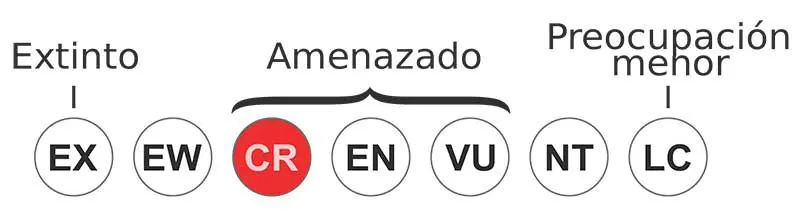
• Current category of the Red List of the UICN: critically endangered.
• Population trend: Decreasing.
Its crashing fall It is almost entirely attributable to the unsustainable exploitation for domestic and international trade. Logging to the conversion of forests for agriculture as well as the use of pesticides for land and large-scale.
Justification of the population
Based on recent surveys in various parts of the range of the species, C. Trainor in some (2007) It has been estimated the world population in less than 7.000 individuals: 3.200-5.000 en Sumba (though perhaps only 562 in 2012, Burung Indonesia en preparación), 500 en Komodo, 200-300 en Timor Leste, 200-300 en Sulawesi, 20-50 in West Timor, 40-70 Flores, 50-100 en Sumbawa, 100 in Rinca and other 700 birds in total. The best data is located in the band 2.500-9.999 individuals, equivalent to 1.667-6.666 mature individuals, rounded here to 1.500-7.000 mature individuals.
Conservation actions and research in progress
CITES Appendix I (2005). It has developed and adopted a recovery plan cooperative and has prepared an update 2012 (D. Mulyawati in some. 2012). The populations are found in various protected areas, It is the most important Rawa Aopa Watumohai (55 copies in 2011 [Waugh 2013]) and National Parks Caraente (en Sulawesi), supporting up 100 individuals (transgressed 2006) , Reserva Natural de Wildlife en Pulau Moyo, Komodo National Park and two national parks in Sumba: Manupeu-Tanadaru y Laiwangi-Wanggameti. Nini Konis Santana National Park declared in Timor has a 100 estimated birds (Trainor et al., Without date) . In Rawa Aopa Watumohai nests they have been protected from predators by removing vegetation pendant necklaces and installation of plastic around the tree trunks nesting (Waugh 2013). Moratoriums on international trade are in effect, although it is likely that a large proportion of trade is a national. Several subpopulations of Sulphur-crested Cockatoo have increased in Sumba between 1992 and 2002, due to conservation efforts (including local education, ecotourism and law enforcement), although densities remained below those typical for other cockatoo species (Cahill et al ., 2006) . Capture for trade has declined dramatically in Sumba through a variety of awareness and protection measures of the community (D. Mulyawati in some. 2012).
Following the surveys of 2008 and 2009, the Indonesia Parrot Project and Konservasi Kakatua Indonesia have started meetings with community leaders and villagers in Masakambing and Masalembu, as well as with the military and local police, to raise awareness and gain support for Sulphur-crested Cockatoo conservation (Metz et al. Al., 2009) . A conservation program-awareness-pride has also begun to involve adults and school Archipelago Masalembu (Metz et al. , 2009, Translating et al., 2009) And in Southeast Sulawesi (Anon., 2012). A "village regulation" was written to catch, possess or transport the species and initiate measures to reduce habitat destruction and employ a former village chief to guard and protect nests and study Sulphur-crested Cockatoos (Translating et al., 2009) . Moronone community in Rawa Aopa Watumohai NP, where four members of the village have been hired as Forest Wardens (Anon., 2012), have established similar community-based regulations. The guards protect the species against poachers and perform monitoring activities (Waugh 2013). The pest status of the species can be addressed by planting crops to compensate for losses and to act as a "sacrifice culture", for example, sunflower fields are used to attract the species out of other crops (Waugh 2013). Mangrove restoration is also being used to increase nesting habitat available (Waugh 2013). a repeat of the population census is planned abbotti , together with studies on its biological history and ecology (Metz et al., 2009) .
Proposed Research and Conservation Actions
Carry out further studies (including Roti, but also more studies on Alor and Pantar) to identify the most appropriate action for conservation areas and to periodically monitor key population surveys repeating ago 8-10 years. Provide relevant support for protected areas and conservation initiatives within its range and protect nests when possible. Strengthen the protection of forest Poronumbu, Sumba, declaring Nature Reserve (Translating y Agustina 2012). Strengthen control, the enforcement and monitoring of trade and establishing greater management of captive populations. Improve law enforcement in designated protected areas and other key areas for trade, including ports, markets, etc. Promote widespread community conservation initiatives. These may include, en la isla de Pasoso, Sulawesi Central, work to protect the Sulphur-crested Cockatoo should involve all five families living on the island and introduce community involvement programs for children and adults on several other islands where the species occurs (Translating y Agustina 2012). The recommendations formulated specifically for the protection of the species in the Komodo National Park consisted of carrying out an annual monitoring, maintain regular patrols, sensitize local communities and studying human activities and impacts within the park (Imansyah et al ., 2005, Benstead 2006) . Conduct ecological research to clarify options for management and conservation. Other objectives should be to study the abundance and distribution of nest holes and water sources.. The provision of artificial sources of water near the nesting sites, that is to say, water ponds, It is essential for the species on the island of Komodo and may also be necessary to protect the nests of young Komodo dragons in Komodo (Translating y Agustina, 2012).
"Yellow-crested cockatoo" in captivity:
The male Yellow-crested cockatoo It is especially aggressive with the female, sometimes to kill her. This phenomenon is known in many cockatoo species..
among the white cockatoos, this is somewhat difficult to breed in captivity. As a pet can be a formidable partner provided it has been raised for that purpose and to provide much attention.
It is very difficult for them to disconnect in the presence of their owners and entertain themselves without seeking continuous interaction.
Great ability to imitate human sound within the world of cockatoos.
Note: Because of its status, CRITICALLY ENDANGERED, only controlled captive breeding is recommended in an attempt to recover this species in the wild.
– Avibase
– Parrots of the World – Forshaw Joseph M
– Parrots A Guide to the Parrots of the World – Tony Juniper & Mike Parr
– Birdlife
– Photos:
(1) – Cacatua sulphurea by Charles Lam – Flickr
(2) – Citron-crested Cockatoo(Cacatua sulphurea citrinocristata) in the Walsrode Bird Park, Germany By Quartl (Own work) [CC BY-SA 3.0], via Wikimedia Commons
(3) – A Yellow-crested Cockatoo at Auckland Zoo, New Zealand By Ashleigh Thompson (originally posted to Flickr as Captain) [CC BY 2.0], via Wikimedia Commons
(4) – Cacatua sulphurea citrinocristata, Citron-crested Cockatoo. Photograph of upper body and crest By Ruth Rogers (originally posted to Flickr as Citron Cockatoo) [CC BY 2.0], via Wikimedia Commons
(5) – Citron-crested Cockatoo (Cacatua sulphurea citrinocristata). The glass between the camera and this parrot makes the picture just a little bit blurry By Alexander Tundakov (originally posted to Flickr as White Parrot) [CC BY 2.0], via Wikimedia Commons
(6) – Photo of Lesser Sulphur-crested Cockatoo (wings clipped) By Snowmanradio, with permission from Tropical Birdland, Leicestershire, England. (Own work) [GFDL or CC BY-SA 3.0], via Wikimedia Commons
(7) – Yellow-crested Cockatoo (Cacatua sulphurea) at the KOBE Oji Zoo by opencage.info
(8) – Lesser Sulphur-crested Cockatoo (wings clipped) By Snowmanradio, with permission from Tropical Birdland, Leicestershire, England. (Own work) [GFDL or CC BY-SA 3.0], via Wikimedia Commons
(9) – Yellow-crested Cockatoo (Cacatua sulphurea) by Darren – Flickr
(10) – Yellow-Crested Cockatoo, Cacatua sulphurea by Sek Keung Lo – Flickr
(11) – Cacatua sulphurea by Charles Lam – Flickr
(12) – Cacatua sulphurea by Charles Lam – Flickr
(13) – Cacatua sulphurea by Pichon Charles Lam – Flickr
(14) – A painting of a Yellow-crested Cockatoo, also known as the Lesser Sulphur-crested Cockatoo, (originally captioned «Plyctolophus sulphureus. Lesser Sulphur-crested Cockatoo») by Edward Lear 1812-1888. [Public domain], via Wikimedia Commons
Origin: Panama, Brazil, Bolivia, Venezuela, Colombia, Ecuador, Guyana, Trinidad and Tobago, Peru
Character: active and smart
Life expectancy: 50 to 60 years.
Height: 35 to 41 cm..
Content
Description
35 to 41 cm.. height and between 380 and 500 g. of weight.
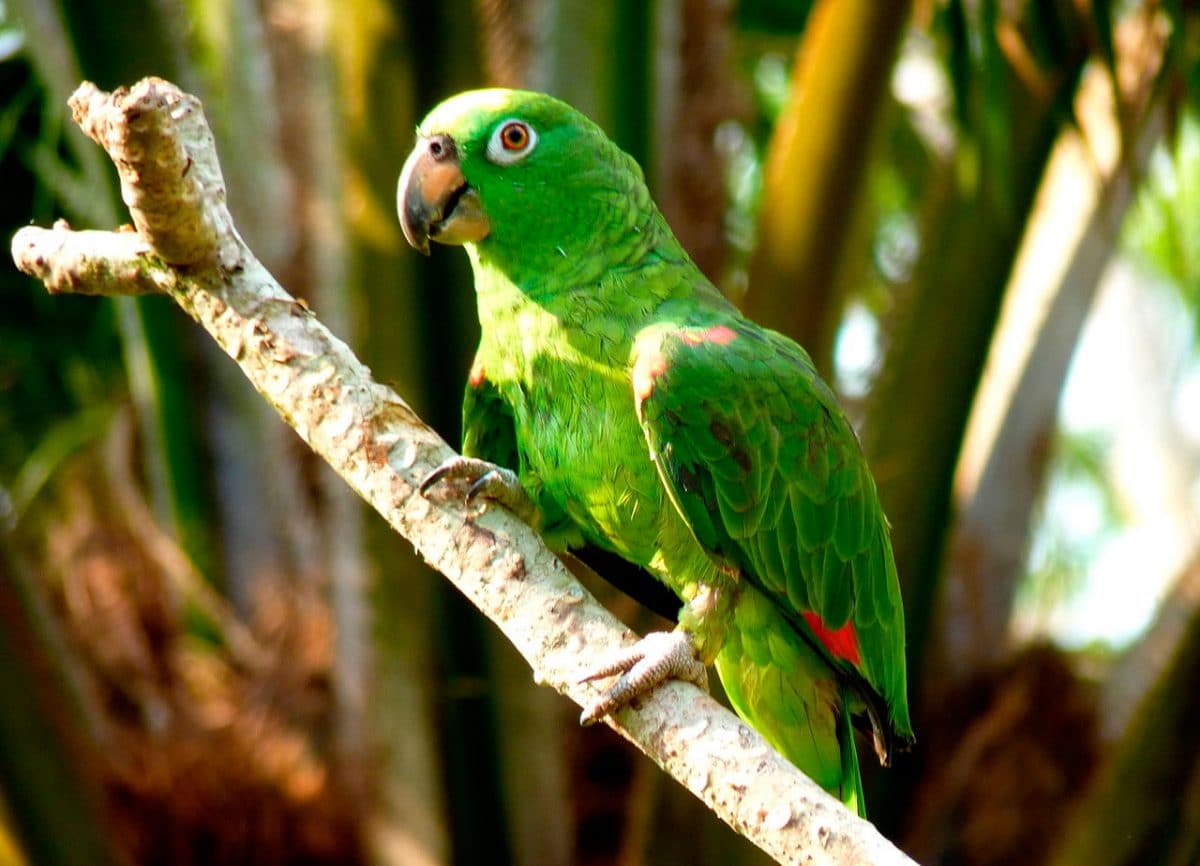
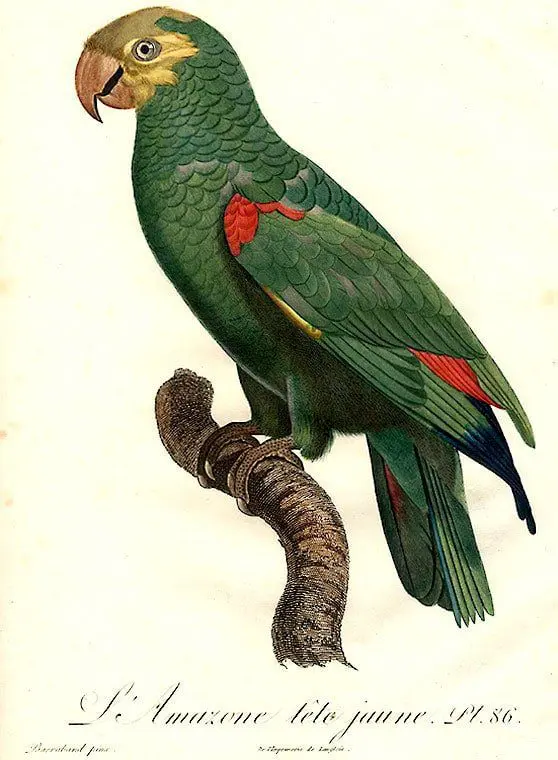
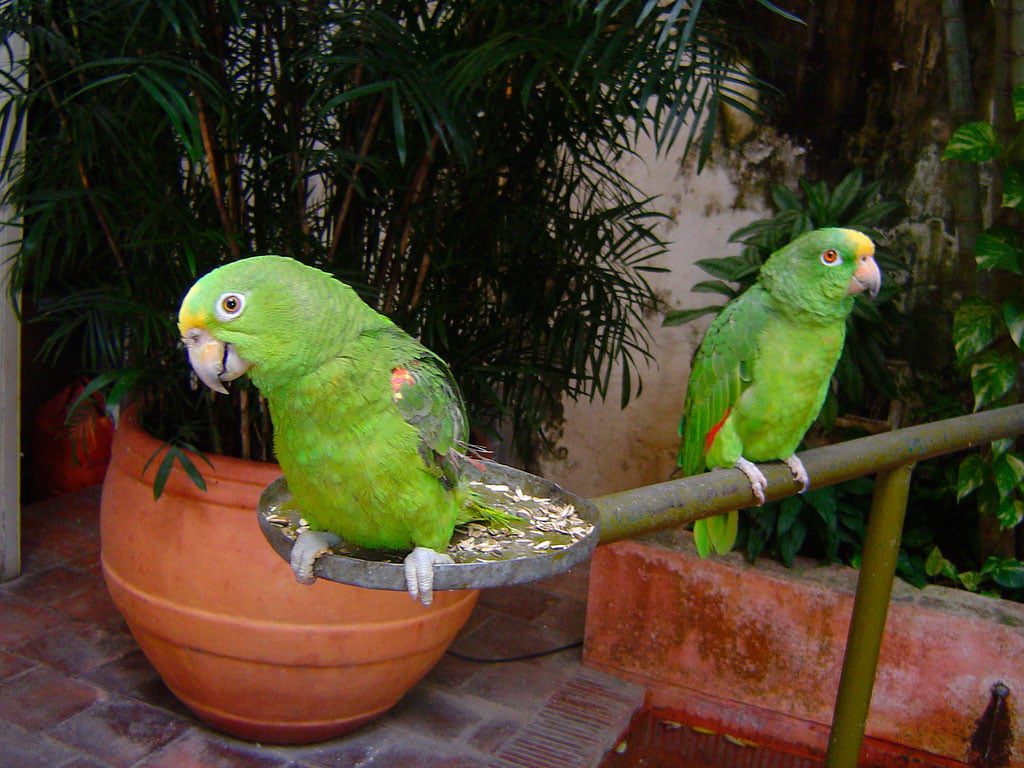
The Yellow-crowned Parrot(Amazona ochrocephala) has the forecrown and front area crown, bright yellow; lores, cheeks and supercilii area, green in most birds, but sometimes with yellow extending over lores and around eyes, and some birds with red bases hidden by yellow feathers crown; sides and back of the neck, nape and the mantle, green with dark margins, giving scalloped effect.
Upperparts green. coverts lower red, other coverts green; edge front of the wing
yellowish; five o'clock outer secondaries They are green with bright red to outerweb forming speculum; flight feather green with blue tips to secondaries and primary outerweb, dark to black in points. Underwing-coverts, dull green with blackish tips. Underparts green with plenty of blue in the chest; yellow feathers on the the thighs (often few and discrete).
Upper, the tail It is green with yellow stripes; below green with wide yellow ends; both with outer feathers basically red and a bluish puckered in outerweb.
Dark gray Bill, reddish at base of upper jaw; iris orange; legs grey.
Both sexes they are similar. The immature It has a narrower yellow patch on the head, stripes orange-red to yellow feathers crown; less red at the base of feathers tail; feathers of the tail more pointed and irises brown.
(Finsch, 1865) – Less yellow in the head that the nominal species, with frontal band green. Cheeks, supercilii area and lores with blue tint. Red curve wing
often mixed with yellow feathers.
(Cabanis, 1874) – Bill horn-colored pink, yellow feathers restricted as V in forecrown and front of the crown. Possibly average smaller than the nominal species.
Amazona ochrocephala xantholaema
(Berlepsch, 1913) – More extensive yellow in the head which extends to the back of the neck, around the eyes, to cheeks and to the ear-coverts. Often with frontal band narrow green. bluish tint in the chest.
They inhabit in open forests, moist forest edges, gallery forests, deciduous forest, open savannas and wetlands in lowland rain forests, also cultivated and suburban areas in some localities, and often near rivers.
The gallery forest It is your preferred Panama where Yellow-crowned Parrot avoid continuous humid forest, being replaced, possibly, there and in many areas of South America, by the Orange-winged Parrot(Amazona amazonica).
Usually observed in the lowlands; reported to 500 metres in Colombia and Venezuela and a 750 metres in Honduras. Usually in pairs or small flocks of 10-30 birds, with occasional gatherings up 300. Birds gather in common trees.
Reproduction:
Son Monogamie, couples joined in for life.
His time of reproduction It is from December to May. During this time, they lay clutches of 2 to 4 eggs, only Por those Nidada Tempordaa. Nest palm trunks and termite mounds.
It takes about 25 days for the eggs to hatch and near 56 days to become fledglings. The young become independent 2 months after hatching. Both male and female Yellow crowned Parrot reach sexual maturity around the 3 years.
Food:
Foods reported in the diet include fruit Immature American Curatella, Pereskia guamacho and other Cactus. Mainly feeds on treetop.
It is considered a plague in some localities for their love of eating bananas (Mussa paradisea), handles and Corn crops.
This species is considered a pest in some areas by his fondness for the consumption of bananas (Mussa paradisea), mangoes and corn crops.
Distribution:
Size of its range (reproduction / resident): 8.010.000 km2
The Yellow-crowned Parrot are in Panama, in Central America and in South America, from south to east Brazil and to the North of Bolivia.
Observed in the eastern foothills of the Andes and adjacent lowlands Colombia; eastward across the tropical zone Venezuela and south, from the coastal mountains through Bolívar (where apparently it is not known from south) and amazon, until Guyanas and Trinidad (where their status is uncertain due to the captive birds introduced).
Present in the basin Amazonas Brazil, to the south, to the Northwest of Mato Grosso and west, in the lowlands of eastern Ecuador and through the Peruvian Amazon, to the North of Bolivia.
Apparently residents throughout its distribution area. very small numbers in Panama, although locally fairly common, especially in those areas more dry; it is the most common parrot (at least once) in the San Blas Islands. generally common (even locally abundant) in South America, but the numbers are reduced in the more accessible areas due to trade.
Distribution 4 subspecies
Amazona ochrocephala nattereri
(Finsch, 1865) – South of Colombia in Caqueta, is of Ecuador, is of Peru, West of Brazil and North of Bolivia. Possibly integrated with nominal species in border areas Goal and Caquetá in Colombia.
Amazona ochrocephala ochrocephala
(Gmelin, 1788) – Nominal. It is from Colombia, Venezuela, Trinidad, Guianas and North of Brazil south to the tributaries of the lower margin right amazon in amazon and For.
• Current category of the Red List of the UICN: Least concern.
• Population trend: Decreasing.
This species is considered at present as minor concern BirdLife International, and, as a result, also by UICN.
Even though the populations it is believed that are in decline, still do not approach the threshold specified by BirdLife International to evaluate the species as Near-threatened.
It is listed in the Appendix II of the CITES.
The Yellow-crowned Parrot in captivity:
Known for his pranks and excellent skills imitate the human voice. Having said that, the ability to mimic will vary between birds and although many of them are excellent conversadoras, Some will never come to talk. These Amazons are generally affectionate. Its friendly and playful nature make them excellent pets.
Son easily domesticable and easy to train. Known to be very active, What makes them more suited to an environment that enables them to fly.
Son known for their voices. It is said that it is the strongest of all Amazon parrots. People who are not tolerant to noise, they will do well to live with this Parrot.
like most parrots, this horsewoman it can be very destructive. We must "personalize their environment" by providing them with objects to chew such as different toys and branches.
Its longevity should also be a consideration. These parrots They can live between 60 and 80 years.
Alternative names:
– Yellow crowned Parrot, Yellow-crowned Amazon, Yellow-headed Amazon, Yellow-headed Parrot (English).
– Amazone à front jaune, Amazone à tête jaune, Amazone verte de Colombie (French).
– Gelbscheitalamazone, Gelbscheitelamazone, Panama Amazone, Surinamamazone (German).
– papagaio-campeiro, ajurú-apara, papagaio-de-Suriname (Portuguese).
– Amazona Real, Cotorra Cabeciamarilla, Lora Cabeciamarilla, Lora coroniamarilla, Lora Real (español).
avibase
Parrots of the World – Forshaw Joseph M
Parrots A Guide to the Parrots of the World – Tony Juniper & Mike Parr Birdlife
Parrot Book, Parrots and macaws Neotropical
Photos:
(1) – A pet Yellow-crowned Amazon in Puerto Maldonado, Peru By Kate from UK (Lola) [CC BY-SA 2.0], via Wikimedia Commons
(2) – A pet Yellow-crowned Amazon By Freegiampi (From Giuseppe's farm) [CC BY-SA 2.5], via Wikimedia Commons
(3) – Yellow-crowned Amazon or Yellow-crowned Parrot (Amazona ochrocephala) in captivity By Stephen Joyce from barcelona, Spain (Parrot) [CC BY-SA 2.0], via Wikimedia Commons
(4) – Yellow-crowned Amazon or Yellow-crowned Parrot (Amazona ochrocephala) in captivity in the Parrot’s Garden (Jardim dos Louros), in the Botanical Garden of Funchal, Madeira island, Portugal By jmaximo [CC BY 2.0], via Wikimedia Commons
(5) – A Yellow-crowned Amazon in Gatorland, Florida, USA By greyloch from Washington, DC, area, U.S.A. (green parrot preening) [CC BY-SA 2.0], via Wikimedia Commons
(6) – Amazona ochrocephala panamensis, Panama Amazon (also known as the Panama Yellow-headed Amazon); two in captivity By TJ Lin (originally posted to Flickr as DSCN1005) [CC BY-SA 2.0], via Wikimedia Commons
(7) – A Yellow-headed Amazon (or Parrot) near the Brazil-Peru-Colombia triple junction By Dick Culbert from Gibsons, B.C., Canada (Amazona ochrocephala) [CC BY 2.0], via Wikimedia Commons
(8) – A Yellow-crowned Amazon at Bloedel Floral Conservatory, Vancouver, Canada By Karen Neoh (Parrot) [CC BY 2.0], via Wikimedia Commons
(9) – Yellow-crowned Amazon or Yellow-crowned Parrot (Amazona ochrocephala) in a tree in Venezuela By Rufino (originally posted to Flickr as camouflage) [CC BY-SA 2.0], via Wikimedia Commons
(10) – Amazona ochrocephala From Natural History of Parrots (by Francois Levaillant, 1801-1805) – Wikimedia
It measures 30-35 centimeters to paste 380 g..
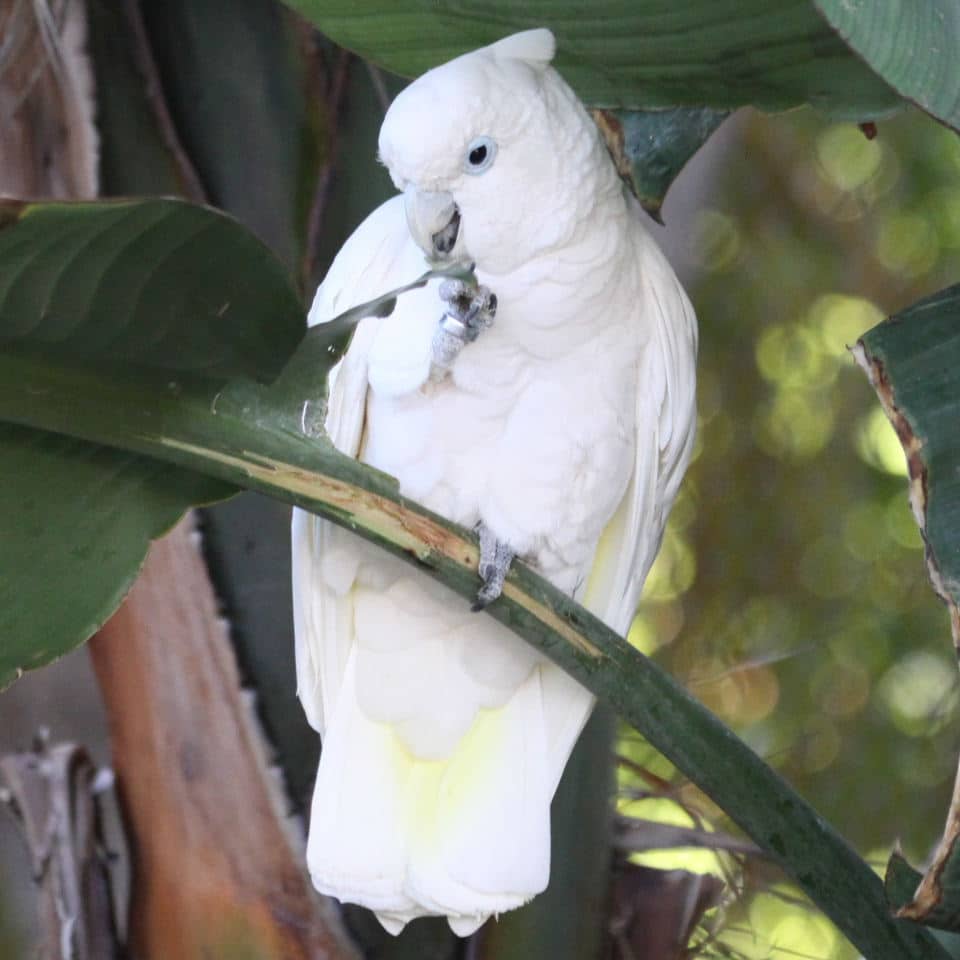
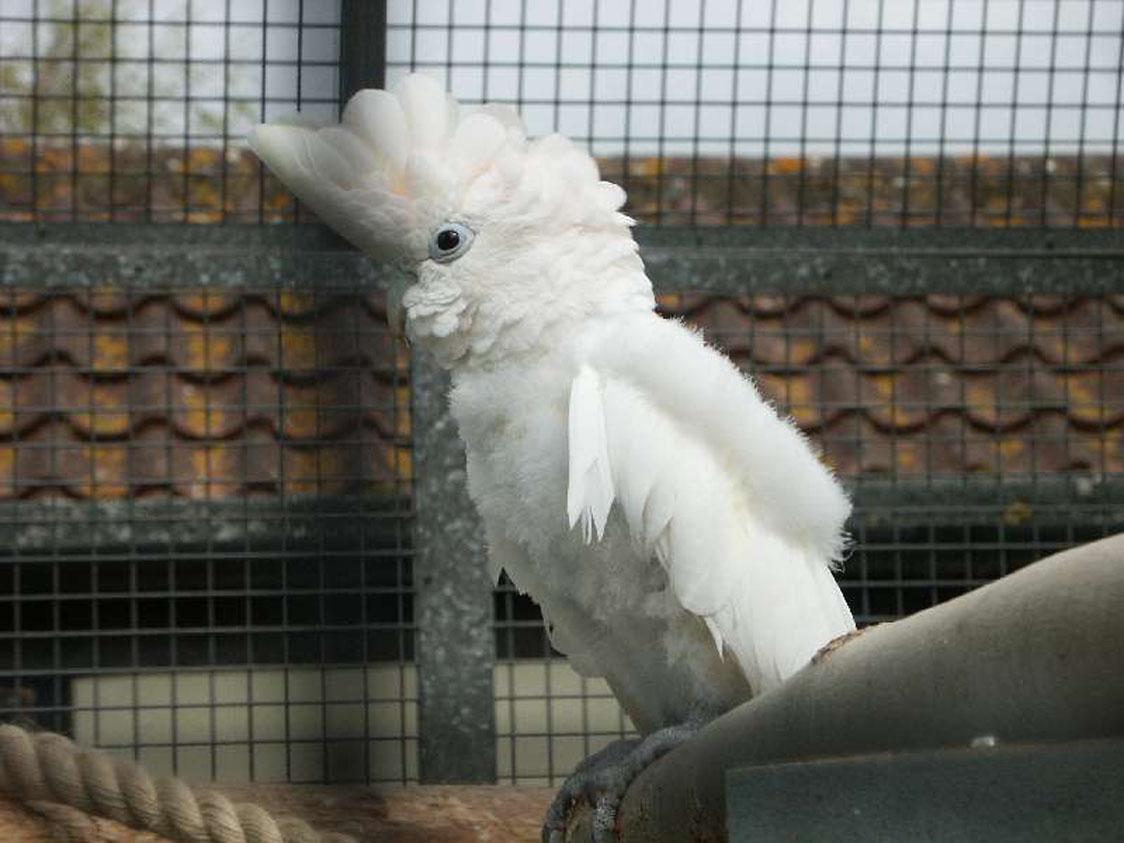
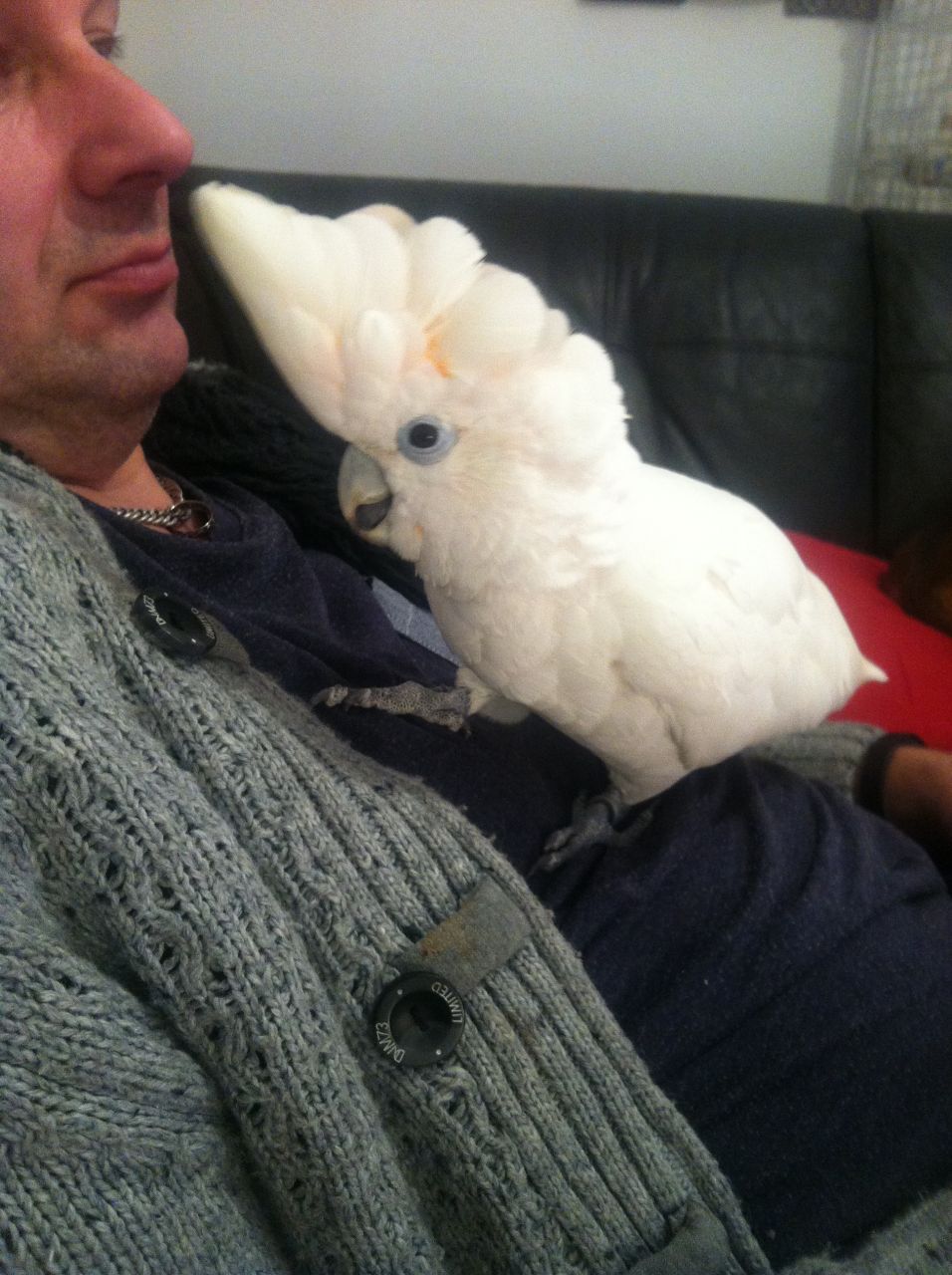
The Solomons cockatoo(Cacatua ducorpsii) is a small cockatoo immediately recognizable by its long triangular Crest.
Its plumage is almost completely white, except the part inferior of them wings and tail with infiltration of color yellow. The feathers of the crest, the cheeks, the the mantle and the chest they have a base of pink.
The bill is grey. The bare skin around the eyes is pale-blue. The irises are dark brown, the legs grey.
The females are distinguished from your partner to have the irises more reddish.
The Solomons cockatoo is quite similar to the Tanimbar corella living in the Tanimbar Islands. Also seems to the Little corella, although the latter have more bluish and developed the orbital area.
Is from coastal areas to the mountains; variety of habitats, including forests, secondary vegetation and gardens in cities. Found up to 1700m; mainly below the 700 m.
Behavior:
They are birds noisy and quite easy to observe, even though they mostly live in pairs or small groups. They fly high above the treetops where used well exposed perches in the top of the Cup.
Birds are very cautious, screaming when they are disturbed.
They have a strong and uneven consisting of shallow flapping flight.
Reproduction:
In the wild child from July to September.
They make their nests in hollows of trees or large branches and, they often use the same nest year after year.
The eggs are of color white and usually there are two in a clutch. The eggs are incubated for about 25 days, the young leave the nest 62 days after hatching.
Food:
They feed on seeds, berries, fruit, outbreaks, flowers, as well as insects and their larvae. From time to time they ingest the fleshy parts of «epiphytes«.
Distribution:
endemic to the Solomon Islands. Its area of distribution extends from Bougainville (Papua New Guinea) to Malaita, Choiseul, New Georgia and Santa Isabel. The species is absent in San Cristóbal and the islands surrounding.
Conservation:
State of conservation ⓘ
Minor Concern ⓘ(UICN)ⓘ
– Current IUCN Red List category: Least concern.
– The population trend: Stable
The population world is estimated at 100.000 birds and it seems quite stable.
The marketing of pet birds is a threat to this species, the other is the degradation of the habitat. The latter seems particularly serious, given the logging of forests in the lowlands.
"Solomons cockatoo" in captivity:
It´s little gregarious and have tendency to be aggressive with other species and with those of its same species. In relation to the human being is a Parrot very demanding. Not everyone is prepared to have a white cockatoo.
They often tend to develop behavior problems, unbearable screams, become very destructive…If not are given a rigorous education on a very regular basis. That is why it is convenient that if you intend to have a cockatoo, it should be done so that it can be accompanied by another or others of its kind to prevent it from developing an excessive dependency and thus you can enjoy it without fear of having problems or at least trying to avoid them as much as possible.
I like them much attention. They tend to create strong emotional bonds and they are quite Extrovert.
Despite the great attraction that having a pet parrot with such characteristics can mean for a person,. It is not often a parrot advised for anyone or rather, hardly anyone is prepared to have a cockatoo with these characteristics.
Alternative names:
– Ducorps’s Cockatoo, Broad-crested Corella, Solomon Corella, Solomon Islands Corella, White Cockatoo (ingles).
– Cacatoès de Ducorps (French).
– Salomonenkakadu (German).
– Cacatua-ducorps (Portuguese).
– Cacatúa de las Salomón, Cacatúa de Salomón (español).
Of 16 cm in length and a weight between 49 and 66 g..
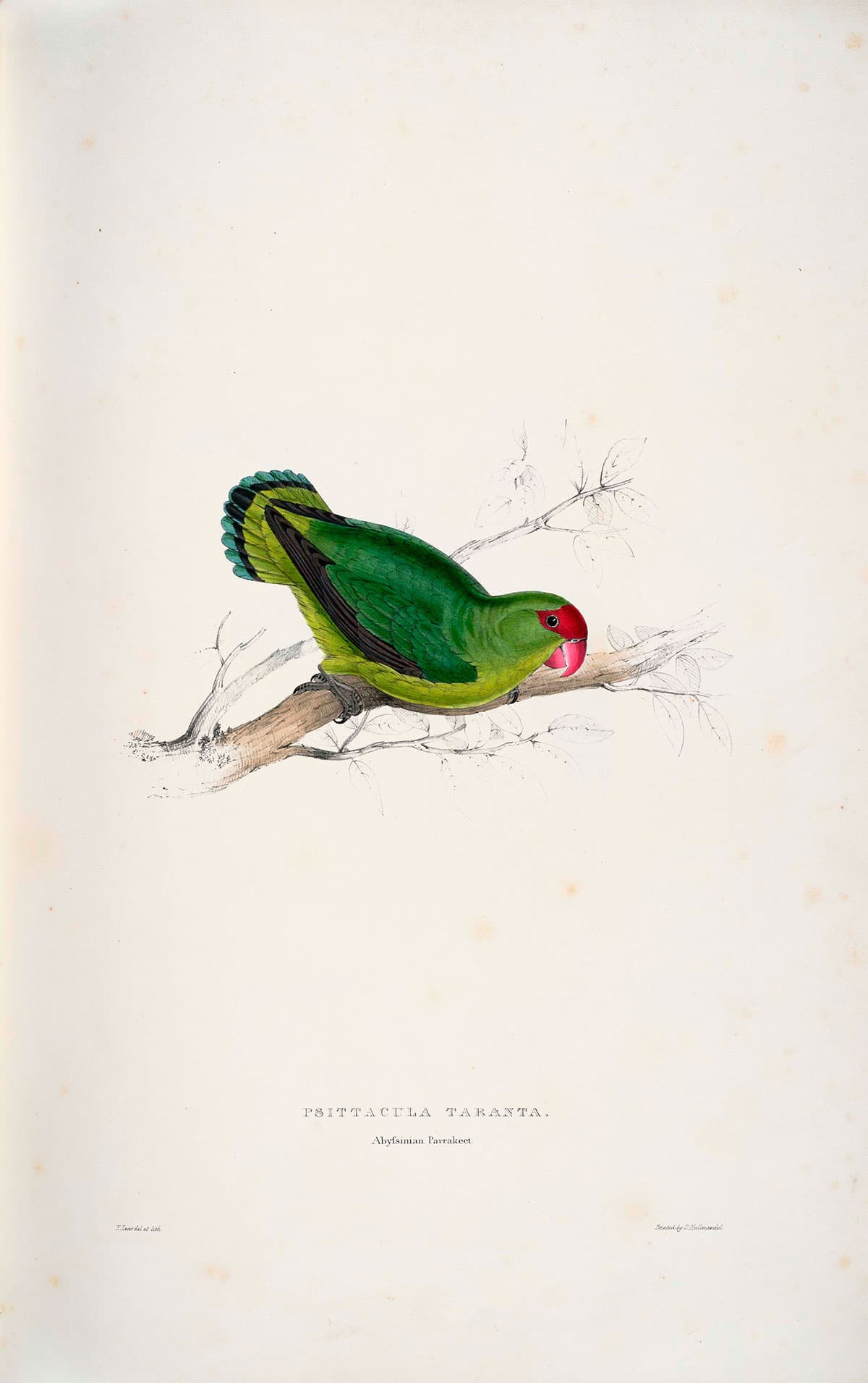
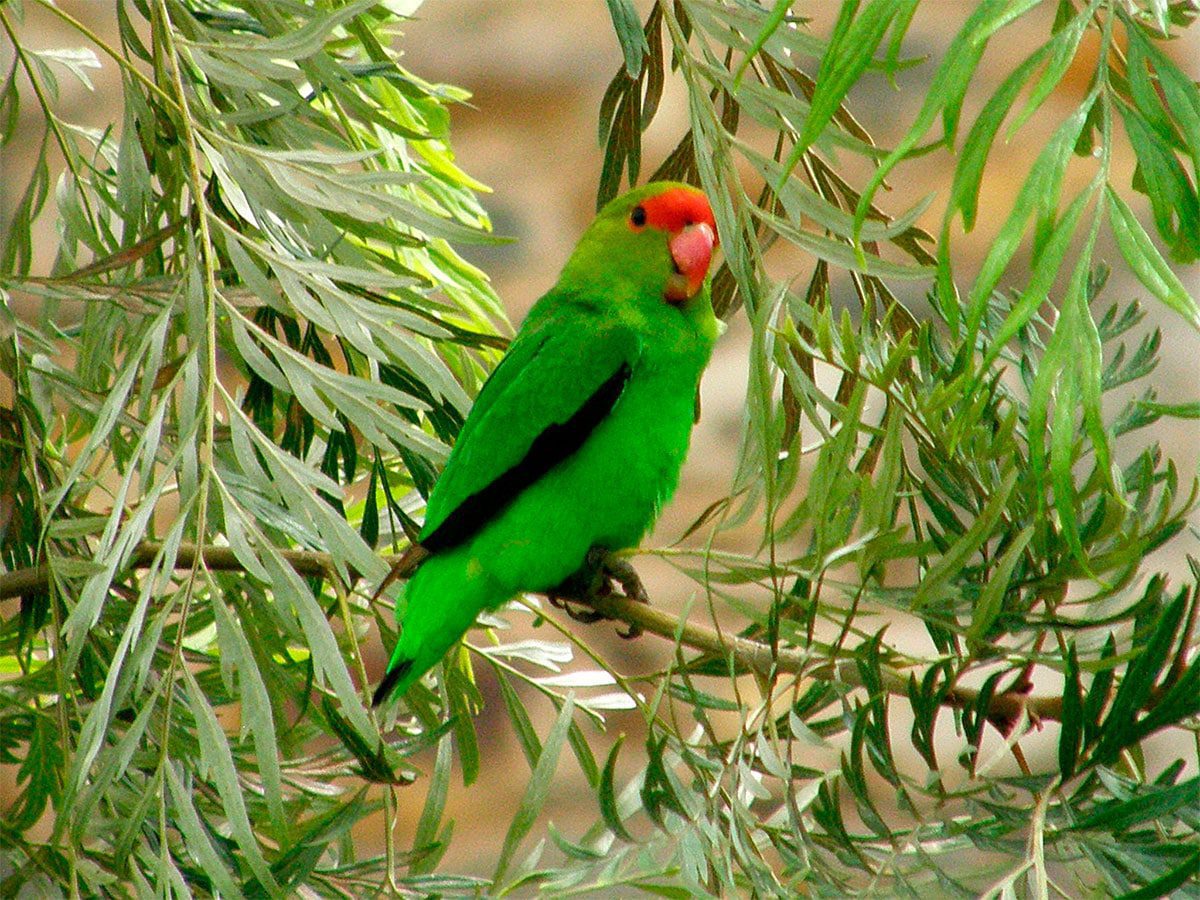
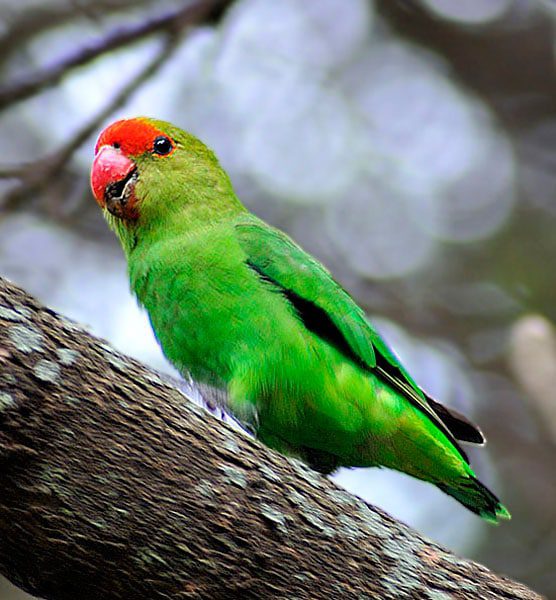
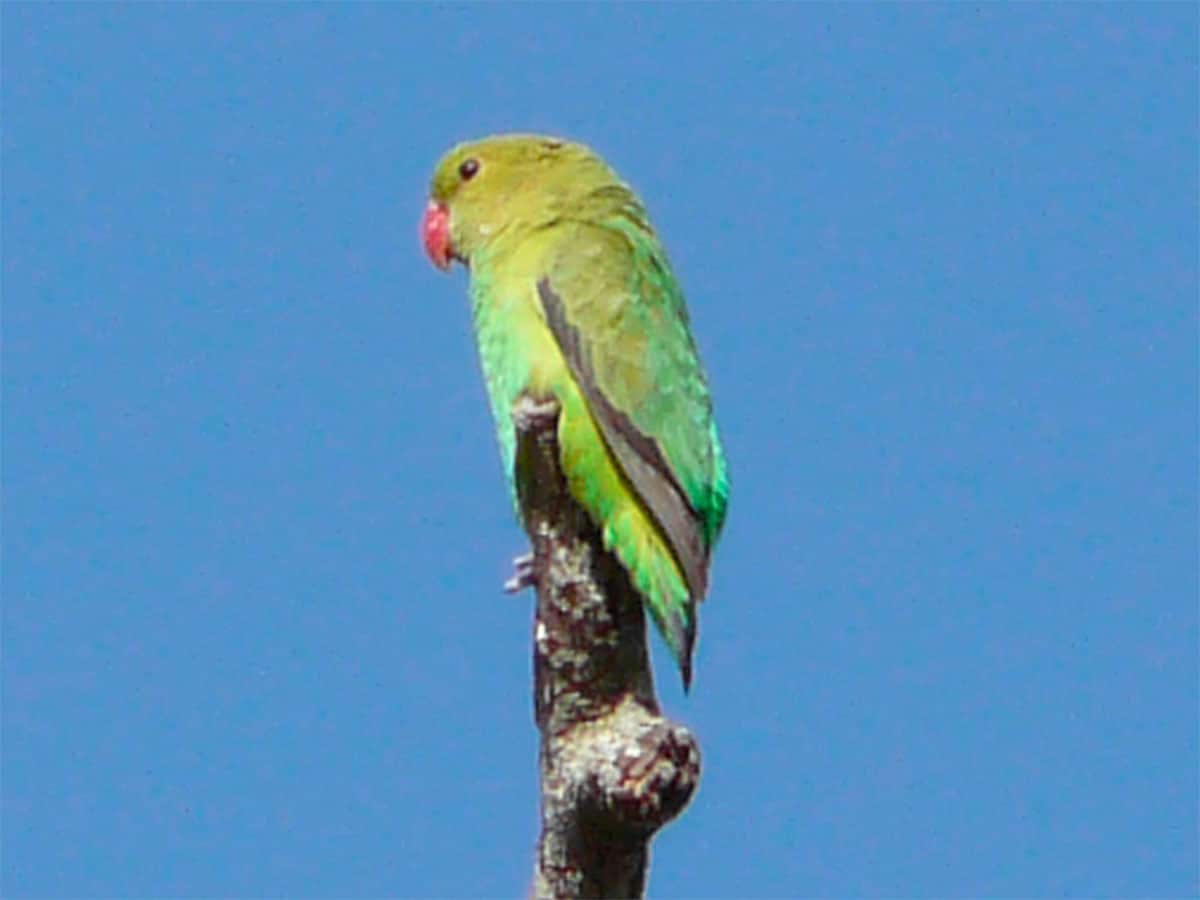
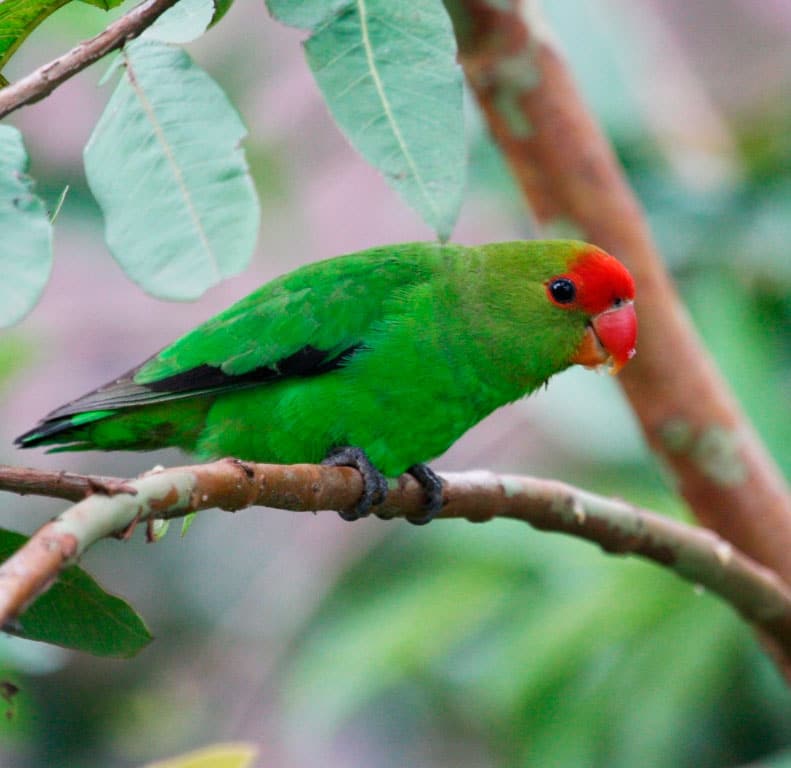
The Black-winged Lovebird(Agapornis taranta) has the forecrown, lores and feathers eye ring, red; rest of the head and nape green dyed brown. Mantle and green scapulars, rump and uppertail-coverts brighter green. Upper, the wing-coverts green with the exception of coverts outer primaries that they are black. Primaries blackish brown with a narrow green margin towards the vane outer; secondaries black. Under, the wing-coverts black. Chin and throat pale green tinged brown; rest of the underparts pale green. Central feathers of the tail green with toes in black, the green side with yellow in vane inner, subterminal black bar with green tips.
Bill red; irises dark brown; legs grey.
The female no red in the head, and feathers sometimes under the wings marked in green.
The immature are like females, with the bill yellowish. The Immature males show the color black feathers under the wings with red feathers scattered on the forehead.
Partially sympatric and very similar to Red-headed Lovebird (Agapornis pullarius) with which it has an throat red or orange (no verde) and rump blue (no verde). Usually found in small flocks on the tops of tall trees, where the plumage It blends well with the foliage. Its flight It is fast and direct.
Proposal subspecies Agapornis Taranta nanus (Southwest of Ethiopia) supposedly in bill smaller and wings shorter, but generally not accepted. Birds at higher altitudes are larger, but not subspecifically recognized. monotypic.
The Black-winged Lovebird, at high altitudes (1.800-3.800 m), They are linked, normally, mountain forests dominated Podocarpus, Juniperus, Hagenia and Hypericum; below , on the 1.400 m, They found in grassy savannas and forests Acacia, Combretum and Euphorbia; also frequent cultivated areas and peripheries of urban areas Addis Ababa.
gregarious, at least out of breeding season, when usually they found in small flocks (8-20) on the tops of the tallest trees, gathering in greater numbers when food is locally plentiful.
Used communal roosts in tree cavities (often old nests woodpeckers or bearded ethiopian).
The Black-winged Lovebird nest in tree cavities, in holes in walls and even in nests of some Baglafecht Weaver.
In captivity, female leads Nesting material (small pieces of branches, leaves and grass) put in almost any part of their plumage.
The Black-winged Lovebird it's the only one Lovebirds using their own pens to build nest.
The breeding season, according to sources, It between March and November. It is not clear if the egg laying is synchronized with the rainy season. Normally, starting up five eggs, but they can reach eight captive.
Inseparable Power Abyssinian:
The diet release of the Black-winged Lovebird It consists mainly fruit, including Ficus figs and berries juniper.
Perform seasonal movements in relation to food availability.
The Black-winged Lovebird It is not globally threatened, although it is included in Appendix II (Anexo B) of the CITES Convention.
It has a very small distribution area, so you have a greater risk of extinction because if their habitat is destroyed or uncontrolled catches are made can lead to extinction.
considered as crop pest in some areas, though not of great importance, they can become the object of chemical fumigations to avoid their attacks.
However they are more frequent since 1989, perhaps due to reduced sales of this species for the pet trade.
In the news they are not considered endangered, but we must not fail to protect them and avoid both habitat destruction and illegal capture.
The Inseparable Abyssinian in captivity:
Although not as common as other species of Lovebirds (Rosy-faced Lovebird or the Yellow-collared Lovebird), this handsome Lovebirds It has a very pleasant disposition.
They are more tolerant with others Lovebirds, provided they have enough space, and they are one of the least noisy species.
Dwelling, on freedom, high mountain areas, It is not surprising that the Black-winged Lovebird I can tolerate ambient outdoor aviary, as long as they stay out of drafts and temperatures are not too extreme.
birds are relatively resistant, similar to Fischer's Lovebird or the Yellow-collared Lovebird, although they are not as much as Rosy-faced Lovebird.
typical in all Lovebirds, the Black-winged Lovebird is very sociable and loves the companionship. Their natural behavior is to live closely with a partner / a.
Despite being a very sociable pet and tender, they will need a lot of attention if kept separate. The majority They are kept in pairs to satisfy his great need for constant companionship, acicalamiento mortgage, and socialization.
For reproduce in captivity You need tranquility and a spacious and equipped cage at least two nest boxes.
With regard to its longevity, according to sources, a living specimen 14,6 years in captivity. In captivity, these animals are known to breed, approximately, to the 2 years of age.
Alternative names:
– Black-winged Lovebird, Abyssinian Lovebird, Black winged Lovebird (English).
– Inséparable d’Abyssinie, Inséparable à ailes noires, Inséparable taranta (French).
– Tarantapapagei (German).
– Inseparável-de-asa-preta (Portuguese).
– Inseparable Abisinio, Inseparable de Frente Roja, Agapornis Taranta (español).
– Avibase
– Parrots of the World – Forshaw Joseph M
– Parrots A Guide to the Parrots of the World – Tony Juniper & Mike Parr
– Birdlife
– Photos:
(1) – Agapornis taranta – Black-winged Lovebird in the San Diego Wild Animal Park, California By Carlos Urdiales [CC BY-SA 2.0], via Wikimedia Commons
(2) – A male Black-winged Lovebird in a guava tree (eating semiripe) guavas, in Bahir Dar, Ethiopia By Veli Pohjonen (Own photographing in Bahir Dar, Ethiopia) [Public domain], via Wikimedia Commons
(3) – A female Black-winged Lovebird in Ethiopia By Alastair Rae from London, United Kingdom (Black-winged Lovebird) [CC BY-SA 2.0], via Wikimedia Commons
(4) – Inseparable from Abyssinia by avicue
(5) – Black-winged lovebird by mundoexotics
(6) – A painting of a male Black-winged Lovebird (also known as Abyssinian Lovebird) (originally captioned «Psittacula taranta. Abyssinian parrakeet») by Edward Lear 1812-1888 [Public domain], via Wikimedia Commons

























2.jpg)
_-zoo3.jpg)

_-zoo4.jpg)


.jpg)


_-Moscow_Zoo.jpg)


.jpg)
.jpg)