The race Burmese Modern was developed in the United States and Great Britain under different breed standards. Such an unusual breeding program resulted in the development of a number of different characteristics between the two groups., but most cat registries still do not formally recognize them as distinct breeds.
The breed was recognized by the Cat Hobbyists Association (CFA) in 1936, but it was discontinued a decade later due to extensive crossings with Siamese triggered by increased popularity. American breeders continued to refine the single standard of the Burmese cat, and the CFA eventually lifted the suspension in 1954. At the same time, British breeders tried to breed Burmese cats through a distinct breeding program comprised of a variety of cats, including some imported from America.
In 1952, the European Burmes cat was finally recognized by the Governing Council of the Cat Fancy (GCCF) of United Kingdom. The GCCF prohibited crossing with the American Burmese cat In an effort to preserve the "traditional" line. Today, the American and European versions of the breed are kept strictly genetically differentiated.
The European Burmes cat (O Burmes «Traditional» The British) has a long slim body, long legs and oval legs. The head is wedge-shaped with a long snout and almond-shaped eyes.. The tail is usually medium long.
The American Burmese cat (The "contemporary" Burmes) it has a much more robust body and its legs are proportional to the body. The head is much wider, the shorter and flattened muzzle and the eyes are round. The ears are wider at the base compared to the British variant. The shape of the legs and the length of the tail are similar in both groups..
Both the European Burmese cats like americans are small to medium size, and usually weigh between 4 and 6 kg. They are always very muscular and strong, so they often feel heavier when held than they actually are. Hence his nickname "brick wrapped in silk".
The coat is always short, silky and shiny. Originally, all Burmese Cats were deep dark brown (sable en EE.UU., brown in the UK and Australia and seal in New Zealand), but today a wide range of colors is allowed.
The standard sable color is the result of the so-called Burmese gene (cb) causing a reduction in pigment production. This distorts the usual expression of color creating a faded color dot effect. (that is to say, turns black coloring to brown). But, color must always be solid, only with a slight, faint tint towards the lighter underparts. Their eyes are green and gold and no stains are allowed on the coat.
Character and skills
The Burmeses they make excellent companion animals due to their affectionate nature, affectionate and playful. They are considered attention seekers and tend to cling to their human companions whenever they can.. Due to its clingy personality and puppy-like behavior, the Burmeses are often regarded as the dogs of the cat world.
These people-oriented cats tend to maintain their energetic and playful kitty personality into old age as well.. Like their ancestors Siamese, the Burmeses they are very vocal, loving and sweet. They are not independent and do not like to be alone for a long time. They get along very well with children and other pets, including dogs.
Health
Some published studies have recognized that Burmese cats, among other races, are at increased risk of diabetes (Cooper RL et al, 1997-2007 y Ohlund M et al, 2015). Diabetes mellitus (DM) is a metabolic disorder in which blood sugar levels remain high for long periods of time. This occurs when not enough insulin is produced in the body or the body does not respond to it..
It has also been identified and associated with Burmese cats hypokalemia, a recessive genetic disease characterized by low serum potassium levels. Apart of this, the race Burmese it is considered a fairly healthy and strong breed, with a half-life of 10 to 17 years.
"Burmés cat" data
1. The name of the Burmese race in Thai means «beautiful, Fortunate and splendid -looking ». We think these elegant and good-looking cats are worthy of this title.
2. To the Burmeses they love to investigate. Call a Burmese curious would be a bold euphemism. This is the cat that will be attentive to absolutely everything and everyone around him. With a Burmese, you will have the most committed and involved supervisor in almost everything you do.
3. They're the best friends. They are said to look a lot like puppies, and his kindness is definitely one of them. They adore their kittens, other cats and dogs, and they will be happier when you are home. They are known to even comfort their humans when they are sick or sad.
4. They do not adapt well to the outside. This curious cat is overconfident and easily gets into trouble. His survival skills aren't among the best in the feline world, either.. For this reason, in general, it is not recommended to let them roam freely outside.
5. Together with the Siamese, were the founders of the Tonkinese cat. The Tonkinese cat were created in Canada through a crossover program between the Siamese and the Burmese cat, with the aim of creating the perfect combination of the best characteristics of the two breeds. The Tonkinese was officially recognized as a breed in 2001.
▷ The world of Pets: Dogs, cats, birds, reptiles, amphibians
The European Burmes cat has the same origins as the American Burmese cat, that goes back to Wong Man, led cat of Burma to America in 1930. Imported American cats, descendants of Wong Mau, to Great Britain, and the Brown was recognized in 1952, but after the race was divided to take different forms in both sides of the Atlantic. In Europe, breeders preferred a more typically oriental look, and they were also interested in a wider color scale.
The Cat Fanciers Association began registering Burmese in 1936, but suspended records on 1947 because breeders continued to use conjoined twins in their breeding programs. Records resumed in 1953, after this practice was discontinued.
In Europe, However, the development of Burmese took a different path. In Great Britain, where the broodstock shortage was even greater than in the United States, the Siamese Red Point and the British Shorthair cat were used in breeding programs, and his genetic contribution included additional colors: red, cream, brown-turtle, chocolate-turtle, blue-turtle and lilac-turtle. With the time, they met as European Burmes cat.
The color blue, a recessive trait carried by cats imported from America, accepted a few years. The reddish colors and the turtle, It resulted from an accidental crossing, they were recognized in the Decade of 1970. Great Britain cats were exported to Europe, Africa, Australia and New Zealand in the Decade of 1950. Therefore, the breed in these countries follows the European type. The FIFé allows green eyes, but the GCCF considers it a defect.
On both sides of the Atlantic, the Burmese cat still listed among the most popular breeds, but looks better in Europe, where short hair cats prevail over copies of long hair.
Physical characteristics
Share Alois de Arkhitekton, European Burmese male presented at a cat show in Siilinjärvi, Finland – Heikkisiltala, CC BY 3.0, via Wikimedia Commons
The European Burmes cat, as the American Burmese cat, characterized primarily by the sepia pattern of fur, which gradually transforms into dark, uniform tips at the roots, without markings striped cat.
The coat is short and thin, glued to the body and do not need daily care. Thin legs hold a fairly weak body, but muscular, surprisingly heavy for its size.
The head is the feature in which the European Burmes cat differs more than the American type. It has a wedge and the snout is blunt; the eyes are separated, they are round and just ripped.
It is a medium-sized cat that usually weighs between 2 and 3 kg, sometimes more.
Varieties:
Most organizations that recognize the European Burmes cat they do not allow the crossing with other races in the framework of their breeding.
This is the position taken by the Fédération Internationale Féline (FIFé) and the Governing Council of the Cat Fancy (GCCF).
The Livre Officiel des Origines Félines (LOOF) French is an exception, since it authorizes the mating with the Burmilla cat, to expand the genetic background of this breed.
It also, the European Burmes cat is itself the origin of two races:
The European Burmes cat is quite successful in Europe, and this is especially true in the country where it was developed: Great Britain. Since 2004, ranks fifth in the breed ranking based on the number of annual registrations at the country's leading feline institution, the Governing Council of the Cat Fancy (GCCF). But, is in clear decline: while at the end of the 90 more than 3.000 kittens per year in the organization (which allowed him to occupy the fourth position in the ranking), this figure has been divided by three since then, and now around a thousand.
In France, the European Burmes cat not as successful as in Great Britain and ranks 35 (of about 70) in the breed classification of the Official Book of Feline Origins (LOOF) based on the number of births registered each year. This number is around fifty, what, just like in britain, reflects a certain decline: in the decade of 2000, it was rather on the order of 60 to 80. The American Burmese cat not far behind, since it occupies the position 40, nails on 30 or 40 registrations per year.
In Switzerland, the European Burmese occupies the tenth place in the statistics of the Fédération Féline Helvétique (FFH) since the years 90. But, while in the decade of 2000 there were some 70 registrations per year, this figure has dropped in the following decade and is now more of 40.
When it comes to personality, the European Burmese and the Burmese cat are aligned. The European Burmese is energetic and friendly. Has the charm and determination of his ancestors Siamese, and enjoy the conversation as much as that breed, but her voice is soft and sweet, which contradicts his tendency to run the home with an iron paw sheathed in velvety fur. He is very intelligent and seeks human company., so it is not the most suitable for a home where you will be alone most of the day. If there are no humans around to stimulate your intellect, make sure he has another pet for company. Get along well with other cats and dogs, but, of course, other Burmese (of any type) will be your best friend.
The European Burmese he is a very curious cat. It is hoped that you will explore your home thoroughly and get to know all its corners. He is playful and remains so into adulthood. Stimulate their smart mind with interactive toys and teach them tricks that allow them to show off in front of the public. Besides sitting, turn around, say hello and come, can learn to reach for a small toy or walk on a leash. With proper early conditioning, car rides and vet visits will be a breeze.
One European Burmes cat it is a good choice if you are not opposed to total loss of privacy. This cat will want to participate in everything you do, from reading the newspaper and working on the computer to preparing meals and watching television. Of course, will sleep in bed with you and can even snuggle under the covers. When i'm sitting, will be on your lap or right next to you, waiting expectantly for me to caress you. Yes, he ignores them, will scold you. Guests will receive your undivided attention, and those who say they don't like cats are likely to win.
A female of European Burmese is the very definition of queen status. Likes attention and likes to be in command. Males are calmer and are content to fill the lap. Whatever your choice, you may soon find yourself longing for another.
Children and other pets
The European Burmese, active and sociable, It is a perfect option for families with children and for dogs that accept cats.. Play fetch as well as any retriever, learns tricks with ease and loves the attention he receives from children who treat him with politeness and respect. Live peacefully with cats and dogs that respect your authority. Always introduce pets slowly and under controlled circumstances so that they learn to get along.
Health
Both pedigreed cats and catsmixed raceshave different incidences of health problems that may be genetic in nature.The European Burmes cat is generally healthy, although they can be prone to gingivitis and can be sensitive to anesthesia.The following diseases have also been observed in this breed:
Aqueous humor lipemia, a transient milky appearance of the eye during infancy, that usually resolves on its own.
Dermoide corneal, the presence of skin and hair on the surface of the cornea, that can be successfully corrected surgically.
Gangliosidosis, an enzyme deficiency A test has been developed to detect the disease.
Orofacial pain syndrome, indicated by exaggerated licking and chewing movements and pawing the mouth Discomfort may increase when the cat is excited or stressed, and cats are often reluctant to eat because the activity is painful. Some cats must wear an Elizabethan collar and have their paws bandaged to prevent injury. Some cases resolve on their own and then recur. The cause and outcome are unknown. mode of inheritance. Pain relievers and anticonvulsants may help, as well as consultation with a veterinary dentist to rule out dental disease.
Congenital peripheral vestibular disease causing head tilt, lack of balance, rapid eye movements and uncoordinated gait in kittens Some kittens with the condition can also be deaf.
Hypokalemic polymyopathy, muscle weakness caused by low levels of potassium in the blood, sometimes seen in Burmese kittens Signs include general weakness, stiff gait, reluctance to walk and head tremors. Can be treated with orally administered potassium supplements.
Flat chested kitten syndrome, a deformity that can range from mild to severe Kittens that survive to adulthood usually show no signs once they reach maturity.
twisted glue, usually as a result of a coccyx deformity; it does not cause pain or discomfort.
Osteoarthritis of the elbow, an early-onset arthritis in the elbow that limits the cat's activity or mobility.
Endocardial fibroelastosis, a heart condition in which the left ventricle of the heart thickens and stretches the heart muscle. The signs usually develop when a kitty has 3 SA week 4 months of age, a good reason to wait until 4 months to bring a kitten home.
Dilated cardiomyopathy, enlarged heart.
Mellitus diabetes, an endocrine condition caused by a defect in insulin secretion or insulin action that results in high blood sugar levels.
European Burmese
care and grooming
The soft, short coat of the European Burmese easily cared for with weekly brushing or combing to remove dead hair and distribute skin oil. A bath is seldom necessary.
Brush your teeth to prevent periodontal disease. The best is daily dental hygiene, but a weekly brushing is better than nothing. Clean the corners of the eyes with a soft, damp cloth to remove any discharge. Use a different area of ​​the cloth for each eye so as not to run the risk of spreading any infection. Check the ears weekly. If they look dirty, clean them with a cotton pad or soft cloth moistened with a mixture of cider vinegar and warm water at 50%. Avoid using cotton buds, that can damage the inside of the ear.
Keep the litter box spotless. As all cats, the European Burmese they are very demanding with bathroom hygiene.
It is a good idea to keep a European Burmes cat as an indoor cat to protect it from diseases transmitted by other cats, from dog attacks and other dangers faced by outdoor cats, like being hit by a car. The European Burmese who go abroad also run the risk of being stolen by someone who wants to have such a beautiful cat without paying for it.
Characteristics "European Burmes cat"
Coexistence is important that you have with your new friend. Before considering the acquisition of a cat of the breed "European Burmes cat" you know certain factors. You must take into account their character, their need for exercise, their interaction with other pets, their care and if you have small children, their level of tolerance towards them.
Joy
5,0 of 5 stars (based on 1 review)
Activity level
4,0 of 5 stars (based on 1 review)
Friendliness to other pets
3,0 of 5 stars (based on 1 review)
Friendliness to children
3,0 of 5 stars (based on 1 review)
Grooming requirements
1,0 of 5 stars (based on 1 review)
Vocality
4,0 of 5 stars (based on 1 review)
Need for attention
4,0 of 5 stars (based on 1 review)
Affection towards its owners
5,0 of 5 stars (based on 1 review)
Docility
1,0 of 5 stars (based on 1 review)
Intelligence
4,0 of 5 stars (based on 1 review)
Independence
2,0 of 5 stars (based on 1 review)
Hardiness
3,0 of 5 stars (based on 1 review)
Videos "European Burmes cat"
European Burmese cat❤️ Breeding cattery Freya Way*RU
The Bobtail americano he is playful and intelligent. Some have dog features, they learn tricks and can retrieve things
Content
History
The history of Bobtail americano started with a serendipitous find in the 1960, to Yodie, a street cat wild aspect picked up in Arizona by John and Brenda Sanders, Iowa.
when breeding started, different short-tailed cats were crossed (long and short haired cats with different coat colors) without preferring certain breeds.
From 1980 the goal was to produce a wild looking tabby cat based on the look of the Yodie, and the Bobtail eventually gained acceptance in major North American registries, though it's still weird. The version of long hair was the first recognized as a breed.
Due to the mating of the most diverse animals, the gene pool of Bobtail Americano it is especially wide, which contributes to the fact that cats are largely free from hereditary diseases typical of the breed.
With the recognition of the TICA (International Cat Association) in 1989, breeders achieved their greatest success to date. The American Bobtail is also recognized as a breed in the LOOF standard. (Livre Officiel des Origines Félines).
Physical characteristics
American Bobtail longhair by Rachel Daviesfrom Aberystwyth, WALES
The Bobtail americano It is a medium-sized cat and reaches a body weight of about seven kilograms. His body is athletic and muscular with a broad chest.. How the front legs are longer than the back legs, the back curves towards the neck.
The special feature of this cat is the tail, which is due to a spontaneous genetic mutation and is inherited in a dominant way. The cat's tail is not uniform in appearance: may be curved, curled and knotted. The length or shortness of the tail also varies. (as orientation, the length of the tail of the Bobtail americano is about a third of that of other cats).
The head is broad with a pronounced cheek line and jawline..
The eyes are large, oval in shape and harmonizes with the coat.
The ears are medium in size and covered by a small tuft of hair at the tip.
The Bobtail americano he also has hair between his toes.
In general, all coat colors and patterns are recognized. The length of the coat is also left open in the standard and is not defined in a binding way. But, the cat Bobtail americano always has a double and dense coat, which is smooth and shiny.
Character and skills
As with other breeds of cats, the character traits of individuals can vary greatly.
But, there is the following trend in the cat Bobtail americano:
Curious
Sociable
People-oriented
Freedom lover
Take it easy
Active
Playful
care and health of "American bobtail cat"
The Bobtail americano he is an affectionate cat that does not stay well alone. If the human has no time for him, at least one other cat should be present. However, he will also make friends with dogs if he can gradually get used to the other species..
This cat with velvet paws has no preference for a certain category of people, older people and children alike like it. The only important thing is that there is someone at home with whom you can relate. By the way: the communication of Bobtail americano it is comparatively quiet. Their sounds are less like those of a cat than those of a cooing dove.
Since the genome of Bobtail americano is based on that of common house cats, there is genetic diversity. So, the breed cat rarely sick.
But, can have hip problems due to the difference in length of the legs and in the spine due to its stubby tail. It can also suffer from all the typical diseases of domestic cats throughout its life. The susceptibility to dental problems also appears to be slightly increased in the Bobtail americano.
Indoor or outdoor cat?
Since the Bobtail americano is lively, a large garden or unlimited access to the outside would be ideal for them. Consequently, holding abroad is the recommended way, but with the premise that the cat can enter the protected indoor area in bad weather, at night and in case of danger.
If the apartment is furnished adequately for cats, indoor accommodation can also be considered. But, tickets must be well secured. The Bobtail americano you are curious and smart, making it prone to escape maneuvers. It's lightning fast and smart enough to learn the mechanism of a handle. For security, lock the front door, even if you are present.
How much activity does he need? "American bobtail cat"?
The Bobtail americano has phases in which you like to exercise. But, your desire for physical activity is in a comfortable mid-range.
What he likes are smart toys and scratching posts where he can climb and sharpen his claws. But, in any case, these should not be missing in a home that accepts cats, so it is an absolutely normal cat in this aspect.
Grooming and feeding
The Bobtail americano it is very simple in terms of daily grooming routine. It also has no special food needs or a coat that needs grooming.. But, cats who are overly interested in food get fat pretty quickly, but you can avoid it with an automatic food portioner or a manual allocation of the same. The most important thing is that the food is made up of high-quality ingredients and that it adapts to the characteristics of the cat (depending on your age, your possible illnesses / intolerances and your individual energy needs).
The cat's coat Bobtail americano it is generally very easy to care. But, during the coat change, the effort increases by the minute. You can help the cat change its coat by brushing it daily and removing tangles. Many breeds - especially short-haired cats- can get by without the daily grooming program.
For sale "American bobtail cat"
The cat Bobtail americano is only recognized since 1989. So, it is still a young breed that can only be purchased from selected breeders. Make sure you only buy from people you can visit in person and see for yourself the state of the animals and the living conditions there. Sellers who reject this request are not serious.
Purchase price may vary based on genetic lineage, sex, age and appearance. Expect a minimum price of about 1.000 EUR by a purebred animal.
Although the purchase price is above average, you will spend exactly the same amount on maintenance costs as with other cats. Calculated over the years, high purchasing costs will be reduced.
Characteristics "American bobtail cat"
Coexistence is important that you have with your new friend. Before considering the acquisition of a cat of the breed "American bobtail cat" you know certain factors. You must take into account their character, their need for exercise, their interaction with other pets, their care and if you have small children, their level of tolerance towards them.
The Karelian Bobtail is a Russian cat breed originating from the Republic of Karelia, on the Finnish border. It appeared naturally at least 200 years on the islands of Lake Ladoga, and has not undergone many human modifications.
It is probable that the race had a link in its history with the Norwegian Forest Cat , a Scandinavian breed that also has a natural origin. But, to date there are no DNA studies that demonstrate this relationship. Specialists have also long linked the Karelian Bobtail with the Kurilian Bobtail, a feline breed also Russian but originally from the Kuril Islands, located near the coast of Japan. But, science has since established that these natural races, both with short tail and, in fact, with many physical and psychological similarities, they are actually completely different.
The Karelian Bobtail He was highly appreciated by the inhabitants of his native region not only for his great ability to hunt vermin, but also because, according to an old legend, owning a cat without a tail or with an especially short tail brought good luck to its owner.
This morphological peculiarity is the result of a genetic mutation that occurred naturally in cats that live on the islands of Lake Ladoga.. It is transmitted spontaneously from generation to generation and is different from Kurilian Bobtail. In the Kurilian Bobtail, the gene is dominant: it is only necessary that one of the two parents transmit it for the kittens to be carriers. On the other hand, in the Karelian it is a recessive gene, which means that both parents must have a short tail for the kitten to inherit this characteristic.
It was in the years 80 when felinologists from present-day Saint Petersburg, members of the commission of the Kotofey KLK, a major Russian feline association, first became interested in the breed in detail and accurately described it.
The first standard was drawn up by them in 1987, based on the breeder's cats Liliya Dvoryaninovich. I had some 15 short tailed cats, descendants of parents found on the north shore of Lake Ladoga.
The breed was first recognized in Russia in 1990 by the Sovetskaya Felinologicheskaya Federatsiya (SFF), a Russian organization that no longer exists. He made his first appearance at a feline show at 1993, specifically at the Eurasia Intercontinental Exhibition, in Yekaterinburg. The Kotofey KLK registered the first representatives in 1994.
Karelian Bobtail – Lovely-dogs
But, not much has changed since then in terms of breed recognition, which is still limited to its country of origin. These may include, nor international organizations such as the Fédération Internationale Féline (FIFé) o The International Cat Association (TICA), nor national structures like the American Cat Fanciers’ Association (CFA), el British Governing Council of the Cat Fancy (GCCF), el Official Book of Feline Origins (LOOF) inglés o the Canadian Cat Association (CCA) they recognize the breed. Still unknown outside of Russia, the Karelian Bobtail is very underrepresented around the world.
Even in russia, their number is very small. Various attempts have been made by enthusiasts to develop the breed and increase its numbers., but so far they have not been successful. The most important program was developed by the Kotofey KLK in 2012, but it quickly reached its limits as the organization does not allow any crossbreeding with other breeds. Thus, it is difficult to create a sufficient population to guarantee a bright future for the Karelian. Even if you go into the wild to find animals in your home region, is not enough. But, it must be taken into account that a large part of the population of the breed - in fact, the majority- live in nature and, Therefore, is not included in the statistics.
The number of farms Karelian Bobtail It is very small. Most of them are located in the territories near St. Petersburg, but there are also a handful in other cities (Medvezhyegorsk, Kirov, Petrozavodsk…).
Physical characteristics
Karelian-Bobtail
His admirers often compare him to Karelian Bobtail with a little lynx, for its lack of a tail and its large hind legs. Hind legs are much larger than front legs, but they are all strong and very powerful.
Although it is a fairly standard size, it is much more massive and heavier than it seems. Built around a medium, muscular chest, has a compact overall look, without looking too beefy.
The tail It is one of the most outstanding characteristics of the breed., and their exact appearance differs greatly from one individual to another. It is in all cases very short, measuring just over 4 to 13 cm.: a totally absent or longer tail than 13 cm is not accepted in the breed standard. Whatever its size, the fur is longer at this point, giving the appearance of a pompom. On the other hand, may be completely straight or have breaks.
This uniqueness in the size of the tail is the result of a genetic mutation, and the gene that causes it is recessive. This means that both parents must have a short tail for the kittens to be short..
The head of the Karelian Bobtail it is medium in size and triangular in shape. Its forecrown and their cheeks they are flat, and your nose it is rather long and straight. The ears are large and are located on the top of the head. Their tips are slightly rounded. Their eyes they are almond shaped, medium in size and its color generally corresponds to that of the coat. The most common colors are green and yellow.
The fur of the Karelian Bobtail it consists of a very thick double layer of hair, that protects you from inclement weather. It can be short or long, but in any case it must be dense, bright and smooth. All colors are accepted except tan, chocolate, leonado, lila y colourpoint. The most observed colors are white, the black, blue and blue-cream. The coat can be bicolor, tricolor or brindle, and in many individuals it has silver and gold reflections.
Last, this breed is marked by a certain sexual dimorphism, since females are mostly smaller and lighter than males. Regardless of your gender, pups take a long time to grow, since they only reach full physical maturity around the 5 years.
Size and weight
Size: 30 cm.
Weight: Of 3 to 5 kg
Variations
The Karelian Bobtail it comes in two varieties: short-haired and long-haired individuals. Apart from the length of its fur, there is no physical or psychological difference between them.
Character and skills
The Karelian Bobtail he is a smart cat, sociable and curious. They love spending time with their family members and enjoy being around them, proving that they fit well in any home. Often tends to favor a specific person to whom he is especially attached, but this does not mean that I turn my back on others.
Its playful temperament and its marked taste for interaction make it a recommended breed of cat for a child.. As long as you know how to behave in a respectful way with the child, you both can spend hours having fun together. But, it is important to remember that, for the safety of both, a young child should never be left unattended with a cat. It is a matter of safety for both the animal and the child.
This cat also gets along very well with older people.
The Karelian Bobtail he's also not shy around people he doesn't know, although it may take time to know them.
Their sociability also applies to other animals: even if you have to share your home and the care of its owners with them, tends to get along perfectly with his companions and tends to make a good pair with dogs, especially those of cat-loving breeds.
On the other hand, there is no hope of making him cohabit harmoniously with small animals that could be considered prey for him. In fact, its acute hunting instinct makes a rodent, a bird or fish is never safe around it, although they have lived together since childhood. It also, if you have access to the outside, his owner should expect to regularly receive gifts from his pet in the form of prey brought home.
In any case, although its origins make it very resistant to cold, Being able to evolve abroad is not necessarily essential for a Karelian Bobtail. Very adaptable, you can live just as well in a house with a garden to which you have free access as in an apartment, as long as you have something to occupy yourself with and exercise. If you live inside, must have a cat tree, for example. like most cats, they love to climb trees and furniture. But, just because they are very active does not mean that they do not also enjoy quiet time with their owners, and they are happy to share the sofa with them.
In fact, the most important thing you need a Karelian to be happy is to be in contact with other living beings. So, where you live is less important than the presence of your owners and their availability to pay attention to you. So, not suitable for people who are usually out most of the day, that they would be better off with an independent breed of cat. Having said that, Sharing the home with one or more cats or dogs can be an interesting way to compensate for the absence of the owner.
Knowing that, besides moving a lot, he also needs to be mentally stimulated and that he is very attentive to his owners, is a perfect student for those who want to teach tricks to their cat. These may include, can learn to respond to his name, to lie down when ordered or to pick up objects.
Not only can he learn what is expected of him, it can also understand behavior that is considered undesirable. If you are caught on the spot, for example, getting on the table during the meal, a simple reprimand is usually enough to prevent him from repeating the act.
The Karelian Bobtail it also has the good taste of being a rather calm breed of cat: he is not one of those who use his voice, although it is very soft and melodic, to ask for favors. When they want to express a wish, they generally prefer to communicate by touching their owner with their paw. Having said that, in general, it is not demanding or invasive.
Last, the male has the peculiarity of marking his territory very little.
Health
The Karelian Bobtail is in good general health and is not known to have any particular genetic problem, nor any disease to which you are especially prone. Having said that, is also related to the lack of hindsight, since cat specialists have been interested in your case for a short time and its distribution is still very limited.
Accustomed to the harsh climate of his native Russia, it is in any case particularly resistant to low temperatures and has no problem spending most of the time outdoors, even in winter.
Although this breed does not present any particular health risk, it is important to choose a serious breeder of Karelian Bobtail. They must be able to present a certificate of good health from a trusted veterinarian, showing that the little cat shows no signs of illness or any other problem. You should also be able to show proof of vaccinations.
Last, as prevention is better than cure, a routine visit to the vet at least once a year is strongly recommended to get a full check up and make sure everything is okay. It is also the opportunity to do any booster shots if necessary., and to review the antiparasitic treatments that the owner should take care of administering to his cat throughout the year.
Grooming
The coat of the Karelian Bobtail it is easy to care. For people with short hair, a weekly brushing is enough to remove dead hair. Long hairs should be brushed a little more often - at least twice a week- to prevent knots or hairballs from forming. In normal times, both shed very little hair. But, this is not the case during the shedding season in spring and fall, when daily shedding is usually necessary to prevent hair from being found throughout the house.
Regardless of the length of its coat, it is rarely necessary to bathe him, unless, of course, that has gotten especially dirty. When i do, you must use a shampoo specially designed for cats.
On the other hand, your eyes need to be checked at least once a week and cleaned if necessary. In addition to removing dirt from around you, this can detect any possible infection or small injury.
The ears should also be examined and cleaned weekly to prevent dirt from building up in them., which could also be the cause of infections (otitis, etc.).
Brushing your teeth is also very important, as it helps limit plaque formation, which can cause a lot of problems. The ideal is a daily brushing, but once a week is enough. Whatever the frequency, a toothpaste specially formulated for small cats should always be used.
You should also check your cat's nails at regular intervals., for example, each month. If they get too long, you have to trim them manually. Otherwise, could get in the way or even break, with the consequent risk of injury. In any case, if you live inside, a scratching post is an essential investment to keep you from satisfying your natural urge to scratch furniture or curtains.
coat care, of the eyes, from the ears, teeth and claws are basic gestures that every owner must learn to perform correctly, at the risk of hurting or injuring your pet. So, it is advisable to ask a hairdresser or veterinarian for advice the first time, to learn the proper gestures to adopt to keep your Karelian Bobtail. On the other hand, do not hesitate to get started quickly, to teach your kitten to be handled as soon as possible: sessions will be more enjoyable for both him and his owner.
Food
The Karelian Bobtail it is not difficult to feed and is content with a quality and balanced industrial feed. As in the case of any cat, the chosen products and the established rations must be adapted to age, the health and activity level of the cat.
By being able to self-regulate, you can have food at all times without fear of becoming obese.
But, it is important to monitor the weight of the cat, as you may gain weight for medical reasons (disease, reaction to a treatment, etc.). Weighing your cat once a month is an opportunity to make sure everything is going well or, on the other hand, to make an appointment in case a later slip is confirmed or even accentuated.
It also, like any cat, a bowl of fresh, clean water should be available at all times.
For sale "Karelian Bobtail"
The Karelian Bobtail it is an extremely rare breed of cat. To adopt one, you have no choice but to turn to your country of origin, Russia. even there, the offer is not much less abundant. Most of the representatives and breeders of the breed are concentrated in the city of St. Petersburg and its surroundings., but there are also some hatcheries in the cities of Medvezhyegorsk, Kirov y Petrozavodsk.
The price of a kitten Karelian Bobtail varies greatly from individual to individual depending on the lineage of the cat, of the reputation of the hatchery but also and above all of its physical characteristics. Usually, you have to count between 30.000 and 70.000 rubles (that is to say, between 350 and 900 EUR) for such an adoption.
To this amount must be added the expenses related to bringing the cat from Russia: transportation expenses, administrative expenses, etc.
Characteristics "Karelian Bobtail"
Coexistence is important that you have with your new friend. Before considering the acquisition of a cat of the breed "Karelian Bobtail" you know certain factors. You must take into account their character, their need for exercise, their interaction with other pets, their care and if you have small children, their level of tolerance towards them.
Joy
5,0 of 5 stars (based on 1 review)
Activity level
3,0 of 5 stars (based on 1 review)
Friendliness to other pets
3,0 of 5 stars (based on 1 review)
Friendliness to children
5,0 of 5 stars (based on 1 review)
Grooming requirements
2,0 of 5 stars (based on 1 review)
Vocality
4,0 of 5 stars (based on 1 review)
Need for attention
4,0 of 5 stars (based on 1 review)
Affection towards its owners
5,0 of 5 stars (based on 1 review)
Docility
4,0 of 5 stars (based on 1 review)
Intelligence
4,0 of 5 stars (based on 1 review)
Independence
2,0 of 5 stars (based on 1 review)
Hardiness
5,0 of 5 stars (based on 1 review)
▷ The world of Pets: Dogs, cats, birds, reptiles, amphibians
Recognized by the CFA, FIFe, TICA, ACF, ACFA/CAA, CCA-AFC, GCCF
Origin: United States
Antiquity: Decade 1950
Character: Energetic and exhibitionist
Weight: 2,5 to 5 Kg
The Balinese cat can boast of having among his close relatives the famous Siamese cat.
Photo: aboutpedigreecats.com
Content
Characteristics "Balinese cat"
Coexistence is important that you have with your new friend. Before considering the acquisition of a cat of the breed "Balinese cat" you know certain factors. You must take into account their character, their need for exercise, their interaction with other pets, their care and if you have small children, their level of tolerance towards them.
Joy
5,0 of 5 stars (based on 1 review)
Activity level
4,0 of 5 stars (based on 1 review)
Friendliness to other pets
3,0 of 5 stars (based on 1 review)
Friendliness to children
3,0 of 5 stars (based on 1 review)
Grooming requirements
2,0 of 5 stars (based on 1 review)
Vocality
5,0 of 5 stars (based on 1 review)
Need for attention
5,0 of 5 stars (based on 1 review)
Affection towards its owners
4,0 of 5 stars (based on 1 review)
Docility
1,0 of 5 stars (based on 1 review)
Intelligence
5,0 of 5 stars (based on 1 review)
Independence
1,0 of 5 stars (based on 1 review)
Hardiness
2,0 of 5 stars (based on 1 review)
History
The origins of the breed as such are in the United States and go back to the years 50, but the first references to this type of cat are much older. In fact, a Chinese tapestry from several centuries ago already depicted long-haired cats with features Siamese. More recently, in 1871, Penny Illustrated magazine mentioned a long-hair Siamese, and in 1928 the American Federation of Cat Fans (CFF) accepted the registration of a long-hair Siamese.
In the Decade of 1950, Marion Dorsey and Helen Smith, of the creators of Siamese Americans based in California and New York respectively, they became interested in these long-haired kittens and decided to start a dedicated breeding program. The program was successful and resulted in Balinese cat what do we know today.
Despite what its name may suggest, the Balinese cat It, in effect, an american cat breed. The name was chosen by Helen Smith to highlight its grace and elegance, similar to that of the ballerinas on the island of Bali
Already in 1961, the Federation of Cat Fans (CFF) recognized this new breed, and the Cat Fan Association (CFA) did the same in 1970. In 1979, this same CFA set a new standard for a breed called Javanese, whose characteristics were those of Balinese cat, and that it simply allowed covering the coat colors not accepted by the latter's standard. In fact, the Balinese standard had been established by accepting the same colors as the Siamese cat, that is to say, seal, blue, chocolate and lilac.
That same year 1979, the International Cat Association (TICA) also recognized the Balinese cat, antes de ser seguida for the International Feline Federation (FIFé) in 1983 and, later, por el British Governing Council of the Cat Fancy (GCCF) in 1986.
Today, but the Balinese cat is present and recognized throughout the world, still a relatively uncommon cat. in your country of origin, United States, the CFA statistics indicate that it is in the second half of the breed table based on the number of annual registrations. In France, each year less than 20 ejemplares en el Official Book of Feline Origins (LOOF). In Great Britain, GCCF figures even show a very steep decline, mainly due to the appearance of new races: Enrollments in the organization went from 150 to 200 per year at the beginning of the decade 2000 less than 50 at the end of the Decade of 2010.
Muscular but slim, the Balinese cat seems very delicate and flexible in its movements.
With a weight between three and four kilos, the Balinese cats belong to the medium-sized breeds.
Males balinese they can weigh a little more and are around five kilos.
While the body, face and character are similar to those of the Siamese cat original, coat length differs considerably, which is particularly evident in the bushy tail of the balinese. But, from the start of breeding, the balinese has changed a bit and, with its elongated body and its triangular face, has been adapted to the modern variant of the Siamese cat.
If you want to buy Balinese cats, nowadays you will only find a few breeders that breed this breed in its original breeding way. In most breeders, cat lovers can buy the modern shape of the Balinese cat, whose body is narrower and its head is more wedge-shaped. A distinctive feature of Balinese cat it's her bright blue eyes, that seem especially alive and vibrant.
The only coat pattern allowed is colourpoint: the body is one color, but the tips are a darker and different color. Although the only colors allowed in the original CFA standard, written in 1970, are accepted for the Siamese, that is to say, the seal, the blue, the chocolate and lilac, the vast majority of current standards also allow the cream, The candy, red, apricot and other non-traditional colors.
blue eyes, of a unique beauty, are present regardless of coat color and are characteristic of the appearance of the balinese.
Last, sexual dimorphism is moderately marked, the male being slightly larger than the female.
The case of a Balinese cat with colors other than the seal, the blue, chocolate and lilac divide cat lovers from all over the world, as well as various organizations. While the International Cat Association (TICA) and the British Feline Fantasy Governing Council (GCCF) consider that these cats are indeed balinese, the American Cat Fan Association (CFA) consider from 1979 that all "Balinese" of different colors constitute a different race: that of Javanese cat.
Despite the official merger in 2008 of the two breeds under the standard balinese of the CFA, the term Javanese still commonly used in the US. to define the balinese different colors from the original standard.
This term was chosen in reference to the island of Java, neighbor of the island of Bali, in Indonesia: is a nod to the fact that the Javanese its near to balinese.
The balinese he is a very cuddly cat, who is lovingly attached to his family and does not leave their eyes. They demand a lot of attention, they follow their owner everywhere and constantly seek to play with him or be petted by him. It is sociable, accepts other pets without difficulty and enjoys the company of children, provided they have been taught to behave with animals.
His constant need for attention makes him not tolerate loneliness well, and you can quickly adopt destructive behavior if you feel that your family does not give you the attention you deserve. So, not suitable for a teacher who is absent often.
It is reputed to be sensitive to human emotions, and knows how to comfort a sad man or, on the other hand, share your moments of joy. They also know how to interpret voice intonations, so reprimands can hurt your sensitive nature, while encouragement reinforces the bond they have with their family.
Activos, agile and curious, to the balinese they love to explore the corners of the house. These may include, you can crawl out from under your bed with a toy you lost weeks ago or find that old photo that fell behind your living room closet years ago. But, one of his favorite activities is to climb on the shoulders of one of the family members.
He is also very smart and playful, making you an excellent candidate for teaching your cat tricks. It is very possible that he will learn something by himself, and then come proudly show your family what you can do.
Despite his high energy level, It is a breed of cat that lives very well in an apartment -if the apartment is not tiny- and does not need outer space.
Last, one of the main characteristics of the Balinese cat is your propensity to be vocal. They seem to have an opinion on everything, and they do not stop making it known, commenting from his food to what is on television or the cover of the book his master wants to read in a low voice. Although he has no problem giving long monologues, you expect to be listened to and risk starting over if you think your family has not paid attention to what you are saying. Both in terms of activity level and volume, they are definitely not one of the calmest cat breeds.
Care "Balinese cat"
Seal Point Balinese kitten at 13 weeks of age – Flickr
The Balinese cat it is an easy-care breed of cat, since its long and silky coat does not tend to knot and sheds very little. So, a simple brushing once a week is enough.
This brushing session is an opportunity to check that your teeth and eyes are clean., and to pay special attention to their ears, which often need to be cleaned with a damp cloth. It also, make sure its claws are not too long, and trim them if necessary.
Indoor or outdoor cat?
The Balinese cat not necessarily a cat that should be kept outside, since these graceful animals are sensitive to cold. But, as the balinese it is one of the most active cat breeds, your house should be as big as possible and, above all, be equipped with many climbing possibilities. The ideal is to have a well-protected balcony or garden, that can also be used for running. To the balinese cats they also like to get inspired by climbing trees outdoors, and a small pool of water and other play opportunities are always welcome for this breed of cat.
How much activity does he need? "Balinese cat"?
If you decide to have a balinese, it does not matter if it is a puppy or an adult, you should take your time with him. Intelligent breed cats are very affectionate and like to be the center of attention, so they will gladly dispense with the company of other cats, but not from human attention.
So, the Balinese cat he needs a lot of pampering and you also have to take time to keep him busy. The balinese is very receptive to training and learns very quickly, which is why search games are so easy for him balinese how to learn new tricks or intelligence games. However, in regards to scratching opportunities, climb and play, you should also make sure your cat has quiet places to retreat to, since animals tend to prefer places where they have their favorite humans in sight.
Health and nutrition
The balinese is an exceptionally long-lived breed of cats, since many reach or exceed the 20 years of age.
Despite this overall robustness, are at increased risk for certain diseases:
The progressive retinal atrophy (ARP), a retinal disease that causes blindness in cats;
The amyloidosis, a disease that causes kidney failure and is often fatal;
Achalasia or megaesophagus, a gastrointestinal disorder that can cause food blockages;
Squint, a vision disorder without serious consequences for the animal;
Acromelanismo, a genetic disease that causes changes in coat color based on skin temperature.
Last, obesity is a major risk to the health of the balinese, but can easily be avoided with a vigilant and responsible owner.
Life expectancy
15 to 20 years
Food
When it comes to feeding, should focus on a protein-rich diet. So, a high-quality cat food with a high meat and protein content is essential. Especially since balinese cats they are very active and need a lot of energy, a good diet is essential. As an alternative, can feed your balinese on a soft diet, but you should thoroughly familiarize yourself with the subject and also seek advice from a veterinarian, because only with the right composition can the needs of the cat be met in a specific way.
For sale "Balinese cat"
If you want to get a "Balinese cat", you should know that they are very affectionate and that these intelligent purebred cats want to keep busy. Do not underestimate the necessary care of the coat.. If you are thinking of buying a Balinese cat, should only be done by a reputable and responsible breeder.
Responsible breeders ensure that the Balinese cats are raised in a family and are well socialized. It also, if you want to buy a cat of this breed, you should know that good breeders do not place their balinese in new homes before the end of the imprinting period.
If you want to buy a Balinese cat, do not respond to ads from amateur breeders offering purebred cats for sale without papers. The balinese kittens should only be purchased from an experienced breeder who is a member of a breeding club. Since experienced breeders only sell cats that have been vet checked and are healthy, should expect to pay between 900 and 1100 euros for a balinese kitten.
If you want to give a new home to a Balinese cat adult, with a bit of luck you can also find it in shelters and animal protection organizations. Also in this case you will have to pay a nominal fee.
The British longhair cat was recognized as a breed by the International Cat Association (TICA) in 2009. Some other registration organizations still do not consider it a breed of its own..
Content
History
The British longhair cat originated in Great Britain at the beginning of the 20th century and is the result of crossing the British Shorthair cat and the Persian cat. The British Shorthair cat They had long interbred with the persian cats, but the resulting cats that showed the long-haired gene of the Persian they were considered unusual.
Because the breed has only recently been bred for its specific traits, have achieved race status in recent history. Much of the history of British longhair cat is associated with its relationship with its namesake and ancestor, the British Shorthair cat.
Physical characteristics
The British longhair cats are size medium, with long hair and a nice round face. His big round eyes, their sweet expressions and fluffy fur give this breed adorable charm. Under all your fluff, these cats have muscular and robust bodies. The british long hair usually weigh between 3 and 7 kg, and males tend to weigh more.
The coat of the British longhair it's dense and straight, and moves away from the body to make these cats appear larger than they really are. Its fur is also soft, thick and available in many colors, like black, the lilac, chocolate or gold. They can also have a bicolor pattern, ticked o colorpoint. These cat breeds shed little compared to other long-haired breeds, but they have a thick undercoat.
The British longhair cat is often compared to the British Shorthair cat and with the Persian cat as for its appearance, And for good reason: This breed of cat follows the same breed standard as the British Shorthair cat, except for their long, soft fur. The magnificent mane of British longhair is the result of the side of Persian cat of his genealogy.
British longhair cat Bounty Amouge, No. 4 according to the catalog of the international cat exhibition of the RosKosh club «Golden Autumn-2014» (WCF). – Nickolas Titkov from Moscow, Russian Federation, CC BY-SA 2.0, via Wikimedia Commons
Character and skills
These sweet cats are as personable as their smiling faces would suggest.. The British longhair cat He is known for his smooth, calm demeanor and easygoing demeanor. These cats are not easily upset – some might even call them lazy!! Although sometimes they behave like typical playful kittens, they are significantly less active than most cat breeds and become less active with age. They also sleep quite a bit, even by cat standards.
But these cuddly cats are so much more than just sofa companions.. They are incredibly smart, social and loving. The British longhair is a loyal breed that loves people and tolerates most environments.
Although they are very sociable, these cats also have an independent vein, and they often feel good doing their own thing. That does not mean that these cats always leave you alone.; in fact, They have been described as small "private investigators". True to the cats of pop culture, these cats are quite curious. Don't be surprised if you find these cats pawing at your personal belongings or looking closely to see what you are doing..
The British longhair cat He is affectionate and tolerant with children, but he doesn't like to be caught. Parents will have to spend time teaching their little ones not to pick up these adorable cats and to meet them on the floor to pet and play.
Needs of the "British longhair cat"
Thanks to his laid-back temperament, the British longhair adapts to a wide variety of environments. Their gentle and carefree demeanor makes them patient and loving pets for families with young children and frequent guests.. These friendly felines are sociable and adapt to changes, they tolerate curious young children and noisy dinners.
They are far from sticky, and they don't mind being left alone while you go to work or your social activities. This independent spirit also means that the British longhair can be a bit stubborn. They prefer to do things their own way, and often do not respond to owners starting the game when they prefer to lie down. But, this does not mean that your british longhair cat does not want to know anything about you. On the contrary, you will have to spend time showing your love and affection. Lots of pampering, attention and the presence of other pets will keep you from feeling lonely.
These cats love to chat and will have small conversations with you often to let you know that they are hungry., thirsty or just to get your attention. If you have roommates who are easily irritated or you live in an apartment with thin walls, this breed might not be the most suitable.
If what you are looking for is a friendly and cuddly companion that adapts to different lifestyles and living spaces, the British longhair cat it's a good option. This calm cat adapts well to family life, to frequent travel and most life situations, as long as I receive a lot of love and care.
Health
The british longhair cats they are not more prone to disease than other cats, but they have a certain incidence of health problems. This breed has a life expectancy of between 15 and 17 years.
«It is important to check for polycystic kidney disease, in which cysts develop in the kidneys causing decreased function and, finally, "kidney failure". DNA tests are now available to detect the risk of this disease in parents, so it is advisable to do a previous screening. This disease is also very common in the Persian ancestors of the British longhair.
Responsible breeders will test kittens for genetic health problems, but it is important to keep regularly scheduled veterinary appointments and follow the advice of your cat's veterinarian. Health problems can develop later in life and will need to be managed.
British longhair cat
Grooming and care
British longhair mainly handles that task itself. Because of all this self-grooming, your British longhair cat is prone to swallowing a lot of hair and developing hairballs. Help your cat by brushing more frequently or offering hairball relief treatments.
The British longhair cat tends to be a bit lazy, and owners will have to motivate them to move. Encourage play often, provide trees to climb and interactive toys to play with.
«Weight control is very important with these cats because they tend to be less active as adults compared to other cat breeds.. «They are prone to being overweight, Therefore, daily exercise is essential..
How are they smart, these cats are usually easy to train to perform simple tasks, how to use the litter box or scratching post. These food-loving cats will always appreciate a treat to reward good behavior.
Socialization should be easy with this easygoing breed. Kittens british long hair those who are introduced to people and pets at a young age are usually easy to get along with and accept unfamiliar faces well.
Food
The British longhair cat should be fed a high-quality diet approved by your veterinarian. Look for protein ingredients primarily of animal origin. Your cat can be fed dry or wet food. This breed is prone to obesity, so it is important to monitor your food intake.
A bluish-white long-haired British cat from the McQueen Cattery. – Felinology, CC BY-SA 4.0, via Wikimedia Commons
For sale "British longhair cat"
Kittens british long hair from a reputable breeder usually cost between 700 and 1.100 EUR, depending on pedigree.
Characteristics "British longhair cat"
Coexistence is important that you have with your new friend. Before considering the acquisition of a cat of the breed "British longhair cat" you know certain factors. You must take into account their character, their need for exercise, their interaction with other pets, their care and if you have small children, their level of tolerance towards them.
Recognized by the CFA, FIFe, TICA, WCF, ACF, ACFA/CAA, CCA-AFC, GCCF, NZCF
Origin: United States
Antiquity: 1983
Character: Elegant and conservative
Weight: 4 to 7 Kg.
Despite his wild looks, the Bengal cat it's a domestic cat, affectionate and very attached to humans
Content
History
The Bengal cat is a recent breed of cat that, despite its name, has nothing to do with the Bengal tiger. In 1963, Jean Sugden Mill, an American breeder, managed to cross a Leopard cat (or Felis Prionailurus Bengalensis, a Southeast Asian feline with the appearance of a leopard but the dimensions of a cat) with a domestic cat, who gave birth to two kittens, one of which was a female named Kin Kin. Against all odds, this female was not sterile and was able to interbreed with her father, giving birth to a litter of kittens, some of which were black, while others had a spotted brown fur.
It was this first crossing, in 1963, the one that marked the true beginning of Bengal cat, by developing a breeding program to create a new breed in its own right. In fact, if there were already in the past crossing experiments between a domestic cat and Leopard cat, following the example of those already documented in 1889 in the book Our Cats and Everything About Them of Harrison Weir, an English artist with a passion for cats, they did not intend to create a new breed of domestic cat.
For personal reasons, Jean Sugden Mill could not continue with this experiment, and nowadays none Bengal descend from this line. When he wanted to resume this project a decade later, the Endangered Species Ordinance had made it illegal to import the Leopard cat, so I could no longer acquire this animal to resume these crosses. But, in 1971, the Dr. Willard Centerwall, director of the genetics laboratory at Loma Linda University (California), had started a hybridization program between the domestic cat and the Leopard cat for scientific purposes, with the aim of testing the resistance of these hybrids to the virus of the feline leukosis, a disease that does not affect Asian leopards.
At the end of the year 70, Jean Sugden Mill acquired 8 first generation hybrids Dr. Centerwall and a Mau imported directly from India called Millwood Tory de Delhi. A long and difficult selection process began, during which other well-established breeds were used, as the Burmese cat, the Siamese cat, the American shorthair cat, the Abyssinian cat and the Egyptian Mau, to convert to Bengal cat in what is today: a domestic cat with the wild appearance of Felis Bengalensis, from which he inherited his name.
But, There is another theory that attributes the name of «Bengal» a William Engler, zoo keeper and active member of the Long Island Ocelot Club. Interested in these hybrids since the early years 70, it is said that he was the first to speak of Bengal, and the term comes from his own name: Bill Engler.
Jean Sugden Mill presented his Bengalis in various feline exhibitions in 1985, and the success was immediate. In 1986, the TICA (International Cat Association) officially recognized this new breed. The GCCF (Governing Council of the Cat Fancy) British followed him in 1997, then the FiFe (International Feline Federation) did the same in 1999, while the CFA (Cat Fanciers’ Association) American waited until 2018 to do the same.
The Bengal cat had a quick success, especially in France. The first specimen was imported in 1989, and the breed was recognized that same year by the Association Nationale des Cercles Félins de France (ANCFF). Many breeders were quickly interested, to the point that today the breeding of Bengals is flourishing in France (and internationally recognized), with more than 1000 active creators, that is to say, that have registered at least one litter in the last two years.
Since 2016, in the framework of meteoric growth, the Bengal cat it has even placed itself on the podium of the most popular cat breeds in France, with more than 3.000 kittens registered every year in the LOOF (Livre Officiel des Origines Félines), versus just over a hundred at the beginning of the years 2000.
This great popularity of Bengal it is rather a French specificity. In the United Kingdom, for example, where it suffered a legal restriction until 2007, it is rather between the 15th and the 20th position in the ranking of the most popular breeds, with an average of 300 specimens registered annually with the GCCF, that is to say, some 10 times less than in France.
In United States, the Bengali entered the Top 20 of America's most popular cat breeds when the CFA finally recognized it in 2018, despite its late recognition and the fact that it is prohibited in some places, like New York City or the State of Hawaii.
Physical characteristics
The Bengal cat it is a domestic cat that has retained the general appearance of a wild leopard. It is a fairly large cat with a long, muscular body, hind legs slightly larger than forelegs and a thick tail with a rounded tip, all of which gives it a classy look. As such, belongs to the long and powerful morphological type.
The head is wide, with small rounded ears and large round or oval eyes that express curiosity and intelligence.
The fur is short, dense and silky to the touch. Emblematic of the breed, the fur is reminiscent of its wild ancestor, the Leopard cat, with random rosettes or horizontal scrolls. In both cases, these marks are bicolor and well marked.
Different standards accept many colors, the most common being brown-black, including all gold variations, bronze, copper and mahogany. But, there are also many specimens with an ivory or creamy white color, as well as some rarer ones with a beautiful silver gray.
Size and weight
Size: Of 30 – 35 cm.
Male weight: 4,5 – 7 kg
female weight: 3,5 – 5,5 kg
Varieties "Bengal cat"
There are two varieties of Bengal: the stained and marbled.
In the first, rosettes must be large, clear, bicoloured, different and randomly arranged throughout the body.
The latter has elongated horizontal marks in the form of scrolls that are reminiscent of the veins of marble., bicolor and different.
There are also specimens with long or semi-long hair, sometimes called Bengal Kashmir. For the moment, only the TICA has recognized this cat as an experimental breed.
Character and skills
Bengal cat
Despite his wild looks, the Bengal cat it's a domestic cat, affectionate and very attached to humans, whose company constantly seeks. In fact, he is never far from where his master is, To make sure you don't miss anything that happens!!
He is also very sociable with other cats and dogs, provided they are also used to cats. But, they may still have some wild reactions, especially towards small domestic rodents, those who can be mistaken for prey and chase.
It is a very active and curious cat, who spends his time playing, chasing, fucking, exploring… before coming to rest near his master. He especially likes cat trees, that allow you to jump from one platform to another and settle in a high place to observe your environment from the highest. This energy expenditure is not unique to puppies: the Bengali is hyperactive and playful even as an adult, and is not the ideal companion for an older person who wants a quiet animal. Having said that, can be perfectly adapted to life in a flat, as long as you receive the necessary care… and that your family is not offended by the possible mischief you may cause.
Lively, explorers and playful, they can also be occasionally destructive. This is especially true in the case of females., which tend to be more excessive than males, both in their games and in their displays of affection. To minimize this risk, it is advisable to ensure that the Bengali get all the care you need: if you are left alone too often without occupation throughout the day, it is likely that he will find a way to remind his master of his existence, and this will not necessarily be in a pleasant way for this one…
The Bengal cat it is also a very intelligent breed, able to adapt and learn quickly. So, if a light turns on by itself at night or if a door that had been left closed is found to be open, there is no reason to believe that it is the work of a ghost: your partner has simply learned to press the switch or turn the handle. This makes him a good candidate for teaching your cat tricks and training.. In fact, it is not uncommon to see a Bengali who has learned to use the toilet or to take things to the owner. But, do not lose sight that it is still a cat, with his independent and stubborn character: although this may give results, training (for example with clicker, which is very suitable) requires a lot of patience.
It also, it is a breed of cat that loves water. This characteristic has been inherited from its ancestor the Leopard cat, who is an excellent fisherman. Some individuals do not hesitate to follow their master even under the shower!! It is logical that aquarium enthusiasts know that the inhabitants of an open aquarium are likely to end up in the clutches of this experienced hunter.…
Last, the Bengali It, in general, a pretty talkative cat, with a wide range of sounds, ranging from chirping to a low, hoarse noise reminiscent of certain big cats.
The BengalIt is an easy-care breed of cats, since it is only necessary to brush the cat's fur to remove dead hair and distribute the oil from the skin once a month. It also, it is seldom necessary to bathe your cat.
As in the case of all cats, regular check-ups of teeth, the ears and eyes will help avoid the risk of infection.
Last, its claws may be clipped from time to time, when necessary.
Indoor or outdoor cat?
The athletic Bengalis need a lot of exercise to feel comfortable. It is best to offer them a large house with a garden where they can roam.. If you decide to keep them inside, it should also provide them with enough space and opportunities to play and climb.
These freedom-loving animals don't feel comfortable in small city flats. A sturdy cat tree or climbing track should fit the floor.
The "Bengal cat" have great jumping ability and no lift is out of reach. Definitely, you should take this into account before bringing a Bengal cat to your house. Especially when they get bored, big cats tend to wreck the floor. In general, it is advisable to maintain a Bengal like a free animal and provide you with enough to do indoors. With outdoor cats, can you be prepared for these cats, otherwise so loving, go for a walk for two days in a row.
How much activity does he need? "Bengal cat"?
Due to their offspring from wild cats, the Bengal cats belong to the very active cat breeds. They are persistent climbers and need a lot of exercise. The best place for them to vent is the scratching post., during hunting games or, ideally, in the open air.
Regular hunting games with a rod, hunting mice or balls along with your human are also a great activity. Mental stimulation with smart toys or learning little tricks is essential so that cats do not get bored.
If you are often away from home, cats need company. They get along better with other cats. It is one of the few breeds of cats that loves water so it will easily be entertained by a leaky faucet.
Health and nutrition
The Bengali has a fairly robust health, having inherited from Leopard cat remarkable longevity for a domestic cat.
But, have a predisposition to certain diseases:
The Hypertrophic cardiomyopathy (MCH), a disease that makes it difficult for the heart to circulate blood;
The Chronic anemia, a genetic disease that can be detected by any decent Bengal breeder by a simple test;
The Progressive Retinal Atrophy (ARP), another genetic disease that can also be detected by a simple test, allowing carriers to be excluded from breeding;
The cataract, an opaque film on the cornea of the eye that can cause blindness in the most severe cases.
It also, being quite large and very active, are prone to Hip Dysplasia.
Last, it is important to know that, unlike his ancestor the Leopard cat, the Bengal not immune to feline leukosis.
Life expectancy
12 to 16 years
Food
The Bengal fits perfectly in commercial cat food, both croquettes and canned wet food. But, it is important to make sure your Bengal cat eat a quality food that contains all the essential nutrients necessary for their development.
There should always be enough food and fresh water. But, no risk of obesity in cats; on the one hand, because they are quite active, and on the other, because they are able to regulate their own weight.
For sale "Bengal cat"
Bengal cat
If you want to have a Bengal cat, you should know that this breed is one of the most expensive. For a healthy kitten you will pay between 1000 and 2000 EUR in a serious breeder. The price mainly depends on the type of leopard coat.
The Bengal cats with pedigree and physical characteristics that make them suitable for breeding are priced between 2000 and 3000 EUR.
Breeders also differentiate between the three categories of companion animals, breeding and exhibition. as creator, usually only kittens showing small deviations from breeding targets are obtained. In the purchase contract you have to agree not to use the cat for breeding.
Criticism of the breeding of "Bengalis"
Critics of breeding "Bengal cat" they believe that it is irresponsible to cross a wild animal with a domestic cat just to obtain a certain coat pattern. According to animal rights advocates, the first mating is even a torture brood, since complications often arise at birth. Many of these wild cat hybrids continue to display the character traits of a wild animal.. So, before acquiring a cat of this type, you must be very sure that, even though you have inherited the activity from your ancestors, will be able to lead a life appropriate to his species.
Characteristics "Bengal cat"
Coexistence is important that you have with your new friend. Before considering the acquisition of a cat of the breed "Bengal cat" you know certain factors. You must take into account their character, their need for exercise, their interaction with other pets, their care and if you have small children, their level of tolerance towards them.
Joy
5,0 of 5 stars (based on 1 review)
Activity level
5,0 of 5 stars (based on 1 review)
Friendliness to other pets
2,0 of 5 stars (based on 1 review)
Friendliness to children
2,0 of 5 stars (based on 1 review)
Grooming requirements
1,0 of 5 stars (based on 1 review)
Vocality
2,0 of 5 stars (based on 1 review)
Need for attention
4,0 of 5 stars (based on 1 review)
Affection towards its owners
4,0 of 5 stars (based on 1 review)
Docility
1,0 of 5 stars (based on 1 review)
Intelligence
5,0 of 5 stars (based on 1 review)
Independence
2,0 of 5 stars (based on 1 review)
Hardiness
3,0 of 5 stars (based on 1 review)
Videos "Bengal cat"
These Beautiful Bengal Cats Are Incredibly Intelligent | Cats 101
The Mekong Bobtail cat still a rare breed of cat, since at the beginning of the decade of 2010 its population barely exceeded 600 registered copies.
Photos By Sinitsyn
Content
Characteristics "Mekong Bobtail cat"
Coexistence is important that you have with your new friend. Before considering the acquisition of a cat of the breed "Mekong Bobtail cat" you know certain factors. You must take into account their character, their need for exercise, their interaction with other pets, their care and if you have small children, their level of tolerance towards them.
Joy
5,0 of 5 stars (based on 1 review)
Activity level
5,0 of 5 stars (based on 1 review)
Friendliness to other pets
3,0 of 5 stars (based on 1 review)
Friendliness to children
5,0 of 5 stars (based on 1 review)
Grooming requirements
1,0 of 5 stars (based on 1 review)
Vocality
2,0 of 5 stars (based on 1 review)
Need for attention
4,0 of 5 stars (based on 1 review)
Affection towards its owners
5,0 of 5 stars (based on 1 review)
Docility
4,0 of 5 stars (based on 1 review)
Intelligence
4,0 of 5 stars (based on 1 review)
Independence
2,0 of 5 stars (based on 1 review)
Hardiness
5,0 of 5 stars (based on 1 review)
History
The Mekong Bobtail it is a natural breed originating from Thailand, for which it has long been known as Thai bobtail. It has been present in Southeast Asia for many centuries, and legend has it that his courage led the kings of Siam to use him as a guard to protect the treasure chamber from possible theft.
In the 19th century, these cats were considered symbols of loyalty. Royalty used to gift them to the nobility to reinforce their good relations. So it is not surprising that, at the end of the 19th century, el rey Somdetch Phra Paramindr Maha Chulalongkorn, better known as Rama V, give away 200 from them to Tsar Nicholas II of Russia.
Several of them were Mekong Bobtail, that sparked some interest in Russia, so more specimens were imported in the following years. These cats and their descendants are the origin of the breed we know today.. In other words, although it is basically a Thai cat breed, it was the Russians who allowed it to develop and flourish, without modifying it.
But, the breed could not develop under the communist regime, and it was not until the decade of 1980 when Olga Mironova, a renowned cat specialist, took an interest in her and decided that she should be recognized. With the help of Ludmila Esina, Russian breeder and cat specialist, drew up the first standard and adopted the name Mekong Bobtail, in tribute to the river that runs through Southeast Asia.
This cat was first presented at an international feline show in November 2003, during the «Royal Canine Grand Prix» held in Moscow. A few months later, in august 2004, received the recognition of the World Cat Federation (WCF). WCF has not been followed by other organizations since., so it remains the only major feline association that recognizes the breed.
In fact, the Mekong Bobtail cat still a rare breed of cat, since at the beginning of the decade of 2010 its population barely exceeded 600 registered copies. The vast majority are in the former Soviet countries, mainly in Russia and Ukraine. It is almost non-existent in Western Europe and North America.
MEKONG BOBTAIL cat of rare lynx-point colour Dona Miya Ayutthaya. Cofein Pride cattery (WCF). – Alex opryatin, CC BY-SA 3.0, via Wikimedia Commons
Physical characteristics
The body structure of the Mekong Bobtail is similar to that of Siamese cat. With its long, muscular body and its long, thin legs, has preserved the refined elegance of Thai cats. The strong stature in combination with the beautifully modeled head give the animal a noble appearance. The characteristic feature is the short tail. It is a quarter the length of the body and has different combinations of curves and folds. According to the international breed standard, its length is at least three vertebrae.
The coat color of the Mekong Bobtail reminds of the Siamese cat. Belonging to typical cats point, breed standard allows all colors point no target. Cats often appear with sandy to cinnamon colored fur. The coat is soft and silky to the touch. Hugs the body closely. The effect is produced because the purebred cat has hardly any undercoat.
If you look at the cat's face, you will notice the large ears with the rounded tips. They perch on top of the animal's head and give it an attentive impression. This is enhanced by the slightly outwardly curved ears.. Similar to the Siamese, the breed is characterized by its large, oval eyes. Its deep blue color contributes to the exotic beauty of this rare breed of cat..
Last, sexual dimorphism is well marked, being the males larger than the females.
Size and weight
Height: 30 cm.
Weight: Of 3 to 5 kg
Character and skills
The Mekong Bobtail cat he is an affectionate cat who enjoys the company of humans. They are very faithful and devoted to their owner and constantly seek their company.. Demands a lot of attention, that returns multiplied by a hundred in affection.
Sociable and curious by nature, this cat loves to hang out with new people, especially if they give you the attention you seek. Calm and balanced, it is an ideal cat breed for children, as long as, of course, have learned to behave with animals: his patience has limits and he runs the risk of biting, even more than scratching, to those who amuse themselves by pulling their tail or whiskers.
The sociability of Mekong Bobtail spreads to other animals, and enjoy the company of other dogs, as well as other cats. The presence of other animals in the home is an option to be seriously considered by any owner who has to be away for long periods of time each day., since it is a breed of cat that does not tolerate loneliness. On the other hand, coexistence with small rodents or reptiles should be avoided, since his hunting instinct can overcome his good manners at any moment.
On the other hand, the Mekong Bobtail easily adapts to a new environment, and traveling by car with your cat should not be a problem. So, they are an ideal option for those who move regularly or want to take their cat on vacation.
Active and athletic, to the Mekong Bobtail he loves to run around the house, jump on the furniture and perch on the closet. With this energy level, ideally they should have access to the outdoors, where they can run and have fun before returning to their owner to rest quietly. But, can live in a flat, as long as his owner makes sure he gets enough exercise by playing with him often, or even taking him out on a leash.
If you have free access to the outside, it is recommended to put a necklace with a locket in which your name and phone number appear, In addition, of course, of the essential identification of the cat by chip or tattoo. In effect, although he is very close to his master and wants nothing more than to return to his side, his curiosity and the fact that he likes the company of humans can take him away from home; the risk is that you realize too late that you don't know how to get home
Last, it is a breed of cat that usually meows, either to let its owner know that it is time to eat or that it is time to open the door to go chase the birds.
Rare MEKONG BOBTAIL kittens, color tabby-point. Mekong bobtail hatchery Cofein Pride – Alex opryatin, CC BY-SA 3.0, via Wikimedia Commons
Health
The Mekong Bobtail it is a robust breed with no known genetic predisposition to disease.
But, can be prone to several conditions common to all cats:
The feline idiopathic cystitis, a common bladder infection in cats that can have serious consequences if left untreated;
Various eye problems: secretion, redness or even a color change in the eyes;
Gastrointestinal disorders: vomiting, flatulence, diarrhea or constipation. These problems are usually due to diet and can pass within a few days or persist for several weeks..
It also, as with any breed, care must be taken to avoid being overweight or obese, that could cause serious health problems. Adequate nutrition and sufficient activity levels will normally avoid this problem..
Grooming
The Mekong Bobtail cat is a low maintenance cat breed. His short-haired coat only needs to be brushed once a week to remove dead hairs and keep it looking its best..
It is advisable to prolong the grooming session a bit to take time to check the teeth, ears and, above all, the cat's eyes to make sure they are clean. They can be cleaned with a damp cloth.
Last, depending on the activity level of the cat and the use of the scratching post, nails may need to be trimmed with nail clippers.
Rare MEKONG BOBTAIL chocolate tip color – Talestra of Cofein Pride – Alex opryatin, CC BY-SA 3.0, via Wikimedia Commons
For sale "Mekong Bobtail cat"
The price of a Mekong Bobtail cat is of some 20.000 hryvnia in Ukraine or 50.000 rubles in Russia, what corresponds to some 700-800 EUR.
As this breed is not yet common in Europe and America, it is usually necessary to import it. In this case, the cost of transport and possible customs duties must be added to the purchase price.


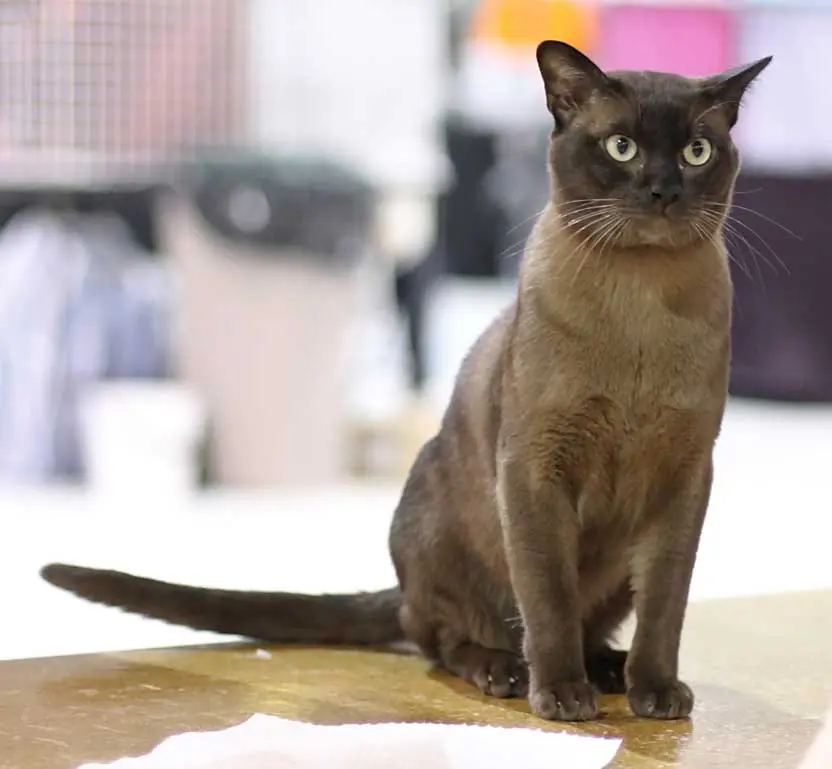

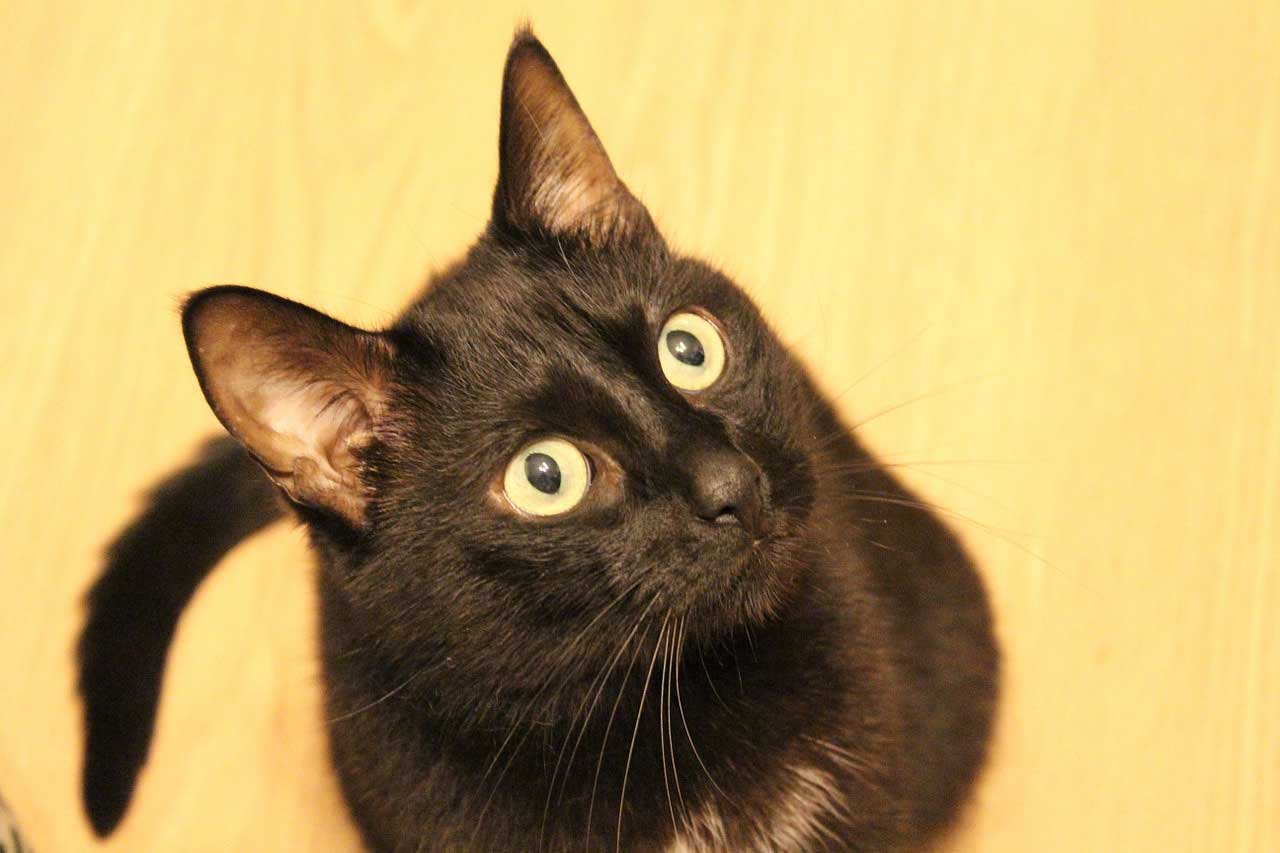


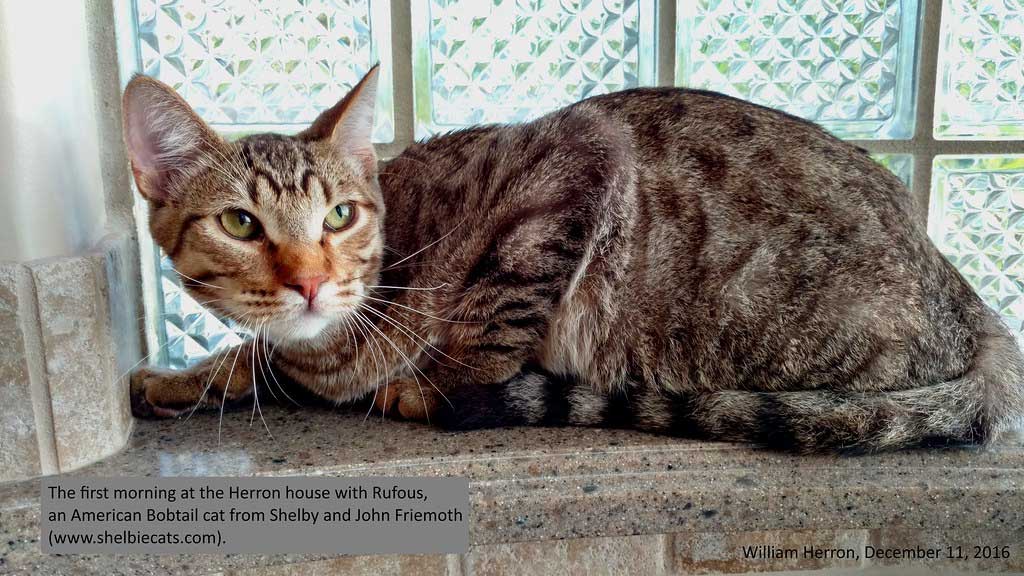
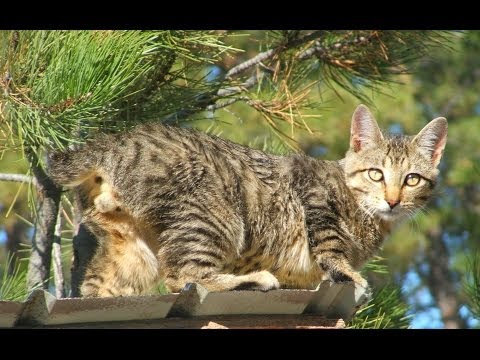

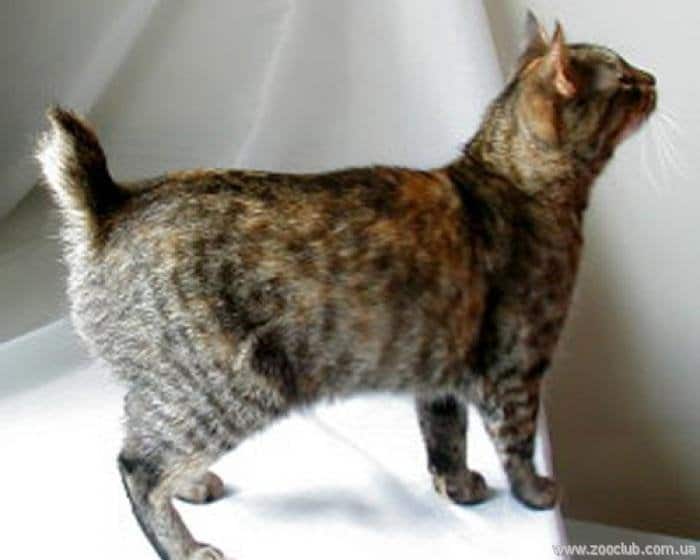
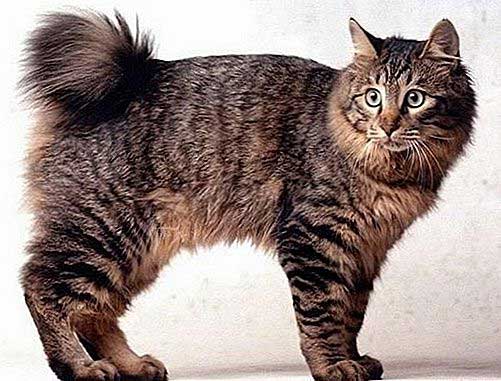
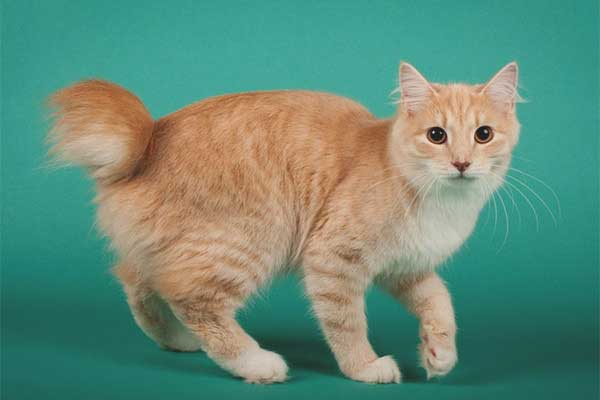
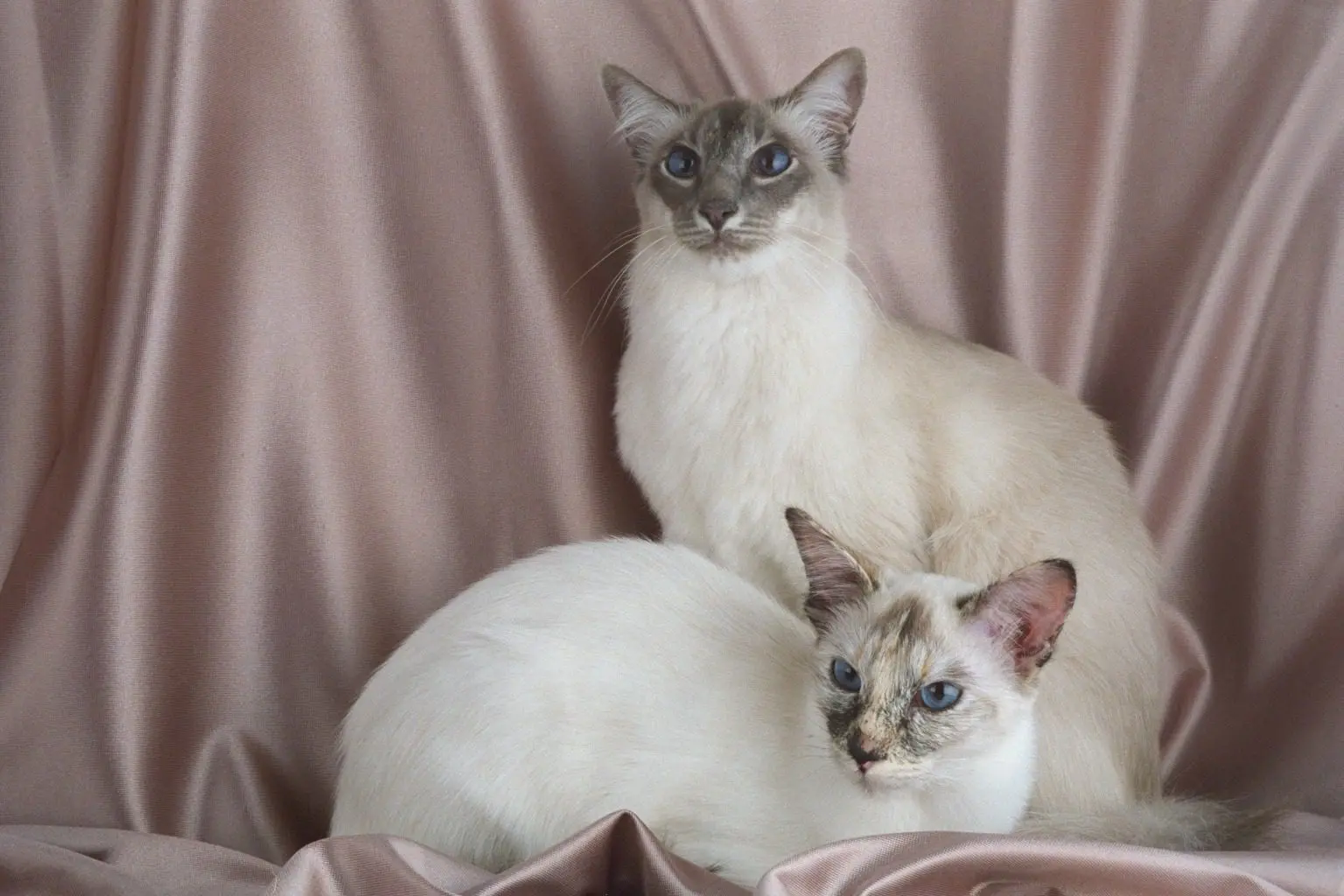
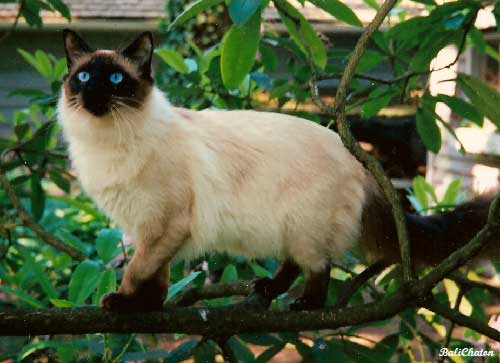
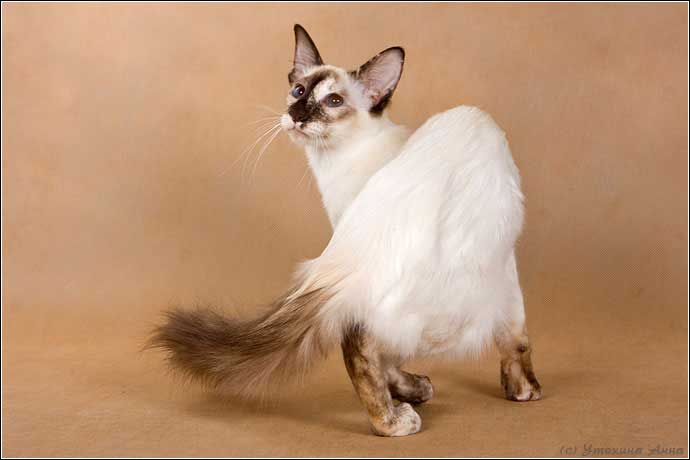
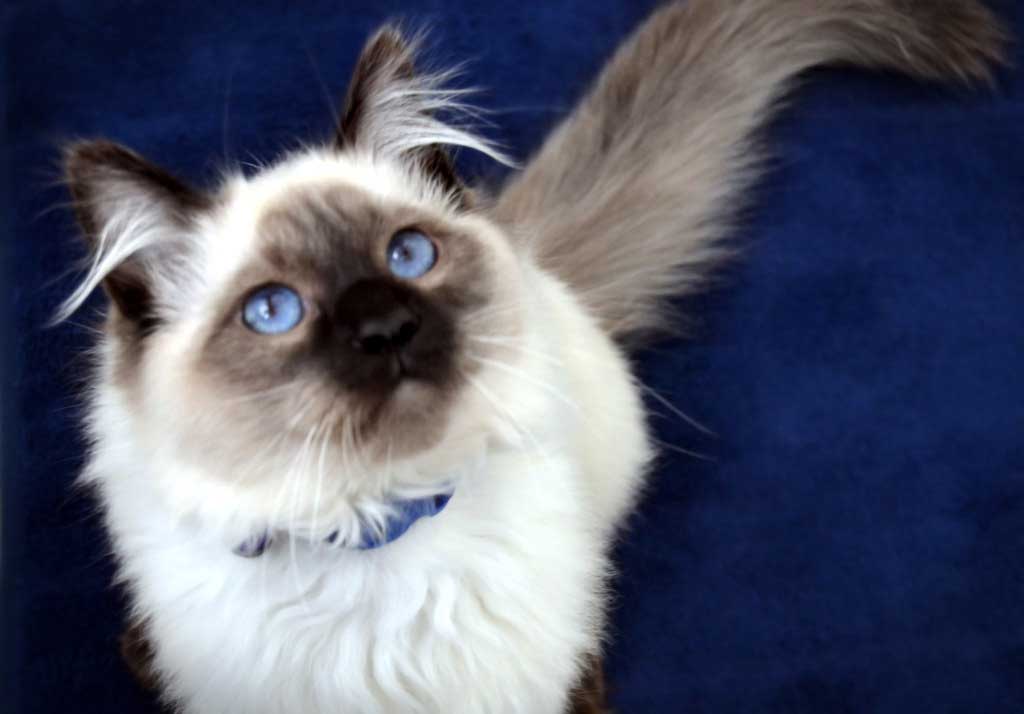
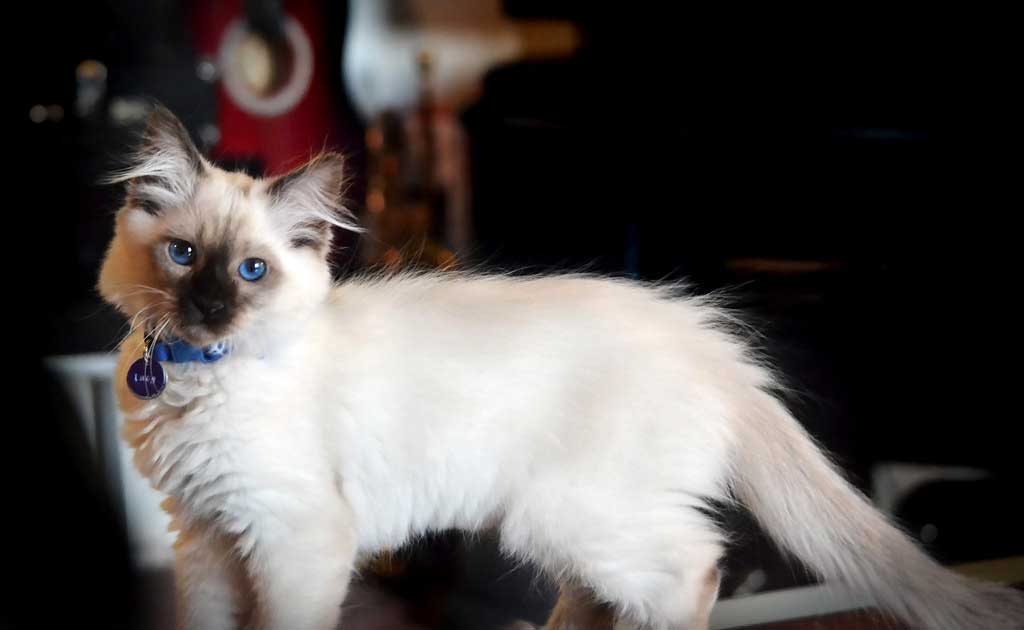
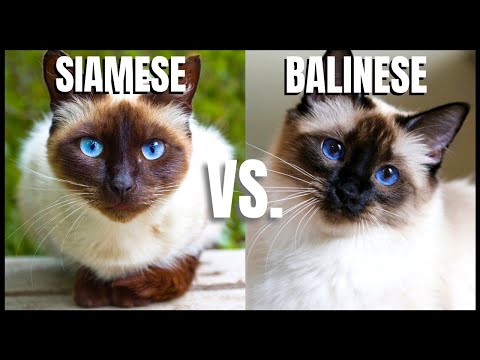
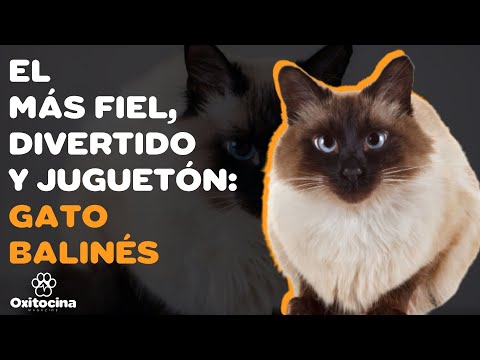
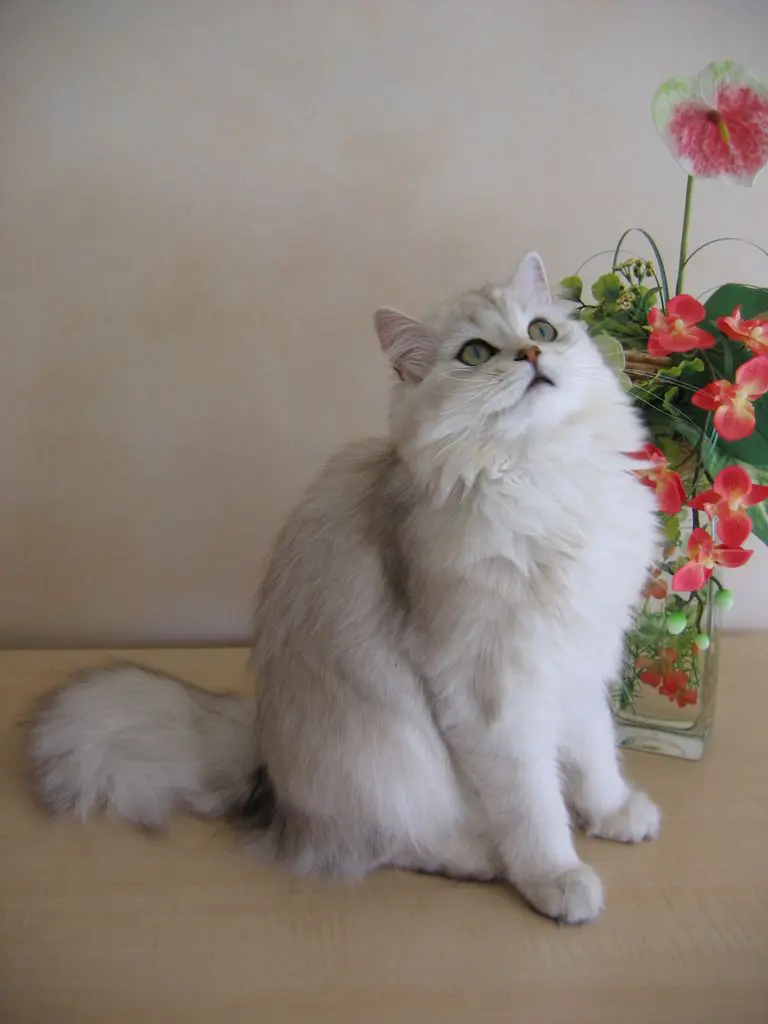
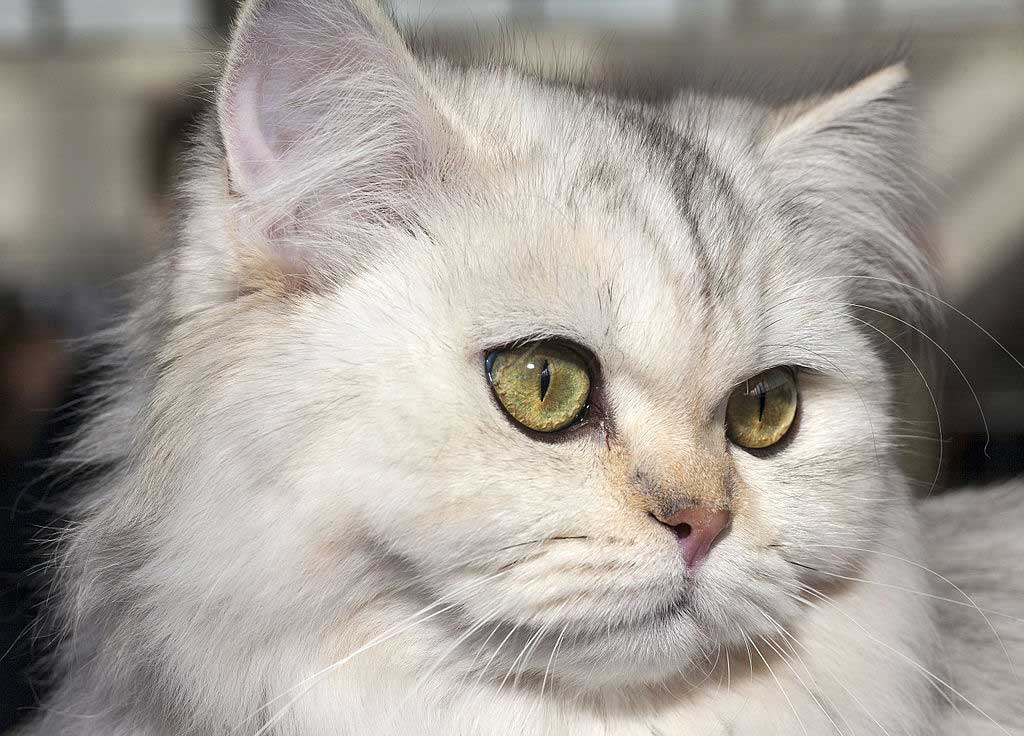
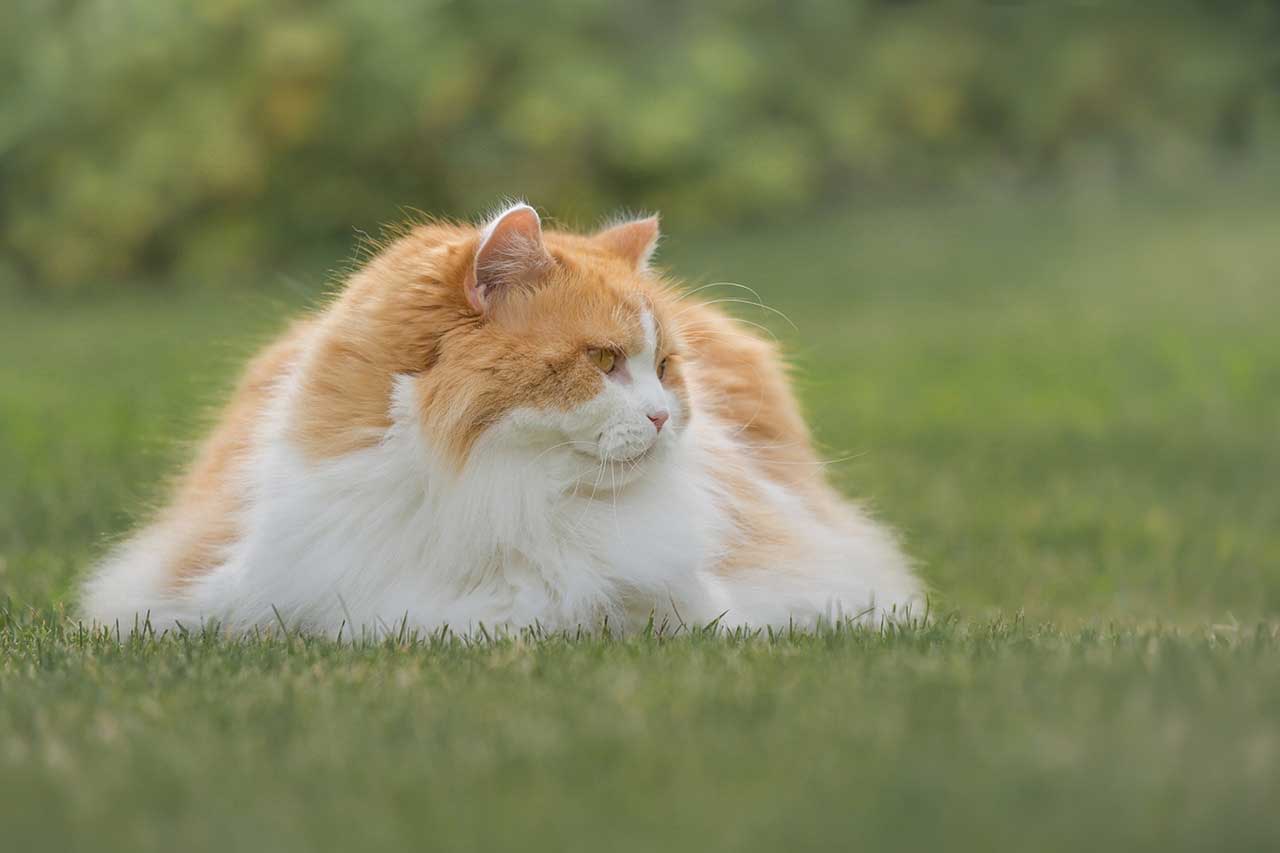

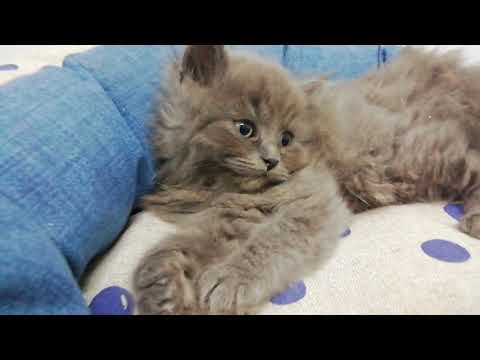

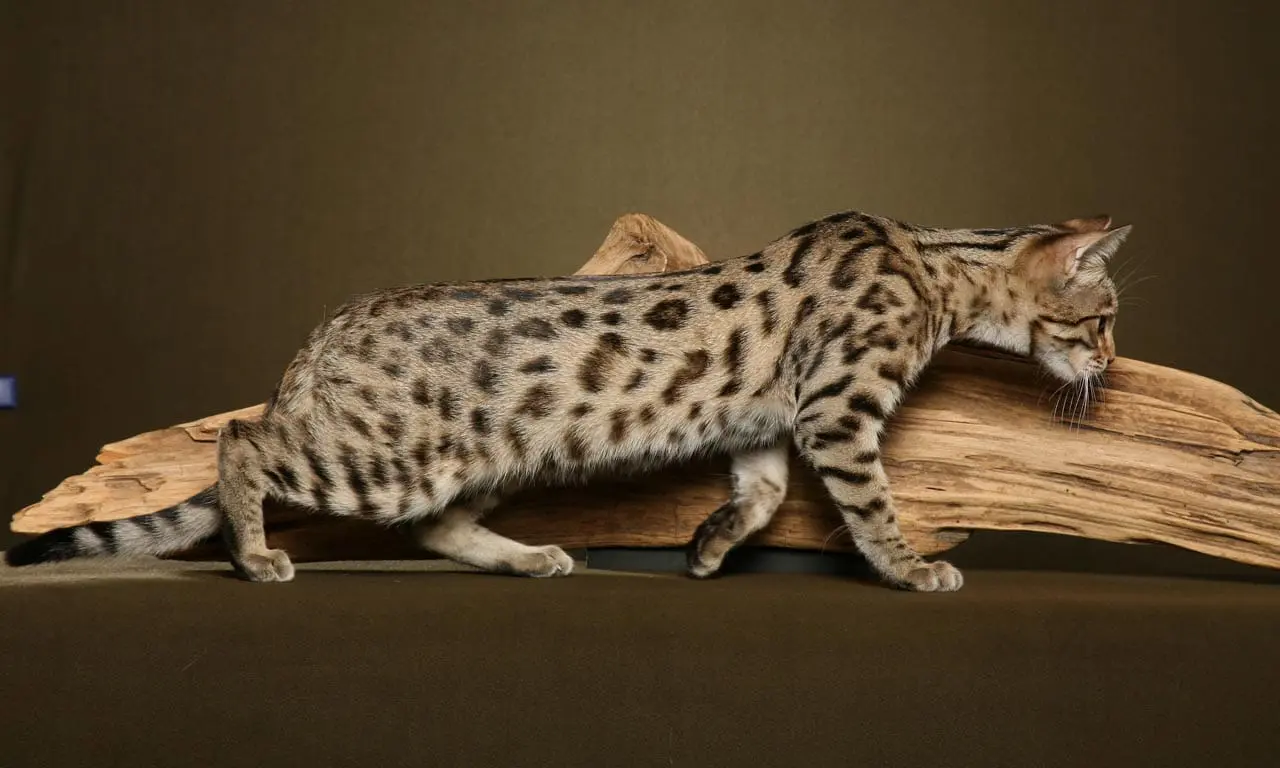

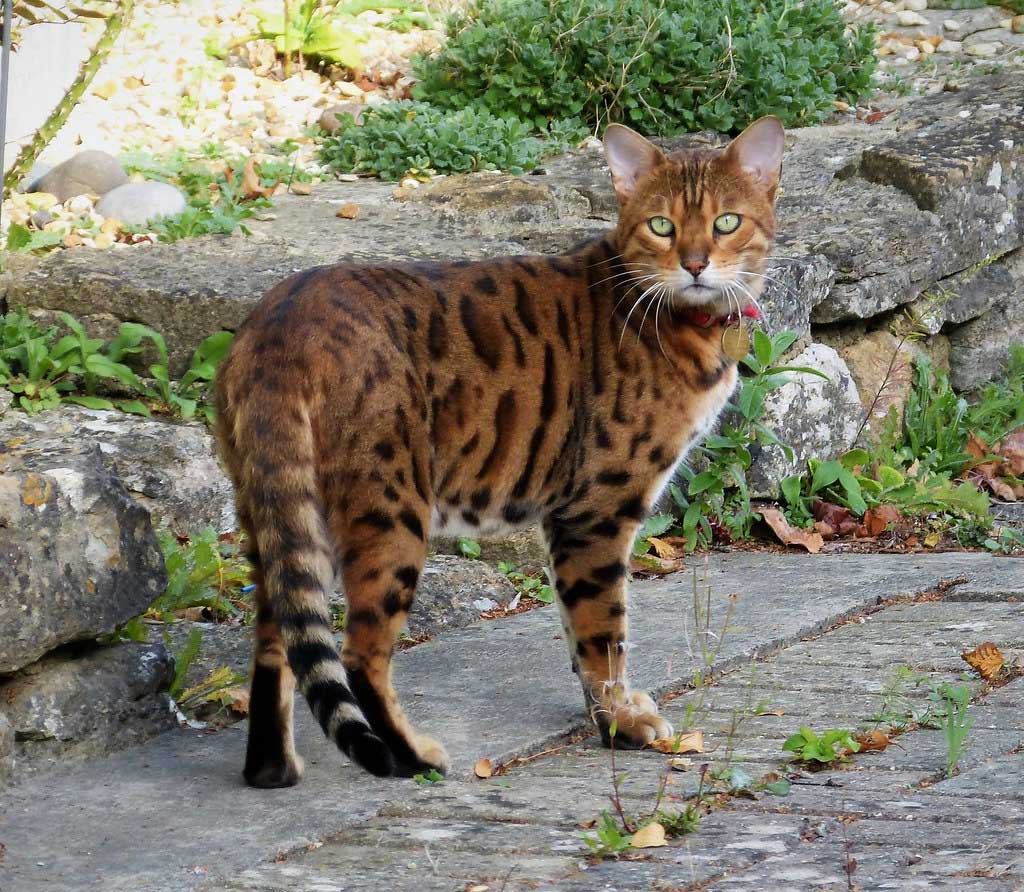
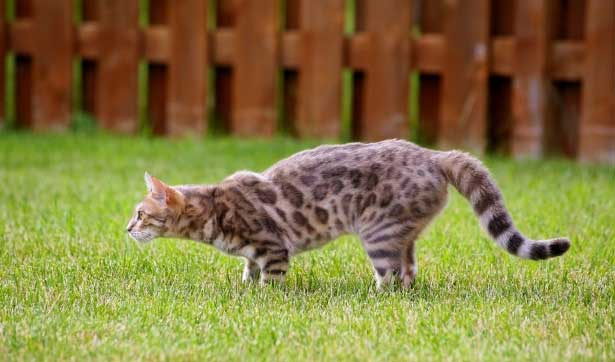
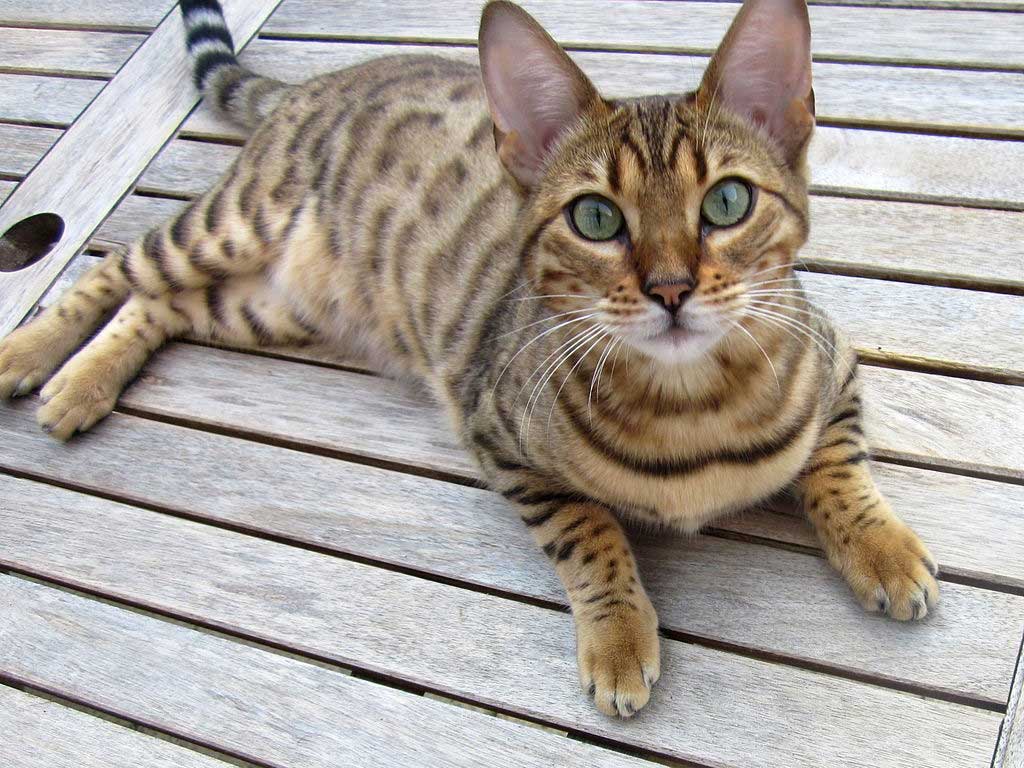
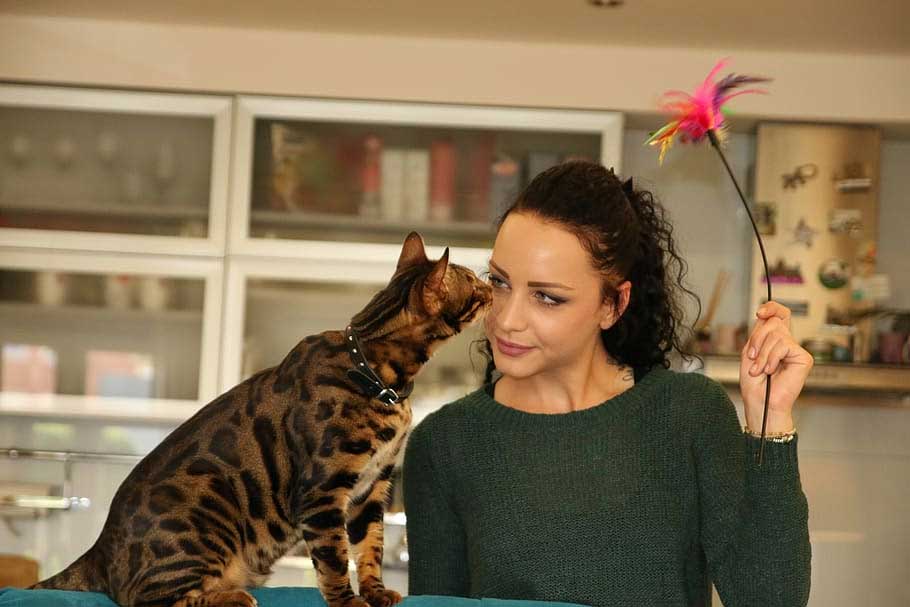

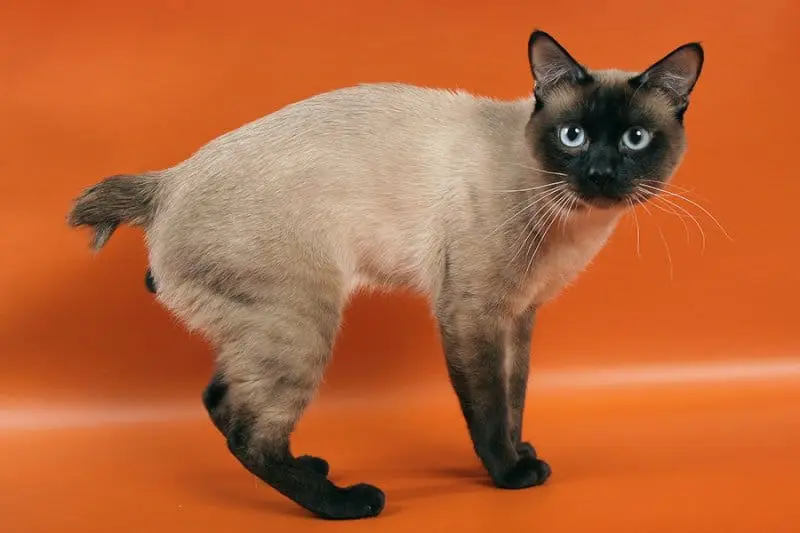

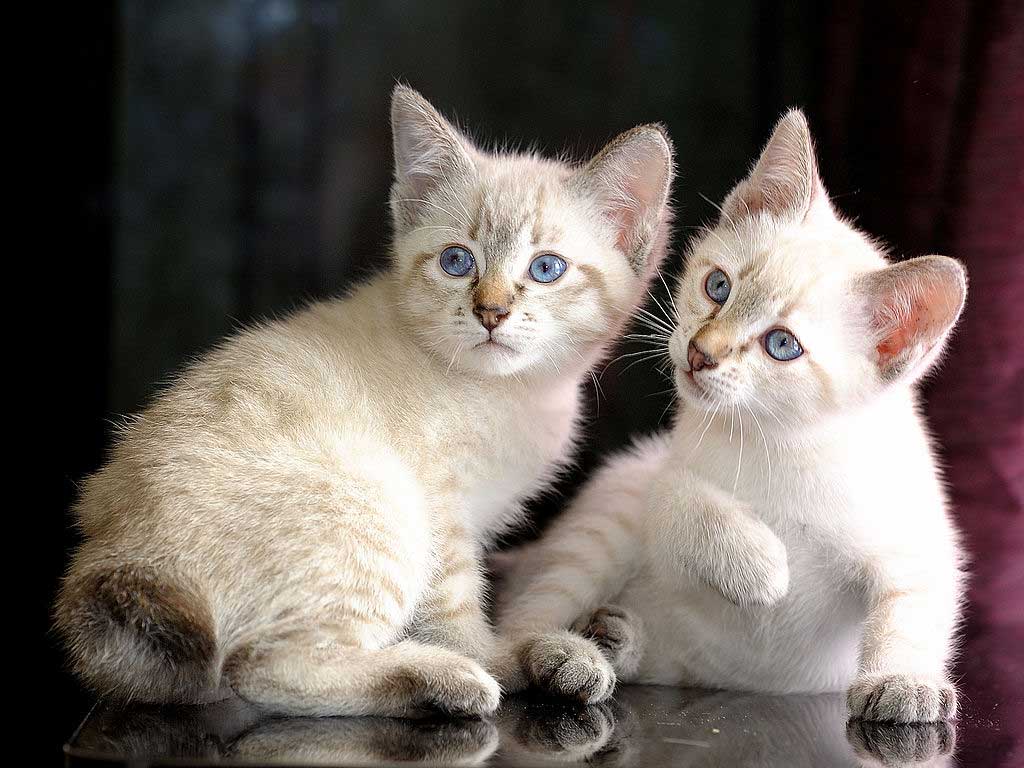
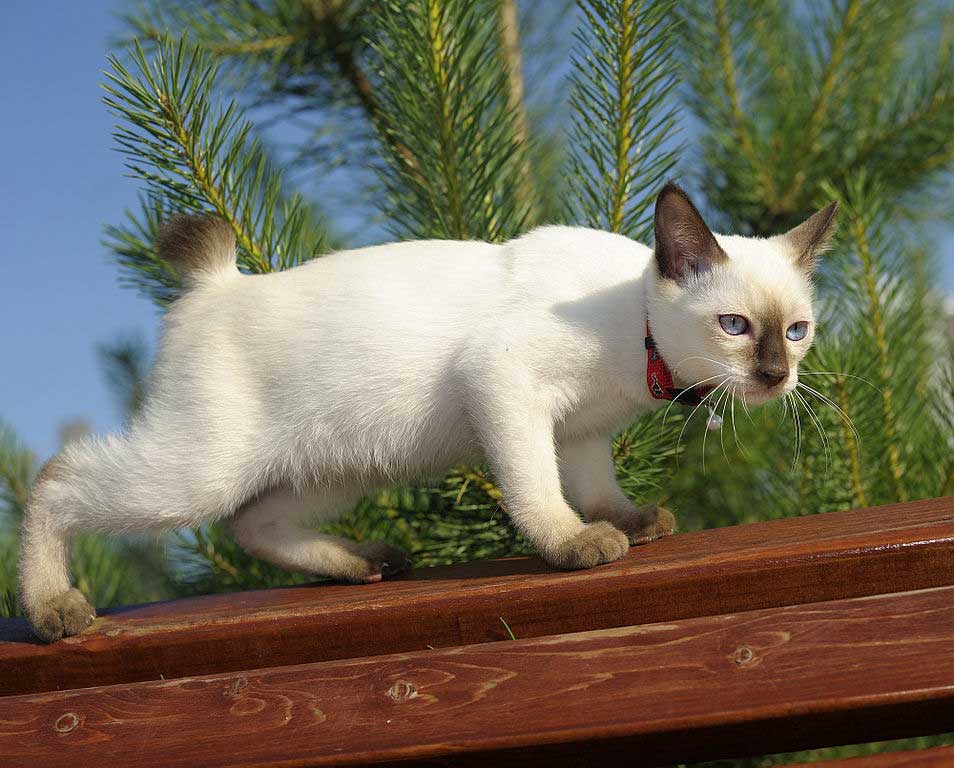



.jpg)

_(cropped).jpg)
.jpg)
._Tabby-point..jpg)

