โ–ท The world of Pets: Dogs, cats, birds, reptiles, amphibians

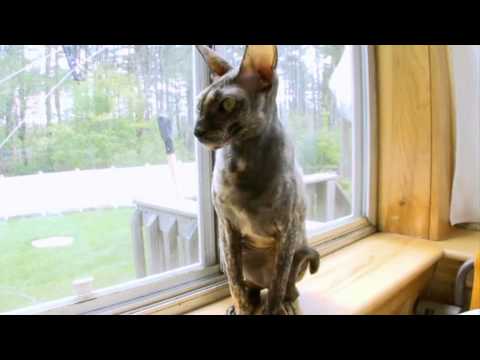
Cornish Rex
Federations: LOOF, CFA, ACF, ACFA, TICA, FIFรฉ, WCF, Chats Canada Cats, CCC

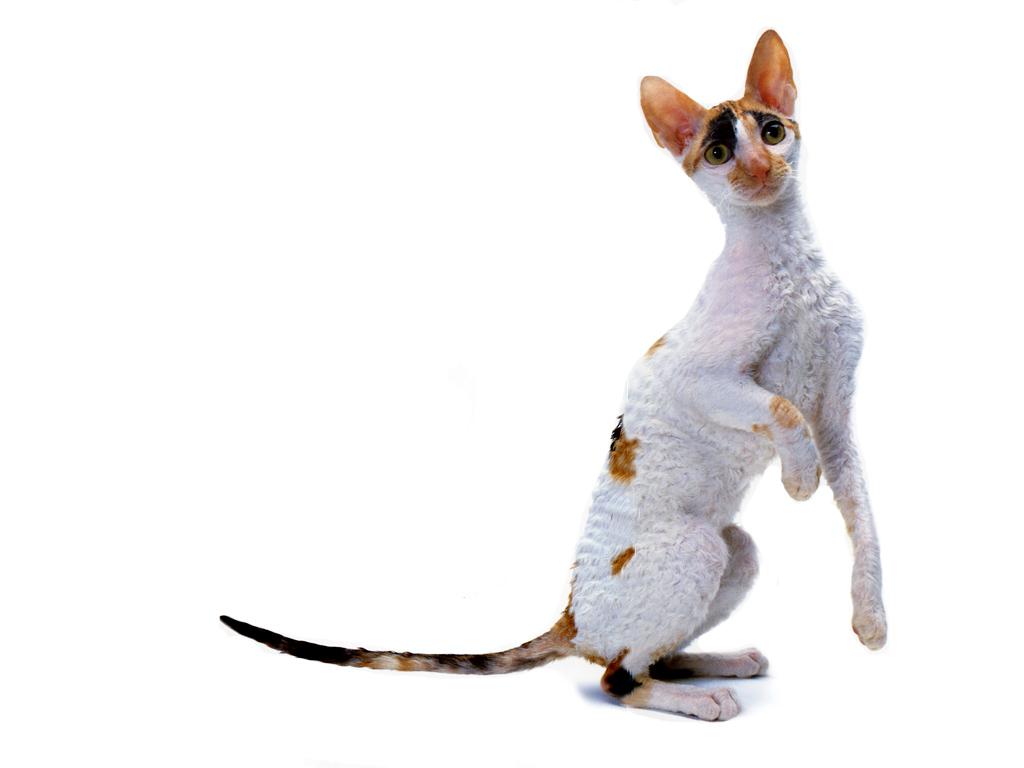
The Cornish Rex it is absolutely unique because it wags its tail like a dog when it is happy.

Cornish Rex

Content

Characteristics "Cornish Rex"

Coexistence is important that you have with your new friend. Before considering the acquisition of a cat of the breed "Cornish Rex" you know certain factors.
You must take into account their character, their need for exercise, their interaction with other pets, their care and if you have small children, their level of tolerance towards them.

Joy

5,0 of 5 stars (based on 1 review)

Activity level

5,0 of 5 stars (based on 1 review)

Friendliness to other pets

2,0 of 5 stars (based on 1 review)

Friendliness to children

2,0 of 5 stars (based on 1 review)

Grooming requirements

1,0 of 5 stars (based on 1 review)

Vocality

3,0 of 5 stars (based on 1 review)

Need for attention

5,0 of 5 stars (based on 1 review)

Affection towards its owners

5,0 of 5 stars (based on 1 review)

Docility

1,0 of 5 stars (based on 1 review)

Intelligence

4,0 of 5 stars (based on 1 review)

Independence

2,0 of 5 stars (based on 1 review)

Hardiness

2,0 of 5 stars (based on 1 review)

History

The history of Cornish Rex started in the summer of 1950 in the small town of Bodmin Moor, Cornwall, England, when serena, a turtle cat owned by Nina Ennismore and Winifred Macalister, gave birth to five kittens. One of the kittens, red and white, He stood out from the crowd for his curly coat and was christened Kallibunker.

as i grew up, Kallibunker developed other physical characteristics: a long slim body, big ears and a very fine tail. Amused by the little Astrex rabbit-like cat, Mrs. Ennismore discussed it with her vet, who advised him to contact a British geneticist named A.C. Jude. He admitted to Kallibunker's unique characteristics and advised that he be raised with his mother., This serene.

The result was a new litter of three kittens.: one straight-haired female and two curly-haired males. Unfortunately, one of the males died at 7 months and only one, called Poldhu, survived. Junto con su padre Kallibunker, they then crossed paths with domestic cats, but also with Siamese, the Russian Blue Cat, the British Shorthair cat and the Havana brown cat, in order to obtain sufficient genetic diversity to establish a healthy and solid foundation for this new breed. It also, these various crosses also gave rise to new coats, both in terms of color and pattern.

In 1956, Life magazine published an article on the Cornish Rex, named for its origin (English Cornwall) and by the similarity of its fur with that of the Astrex rabbit. This article put the new breed in the spotlight of the world. The following year, in 1957, Frances Blancheri imported a cat to California Cornish Rex called Lamorna Cove, nieta de Kallibunker. At the time, she was pregnant with Poldhu and gave birth to a litter of four kittens in the United States., which marked the beginning of the breed in North America.

In 1960 it was discovered that the gene responsible for the distinctive appearance of Cornish Rex is recessive, that is to say, both parents must be carriers and pass on the gene for their offspring to have curly fur. So, and a Cornish Rex crosses with a cat of another breed (that does not carry the kinky gene), all her kittens will be born with straight hair. But, if they cross paths with a Cornish Rex adult, the 50% of kittens will have a distinctive coat, that is to say, Cornish Rex (the 100% of kittens carry the gene). The recessive character of this gene also makes it possible to obtain curly-haired individuals by crossing two straight-haired cats., if both are carriers of an unexpressed โ€œcurly hairโ€ gene, and if it is the latter that is transmitted.

Despite its British origin, it was an American organization, the Cat Fanciers’ Association (CFA), the one who first recognized the Cornish Rex in 1964. It wasn't until three years later, in 1967, When the British Governing Council of the Cat Fancy (GCCF) he did the same, followed by the Fรฉdรฉration Internationale Fรฉline (FiFรฉ) in 1968. But, was not up 1997 when the International Cat Association (TICA) also fully recognized the breed and allowed it to compete in the feline shows organized under its auspices.

The Cornish Rex is now relatively common in the United States, where it fluctuates between 10th and 15th place in the ranking of breeds by number of annual registrations in the CFA (over forty in total).

On the other hand, is struggling to establish itself in Europe. Even in your home country, it's relatively rare, since the GCCF statistics show that only a few 60 individuals per year. It is even in decline, as the number of individuals has dropped by a factor of four compared to the turn of the century. In France, the number of births per year approaches that of Great Britain, at around 80 Cornish Rex registered annually in the Livre Officiel des Origine Fรฉlines (LOOF), a figure that has remained fairly stable since 2009, but before it was less than half.

Physical characteristics
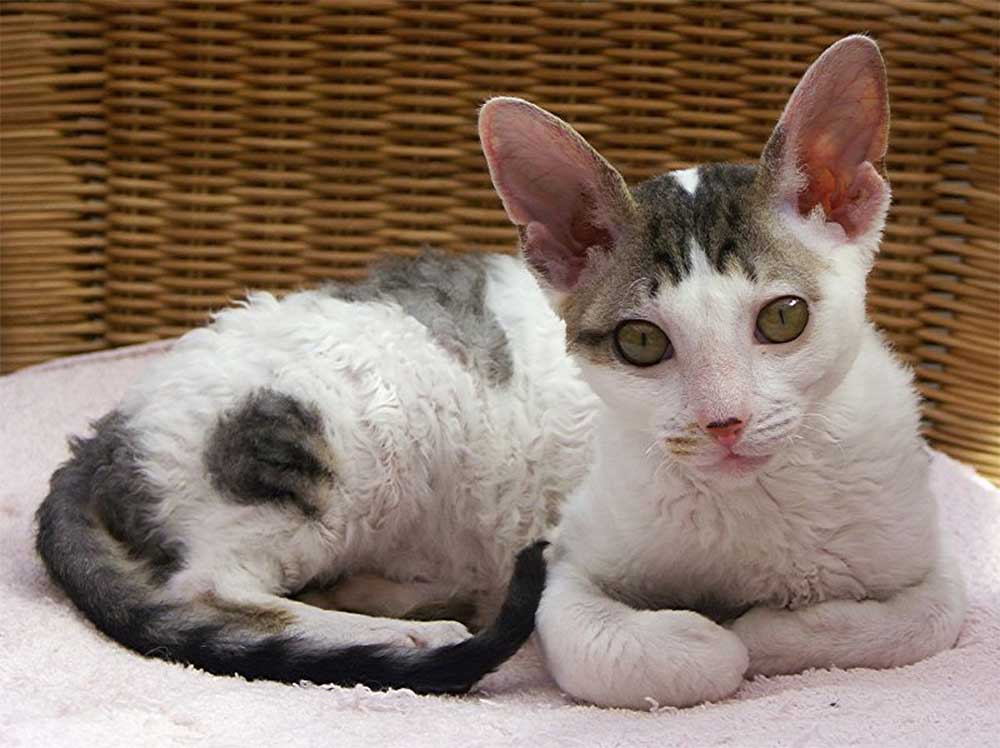
Cornish Rex
Young Cornish Rex – No machine-readable author provided. Groeni assumed (based on copyright claims)., CC BY-SA 2.5, via Wikimedia Commons

The Cornish Rex it is a medium size cat, long and thin, with unusual appearance and features. But, his long and slim body is very muscular, and her arched back, prolonged by a long and fine tail, forms an elegant curve. Their legs they are also long and thin, but surprisingly powerful, especially the rear ones, that allow you to jump to impressive heights.

Its head it is longer than it is wide, it is egg-shaped when viewed from the side and is relatively small in relation to its body. This impression is reinforced by their huge ears conics located at the top of the skull. Its big eyes ovals are slightly sloping upwards and can be any color. The whiskers they are not straight but curved, unlike most cats.

The most distinctive feature of Cornish Rex It, of course, his short coat, very soft and silky, notched or even curly. But, in the head, shoulders and legs, sometimes it can be too short to have that specific wavy texture. It also, all coat colors and patterns are allowed by breed standards.

Last, the sexual dimorphism it is well marked, being the male much larger and heavier than the female.

Size and weight

  • Male size: 32 – 35 cm.
  • female size: 30 – 33 cm.
  • Male weight: 3,5 – 4,5 kg
  • female weight: 2 – 3,5 kg

  • Varieties "Cornish Rex"

    The Cornish Rex Variant, a cross between Cornish Rex and the British Shorthair cat, does not have the characteristic coat of the breed, but it carries the gene that gave rise to it. When this cat crosses a Cornish Rex, each of its offspring has a probability of 50 % of having the specific coat of the breed and, Therefore, to be recognized as Cornish Rex by the different organizations.

    These cats have been used since the beginning of the breeding program to increase the gene pool by introducing new individuals., thus guaranteeing the good health of the breed, while allowing the specific characteristics of the Cornish Rex are passed on to the next generations.

    Character and skills

    The Cornish Rex is loving, very sociable and constantly seeks the attention of his family. He loves to follow his owner and interact with him, either playing or purring on your lap. He loves the company of humans, not just his family, but he is also capable of having fun alone if he cannot find a playmate. But, needs attention: it is a breed of cat that does not tolerate loneliness well, therefore not suitable for homeowners who are away often. On the other hand, the fact that he appreciates so much being cared for makes him an excellent therapy cat.

    Playful and very open, he likes to spend time with children, as long as they have learned to behave in the presence of an animal and do not intimidate it. They can be an active child's favorite playmate.

    In addition to humans of all ages, their sociability also extends to other animals, and accepts other dogs very well, as well as dogs used to cats. But, care must be taken that the other occupants of the house are not disturbed by this energetic cat, for example if you have to cohabit with a very calm and / or elderly dog.

    The Cornish Rex he is very active and can spend hours playing and exploring. Running after a ball, retrieving a thrown object or displaying exceptional climbing skills by climbing to the top of the closet are activities he never tires of.

    with such energy, you obviously like to have access to the outdoors, where you can jump higher and run further, but its owner must be aware that the risk of the cat escaping is very real. In fact, being close to all humans, you may decide to stay in another home for a long time if you find food and distractions, like a playmate. In addition to microchipping your cat, a collar and tag with his name and his owner's phone number - or even a GPS collar for cats, so you know where it is at all times- can be a good investment if you are allowed to roam freely around the neighborhood.

    The Cornish Rex can live in a flat, but you need room to run and jump, both inside and outside. It is also important that the family has one or more lockable areas to ensure that their pet does not rob the kibble supply or knock over that beautiful vase that is so important to them.. In fact, besides being dynamic, has slim, agile legs that allow you to pick up and manipulate small objects with ease: for example, using a doorknob is child's play for him.

    In any case, he loves the heat, so he especially appreciates being near the fire, on a radiator or under a duvet. But, his favorite place to nap is his owner's lap. When they are caressed, they seem warmer than other breeds, but it's not like that. In fact, your body temperature is quite similar; only that the thinness of their fur makes their skin temperature feel more.

    In addition to being active and agile, he is also a very intelligent cat, able to learn to open doors and cupboards or sneak up to steal food as soon as the owner turns his back on him. They also excel at puzzle-type cat games that offer a reward. Teaching your cat tricks is perfectly doable with this breed, and can give impressive results.

    Last, They are one of the most meowing cat breeds, who do not hesitate to claim attention by meowing and / or launching long monologues.

    care and grooming
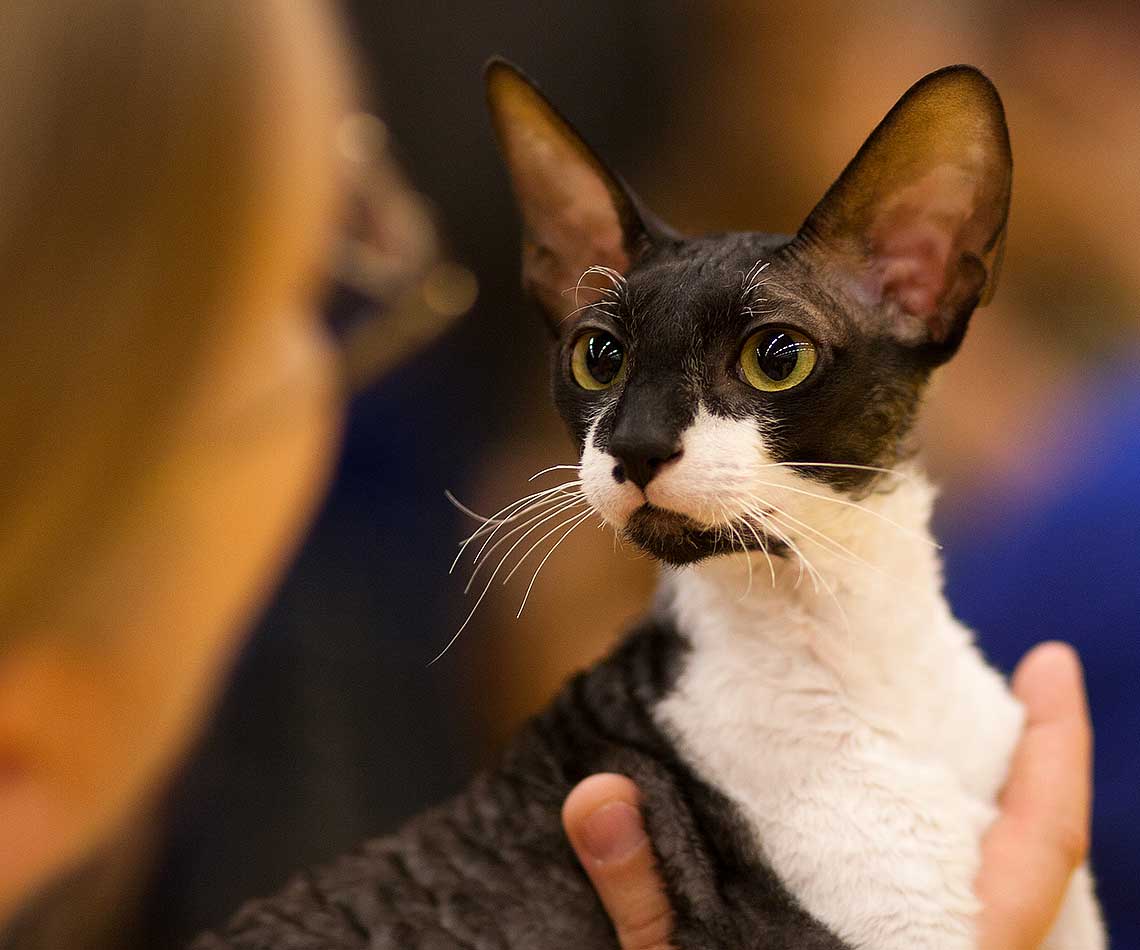
    Cornish rex
    Cornish rex – Tomi Tapio K from Helsinki, Finland, CC BY 2.0, via Wikimedia Commons

    The Cornish Rex It is an easy-care breed of cats, as a brief weekly brushing is all you need to keep your coat healthy. More frequent brushing, or too strong, can damage the beautiful coat. For the same reason, bathing your cat should be an exception.

    In the case of a cat with very short hair, just run your hand through its fur. But, for a cat with a thicker or longer coat, a brush is more appropriate. In any case, being sociable and appreciating being touched - as long as it is done delicately- often appreciate these grooming sessions.

    This breed usually sheds very little throughout the year. But, some specimens have a more pronounced shedding period in autumn and spring.

    It also, ears should be cleaned weekly with a damp cloth to prevent buildup of wax and dirt that could lead to infection. You should take the opportunity to make sure that his eyes and teeth are clean and that his claws do not need to be trimmed..

    Indoor or outdoor cat?

    As the Cornish Rex has a very fine fur, not suitable as an outdoor cat. Especially in winter, the cat, with its fine fur, cannot stay outside for long in cold weather. But, if the weather is good, you can let the cat out under supervision. A fenced garden or a secure balcony are ideal to satisfy the cat's urge to move. But, the cat prefers a warm and cozy place on the windowsill. If the cat stays indoors, a litter tray and scratching post are essential.

    How much activity does he need? "Cornish Rex"?

    The Cornish Rex is an active cat breed that loves to jump and needs a lot of exercise. Due to his great intelligence, these active cats need regular and meaningful exercise. They are always on the lookout for new challenges and quickly learn even the most difficult intelligence games.. With patience, you can also teach your smart four-legged friend little tricks, how to open doors. A great tree for cats to climb and jump, as well as a varied selection of toys make the child happy. gato Rex

    Health and nutrition

    Cornish Rex
    Two Cornish Rex female cats – Tomi Tapio K from Helsinki, Finland, CC BY 2.0, via Wikimedia Commonsv

    The Cornish Rex it is rather a hardy breed of cat, with little genetic predisposition to any particular disease.

    But, is particularly susceptible to certain conditions:

    • The umbilical hernia, a malformation that allows part of the intestines to pass through the abdominal wall. But, the last case registered in this breed was in 1997;
    • Congenital hypotrichosis, better known as "hereditary baldness", which makes the coat much less dense than normal;
    • The patellar dislocation, a relatively common knee problem that can cause difficulty walking;
    • Hypertrophic cardiomyopathy, an enlargement of heart tissue that causes changes in its function.

    Another risk factor for the health of the Cornish Rex is the exposure to the sun, since its thin and sparse coat protects it little from the sun's rays. So, special care must be taken to protect the cat from the sun in summer, for example, not allowing you to go outside during the day. In the case of white or very light colored cats, it may even help to put sunscreen on their ears to prevent burning.

    In general, their fur does not protect them well from the elements, especially bad weather. No cat should be left outside in bad weather, but the Cornish Rex, despite his British origins, it is much less resistant to rain than most of its congeners.

    Life expectancy

    12 to 14 years

    Food

    The Cornish Rex not a fussy cat, and can be easily fed commercially produced cat food, either food or croquettes. But, to keep you healthy, the food must be of sufficient quality to provide all the necessary nutrients, and be adapted to their age and activity level.

    On the other hand, he also likes to help himself to his family's food, so you have to ensure that there are no leftovers.

    Being very active and capable of self-regulation, the risk of obesity is quite limited in this cat. So, it is safe to leave food available at all times.

    For sale "Cornish Rex"

    Before getting a cat as special as him Cornish Rex, must also be well informed. How cats are quite unknown, there is probably no standardized breeding association and you will have to look for private breeders. At the time of buying, make sure that kittens do not have bald spots on their fur and that they look healthy all over their bodies. You also have to look at the parents.

    The average price of a Cornish Rex kitten is about 850 EUR. The price range is quite small, since the vast majority of individuals are offered between 800 and 1.000 EUR.

    Male kittens tend to be somewhat more expensive than female kittens.

    Videos "Cornish Rex"

    Five Cornish Rex Kittens Meet Some New Fluffy And Scaly Friends | Too Cute!
    Five Cornish Rex Kittens Meet Some New Fluffy And Scaly Friends | Too Cute!
    Cats 101: Cornish Rex
    Cats 101: Cornish Rex as featured on Animal Planet

    โ–ท The world of Pets: Dogs, cats, birds, reptiles, amphibians

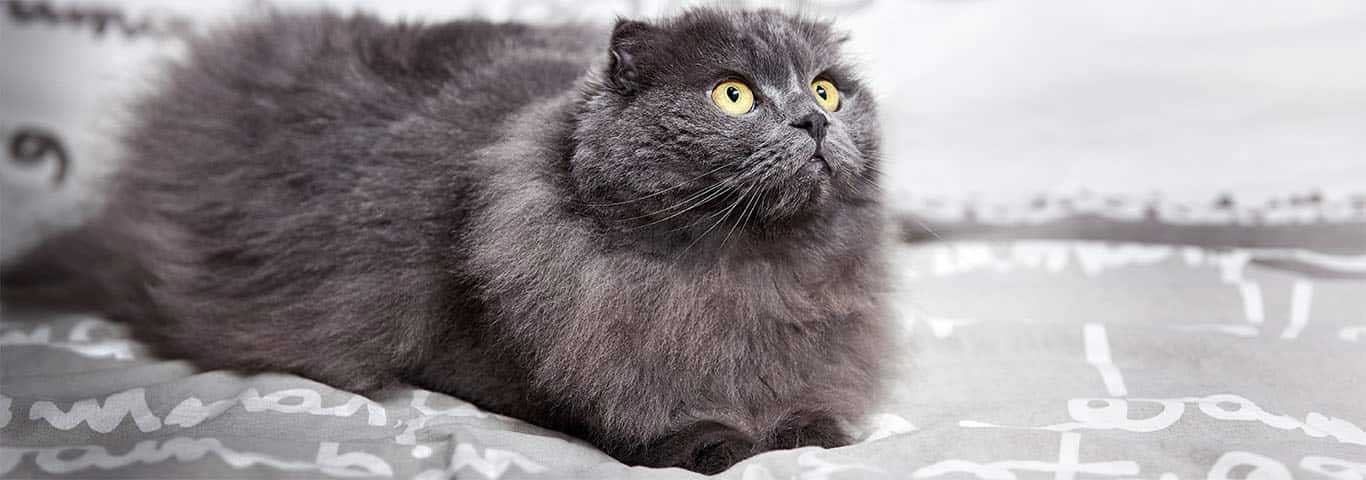
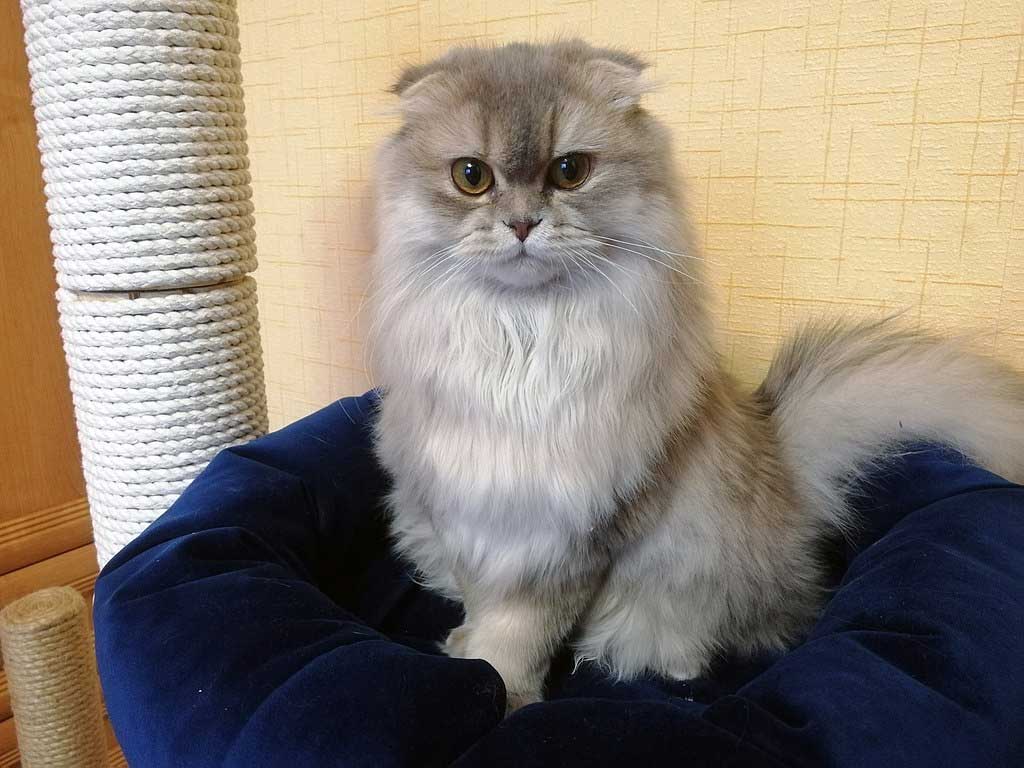
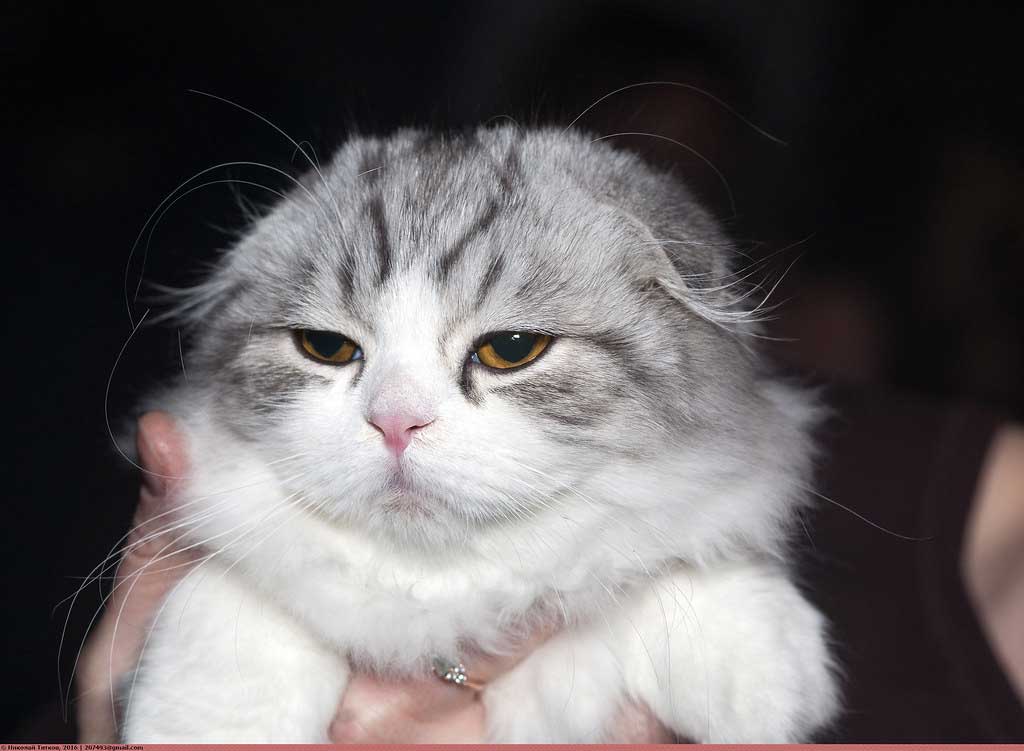
    Highland fold cat
    Federations: TICA, LOOF

    The Highland fold He is also known for his amazing poses: can be seen sleeping on his back, sitting on its hindquarters or standing on its hind legs.
    Highland fold
    Highland fold – hillspet

    Content

    Characteristics "Highland fold cat"

    Coexistence is important that you have with your new friend. Before considering the acquisition of a cat of the breed "Highland fold cat" you know certain factors. You must take into account their character, their need for exercise, their interaction with other pets, their care and if you have small children, their level of tolerance towards them.

    Joy

    5,0 of 5 stars (based on 1 review)

    Activity level

    4,0 of 5 stars (based on 1 review)

    Friendliness to other pets

    4,0 of 5 stars (based on 1 review)

    Friendliness to children

    5,0 of 5 stars (based on 1 review)

    Grooming requirements

    5,0 of 5 stars (based on 1 review)

    Vocality

    1,0 of 5 stars (based on 1 review)

    Need for attention

    2,0 of 5 stars (based on 1 review)

    Affection towards its owners

    5,0 of 5 stars (based on 1 review)

    Docility

    4,0 of 5 stars (based on 1 review)

    Intelligence

    3,0 of 5 stars (based on 1 review)

    Independence

    4,0 of 5 stars (based on 1 review)

    Hardiness

    5,0 of 5 stars (based on 1 review)

    History

    The history of Highland fold cat is inextricably linked to that of your partner, the Scottish fold, what is a Highland shorthair.

    Their common ancestor appeared in 1961 in a little Scottish town called Coupar Angus, near the mountainous regions of the north of the country (the Highlands). Call Susie, this white cat with her ears folded forward is the origin of all cats Highland fold cat. He might have remained anonymous on the MacRae farm where he lived if a herdsman named William Ross hadn't noticed his distinctive ears.. In 1963 adopted Snooks, one of Susie's daughters, who also had white fur and folded ears.

    But, folded ears in cats are nothing new. Specimens of this type had already been reported in the past., and already in 1796 John Hinton wrote in his Universal Knowledge Magazine about wild cats that lived in China and displayed such attributes.. In the 19th century, it is said that several sailors brought this type of cats from Asia, and in 1975, in his book The Guide to the Cats of the World, Loxton claimed that these forward-folding-eared cats had always existed in China..

    But it was Susie and her daughter Snooks who originated the breed. Highland fold. In their first litter, Snooks gave birth to a male named Snowball - in reference to his white fur- which in turn was crossed with Lady May, a white short haired british. All five kittens from this union had folded ears., And so began the story of the Scottish fold.

    Originally named "Lops" by William Ross and his wife Mary, the breed was named after Scottish fold in 1966, cuando el Governing Council of the Cat Fancy (GCCF) granted it official recognition and allowed its exhibition in feline exhibitions, where it had a great success. At the same time, a breeding program was created.

    But, the work done by various English geneticists, as Peter Dyte and Oliphant Jackson, revealed a relationship between curved ears and arthritis propensity in cats. Already concerned about the possible increased risk of ear infections and deafness caused by this anatomical feature (fears that were later proven unfounded), the GCCF decided on 1971 revoke your previous decision and, Therefore, stop accepting this breed.

    In the news, the GCCF continues to maintain its position of not recognizing the Highland fold (nor its short-haired equivalent, the Scottish fold), arguing that the folded ears are due to a genetic mutation that is linked to potentially disabling bone problems for the animal. In this arbitration he had the support of the British Veterinary Association.

    The salvation of the race came from the United States, Where, in 1970 The doctor. Neil Todd had imported three of Snooks' daughters to Newtonville, Massachusetts, to study their genetic mutations. But, he soon left his research project and one of these cats, called Denisla Hester, was hosted by Salle Wolf Peters, a cat breeder Manx.

    Everything followed quickly, so that in 1972 the breed was presented at an exhibition organized by the Cat Fanciersโ€™ Association (CFA), one of the leading organizations in the country. The interest was immediate and several breeders decided to develop the breed. The CFA supported them in their efforts and in 1974 allowed the registration of these cats as an experimental breed.

    Aware of the risk of osteoarthritis associated with the genetic mutation that caused the folded ears, American breeders followed the recommendations of Dr.. Oliphant Jackson and brought new blood to the breed, crossing it abundantly with the American shorthair cat and the European shorthair cat (Common european cat), crosses that are still allowed today. This diversification effort paid off: arthritis cases decreased. In 1978, the CFA definitively recognized the Scottish fold. The TICA (International Cat Association) did the same the following year, in 1979.

    From the beginning, long hairs have appeared in litters of Scottish fold, and Susie and her daughter Snooks were likely carriers of a recessive gene for long hair, that was passed on but could only be expressed if the kitten received another recessive gene for long hair. Probable crosses with the Persian Cat, as well as the crosses with the European shorthair cat (Common european cat) which in turn were the result of crosses with Persians, contributed other long-haired genes, so that individuals born with long hair became increasingly common.

    From the years 80, began to arouse real interest and recognition from some organizations. But, even today, this recognition varies greatly between countries and cat organizations.

    The CFA considers them as a simple variety of the Scottish fold, while the TICA grants them from 1979 full breed status, under the name of Scottish Fold longhair. On the other hand, some organizations do not recognize them at all, neither as a variety nor as a race. Is the case, for example, of the FIFรฉ (Fรฉdรฉration Internationale Fรฉline) and the British GCCF.

    In France, the Livre Officiel des Origines Fรฉlines (LOOF) considers it as a separate breed, denominada Highland Fold. It also, the Highland fold without folded ears have also been recognized by the LOOF as a distinct breed since 2009, and they are registered as Highland Straight.

    The Highland fold came to France in the decade of 1980, but it took time to become a success. In the early years of the 21st century, for example, there were still no more than fifteen registrations a year at the LOOF, and about forty at the end of his first decade. Then this figure grew exponentially until it reached about 250 copies a year ten years later. The Highland Straight, recognized only from 2009, experienced an even more spectacular increase, going from a score of individuals registered in the first year to almost 500 at the end of the Decade of 2010, that is to say, twice as much as him Highland fold.

    Highland Fold
    Highland Fold breed kitten, female, 8 months old – Aqetz, CC BY-SA 3.0, via Wikimedia Commons

    Physical characteristics

    The Highland fold it is a medium-sized cat with strong bones, looking agile and flexible despite her curvaceous body. The body is supported by legs relatively short and robust and is prolonged with a rather long and tapered tail that ends in a curve.

    Its chin and their jaws well defined, as well as their cheekbones prominent, dan a su head a round shape. Their eyes, which are usually coppery in color but can be many other colors, especially blue in the case of white fur cats, they are also wide and round.

    But it is the ears, short and rounded, the ones that make the famous Highland fold. Fall forward, folding in on themselves, hence the ยซFoldยป of his name. They are also very mobile and expressive, being able to turn or straighten when lurking.

    But, all kittens are born with straight ears, and only from 3 weeks start to double, at least some of them. Those who keep their ears straight are Highland Straight and can be crossed again with Highland fold: some of their descendants will have folded ears and, Therefore, will be Highland fold.

    It also, the fur is what differentiates the Highland of the Scottish fold. While they both have a dense undercoat, the top layer of Highland fold is medium to long, with a silky texture. The throat, the breeches and the tail are very complete. According to the norm of Livre Officiel des Origines Fรฉlines (LOOF), all fur colors and patterns are allowed.

    Last, the sexual dimorphism it is well marked, females being smaller than males.

    Size and weight

    • Male size: 23 to 28 cm.
    • female size: 20-25 cm.
    • Male weight: 4-6 kg
    • female weight: 2,5-4 kg

    Varieties of the "Highland fold cat"

    Some feline organizations consider that the Highland fold it is simply a long-haired variety of the Scottish fold, not a breed in its own right.

    On the other hand, the straight eared specimens are called Highland Straight and are considered a breed in their own right by various organizations, like the LOOF (Livre Officiel des Origines Fรฉlines) and the TICA (The International Cat Association), que lo denomina Scottish Straight longhair. Other associations recognize it as a variety, and others just don't recognize it at all.

    Whatever your recognition, these cats are essential to the health of the breed Highland fold, as they can be bred with them to give birth to new cats with folded ears, while minimizing the risk of genetic diseases. Kittens born from such a union are carriers, at most, of a gene that causes this particularity, while those born from a mating between two Highland fold could carry this gene twice, situation leading to osteochondrodysplasia of varying severity.

    Character and skills

    Highland fold
    Highland fold shorthair Sheerfold Jon – Flickr
    Loyal and loving, the Highland fold he is close to his family. But, they usually have a favorite human, with whom they spend the most time and show more affection. Despite your great need for attention, they are not demanding companions or require a lot of time. In fact, content with following a master who has no time to play with him, or you sleep peacefully next to someone who has made you understand that you are too heavy to sleep on your lap.

    It is also a breed of cat that adapts perfectly to children who know how to behave with animals, and enjoy receiving their attention. They are sociable and enjoy the company of other cats., as well as dogs used to cats, who can be excellent playmates for them. But, it is not advisable to try to live with rodents, reptiles or birds, as he will soon mistake them for prey.

    To the Highland fold he likes company and easily suffers from loneliness. The presence of other animals is a great way to make the day go by when your family is working., and the extra attention at night helps make up for the fact that it has been neglected for several hours. But, this is not enough if you are absent for a long time. One Highland fold staying alone for a long weekend is likely to suffer from separation anxiety, which can lead to destructive behavior.

    The Highland fold He is also known for his amazing poses: can be seen sleeping on his back, sitting on its hindquarters or standing on its hind legs. They also like to drink tap water instead of the fish tank., and some use their legs to eat.

    They are incredibly agile, allowing them to pick up objects on the fly or open cupboard doors without difficulty. Skill games are a great way to keep your cat physically stimulated., while the various puzzles for cats help develop their intelligence.

    Last, the Highland fold not heard often, and when it does, it is necessary to listen carefully, since his meow is very soft.

    Grooming and caring for the "Highland fold cat"

    The Highland fold it is a demanding breed of cat to maintain: its dense coat should be brushed two or three times a week to maintain its shine and prevent knots from forming.

    It is also advisable to check your eyes and teeth weekly to avoid any risk of infection. You also have to pay special attention to the ears, which should be cleaned with a damp cloth.

    Last, if natural wear and tear and the use of a scratching post are not enough for your claws and they become too long, must be trimmed with a nail clipper.

    How much activity does he need? "Highland fold cat"?

    Its moderate activity level makes it an ideal flat cat, but his family must not forget to play with him daily.

    Health and nutrition

    In general, the Highland fold it is a healthy breed of cat, to the point that many specimens have more than 15 years.

    But, are more prone to certain diseases:

    • The osteocondrodisplasia, which affects bone and cartilage development and can cause disabling osteoarthritis at an early age. The first symptoms are usually stiffness in the hind legs and/or tail;
    • Hypertrophic cardiomyopathy, an abnormal enlargement of heart tissue that causes heart problems;
    • The polykinetic kidney disease, a genetic disorder that causes numerous cysts in the kidneys, which can now be detected with a DNA test.

    It is important to know that the breeding of two Highland fold it is prohibited by the different feline organizations. This is because the gene responsible for the folded ear mutation is dominant., that is to say, the kitten only needs to receive this gene from one parent to have this trait. But, all individuals carrying two mutated genes are affected by osteochondrodysplasia, to a greater or lesser degree. For this reason, miscegenation should be avoided at all costs Folds, and any breeder of Highland fold that does not respect this rule must be rejected.

    The only options allowed are between a Fold and Straight (an identical cat with straight ears), a Fold and European shorthair cat (Common european cat), or a Fold and American shorthair cat. These crosses give rise to litters with a 50% kittens with folded ears.

    It must be taken into account that the number of kittens per litter is usually lower than that of other breeds of cats..

    Life expectancy

    Of 12 to 15 years

    Food

    The Highland fold is not picky and does well with commercial cat food. But, These must be of good quality and adapted to your age and activity level to ensure that you receive the nutrients and vitamins you need.

    How they are normally capable of self-regulation, they can have food available in their bowl at all times. But, check your weight at regular intervals to make sure you are not getting too fat, and you have to consult a veterinarian to establish a feeding program adapted to your needs if this is the case.

    For sale "Highland fold cat"

    The price of a kitten Highland fold it is on average about 1000 EUR.

    But, this average hides large price differences between kittens with physical characteristics that are far from the standard, that can be found around the 500 EUR, and those whose prestigious lineage and characteristics predestine them for feline shows, whose price exceeds 2000 EUR.

    In any case, there is no significant price difference between male and female kittens.

    Videos "Highland fold cat"

    Chat Highland Fold - 4 MN - Jean-Loup CRETIN
    Chat Highland Fold
    Midori highland fold
    Midori highland fold

    Alternative names:

    โ–ท The world of Pets: Dogs, cats, birds, reptiles, amphibians

    Oriental Longhair cat
    Federations: LOOF, CFA, ACF, ACFA, TICA, WCF

    Also know as Javanese cat (Colorpoint Longhair), the Oriental Longhair cat is a fairly rare breed of cat.

    Contrary to what the various exotic names might suggest, was created in the United States.

    Photo by blackmystica

    Content

    History

    In 1985, at Sholine Cattery in Houston, Texas, United States, an oriental short hair and a pellets they escaped their vigilance and be aparearon. The result was a litter of silky puppies and semilargo hair of Eastern plain colors. Wisely, the owner of the cattery, Sheryl Ann Boyle, decided to raise this race, and the main records in North America and Europe soon recognized, with the exception of the GCCF in Great Britain, It believed that it was too similar to the angora, now known as Oriental Longhair cat (angora).

    In 1995, the CFA joined the Oriental shorthair cat and to the Oriental longhair cat in a single breed with two hair lengths, a controversial fact according to some breeders, that they preferred the longhair trait to be eliminated from breeding lines of the Oriental Shorthair. Due to its dotted ancestors, all Asians can have puppies occasionally dotted, but cannot be displayed in most associations, since they look very similar and can be confused with the Siamese and balinese.

    Character and skills

    Although the Oriental Longhair cat looks elegant, his personality is often described as less languid anything. All Oriental races have the reputation of being habladoras, playful, very curious and sociable. They need the company of other cats or their owner's undivided attention for a little while each day, and some studies on the nature of these cats show. Much of the personality of this cat is inherited, and for decades farmers have reinforced the extroverted personality of Eastern races. Copies walk willingly strap and play around to get an object as if they were dogs.

    โ–ท The world of Pets: Dogs, cats, birds, reptiles, amphibians

    Toyger cat
    Federations: GCCF, TICA, LOOF

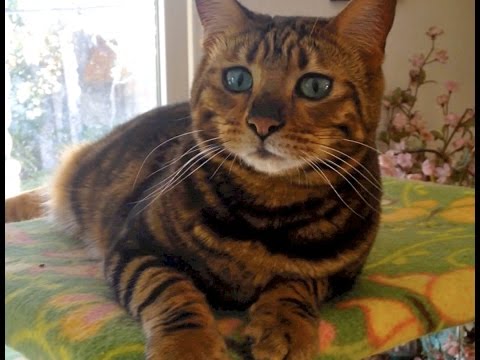
    The Toyger it is a rare breed of cat, with an estimated population of about 400 specimens in the United States.

    Content

    Characteristics "Toyger cat"

    Coexistence is important that you have with your new friend. Before considering the acquisition of a cat of the breed "Toyger cat" you know certain factors. You must take into account their character, their need for exercise, their interaction with other pets, their care and if you have small children, their level of tolerance towards them.

    Joy

    5,0 of 5 stars (based on 1 review)

    Activity level

    5,0 of 5 stars (based on 1 review)

    Friendliness to other pets

    4,0 of 5 stars (based on 1 review)

    Friendliness to children

    4,0 of 5 stars (based on 1 review)

    Grooming requirements

    2,0 of 5 stars (based on 1 review)

    Vocality

    2,0 of 5 stars (based on 1 review)

    Need for attention

    3,0 of 5 stars (based on 1 review)

    Affection towards its owners

    5,0 of 5 stars (based on 1 review)

    Docility

    3,0 of 5 stars (based on 1 review)

    Intelligence

    4,0 of 5 stars (based on 1 review)

    Independence

    2,0 of 5 stars (based on 1 review)

    Hardiness

    4,0 of 5 stars (based on 1 review)

    History

    The history of Toyger cat, whose name is a contraction of the words ยซToyยป y ยซTigerยซ, started in California in the early 1980, When Judy Sugden, a breeder of Bengalis and daughter of Jean Mills-Sugden, famous for being the creator of Bengal cat, he noticed that one of his cats, call Millwood Sharp Shooter, he had two tabby markings on his temples. He thought this could be the basis for the development of a breed of domestic cat with circular stripes similar to those of the tiger..

    The comparison between the Domestic cat and the tiger has been around for a long time, and many cats have had their coats described as "tabby.". The development of a breed of domestic cat with physical similarities to the king of the jungle is, Therefore, in a way, a logical continuation of the creation of hybrid breeds between domestic cats and wild cats, as the Bengal cat or the Savannah cat.

    "Toyger cat"

    Toyger
    Jasper is a rare breed Toyger cat – Flickr

    Judy Sugden he began his breeding work with two of his cats: a Bengali call Millwood Rumpled Spotskin and Domestic shorthair cat call Scrapmetal. Soon other breeders became interested in his work: Anthony Hutcherson, from the kennel JungleTrax, and Alice McKee, from the kennel Windridge, joined forces to promote the development of this new breed.

    Although the Bengali it was used a lot in the different crosses, other races like him Maine Coon cat, the Pixie-bob and the Oriental shorthair cat helped meet some of the objectives of the breeding program: lengthen the muzzle, widen the nose and reduce the size of the eyes and ears.

    In 1993, Judy Sugden imported a street cat from the Indian region of Kashmir called Jammu Blu, which had a marking between the ears very different from the usual tabby lines, and decided to include it in its development program Toyger cat.

    That same year, 1993, marked the acceptance of Toyger for registration by the International Cat Association (TICA), one of the world's leading feline organizations. Name "California Toygerยซ, which had sometimes been used to designate this cat, it was then completely abandoned. Seven years later, in the year 2000, TICA granted him the status of a new breed, before fully recognizing her again seven years later, in 2007, and thus open access to feline exhibitions organized under its auspices.

    In the news, the Toyger cat It is also recognized by the Livre Officiel des Origines Francaises (LOOF) and by the Governing Council of the Cat Fancy (GCCF) en el Reino Unido, but not for the American Cat Fancier’s Association (CFA), nor for the Fรฉdรฉration Internationale Fรฉline (FiFรฉ). In fact, still a developing breed, but very popular with breeders and the general public: the appeal of this "toy tiger", a totally tame cat with the look of the king of the jungle, is very real.

    However, still a rare breed of cat, with an estimated population of about 400 specimens in the United States. In France, there have been some 30 registrations per year in the LOOF since its recognition in 2015. In the United Kingdom, the number is more like ten, but only from 2016 has been recognized by the GCCF.

    Physical characteristics

    Toyger
    Toyger Cat – bellille, CC BY-SA 4.0, via Wikimedia Commons

    The Toyger it is a kind of long and powerful cat: it is medium size, muscular, with a long body and strong bone structure giving it a miniature tiger look. The tail, long and thick, is rounded at the tip and should be worn low.

    The head of the Toyger it's long and wide, like the tiger, shaped like a hexagon if viewed from the side and heart shaped if viewed from the front. Has circular markings that do not exist in any other breed of domestic cat. Their ears they are rather small and rounded at the tip. Their eyes they are rather small in relation to their head, round and deep. Its snout it is quite long and has a well defined rounded outline.

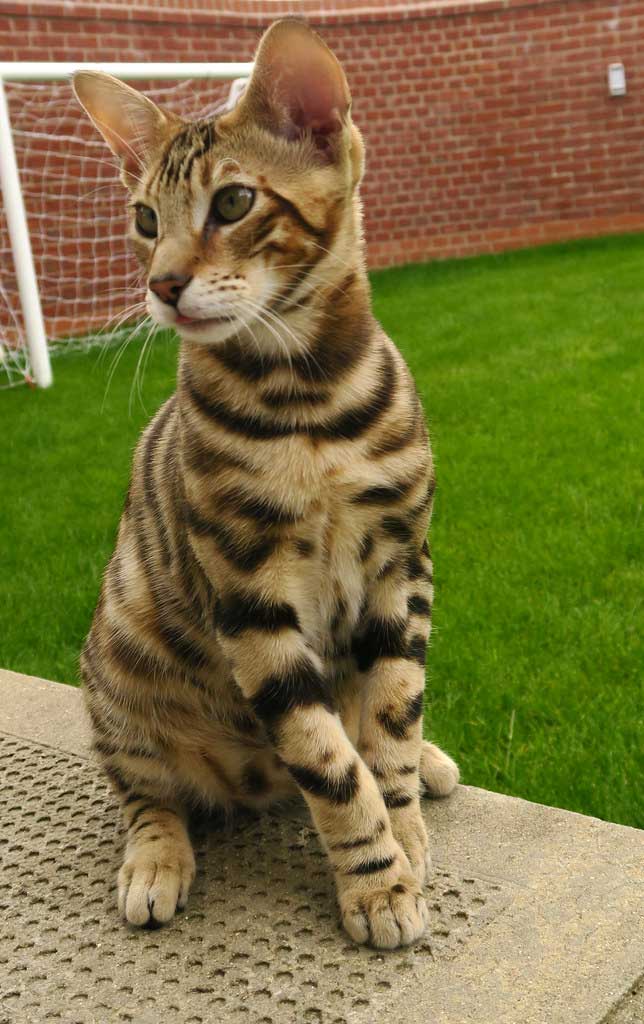
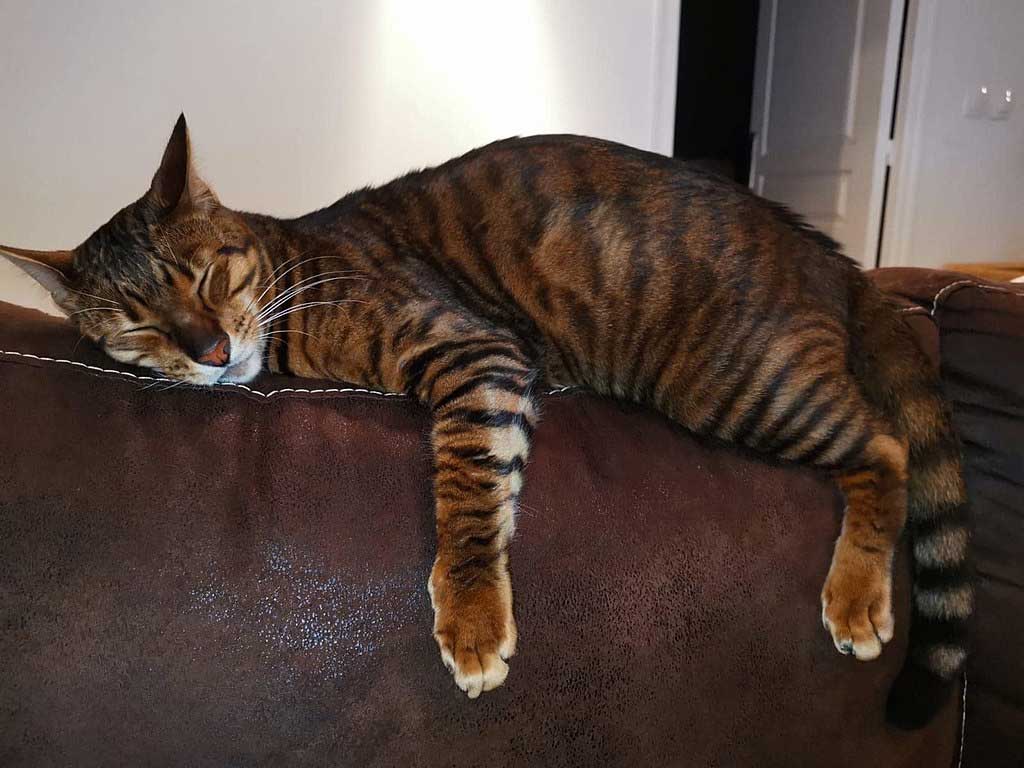
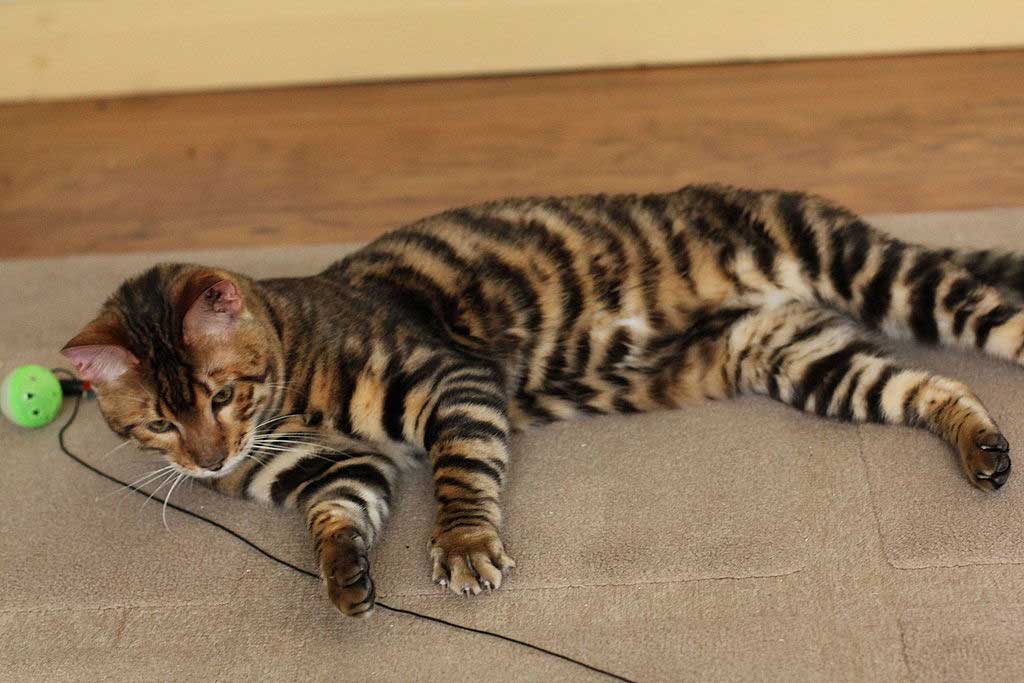
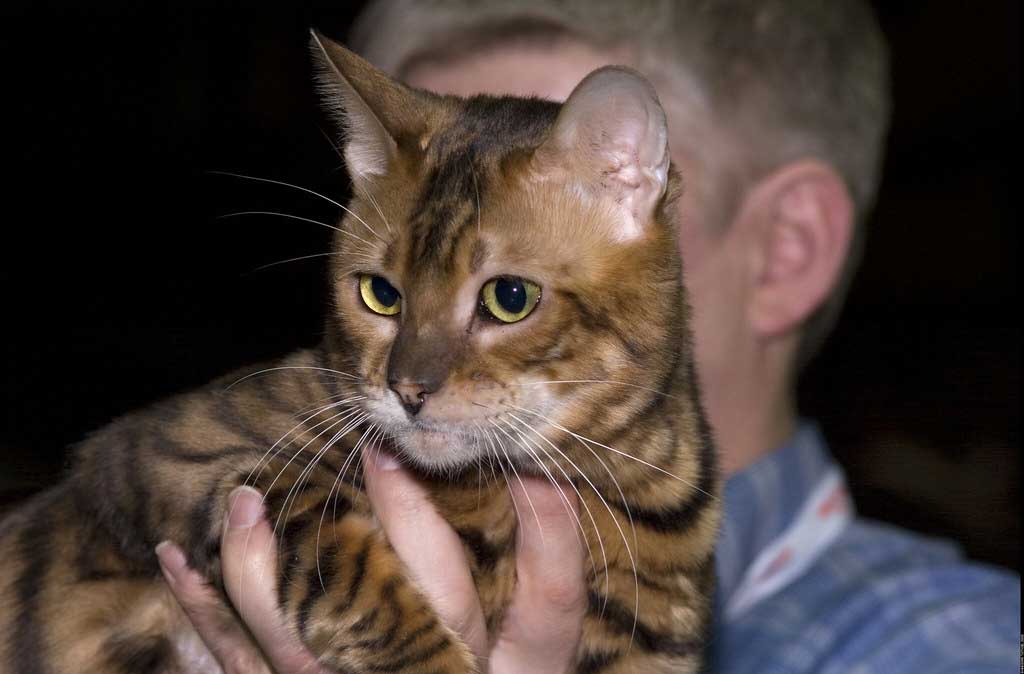
    The fur is short and dense, smooth and silky to the touch. The mottling is, Obviously, the most characteristic aspect of this breed: on a brown background, this tabby cat has a mackerel tabby pattern with a sharp contrast that lines up vertically. Stretched rosettes are preferred, and the mark must not be continuous, as in the wild tiger.

    In the news, the brown mackerel tabby (Brown color, with a dark tabby pattern) it is the only fur allowed by the standard Toyger.

    Size and weight

    • Male size: 22-25 cm.
    • female size: 20-23 cm.
    • Male weight: 4,5-7 kg
    • female weight: 3 to 4,5 kg

    Breed standard

    The breed standards are documents produced by official bodies that list the conditions that a dog must meet. Toyger to be fully recognized as belonging to the race:

    Varieties

    The Toyger silver, which has a silvery gray background color instead of the usual brown, is increasingly sought after by fans, but it is still not allowed by the standards established by the different organizations that recognize the breed.

    Character and skills

    Toyger
    Toyger cat – Gaynorjl, CC BY-SA 4.0, via Wikimedia Commons

    It is a very sociable cat, who gets along well with humans and enjoys their company. He loves spending time with his family, either playing with children or sleeping on the adults' laps. Demands the attention of its owner, but offer deep affection in return.

    Their sociable and friendly character also applies to other cats, as well as dogs without predatory instinct. But, living with small rodents or birds is much more problematic.

    As the Toyger it is a breed of intelligent cat, it is very possible to teach you tricks, and he likes to play fetch. Although they are playful and active, it may be advisable to keep them indoors to avoid the risk of theft, as they are rare and highly sought after. A good solution for you to enjoy the outdoors is to walk your cat on a leash, especially since this is not usually a problem for him.

    The Toyger cat it is a well built and very adaptable cat, able to fit well in most homes. But, needs attention and does not like to be left alone for too long and / or too often.

    Health

    As the Toyger It is a recent and rare breed of cat, it is difficult to have enough reliable information to draw conclusions about possible predispositions to diseases, whether or not they are hereditary. But, appears to be a robust cat breed overall, no particular health problems.

    But, have been detected heart murmurs in some individuals. This is potentially a sign of feline hypertrophic cardiomyopathy, a heart disease that can cause varying degrees of blood flow problems.

    The Obesity in cats remains the highest risk today, especially if they are kept indoors. So, the owner should especially watch his diet so that he maintains a normal weight.

    Life expectancy

    Of 12 to 15 years

    Grooming

    Toyger
    Toyger (TGR) Eeyaa American Idol – Flickr

    The Toyger it is a breed of cat that is easy to care for.

    Brushing the cat's coat once a week is enough to preserve its beautiful coat by removing dead hair and distributing the protective sebum from the skin.. Cats molt more in the fall and spring, but this move is relatively discreet, so brushing once or twice a week is more than enough.

    The weekly brushing session is also a good opportunity to check that your eyes and ears are clean., and to clean them with a wet wipe if necessary. Teeth should be brushed with a cat toothpaste to prevent tartar build-up and keep breath fresh.

    Finally, if he Toyger has a scratching post available and uses it, the natural wear of the claws is usually sufficient. If that is not the case, claws should be trimmed with nail clippers when too long.

    Food

    The Toyger need a high protein diet, preferably of animal origin. Most cat food manufacturers offer kibble or porridge of sufficient quality to meet your needs, but the owner must ensure that they contain all the nutrients he needs.

    To avoid the risk of obesity, the owner must also ensure that the cat's rations are tailored to his activity level. By being able to self-regulate, the Toyger you can usually have your food available constantly. But, if signs of being overweight start to appear, the owner should seek the advice of the veterinarian to find the best way to limit the cat's daily calorie intake.

    For sale "Toyger cat"

    The price of a kitten Toyger with pedigree ranges from 500 and 3000 EUR.

    It varies a lot according to its physical characteristics:

    • A kitten with deviations from the standard that are penalized in feline exposures (and that, Therefore, deprive you of any hope of success) costs between 500 and 1000 EUR;
    • A โ€œshowโ€ quality individual is worth between 1500 and 2000 EUR;
    • An individual whose high-flying characteristics make it suitable for breeding can be purchased for between 2500 and 3000 EUR.

    But, keep in mind that the Toyger it's rare and in high demand. As a result, few kittens are available for sale compared to demand. Thus, Most people who want to adopt a Toyger cat must sign up for a waiting list.

    Videos "Toyger cat"

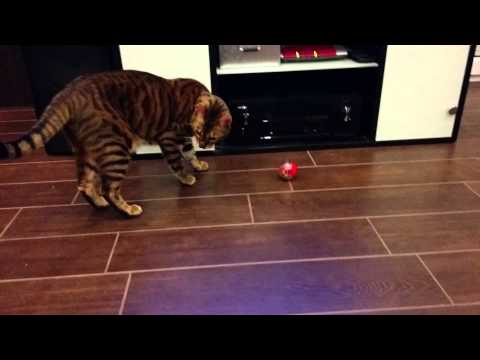
    A day in the life of Toygers

    Smart toyger

    โ–ท The world of Pets: Dogs, cats, birds, reptiles, amphibians

    Turkish Angora cat
    Recognized by the CFA, FIFe, TICA, ACFA/CAA, CCA-AFC

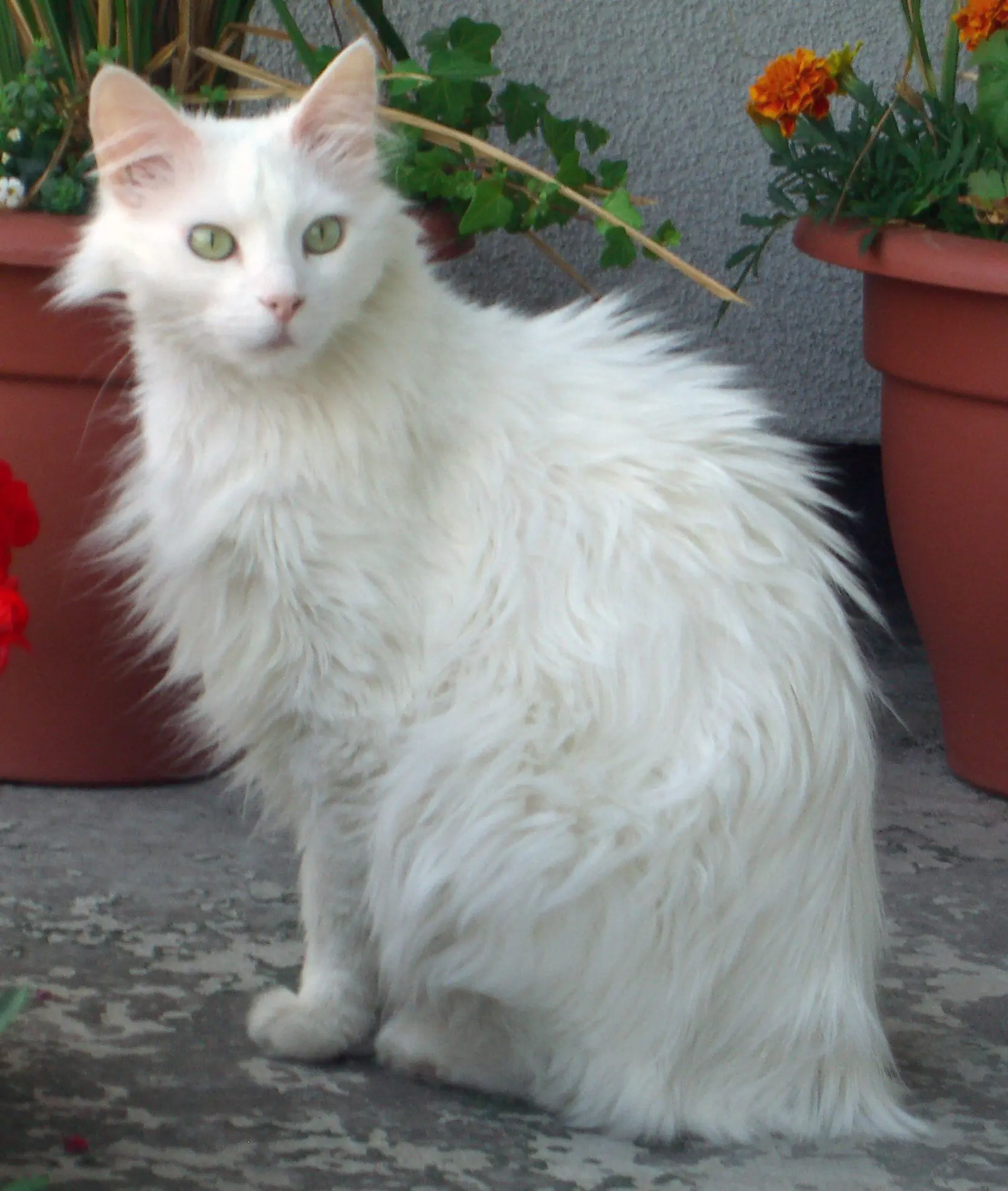
    The Turkish Angora cat remains the national animal of Turkey today.
    Angora Turco
    Photo: Wilkipedia

    Content

    History

    The Turkish Angora cat It, as the name reflects, a breed of cat native to Turkey, where she was prized for her long hair and fur. Angora is the ancient name of the capital of Turkey, currently Ankara. This breed of cat has a long history, since it is estimated that it can be traced back to ancient Egypt.

    In XVII century, the Turkish Angora cat It was introduced to Europe by an Italian explorer named Pietro Della Valle and by a French named Nicolas de Peiresc, who brought several copies to their respective countries. It was a success, since it was the first breed of long-haired cat, since the other European domestic cats were short or semi-long hair. The Swedish naturalist Linnaeus called it Cattus Angorensis to distinguish it from the domestic cat and Chartreux cat, and the French biologist Buffon called it "Angora cat with long hair and completely white.".

    Such was the popularity of the cat's fur color that it served as a "royal gift", being appreciated by the entire European aristocracy, especially the court of Louis XV. Painters of the time even chose her as a model to represent their cats in their paintings, for its elegance and beauty.

    In the 19th century, the Turkish Angora cat contributed to the birth of Persian cat, to the one who transmitted the gene responsible for long hair. But with the passage of time and the dangerous crosses with other breeds of cats, the Turkish Angora lost the characteristics that had made it famous. At the same time, the dazzling success of the Persian, chosen as a breeding base by the English in Victorian times, caused a disinterest in the Turkish Angora cat as dazzling as its success, to the point that it almost disappeared after WWII. The Turkish government decided to protect the remaining specimens to ensure the survival of the breed, so he decided to prohibit its export.

    Finally, The breed was saved by American cat breeders who managed to obtain them from the Ankara Zoo in 1959 a couple of Turkish Angora Cats llamados Star (What does "Star" mean?) y Yร„ยฑldร„ยฑzcik ("Little Star"). The current Turkish Angoras were born from this couple. Interest in the breed was rekindled in 1963, when the breeders in question presented her to the rest of the world. La C.F.A. (Cat Fanciers’ Association, one of the leading American feline organizations) recorded the first animals in 1970 and recognized the breed in 1973. La F.I.Fe (Fรฉdรฉration Internationale Fรฉline) did the same in 1988.

    Despite its beauty, the Turkish Angora cat it is not yet widespread in the world and is still protected in Turkey: some zoos continue to breed to ensure the survival of this breed, which is still considered "fragile". But, the Turkish Angora It is one of the favorite feline breeds of the French, and is often featured at feline shows.

    Physical characteristics

    Turkish Angora
    Turkish Angora cat at the Atatรผrk Forest Farm and Zoo in January 2012. The zoo breeds and sells Turkish Angora cats – Ankaracats, CC BY 3.0, via Wikimedia Commons

    The Turkish Angora cat it is a small to medium sized cat, with a graceful appearance, has a beautiful head that tapers downwards and is relatively small in relation to the rest of the body. The muzzle has no pinches, the nose is slightly curved, the ears are set high on the head, turns forward and has a lock of hair at the end.

    The legs of the Turkish Angora cat they are long and thin, with oval legs and tufts of hair between the toes. The tail is wide at the base and tapers as it grows. The tail is quite long compared to the rest of the body and feathery in appearance., due to the long hair.

    The coat is of medium to long length, fine and silky, with a very light undercoat. The hair is slightly more numerous and wavy on the belly. Due to its dense fur, the turkish angora may appear much larger than it actually is: is light-boned and does not usually exceed 5 kg. The molt occurs in summer and is quite considerable.

    Originally, only a completely white gown was allowed. Today, although the white variety is still the most popular by far, a wide range of single-color coats is tolerated, bicoloured, brindle and smoked. Just some colors, like chocolate or mink, are not recognized by the standard.

    Large, almond-shaped eyes are traditionally amber in color. In the white variety, blue or minnow eyes are also accepted (that is to say, with two different colors), while in the gold and silver varieties green eyes are also tolerated.

    Size and weight

  • Height: 30 – 35 cm.
  • Weight: 2,5 – 5 kg
  • Character and skills

    Turkish Angora
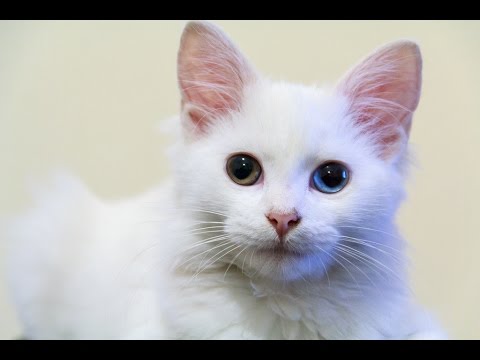
    A white Turkish Angora cat with odd eyes (heterochromia), which is common among the breed – Karatas., Public domain, via Wikimedia Commons

    The Turkish Angora cat it is a very sociable and affectionate cat, who likes to be the center of attention, to the point of being a bit loud at times. Enjoys the company of its owner and other animals, including dogs, and he especially likes children. Being a very playful and intelligent cat, can learn some tricks, how to stand up on its hind legs when presented with a toy or treat, or retrieve and return a small ball.

    The Turkish Angora cat he is also an observant cat, and nothing escapes him: is everywhere, following your every move, jumping on your shoulders when you least expect it and picking up your pen as you write. He is very capable of running after taking the glasses case, the glove or tights that were lying on the ground. But she knows how to make up for it by purring and stroking it.

    Robust, athletic and hunter, the Turkish Angora is a very independent cat that values รขโ‚ฌโ€นรขโ‚ฌโ€นits freedom. They need to have a lot of space to develop and they don't like being confined to one floor.

    Last, it is one of the few cats that loves water, and will gladly take a dip in a basin or bathtub if given the chance.

    Care "Turkish Angora cat"

    Turkish Angora
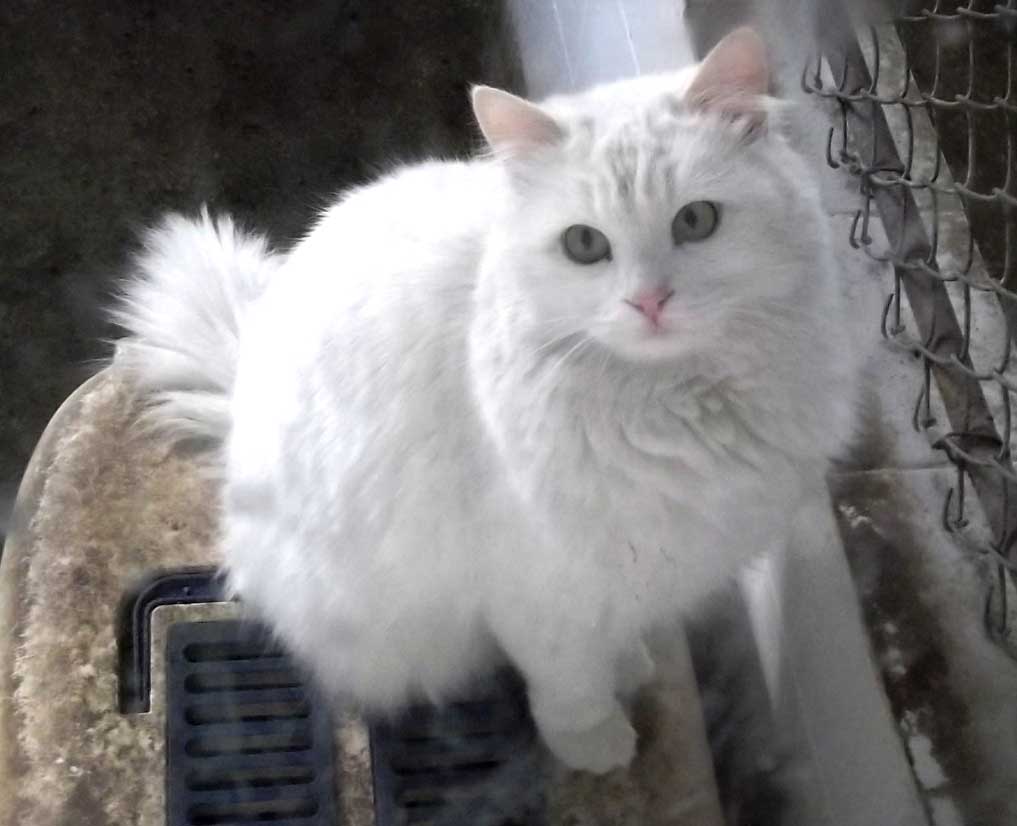
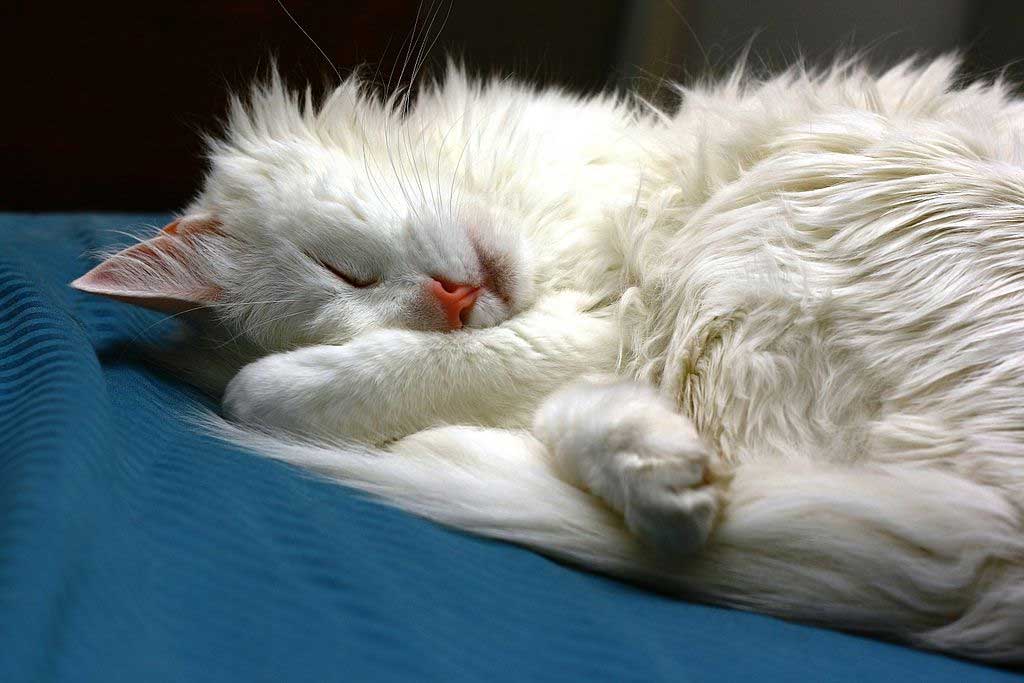
    Sleeping cat, white long-hair Turkish Angora – Roo72, CC BY-SA 3.0, via Wikimedia Commons

    The Turkish Angora cat Grooming his silky fur himself, so it is enough to brush it from time to time. This helps remove loose hair and strengthens the bond between you and your cat.. How long-haired cats tend to swallow more hair, hairballs can form in the digestive tract. To reduce the formation of these hairballs in the stomach, there are special foods for cats.

    Food

    Due to the long and dense coat of the Turkish Angora cat, it is recommended to feed the dog a diet rich in fiber so that it can more easily evacuate the trichobezoars (hair balls) what you eat when preening, and thus limit the risk of digestive problems.

    Indoor or outdoor cat?

    The Turkish Angora cat he is a very calm cat and, therefore, ideal for interiors. It is not particularly demanding in terms of its accommodation conditions and also settles for less space. Especially as an indoor cat, develops an intimate relationship with its owner and enjoys being with the family. For this reason, the loving cat should not be left alone for a long time. If you have the opportunity to let the cat out under supervision, give this opportunity. They enjoy observing their surroundings from an elevated position and breathing fresh air.

    How much activity does he need? "Turkish Angora cat"?

    This lively and active cat loves creative and challenging toys. He also enjoys learning little tricks., how to recover toys. A sturdy scratching post for playing and sleeping also offers great employment opportunities and also helps the cat care for its nails.. Extensive petting is a must for this affectionate, people-oriented cat.

    For sale "Turkish Angora cat"

    The Turkish Angora cat it is an excellent cat for beginners, but it also needs enough affection and care. Before buying a cat, you must be sure that you can offer him a full life. Once you have decided on the breed, you must visit a trusted breeder who belongs to a registered club. Pay attention to the behavior and health of kittens and parents as well. For a purebred kitten with papers you pay a few 800 EUR. In the animal shelter you can sometimes find a cat that looks and behaves like a Turkish Angora cat.

    Characteristics "Turkish Angora cat"

    Coexistence is important that you have with your new friend. Before considering the acquisition of a cat of the breed "Turkish Angora cat" you know certain factors. You must take into account their character, their need for exercise, their interaction with other pets, their care and if you have small children, their level of tolerance towards them.

    Joy

    4,0 of 5 stars (based on 1 review)

    Activity level

    4,0 of 5 stars (based on 30 reviews)

    Friendliness to other pets

    3,0 of 5 stars (based on 1 review)

    Friendliness to children

    3,0 of 5 stars (based on 1 review)

    Grooming requirements

    3,0 of 5 stars (based on 1 review)

    Vocality

    1,0 of 5 stars (based on 1 review)

    Need for attention

    4,0 of 5 stars (based on 1 review)

    Affection towards its owners

    4,0 of 5 stars (based on 1 review)

    Docility

    2,0 of 5 stars (based on 1 review)

    Intelligence

    4,0 of 5 stars (based on 1 review)

    Independence

    2,0 of 5 stars (based on 1 review)

    Hardiness

    3,0 of 5 stars (based on 1 review)

    Videos "Turkish Angora cat"

    Turkish Angora - Turkish Angora / Cat Breed
    Turkish Angora – Turkish Angora / Cat Breed
    WHITE CAT TURKISH ANGORA ะฐ.ะก.ะผ
    WHITE CAT TURKISH ANGORA ะฐ.ะก.ะผ

    โ–ท The world of Pets: Dogs, cats, birds, reptiles, amphibians

    British Shorthair cat
    Federations: CFA, FIFe, TICA, TICA, TICA, AACE, ACF, ACFA/CAA, CCA-AFC

    The original base of the British Shorthair cat was extracted from the robust common cats of Great Britain, when competitions and breeding became popular in the late 19th century. It was the most popular race of the first contests of British cats.
    Britรกnico de pelo corto
    Photo: Wilkipedia

    Content

    Characteristics "British Shorthair cat"

    Coexistence is important that you have with your new friend. Before considering the acquisition of a cat of the breed "British Shorthair cat" you know certain factors. You must take into account their character, their need for exercise, their interaction with other pets, their care and if you have small children, their level of tolerance towards them.

    Joy

    3,0 of 5 stars (based on 1 review)

    Activity level

    2,0 of 5 stars (based on 1 review)

    Friendliness to other pets

    4,0 of 5 stars (based on 1 review)

    Friendliness to children

    4,0 of 5 stars (based on 1 review)

    Grooming requirements

    2,0 of 5 stars (based on 1 review)

    Vocality

    2,0 of 5 stars (based on 1 review)

    Need for attention

    1,0 of 5 stars (based on 1 review)

    Affection towards its owners

    3,0 of 5 stars (based on 1 review)

    Docility

    4,0 of 5 stars (based on 1 review)

    Intelligence

    4,0 of 5 stars (based on 1 review)

    Independence

    4,0 of 5 stars (based on 1 review)

    Hardiness

    3,0 of 5 stars (based on 1 review)

    History

    The British Shorthair cat it is one of the oldest cat breeds in the world. The Romans brought their cats to the British Isles, where they spread and adapted to the harsh climate. In 1871, the first breeders exhibited their cats at the Crystal Palace in London under the name of British Shorthair.

    What, Unfortunately, the breeding stock was very small after the world wars, breeders crossed to persian cats with domestic cats not registered. This not only increased the variety of the breed, it also reinforced their friendly character.

    Due to the crossing with the Long-haired persians, today there are also some cats of this breed with long hair. Breeders used to give away long-haired cats, while today they sell them under the name "British longhair catยป (BLH). The British Shorthair cat (BKH) It is presented in more than 300 recognized color varieties, the best known being the silver tabby and the blue fur color. This particular breed is also known as British bleu cat.

    Popularity of "British Shorthair cat"

    From the years 70, the breed began a successful internationalization: It was recognized by the Fรฉdรฉration Fรฉline Internationale (FIFรฉ) in 1977, by The International Cat Association (TICA) in 1979, and for the American Cat Fanciers Association (CFA) in 1980.

    In fact, the British Shorthair cat is currently one of the most popular cat breeds in the world. It's no wonder it's even the preferred breed in Britain, where, With almost 7.000 kittens registered per year, represents almost a quarter of the feline population, and more than double that of its direct competitor. Nor in the United States can its success be denied, since the CFA figures show that it is on the podium of the most popular cats in the United States. It is also one of the most popular cat breeds in France., and its population does not stop growing in the country: according to the statistics of Livre Officiel des Origines Fรฉlines (LOOF), kitten records doubled in the second decade of the 21st century, reaching now about 2.500 copies per year.

    British shorthair
    Female British Shorthair cat. Feronia. 20 months old. 4,5 gr. – George E. Corona, CC BY-SA 4.0, via Wikimedia Commons

    Physical characteristics

    The British Shorthair cat it is a medium to large size cat, of solid constitution and very round. The body is broad and muscular, and the legs are short and powerful. The tail is wide at the base and should have a rounded tip.

    The head is easily recognizable: it is solid and round, with a short nose, rounded cheeks and large round eyes that can be yellow, copper, blue or green. But it is above all to his whiskers and rounded snout that he owes his famous and enigmatic smile that gives the impression that he is always amused by what he sees.

    Short, dense and without undercoat, their fur is more often blue (and it is also the most sought after color in feline exhibitions), but the British Shorthair cat can have a coat of different colors (white, cream, black, chocolate, lilac, cinnamon…) and with various patterns (bicolor, striped, tortie…).

    The sexual dimorphism is moderately marked, the female being smaller than the male.

    Size and weight:

  • Male size: 32 – 36 cm.
  • female size: 30 – 34 cm.
  • Male weight: 4 – 8 kg
  • female weight: 3 – 6 kg

  • British shorthair cat
    British shorthair cat

    Varieties of "British Shorthair cat"

    There is a long-haired version of the British Shorthair, which is the result of crosses with Persians made at the beginning of the 20th century. But, is not considered by most international feline organizations (FIFรฉ, TICA…) as a simple variety, but as a race in itself: the British longhair cat.

    Apart from the length of the coat, there is no difference between British Shorthair and the British Longhair.

    Character and skills

    "British Shorthair cat"

    Gato Britรกnico de pelo corto
    A British Shorthair cat, grey in color, sits in a bookshelf, looking up and to the left from the camera. – George E. Corona, CC BY-SA 4.0, via Wikimedia Commons

    The British Shorthair cat he is a calm and powerful cat who forms strong bonds with his entire family, without favoring any person. Patient and tolerant, they are ideal for children who have learned to behave with a cat. On the other hand, does not like emotions and prefers to stay away from overly active games or unruly children. So, not the ideal companion for a family with young children; it is better if they are already a certain age.

    They are rather reserved with strangers, but they quickly become affectionate once they meet and welcome close friends who visit often. Having said that, your affection is not overwhelming: not one of those who demand constant attention, neither from his family nor from visits. After a few pats, find a comfortable place in the immediate vicinity and are able to support themselves.

    Extremely sociable with other animals, he gets along very well with his companions and with dogs accustomed to cats. His past as a guardian cat was left behind, as it now easily coexists with rodents, birds and reptiles.

    Although he is very affectionate, he does not usually like to sit on his master's lap, instead he prefers to snuggle up next to him. in addition, once adult, does not appreciate being picked up and prefers to stay on the ground on all four legs.

    Independent and hassle-free spending time with himself, does relatively well to be left alone for a reasonable period of time. You don't suffer from separation anxiety when your family is at work, and can be left home alone for a long weekend without worry, provided their food and water needs are met. In general, easily adapts to different situations.

    Last, it is not a very noisy cat, but when he speaks, her soft voice contrasts with her teddy bear physique. His purr, on the other hand, it is powerful and strong, similar to the sound of a small motor.

    Care and grooming of the "British Shorthair cat"

    The British Shorthair cat it is a low maintenance feline breed: a weekly brushing is enough to remove dead hair and ensure a healthy, shiny coat. During the moulting season, in spring and autumn, brushing should be more frequent.

    Brushing sessions are the perfect opportunity to check your teeth, eyes and ears for signs of infection.

    They should also give the opportunity to look at their nails, that can be trimmed with nail clippers if they are too long. Obviously, this is more prevalent if you don't have a scratching post available.

    Indoor or outdoor cat?

    The British Shorthair cat It is a breed of indoor cats, and can do without access to the outside. But, if they are allowed to go outside, their owners must ensure that they do not endanger themselves. In fact, calm and confident, may not recognize potentially dangerous situations, not running away when seeing an aggressive dog or staying calmly in the middle of the road despite an approaching car.

    How much activity does he need? "British Shorthair cat"?

    Little active, even if they have their moments of madness, the British Shorthair cat needs to be stimulated from time to time to avoid becoming lazy. Running after a ball, Chasing the point of a laser or catching a toy are activities that help strengthen the bond with its owner while helping to keep it healthy.

    It also, despite his calm and laid-back nature, the British Shorthair cat he is extremely intelligent, able to learn many tricks. They also love the different puzzles for cats, especially when they deliver a reward to enjoy.

    Health and nutrition

    The British Shorthair cat It, in general, a robust cat breed, but may be subject to certain conditions:

    • The polykinetic kidney disease, a genetic disorder that causes numerous cysts in the kidneys: thanks to the work of the breeders and the existence of a DNA test, this disease is now relatively rare;
    • hypertrophic cardiomyopathy, an enlargement of heart tissue that causes changes in its function: although the responsible breeding program that has been carried out has greatly reduced the risk, this disease is still a problem;
    • Hemophilia type B, a clotting problem that causes dangerous bleeding: this disease can be detected by DNA tests, and a conscientious British Shorthair breeder identifies both carrier and affected cats to rule them out;
    • Gingivitis, a relatively benign condition but in some cases may require veterinarian intervention.

    It should also be taken into account that the greater risk to the health of the British Shorthair cat It, with much, the obesity. Greedy and quite lazy, often pampered by his family, you are at great risk of watching your muscular body gradually turn to fat, what can be the cause of many diseases. The owner has a real responsibility to allow him to have a sufficient level of activity and thus prevent him from gaining weight, for example, taking the initiative to play with your cat.

    Life expectancy

    Of 12 to 15 years

    Food

    The British Shorthair cat He is a glutton who enjoys both industrial cat food and that consumed by his family. So they stay healthy, your diet should be adapted to your age and activity level.

    Obesity in cats is a real risk in this breed, but it is not inevitable: a cat that plays daily and is not given more rations than recommended by the manufacturer should not gain more weight than necessary. On the other hand, a lazy cat, who is given all the food he wants and is regularly pampered with treats, you are likely to gain weight and endanger your health.

    So, it is better not to rely too much on the cat's self-regulatory ability. To prevent you from eating more than you should, its owner must not leave food in its bowl, and you must make sure that your partner does not have access to the food left by your family.

    If, despite these precautions, the British Shorthair cat begins to overeat, it is advisable to consult a veterinarian to establish a suitable feeding program.

    For sale "British Shorthair cat"

    The average price of a British Shorthair cat is of 1.000 EUR, but the price range is very wide, from 500 up to more than 2.500 EUR.

    These differences are explained by the physical characteristics of the cat (especially its color) and its greater or lesser conformity with the breed standard, as well as for their more or less prestigious ancestry. On the other hand, there is no significant price difference between a male and female cat.

    Videos "British Shorthair cat"

    British shorthair cat - BRITISH SHORTHAIR
    GATO BRITรNICO de pelo corto – BRITISH SHORTHAIR
    British Shorthair Cat Review after 5 years: The worlds best cat? (OFFICIAL VIDEO)
    British Shorthair Cat Review after 5 years: The worlds best cat? (OFFICIAL VIDEO)

    โ–ท The world of Pets: Dogs, cats, birds, reptiles, amphibians

    American Polydactyl Cat
    Hemingway Cat

    The American Polydactyl Cat is specifically bred to have extra fingers, for his temper, your good health, and its color or size.
    American Polydactyl
    Photo: Wilkipedia

    Content

    History

    A "Polydactyl Cat" is a cat with a physical congenital anomaly called polydactyly (or polidactilismo, also known as hyperdactyly), a type of genetic mutation that makes the cat born with more fingers than usual in one or more of its legs.

    These cats are very hardy and can survive even in time of snow.

    They reached the United States on Board of ships in the colonial era. Stayed them for sailors who considered as the lucky pets when they were in the sea.

    Historically, polydactyly represented the 40% of the population registered among Maine Coon. Stated that the extra toes acted as snowshoes, to help these cats resistant to negotiate the snowfall in the harsh winters of New England.

    The cats polydactyls It can be found in any race, but the American Polydactyl Cat is specifically bred to have extra fingers, for his temper, your good health, and its color or size.

    Physical characteristics

    How many fingers can a cat have on one paw??

    American-Polydactyl

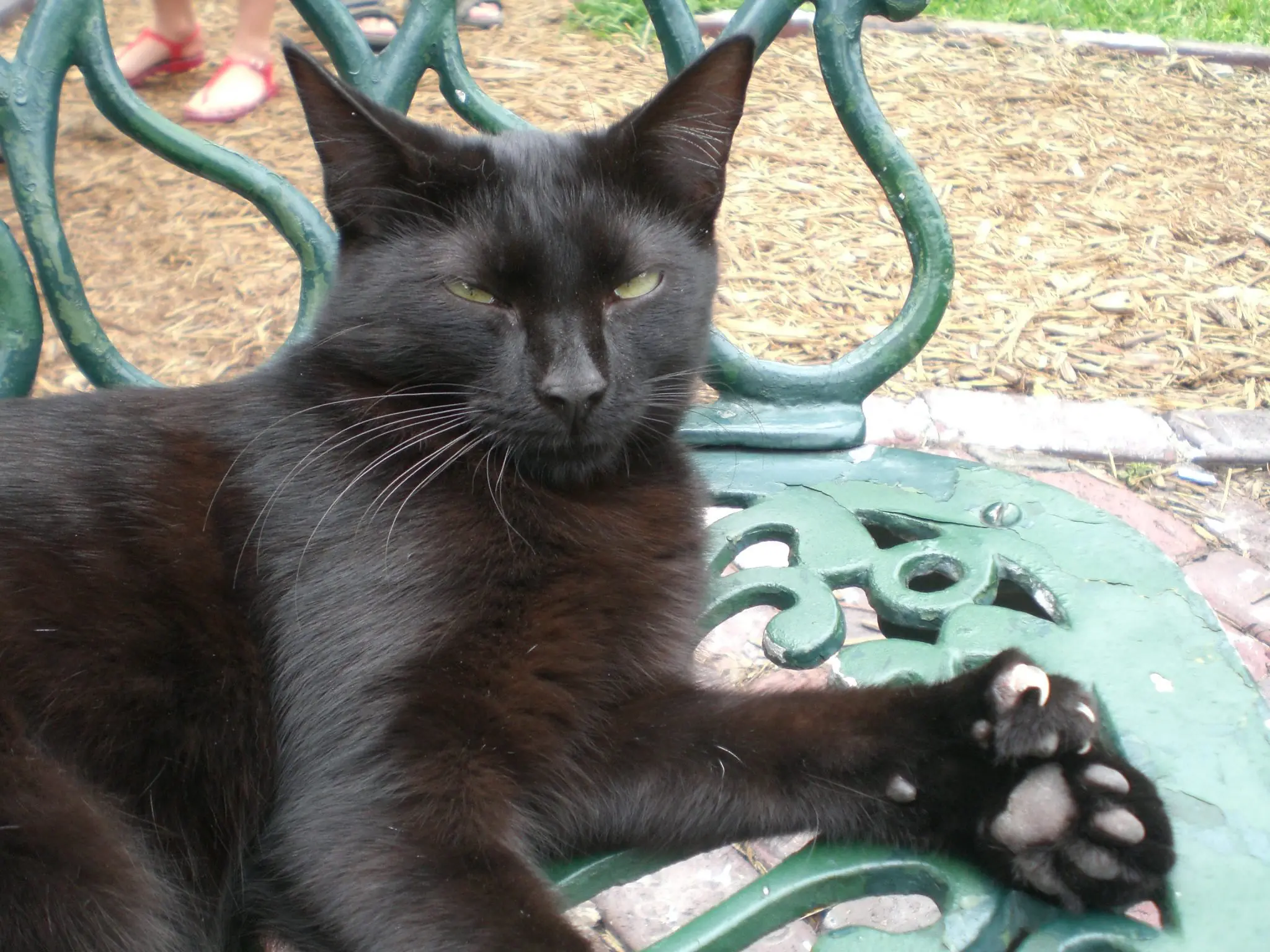
    Some american polydactyl cats they have up to seven. Perhaps the most famous American polydactyl cats were those that Ernest Hemingway wrote about., and as a result this breed is sometimes known as the Hemingway cat or mitten cat..

    The American Polydactyl Cat he is medium to large in size and has a strong and muscular body.

  • Their heads they are wide, with a modified and medium-sized stop.
  • Its nose and your snout they are medium in size and the chin has a square look.
  • The ears they are wide and have a pointed tip. Times, The american polydactyl cat used as a stallion has highly developed cheeks.
  • The rounded eyes of the American Polydactyls are set at an angle, and any color or combination of colors is acceptable.
  • The same goes for the color of the coat and the length of the coat., as long as the hairs are attached to the body.
    The american polydactyl cat long-haired must have a hair soft and silky.
  • The bodies of the American polydactyls they are rectangular in shape, well muscled on a medium bone structure. Their breasts are well rounded and wide.
  • Some american polydactyl cats have tail short, and these cats have shorter bodies than those with long tails.
  • The legs of the american polydactyls they are straight and robust, and cats with tails have significantly longer hind legs than front legs.
  • Of course, the characteristic feature of american polydactyl cat are their feet with extra fingers. One of the extra finger shapes looks like a thumb, and for this reason the american polydactyl cats They are also known as "cats with thumbs". The other conformation is that of another three-toed foot attached to the cat's five-toed foot.. The extra toes can be found only on the front feet or only on the rear feet, or all feet may have extra toes.
  • Character and skills

    American-Polydactyl

    The american polydactyl cat It is very similar to any other cat in terms of its personality and care. But, many owners have observed that their american polydactyl cats seem to have a more relaxed and gentle personality than other cats that have had. These cats are quite hardy and can survive even in snowy climates.

    The American polydactyl cat adapts very well to life indoors or outdoors, or a combination of both. They are outgoing pets, and they are said to be loving and patient even with children.

    Alternative names:

    1. Hemingway Cat, Mitten Cat, Extra Toed Cat, Six-Toed Cat, Big Foot Cat (English).
    2. Chat d’Hemingway, Chat ร  moufles, Chat ร  orteils supplรฉmentaires, Chat ร  six orteils, Chat ร  gros pieds (French).
    3. Hemingway-Katze, Handschuh-Katze, Katze mit zusรคtzlichen Zehen, Katze mit sechs Zehen, Katze mit groรŸen FรผรŸen (German).
    4. Gato de Hemingway, Gato com luvas, Gato com dedos dos pรฉs extra, Gato com seis dedos dos pรฉs, Gato com pรฉs grandes (Portuguese).
    5. Gato Hemingway, Gato de manopla, Gato de dedos extra, Gato de seis dedos, Gato de pies grandes (espaรฑol).

    โ–ท The world of Pets: Dogs, cats, birds, reptiles, amphibians

    Cymric cat
    Federations: CFA, FIFe, TICA, WCF, AACE, ACF, ACFA/CAA

    To the Cymric cat the water fascinates him, perhaps this fascination comes from originating on a small piece of land surrounded by water.
    Cymric
    Photo: animalplanet.TK

    Content

    Characteristics "Cymric cat"

    Coexistence is important that you have with your new friend. Before considering the acquisition of a cat of the breed "Cymric cat" you know certain factors. You must take into account their character, their need for exercise, their interaction with other pets, their care and if you have small children, their level of tolerance towards them.

    Joy

    3,0 of 5 stars (based on 1 review)

    Activity level

    3,0 of 5 stars (based on 1 review)

    Friendliness to other pets

    5,0 of 5 stars (based on 1 review)

    Friendliness to children

    5,0 of 5 stars (based on 1 review)

    Grooming requirements

    3,0 of 5 stars (based on 1 review)

    Vocality

    2,0 of 5 stars (based on 1 review)

    Need for attention

    3,0 of 5 stars (based on 1 review)

    Affection towards its owners

    4,0 of 5 stars (based on 1 review)

    Docility

    4,0 of 5 stars (based on 1 review)

    Intelligence

    4,0 of 5 stars (based on 1 review)

    Independence

    3,0 of 5 stars (based on 1 review)

    Hardiness

    1,0 of 5 stars (based on 1 review)

    History

    The Cymric cat hails from the Isle of Man, located in the Irish Sea, between Ireland and the United Kingdom. It takes its name from the Welsh word "cymru.", What does "Wales" mean?. It's a long-haired version of the Manx cat, so talk about the history of Cymric is also talking about the history of Manx, since both are largely intertwined.

    The cat is believed to have originated around the decade of 1750, but there are many different versions of how your ancestors came to the island. They could have crossed the sea with the Spanish Armada in the 1980s. 1580, the Vikings who settled on the island around the year 800, or even long before, with the Phoenician merchants, around the year 500 a.C.

    The history of the Cymric and that of the Manx It, Therefore, quite vague, but it is also full of stories. In particular, various legends try to explain how this cat lost its tail. One of them tells that he arrived too late at Noah's Ark and that the door closed on his tail. Another says that the Vikings used to steal kittens because their tails were considered lucky.; as a result, mother cats bit the tails of their pups so as not to lose them. Another explanation is that the islanders used to cut the tails of their cats during the harsh winters to save firewood.. In effect, a cat without a tail enters the house faster, allowing the door to be closed earlier.

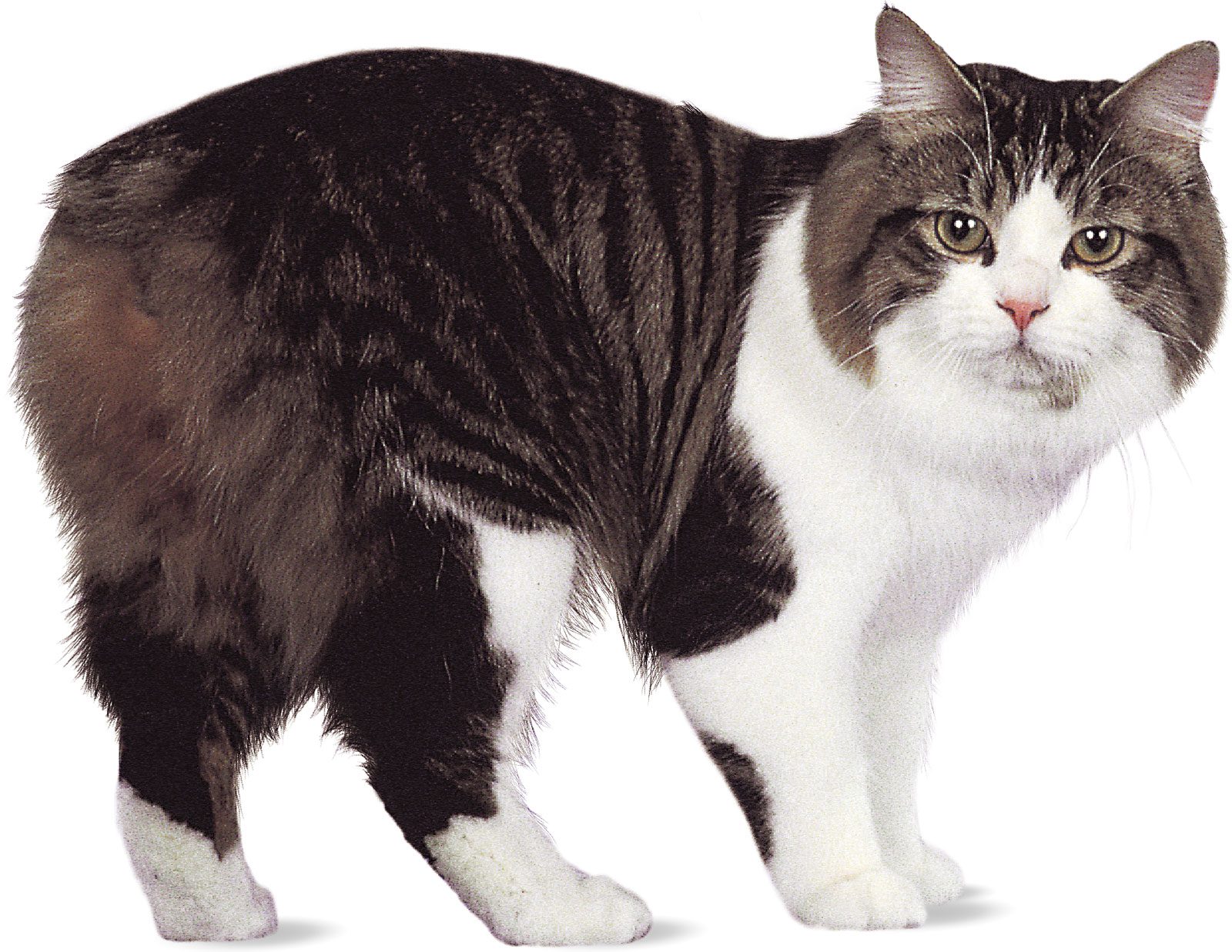
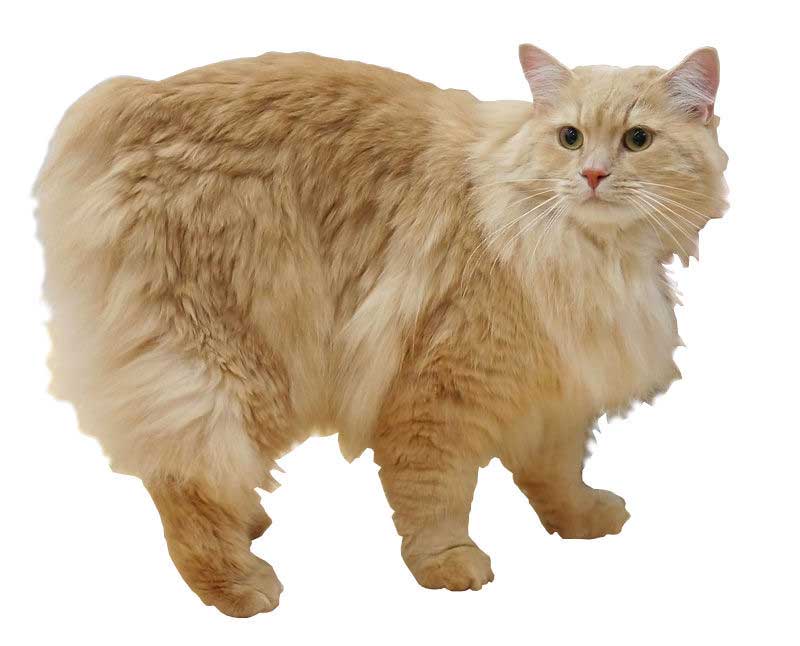
    From a more scientific point of view, the fact that Manx cats and Cymric cats be anura (that is to say, have their tail docked) It is explained by a spontaneous genetic mutation that was reinforced by centuries of inbreeding due to the insular nature of the breed. This corresponds to an incomplete formation of the spine., and the gene responsible for this is called gene Manx, since it was first observed in this cat. According to some archival documents, this particularity, commonly called "syndrome" Manxยซ, began to be observed on the island, so many specialists deduce that cats without a tail were born in these lands. Other, on the other hand, they are convinced that a cat with this peculiarity was brought from abroad via a ship, and spread his gene to the island's feline population. It must be said that the gene Manx is dominant, which greatly facilitates its dissemination: in effect, it is enough that only one of the two parents is a carrier, and thus present this anatomical specificity, so that a part of your kittens is in the same case.

    Exists in all vertebrate mammals, and therefore notably in cats of other breeds. Having said that, although within these breeds you can find short-tailed and tailless cats - due to the same genetic mutation- the Cymric and the Manx They are the only breeds that do not specifically have a tail..

    Parallel to the absence of a tail, during the years 1940-1950 a recessive gene that gave long hair was introduced into the lines. But, this feature was initially considered a defect, to the point that all the individuals that presented it were excluded from breeding and exhibition. It wasn't until a decade later, over the years 60, when Canadian breeders began to take an interest in this trait and established it as a characteristic of the Cymric.

    This led to the differentiation between the Manx cat (shorthair) and the Cymric cat (longhair). Breeding programs dedicated entirely to the latter began in Canada., which allowed its recognition by the Canadian Cat Association (CCA) in 1970. The breed was also introduced to the United States, where it was very well received and quickly gained popularity. Breeders considered to be the pioneers of the breed are both Canadians and Americans. Blair Wright y Leslie Falteisek, in particular, were responsible for the current name of the breed: until then it was known simply as Manx longhair, but the name was changed to Cymric in the decade of 1970. This illustrates the clear differentiation between the Manx and the Cymric that was introduced at that time, when the latter began to be considered a breed in its own right. In other words, although they are of British origin, It was in North America where the Cymric became independent and took off.

    Cymric
    Cymric – Desaix83, d'aprรจs le travail d'Heikki Siltala, CC BY 3.0, via Wikimedia Commons

    Following its recognition by the CEC in 1970, it was the turn of the TICA (The International Cat Association) in 1979.

    The Cat Fan Association (CFA), which had recognized the Manx since its founding in 1906, did the same, recognizing the Cymric as a race in its own right in 1989. But, the CFA reversed its position only five years later, in 1994, arguing that the Cymric should be considered a variety of Manx cat and not a race in its own right. Then it started to call Manx longhair, as opposed to Manx shorthair , considering both as two varieties of the same race and having the same standard. The main argument for the association was the strong resemblance between the two cats, that only differ by the length of the hair.

    In fact, the resemblance is such that in most associations that consider the two breeds separately, parents kittens Manx but with long hair they are recorded as Cymrics.

    The Governing Council of the Cat Fancy (GCCF) also consider the Cymric as a simple variety of the Manx cat. Last, the Fรฉdรฉration Internationale Fรฉline (FIFรฉ), covering some forty countries, including France and Belgium, and that he had recognized Manx in 1949, lined up on 2006 with the position of the TICA, also considering the Cymric cat as a race in its own right.

    In France, despite its recognition as a breed in its own right, the Cymric cat it's almost impossible to find: only one individual was registered in the Livre Officiel des Origines Fรฉlines between 2003 and 2019.

    In countries where it is considered a simple variety of the Manx cat, it is more difficult to measure its popularity, since it is "drowned" in the statistics of the latter. But, It should be noted that in the United States, the Manx cat stands just above the position 30 (of little more than 40) in the breed classification based on the number of annual entries in the CFA, that is to say, is far from widespread, and this is even more true for his long-haired variant. The situation in the UK is similar to that in France: it can be considered that the Cymric cat is almost absent from the country, since the number of Manx registered annually was about 40 around the decade of 2000, and then collapsed from 2007, to the point where you can now count on the fingers of one hand. But, in 2018 there was a jump to more than 22 registrations, but it remains to be seen if this recovery will be sustainable.

    Physical characteristics

    The Cymric It's a long-haired version of the Manx cat: apart from coat length, the two races are identical. The Cymric it is a medium size cat, of solid bones, lighter than it seems and distinguished by its rounded appearance, from the eyes to the spine, head and body in general.

    Its back short and compact forms an arch. The legs they are strong and the front ones are shorter than the rear ones. The thighs are especially muscular and the general appearance of the four limbs is such that some compare it to a rabbit. The feet They are round, medium in size and quite bushy.

    The head is rounded and slightly longer than wide. It has the ears widely separated with rounded tips. The cheeks are prominent and the muzzle is longer than it is wide. The eyes they are big, round and can be yellow, orange, hazelnut or greens.

    The main distinguishing feature of the Cymric and of the Manx is the no tail. It is the result of a spontaneous genetic mutation quite common in cats., and is called "manx syndromeยซ, even when it occurs in individuals of other races. But, it is possible that Cymrics and Manx are born with a longer or shorter tail. Some have up to three sacral vertebrae (vertebrae located in the pelvic region): called "risersยซ. Other, los ยซstumpiesยซ, have a stump composed of one to three caudal vertebrae (vertebrae located in the tail). Last, los ยซlongysยป have a tail longer than a stump, but shorter than that of the other races.

    Individuals that do not have a tail -the most common case- are called "rumpiesยซ. Only rumpies and risers are accepted in cat shows, but the other types are still of great value to the breed and are found in most breeding programs, since the breeding of two completely tailless individuals causes the death of a quarter of the fetuses before birth, and spinal malformations (calls ยซmanx syndromeยซ) in around the 20% of those who are born, which leads to certain death to 3/4 years.

    But, It should be noted that for cats that get rid of these serious problems, the absence of a tail -which is the lot of most representatives of the breed- not really a disadvantage: as he Cymric as the Manx they have little to envy their peers in terms of their sense of balance, since they have known how to adapt to the absence of it.

    Its fur it's semi-long, thick, silky and double-layered. The breed offers a wide range of coat colors: brown, carey, cream, blue, Silver, black, red, white… There is also diversity in terms of coat patterns: ombre, smoked, striped, calico or tortoiseshell. Chocolate patterns, lavender and Himalayas are not allowed in the breed standard. It also, the coat may change color and / or length with the seasons, becoming lighter in summer and longer in winter.

    Some Cymrics have especially prominent tufts of hair on their ears and legs, a trait that is valued and sought after by breeders and in shows. Even without this feature, the hair is longer on the neck, the belly, legs and chest.

    Last, It should be noted that the Cymric and the Manx they mature very slowly, to the point that some do not reach their maximum size before the 5 years. There is also a slight sexual dimorphism, since the male is usually slightly heavier and larger than the female.

    Size and weight

    • Size: Of 30 to 35 cm.
    • Weight: Of 2 to 5 kg

    Varieties of "Cymric cat"

    The different feline associations distinguish four varieties of Cymric and Manx, the only difference is the size of the tail:

    • Rumpy: the cat has no tail;
    • Riser : the tail has a cartilaginous growth of one to three sacral vertebrae (vertebrae of the pelvic region);
    • Stumpy : the cat has a small tail that measures 3 to 4 cm., formed by one to three caudal vertebrae (that is to say, located in the queue);
    • Longy: the cat has a longer tail than the other varieties, but shorter than other breeds.

    The varieties Rumpy and Riser are the most likely to transmit Manx syndrome. The manx syndrome causes the death of the kitten, even before birth or shortly after delivery. So, it is recommended not to breed two representatives of these varieties and, Instead, cross tailless cats with stumpies or longies.

    Cymric
    A photograph of a long-haired Manx, also known as a Cymric, in a perched position near a window – Robertlucien, CC BY 3.0, via Wikimedia Commons

    Character and skills

    Basically, the Cymric cat differs from Manx cat only in the length of her hair, so some reference organizations consider it a mere variety of the latter. They both have similar personality traits.

    The Cymric he is a gentle and affectionate cat, who adores the company of humans and is particularly known for his loyalty to them. They love to follow their owners around the house and participate in all the daily tasks.. Some individuals focus all their love on one person, while others show affection to all family members, including children: its tender and attentive nature makes it a good cat breed choice for children, for whom it is a very good playmate. But, they need a loving and caring family, whose members take time to play and interact with them. So, not recommended for people who are absent often, but it is an ideal cat breed for the elderly.

    They are never aggressive, rather they enjoy a generally serene and peaceful lifestyle, but that doesn't mean they are inactive. They love to play, either loading things, crawling into cabinets or opening drawers. Able to play with very little, always find something to do. He is also a very clever and clever cat., able to learn tricks: it is very possible, for example, train him to catch a ball, just like a dog.

    This powerful cat is also capable of running very fast and making big jumps.. This means that you can easily reach the high shelves, so objects that must be kept absolutely away from this joker are best kept in tightly closed cupboards.

    The Cymric cat is not only physically flexible: is very adaptable and can cope with a change of environment, for example after moving in with your cat or even if it is necessary to transfer it to another family.
    It must be said that he likes to meet new people, especially if you are used to all kinds of people, animals and situations from a very young age. Living with other dogs usually goes well, just like living with a dog, especially if it belongs to a breed recommended for cats.

    On the other hand, you have to be very careful when it comes to small animals that can be prey for him, like birds, rodents or even fish. In fact, in addition to a great passion for the game, has a well developed hunting instinct. If you live in the same house as this type of animal, it is necessary to get used very early not to attack them. But, it is still preferable to avoid contact with them, so the best option is to avoid coexistence.

    By the way, he is a pretty disciplined cat, who accepts limits. He quickly understands if his master forbids him certain things, like rubbing on the couch or scratching in certain places.

    On the other hand, the Cymric It is a breed of cat that meows a lot.. This big talker is used to meowing to make himself heard., or simply to communicate with its owner. Some individuals even seem to want to play the role of watchdog., as they tend to growl or be threatening when seeing or hearing unusual things.

    Health

    The absence of a queue in the Cymric and the Manx, caused by the mutation of a gene called ยซgen manxยซ, not always benign. This greatly complicates the reproduction of these cats..

    Cymric
    Long-haired stumpy Manx (Cymric) – Jumpinjim, CC BY-SA 3.0, via Wikimedia Commons

    First of all, the embryos that are homozygous for the gene -that is, that inherit the mutation of gen manx of both parents- are destined to die before being born, since your spinal cord is not fully developed. They represent about a quarter of the embryos conceived, so litters are usually small. On a larger plane, the breeding of two tailless cats should be avoided at all costs (variety "RumpI "Riserยซ), as it increases the risk of getting kittens with deformities.

    But, ser Heterozygosity is not enough to be healthy: some of the kittens that are heterozygous they are also heavily affected by deformities of the spine. The spine is usually too short, which can cause movement difficulties, damage to the spinal cord and nerves, or malformations of the urinary or intestinal tract. Most kittens with this problem are identified among the 4 and 6 months of age, mainly by observation. So, before adopting a kitten Cymric or Manx of a breeder, it is advisable to check that the breeder has made sure that the kittens are in full health before putting them up for sale. This particular situation explains why representatives of this breed are usually not available before the 4 months of age, since this guarantees that they do not suffer from these health problems beforehand. The percentage of kittens affected is around 20%, and they are mostly rabones, that is to say, tailless. They are usually euthanized, but if not, do not usually survive more than 3 or 4 years; the oldest cat had 5 years when he died.
    This physical characteristic can also cause coccyx arthritis. This affects all varieties, but individuals with a partial tail are most affected.

    On the other hand, to a kitten Cymric getting rid of these various risks linked to the absence or unusually short length of its tail is generally promised a long life, since it is not uncommon for representatives of the breed to reach the 20 years of age and living in perfect health. It is a very slow maturing breed, since puppies take many years to reach their adult size, sometimes even 5 years.

    One of the health problems they may face is corneal dystrophy, an inherited disease caused by the accumulation of water in the layers of the cornea, which can lead to reduced vision and even blindness.

    Last, the Cymric cat are prone to being overweight. So, it is advisable to adapt the portions that are given to your needs (that depend, in particular, of your lifestyle) and check your weight regularly, to prevent any obesity problem in the cat. Although obesity is not a disease in itself, can cause or aggravate various conditions.

    Grooming

    The long coat of the Cymric cat not particularly difficult to maintain, but must be brushed regularly, ideally two or three times a week. This prevents dead hair from spreading throughout the house. Be more careful during the shedding periods in spring and autumn.

    You should also wash your cat's ears about once a week., and do the same with the eyes.

    Looking at your nails, largely depends on your level of activity, but natural wear and tear may not be enough: if so, her nails need to be trimmed to prevent embarrassment in her daily life.

    Food

    The Cymric it is not a particularly difficult cat to feed, and conforms perfectly to quality industrial foods, either croquettes or patรฉs. On the other hand, is very gluttonous and tends to be overweight: therefore, it is advisable to be especially attentive to the amounts of food that are given, and adapt them well according to their physical activity and, Therefore, of your needs. Unlike many races, permanent access to food is not possible, since it is not capable of self-regulation.

    For sale "Cymric cat"

    The price of a kitten Cymric heavily dependent on his lineage and the reputation of the kennel from which he came. The price range is quite wide, of 900 to 1500 EUR. In any case, the fact that it is a rare breed of cat largely explains its high price. Due to the small number of breeders of Cymric, it is common to have to join a waiting list before being able to take in a kitten of this breed.

    Alternative names:

    Long-haired Manx / Longhair Manx / Manx Longhair

    Videos "Cymric cat"

    Winston the Cymric Manx
    Winston the Cymric Manx
    Cymric kitten Miyako
    Cymric kitten Miyako