โ–ท The world of Pets: Dogs, cats, birds, reptiles, amphibians

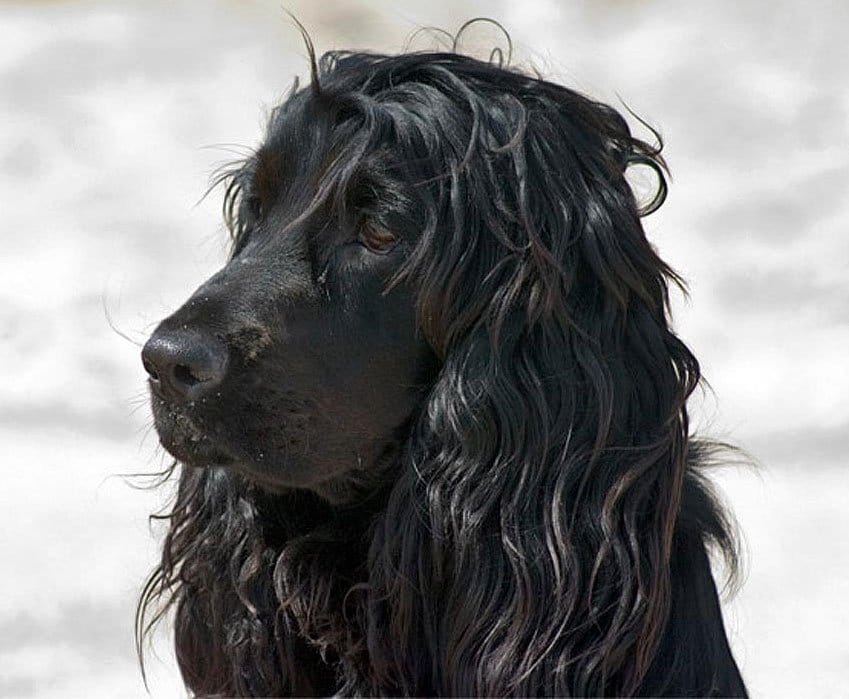
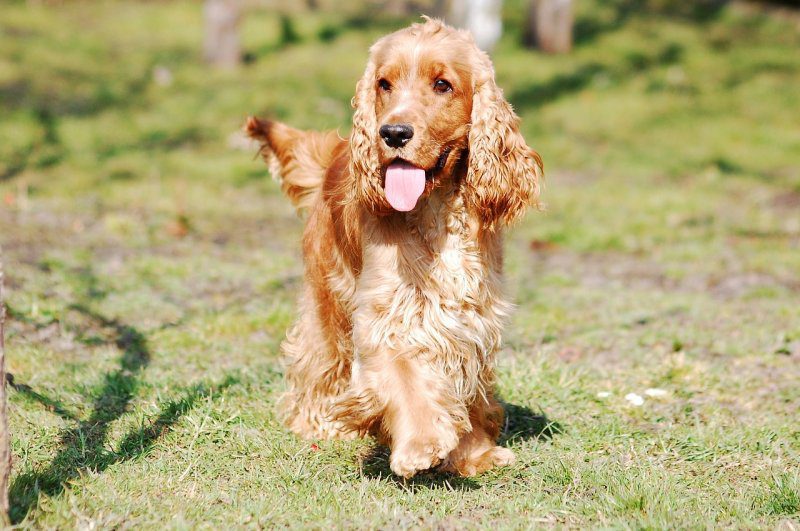
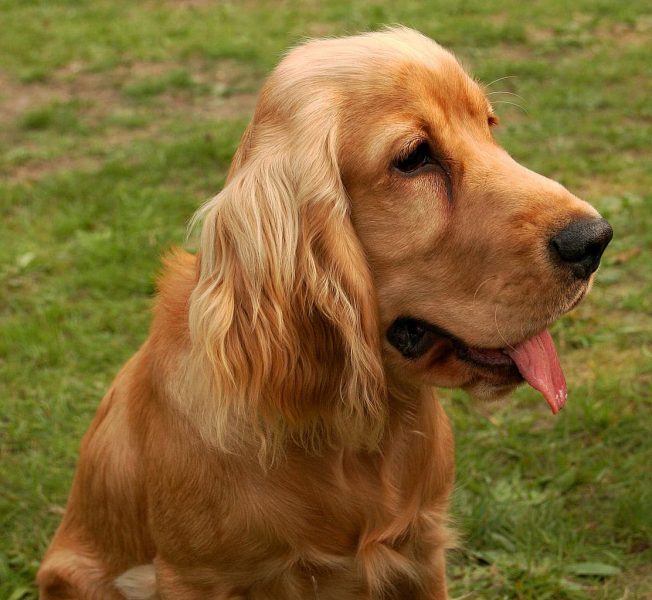
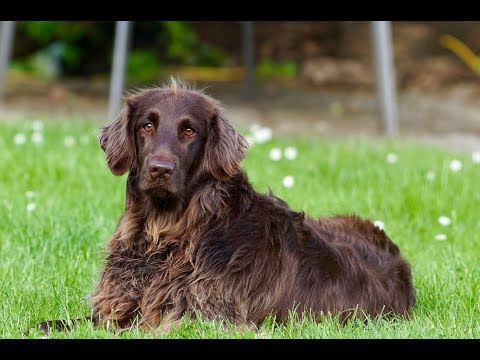
Welsh Springer Spaniel
Gran Bretaรฑaa Gales- FCI 126 . Flushing Dogs

Welsh Springer Spaniel

The Welsh Springer Spaniel tends to be quite shy, and for that reason he needs a good socialization when he is a puppy.

Content

History

Little is known about the origins of Welsh Springer Spaniel, but it is considered a very old breed, whose ancestors date back to Roman Britain. Renaissance tapestries show spaniels that look a lot like today's Welsh Springer; similar red and white Spaniels appear in some 18th century portraits. In the 19th century, dogs were little known, except in the Neath Valley region, in south wales.

The preponderance of dog shows at the end of the 19th century led to a renewed interest in the breed, who made his appearance at the first Kennel Club show, held in 1873. It was judged alongside the black and white Spaniel and the Welsh Springer Spaniel white. With the time, the two races parted.

For a long time he was mistaken for the English Cocker Spaniel and was not recognized until 1902.

It is an ancient race of pure origin, which was used for a time as a herding dog. Thanks to its enormous adaptability, the Welsh Springer Spaniel It is also an excellent companion dog..

The American Kennel Club recognized the Welsh Springer in 1906, but few people were interested in race. At the end of the Second World War, practically non-existent in the United States, until they were imported 11 copies in 1949. A dozen years later, the Welsh Springer Spaniel Club of America was founded. In the news, the Welsh Springer Spaniel still a well kept secret, since it occupies the position 127 between breeds registered by the AKC, in front of 113 a decade.

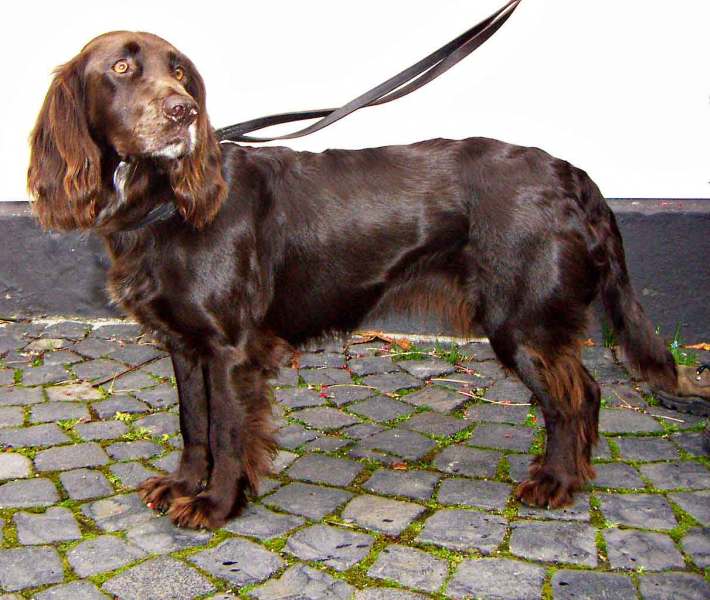
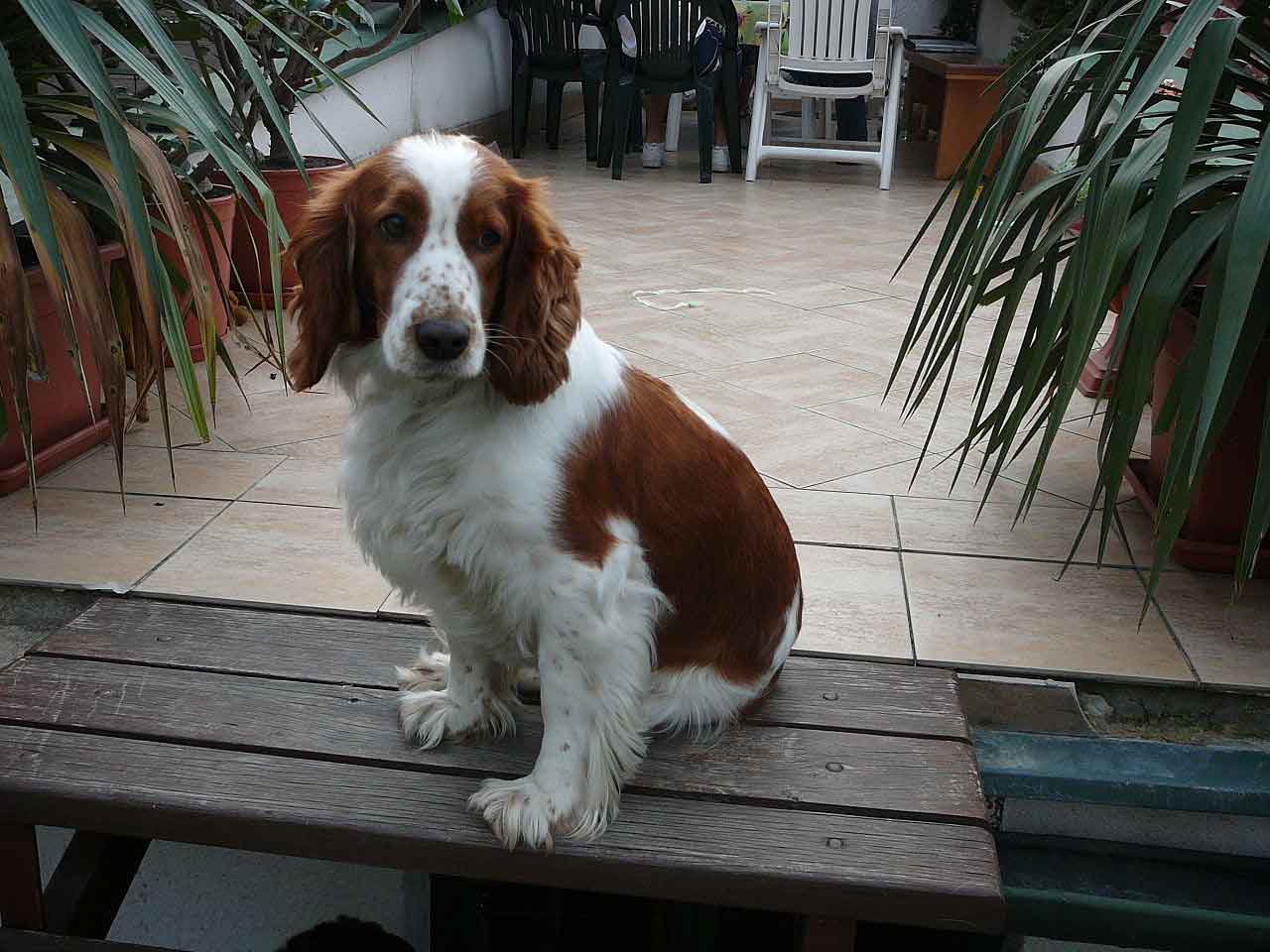
Photo: Welsh Springer Spaniel, Pozlovice by Pavel ล evela, CC BY-SA 3.0, via Wikimedia Commons

Physical characteristics

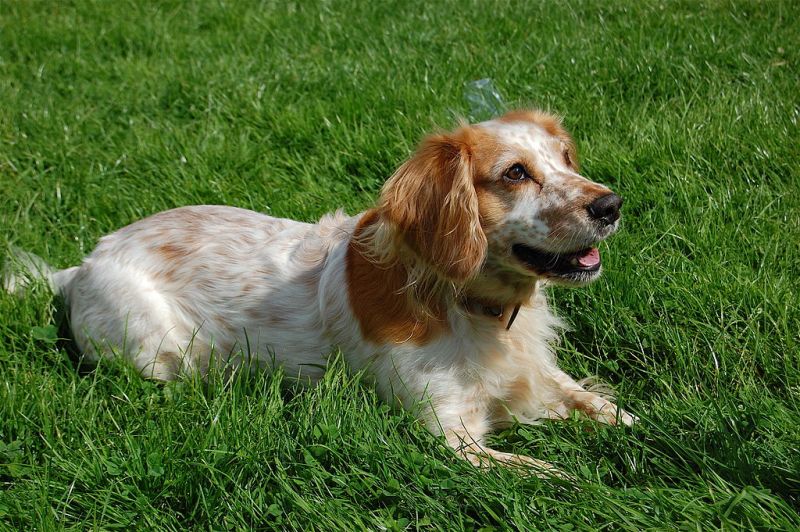
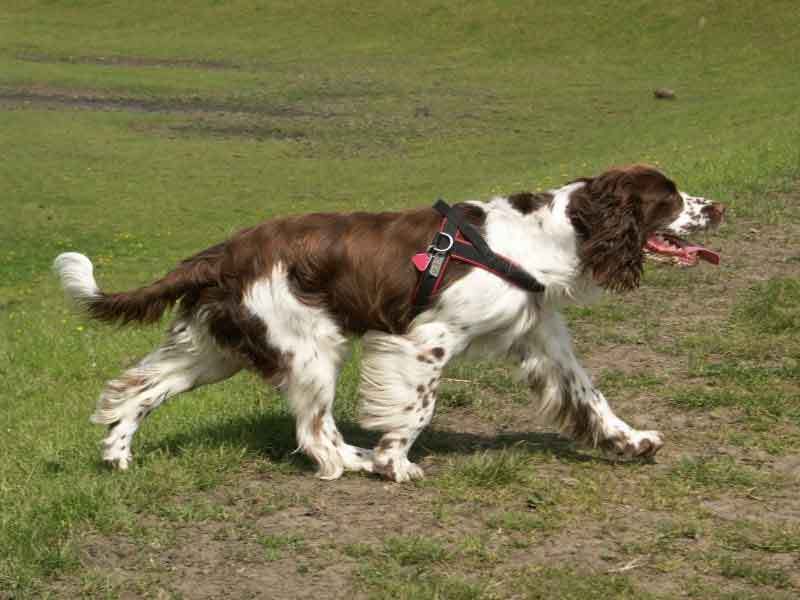
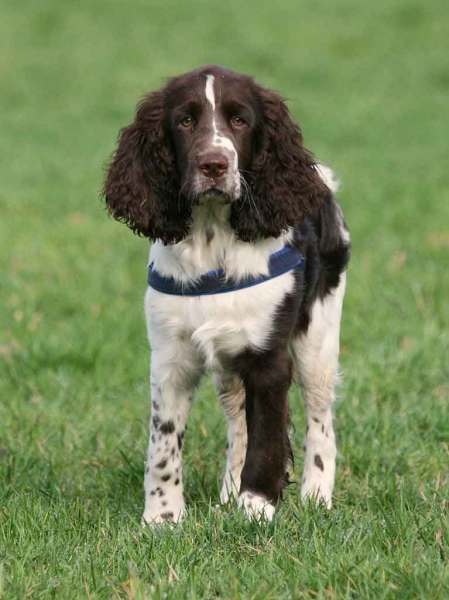
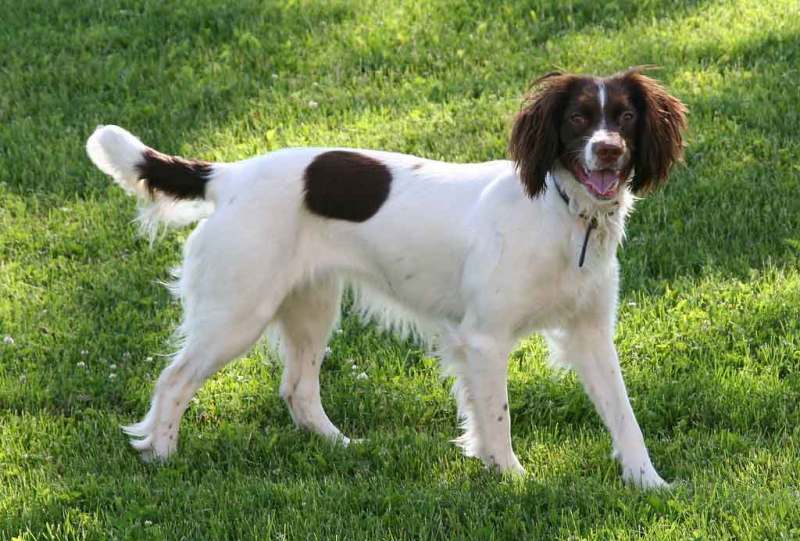
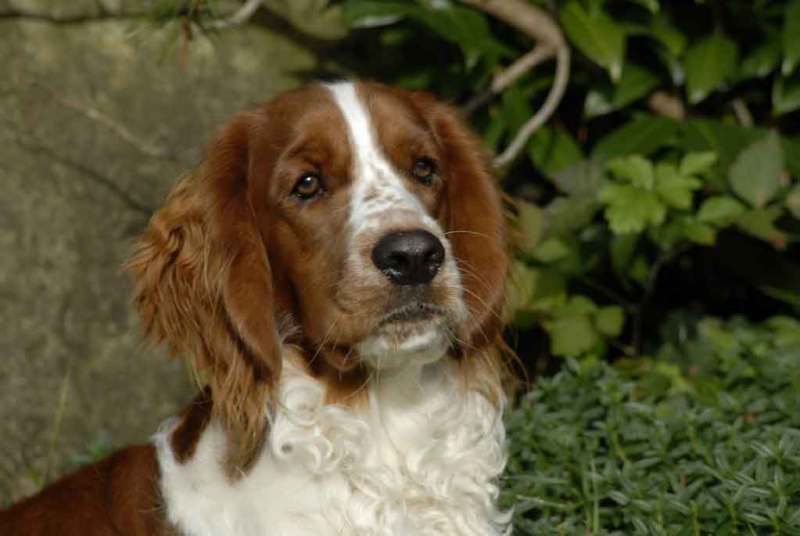
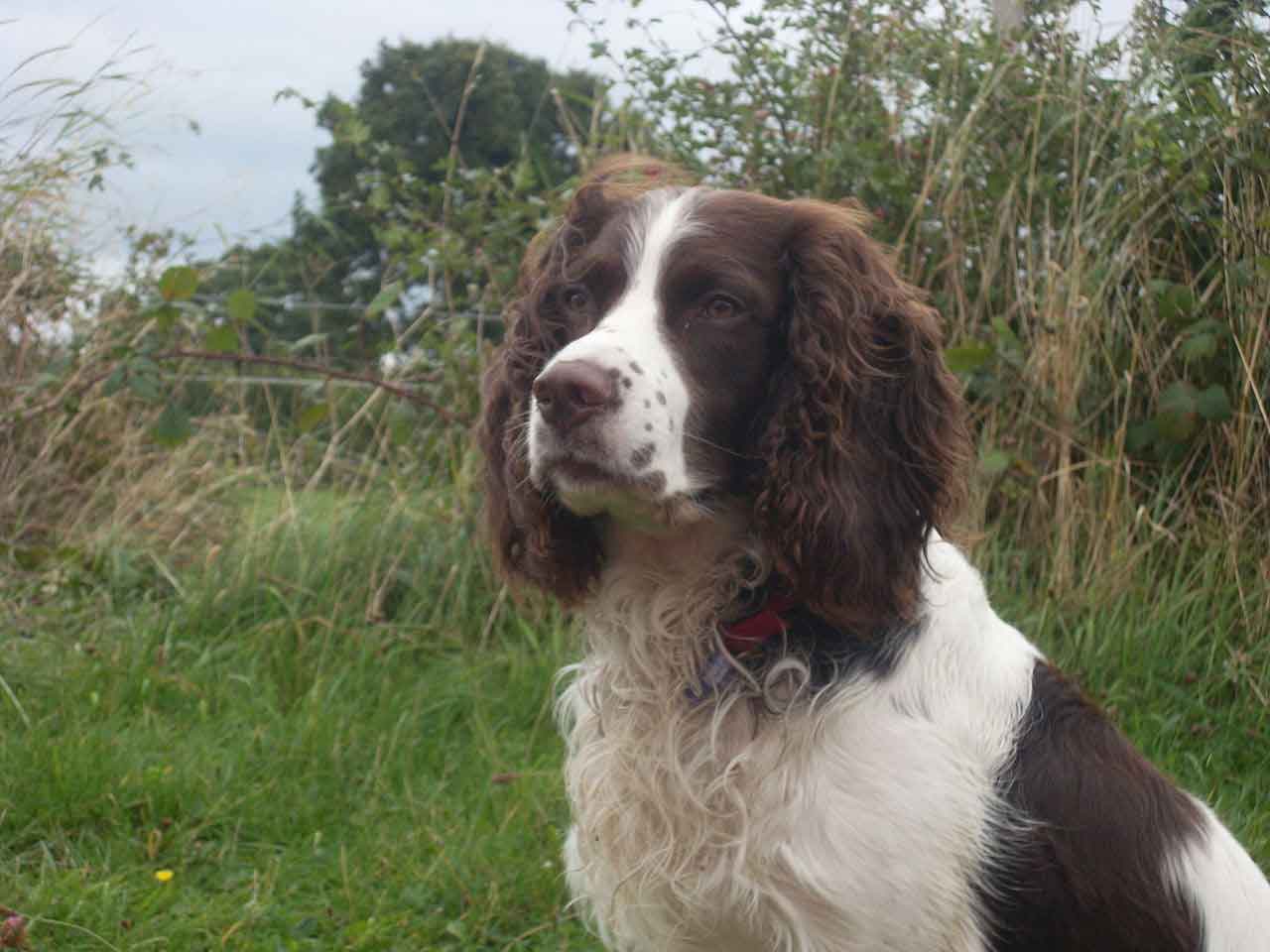
The Welsh Springer Spaniel differs from his cousin, the English Springer Spaniel, by a flowing red and white coat, a somewhat more relaxed personality and a slightly smaller size that ranges between 15 and 20 Kg.

With its moderate size, can be a good option for households with children: the Welsh Springer Spaniel not big enough to accidentally harm little ones, and he's not small enough to risk being hurt by overly enthusiastic kids.

Size and weight

▷ Male size: 45 – 48 cm.
▷ female size: 43 – 47 cm.
▷ Male weight: 15 – 20 kg
▷ female weight: 16 – 20 kg

Character and skills

The Welsh Springer Spaniel is loving, Intelligent, quick to learn and usually good at remembering what you have learned. Compared to many other Spaniels, he is protector of his family and his property, and prone to barking at anything that catches his eye. The Welsh Springer Spaniel can become very attached to his people, but a second dog can help you give an additional outlet to your affection.

But, with strangers, tends to be a reserved dog. Does not tend to be shy or unfriendly, but it takes time to get comfortable with new people. Children and other pets see your friendly side, especially when raised with them. But keep in mind that a Welsh Springer Spaniel boisterous may unintentionally knock over a young child, so always supervise play with young children.

In the countryside, the Welsh Springer Spaniel he is a great worker able to function in any terrain, and is more than happy to be outdoors all day, always staying close to his hunter. Its olfactory ability is excellent and it can hunt any type of game. If you live with a non-hunter family, two or three long walks a day will also satisfy your exercise needs.

Regarding training, opt for accolades, not by force. Although it may be stubborn, the Welsh Springer Spaniel responds well to constant training and rewards. Plan to start training your puppy the day you bring him home.. It is able to absorb everything you teach it even at seven to eight weeks of age.. One Welsh Springer Spaniel young man will test him to see what he can do, so try to take him to puppy kindergarten class when he has 12 weeks, and socializes, socialice, socialice. But, note that many puppy training classes require that certain vaccinations (such as kennel cough) stay up to date, and many veterinarians recommend limiting exposure to other dogs and public places until puppy vaccinations are complete (including rabies, distemper and parvovirus). Instead of formal training, you can start house training your puppy and socialize with family and friends until puppy vaccinations are completed.

Health

The Welsh Springer Spaniel are predisposed to some diseases, such as hip and elbow dysplasia, hypothyroidism and eye diseases such as entropion, glaucoma, progressive retinal atrophy and inherited cataracts.

Not all of these diseases are detectable in a growing puppy, and it can be difficult to predict whether an animal will be free of these maladies, so you should find a trusted breeder who is committed to raising the healthiest animals possible. You should be able to produce an independent certificate that the dog's parents (and grandparents, etc.) have been screened for these defects and considered healthy for breeding. That's where health records come in..

Careful breeders screen their dogs for genetic diseases and breed only the best-looking dogs, but sometimes mother nature has other ideas and a puppy can develop one of these diseases. In most cases, can still have a good life, thanks to advances in veterinary medicine. And remember that you have the power to protect your Welsh Springer Spaniel one of the most common health problems: the obesity. Keeping it at a suitable weight is a simple way to extend the life of your pet.

Life expectancy:

12 to 15 years.

Grooming

The Welsh Springer Spaniel has a smooth, silky coat that needs to be brushed and combed at least twice a week - and every time he returns from hunting- to avoid entanglement. The best tools for this task are a bristle brush and a stainless steel comb.. Brush the fur on the paws, the body and ears with the brush to remove dead hairs and use the comb for the rest of the body. You should also ask your breeder to show you how to do detailed trimming with razor and scissors to achieve a neat look..

The rest is basic care: Trim nails as needed, usually every one to two weeks. And keep your ears clean and dry, especially if your Welsh Springer Spaniel is a swimmer. Brush teeth frequently with a vet-approved pet toothpaste for overall good health and fresh breath.

Characteristics "Welsh Springer Spaniel"

Coexistence is important that you have with your new friend. Before considering the acquisition of a dog of the breed "Welsh Springer Spaniel" you know certain factors. Not all breeds of dogs are apt to live in an apartment, you must take into account his character, their need for exercise, their interaction with other pets, their care and if you have small children, their level of tolerance towards them.

Adaptation โ“˜

5,0 of 5 stars (based on 1 review)

friendly dog โ€‹โ€‹โ“˜

5,0 of 5 stars (based on 1 review)

hair loss โ“˜

3,0 of 5 stars (based on 1 review)

Affection level โ“˜

5,0 of 5 stars (based on 1 review)

Need for exercise โ“˜

5,0 of 5 stars (based on 1 review)

Social need โ“˜

3,0 of 5 stars (based on 1 review)

Home โ“˜

2,0 of 5 stars (based on 1 review)

Toilet โ“˜

3,0 of 5 stars (based on 1 review)

Friendly with strangers โ“˜

3,0 of 5 stars (based on 1 review)

barking โ“˜

3,0 of 5 stars (based on 1 review)

Health โ“˜

3,0 of 5 stars (based on 1 review)

Territorial โ“˜

2,0 of 5 stars (based on 1 review)

Cat friendly โ“˜

3,0 of 5 stars (based on 1 review)

Intelligence โ“˜

5,0 of 5 stars (based on 1 review)

Versatility โ“˜

3,0 of 5 stars (based on 1 review)

Child friendly โ“˜

5,0 of 5 stars (based on 1 review)

Surveillance โ“˜

4,0 of 5 stars (based on 1 review)

joy โ“˜

4,0 of 5 stars (based on 1 review)

Images "Welsh Springer Spaniel"

Photos:

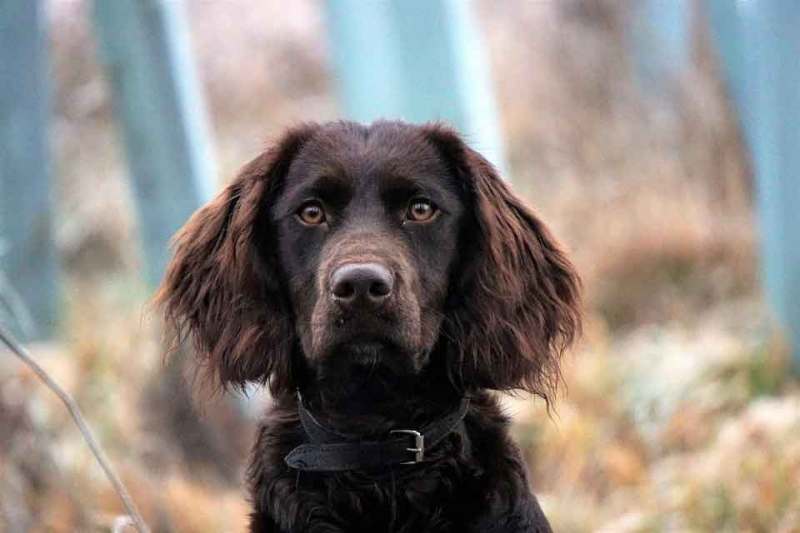
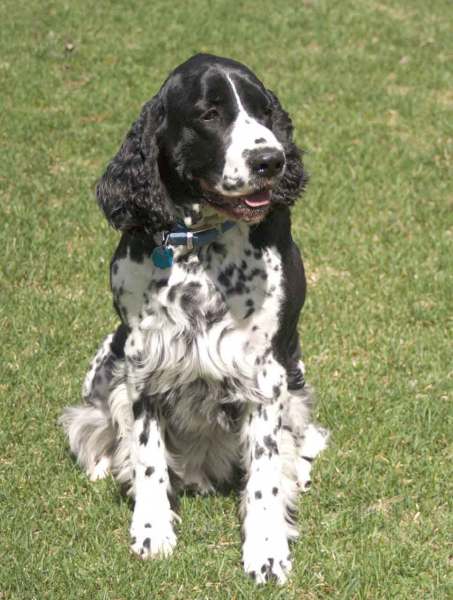
1 – Welsh Springer Spaniel by Siri, CC BY-SA 2.0, via Wikimedia Commons
2 – Our Welsh Springer Spaniel ยซOne more timeยป (Sassa) from the Trigger kennel in Scania, Suecia by Local_Profile, CC BY-SA 3.0, via Wikimedia Commons
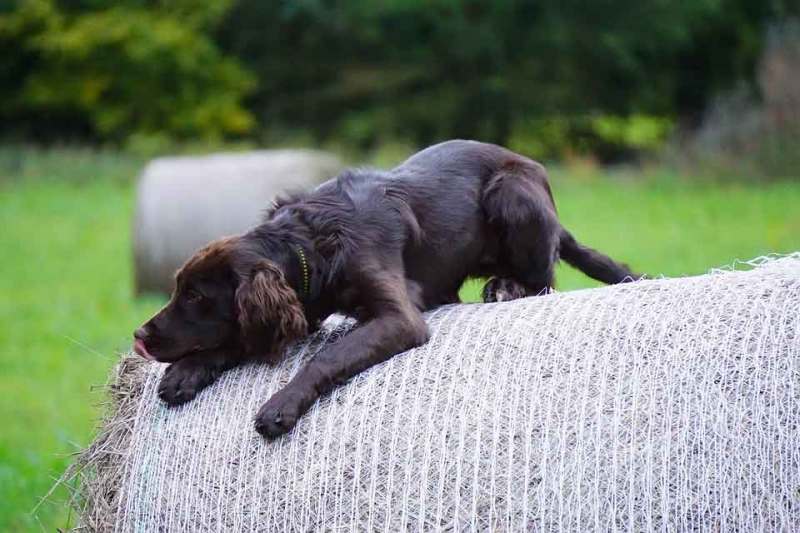
3 – Welsh Springer Spaniel by https://pixy.org/161994/
4 – Welsh Springer Spaniel, with 8 meses by echnoview
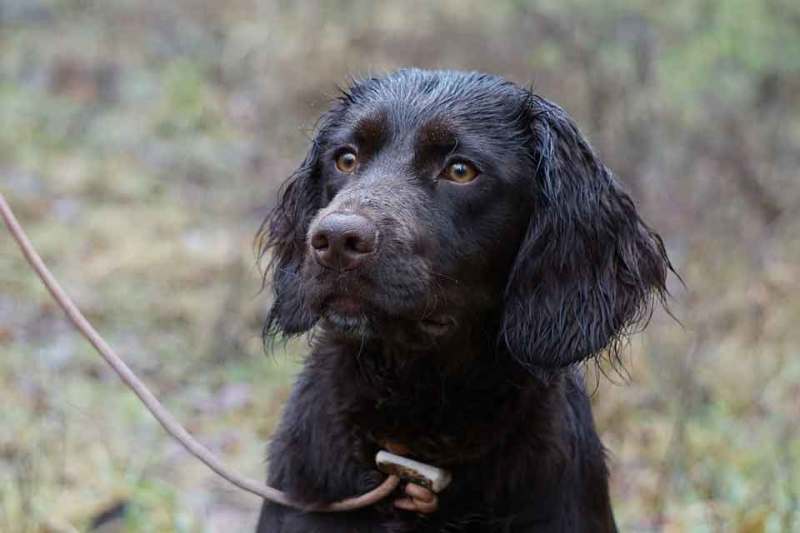
5 – Welsh Springer Spaniel by Siri Spjelkavik, CC BY-SA 2.0, via Wikimedia Commons
6 – Welsh Springer Spaniel by Wikipedia

Videos "Welsh Springer Spaniel"

Type and recognitions:

  • FCI CLASSIFICATION:
  • Group :
  • Section : . .

Federations:

  • FCI – Group 8: Retrievers - Flushing Dogs - Water Dogs – Section 2: Retrievers โ“˜
  • AKCSporting โ“˜
  • ANKC Group 3 (Gundogs) โ“˜
  • CKCSporting Dogs โ“˜
  • โ€‹KC – Gundog โ“˜
  • NZKCGundog โ“˜
  • UKCGun Dogs โ“˜

FCI breed standard "Welsh Springer Spaniel"

Origin:
United Kingdom, Wales

Date of publication of the valid original standard:
28.07.2009

Use:

Hunting dog


General appearance:

Symmetrically shaped dog, compact, no patilargo, evidently built to endure and dedicate himself to hard work. He is fast and very active, shows a lot of drive and vigor.


Behavior / temperament:

It is a very ancient and unique breed of pure origin. It is a robust dog, cheerful and very active. Affable character, showing no aggression or nervousness.

Head:

---

Cranial region:
  • Skull: Slightly domed, has a proportionate length; well outlined under the eyes.
  • Depression links (Stop): Well defined

facial region:

  • Truffle: Flesh to dark color; the windows are well developed.
  • Snout: It has a medium length; it is straight and quite square.
  • Jaws / Teeth: Must have strong jaws, with a scissor bite, perfect, regular and complete, that is to say that the inner side of the upper incisors is in close contact with the external surface of the lower incisors, and the teeth being placed vertically in the jaws.
  • Eyes: Hazelnut or dark, medium-sized, neither prominent nor sunken and must not show the ocular mucosa.
  • Ears: Ears should be set moderately low and hang close to the cheeks. Proportionally small, they gradually taper towards the tips and have a shape somewhat similar to the leaf of the vine..

Neck:

Long, muscular, no dewlap and well set on oblique shoulders.

Body:

Not long, but strong and muscular. The length of the body must be proportional to the height of the limbs.

  • Pork loin: Muscular, slightly arched and well attached.
  • Breast : Deep chest; the ribs are well arched.

Tail:

Previously the custom was to amputate the tail.
  • amputee: Good insertion and low, never carried above the level of the top line. Vivacious in action.
  • Without amputating: Good insertion and low, never carried above the level of the top line. Vivacious in action. With fleco. In balance with the rest of the dog


Tips

Former members:
  • General appearance: Medium long, straight and with good bones.
  • Previous feet: Round, with thick pads. Compact and cat-like; In addition, they should not be large or squashed.
Later members:
  • General appearance: Strong and muscular, wide and very well developed. They must be of good bone.
  • Femoro-tibio-patellar joints (Knees): Moderately angled, without turning in or out.
  • Legs: Deep.
  • Hocks: Well descended.
  • Hind feet: Round, with thick pads. Compact and cat-like; In addition, they should not be large or squashed.

Movement:

Agile movement, powerful, that covers a lot of ground and has a large rear drive force.

Mantle

Fur:

Smooth or flattened, dense and silky in texture, never rough or wavy. Curly hair is highly undesirable. The fore and hind legs above the hocks have moderate feather-shaped hair.; ears and tail are lightly covered with long feather hair.

Color:

Dark red and white. No other color.


Size and weight:

โ–ท Approximate height: Males: 48 cm. (19 inches) to the cross,

โ–ท Females: 46 cm. (18 inches) to the cross.


Fouls:

Any deviation from the aforementioned criteria is considered as a fault and the severity of this is considered to the degree of the deviation to the standard and its consequences on the health and well-being of the dog., and the ability of the dog to carry out their traditional work.

disqualifying fouls:

โ€ข Aggressiveness or extreme shyness.
โ€ข Any dog โ€‹โ€‹showing clear signs of physical or behavioral abnormalities.


N.B.:
  • Males should have two normal-appearing testicles fully descended into the scrotum..
  • Only functionally and clinically healthy dogs, with the typical conformation of the breed, should be used for parenting.

The latest changes are in bold.

Source: F.C.I - International Cynological Federation

Alternative names:

1. Welsh Springer, Welsh Starter, Welshie (English).
2. Springer Gallois (French).
3. Welsh Springer Spaniel (German).
4. (em inglรชs: Welsh Springer Spaniel) (Portuguese).
5. Springer Galรฉs (espaรฑol).

โ–ท The world of Pets: Dogs, cats, birds, reptiles, amphibians

Kooikerhondje (Kooiker)
Holanda FCI 314 . Flushing Dogs

Kooikerhondje

The Kooikerhondje initially it was registered among the companion dogs. Outside Holland it is practically unknown.

Content

History

This puppy with an unpronounceable original name has a long history, that begins in the Middle Ages, more specifically in the fifteenth century, when the Spanish brought the first Spaniels to the Netherlands. Several crosses with local dogs resulted in the Kooikerhondje (Kooiker). The dog quickly spread, appearing in many paintings by 17th century Dutch masters, como Jan Steen (1626-1679), but also in literature, especially in the Dutch Historian Stories Pieter Corneliszoon Hooft (1581-1647).

It was his special talent for hunting ducks that made him famous. Dutch for "small cager dog" (other name of Kooikerhondje – Kooiker). He was trained to lure ducks with his white plumed tail into trapped channels that ended in a cage (ยซeendenkooiยซ, in Dutch), where the hunters (ยซkooikerยซ) they could catch them easily. The specimens used for this hunting technique were called ยซhondjes de Kooikerยซ, and the name has remained in this breed.

Apart from the Kooikerhondje (Kooiker), few breeds are capable of learning this hunting technique. A notable exception is the Nova Scotia Duck Tolling Retriever, which appeared in the 19th century and is generally considered to be a descendant of the Kooiker.

But, the usefulness of the dog did not end there: when it wasn't duck hunting season, it was used to hunt vermin.

Its population declined rapidly between the two wars, mainly due to the abandonment of this hunting method (which required a lot of work to keep the channels from the traps) in favor of the use of the rifle, facilitated by the greater precision of firearms. Like this, on the eve of World War II, the breed had almost disappeared, with a total number of individuals estimated at only thirty.

After the invasion of the Netherlands in 1940, the baronessa von Hardenbroek of Ammerstol, in the spirit of resistance to the German occupation, decided to save this typically dutch dog. Delivered a black and white photo to several street vendors, asking them to notify you if they encountered such an animal. That's how he found Tommy, a female Kooiker from the North of the Netherlands, which was the reason for the rebirth of the breed as we know it today.

Among 1942 and 1976, the baroness raised 52 layers of Dutch foxhounds that were named after his kennel, from Valhalla, and obtained the recognition of the breed by the Raad van Beheer (the official canine organization of the country) in 1971. Later, the breed was recognized by the Fรฉdรฉration Cynologique Internationale (FCI) in 1990 and by the United Kennel Club (UKC) American in 1996. The other leading American organization, the American Kennel Club (AKC), did the same in 2004.

If he Kooikerhondje (Kooiker) has become a relatively common dog in its country of origin, not yet the case in the rest of the world, where remains unknown. But, things seem to be changing since the decade of 2010.

Like this, en el Reino Unido, where it is recognized by The Kennel Club, Enrollments have increased considerably since 2013, to the point of already exceeding fifty copies a year.

Also in France there is a certain madness for this breed: while in 2007 and 2012 they only signed up 5 specimens in the LOF (French Origin Book), between 2013 and 2018 there were more than 200.

In United States, the Dutch for "small cager dog" still very weird, but the Dutch Kooikerhondje Club of America (NKCUSA) registered 11 new breeders in 2018 and 2019, suggesting that the breed is also enjoying growing interest there, and that its population will increase rapidly.

Photo: Kooikerhondje puppy by Petful

Physical characteristics

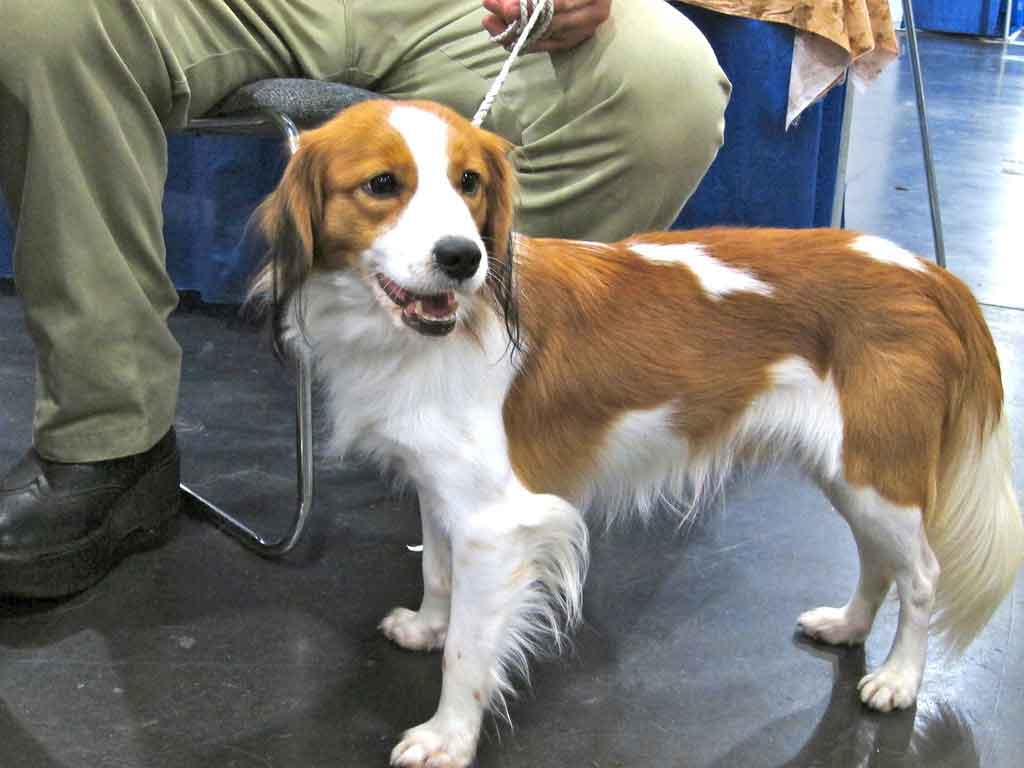
The Kooikerhondje – Kooikerhondje is a medium-sized dog with a harmonious build, with a general appearance reminiscent of a Spaniel. Her body, slightly longer than tall, he is muscular but thin: they are dogs made for speed and agility. The tail follows the line of the back and reinforces its slender appearance.

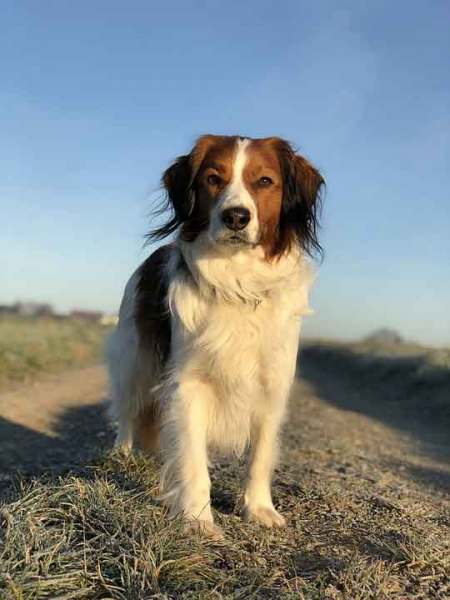
The head is carried high, which gives it an aristocratic air. The skull is quite wide and rounded, while the muzzle, ending in a black nose, is slightly truncated. His dark brown almond eyes express intelligence and kindness. The ears are medium in size, placed in a line that starts from the nose and passes through the eye, falling down the cheeks.

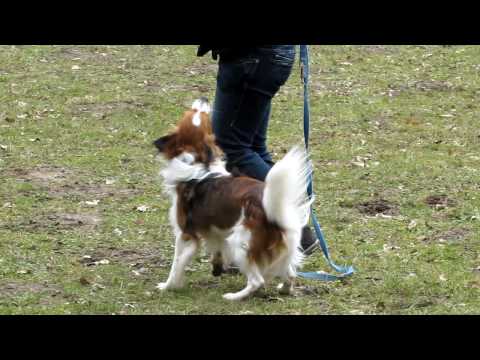
The coat is of medium length and can be smooth or slightly wavy. The legs have a longer plumage on the hind legs than on the front ones., but it is the plumage of the tail that is most characteristic of the Kooikerhondje: long and white, giving the tail a feathery look. The long black hairs on the tips of the ears, known as "slopes", they are highly sought after.

The coat is predominantly white, with large well-marked orange-red spots on the body. The rule Kooiker accepts small marks of this color on the legs, as well as the presence of some black hairs mixed with the red-orange color. The head must have a clear white line that reaches the nose.

Sexual dimorphism is moderately marked, the male being slightly larger than the female, that tends to shed more hair during the shedding period.

Size and weight

▷ Male size: 38 – 42 cm.
▷ female size: 36 – 40 cm.
▷ Male weight: 10 – 13 kg.
▷ female weight: 9 – 12 kg.

Character and skills

The Kooikerhondje It is a loyal dog, very attached to his family, from which he does not like to part. But, they are not effusive and prefer to stay quietly by their master's side rather than jump up to show their attachment. You also need a quiet environment, and does not bear stress well: parties or frequent quarrels would risk lasting disturbance.

Logically, not a recommended breed of dog for young children, since the cries of a baby or the whims of a small child are hardly to his taste. They are much better suited to a family that shares their calm and relaxed approach to life..

They are quite suspicious of people they do not know, but they quickly accept those who pay them a little attention, especially if they take the trouble to offer them a reward.

Although it accepts other dogs of a similar character, does not particularly seek the company of other dogs. Regarding coexistence with other animals, especially with cats or rodents, can be especially difficult due to its strong hunting instinct. Even if he is able to get along with the household animals he has been raised with, the risk that one day he will start chasing the family cat is very real.

If his placid character could make him suitable for the elderly, he forgets a bit quickly that he is also very active, needing at least two hours of exercise a day. Having said that, he is not very demanding with what he does, and is just as likely to accompany its owner on a long, leisurely walk as it is to chase a ball with the children in the garden or fetch it. But, prefers water activities: to swim, jumping into the water or just playing in a pond are activities that make this water-loving dog happy, since he was originally bred to work on the canals.

If you can live in an apartment as long as your daily need for activity is met, the Kooikerhondje he greatly prefers having a garden in which to frolic. But, you need to make sure the space is well fenced because, even if I do not have a special predisposition to flee, his hunting instinct is likely to push him to run after all the animals in the region and, Therefore, to move away from your residence.

In any case, although it is generally calm, problems can arise if you don't get a chance to expend your energy and are left alone too often. In particular, the owner may face inopportune barking and / or destructive dog behavior.

Smart and attentive, to the Kooikerhondje he likes to be stimulated intellectually; they especially like obedience exercises or learning new tricks. But, your intelligence is a double-edged sword, as they quickly pick up on any hesitation on the part of their master, and they can decide to assume the leadership of the family pack. So, It is a breed reserved for a master who already has experience, in addition to being able to provide you with the stable environment you need.

Education

Like all dogs, the Kooiker needs to be socialized from a young age to get used to people, places, noises, smells… that you will know during your life. It is especially advisable to introduce the small animals that share your home as soon as possible, to minimize the risk of lawsuits or even accidents once you are an adult.

The Kooikerhondje, very sensible, reacts poorly to stressful situations and can be traumatized by traditional training methods. So, their training should be based on positive reinforcement: the compliments, accompanied by caresses and some sweets, they work much better than reprimands. But, your teacher must stand firm and consistent, so as not to confuse you and make you lose confidence in your leader's ability to lead.

It is important that all family members are involved in their education, to assimilate and accept your authority.

Active, smart and eager to please, the Kooikerhondje It is an ideal student for obedience exercises as well as for learning different dog sports.: flyball, agility, dogs-cross…

Health

The Kooiker has a small gene pool and, Therefore, is prone to many life-threatening genetic diseases. Fortunately, the work of selecting the breeders responsible for Kooiker has resulted in the practical elimination of these risks today.

These diseases with which the breed has often been associated are:

  • The von Willebrand disease, which causes blood clotting problems and can lead to death from bleeding. Widespread DNA testing since the years 90 make that today we hardly find more affected subjects;
  • hereditary necrotizing myelopathy, a neurological problem that affects the spinal cord and causes paralysis. Thanks to a responsible breeding policy, now there is less than one case a year worldwide;
  • The hereditary epilepsy, which can cause seizures that range from a few seconds to several minutes. The number of affected dogs is steadily declining, to the point that this disease only affects between 1 and 5 dogs a year;
  • The miositis, o polymositis, is a chronic inflammation of one or several muscles that can cause very different symptoms depending on the affected muscles. Potentially deadly, this disease is still relatively widespread, affecting about the 1% of the population;
  • The waterfall, an opaque filter in the eyes that can cause blindness in dogs, that has been practically eliminated;
  • The patellar dislocation moderate, which is disabling but not dangerous, and is by far the most common condition. In fact, almost the 15% of the breed representatives are affected.
  • Another risk to the health of the Dutch for "small cager dog" is obesity, so the owner should regularly check that the dog is not overweight, in addition to giving him enough exercise.

    Last, like all breeds of dogs with hanging ears, are at increased risk of ear infections.

    Life expectancy

    12 to 14 years

    Grooming

    The Kooikerhondje it is a low maintenance breed of dog. A quick weekly brushing is more than enough to keep the coat healthy. But, during the shedding periods in spring and fall, brushing more frequently is recommended to remove dead hair.

    Bathing your dog is seldom necessary. In any case, you should not bathe your dog more than twice a year, so as not to damage your skin. On the other hand, after the Kooikerhondje have fun in a pool, in the sea or in a doubtful-looking pond, it is advisable to rinse it with fresh water to remove any traces of chlorine, shall, algae or bacteria.

    On the other hand, it is advisable to take advantage of the weekly brushing session to check the eyes, teeth and, above all, the dog's ears, to ensure that there is no dirt that could cause the start of an infection or otitis.

    Last, the claws of Kooikerhondje are tough and grow relatively quickly: natural wear and tear is often not enough, and then you have to trim them manually when they have become too long.

    Utility

    Historically used for duck hunting in the canals of the Netherlands, the Kooiker is nowadays mainly a pet.

    His high level of activity and intelligence also allow him to obtain excellent results in dog sports competitions, and a patient and dedicated trainer can turn you into a flyball or agility champion.

    Characteristics "Kooikerhondje (Kooiker)"

    Coexistence is important that you have with your new friend. Before considering the acquisition of a dog of the breed "Kooikerhondje (Kooiker)" you know certain factors. Not all breeds of dogs are apt to live in an apartment, you must take into account his character, their need for exercise, their interaction with other pets, their care and if you have small children, their level of tolerance towards them.

    Adaptation โ“˜

    3,0 of 5 stars (based on 1 review)

    friendly dog โ€‹โ€‹โ“˜

    3,0 of 5 stars (based on 1 review)

    hair loss โ“˜

    3,0 of 5 stars (based on 1 review)

    Affection level โ“˜

    4,0 of 5 stars (based on 1 review)

    Need for exercise โ“˜

    4,0 of 5 stars (based on 1 review)

    Social need โ“˜

    3,0 of 5 stars (based on 1 review)

    Home โ“˜

    4,0 of 5 stars (based on 1 review)

    Toilet โ“˜

    3,0 of 5 stars (based on 1 review)

    Friendly with strangers โ“˜

    4,0 of 5 stars (based on 1 review)

    barking โ“˜

    3,0 of 5 stars (based on 1 review)

    Health โ“˜

    3,0 of 5 stars (based on 1 review)

    Territorial โ“˜

    3,0 of 5 stars (based on 1 review)

    Cat friendly โ“˜

    3,0 of 5 stars (based on 1 review)

    Intelligence โ“˜

    4,0 of 5 stars (based on 1 review)

    Versatility โ“˜

    3,0 of 5 stars (based on 1 review)

    Child friendly โ“˜

    4,0 of 5 stars (based on 1 review)

    Surveillance โ“˜

    3,0 of 5 stars (based on 1 review)

    joy โ“˜

    5,0 of 5 stars (based on 1 review)

    Images "Kooikerhondje (Kooiker)"

    Photos:

    1 – Kooikerhondje at https://pixabay.com/es/photos/perro-kooikerhondje-kooiker-3917568/
    2 – Kooikerhondje at https://pixabay.com/es/photos/perro-kooikerhondje-mascotas-4744089/
    3 – Dutch Decoy Dog puppy by Jeroenzwaan, CC0, via Wikimedia Commons
    4 – KOOIKERHONDJE PUPPY by https://pixy.org/4695950/
    5 – Kooikerhondje by Burner83 / from wikipedia, CC BY-SA 3.0, via Wikimedia Commons
    6 – Kooiker – petsadviser.com by Pets Adviser from Brooklyn, USA, CC BY 2.0, via Wikimedia Commons

    Videos "Kooikerhondje (Kooiker)"

    Kooiker - 16 to soften - MOOS
    Kooiker – 16 weeks – MOOS
    Carino at the dog school
    Carino in der Hundeschule

    Type and recognitions:

    • FCI CLASSIFICATION:
    • Group 8: Hunting Retriever Dogs. Hunting Lifting Dogs. Water dogs.
    • Section 2: Flushing Dogs. With working trial.

    Federations:

    • FCI – Group 8: Retrievers - Flushing Dogs - Water Dogs – Section 2: Retrievers โ“˜
    • AKCSporting โ“˜
    • โ€‹KC – Gundog โ“˜
    • UKCGun Dogs โ“˜

      • FCI breed standard "Kooikerhondje (Kooiker)"

        Origin:
        Netherlands

        Date of publication of the valid original standard:
        13.10.2010

        Use:

        Companion and sporting dog used as a decoy in duck hunting.


        General appearance:

        The Kooikerhondje is a small sporting dog with a harmonious structure, Orange Red, Particularly square proportions on your body. He moves holding his head up. During action its moving tail, well covered with long hair, has a carriage level with or above the top line.. The ears have black hair on the tips, the so-called โ€œhoopsโ€. The dog is presented with natural hair, without cuts.

        important proportions:

        The length of the body from the tip of the shoulders (scapula/humerus) even the tip of the ischium is slightly longer than its height at the withers.
        Skull and muzzle of equal length.


        Behavior / temperament:

        Cheerful and agile, self-confident and with sufficient perseverance and resistance, balanced and alert but not loud. The breed is faithful, easy and friendly. Outside the hunting season the dog is used to find and kill vermin, therefore you need to be enthusiastic, fast and strong. It is a real sporting dog, being attentive and energetic, having enthusiasm for work and a cheerful character.

        Head:

        The head is of moderate length, appropriate to overall appearance, well chiseled with flowing lines.

        Cranial region:
        • Skull: Wide enough, moderately rounded.
        • Depression links (Stop): Seen in profile clearly visible but not very deep.

        facial region:

        • Truffle: Black in color and well developed.
        • Snout: Seen in profile not too deep and slightly wedge-shaped, seen from above without narrowing too much and well filled under the eyes.
        • Lips: Preferably well pigmented, tight without protruding.
        • Jaws/Teeth: Scissor bite, a full dentition is desired. Pincer bite is accepted but not desired.
        • Eyes: Almond biscuits, dark brown, with a kind and attentive expression.
        • Ears: Moderately large insertion just above the line from the tip of the nose towards the corner of the eye. The ears are brought next to the cheeks without presenting folds. Well covered with long hair, spiky black hair (Earrings) are highly desirable.

        Neck:

        Strong musculature, long enough and well defined.

        Body:

        • top line: Smooth line from withers to tail.
        • Back: Strong and right, rather short.
        • Pork loin: Long and wide enough, strong muscles.
        • Rump: Slightly sloping and wide enough; the length of the rump should be 1,5 times its width.
        • Breast : Reaching up to the elbows with sufficiently arched ribs. Sufficiently developed forechest.
        • Bottom line and belly: Slightly retracted towards the spine

        Tail:

        Insertion such that it continues the upper line of the body, carrying at the level of the upper line or almost straight up. Well covered in long white hair. The last vertebra must reach the hock joint.

        Tips

        Former members:
        • Shoulder: Shoulders sloped sufficiently to form a fluid line from the neck to the back.
        • Forearm: Well angled towards the scapula which is of equal length.
        • Elbows: Well on the body.
        • Arm: Right and parallel, strong bones of sufficient density and long.
        • Metacarpus: Strong and slightly oblique.
        • Previous feet: Small, slightly oval, compact with forward fingers, tight.
        Later members:
        • General appearance: Well angled, rights and parallels seen from behind. Strong bones.
        • Thigh: Well muscled.
        • Leg: As long as the thigh.
        • The Hock joint: Well descended.
        • Hind feet: Same as the previous ones

        Movement:

        It must be fluid and elastic, well spread, with good scope. Parallel ends.

        Mantle

        Fur: Long Middle, slightly wavy or straight and tight. Soft hair. Well developed undercoat. The forelimbs should have moderately long hair reaching the tarsal joint. The hind limbs must have quite long hair forming pants. Must not have long hair below the hock joint. Hair on head, front of the limbs and feet, must be short. Enough long hair at the bottom of the tail. Longer hair on the throat and chest. Earrings (Long hair strands with spikes
        black) are highly desirable.

        Color: Distinguished light orange red markings on pure white. However, a few small spots on the extremities are accepted. The red-orange color should predominate. Some black hairs interspersed with the red-orange color and slight markings are accepted but not desired..


        Head color: A clearly visible list towards the truffle. There may be coloration on the cheeks and around the eyes.
        Too narrow or too wide a list or only partially colored cheeks are less desirable. A black ring is accepted on the tail where the color changes from red orange to white.


        Size and weight:

        Ideal withers height:

        Males: 40 cm..


        females: 38 cm..

        Tolerance 2 cm over 3 cm below ideal height.


        Fouls:

        Any deviation from the aforementioned criteria is considered as a fault and the severity of this is considered to the degree of the deviation to the standard and its consequences on the health and well-being of the dog., and the dog's ability to perform its traditional task.

        • Ears too small.
        • Semi-erect ears or โ€œflying earsโ€.
        • Curved glue.
        • Hackney movement.
        • Curly or silky hair.
        • Color too intermixed with black hair in orange markings.
        • Too much hair of intermingled color.
        • Above the maximum size or below the minimum size.
        Serious misconduct:
        • Nervous behavior.
        • Sharply short limbs, out of proportion.
        • Eyes gazeos.
        • Prognatic or enognathic bite.
        • Tail too short, not reaching the hock joint.
        • White in ears, partial or completely.
        • White hair around the eyes, one or both.
        disqualifying fouls:
        • Aggressiveness or extreme shyness.
        • Any dog โ€‹โ€‹showing clear signs of physical or behavioral abnormalities.
        • Black and white or tricolor.


        N.B.:
      • Males should have two normal-appearing testicles fully descended into the scrotum..
      • Only functionally and clinically healthy dogs, with the typical conformation of the breed, should be used for parenting.
      • Source: F.C.I - International Cynological Federation

        Alternative names:

        1. Kooiker, Dutch Spanie (English).
        2. Petit chien hollandais de chasse au gibier d’eau (French).
        3. Kooikerhondje (German).
        4. (em neerlandรชs: Kooikerhondje) (Portuguese).
        5. Kooikerhondje, Pequeรฑo Perro Holandรฉs para la caza acuรกtica (espaรฑol).

    โ–ท The world of Pets: Dogs, cats, birds, reptiles, amphibians

    Clumber Spaniel
    Inglaterra FCI 109 . Flushing Dogs

    Clumber Spaniel

    This Clumber Spaniel medium to large size is sweet and gentle, with a deceptively relaxed appearance

    Content

    History

    Little is really known about the origins of the breed., but legend says that the Duc de Noailles of France He gave his dear spaniels his English counterpart, the Duke of Newcastle, to save them from the horrors of the French Revolution. The dogs were sent to the estate of the Duke in Clumber Park, which later they acquired the name of race. Based on the paintings of that time, the Clumber They have not changed much in two centuries: Dogs still have a somewhat reserved temperament, as well as a sensitive appearance, rather than striking. The Basset Hound and a dog known as spaniel alpino (an extinct race), probably listed in your genealogy.

    Interest in the race continued during the nineteenth century, and even they were exhibited Clumbers in one of the first dog shows in 1859. The Clumber Spaniels also they became popular among the British aristocracy. Real race fans included the prince albert and a Edward VII.

    It has been allowed to be heavier, starting at 1950, and the weight limit is currently 34 Kg despite the excess in some specimens. Anyway, breed lovers make sure that this large does not cause any weakness in his hind.

    Did you know??

    Some major British were in love with the Clumber Spaniel: The husband of Queen Victoria, prince albert, as well as Edward VII, They were both fans of the race.

    Physical characteristics

    It is a well balanced dog, of bones strong, Active, with a reflective expression; overall appearance denoting strength. The Clumber should be firm, active and able to perform daily work in the field.

    Its shape is similar to that of the Sussex Spaniel smaller. The Clumber It has a heavy bone structure, Their fur is dense, Weatherproof, straight and flat, with hair around the ears, belly and legs. The tufts are predominantly white with lemon colored spots, brown or orange around the eyes and the base of the tail.

    WEIGHT:
    Ideal weight: Males: 29,5 โ€“ 34 kg. females: 25 – 29,5 kg.

    Character and skills

    According to the breed standard, the Clumber Spaniel He is loyal and affectionate with his family. It can be reserved with strangers, but he is never aggressive or shy. Good words for firm include, reliable, friendly and worthy… but do not let that fool you their dignified behavior. The Clumber is very smart, determined to get what he wants, and more agile than it looks. During his puppy, which usually lasts until three or four years, it can be a wild dog running through the house at breakneck speed and gets into many problems. (For some, Part of getting into trouble never ends.) On the positive side, the Clumber also it tends to stay young at heart well into old age.

    if they grow up together, the Clumber and children can become fast friends. If you don't have children yet, make sure your Clumber gets to know your friends' kids often and from an early age, to get used to the loud screams and rapid movements. The Clumber also gets along well with other dogs, and it is friendly with cats, ferrets and other small pets, as long as the know. Because of its sporty nature, considers that the furry or feathered creatures that live outdoors are animals hunting. In other words, is more likely that your Clumber swallow your whole wild bird to look after him delicately.

    On a walk, the Clumber it moves at a slow and steady pace. Does not have the high energy levels of many other pick-and-point breeds, but it has the ability to break through any type of shrub that stand in your way. It also, It has an infinite resistance, so it is a great companion for hiking and hunting, recovering quickly and enjoys water. To keep fit and out of trouble, need rides 20 to 30 minutes twice a day. If you have a fenced yard, Do not assume that exercised. Like the rest of us, the Clumber need motivation from a friend to get up and go.

    The Clumber It is an independent thinker, so i can be stubborn. Train Your Clumber requires patience and the ability to convince him to do what you want is actually all her idea. It's a good problem solver; The point is that the problem that often involves doing something forbidden resolved. any dog, no matter how nice it is, You may develop obnoxious barking levels… and the Clumber is no exception. Some Clumbers They are naturally quiet, other bark at all, and some of them fall somewhere in the middle. If you live with, Let's say, a burrow, expects you Clumber learn to bark a lot.

    Start training your puppy the day you bring him home. Even at eight weeks old, He is able to absorb everything you can teach. Don't wait until you have 6 months to start training him or you'll have to deal with a more stubborn dog. If possible, take him to puppy kindergarten class when he's between 10 and 12 weeks, y socialize, socialize, socialize. But, Note that many kinds of training puppies require certain vaccinations (such as kennel cough) stay up to date, and many veterinarians recommend limited exposure to other dogs and public places until puppy vaccinations (including rabies, distemper and parvovirus) They are completed. Instead of formal training, You can start training your puppy to socialize at home and among family and friends until immunizations are completed in the puppy.

    Grooming

    White and fringed coat Clumber requires a moderate amount of toilet: If you want me to be handsome, bathe him once a month, and brush or comb his coat during 10 to 15 minutes, up to three times a week, to prevent tangles and remove dead hair. You should also cut back on their feet, ears and feathers.

    The locks were off at a moderate pace strong throughout the year, so buy a good vacuum cleaner; regular brushing will also reduce the amount of hair floating in your home.

    The rest are routine care: Trim his nails every few weeks and keep floppy ears clean and dry to prevent infection. You should also brush his teeth regularly to maintain good overall health and fresh breath.

    Health

    The Clumber Spaniel They are generally healthy, but they are susceptible to some conditions, including eye problems such as Entropion and ectropion, keratoconjunctivitis sicca, or dry eye, and falls. They may also be prone to hip dysplasia and an inherited condition called deficiency pyruvate dehydrogenase phosphatase , which can lead to exercise intolerance and heart and lung problems.

    Not all of these conditions are detectable on a growing puppy, and it is impossible to predict if an animal will be free of these diseases, so you need to find a reputable breeder who commit to raise healthier animals possible. You must be able to produce an independent certification that the parents of the dog (and grandparents, etc.) have been examined for common defects and considered healthy for breeding. That's where health records come in..

    Careful breeders their dogs examined for genetic diseases, and they only breed the best looking specimens, but sometimes Mother Nature has other ideas and a puppy can develop one of these conditions. In most cases, can still live a good life, thanks to advances in veterinary medicine. Having said that, not all visits to the vet involve a genetic problem. Puppies love to eat them things, so it's not uncommon for them to develop gastroenteritis (intestine garbage) or requiring surgery to remove random objects from the intestines, as hand towels and toys.

    And remember that you have the power to protect your Clumber one of the most common health problems: the obesity. You keep a healthy weight is a simple way to prolong the life of your Clumber avoiding problems such as hip dysplasia.

    Characteristics "Clumber Spaniel"

    Coexistence is important that you have with your new friend. Before considering the acquisition of a dog of the breed "Clumber Spaniel" you know certain factors. Not all breeds of dogs are apt to live in an apartment, you must take into account his character, their need for exercise, their interaction with other pets, their care and if you have small children, their level of tolerance towards them.

    Adaptation โ“˜

    5,0 of 5 stars (based on 1 review)

    friendly dog โ€‹โ€‹โ“˜

    5,0 of 5 stars (based on 1 review)

    hair loss โ“˜

    4,0 of 5 stars (based on 1 review)

    Affection level โ“˜

    5,0 of 5 stars (based on 1 review)

    Need for exercise โ“˜

    4,0 of 5 stars (based on 1 review)

    Social need โ“˜

    4,0 of 5 stars (based on 1 review)

    Home โ“˜

    3,0 of 5 stars (based on 1 review)

    Toilet โ“˜

    4,0 of 5 stars (based on 1 review)

    Friendly with strangers โ“˜

    2,0 of 5 stars (based on 1 review)

    barking โ“˜

    3,0 of 5 stars (based on 1 review)

    Health โ“˜

    3,0 of 5 stars (based on 1 review)

    Territorial โ“˜

    3,0 of 5 stars (based on 1 review)

    Cat friendly โ“˜

    3,0 of 5 stars (based on 1 review)

    Intelligence โ“˜

    3,0 of 5 stars (based on 1 review)

    Versatility โ“˜

    3,0 of 5 stars (based on 1 review)

    Child friendly โ“˜

    3,0 of 5 stars (based on 1 review)

    Surveillance โ“˜

    3,0 of 5 stars (based on 1 review)

    joy โ“˜

    3,0 of 5 stars (based on 1 review)

    Images "Clumber Spaniel"

    credits:

    1. Clumber Spaniel in Tallinn by Thomas / CC BY-SA
    2. Clumber Spaniel during show of dogs in Rybnik – Stone, Poland by Pleple2000 / CC BY-SA
    3. Clumber_spaniel at the World Dog Show in Poznaล„ by Pleple2000 / CC BY-SA
    4. 2015 Westminster Kennel Club Dog Show, New York City by Pets Adviser from Brooklyn, USA / CC BYwww.petsadviser.com
    5. Clumber Spaniel by audrey_sel / CC BY-SA
    6. A Clumber Spaniel by Canarian / CC BY-SA

    Videos "Clumber Spaniel"

    Type and recognitions:

    • FCI CLASSIFICATION:
    • Group :
    • Section : . .

    Federations:

    FCI โ“˜, AKC โ“˜, ANKC โ“˜, CKC โ“˜, โ€‹KC โ“˜, NZKC โ“˜, UKC โ“˜

    FCI breed standard Clumber Spaniel

    FCIFCI - Clumber Spaniel
    Clumber

    โ–ท The world of Pets: Dogs, cats, birds, reptiles, amphibians

    English Cocker Spaniel
    Inglaterra FCI 5 . Flushing Dogs

    Cocker Spaniel Inglรฉs

    The English Cocker Spaniel he is a sweet and affectionate dog. Excellent guard and loving with children.

    Content

    History

    The term spaniel it applied to any dog รขโ‚ฌโ€นรขโ‚ฌโ€นthat hunted game birds and pulled. Usually they distinguished by their size or the way they work. These may include, there was spaniels land and spaniels water. The dogs that hunted woodcocks were known as Cockers, while the larger spaniels that 'pulled' game from cover by flushing were known as Springers. At any given time, different types could be born in the same litter, but eventually they separated in races: Cocker Spaniels and English Springer Spaniel.

    In the United States and Britain, the Cocker They developed a different aspect, while began to be considered separate races. The Club of the English Cocker Spaniel America was formed in 1935 for people who appreciate the look and the different skills of the English Cocker. The American Kennel Club recognized him as an individual race 1946. The American Cocker It became more popular, but fans of the English Cocker consider their dogs a well kept secret. Today, the English Cocker ranks 66 between breeds registered by the AKC.

    Physical characteristics

    The English Cocker Spaniel, It has the benefit of having many coat colors, and each can have their favorite color. However the selection of the color does not have any influence or precedent on health.

    There are two varieties of Cocker Spaniel, the English Cocker Spaniel, from Wales and the American Cocker Spaniel, It is resulting from the adjustment of the English Cocker Spaniel to United States.

    The English Cocker Spaniel It is a strong dog, Atlรฉtico, Compact and balanced, they weigh in 12 to 15 Kg. In them, the extent of the ground to the cross (39 to 41 cm.) and this at the tail is equal, approximately. The body of the dog is compact, with a well developed chest and possess a slight tilt from the back to the tail.

    The legs are strong and muscular, especially the rear. The wide head, Lightweight aspect, with a large truffle. The English Cocker Spaniel ears are lobular shape and low insertion, at the height of the eyes. It has large eyes. They tend to be Brown, almost dark, although some Cocker they have clear.

    The expression of eyes is intelligent, alert, bright and cheerful. You can see this dog in multiple colors. Copies of solid color only allows a white patch on the chest.

    Character and skills

    The English Cocker Spaniel, It is currently a very popular dog as a companion pet., for those who enjoy the countryside. To develop this race in Wales The aim was to get a dog that would chase the chickens, herding them from their hiding places in the bushes.. Its versatility grew up and went when they realized that this dog was happy in a different position and was also able to swim.

    They enjoy playing with children (especially the females) provided that these comply, It should educate the can so that it does not jump on infants.

    While they are dogs that like to play is recommended to be very careful in dealing with these animals due to his hyperactive character.

    It is a sweet and affectionate dog. Excellent guard and loving with children. Although it is sometimes dominant. Why should be severe education from the beginning. It is a very active dog, cheerful and curious. He likes to be in family or accompanied by. It is a very sensitive breed, If it is many hours alone will be sad. You need love, care in your coat if you want to leave the long skirt.

    Grooming

    Your fur needs cut and this must be done by a professional, or the owner can acquire appropriate equipment and learn to do it himself, on the instructions of the breeder. Depending on each country, There are generally different options of professionals specialized in the grooming of pets in each city, and usually they also provide the service to pick them up and bring them back home when the Cocker It is elegantly trimmed.

    The upper teeth close over the lower teeth and are square in the jaw, and they must be cleaned regularly. Nails should be trimmed as needed. The long ears should be revised weekly and special attention, cleaning up any dirt, grass, seeds, excrement, and other waste that have been able to adhere to the same, Since as you said, they are very susceptible to suffering otitis by his excessive Seborrheic secretion. It is also common for them to have a large number of warts..

    Health

    All purebred dogs have the potential to develop genetic health problems, just as all people have the potential to inherit diseases. Avoid any breeder who does not offer a health guarantee on puppies., I say that race has no known problems, or keep the cubs isolated from the main part of the home for health reasons. A reputable breeder will be honest and open about the health problems of race and incidence occurring with.

    The English Cockers They have some health conditions that may be of concern. They include progressive retinal atrophy, the patellar luxation, cataracts, immune-mediated hemolytic anemia, ear infections, kidney failure juvenile onset, Hypothyroidism and, in particular, hearing loss.

    Remember that after bringing a new puppy to your home, You have the power to protect one of the most common health problems: the obesity. Keep a English Cocker with a proper weight is one of the easiest ways to prolong your life. Make the most of your preventative abilities to help ensure a healthier dog for life.

    Characteristics "English Cocker Spaniel"

    Coexistence is important that you have with your new friend. Before considering the acquisition of a dog of the breed "English Cocker Spaniel" you know certain factors. Not all breeds of dogs are apt to live in an apartment, you must take into account his character, their need for exercise, their interaction with other pets, their care and if you have small children, their level of tolerance towards them.

    Adaptation โ“˜

    5,0 of 5 stars (based on 1 review)

    friendly dog โ€‹โ€‹โ“˜

    5,0 of 5 stars (based on 1 review)

    hair loss โ“˜

    4,0 of 5 stars (based on 1 review)

    Affection level โ“˜

    5,0 of 5 stars (based on 1 review)

    Need for exercise โ“˜

    4,0 of 5 stars (based on 1 review)

    Social need โ“˜

    4,0 of 5 stars (based on 1 review)

    Home โ“˜

    5,0 of 5 stars (based on 1 review)

    Toilet โ“˜

    4,0 of 5 stars (based on 1 review)

    Friendly with strangers โ“˜

    3,0 of 5 stars (based on 1 review)

    barking โ“˜

    3,0 of 5 stars (based on 1 review)

    Health โ“˜

    3,0 of 5 stars (based on 1 review)

    Territorial โ“˜

    2,0 of 5 stars (based on 1 review)

    Cat friendly โ“˜

    4,0 of 5 stars (based on 1 review)

    Intelligence โ“˜

    4,0 of 5 stars (based on 1 review)

    Versatility โ“˜

    5,0 of 5 stars (based on 1 review)

    Child friendly โ“˜

    5,0 of 5 stars (based on 1 review)

    Surveillance โ“˜

    4,0 of 5 stars (based on 1 review)

    joy โ“˜

    5,0 of 5 stars (based on 1 review)

    Images "English Cocker Spaniel"

    credits:

    1. An English Cocker Spaniel at a dog show by Pleple2000, corected by Torn
    2. Cocker Spaniel Inglรฉs by https://pxhere.com/es/photo/1204664
    3. English Cocker Spaniel, 8 months old by John / CC BY
    4. English Cocker Spaniel by Loyalty4life / Public domain
    5. English Cocker Spaniel by https://www.needpix.com/photo/983524/cocker-spaniel-english-cocker-spaniel-coker-spaniel-dog-doggy-it-lies-resting-their
    6. A red and white ticked male English Cocker Spaniel. by eNil / CC BY

    Videos "English Cocker Spaniel"

    Type and recognitions:

    • FCI CLASSIFICATION:
    • Group :
    • Section : . .

    Federations:

    FCI โ“˜, AKC โ“˜, ANKC โ“˜, CKC โ“˜, โ€‹KC โ“˜, NZKC โ“˜, UKC โ“˜

    FCI breed standard English Cocker Spaniel

    FCIFCI - English Cocker Spaniel
    Cocker

    Alternative names:

    1. English Cocker Spaniel, Cocker (English).
    2. Cocker spaniel anglais (French).
    3. English Cocker Spaniel (German).
    4. English Cocker Spaniel (Portuguese).
    5. Cocker Spaniel Inglรฉs, Cocker (espaรฑol).

    โ–ท The world of Pets: Dogs, cats, birds, reptiles, amphibians

    American Cocker Spaniel
    USA FCI 167 . Flushing Dogs

    Cocker Spaniel Americano

    The American Cocker Spaniel will go is easy to train, friendly and playful, and loves to splash around in the water.

    Content

    History

    The references to the ยซSpanyellsยป date from the 14th century. Different types of spaniels They evolved over the centuries, some working on collecting land and other water birds. the Cocker, hunting and hunting under the command retrieves, It derives its name from his skill in hunting woodcock, a type of wader.

    The spaniels they used to be sorted by size, and different types of spaniels could be born in the same litter. Eventually, The different types of spanieles They became individual races, and so it was with him Cocker. For 1946 the size and appearance of the Cocker and what is now the English Cocker Spaniel they had changed enough for the two to split into separate races.

    The popularity of the Cocker spiked after the release of the classic Disney film โ€œLady and the Trampโ€ in 1955. The immense popularity fueled an increase in bad parenting that resulted in some bad temperaments, but the breeders American Cocker Spaniel They have worked hard to correct the situation. But, It's still important today to find a responsible breeder who maintains the breed's hallmark cheerful disposition rather than continuing to bring out the fearful, gruff dogs that nearly ruined the breed..

    Until 1990, the American Cocker Spaniel It was the most popular breed registered by the American Kennel Club. Today it is ranked 25, but you will always have a place among people who appreciate its moderate size, sweet nature and intelligence.

    Physical characteristics

    The American Cocker Spaniel It is the smallest member of the sporting dogs hunting. His body is strong, compact, delicately modeled head and refined. As a whole, It is a dog well balanced and ideal size. Well shoulders upright on a straight forelegs, its topline slopes slightly towards strong hindquarters, muscled and moderately angulated. A dog is able to develop a considerable speed, combined with a lot of resistance. Above all, It must be a brash and cheerful dog, healthy and well balanced in all its parts; vehement action shows inclination towards work. A well-balanced dog in all its parts is more desirable than a dog with strong contrasting good features and flaws..

    The females weigh on average 9 to 12 kg and have a size of 34 to 36 cm., While males weigh in 10 to 13 kg and measure of 37 to 39 cm..

    Character and skills

    Cheerful and lively, the American Cocker Spaniel It's also smart and confident. Although it still retains a strong hunting instinct, It is often a housemate. With her family is loving and docile. It may be a bit reserved at the beginning with strangers, but soon makes friends. Cockers can be good companions for children. when they grow up together, They can make friends with other pets, including cats, but birds can be an irresistible lure – and not in a good way.

    The Cocker It is highly trainable, but it has a sensitive soul. Early socialization is critical, and even with it some Cockers submissively urinate when your people get home or when they meet new people or dogs or go to new places. Focused training with positive reinforcement methods, especially praise and food rewards.

    The Cocker It can be good in the field tests and as a hunting dog, although for years he was thought of as "just" a companion. One Cocker It is versatile and can do much more than walk around the house, but he is happy to do it because you love being with you.

    any dog, no matter how pleasant it, detestable levels can develop barking, excavations and other undesirable behavior if you are bored, He is not trained or are unsupervised. And any dog รขโ‚ฌโ€นรขโ‚ฌโ€นcan be a test that live during adolescence. In the case of the Cocker, The "adolescence" years begin at six months and continue until the dog is one year old. Barking can be a problem unless the frenes.

    Start training your puppy the day you bring him home. Even at eight weeks old, He is able to absorb everything you can teach. Don't wait until you have 6 months to start training him or you'll have to deal with a more stubborn dog. If possible, take him to puppy kindergarten class when he's between 10 and 12 weeks, y socialize, socialize, socialize.

    But, Note that many kinds of training puppies require certain vaccinations (such as kennel cough) stay up to date, and many veterinarians recommend limited exposure to other dogs and public places until puppy vaccinations (including rabies, distemper and parvovirus) They are completed. Instead of formal training, You can start training your puppy to socialize at home and among family and friends until immunizations are completed in the puppy.

    Talk to the breeder, It describes exactly what you are looking for a dog and asks for help to select a puppy. Breeders see puppies daily and can make incredibly accurate recommendations once they know something about their lifestyle and personality.

    The American Cocker Spaniel Perfect not fully formed out of the whelping box. It is a product of his background and upbringing. Cockers are bred too much in the past, sometimes resulting in a fearful dog, slightly scary in no way represents a good breeding Cocker. Look for one whose parents have good personalities and has been well socialized from an early age puppy.

    ยซAmerican Cocker Spanielยป Grooming

    Beautiful silky coat Cocker seen in dogs in the exhibition circuit does not occur by chance. It takes a lot of work to keep it shiny and tangle. For good reason, most people keep their pets in a trim everywhere, known as cut puppy. Even that requires some maintenance. Dogs with cuts puppy should be bathed, brushed and cut approximately every two weeks.

    If you want long flowing coat, You must be more careful and time, and usually the bathroom, brushing and trimming are done once a week. Most people choose to wear their Cocker a professional groomer, but you can learn to do it yourself. The cost of the equipment amounts to only a few grooming sessions, you will not have to ask for appointments and you will discover that you increase your bond with your Cocker. But, the toilet is not for everyone, so if you don't want to do it, find a hairdresser you like because it is an absolute requirement for a Cocker.

    Like the ears of Cocker They are prone to infections, check them weekly to make sure the inside is a healthy, deep pink color and free of a bad odor. If that is not the case, get to the vet quickly before the ear infection becomes a major problem. Take special care when checking a puppy's ears as there is a significant buildup of wax as the ear canal develops. Clean the ears with a solution recommended by the veterinarian.

    The rest is basic care. Cut toenails every few weeks. Should never last long enough to drown out the noise from the floor. Long nails can make uncomfortable walking in the Cocker, and they can get caught on things and tear. That is so painful, and bleed much. Brush your teeth often for good dental health and fresh breath.

    Health ยซAmerican Cocker Spanielยป

    All dogs have the potential to develop genetic health problems, just as all people have the potential to inherit a particular disease. Run, not walk, from any breeder that does not offer a health guarantee on puppies, tell you that race is 100 percent healthy and has no known problems, or to tell you that their puppies are isolated from the main part of the home for health reasons. A reputable breeder will be honest and open about the breed's health problems and the incidence with which they occur in their lines.. Here is a brief summary of what you should know about the health of the Cocker.

    The American Cocker Spaniel are susceptible to a number of health problems that are, at least in part, genetic. These include many different eye disorders, including cataracts and glaucoma, as well as painful defects of the hips and knees.

    Disc disease can cause the movement is painful for the American Cocker Spaniel, which it is by nature an active dog who loves to run and play. Heart diseases, liver, epilepsy… the Cocker It is at risk of all.

    The variety of eye problems that can afflict the Cocker Spaniel ranging from the aesthetic – a condition called "cherry eye" that can be corrected through surgery – and sight-threatening, including cataracts and glaucoma. While many Cocker completely lose vision in old age, some may already losing two years of age due to progressive retinal atrophy. The Cockers They are also prone to keratoconjunctivitis sicca, a condition known as dry eye, a deficiency of tears that can lead to corneal problems.

    Make sure your pet's eyes are examined by a board-certified veterinary ophthalmologist. Cocker Spaniel once a year and seeking veterinary attention immediately for any signs of vision loss, cloudiness, redness, eye irritation or if the dog squints or bumble.

    The Cockers They may also have hypothyroidism, It is underproduction of thyroid hormone. This can cause weight gain, lethargy, loss of hair, chills and skin infections. a blood test whenever a suspected thyroid disease should be. Skin problems also may indicate allergies, which they are common in the breed, As to the skin masses, which may be benign or cancerous.

    Some Cocker Spaniels They seem to be prone to congenital deafness, associated with white hair and blue eyes. At the age of three or four weeks, in some of these dogs the blood supply to the inner ear is degenerated. It can occur in one or both ears and is permanent.

    those long ears spaniel tend to trap warm, moist air inside the ear canals, creating the perfect environment for the growth of bacteria and yeast, that lead to ear infections. Ear infections can be chronic in some dogs with long ears, so it is necessary to be aware of the care of the ears and clean them religiously. Repeated infections can cause so much damage to the ear canal that the dog will lose their hearing. Severely affected ears may require surgery. Follow-up care is especially important for the ear to prevent new flare-ups of old problems..

    Many Cocker Spaniels are prone to autoimmune hemolytic anemia (AIHA), in which the immune system attacks the dog its own red blood cells to the point that the dog becomes anemic. Although there is treatment, the mortality rate is high.

    Not all of these conditions are detectable on a growing puppy, and it is impossible to predict if an animal will be free of these diseases, so you need to find a reputable breeder who commit to raise healthier animals possible. They should be able to provide an independent certification that the parents of the dog (and grandparents, etc.) have been examined for common defects and considered healthy for breeding. That's where health records come in..

    Careful breeders screen their breeding dogs for genetic diseases and breed only the healthiest, best-looking specimens., but sometimes mother nature has other ideas and a puppy develops one of these diseases despite good husbandry practices. Advances in veterinary medicine mean that in most cases dogs can still live a good life. If you're going to have a puppy, ask the breeder about the ages of the dogs in their lines and what they died of.

    Remember that after getting a new puppy at home, You have the power to protect one of the most common health problems: the obesity. Keep a Cocker Spaniel with a proper weight is one of the easiest ways to prolong your life. Make the most of your preventive skills to help ensure a healthier dog for life.

    Characteristics "American Cocker Spaniel"

    Coexistence is important that you have with your new friend. Before considering the acquisition of a dog of the breed "American Cocker Spaniel" you know certain factors. Not all breeds of dogs are apt to live in an apartment, you must take into account his character, their need for exercise, their interaction with other pets, their care and if you have small children, their level of tolerance towards them.

    Adaptation โ“˜

    5,0 of 5 stars (based on 1 review)

    friendly dog โ€‹โ€‹โ“˜

    4,0 of 5 stars (based on 1 review)

    hair loss โ“˜

    3,0 of 5 stars (based on 1 review)

    Affection level โ“˜

    5,0 of 5 stars (based on 1 review)

    Need for exercise โ“˜

    4,0 of 5 stars (based on 1 review)

    Social need โ“˜

    5,0 of 5 stars (based on 1 review)

    Home โ“˜

    5,0 of 5 stars (based on 1 review)

    Toilet โ“˜

    5,0 of 5 stars (based on 1 review)

    Friendly with strangers โ“˜

    5,0 of 5 stars (based on 1 review)

    barking โ“˜

    4,0 of 5 stars (based on 1 review)

    Health โ“˜

    4,0 of 5 stars (based on 1 review)

    Territorial โ“˜

    3,0 of 5 stars (based on 1 review)

    Cat friendly โ“˜

    3,0 of 5 stars (based on 1 review)

    Intelligence โ“˜

    5,0 of 5 stars (based on 1 review)

    Versatility โ“˜

    5,0 of 5 stars (based on 1 review)

    Child friendly โ“˜

    5,0 of 5 stars (based on 1 review)

    Surveillance โ“˜

    4,0 of 5 stars (based on 1 review)

    joy โ“˜

    3,0 of 5 stars (based on 1 review)

    Images "American Cocker Spaniel"

    credits:

    1. golden-american-cocker-spaniel by www.localpuppybreeders.com
    2. American Cocker Spaniel at the Cloisters City Park in Morro Bay, California by "Mike" Michael L. Baird / CC BY
    3. Golden American Cocker SpanielRyan Johnson / CC BY-SA
    4. American Cocker in Tallinn duo CACIB, 17-18 Aug 2013 by Thomas / CC BY-SA
    5. AMERICAN COCKER SPANIEL PUPPY 7 WEEKS – https://commons.wikimedia.org/wiki/File:AMERICAN_COCKER_SPANIEL_PUPPY_7_WEEKS.jpg
    6. A black American Cocker Spaniel. By Yoko / CC BY-SA

    Videos "American Cocker Spaniel"

    Type and recognitions:

    • FCI CLASSIFICATION:
    • Group :
    • Section : . .

    Federations:

    FCI โ“˜, AKC โ“˜, ANKC โ“˜, CKC โ“˜, โ€‹KC โ“˜, NZKC โ“˜, UKC โ“˜

    FCI breed standard American Cocker Spaniel

    FCIFCI - American Cocker Spaniel
    Cocker

    Alternative names:

    1. Cocker Spaniel, Cocker, Merry Cocker (English).
    2. Cocker (French).
    3. American Cocker Spaniel, Cocker (German).
    4. American Cocker Spaniel, Cocker (Portuguese).
    5. Cocker americano, Cocker spaniel, Cocker (espaรฑol).

    โ–ท The world of Pets: Dogs, cats, birds, reptiles, amphibians

    Field Spaniel
    Inglaterra FCI 123 . Flushing Dogs

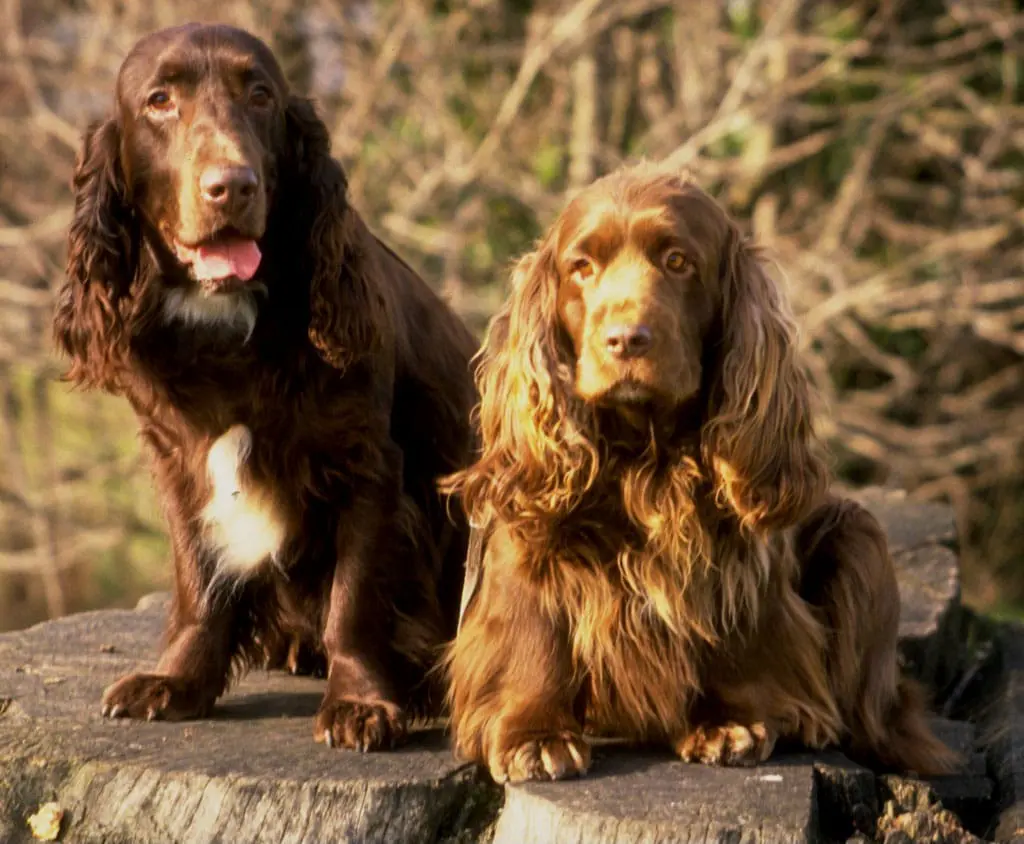
    The Field Spaniel take his name ยซfieldยป of its great ability to work in open fields.

    Field Spaniel

    Content

    Characteristics "Field Spaniel"

    Coexistence is important that you have with your new friend. Before considering the acquisition of a dog of the breed "Field Spaniel" you know certain factors. Not all breeds of dogs are apt to live in an apartment, you must take into account his character, their need for exercise, their interaction with other pets, their care and if you have small children, their level of tolerance towards them.

    Adaptation โ“˜

    5,0 of 5 stars (based on 1 review)

    friendly dog โ€‹โ€‹โ“˜

    5,0 of 5 stars (based on 1 review)

    hair loss โ“˜

    3,0 of 5 stars (based on 1 review)

    Affection level โ“˜

    5,0 of 5 stars (based on 1 review)

    Need for exercise โ“˜

    5,0 of 5 stars (based on 1 review)

    Social need โ“˜

    4,0 of 5 stars (based on 1 review)

    Home โ“˜

    4,0 of 5 stars (based on 1 review)

    Toilet โ“˜

    3,0 of 5 stars (based on 1 review)

    Friendly with strangers โ“˜

    3,0 of 5 stars (based on 1 review)

    barking โ“˜

    3,0 of 5 stars (based on 1 review)

    Health โ“˜

    4,0 of 5 stars (based on 1 review)

    Territorial โ“˜

    2,0 of 5 stars (based on 1 review)

    Cat friendly โ“˜

    3,0 of 5 stars (based on 1 review)

    Intelligence โ“˜

    5,0 of 5 stars (based on 1 review)

    Versatility โ“˜

    5,0 of 5 stars (based on 1 review)

    Child friendly โ“˜

    5,0 of 5 stars (based on 1 review)

    Surveillance โ“˜

    3,0 of 5 stars (based on 1 review)

    joy โ“˜

    5,0 of 5 stars (based on 1 review)

    History

    The Field Spaniel (Field) is an example of what can go wrong when trying to breed sporting dogs for their looks without considering their use in the field. In the early days of the breed, in the XVIII century, the Spaniels were defined by their size, and it was considered Field Spaniel to any dog รขโ‚ฌโ€นรขโ‚ฌโ€นthat weighed more than 11 kg (25 pounds). The Spaniels smaller ones were known as "Cockers", and both sizes could be born in the same litter. His fur used to be liver, liver and white, red, Red and white, yellow or black and white.

    The advent of dog shows in the mid-19th century motivated dog breeders to start considering both appearance and function.. The different was good. This is how the "black spaniel" was born. That was good, but unfortunately the dogs that were long and short – As the "Sussex Spanielยซ- they were popular at dog shows at the time. The breeders began to cross Field Spaniel con ยซSussex Spanielsยซ. How the size of the dogs was so different, the results were disastrous, converting to Field into a heavy, unattractive dog who could barely move. Even so, exaggerated-looking dogs won at shows.

    Finally, people came to their senses and the fashion of Field Spaniel finished. Dogs could have gone extinct, but they were revitalized after the First World War through crosses with the "English Springer Spaniel.", that were more suitable for the size of the Field Spaniel. Through careful breeding, their usefulness as hunting dogs was restored, with the ability to cut through brush that was too difficult for the "Springer", and the speed that the ยซSussex" and the "Clumberยซ.

    The breed was not yet saved. World War II put an end to breeding, and then only a few good dogs were left. In United States, there was no Field Spaniel until the age of 60. The Field Spaniel Society of America was formed in 1978. Dogs are still little known today, but they are no longer in danger of extinction. The Field Spaniel ranks 132 between breeds registered by the AKC.

    Physical characteristics

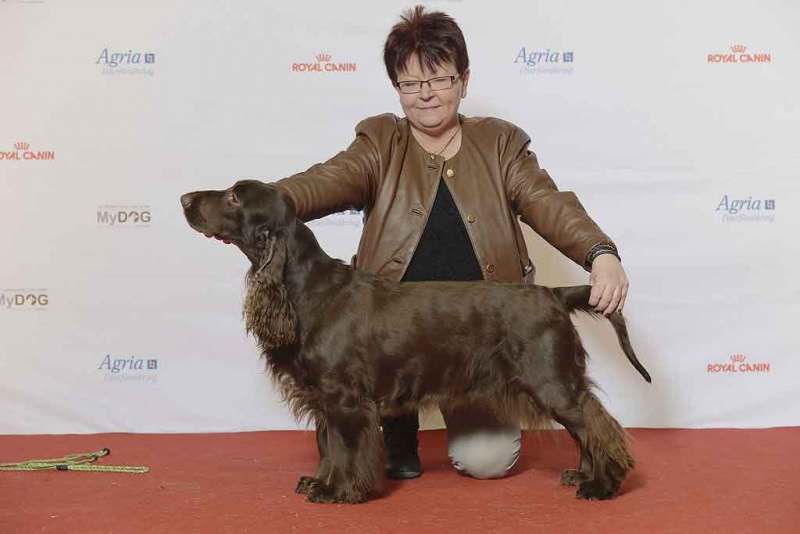
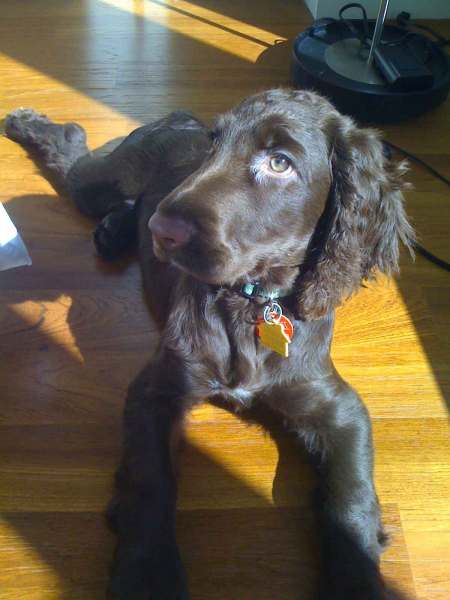
    The Field Spaniel is closely related to the Cocker Spaniel and the "English Springer Spaniel". In the beginning, the three races were separated mainly by size. With a weight range of 15 to 22 Kg, the Field Spaniel It is larger than the ยซCockerยป but smaller than the ยซSpringerยซ. In addition to hunting, competes in field tests and uses his excellent nose in tracking tests. It is a rare breed, but if you are looking for a solid hunter in addition to a family companion, the Field Spaniel is one of those you should consider.

    Weight and size:

    Females have an approximate size of 43 cm., While the males measure approximately 45 cm.. Its approximate weight varies from 18 – 25 kg.

    Character and skills

    The Field Spaniel has the typical features of Spaniel: sensitivity, affection for his family and willingness to learn. With strangers, is reserved, even shy if not well socialized, but their owners will experience a playful and mischievous side. It can be a barker when it shows joy or restlessness.

    Its medium size and docile character can make it a good choice for families with children.. He also gets along well with pets, as cats, if he grew up with them. But, pet birds may need to watch their tail. Even though i don't hunt, the Field Spaniel he will take every opportunity to hunt birds and will do his best to go after them. Unless you are in an area with no traffic, keep it on a leash or you'll lose it in the chase.

    The Field Spaniel is a dog that needs a job. He is not the type of dog that spends the day eating cookies. Take a daily leash walk of at least an hour, take him to safe, traffic-free areas where he can run off-leash and sign him up for dog sports like agility, obedience, rally and crawl.

    Education

    The Field Spaniel is intelligent and accepts training well. Like most Spaniels, has a mild temperament and responds best to positive reinforcement techniques, like the compliments, the game and the food rewards. Tends to mature slowly, so you must be patient and constant. In the field he has a natural tendency to explore, which can be stopped by teaching commands such as "Come", "Wait" and "Stay".

    Start training your puppy the day you bring him home. Even at eight weeks old, is able to absorb everything that can be taught. Don't wait for you to have 6 months to start training or you will have to deal with a stubborn dog. If possible, take him to a kennel school for puppies when he is between 10 and 12 weeks, and socializes.

    Health

    All dogs have the potential to develop genetic health problems, like all people have the potential to inherit diseases. Avoid any breeder that does not offer a health guarantee for the puppies, to tell you that the breed has no known problems or to keep puppies isolated from the main part of the house for health reasons. A reputable breeder will be honest and open about breed health problems and the incidence with which they occur.

    The Field Spaniel They have some health conditions that may be of concern, especially if you are not cautious with breeder selection. Among them are the Hypothyroidism and eye problems such as cataract, progressive retinal atrophy and retinal dysplasia.

    Do not buy a puppy from a breeder who cannot provide you with written documentation that the parents have been exempted from health issues affecting the breed. Having dogs โ€œvet checkedโ€ is no substitute for genetic health testing.

    Careful breeders screen their breeding dogs for genetic diseases and breed only the healthiest and best-looking dogs, but sometimes mother nature has other ideas. A puppy can develop one of these diseases despite good husbandry practices. Advances in veterinary medicine mean that, In most cases, dogs can still have a good life. If you are getting a puppy, ask the breeder about the ages of the dogs in their lines and what are the most common causes of death.

    Remember that after welcoming a new puppy into your home, you have the power to protect you from one of the most common health problems: the obesity. Keeping the dog at an adequate weight is one of the easiest ways to extend its life. Take advantage of your prevention skills to ensure a healthier dog for life.

    Grooming

    The Field Spaniel has only one coat, that is to say, does not have undercoat. Silky hair is moderately long and can be straight or slightly wavy. The front of the chest, the belly, The back of the legs and hindquarters have fringes like those seen on "Setter" breeds..

    The coat is not heavy and it is easy to maintain. You have to brush it weekly and comb its fringes a couple of times a week, or whenever the dog has been outside or has twigs or other debris stuck to the hair. Trim the hair between the paw pads and inside the ears. Bathe the dog only when necessary; regular brushing should keep it pretty clean. The Field Spaniel they molt moderately.

    If you plan to expose your Field Spaniel, ask the breeder for advice on how to present the dog at a dog show. You must have a natural look, but may need a little more razor cleaning, scissors and grooming blades of what a pet dog would receive.

    The rest is basic care. Trim nails as needed, usually every few weeks. Yes to your Field Spaniel he likes to swim - and even if he doesn't like- keep hanging ears clean and dry to avoid bacterial or fungal infections. Brush your teeth frequently for general good health and fresh breath.

    Images "Field Spaniel"

    Photos:

    1 – Field Spaniel by Peter, CC BY 2.0, via Wikimedia Commons
    2 – A Grupp 8: FIELD SPANIEL, Winterbourne Itsy Bitsy Spider by Swedish fair
    3 – My dog, Lily, after enjoying a smelly romp through a fetid swamp close to home. what a plague. Lily is a Field Spaniel. by Jo-Anna Ghadban, CC BY 2.0, via Wikimedia Commons
    4 – Daisy – Field Spaniel by Peter, CC BY 2.0, via Wikimedia Commons
    5 – Field Spaniel In Liver Color by RishiBali, CC BY-SA 3.0, via Wikimedia Commons
    6 – Field Spaniel The Westminster Kennel Club 137th Annual All Breed Dog Show February 11-12, 2013 New York, NY by Andrea Arden

    Videos "Field Spaniel"

    Field spaniel Molly
    Playing with Jekku
    Valpelek Field Spaniel
    Field Spaniel Bite jumps into water

    Type and recognitions:

    • FCI CLASSIFICATION:
    • Group :
    • Section : . .

    Federations:

    • FCI – Group 8: Retrievers - Flushing Dogs - Water Dogs – Section 2: Retrievers โ“˜
    • AKCSporting โ“˜
    • ANKC Group 3 (Gundogs) โ“˜
    • CKCSporting Dogs โ“˜
    • โ€‹KC – Gundog โ“˜
    • NZKCGundog โ“˜
    • UKCGun Dogs โ“˜

    FCI breed standard "Field Spaniel"

    Origin:
    United Kingdom, England

    Date of publication of the valid original standard:
    26.03.2009

    Use:

    Hunting retriever and lifting dog. Ideal for difficult hunting or as a companion for dwellers in rural areas. Not a suitable dog for the city.


    General appearance:

    Well balanced and noble dog. It is an upright spaniel, sports, developed for activity and endurance.


    Behavior / temperament:

    It is an upright spaniel, sports, developed for activity and endurance.

    Head:

    Its features give the impression of quality, character and nobility.

    Cranial region:
    • Skull : It is well molded, well-defined occipital region, thin under the eyes; a thickness at this point gives the whole head a rough look. The region of the eye lids is slightly raised.
    • Fronto-nasal depression (Stop) : Is moderate.

    facial region:

    • Nose : Well developed, with wide open Windows.
    • Snout : Long and thin, but not pointed or square. Seen in profile, it presents a curvature that gradually descends from the nose to the throat..
    • Jaws/Teeth : Strong JAWS, with healthy and complete teeth; scissor bite, that is, the inner face of the upper incisors is in contact with the outer face of the lower incisors and placed at right angles to the jaws.
    • Eyes : Wide open, but almond shaped, with well-adherent eyelids, without showing the ocular conjunctiva. With grave and gentle expression. dark brown.
    • Ears : Moderately long and wide, set low and well covered with long feather hair.

    Neck:

    Long, strong and muscular, allowing the dog to collect the prey without undue effort.

    Body:

    • Back and kidney region: Strong, level and muscular.
    • Breast : Deep and well developed chest. Ribs moderately sprung. The length of the rib cage should be 2/3 of the body.

    Tail:

    Previously the custom was to amputate the tail.
    • amputee: Amputated to one third. Low insertion. Never carried above the level of the top line. With good fringe, and lively action.
    • Without amputating: Low insertion. Never carried above the level of the top line. With good fringe, and lively action. It should reach approximately the hocks. Of moderate length in balance with the rest of the dog.


    Tips

    PREVIOUS MEMBERS: The limbs are of moderate length and straight and flattened bones..

    • Shoulder : Long, oblique and well back.

    LATER MEMBERS: Strong and muscular.

    • Knees : Moderately angled.
    • Hocks : They must be well descended.

    FEET : compacts, round, not very small with strong footpads.

    Movement:

    Long stride, slow, with a large drive given by the hind limbs. The short and heavy step is undesirable.

    Mantle

    HAIR: Long, smooth; its texture is silky and shiny. Never curly, short or hard. Dense and offers weather protection. It should be abundant and feather-shaped on the chest, belly and back of the limbs; However, these should not exist below the tibi-tarsal joints (hocks).

    COLOR: Negro, liver or roan. Any of these colors with fire markings. In unicolor dogs, white or roan are allowed on the chest. Combination colors black and white or liver and white are not accepted..


    Size and weight:

    Approximately 18 '' (18 inches) to the region of the cross.

    Weight: Among 18-25 kg (40-55 English pounds).


    Fouls:

    Any deviation from the aforementioned criteria is considered as a fault and the severity of this is considered to the degree of the deviation to the standard and its consequences on the health and well-being of the dog., and the dog's ability to perform its traditional task.

    FALTAS DESCALIFICANTES:

    โ€ข Aggressiveness or extreme shyness.
    โ€ข Any dog โ€‹โ€‹showing clear signs of physical or behavioral abnormalities.


    N.B.:

    โ€ข Males must have two normal-appearing testicles fully descended into the scrotum..
    โ€ข Only functionally and clinically healthy dogs, with the typical conformation of the breed, should be used for parenting.

    Source: F.C.I - International Cynological Federation

    Alternative names:

    1. Field (English).
    2. Field (French).
    3. Field (German).
    4. Field (Portuguese).
    5. Field, Spaniel de campo (espaรฑol).

    โ–ท The world of Pets: Dogs, cats, birds, reptiles, amphibians

    Sussex Spaniel
    Inglaterra FCI 127 . Flushing Dogs

    Sussex Spaniel

    The Sussex Spaniel it is a meek and thoughtful dog when it is at rest.

    Content

    History

    The Sussex Spaniel gets its name from the county of England where it was favored as a hunting dog. It comes from the farm of Rosehill Park, where it was developed in the 18th century, and it was already mentioned in 1803 in a magazine called Sportsmen’s Cabinet.

    The Knights of Sussex created a dog adapted to its heavy clay soil, to the dense undergrowth and thick hedges, a dog that could spend all day barking with bell tones to alert hunters that they were on the right track. The dogs were exposed in the dog show of the Crystal Palace in 1862 and they were among the 10 first breeds admitted to the registry of the American Kennel Club in 1884.

    Because they were primarily confined to the county of Sussex, the Sussex Spaniel they were necessarily inbred, with only an occasional brood with the Field Spaniel to bring new blood. With the passage of time, the hunters developed new interests and the Sussex stayed on the road. could have been lost to history, like so many other dogs, but the breeders Moses Woolland y Campbell Newington intervened to bring them off the brink of extinction and even improved. The breed again faced extinction during WWII, but it was saved thanks to the efforts of the breeder Joy Scholefield.

    Today the Sussex still weird, but in no danger of disappearing. Occupies the position 155 between breeds registered by the AKC.

    Physical characteristics

    The Sussex Spaniel It is a short dog with a compact and rectangular body and a weight between 16 and 20 kg. It stands out for the color of its fur, a deep golden liver, and for his big sad hazel eyes, so typical of the spaniel family. Historically, However, there have also been examples of Sussex black, black and tan, and liver colored gold and white.

    The fur is thick (sometimes with a slight wave), with fringes on the chest, legs and ears and consists of a weather-resistant underlay, the outside being silky.

    The long, silky ears are lobe-shaped, typical of Spaniel, and are moderately low

    In the countryside, it's slow but steady, making his way through the thick canopy to make the birds disappear and retrieve for a hunter on foot.

    Character and skills

    Appearances can be deceptive when it comes to the Sussex Spaniel. Under a gloomy and serious expression hides a friendly and cheerful dog with a placid character. Loves being around people and joins any activity with controlled enthusiasm. More than many Spaniels, the Sussex has a protective character, always keeping her big sad eyes on her family to make sure all is well. She loves the children, and his calm demeanor makes him an excellent therapy dog.

    As a hunting dog, the Sussex moves at a slower pace than other sporting dogs, but that doesn't mean i'm lazy or i don't need a lot of exercise. Not much less. He loves to hunt and has a lot of energy and stamina. Thanks to its ability to avoid the thicket, it is an excellent companion for walks or excursions, wagging the tail all the time. If you are a bird watcher, will help you find your prey. With its great olfactory capacity, you might like to put a tracker title or two on it.

    It is a very intelligent dog that is not always easy to train. Can be stubborn, but his soft Spaniel nature can make him cringe at any correction. Be firm but kind, rewarding the behavior you like with praise, games and goodies. Keep in mind that it matures slowly. You will not be instantly trained, and that includes home training. It is a breed that requires patience to get the best of itself, not to mention a sense of humor for the times when he makes fun of you or embarrasses you, that there will be.

    Start training your puppy the day you bring him home. Even with 8 weeks of age, is able to absorb everything that can be taught. Don't wait until he is six months old to start training him, or you will have to deal with a bigger and stubborn dog. If possible, take him to a trainer when he has between 10 and 12 weeks, and socialize him.

    Talk to the breeder, describe exactly what you are looking for in a dog and ask for help selecting a puppy. Breeders see puppies daily and can make incredibly accurate recommendations once they know something about their lifestyle and personality. Regardless of what you want from a Sussex, look for one whose parents have a pleasant personality and who has been well socialized since he was a puppy.

    Education

    He is very smart, but can be stubborn, so it is not always easy to train. Having said that, if the right motivation is found - how to take advantage of your great olfactory capacity- can be taught to Sussex to do almost anything. Train him with positive reinforcement techniques. He especially likes food rewards. Be patient in training. One Sussex, especially the females, it may take a long time to be reliable in this regard.

    The Sussex walks at a slow pace and doesn't require the frantic levels of exercise some other sporting breeds need, but he's not a couch potato either, at least not when he's young. You will enjoy moderate or long walks or hikes, although not the companion of a runner or jogger. Its versatility and athleticism make it suitable for a number of dog sports, like hunting trials, freestyle, obedience, the rally and the crawl. The Sussex easily learn to recover, making it a great playmate for the kid who likes to play ball. Once it reaches maturity, his calm demeanor makes him a natural for therapy work.

    When a Sussex Spaniel grows up with children, both usually go together like strawberries and cream. But, the puppies of Sussex can be too unruly for families with young children, and Sussex Spaniel adults unfamiliar with children may not feel comfortable with them.

    like most dogs, the Sussex Spaniel get bored when left alone, and the damage they can do is considerable. Do not give them control of the house until they have reached trustworthy maturity.. Cubs Sussex tend to develop slowly, so they may not reach maturity until 2 or 3 years of age. And keep your Sussex busy with training experiences, play and socialization. One Sussex boring is a Sussex destructive.

    Health

    The Sussex Spaniels they are healthy in general, but some conditions can be worrisome, especially if you are not careful when buying. These include some heart problems, such as cardiomyopathy and pulmonary stenosis, as well as an exercise intolerance syndrome called pyruvate dehydrogenase deficiency (PDH). Hip dysplasia has also been reported, deafness and eye problems (such as entropion and retinal dysplasia). Females may have difficulty giving birth and often require cesarean sections.

    PDH deficiency is present in the 20 percent of Sussex Spaniel, but there is a genetic test to identify normal dogs, carriers and affected. Ask the breeder to show proof that at least one of the puppy's parents is free of PDH deficiency.

    Do not buy a puppy from a breeder who cannot provide you with written documentation that the parents are free of health problems that affect the breed.. Veterinary examination of dogs is not a substitute for genetic health tests.

    Grooming

    The Sussex has thick fur, smooth or slightly wavy, with fringes on the legs and tail and a nice curl under the neck. The coat can be cared for by brushing it at least once or twice a week to remove tangles or mats and distribute skin oils. Bathe him when necessary. The Sussex changes moderately, and daily brushing will reduce the amount of hair that falls on the floor, the furniture and clothes.

    The rest is basic care. Trim nails when needed and keep hanging ears clean and dry. Good dental hygiene is also important. Brush teeth frequently with a vet-approved pet toothpaste for overall good health and fresh breath.

    Characteristics "Sussex Spaniel"

    Coexistence is important that you have with your new friend. Before considering the acquisition of a dog of the breed "Sussex Spaniel" you know certain factors. Not all breeds of dogs are apt to live in an apartment, you must take into account his character, their need for exercise, their interaction with other pets, their care and if you have small children, their level of tolerance towards them.

    Adaptation โ“˜

    5,0 of 5 stars (based on 1 review)

    friendly dog โ€‹โ€‹โ“˜

    5,0 of 5 stars (based on 1 review)

    hair loss โ“˜

    3,0 of 5 stars (based on 1 review)

    Affection level โ“˜

    5,0 of 5 stars (based on 1 review)

    Need for exercise โ“˜

    4,0 of 5 stars (based on 1 review)

    Social need โ“˜

    3,0 of 5 stars (based on 1 review)

    Home โ“˜

    4,0 of 5 stars (based on 1 review)

    Toilet โ“˜

    3,0 of 5 stars (based on 1 review)

    Friendly with strangers โ“˜

    3,0 of 5 stars (based on 1 review)

    barking โ“˜

    5,0 of 5 stars (based on 1 review)

    Health โ“˜

    4,0 of 5 stars (based on 30 reviews)

    Territorial โ“˜

    3,0 of 5 stars (based on 1 review)

    Cat friendly โ“˜

    3,0 of 5 stars (based on 1 review)

    Intelligence โ“˜

    3,0 of 5 stars (based on 1 review)

    Versatility โ“˜

    3,0 of 5 stars (based on 1 review)

    Child friendly โ“˜

    5,0 of 5 stars (based on 1 review)

    Surveillance โ“˜

    3,0 of 5 stars (based on 1 review)

    joy โ“˜

    3,0 of 5 stars (based on 1 review)

    Images "Sussex Spaniel"

    Sussex Spaniel
    Sussex_spaniel at the World Dog Show in Poznan by Pleple2000, CC BY-SA 3.0, via Wikimedia Commons
    Sussex Spaniel
    Group 8 SUSSEX SPANIEL, Marquell Replay MyDOG, The largest dog event in the Nordics: www.mydog.seby by Svenska Mรคssan from Sweden, CC BY 2.0, via Wikimedia Commons

    Videos "Sussex Spaniel"

    Sussex Spaniel / Dog breeds - Dog Breed
    Sussex Spaniel / Dog breeds – Dog Breed
    Bean the Sussex Spaniel wins the 2019 Westminster Kennel Club Dog Show Sporting Group | FOX SPORTS
    Bean the Sussex Spaniel wins the 2019 Westminster Kennel Club Dog Show Sporting Group | FOX SPORTS

    Type and recognitions:

    • FCI CLASSIFICATION:
    • Group 8: Hunting Retriever Dogs. Hunting Lifting Dogs. Water dogs.
    • Section 2: Flushing Dogs. With working trial.

    Federations:

    • FCI – Group 8: Retrievers - Flushing Dogs - Water Dogs – Section 2: Retrievers โ“˜
    • AKCSporting โ“˜
    • ANKC Group 3 (Gundogs) โ“˜
    • CKCSporting Dogs โ“˜
    • โ€‹KC – Gundog โ“˜
    • NZKCGundog โ“˜
    • UKCGun Dogs โ“˜

    FCI breed standard "Sussex Spaniel"

    Origin:
    United Kingdom, England

    Date of publication of the valid original standard:
    26.03.2009

    Use:

    Hunting dog.


    General appearance:

    It is a dog with a strong and massive constitution., Active, energetic, whose characteristic movement is an unmistakable rocking that distinguishes it from any other Spaniel..


    Behavior / temperament:

    With a natural capacity for work, barks when working in areas with thick vegetation. He is a kind dog, aggressiveness is very undesirable.

    Head:

    Well balanced.

    Cranial region:

    Skull: Large, with a moderate curvature between the ears; It is neither flat nor round., with a middle groove. Well wrinkled eyebrows. Defined occipital bone, but without being pointed.

    Depression links (Stop): Pronounced.

    facial region:

    ▷ Truffle: liver colored; the windows are well developed.

    ▷ Jaws / Teeth: Strong JAWS, scissor bite, perfect, regular and complete, that is to say, that the inner face of the upper incisors is in close contact with the outer face of the lower incisors; teeth should be set at right angles in the jaws.

    ▷ Eyes: Hazelnut colored, quite large without being prominent and with a tender expression. They should not show too much of the ocular conjuncture.

    ▷ Ears: Thick, quite long and lobed; its insertion is moderately low, very little above eye level; they fall stuck to the skull.

    Neck:

    Long, strong and slightly arched, the dog does not carry its head very high above the level of its back. With a slight double chin, but yes a good fringe of hair.

    Body:

    The whole body is strong and level, without any sign of waist from the withers to the hips.

    Back and kidney region: Well developed and muscular, both in width and depth.

    Breast : Deep and well developed chest, neither too wide nor too round. The posterior ribs should be deep.

    Tail:

    Previously the custom was to amputate the tail.

    amputee: Low insertion. Never carried above the level of the top line. With lively action. Usually amputated to a length of 13 -18 cms. (5 -7 ins.)

    Without amputating: Low insertion, average length, never carried above the level of the top line. It gradually tapers towards the tip and has moderate fringe.


    Tips

    Former members: Rather short and robust limbs.
    Shoulder: Oblique and mobile.

    • Arms: Muscular and well-boned.

      Carpi: big and strong.

    • Metacarpus: Short and strong boned.

    Later members: They are short and vigorous with good bones. They should not appear shorter than the previous ones or be too angled.

    • Thighs: Muscular and well-boned.
    • Hocks: big and strong.

    Pies: Round, well covered with hair between the fingers, strong foot pads.

    Movement:

    Its forward and backward movement is free, with a characteristic swing.

    Mantle

    Fur: The hair is abundant and flattened, without any tendency to be curly. It has a good undercoat that protects it from the elements.. The ears are provided with soft, wavy hair., but not very abundant. The forelimbs and hindlimbs should be moderately covered with hair in the form of fringes.. The tail must be well covered with hair, but not in the form of fringes.

    Color: The hair is a bright golden liver color that turns golden at the tip., predominating the color gold. Dark liver or reddish brown are undesirable..


    Size and weight:

    Height to the cross: The ideal height to cross is between 38 and 41 cm. (15-16 inches).

    Weight: It should be approximately 23 kg (50 English pounds).


    Fouls:

    Any deviation from the aforementioned criteria is considered a fault and its severity is considered to the degree of deviation from the standard and its consequences on the health and well-being of the dog and the dog's ability to perform its traditional task..


    disqualifying fouls:
  • Aggressiveness or extreme shyness.
  • Any dog โ€‹โ€‹showing clear signs of physical or behavioral abnormalities.


  • N.B.:
    • Males should have two normal-appearing testicles completely descended into the scrotum..
    • Only functionally and clinically healthy dogs, with the typical conformation of the breed, should be used for parenting.

    The latest changes are in bold

    Source: F.C.I - International Cynological Federation

    Alternative names:

    1. Sussex (English).
    2. Sussex (French).
    3. Sussex (German).
    4. Spaniel de Sussex (Portuguese).
    5. Sussex (espaรฑol).

    โ–ท The world of Pets: Dogs, cats, birds, reptiles, amphibians

    German Spaniel
    Alemania FCI 104 . Flushing Dogs

    German Spaniel

    The German Spaniel it is very appreciated especially for hunting.

    Content

    History

    The study of the history of hunting teaches us that centuries ago there were hunting dogs very similar to the current one. German Spaniel. At that time they were used to hunt.

    Breeding of the controlled breed in a studbook began in the early 20th century, with a few suitable bitches. The first representative of the German Spaniel was Mr. Augusta 1834 L, a Staufenberg dog in Upper Bavaria.

    At first there were only brown dogs with partial white markings and dogs with white markings.. The latter had small red spots on the head and limbs, called "fire marks". It was the bitch Baby auf de Schanze 1838 L the one that introduced the roan in the race. Rudolf Friess, a dog fancier who for decades had a major influence on the breeding of the German Spaniel, introduced separate breeding of brown and roan varieties.

    Despite the narrow initial breeding base, put in place an essential requirement to avoid damage due to inbreeding through selective mating. The separation of the two colors is also justified by a certain disparity in the natural qualities of the German Spaniel. Chestnut trees were easier to drive over short distances and more persistent on the track, while the roans had a highly developed penetration at long distances.

    These different natural gifts are no longer a reliable differential criterion today, since in the meantime, for many reasons, there have been repeated crosses between the two color varieties. But, in principle, the separation still maintains a certain reserve of unrelated blood within the race today.

    The German Spaniel it is and continues to be bred by hunters and for hunters as a hunting dog with great versatility.

    Photo: ยซGerman Retrieverยป by https://pixabay.com/de/photos/wachtelhund-jagdhund-stรถberhund-4604508/

    Physical characteristics

    The German Spaniel it is a medium sized hunting dog, longhair, very muscular, with a noble head and strong bones. In general, they are longer than they are tall, but they should never give the impression of being tall.

    Lively and very passionate about hunting, friendly and self-assured in their natural environment, very docile and very adaptable; neither shy nor aggressive.

    The German Spaniel in some points:

    – Has a well developed piercing,

    – follow the path of hunting big and small with will and perseverance,

    – give voice without hesitation,

    – has a fine nose,

    – he likes rapport and water,

    – has a bite for hunting and vermin,

    – Trained and properly managed, hunt without deviating from course over long distances; works as a Bloodhound and in the search for lost pieces; is a versatile hunting dog for tracking and hunting in ditches, heavily wooded areas and in the water. Since the beginning of the supervised breeding, the ability to stop has not been taken into account.

    The coat is strong, glued, mostly wavy, occasionally also curly (Astrakhan), or long, flat with thick undercoat; not too long, especially not fine or silky; on the nape, often curled on the ears and rump; well furnished hindquarters and tail; the presence of a frill around the neck is frequent; the belly is also well provided with hair; muzzle and cranial region have short but tight hair; the ears are covered with curls or tight, wavy hair that extends beyond the edge of the pinna; the interdigital spaces have a tight hair but not too long.

    The "German Retriever" is bred in two color varieties:

    – Solid brown, more rarely also red; often with white or mottled markings on the chest and toes.
    – Brown roan, more rarely also red roan; the background color consists of brown hairs, possibly red, intimately mixed with white hairs; often the head is brown, possibly red, with spots or also a mantle that extends all over the back ; this color variety includes variegated coats with a white background and large brown spots, possibly red, also the so-called "tiger" dogs, in which the white background is also mottled or mottled with small tufts of brown hair, possibly red; the latter can perfectly descend from monocolor parents.

    All shades and variations of red are included in this term (red fox, red deer, red deer).

    SIZE AND WEIGHT :

  • Males 48-54 cm.
  • females 45-52 cm.
  • Varies in relation to size, between some 18 and 25 kg.

    Character and skills

    Robust, brave, can work on all terrains, mainly forests and swamps. Active tracker, bush hunter, screaming on the road, he specializes in hunting small game but also in tracking foxes and large animals. He is a good collector, it is also a trail dog, able to search for wounded game. Loving, is appreciated as a companion. He is self-assured in his natural environment., while being endowed with a great capacity for adaptation.

    They are not shy or aggressive, but they need a strong education that starts soon.

    Education

    Kind, affectionate and docile, the German Spaniel has these wonderful predispositions by nature. But with one condition, and not the least. Because this dog needs a lot more exercise, education and activity from the beginning of what a family or active people can offer. Being on the go is not enough. The German Spaniel want more. It can and should do more than just be a family dog. Idleness goes against their nature. You need qualified training as a hunting dog that will challenge you mentally and physically. If you are successful, this passionate hunter will prove to be an obedient and loyal companion.

    Health

    The German Spaniel have a slight predisposition to hip dysplasia. Breeders are very careful not to breed animals with this predisposition. This will greatly reduce this deficiency.

    On the other hand, floppy ears predispose this dog to ear infections (and more for dogs used to getting into the water).

    Grooming

    The coat of the German Spaniel is perfectly adapted to your lifestyle. Dirt doesn't seem to stick to hair, even if he walks through the bushes for hours. A weekly brushing is enough. He usually decides when it's time to bathe. Showering in summer is a moment of well-being that you enjoy.

    Characteristics "German Spaniel"

    Coexistence is important that you have with your new friend. Before considering the acquisition of a dog of the breed "German Spaniel" you know certain factors. Not all breeds of dogs are apt to live in an apartment, you must take into account his character, their need for exercise, their interaction with other pets, their care and if you have small children, their level of tolerance towards them.

    Adaptation โ“˜

    4,0 of 5 stars (based on 1 review)

    friendly dog โ€‹โ€‹โ“˜

    3,0 of 5 stars (based on 1 review)

    hair loss โ“˜

    3,0 of 5 stars (based on 1 review)

    Affection level โ“˜

    4,0 of 5 stars (based on 1 review)

    Need for exercise โ“˜

    5,0 of 5 stars (based on 1 review)

    Social need โ“˜

    4,0 of 5 stars (based on 1 review)

    Home โ“˜

    3,0 of 5 stars (based on 1 review)

    Toilet โ“˜

    2,0 of 5 stars (based on 1 review)

    Friendly with strangers โ“˜

    3,0 of 5 stars (based on 1 review)

    barking โ“˜

    3,0 of 5 stars (based on 1 review)

    Health โ“˜

    4,0 of 5 stars (based on 1 review)

    Territorial โ“˜

    3,0 of 5 stars (based on 1 review)

    Cat friendly โ“˜

    3,0 of 5 stars (based on 1 review)

    Intelligence โ“˜

    4,0 of 5 stars (based on 1 review)

    Versatility โ“˜

    4,0 of 5 stars (based on 1 review)

    Child friendly โ“˜

    4,0 of 5 stars (based on 1 review)

    Surveillance โ“˜

    3,0 of 5 stars (based on 1 review)

    joy โ“˜

    3,0 of 5 stars (based on 1 review)

    Images "German Spaniel"

    Photos:

    1 – Deutscher Wachtel by Steffen Heinz (Caronna), CC BY-SA 2.5, via Wikimedia Commons
    2 – German Spaniel by https://pixabay.com/de/photos/deutscher-wachtelhund-jagdhund-4748569/
    3 – German Spaniel by https://commons.wikimedia.org/wiki/File:Deutscher_Wachtel.jpg
    4 – German Spaniel by https://pixabay.com/de/photos/deutscher-wachtelhund-hund-haustier-5753477/
    5 – German Spaniel by https://pixabay.com/de/photos/deutscher-wachtelhund-jagdhund-4763510/
    6 – German Spaniel by https://pixabay.com/de/photos/deutscher-wachtelhund-jagdhund-4905048/

    Videos "German Spaniel"

    German Spaniel (German Quail Dog)
    German Spaniel (Deutscher Wachtelhund)
    Training German Spaniel - Ayrin from Jiล™รญฤkรฝ luk
    Training German Spaniel

    Type and recognitions:

    • FCI CLASSIFICATION:
    • Group :
    • Section : . .

    Federations:

    • FCI – Group 8: Retrievers - Flushing Dogs - Water Dogs – Section 2: Retrievers โ“˜

    FCI breed standard "German Spaniel"

    Origin:
    Germany

    Date of publication of the valid original standard:
    24.07.1996

    Use:

    Hunting dog, versatile hunting dog.


    General appearance:

    The German Retriever is a medium-sized hunting dog., Longhair, very muscular, with noble head and strong bones. Overall it is longer than it is tall and in no way gives the impression of having long limbs..

    IMPORTANT PROPORTIONS :

    โ€ข Relationship between body length and height at withers = 1,2 : 1
    โ€ข Relationship between chest height and height at withers = 0,5 : 1
    โ€ข Relationship between the length of the snout and the length of the skull = 1 : 1


    Behavior / temperament:

    He is lively and very passionate about hunting.; He is friendly and safe in his environment; very docile and adaptable, is not fearful or aggressive.

    The German Retriever is:

    โ€ข Equipped with a strong will to search.
    โ€ข It is safe in search of traces or clues.
    โ€ข Reliably has a continuous bark.
    โ€ข Has a fine sense of smell.
    โ€ข Has a pronounced taste for charging and for water.
    โ€ข It is sharp for hunting wild and predatory animals..
    โ€ข In its corresponding initiation and direction, hunting independently, extensive and controlled. It is reliable when working as a bloodhound and to search for lost prey.; It is a versatile utility hunting dog for working in dense places., in the forest and in the water. The suitability for the sample was not considered from the beginning of the breeding of this breed..

    Head:

    ---

    Cranial region:
    • Skull : Flattened, moderately wide; the occipital protuberance is not noticeable.
    • Depression links (Stop) : Only slightly marked.

    facial region:

    • Truffle : big and dark, with wide open windows; depigmentation in small spots is considered a lack; the ram's nose beautifies the dog.
    • Snout : Strong, with wide nose shank along its entire length; slightly rounded downwards, never pointed, no shorter than the skull.
    • Lips : Straight, dry, rigorously adjusted, pigmented according to coat color.
    • Mandible / Teeth : Complete bite with 42 teeth in the following order (schematic seen from the front):Right M P C I I C P M Left Upper maxillary 2 4 1 3 3 1 4 2 Upper jawโ€”โ€”โ€”โ€”โ€”โ€”Lower jaw 3 4 1 3 3 1 4 3 Lower jaw(Explanation of the initials of the dental formula : I = incisors, C = fangs, P = premolars, M = Molars).The incisors of the upper jaw closely overlap those of the lower jaw, forming a scissor bite.; pincer bite is tolerated; teeth are well developed; strong bite.
    • Cheeks : Thin with close-fitting skin; non-protruding cheekbones.

    Eyes : Medium brown color, dark as possible, medium-sized, placed a little oblique, Neither prominent nor sunken; eyelids well adjusted to the eyeball; no visible nictitating membrane. The edge of the eyelids with eyebrows.

    Ears : High and wide insertion, flattened; without being twisted, They hang very close behind the eyes; they are not thick, neither fleshy nor limp; regularly developed hair covers protruding from the inner edge of the ears. The ear turned forward reaches up to the nose.

    Neck:

    Strong; especially well muscled neck; forms an obtuse angle in its transition towards the cross; begins with no visible loose skin and extends toward the chest without forming a double chin.

    Body:

    • top line : In each of the regions the upper line is straight and gradually connects them to each other; the rump is slightly descending; the tail is carried as an extension of the line of the back or slightly hanging.
    • Cross : Strong and marked.
    • Back : Short and firm, without sinking behind the cross.
    • Pork loin : Powerfully muscular, so it gives the impression of serancho.
    • Rump : Slightly descending, never higher than the cross, situated a little below the height of the cross.
    • Breast : Seen from the front it is oval and reaches below the elbow when viewed from the side. long thorax, well arched; It is neither barrel-shaped nor flattened..
    • Lbottom line and belly : From the last false rib back it is moderately retracted; Also in its lower part it is as much as possible completely covered with hair and dense undercoat..

    Tail:

    At rest, carries it as a continuation of the upper line in a straight or downward manner; in excitement or with lively movement lifts it slightly; To avoid injuries from friction, it should be cut in the first three days of life to at most a third of its length. (amputation). (In countries where amputation is prohibited, can remain natural).

    Tips

    PREVIOUS MEMBERS :

    • As a whole : Viewed from the front, they are straight and parallel; Seen from the side they are well plumb under the body, with good angles.
    • Shoulder : Powerfully muscular; scapulae oblique and directed backwards.
    • Arm : During movement it is stuck very close to the thorax.
    • Elbows : Very close to the body, no inward or outward deviation.
    • Forearm : Straight, the parts near the joints are not hypertrophied or rickety.
    • Articulation of the carpus : Strong.
    • Metacarpus : Slightly leaning forward.
    • Previous feet : Spoon-shaped, fingers close together; Cat's or hare's feet are undesirable; hard pads, strong and well pigmented; strong nails, well worn.

    LATER MEMBERS :

    • As a whole : Seen from the side, they present good angulation in the knee and tibiotarsal joints.; Seen from behind they are straight and parallel; They are not barrel-shaped or cow-shaped.; strong bones.
    • Thigh : Wide and very muscular; good angulation between the pelvis and thigh.
    • Knee : Strong, with good angulation between thigh and leg.
    • Leg : Long, muscular and tendon.
    • Warm-foot joint : Strong.
    • Metatarsus : Short, vertical.
    • Hind feet : Like the previous ones.

    Movement:

    Fluid and space-encompassing; the limbs slide straight and parallel closely to the body.

    Mantle

    SKIN : Resistant, well stuck; It does not form wrinkles or is pigmented.

    HAIR : Strong, densely packed; It is mostly wavy, although sometimes also curly (Astrachan) long straight hair, with dense undercoat; not very long, neither thin nor hardly silky; on the nape, ears and rump is frequently curly; on the back of the limbs and on the tail it has good feathers; frequently forms a ruff on the neck (with a goal); also the belly is well covered with hair; on the snout and on the skull, the hair is short, but dense; the ears are covered with curls or thick wavy hair, the inner edge also protrudes; the spaces between the fingers are covered with dense but not too long hair.

    COLOR :

    The German Retriever is bred in two color varieties:

    โ€ข Uniform brown color, rarely also red*; often with white marks or splattered on the chest and fingers.
    โ€ข Brown roan, also rarely red roan*; The basic color is made up of brown or red hairs densely mixed with white.; often with brown or red head*; like this with plates or a coat over the entire back. This color variety also includes spotted ones with a white basic color and large brown or red plates*, as well as colored dogs called โ€œtigerโ€ in which the basic white color is dotted or speckled in addition to brown or red streaks*, even if they come from parents of a single color. In both color varieties there are red marks* (fire)on the eyes, on the snout, on the extremities and around the anus.
    *) All varieties of red tones belong to these. (red fox, roe deer red, deer red).


    Size and weight:

    Height to the cross :

    • Males 48 โ€“ 54 cm..
    • females 45 โ€“ 52 cm..

    WEIGHT : Varies depending on size, approximately between 18 โ€“ 25 kg. (Females a little lighter than males).


    Fouls:

    Any deviation from the aforementioned criteria is considered a fault and the severity of it is considered to the extent of the deviation from the standard and its consequences on the health and well-being of the dog..

    โ€ข Stop marked.
    โ€ข Very deep lips, not closed.
    โ€ข Lack of a PM1 premolar.
    โ€ข Eyelids not tightly adjusted.
    โ€ข Too narrow ear canals (provision for ear diseases).
    โ€ข Barrel chest.
    โ€ข Wide or thin ends.
    โ€ข Thin hair, sparse or silky; belly little covered with hair; leather earflap (without hair).
    โ€ข Weight and size slightly more or less than indicated.

    SERIOUS FAULTS :

    โ€ข Skin diseases (dermatitis, atopy).
    โ€ข Missing teeth (except the lack of a PM1).

    MISS PLAYOFFS :

    โ€ข Aggressive or fearful.
    โ€ข Weakness of character, shyness of wild animals or gunshots.
    โ€ข Serious bite defects (prognatismo superior, lower, incisor arcade deviated).
    โ€ข Ectropion, entropion.
    โ€ข Black hair color.


    N.B.:

    โ€ข Males must have two normal-appearing testicles fully descended into the scrotum..
    โ€ข Only functionally and clinically healthy dogs, with the typical conformation of the breed, should be used for parenting.

    Source: F.C.I - International Cynological Federation

    Alternative names:

    1. Deutscher Wachtelhund (German quail dog) (English).
    2. Chien d’oysel (French).
    3. Deutscher Wachtel (German).
    4. (em alemรฃo: Deutscher Wachtelhund) (Portuguese).
    5. Spaniel alemรกn, (en alemรกn deutscher wachtelhund) (espaรฑol).