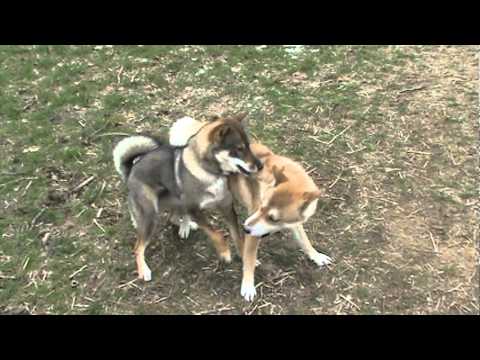
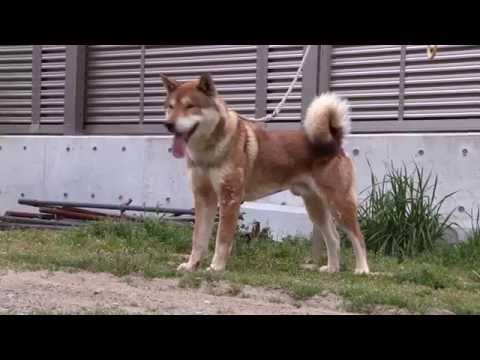
โ–ท The world of Pets: Dogs, cats, birds, reptiles, amphibians

Shiba Inu
Japรณn FCI 257 . Asian Spitz and related breeds

Shiba Inu

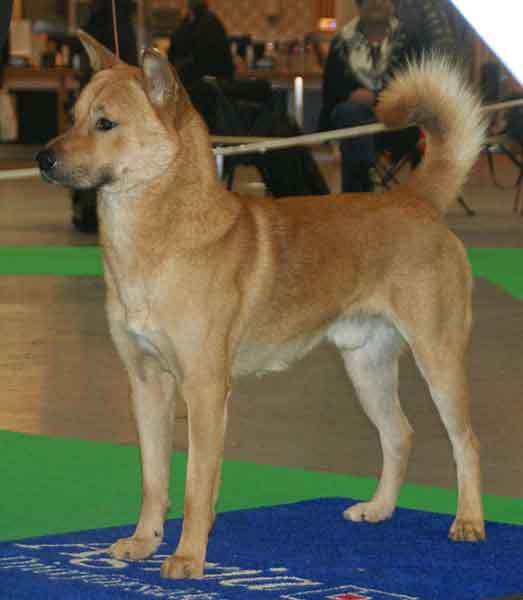
The Shiba Inu It is the smallest of the six original and distinct breeds of dog Japan.

Content

History

The Shiba Inu It is an ancient breed of Japanese dog. It is also known as Shiba or Shiba Ken. Shiba means "small" and "Inuยป or ยซKenยป means ยซdogยป in Japanese.

The Shiba It is the smallest of the six recognized Japanese dog breeds.

Historical representatives of the breed were much smaller and short-legged than current specimens. Mountain farmers kept them as farm dogs and to hunt small game and birds.. They could develop independently of other races and changed little. Towards the end of the 19th century the British brought their English Setters and Pointer. As a result, the Shiba Purebred became a rarity within a few decades. Almost a hundred years ago the breed was almost extinct. Around the year 1928 early breeders began to revive the breed and in 1934 established an official standard. Internationally, the FCI tells it in the Group 5 ยซSpitz-type and primitive type dogsยป in Section 5 "Asian Spitz and related breeds".

Physical Characteristics Shiba Inu

Translated ยซShiba Inuยป simply means ยซlittle dogยป. In fact, the Shiba Inu, weighing up to 13 kg, is the smallest representative of the six breeds of Japanese dogs recognized by the FCI.

The Shiba Inu is an original dog and a close relative of the wolf. Its appearance is reminiscent of a fox, especially with reddish specimens. Triangular standing ears stand out, the small slightly triangular eyes, as well as the curly tail, which is very close to the back. The hard and straight top coat can have the colors red, black tan, Sesame, as well as black or red sesame. "Sesame" in Japanese dogs means a mixture of red and black hairs. All colors must have the so-called ยซUrajiroยซ. They are whitish hairs on the muzzle, the chest, cheeks, as well as in the lower part of the body and inside the extremities.

Shiba Inu character and skills

The Shiba Inu is a perceptive and independent dog that never fully submits. In general, is lively, entrepreneur, affectionate and brave. He doesn't like to share his "properties" like baskets, food or toys with other dogs. But, with good socialization, living with other pets is possible. Relatively little thief, but can communicate with other sounds in complex ways. He is reserved and very reserved with strangers. You have a strong will and can convince your caregiver of your qualities. With his strong self-confidence you will have to compete with him at first, what can be a big challenge. But, the dog remains calm and collected and is never aggressive. If you acquire some authority, the Shiba is an affectionate and faithful four-legged companion.

Shiba Inu puppy education

The Shiba Inu he is a demanding dog that is difficult for beginners to understand. You need an owner who can cope with your complex and stubborn character. He never gives up his independence and needs a consistent and loving education. Punishment is not appropriate for sensitive dogs, because they are not only sensitive but also resentful. Even for experienced dog owners, stubborn dog can be a challenge. So, it will be a while before he accepts you as a higher ranking dog. For essential socialization, it is recommended to attend a dog school.

Activities with the Shiba Inu

Depending on how you are, the Shiba Inu can be very agile. Likes to decide for himself when he feels like moving, but he needs his daily walks. Depending on your character, some representatives of the breed are suitable for dog sports. If they make sense of it, Japanese dogs can be convinced of agility. Dogs can also be great companions when jogging or cycling. The strong hunting instinct coupled with the dog's stubbornness allows it to run freely without a leash only in rare cases. Preferred activities vary greatly from dog to dog. The owner's motivation to convince the dog of the benefits of an activity is also decisive. Silly recovery games or tricks are not very attractive to these serious dogs. This intelligent breed wants to understand the meaning of a task.

Shiba Inu health and care

The Shiba he is a robust and easy-care dog. But, you should brush their fur regularly. Loses its dense undercoat twice a year during coat change. If you don't want to fight with large amounts of hair at this time, you should regularly brush the dog to remove loose hair. Overall Shiba it is a clean and odorless dog, who is said to be clean as a cat.

With regard to health, the breed is one of the most robust breeds, but you should avoid great efforts in hot weather. Dogs feel more comfortable in the cold and snow. When it comes to nutrition, you should opt for a high-protein, high-meat diet.

Does the Shiba Inu suit me?

If you are looking for a demanding dog with a strong charisma, the Shiba Inu It will make you happy. It is a very clean dog, whose fur has little inherent odor. In general, the Asian dog breed is suitable for self-confident people who want to deal seriously and intensively with their dog. Beginners should refrain from buying this dog, despite his beautiful appearance. If you are sure of the breed, it is better to look for a breeder that belongs to an approved club. For a purebred puppy with papers you can calculate between 800 and 1500 EUR. Representatives of this breed are occasionally found in the shelter looking for a new home..

Shiba Inu curiosities

in his native country, Japan, the Shiba It is not only a "National Natural Monument", but together with the Akita Inu is the most popular companion dog. Due to its unique appearance, these dogs are also very popular in social media today. The Shiba most popular is probably the male Maru Taro (@marutaro) from the Japanese city of Nezu with more than 2,5 million subscribers on Instagram. Among Internet friends since 2013, the call Doge Meme has become particularly well known. It consists of a photo of a Shiba and a rudimentary text in English. The most used photo shows the male Kabosu, a dog adopted by the kindergarten teacher Atsuko Sato.

Breeders list "Shiba Inu"

REGISTER KENNEL

Creators of Shiba Inu

Offer your puppies for free. Sign up here.

  • This field is a validation field and should be left unchanged.
  • Enter an image of your kennel.


Characteristics "Shiba Inu"

Coexistence is important that you have with your new friend. Before considering the acquisition of a dog of the breed "Shiba Inu" you know certain factors. Not all breeds of dogs are apt to live in an apartment, you must take into account his character, their need for exercise, their interaction with other pets, their care and if you have small children, their level of tolerance towards them.

Training ?

2,0 of 5 stars (based on 1 review)

Suitability of the apartment ?

3,0 of 5 stars (based on 1 review)

Can be alone all day ?

3,0 of 5 stars (based on 1 review)

Suitable as a first dog ?

1,0 of 5 stars (based on 1 review)

Weight gain ?

3,0 of 5 stars (based on 1 review)

Health ?

4,0 of 5 stars (based on 1 review)

Intelligence ?

4,0 of 5 stars (based on 1 review)

Kindness with child ?

3,0 of 5 stars (based on 1 review)

Tendency to bite ?

3,0 of 5 stars (based on 1 review)

Tendency to bark ?

3,0 of 5 stars (based on 1 review)

Tendency to flee ?

5,0 of 5 stars (based on 1 review)

hair loss strength ?

4,0 of 5 stars (based on 1 review)

Suitable as a guard dog ?

5,0 of 5 stars (based on 1 review)

Joy ?

3,0 of 5 stars (based on 1 review)

Cat friendliness ?

2,0 of 5 stars (based on 1 review)

Power level ?

4,0 of 5 stars (based on 1 review)

Shiba Inu pictures

Videos of Shiba Inu

Type and recognitions:

  • FCI CLASSIFICATION:
  • Group :
  • Section : . .

Federations:

  • FCI – Group 5: Spitz-type dogs and primitive type – Section 5: Asian Spitz and related breeds. โ“˜
  • AKCNon-sporting โ“˜
  • ANKCGroup 6 (Utility) โ“˜
  • CKCGroup 6 – Non-Sporting โ“˜
  • โ€‹KCUtility โ“˜
  • NZKCUtility โ“˜
  • UKCNorthern Breeds โ“˜

FCI breed standard "Shiba Inu"

Origin:
Japan

Date of publication of the valid original standard:
30.10.2016.

Use:

Hunting dog for birds and small animals. Companion dog.


General appearance:

It is a small dog, well balanced, of good bones, with well developed muscles. Of strong Constitution. Quick, agile and beautiful.

important proportions: The relationship between the height at the withers and the length of the body is 10:11.


Behavior / temperament:

It is a dog of loyal temperament, keenly felt and very lively.

Head:

---

Cranial region:

Wide forehead.

  • Fronto-nasal depression (Stop): Defined, with a slight groove.

facial region:

  • Truffle: Preferably black. Straight nose cane.
  • Snout: Moderately thick; thins to the tip.
  • Lips: Closed.
  • Jaws / Teeth: Strong teeth; scissor bite.
  • Cheeks: Well developed.

Eyes: Relatively small, triangular and dark brown; the corner of the eyes turned up.

Ears: Relatively small, triangular, slightly bent forward and firmly erect.

Neck:

Thick, strong and well balanced with head and body.

Body:

  • Back: Straight and steady.
  • Pork loin: Broad and muscular.
  • Breast : Deep, ribs moderately arched.
  • Belly: Well collected.

Tail:

High implementation, thick and carried vigorously coiled or curved like a sickle; the tip of the tail almost reaches the hocks when hanging down.

Tips

Former members: Seen from the front, straight forelimbs.

  • Shoulder pads: Moderately oblique.
  • Elbows: They must be well attached to the body.

Later members:

  • Thigh: Long.
  • Legs: Short, but well developed.
  • Hocks: Thick and strong.

Pies: Fingers should be close together and well arched. The pads must be strong and elastic. Strong and desirably dark colored nails.

Movement:

The movement must be light and agile.

Mantle

Fur: The outer layer should be smooth-haired, with a hard texture, the undercoat should be of fine and abundant hair; the hair on the tail should be slightly long and kept parted.

Color: Red, Black with fire, sesame, sesame black, red sesame.

Sesam color definition:

ยท Sesame: Proportionate mix of black and white hairs.
ยท Sesame negro: More black hairs than white.
ยท Sesam brook: Coat color red, mixed with black hairs.

All above mentioned colors, except for the White, They must have ยซ URAJIRO ยป.

URAJIRO: Whitish hair on the sides of the muzzle and on the cheeks, under the jaw, neck and abdomen, under the tail, and on the inside of the legs.


Size and weight:

Height to the cross:

  • Males: 40 cm..
  • females: 37 cm..

A difference of more or less is tolerated 1,5 cm..


Fouls:

Any deviation from the aforementioned criteria is considered a fault and its seriousness is considered to the degree of the deviation to the standard and its consequences on health and
the welfare of the dog.

ยท Female males / male female.
ยท Defective occlusion (upper or lower prognathism).
ยท Absence of a large number of teeth.
ยท Shyness.

disqualifying fouls:

ยท Aggressiveness or extreme shyness.
ยท Any dog โ€‹โ€‹showing clear signs of physical or behavioral abnormalities should be disqualified.
ยท Ears not erect.
ยท Hanging or short tail.


N.B.:

ยท Males must have two normal-appearing testicles completely descended into the scrotum.
ยท Only functionally and clinically healthy dogs, with the typical conformation of the breed, should be used for parenting.

Source: F.C.I - International Cynological Federation

Alternative names:

1. Japanese Shiba Inu, Japanese Small Size Dog, Japanese Brushwood Dog, Japanese Turf Dog, Shiba Ken (English).
2. shiba inu (French).
3. Shiba-ken, Shiba Inu (German).
4. Shiba (Portuguese).
5. Japanese Shiba Inu, Japanese Small Size Dog, Shiba Ken (espaรฑol).

โ–ท The world of Pets: Dogs, cats, birds, reptiles, amphibians

Korea Jindo Dog
Corea del Sur FCI 334 . Asian Spitz and related breeds
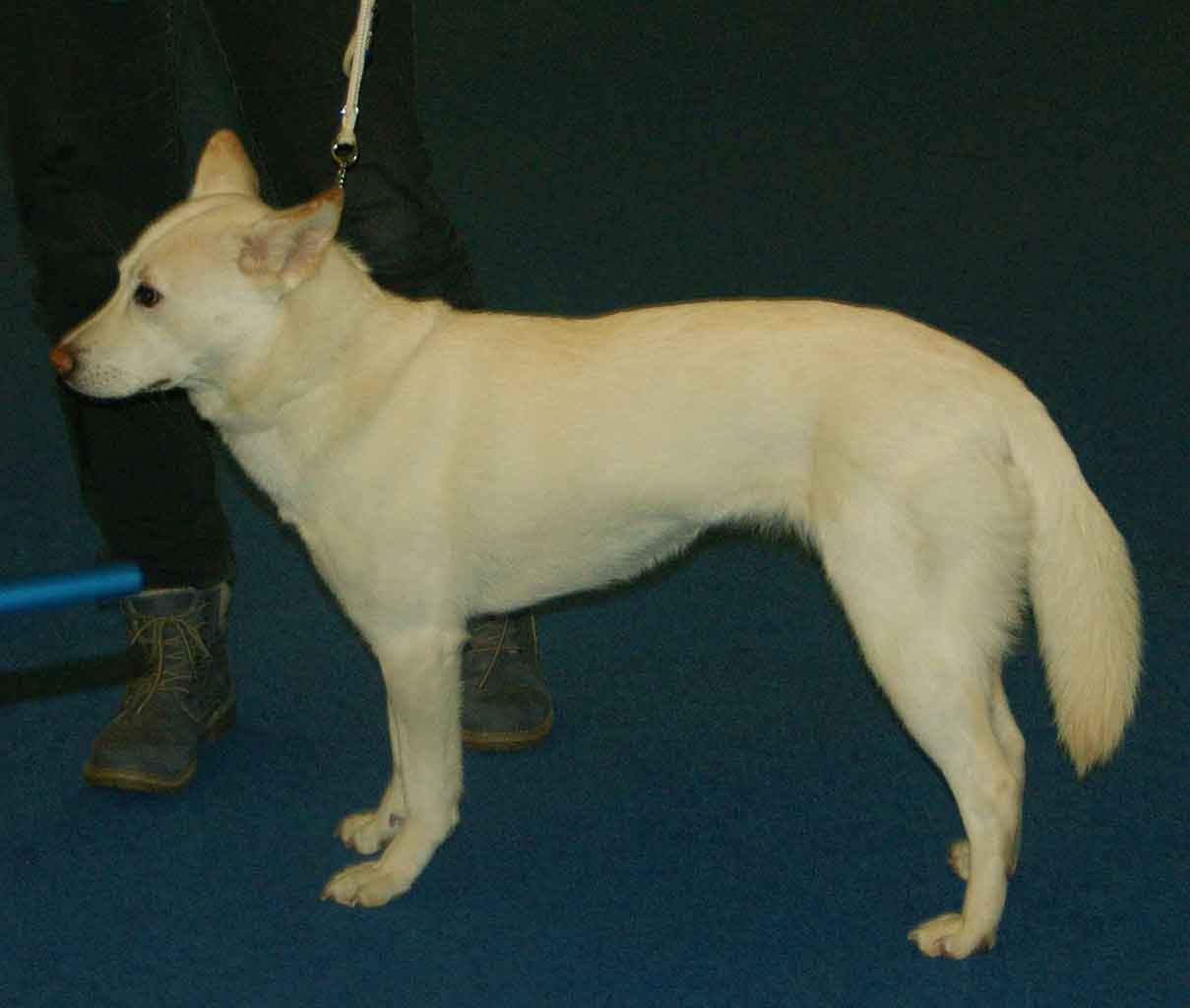
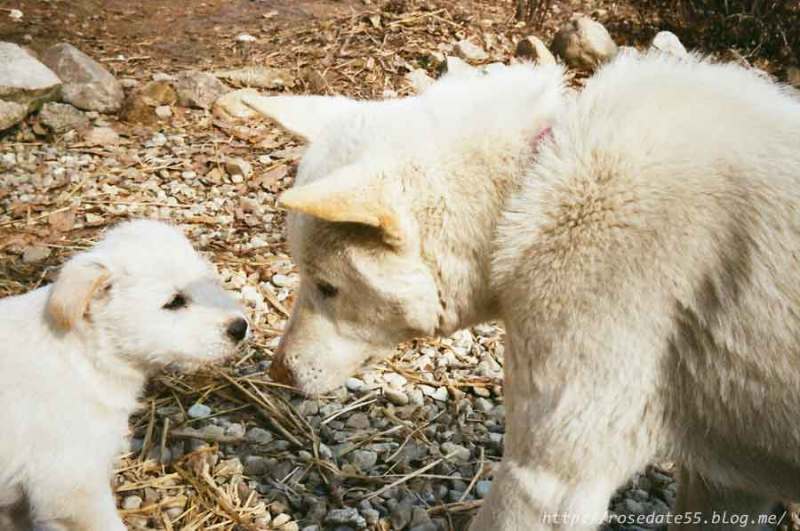
The Korea Jindo Dog It is the classic single master dog.

Korean Jindo

Content

Characteristics "Korea Jindo Dog"

Coexistence is important that you have with your new friend. Before considering the acquisition of a dog of the breed "Korea Jindo Dog" you know certain factors. Not all breeds of dogs are apt to live in an apartment, you must take into account his character, their need for exercise, their interaction with other pets, their care and if you have small children, their level of tolerance towards them.

Training ?

2,0 of 5 stars (based on 1 review)

Suitability of the apartment ?

2,0 of 5 stars (based on 1 review)

Can be alone all day ?

1,0 of 5 stars (based on 1 review)

Suitable as a first dog ?

1,0 of 5 stars (based on 1 review)

Weight gain ?

3,0 of 5 stars (based on 1 review)

Health ?

4,0 of 5 stars (based on 1 review)

Intelligence ?

4,0 of 5 stars (based on 1 review)

Kindness with child ?

3,0 of 5 stars (based on 1 review)

Tendency to bite ?

3,0 of 5 stars (based on 1 review)

Tendency to bark ?

4,0 of 5 stars (based on 1 review)

Tendency to flee ?

5,0 of 5 stars (based on 1 review)

hair loss strength ?

4,0 of 5 stars (based on 1 review)

Suitable as a guard dog ?

5,0 of 5 stars (based on 1 review)

Joy ?

4,0 of 5 stars (based on 1 review)

Cat friendliness ?

2,0 of 5 stars (based on 1 review)

Power level ?

4,0 of 5 stars (based on 1 review)

History

Korea Jindo Dog

The exact origins of this dog breed are lost in the dark of history.. With a probability that borders on certainty, it can be assumed that the breed is actually of Korean origin, more precisely from the island of Jindo in southwestern Korea. Due to the isolated geographic location, this type of dog was only found here. Finally, an export ban on the breed was imposed, which is still valid today.

In his homeland., the Korea Jindo Dog is under the protection of nature and species. In 1938 the breed was declared the national animal of Korea. But, some quadrupeds have crossed the borders: In the Decade of 1980, local people smuggled specimens into the US. In 2003 took place in Great Britain the first official exhibition of a Korea Jindo Dog outside asia. In the USA., the Korean Association of Jindo of America" โ€‹โ€‹is now working to preserve this breed.

Physical characteristics

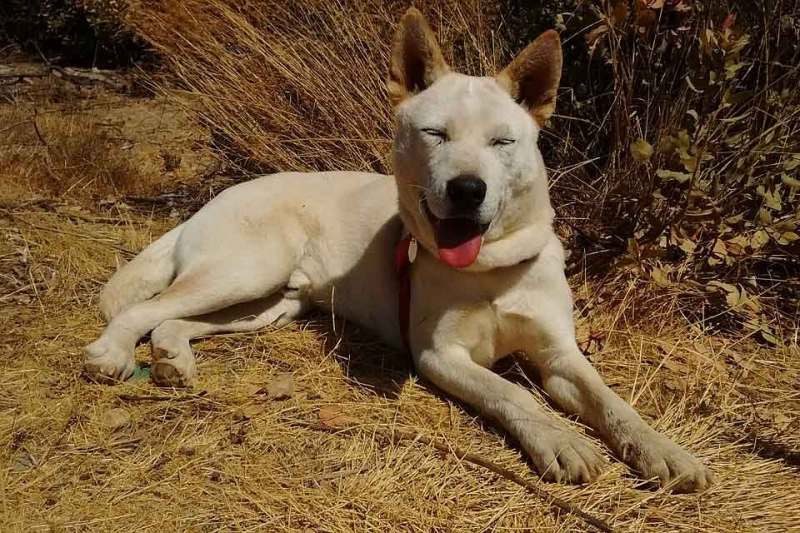
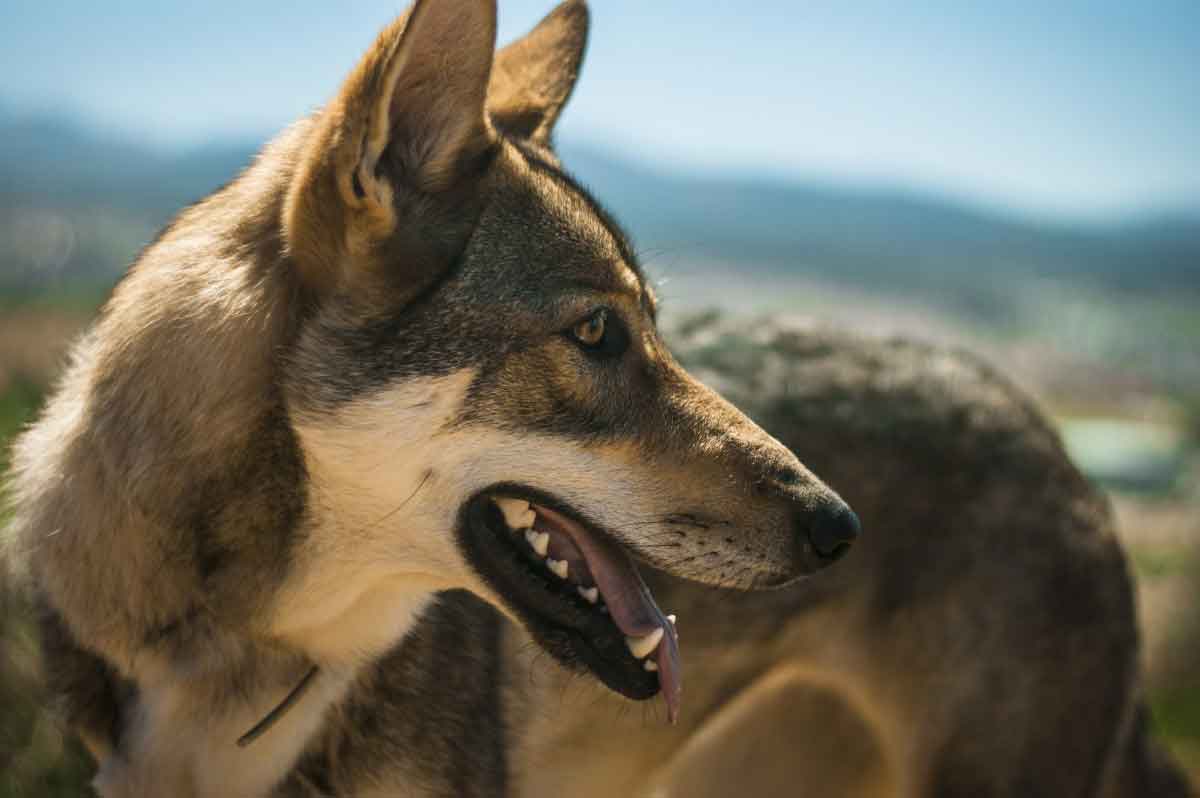
This four-legged Korean friend is one of the best in Asia. With a weight of about 14 to 21 kilograms and a height of 34 to 47 cm to the cross, the Korea Jindo Dog belongs to medium-sized dogs. Carries its tail curled or sickle-shaped on its back. The relatively small, upright ears are also typical of the point..

While in Korean standardized breeding only white and red coat colors are recognized, depending on the frame organization the following other coat colors are allowed: kitsch, black and tan, grey, black and Brindle.

Character and skills

The Korea Jindo Dog shows the corresponding original features. It is considered to be independent, territorial and has a strong hunting instinct, what can make living with other pets impossible, but it doesn't have to be that way with good socialization.

The breed is not easily disturbed and is characterized by great loyalty to its keeper.

It is reserved with strangers: When used as a watchdog, the Korea Jindo Dog indicate in a way the defense of your home your home. Many representatives of the breed do not accept food from strangers. These dogs are playful and intelligent, sometimes even "too smart", because they can learn to open doors, for example.

When looking for a Jindo, always look for responsible breeders – unfortunately there are also alleged breeders who have bred the Jindo for backyard dogfighting or otherwise have disproportionately promoted the aggressive side of this dog.

Education of the โ€œKorean Jindo Dogโ€

Consistent and clear communication, as well as some experience with dogs are necessary for the education of a Korea Jindo Dog. The docile dog is not only characterized by its intelligence, but also for its primitive behavior and great independence, that you must direct in a controlled way.

As the leader of the pack it is your task to make it clear to him that you know for sure and with confidence where to go.. The Korea Jindo Dog quickly use uncertainties and exceptions to take the helm himself. But, never confuse strong and confident leadership with toughness, as this could destabilize the Korea Jindo Dog and not just destroy educational successes, but also lastingly disturb the bond between you and your partner.

A dog school is a recommended opportunity to introduce the Korea Jindo Dog to other dogs of the same species and to further socialize them.

Health of the โ€œKorean Jindo Dogโ€

Robust Spitz

It is considered that Korea Jindo Dog it is a robust breed of dog, that he hardly has a predisposition to genetic diseases. Healthy animals can reach an average age of 13 years. The most important health precautions are already taken before birth, thanks to the experience of experienced breeders, that minimize the risk of disease by selecting suitable parent animals, including appropriate preventive exams. Accumulation of the autoimmune disease discoid lupus erythematosus has occasionally been reported (DLE). This skin disease is usually treated for life.

It also, there are some cases of hypothyroidism, what is the lack of thyroid hormone supply to the body. In the Korea Jindo Dog this disease is usually manifested through aggression or apathy and changes in the coat. Otherwise, The same as us, two legged friends, sufficient exercise and healthy nutrition are other important pillars of health. Increased risk of food intolerance in some Jindos can also be counteracted with a balanced diet.

Nutrition of the โ€œKorean Jindo Dogโ€

A high-quality, grain-free, meaty diet is, fortunately, not just appropriate for the species, but also tasty. Both are important criteria, since it is considered that the Korea Jindo Dog is relatively selective. It is best to accustom him to several varieties of the same quality from the age of the puppy. This way you won't find yourself in a situation where, due to prescription changes or delivery issues, suddenly there is no more pet food and you have no alternative. It also, you can usually change different known foods of the same quality without your dog having digestive problems.

Regarding the amount of daily feeding, manufacturers' information can only give approximate values. If you notice that your Jindo is gaining too much weight, adjust your diet accordingly. You should also include treats in your daily ration. It's best to stick to healthy treats, like dental care snacks or dog treats that are 100% meat. Sugar has no place in reward food or snacks. With dry chews such as special dog bones or cow's ears, which are much less greasy than pig's ears, you can satisfy your friend's chewing needs from your Korea Jindo Dog.

Make sure he always has enough water around him to quench his thirst at any time.

Care of the โ€œKorean Jindo Dogโ€

The coat of this breed consists of a soft undercoat, depending on the season, and a hard coat. Especially during the coat change twice a year, the Korea Jindo Dog lose a lot of hair. You can limit hair loss on the floor accordingly, combing daily. Outside of coat change time, a weekly hairstyle is enough. At this time you can also check their ears and eyes for dirt and if they need to be cleaned with special ear and eye cleaners for dogs..

The dirt on the coat is better to let it dry and then comb it out. A bath is not normally necessary, but it may be a good idea to gently accustom the Korea Jindo Dog, to a bathroom when he's still a puppy, so it can be cleaned every few months. Be sure to use a mild dog shampoo to avoid damaging the dog's own skin.. Take a regular look at the claws, especially with older dogs. If they are too long, shorten them with claw scissors. This will prevent your dog from getting painfully stuck with them and possibly injuring himself.

Activities with the โ€œKorean Jindo Dogโ€

give to you Korea Jindo Dog plenty of room to run, also as a jogging partner, but always on a leash. Also for free rescue and search dog work not suitable due to strong hunting instinct. Some Jindos like to learn tricks and play with various toys with great pleasure., that are available in stores. By the way, the Korea Jindo Dog normally stays away from water, so the common splash in the lake should not be included in the list of possible destinations. Many Korea Jindo Dog they even avoid small streams or puddles, refuse to cross a bridge or do not want to go outside in the rain. To enjoy travel without restrictions, should show the young dog that the water on the trail is not a cause for concern and casually, and possibly supported with treats, get used to the unwanted item. Don't force your Jindo to jump into a pond or something similar – will probably never turn into a water rat.

Before Buying a โ€œKorean Jindo Dogโ€

Few dog lovers in Europe are likely to ask this question, since the Korea Jindo Dog It's very weird. It also, you must be a nature lover and have a house or apartment at ground level in the countryside, because this four-legged friend must have a fenced-in property at his disposal, who can monitor. The fence must be generously planned, because the breed has a clear talent for jumping. So, The minimum height of a fence should be 1,80 m. But still keep an eye on your four-legged friend: Many young Jindo, if you have been alone for too long, the urge to discover has taken hold of him: The cunning dogs have quickly learned that a path can be prepared by digging even under fences.

In any case, the intelligence of Jindo can be too much for quite comfortable dog owners who are supposed to keep you physically and mentally busy. This active and above average dog will take up a lot of time on your trips together, because you need to go out, what should normally be done on a leash due to his hunting instinct.
Can be well kept in a family, also with children. Sociable four-legged friend doesn't like to be alone, so he must either be left alone for a very short time or you keep him together with another dog. In Korea it is common for dogs to live outside the house.

The breed is excellent as a guard dog and often recognizes family acquaintances and friends from a distance. You can also befriend the postman if you make it clear that you are one of the "good guys.".

Where can I find a โ€œKorean Jindo Dog?โ€?ยป

In Europe it is not easy to find a Korea Jindo Dog; for example, in Germany not a single litter has been registered in recent years and there are no active breeders. Here it is necessary to investigate to find the nearest breeder. Of course, some breeders also export from abroad, for example from the United States, but this is time consuming and should only be considered for absolute connoisseurs and lovers of the breed. But, might be worth taking a look at asian races Shiba Inu and Akita, which are much more common in Europe and have some similarities to the Korea Jindo Dog. When adopting a puppy from abroad, please consider the relevant entry requirements and especially the necessary vaccinations.

If you are looking for a Korea Jindo Dog adult, you must be on a real winning streak to find one in Europe. It is true that dog owners sometimes underestimate the time and knowledge required for education and harmonious coexistence with a Korea Jindo Dog and, therefore, they give up their four-legged friend. But, this is extremely rare in Europe due to the very small number of Korea Jindo Dog.

Images "Korea Jindo Dog"

Photos:

1 – Korea Jindo Dog by https://pixabay.com/es/photos/perro-feliz-sol-perro-feliz-1792601/
2 – Korea Jindo Dog by https://pixabay.com/es/photos/progreso-perro-jindo-coreano-perro-1138824/
3 – Korea Jindo Dog by https://pixabay.com/es/photos/cachorro-perro-el-progreso-del-perro-1874281/
4 – A male Korea Jindo Dog. Colour: red by Canarian / CC BY-SA
5 – Korea Jindo Dog by https://flic.kr/p/dYtSF9
6 – A male Korea Jindo Dog. Colour: red. by Canarian / CC BY-SA

Videos "Korea Jindo Dog"

HTTPS://youtube.com/watch?v=KFZg8QknBB8
Korean Jindo – TOP 10 Interesting Facts
HTTPS://youtube.com/watch?v=GvesVZwyuCc
Jindo or Chindo Dog – Breed of dog

Type and recognitions:

  • FCI CLASSIFICATION:
  • Group :
  • Section : . .

Federations:

  • FCI – Group 5: Spitz-type dogs and primitive type – Section 5: Asian Spitz and related breeds. โ“˜

FCI breed standard "Korea Jindo Dog"

Origin:
South Korea

Date of publication of the valid original standard:
13.07.2005

Use:

Without working trial.


General appearance:

The Korea Jindo Dog is a medium-sized dog, well proportioned, used for hunting and as a guard. Its pricked ears and coiled or sickle-shaped tail give it a vivid expression of agility., Fortress, vigilance and dignity.

IMPORTANT PROPORTIONS : Relationship between the height of the cross : body length = 10:10,5.


Behavior / temperament:

The Korea Jindo Dog has a very strong hunting instinct.; In addition to being bold, bravo, alert and careful, not allowed to tempt easily and is hot-headed. First and foremost, is extremely faithful to its owner. It is reserved with strangers. In general, is not affectionate with other animals, especially if male. It also has a good sense of orientation. It is a dog of a single owner; He quickly agree to a new owner but it never forgets its ties with the previous owner who raised him since that was puppy. Stays clean and eat little.

Head:

In general, The head forms an obtuse triangle when viewed from above and should not make the dog appear clumsy or clumsy..

Cranial region:

The skull is medium in size in proportion to the body.. The top is slightly rounded, and gradually thins to the eyes. The width between the ears is moderate in relation to the size of the head.

  • Stop : Well defined, but not too abrupt. It has a slight furrow that extends to the forehead.

facial region:

  • Nose : black. In case of white dogs, flesh colored nose is allowed.
  • Snout : The muzzle should not be bulging or raised.
  • Lips : Blacks; well closed, They are thin and not pendulous; the upper lip slightly covers the lower lip.
  • Bite / Teeth : Very strong, scissor bite.
  • Cheeks : Well developed, thin and moderately round when viewed from the front or side; narrowing to the tip of the nose.
  • Eyes : dark brown color, somewhat small in proportion to head size, almond-shaped and very expressive. The outer corners of both eyes are slanted towards the ears.
  • Ears : Medium-sized, form triangular, thick and perfectly erect; insertion ears neither high nor low, directed slightly forward in line with the back of the neck. The presence of fine, dense hair on the inside of the ears is desirable..

Neck:

Something balanced and thick, without jowl, strong, with good musculature. The Korea Jindo Dog wears its neck proudly and arched well when excited..

Body:

  • Back : Strong and straight.
  • Pork loin : With good muscles, stiff, thin and narrower than the rib cage.
  • Breast : Strong and moderately deep, but not too wide. The deepest point of the chest reaches just above the elbow, but it is also acceptable for it to reach elbow level. Well arched ribs. Fairly developed chest.
  • Belly : Withdrawn.

Tail:

When it hangs up, the tip of the tail should reach the tibiotarsal joint. Rather tall insertion root; is straight and firm and should not sway when the dog moves. Whether sickle-shaped or rolled, the tip of the tail touches the back or flank. It should not be too twisted. The tail has abundant feathers.

Tips

PREVIOUS MEMBERS : Seen from the front, they are straight and parallel.

  • Shoulder : Strong and powerful and well inclined.
  • Elbows : Glued to the body, no outward or inward deviation.
  • Metacarpus : Slightly bent forward, when viewed from the side.
  • Pies : Cat feet. Rather short fingers, rounded, compact and firm. Strong nails, preferably black. Thick, well-cushioned ear pads.

LATER MEMBERS : Viewed from the side, They are moderately angled; seen from the back, they are straight, parallel and not too far apart or too close to each other. Dewclaws must be removed except in countries where their excision is prohibited..

  • Thighs : well developed.
  • Legs : Moderately angled.
  • Tibio-tarsal and metatarsal joints : Placed very low; they are not straight but moderately angled.
  • Hind feet : Identical to the previous ones.

Movement:

The movement of the Korea Jindo Dog is powerful and firm. The back should remain firm and level, and the hind limbs should not oscillate. When jogging, keep your head high, but as the speed increases, the head is carried low, almost at shoulder level. The upper part of the tail moves slightly according to the change of direction the dog makes..

Mantle

HAIR : The Korea Jindo Dog has a double coat of hair. The inner layer is smooth, dense, pale, But enough to sustain the outer layer. The outer layer is stiff and somewhat separated from the body. Compared with the hair covering the body, the hair of the head, members and ears is shorter, and neck, cross, back and trunk is longer. The hair of the tail and rear of the thighs is longer than the rest of the body.

COLOR : The colors of the Korea Jindo Dog are reddish bay, white, black, black and tan, wolf gray and brindle.


Size and weight:

Height to withers :

  • Males : 50-55 cm., ideal 53-54 cm..
  • females : 45-50 cm., ideal 48-49 cm..

WEIGHT :

  • Males : 18-23 kg.
  • females : 15-19 kg.


Fouls:

Any deviation from the aforementioned criteria is considered a fault and the severity of it is considered to the extent of the deviation from the standard and its consequences on the health and well-being of the dog..

โ€ข Insufficient musculature.
โ€ข Bones that are too thick or thin.
โ€ข Pincer bite.
โ€ข Ears not erect.
โ€ข Hanging tail, short tail.
โ€ข Exaggerated angulations.
โ€ข Straight tibio-tarsal joints, cow or barrel.
โ€ข Long or short hair.
โ€ข Irregular step, stiff step.

MISS PLAYOFFS :

โ€ข Aggressive or fearful dog.
โ€ข Size too big or too small.
โ€ข Prognathism or enognathism.
โ€ข Female-looking male, female with masculine appearance.
โ€ข Lack of more than 3 teeth.
โ€ข Lack of pigmentation, albinism.
Any dog โ€‹โ€‹showing clear physical or behavioral abnormalities should be disqualified..


N.B.:

Males should have two normal-appearing testicles fully descended into the scrotum..

Source: F.C.I - International Cynological Federation

Alternative names:

1. Jindo, Chindo, Jindo Gae, JindoGae (English).
2. spitz corรฉen de Jindo (French).
3. Jindot-gae, KOREANISCHER JINDO (German).
4. Jindo (Portuguese).
5. Perro de Chindo, Jindo, Yindo (espaรฑol).

โ–ท The world of Pets: Dogs, cats, birds, reptiles, amphibians

Japanese Spitz
Japรณn FCI 262 - Asian Spitz and related breeds
Japanese Spitz

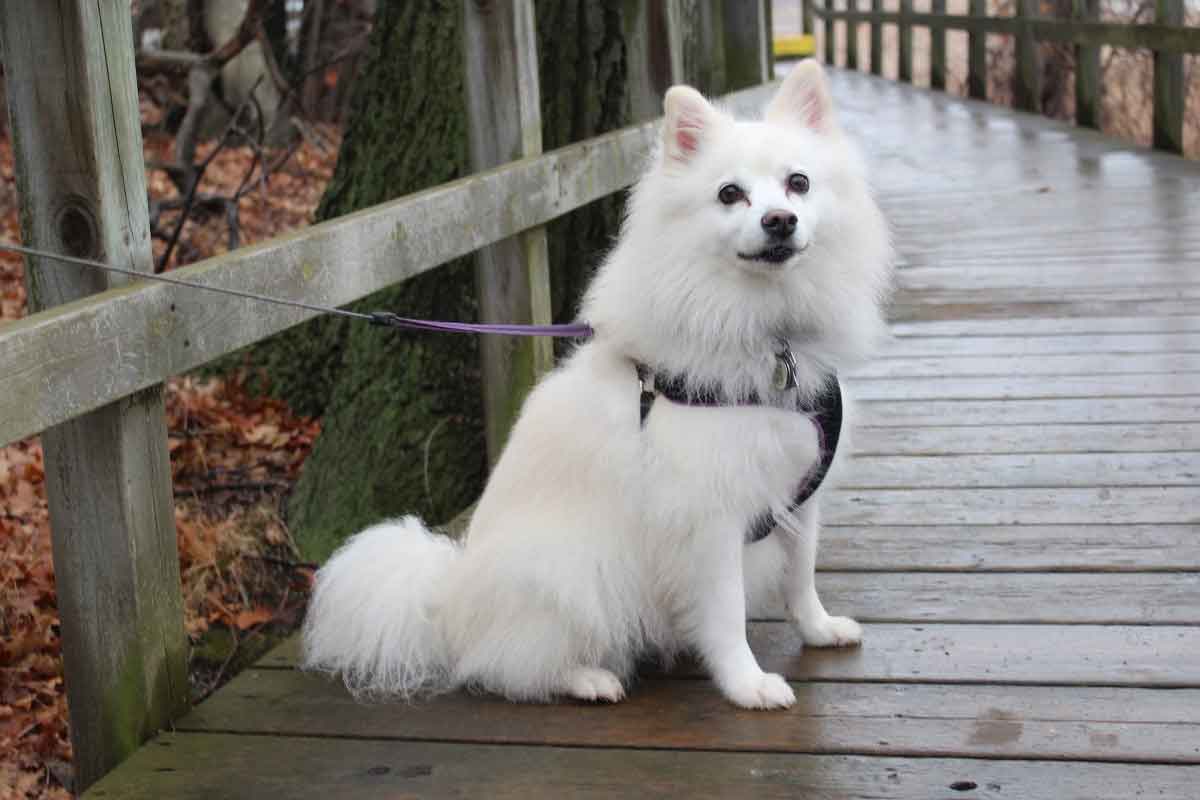
The Japanese Spitz he is a very people-oriented dog.

Content

History

The strong similarity to the Mittelspitz (Standard or Medium Spitz) German allows us to suppose that the Japanese spitz descends from this same race. Other cynologists assume that the Spitz descends from the Nordic Spitz. One thing is for sure: the origin of Japanese spitz not in japan, but in Europe. From there he arrived in Japan at the beginning of the 20th century along with travelers.

The attractive white dog with the charming character quickly gained popularity among the Japanese population. With more caps from China, Canada and the US, own breeding was established in Japan in the years 20. While in Europe an attempt was made to increase the size of the lace, thus creating the German Spitz, the Japanese tended to opt for the more original compact form. In 1948 the Japanese Kennel Club established a first breed standard for the first time. As country of origin, Japan was indicated in the standard. The FCI, that has officially recognized the Japanese spitz from 1964, includes it today in the Group 5 (Spitz and dogs of the original type), as well as in the Subsection 5 (Asian Spitz and related breeds), under Standard No. 262.

In his native Japan, the Japanese spitz it was very popular for a long time, especially in the years 50 the last century. Although it is still more common there in terms of numbers than in Europe, the demand of the little companion is gradually changing. While in Japan the number of recently registered puppies is declining, is increasing in North America and Europe.

Physical characteristics ยซJapanese Spitzยป

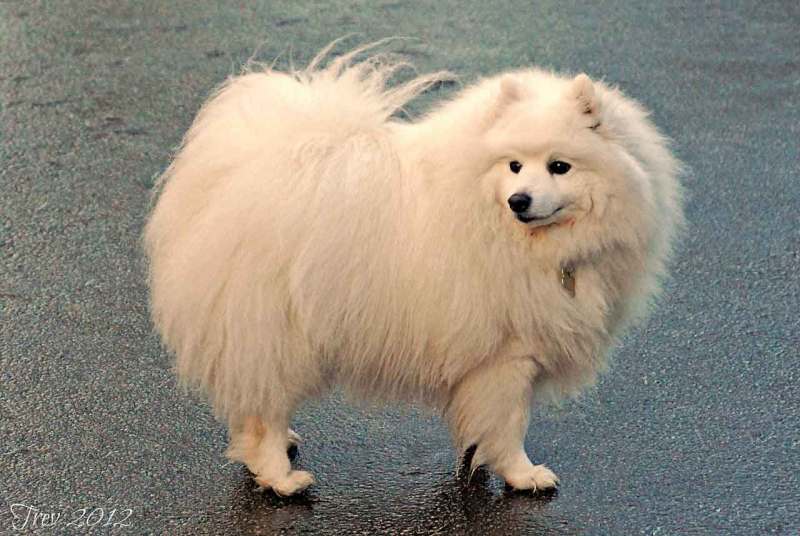
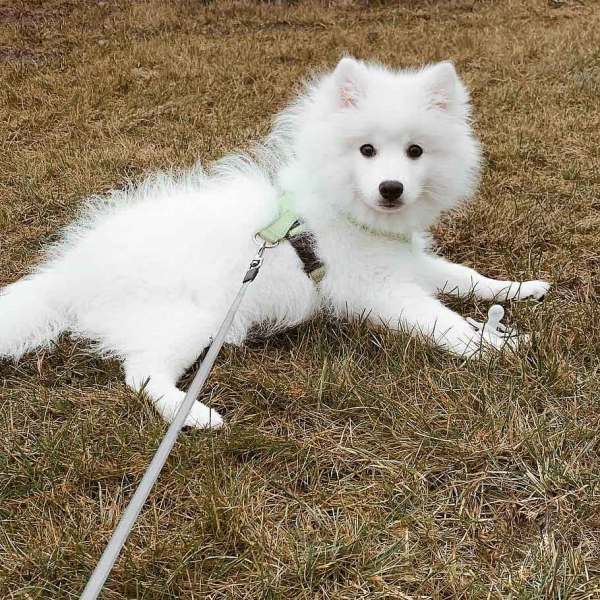
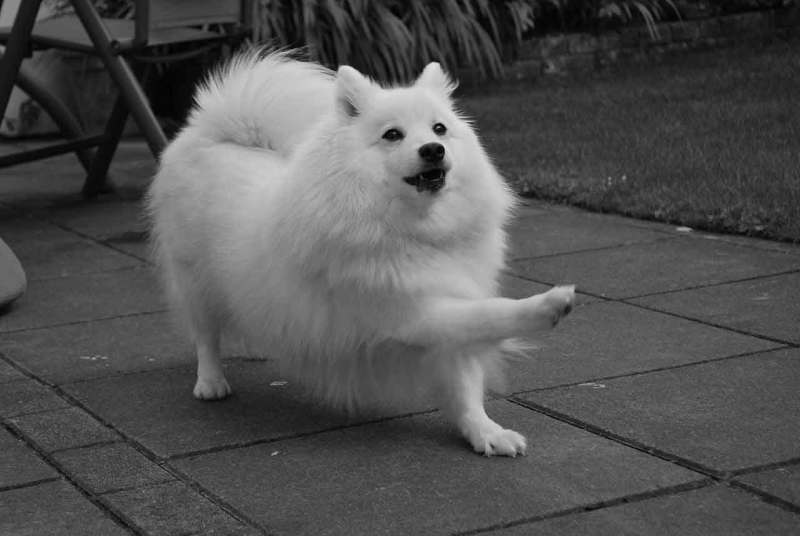
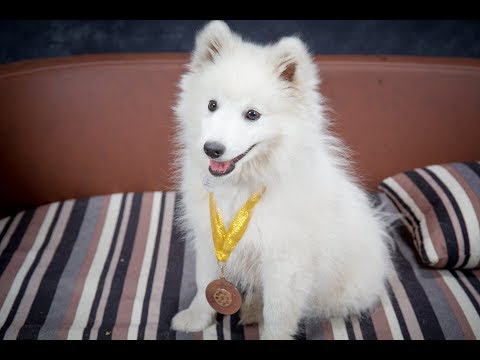
This breed is distinguished by the fact that it is exclusively pure white.. Thanks to his straight and dense hair, the Japanese Spitz seems strong. What is no less important, it is also caused by the swollen inner layer. The beautiful ruffle on the shoulder, neck and sill contributes to attractive appearance. Typical of the tail is a long and voluminous flag.

Despite her short legs, the Japanese Spitz is sporty and extremely agile. Due to its balanced proportions, the appearance of this compact pedigree dog is both striking and harmonious.

The height at the cross – the elevated transition from neck to back – tends to be of 30 to 38 cm in adult males. Females reach a somewhat smaller size. The Japanese Spitz weighs between 4,5 and 11 kg.

Character and abilities ยซJapanese Spitzยป

The well balanced nature of the Japanese Spitz fits the very harmonious appearance. He is an attentive guard. Anyone who approaches him is not immediately signaled with a savage bark. Only when the Japanese pedigree dog feels a serious threat, gets loud and fights back vehemently.

At home, the Japanese Spitz behaves quite calmly. Abroad, on the other hand, he likes to show the energy he has inside him. To enjoy the Japanese Spitz, you must like a little dog who likes to play. You should also have fun on long trips with your four-legged friend.

The Japanese Spitz he is a very people-oriented dog. Whether it belongs to one person or has a master or caregiver at the same time, he does not care. He also likes to live with the family. The company of people is the priority. Pets or other pets are not enough. Although the Japanese spitz usually get along with them. So if you're short on time for a dog, a Japanese Spitz probably not the right thing for you.

The white puppy enjoys the company of people and would like to be with them always and everywhere.. He is very receptive and eager to learn. Which makes education in combination with devotion quite easy even for untrained dog owners.

An apartment in the city is suitable for him, as long as you are well occupied with extensive walks and activities.

ยซJapanese Spitzยป Care

Despite the hereditary predisposition to many diseases, Many of the ailments can be avoided by taking proper care of your Spitz. Dental problems in particular can be prevented through regular dental care, that is to say, brush your teeth at least once a week, or better daily. Diseases or inflammations of the eyes, nose, ears and claws can also be detected and treated at an early stage through proper care and regular check-ups. Another important aspect of grooming is the care of the coat of the Japanese spitz. Despite the impressive and luxurious fur, This is not very elaborate and therefore it is usually sufficient if the hair is combed or brushed thoroughly twice a week. Only in the coat change phase (twice a year) grooming effort increases until daily styling.

Japanese Spitz health

An indication of good and serious parenting is the presentation of genetic test results.. The breeding animals used must have an impeccable genetic makeup to exclude genetic diseases from the start. Dogs in which hereditary diseases typical of the breed have occurred should be excluded from breeding for the sake of the health of the breed. This also includes the tendency to dislocate the patella (slipping of the patella out of its guide), which can also be inherited in many dogs, especially in small dog breeds. Also eye problems, such as distichiasis or narrowing of the tear ducts, as well as dental problems can occur with the Japanese spitz. No other diseases typical of the breed are known..

The correct nutrition of the ยซJapanese Spitzยป

In a special way, correct nutrition contributes to the health and well-being of the Japanese spitz. Small dogs with a very compact constitution have a strong tendency to be overweight. Too many pounds can easily lead to joint disease and heart and circulation problems.. Overweight dogs are also at higher risk for diabetes.

As the owner of a Japanese spitz, you should always keep the amounts recommended by food manufacturers. It also, the dog should not be given too many treats between meals.

It is not only the quantity but also the quality of the food that is important. Besides vegetables or rice, good dog food consists largely of high-quality meat. Poor quality food often contains an excessive amount of cereals. Under no circumstances should it contain flavor enhancers or sweeteners.

Before buying, you should find out the exact composition of the dog food in the manufacturer's instructions. Several vendors offer good and safe dog food, both dry and wet.

It is not unusual for dog owners to prefer homemade dog food. This can also be an alternative to the ready-to-eat food available in stores for the Japanese spitz. But, it is essential that you acquire the necessary knowledge to cook balanced dog food for yourself.

The diet BARF it is also a good way to feed Japanese spitz with a healthy diet. BARF means ยซBone And Raw Foodยป (Bones and raw foods). All food components, like meat, fish, vegetables or fruit, they are only given raw. Various vendors and specialty stores facilitate BARF to the dog owner. Like cooking food, this feeding method requires a certain amount of knowledge about the correct use of raw ingredients.

You must feed a puppy of 3 to 5 times a day, an adult raw food and bones 2 times a day.

Buying a "Japanese Spitz"

Despite the growing popularity and demand in the European and American continent, the Japanese spitz still belongs to the rare dog breeds. The waiting period for a new litter at a breeder can be very long. Who doesn't necessarily care about a purebred puppy, but also consider buying a Spitz adult, should – parallel to the search for a breeder – also look around the animal shelter, where over and over again Spitz or the crosses of Spitz they are waiting for a new and loving home. A puppy, on the other hand, should only be purchased from a serious and certified breeder.

How do I recognize a serious breeder?

When choosing a suitable breeder, various factors play a role. It's not just the "formalities" that must be correct, that is to say, the papers, the pedigree and the contract of sale, but also the personal reasons that ultimately decide the purchase. The breeder must, first, be understanding with you, and this cannot be found out with a short email or a short phone call. One or better several meetings are necessary to get a complete picture of the breeder and his dogs.. Does the breeder invite you to his house? Do you willingly show your "kennel" and do the animals live in close contact with the breeder's family? The first weeks are very important for the socialization of the puppies and therefore the environment must correspond absolutely to the affectionate nature of the puppies. Japanese spitz. It also, a serious breeder will be able to tell you a lot about the breed and its characteristics. They will also ask you about your life circumstances to make sure your puppy has fun with you..

Characteristics "Japanese Spitz"

Coexistence is important that you have with your new friend. Before considering the acquisition of a dog of the breed "Japanese Spitz" you know certain factors. Not all breeds of dogs are apt to live in an apartment, you must take into account his character, their need for exercise, their interaction with other pets, their care and if you have small children, their level of tolerance towards them.

Training ?

5,0 of 5 stars (based on 1 review)

Suitability of the apartment ?

4,0 of 5 stars (based on 1 review)

Can be alone all day ?

2,0 of 5 stars (based on 1 review)

Suitable as a first dog ?

5,0 of 5 stars (based on 1 review)

Weight gain ?

5,0 of 5 stars (based on 1 review)

Health ?

4,0 of 5 stars (based on 1 review)

Intelligence ?

4,0 of 5 stars (based on 1 review)

Kindness with child ?

5,0 of 5 stars (based on 1 review)

Tendency to bite ?

2,0 of 5 stars (based on 1 review)

Tendency to bark ?

2,0 of 5 stars (based on 1 review)

Tendency to flee ?

2,0 of 5 stars (based on 1 review)

hair loss strength ?

5,0 of 5 stars (based on 1 review)

Suitable as a guard dog ?

3,0 of 5 stars (based on 1 review)

Joy ?

4,0 of 5 stars (based on 1 review)

Cat friendliness ?

4,0 of 5 stars (based on 1 review)

Power level ?

4,0 of 5 stars (based on 1 review)

Images "Japanese Spitz"

Photos:

1 – Japanese spitz by https://pxhere.com/es/photo/1273902
2 – Japanese Spitz Siberia by 0894Leanne, CC BY-SA 3.0, via Wikimedia Commons
3 – Japanese Spitz Puppy by mostlegendary@gmail.com, CC BY-SA 3.0, via Wikimedia Commons
4 – Japanese spitz by https://www.pikist.com/free-photo-sixhn
5 – Japanese spitz by https://www.pxfuel.com/en/free-photo-xghfb
6 – Japanese Spitz by Trev Grant, CC BY 2.0, via Wikimedia Commons
7 – Japanese Spitz by https://www.pikrepo.com/fflza/japanese-spitz-near-wall

Videos "Japanese Spitz"

Kubo - Japanese Spitz Puppy - 2 Weeks Residential Dog Training
Kubo – Japanese Spitz Puppy – 2 Weeks Residential Dog Training
Japanese Spitz / Breed of dog
"Japanese Spitz" / Breed of dog

Type and recognitions:

  • FCI CLASSIFICATION:
  • Group :
  • Section : . .

Federations:

  • FCI – Group 5: Spitz-type dogs and primitive type – Section 5: Asian Spitz and related breeds. โ“˜
  • ANKC – Group 7 (Non-Sporting) โ“˜
  • CKC – Group 6 – Non-Sporting โ“˜
  • โ€‹KC – Utility โ“˜
  • NZKC – Non-Sporting โ“˜
  • UKC – Northern Breed Group โ“˜

FCI breed standard "Japanese Spitz"

Origin:
Japan

Date of publication of the valid original standard:
16.06.1999

Use:

Companion dog.


General appearance:

Its body is covered with abundant white fur., the snout is sharp, triangular and erect ears, The tail is covered with long feather-shaped hair and curls over the back.. Robust and well balanced constitution, Its harmonious beauty gives it a lively appearance and dignity characteristic of this breed., that at the same time denotes elegance.

IMPORTANT PROPORTION : The relationship between the height at the withers and the length of the body is 10 : 11.


Behavior / temperament:

It is an intelligent dog, joyful, with keenness of senses. Boisterous nature is not allowed.

Head:

The size of the head should be in harmony with the body and should be moderately wide and rounded.

Cranial region:
  • Skull : The forehead is moderately developed. The back of the skull is very wide.
  • Depression links (Stop) : Defined.

facial region:

  • Nose : Small, rounded and black.
  • Snout : Pointed, the tip slightly rounded and well balanced. Lips adherent and preferably black.
  • Jaws / Teeth : Strong white teeth with scissor bite.

Eyes : Moderately large, almendrada form, placed slightly oblique, dark colored. The edges of the eyelids black.

Ears : High insertion, small, triangular, upright, directed forward and placed not too far apart.

Neck:

Moderately long and very muscular.

Body:

  • Cross : High.
  • Back : Straight and short.
  • Kidney region : Wide.
  • Chest : Wide and deep, well arched ribs.
  • Abdomen : Well collected.

Tail:

High insertion, moderately long and carried on the back.

Tips

PREVIOUS MEMBERS : Well inclined shoulders, forearms straight and elbows close to the body.

LATER MEMBERS : Muscular, the femoro-tibio-patellar joints (knees) and tibio-tarsals (hocks) moderately angled.

FEET : Cat feet. Thick and desirably black pads, the same as nails.

Movement:

Fast and active.

Mantle

HAIR : The hair of the outer coat is straight and remains separated. The hair of the undercoat is short, dense and soft texture. The face, the ears, the front part of the limbs and under the hocks are covered with short hair; the rest of the body is covered with long, abundant hair, especially from neck to shoulders, and the parapet that has a beautiful ruff of hair. The tail also has abundant long feather-shaped hair..

COLOR : Pure white.


Size and weight:

Height to the cross :

  • Males : 30 โ€“ 38 cm..
  • females : slightly smaller than males.


Fouls:

Any deviation from the aforementioned criteria is considered as a fault and the severity of this is considered to the degree of the deviation to the standard and its consequences on the health and well-being of the dog..

โ€ข Upper or lower prognathism.
โ€ข Firmly coiled tail.
โ€ข Shyness, noisy dog.

MISS PLAYOFFS

โ€ข Aggressive or fearful dog.
โ€ข Floppy ears.
โ€ข Tail not carried over the back.

Any dog โ€‹โ€‹showing clear signs of physical or behavioral abnormalities must be disqualified..


N.B.:

Males should have two normal-appearing testicles fully descended into the scrotum..

Source: F.C.I - International Cynological Federation

Alternative names:

1. Nihon Supittsu (English).
2. Nihon Supittsu (French).
3. Nihon Supittsu (Japan-Spitz), Japanischer Spitz (German).
4. Nihon Supittsu (Portuguese).
5. Nihon Supittsu (espaรฑol).