โ–ท The world of Pets: Dogs, cats, birds, reptiles, amphibians

Alpine Dachsbracke
Austria FCI 254 - Leash (scent) Hounds

Perro tejonero alpino

The Alpine Dachsbracke has a courageous personality, friendly and intelligent

Content

History

The appearance of this short-legged dog suggests a very ancient breed. The Alpine Dachsbracke it is one of the oldest breeds of hunting dogs in Central Europe. It was already mentioned in the seventeenth century and represented in paintings.

In the last quarter of the nineteenth century, Crown Prince Rudolf von Habsburg had this type of hunting dog run by his professional hunters.. The dog's appearance was unbalanced for a long time. Each canton raised its Alpine Dachsbracke differently.

But it is not a cross between a Sausage dog and Bracco, as the German name suggests ยซAlpenlรคndische Dachsbrackeยซ, but an independent race. Visually, the Alpine Dachsbracke gets closer to the Dachshund, but it's much bigger and stronger.

In the 19th century, there were numerous subspecies of Alpine Dachsbracke in the swiss alps, Bavarians and Austrians, that still differed greatly in appearance.

At the end of the 19th century, many breeders of this breed of dog were in the Erzgebirge, so the race kept calling Alpenlรคndische Erzgebirgler Dachsbracke until 1975. Another name is the Dachsbracke Austrian.

This is because the current Club Dachsbracken is located in Austria. The goal of breeding, both then and now, is to maintain the health and performance of this ancient breed of dog.

In order to establish a constant shape, a uniform appearance and appropriate breed characteristics, the first International Club of Dachsbracken was founded in Munich in 1896.

In 1908 the club disbanded again. In 1910 the Austrian Dachsbracke Club was founded, which is still engaged in the breeding of the Alpine Dachsbracke.

In 1932, the Alpine Dachsbracke was officially recognized by the Austrian Kennel Club (with him "Bavarian Mountain Hound" and the "Hanoverian Scenthoundยซ) like the third breed of hound.

In 1975 the Alpine Dachsbracke received recognition from the FCI, which finally classified the breed among the hounds in 1991.

A race is quite unknown outside Austria.

Physical characteristics

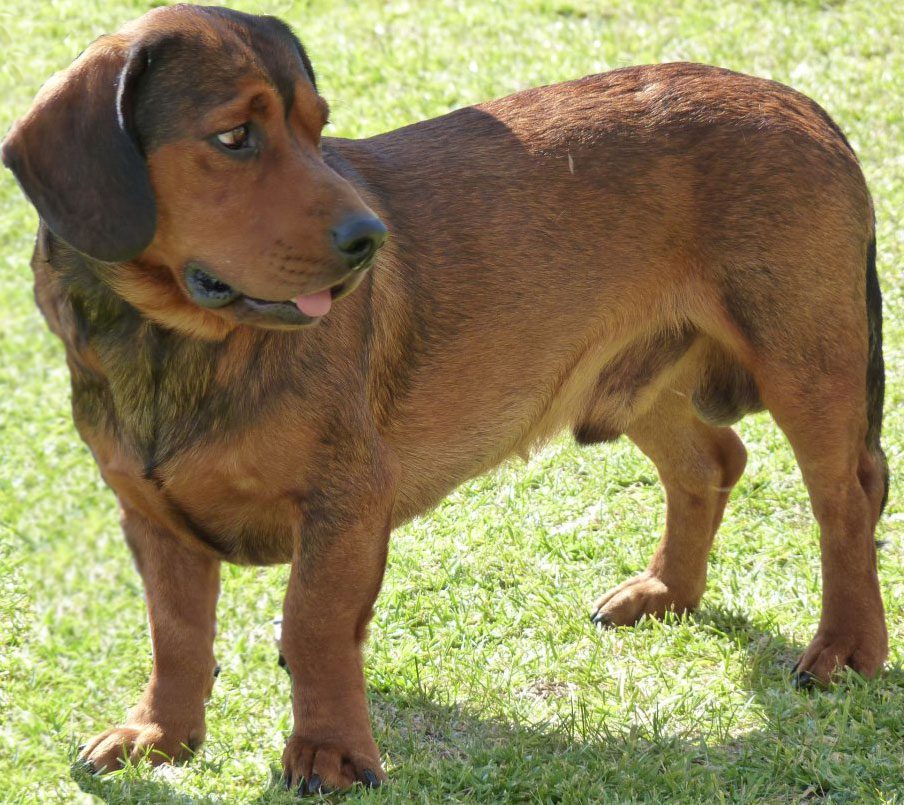
The Alpine Dachsbracke is a dog's size medium. Has relatively short legs, a strong constitution, firm muscles and strong bones.

The height to the cross is of 34 to 42 centimeters. Height at withers is measured from the ground to the shoulder in a loose dog. For males, the ideal size is between 37 and 38 centimeters of shoulder height; for females, are considered ideal 36 to 37 centimeters.

Great importance is attached to an optimal ratio of proportions. The relationship between the height of the shoulders and the torso is 2 : 3, the relationship between the face and the skull is 9 : 10.

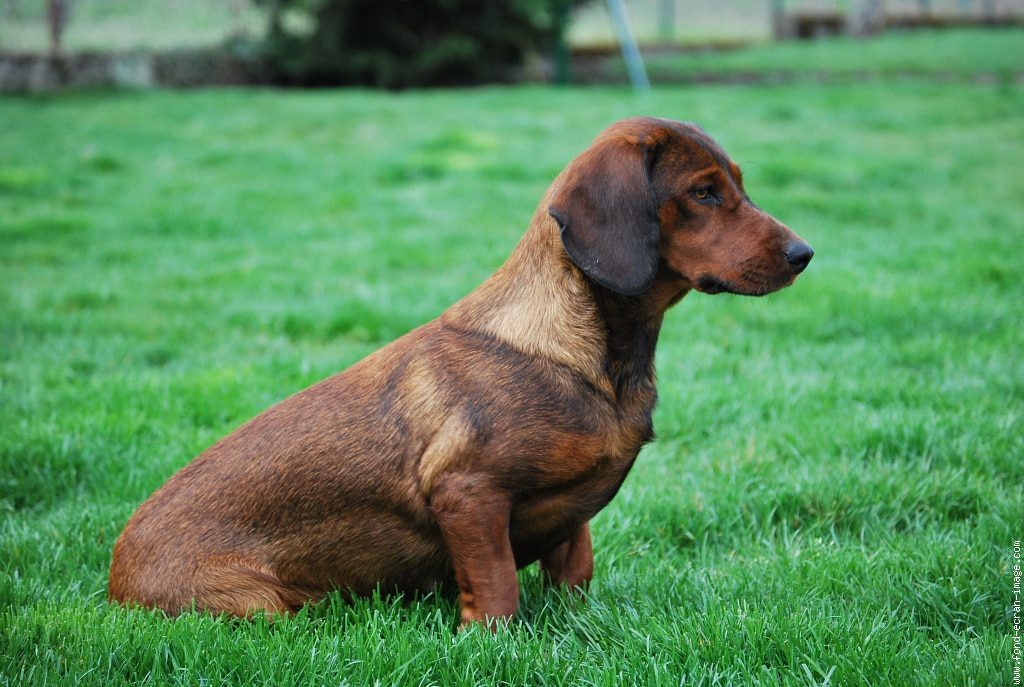
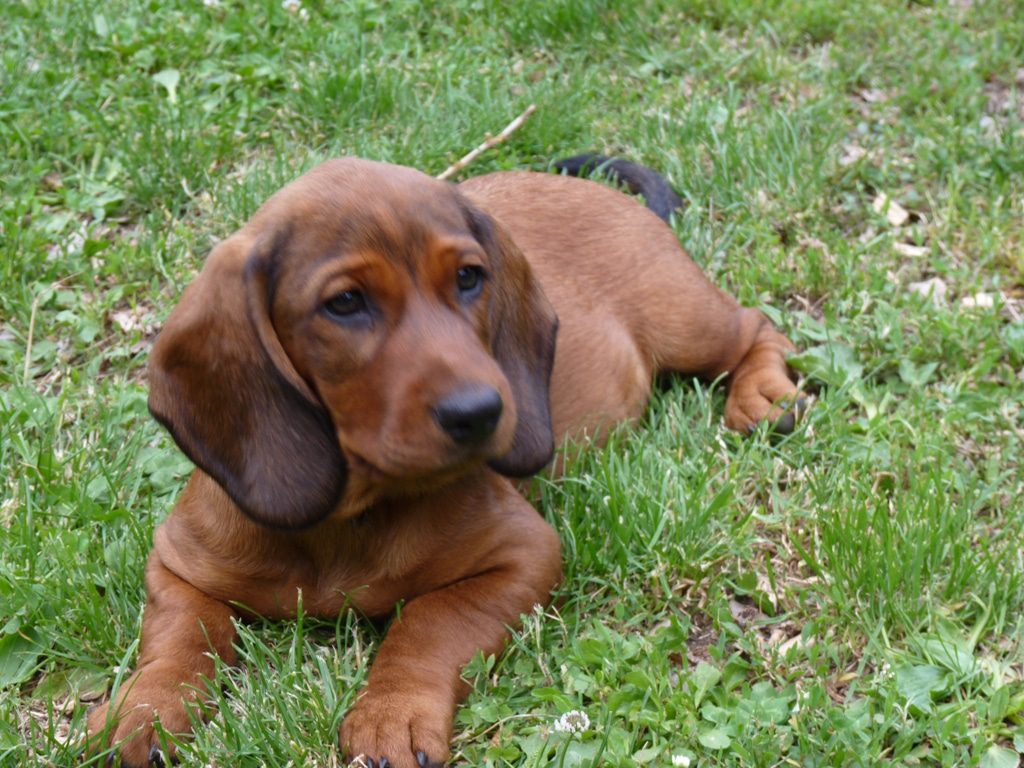
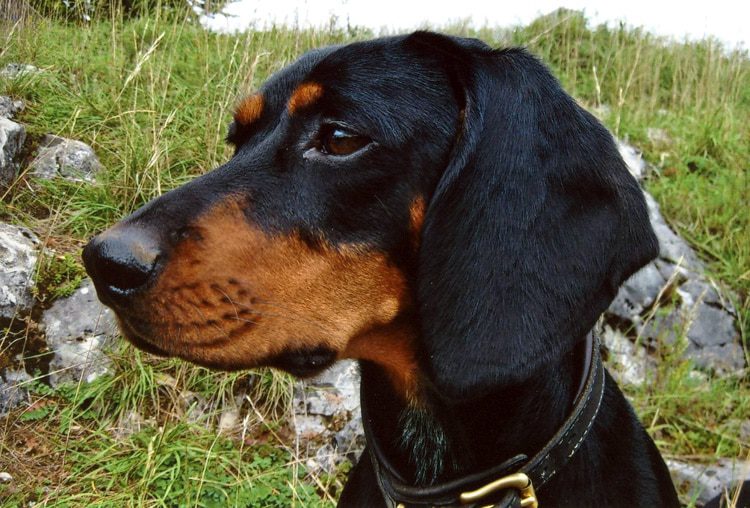
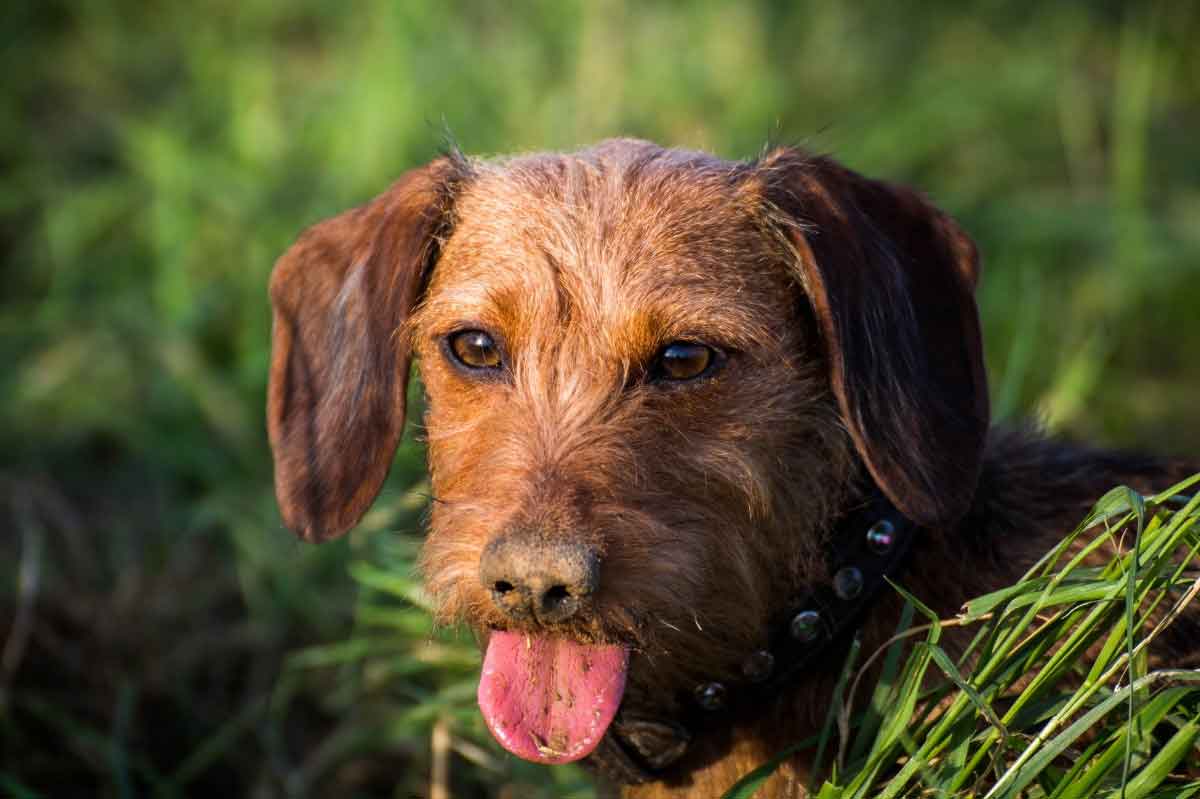
The head is held proudly erect with a slight forward tilt. High-set dangling ears are straight-haired and fall loosely to the sides. They are wide, no wrinkles and medium length (approximately reaching the canines) and rounded at the bottom.

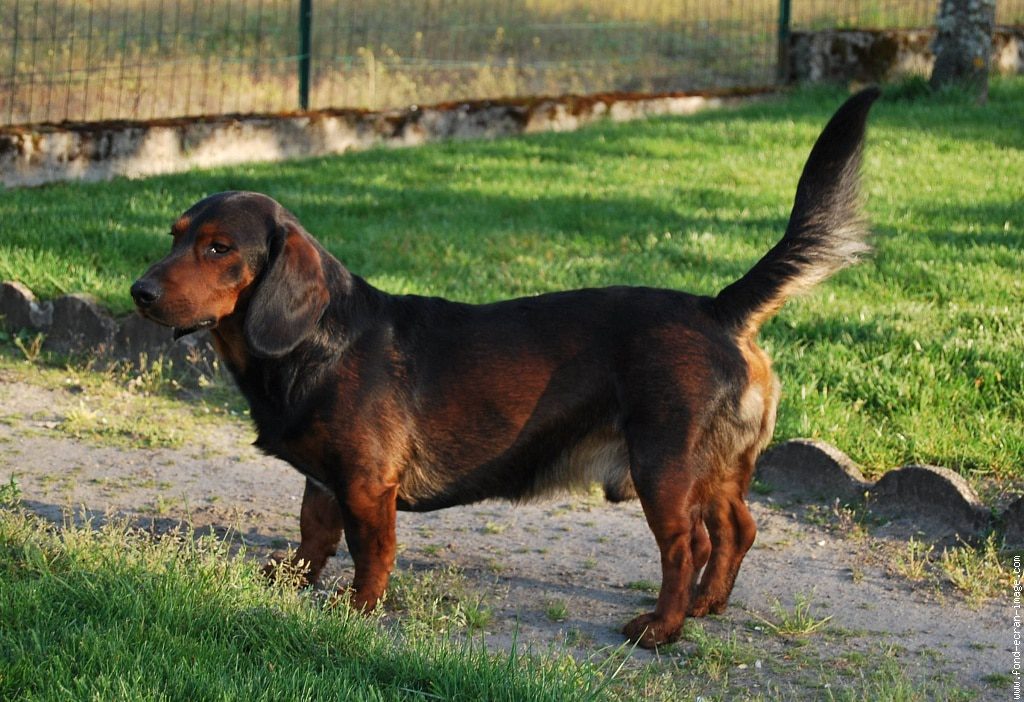
The nose, the eyelids and lips are black. The eyes are deep brown and slightly almond shaped. The Alpine Dachshund has the typical "dachshund look". The tail is placed high at the root, but it is slightly lowered.

In proportion to the strong body, legs are relatively short. The body is well muscled and with strong bones, with a pronounced rib cage but with a small waist.

The coat of the Alpine Dachsbracke it's dense and short, only the lower part of the tail is slightly longer. The slightly dull coat consists of a firm stick coat with a dense undercoat.

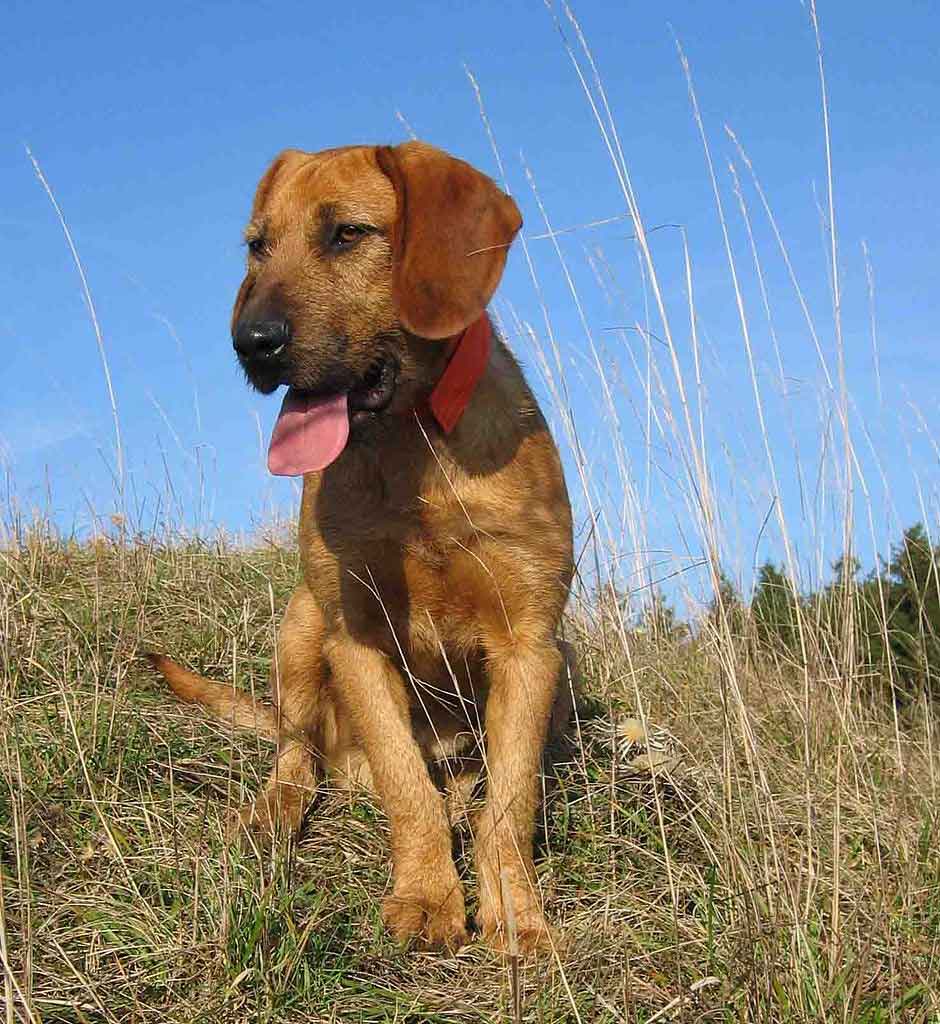
Allows good water repellency and a perfect air balance in summer and a high heat effect in winter. A dark deer red, often with a slight tinge, is the most common coat color.

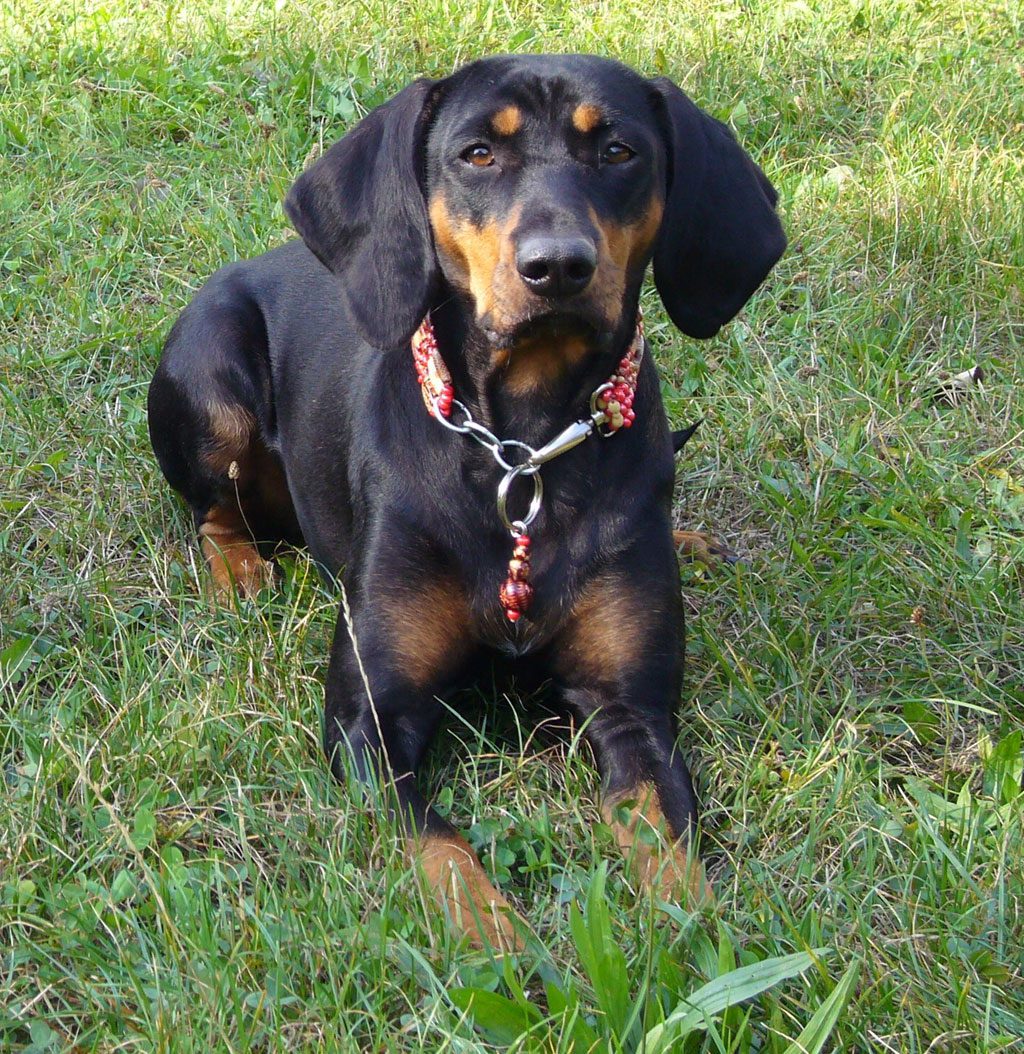
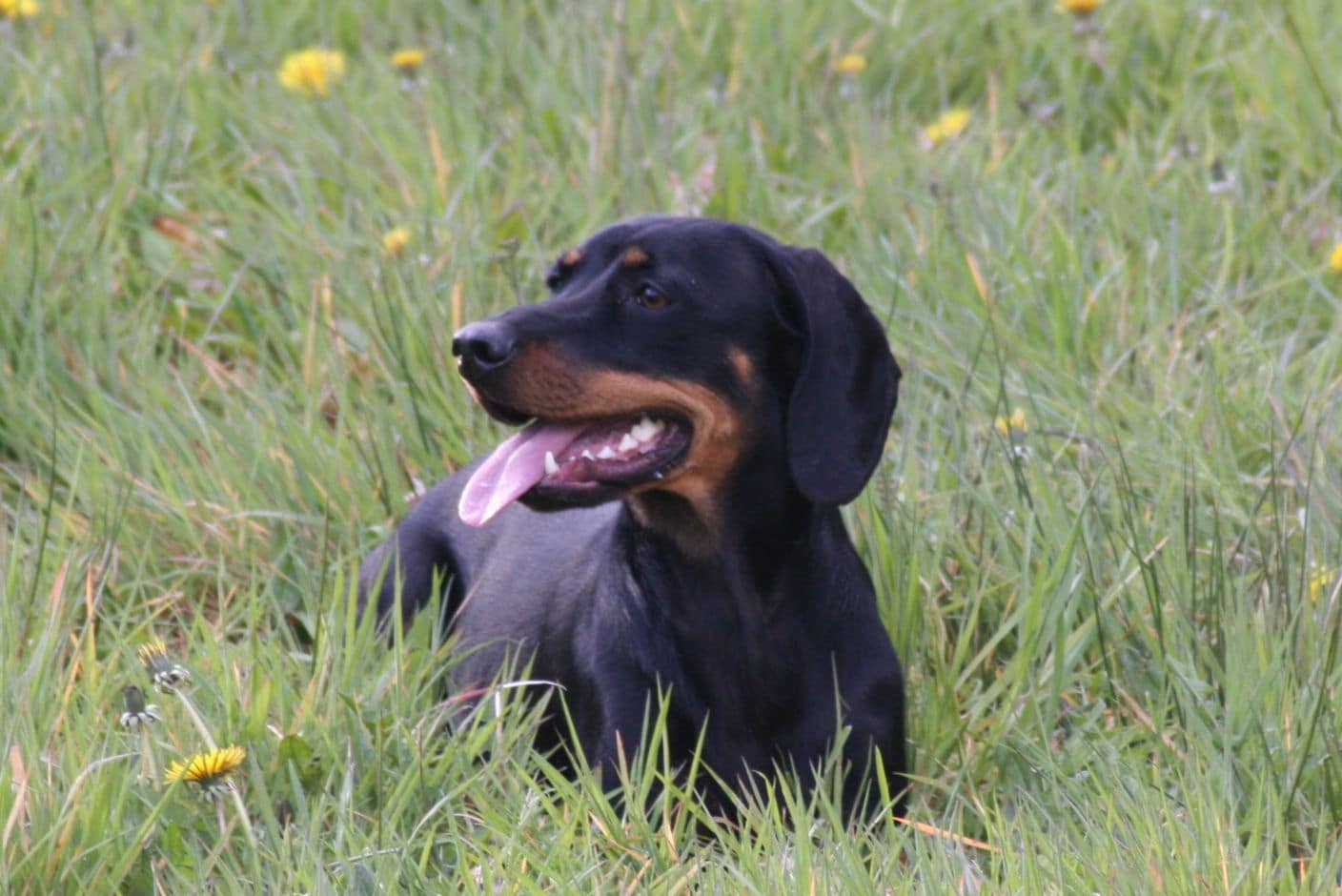
There is also a black coloration with a tan tan outlined on the head). Small white marks are allowed on the chest. On the paws, ears and tail coat coloration may be darker.

Character and skills

The Alpine Dachsbracke he's a proven working dog, small to medium size, which serves hunters especially well. Hound dogs like Alpine Dachsbracke are used for post-shot search jobs.

The strong-minded dog is not distracted and confidently tracks injured game animals. At first sight, the Alpine Dachsbracke looks like a mongrel dog, but this robust breed is a highly specialized working and hunting dog.

The fine sense of smell, safe tracking with unconditional tracking will and high hunting acuity make this breed an ideal hunting companion, animal husbandry and forestry work in the forest and mountains. The Alpine Dachsbracke feels more comfortable outdoors.

Like city dog, the Alpine Dachsbracke it's completely inappropriate.

After the hunt is before the hunt. The dog would like to go out and look for hunting every day. Family contact is desirable, because then the friendly companion shows his almost touching love and attachment to "his" people. He gets along very well with children.

But, the Alpine Dachsbracke not suitable as a pure family dog. Also in the city this breed feels extremely uncomfortable. The Alpine Dachsbracke it is a forest and prairie dog, for whose fine smell the gases from car exhausts and in general, the smells of the city, they are a punishment.

If this breed stays in the big city, without the possibility of a daily run of several hours in the woods and meadows, owners can be called cruel to animals without euphemisms. This is certainly the reason why this breed of dog is never seen in the urban area.

For the Alpine Dachsbracke a task is vital. Although this dog needs a lot of exercise, not suitable for long runs or jumping due to short legs. It is a search dog, a typical tracking dog.

Outside the hunting season, this dog with strong nerves is excellent as a guard and yard dog. But, this shouldn't be your only task. The temporary maintenance of the kennel is not a problem for him, as long as he has regular contact with the family and is allowed into the house from time to time.

Within the four human walls the dog behaves in a balanced and calm way. But, if you are not used to much, tends to show behavior problems, complains a lot or seeks an alternative occupation.

Small animals, cats, rabbits, ornamental birds are seen as prey and bark at them extensively. The Alpine Dachsbracke he is friendly with other dogs.

Training and use ยซAlpine Dachshundยป

Hunting training is a basic requirement for living with a Alpine Dachsbracke, which is why this breed is only really found among active hunters.

This small hunting dog excels in hare and fox hunts, as well as in the tracking of deer and roe deer. With his very fine nose, the Alpine Dachsbracke shows an unconditional willingness to crawl, movement safety and quality control.
This agile hunting dog's drive to move requires a daily walk on the hunting ground. Attitude is possible so much in a spacious kennel, like in the house. The house itself should have a garden.

Staying in a small apartment in the city would be torture for the dog, even climbing stairs is not an option for him. Also with the yard or kennel attitude a close family connection comes in handy for this friendly dog..

The Alpine Dachsbracke watches the house and property carefully and makes reliable noises, so it does not tend to bite. The Alpine Dachsbracke it is considered very robust and insensitive to weather conditions. The robust dog shines with good attitude for life in good health.

This hound likes to work very much, hunting training is a basic requirement for living with a Alpine Dachsbracke, which is why this breed is only really found among active hunters.

This small hunting dog excels in hare and fox hunts, as well as in the tracking of deer and roe deer. With his very fine nose, the Alpine Dachsbracke shows an unconditional willingness to crawl, search security as well as very good visual acuity.

Education and care

Despite his innate sympathy, this breed of dog still requires consistent leadership from the puppy stage. Education takes a long time, so owners of dogs of this breed like to organize to exchange experiences.

Due to its typical breed nature, the Alpine Dachsbracke tends to be very stubborn. In the countryside, eventually you will have to make your own decisions without your master or mistress being able to intervene.

Empathy and consistency promise the best results in puppy rearing. What you have learned once, never forget it again.

Unfortunately, this also applies to mistreatment. An undesirable rarity is very difficult to unlearn.

Alpine Dachshund Grooming

Like every dog, this little hunting dog needs some grooming. The coat should be brushed from time to time to loosen the dense undercoat and remove loose hair.

No need to cut or trim. The dog doesn't like to bathe either, dirt usually falls off the coat on its own. After each walk through the territory, the coat of the small ruminant should be checked for branches, thorns and parasites.

Unfortunately, ticks also like the skin of Alpine Dachsbracke. Ears should be checked regularly for mite infestations. Too long claws indicate too little exercise. Normally, claws are sharp when walking and do not need to be cut.

Health ยซAlpine Dachshundยป

The Alpine Dachsbracke it is considered very resistant and has a stable skin. The robust dog shines in excellent health throughout his life if he is well maintained. But, annual vaccinations should never be lacking.

Typical diseases can be, as in any short-legged dog, back problems. A well-muscular body without excess weight will counteract the risk of back diseases.

When fed wet food, teeth unfortunately tend to form tartar. In this case, Regular brushing of the teeth is necessary to prevent gum and tooth diseases.

Chewy sticks and bones are gladly accepted, but they do not serve as a substitute activity. The ears should be checked and cleaned regularly.

How long does an "Alpine Dachshund" usually live??

Their life expectancy reaches an age of up to 15 years with good species-appropriate nutrition and typical breeding.

Occasionally, small dogs exceed this age and in rare cases even reach an age of more than 20 years. Underutilized animals can suffer from psychological problems that make them prone to disease and moody.

As a responsible dog owner, now you know what the Alpine Dachsbracke need to live a long life, healthy and happy.

Don't need a guardian, but a companion at eye level, who can take care of the needs of this working dog extensively.

Buy an โ€œAlpine Dachshundโ€

This dog is not a stuffed dog, despite its fairly manageable size. The breeders of this breed are mainly found in Germany and Austria. Usually the active breeders are the hunters or rangers themselves.

From the breeding associations the puppies of the Alpine Dachsbracke they occur mainly to active hunters. You can only buy that breed from a breeder.

If he Alpine Dachsbracke not used for hunting, it is essential to be a member of a sports club for dogs. Here the focus is on tracking.

As a children's playmate he is extremely patient, but he's not happy.

Walks with search and crawl games will also not meet the needs of this working dog, this is just not enough. For seniors who are not physically fit, as well as for singles working full-time, the Alpine Dachsbracke is absolutely unsuitable as a companion.

If you want to buy a Alpine Dachsbracke, you have to be a member of a local club. Outsiders hardly have a chance.

ยซAlpine dachshundยป images

โ€œAlpine Dachshundโ€ videos

Characteristics "Alpine Dachsbracke"

Coexistence is important that you have with your new friend. Before considering the acquisition of a dog of the breed "Alpine Dachsbracke" you know certain factors. Not all breeds of dogs are apt to live in an apartment, you must take into account his character, their need for exercise, their interaction with other pets, their care and if you have small children, their level of tolerance towards them.

Adaptation โ“˜

3,0 of 5 stars (based on 1 review)

friendly dog โ€‹โ€‹โ“˜

4,0 of 5 stars (based on 1 review)

hair loss โ“˜

1,0 of 5 stars (based on 1 review)

Affection level โ“˜

2,0 of 5 stars (based on 1 review)

Need for exercise โ“˜

4,0 of 5 stars (based on 1 review)

Social need โ“˜

3,0 of 5 stars (based on 1 review)

Home โ“˜

2,0 of 5 stars (based on 1 review)

Toilet โ“˜

2,0 of 5 stars (based on 1 review)

Friendly with strangers โ“˜

2,0 of 5 stars (based on 1 review)

barking โ“˜

3,0 of 5 stars (based on 1 review)

Health โ“˜

4,0 of 5 stars (based on 1 review)

Territorial โ“˜

4,0 of 5 stars (based on 1 review)

Cat friendly โ“˜

2,0 of 5 stars (based on 1 review)

Intelligence โ“˜

3,0 of 5 stars (based on 1 review)

Versatility โ“˜

3,0 of 5 stars (based on 1 review)

Child friendly โ“˜

4,0 of 5 stars (based on 1 review)

Surveillance โ“˜

4,0 of 5 stars (based on 1 review)

joy โ“˜

4,0 of 5 stars (based on 1 review)

Type and recognitions:

  • FCI CLASSIFICATION:
  • Group :
  • Section : . .

Federations:

  • FCI – Group 6: Scent hounds, and related breeds. – Section 2: Leash (scent) Hounds. โ“˜
  • UKCScenthound Group โ“˜

FCI breed standard "Alpine Dachsbracke"

Origin:
Austria

Date of publication of the valid original standard:
10.10.1995

Use:

The Alpine Dachsbracke is a robust and weather resistant dog, useful for the mountain hunter ; It is used as a tracker to search for wounded roe deer and as a hound when barking at hares and foxes..


General appearance:

Small hunting dog, strong, with robust body structure and heavy bones; dense fur, firm muscles.

IMPORTANT PROPORTIONS

โ€ข The proportion between the height of the withers and the length of the trunk is 2 : 3.
โ€ข The proportion between the facial region and the cranial region is 9 : 10.


Behavior / temperament:

Smart and friendly expression. Intrepid character.

Head:

---

Cranial region:
  • Skull : Slightly convex. Marked frontal groove, shallow occipital protrusion.
  • Depression links (Stop) : Marked.

facial region:

  • Truffle : Black.
  • Snout : Strong.
  • Lips : Well adherent with black pigmentation, moderately rounded lip arch.
  • Jaws / Teeth : Strong full scissor or pincer bite. You want a complete denture with 42 Dental parts ; the lack of total two PM1 or PM2 (premolars 1 or 2) is tolerated ; the M3 (molars 3) they are not taken into account.

Eyes : Dark brown iris; eyelids adherent to the eyeball and black pigmented.

Ears : High insertion, that fall wide and flat without forming folds; medium length (must reach to the fang) and well rounded at its lower edge.

Neck:

Not too long, muscular.

Body:

Broad trunk, strong and well muscled.

  • Cross : Moderately marked.
  • Back : Straight.
  • Pork loin : Short and broad.
  • Rump : Slightly inclined.
  • Breast : Deep and wide with a well-marked sill; the depth of the thorax should correspond to approximately half the height of the withers.
  • Belly : Moderately withdrawn.

Tail:

High insertion, thick at its root. On its underside it has a longer coat (brush glue) ; the tail is so long that it reaches almost to the ground ; takes it slightly inclined.

Tips

PREVIOUS MEMBERS : They are straight and strong. The limbs appear short in proportion to the rest of the body.

  • Shoulder : Adjacent, long, obliquely placed, with good musculature.

LATER MEMBERS : Muscular, strong and have good angulations ; seen from the back, the axis of the limbs is straight.

FEET : Front and rear feet are strong and round ; the fingers are very close together ; the pads are hard and the nails are black.

Movement:

During the movement covers the terrain, without kicking. His favorite step is the trot.

Mantle

SKIN : The skin is elastic and hard and does not form folds.

HAIR : double hair (Stockhaar), very dense, with thick undercoat ; covers the entire body and is well attached to the skin.

COLOR : The ideal color is dark fawn red, slightly speckled or not black, as well as the black color with fire spots, reddish-brown color) well defined in the head (four eyes), on the chest, limb, feet and on the underside of the tail; a white star is allowed on the sill.


Size and weight:

Height to the cross : 34 โ€“ 42 cm.. Ideal measure : Males : 37 โ€“ 38 cm.,females : 36 โ€“ 37 cm..


Fouls:

Any deviation from the aforementioned criteria is considered as a fault and the severity of this is considered to the degree of the deviation to the standard and its consequences on the health and well-being of the dog..

FAULTS

โ€ข Weak bones.
โ€ข Little muscle.
โ€ข Too pointed snout, short or long.
โ€ข Eye color too light, eyelids not glued.
โ€ข Short or pointed ears.
โ€ข Loose shoulders.
โ€ข Poor position of the forelimbs or hindlimbs.
โ€ข Very short or sparse coat.
โ€ข Minimal variations in color.

MISS PLAYOFFS

โ€ข Aggressive or fearful dog.
โ€ข All variations that are considered essentially detrimental to their usefulness in hunting.
โ€ข Absence of more than two premolars 1 or 2 (without taking into account the M3).
โ€ข Height at withers less than 34 cm or greater than 42 cm..
โ€ข Weak character.

Any dog โ€‹โ€‹showing clear signs of physical or behavioral abnormalities must be disqualified..


N.B.:

Males should have two normal-appearing testicles fully descended into the scrotum..

Source: F.C.I - International Cynological Federation

Alternative names:

1. (ger. Alpenlรคndische Dachsbracke) (English).
2. (alpenlรคndische dachsbracke) (French).
3. Alpenlรคndische-Erzgebirgler Dachsbracke, ร–sterreichische Dachsbracke (German).
4. Dachbraco alpino (Portuguese).
5. Tejonero de los Alpes, Basset de los Alpes, Dachsbracke de los Alpes (espaรฑol).

โ–ท The world of Pets: Dogs, cats, birds, reptiles, amphibians

Austrian Black and Tan Hound
Austria FCI 63 - Medium-sized Hounds.

Sabueso austriaco negro y fuego

The Austrian Black and Tan Hound is very emotional. Perceives the mood of its owner.

Content

History

The Austrian Black and Tan Hound It is a breed of dog originating in Austria. It is believed that he is the true descendant of the original Celtic Hound, Although there is no known history of the Austrian Black and Tan Hound until after mid-19th century. This historical bump is due to the fact that in the past the breeding was not regulated.

The Austrian Black and Tan Hound, from its origins, It was used for monitoring or tracking of injured animals, Commonly, in places of significant altitude.

Physical characteristics

The Austrian Black and Tan Hound is a dog medium-sized and well solid structure. His head shows a wide skull and little pronounced occipital region with well marked stop.

It has glossy dark brown eyes that convey a lively look and alert. The ears are of high insertion and medium-sized, rounded, not very broad and hang onto the cheek. The tail is long and will fine tuning towards the tip, it is dropped but slightly curved.

The coat of the Austrian Black and Tan Hound It is smooth, soft to the touch, dense, short (a few 2 cm length) and very bright.

The coloration of this breed It is very important since that is its touch of distinction, they should be black as a basis, with small and clearly defined, fire to light brands range from pale tawny to dark. Two tawny markings above the eyes must be present.

This breed has a hypersensitive smell.

The height at the withers of Austrian Black and Tan Hound will of 48 56 cm. And his weight is around between the 19 and 20 Kg.

Thanks to its excellent ability to work, both high mountains and Plains land, the Austrian Black and Tan Hound is highly prized as a bloodhound and blood trail dog. His fine sense of smell allows him to carry out searches with complete security (especially of hares).

Character and skills

Is alive, attentive, reserved with strangers but friendly and does not show any signs of shyness.

While it is used for hunting Hound (for tracking), It is an animal that adapts well to family life, but if we make the commitment to have a Austrian Black and Tan Hound, We must be able to give the animal enough to make you happy.

A few good country walks would keep him cheerful., In addition to (as with all dogs) a good daily walk.

It is a very emotional dog that perceived especially mood of its owner.

Photos ยซAustrian Black and Tan Houndยป

ยซAustrian Black and Tan Houndยป Videos

Type and recognitions:

  • FCI CLASSIFICATION:
  • Group :
  • Section : . .

Federations:

  • FCI – Group 6: Scent hounds, and related breeds. – Section 1.2: Medium-sized Hounds. โ“˜
  • UKCScenthounds โ“˜

FCI breed standard "Austrian Black and Tan Hound"

Origin:
Austria

Date of publication of the valid original standard:
10.10.1995

Use:

The Black and Tan Austrian Hound is a hunting dog generally highly regarded for its special aptitudes for heavy work as a tracker and as a hound., both on the mountainous terrain and on the plains.


General appearance:

Is medium sized. His body structure is strong, elongated and elastic.


Behavior / temperament:

It has a fine smell. He is a very good hound, especially when hunting with barking hares.. Crawls safely and willingly and is pleasant in character.

Head:

---

Cranial region:
  • Skull: Large, shallow occipital protrusion.

facial region:

Truffle: black.
Snout: Strong, straight muzzle.
Lips: well developed, adherents, fully pigmented.
Jaws / Teeth: Powerful scissor bite. You want a complete denture with 42 Dental parts; the total lack of two PM1 or PM2 (premolars 1 or 2 ) is tolerated; the M3 (molars 3) they are not taken into account.
Eyes: Clear, dark brown, showing no redness at the corner of the eyes.
Ears: Medium-sized, not too wide, high insertion, rounded in its bottom edge; hang flattened.

Neck:

Medium long, very strong; the presence of a double chin is not desirable.

Body:

  • Cross: Well marked.
  • Back: Long.
  • Pork loin: Slightly raised.
  • Rump: Slightly sloping down.
  • Breast : Broad and deep.

Tail:

Long, progressively tapering towards the tip, a little bent; during rest he carries it down; on its underside it has hard hair, but the brush is not too rough.

Tips

PREVIOUS MEMBERS: Strongly developed, straight.

  • Shoulder: Placed obliquely, endowed with strong muscles.

LATER MEMBERS: With good angle.

  • Thighs: Thin, moderately developed and long.

FEET: Strong, round and arched. Fingers close together; hard black nails; large, hard pads.

Movement:

Elegant, covers the ground.

Mantle

HAIR: Smooth, well adjusted, thick, dense, stretchy with a velvet sheen. Approximate length of 2 cm..

COLOR: Black with some well-defined tan spots from light to dark brown. Two fire marks must be present above the eyes (four eyes = Vierรคugl)


Size and weight:

Height to the cross: 48 โ€“ 56 cm.
  • Males : 50 โ€“ 56 cm.
  • females : 48 โ€“ 54 cm.


Fouls:

Any deviation from the above mentioned criteria is considered to lack, and the gravity of this refers to the degree of deviation to the standard and its impact on the health and well-being of the dog.
  • Skull too narrow.
  • Wide snout.
  • Wrinkled ears, too pointed, short and thin.
  • Tail too short, thin, or very bent up, no thick hair on her lower face.
  • Weak limbs.
  • Shy character.
MISS PLAYOFFS:
  • Aggressive or fearful dog.
  • Upper or lower prognathism. Lack of more than two premolars 1 or 2.
  • Any other color other than described.
  • Lack of noticeable fire spots over the eyes (four eyes).
Any dog โ€‹โ€‹showing clear signs of physical or behavioral abnormalities must be disqualified..


N.B.:

Males should have two normal-appearing testicles fully descended into the scrotum..

Source: F.C.I - International Cynological Federation

Alternative names:

1. Bracke, Vierรคugl (English).
2. Brachet autrichien noir et feu (French).
3. Kรคrntner Bracke, ร–sterreichische Glatthaarige Bracke (German).
4. (em alemรฃo: brandlbracke) (Portuguese).
5. Austriaco negro y fuego (espaรฑol).

โ–ท The world of Pets: Dogs, cats, birds, reptiles, amphibians

Styrian Coarse-haired Hound
Austria FCI 62 - Medium-sized Hounds.

Styrian Coarse-haired Hound

Insensitive to the weather and austere, which is especially useful in high mountains and forests.

Content

History

The race Styrian Coarse-haired Hound developed from the end of the 19th century. Already in 1870, an industrial of Styria, a state in southeastern Austria, obtained an interesting litter by crossing a ยซHanoverian Scenthoundยป with a Styrian Coarse-haired Hound. The goal was to obtain a hunting dog that would combine the qualities of the two ancient breeds and inherit a coat that would allow it to withstand the elements..

The Styrian Coarse-haired Hound was created by a man named Carl Peitinger. The breed was officially recognized in its country of origin in 1889, and was finally recognized by the Fรฉdรฉration Cynologique Internationale (FCI) 65 years later, the 31 in August of 1954.

Photo: Styrian Wirehaired Hound, Half Year Old By See page for author, CC BY-SA 3.0, via Wikimedia Commons

Physical characteristics

Styrian Coarse-haired Hound

The Styrian Coarse-haired Hound they are medium-sized dogs with solid bones; the expression is austere, but not mean. The skull is slightly domed, with a well developed occipital bone. The stop is marked. The eyes are brown. The ears, Not very large, worn flat against the cheeks and covered with fine hair. The tail is of medium length, strong at the base, with dense hair, never curly but carried upward in a sickle shape; the bottom is like a brush, but without lock.

Fur : Lasted, neither furry nor shiny, hard. In the head, the hair is shorter than in the body. Has mustaches.
Color: red and pale yellow. The white star on the chest is allowed.
Size: 47 to 53 cm for the male and 45 to 51 cm for female.
Weight: approx.. 18 kg.

Character and skills

The Styrian Coarse-haired Hound they have all the qualities of a hunting dog. These dogs show great enthusiasm, determination and stamina when it comes to forcing the game by giving the voice. At home, the Styrian Coarse-haired Hound he is very close to his master and is particularly wary of strangers. They get along quite well with their peers, if they are used to its presence from puppies. They can be more turbulent with other small animals; his hunting instinct is still very strong.

The education…

The Styrian Coarse-haired Hound have a strong character and must be trained early and firmly. It is also necessary that they socialize properly and receive training in recovery to avoid incidents of all kinds.

This Styrian Hound not only used to force the game of hunting by giving the voice, but is very often considered a specialist in tracking blood in difficult mountainous terrain. This makes it a highly sought after hunting companion..

Its exclusively hunter and predator temperament makes it inadvisable as a pet.

However they are very intelligent animals, of a cheerful and affectionate nature as well as an unusual sensitivity.

Care and maintenance …

It needs regular exercise and its coat requires constant maintenance.

Characteristics "Styrian Coarse-haired Hound"

Coexistence is important that you have with your new friend. Before considering the acquisition of a dog of the breed "Styrian Coarse-haired Hound" you know certain factors. Not all breeds of dogs are apt to live in an apartment, you must take into account his character, their need for exercise, their interaction with other pets, their care and if you have small children, their level of tolerance towards them.

Adaptation โ“˜

3,0 of 5 stars (based on 1 review)

friendly dog โ€‹โ€‹โ“˜

3,0 of 5 stars (based on 1 review)

hair loss โ“˜

4,0 of 5 stars (based on 1 review)

Affection level โ“˜

3,0 of 5 stars (based on 1 review)

Need for exercise โ“˜

5,0 of 5 stars (based on 1 review)

Social need โ“˜

3,0 of 5 stars (based on 1 review)

Home โ“˜

4,0 of 5 stars (based on 1 review)

Toilet โ“˜

2,0 of 5 stars (based on 1 review)

Friendly with strangers โ“˜

3,0 of 5 stars (based on 1 review)

barking โ“˜

4,0 of 5 stars (based on 1 review)

Health โ“˜

4,0 of 5 stars (based on 1 review)

Territorial โ“˜

4,0 of 5 stars (based on 1 review)

Cat friendly โ“˜

2,0 of 5 stars (based on 1 review)

Intelligence โ“˜

4,0 of 5 stars (based on 1 review)

Versatility โ“˜

3,0 of 5 stars (based on 1 review)

Child friendly โ“˜

4,0 of 5 stars (based on 1 review)

Surveillance โ“˜

4,0 of 5 stars (based on 1 review)

joy โ“˜

5,0 of 5 stars (based on 1 review)

Videos "Styrian Coarse-haired Hound"

Hunting dog - Styrian wire-haired bracke ( Peintinger Bracke ) - a fantastic hunting dog Trailer

Hunting dog – Styrian wire-haired bracke ( Peintinger Bracke ) – a fantastic hunting dog Trailer

Hunting dog - Styrian wire-haired bracke (Peintinger Bracke) - a fantastic hunting dog!
Jagdhund – Steirische Rauhhaarbracke (Peintinger Bracke) – a fantastic hunting dog!

Type and recognitions:

  • FCI CLASSIFICATION:
  • Group :
  • Section : . .

Federations:

  • FCI – Group 6: Scent hounds, and related breeds. – Section 1.2: Medium-sized Hounds. โ“˜
  • UKCScenthounds โ“˜

FCI breed standard "Styrian Coarse-haired Hound"

Origin:
Austria

Date of publication of the valid original standard:
10.10.1995.

Use:

The job is not only about his role as a hound, but also in pure tracker work in difficult mountainous terrain.


General appearance:

Is medium sized, has strong muscles, and his expression is grim but without malice.


Behavior / temperament:

He is a tough and passionate hound dog, barks without interruption during the hunt and expresses will and security during the trail.

Head:

---

Cranial region:
  • Skull: Slightly convex, well-developed occipital protuberance.
  • Depression links (Stop): Marked.

facial region:

  • Truffle: Black.
  • Snout: Strong and straight.
  • Lips: Not hanging.
  • Jaws / Teeth: Strong scissor bite. You want a complete denture with 42 Dental parts; the lack of two PM1 or PM2 (premolars 1 or 2) is tolerated; the M3 (molars 3) they are not taken into account.
Eyes: With brown iris.
Ears: Not too big, flattened and glued, covered with fine hair.

Neck:

Strong, not too long.

Body:

  • Back: Straight and wide.
  • Pork loin: Moderately raised.
  • Rump: It descends steeply.
  • Breast : It's deep and wide.

Tail:

Medium length, strong in its insertion, well covered with hair, never curled but carried up slightly sickle-shaped; on its lower face has hair in the shape of a brush, but without forming a feather.

Tips

PREVIOUS MEMBERS: Straight, muscular, well angled.
  • Shoulder: Oblique placement.
 
LATER MEMBERS: Muscular, strong, well angled, seen from behind they look straight.
 
FEET: Not excessively large; well arched fingers, closely linked to each other; hard pads, not too big.

Movement:

It covers the ground, elastic.

Mantle

HAIR: Rough, no hirsuto, opaque, hard, tosco. The hair on the head is shorter than the rest of the body and forms a mustache.
 
COLOR: Red and yellowish. A white star is allowed on the sill.


Size and weight:

Height to the cross: 45 โ€“ 53 cm.
  • Males : 47 โ€“ 53 cm.
  • females : 45 โ€“ 51 cm.


Fouls:

Any deviation from the above mentioned criteria is considered to lack, and the gravity of this refers to the degree of deviation to the standard and its impact on the health and well-being of the dog.
  • Head too narrow.
  • Ears with creases or too pointed.
  • Tail too short, too thin or too bent up, that forms feathers.
  • Weak limbs.
  • Coat too long, fine, curly or soft.
  • Shy character.
MISS PLAYOFFS:
  • Aggressive or fearful dog.
  • Upper or lower prognathism. Lack of more than two premolars (PM 1 or PM 2).
  • Any other color different from that indicated in the standard.
 
Any dog โ€‹โ€‹showing clear signs of physical or behavioral abnormalities must be disqualified..


N.B.:

Males should have two normal-appearing testicles fully descended into the scrotum..

Source: F.C.I - International Cynological Federation

Alternative names:

1. Peintinger Bracke, Wirehair Styrian Mountain (English).
2. Brachet de Styrie ร  poil dur (French).
3. Peintinger-Bracke, Steirische Rauhhaarige (German).
4. (em alemรฃo: Steirische Rauhhaarbracke) (Portuguese).
5. Sabueso estirio de pelo รกspero (espaรฑol).

โ–ท The world of Pets: Dogs, cats, birds, reptiles, amphibians

Austrian Pinscher
Austria FCI 64 . Pinscher and schnauzer type

Austrian Pinscher 1

Self-confidence, lively, attentive, playful, especially attached

Content

History

The Austrian Pinscher descends from old Austrian Landpinscher, which was still widespread in the second half of the 19th century as a frugal and versatile farm dog. In 1921 a pure breeding plan was started. Against him german pinscher, seems wider, more robust and more primitive. Emil Hauck became familiar with this type of dog during his travels at the beginning of the 20th century and worked for the recognition of the breed by the ร–KV and the FCI.. The 16 in October of 1928, this breed was recognized as Austrian Shorthaired Pinscher por la ร–KV. In the year 2000 the breed name was changed to Austrian Pinscher.

But, according to the breeders association, the number of dogs decreased in the decade of 1970 so much so that only one stud dog remained, Diocles of Angers. Starting from this, the breed was preserved using โ€œLandpinschersโ€. The โ€œLandpinschersโ€ are still used in breeding. The โ€œLandpinschersโ€ are dogs that correspond to the Austrian Pinscher in terms of phenotype and are relatively stable in terms of breeding, without being specifically bred as pedigree dogs in the sense of modern dog breeding.

Physical characteristics

It is a medium to small size dog. The eyes are large, with the dark iris. The ears are usually "V" shaped., but there are also buttons, semi-straight or straight. Breeders try to set as far as possible a ยซVยป shaped ear that, otherwise, is already the most common. The tail is implanted high, the dog the coiled cam, frequently on the back, and it's short and thick. Can also be shortened.

  • Fur: short, straight and with undercoat. Remember the smooth-haired fox terrier.
  • Color: the most frequent are wheat yellow, brown yellow, leonado, fawn red and black with fiery spots. Almost always with large white spots on the chest, snout, throat, neck, nape, extremities and tip of tail. The specimens with the mottled coat, completely black or white and fire are not desirable.
  • Size: 35 to 50 cm., more frequently in tone to the 40 cm..

Character and skills

It is a vigorous little dog, bold, temperamental and very resistant. It is a great surveillance dog; on the other hand, it is not spread as a companion dog, among other things because it is very barking. But, medium-small dogs do not meet the demands of someone who wants a dog for the apartment (always as small as possible), nor those who want a watchdog (preferably medium-large size), and for this reason the spread of the breed is very limited.

Observations

He has good hunting attitudes.

Characteristics "Austrian Pinscher"

Coexistence is important that you have with your new friend. Before considering the acquisition of a dog of the breed "Austrian Pinscher" you know certain factors. Not all breeds of dogs are apt to live in an apartment, you must take into account his character, their need for exercise, their interaction with other pets, their care and if you have small children, their level of tolerance towards them.

Adaptation โ“˜

3,0 of 5 stars (based on 1 review)

friendly dog โ€‹โ€‹โ“˜

2,0 of 5 stars (based on 1 review)

hair loss โ“˜

5,0 of 5 stars (based on 1 review)

Affection level โ“˜

4,0 of 5 stars (based on 1 review)

Need for exercise โ“˜

4,0 of 5 stars (based on 1 review)

Social need โ“˜

2,0 of 5 stars (based on 1 review)

Home โ“˜

3,0 of 5 stars (based on 1 review)

Toilet โ“˜

2,0 of 5 stars (based on 1 review)

Friendly with strangers โ“˜

2,0 of 5 stars (based on 1 review)

barking โ“˜

2,0 of 5 stars (based on 1 review)

Health โ“˜

3,0 of 5 stars (based on 1 review)

Territorial โ“˜

5,0 of 5 stars (based on 1 review)

Cat friendly โ“˜

2,0 of 5 stars (based on 1 review)

Intelligence โ“˜

4,0 of 5 stars (based on 1 review)

Versatility โ“˜

4,0 of 5 stars (based on 1 review)

Child friendly โ“˜

4,0 of 5 stars (based on 1 review)

Surveillance โ“˜

4,0 of 5 stars (based on 1 review)

joy โ“˜

4,0 of 5 stars (based on 1 review)

Images "Austrian Pinscher"

Type and recognitions:

  • FCI CLASSIFICATION:
  • Group :
  • Section : . .

Federations:

  • FCI – Pinscher and Schanuezer dogs. Molossian type Dogs and Swiss Mountain and Cattle Dogs. . Section 1.1 Pinscher type. โ“˜
  • UKC – Terriers โ“˜

FCI breed standard Austrian Pinscher

FCIFCI - Austrian Pinscher
Pinscher

Alternative names:

1. Austrian Shorthaired Pinscher (English).
2. Oesterreichisher Kurzhaariger Pinscher (French).
3. ร–sterreichischer Pinscher (German).
4. ร–sterreichischer Pinscher (Portuguese).
5. Pinscher austriaco de pelo corto (espaรฑol).

Photos:

1 – Pinczer_Austrian at the World Dog Show in Poznaล„ by chained / CC BY-SA
2 – Austrian Pinscher at the World Dog Show in Poznaล„ by chained / CC BY-SA
3 – Pinscher austriaco by https://pxhere.com/es/photo/1603530
4 – Pinscher austriaco by https://pxhere.com/es/photo/1593828
5 – Austrian Pinscher at the World Dog Show in Poznaล„ by chained / CC BY-SA