โ–ท The world of Pets: Dogs, cats, birds, reptiles, amphibians

Meyer's Parrot
Poicephalus meyeri


Lorito de Meyer

Content


Description:

21 cm. and a weight of 100-130 g..

The Meyer's Parrot (Poicephalus meyeri) has the forecrown, lores, cheeks, ear-coverts and ash Brown nape; crown bright yellow. The mantle feathers ash brown edges blue or cyan dye in some birds; scapulars brown ash, some individuals show Tips blue or greenish blue; rump bright turquoise or teal; uppertail-coverts green. Outermost children and wing-coverts above bright yellow, other variables showing green tints, especially towards Tips. The primaries and high schools ash Brown with paler narrow margins to vane outer.

feathers of the wings, undertail, bright yellow in some birds, but grayish-brown in larger in other. The chin, the throat and top of the chest brown ash; remaining chest and belly turquoise or teal; the thighs yellow; undertail- coverts turquoise blue or greenish blue. Tail brown ash.

Bill dark gray or black; cere black; irises orange-red; periophthalmic skin desnuda negruzca; legs blackish.

Both sexes similar.

Youth more generally greenish brown. No yellow in the crown or the the thighs and the yellow area in the wings, at the top, It is lower. Wing coverts, undertail, green and brown with little or no yellow. The underparts mรกs greenish. Iris dark brown.

Subspecies description

Description Meyer's Parrot subspecies
  • Poicephalus meyeri damarensis

    (Neumann, 1898) – No Yellow crown. Paler than subspecies reichenowi. Intergrades with transvaalensis subspecies in the region of the delta del Okavango, Botswana and with subspecies reichenowi in Angola.


  • Poicephalus meyeri matschiei
    matschiei by Parrots of the World โ€“ Forshaw Joseph M
  • Poicephalus meyeri matschiei

    (Neumann, 1898) – Brown is paler than in the subespecie satisfied and cyan dye to the margins of the scapulars less pronounced than in the species nominal. Green colors are blue (especially below). The female spot shows yellow feathers at the base of the lower jaw.


  • Poicephalus meyeri meyeri

    (Cretzschmar, 1827) – Species nominal


  • Poicephalus meyeri reichenowi

    (Neumann, 1898) – Similar to the subespecie matschiei but with the yellow crown generally absent. Paler blue in the rump. Size larger than the subespecie matschiei.


  • reichenowi by Parrots of the World โ€“ Forshaw Joseph M
    reichenowi by Parrots of the World โ€“ Forshaw Joseph M
  • Poicephalus meyeri saturatus

    (Sharpe, 1901) – darker than species nominal (especially the brown parts), rump less blue than the nominal, showing a bit of green in the feathers. The dark centers feathers on the bottom, giving it a mottled appearance. Intergrades with the subspecies matschiei in Tanzania.


  • Poicephalus meyeri transvaalensis

    (Neumann, 1899) – Brown clearer than in the subespecie matschiei, even bluer in the rump and below. Yellow areas in the crown They are often reduced and, sometimes completely lacking (especially in males). It is thought that can hybridize with the Poicephalus cryptoxanthus.

Habitat:

The Meyer's Parrot It is found in a wide variety of forest habitats from dry savannah to gallery forest and second-growth riparian forest around crops.. Observed in forests dominated by Terminalia laxiflora and Doka Isoberlinia, thickets Combretum acacia grasslands; as well Brachystegia and riparian forests Syzygium-Adina.

Avoid lowland rainforests in the basin Congo and other humid forests including areas of the eastern highlands of the district of Zimbabwe and Cork in Malawi.

Show a preference for the tallest trees in the drier savannah habitats – in particular specimens Adansonia. They may be confined to gallery forests in the drier parts of their range and are generally found in close proximity to water..

Where it is sympatric with the Red-bellied Parrot (Poicephalus rufiventris), the Meyer's Parrot It is limited to riparian forests.

In Kenya, which it is largely in areas with higher annual rainfall 500 mm.

Sometimes observed in suburban areas.

In general, in the lowlands at altitudes of 1,250m in Ethiopia, 2.200m in east Africa and 1.500 meters in the highlands of eastern Zimbabwe.

They are distributed in pairs or small groups 3-5 birds (possibly couples); until 50 birds may congregate in areas where there are food sources in breeding season. Roosts in tree cavities. Usually shy and cautious.

Reproduction:

Solitary nesters in tree cavities at a height between 3 and 10 meters above the ground, during the season, dry (for example Mar-June Zimbabwe, from May to September Zambia and Malawi, July Angola and in December or January Sudan).

The implementation is of 2 to 4 eggs.

Food:

The diet of the Meyer's Parrot fruit is, nuts and seeds, including Ficus, Sound abyssinica, Uapaca nitidula, Monotes glaber, Combretum, Grewia, Sclerocarya, Pseudolachnostylis, fruit of the great growth and riparian trees afzelia quanzensis and Melia volkensii, grown oranges and flowers Schotia brachypetala.

The pulp of the fruit is less important than the hard seeds and the arbolados share, the Meyer's Parrot is one of the few species consume seeds Brachystegia and other leguminous trees.

They also consume grain and is considered as crop pests in some areas.

Eat some insects, including caterpillars.

May vary widely from area to area in search of food during droughts.

Distribution:

Size of the area of distribution (reproduction / resident): 5.840.000 km2

The Meyer's Parrot They are distributed throughout the central and eastern Africa. From the North-East of Cameroon and South of Chad through the North of the Central African Republic, center Sudan and South and West Ethiopia, to the south through Uganda, Kenya Western, east of Democratic Republic of the Congo and Tanzania, coming to Malawi, Zambia, Angola, Northeast of Botswana, Zimbabwe, western end of Mozambique, Namibia and northeast of Sudafrican republic.

A wild population, possibly, is distributed in the eastern province of Cape Town, Sudafrican republic, even if they are probably extinct.

Nomad in some areas during periods of drought, when they distributed outside the normal range; normally resident with local movements.

Distribution Subspecies

Meyer's Parrot subspecies distribution
  • Poicephalus meyeri damarensis

    (Neumann, 1898) – South of Angola, Northeast of Namibia and North of Botswana.


  • Poicephalus meyeri matschiei

    (Neumann, 1898) – Southeast Kenya through eastern and central Tanzania to Southeast Democratic Republic of the Congo, North of Malawi, Zambia and northeast of Angola.


  • Poicephalus meyeri meyeri

    (Cretzschmar, 1827) – Species nominal


  • Poicephalus meyeri reichenowi

    (Neumann, 1898) – North and Central Angola from Malange and sierra central until Huila, possibly also adjacent parts of the Democratic Republic of the Congo


  • Poicephalus meyeri saturatus

    (Sharpe, 1901) – The Far East Democratic Republic of the Congo, through Burundi, Rwanda and east of Uganda, in West and Central East Kenya towards Meru and Local inside Tanzania to the South of the Parque Nacional Ruaha.


  • Poicephalus meyeri transvaalensis

    (Neumann, 1899) – Areas of northern and central Mozambique to northern Save River across the South of Zambia and central and southern Zimbabwe to northeast Botswana and West of Transvaal

Conservation:


minor concern


โ€ข Current Red List of UICN: Least concern

โ€ข Population trend: Stable

The Meyer's Parrot It, in general, common to very common and is the most abundant parrot in some parts of its range (for example, Zimbabue and Angola), although few in other areas and absent from some apparently suitable habitats.

Its population has declined in some parts (for example Transvaal) where is thought to be a result of habitat destruction. I also persecuted in some locations due to crop damage (for example, in the center of Zambezi because of the damage inflicted to the maturation of the berries Boolean).

"Meyer's Parrot" in captivity:

The Meyer's Parrot, is a bird common in captivity, quiet, tender, easy to carry and with a stable temperament.

They are birds social and they tend to bond with everyone in the family, unlike other species that may prefer one person to another. In general, No es voluble – once you liked someone, the person is a friend for life.

They are not as dependent on humans for entertainment as most parrots and therefore no son tan demanding.

They like being handled and petted on the head and neck. A hand-fed hatchling will develop into a fluffy adult if treated properly, and it is not prone to bite, although it may provide a powerful bite if provoked.

You can learn a few words, although They are not known for their ability to speak. They can learn to whistle, making noises, and occasionally they will offer strong squeals. Fortunately, They are not likely to scream or make loud squawks, making good birds for apartment life. Some individuals learn household noises, as the beep of the microwave.

The Meyer's Parrot they are ready to breed at the age of 3 to 4 years and reproduce easily in captivity.

With regard to its longevity, according to sources, Meyer lived a parrot 34,2 years in captivity.

Alternative names:

Meyer’s Parrot, Brown Parrot (English).
Perroquet de Meyer, Perroquet brun, Youyou de Meyer (French).
Goldbugpapagei, Goldbug-Papagei (German).
Papagaio de Meyer, Papagaio-de-meyer (Portuguese).
Lorito de Meyer (espaรฑol).


scientific classification:

Philipp Jacob Cretzschmar

Order: Psittaciformes
Family: Psittacidae
Genus: Poicephalus
Scientific name: Poicephalus meyeri
Citation: (Cretzschmar, 1827)
Protonimo: Psittacus Meyeri


Images "Lorito de Meyer":

Videos "Meyer's Parrot"

————————————————————————————————

"Lorito de Meyer" (Poicephalus meyeri)


Sources:

Avibase
– Parrots of the World โ€“ Forshaw Joseph M
– Parrots A Guide to the Parrots of the World – Tony Juniper & Mike Parr
– Birdlife

Photos:

(1) – A Meyerโ€™s Parrot at Birds of Eden, Western Cape, South Africa. It is eating what looks like a piece of bread By SandyCole (mailto:sandyc@dicksandy.org) (Own work) [CC BY-SA 3.0 or GFDL], via Wikimedia Commons
(2) – Two Meyerโ€™s Parrots in Zimbabwe By Oce Eeco (DSC_0108Uploaded by snowmanradio) [CC BY 2.0], via Wikimedia Commons
(3) – Brown parrot also known as Meyerโ€™s Parrot (Poicephalus meyeri) by Papooga – Flickr
(4) – A Meyerโ€™s Parrot near Kwara Camp, North-West District, Botswana By Benjamin Hollis from Seattle, WA, USA (Meyerโ€™s parrotUploaded by snowmanradio) [CC BY 2.0], via Wikimedia Commons
(5) – A Meyerโ€™s Parrot in Akagera National Park, Rwanda By Lip Kee Yap [CC BY-SA 2.0], via Wikimedia Commons

Sounds: Derek Solomon (Xeno-canto)

โ–ท The world of Pets: Dogs, cats, birds, reptiles, amphibians

Layard's Parakeet
Psittacula calthrapae


Cotorra de Ceilรกn

Content

Description:

29 cm., including its tail up 13 cm.. and 100 g. of weight.
The adult male of the (Psittacula calthrapae) Layard's Parakeet has the head and back bluish grey, separated by a neck green. There is a wide swath in the chin of black color and tail It is blue with a yellow tip. Upper bill the male is red, and the bill bottom is brown.

The female es similar, but has the bill top in black, and dark green stripe on the cheek. Lack the band pink in nape and the neck is greenish yellow. They have the blue tint in the rear of the head if you can see in males. Feathers middle of the tail You are washed with blue.

The immature they are like the females, but with feathers tail shorter, with a plumage mainly green and bill dark red.

Ilustraciรณn Cotorra de Ceilรกn

  • Sound of the Layard's Parakeet.

    Habitat:

    Their preferred habitats are forested areas 1.600 meters above sea level, although registered at altitudes 2.000 m, taking advantage of a wide variety of vegetation types including natural and semi-natural moist forests, tea plantation and botanical gardens; often at the edge of the woods, generally in small groups or couples.

    Sedentary, especially in mountain areas, but extending over the lowlands, especially in humid forests near sea level.

    after feeding, the Layard's Parakeet congregate in trees chattering loud and persistent. Before break, roam issuing strong calls.

    Reproduction:

    The time of reproduction It is around January to May, with a high season from July to September.

    The eggs They are deposited in a natural cavity or disused nest Woody Woodpecker or a bearded, usually at the top of a tree. Competition for nest sites is often intense, especially with Plum-headed Parakeet. The cavity is lined with rotting wood and dust. Two to four white eggs make commissioning. Both sexes share duties incubation and feed on young.

    Food:

    Diet Layard's Parakeet It is believed to be similar to the Rose-ringed Parakeet and Plum-headed Parakeet, although their arboreal habits make them more frugivores and less destructive to crops.

    Registered with the company Brahminy Starling (Sturnia pagodarum) feeding fruit Map peltata (Macaranga tomentosa). Favorite foods include figs and fruit of wild cinnamon (Cinnamomum).

    Distribution:

    Size of the area of distribution (reproduction / resident): 18.900 km2

    The Layard's Parakeet It is endemic in south-central and south-west Sri Lanka. In Provincia Central, North of Matale through highlands around south and west Kandy in Western Province and Sabaragamuwa to the North of On Provincia.

    They are distributed also in the east, around the Gal Oya National Park and to the South, in Uva Province, until Haputale. A record of 1880 a bird against Eastern Province. Registration, unconfirmed, in the Maldives It is believed to come from leaks.

    According to sources, abundant in the 19th century and apparently still numerous in some areas, but declining due to habitat loss arising, for example, conversion of natural and semi-natural forests and plantations capture for trade.

    Conservation:

    State of conservation โ“˜


    minor concern Minor Concern โ“˜ (UICN)โ“˜

    โ€ข Current Red List of UICN: Least concern

    โ€ข Population trend: Decreasing

    The Psittacula calthrapae (del Hoyo and necklace 2014) It was previously listed as Psittacula calthropae.

    The size of the world's population has not been quantified, but the species is reported as locally common (pit et to the. 1997).

    The population is suspected of being in decline due to ongoing habitat destruction.

    "Layard's Parakeet" in captivity:

    Rare captive out of their range.

    Alternative names:

    Layard’s Parakeet, Emerald-collared Parakeet (English).
    Perruche de Layard (French).
    Blauschwanzsittich (German).
    Periquito-de-colarinho-verde (Portuguese).
    Cotorra de Ceilรกn (espaรฑol).


    scientific classification:

    Edward Blyth
    Edward Blyth

    Order: Psittaciformes
    Family: Psittaculidae
    Genus: Psittacula
    Scientific name: Psittacula calthrapae
    Citation: (Blyth, 1849)
    Protonimo: Palaeornis Calthrapae


    Layard's Parakeet Images:

    Videos "Layard's Parakeet"

    Parrots in the world
  • Psittaciformes (Psittaciformes) from America
  • Psittaciformes (Psittaciformes) Oceanian
  • Psittaciformes (Psittaciformes) from Asia
  • Psittaciformes (Psittaciformes) from Africa
  • Psittaciformes (Psittaciformes) of the world

  • Especies del gรฉnero Psittacula
  • Psittacula finschii
  • Psittacula himalayana
  • Psittacula roseata
  • —- Psittacula roseata juneae
  • —- Psittacula roseata roseata
  • Psittacula cyanocephala
  • Psittacula alexandri
  • —- Psittacula alexandri abbotti
  • —- Psittacula alexandri alexandri
  • —- Psittacula alexandri cala
  • —- Psittacula alexandri dammermani
  • —- Psittacula alexandri fasciata
  • —- Psittacula alexandri kangeanensis
  • —- Psittacula alexandri major
  • —- Psittacula alexandri perionca
  • Psittacula derbiana
  • Psittacula longicauda
  • —- Psittacula longicauda defontainei
  • —- Psittacula longicauda longicauda
  • —- Psittacula longicauda modesta
  • —- Psittacula longicauda nicobarica
  • —- Psittacula longicauda tytleri
  • Psittacula columboides
  • Psittacula calthrapae
  • Psittacula eupatria
  • —- Psittacula eupatria Avensis
  • —- Psittacula eupatria eupatria
  • —- Psittacula eupatria magnirostris
  • —- Psittacula eupatria nipalensis
  • —- Psittacula eupatria siamensis
  • Parrots wardi
  • Psittacula krameri
  • —- Psittacula krameri borealis
  • —- Psittacula krameri krameri
  • —- Psittacula krameri manillensis
  • —- Psittacula krameri parvirostris
  • Psittacula eques
  • —- Parrot knight knightโ€ 
  • —- Psittacula eques echo
  • Parrots
  • Psittacula caniceps

  • Layard's Parakeet (Psittacula calthrapae)


    Sources:

    Avibase
    – Parrots of the World โ€“ Forshaw Joseph M
    – Parrots A Guide to the Parrots of the World – Tony Juniper & Mike Parr
    – Birdlife

    Photos:

    (1) – Layardโ€™s Parakeet eating fruit in Sri Lanka. Its beak is not fully black, so it is probably a sub-adult female By Hafiz Issadeen (originally posted to Flickr as Layardโ€™s Parakeet) [CC BY 2.0], via Wikimedia Commons
    (2) – [BirdPhotoIndia] Layardโ€™s parakeet, Sri Lanka – Indian Birds Photography
    (3) – Photo by Steve G near Sinharaja, Sri Lanka, July 28, 2009 – Bird Forum
    (4) – An adult of Layardโ€™s Parakeet – World-Birds
    (5) – Layardโ€™s Parakeet Psittacula calthropae – Starron Bird and Wildlife
    (6) – John Gerrard Keulemans [Public domain], via Wikimedia Commons

    Sounds: David Farrow (Xeno-canto)

    โ–ท The world of Pets: Dogs, cats, birds, reptiles, amphibians

    Military Macaw
    Ara militaris

    Guacamayo Militar

    Content

    Description:

    70 to 85 cm.. length and a weight between 900 and 1100 g..
    The Military Macaw (Ara militaris) has a dark green color. The head is a green slightly clearer and the crown blue. The back and the top of the wings they have a slightly greenish tone. The rounding of the wings, the edge of the wings and flight feather exterior are light blue.

    Illustration military Macaw

    The forecrown it is bright red in color and there are a series of purplish-brown lines of feathers on a background of bare skin, since the nose to behind eyes and in the cheeks.

    The area of the throat and a narrow strip below the cheeks are olive brown in colour. Breast and belly green; undertail- coverts pale blue.

    Upper, the tail orange-red with the ends of the feathers blue; undertail, the tail olive green yellowish.

    The eyes has irises yellow. The bill is dark gray, legs dark grey.

    Both sexes similar.

    Immature not described but as other large macaws, irises probably Brown, tail shorter and the bare facial skin clearer.

    Subspecies description:

    • Ara militaris bolivianus

      (Reichenow, 1908) – It differs from the species nominal by the throat reddish brown. The headphones feathers they have a base of reddish and blue present in the wings and at the end of the feathers is a more intense tone.


    • Ara militaris mexicanus

      (Ridgway, 1915) – Almost identical to the species nominal but larger.


    • Ara militaris militaris

      (Linnaeus, 1766) – The nominal species

    Habitat:

    The Military Macaw they can be mainly observed in foothills of mountainous terrain in woodlands with cannons fields, mostly between 500 and 1, 500 meters above sea level, at the local level to 2.000 m, (3,100 m reported in Peru, to 2,400 m in Bolivia), but also at sea level in the Pacific of Mexico and in the region of Santa Marta, Colombia.

    In Mexico, most are distributed in isolated highlands in semi-arid and arid forests, as well as in forests Quercus and Pinus; sometimes in humid, riparian lowland formations, with altitudinal movements to lower altitude to dense scrub forests between November and January.

    Observed in humid forests in the Colombian Andes.

    In Venezuela, in the rainforest, in some mountainous areas 600 m, sometimes also in more open dry forests.

    Usually in pairs or small flocks (until 10 birds), but much larger swarms reported in flights to the roosts. Communal roosts on cliffs or in trees.

    Reproduction:

    Nest, usually, in crevices of cliffs; sometimes in large trees (for example, Acer, Pinus or Enterolobium).

    In Mexico It has been observed to the Military Macaw making use of old nests of the Imperial Woodpecker (Campephilus imperialis) in dead pine.

    Breeding pairs are for life.

    The egg laying takes place in the month of June in Mexico. They are of two to three eggs that it will take 24 days to hatch, and where the young will remain with the parents for about a year.

    The first flights the chicks are produced between the 97 and 140 days old and reach sexual maturity to the 3 or 4 years of age.

    Food:

    The diet of the Military Macaw It consists of a wide variety of fruits and nuts, including fruit of the Melia azedarach, Ficus and seeds of the Hura crepitans.

    Distribution:

    Size of the area of distribution (reproduction / resident): 276.000 km2

    distributed by Mexico, In addition to several separate populations of South America, heading south to northwest of Argentina.

    Widely distributed in Mexico from Sonora (where they have been observed at 28ยฐ 45'N) and Chihuahua in the North, until Chiapas, in the South and the East, where the birds may be geographically isolated.

    Absent from the lowlands of the Caribbean; ancient appearances in Guatemala not confirmed.

    In Colombia to the West of the Andes to the South of Dagua, of the Magdalena River Valley, and on the West side of the Andes, to the East of the Sierra Nevada de Santa Marta, in the North, through the East of the Ecuadorian Andes until Huanuco in the Peruvian Andes.

    Also distributed by the North of Venezuela on Serrania del Perija and from Northwest of Zulia until Federal District.

    In Peru, mostly, observed in the East of the Andes, above all in the Maraรฑรณn region, where at least, formerly, It was a common migrant from the slope of the peaceful between September-October(reported on the west slope at 6ยฐ 50'S) to feed on the fruit available seasonally.

    In the East of the slopes of the the Bolivian Andes, in Santa Cruz de la Sierra, Chuquisaca and Tarija and Northwest corner of Argentina in Salta and possibly Jujuy.

    Seasonal movements in many areas, for example, visitors to the West of Caquetรก in Colombia, from the western slope of the Andes up to this.

    Rare in the South of Mexico (in Chiapas possibly extinct), more numerous in the East and Northwest, where flocks of several hundred birds were reported at the end of 1970.

    Very local in the Andes and at risk in Venezuela due to habitat loss and trade.

    Fairly common in the North of the region of Santa Marta, but sporadic in other parts of Colombia.

    Flocks of up to 60 birds observed in the Manu National Park in Peru and in the Amborรณ National Park of Bolivia.

    Very rare in Argentina with only sporadic reports in recent years. Recent declines due to low habitat and bird trade, a large number of birds in captivity.

    Subspecies distribution:

    • Ara militaris bolivianus

      (Reichenow, 1908) – South of Bolivia and Northwest of Argentina.


    • Ara militaris mexicanus

      (Ridgway, 1915) – Mexico


    • Ara militaris militaris

      (Linnaeus, 1766) – The species nominal

    Conservation:


    Vulnerable

    โ€ข Current Red List of UICN: Vulnerable

    โ€ข Population trend: Decreasing

    The population size is estimated, provisionally, You can be in the band between 10.000 and 20.0000 individuals.

    It is suspected that the population This species can be decreasing due to ongoing habitat loss and capture for national trade.

    The loss of habitat and especially the national trade they are major threats to this species, even within the reserves (Snyder et to the. 2000).

    In 1991-1995, 96 wild-caught specimens were found in the international trade, with Bolivia and Mexico, possibly, major exporters (Chebez 1994, D. Brightsmith in litt., 2007).

    In Mexico, remains one of the most sought after species for the illegal trade of birds in cage; between 1995 and 2005, was the fifth country with the most parrots seized by the Environmental Control Agency from the country, becoming the fourth with more seizures between 2007 and 2010 (JC Cantรบ in litt. 2010).

    In many areas it nests in hard-to-reach cavities in cliff faces., that provide some protection against the pressures of plundering of nests. But, the plundering of nests is a serious threat in Jalisco and Nayarit, where the species nests in tree cavities (C. Bonilla in litt. 2007, K. Renton in litt., 2007).

    In Jalisco, Mexico, These macaws were not found in deforested areas, even when it was abundant the Hura polyandra (an important source of food), leaving, in the news, as trees to provide shade for cattle (Renton 2004).

    An analysis of the GARP believes that the species has undergone a 23% loss of habitat within its distribution area in Mexico (Rios Munoz 2002).

    A subpopulation in the Valle del Cauca, Colombia, account for less than 50 mature individuals, little is to be lost as a dam is expected to flood the only nesting cliff (ProAves Foundation 2011).

    "Military Macaw" in captivity:

    Very popular in poultry.

    Although the Macaw Militar is present for more than one century in Europe, He has never enjoyed special interest among the fans, It's a shame, Since it is a being Intelligent. The main reason should be your little flamboyant plumage; especially compared to the one of other macaws. Other failures affect its presence in aviaries: is very loud and has a strong tendency to gnaw.

    The power of their vocal organ is much higher than of any other species of Macaw. On the other hand it also good qualities: is very applied to learn, has a great talented imitator and presents an intelligence out of the ordinary.

    With regard to its longevity, according to sources, a specimen lived 46 years in captivity. In captivity, these animals have been known that they can raise some 5 years of age.

    Alternative names:

    Military Macaw (English).
    Ara militaire (French).
    Soldatenara (German).
    Arara-militar (Portuguese).
    Guacamaya Verde, Guacamayo Militar, Guacamayo Verde, Papagayo verde (espaรฑol).
    Guacamaya verde oscura (Colombia).
    Guacamayo verde (Venezuela).
    Guacamayo militar (Ecuador).
    Maracan, Paraba militar (Bolivia).
    Jarcia, Sarea (Chaka).
    Panicco (Cofรกn.).

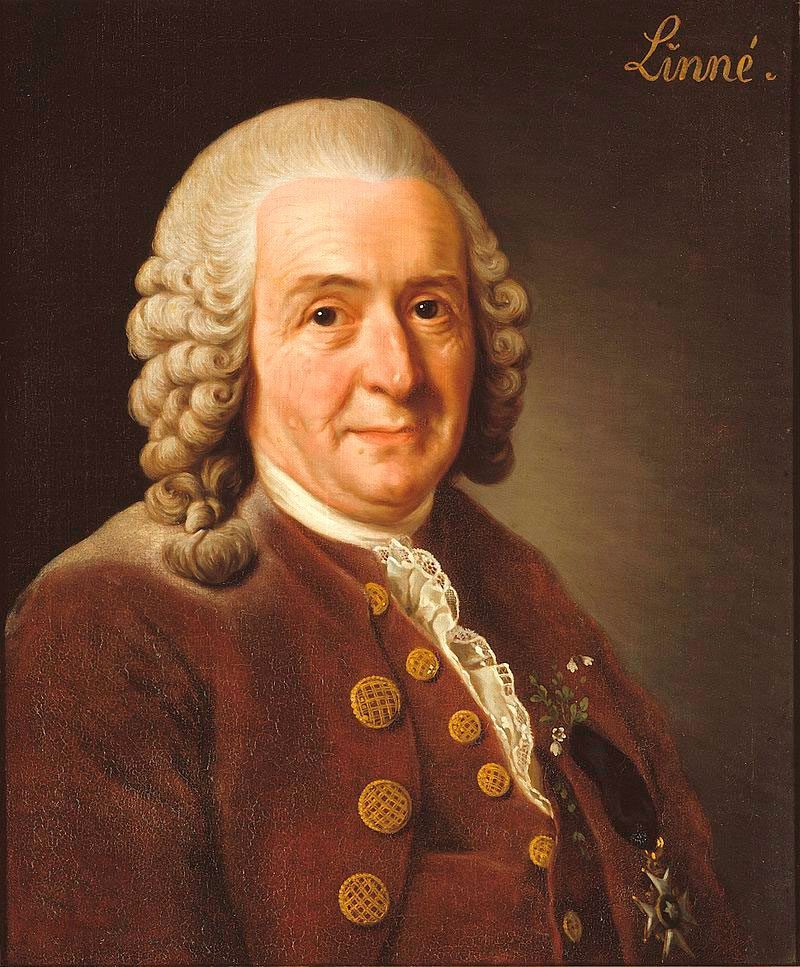
    Carl Linnaeus
    Carl Linnaeus

    scientific classification:


    Order: Psittaciformes
    Family: Psittacidae
    Genus: ARA
    Scientific name: Ara militaris
    Citation: (Linnaeus, 1766)
    Protonimo: parrot military


    Images Military Macaw:

    Videos "Military Macaw"


    Species of the genus Ara


    Sources:

    Avibase
    – Parrots of the World โ€“ Forshaw Joseph M
    – Parrots A Guide to the Parrots of the World – Tony Juniper & Mike Parr
    – Birdlife

    Photos:

    (1) – Military Macaw (Ara militaris) at London Zoo, England By jon hanson (originally posted to Flickr as military macaw) [CC BY-SA 2.0], via Wikimedia Commons
    (2) – Military Macaw Ara militaris in captivity at Occidental Grand Xcaret Resort, Yucatan, Mexico By Tony Hisgett (originally posted to Flickr as Green Parrot) [CC BY 2.0], via Wikimedia Commons
    (3) – Military Macaw flying at Whipsnade Zoo, Bedfordshire, England By Ara_militaris_-Whipsnade_Zoo_-flying-8a.jpg: Alex Smithderivative work: Snowmanradio [CC BY 2.0], via Wikimedia Commons
    (4) – Three Military Macaws at Zoolรณgico Los Coyotes, Mexico By Gary Denness (originally posted to Flickr as Squawk No Evil) [CC BY 2.0], via Wikimedia Commons
    (5) – Two Military Macaws at Whipsnade Zoo, Bedfordshire, England. The macaw on the left has damaged feathers on its chest and abdomen probably because of a feather plucking habit By Mark Fosh (originally posted to Flickr as Macaw) [CC BY 2.0], via Wikimedia Commons
    (6) – Two Military Macaws at Moody Gardens, Galveston, Texas, USA By joannapoe (originally posted to Flickr as 2005-06-18_11-52-47) [CC BY-SA 2.0], via Wikimedia Commons
    (7) – A Military Macaw at Whipsnade Zoo, Bedfordshire, England. Some of its feathers are damaged probably due to feather plucking By William Warby from London, England (Military MacawUploaded by Snowmanradio) [CC BY 2.0], via Wikimedia Commons
    (8) – Military Macaws in Mexico By Gregg (originally posted to Flickr as YOU WANT SOME?) [CC BY-SA 2.0], via Wikimedia Commons
    (9) – Military Macaw (Ara militaris). Details of the head and face By Mary Mueller (Flickr) [CC BY 2.0], via Wikimedia Commons
    (10) – Arara militaris by John Gerrard Keulemans [Public domain], via Wikimedia Commons

    Sounds: (Xeno-canto)

    โ–ท The world of Pets: Dogs, cats, birds, reptiles, amphibians

    Green Parakeet
    Psittacara holochlorus


    Aratinga Verde

    Content

    Description:


    Anatomy-parrots

    Among 28 and 30.5 cm.. of length and a weight of 232 g..
    The Green Parakeet (Psittacara holochlorus) is a medium-sized Parrot with the wings in sharp form and the tail long and stitch. Its plumage is bright green, and can present several pens red or orange in the neck. In general, the underwing-coverts are metallic greenish-yellow color, While the the flight feathers and the bottom sides of the the tail feathers are yellow-olive. Presents a eye ring pale beige and the irises orange, the legs yellowish brown.

    It has no sexual dimorphism.

    The immature has irises Brown color.

    Subspecies description:

    • Psittacara holochlorus brewsteri

      (Nelson, 1928) – Plumage, in general, darker green than that of the species nominal, with yellowish green tint and bluish suffusion at the crown.


    • Psittacara holochlorus holochlorus

      (Sclater,PL, 1859) – The species nominal.

    Habitat:

    Video – "Green Parakeet" (Psittacara holochlorus)

    Psittacara holochlorus (green spider) pets of my niece.

    The Green Parakeet, as well as their subspecies, avoid moist lowland forests; Instead, prefer deciduous forests and gallery forests, scrub, clear and the edges of the forest.

    In East Mexico, mainly seen in upland forest with some movements toward deciduous forests at elevations lower than during the non-breeding season. Registered to 2.100 meters in Mexico (the subspecies ยซbrewsteriยป at altitudes between 1,250 and 2,000m).

    Views in flocks outside the breeding season, sometimes in groups of more of 100 birds, being larger groupings in places where food is abundant.

    Reproduction:

    The nests of the Green Parakeet they are located in tree cavities (for example, cavities made by woodpeckers), crack in rocks, holes in buildings or termite mounds. Colonial nesting reported in caves in the East of Mexico.

    The breeding season has been recorded in the month of January to the East of Mexico (young in the nest); in April in Tamaulipas, to the South of Mexico.

    The clutch most common consists of four eggs.

    Food:

    Diet Green Parakeet is based on seeds, nuts, berries and fruits; reported foods include the fruits of Myrica mexicana, seeds of Mimosa and corn (they can be destructive with their crops).

    Distribution:

    Size of the area of distribution (reproduction / resident): 275.000 km2

    Disjunct in slope populations of the Atlantic, from the East of Nuevo Leรณn and Tamaulipas at the center of Veracruz; Southeast of Veracruz, is of Oaxaca and to the East of Chiapas; Southwest of Chihuahua, North of Sinaloa and South of Sonora.

    Some specimens settled in cities in southeastern Texas; It is not clear if they come from Pet escapes or are wild vagrant who emigrated from the North of Mexico. It is generally not migratory, but you can scroll to get food.

    Subspecies distribution:

    • Psittacara holochlorus brewsteri

      (Nelson, 1928) – Mountains of Northwest of Mexico, to the South of Sonora, Northeast of Sinaloa and South of Chihuahua.


    • Psittacara holochlorus holochlorus

      (Sclater,PL, 1859) – The species nominal.

    Conservation:

    โ€ข Red List category of the UICN current: Least concern

    โ€ข Population trend: Decreasing

    The population of the Green Parakeet It is suspected that it is between a slow to moderate decline due to the expansion of intensive farming and capture for the wild bird trade (Juniper and Parr 1998).

    The State of conservation, globally, regards it as a kind of Least concern because it is abundant and widely distributed. It is considered one endangered species within the Mexican law by its restricted distribution. Nest boxes they have been provided in the South of Texas nest (Brush 2007).

    The world population is estimated at 200.000 mature individuals.

    Although it is not as popular as other large amazon parrots, the Green Parakeet is maintained as pet by the local population; have also been exported as pets to the United States. Although there are no accumulated figures, during the period of 9 months between October of 1979 and June of 1980, 327 birds were imported to the United States (Roete et to the. 1982).

    While the loss of habitat It is probably the factor affecting the population of the Green Parakeet, their capture for the bird trade It is likely to be negative at the local level.

    With the signing of the Wild birds Protection Act of 1991, the Green Parakeet can not be imported to the EE.UU. unless they are part of a breeding program authorized.

    The marketing of all the species Mexican species parrots (parakeets, parrots and macaws) is banned in Mexico. Since the year 2008 It is a federal crime to catch, sell, buy this type of animal.

    "Green Parakeet" in captivity:

    Maintained as pet by the locals although its marketing is prohibited in Mexico.

    The illegal trade in parrots and macaws is held thanks to demand from consumers. If the demand for these wild species is reduced, then the offer would be reduced and therefore the illegal capture.

    According to sources, a specimen lived 21,8 years in captivity

    Alternative names:

    Green Parakeet, Cut-throat Parakeet, Green Conure, Green Parakeet (Green), Red-collared Parakeet, Red-throated Conure (English).
    Conure verte, Perriche verte (French).
    Grรผnsittich (German).
    Periquito-verde (Portuguese).
    Aratinga Verde, perico mexicano, Perico Verde, Perico Verde Mexicano, Periquito verde (espaรฑol).
    perico mexicano, Perico Verde Mexicano (Mexico).
    Perico Verde (Nicaragua).
    Periquito verde (Honduras).

    Philip Sclater
    Philip Sclater

    scientific classification:


    Order: Psittaciformes
    Family: Psittacidae
    Genus: Psittacara
    Scientific name: Psittacara holochlorus
    Citation: (Sclater, PL, 1859)
    Protonimo: Conurus holochlorus


    Green Parakeet pictures:


    Species of the genus Psittacara

    Sources:

    Avibase
    – Parrots of the World โ€“ Forshaw Joseph M
    – Parrots A Guide to the Parrots of the World – Tony Juniper & Mike Parr
    – Birdlife

    Photos:

    (1) – Green Parakeet From The Crossley ID Guide Eastern Birds By Richard Crossley (Richard Crossley) [CC BY-SA 3.0], via Wikimedia Commons
    (2) – Green Parakeet by Vince Smith – Flickr
    (3) – Aratinga verde by G. Lasley/Vireo – audubon.org
    (4) – Aratinga verde by G. Lasley/Vireo – audubon.org
    (5) – Aratinga holochlora (Psittacara holochlorus) – Bellas Aves de El Salvador

    Sounds: Peter Boesman (Xeno-canto)

    โ–ท The world of Pets: Dogs, cats, birds, reptiles, amphibians

    Peach-fronted Parakeet
    Eupsittula aurea

    Aratinga Frentidorada

    Content

    Description:


    Anatomy-parrots

    A length between 23-28 cm. and a weight between 74-94 g.
    The Peach-fronted Parakeet (Eupsittula aurea) has the forecrown bright orange; the crown a deep blue color.

    Each eye is surrounded by a circle of small orange feathers, delimited in the anterior zone with blue; front part of the lores orange; cheeks Brown olive; ear-coverts green. Nape, the mantle and back dark green; rump and uppertail-coverts green. Scapulars greenish brown; lesser and median coverts dark green; greater primary coverts dark blue. The primaries blue in the vane inner and tips; the secondaries blue. The flight feather, below, grayish brown; upperwing-coverts colour pale yellowish olive. The throat and the top chest color marron-oliva; the upperparts color olive. Upper, the tail dark green with brown tint in the vane inner and with a bright bluish tinge to an end; by down greyish Brown.

    Bill grey-black; close bare periophthalmic bare grey; irises yellowish brown; legs grey.

    Both sexes similar.

    Immature they have a broad nude patch orbital, frontal band closer, bill pale and the irises grey.

    Habitat:

    The Peach-fronted Parakeet It is present in a wide variety of habitats, specially cleared but a little forested areas, including all kinds of deciduous forest, gallery forest (especially in the South of its range), swamps with Palms mauritia and sheets, also in cultivated areas, below the 600 m.

    In the Brazilian Amazon, they are distributed under conditions of low shrub vegetation in sandy soils, avoiding dense evergreen forests. On the inside of the Brazil can be seen in areas caatinga and formations closed with natural grassland.

    In general, they can be views in flocks and in isolated pairs during the breeding season.

    Has been able to observe them is feeding with the Blue-crowned Conure (Psittacara acuticaudatus) in fruit trees and resting on branches with the Blue fronted Parrot (Amazona aestiva) and the Scaly-headed Parrot (Pionus maximiliani) in Piauรญ, Brazil.

    Reproduction:

    Nest in arboreal termite, trunks hollow or in ravines. Birds observed in nests between June and July in Peru and flocks to divide into breeding pairs during the month of January in Mato Grosso. Clutch 2-3 eggs in (Argentina).

    Food:

    They feed on seeds (not of pulp) of Ilex, Banisteriopsis, Campomanesia, eucalyptus and Symplocos, fruits and flowers of Erythrina and Terminalia, flowers of Qualea and Garyocar and insects, including the termites and fly larvae, beetles and moths. They produce crop damage in some areas.

    When feeding in soil (for example of the grain after harvest), its plumage tends to get dirty.

    Distribution:

    Video – "Peach-fronted Parakeet"

    KING OF THE BUCKET, couple (EUPSITTULA AUREA), PEACH-FRONTED PARAKEET, star conure, Star Parakeet.

    Size of the area of distribution (reproduction / resident): 5.730.000 km2

    Distributed by the Centre and East of South America. To the North of the Amazonia The species is found in For and Amapรก and the island Caviana island (mouth of the Amazon), Brazil, as well as possibly in the south of Suriname. To the South of the Amazonia the Peach-fronted Parakeet extends through of For, Eastern Amazonas, Rondร ยดnia and Mato Grosso, Brazil, to northeast Bolivia and East of Peru, in where were observed in the Santuario Nacional Pampas del Heath, and eastward through most of the inside of Brazil until Bay, Minas Gerais, Brazil, Mato Grosso from the South and the Northwest of the Alto Paranรก Department in Paraguay (in the West and Northeast) and North of Argentina (North of Salta, east of Formosa, Currents and possibly Chaco). The reports of Rio Grande do Sul, Brazil, They seem to be confused.

    common in the central area of its distribution area, still it most common aratinga in much of the interior of Brazil. Obviously more local and scarce toward the North and South ends of their range, with very few recent reports in Argentinto (Formosa in 1987 and Currents in 1983), where the abundance historical suggests a descent on a large scale during the century 20.

    Conservation:

    State of conservation โ“˜


    minor concern Minor Concern โ“˜ (UICN)โ“˜

    โ€ข Red List category of the UICN current: Least concern.

    โ€ข Population trend: Stable.

    Place previously within the genus Aratinga.

    Its global population size has not been quantified, but this species is described as ยซcommonยป (Stotz et to the., 1996). Its population suspected to be stable in the absence of evidence of any reduction or substantial threats.

    The species has undergone intense trade: from 1981, date on which was included in Appendix II, 61,311 individuals have been captured in the wild for resale in international trade (UNEP-WCMC trade database CITES, January 2005).

    "Peach-fronted Parakeet" in captivity:

    Itร‚ยดs common in captivity and widely marketed.
    Robust, playful, friendly and not so noisy as other species of parrots.
    Regularly provide fresh branches to satisfy their need to crack.

    It is not a kind of complicated for reproduction in captivity.

    Alternative names:

    Peach-fronted Parakeet, Brown-chested Parakeet, Golden-crowned Parakeet, Peach fronted Parakeet, Peach-fronted Conure (English).
    Conure couronnรฉe, Conure ร  front d’or, Perriche couronnรฉe, Perruche couronnรฉe, Perruche ou (French).
    Goldstirnsittich (German).
    Aratinga-estrela, ararinha, jandaia, jandaia-estrela, maracanรฃ-de-testa-amarela, Periquito-estrela, periquito-rei (Portuguese).
    Aratinga Frentidorada, Aratinga frente durazno, Calacante frente dorada, Calancate Frente Dorada, Cotorra de frente naranja, Maracanรก frente naranja, Periquito de Frente Dorada (espaรฑol).
    Calacante frente dorada, Calancate Frente Dorada (Argentina).
    Cotorra de Frente Dorada (Peru).
    Maracanรก frente naranja (Paraguay).
    Tuรญiapyteju, Ajuru-juvakang (Guarani).


    scientific classification:
    Gmelin Johann Friedrich
    Gmelin Johann Friedrich

    Order: Psittaciformes
    Family: Psittacidae
    Genus: Eupsittula
    Scientific name: Eupsittula aurea
    Citation: (Gmelin, JF, 1788)
    Protonimo: Psittacus aureus

    Peach-fronted Parakeet images:


    Especies del gรฉnero Eupsittula
  • Eupsittula nana
  • —- Eupsittula nana astec
  • —- Eupsittula nana nana
  • —- Eupsittula nana vicinalis
  • Eupsittula canicularis
  • —- Eupsittula canicularis canicularis
  • —- Eupsittula canicularis clarae
  • —- Eupsittula canicularis eburnirostrum
  • Eupsittula aurea
  • Eupsittula pertinax
  • —- Eupsittula pertinax aeruginosa
  • —- Eupsittula pertinax arubensis
  • —- Eupsittula pertinax chrysogenys
  • —- Eupsittula pertinax chrysophrys
  • —- Eupsittula pertinax griseipecta
  • —- Eupsittula pertinax lehmanni
  • —- Eupsittula pertinax margaritensis
  • —- Eupsittula pertinax ocularis
  • —- Eupsittula pertinax paraensis
  • —- Eupsittula pertinax pertinax
  • —- Eupsittula pertinax surinama
  • —- Eupsittula pertinax tortugensis
  • —- Eupsittula pertinax venezuelae
  • —- Eupsittula pertinax xanthogenia
  • Eupsittula cactorum
  • —- Eupsittula cactorum cactorum
  • —- Eupsittula cactorum caixana

  • Sources:

    Avibase
    – Parrots of the World โ€“ Forshaw Joseph M
    – Parrots A Guide to the Parrots of the World – Tony Juniper & Mike Parr
    – Birdlife

    Photos:

    (1) – Peach-fronted Parakeet (also known as the Peach-fronted Conure) in Chapada das Mesas National Park, Brazil By Otรกvio Nogueira [CC BY 2.0], via Wikimedia Commons
    (2) – A Peach-fronted Parakeet in Dourados, Mato Grosso do Sul, Brazil By Dario Sanches from Sao Paulo, Brazil [CC BY-SA 2.0], via Wikimedia Commons
    (3) – Peach-fronted Parakeet (Aratinga aurea) perching on a termite mound in Minas Gerais, Brazil By derivative work: Snowmanradio (talk)Aratinga_aurea_-Brazil-8.jpg: Glauco Umbelino [CC BY 2.0], via Wikimedia Commons
    (4) – Eupsittula aurea By Petyson Antonio (Own work) [CC BY-SA 4.0], via Wikimedia Commons
    (5) – Eupsittula aurea By Petyson Antonio (Own work) [CC BY-SA 4.0], via Wikimedia Commons

    Sounds: (Xeno-canto)
    โ–ท The world of Pets: Dogs, cats, birds, reptiles, amphibians

    Rusty-faced Parrot
    Hapalopsittaca amazonina

    Rusty-faced Parrot

    Content


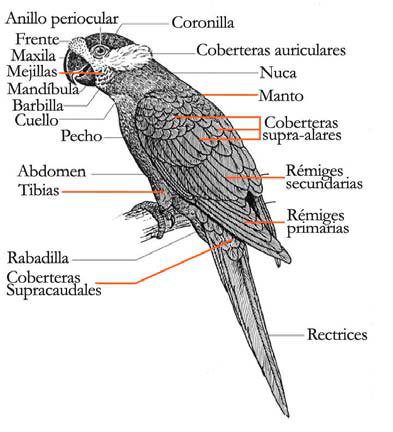
    Anatomy-parrots

    Description:

    23 cm.. height and a weight between 97 and 115g.

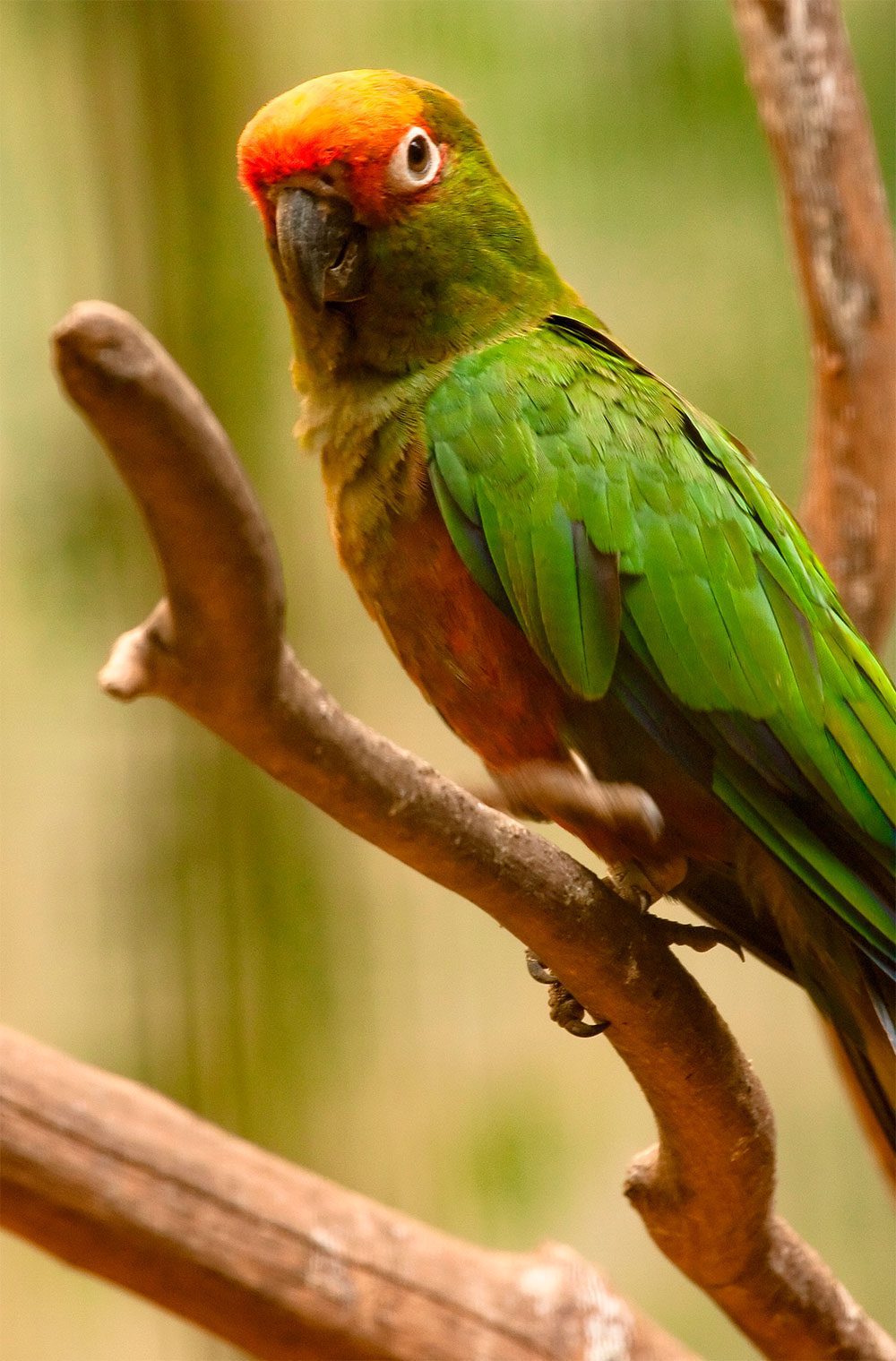
    The Rusty-faced Parrot or Parrot mountain (Hapalopsittaca amazonina) It is distinguishable by the dirty red of his face and crown. Its bill is pale with to the base of the lower jaw and the chin of color red orange. Headphones coverts reddish brown with yellow lines that extend behind the nape and the neck. The rest of upperparts they are green. Its chest This is olive green, with red spots in the shoulders similar to their Wing coverts internal minors. The rest of your wing-coverts they are blue-green and the remiges bluish-black. Its tail It is mainly dull red with wide blue apexes.

    It has no sexual dimorphism. The youth are green-yellow color, with the face pale red and the secondaries grey.

    Description 3 subspecies:

    • Hapalopsittaca amazonina amazonina

      (Des Murs, 1845) – Nominal.


    • Hapalopsittaca amazonina theresae

      (Hellmayr, 1915) – The plumage with more olive tones and the face dark red.


    • Hapalopsittaca amazonina velezi

      (Serious,GR & Restrepo, 1989) – With part of the crown and nape, brighter yellowish green; forecrown red; list fine near to the ear; below and behind the eye, green. More information.

    Habitat:

    It inhabits in mountains with semi-humid and cloud forests, between the 2000 to 3600 m, with the presence of Oak (Quercus humboldtii) and Alder (Alnus acuminata).
    Fly high in the forest canopy, in groups of 5-30 individuals. Presents aggregation behaviors for the night, establishing communal bedrooms in groups of between 2-35 individuals.

    Reproduction:

    Many aspects of the reproductive biology of the Rusty-faced Parrot. Probably nests in tree hollows of Oak dead.

    Food:

    Consumes fruits of the "matapaloยซ, flowers and seeds, including the of Clusia sp. and some GUIs of which is fed with high frequency.

    Distribution:

    Size of the breeding range / resident): 234.000 km2

    Is located in Colombia and Venezuela and Peru. In Colombia lives between 2000 and 2700 m above the sea level in the Cordillera Oriental and in the The upper Magdalena valley (South of the Department of the Huila). Among 3100 and 3600 m of height in the cordillera Central in Caldas (where it is considered Bird emblem), in the basin of the White River in the municipality of Manizales. In the Cordillera Oriental is known only in Norte de Santander and the southwest of Bogotรก. Has also been recorded in the departments of Risaralda, Tolima, Huila (Cave of the Guacharos, Meremberg nature reserve) and Cauca (Puracรฉ National Park).

    Distribution 3 subspecies:

    • Hapalopsittaca amazonina amazonina

      (Des Murs, 1845) – Nominal. East of the Colombian Andes.


    • Hapalopsittaca amazonina theresae

      (Hellmayr, 1915) – Eastern edge of the Andes of Colombia and Northwest of Venezuela.


    • Hapalopsittaca amazonina velezi

      (Serious,GR & Restrepo, 1989) – Center of the Colombian Andes. More information.

    Conservation:


    Vulnerable


    โ€ข Current category of the Red List of the UICN: Vulnerable.

    โ€ข Population trend: Decreasing.

    From makes several years appears in the book red of species threatened by fault of the destruction of their habitat, including, the Palm of wax (Ceroxylon quindiuense).

    Rationale for the Red List category

    This species is classified as Vulnerable Since its small population consists of subpopulations very small and scattered that probably will be experiencing declines continuous due to the loss widespread of habitat.

    Justification of the population

    Renjifo et to the. (2002) estimated that in Colombia the population can count 2,500-10,000 individuals, based on a hypothetical C.1 density of individuals / km2, and the 25% occupation of the approximately 13.890 km2 of habitat suitable. This may be an overestimate and the population could be right around the few thousand mark in Colombia (P. Salaman in litt., 2005). There are also much smaller populations in Venezuela. Its location in the Ecuador is uncertain. Be placed better in the band 2.500-9.999 mature in general individuals, which is equivalent to 3.750-14.999 individuals, rounded here to 3.500-15.000 individuals.

    Justification of trend

    Se sospecha una lenta y continua disminuciรณn de la poblaciรณn del Rusty-faced Parrot sobre la base de la continua destrucciรณn y fragmentaciรณn del hรกbitat.

    "Rusty-faced Parrot" in captivity:

    No encontrado en avicultura.

    Alternative names:

    Rusty-faced Parrot, Bogota Parrot, Little Amazonian Parrot, Rusty faced Parrot (English).
    Caรฏque ร  face rousse, Caรฏque ร  face rouge (French).
    Caรฏque ร  face rousse (German).
    Rusty-faced Parrot (Portuguese).
    Cotorra Montaรฑera, Lorito Amazonino, Lorito Multicolor, Loro fantasma (espaรฑol).
    Cotorra Montaรฑera, Lora montaรฑera (Colombia).
    Perico Multicolor (Venezuela).


    scientific classification:

    Marc Athanase Parfait Oeillet Des Murs
    Marc Athanase Parfait Oeillet Des Murs

    Order: Psittaciformes
    Family: Psittacidae
    Genus: Hapalopsittaca
    Scientific name: Hapalopsittaca amazonina
    Citation: (Des Murs, 1845)
    Protonimo: Psittacus amazoninus


    Images ยซLorito Amazoninoยป:

    Videos ยซLrito Amazoninoยป:


    ยซAmazonino Blondoยป (Hapalopsittaca amazonina)


    Sources:

    Avibase
    Parrots of the World โ€“ Forshaw Joseph M
    Parrots A Guide to the Parrots of the World – Tony Juniper & Mike Parr
    Birdlife

    Photos:

    (1) – Iconographie ornithologique By Marc Athanase Perfect Carnation Walls (1804-1878) (Iconographie ornithologique) [Public domain], via Wikimedia Commons

    Sounds:

    Restrepo, Daniel Uribe

    * – Restrepo, Daniel Uribe

    Daniel has been chasing birds since he was 9-years old, growing on a farm in the Central Andes of Colombia, with his bedroom walls covered with colorful prints of John James Audubonโ€™s birds. Daniel graduated in Veterinary Medicine and Animal Science and has pursued bird and nature photography as his main passions in life.

    He is co-founder of the Caldas Ornithological Society (SCO) based in Manizales. Dedicated mainly to conservation and sustainable development projects, Daniel has consulted for many of the most prominent environmental organizations in Colombia and currently assists private nature reserves in Colombia in the establishment of agritourism and ecotourism services.

    โ–ท The world of Pets: Dogs, cats, birds, reptiles, amphibians

    Pileated Parrot
    Pionopsitta pileata

    Pileated Parrot

    Content

    Pileated Parrot

    Description:

    22 cm.. length and a weight between 98-120 g..

    The Pileated Parrot (Pionopsitta pileata) has the forecrown, lores, crown anterior upper cheeks to behind eyes, bright red; patch reddish brown in ear-coverts; the lower cheeks, sides and rear of the neck, green.

    The upperparts, green. Primaries and greater coverts, alula and feathers bend of wing, violet blue; other coverts, green. Outerwebs of the primary and secondary, violet blue with blue-green edges. Under, the wings bluish green, coverts with some darker blue feathers. Underparts green with bluish tint in the chest and throat, and with a yellowish tint in the belly and undertail-coverts. Upper, the tail centrally green, laterally violet blue; undertail, bluish green.

    Bill dark brown, becoming dark horn distally in both jaws; bare periophthalmic naked, pale grey, irises and legs, grayish brown.

    The female has most of its head green but with a pretty pale blue in the forecrown.

    Immature as female, but with grayish green or green spots and dark spots on the base bill; young male sometimes with red limited in forecrown with a patch orange behind.

    • Sound of the Pileated Parrot.

    Habitat:

    They inhabit in forests, including humid tropical forests and forests dominated by araucarias, mainly in lowlands in the south of the mountain range, although penetrating the coastal mountains Brazil, at altitudes of 300 to 1.500 m; also in areas partially cleared. gregarious in groups of approximately 10 birds; apparently rare in greater numbers.

    Reproduction:

    They nest in the cavities of trees. probably reproduce mainly in the months of November to January. Clutch 3-4 eggs in captivity.

    Food:

    The fruits of Euterpe edulis They are among the favorite foods during the winter in eastern Paraguay; also recorded fruits Podocarpus and Solanum, and bark Eucalyptus; visit when ripe fruit orchards in Rio Grande do Sul.

    Distribution and status:

    Size of its range (breeding/resident ): 1.650.000 km2

    The Pileated Parrot It is located in southeast Brazil, to the South of Bay, through the belt of the Atlantic forest in Espirito Santo, probably east of Minas Gerais, Brazil, Rio de Janeiro, Sรฃo Paulo, Paranรก and Santa Catarina, until Rio Grande do Sul, extending to the east Paraguay and northeast of Argentina in Missions and possibly in Currents (no recent records); also they have been reported east of Chaco in Argentina, where they can arrive as an irregular visitors.

    Some seasonal movements occur Paranรก, where birds leave the inland coastal plateau after breeding, and in Paraguay where it is in Amambay in October.

    Nomad in the Intervales State Park of Sรฃo Paulo. Its population is widespread but declining due to the extensive loss of forests by urban growth, agriculture and mining.

    Described as uncommon to fairly common in Missions, Argentina. Apparently its population is still not at risk due to habitat loss, since birds are still quite numerous where fragments of forest remain. (for example, east of Paraguay) and travel between them on land without trees. More numerous are more extensive where the remains of forest, It is more common in eastern Paraguay and adjacent Paranรก and Sรฃo Paulo in Brazil.

    Conservation:


    minor concern


    โ€ข Current category of the Red List of the UICN: Least concern.

    โ€ข Population trend: Stable.

    Rationale for the Red List category

    This species has a very large range and therefore it is not close to the thresholds for Vulnerable under the criterion of size range (Extension Occurrence <20,000 km2 combinada con un tamaรฑo de rango decreciente o fluctuante, extensiรณn / calidad de hรกbitat o tamaรฑo de poblaciรณn y un pequeรฑo nรบmero de lugares o fragmentaciรณn severa). La demographic trend appears to be stable and, therefore, the species does not approach the thresholds Vulnerable under the criteria of population trend (> 30% decline over ten years or three generations). The population size It has not been quantified, but it is not believed to be close to the thresholds for Vulnerable under the criterion of population size (<10.000 individuos maduros con un descenso continuo estimado> 10% in ten years or three generations or a population structure). For these reasons the species is evaluated as the least concern.

    Justification of the population

    The size of the world's population has not been quantified, but this species is described as ยซRareยป (Stotz et to the., 1996).

    Justification of trend

    They suspected that the population is stable in absence of evidence of any decline or threatens substantial.

    "Pileated Parrot" in captivity:

    Very rare in captivity.

    Alternative names:

    Pileated Parrot, red-cappe parrot, Red-capped Parrot (English).
    Caรฏque mitrรฉ, Perroquet mitrรฉ (French).
    Scharlachkopfpapagei, Scharlachkopf-Papagei (German).
    Cuiรบ-cuiรบ, caturra, cuiรบ, cuiuiรบ, curica-cuiรบ, maitaca-de-cabeรงa-vermelha, periquito-rei, tui-maritaca (Portuguese).
    Catita cabeza roja, Catita decabeza roja, Lorito cabeza roja, Lorito de Cara Roja, Lorito Pileado (espaรฑol).
    Catita cabeza roja, Catita decabeza roja (Argentina).
    Lorito cabeza roja (Paraguay).


    scientific classification:

    Giovanni Antonio Scopoli
    Giovanni Antonio Scopoli

    Order: Psittaciformes
    Family: Psittacidae
    Genus: Pionopsitta
    Scientific name: Pionopsitta pileata
    Citation: (Scopoli, 1769)
    Protonimo: Psittacus pileatus


    "Lorito Pileado" images:

    Videos "Pileated Parrot"

    ————————————————————————————————

    "Pileado Lorito" (Pionopsitta pileata)


    Sources:

    Avibase
    – Parrots of the World โ€“ Forshaw Joseph M
    – Parrots A Guide to the Parrots of the World – Tony Juniper & Mike Parr
    – Birdlife

    Photos:

    (1) – Pileated Parrot Loro Parque – Tenerife (Spain) by Florin FeneruFlickr
    (2) – Pileated Parrot Loro Parque – Tenerife (Spain) by Florin FeneruFlickr
    (3) – Pileated Parrot Loro Parque – Tenerife (Spain) by Florin FeneruFlickr
    (4) – Pionopsitta pileata by Taguatรณ yetapaFlickr
    (5) – Red-capped parrot (Pionopsitta pileata) – ยซCuiรบ-Cuiรบยป Campina Grande do Sul | The Birds of Brazil by Ben TavenerFlickr
    (6) – Catita Cabeza Roja by Argentavis โ€“ Birds of Argentina

    โ–ท The world of Pets: Dogs, cats, birds, reptiles, amphibians

    Yellow-headed Parrot
    Amazona oratrix

    Yellow-headed Parrot

    Content


    Anatomy-parrots

    Description:

    35-38 cm. in length weighing up 500 g..

    Yellow-headed Parrot

    The Yellow-headed Parrot (Amazona oratrix) has head and nape bright yellow; sides neck sometimes with scattered green feathers.

    Upperparts green grass with ends of darker green in some feathers; uppertail-coverts paler. Wing coverts green, sometimes with paler yellow margins on some feathers; edge front of the wing and carpal area with red marks and / or yellow variables. Primaries and secondaries green at the base (more emerald than coverts), blue at the tips; five base outer secondaries bright red, forming a speculum. Under wings green. The chin is bright yellow, the throat variable green and dark blue suffusion margins in the feathers of some birds; chest and belly green with yellowish suffusion in some birds, bluish suffusion in other; the thighs with yellow feathers in some birds. Tail green with red tips yellow and green at the base of the innerwebs of the lateral feathers. Bill gray horn; bare periophthalmic whitish; irises orange; legs grey.

    Both sexes are similar.

    Immature It is very green part with little or no yellow in the head without red and yellow in the wings.

    • Sound of the Yellow-headed Parrot.

    Geographic Variation:

    All birds puerto Barios at the East end of Guatemala show yellow concentrate lores and crown. While it described as near the subspecies belizensis, the birds of puerto Barios at the northwest end of Honduras They may represent another subspecies of oratrix (not yet formally described) provisionally named guatemalensis (see belizensis below). The hondurensis, described below, It was widely regarded as a subspecies of undescribed Yellow-crowned Parrot (Amazona ochrocephala), but now treated at the southern end as a cline (gradual change of phenotypic traits of the same species due to environmental influences and conditions) Yellow decreasing in head Group of birds yellowhead.

    Description 3 subspecies:

    • Amazona oratrix belizensis

      Monroe,BL Jr & Howell,TR, 1966) – Less yellow in the head that the nominal species, without yellow on the throat. Cheeks green, bare periophthalmic grayish-white and probably on average smaller. Fowl Guatemala, to the Northwest of Honduras, sometimes show yellow in head as a patch wide in front of the crown and around eyes, and perhaps they represent a species not yet described (known as guatemalensis); although some birds also show yellow feathers on nape (see geographic variation in Yellow-naped Parrot (Amazona auropalliata).


    • Amazona oratrix hondurensis

      (Lousada & Howell,SNG, 1997) – Yellow on head limited to forecrown and in front of the crown, some birds show patch yellow in nape. One bill paler and more extensive yellow on the nape and the head subspecies caribea of the Yellow-naped Parrot. The patch Yellow crown It is also rounded or triangular, against a narrowband subspecies caribea. The subspecies panamensis of the Yellow-crowned Parrot has a bill darker and lacks the patch yellow in nape.


    • Amazona oratrix oratrix

      (Ridgway, 1887) – Nominal.

    Habitat:

    The Yellow-headed Parrot frequent savannas, Bosques Tropicales deciduous (including clear), dense forests of thorns, marshy forests peaceful, flood forest evergreen, dense gallery forest, forests Pinus caribea (Belice) and cultivated land with trees, mainly in lowlands below 500 m.

    Mainly observed in pairs or in large groups in communal roosts and feeding areas favorites. They snuggle into pine-covered ridges in Belice, moving to nearby humid forests to feed. Apparently, only flocks form in Tamaulipas.

    Reproduction:

    The Yellow-headed Parrot put their nests in cavities of trees 6-15 meters and in the holes of the palmeras Roystonea. Along the Pacific coast of Michoacรกn in Mexico, the Yellow-headed Parrot nests in trees Astronium graveolens, Brosimum allicastrum and at least five other species of trees (T. Monterrubio-Rico et al., In 2007)

    In Belice, preferred pines nest. Breeding season in the months of February to May in the south, to June in the north (for example in Tamaulipas). Clutch, usually 2-3 eggs, they are incubated between 27 and 28 days. The young leave the nest at eight weeks.. On average, only 1.2 hatchlings reach adulthood in each clutch.

    Food:

    Food in diet of the Yellow-headed Parrot include outbreaks, leaves news, fruits of Palma, seeds of Acacia, fruits of Macuna, Ficus, Zuelania guidonia, Bumelia laetivirens, Solanum and Pithecellobium flexicaule.

    They can cause damage to crops, including corn, mango and green bananas.

    Distribution and status:

    Size of its range (breeding/resident ): 1.020.000 km2

    The Yellow-headed Parrot It is confined to Central America in Mexico, Belice, the east end Guatemala and the Northwest corner of Honduras. They are distributed by the slope of peaceful of Mexico in Colima, Michoacรกn, Warrior, Oaxaca (two disjunct populations on the slopes of peaceful and of the Gulf on Isthmus region) and Chiapas. also observed in the shed Gulf from the central and southern Tamaulipas, to the East of San Luis Potosi, Puebla, Veracruz, Tabasco and Campeche, as well as in Belice and around puerto Barios at the East end of Guatemala to the northwest corner of Honduras in the Sula Valley.

    Distribution in the east of its range poorly documented, with dubious appearances Campeche and in the region of Petรฉn in the North of Guatemala, confirmed only 1993.

    Reports Yellow-headed Parrot outside the normal range Mexico (for example, City of Mexico) probably involving leaks. Wild populations Miami (Florida) and Puerto Rico.
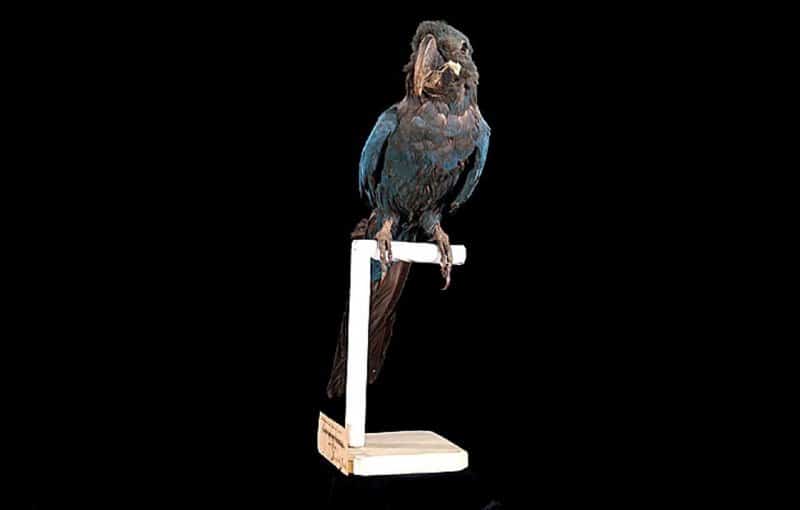
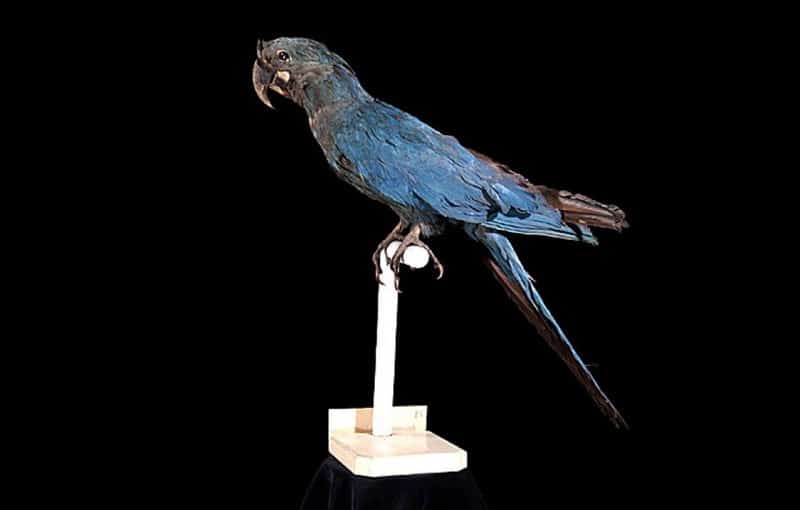
    local residents, and rare sparsely distributed along most of its distribution (perhaps locally common in parts of Belice) with diminished by the loss of habitat populations and their capture for live bird markets.

    The population of Sula Valley survives as remainder. marketed widely both within and outside the species range, being one of the most searched Neotropical parrots pet (reputedly one of the best talkers). The most drastic falls have probably been in the northeast of Mexico, where habitat loss has been more rapid and severe. The wild population is probably less than 7.000 individuals (1994).

    Distribution 3 subspecies:

    • Amazona oratrix belizensis

      Monroe,BL Jr & Howell,TR, 1966) – Belice.


    • Amazona oratrix hondurensis

      (Lousada & Howell,SNG, 1997) – Sula Valley, Honduras.


    • Amazona oratrix oratrix

      (Ridgway, 1887) – Nominal.

    Conservation:


    Endangered


    โ€ข Current category of the Red List of the UICN: In danger of extinction.

    โ€ข Population trend: Decreasing.

    โ€ข Population size: 4700

    Rationale for the Red List category

      This species qualifies as in danger of extinction due to demographic decline very fast. The population is now so small that it is likely to fall (but still very significant) rates decrease in the future (Collar et al., 1992).

    Justification of the population

      The population It was estimated 7.000 copies in 1994. This is roughly equivalent to 4.700 mature individuals.

    Justification of trend

      It is estimated that the population of the species is declining very fast, due to the loss and degradation of habitat and the levels of capture and persecution. On the coast of Michoacรกn, Mexico, it is estimated that the species occupies the 45.6% its estimated historical distribution (Monterrubio-Rico et al ., 2007 ). Throughout all Pacific coast of Mexico, its historical range has contracted by a 79% (Monterrubio-Rico et al ., 2010). The population of Punta de Manabique It decreased by 30% between 1994 and 2001 mainly due to the Poaching of nests (our man 2003 , Eisermann in a bit., 2007).
    Threats

    โ€ข The habitat loss It has been extensive, with the 80% lowlands of Tamaulipas cleared for agriculture and pasture, and growing settlements along the Autopista del Oeste in Belice (Somerville 1997).

    โ€ข In Belice, where much of the suitable habitat is outside the sistema national protected area, the regions occupied by species remain under heavy development pressure (B. Miller in a little ., 2007).

    โ€ข Las palm savannas at the only known breeding site in Guatemala They are used for no intensive cattle grazing (our man 2003), who is still a threat here (Fundary et al ., 2006).

    โ€ข Many thousands of Individuals of this species are exported illegally from Mexico and some from Belice each year, and it is popular in domestic markets (Low 1995b, Miller and Miller 1997, Somerville 1997).

    โ€ข The illegal internal traffic is intense in Mexico and may represent the 38% of recent species loss distributive (T. Monterrubio-Rico et al., In 2007).

    โ€ข In the Mexican states of Michoacรกn, Warrior and Oaxaca, They are mainly pups those taken to the pet trade (T. Monterrubio-Rico et al., In 2007).

    โ€ข In Guatemala, It is reported that Local military authorities are complicit in the illegal trade of this species, and poachers frequent nest nesting site of the species (our man 2003, Eisermann in some). It also, has reported its hunting for food from local fishermen in Guatemala (our man 2003, Eisermann in some ., 2007).

    โ€ข In Belice, It is hunted and persecuted by damage to crops (SNG Howell in some 1998) and it remains a victim of the illegal pet trade, whose capture involves logging nesting (B. Miller in a little ., 2007).

    โ€ข It is estimated that its extension around the coast of Michoacรกn It has decreased 1.507 km2 , of which 576 km2 can not be attributed to habitat loss and, therefore, They may be due to the poaching for trade (Monterrubio-Rico et al., 2007).

    Conservation Actions Underway

    โ€ข CITES Appendix I.

    โ€ข In Mexico It is distributed in nine protected areas (T. Monterrubio-Rico et al., In 2007).

    โ€ข The nominal subspecies inhabits Biosphere Reserves of Heaven, Los Tuxtlas, Swamps Centla and Terms Lagoon.

    โ€ข The species Tres Marias Parrot (Amazona tresmariae), considered by some authors as a subspecies of Amazona [oratrix gold tresmariae], It is protected in Islas Marรญas Biosphere Reserve.

    โ€ข The nominal subspecies It is in the Reserva Chamela-Cuixmala, in the Lagunas de Chacahua, in the Huatulco National Park, and in the Biosphere Reserve Zicuirรกn-Infiernillo in Michoacรกn (T. Monterrubio-Rico et al., 2007), as well as in seven protected areas in Belice (EC Enkerlin-Hoeflich in some 1994, Miller and Miller 1997, Snyder et to the., 2000).

    โ€ข The only one breeding population known in Guatemala It was declared Wildlife Refuge in 2005, but effective protection is difficult due to organized crime in the area (Eisermann in some ., 2007).

    โ€ข There are several awareness campaigns nationally in Mexico (Roberson y Carratello, 1997).

    โ€ข It is bred in captivity, but the reintroduction of captive bred birds is unfeasible (Baja 1995b).

    Conservation Actions Proposed

    โ€ข Carry out surveys for an updated estimate of population size.

    โ€ข Monitor rates of habitat loss and degradation.

    โ€ข Monitor hunting levels, catch and trade.

    โ€ข Apply the trade restrictions.

    โ€ข To protect effectively as key sites Las Colorados Ranch, Soto La Marina / Fishing, Tamaulipas, orange river, focused on Las Abritas (San Luis Potosi) and Punta de Manabique.

    โ€ข Survey to identify other important sites.

    โ€ข Investigate habitat use and local movements.

    โ€ข Continue zooming awareness campaigns.

    โ€ข Develop structured captive breeding programs and investigate the possibility of future release.

    "Yellow-headed Parrot" in captivity:

    The Yellow-headed Parrot are popular in domestic markets.

    protected by CITES Appendix I (Species that are endangered. Prohibited international trade of specimens of those species, except when the import is non-commercial purposes).

    In Mexico It is listed as endangered in both the NAME-059-SEMARNAT-2001, as in the NAME-059-SEMARNAT-2010, and by the Article 60 Bis of the General Law on Wildlife removal of specimens from the environment is prohibited, marketing, tenure, import, export, use of any of its parts. They are up 9 years in prison and fines very high who are surprised by the Profepa with specimens of this species in their possession and do not have papers proving their legal provenance.

    Should be avoided in all cases buy this or any of the protected species by different appendices CITES.

    Alternative names:

    Yellow-headed Amazon, Yellow-headed Parrot, Yellow-headed Parrot (Mainland) (English).
    Amazone ร  tรชte jaune, Amazone ร  tรชte jaune (continentale), Amazone ร  tรชte jaune (forme continentale) (French).
    Gelbkopfamazone (German).
    papagaio-de-cabeรงa-amarela (Portuguese).
    Loro Cabeza Amarilla, Amazona cabecigualda (espaรฑol).


    scientific classification:

    Robert Ridgway
    Robert Ridgway

    Order: Psittaciformes
    Family: Psittacidae
    Genus: Amazona
    Scientific name: Amazona oratrix
    Citation: Ridgway, 1887
    Protonimo: Amazona oratrix


    ยซYellow Headed Parrotยป Images:

    Videos "Yellow-headed Parrot"

    ————————————————————————————————

    ยซYellow Headed Parrotยป (Amazona oratrix)


    Sources:

    Avibase
    – Parrots of the World โ€“ Forshaw Joseph M
    – Parrots A Guide to the Parrots of the World – Tony Juniper & Mike Parr
    Birdlife

    Photos:

    (1) – A Yellow-headed Amazon (also known as the Double Yellow-headed Amazon) in an aviary By Ernst Vikne (IMG_4451.JPG) [CC BY-SA 2.0], via Wikimedia Commons
    (2) – Yellow-headed Amazon at Baltimore Aquarium, USA By Christine Schmidt from Laurel, USA (Parrot pair) [CC BY 2.0], via Wikimedia Commons
    (3) – Yellow-headed Amazon, also known as the Yellow-headed Parrot or Double Yellow-headed Amazon, at Lion Country Safari, West Palm Beach, Florida, USA. Photograph is a close up of head By Duncan Rawlinson from Vancouver, BC (Parrot) [CC BY 2.0], via Wikimedia Commons
    (4) – Yellow-headed Amazon (Amazona oratrix) playing on his cage by Mbtskysurfer at English Wikipedia [GFDL or CC BY 3.0], via Wikimedia Commons
    (5) – Yellow-headed Amazon (Amazona oratrix) also known as the Yellow-headed Parrot, Double Yellow-headed Amazon. Two parrots on a perch By Gary Denness (originally posted to Flickr as Parrot Portrait) [CC BY-SA 2.0], via Wikimedia Commons
    (6) – Yellow-headed Amazon (also known as the Yellow-headed Parrot and the Double Yellow-headed Amazon) at Vancouver Aquarium, Canada By Lizzy Foulkes (originally posted to Flickr as Hello, Goregous) [CC BY-SA 2.0], via Wikimedia Commons
    (7) – A Yellow-headed Amazon at Palmitos Park, Gran Canaria, Canary islands, Spain By William Warby (Flickr: Parrot) [CC BY 2.0], via Wikimedia Commons
    (8) – A Yellow-headed Amazon in Jungle Island, Miami, Florida, USA By Humberto Moreno (Parrot Jungle, Miami) [CC BY 2.0], via Wikimedia Commons
    (9) – Yellow-headed Amazon (also known as the Yellow-headed Parrot and the Double Yellow-headed Amazon) at Dallas World Aquarium, USA By texas_mustang (Dallas Aquarium 2008 with Meredith) [CC BY 2.0], via Wikimedia Commons

    Sounds: Peter Boesman, XC218407. accessible www.xeno-canto.org/218407

    + More