โ–ท The world of Pets: Dogs, cats, birds, reptiles, amphibians

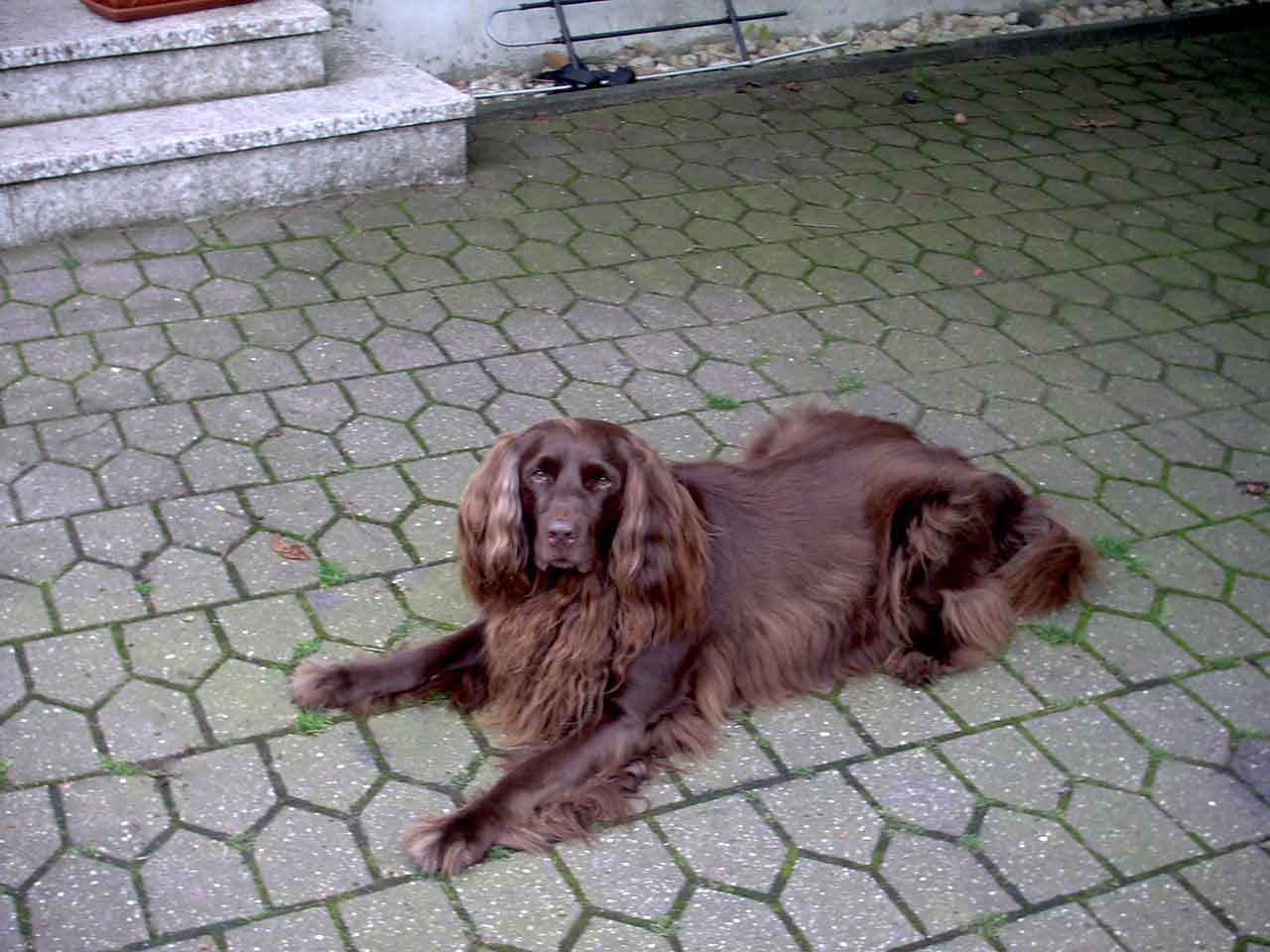
Picardy Spaniel
Francia FCI 108 . Spaniel type

Docile and resistant, happy with little, the Picardy Spaniel however needs the constant attention of your caregiver.

Content

History

The French Spaniel and the Picardy Spaniel the two races of Spaniel oldest on the European continent. Both seem to descend from the "oyys dog" described in the works of Gaston Fรฉbus (siglo XIII). At that time, Hunting was one of the most popular activities of the French nobility and the Spaniel French type was one of the most popular breeds. The breed is represented in paintings from this period by artists such as Alexandre-Franรงois Desportes and Jean-Baptiste Oudry. It is also the first dog breed to be admitted to exhibitions..

The breed became more popular after the French Revolution, since hunting is no longer an activity reserved exclusively for the nobility. Although it is found throughout the country, a large contingent is present in the northwest of the country, where its water resistant coat makes it an ideal breed for hunting in forests and swamps. During the 19th century, English hunters crossed the English Channel and traveled to northwestern France to hunt in these famous lands. So they brought their own hunting dogs, that the French gradually adopted, thus endangering Picardy Spaniel. It also, the infusion of blood from English Setter in the race created the Blue Picardy Spaniel.

The Picardy Spaniel it is a very rare breed of dog, which is almost only found in metropolitan France.

The Picardy Spaniel is recognized by a wide variety of canine clubs and associations such as the International Canine Federation, even abroad like him North American Kennel Club, the American Rare Breed Association, the United Kennel Club. All these associations use the FCI standard. It is also recognized by the Continental Kennel Club, but unlike the Blue Picardy Spaniel, which is closely related to him, is not recognized by the Canadian Kennel Club.

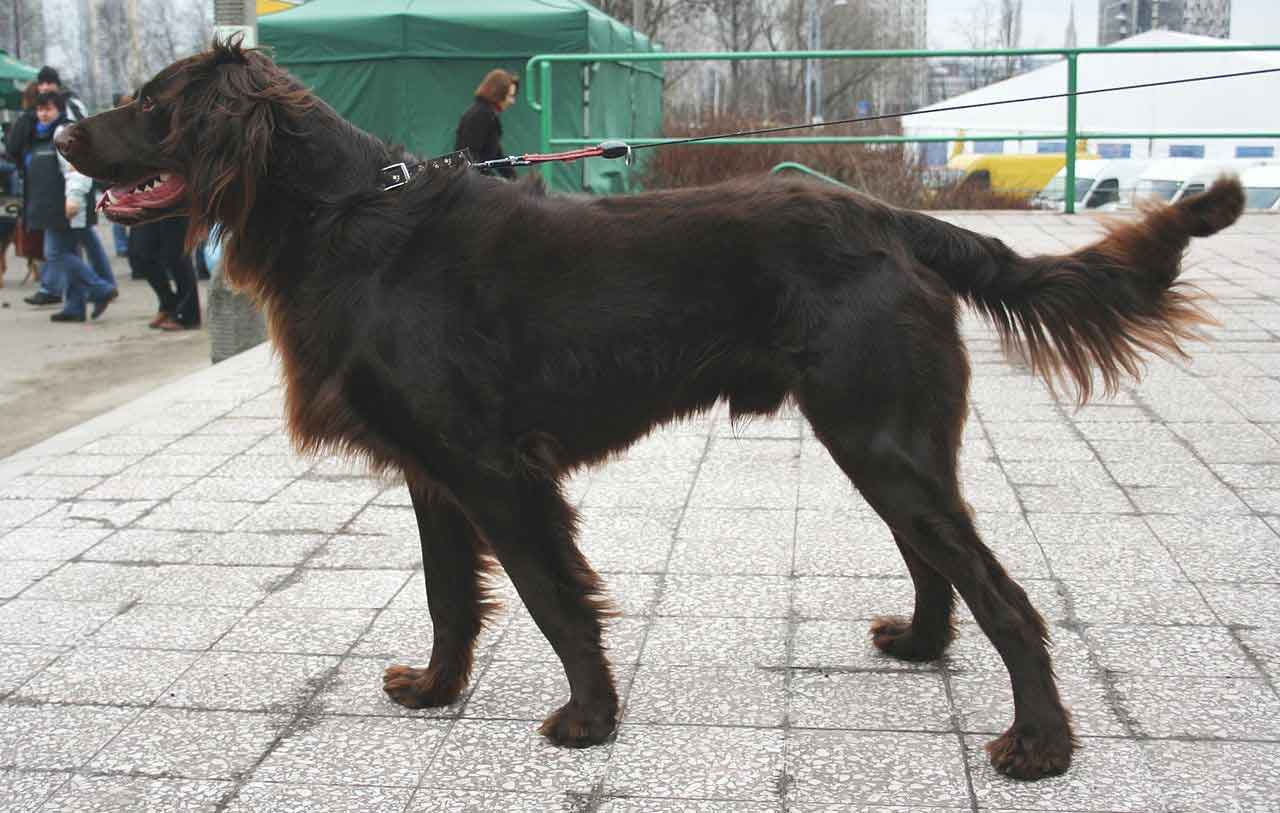
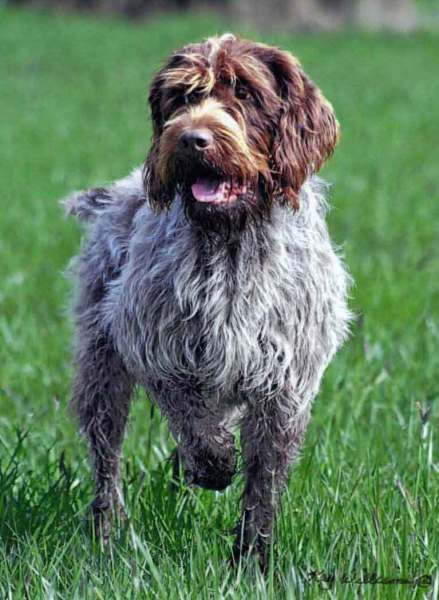
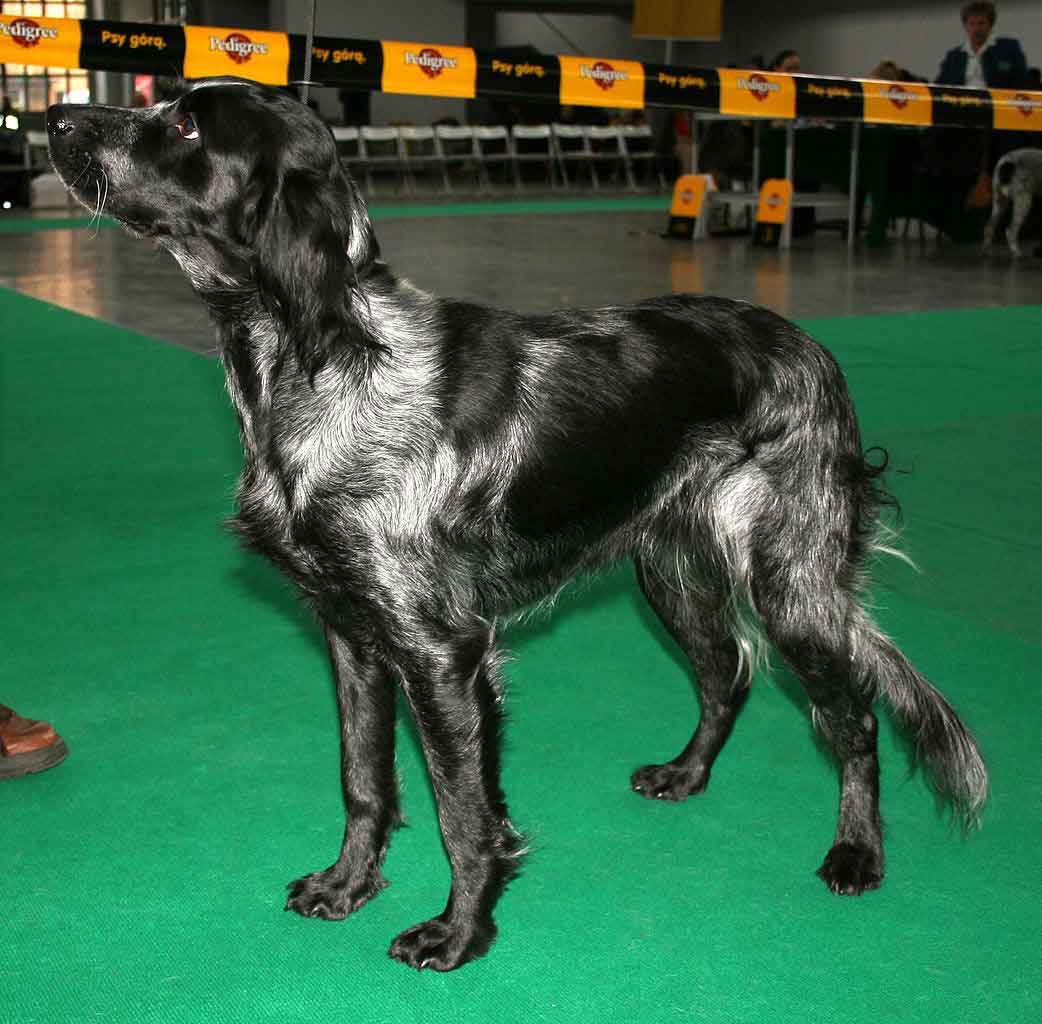
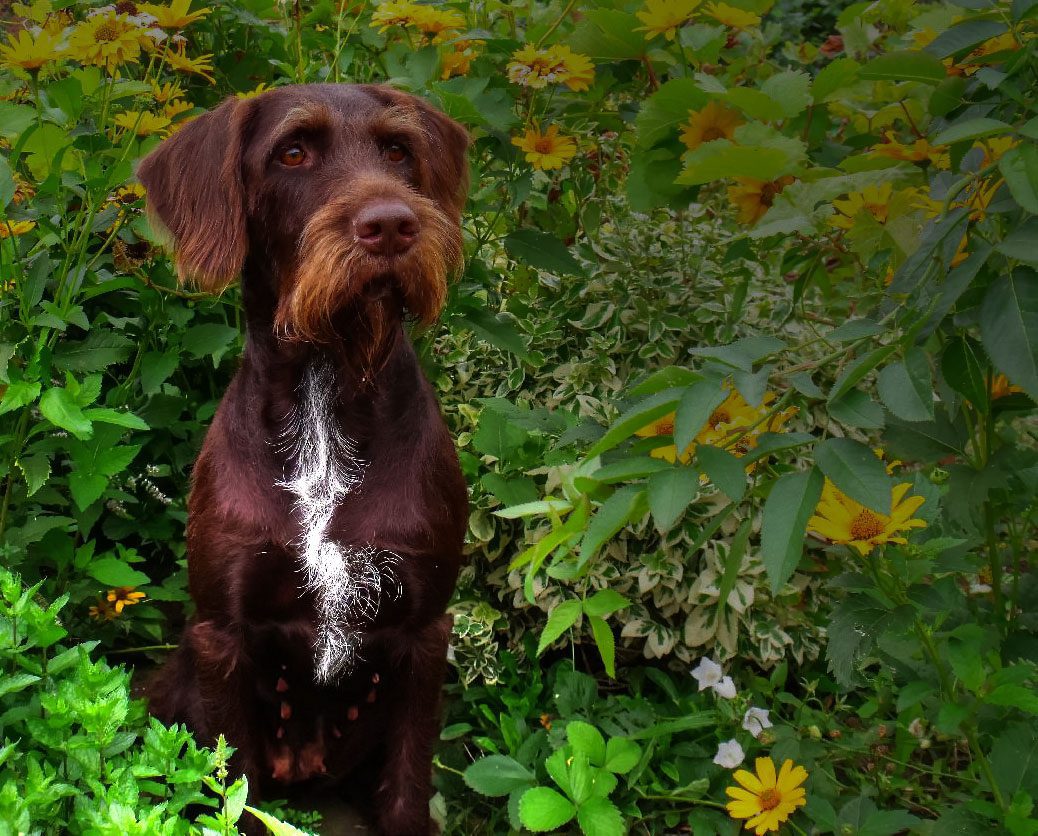
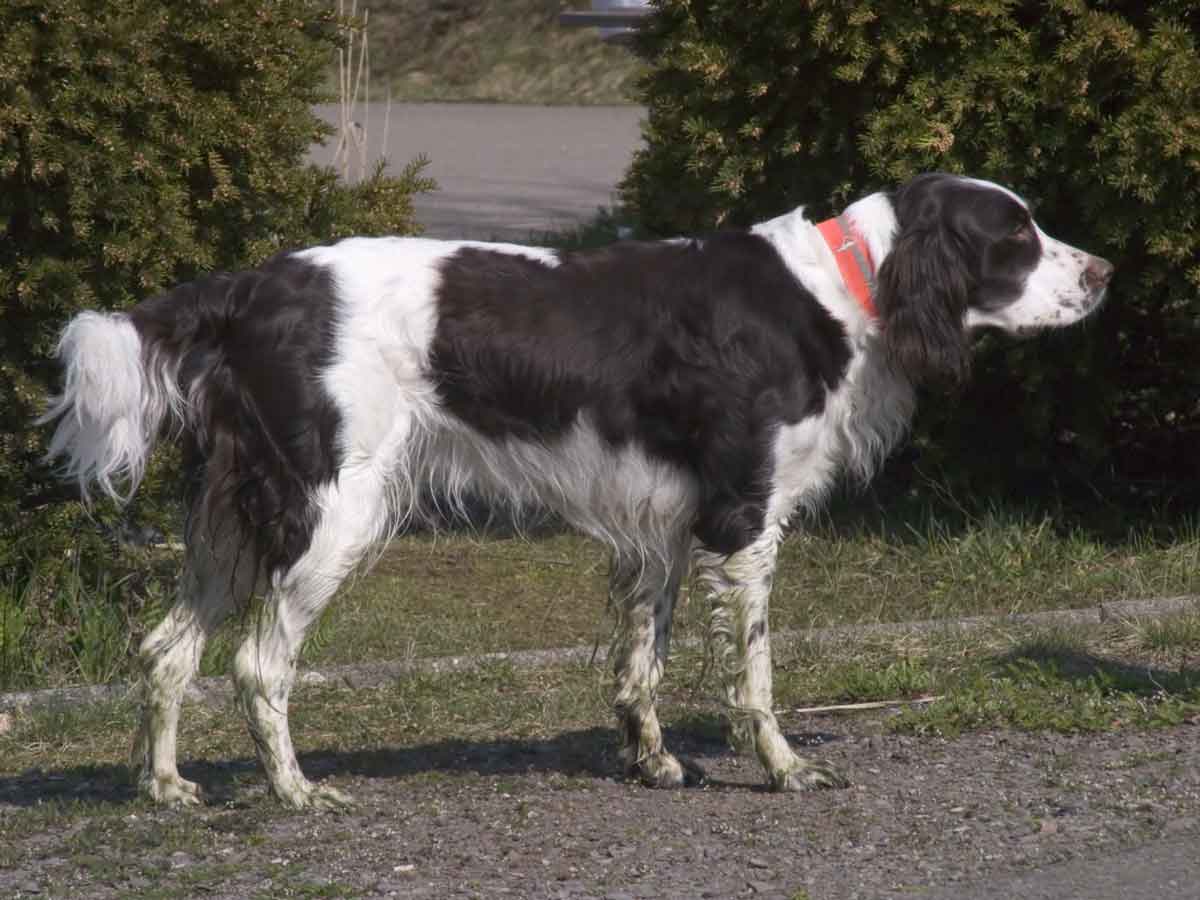
Photo: ยซSpaniel Picardoยป in the World Canina Exhibition of Poznaล„ Pleple2000, CC BY-SA 3.0, via Wikimedia Commons

Physical characteristics

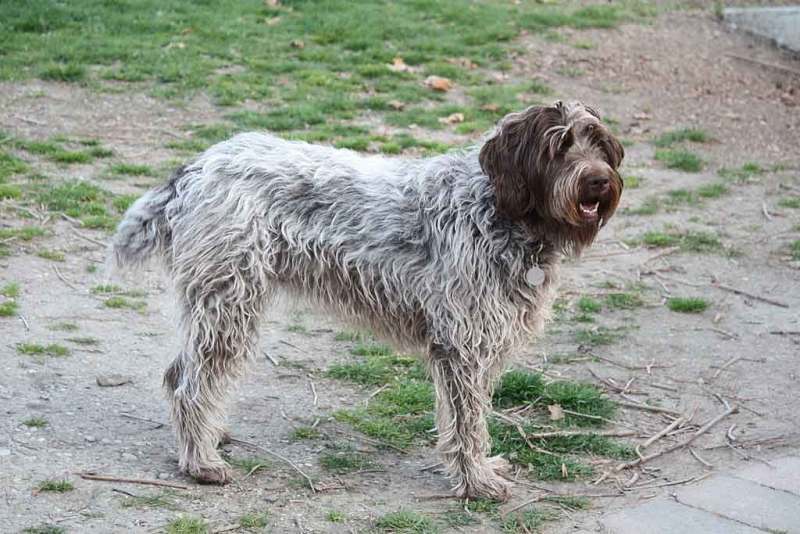
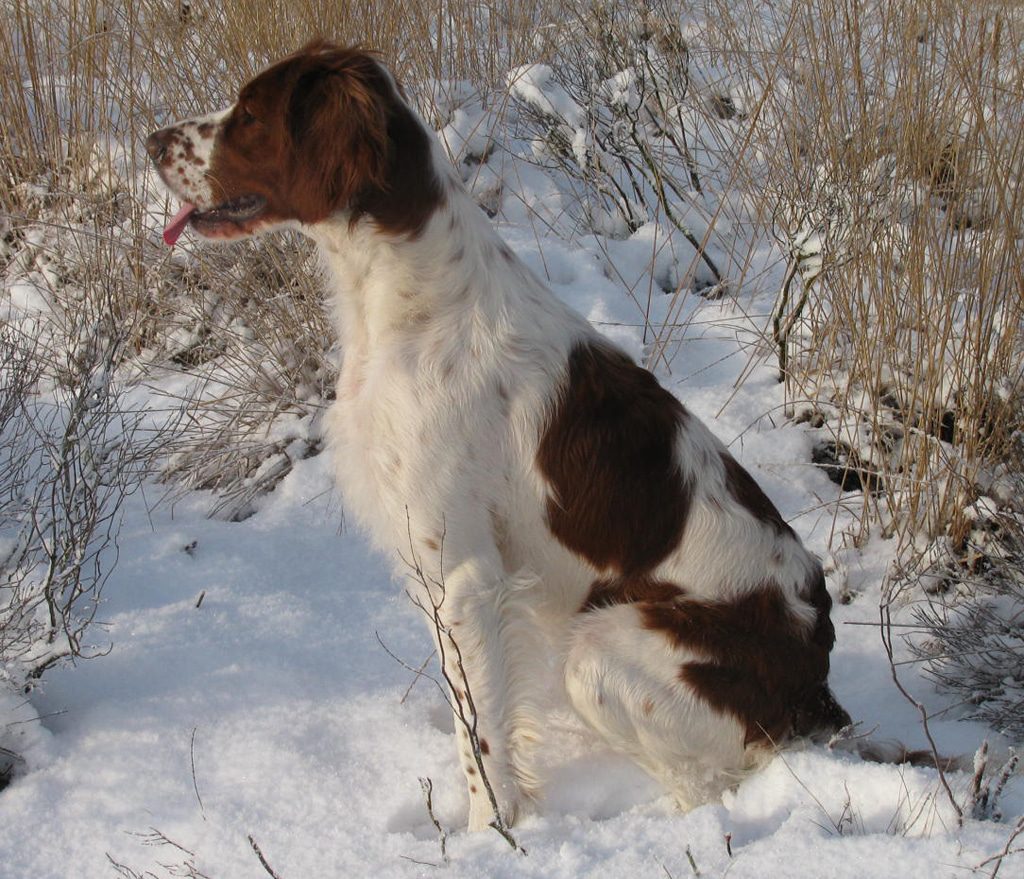
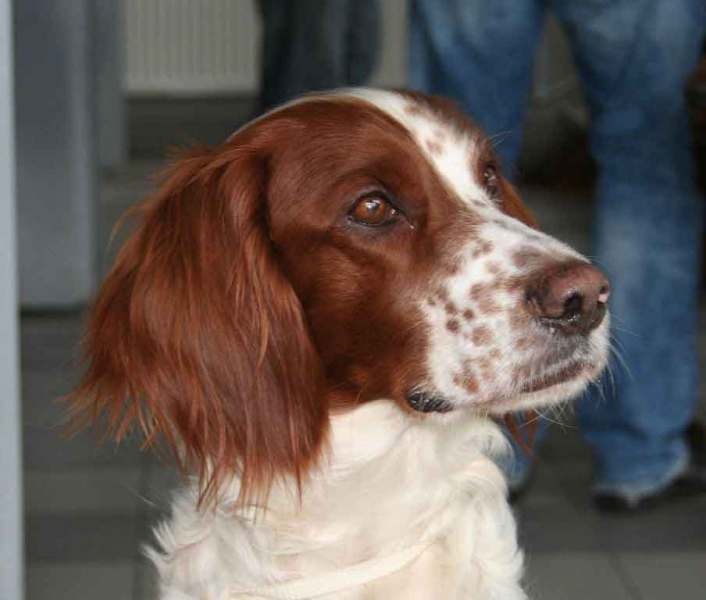
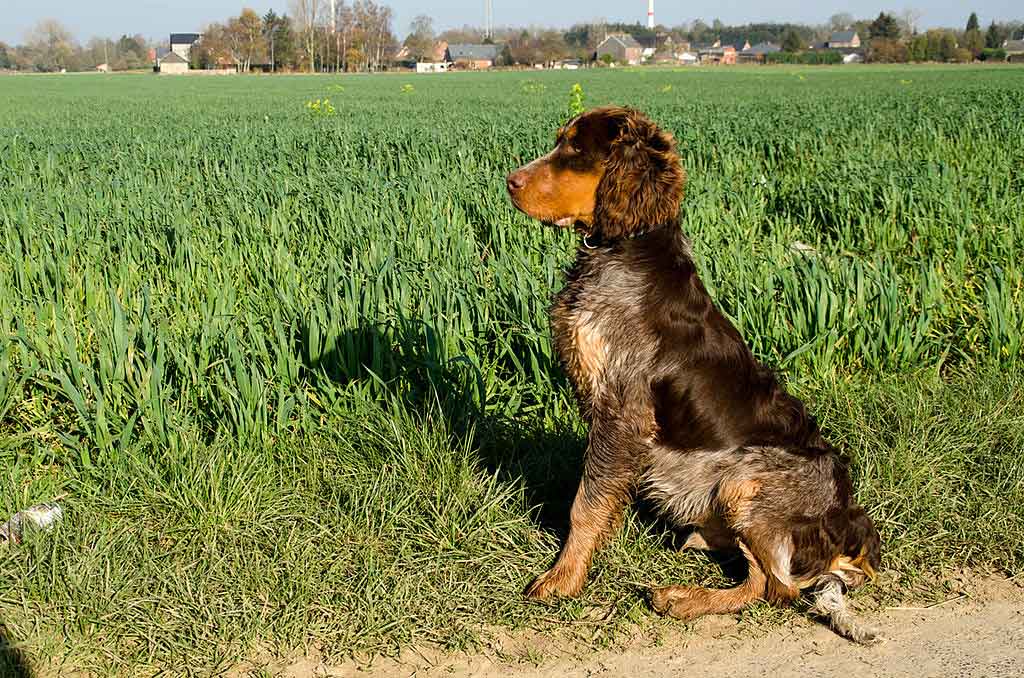
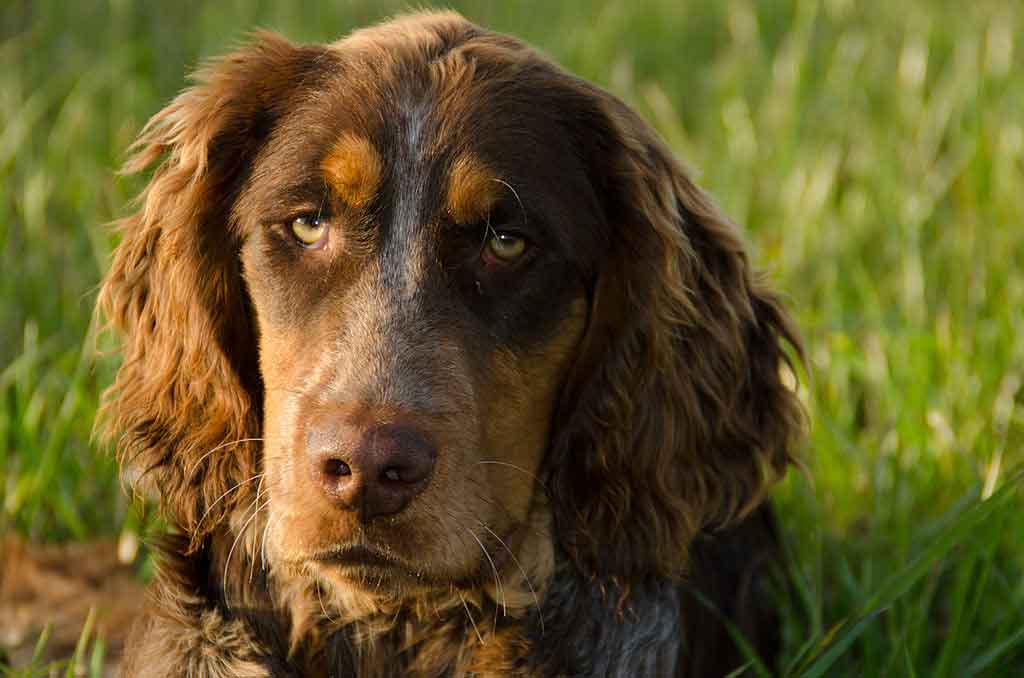
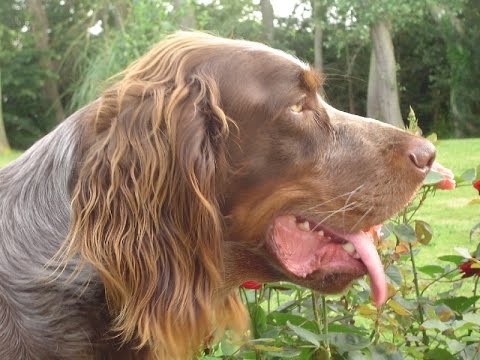
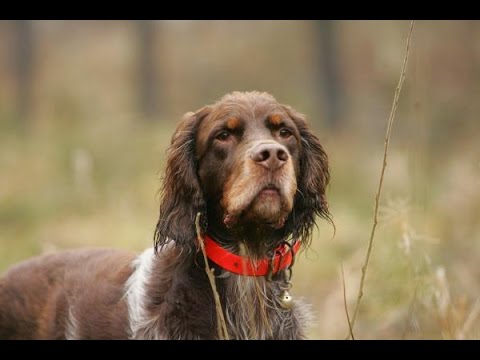
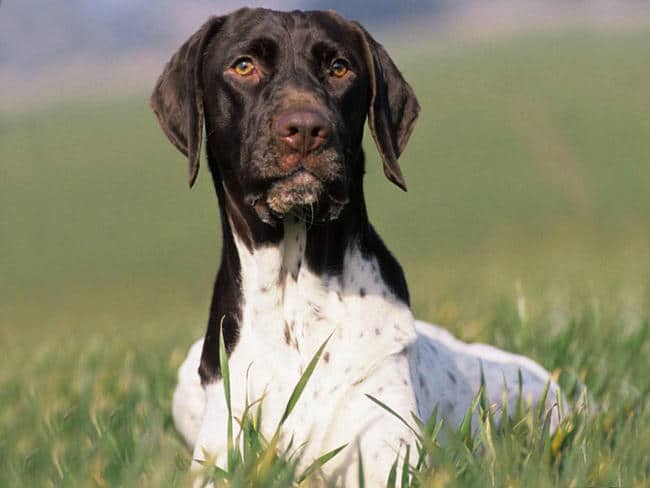
The Picardy Spaniel he is a beautiful dog, strong, elegant, nervous, solid and well muscled. Its coat is gray with brown spots on the different parts of the body and often tan on the head and legs.. Her dark amber eyes go wide giving you an expressive look. Its abundant and slightly wavy coat gives it protection, allowing you to work in the toughest places, especially in the water. The ears are long, quite low, located on the eye line and decorated with beautiful fringes. The tail, adorned with beautiful fur, worn with distinction. Its size ranges from 55 and 60 cm..

Character and skills

The FCI breed standard does not describe a typical temperament for the Picardy Spaniel. The Picardy Spaniel it is considered a docile breed of dog that loves to play with children, and easily bond with your caregiver. Generally described as a docile dog, good-natured and easy to train.

Above all, They are hunting dogs that need a lot of exercise to express their energy., resistance and rusticity.

His training is natural; the Picardy Spaniel they work to please their caregiver. Report, on land and in deep water, it's a pleasure for him. The rewards, caresses and compliments are the basis of his education.

Utility

The Picardy Spaniel is a hunting dog, that needs daily departures.

The Picardy Spaniel are used for hunting, in the woods for pheasant or in the swamps where they hunt, in particular, the snipe. It is also an effective dog for duck hunting, the hare or the rabbit. They are especially effective in swamps, where they do not hesitate to jump into the water. If required, can also recover hunting. This dog loves wide spaces where he can exercise, but you can also settle for smaller spaces and you can live very well in the city. The hair is abundant and slightly wavy, allowing you to hunt in dense vegetation and enter the water without any difficulty.

These docile dogs make great companion dogs., but they require a lot of physical exercise.

Health

There are no known hereditary genetic diseases in dogs Picardy Spaniel. Its longevity is of 14 years on average. The Picardy Spaniel is especially sensitive to ear infections, like most floppy eared dogs, like other breeds of โ€œSpaniels or Bassetsโ€. The Picardy Spaniel tend to gain weight quickly if overfed.

Characteristics "Picardy Spaniel"

Coexistence is important that you have with your new friend. Before considering the acquisition of a dog of the breed "Picardy Spaniel" you know certain factors. Not all breeds of dogs are apt to live in an apartment, you must take into account his character, their need for exercise, their interaction with other pets, their care and if you have small children, their level of tolerance towards them.

Adaptation โ“˜

3,0 of 5 stars (based on 1 review)

friendly dog โ€‹โ€‹โ“˜

3,0 of 5 stars (based on 1 review)

hair loss โ“˜

3,0 of 5 stars (based on 1 review)

Affection level โ“˜

5,0 of 5 stars (based on 1 review)

Need for exercise โ“˜

5,0 of 5 stars (based on 1 review)

Social need โ“˜

3,0 of 5 stars (based on 1 review)

Home โ“˜

3,0 of 5 stars (based on 1 review)

Toilet โ“˜

2,0 of 5 stars (based on 1 review)

Friendly with strangers โ“˜

3,0 of 5 stars (based on 1 review)

barking โ“˜

3,0 of 5 stars (based on 1 review)

Health โ“˜

4,0 of 5 stars (based on 1 review)

Territorial โ“˜

2,0 of 5 stars (based on 1 review)

Cat friendly โ“˜

2,0 of 5 stars (based on 1 review)

Intelligence โ“˜

4,0 of 5 stars (based on 1 review)

Versatility โ“˜

4,0 of 5 stars (based on 1 review)

Child friendly โ“˜

4,0 of 5 stars (based on 1 review)

Surveillance โ“˜

2,0 of 5 stars (based on 1 review)

joy โ“˜

4,0 of 5 stars (based on 1 review)

Images "Picardy Spaniel"

Picardy Spaniel

Our "Spaniel Picardo", Gibbs des Chaumes de Thiรฉrache to the 6 meses by Rachelle Vafidis, CC BY-SA 3.0, via Wikimedia Commons

Picardy Spaniel

Our "Spaniel Picardo", Gibbs des Chaumes de Thiรฉrache to the 6 meses by Rachelle Vafidis, CC BY-SA 3.0, via Wikimedia Commons

Videos "Picardy Spaniel"

Spaniel picardo (Picardy Spaniel) - Breed of dog
Spaniel picardo (Epagneul picard) – Breed of dog
Picardy Spaniel (Picardy Spaniel)
Picardy Spaniel (Epagneul Picard)

Type and recognitions:

  • FCI CLASSIFICATION:
  • Group :
  • Section : . .

Federations:

  • FCI – Group 7: Pointing Dogs. – Section 1: Continental Pointing Dogs. 1.2: Spaniel type โ“˜
  • โ€‹KC – Hunting dog โ“˜
  • UKCGun Dog โ“˜

FCI breed standard "Picardy Spaniel"

Origin:
France

Date of publication of the valid original standard:
30.10.1964

Use:

Pointing Dogs.


General appearance:

Very compact dog, With strong and muscular members, sweet and expressive; Hears his head with a cheerful and high attitude. Its previous members are well developed.


Behavior / temperament:

---

Head:

---

Cranial region:
  • Skull : Round and wide, with well -pronounced occiput; Parietal bones are flattened.
  • Fronto-nasal depression (Stop) : Well inclined, Without forming a right angle.

facial region:

  • Truffle : Brown in color, medium, quite rounded.
  • Snout : Long, quite wide, He gradually thin.
  • Lips : Moderate thickness; The upper lip falls a bit on the lower, but without hanging.

Eyes : Dark amber color, Well open with a frank and expressive look.

Ears : Low enough to frame your head well; The hairs are beautiful, silky and undulating.

Neck:

With good placement and well muscular.

Body:

The hips are located a little lower than the cross.

  • Back : Moderately long, slightly sunk after the cross.
  • Pork loin : Well straight, not too long, broad and thick.
  • Rump : Very slightly inclined and rounded.
  • Breast : Deep and quite wide; It clearly descends to the elbow level.
  • Flanks : Plans, But deep, quite raised.

Tail:

The insertion of the tail is not very high; form two concave and convex light curves; It is not very long and is covered with a beautiful silky hair.

Tips

PREVIOUS MEMBERS : Straight and with strong muscles, adorned with fringes.

  • Shoulder : Quite long shoulder blades, rather straight and endowed with strong muscles.
  • Arms : Well muscled.
  • Elbows : Well located.

LATER MEMBERS : Presence of good hair strip to the warm-Tarsian joint.

  • Hips : Prominent, At the level of the sword and the spine.
  • Thighs : Straight, well descended, wide and well muscled
  • Warm-tarsal joints : Little angled.
  • Metacarpus : Straight.

FEET : Round, widths, together, With a little hair between the fingers.

Movement:

---

Mantle

SKIN : Quite fine and flexible.

HAIR : Thick, Not too silky, head, slightly undulating the body.

COLOR : Mottled gray, With brown plates on different parts of the body and at the birth of the tail; more frequently marked fire in the head and feet.


Size and weight:

Height to the cross : 55 to 60 cm..

Tolerance is admitted to 62 cm in males.


Fouls:

Any deviation from the aforementioned criteria is considered as a fault and the severity of this is considered to the degree of the deviation to the standard and its consequences on the health and well-being of the dog..

โ€ข Pear -shaped head, Very narrow.
โ€ข Square skull, narrow or short.
โ€ข Very straight front-nose depression angle.
โ€ข Black truffle, sharp, closed; double nose.
โ€ข Muzzle too short, Very convex.
โ€ข Too thick lips, very tight.
โ€ข Too light eyes, Very sunk, at the level of the head, oblique; Malignant look.
โ€ข narrow ears, short, too high implantation, very curly hair covers or lacking silky hair.
โ€ข Very long neck, too short or very thin.
โ€ข Very long or reilled back.
โ€ข Loin too long, very narrow or very weak.
โ€ข Very inclined rump.
โ€ข Very narrow or not deep enough chest.
โ€ข Round flanks, very raised or very fallen.
โ€ข Saber -shaped tail, too long, hair too curly, of very high or very low insert.
โ€ข Previous members without stripes, skinny; Closed or separate elbows.
โ€ข Very short scapulae, Too many straight or inclined, directed very backward.
โ€ข Very thin arm.
โ€ข Carpo firing forward.
โ€ข Very high hips, Very low, Too close.
โ€ข Narrow thigh, without hair stripes.
โ€ข Tibio-Tarsian joints too angled or cow-shaped.
โ€ข Narrow feet, crushed, Very separate fingers.
โ€ข Too thick skin.
โ€ข Fine fur, silky, Crespo or too short.
โ€ข Too brown color, White or black spots.

FALTAS DESCALIFICANTES:

โ€ข Aggressiveness or extreme shyness.
โ€ข Any dog โ€‹โ€‹showing clear signs of physical or behavioral abnormalities.


N.B.:

โ€ข Males must have two normal-appearing testicles fully descended into the scrotum..
โ€ข Only functionally and clinically healthy dogs, with the typical conformation of the breed, should be used for parenting.

Source: F.C.I - International Cynological Federation

Alternative names:

1. Epagneul picard (English).
2. ร‰pagneul picard (French).
3. Epagneul Picard (German).
4. (em francรชs: Epagneul Picard) (Portuguese).
5. Epagneul picard (espaรฑol).

โ–ท The world of Pets: Dogs, cats, birds, reptiles, amphibians

Old Danish Pointer
Dinamarca FCI 281 . Braque Type

Antiguo perro de muestra danรฉs

Given the hunting instinct of the Old Danish Pointer, it is necessary to socialize him as a child

Content

Characteristics "Old Danish Pointer"

Coexistence is important that you have with your new friend. Before considering the acquisition of a dog of the breed "Old Danish Pointer" you know certain factors. Not all breeds of dogs are apt to live in an apartment, you must take into account his character, their need for exercise, their interaction with other pets, their care and if you have small children, their level of tolerance towards them.

Adaptation โ“˜

3,0 of 5 stars (based on 1 review)

friendly dog โ€‹โ€‹โ“˜

3,0 of 5 stars (based on 1 review)

hair loss โ“˜

2,0 of 5 stars (based on 1 review)

Affection level โ“˜

5,0 of 5 stars (based on 1 review)

Need for exercise โ“˜

4,0 of 5 stars (based on 1 review)

Social need โ“˜

4,0 of 5 stars (based on 1 review)

Home โ“˜

1,0 of 5 stars (based on 1 review)

Toilet โ“˜

2,0 of 5 stars (based on 1 review)

Friendly with strangers โ“˜

4,0 of 5 stars (based on 1 review)

barking โ“˜

4,0 of 5 stars (based on 1 review)

Health โ“˜

4,0 of 5 stars (based on 1 review)

Territorial โ“˜

3,0 of 5 stars (based on 1 review)

Cat friendly โ“˜

3,0 of 5 stars (based on 1 review)

Intelligence โ“˜

4,0 of 5 stars (based on 1 review)

Versatility โ“˜

3,0 of 5 stars (based on 1 review)

Child friendly โ“˜

5,0 of 5 stars (based on 1 review)

Surveillance โ“˜

3,0 of 5 stars (based on 1 review)

joy โ“˜

4,0 of 5 stars (based on 1 review)

History

The Old Danish Pointer, is a medium sized breed of dog with brown markings, from Denmark.

Its Danish name is Gammel Dansk Hรธnsehund, It literally means bird hunting dog. It is in the Group 7, section 1.1 of the FCI.

Trace the origin of the race can be followed until the year 1710, When a man named Morten Bak, Glenstrup neighbor (adjacent to Randers and Hobro Denmark city), He crossed for eight generations strays dogs from local farmers, until he obtained a pure breed of black and white spotted dogs that he called "Bakhoundsโ€. The result was a popular hunting dog.

Race scholars agree that it is likely that these strays to the Lord Morten Bak, used in their breeding program, they were of Spanish origin, and is therefore considered as one of the direct ancestors of the race Old Danish Pointer.

The popularity of this breed faded unfortunately during the 19th century, the race disappeared almost altogether, only a dedicated breeder continued breeding with the integrated genetic information. After World War II there was only 10 dogs and intensive breeding work was started to prevent the extinction of the breed.

The race again won great popularity, above all thanks to Poul Thomsen (presenter of a recognized programs on animals in the Danish television).

Currently there is a considerable decline in Danish sample dogs, crossing often with the Braque Francais, quite similar.

Video

Physical characteristics

Its Constitution is strong, one of its clearest characteristics is the great difference between male and female. While the male is powerful and from, the female is lighter, spirit and capricious.
Height: Male 54-60 cm. (21-23.5 in), is preferred over 56 cm. . females 50-56 cm. (19.5-22 in), is preferred over 52 cm. .

Weight: Male: 30-35 kg . Female: 26-31 kg .

Character and skills

It gives the impression of being a silent dog and stable but showing determination and courage. It is a brave and determined dog. During the hunt act calmly, patience and slowness, always maintaining contact with the Hunter and doing its job of dog shows, discreetly, without disturbing the prey.

The Old Danish Pointer usually fits perfectly, both hunt small prey and large. His affable character allows him to hunt both in packs and alone with his master..

Home pet is a very familiar and quiet dog, provided you get sufficient exercise and have large enough space to run freely. However He Old Danish Pointer not an apartment dog. An active dog, is intended for people available enough to give you long daily walks and keep you from feeling lonely.

Given their hunting instinct, We need to socialize so small that it gets used to share a roof with small animals (cats, rabbits, etc.).

Images Old Danish Pointer

Type and recognitions:

  • FCI CLASSIFICATION:
  • Group :
  • Section : . .

Federations:

  • FCI – Group 7: Pointing Dogs. – Section 1: Continental Pointing Dogs. 1.1: Braque Type โ“˜

FCI breed standard "Old Danish Pointer"

Origin:
Denmark

Date of publication of the valid original standard:
08.01.1998

Use:

Versatile dog used for bird hunting.


General appearance:

It is a medium-sized dog, rectangular shape and strong build. One of the most charming characteristics of the breed is the great difference that exists between the male and the female..
While the male is powerful and substantial, the female is characterized by being lighter, capricious and have more spirit.

IMPORTANT PROPORTION :

The relationship between the height at the withers and the length of the body is approximately 8:9.


Behavior / temperament:

Gives the impression of being a calm and stable dog that shows determination and courage. during the hunt, progresses relatively slowly, always keeping in contact with the hunter. For his behavior in the hunting field, fulfills its task as a pointer without superfluous agitation. The breed is suitable for large and small hunting grounds.

Head:

Short and wide, without a pronounced stop. The occiput is prominent and clearly visible from any angle.

Cranial region:
  • Skull : Wide enough and distinctly rounded.
  • Depression links (Stop) : Is not pronounced.

facial region:

  • Truffle : Meaty and well defined; nostrils wide open. Dark to lighter liver color.
  • Snout : Wide muzzle.
  • Lips : Widely developed fluff from the nose and covering the lower jaw. The lips help give the head its characteristic importance.
  • Jaws / Teeth : Powerful jaws with regular scissor bite. A complete denture is desirable.
  • Cheeks : Well defined and developed, very muscular.

Eyes : Medium-sized, they are not sunken or prominent. Dark brown is desirable. Considering the origin of the breed, a slight drooping of the lower eyelids is tolerated, but should not be encouraged.

Ears : Relatively low set, wide and slightly rounded at the ends.
Its length is correct if the ear pulled towards the nose leaves a little more than the outer third of the muzzle uncovered. The front edge of the ear hangs nicely close to the cheek.

Neck:

Muscular and very hairy. The double chin should be considered a hallmark but should not be excessive.

Body:

  • Cross : Well defined. The highest point of the top line is located at the cross, and then descends slightly towards the rump.
  • Back : Firm and very muscular.
  • Pork loin : Short, broad and muscular, strongly together.
  • Rump : Wide, not too short, slightly inclined towards the insertion of the tail.
  • Breast : Deep and wide; a good width is desirable especially in males. The sternal region reaches up to the elbows. Well sprung ribs that reach well to the back of the body. The thorax is not flattened or crowded. A highly developed parapet is highly desirable.

Tail:

Insertion a little high than too low. Fairly wide at its base, slimming to tip. It is of medium length and reaches almost to the tibio-tarsal joints. The tail is carried hanging naturally. Amputation is not allowed

Tips

PREVIOUS MEMBERS : Viewed from the front, they are strong, straight and parallel.

  • Shoulder : Laid flat and close to the chest, covered with strong muscles that are clearly visible during movement or at rest.
  • Arm : Good length, very muscular.
  • Elbows : Closed to the body, but not too close to it, no deviations outwards or inwards, placed rather back. Good angulation between the arm and forearm.
  • Forearm : Straight, with powerful muscles and strong bones.
  • Articulation of the Carpus : Strong.
  • Metacarpus : Slightly oblique in relation to the forearm.
  • Previous feet : Strong and firm, well arched with hard pads.

LATER MEMBERS : Seen from the back, they are straight and parallel. With good angles and strong bones.

  • Thigh : Muscular, rather long and wide. Good angulation between the pelvis and the thigh.
  • Knee : Strong, well angled.
  • Leg : Quite long, muscular.
  • Warm-foot joint : Strong and powerful.
  • Metatarsus : Slightly oblique in relation to the leg.
  • Hind feet : Strong and firm, well arched, with hard pads.

Movement:

Space-spanning steps with good rear thrust and matching reach in front. The movement is straight and parallel in the fore and hind limbs. High head carriage.

Mantle

SKIN : Not too fine, it is rather tight on the body and extremities. On the head and neck the skin is looser, forming a double chin and presenting a crease at the corners of the lips.

HAIR : Short and dense, something hard to the touch. Hair must completely cover the body.

COLOR : White with brown markings, some large or many small speckled markings on the white background. The brown color can vary but is preferred from a brown to dark brown tone.


Size and weight:

Height to the cross :

  • Male : 54-60 cm., more than 56 cm.,
  • female : 50-56 cm., more than 52 cm..

Weight :

  • adult male : 30-35 kg,
  • female : 26-31 kg.


Fouls:

Any deviation from the aforementioned criteria is considered as a fault and the severity of this is considered to the degree of the deviation to the standard and its consequences on the health and well-being of the dog..

โ€ข Incorrect head posture.
โ€ข Flesh-colored nose with depigmented spots.
โ€ข Muzzle too short.
โ€ข Underdeveloped lips.
โ€ข Missing one or two premolars (PM1).
โ€ข Eyes too light.
โ€ข Slightly bowed back.
โ€ข Croup too short.
โ€ข Tail carried well above the top line.
โ€ข Light cow corvejones or slightly arched extremities.
โ€ข Hair too thin.
โ€ข Small variations in size (1-2 cm.) above or below the limits indicated in the standard.

SERIOUS FAULTS

โ€ข Bones too weak.
โ€ข Pronounced stop.
โ€ข Pointed snout.
โ€ข Pincer bite.
โ€ข Lack of another tooth besides the PM1.
โ€ข Pronounced carp back, slightly saddled back.
โ€ข Obvious deficiency in breast development. Thorax not sufficiently defined. Ribs too flat or crammed.
โ€ข Elbows turned very outward or inward.
โ€ข Cow-shaped or severely arched limbs.
โ€ข Sunken metacarpus.
โ€ข Flattened feet, fingers apart.
โ€ข Weak behavior, shy.

MISS PLAYOFFS

โ€ข Aggressive or fearful dog.
โ€ข Serious deviations in sexual characteristics.
โ€ข Teeth : Missing more than two PM1 and one other tooth. Teeth that are not visible will be considered missing unless their existence can be certified in previous exposure.
โ€ข Upper or lower underbite or any other defective bite.
โ€ข Cleft palate or cleft lip.
โ€ข Ectropion, entropion, distiquiasis (double lash line).
โ€ข Malformation of the chest or rib cage (for example, sternum too short, which causes a sudden elevation of the lower line behind the ribs).
โ€ข Size deviations of more than 2 cm above or below the limits indicated in the standard.
โ€ข Very shy and weak behavior.

Any dog โ€‹โ€‹showing clear signs of physical or behavioral abnormalities must be disqualified..


N.B.:

Males should have two normal-appearing testicles fully descended into the scrotum..

Source: F.C.I - International Cynological Federation

Alternative names:

1. Gammel Dansk Hรธnsehund, Old Danish Bird Dog, Old Danish Pointing Dog (English).
2. Pointer danois, Ancien chien d’arrรชt danois (French).
3. Gammel Dansk Honsehund, Altdรคnischer Hรผhnerhund (German).
4. (em dinamarquรชs: Gammel dansk hรธnsehund) (Portuguese).
5. Perro antiguo de muestra danรฉs (espaรฑol).

โ–ท The world of Pets: Dogs, cats, birds, reptiles, amphibians

Cesky Fousek
Repรบblica Checa FCI 245 . Griffon type

Cesky Fousek

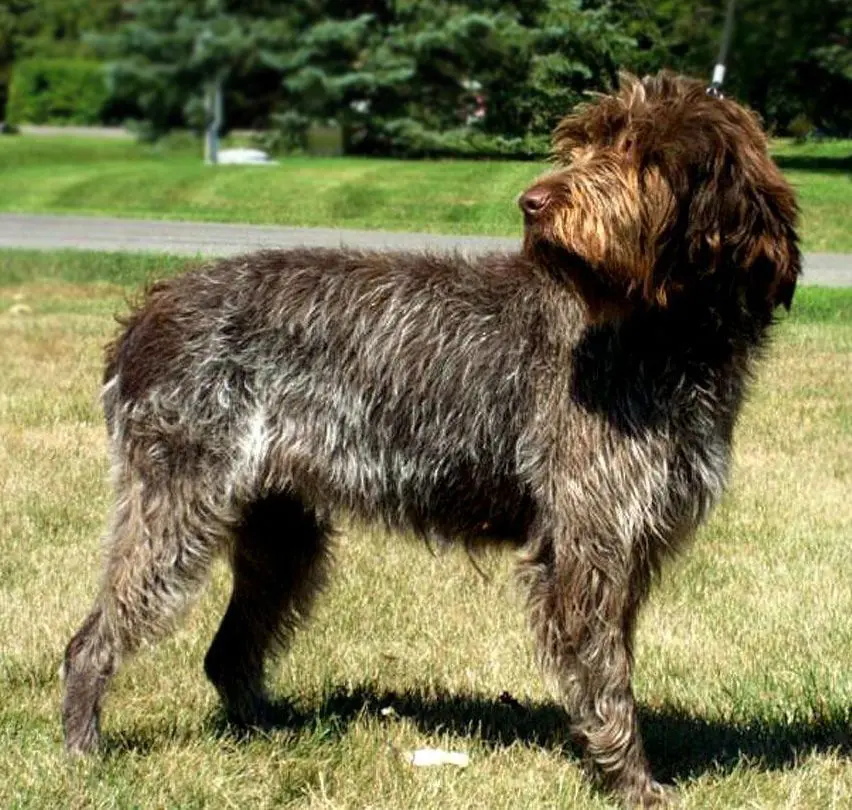
The Cesky Fousek It is a dog of Czech origin, defined as a breed of versatile.

Content

History

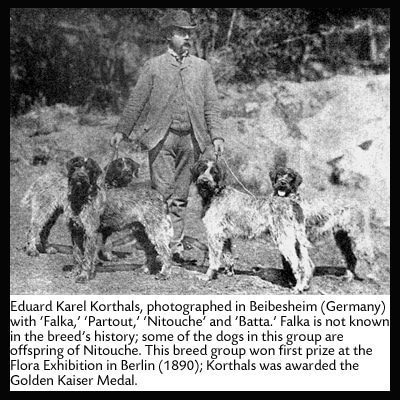
Before the First World War, The "Bohemian Wirehaired Pointing Griffon" was the most important wirehaired pointing dog in the region of present-day Czechoslovakia.. Because of the First World War and its consequences, This race was on the verge of extinction in the mid-twenties. Hereafter, a regeneration of this breed was proposed from some original typical dogs; By means of planned selection the modern type of ยซCesky Fousekยซ, which currently ranks second in number among hunting dog breeds used in the Czech and Slovak Republics.

Physical characteristics

He "Cesky Fousekยป is a noble pointer dog of medium size and rough hair that has innate qualities for work in the field, in the water and in the woods, so that its usefulness is multiple. Despite being a hunter bitterest, let easily guide and has developed attachment to man.

Did you know??

The name was given to this breed according to the "beard", It located on the chin and characterizes him.

Height to the cross: Males: 60-66 cm., females: 58-62 cm..
Weight: In males at least 28 kg, maximum 34 kg. In females minimum 22 kg, maximum 28 kg.

Character and skills

The Cesky Fousek It is a loyal dog, nice and very agile and active, very fond of hunting. It is a good retriever on land and water, but is used more frequently for exhibition games. Males are more stubborn, females are fairly quiet. It is friendly and playful with his family and acquaintances, it is customary to strangers more time. It may be too dominant during puberty, but it will fade over time. Very intelligent and insightful.

It works well with other animals , but supports the hunting instinct, chasing fast-moving objects, including pets or cyclists. It is advisable to breed in the herd, because socializes with other dogs perfection.

He is affectionate with children and has a perfect relationship with them..

It has a high bark to alert all passers-by and unwanted visitors. It's a good guard, and if you think something is wrong, You may intervene against thieves.

Care of the โ€œBohemian Wirehaired Pointing Griffonโ€

The hair Cesky Fousek It does not require a lot of care, I is sufficient occasionally comb with a brush with hard bristles. In case of heavy soiling, it is good to wash it with quality water and shampoo, as this type of hair could lose shine after an incorrect shampoo.

It is a very active and playful breed that likes to play and show hunting. He likes to do exactly that, but if it is sufficiently occupied by another type of movement, it will not lose. Every movement is suitable for him. It has an almost inexhaustible power supply, so it is particularly suitable for sports-minded people and provide them with enough exercise. Without moving, The โ€œBohemian Wirehaired Pointing Griffonโ€ could get bored and entertain itself by destroying your garden or house.

Training and education are necessary, without them it can become completely unmanageable and too dominant. You need a driver to raise him better without violence. It can be dominant, not nervous.

Characteristics "Cesky Fousek"

Coexistence is important that you have with your new friend. Before considering the acquisition of a dog of the breed "Cesky Fousek" you know certain factors. Not all breeds of dogs are apt to live in an apartment, you must take into account his character, their need for exercise, their interaction with other pets, their care and if you have small children, their level of tolerance towards them.

Adaptation โ“˜

4,0 of 5 stars (based on 1 review)

friendly dog โ€‹โ€‹โ“˜

3,0 of 5 stars (based on 1 review)

hair loss โ“˜

3,0 of 5 stars (based on 1 review)

Affection level โ“˜

3,0 of 5 stars (based on 1 review)

Need for exercise โ“˜

4,0 of 5 stars (based on 1 review)

Social need โ“˜

3,0 of 5 stars (based on 1 review)

Home โ“˜

3,0 of 5 stars (based on 1 review)

Toilet โ“˜

2,0 of 5 stars (based on 1 review)

Friendly with strangers โ“˜

2,0 of 5 stars (based on 1 review)

barking โ“˜

3,0 of 5 stars (based on 1 review)

Health โ“˜

3,0 of 5 stars (based on 1 review)

Territorial โ“˜

3,0 of 5 stars (based on 1 review)

Cat friendly โ“˜

2,0 of 5 stars (based on 1 review)

Intelligence โ“˜

4,0 of 5 stars (based on 1 review)

Versatility โ“˜

4,0 of 5 stars (based on 1 review)

Child friendly โ“˜

4,0 of 5 stars (based on 1 review)

Surveillance โ“˜

3,0 of 5 stars (based on 1 review)

joy โ“˜

4,0 of 5 stars (based on 1 review)

Images ยซHard-haired bohemian sample gryphonยป

credits:

1. https://commons.wikimedia.org/wiki/File:Cesky_Fousek_Betty.jpg When reusing, please credit me asauthor: Adam Kliczek, http://zatrzymujeczas.pl (CC-BY-SA-3.0)If you use my image on your website, please send me an email with webpage adress. If you use my image in your book, please send me an email.Contact me at: adam.kliczekgmail.complen+/โˆ’plen+/โˆ’ https://creativecommons.org/licenses/by-sa/4.0 CC BY-SA
2. Cesky Fousek by https://pxhere.com/es/photo/789408
3. Cesky Fousek by https://pxhere.com/es/photo/680392
4. Czech_fousek at the World Expo in Poznan by Pleple2000 / CC BY-SA
5. Czech_fousek at the World Expo in Poznan by Pleple2000 / CC BY-SA
6. Czech_fousek at the World Expo in Poznan by Pleple2000 / CC BY-SA
7. Czech_fousek at the World Expo in Poznan by Pleple2000 / CC BY-SA
8. Cesky Fousek by https://pxhere.com/es/photo/845285

Videos ยซBohemian Wirehaired Pointing Griffonยป

Type and recognitions:

  • FCI CLASSIFICATION:
  • Group :
  • Section : . .

Federations:

    FCI โ“˜, NZKC โ“˜, UKC โ“˜

FCI breed standard Cesky Fousek

FCIFCI - Cesky Fousek
Griffon

Alternative names:

1. Bohemian Wire-haired Pointing Griffon, Rough-coated Bohemian Pointer, Barbu tchรจque (English).
2. Ceskรฝ Fousek (French).
3. ฤŒeskรฝ fousek, Bรถhmisch Rauhbart (German).
4. Czeski fousek (Portuguese).
5. Terrier Checo (espaรฑol).

โ–ท The world of Pets: Dogs, cats, birds, reptiles, amphibians

French Spaniel
Francia FCI 175 . Spaniel type

French Spaniel

Very gentle nature, courteous and intelligent, the French Spaniel is eager to learn.

Content

History

The origins of the French Spaniel are very uncertain and many hypotheses have been raised.

Its name would come from Spain or the old French espaigner, What does "lie down" mean?. It is also considered the ancestor of the "sample dogs".

According to the most probable hypothesis, the French Spaniel would be the descendant of the Oysel dogs described by Gaston Phoebus and used in the Middle Ages.

The French Spaniel is at the origin of the different varieties of hunting spaniels. By selecting, It became the elegant and athletic race of the type of "sample dogs" that today shines in work competitions.

The first standard was written in 1891 by James de Connick, and later it was reworked and adapted to the different developments of the breed.

Photo: "French Spanish", from the group of Pointing Dogs franceses by Alephalpha, CC BY-SA 3.0, via Wikimedia Commons

Physical characteristics

Fur: Plano, silky and dense. Slightly wavy behind the neck, above the tail set over the ears. Short and fine on the head but longer on the ears.

Its color: White and Brown (from cinnamon to dark liver), with regular spots, little or moderately mottled.

His head : worn with pride, with well marked reliefs, medium length and width. The stop is moderately steep.

Ears : laid back, pulled forward, with more or less long and wavy fringes.

Eyes : So big, oval, tan to brown in color, according to the coat. Soft and intelligent expression.

Her body : slightly longer than the height at the withers. The top line is straight, always well supported, the cross is dry and wide, the back is broad and muscular, the rump is rounded and harmoniously sloping, the chest is divided and the sternum region wide and curved.

Tail : Thick at the base and tapers towards the tip. It is below the top line, carried more or less curved, provided with long and silky hair, slightly wavy.

Height and weight

▷ Male size: Of 56 to 61 cm.

▷ female size: Of 55 to 59 cm.

▷ Male weight: Of 24 to 25 kg

▷ female weight: Of 24 to 25 kg

Character and skills

Very gentle nature, elegant and smart, the French Spaniel is eager to learn. Although hunting is his main vocation, his sociability and sweetness make him a dog that adapts to all styles.

Balanced and frank, they are calm and docile dogs that are willing and eager to hunt, during which they are flexible and robust.

Very attached to their master, its deep sensitivity requires gentle training.

They do not tolerate loneliness and require regular outings.

How to take care of his "French Spaniel": your needs

As a hunting dog, the French Spaniel you need to exercise and, therefore, needs wide open spaces. But, as it adapts very well to all environments, it can live very well in the city as long as its master takes it out regularly. Must be able to take long walks, if possible also in the forest or on a wooded area. It is a dog that loves water.

Regarding maintenance, the French Spaniel it should be brushed once or twice a week to detangle its fur.

The diet โ€œFrench Spanishโ€

Like other hunting dogs, the French Spaniel he only needs one meal a day as an adult, preferably at night. You don't need any special food. It just has to be of good quality, varied and adapted to their age, health status and physical exercise.

Health ยซSpaniel Frenchยป

The French Spaniel is in fairly good health. But, can be the target of certain diseases such as cataracts, hip dysplasia or eczema. It is also advisable to monitor and clean your ears regularly..

Price of a French "Spaniel" puppy

The price of a puppy French Spaniel it will depend on the sex, the pedigree of the parents, compliance with breed standards, etc.

Average price of a male of French Spaniel: 625โ‚ฌ.
Average price of a female of French Spaniel: 625โ‚ฌ.

Characteristics "French Spaniel"

Coexistence is important that you have with your new friend. Before considering the acquisition of a dog of the breed "French Spaniel" you know certain factors. Not all breeds of dogs are apt to live in an apartment, you must take into account his character, their need for exercise, their interaction with other pets, their care and if you have small children, their level of tolerance towards them.

Adaptation โ“˜

3,0 of 5 stars (based on 1 review)

friendly dog โ€‹โ€‹โ“˜

4,0 of 5 stars (based on 1 review)

hair loss โ“˜

2,0 of 5 stars (based on 1 review)

Affection level โ“˜

5,0 of 5 stars (based on 1 review)

Need for exercise โ“˜

5,0 of 5 stars (based on 1 review)

Social need โ“˜

4,0 of 5 stars (based on 1 review)

Home โ“˜

4,0 of 5 stars (based on 1 review)

Toilet โ“˜

2,0 of 5 stars (based on 1 review)

Friendly with strangers โ“˜

3,0 of 5 stars (based on 1 review)

barking โ“˜

3,0 of 5 stars (based on 1 review)

Health โ“˜

4,0 of 5 stars (based on 1 review)

Territorial โ“˜

2,0 of 5 stars (based on 1 review)

Cat friendly โ“˜

2,0 of 5 stars (based on 1 review)

Intelligence โ“˜

4,0 of 5 stars (based on 1 review)

Versatility โ“˜

4,0 of 5 stars (based on 1 review)

Child friendly โ“˜

4,0 of 5 stars (based on 1 review)

Surveillance โ“˜

2,0 of 5 stars (based on 1 review)

joy โ“˜

4,0 of 5 stars (based on 1 review)

Images "French Spaniel"

Photos:
1 – "French spaniel" by Vertwatt94, CC BY-SA 3.0, via Wikimedia Commons
2 – ยซFrench Spanielยป by Tux-Man, CC BY-SA 3.0, via Wikimedia Commons
3 – Une femelle รฉpagneul franรงais ร  exposition by Canarian, CC BY-SA 3.0, via Wikimedia Commons
4 – ยซFrench Spanielยป by http://epagneul-francais-buck.e-monsite.com/
5 – ยซFrench Spanielยป by https://www.perdrioles.com/produit/chiots-epagneul-francais-2/
6 – ยซFrench Spanielยป https://chiens.photos/epagneul-francais-chiot/

Videos "French Spaniel"

Epagneul franรงais
Haniel & Cloรฉ in the garden

Type and recognitions:

  • FCI CLASSIFICATION:
  • Group :
  • Section : . .

Federations:

  • FCI – Group 7: Pointing Dogs. – Section 1: Continental Pointing Dogs. 1.2: Spaniel type โ“˜
  • CKCMiscellaneous โ“˜
  • UKCGun Dog โ“˜

Alternative names:

1. Canadian Setter, French Setter (English).
2. ร‰pagneul franรงais (French).
3. Epagneul Franรงais (German).
4. (em francรชs: epagneul franรงais) (Portuguese).
5. Epagneul Franรงais (espaรฑol).

โ–ท The world of Pets: Dogs, cats, birds, reptiles, amphibians

Brittany Spaniel
Francia FCI 95 . Spaniel type

Spaniel Bretรณn

The Brittany Spaniel They are multi-faceted "Pointer Dogs", for all types of hunting and all-terrain.

Content

History

The Brittany Spaniel It, as the name reflects, originally from the Breton region, in the extreme west of France. It is probably one of the races Spaniel type and oldest โ€œShow Dogsโ€ in the country.

Some historians argue that it was developed a long time ago, about 150 years AD. In any case, the first traces of white and red dogs that resembled him and were undoubtedly the ancestors of the current Brittany Spaniel date back to 17th century tapestries and paintings. The dogs in question are represented hunting.

The most likely hypothesis is that the development of the breed began in the 18th century, but there is relatively little data on its exact origins. But, Specialists believe it probably originated from the "Welsh Springer Spaniel.", the English Setter and several breeds of "French Spaniel". The first representatives of the breed were surely born in the village of Ponthou, located in the department of Finistรจre, and are most likely the result of the first crosses between the "Welsh Springer Spaniel" and "French dogs.".

During the 19th century, in the city of Callac and its surroundings (Cรดtes-d'Armor department), the dogs thus created were crossed with the English Setter. The city then specialized in breeding the dogs resulting from these crosses., and today it is considered the capital of Brittany Spaniel.

There are several theories about the exact development of the breed, including how the English Setter used for breeding. One of the theories is that they belonged to British families who spent their holidays in Brittany., while according to another they were brought by hunters of the same nationality who came to hunt in the region.

About 1850, Reverend E. W. Davies, Anglican writer, minister and hunter who liked to spend winters hunting in the Breton region, mentioned in his writings a medium-sized hunting dog, type Pointer, with short tail. This was definitely the Brittany Spaniel as we know it today, since this short or even absent tail, due to an English ancestor who introduced the corresponding gene into the bloodlines, it is one of the peculiarities of the breed.

From the beginning of its development, the Brittany Spaniel was bred as both a pointer and a collection dog, regardless of time. In fact, was (and it still being) very adaptable, which allowed it to spread later in many French regions, as well as in several European countries, like the UK. French breeders, However, they predisposed him to hunt birds.

Used to working in collaboration with man and eager to please him, the Brittany Spaniel he was not only at the service of hunters, but also integrated into their homes. When i wasn't working, voluntarily stayed with their masters in their homes. His reputation as a good pet was quickly established.

Dog shows also played an important role, as they allowed the breed to become known outside their homeland. In fact, the end of the 19th century and the beginning of the 20th were marked by an important development of these events in Great Britain and other European countries, especially in France.

The year 1907 marked the creation of the Club l’ร‰pagneul Breton ร  courte queue naturelle. Next, a first draft of the breed standard was written, which was adopted at the first plenary meeting of the association the following year in Loudรฉac. It was later modified into 1923 and again in 1933, 1956, 1995, 2001 and 2003.

As with many races, World War II marked the end of the breeding of Brittany Spaniels. Then it suffered a certain decline, However, it could be compensated once the conflict ended thanks to the work of the breeders and the evolution of certain rules.. In effect, as the gene pool of the breed had become too small throughout Europe, it was decided to accept individuals with black spots, what did not happen until then.

The problem did not arise in the United States and Canada, so local organizations did not follow the example of their French counterparts, British and others. The situation has not changed since then: this particularity is still not recognized by the American Kennel Club (AKC), el United Kennel Club (UKC) and the Canadian Kennel Club (CCC).

The popularity of the ยซBreton Spanielยป

in your country of origin, the Brittany Spaniel It is very much appreciated, and its popularity has not waned over the decades. Like this, the number of new annual registrations at the Sociรฉtรฉ Centrale Canine (SCC) has never been below 4.000 since the middle of the years 70, and most of the time it even exceeds the 5.000. But, there has been a certain decline over the years 2010, in which the number of new registrations has dropped from almost 5.500 a year at about 4.500.

The Brittany Spaniel It is the only "French Spaniel" that is also very popular outside its country. Official recognition of the breed by the Fรฉdรฉration Cynologique Internationale (FCI) in 1954 obviously contributed to it.

He did not wait for the FCI to gain a foothold in the United States, where their first representatives arrived in 1931. Crossing with other "Setter" type dogs caused the breed to gain in size and muscularity., thus deviating from the original model. In fact, there is now a clear physical distinction between the American and French types, beyond the possible presence of black spots on the latter.

The Brittany Spaniel was recognized already in 1934 by the AKC under the name of Brittany Spaniel, then the latter was shortened to 1982 in favor of the simple denomination Brittany. In fact, both in Europe and America, This dog probably has more in common with Pointers than Spaniels.. It is the same choice made by the other reference organization in the country, the UKC, when he also accepted the breed in 1948, again with the simple name of Breton. The UKC has the particularity of being the only organization that recognizes both types of Brittany Spaniel like two different races. In fact, seeing how ยซBrittanyยป American had ended up diverging from his French ancestor, decided on 2002 also recognize the "French type" as a breed in its own right, with the name it bears in its country of origin.

But, This quick recognition should not obscure the fact that the lack of a tail was initially a major disruption to American hunters., so the Brittany Spaniel it took him a while to gain a foothold in the country. But, the general qualities of the breed eventually overcame this reluctance and the breed became very popular. Although it was also used as a hunting dog, its qualities as a companion dog, starting with his medium size and good character, also contributed greatly to its success. this last one is real, since it occupies around the post 25 (of something less than 200) in the breed ranking established by the AKC based on the number of annual births registered with the organization. This is even an improvement over the first decade of the 21st century., when he was around the post 30.

Also in North America, the Canadian CKC also recognizes the breed, and is quite appreciated in the country.
Closer to France, Great Britain contributed to the genesis of the breed thanks to the "Welsh Springer Spaniel" and the English Setter, and adopted her in turn, being their representatives used both for hunting and shows as well as for the company. But, its inhabitants seem to have subsequently moved away from it. Like this, was not up 1975 when the Kennel Club, the canine organization of reference in the country, recognized the Brittany Spaniel. Regarding the number of subjects enrolled each year, we cannot say that it reflects a great fondness for this dog, since it is below a hundred. This figure is even on the decline, since in the first semester of 2010 it was rather between 100 and 150.

But, other European countries have given it a much better reception. This is the case, in particular, of Italy, where hunting is very popular and widely practiced. This is, without a doubt, one of the reasons why, at the beginning of 2010, ranked 5th in the ranking of the most represented dogs in the country, based on the number of annual registrations in the Ente Nazionale Cinofilia Italiana (ENCI). But, since then the number has dropped steadily; now it is more or less around the 3.000, which is still considerable.

Worldwide, a classification established in 2013 and based on the sum of the annual registration statistics of 25 national organizations among the hundred members of the FCI places the Brittany Spaniel in the post 30, which confirms to what extent it has been able to gain a foothold around the world.

Physical characteristics

The Brittany Spaniel It is one of the smallest "Show Dogs" in the world, but it is longer than most "Spaniel Type" dogs. They are of the braccoid type, muscular and agile, quite high-legged and with a compact silhouette. They are distinguished from the "Pointer" type dogs by their head, typical of the ยซSpanielยป, and the frequent absence of tail.

straight and stiff, his back is generally as long as his height at the withers. The chest generally descends to the tips of the elbows, while the shoulders are long and very mobile.

Due to a genetic mutation introduced in the 19th century, the tail of Brittany Spaniel is absent or very short. When it is present, It is located in the upper part of the croup and usually measures between 3 and 6 cm., but the breed standard accepts up to 10 cm.. There was a time when the use of tail docking was common for dogs with a tail that was too long for their owner's liking. But, this practice is now banned in a large number of countries, like belgium, France, Switzerland and Quebec.

As for the legs, they are long and strong, and have flexible joints that allow them to run lightly without much effort. The feet are usually larger on the hind legs than on the front legs.. In all cases, they are well rounded, compact and have tight toes.

The head of the Brittany Spaniel rests on a moderately long neck, fine and strong. Whether viewed from the side or from the front, the skull is somewhat rounded. The stop is quite well defined. It also, this dog is slightly brachycephalic, which means that its muzzle is shorter than its skull. It ends in a nose with wide nostrils whose color corresponds to that of the fur, and tame scissor bite jaws.

Located on the top of the head and provided with semi-long hairs, sometimes wavy at the top, the ears are wide, short, triangles and falls. They are extremely mobile when you are on the lookout for something.
The eyes are slightly oblique and their color usually corresponds to the predominant color of the coat. His intelligent gaze shows the great alertness of this dog.

If there is no undercoat, the mantle of Brittany Spaniel consists simply of a thin layer of medium length hair, which is not very thick and can be smooth or slightly wavy. Most common color is fawn on white, but there are also brown and white dogs, fire and tricolor (black, Orange and white, or brown, Orange and white). Confidentially, the latter has gained in popularity in recent times. As for the black and white fur, there is debate: accepted by some organizations, as the Fรฉdรฉration Cynologique Internationale (FCI), but others reject it, as the American Kennel Club (AKC) or the Canadian Kennel Club (CCC). In any case, regardless of its color, some individuals have spots on the snout, the lips, around the eyes, on the legs or even on the chest.

Last, It should be noted that there are two very different types: the Brittany Spaniel French type and the Brittany Spaniel american type. They differ mainly by their size: the second (the most represented in the United States and Canada) it is bigger and more massive than the first (majority in Europe). As to the nature, tends to be more active and awake. These differences are explained by the fact that the first representatives of the breed imported to the United States in the decade of 1930 They were quickly crossed with "Setter" type dogs.

Whatever the type, there is only a very slight sexual dimorphism between males and females, although the former may be a bit larger and heavier. It also, regardless of gender, representatives of the breed reach their adult size between 14 and 16 months of age.

Height and weight

▷ Male size: Of 49 to 50 cm.

▷ female size: Of 48 to 49 cm.

▷ Male weight: Of 14 to 16 kg

▷ female weight: Of 13 to 16 kg

Varieties:

Although not strictly varieties, there are two types of Brittany Spaniel: the original French type and the American type, that appeared after the breed's arrival in the United States in the years 30 and their crossing with local Setters. This resulted in a larger dog, stronger and faster with a livelier temper.

Smaller and more compact, the Brittany Spaniel French type is easier to train and handle during hunting parties.
These two types can also be differentiated by their fur. The Brittany Spaniel American type has no black spots, unlike his cousin. It also, they tend to have shorter hairs.

El United Kennel Club (UKC) American is the only organization that recognizes these two types as distinct breeds. In 1948, the Brittany Spaniel was recognized as Brittany. Arrived in the country less than 20 years before, this dog was still broadly identical to the one found in France. But, as the gap widened over the decades, The breed finally decided that the "Brittany" corresponds to the Brittany Spaniel american type, and in 2002 decided to also recognize his ancestor, the french type, under the name of Brittany Spaniel.

Character and skills

The Brittany Spaniel it is one of the most popular dog breeds in France, and even to a certain extent the world. In effect, is sociable, Intelligent, attentive and cheerful. With the, it seems impossible to get bored and in a bad mood, so contagious is his joy of living!

Having said that, as it happens with many races, the temperament of this dog can vary according to sex. For an individual destined for hunting, a sterile male is often preferred, as it is considered calmer and more gentle than an uncastrated female or male.

In any case, it is a joy for the whole family, And he gets along especially well with children.. He loves to play actively with them and can be quite protective if he perceives a threat to them. But, his boundless energy and enthusiasm can lead him to unintentionally push or even knock over a small child. In any case, as with any dog, should never be left alone with a very young child without adult supervision, and those whose age allows it must learn to behave with respect towards him.

Loyal to his family and little tolerant of loneliness, this dog requires a lot of presence and affection to feel good: if he is left alone too long or does not receive enough attention from his masters, can quickly develop destructive behavior or bark excessively. Its need for attention and interaction also means that it is not suitable for a household where members are often away for long periods of time..

Sharing your home with another little companion is an interesting option to help you pass the time when your caregivers are away. In fact, the Brittany Spaniel not only appreciates humans: he is also very sociable with his peers, whether you come across them on walks or those you would have to deal with on a daily basis. He is also grateful that he is not the only dog โ€‹โ€‹in the family.. You can also plan a coexistence with a cat, as soon as I am in contact with him from a very young age. On the other hand, when he meets an unknown feline, you probably want to go after him. Good socialization is not enough for you to live under the same roof as a small prey-like animal, like a rodent or a bird. In fact, hunting instinct is in his genes and he is likely to regain the upper hand at any moment, ending this coexistence prematurely.

Their propensity to hunt small animals that pass by, as well as his permanent desire to run, also implies that if you live in a house with a garden, this must be well fenced, at the risk of sometimes going too far. A property with a large fenced area is the ideal environment for him, but it is quite adaptable. So, as long as your need for exercise is met each day with the help of long walks and other activities, you can even live in an apartment and in an urban environment.

But, keep in mind that they can be sensitive to noise. So, can get stressed out when your home is particularly noisy, for example, by very noisy children. The same type of problem can arise if you live in the city or move regularly (for example, when walking) in a very crowded environment, especially if you haven't gotten used to it from a very young. On the other hand, used since its inception for hunting, he is indifferent to the noise of rifle shots.

Although they live in the quiet countryside and have access to a very large garden at all times, this is not enough for this particularly active and hardy dog รขโ‚ฌโ€นรขโ‚ฌโ€นto be comfortable with his head and paws. To be able to expend his great energy, needs at least an hour or two of daily activity. It's not about being much less active during the week and trying to make up for it on the weekend.: if this dog does not expend enough energy each day, can quickly develop behavior disorders, such as excessive nervousness or hyperactivity.

Given your level of activity, it is easy to understand that the Brittany Spaniel it is not at all adapted to elderly or very homey people. On the other hand, he is the best friend of an active master who likes to run, hiking or taking long bike rides and dreams of taking his animal with him. Knowing that he also likes to swim, do not hesitate to take him swimming in a lake from time to time, or in planning a swim break when there is a water point along the way during any activity. It can also be very good at practicing canine sports such as cani-cross or cani-VTT. In fact, usually always willing to do any activity that involves exercise, especially if it is fun or is accompanied by other dogs.

During the walks, It is important to bear in mind that at any time you can run after a bird or any other animal that is in your way, or you can be tempted by a smell that will not leave you indifferent. Your determination and stamina can go a long way, even to get lost. To avoid this, the most effective solution is, of course, always carry him on a leash, but this is by no means ideal for your well-being, as he urgently needs to vent. So, it is better to put the emphasis on learning to withdraw, considering that it is impossible to completely trust such a dog: Investing in a connected dog collar is a good way to prevent walks from being a source of anxiety, since then it is possible to know where it is at all times.

But, it is not enough to give him physical exercise to keep him balanced: you also have to keep him mentally busy. So, the ideal is to keep him mentally occupied with activities that appeal to his intelligence, like certain canine disciplines (obedience, agility or flyball, for example), o solving puzzles and other problems. As a working dog, he likes his owner to assign him tasks, and usually takes them very seriously.

This is all the more true as his closeness to his caregiver, her desire to please him and her intelligence make the Brittany Spaniel an easy to train dog that learns very quickly. They are especially attentive to the orders of their owner, attentive to every facial expression and ready to react and respond to any request.

Unlike other races, the Brittany Spaniel are not particularly destructive or difficult during their adolescence, which starts around 6 months and continues until 18 months of age. Even if you start to adopt undesirable behavior, his great desire to please makes him very easy to correct.

Last, because of his personality, not very assertive by nature, not a good watchdog, although it can be protective in especially threatening situations. He does not hesitate to bark to warn of the arrival of a stranger, but it is not usually the kind that does much more to deter the intruder. They can also be especially loud barking at the top of their lungs when they are home alone.. He has a groan that is his own and that he can also show when he is in this situation, or when scared or intrigued.

Education

The education of Brittany Spaniel it's pretty easy, because it is an obedient dog that likes above all to please its master. Thus, not the type to use his intelligence to try to exploit loopholes and challenge his master's dominance, but it allows you to learn very quickly. This makes it a recommended dog breed for a beginner..

With the, sweetness is the key word. In fact, is sensible, does not support violence and is not at all receptive to education based on punishment or negative reinforcement. If these methods are used, is likely to show signs of anxiety and stress at work. Positive reinforcement, that is to say, a work method based on the assessment of good behavior through rewards (petting, stimuli, candies…) is much more effective and allows you to feel real pleasure from your work.

Hunting individuals can quickly learn their future role. In effect, the Brittany Spaniel has a great hunting instinct, to the point that it is not uncommon to see a cub that begins hunting from the 3 months of age. It is possible to take your dog hunting from the 5 months of age. Obviously, it is not at that moment when he catches his first woodcock, but it allows you to become familiar with the environment and hunting. It is important, However, stick to short games and be fairly sure to watch the game, so as not to demotivate him. It also, being still growing and being fragile, avoid trying too hard. Only when it reaches its adult size, between 14 and 16 months, you can fully participate in this activity.

Although not intended for hunting, any activity that reinforces their persecution instinct should be prohibited in their education. Obviously, this should not detract from your need to be active and exercise properly. The learning and regular practice of a dog sport, like agility, obedience or flyball, for example, is a good alternative, although it can also be practiced perfectly by an individual employed as a hunter.

Teaching your dog to remember is also helpful in preventing him from unleashing his predatory instincts in inappropriate circumstances.. But, since even well-trained dogs are difficult to trust completely, the leash is more or less often essential for your safety and that of the animals and people around you. So, learning to walk on a leash is another important aspect of your education.

Last, like any dog, the Brittany Spaniel should benefit from great socialization from a young age, especially as you can tend to be suspicious and shy around strangers, or being especially stressed when in a noisy environment. Getting used from a young age to meet all kinds of people and fellow humans, but also to live in different places and to face a great variety of situations and stimuli (noises, smells, etc.), we give you all the possibilities to make you feel good in your head, calm down and easily find your place with humans.

Use

The Brittany Spaniel was developed to be a versatile hunter. remarkable in search, the signaling and collection (both in water and on land), is specialized in hunting birds (especially the woodcock and the duck), acts alone and not in a pack and continues to be, Still today, the hunting dog breed preferred by many hunters.
From the beginning of its history, has also found its place in the homes of its owners, thanks to his friendly personality and his natural closeness to man.

Today, It is still appreciated as a companion dog and is an excellent choice for anyone who is active and available., hunter or not, wanting nothing better than hiking with your dog or taking it with you when you go for a run or ride a bike.

your energy, his resistance and his desire to please also make him a perfect student for many canine disciplines such as agility, the flyball, obedience, the cani-cross or the mountain bike.

Grooming

Due to her very moderate hair loss throughout the year, its lack of undercoat and its little tendency to tangle, the fur of the Brittany Spaniel requires little maintenance: a weekly brushing is enough. Your seasonal shed, in spring and autumn, it is not very pronounced, but still requires more regular brushing, on the order of 2 or 3 times per week.

It is also possible to take the dog to the groomer to cut the medium hairs of the legs (or do it yourself), to avoid knots, since this part of the body is especially prone to them. But, this is not essential: depends on the preferences of each caregiver.

How their coat is generally kept clean, it is not necessary to bathe the dog more than 2 or 3 times a year. In any case, unless it got especially dirty, avoid bathing him too close, as it could seriously damage the skin or fur. In any case, it is important to always use a shampoo specially designed for dogs, since the pH of human skin and that of your best friend are different.

The drooping shape of the ears of the Brittany Spaniel implies an increased risk of infections at this level (otitis, etc.), as it facilitates the accumulation of dirt and moisture. So, it is essential to examine and clean them weekly, as well as dry them after each prolonged moment in a humid place, and of course every time you swim.

The weekly maintenance session is also an opportunity to check the condition of your partner's eyes and clean the contours. This also greatly reduces the risk of infection. This is all the more important since the Brittany Spaniel is quite sensitive to the eyes and can have a number of eye diseases: the sooner they are detected, best.

Caring for a Brittany Spaniel it also involves taking care of your teeth, always using a toothpaste specially designed for dogs. This helps limit the build-up of dental plaque., which can lead to tartar formation, which can be the cause of many problems, some of which are potentially serious. The ideal is daily brushing and, in any case, it is better to avoid brushing less than once a week.

Last, the activity level of this hyperactive dog causes claw wear to occur normally naturally. So, they rarely need to be cut, unless, for example, your mobility is limited by a health problem. If you hear them rubbing when you walk on the hard ground, it's time to take care of them. Otherwise, they could hamper your movements or even break and injure you.

As with any race, the steps to take care of a Brittany Spaniel (either its fur, his eyes, his ears, their teeth or claws) should not be taken at random. In fact, beyond the risk of being ineffective, could hurt or even injure you. So, it is wise to see a vet or professional groomer the first time, to learn from him the best way to proceed. The sooner the animal gets used to these different manipulations, it will be easier for you to let them do it throughout your life. The sessions can then be beautiful moments of sweetness and complicity, instead of being tests feared by the two protagonists.

Another habit to take - and that also leads to manipulation- is to systematically examine your body when you return from every long moment you spend outdoors, in particular its fur, its feet and its pads. This ensures that you have not been injured, nor has he caught spikes or parasites.

Health

In general, the Brittany Spaniel enjoys robust health, which is illustrated by the fact that a good number of representatives of the breed are celebrating their 15th birthday.

It also, his Breton origins mean that bad weather does not impress him or prevent him from carrying out his outdoor activities. It is also capable of adapting to many weather conditions, even at extreme temperatures.

But, like all dogs, have a predisposition to develop certain diseases, many of which are hereditary:

  • Hip Dysplasia, a potentially inherited joint malformation that mostly affects medium and large dogs. Causes pain and lameness to a greater or lesser extent, as well as osteoarthritis from a certain age;
  • Cleft palate, a congenital and often inherited malformation responsible for poor communication between the puppy's mouth and nose. Then you may suffer from feeding difficulties, swallowing problems, choking or coughing. Difficulty feeding can lead to stunted growth and requires surgery to correct the problem;
  • Spinal muscular atrophy, a sometimes hereditary syndrome that causes a decrease in muscle mass. This can cause, among other things, difficulty moving, breathing problems or trouble eating properly. It is a progressive and often fatal disease for which there is no treatment;
  • La abiotrofia cerebelosa, a disease that causes tremors and a significant loss of coordination, that affects young men more. These symptoms initially occur only when the animal is in motion, and then they get worse over time, more or less quickly, until they appear when idle. There is no treatment for this rare disease, but it is not painful for the animal;
  • Epilepsy, a sometimes inherited disease causing more or less severe and often impressive seizures. Various treatments allow limiting or even eliminating them, so that, usually, those affected continue to lead an almost normal life;
  • Hypothyroidism, an endocrine disruption that corresponds to a defect in the regulation of thyroid hormones. You can have all kinds of symptoms: weight gain, decreased heart rate, dry skin, hair loss, increased sensitivity to cold.;
  • Hemophilia, an incurable inherited disease that causes a deficiency in coagulation and, Therefore, excessive bleeding. They can appear mostly under the skin, during tooth growth, in urine and feces, during vaccination or when the animal is injured. They can also be internal and invisible, and often lead to death;
  • Lupus erythematosus, a skin disease resulting from a deficiency of the immune system, what causes, among other things, depigmentation of certain parts of the body (nose first, then the ears and legs), erosions and ulcers ;
    external otitis, due to the drooping shape of their ears.

The Brittany Spaniel it is also predisposed to certain eye diseases:

  • Dislocation of the lens, causing instability and abnormal movement of the lens in the eye. In this breed, most often it is the result of hereditary transmission. Very painful, can lead to total loss of sight if not treated with surgery;
  • The waterfall, a potentially inherited eye disease that usually develops in old age. Cataracts cause a cloudy lens that gradually reduces the dog's vision until total blindness occurs. Can be treated by surgery;
  • Glaucoma, an often inherited disease that can cause sudden loss of vision. It is the result of an abnormal increase in pressure in the dog's eye and must be treated quickly, otherwise its consequences are irreversible.

It also, specimens used for hunting are at increased risk of injury, parasites and spikes.

Last, despite its high level of activity, the Brittany Spaniel does not get rid of obesity, that can cause or accentuate many health problems. It is also a vicious circle, since an overweight individual tends to be less active.

But, the long list of diseases to which the breed is predisposed should not obscure the fact that most of its representatives spend most of their lives in perfect health. This is confirmed by a study carried out in 2004 by the British Kennel Club and the British Small Animal Veterinary Association, which established that the leading cause of death in this breed is simply advanced age.

On the other hand, this list leads to many inherited conditions, or that are likely to be hereditary. This underlines how important it is to go to a serious and competent Brittany Spaniel breeder who rigorously selects his breeders.. If you are unable to present the results of the genetic tests carried out on the parents or offspring to prevent any transmission of said disease, it is better to go your way and go to another breeder; no lack of options. In addition to these documents, any serious professional should be able to provide a certificate from a veterinarian proving that the puppy is in good health, as well as your health or vaccination card, confirm that you have received all necessary vaccinations.

Adopting a healthy animal is one thing, but its usefulness is limited if you don't make sure it stays that way. So, it is essential to note that, until the age of 14 to 16 months, a puppy of Brittany Spaniel is still in its growth phase, and therefore is particularly fragile. Throughout this period, it is important to only very gradually increase the duration and intensity of your activities, at the risk of impairing the proper development of your bones and joints, or even causing injuries and/or malformations that he could suffer throughout his life. This is all the more important since you are predisposed to hip dysplasia.

Last, one of the best ways to keep your dog healthy is to take him to the vet at least once a year for a thorough check-up to detect any possible problems, which may not be visible to the inexperienced eye. It is also a great opportunity to take stock of vaccinations and any necessary withdrawals.. It also, antiparasitic treatments also help protect your pet against a number of diseases: it is up to the owner to renew them throughout the year, whenever necessary.

Life expectancy

Of 12 to 15 years

ยซBreton Spanielยป Price

In Switzerland, the lower popularity of the breed means that the number of breeders of Brittany Spaniel be quite limited. A solution to have many more options is to buy directly in France.

in Canada, the number of breeders barely exceeds ten, and also here the prices are very different, generally ranging between 750 and 1500 canadian dollars. Of course, It is also possible to go to the United States, where you have to have some 800 US dollars for a good quality puppy.

In the case of a purchase abroad, keep in mind that transportation and administrative costs are added to the price of the puppy and, of course, make sure you respect the regulations regarding the importation of a dog.

Characteristics "Brittany Spaniel"

Coexistence is important that you have with your new friend. Before considering the acquisition of a dog of the breed "Brittany Spaniel" you know certain factors. Not all breeds of dogs are apt to live in an apartment, you must take into account his character, their need for exercise, their interaction with other pets, their care and if you have small children, their level of tolerance towards them.

Adaptation โ“˜

3,0 of 5 stars (based on 1 review)

friendly dog โ€‹โ€‹โ“˜

4,0 of 5 stars (based on 1 review)

hair loss โ“˜

3,0 of 5 stars (based on 1 review)

Affection level โ“˜

5,0 of 5 stars (based on 1 review)

Need for exercise โ“˜

5,0 of 5 stars (based on 1 review)

Social need โ“˜

4,0 of 5 stars (based on 1 review)

Home โ“˜

4,0 of 5 stars (based on 1 review)

Toilet โ“˜

2,0 of 5 stars (based on 1 review)

Friendly with strangers โ“˜

3,0 of 5 stars (based on 1 review)

barking โ“˜

3,0 of 5 stars (based on 1 review)

Health โ“˜

3,0 of 5 stars (based on 1 review)

Territorial โ“˜

2,0 of 5 stars (based on 1 review)

Cat friendly โ“˜

2,0 of 5 stars (based on 1 review)

Intelligence โ“˜

4,0 of 5 stars (based on 1 review)

Versatility โ“˜

4,0 of 5 stars (based on 1 review)

Child friendly โ“˜

5,0 of 5 stars (based on 1 review)

Surveillance โ“˜

2,0 of 5 stars (based on 1 review)

joy โ“˜

5,0 of 5 stars (based on 1 review)

Images "Brittany Spaniel"

Photos:

1 – An eleven-month-old male Brittany Spaniel dog, named ยซKinwashkly That’s Mr. Jagger To Youยป (nickname ยซMickยป). by Pharaoh Hound, CC BY-SA 3.0, via Wikimedia Commons
2 – We had front row seats the second night of Westminster at Madison Square Garden in NYC. 2/2009 by Kjunstorm, CC BY 2.0, via Wikimedia Commons
3 – A liver and white Brittany Spaniel. by John Blyberg, CC BY 2.0, via Wikimedia Commons
4 – Brittany Spaniel Dog. Hank watches other dogs misbehaving at the dog beach by Uber Phot, CC BY-SA 2.0, via Wikimedia Commons
5 – ยซBreton Spanielยป by https://commons.wikimedia.org/wiki/File:Epagneul_Breton.jpg
6 – ยซBreton Spanielยป by https://pixabay.com/photos/brittany-brittany-spaniel-dog-3410384/

Videos "Brittany Spaniel"

Type and recognitions:

  • FCI CLASSIFICATION:
  • Group :
  • Section : . .

Federations:

  • FCI – Group 7: Pointing Dogs. – Section 1: Continental Pointing Dogs. 1.2: Spaniel type โ“˜
  • AKCDeportivo โ“˜
  • ANKCGroup 3 โ“˜
  • CKCPerros Deportivos โ“˜
  • โ€‹KC – Gundog โ“˜
  • NZKCGundog โ“˜
  • UKCGun Dog โ“˜

FCI breed standard "Brittany Spaniel"

Origin:
France

Date of publication of the valid original standard:
13.03.2001

Use:

Pointing Dogs.


General appearance:

It is the smallest of the dogs of sample.
It is a short-tailed bracoide, or without tail. Harmonious construction and strong bones, without being crude. The set is compact and robust, Although without heaviness, providing an elegant appearance. This is a vigorous dog, look alert and intelligent expression.
It looks like a small โ€œshort-membered COBโ€, full of energy, It has been preserved through its evolution the kind of small size desired and established by the reformers of the race.

IMPORTANT PROPORTIONS:

  • The skull is longer than the nasal canal by a ratio of 3:2.
  • The whole of the head is proportionate to the rest of the body. The height of the chest is slightly less than half the height at the withers.
  • The scapulo-ischial length is equal to the height at the withers (the body is shaped like a square).


Behavior / temperament:

It adapts to any environment, is sociable, alert and intelligent expression, balanced. Versatile sample dog, for all types of hunting and all-terrain. Sexual development is early. Stands out during search, in their movements, his sense of smell, as well as in the extent of exploration, spontaneity and continuity in the sample, and in their adaptation to the training.

Head:

Features well-molded reliefs. The skin is attached to the body.

Cranial region:

Slightly rounded, both head on, as in profile. View from the top, side walls are very slightly convex. The craniofacial lines are parallel. The breadth of the skull, taken between the zygomatic arches, is less than its length. The eyebrows are not very prominent, rather they form a slightly rounded curve. The middle groove, as well as the sagittal crest, they are not very marked. Naso-frontal depression gently descends. Both occiput, like zygomatic arks, are moderately marked.

facial region:

  • Truffle:Wide, with the windows wide open. Its color harmonizes with the coat, as well as with the edge of the eyelids and natural orifices.
  • Nose cane:It is rectilinear; the side walls of the muzzle are almost parallel.
  • Lips:They are not lazy, nor widths; they are fine and well applied. The upper lip is slightly covered by the lower, whose edge becomes progressively curved to the corner, that is little apparent and well closed. As a whole, no sign of depigmentation.
  • Jaws/Teeth:The teeth are well implanted, complete and healthy. The joint is in the form of scissors.
  • Cheeks:They are not very fleshy, the skin is well applied.

Eyes:They are slightly oblique. Your expression is sweet, smart and frank. Slightly oval, no globulosos, thin eyelids, well applied and pigmented. The colors of the iris harmonize with that of the fur.
which is preferably dark.
The expression of the eyes, along with the movement of the base of the ears up, agrees with the true โ€œBreton expressionโ€.

Ears:High insertion; they are triangular in shape, quite wide and rather short (when stretched to the front, the extremity of the pinna reaches the naso-frontal depression). They are partially covered with wavy hairs, especially at the top, and the limb is covered with hairs. They are always on the move when the dog is at rest or in action.

Neck:

Medium in length and well muscled, trunk-shaped and slightly arched. It is well separated from the shoulders and does not have a double chin.

Body:

  • top line:It is straight up to the loin and the beginning of the rump..
  • Cross: It is mobile enough and somewhat outstanding, although without being bulky.
  • Back:Rectilinear, short and rigid, well attached to the spine.
  • Pork loin:Short, wide and muscular.
  • Rump:Very slightly inclined. She is wide and muscular.
  • Breast :Down to the tip of the elbow. It is broad, sufficiently rounded ribs, without being cylindrical. The sternum is wide and does not rise much back. The last ribs are long and flexible.
  • Belly:Slightly raised.
  • Flanks:Little raised and of little amplitude.

Tail:

High insertion. It comes horizontally or slightly hanging. Dog moves it often when attentive or in action. The Brittany Epagneul can be born without a tail.

Tips

PREVIOUS MEMBERS:Well poised. Joints are flexible and robust.

Shoulder:Mobile phones, long (30% the height at the withers), well applied and compact muscles. Its obliquity is that of a galloper, comprised between 55 and 60 degrees above horizontal. The two vertices of the shoulder blades have 5 cms. approach.
Arms:Widths, thick, of protruding muscles. Its length is very slightly greater than that of the shoulders. The scapulo-humeral angle is about 115 to 120 years.
forearms:Muscular and vigorous. Its length is slightly greater than that of the arm. Your direction should be close to vertical.
Metacarpus:Robust, although they retain a certain elasticity. They are slightly oblique. (Its obliquity is about 10 to 15 degrees above vertical).
Previous feet:They are rather rounded. Fingers are together.
The bearings are firm and the nails short.

LATER MEMBERS:Seen from the back, they are parallel and well plumb.

Thighs:Widths, of thick and protruding muscles. Its obliquity with respect to the horizontal is about 70 to 75 degrees.
Legs:Slightly longer than thigh. The thighs are thin and protruding. They are wide at the top, and are progressively reduced towards the region of the tarsal joint.
The femoro-tibial angle is about 130 degrees.
Hock:It is thin and of apparent tendons.
Metatarsals:They are robust. Seen in profile, its direction is very close to vertical.
Hind feet:Longer than the previous ones, although with the same characteristics.

Movement:

The different movements are loose, but powerful, uniform and agile. The members move in a straight line, no exaggerated vertical oscillations of the body and no rocking. The back line remains firm. The gallop is the main movement on the ground; the strides are fast and of medium amplitude. Hind limbs are not pushed back (prone gallop).

Mantle

SKIN: It's fine, well adhered to the body and well pigmented.

HAIR: It must be fine, not silky. It is smooth or slightly wavy on the body, never erized. It is satin on the head and the anterior face of the members. Subsequent tips have an abundant hair, with a fringe that decreases progressively in length to the Carpus and the Tarsus, and even below.

COLOR: White fur, orange", โ€œblack and whiteโ€, โ€œblanco, Brown", with more or less extended different color patches, irregular stripes. Piebald or roan coat that is sometimes mottled on the nose ridge, the lips or the members. It sometimes also presents stains color fire (It goes from Orange to dark red), on the nasal helm, the lips, above the eyes and in the Member, in the front of the chest, and in the ligament of the tail in tricolor dogs. The fringe, narrow on the head is desirable in all coats. The fur is not supported in a single color.


Size and weight:

In males:

  • Minimum size:48 cm., with a tolerance of -1 cm..
  • Maximum size:51 cm., with a tolerance of + 1 cm..

In females:

  • Minimum size:47 cm., with a tolerance of -1cm.
  • Maximum size:50 cm., with a tolerance of +1 cm..

Ideal size:

  • In males:49 to 50 cm..
  • In females:48 to 49 cm..


Fouls:

Any deviation from the aforementioned criteria is considered a fault and its severity is considered to the degree of the standard deviation.

  • Character:Shyness, elusive look.
  • head lines:Very slightly divergent.
  • Truffle:Very slightly discolored. Depigmented inner part of the windows.
  • Teeth:Pin-shaped joint. Poorly implanted teeth.
  • Nose cane:Shrunk or bevel.
  • Lips:Thick. Too dangling or not dangling enough. Too lazy.
  • Eyes:Globular; almond or round.
  • Ears:Insertion too low; narrow at the ligament.
  • top line:Sunken or convex.
  • Rump:Too narrow or too saggy.
  • Abdomen:Bulky, whippety.
  • Pies: Crushed, too long or too round.
  • Neck:Too short and bulky. Slight double chin.
  • Pork loin:Long, narrow and loose.
  • Flanks:Too sunken, often due to a loose back;Straits.
  • Members:Fragile bone structure. Elbows detached from the body.Limb deviation inward or outward.
  • Fur:Short on body.

SERIOUS FAULTS:

  • Behavior:Indolent temperament.
  • Skull:Zygomatic arches, too prominent. Very marked nasal-frontal depression. Very prominent eyebrows.
  • Eyes:clear; evil look, bird of prey.
  • Neck:Excessively long. Marked dewlap.
  • Movement:Difficulty in movements.

FALTAS DESCALIFICANTES:

  • Any lack of character, namely:dog that bites, that is aggressive towards its peers or towards humans. Fearful specimens.
  • Lack of type:Insufficiency of ethnic characteristics; altogether, the specimen does not resemble its congeners.
  • Size:The size deviates from the limits of the standard.
  • head line:Characterized convergence.
  • Anomaly in patches of different color:White spot on the ears or eye in white color.
  • Eyes:Too light, heterochromes. Squint, entropion or ectropion.
  • Jaws:Prominent.
  • Teeth:PM1, as well as the M3 are considered unimportant. Only the absence of 2 PM2 or 1 PM2 and 1 PM3. The absence of these two teeth followed PM2 and PM3), it is eliminatory. The absence of any other teeth leads to removal.
  • Pigmentation:Marked discoloration on the nose or eyelids.
  • Presence of dewclaws, still superficial.
  • Serious morphological anomaly.


N.B.:

โ€ข Males must have two normal-appearing testicles fully descended into the scrotum..
โ€ข Only functionally and clinically healthy dogs, with the typical conformation of the breed, should be used for parenting.

The latest changes are in bold.

Source: F.C.I - International Cynological Federation

Alternative names:

1. Brittany Spaniel, Brittany Wiegref, Epagneul Breton, French Brittany (English).
2. ร‰pagneul breton (French).
3. Brittany, Bretonischer Vorstehhund (German).
4. Brittany, (em francรชs: ร‰pagneul breton) (Portuguese).
5. American Brittany Spaniel, Bretรณn Americano, Pointer Bretรณn, Spaniel bretรณn, Bretรณn Espaรฑol (espaรฑol).

โ–ท The world of Pets: Dogs, cats, birds, reptiles, amphibians

Pudelpointer
Alemania FCI 216 . Braque Type

Pudelpointer

The Pudelpointer has a great passion for water and swimming, which probably comes from the Poodle's influence on his selection.

Content

History

It was the German Baron Von Zedlitz, a real foodie, who created the Pudelpointer towards the end of the 19th century.

The Pudelpointers are Pointing Dogs hard hair, whose genetic origins date back to a cross between a English Pointer and Pudelhund, without any other race of Pointing Dogs. Although the Poodle it was only used to create the first strains, his qualities as a hunter have been preserved until today.

The first crossing of a Pudelhund and English Pointer to establish the new breed took place in Germany in 1881. The father was a English Pointer property of Kaiser Federico III called tell and mother, a Poodle named molly, belonged to a famous Teutonic author on the subject of hunting dogs, Hegewald.

The genes of Poodle, like race, seemed to have been more dominant in transmission. To alter this, many more were introduced Pointers What Poodles in the breeding program to arrive at what the Pudelpointer is today. During the first 30 years of parenting, they only used 11 Poodles instead of more than 80 Pointers. After that initial time period, only the occasional reintroduction of the Pointer. After WWI and WWII, the breed was severely reduced and the reintroduction of the English Pointer became important to rebuild the brood.

The first Pudelpointers in North America were imported into 1956. After the foundations of the breed were laid, in 1977 The Club of the Pudelpointer from North America.

Combined with the exceptional abilities of the English Pointer to work on the plains, that is to say, a fine and receptive nose even at a distance, a quick search that covers a lot of ground and firm stops, we have created a versatile and genetically strong hunting dog that meets the requirements of hunting.

Germany is very careful in preserving the health of the breed, with increased vigilance against hip dysplasia and epilepsy. It also, the Pudlepointers currently play an important role in hunting events, since only dogs that have successfully participated in them are registered in the pedigree registry.

Photo: Pudelpointer by https://www.akc.org/dog-breeds/pudelpointer/

Physical characteristics

The Pudlepointer It is a breed of dog weighs between 20 and 30 Kg., measured between 53 and 66 cm.. on the shoulder and comes with liver colored fur, brown and occasionally black. The ideal coat is hard, lean and dense.

The Pudelpointer it is a large hunting dog that weighs between 20 and 30 Kg and measures between 53 and 66 cm.. The ideal type has the construction of a heavy pointer. The tail extends the rump in a regular line without breaking.. The tail can be shortened for hunting and, if the law allows it, the length should reach the lower edge of the vulva in females or cover the testicles in males. The length of the skull is equal to that of the muzzle. The ears are medium in size, hanging ears are high and close to the head. The tip of the ear is slightly rounded. Located on the sides, eyes are large and dark amber.

Covering the whole body, medium length hair is rough, close and close to the body, with a thick undercoat. The head has a beard and a toupee with curly streaks. The hair must provide protection against the cold, water and injuries. The coat is solid black, brown or dead leaf. White spots are allowed. These dogs shed very little hair.

Character and skills

Of the English Pointer, inherited the subtle nose, the burning and the lively gait. The Poodle gave him the vivacity of the spirit, the talent of transporter and the taste of water.

Energetic dog, very enthusiastic tracker and retriever at work, is comfortable on all terrains and can tolerate all weather conditions quite easily.

Health

Germany, the country of origin of the Pudelpointer, attaches special importance to the health status of the breed with special emphasis on the prevention of hip dysplasia (HD) and epilepsy in the breed. Some dogs may face these health challenges in their lives, but most of the Pudelpointers they are healthy dogs. Working with a responsible breeder, future owners can get the education they need to learn about specific health concerns within the breed.

Grooming

The Pudelpointer has a close layer, flat, hard and rough of medium length with a dense undercoat; as a result, seasonally shed. Beyond regular weekly grooming, the occasional bath will keep you clean and looking your best. Grooming can be a wonderful bonding experience for you and your dog..

Strong, fast-growing nails should be trimmed regularly with nail clippers or a nail buffer to prevent excessive growth., breakage and cracking. Ears should be checked regularly to prevent buildup of wax and debris, which can result in infection. Teeth should be brushed regularly.

Exercise

The Pudelpointer, as a hunting breed, need regular exercise. Exercise options may include backyard playtime, preferably fenced, or being taken for walks several times a day. Exercise can also be done in the form of indoor activities, like the hideout, chase a ball rolling on the ground or learn new tricks. Certain outdoor activities such as swimming, hiking or retrieving Frisbees or balls can provide a good outlet for expending energy.

Note: The Pudelpointer absolutely love water! Training for dog sports such as agility, obedience, and the rally can also be a great way to give your dog exercise.

Characteristics "Pudelpointer"

Coexistence is important that you have with your new friend. Before considering the acquisition of a dog of the breed "Pudelpointer" you know certain factors. Not all breeds of dogs are apt to live in an apartment, you must take into account his character, their need for exercise, their interaction with other pets, their care and if you have small children, their level of tolerance towards them.

Adaptation โ“˜

3,0 of 5 stars (based on 1 review)

friendly dog โ€‹โ€‹โ“˜

4,0 of 5 stars (based on 1 review)

hair loss โ“˜

1,0 of 5 stars (based on 1 review)

Affection level โ“˜

4,0 of 5 stars (based on 1 review)

Need for exercise โ“˜

4,0 of 5 stars (based on 1 review)

Social need โ“˜

4,0 of 5 stars (based on 1 review)

Home โ“˜

3,0 of 5 stars (based on 1 review)

Toilet โ“˜

2,0 of 5 stars (based on 1 review)

Friendly with strangers โ“˜

4,0 of 5 stars (based on 1 review)

barking โ“˜

3,0 of 5 stars (based on 1 review)

Health โ“˜

4,0 of 5 stars (based on 1 review)

Territorial โ“˜

2,0 of 5 stars (based on 1 review)

Cat friendly โ“˜

2,0 of 5 stars (based on 1 review)

Intelligence โ“˜

4,0 of 5 stars (based on 1 review)

Versatility โ“˜

3,0 of 5 stars (based on 1 review)

Child friendly โ“˜

4,0 of 5 stars (based on 1 review)

Surveillance โ“˜

2,0 of 5 stars (based on 1 review)

joy โ“˜

3,0 of 5 stars (based on 1 review)

Videos "Pudelpointer"

Pudelpointer - TOP 10 Interesting Facts
Pudelpointer – TOP 10 Interesting Facts
Martha the Pudelpointer - Deliver to Hand
Martha the Pudelpointer – Deliver to Hand

Type and recognitions:

  • FCI CLASSIFICATION:
  • Group :
  • Section : . .

Federations:

  • FCI – Group 7: Pointing Dogs. – Section 1: Continental Pointing Dogs. 1.1: Braque Type โ“˜
  • CKC Grupo 1 – Sporting Dogs โ“˜
  • UKCGun Dogs โ“˜

FCI breed standard "Pudelpointer"

Origin:
Germany

Date of publication of the valid original standard:
09.11.2004

Use:

Hunting dog. Variable with all the characteristics required for the breed. Useful for the field, forest and water.


General appearance:

Ideally, its structure should show the type of a heavy Pointer with a not too long brown coarse coat., dark brown, color of dry leaves or black which protects its entire body.

IMPORTANT PROPORTIONS :

โ€ข The relationship between the length of the body and the height at the withers must be 10 to 9.
โ€ข The ratio of the length of the skull from the occipital protuberance to the stop is equal to the length of the snout from the stop to the nose..


Behavior / temperament:

neither shy nor aggressive. Quiet character, controlled and balanced. Marked hunting instinct without fearing prey or being sensitive to being shot.

Head:

Harmonious length and width according to your height and sex.

Cranial region:
  • Skull: Plano, just a little rounded on the sides, moderately wide, clearly developed eyebrow arch.
  • Depression links (Stop) : Marked.

facial region:

  • Truffle: Its color corresponds to the color of the hair, heavily Pigmented. Well open nasal Windows.
  • Snout : Harmonious relationship between its length and width. It should not be narrow or end in a point. Straight nasal bridge.
  • Lips : Tight, not hanging. In no way should you drool.
  • Jaws / Teeth : Big teeth, strong jaws with a perfect scissors bite, regular and complete in which the upper incisors close in front of the lower ones without losing contact and the teeth are placed vertically in the jaw. With 42 teeth according to the dental formula.

Eyes : Placed on the sides, large, dark amber tones with a lively expression. Eyelids well covered with hair and close to the eyeball.

Ears : Medium-sized, High insertion hangs flat and close to the sides of the skull; They are not fleshy; well covered with hair and rounded ends.

Neck:

Long Middle, strong muscles. The neck line is slightly domed without showing a double chin..

Body:

  • top line : Right.
  • Cross : Marked.Back : Short, straight, rigid with strong muscles.
  • Pork loin : With strong muscles.
  • Rump : Long and moderately inclined, with good musculature.
  • Breast : Wide and deep. Ribs well sprung but not barrel-shaped.
  • Bottom line and belly : retracted back, forming an elegant arch. Delgado.

Tail:

The transition from the rump is even in a line without interruption. Right tail, should not be carried upwards. Cover of rough hair without forming a flag. The tail, for hunting purposes and in accordance with animal protection, In the case of females, it is amputated to the lower edge of the vulva and in males, covering the testicles. In countries where amputation is prohibited by law, the tail can be left natural.. It should reach the joint of the hoof and its carriage should be straight or slightly saber-shaped, somewhat above the top line..

Tips

PREVIOUS MEMBERS :

In general: Seen from the front straight and parallel, seen from the side, limbs straight and well placed under the body. Strong joints and bones.
Shoulder : Well-fitted and muscular scapulae. Shoulders and forearm form a correct angle.
Arm : Long, well muscled and dry.
Elbow : Placed well under the body, well adjusted without turning in or out.
Forearm : Long, well developed muscles, dry and placed vertical. Arm and forearm form a correct angle.
Articulation of the carpus : Strong.
Metacarpus : something directed forward.
Previous foot : Round to oval, closed. Strong and durable pads. The hair on the feet and fingers should not be too long.

LATER MEMBERS :

In general : Hindquarters seen from behind straight and parallel, well muscled, strong bones.
Thigh : Long, width, well muscled.
Knee : Strong. Thigh and leg form a correct angle.
Warm-tarsal joints : Strong, very well angled.
Metatarsus : Short, vertical placement.
Rear foot : Round to oval, closed. Strong and durable pads. The hair on the feet and fingers should not be too long.

Movement:

Harmonic, elastic, with good reach and thrust. Steps that cover the surface well. Forelimbs and hindlimbs straight and parallel, maintaining an upright posture.

Mantle

SKIN : Tight, footprint, without forming folds.

HAIR : Cerrado, glued, hard, medium length with abundant undercoat. The length of the outer hair above the withers is 4 โ€“ 6 cm.. The head with a beard and chip-type curls on the forehead. The hair on the belly is closed and dense. The hard and dense coat should provide, as much as possible, good protection against inclement weather and injuries..

COLOR : Unicolor.

โ€ข Brown.
โ€ข Colors of dry leaves.
โ€ข Negro.

Small white marks allowed.


Size and weight:

Height to the cross :

  • Males : 60 to 68 cm.,
  • females : 55 to 63 cm..


Fouls:

Any deviation from the aforementioned criteria is considered a fault and the severity of it is considered to the extent of the deviation from the standard and its consequences on the health and well-being of the dog..
In particular :

โ€ข Sunken or steep back.
โ€ข Elbows turned outward or inward.
โ€ข Cow's hooves, sickle or together both standing and moving.
โ€ข Stiff movement or with short steps.
โ€ข Hair that is too long, too thin, absence of inner fleece.

DISQUALIFYING FOULS:

โ€ข Shyness towards prey, nervousness, aggressiveness, teether out of fear.
โ€ข Unsuitable temperament for hunting, especially fear of being shot.
โ€ข Prognathism, enognatismo, crossbite. Narrowly placed canines.
โ€ข Lack of teeth except P1.
โ€ข Entropion, ectropion of any type.
โ€ข Upper eyelids without eyelashes as well as eyelids devoid of hair.
โ€ข Short hair.
โ€ข Absence of beard.
โ€ข Any other color or markings of another color than that described by the standard.

Any dog โ€‹โ€‹showing clear signs of physical or behavioral abnormalities must be disqualified..


N.B.:

Males should have two normal-appearing testicles fully descended into the scrotum..

Source: F.C.I - International Cynological Federation

Alternative names:

1. Pudelpointer (English).
2. Pudelpointer (French).
3. Pudelpointer (German).
4. Pudelpointer (Portuguese).
5. Pudelpointer (espaรฑol).

โ–ท The world of Pets: Dogs, cats, birds, reptiles, amphibians

Pont-Audemere Spaniel
Francia FCI 114 . Spaniel type

Pont-Audemere Spaniel

The Pont-Audemere Spaniel he is a gentle dog, very balanced and obedient. energetic, smart and loyal, they are easy to train.

Content

History

The Pont-Audemere Spaniel is originally from the Pont-Audemer region, looking for the Marais Vernier, in Normandy, where it is traditionally used for hunting waterfowl. In 1886, the Kennel Club of Le Havre began to select him. After the Second World War, only a few copies of this small brown spaniel remained and crosses were made with the Irish Water Spaniel to save the race.

The Pont-Audemere Spaniel It's very weird. The total population of the breed is about three hundred individuals in France. Some breeders perpetuate the breed, mainly in Normandy and Picardy.

Photo: Riga, Baltic Winner 2013, 9-10 Nov by Thomas, CC BY-SA 3.0, via Wikimedia Commons

Physical characteristics

The Pont-Audemere Spaniel he is a stocky and vigorous Spaniel, whose body is almost square. Placed almost at the level of the line of the loins, the tail is carried quite straight. It is usually cut in the third; when the tail is not cut, It should be of medium length, a little curved. Dark amber or hazelnut, the eyes are rather small. The upper part of the skull and the long ears are well provided with curlers that frame the head, giving the impression of wearing a wig.

Hair is slightly rough on the body, wavy, neither flat nor curly. The fur is brown, preferably brown and speckled gray, with reflections of dead leaves.

Height and weight

  • Male size: Of 52 to 58 cm.
  • female size: Of 52 to 58 cm.
  • Male weight: Of 19 to 20 kg
  • female weight: Of 17 to 19 kg

Character and skills

The Pont-Audemere Spaniel is loving and displays unwavering loyalty to his masters. But, if they don't get their regular dose of care, these dogs can often get anxious, which is an important trait of his personality.

These dogs are especially good with children and are very sociable. They are also great playmates and family companions.. But, if you are looking for a good watchdog, it may not be the best option, as they are too friendly and quiet to keep an eye on something or someone.

This breed gets along very well with other dogs, but does not get along with dogs of the same breed that do not belong to the same pack or group. It is also not very friendly with other pets.. But, puppies of this breed mix easily with other pets and are known to have a friendly demeanor towards them.

Training and education

The training of the Pont-Audemere Spaniel It is easy. This dog is very obedient and loyal to the orders of the master. But, training sessions should be short, since the dog hates any long and repetitive task.

Exercise of Pont-Audemere Spaniel

This dog has aggressive exercise needs, which means that even long walks don't usually satisfy you. The most satisfaction you would get would be from any long hunting session. But, if hunting is not a reality, this dog should be allowed to romp in controlled areas so that it burns enough calories to meet its exercise requirements.

Health

Like the rest of the animals, this breed has health conditions to watch out for. canine hip dysplasia, a condition related to the hip cavities, can cause arthritis in dogs. These dogs are also prone to Von Willebrand's disease (a bleeding disease related to clotting), and hyperthyroidism (overproduction of hormones in the thyroid).

Apart from these problems, patella luxation and dental problems are the most common in this breed. alopecia, a skin disease caused by ringworm or other parasites, can also affect these dogs.

In summary, the following health problems are not uncommon in the breed Pont-Audemere Spaniel:

  • canine hip dysplasia
  • Von Willebrand disease
  • Hyperthyroidism
  • Dental disease
  • Patella dislocation
  • Alopecia

Grooming

The fur and skin of these dogs may look like they need a lot of grooming, but in reality, this breed needs little to no maintenance. A regular brushing once or twice a week is all you need.

But, the dog's ears need to be cleaned whenever necessary and are at risk of infection if not kept clean.

Characteristics "Pont-Audemere Spaniel"

Coexistence is important that you have with your new friend. Before considering the acquisition of a dog of the breed "Pont-Audemere Spaniel" you know certain factors. Not all breeds of dogs are apt to live in an apartment, you must take into account his character, their need for exercise, their interaction with other pets, their care and if you have small children, their level of tolerance towards them.

Adaptation โ“˜

3,0 of 5 stars (based on 1 review)

friendly dog โ€‹โ€‹โ“˜

3,0 of 5 stars (based on 1 review)

hair loss โ“˜

3,0 of 5 stars (based on 1 review)

Affection level โ“˜

5,0 of 5 stars (based on 1 review)

Need for exercise โ“˜

5,0 of 5 stars (based on 1 review)

Social need โ“˜

3,0 of 5 stars (based on 1 review)

Home โ“˜

3,0 of 5 stars (based on 1 review)

Toilet โ“˜

2,0 of 5 stars (based on 1 review)

Friendly with strangers โ“˜

3,0 of 5 stars (based on 1 review)

barking โ“˜

4,0 of 5 stars (based on 1 review)

Health โ“˜

4,0 of 5 stars (based on 1 review)

Territorial โ“˜

2,0 of 5 stars (based on 1 review)

Cat friendly โ“˜

2,0 of 5 stars (based on 1 review)

Intelligence โ“˜

4,0 of 5 stars (based on 1 review)

Versatility โ“˜

4,0 of 5 stars (based on 1 review)

Child friendly โ“˜

4,0 of 5 stars (based on 1 review)

Surveillance โ“˜

2,0 of 5 stars (based on 1 review)

joy โ“˜

5,0 of 5 stars (based on 1 review)

How much does it cost to have a Pont-Audemere Spaniel?

Cubs Pont-Audemere Spaniel usually cost between 1000 and 1300 EUR.

Images "Pont-Audemere Spaniel"

Photos

1 – ยซPont-Audemรจre Spanielยป at the World Dog Show in Poznaล„ by Pleple2000, CC BY-SA 3.0, via Wikimedia Commons
2 – The Epagneul Pont Audemer is a french pointing dog by Alephalpha, CC BY-SA 3.0, via Wikimedia Commons
3 – Head profile of a Pont-Audemer Spaniel male by Canarian, CC BY-SA 3.0, via Wikimedia Commons
4 – A Pont-Audemer Spaniel male by Canarian, CC BY-SA 3.0, via Wikimedia Commons
5 – Pont-Audemer Spaniel male by Canarian, CC BY-SA 4.0, via Wikimedia Commons
6 – โ€œPont-Audemere Spanielโ€ by https://worlddogfinder.com/es/razas/spaniel-de-pont-audemer

Videos "Pont-Audemere Spaniel"

Type and recognitions:

  • FCI CLASSIFICATION:
  • Group :
  • Section : . .

Federations:

  • FCI – Group 7: Pointing Dogs. – Section 1: Continental Pointing Dogs. 1.2: Spaniel type โ“˜
  • Central Canine SocietyGun Dog โ“˜

FCI breed standard "Pont-Audemere Spaniel"

Origin:
France

Date of publication of the valid original standard:
6.05.1964

Use:

Pointing Dogs.


General appearance:

It is vigorous and plump.


Behavior / temperament:

---

Head:

---

Cranial region:
  • Skull : Redondo, developed at the top; prominent occipital crest; the parietals are rather round. The forehead rises towards the pompadour; the head is covered with frizzy, pompadour hair, which reaches the top of the skull, leaving the forehead bare.
  • Depression links (Stop) : Make a slight angle, but the stop is marked.

facial region:

  • Truffle : Brown in color, significantly exceeds the front of the upper lip, rather sharp.
  • Nose cane : Long, with a prominence in the middle.
  • Lips : Fine and a little hanging, making the snout rather pointed.

Eyes : Dark amber or hazelnut color, rather small, well placed in its orbit; frank and kind look.

Ears : Moderately thick, plan, inserted mmmm further down so that they clear the cheeks, Long adorned with frizzy silky hair, which, along with the pompadour hair, forms a beautiful curly wig that frames the head well.

Neck:

A little arched, well delineated, muscular, finely inserted in the head and solidly in the shoulders.

Body:

  • Back : Straight or slightly convex.
  • Pork loin : Pretty short, width, solid, muscular.
  • Rump : Very slightly sloping.
  • Breast : Deep, broad, drops completely to elbow level; long ribs, outstanding, approaching the hip on her back.
  • Flanks : Flat and a little raised.

Tail:

Inserted almost at the height of the spine line, carried quite straight, usually cut into a third; thick at its insertion; is covered in curly hair and there must be hair around the tail. When the tail is not docked, should be medium length and slightly curved.

Tips

The limbs should be rather short, so that the dog is somewhat close to the ground, but without looking like the Cocker.

PREVIOUS MEMBERS :

  • Shoulder : Strong, long, oblique, closed at their junction with the spine.
  • Arms : Strong and muscular.

LATER MEMBERS :

  • Hips : Outgoing, reaching the level of the back.
  • Thighs : Straight, well descended, muscular, very strong with well developed pants. Protruding thigh tip.
  • Warm-tarsal joints : Wide and straight, without drifting in or out.
  • Metatarsals : Rather short, specially adorned at the back by a fringe of curly hair. Avoid dewclaws.

FEET : Round, well Plumb, covered in long curly hair between fingers.

Movement:

---

Mantle

HAIR : Curly and slightly felt.

COLOR : Brown, preferably brown and mottled gray, with dry leaf tones.


Size and weight:

Of 52 to 58 cm..


Fouls:

Any deviation from the aforementioned criteria is considered as a fault and the severity of this is considered to the degree of the deviation to the standard and its consequences on the health and well-being of the dog..

โ€ข Skull flattened on the sides, forehead parallel to the muzzle; absence of pompadour, pompadour that reaches the browbone or formed by fallen hairs.
โ€ข Angle of the naso-frontal depression (Stop) too straight.
โ€ข Black truffle, pale, round or with white spots.
โ€ข Short or overly arched nose canal.
โ€ข Thick and hanging lips.
โ€ข Eyes too light, at head level or very sunken; aggressive or sullen look.
โ€ข thick ears, enrolladas, too short, insertion very high, carried forward or backward.
โ€ข Very heavy neck, flattened at its top line, thick to its junction to the head.
โ€ข Long back, narrow or saddled.
โ€ข Long loin, narrow or flat.
โ€ข Croup dropped or very straight.
โ€ข Chest with lack of depth, too rounded, sunken; ribs flat or close together.
โ€ข Rounded flanks, very low.
โ€ข Insertion queue too high or too low, very curved, carried in the form of a saber or with a plume.
โ€ข Short shoulders, straight, separated near the top.
โ€ข Thin arm.
โ€ข Low hips.
โ€ข Flat thigh.
โ€ข Deviated tibiotarsal joints, straight lines, too far apart or too close together.
โ€ข Long metatarsals, leaning back to front or skewing to the right or left, no fringes.
โ€ข Narrow feet, too long, very hairy; very thick pads.
โ€ข Very straight hair, too curly, very hard or very fine; no curly topknot or with hairs that fall as in the Poodle.
โ€ข Color negro, black and white, black and tan.

FALTAS DESCALIFICANTES:

โ€ข Aggressiveness or extreme shyness.
โ€ข Any dog โ€‹โ€‹showing clear signs of physical or behavioral abnormalities.


N.B.:

โ€ข Males must have two normal-appearing testicles fully descended into the scrotum..
โ€ข Only functionally and clinically healthy dogs, with the typical conformation of the breed, should be used for parenting.

Source: F.C.I - International Cynological Federation

Alternative names:

1. Epagneul Pont-Audemer, Setter of Pont-Audemer (English).
2. ร‰pagneul de Pont-Audemer (French).
3. Epagneul de Pont-Audemer (German).
4. (em francรชs: epagneul de Pont-Audemer) (Portuguese).
5. Epagneul du Pont-Audemรจre (espaรฑol).

โ–ท The world of Pets: Dogs, cats, birds, reptiles, amphibians

Large Mรผnsterlรคnder
Alemania FCI 118 . Spaniel type

Mรผnsterlรคnder Grande

Nature Large Mรผnsterlรคnder is lively but not express nervousness.

Content

History

Historically, the Large Mรผnsterlรคnder, It was a dog used to hunt birds and hawks in the middle ages, its origins are located in the trackers and retrievers, as well as sample of 19th century dogs.

The Large Mรผnsterlรคnder is considered to be, similar to the Small Munsterlander and the German Longhaired Pointer as part of the family of Pointing Dogs germans, whose professional parenting was beginning around the end of the 19th century.

After the ยซDeutscher-Langhaar-Vereinยป definitively excluded the black dog in 1909, the "Association for the Pure Breeding of the Long-Haired Black-White Mรผnsterlรคnder Pointing Dog", founded in 1919, assumed the raising of the black and white Longhair. Once the remaining, still extant dogs of this long-haired native breed were documented in an original list, mostly from the eastern Mรผnster region and Lower Saxony, the Association began in 1922 planned parenting Large Mรผnsterlรคnder.

The founding list comprised 83 dogs. Descendants of the dogs on the original list were entered into the record book for the Large Mรผnsterlรคnder. The club that kept the record book was the โ€œAssociation of Large Munsterlandersโ€, to date organized eight independent regional groups. The Club of the Large Mรผnsterlรคnder is a member of the VDH and the Federation of Working Gundogs (JGHV)

Physical characteristics

It is a dog with strong and muscular body structure, with a stylized picture; expression of intelligence and nobility.

Has a step and trot elastic, covers the ground, with a wide range. Elastic Gallop, with great momentum and thrust of the later members, and broad jump.

Video of โ€œMรผnsterlรคnder Grandeโ€
Large Munsterlander Wilson Hunting duck retrieve

The skin is adherent. Her hair is long and dense, Although smooth; It is not wavy or separated, because this could be an impediment to perform its function in the hunt. typical broad hair.

The hair, both the male and the female, It must be especially long and dense in the posterior region of members before and after (with good feather). Also on the tail the hair must be especially long. The longest boom in the queue must be half the length of this.

The hair of the ears It should be long (with good formation of stripes) and it must be so long that it symmetrically exceeds the lower edge of the ears (never leather ears). In the rest of the head hair should be short and adherent.

It is of color White with plates and black spots, or a black splash. Black head, eventually with a spot or a whitelist.

Character and skills

El Munsterlander Grande, is a versatile hunting dog, his greatest skill is at work to perform after the firing of the Hunter.

Its main characteristics are docility, ability to learn and reliable utility for hunting. Its nature is lively but not obvious nervousness.

It can be perfectly adapted to the home life, from which you will greatly enjoy the warmth of your family, but you also need to run in the field to feel completely happy moments.

Observations

You need to do plenty of exercise, It is an ideal companion to go out running.

Use

Due to its versatility, it is necessary that the Large Mรผnsterlรคnder be placed regularly in the most varied fields. His medium head size has made him a specialist in the search for injured game animals, on the plains and in the woods. His main job is to, after the shot, avoids unnecessary suffering of the injured animal to some extent. The goal is to have a very good all-terrain dog; therefore, it is necessary to maintain in him these natural qualities.

Health

The Large Mรผnsterlรคnder he is a robust dog, living a long time and generally in very good health.
This dog is not predisposed to being overweight. Their activities should be oriented to humid environments (swamps) in hot weather. It is not afraid of the cold and can even live outside in a kennel..

Comprar a โ€œMรผnsterlรคnder Grandeโ€

The price of a Large Mรผnsterlรคnder varies according to their origins, age and gender. The limited diffusion of the breed on French soil does not allow knowing the average price of a puppy of Large Mรผnsterlรคnder registered in the LOF (Sociรฉtรฉ Centrale Canine).

Characteristics "Large Mรผnsterlรคnder"

Coexistence is important that you have with your new friend. Before considering the acquisition of a dog of the breed "Large Mรผnsterlรคnder" you know certain factors. Not all breeds of dogs are apt to live in an apartment, you must take into account his character, their need for exercise, their interaction with other pets, their care and if you have small children, their level of tolerance towards them.

Adaptation โ“˜

4,0 of 5 stars (based on 1 review)

friendly dog โ€‹โ€‹โ“˜

4,0 of 5 stars (based on 1 review)

hair loss โ“˜

3,0 of 5 stars (based on 1 review)

Affection level โ“˜

5,0 of 5 stars (based on 1 review)

Need for exercise โ“˜

4,0 of 5 stars (based on 1 review)

Social need โ“˜

3,0 of 5 stars (based on 1 review)

Home โ“˜

2,0 of 5 stars (based on 1 review)

Toilet โ“˜

3,0 of 5 stars (based on 1 review)

Friendly with strangers โ“˜

3,0 of 5 stars (based on 1 review)

barking โ“˜

3,0 of 5 stars (based on 1 review)

Health โ“˜

3,0 of 5 stars (based on 1 review)

Territorial โ“˜

3,0 of 5 stars (based on 1 review)

Cat friendly โ“˜

2,0 of 5 stars (based on 1 review)

Intelligence โ“˜

5,0 of 5 stars (based on 1 review)

Versatility โ“˜

4,0 of 5 stars (based on 1 review)

Child friendly โ“˜

5,0 of 5 stars (based on 1 review)

Surveillance โ“˜

3,0 of 5 stars (based on 1 review)

joy โ“˜

5,0 of 5 stars (based on 1 review)

Images of the โ€œLarge Mรผnsterlรคnderโ€

Videos of โ€œMรผnsterlรคnder Grandeโ€

Type and recognitions:

  • FCI CLASSIFICATION:
  • Group :
  • Section : . .

Federations:

  • FCI – Group 7: Pointing Dogs. – Section 1: Continental Pointing Dogs. 1.2: Spaniel type โ“˜
  • ANKC Group 3 (Gundogs) โ“˜
  • โ€‹KC – Gundogs โ“˜
  • NZKC – Hunting dogs โ“˜
  • UKCGun Dog โ“˜

FCI breed standard "Large Mรผnsterlรคnder"

Origin:
Germany

Date of publication of the valid original standard:
29.10.2013

Use:

According to its hunting needs as a versatile dog, the Great Munsterlander must meet all the necessary challenges and must be able to work in the field., forest and water before and after shooting.


General appearance:

Strong and muscular body, bold overall impression. Expression of intelligence and nobility. Clean exterior lines.

IMPORTANT PROPORTIONS:

The height at the withers and the length of the body must be as equal as possible. The length of the body may exceed the height at the withers by 2 cm..


Behavior / temperament:

The most important qualities are: be manageable and easy to teach, reliable for use as a hunting dog particularly after shooting. Loving temperament without being nervous.

Head:

Noble and elongated with intelligent expression. Defined chin with good muscles.

Cranial region:
  • Stop: moderate.

facial region:

  • Nose: Pronounced black nose.
  • Snout: Strong, long and well developed for use. Right nasal bridge.
  • Lips: not hanging.
  • Jaws/Teeth: Strong bite and full dentition (42 teeth) with well-formed canines and a perfect scissor bite.

Eyes: The darker the better, tight-fitting eyelids. Ears: Wide, medium high insertion, rounded tips, adjusted

Ears: Wide, medium high insertion, rounded tips, adjusted.

Neck:

Strong and well muscled with a noble curve.

Body:

  • Cross: moderately high, long, good musculature.
  • Back: Short, firm, straight. Pork loin: Pronounced, protected by tight muscles.
  • Rump: Long, wide, only slightly inclined, good musculature.
  • Breast : Width seen from the front, deep viewed from the side with a marked parapet. Bottom line and belly: slightly ascending, tight, slender. Short flanks and set high.

Tail:

Carriage horizontally or slightly higher. Side view in continuation with the upper line without break.

Tips

PREVIOUS MEMBERS:

  • Right limbs, strong and well muscled. Correct angulations.
  • Shoulder: Scapulae tightly fitting to ribs.
  • Arm: Must be strong and well muscled.
  • Forearm: Right limbs, strong and well muscled.
  • Metacarpus: elastic.
  • Previous feet: Moderately long and rounded, tight fingers, No Spurs.

LATER MEMBERS:

  • General appearance: Strong, tight muscles, vertical position.
  • Knee: correctal angulation.
  • The Hock joint: correct angulation.
  • Hind feet: Moderately long and rounded, tight fingers, No Spurs.

Movement:

Elastic in the walk and trot, covering the surface with long strides. Gallop: elastic, animated with the necessary push and long reach.

Mantle

SKIN: tight.

Fur: Long and bushy, straight and not wavy or standing as it hampers hunting ability. typical broad hair. The hair must be especially long and dense on the back of the forelimbs and hindquarters.. (Well covered in feathers) both males and females. In the tail the hair must be particularly long. The area most heavily feathered should be in the middle of its length. The hair in the ears must be long (good fringes) and arrive clearly and evenly on the tips of the ears (leather at the end of the ears is not desirable). The hair on the head is short and soft.

Color: The three varieties of color are:

  • White with black patches and spots,
  • roan blue,
  • pure black.

The head is always black, a cutout or white star is possible.


Size and weight:

Height to the cross (average):

  • Males 60 โ€“ 65 cm.
  • females 58 โ€“ 63 cm.

Tolerated 2 cm above specified size.

Weight: About 30 kg.


Fouls:

Any deviation from the aforementioned criteria is considered a fault and its severity is considered to the degree of deviation from the standard and its consequences on the health and well-being of the dog and the dog's ability to perform its traditional task..

โ€ข Skull too wide. Too much stop, snout
too short.
โ€ข Roman nose or plate face, complete absence of
pigmentation or just spots.
โ€ข Swollen or pendulous lips.
โ€ข Slight missing teeth and bite; bite clamp, double PM 1, absence of 1-2 premolars (PM1) or 3 molar (M3) (Maximum 2 teeth)
โ€ข Eyes too light. Visible red membrane. Loose eyelids.
โ€ข Low set ears, separated from the head. Ears that are too short or folded back showing cartilage.
โ€ข Neck too short, too long, very thick, very thin, Spada.
โ€ข Cross too low, very short.
โ€ข Back too long, sunken or hooded.
โ€ข Loin with loose muscles. Non-harmonious transition of the croup; over built.
โ€ข Short croup, close, with abrupt fall.
โ€ข Barrel-shaped chest, Strait, not deep enough, lack of sill,
โ€ข Abdomen too ascending or too low
โ€ข Carrying the tail to one side, rolled up, broken or ring-shaped tail.
โ€ข Forelimbs: too steep angles, protruding or crooked elbows. Stupid Carpos. Forehead too narrow or too wide.
โ€ข Hind limbs: too steep angles, cow hock or bow legs as well as a rear that is too open or closed.
โ€ข Round cat foot, long hare, flatfoot. Pigeon fingers or violin forehead.
โ€ข Walk and short trot, rigid or remilded. Gallop: hard heels, little push.

FALTAS DESCALIFICANTES:

โ€ข Aggressiveness or extreme shyness.
โ€ข Any dog โ€‹โ€‹showing clear signs of physical or behavioral abnormalities.
โ€ข Pale nose.
โ€ข Entropion, ectropion.
โ€ข Prognathic or enognathic mouth, mouth crossed, absence of incisors or canines, absence of molars or premolars (except 2 PM1 the 1 M3)
โ€ข Colors not in accordance with the breed standard.
โ€ข Dogs above or below the indicated height.
โ€ข Fearful or sensitive to triggering to any degree. Fear of prey, teether out of fear, fearful of strangers.


N.B.:

โ€ข Males must have two normal-appearing testicles fully descended into the scrotum..
โ€ข Only functionally and clinically healthy dogs, with the typical conformation of the breed, should be used for parenting.

Source: F.C.I - International Cynological Federation

Alternative names:

1. GroรŸer Mรผnsterlรคnder (English).
2. Grand mรผnsterlรคnder (French).
3. GroรŸer Mรผnsterlรคnder Vorstehhund (German).
4. (em alemรฃo: Grosser mรผnsterlรคnder) (Portuguese).
5. (en alemรกn GroรŸer Mรผnsterlรคnder), Gran Munsterlander (espaรฑol).