โ–ท The world of Pets: Dogs, cats, birds, reptiles, amphibians

Himalayan cat
Federations: ACFA, TICA, WCF

The Himalayan cat it is an extremely sweet pet, playful and gentle that can be adapted to practically any type of home.

Himalaya

Content

Characteristics "Himalayan cat"

Coexistence is important that you have with your new friend. Before considering the acquisition of a cat of the breed "Himalayan cat" you know certain factors. You must take into account their character, their need for exercise, their interaction with other pets, their care and if you have small children, their level of tolerance towards them.

Joy

3,0 of 5 stars (based on 1 review)

Activity level

1,0 of 5 stars (based on 1 review)

Friendliness to other pets

4,0 of 5 stars (based on 1 review)

Friendliness to children

4,0 of 5 stars (based on 1 review)

Grooming requirements

5,0 of 5 stars (based on 1 review)

Vocality

1,0 of 5 stars (based on 1 review)

Need for attention

4,0 of 5 stars (based on 1 review)

Affection towards its owners

5,0 of 5 stars (based on 1 review)

Docility

5,0 of 5 stars (based on 1 review)

Intelligence

2,0 of 5 stars (based on 1 review)

Independence

2,0 of 5 stars (based on 1 review)

Hardiness

2,0 of 5 stars (based on 1 review)

History

Also know as Colourpoint Persian, the Himalayan cat It is a breed of cat that combines the colors of the Siamese cat with the Traditional Persian cat. It is a cross between semi-long-haired Siamese twins and blue and black persian cats.
Some feline associations, as the American Cat Fanciers’ Association (ACFA), they consider it a separate breed, while others, as the Cat Fanciers’ Association (CFA), they see it rather as a variety of Persian cat, from which it only differs in the color of the coat. Its name is due to the similarity of its coloration with that of a domestic rabbit also called Himalaya.

Its origins date back almost a century., when breeders dreamed of combining the colors of the Siamese Cat with the Traditional Persian cat. At the beginning of the year 30, in United States, the Dr. Clyde Keeler, researcher at Harvard University School of Medicine, undertook a hybridization program for this purpose, in collaboration with a breeder, the Mrs. Virginia Cobb. The results were not entirely satisfactory and the experiment was interrupted by the Second World War.. After the war, another passionate breeder, the Mrs. Marguerita Goforth, took the torch and managed to create a ยซColourpoint Persian catยป which was recognized in 1957 by the CFA and ACFA as a new breed called ยซHimalayanยซ. At that time, the breeder had to prove the existence of three generations of ยซColorpointยป pure so that this line was accredited as a new breed and could participate in competitions and championships.

In the meantime, in Britain, Brian Sterling-Webb, another enthusiastic breeder, worked for a decade on the development of a similar hybrid that, in 1955, was registered as a separate breed called ยซColorpoint longhair cat" for him Governing Council of the Cat Fancy (GCCF).

Over the next decade, the popularity of Himalayan cat grew significantly. But, breeders began to interbreed only with himalayan. As a result, the characteristics inherited from Persian cat they were lost in favor of individuals with a less flattened face. This led some breeders over the years 70 to use occasionally pure persian cats at the crosses, in order to increase again the characteristics of this breed in the Himalayan cat. This was so successful that the cats resulting from this selection ended up having all the characteristics to compete in competitions. Persian cat. Inevitably, the question arose: should he Himalayan cat still consider themselves a breed unto themselves?

In response to this question, the CFA decided on 1984 consider the Himalayan as a subdivision of the Persian cat, keeping your name. It was followed by World Cat Federation (WCF). But the ACFA, as well as the International Cat Association (TICA), they kept it as a separate race.

Today, the Himalayan cat still a very popular cat in North America, but less in Europe.

Physical characteristics
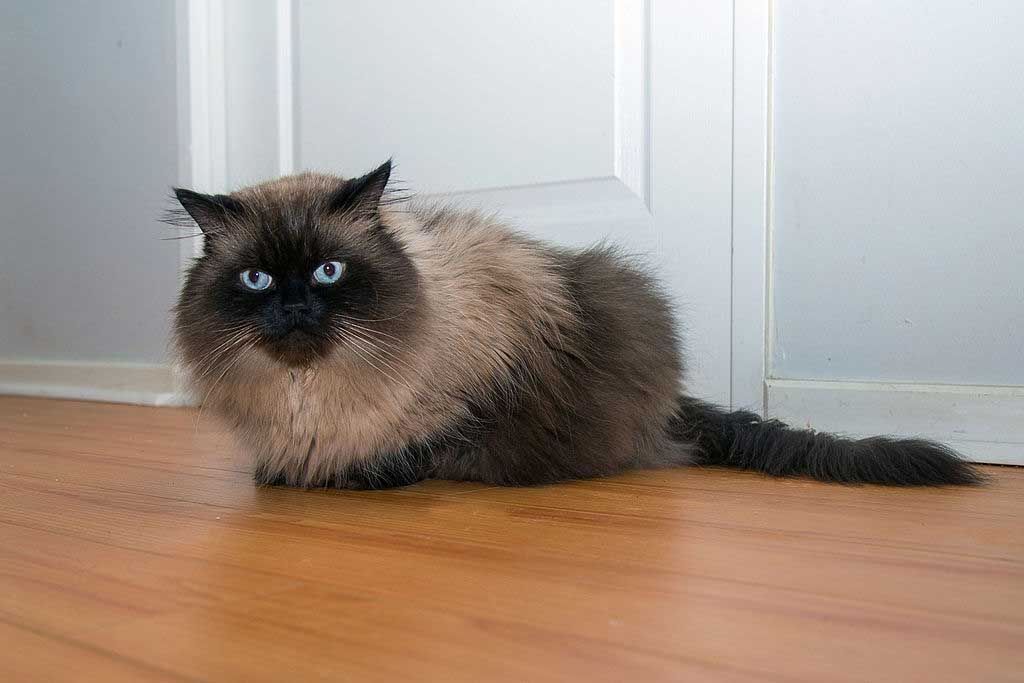
Himalayan cat
Himalayan cat – Joseph Morris, CC BY-SA 4.0, via Wikimedia Commons
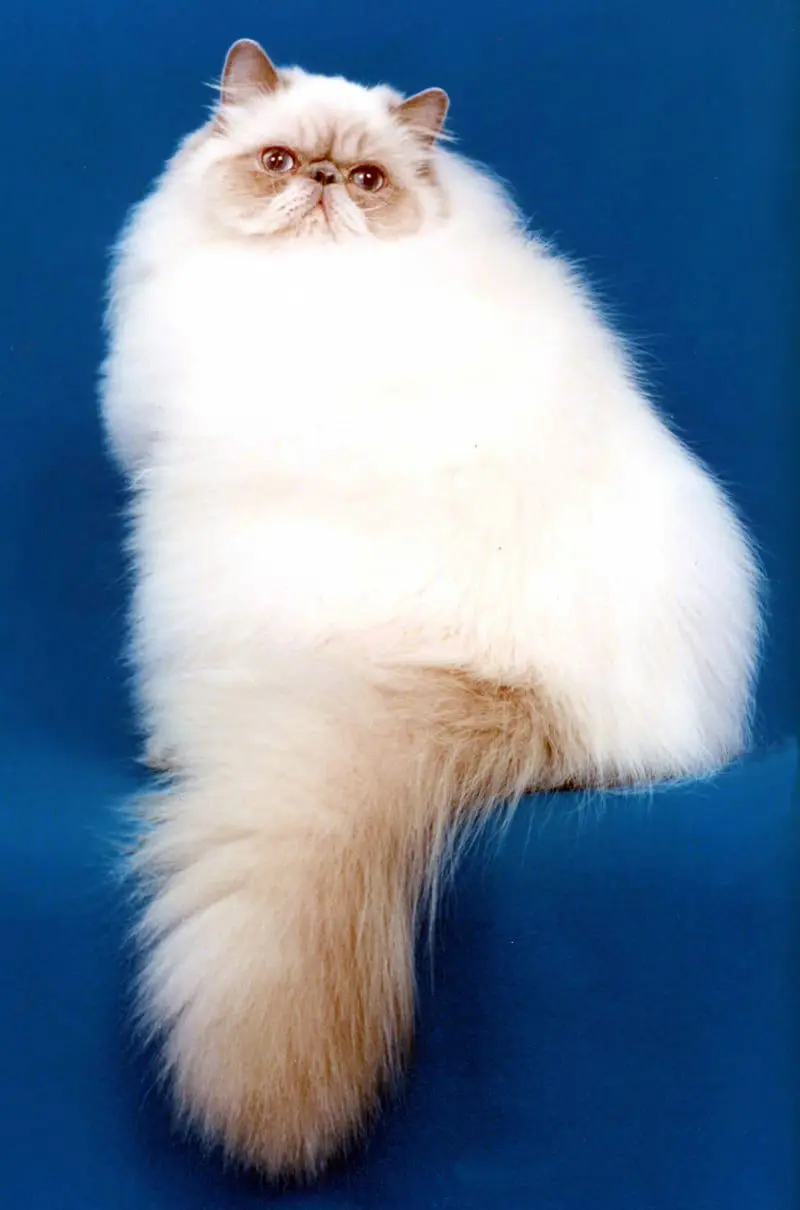
The Himalayan cat, like the persian, it is a solid and round cat, with short legs, short tail and small, rounded ears. According to American Cat Fanciers Association (ACFA), must have five fingers in front and four behind.

As with the Persian, There are two types of himalayan: the classic โ€œbaby faceโ€ and the flatter โ€œPekingese faceโ€, which gets its name from its similarity to the dog Pekingese.

Most of the cat's coat is white or cream in color, but there are some varieties, according to the different shades of the tips of the coat and the extremities of the body.

Size and weight

  • Size: 30 cm.
  • Weight: Of 3 to 6 kg

Varieties of "Himalayan cat"

Distinguished by the color of the extremities of the body and the tips of the coat, the main Himalayan varieties are

Blue Point:
  • the tips of the fur are blue, like feet, the ears, tail and face. The rest of the body is slightly bluish white, and the eyes are bright blue.
Lilac Point:
  • In this variety, the extremities of the body and the tips of the coat are paler and lilac than blue. The rest of the body is whiter and brighter than in the Blue Point.
Seal Point:
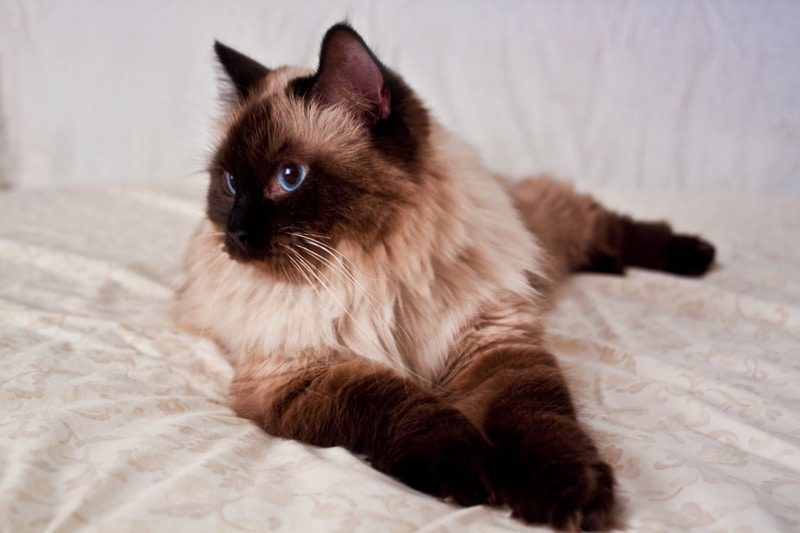
  • The extremities of the body and the tips of much of the body are black or dark brown (similar to the color of the seal, that inspired his name). It is the variety whose color is most similar to that of the Siamese.
Chocolate Point:
  • The tips of the body and the tips of the coat of this variety are chocolate brown, a shade lighter than Seal Point. The rest of the fur is also whiter and brighter than that of the Seal Point. The color of the foot pads is a characteristic that strongly distinguishes the two varieties.: those of the Chocolate Point they are pink, while his Seal Point are dark brown.
Red Point o Flame Point:
  • The dominant color of the limbs and points of this cat is red, which can be orange. The rest of the body is white or cream.
Cream Point:
  • This variety of Himalayan is a diluted version of Flame Point. The coloring of the mask and the extremities is reddish or pale orange, while the rest of the body is white or slightly cream.

Character and skills
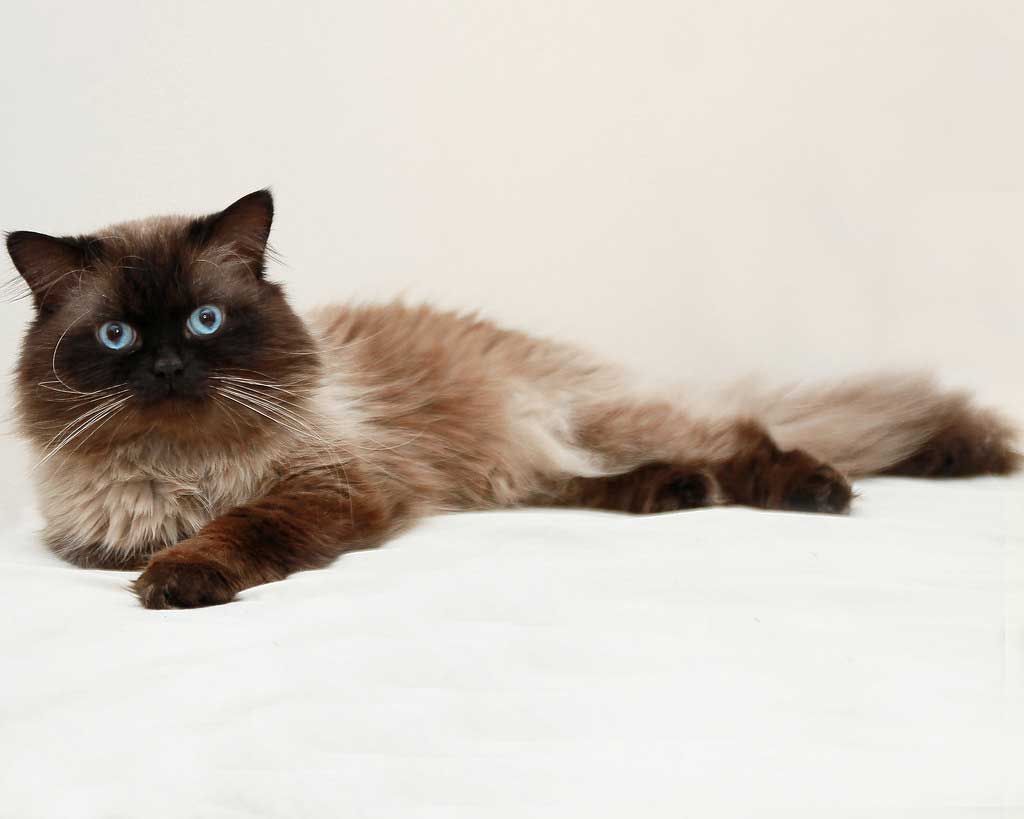
Himalayan cat
Himalayn cat named โ€˜Monte.’ Flickr
The Himalayan cat it is a wonderful indoor cat. They are gentle, calm and sweet temperament, and they also have a playful side. Like him Siamese cat, to the himalayan he loves to play fetch, and a crumpled piece of paper or a cat toy will entertain them for hours, or until your next nap.

The Himalayan cat They are devoted and depend on their humans to accompany and protect them. They crave affection and love to be petted and groomed., which is lucky, since all owners of this breed of cat spend part of the day doing just that.

Like his Persian brethren, they are docile and will not harass you for attention like some breeds do. They have the same level of activity as the Persian cat and they are not noisy like the Siamese cat.

Grooming and caring for the "Himalayan cat"

If you are not willing to spend some time on daily grooming, the Himalayan cat probably not the right cat for you. Since they have long, silky hair that tangles and weighs down easily, the fur of the himalayan should be brushed with a sturdy, wide-toothed comb daily. This will remove and prevent tangles and mats, and will help remove dirt, dust and debris. It is also recommended that the Himalayan cat visit a professional groomer every few months to make sure his coat is healthy and clean. The good news is that himalayan they love to receive the attention of their owners, which makes grooming easy and is an excellent bonding experience for the owner and his feline companion.

You can protect your legs and your furniture by trimming your nails Himalayan regularly. Examine your legs weekly and trim them if necessary to keep them healthy and injury free. Also spend time a week examining your cat's ears. The pointed ears of the Himalayan are susceptible to trapping dirt and debris, which can lead to infections and other ear problems in the future. If you find debris in your cat's ears, use a pet ear cleaner and a cotton pad to remove them carefully. Never use a cotton swab in your cat's ears, as it can severely damage the delicate structures of the inner ear. If the ears are very red or swollen, very dirty or smell funny, take him to the vet asap.

The himalayan have low exercise needs, but they are extremely playful and will do mischief if they get bored. You can keep them entertained and engaged by providing plenty of cat toys and a few minutes of play each day.. Like the Himalayan they have such a playful personality, something as simple as a ball of paper will keep you entertained for hours.

How much activity does he need? "Himalayan cat"?

The himalayan you need to exercise to stay in top shape. Likes to play with their owners and will play with interactive toys, chase balls and attack mice with catnip, but you may have to chase him to get him exercising on a daily basis.

Health and nutrition
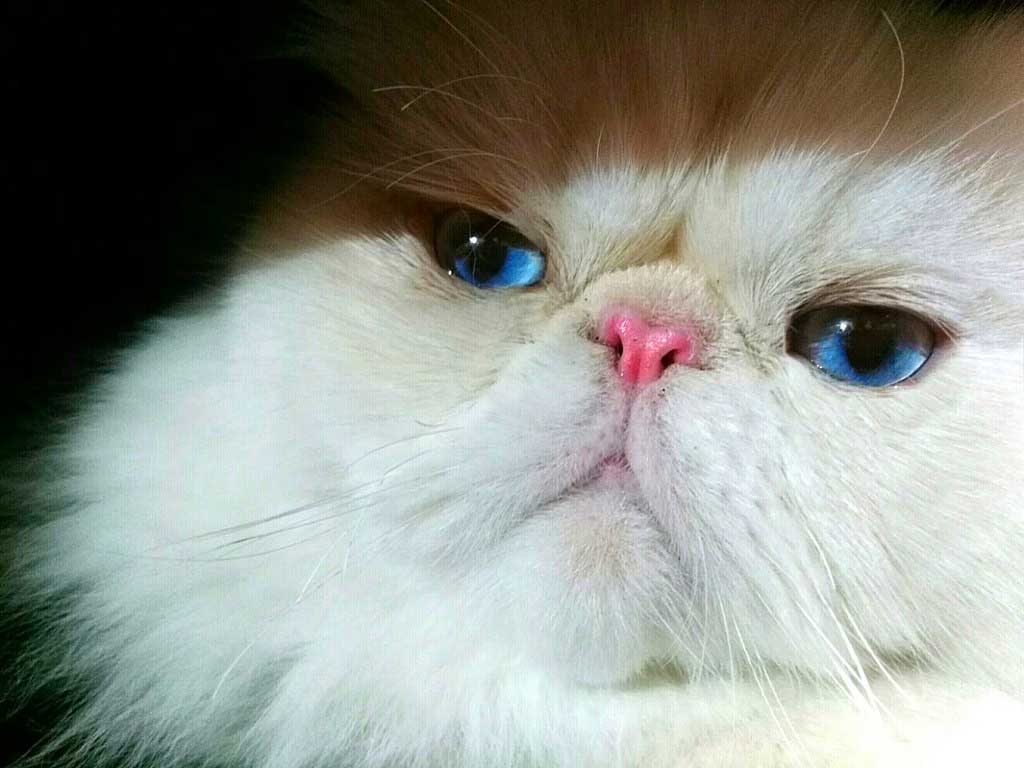
Himalayan
Himalayan – Aaa803287, CC BY-SA 4.0, via Wikimedia Commons
The Himalayan cat you are prone to certain skin diseases: seborrhea, cheyletiellosis and dermatophytosis (had).

It also, like the persian, may have a tendency to be overweight. So, you need to pay attention to your diet, to avoid any risk of obesity in the cat.

It also, due to his persian heritage, may be a carrier of the gene that causes renal polyquistosis. This inherited disease causes cysts to develop slowly and progressively in the kidneys.. But, the presence of the offending gene can be detected by genetic testing. So, before adopting a kitten of this breed, it is advisable to check with the breeder of himalayan that this genetic test has been performed and has given a negative result. If not done, it is a wise precaution to demand that it be done.

It also, the flattened shape of the face may predispose to himalayan certain health problems. These may include, you may be prone to breathing problems due to narrow nostrils. They can also suffer malocclusion (misaligned teeth) or abnormal watering.

The himalayan you can also suffer the feline hyperesthesia syndrome (a little-known disease that causes behavior problems).

Last, the length of their coat can cause hair ingestion problems, what ends up creating hairballs in the stomach of the cat (tricobezoares), causing pain and / or digestive problems.

Food

As the Himalayan cat have a tendency to be overweight, special attention should be paid to your diet.

Some companies have developed a range of foods specially adapted to the needs of the Persian cat (and therefore of himalayan). Available in the form of croquettes or cans, these foods offer a low-fat diet that contributes to the health of the cat, while helping to maintain a silky coat and limit hairball formation. Some of the kibbles available on the market are shaped to fit the brachycephalic jaw of the Persian and of the himalayan.

The quality of the products in the market varies, so make sure that the ones you offer your dog are reliable. The ingredient list on the packaging can help you, but you can also ask the breeder for advice himalayan or your vet.

For sale "Himalayan cat"

The kitties himalayan (pet quality) cost between 700 and 1400 EUR, depending on coat colors and bloodline. the kitten's quest himalayan perfect begins with the search for a reputable breeder. One Himalayan cat known breeding sites, with good color and perfect proportion can cost between 1500 and 3000 EUR,

Videos "Himalayan cat"

Cats 101: Himalayan
Cats 101: Himalayan
TOP 10 HIMALAYAN CATS BREEDS

Alternative names:

โ–ท The world of Pets: Dogs, cats, birds, reptiles, amphibians

Moggy cat
cat without pedigree

For those of you that you are not familiar with the English language, ยซMoggyยป is an informal name for a cat – ยซMogยป o ยซMoggyยป is the singular, ยซMoggiesยป is the plural.

Content

Origins of the word "Moggy"

The definition of a Moggy, It is a cat or a kitten, It does not belong to any recognized race. It is also an informal name at United Kingdom for a cat, If the cat is a breed recognized or not. It seems a bit confusing this from the English language!. The word was originally a nickname for a cow!! The origin of the word kitten is not a corruption of the word "mestizo" , as many believe. Recognized the word for the first time in 1911, is possibly derived from Maggie, Margie or mog, all short of wife Margaret name forms. It is believed that this was first used to describe a clumsy, clumsy old cow, and even could have been a child of a farm which was called that way any cow, given that "Moggyยป was used during the 18th century in various English dialects as a "pet name" for cow.

How farmers flocked to cities from rural areas during the latter part of the Industrial Revolution, it is likely that the cow became moggy maggie, implemented as an insult to a scruffy woman, old or prostitute.
The origin is unclear, but as the 20th century, London streets were filled with a lot of little healthy Street cats, it would have been natural to apply the term Moggy to describe these unhappy. In some parts of Lancashire, England ยซmoggyยป means mouse. A cat was known as "the hunter of moggies. It has been suggested that this could be the etymology of the word meaning moggy ยซgatoยป.

History

There are more than 100 millions of cats in the world. Of these, the vast majority are cats without pedigree or mestizos, their filiation may be unknown, not even the parents have a registered pedigree.

Until the end of the 19th century, people used cats to keep their houses and barns free of rodents. But, like any proud owner knows, a healthy and happy Moggy, in the fullness of his life, can be as magnificent in appearance and form as a pedigree cat. Given that the gene to determine the short hair is dominant, most mongrel cats are shorthaired, but there is no standard cross type, they come in all imaginable varieties of hair and color.

Physical characteristics

Many mestizos cats are atigrados, It is the variety closest to the ancestors of the cats, the African wild cats. The tabby pattern or scratched is the original, but the classic spotted tabby pattern is more common. More rare is the spotted striped, being selectively bred into new pedigree lines, these new lines aimed at achieving a wild look. The solid colors are also abundant: black, white, Ginger (Jam), and blue.

The ginger colouration is linked to the sex, and the males outnumber the females jam by 2 to 1. On the other hand, the carey or the pattern of percale in Orange and black is only possible in females (with rare exceptions of sterile males). white is common, both by his own account, combination with other colors solid and atigrados. The Siamese style points are rarely mixed cats, but it can occur, without a doubt. Aside from color and coat, mongrel cats differ much less from each other than pure breeds.

Most have a moderate physique, typical of British Shorthair cat and American, not being thin like him Siamese cat, neither big and heavy like the Persian cat or the Maine Coon. Circumstances have helped the cats of tropical climates tend to have a slightly more elegant way, and those from cold climates to have a more robust body.

The head wedge-shaped and flattened face are unusual at a junction, but it can appear if the recent family tree of one of the parents includes a cat with genes Siamese and Persian.

Character and skills

The reproduction random means that the cat without a pedigree does not have a certain appearance or temperament.
But, the character traits of short-haired domestic cats they make it universally loved and admired.

Cats are wonderful companions and enjoy being part of a family, but still maintain their independence much more than domestic dogs. They can be adapted to an existence in a House, Although you will enjoy any freedom that is offered (deliberately or not), because it must be said that the Domestic cat it is a relentless predator of small rodents and birds. Even when well fed, most mongrel cats they will enjoy bringing home the hunting trophies, true to its thousands of years of history as experts in pest control. The mongrel cat has naturally thrived in the selection of the strongest and most successful animals.

Health

The cats mestizos natural have a much lower concentration of undesirable genes. With proper care, It is robust and will live a long life. the typical mongrel, If you choose with care, is a beautiful, Intelligent, playful, low-maintenance, and above all partner with independent trends. It will be a loving and devoted member of your household. who could ask for more?

Advantages of a mongrel cat:

  • You will not have to contact a breeder, they can be obtained from shelters or private houses.
  • You will have to pay very little. Most of the mongrels are distributed free.
  • Mixed cats are robust and long-lived.
  • They suffer fewer health problems that cats of race.

โ–ท The world of Pets: Dogs, cats, birds, reptiles, amphibians

Siberian cat
Recognized by the CFA, CFA, TICA, WCF, FFE, AACE, ACF, ACFA/CAA

Content

Characteristics "Siberian cat"

Coexistence is important that you have with your new friend. Before considering the acquisition of a cat of the breed "Siberian cat" you know certain factors. You must take into account their character, their need for exercise, their interaction with other pets, their care and if you have small children, their level of tolerance towards them.

Joy

4,0 of 5 stars (based on 1 review)

Activity level

3,0 of 5 stars (based on 1 review)

Friendliness to other pets

4,0 of 5 stars (based on 1 review)

Friendliness to children

4,0 of 5 stars (based on 1 review)

Grooming requirements

2,0 of 5 stars (based on 1 review)

Vocality

2,0 of 5 stars (based on 1 review)

Need for attention

3,0 of 5 stars (based on 1 review)

Affection towards its owners

4,0 of 5 stars (based on 1 review)

Docility

3,0 of 5 stars (based on 1 review)

Intelligence

4,0 of 5 stars (based on 1 review)

Independence

3,0 of 5 stars (based on 1 review)

Hardiness

5,0 of 5 stars (based on 1 review)

History

The Siberian cat is a breed of cat native to Russia and has a natural origin: already roamed the Siberian forests more than 1000 years. Its exact origin is not known, but the fact that the mutation responsible for long hair in cats appeared almost simultaneously in regions as distant as Siberia, Asia minor (which corresponds to the eastern part of Turkey, and from which the Turkish Angora cat and the Turkish Van Cat) and persia (which became Iran, and from which the Persian cat) suggests that these different long-haired cat breeds share common origins.

In fact, some specialists think that these cats appeared in Turkey and that human migrations to the Great North explain their appearance in Siberia. On the other hand, others believe that the first long-haired cats originated in Russia and spread to Asia Minor, giving rise to Turkish Van Cat, to the Turkish Angora cat and to the Persian cat, but also to Scandinavia, where would they be at the origin of Norwegian Forest Cat , and then to North America, where they would have evolved to Maine Coon cat.

But, it is certain that they played an important role for the local populations who had to survive in the extreme conditions of Siberia, since they protected the provisions from rodents. Russian folklore says that they once weighed more than twenty kilos and were true "guardian cats.", who protected their homes from wild animals and hunted other animals to feed their families. Still today, many stories tell of magical cats whose mission is to protect children.

The Siberian cat It is known in Europe and North America since the 19th century. It was even one of the breeds exhibited in the first feline exhibition in modern history., held in 1871 at the Crystal Palace in London. It was also presented in the United States at 1884, at the exhibition held in the Madison Square Garden from New York. It is documented in the book Our Cats de Harrison Weir de 1889 and in the book Domestic & Fancy Cats the John Jennings the 1898. A photograph of a representative of the breed also appears on Concerning Cats, written by Helen Winslow and published in 1900.

But, the Siberian cat disappeared from the international scene for much of the 20th century, since his country of origin was isolated from the rest of the world by the Soviet regime that came to power in 1917. It was not until the decade of 1980 when Russian cat lovers were once again free to own domestic cats and organize into associations to define the rules. He had a great success at the first Moscow cat show in 1988, and soon became the national cat of Russia.

Siberian cat
Female Adult Siberian Cat with Seal Lynx Point Coat Color – The voice, CC BY-SA 4.0, via Wikimedia Commons

In 1990, Ophelia, Naina and Kalostro they became the first Siberians to set foot on American soil in almost 100 years, When Elizabeth Terrell, a creator, exchanged them with Nelli Sachuk for four gatos himalayos. A few weeks later, David Boehm, another american breeder, traveled to Russia to bring fifteen cats from the Siberian jungle. Thanks to these two enthusiasts, the breeding of this breed began in North America..

Once the Iron Curtain fell, its international recognition was fast: the International Cat Association (TICA) was the first to do so in 1993, followed by Fรฉdรฉration Internationale Fรฉline (FIFรฉ) in 1997 and then for the American Cat Fanciers’ Association (CFA) in 2000. Surprisingly, the first copies Siberians did not arrive in the UK until 2002. Two years later, in 2004, the Governing Council of the Cat Fancy (GCCF), the country's main body, granted the breed full recognition, including the right to compete in exhibitions organized under their auspices.

Today, as well as remaining extremely popular in his home country, the Siberian has clearly found an audience beyond its borders, helped by his reputation, although unfounded, hypoallergenic cat.

In United States, for example, the Siberian cat stands above the position 20 (of 45) in the classification of breeds according to the number of annual registrations in the CFA. Its success is also growing in Europe. In Great Britain, GCCF statistics show that births in the second decade of the 21st century have risen from about 100 per year to more than 300, which places it in the top ten of the favorite cat breeds of the British.

There is also a blazing growth in France: the statistics of the Official Book of Feline Origins (LOOF) show that if in the mid-1990s 2000 only thirty specimens were registered per year, this figure had already exceeded 200 in 2010, and then cross the barrier of 1000 in 2016 and overcome the 1500 at the end of the decade. Since 2015, is one of the 10 favorite breeds of cats of the French, representing more than 3,5% of registered births.

Physical characteristics

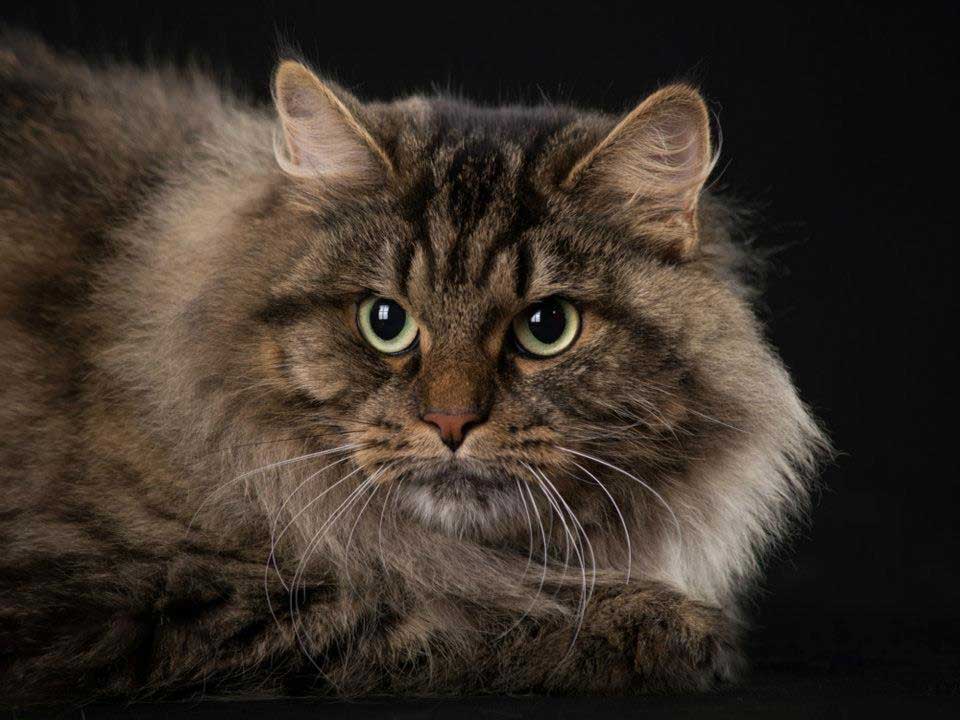
The Siberian has a semi-cobby midline morphology. Sometimes it is confused with the Maine Coon cat or the Norwegian Forest Cat , as it has a similar general appearance, but it differs by having a much more rounded head and body.

Of average length, He is powerfully muscular and his back is slightly arched. The legs they are also very strong with a solid bone structure, the rear ones being somewhat longer than the front ones. The tail is slightly shorter than the body, very full and sharp.

The head is wide and has a triangular shape with rounded sides when viewed from the front. Profile, the rounded forehead ends in a slope at the nose. The ears are size medium, wide at the base and ends in a rounded shape. The eyes they are big, almost round, slightly oblique, and they can be green, yellow, coppery or blue in some white-coated dogs.

The fur of the Siberian it is medium to long, and consists of three parts: abundant down and undercoat, and a thick, shiny protection layer. It is much more abundant in winter than in summer and forms a mane around the neck.

Except for chocolate and lilac, all the coat colors They're possible, but the brown tabby is the most common. All coat patterns are also accepted by the standard, but some organizations, like the FIFรฉ (Fรฉdรฉration Internationale Fรฉline), consider the Siberian colourpoint as a breed apart, call Neva Masquerade.

In any case, this cat grows slowly, as it does not reach full maturity until it is about five years old. But, most of the growth occurs during the first 18 months.

Last, the sexual dimorphism it is very marked: the male is much more imposing than the female.

Size and weight

  • Male size: 30 – 38 cm.
  • female size: 28 – 35 cm.
  • Male weight: 7 – 11 kg
  • female weight: 5 – 9 kg

  • Varieties of "Siberian cat"

    The fur colourpoint (a light color on the body and darker on the tips of the legs, the tail, ears and face) is accepted by most associations, as the International Cat Association (TICA), the World Cat Federation (WCF) and the Livre Officiel des Origines Fรฉlines (LOOF), the reference organization in France. But, some consider cats Siberian colourpoint like a different race.

    Is the case, in particular, of the Fรฉdรฉration Internationale Fรฉline (FIFรฉ), that since 2011 registers them with the name of Neva Masquerade cat. The LOOF also recognizes the term Neva Masquerade, but in conjunction with the name ยซSiberianยซ: in his eyes, is simply another way of designating siberianos colourpoint, but by no means a breed in its own right.

    Siberian cat
    A 3-year-old Calico Tabby Siberian Cat – Lilllio, CC BY-SA 4.0, via Wikimedia Commons

    Character and skills

    The Siberian he is a loving and devoted cat who loves his family. He waits for his owner at the door when he comes home from work, and immediately begins to tell him about his day following him around the house. Loves to participate in various household activities, either helping in the kitchen, lying on the computer keyboard where his owner is working, or sitting in front of the TV that its owner is watching.

    Having said that, although he loves to receive attention from his owners, not overly intrusive or demanding, and he is perfectly capable of waiting patiently for his owners to have time for him. They can be left alone during the day without separation anxiety.

    They are also excellent hosts and, after observing the newcomer from a distance to meet him, they will not hesitate to come over to greet you and participate in the conversation. It is also an ideal cat breed with children who have learned to behave with a certain respect., since he likes to play with them and has enough patience to tolerate some oddities and clumsiness.

    His outgoing character also applies to his peers, but also the dogs: he is not afraid of anything and is aware of his respectable size, is not easily impressed and likes to resolve conflicts amicably.

    On the other hand, has retained a strong hunting instinct that makes it very difficult, yes not impossible, cohabitation with rodents and birds. The fish are not safe either, especially because they have a certain fascination for water. This can lead to, for example, to play with the water in your bowl or toilet, or even to spray his master when he is bathing.

    The Siberian cat he is extremely intelligent, able to learn to retrieve objects (activity that you especially enjoy) or to be walked on a leash, but also to solve complex problems, like opening the closet door or reaching for that toy that its owner thought was out of reach. Teaching your cat tricks is a great way to spend quality time with him., while giving you the opportunity to exercise both physically and intellectually.

    They are also very good at understanding human emotions and know when to go play with a cheerful owner., or comfort someone who has had a bad day by purring on their lap to show their affection. This makes them an excellent therapy cat..

    Although the Siberian cat has a rather calm and quiet character, he is also an active cat that retains a playful side throughout his life. They are surprisingly agile for their size, being able to climb almost anywhere and make dizzying jumps. Some owners still wonder how their dog got the spider in the living room.… And is that, like most of his peers, he likes to be in a high place from which he can admire his territory; if you think your cat tree is not tall enough, do not hesitate to find a closet more to your liking.

    Curious and without any notion of property rights, does not hesitate to steal any object to make a toy with which to play. Thus, it is strongly recommended to store jewelry and other valuables in a safe place.

    On the other hand, although they are delighted to have access to the outside and to be able to run and climb at their ease, they are still a breed of cats capable of living in a flat. In fact, for a Siberian, the company and affection of your family are even more important than physical exercise.

    Last, this cat has a wide vocal range of soft meows, trills and chirps, but also a powerful purr reminiscent of a boat engine. They are not as talkative as the eastern races, but they like to communicate and give their opinion.

    Siberian cat
    Siberian cat

    Grooming and caring for the "Siberian cat"

    The triple coat of the Siberian it is low maintenance, since it does not tend to knot. But, a thorough brushing is necessary every week to remove dead hairs and distribute sebum from the skin. During the moulting season, in autumn and spring, the dog loses a lot of hair, so it is recommended to brush it every day. This grooming session is also an opportunity to share a complicity moment with your pet., especially since he especially appreciates staying quietly on his owner's lap while he is being brushed.

    On the other hand, it should be noted that, against popular belief, the Siberian it can perfectly provoke allergic reactions in its master. The amount of Fel d1 (an enzyme that causes allergies in people sensitive to it) in the saliva of the Siberian cat is much lower than that of a cat without a pedigree, but the amount is not zero. Thus, it is simply a race of hypoallergenic cat, that is to say, that is less likely to cause an allergy.

    Unless you want to expose your cat in a feline exhibition, it is rarely necessary to bathe him. This is certainly a good thing, as it is very difficult to shampoo their thick, waterproof fur.

    But, the weekly grooming session is an opportunity to check your teeth, eyes and ears looking for dirt, and clean them with a damp cloth if necessary. This will reduce the risk of cavities and infections of all kinds.

    Last, if your dog spends a lot of time outdoors, it may be that natural wear and tear is enough to file your nails. If not the case, it is advisable to trim them with a nail trimmer when they have become too long, so that they are not hindered in their movements.

    Indoor or outdoor cat?

    The Siberian cat it is a nature loving breed that spends a lot of time outdoors if allowed to roam freely. This independent cat loves to roam for hours in nature, hunt and explore the environment. Like a good hunter, Siberian he usually takes his prey home.

    That you Siberian gift you with dead birds and mice is not to everyone's liking and should be considered prior to purchase. If the cat stays indoors, a large floor with a sturdy scratching post is a minimum requirement. The ideal would be a safe garden, where the cat can live its desire to move. With the proper precautions, your cat will live happily.

    How much activity does he need? "Siberian cat"?

    As an active breed, the Siberian cat needs a lot of space to play and hunt. Independent cats prefer to occupy themselves and explore their environment. Of course, especially at a young age, they still like to be kept busy with a gaming rod or mice.

    Intelligence toys for cats also keep them busy and boost their intelligence. They also like to play with other cats, so they should not be alone. As one of the few cats, to the Siberian he likes to play with water and can also keep busy for a long time with a leaky faucet.

    Siberian cat
    Siberian cat Tofik – Mstachul, CC BY-SA 3.0, via Wikimedia Commons

    Health and nutrition

    The Siberian it is very robust. Able to live in environments as difficult as the Siberian forests from which it originates, It is a breed of cat that does not fear the cold. But, not at its best when temperatures exceed 30 ยฐC: to avoid any risk of heat stroke, it is then important to keep it in a shady area or even with air conditioning.

    It also, have a predisposition to certain genetic diseases. This is the case, in particular, of :

  • The feline hypertrophic cardiomyopathy, a relatively common disease in domestic cats that causes abnormal development of heart tissue, with potentially serious heart problems. Screening of parents can minimize, but not delete, the risk of transmission to the kitten;
  • Deficiency of pyruvate kinase (PK-def), which causes a problem in red blood cell metabolism leading to anemia of varying severity in cats. There is a DNA test to identify the gene; a breeder's siberian cats responsible must exclude the carriers of the offspring.

  • It also, the fact that the Siberian forest cat being so large does not make you immune to one of the greatest health risks of a domestic cat: the Obesity. Responsible owners should ensure that their cats maintain an adequate weight and seek the advice of the veterinarian if they notice a tendency to be overweight.

    Life expectancy

    Of 12 to 15 years

    Food

    The Siberian forest cat he has no problems with his diet; can be fed commercially available industrial cat food without any problem. But, choosing a quality product that is suitable for your age and activity level is essential to ensure that you are getting all the nutrients and vitamins you need.

    By being able to self-regulate, can be left with food at all times.

    But, it is the owner's responsibility to ensure that the dog is not overweight and, Therefore, weigh him regularly to monitor his weight. In the event of deviations, consultation with a veterinarian will allow to establish a more adequate feeding program.

    For sale "Siberian cat"

    It is only possible to get a Siberian cat of breeders of this breed. It is preferable to resort to a family breeding, where the cat is born near its breeder. The small size of the structure and the proximity of the human being have allowed it to develop its familiar and endearing character.

    If raised in good conditions, the Siberian cat he will not be wild and he will be very close to his master. It can become the "dog-cat" that the owner expects, the one who will be curious about strangers, the one who will wait for his owner behind the door and the one who will follow him everywhere. Please note that if the cat you are purchasing does not have a pedigree, It will not be considered a pedigree cat but a "street cat".

    Having said that, the price of a Siberian cat ranges between 700 and 1.000 EUR. The price depends mainly on whether you buy a companion cat or a breeding cat.

    Siberian cat
    Portrait of a Brown tabby Siberian – Sibirela, CC BY-SA 3.0, via Wikimedia Commons

    Videos "Siberian cat"

    the siberian cat / Siberian Cat - Mug&In
    El Gato Siberiano / Siberian Cat – MuKi&Mu
    SIBERIAN CAT - Characteristics, Care and Health
    SIBERIAN CAT – Characteristics, Care and Health

    Alternative names:

  • Siberian forest cat
  • โ–ท The world of Pets: Dogs, cats, birds, reptiles, amphibians

    Burmese cat
    Federations: LOOF, CFA, ACF, ACFA, TICA, FIFรฉ, WCF

    Today, you can still find cats similar to the current ones Burmese cats in the Buddhist temples of Southeast Asia
    Burmese cat
    Burmese Cat ยซGamseยป – DPCS.ie, CC BY-SA 4.0, via Wikimedia Commons

    Content

    History

    The first written records of the Burmese cat date back to the 14th century. El Tamra Maew, a manuscript of poems and illustrations found in Ayutthaya, the capital of the Kingdom of Siam (current Thailand), date of this period. This "treatise on cats" describes, among other things, to the Rajah, a round-headed cat, slightly chunky body and very silky chocolate coat: a description that corresponds in all respects to the Burmese what do we know today. According to legend, it was one of the 16 races that lived with Buddhist monks, who considered them sacred.

    For centuries confined to his homeland, the cat began to spread internationally when in 1930 a US Navy medic, Joseph Thompson, brought a chocolate coated female from Thailand, Wong Mau. As the fur of this one was almost black at the tips (ears, legs and tail) and chocolate-colored in the rest of the body, guessed it was a Siamese cat. But, genetic testing disproved this assumption and established that it was a different breed. Fascinated by the beauty of this animal, Joseph Thompson decided to start a breeding program with other enthusiasts. Thus was born the American Burmese cat, a round-headed cat with a slightly chunky body.

    The Burmeses did not arrive in Britain until later. It was not until the end of World War II that soldiers returning from Burma brought some brown cats.. Breeders who learned about the development of the American Burmese cat in the United States and Canada were interested in these cats and started a breeding program.

    They contacted the American breeders so that they could send them some specimens. Among 1949 and 1956 some imports were made that allowed to expand the gene pool, which otherwise risked being insufficient due to the small number of subjects.

    The program was a success: from the third generation, and more specifically in 1952, the breed was recognized by the Governing Council of the Cat Fancy (GCCF), the british feline organization. It was distinguished from Burmese Raised in America for his more triangular head and less stocky body.

    The first standard only specified one layer color: chocolate. But, as time passed and more cats were raised, other colors appeared in the litters and lines. Like this, the first blue guy was born in 1952, and others with red fur followed in the following years, cream, tortoiseshell or even lilac in 1971. Breeders continued to develop the breed incorporating these additional colors, that were recognized in the successive updates of the breed standard.

    But, until the end of the decade 1960, the gene pool of European Burmes cat remained very small, what limited its development. In 1969 imports could be reorganized, this time from canada, that contributed greatly to the development of the breed.

    It also, the breed spread fairly quickly to most of western Europe. so it happened, for example, already in 1956 in France and in 1970 in Germany.

    Burmese
    Male Brown/Sable Australian Burmese Cat – Psypherium, CC0, via Wikimedia Commons
    The controversy between the European Burmes cat and the American Burmese cat

    The breeding of Burmese has developed in parallel, but in a somewhat different way, in the United States and Great Britain, respectively. This explains a certain divergence between the North American and European lines..

    Like this, the American Burmese cat, also called Contemporary Burmese, has a rather round head, a rather short nose and a somewhat stocky body.

    The European Burmes cat, also known as Traditional Burmese, has a more triangular head, a longer nose and slimmer body.

    This heterogeneity divides breeders and institutions. These may include, the Governing Council of the Cat Fancy (GCCF) has refused to register specimens from the United States since 1980, to preserve traditional English lines.

    The controversy is amplified by the existence of serious cranial deformities in some kittens from North American lines. These may include, some have two noses or just one cheek. Most affected kittens are stillborn., and those who are born are immediately euthanized. But, due to the limited size of the breed's gene pool, not even Cat Fanciers’ Association (CFA) not even Asociaciรณn Canadiense de Gatos (CCA) require routine sterilization of breeders with these defects. This decision is left to the discretion of each breeder..

    The English Burmese lines are not entirely free from these problems.. But, the prevalence of these problems is much lower than on the other side of the Atlantic.

    Physical characteristics

    Burmese cat
    Burmese – Flickr

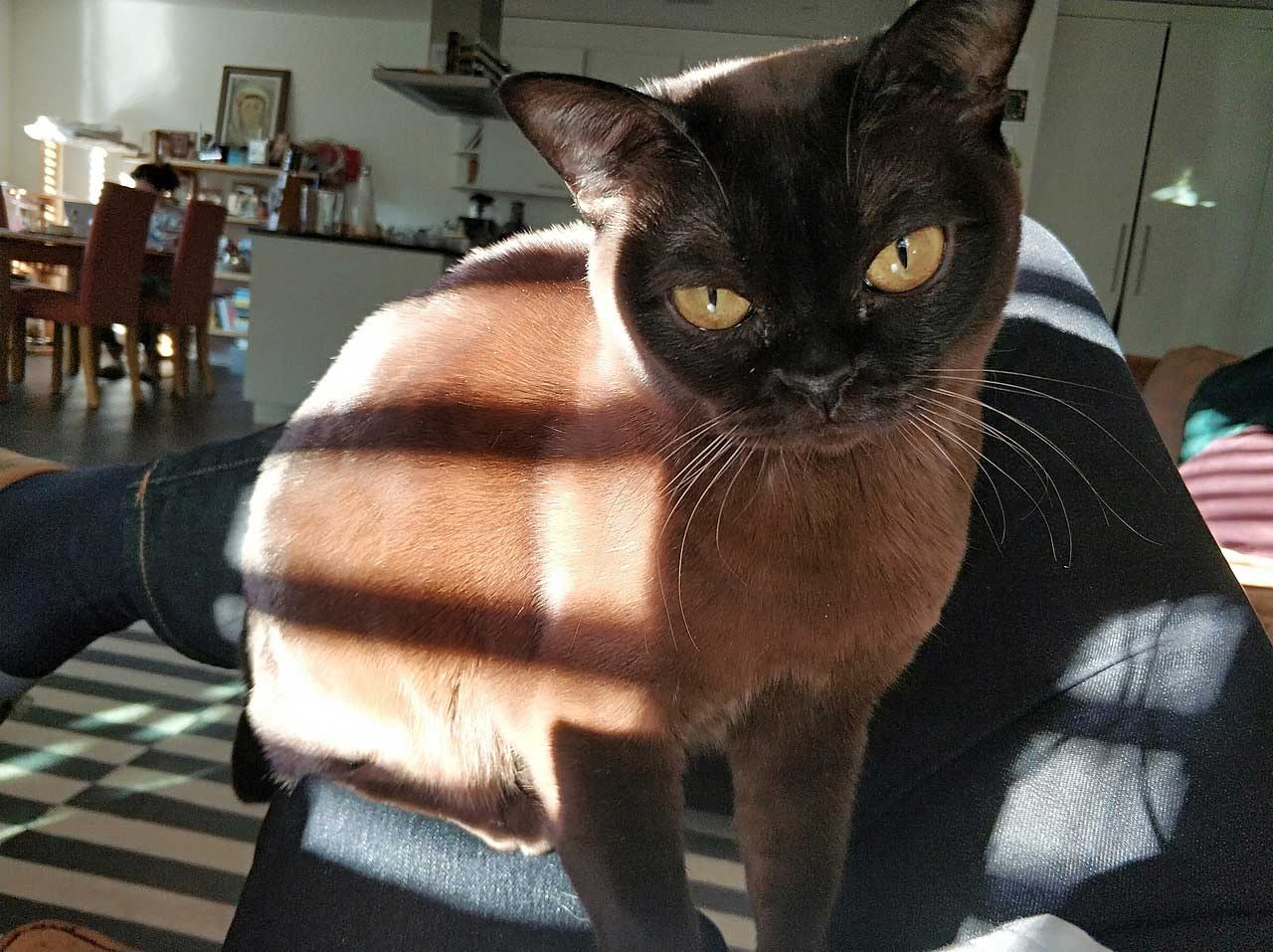
    The Burmese it is a medium size cat, muscular and of strong stature, tending to weigh between 4 and 6 kg.

    The legs they are long and delicate, with delicate oval feet. Overhead wedge-shaped, with one forecrown wide, some settle ears wide and of medium size and a straight nose.

    The Greats eyes are golden yellow to amber in color and have an oriental curved upper eyelid. The fur of the Burmese, dense and silky, has a very fine undercoat, so it is attached to the body.

    Officially, ten different coat colors are recognized, no pattern allowed. The Burmese comes in ten generally recognized colors. As a common feature, they all have so-called spiky coloration, why the face, the ears, legs and tail are darker than the rest of the body. The most common coat color is nut brown..

    Varieties:

    As a result of separate breeding programs, the English Burmese are different from americans. European tends to be more eastern, with a more triangular face, while the American Burmese cat it is plump and rounded in the body, head, eyes and feet; with full cheeks and a short muzzle.

    Character and skills

    The Burmeses they are curious cats, energetic and loving. They especially like to play and are very people-oriented. You should not leave them alone for a long time, as they quickly feel lonely. Not in vain, These affectionate cats are called "people's cats".

    They need close physical contact and cannot do without daily caresses. The friendly cats remain active and attentive until old age. They do not show any fear towards strangers and are usually quite "talkative".

    Indoor or outdoor cat?

    The "Burmese cat" it is an active animal that needs a lot of space. You are not comfortable in a narrow flat. So that they are happy, must have at least one secure balcony or, even better, a fenced garden. If the conditions are good, the Burmeses they can also go abroad. The only problem is that these friendly cats are not afraid of the neighbors or other strangers.. So, They can easily fall victim to "cat thieves".

    How much activity does he need? "Burmese cat"?

    The Burmeses They are great cats for the whole family. They need a lot of activity and are reluctant to be alone. In fact, They consider themselves so affectionate that they would rather come on vacation with you than wait home alone. If you have to leave your loving cat alone more often, you should get a second cat to keep each other busy.

    Especially if cats can't go outside, you must provide them with a suitable substitute occupation. Even outdoor cats are not averse to playing regularly with their humans. With his attentive and curious character, to the Burmese loves to play and chase toys. It is best to provide this clever cat puzzle games or encourage him to seek and chase with hidden treats..

    Burmese cat
    Burmese cat

    Grooming and feeding

    The coat of the Burmese cat it is very easy to care for and does not need any special treatment. Just brush the silky fur from time to time to remove dirt. This will not only guarantee a well-groomed and silky appearance, it will also do your cat a favor with extra petting.

    A varied and healthy diet also contributes to the well-being of the cat.

    For sale "Burmese cat"

    Before buying a Burmese cat, you must be sure that you can dedicate the necessary time. The Burmeses they are considered one of the breeds with the longest life expectancy. You can't leave, often, to this cat only for the next 12 to 18 years and you will have to take care of it daily. If you have discovered this oriental cat for yourself, looking for a trusted breeder. There is currently no independent breeding club for the breed and you will have to turn to amateur breeders.. When you choose a kitten, make sure both the kittens and the parents appear healthy.

    The price of a "Burmese cat" ranges between 800 and 1300 EUR.

    European Burmes cat
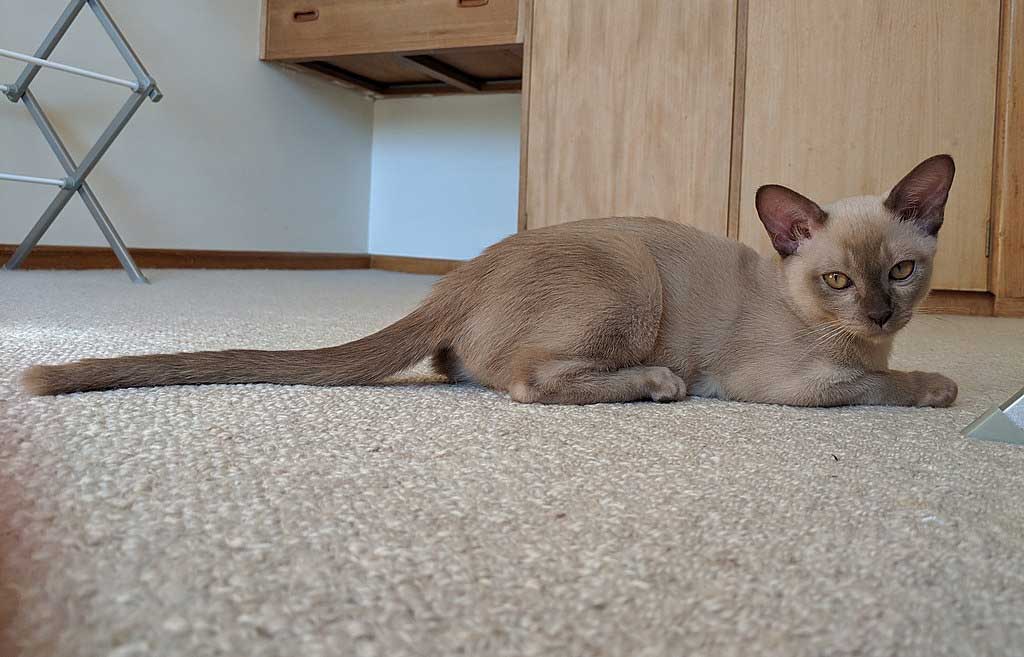
    Chocolate (American ยซChampagneยป) British/European Female Kitten –

    Characteristics "Burmese cat"

    Coexistence is important that you have with your new friend. Before considering the acquisition of a cat of the breed "Burmese cat" you know certain factors. You must take into account their character, their need for exercise, their interaction with other pets, their care and if you have small children, their level of tolerance towards them.

    Joy

    5,0 of 5 stars (based on 1 review)

    Activity level

    4,0 of 5 stars (based on 1 review)

    Friendliness to other pets

    3,0 of 5 stars (based on 1 review)

    Friendliness to children

    3,0 of 5 stars (based on 1 review)

    Grooming requirements

    1,0 of 5 stars (based on 1 review)

    Vocality

    4,0 of 5 stars (based on 1 review)

    Need for attention

    4,0 of 5 stars (based on 1 review)

    Affection towards its owners

    5,0 of 5 stars (based on 1 review)

    Docility

    1,0 of 5 stars (based on 1 review)

    Intelligence

    4,0 of 5 stars (based on 1 review)

    Independence

    2,0 of 5 stars (based on 1 review)

    Hardiness

    3,0 of 5 stars (based on 1 review)

    Videos "Burmese cat"

    Cat Who Lives On A Boat Loves Visiting New Places - MISS RIGBY | The Dodo
    Cat Who Lives On A Boat Loves Visiting New Places – MISS RIGBY | The Dodo
    ๐Ÿฑ Burmese Cat - Characteristics, Behavior and Origin ๐Ÿฑ
    Gato Burmรฉs – Caracterรญsticas, Comportamiento y Origen

    โ–ท The world of Pets: Dogs, cats, birds, reptiles, amphibians

    Kurilian Bobtail
    Recognized by FIFe, TICA, WCF

    Its affinity with water, which undoubtedly results from the nature of its natural habitat, it is a very special character trait, that distinguishes it from many other cat breeds.
    Bobtail de las Islas Kuriles
    Photo: bobkedi.com

    Content

    History

    The Kurilian Bobtail is a breed of Russia. This Bobtail has not undergone genetic modification caused or calculated. No one has tried to change, is the nature which created the race. He lives on the Kuril Islands, in extreme climatic conditions of temperature and humidity.

    These islands are located at the East end of Russia, in the northern Pacific Ocean and extends to more than 1200 km from the Kamchatka Peninsula, on the border of North Japan. It's a chain of volcanoes – hence the name – Kuril. All islands there are 40 active volcanoes. On the one hand, the Islands are bathed by the sea of Okhotsk, on the other side by the Pacific Ocean.

    These short-tailed cats have been known to be found on the Kuril and Sakhalin Islands for at least two hundred years., Although they were discovered only at the end of the 20th century.

    In the Centre of Russia, the Kurilian Bobtail began to appear only in the middle of the last century. The military and geologists, who returned from long trips to the islands, they brought with them the special short-tailed cat. But not too taken into account, Since even did not exist any feline Federation in Russia at that time. In the years 80 Some fans, who already had these amazing cats, they turned their attention to the race.

    Was in the year 1991, when the Soviet Federation accepted the first norm of the Kurilian Bobtail. In 1995, This Bobtail was accepted by WCF. In 2004, they were allowed to participate in the Championships of FIFe.

    We can say that currently the cat Kurilian Bobtail It is one of the youngest breeds and has the sympathy of many cat fans in Russia. But even today, This bred animals are very rare.

    Kurilian Bobtail
    Kurilian Bobtail kitten with its mom – TRUE KURILIANS, CC BY-SA 4.0, via Wikimedia Commons
    The history of the emergence of this breed is purely hypothetical.
    It is possible that they participated in its creation on Siberian cat and the Longhair Japanese Bobtail, who lived for some time on the islands with their Japanese masters.

    But in all likelihood, the mutation of the tail of the cats that inhabit the Kuril Islands was carried out in parallel to the observed in cats of the Japanese islands due to the influence of the mutation and similar climatic conditions. But, to date no one has studied the exact origins of this mutation.

    Even now, It is not uncommon to see cats with low and irregular tail in the islands of Malaysia, Thailand and Burma. In some Southeast Asian countries, It is virtually impossible to find the animal without the tail malformations. In this way, it is possible to assume that all mutations associated with the change in tail structure have a common cause.

    Although the Kurilian Bobtail It, probably, his distant cousin Japanese Bobtail, the difference in the second race is impressive. There is a common characteristic in the two races, the short tail. Other parts of the body differ significantly and surprisingly.

    Physical characteristics

    Kurilian Bobtail
    Kurilian Bobtail Cat Snow – Pixabay

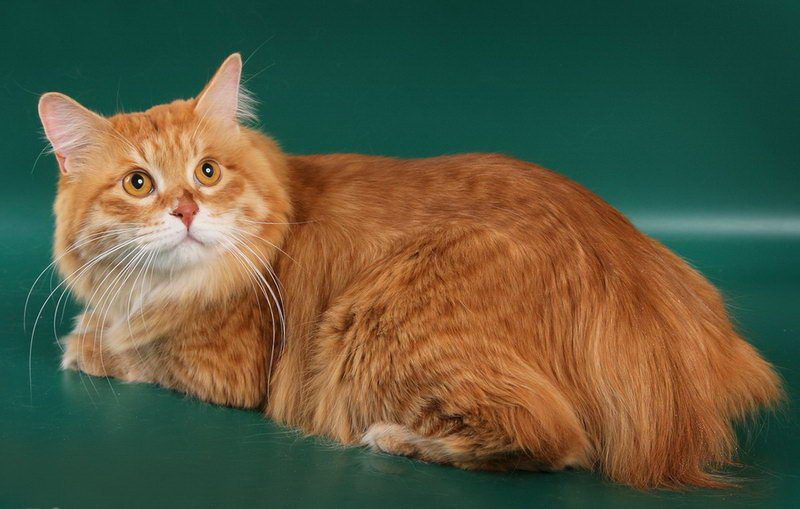
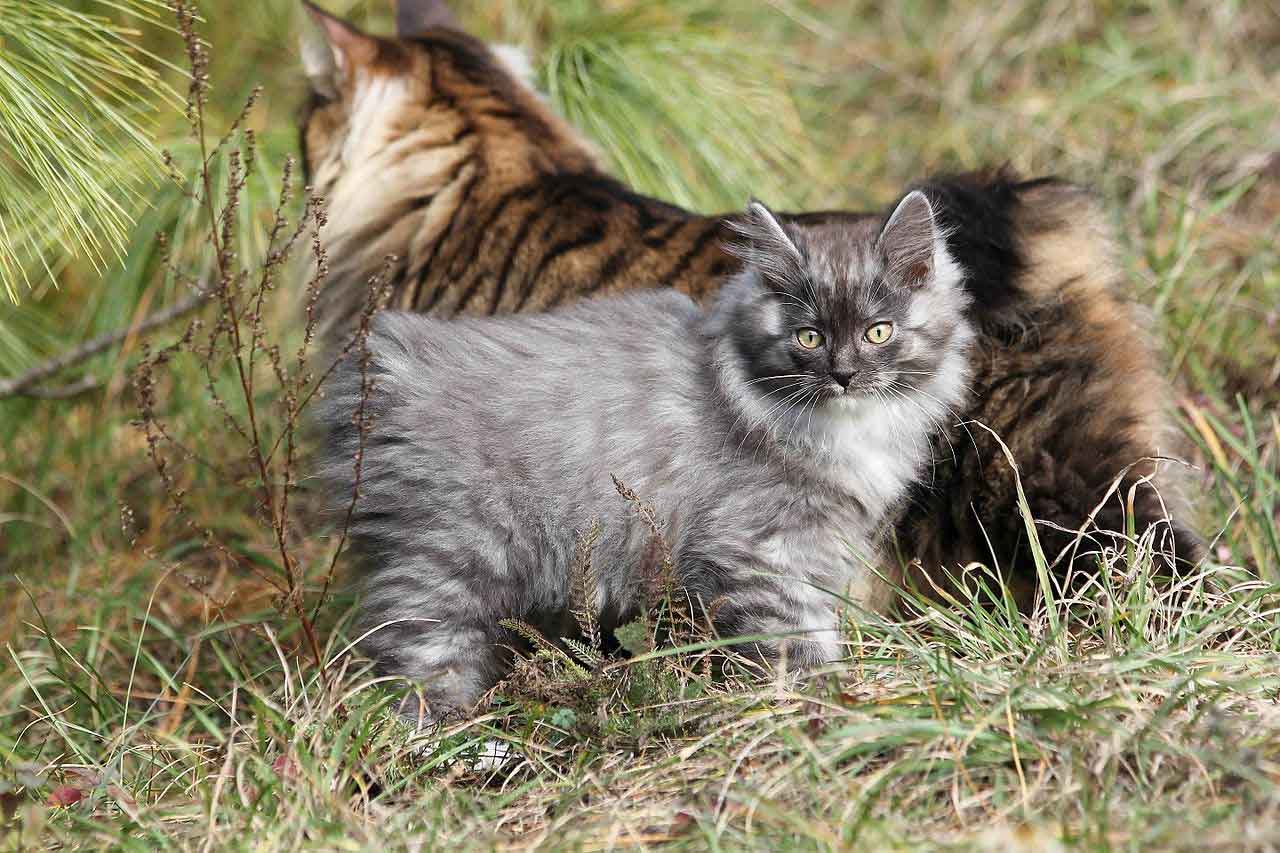
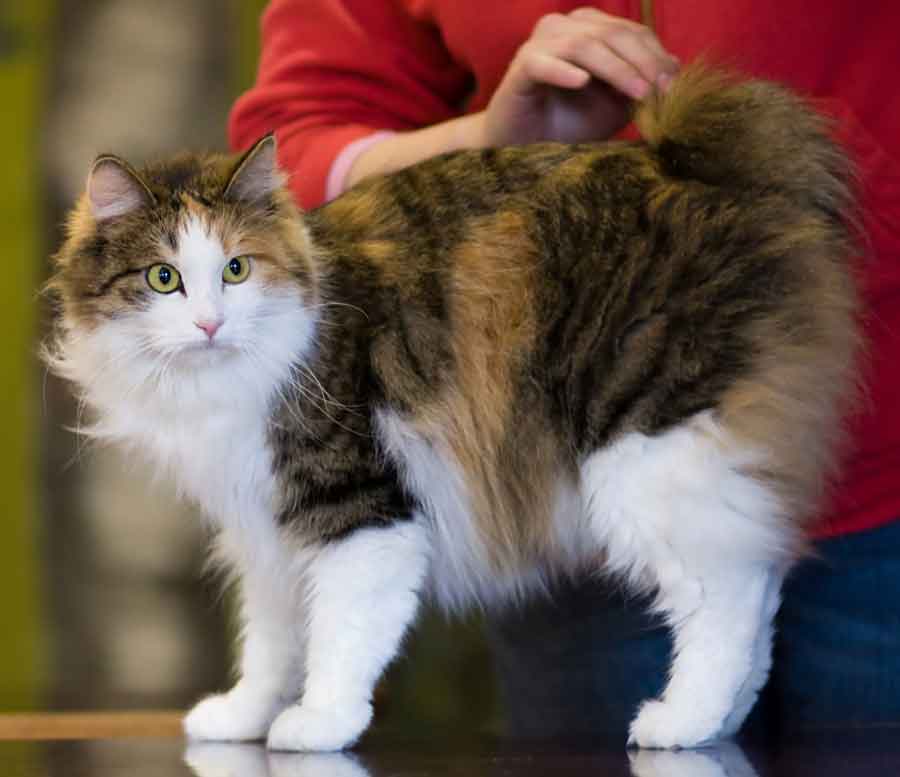
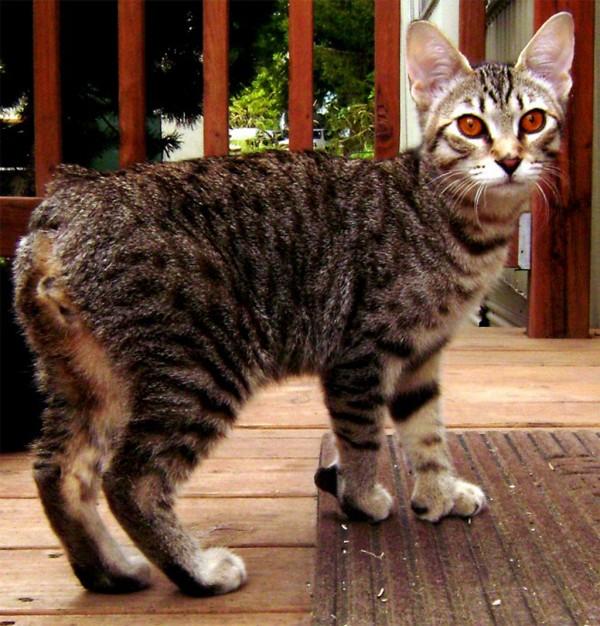
    The Kurilian Bobtail has a compact body, strong and muscular, with slightly raised croup and curved topline. The legs are strong and solid, the average length, the hind legs are longer than the Forelegs .. The feet are round and wide, lined with tufts of hair between the toes.

    Some records divide Kurilian Bobtail in separate breeds of short hair and long hair.

    • They have a large head and trapezoid, with contours rounded in broad cheekbones.
    • The nose is wide, straight, average length, with a light stop.
    • Chin broadband with a slightly rounded profile.
    • Medium-sized ears, well assorted and often adorned with a crest of hair.
    • His eyes are slightly inclined, highly placed, rounded or shaped nut.
    • The queue is full of hair. Tail deformity is not an abnormality associated with healthy cats.
    • The coat can be short and semi-long. The mantle is dense, very fine and silky.
    • In the semilargo hair group, This is considerably longer at the bottom of the body, the stomach and legs.
      Virtually all colors are permitted, except the Siamese pattern, agouti specific to Abyssinia, chocolate, cinnamon, beige, Lilac and all their combinations with white.

    The harsh climate of the Kuril Islands has endowed the Kurilian Bobtail thicker skin, adapting to the wildlife style – does not fall, almost no mess. On the Islands, the climate is very humid and the skin of the animals has acquired an extraordinary property, It gets no wet.

    The Kurilian Bobtail they are big enough. In general, Males weigh in 5 to 7 kg, but it is not extkgรฑo to see larger individuals, reaching a weight of 9 kg. The females are naturally less powerful, and weigh 3,5-5 kg.

    Character and skills

    In the Kuril Islands the Bobtail they usually live at home, but there is also absolutely wild cats, the Kuril Islands are sparsely populated.

    To the Kurilian Bobtail he likes to hunt everything that is in the forest.
    On the streets of the villages of the Kuril Islands, it is not uncommon to see these cats run after dogs they are not afraid of. But, This proximity explains, in part, by how many cats (native cats, imported directly from the Islands) they have scars and torn ears.

    Kurilian Bobtail
    Kurilian Bobtail – Arabescka – Heikkisiltala, CC BY 3.0, via Wikimedia Commons

    This is a faithful animal, sociable, with the agility and developed intelligence. It adapts well to family life with children, with whom they will share endless games. They also adapt well to other animals and dogs.

    At the same time, they are independent, and they are only suitable for those that can respect her strong personality and her need for independence. It also, the Kurilian Bobtail he will show all his affection to a single person, a teacher who chooses his own Bobtail, relations with the rest of the family members can be complicated.

    With the power and the length of its hind legs, the Kurilian Bobtail can easily jump great heights. In a House, a tree would be a great necessity for this cat.

    Another characteristic of the breed is the attraction to water.. Fresh under a faucet or picking up the drops of the same. It is the duty sacred of all the representatives of this glorious race.

    The long struggle of this race due to the severe conditions of the Kuril Islands has been beneficial for the development of their intelligence. This is a very intelligent and thoughtful cat.

    Only once will do need to show what can be done or not. They receive the voice and intonation, it is not difficult to teach them to understand the commands, They even obey them according to personal mood. It can be adapted to all lifestyles, domesticated sport and turn. It is not afraid of cold or heat. Its balanced nature makes it a very quiet cat.

    Health

    The Kurilian Bobtail comes from a very harsh climate and is extremely resistant to all temperature variations. Although they spend most of their time outside and not at home, they are very resistant to the outside environment and almost never get sick.

    Their life expectancy is about 15 years. As in the case of any breed of cat, one of the simplest and most effective ways to keep a healthy Kurilian Bobtail is to ensure that you maintain an ideal weight throughout your life.

    It is not known that this Bobtail are prone to genetic diseases. But, as the breed is rare, there is little data to draw conclusions on this point.

    Life expectancy

    15 years

    Grooming

    Kurilian Bobtail
    Kurilian Bobtail female, black smoke – Frida Nyberg, CC BY 3.0, via Wikimedia Commons

    The naturally silky and waterproof coat of the Kurilian Bobtail does not get tangled.

    A weekly brushing of the cat's coat is enough to take care of it, whether it belongs to the short-haired or long-haired variety. It also, when necessary, you should not hesitate to bathe your cat, since without a doubt he will appreciate this moment. But, your cat's bath should be an exception (a couple of times a year), as repeated use of cat shampoos can damage the cat's skin and coat.

    The Kurilian Bobtail does not require much attention, but the cat's teeth should be brushed regularly with a special toothpaste for cats (ask the vet if in doubt) and the cat should be taken to the vet whenever the cat's teeth need to be cleaned. It is also important to monitor the condition of the cat's nails, that can be trimmed to prevent damage to the house.

    As with all cat breeds, if you accustom your cat to this care from a young age, you will be more likely to accept them later.

    Characteristics "Kurilian Bobtail"

    Coexistence is important that you have with your new friend. Before considering the acquisition of a cat of the breed "Kurilian Bobtail" you know certain factors. You must take into account their character, their need for exercise, their interaction with other pets, their care and if you have small children, their level of tolerance towards them.

    Joy

    5,0 of 5 stars (based on 1 review)

    Activity level

    5,0 of 5 stars (based on 1 review)

    Friendliness to other pets

    2,0 of 5 stars (based on 1 review)

    Friendliness to children

    5,0 of 5 stars (based on 1 review)

    Grooming requirements

    1,0 of 5 stars (based on 1 review)

    Vocality

    4,0 of 5 stars (based on 1 review)

    Need for attention

    4,0 of 5 stars (based on 1 review)

    Affection towards its owners

    5,0 of 5 stars (based on 1 review)

    Docility

    3,0 of 5 stars (based on 1 review)

    Intelligence

    4,0 of 5 stars (based on 1 review)

    Independence

    2,0 of 5 stars (based on 1 review)

    Hardiness

    5,0 of 5 stars (based on 1 review)

    Videos "Kurilian Bobtail"

    PRESENTACION raza KURILIAN BOBTAIL pompom glue cat!
    PRESENTACION raza KURILIAN BOBTAIL gato de cola de pompรณn!
    BARSIK - Kurilian Bobtail
    BARSIK – Kurilian Bobtail

    Alternative names: Kuril Islands Bobtail / Kurilean Bobtail / Kuril Bobtail / Curilsk Bobtail

    Read more…kurilkot

    โ–ท The world of Pets: Dogs, cats, birds, reptiles, amphibians

    Cherubim cat
    Federations: IRCA

    The "premium" breed known today as Ragdoll cat is an early descendant of a line of Cherubim cats.
    Cherubim
    Photo: KRO-Media - Flicker

    Content

    History

    Before becoming the RagaMuffins cat on ACFA โ“˜ , This breed of cat was collectively known as Cherubim cat and registered in the IRCA registry of Ann Baker, the International Association of Ragdoll cats.

    The efforts of Ann Baker by breeding cats began in the early s 60 and were officially established in 1971 with the formation of IRCA, developing his first line of cats, the Ragdoll cat who was selected to be just a colored cat.

    During the following 23 years he continued to develop other breeding lines using other breeds and increasing genetic diversity; these lines included all the colors and patterns. All breeding lines developed throughout those years were collectively referred to as Cherubim cats and registered in the IRCA for their lines of development – all these lines together were the original founding breeding lines. The Cherubim cats.

    NOTE: The "premium" breed known today as Ragdoll cat is an early descendant of a line of Cherubim cats -> los Ragdolls of the IRCA โ“˜ only.

    The founders were actively breeding the entire spectrum of lines of Cherubim cats in the IRCA โ“˜ until 1992, When, due to the deterioration of the health and stability of Ann Baker, they decided to leave the IRCA โ“˜ and seek recognition as a race within the formal organizations of Cat Fancy.

    Contracts with Ann Baker stipulated that if breeders continued to breed cats of the IRCA โ“˜ off your record, The name "Ragdoll" could not be used to describe cats bred. The name Cherubim had also been recorded by Ann at that time. So, even though the RagaMuffin cats were in fact the Cherubim cats original, and that the logical thing would have been to keep Cherubim as breed name, The need arose to "change their name" to remain ethically faithful to their contracts.

    Today, the RagaMuffin cat continues the legacy of its founders by preserving the original focus of the Cherubim cat in personality, the sweet appearance and the genetically diverse and solid health.

    โ–ท The world of Pets: Dogs, cats, birds, reptiles, amphibians

    Desert lynx cat
    Records: IPCBA, REFR

    The Desert lynx cat is called many times Caracal. This is wrong, since the Caracal does not belong to the genus Lynx nor is it closely related to lynxes. In fact, is more related to the serval, with which it is often crossed while in captivity.

    desert lynx

    Content

    History

    The cat Desert lynx is originally from the United States and is the result of crosses between the American shorttail lynx (bobcat) with domestic cats.
    The races used to create the Desert lynx at first are the Maine Coon cat, the Manx cat, Pixie Bob cat and the Bobcat (Lynx rufus).

    You do not need a license to own a Desert lynx cat.

    Crossbreeds with unregistered or purebred cats are allowed until 1 in January of 2013. But, such crosses must be chosen carefully to complement the general type of the breed group Desert Lynx, It includes Desert Lynx, Highland Lynx, Mohave Bobs and Alpine Lynx. After the 1 in January of 2013, external crossings are not allowed, except with cats listed in the breeding book or in the foundation book of the Rare and Exotic Feline Registry (REFR) or from another record.

    The Desert Lynx, Highland Lynx, Mohave Bobs and Alpine Lynx they can be raised together, with an offspring registered as follows:

    • All the white kittens (including straight and curly hairs and straight or curly ears) are recorded as Alpine Lynx.
    • All non-white kittens with curly fur are recorded as Mohave Bobs.
    • All non-white kittens with straight hair and straight ears are registered as Desert Lynx.
    • All non-white kittens with straight fur and curly ears are recorded as Highland Lynx.

    The curly ears of the Highland Lynx are due to a dominant gene that curls the ears and reduces their size. When these races interbreed, the resulting smooth-eared kittens do not carry any curly-eared genes.

    Non-white kittens do not carry the gene for the color white. So, breeders who wish to work only with Desert Lynx they wouldn't have to worry about getting recessive curly-eared genes in Desert Lynx have a cat Highlander cat in his ancestry. Breeders who do not wish to work with Alpine lynx would not have to worry about white kittens as long as neither parent is an Alpine lynx. Alpine Lynx.

    Curly coat is caused by a dominant gene. Breeders who do not wish to work with him Mohave Bobs they don't have to worry about this as long as neither parent has curly fur.

    These breeds are identical in body type.

    *There are several breeds of cats whose origins are speculated to be intertwined with the European wildcat (Felis silvestris). The most common are gato Pixie Bob and the races of the group of Desert Lynx (Desert Lynx, Highlander cat, Mohave Bobs and Alpine Lynx). It is important to note that DNA testing of these cats has not yielded positive results for the presence of DNA from European wildcat. There is no evidence that these cats have feral ancestry.

    Physical characteristics

    It is a big cat, strong and muscular. The head it's big and round, the males have the jaws more developed and wide. The snout It is square and the nose is wide. The ears are large, with tufts of hair long in the tips and along the inner edge. The eyes they are large, almond-shaped, its color varies between green and gold (They can be blue in the colors of "snow"). The neck he is thick and muscular, strong and muscular body, straight and with a very powerful lower train. The legs they are strong and straight, the feet large with tufts of hair between the fingers. The tail is short or may not be.

    They can be short or long hair, its fur is soft to the touch. You can have three types of patterns in the drawing of his fur:

    • Spotted (type Leopard): snow, Silver, blue, coal, Lavender, chocolate, red, copper, Beige and black.
    • Marble: just like the previous ones are but the pattern with rosettes instead of spots.
    • Clouded leopard: stains can become very large and in different ways.

    Character and skills

    They have a calm temperament, they are playful, affectionate and very loyal to their owners. They are intelligent and love to family life, they are also very social with other animals.

    Although the Desert Lynx it is a cross between domestic and wild cat breeds, some owners say it behaves more like a domestic dog than a cat. While some cat breeds are distant, this cat loves spending time with his humans.

    Evidence shows that the Desert Lynx it is a good option if you have children, since it adores its humans and is a loving race. But, it is vital that socialization begins early so that boundaries are established by both parties. It is important to keep in mind that each cat is an individual, so not everyone will react in the same way with children.

    For sale "Desert lynx cat"

    If you are looking for a Desert lynx cat, ask the breeder that cat or kitten is registered in the IPCBA.
    If not and the cat is registered with REFR or other record, then what you are buying is probably a Highlander cat.

    Videos "Desert lynx cat"

    A wild Desert Lynx CAT
    A wild Desert Lynx CAT
    Desert Lynx

    โ–ท The world of Pets: Dogs, cats, birds, reptiles, amphibians

    Honey Bears cat
    The current RagaMuffin Cat

    Content

    History

    The Honey Bears It was the version of the International Ragdoll Cat Association (IRCA) of the Traditional Persian cat.

    The Honey Bears had been raised from a couple of persian cats and could be registered as Persian cat in the Cat Fanciers’ Association (CFA).


    Ann Baker the Ragdoll creator

    Ann Baker stated that the genes of the Skunk were infused into the female and that her kittens resembled the young skunks, born silver before turning black with stripes across the head, the back or the bottom. For the rest of the feline world, this sounds like shaded silvers develop their color.

    Supposedly, cats had tails flattened on the sides - actually, an illusion caused by the long fur- that they held on their backs like skunks. Baker stated that the Honey Bears looked like a Persian cat, but he didn't have a cat skeleton.

    Essentially, the cats were Persians and were even marketed as similar to hairless persians, but the breeding philosophies of Baker and the increasingly outlandish claims, made it impossible to register as Persian cat in conventional registers.

    For practical purposes, the Honey Bears they were Persians, although of a less extreme type than those seen on the display bench. A few breeders persevered with them, but otherwise they were absorbed by the RagaMuffin cat.

    Observations

    The Foundation Cats RagaMuffin include only the lines of the Cherubim cat previously registered in the International Ragdoll Cat Association (IRCA) as:

    Miracle Ragdolls

    Solid, Tabby, mink, Sepia

    ยซa very updated Ragdoll Catยป

    Honey Bears

    All colors

    IRCA verison/style de Older Type Persian

    Maxamillions

    Silver y Silver Tabbies

    IRCA Ragdolls

    Color Pointed only

    Not the first copies of Cat Fancy Ragdolls

    Note: Ann continued to develop more lines for a short time until her death in 1997 after the RagaMu๏ฌƒns were established as a separate race. These new fledgling lines were not used in the development of our RagaMu๏ฌƒns.: Ragdoll Tu, Catenoides, Ragdoll HobbyType, Baby Dolls, Angels, Shu Schoo, Symoneese / Symonees, Manxees, Fuzz

    The founders were actively breeding the full spectrum of cat lines Cherubim in the International Ragdoll Cat Association (IRCA) until 1992, When, due to deteriorating health and stability of Ann, they decided to leave the IRCA and seek recognition as a race within the formal organizations of Cat Fancy.

    His contracts with Ann stipulated that if the breeders continued to breed cats from the International Ragdoll Cat Association (IRCA) off your record, name "Ragdollยป could not be used to describe the cats produced. The name Cherubim had also been recorded by Ann at that time. So, even though the RagaMuffins they were in fact the cats Cherubim original, and that the logical thing would have been to keep Cherubim as breed name, The need arose to โ€œchange brandsโ€ to remain ethically faithful to their contracts.