โ–ท The world of Pets: Dogs, cats, birds, reptiles, amphibians

Jamthund
Suecia FCI 42 - Nordic Hunting Dogs

As with most breeds developed for hunting, the Jรคmthund requires a lot of regular exercise to keep fit, both physically and mentally.

swedish mountain dog

Content

Training ?

3,0 of 5 stars (based on 1 review)

Suitability of the apartment ?

1,0 of 5 stars (based on 1 review)

Can be alone all day ?

2,0 of 5 stars (based on 1 review)

Suitable as a first dog ?

2,0 of 5 stars (based on 1 review)

Weight gain ?

3,0 of 5 stars (based on 1 review)

Health ?

5,0 of 5 stars (based on 1 review)

Intelligence ?

4,0 of 5 stars (based on 1 review)

Kindness with child ?

4,0 of 5 stars (based on 1 review)

Tendency to bite ?

2,0 of 5 stars (based on 1 review)

Tendency to bark ?

4,0 of 5 stars (based on 1 review)

Tendency to flee ?

4,0 of 5 stars (based on 1 review)

hair loss strength ?

4,0 of 5 stars (based on 1 review)

Suitable as a guard dog ?

4,0 of 5 stars (based on 1 review)

Joy ?

3,0 of 5 stars (based on 1 review)

Cat friendliness ?

3,0 of 5 stars (based on 1 review)

Power level ?

5,0 of 5 stars (based on 1 review)

History

The Jamthund, also called Swedish Elkhound, It is a breed of dog of type Spitz northern europe. Jรคmthund is an eponymous of Jamtland, central province of Sweden.

This race, of similar appearance to the Wolf, It was recognized by the FCI from 1946, due to the intense work of Aksel Lindstrรถm and other. Prior to that, the Jรคmthund and the Gray Norwegian Elkhound they were seen as the same race.

Despite the short history in regards to the official recognition of the race, theories of the locals in Jamtland claim that the Jรคmthund have lived with them since the end of the last ice age. The Jamthund, they have been used (and they are used) for hunting Moose and pull sledges.

Physical characteristics

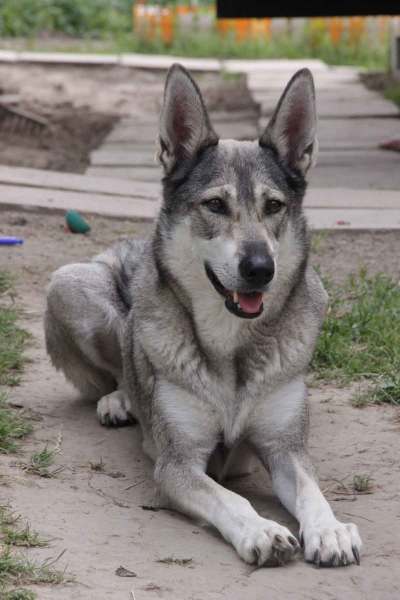
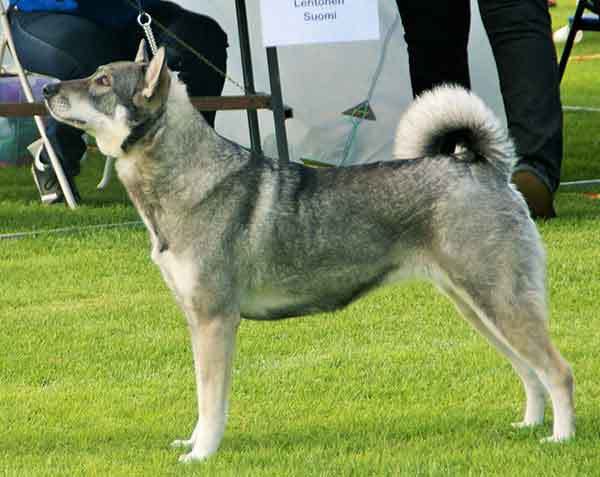
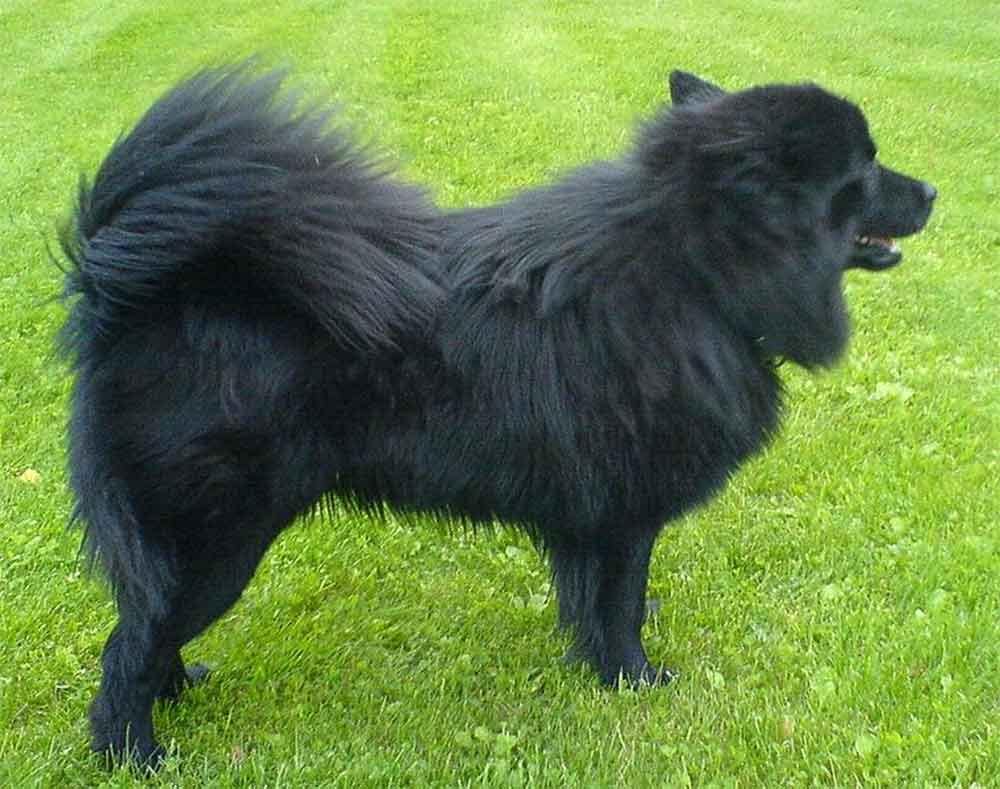
The Jamthund has erect ears, medium long nose, Brown eyes and mantle of double hair with two colors. The eyes are brown.

The Jรคmthund He is respected for his wolf-like appearance and his great and powerful stature. With a height at the cross of 57 to 65 centimeters and a weight of about 30 kg, It is the largest and heaviest of the three recognized moose dogs and at the same time the largest Nordic hunting dog. Throughout its long history, the Jรคmthund not only faced wolves, lynx and elk, but also adult bears, whom he faced fearlessly when hunting.

Character and skills

Despite the calm and affectionate with the members of the family, the Jรคmthund can be a bit dominant with other dogs and has a strong prey drive. It is a very versatile dog, easy adaptation, You will be happy to go to a hunting trip and return home safely, you will also be happy there. It tends to take everything very calmly and not vistas with ease, That makes him an excellent companion dog..

The Jรคmthund is easy to train, It will become a happy student who loves to please its owner.

It should be socialized at an early age to avoid problems of dominance and territoriality, When you get to adulthood.

As with most breeds developed for hunting, the Jรคmthund requires a lot of regular exercise to keep fit, both physically and mentally. He bored quickly if it stays inside for a long time and can be destructive.

It is an excellent companion, fell, quiet, balanced and very affectionate.

Jรคmthund care

The waterproof coat of the Jรคmthund repels dirt and moisture well, but still needs to be brushed regularly. It is best to comb your hair daily, especially during the layer change phase. This way you can remove dead hair in time and at the same time ensure that the amount of hair in your house stays within limits.. But, you should not expect meticulous cleaning in your home as the owner of this dog.

In addition to the toilet, claws should be trimmed regularly to avoid injury. Your roommate's ears and teeth should also be cleaned and checked at regular intervals., about two or three times a week.

What food does the Jรคmthund need?

More decisive than the price of the food should be the price of the ingredients. This does not mean that the most expensive food is always the best.. Much more important is that the composition is adjusted to the needs of your dog and these depend on quite individual criteria such as weight, age, activity level and health status.

Basically, the food of Jรคmthund, like all the other dogs, should consist mainly of meat. It is the most important energy supplier for the descendant of the wolf and must constitute at least the 80 percent of the diet. The meat is complemented with vegetables, important fruits and fats, that provide an optimal supply of nutrients.

The cereals, the sugar, artificial flavor enhancers and chemical preservatives, on the other hand, have no place in dog food, regardless of whether it is dry food, wet, even cooked or raw food (BARF).

Jรคmthund Health

Careful grooming is not just for cleanliness and hygiene, but above all for the health of your dog. Brush your dog regularly and check his ears, claws, eyes and teeth. This way you can quickly detect any changes and make an appointment with the vet on time.

Being overweight is a problem for all dog breeds and quickly causes more complaints. So, it is advisable to check your pet's weight regularly. Hand palpation is also a good way to determine if your dog is of normal weight.. You shouldn't be able to see your dog's ribs from a distance., but i should be able to feel them.

Otherwise, the Jรคmthund he is a very robust dog, and there is no need to fear the hereditary diseases typical of the breed. If you have the time, the experience, money and the desire to fully adapt to this breed, you will surely have many years of pleasure with him Jรคmthund.

Breeding and buying a Jรคmthund

In Sweden the Jรคmthund has long been known beyond hunting circles and is popular as a versatile utility and companion dog. In other countries of the world, However, this swedish dog is very rare. Although you can find breeders in Germany, Great Britain, the Netherlands and North America, searching and waiting for a purebred puppy can sometimes take years. So, it is advisable to contact a registered association for Nordic dogs, that can help you find breeders in Scandinavia.

What do I have to consider when buying a Jรคmthund?

Although the distance to the breeder is long, those interested should take the time to get to know the kennel, the animals and the breeder in detail before buying. Don't take home the first best puppy, but convince yourself in several visits that it is serious parenting, that dogs breed with a lot of experience and love.

In addition to health tests, vaccinations and the presence of all important papers and a pedigree, animals must grow up in a close relationship with their breeder from birth. The socialization of a Jรคmthund already begins in the first weeks of life. Living with his mother and brothers, but also with the breeder's family, puppies learn the most important rules of the nest.

What demands does the Jรคmthund make to the owner?

One Jรคmthund need plenty of exercise. You must also be sufficiently disabled both physically and mentally. A life in gated communities, in the city and without a garden, it certainly doesn't do this kind of dog justice.

The Jรคmthund feels more comfortable in rural areas. There you can move freely and spend a lot of time in nature. If not used for hunting purposes, you should definitely offer alternative activities. Possible are examinations for companion dogs, dog tournaments or rescue dog training. Also bike rides, long walks or sledding shots in winter are suitable to satisfy the great momentum of movement of the Jรคmthund.

Images "Jamthund"

Photos:

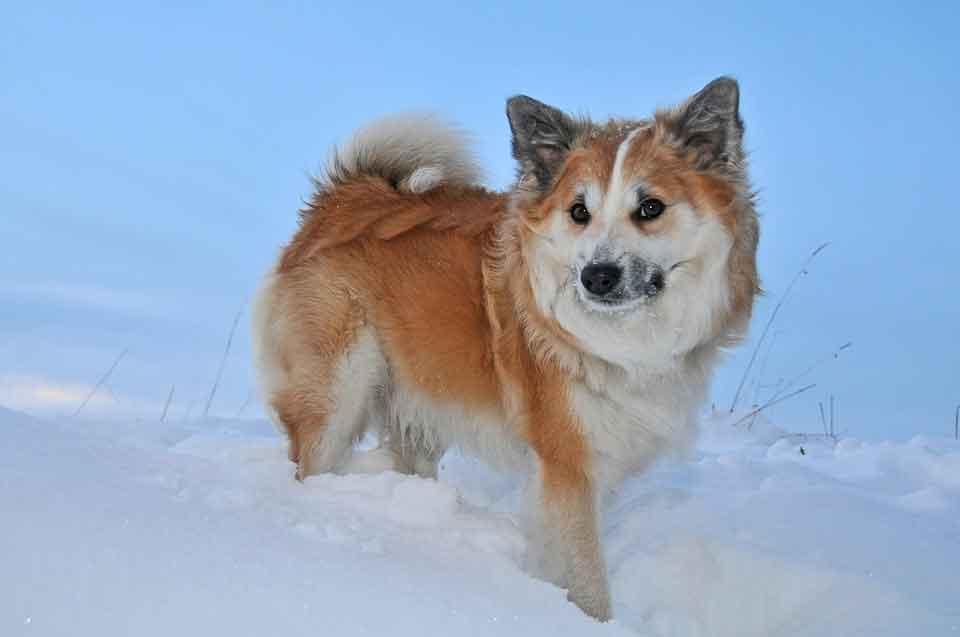
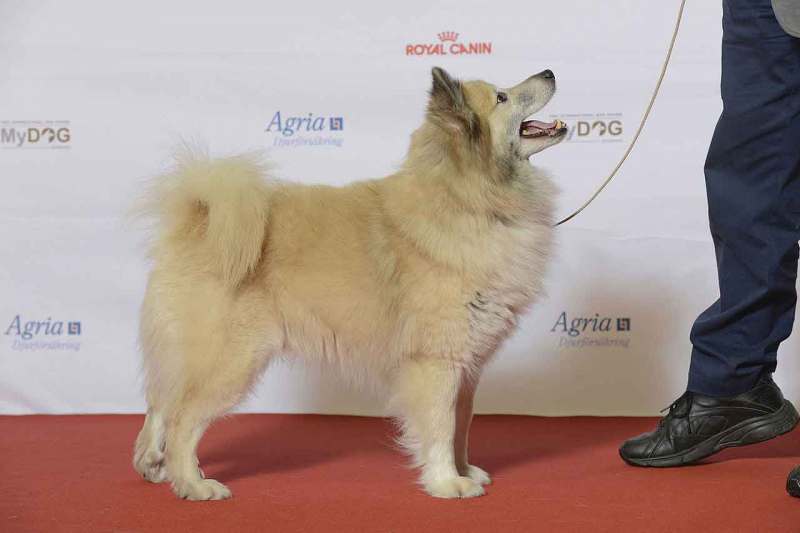
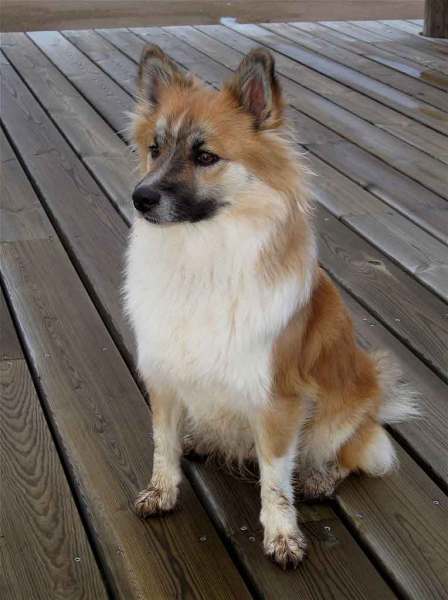
1 – Swedish Elkhound by Canarian / CC BY-SA
2 – A female Swedish Elkhound. Colour: wolf-grey with cream markings by Canarian / CC BY-SA
3 – PHOTO: EAST NEWS/COGIS JAMTHUND by https://flic.kr/p/qdryfN
4 – Jamthund by https://pxhere.com/es/photo/644232
5 – Jรคmthund (Swedish Elkhound) in the woods. 2 years old male by User:Arto Pรครคkkรถnen / CC BY-SA
6 – Jamthund by https://pixabay.com/es/photos/perro-retrato-animales-cachorro-5290821/

Videos "Jamthund"

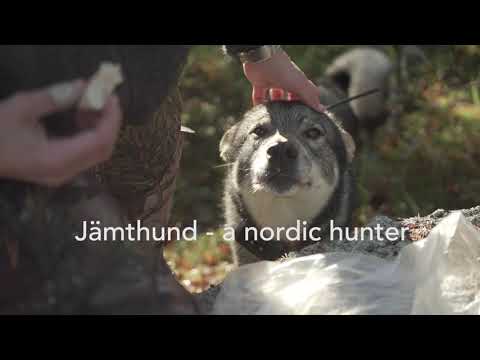
4 Jรคmthund- a nordic hunter
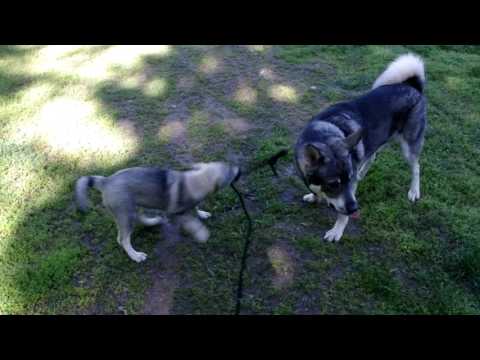
Swedish Elkhounds - Jamthund Male Rico and Jamthund Female Aina
Swedish Elkhounds – Jamthund Male Rico and Jamthund Female Aina

Type and recognitions:

  • FCI CLASSIFICATION:
  • Group :
  • Section : . .

Federations:

  • – FCI – Group 5 – Section 2 Nordic Hunting Dogs. โ“˜
  • – UKC – Northern Breeds โ“˜

FCI breed standard "Jamthund"

Origin:
Sweden

Date of publication of the valid original standard:
25.03.2003

Use:

hunting dog.


General appearance:

Grand, spitz rectangular, defined cut, strong, with good substance but agile with good structure. He is strong and of solid constitution, but also agile and imposing looking. The body does not must give the impression of being very long, or too much heavy.


Behavior / temperament:

He is brave and energetic, but also stoically calm.

Head:

It is clearly defined and elongated, proportionally wide between the ears.

Cranial region:
Skull: It is slightly bulky.
Fronto depression-nasal (Stop): Clearly marked, but not too much deep.

facial region:

Snout: The distance from the naso-frontal depression to the nose is slightly shorter than from the naso-frontal depression to the occiput. Tapers progressively towards the tip of the nose. So much in profile, as front, should not give the impression of being pointed but flat. The muzzle is straight, wide and strong,wide nose.
Lips: Tight.
Jaws/Teeth: Scissor bite.
Cheeks: clean.
Eyes: Slightly oval, brown, the look is penetrating, but at the same time calm.
Ears: High insertion, perfectamente lifted, pointed and sensitive in use. Slightly longer than wide at the base.

Neck:

Long, clearly defined, powerful and good scope.

Body:

Powerful and well defined. Its length slightly exceeds its height at the withers.
Line top : Straight, with a slight inclination from the withers to the rump.
Pork loin: Wide and well developed.
Rump: Wide, only slightly inclined.
Breast : Deep well; the ribs are well arched.
Bottom line and belly: The belly is little collected.

Tail:

High implementation. Medium length and regular thickness. It is carried curled, but not firmaments bent over or near the back. Hair is abundant, although it does not form a fringe.

Tips

PREVIOUS MEMBERS:
  • Shoulder: The shoulder blades are long and well sloped back.
  • Elbows: Well attached to the rib cage.
  • forearms: Straight, well outlined and strong bone.
  • Front feet: Strong, slightly oval. They point straight ahead; fingers are good together.
 
LATER MEMBERS: Seen from the back, they are parallel.
  • Knee: Well angled.
  • Hock: Well angled.
  • Rear feet: With the same characteristics of the front feet.

Movement:

Must be powerful, free and wide-ranging. On the trot, the feet converge towards a midline (single tracking).

Mantle

HAIR: The outer layer is made up of a fairly tight hair, although not stretched. The undercoat is short haired, soft and clear, preferably cream colored. The hair is short on the head and the front of the limbs, and longer in the neck, the chest, the tail and back of the limbs and thighs.
 
COLOR: Light to dark gray. The characteristic brands are : light gray or cream on both sides of the muzzle, cheeks, the throat, chest, belly, limbs and under the tail.


Size and weight:

Height to the cross:
  • Males : 57 โ€“ 61 cm.. Ideal 61 cm..
  • females : 52 โ€“ 60 cm.. Ideal 56 cm..


Fouls:

Any deviation from the above mentioned criteria is considered to lack, and the gravity of this refers to the degree of deviation to the standard and its impact on the health and well-being of the dog.
  • Yellow eyes.
  • Twisted tail.
  • Cream marks covered in black.
  • Cloak too short.
  • Thin bone.
  • Short tail.
  • Straight tail.
 
SERIOUS FAULTS
  • Domed skull front and raised cheeks.
  • Pointed snout.
  • Dental missing apart from P1.
  • Square body shape.
  • Slim build.
  • Heavy, lymphatic construction.
  • flattened feet.
  • Entire white stripe from the throat to the tip of the sternum called "tie".
  • Insufficient posterior angulation.
  • Fine tail, whip type.
 
MISS PLAYOFFS
  • Aggressive or too shy.
  • Height at the withers different from those specified in the standard.
  • Enognatismo o prognatismo.
  • hanging ears.
  • Lack of characteristic cream-colored markings.
 
Any dog โ€‹โ€‹showing clear signs of physical or behavioral abnormalities must be disqualified..


N.B.:

Males should have two normal-appearing testicles fully descended into the scrotum..

The latest changes are in bold.

Source: F.C.I - International Cynological Federation

Alternative names:

1. Swedish Elkhound (English).
2. Jรคmthund (French).
3. Jรคmthund (German).
4. Jรคmthund, Elkhound sueco (Portuguese).
5. Elkhound sueco, Jรคmthund (espaรฑol).

โ–ท The world of Pets: Dogs, cats, birds, reptiles, amphibians

Shiba Inu
Japรณn FCI 257 . Asian Spitz and related breeds
Shiba Inu

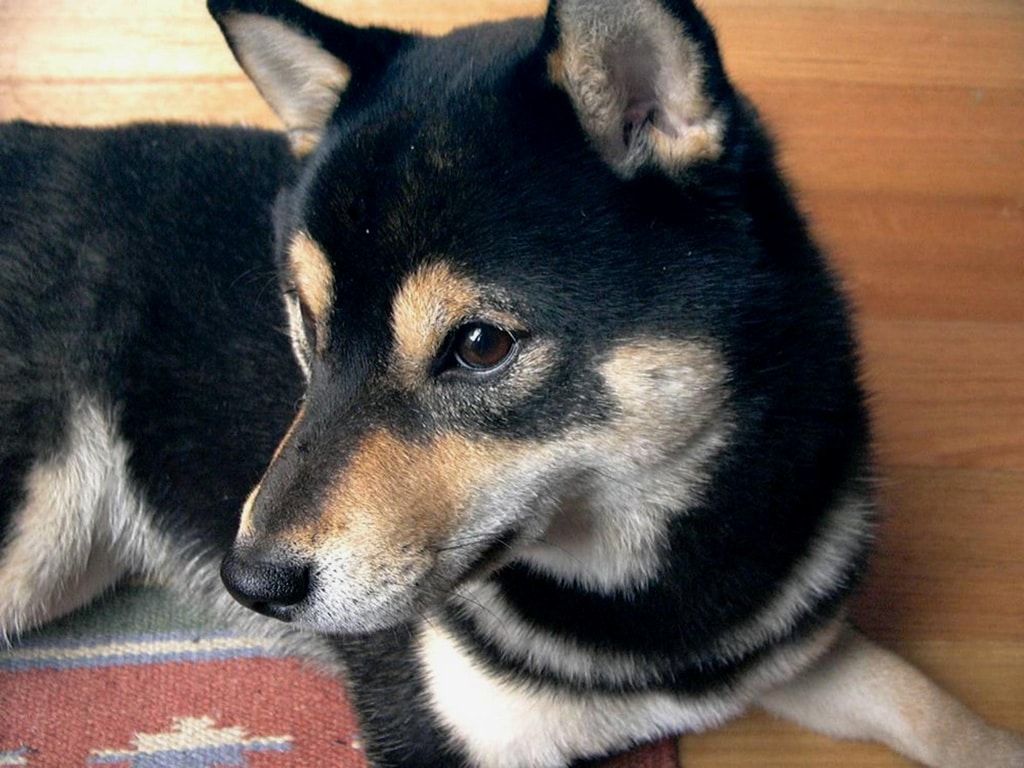
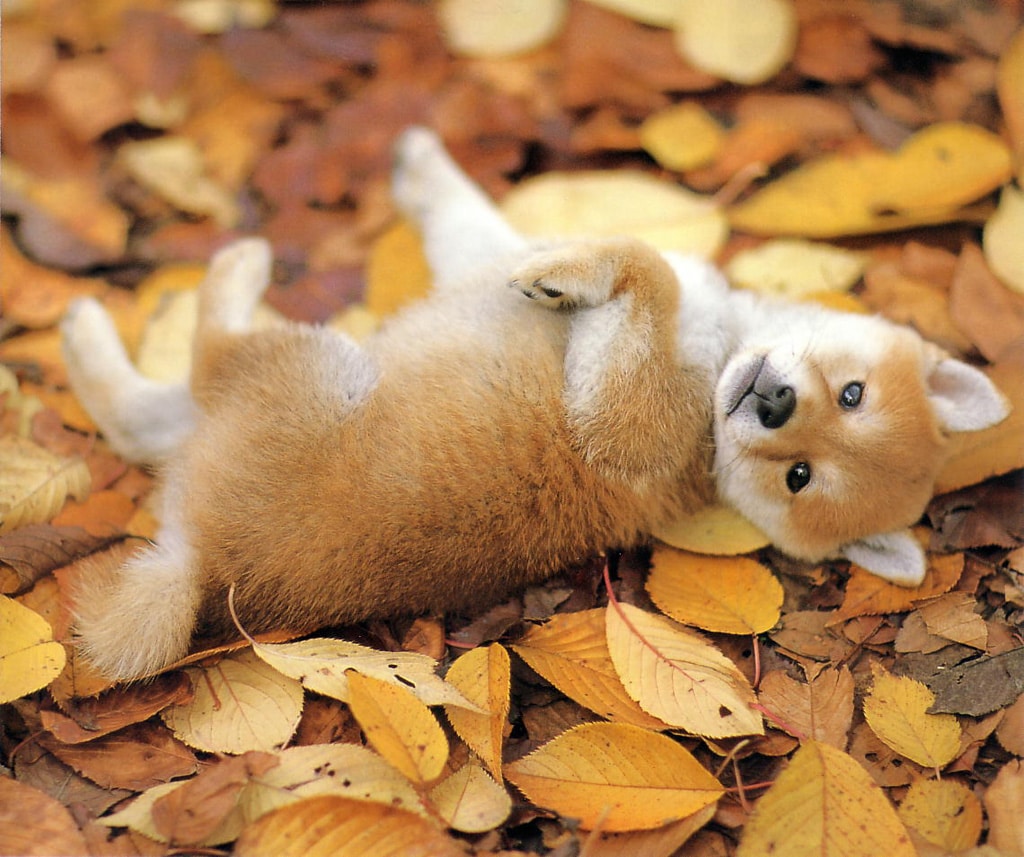
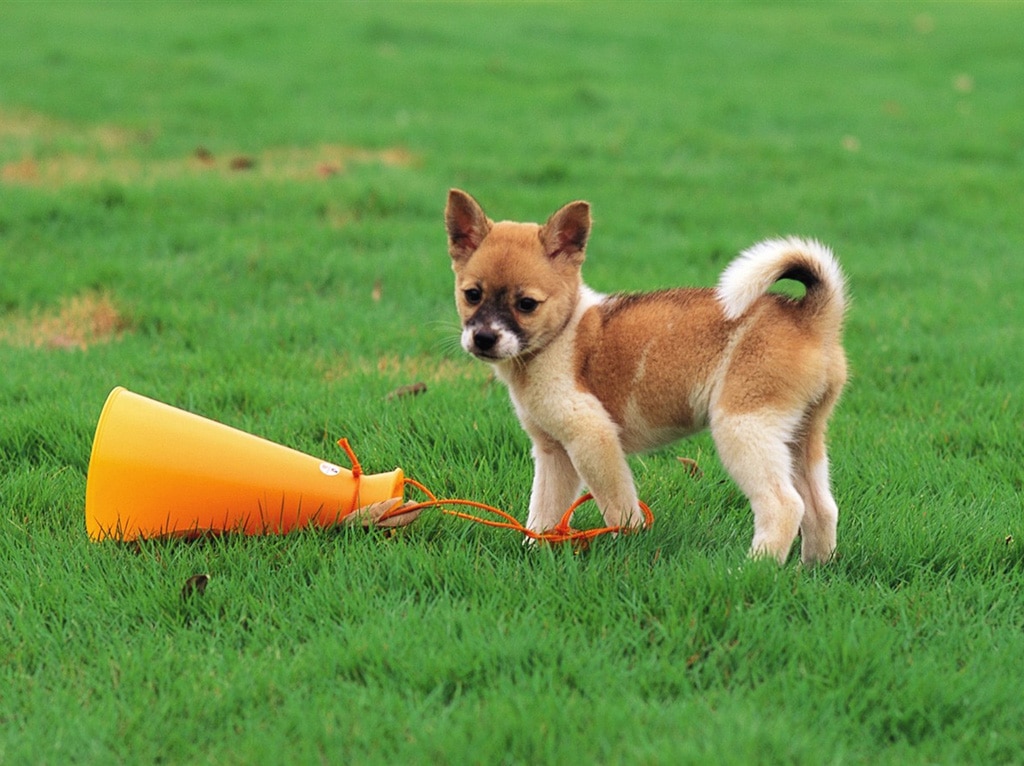
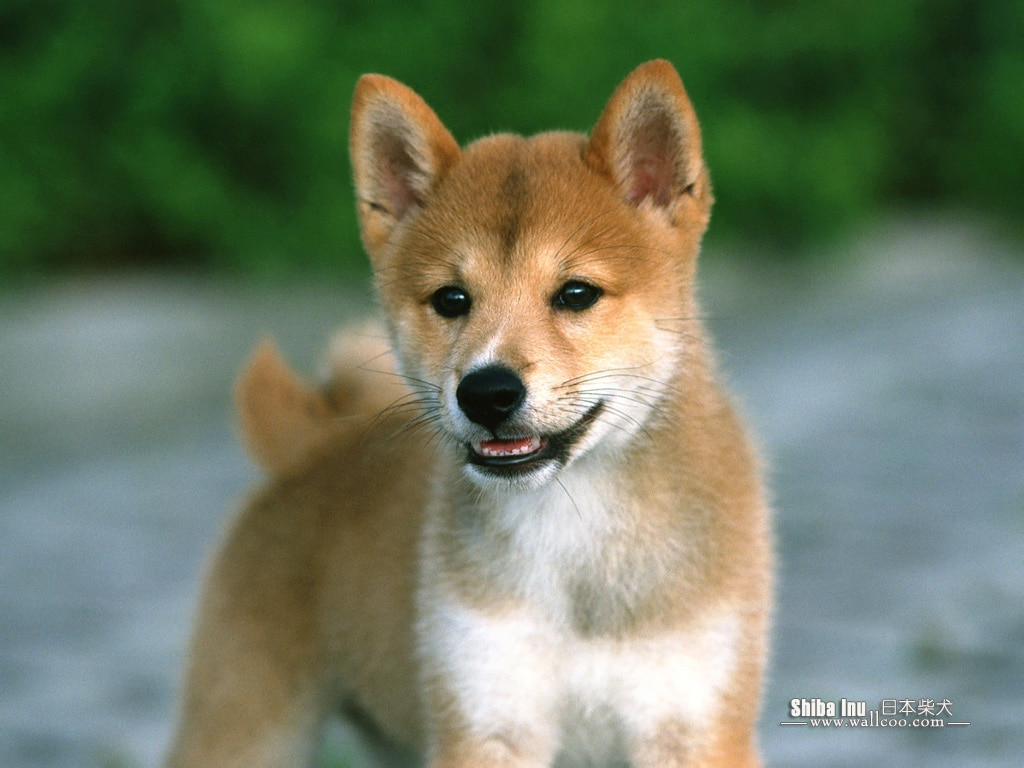
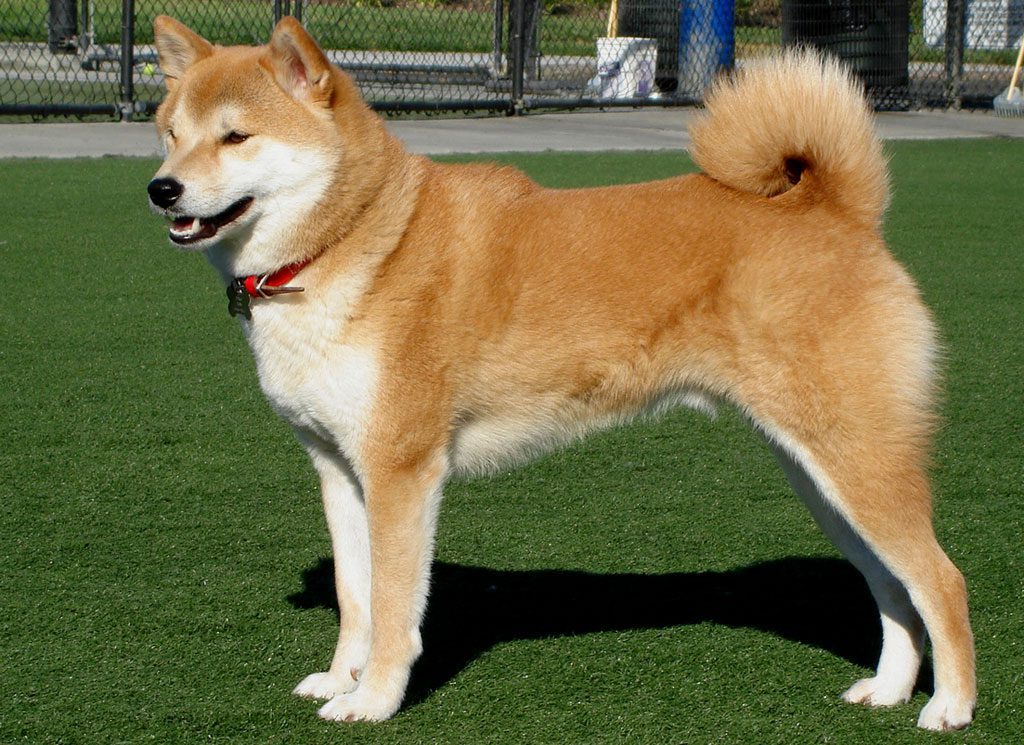
The Shiba Inu It is the smallest of the six original and distinct breeds of dog Japan.

Content

History

The Shiba Inu It is an ancient breed of Japanese dog. It is also known as Shiba or Shiba Ken. Shiba means "small" and "Inuยป or ยซKenยป means ยซdogยป in Japanese.

The Shiba It is the smallest of the six recognized Japanese dog breeds.

Historical representatives of the breed were much smaller and short-legged than current specimens. Mountain farmers kept them as farm dogs and to hunt small game and birds.. They could develop independently of other races and changed little. Towards the end of the 19th century the British brought their English Setters and Pointer. As a result, the Shiba Purebred became a rarity within a few decades. Almost a hundred years ago the breed was almost extinct. Around the year 1928 early breeders began to revive the breed and in 1934 established an official standard. Internationally, the FCI tells it in the Group 5 ยซSpitz-type and primitive type dogsยป in Section 5 "Asian Spitz and related breeds".

Physical Characteristics Shiba Inu

Translated ยซShiba Inuยป simply means ยซlittle dogยป. In fact, the Shiba Inu, weighing up to 13 kg, is the smallest representative of the six breeds of Japanese dogs recognized by the FCI.

The Shiba Inu is an original dog and a close relative of the wolf. Its appearance is reminiscent of a fox, especially with reddish specimens. Triangular standing ears stand out, the small slightly triangular eyes, as well as the curly tail, which is very close to the back. The hard and straight top coat can have the colors red, black tan, Sesame, as well as black or red sesame. "Sesame" in Japanese dogs means a mixture of red and black hairs. All colors must have the so-called ยซUrajiroยซ. They are whitish hairs on the muzzle, the chest, cheeks, as well as in the lower part of the body and inside the extremities.

Shiba Inu character and skills

The Shiba Inu is a perceptive and independent dog that never fully submits. In general, is lively, entrepreneur, affectionate and brave. He doesn't like to share his "properties" like baskets, food or toys with other dogs. But, with good socialization, living with other pets is possible. Relatively little thief, but can communicate with other sounds in complex ways. He is reserved and very reserved with strangers. You have a strong will and can convince your caregiver of your qualities. With his strong self-confidence you will have to compete with him at first, what can be a big challenge. But, the dog remains calm and collected and is never aggressive. If you acquire some authority, the Shiba is an affectionate and faithful four-legged companion.

Shiba Inu puppy education

The Shiba Inu he is a demanding dog that is difficult for beginners to understand. You need an owner who can cope with your complex and stubborn character. He never gives up his independence and needs a consistent and loving education. Punishment is not appropriate for sensitive dogs, because they are not only sensitive but also resentful. Even for experienced dog owners, stubborn dog can be a challenge. So, it will be a while before he accepts you as a higher ranking dog. For essential socialization, it is recommended to attend a dog school.

Activities with the Shiba Inu

Depending on how you are, the Shiba Inu can be very agile. Likes to decide for himself when he feels like moving, but he needs his daily walks. Depending on your character, some representatives of the breed are suitable for dog sports. If they make sense of it, Japanese dogs can be convinced of agility. Dogs can also be great companions when jogging or cycling. The strong hunting instinct coupled with the dog's stubbornness allows it to run freely without a leash only in rare cases. Preferred activities vary greatly from dog to dog. The owner's motivation to convince the dog of the benefits of an activity is also decisive. Silly recovery games or tricks are not very attractive to these serious dogs. This intelligent breed wants to understand the meaning of a task.

Shiba Inu health and care

The Shiba he is a robust and easy-care dog. But, you should brush their fur regularly. Loses its dense undercoat twice a year during coat change. If you don't want to fight with large amounts of hair at this time, you should regularly brush the dog to remove loose hair. Overall Shiba it is a clean and odorless dog, who is said to be clean as a cat.

With regard to health, the breed is one of the most robust breeds, but you should avoid great efforts in hot weather. Dogs feel more comfortable in the cold and snow. When it comes to nutrition, you should opt for a high-protein, high-meat diet.

Does the Shiba Inu suit me?

If you are looking for a demanding dog with a strong charisma, the Shiba Inu It will make you happy. It is a very clean dog, whose fur has little inherent odor. In general, the Asian dog breed is suitable for self-confident people who want to deal seriously and intensively with their dog. Beginners should refrain from buying this dog, despite his beautiful appearance. If you are sure of the breed, it is better to look for a breeder that belongs to an approved club. For a purebred puppy with papers you can calculate between 800 and 1500 EUR. Representatives of this breed are occasionally found in the shelter looking for a new home..

Shiba Inu curiosities

in his native country, Japan, the Shiba It is not only a "National Natural Monument", but together with the Akita Inu is the most popular companion dog. Due to its unique appearance, these dogs are also very popular in social media today. The Shiba most popular is probably the male Maru Taro (@marutaro) from the Japanese city of Nezu with more than 2,5 million subscribers on Instagram. Among Internet friends since 2013, the call Doge Meme has become particularly well known. It consists of a photo of a Shiba and a rudimentary text in English. The most used photo shows the male Kabosu, a dog adopted by the kindergarten teacher Atsuko Sato.

Breeders list "Shiba Inu"

REGISTER KENNEL

Creators of Shiba Inu

Offer your puppies for free. Sign up here.

  • This field is a validation field and should be left unchanged.
  • Enter an image of your kennel.


Characteristics "Shiba Inu"

Coexistence is important that you have with your new friend. Before considering the acquisition of a dog of the breed "Shiba Inu" you know certain factors. Not all breeds of dogs are apt to live in an apartment, you must take into account his character, their need for exercise, their interaction with other pets, their care and if you have small children, their level of tolerance towards them.

Training ?

2,0 of 5 stars (based on 1 review)

Suitability of the apartment ?

3,0 of 5 stars (based on 1 review)

Can be alone all day ?

3,0 of 5 stars (based on 1 review)

Suitable as a first dog ?

1,0 of 5 stars (based on 1 review)

Weight gain ?

3,0 of 5 stars (based on 1 review)

Health ?

4,0 of 5 stars (based on 1 review)

Intelligence ?

4,0 of 5 stars (based on 1 review)

Kindness with child ?

3,0 of 5 stars (based on 1 review)

Tendency to bite ?

3,0 of 5 stars (based on 1 review)

Tendency to bark ?

3,0 of 5 stars (based on 1 review)

Tendency to flee ?

5,0 of 5 stars (based on 1 review)

hair loss strength ?

4,0 of 5 stars (based on 1 review)

Suitable as a guard dog ?

5,0 of 5 stars (based on 1 review)

Joy ?

3,0 of 5 stars (based on 1 review)

Cat friendliness ?

2,0 of 5 stars (based on 1 review)

Power level ?

4,0 of 5 stars (based on 1 review)

Shiba Inu pictures

Videos of Shiba Inu

Type and recognitions:

  • FCI CLASSIFICATION:
  • Group :
  • Section : . .

Federations:

  • – FCI – Group 5: Spitz-type dogs and primitive type – Section 5: Asian Spitz and related breeds. โ“˜
  • – AKC – Non-sporting โ“˜
  • – ANKC – Group 6 (Utility) โ“˜
  • – CKC – Group 6 – Non-Sporting โ“˜
  • – โ€‹KC – Utility โ“˜
  • – NZKC – Utility โ“˜
  • – UKC – Northern Breeds โ“˜

FCI breed standard "Shiba Inu"

Origin:
Japan

Date of publication of the valid original standard:
30.10.2016.

Use:

Hunting dog for birds and small animals. Companion dog.


General appearance:

It is a small dog, well balanced, of good bones, with well developed muscles. Of strong Constitution. Quick, agile and beautiful.

important proportions: The relationship between the height at the withers and the length of the body is 10:11.


Behavior / temperament:

It is a dog of loyal temperament, keenly felt and very lively.

Head:

---

Cranial region:

Wide forehead.

  • Fronto-nasal depression (Stop): Defined, with a slight groove.

facial region:

  • Truffle: Preferably black. Straight nose cane.
  • Snout: Moderately thick; thins to the tip.
  • Lips: Closed.
  • Jaws / Teeth: Strong teeth; scissor bite.
  • Cheeks: Well developed.

Eyes: Relatively small, triangular and dark brown; the corner of the eyes turned up.

Ears: Relatively small, triangular, slightly bent forward and firmly erect.

Neck:

Thick, strong and well balanced with head and body.

Body:

  • Back: Straight and steady.
  • Pork loin: Broad and muscular.
  • Breast : Deep, ribs moderately arched.
  • Belly: Well collected.

Tail:

High implementation, thick and carried vigorously coiled or curved like a sickle; the tip of the tail almost reaches the hocks when hanging down.

Tips

Former members: Seen from the front, straight forelimbs.

  • Shoulder pads: Moderately oblique.
  • Elbows: They must be well attached to the body.

Later members:

  • Thigh: Long.
  • Legs: Short, but well developed.
  • Hocks: Thick and strong.

Pies: Fingers should be close together and well arched. The pads must be strong and elastic. Strong and desirably dark colored nails.

Movement:

The movement must be light and agile.

Mantle

Fur: The outer layer should be smooth-haired, with a hard texture, the undercoat should be of fine and abundant hair; the hair on the tail should be slightly long and kept parted.

Color: Red, Black with fire, sesame, sesame black, red sesame.

Sesam color definition:

ยท Sesame: Proportionate mix of black and white hairs.
ยท Sesame negro: More black hairs than white.
ยท Sesam brook: Coat color red, mixed with black hairs.

All above mentioned colors, except for the White, They must have ยซ URAJIRO ยป.

URAJIRO: Whitish hair on the sides of the muzzle and on the cheeks, under the jaw, neck and abdomen, under the tail, and on the inside of the legs.


Size and weight:

Height to the cross:

  • Males: 40 cm..
  • females: 37 cm..

A difference of more or less is tolerated 1,5 cm..


Fouls:

Any deviation from the aforementioned criteria is considered a fault and its seriousness is considered to the degree of the deviation to the standard and its consequences on health and
the welfare of the dog.

ยท Female males / male female.
ยท Defective occlusion (upper or lower prognathism).
ยท Absence of a large number of teeth.
ยท Shyness.

disqualifying fouls:

ยท Aggressiveness or extreme shyness.
ยท Any dog โ€‹โ€‹showing clear signs of physical or behavioral abnormalities should be disqualified.
ยท Ears not erect.
ยท Hanging or short tail.


N.B.:

ยท Males must have two normal-appearing testicles completely descended into the scrotum.
ยท Only functionally and clinically healthy dogs, with the typical conformation of the breed, should be used for parenting.

Source: F.C.I - International Cynological Federation

Alternative names:

1. Japanese Shiba Inu, Japanese Small Size Dog, Japanese Brushwood Dog, Japanese Turf Dog, Shiba Ken (English).
2. shiba inu (French).
3. Shiba-ken, Shiba Inu (German).
4. Shiba (Portuguese).
5. Japanese Shiba Inu, Japanese Small Size Dog, Shiba Ken (espaรฑol).

โ–ท The world of Pets: Dogs, cats, birds, reptiles, amphibians

Icelandic Sheepdog
Islandia FCI 289 - Nordic Watchdogs and Herders.

Icelandic Sheepdog

The muzzle expression of the Icelandic Sheepdog recalls a smile that highlights your cheerful temperament.

Content

History


Where does the Icelandic Sheepdog come from??

For many centuries the Icelandic Sheepdog It was the "Swiss army knife" of the lonely farms and workshops of the great North Atlantic island. In the extremely harsh climate they had to herd sheep, keep small vermin, help in hunting, as well as taking care of the house and the farm and especially the children. On the one hand they are considered as shepherd dogs and on the other hand as Nordic Spitz. In any case, they're extremely smart, agile, flexible and robust man's aides.

Its existence was in grave danger only recently. Due to introduced diseases and mixing with pedigree dogs legally and illegally imported to the island, they seemed already extinct. So the Icelanders recognized the danger surrounding their only native dog and took specific action against it..

Today, this unique dog breed seems to be over the hill in its population. The Icelandic Sheepdog enjoys increasing popularity outside Iceland. Genetically speaking, has been able to maintain his Nordic identity. This is confirmed by at least a thorough genetic analysis from 2017 of more than 100 breeds of dogs by a team of geneticists led by Heidi Parker.

The Icelandic dog has become very popular outside of his original home as a friendly, exciting and fascinating companion and family dog. Still retains much of his original acting ability, expressed in his desire to move, to work with friends and to be very alert. In 1972 was officially recognized by the FCI (International Cynological Federation).

Physical characteristics

The Icelandic Sheepdog of "Islenskur Fjรกrhundurยป is a very old breed of dog and the only one in Iceland. The Icelandic dog is a medium-sized dog, which is coughy and only at first glance resembles a medium-sized dog. It has a dense fur, weather insensitive and robust. The top layer is medium or long, with a dense, soft sub-hair. There are Icelandic dogs with short and long hair. Different colors are allowed, from tanning to cream, chocolate brown, grey or black. Dogs should always have white markings.

The standard describes its overall appearance in this way:

The Icelandic Sheepdog is a Nordic grazing Spitz; it's a little less than medium-sized and has pointed ears and a screwed tail. Seen on side, has a rectangular format, that is to say, the length of your body from the tip of your nose to the tip of your buttock exceeds your height to the cross. The depth of the chest box is equal to the length of the front legs.

How big is an Icelandic Sheepdog?

Males must have a height at the cross of some 46 centimeters, the females 42 centimeters. The standard does not give any information about weight.

Longevity of an Icelandic Sheepdog

One Icelandic dog seriously raised must have a life expectancy of 12 years or more.

Character and skills

The Icelandic Sheepdog remains an agile grazing dog and a watchdog at the center of his being. But, outside Iceland, usually only bred as a companion dog. This is not a disadvantage. Rather he finds very well in his current role as family dog and companion. But it's still very agile and needs your workload. He feels comfortable watching and protecting and also likes to bark. At the same time it is a very friendly family dog that turns to people. He is considered very fond of children.

The official rule correctly describes its character as follows:

The Icelandic Sheepdog it's a sturdy grazing dog, agile and noisy and, therefore, extremely useful for grazing and driving cattle on pastures and in the mountains, as well as for tracking lost sheep. He is alert by nature and welcomes every visitor enthusiastically without being aggressive. His hunting instinct is underdeveloped. The Icelandic Sheepdog is happy, friendly, curious, playful and not afraid.

The Icelandic Sheepdog is definitely suitable for the ambitious beginner.

Caution, health and diseases


How much care does an Icelandic Sheepdog need??

An Icelandic dog needs to be roasted during fur change. The top and bottom layer should be brushed intensely.

Are there any breed-typical diseases in Icelandic dogs??

The Icelandic Sheepdog it's essentially a healthy and robust breed of dog.

What food is best for an Icelandic dog?

The Icelandic Sheepdog is a trouble-free and unre demanding food. Of course, High quality food is good for your health and test. like most dogs, sometimes he likes a bone of fleshy beef and fresh meat.

Considerations before purchase

Where can you buy an icelandic dog?

If you are interested in a Icelandic Sheepdog, you should look for a local icelandic dog breeder who is affiliated with an official nordic dog club. You should fix this in time, because puppies are rare.

Icelandic Sheepdog Education and Maintenance


Is an icelandic dog suitable for me?

The Icelandic Shepherd Dog is a friendly and breus dog. He wants to integrate into the family and can fit in without problems. The ideal is a house with a garden in the countryside. But that's not an obligation.. You can also keep it in an apartment in the city, whenever you deal with him every day.

The Icelandic Sheepdog is a loving member of the family and a great companion for children. Welcome visitors amicably and stormily. Their cordiality is contagious. If you get too bored, you can spend your energy on furniture or you become a thief.

Since the Icelandic Sheepdog has little hunting instinct nowadays, the excursions with him to nature are quite relaxed. With an Icelandic dog you can go on a trip without problems. In the car – just by the hair – an aluminum transport box is recommended.

One Icelandic Sheepdog needs to be looked after by fur. It is very important that humans and dogs have a common interest in lots of movement and exploring nature.. Icelandic dog is not a sofa stuffed animal.

He can be trained very well. He is open and honest and likes to work alongside his master or carer. The art lies in finding the right level of consistency and guidance for this very lively and at the same time sensitive and intelligent dog.. The decisive basis is always a close emotional bond and mutual trust.. Because of their good behavior, you can easily do, a certain amount of work is a basic requirement. A frustrated Icelandic dog won't thank you as an obedient companion. But this is only in the possession of your caregiver. From puppy, you have to keep an eye on your eagerness to report, which is related to the bark of joy. Here you must put the strict reins, if you don't live on a lonely, lonely property. Once again, the Icelandic Sheepdog is more effective than any alarm system.

Characteristics "Icelandic Sheepdog"

Coexistence is important that you have with your new friend. Before considering the acquisition of a dog of the breed "Icelandic Sheepdog" you know certain factors. Not all breeds of dogs are apt to live in an apartment, you must take into account his character, their need for exercise, their interaction with other pets, their care and if you have small children, their level of tolerance towards them.

Training ?

4,0 of 5 stars (based on 1 review)

Suitability of the apartment ?

2,0 of 5 stars (based on 1 review)

Can be alone all day ?

1,0 of 5 stars (based on 1 review)

Suitable as a first dog ?

3,0 of 5 stars (based on 1 review)

Weight gain ?

3,0 of 5 stars (based on 1 review)

Health ?

4,0 of 5 stars (based on 1 review)

Intelligence ?

4,0 of 5 stars (based on 1 review)

Kindness with child ?

4,0 of 5 stars (based on 1 review)

Tendency to bite ?

2,0 of 5 stars (based on 1 review)

Tendency to bark ?

4,0 of 5 stars (based on 1 review)

Tendency to flee ?

2,0 of 5 stars (based on 1 review)

hair loss strength ?

4,0 of 5 stars (based on 1 review)

Suitable as a guard dog ?

4,0 of 5 stars (based on 1 review)

Joy ?

3,0 of 5 stars (based on 1 review)

Cat friendliness ?

4,0 of 5 stars (based on 1 review)

Power level ?

4,0 of 5 stars (based on 1 review)

Images "Icelandic Sheepdog"

Photos:

1 – Icelandic Sheepdog, remembering a Corgis by Thomas Quine / CC BY-SA
2 – Icelandic Sheepdog by https://pxhere.com/en/photo/237527
3 – Icelandic Sheepdog by Canarian / CC BY-SA
4 – Icelandic Sheepdog by https://pxhere.com/en/photo/237516
5 – Icelandic Sheepdog by Alan Levine / CC BY
6 – Icelandic Sheepdog by Svenska Mรคssan from Sweden / CC BY

Videos "Icelandic Sheepdog"

Icelandic sheepdog - Iceland's totem animal

Type and recognitions:

  • FCI CLASSIFICATION:
  • Group :
  • Section : . .

Federations:

  • – FCI – Group 5 – Section 3 Nordic Watchdogs and Herders.. โ“˜
  • – AKC – Nordic Watchdogs and Herders. โ“˜
  • – CKC – Nordic Watchdogs and Herders. โ“˜
  • – UKC – Nordic Watchdogs and Herders. โ“˜

FCI breed standard "Icelandic Sheepdog"

Origin:
Iceland

Date of publication of the valid original standard:
20.06.2007

Use:

Pastoral Dog.


General appearance:

The Icelandic Shepherd Dog is a Nordic grazing spitz, slightly smaller than medium, with erect ears and curved tail. Seen on the side is rectangular, the length of the body from the tip of the shoulder to the tip of the ischion is greater than the height at the cross. Chest depth is the same as the length of the previous limbs. The expression is sweet, smart and cheerful, a confident and lively patience is typical of the breed.

There are two types of mantle, long and short, both thick and extremely resistant to inclement weather. There is a marked difference in appearance between the two sexes.


Behavior / temperament:

The Icelandic shepherd dog is a hard and agile grazing dog, barking, making this extremely useful for rounding up livestock in pastures or mountains and finding lost sheep.. The Icelandic Shepherd is by nature very alert and will always give visitors an enthusiastic welcome without being pushy.. His hunter instincts are not strong. The Icelandic Shepherd is cheerful, friendly, inquisitive, playful and fearless.

Head:

Strongly built, with well adhered skin. Skull slightly longer than muzzle. Triangular seen from above or from the side.

Cranial region:

Skull : Something vaulted.
Depression links (Stop) : Clearly defined, although neither excessive nor high.

facial region:

Truffle : black, dark brown in chocolate-colored dogs and some cream-colored dogs.
Snout : Well developed, straight muzzle. Snout slightly shorter than skull, forms an obtuse triangle seen from above or from the side.
Lips : Blacks, tight, dark brown in chocolate-colored dogs and some cream-colored dogs.
Cheeks : Flat.
Bite : Scissor, full dentition.

Eyes : Medium in size and almond shape. Dark brown, slightly lighter in chocolate-colored dogs or some cream-colored dogs. The eyelids are black, dark brown in chocolate or cream dogs.

Ears : erect, medium-sized. Triangular, with firm edges and slightly rounded tips. Very mobile, reacting sensitively to noises and showing the dog's mood.

Neck:

Moderately long and muscular, no loose skin. Slightly arched and carried high.

Body:

The length in correct proportion to the height and in harmony with the general appearance.

top line : To level, muscular and strong.
Pork loin : Wide and muscled.
Rump : Moderately short and wide, with slight decline and well muscled.
Breast : Long, deep, and well arched.

Tail:

High insertion, coiled and touching the top line.

Tips

PREVIOUS MEMBERS : Seen from the front they are straight, parallel and strong. Normal angulation.

Shoulder : Oblique and muscular.
Spurs : They can be double.
Front feet : Slightly oval, well arched, close-knit toes with well-developed pads.

LATER MEMBERS : Seen from behind they are straight, parallel and strong. Normal angulation.

Thighs : Wide and well muscled.
Spurs : well developed. Double spur is desirable.
Hind feet : Same as above.

Movement:

Displays agility and endurance with good momentum, covering ground effortlessly.

Mantle

MANTLE : Double, thick and extremely resistant to inclement weather.

HAIR : There are two varieties.

to) Short : The outer layer is of medium length, pretty thick, with thick and soft undercoat. Hair is shorter on the face, top of head, ears and front of legs, but it's longer on the neck, chest and back of thighs. The tail is hairy and the length of the hair is in proportion to the coat.
b) Longer hair : The outer layer is longer than the previous one, quite thick, with thick and soft undercoat. Hair is shorter on the face, top of head, ears and front of the legs and longer behind the ears, neck, chest, back of legs and thighs. The tail is very hairy, the length of the hair is in proportion to the coat.

COLOR : Various colors are allowed, but a single color must always predominate.

The predominant colors are :

. Various shades of fire color, ranging from cream to reddish brown.
. Chocolate brown.
. Gris.
. Negro.

White always accompanies the predominant color. The most common white marks, which are generally irregular, are : on a strip or part of the face, collar, chest, variable height boots and the tip of the tail. Lighter shades are generally found on the underside of the dog, going from the throat to the tip of the tail. In the fire and gray dogs, the black mask is frequently given, black tips of outer hairs and occasionally black hairs. Black dogs (tricolor) they have a black cloak, with white markings as mentioned above and the traditional markings in any of the various tan colors, cheeks, on the eyes and on the paws. Patches of the colors described above, on a white background, is allowed. White must not be totally dominant.


Size and weight:

The ideal height is :

  • Males : 46 cm.,
  • females : 42 cm..


Fouls:

Any deviation from the aforementioned criteria is considered as a fault and the severity of this is considered to the degree of the deviation to the standard and its consequences on the health and well-being of the dog..

. Dog with solid black coat or saddle of any of the tan colors.

SERIOUS FAULTS: :

. Without spurs.
. Yellow eyes.
. Bulging round eyes.

Any dog โ€‹โ€‹showing clear signs of physical or behavioral abnormalities must be disqualified..


N.B.:

Males should have two normal-appearing testicles fully descended into the scrotum..

Source: F.C.I - International Cynological Federation

Alternative names:

1. Icelandic Spitz, Iceland Dog, รslenskur fjรกrhundur, Islandsk, Fรฅrehund, Friaar Dog, Canis Islandicus (English).
2. Berger islandais, Berger d’IslandeFrench).
3. Islรคndischer Spitz, Islรคndischer Schรคferhund (German).
4. Islenskur fjรกrhundur (Portuguese).
5. รslenskur Fjรกrhundur (espaรฑol).

โ–ท The world of Pets: Dogs, cats, birds, reptiles, amphibians

Kai
Japรณn FCI 312 - Asian Spitz and related breeds

Kai Tora-Ken

Due to the primitive character of the Kai, it is not recommended to keep it solely as a family dog.

Content

History

The Kai comes from the province of the same name ยซKaiยป, a region of Japan surrounded by mountains in Yamanashi prefecture. Among his ancestors are several medium-sized Japanese dogs that have been used for thousands of years to hunt bears, deer, boars, badgers and hares. Asian hunters especially appreciated the great independence and fearlessness of these dogs, who couldn't even resist fighting an adult bear.

Natural monument with export ban

Not only the remoteness of the region of the Kai, difficult to access, but also the tendency to riot probably contributed to the purity of this rare breed. Due to its great cultural importance, Japan declared to Kai as a natural monument in 1934. Since then, their export from Japan has been strictly prohibited., previously only possible under special conditions. So, in Europe there are almost no breeders with a breed Kai.

Physical characteristics of the Kai

The Kai medium size earns the necessary respect, particularly through his smooth, muscular body and extremely developed legs and hocks, with which some representatives of the breed can climb not only behind the back of the sofa, but even the trees.

The Kai males reach a shoulder height of about 53 cm., therefore slight deviations are tolerated. Bitches are somewhat smaller with 48 cm.. The weight is not indicated in the standard of the Fรฉdรฉration Cynologique Internationale (FCI). But, should be in a reasonable proportion to body height and is usually a maximum of 18 kg.

The FCI, that classifies the Kai under the standard number 317, He tells it in the Asian top group. Like many other dogs in this group, the Kai has a rather pointed face, triangular ears and a tail of dense, tall fur, which he wears curled or sickle-shaped on his back.

typical currents

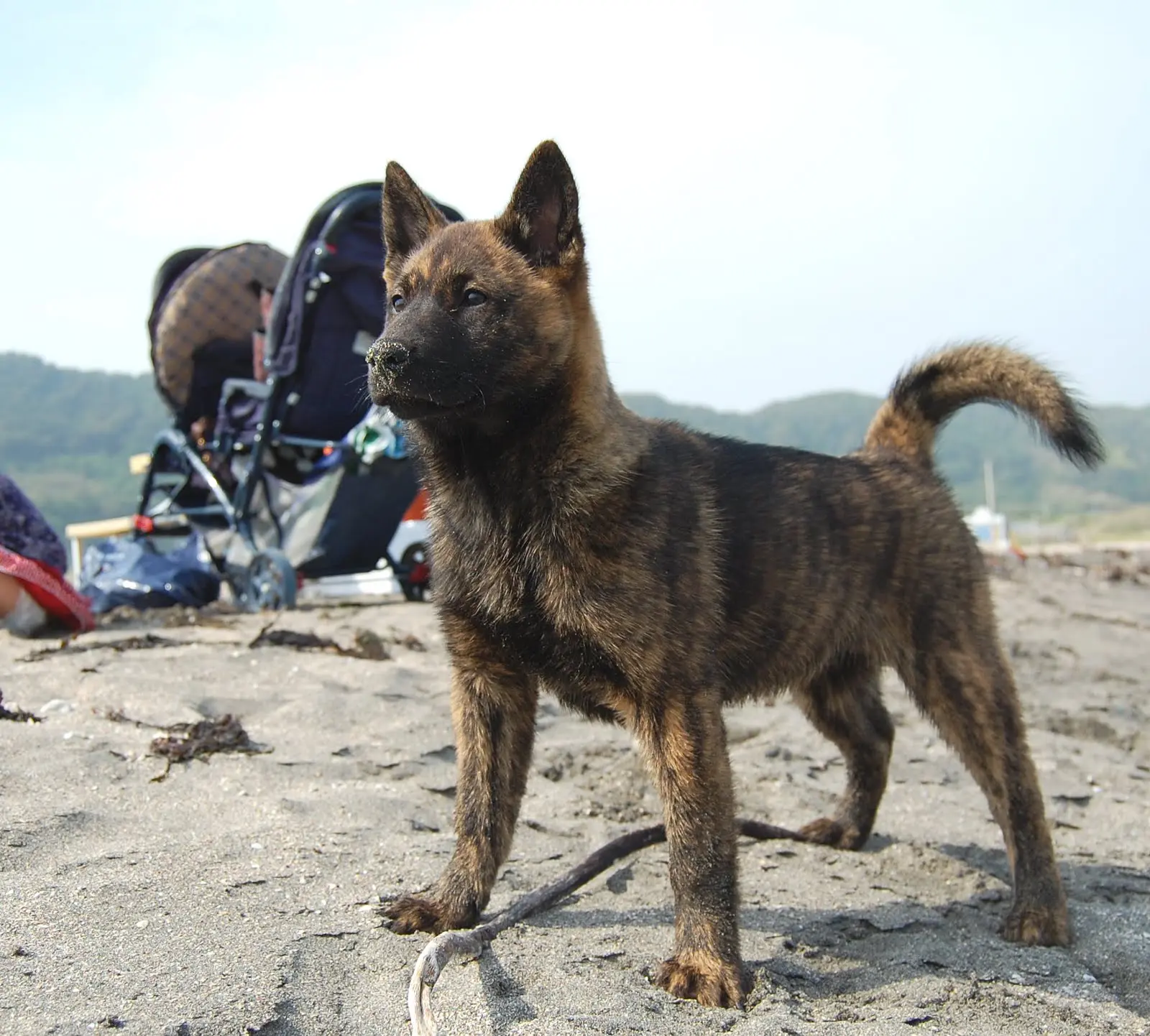
characteristic of Kai it's his brindle coat, that has been kept pure for thousands of years without the help of other races. The coat appears in the colors black, red and black-red tabby. But, develops typical current only after a year. In the first twelve months of the puppy's life, the coat is initially solid in color.

The hair Kai adult is hard and strong and has a soft and dense undercoat. So, is well protected from the sometimes extreme weather conditions of its home region, which is surrounded by high mountains.

Character and skills of the Kai

The Kai, also known as Kai Inu, Tora Inu o Kai tora-ken, he is a very original dog, that has preserved its instinctive and "wild" nature until today. Not only his distinctive hunting instinct and high alertness, but also their natural pack behavior and their unpreparedness for subordination are typical characteristics.. He is considered a dominant and independent hunter who sees little reason to follow humans unconditionally..

Is it possible to keep him as a family dog?

Due to its primitive character, it is not recommended to keep it solely as a family dog โ€‹โ€‹and, should be well considered – though a hasty purchase of this rare breed dog, which is hardly common outside of Japan, not possible anyway. Anyone that, despite all circumstances and challenges, has proposed to maintain a Kai As a family dog รขโ‚ฌโ€นรขโ‚ฌโ€นyou must be aware that not only the great need for work and exercise, but above all the education and socialization of this original animal requires a lot of time. Much experience is required, patience, consistency and positive motivation to train this highly intelligent and willing to learn dog, but also stubborn, to become an adapted and uncomplicated companion.

A Kai needs a lot of attention

But, Whoever masters this challenge will be rewarded with an extremely loyal and watchful dog that will stand by his family without reservation and with protection.. Those who have earned the trust of the Kai They will notice that the initial reserve towards strangers soon gives way to an extremely friendly and loving being who enjoys the love and attention of his owner to the fullest.. But, his great passion for hunting and his natural sharpness should never be underestimated.

Kai Health

The low dispersion of Kai it is also the attractiveness of this breed, because compared to other Japanese hunting dogs the Kai is regarded as extremely genuine and pure. This is visible not only in his behavior but also in his robust health. The Kai you hardly need to fear the typical diseases of the breed, which are spread mainly by uncontrolled breeding. So, its average life expectancy is quite high, of 12 to 15 years.

Kai care

High vet bills or long, expensive grooming are no problem with this tough, naturally clean dog. Regular brushing or combing of the coat is absolutely sufficient. But, during the layer change time (twice a year), the Kai should come in contact with a brush daily. In this way, dead hairs can be eliminated and the flooding of strands of hair in the house can be reduced a little..

Kai nutrition

In his native Japan, the Kai still feeds almost exclusively on game. So he eats what the hunter leaves him from the captured animals. Whoever keeps the Kai as a family and companion dog it will not be able to maintain this original diet. To feed the dog as originally as possible, many dog รขโ‚ฌโ€นรขโ‚ฌโ€นowners turn to the so-called BARF method, which can be roughly translated as "biologically species-appropriate raw diet". Here, the dog is offered only raw meat, enriched with vegetables or rice.

Where can I get a Kai?

Anyone outside of Japan who dreams of seeing a real Kai, much less buy one, will have great difficulties to fulfill this wish. The greatest opportunity to meet a Kai uro is visiting an international dog show where representatives of this breed are shown from time to time. If you do not have Japanese citizenship, you will have to settle for those short encounters or photos of this breed, for better or worse. If this is not enough for you, maybe I should look up breeds related to the Kai as the Akita Inu or the Shiba, that are quite similar in character and appearance to this breed.

Characteristics "Kai"

Coexistence is important that you have with your new friend. Before considering the acquisition of a dog of the breed "Kai" you know certain factors. Not all breeds of dogs are apt to live in an apartment, you must take into account his character, their need for exercise, their interaction with other pets, their care and if you have small children, their level of tolerance towards them.

Training ?

2,0 of 5 stars (based on 1 review)

Suitability of the apartment ?

2,0 of 5 stars (based on 1 review)

Can be alone all day ?

2,0 of 5 stars (based on 1 review)

Suitable as a first dog ?

1,0 of 5 stars (based on 1 review)

Weight gain ?

4,0 of 5 stars (based on 1 review)

Health ?

5,0 of 5 stars (based on 1 review)

Intelligence ?

5,0 of 5 stars (based on 1 review)

Kindness with child ?

3,0 of 5 stars (based on 1 review)

Tendency to bite ?

4,0 of 5 stars (based on 1 review)

Tendency to bark ?

3,0 of 5 stars (based on 1 review)

Tendency to flee ?

5,0 of 5 stars (based on 1 review)

hair loss strength ?

3,0 of 5 stars (based on 1 review)

Suitable as a guard dog ?

5,0 of 5 stars (based on 1 review)

Joy ?

3,0 of 5 stars (based on 1 review)

Cat friendliness ?

1,0 of 5 stars (based on 1 review)

Power level ?

5,0 of 5 stars (based on 1 review)

Videos "Kai"

HTTPS://youtube.com/watch?v=-gcJ69FZbJk
Kai Ken Tiger Dog – Natural Hunter and Extremely Rare Dog
HTTPS://youtube.com/watch?v=aEBx-Luw_zo
Kai Ken / kai Toraken / Tora Inu – Breed of dog

Type and recognitions:

  • FCI CLASSIFICATION:
  • Group :
  • Section : . .

Federations:

  • – FCI – Group 5: Spitz-type dogs and primitive type – Section 5: Asian Spitz and related breeds. โ“˜

FCI breed standard "Kai"

Origin:
Japan

Date of publication of the valid original standard:
16.06.1999

Use:

Hunting dog and company.


General appearance:

Medium-sized dog, well proportioned, Strong body structure with well-developed muscles. Its special characteristics as a dog from the mountainous district of Japan, are its strong limbs and exceptionally developed tibio-tarsal joints.

IMPORTANT PROPORTION : The relationship between the height of the withers and the length of the body is 10 : 11.


Behavior / temperament:

His temperament is very alert and alert..

Head:

---

Cranial region:
  • Skull : Wide forehead.
  • Depression links (Stop) : Brusque, with little marked frontal furrow.

facial region:

  • Truffle : Black, straight muzzle.
  • Snout : Pointed, not very long, but moderately wide.
  • Lips : Adherents.
  • Jaws / Teeth : Powerful scissor bite.
  • Cheeks : Well developed.
  • Eyes : Relatively small, almost triangular, dark brown.
  • Ears : A little larger than other medium-sized Japanese breeds, triangular, directed slightly forward, carried energetically erect.

Neck:

Thick, strong and muscular.

Body:

  • Cross : High.
  • Back : Straight and short.
  • Pork loin : Wide and muscular.
  • Breast : Deep, moderately arched ribs.
  • Belly : Very withdrawn.

Tail:

High insertion, thick, carried on the back vigorously curled or sickle-shaped. The tip of the tail should reach approximately to the hocks..

Tips

PREVIOUS MEMBERS :

  • Shoulder : Shoulder blade moderately oblique and covered with well-developed muscles.
  • Elbows : Well glued.
  • Forearm : Straight, strong and muscular.
  • Metacarpus : Slightly inclined.

LATER MEMBERS :

  • Thigh : Long.
  • Leg : Short.
  • Warm-foot joint : Robust and elastic.

FEET : Well arched and compact fingers; thick, elastic pads. hard nails, preferably dark in color.

Movement:

Light and elastic.

Mantle

HAIR : Hard and straight coat hair, soft and dense undercoat. In the tail it is relatively long and is more separated.

COLOR : black brindle, striped red, striped. It is characteristic of this breed that the puppies have a single color, which becomes brindle in the course of its development.


Size and weight:

Height to the cross :

  • in males : 53 cm.,
  • in females : 48 cm..

A deviation of +/- 3 cm..


Fouls:

Any deviation from the aforementioned criteria is considered as a fault and the severity of this is considered to the degree of the deviation to the standard and its consequences on the health and well-being of the dog..

โ€ข Inverted sexual characteristics.
โ€ข Light colored nose.
โ€ข Mild upper or lower prognathism.
โ€ข Light colored eyes.
โ€ข Short or long hair.
โ€ข Shyness.

MISS PLAYOFFS

โ€ข Aggressive or fearful dog.
โ€ข Marked upper or lower prognathism.
โ€ข Ears not erect.
โ€ข Short or hanging tail.
โ€ข Pale coat color.
โ€ข Coat with many white markings.
โ€ข Extremely fearful dog.

Any dog โ€‹โ€‹showing clear signs of physical or behavioral abnormalities must be disqualified..


N.B.:

Males should have two normal-appearing testicles fully descended into the scrotum..

Source: F.C.I - International Cynological Federation

Alternative names:

1. Kai Ken, Tora Inu, Tiger Dog, Tora Dog (English).
2. Kai tora-ken (French).
3. Kai Inu, Tora Inu, Kai tora-ken (German).
4. Kai tora-ken (Portuguese).
5. Kai Ken, Tora Inu, perro tigre (espaรฑol).

โ–ท The world of Pets: Dogs, cats, birds, reptiles, amphibians

Cirneco dell'Etna
Italia FCI 199 . Primitive type - Hunting Dogs

Cirneco del Etna

This lively and friendly Sicilian Greyhound makes an excellent companion and keeper requiring regular exercise – 20 to 30 minutes a day –

Content

History

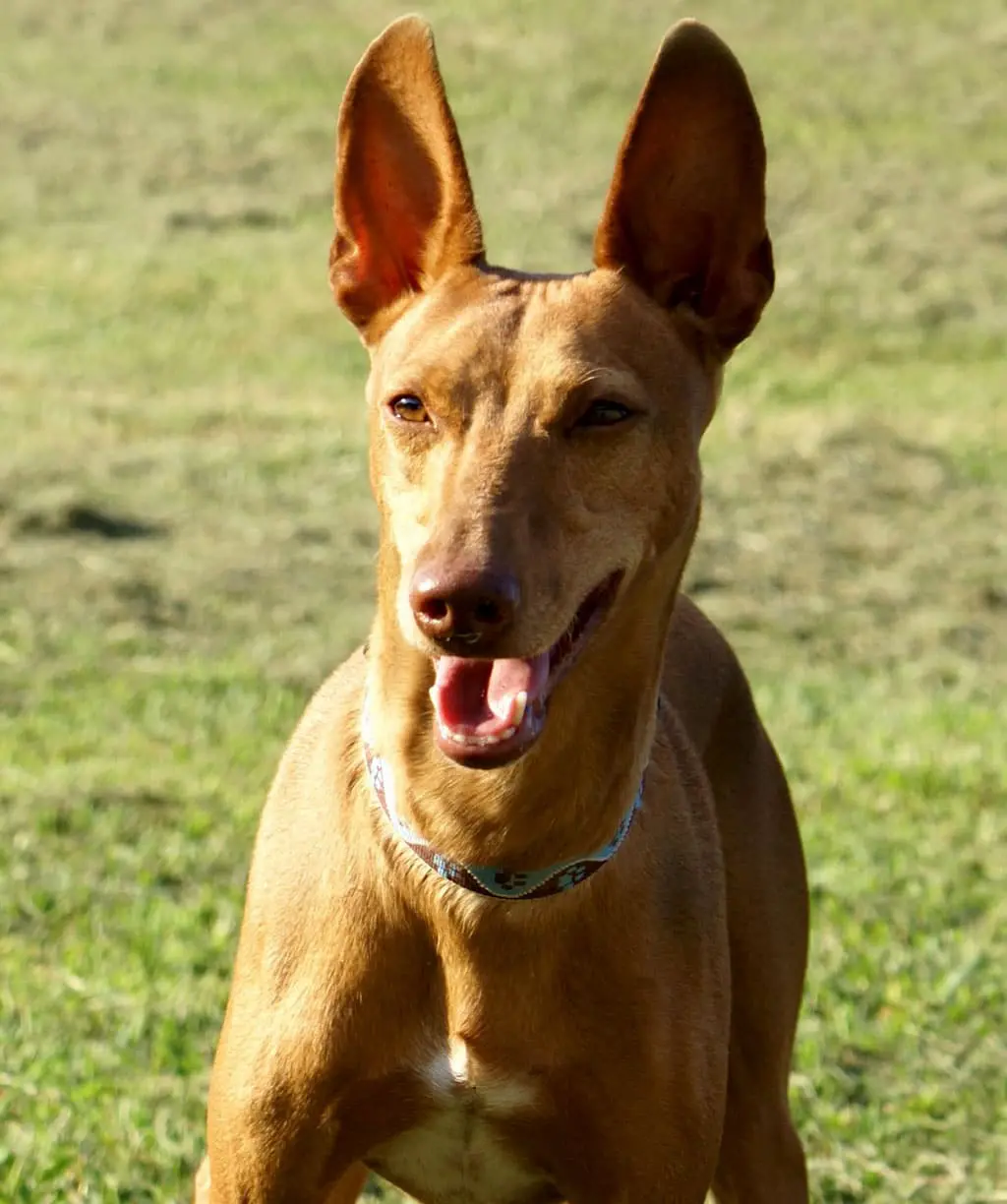
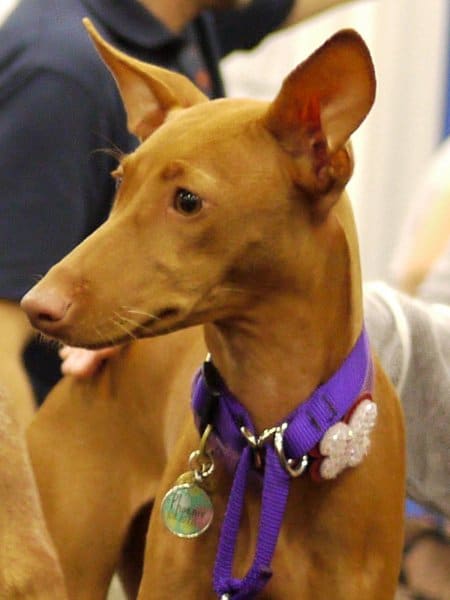
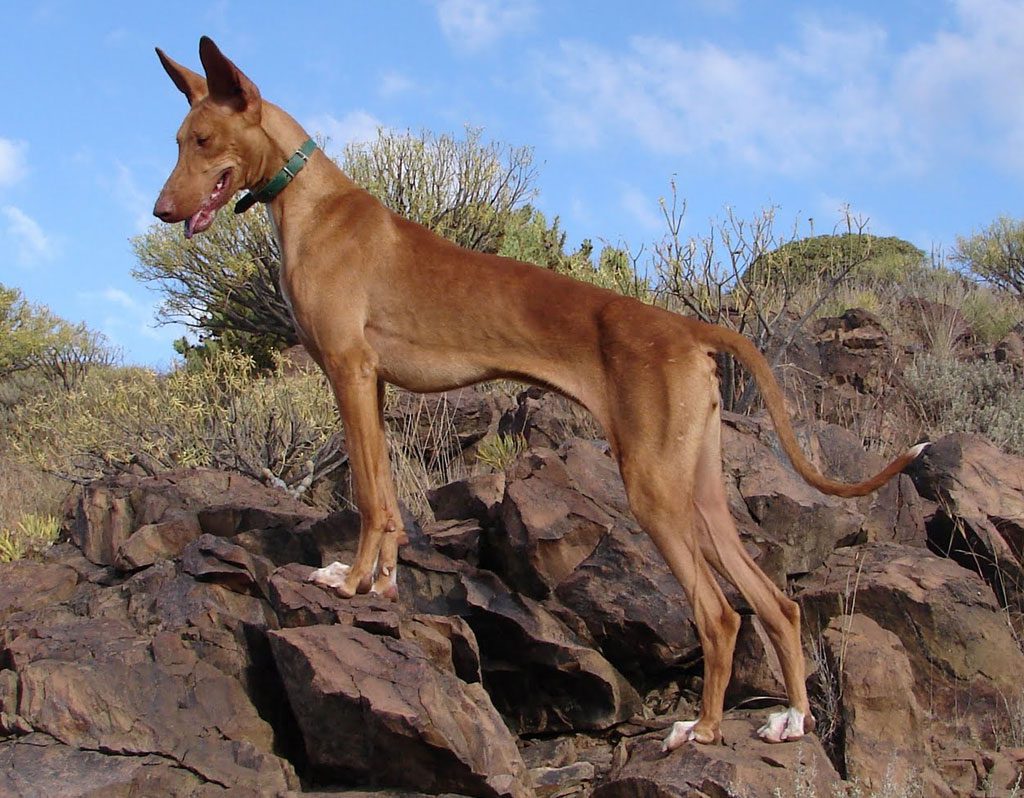
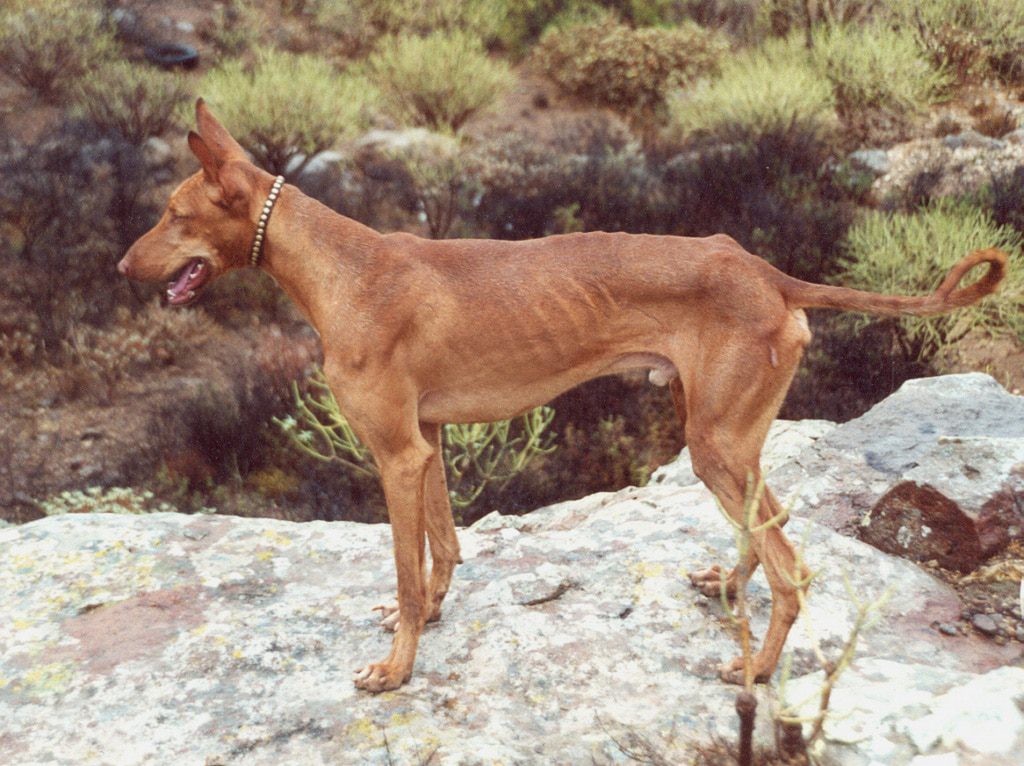
He "Cirneco dell'Etnaยซ, also it is known as the Sicilian Greyhound, it can resemble a small Pharaoh Hound, but it is a different breed of Italian origin, with its own color markings, shaped tail and ears in a triangle. Named after Mount Etna, on the Italian island of Sicily, where their ancestors hunted rabbits and hares. Lurks silently, So you can even sneak up on birds.

A Mediterranean dog of ancient origin probably descended from hunting dogs that existed at the time of the pharaohs in ancient Egypt and were introduced to the Mediterranean basin by the Phoenicians, Sicily as the region chosen for adoption. Evidence of the presence of the Cirneco on the island is given by its representation in currencies, engravings and mosaics that date back many centuries BC and was always considered the oldest hunting dog, select and highly respected.

Today, This rare breed is predominantly a family companion.

Physical characteristics

It is primitive and elegant shapes and graceful. Their size is medium and compact body, robust with a thin layer of hair and ears pricked, always alert. Its structure is sub longilinear.

Thanks to his innate athletic ability, It has a natural agility and ability to run after a complaint. The Cirneco It has a reputation for being easier to train than others hounds, provided that the training sessions are short.

SIZE AND WEIGHT:

Height to the cross: Males: 46 โ€“ 50 cm.. females: 44 โ€“ 48 cm.. tolerance 2 cm below the minimum and above the maximum height. Weight: Males: 10 โ€“ 13 kg. females: 8 โ€“ 11 kg.

Character and skills

The breed standard requires that the Cirneco be alert and be gentle, with an independent temperament. In this curious and playful greyhound loves to be with people. It's also smart and trainable, especially if positive reinforcement techniques are used as praise, games and goodies. Although small, the Cirneco is a hunter by nature. Always keep a tight leash, If you see a hare, the chase. But, a stern tone of voice should be enough to bring him back.

Start training your puppy the day you bring him home. Even at eight weeks old, He is able to absorb everything you can teach him. Don't wait until you have 6 months to start training him or you'll have to deal with a more stubborn dog. If possible, take it to school for puppies when you 10 or 12 weeks of age, y socialize, socialize, socialize. But, Note that many kinds of training puppies require certain vaccinations (such as kennel cough) stay up to date, and many veterinarians recommend limited exposure to other dogs and public places until puppy vaccinations (including rabies, distemper and parvovirus) They are completed. Instead of formal training, you can start training your puppy to socialize at home and among family and friends until immunizations are completed in the puppy.

Health

As there are so few of these dogs, Little is known about the health of Cirnechi. In general, They seem to be a tough race, but they can suffer muscle injuries and the toes to the running. A reputable breeder will show potential health problems, including any conditions you have noticed on your own lines.

Careful breeders their dogs examined for genetic diseases, and they only breed the best looking specimens, but sometimes Mother Nature has other ideas and a puppy can develop a genetic condition. In most cases, can still live a good life, thanks to advances in veterinary medicine. And remember that you have the power to protect your Cirneco one of the most common health problems: the obesity. It keep a proper weight is a simple way to extend the life of its Cirneco.

Grooming

The Cirneco has a bright coat, brown to brown, it is easy to care: Brush it weekly using a dog mitt or rubber hair brush. If you constantly brush, shouldn't need a bath very often.

The rest are taken care routine: Often brush their teeth with a toothpaste pet approved by the veterinarian for general good health and fresh breath, and cut nails every week or two.

Characteristics "Cirneco dell'Etna"

Coexistence is important that you have with your new friend. Before considering the acquisition of a dog of the breed "Cirneco dell'Etna" you know certain factors. Not all breeds of dogs are apt to live in an apartment, you must take into account his character, their need for exercise, their interaction with other pets, their care and if you have small children, their level of tolerance towards them.

Adaptation โ“˜

5,0 of 5 stars (based on 1 review)

friendly dog โ€‹โ€‹โ“˜

5,0 of 5 stars (based on 1 review)

hair loss โ“˜

3,0 of 5 stars (based on 1 review)

Affection level โ“˜

5,0 of 5 stars (based on 1 review)

Need for exercise โ“˜

4,0 of 5 stars (based on 1 review)

Social need โ“˜

3,0 of 5 stars (based on 1 review)

Home โ“˜

5,0 of 5 stars (based on 1 review)

Toilet โ“˜

2,0 of 5 stars (based on 1 review)

Friendly with strangers โ“˜

3,0 of 5 stars (based on 1 review)

barking โ“˜

3,0 of 5 stars (based on 1 review)

Health โ“˜

1,0 of 5 stars (based on 1 review)

Territorial โ“˜

2,0 of 5 stars (based on 1 review)

Cat friendly โ“˜

3,0 of 5 stars (based on 1 review)

Intelligence โ“˜

3,0 of 5 stars (based on 1 review)

Versatility โ“˜

3,0 of 5 stars (based on 1 review)

Child friendly โ“˜

3,0 of 5 stars (based on 1 review)

Surveillance โ“˜

3,0 of 5 stars (based on 1 review)

joy โ“˜

3,0 of 5 stars (based on 1 review)

Images "Cirneco dell'Etna"

1. Cirneco dellโ€™Etna during International show of dogs in Katowice – Saucer, Poland by Pleple2000 / CC BY-SA
2. Cirneco Dell Etna by Jan Eduard
3. Cirneco dellโ€™Etna during International show of dogs in Katowice – Saucer, Poland by Pleple2000 / CC BY-SA
4. Cirneco dellโ€™Etna during dogs show in Katowice, Poland by Pleple2000 / CC BY-SA
5. Cirneco dell'Etna by Night-thing (Flickr)
6. Cirneco by Oknolaz / CC BY-SA

Videos "Cirneco dell'Etna"

Type and recognitions:

  • FCI CLASSIFICATION:
  • Group :
  • Section : . .

Federations:

  • FCI โ“˜, AKC โ“˜, ANKC โ“˜, โ€‹KC โ“˜, UKC โ“˜

  • FCI breed standard Cirneco dell'Etna

    FCIFCI - Cirneco dell'Etna
    Cirneco

    Alternative names:

    1. Cirneco (English).
    2. Cirneco (French).
    3. Cirneco (German).
    4. Cirneco (Portuguese).
    5. Cirneco (espaรฑol).

    โ–ท The world of Pets: Dogs, cats, birds, reptiles, amphibians

    Swedish Lapphund
    Suecia FCI 135 - Nordic Watchdogs and Herders.
    In experienced hands the Swedish Lapphund is a loyal and robust companion.

    Content

    Origin and history

    The "Swedish dog of Lapia" shares its ancestors with the Finnish Lapphund. They are descended from dogs bred by the Lapps and Sami specifically to herd their large herds of reindeer.. For centuries they have served as indispensable working dogs in this way.

    Breeding became increasingly specialized for weather resistance and independence. The dogs had to perform very well physically. Persevering and willing to work, They formed the perfect partners for the herd owners. With this they ensured their livelihood for these people.

    Only in the 20th century were three independent dog breeds formed and recognized from these dogs. In addition to the Swedish and Finnish Lapphound, there is also the Lapponian Herder today. This one has a shorter coat and short hair.

    As technology progressed, the Swedish Lapphund was gradually replaced by snowmobiles. Due to its faithful and pleasant character, the breed remained, however, preserved. Today they are highly valued as family and companion dogs.. But they are also suitable for hunting, like watchdogs, and even as search and rescue dogs.

    Physical characteristics

    The breed is recognized by the FCI and belongs to the group 5 of "Spitz type dogs and primitive type". The relationship with Spitz can be easily seen in the appearance of the Swedish Lapphund. Distinctive triangular head and ears frame large, alert eyes. With a height between 43 and 48 centimeters, belongs to the breeds of medium-sized dogs.

    His coat is always black. Only occasionally can small white markings be found on the legs or chest. Like all Nordic dogs, has a double coat with a very dense undercoat and a long coat. This coat makes it very insensitive to almost all weather conditions.

    Character and skills

    Swedish Lapphund
    The largest dog event in the Nordics: www.mydog.se

    In his character, the Swedish Lapphund he is very attentive, lively and friendly. It is well adapted as a family dog. But it is often used for dog sports too, hunting or as a watchdog. Your original task as a herding dog is, Unfortunately, hardly needed today.

    Like an intelligent and persistent dog, it is important that you are always physically and mentally disabled. Due to its independent character, consistent training is necessary. In experienced hands the Swedish Lapphund is a loyal and robust companion.

    The Swedish Lapphund tends to bark, what is beneficial to use as a watchdog. If you start early with education, the barking can also be well contained. Generally friendly with other animals.

    Correct nutrition

    The Swedish Lapphund has no special restrictions on feeding. It can be well fed with any quality food. Attention should be paid to a good nutrient composition. The sugar, However, has no place in feeding.

    Awards are not absolutely necessary for the motivation and education of the Swedish Lapphund. But, is particularly happy with the natural chewy sticks, like cowhide or pig's ears. Attention should also be paid to dental care.

    Care of the "Swedish dog of Lapia"

    Although the coat of Swedish Lapphund it is as abundant as it is impressive, his toilet is not elaborate. The coat is very dense and offers perfect protection against the weather. Firm structure of the top layer is dirt repellent. So, it is enough to brush the Swedish Lapphund from time to time to remove coarse dirt or sticks.

    Only during the change of coat is daily brushing necessary. One should use dog shampoo very sparingly with this dog.. So, should only be bathed in the absolutely exceptional case. It also, a haircut is not normally necessary. Like any other dog, their claws should be checked regularly and, if required, cut. The ears should also be cleaned from time to time to avoid infections..

    Videos "Swedish Lapphund"

    Type and recognitions:

    • FCI CLASSIFICATION:
    • Group :
    • Section : . .

    Federations:

    • – FCI – Group 5 – Section 3 Nordic Watchdogs and Herders.. โ“˜

    FCI breed standard "Swedish Lapphund"

    Origin:
    Sweden

    Date of publication of the valid original standard:
    26.06.2000

    Use:

    Herding dog, Today it remains rather as a company dog.


    General appearance:

    Typical spitz dog slightly lower than middle size and carrying the head proud. His coat is resistant to temperature.

    IMPORTANT PROPORTIONS :

    The body is rectangular.


    Behavior / temperament:

    Lively, alert, kind and affectionate. The Lapland Swedish Dog is very receptive and eager to work. His skills like a good guardian dog and pastor make him extremely useful in reinde. It is extremely versatile, suitable for obedience training, agility, grazing, tracking, etc. It is easy to train, full of stamina and character.

    Head:

    ----

    Cranial region:

    Skull: Slightly longer than wide; the forehead is rounded and the occiput is not clearly defined.
    Depression links (stop) : Very well marked.

    facial region:

    Truffle: Preferably dark, or very black.
    Snout: A little longer than a third of the length of the head, well filled and tapering towards truffle. The nasal bridge is straight.
    Belfos: Tight. The palate and lips are heavily pigmented.
    Mandible / Teeth: Scissor bite with well developed and regular teeth.

    Eyes: Separated from each other, round, rather large. Cafรฉs, preferably dark brown and very expressive. Well pigmented eyelids.
    Ears: Triangular, widen the base, small, upright, tips slightly rounded, Insertion well separated from each other and very mobile. Pointed ears are undesirable but not a disqualifying foul.

    Neck:

    Of average length, no double chin and powerful.

    Body:

    Well coupled, slightly longer than the height at the withers.

    Back: Straight, strong, muscular and flexible.
    Pork loin: Short and broad.
    Rump: Proportionally long and wide, slightly downward and muscular.
    Breast : Preferably deep reaching up to the elbow. The rib cage is proportionally long, long with well developed back ribs. The sill is well developed; with well defined sternum.
    Belly: Withdrawn.

    Tail:

    Rather high insertion, reaching the hock when stretched. Carrier rolled over the back when on the go.

    Tips

    PREVIOUS MEMBERS: The forelimbs should be angled enough at the shoulders and elbows to provide good reach..

    Shoulder: Scapulae should be well back.
    Elbows: They must be close to the chest.
    Forearm: Straight, strong and parallel, in static and in motion.
    Metacarpus: They have an oblique position.
    Previous feet: Strong, oval-shaped, with fingers close together, strong and elastic bearings; well covered with hair even between the bearings. Nails and bearings must be heavily pigmented.

    LATER MEMBERS: Well angulated in the knees and tibi-tarsal joints, but not excessively.

    Leg: Muscled.
    Hock joint: Low set to provide propulsion power. Undesirable accessory fingers.
    Hind Feet: Same as previous.

    Movement:

    Light and elastic, with good momentum, covering a lot of ground.

    Mantle

    HAIR: Profuse double coat. The hair is straight from the body and is finely curled at the bottom. The hair is short on the head and the front of the limbs. It's long on the chest, the back of the thighs and on the tail. Abundant, dense and long on the tail. In the neck and in the throat it forms a necklace.

    COLOR: Usually solid black; The brown color is typical. The brown color was known for a long time.
    White color on the chest, on the feet and on the tip of the tail is allowed, but more white is undesirable.


    Size and weight:

    • Ideal size in males: 48 cm..
    • Ideal size in females: 43 cm..

    With a tolerance of plus and minus 3 cm..


    Fouls:

    Any deviation from the above mentioned criteria is considered to lack, and the gravity of this refers to the degree of deviation to the standard and its impact on the health and well-being of the dog.

    SEVERE FAULTS

    โ€ข Under non -existent hair.

    MISS PLAYOFFS

    โ€ข Cowardice, aggression toward owner.
    โ€ข Atypicity.
    โ€ข Abnormalities.

    Any dog โ€‹โ€‹showing clear signs of physical or behavioral abnormalities should be disqualified..


    N.B.:

    Males should have two normal-appearing testicles., fully descended into the scrotum.

    Source: F.C.I - International Cynological Federation

    Alternative names:

    1. Svensk lapphund (English).
    2. Chien suรฉdois de Laponie (French).
    3. Schwedischer Lapphund (German).
    4. Lapphund (Portuguese).
    5. Pastor lapรณn de Suecia (espaรฑol).

    โ–ท The world of Pets: Dogs, cats, birds, reptiles, amphibians

    Keeshond
    Holanda FCI 97 . European Spitz

    Keeshond

    Even today the Keeshond is a breed known for its faithfulness and loyalty.

    Content

    History

    Are ยซWolfsspitzยป and ยซKeeshondยป identical?

    This question repeatedly leads to confusion among experts and laymen alike.. Although most cynologists today use the Dutch name Keeshond and the german name Wolfsspitz as a synonym for the same breed of dog, a closer look reveals some differences between Wolfsspitz and Keeshond. These may include, the Wolfsspitz is usually slightly larger than the Keeshond, while the latter has slightly longer and even more voluminous fur. But how can such differences exist??

    A look at history helps

    To understand the development of Wolfsspitz or Keeshond, the origin of the dog breed is worth taking a look at. Because it is true that both variants have a common origin and this goes back a long time.. The Spitz, probably descended from the Stone Age peat dog, It is considered one of the oldest dog breeds in Germany and, thanks to his outstanding achievements as a house dog, yard and guard, has become an indispensable everyday companion for many generations.

    Dutch People's Party mascot

    The dutch Cornelis "Kees" de Geyzelar, the leader of the Dutch People's Party, he also had an extremely loyal companion in his Wolfspitz. In 1781 the dog of Kees became a symbol of the patriotic revolution. Since then dogs of this type were called ยซKeeshond" in Holland. Today this name is used in the Netherlands as a generic term for the five variants of the German Spitz. For a more exact differentiation, name extensions are used here, as "Dwergkeeshondยป (= spitz enano), ยซGrote Keeshondยป (= large spitz) o ยซWolfsgrijze Keeshondยป (= spitz lobo).

    From Germany and the Netherlands to the whole world

    From Germany and the Netherlands, the breed eventually made its way to other European countries and the US., where, depending on the origin of the dogs, the name of Keeshond or Wolfsspitz. Over time, two different breeding lines were developed, each of whom preferred different characteristics. In direct comparison with the Keeshond dutch and the Wolfsspitz German, subtle differences are observed, like a smaller stick size and a longer fur on the Keeshond against longer runs and a slightly shorter coat on the Wolfsspitz. But, an exact differentiation of both phenotypes was never successful due to the abundance of similarities.

    Depending on the country, the terms Keeshond or Wolfsspitz are therefore used very differently. While "Keeshoundยป is used in the Netherlands as a generic term for ยซSpitzยซ, the name in Great Britain and in the US. refers exclusively to the variant of the Wolfsspitz. In scandinavia, both names are common and represent different variants. German cynologists and breeders often use the name ยซWolfsspitzยป to describe both types. To differentiate it from the ยซKeeshoundยซ, that was developed more abroad, The German Wolfsspitz is sometimes also called the "Old German type".

    Physical characteristics

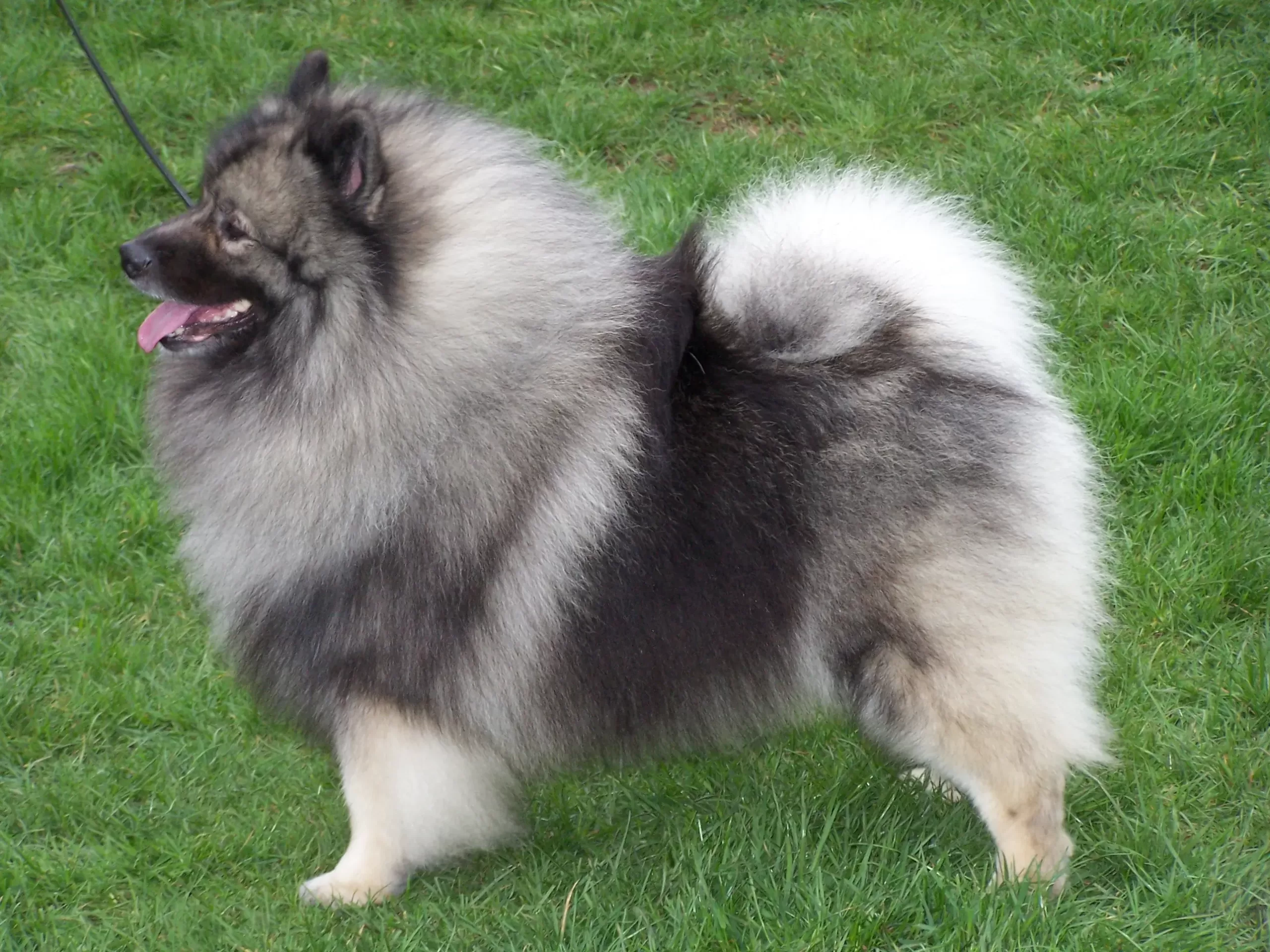
    The docile and friendly nature of the Keeshond contrasts with its original appearance, almost wild. The dense coat, average length, has abundant undercoat and is silver gray with black hair tips. The cloudy gray fur, reminiscent of the drawing of a wild wolf, is typical of this breed of dog, which also has the "Wolf" in its name.

    With a height at the cross of 43 to 55 cm el Keeshond is one of the largest representatives of the German Spitz. Compared to other dog breeds, is of medium height.

    As is typical of a Spitz, the Keeshond also has a pointed snout, like that of a fox. The muzzle and ears are usually black, the bushy mane surrounding the shoulder ring is a lighter silver gray and darkens again on the back and belly. The tail is very bushy and is carried confidently from the back.

    Character and skills

    In order not to cause further confusion in the following breed description, we use the names of the breed ยซKeeshondยป y ยซWolfsspitzยป as synonyms at this point. After all, both variants are hardly distinguished in the description of their character and appearance. But what is it that really distinguishes the character of these dogs??

    Faithful and loving guard dog

    Even today the Keeshond is known for his faithfulness and loyalty. Along with their high level of care, his distrust of strangers and his early attack, These characteristics made it an excellent and extremely popular watchdog with farmers and other large landowners.. Even as today's family dog รขโ‚ฌโ€นรขโ‚ฌโ€นand companion, has retained his loyal and caring nature and vigilance. The Keeshond he is extremely needy of love and always seeks the closeness of his humans. Of course, being alone is not in his nature. Thanks to his pronounced โ€œwill to pleaseโ€, that is to say, the desire to please their humans and their undemanding nature, can fortunately accompany his humans (almost) everywhere. It is capable of adapting to the living conditions and daily life of its owners and hardly demands anything from its owners., as long as you know your loved ones closely.

    Uncomplicated family dog

    Properly, He also does not demand much from his movement and is also content with "lazier days". But, is very open to long walks or even dog sports. If you are allowed to share these experiences together with your human, the Keeshond proves to be an extremely lively and spirited companion, who is sometimes even said to have a certain high spirit. So, in the case of young children it is better not to leave it unattended (which applies to almost all dog breeds). But, the Keeshond it is an uncomplicated family dog, who tends to get along very well with children and other pets.

    Education

    But, so that your balance and frugality are developed to the maximum, a good and consistent education is required, and this applies to all dogs in principle. Apart from learning the most important basic commands, it is often a matter of limiting your barking pleasure. The Keeshond, that carries the guard in the blood, attacks early and tends to become a thief, especially when bored. But, by socializing as soon as possible, consistently showing your limits and working harder to use your temper, you can significantly reduce their barking and make sure your Keeshond only hit when really necessary. At the same time, you would do well to get your cuddly four-legged friend used to being alone as soon as possible, even for a short time.

    Basically, the Keeshond is considered very docile, intelligent and above all people-oriented. If the dog-human relationship is correct, that is to say, if the necessary mutual trust prevails, you Keeshond will always try to please you and will soon dismiss any behavior you don't like.

    Care

    Despite the dense fur, spending on care remains within limits with the Keeshond. The undercoat is not prone to knots or tangles, so it is enough to brush it regularly and briefly. An advantage of Keeshond is that their fur has very little odor. So you don't have to worry about strong dog odors with this breed..

    as with all dogs, the eyes, the legs, teeth and ears should be checked and cleaned regularly. You should also get annual checkups at the vet, vaccinations and deworming.

    Keeshond Health

    Diseases typical of the breed are not known to occur in the Keeshond. The original dog breed is very robust and undemanding. An age of 15 years and more is not uncommon in him. This is probably due to the fact that the breed has never been overgrown. Although it was quite popular in difficult times, especially during WWII, due to its frugality, the wild and original Keeshond He never became a "fashion dog".

    The breeding and purchase of Keeshond

    Until today, the Keeshond it is a rather rare breed of dog. So it may take a while to find breeders of Keeshond they are expecting puppies. Use this time to optimally prepare for your new four-legged roommate.. In addition to the necessary initial equipment, like a bowl and a blanket for the dog, it should also clarify important issues like: ยซWho will take care of my dog โ€‹โ€‹if I have to travel or am sick?ยป, ยซWhat vaccines are necessary?ยป and ยซWhat food does my dog โ€‹โ€‹need??ยป. If he Keeshond it's your first dog, you should learn the most important basics about dog training and breeding before you buy it. In addition to informational texts from the Internet or books, it is often very helpful to talk to experienced breeders or dog owners. You can make contacts, for example, with a registered dog club for him German Spitz, dog schools and breeders.

    Wolfsspitz nutrition

    An important question that dog owners must ask themselves over and over again is, what dog food does my four legged friend need? Although it is considered that Keeshond is not very demanding and it is said that they were content with one potato a day during the Second World War, you need to make sure your dog receives all the important nutrients. Nutritional requirements not only vary from dog to dog, they also depend on the age of the dog. These may include, a puppy that is still growing will naturally need a different food than an adult dog or an old man who spends most of his time lying on his blanket. It also, the amount and type of exercise, as well as the size, weight and health, will affect the dog's needs. In case of doubt, consult your veterinarian or breeder to determine your dog's exact needs.

    Dry food, wet food or BARF method?

    There are now a number of dry or wet feed providers offering feed mixes that are specifically tailored to the needs of a breed, specific age or body size. Pay attention to the high proportion of high quality meat and vegetables in the feed. You should avoid meat scraps in the food that do not provide the dog with any significant content.. Another indication of inferior quality is an excessively high proportion of cereals. Although the risk of being overweight in the Keeshond bigger is not as high as in the spitz enano, for example, also starts comparatively fast – like all German Spitz. A healthy alternative to conventional dog food is the BARF, but this feeding method requires some knowledge and experience.

    Characteristics "Keeshond"

    Coexistence is important that you have with your new friend. Before considering the acquisition of a dog of the breed "Keeshond" you know certain factors. Not all breeds of dogs are apt to live in an apartment, you must take into account his character, their need for exercise, their interaction with other pets, their care and if you have small children, their level of tolerance towards them.

    Training ?

    3,0 of 5 stars (based on 1 review)

    Suitability of the apartment ?

    3,0 of 5 stars (based on 1 review)

    Can be alone all day ?

    1,0 of 5 stars (based on 1 review)

    Suitable as a first dog ?

    4,0 of 5 stars (based on 1 review)

    Weight gain ?

    4,0 of 5 stars (based on 1 review)

    Health ?

    5,0 of 5 stars (based on 1 review)

    Intelligence ?

    5,0 of 5 stars (based on 1 review)

    Kindness with child ?

    4,0 of 5 stars (based on 1 review)

    Tendency to bite ?

    3,0 of 5 stars (based on 1 review)

    Tendency to bark ?

    5,0 of 5 stars (based on 1 review)

    Tendency to flee ?

    2,0 of 5 stars (based on 1 review)

    hair loss strength ?

    5,0 of 5 stars (based on 1 review)

    Suitable as a guard dog ?

    5,0 of 5 stars (based on 1 review)

    Joy ?

    5,0 of 5 stars (based on 1 review)

    Cat friendliness ?

    4,0 of 5 stars (based on 1 review)

    Power level ?

    4,0 of 5 stars (based on 1 review)

    Suitable as a family dog. ?

    4,0 of 5 stars (based on 1 review)

    Energetic ?

    3,0 of 5 stars (based on 1 review)

    Tendency to drool ?

    2,0 of 5 stars (based on 1 review)

    Hunting instinct ?

    2,0 of 5 stars (based on 1 review)

    Hold the heat ?

    3,0 of 5 stars (based on 1 review)

    withstand the cold ?

    3,0 of 5 stars (based on 1 review)

    Suitable as a sniffer dog ?

    3,0 of 5 stars (based on 1 review)

    Suitable as an assistance dog. ?

    2,0 of 5 stars (based on 1 review)

    obedience. ?

    4,0 of 5 stars (based on 1 review)

    Type and recognitions:

    • FCI CLASSIFICATION:
    • Group :
    • Section : . .

    Federations:

    • – FCI – Group 5 – Section 4 European Spitz. โ“˜
    • – AKC – Non-Sporting โ“˜
    • – ANKC – Non-Sporting โ“˜
    • – CKC – Non-Sporting โ“˜
    • – โ€‹KC – Utility dogs โ“˜
    • – NZKC – Non-Sporting โ“˜
    • – UKC – Northern races โ“˜

    FCI breed standard "Keeshond"

    Origin:
    Netherlands

    Date of publication of the valid original standard:
    05.03.1998

    Use:

    Surveillance and companion dog.


    General appearance:

    Spitz are striking for their beautiful separated coat with the presence of a very dense undercoat. The neck surrounded by an abundant mane and the tail covered with long hair is striking., turned up and spread boldly on the back. The head is similar to that of the fox with diligent eyes and small pointed ears. The ears, placed very close to each other, give the Spitz its characteristic relaxed appearance.
     
    IMPORTANT PROPORTIONS: Proportion of 1:1 between the height at the withers and the length of the dog.


    Behavior / temperament:

    The German Spitz is constantly on the lookout, is active and exceptionally dependent on his master. Learn quickly and can be trained easily. His distrust of strangers and his lack of interest in hunting allow him to be considered the ideal watchman for the house and farm.. Its most notable characteristics are its resistance to weathering., its robustness and longevity.

    Head:

    ---

    Cranial region:
    • Skull: The skull of the Spitz is size medium; viewed from above seems to swell back becoming more narrow wedge shaped to the tip of the nose.
    • Depression links (Stop): Little steep until marked, but never abrupt.

    facial region:

    • Truffle: Round, small, black; in all Brown Spitz is dark brown.
    • Snout: Not very long, Neither coarse nor pointed; It presents a good proportion in relation to the skull (in the Spitz type Keeshond/Wolf, in the large Spitz and medium Spitz the ratio snout/skull is approximately 2/3, in the small Spitz and the Spitz/Pomeranian dwarf is approximately 2/4).
    • Lips: They are not hanging; they are well bonded and do not form folds in the corners. They are black in all colours, the Brown Spitz are brown.
    • Jaws / Teeth: The jaws are normally developed and show a complete scissors bite with 42 teeth, It is to say that the upper incisors fall closely ahead of the lower, teeth being implanted perpendicular to the jaws. In small and dwarf Spitz/Pomeranian the loss of a few promolars is tolerable. One bite iron on all varieties of Spitz.
    • Cheeks: The cheeks are slightly round and are not prominent.
    • Eyes: The eyes are medium-sized, elongated, a little oblique, dark colored. The eyelids have a black pigmentation in all varieties of color and are only dark brown in the Brown variety Spitz.
    • Ears: The pointed ears in the shape of a pointed triangle are small and rather closely placed together.. Its inclusion is high. They always remain erect with a rigid tip.

    Neck:

    The neck is moderately long and presents a broad inclusion with shoulders; the neck is slightly convex, without dewlap and covered with a mane shaped collar.

    Body:

    • top line: The top line begins at the tip of the erect ears and passes in a gentle arc over the short, straight back.. The deployed and with abundant fur tail partially covers the back and rounded silhouette.
    • Cross / Back: The high cross falls imperceptibly on the short back, straight and strong.
    • Pork loin: Short, wide and strong.
    • Rump: The rump is short and wide, unexpired.
    • Breast : Deep chest, well arched; the apron is well developed.
    • Bottom line and belly: The chest is expanded as much as possible back; the abdomen is moderately retracted.

    Tail:

    The tail has a high insertion and a medium length; bends upward from the root and rolls over the back, spreading firmly. Well covered with thick hair. A double loop in the tip of the tail is acceptable.

    Tips

    PREVIOUS MEMBERS:

    • As a whole: Straight, large on the front.
    • Shoulder: The scapula is long, placed backwards at an angle. The arm, showing almost the same length, with the scapula forms an angle of approximately 90 degrees. Shoulders with good musculature are closely linked with the chest.
    • Arm: Medium length, robust and fully straight on the trunk, covered with long hair in the form of pen in the posterior region.
    • Elbows: The elbow joint is strong, close to the chest without bending inward or outward.
    • Metacarpus: The Metacarpus strong and medium length, forms an angle of approximately 20ยฐ in relation to the perpendicular line.
    • Front feet: The front feet are as small as possible, round, compact, as cat with well arched toes feet. Pads and nails are black in all varieties of Spitz, and they are only dark brown on brown dogs.

    LATER MEMBERS:

    • As a whole: The hindquarters are very muscular, covered with very long hair up to the Hock joint. The hind limbs are straight and parallel to each other..
    • Thigh and leg: They have approximately the same length.
    • Knee: The knee joint is strong, slightly angled and, during the movement, It does not twist outward or inward.
    • Metatarsus: Medium length, very strong, maintains a position perpendicular to the ground.
    • Rear feet: The hind feet are as small as possible, round, with toes well arched and together, as cat feet. Pads are hard. The color of nails, pads is much darker.

    Movement:

    The Spitz moves with enough coordination, with a good push and almost floating in light trot.

    Mantle

    HAIR: The Spitz have a double layer of hair-covered: the outer layer is long-haired, straight and separate and the inner layer is short-haired, dense and woolly. The head, ears, front face of the anterior and posterior members and toes are covered by short dense pile (velvety). The rest of the body is long and abundant hair. The hair should not be wavy, chino, or form hair, You must not present a stripe on the back. A thick mane covers the neck and shoulders. The rear face of the forelimbs has hair in the form of feathers. The hindquarters should be covered with long hair from the rump to the Hock joint. The queue must be covered with hair is long and abundant.
     
    COLOR:
     
    to) Wolfspitz / Keeshond: Grayish.
    b) Grossespitz (Giant or Large Spitz) : Negro, brown, white.
    c) Mittelspitz (Standard or Medium Spitz): Negro, brown, white, orange, grey, other colors.
    d) Kleinspitz (Miniature or Small Spitz): Negro, brown, White Orange, grey, other colors.
    and) Spitz enano/ Pomeranian: Negro, brown, white, orange, grey, other colors.
     
    Black Spitz: The fur of the black Spitz should be dark in the skin as well as internal NAP and the color of the outer layer should be jet black color without any white spot.
     
    Brown Spitz: The Brown Spitz should have a uniform dark brown color.
     
    White Spitz : The hair should be pure white, no yellowish tones that can often occur in the ears.
     
    Orange Spitz: The Orange Spitz should have a single uniform colour in the average range of the RAL (Registration International of the color scale).
     
    Grey Spitz / Keeshond: Gray is understood as grey silver with black hair tips. Snout and ears are dark. Around the eyes there is a drawing in the shape of glasses consisting of a delicate black line. (It extends from the outer corner of the eye to the lower part of the inclusion of the ear) or in broken lines and shading that draw short eyebrows, but expressive. Mane and ring shoulders are a tone clear. The anterior and posterior members are grey silver unmarked black below the elbows and knees, except delicate stripes on your fingers (pencilling). The tip of the tail is black. The lower part of the tail and the buttocks are grey Silver clear.
     
    Spitz other colours: Under this description all tones are included as: cream-coloured, cream-saber, anaranjado-Sable, black with tan and stained. The spotted must have a white background color. Black stains, brown, grey or Orange must be distributed throughout the body.


    Size and weight:

    Height to the cross:
     
    to) Wolfspitz / Keeshond: 49 cm ยฑ 6 cm.
    b) Grossespitz (Giant or Large Spitz) : 46 cm ยฑ 4 cm.
    c) Mittelspitz (Standard or Medium Spitz): 34 cm ยฑ 4 cm.
    d) Kleinspitz (Miniature or Small Spitz): 26 cm ยฑ 3 cm.
    and) Zwergspitz (Toy or Dwarf Spitz) / Pomeranian : 20 cm ยฑ 2 cm. (are undesirable specimens measuring less than 18 cm.)

    WEIGHT: Any variation in the size of the German Spitz should have a corresponding variation in weight.


    Fouls:

    Any deviation from the above criteria is considered missing and the seriousness is considered to the extent of the deviation to the standard.
     
    SERIOUS FAULTS:

    • Defects in the Constitution.
    • Head too flat or sharp Apple-shaped.
    • Truffle, eyelids and lips of flesh-colored.
    • Defects in the premolars in Spitz Wolf/Keeshond, Medium and large Spitz.
    • Eyes too big or clear or very outgoing.
    • Defects in the movement.
    • Absence of classic drawing of the face in greyish Spitz.

     
    MISS PLAYOFFS:

    • Open fontanel.
    • Upper or lower prognathism
    • Entropion or ectropion.
    • Floppy ears.
    • Visible white stains on all non-white Spitz.


    N.B.:

    Males should have two normal-appearing testicles fully descended into the scrotum..

    Source: F.C.I - International Cynological Federation

    Alternative names:

    1. Kees, Dutch Barge Dog, Smiling Dutchman, German Spitz, Deutscher Wolfspitz, Wolfspitz (English).
    2. spitz loup, keeshond (French).
    3. (German).
    4. Spitz alemรฃo, Chien Loup, Spitz lobo (Portuguese).
    5. Wolfspitz, Deutscher Wolfsspitz, Dutch Barge Dog (espaรฑol).

    โ–ท The world of Pets: Dogs, cats, birds, reptiles, amphibians

    Canarian Warren Hound
    Espaรฑa FCI 329 . Primitive type - Hunting Dogs

    Podenco Canario

    The Canarian Warren Hound is brave, decided to, generous and extremely loyal to his master.

    Content

    History

    The Canarian Warren Hound It is a breed canine Spanish Canary.

    The Canarian Warren Hound, It is one of the oldest breeds known today., According to scholars of the breed, it dates from approximately 7000 years. This realize the numerous found vestiges of its representation in engravings, statues and bas-reliefs.

    A native of Egypt, probably, He was taken by the Phoenicians, greeks, the same Egyptians to the Canary Islands and Carthaginian, where it is currently easy to see in the larger islands (Gran Canaria and Tenerife).

    Since its inception, the Canarian Warren Hound has been placed in the wild and in the possession of the peasant who needed to hunt to survive. Given the perfect hunting qualities of this dog: his sense of smell, his hearing and his clear vision, as his great speed in the race after the dam, the peasant has had, always, a wonderful ally, It has been able to take advantage of.

    The Canarian Warren Hound, as its name suggests it is found in the Canary Islands, and a dog is little known and disseminated outside their place of origin, It is not easy to find puppies.

    Today, is perfectly adapted, both the flat lands as stony and mountainous, sandy, or soft like the prairies or very hard; You can both enter caves that penetrates in Lava Tubes or galleries, in thickets or forests, in the end, does not shy away from any obstacle.

    Outside the hunting season, the living conditions of animals are very different: Well-kept dogs can be found and fed on clean kennels, as well as miserably neglected and malnourished chained dogs. Animals that are not or are no longer fit for hunting often suffer a cruel fate.
    For this reason, dogs are increasingly placed abroad by animal protection organizations and individuals – an understandable and well-meaning activity, What, However, brings with it some problems: Dogs, who are usually already grown up, sometimes they are taken out of their simple rural living environment and taken to big cities. Noise and haste can be very harsh for them, his frequent lack of trust in humans further complicates it. His pronounced passion for hunting makes the free will, which would be absolutely necessary for the maintenance of the animals and to reduce stress, is often difficult or impossible. It also, in many cases are infected with so-called travel or Mediterranean diseases, that often require long and costly treatment.

    Physical characteristics

    The Canarian Warren Hound, is a dog from size medium, very light but tough.

    The height to the cross males will of 55 to 64 cm and the females of 53 to 60 cm.. These measures have 2 cm tolerance up or down.

    Has the muscles hyper developed and as it does not present adipose panniculus it is very easy to appreciate the rib cage, the spine and hip bone.

    Has the head elongated with little pronounced stop, the eyes are small, almond-shaped and oblique.

    Their ears they are rather large, When the Earth State of arousal keeps them in erect and fall backwards when it is at rest, they are wide at the base and end up in tip.

    The limb perfectly Plumb, they are straight, has fine but strong bones. The tail is low, You can take the low or sickle-shaped, but does not exceed Hock.

    The hair the Podenco Canario is smooth, tight and short. In the layer color combinations within the following are supported colors: Red and white, with more or less intense red, and finally, Orange to mahogany.

    Observations

    :

    These dogs start to hunt from an early age, giving cases of animals less than three months that show strong hunting instinct.

    When they discover and/or they chase prey, emit a characteristic short, repetitive bark, known to local hunters as "singing a rabbit".

    Character and skills

    The Canarian Warren Hound is an animal that shows no aggression normally, extremely loyal and noble to teammate, restless, independent, stubborn, worker and intelligent.

    Itร‚ยดs brave and decided to, the race is fast and very agile, generous and extremely fell to its owner.

    There are no guard and defense attitudes, at home it is "friend of all strangers", what makes it ideal as a pet.

    If raised inside a Home, Once overcome the first six months of hyperactive life, shown as a quiet animal and customize, attitude changes drastically once comes to the field of hunting.

    In its role of Hunter It has always been dedicated to the rabbit house and its most important feature is its ability to adapt to any type of terrain. It is capable of detecting the presence of the press inside cracks thorny bushes or stone walls, the Podenco Canario only to follow the trail of the prey with the sense of smell but without catching it.

    Observations:

    In the Canary Islands is used in conjunction with the huron, since the latter catches the rabbit by the throat.

    Caring for Canarian Warren Hound

    As already mentioned, the dog should be given a housing environment that corresponds to its predisposition. Rural areas with low traffic and a manageable hunting density are appropriate.
    Proper exercise in any weather with as much free running as possible is a must for this active dog.

    The short coat is very easy to care for; just brush from time to time.

    Canarian Warren Hound Health

    The breed is basically a robust dog with low susceptibility to disease; therefore, breed-specific diseases are largely unknown.

    But, the Canarian Warren Hound can suffer from the typical travel or Mediterranean diseases of dogs (among others, leishmaniosis, dirofilariasis, babesiosis, ehrlichiosis) like all the other dogs.
    Many animals are chronically infected without showing symptoms of disease. But, these dogs are unhealthy and can infect other animals through vectors (ticks and blood-sucking insects).
    So, imported dogs should always be thoroughly examined for the diseases mentioned (the so-called "travel profile").

    The average life expectancy is about 12 years.

    Images Canarian Warren Hound

    Canarian Warren Hound videos

    Type and recognitions:

    • FCI CLASSIFICATION:
    • Group :
    • Section : . .

    Federations:

    • – FCI – Group 5: Spitz-type dogs and primitive type – Section 7: Primitive type โ€“ Hunting dogs.. โ“˜

    FCI breed standard "Canarian Warren Hound"

    Origin:
    Spain

    Date of publication of the valid original standard:
    24.06.1987

    Use:

    It is used for rabbit hunting and adapts perfectly to the multiple variations of the terrain for this purpose., using their prodigious sense of smell as well as sight and hearing. Withstands high temperatures and hunts tirelessly from dawn to dusk. You can detect the presence of rabbits inside cracks with your sense of smell or hearing., stone walls, majano, volcanic tubes and thorny scrub. Its extraordinary preservation is undoubtedly due to its gifts, which have made it necessary throughout the centuries.. It is primarily a trail dog and should not bark or flap the part during tracking.. It is also used with the help of a ferret, modality allowed on the islands. It also usually catches rabbits by tooth.


    General appearance:

    It is a medium-sized dog, slightly elongated, leptosomatico, light, very resistant. The skeleton is well developed. The absence of adipose panniculus allows us to appreciate the relief of the rib cage, spine and hip bones. The muscles are highly developed, spandrel, transluciendo contractions through the skin.

    IMPORTANT PROPORTIONS: Slightly longer than high. Well developed chest, without reaching the elbow. Muzzle slightly longer than the skull.


    Behavior / temperament:

    Brave, nervous, restless and radiating a dynamism. Noble, never aggressive. Selflessly addicted to its owner. Stoically supports more rigorous sessions without the less fatigue.

    Head:

    Elongated. Truncated cone shaped, very provided with the body, measuring length 21 to 22 cm.. Parallel craniofacial lines.

    Cranial region:
    • Skull: Longer than width, plane, with prominent occipital bone.
    • Depression links (Stop): Not very marked.

    facial region:

    • Truffle: Wide, sand color, harmonized with the coat color, slightly open nostrils.
    • Snout: Prominent and wide, dull finish, flesh-colored with more or less intensity in harmony with the color of the coat.
    • Lips: Fine and collected, harmonized with the color of the nose.
    • Teeth: Bite in scissors, in perfect opposition and well-developed.
    • Eyes: Oblique, almond-shaped and small. More or less dark amber depending on the intensity of the color of the layer. His gaze is smart and noble.
    • Ears: Rather large. Carried erect in attention, slightly divergent. Take them back to sleep. Wide at its base and pointy at the end.

    Neck:

    Muscular, straight, with smooth skin, without jowl, rounded and flexible.

    Body:

    • Back: Strong, muscular, suitable for the race and exercise of hunting.
    • Pork loin: Somewhat elongated.
    • Rump: Something solid bones of the rump, more visible in the exemplary weak or in full hunting season.
    • Breast : Chest with no outgoing sternum, well developed, But however it does not reach the elbow. Oval ribs.
    • Chest perimeter more in 5 to 8 cm as height on the cross.
    • Belly: picked up, without being the Greyhound. Well marked flanks.

    Tail:

    Lowest insertion, as a continuation of the rump. Rounded, It descends somewhat lower than the Hock. Fallen or carried in the shape of a sickle. Something sharp at the tip which is usually white in color. Never screwed. Desirable not to raise in excess to the March.

    Tips

    PREVIOUS MEMBERS: Perfectly Plumb, straight, vertical and parallel, fine but solid bone. Cat feet, generally something diverted outwards. Strong and somewhat oval pads.

    Angles:

    • Angles scapulo-humeral: close to 110ยฐ.
    • Humeral-radial angles: close to 140ยฐ.

    LATER MEMBERS: Plumb, straight, strong, muscular, rather high Hock (some 18 cm from the ground). Straight feet, of cat, with strong and slightly oval pads. Without the presence of spurs.

    Angles:

    • Lame-femoral angle: about 110ยฐ.
    • Femoral-tibial angle: about 120ยฐ.
    • Hock angle: about 130ยฐ.

    Movement:

    You must have a fast trot, long and very light.

    Mantle

    SKIN: Consistent, attached to the body and without wrinkles.

    HAIR: Smooth, short and tight.

    COLOR: Preferably red and white, the Red can be more or less intense coming from Orange to dark red (Mahogany). All combinations of these colors.


    Size and weight:

    Height to the cross:

    • For males: of 55 to 64 cm..
    • for females: of 53 to 60 cm..

    These measures may vary due to the different land where living and hunting, therefore to accept differences in 2 cm above or below the maximum or minimum size, as long as the specimens are typical and with the prototype of the breed.


    Fouls:

    Any deviation from the aforementioned criteria is considered as a fault and the severity of this is considered to the degree of the deviation to the standard and its consequences on the health and well-being of the dog..

    SERIOUS FAULTS

    • Excessively wide head.
    • Too marked stop.
    • Hanging lips.
    • Lack of premolars.
    • Prognathism.
    • Ears very divergent.
    • Flat chest.
    • Outgoing sternum.
    • Threaded queue.
    • Low or cow hocks.
    • Crossing of front feet and hocks in gear.
    • Aggressive temperament.
    • Any dog โ€‹โ€‹showing clear signs of physical or behavioral abnormalities must be disqualified..

    FALTAS DESCALIFICANTES:

    โ€ข Aggressiveness or extreme shyness.
    โ€ข Any dog โ€‹โ€‹showing clear signs of physical or behavioral abnormalities.


    N.B.:

    โ€ข Males must have two normal-appearing testicles fully descended into the scrotum..
    โ€ข Only functionally and clinically healthy dogs, with the typical conformation of the breed, should be used for parenting.

    Source: F.C.I - International Cynological Federation

    Alternative names:

    1. Canary Island Podenco, Canary Island Hound, Podenco Canario (English).
    2. Podenco canario (French).
    3. Podenco Canario (German).
    4. Podenco Canario (Portuguese).
    5. Podenco Canario (espaรฑol).