โ–ท The world of Pets: Dogs, cats, birds, reptiles, amphibians

Hovawart
Alemania FCI 190 - Molossoid . Mountain

Hovawart

The term Hovawart derived from medieval german, in which -hova- meant "cut" and -wart-, "guardian".

Content

History

The dog as guardian of the house and the courtyard has an ancient tradition in the history of humanity. Maybe thousands of years ago, private ownership of the house and yard, goods and workshops could only be established with the help of the protective role of dogs. The four-legged court guards were already highly regarded by the Teutons, which is reflected in the various laws of the last Teutonic. Of the 24 articles of the Law of Baiuvariorum, an entire article is dedicated only to dogs. Here, plus a dozen other dog breeds, the court dog is explicitly mentioned as "Houvavart". The Houvavart was valued at 3 shillings. It was a huge amount, considering that in the same body of law a "mediocre" horse was valued at only half a shilling. The Hovawarts are also mentioned in various writings from the Middle Ages.

The Hovawart Today is in the intellectual and functional tradition of these old court dogs. Regarding their genetic offspring, will not be more or less related to them than the other breeds of guard dogs and native dogs. Building a direct line of descent to the old Hovavart would not be permissible, especially since it is not known at all what these dogs looked like.

After 1910 the Hovawart but without a description of the appearance. Over the years 20 established itself as a breed of dog.

In the FCI breed standard of 1998 It is said that:

"From 1912 the reproduction of this breed has been using similar type dogs that are still in farms to restore the breed. apart from this, at the beginning of the crossing, you cross them with German shepherds, Newfoundland, Leonberger and other races were admitted. In addition to the strict measures taken in the breeders, the type of job was obtained again.โ€

It also, crossed the hungarian watchdog Kuvasz, what is important to understand the nature of Hovawart. After having almost died out, after the first world war, the breed was recovered by the kinophile K. F. Kรถnig. In a span of time, what had been done very successfully thousands of years before was rebuilt here. Like, but mostly of the nature the right dogs were mated. The decisive criterion was performance for the intended purpose, so to speak, the work championship. It is quite possible that the Hovawart current look like the old ones Hovawart of our ancestors by this procedure of appearance and nature, but that is speculation. Only in 1944 breeding book closed. So a vast gene pool was created as the basis for this breed of dog., which is still very useful for your health and fitness today.

Physical characteristics

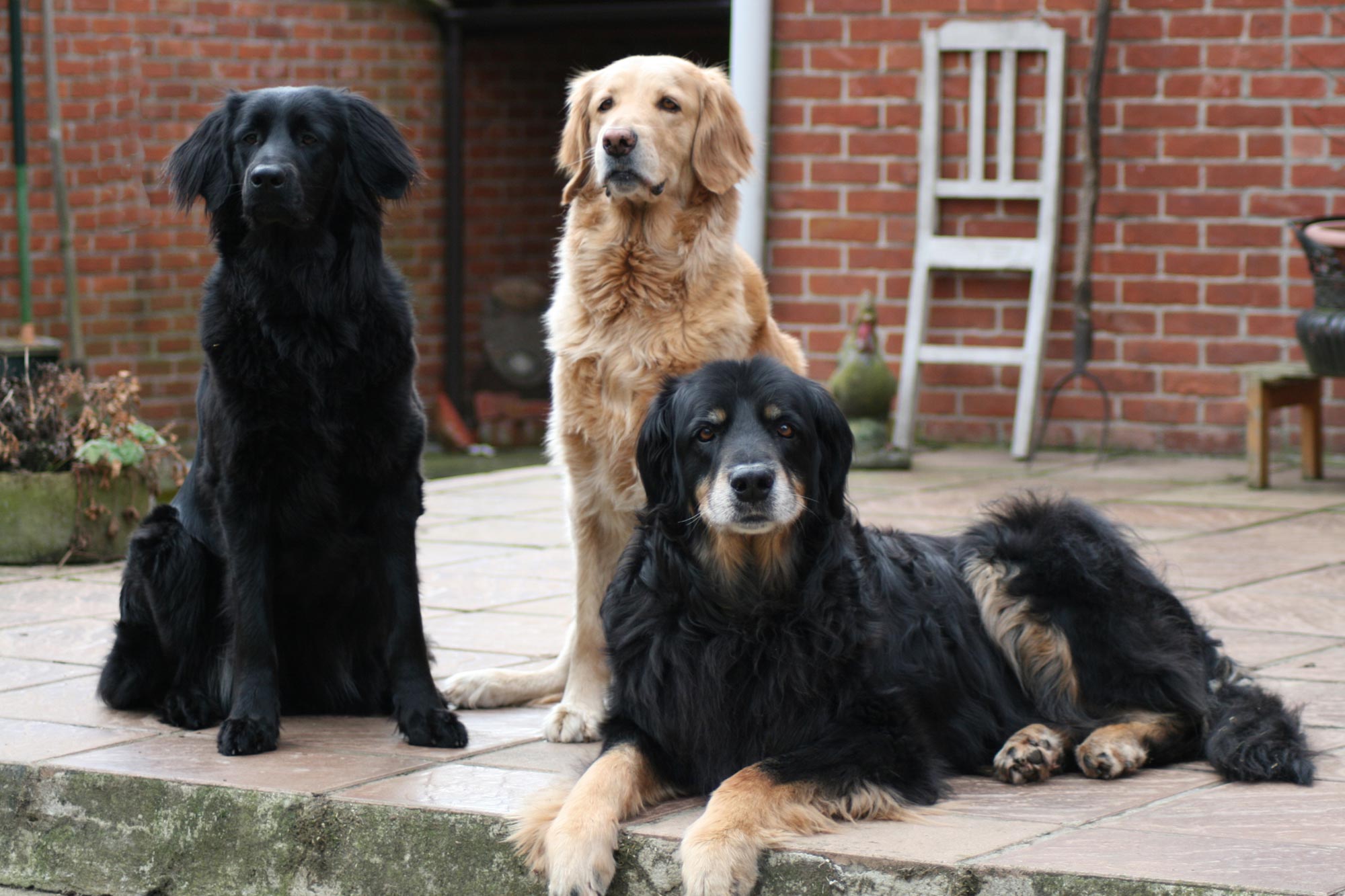
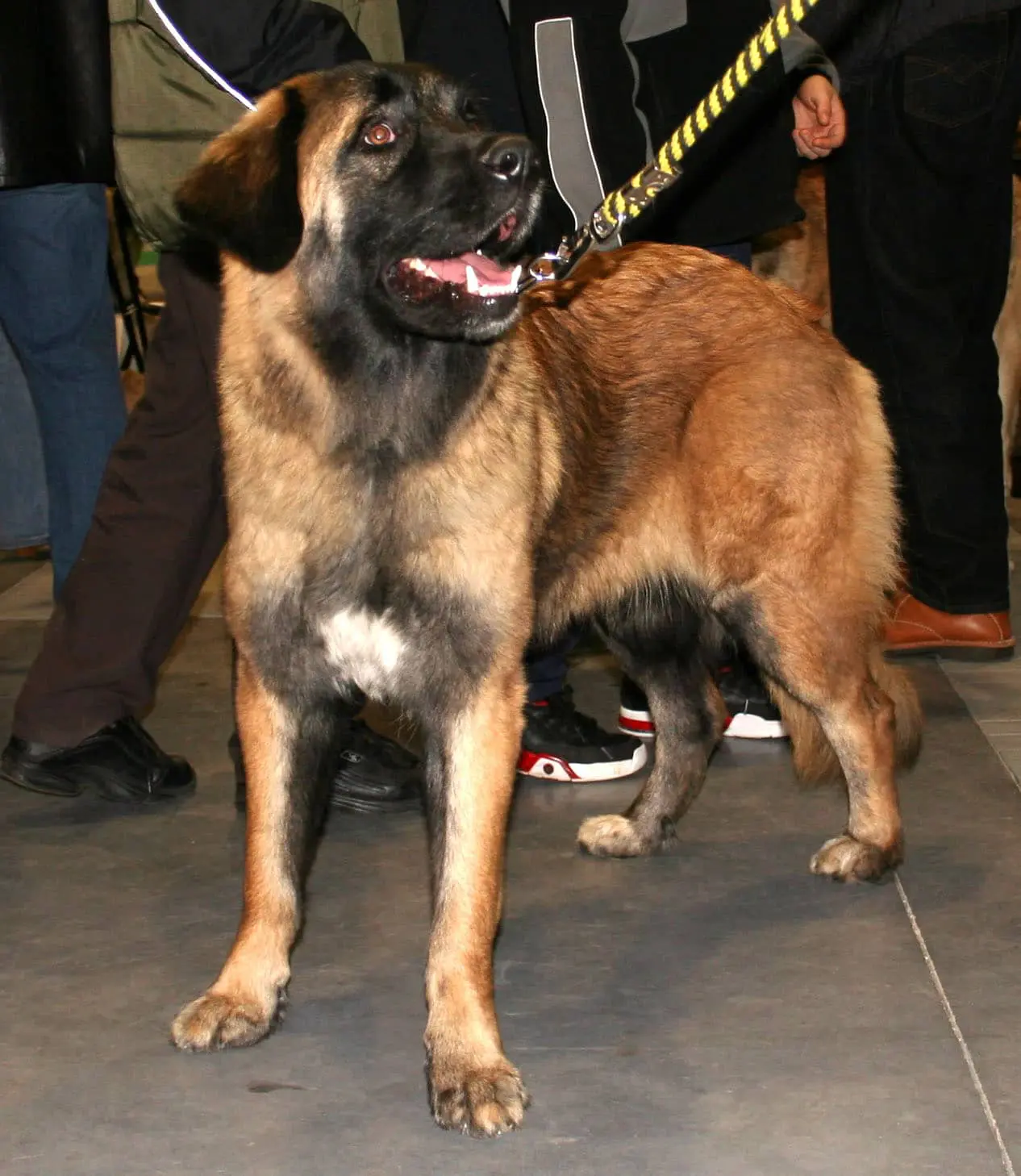
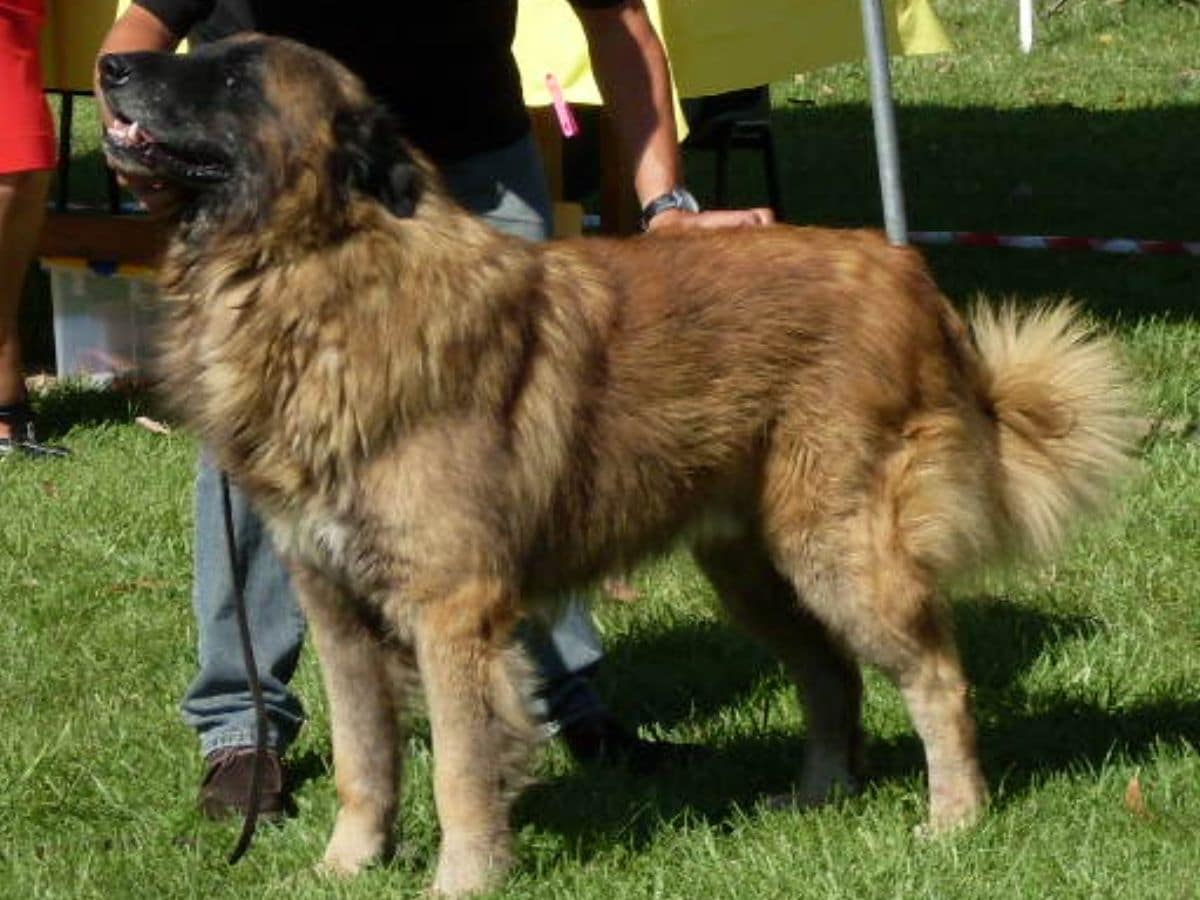
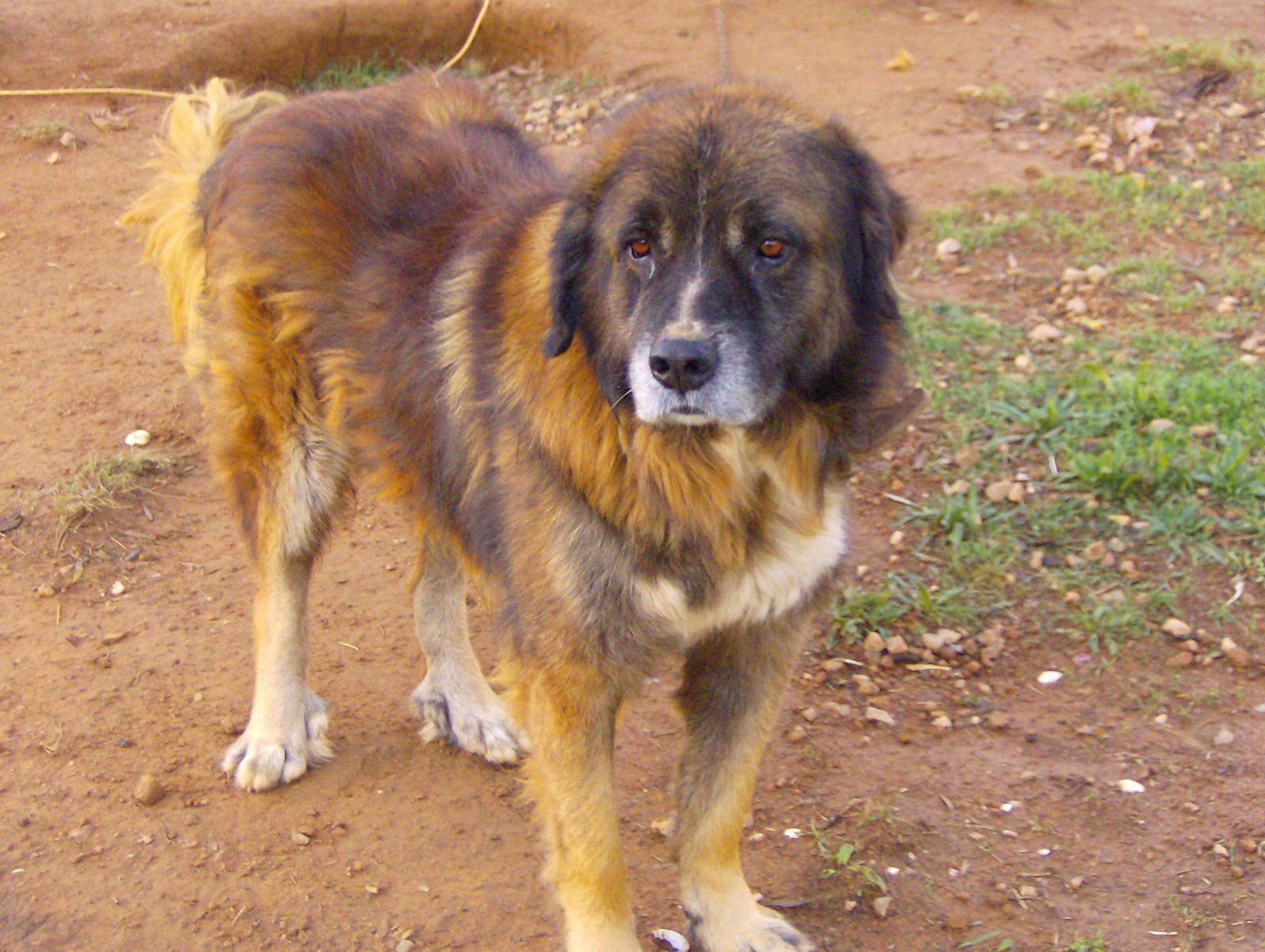
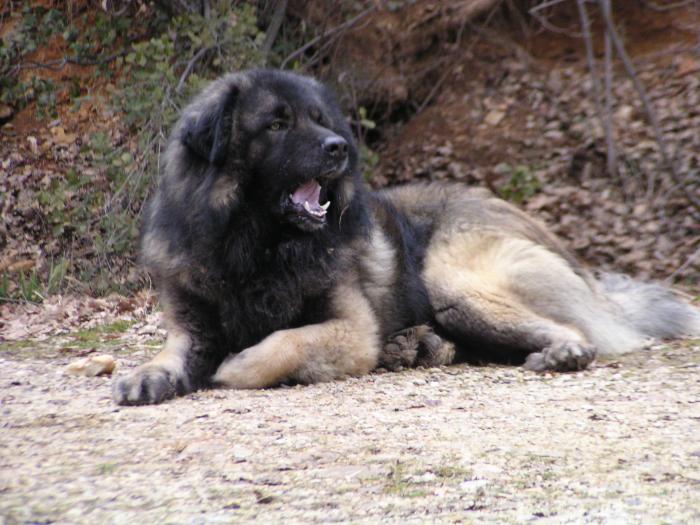
The Hovawart is a big dog, strong and at the same time quite thin. With the Hovi nowadays three strokes of color are allowed: Rubio, black marks (black with gold brown markings) black and white. Males have a height to the cross of 63 to 70 cm.. Considering its type and size, the Hovawart is thinner than it appears underneath its medium long wavy coat. So, a weight of 30 to 45 kg is considered normal for males. Despite this not so high weight, it is a very powerful and strong dog. Only for its strength and size it belongs to a hand with experience in dogs. The Hovawart he's a working dog, Guard and protection.

Character and skills

The character of Hovawart demands a person with a strong dog mind. He has a strong will, a head of its own and is very independent. Probably an heir to the pack guard dog, Kuvasz, who is one of his ancestors. He is self-assured and self-assured at the same time. The โ€œdesire to pleaseโ€ is not as strong in him as in many other working dog breeds.. Your master or caretaker still has to work and earn it. then a Hovawart well educated he is an extremely efficient off-roader and a lovely friend. Master the role of companion dog suitable for everyday life, as well as your challenges in dog sports or even as a rescue and tracking dog. He has a very good nose. Yes, and the Hovawart it is also an excellent watchdog and protection dog.

He is a defensive protector of his family and diligently protects his territory. He moves silently on the ground and faces an intruder suddenly but persistently. With built-in yard dog, the Hovawart not fully occupied, especially since today you have to monitor hardly a large enough area. He is intelligent and seeks true association with his caregiver. At the same time it is affectionate and sensitive and at the same time it radiates something primitive, archaic.

Wants and seeks connection with family. Like a well-behaved and demanded working dog, the Hovawart it is also an excellent family dog. Often rejoices with petting and hitting like a little lapdog. He is very friendly and gentle with the people he has taken to his heart. Once you meet them, will never forget them. When he is young he shows his affection sometimes very stormy.

The Hovawart it is a low maintenance dog. Apart from the change of coat, it does not need to be brushed every day., because her coat doesn't tend to tangle due to the small amount of undercoat. Well educated and managed he is an excellent companion. But, cannot be recommended as a family dog รขโ‚ฌโ€นรขโ‚ฌโ€นwithout further ado. If you are thinking of having a puppy Hovawart for the first time, must first consider practical challenges, they are only related to their strength and size. Not a beginner dog.

Hovawart Education

The Hovawart develops creativity and perseverance to realize his ideas about the world and its order. Here the owner of the dog is challenged with all the consequences, but paired with patience and empathy. And this already with the puppy. Hardness alone does not help the Hovawart at all. It is important to create and maintain trust, that the Hovawart wants to show his pack leader. By the way, pack leader: One Hovawart usually test thoroughly, who will take this position. Here its owner must assert himself with the consequent insouciance, then he will follow faithfully and with good behavior and accept the leadership of his humans without problems.

One must bring with him time and knowledge for an intensive education and, the best of all, training. If one loses the basic elements of education, you will hardly be able to go for a walk with him without stress. Then your self-confidence could even become a leadership statement.. Otherwise, the Hovawart it's the ideal companion dog image. He wants his humans to guide him, but without ever being submissive. The Hovawart maintains its own head and its own will. For some people this is perhaps too much of their own personality. But only this profile of the Hovawart can be an excellent basis for a respectful and intense human-dog relationship.

Hovawart Health and Care

The Hovawart it is a low maintenance dog. Except in times of coat change, twice a year, needs to be brushed regularly but not every day, because his coat does not tend to tangle due to the low amount of undercoat.

The Hovawart it is considered a completely healthy breed. Hereditary diseases are systematically fought, such as knee joint cartilage disease (OCD), which is more common in Hovawarts. Dysplasia of the hip joint (HD) "often a problem especially with large dogs" has been under control for a long time.

Nutrition / Food

The Hovawart they don't make any special demands. He is consistently straightforward. For a dog of its size and strength it needs little food.

Hovawart life expectancy

The Hovawarts can reach 12 years and not rarely even more with a good physical condition. It is a good life expectancy for such a large dog.

Buy a Hovawart

Puppies should only be purchased from an FCI registered breeder. For a puppy you should plan to 800 to 1000 EUR. The adult dogs of Hovawart they can also be taken out of shelter or emergency aid and offered a loving home..

Images "Hovawart"

Photos:

1 – Hovawart by https://pixabay.com/es/photos/hovawart-perro-perro-de-raza-pura-2611448/
2 – Hovawart black and tan by Faigl.ladislav / CC BY-SA
3 – Hovawart by https://pixabay.com/es/photos/perro-hovawart-negro-marrรณn-1194081/
4 – The three permitted colours of the Hovawart by Oxborrow / Public domain
5 – Blond Hovawart female (10 months) by Faigl.ladislav / CC BY-SA
6 – Hovawart by https://www.pxfuel.com/es/free-photo-xxpba

Videos "Hovawart"
Type and recognitions:

  • FCI CLASSIFICATION:
  • Group :
  • Section : . .

Federations:

  • FCI – Pinscher and Schnauzer-Molossoid type dogs – Swiss Mountain Dogs and Cattledogs. Section 2.2 Molossoid, mountain type. โ“˜
  • AKC – FSS โ“˜
  • CKC – Group 3 – Working dogs โ“˜
  • โ€‹KC – Working dogs โ“˜
  • UKC – Watchdog โ“˜

FCI breed standard "Hovawart"

Origin:
Germany

Date of publication of the valid original standard:
12.01.1998

Use:

Utility dog


General appearance:

It's a working dog, powerful, medium-sized, slightly elongated and long-haired. The difference between the sexes is clearly recognizable, especially in the head shape and body structure.


PROPIMPORTANT ORTIONSS: The length of the body comprises at least one 110 yet 115% the height at the withers.


Behavior / temperament:

It is a recognized versatile working dog, friendly and balanced disposition. Has protective instincts, He has a lot of self-confidence and has the ability to withstand stress.; is of medium temperament, combined with an excellent sense of smell. The proportions of his balanced body and special devotion to his family make him an excellent companion., guardian, defender, savior and tracker.

Head:

The nasal cavity is straight and parallel to the skull. The muzzle and skull are approximately the same length. The skin of the head is tight.

Cranial region:
  • Craging: The powerful head has a broad, rounded forehead.
  • Depression links (Stop): Well visible.

facial region:

  • Trufa: The nostrils are well developed. In black and black dogs with fire the pigmentation is black; in blond dogs the pigmentation is black, although the ยซ snow nose ยป is allowed (loss of temporary pigmentation).
  • Horcico: Strong, Slimming down slightly when viewed from above and in profile.
  • Belves: Tight.
  • Jaws / Teeth: Strong scissor bite complete with 42 teeth, according to the teething formula. The teeth are at right angles to the jaw. Caliper bite is accepted.
  • Ojors: Oval, nor protruding, or sunk. Dark to medium brown color. Tight eyelids.
  • Obars: Triangles and falls; loose along the cheeks; tall and widely spaced, giving the optical illusion of skull widening. They reach in length at least the lip corners; the tip is slightly rounded. When the dog is at rest it keeps them hanging; when the dog is on alert carry them by directing them slightly towards the forehead. Its front edges are located approximately half the distance between the eye and the muzzle..

Neck:

Strong, long Middle. The skin is tight.

Body:

  • Espalda: Straight and firm.
  • Itmor: Strong, somewhat longer than the rump.
  • Rump: Medium long, leaning slightly.
  • Breast : Width, deep and strong.

Tail:

With abundant hair, reaching below the hocks, but not even to the ground. depending on the mood, worn high above the back or low.

Tips

PREVIOUS MEMBERS: Strong, straight and vertical, viewed from the front and from the sides.

  • Hormbros: Very well muscled. The scapula is long and well oblique to the back.
  • Brazo: Long, well glued to the body.
  • Elbows: Glued to the chest.
  • Articulation of the carpus: Strong.
  • Metacarpus: Moderately inclined.

LATER MEMBERS: Strong and, seen from the back, vertical. Well angled.

  • Thighs and legs: Very well muscled.
  • Hock: Strong, descended.
  • PIIS: Rounded, strong and compact. Fingers are arched and together. Dewclaws must be removed except in those countries where it is prohibited by law.. Nails on black dogs with fire and black should have black pigmentation; in blonde dogs less pigmentation is allowed.

Movement:

In all walks, the hovawart movement, seen from the front or from behind, It's in a straight line, covering the ground well. The trot is very extended, with a powerful boost from the hindquarters.

Mantle

PIEL: In total, the skin is well glued. In black and tan or black dogs the skin presents a bluish glimpse, in blonde dogs generally a pink glimpse.


Plink: Long, strong hair is slightly wavy and glued; the inner layer of hair is poorly developed. The hair is longer on the chest, in the womb, on the tail and on the backs of the forelimbs and thighs. It is short on the head and in the anterior region of the front and rear limbs. The pelage is dense.


Colorr: There are three varieties of color: Black fire, black and blond.

  • Negro with fire: The coat is black and shiny, the color of the fire marks is medium blonde. In the head, the markings start below the nose and extend around the lip commissure to the marks on the gargant. Dot-shaped markings above the eyes are clearly visible.. The chest marks consist of two adjacent patches that can be attached. On the forelimbs, the marks seen from the side, extend from the fingers approximately to the metacarpus, Thinning at the back at the elbow level. In the hind, the marks, side view, they look under the hock in the form of a broadband, above the hock in the form of a narrow band extending from the front of the hindquarters to the height of the belly. A mark is also presented below the tail insert. Brands are well defined everywhere. Small white spots on the chest, as well as some white hairs on the fingers and on the tip of the tail are allowed. Pigmentation of the eyelids, lips and pads must be black.
  • Negro: The coat is shiny black A few small white spots on the chest, as well as some white hairs on the fingers and on the tip of the tail are allowed. Pigmentation of the eyelids, lips and pads must be black.
  • Rubinor: The coat is medium blonde, shiny and becomes lighter towards the belly and limbs Small white spots on the chest, as well as some white hairs on the fingers and on the tip of the tail are allowed. Pigmentation of the eyelids, lips and pads must be black.


Size and weight:

  • Males: of 63 to 70 cm.,
  • females: of 58 to 65 cm.


Fouls:

Any deviation from the aforementioned criteria is considered as a fault and the severity of this is considered to the degree of the deviation to the standard and its consequences on the health and well-being of the dog..


FALTAS DESCALIFICANTES:

  • Aggressiveness or extreme shyness.
  • Any dog โ€‹โ€‹showing clear signs of physical or behavioral abnormalities must be disqualified..

Apgeneral arience

  • Dogs that do not correspond to the general type of the breed
  • Females with male appearance.
  • Males with female appearance

Pbearings

  • Body proportions very different from those indicated in the standard

Comportamiento / Temperament

  • Aggressive dogs, fearful, apathetic, afraid of the shot.

Cthey are not coming

  • Absence of naso-frontal depression (Stop).
  • Blue eyes, gazeo eyes
  • Erect ears, semi-erected, rose-shaped or separated from the cheeks
  • Upper or lower prognathism, incisor arcade deviated.
  • Absence of more than 2 of the four PM1 (premolars 1) or of the two M3 (molars 3); absence of any other teeth.

CUit

  • Presence of a marked double chin or a lot of loose skin.

CUerpo

  • Back very beaten or pronounced carp.
  • Narrow or barrel-shaped chest.
  • Abnormal glue, heavily cropped or heavily coiled.

Formertremedies

  • Hindquarters too high.

Plink

  • Mostly curly hair (ring shaped curls)

Colorr

En set:

  • All non-standard colors, blue/grey, ciervuno, brown, white, spotted, smutty blonde or with mostly streaked hair
  • White patches White hairs on the inside of the thigh is not an elimination foul.

Perros black and fire

  • Gray or brown patches outside the spots.
  • Undercoat of hairs mostly a color other than black.
  • Predominant gray or white spots.

Pblack mistakes

  • Brown or gray patches
  • Undercoat of hairs mostly a color other than black.

Pblond mistakes

  • Some white hairs on the bridge of the nose do not constitute an eliminatory foul.
  • Continuous reddish-blond color without becoming slightly lighter.
  • Blonde-off-white color, even in the ears.
  • Distinctively white markings.
  • Dark patches or mask

Tby hand

  • Size smaller than that indicated in the standard
  • Size greater than 3 cm of that indicated in the standard


N.B.:
  • Males should have two normal-appearing testicles fully descended into the scrotum..
  • Only functionally and clinically healthy dogs, with the typical conformation of the breed, should be used for parenting.

Itlatest changes are in bold.

TRANSLATION: Mauricio Martinez, Federation Canรณfila Mexicana, A.C.; y Dr. J-M Paschoud.

Source: F.C.I - International Cynological Federation

Alternative names:

1. Hovie (English).
2. Hovawart (French).
3. Hovawart (German).
4. Hovawart (Portuguese).
5. Hovie (espaรฑol).

โ–ท The world of Pets: Dogs, cats, birds, reptiles, amphibians

Miniature Schnauzer
Alemania FCI 183 . Pinscher and Schnauzer type

Schnauzer Miniatura

The Miniature Schnauzer it is exclusively a balanced and affectionate companion dog.

Content

History

The Miniature Schnauzer It is derived from the Standard Schnauzer, emerged in Germany in the second half of the 19th century. This race is, probably, result of crosses a medium Schnauzer with some of the smaller races, as the Poodle, the Miniature Pinscher or the Affenpinsche.

The Schnauzer originated in the late 1880's on German farms to combat rodents., as a company of mares and horses, thus to be an alert and intelligent company of the families. The fur on both the beards and the legs has a function from its origins since it serves as camouflage to mislead rodents that bite the fur assuming that it is the skin of the animal.. The cutting of ears and tail also shared this same purpose, since the rats could easily bite the Schnauzer on these extremities.

Physical characteristics

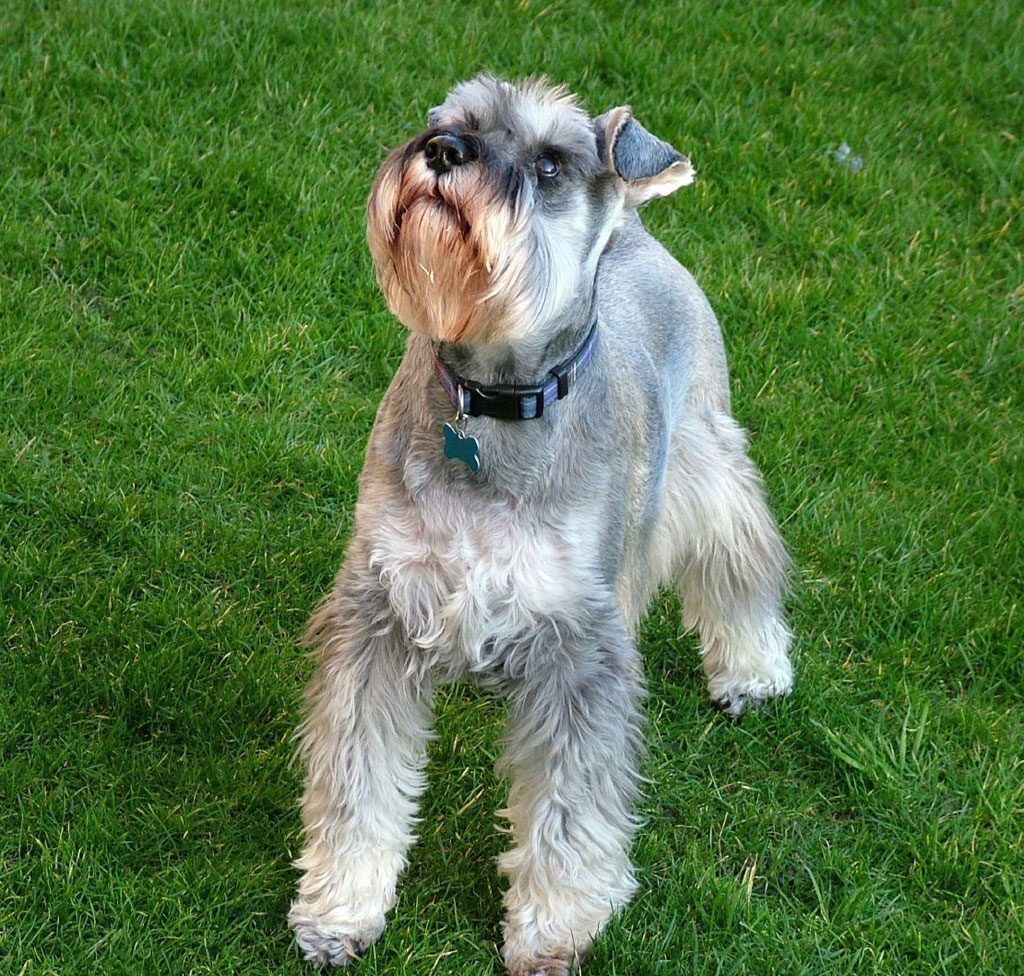
The Miniature Schnauzer is very unique in its appearance. compacts and muscular, they have a square complexion (its width and length are almost the same). They have Beard long, populated eyebrows and hair length in feet. The ears and tail, Commonly, cut them. In some countries, the cutting of these parts has been prohibited because it is considered that dogs use the movement of these parts to express moods and other complicated interactions within the pack..

Read more

โ–ท The world of Pets: Dogs, cats, birds, reptiles, amphibians

Estrela Mountain Dog
Portugal FCI 173 - Molossoid . Mountain

Estrela Mountain Dog

The Estrela Mountain Dog is a big dog, rough lines and powerful appearance

Content

History

The Dog of the Sierra de la Estrela (Cรฃo da Serra da Estrela) It is a breed of dog native of Portugal, in the mountainous region that bears the same name. It has all the qualities required in this wild region, is intelligent, loyal and brave.

There are those who hold the theory that they were introduced to Portugal by the Visigoths and slowly to various parts of Europe.. The Estrela Mountain Dog was used mainly- in mountainous areas to accompany shepherds and flocks on their annual migrations, defending the wolves and thieves.

It is believed that the two varieties of existing hair: short hair and Longhair, they are due to regional variations. Contrary to what might be expected, the warmest region, the region of Manteigas, is where you could find the long-haired dogs, While short hair varieties were most frequent in the North, in Gouveia e Seia. Crosses between these two varieties were frequent.

In 1934 the standard of the breed was drafted, which was established according to its two varieties of layer. From this point, the cross between two varieties became undesirable. The publication of the rule in 1966 and the recognition of the breed by the FCI, have not brought more popularity to the breed. Over the years 60 and 70, the Portuguese emigrated looking for escape from the regime of poverty. The population of dogs Serra da Estrela declined drastically in that period, but the dedication of some breeders allowed the continuity of the breed.

Today, the Estrela Mountain Dog is highly requested, especially the variety of long hair. While the variety of short hair was more numerous at the beginning of the last century, is the variety of long hair that stands out, especially for being more eye-catching, stylish, with a larger. This made the breeders will focus primarily on the variety of long hair. Today the short-haired variety is particularly vulnerable and rare..

Physical characteristics

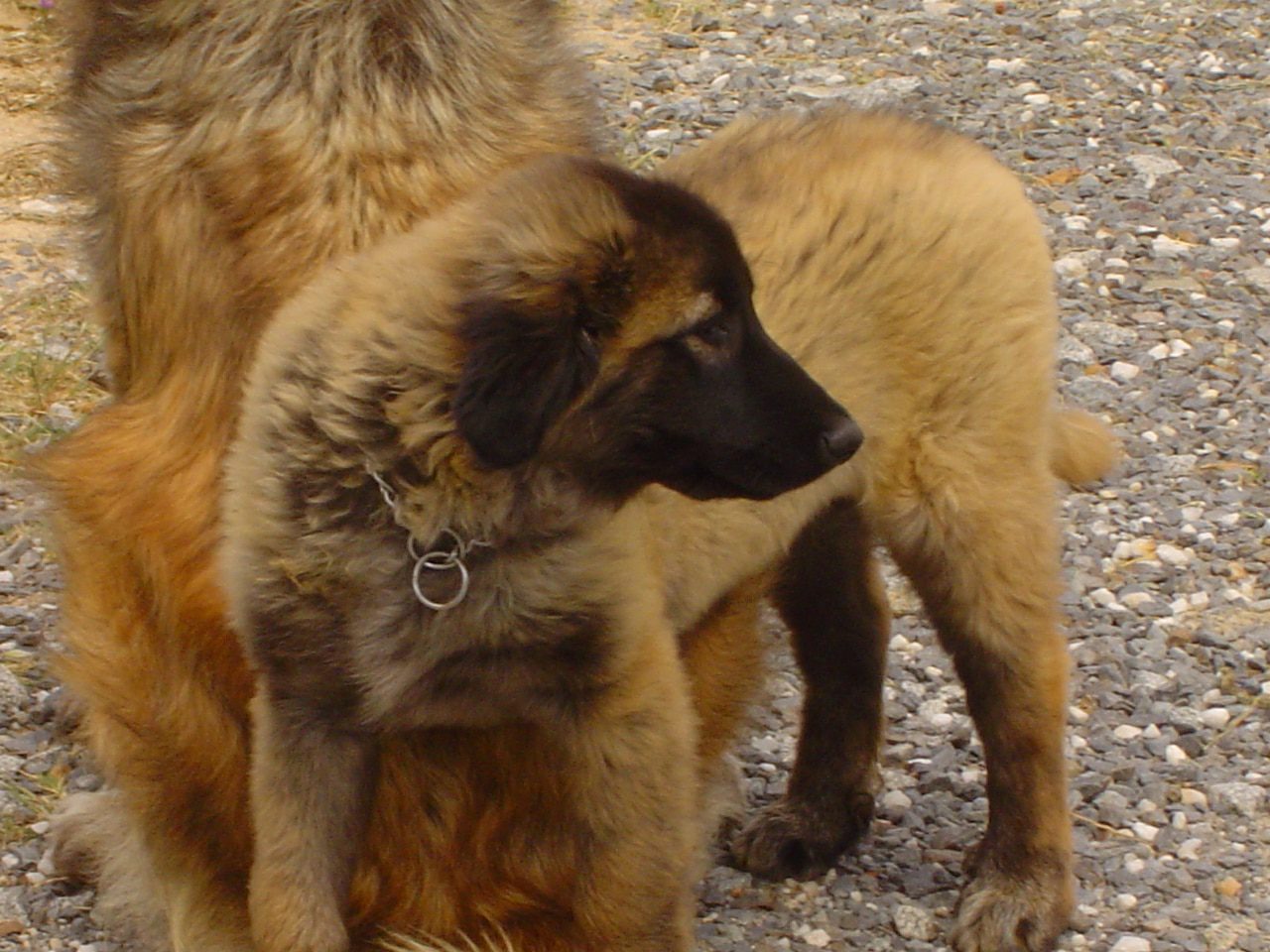
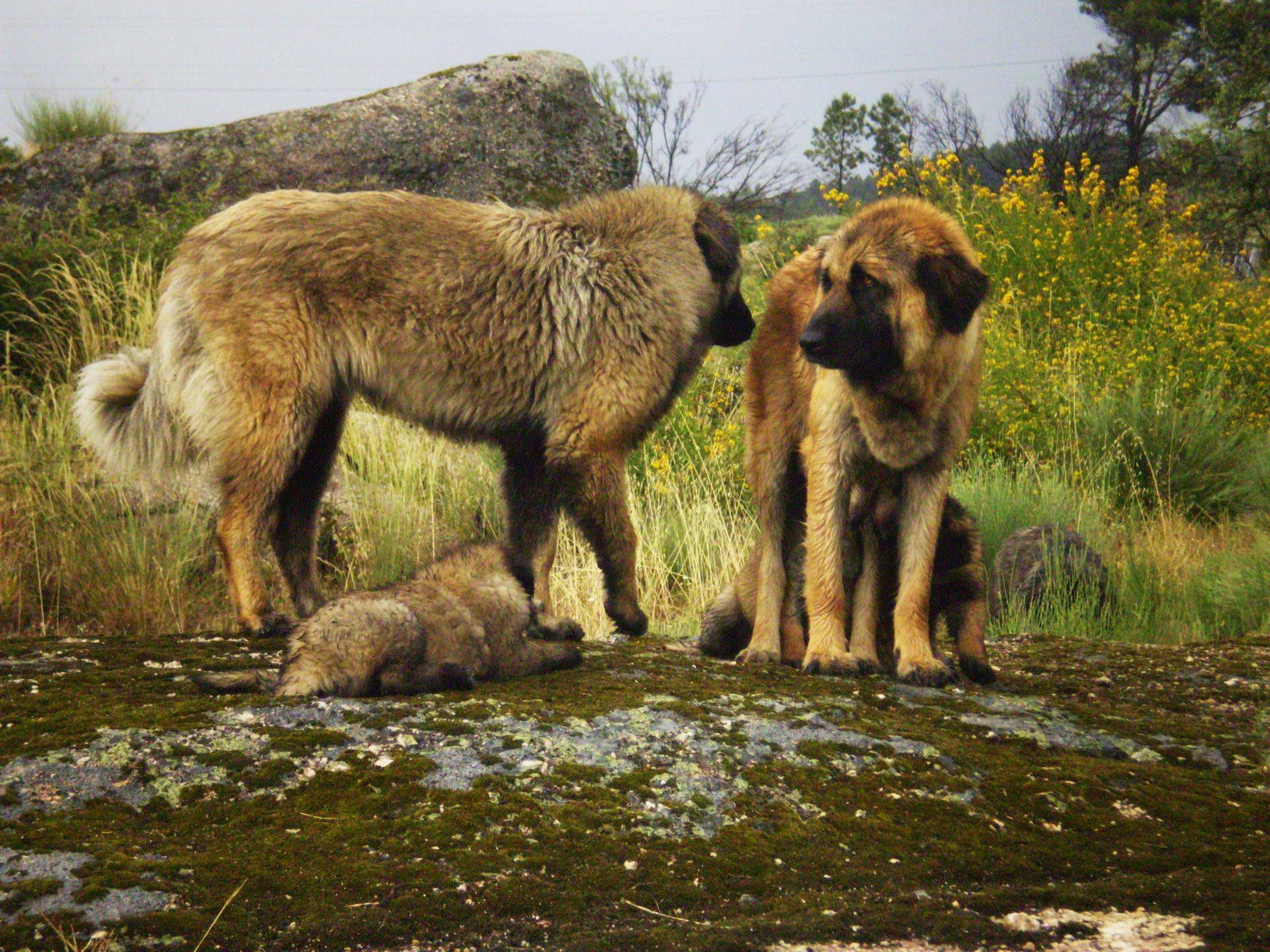
The Estrela Mountain Dog is a big dog, rough lines and powerful appearance. The head is huge, rounded and with a stunning skull. It has oval eyes, very expressive, Smart and serene.
The ears they are small and pendants, covered with a soft skin.

mastiff-type molosoid, the Estrela Mountain Dog has a broad chest and a slightly drooping rump. The members are strong and muscular. The tail is long, thick and slightly droopy.

There are two varieties of Estrela Mountain Dog: long hair and short hair. The hair is strong, thick, but not too rough. In some regions it is longer than others, especially in the queue, around the neck and back.

Only allowed the tawny colors, Lupine and yellow, monochrome or marbled.

Observations

Estrela Mountain Dog is a healthy dog, due to the strong natural selection which was exposed. But, There are some diseases of large animals with a higher incidence in this breed. The Dysplasia is one of them, especially that of hip. Due to this trend, owners must use quality diets, not exercise too your dog when he is young, avoid the steep stairs, breaks and slippery floors.

The variety of long hair they require more maintenance: brushed daily to untangle hair.
The variety of short hair only needs weekly brushings. Bathing should only be administered, only, When cannot be avoided,Since the protective greasiness of the skin can be damaged by cleaning products.

Character and skills

The Estrela Mountain Dog has always been kept with the sheep, While pastor was away from his flock the dog developed an independent organization and this led to his character of excellent guard dog.

It is also used for self defense and as a dog shot.

The Estrela Mountain Dog, due to its isolation and difficult access, It has become the home of this breed of dog. His hard hair helps you survive the harsh winters of the region. Each race has its specific character developed throughout its existence, of their own history.

This more or less independent nature makes this breed adapts well to modern times, where instead of caring won, waits for their owners to return from work at the end of the day. They have a lot of patience.

The beauty of this dog, his intelligence and strength, are the characteristics that allow him to be in addition to an excellent guard, a good family dog and very tolerant with children.

Habitat Estrela Mountain Dog

The Estrela Mountain Dog it's a big dog with a big boost. So, an apartment in the city is not ideal for him. Fluctuations of time and temperature do not bother him much, so you prefer to spend the day outdoors. So, the ideal is a house with a large patio or garden where you can move freely. It also, does not want to do without his long walks. For many other canine sports, requiring reliable obedience, is however hardly suitable due to its obstinacy.

Nutrition Estrela Mountain Dog

The Estrela Mountain Dog requires a correspondingly large serving of food, which should also be considered when buying it. Proper dog feeding helps keep it healthy for a long time. Whether one wants to use dry or wet food is a matter of personal preference.. In particular, nutrition during growth, especially in large dogs, sets the course for later life.

While puppies and adult dogs need enough energy, young dogs need an adapted diet, protein rich, to ensure that your muscles and skeleton grow evenly. If the young dog grows too fast on food that is too high in energy, there is a risk of permanent joint problems and malpositions. It also, It should be noted that all large breeds of dogs are at risk of stomach upset if the daily ration is administered at one time.. So, it is better and healthier to divide the food into at least two servings in the morning and at night and then give the animal a break for digestion.

Education and care

Due to the close connection of the Estrela Mountain Dog with humans and their good understanding, good conditions are created for purposeful education. But, the race's own head should not be underestimated. The Hound of the Sierra de la Estrela dog stubbornly reacts to too much hardness in training and the orders he considers meaningless. Therefore, the right key to a successful workout is patience, empathy and a consistent hand. During training special attention should be paid to the tendency to dominate, especially in males.

Although this is rarely directed against humans, but mainly against other big dogs, can disturb harmonious interaction and, above all, The walking. Ideally, great importance should be given to socialization already in the breeder. You should also practice meeting other dogs as soon as possible after your dog has moved in.. You can learn that other dogs are an enrichment and not a danger and that dominant behavior is not tolerated. In a good dog school you will receive many tips when in doubt, which will facilitate the management of your Dog from the Sierra de la Estrela.

A lot brushed in the change of coat

The Estrela Mountain Dog has a dense coat with a lot of undercoat, that adapts to weather conditions. The change of coat is therefore strong in this breed. To facilitate this process for the animal and reduce the amount of dog hair at home, should be brushed sufficiently and correctly, especially during the period. Ideal for this purpose are the special brushes, they can comb the bottom layer. Outside the change of coat phase, brush once a week.. The rest of the preparation is limited to a minimum. Especially if the dog is outside and a lot in the meadows and forests, should be checked regularly for parasites. If required, claws must be shortened with claw pliers.

Typical health and illnesses

The Estrela Mountain Dog it is a very robust animal that does not have to fight with the typical diseases of the breed. But, being a very large breed, you may suffer from dysplasia of the hip joint. Breeders recognized by the FCI only use parents that are not affected by this disease for breeding purposes., which also greatly reduces the risk to offspring.

Estrela Mountain Dog life expectancy

As a healthy race, the Estrela Mountain Dog reaches an age of 10 to 12 years without difficulty and generally without many visits to the vet. Proper nutrition and parenting are the prerequisites for a long and healthy life.

Photos Estrela Mountain Dog

Videos Estrela Mountain Dog

Type and recognitions:

  • FCI CLASSIFICATION:
  • Group :
  • Section : . .

Federations:

FCI โ“˜, AKC โ“˜, ANKC โ“˜, โ€‹KC โ“˜, NZKC โ“˜, UKC โ“˜ – The AKC does not have its own standard and instead is linked to the FCI

FCI breed standard "Estrela Mountain Dog"

Origin:
Portugal

Date of publication of the valid original standard:
04.11.2008

Use:

Herd guard dog, surveillance and companion dog also used in shooting work.


General appearance:

The Sierra de la Estrela Dog is a mastiff type. There are two varieties of hair: long and short. Rustic, of much substance with a strong movement and stunning attitudes.

The breed has a cheerful look, calm and expressive. Well proportioned, morphologically perfect, compact and rustic; The harmony of the whole is remarkable and demonstrates an ethnic purity of ancient races of the past.

IMPORTANT PROPORTIONS :

Medium long (long sub) tending to the middle line. Depth of chest is less than half of its height at the withers. The muzzle and the skull should be approximately the same length, If that is not the case, the skull should be slightly longer.


Behavior / temperament:

Inseparable companion of the pastor and faithful guardian of the herd protect against predators and thieves. Excellent dog guard farms and households, distrustful of strangers and typically docile towards its master.

Head:

Strong, voluminous. It is elongated and slightly convex profile view. Well positioned and provided to the body, the same as the relationship that keep the skull and facial, accentuate the harmony of the whole. Smooth skin over the skull and cheeks.

Cranial region:
  • Skull: Well developed, rounded skull facial longitudinal top spindles slightly divergent. Convex profile, superciliary arches slightly developed with a slightly apparent frontal fold. No prominent occipital protrusion.
  • Depression links (Stop) : Slightly pronounced, located at a more or less equal distance between the end of the nose and the occipital Protuberance.

facial region:

  • Truffle: Straight and aligned with the nasal bridge, well open Windows, big and black.
  • Snout: Elongate, slimming progressively towards the tip of the nose, but do not be sharpened. Almost straight nose cane, Although slightly hooked at the end.
  • Lips: Well developed but not thick, well bonded without tilting.  The mucous membranes of the mouth and palate, as well as the very pigmented black edge of the lips.
  • Jaws / Teeth: Well-defined mouth with well-developed jaws, full dentition with strong teeth, White and well implemented and good occlusion. Preferably bite in scissors, accepting bite on clamp.

Eyes: Horizontal, oval-shaped, at the level of the head; are medium-sized, aimed at small, symmetrical and wide open, with a calm and alert expression; Dark amber in colour preference. The eyelids are well bonded and pigmented black edges. A little marked eyebrows.

Ears: Small relative to the rest of the skull, form triangular, thin, rounded at their lower edge, pendants; inserted at a medium height, is tilted back slightly and hang to the sides of the head near the cheeks, revealing a part of your inner side in the base (called Pink ear).

Neck:

Straight, short and thick, correctly inserted on the shoulders and with a slight dewlap but not exaggerated.

Body:

  • top line: Straight. Level.
  • Back: Short preferably, well muscled.
  • Pork loin: Lumbar region wide, short, muscular and properly inserted to the rump.
  • Rump: Slightly inclined, short, broad and muscled. The height at the Croup should be equal to or slightly greater than the height at the withers.
  • Breast : Rounded, without being cylindrical, broad, long and well descended.
  • bottom line: The bottom line should gradually and gently rise from the sternum to the groin, not too wide belly, in proportion to the substance of the animal and harmoniously connected with the body.

Tail:

Robust, long, whose tip reaches the tibio-tarsal joint when the dog is standing or at rest. It is thick in the shape of a ยซ scimitar ยป, inserted at a medium height, well covered with stripes on the variety of long hair and hair ; is a hook at the end. The tail is carried below the horizontal line and falls naturally between the thighs when the dog is at rest. ; When stimulated or in action, it is carried higher than the horizontal line, forming an upward curvature., Go ahead, to the sides or down.

Tips

PREVIOUS MEMBERS: Plumb, with bones and joints strong, fairly open with unrestricted movement angles.

  • Forearm:  Straight, parallel, long, with strong bone and always cylindrical in shape.
  • Previous foot: Provided, never too round or too long, I in between a Jack's foot and a foot of Hare (not open), thick, fingers tightened with abundant hair between fingers, dark nails, preferably black, well developed, pads thick and hard.

LATER MEMBERS : Plumb, with bones and joints strong, fairly open with unrestricted movement angles.

  • Hock: Somewhat low, average opening, never leaning in or out.
  • Metatarsus: Vertical, always cylindrical in shape. Possible presence of single or double spur.
  • Rear foot: Identical to the previous foot.

Movement:

Normal and light.

Mantle

HAIR: Fur: Strong, very abundant, slightly thick, without excessive hardness with texture similar to the goat hair. The subhair is composed of a thin hair, short, abundant and matted. Usually lighter than outer hair color.

  • Long hair variety: Exterior smooth or slightly wavy hair, I uneven and some areas. In the Member, Below the elbows and legs it is shorter and thicker, as well as above the head., ears is gradually shorter from base to tip, being more thin and more soft. It is longest on the queue, where is well thick, thick and long hair. Around the neck and throat and on the thighs abundant long hair as well as on the sides of the forearm.
  • Variety short hair: Short hair, evenly distributed over the body, somewhat shorter on the head and members without having hair longer.

COLOR

The following colors are accepted and considered typical:

  •  Solid: yellow, Fawn and grey in all ranges of intensity of color;
  •  Wolf Gray: leonado, yellow and grey tones, usually with shaders more light and dark.
  • Striped: leonado, yellow or gray as a base with a black Brindle color.

In the craniofacial area a dark mask is typical.

White spots are allowed only on the limbs or feet before and after and a very small extension on the lower region of the neck and chest.


Size and weight:

  • Males : 65 to 73 cm..
  • females : 62 to 69 cm..

Tolerance + 2 cm..

WEIGHT :

  • Males: 45 โ€“ 60 Kg.
  • females: 35 โ€“ 45 Kg.


Fouls:

Any deviation from the aforementioned criteria is considered as a fault and the severity of this is considered to the degree of the deviation to the standard and its consequences on the health and well-being of the dog..

  • Appearance: Poor overall appearance, thinness or obesity.
  • Height: Outside the limits of the standard but with a tolerance of 2 cm.. of the upper limit.
  • Very narrow head, long and pointed.
  • Eyes: color clear.
  • Ears: incorrectly inserted, very long fleshy or round. Hanging completely flat.
  • Tail: Port on the back. Absence of hook.
  • Color: Absence of dark mask.

 SEVERE FAULTS

  • Behavior: Animals that show signs of shyness or nervousness.
  • Tail: Amputated or rudimentary.
  • Truffle: Pale nostrils, Truffle partially nonpigmented.
  • Ears: Amputee.
  • Fur: Other than described above.
  • Height:
  • Males :  Below the 65 cm.. or above 75 cm..
  • females: Below the 62 cm.. or above 71 cm..

MISS PLAYOFFS

  • Behavior:  Aggressive or too shy.
  • Typicity: Atypical.
  • Head: Too narrow, very long and very sharp, total absence of molosser type.
  • Jaws: Prognathism or enognatismo.
  • Eyes: Eyes of different colour or different size.
  • Tail: Anurismo.
  • Fur: Completely different hair than typical.
  • Color:  Any other color not mentioned in the standard. albinism.

Any dog โ€‹โ€‹showing clear signs of physical or behavioral abnormalities must be disqualified.


N.B.:

โ€ข Males must have two normal-appearing testicles fully descended into the scrotum..
โ€ข Only functionally and clinically healthy dogs, with the typical conformation of the breed, should be used for parenting.

Source: F.C.I - International Cynological Federation

Alternative names:

1. Portuguese Shepherd (English).
2. Chien de montagne portugais (French).
3. Serra da Estrela Berghund (German).
4. Perro de la sierra de la Estrela (Portuguese).
5. Perro de la Sierra de la Estrela (espaรฑol).

โ–ท The world of Pets: Dogs, cats, birds, reptiles, amphibians

Landseer
Alemania Suiza CanadรกFCI 226 - Molossoid . Mountain

Landseer

The nature of Landseer and Newfoundland is very similar, considering the first one as something more agile.

Content

History

The Landseer was created together with Newfoundland on the east coast of Canada. The great island of Newfoundland, located off the coast of Canada, gave his ancestors his name. Just 100 years the ways of Landseer they separated from those of Newfoundland. The reason was that they wanted to keep their skin color black and white.. More on this later. Who descended from the dogs of the Vikings of pre-Columbian times, from Spain or from the dogs of the Indians, are legends that remain untested. But, according to the current genetic map of canine breeds prepared in 2017 by an international group of researchers led by Heidi G. Parker, there is a close relationship with the recuperators, What, like the Labrador, come from the same area. Probably the ancestors of the Landseer or Newfoundland arrived in North America with the first European settlers.

The big dogs proved to be important helpers for fishermen and sealers in the cold waters of the North Atlantic., and were also occasionally useful in hunting bears and big game. It also, landowners or Landseers they carried loads and even as a draft dog they are said to provide exceptional services. Working with fishermen in extremely harsh weather was very demanding. The Landseer had to think, had to do heavy work on the networks, saved the lives of the castaways over and over again. In this way he developed the peculiarities of his being and his physique.. He accomplished amazing things in the service of humanity. The Landseers or landowners came to England over and over again with cod ships as early as the 18th and early 19th centuries. Here he became famous very early for his impressive achievements.

The famous poet Lord Byron put in 1808 your dear boatswain Landseer an impressive monument. He had the words engraved on his tombstone: ยซHere rest the bones of one who possessed beauty without vanity, strength without exuberance, courage without savagery, and all the virtues of man without his vices". Here the greatness of character of these dogs is expressed, that can still be experienced today. The painter Sir Edwin Landseer immortalized his Newfoundlands black and white in oil several times around 1830. There is some evidence that dogs documented as Newfoundland Oh ya en Canis Earth News 1700 were predominantly black and white and that it was only later that the pure black or brown dogs that are typical of Newfoundland today. The black and white guy went out of style in England. But, Swiss and German cynologists and breeders brought the last good dogs from England and built a continental European breed.

To save these black and white dogs from Newfoundland, they were declared their own race around 1900, named after their famous painter ยซLandseerยซ. So this ancient type of dog with a great history was preserved for the world of dogs.. Since then, the Newfoundland and Landseers are raised separately. Later it is said that Kuvasz and Pyrenean Mountain Dogs were crossed to stabilize the white color of the soil.

In 1960 the Landseer (continental-european type) was officially recognized by the Fรฉdรฉration Cynologique Internationale.

Physical characteristics

According to the breed standard of the Landseer, You must give the impression of being a but powerful and well balanced. The legs are relatively longer than the black Newfoundland. The back is straight and strong. The hind legs and shoulders are muscular.

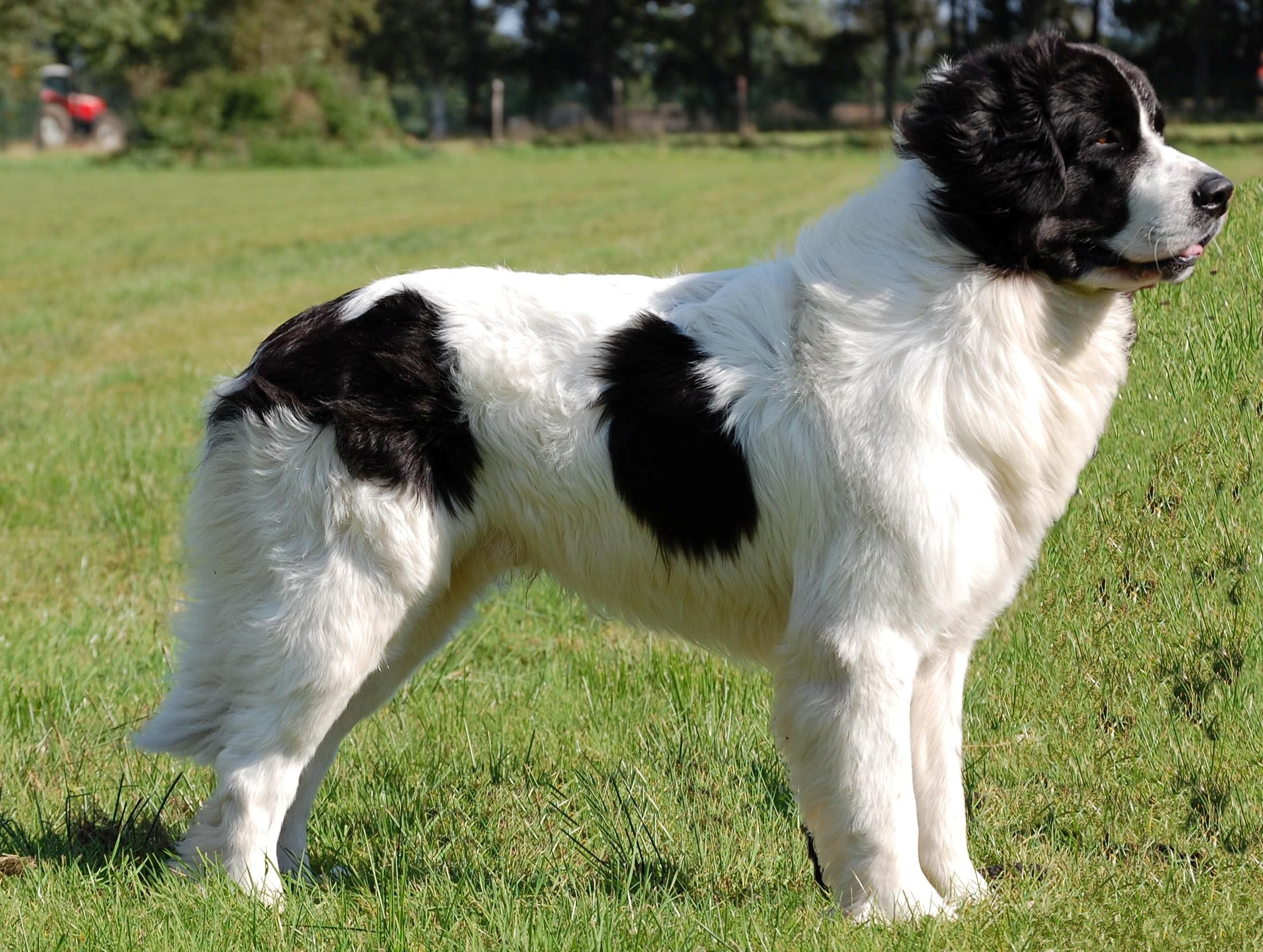
The upper layer must be long and as straight as possible, very dense and soft to the touch. The main color of the layer is white with various patches black in the rump, the neck, backsplash, belly, legs and the tail should be white.

The head should be black with the white snout and symmetric white extends from the snout to the head, ending with the white collar. It has a distinctive shape with a noble facial expression. The ears are medium-sized and eyes should be dark brown. the size of the Landseer will of 67 to 80 cm., and at birth weigh between 500 to 750 grams and at the age of 1 year can be reached despite 50 to 60 kg.

Like all mastiff-type breeds, the Landseer It is also grown very fast during its first year. Therefore one must be careful with the exercise, because if it becomes sedentary can suffer from overweight.

Character and skills

Throughout its development, and even at maturity (that is not until the dog is of 3 or 4 years of age), the Landseer is a very active dog who likes to do all kinds of activities. Swimming, for example, is your favorite activity. So when a Landseer smells and sees the water, already no boundaries, jump to the water.

The Landseer he is a very accommodating dog with his master. It is active, has good temperament, but it is not a nervous dog. It is a very confident dog, Intelligent, loyal to their own people, fairly mild in nature and, When they are given sufficient exercise outdoors, it attaches very well to home life. In general terms, most of Landseer they are very independent and have a mind of its own. The Landseer is very easy to train, much love and patience will be rewarded with a partner for life.

As we said in previous lines to most of the Landseer, they love water and walks, It is therefore necessary to fulfill these wishes to the dog. Being on the water takes it as a job, reason why can take advantage of these time to play to find objects, launch toy water to make it look, It can be one excellent training both for the owner and as for the dog. It is a good diver and with appropriate training, they are able to find objects in the bottom of any Lake. In this regard, It is good to note that if you want to go swimming with your Landseer you should keep in mind that, the dog will try to rescue and towed back to land. So, no doubt have to be careful to do this the first time. Basic training is required so that the dog knows when you are playing, and when not. Any other activity with the family is also something that the Landseer always wants to do.

When it comes to behaviour towards other dogs, children and people there is no problem. Especially the Landseer, they love to children.

It is good to socialize with other dogs puppies, because if he is male, It can be very dominant. But with a proper education, There will not be any problem.

Landseer Education

The Landseer can be educated very well. It is intelligent, interested and quickly understand what you are allowed to do and what you are not. Sometimes he takes it easy, but a little motivated he is very cooperative and tries to make his lord and master happy. The puppy should already show itself clearly and without exception where the hammer hangs. There should be no doubt about the orientation of your humans, as well as on the intimate relationship with.

Always keep in mind that this dog is the strongest and that orientation only works through unquestionable recognition. But with praise and consequences you can basically accomplish everything with it. On the basis of a good education you can even train very well at Landseer. Many Landseer are used as rescue dogs in the water, but also on earth. For this you can pass the work tests with water in the clubs.

Landseer Health and Care

The maintenance and care of the Landseer they are complex as with all big dogs. The dense and weather resistant layer should be brushed regularly with a special brush. Should not be sheared or trimmed.

The dogs of the breed Landseer like all large dogs they tend to hip joint dysplasia, twisting of the stomach. Due to their constitution and their dense fur they do not tolerate heat well.

Nutrition / Food

Like all large dogs, the Landseer needs a lot of good food. Especially in the growth phase you need professional nutritional planning. A high positioned food bowl is useful to counteract the risk of stomach twisting. You should always pay close attention to your weight.

Landseer's life expectancy

Life expectancy is between 10 and 12 years.

For sale Landseer

You should only purchase a puppy locally from a breeder who is affiliated with the FCI. Puppies of this breed cost between 1.500 and 2.000 EUR.

Images "Landseer"

Photos:

1 – Puppy landseer – 3 months old by OdinetPietra / CC BY-SA
2 – Landseer by https://pxhere.com/es/photo/548945
3 – Landseer by https://pxhere.com/es/photo/550456
4 – Cleo 11 months by Per Jensen – Flickr
5 – Landseer at PhotoEmotions (pixabay.com)
6 – Landseer by Katrina_S (pixabay.com)

Videos "Landseer"

Type and recognitions:

  • FCI CLASSIFICATION:
  • Group :
  • Section : . .

Federations:

  • FCI – Pinscher and Schnauzer-Molossoid type dogs – Swiss Mountain Dogs and Cattledogs. Section 2.2 Molossoid, mountain type. โ“˜

FCI breed standard "Landseer"

Origin:
Germany, Canada, Switzerland

Date of publication of the valid original standard:
24.08.1960

Use:

Guard and companion dog.


General appearance:

The Landseer must give the impression of a large dog, strong and harmonious. Your limbs, especially in males, they are proportionally longer than in the black Newfoundland.


Behavior / temperament:

---

Head:

The skin of the head, short hair cover, it is wrinkle free. The head profile is marked, but it has an expression of nobility.

Cranial region:
  • Craging: Wide and bulky, with a well developed occipital protuberance.
  • Dfronto-nasal depression: Marked, but not as noticeable and abrupt as in St. Bernard's dogs.

facial region:

  • Trufa: black.
  • Horcico: The length of the muzzle is equal to its height measured against the frontal-nasal depression.
  • Labios: Thin and pigmented in black; the superiors, which are as stiff as possible and do not drool, slightly cover the lower ones.
  • Jaws/Teeth: Scissor bite.
  • Cheeks: Moderately developed, gradually melting into the muzzle.
  • Ojors: Medium-sized, moderately sunken, brown or dark brown, although light chestnut is tolerated. friendly expression; almond-shaped eyelids; the palpebral conjunctiva is not visible. Overly clear eyes (sulfur or yellowish gray color) are considered as fouls, as well as eyes implanted too close to each other.
  • Obars: Medium-sized, reach the inner corner of the eye when placed towards the eyes; form triangular, a little rounded on its bottom edge, implanted high in the skull, but not too far back. Flat and glued to the sides of the head, they are covered with short and fine hair and have stripes of longer hair only at the back of the insert.

Neck:

The neck in its cross section is not completely round, but slightly oval; he's muscular, and it rises wide from the region of shoulders and thorax towards the head. In symmetrical construction, the length of the neck, from the occipital protuberance to the withers, is approximately 3/4 to 4/5 the length of the head, measured from the occipital protuberance to the tip of the nose. The presence of dewlap is not desirable (throat and neck) notable.

Body:

It is very broad and powerful from the cross to the rump. The length from the withers to the tail insert should be approximately twice the length of the head.

  • Espalda: Stiff and straight.
  • Pork loin: Muscular.
  • Glikeness: Wide, well rounded on the sides and back thanks to the powerful muscles that cover it.
  • Pecho: In the middle of the very muscular shoulders, the chest is broad and deep with strongly arched ribs forming a corresponding rib cage.
  • Vinbetween: Slightly retracted; between the belly and the back, a flat sag in the flank region must be visible.

A weak back is considered a fault, expired, loose backs, and the last ribs very short and an excessively retracted belly.

Tail:

Strong, reaches a little below the tibial-tarsal joint at most, covered in dense, leafy hair, but without forming feathers. When the dog is calm on its feet or at rest it carries it hanging down, eventually with a slight curve at the tip. During movement you can carry it straight with a slight upward bend at the tip. Tails bent or curled over the back are not tolerable.

Tips

PREVIOUS MEMBERS: A robust muscle mass from the shoulders surrounds the strong humerus and forms a correct angulation at the junction with the powerful bones of the completely straight and muscular limbs.. The forelimb has some stripes of hair that reach the tibial-tarsal joint.

  • Elbows: Well attached to the lower part of the thorax in a fairly high position and completely directed backwards.

LATER MEMBERS: The rear limb is powerful. The hind limbs must have free movement and have strong bones surrounded by powerful muscles., so that the thigh region mainly shows extensive development.

  • Thighs: They have a particularly broad development.
  • Espolones: Are unacceptable, They must be amputated from the first days of birth.
  • PIIS: Big and well formed (cat feet). Crushed or deviated feet are reprehensible. The fingers must be joined by strong interdigital membranes to the proximity of the tip of the fingers.

Movement:

The movement of the muscular limbs must be free and wide.

Mantle

  • Plink: Except for the head, the coat must be long, where possible, smooth and bushy, soft to the touch and intermixed with inner fleece which should not be as dense as in Newfoundland. The presence of an outer layer of slightly wavy hair on the back and thighs is not penalized. When brushing hair in the opposite direction to the natural position, it must return by itself to the correct position.
  • Colorr: The basic coat color is pure white with sharp, broken black plates distributed over the trunk and rump region.. The neck, the sill, the belly, limbs and tail must be white. The head is black. The presence of a white mark on the muzzle is typical of the breed, attached with a whitelist, symmetrical and not very wide. Smoke colored spots on the white background are not considered as faults, but they must be eliminated in breeding through selection.


Size and weight:

Alturto the cross: Height at withers in Landseer may fluctuate: in males an average between 72 and 80 cm and in females an average between 67 and 72 cm.. Small variations in size larger or smaller are tolerated.


Fouls:

Any deviation from the aforementioned criteria is considered as a fault and the severity of this is considered to the degree of the deviation to the standard and its consequences on the health and well-being of the dog..


FALTAS DISQUALIFYING:

  • Aggressiveness or extreme shyness.
  • Any dog โ€‹โ€‹showing clear signs of physical or behavioral abnormalities must be disqualified..


N.B.:
  • Males should have two normal-appearing testicles fully descended into the scrotum..
  • Only functionally and clinically healthy dogs, with the typical conformation of the breed, should be used for parenting.

Source: F.C.I - International Cynological Federation

Alternative names:

1. LANDSEER (EUROPEAN CONTINENTAL TYPE) (English).
2. LANDSEER (TYPE CONTINENTAL-EUROPEEN) (French).
3. LANDSEER (EUROPร„ISCH-KONTINENTALER TYP) (German).
4. LANDSEER (TIPO EUROPEU CONTINENTAL) (Portuguese).
5. LANDSEER (TIPO EUROPEO CONTINENTAL) (espaรฑol).

โ–ท The world of Pets: Dogs, cats, birds, reptiles, amphibians

Black Russian Terrier
Rusia FCI 327 . Pinscher and Schnauzer type

Terrier Ruso Negro

The Black Russian Terrier, need plenty of exercise, and it can be hyperactive and destructive

Content

History

The Black Russian Terrier, (in Russian: ะงั‘ั€ะฝั‹ะน ั‚ะตั€ัŒะตั€), abbreviated as BRT, known, also as dog of Stalin (Sobaka Stalina), It is a breed of dog developed to serve as a guard dog and police dog..

The breed was recognized as such in July of 2004, by the American Kennel Club.

despite its name, the Black Russian Terrier, is not a pure Terrier: It is believed that they were used around twenty races in its development, including (among others) to the Airedale Terrier, the Giant Schnauzer, the Rottweiler, the Newfoundland, the Kavkazskaรฏa Ovtcharka and the Moscow Water Dog, now extinct.

Physical characteristics

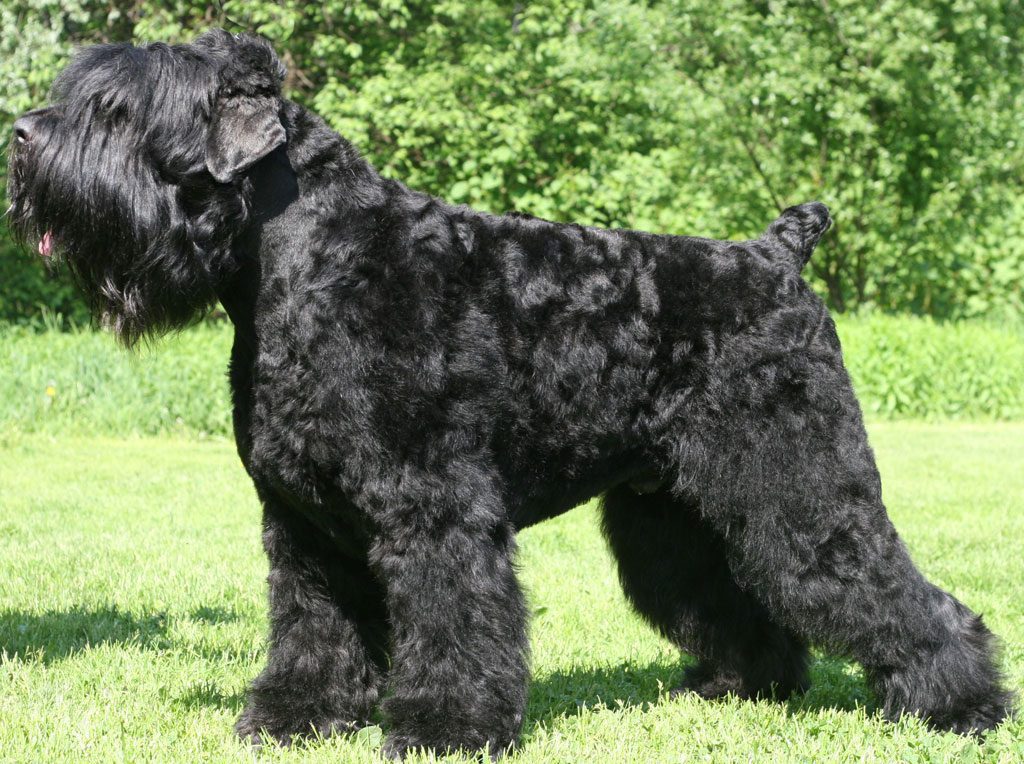
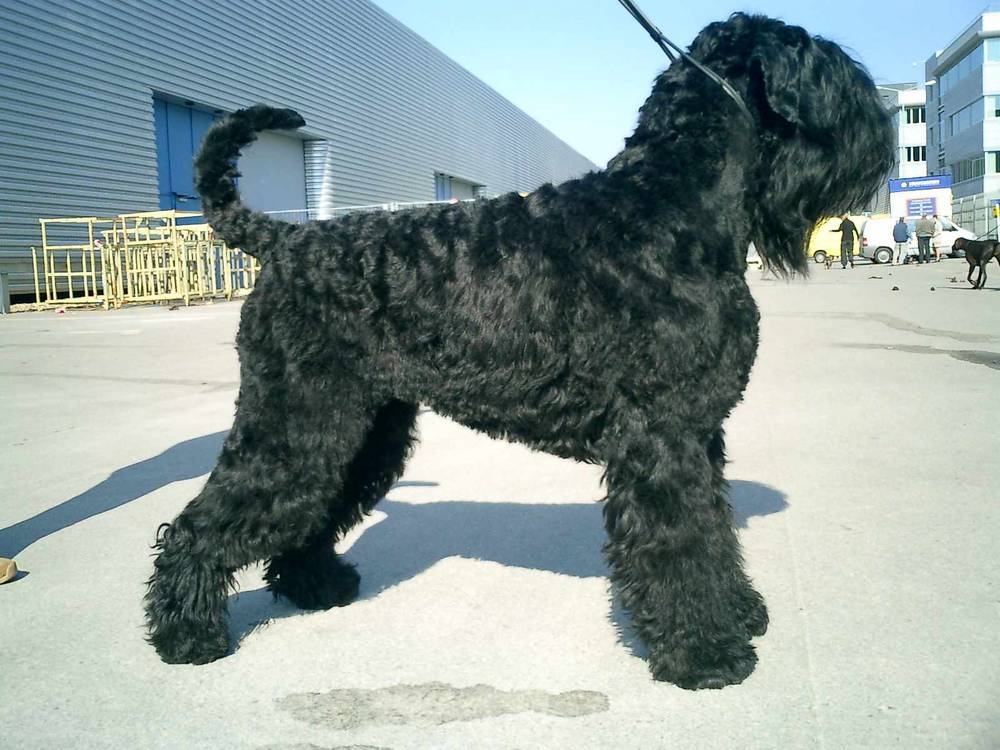
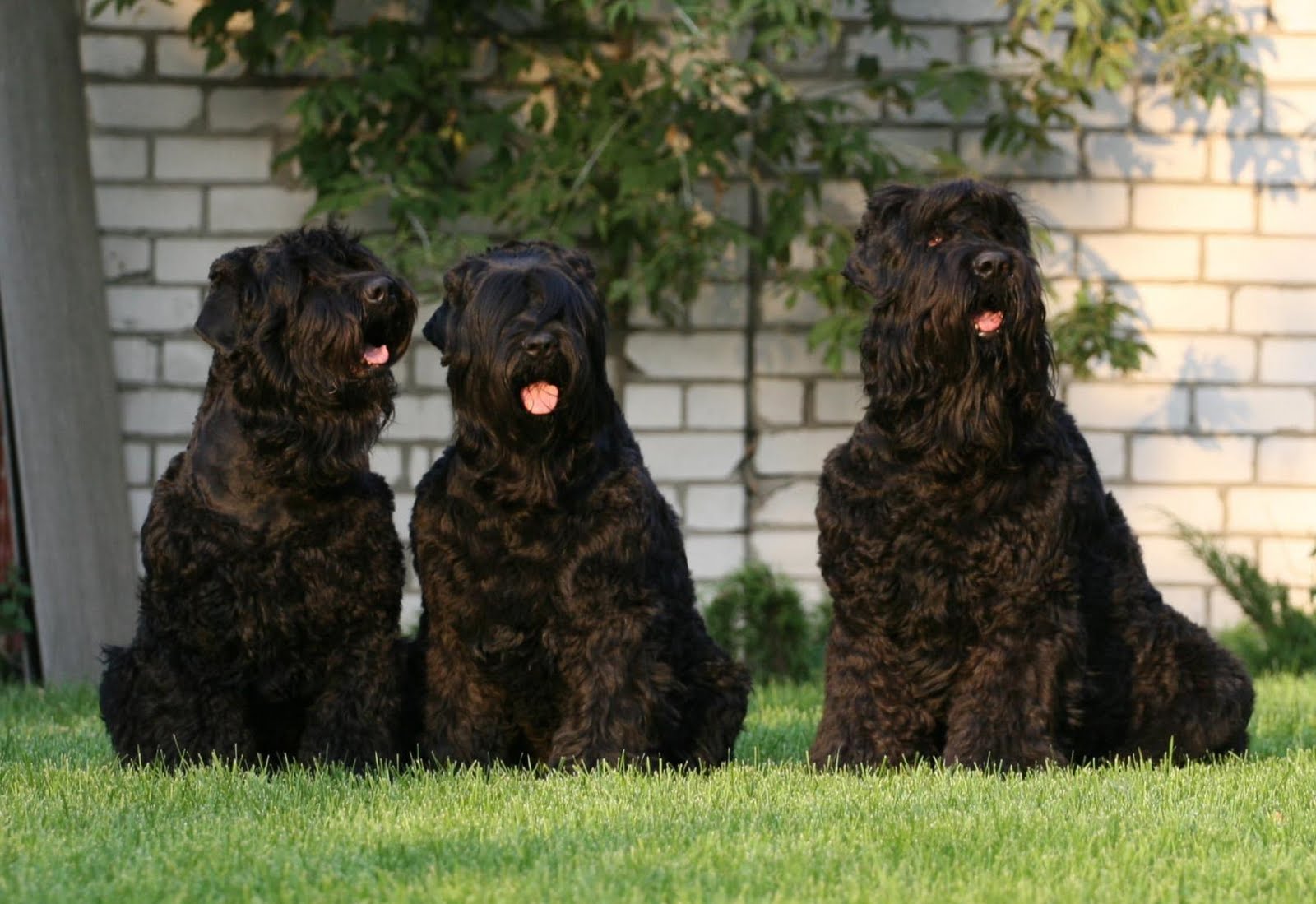
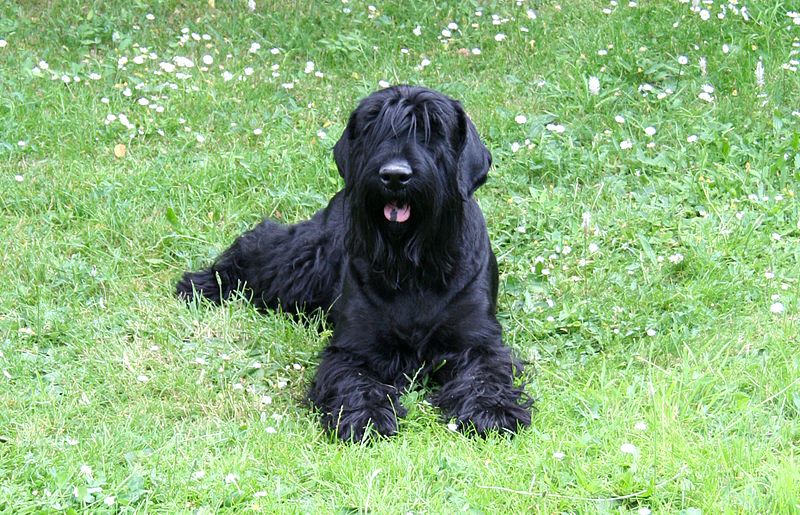
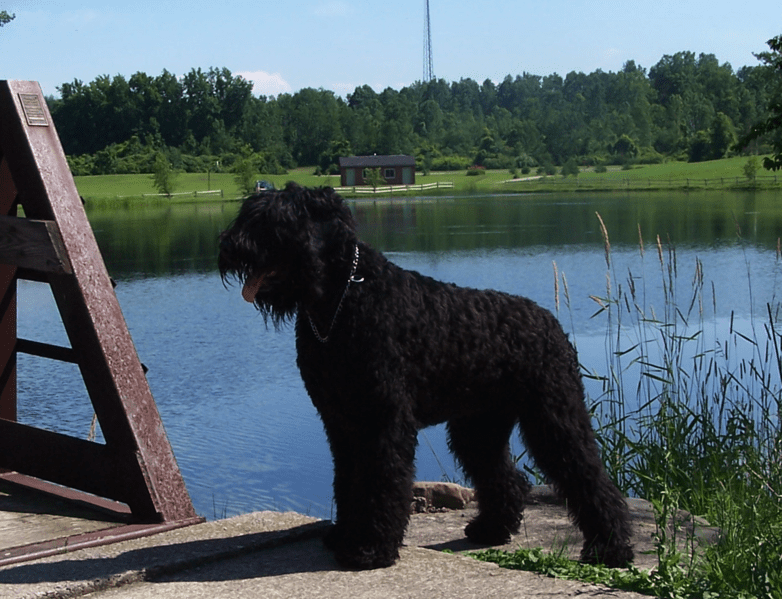
The Russian black terrier much more resemble a Schnauzer that to a Terrier. The head is long, with flat front. The strong muzzle. The eyes are small and dark. The trunk is solid. The limbs are straight and muscular.

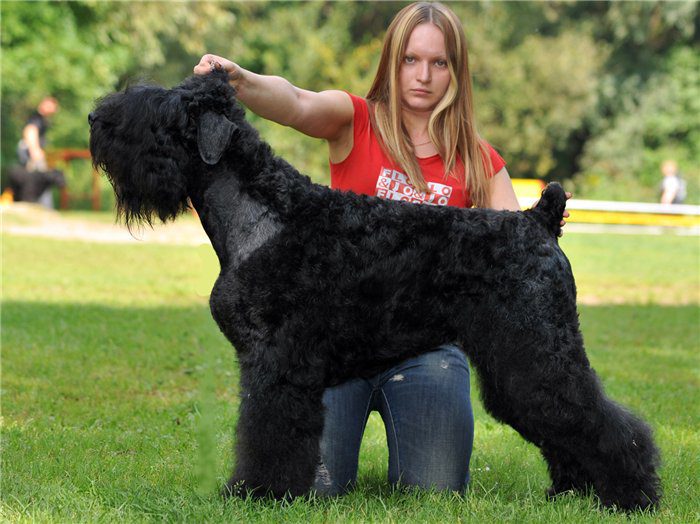
The Black Russian Terrier, gives the impression of great strength, agility and value. It is a robust dog, rustic in appearance (but not fat), and it must not appear as if his hair was sculpted or trimmed, must see bright in nature, and slightly curly.

The coat is hard and dense, is not very smooth to the touch, It is as curly and the length of the hair will be of 4 to 10 cm.. The longest hair found in the beard and eyebrows, with a mane (not very dense but longer than the rest of the body) What, extends, slightly, the cross and the neck, more pronounced feature in males. The coat is low detachment and the color is black with some gray hair.

According to the FCI standard (1983), the male must have a height of 66 to 72 cm to the cross and the female of 64 to 70 cm., with a tolerance of +/- 2 cm.. They must weigh between 35-70 kg.

Did you know??

Although the word Terrier on their behalf, the Black Russian Terrier is a member of the American Kennel Club Task Force.

Character and skills

ยซBlack Russian Terrierยป Videos
Black Russian TerriersBlack Russian Terriers
Dogs 101 - Black Russian TerrierDogs 101 – Black Russian Terrier
The Black Russian Terrier, is a safe dog, quiet, very intelligent, brave and loyal. you should never be shy. It may seem distant, or perhaps independent, but in their basic needs, is the human company and the love of his family.

It is a healthy dog in general and their life expectancy is around the 14 years.

Because of his upbringing as a working dog, has a very strong instinct worker ("work ethic"), and that is why it is good to provide the animal some games to understand work roles, so you will be happy.

Initial training is a necessity, that you will take advantage of any owner who has not been able to establish a domain course. They are very sensitive to education and often Excel at obedience competitions. As well, they are very good in various dog sports, such as agility.

The Black Russian Terrier, need plenty of exercise, and can be hyperactive and destructive if not given the opportunity to burn off his energy.

Characteristics "Black Russian Terrier"

Coexistence is important that you have with your new friend. Before considering the acquisition of a dog of the breed "Black Russian Terrier" you know certain factors. Not all breeds of dogs are apt to live in an apartment, you must take into account his character, their need for exercise, their interaction with other pets, their care and if you have small children, their level of tolerance towards them.

Adaptation โ“˜

3,0 of 5 stars (based on 1 review)

friendly dog โ€‹โ€‹โ“˜

3,0 of 5 stars (based on 1 review)

hair loss โ“˜

3,0 of 5 stars (based on 1 review)

Affection level โ“˜

4,0 of 5 stars (based on 1 review)

Need for exercise โ“˜

4,0 of 5 stars (based on 1 review)

Social need โ“˜

3,0 of 5 stars (based on 1 review)

Home โ“˜

3,0 of 5 stars (based on 1 review)

Toilet โ“˜

4,0 of 5 stars (based on 1 review)

Friendly with strangers โ“˜

1,0 of 5 stars (based on 1 review)

barking โ“˜

4,0 of 5 stars (based on 1 review)

Health โ“˜

3,0 of 5 stars (based on 1 review)

Territorial โ“˜

5,0 of 5 stars (based on 1 review)

Cat friendly โ“˜

3,0 of 5 stars (based on 1 review)

Intelligence โ“˜

4,0 of 5 stars (based on 1 review)

Versatility โ“˜

4,0 of 5 stars (based on 1 review)

Child friendly โ“˜

3,0 of 5 stars (based on 1 review)

Surveillance โ“˜

3,0 of 5 stars (based on 1 review)

joy โ“˜

5,0 of 5 stars (based on 1 review)

Images ยซBlack Russian Terrierยป

ยซBlack Russian Terrierยป Videos

Type and recognitions:

  • FCI CLASSIFICATION:
  • Group :
  • Section : . .

Federations:

FCI โ“˜, AKC โ“˜, ANKC โ“˜, CKC โ“˜, โ€‹KC โ“˜, NZKC โ“˜, UKC โ“˜

FCI breed standard Black Russian Terrier

FCIFCI - Black Russian Terrier
Terrier

Alternative names:

1. Chornyi, Russian Bear Schnauzer, Russian Black Terrier, Chornyi Terrier (English).
2. Terrier noir russe, errier noir (French).
3. Russischer Schwarzer Terrier, Russischer Schwarzer Terrier (German).
4. Terrier preto da Rรบssia, Cรฃo de Stalin, chiorny Terrier (Portuguese).
5. Perro de Stalin (espaรฑol).

โ–ท The world of Pets: Dogs, cats, birds, reptiles, amphibians

Bosnian and Herzegovinian - Croatian Shepherd Dog
Bosnia & Herzegovina CroaciaFCI 355 . Molossoid . Mountain

Pastor de Bosnia-Herzegovina y Croacia

The Bosnian and Herzegovinian - Croatian Shepherd Dog It is a very sensitive and quiet dog.

Content

History

The Bosnian and Herzegovinian - Croatian Shepherd Dog, also called Tornjak, it is an ancient breed of dog, and its exact origin is lost in the meanders of history. Most specialists agree that it is one of the descendants of the Tibetan Mastiff (Do-Khy), that arrived in Europe several thousand years ago.

Some accounts suggest that it already existed in the Dinaric Alps (in present-day Bosnia) at the time of the Roman Empire, almost ago 2000 years. But, the first descriptions of a dog corresponding to the Bosnian and Herzegovinian - Croatian Shepherd Dog can be found in documents of the Bosnian Catholic Church dating from 1067.

Three centuries later, in 1374, Petar Horvat, then bishop of Dakovo, Croatia, He also described a dog that resembled the Bosnian and Herzegovinian - Croatian Shepherd Dog in all aspects, size, color and function. At that time it was called Canis Montanis ("mountain dog") and I was already working with the shepherds, leading flocks of sheep in the mountain pastures and, above all, protecting them from the attacks of wolves.

The name Tornjak first appeared in 1752 in the writings of Father Petar Lukic, member of the Dakovo Catholic Church. It is said to derive from the Croatian word ยซTorยป, which could be translated as "flock of sheep".

This dog was found mainly in present-day Bosnian territory, and to a lesser extent in Croatia. The first scientific references to it date back to the beginning of the 20th century., and more precisely to 1905, when Austrian dog fan Franz Laska accurately identified a mountain dog seen in Bosnia, call Tornjak by the locals. But, the Tornjak remained confined to the mountains for a long time. It even declined sharply in the following decades as lifestyles changed and grazing decreased.. Its population grew from several thousand in the nineteenth century to just under a hundred in the decades of 1960 and 1970, when a few Croatian and Bosnian enthusiasts conducted a census to preserve the breed.

If most of the identified specimens then came from Bosnia, it was in Croatia that a breeding program was established in the late 80. In 1979, in Zagreb (Croatia), the Yugoslavia Canine Association officially recognized the breed, and in 1982 the first litter with a complete pedigree was born as a result of this breeding program. Despite this almost rebirth, the Tornjak he was not at the end of his problems, since the explosion of Yugoslavia in 1991 and the civil war that followed caused him many difficulties.

The new Croatian Canine Association decided to identify a breed Tornjak croata, while his counterpart in Bosnia-Herzegovina spoke of the Tornjak bosnio. Although these dogs were in all respects the same, the fact that they were considered two separate breeds prevented them from breeding with each other, for example.

Was not up 2003 that the two organizations unified their standards under the name of Tornjak. In 2007, the Fรฉdรฉration Cynologique Internationale (FCI) provisionally recognized the Tornjak, that took the name of Bosnian and Herzegovinian - Croatian Shepherd Dog. At that moment, there was 1800 specimens recorded in Croatia, and 2700 in Bosnia.

After this recognition, the breed timidly began to make a name for itself outside the countries of the former Yugoslavia. El American United Kennel Club (UKC) accepted it in 2011, while the American Kennel Club (AKC), the other reference organization in the country, included it in 2012 in his Foundation Stock Service (FSS), a preliminary step before full recognition, what has not yet been produced to date. The first specimens arrived in Great Britain in 2013, and steps were taken to gain recognition from the prestigious and influential Kennel Club (KC), the reference body of the country. They haven't been successful yet. in Canada, the Canadian Kennel Club (KC) does not recognize the Bosnian and Herzegovinian - Croatian Shepherd Dog. But, year 2017 marked its final acceptance by the CFI.

Very popular in his home region, the Bosnian and Herzegovinian - Croatian Shepherd Dog struggles to win over audiences beyond his native region. It is extremely rare in North America, and it is not very common in Western Europe either. In France, He came in 2010. At the end of this decade, there were an average of fifty registrations per year in the Livre des Origines Franรงais (LOF).

Physical characteristics

Great and powerful, the Tornjaks retain above-average agility and flexibility for a mountain dog.

They have an almost square shape, with strong bones that are not heavy, giving them a harmonious overall appearance. The tail is long, very mobile and bushy. When falling to rest, rises well above the level of the back when in action, which is uncommon in mountain dogs. Legs are powerful, parallel and raised.

The head is elongated, with a slight stop. The muzzle is rectangular and ends in a dark nose with wide nostrils.. The eyes are also dark and almond-shaped. The ears, triangular and hairy, stand tall and fall along the cheeks.

The undercoat is dense and thick, with a woolly texture in winter. The stiff top coat is long all over the body, except on the face and front of the legs. It is particularly abundant on the neck, forming a mane that protects it from predator bites.

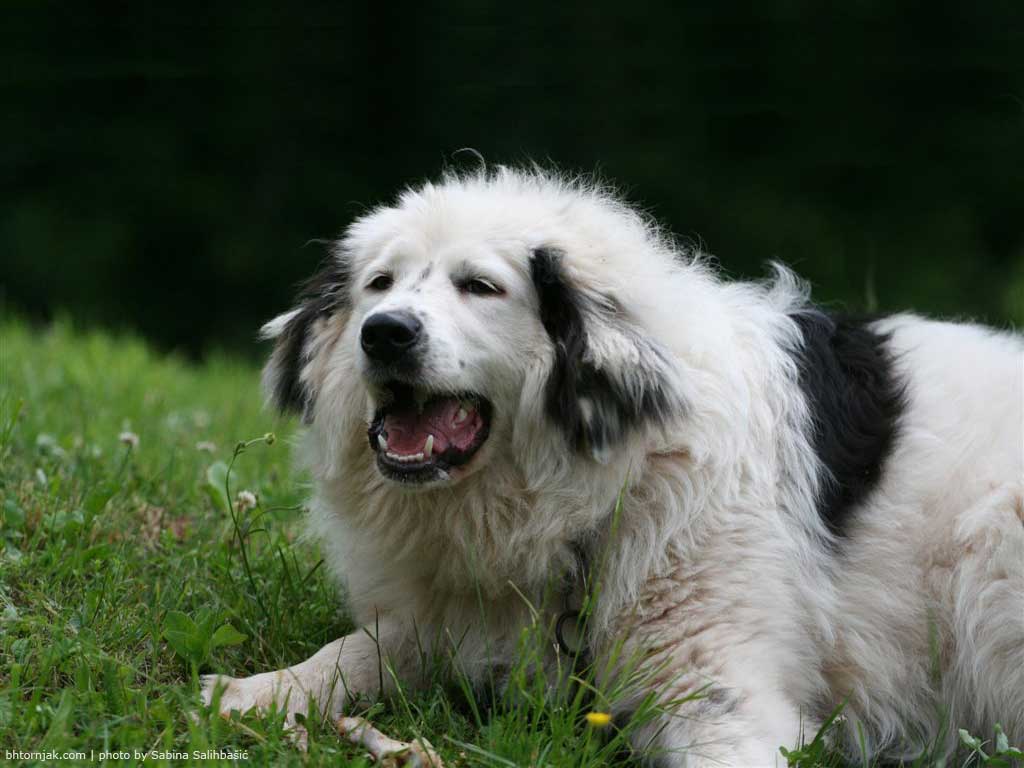
The Bosnian and Herzegovinian - Croatian Shepherd Dog and the Croatian Sheepdog are the ones that most often have a particular color, although there are white subjects, with only a few small spots of color. White is the most common background color, with markings of various colors: black, brown, cervato… More rarely, some individuals have a black coat stained with white.

Last, sexual dimorphism is well marked in this breed: the female is not only smaller on average by about 5 cm., but also less massive.

Character and skills

The Tornjak he is surprisingly outgoing and caring for a shepherd who has worked for centuries in the mountains. He likes to spend time with his family, and is willing to play with older and smaller animals. In fact, he is a dog that adores children, and can spend hours entertaining them – The opposite also is true. But, due to its size and power, could easily inadvertently push a small child, so it is better if you are already a certain age, especially since then he is more likely to learn to behave with an animal and to respect it. In any case, a young child should never be left alone with a dog, regardless of race.

His attachment to the family he grew up with also means he can hardly get used to life in a new home if life's perils mean he has to change owners.. You are likely to have the greatest difficulty recovering from abandonment.

In addition to their great closeness to their caregivers, the Bosnian and Herzegovinian - Croatian Shepherd Dog he's also surprisingly personable with strangers. It barks when they approach and perfectly fulfills its guardian mission, but do not hesitate to go greet them and accept some caresses once their carer has validated their arrival.

But, it would be a mistake to forget that their main function is to protect their flock. Under his cheerful and friendly airs, hides boundless courage and amazing strength. However, is not aggressive and is content to bark when a threat approaches. But if the threat becomes clearer and your family is in danger, does not hesitate to force its non-aggressive nature and take action; few things can stop it. It also, a malicious person would have no chance to persuade and corrupt him with sweets and caresses, because he is infallibly loyal.

His sociability is also expressed against his peers, to the point that you can generally share your home perfectly with one or more dogs. It also, has no predatory instinct, so it does not see cats or rodents as prey, and therefore is not inclined to chase them. However, the difference in size means that cohabitation can sometimes be dangerous. In practice, if there are small animals in the house, it's better for him Bosnian and Herzegovinian - Croatian Shepherd Dog live outside.

This would not be to displease you. In fact, used to large spaces, not really made for indoor living. You do not need to do a lot of intensive exercises every day, but must be able to move at any time, so it is not at all suited to apartment living, even if his master takes him out for more than an hour a day. Needs a large enclosed garden, where I can patrol, run, to play…

If it can be easily installed outdoors it is because, like any mountain dog, is independent and tolerates loneliness well. It can easily stay at home while its owners are out for the day, and does not suffer from separation anxiety if this absence lasts for a weekend. But, under no circumstances should it be constantly left alone in the garden throughout the day. You need to spend time with your family, and two or three daily walks of at least half an hour each are ideal.

Games and sports activities are also great ways to bond with him., while being physically and mentally stimulated. With an excellent memory that allows you to easily assimilate tricks and commands, has the potential to shine in dog sports like flyball, obedience or agility.

But, you cannot start too early with physically demanding activities. In effect, given its size, when is a puppy, you experience growth spurts during which you need to slow down your burning, or at least avoid any overly intense strain on your joints and skeleton. Otherwise, there is a real risk of injury (sometimes with lifelong sequelae) or malformations.

If you live in a residential area, it is better that the fence that surrounds the garden is solid, to avoid accidents. Similarly, walks in parks and relatively crowded places should always be done on a leash, so you can hold back if you sense a threat. On the other hand, in an environment where encounters are rare (for example, in the mountains), can be free, If and when, of course, has assimilated the withdrawal orders.

Finally, the Bosnian and Herzegovinian - Croatian Shepherd Dog has a serious and powerful bark that can be heard from a distance. Can be heard from a distance, and is also heard when approaching a stranger or when you perceive a suspicious noise. This is reassuring and enjoyable when living in an isolated area., but can quickly cause neighborhood problems in a residential neighborhood.

Education

Like all dogs, the Tornjak should be socialized as soon as you get to your new home. Give you the opportunity to meet all kinds of people, animals and situations during your first months helps you become familiar with the unknown, and to avoid being surprised or even reacting badly as an adult. So, you should not hesitate to take any opportunity to meet the neighbors, friends, dealers, the vet… but also other animals, be it dogs, cats, rodents, horses, cows… You also have to deal with situations that you are not yet used to., especially the ones you will have to deal with regularly afterwards: travel by car, walk around the city, go out in a hectic environment…

It also, given its size, it is advisable to accustom it from an early age to being handled obediently. Brush, bathing or even clipping the claws can turn into moments of complicity with your caregiver, instead of being dreaded tests each time by both protagonists. In any case, trying to groom or bathe a dog 50 kg not accommodated can quickly become an adventure…

Although they have the independent character of herding dogs, to the Bosnian and Herzegovinian - Croatian Shepherd Dog they like to please their owners. It also, as his intelligence and memory are admirable, a caregiver who combines patience and know-how can go a long way in your education, even teaching them many tricks. But, although easier to handle than most mountain breeds, this does not make him a recommended dog for a novice sitter. But, It can be an interesting option for a person with a little experience who wants to face the challenge of a large independent dog..

In any case, traditional training methods should not be used with the Tornjak, as they only reinforce their independent side instead of developing their potential. On the other hand, positive reinforcement, with the help of caresses, treats and stimuli, motivates you to want to learn more and more and allows you beautiful moments of complicity.

The assimilation of memory is of particular importance: given its size, it is better for such a dog to obey the finger and the eye when his handler asks him to stop pulling on the leash or to come back to him. This is the essential condition so that you can enjoy nature with total freedom, without being put on a leash.

On the other hand, protection of the pack is instinctive in the Tornjak: you don't really need any training to play this role perfectly.

Health

The Tornjak it is an extremely robust breed of dog, with a life expectancy much higher than the average of dogs of its size, to the point that some specimens reach the 15 years of age.

The thick, woolly coat of the Tornjak helps protect you from cold and bad weather, as well as the rays of the sun. It is clearly a dog made to live outdoors, who is not afraid of low temperatures as long as he has a place to take refuge. On the other hand, when the mercury rises and the heat wave sets in, it is better to limit your activities and make sure you have the opportunity to rest in a shady place.

Although they are generally healthy, the Bosnian and Herzegovinian - Croatian Shepherd Dog they are not exempt from certain problems, especially those that affect larger dog breeds. They are predisposed to ...:

  • Hip and elbow dysplasia, joint problems whose origins can be hereditary and cause more or less severe locomotor difficulties;
  • gastric dilation-torsion, which often follows too rapid ingestion of large amounts of food, and it's fatal if a vet doesn't intervene quickly;
  • protein intolerance, what can take, among other things, to a deterioration of the coat.
  • Other diseases have been reported occasionally in some subjects, but they are still exceptionally rare. These include anemia or von Willebrand disease, a hereditary condition.

    To limit the risk of having a puppy with a hereditary and / or congenital problem, nothing better than adopting from a breeder Tornjak serious and responsible. In particular, the professional must present an updated health or vaccination record, that allows to verify the vaccines received by the animal, as well as a certificate of good health signed by a veterinarian. But, the professional should also be asked to provide the results of the genetic tests performed to both the parents and the child.

    It also, the floppy ears of Tornjak can quickly become nests of infection if not cleaned weekly.

    It also, how you spend most of your time outdoors, their fur is likely a breeding ground for parasites: even more than most tornjaks, it is imperative to be rigorous in the administration of regular pest control treatments to avoid this type of inconvenience.

    Last, the fact that he is generally in good health does not exempt him from wearing it regularly (at least every year) to a routine check-up at the vet, just to keep it healthy. This not only ensures that you are up to date on your vaccinations, it also allows early detection of any health problems.

    Grooming

    The Tornjak rarely poses problems regarding your health, but its maintenance requires some effort.

    First of all, its thick coat needs to be brushed once or twice a week to avoid knots and remove dirt, and its size means that this task takes some time.

    During their annual molt periods in the spring and fall, a lot of undercoat is shed, and brushing should then become a daily routine to deal with the large amount of dead hair.

    Brushing is also an opportunity to inspect your skin and make sure it is not injured., Court, sore or irritation. Spending most of the time outdoors, he is more exposed to this type of problem than his peers who live in an apartment and only go out for half an hour each day.

    In any case, if grooming is done regularly, can remove a large part of the dirt from their fur, keeping it relatively clean and odorless. So, it is not necessary to bathe your dog often. Unless, of course, got particularly dirty, you can be content with doing it twice a year, at the time of the move. It is necessary to use a mild shampoo designed specifically for dogs every time.

    On the other hand, as with any dog โ€‹โ€‹with floppy ears, special care is required to prevent dirt from building up and causing infection. So, at least once a week, brushing his coat should be followed by cleaning his ears with a clean cloth.

    You should also take the opportunity to check your eyes and clean them, to limit the risk of eye infection, although, unlike ears, are not particularly susceptible to it.

    To end the beauty maintenance session, a teeth cleaning is de rigueur. Itร‚ยดs, in effect, the best way to effectively protect them against dental plaque formation, cavities and other problems at this level. Ideally, it should be done daily.. No matter how often you do it, always use a toothpaste specially designed for dogs.

    It may also be necessary to trim your dog's claws from time to time. Even if your dog lives outdoors, natural wear and tear is not always enough to file its strong claws. If you hear them hitting the ground when you walk, have grown too long and could injure or break: it's time to cut them with a special tool.

    Although all these operations do not require any particular knowledge, it is better to learn to do them correctly, especially to avoid hurting or even injuring your partner. It can be useful the first time to have the help of a veterinarian or a professional groomer to learn the correct gestures to perform.

    Buy a โ€œShepherd from Bosnia-Herzegovina and Croatiaโ€

    The price of a puppy Bosnian and Herzegovinian - Croatian Shepherd Dog is of some 1000 EUR, but it's a mean: the sale price varies according to the prestige of the breeding, the ancestry of the animal, but also and above all its characteristics. On the other hand, there is not a big difference according to sex: males and females are generally priced similarly.

    Having said that, the Bosnian and Herzegovinian - Croatian Shepherd Dog still hard to find outside the countries of the former Yugoslavia. So, it may be wise to turn to a Croatian breeder, Slovenian, Bosnian or Serbian to find the right one. The sale price will not necessarily be much cheaper, but then import costs must be added to the budget, registration and transportation.

    It is possible to find hatcheries in the United States, but it is also still very rare there.

    Characteristics "Bosnian and Herzegovinian - Croatian Shepherd Dog"

    Coexistence is important that you have with your new friend. Before considering the acquisition of a dog of the breed "Bosnian and Herzegovinian - Croatian Shepherd Dog" you know certain factors. Not all breeds of dogs are apt to live in an apartment, you must take into account his character, their need for exercise, their interaction with other pets, their care and if you have small children, their level of tolerance towards them.

    Adaptation โ“˜

    2,0 of 5 stars (based on 1 review)

    friendly dog โ€‹โ€‹โ“˜

    4,0 of 5 stars (based on 1 review)

    hair loss โ“˜

    3,0 of 5 stars (based on 1 review)

    Affection level โ“˜

    5,0 of 5 stars (based on 1 review)

    Need for exercise โ“˜

    3,0 of 5 stars (based on 1 review)

    Social need โ“˜

    3,0 of 5 stars (based on 1 review)

    Home โ“˜

    3,0 of 5 stars (based on 1 review)

    Toilet โ“˜

    3,0 of 5 stars (based on 1 review)

    Friendly with strangers โ“˜

    4,0 of 5 stars (based on 1 review)

    barking โ“˜

    3,0 of 5 stars (based on 1 review)

    Health โ“˜

    2,0 of 5 stars (based on 1 review)

    Territorial โ“˜

    3,0 of 5 stars (based on 1 review)

    Cat friendly โ“˜

    3,0 of 5 stars (based on 1 review)

    Intelligence โ“˜

    3,0 of 5 stars (based on 1 review)

    Versatility โ“˜

    3,0 of 5 stars (based on 1 review)

    Child friendly โ“˜

    4,0 of 5 stars (based on 1 review)

    Surveillance โ“˜

    3,0 of 5 stars (based on 1 review)

    joy โ“˜

    3,0 of 5 stars (based on 1 review)

    Images of the ยซPastor of Bosnia-Herzegovina and Croatiaยป

    Photos:

    1 – ยซPastor of Bosnia-Herzegovina and Croatiaยป by https://commons.wikimedia.org/wiki/File:Bosniantornjak.jpg
    2 – And little Tornjak. Colour: white & black by Canarian, CC BY-SA 4.0, via Wikimedia Commons
    3 – And little Tornjak. Colour: white & brown by Canarian, CC BY-SA 4.0, via Wikimedia Commons
    4 – A Croatian Tornjak (aka Croatian Mountain Dog or Bosnian and Herzegovinian – Croatian Shepherd Dog) female by Canarian, CC BY-SA 3.0, via Wikimedia Commons
    5 – And little Tornjak. Colour: white & black by Canarian, CC BY-SA 4.0, via Wikimedia Commons
    6 – Toro the Tornjak. Photo taken in a dog shelter in Zadar, Croatia by Mirta12, CC BY-SA 3.0, via Wikimedia Commons

    Videos of the ยซPastor of Bosnia-Herzegovina and Croatiaยป

    Type and recognitions:

    • FCI CLASSIFICATION:
    • Group :
    • Section : . .

    Federations:

    • FCI – Pinscher and Schnauzer-Molossoid type dogs – Swiss Mountain Dogs and Cattledogs. Section 2.2 Molossoid, mountain type. โ“˜
    • AKC(FSS) โ“˜

    FCI breed standard "Bosnian and Herzegovinian - Croatian Shepherd Dog"

    Origin:
    Bosnia y Herzegovina, Croatia

    Date of publication of the valid original standard:
    19.11.2007

    Use:

    Herding and protection of livestock and farm pens and guard dog.


    General appearance:

    The Tornjak is a large and powerful dog, well proportioned and agile. The body is almost square in shape. The bone is not light, but it's not heavy or rough anyway. Standing and moving is strong, harmonious and well balanced. The coat is long and thick.

    IMPORTANT PROPORTIONS:
    The body is almost square. The length of the body must not exceed its height by more than one 8 %. The radius between the length of the skull and the muzzle is 1:1.


    Behavior / temperament:

    Of good disposition, friendly, brave, obedient, Intelligent, full of dignity and confidence. Fierce looking after the property entrusted to him, cannot be bribed and is suspicious of strangers. Devoted to his master and very calm in his presence. Very affectionate with the people who live in his environment. Learn quickly and keep this learning in your memory for a long time. Pleasantly performs the tasks assigned to you. It is easy to train.

    Head:

    Elongated. The radius between the skull and the muzzle is 1:1.

    Cranial region:

    The upper lines of the skull and snout are divergent.
    Supra-orbital arches are slightly visible.
    The back of the skull is elongated but moderately wide.
    The area between the supra-orbital arches and the occiput is flat.
    The occipital protrusion is very slight.

    • Nasal frontal depression (stop): Slightly pronounced.

    facial region:

    Nose: Grand, with nostrils wide enough. Must have dark pigmentation. Pigmentation must be in harmony with the color of the coat. Depigmentation is not allowed.
    Snout: Rectangular. The bridge of the nose is perfectly straight.
    Lips: Tight, with dark pigmentation.
    Jaws/teeth :The jaws are very long and strong. Perfect scissor bite, full dentition.
    Eyes: Almond biscuits, attached eyelids, dark color. Dark pigmentation on the edge of the eyelids.
    Ears: Medium-sized, triangular, bent and earrings, high insertion. Carried close to the cheeks. With shorter hair.

    Neck:

    Medium length, powerful, carried slightly low. Well attached skin. With abundant and long hair forming a mane.

    Body:

    Cross: Moderately developed.
    Back: Short, the court, moderately wide and straight.
    Pork loin: The connection between the chest and the rump is short, moderately wide; in females it is a little longer.
    Rump: Long Middle, wide and slightly inclined.
    Breast : Very spacious, deep, wide and oval. Lower chest reaches at least elbows. Never barrel shaped. The chest is strong with the tip of the sternum moderately pronounced.
    bottom line: Well muscled abdomen. The lower line is not retracted but gradually rises from where the sternum ends towards the posterior.

    Tail:

    Long, inserted at a medium height, very mobile. When at rest it is always hanging and in motion it is always above the level of the upper line, this is a characteristic of the breed. With abundant hair and characteristic fringe.

    Tips

    Strong and well angled.

    PREVIOUS MEMBERS:well developed, with strong bone and tight muscles. Parallel and straight when stationary.

    Blades:Long Middle, well leaning back. The scapulo-humeral angle is approximately 120ยบ..
    Humeri:Muscular and strong, almost the same length as the scapulae.
    Elbows:Moderately close to the body.
    forearms:Strong bones and developed, straight muscles.
    Metacarpus:With slight inclination.
    Previous feet:Fingers arched and together. Pigmented nails, desirable dark pigmentation. Elastic pads, hard and compact, dark pigmentation is desired. Front feet are more developed than rear feet.

    LATER MEMBERS:Strong and parallel. Straight when standing with proper angulation. Well angled knees.

    Thighs:Widths, strong, good muscular.
    Warm:With good bodybuilding, strong wide and the same length as the femur.
    Tarsos:Firms. Insertion a little high.
    Metatarsals:Strong. They can have spurs.
    Hind feet:Fingers arched and together. Pigmented nails, dark pigmentation is desirable. Elastic pads, hard and compact, dark pigmentation is desirable.

    Movement:

    The Tornjak is a trotter. The movement is well balanced, stretchy and powerful, harmonious and with great drive. In motion the top line is firm.

    Mantle

    SKIN: The skin is thick, well adhered throughout the body.

    Fur: In general, the Tornjak is a long-haired dog, thick, rustic and straight. It is especially long at the top of the rump; over shoulders and back can be slightly wavy. It is short on the muzzle and face, above the imaginary line that connects the ears, over the ears and on the front of the legs and feet.

    It is especially abundant around the neck (mane), dense and long over the thighs. Forms fringes on the forearms. In well-coated dogs, it is also especially abundant on the back of the metatarsals.. The tail is very bushy with very long hair. The winter undercoat is long, very thick and with a pleasant woolly texture. The hair is thick and dense and should not split in two along the top line.

    Color: As a rule, the Tornjak is of split color with characteristic markings in various solid colors.. Generally the dominant background color is white. There may be dogs with a black coat and white markings that usually appear around the neck, over the head and along the legs. There may also be almost entirely white dogs with only small markings.


    Size and weight:

    Height to the cross:

    Males: 65 โ€“ 70 cm.
    females: 60 โ€“ 65 cm.

    Tolerance+/- 2cm.


    Fouls:

    Any deviation from the aforementioned criteria is considered as a fault and the severity of this is considered to the degree of the deviation to the standard and its consequences on the health and well-being of the dog..

    • Too thin or too heavy bone.
    • Very fine or very coarse head.
    • Missing ears (inclusion, long, hair).
    • Bite in clamp.
    • Absence of 2 p2, 2 p3.
    • Absence of more than 2 p1.
    • Very long back.
    • Curved or saddled top line.
    • Obviously exaggerated dog.
    • Angulations with faults.
    • Elbows in or out.
    • Tail resting on the back.
    • Tail with little hair.
    • Hair with insufficient length.
    • dark mask.
    • Weak feet.

    FALTAS DESCALIFICANTES:

    • Aggressiveness or extreme shyness.
    • Any dog โ€‹โ€‹showing clear signs of physical or behavioral abnormalities must be disqualified..
    • Lack of type (atypical dogs).
    • Sexual type deviation.
    • Anomalies in eye color and shape (wattled eyes, vicious expression, different colored eyes).
    • Entropion, ectropion.
    • Prognathism or enognatismo.
    • Absence of any other tooth than those mentioned as missing.
    • Too short hair.
    • Lack of undercoat.
    • Broken tail.
    • Absence of tail.
    • Solid color dogs.
    • albinism.
    • Atypical distribution of colors on the body.
    • Differences in the limits of the indicated heights (including tolerance).
    • Cosmetic treatment in the dog or evidence of cosmetic or surgical treatments.


    N.B.:
    • Males should have two normal-appearing testicles fully descended into the scrotum..
    • Only functionally and clinically healthy dogs, with the typical conformation of the breed, should be used for parenting.

    Source: F.C.I - International Cynological Federation

    Alternative names:

    1. Tornjak (English).
    2. Tornjak (French).
    3. Tornjak, Bosnien und Herzegowina und Kroatien (German).
    4. Tornjak (Portuguese).
    5. Tornjak (espaรฑol).

    โ–ท The world of Pets: Dogs, cats, birds, reptiles, amphibians

    Pyrenean Mastiff
    Espaรฑa FCI 92 - Molossoid . Mountain

    Mastรญn del Pirineo

    The Pyrenean Mastiff he is very tolerant and sweet with children, Watch them as if they were his flock.

    Content

    History

    The Pyrenean Mastiff is a trotting dog breed, originally from the Aragonese Pyrenees (Spain). By its large size and strength the FCI included it within the Group 2 / Section 2 – molosoids and mountain dogs.

    It comes, as all molosoides, Asian dog who came to Europe centuries ago. The first breed standard, It was approved only in the year 1946, since to date the breed had been totally ignored by the official dog world, even though the Pyrenean Mastiff, it had been from its first dawn a very important breed for local development, given that for centuries was used to defend livestock from the attack of bears and wolves.

    For a long time the Pyrenean mastiff accompanied flocks of sheep on their transhumance routes from the Aragonese and Navarrese Pyrenees to the Maestrazgo. Its main function was the keep herds and their masters from attacks by wolves and thieves.

    During the 20th century and especially after the Spanish civil war, due to economic difficulties, the Mastiff went into decline as it was very expensive to keep a dog of its size.

    Over the years 70 a group of fans began a work to recover the breed through the few specimens that were in the field and that still had typical characteristics of the old Molossian.

    In the year 1977 created the Spanish Pyrenean Mastiff Club, which organizes the selection and breeding program of the breed. Currently the breed has great international recognition as evidenced by the existence of clubs in many European countries and in the United States..

    Physical characteristics

    The Pyrenean Mastiff is a large size dog, well proportioned, powerful, muscular and skeletal structure compact. Its head is large, strong and slightly long, with a crรกneo-hocico relationship of 5:4.

    It has eyes small, almond-shaped, ranging from color avellana to dark brown (what is the most common). The ears are triangular, medium-sized and hanging attached to the head.

    The tail is thick at the base, strong, flexible and hangs until the Hock.

    Regard to the size, In fact, there is no maximum limit because the idea is that the specimens are as large as possible. But according to the standard, yes, there are some minimums that cannot be lowered. according to standard, years. At that time, the minimums are 77 cm for males (Although it is preferable that they be above the 81 cm.) and 72 cm for the Herms (Although it is preferable that they exceed the 75 cm.).

    The the mantle of the Pyrenean Mastiff is thick and quite long (of 6 to 9 cm length). Being longer on the shoulders, the neck and belly. It is hair must be rough to the touch, not soft and woolly.

    The color base is white, with a well-defined mask. Some examples are brands of the same color as the mask, irregularly shaped but with sharp contours.

    Favorite colors (according to standard) for the mask, and stains are soft grey, intense Golden Fawn, Brown, black and grey silver.

    The the tail and distal parts of the legs They must be always white.

    Observations

    It is a breed that is still in the reconstruction phase and on the recommendation of the Club del Pyrenean Mastiff from Spain, not yet been included in the show ring, because he is expected to make the media playback smoother.

    Character and skills

    Although at the beginning of their walks among us, the Pyrenean Mastiff was used as a guardian of livestock, the time change and animals over time, so today he is a perfect house keeper.

    It is a dog aware of its strength and power, reason why never shows aggressiveness, But if you feel threatened, He or his family can be really fearsome.

    Let's not forget that it protected livestock from wolves and bears...

    Despite the passage of time, The Pyrenean Mastiff preserves its "rusticity" in full form and this means that it does not adapt well to life outside its natural environment, which is the countryside and its tenants..

    For that reason, If we decide to integrate a Pyrenean Mastiff into our family, it will be important comply with it as it is, without imposing conditions of life that cercenen your happiness, how would it beโ€ฆ life in a small apartment in the middle of the city. That would play against your emotional balance, and with the size that has this dog, Perhaps the best is to have it happy and balanced (that all animal).

    Something characteristic of the Pyrenean Mastiff is that wherever he is with children he is always sweet and very tolerant.. Because the converted part of his flock and the cares much.

    He is also super careful with them, because as we said above, he is aware of his strength and might.

    Images of the Pyrenean Mastiff

    Videos of the Pyrenean Mastiff

    Type and recognitions:

    • FCI CLASSIFICATION:
    • Group :
    • Section : . .

    Federations:

    • FCI – Pinscher and Schnauzer-Molossoid type dogs – Swiss Mountain Dogs and Cattledogs. Section 2.2 Molossoid, mountain type. โ“˜
    • AKC – Dogs working โ“˜
    • โ€‹KC – Working dogs โ“˜
    • UKC – Watchdog โ“˜

    FCI breed standard "Pyrenean Mastiff"

    Origin:
    Spain

    Date of publication of the valid original standard:
    26.05.1982

    Use:

    Nursery and defense. In the past it was used as a defense against vermin, especially the wolf and the bear. Currently fulfills perfectly the task of guardian of estates and people, being very receptive to training.


    General appearance:

    It is a dog of great height, hypermetric and of medium proportions. Well proportioned, extremely powerful and muscular. compact skeleton. Discreetly long hair. Despite its enormous size it should not be clumsy or lymphatic.


    IMPORTANT PROPORTIONS:

    Media structure. Proportional and harmonious in all circumstances.

    • Body length slightly greater than the height at the withers.
    • The relationship between the length of the skull and the muzzle should be 5/4.
    • The width of the skull should be equal to or slightly greater than its length.
    • The relationship between the raised to the cross and the chest perimeter must be approximately 7/10.


    Behavior / temperament:

    Loving, tame, noble and particularly intelligent, he is both brave and fierce in front of strangers, to whom he never backs down In his relationships with other dogs he is benevolent, aware of its unique power. The case is revealed in the fight, denoting the patterns of behavior acquired after centuries of fighting the wolf. His bark is deep and deep and his expression is awake.

    Head:

    Grand, strong and moderately long. The relationship between the length of the skull and that of the muzzle should be 5/4. Cranio lines- moderately divergent facials, prone to parallelism. The skull-face set seen from above must be long and uniform, without a very marked difference in width between the base of the snout and the temples. Seen from the side it must be deep, not hosted.

    Cranial region:
    • Skull : Width, strong, sub-convex profile. The width of the skull should be equal to or slightly greater than its length. Marked occipital Crest.
    • Depression links (Stop): Soft, little sharp, but defined.

    facial region:

    • Truffle: black, wet, big and wide.
    • Snout: Straight profile. Seen from above it appears discreetly triangular, wide at birth, gradually decreasing towards the truffle but without being pointed.
    • Lips: The upper one should cover the lower one well but without sagging. The lower one forms marada lip commissure. The mucous membranes must be black.

      Jaws / Teeth: Scissor bite. White teeth, strong and healthy. Big fangs, long, sharp and well crossed for prey. Very dimensioned and powerful molars. Rather small incisors. All premolars exist. Black palate, very marked stretch marks.

    • Eyes: Small, macaroons, Hazelnut coloured, preferably dark. With a watchful eye, noble, friendly and intelligent, but of extraordinary severity before an adversary. The eyelids are pigmented in black and preferably attached to the eyeball with the animal in attention. It is typical a faint relaxation of the lower eyelid that shows a discreet conjunctiva portion when the dog is at rest.
    • Ears : Mediums and falls, form triangular, plan, inserted above the eye line. At rest falling and attached to the cheeks. At attention clearly separated from the face and partially erect in its third-posterior. They should not be amputated.

    Neck:

    Truncated cone, width, strong, muscular and flexible. Thick and somewhat detached skin. Double gill well defined but not excessively abundant.

    Body:

    Rectangular. Very strong and robust, denoting great power but flexible and agile.

    • top line: Straight, horizontal, even on the move.
    • Cross: Well marked. Back: Powerful, musculada.
    • Pork loin: Long, wide and powerful; narrows as it reaches the ijar.
    • Rump: Wide and strong. Its inclination is about 45ยฐ in relation to the horizontal.. Elevation to the rump equal to the elevation to the cross.
    • Breast : Width, deep, muscular and powerful. The tip of the sternum marked. Ribs with wide intercostal spaces and rounded, not flat. The relationship raised to the chest cross/perimeter must be approximately 7/10.
    • Belly and flanks: Belly moderately tucked up; lowered flanks and very broad flanks.

    Tail:

    Thick born, middle insertion. Strong, flexible and heavily populated with decidedly long and soft hair, forming a showy plume. At rest, his bearing is rather low, fully reaching the hocks and always angled in its final third. When the animal is moving or excited, it lifts it in a saber, with an obvious thread at the end, but never fully folded or resting on the rump.

    Tips

    PREVIOUS MEMBERS:

    • As a whole: Perfectly Plumb, viewed from the front straight and parallel, clearly perceiving muscles and tendons. The length of the forearm should be three times that of the metacarpus. Bone strong with powerful metacarpo.
    • Back: Oblique, very muscular. Longer than the forearm. Scapulo-humeral angle close to 100ยฐ.
    • Arm: Very powerful.
    • Elbows: Strong and glued to the rib cage. Humero-Radial Angle next 125 ยฐ.
    • Forearm: Of strong bones. Straight and powerful.
    • Metacarpus: Seen from the side with little inclination. It is practically the continuation of the forearm.
    • Previous feet: Of cat, Tight toes. Strong phalanges, high and well arched. Robust and hard nails and pads. Moderate interdigital membrane with hair.

    LATER MEMBERS:

    • As a whole: Powerful, muscular. Seen from the side proper joints. Seen from the side and back, correct feet. Hocks without deviations. They must be able to easily propel the dog, strength and elegance.
    • Thigh: Strong and muscular. Coxo-femoral angle close to 100ยฐ.
    • Knee: FEMORO-TIBIAL ANGULO NEAR 120 ยฐ.
    • Leg: Long, muscular and strong-boned.
    • Hock: Open angle, close to 130 ยฐ.
    • Metatarsus: Well marked, with clear appreciation of the tendon. Presence or not of spurs that can be single or double, admitting your amputation. With equal merits, the presence of double spurs should be preferred..
    • Hind feet: Of cat, slightly oval. Slightly longer than the front feet.

    Movement:

    The preferred gait is the jog that must be harmonious, powerful and elegant with no tendency to laterity. Without ambling The preferred gait is the trot that must be harmonious, powerful and elegant with no tendency to laterity. Without ambience.

    Mantle

    Elastic, thick and pinkish, with darker pigmentations. All mucous membranes must be black.

    • Fur: Bushy, thick and moderately long. The ideal average length set on the center of the upper line is 6 to 9 cm., being longer on the back, the neck, under the belly and behind arms and legs, in addition to the tail plume, whose texture is not as piggy as in the rest of the body. The hair must be piggy, not woolly.
    • Color: Basically white and always with a well-defined mask. Eventually patches of the same color as the mask unevenly distributed throughout the body, but well marked. Ears always stained. Tricolor specimens or whites are not desirable. Always white ends and ends. The mask must be very concrete and the edges of the spots preferably well defined. Hairline should be as clear as possible, being the white ideal. The most appreciated colors are, in order of preference, pure white or snow white with medium gray spots, deep yellow gold, brown, black, grey silver, Light beige, sand, marbled. Red-yellow spots are not desirable for stains or a yellowish-white background.


    Size and weight:

    There is no maximum limit in size, always being more valuable, equal proportions, the largest specimens.


    Height to the cross:

    Minimum limits:

    • Males: 77 cm.,
    • females: 72 cm..

    However, it is to be hoped that these figures are greatly exceeded. It is considered convenient to exceed the 81 cm males and 75 cm. females.


    Fouls:

    Any deviation from the aforementioned criteria is considered as a fault and the severity of this is considered to the degree of the deviation to the standard and its consequences on the health and well-being of the dog..


    MINOR FAULTS:

    • Muzzle profiles carried without excess.
    • Bite in clamp; absence of any premolar.
    • Distorted and undulating back-lumbar line during march, not in excess.
    • For something wavy; hair that slightly exceeds 9 cm in the upper line.
    • Very slight shyness.

    SERIOUS FAULTS:

    • Fragile or lymphatic appearance.
    • Snout pointed or overly blunt.
    • Moderate upper prognathism.
    • Absence of several premolars or canines not due to trauma.
    • Small incisor lace defects.
    • Excessive entropy or ectropion.
    • Amputation in ear.
    • Upper lines.
    • Height at the rump significantly higher than the height at the withers.
    • Tail resting on the rump; tail plumeless; tail not angled at its end; tail docking.
    • Wrong limbs.
    • Metacarpus, metatarsals and weak feet in general.
    • Cow hocks during walking or in season.
    • Lateral braceos during operation.
    • Very wavy or curly hair. Hair length slightly less than 6 cm in the upper line or slightly higher than 11 cm.
    • Discoloration in the ears.
    • General unbalanced character.

    FALTAS DESCALIFICANTES:

    • Aggressiveness or extreme shyness.
    • Any dog โ€‹โ€‹showing clear signs of physical or behavioral abnormalities must be disqualified..
    • Depigmented truffle and mucosa.
    • Split nose.
    • Excessive undergrowth or undergrowth.
    • Hair length equal to or less than 4 cm or more 13 cm above the upper line.
    • Absence of white color, ends and ends not white.
    • Completely white layer Absence of mask.
    • Diffuse spots that do not stand out from the background and indicate interbreeding.


    N.B.:

    Males should have two normal-appearing testicles fully descended into the scrotum..
    Only functionally and clinically healthy dogs, with the typical conformation of the breed, should be used for parenting.

    Source: F.C.I - International Cynological Federation

    Alternative names:

    1. Mostรญn d’o Pireneu, Mostรญn, Mostรญn dโ€™Aragรณn, Mastรญ dellโ€™Aragรณ, Gos ramader, Mastรญn Espaรฑol del Pirineo (English).
    2. Mastรญn del Pirineo (French).
    3. Mastรญn del Pirineo (German).
    4. Mastin d’Argon, Mastรญn del Pirineo (Portuguese).
    5. Mastรญn del Pirineo (espaรฑol).

    โ–ท The world of Pets: Dogs, cats, birds, reptiles, amphibians

    Dogo Argentino
    Argentina FCI 292 - Molossoid - Dogo

    He is a fierce guardian and defender. It is not convenient to stimulate their aggressiveness.

    Dogo Argentino

    Content

    Characteristics "Dogo Argentino"

    Coexistence is important that you have with your new friend. Before considering the acquisition of a dog of the breed "Dogo Argentino" you know certain factors. Not all breeds of dogs are apt to live in an apartment, you must take into account his character, their need for exercise, their interaction with other pets, their care and if you have small children, their level of tolerance towards them.

    Adaptation โ“˜

    3,0 of 5 stars (based on 1 review)

    friendly dog โ€‹โ€‹โ“˜

    1,0 of 5 stars (based on 1 review)

    hair loss โ“˜

    3,0 of 5 stars (based on 1 review)

    Affection level โ“˜

    3,0 of 5 stars (based on 1 review)

    Need for exercise โ“˜

    4,0 of 5 stars (based on 1 review)

    Social need โ“˜

    3,0 of 5 stars (based on 1 review)

    Home โ“˜

    1,0 of 5 stars (based on 1 review)

    Toilet โ“˜

    1,0 of 5 stars (based on 1 review)

    Friendly with strangers โ“˜

    1,0 of 5 stars (based on 1 review)

    barking โ“˜

    2,0 of 5 stars (based on 1 review)

    Health โ“˜

    3,0 of 5 stars (based on 1 review)

    Territorial โ“˜

    5,0 of 5 stars (based on 1 review)

    Cat friendly โ“˜

    1,0 of 5 stars (based on 1 review)

    Intelligence โ“˜

    3,0 of 5 stars (based on 1 review)

    Versatility โ“˜

    2,0 of 5 stars (based on 1 review)

    Child friendly โ“˜

    3,0 of 5 stars (based on 1 review)

    Surveillance โ“˜

    3,0 of 5 stars (based on 1 review)

    joy โ“˜

    5,0 of 5 stars (based on 1 review)

    History

    The Dogo Argentino (Argentine Mastiff) is a breed of dog, created by the Argentine doctor Antonio Nores Martรญnez, looking for an animal suitable for the hunting of common species in Argentina, such as wild boars, peccaries and red foxes. Courage, courage and nobility are qualities that are maximized in this breed.

    The Dogo Argentino It is the only living Argentine dog breed (see footnote two extinct races), defined by its creator, The doctor. Antonio Nores Martinez, as "the best dog among all prey dogs and the most prey dog โ€‹โ€‹among all the dogs in the world".

    In the Decade of 1920, Antonio Nores Martinez (helped by his brother Agustรญn, his father Antonio and uncles) decided to create a breed of prey that would bring together the best qualities of the ยซCordoba Fighting Dogยซ, but with superior dimensions and physical strength. It also, he set out to achieve a dog that had aptitudes for hunting in packs, especially of wild boars, but that he was able to beat or stop the prey in combat alone until the arrival of his master or the rest of the pack.

    Antonio used as a base the ยซCordoba Fighting Dogยซ, a mixture of races introduced in the Argentina by English residents, Bull Terrier and Bulldog, with breeds that the Spanish had brought, Spanish Alano and Spanish Mastiff. At these crossing, He was unbeaten in the fights of dogs, Antonio added bloodlines Bull Terrier and Pyrenean Mastiff. Like this, in the thirteenth generation, Antonio realized that he had created a perfect "war machine.", an invincible battle dog. Antonio's white dogs became famous because no other dog could beat them in the ring..

    This is how the Araucana family is created. Then Antonio set out to legalize the dog he had created, because the fighting, Despite being his passion, they were prohibited throughout the world. On the other hand, He was fascinated by the idea of directly killing a dog to lift, continue and captured the dam. The Araucana family was not good for hunting because they were very aggressive towards each other., very heavy in relation to their height and lacked smell. Then Antonio introduced blood Pointer, creating the Guaranรญ family. These Dogos maintained the fighting spirit of the Araucana family, but they were more resistant to pursue prey, they had a better sense of smell and it was possible to make them not fight.

    They spent several years crossing, selections and adequate functional gymnastics until towards the end of the Decade of 1940, Antonio managed to consolidate the current Argentine dogo, recognized as the most excellent hunting dog.

    In 1946 a public fight for the presentation of the breed was organized between Aรฑรก, an extraordinary specimen of Dogo Argentino and a breeding boar 5 years. It was a tough race for Aรฑa, the fight came out victorious, then surrendered it in forty minutes, finishing the fight in perfect physical condition. The battle was filmed and woke up in the cinรณfilos a great admiration for the Doge ("He Dogo Argentinoยซ, by Paolo Vianini, Vecchi publishing, 2006.).

    In 1947 Agustรญn organized a match at the Club de los Espaรฑoles in Morรณn between Chino, a Dogo Argentino and a Creole Black Bull, great fighter. After a while of combat, that it caused him to Chinese femur fracture, He managed to turn the nose of the bull, which, in a few minutes, He could not resist more pain and knelt. Chinese not dropped. The end was really a party for the Spanish public. Francisco, another brother of Antonio, He entered the arena and spoke to Chinese who burst into their prey and continued limping ("He Dogo Argentinoยซ, by Paolo Vianini, Vecchi publishing, 2006.).

    Agustรญn was a great diffuser of the race, finally achieving its recognition as such (see letter from Dr. Agustรญn Nores Martรญnez to the FCA). The standard was published in the magazine ยซDianaยป in 1947. The official recognition in Argentina took place in 1964, and the international in 1973. You can read the letter sent by Dr. Agustรญn Nores Martinez1 to the Argentine Cynological Federation requesting the opening of genealogical records of the breed, where he makes a detailed account of the virtues and potential of Dogo Argentino.

    In the last decades the Dogo Argentino It has been introduced with great success in the United States and several European countries.. Today you can find very good breeders in different countries of the world and of course in Argentina, cradle of the Doge, that there are breeders of excellence. He is currently one of the regulatory dogs for the police in Lebanon.

    Physical characteristics

    It is a very strong and sturdy dog, structure solid and muscular in all parts of the body, insensitive to pain, capable of combat with animals larger than himself and kill them. With the completely white layer, to distinguish it easily in the Mt., the Dogo Argentino it differs from other dogs also by its behavior: ladra rarely, almost for not wanting to note their presence, but when attacked, is devastating.

    The head is large with a massive skull. The truffle is black. Slightly concave snout, with thin lips to the bite and catch prey allows, continue breathing. brown eyes, well separated between them. Ears upright or semierguidas, triangular and cut. The neck is powerful, thick and arched.

    The chest is wide and deep. The very high back line at the shoulders that then slopes towards the hips. The limbs are straight, with muscular thighs, short hocks, United and short fingers. The tail is long and thick. The male must measure between 60 and 66 cm., and the female between 60 and 62 cm.; weight the male should be between the 48 to 54 kg, the female 45 kg. Always white mantle, and without spots, the pigmentation is not desired. The Dogo Argentino is an athlete, for which it should be kept light and light and not with a tendency to obesity as if it were a Mastiff.

    By your skin should not remain long time exposed to the Sun. For a perfect maintenance of your fur brushing with a glove of crin or rubber that drag the loose hair is necessary. Skin problems are fairly common, particularly a disease called demodexia, It tends to occur mainly in the exemplary young immunosuppressed.

    Character and skills

    It is the most quintessential hunting dog. Bulldogs work in a pack, usually four members. When a bulldog winds the boar, aims it to achieve this and it turned on in the snout, ears, neck or legs, without releasing it despite the punishment that would receive the beast. The Dogo Argentino is a very powerful bite, a great resistance and much courage, qualities that allow him to fight with the animal until the end or until the other dogs of the pack arrive or the hunter who will finish off the boar with a knife.

    In some cases, crosses of bulldogs with greyhounds are incorporated into the pack, called "noose", to have dogs for both faster and lighter but they do not replace pure Doges, many more powerful and resistant.
    In recent years the Dogo Argentino I gain greater fame in hunting, given that can match in strength to the puma and another partner kill him. These copies are very strong and you don't feel the pain.

    Like all working dog, is very faithful to his master. In house usually behave well and almost never ladra. It is quiet and balanced. He is very loyal and affectionate with people. It tends to be aggressive toward their peers if it is not educated properly from an early age.

    You need to exercise, and be well comfortable space. It is not uncommon to find specimens with deafness. Their eyes should be cared, cleansing should be daily to avoid any type of inflammation.

    As any large breed, needs a strong and constant education but without violence. It is important to teach him not to attack other dogs and other domestic animals with whom he must be able to live in harmony. The hombre-perro relationship is a relationship of submission, Thus the hierarchical order must establish clear, who is charge.

    Once achieved this, the Dogo Argentino will be an exceptional companion, faithful to his master that will give his life if necessary. It is a dog that his role is very awake instinct, in fact, in the small farms, they wake up the instinct, Therefore, it is a dog that as a pet should always be on a leash when walking it..

    Dogo Argentino Health

    All dogs have the potential to develop genetic health problems, just as all people have the potential to inherit diseases. Steer clear of any breeder who does not offer a health guarantee on puppies, to tell you that race has no known problems, or keep the cubs isolated from the main part of the home for health reasons. A reputable breeder will be honest and open about the health problems of race and incidence occurring with.

    Conditions that have been seen in the breed include hypothyroidism and deafness. Bulldogs can also be prone to glaucoma and laryngeal paralysis. Y, like many big and giant races, the Dogo Argentino can develop hip dysplasia.

    Hip dysplasia is an inherited defect of the hip socket. It may be mild, causing little or no pain, or it can lead to severe lameness. Bulldogs with hip dysplasia can move slowly or avoid jumping. Depending on the severity of the condition, weight loss, medication or surgery may help relieve pain. Bulldogs that will be bred must have a hip x-ray and triage by a veterinary orthopedic specialist at two years of age..

    Do not buy a puppy from a breeder who cannot provide you with written documentation showing that the parents were exempt from health problems affecting the breed.. Having dogs โ€œvet examinedโ€ is not a substitute for genetic health testing. Find your puppy elsewhere.

    Careful breeders test their breeding dogs for genetic diseases and only breed the healthiest and best looking dogs., but sometimes mother nature has other ideas. A puppy can develop one of these diseases despite good husbandry practices. Advances in veterinary medicine mean that in most cases dogs can still live a good life. If you are going to have a puppy, ask the breeder about the ages of the dogs in their lines and what are the most common causes of death.

    Remember that after you have welcomed a new puppy into your home, has the power to protect you from one of the most common health problems: the obesity. Keeping a Dogo Argentino at the right weight is one of the easiest ways to extend its life.. Make the most of your preventive skills to help ensure a healthier dog for life.

    Care of the Dogo Argentino

    Grooming the Dogo Argentino is easy due to its short coat, although its large size means it's a great job. One bath every three months (or when it's dirty) using a mild dog shampoo is a good idea. Brush your stylish coat with a natural bristle brush or glove once a week. Use hair conditioner / polisher to shine.

    The rest is basic care. You have to check their ears every week and clean them if necessary and cut their toenails once a month. Regular brushing with a soft toothbrush and vet-approved dog toothpaste keeps teeth and gums healthy. It is essential to introduce the grooming to the Dogo Argentino when it is very young so that it learns to accept the handling and to make the fuss with tranquility.

    Images "Dogo Argentino"

    Videos "Dogo Argentino"

    Type and recognitions:

    • FCI CLASSIFICATION:
    • Group :
    • Section : . .

    Federations:

    • FCI – Pinscher and Schanuezer dogs. Molossian type Dogs and Swiss Mountain and Cattle Dogs. , Section 2.1: Molossoid, mastiff type. โ“˜
    • AKC – Working dogs โ“˜
    • UKC – Watchdog โ“˜

    FCI breed standard "Dogo Argentino"

    Origin:
    Argentina

    Date of publication of the valid original standard:
    10.11.2011

    Use:

    Big game hunting dog


    General appearance:

    It is an athletic dog, meso morpho, standard type, harmonic proportions. Of powerful musculature, is agile, its external appearance gives the feeling of power, energy and strength, contrasting with his expression of friendship and meekness. All white, may have a single dark spot on the skull.


    IMPORTANT PROPORTIONS:

    • Mesocephalus, the muzzle must be the same length as the skull.
    • The height at the withers should be slightly higher than the height of the rumpChest height should represent fifty percent, at least the height at the withers.
    • The length of the body must exceed up to ten percent (no more) the height at the withers.


    Behavior / temperament:

    It must be silent, never bark on the trail, good smell, venteador, agile, strong, rustic and above all things brave.

    You should never be aggressive towards human beings, characteristic that will be strictly observed. It must be delivered to its master without conditions or reservations.

    Head:

    Strong and powerful looking meso cephalic type. Its facial skull axes are convergent.

    Cranial region:
    • Craging: Massif, convex in the anteroposterior and transverse direction due to the reliefs of the chewing muscles and the neck.
    • Occipucio: Its relief is not observed, because the powerful muscles in the back of the neck completely erase it.
    • Ston: Defined, must not be deep or at right angles.

    facial region:

    As long as the cranial region, That is, the line that joins the two orbital processes of the frontal is at an equal distance from the occiput and the alveolar edge of the upper jaw..

    • Trufa: Heavily pigmented black, wide nostrils.
    • Horcico: The same length as the skull, with its concave top line.
    • Labios: Suspenders, free edges, black pigmented, never pendulums.
    • Jaws / Teeth: They are composed of well-developed and strong correctly placed jaws, without prognathism or enognatismo, with healthy teeth, large and normally implanted. A full denture is recommended. The bite is in scissors accepting in pincer.Cheeks: Spacious, marked, covered by strong skin, without folds. Well-developed potters.
    • Ojors: Medium-sized, almendrada form, dark or hazelnut, with preferably black pigmented eyelids. Its position is sub-frontal, well separated, alive and intelligent look but with marked hardness at the same time.
    • Obars: Lateral and high insertion, with good separation between the two, given by the width of the skull. Functionally, must be cut and erect, triangular in shape and not exceeding 50% from the anterior border of the natural pinna.

    Without amputating, they are of medium length, wide, thick flat and rounded at their apex. Smooth coat, somewhat shorter than the rest of the body and where small non-penalized spots may appear. Naturally worn hanging, covering the posterior region of the cheeks. On alert it has semi-erection capacity.

    Neck:

    Thick, arched, very thick throat skin, forming wrinkles, with soft folds, without forming double chin. The elasticity of the neck skin is due to the fact that the cellular tissue is very loose.

    Body:

    Rectangular. The length of the body (measured from the tip of the shoulder to the tip of the ischium) can only exceed up to ten percent of its height at the withers, no more.

    • Lรญnand Superior: Higher at the withers and inclined towards the rump on a gentle slope. Adult specimens have a medium channel along the spine, given by the relief of the spinal muscles. Seen from the side, it should not be given.
    • Cruz: Strong, well marked and high.
    • Espalda: Very strong and with great muscular reliefs.
    • Itmor: Short, width, of great musculature.
    • Glikeness: Wide and strong. Of average inclination.
    • Pecho: Broad and deep. Seen from the front and profile, the sternum should extend below the line of the elbows, thereby giving maximum respiratory capacity. Long thorax with moderately arched ribs.
    • Lรญnlower ea and belly: Something gathered above the lower line of the chest, never agalgado, strong and with good muscle tension.

    Tail:

    Long, without exceeding the hocks, thick middle insert. At rest a fall is naturally observed; in attention or in motion, arched, wide curved up.

    Tips

    PREVIOUS MEMBERS:

    • ApGeneral arience: Straight, well Plumb, with short, well-knit fingers.
    • Hormbros: Oblique scapulas, with large muscular reliefs, without exaggerations.
    • BRAwithors: Humero of equal length to the scapula, with good inclination.
    • Elbows: Robust, covered in somewhat thicker and more elastic skin, no creases or wrinkles. Naturally located against the costal wall.
    • Antebra: As long as the arms and perpendicular to the ground, of robust bone and straight with good muscular development.
    • Carpal Joints: Long and in the same line with the forearms, free of bone reliefs and roughness
    • Metacarpus: Somewhat flat, good bone, seen from the profile, with a slight inclination, never expired.
    • Pinis previous: With short, tight fingers. With strong foot pads, thick and rustic; preferably black pigmented.

    LATER MEMBERS:

    • ApGeneral arience: Muscular, with short hock and tightly closed fingers without spurs. Medium angulation.
    • Thighs: Provided to the set. Strong, with significant muscular development in sight.
    • Rodinllto: With good inclination.
    • PinScheme: Slightly shorter than the thighs, strong and muscular.
    • Corvejรณn: The tarsal metatarsal joint is short, strong and firm, ensuring the propulsion force of the hind limb. Robust tarsus, with the point of the hock evident. Robust metatarsals, almost cylindrical and plumb, No Spurs.
    • Pinis later: Similar to the previous ones but slightly smaller and slightly longer, maintain the same characteristics.

    Movement:

    Agile and firm, with noticeable changes in showing interest in something, moment when he becomes erect and fast with reflexes, typical of the breed. Slow step. Wide jog, good front suspension and powerful rear propulsion. In the gallop he shows all his energy and develops all the power he has.. Its displacement is agile, insurance, in the step, trot the canter. Must be harmonious and balanced, showing solid body construction. Ambulance not accepted (pasuqueo), what is considered a serious defect.

    Mantle

    • Skin: Homogeneous, thick, but elastic. Attached to the body by semi-loose subcutaneous tissue, elastic, without forming wrinkles; except in the throat, where the subcutaneous cell tissue is more lax.

    Copies with black pigmented lips and eyelids are preferred. Black pigmented skin is not penalized.

    • Plink: Uniform, short, smooth, with an approximate length of 1,5 to 2 cm.. Its density and thickness varies depending on the climate.
    • Colorr: All white. Only a black or dark spot is allowed on the skull.

    It can also be located in one of your ears, or around one of his eyes. The size of the stain must keep an adequate proportion not exceeding ten percent of the size of the head. Between two copies of the same conditions, you should choose the whitest.


    Size and weight:

    Alturto the cross:

    • Males: 60 to 68 cm..
    • females: 60 to 65 cm..

    Alturto ideal:

    • Males: 64 to 65 cm..
    • females: 62 to 64 cm..

    Pthat: Approximate:

    • Males: 40 to 45 kg.
    • females: 40 to 43 kg.


    Fouls:

    Any deviation from the aforementioned criteria is considered as a fault and its severity is considered to the degree of deviation from the standard and its consequences on the health and well-being of the dog and the dog's ability to perform its traditional task..


    FALTAS GRAVES:

    • Lack of muscle bone development (weakness).
    • Partially pigmented truffle in adult specimens
    • Small teeth, weak or sick
    • Presence of ectropion or entropion on your eyelids
    • Round looking eyes by the shape of your eyelids, bulging eyes, clear or yellow.
    • Barrel Chest.
    • Quill chest Very flat ribs.
    • Lack of chest depth, that does not reach the line of the elbows
    • Lack of angulation of any of your locomotive trains
    • Rump higher than the cross.
    • Amble movement.
    • Males and females whose weight does not conform to what is established herein and is not related to their tall

    FALTAS DISQUALIFYING:

    • Aggressiveness or extreme shyness.
    • Any dog โ€‹โ€‹showing clear signs of physical or behavioral abnormalities must be disqualified..
    • Prognathism higher than the bottom
    • deaf
    • Lack of typicity.
    • Long hair.
    • Total lack of pigmentation in the nose in specimens older than two years
    • Brown truffle.
    • Pendulum lip.
    • Hair spots on the body.
    • More than one stain on the head
    • Size smaller or greater than the established
    • Eyes of different color or zarco
    • Lack of sexual dimorphism.


    N.B.:
    • Males should have two normal-appearing testicles fully descended into the scrotum..
    • Only functionally and clinically healthy dogs, with the typical conformation of the breed, should be used for parenting.

    TRANSLATION: Jorge Nallem

    Source: F.C.I - International Cynological Federation

    Alternative names:

    1. Argentine Dogo, Dogo (English).
    2. Dogo argentino (French).
    3. Dogo Argentino (German).
    4. Dogue argentino, Mastim argentino (Portuguese).
    5. Argentine Mastiff, Mastรญn Argentino (espaรฑol).

    1 – Argentine Dogo dog by joseltr / CC0
    2 – Dogo argentino by https://pxhere.com/es/photo/66875
    3 – Argentine mastiff – Name: Ridge Owner: – Fred, of Domaine Salvator by Wikipedia
    4 – Dogo Argentino during dogs show in Katowice, Poland by Lilly M / CC BY-SA
    5 – Dogo Argentino by Paul Hermans / CC BY-SA
    6 – Eggon taking his daily walk by Blabriel / CC BY-SA