โ–ท The world of Pets: Dogs, cats, birds, reptiles, amphibians

Landseer
Alemania Suiza CanadรกFCI 226 - Molossoid . Mountain

Landseer

The nature of Landseer and Newfoundland is very similar, considering the first one as something more agile.

Content

History

The Landseer was created together with Newfoundland on the east coast of Canada. The great island of Newfoundland, located off the coast of Canada, gave his ancestors his name. Just 100 years the ways of Landseer they separated from those of Newfoundland. The reason was that they wanted to keep their skin color black and white.. More on this later. Who descended from the dogs of the Vikings of pre-Columbian times, from Spain or from the dogs of the Indians, are legends that remain untested. But, according to the current genetic map of canine breeds prepared in 2017 by an international group of researchers led by Heidi G. Parker, there is a close relationship with the recuperators, What, like the Labrador, come from the same area. Probably the ancestors of the Landseer or Newfoundland arrived in North America with the first European settlers.

The big dogs proved to be important helpers for fishermen and sealers in the cold waters of the North Atlantic., and were also occasionally useful in hunting bears and big game. It also, landowners or Landseers they carried loads and even as a draft dog they are said to provide exceptional services. Working with fishermen in extremely harsh weather was very demanding. The Landseer had to think, had to do heavy work on the networks, saved the lives of the castaways over and over again. In this way he developed the peculiarities of his being and his physique.. He accomplished amazing things in the service of humanity. The Landseers or landowners came to England over and over again with cod ships as early as the 18th and early 19th centuries. Here he became famous very early for his impressive achievements.

The famous poet Lord Byron put in 1808 your dear boatswain Landseer an impressive monument. He had the words engraved on his tombstone: ยซHere rest the bones of one who possessed beauty without vanity, strength without exuberance, courage without savagery, and all the virtues of man without his vices". Here the greatness of character of these dogs is expressed, that can still be experienced today. The painter Sir Edwin Landseer immortalized his Newfoundlands black and white in oil several times around 1830. There is some evidence that dogs documented as Newfoundland Oh ya en Canis Earth News 1700 were predominantly black and white and that it was only later that the pure black or brown dogs that are typical of Newfoundland today. The black and white guy went out of style in England. But, Swiss and German cynologists and breeders brought the last good dogs from England and built a continental European breed.

To save these black and white dogs from Newfoundland, they were declared their own race around 1900, named after their famous painter ยซLandseerยซ. So this ancient type of dog with a great history was preserved for the world of dogs.. Since then, the Newfoundland and Landseers are raised separately. Later it is said that Kuvasz and Pyrenean Mountain Dogs were crossed to stabilize the white color of the soil.

In 1960 the Landseer (continental-european type) was officially recognized by the Fรฉdรฉration Cynologique Internationale.

Physical characteristics

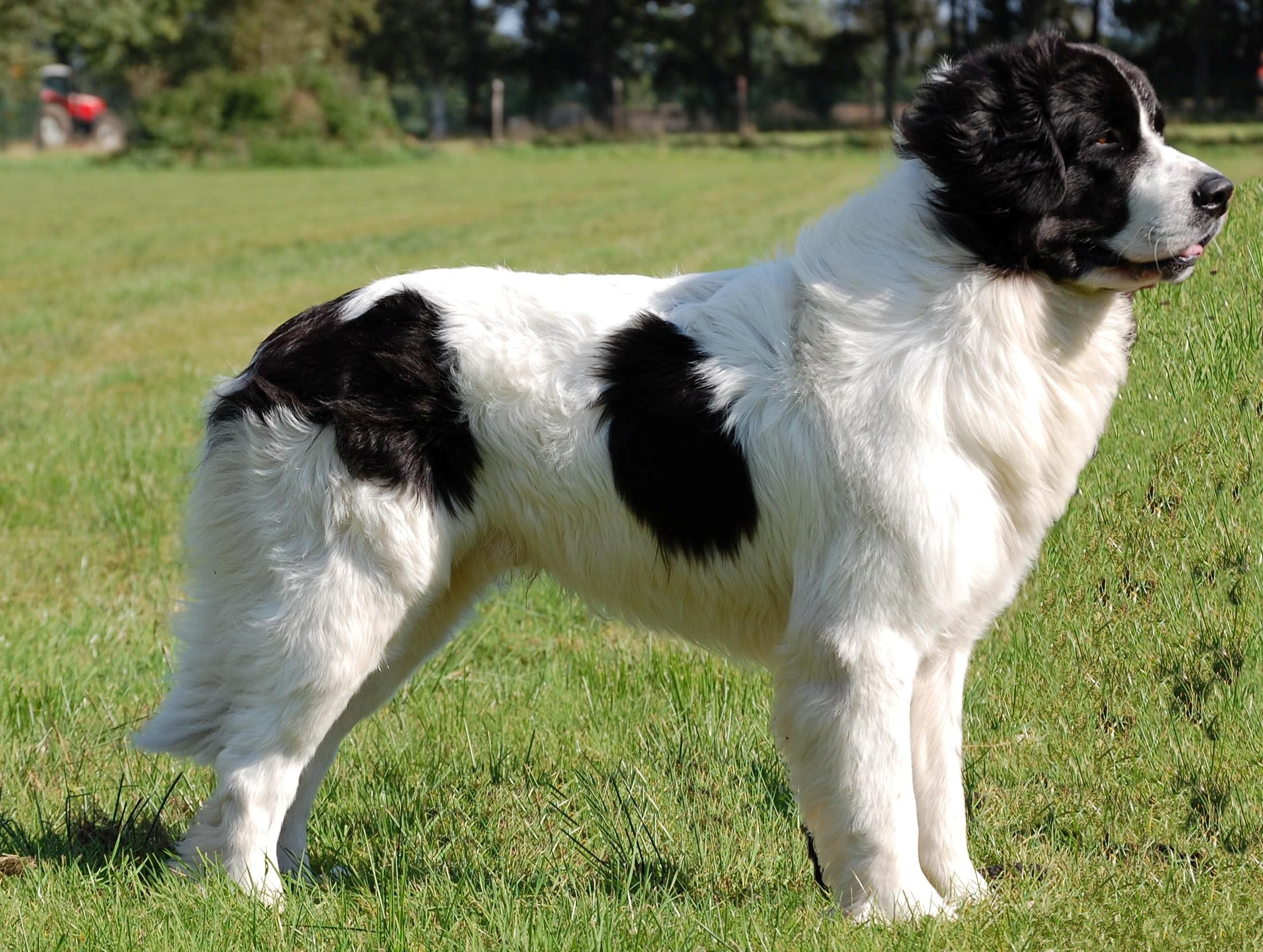
According to the breed standard of the Landseer, You must give the impression of being a but powerful and well balanced. The legs are relatively longer than the black Newfoundland. The back is straight and strong. The hind legs and shoulders are muscular.

The upper layer must be long and as straight as possible, very dense and soft to the touch. The main color of the layer is white with various patches black in the rump, the neck, backsplash, belly, legs and the tail should be white.

The head should be black with the white snout and symmetric white extends from the snout to the head, ending with the white collar. It has a distinctive shape with a noble facial expression. The ears are medium-sized and eyes should be dark brown. the size of the Landseer will of 67 to 80 cm., and at birth weigh between 500 to 750 grams and at the age of 1 year can be reached despite 50 to 60 kg.

Like all mastiff-type breeds, the Landseer It is also grown very fast during its first year. Therefore one must be careful with the exercise, because if it becomes sedentary can suffer from overweight.

Character and skills

Throughout its development, and even at maturity (that is not until the dog is of 3 or 4 years of age), the Landseer is a very active dog who likes to do all kinds of activities. Swimming, for example, is your favorite activity. So when a Landseer smells and sees the water, already no boundaries, jump to the water.

The Landseer he is a very accommodating dog with his master. It is active, has good temperament, but it is not a nervous dog. It is a very confident dog, Intelligent, loyal to their own people, fairly mild in nature and, When they are given sufficient exercise outdoors, it attaches very well to home life. In general terms, most of Landseer they are very independent and have a mind of its own. The Landseer is very easy to train, much love and patience will be rewarded with a partner for life.

As we said in previous lines to most of the Landseer, they love water and walks, It is therefore necessary to fulfill these wishes to the dog. Being on the water takes it as a job, reason why can take advantage of these time to play to find objects, launch toy water to make it look, It can be one excellent training both for the owner and as for the dog. It is a good diver and with appropriate training, they are able to find objects in the bottom of any Lake. In this regard, It is good to note that if you want to go swimming with your Landseer you should keep in mind that, the dog will try to rescue and towed back to land. So, no doubt have to be careful to do this the first time. Basic training is required so that the dog knows when you are playing, and when not. Any other activity with the family is also something that the Landseer always wants to do.

When it comes to behaviour towards other dogs, children and people there is no problem. Especially the Landseer, they love to children.

It is good to socialize with other dogs puppies, because if he is male, It can be very dominant. But with a proper education, There will not be any problem.

Landseer Education

The Landseer can be educated very well. It is intelligent, interested and quickly understand what you are allowed to do and what you are not. Sometimes he takes it easy, but a little motivated he is very cooperative and tries to make his lord and master happy. The puppy should already show itself clearly and without exception where the hammer hangs. There should be no doubt about the orientation of your humans, as well as on the intimate relationship with.

Always keep in mind that this dog is the strongest and that orientation only works through unquestionable recognition. But with praise and consequences you can basically accomplish everything with it. On the basis of a good education you can even train very well at Landseer. Many Landseer are used as rescue dogs in the water, but also on earth. For this you can pass the work tests with water in the clubs.

Landseer Health and Care

The maintenance and care of the Landseer they are complex as with all big dogs. The dense and weather resistant layer should be brushed regularly with a special brush. Should not be sheared or trimmed.

The dogs of the breed Landseer like all large dogs they tend to hip joint dysplasia, twisting of the stomach. Due to their constitution and their dense fur they do not tolerate heat well.

Nutrition / Food

Like all large dogs, the Landseer needs a lot of good food. Especially in the growth phase you need professional nutritional planning. A high positioned food bowl is useful to counteract the risk of stomach twisting. You should always pay close attention to your weight.

Landseer's life expectancy

Life expectancy is between 10 and 12 years.

For sale Landseer

You should only purchase a puppy locally from a breeder who is affiliated with the FCI. Puppies of this breed cost between 1.500 and 2.000 EUR.

Images "Landseer"

Photos:

1 – Puppy landseer – 3 months old by OdinetPietra / CC BY-SA
2 – Landseer by https://pxhere.com/es/photo/548945
3 – Landseer by https://pxhere.com/es/photo/550456
4 – Cleo 11 months by Per Jensen – Flickr
5 – Landseer at PhotoEmotions (pixabay.com)
6 – Landseer by Katrina_S (pixabay.com)

Videos "Landseer"
Type and recognitions:

  • FCI CLASSIFICATION:
  • Group :
  • Section : . .

Federations:

  • – FCI – Pinscher and Schnauzer-Molossoid type dogs – Swiss Mountain Dogs and Cattledogs. Section 2.2 Molossoid, mountain type. โ“˜

FCI breed standard "Landseer"

Origin:
Germany, Canada, Switzerland

Date of publication of the valid original standard:
24.08.1960

Use:

Guard and companion dog.


General appearance:

The Landseer must give the impression of a large dog, strong and harmonious. Your limbs, especially in males, they are proportionally longer than in the black Newfoundland.


Behavior / temperament:

---

Head:

The skin of the head, short hair cover, it is wrinkle free. The head profile is marked, but it has an expression of nobility.

Cranial region:
  • Craging: Wide and bulky, with a well developed occipital protuberance.
  • Dfronto-nasal depression: Marked, but not as noticeable and abrupt as in St. Bernard's dogs.

facial region:

  • Trufa: black.
  • Horcico: The length of the muzzle is equal to its height measured against the frontal-nasal depression.
  • Labios: Thin and pigmented in black; the superiors, which are as stiff as possible and do not drool, slightly cover the lower ones.
  • Jaws/Teeth: Scissor bite.
  • Cheeks: Moderately developed, gradually melting into the muzzle.
  • Ojors: Medium-sized, moderately sunken, brown or dark brown, although light chestnut is tolerated. friendly expression; almond-shaped eyelids; the palpebral conjunctiva is not visible. Overly clear eyes (sulfur or yellowish gray color) are considered as fouls, as well as eyes implanted too close to each other.
  • Obars: Medium-sized, reach the inner corner of the eye when placed towards the eyes; form triangular, a little rounded on its bottom edge, implanted high in the skull, but not too far back. Flat and glued to the sides of the head, they are covered with short and fine hair and have stripes of longer hair only at the back of the insert.

Neck:

The neck in its cross section is not completely round, but slightly oval; he's muscular, and it rises wide from the region of shoulders and thorax towards the head. In symmetrical construction, the length of the neck, from the occipital protuberance to the withers, is approximately 3/4 to 4/5 the length of the head, measured from the occipital protuberance to the tip of the nose. The presence of dewlap is not desirable (throat and neck) notable.

Body:

It is very broad and powerful from the cross to the rump. The length from the withers to the tail insert should be approximately twice the length of the head.

  • Espalda: Stiff and straight.
  • Pork loin: Muscular.
  • Glikeness: Wide, well rounded on the sides and back thanks to the powerful muscles that cover it.
  • Pecho: In the middle of the very muscular shoulders, the chest is broad and deep with strongly arched ribs forming a corresponding rib cage.
  • Vinbetween: Slightly retracted; between the belly and the back, a flat sag in the flank region must be visible.

A weak back is considered a fault, expired, loose backs, and the last ribs very short and an excessively retracted belly.

Tail:

Strong, reaches a little below the tibial-tarsal joint at most, covered in dense, leafy hair, but without forming feathers. When the dog is calm on its feet or at rest it carries it hanging down, eventually with a slight curve at the tip. During movement you can carry it straight with a slight upward bend at the tip. Tails bent or curled over the back are not tolerable.

Tips

PREVIOUS MEMBERS: A robust muscle mass from the shoulders surrounds the strong humerus and forms a correct angulation at the junction with the powerful bones of the completely straight and muscular limbs.. The forelimb has some stripes of hair that reach the tibial-tarsal joint.

  • Elbows: Well attached to the lower part of the thorax in a fairly high position and completely directed backwards.

LATER MEMBERS: The rear limb is powerful. The hind limbs must have free movement and have strong bones surrounded by powerful muscles., so that the thigh region mainly shows extensive development.

  • Thighs: They have a particularly broad development.
  • Espolones: Are unacceptable, They must be amputated from the first days of birth.
  • PIIS: Big and well formed (cat feet). Crushed or deviated feet are reprehensible. The fingers must be joined by strong interdigital membranes to the proximity of the tip of the fingers.

Movement:

The movement of the muscular limbs must be free and wide.

Mantle

  • Plink: Except for the head, the coat must be long, where possible, smooth and bushy, soft to the touch and intermixed with inner fleece which should not be as dense as in Newfoundland. The presence of an outer layer of slightly wavy hair on the back and thighs is not penalized. When brushing hair in the opposite direction to the natural position, it must return by itself to the correct position.
  • Colorr: The basic coat color is pure white with sharp, broken black plates distributed over the trunk and rump region.. The neck, the sill, the belly, limbs and tail must be white. The head is black. The presence of a white mark on the muzzle is typical of the breed, attached with a whitelist, symmetrical and not very wide. Smoke colored spots on the white background are not considered as faults, but they must be eliminated in breeding through selection.


Size and weight:

Alturto the cross: Height at withers in Landseer may fluctuate: in males an average between 72 and 80 cm and in females an average between 67 and 72 cm.. Small variations in size larger or smaller are tolerated.


Fouls:

Any deviation from the aforementioned criteria is considered as a fault and the severity of this is considered to the degree of the deviation to the standard and its consequences on the health and well-being of the dog..


FALTAS DISQUALIFYING:

  • Aggressiveness or extreme shyness.
  • Any dog โ€‹โ€‹showing clear signs of physical or behavioral abnormalities must be disqualified..


N.B.:
  • Males should have two normal-appearing testicles fully descended into the scrotum..
  • Only functionally and clinically healthy dogs, with the typical conformation of the breed, should be used for parenting.

Source: F.C.I - International Cynological Federation

Alternative names:

1. LANDSEER (EUROPEAN CONTINENTAL TYPE) (English).
2. LANDSEER (TYPE CONTINENTAL-EUROPEEN) (French).
3. LANDSEER (EUROPร„ISCH-KONTINENTALER TYP) (German).
4. LANDSEER (TIPO EUROPEU CONTINENTAL) (Portuguese).
5. LANDSEER (TIPO EUROPEO CONTINENTAL) (espaรฑol).

โ–ท The world of Pets: Dogs, cats, birds, reptiles, amphibians

Black Russian Terrier
Rusia FCI 327 . Pinscher and Schnauzer type

Terrier Ruso Negro

The Black Russian Terrier, need plenty of exercise, and it can be hyperactive and destructive

Content

History

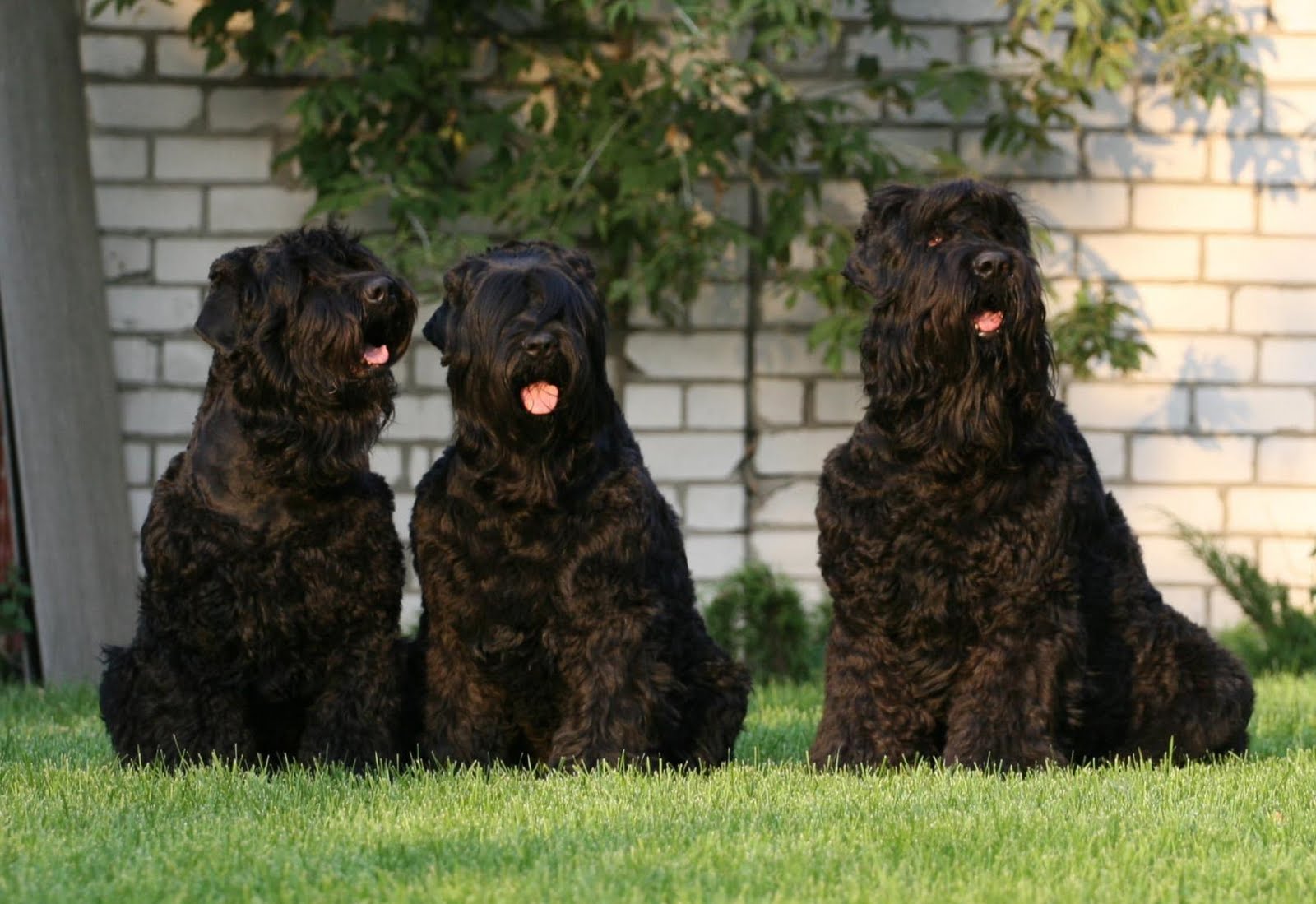
The Black Russian Terrier, (in Russian: ะงั‘ั€ะฝั‹ะน ั‚ะตั€ัŒะตั€), abbreviated as BRT, known, also as dog of Stalin (Sobaka Stalina), It is a breed of dog developed to serve as a guard dog and police dog..

The breed was recognized as such in July of 2004, by the American Kennel Club.

despite its name, the Black Russian Terrier, is not a pure Terrier: It is believed that they were used around twenty races in its development, including (among others) to the Airedale Terrier, the Giant Schnauzer, the Rottweiler, the Newfoundland, the Kavkazskaรฏa Ovtcharka and the Moscow Water Dog, now extinct.

Physical characteristics

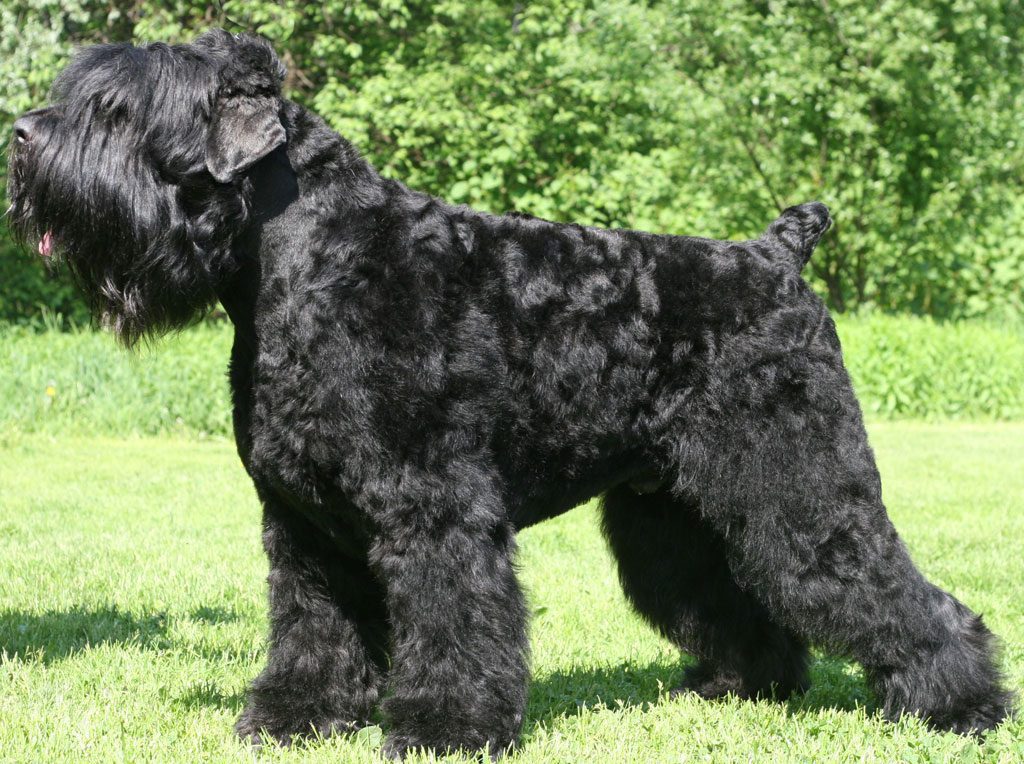
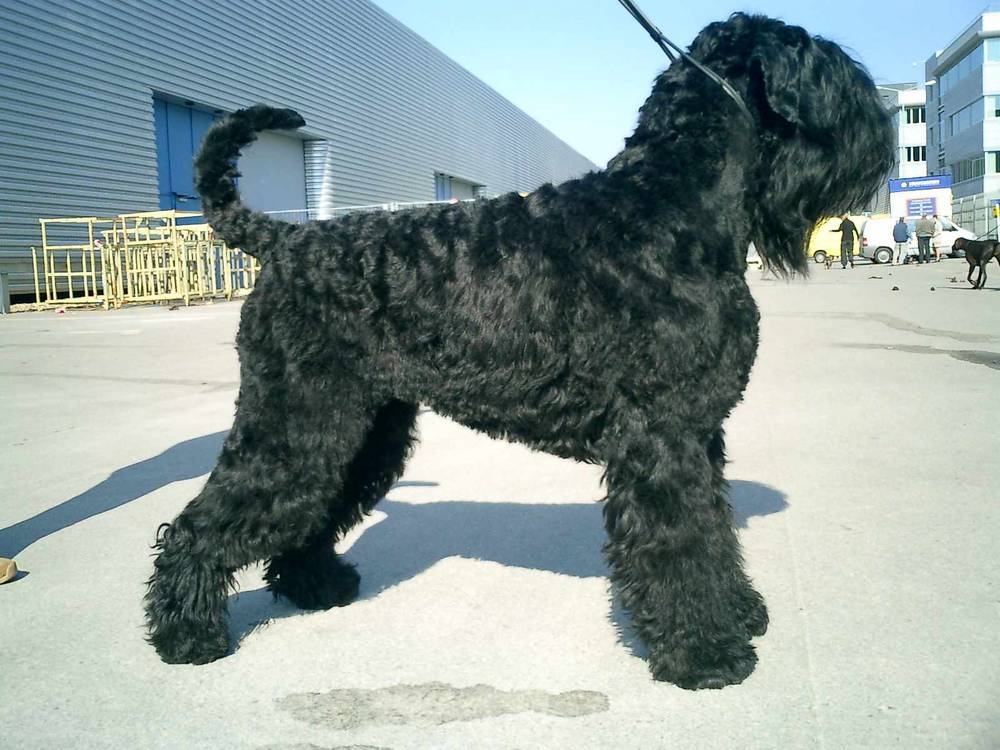
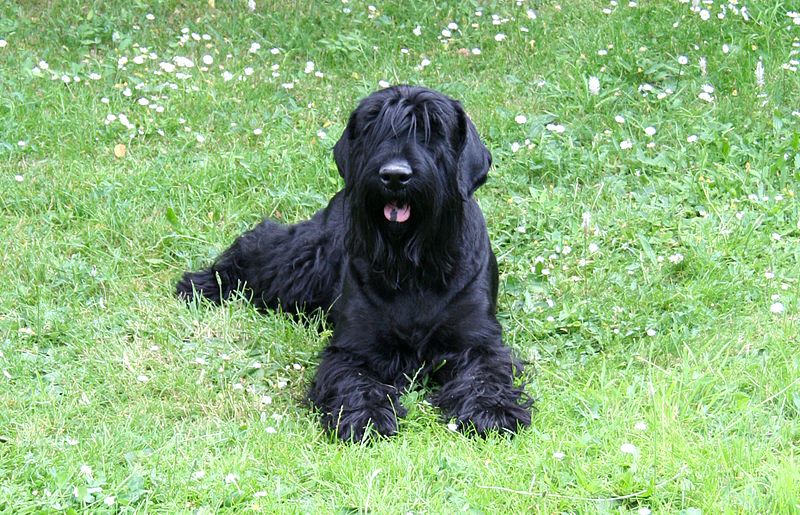
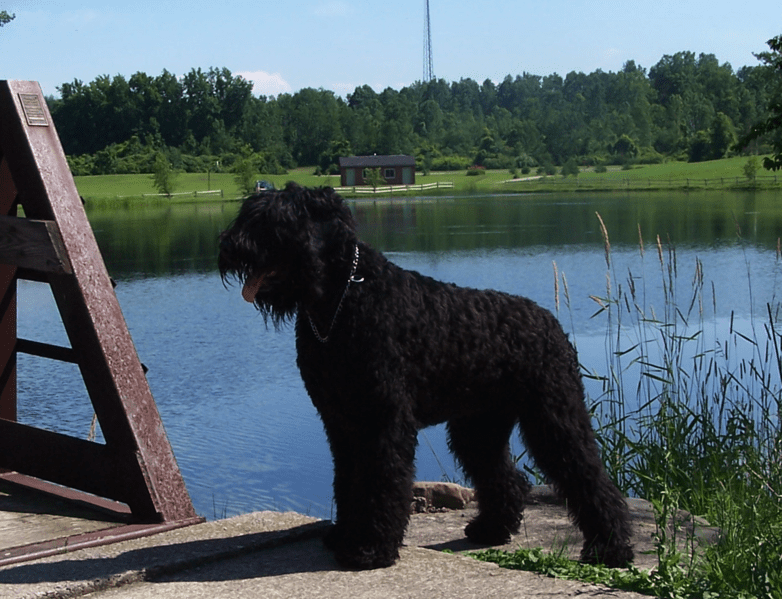
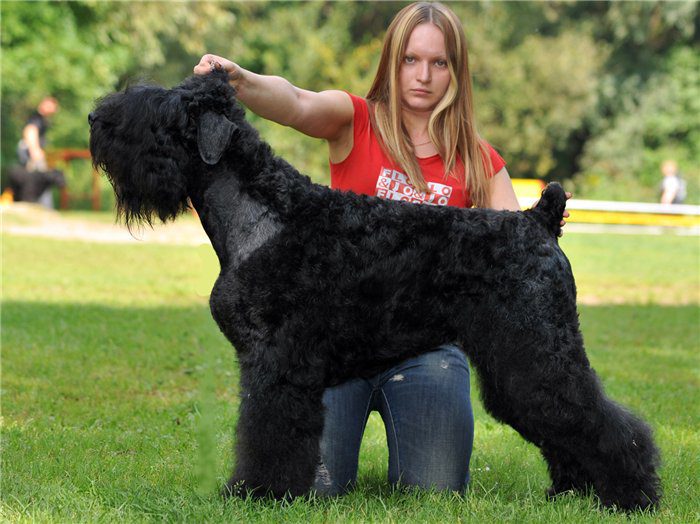
The Russian black terrier much more resemble a Schnauzer that to a Terrier. The head is long, with flat front. The strong muzzle. The eyes are small and dark. The trunk is solid. The limbs are straight and muscular.

The Black Russian Terrier, gives the impression of great strength, agility and value. It is a robust dog, rustic in appearance (but not fat), and it must not appear as if his hair was sculpted or trimmed, must see bright in nature, and slightly curly.

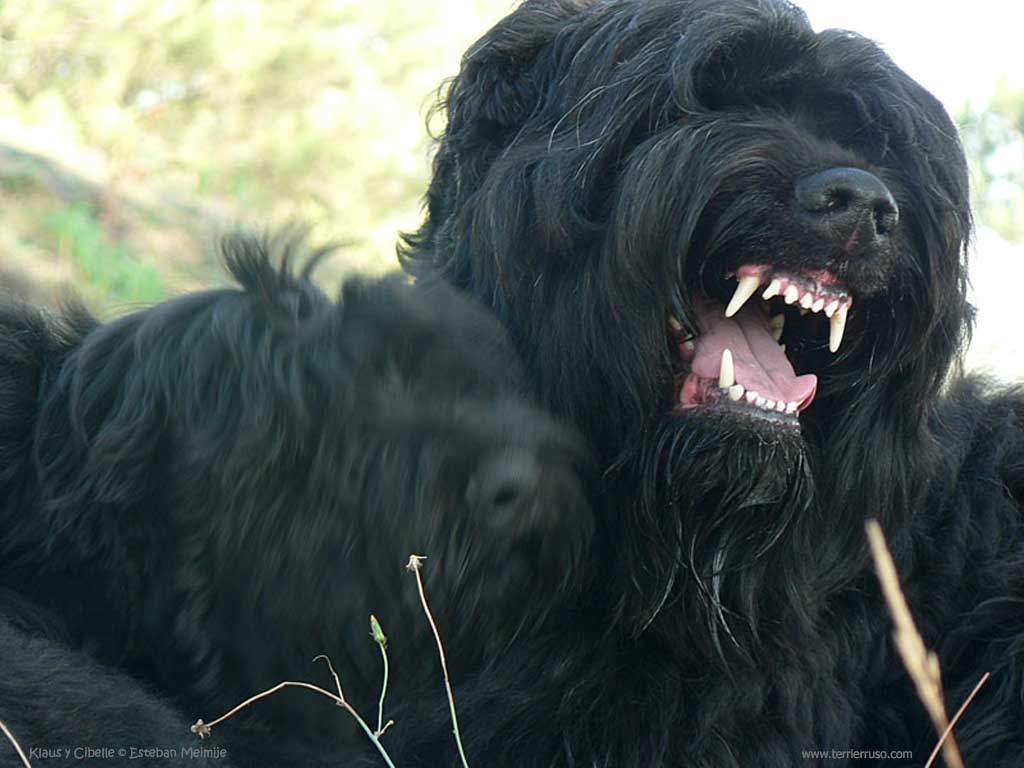
The coat is hard and dense, is not very smooth to the touch, It is as curly and the length of the hair will be of 4 to 10 cm.. The longest hair found in the beard and eyebrows, with a mane (not very dense but longer than the rest of the body) What, extends, slightly, the cross and the neck, more pronounced feature in males. The coat is low detachment and the color is black with some gray hair.

According to the FCI standard (1983), the male must have a height of 66 to 72 cm to the cross and the female of 64 to 70 cm., with a tolerance of +/- 2 cm.. They must weigh between 35-70 kg.

Did you know??

Although the word Terrier on their behalf, the Black Russian Terrier is a member of the American Kennel Club Task Force.

Character and skills

ยซBlack Russian Terrierยป Videos
Black Russian TerriersBlack Russian Terriers
Dogs 101 - Black Russian TerrierDogs 101 – Black Russian Terrier
The Black Russian Terrier, is a safe dog, quiet, very intelligent, brave and loyal. you should never be shy. It may seem distant, or perhaps independent, but in their basic needs, is the human company and the love of his family.

It is a healthy dog in general and their life expectancy is around the 14 years.

Because of his upbringing as a working dog, has a very strong instinct worker ("work ethic"), and that is why it is good to provide the animal some games to understand work roles, so you will be happy.

Initial training is a necessity, that you will take advantage of any owner who has not been able to establish a domain course. They are very sensitive to education and often Excel at obedience competitions. As well, they are very good in various dog sports, such as agility.

The Black Russian Terrier, need plenty of exercise, and can be hyperactive and destructive if not given the opportunity to burn off his energy.

Characteristics "Black Russian Terrier"

Coexistence is important that you have with your new friend. Before considering the acquisition of a dog of the breed "Black Russian Terrier" you know certain factors. Not all breeds of dogs are apt to live in an apartment, you must take into account his character, their need for exercise, their interaction with other pets, their care and if you have small children, their level of tolerance towards them.

Adaptation โ“˜

3,0 of 5 stars (based on 1 review)

friendly dog โ€‹โ€‹โ“˜

3,0 of 5 stars (based on 1 review)

hair loss โ“˜

3,0 of 5 stars (based on 1 review)

Affection level โ“˜

4,0 of 5 stars (based on 1 review)

Need for exercise โ“˜

4,0 of 5 stars (based on 1 review)

Social need โ“˜

3,0 of 5 stars (based on 1 review)

Home โ“˜

3,0 of 5 stars (based on 1 review)

Toilet โ“˜

4,0 of 5 stars (based on 1 review)

Friendly with strangers โ“˜

1,0 of 5 stars (based on 1 review)

barking โ“˜

4,0 of 5 stars (based on 1 review)

Health โ“˜

3,0 of 5 stars (based on 1 review)

Territorial โ“˜

5,0 of 5 stars (based on 1 review)

Cat friendly โ“˜

3,0 of 5 stars (based on 1 review)

Intelligence โ“˜

4,0 of 5 stars (based on 1 review)

Versatility โ“˜

4,0 of 5 stars (based on 1 review)

Child friendly โ“˜

3,0 of 5 stars (based on 1 review)

Surveillance โ“˜

3,0 of 5 stars (based on 1 review)

joy โ“˜

5,0 of 5 stars (based on 1 review)

Images ยซBlack Russian Terrierยป

ยซBlack Russian Terrierยป Videos

Type and recognitions:

  • FCI CLASSIFICATION:
  • Group :
  • Section : . .

Federations:

FCI โ“˜, AKC โ“˜, ANKC โ“˜, CKC โ“˜, โ€‹KC โ“˜, NZKC โ“˜, UKC โ“˜

FCI breed standard Black Russian Terrier

FCIFCI - Black Russian Terrier
Terrier

Alternative names:

1. Chornyi, Russian Bear Schnauzer, Russian Black Terrier, Chornyi Terrier (English).
2. Terrier noir russe, errier noir (French).
3. Russischer Schwarzer Terrier, Russischer Schwarzer Terrier (German).
4. Terrier preto da Rรบssia, Cรฃo de Stalin, chiorny Terrier (Portuguese).
5. Perro de Stalin (espaรฑol).

โ–ท The world of Pets: Dogs, cats, birds, reptiles, amphibians

Bosnian and Herzegovinian - Croatian Shepherd Dog
Bosnia & Herzegovina CroaciaFCI 355 . Molossoid . Mountain

Pastor de Bosnia-Herzegovina y Croacia

The Bosnian and Herzegovinian - Croatian Shepherd Dog It is a very sensitive and quiet dog.

Content

History

The Bosnian and Herzegovinian - Croatian Shepherd Dog, also called Tornjak, it is an ancient breed of dog, and its exact origin is lost in the meanders of history. Most specialists agree that it is one of the descendants of the Tibetan Mastiff (Do-Khy), that arrived in Europe several thousand years ago.

Some accounts suggest that it already existed in the Dinaric Alps (in present-day Bosnia) at the time of the Roman Empire, almost ago 2000 years. But, the first descriptions of a dog corresponding to the Bosnian and Herzegovinian - Croatian Shepherd Dog can be found in documents of the Bosnian Catholic Church dating from 1067.

Three centuries later, in 1374, Petar Horvat, then bishop of Dakovo, Croatia, He also described a dog that resembled the Bosnian and Herzegovinian - Croatian Shepherd Dog in all aspects, size, color and function. At that time it was called Canis Montanis ("mountain dog") and I was already working with the shepherds, leading flocks of sheep in the mountain pastures and, above all, protecting them from the attacks of wolves.

The name Tornjak first appeared in 1752 in the writings of Father Petar Lukic, member of the Dakovo Catholic Church. It is said to derive from the Croatian word ยซTorยป, which could be translated as "flock of sheep".

This dog was found mainly in present-day Bosnian territory, and to a lesser extent in Croatia. The first scientific references to it date back to the beginning of the 20th century., and more precisely to 1905, when Austrian dog fan Franz Laska accurately identified a mountain dog seen in Bosnia, call Tornjak by the locals. But, the Tornjak remained confined to the mountains for a long time. It even declined sharply in the following decades as lifestyles changed and grazing decreased.. Its population grew from several thousand in the nineteenth century to just under a hundred in the decades of 1960 and 1970, when a few Croatian and Bosnian enthusiasts conducted a census to preserve the breed.

If most of the identified specimens then came from Bosnia, it was in Croatia that a breeding program was established in the late 80. In 1979, in Zagreb (Croatia), the Yugoslavia Canine Association officially recognized the breed, and in 1982 the first litter with a complete pedigree was born as a result of this breeding program. Despite this almost rebirth, the Tornjak he was not at the end of his problems, since the explosion of Yugoslavia in 1991 and the civil war that followed caused him many difficulties.

The new Croatian Canine Association decided to identify a breed Tornjak croata, while his counterpart in Bosnia-Herzegovina spoke of the Tornjak bosnio. Although these dogs were in all respects the same, the fact that they were considered two separate breeds prevented them from breeding with each other, for example.

Was not up 2003 that the two organizations unified their standards under the name of Tornjak. In 2007, the Fรฉdรฉration Cynologique Internationale (FCI) provisionally recognized the Tornjak, that took the name of Bosnian and Herzegovinian - Croatian Shepherd Dog. At that moment, there was 1800 specimens recorded in Croatia, and 2700 in Bosnia.

After this recognition, the breed timidly began to make a name for itself outside the countries of the former Yugoslavia. El American United Kennel Club (UKC) accepted it in 2011, while the American Kennel Club (AKC), the other reference organization in the country, included it in 2012 in his Foundation Stock Service (FSS), a preliminary step before full recognition, what has not yet been produced to date. The first specimens arrived in Great Britain in 2013, and steps were taken to gain recognition from the prestigious and influential Kennel Club (KC), the reference body of the country. They haven't been successful yet. in Canada, the Canadian Kennel Club (KC) does not recognize the Bosnian and Herzegovinian - Croatian Shepherd Dog. But, year 2017 marked its final acceptance by the CFI.

Very popular in his home region, the Bosnian and Herzegovinian - Croatian Shepherd Dog struggles to win over audiences beyond his native region. It is extremely rare in North America, and it is not very common in Western Europe either. In France, He came in 2010. At the end of this decade, there were an average of fifty registrations per year in the Livre des Origines Franรงais (LOF).

Physical characteristics

Great and powerful, the Tornjaks retain above-average agility and flexibility for a mountain dog.

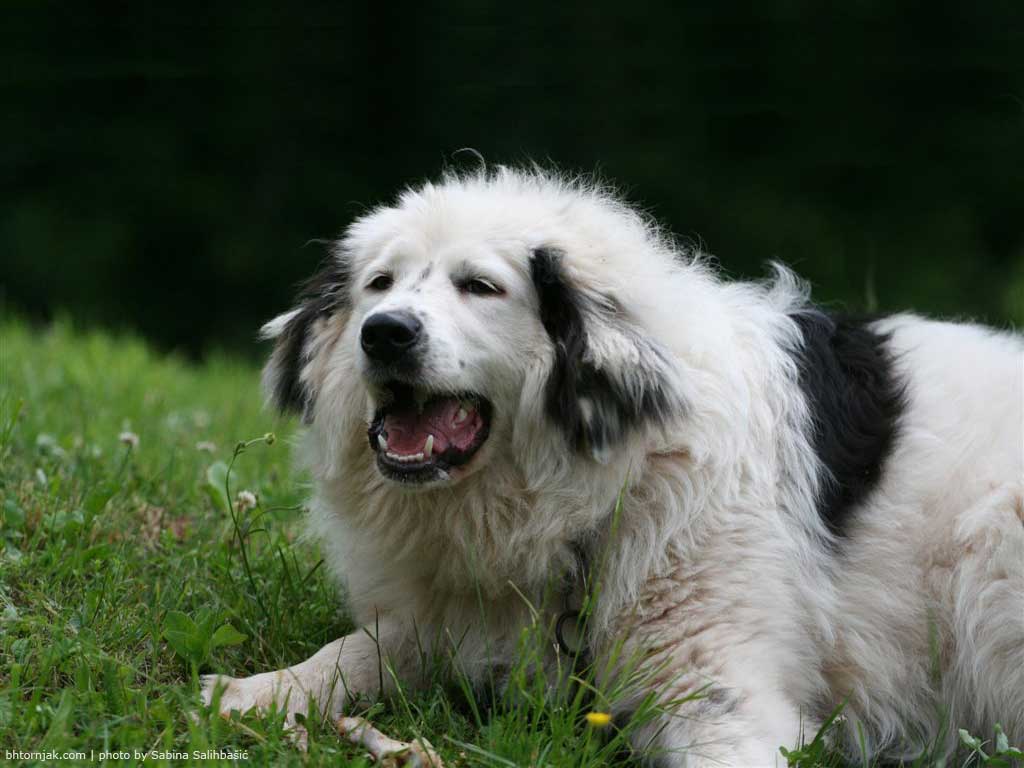
They have an almost square shape, with strong bones that are not heavy, giving them a harmonious overall appearance. The tail is long, very mobile and bushy. When falling to rest, rises well above the level of the back when in action, which is uncommon in mountain dogs. Legs are powerful, parallel and raised.

The head is elongated, with a slight stop. The muzzle is rectangular and ends in a dark nose with wide nostrils.. The eyes are also dark and almond-shaped. The ears, triangular and hairy, stand tall and fall along the cheeks.

The undercoat is dense and thick, with a woolly texture in winter. The stiff top coat is long all over the body, except on the face and front of the legs. It is particularly abundant on the neck, forming a mane that protects it from predator bites.

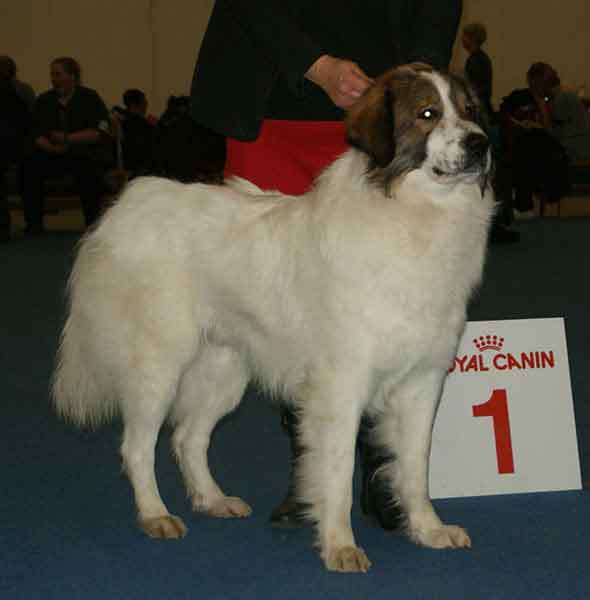
The Bosnian and Herzegovinian - Croatian Shepherd Dog and the Croatian Sheepdog are the ones that most often have a particular color, although there are white subjects, with only a few small spots of color. White is the most common background color, with markings of various colors: black, brown, cervato… More rarely, some individuals have a black coat stained with white.

Last, sexual dimorphism is well marked in this breed: the female is not only smaller on average by about 5 cm., but also less massive.

Character and skills

The Tornjak he is surprisingly outgoing and caring for a shepherd who has worked for centuries in the mountains. He likes to spend time with his family, and is willing to play with older and smaller animals. In fact, he is a dog that adores children, and can spend hours entertaining them – The opposite also is true. But, due to its size and power, could easily inadvertently push a small child, so it is better if you are already a certain age, especially since then he is more likely to learn to behave with an animal and to respect it. In any case, a young child should never be left alone with a dog, regardless of race.

His attachment to the family he grew up with also means he can hardly get used to life in a new home if life's perils mean he has to change owners.. You are likely to have the greatest difficulty recovering from abandonment.

In addition to their great closeness to their caregivers, the Bosnian and Herzegovinian - Croatian Shepherd Dog he's also surprisingly personable with strangers. It barks when they approach and perfectly fulfills its guardian mission, but do not hesitate to go greet them and accept some caresses once their carer has validated their arrival.

But, it would be a mistake to forget that their main function is to protect their flock. Under his cheerful and friendly airs, hides boundless courage and amazing strength. However, is not aggressive and is content to bark when a threat approaches. But if the threat becomes clearer and your family is in danger, does not hesitate to force its non-aggressive nature and take action; few things can stop it. It also, a malicious person would have no chance to persuade and corrupt him with sweets and caresses, because he is infallibly loyal.

His sociability is also expressed against his peers, to the point that you can generally share your home perfectly with one or more dogs. It also, has no predatory instinct, so it does not see cats or rodents as prey, and therefore is not inclined to chase them. However, the difference in size means that cohabitation can sometimes be dangerous. In practice, if there are small animals in the house, it's better for him Bosnian and Herzegovinian - Croatian Shepherd Dog live outside.

This would not be to displease you. In fact, used to large spaces, not really made for indoor living. You do not need to do a lot of intensive exercises every day, but must be able to move at any time, so it is not at all suited to apartment living, even if his master takes him out for more than an hour a day. Needs a large enclosed garden, where I can patrol, run, to play…

If it can be easily installed outdoors it is because, like any mountain dog, is independent and tolerates loneliness well. It can easily stay at home while its owners are out for the day, and does not suffer from separation anxiety if this absence lasts for a weekend. But, under no circumstances should it be constantly left alone in the garden throughout the day. You need to spend time with your family, and two or three daily walks of at least half an hour each are ideal.

Games and sports activities are also great ways to bond with him., while being physically and mentally stimulated. With an excellent memory that allows you to easily assimilate tricks and commands, has the potential to shine in dog sports like flyball, obedience or agility.

But, you cannot start too early with physically demanding activities. In effect, given its size, when is a puppy, you experience growth spurts during which you need to slow down your burning, or at least avoid any overly intense strain on your joints and skeleton. Otherwise, there is a real risk of injury (sometimes with lifelong sequelae) or malformations.

If you live in a residential area, it is better that the fence that surrounds the garden is solid, to avoid accidents. Similarly, walks in parks and relatively crowded places should always be done on a leash, so you can hold back if you sense a threat. On the other hand, in an environment where encounters are rare (for example, in the mountains), can be free, If and when, of course, has assimilated the withdrawal orders.

Finally, the Bosnian and Herzegovinian - Croatian Shepherd Dog has a serious and powerful bark that can be heard from a distance. Can be heard from a distance, and is also heard when approaching a stranger or when you perceive a suspicious noise. This is reassuring and enjoyable when living in an isolated area., but can quickly cause neighborhood problems in a residential neighborhood.

Education

Like all dogs, the Tornjak should be socialized as soon as you get to your new home. Give you the opportunity to meet all kinds of people, animals and situations during your first months helps you become familiar with the unknown, and to avoid being surprised or even reacting badly as an adult. So, you should not hesitate to take any opportunity to meet the neighbors, friends, dealers, the vet… but also other animals, be it dogs, cats, rodents, horses, cows… You also have to deal with situations that you are not yet used to., especially the ones you will have to deal with regularly afterwards: travel by car, walk around the city, go out in a hectic environment…

It also, given its size, it is advisable to accustom it from an early age to being handled obediently. Brush, bathing or even clipping the claws can turn into moments of complicity with your caregiver, instead of being dreaded tests each time by both protagonists. In any case, trying to groom or bathe a dog 50 kg not accommodated can quickly become an adventure…

Although they have the independent character of herding dogs, to the Bosnian and Herzegovinian - Croatian Shepherd Dog they like to please their owners. It also, as his intelligence and memory are admirable, a caregiver who combines patience and know-how can go a long way in your education, even teaching them many tricks. But, although easier to handle than most mountain breeds, this does not make him a recommended dog for a novice sitter. But, It can be an interesting option for a person with a little experience who wants to face the challenge of a large independent dog..

In any case, traditional training methods should not be used with the Tornjak, as they only reinforce their independent side instead of developing their potential. On the other hand, positive reinforcement, with the help of caresses, treats and stimuli, motivates you to want to learn more and more and allows you beautiful moments of complicity.

The assimilation of memory is of particular importance: given its size, it is better for such a dog to obey the finger and the eye when his handler asks him to stop pulling on the leash or to come back to him. This is the essential condition so that you can enjoy nature with total freedom, without being put on a leash.

On the other hand, protection of the pack is instinctive in the Tornjak: you don't really need any training to play this role perfectly.

Health

The Tornjak it is an extremely robust breed of dog, with a life expectancy much higher than the average of dogs of its size, to the point that some specimens reach the 15 years of age.

The thick, woolly coat of the Tornjak helps protect you from cold and bad weather, as well as the rays of the sun. It is clearly a dog made to live outdoors, who is not afraid of low temperatures as long as he has a place to take refuge. On the other hand, when the mercury rises and the heat wave sets in, it is better to limit your activities and make sure you have the opportunity to rest in a shady place.

Although they are generally healthy, the Bosnian and Herzegovinian - Croatian Shepherd Dog they are not exempt from certain problems, especially those that affect larger dog breeds. They are predisposed to ...:

  • Hip and elbow dysplasia, joint problems whose origins can be hereditary and cause more or less severe locomotor difficulties;
  • gastric dilation-torsion, which often follows too rapid ingestion of large amounts of food, and it's fatal if a vet doesn't intervene quickly;
  • protein intolerance, what can take, among other things, to a deterioration of the coat.
  • Other diseases have been reported occasionally in some subjects, but they are still exceptionally rare. These include anemia or von Willebrand disease, a hereditary condition.

    To limit the risk of having a puppy with a hereditary and / or congenital problem, nothing better than adopting from a breeder Tornjak serious and responsible. In particular, the professional must present an updated health or vaccination record, that allows to verify the vaccines received by the animal, as well as a certificate of good health signed by a veterinarian. But, the professional should also be asked to provide the results of the genetic tests performed to both the parents and the child.

    It also, the floppy ears of Tornjak can quickly become nests of infection if not cleaned weekly.

    It also, how you spend most of your time outdoors, their fur is likely a breeding ground for parasites: even more than most tornjaks, it is imperative to be rigorous in the administration of regular pest control treatments to avoid this type of inconvenience.

    Last, the fact that he is generally in good health does not exempt him from wearing it regularly (at least every year) to a routine check-up at the vet, just to keep it healthy. This not only ensures that you are up to date on your vaccinations, it also allows early detection of any health problems.

    Grooming

    The Tornjak rarely poses problems regarding your health, but its maintenance requires some effort.

    First of all, its thick coat needs to be brushed once or twice a week to avoid knots and remove dirt, and its size means that this task takes some time.

    During their annual molt periods in the spring and fall, a lot of undercoat is shed, and brushing should then become a daily routine to deal with the large amount of dead hair.

    Brushing is also an opportunity to inspect your skin and make sure it is not injured., Court, sore or irritation. Spending most of the time outdoors, he is more exposed to this type of problem than his peers who live in an apartment and only go out for half an hour each day.

    In any case, if grooming is done regularly, can remove a large part of the dirt from their fur, keeping it relatively clean and odorless. So, it is not necessary to bathe your dog often. Unless, of course, got particularly dirty, you can be content with doing it twice a year, at the time of the move. It is necessary to use a mild shampoo designed specifically for dogs every time.

    On the other hand, as with any dog โ€‹โ€‹with floppy ears, special care is required to prevent dirt from building up and causing infection. So, at least once a week, brushing his coat should be followed by cleaning his ears with a clean cloth.

    You should also take the opportunity to check your eyes and clean them, to limit the risk of eye infection, although, unlike ears, are not particularly susceptible to it.

    To end the beauty maintenance session, a teeth cleaning is de rigueur. Itร‚ยดs, in effect, the best way to effectively protect them against dental plaque formation, cavities and other problems at this level. Ideally, it should be done daily.. No matter how often you do it, always use a toothpaste specially designed for dogs.

    It may also be necessary to trim your dog's claws from time to time. Even if your dog lives outdoors, natural wear and tear is not always enough to file its strong claws. If you hear them hitting the ground when you walk, have grown too long and could injure or break: it's time to cut them with a special tool.

    Although all these operations do not require any particular knowledge, it is better to learn to do them correctly, especially to avoid hurting or even injuring your partner. It can be useful the first time to have the help of a veterinarian or a professional groomer to learn the correct gestures to perform.

    Buy a โ€œShepherd from Bosnia-Herzegovina and Croatiaโ€

    The price of a puppy Bosnian and Herzegovinian - Croatian Shepherd Dog is of some 1000 EUR, but it's a mean: the sale price varies according to the prestige of the breeding, the ancestry of the animal, but also and above all its characteristics. On the other hand, there is not a big difference according to sex: males and females are generally priced similarly.

    Having said that, the Bosnian and Herzegovinian - Croatian Shepherd Dog still hard to find outside the countries of the former Yugoslavia. So, it may be wise to turn to a Croatian breeder, Slovenian, Bosnian or Serbian to find the right one. The sale price will not necessarily be much cheaper, but then import costs must be added to the budget, registration and transportation.

    It is possible to find hatcheries in the United States, but it is also still very rare there.

    Characteristics "Bosnian and Herzegovinian - Croatian Shepherd Dog"

    Coexistence is important that you have with your new friend. Before considering the acquisition of a dog of the breed "Bosnian and Herzegovinian - Croatian Shepherd Dog" you know certain factors. Not all breeds of dogs are apt to live in an apartment, you must take into account his character, their need for exercise, their interaction with other pets, their care and if you have small children, their level of tolerance towards them.

    Adaptation โ“˜

    2,0 of 5 stars (based on 1 review)

    friendly dog โ€‹โ€‹โ“˜

    4,0 of 5 stars (based on 1 review)

    hair loss โ“˜

    3,0 of 5 stars (based on 1 review)

    Affection level โ“˜

    5,0 of 5 stars (based on 1 review)

    Need for exercise โ“˜

    3,0 of 5 stars (based on 1 review)

    Social need โ“˜

    3,0 of 5 stars (based on 1 review)

    Home โ“˜

    3,0 of 5 stars (based on 1 review)

    Toilet โ“˜

    3,0 of 5 stars (based on 1 review)

    Friendly with strangers โ“˜

    4,0 of 5 stars (based on 1 review)

    barking โ“˜

    3,0 of 5 stars (based on 1 review)

    Health โ“˜

    2,0 of 5 stars (based on 1 review)

    Territorial โ“˜

    3,0 of 5 stars (based on 1 review)

    Cat friendly โ“˜

    3,0 of 5 stars (based on 1 review)

    Intelligence โ“˜

    3,0 of 5 stars (based on 1 review)

    Versatility โ“˜

    3,0 of 5 stars (based on 1 review)

    Child friendly โ“˜

    4,0 of 5 stars (based on 1 review)

    Surveillance โ“˜

    3,0 of 5 stars (based on 1 review)

    joy โ“˜

    3,0 of 5 stars (based on 1 review)

    Images of the ยซPastor of Bosnia-Herzegovina and Croatiaยป

    Photos:

    1 – ยซPastor of Bosnia-Herzegovina and Croatiaยป by https://commons.wikimedia.org/wiki/File:Bosniantornjak.jpg
    2 – And little Tornjak. Colour: white & black by Canarian, CC BY-SA 4.0, via Wikimedia Commons
    3 – And little Tornjak. Colour: white & brown by Canarian, CC BY-SA 4.0, via Wikimedia Commons
    4 – A Croatian Tornjak (aka Croatian Mountain Dog or Bosnian and Herzegovinian – Croatian Shepherd Dog) female by Canarian, CC BY-SA 3.0, via Wikimedia Commons
    5 – And little Tornjak. Colour: white & black by Canarian, CC BY-SA 4.0, via Wikimedia Commons
    6 – Toro the Tornjak. Photo taken in a dog shelter in Zadar, Croatia by Mirta12, CC BY-SA 3.0, via Wikimedia Commons

    Videos of the ยซPastor of Bosnia-Herzegovina and Croatiaยป

    Type and recognitions:

    • FCI CLASSIFICATION:
    • Group :
    • Section : . .

    Federations:

    • – FCI – Pinscher and Schnauzer-Molossoid type dogs – Swiss Mountain Dogs and Cattledogs. Section 2.2 Molossoid, mountain type. โ“˜
    • – AKC – (FSS) โ“˜

    FCI breed standard "Bosnian and Herzegovinian - Croatian Shepherd Dog"

    Origin:
    Bosnia y Herzegovina, Croatia

    Date of publication of the valid original standard:
    19.11.2007

    Use:

    Herding and protection of livestock and farm pens and guard dog.


    General appearance:

    The Tornjak is a large and powerful dog, well proportioned and agile. The body is almost square in shape. The bone is not light, but it's not heavy or rough anyway. Standing and moving is strong, harmonious and well balanced. The coat is long and thick.

    IMPORTANT PROPORTIONS:
    The body is almost square. The length of the body must not exceed its height by more than one 8 %. The radius between the length of the skull and the muzzle is 1:1.


    Behavior / temperament:

    Of good disposition, friendly, brave, obedient, Intelligent, full of dignity and confidence. Fierce looking after the property entrusted to him, cannot be bribed and is suspicious of strangers. Devoted to his master and very calm in his presence. Very affectionate with the people who live in his environment. Learn quickly and keep this learning in your memory for a long time. Pleasantly performs the tasks assigned to you. It is easy to train.

    Head:

    Elongated. The radius between the skull and the muzzle is 1:1.

    Cranial region:

    The upper lines of the skull and snout are divergent.
    Supra-orbital arches are slightly visible.
    The back of the skull is elongated but moderately wide.
    The area between the supra-orbital arches and the occiput is flat.
    The occipital protrusion is very slight.

    • Nasal frontal depression (stop): Slightly pronounced.

    facial region:

    Nose: Grand, with nostrils wide enough. Must have dark pigmentation. Pigmentation must be in harmony with the color of the coat. Depigmentation is not allowed.
    Snout: Rectangular. The bridge of the nose is perfectly straight.
    Lips: Tight, with dark pigmentation.
    Jaws/teeth :The jaws are very long and strong. Perfect scissor bite, full dentition.
    Eyes: Almond biscuits, attached eyelids, dark color. Dark pigmentation on the edge of the eyelids.
    Ears: Medium-sized, triangular, bent and earrings, high insertion. Carried close to the cheeks. With shorter hair.

    Neck:

    Medium length, powerful, carried slightly low. Well attached skin. With abundant and long hair forming a mane.

    Body:

    Cross: Moderately developed.
    Back: Short, the court, moderately wide and straight.
    Pork loin: The connection between the chest and the rump is short, moderately wide; in females it is a little longer.
    Rump: Long Middle, wide and slightly inclined.
    Breast : Very spacious, deep, wide and oval. Lower chest reaches at least elbows. Never barrel shaped. The chest is strong with the tip of the sternum moderately pronounced.
    bottom line: Well muscled abdomen. The lower line is not retracted but gradually rises from where the sternum ends towards the posterior.

    Tail:

    Long, inserted at a medium height, very mobile. When at rest it is always hanging and in motion it is always above the level of the upper line, this is a characteristic of the breed. With abundant hair and characteristic fringe.

    Tips

    Strong and well angled.

    PREVIOUS MEMBERS:well developed, with strong bone and tight muscles. Parallel and straight when stationary.

    Blades:Long Middle, well leaning back. The scapulo-humeral angle is approximately 120ยบ..
    Humeri:Muscular and strong, almost the same length as the scapulae.
    Elbows:Moderately close to the body.
    forearms:Strong bones and developed, straight muscles.
    Metacarpus:With slight inclination.
    Previous feet:Fingers arched and together. Pigmented nails, desirable dark pigmentation. Elastic pads, hard and compact, dark pigmentation is desired. Front feet are more developed than rear feet.

    LATER MEMBERS:Strong and parallel. Straight when standing with proper angulation. Well angled knees.

    Thighs:Widths, strong, good muscular.
    Warm:With good bodybuilding, strong wide and the same length as the femur.
    Tarsos:Firms. Insertion a little high.
    Metatarsals:Strong. They can have spurs.
    Hind feet:Fingers arched and together. Pigmented nails, dark pigmentation is desirable. Elastic pads, hard and compact, dark pigmentation is desirable.

    Movement:

    The Tornjak is a trotter. The movement is well balanced, stretchy and powerful, harmonious and with great drive. In motion the top line is firm.

    Mantle

    SKIN: The skin is thick, well adhered throughout the body.

    Fur: In general, the Tornjak is a long-haired dog, thick, rustic and straight. It is especially long at the top of the rump; over shoulders and back can be slightly wavy. It is short on the muzzle and face, above the imaginary line that connects the ears, over the ears and on the front of the legs and feet.

    It is especially abundant around the neck (mane), dense and long over the thighs. Forms fringes on the forearms. In well-coated dogs, it is also especially abundant on the back of the metatarsals.. The tail is very bushy with very long hair. The winter undercoat is long, very thick and with a pleasant woolly texture. The hair is thick and dense and should not split in two along the top line.

    Color: As a rule, the Tornjak is of split color with characteristic markings in various solid colors.. Generally the dominant background color is white. There may be dogs with a black coat and white markings that usually appear around the neck, over the head and along the legs. There may also be almost entirely white dogs with only small markings.


    Size and weight:

    Height to the cross:

    Males: 65 โ€“ 70 cm.
    females: 60 โ€“ 65 cm.

    Tolerance+/- 2cm.


    Fouls:

    Any deviation from the aforementioned criteria is considered as a fault and the severity of this is considered to the degree of the deviation to the standard and its consequences on the health and well-being of the dog..

    • Too thin or too heavy bone.
    • Very fine or very coarse head.
    • Missing ears (inclusion, long, hair).
    • Bite in clamp.
    • Absence of 2 p2, 2 p3.
    • Absence of more than 2 p1.
    • Very long back.
    • Curved or saddled top line.
    • Obviously exaggerated dog.
    • Angulations with faults.
    • Elbows in or out.
    • Tail resting on the back.
    • Tail with little hair.
    • Hair with insufficient length.
    • dark mask.
    • Weak feet.

    FALTAS DESCALIFICANTES:

    • Aggressiveness or extreme shyness.
    • Any dog โ€‹โ€‹showing clear signs of physical or behavioral abnormalities must be disqualified..
    • Lack of type (atypical dogs).
    • Sexual type deviation.
    • Anomalies in eye color and shape (wattled eyes, vicious expression, different colored eyes).
    • Entropion, ectropion.
    • Prognathism or enognatismo.
    • Absence of any other tooth than those mentioned as missing.
    • Too short hair.
    • Lack of undercoat.
    • Broken tail.
    • Absence of tail.
    • Solid color dogs.
    • albinism.
    • Atypical distribution of colors on the body.
    • Differences in the limits of the indicated heights (including tolerance).
    • Cosmetic treatment in the dog or evidence of cosmetic or surgical treatments.


    N.B.:
    • Males should have two normal-appearing testicles fully descended into the scrotum..
    • Only functionally and clinically healthy dogs, with the typical conformation of the breed, should be used for parenting.

    Source: F.C.I - International Cynological Federation

    Alternative names:

    1. Tornjak (English).
    2. Tornjak (French).
    3. Tornjak, Bosnien und Herzegowina und Kroatien (German).
    4. Tornjak (Portuguese).
    5. Tornjak (espaรฑol).