โ–ท The world of Pets: Dogs, cats, birds, reptiles, amphibians

Greyhound (English Greyhound)
Irlanda Gran Bretaรฑaa FCI 158 . Short-haired Sighthounds

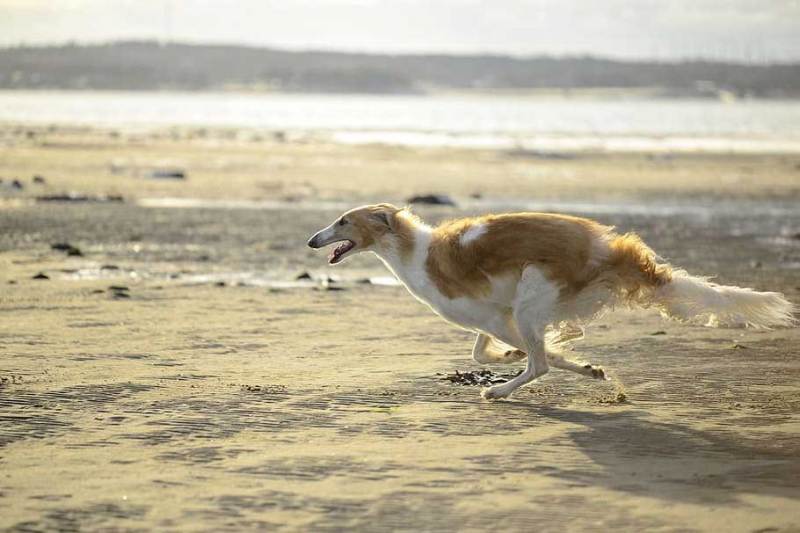
The Greyhound It is a breed of dog that is used mainly as a companion and competition animal..

Galgo Inglรฉs

Content

Characteristics "Greyhound (English Greyhound)"

Coexistence is important that you have with your new friend. Before considering the acquisition of a dog of the breed "Greyhound (English Greyhound)" you know certain factors. Not all breeds of dogs are apt to live in an apartment, you must take into account his character, their need for exercise, their interaction with other pets, their care and if you have small children, their level of tolerance towards them.

Adaptation โ“˜

3,0 of 5 stars (based on 1 review)

friendly dog โ€‹โ€‹โ“˜

2,0 of 5 stars (based on 1 review)

hair loss โ“˜

2,0 of 5 stars (based on 1 review)

Affection level โ“˜

4,0 of 5 stars (based on 1 review)

Need for exercise โ“˜

5,0 of 5 stars (based on 1 review)

Social need โ“˜

5,0 of 5 stars (based on 1 review)

Home โ“˜

3,0 of 5 stars (based on 1 review)

Toilet โ“˜

1,0 of 5 stars (based on 1 review)

Friendly with strangers โ“˜

2,0 of 5 stars (based on 1 review)

barking โ“˜

1,0 of 5 stars (based on 1 review)

Health โ“˜

3,0 of 5 stars (based on 1 review)

Territorial โ“˜

3,0 of 5 stars (based on 1 review)

Cat friendly โ“˜

2,0 of 5 stars (based on 1 review)

Intelligence โ“˜

4,0 of 5 stars (based on 1 review)

Versatility โ“˜

3,0 of 5 stars (based on 1 review)

Child friendly โ“˜

5,0 of 5 stars (based on 1 review)

Surveillance โ“˜

3,0 of 5 stars (based on 1 review)

joy โ“˜

4,0 of 5 stars (based on 1 review)

History

There are several explanations about the origin of the name Greyhound. Some say it is due to the gray color of the breed, but the most popular theory is that the name comes from Old English "grei", What dog, y ยซhundrยป, what does hunter mean.

Whatever the origin of your name, the Greyhound it is one of the oldest dog breeds, which is confirmed by its genetic characteristics. It also, although it is impossible to determine the exact date, the first mentions of this breed date back to more than 8.000 years.

More recently, it was also depicted in drawings from ancient Egypt (3200-1100 a.C.). There is also evidence of its presence and use in ancient Greece (766-323 a.C.). He was already known for his athletic qualities and great speed., and the Greeks already organized dog races.

Later, the Greyhound It is also mentioned in the writings of the Roman poet Ovid (43-17 or 18 a.C.). It is also the only breed of dog mentioned in the Bible..

It is very likely that it originated in the Sloughi (Arabian Greyhound), who accompanied Phoenician sailors in ancient times. They used him as a hunting dog in the desert, activity in which its speed and robustness worked wonders. The Arabian Greyhound has long been recognized as a sign of nobility, and was especially known in dog racing.

The Greyhound has also been portrayed throughout history as a noble canine breed, both in art and literature, especially in english. In fact, have long been associated with royalty. Many medieval tapestries depict the dog as a companion of the aristocracy and the kings of France and England.. It was generally used for hunting deer and wild boar.. Between the 11th and 14th centuries, an english law (the Canute Laws of Great Britain, enacted in 1016) it even stipulated that no criminal could possess a greyhound, which further confirmed the prestige of the breed.

After an undeniable success throughout Europe, It is said that it appeared in America in the 16th century, brought by Spanish explorers.

Three centuries later, when the first dog shows were organized in England and the United States, was immediately one of the first breeds to be exhibited. Nothing less than 18 Sighthounds Englishmen competed in the first Westminster Kennel Club show in 1877.

On the american side, the American Kennel Club (AKC) recognized the breed in 1885. The first greyhound race was held there the following year, in 1886, although the National Greyhound Association was not founded until twenty years later, in 1906.

Dog racing is still very popular in the United States and other countries, and the Greyhound still a favorite. In fact, nicknamed "the cheetah of the dog world", can reach speeds higher than those of any of its peers: he is the fastest dog in the world. It must be said that this breed has been selected for thousands of years to hunt leaving its prey behind, so today it can reach speeds of about 70 km/h. But, just like the cheetah, the maximum speed of the Greyhound can only be reached in a short distance, since it does not have a great resistance.

And if that was not enough, he is also very skilled, able to anticipate each movement of a prey and to change direction quickly while maintaining high speed. They also have the ability to perform prodigious jumps.: one of its representatives holds the world record for high jump among dogs since 2006, with a jump of 1,72 height meters performed without running.

On an international level, the Greyhound has become known mainly through races and dog shows. The breed was recognized in the late 19th century by the British Kennel Club and by the American Kennel Club (1885). The United Kennel Club (UKC) American and the International Cynological Federation (FCI) it took a little longer, waiting until 1914 to do the same.

More recently, the misfortunes of these dogs have contributed in some way to their notoriety. In fact, Greyhound racing has been the subject of controversy regarding its ethics and, above all, to the fate of retired greyhounds. In fact, the latter are often abandoned, Euthanized or sold to laboratories for use in animal experiments. Many shelters and animal protection organizations have taken up the issue, to the point where greyhounds - including the Greyhound– have gained in popularity as family dogs.

Physical characteristics

The Greyhound characterized by a slim body with a slightly arched back, a long neck, a long, thin head and ears usually folded over the neck. The tail is low, quite long and slightly curved. The torso is generally broad, as it houses large lungs and a fairly large heart.

In fact, this dog has physical characteristics that allow it to run at incredible speeds. Every line of your body is an advantage in this regard.: its length, his thinness, his deep chest, your flexible spine, its strong hind legs, his long tail and remarkable hips combine to make him a very powerful dog.

But, there is a physical distinction between two types of greyhounds: the Greyhound racing and the Greyhound competition. In general, the English racing greyhound is smaller: the height of the male ranges from 63 and 76 cm., that of the female between 61 and 74 cm.. Its weight is also slightly lower. The racing greyhound also has a more muscular neck and shoulders than the show greyhound., that looks slimmer, despite its larger size: of 71 to 76 cm for the male, and 68 to 74 cm for female.

Last, whether they are racing dogs or show dogs, English greyhounds have a short, very fine coat that requires very little maintenance. Their fur comes in a wide variety of colors: white, brown, red, gray and brindle.

Size and weight

▷ Male size: 63 – 76 cm.
▷ female size: 61 – 74 cm.
▷ Male weight: 30 – 35 kg
▷ female weight: 28 – 32 kg

Character and skills

The Greyhound is known to be a very intelligent dog, playful, obedient, strong and robust.

He is also a very kind companion, showing very little aggressiveness towards other dogs. This is because this breed was specially selected to run and hunt in a group.. On the other hand, its prey hunting instinct is extremely strong, so it may not be suitable for a household with a small pet, like a rabbit. So that this coexistence is possible, the puppy will need a lot of socialization and training to temper his hunting instinct from an early age. In any case, keep in mind that the hunting instinct is very strong in this breed; even though he has gotten used to his presence, it is recommended to supervise in all circumstances their possible coexistence with small domestic animals.

His hunting instinct also explains that, when going for a walk with your dog, your strap must always be well fastened. He is the most athletic of all dogs and is capable of reaching speeds even a runner cannot. 100 meters can approach. This means that it would be very difficult for a careless owner to try to catch up with his Greyhound.

If coexistence with other species can be problematic, The same should not happen with living with children. The Greyhound He is an excellent family dog รขโ‚ฌโ€นรขโ‚ฌโ€นand is very tolerant of children. But, it is recommended to avoid living with young children or those who are not used to interacting with dogs. Having said that, When the Greyhound you are in an inappropriate situation, will usually try to get away from her, instead of growling or biting.

On the other hand, Exposure to crowds can cause real stress in a Greyhound insufficiently socialized. But, they are not usually aggressive towards strangers: they usually limit themselves to barking or making a specific movement of the ears to warn their owners of the presence of a stranger.

It also, contrary to what his athletic abilities might suggest, they require less exercise than most other breeds, since they do not have a great resistance. The Greyhound It is also a very docile and calm dog that loves naps. In fact, his favorite activity is… have no activity! He's glad to spend the day just dozing, surrounded by his family.

Thus, the Greyhound it is a breed of dog suitable for a flat or a house with a small garden. Despite his large size and athletic build, space is not a problem for him, as long as its owner offers a comfortable and cozy place to rest. But, it is recommended to provide the garden with a solid fence to prevent the dog from running away if it occurs to him to chase other animals beyond his territory. But, an electric fence for dogs is often ineffective with them, since his hunting instinct prevails.

Last, it is usually recommended that Greyhound retirees available for adoption wear muzzles, as they may be tempted to bite smaller dogs or other animals. But, this may be a temporary measure while your new pet adjusts to his new environment and you gain better control of his temper. It also, as most dogs have lived with other dogs and with humans, may suffer from separation anxiety if left alone for a long time. Shelters and other organizations that facilitate the adoption of these dogs are often a good source of information to guide you in finding the right companion.

In any case, there is no genetic evidence of behavioral differences between the two types of Greyhound. So, if there are such differences, breeders attribute them to the training and experience of each dog.

Education

The Greyhound it is a very intelligent breed of dog, and it is quite easy to train. Usually, they are very obedient and learn quickly. But, they can be stubborn with certain orders, so patience and perseverance are the keywords to keep in mind during training. This may be the case when teaching your dog to sit., since it is quite an awkward position for him. Does not adopt it naturally, and rather it seems that it is balanced on its tail.

As he is quite proud and has a sensitive temperament, it is better not to be rude or aggressive with him, and this is especially true when trained. Dog training techniques that use positive reinforcement rather than punishment are the most successful with this breed. This is the case, above all, if food is used as a motivator.

In general, the Greyhound is loyal but independent, and requires a secure owner. Usually, quickly bond with their owner and obey him as soon as they learn his job.

Last, it is especially important to socialize him with other dogs and humans of all kinds from an early age, so as not to let his natural shyness get the better of him. If this happens, you may have a hard time adjusting to changes in your environment or your schedule. Various socialization techniques can be used, how to enroll him in a puppy school, stroll it through public gardens or take it to outdoor events. In any case, it is important to provide a variety of opportunities and types of socialization so that your dog is as comfortable as possible in public and in interactions with humans.

Health

The Greyhound is especially prone to certain diseases: Hip Dysplasia and elbow dysplasia, Hypothyroidism, von Willebrand disease and gastric problems.

The Dysplasia in dogs it is a developmental anomaly of a tissue that is present from birth and causes deformities. It is especially prevalent in racing sighthounds, since excessive physical activity accelerates the onset and development of the disease.

As the Greyhound is sensitive to intestinal inflammation, physical activity should be avoided - including simple walking- in the 30 minutes before or after a meal. This is because intestinal bloating can lead to inflammation or even twisting of the stomach., what can be deadly.

The Hypothyroidism in dogs it means that the thyroid gland does not produce enough hormones. The consequences can range from reduced fertility to more serious problems, like dog obesity, lethargy and irregular heat cycles. But, although this breed is actually prone to hypothyroidism, it is not uncommon for individuals to be misdiagnosed due to lack of knowledge of their normal hormone levels. So, it is important to choose a veterinarian who knows the physiological peculiarities of the Greyhound, related to the fact that it has a slightly larger heart than other dogs. This leads to higher blood pressure and, often, to a slight heart murmur. It is not a problem, but a veterinarian unaware of this feature could make an incorrect diagnosis.

The von Willebrand disease is the most common inherited blood clotting disorder in dogs.

It also, the Greyhound you are at risk of being overweight, especially individuals withdrawing from careers. It is common for them to win around 2 kg, but you have to be careful not to exceed this threshold. So, it is important to carefully monitor your dog's weight and not overfeed it.

The Greyhound used for racing also have dental hygiene problems. This health problem is not shared with individuals used for dog shows and the cause does not appear to be genetic., rather it is due to the living conditions of the racing dogs.

Last, due to its short coat and low percentage of fat, the Greyhound it is a breed sensitive to cold. It is recommended to equip it with a dog coat when you go out in cold or rainy weather, and make sure you always have a warm place to rest. For the same reason, make sure the places where you can rest are soft, to avoid the appearance of bedsores (also known as "bed sores").

The low percentage of body fat also makes the Greyhound is more sensitive than other breeds to anesthetics and certain medications. So, it is recommended to choose a veterinarian who is familiar with the breed and its physiology (including hormone levels) to avoid misdiagnosis or inappropriate treatment.

Life expectancy

10 to 13 years

Grooming

The Greyhound it is a low maintenance breed, as its short, shiny coat requires little brushing. Brush the dog's coat weekly, preferably with a comb or a rubber glove, it is enough to remove dead skin and excess hair, while helping to distribute body oils to keep the coat shiny. During brushing, it is advisable to examine the skin for redness and lesions, especially around the nose, mouth, eyes and paws.

If the coat is well groomed, the Greyhound rarely need a bath.

But, are prone to dental hygiene problems, so regular brushing is recommended to avoid plaque build-up.

It also, like the ears of the Greyhound they are usually bent, it is important to inspect them weekly to avoid the development of infections, manifested by the presence of redness and / or bad smells. The outer part of the ear can be cleaned with a cotton swab slightly moistened with a special solution for cleaning dogs' ears.. But, it is important never to insert anything into the ear canal.

Last, if they do not wear out naturally due to a rather sedentary lifestyle, it is necessary to trim the dog's nails once or twice a month to avoid scratches or other problems.

Food

To limit the risk of obesity, it is recommended to measure the food that is given to the greyhound and divide it into two portions: one in the morning and one at night.

As a general rule, of 2,5 to 4 cups of quality dry feed are sufficient for males and 1,5 to 3 cups for females.

Use

The Greyhound was first used as a hunting dog, which explains why the tracking instinct is still very present in this breed, although this use has almost disappeared.

It also, This breed has long been recognized for its athletic abilities and remains one of the most widely represented in dog sports today. Of course, the breed is especially known for sighthound racing, whether by sight or by chance. It was in his home country, Great Britain, where the Sighted Pursuit in the middle of the 18th century, and where the races on artificial hares made their appearance in 1927. It also, the Greyhound also usually participates in obedience and agility competitions.

In addition to the sports lines of the Greyhound, there are also lines for dog shows.

Last, the Greyhound increasingly used as a companion dog, and it has many qualities for it. A person who wishes to adopt a Greyhound as a companion dog you can certainly opt for a puppy, which is always an attractive option, but keep in mind that there are also many available Greyhound retired adults (sometimes prematurely), and they can represent a magnificent option. In fact, in recent years, many non-profit organizations (shelters, animal protection associations, etc.) campaigns have been launched to raise awareness among the general public about the fate of greyhounds used for racing (abandonment, euthanasia, sale to laboratories, etc.) and to find adoptive families for retired copies. This has allowed the general public to better understand the Greyhound and its potential as a family dog.

Price

The price of a Greyhound of a professional breeder varies between 900 and 3.600 EUR. This very wide range is explained by the fact that the price depends largely on the lineage of the dog and its age.: in general, increases with age, especially in the case of racing sighthounds that have begun their training.

In the case of horses withdrawn from races and available for adoption in shelters, the price to adopt a Greyhound usually oscillates between 250 and 300 EUR, depending on the care offered by the shelter in question.

Images "Greyhound (English Greyhound)"

Photos:

1 – Greyhound by https://pixabay.com/es/photos/galgos-windhunderennen-5373255/
2 – Greyhound by Adam.J.W.C., CC BY 3.0, via Wikimedia Commons
3 – Greyhound by MTSOfan
4 – Greyhound striped (1 year) and male greyhound (8 months) leonado. by Tux-Man, CC0, via Wikimedia Commons
5 – Greyhound by No machine-readable author provided. Pleple2000 assumed (based on copyright claims)., CC BY-SA 3.0, via Wikimedia Commons
6 – Greyhound by https://www.akc.org/dog-breeds/greyhound/

Videos "Greyhound (English Greyhound)"


Type and recognitions:

  • FCI CLASSIFICATION:
  • Group :
  • Section : . .

Federations:

  • FCI – Group 10: Section 3: Short-haired Sighthounds โ“˜
  • AKC – Hounds Toy โ“˜
  • ANKC – (Hounds) โ“˜
  • CKC – Hounds โ“˜
  • โ€‹KC – Hounds โ“˜
  • NZKC – Hounds Toy โ“˜
  • UKC – Hounds โ“˜

FCI breed standard "Greyhound (English Greyhound)"

Origin:
Ireland, United Kingdom

Date of publication of the valid original standard:
13.10.2010

Use:

Sighthound


General appearance:

Strongly built, erected, generously proportioned, powerful musculature and symmetrical training. Long head and neck; good shoulder position, well outlined chest; spacious body; loin slightly arched; powerful rooms; strong limbs and feet. The flexibility of the limbs highlights their distinctive type and elegant qualities.


Behavior / temperament:

Has remarkable vigor and endurance. It is intelligent, Gentile, affectionate and equanimous.

Head:

Long, moderate amplitude.

Cranial region:
  • Skull: Annoying.
  • Depression links (Stop): Poco observable.

facial region:

  • Snout: The jaws are strong and well defined.
  • Mandible / Teeth: The jaws are strong and have a full scissor bite., that is to say, that the upper incisors closely cover the lower ones and are set perpendicular to the jaws.
  • Eyes: Bright, Smart, oval-shaped; oblique implantation. Preferably dark.
  • Ears: Small, folded in the shape of a rose, texture fine.

Neck:

Long and muscular, elegantly arched and well attached to the shoulders.

Body:

  • Back: Rather long, broad and square.
  • Pork loin: Strong; slightly arched.
  • Breast : Deep and voluminous, which allows adequate space for the heart. Long ribs, tight, well developed back.
  • Bottom line and belly: Well raised flanks.

Tail:

Rather low implantation; is strong at the base, and it decreases until it reaches the top; carried low, slightly bent.

Tips

PREVIOUS MEMBERS:

  • General appearance: The elbows, pasterns and fingers do not turn inward or outward.
  • Shoulder: Oblique; they are well tilted back. They are muscular, although not heavy in appearance; are narrow and clearly defined at the top.
  • Elbows: Loose and positioned well below the shoulders.
  • Forearm: Long and straight forelimbs, of solid and well developed bones.
  • Metacarpus: Moderate in length and slightly flexed.
  • Previous feet: Of moderate length. The fingers are compact and have good angulations; the pads are strong.

LATER MEMBERS:

  • General appearance: Both the body, as the hind limbs are well developed and of ample proportions, which allows the animal to cover a lot of ground when at rest.
  • Thigh and legs: Wide and muscular, showing great propulsion power.
  • Knee: good angulation.
  • Metatarsus: Hocks lowered; they do not turn inward, nor out.
  • Rear foot: Of moderate length. The fingers are compact and have good angulations; the pads are strong.

Movement:

Straight, well close to the ground, free, allowing the animal to cover a lot of ground quickly. The hind limbs reach well under the body, thus providing a great propulsion.

Mantle

  • HAIR: Thin and tight.
  • COLOR: Negro, white, red, blue, leonado, Griffon clear (sand), brindle or any of these colors stained with white.


Size and weight:

Ideal height:

  • Males: 71 - 76 cm..
  • females: 68 - 71 cm..


Fouls:

Any deviation from the aforementioned criteria is considered a fault and its severity is considered to the degree of deviation from the standard and its consequences on the health and well-being of the dog and the dog's ability to perform its traditional task..

FALTAS DESCALIFICANTES

  • Aggressiveness or extreme shyness.
  • Any dog โ€‹โ€‹showing clear signs of physical or behavioral abnormalities.


N.B.:
  • Males should have two normal-appearing testicles fully descended into the scrotum..
  • Only functionally and clinically healthy dogs, with the typical conformation of the breed, should be used for parenting
  • Source: F.C.I - International Cynological Federation

    Alternative names:

    1. English Greyhound (English).
    2. Greyhound (French).
    3. GroรŸer Englischer Windhund (German).
    4. (em inglรชs: Greyhound) (Portuguese).
    5. Lebrel ingรฉs, Greyhound (espaรฑol).

    โ–ท The world of Pets: Dogs, cats, birds, reptiles, amphibians

    Italian Greyhound
    Italia FCI 200 . Short-haired Sighthounds

    Galgo Italiano

    The Italian Greyhound despite being an Italian breed, not widely used in your country.

    Content

    History

    Of ancient origin, the Italian Greyhound He is a descendant of the small sighthounds that were present in the court of the pharaohs of ancient Egypt.

    The current breed is believed to have originated in what is now Turkey and Greece.. Although it is not clear if the breed was used as a hunting dog or as a companion dog. (or maybe both), it is clear that he made a strong impression there, to the point that it is represented in many ceramic finds during archaeological excavations.

    The breed spread to Italy around the 5th century BC.. Italian Greyhound Remains Found in Pompeii, city รขโ‚ฌโ€นรขโ‚ฌโ€นburied by the eruption of Vesuvius in the year 79 a.C.

    There are few traces of this dog until the Middle Ages, when he became the favorite of the nobility. Although the dog was found in most of Mediterranean Europe, was particularly successful in Italy, where its current name comes from. Once again, the artists of the time chose to pay tribute to him: This time, was immortalized in the paintings of the great masters.

    Little by little he conquered northern Europe and arrived in Great Britain in the 16th century., where it soon became popular with the nobility, and was even adopted by some sovereigns. His popularity in Europe grew steadily, peaking in the 19th century, but the conflicts of the first half of the 20th century decimated their ranks.

    Fortunately, had already crossed the Atlantic to the United States, to the point that the American Kennel Club (AKC) recognized the breed in 1886. Although their number was never very great, it was these American lines that contributed to the post-war revival of the breed. In fact, to reinstate their breeding programs, European breeders (and in particular those of Great Britain) They resorted to importing animals from the United States.

    In 1948, the United Kennel Club (UKC) American recognized breed, followed in 1956 by the Fรฉdรฉration Cynologique Internationale (FC). Today, all the main canine associations recognize the Italian Greyhound, o IG, as it is affectionately known by Anglo fans.

    Like this, is present all over the world and enjoys a certain popularity, that tends to grow. in your country of origin, each year more than 300 dogs in the Ente Nazionale della Cinofilia Italiana, versus less than 200 at the end of the years 200. In United States, ranks 70 (of 195) among the most popular breeds, according to the number of annual registrations in the AKC. In the United Kingdom, registrations are increasing considerably, going from little more than 200 per year around 2010 twice that figure alone 10 years later. The same upward trend is observed in France, where now more than 450 copies per year in the Livre des Origines Franรงais (LOF), in front of some 200 in the decade of 1990 and principles of 2000. In the news, it is the second most popular sighthound breed in the country, far behind the Whippet.

    Physical characteristics

    The Italian Greyhound has, as the name reflects, the elegant and distinguished look of a miniature greyhound. In fact, It is the smallest of the sighthounds.

    Her slender body is almost perfectly square, its length is equal to its height at the withers. Their slender legs, with a refined bone structure, have well-developed musculature, but not bulky. The tail, carried low in its first half and then curved up, it is also very fine.

    The head is long, oblong and narrow, sitting on a long, muscular neck, with a diameter greater than that of the skull, which is flat. Its conical snout ends in a black nose, or at least dark. His big round eyes, very expressive, they are rather dark brown. His little ears, carried high, they have fine cartilage and fold in on themselves. When the dog is on the prowl, stands upright and the lobe is placed in a horizontal position, a position called "pinwheel".

    The mantle of Italian Greyhound has no undercoat and consists of short hair, silky and fine that covers the whole body without fringes. The coat can be any shade of black, gray or isabela (a color between beige and yellow). There may be some white markings on the chest and feet.

    Last, sexual dimorphism is very mild: males and females are roughly the same size and weight.

    Size and weight

    ▷ Male size: 32 to 38 cm.
    ▷ female size: 32 to 38 cm.
    ▷ Male weight: 5 kg
    ▷ female weight: 5 kg

    Character and skills

    The Italian Greyhound He is very affectionate with the members of his family. He likes to spend most of his time with them., either playing, walking, lounging next to you or sneaking under the covers for the night. Can tolerate being left alone relatively well when master is working, especially if you know that you will receive affection and attention when you return. On the other hand, You are likely to suffer from separation anxiety if you have to spend a whole weekend away from your family. It is a dog that needs attention, and is able to spend hours with his master on the living room sofa, but also to follow him with curiosity throughout the house.

    No matter how close he is to his family, this dog is very shy in the presence of strangers: after barking to signal its presence, runs and hides to watch from a distance how things are going.

    Live very well with young people, who are excellent playmates for him: It is a recommended dog for children. But, children must have learned to behave with an animal and be aware that it is not a toy, to avoid any form of abuse. This is especially true since the miniature size of this dog, attached to their fine and brittle bones, means that accidents can happen very quickly. They should also be careful to speak to you in a calm voice., as he would soon be frightened by loud shouts of joy or exaggerated crying. In any case, regardless of race, the interaction between a dog and a young child should always take place under the supervision of an adult.

    The sociability of Italian Greyhound spreads to other animals, so living with them is not usually a problem. But, if the Italian Greyhound must share a home with a larger dog, it is important to ensure that the larger dog does not see the Italian Greyhound like prey or disturb him too violently when playing together. It also, this dog likes to chase everything that moves, what could be a source of stress for a small rodent like a mouse, although it is unlikely that it will actually be attacked.

    In fact, the Italian Greyhound is an active dog, who likes to run, jump and play, although, of course, this decreases as you get older. Agility is an ideal dog sport to satisfy your need for exercise. But if you don't have access to the outside, quickly find a clue among the living room furniture, that you can use, for example, to run and jump on the highest furniture. It must be said that this dog shares with cats a special fondness for high places, so it is not uncommon to find him frolicking on the kitchen table or bedroom dresser.

    But, they can live well in a flat, as long as they have enough space to exercise for at least an hour a day. But, the owner should be aware that they may have cleaning problems, especially if not taken for walks often enough. Thus, it is recommended that you have access to the outdoors, where he can run and relieve himself before returning to the heat of home, in every sense. As it is difficult for him to contain himself when he feels like it, a dog hatch is ideal so that he can go to the garden independently. This also makes it easy for you to sunbathe in the garden whenever you want., since it is one of his favorite activities. But, the garden must not have gaps through which it can slip and must be fenced with a fence of at least 1,5 m high to prevent it from jumping. In any case, an underground electric fence would not be an effective device, since it is not the download received that would make it go back. In fact, his propensity to run after anything that moves means he can take off quickly as soon as he is given the chance. For the same reason, it is recommended to always carry it on a leash when walking. This is all the more true since it can reach speeds of up to 40 km/h, which makes it very difficult to catch it once it has started.

    In this regard, remember that, like all sighthounds, the Italian Greyhound has a neck wider than the head, which makes the usual collars ineffective. There are special collars on the market for this type of dog, but a simple harness can also achieve the desired result.

    A little manipulative, the Italian Greyhound tends to do what he wants and can easily guide a master who does not know how to teach him the family hierarchy and who allows himself to be touched by his big eyes. However, is an intelligent dog, who generally likes to please his family. They can teach you some tricks and, in general, he loves games that stimulate him both physically and mentally. In particular, does not tire of looking for a ball and loves any activity that involves searching or chasing an object.

    His drive makes him capable of getting into difficult situations, especially when he is young. In fact, This reckless little guy doesn't realize how fragile he is, and many representatives of the breed end up with a broken leg after trying to jump from too high a place.

    Last, has a much more powerful voice than its small size suggests. Yes indeed, not a big barker, although he does not hesitate to let himself be heard throughout the neighborhood when he perceives an unknown noise.

    education

    The education of Italian Greyhound should start asap, placing special emphasis on their socialization. In fact, this is important for this relatively shy dog โ€‹โ€‹to get used to people, animals and situations you may face later in life.

    Another crucial point in your education is cleanliness.. Your bladder is only as small as your size. So, even with all the goodwill in the world, can't keep it for long. So, it is important to teach him to relieve himself in an agreed place (abroad, If it is possible, or in a litter box inside) and to point out your urgent needs, to be taken into account without delay. But, no homeowner is safe from an accident one day, even with a well-trained adult dog. If this happens, of course, you should avoid punishing your dog, since nothing good will come of it.

    Despite your undeniable stubbornness, the training of the Italian Greyhound shouldn't be too difficult: in fact, it is a very suitable breed as a first dog. Positive reinforcement methods are very successful with this breed, who likes to be rewarded for their efforts with treats, encouragement and caresses. On the other hand, traditional dog training techniques do not work well with this dog and are likely to amplify his natural shyness.

    On the other hand, even with a good training method and a good coach, you will find it difficult to pay attention for a long time, so it is better to do several short sessions each day than one long session that will bore you and probably not be successful.

    Health

    The little Italian greyhound is a fairly robust breed, and many of these representatives have more than 15 years.

    But, is particularly predisposed to a long list of diseases and conditions:

    • Hip dysplasia and elbow dysplasia, joint problems that can make walking easier or more difficult;
    • Dislocated kneecap, that affects the ball and causes lameness;
    • Legg-Calve-Perthes disease, hip bone deformity often mistaken for dysplasia, what can make arthritis premature if not done in time;
    • Periodontal problems, for example with bleeding gums or even tooth loss;
    • Progressive retinal atrophy, causing breakdown of eye tissue that could lead to vision loss;
    • Alopecia, total or partial hair loss;
    • cryptorchidism, when one of the testicles of a male individual does not descend into its place;
    • The Hypothyroidism, a thyroid gland disorder responsible for excessive weight gain and listless behavior;
    • Epilepsy, a disease caused by abnormal electrical activity in the brain that causes seizures;
    • The glaucoma, excessive increase in pressure inside the eye, causing pain and loss of vision;
    • Vitro-retinal degeneration, characterized by deposits on the retina that resemble snowflakes;
    • The portosystemic shunt, when a vein allows blood to bypass the liver. So it no longer leaks, which causes a lot of problems. Surgery is usually prescribed, with a success rate of 85%;
    • Skin cancer, often caused by excessive sun exposure;
    • Von Willebrand disease, causing blood clotting problems.

    This breed is also particularly prone to leg fractures., especially in the radius and ulna (Paws). In fact, its fine structure is not as resistant as sometimes seems to be imagined, so much so that his reckless side can often lead to an accident.

    It also, this breed seems particularly sensitive to organic phosphate insecticides. So, it is necessary to carefully choose the products used inside the house and / or in the garden.

    The Italian Greyhound you may also be allergic to certain anesthetics and barbiturates. This point should be discussed with the veterinarian before any operation..

    Finally, with its small size and short fur, It is a canine breed that fears cold and bad weather. If you live outside the house, what is not recommended, need adequate shelter. It also, it is useful to dress him in a dog windbreaker on walks when it rains, or a sweater if the air is cold.

    On the other hand, even if you particularly appreciate this, we need to make sure you don't spend too much time in the sun in the summer, because it is quite prone to skin problems. So, it is advisable to keep it in the shade, or at least put on a dog sunscreen.

    Life expectancy

    Of 13 to 14 years

    Grooming

    The Italian Greyhound it is a very easy breed to care for.

    In fact, its short coat only requires a quick weekly brushing to keep it shiny. They shed very little and do not have a noticeable molting period during which molting might require more regular maintenance..

    That is why they are considered a hypoallergenic breed of dog.. Having said that, remember that there is no zero risk: someone allergic to dogs should take the time to check in real conditions that there are no problems with the animal they are considering adopting. But, a dog that sheds very little, as is the case of the Italian greyhound, has an effectively reduced risk of transmitting allergens.

    In any case, brushing the dog's hair once a week is usually enough to clean it: unless it has been rolled up in a sticky or smelly substance, it is usually not necessary to bathe him.

    To complete this weekly session, you have to check your teeth, eyes and ears and clean them if necessary. Pay special attention to your teeth and gums to check for any inflammation that could be a sign of periodontal disease., since it is a health problem to which it is more prone than other dogs.

    Last, check that its claws are not too long, and if they are, you have to cut them, as there is a risk that you will be hindered in your movements and / or hurt. But, this is not necessarily a problem with a very active dog, as natural wear and tear can take care of it.

    Food

    The Italian Greyhound you have no difficulty choosing your food, and commercial dog food is doing well. So that you receive all the nutrients and vitamins necessary for your good health, food must be of good quality and adapted to their size and age.

    It's important to stick to the manufacturer's recommended daily amounts to make sure you don't overeat. If your dog receives treats, especially as part of their training, the corresponding caloric intake should be deducted from your daily allowance to avoid weight gain.

    In general, a responsible owner who cares about keeping his dog healthy should monitor his diet and weight by weighing him regularly. If you have a slip, do not wait to correct the situation: in general, just reduce your servings and give you more exercise. If that is not the case, it is advisable to consult a veterinarian to rule out a possible health problem and establish a more appropriate diet.

    On the other hand, remember that the Italian Greyhound is a naturally slimmer breed than many others: do not be alarmed by it, or try to remedy it by increasing your diet.

    Price ยซSmall Italian Greyhoundยป

    The price of a puppy Italian Greyhound round the 1000 EUR.

    But, this average price hides a rather large disparity, since the fork goes from 700 to 1.400 EUR. The difference from one subject to another is largely explained by their physical characteristics., more or less close to the norm. Lineage is important too: a puppy whose parents or other ancestors have received honors at various dog shows is bound to fetch a higher price. Sex also influences, as females tend to be slightly more expensive than males.

    Characteristics "Italian Greyhound"

    Coexistence is important that you have with your new friend. Before considering the acquisition of a dog of the breed "Italian Greyhound" you know certain factors. Not all breeds of dogs are apt to live in an apartment, you must take into account his character, their need for exercise, their interaction with other pets, their care and if you have small children, their level of tolerance towards them.

    Adaptation โ“˜

    4,0 of 5 stars (based on 1 review)

    friendly dog โ€‹โ€‹โ“˜

    4,0 of 5 stars (based on 1 review)

    hair loss โ“˜

    2,0 of 5 stars (based on 1 review)

    Affection level โ“˜

    5,0 of 5 stars (based on 1 review)

    Need for exercise โ“˜

    3,0 of 5 stars (based on 1 review)

    Social need โ“˜

    3,0 of 5 stars (based on 1 review)

    Home โ“˜

    3,0 of 5 stars (based on 1 review)

    Toilet โ“˜

    1,0 of 5 stars (based on 1 review)

    Friendly with strangers โ“˜

    2,0 of 5 stars (based on 1 review)

    barking โ“˜

    2,0 of 5 stars (based on 1 review)

    Health โ“˜

    3,0 of 5 stars (based on 1 review)

    Territorial โ“˜

    4,0 of 5 stars (based on 1 review)

    Cat friendly โ“˜

    2,0 of 5 stars (based on 1 review)

    Intelligence โ“˜

    4,0 of 5 stars (based on 1 review)

    Versatility โ“˜

    3,0 of 5 stars (based on 1 review)

    Child friendly โ“˜

    4,0 of 5 stars (based on 1 review)

    Surveillance โ“˜

    3,0 of 5 stars (based on 1 review)

    joy โ“˜

    4,0 of 5 stars (based on 1 review)

    Images "Italian Greyhound"

    Photos:

    1 – A male of Italian Greyhound by christina, CC BY 2.0, via Wikimedia Commons
    2 – A female of Italian Greyhound llamada Sakura by tanakawho, CC BY 2.0, via Wikimedia Commons
    3 – Enzo, a Italian Greyhound called Enzo by madaise
    4 – Italian Greyhound by Mark Robinson
    5 – Italian Greyhound by https://pixabay.com/es/photos/perro-galgo-italiano-lindo-mascota-3810479/
    6 – dogs of Italian Greyhound by Italian_Greyhound_Puppies.jpg: Jim or Katie McClartyderivative work: Anka Friedrich, CC BY 2.0, via Wikimedia Commons

    Videos "Italian Greyhound"


    Type and recognitions:

    • FCI CLASSIFICATION:
    • Group :
    • Section : . .

    Federations:

    • FCI – Group 10: Section 3: Short-haired Sighthounds โ“˜
    • Standard CCC (Canadian Kennel Club / Canadian Kennel Club)
    • Ente Nazionale della Cinofilia Italiana – โ“˜

    FCI breed standard "Italian Greyhound"

    Origin:
    Italy

    Date of publication of the valid original standard:
    13.11.2015

    Use:

    Race dog


    General appearance:

    Long in appearance, its trunk is inscribed in a square.Despite its small size, it has all the characteristics of a miniature sighthound., the prototype of refinement and elegance. It can be described as a model of grace and distinction.


    IMPORTANT PROPORTIONS : Its length is equal, or slightly less than the height at the withers. The length of the skull is equal to half the length of the head. The length of the head can reach the 40% the height at the withers.


    Behavior / temperament:

    Reserved, affectionate, docile.

    Head:

    Long and narrow in shape

    Cranial region:

    flat skull, with the upper axes of the skull and snout parallel.
    The length of the skull is equal to half the length of the head which is slightly rounded on the sides. The suborbital region is well chiseled. The muscles of the head should not give a heavy appearance to it.. Marked eyebrow bones. The occiput is not prominent. Medium depression only slightly marked.

    • Depression links (Stop): Very little marked.

    facial region:

    • Truffle: dark colored, preferably black; the nostrils are wide open.
    • Snout: Strait.
    • Lips: The edges of the lips have very dark pigmentation, the lips are thin and well contiguous on the jaw.
    • Mandible / Teeth: Elongated jaw, with the incisors well aligned in a circle, strong in relation to the size of the dog. Healthy and complete teeth, implanted at right angles in the jaws, articulated in the form of scissors.
    • Cheeks: Thin.
    • Eyes: Large rounded and expressive placed sub frontally; the eyeball is not even sunken, nor jumpy. The iris is dark in color. The edge of the eyelids has pigmentation.
    • Ears: Very high insertion, small, with thin cartilage. They are folded in on themselves and extend back over the nape of the neck and over the upper part of the neck.. When is the dog alert, the base of the ear is erect and the distal part extends laterally horizontally, as if it were a shed.

    Neck:

    The nape slightly arched and bulging at the base, towards the cross area. Slightly convex throat line. Length equal to that of the head. Truncated cone shaped, muscular. Thin skin without double chin.

    Body:

    Its length is equal to or slightly less than the height at the withers.

    • top line: Rectilinear profile, with a dorso-lumbar region slightly arched. The lumbar curvature extends harmoniously into the line of the croup.
    • Cross: Quite steep with the tops of the shoulders placed together.
    • Back: Straight, muscular.
    • Rump: Well inclined, wide and muscular.
    • Breast : Strait solid but elegantly modeled with slight arching of the ribs, deep that goes down to the elbows.
    • Bottom line and belly: Accented arch rising without being abrupt towards the belly.

    Tail:

    It is low insertion, she is thin, still at the base, gradually decreases to the tip. It appears downward and straight in the first half and then bends at the tip. Stretched it should reach the top of the hock. The hair is satin.

    Tips

    PREVIOUS MEMBERS:

    • General appearance: Overall good poise, with fine muscles.
    • Shoulder: little oblique, with muscles long, well developed, clearly observable and salient.
    • Forearm: With a wide scapulo-humeral angle and a direction parallel to the median plane of the body. Slightly longer than the scapula.
    • Elbows: No protrusions, or sunk.
    • Arm: Straight, refined bone structure, flat and crisp, length of this, measurement from the floor to the elbow, it barely exceeds that which goes from the elbow to the cross; very light bones; the forearm has a perfect vertical position, both head on, as in profile.
    • Metacarpus: Dried, in profile, it's a little oblique.
    • Front foot: Almost oval in shape, small, with arched and well joined fingers. Non-bulky, pigmented pads. Black or dark nails, depending on the color of the coat or foot, where white is accepted.

    LATER MEMBERS:

    • General appearance: Well angled. As a whole, seen from behind, perfect poise.
    • Thigh: Long, delgado, It is not bulky; the muscles are clearly observable.
    • Leg: well oblique, with fine bones and clearly observable leg groove. Slightly longer than the thigh.
    • Metatarsus: Seen from behind it should be parallel.
    • Rear foot: Less oval than the previous one, with arched and well joined fingers; pads not bulky and well pigmented nails, as in previous members.

    Movement:

    Elastic, harmonious jog somewhat high covering the surface. This means that the forelimbs should be moved forward with good reach with the pasterns rising somewhat inclined.. fast gallop, with spring movements, fast.

    Mantle

    • SKIN: Thin and well attached to all regions of the body, except on the elbows, where it is slightly less tense.
    • HAIR: This one is satin and fine, soft over the whole body, without the slightest trace of bangs.
    • COLOR: single color, in black, gray and elizabethan, in all possible shades. White is accepted only on the parapet and on the feet..


    Size and weight:

    • Height to the cross: Males and females : of 32 to 38 cm..
    • Weight: Males and females : a maximum of 5 kg.


    Fouls:

    Any deviation from the aforementioned criteria is considered as a fault and the severity of this is considered to the degree of the deviation to the standard and its consequences on the health and well-being of the dog..

    • Permanent amble.
    • elevated movements.
    • Movement near the ground with short steps.

    FALTAS DESCALIFICANTES

    • Aggressive or fearful dog.
    • Any dog โ€‹โ€‹showing clear signs of physical or behavioral abnormalities must be disqualified..
    • Marked convergence or divergence of the craniofacial axes.
    • Total or half depigmentation of the truffle.
    • Concave or convex nasal bridge.
    • Upper or lower prognathism.
    • Eyes gazeos; total depigmentation of the edges of the eyelids.
    • Tail raised over the back; absence of tail or very short tail, whether congenital or by artificial means.
    • Multicolored fur; white hair in other places that are not indicated by the standard.
    • Size less than 32 cm or more 38 cm., both in males, as in females.

    MISS PLAYOFFS (not fit to create)

    • Prognathic bite
    • Unilateral cryptorchidism


    N.B.:

    Males should have two normal-appearing testicles fully descended into the scrotum..
    The latest changes are in bold.

    Source: F.C.I - International Cynological Federation

    Alternative names:

    1. (Italian: Piccolo levriero Italiano), Italian Sighthound (English).
    2. Petit lรฉvrier italien (French).
    3. Italian Greyhound (German).
    4. (em italiano: Piccolo levriero italiano), Piccolo levriero italiano (Portuguese).
    5. Piccolo, Galgo Italiano, Lebrel italiano (espaรฑol).

    โ–ท The world of Pets: Dogs, cats, birds, reptiles, amphibians

    Deerhound
    Escocia FCI 164 . Rough-haired Sighthounds

    The Scottish Deerhound resembles a Greyhound larger coarse hair and stronger bone.

    Lebrel Escocรฉs

    Content

    Characteristics "Deerhound"

    Coexistence is important that you have with your new friend. Before considering the acquisition of a dog of the breed "Deerhound" you know certain factors. Not all breeds of dogs are apt to live in an apartment, you must take into account his character, their need for exercise, their interaction with other pets, their care and if you have small children, their level of tolerance towards them.

    Adaptation โ“˜

    3,0 of 5 stars (based on 1 review)

    friendly dog โ€‹โ€‹โ“˜

    3,0 of 5 stars (based on 1 review)

    hair loss โ“˜

    3,0 of 5 stars (based on 1 review)

    Affection level โ“˜

    5,0 of 5 stars (based on 1 review)

    Need for exercise โ“˜

    5,0 of 5 stars (based on 1 review)

    Social need โ“˜

    5,0 of 5 stars (based on 1 review)

    Home โ“˜

    2,0 of 5 stars (based on 1 review)

    Toilet โ“˜

    2,0 of 5 stars (based on 1 review)

    Friendly with strangers โ“˜

    3,0 of 5 stars (based on 1 review)

    barking โ“˜

    1,0 of 5 stars (based on 1 review)

    Health โ“˜

    3,0 of 5 stars (based on 1 review)

    Territorial โ“˜

    2,0 of 5 stars (based on 1 review)

    Cat friendly โ“˜

    2,0 of 5 stars (based on 1 review)

    Intelligence โ“˜

    3,0 of 5 stars (based on 1 review)

    Versatility โ“˜

    3,0 of 5 stars (based on 1 review)

    Child friendly โ“˜

    4,0 of 5 stars (based on 1 review)

    Surveillance โ“˜

    2,0 of 5 stars (based on 1 review)

    joy โ“˜

    4,0 of 5 stars (based on 1 review)

    History

    Where does the Deerhound ยซDeerhoundยป?

    The Deerhound it is one of the oldest and noblest dog breeds in the world. It is an impressive hunting dog and sighthound. Together with his cousin, the Irish wolfhound, slightly larger, displays a distinctive and strongly impressive dog type.

    It has the complexion of a large and very strong greyhound and at the same time a rough and shaggy coat. As the name suggests, was the hunting dog of the Scottish high nobility for the red deer. The Scottish Deerhound must be fast, brave and strong enough to attack an adult deer and, at least, knock him down until the hunter can finish him off with the spear. The Deerhound it was also used in other game such as elk or wild boar. The hunts took place in the rugged Scottish Highlands. Dogs had to be fast, strong, persistent and, at the same time, extremely robust and resistant. So later they were also used to exterminate wolves.

    With the decline of classical hunting by the high nobility and new firearms with which a deer could be easily shot from a distance, the Deerhound lost importance and was finally almost extinct. British dog lovers, like the great painter Edwin Landseer, were involved in its conservation after 1800. Fortunately, this was very successful. The Scottish Deerhound is closely related to the Irish wolfhound, which is supported by genetic studies carried out by a team of geneticists led by Heidi Parker in 2017. Even today, the appearance of Deerhound singlehandedly distills the conditions of antiquity and medieval times in the Highlands.

    There are few more impressive dogs. Although there are still places in the Scottish mountains named after dogs that died hunting, the Scottish Deerhound is a breed in decline now found almost exclusively in South Africa.

    Physical characteristics

    The Deerhound he has the typical build of a large greyhound. Over this he wears his trademark wiry fur, lean and moisture repellent. The official standard describes its appearance as follows:

    The Scottish Deerhound resembles a Greyhound larger coarse hair and stronger bone. His build gives the impression of a unique combination of speed, strength and endurance needed to shoot down a deer; However, its general bearing is of noble dignity.

    His coat is disheveled, but not excessive. Woolly hair is not allowed. The correct coat is dense, tight, disheveled, feels hard or stiff. In the body, neck and hindquarters are hard and lean, of about 7-10 cm.; in the head, chest and belly is much softer. Slight fringe of hair on the inside of the front and back legs.

    Must measure between 7 and 10 centimeters. The allowed colors are dark blue-gray, the gray or the brindle, the yellow. White spots are undesirable. Unfortunately, It has become common practice at shows that dogs must show at least one 10% additional height at the withers. This tendency to gigantism is detrimental to the health of dogs and makes the already difficult growth phase even more difficult..

    How big is a Deerhound??

    With a height at the withers from 71 centimeters in females and up to 79 in males, they look awesome. Bitches must weigh about 36, the males ones 45 kg.

    How many years does a "Deerhound" live??

    The life expectancy of a "Deerhound" is difficult to measure. There are specimens that barely reach the 6 years, others even reach the 12 and more years in the best physical shape.

    Character and skills

    The Scottish Deerhound is a Sighthound and a hunting dog. But it's much more than that. He is a sensitive friend who absolutely needs a close connection with his human family.. Shows great empathy and adaptability to its humans. This strong and fast hunter is extremely gentle, calm and free from any aggressiveness.

    He is kind and patient with children. At the same time, always show some pride. Thanks to his intelligence and sensitivity, notices any unfair treatment. This hurts. The Deerhound it is an extremely nice and easy to drive companion. It is also an ideal companion for horseback riding or jogging. Given their willingness to hunt, this requires good training and a close bond with its owner, that I should be able to call you at any time. It is an incomparable experience to walk through nature with these dogs. But, A prerequisite for a harmonious coexistence is that the Scottish Deerhound can satisfy your basic needs. This includes running, ideally chasing a dummy hare during coursing.

    One Scottish Deerhound who can live up to a certain point his natural running abilities makes an excellent companion and family dog. The official standard describes its character as follows:

    Its build evokes the impression of a unique combination of speed, strength and endurance needed to shoot down a deer; However, its general bearing is of noble dignity. Soft and friendly. Obedient and easy to train, as it is eager to please. Docile and fair, never suspicious, aggressive or shy. Shown with quiet dignity.

    Care and health of a "Scottish Greyhound"

    What care does a "Deerhound" need??

    The Scottish Deerhound adult is a low maintenance dog. Regular brushing is enough.

    Are there typical diseases of the ยซDeerhoundยป breed?

    The Deerhounds, once grown, they are a robust breed.

    What is the best food for a Deerhound??

    The Deerhounds value a high-quality and varied diet. Expert guidance is essential, especially during the growth phase.

    The Scottish Deerhound it's a greyhound. The free run, fast and extensive, it is a basic requirement for the life of its species. Thus, in some regions there are special facilities where greyhounds can satisfy their need to run. Either he runs after a dummy rabbit at the racetrack or during the coursing, or else the dog is made happy with a ball thrower.

    Where can you buy a "Deerhound"?

    If you want to spend your life with a Scottish Deerhound, you should first check if you have the possibility to leave this Hound released regularly. Ideally, you should enjoy racing. You should only buy your puppy from a reputable breeder.

    Images "Deerhound"

    Photos:

    1 – Female "Scottish Greyhound" with exceptional longevity: 14 years and 7 months. by Manialize, CC BY-SA 4.0, via Wikimedia Commons
    2 – ยซScottish Deerhoundยป by Mark Robinson
    3 – Gray Scottish Deerhound, male. by Canarian, CC BY-SA 4.0, via Wikimedia Commons
    4 – "Scottish Greyhound" by Manialize, CC BY-SA 4.0, via Wikimedia Commons
    5 – โ€œScottish Deerhoundโ€ at Theodore Roosevelt Dog Park by Andrea Arden
    6 – "Scottish Greyhound" by Svenska Mรคssan from Sweden, CC BY 2.0, via Wikimedia Commons

    Videos "Deerhound"

    Type and recognitions:

    • FCI CLASSIFICATION:
    • Group :
    • Section : . .

    Federations:

    • Standard FCI (International Cynological Federation) Group 10: Section 2: Rough-haired Sighthounds โ“˜
    • CCC standard (Canadian Kennel Club / Canadian Kennel Club)
    • KC standard (The Kennel Club) โ“˜
    • AKC standard (American Kennel Club) (Hound) โ“˜

    FCI breed standard "Deerhound"

    Origin:
    Scotland

    Date of publication of the valid original standard:
    08.10.2012

    Use:

    Hunting dog, career and company.


    General appearance:

    It resembles a larger rough-haired Greyhound with stronger bones.


    Behavior / temperament:

    His body build suggests the unique combination of speed, strength and endurance needed to knock down a deer, but his general bearing is of dignity and nobility. He is noble and friendly. It is obedient and easy to train because of its willingness to please. He is docile and of good character, never suspicious, aggressive or nervous.
    He behaves with a quiet dignity.

    Head:

    Elongated,

    Cranial region:
    • Skull : It is more flattened than round, with a slight bump over the eyes. Wider at the level of the ears, thinning slightly towards the eyes. It is covered with moderately long hair and softer than the rest of the body.
    • Depression links (Stop) : No stop.

    facial region:

    • Truffle : Black. Slightly aquiline nose.
    • Snout : Tapers more markedly towards the tip of the nose. In dogs with lighter fur, black muzzle preferred.
    • Lips : Glued. They have a good mustache with quite silky hair and a little beard.
    • Jaws / Teeth : Strong jaws with a perfect scissors bite, regular and complete, that is to say, that the upper incisors closely overlap the lower incisors and are implanted vertically in the jaws.
    • Eyes : dark. Usually dark brown or hazelnut in color. Light eyes are undesirable. Moderately rounded, with a soft expression at rest, but with a sharp look, penetrating and distant when active. Black pigmented eye rims.
    • Ears : Set high and bent back when idle. In activity it raises them above the head without losing the fold and sometimes in a semi-erect way.. It is very undesirable for the ears to be thick and large falling flat against the head or for the ears to be erect. The ears should be soft to the touch, satin, like the ears of a mouse; the smaller the better, no long fur or stripes. Its color must be black or dark.

    Neck:

    Very strong, of a convenient length, which is sometimes disguised with the mane. The nape is very prominent at its insertion with the head. It presents no Chin.

    Body:

    It generally presents the body shape of a larger Greyhound and skeleton.

    • Back : Straight top line is undesirable.
    • Pork loin : Well arched, descends to the root of the tail.
    • Rump : Descendant, wide and powerful.
    • Breast : Deeper than wide, not too narrow or ribs flattened on the sides.

    Tail:

    Long, thick at its root, thinning towards the tip and reaching almost to the floor. When the specimen is standing, falls perfectly straight or curved. He wears it curved during movement, but never lifts it above the line of the back. Well covered with hair; on the top the hair is thick and hard (like wire) and in its lower part it is longer; a slight fringe is allowed near the tip. Curled or ringed tail is undesirable.

    Tips

    PREVIOUS MEMBERS : From elbows to straight feet, wide and flat.

    • Shoulder : Well angled and not too far apart. Heavy, straight shoulders are undesirable.
    • Elbows and forearms : Very wide.

    LATER MEMBERS : With a great distance from the hip to the tibio-tarsal joint. Broad and flat bones.

    • Hips : Well separated.
    • Knees : Well angulated.

    FEET : Compact and well angulated fingers. Strong nails.

    Movement:

    It is easy, active and aligned, with a good range.

    Mantle

    • HAIR : He is disheveled, but not in excess; woolly fur is unacceptable. The correct coat is thick, tight, irregular; frizzy or rough to the touch. Body hair, neck and limbs is hard as wire and approximately 7 cm. (3 inches) to 10 cm. (4 inches) long. The hair of the head, chest and belly is softer. Presents a slight fringe of hair on the inside of the forelimbs and hindquarters.
    • COLOR : Dark blue-gray, lighter or darker shades of gray; tawny and yellow, sand red or fire red with mask, eyes, black limbs and tail. White chest allowed, white fingers and a small white spot on the tip of the tail; but it is preferable that it is as little white as possible, because it is a unicolor dog. A white collar or a white list on the head is unacceptable.


    Size and weight:

    Males : Desirable minimum height at the withers : 76 cm. (30 inches)

    Approximate weight : 45,5 kg (100 English pounds)

    females : Desirable minimum height at the withers : 71 cm. (28 inches)

    Approximate weight : 36,5 kg (80 English pounds)


    Fouls:

    Any deviation from the aforementioned criteria is considered a fault and its severity is considered to the degree of the deviation from the standard and its consequences on the health and well-being of your health..

    Any dog โ€‹โ€‹showing clear signs of physical or behavioral abnormalities must be disqualified..


    N.B.:

    Males should have two normal-appearing testicles fully descended into the scrotum..

    Source: F.C.I - International Cynological Federation

    Alternative names:

    1. Scottish Deerhound (English).
    2. Scottish Deerhound, Deerhound (French).
    3. Scottish Deerhound, Highland Deerhound (German).
    4. Deerhound, Galgo escocรชs, Deerhound escocรชs (Portuguese).
    5. Deerhound (espaรฑol).

    โ–ท The world of Pets: Dogs, cats, birds, reptiles, amphibians

    hungarian hound (Magyar Agรกr)
    Hungrรญa FCI 240 . Short-haired Sighthounds

    Lebrel Hรบngaro

    The nature of hungarian hound, like its appearance, It is elegant. Extremely sensitive and smart, friendly sweetie, but never nosy.

    Content

    History

    The hungarian hound is a real specialty among Hungarian dog breeds. But, it is perhaps the least known four-legged Hungarian. It has been threatened with extinction several times throughout its history, although he is a very valuable and lovable companion with an impressive talent for hunting. Due to its rarity, has crossed with other dogs over the years, reason why many people nowadays do not consider that the Greyhound non-hunter kept for hobby purposes is a hungarian hound pure breed.

    Its origin

    Like all Greyhounds, the ancestor of this Hungarian breed also comes from Egypt. They first appeared around the third millennium BC, the first finds come from that time. Several theories were born about its formation, but the only thing certain is that they reached the Carpathian Basin with the Hungarian conquerors, who used them for hunting. The first memories of hungarian hound go back to the time of San Esteban. At that moment, This Sighthound it was very popular, just like it was a fashionable pastime in the days of Matthias Hunyadi. The king himself often spent his time hunting with them on horseback.. After his death, with the country divided into three parts, the breeding of hungarian hound started to decline.

    During Turkish rule, the hungarian greyhound was crossed with oriental type greyhounds. Hunting went from being a real hobby to poaching, since it was the best way to hunt without attracting attention.

    The reformist count Istvรกn Szรฉchenyi popularized greyhound racing and the hungarian hound became the national dog. At that time, Greyhound races were considered special and prestigious social events. Almost constantly, associations were formed to deal with the breed and hunting with it. Horse and greyhound racing also attracted foreigners. This is how English thoroughbreds and the โ€œEnglish Greyhoundโ€ were introduced into Hungary.. The resistance of the indigenous race was a rare treasure, but it did not correspond to the speed of the English Greyhound. Thus, the two dogs crossed often and the hungarian hound lost its original character. Thus, many people continue to question the Hungarian character of the greyhound, some say the old character has completely disappeared from current dogs.

    After World War II, the breed almost disappeared. In 1963 a movie was made about King Matthias, for which they were needed hungarian sighthounds. But, this dog was so rare that it was almost impossible to find one in the country. For the movie, nature filmmaker and hunter Kรกlmรกn Szigethy found some specimens, bought them and started raising them. Thanks to Szigethy, the hungarian hound revived and in 1966 was officially recognized by the FCI. Since then, it has slowly but inexorably spread throughout Europe and is not in danger of extinction. In 2004, all breeds of domestic dogs, including hungarian hound, were declared a national treasure by the Hungarian Parliament, and in 2017 it was even named hungarian heritage dog.

    Physical characteristics

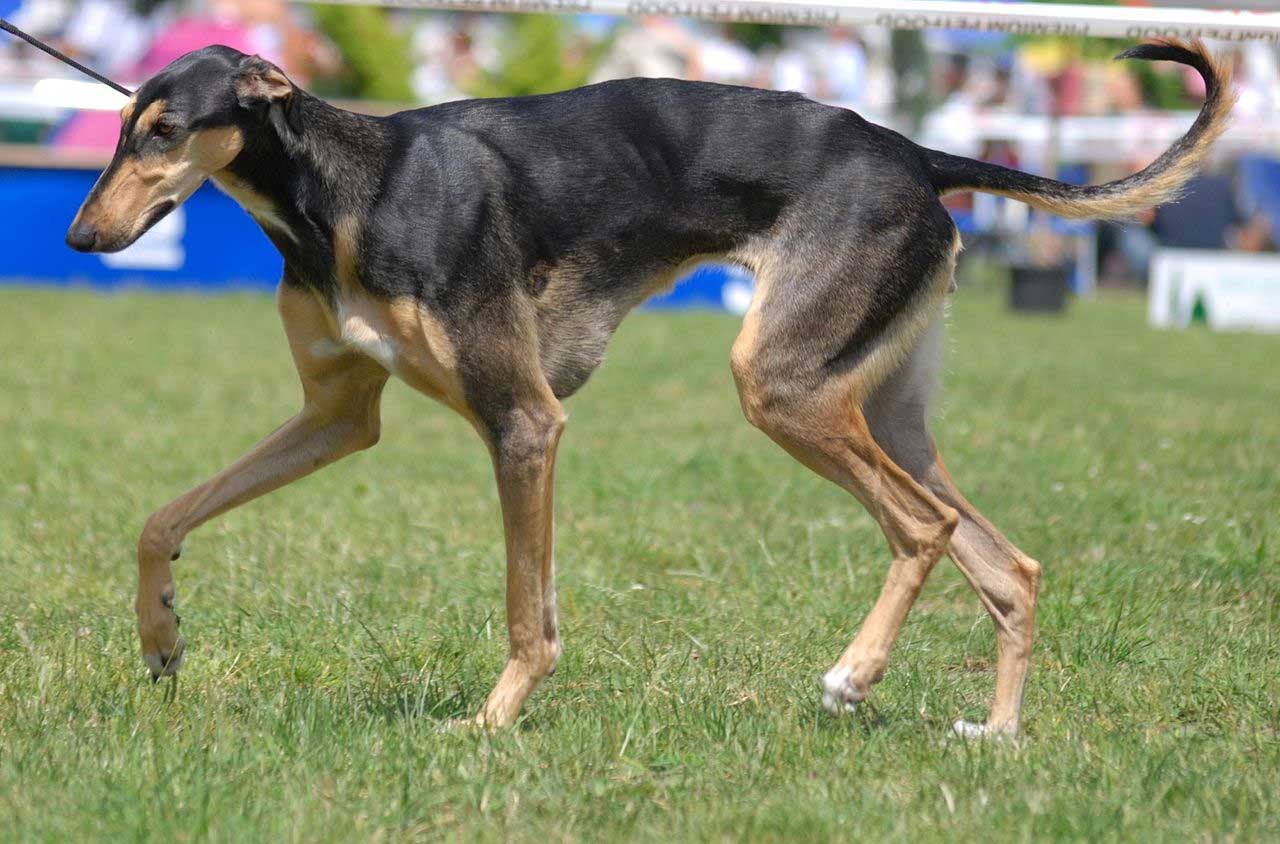
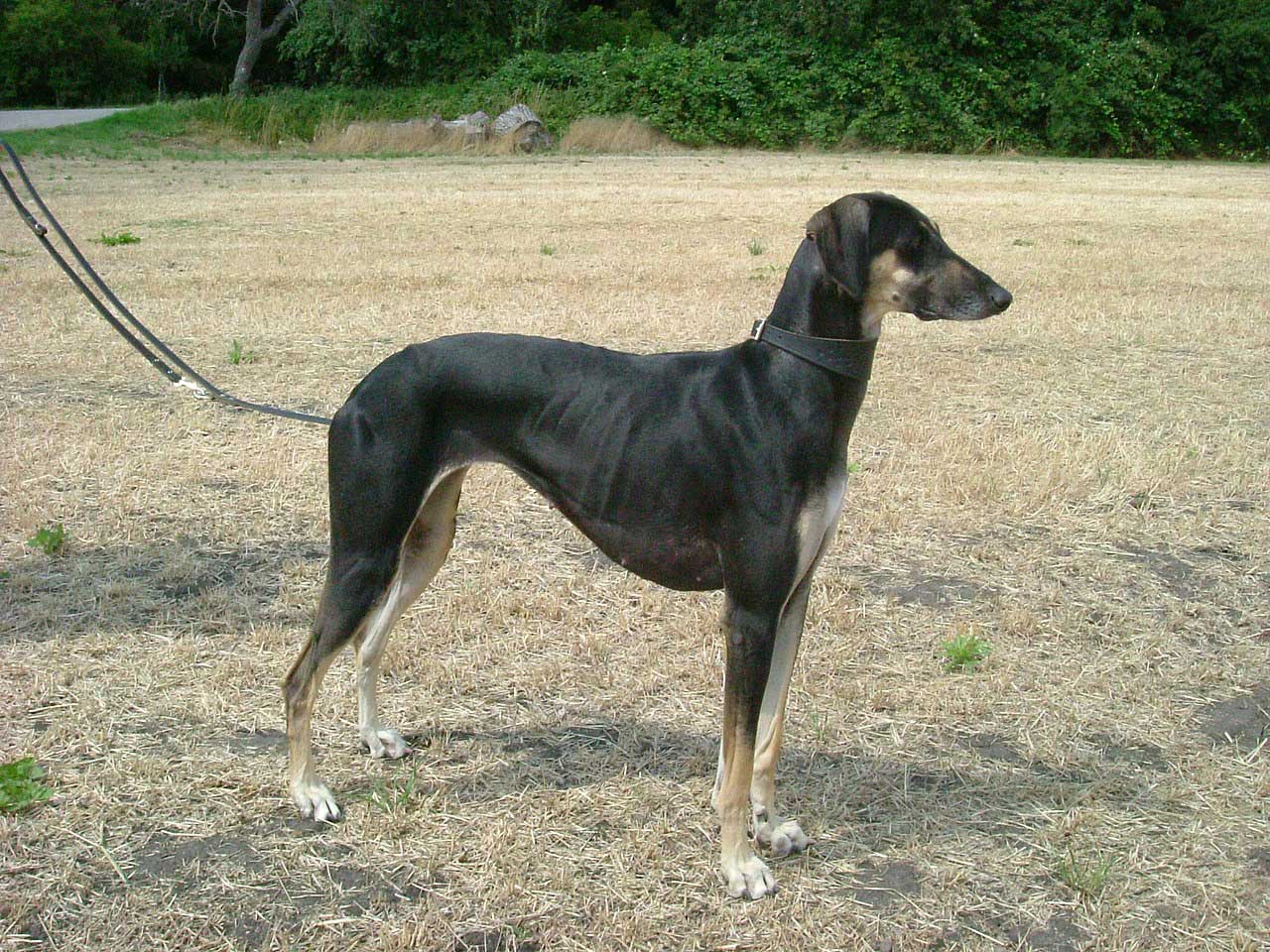
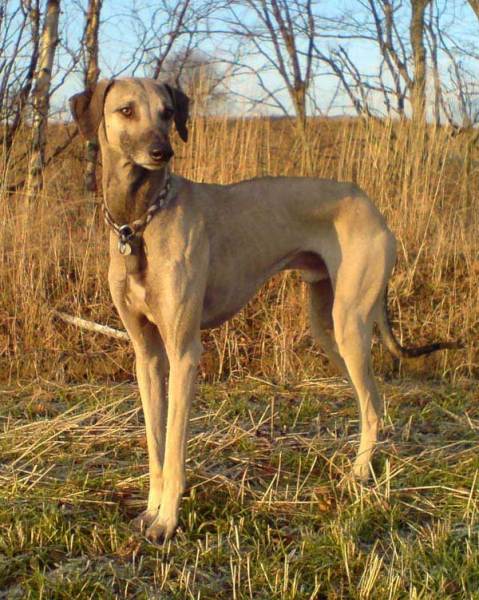
    The hungarian hound it is a thin hunting dog, his joints are dry and his musculature is prominent. The chest is flat and deep. The trunk is rectangular. The coat is short and of varied colors, and is bred in most greyhound colors.

    Body weight of 22-31 kg, according to sex, and height at the cross of 62-70 cm.. It has a strong bone structure and a long head with character.. Almond-shaped eyes, dark brown. Black nose. The ears are called rose ears, that are small and bent back. Long tail, fine, regularly screwed. Its movement is flexible, elegant and graceful.

    When run, can reach speeds of up to 60 km/h.

    Life expectancy is 12-14 years.

    Video of the Hungarian Greyhound
    Magyar Agรกr - Agรกrfesztivรกl - Osagรกrd 2008

    Character and skills

    The hungarian hound has a very persistent and determined character. This is why he is so successful in greyhound racing. Compared to other dogs, can keep fast speed for a long time and, in case of stumbling, will continue on his way with the same vigor. He has a big heart in his deep chest, that helps you gallop with persistence. Radiates strength, elegance and great presence of mind. Although he loves to run, he is not hyperactive. typical of greyhounds, rests relatively frequently but requires a lot of exercise. So, regular daily exercise is important.

    Your nature - like your appearance- It is elegant. He's extremely smart and sharp, loving but never intrusive. It is also recommended with children, they love them and a well socialized dog is not aggressive towards them. He is protective of his family but is not a biter and never barks unnecessarily. It is reserved with strangers. Has a balanced temperament, which makes it an ideal family pet. Early socialization and frequent exercise are important, otherwise you may develop behavior problems. This will most likely manifest itself in the flight. It is also excellent for various dog sports, especially greyhound racing, hunting or agility. Its calm nature also makes it ideal as a therapy dog..

    Ideal environment

    Greyhounds can stay indoors if they get adequate exercise every day. Get plenty of rest and can sleep up to 18 hours a day. Consequently, is very fond of comfort and soft beds. In a garden shed, it is necessary to ensure that a high enough fence is erected around it, since it will easily skip the lowest. He gets along very well with children, if they are treated well. It does not require a particularly active owner and is perfect for a family with an average lifestyle. A great hiking companion.

    Grooming

    The hungarian hound does not require any special care. You need to bathe him a couple of times a year and clean his eyes and ears at appropriate intervals. Brushing with a brushing glove is recommended once a week. More frequent brushing is recommended during the shedding season.

    Health

    The hungarian hound it is a healthy breed, does not have any specific disease.

    Characteristics "hungarian hound (Magyar Agรกr)"

    Coexistence is important that you have with your new friend. Before considering the acquisition of a dog of the breed "hungarian hound (Magyar Agรกr)" you know certain factors. Not all breeds of dogs are apt to live in an apartment, you must take into account his character, their need for exercise, their interaction with other pets, their care and if you have small children, their level of tolerance towards them.

    Adaptation โ“˜

    4,0 of 5 stars (based on 1 review)

    friendly dog โ€‹โ€‹โ“˜

    3,0 of 5 stars (based on 1 review)

    hair loss โ“˜

    2,0 of 5 stars (based on 1 review)

    Affection level โ“˜

    4,0 of 5 stars (based on 1 review)

    Need for exercise โ“˜

    4,0 of 5 stars (based on 1 review)

    Social need โ“˜

    3,0 of 5 stars (based on 1 review)

    Home โ“˜

    3,0 of 5 stars (based on 1 review)

    Toilet โ“˜

    2,0 of 5 stars (based on 1 review)

    Friendly with strangers โ“˜

    2,0 of 5 stars (based on 1 review)

    barking โ“˜

    1,0 of 5 stars (based on 1 review)

    Health โ“˜

    5,0 of 5 stars (based on 1 review)

    Territorial โ“˜

    4,0 of 5 stars (based on 1 review)

    Cat friendly โ“˜

    2,0 of 5 stars (based on 1 review)

    Intelligence โ“˜

    4,0 of 5 stars (based on 1 review)

    Versatility โ“˜

    3,0 of 5 stars (based on 1 review)

    Child friendly โ“˜

    5,0 of 5 stars (based on 1 review)

    Surveillance โ“˜

    2,0 of 5 stars (based on 1 review)

    joy โ“˜

    3,0 of 5 stars (based on 1 review)

    Images "hungarian hound (Magyar Agรกr)"

    Photos:

    1 – hungarian hound Color: of course by Canarian, CC BY-SA 4.0, via Wikimedia Commons
    2 – hungarian hound by https://pixabay.com/es/photos/magyar-agar-perro-animal-galgo-5016524/
    3 – hungarian hound by Magpie (vitalap / edits), CC BY-SA 3.0, via Wikimedia Commons
    4 – hungarian hound at the Katowice dog show (2005) by Pleple2000, CC BY-SA 3.0, via Wikimedia Commons
    5 – hungarian hound by Hachieko, CC BY-SA 4.0, via Wikimedia Commons
    6 – hungarian hound by http://www.magyaragar.eu/blog/tag/ungarischer-windhund/page/24/

    Videos "hungarian hound (Magyar Agรกr)"


    Type and recognitions:

    • FCI CLASSIFICATION:
    • Group :
    • Section : . .

    Federations:

    • FCI – Group 10: Section 3: Short-haired Sighthounds โ“˜
    • Standard CCC (Canadian Kennel Club / Canadian Kennel Club)
    • Standard KC (The Kennel Club) – Hound โ“˜
    • Standard UKC (United Kennel Club) – Sighthound and Pariah โ“˜

    FCI breed standard "hungarian hound (Magyar Agรกr)"

    Origin:
    Hungary

    Date of publication of the valid original standard:
    06.04.2000.

    Use:

    It is a hunting and racing dog that hunts on sight. But, his nose is also remarkable. It is especially suitable for racing and decoy hunting. (coursings) where it is considered by all as highly accredited in long sections. He is a very good companion dog and a faithful guardian..


    General appearance:

    His appearance radiates strength; bone structure and muscles are well developed. It is elegant.


    IMPORTANT PROPORTIONS:

    • The length of the body is slightly greater than the height at the withers.
    • The length of the muzzle corresponds to half the length of the head.


    Behavior / temperament:

    Tireless, persistent, fast, hardened and resistant. Excellent for racing.
    In some distances it is faster than the Greyhound.
    He is reserved by nature but not shy, it's sensible, smart and faithful. Is vigilant; your instinct to protect people, houses or farms is highly developed but with no hint of aggressiveness or sharpness.

    Head:

    Viewed from above and in profile, it is wedge-shaped with a fairly wide base.

    Cranial region:
    • Skull: Moderately strong, broad. The forehead is relatively broad.
    • Stop (naso-frontal depression) : Well marked.

    facial region:

    • Truffle: relatively large, well pigmented with large wide windows.
    • Snout: Strong, elongated, although as a whole it is not too pointed.
    • Belfos : Closing well, adherents, well pigmented.
    • Jaws / teeth: Strong jaws, powerful. Scissor bite, complete, well developed and according to the dog's dental formula.
    • Cheeks: Strong, muscular.
    • Eyes: Medium size, dark, neither deeply placed in the sockets nor bulging. Lively and intelligent look.
    • Ears: They are quite large and their weave is thick. Inserted at mid-height, they fold back over the neck in the shape of a perfectly worn rose. In attention they get up. Heavy ears are preferred over light ones. Always erect ears are wrong.

    Neck:

    Medium length but elegant, dry, muscular, without wrinkles.

    Body:

    • Cross: Well developed, muscular, long.
    • Back: Wide, straight, firm, very well muscled.
    • Pork loin: Very wide, straight, heavily muscled.
    • Rump: Wide, slightly descending, with strong muscles.
    • Breast : The rib cage is deep and strongly arched to allow enough room for the heart and powerful lungs.. Well sprung ribs well extended back.
    • Belly: Moderately collected.

    Tail:

    Strong tail insertion, thick and slightly curved is moderately high. It is moderately thinned and reaches the hock. Its underside is covered by wire hair. At rest it falls vertically to the ground; in action it can be raised to the height of the top line

    Tips

    PREVIOUS MEMBERS: The forelimbs are strong and tendinous. Seen both from the front and the back, they are straight and parallel.

    • Shoulder: Moderately oblique, Mobile, muscular and long.
    • Arm: Long and somewhat oblique, muscular.
    • Elbows: Elastically conform to the rib cage. They are mobile and must not be turned either inwards or outwards.
    • Forearm: Long, straight, strong bone structure and dry muscles.
    • Carpo: Wide and strong.
    • Metacarpus: Short and vertical to the ground.
    • Front feet: Relatively large, elongated. Strong pads, nails kept short.

    LATER MEMBERS: The hindquarters are well angulated but not over angulated., strongly muscled and with good bone strength. Seen from behind are parallel.

    • Thigh: powerfully muscled, with rather elongated muscles.
    • Knee: Moderately angled, strong, not turned neither in nor out.
    • Leg: Long, with dry muscles.
    • Hock: Powerful, strong, low placement.
    • Metatarsals: Seen from behind, both standing and moving are parallel.
    • Rear feet: Relatively large, somewhat elongated with strong pads and nails.

    Movement:

    Good ground coverage, elastic trot, seen from front and back, limbs move in parallel planes.

    Mantle

    • SKIN: Relatively thick, well adjusted all over the body, no creases or double chin.
    • HAIR: Short, thick, rough, smooth and well glued. In winter it can present a dense internal fluff in considerable quantity.
    • COLOR: All known colors and color combinations in sighthounds, with the exception of those colors and combinations of colors mentioned as elimination fouls.


    Size and weight:

    HEIGHT AT THE WITHERS

    • Ideal height for males: 65 until 70 cm..
    • Ideal height for females: 62 until 67 cm..

    The height measured in centimeters is not as important as the harmony of the proportions..


    Fouls:

    Any deviation from the aforementioned criteria is considered as a fault and the severity of this is considered to the degree of the deviation to the standard and its consequences on the health and well-being of the dog..


    MISS PLAYOFFS

  • Aggressive or fearful dog.
  • Atypical head shape.
  • Upper or lower prognathism, incisor arcade deviated.
  • Missing one tooth or more than one tooth on the incisors, of the fangs, of the premolars 2-4, and molar 1-2; of more than 2 x PM1; go M 3 will not be taken into consideration .
  • Entropion, ectropion.
  • Colors: blue; blue spotted white white; brown; wolf gray as well as black and tan; tricolor dogs.
  • Any dog โ€‹โ€‹showing clear signs of physical or behavioral abnormalities must be disqualified..


    N.B.:

    Males should have two normal-appearing testicles fully descended into the scrotum..

    Source: F.C.I - International Cynological Federation

    Alternative names:

    1. Magyar agรกr, Hungarian agar (English).
    2. Magyar Agรกr (French).
    3. Magyar Agรกr (German).
    4. Magyar Agรกr, Lรฉbrel hรบngaro (Portuguese).
    5. Galgo hรบngaro, Magyar Agรกr (espaรฑol).

    โ–ท The world of Pets: Dogs, cats, birds, reptiles, amphibians

    Saluki
    Egipto FCI 269 . Long-haired or fringed Sighthounds.

    Saluki

    In the Middle East a Saluki You can never be sold, You can only give away in signal estimation.

    Content

    History

    The Saluki, commonly known as "Royal Dog of Egypt", It is perhaps the oldest known breed of domesticated dog and the oldest of the Sighthounds, It is believed descended from wolves in the wilderness of Ara. The Bedouins hold them in high esteem and use them for hunting gazelles and as pets..

    As in the case of some other breeds in United States, including the Basenji and the Portuguese Podengo, the current Saluki population is descended from a small number of the first dogs to be introduced to the country since the 19th century.

    Read more