โ–ท The world of Pets: Dogs, cats, birds, reptiles, amphibians

Reunion Parakeet
Psittacula eques

Cotorra de Mauricio

Content

Description:

Cotorra de Mauricio

42 cm.. length and a weight between 167 and 193 g..

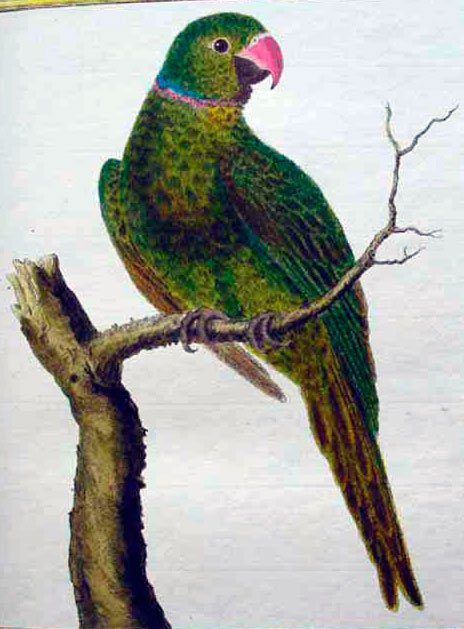
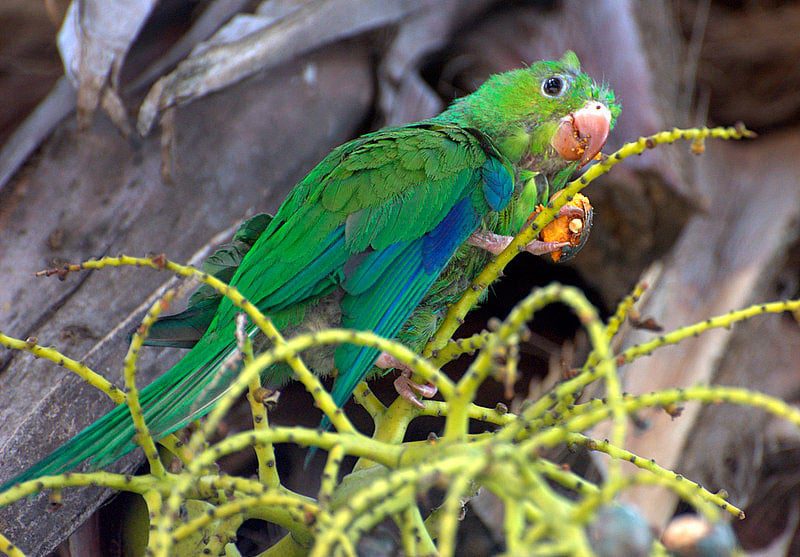
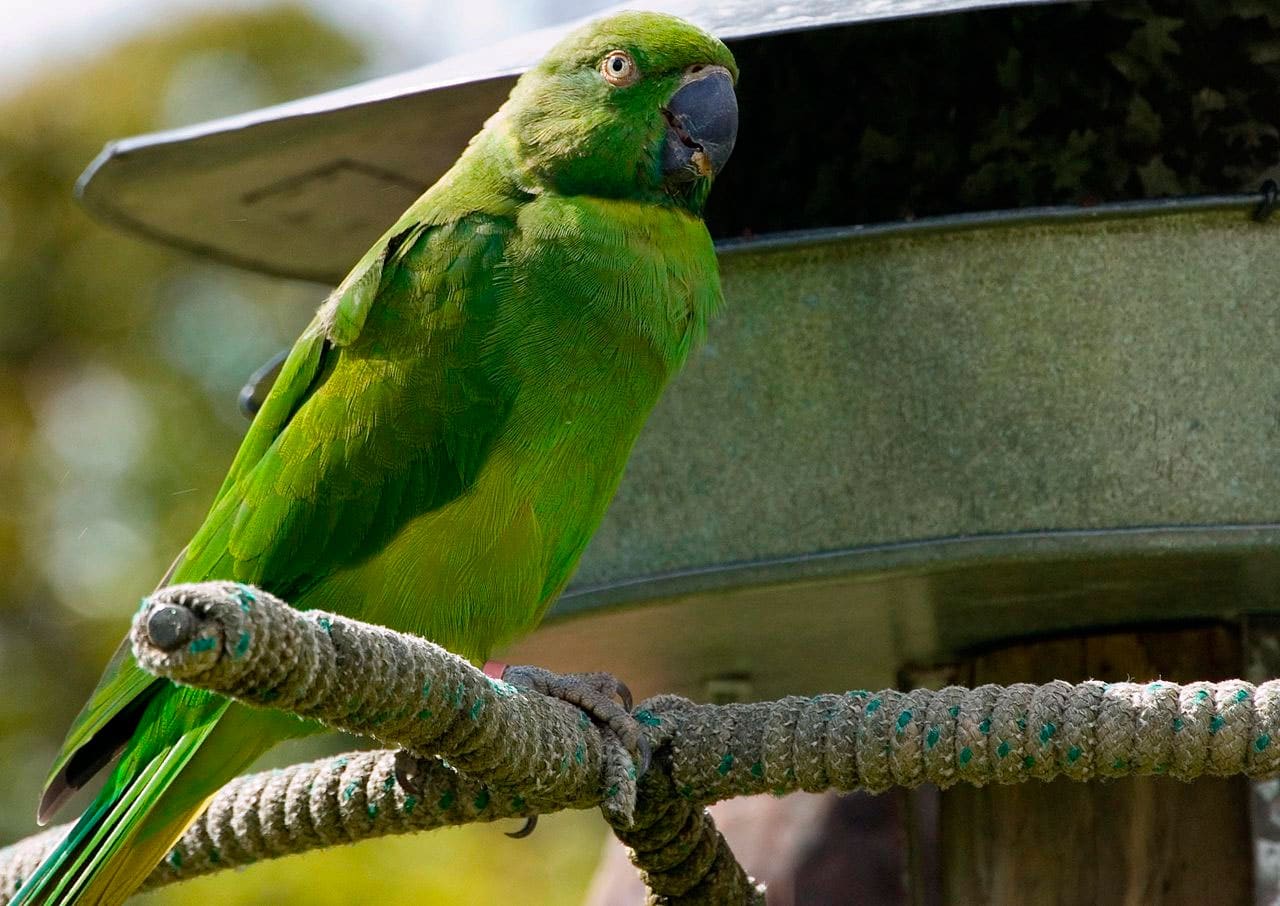
The Reunion Parakeet (Psittacula eques) has the Lords and cheeks grass-green, deepening the emerald green upper cheeks, the forecrown and crown; wide swaths shaped mustache on the bottom of the cheeks and chin, fading on the sides of neck; narrow black stripes on the neck lined up with bluish patches on ear-coverts and sides neck and below by pink lines extending to the back of the neck, without getting to form an collar full.

Upperparts, including upperwing-coverts, emerald green. Underparts paler and yellowish. Uppertail green; the undertail pale brown.

upper jaw red, lower negruzca; irises pale yellow to greenish yellow; legs blackish.

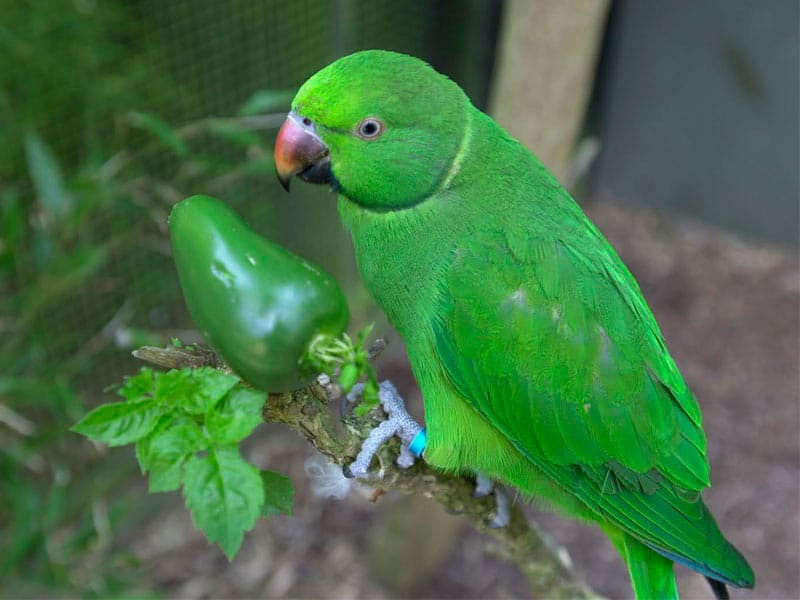
The female lacks black moustachial stripes, as well as black, pink and blue marks on the sides of neck; dark green tones cheeks with yellowish green at the collar of the back of the neck; dark (almost black) the upper jaw.

The immature they are like the females, but the fledging bill It is red in both sexes, turning darker in females later.

Description 2 subspecies:

  • knight knight knight โ€ 

    (Boddaert, 1783) – Nominal. Extinct.


  • Psittacula eques echo

    (Newton,A & Newton,E, 1876) – On the edge of the extinction.

Habitat:

The Reunion Parakeet It is closely linked to the native vegetation. A part of the population is in an area of รขโ‚ฌโ€นรขโ‚ฌโ€นupland forest containing some of the largest samples, for example, Canarium paniculatum, Syzygium contractum, Mimusops maxima and Labourdonnaisia left in the Mauritius. Scrub forests lower level are also important, especially for food.

They are generally solitary, but they can also be seen in pairs or small groups (especially after breeding), but the extreme shortage should limit the normal social behavior.

Reproduction:

The Reunion Parakeet nests in cavities of large native trees (often Mimusops but also Calophyllum or Canarium) generally between 6-10 meters above the ground. The inlet has a diameter between 10-15cm.

The peak in the egg laying It is late September to early October, although it may take place between August to November, is composed of 2 to 4 eggs. The female incubated eggs for three to four weeks, while teammate bring your food. Both parents then provide for the young until they leave the nest in about two months old.

Food:

The feeding of the Reunion Parakeet It is composed of a wide range of native plant parts, including outbreaks include, sprouts, leaves, flowers, fruits, seeds, remained, sap and bark. Introduced plants rarely eat. Plants which include feed Calophyllum, Canarium paniculatum, Tabernaemontana mauritiana, Diospyros, erythrospermum monticolum, Eugenia, Labourdonnaisia, Mimusops trials, M. petiolaris, Nuxia verticillata and Protium obtusifolium.

The main feeding areas vary with the season.

Distribution:

Size of the area of distribution (reproduction / resident): 60 km2

endemic to Mauritius, Indian Ocean, but also he lived before the Rรฉunion. The rest of the birds confined to the last fragments of native forest vegetation.

In a time, widely distributed, but now reduced to a small relict population in the plateau south-west, around the Black River Gorges National Park and the Monte Cocotte.

Mainly sedentary, but with some slight seasonal changes depending on availability of food.

The main cause, apparently, the decline in the population of the Reunion Parakeet long-term, It is the loss of habitat (natural vegetation used for agriculture and forestry), nest predation by introduced species such as Crab-eating Macaque (Macaca fascicularis) and black rat (Rattus rattus) , competition with Rose-ringed Parakeet (Psittacula krameri) (introduced on 1886) and the effects of disease and storms.

The total area of รขโ‚ฌโ€นรขโ‚ฌโ€นhabitat available It is 50km2. Population between 7-11 birds in 1984, aumentando a 30 birds in the wild and 8 in captivity 1995, with between 40-50 wild birds 1996. An intensive conservation program that includes captive breeding in Mauritius (first successful reproduction 1993-1994), predator control with veterinary assistance for wild birds, ecological research and habitat protection, It is getting a considerable increase in the population of the Reunion Parakeet.

The National Park currently protect the last natural forests, but continuous invasion of exotic flora, It remains a long-term threat.

Distribution 2 subspecies:

Conservation:

State of conservation โ“˜


Endangered Endangered โ“˜ (UICN)โ“˜

โ€ข Current Red List of UICN: Danger

โ€ข Population trend: Growing

At the end of the breeding season between 2011/2012, the population was estimated at approximately 580 birds (V. Tatayah in some. 2012).

The population of the Reunion Parakeet It is estimated that it has experienced a very rapid increase in recent 23 years (three generations).

The previous decline in the distribution of this species is for the serious destruction and its native habitat degradation (Jones 1987 Greenwood 1996).

The population decreased probable total of several thousand individuals, as a result of the forest destruction and the replacement of their feeding habitat, upland dwarf forests, plantations (Jones et al., 1998).

In 1996, only the 5% the island was covered with native vegetation (Jones et al. 1998).

The areas of native forests remaining in the highlands still being highly degraded by cyclones, the influences of forestry practices of the past, the spread of introduced plants like Peruvian guava (Invasive cattleianum), privet (Ligustrum robustum) and Pomeroy (Syzygium jambos), as well as the effect of wild mammals introduced as boars (Sus scrofa) and the Timor deer (Cervuss) (Greenwood 1996, Thorsen y Jones 1998).

The production of native fruit, from which the parrot feeds, and regeneration is possible trees nest, because, poor (Greenwood 1996).

Recent research suggests that the food shortage due to deterioration of native forest is the main cause of nest failure; although exotic species can provide an abundant source of food, They are not available throughout the year, not even throughout the breeding season (Thorsen y Jones 1998).

The crab-eating macaque (Macaca fascicularis) and black rats (Rattus rattus) are among a number of introduced tree species representing a threat for the Reunion Parakeet, raiding nests and competing for native fruits (Greenwood 1996).

The European bee (Apis melรญfera), yellowjackets (Polistes hebraeus), termites, the common loptail (Phaethon lepturus), the introduced common mine (Acridotheres tristis) and Rose-ringed Parakeet (Psittacula krameri), They are all competing for nesting sites and can move active breeding pairs (Thorsen y Jones 1998, C. Jones in little. 2000, V. Tatayah in some. 2012).

The decline in the number of old native trees, that perish damaged by storms and senescence, They have intensified competition for nesting cavities (Jones et al., 1998).

Infestations fly larvae in the nests can be severe in some years and, without intervention, would kill many young people (C. Jones in a bit., 2000).

Beak and Feather Disease (PBFD), It has been found in more than 20% of birds sampled, and at least 50% birds observed with PBFD It is believed to have died, However, a considerable number of specimens have been seen to recover from the disease (Richards 2010). Pesticides do not seem to have significantly affected the species (Greenwood 1996).

According to Mauritius Wildlife Foundation (MWF), trying to stop this worrying phenomenon, the origin of evil is attributed to the imported parrots, mostly the Grey Parrot (Psittacus erithacus) and Coconut Lorikeet (Trichoglossus haematodus).

The species has been the subject of a conservation program from 1973 (Jones et al. 1998). The spectacular increase in the population of the species in recent years is undoubtedly due to an intensive program to manage the wild population., combined with a program captive breeding great success since the season 1993/4 Playback (Jones et al., 1998).

"Reunion Parakeet" in captivity:

The Reunion Parakeet is the only survivor of the species Psittacula They are inhabiting the islands in the South Indian Ocean, about Madagascar. It is one of the parrots World's rarest existing.

Some specimens bred in captivity (Hand rearing) for reintroduction into the wild; else not bred in captivity.

In the news, the aviary captive population is 18 birds, with successful reproduction of a couple. The place of the old aviary, where the extraordinary work has been achieved in very primitive conditions, now it is being replaced with a new space, once completed this spring, It will house up 12 breeding pairs of the Reunion Parakeet, a large flight cage 60 meters for immature.

Alternative names:

– Mauritius Parakeet, Echo Parakeet, Maruitius parakeet, Mascarene Parakeet, Mauritian Parakeet (English).
– Perruche de Maurice, Perruche ร  longue queue (French).
– Mauritiussittich (German).
– Periquito-de-maurรญcio (Portuguese).
– Cotorra de Mauricio (espaรฑol).

scientific classification:

– Order: Psittaciformes
– Family: Psittaculidae
– Genus: Psittacula
– Scientific name: Psittacula eques
– Citation: (Newton, A & Newton, E, 1876)
– Protonimo: Palaeornis echo

Reunion Parakeet Images:

Videos "Reunion Parakeet"


Especies del gรฉnero Psittacula

Reunion Parakeet (Psittacula eques)


Sources:

– Avibase
– Parrots of the World โ€“ Forshaw Joseph M
– Parrots A Guide to the Parrots of the World – Tony Juniper & Mike Parr
– Birdlife

– Photos:

(1) – Echo parakeet (Psittacula eques echo), the rarest Parrokeet in the world, saved from extinction by captive breeding programme at the Durrell trust Blackwater Gorge By colin houston [CC BY 2.0], via Wikimedia Commons
(2) – By Wildlife Preservation Canada – link
(3) – Echo Parakeet, Mauritius by Tara – Miles to the wild
(4) – Echo Parakeet, Mauritius by Tara – Miles to the wild
(5) – Female Echo Parakeet (Psittacula eques) by Johannes Fischer – Mauritius January – July 2013, Petrin, Camp Field Station and Brise Fer
(6) – Psittacula type illustration of a knight on horseback (Martinet in Buffon, 1779) By Franรงois-Nicolas Martinet [Public domain], via Wikimedia Commons

– Sounds: George Sangster (Xeno-canto)
โ–ท The world of Pets: Dogs, cats, birds, reptiles, amphibians

Blue-throated Macaw
Ara glaucogularis


Guacamayo barbiazul

Content

Description:

Of 85 cm.. length and a weight between 600 and 1000 g..

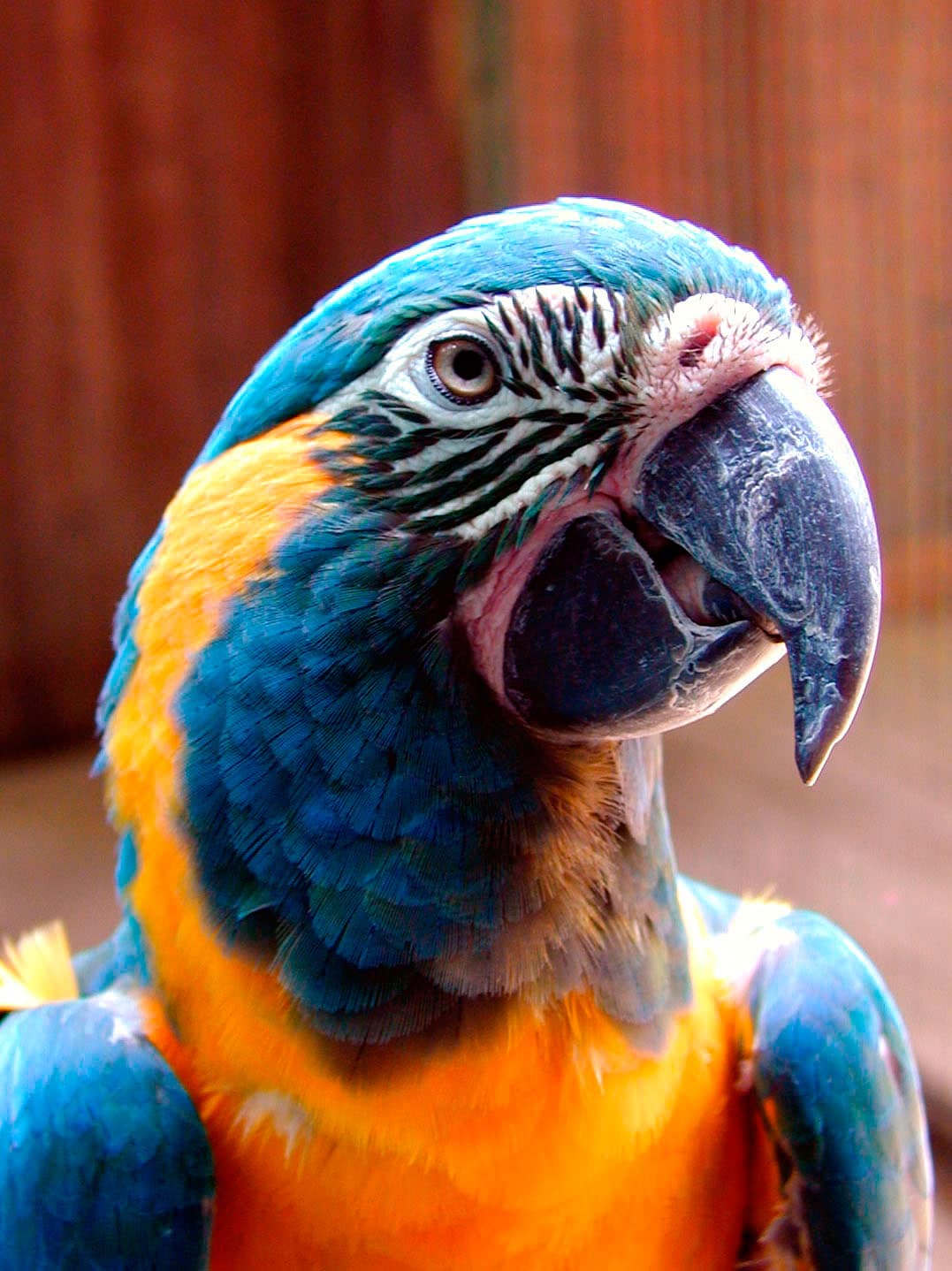
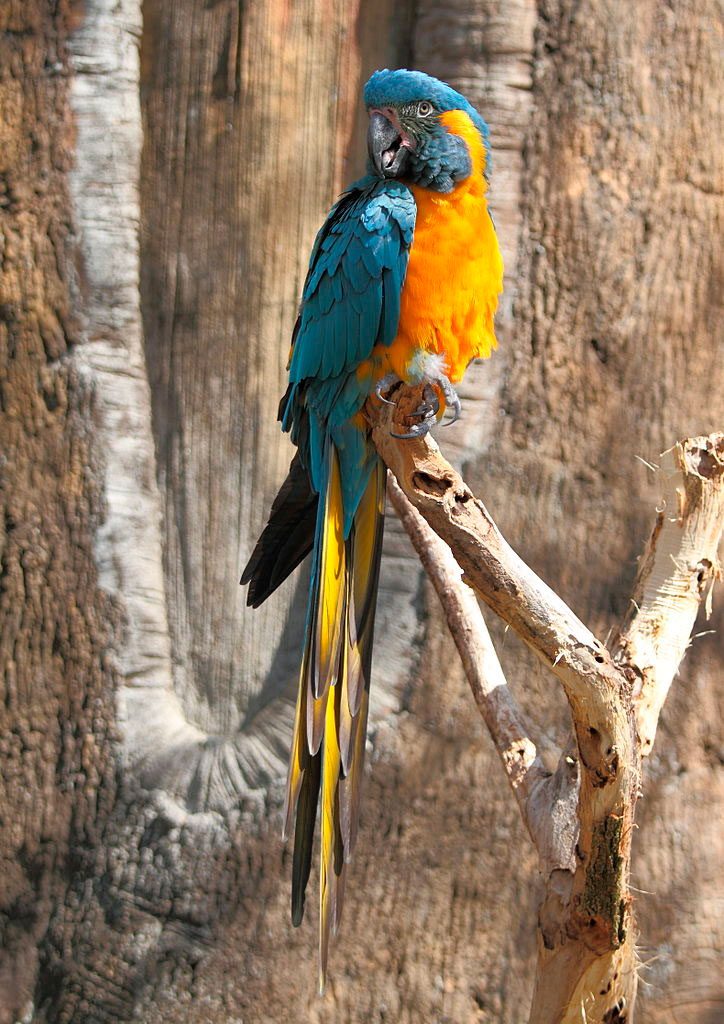
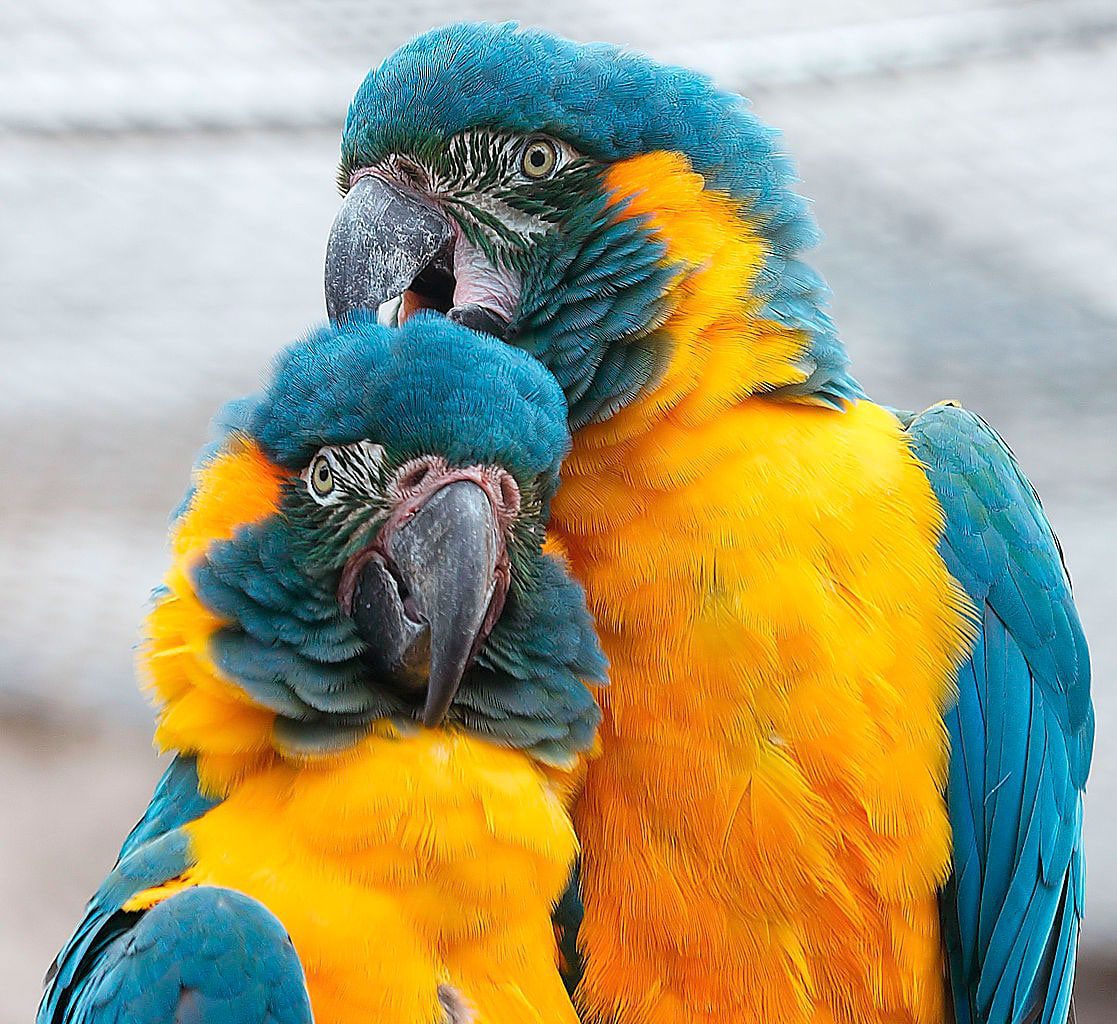
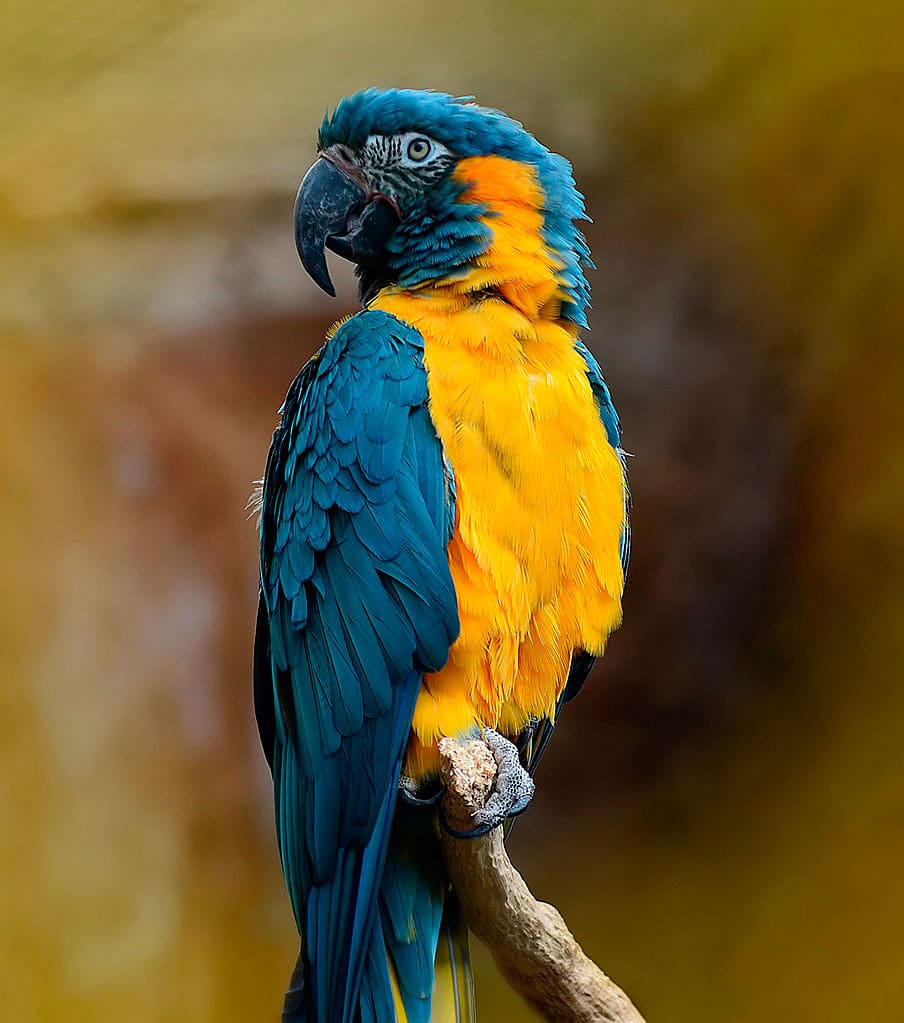
The Blue-throated Macaw (Ara glaucogularis) they have a very vivid coloration. Very similar to the more common Blue-and-yellow Macaw (Ara ararauna), easily differentiated by wide turquoise blue stain that reaches the throat.

These beautiful macaws have bright turquoise blue feathers that cover the throat, crown, the back and the back of your wings and tail. Yellow gold feathers grow in a strip between the crown blue and neck, on the sides of the face and in the ventral part of the body, the wings and tail.

In the face There is a patch sparsely feathered skin near the base of the great bill dark which has 5 or 6 horizontal stripes of blue feathers, unique for each Blue-throated Macaw and that they can be used to individually identify adults. The skin This patch is predominantly white with a tinge of pink around the bill.

The Blue-throated Macaw sample little sexual dimorphism.; However, the males they tend to be a little larger than the females with approximate masses of 600 and 800 g., respectively.

The newborn infants they are completely pink and have no feathers. The gray color of the underparts grows as they age, and is later replaced by colorful feather, fully developed. The irises It also changes color with age. The color of the eyes of a hatchling is initially black and changes to brown shortly after the opening of the eyes.

When is the Macaw one to three years, their eyes Gray become, then white. In the old mature, the irises It turns yellow and will be more golden color to the 10 years, becoming a gold richer with age.

The largest macaws They show a ring dark grey color that surrounds the pupil. This ring can be used to estimate the age of the Macaw.

Habitat:

Very scarce and localised. They inhabit gallery forests and tree islands surrounded by tropical savannah..

Seasonal rains cause floods in October to may and transform the Savannah in a swamp covered with grass that surrounds the high forest islands, permanently dry. The presence of Palms is required Motivate (Attalea phalerata) for the survival of the Blue-throated Macaw Since this species feeds, In addition to using it to build their nests. Also have favoritism by the Acrocomia aculeata.

They are most frequently between the elevations 200 and 300 m. Most of these macaws' habitat is used for cattle ranching.. But, the land is not suitable for cultivation, so there is one alteration of habitat for agriculture.

In general, observed in pairs; apparently less sociable nearby conspecifics than. The young are believed to stay with the parents for only a brief period of time., Perhaps that explains the infrequency in which observed small flocks or family groups. Probably communal roosts, sometimes with the Blue-and-yellow Macaw. They tend to use hangers in tall trees, especially of the species Tabebuia.

Although cattle trample young trees, Palms Motivate mature they are very resilient and resist damage. This Palm is also fire-resistant. As a result, Palms Motivate, often dominate the forest fragments in the Beni savanna (Llanos de Moxos).

Reproduction:

The Blue-throated Macaw are monogamous and they mate for life. It is not known if these macaws are matched with another partner if your original partner, dies. Nothing more is known about systems of mating for this species in the wild.

Usually They nest in cavities of Palm trees, often the species Attalea phalerata, but they will also use other Palm species or trees Tabebuia. You can use the holes previously occupied by other species, for example, woodpeckers.

Dead Palm trees are ideal for nesting, insofar as they are excavated by large larvae after a tree has died.

Some species of macaws, including the Blue-throated Macaw, palm leaves are eaten, causing the death of the tree. The trunk of the Palm will be recessed by larvae, resulting in the creation of a potential nest. It is not yet known if this is a coincidence or if these birds do this intentionally to create nesting sites..

Nesting couples do not remain in a nest consecutive reproductive seasons and generally seek different nesting sites each year.

The reproduction do it once a year if environmental conditions permit; However, If eggs or chicks are lost, the breeding pair can produce a second clutch in the same breeding season.

It has been speculated that the two sub-populations they breed at slightly different times: the population of North from August to November and the population of South from November to March.

The female It puts one to three eggs by laying and incubated during 26 days. The chicks have a mass of about 18 g at hatching; they leave the nest to 13 to 14 weeks and not be completely independent parents for a full year. They will reach their sexual maturity to the 5 years.

Food:

The Blue-throated Macaw do not feed on seeds and nuts to the same extent that other many other species of macaws make it. On the other hand, they eat mainly fruit of large Palm trees, including the of the Attalea phalerata and Acrocomia aculeata.

They supplement their diet with seeds and leaves of Hura crepitans, Inflorescences of Syagrus botryophora and palm trees Astrocaryum vulgare.

Birds consume ripe and near-ripe fruit and drink fluids from immature palm fruits. Attalea.

Distribution:

The Blue-throated Macaw only found in the Beni Department, Bolivia (between 200 and 300 meters above the sea level). In total, They inhabit an area of 2508 square kilometers.

There is a two inhabited areas by two subpopulations, to the Northwest of Trinidad (the capital of Beni), and the other to the South of Trinidad. This separation may have occurred because of the indigenous peoples who historically inhabited this area and who hunted the Blue-throated Macaw in order to use their feathers in their ornamental costumes. This separation could also have been caused more recently by the wild bird trade. With the high population of humans, macaws in those areas would have a higher chance of being caught. The formation of large human settlements in this area also resulted in a loss of suitable habitat and fragmentation of the habitat of this species. So, there are not any Blue-throated Macaw in the vicinity of Trinidad.

Reports of birds in Tarija and Chuquisaca they have not been tested. Stock in Paraguay and North of Argentina they are still being corroborated and seem unlikely. Apparently resident. Scarce and highly dispersed.

Conservation:


critical hazard

โ€ข Current Red List of UICN: critically endangered

โ€ข Population trend: Stable

The Blue-throated Macaw is currently classified as in critical hazard on The IUCN Red list and figure in the Appendix I by the CITES. Trapping for this species is illegal because the Blue-throated Macaw they are protected by the national law of Bolivia and Convention on international trade in endangered species of Fauna and Flora Silvestres (CITES) from 1986. (Strem, 2008; ยซBlue-throated Macawยป, 2009)

The capture for the pet trade It is the main reason that the Blue-throated Macaw are in such critical danger. The rarity of this species drove the selling price, What gives as a result an increase in the pressure of capture. As more birds were captured, the rarity of the Blue-throated Macaw was on the rise. This became a vicious cycle that greatly reduced the wild population of these Macaws to the numbers currently observed.. Currently there is an estimated number of 50 to 250 specimens in the nature. (Hesse and Duffield, 2000; Jorยญdan and Munn, 1993; ยซBlue-throated Macawยป, 2009)

Since the Spix's Macaw (Cyanopsitta spixii) became extinct in the 2000, the species Ara glaucogularis It is now the rarest among macaws in the world. With the low estimated wild population, extreme conservation actions are needed.

The World Parrot Trust has many volunteers and employees who work in the conservation of the Blue-throated Macaw. These people watch over nests to protect the chicks from predation. The chicks are also examined periodically to be sure that they are healthy and receive adequate food from their parents. If the female is not doing as well as expected, is then supplemented with formula. New nest boxes have been built and current nesting sites have been improved. The support of local landowners has also been established. (Giยญlardi, et to the., 2005; Kyle, 2006; Kyle, 2007b; Kyle, 2007to)

"Blue-throated Macaw" in captivity:

The Blue-throated Macaw they are relatively easy to breed in captivity, and the captive population is many times greater than the wild population.

This species of Macaw is now more common in captivity in United States and South Africa in its natural habitat. In a recent study of the species of the Appendix I of the CITES, carried out by the Committee CITES of the AF A, This species was the second more documented; only the Scarlet Macaw had been documented in greater numbers in captivity. It also, most owners have had success in breeding, Although it is uncommon to obtain seed of the second generation (only three owners have reported it). Without a doubt, This will change in the near future, When juveniles reach the age and maturity appropriate to reproduce.

With regard to its longevity, according to sources, a specimen lived during 22 years in captivity. It has been reported that these animals can live up to 32,8 years in captivity, but this has not been verified.

As a special, a specific installation of United States produces more than seventy copies of Blue-throated Macaw a year. The price of this species has experienced the most drastic decline of any parrot species; initially, It was not unusual to see couples of Blue-throated Macaw that were sold for even 10.000 $ americans, While it is now possible to find a pair of unrelated young by 3000 $ American or even less.

On the other hand, export made by breeders of United States to those of other countries is difficult to carry out at this time due to the strict restrictions on trade in this species imposed by the CITES. The legal trade in legal birds would certainly alleviate some of the threat hanging over the remaining flocks of wild birds..

Its feathers have also been used for ornamental costume decoration by indigenous groups..

Only breeders of a long experience with the most common species of Ara should consider obtaining these macaws.

Alternative names:

– Blue-throated Macaw, Blue throated Macaw, Caninde Macaw, Wagler’s Macaw (English).
– Ara canindรฉ, Ara ร  gorge bleue (French).
– Blaukehlara, Kaninde (German).
– Arara-de-garganta-azul (Portuguese).
– Guacamayo Barbazul, Guacamayo barbiazul, Guacamayo de Barba Azul, Papagayo azul y amarillo (espaรฑol).
– Guacamaya caninde, Guacamaya garganta azul (Bolivia).
– Andapury, Arara (Guarani).
– Bagarรก (Emberรก).
– Carรบ (Yucuna).
– Koatรก (Tunebo).

scientific classification:

– Order: Psittaciformes
– Family: Psittacidae
– Genus: ARA
– Scientific name: Ara glaucogularis
– Citation: Dabbene, 1921
– Protonimo: Ara glaucogularis

Images Blue-throated Macaw:

Videos "Blue-throated Macaw"

————————————————————————————————

"Blue-chinned macaw" (Ara glaucogularis)


Species of the genus Ara


Sources:

– Avibase
– Parrots of the World โ€“ Forshaw Joseph M
– Parrots A Guide to the Parrots of the World – Tony Juniper & Mike Parr
– Birdlife
– Macaws. A Complete Guide by Rick Jordan.

– Photos:

(1) – A Blue-throated Macaw at Chester Zoo, Cheshire, England By Steve Wilson – over 2 million views thank you from Chester, UK (Blue throated MacawUploaded by snowmanradio) [CC BY 2.0], via Wikimedia Commons
(2) – Blue-throated Macaws at Chester Zoo, England. Photograph shows upper bodies of two macaws By David Friel [CC BY 2.0], via Wikimedia Commons
(3) – A Blue-throated Macaw at Cincinnati Zoo, Cincinnati, Ohio, USA By Photo by Greg Hume (Greg5030) (Own work) [CC BY-SA 3.0], via Wikimedia Commons
(4) – Blue-throated Macaw at Cincinnati Zoo, USA By Ted (originally posted to Flickr as DSC_0388) [CC BY-SA 2.0], via Wikimedia Commons
(5) – Blue-throated Macaw; photograph shows upper body of pet parrot By Ruth Rogers (originally posted to Flickr as Candinde Macaw) [CC BY 2.0], via Wikimedia Commons
(6) – A Macaw Ara ararauna at Indira Gandhi Zoological Park in Visakhapatnam, Andhra Prades By Adityamadhav83 (Own work) [CC BY-SA 3.0], via Wikimedia Commons
(7) – The back of a Blue-throated Macaw showing the blue over its back and top of head By Eric Savage from USA [CC BY-SA 2.0], via Wikimedia Commons
(8) – Blue-and-yellow macaw Ara ararauna at Himeji Central Park, Hyogo, Japan – opencage.info
(9) – Blue-throated Macaw at Chester Zoo, England By Matt Sims (originally posted to Flickr as DSC_0236) [CC BY 2.0], via Wikimedia Commons

– Sounds: (Xeno-canto)

โ–ท The world of Pets: Dogs, cats, birds, reptiles, amphibians

Golden-plumed Parakeet
Leptosittaca branickii


Aratinga de Pinceles

Content


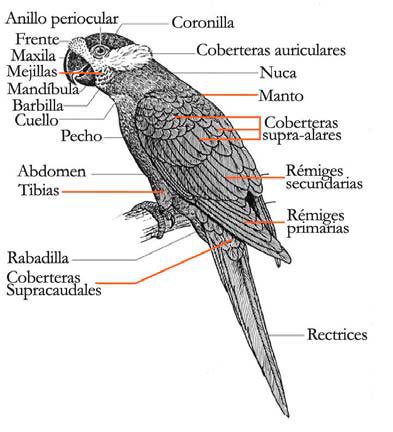
Anatomy-parrots

Description:

Approximately from 36 cm.. of length and a weight of 150 g.
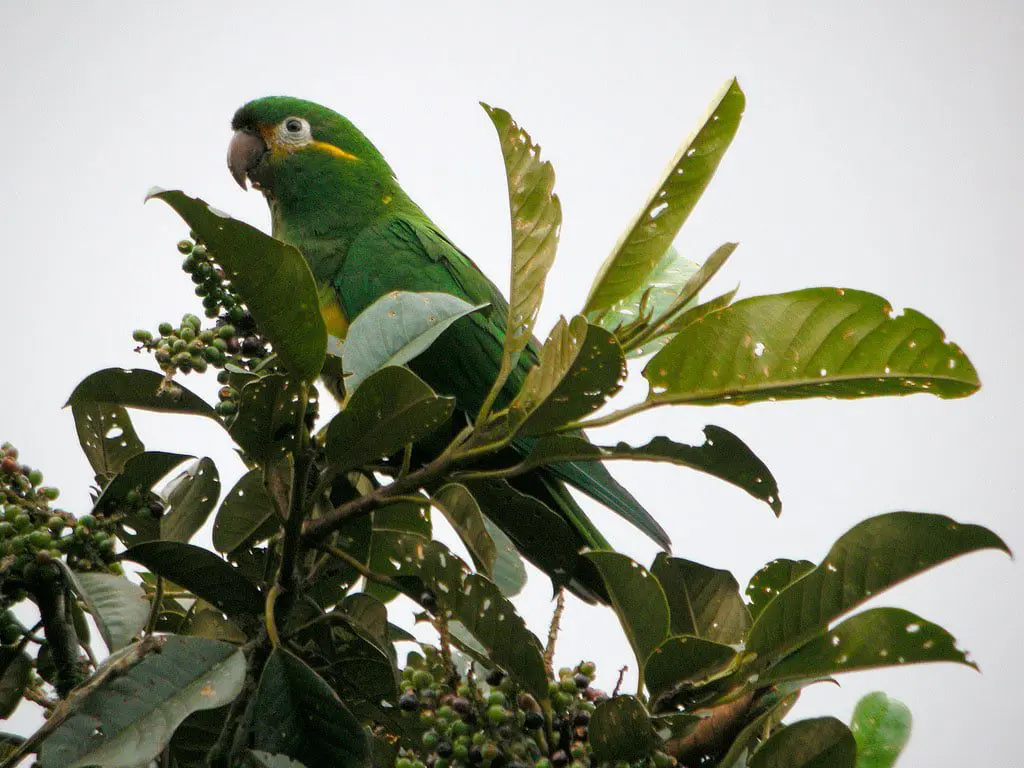
The Golden-plumed Parakeet (Leptosittaca branickii) has the crown, most of the forecrown, the cheeks, the sides of neck and ear-coverts grass-green; close frontal band on bottom of the forecrown orange, extending towards the upper lores; a feature yellowish stripe at the lower lores extending below the eyes to then join in a loop of yellow the part located behind the eyeball.
Upperparts green. above the wings green. Underwing-coverts greenish yellow; underside of feathers opaque yellow flight.

The underparts green, slightly more yellow than the upper, with a large yellow and orange patch at the bottom of the chest.

Upper, the tail of color green with red off on them vane inner; below its long and acute tail opaque reddish.

The bill color horn; cere grey; bare orbital skin pale whitish-grey; Orange the irises; legs grey.

Both sexes similar. The immature not described.

NOTE: Some authors include the species within the genus Aratinga. But, the facial feathers they are distinctive and monotypic, so the gender Leptosittaca is justified for this species.

Habitat:

Video – "Golden-plumed Parakeet" (Leptosittaca branickii)

Near endemic, Golden-plumed Parakeet, Leptosittaca branickii, White River (manizales)

These birds are found in high altitude formations, between 2,400 and 3.400 m, Sometimes you can see them at altitudes lower, about 1.400 m. With distributed in temperate zones, stunted forests, cloud and tree growth limits. Sometimes they cross cleared areas to visit residual plots.

Its distribution is possibly linked to the trees Podocarpus, at least in the Azuay province and parts of Colombia, Although more studies are needed to confirm this.
The Golden-plumed Parakeet make altitudinal movements day towards the Moors, returning to the lower forests for sleep; in the Puracรฉ national natural park This pattern is reversed, and birds perch on community in paramo areas (above 3.000 m), descending to feed during the day.

In general, in flocks (at least outside of breeding season) of up 20 birds (sometimes more).

Reproduction:

The Golden-plumed Parakeet nests on trunks of Palm wax (Ceroxylon quinduense) and encenillo (Weinmania sp.). Played during the first half of the year. Birds in breeding conditions during the month of February, Colombia, and birds mating in August, Ecuador.

The female lays 2-3 eggs they are incubated both during 28 to 32 days. Only the female incubates during the day., while at night, both dealt with the work. The chicks leave the nest 64-68 days after birth and are fed by both parents, While they are in the nest.

Food:

They feed on coniferous seeds, especially of cones of Podocarpus, as well as the seeds and fruits of some plants, among them included the Rosacea, Elaeocarpaceae, Lauraceae, Brunelliaceae, Loranthaceae, Moraceae, Croton, Styrax subargentea, otodectes nitida, Ficus and the corn cultivated. Sometimes it can be powered from leaves.

It forages generally in the canopy (birds frequently moving among the trees), sometimes in the layer of shrubs and fields.

Distribution:

The natural habitat of the Golden-plumed Parakeet It is discontinuous and runs from the North of the Andes from Colombia to the South of Peru.

The species is known in three areas of the Colombian Andes:

In West Cerro Munchique and at the borders of Tolima, Risaralda, Quindio and Caldas; in the Center from the North of Caldas until Cauca, including the Volcano Puracรฉ; in the East, to the East of Nariรฑo.

It has been reported from six or seven areas in Ecuador, including the province of Imbaburato in the North and the mountains of Chilla on The Oro Province, high mountains in the Azuay province and Morona Santiago province, as well as various locations in the Loja province in the South.

In Peru are distributed from the Amazonas Department and South of Departments of Cajamarca through Department of San Martin, Freedom, Department of Huรกnuco and Junin Department until Guzco.

Seasonal and nomadic, unusual and very local, especially in Colombia, in where the drastic decrease of birds is due to the deforestation; in Ecuador It scarce, possibly more common in the southeast, but absent in apparently suitable habitats in the Eastern Andes. In Peru, where is deforestation less severe, It may be more widespread. Your local observation is unpredictable and may be linked to the fructification of your favorite plants.

They are observed (Although perhaps non-resident) in many protected areas, including the Puracรฉ national natural park in the center of the Andes of Colombia, the Podocarpus national park in the South of Ecuador and the Manu National Park, Peru.

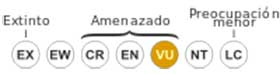
VULNERABLE.

Conservation:

State of conservation โ“˜


Vulnerable Vulnerable โ“˜ (UICN)โ“˜

โ€ข Red List category of the UICN current: Vulnerable

โ€ขPopulation trend: Decreasing

You suspect a rapid descent and ongoing in the population of the Aratinga of brushes based on the destruction, degradation and fragmentation of their habitat to large scale.

Currently its population It is estimated within a range between 1.500 and 7.000 mature individuals.

The habitat loss and fragmentation It has been significant throughout its range, with between the 90% and the 93% lost mountain forests in Colombia. In the Peru the loss of habitat is less (Salaman et to the. 1999b, PGW Salaman in litt., 1999).

Logging of the Quindio wax Palm for the services of the Palm Sunday It is a serious problem in some parts of Ecuador. (1999b Salaman et to the.).

The road construction is continuous through many areas of dwarf and humid forests in Peru, causing a severe loss of habitat in areas such as Mรกlaga (H. Lloyd in litt., 2007).

In Colombia, are persecuted as corn pests and as pet birds (1999b Salaman et to the.).

Many protected areas they are affected by the burning and grazing Moor, settlements, cleared for agriculture, logging, Narcotics and the extraction of gold (Wege and Long 1995, Salaman et to the., 1999b).

Conservation Actions Underway:

Appendix II of CITES.

Is known of many protected areas (Wege and Long, 1995), including the national parks Los Nevados and Cave of the Guacharos in Colombia, and the Podocarpus national park in Ecuador (PGW Salaman in litt., 1999, Clements and Shany 2001).

The reserves, Ucumari Regional Natural Park, Puracรฉ National Park (Colombia), Huashapamba native forest (Ecuador) and the Rio Abiseo National Park (Peru) they are apparently well protected (Wege and Long 1995).

In Ecuador, an organized campaign by Birds and conservation and Fundaciรณn Jocotoco with the support of the Government is aimed at reducing the unsustainable exploitation of the Quindio wax Palm. The Fundaciรณn Jocotoco you have installed nest boxes your reservations, that they are being used (even in preference to the natural cavities) for this and other species of parrot (D. Waugh in litt., 2010).

Conservation Actions Proposed:

Assess their condition from Peru (Flanagan et to the., 2000).

Establish the degree of dependence of the Quindio wax Palm in different regions (Sornoza Molina and Lopez-Lanรบs 1999).

Develop a network of mountain protected forest. Protect the Nevado del Ruiz – Nevado del Tolima and Cordillera de Chilla in the The Manu National Park (Jacobs and Walker 1999, PGW Salman in litt., 1999, Lรณpez-Lanรบs et al., In press).

"Golden-plumed Parakeet" in captivity:

Very rare in captivity, Some examples in Colombia.

Alternative names:

– Golden-plumed Parakeet, Branicki’s Conure, Golden Plumed Conure, Golden plumed Parakeet, Golden-plumed Conure, Golden-plumed Parrot (English).
– Conure ร  pinceaux d’or, Perriche ร  pinceaux d’or, Perruche ร  pinceaux d’or (French).
– Pinselsittich, Pinsel-Sittich (German).
– Papagaio-de-bochechas-douradas (Portuguese).
– Aratinga de Pinceles, Cotorra Moteada, Perico Paramuno, Catanica de pรกramo (espaรฑol).
– Loro paramuno, Perico Paramuno (Colombia).
– Perico de Mejilla Dorada (Peru).
– Perico cachetidorado, Cotorra moteada o Loro de mejillas doradas (Ecuador).


scientific classification:

Jan Sztolcman
Jan Sztolcman

– Order: Psittaciformes
– Family: Psittacidae
– Genus: Leptosittaca
– Scientific name: Leptosittaca branickii
– Citation: von Berlepsch & Stolzmann, 1894
– Protonimo: Leptosittaca branickii


Golden-plumed Parakeet images:


Sources:

– Avibase
– Parrots of the World โ€“ Forshaw Joseph M
– Parrots A Guide to the Parrots of the World – Tony Juniper & Mike Parr
– Birdlife
– Parrot Book, Parrots and macaws

– Photos:

(1) – Golden-plumed Parakeet in Tapichalaca Reserve, Ecuador By markaharper1 [CC BY-SA 2.0], via Wikimedia Commons
(2) – Leptosittaca branickii – Golden-plumed Parakeet by ProAves Colombia – Flickr
(3) – GOLDEN-PLUMED PARAKEET by Bryant Olsen – Flickr
(4) – GOLDEN-PLUMED PARAKEET by Bryant Olsen – Flickr
(5) – Leptosittaca branickii – Golden-plumed Parakeet by ยฉ Carl Downing – NeotropicalBirds
(6) – Leptopsittaca branickii via Wikimedia Commons

– Sounds: (Xeno-canto)

โ–ท The world of Pets: Dogs, cats, birds, reptiles, amphibians

Sun Parakeet
Aratinga solstitialis

Aratinga Sol

Content

Description:


Anatomy-parrots

Of 30 cm.. length and a weight between 120 and 130 g.
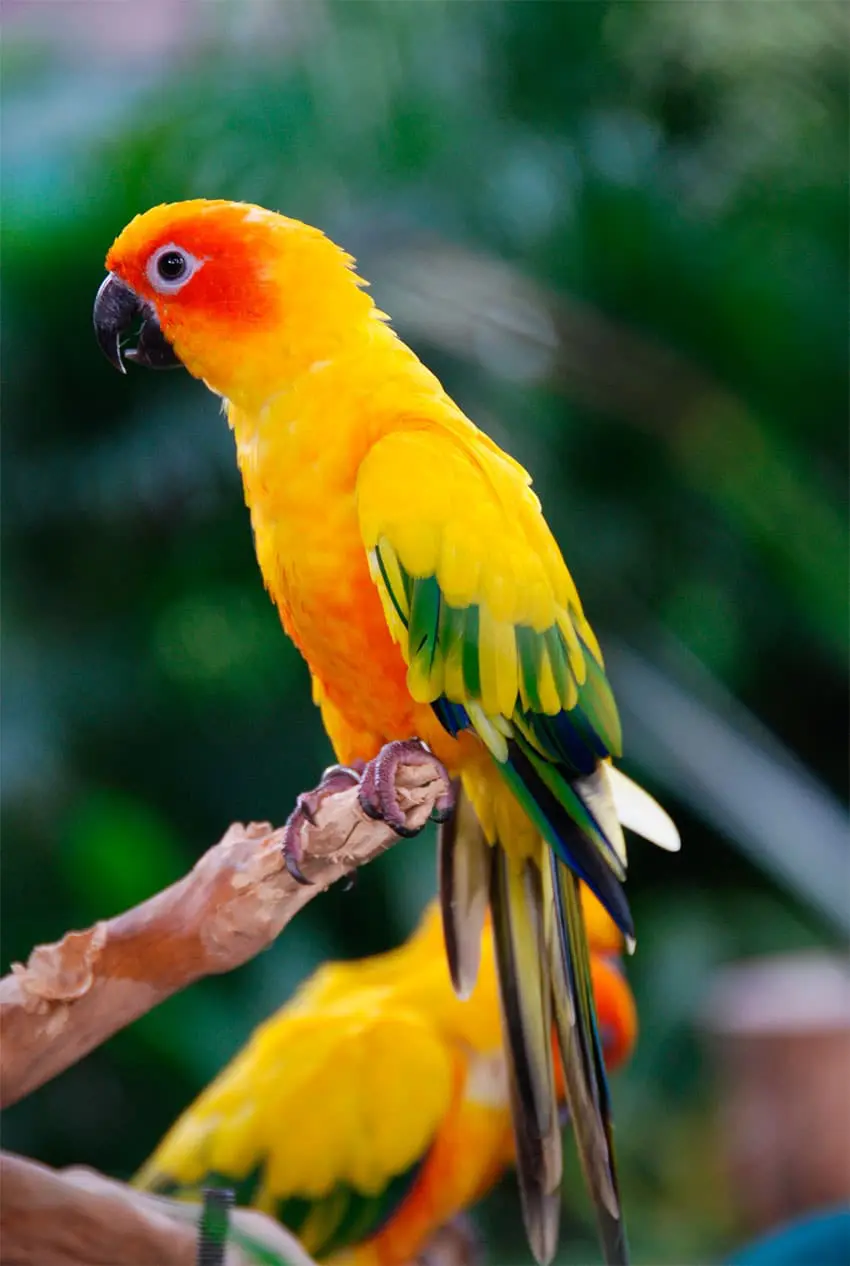
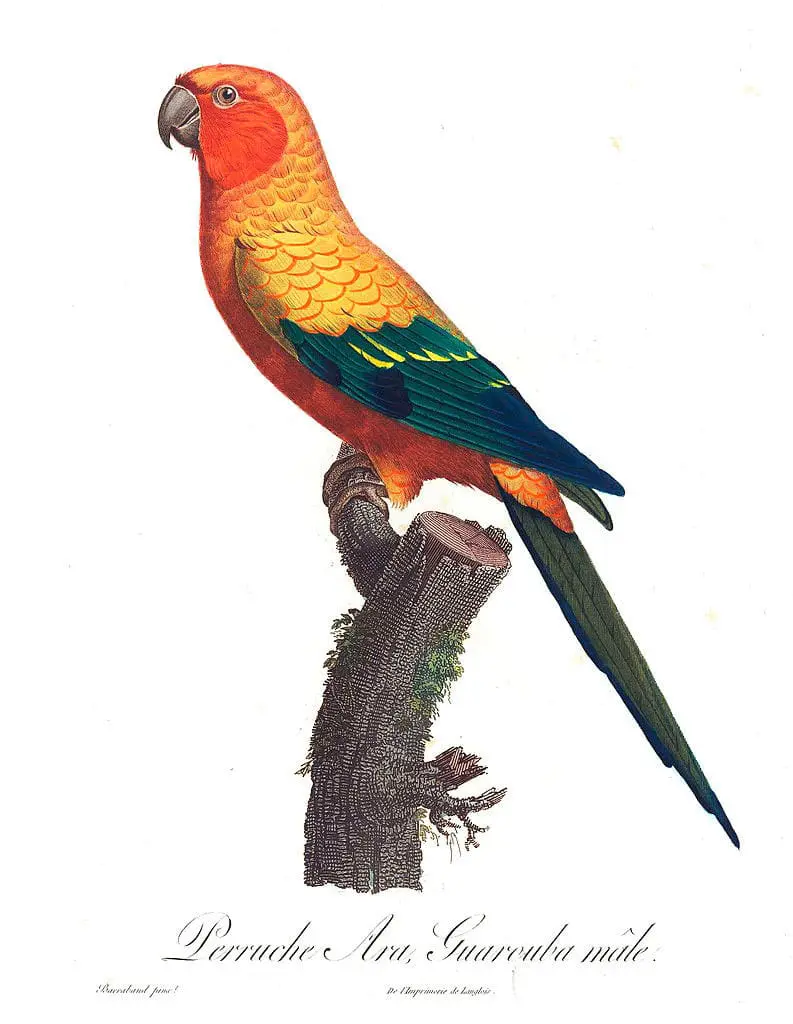
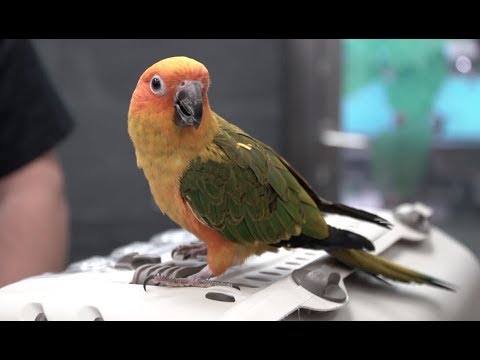
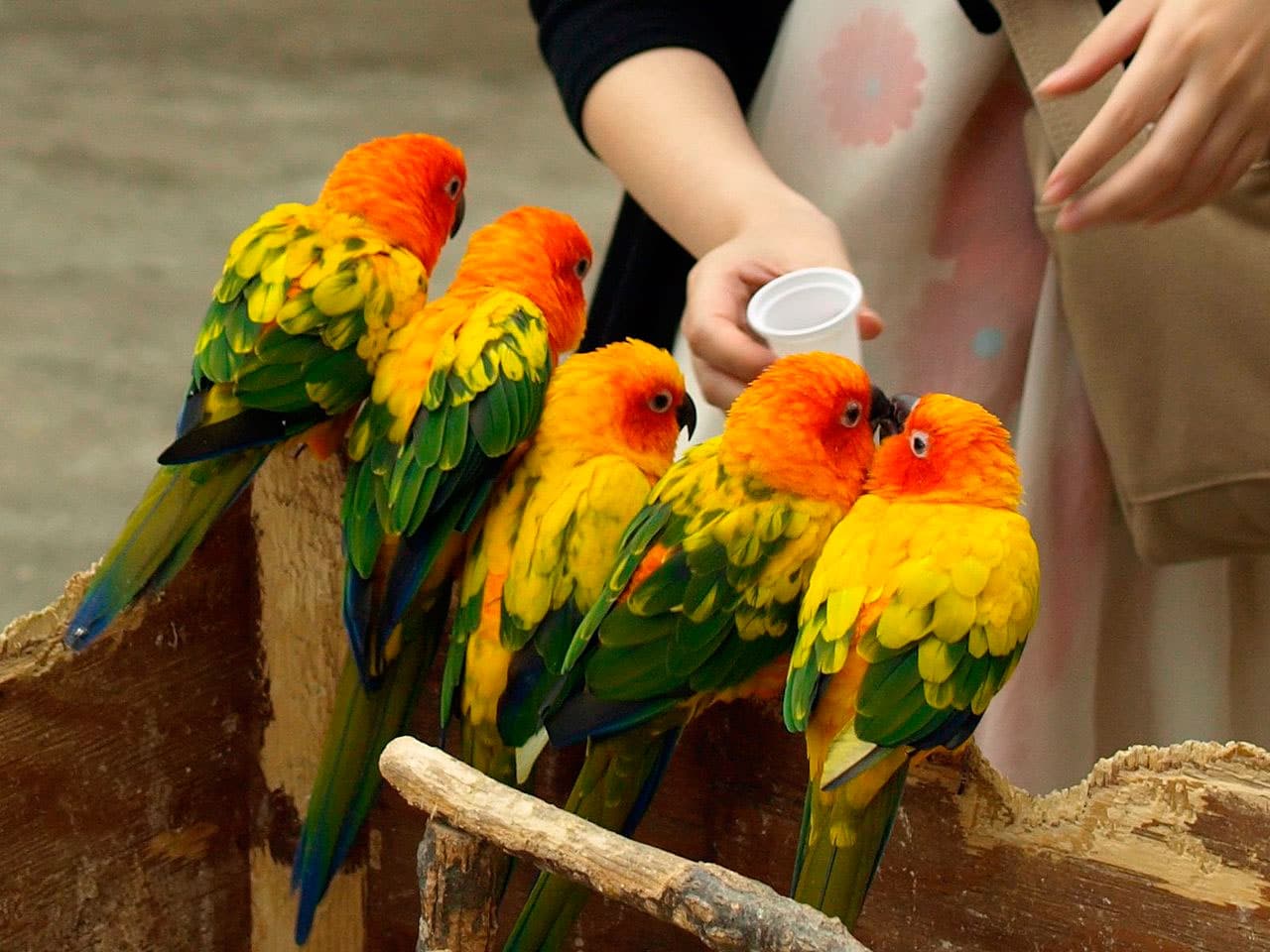
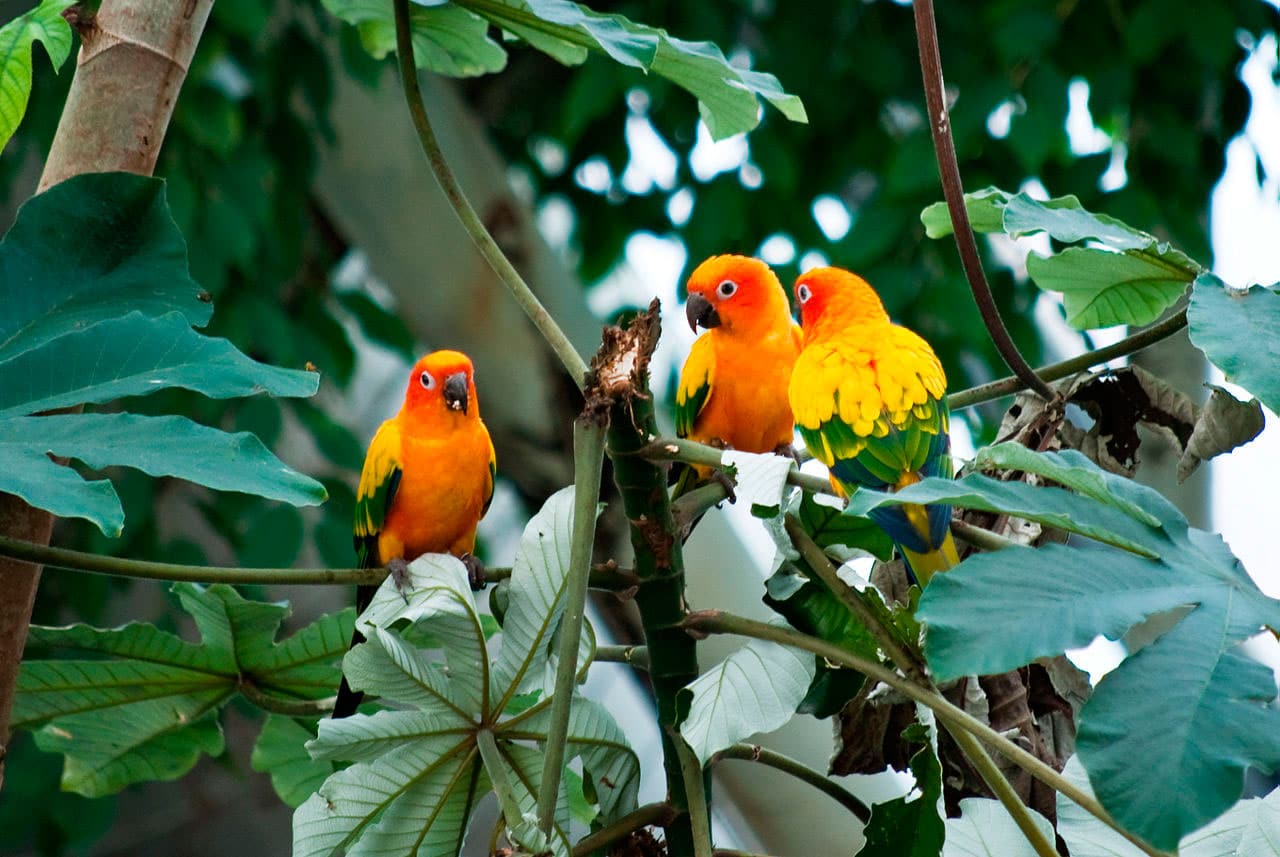
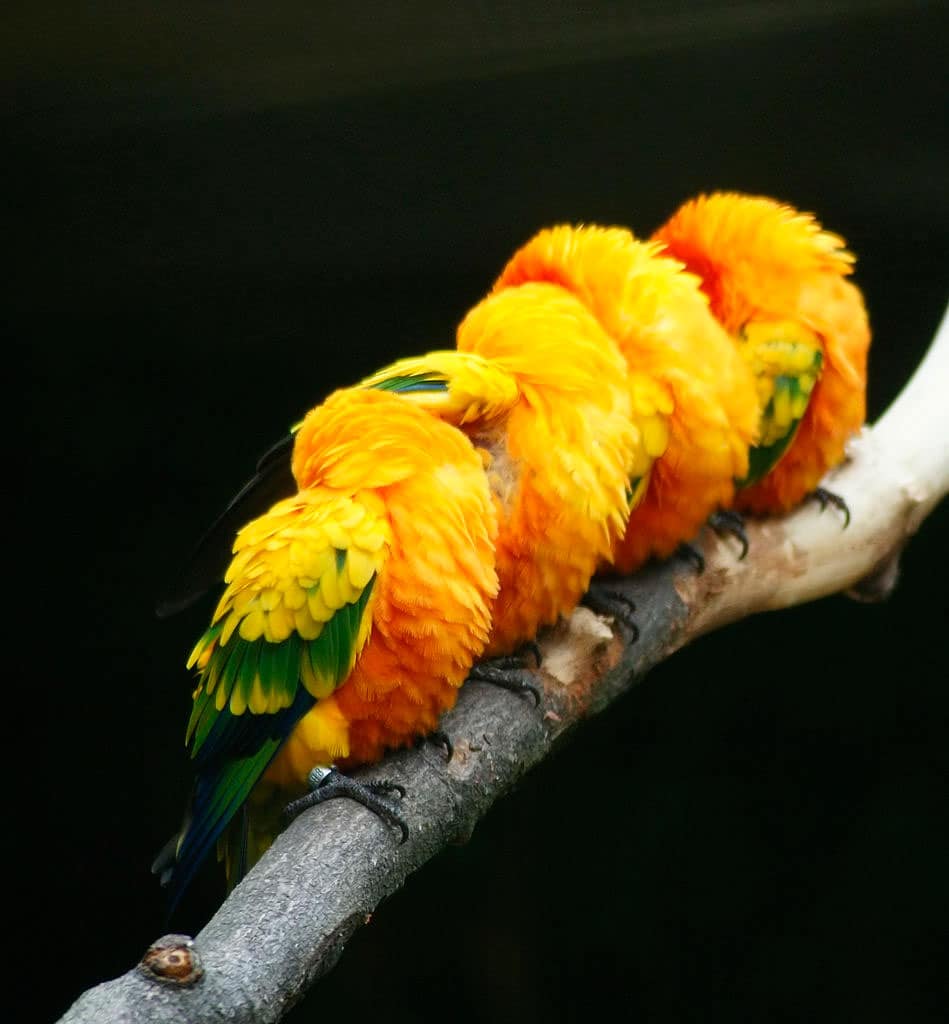
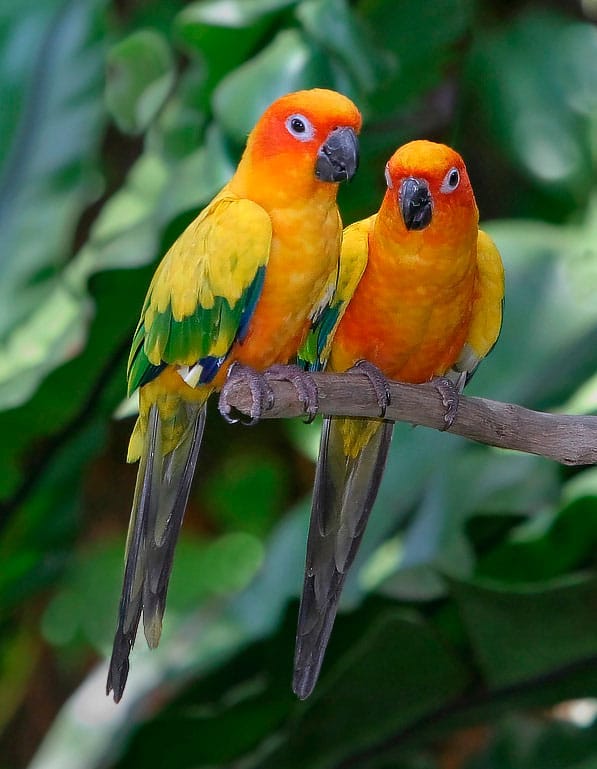
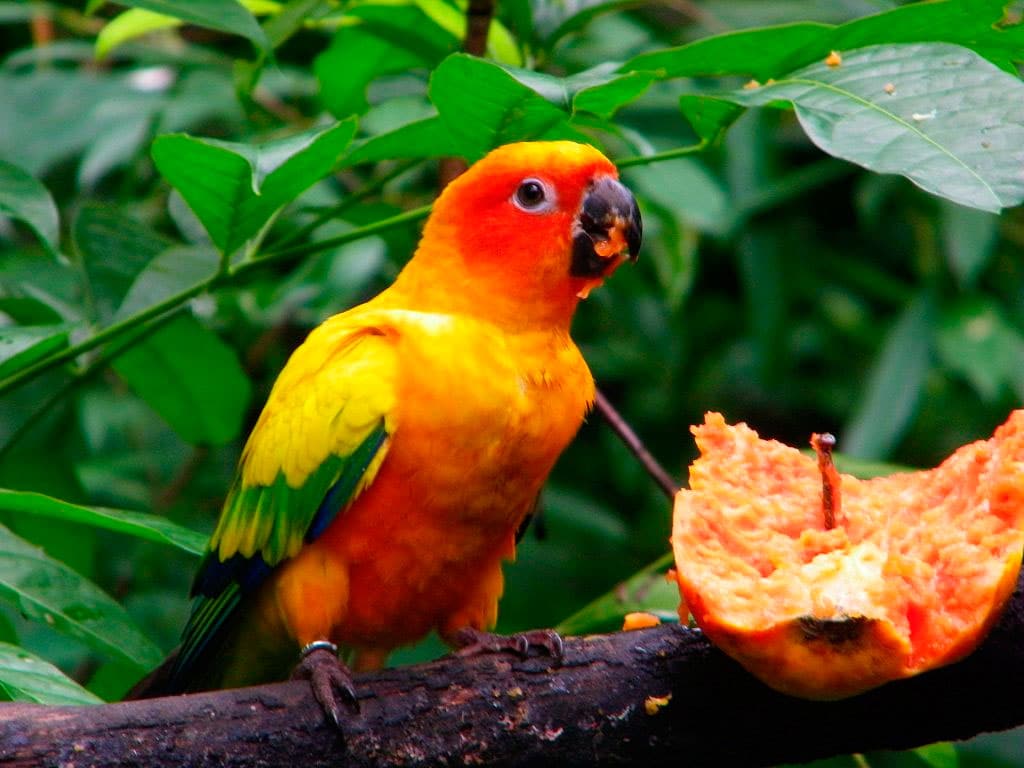
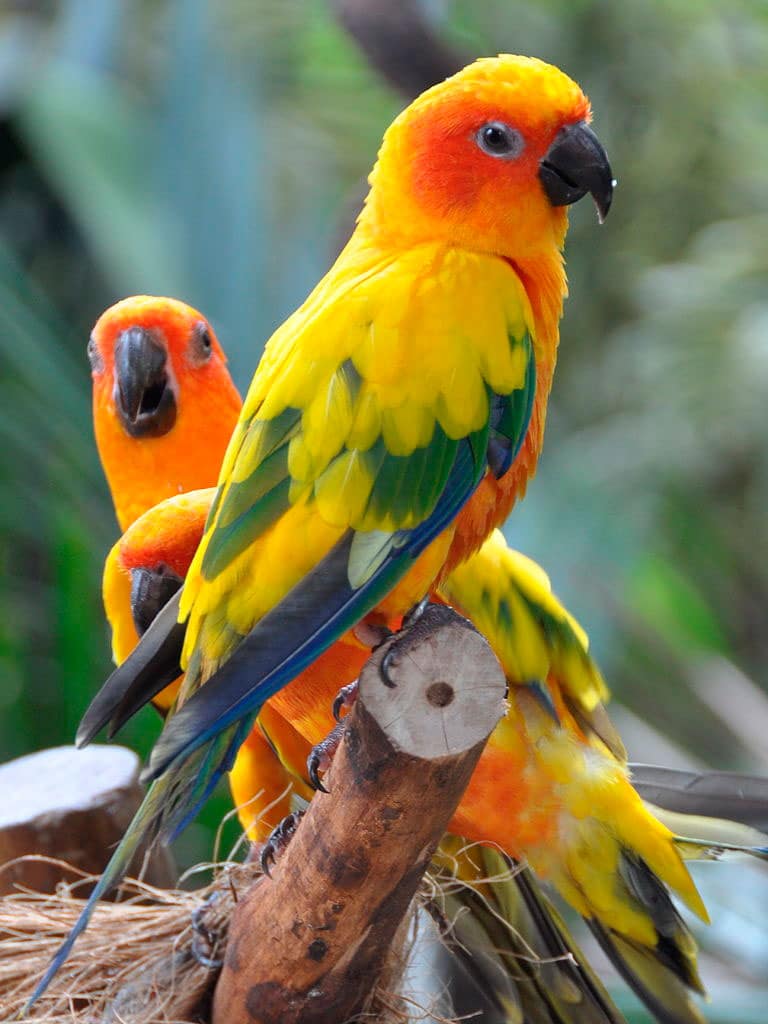
Of great beauty, the Sun Parakeet (Aratinga solstitialis) has the lores, ocular region and ear-coverts golden yellow, changing to shades red orange glossy; the forecrown, crown and nape are of a rich color yellow brilliant with color orange.

Bright yellow in the the mantle, the back and rump; uppertail-coverts of color yellow with exotic feathers of color blue. Scapulars Green Tips and the vane inner blue; the coverts smaller and medium, of color yellow with variable staining Green; greater coverts with tips of color green beige, primary coverts, blue. Flight feathers, green above, primaries with tips and vane inner blue; grayish brown then. Undertail-coverts yellow (or orange / yellow). The throat Orange with yellow shading at the top of the chest; lower chest and the belly orange; Flanks and area of the vent yellow.

Ilustraciรณn Aratinga-Sol

Upper, the tail mainly of color green yellowish with tips of color blue; undertail, of color grey with dye beige.

The bill of color Brown dark to black; the irises dark brown; legs distant.

Both sexes similar.

Immature usually with more muted than adults with the yellow colors of the head and the body replaced by an orange-Green. Lesser and medium uppertail-coverts green.

Habitat:

Video – "Sun Parakeet" (Aratinga solstitialis)

CAP 547. ARATINGA OF THE SUN. care and behavior.

In general, live in Savanna, in dry forests with Palm trees and some times in flooded areas, until 1200 m. Cross the habitats more open only when traveling between the patches of forest. Son Bird social, usually observed in flocks of 30 or more individuals, with aggregations over large in tree fruit.

Reproduction:

It nests in hollow of trees or palms (for example, Mauritia).
Nest with a chick only in the month of February in Suriname. The size medium of laying is of 3 to 4 eggs. These eggs are hatch during 23 to 27 days, that is almost the forty percent more that it from other birds, in comparison with the mass of egg.

Food:

Their diet is poorly documented, Although it probably consists of locally available food, such as different fruits, berries, nuts, sprouts and flowers. Some foods known including pods of legumes, small fruits of the family Melastomataceae, fruits Red's Cactus and possibly berries of the genus Malpighia.

Distribution:

Size of the area of distribution (reproduction / resident): 96.600 km2

The Sun Parakeet are distributed in the northeast of South America, from the Monte Roraima in the extreme north of Brazil (a single record in 1848 previously attributed to Venezuela), areas adjacent of it Pacaraima mountains in Venezuela and North of Guyana, to pomeroon river, eastward through Suriname (apparently unknown in the North) and French Guayana until Brazil in Amapรก.

Observed also in For and Eastern Amazonas (bounded on the west about Rio Branco and locally to the South of the Amazon, from Santarรฉm to the region of the Canuma River).

Although in general can be considered is usual, records sporadic suggest appearances local of the Sun Parakeet in an extended range of its distribution area.

Maintained locally as domestic fowl and trapped for the bird trade Vivas.

Conservation:

โ€ข Red List category of the UICN current: In danger of extinction

โ€ข Population trend: Decreasing

A well known in the South flock of Guyana has been registered with a maximum number of 200 individuals (Bergman 2009), with other recent records in Roraima (Laranjeiras et to the. 2011). The population is estimated therefore between 1,000-2,499 mature individuals, based on recent records. This is equivalent to 1,500-3,749 birds in total, rounded in 1.500-4.000 individuals.

The population of the Sun Parakeet It is thought that can be in continuous descent, because, probably, continuous pressure which is subjected due to hunting.

THREATS:

Due to the high demand for this species in the pet market, its population has declined dramatically over the last twenty years (J. Gilardi in litt., 2007).

Have been exported largely from Guyana during this time, which has led to its virtual extinction in that country. Trappers of Guyana and French Guiana have traveled to the border with Brazil to buy these birds for export (T. Arndt in litt. 2007, L. Silveira in litt., 2007).

A fit annual of export of 600 bird was established in Guyana in the years 1980 and it is believed that more than 2.200 they were imported into the United States between 1981 and 1985 (J. Gilardi in litt., 2007).

Its trade is in course, and because of the ease with which these birds can be attracted to the bait (for example corn) and the long distances that will be traveling, It is easy to catch all individuals in a given area(J. Gilardi in litt., 2007).

Conservation Actions Underway:

    โ€ข It is very common in captivity, but it is not known what percentage of this population are hybrids between the Aratinga solstitialis and the Aratinga maculata (Silveira et to the., 2005, LF Silveira in litt. 2012).

Conservation Actions Proposed:

    โ€ข Consider listing the species in Appendix I.

    โ€ข Stop cross-border trade immediately CITES.

    โ€ข Work with the indigenous inhabitants of the Raposa Serra do Sol Indian Land and the Amerindian Community in Karasabai to avoid entrapment and protect suitable habitat.

    โ€ข Survey to locate additional important subpopulations.

    โ€ข Establish captive breeding lines of purebred birds..

"Sun Parakeet" in captivity:

The Sun Parakeet is known for its quacking very strong in comparison with its size relatively small. It is capable of imitating human beings, but not as well as some larger parrots.
Son popular as pets, due to their bright coloration while they have a very limited ability to speak.

Due to its inquisitive temperament, demand much attention from their owners, and sometimes they can be very noisy.

Alternative names:

–
Sun Parakeet, Sun Conure, Yellow Conure (English).
– Conure soleil, Perriche soleil, Perruche soleil (French).
– Sonnensittich (German).
– Jandaia-sol, cacaoรฉ, guaruba, Jandaia, jandaia-amarela, quijuba (Portuguese).
– Aratinga Sol, Periquito Dorado (espaรฑol).
– Perico Dorado (Venezuela).

Carl Linnaeus
Carl Linnaeus

scientific classification:


– Order: Psittaciformes
– Family: Psittacidae
– Genus: Aratinga
– Scientific name: Aratinga solstitialis
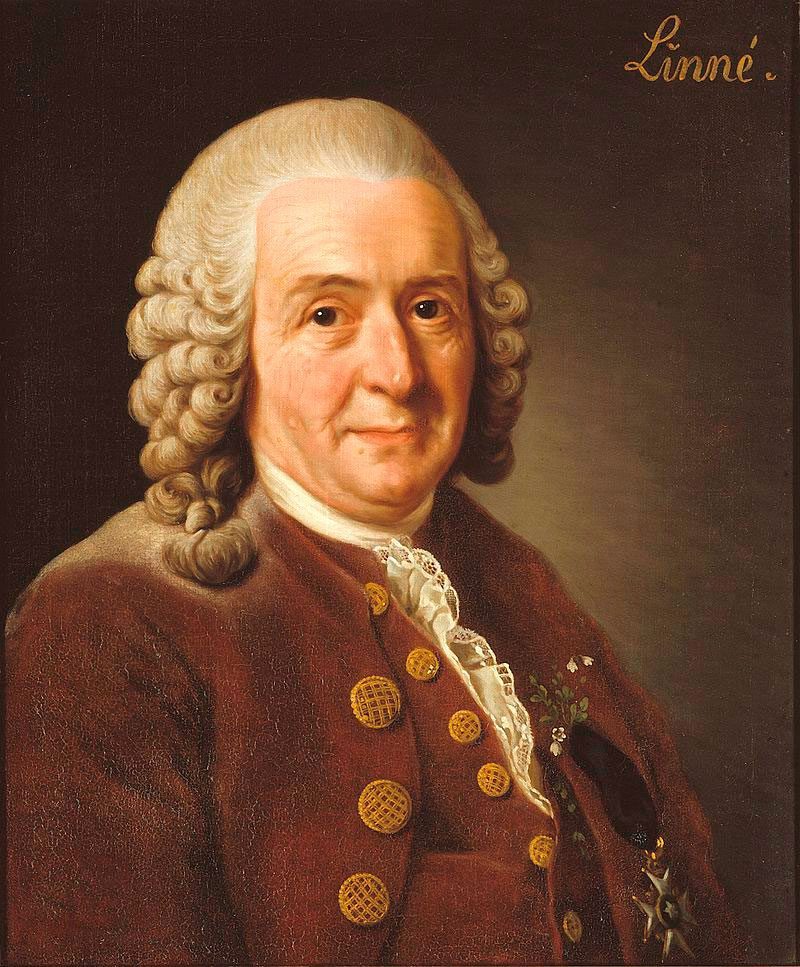
– Citation: (Linnaeus, 1758)
– Protonimo: Psittacus solstitialis


Images Sun Parakeet:


Species of the genus Aratinga

Sources:

– Avibase
– Parrots of the World โ€“ Forshaw Joseph M
– Parrots A Guide to the Parrots of the World – Tony Juniper & Mike Parr
– Birdlife

– Cover photo:

(1) – Sun Conure or Sun Parakeet (Aratinga solstitialis) at a bird park in Singapore By Michael Gwyther-Jones (originally posted to Flickr as Singapore) [CC BY 2.0], via Wikimedia Commons

– Image gallery:

(2) – Three Sun Parakeets (also known as Sun Conure) at Jurong Bird Park, Singapore. The bird in the middle of the photograph has been wing clipped By Michael Gwyther-Jones from UK (FlickrUploaded by snowmanradio) [CC BY 2.0], via Wikimedia Commons
(3) – Sun Parakeets (also known as Sun Conures) at Jurong Bird Park, Singapore By Michael Spencer (originally posted to Flickr as Jurong Bird Park) [CC BY 2.0], via Wikimedia Commons
(4) – Sun Parakeet (also known as Sun Conure) at Jurong Bird Park, Singapore By Michael Spencer (originally posted to Flickr as Jurong Bird Park) [CC BY 2.0], via Wikimedia Commons
(5) – Sun Conures at Jurong Bird Park, Singapore. Wing clipped By Doug Janson (Own work) [CC BY-SA 3.0 or GFDL], via Wikimedia Commons

(6) – Sun Parakeet (also known as Sun Conure) perching on a branch and eating white flowers at Hamilton Zoo, New Zealand By Brian Gratwicke [CC BY 2.0], via Wikimedia Commons
(7) – Sun Conures, at Pairi Daiza, Brugelette, Belgium ยฉ Hans Hillewaert/, via Wikimedia Commons
(8) – A pet Sun Parakeet (also known as Sun Conure) perching on a shoulder. It has been wingclipped By turtlemom4bacon from Orlando, FL, USA [CC BY-SA 2.0], via Wikimedia Commons
(9) – A Aratinga solstitialis at Baltimore Aquarium, USA By Chris Williamson [CC BY 2.0], via Wikimedia Commons

(10) – Feeding a Sun Conure, also known as a Sun Parakeet at Discovery Cove, Orlando, Florida, USA By eric from USA (IMG_4596) [CC BY-SA 2.0], via Wikimedia Commons
(11) – He loves it when you blow on his face and it makes him puff! By Sarah G from Tulsa, USA (Sherbie Sherbie Puffs-Alot) [CC BY-SA 2.0], via Wikimedia Commons
(12) – Wing clipped Sun Parakeets (also known as Sun Conures) at Kobe Kachoen, a bird and flower park located on Port Island in Kobe, Japan By merec0 (originally posted to Flickr as niji) [CC BY 2.0], via Wikimedia Commons
(13) – Sun Conure, at Pairi Daiza, Brugelette, Belgium ยฉ Hans Hillewaert/, via Wikimedia Commons

– Photo illustration:

(14) – An adult Sun Parakeet or Sun Conure (Aratinga solstitialis) . Jacques Barraband [Public domain], via Wikimedia Commons

– Sounds: (Xeno-canto)

โ–ท The world of Pets: Dogs, cats, birds, reptiles, amphibians

Orange-cheeked Parrot
Pyrilia barrabandi


Orange-cheeked Parrot

Content

Parrot-carinaranja-6

Description:

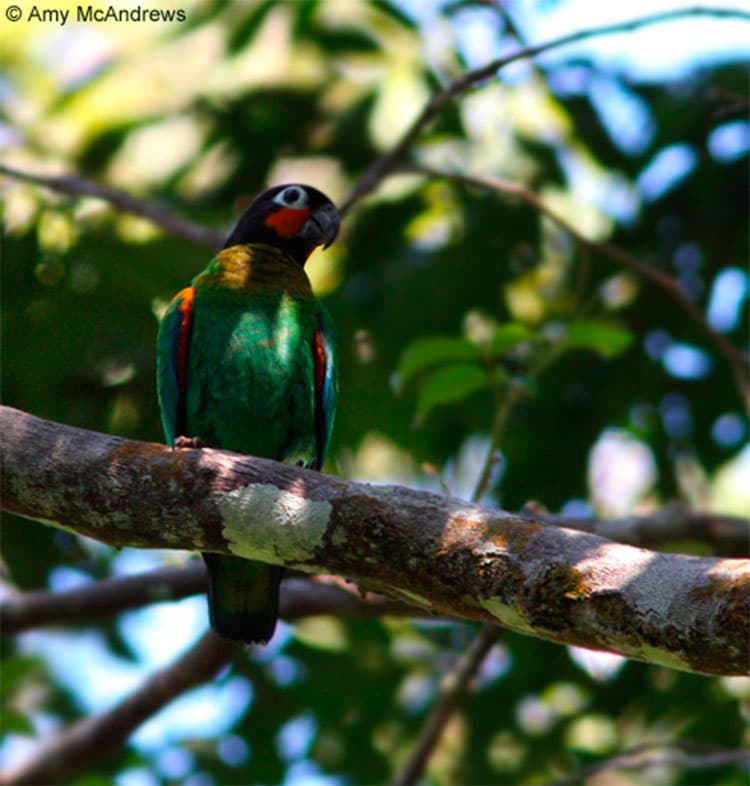
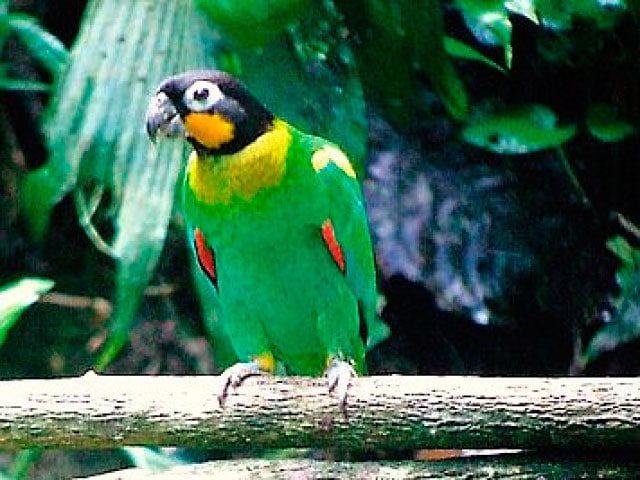
The Orange-cheeked Parrot (Pyrilia barrabandi) measured, approximately, 25 cm., has the head and throat black, except for the bright colored area amarillento-naranja that goes from the base of the bill up to the lower cheek well behind the eyes.

Upperparts green, lesser coverts, yellow-orange; edge front of the wing red; primary coverts blue-black; greater coverts bluish green; other coverts, green. Primary, dark blue at the base and in outerweb, If not black; underwing-coverts, bright red, flight feather opaque green. Upper zone of the chest dorado, its bottom and belly, bright blue green, the thighs with orange-yellow feathers. Tail green with blue tip, with yellow bases to the innerwebs of outer feathers.

Bill grey; brown the irises; legs grey.

Both sexes are similar.

The immature has the head Brown golden colour with yellowish brown in cheeks inferiores. Younger birds also has less yellow in the bend of wing, some green feathers in the underwing-coverts and yellow on the tips of the primaries.

Description 2 subspecies:

  • Pyrilia barrabandi aurantiigena

    (Gyldenstolpe, 1951) – Lesser coverts, curve of the wing and the thighs intense Orange instead of yellow-orange.

  • Pyrilia barrabandi barrabandi

    (Kuhl, 1820) – Nominal.

Habitat:

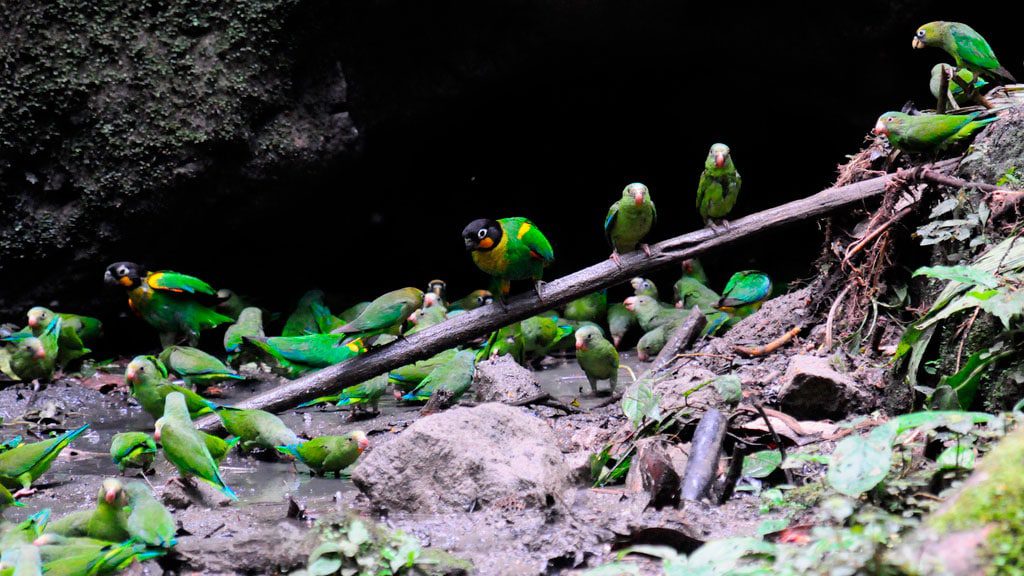
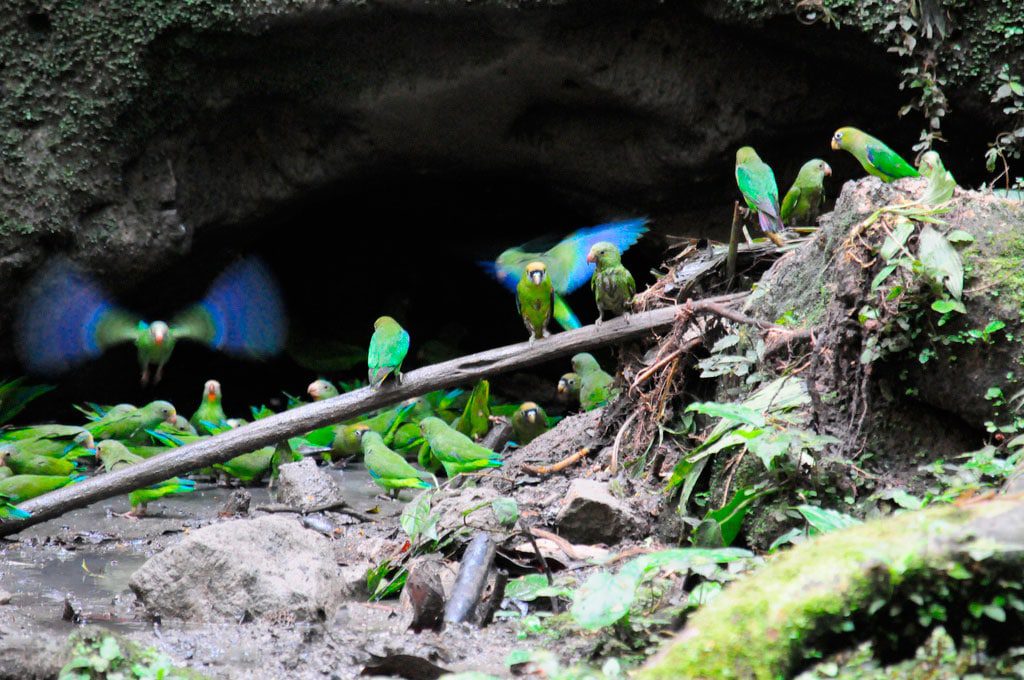
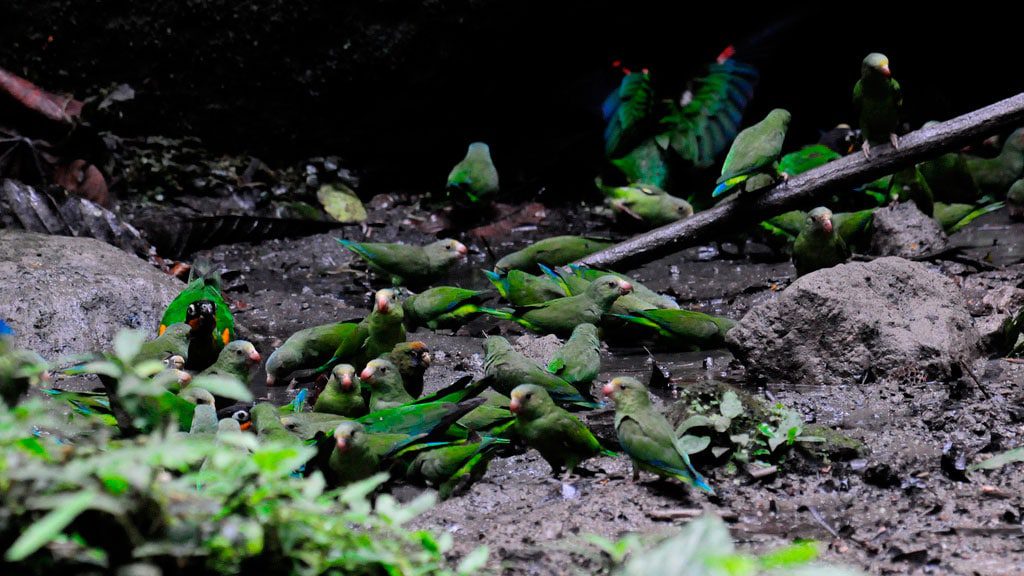
They inhabit mainly in lowland forests, apparently less frequently in forests and marshes. They are distributed at the edge of forests and partially disturbed forest, occasionally in small groves in deforested areas. Observed in altitudes of 150-300 metres in Venezuela and 500 meters in the southeast of Colombia. Seen individually, in pairs and in small groups of up to 10 individuals (sometimes more in banks of land rich in minerals). Are activated more early, In the morning, than other parrots and will rest later.

Reproduction:

There is no information about the nesting, but that suggests the registration of immature birds in February and March breeding season It can be between the months of September/October until the end of year.

Food:

Observed taking seeds or fruits of Ficus sphenophylla, Pourouma, Pseudolmedia, Mimosa, Pithecellobium and Heisteria and possibly larvae of the gall wasps. Usually, they feed in the canopy of the trees, or just below them; less frequently in low branches. Regularly visit areas with mineral-rich soil in the company of other species of parrots.

Distribution:

Size of the area of distribution(reproduction / resident): 3.470.000 km2

This is a kind of basin of the Western Amazon and the Alto Orinoco. Its length extends from the southeast of Colombia, from the Caquetรก Western and bass inirida river, Guainia, until Venezuela in amazon and the Center and South of Bolรญvar and in Brazil in the upper part of the Amazon to the West, from the rivers Negro and Madeira through the rivers Juruรก and Purus and to the South towards Mato Grosso, through the East of Ecuador and East of Peru and to the Northwest of Bolivia, in hand me.

They are generally considered rare throughout its distribution area, Although they are fairly common in the Northwest of Bolivia and many in the sandy Woods of bass Inirida River, to the southeast of Colombia. Its population has fallen locally due to deforestation, Although large tracts of primary forest remain in all range States. Live in several areas protected.

Distribution 2 subspecies:

  • Pyrilia barrabandi aurantiigena

    (Gyldenstolpe, 1951) – Is located in the East of Ecuador and to the East of Peru, where is this in the Manu National Park. In the North of Bolivia is it described as frequent to numerous. The extension also comes to Brazil: is limited by the Amazon in the North and Rio Madeira from the East (pit et to the., 1997).

  • Pyrilia barrabandi barrabandi

    (Kuhl, 1820) – Nominal.

Conservation:


Near-threatened


โ€ข Current category of the Red List of the UICN: Almost threatened.

โ€ข Population trend: Stable.

Justification of the population

The size of the world population It has not been quantified, but this species is described as ยซRareยป (Stotz et to the., 1996).

Justification of trend

It is suspected that this species has lost 12.1-15% of habitat within its distribution over three generations (21 years) based on a model of Amazon deforestation (Soares-Filho et to the., 2006, Bird et to the., 2011). Given the susceptibility of the species to the fragmentation and degradation of forest and potentially your hunting and/or trapping, It is suspected that its population will decrease at a rate close to the 30% during three generations.

Threats

The main threat This species is the acceleration of the deforestation on amazon basin with large tracts of land used for livestock and soybean production; It is highly susceptible to degradation and fragmentation due to its dependence of primary forests (Soares-Filho et to the. 2006, Bird et to the. 2011, A. Lees in litt. 2011). It can also be vulnerable to the hunt (A. Lees in litt. 2011). The changes proposed by the Forest code of Brazil reduce the percentage of land that a private owner is legally required to maintain as forest and include an amnesty for owners who deforested before July 2008 (who would later be acquitted of the need to reforest illegally cleared land) (Bird et to the. 2011).

"Orange-cheeked Parrot" in captivity:

It is very rare see you in captivity outside of Brazil.

Alternative names:

– Orange-cheeked Parrot, Barraband’s Parrot, Orange cheeked Parrot (English).
– Caรฏque de Barraband (French).
– Goldwangenpapagei, Goldwangen-Papagei (German).
– curica-de-bochecha-laranja, curica, curuca (Portuguese).
– Cotorra Cabecinegra, Lorito Carinaranja, Lorito de Mejillas Amarillas (espaรฑol).
– Cotorra Cabecinegra (Colombia).
– Loro de Mejilla Naranja (Peru).
– Perico Cachete Amarillo (Venezuela).


scientific classification:

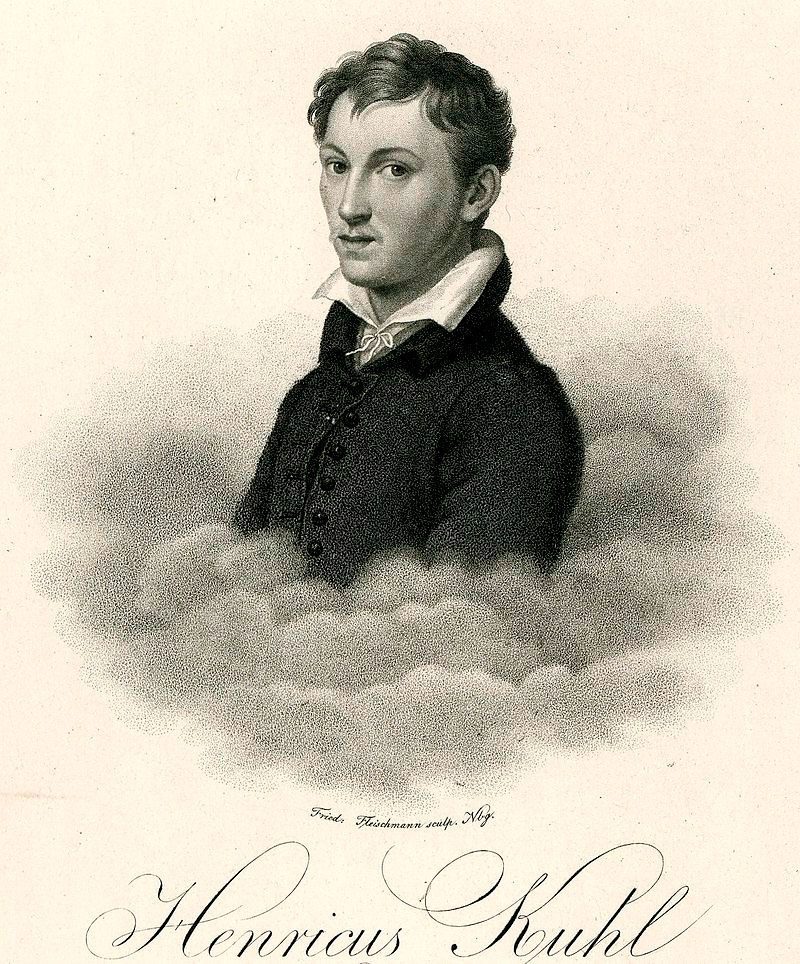
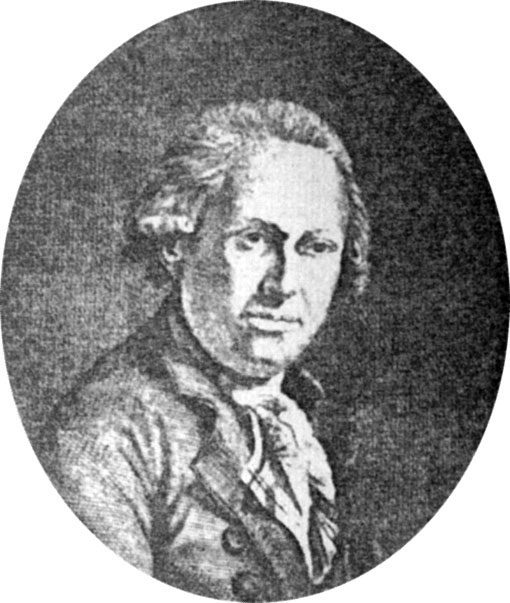
Kuhl, Heinrich
Heinrich Kuhl

– Order: Psittaciformes
– Family: Psittacidae
– Genus: Pyrilia
– Scientific name: Pyrilia barrabandi
– Citation: (Kuhl, 1820)
– Protonimo: Psittacus Barrabandi


Images "Lorito Carinanja":

Videos "Orange-cheeked Parrot"

————————————————————————————————

"Lorito Carinanja" (Pyrilia barrabandi)


Sources:

– Avibase
– Parrots of the World โ€“ Forshaw Joseph M
– Parrots A Guide to the Parrots of the World – Tony Juniper & Mike Parr
– Birdlife

– Photos:

(1) – Orange-cheeked Parrot (Pyrilia barrabandi) Cristalino Jungle Lodge, Mato Grosso, Brazil by Amy McAndrews – Flickr
(2) – Orange-cheeked Parrot at Napo Wildlife Reserve, Ecuador by ocelot123 – Flickr
(3) – Cobalt Winged Parakeet , Scarlet Shouldered Parrotlet and Orange Cheeked Parrot at 3rd lick by Vince Smith – Flickr
(4) – Cobalt Winged Parakeet , Scarlet Shouldered Parrotlet and Orange Cheeked Parrot at 3rd lick by Vince Smith – Flickr
(5) – Cobalt Winged Parakeet , Scarlet Shouldered Parrotlet and Orange Cheeked Parrot at 3rd lick by Vince Smith – Flickr
(6) – Oiseaux brillans du Brรฉsil.. Paris,1834.. biodiversitylibrary.org/page/47697228

– Sounds: controles-canto.org

โ–ท The world of Pets: Dogs, cats, birds, reptiles, amphibians

Plain Parakeet
Brotogeris tirica

Plain Parakeet

Content

Description:

Plain Parakeet

23 cm.. long and about 63 g. of weight.
The Plain Parakeet (Brotogeris tirica) has the forecrown, lores, crown and cheeks, pale green with yellowish tint. Sides of the neck and nape, green, duller than in the head.

The upperparts green, slightly darker than the rest of the plumage. Most of the under wing-coverts, green, some feathers dyed olive brown, especially in lesser and median coverts. Primary coverts, primaries and outer secondaries, violet blue with green margins close to outerweb. Underwing-coverts greenish yellow, flight feather, bluish green. Underparts, pale yellowish green, tinged with bluish color on the sides of chest, the the thighs and undertail-coverts; flanks yellowish. Upper, the tail green with bluish tint to the central feathers; undertail, the tail is grayish blue-green. Bill color pale horn: irises brown: legs Rosaceae.

Both sexes are similar. Immature with little or no blue in primary coverts.

Habitat:

Video – "Plain Parakeet" (Brotogeris tirica)

Green parakeets at the feeder - Brotogeris tirica (Plain Parakeet)

The Plain Parakeet They are experts in the art of adaptation; They can be found in a wider range of habitats than any other endemic parrot Brazilian Atlantic forest: in the lowlands and highlands, in the forest canopy and forest edges, parks and gardens (for example, of Rio de Janeiro and Sรฃo Paulo), farmland with trees, scattered patches of forest and secondary growth. Apparently more numerous in the forest edge habitats. Generally observed in the lowlands, but reported to 1.200 metres in the Itatiaia National Park on the border between the state of Rรญo and Sรฃo Paulo. Gregaria. Generally seen in pairs or small groups, although sometimes you can see several hundred birds together.

It is the most common parrot in Sรฃo Paulo, where you can find even in the slums of the city.

Reproduction:

Observed in arboreal termite nests, in the crowns of Palmas or natural openings of trees; in the city of Sรฃo Paulo nest in crevices of buildings and roofs, regularly using the balconies to feed.

The breeding season It has been recorded in September; observed immature in January. The clutch common in captivity is four eggs. They stay together for life.

Food:

Its diet it is very varied, It includes pulp of Posoqueria latifolia; seeds of Ficus, Trema micrantha, Xylopia brasiliensis, Vriesea, rhipsalis, Cecropia glazioui, Hyeronima alchorneoides and Merostachis; seeds and flowers of Tibouchina mutabilis and Psitticanthus; flowers of Norantea brasilensis and Eucatyptus and nectar of Pseudobombax. Sometimes they feed of insects and their larvae.

Distribution:

Size of its range (breeding/resident ): 1.010.000 km2

The Plain Parakeet They found in southeast Brazil, from Alagoas south through the eastern and southern Bay, Espirito Santo, in the South of Minas Gerais, Rio de Janeiro, is of Sรฃo Paulo and Paranรก until Santa Catarina.

The only records of Rio Grande do Sul and Goiรกs They are considered doubtful.

Some seasonal movements. Uncommon to fairly common depending on locality, but apparently only reported very common in the city of Sao Paulo. Its population has declined in the Eastern European settlement Brazil, although less than other endemic parrots in the region. Live in several areas protected (for example, Itatiaia National Park).

Conservation:

State of conservation โ“˜


minor concern Minor Concern โ“˜ (UICN)โ“˜

โ€ข Current category of the Red List of the UICN: Least concern.

โ€ข Population trend: Stable.

Rationale for the Red List category

This species has a very large range and therefore it is not close to the thresholds for Vulnerable under the criterion of size range (Extension Occurrence <20,000 km2 combinada con un tamaรฑo de rango decreciente o fluctuante, extensiรณn / calidad de hรกbitat o tamaรฑo de poblaciรณn y un pequeรฑo nรบmero De lugares o fragmentaciรณn severa). La demographic trend appears to be stable and, therefore, the species does not approach the thresholds Vulnerable under the criteria of population trend (> 30% decline over ten years or three generations). The population size has not been quantified, but it is not believed to be close to the thresholds for Vulnerable under the criterion of population size (<10.000 individuos maduros con un descenso continuo estimado> 10% in ten years or three generations or a population structure). For these reasons the species is evaluated as the least concern.

Justification of the population

The size of the world's population has not been quantified, but this species is described as ยซcommonยป (Stotz et to the., 1996).

Justification of trend

They suspected that the population is stable in absence of evidence of any decline or threatens substantial.

"Plain Parakeet" in captivity:

They are not very common in aviculture.

Alternative names:

– Plain Parakeet, All-green Parakeet, Tirica Parakeet (English).
– Toui tirica, Perruche tirica (French).
– Tirikasittich, Tiricasittich (German).
– periquito-rico, periquito, periquito-verdadeiro, periquito-verde, tuim (Portuguese).
– Catita Tirica, Periquito Amarillento (espaรฑol).


scientific classification:

Gmelin Johann Friedrich

– Order: Psittaciformes
– Family: Psittacidae
– Genus: Brotogeris
– Scientific name: Brotogeris tirica
– Citation: (Gmelin, JF, 1788)
– Protonimo: Psittacus Tirica


Images Plain Parakeet:


Species of the genus Brotogeris

Sources:

– Avibase
– Parrots of the World โ€“ Forshaw Joseph M
– Parrots A Guide to the Parrots of the World – Tony Juniper & Mike Parr
– Birdlife

– Photos:

(1) – A Plain Parakeet in Morretes, Paranรก, Brazil By Ben Tavener from Curitiba, Brazil [CC BY 2.0], via Wikimedia Commons
(2) – Plain Parakeet in Brazil By Jรดnatas Cunha [CC BY-SA 2.0], via Wikimedia Commons
(3) – Plain Parakeet in captivity By Lucas de Melo [CC BY 2.0], via Wikimedia Commons
(4) – Independence Park, Ipiranga museum, Sao Paulo By Dario Sanches from SAO PAULO, BRAZIL (PERIQUITO-RICO ( Brotogeris tirica)) [CC BY-SA 2.0], via Wikimedia Commons
(5) – Plain Parakeet (Brotogeris tirica) in Sรฃo Paulo By Dario Sanches [CC BY-SA 2.0], via Wikimedia Commons
(6) – Independence Park, Ipiranga museum, Sao Paulo By Dario Sanches from SAO PAULO, BRAZIL (PERIQUITO-RICO ( Brotogeris tirica)) [CC BY-SA 2.0], via Wikimedia Commons
(7) – Independence Park, Ipiranga museum, Sรฃo Paulo Species molting By Dario Sanches from SรƒO PAULO, BRAZIL (PERIQUITO-RICO ( Brotogeris tirica)) [CC BY-SA 2.0], via Wikimedia Commons
(8) – Brotogeris tirica, Independence Park, Ipiranga museum, Sao Paulo By Dario Sanches from SAO PAULO, BRAZIL (PERIQUITO-RICO ( Brotogeris tirica)) [CC BY-SA 2.0], via Wikimedia Commons
(9) – The Plain Parakeet in the Serra da Cantareira State Park, Sao Paulo, Brazil By Dario Sanches (Flickr: PERIQUITO-RICO (Brotogeris tirica)) [CC BY-SA 2.0], via Wikimedia Commons
(10) – Illustration Ricardo Sanches, parakeets rich(Brotogeris tirica) in ABES-SP

– Sounds: Jerome Fischer (Xeno-canto)
โ–ท The world of Pets: Dogs, cats, birds, reptiles, amphibians

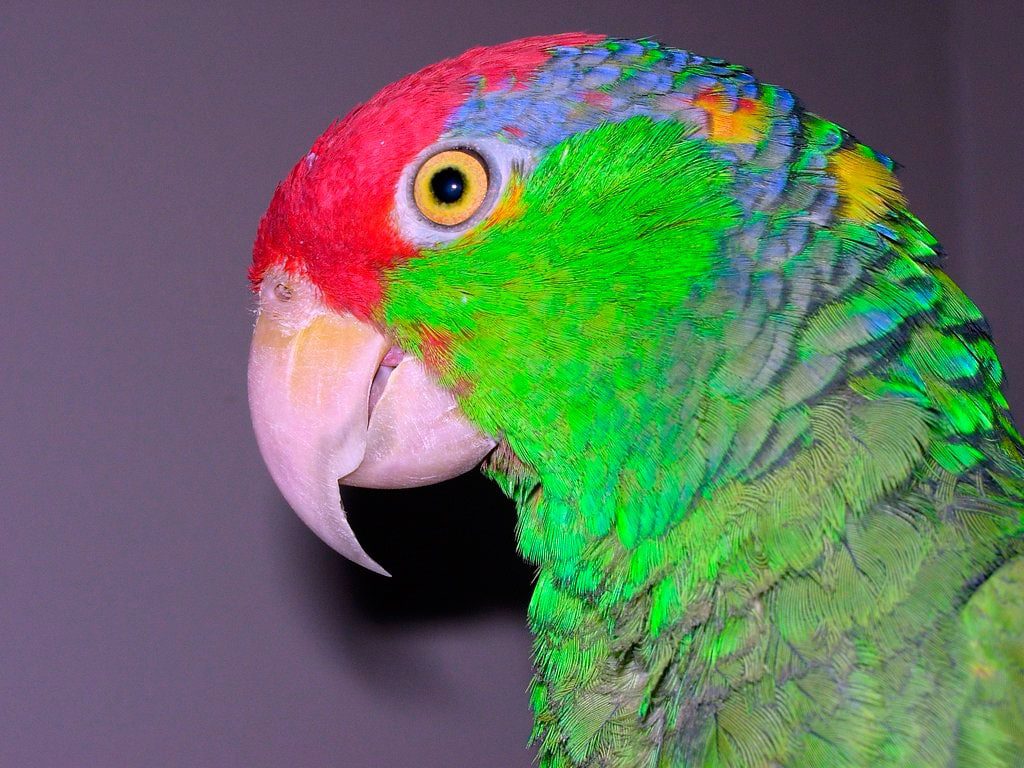
Red-crowned Parrot
Amazona viridigenalis

Red-crowned Parrot

Content

Description:


Anatomy-parrots

30.5-33 cm.. length and 294 g. of weight.

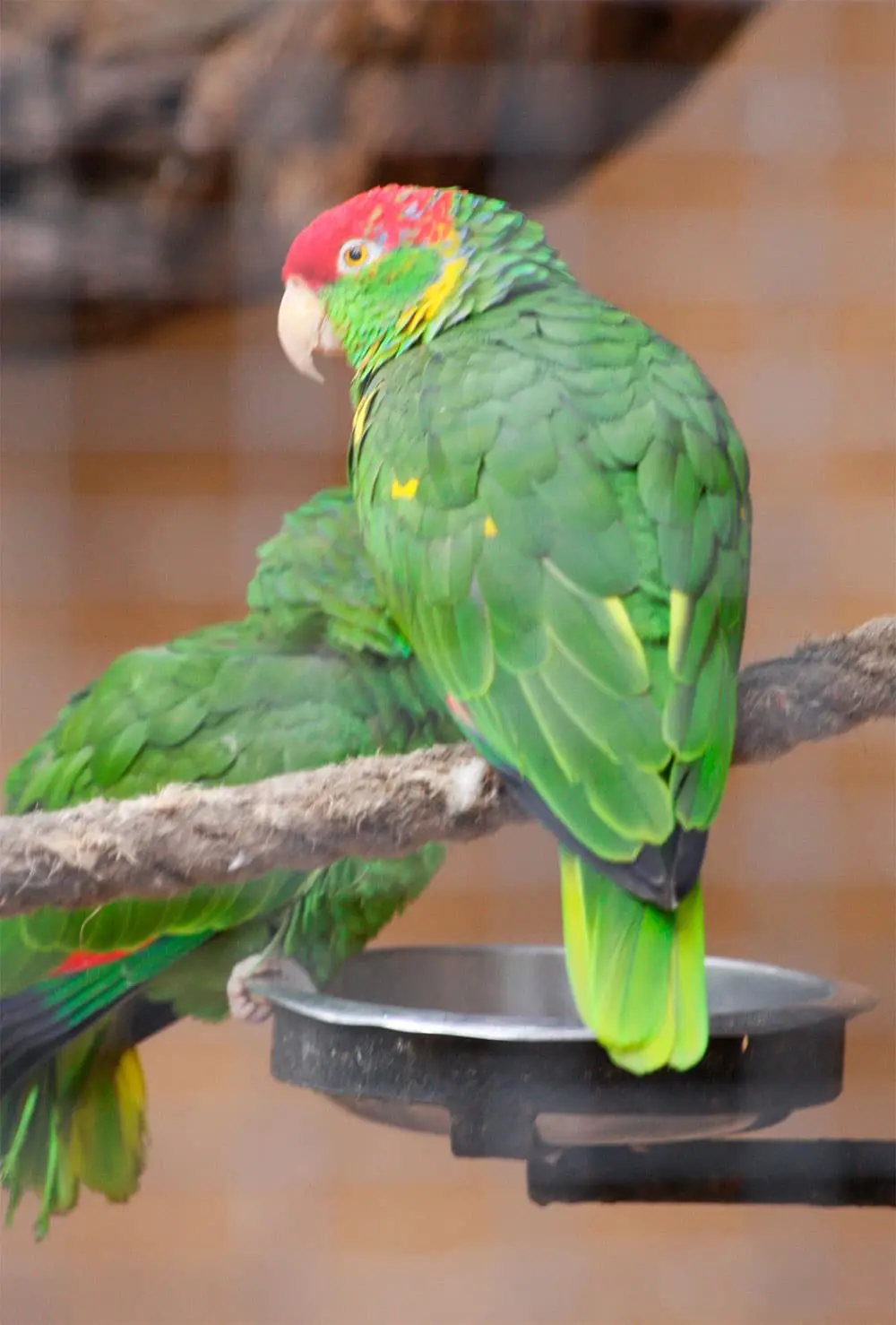
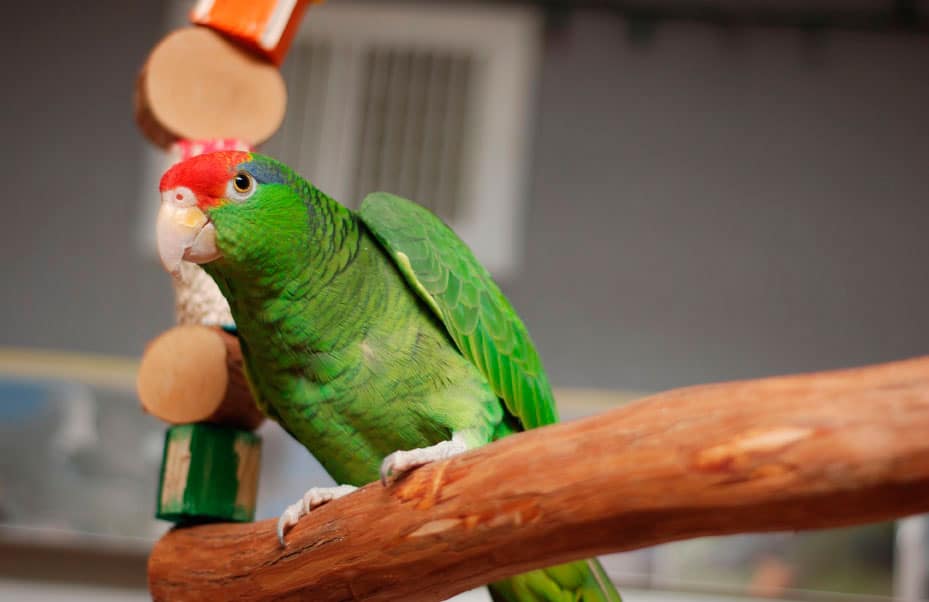
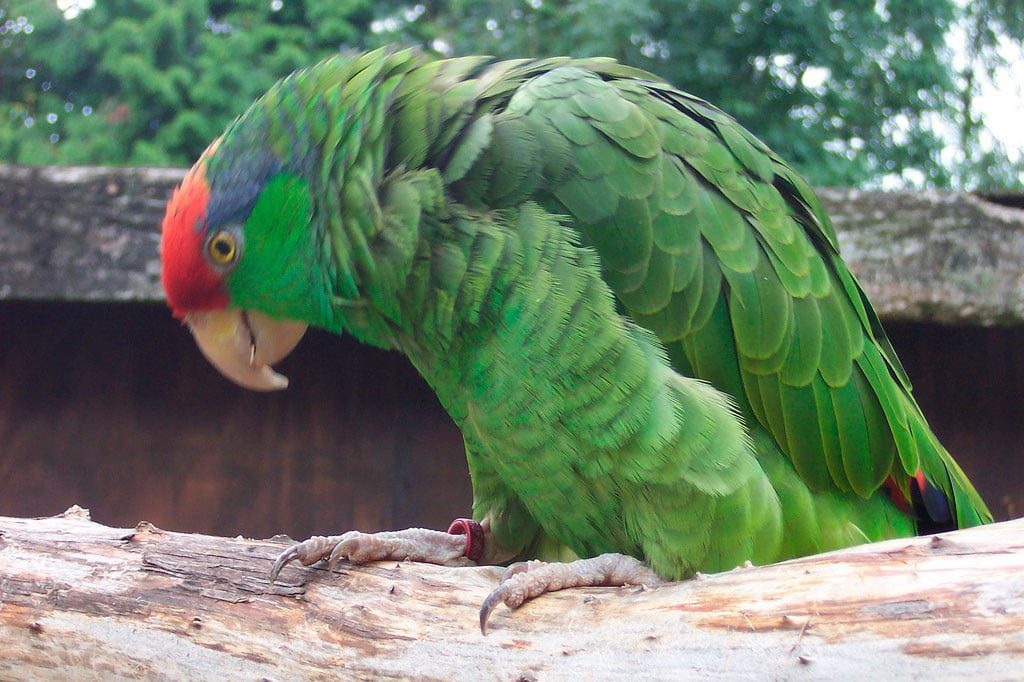
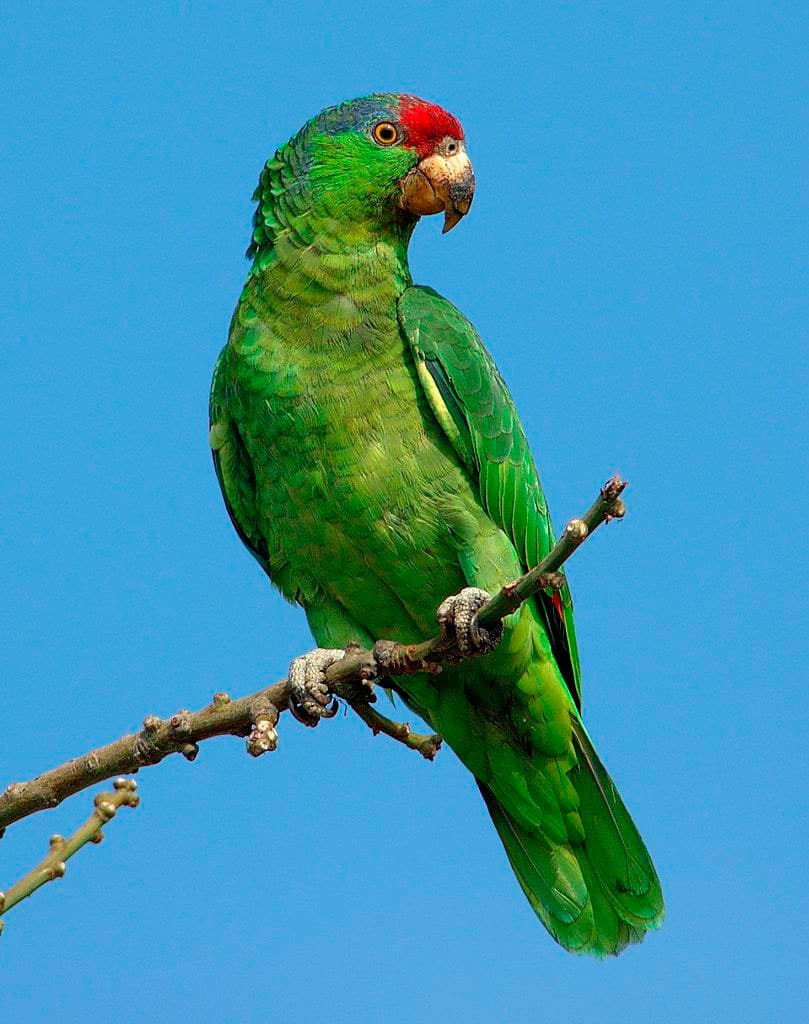
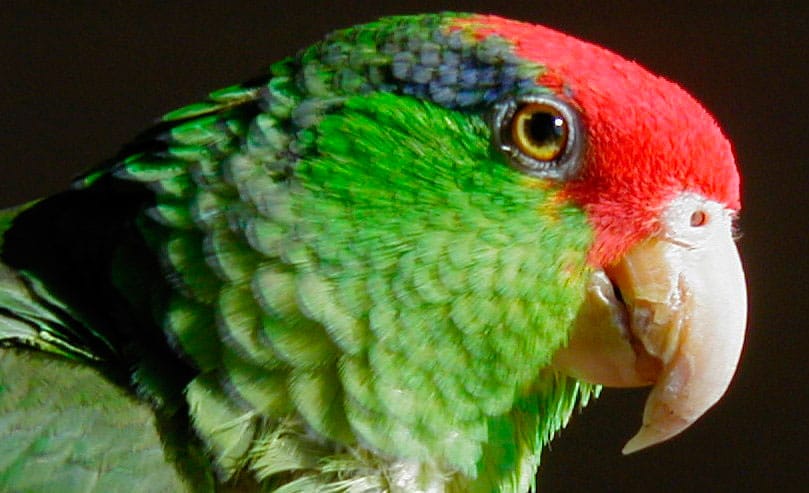
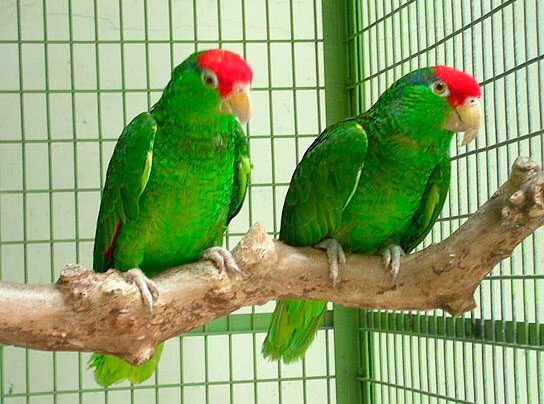
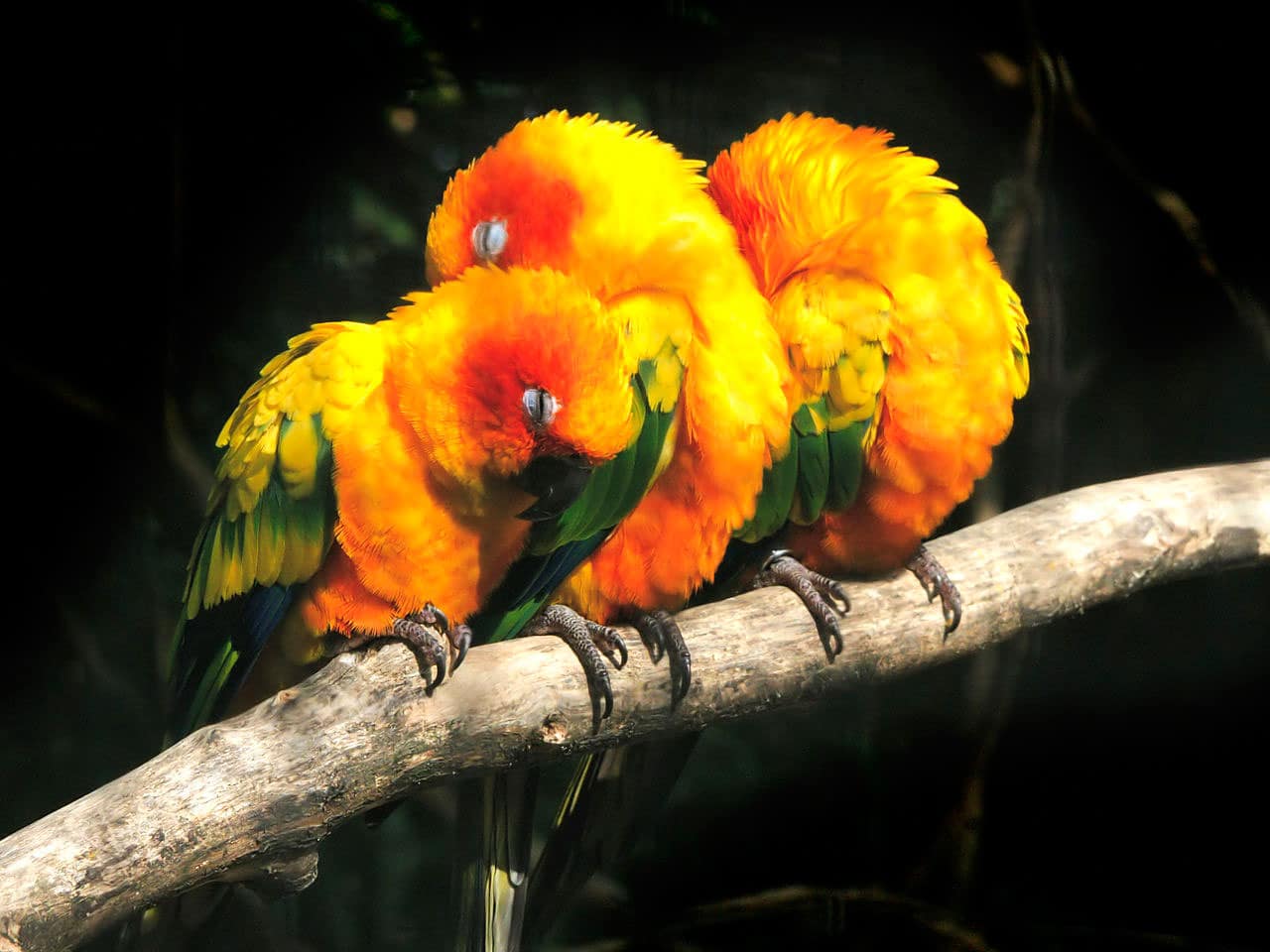
The Red-crowned Parrot (Amazona viridigenalis) has the lores, forecrown and crown, bright red, with side margins on the back of the neck and top of the neck, showing blue feathers with black ends; ear-coverts bright green without black ends in feathers; nape boldly festooned with green feathers with their ends in black.

Mantle and back green with some weak black tips; rump and uppertail-coverts, green. Wing coverts green with black margins on some weak feathers. The flight feather, mostly green, the primaries, in general, with dark ends, of dark blue or black, the Outer secondaries, with the ends of blue with red in the outerweb. Under, the wings green. Underparts green, slightly yellowish; some feathers show visible dark tips. The tail is green, in general with its yellow end. Bill pale yellow; irises yellow; legs pale grey.

Red-crowned Parrot

although females They can have on average less red in the head, probably no consistent sexual dimorphism. The immature She has red in the head very small, with feathers in the central part of the crown green tipped black and subterminally banded pale blue; feathers on the side of the crown, forming broad band over eye.

  • Sound of the Red-crowned Parrot.

Habitat:

Video "Red-crowned Parrot"

The habitat of the Red-crowned Parrot son los Bosques deciduous, gallery forests and evergreen floodplain forests in tropical lowlands, with non-breeding birds on dry ridges extend to 1,200 meters in temperate zones Pinus and Quercus.

frequenting cultivated areas where they remain large trees. Usually in flocks, generally larger than its sympatric congeners (Red-lored Amazon and the Yellow-headed Parrot, with which sometimes mixed); in larger flocks in winter. Used roost communally.

Reproduction:

They nest in tree hollows, including abandoned nests Lineated Woodpecker (Dryocopus lineatus), generally 6-20 meters above the ground. Nests reported in trees Taxodium mucronatum, Bumelia laetivirens and Brosimum alicastrum. Reproduction April-May Tamaulipas. The laying is of 3 or 4 eggs. Only the female incubates. The incubation hard 28 days. The young are cared for for nine weeks.

Food:

Foods reported include seeds of Pinus, corn, berries of Ehretia, Jewish of Pithecellobium, acorns and berries Melia azedarach; introduced populations have adapted to the food sources parks, consuming fruitsJuglans, Liquidambar, eucalyptus and Chorisia.

Distribution and status:

Size of its range (breeding/resident ): 61.900 km2

Northeast Endemic Mexico, where records from southern Nuevo Leรณn (South of Monterrey) through Tamaulipas (mostly in the center and south of the state) and East of San Luis Potosi, to the North of Veracruz and towards the south until near 21ยบN. They can be seen as visitors in the winter Brownsville, southwestern end Texas, USA.

The current range appears confined to Tamaulipas and San Luis Potosi, no known breeding records in recent decades in Nuevo Leรณn or Veracruz, except for the seemingly wild population in the suburbs Monterrey.

wild populations in California, Florida, Oahu (Hawaiian Islands) and Puerto Ricor (small number in southern dry forests).

Resident but nomadic in winter with some altitudinal movements that lead birds to higher ground in winter (perhaps to exploit the seeds and acorns Pine) and with other movements further away from the breeding range, for example, to the South of Texas. Apparently they return to the breeding area in February, declining along the ridge, but they are most common near the east coast, especially around the Sierra de Tamaulipas and on the slopes east of the Sierra Madre Oriental in Tamaulipas. Otherwise, sparsely distributed and frequently only some strengths as the Valley Sabinas River, Tamaulipas.

Total population estimated in 3.000-6.500. Popular in captivity locally and previously traded in large numbers internationally. Clearly the recent population declines are due to excessive trade and to the continued destruction of habitats scale; they are also you fired in some areas due to crop damage. There are no large protected areas within reach and illegal trade continues.

Conservation:

State of conservation โ“˜


Endangered Endangered โ“˜ (UICN)โ“˜

โ€ข Current category of the Red List of the UICN: In danger of extinction.

โ€ข Population trend: Decreasing.

โ€ข Population size : 2000-4300.

Rationale for the Red List category

    The combination of high levels of exploitation for cage bird trade, loss of habitat and long term estimates reduced density It indicates that this species is declining very quickly. Therefore it qualifies as in danger of extinction.

Justification of the population

    In 1992-1994, estimated in an area in Mexico densities indicated a wild population of 3.000 to 6.500 birds (EC Enkerlin-Hoeflich in a bit., 1994). This estimate equals approximately 2.000-4.300 mature individuals.

Justification of trend

    The historical densities recorded for the species were 25,2 in the early birds / km2 1970 (Castro 1976), down to 5,7 birds / km2 in an area 1992-1994 (EC Enkerlin-Hoeflich in 1994, Enkerlin-Hoeflich 1995), indicating a population declines of up to 77,4% on a strip of 20 years. It is suspected that the decline will continue at a higher rate to 50% in ten years, due to threats capture and forest clearing.
Threats

โ€ข In 1970-1982, 16.490 birds (mainly chicks) They were imported legally to United States.

โ€ข Las illegal exports from Mexico and mortality prior to export to the top 50% they are equivalent to 5.000 birds per year (Enkerlin-Hoeflich and Hogan, 1997).

โ€ข Los hunters damage nests when removing chicks (sometimes cutting whole trees), reducing the availability of the nest and bringing the permanent abandonment of the site (Snyder et to the., 2000).

โ€ข Many gallery forests have been cleared or degraded, with more than 80% lowlands of Tamaulipas cleared for agriculture (especially sorghum) and pastures.

โ€ข The habitat of the Red-crowned Parrot It is now distributed unevenly in cattle ranches, where the pressure is greater capture (Enkerlin-Hoeflich and Hogan, 1997).

Conservation Actions Underway

โ€ข CITES Appendix I (1992) and part of the European Endangered Species Programme [Species] of the European Association of Zoos and Aquariums (EAZA).

โ€ข The population of Red-crowned Parrot It is distributed in the Biosphere Reserves Heaven and Sierra Gorda (A. G. Navarro in some ., 1998, T. Brush in a bit., 2003), but there are only small colonies in Sierra Gorda and status in Heaven It is unknown (Wege and Long 1995, A. G. Navarro in some 1998).

โ€ข Los livestock They are increasingly aware of the benefits of keeping large trees, but this is not reflected in practice.

Conservation Actions Proposed

โ€ข Conduct surveys to obtain an estimate of the total size of the population.

โ€ข Monitor populations to determine degree of decline.

โ€ข Identify the most important nesting aggregations for protection (Enkerlin-Hoeflich and Hogan 1997).

โ€ข Integrate ranchers in efforts to reduce capture and regenerate habitat (Enkerlin-Hoeflich and Hogan 1997) .

The Red-crowned Parrot in captivity:

CITES Appendix I. (It includes species threatened with extinction. Trade individuals of these species, it is allowed only in exceptional circumstances.)

Each captive specimen of this species which is capable of reproducing, It is placed in a well managed captive breeding program and not be sold as a pet, with the order to ensure their survival long-term.

Alternative names:

– Green-cheeked Amazon, Green-cheeked Parrot, Mexican Red-headed Amazon, Mexican Red-headed Parrot, Red-crowned Amazon, Red-crowned Parrot, red-crowned parrot parakeet (English).
– Amazone ร  joues vertes, Amazone verte ร  front rouge (French).
– Grรผnwangenamazon, Grรผnwangenamazone (German).
– Papagaio-de-coroa-vermelha, Papagaio-de-face-verde (Portuguese).
– Amazona de Corona Roja, Amazona Tamaulipeca, Cotorra Coronirroja, Loro Tamaulipeco (espaรฑol).


scientific classification:

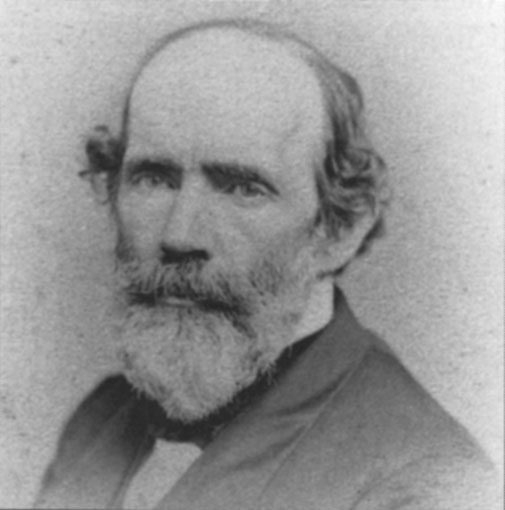
John Cassin
John Cassin

– Order: Psittaciformes
– Family: Psittacidae
– Genus: Amazona
– Scientific name: Amazona viridigenalis
– Citation: (Cassin, 1853)
– Protonimo: chrysotis viridigenalis


Images Red-crowned Parrot:


Species of the genus Amazona


Sources:

– Avibase
– Parrots of the World โ€“ Forshaw Joseph M
– Parrots A Guide to the Parrots of the World – Tony Juniper & Mike Parr
– Birdlife

– Photos:

(1) – Amazona_viridigenalis is native of Mexico. Specimen in Palmitos Park, Gran Canaria By Bjoertvedt (Own work) [CC BY-SA 3.0 or GFDL], via Wikimedia Commons
(2) – Red-crowned Amazon (Amazona viridigenalis) also known as Green-cheeked Amazon, Red-crowned Parrot, or Mexican Red-headed Parrot By rachael fogarty (originally posted to Flickr as Fred) [CC BY-SA 2.0], via Wikimedia Commons
(3) – Red-crowned Amazon (also known as Red-crowned Parrot, Green-cheeked Amazon, or Mexican Red-headed Parrot). Two in a cage By TJ Lin [CC BY-SA 2.0], via Wikimedia Commons
(4) – Red-crowned Amazon, (Amazona viridigenalis) also known as Green-cheeked Amazon, Red-crowned Parrot, or Mexican Red-headed Parrot by Leonhard F at the German language Wikipedia [GFDL or CC-BY-SA-3.0], via Wikimedia Commons
(5) – Red-crowned Amazon By Glandauer/Roger Moore (Roger Moore (transfer from en.wiki)) [GFDL or CC-BY-SA-3.0], via Wikimedia Commons
(6) – Red-crowned Amazonian Parrot (Amazona viridigenalis) by Heather Paul – Flickr
(7) – Red-crowned Amazon (also known as Red-crowned Parrot, Green-cheeked Amazon, and Mexican Red-headed Parrot) at Tropical Birdland, Leicestershire, England By Dean Sas from Chesterfield, UK (Pieces of eight) [CC BY-SA 2.0], via Wikimedia Commons
(8) – A pet Red-crowned Amazon By jarrett chandler from Rowland Heights, US (zazu) [CC BY 2.0], via Wikimedia Commons
(9) – (Amazona viridigenalis), photographed in Heidelberg Tiergarten (Baden-Wuerttemberg, Deutschland) By 4028mdk09 (Own work) [CC BY-SA 3.0], via Wikimedia Commons
(10) – PL XXXI Chrysohs viridigenalis, (tassro) By Blanchard, Emile; Bonaparte, Charles Lucian; Bourjot Saint-Hilaire, Alexandre; Le Vaillant, Franรงois; Souancรฉ, Charles de. [CC BY 2.0 or Public domain], via Wikimedia Commons

– Sounds: Aidan Place, XC306093. accessible www.xeno-canto.org/306093

โ–ท The world of Pets: Dogs, cats, birds, reptiles, amphibians

Turquoise-winged Parrotlet
Forpus spengeli

Turquoise-winged Parrotlet

Content

Description:

Turquoise-winged Parrotlet

12โ€“13 cm. length and 28 g. of weight.
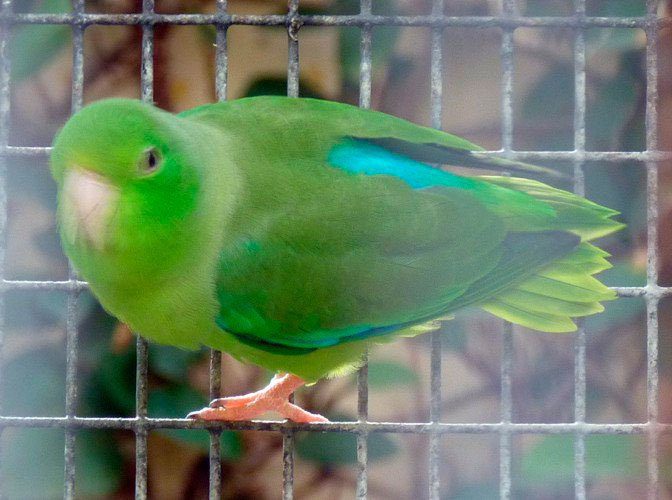
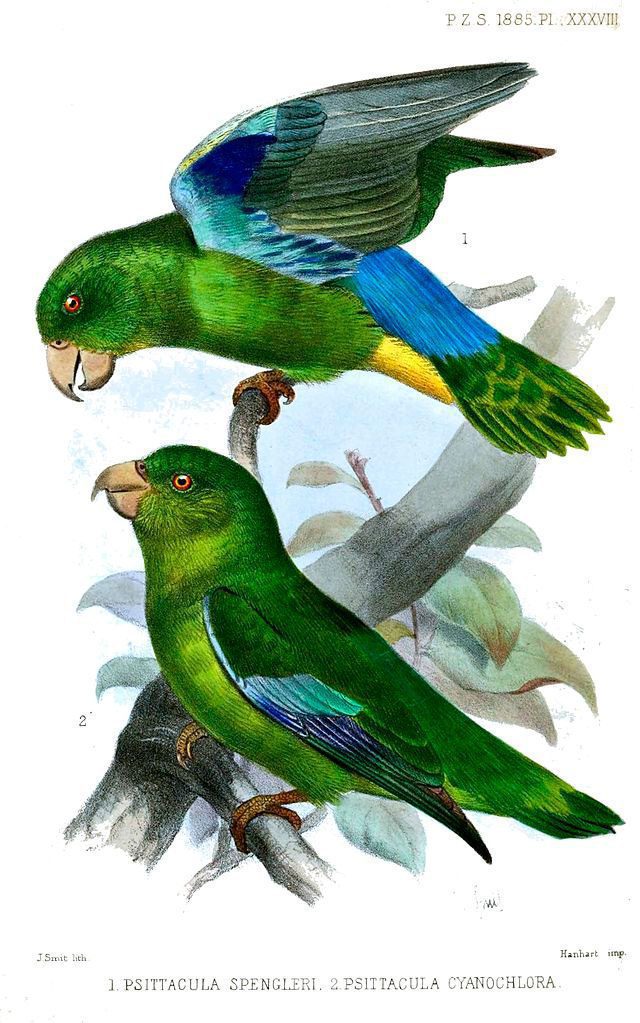
The male of the Turquoise-winged Parrotlet (Forpus spengeli) It has shades of blue at the bottom of the back, still it rump of a turquoise hue; turquoise / blue with purple on the underwing-coverts and axillary.

The wing coverts are dark green. Primary coverts are violet; wing edge bright green. Supracaudals coverts are bright green; undertail-coverts, bright yellow. Dark brown eyes with iris gray; flesh-colored legs; peak light colored horn.

The female It is green instead of blue; their face is green / yellow, It is his forecrown yellower.

taxonomy:

Until now treated as conspecific the species Forpus xanthopterygius, or sometimes as a subspecies of Forpus passerinus, or a subspecies of Forpus cyanopygius. differs, However, of the Forpus xanthopterygius in pale turquoise against the rich color tone blue rump and of the wing-coverts of the male; in the dark blue, against the rich blue color in underwing-coverts of the male; the forecrown and lores yellow in female.

  • Sound of the Turquoise-winged Parrotlet.

Habitat:

they prefer forested habitats drier as open forests and riparian, closed caatinga; Also they found in savannas, palm groves, semiarid scrub and grassland areas.

With feed in open areas and sometimes on the floor. Highly social; found in groups of up 50 individuals.

Reproduction:

Breeding season, May-August. Clutch, 3-7 eggs.

Food:

Diet Turquoise-winged Parrotlet in their natural environment it is composed of fruit of Cecropia, seeds of Mikania and tremble mirantha and flowers of Ambrosia and Marcgravia.

Distribution:

Size of its range (breeding/resident): 29.200 km2

Restricted north of Colombia, from the coastal region Caribbean western and southern mountains Santa Marta, Atlantic, south along the Magdalena river in Bolรญvar and Cรฉsar.

Conservation:

โ€ข Current category of the Red List of the UICN: Least concern.

โ€ข Population trend: Decreasing.

Justification of the Red List of the Category

State of conservation โ“˜


minor concern Minor Concern โ“˜ (UICN)โ“˜

Although this species may have a small range, It not believed to approach the thresholds for vulnerable under the range size criterion (extent of occurrence <20.000 km2 combinan con un tamaรฑo gama disminuciรณn o fluctuante, hรกbitat medida / calidad, o tamaรฑo de la poblaciรณn y un pequeรฑo nรบmero de localidades o fragmentaciรณn severa). La tendencia de la poblaciรณn no se conoce, pero la poblaciรณn no se cree que estรฉ disminuyendo con la rapidez suficiente como para acercarse a los umbrales del criterio tendencia de la poblaciรณn (> 30% decrease of more than ten years or three generations). The population size has not been quantified, but it is not believed to approach the thresholds for Vulnerable according to the criterion of population size (<10.000 individuos maduros con una disminuciรณn continua estima en> 10% in ten years or three generations, or a specific population structure). For these reasons, the species is evaluated as Least concern.

Justification of the population

The world's population has not been quantified, but this species is described as rare and local (Juniper and Parr 1998).

Justification trend

The population trend is unknown, but according to some reports, the species may be declining. (Juniper and Parr 1998).

"Turquoise-winged Parrotlet" in captivity:

Rare.

Alternative names:

– Blue-winged Parrotlet (spengeli), Blue-winged Parrotlet (Turquoise-winged), Green-rumped Parrotlet (spengeli), Turquoise-winged Parrotlet (English).
– Toui de Spengel, Toui de Spix (spengeli), Toui รฉtรฉ (spengeli) (French).
– Tรผrkisflรผgel-Sperlingspapagei (German).
– Turquoise-winged Parrotlet (Portuguese).
– Cotorrita aliturquesa (espaรฑol).


scientific classification:

Gustav Hartlaub

– Order: Psittaciformes
– Family: Psittacidae
– Genus: Forpus
– Scientific name: Forpus xanthopterygius spengeli
– Citation: (Hartlaub, 1885)
– Protonimo: Psittacula spengeli

Images Turquoise-winged Parrotlet:


Species of the genus Forpus

Turquoise-winged Parrotlet (Forpus spengeli)


Sources:

– Avibase
– Parrots of the World โ€“ Forshaw Joseph M
– Parrots A Guide to the Parrots of the World – Tony Juniper & Mike Parr
– Birdlife

– Photos:

(1) – Forpus xanthopterygius spengeli (24-3-15 Loro Parque) by bar – Flickr
(2) – (above) Psittacula spengleri [sic] = Forpus xanthopterygius spengeli (Hartlaub, 1885), ?โ™‚ (below) Psittacula cyanochlora = Forpus passerinus cyanochlorus (Schlegel, 1864), โ™‚ by Joseph Smit [Public domain], via Wikimedia Commons

– Sounds: ndrew Spencer, XC165598. accessible www.xeno-canto.org/165598