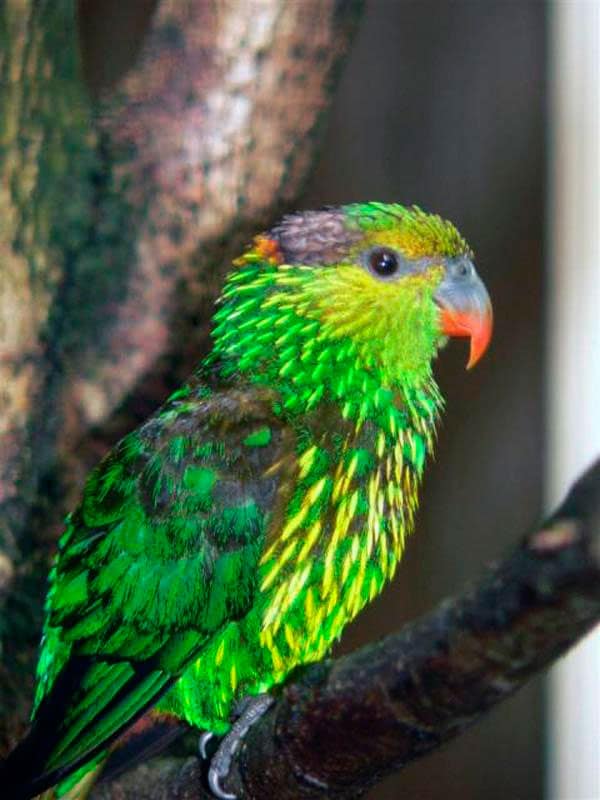
Of 16 cm.. length and a weight between 23 and 32 g..
The head of the Meek's Lorikeet (Charmosyna meeki) is bright green, more yellowish in the Chin and throat, darker on crown and streaked on ear coats; patch of dark green blue above and in front of the eye. Green upper parts with fused olive through the mantle.
The wings of green at the top. Under the yellowish-green wing coverts. The yellowish green underparts, lighter in the back and more yellow from the chest to the belly. Top of tail dark green with yellow tip; the yellow bottom. Orange peak; pale red irises; legs Orange.
Both sexes are equal. Immature with the paler beak with base brown color and shorter tail.
Nomad. It is distributed in the humid hills and montane forests, but they have also found found in lowland coconut palms. Usually found alone or in small flocks of about of 10 to 15 birds flying through or above the forest cover. Larger groups can gather in the blooming of trees to feed on pollen and nectar. It can be associated with other parrots as the Duchess Lorikeet, Finsch's Pygmy-Parrot, Yellow-bibbed Lory and Coconut Lorikeet
Reproduction:
Information is not available.
Food:
Its diet includes pollen and nectar.
Distribution:
Endemic to the mountains of the largest islands in the Group of Solomons: Bougainville, New Georgia, Malaita, Kolombangara, Guadalcanal and in the past Santa Isabel. Moves starting from the 300 m, until the 1.700 m, but reportedly rarely in the lowlands or above 1.200 m. The world's population is believed to be below 50,000 exemplary but probably stable.
Conservation:
• Current IUCN Red List category: Near threatened
• Population trend: Decreasing
The size of the world's population has not been quantified, It is believed that it is below 50,000 specimens, but the species is described as abundant at the Summit of Kolombangara.
There is still no evidence of a decline in its population, but would be threatened by any future large-scale export trade
"Meek's Lorikeet" in captivity:
They are not known to be in captivity.
Alternative names:
– Meek’s Lorikeet (ingles).
– Lori de Meek (French).
– Salomonenlori (German).
– Lori de Meek (español).
30 to 33 cm.. length between 120 and 210 g. of weight.
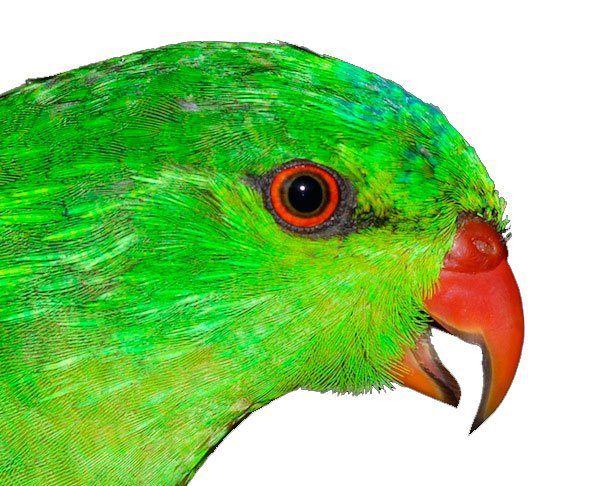
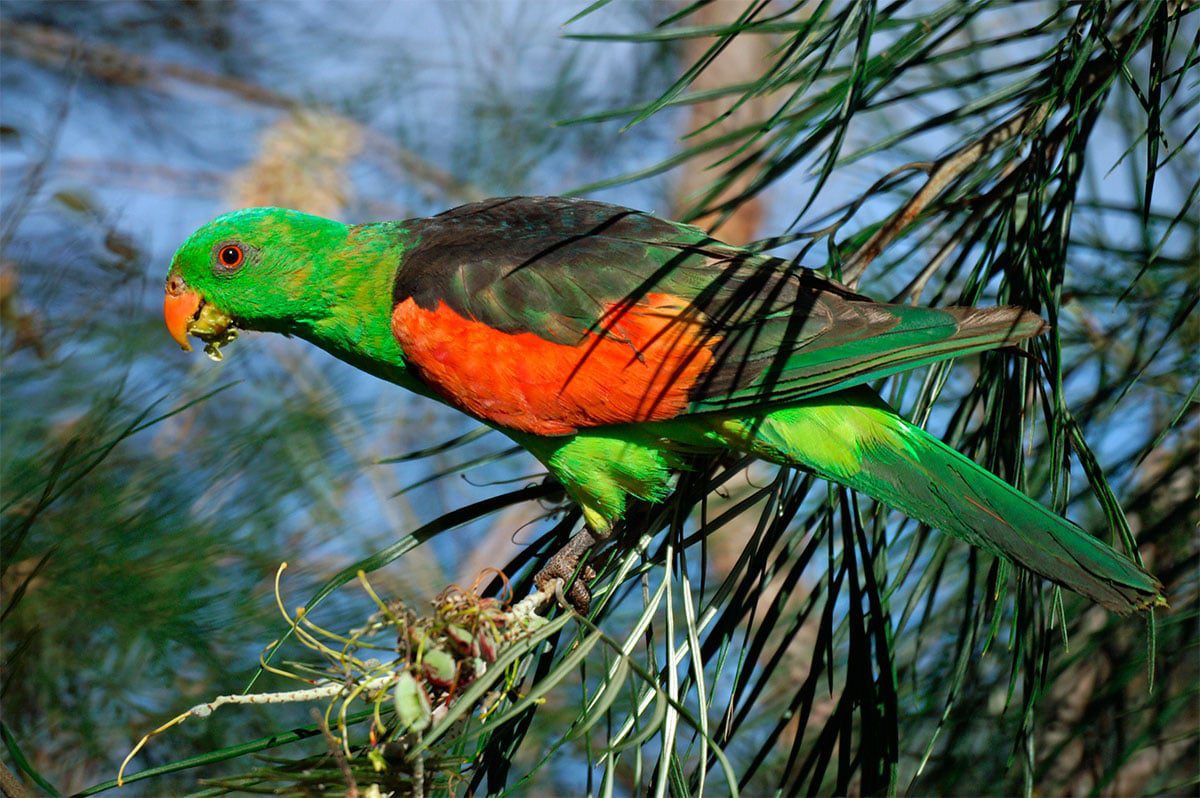
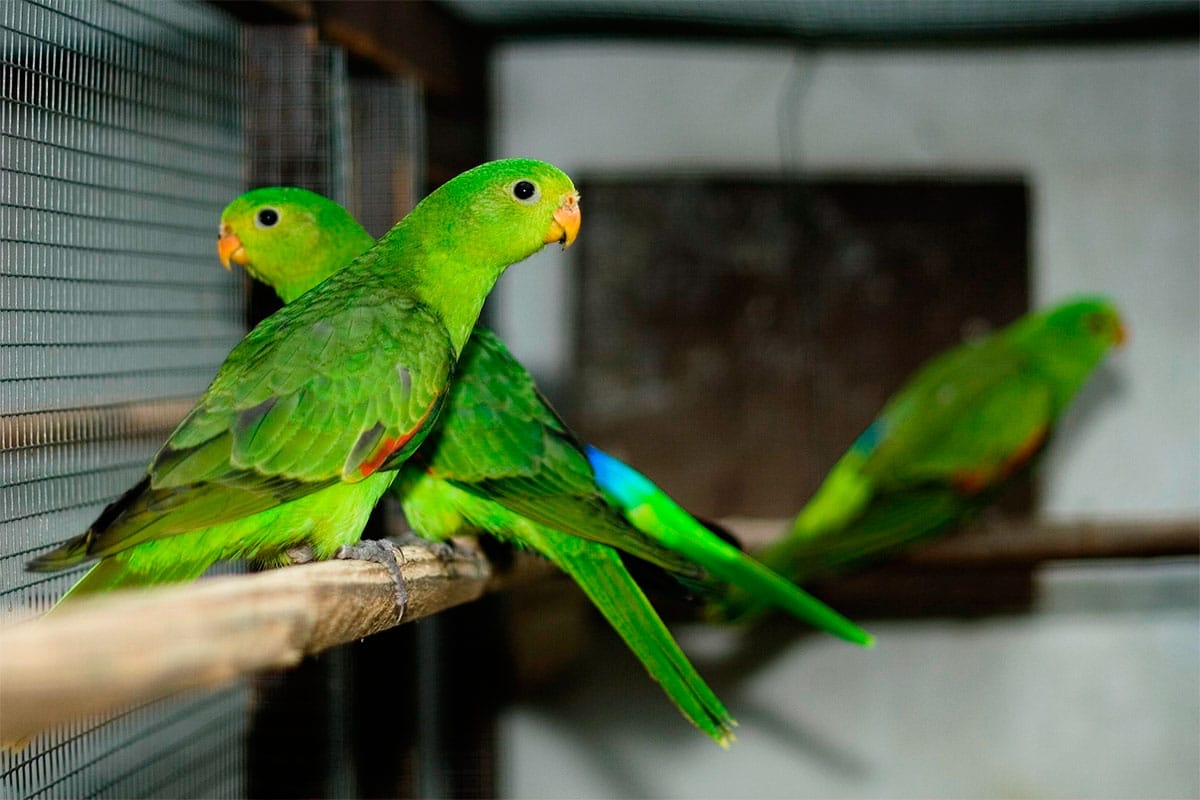
The Red-winged Parrot(Aprosmictus erythropterus) has the head of color green bright with brightness blue green in the crown and nape. Mantle, back and scapulars black. Area low of it back and rump brilliant blue, more clear towards the tail; uppertail-coverts of color green yellowish with broadcasting yellowish at the base. Curve of the wing yellow-green light. Carpal edge blackish. Upper, the wing-coverts, bright Scarlet. Tertiary and primaries marked in black on vane inner, green in vane outer; secondaries also bathed in black in vane outer; primary coverts of color green dark bathed in black. Under, the wing-coverts green. The underparts bright, pale and slightly yellowish-green. Upper, the tail Green dark with tips of color yellow and lateral feathers Blackish in vane internal with yellow tips; undertail, the tail Blackish with tips pale.
Bill coral red; irises reddish brown; legs grey-black.
Female It is predominantly green with a small red spot in the wings (only a point apical on coverts major interiors, but the increase in the external; restricted to the outer feathers of the median) that of the male, and it ain't got no black on it the mantle; vane outside of outer secondaries black. The Green is also more off, and a bit more yellowish in them underparts. The rump is of a blue more off, and the glitter blue in it crown and nape of the male, is absent in the female. Under, the tail has tips yellowish and touches of color pink.
The immature they are similar to the females, but with a irises more Brown and bill yellow from the beginning. Young males attain adult plumage in the third annual moult, but black can show the mantle feathers before this.
Resident, Although nomads in the edges of the range. Is semiarid and subtropical forests of eucalyptus and casuarina, boedes of the Woods, riparian forests, thickets of acacia, mangroves, agricultural fields, scrub Cypress pine (Callitris), and the lowlands of the Savannah.
On the inside of Australia are mainly linked to the extension of wooded of the systems fluvial.
They are usually found in small groups of up to fifteen birds, rarely reach more of 50 individuals in a single flock. The largest groups are likely to form late in the breeding season when family groups gather at feeding grounds..
The species is common and conspicuous, but not particularly accessible; When resent, birds can fly some distance, often making strong sounds.
Sometimes associated with the Pale-headed Rosella and Mallee Ringneck, and they feed under the trees, Although it is more usual to see them on Earth to drink.
Reproduction:
The nesting You can start early, in the months of April or may in the North, but august to february is the main breeding season in the south. During the courtship, the male perches near the female, exposing your blue rump, and making sounds.
The nest normally found in a eucalyptus, and the eggs are put into a deep hole covered with scrap wood. Three to six white eggs are They incubated for around 20 days by the female, which is fed by the male until the eggs hatch. The young are cared for by both parents and they leave the nest in a five weeks.
Food:
The diet It includes seeds, fruit, flowers and insects; in the mangroves, the mistletoe (Loranthus) is your favorite diet.
Distribution:
Size of the area of distribution (reproduction / resident): 5.230.000 km2
The Red-winged Parrot(Aprosmictus erythropterus) are confined in Australia, in the coastal districts of the southeast of Irian Jaya (Indonesian) and in the Western Province (Papua New Guinea).
In New Guinea, the species is restricted to the region between the rivers Digul and Fly.
They are also in the North, in the basin of the darling river, and have been recorded in the South-East of Australia, around the Lake Eyre and North of Cooper Creek.
Wandering individuals have been recorded in Renmark and Victory Downs, In this last, possibly from an exhaust.
– Avibase
– Parrots of the World – Forshaw Joseph M
– Parrots A Guide to the Parrots of the World – Tony Juniper & Mike Parr
– World Parrot Trust – parrots.org
– Birdlife
– Photos:
(1) – By David Cook Wildlife Photography from Wamboin, NSW, Australia [CC BY 2.0], via Wikimedia Commons
(2) – By Jan Harenburg (Own work) [CC BY 3.0], via Wikimedia Commons
(3) – Aprosmictus erythropterus erythropterus – Orde Psittaciformes – Papegaaiachtigen
(4) – Red-Winged Parrot (Aprosmictus erythropterus) Male – Pine Creek, M. 7. – encimages
(5) – «Aprosmictus erythropterus-Australia-pair-8" Of Kitykat79 – originally posted to Flickr as King Parrots!. With license CC BY 2.0 Transact Wikimedia Commons.
(6) – A painting of two Red-winged Parrots (originally captioned «Platycercus erythropterus. Crimson-winged parraket. 1. Male. 2.Female.») by Edward Lear 1812-1888. The painting shows a female behind young male by Edward Lear [Public domain], via Wikimedia Commons
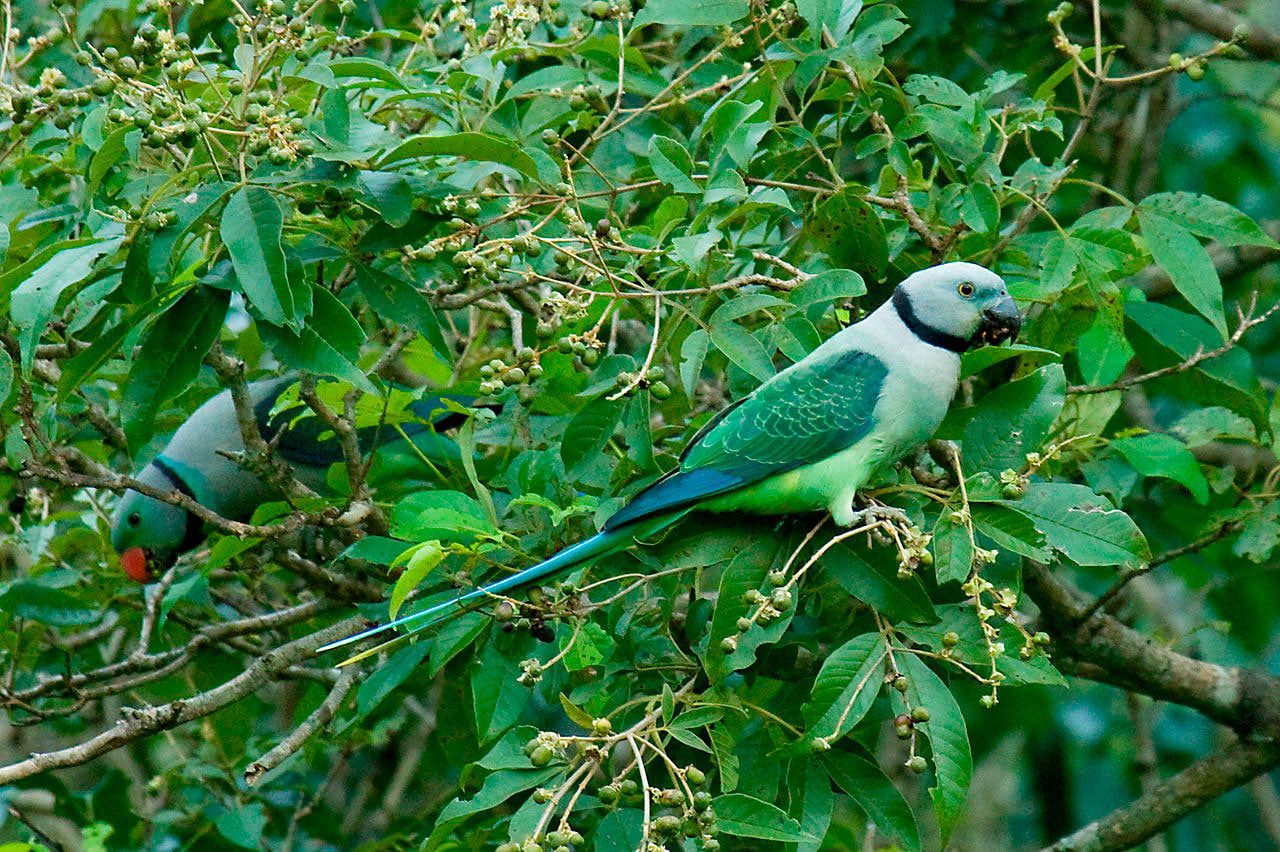
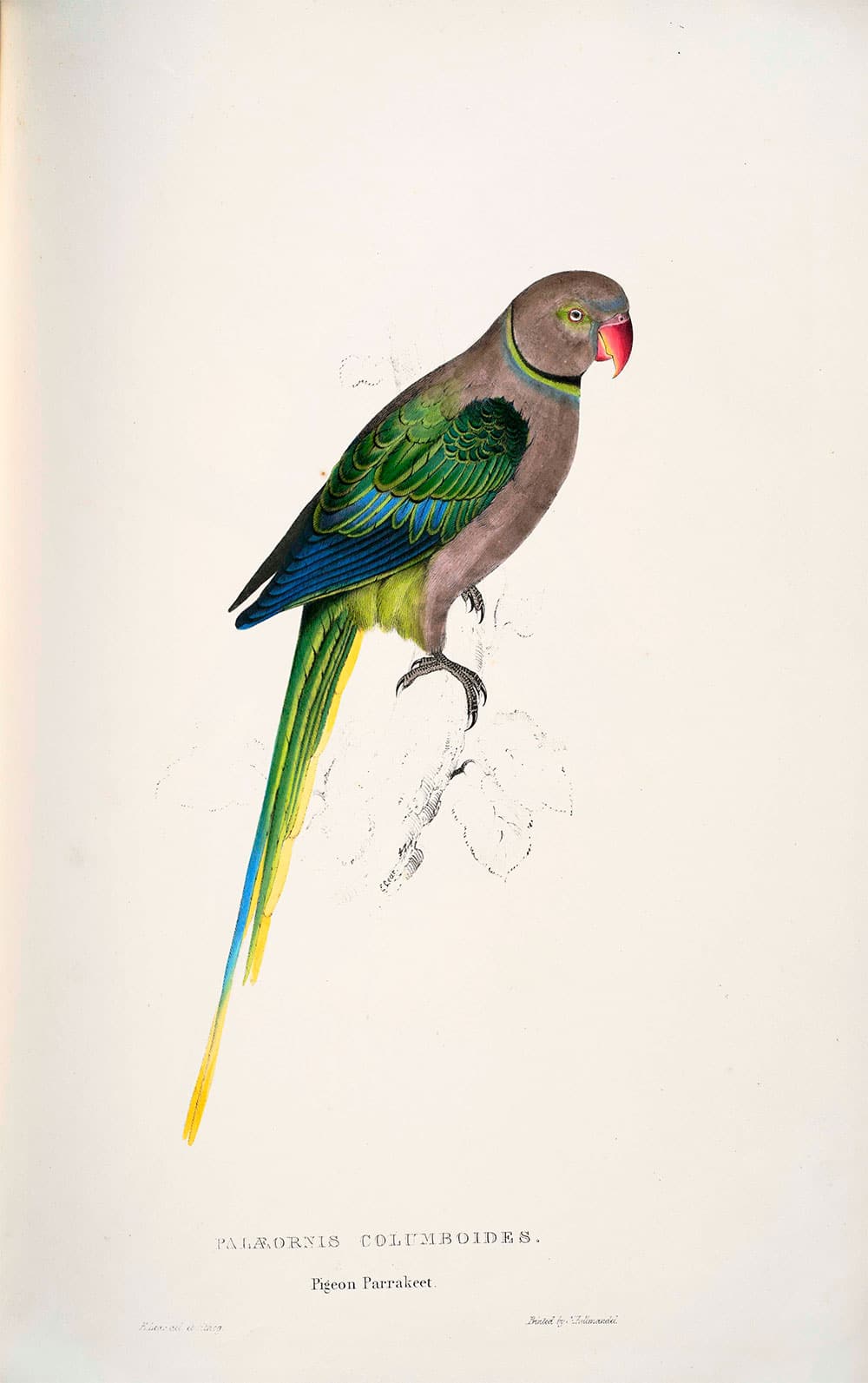
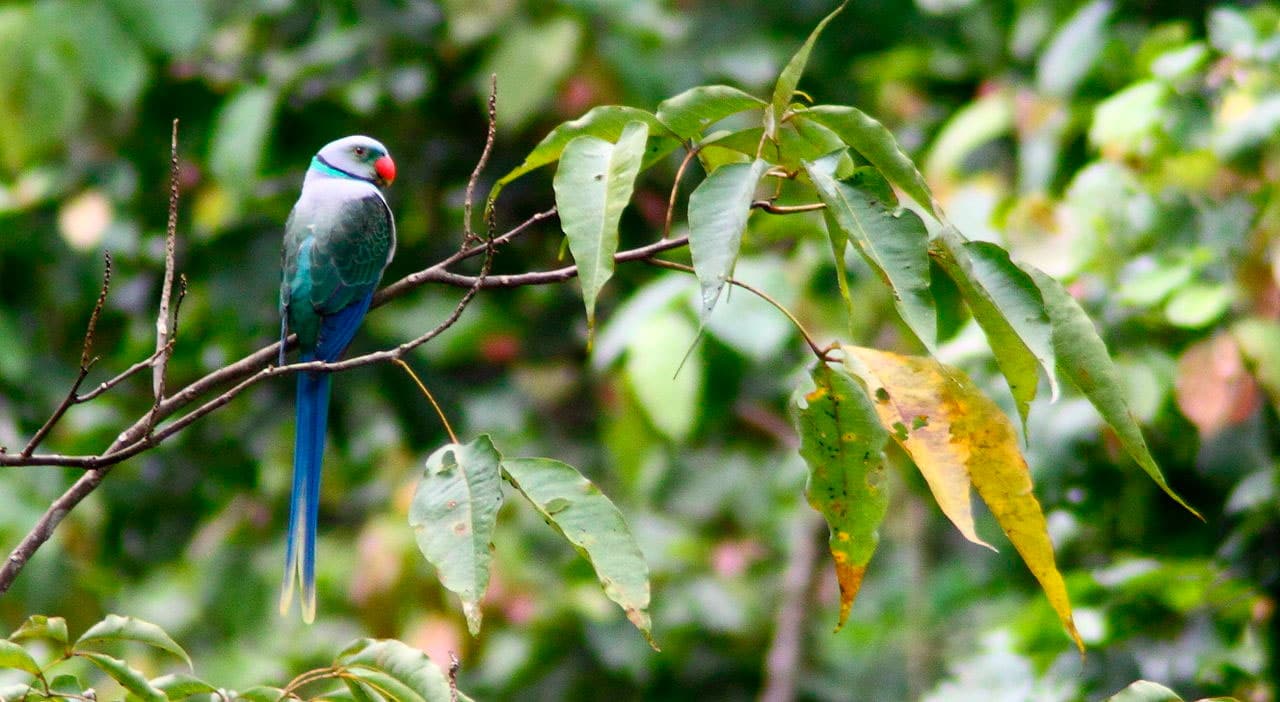
The Malabar Parakeet(Psittacula columboides) has the lores and upper cheeks of green grass, blue tinge on the edges and in the dark pearl gray crown, the lower cheeks, the sides and rear of the neck; with wide black bands at the mustache that attenuate to form a collar black, then bordered with a band of bright blue-green, which extends around the throat.
Mantle dove-grey fading to greyish-green on back and scapulars; rump and uppertail-coverts pale bluish green, sides rump yellowish.
Lesser coverts dark green, subterminally tipped dark grey edged buffish; inner median coverts green with pale buffish margins; alula and greater coverts blue. The primaries and secondaries blue, darker in the vane inner. Underwing-coverts bluish green. Throat bright blue green; yellowish blue discoloration in the rest of the underparts; dove-grey in the chest; blue tinge on the thighs. Uppertail centrally bright blue, tipped yellow, lateral feathers greenish-blue on vane outer, in bright yellow inner; undertail-coverts bright golden-yellow centrally, otherwise brown with yellow tip.
upper jaw bright red with yellow tip, the lower brown, turning orange in the chin; irises light yellow; legs greenish-grey.
The female smaller, with little or no green in face and with both brown jaws. Underparts greyish-yellow. Less grey in the the mantle and tail shorter.
The immature shows grayish green in place of grey-plumage of adults. Collar black and green absent band neck.
To a large degree, the Malabar Parakeet It is confined in forests (primary and secondary) evergreen upland, although according to sources, also observed in other formations, including deciduous forest adjacent to bamboo and especially in plantations coffee and rubber abandoned, and often close to small areas of crops.
Partly inhabit between 450-1.000 m, but exceptionally above 1.600 m, and up to about 60 m.
Usually, observed in family groups or small flocks.
At lower altitudes it is associated with Plum-headed Parakeet (Psittacula cyanocephala), completely replacing it at higher altitudes and in humid forests.
Reproduction:
Escavan their nests on branches or trunks, at a height between 6 and 30 m, sometimes they take advantage of the holes made by woodpeckers or Barbs, expanding the cavity. Los Ceylon ironwood (Mesua iron) are his favorite trees.
Usual clutch 4 eggs.
The breeding season It is between the months of January to March
Food:
Diet Malabar Parakeet It includes seeds and fruits, especially wild figs; regularly eat sprouts, flowers and nectar Erythrina and Grevillea.
They can be very destructive in crops of sorghum and fruit.
The size of the world's population has not been quantified, but the species, according to information, It common throughout the core of its range (pit et to the. 1997).
The population is suspected to be stable in the absence of evidence of any reduction or substantial threats.
The bird trade and loss of habitat have caused, apparently, a decrease in its population, However, It is not sufficient to place this species at risk.
"Malabar Parakeet" in captivity:
The Malabar Parakeet it is rare in the pet trade.
This species was the subject of extensive trade, but now it is illegal in India. He was known in the pet trade as "Loro nonsense» and acquired a misleading reputation as a superior talker.
It is a parrot medium-noisy, occasionally noisy; initially shy; It becomes slowly confianda; newly imported birds are very likely; Care must be acclimatised; only it becomes active in a wide aviary; a common aviary with other species of Psittacula only possible outside the breeding season; little bathing but enjoys flying light rain outside; He likes to chop fresh branches; times aggressive during courtship; sensitive to cold and wet conditions.
Pet food variety, including aerosols millet, fruit, vegetables, Sunflower seed mixtures, oats and millet.
Rarely achieved the captive breeding; clutch 3 to 4 eggs; 23 incubation days; incipient period 6 weeks; young independent after 21 days; the calf sometimes aggressive with its mother.
In terms of their longevity, It is known that a Malabar Parakeet lived during 11,2 years in captivity.Given the longevity of similar species, This longevity is probably underestimated for these birds.
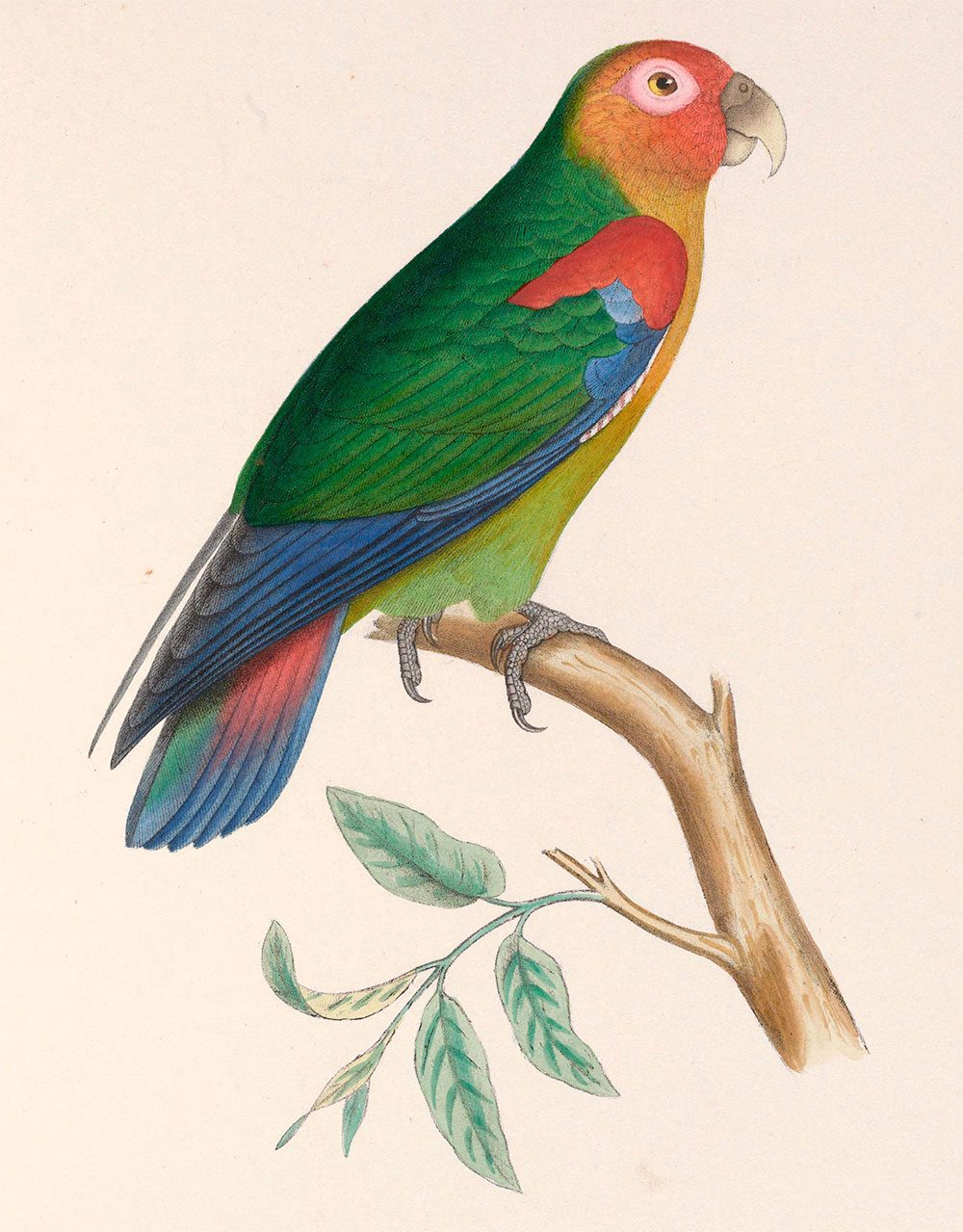
The Rusty-faced Parrot or Parrot mountain(Hapalopsittaca amazonina) It is distinguishable by the dirty red of his face and crown. Its bill is pale with to the base of the lower jaw and the chin of color red orange. Headphones coverts reddish brown with yellow lines that extend behind the nape and the neck. The rest of upperparts they are green. Its chest This is olive green, with red spots in the shoulders similar to their Wing coverts internal minors. The rest of your wing-coverts they are blue-green and the remiges bluish-black. Its tail It is mainly dull red with wide blue apexes.
It has no sexual dimorphism. The youth are green-yellow color, with the face pale red and the secondaries grey.
(Hellmayr, 1915) – The plumage with more olive tones and the face dark red.
Hapalopsittaca amazonina velezi
(Serious,GR & Restrepo, 1989) – With part of the crown and nape, brighter yellowish green; forecrown red; list fine near to the ear; below and behind the eye, green. More information.
Habitat:
It inhabits in mountains with semi-humid and cloud forests, between the 2000 to 3600 m, with the presence of Oak (Quercus humboldtii) and Alder (Alnus acuminata).
Fly high in the forest canopy, in groups of 5-30 individuals. Presents aggregation behaviors for the night, establishing communal bedrooms in groups of between 2-35 individuals.
Reproduction:
Many aspects of the reproductive biology of the Rusty-faced Parrot. Probably nests in tree hollows of Oak dead.
Food:
Consumes fruits of the "matapalo«, flowers and seeds, including the of Clusia sp. and some GUIs of which is fed with high frequency.
Distribution:
Size of the breeding range / resident): 234.000 km2
• Current category of the Red List of the UICN: Vulnerable.
• Population trend: Decreasing.
From makes several years appears in the book red of species threatened by fault of the destruction of their habitat, including, the Palm of wax (Ceroxylon quindiuense).
Rationale for the Red List category
This species is classified as Vulnerable Since its small population consists of subpopulations very small and scattered that probably will be experiencing declines continuous due to the loss widespread of habitat.
Justification of the population
Renjifo et to the. (2002) estimated that in Colombia the population can count 2,500-10,000 individuals, based on a hypothetical C.1 density of individuals / km2, and the 25% occupation of the approximately 13.890 km2 of habitat suitable. This may be an overestimate and the population could be right around the few thousand mark in Colombia (P. Salaman in litt., 2005). There are also much smaller populations in Venezuela. Its location in the Ecuador is uncertain. Be placed better in the band 2.500-9.999 mature in general individuals, which is equivalent to 3.750-14.999 individuals, rounded here to 3.500-15.000 individuals.
Justification of trend
Se sospecha una lenta y continua disminución de la población del Rusty-faced Parrot sobre la base de la continua destrucción y fragmentación del hábitat.
"Rusty-faced Parrot" in captivity:
No encontrado en avicultura.
Alternative names:
– Rusty-faced Parrot, Bogota Parrot, Little Amazonian Parrot, Rusty faced Parrot (English).
– Caïque à face rousse, Caïque à face rouge (French).
– Caïque à face rousse (German).
– Rusty-faced Parrot (Portuguese).
– Cotorra Montañera, Lorito Amazonino, Lorito Multicolor, Loro fantasma (español).
– Cotorra Montañera, Lora montañera (Colombia).
– Perico Multicolor (Venezuela).
Daniel has been chasing birds since he was 9-years old, growing on a farm in the Central Andes of Colombia, with his bedroom walls covered with colorful prints of John James Audubon’s birds. Daniel graduated in Veterinary Medicine and Animal Science and has pursued bird and nature photography as his main passions in life.
He is co-founder of the Caldas Ornithological Society (SCO) based in Manizales. Dedicated mainly to conservation and sustainable development projects, Daniel has consulted for many of the most prominent environmental organizations in Colombia and currently assists private nature reserves in Colombia in the establishment of agritourism and ecotourism services.
▷ The world of Pets: Dogs, cats, birds, reptiles, amphibians
The Seychelles Parakeet(Psittacula wardi) It was a medium-sized parrot with a length of about 41 cm and a weight between 100 and 125 g..
It was green with a large bill red with yellow tips, a red stain on the shoulders and a long tail. The male had a narrow black band on the cheek and neck black that the female and juvenile lacked. blueness in nape and eyes yellow. the legs They were greyish
taxonomy:
Phylogenetic studies suggest that this species away from the Alexandrine Parakeet(Psittacula eupatria).
Habitat:
In a report they were seen over the forest along a field corn.
They were probably in small groups or flocks, making striking flights. It was reported that the birds were cautious, presumably due to its constant pursuit.
Reproduction:
No data.
Food:
It was a forest species, which probably it fed on fruit and seeds.
Distribution:
The Seychelles Parakeet It was endemic to Mahe and Silhouette, Seychelles, with a visual record of Praslin. A considerable number were found in 1811, But it was rare in 1867 and the last specimen was shot at Mahe by Abbott in 1893. It may have survived until the twentieth century (Skerrett y Disley 2011), although apparently he was already extinguished when Nicoll He visited the island 1906 (Lionnet 1984).
Conservation:
• Current category of the Red List of the UICN: Extinct.
• Population trend: The last known individuals were shot dead in 1893.
Clearing forests for plantations and coconut hunting and capture (in particular, to protect corn crops) were the main causes of the disappearance of the species (Forshaw and Cooper 1989).
In captivity:
The last captive records of these birds date back to the year 1883.
There are currently two specimens in the museums of Liverpool and New York City.
Alternative names:
– Green Parakeet, Seychelles Alexandrine Parrot, Seychelles Parakeet, Seychelles Parrot (inglés).
– Perruche des Seychelles (francés).
– Seychellen-Edelsittich, Seychellensittich, Seychellen-Sittich (alemán).
– Periquito-das-seychelles (portugués).
– Cotorra de las Seychelles, Cotorra de los Seychelles, Cotorra de Seychelles (español).
Avibase Parrots of the World – Forshaw Joseph M Parrots A Guide to the Parrots of the World – Tony Juniper & Mike Parr Birdlife
Photos:
(1) – Seychelles Parakeet (Psittacula wardi), depiction by John Gerrard Keulemans from ‘Extinct Birds’ by Lionel Walter Rothschild from the year 1907 by John Gerrard Keulemans [Public domain], via Wikimedia Commons
▷ The world of Pets: Dogs, cats, birds, reptiles, amphibians
18 cm.. height.
The Rufous-fronted Parakeet(Bolborhynchus ferrugineifrons) has an unmistakable band narrow in the forecrown, face and around the base of the bill, brown-red color; cheeks and throat, brighter yellowish green; crown, rear area of the neck, the mantle, scapulars, wing-coverts and skull, green; uppertail-coverts a green slightly paler. Outerwebs to primaries, bluish green. Under, the wings bluish green. Breast
of color green beige tinted in green olive; rest of underparts brighter yellowish green. Upper, the tail green; by down green dyed blue. Bill brownish (slightly thickness and width) with grey base to the upper jaw; bare periophthalmic grey; irises dark brown; legs grey.
Video – "Rufous-fronted Parakeet" (Bolborhynchus ferrugineifrons)
Occupies the area warm upper and low of the Páramo of the high mountains in bushes, sparsely forested slopes near tree line, and habitats more open including fields of potatoes; those records are in altitudes of 2.800 to 4.000 m, most above 3,200m. Probably roams outside of breeding season. Highly gregarious, they forage in flocks of 5 to 50 individuals, Noting with relative frequency in the soil. Communal dormideros on the cliffs.
Reproduction:
They have reported nesting on cliffs. The male reproductive condition taken in mid-January.
Food:
It feeds mainly on ground of seeds grass, as Calamagrostis effusa, and of herbs, as flowers and achenes of Espeletia hartwegiana.
Distribution:
Size of the area of distribution (reproduction / resident): 18.600 km2
Endemic the high slopes of the Central Andes of Colombia, in where have been sightings in two areas General. The group over North of records involves the complex volcanic Nevado del Ruiz and Nevado del Tolima, where are the departments of Tolima, Quindio, Risaralda and Caldas. The southern part is located on the slopes of the Purace volcano in the Cauca. The high mountains are located between these two areas, by what the distribution can be continuous or of low density in all the chain Andean central, from Caldas until the Cauca.
The Rufous-fronted Parakeet be found in several areas protected including the Alto Quindío Acaime Reserve and the Los Nevados National Park, considered the last bastion of the species; is common there with more than 100 birds observed during eight hours in 1993. But, overgrazing can pose a threat to long term on this site.
Conservation:
State of conservation ⓘ
Vulnerable ⓘ(UICN)ⓘ
• Current category of the Red List of the UICN: Vulnerable.
• Population trend: Decreasing.
Usually low density of the species (perhaps only a bird by km2) and scarce. Total population Perhaps 1.000-2.000 birds, probably less. IN DANGER OF EXTINCTION.
Threats
The conversion of forests for agricultural purposes has spread below the 3.300 m in the Central Andes. In the elevations more high, the forest is exploited for firewood and grazing, Although left large areas. Given its adaptation to the agricultural environment, the level of threat posed by deforestation is unknown (Snyder et to the. 2000). On the other hand, the widespread destruction of Páramo vegetation, even in Los Nevados, seems to have affected seriously to the population of the Rufous-fronted Parakeet. This is caused by the burning frequent, intense grazing and, to a lesser extent, the conversion to the cultivation of the potato. Colombian authorities have not been able to buy existing properties within national parks, making often that the parks are ineffective. From time to time stored as a pet.
"Rufous-fronted Parakeet" in captivity:
Occasionally stays as a pet locally but it is not known in captivity outside its area of distribution.
Alternative names:
– Rufous-fronted Parakeet, Rufous fronted Parakeet (English).
– Toui à front roux (French).
– Rotstirnsittich (German).
– Periquito-tolima (Portuguese).
– Catita de Frente Parda, Catita Frentirrufa, Periquito Frentirrufo (español).
– Avibase
– Parrots of the World – Forshaw Joseph M
– Parrots A Guide to the Parrots of the World – Tony Juniper & Mike Parr
– Birdlife
– Parrot Book, Parrots and macaws Neotropical
It measures 30-35 centimeters to paste 380 g..
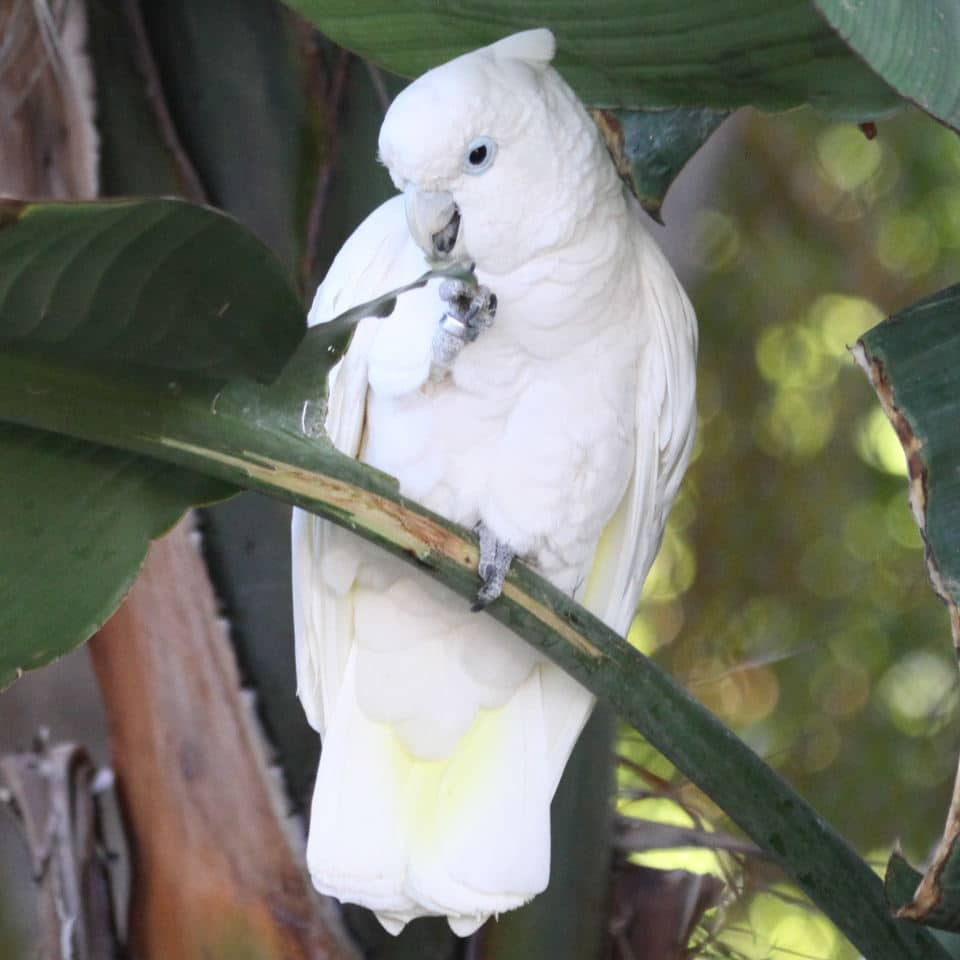
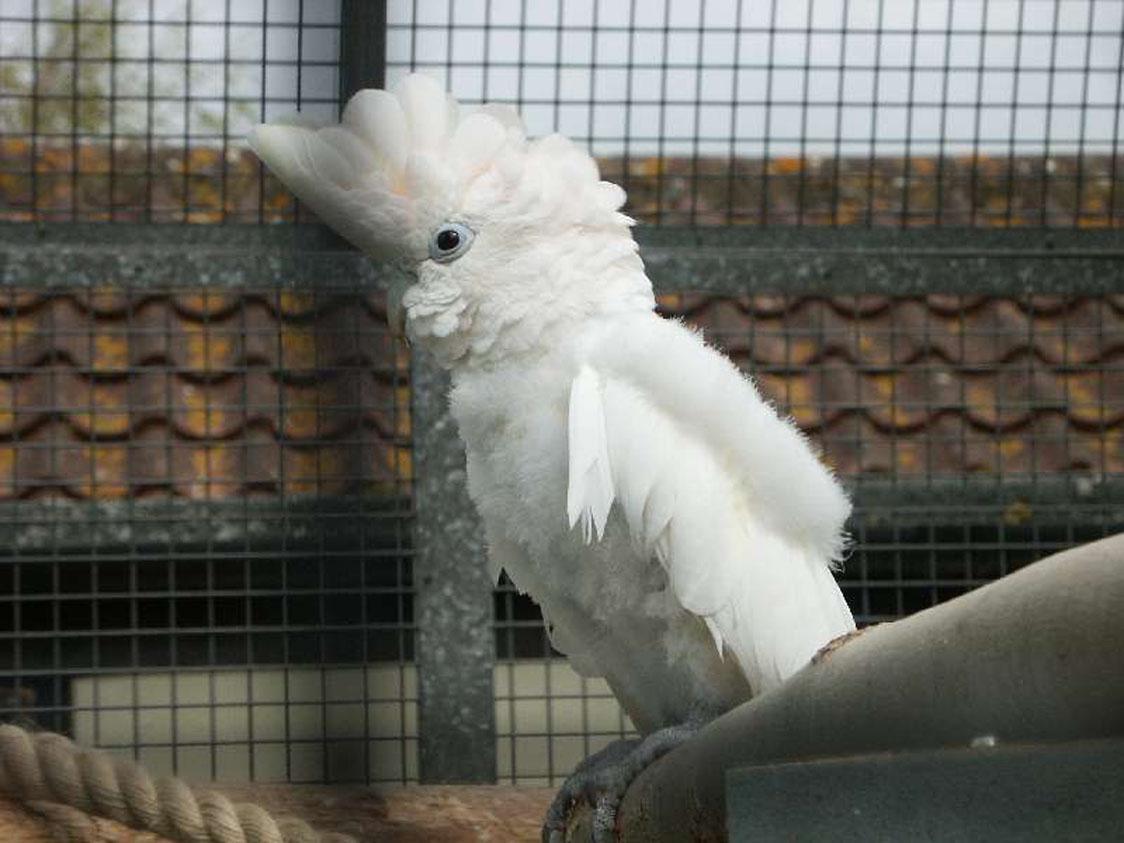
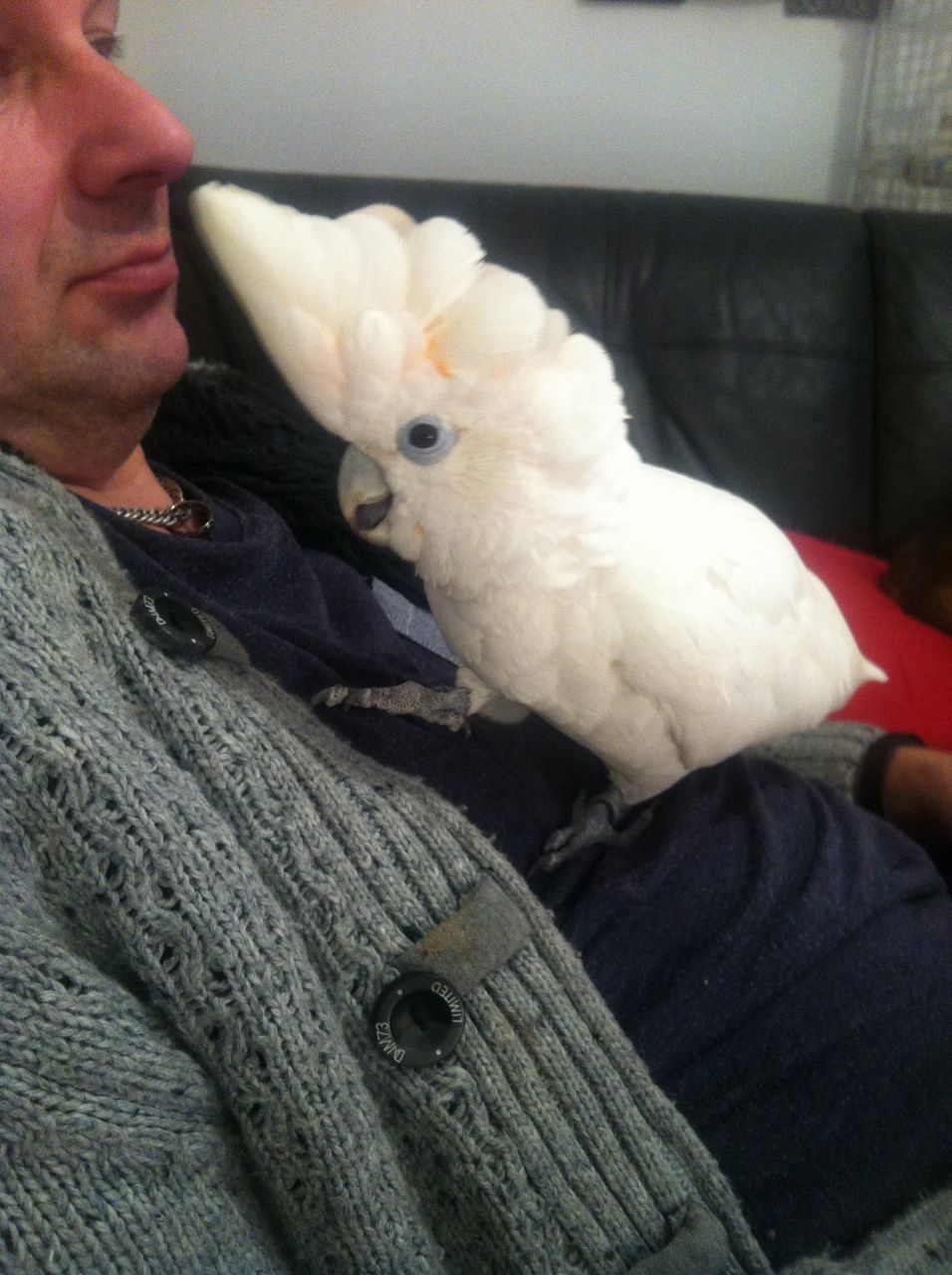
The Solomons cockatoo(Cacatua ducorpsii) is a small cockatoo immediately recognizable by its long triangular Crest.
Its plumage is almost completely white, except the part inferior of them wings and tail with infiltration of color yellow. The feathers of the crest, the cheeks, the the mantle and the chest they have a base of pink.
The bill is grey. The bare skin around the eyes is pale-blue. The irises are dark brown, the legs grey.
The females are distinguished from your partner to have the irises more reddish.
The Solomons cockatoo is quite similar to the Tanimbar corella living in the Tanimbar Islands. Also seems to the Little corella, although the latter have more bluish and developed the orbital area.
Is from coastal areas to the mountains; variety of habitats, including forests, secondary vegetation and gardens in cities. Found up to 1700m; mainly below the 700 m.
Behavior:
They are birds noisy and quite easy to observe, even though they mostly live in pairs or small groups. They fly high above the treetops where used well exposed perches in the top of the Cup.
Birds are very cautious, screaming when they are disturbed.
They have a strong and uneven consisting of shallow flapping flight.
Reproduction:
In the wild child from July to September.
They make their nests in hollows of trees or large branches and, they often use the same nest year after year.
The eggs are of color white and usually there are two in a clutch. The eggs are incubated for about 25 days, the young leave the nest 62 days after hatching.
Food:
They feed on seeds, berries, fruit, outbreaks, flowers, as well as insects and their larvae. From time to time they ingest the fleshy parts of «epiphytes«.
Distribution:
endemic to the Solomon Islands. Its area of distribution extends from Bougainville (Papua New Guinea) to Malaita, Choiseul, New Georgia and Santa Isabel. The species is absent in San Cristóbal and the islands surrounding.
Conservation:
State of conservation ⓘ
Minor Concern ⓘ(UICN)ⓘ
– Current IUCN Red List category: Least concern.
– The population trend: Stable
The population world is estimated at 100.000 birds and it seems quite stable.
The marketing of pet birds is a threat to this species, the other is the degradation of the habitat. The latter seems particularly serious, given the logging of forests in the lowlands.
"Solomons cockatoo" in captivity:
It´s little gregarious and have tendency to be aggressive with other species and with those of its same species. In relation to the human being is a Parrot very demanding. Not everyone is prepared to have a white cockatoo.
They often tend to develop behavior problems, unbearable screams, become very destructive…If not are given a rigorous education on a very regular basis. That is why it is convenient that if you intend to have a cockatoo, it should be done so that it can be accompanied by another or others of its kind to prevent it from developing an excessive dependency and thus you can enjoy it without fear of having problems or at least trying to avoid them as much as possible.
I like them much attention. They tend to create strong emotional bonds and they are quite Extrovert.
Despite the great attraction that having a pet parrot with such characteristics can mean for a person,. It is not often a parrot advised for anyone or rather, hardly anyone is prepared to have a cockatoo with these characteristics.
Alternative names:
– Ducorps’s Cockatoo, Broad-crested Corella, Solomon Corella, Solomon Islands Corella, White Cockatoo (ingles).
– Cacatoès de Ducorps (French).
– Salomonenkakadu (German).
– Cacatua-ducorps (Portuguese).
– Cacatúa de las Salomón, Cacatúa de Salomón (español).
They weigh around 40 to 50 g. and length of 18 cm..
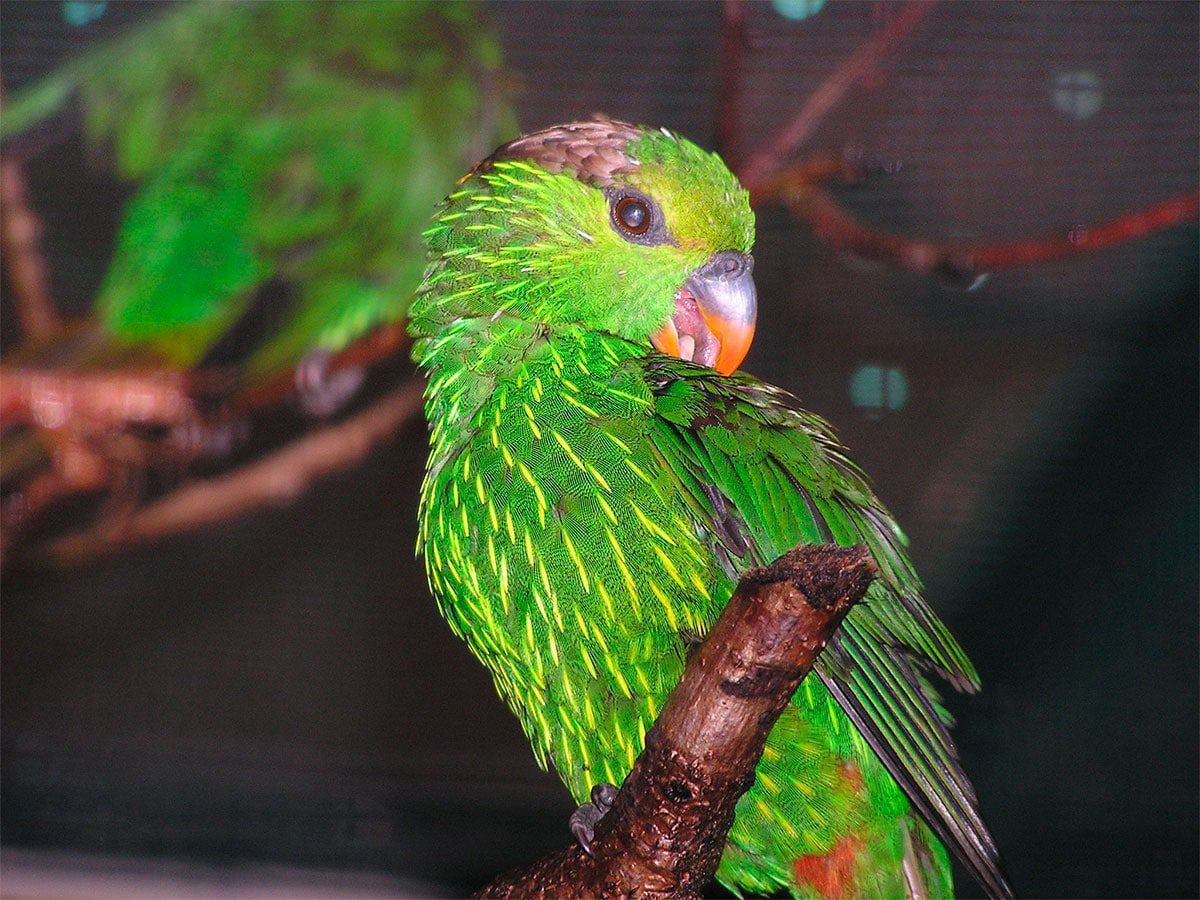
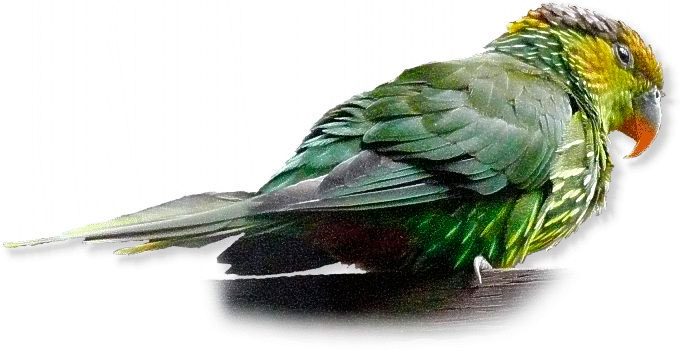
The plumage of the Striated Lorikeet(Charmosyna multistriata) It is predominantly green with yellow stripes on the belly and in the chest.
The throat, the forecrown and sides of the head They are slightly more yellow. The neck and the back of the head They are brown with some orange yellow stripes. The tail is olive green on top and having a tip dark yellow. The bottom of the tail It is greenish yellow with some red feathers around the vent. The most characteristic feature of Striated Lorikeet is the bill two colors. Upper bill is blue-gray with a touch of red orange, While the bottom is completely reddish-orange. Only one other Lori with a peak of two colors and that is the Musk Lorikeet. The irises It is red and legs They are gray with black nails.
Both sexes are the same color, the male is slightly larger and has a bill longer. They are also a little colored in the head.
The immature They have the same colors as adults, only the bill it is more black and darker stripes.
Habitat:
It inhabits in the mountains and hills and forest edges. Mainly found between 180 and 1.800 m, but they have been at much lower altitude, about 80 m. Found in pairs or in small groups of up 20 birds, sometimes fellowship with the Red-flanked Lorikeet and the Fairy Lorikeet (observed in mid-February in mixed flocks with these species). similar to the behavior Red-flanked Lorikeet, the consorts, but although they have observed flocks Striated Lorikeet fly with the Red-flanked Lorikeet, they usually form discrete individual groups.
Reproduction:
Habits of nesting and breeding unknown.
Food:
Prefer treetops in bloom where it feeds on pollen and nectar, but they may also feed on epiphytes.
Distribution:
Size of the area of distribution (reproduction / resident) 170,000 km2
Endemic to the montane forests of the center of West Papua New and Papua New Guinea, South of the cordillera central. The world population It is believed to be of less than 10.000 specimens, but it is probably stable. A small number in captivity.
Conservation:
• Current IUCN Red List category: Near threatened
• Population trend: Decreasing
Its habitat is locally threatened by logging and clearing for agriculture. Reports of the species in Ok Tedi They show that the population of the Striated Lorikeet has fallen dramatically after the severe drought in 1997-1998 (P. Gregory in litt., 2010).
The species may be threatened by the presence of a large copper and gold open pit mine in Ok Tedi, but the impacts of this mine are currently unknown. It is likely to be tolerant of uneven and degraded forests and although it may have a small population in general, do not believe that it is declining very rapidly.
"Striated Lorikeet" in captivity:
In aviculture the Striated Lorikeet It has become one of the rarest species. These birds have not been imported in large quantities, and many of the birds that survived the journey later died due to infections by fungi and other diseases. Few breeders were able to raise them on a regular basis.