โ–ท The world of Pets: Dogs, cats, birds, reptiles, amphibians

Pont-Audemere Spaniel
Francia FCI 114 . Spaniel type

Pont-Audemere Spaniel

The Pont-Audemere Spaniel he is a gentle dog, very balanced and obedient. energetic, smart and loyal, they are easy to train.

Content

History

The Pont-Audemere Spaniel is originally from the Pont-Audemer region, looking for the Marais Vernier, in Normandy, where it is traditionally used for hunting waterfowl. In 1886, the Kennel Club of Le Havre began to select him. After the Second World War, only a few copies of this small brown spaniel remained and crosses were made with the Irish Water Spaniel to save the race.

The Pont-Audemere Spaniel It's very weird. The total population of the breed is about three hundred individuals in France. Some breeders perpetuate the breed, mainly in Normandy and Picardy.

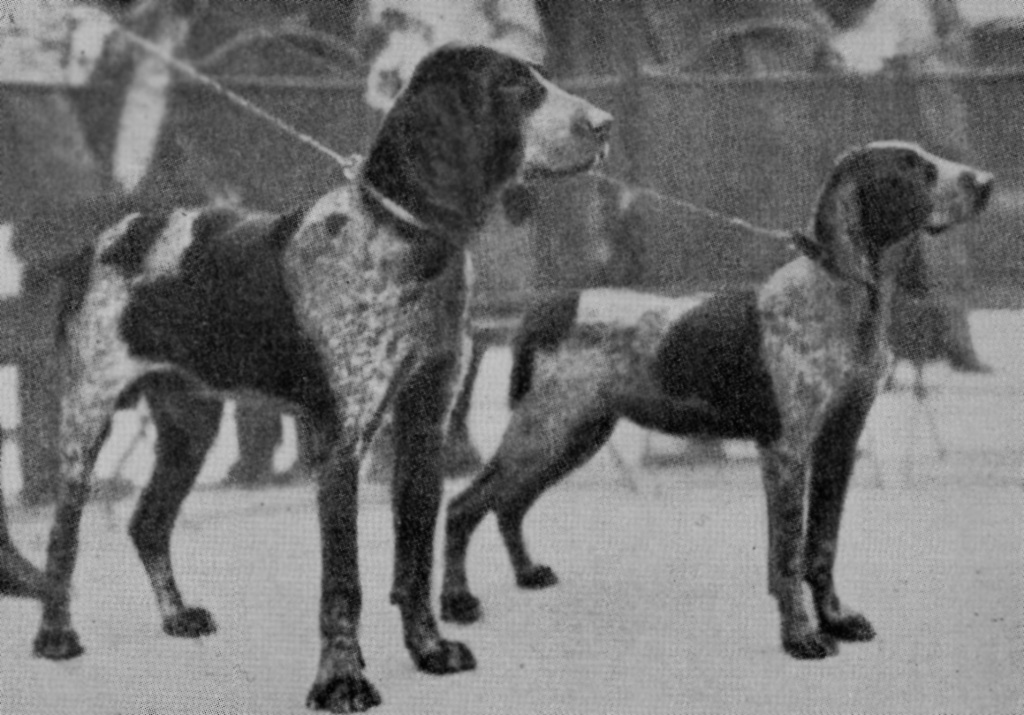
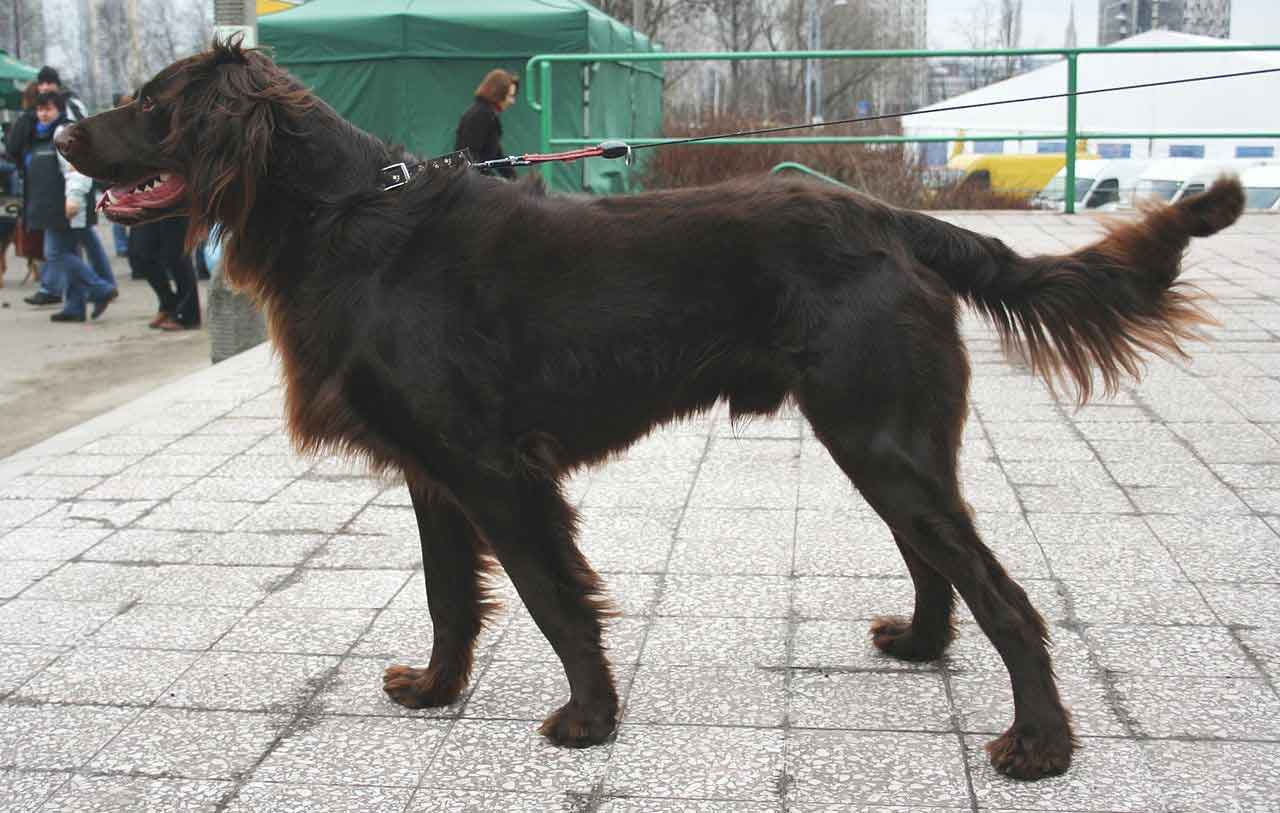
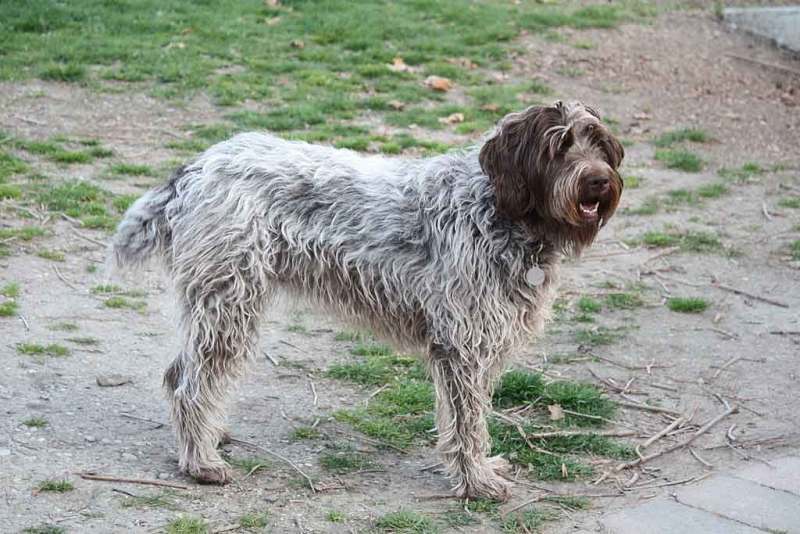
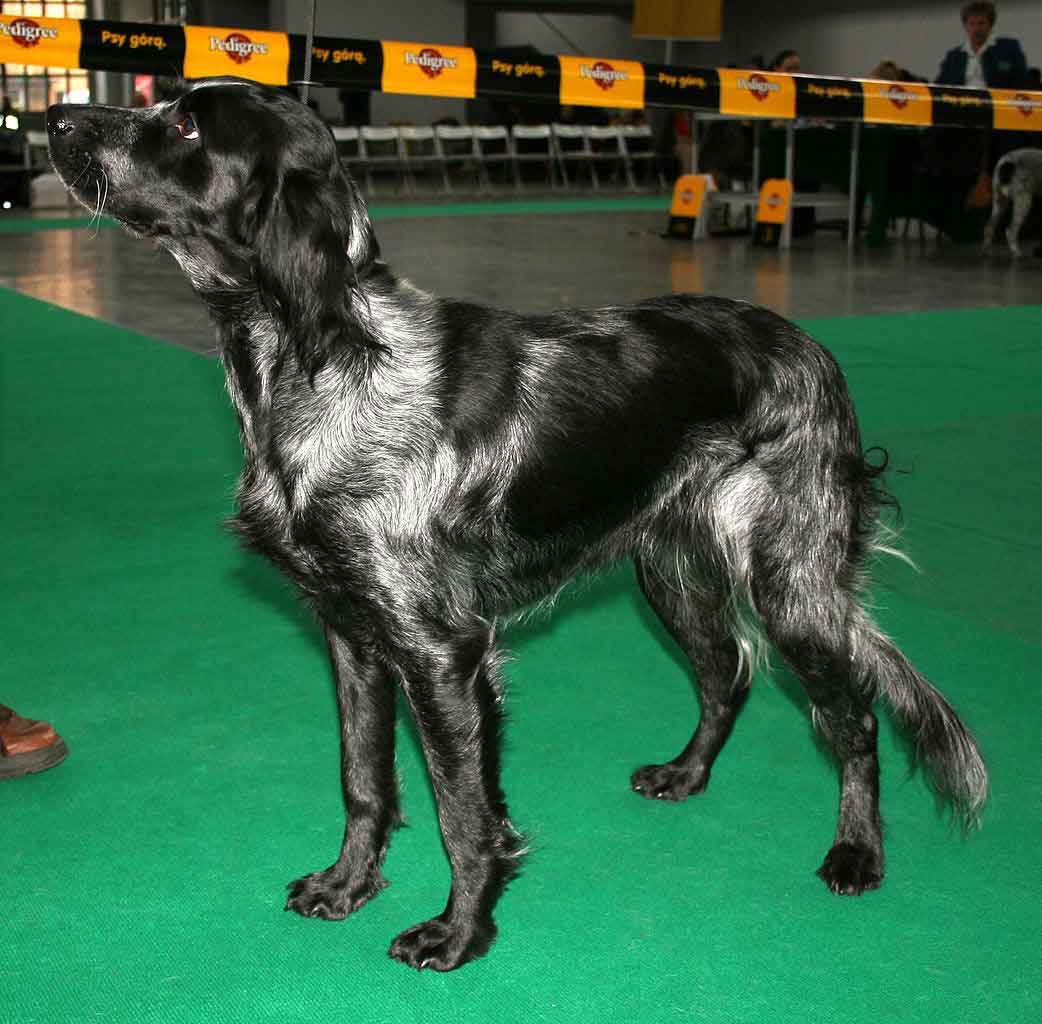
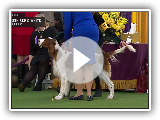
Photo: Riga, Baltic Winner 2013, 9-10 Nov by Thomas, CC BY-SA 3.0, via Wikimedia Commons

Physical characteristics

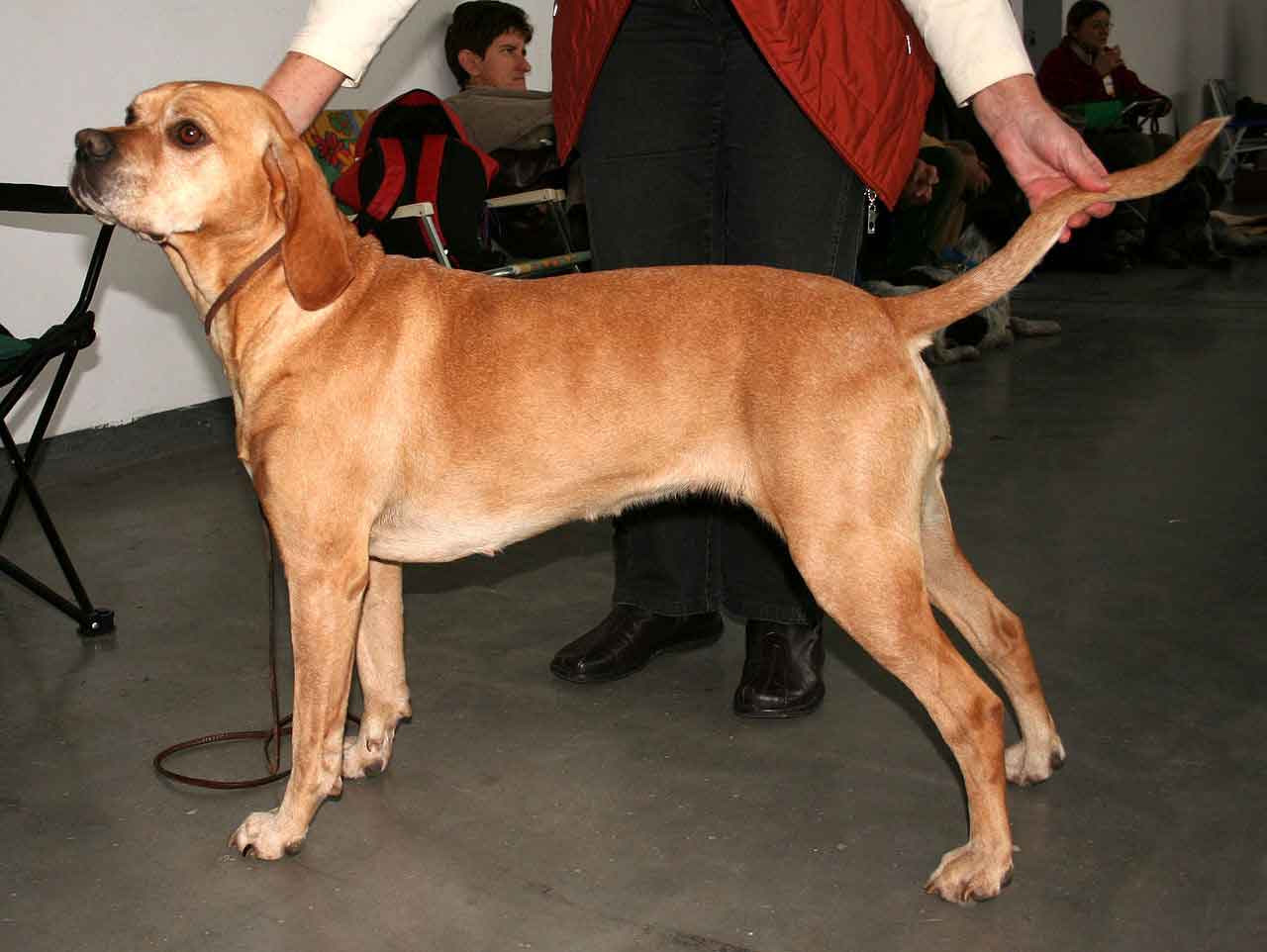
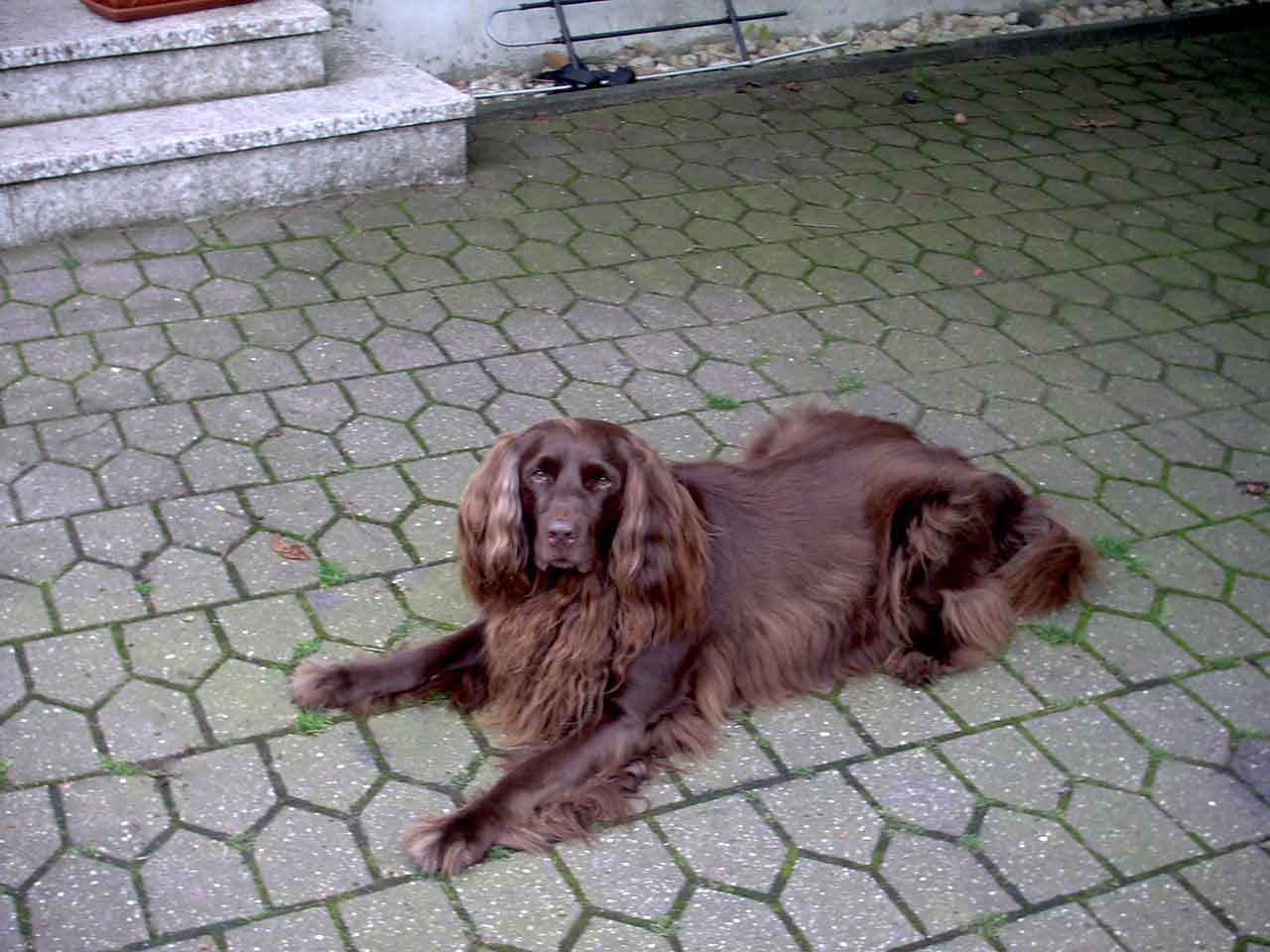
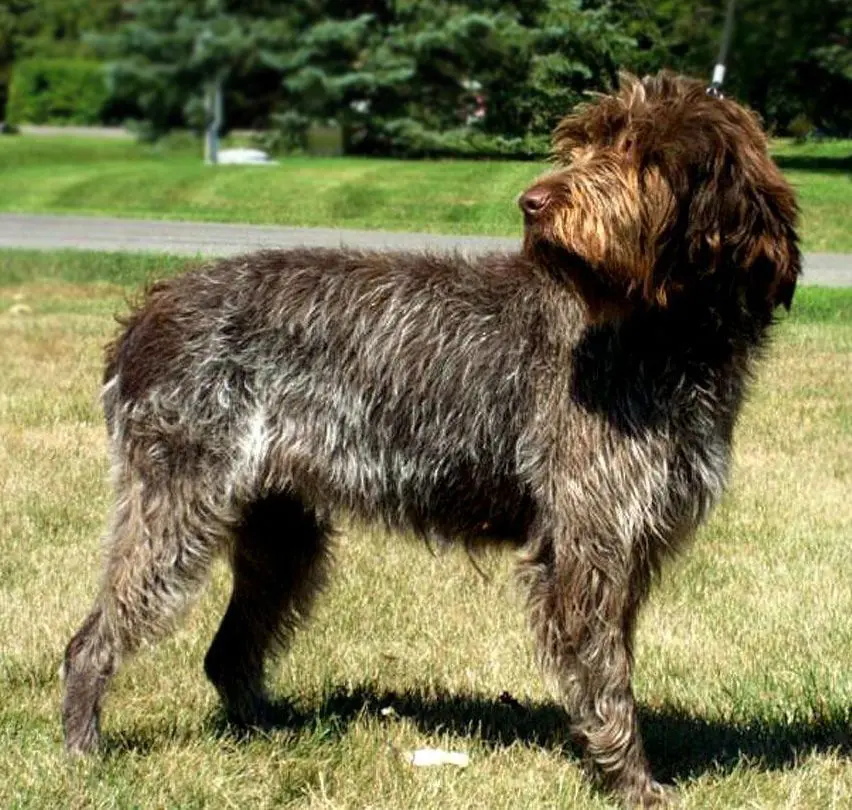
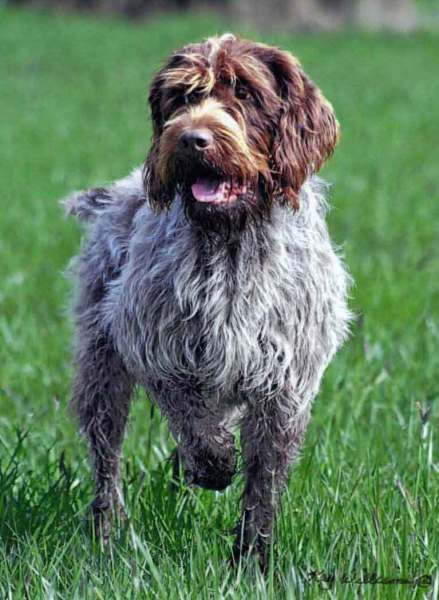
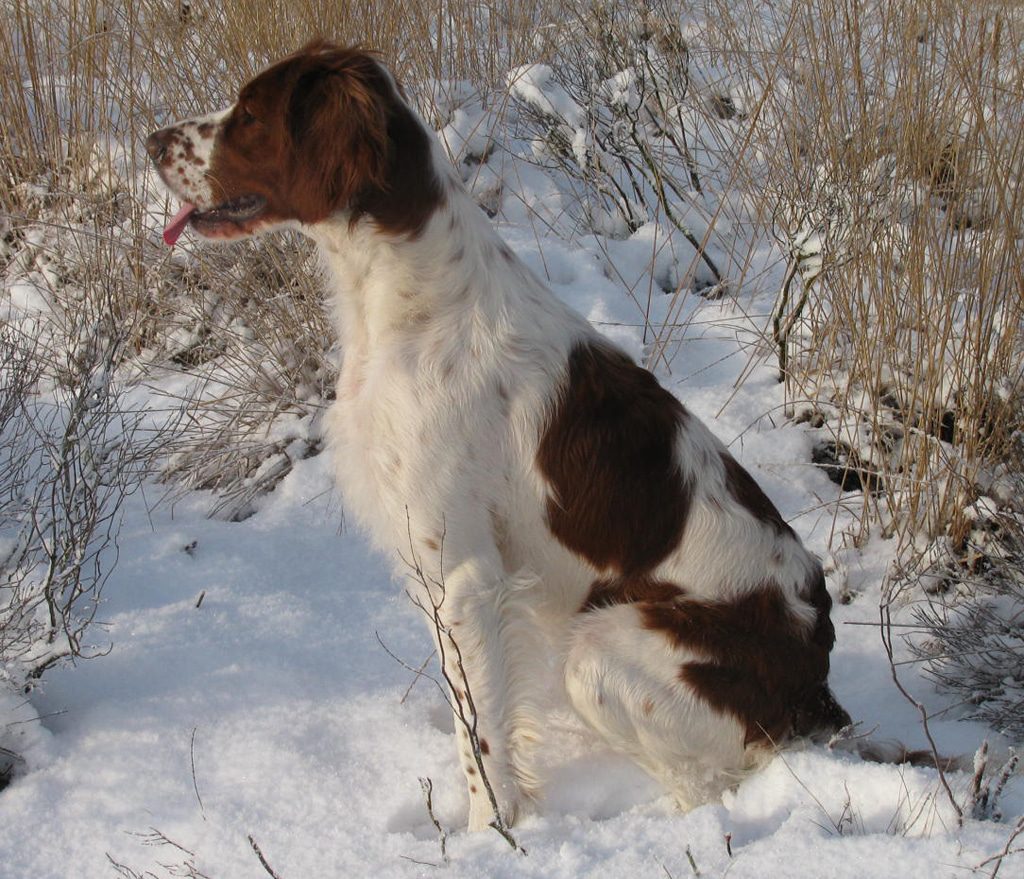
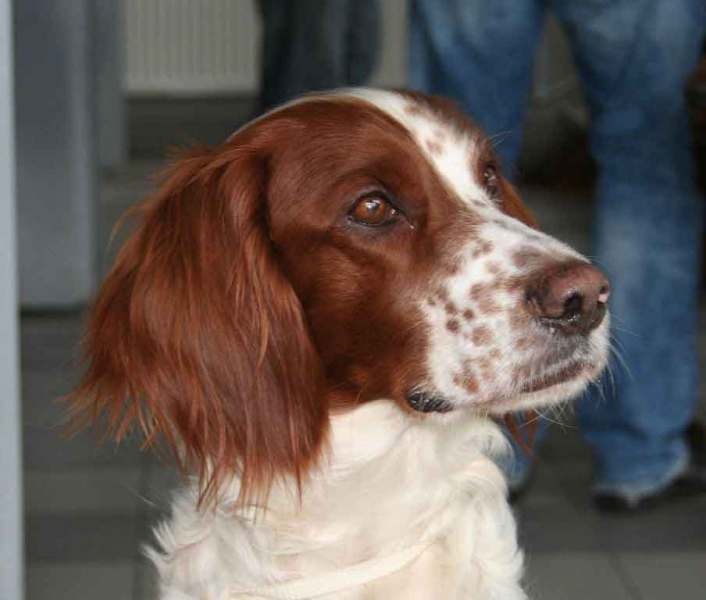
The Pont-Audemere Spaniel he is a stocky and vigorous Spaniel, whose body is almost square. Placed almost at the level of the line of the loins, the tail is carried quite straight. It is usually cut in the third; when the tail is not cut, It should be of medium length, a little curved. Dark amber or hazelnut, the eyes are rather small. The upper part of the skull and the long ears are well provided with curlers that frame the head, giving the impression of wearing a wig.

Hair is slightly rough on the body, wavy, neither flat nor curly. The fur is brown, preferably brown and speckled gray, with reflections of dead leaves.

Height and weight

  • Male size: Of 52 to 58 cm.
  • female size: Of 52 to 58 cm.
  • Male weight: Of 19 to 20 kg
  • female weight: Of 17 to 19 kg

Character and skills

The Pont-Audemere Spaniel is loving and displays unwavering loyalty to his masters. But, if they don't get their regular dose of care, these dogs can often get anxious, which is an important trait of his personality.

These dogs are especially good with children and are very sociable. They are also great playmates and family companions.. But, if you are looking for a good watchdog, it may not be the best option, as they are too friendly and quiet to keep an eye on something or someone.

This breed gets along very well with other dogs, but does not get along with dogs of the same breed that do not belong to the same pack or group. It is also not very friendly with other pets.. But, puppies of this breed mix easily with other pets and are known to have a friendly demeanor towards them.

Training and education

The training of the Pont-Audemere Spaniel It is easy. This dog is very obedient and loyal to the orders of the master. But, training sessions should be short, since the dog hates any long and repetitive task.

Exercise of Pont-Audemere Spaniel

This dog has aggressive exercise needs, which means that even long walks don't usually satisfy you. The most satisfaction you would get would be from any long hunting session. But, if hunting is not a reality, this dog should be allowed to romp in controlled areas so that it burns enough calories to meet its exercise requirements.

Health

Like the rest of the animals, this breed has health conditions to watch out for. canine hip dysplasia, a condition related to the hip cavities, can cause arthritis in dogs. These dogs are also prone to Von Willebrand's disease (a bleeding disease related to clotting), and hyperthyroidism (overproduction of hormones in the thyroid).

Apart from these problems, patella luxation and dental problems are the most common in this breed. alopecia, a skin disease caused by ringworm or other parasites, can also affect these dogs.

In summary, the following health problems are not uncommon in the breed Pont-Audemere Spaniel:

  • canine hip dysplasia
  • Von Willebrand disease
  • Hyperthyroidism
  • Dental disease
  • Patella dislocation
  • Alopecia

Grooming

The fur and skin of these dogs may look like they need a lot of grooming, but in reality, this breed needs little to no maintenance. A regular brushing once or twice a week is all you need.

But, the dog's ears need to be cleaned whenever necessary and are at risk of infection if not kept clean.

Characteristics "Pont-Audemere Spaniel"

Coexistence is important that you have with your new friend. Before considering the acquisition of a dog of the breed "Pont-Audemere Spaniel" you know certain factors. Not all breeds of dogs are apt to live in an apartment, you must take into account his character, their need for exercise, their interaction with other pets, their care and if you have small children, their level of tolerance towards them.

Adaptation โ“˜

3,0 of 5 stars (based on 1 review)

friendly dog โ€‹โ€‹โ“˜

3,0 of 5 stars (based on 1 review)

hair loss โ“˜

3,0 of 5 stars (based on 1 review)

Affection level โ“˜

5,0 of 5 stars (based on 1 review)

Need for exercise โ“˜

5,0 of 5 stars (based on 1 review)

Social need โ“˜

3,0 of 5 stars (based on 1 review)

Home โ“˜

3,0 of 5 stars (based on 1 review)

Toilet โ“˜

2,0 of 5 stars (based on 1 review)

Friendly with strangers โ“˜

3,0 of 5 stars (based on 1 review)

barking โ“˜

4,0 of 5 stars (based on 1 review)

Health โ“˜

4,0 of 5 stars (based on 1 review)

Territorial โ“˜

2,0 of 5 stars (based on 1 review)

Cat friendly โ“˜

2,0 of 5 stars (based on 1 review)

Intelligence โ“˜

4,0 of 5 stars (based on 1 review)

Versatility โ“˜

4,0 of 5 stars (based on 1 review)

Child friendly โ“˜

4,0 of 5 stars (based on 1 review)

Surveillance โ“˜

2,0 of 5 stars (based on 1 review)

joy โ“˜

5,0 of 5 stars (based on 1 review)

How much does it cost to have a Pont-Audemere Spaniel?

Cubs Pont-Audemere Spaniel usually cost between 1000 and 1300 EUR.

Images "Pont-Audemere Spaniel"

Photos

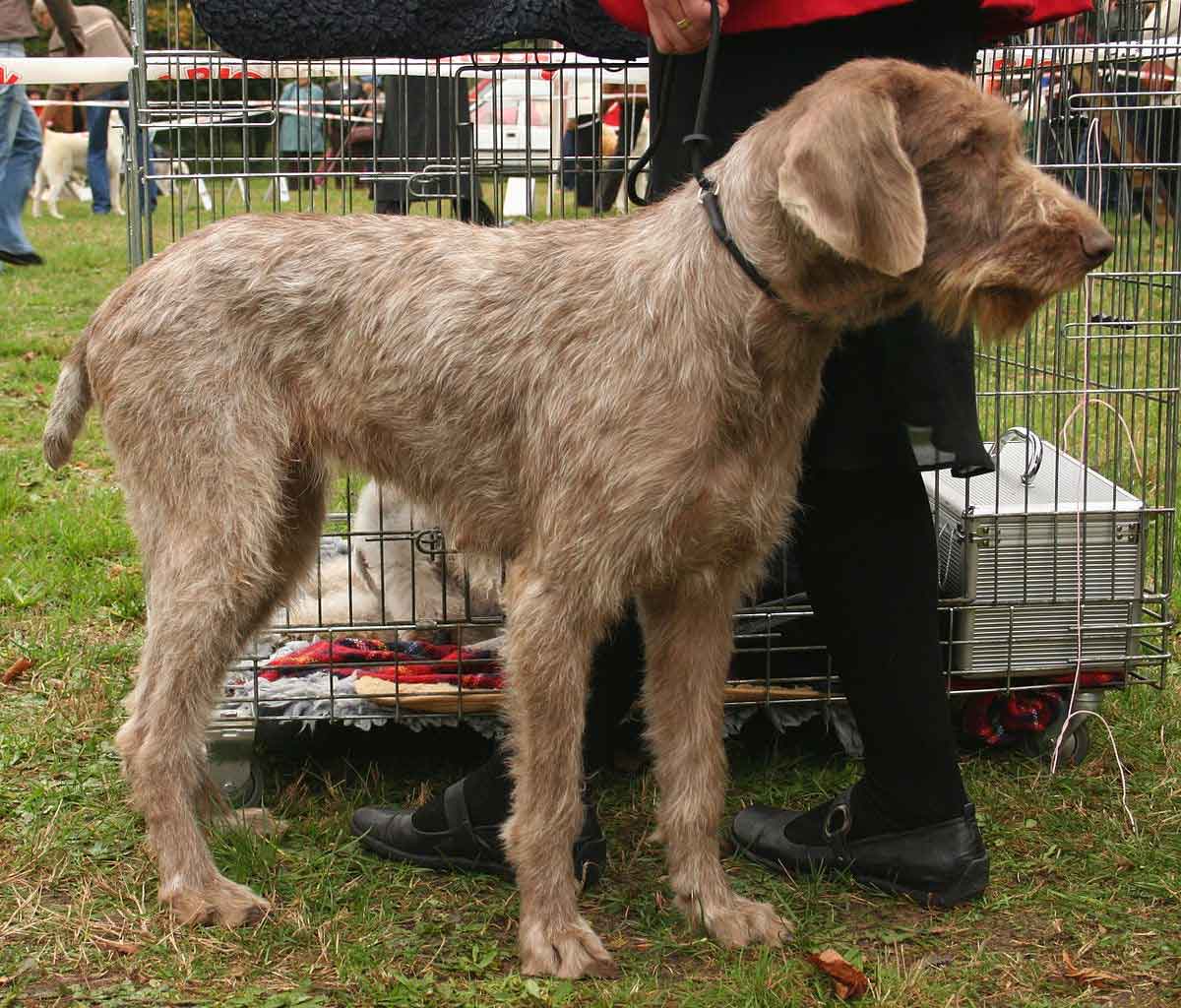
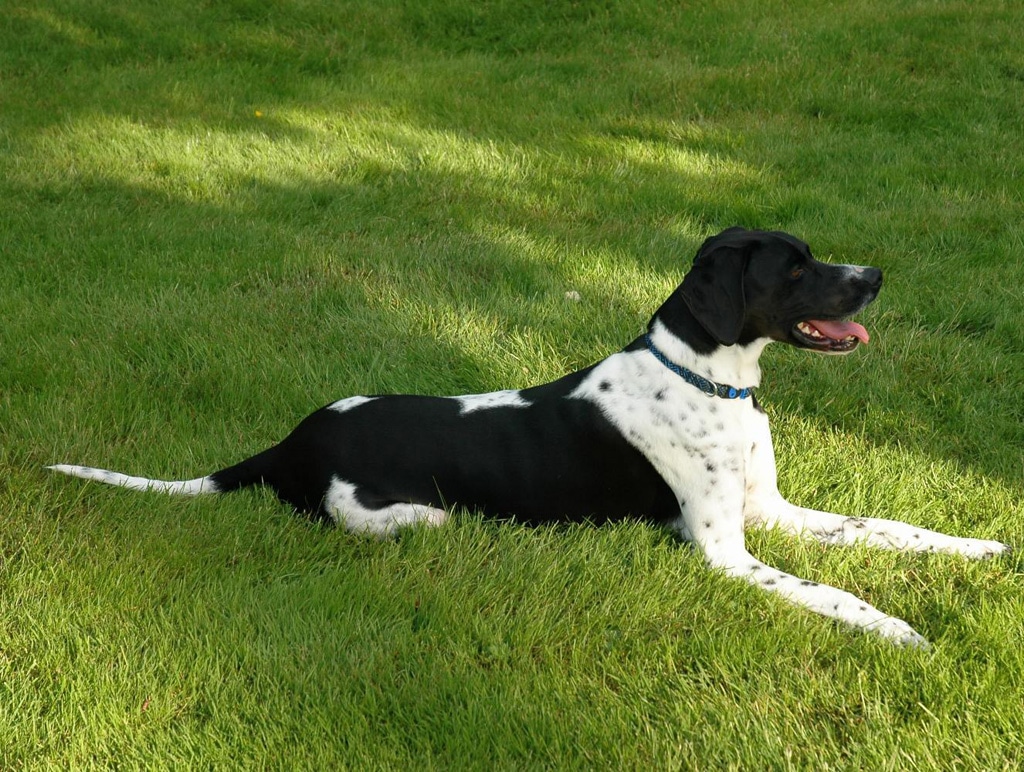
1 – ยซPont-Audemรจre Spanielยป at the World Dog Show in Poznaล„ by Pleple2000, CC BY-SA 3.0, via Wikimedia Commons
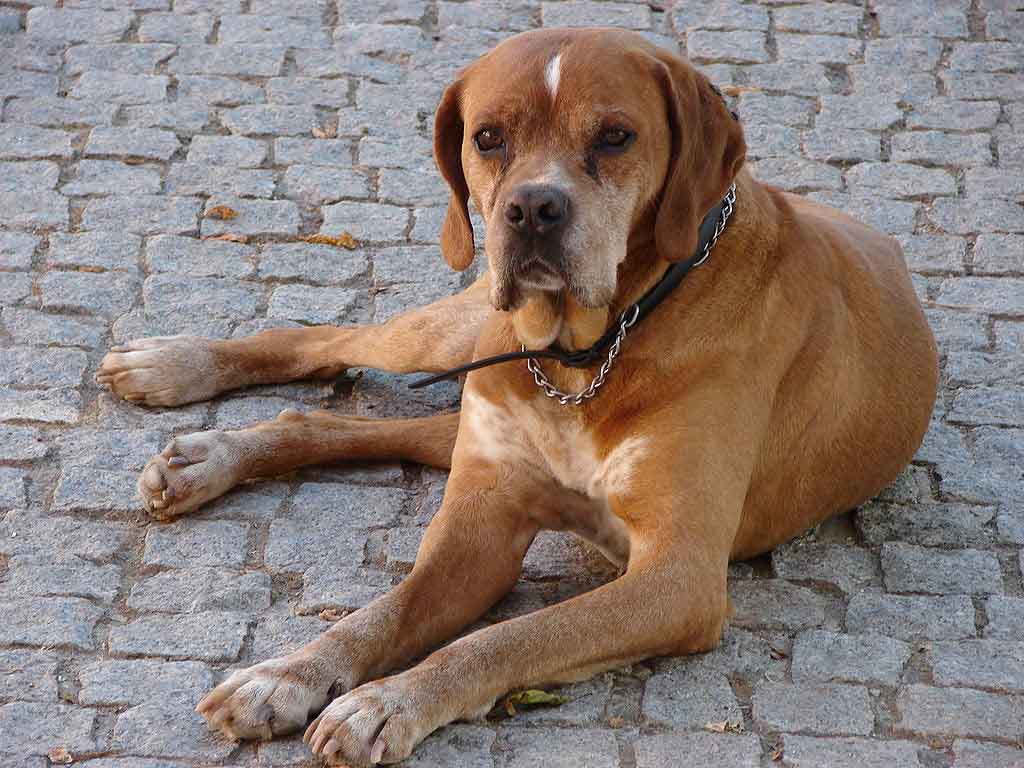
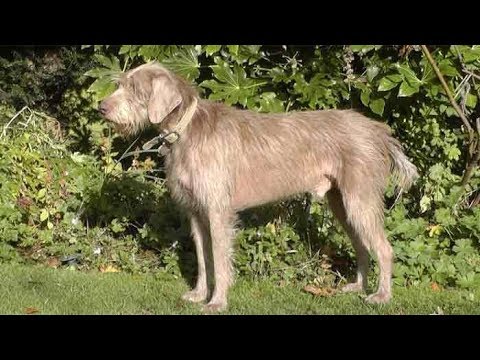
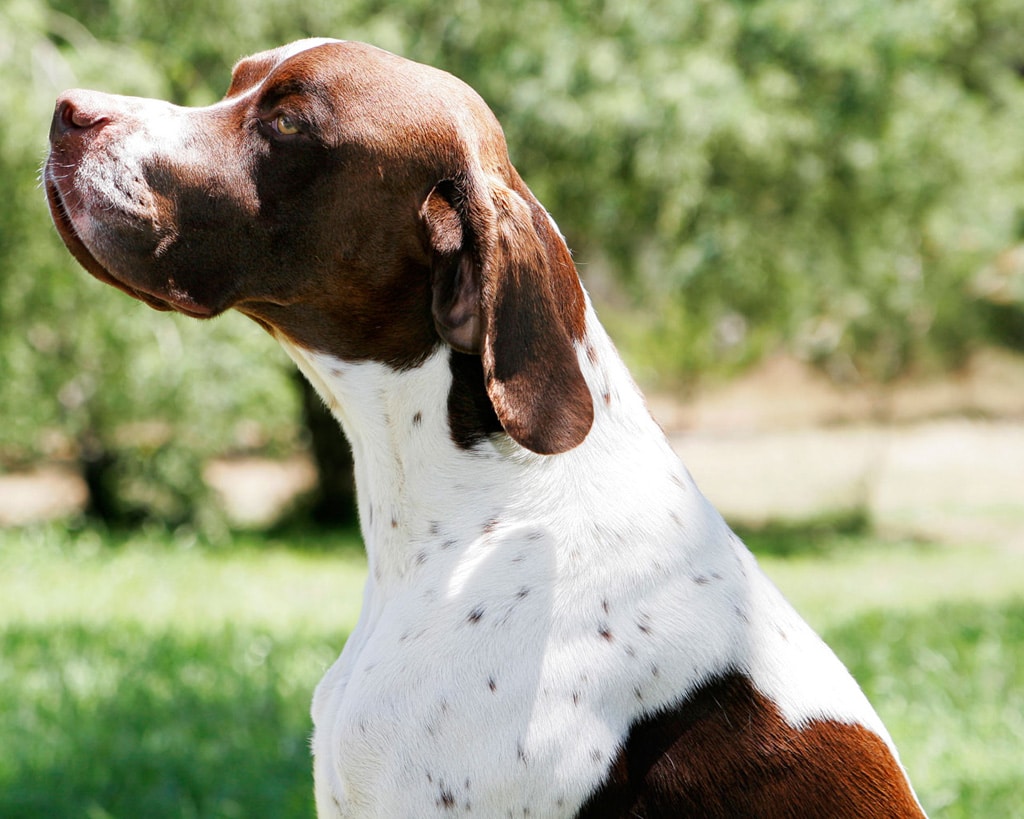
2 – The Epagneul Pont Audemer is a french pointing dog by Alephalpha, CC BY-SA 3.0, via Wikimedia Commons
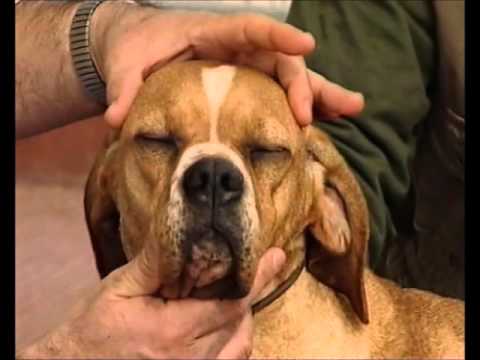
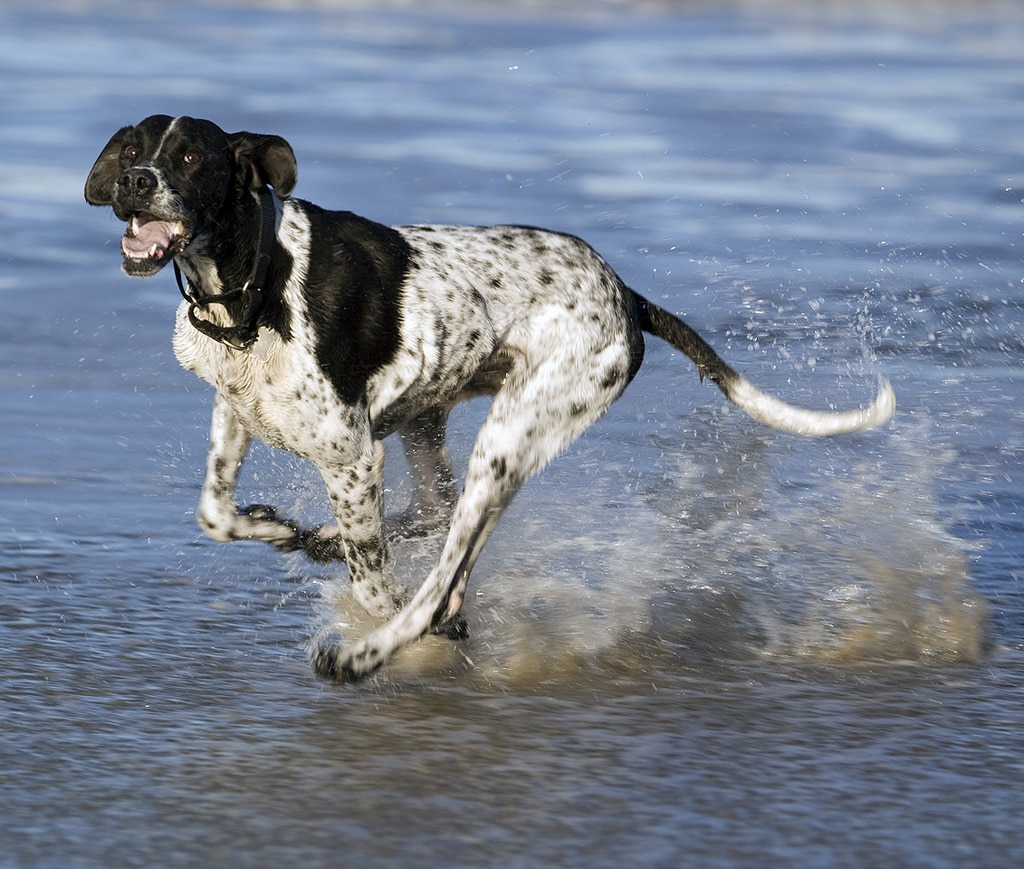
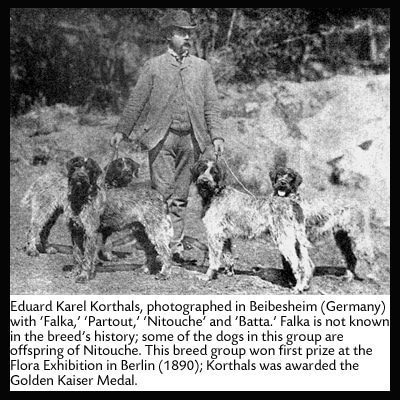
3 – Head profile of a Pont-Audemer Spaniel male by Canarian, CC BY-SA 3.0, via Wikimedia Commons
4 – A Pont-Audemer Spaniel male by Canarian, CC BY-SA 3.0, via Wikimedia Commons
5 – Pont-Audemer Spaniel male by Canarian, CC BY-SA 4.0, via Wikimedia Commons
6 – โ€œPont-Audemere Spanielโ€ by https://worlddogfinder.com/es/razas/spaniel-de-pont-audemer

Videos "Pont-Audemere Spaniel"

Type and recognitions:

  • FCI CLASSIFICATION:
  • Group :
  • Section : . .

Federations:

  • FCI – Group 7: Pointing Dogs. – Section 1: Continental Pointing Dogs. 1.2: Spaniel type โ“˜
  • Central Canine SocietyGun Dog โ“˜

FCI breed standard "Pont-Audemere Spaniel"

Origin:
France

Date of publication of the valid original standard:
6.05.1964

Use:

Pointing Dogs.


General appearance:

It is vigorous and plump.


Behavior / temperament:

---

Head:

---

Cranial region:
  • Skull : Redondo, developed at the top; prominent occipital crest; the parietals are rather round. The forehead rises towards the pompadour; the head is covered with frizzy, pompadour hair, which reaches the top of the skull, leaving the forehead bare.
  • Depression links (Stop) : Make a slight angle, but the stop is marked.

facial region:

  • Truffle : Brown in color, significantly exceeds the front of the upper lip, rather sharp.
  • Nose cane : Long, with a prominence in the middle.
  • Lips : Fine and a little hanging, making the snout rather pointed.

Eyes : Dark amber or hazelnut color, rather small, well placed in its orbit; frank and kind look.

Ears : Moderately thick, plan, inserted mmmm further down so that they clear the cheeks, Long adorned with frizzy silky hair, which, along with the pompadour hair, forms a beautiful curly wig that frames the head well.

Neck:

A little arched, well delineated, muscular, finely inserted in the head and solidly in the shoulders.

Body:

  • Back : Straight or slightly convex.
  • Pork loin : Pretty short, width, solid, muscular.
  • Rump : Very slightly sloping.
  • Breast : Deep, broad, drops completely to elbow level; long ribs, outstanding, approaching the hip on her back.
  • Flanks : Flat and a little raised.

Tail:

Inserted almost at the height of the spine line, carried quite straight, usually cut into a third; thick at its insertion; is covered in curly hair and there must be hair around the tail. When the tail is not docked, should be medium length and slightly curved.

Tips

The limbs should be rather short, so that the dog is somewhat close to the ground, but without looking like the Cocker.

PREVIOUS MEMBERS :

  • Shoulder : Strong, long, oblique, closed at their junction with the spine.
  • Arms : Strong and muscular.

LATER MEMBERS :

  • Hips : Outgoing, reaching the level of the back.
  • Thighs : Straight, well descended, muscular, very strong with well developed pants. Protruding thigh tip.
  • Warm-tarsal joints : Wide and straight, without drifting in or out.
  • Metatarsals : Rather short, specially adorned at the back by a fringe of curly hair. Avoid dewclaws.

FEET : Round, well Plumb, covered in long curly hair between fingers.

Movement:

---

Mantle

HAIR : Curly and slightly felt.

COLOR : Brown, preferably brown and mottled gray, with dry leaf tones.


Size and weight:

Of 52 to 58 cm..


Fouls:

Any deviation from the aforementioned criteria is considered as a fault and the severity of this is considered to the degree of the deviation to the standard and its consequences on the health and well-being of the dog..

โ€ข Skull flattened on the sides, forehead parallel to the muzzle; absence of pompadour, pompadour that reaches the browbone or formed by fallen hairs.
โ€ข Angle of the naso-frontal depression (Stop) too straight.
โ€ข Black truffle, pale, round or with white spots.
โ€ข Short or overly arched nose canal.
โ€ข Thick and hanging lips.
โ€ข Eyes too light, at head level or very sunken; aggressive or sullen look.
โ€ข thick ears, enrolladas, too short, insertion very high, carried forward or backward.
โ€ข Very heavy neck, flattened at its top line, thick to its junction to the head.
โ€ข Long back, narrow or saddled.
โ€ข Long loin, narrow or flat.
โ€ข Croup dropped or very straight.
โ€ข Chest with lack of depth, too rounded, sunken; ribs flat or close together.
โ€ข Rounded flanks, very low.
โ€ข Insertion queue too high or too low, very curved, carried in the form of a saber or with a plume.
โ€ข Short shoulders, straight, separated near the top.
โ€ข Thin arm.
โ€ข Low hips.
โ€ข Flat thigh.
โ€ข Deviated tibiotarsal joints, straight lines, too far apart or too close together.
โ€ข Long metatarsals, leaning back to front or skewing to the right or left, no fringes.
โ€ข Narrow feet, too long, very hairy; very thick pads.
โ€ข Very straight hair, too curly, very hard or very fine; no curly topknot or with hairs that fall as in the Poodle.
โ€ข Color negro, black and white, black and tan.

FALTAS DESCALIFICANTES:

โ€ข Aggressiveness or extreme shyness.
โ€ข Any dog โ€‹โ€‹showing clear signs of physical or behavioral abnormalities.


N.B.:

โ€ข Males must have two normal-appearing testicles fully descended into the scrotum..
โ€ข Only functionally and clinically healthy dogs, with the typical conformation of the breed, should be used for parenting.

Source: F.C.I - International Cynological Federation

Alternative names:

1. Epagneul Pont-Audemer, Setter of Pont-Audemer (English).
2. ร‰pagneul de Pont-Audemer (French).
3. Epagneul de Pont-Audemer (German).
4. (em francรชs: epagneul de Pont-Audemer) (Portuguese).
5. Epagneul du Pont-Audemรจre (espaรฑol).

โ–ท The world of Pets: Dogs, cats, birds, reptiles, amphibians

Large Mรผnsterlรคnder
Alemania FCI 118 . Spaniel type

Mรผnsterlรคnder Grande

Nature Large Mรผnsterlรคnder is lively but not express nervousness.

Content

History

Historically, the Large Mรผnsterlรคnder, It was a dog used to hunt birds and hawks in the middle ages, its origins are located in the trackers and retrievers, as well as sample of 19th century dogs.

The Large Mรผnsterlรคnder is considered to be, similar to the Small Munsterlander and the German Longhaired Pointer as part of the family of Pointing Dogs germans, whose professional parenting was beginning around the end of the 19th century.

After the ยซDeutscher-Langhaar-Vereinยป definitively excluded the black dog in 1909, the "Association for the Pure Breeding of the Long-Haired Black-White Mรผnsterlรคnder Pointing Dog", founded in 1919, assumed the raising of the black and white Longhair. Once the remaining, still extant dogs of this long-haired native breed were documented in an original list, mostly from the eastern Mรผnster region and Lower Saxony, the Association began in 1922 planned parenting Large Mรผnsterlรคnder.

The founding list comprised 83 dogs. Descendants of the dogs on the original list were entered into the record book for the Large Mรผnsterlรคnder. The club that kept the record book was the โ€œAssociation of Large Munsterlandersโ€, to date organized eight independent regional groups. The Club of the Large Mรผnsterlรคnder is a member of the VDH and the Federation of Working Gundogs (JGHV)

Physical characteristics

It is a dog with strong and muscular body structure, with a stylized picture; expression of intelligence and nobility.

Has a step and trot elastic, covers the ground, with a wide range. Elastic Gallop, with great momentum and thrust of the later members, and broad jump.

Video of โ€œMรผnsterlรคnder Grandeโ€
Large Munsterlander Wilson Hunting duck retrieve

The skin is adherent. Her hair is long and dense, Although smooth; It is not wavy or separated, because this could be an impediment to perform its function in the hunt. typical broad hair.

The hair, both the male and the female, It must be especially long and dense in the posterior region of members before and after (with good feather). Also on the tail the hair must be especially long. The longest boom in the queue must be half the length of this.

The hair of the ears It should be long (with good formation of stripes) and it must be so long that it symmetrically exceeds the lower edge of the ears (never leather ears). In the rest of the head hair should be short and adherent.

It is of color White with plates and black spots, or a black splash. Black head, eventually with a spot or a whitelist.

Character and skills

El Munsterlander Grande, is a versatile hunting dog, his greatest skill is at work to perform after the firing of the Hunter.

Its main characteristics are docility, ability to learn and reliable utility for hunting. Its nature is lively but not obvious nervousness.

It can be perfectly adapted to the home life, from which you will greatly enjoy the warmth of your family, but you also need to run in the field to feel completely happy moments.

Observations

You need to do plenty of exercise, It is an ideal companion to go out running.

Use

Due to its versatility, it is necessary that the Large Mรผnsterlรคnder be placed regularly in the most varied fields. His medium head size has made him a specialist in the search for injured game animals, on the plains and in the woods. His main job is to, after the shot, avoids unnecessary suffering of the injured animal to some extent. The goal is to have a very good all-terrain dog; therefore, it is necessary to maintain in him these natural qualities.

Health

The Large Mรผnsterlรคnder he is a robust dog, living a long time and generally in very good health.
This dog is not predisposed to being overweight. Their activities should be oriented to humid environments (swamps) in hot weather. It is not afraid of the cold and can even live outside in a kennel..

Comprar a โ€œMรผnsterlรคnder Grandeโ€

The price of a Large Mรผnsterlรคnder varies according to their origins, age and gender. The limited diffusion of the breed on French soil does not allow knowing the average price of a puppy of Large Mรผnsterlรคnder registered in the LOF (Sociรฉtรฉ Centrale Canine).

Characteristics "Large Mรผnsterlรคnder"

Coexistence is important that you have with your new friend. Before considering the acquisition of a dog of the breed "Large Mรผnsterlรคnder" you know certain factors. Not all breeds of dogs are apt to live in an apartment, you must take into account his character, their need for exercise, their interaction with other pets, their care and if you have small children, their level of tolerance towards them.

Adaptation โ“˜

4,0 of 5 stars (based on 1 review)

friendly dog โ€‹โ€‹โ“˜

4,0 of 5 stars (based on 1 review)

hair loss โ“˜

3,0 of 5 stars (based on 1 review)

Affection level โ“˜

5,0 of 5 stars (based on 1 review)

Need for exercise โ“˜

4,0 of 5 stars (based on 1 review)

Social need โ“˜

3,0 of 5 stars (based on 1 review)

Home โ“˜

2,0 of 5 stars (based on 1 review)

Toilet โ“˜

3,0 of 5 stars (based on 1 review)

Friendly with strangers โ“˜

3,0 of 5 stars (based on 1 review)

barking โ“˜

3,0 of 5 stars (based on 1 review)

Health โ“˜

3,0 of 5 stars (based on 1 review)

Territorial โ“˜

3,0 of 5 stars (based on 1 review)

Cat friendly โ“˜

2,0 of 5 stars (based on 1 review)

Intelligence โ“˜

5,0 of 5 stars (based on 1 review)

Versatility โ“˜

4,0 of 5 stars (based on 1 review)

Child friendly โ“˜

5,0 of 5 stars (based on 1 review)

Surveillance โ“˜

3,0 of 5 stars (based on 1 review)

joy โ“˜

5,0 of 5 stars (based on 1 review)

Images of the โ€œLarge Mรผnsterlรคnderโ€

Videos of โ€œMรผnsterlรคnder Grandeโ€

Type and recognitions:

  • FCI CLASSIFICATION:
  • Group :
  • Section : . .

Federations:

  • FCI – Group 7: Pointing Dogs. – Section 1: Continental Pointing Dogs. 1.2: Spaniel type โ“˜
  • ANKC Group 3 (Gundogs) โ“˜
  • โ€‹KC – Gundogs โ“˜
  • NZKC – Hunting dogs โ“˜
  • UKCGun Dog โ“˜

FCI breed standard "Large Mรผnsterlรคnder"

Origin:
Germany

Date of publication of the valid original standard:
29.10.2013

Use:

According to its hunting needs as a versatile dog, the Great Munsterlander must meet all the necessary challenges and must be able to work in the field., forest and water before and after shooting.


General appearance:

Strong and muscular body, bold overall impression. Expression of intelligence and nobility. Clean exterior lines.

IMPORTANT PROPORTIONS:

The height at the withers and the length of the body must be as equal as possible. The length of the body may exceed the height at the withers by 2 cm..


Behavior / temperament:

The most important qualities are: be manageable and easy to teach, reliable for use as a hunting dog particularly after shooting. Loving temperament without being nervous.

Head:

Noble and elongated with intelligent expression. Defined chin with good muscles.

Cranial region:
  • Stop: moderate.

facial region:

  • Nose: Pronounced black nose.
  • Snout: Strong, long and well developed for use. Right nasal bridge.
  • Lips: not hanging.
  • Jaws/Teeth: Strong bite and full dentition (42 teeth) with well-formed canines and a perfect scissor bite.

Eyes: The darker the better, tight-fitting eyelids. Ears: Wide, medium high insertion, rounded tips, adjusted

Ears: Wide, medium high insertion, rounded tips, adjusted.

Neck:

Strong and well muscled with a noble curve.

Body:

  • Cross: moderately high, long, good musculature.
  • Back: Short, firm, straight. Pork loin: Pronounced, protected by tight muscles.
  • Rump: Long, wide, only slightly inclined, good musculature.
  • Breast : Width seen from the front, deep viewed from the side with a marked parapet. Bottom line and belly: slightly ascending, tight, slender. Short flanks and set high.

Tail:

Carriage horizontally or slightly higher. Side view in continuation with the upper line without break.

Tips

PREVIOUS MEMBERS:

  • Right limbs, strong and well muscled. Correct angulations.
  • Shoulder: Scapulae tightly fitting to ribs.
  • Arm: Must be strong and well muscled.
  • Forearm: Right limbs, strong and well muscled.
  • Metacarpus: elastic.
  • Previous feet: Moderately long and rounded, tight fingers, No Spurs.

LATER MEMBERS:

  • General appearance: Strong, tight muscles, vertical position.
  • Knee: correctal angulation.
  • The Hock joint: correct angulation.
  • Hind feet: Moderately long and rounded, tight fingers, No Spurs.

Movement:

Elastic in the walk and trot, covering the surface with long strides. Gallop: elastic, animated with the necessary push and long reach.

Mantle

SKIN: tight.

Fur: Long and bushy, straight and not wavy or standing as it hampers hunting ability. typical broad hair. The hair must be especially long and dense on the back of the forelimbs and hindquarters.. (Well covered in feathers) both males and females. In the tail the hair must be particularly long. The area most heavily feathered should be in the middle of its length. The hair in the ears must be long (good fringes) and arrive clearly and evenly on the tips of the ears (leather at the end of the ears is not desirable). The hair on the head is short and soft.

Color: The three varieties of color are:

  • White with black patches and spots,
  • roan blue,
  • pure black.

The head is always black, a cutout or white star is possible.


Size and weight:

Height to the cross (average):

  • Males 60 โ€“ 65 cm.
  • females 58 โ€“ 63 cm.

Tolerated 2 cm above specified size.

Weight: About 30 kg.


Fouls:

Any deviation from the aforementioned criteria is considered a fault and its severity is considered to the degree of deviation from the standard and its consequences on the health and well-being of the dog and the dog's ability to perform its traditional task..

โ€ข Skull too wide. Too much stop, snout
too short.
โ€ข Roman nose or plate face, complete absence of
pigmentation or just spots.
โ€ข Swollen or pendulous lips.
โ€ข Slight missing teeth and bite; bite clamp, double PM 1, absence of 1-2 premolars (PM1) or 3 molar (M3) (Maximum 2 teeth)
โ€ข Eyes too light. Visible red membrane. Loose eyelids.
โ€ข Low set ears, separated from the head. Ears that are too short or folded back showing cartilage.
โ€ข Neck too short, too long, very thick, very thin, Spada.
โ€ข Cross too low, very short.
โ€ข Back too long, sunken or hooded.
โ€ข Loin with loose muscles. Non-harmonious transition of the croup; over built.
โ€ข Short croup, close, with abrupt fall.
โ€ข Barrel-shaped chest, Strait, not deep enough, lack of sill,
โ€ข Abdomen too ascending or too low
โ€ข Carrying the tail to one side, rolled up, broken or ring-shaped tail.
โ€ข Forelimbs: too steep angles, protruding or crooked elbows. Stupid Carpos. Forehead too narrow or too wide.
โ€ข Hind limbs: too steep angles, cow hock or bow legs as well as a rear that is too open or closed.
โ€ข Round cat foot, long hare, flatfoot. Pigeon fingers or violin forehead.
โ€ข Walk and short trot, rigid or remilded. Gallop: hard heels, little push.

FALTAS DESCALIFICANTES:

โ€ข Aggressiveness or extreme shyness.
โ€ข Any dog โ€‹โ€‹showing clear signs of physical or behavioral abnormalities.
โ€ข Pale nose.
โ€ข Entropion, ectropion.
โ€ข Prognathic or enognathic mouth, mouth crossed, absence of incisors or canines, absence of molars or premolars (except 2 PM1 the 1 M3)
โ€ข Colors not in accordance with the breed standard.
โ€ข Dogs above or below the indicated height.
โ€ข Fearful or sensitive to triggering to any degree. Fear of prey, teether out of fear, fearful of strangers.


N.B.:

โ€ข Males must have two normal-appearing testicles fully descended into the scrotum..
โ€ข Only functionally and clinically healthy dogs, with the typical conformation of the breed, should be used for parenting.

Source: F.C.I - International Cynological Federation

Alternative names:

1. GroรŸer Mรผnsterlรคnder (English).
2. Grand mรผnsterlรคnder (French).
3. GroรŸer Mรผnsterlรคnder Vorstehhund (German).
4. (em alemรฃo: Grosser mรผnsterlรคnder) (Portuguese).
5. (en alemรกn GroรŸer Mรผnsterlรคnder), Gran Munsterlander (espaรฑol).

โ–ท The world of Pets: Dogs, cats, birds, reptiles, amphibians

German Roughhaired Pointer
Alemania FCI 232 . Braque Type

German Roughhaired Pointer

The German Roughhaired Pointer has a calm and balanced character.

Content

History

The German Roughhaired Pointer It is the oldest breed of wire-haired dogs. The history of German Roughhaired Pointer goes back many hundreds of years. Already in 1539 this breed of dog could be admired in bronze engravings. In 1888 Hans Von Kaddisch showed that this breed is not a variety of the Shorthaired Pointer Dog, but the wire-haired counterpart of the Old German Wirehaired Pointer, and that it was selected and developed from rare surviving subjects that had survived in Germany.

The breed club, founded in 1892 As the "Club Stichelhaarยซ, changed his name to "Verein Deutsch Stichelhaar" in 1976. Since the beginning, has applied the rules of purebred breeding from the beginning, and excludes any crossing with the English breeds.

Photo: The german pointing dog Deutsch Stichelhaar by Alephalpha, CC BY-SA 3.0, via Wikimedia Commons

Physical characteristics

GERMAN BRISTY-COATED POINKING DOG
German Roughhaired Pointer

Males reach a withers height of 60 to 70 centimeters. Females are somewhat smaller, growing up to about 58 to 68 centimeters. The weight of a German Roughhaired Pointer it is usually between 20 and 29 kg.

The coat of this dog is hard and bristly. Is loose and has a moderate undercoat. The German Roughhaired Pointer comes in a variety of colors and patterns. They are often solid brown in color, or have a white patch on the chest. There are also light browns and grays. The dog's coat has a few 4 centimeters long.

The structure of this breed of dog is square and strong. He has a straight back line, leaning slightly towards the rump. The skull is widely built and slightly domed. The ears are smooth and hanging and have a high base. The appearance of the German Roughhaired Pointer reminds a German Wirehaired Pointer.

Character and skills

The German Roughhaired Pointer has a calm and balanced character. He is very easy to train and very willing to learn. His alertness and protective instincts are strong, but they can be controlled well.

The temperament of German Roughhaired Pointer it is usually quiet. Your temperament manifests when your abilities are nurtured through regular training. When you bring a German Roughhaired Pointer to your family, you have a new friendly roommate.

Your new pet is neither shy nor aggressive. If you keep your friend busy enough, will be a loyal companion. But, you must make it clear to him that you have the position of leader within the hierarchy. Only then will he be a loyal dog to you.

The German Roughhaired Pointer it is very popular with hunters. But, not suitable as a pure family dog. As this breed of dog is very self-confident, you should also be a strong leader.

Training

The natural instincts of German Roughhaired Pointer can be controlled well with proper training. The best way to do this is to train him to be a hunting dog.. The training of the German Roughhaired Pointer it is much more complex than that of other dogs. Just visiting a normal dog school is not enough. Usually the German Roughhaired Pointer it is only given to hunters for this reason.

Grooming

Health and Grooming

When it comes to grooming, the German Roughhaired Pointer it is similar to many other hunting dogs. So, the amount of grooming required is low. If you brush your four-legged friend's coat once a week, is perfectly enough. The German Roughhaired Pointer it is very robust in health. So, fortunately it is not very susceptible to disease.

Characteristics "German Roughhaired Pointer"

Coexistence is important that you have with your new friend. Before considering the acquisition of a dog of the breed "German Roughhaired Pointer" you know certain factors. Not all breeds of dogs are apt to live in an apartment, you must take into account his character, their need for exercise, their interaction with other pets, their care and if you have small children, their level of tolerance towards them.

Adaptation โ“˜

3,0 of 5 stars (based on 1 review)

friendly dog โ€‹โ€‹โ“˜

4,0 of 5 stars (based on 1 review)

hair loss โ“˜

2,0 of 5 stars (based on 1 review)

Affection level โ“˜

5,0 of 5 stars (based on 1 review)

Need for exercise โ“˜

4,0 of 5 stars (based on 1 review)

Social need โ“˜

4,0 of 5 stars (based on 1 review)

Home โ“˜

2,0 of 5 stars (based on 1 review)

Toilet โ“˜

2,0 of 5 stars (based on 1 review)

Friendly with strangers โ“˜

3,0 of 5 stars (based on 1 review)

barking โ“˜

3,0 of 5 stars (based on 1 review)

Health โ“˜

3,0 of 5 stars (based on 1 review)

Territorial โ“˜

3,0 of 5 stars (based on 1 review)

Cat friendly โ“˜

2,0 of 5 stars (based on 1 review)

Intelligence โ“˜

4,0 of 5 stars (based on 1 review)

Versatility โ“˜

3,0 of 5 stars (based on 1 review)

Child friendly โ“˜

5,0 of 5 stars (based on 1 review)

Surveillance โ“˜

3,0 of 5 stars (based on 1 review)

joy โ“˜

4,0 of 5 stars (based on 1 review)

Videos "German Roughhaired Pointer"

Stichelhaar Dog wide
German Roughhaired Pointer
โ–บ German wire hair [2018] race, Looks & Nature
German Roughhaired Pointer

Type and recognitions:

  • FCI CLASSIFICATION:
  • Group :
  • Section : . .

Federations:

  • FCI – Group 7: Pointing Dogs. – Section 1: Continental Pointing Dogs. 1.1: Braque Type โ“˜

FCI breed standard "German Roughhaired Pointer"

Origin:
Germany

Date of publication of the valid original standard:
29.11.2001

Use:

---


General appearance:

He is a strong pointing dog, medium to large in size with a strong, hard coat and moderate beard.
Clearly accentuated eyebrows give the dog a irascible look. His temperament is calm and balanced.

IMPORTANT PROPORTIONS :

โ€ข The length of the body and the height at the shoulders should be equal if possible..
โ€ข Body length may slightly exceed shoulder height.


Behavior / temperament:

Balanced, quiet, robust, courageous but controlled, neither shy nor aggressive.

Head:

Proportionate to body size and according to sex.

Cranial region:
  • Skull : Slightly rounded, width seen from the side with the highest part of the convexity in the center. Occipital protuberance not too developed.
  • Stop: Gradually ascending fronto-nasal depression, not abruptly.

facial region:

  • Truffle : From light to dark brown, not flesh colored.
  • Snout : Long, strong, half-width. Not pointed. Straight nasal bridge.
  • Lips : They hang closed properly and form a fold at the corner of the lips..
  • Jaws / Teeth : Strong jaws. Teeth with a regular and complete appearance according to the dental formula, scissor bite.

Eyes : Slightly oval, medium-sized, clear, neither protruding nor sunken; eyelids that close tightly around the eyes. They are brown; when the fur is lighter, also the eyes can be lighter, but not yellow.

Ears : Long Middle, in its insertion not too wide, rounded at the bottom edge. High insertion, in all its width and symmetrical. They should not exceed the height of the occiput too much and hang without forming folds, close to the head..

Neck:

Medium length, strong, slightly arched at the nape; gradually widens downward until it is completely inserted into the chest; does not form a double chin.

Body:

  • top line : Straight, something descending.
  • Cross : Clearly marked.
  • Back : Straight, strong, well muscled, hard.
  • Pork loin : Muscular.
  • Rump : It is not too short and slightly descending.
  • Breast : deep rib cage, well accentuated front view. Well arched ribs, never flat.
  • Bottom line and belly : moderately retracted towards the back and strong especially in the flank area.

Tail:

Long Middle, strong at the base and with an insertion not too low. In countries where tail amputation is prohibited by law, it can remain at its natural length.. The length should be up to the joint of the hoof and straight and in any case its carriage with a slight upward curvature.

Tips

PREVIOUS MEMBERS : Seen from the front, rights and parallels, seen in profile well placed under the body. The distance between the elbow and the ground should be slightly greater than the distance from the elbow to the withers.

  • Shoulder : Scapulas placed obliquely, strongly muscled.
  • Forearm : Not too long, heavily muscled.
  • Elbows : No outward or inward deviation.
  • Arm : Strong and straight.
  • Articulation of the carpus : Strongly developed.
  • Metacarpus : Strong and straight.
  • Previous feet : Round, tight. Large, hard pads, well arched nails.

LATER MEMBERS : Viewed from the back, straight and parallel, with strong bones, good muscular. Good tibio-tarsal angulation.

  • Thigh : Muscular, wide with good angulation towards the pelvis.
  • Knee : Strong with good angulation.
  • Leg : Long, muscular and tendon.
  • Warm-foot joint : Strong
  • Metatarsus : Placed under the tibiotarsal joints without being too inclined, but almost straight.
  • Hind Feet : Oval to round with toes close together and tight. Large, hard pads, well arched nails. Placed parallel without turning in or out.

Movement:

Covering the surface well, with good reach and strong thrust, parallel in the anterior and posterior with upright posture.

Mantle

SKIN : Tight, without forming wrinkles.

HAIR : On the body the hair should be tight, duro e hirsuto, placed in the direction of growth, loose and approximately 4 cm long. On the shoulders and lower part of the body the hair is somewhat longer and forms from the throat, down, on the central line of the chest and belly a short stripe or feather. Times, On the body there is a barely visible undercoat.

โ€ข On the snout, the hair forms a moderate beard, on the bridge of the nose the hair is short and coarse, It is not long or soft or falls to the sides. โ€ข On the skull, the hair is well glued, short and hard, above the ears somewhat longer than in the short-haired pointing dog and not as rough as above the skull.
โ€ข The head should be free of both soft and, woolly or silky. The eyebrows are thick and strong and the hair protrudes forward in a slanted and arched manner..
โ€ข On the front part of the forelimbs the short, hard hair is well attached., On the back it forms a somewhat longer feather from the elbow to the metacarpus..
โ€ข The hind limbs, On the back they also have a light feather up to the tibio-tarsal joint.. There are short hairs between the fingers, somewhat softer but should not stand out.
โ€ข The tail should be heavily covered with hair, well attached in the direction of growth. At the bottom the hair is somewhat longer but without forming a brush or flag.-

COLOR ;

โ€ข Brown with or without a white mark on the chest.
โ€ข Mottled brown with or without brown plates.
โ€ข Light mottling with or without brown patches.


Size and weight:

Height of the cross :

  • Males : 60 โ€“ 70 cm.
  • females : 58 โ€“ 68 cm..


Fouls:

Any deviation from the above mentioned criteria is considered to lack, and the gravity of this refers to the degree of deviation to the standard and its impact on the health and well-being of the dog.

โ€ข Heavy or coarse overall appearance.
โ€ข Exaggeratedly large head.
โ€ข Occiput with conical development, overdeveloped occipital protuberance.
โ€ข Flesh or black nose.
โ€ข Ears that are too long, with folds or fleshy.
โ€ข Sunken or steep back.
โ€ข Twisted forelimbs.
โ€ข Elbows markedly tilted outward or inward.
โ€ข Pie plano, open or turned outward, hare foot.
โ€ข Split back hair.

MISS PLAYOFFS :

โ€ข Shyness, afraid of shooting and hunting prey, aggressiveness, biting animal.
โ€ข Prognathism, enognatismo, crossbite, lack of teeth with the exception of two PM1
โ€ข Ectropion, entropion.
โ€ข By blando or semiblando (except for beard and eyebrows)
โ€ข Black fur, yellow or red marks on the head or limbs.

Any dog โ€‹โ€‹showing physical or behavioral abnormalities must be disqualified..


N.B.:

Males should have two normal-appearing testicles fully descended into the scrotum..

Source: F.C.I - International Cynological Federation

Alternative names:

1. German Roughhaired Pointer , Stichelhaar (English).
2. Braque allemand ร  poil raide (French).
3. Stichelhaar (German).
4. (Portuguese).
5. Perro de muestra alemรกn de pelo cerdoso (espaรฑol).

โ–ท The world of Pets: Dogs, cats, birds, reptiles, amphibians

Dutch Partridge Dog
Holanda FCI 224 . Spaniel type

The Dutch Partridge Dog is ideal for hunting in a wide variety of terrain. They hunt with pistol shooting. Maintaining contact with the hunter is apparently an innate quality.

Dutch Partridge Dog

A peculiarity of Dutch Partridge Dog consists in the fact that during the search the tail performs a rotating movement faster and faster as the dog approaches the prey.

Content

Characteristics "Dutch Partridge Dog"

Coexistence is important that you have with your new friend. Before considering the acquisition of a dog of the breed "Dutch Partridge Dog" you know certain factors. Not all breeds of dogs are apt to live in an apartment, you must take into account his character, their need for exercise, their interaction with other pets, their care and if you have small children, their level of tolerance towards them.

Adaptation โ“˜

3,0 of 5 stars (based on 1 review)

friendly dog โ€‹โ€‹โ“˜

4,0 of 5 stars (based on 1 review)

hair loss โ“˜

5,0 of 5 stars (based on 1 review)

Affection level โ“˜

5,0 of 5 stars (based on 1 review)

Need for exercise โ“˜

4,0 of 5 stars (based on 1 review)

Social need โ“˜

3,0 of 5 stars (based on 1 review)

Home โ“˜

2,0 of 5 stars (based on 1 review)

Toilet โ“˜

2,0 of 5 stars (based on 1 review)

Friendly with strangers โ“˜

3,0 of 5 stars (based on 1 review)

barking โ“˜

4,0 of 5 stars (based on 1 review)

Health โ“˜

4,0 of 5 stars (based on 1 review)

Territorial โ“˜

2,0 of 5 stars (based on 1 review)

Cat friendly โ“˜

2,0 of 5 stars (based on 1 review)

Intelligence โ“˜

4,0 of 5 stars (based on 1 review)

Versatility โ“˜

4,0 of 5 stars (based on 1 review)

Child friendly โ“˜

4,0 of 5 stars (based on 1 review)

Surveillance โ“˜

2,0 of 5 stars (based on 1 review)

joy โ“˜

4,0 of 5 stars (based on 1 review)

History

The Dutch Partridge Dog it is an ancient canine breed, that can be found in paintings painted centuries ago.

Originaria de Drenthe, a dutch province, the breed was developed during the 16th century from dogs from Spain, what were called Spionenen or Spaniolen. In the Netherlands they were given the name of Patrijshond, what does retriever mean.

in the east of the country, especially in the province of Drenthe, these dogs were bred as pure breeds, without any mix with other foreign races, as it happened in other places. This isolation allowed the Perdiguero to remain unchanged during 3 or 4 centuries.

The 15 in May of 1943, was recognized by the Raad van Beheer op Kynologish Gebied from the Netherlands, a recognition strongly encouraged by Baroness van Hardenbroek and Messrs. van Heek junior and Quartero.

The responsible breed club was founded on 5 in June of 1948, with the name of Nederlandse Vereniging of Drentsche Patrijshond.

Related to him Small Munsterlander and the French Spaniel, the Dutch Partridge Dog is quite limited in number, and the breed is almost unknown outside its borders.

Photo: ยซDrentsche Partridge Dogยป macho by Stefanie Joksch, CC BY-SA 4.0, via Wikimedia Commons

Physical characteristics

The Dutch Partridge Dog he is a well proportioned dog, with dry muscles, pure in its lines. His body reveals power and also the ability to run at the speed that suits a hunting dog. Wedge-shaped muzzle is slightly shorter than skull. The lips are quite dry and are not hanging. Her body, slightly longer than the height of the withers, is slightly elongated. Although the fur is not really long on the body, gives the impression of being so because of the well-populated ears, more abundant hair on the neck and chest, the fringes on the front and back legs and on the bushy tail, abundantly populated on all sides.

They have a dense coat that covers the body well. Not curly. The hair is not really long, but as it is longer in some parts, the dog, as a whole, gives the impression of having long hair. On the neck and chest, the hair is longer. In the ears, the hair is long and preferably wavy. The ears, the back of the front and back legs and the back of the thighs are fringed. Hair preferably wavy on the upper part of the body and tail. Except for its base, the tail is abundantly provided with long hair on all sides. These hairs are gradually shortened towards the tip.

COLOR: White fur with brown spots, mottled or not. Coats with a mix of brown and white hairs, with or without marks, are less desirable, like the cloak coats. The ears are brown, like the hair around the eyes.

SIZE:

Males: 58 to 63 cm..
females: 55 to 60 cm..

Weight: Of 20 to 25 kg

Character and skills

They are ideal for hunting in a wide variety of terrain. They hunt with pistol shooting. Maintaining contact with the hunter is apparently an innate quality. A characteristic feature of many dogs of this breed is that, during the hunt, the tail describes a circular motion, especially when the dog is aware of the proximity of the prey. When he's close to hunting, the dog waits for the hunter to approach and when the hunter is late, turn your head to look for the game. Thanks to its adaptability, the dog is capable of hunting all kinds of animals on the plains and swamps. It is also a good retriever and excels at searching for lost game.. These characteristics are innate. Thus, does not require long training.

The Dutch Partridge Dog it is also a very good companion dog because it is faithful, friendly, attentive. Your education should be done smoothly, without aggressiveness or too much firmness.
This dog requires regular maintenance. It will be an accomplice of the children and it is possible to leave them together. under surveillance, of course. Apartment living will get you down, you need to have at least one garden for him. to let off steam and also for daily walks.

Health

The Dutch Partridge Dog he is a robust dog, but can be injured while hunting (fracture, sprain, tendinitis, wound…). His ears are down, poorly ventilated, prone to ear infections. Some dogs may be affected by hip-femoral dysplasia, a malformation of the hips that causes lameness and pain.

Grooming

The Dutch Partridge Dog should be brushed once a week to remove dead hairs and dirt. You can bathe once a month with a suitable shampoo.

Inspect and clean floppy ears once a week. When we come back from the hunt, we will check that he is not injured. Good antiparasitic and vacation coverage will be launched.

Images "Dutch Partridge Dog"

Dutch Partridge Dog
Drentsche Patrijshond Bowi the Gloucester during upland game hunt in Idaho by DutchID, CC BY-SA 3.0, via Wikimedia Commons
Dutch Partridge Dog
Dutch Partridge Dog by mjk23, CC BY 2.0, via Wikimedia Commons

Videos "Dutch Partridge Dog"

Nail - Partridge Dog (Spaniel) - 4 Week Residential Dog Training at Adolescent Dogs

Drentsche partridge dog Indy: adventure share 27
Drentsche patrijshond Indy: avonturen deel 27

Type and recognitions:

  • FCI CLASSIFICATION:
  • Group :
  • Section : . .

Federations:

  • FCI – Group 7: Pointing Dogs. – Section 1: Continental Pointing Dogs. 1.2: Spaniel type โ“˜
  • UKCGun Dog โ“˜

FCI breed standard "Dutch Partridge Dog"

Origin:
Netherlands

Date of publication of the valid original standard:
25.03.2003

Use:

Pointing Dogs.


General appearance:

Well proportioned dog, dryly muscled and with a well-defined cut structure, whose body shows power and also the ability to develop the speed necessary for a hunting dog.

It has a wedge-shaped snout which is a little shorter than the length of the skull and relatively dry., no hanging lips. His body is a little longer than his height at the withers , therefore slightly elongated. The mantle, although it is not really long in the body, It gives this appearance because the ears and tail are well covered with hair and because of the abundance of hair on the neck and chest., as well as the presence of fringes on the ears, front and hind limbs and especially in the tail.


Behavior / temperament:

It is the ideal hunting dog for various types of terrain. Hunt within shotgun range. Keeping in touch with the hunter seems to be an innate quality. A characteristic of several dogs of this breed is that while searching for prey, the tail has a circular movement, especially when you feel the trail. When approaching the prey, the dog waits for the hunter to arrive., when it is delayed, He looks back looking for his master.
It has the adaptability that makes it capable of hunting all types of prey on land or in water., Besides, he is a good collector and finder of lost prey.. These characteristics are innate therefore, needs very little training.
Due to his gentle nature, it is not okay to use force methods for his training..
He is loyal and intelligent, which does, along with good education and training, a very esteemed family dog, apart from a valuable hunter's companion.

Head:

---

Cranial region:
  • The skull It is quite wide and only slightly domed. In the midline it has a groove barely visible from the stop, which is mild, up to half the distance to the occipital protuberance, moderately developed.
  • Depression links (Stop) : Seen from the front and from the side, the skull gradually tilts towards the snout, the cheeks also gradually decrease towards the muzzle. Superciliary ridges are well developed.

facial region:

  • Truffle : Well developed and brown in color. Windows wide open.
  • Snout : Wedge-shaped and slightly shorter than the skull, truncated at the end, without any sign of cut under the eyes. The nasal cannula is wide, It is neither concave nor convex. A very slight upward curve behind the nose is permitted. Roman nose is a serious fault.
  • Lips : Quite thin and dry.
  • Jaws / Teeth : strong bite, well-fitting scissors bite.
  • Cheeks : Moderately developed.

Eyes : They are widely spaced and placed in such a way that they are well protected; They are neither prominent nor sunken, medium sized and oval shaped. Its expression shows the kind and intelligent character of this hunting dog.. It is desirable that the eye color be amber, that is to say, that are neither dark nor too light like the eyes of a bird of prey. The eyelids are well attached to the eyeball.

Ears : They are not heavy, They are high insertion; Since their insertion, they remain close to the cheeks without forming folds.; When they are pulled forward, three fingers are missing so that their length reaches the tip of the nose.. They are wide at the insertion and rounded at the tip.. The abundant hair that covers the ears is wavy and long; does not have curly hair. The hair is shorter at the tips of the ears, the inner edge also with abundant fringe. When attention is drawn, he puts his ears forward and raises them. Seen from the front, the ears form a triangle with the fold in the middle of the leather of the ears.. The ears are mobile showing different moods.

Neck:

Strong, medium long, rather short than long; forms a continuous, fluid line between the head and the trunk. A longer neck than desired, giving the impression of more elegant but lacking strength is undesirable. The dewlap and loose skin on the throat are atypical in the appearance of this dog with a dry build and well-defined lines and are therefore undesirable..

Body:

  • top line : A smooth line from the neck, of moderate length, with a straight back and loins, forms a fluid line that ends in a slightly descending rump.
  • Back : Strong, medium long, not very short; Together with the well-angled forelimbs and hindlimbs, it gives the impression that the body is elongated..
  • Pork loin : Strongly muscled.
  • Rump : Wide and long, slightly descending.
  • Breast : Deep that reaches up to the elbows; Seen from the front it is quite wide; the forelimbs should not be obstructed by overly arched ribs, narrow and shallow chest is considered fault. Elongated rib cage; well developed back ribs, arched, not flattened or barrel-shaped.
  • bottom line : Little withdrawn.

Tail:

Very high insertion, the length of the tail reaches the tibio-tarsal joint. The first half is hanging and the rest forms a slight upward curve.. In action, part of the tail is carried horizontally and the last part in a slight upward curve.. It never has its tail curled over its back.. With the exception of its root, the tail is covered with a lot of fringe, which decreases towards the tip.

Tips

PREVIOUS MEMBERS :

  • Shoulders and arms : Long scapulae, well inclined backwards positioned in such a way that the shoulder, the arm and forearm have good angulation. Also when seen from the front, The scapulae are very oblique, which keeps the body well united and harmoniously integrated..
  • Elbows : Tight to the chest, no deviations outwards or inwards, which could limit the dog's movement.
  • Forearm : Straight and well muscled.
  • Articulation of the carpus : Strong, with good bone.
  • Metacarpus : No outward or inward deviation, slightly tilted.
  • Front feet : Rounded or oval in shape with closely knit fingers, arched and strong, with solid foot pads.

LATER MEMBERS : well developed, wide and well muscled.

  • Thigh and leg : The set of bones of the pelvis, of the thigh and leg show good angulations relative to each other. Hind limbs, seen from the back, They are neither too close nor too far apart.; They are straight and in an absolutely vertical position.
  • Warm-foot joint : Placed low.
  • Metatarsus : Short, no deviations outwards or inwards.
  • Rear feet : Equal to the forwards.

Movement:

Energetic and harmonious movement, that covers a lot of ground; during trotting the limbs do not move too close together or too far apart; without wobbling or deviating the elbows or tibiotarsal joints outwards. As speed increases, it tends to look for the middle line..

Mantle

HAIR : Dense fur, that covers the body well, without being curly; the cloak is not really long, but because in some parts of the body it is longer, the dog gives the impression of being long-haired. On the neck and chest, the hair is longer. over the ears, the hair is long, preferably wavy. The ears, the back of the forelimbs and hindlimbs, the thighs and tail are covered with hair in the form of fringes.
Without being at the base, the tail, It is covered with long hair which gradually shortens towards the tip.

COLOR : White with brown markings, with or without mottling. Less desirable is a coat with a mix of white and brown hair with or without markings.. The mantle is less desirable. The ears are brown as is the hair around the eyes..


Size and weight:

Height to the cross :

  • Males: 58 to 63 cm..
  • females: 55 to 60 cm..

One or two more centimeters are acceptable if the dog is well proportioned.


Fouls:

FAULTS: Any deviation from the aforementioned criteria is considered a fault and its severity is considered to the degree
of the deviation from the standard and its consequences on the health and well-being of the dog.
The offenses listed must be in accordance with their severity..

โ€ข Dogs with a coat.
โ€ข Eyes that are too round.
โ€ข Lips that are too heavy or not accompanied by a double chin.
โ€ข Ears with open bearing.
โ€ข Long curly hair over the ears and back.

SERIOUS FAULTS:

โ€ข Convex or sunken nasal bridge.
โ€ข Roan all over the body.
โ€ข Narrow and shallow rib cage.
โ€ข Somehow too elegant appearance.
โ€ข Steep and very weak pastern.
โ€ข Short legs.

FALTAS DESCALIFICANTES:

โ€ข Aggressiveness or extreme shyness.
โ€ข Any dog โ€‹โ€‹showing clear signs of physical or behavioral abnormalities.
โ€ข White or partly white ears,
โ€ข White marks around one or both eyes
โ€ข Bite: Prognathic or enognathic
โ€ข Dogs that are clearly typical for the breed.


N.B.:

โ€ข Males must have two normal-appearing testicles fully descended into the scrotum..
โ€ข Only functionally and clinically healthy dogs, with the typical conformation of the breed, should be used for parenting.

Source: F.C.I - International Cynological Federation

Alternative names:

1. Drentse Patrijshond, Drent (English).
2. (en nรฉerlandais : Drentse Patrijshond), รฉpagneul ร  perdrix de Drente, รฉpagneul hollandais de Drente (French).
3. Drentscher Hรผhnerhund (German).
4. (em neerlandรชs: Drentsche patrijshond) (Portuguese).
5. Drentsche Patrijshond, Drent (espaรฑol).

โ–ท The world of Pets: Dogs, cats, birds, reptiles, amphibians

Small Munsterlander
Alemania FCI 102 . Spaniel type

Mรผnsterlรคnder Pequeรฑo

The Small Munsterlander, is playful, joyful, Active, docile and learn very fast.

Content

History

The Little Mรผnsterlรคnder, It is a breed of dog in German, Spaniel type. Born in the region of Muensterland from where derives its name.

About the year 1870 they met in Mรผnsterland, many dogs of Spaniel type Germans that very self-assured animals, very good trackers and bailiffs. But the needs of the aristocracy and his fondness for hunting unleashed a series of changes in the canine world…

In the year 1906 the poet Herman Lons, dedicated himself to investigating everything related to the -then- so-called โ€œRoten Hannoverischen Heidebrackeโ€ o โ€œRed Hanoverian Heath Houndโ€. In an abbreviated manner, they called it "Heidewachtelโ€.

Count von Bevervรถrde โ€“ Lohburg and Principal Master Reitmann of Burgsteinfurt, at the same time they achieved the first results with its crianzas. In the following years the โ€œDorsterer Schlagโ€.

Y, in March of 1912 was founded theSmall Mรผnsterlรคnder Pointing Dog Associationโ€. The objectives of the Association were: โ€œto promote the purity and high-level breeding of the small long-haired pointer as it has been bred in Mรผnsterland for decadesโ€.

The lack of common characteristics of the breed had a negative influence on both the breeding and the activity of the association.

It was from the year 1921 when a breeding program began to be carried out -mainly- consensus and supported in the standard of the breed to the Dr. Friedrich Jungklaus published his scientific work on Small Munsterlander.

It is this study, described all breed characteristics. That description of the race is still โ€“ fundamentally- valid today and is what distinguishes the Small Munsterlander, other German long-haired and versatile hunting dogs.

Then, summarizingโ€ฆ, the Small Munsterlander was born from the crossing of Spaniel with the German Longhaired Pointer in the early 20th century.

But his selection, Although it is very similar to the of the Large Mรผnsterlรคnder, since they share as ancestor the German Longhaired Pointer, they have been developed separately.

Physical characteristics

The Small Munsterlander, is an elegant dog, your body has a structure medium-sized, strong and harmonious, balanced proportions. Elegant head. With an upright posture, shows the flowing lines of its body and tail with a flat carriage.

Its hair bright should be smooth to slightly ondeado, not too long and bushy.

Video of the โ€œLittle Mรผnsterlรคnderโ€
Small Munsterlander finds to stick

The length of the body measured from the tip of the breastbone to the ischium must be greater than the height at the cross as maximum 5 cm..

The skin is very adherent, without forming folds. The fur is thick, long Middle, smooth to something ondeado, well glued and waterproof. Its silhouette outline should not be hidden under a too long hair.

The hair thick should be the best possible protection against the inclement weather, influences of the ground and to avoid injuries. Is a short, smooth fur.

The fur It should be Brown and white and Brown Roan with Brown plates – the mantle – mottled, allow a whitelist in the head, fire on the snout markings are tolerated, eyes and around the anus (Jungklaus brands).

The height will of 52 to 54 centimeters.

Character and skills

The Small Mรผnsterlรคnder is an intelligent dog, adept at learning, temperamental and balanced.

It is a very versatile dog, It adapts smoothly to any type of hunting, climate and terrain, It is a perfect breed both for the 'sample' and for the 'collection', It is risky and not afraid of anything or anyone.

As a companion dog it is stable, attentive and friendly people (the family), playful, lively and cheerful.

The Small Munsterlander learn very fast.

Often relate well with other dogs and always retain its passionate and persevering instinct towards the dam, his multiple conditions for hunting and his tempered nerves and sharpness.

Observations

It is the smallest of the Pointing Dogs germans.

Since Puppy He usually learns very quickly to relieve himself outside the house., because they have a tendency of innate to keep clean the place in which they live.

Education

The Small Munsterlander he is an intelligent and confident dog. They are easy to train and educate, and very rarely do they disappoint their teacher in their speed of learning. Teaching them tricks shouldn't be much more complicated than teaching them the rules of life..

Having said that, It is recommended to start learning early and start socializing the puppy as soon as possible, especially for an individual who will live in the city, to develop your confidence and ability to resist your stalking instincts.

If the dog is destined to hunt, must be trained for hunting through play and not through repetitive training. It is also important to teach him that he should not hunt anywhere and at any time.. Fortunately, memory learning, either by voice or gestures, works great with this breed.

In summary, the consistency, the kindness, intellectual stimulation and assiduity are necessary to make them the perfect family companion and channel their energy.

Health

The Small Munsterlander it is resistant and, due to its large gene pool, has no diseases of its own.

His only Achilles heel are his ears.: suffers from ear and ear infections a bit more often than most breeds.

Grooming

Take care of Small Munsterlander requires little effort: brushing your dog's coat every now and then is enough to keep his coat shiny during normal activity.

Brushing and checking the dog's ears should be systematic after going out into the woods or fields, to make sure there is no dirt trapped between the longest hairs. Drying them well after swimming also reduces the risk of repeated ear infections..

Buy a โ€œSmall Mรผnsterlรคnderโ€

Are needed between 500 and 800 euros to adopt a puppy from Small Munsterlander.

The price of a puppy of this breed differs depending on the sex: a female is more expensive than a male.

Characteristics "Small Munsterlander"

Coexistence is important that you have with your new friend. Before considering the acquisition of a dog of the breed "Small Munsterlander" you know certain factors. Not all breeds of dogs are apt to live in an apartment, you must take into account his character, their need for exercise, their interaction with other pets, their care and if you have small children, their level of tolerance towards them.

Adaptation โ“˜

4,0 of 5 stars (based on 1 review)

friendly dog โ€‹โ€‹โ“˜

4,0 of 5 stars (based on 1 review)

hair loss โ“˜

3,0 of 5 stars (based on 1 review)

Affection level โ“˜

5,0 of 5 stars (based on 1 review)

Need for exercise โ“˜

4,0 of 5 stars (based on 1 review)

Social need โ“˜

4,0 of 5 stars (based on 1 review)

Home โ“˜

3,0 of 5 stars (based on 1 review)

Toilet โ“˜

3,0 of 5 stars (based on 1 review)

Friendly with strangers โ“˜

3,0 of 5 stars (based on 1 review)

barking โ“˜

2,0 of 5 stars (based on 1 review)

Health โ“˜

4,0 of 5 stars (based on 1 review)

Territorial โ“˜

3,0 of 5 stars (based on 1 review)

Cat friendly โ“˜

2,0 of 5 stars (based on 1 review)

Intelligence โ“˜

5,0 of 5 stars (based on 1 review)

Versatility โ“˜

4,0 of 5 stars (based on 1 review)

Child friendly โ“˜

5,0 of 5 stars (based on 1 review)

Surveillance โ“˜

3,0 of 5 stars (based on 1 review)

joy โ“˜

4,0 of 5 stars (based on 1 review)

Images of the โ€œLittle Mรผnsterlรคnderโ€

Videos of the โ€œLittle Mรผnsterlรคnderโ€

Type and recognitions:

  • FCI CLASSIFICATION:
  • Group :
  • Section : . .

Federations:

  • FCI – Group 7: Pointing Dogs. – Section 1: Continental Pointing Dogs. 1.2: Spaniel type โ“˜
  • CKCMiscellaneous โ“˜
  • โ€‹KC – Hunting dog โ“˜
  • UKCGun Dog โ“˜

FCI breed standard "Small Munsterlander"

Origin:
Germany

Date of publication of the valid original standard:
09.11.2004

Use:

Dog used for multiple use hunting.


General appearance:

Aristocratic and elegant, your body has a structure of size medium, strong and harmonious, balanced proportions. Aristocratic head. With an upright posture, shows the flowing lines of its body and tail with a flat carriage. Forelimbs well covered with feathers, hindlimbs in pants with the tail showing a marked flag. Its shiny coat should be straight to slightly wavy, not too long and bushy. Their movements are harmonic, covering the surface well.

IMPORTANT PROPORTIONS:

  • The length of the body measured from the tip of the sternum to the ischium must be greater than the height at the cross as a maximum 5 cm..
  • The length of the skull from the occipital protuberance to the stop is equal to the length of the muzzle from the stop to the nose.


Behavior / temperament:

Little Mรผnsterlรคnder is an intelligent dog, adept at learning, temperamental and balanced. His character is stable; attentive and friendly people (suitable for the family). Good social relationship and ability to get along with the guide (team qualification). Passionate and persevering instinct towards the dam, multiple conditions for hunting as well as tempered nerves and sharpness.

Head:

His head and expression coin his typicality.

Cranial region:
  • Skull: Aristocratic, dry, flat to slightly domed.
  • Depression links (Stop): Slightly marked yet clearly recognizable

facial region:

  • Truffle: Unicolor, brown.
  • Snout: Strong, long, straight muzzle.
  • Lips: Short, well overlapped, well pigmented โ€“ unicolor โ€“ brown.
  • Jaws / Teeth: Large white teeth. Strong jaws with a regular, full scissor bite, in which the upper incisors close in front of the lower ones without losing contact and the teeth are placed vertically in the jaws. With 42 teeth according to the dental formula. More or less number of 2xP1 is allowed.
  • Cheeks: Strong and well muscled.

Eyes: Medium-sized, neither bulging nor sunken. Where possible dark brown. Eyelids close to the eyeball, covering the conjunctiva.

Ears: Wide, high insertion, well attached to the head; they become pointed at their lower edge and do not extend beyond the corner of the mouth.

Neck:

Its length should be in harmony with the general appearance, widening somewhat towards the trunk. Very muscular and slightly domed nape. Tight throat skin.

Body:

  • top line: Right, leaning slightly.
  • Cross: Marked.
  • Back: Strong, with good musculature. The spine should be covered with muscles. Pork loin: Short, wide and muscular.
  • Rump: Long and wide with a slight slant towards the tail and well muscled. Wide pelvis.
  • Breast : Deeper than wide with a sternum that reaches as far back as possible. Well arched ribs.
  • Bottom line and Belly: Elegant, develops with a slight arch back. Dry

Tail:

Set high with a long flag. Its insertion is strong, then refining. Medium long. Idle down, in movement its bearing is horizontal and oscillating, not too much above the top line. Its last third can bend slightly upwards.

Tips

PREVIOUS MEMBERS:

  • As a whole: Seen straight ahead and parallel if possible. Seen in profile limbs positioned well below the body. The distance from the floor to the elbow should be the same as from the elbow to the withers.
  • Shoulder: Well-adjusted scapulae, strong muscles. The scapula and forearm form a correct angle of approximately 90ยฐ.
  • Arm: As long as possible and well muscled.
  • Elbow: Attached to the body without turning in or out. Arm and forearm form a correct angle. Forearm: Strong bones placed vertically.
  • Articulation of the carpus: Strong.
  • Metacarpus: Barely directed forward.
  • Previous foot: Round and arched with tight toes and thick pads, rough and resistant without lush hair. Parallel feet both while standing and during movement without turning neither in nor out.

LATER MEMBERS:

  • As a whole: Viewed from the back, straight and parallel. Correct knee and joint angulations. Strong bones.
  • Thigh: Long, wide and muscular. Pelvis and thigh are at the correct angle.
  • Leg: Long, muscular and tendon.
  • Tarsal joint: Strong.
  • Metatarsus: Short, vertical placement.
  • Rear foot: Round and arched with tight toes and thick pads, rough and resistant without lush hair. Parallel feet both while standing and during movement without turning neither in nor out.

Movement:

Covers the surface with a lot of push and corresponding reach. Front and rear straight and parallel members while maintaining a proud attitude. An ambling step is not desired.

Mantle

SKIN: Very adherent, without forming folds.

Fur: Bushy, long Middle, smooth to something ondeado, well glued and waterproof. Its silhouette outline should not be hidden under a too long hair. Bushy hair should provide the best possible protection against inclement weather, influences of the ground and to avoid injuries. Is a short, smooth fur. Feathered forelimbs, hindlimbs up to the heel joint with pants. The tail has a long flag and its tip is white. Heavy chest hair is undesirable.

Color: White and brown roan with brown plates โ€“ coat โ€“ mottled, allow a whitelist in the head, fire on the snout markings are tolerated, eyes and around the anus (Jungklaus brands).


Size and weight:

Height to the cross:

  • Males: 54 cm..
  • females: 52 cm..

A variation in size is allowed by more or less than 2 cm.. (Tolerance in measurements).


Fouls:

Any deviation from the above points must be considered a fault and the severity with which the fault must be considered must be exactly proportional to its degree and its effects on the health and well-being of the dog..

SERIOUS FAULTS:

โ€ข Clumsy and large-boned conformation.
โ€ข Serious deviations from correct body proportions, neck and height and withers.
โ€ข More than 50 % flesh-colored or blotchy nose.
โ€ข Pointed snout. Domed muzzle.
โ€ข Eyes too light.
โ€ข Croup too short.
โ€ข Severe lack of chest depth or too flat chest. Barrel chest.
โ€ข Elbows turned very outward or inward.
โ€ข Pronounced pasterns.
โ€ข Cow hock or barrel leg, both in posture and movement. movement.
โ€ข Toes spread apart; flat feet.
โ€ข Clumsy movement.
โ€ข Smooth ears without hair or too long and curly fringes on the ears.
โ€ข Too curly coat.
โ€ข Deviation of size limits between +/โ€ข2cm and +/โ€ข 4cm.

FALTAS DESCALIFICANTES

โ€ข Aggressive or overly shy dogs.
โ€ข Any dog โ€‹โ€‹that clearly shows physical or behavioral abnormalities.
โ€ข Fearfulness, aggressiveness, shyness in hunting or shooting.
โ€ข Gross deviations. Gender type, sexual malformations.
โ€ข Completely depigmented nose.
โ€ข All deviations from the correct scissor bite, except the lack or excess of two P1.
โ€ข Broken jaw or split lip.
โ€ข Bird's eye.
โ€ข Ectropion, entropion, distiquiasis, (double lash line).
โ€ข Pronounced double chin.
โ€ข Marked cockroach back,
โ€ข Pronounced sway back; crooked spine.
โ€ข Malformation of the rib cage, for example, cut sternum.
โ€ข Twisted glue, ring tail, other tail abnormalities, for example, tail too short or too long.
โ€ข Solid colored dogs.
โ€ข Deviation in height of more than +/โ€ข4 cm.


N.B.:
  • Males should have two apparently normal testicles completely descended into the scrotum..
  • Only functionally and clinically healthy dogs, with a typical conformation of the breed typical conformation of the breed should be used for breeding.

Source: F.C.I - International Cynological Federation

Alternative names:

1. Munsterlander (Small), Kleiner Mรผnsterlรคnder, Vorstehhund, Spion, Heidewachtel (English).
2. Petit mรผnsterlรคnder (French).
3. Vorstehhund, Spion, Heidewachtel (German).
4. (em alemรฃo: Kleiner mรผnsterlรคnder) (Portuguese).
5. Pequeรฑo Mรผnsterlรคnder (espaรฑol).

โ–ท The world of Pets: Dogs, cats, birds, reptiles, amphibians

Ariรจge Pointer
Francia FCI 177 . Braque Type

Ariรจge Pointer

The Ariรจge Pointer it is a quiet breed of dog, although sometimes stubborn, which is common among hunting dogs.

Content

History

The Ariรจge Pointer is a French dog breed that comes from, as its name implies, from the department of Ariรจge, located on the Franco-Spanish border.

There are different theories about its origins.. But, the most common theory is that it descends from the ancient French Pointer, that was crossed in the 19th century with Braques of southern stock, with white and orange coats to give it more lightness and activity.

It also, looks a lot like the white and orange dogs painted in Jean-Baptiste Oudry's paintings (1686-1755), famous for his paintings of hunting scenes. So, It does not seem illogical that cynologists have attributed this dog to him as an ancestor.

Despite its official recognition by the F.C.I. (International Cynological Federation) in 1955, the second half of the twentieth century was almost fatal for the Ariรจge Pointer. But, some Ariรจge hunters continued to use it, which prevented the breed from completely disappearing.

In 1989, a team of fans of the breed decided to dedicate themselves to its survival, after having noticed that there was no more Ariรจge Pointer registered in the LOF (French Origins Book) from 1964.

The Club du Braque de lโ€™Ariรจge was thus created the following year, with the mission of contributing to the safeguarding and promotion of this breed, but also to centralize all the information that makes it possible to identify the specimens that would be found in France in the breeders, hunters or other fans of this dog.

The operation was generally a success. Like this, the increase in births meant that in 1999, less than 10 years later, the symbolic milestone of the 50 Ariรจge Pointer listed in TFO. The trend has continued, since today there are more than 350 specimens in the LOF, many of whom have won prizes in beauty or hunting contests.

However, the breed has spread relatively little outside its homeland, since most breeders and owners of the Ariรจge Pointer are located in the south-west of France, although there are also some scattered throughout the rest of the country.

Internationally, the Ariรจge Pointer was officially recognized in 2006 by the UKC (United Kennel Club), one of the leading canine organizations in the United States. But, the UKC is an exception, since the other large national canine organizations do not yet recognize the breed. It's still very difficult, yes not impossible, acquire a Ariรจge Pointer outside france.

Photo: Ariege Pointer, male. Colour: orange & white by Canarian, CC BY-SA 4.0, via Wikimedia Commons

Physical characteristics

Vigorous and powerful, the Ariรจge Pointer has a certain elegance. His musculature is prominent and harmonious, and its well drawn lines.

Usually pale orange or brown fawn in color, there are also speckled white and trout. His great characteristic is that the color of his nose is more often in harmony with that of his fur..

His hair is short and shiny and his head is long, angulosa, without a very pronounced stop.

His tail is low and long, in contrast to his ears, that are thin and well placed above the eye line.

Finally, the eyes of the Ariรจge Pointer they are oval shaped, dark amber or brown. Her frank and gentle eyes will easily seduce humans who cross her path.

Character and skills

The Ariรจge Pointer it is a quiet breed of dog, although sometimes stubborn, which is common among hunting dogs. He is also a very intelligent dog.

Adapted to all types of hunting and considered one of the best hunting dogs that exist, thanks in particular to his excellent sense of smell, his great stamina and unerring determination, it is effective in all types of hunting and on all terrains.

The Ariรจge Pointer it is also very resistant and adapts easily to all weather situations, though still more at home in the cold than in the tropics.

Very sensitive and affectionate with his master and his relatives, is docile, Gentile, easy to train, and therefore it is an excellent pet.

May be in contact with other animals, in any case congeners or other species of the same size, especially if you've gotten used to them from a young age as part of puppy socialization. On the other hand, its innate hunting instinct could lead it to attack small potential prey. So, it is better to avoid sharing your daily life with a rabbit, a rat or other game that awakens their deep stalker nature.

It is also for this reason that it is recommended to keep it on a leash when in town. On the other hand, if your education is not lacking, it's conceivable – and even desirable – let it go when in the field, so it can be spent, as this is necessary for their physical and psychological well-being.

In effect, the Ariรจge Pointer remains a lively, independent dog who needs daily exercise and is happy to take part in long walks or bike rides. It is a recommended breed of dog for an athletic owner, since you can't settle for a few relatively short outings to relieve yourself.

They can live in the city, but only if they have a garden. The latter does not make it less necessary to offer him long walks, all days, ideally in the middle of nature. It also, if you live in the city, it is advisable to accustom it from a young age to crowds and traffic, for example to avoid encountering a dog that runs behind cars.

Education

The Ariรจge Pointer has an innate aptitude for hunting, but he still deserves to be educated as soon as possible to consolidate his knowledge and teach him the fundamental commands of hunting (stop, stand up, report…).

Whether it is intended to be used as a working dog or simply as a companion dog, it is recommended to train it with patience and delicacy, since it is endowed with great sensitivity. If you don't, you risk getting upset and discouraged, and restoring trust between the owner and his animal is then a long and arduous task.

In any case, either during your education or at any time after, the owner must be calm, attentive and balanced to curb the very dynamic burning of your partner.

Health

The Ariรจge Pointer he is a robust dog with an iron constitution and no particular pathology.

Grooming

A weekly brushing of the dog's coat is sufficient, since the Ariรจge Pointer does not need much maintenance.

Having said that, like any hunting dog, the dog's ears should be systematically cleaned when he returns home, in order to remove any leaves or dirt that may have lodged there.

This special attention to its ears is also valid if it is only used as a companion dog., since dog breeds with floppy ears are at higher risk of ear problems.

Buy a ยซBraco del Ariรจgeยป

The price of a puppy Ariรจge Pointer in a hatchery is between 600 and 800 EUR. There is generally no price difference between a male and a female.

Characteristics "Ariรจge Pointer"

Coexistence is important that you have with your new friend. Before considering the acquisition of a dog of the breed "Ariรจge Pointer" you know certain factors. Not all breeds of dogs are apt to live in an apartment, you must take into account his character, their need for exercise, their interaction with other pets, their care and if you have small children, their level of tolerance towards them.

Adaptation โ“˜

3,0 of 5 stars (based on 1 review)

friendly dog โ€‹โ€‹โ“˜

3,0 of 5 stars (based on 1 review)

hair loss โ“˜

2,0 of 5 stars (based on 1 review)

Affection level โ“˜

4,0 of 5 stars (based on 1 review)

Need for exercise โ“˜

4,0 of 5 stars (based on 1 review)

Social need โ“˜

3,0 of 5 stars (based on 1 review)

Home โ“˜

2,0 of 5 stars (based on 1 review)

Toilet โ“˜

1,0 of 5 stars (based on 1 review)

Friendly with strangers โ“˜

3,0 of 5 stars (based on 1 review)

barking โ“˜

3,0 of 5 stars (based on 1 review)

Health โ“˜

4,0 of 5 stars (based on 1 review)

Territorial โ“˜

4,0 of 5 stars (based on 1 review)

Cat friendly โ“˜

2,0 of 5 stars (based on 1 review)

Intelligence โ“˜

5,0 of 5 stars (based on 1 review)

Versatility โ“˜

4,0 of 5 stars (based on 1 review)

Child friendly โ“˜

2,0 of 5 stars (based on 1 review)

Surveillance โ“˜

2,0 of 5 stars (based on 1 review)

joy โ“˜

4,0 of 5 stars (based on 1 review)

Videos "Ariรจge Pointer"

Braque de l'Ariรจge
Braque de l’Ariรจge
Braque de l'Ariรจge
Braque de l’Ariรจge

Type and recognitions:

  • FCI CLASSIFICATION:
  • Group :
  • Section : . .

Federations:

  • FCI – Group 7: Pointing Dogs. – Section 1: Continental Pointing Dogs. 1.1: Braque Type โ“˜
  • UKCGun Dog โ“˜

FCI breed standard "Ariรจge Pointer"

Origin:
France

Date of publication of the valid original standard:
24.01.1996

Use:

Pointing Dogs.


General appearance:

Of type ยซ Braco ยป, He is robust and powerfully built., although without the appearance of excessive heaviness. His appearance is vigorous. The most appreciated specimens are those with thin limbs, prominent muscles and well-defined lines. Its white fur, preferably splashed with pale orange or sometimes speckled with chestnut, Together with its size, it makes it an elegant and distinguished dog..

IMPORTANT PROPORTIONS :

Of medium proportions; the length of the body is slightly greater than the height at the withers. The skull is slightly longer than the nasal shank.


Behavior / temperament:

Adapts to all types of hunting; it is resistant, docile and easy to educate.

Head:

It must be long, angular and narrow in the region of the zygomatic arches.

Cranial region:
  • Skull : It is slightly domed; the frontal furrow is not very pronounced. The upper lines of the skull and the nasal cannula are slightly divergent forward.. The superciliary arches are moderately accentuated. The occipital protuberance is quite pronounced.
  • Depression links (stop) : Little pointed.

facial region:

  • Truffle : It's pink, flesh-colored or more or less pale brown, according to fur color; never black. The Windows are wide open.
  • Snout : Long, straight nose cane, sometimes very slightly convex. Front views, the lateral faces of the snout converge slightly forward.
  • Lips : They are quite thin and well descended; the commissure is quite folded without falling down.
  • Jaws / Teeth : The dental arches are well adapted. The articulation of the incisors is scissor-shaped; dental is accepted- hard clamp-shaped (the incisors on top of each other).

Eyes : The look is sweet, frank and intelligent. Wide open, The eyes are slightly oval and well set in the orbits.. The iris is a dark amber or chestnut color, according to coat color.

Ears : They are quite thin, long and crooked. They are inserted at or below the eye line.; They are not attached to the head. Their length allows them to reach the birth of the nose without having to stretch them.

Neck:

It's not very long, but quite thick and has a slight dewlap.

Body:

  • top line : The anterior part is almost rectilinear and descends from the withers to the eleventh dorsal vertebra. The second part, slightly convex, join the group.
  • Cross : It is well marked without being protruding.
  • Back : a little long, muscular, solid and straight.
  • Pork loin : Slightly convex.
  • Rump : Slightly oblique in relation to the top line.
  • Breast : It is broad, high and deep to the plane of the elbows. The ribs are rounded, but without exaggeration.
  • bottom line : Slightly oblique and somewhat raised in the abdominal part.

Tail:

Its insertion is located in the extension of the line of the rump. It is thick at the base and gradually tapers. They are usually cut 4/10. Long tail accepted. When raised it should not exceed the top line.

Tips

PREVIOUS MEMBERS : They are straight, for strong bones, wide and muscular.

  • Shoulder : Muscular, robust and moderately oblique.
  • Arms : Strong, well muscled and close to the chest.
  • Elbows : They are located in the plane of the sternum.
  • forearms : Vigorous and well poised.
  • Metacarpus : Seen in profile, they are slightly inclined.
  • Front feet : Together, well arched, forming a compact set, almost round. The nails are strong and the pads are very fleshy..

LATER MEMBERS : They are well poised.

  • Thighs : Well muscled and lowered.
  • Knee : Well parallel to the median plane of the body.
  • Leg : Robust.
  • Hock : Well layered.
  • Metatarsus : Pretty short, almost vertical.
  • Rear feet : They have the same characteristics as the front feet.

Movement:

Tireless and agile trot, interrupted by periods of gallop. Movements are loose and light.

Mantle

SKIN : It is not very thick and is quite elastic. It is thinner on the head. The external mucous membranes must be of a color that corresponds to the color of the coat; They should never have black spots.

HAIR : It's tight, bright, short, thinner and satin over the head and ears.

COLOR : Pale orange fawn, or sometimes brown. Has many mottled or speckled white patches. Some dogs are even white with spots.


Size and weight:

Height to the cross : In males it is 60 to 67 cm., and in females is of 56 to 65 cm..


Fouls:

Any deviation from the aforementioned criteria is considered as a fault and the severity of this is considered to the degree of the deviation to the standard and its consequences on the health and well-being of the dog..

MISS PLAYOFFS : Taking into account the reduced heritage of this breed, the purpose is not to show too much severity, but discard from reproduction the specimens that do not correspond to the type and those that have serious faults.

โ€ข Aggressive dogs, biting or too fearful.
โ€ข Total absence of the typical characteristics of the breed.
โ€ข Double nose (dogs whose windows are separated by a deep groove).
โ€ข Nose of a color that does not correspond to what is established by the standard.
โ€ข Black nose.
โ€ข Inferior or superior prognathism.
โ€ข Eyes : excessively light or different color.
โ€ข Entropion or ectropion, or any trace of surgical intervention to correct this defect.
โ€ข Excess depigmentation on the eyelids.
โ€ข Black nails.
โ€ข Dewclaws.
โ€ข Hind limbs: clearly observable difficulty in movements.
โ€ข Color that does not correspond to what is established by the standard.
โ€ข Size that deviates from the limits of the standard, with a tolerance of 1 cm more or less.
โ€ข Serious morphological anomalies.
โ€ข Defects that cause disability.

Any dog โ€‹โ€‹showing clear signs of physical or behavioral abnormalities must be disqualified..


N.B.:

Males should have two normal-appearing testicles fully descended into the scrotum..

Source: F.C.I - International Cynological Federation

Alternative names:

1. Ariรจge Pointer, Ariege Pointing Dog (English).
2. Braque de l’Ariรจge, braque de Toulouse, braque du Midi (French).
3. Ariรจge-Vorstehhund, Braque de lโ€™Ariรจge (German).
4. (em francรชs: Braque de l’Ariรจge) (Portuguese).
5. Braco de Ariรจge (espaรฑol).

โ–ท The world of Pets: Dogs, cats, birds, reptiles, amphibians

Stabyhoun
Holanda FCI 222 . Spaniel type

Stabyhoun

The Stabyhoun is very similar to the Dutch Partridge Dog, but smaller. It is virtually unknown outside of the Netherlands..

Content

History

The Stabyhoun, o Stabijhoun, it is one of the five rarest dog breeds in the world. Created in the 19th century, is recognized as the national treasure of the Netherlands. How could it be otherwise with just 1.000 live specimens? It comes from the forest lands of Friesland. Poor farmers, they couldn't afford more than one dog, they really needed a versatile worker. From hunting to livestock surveillance and protection, it was also able to eliminate rodents. In fact, could do almost anything.

It is possible that he is descended from Spaniels imported into the Netherlands by the Spanish and crossed with the Dutch Partridge Dog. He would also have family ties to the Small Munsterlander.

It is very little known outside of its country of origin..

Photo: "Perdiguero Frisรณn" by https://en.wikipedia.org/wiki/File:Stabyhounlayingingrass.jpg

Physical characteristics

The Stabyhoun has a robust complexion and beautiful black fur, brown or orange, sometimes with white markings. The straight hair is of medium length, smooth and silky to the touch. They are medium-sized dogs.

Height and weight

    Male size: Of 53 to 53 cm.

    female size: Of 50 to 50 cm.

    Male weight: Of 15 to 20 kg

    female weight: Of 14 to 20 kg

Character and skills

If you are lucky enough to meet a Stabyhoun, you will surely appreciate his docile character. Calm and patient, they are intelligent dogs that can sometimes be stubborn. Extremely patient with children and other animals, this breed is, with the proper education, both obedient and loyal to its owner. Although the Stabyhoun has a calm temperament on the inside, requires a lot of exercise and physical activity.

They are distrustful of strangers, but they are not aggressive by nature. His education is easy to work with because he is obedient in nature. But, it must be started from its first months with benevolent and consistent methods.

The Stabyhoun he is a dog very close to his master, so you find it hard to bear the loneliness. Periods of loneliness can cause anxiety and lead to behavioral disorders such as destruction or barking. He is also a loud dog that barks regularly., which can lead to neighborhood problems.

With his hunting instinct he can be a fugitive to follow a trail, if your property is not properly fenced.

Health

The Stabyhoun It is a strong and robust dog that is not affected by any particular pathology.. But, fear heat and should not stay in a shady spot during a heat wave, as you are at risk of severe heat stroke.

Grooming

The Stabyhoun it is a resistant dog that does not require much maintenance. Its coat should be brushed regularly to avoid knots.

As for your eyes and ears, they must be cleaned regularly, especially if it is a dog that lives abroad.

Characteristics "Stabyhoun"

Coexistence is important that you have with your new friend. Before considering the acquisition of a dog of the breed "Stabyhoun" you know certain factors. Not all breeds of dogs are apt to live in an apartment, you must take into account his character, their need for exercise, their interaction with other pets, their care and if you have small children, their level of tolerance towards them.

Adaptation โ“˜

3,0 of 5 stars (based on 1 review)

friendly dog โ€‹โ€‹โ“˜

3,0 of 5 stars (based on 1 review)

hair loss โ“˜

4,0 of 5 stars (based on 1 review)

Affection level โ“˜

5,0 of 5 stars (based on 1 review)

Need for exercise โ“˜

4,0 of 5 stars (based on 1 review)

Social need โ“˜

3,0 of 5 stars (based on 1 review)

Home โ“˜

3,0 of 5 stars (based on 1 review)

Toilet โ“˜

2,0 of 5 stars (based on 1 review)

Friendly with strangers โ“˜

2,0 of 5 stars (based on 1 review)

barking โ“˜

4,0 of 5 stars (based on 1 review)

Health โ“˜

4,0 of 5 stars (based on 1 review)

Territorial โ“˜

2,0 of 5 stars (based on 1 review)

Cat friendly โ“˜

2,0 of 5 stars (based on 1 review)

Intelligence โ“˜

4,0 of 5 stars (based on 1 review)

Versatility โ“˜

4,0 of 5 stars (based on 1 review)

Child friendly โ“˜

5,0 of 5 stars (based on 1 review)

Surveillance โ“˜

2,0 of 5 stars (based on 1 review)

joy โ“˜

5,0 of 5 stars (based on 1 review)

Images "Stabyhoun"

Photos:

1 – "Perdiguero Frisรณn" by https://commons.wikimedia.org/wiki/File:Stabyhoun.jpg
2 – 10 month old adolescent Stabij by Molliever, CC BY-SA 4.0, via Wikimedia Commons
3 – A picture of a stabyhoun wetterhoun pup for the stabyhoun wiki page by Daisai Gaming, CC BY-SA 4.0, via Wikimedia Commons
4 – Stabijs – world dog show 2010 by MJ Klaver
5 – "Perdiguero Frisรณn" by https://en.wikipedia.org/wiki/File:Binky_Stabyhoun.jpg
6 – "Perdiguero Frisรณn" by https://commons.wikimedia.org/wiki/File:Stabyhoun_with_11_puppies.jpg

Videos "Stabyhoun"

Stabyhoun puppy, mum and Welsh Springer Spaniel playing
Working Stabyhoun
Working Stabyhoun

Type and recognitions:

  • FCI CLASSIFICATION:
  • Group :
  • Section : . .

Federations:

  • FCI – Group 7: Pointing Dogs. – Section 1: Continental Pointing Dogs. 1.2: Spaniel type โ“˜
  • AKCHound โ“˜
  • FSSFoundation Stock Service โ“˜
  • UKCGun Dog โ“˜

FCI breed standard "Stabyhoun"

Origin:
Netherlands

Date of publication of the valid original standard:
30.05.1989

Use:

Pointing Dogs.


General appearance:

Pointer dog of normal proportions, long-haired with strong body structure and square shape; He is not clumsy or skinny; the skin does not have folds or double chin; lips are not hanging.

BEHAVIOR AND TEMPERAMENT: He is attached to his master, peaceful and friendly as a house dog; is intelligent, obedient and has the ability to learn; is quiet, alert, without showing falsehood or cunning.


Behavior / temperament:

He is attached to his master, peaceful and friendly as a house dog; is intelligent, obedient and has the ability to learn; is quiet, alert, without showing falsehood or cunning.

Head:

It is lean. Of size well proportioned to the body, it is longer than it is wide; The skull and muzzle have the same length.

Cranial region:
Skull: It is slightly domed; it is not narrow, but it doesn't give the impression of being wide either; its transition towards the cheeks shows a slight convexity.
Depression links (Stop): Bit strong.

facial region:

Truffle: Black in dogs whose basic color is black and brown in dogs whose basic color is orange-brown. The truffle is well developed, not cleft; the Windows are wide open.
Snout: Powerful, gradually thins towards the truffle, without being sharp. Straight and wide nasal cane; Its profile is neither convex nor concave.
Lips: Adherents, not hanging.
Bite / Teeth: Powerful teeth, scissor bite.
Cheeks: Poorly developed.
Eyes: Placed on the horizontal line, medium sized and round; eyelids well adjusted to the eyeball, conjunctiva not visible; They are neither protruding nor sunken. Its color is dark brown in black dogs and brown in dogs whose basic color is brown or orange.. The eyes of birds of prey are punished.
Ears: Quite low insertion. The pinna is so poorly developed that the ears hang flat on the sides of the head without forming a fold.. Ears with a strongly developed pinna are not acceptable., that do not fold directly at their insertion but rather lower and therefore do not hang flat on the sides of the head. The ears are of medium length and shaped like a bricklayer's trowel.. The hair covering the ears is typical of the breed; it is long at the base of the ear and gradually shortens downwards., so that in the lower third they are covered with short hair. Long hairs are straight; tolerates slightly wavy hair; curly hair is unacceptable.

Neck:

Short and rounded; the head being normally carried low, The neck forms an obtuse angle with the upper line of the back.. The neck is slightly arched, and does not have lax skin or double chin.

Body:

Strong.

Back: Straight, quite long.
Loins: Powerful.
Rump: Little inclined.
Breast : Seen from the front, it's quite wide. It's wider than it is deep, so that the front members are well separated from each other. The non-keel-shaped parapet reaches only to the elbows and no lower. Ribs well arched and well developed towards the back.
Belly: Only slightly retracted.

Tail:

Length reaches to hock joint. Not high insertion. The tail is usually down, although the last third of the tail can turn upward at rest or standing. During movement, the tail rises, but should never be placed above the back or in a spiral. The tail is round and covered to the tip with long, dense hair., without curls, waves or waves. On the other hand, the tail has a bushy structure, so the hair around is abundantly long and thick, giving a full and generous appearance

Tips

PREVIOUS MEMBERS
Shoulder: Scapulae very close to the trunk and oblique, with good angulation of the scapulohumeral joint.
Forearm: Strong and straight.
Metacarpus: Straight, is not inclined.
Previous feet: The fingers are well developed and arched; It doesn't have cat's or hare's feet; hard pads.
 
LATER MEMBERS: Strong, with good angulations in all joints.
Leg: not very long.
Hock: placed low.
Metatarsus: Short.
Hind feet: Round with well-developed pads.

Movement:

Powerful, harmonious, with good momentum and covering a lot of ground. Seen from the front, the friesian retriever moves a little open. During movement, head stays low. The tail is placed above the top line with a slight curve during movement.

Mantle

HAIR: The hair on the entire body is long and straight, although it may be slightly wavy in the rump region.
The hair that covers the head is short. On the back of the forelimbs and on the pants, the hair is abundant and dense, thicker than in the form of feathers. The hind limbs are covered with long hair.. The presence of wavy hair indicates a crossing: therefore, dogs with such a coat should not be recognized as Stabyhoun.

COLOR: Negro, brown or orange with white markings; Mottling or splashing may appear on the white part..


Size and weight:

  • Ideal size for males 53 cm.
  • Ideal size in females 50 cm.

It's allowed 2 cm above or below the ideal size. Racial type is more important than exact measurements.

Weight:

  • Males: 22-27 kg.
  • females: 18-23 kg.


Fouls:

Any deviation from the aforementioned criteria is considered a fault and the severity of this is considered with respect to the degree of deviation from the standard and its consequences on the health and well-being of the dog and the dog's ability to perform its traditional task..

โ€ข Level bite.
โ€ข Head too heavy, skull too wide or round.
โ€ข Weak back or feet.
โ€ข Lack of sexual dimorphism.
โ€ข Curled tail or tail carried over the back.
โ€ข Strongly inclined pelvis.

SERIOUS FAULTS:

โ€ข Spiral tail.
โ€ข Limbs too far below the body when standing or moving.
โ€ข Elegant or graceful appearance.
โ€ข Short legs.
โ€ข Narrow forehead and flat ribs.

FALTAS DESCALIFICANTES:

โ€ข Aggressiveness or extreme shyness.
โ€ข Any dog โ€‹โ€‹showing clear signs of physical or behavioral abnormalities.
โ€ข Atypical, without racial type.
โ€ข Poorly attached eyelids.
โ€ข Upper or lower prognathism or twisted mouth.
โ€ข Too many missing teeth.
โ€ข Twisted tail.
โ€ข Very curly hair (astracan).
โ€ข Any other color or the absence of white.


N.B.:

โ€ข Males must have two normal-appearing testicles fully descended into the scrotum..
โ€ข Only functionally and clinically healthy dogs, with the typical conformation of the breed, should be used for parenting.

Source: F.C.I - International Cynological Federation

Alternative names:

1. Stabij, Beike, Stabijhoun, Fryske Stabij (English).
2. Stabyhoun (French).
3. Stabijhoun (German).
4. (em alemรฃo: stabyhoun) (Portuguese).
5. Perro de muestra frisรณn, Perro de muestra de Frisia (espaรฑol).

โ–ท The world of Pets: Dogs, cats, birds, reptiles, amphibians

German Shorthaired Pointer
Alemania FCI 119 . Braque Type

Braco Alemรกn de Pelo Corto

A strong hunting instinct is the most important characteristic of the German Shorthaired Pointer

Content

History

The German Shorthaired Pointer (Deutscher Kurzhaariger Vorstehhund, It is a breed of dog developed in the 1800 in Germany, used for hunting.

The exact origin of the German Shorthaired it is not clear. In accordance with the American Kennel Club, it is likely that the German Shorthaired Pointer is a descendant of a race known as German Bird Dog, which in turn is connected with the Old Spanish Pointer introduced in Germany in the 17TH century.

It is also likely that within their ancestors are German dogs and other tracking dogs, as the English Pointer. But, as the first studbook was not created until 1870, It is impossible to identify all the dogs that were needed to create this race.

Physical characteristics

It is a versatile dog, without a doubt the most complete and efficient for hunting breed, thanks to their physical qualities and innate aptitudes, Standing out mainly in:

  • Find and display the birds elegantly.
  • Collect both land and water without distinguishing between the hair and feather.
  • It is the best companion of the bird of prey and the most characteristic in the art of falconry..
  • Prove your courage facing animals as temperamental and determined as the wild boar.
  • Able to follow a trail of blood as well as a Bloodhound.
  • In the home is the faithful, patient and excellent companion of children.

The breed emerged in the 19th century due to the need for a versatile dog, that serve for the various forms of hunting, instead of having a different race for each specialty. With the hunting characteristics set, German breeders began the work of selecting dogs for its kind, and arriving at the end of the 19th century to the first racial standard, which over time, It has undergone changes to adapt to the natural evolution of forms of hunting.

Its main characteristics are:

  • A special smell.
  • A persistent and effective search.
  • Great passion for work in water.
  • Elegant style.
  • Great physical resistance.
  • The courage to face large and aggressive animals without hesitation.
  • Higher than normal canine intelligence (ranks 17 in Stanley Coren's list: "The Intelligence of Dogs").
  • The males measure of 62 to 66 cm and females in 58 to 63 cm., and weigh in 25 to 30 Kg.
  • Coupled with this and its easy training, It is currently one of the most prized hunting worldwide breeds.

The sample in the German Shorthaired Pointer it is par excellence a moment of great beauty and emotion, a true expression of the hunting art. It is the culmination of an extensive search, in which the dog after traveling many kilometers, among bushes, thorns, slopes, ravines or immense Plains, Locate the bird carried by their emanations, this makes the German Shorthaired Pointer the best and inseparable companion of the versatile hunter.

The layer of German Shorthaired Pointer, it is short and flat with a dense coat protected by stiff hairs to make the coat waterproof and allow the dog to keep warm in cold climates. The color can be dark brown which in English is defined as "liver" color (incorrectly as "chocolate" or "chestnut"), black (Despite any area of black it is grounds for disqualification in American Kennel Club), either liver and black or black and white.

Commonly the head is a solid or almost solid color with the body being mottled or "marked" with liver and white., sometimes with large solid-colored spots called "saddle".

Although the standard of German Shorthaired Pointer allows a slightly sandy coloring (โ€œMarca Gelberโ€) in the extremities, This color is rare, any yellow coloration in contests of sample is by the AKC and the CKC, and the dog is disqualified.

The German Shorthaired Pointer has a longer life expectancy than many breeds of the same size, generally they live between 12 and 14 years, There have been cases of copies that have lived in 16 to 18 years.

The characteristic coloration of German Shorthaired Pointer provides you with unrivaled camouflage in winter seasons. To be standing next to dead trees and in the dirty snow, the mixture of the colors of Brown layer, black and white makes the dog bit visible.

Character and skills

The race generally along well with other dogs, Although females seem to be much more dominant in the interaction. A strong hunting instinct is the most important characteristic of this breed., It is not always good if you share a home with other small pets such as cats and rabbits.

But with a proper training, the German Shorthaired Pointer, You will learn to distinguish what is the prey and what is not, which is why, You can live in a friendly manner with other family pets.

The German Shorthaired Pointer needs a good daily dose of exercise, since it is an energetic animal and needs to spend that accumulated energy, if he is not given physical activity he will seem hyperactive and may develop destructive tendencies.

It is good to take into account that this race is not a pet suitable for a home of sedentary or owners without experience.

The German Shorthaired Pointer he is good with children, but be careful because the breed can be a little gross, especially when they are puppies.

Characteristics "German Shorthaired Pointer"

Coexistence is important that you have with your new friend. Before considering the acquisition of a dog of the breed "German Shorthaired Pointer" you know certain factors. Not all breeds of dogs are apt to live in an apartment, you must take into account his character, their need for exercise, their interaction with other pets, their care and if you have small children, their level of tolerance towards them.

Adaptation โ“˜

3,0 of 5 stars (based on 1 review)

friendly dog โ€‹โ€‹โ“˜

4,0 of 5 stars (based on 1 review)

hair loss โ“˜

3,0 of 5 stars (based on 1 review)

Affection level โ“˜

4,0 of 5 stars (based on 1 review)

Need for exercise โ“˜

5,0 of 5 stars (based on 1 review)

Social need โ“˜

4,0 of 5 stars (based on 1 review)

Home โ“˜

1,0 of 5 stars (based on 1 review)

Toilet โ“˜

2,0 of 5 stars (based on 1 review)

Friendly with strangers โ“˜

4,0 of 5 stars (based on 1 review)

barking โ“˜

3,0 of 5 stars (based on 1 review)

Health โ“˜

4,0 of 5 stars (based on 1 review)

Territorial โ“˜

3,0 of 5 stars (based on 1 review)

Cat friendly โ“˜

2,0 of 5 stars (based on 1 review)

Intelligence โ“˜

4,0 of 5 stars (based on 1 review)

Versatility โ“˜

3,0 of 5 stars (based on 1 review)

Child friendly โ“˜

4,0 of 5 stars (based on 1 review)

Surveillance โ“˜

2,0 of 5 stars (based on 1 review)

joy โ“˜

5,0 of 5 stars (based on 1 review)

Photos ยซGerman Shorthaired Pointerยป

โ€œGerman Shorthaired Pointerโ€ Videos

Type and recognitions:

  • FCI CLASSIFICATION:
  • Group :
  • Section : . .

Federations:

FCI โ“˜, AKC โ“˜, ANKC โ“˜, CKC โ“˜, โ€‹KC โ“˜, NZKC โ“˜, UKC โ“˜

FCI breed standard "German Shorthaired Pointer"

Origin:
Germany

Date of publication of the valid original standard:
25.10.2000

Use:

Versatile hunting dog.


General appearance:

It is a noble and harmonious dog, whose constitution indicates strength, endurance and speed. His upright bearing, its fluid lines, his lean head, its good tail bearing, its stiff and shiny coat, Just as its broad and harmonious movements highlight its nobility..

IMPORTANT PROPORTIONS: The length of the trunk should slightly exceed the height of the withers.


Behavior / temperament:

Energetic, balanced, reliable and submissive, nor nervous, nor shy, nor aggressive.

Head:

Enjuta, marked, neither too light nor too heavy; corresponding in length and volume to the shape of the body and sex.

Cranial region:
  • Skull: Wide enough, slightly domed, little pronounced occipital process, not very deep frontal furrow, visibly well-developed brow ridges.
  • Depression links (Stop): Moderately developed.

facial region:

  • Truffle: A little outstanding, with sufficiently open nostrils, wide and mobile. Basically brown, but black in black or black-roan dogs. A truffle with spots or color Meat is allowed only in dogs whose coat has a white background.
  • Snout: It is long, width, deep and strong to facilitate the correct collection of the prey. The nasal cannula shows a slight convexity in profile., which can range from a nobly arched shape to a slight elevation in relation to the horizontal, all of this much more accentuated in males. A straight nose cane, equally admissible, is less appreciated. The concave nasal cannula constitutes a serious fault.
  • Lips: Adherents, not too saggy, well pigmented. From the truffle, the lips fall almost vertically to the point where they separate and then extend with a slight curve to the moderately marked corners of the lips.
  • Jaws / Teeth: The jaws must be robust with perfect teeth, regular and complete, scissor articulated, that is to say that the upper incisors must cover the lower incisors in close contact. Should have 42 healthy teeth placed vertically in the jaws.
  • Cheeks: Strong, with good musculature.

EYES: Medium-sized, no bumps, or sunk. The ideal color is brown. The eyelids should be well adjusted.

EARS: Of average length, high and wide implantation, smooth, they hang flat and close to the sides of the head, with rounded tips. Not very meaty, not too thin. forward positions, they arrive near the corner of the mouth.

Neck:

Of length proportional to the body, progressively widening towards the shoulders. The neck is very muscular and slightly arched.. The skin of the throat rigorously adherent to it.

Body:

  • top line: Straight and slightly descending. Cross: Marked.
  • Back: Strong, with good musculature. The spinous processes must be covered by musculature.
  • Pork loin: Short, width, muscular, straight or slightly arched. The solid and compact dorso-lumbar transition.
  • Rump: Wide and long enough, without ending abruptly, but leaning only slightly towards the tail. Well muscled.
  • Chest: Deeper than wide, with well-marked parapet; the sternum reaching back as far as possible. The sternum and elbow joint should be placed at the same height. Well arched ribs, neither flattened nor barrel-shaped. Posterior ribs well descending.
  • bottom line: Enjuta, rising slightly with a graceful curve back.

Tail:

High implementation, strong at insertion with gradual thinning to the tip, medium length. For use in hunting it should be cut approximately in half. At rest it falls; in movement he carries it horizontally and not too much above the line of the back; should never be considerably bent. (In countries where legislation prohibits tail docking, it can remain in its natural form. It should reach up to the hock and be carried horizontally or slightly saber-shaped.).

Tips

PREVIOUS MEMBERS:

  • General appearance: Viewed from the front they are straight and parallel; in profile they can be seen well placed below the body.
  • Shoulder: Oblique and well attached scapulae, leaning back. Vigorous and tight muscles. Good angulation between the scapula and the arm.
  • Arm: as long as possible, with good muscles that are not thick.
  • Elbows: Close to the body but not too tight; They do not present outward or inward deviations; They are placed well back. Proper angulation between the arm and forearm. Forearm: Straight, with enough muscles. Strong bones, but not thick.
  • Articulation of the carpus: Strong.
  • Metacarpus: Minimum angulation between the forearm and the metacarpus, never in a vertical position.
  • Previous feet: They can be round or spoon-shaped., with fingers well together and sufficiently arched. Strong nails. Hard, durable pads. Their positions are parallel, without deviations outwards or inwards, both at rest and in motion.

LATER MEMBERS:

  • General appearance: Seen from behind they are straight and parallel, with good angles. Your bones are strong.
  • Thighs: Long, wide and muscular. With good angulation between the hip and thigh.
  • Knees: Powerful, with good angulation between thigh and leg. Legs: long, muscular and sinewy. Good angulation between the leg and the metatarsal.
  • Warm-foot joint (Hock): Powerful. Metatarsus: Strong and upright.
  • Hind feet: According to the previous.

Movement:

Spacious with a lot of drive, with a corresponding stride. Front and hind limbs straight and parallel. Stand upright. Amble is not desirable.

Mantle

SKIN: Well stuck, without forming folds.

Fur: short and tight, It should be rough and hard to the touch. On the head and ears it should be thinner and shorter. Not visibly longer at the bottom of the tail. It must cover the whole body.

Color:

  • Brown, without stains.
  • Brown with small white spots or mottling on the chest and limbs.
  • Brown roan with brown head; plates or mottled brown.

The basic color of a dog described in this way is neither brown with white nor white with brown., But the coat forms such an intimate mixture of white and brown that it results in a discreet exterior appearance much appreciated for practical use during hunting.. The color is often lighter on the inside of the hind limbs as well as on the tip of the tail..

  • Light brown roan with brown head, plates or mottled brown, the sin plates. In this type of color, the brown hairs are less numerous and the white ones dominate.
  • White, with brown head, with brown plaques or mottling.
  • Black color with the same nuances as brown or roan colors.

    Yellow fire stains are allowed.
    An elongated, striped white spot on the forehead and red lips are allowed..


Size and weight:

Height to the cross:

  • Males: 62 to 66 cm..
  • females: 58 to 63 cm..


Fouls:

Any deviation from the aforementioned criteria is considered as a fault and the severity of this is considered to the degree of the deviation to the standard and its consequences on the health and well-being of the dog..

  • Faults in general construction, insufficiency in the type inherent to the sex.
  • Too short snout.
  • Very heavy lips, or very light.
  • Missing two teeth (PM1 y M3), That is, the four PM1 and the two M3 cannot be missing more than two teeth at most..
  • Eyes too light, raptor eyes (light yellow).
  • Very long ears, or very short, or very heavy, or very narrow insertion, or curled ears.
  • Sagging skin in the throat.
  • Slightly convex back (carp back).
  • Croup too short.
  • Chest too deep.
  • Tail carried too high above the dorsal line or tail very bent.
  • Elbows or feet turned outward or inward. Fingers too open or too closed.
  • Too straight rear angles.
  • Slightly barrel hocks, cow or cerrado.

SERIOUS FAULTS:

  • Heavy general constitution, lymphatic, coarse bones.
  • Stop marked.
  • Flesh-colored or spotted nose (except dogs with white fur).
  • Pointed snout, concave muzzle.
  • Partial or complete pincer bite. (In dogs older than 4 years does not influence its assessment the presence of the so-called age clamp, provided that a German Shorthaired Pointer Club has confirmed the presence of a correct bite at previous shows).
  • Noticeably arched back. Slightly bowed back.
  • Lack of chest depth, little marked parapet. Rib cage too narrow or too wide (in barrel).
  • Elbows turned too far out or in.
  • Loose carpal joint, too relaxed.
  • Metacarpo vertical.
  • Cow or barrel corvejones, both at rest and in motion.
  • Croup and hind limbs too high.
  • Fingers too far apart.
  • Flat feet.
  • walk hard, heavy.

Variations of more than 2 cm at the aforementioned heights of the cross.

FALTAS DESCALIFICANTES:

  • Aggressiveness or extreme shyness.
  • Any dog โ€‹โ€‹showing clear signs of physical or behavioral abnormalities.
  • Severely atypical sexual characteristics.
  • Missing more than two teeth out of the total 4 PM1 y 2 M3. Missing one or more teeth (except PM1 and M3). Teeth that are not visible are considered missing., unless a German Shorthaired Pointer Club has confirmed its presence at a previous show.
  • Upper or lower prognathism. Deviated incisor arch and all transitional forms.
  • Supernumerary teeth or teeth outside the dental line.
  • Harelip, split palate.
  • very loose eyelids, ectropion, entropion. Distichisis (double lash line).
  • Marked lordosis. Deformation of the spine (scoliosis)
  • Deformed rib cage, p. e.g.. "reduced chest".
  • Dewclaws with or without bones.
  • Any lack of character.


N.B.:

Males should have two normal-appearing testicles fully descended into the scrotum..
Only functionally and clinically healthy dogs, with the typical conformation of the breed, should be used for parenting.

The latest changes are in bold.

Source: F.C.I - International Cynological Federation

Alternative names:

1. GSP, DK (English).
2. GSP, DK (French).
3. Deutscher kurzhaariger, Vorstehhund, Deutsch Kurzhaar, Kurzhaar, GSP, DK (German).
4. Pointer alemรฃo, Perdigueiro (Portuguese).
5. GSP, DK (espaรฑol).