▷ The world of Pets: Dogs, cats, birds, reptiles, amphibians

Ottos
Estados Unidos Not recognized by the FCI

Bulldog Alapaha de sangre azul

Despite its similarity, not to be confused with the American bulldog

Content

Historia del «Alapaha Blue Blood Bulldog»

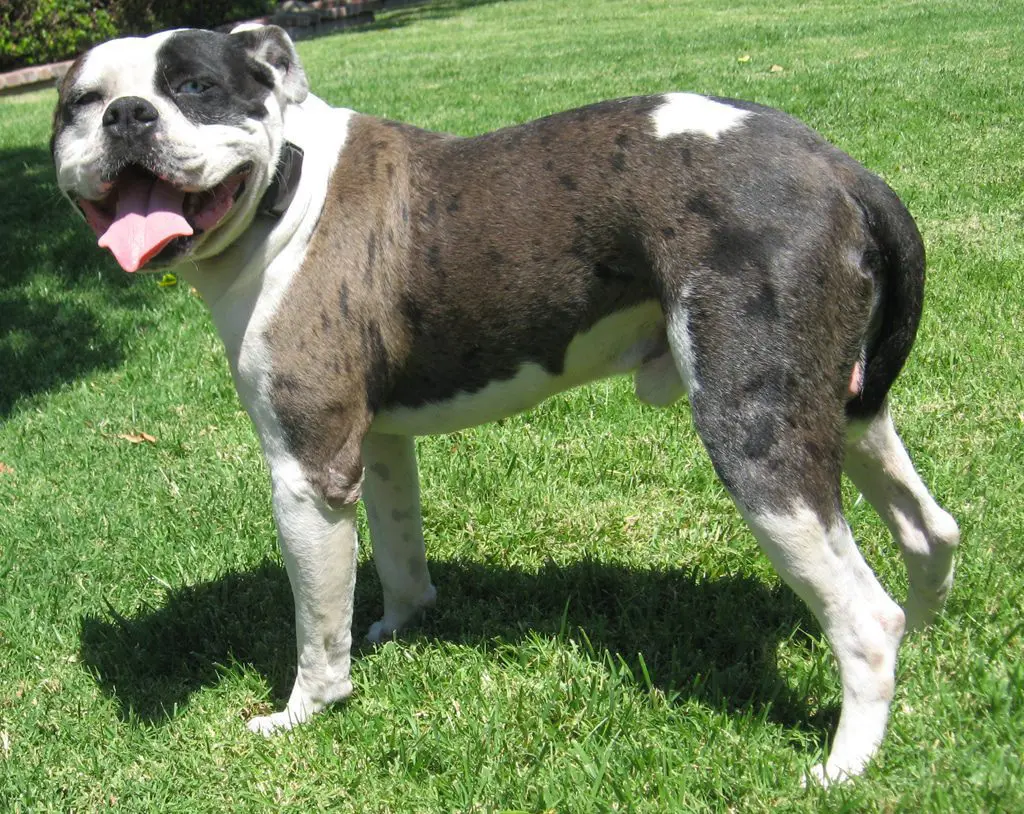
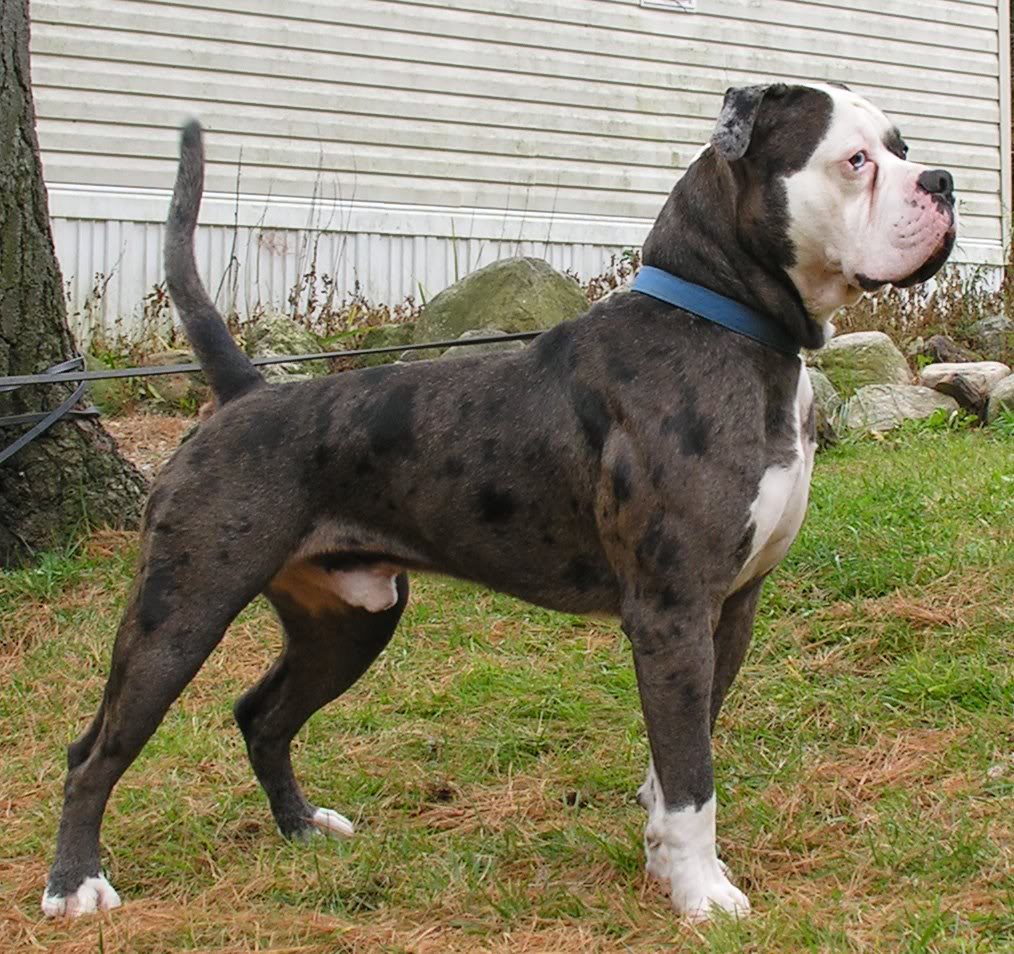
Also Known As Otto Bulldog It is a breed of dog of American origin, considered rare due to the few existing copies. According to available information, They have been developed in the area Alapaha River in the southern region Georgia. They are renowned for their great sense of obedience, their agility and your protective character.

This was developed by crossing Old English Bulldog white (known as, White English Bulldogs), a Catahoula Bulldog and a reduced number of copies of Colby Pit Bull Terrier. The origins of the breed remain fuzzy, and this has caused much confusion…

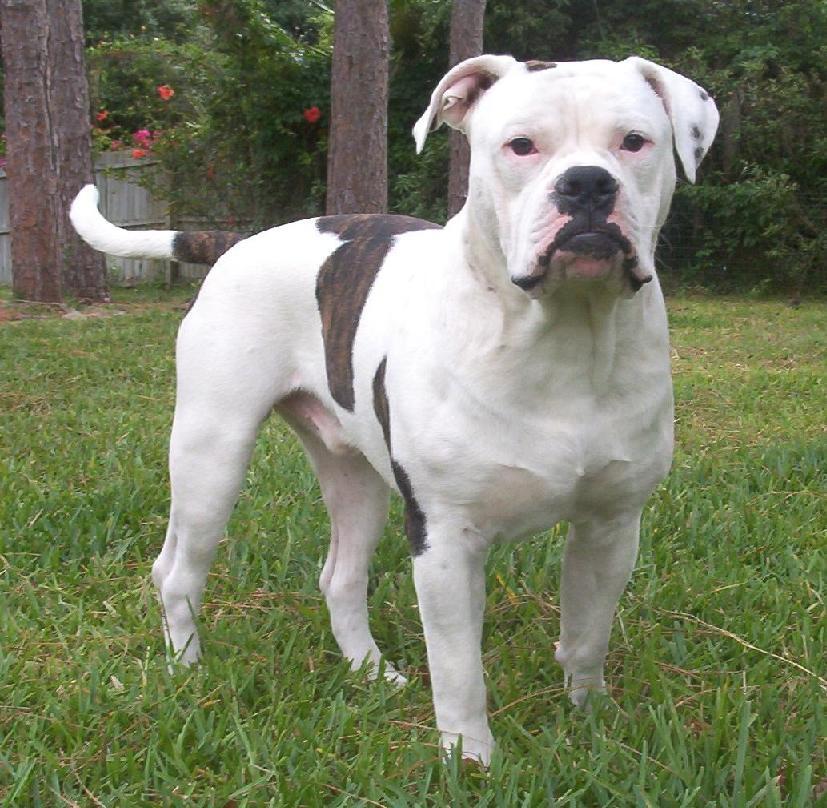
While at first glance it is a Bulldog type. It is a stronger dog and a well-developed musculature (remarkable characteristic of the breed, compared to other varieties Bulldog).

Despite its similarity, not to be confused with American bulldog. This similarity resulted in actions pre-register many Alapaha Blue Blood Bulldog They were included in the ancestry of American bulldog.

Videos

While Alapaha Blue Blood Bulldog Association It has declared that it was founded in 1979, the earliest evidence of the existence of this club record dates of 1989 in California. That discrepancy has triggered multiple discussions.

The race was in danger of extinction until a small group of Southern, in 1979, in an attempt to rescue the Bulldog de Old Tymey Plantation del Sur, He founded the ABBA (Alapaha Blue Blood Bulldog Association), giving the aforementioned name and dedicated to the preservation of this unique type of dog.

Claims made by the Mrs. Lana Lane, nurturer and follower of the race, they dealt with the existence of records. But, little evidence exists to support his claim because in family lines described in the World Atlas of Dog Breeds as the founders of the breed.

The current records of this breed They include the following organisms:

The ACA (American Canine Association) who registered the first champion Under the title of Alapaha. ABBA (Alapaha Blue Blood Bulldog Association), CCR (National Kennel Club), (ABBBR) Alapaha Blue Blood Bulldog registry, CKC (Continental Kennel Club), WWKC (World Wide Kennel Club), UWABC (Kingdom of work Alapaha Bulldog Club & Registration), UCA (United Canine Association), and IOEBA (International Olde English Bulldogge Association), among them there is great variation in the type and standard.

Physical characteristics

Descriptions of their size vary greatly depending on the organism., but trying to reach an average consensus we would place the males in a weight ranging from 32 to 41 kg, and height the cross of 51 to 63 cm.. Females - slightly smaller, they weigh in 25 to 34 kg and measure of 45.7 to 55.9 cm in height to the cross.

The ears and tail They are left natural, without any cutout.

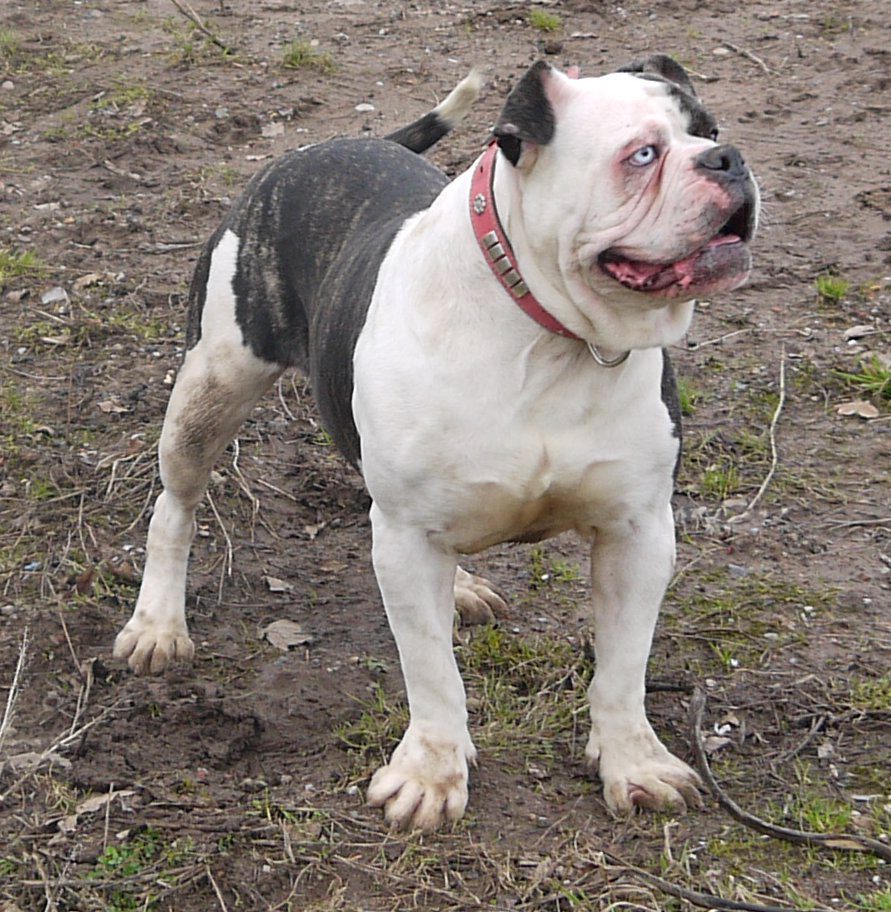
Their colors They are varied, preferably, You must have at least the 50% white body with spots. They can be, predominantly, solid color with white, or dry white. Patches or markings are generally color merle, striped, blue, black, chocolate, red, beige, or tricolor. Currently the most common are the tricolor mantle (both white, Merle, red, as well as beige, Merle, chocolate).

The eye color can vary from Brown to blue, and they usually see with one eye of each color copies or a finger eye colors.

Its pelage is short, hard and bright by nature, which is why, coat care requirements are minimal.

Character and skills

Coachable, obedient and responsible, with impressive capabilities as guardian Family and property. They have a strong instinct for protection and it's love at home.

Puppy must be socialized and trained using humane methods, since cruelty could stimulate the aggressiveness of the animal. Intelligent and quick learning, with assertive methods.

very energetic and athletic breed. Even so, They can be adapted perfectly to life in an apartment if sufficiently exercised and daily. While within the home displays inactive, quiet, It will be more happy with - at least- a medium size yard.

They were formerly used to work with livestock, especially in the capture of errant pigs. For that reason his muscles are long and powerful, this physical characteristic reminds us that for the dog to have optimal health it needs to be exercised regularly. They often enjoy long walks, run and play.

His life expectancy is from 12 to 15 years.

“Alapaha Blue Blood Bulldog” Images

“Alapaha Blue Blood Bulldog” Videos

Numb Skull the Alapaha Bulldog in the UK

Dogs breeds: «Alapaha Blue Blood Bulldog»


Type and recognitions:

  • Race is not recognized by the FCI

Alternative names

1. Alapaha Blue Blood Bulldog, Otto Bulldog (English).
2. Alapaha Blue Blood Bulldog (French).
3. Buldogue Alapaha de sangue azul, Alapaha Blue Blood Bulldog (Portuguese).
4. Alapaha Blue Blood Bulldog (German).
5. Bulldog Alapaha de sangre azul, Alapaha Blue Blood Bulldog (español).

▷ The world of Pets: Dogs, cats, birds, reptiles, amphibians

Old English Bulldog
Inglaterra Extinct

Antiguo Bulldog Inglés

Several breeders are trying to recreate the extinct breed of Old English Bulldog

Content

History

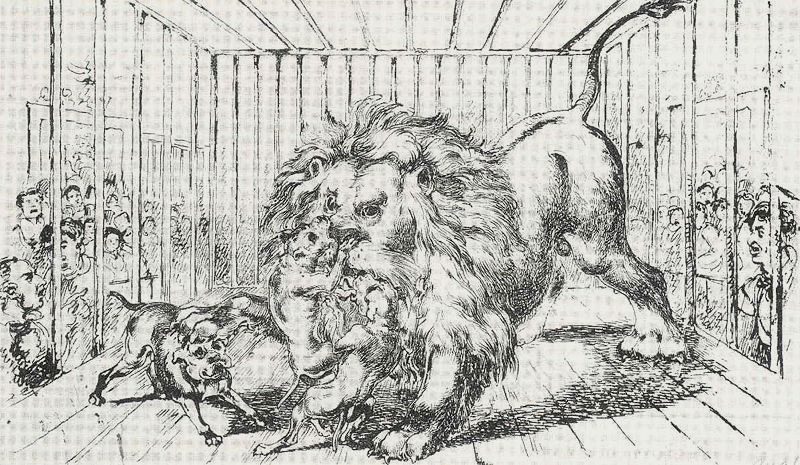
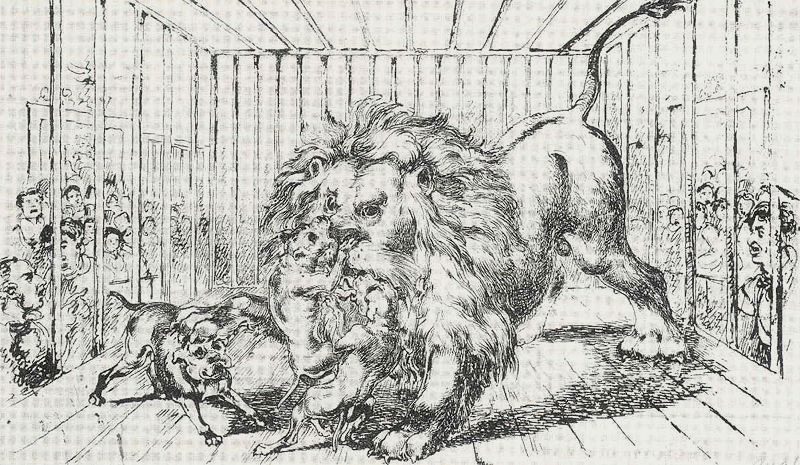
The Old English Bulldog was a breed of dog, quite fierce comparing it with the tenderness of the current English Bulldog. Be used for shows as bloody as fights with bulls and Lions, his specialty was biting their nose until the animal couldn't take it anymore and was knocked down by the dog.

Historians are fairly confident that the Old English Bulldog derived from an ancient breed of dog warriors, as the old mastiff or Alaunt. Others believe that the true origin of the breed is not at all clear. Representations in old engravings show that the variety was, without a doubt, a small mastiff, with a relatively long head. The word ‘Mastiff‘ We used, finally, to describe these smaller mastiffs, in the fight with bulls, it proved be lethal, Mastiff, It was used as part of the description, by the power of the dog that joined speed in action (something not very common in large Mastiffs), transformed into a beast.

Read more

▷ The world of Pets: Dogs, cats, birds, reptiles, amphibians

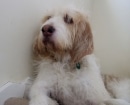
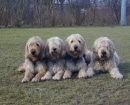
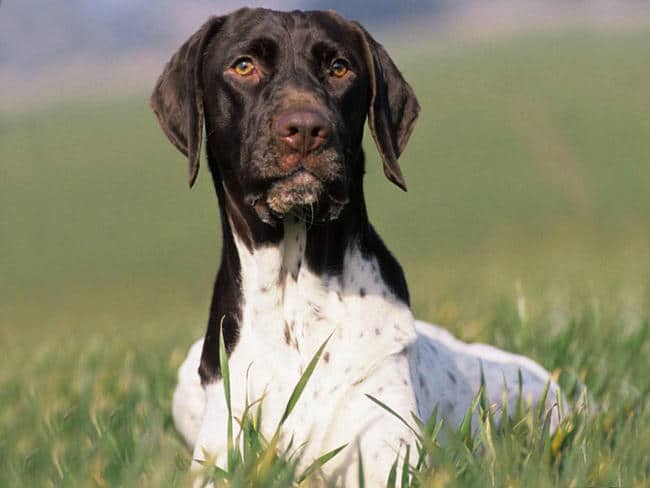
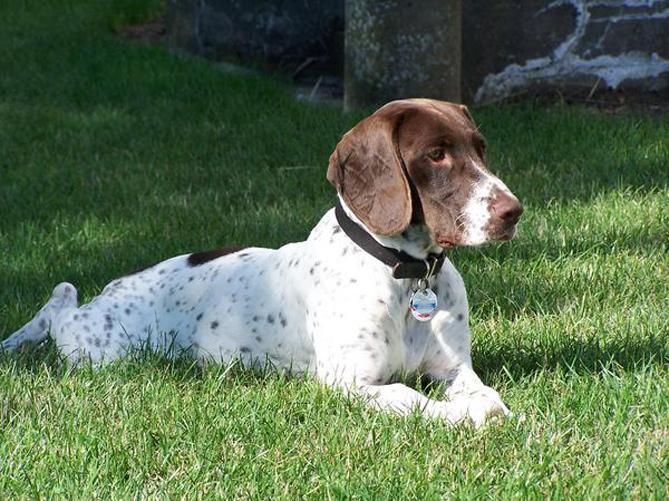
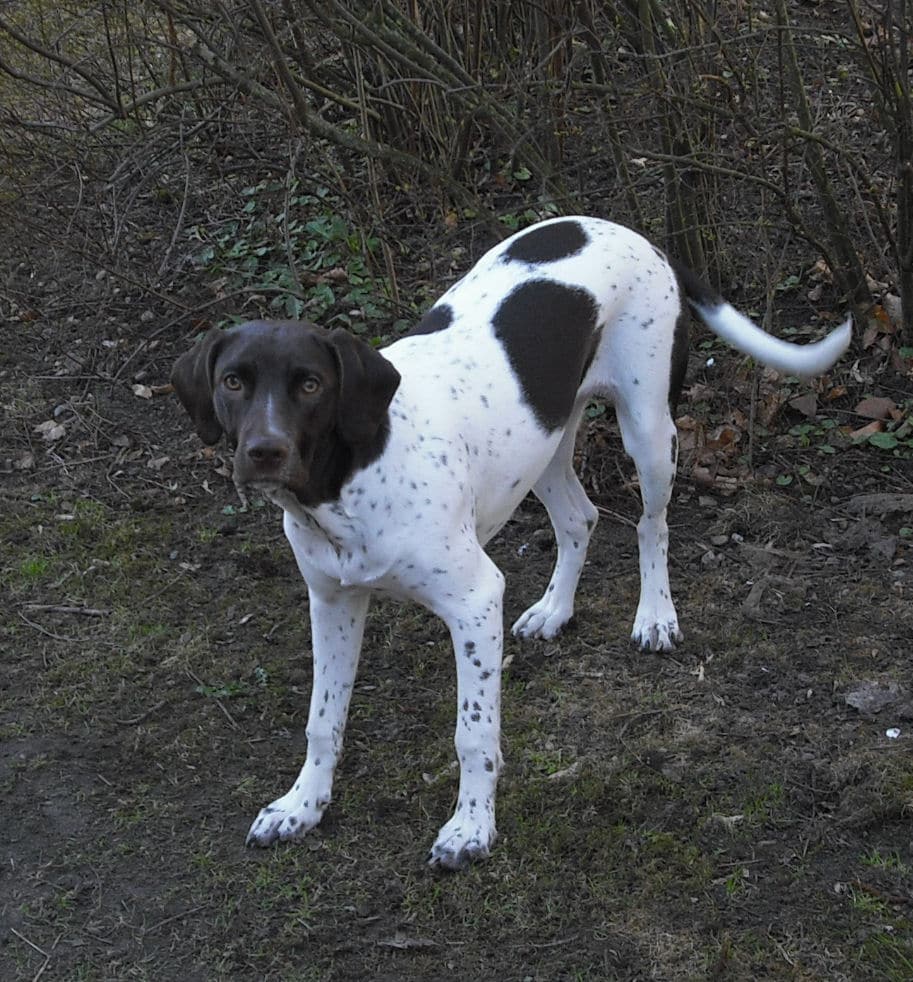
Old Danish Pointer
Dinamarca FCI 281 . Braque Type

Antiguo perro de muestra danés

Given the hunting instinct of the Old Danish Pointer, it is necessary to socialize him as a child

Content

Characteristics "Old Danish Pointer"

Coexistence is important that you have with your new friend. Before considering the acquisition of a dog of the breed "Old Danish Pointer" you know certain factors. Not all breeds of dogs are apt to live in an apartment, you must take into account his character, their need for exercise, their interaction with other pets, their care and if you have small children, their level of tolerance towards them.

Adaptation ⓘ

3,0 of 5 stars (based on 1 review)

friendly dog ​​ⓘ

3,0 of 5 stars (based on 1 review)

hair loss ⓘ

2,0 of 5 stars (based on 1 review)

Affection level ⓘ

5,0 of 5 stars (based on 1 review)

Need for exercise ⓘ

4,0 of 5 stars (based on 1 review)

Social need ⓘ

4,0 of 5 stars (based on 1 review)

Home ⓘ

1,0 of 5 stars (based on 1 review)

Toilet ⓘ

2,0 of 5 stars (based on 1 review)

Friendly with strangers ⓘ

4,0 of 5 stars (based on 1 review)

barking ⓘ

4,0 of 5 stars (based on 1 review)

Health ⓘ

4,0 of 5 stars (based on 1 review)

Territorial ⓘ

3,0 of 5 stars (based on 1 review)

Cat friendly ⓘ

3,0 of 5 stars (based on 1 review)

Intelligence ⓘ

4,0 of 5 stars (based on 1 review)

Versatility ⓘ

3,0 of 5 stars (based on 1 review)

Child friendly ⓘ

5,0 of 5 stars (based on 1 review)

Surveillance ⓘ

3,0 of 5 stars (based on 1 review)

joy ⓘ

4,0 of 5 stars (based on 1 review)

History

The Old Danish Pointer, is a medium sized breed of dog with brown markings, from Denmark.

Its Danish name is Gammel Dansk Hønsehund, It literally means bird hunting dog. It is in the Group 7, section 1.1 of the FCI.

Trace the origin of the race can be followed until the year 1710, When a man named Morten Bak, Glenstrup neighbor (adjacent to Randers and Hobro Denmark city), He crossed for eight generations strays dogs from local farmers, until he obtained a pure breed of black and white spotted dogs that he called "Bakhounds”. The result was a popular hunting dog.

Race scholars agree that it is likely that these strays to the Lord Morten Bak, used in their breeding program, they were of Spanish origin, and is therefore considered as one of the direct ancestors of the race Old Danish Pointer.

The popularity of this breed faded unfortunately during the 19th century, the race disappeared almost altogether, only a dedicated breeder continued breeding with the integrated genetic information. After World War II there was only 10 dogs and intensive breeding work was started to prevent the extinction of the breed.

The race again won great popularity, above all thanks to Poul Thomsen (presenter of a recognized programs on animals in the Danish television).

Currently there is a considerable decline in Danish sample dogs, crossing often with the Braque Francais, quite similar.

Video

Physical characteristics

Its Constitution is strong, one of its clearest characteristics is the great difference between male and female. While the male is powerful and from, the female is lighter, spirit and capricious.
Height: Male 54-60 cm. (21-23.5 in), is preferred over 56 cm. . females 50-56 cm. (19.5-22 in), is preferred over 52 cm. .

Weight: Male: 30-35 kg . Female: 26-31 kg .

Character and skills

It gives the impression of being a silent dog and stable but showing determination and courage. It is a brave and determined dog. During the hunt act calmly, patience and slowness, always maintaining contact with the Hunter and doing its job of dog shows, discreetly, without disturbing the prey.

The Old Danish Pointer usually fits perfectly, both hunt small prey and large. His affable character allows him to hunt both in packs and alone with his master..

Home pet is a very familiar and quiet dog, provided you get sufficient exercise and have large enough space to run freely. However He Old Danish Pointer not an apartment dog. An active dog, is intended for people available enough to give you long daily walks and keep you from feeling lonely.

Given their hunting instinct, We need to socialize so small that it gets used to share a roof with small animals (cats, rabbits, etc.).

Images Old Danish Pointer

Type and recognitions:

  • FCI CLASSIFICATION:
  • Group :
  • Section : . .

Federations:

  • FCI – Group 7: Pointing Dogs. – Section 1: Continental Pointing Dogs. 1.1: Braque Type

FCI breed standard "Old Danish Pointer"

Origin:
Denmark

Date of publication of the valid original standard:
08.01.1998

Use:

Versatile dog used for bird hunting.


General appearance:

It is a medium-sized dog, rectangular shape and strong build. One of the most charming characteristics of the breed is the great difference that exists between the male and the female..
While the male is powerful and substantial, the female is characterized by being lighter, capricious and have more spirit.

IMPORTANT PROPORTION :

The relationship between the height at the withers and the length of the body is approximately 8:9.


Behavior / temperament:

Gives the impression of being a calm and stable dog that shows determination and courage. during the hunt, progresses relatively slowly, always keeping in contact with the hunter. For his behavior in the hunting field, fulfills its task as a pointer without superfluous agitation. The breed is suitable for large and small hunting grounds.

Head:

Short and wide, without a pronounced stop. The occiput is prominent and clearly visible from any angle.

Cranial region:
  • Skull : Wide enough and distinctly rounded.
  • Depression links (Stop) : Is not pronounced.

facial region:

  • Truffle : Meaty and well defined; nostrils wide open. Dark to lighter liver color.
  • Snout : Wide muzzle.
  • Lips : Widely developed fluff from the nose and covering the lower jaw. The lips help give the head its characteristic importance.
  • Jaws / Teeth : Powerful jaws with regular scissor bite. A complete denture is desirable.
  • Cheeks : Well defined and developed, very muscular.

Eyes : Medium-sized, they are not sunken or prominent. Dark brown is desirable. Considering the origin of the breed, a slight drooping of the lower eyelids is tolerated, but should not be encouraged.

Ears : Relatively low set, wide and slightly rounded at the ends.
Its length is correct if the ear pulled towards the nose leaves a little more than the outer third of the muzzle uncovered. The front edge of the ear hangs nicely close to the cheek.

Neck:

Muscular and very hairy. The double chin should be considered a hallmark but should not be excessive.

Body:

  • Cross : Well defined. The highest point of the top line is located at the cross, and then descends slightly towards the rump.
  • Back : Firm and very muscular.
  • Pork loin : Short, broad and muscular, strongly together.
  • Rump : Wide, not too short, slightly inclined towards the insertion of the tail.
  • Breast : Deep and wide; a good width is desirable especially in males. The sternal region reaches up to the elbows. Well sprung ribs that reach well to the back of the body. The thorax is not flattened or crowded. A highly developed parapet is highly desirable.

Tail:

Insertion a little high than too low. Fairly wide at its base, slimming to tip. It is of medium length and reaches almost to the tibio-tarsal joints. The tail is carried hanging naturally. Amputation is not allowed

Tips

PREVIOUS MEMBERS : Viewed from the front, they are strong, straight and parallel.

  • Shoulder : Laid flat and close to the chest, covered with strong muscles that are clearly visible during movement or at rest.
  • Arm : Good length, very muscular.
  • Elbows : Closed to the body, but not too close to it, no deviations outwards or inwards, placed rather back. Good angulation between the arm and forearm.
  • Forearm : Straight, with powerful muscles and strong bones.
  • Articulation of the Carpus : Strong.
  • Metacarpus : Slightly oblique in relation to the forearm.
  • Previous feet : Strong and firm, well arched with hard pads.

LATER MEMBERS : Seen from the back, they are straight and parallel. With good angles and strong bones.

  • Thigh : Muscular, rather long and wide. Good angulation between the pelvis and the thigh.
  • Knee : Strong, well angled.
  • Leg : Quite long, muscular.
  • Warm-foot joint : Strong and powerful.
  • Metatarsus : Slightly oblique in relation to the leg.
  • Hind feet : Strong and firm, well arched, with hard pads.

Movement:

Space-spanning steps with good rear thrust and matching reach in front. The movement is straight and parallel in the fore and hind limbs. High head carriage.

Mantle

SKIN : Not too fine, it is rather tight on the body and extremities. On the head and neck the skin is looser, forming a double chin and presenting a crease at the corners of the lips.

HAIR : Short and dense, something hard to the touch. Hair must completely cover the body.

COLOR : White with brown markings, some large or many small speckled markings on the white background. The brown color can vary but is preferred from a brown to dark brown tone.


Size and weight:

Height to the cross :

  • Male : 54-60 cm., more than 56 cm.,
  • female : 50-56 cm., more than 52 cm..

Weight :

  • adult male : 30-35 kg,
  • female : 26-31 kg.


Fouls:

Any deviation from the aforementioned criteria is considered as a fault and the severity of this is considered to the degree of the deviation to the standard and its consequences on the health and well-being of the dog..

• Incorrect head posture.
• Flesh-colored nose with depigmented spots.
• Muzzle too short.
• Underdeveloped lips.
• Missing one or two premolars (PM1).
• Eyes too light.
• Slightly bowed back.
• Croup too short.
• Tail carried well above the top line.
• Light cow corvejones or slightly arched extremities.
• Hair too thin.
• Small variations in size (1-2 cm.) above or below the limits indicated in the standard.

SERIOUS FAULTS

• Bones too weak.
• Pronounced stop.
• Pointed snout.
• Pincer bite.
• Lack of another tooth besides the PM1.
• Pronounced carp back, slightly saddled back.
• Obvious deficiency in breast development. Thorax not sufficiently defined. Ribs too flat or crammed.
• Elbows turned very outward or inward.
• Cow-shaped or severely arched limbs.
• Sunken metacarpus.
• Flattened feet, fingers apart.
• Weak behavior, shy.

MISS PLAYOFFS

• Aggressive or fearful dog.
• Serious deviations in sexual characteristics.
• Teeth : Missing more than two PM1 and one other tooth. Teeth that are not visible will be considered missing unless their existence can be certified in previous exposure.
• Upper or lower underbite or any other defective bite.
• Cleft palate or cleft lip.
• Ectropion, entropion, distiquiasis (double lash line).
• Malformation of the chest or rib cage (for example, sternum too short, which causes a sudden elevation of the lower line behind the ribs).
• Size deviations of more than 2 cm above or below the limits indicated in the standard.
• Very shy and weak behavior.

Any dog ​​showing clear signs of physical or behavioral abnormalities must be disqualified..


N.B.:

Males should have two normal-appearing testicles fully descended into the scrotum..

Source: F.C.I - International Cynological Federation

Alternative names:

1. Gammel Dansk Hønsehund, Old Danish Bird Dog, Old Danish Pointing Dog (English).
2. Pointer danois, Ancien chien d’arrêt danois (French).
3. Gammel Dansk Honsehund, Altdänischer Hühnerhund (German).
4. (em dinamarquês: Gammel dansk hønsehund) (Portuguese).
5. Perro antiguo de muestra danés (español).

▷ The world of Pets: Dogs, cats, birds, reptiles, amphibians

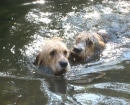
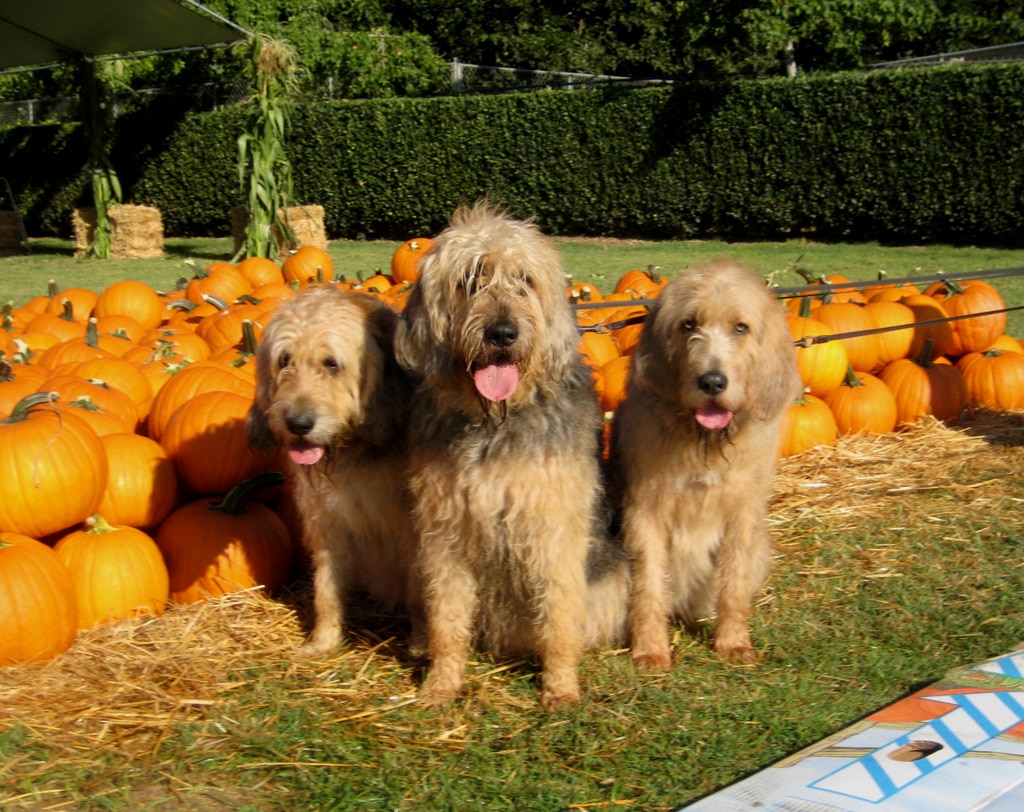
Otterhound
Inglaterra FCI 294 . Large-sized Hounds

Perro de Nutria

The Otterhound is the most endangered dog breed in the UK.

Content

History

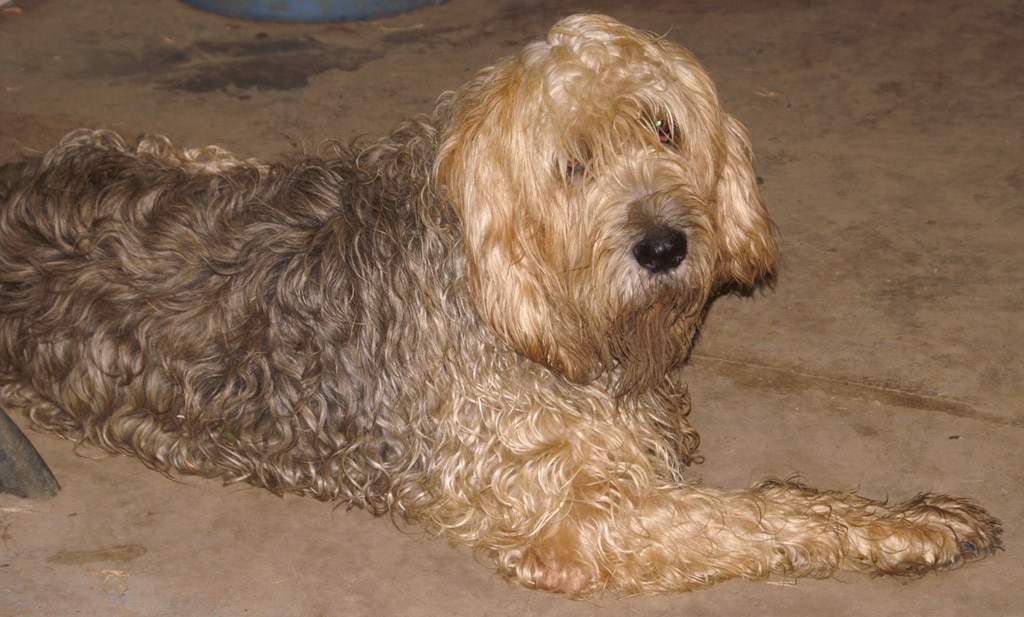
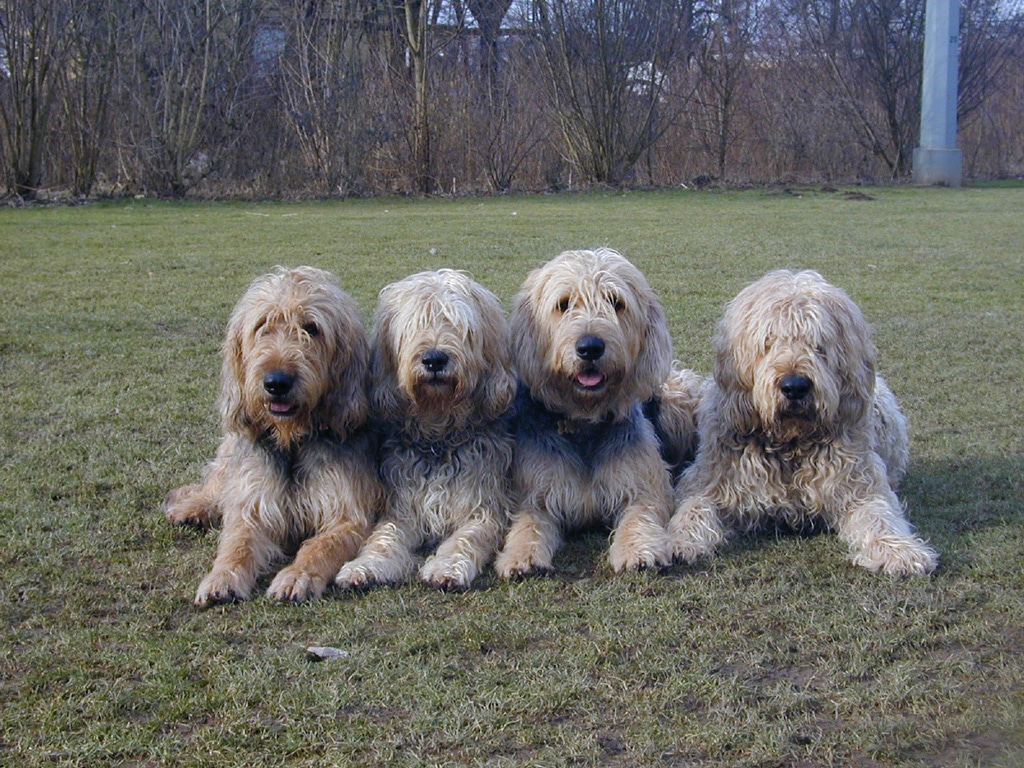
The Otterhound It is a very old breed of dog from United Kingdom, has, among many other mixtures- within their ancestors to the race Airedale Terrier.

The name of this precious woolly, It just comes to the task for which it was created: the House of otters. This dog has a smell nearly as well developed as the Bloodhound. This breed was developed in England.

But like all dog breeds, changes and social advances always bring consequences in the case of Otterhound, It happened that the Otter hunting was banned in England, and if so few copies of this breed, with this ban the race saw very committed his existence.

Though, To avoid its extinction some race fans what they did was focus the hunting instinct of the Otterhoundtowards other types of prey.

The Otterhound It is a dog specializing in otters, extremely difficult and dangerous job.

Some experts suggest that the danger of the Otterhound is similar to the extinction of the Panda Bear.

It is a very small breed, It is estimated that they there are around 1.000 Otterhound in the world, of which from 350 and 400 they are in the U.S.. Even at the beginning of the 20th century, When was Otter hunting a popular sport, the Otterhound they were never numerous.

Today, this breed is considered as the most threatened by endangered United Kingdom, There are only 51 specimens born in 2006. Are on the list of most vulnerable native breeds of the UK Kennel Club and programmes are being carried out to save the race.

Physical characteristics

The Otterhound, is a dog large and strong, sometimes we could say, incombustible. It is capable of spending all day hunting in the water or running around the field, without showing even the slightest index of exhaustion.

It has a head big and strong with well marked bone.

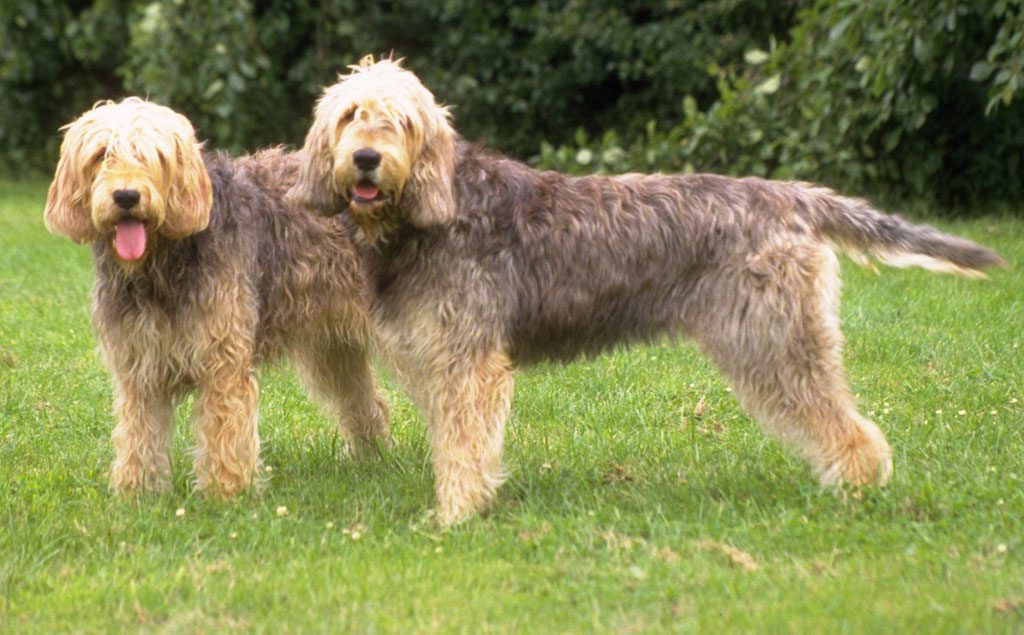
Their eyes, intelligent and lively expression, vary in color depending on the coat. The ears, they are long, them it is hanging at the height of the eyes. They are set high and have a characteristic fold of the breed..

The tail, high insertion it takes her upright always to pay attention a State of alert, but when it is resting her leads hanging.

The hair of the Otterhound is long, has a length of 4 to 8 cm approximately. The mantle is double layer, the outdoor hair is dense, hard and waterproof and should be rough to the touch. The internal layer It is notorious and touch gives a feeling oilseed.

While, measures with respect to the height and weight, vary according to the club as a consensus we could say that the height the cross in the males is of approximately 69 cm and the females of 61 cm..

The average life expectancy the race is a little more than 10 years. A quarter tends to live in 12 to 15 years. Y, the case of a copy which he lived has been known to the 16 years of age.

Character and skills

The Otterhound, is a Hound very versatile, is generally used for the House of large dams, both individually and in a pack.

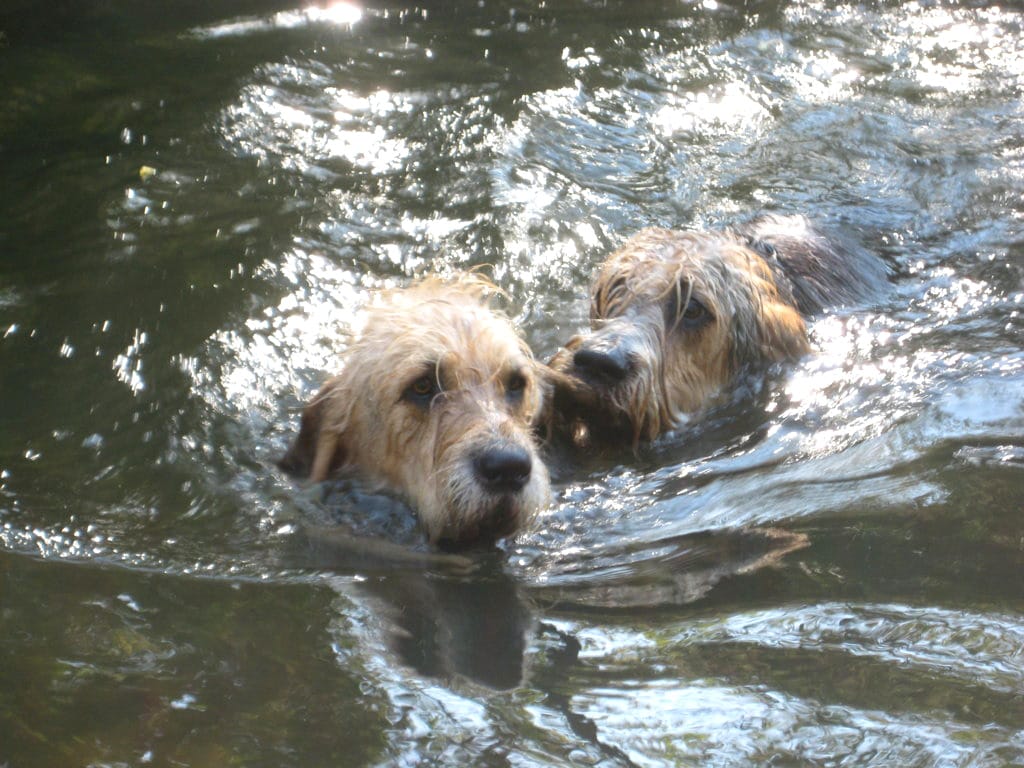
Its temperament It friendly and balanced, as long as you have enough physical exercise especially everything related to water, enjoy a lot swimming.

The Otterhound enjoy exercise, the routine. They are very good companion dogs for the family, but they must be kept in a secure property, that can jump fences of up 5 metres in height. They are not at all appropriate for life in apartment.

It is a excellent swimmer, he chased the otters swimming, using only the trail of bubbles that were leaving them diving as track.

This dog is a highly specialized breed who instinctively knows what has to do. Perhaps that is why they are a little stubborn and not always obedient.

They need plenty of exercise, preferably swimming. It is a working dog and needs to maintain a series of obligations or activities, a well-marked routine to avoid boredom and the emergence of destructive behaviors.

A good training is key to keep happy the dog and the family.

Observations

Despite having fame of stubborn, with a proper training is usually used also in civil defence tasks.
Otterhound Images

Otterhound Videos

Type and recognitions:

  • FCI CLASSIFICATION:
  • Group :
  • Section : . .

Federations:

  • FCI – Group 6: Scent hounds, and related breeds. – Section 1.1: Large-sized Hounds.
  • AKCHound
  • ANKCGroup 4 (Hounds)
  • CKCGroup 2 – Hounds
  • ​KCHound
  • NZKCHound
  • UKCScenthounds

FCI breed standard "Otterhound"

Origin:
England, United Kingdom

Date of publication of the valid original standard:
13.10.2010

Use:

Big hound, strong, Built primarily for a long day of work on the water, but able to gallop on land.


General appearance:

It is great, straight-limbed and robust, its coat is rough, has a majestic head and a strong body. It moves with loamy and loose strides. Rough double coat and big feet are essential. Easy movement.

IMPORTANT PROPORTIONS: The distance from the tip of the truffle to the naso-frontal depression is somewhat shorter than the distance from the depression to the occiput.


Behavior / temperament:

Friendly and balanced.Signs of aggression and nervousness should be severely penalized.

Head:

Clearly outlined, imposing, higher than wide. The forehead does not have a bump or a scowl ; the expression is open and friendly. Except the truffle, the whole head is well covered with coarse hair that forms light mustaches and beard.

Cranial region:
  • Skull: Delicately pumped, neither thick nor exaggerated; rises from the naso-frontal depression to the slightly marked occipital protuberance.
  • Depression links (Stop): Something marked, but without exaggeration.

facial region:

  • Truffle: Long, windows wide open. Snout: Strong and deep.
  • Lips: Belfos profusos, although not in excess.
  • Jaws / Teeth: The jaws are strong, wide. Teeth are well aligned, and the joint is scissor-shaped, that is to say, that the upper incisors closely overlap the lower ones and are vertically implanted in the maxillae.
  • Cheeks: Defined cheek bones.

EYES: They are of intelligent expression and moderately sunken. The conjunctiva is somewhat apparent. Eye color and eyelid edge pigment vary according to coat color (a blue and tan hound may have hazel eyes). Yellow eyes are not desirable.

EARS: They present unique characteristics of the breed. They are long, pendant and implanted at the level of the angle of the eye. They can reach the truffle when pulled forward, forming a characteristic fold. The tip bends or curls inwards giving a curious folded look. This is an essential point that should not go unnoticed. The ears are well covered with hair that forms bangs.

Neck:

It's long and powerful. It is delicately inserted in the well oblique and cleanly outlined shoulders . A slight double chin is acceptable.

Body:

Very strong.

  • top line : Level.
  • Back : wide.
  • Pork loin : Short and strong.
  • Breast : Deep ; rib cage is snug, quite deep and oval in shape ; not very wide, not too narrow. The ribs extend well back, which allows enough room for the heart and lungs.

Tail:

High implementation ; dog picks up when alert or on the move. Never curls over the back, but it can hang up when the dog is resting. It is thick at the base and tapers to the tip ; the caudal bones extend to the hock ; carries it straight, or in a slight curve. The hair on the lower part of the tail is longer and more abundant than that on the upper part.

Tips

PREVIOUS MEMBERS:

  • ShoulderDefinedand well oblique.
  • forearmsStrong bones, straight from elbow to ground
  • Metacarpus: Strong and well oblique.
  • Previous feet: Large, rounded, with well arched toes and thick pads; they do not deviate either outwards or inwards. The interdigital skin must be visible.

LATER MEMBERS:

  • General appearance: They are very strong and muscular; views from any angle, the position should not be too wide, not too narrow. Posterior angulation is moderate. When the dog maintains a natural position, the hind limbs, from hock to ground, they are perpendicular.
  • Thighs: They are very muscular.
  • Metatarsus: Hocksin very low position, and they do not deviate even inwards, nor out.
  • Hind feet: Only slightly smaller than the previous ones. Large, rounded, with well arched toes and thick pads; they do not deviate either outwards or inwards. The interdigital skin must be visible.

Movement:

To step, the movement is very loose with the feet close to the ground; immediately go into an active trot, agile, regular, of very long strides. The gallop is uniform and strides of exceptional length.

Mantle

Fur: It is long of 4 to 8 cm., dense, rough, hard, but not wire hair. It is waterproof, hair texture is between straight and rough. Smoother textured hair on the head and lower part of the limbs is natural. The undercoat of hairs is apparent, a slightly greasy texture may appear, both in the outer layer and in the inner layer of hairs. Hair must not be trimmed and trimmed for display; presentation must be natural.

Color: All recognized hound colors accepted: solid color, grey, sandy, red, wheat, blue. They may have slight white marks on the head, the chest, the feet and the tip of the tail.

White hounds may have slight lemon markings, blue or badger. black and tan, Blue and fire, black and cream, sometimes liver, fawn and liver, fawn and white. The following colors are not allowed: liver (brown) and white, a white hound with black patches and clearly separated tan markings. The pigment must harmonize, although not necessarily combined with the color of the coat; for example, a tawny hound may have brown eyes and noses. The slightly depigmented nose is allowed.


Size and weight:

Height to the cross :

  • In males approximately 69 cm. (27 inches),
  • In females approximately 61 cm. (24 inches).


Fouls:

Any deviation from the aforementioned criteria is considered as a fault and the severity of this is considered to the degree of the deviation to the standard and its consequences on the health and well-being of the dog..

FALTAS DESCALIFICANTES:

  • Aggressiveness or extreme shyness.

  • Any dog ​​showing clear signs of physical or behavioral abnormalities.


N.B.:
  • Males should have two normal-appearing testicles fully descended into the scrotum..
  • Only functionally and clinically healthy dogs, with the typical conformation of the breed, should be used for parenting.

The latest changes are in bold.

Source: F.C.I - International Cynological Federation

Alternative names:

1. Otterhound (English).
2. Otterhound (French).
3. Otterhound (German).
4. Otterhound (Portuguese).
5. Otterhound (español).

▷ The world of Pets: Dogs, cats, birds, reptiles, amphibians

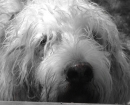
Old English Sheepdog (Bobtail)
Gran Bretañaa FCI 16 . Sheepdogs

The Old English Sheepdog It is possibly the breed that needs the most care regarding its hair.

Antiguo Perro Pastor Inglés

Characteristics "Old English Sheepdog (Bobtail)"

Coexistence is important that you have with your new friend. Before considering the acquisition of a dog of the breed "Old English Sheepdog (Bobtail)" you know certain factors. Not all breeds of dogs are apt to live in an apartment, you must take into account his character, their need for exercise, their interaction with other pets, their care and if you have small children, their level of tolerance towards them.

Content

Adaptation ⓘ

3,0 of 5 stars (based on 1 review)

friendly dog ​​ⓘ

3,0 of 5 stars (based on 1 review)

hair loss ⓘ

5,0 of 5 stars (based on 1 review)

Affection level ⓘ

5,0 of 5 stars (based on 1 review)

Need for exercise ⓘ

3,0 of 5 stars (based on 1 review)

Social need ⓘ

5,0 of 5 stars (based on 1 review)

Home ⓘ

1,0 of 5 stars (based on 1 review)

Toilet ⓘ

5,0 of 5 stars (based on 1 review)

Friendly with strangers ⓘ

2,0 of 5 stars (based on 1 review)

barking ⓘ

4,0 of 5 stars (based on 1 review)

Health ⓘ

3,0 of 5 stars (based on 1 review)

Territorial ⓘ

5,0 of 5 stars (based on 1 review)

Cat friendly ⓘ

3,0 of 5 stars (based on 1 review)

Intelligence ⓘ

4,0 of 5 stars (based on 1 review)

Versatility ⓘ

3,0 of 5 stars (based on 1 review)

Child friendly ⓘ

5,0 of 5 stars (based on 1 review)

Surveillance ⓘ

3,0 of 5 stars (based on 1 review)

joy ⓘ

5,0 of 5 stars (based on 1 review)

History

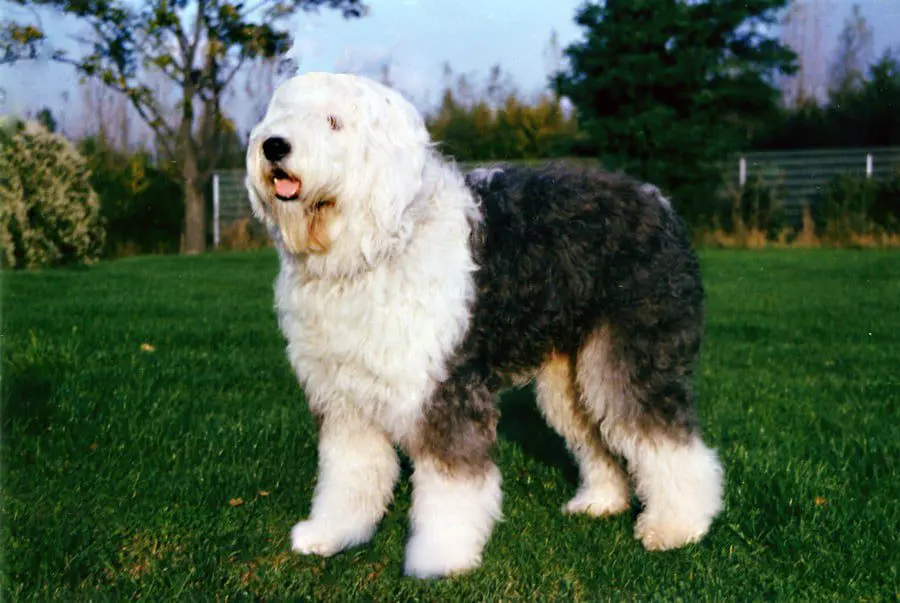
The Old English Sheepdog or Bobtail. It is a breed of dog guard or shepherds dogs family.

The race was created in England, more specifically, in the west, in the mid-19th century, to control the sheep and beef cattle in the rural area. While the race is born and develops in England, there is more than one theory that explains its origin.

Some authors raised the breed descended from dogs brought from Central Europe by the Romans, that over time they were crossing with different English races, including the English mastiff giving rise to Old English Sheepdog.

Other scholars of the race stress that it is a very old dog and possibly his most significant ancestor is the famous Asian Shepherd What, It has helped the existence of the Berger de Brie in France, of the Bergamasco Shepherd in Italy, and of the Komondor in Hungary.

According to this second current, the first copies of Bobtail they were selected for the first time in an era marked by the savage rivalry between England and France, the Of the hundred years ' war (1337-1453).

Y, finally, they pose in their ancestors, appears with total security the Berger de Brie.

In addition to in England this dog took many acceptance and dissemination among the Spanish shepherds in the 19th and 20th centuries by their excellent conditions and skills for the care of livestock.

Physical characteristics

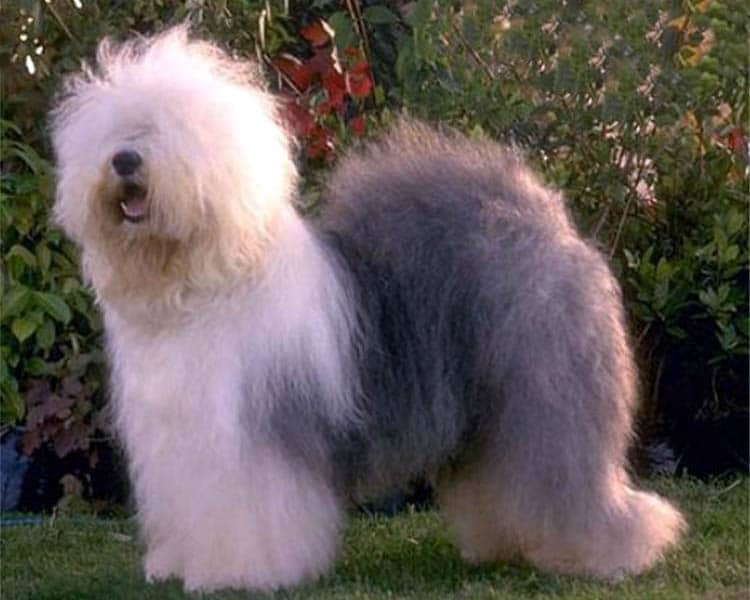
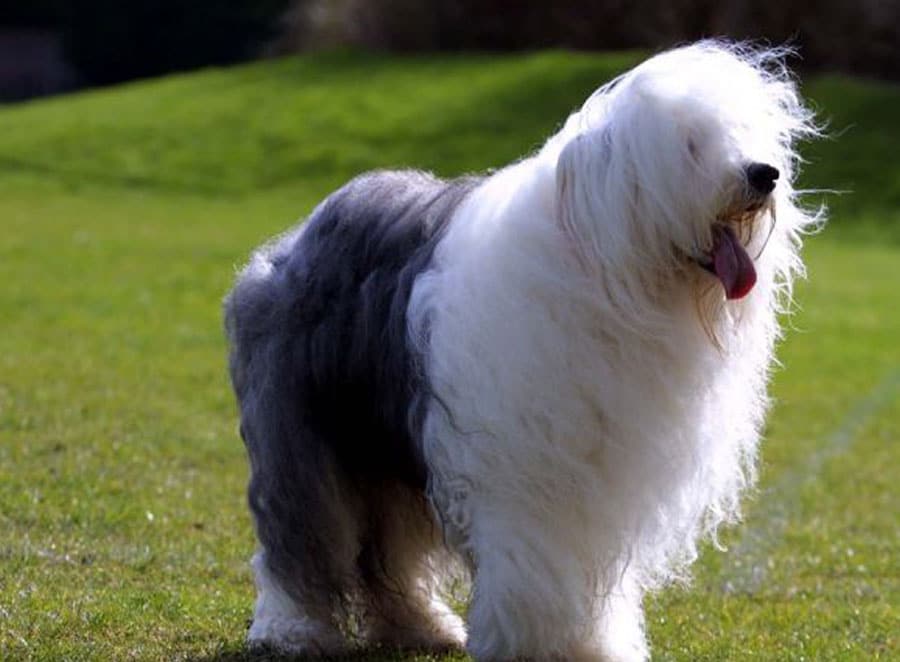
It is a dog great size and scale, with a height around the 63 cm.. and a weight between the 30 and 40 kg.

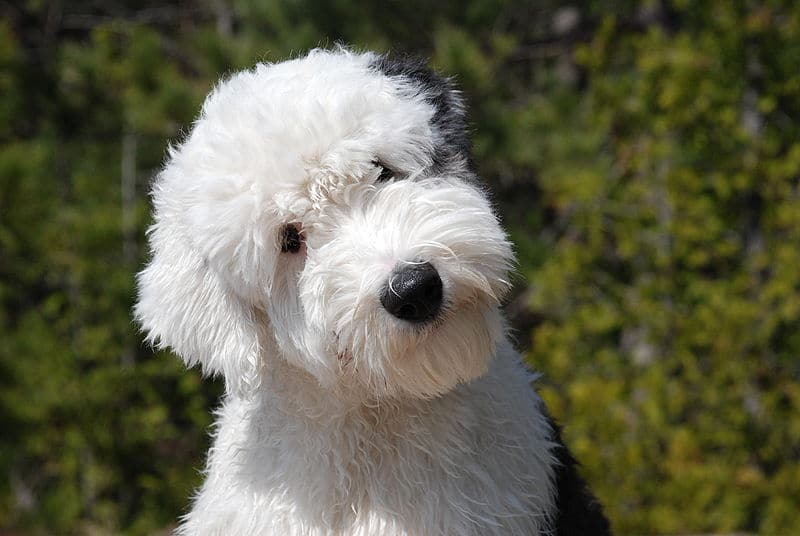
Small and floppy ears, coated with hair, strong and elongated neck, abundant hair desgreñado and rough touch, with a range of colors that can range from grey, grey, Blue to blue merle, with or without white markings on the head, bottom of the stomach or forelimbs.

The tail is often be amputated, or are there simply copies that are already born without it, hence its name Bobtail which in means «cut tail«, The search for this characteristic trait is believed to have been due to the desire of English breeders not to pay taxes., already before the dogs with tails were thought to be luxury goods. This dog has a very characteristic bark in the canine world, serious and pervasive.

Did you know??

There is no upper limit to the height of the Old English Sheepdog. Females usually measure 53 cm , the males 56 cm . That's because the sheep varied in size, so the dogs used to herd them they also varied in size.

Character and skills

Video "Old English Sheepdog (Bobtail)"

The Bobtail, tolerant character, It is an excellent dog for living together with children and other pets. They are able to easily adapt themselves to different conditions.. Faithful and intelligent It adapts to life in an apartment if necessary, always with the company of its owner. It is important to train it well from small, It is to learn fast and responsive dog.

The Old English Sheepdog he is a very good worker and is able to carry out orders, but it won't if the instruction if they believe that they are stronger minded than the human herd members.

They have a strong herding instinct and can treat the flock to shock people, never to bites. It is necessary to learn from an early age that humans are not part of his flock.
This dog is possibly the more care you need for your hair, that should be dealt with by canine professionals. As well, but to adapt to living in small spaces, you need a daily dose of exercise in the open air, because otherwise it could become destructive with the furniture in the house. Due to its thick coat is not a recommended race to live in warm places.

Health

The Bobtail have a predisposition to certain skin conditions:

– atopy ;
– demodecy;
– Furunculosis bacteriana (in the legs).

Life expectancy

13 years

Grooming

The maintenance of "Old English Sheepdog (Bobtail)" it is tedious due to its fur. Grooming is recommended every 4 or 6 weeks, otherwise shearing is inevitable.

Images «Old English Sheepdog»

“Old English Sheepdog” Videos

Home Again Chip saves Texas Old English Sheepdog
Type and recognitions:

  • FCI CLASSIFICATION:Group 1 –> Pastor and Boyeros dogs (except Swiss Cattle Dogs). – Section 1 –> Pastor dogs. Without working trial.
  • FCI 16
  • Federations: FCI , AKC , ANKC , CKC , ​KC , NZKC , UKC

FCI breed standard "Old English Sheepdog (Bobtail)"

Origin:
United Kingdom

Date of publication of the valid original standard:
13.10.2010

Use:

Shepherd dog.


General appearance:

It is a strong dog, symmetric, square, very harmonious construction and robust constitution. Absolutely no weakness in the limbs. Completely covered in abundant hair. He is a muscular dog, solid and with a very intelligent expression. Natural shapes should not be artificially modified using scissors or shearing machines.. Of great vitality, presenting a slightly ascending upper line and, seen from above, a pear-shaped body. Has a typical sway when walking with an ambling gait or with a normal gait. His barking has a characteristic timbre.


Behavior / temperament:

It is a docile dog with a good character. Bold, fell, and trustworthy. Not in any way fearful or aggressive if not provoked.

Head:


Cranial region:
  • Skull : Bulky and square in shape. The supra-orbital region is well arched.
  • Depression links (Stop) :  Well defined.

facial region:

  • Truffle : Large and black. The nostrils are wide.
  • Snout :  Strong, square and truncated,
  • Jaws / teeth : Strong teeth, large and well placed. Scissor bite : The jaws are strong and articulated in a perfect scissor shape., regular and complete, that is to say, that the upper incisors cover the lower ones in close contact and are set square in relation to the jaws. Pincer bite is tolerated but undesirable.
  • Eyes :  Separate. Dark-colored eyes or gazey eyes. The two blue eyes are admitted. Light eyes are a flaw. Pigmented eye rim will be preferred.
  • Ears :  Small and stuck to the sides of the head,

Neck:

Good length, strong and gracefully arched.

Body:

Rather short and compact.

  • Pork loin : Very robust, wide and slightly arched.
  • Breast : Well lowered and wide. The ribs are well sprung.

Tail:

Previouslycustom wasamputate the tail or naturally borntailless.
  • amputeeUsually completely amputated.
  • Without amputating : natural size. With good fringes and abundant hard-textured hair.


Tips

Former members
  • Shoulder : The scapulae should be well oblique, more  closer in the area of ​​the cross than in the shoulders. Loaded shoulders are undesirable.
  • Elbows : Tight to the chest.
  • Forearm: Perfectly straight forelimbs ; his skeleton is very strong, holding the body so that it is not close to the ground.
  • Previous feet: They must not be turned either inwards or outwards. They are small and tight. Well arched fingers, thick and solid ear pads.
Former members
  • General appearance: The posterior third is well covered with hairs, round and muscular.
  • Knee : Well angled, but without exaggeration
  • ;Leg : Long and well developed.
  • Hock : Well descended.
  • Metatarsus: Seen from behind, they must be perfectly straight.
  • Rear foot: They must not be turned either inwards or outwards. They are small and tight. Well arched fingers, thick and solid ear pads.
  • Movement:

    When walking, the rear one sways like a bear. At a trot, the extension is easy and the drive given by the rear is powerful. The members move in planes parallel to the axis of the body. Very elastic canter. In slow movements, certain dogs may have a tendency to walk at a walking pace. In motion, the dog may adopt a naturally lower head stature.

    Mantle

    • Fur : Abundant, very rough in texture ;  it is not smooth, but hirsute and free of loops. The undercoat is waterproof. The head and skull are well covered with hair. Ears are moderately covered. Neck well covered, as well as the anterior limbs, especially their surroundings. Hair is more abundant in the posterior third than in the rest of the body. Quality should be given more importance, to hair texture than to length andabundance.
    • Color : Any shade of gray, grayish or blue. The body and posterior third are uniform in color, with or without small white spots on the extremities of the limbs (socks). White spots in solid color areas should be rejected.  The head, the neck, forelimbs and lower belly should be white, with or no stains. Any brown hue is undesirable.


    Size and weight:

    Height to the cross

    • Males:    61 cm ,
    • females:   56  cm .

    The type and balance of shapes are of utmost importance and should not, in no case, be slaughtered for the carving.


    Fouls:

    Any deviation from the aforementioned criteria is considered a fault and its severity is considered to the degree of deviation from the standard and its consequences on the health and well-being of the dog and the dog's ability to perform its traditional task..

    disqualifying fouls
    • Aggressive or fearful dog
    • Any dog ​​showing clear signs of physical or behavioral abnormalities must be disqualified..


    N.B.:

    Males should have two normal-appearing testicles fully descended into the scrotum..

    The latest changes are in bold.

    Source: F.C.I - International Cynological Federation

    Alternative names:

    1. Shepherd’s Dog, bob-tailed sheep-dog, Bob-tail, Bobtail (English).
    2. Chien de berger anglais ancestral (French).
    3. Stummelschwanz, Schäferhund, Altenglischer (German).
    4. Old english sheepdog, Ovelheiro-inglês (Portuguese).
    5. Antiguo pastor inglés, Bobtail (español).

    ▷ The world of Pets: Dogs, cats, birds, reptiles, amphibians

    Old working bulldog
    Inglaterra Extinct

    Old English Bulldog

    The Old working bulldog (extinct) was fierce, It was used to fight with bulls and Lions.

    The Old working bulldog (Old English Bulldog) was a breed of dog, quite fierce comparing it with the tenderness of the current English Bulldog.

    Be used for shows as bloody as fights with bulls and Lions, his specialty was biting their nose until the animal couldn't take it anymore and was knocked down by the dog.

    Otros nombres: Antiguo Bulldog Inglés.

    Dogs breeds: Old working bulldog

    Read all about the race by clicking on: Old English Bulldog.