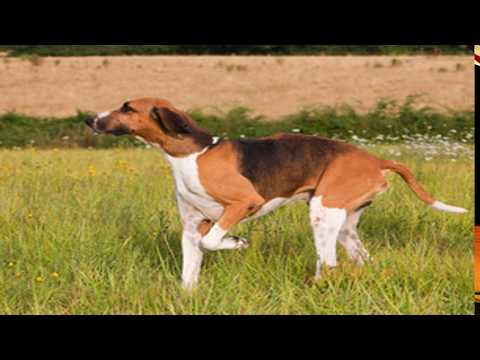
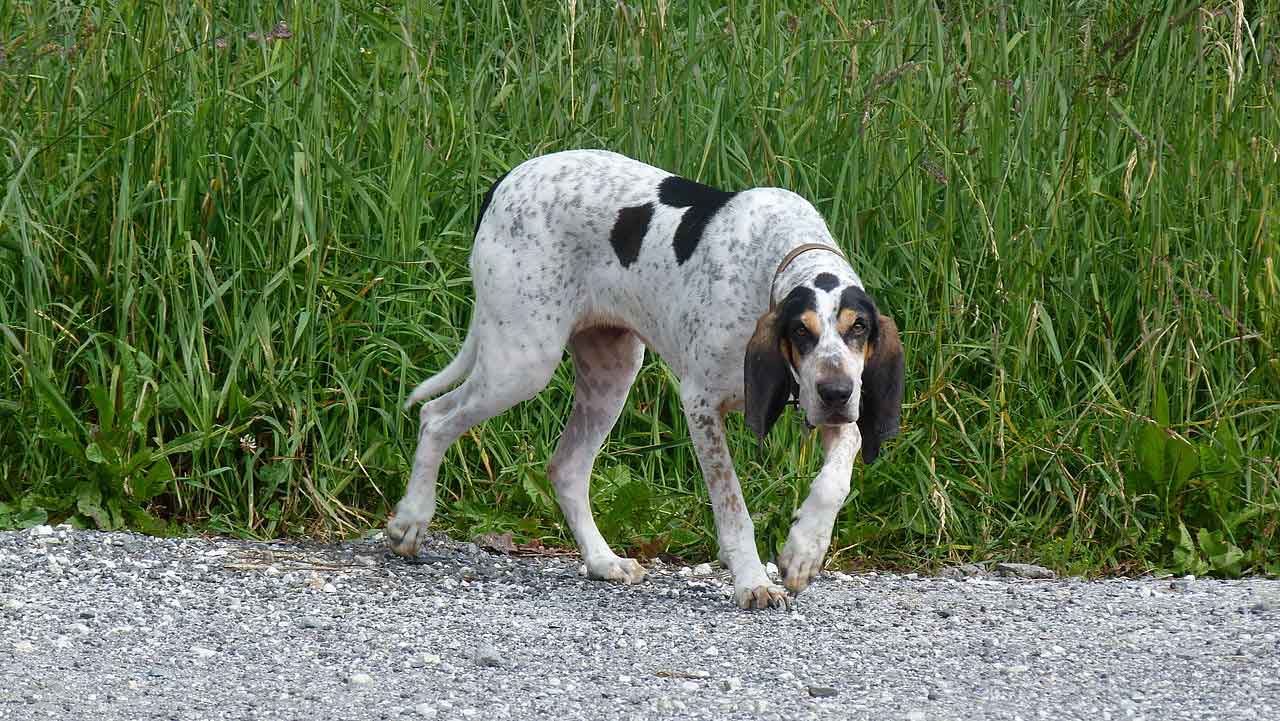
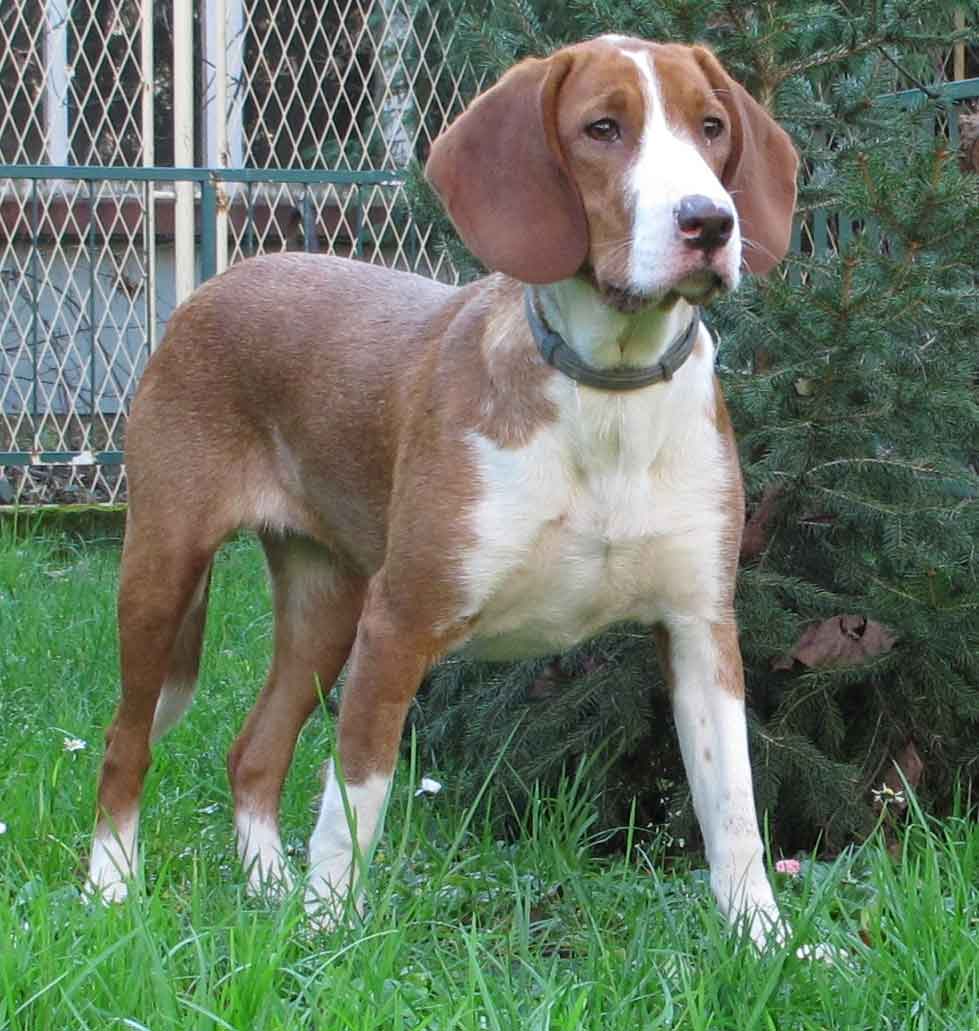
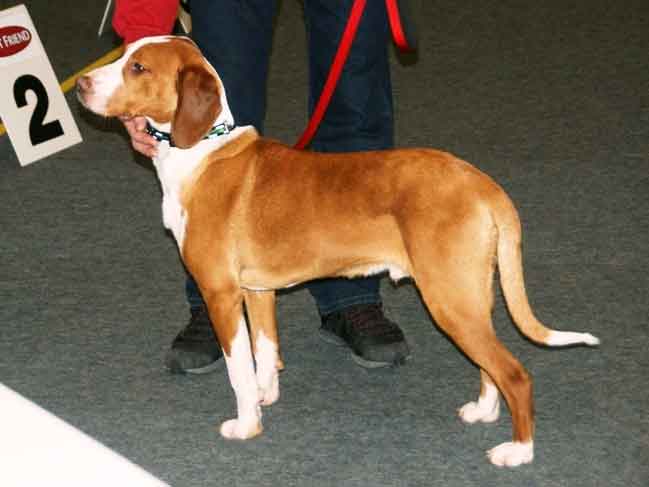
โ–ท The world of Pets: Dogs, cats, birds, reptiles, amphibians

Pudelpointer
Alemania FCI 216 . Braque Type

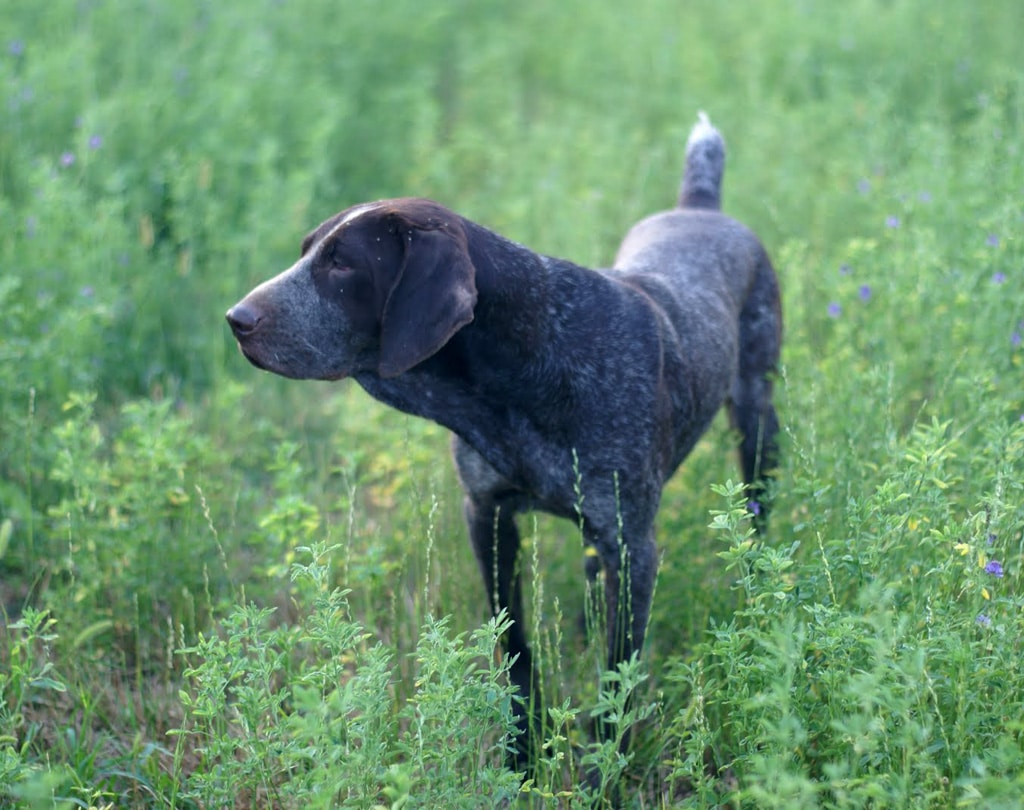
Pudelpointer

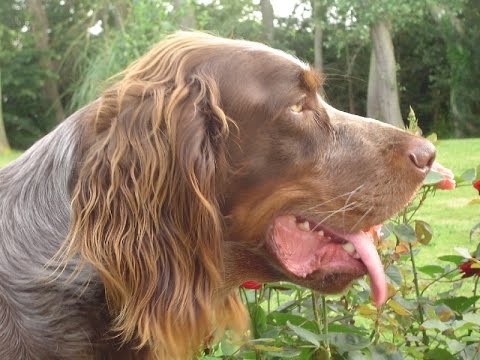
The Pudelpointer has a great passion for water and swimming, which probably comes from the Poodle's influence on his selection.

Content

History

It was the German Baron Von Zedlitz, a real foodie, who created the Pudelpointer towards the end of the 19th century.

The Pudelpointers are Pointing Dogs hard hair, whose genetic origins date back to a cross between a English Pointer and Pudelhund, without any other race of Pointing Dogs. Although the Poodle it was only used to create the first strains, his qualities as a hunter have been preserved until today.

The first crossing of a Pudelhund and English Pointer to establish the new breed took place in Germany in 1881. The father was a English Pointer property of Kaiser Federico III called tell and mother, a Poodle named molly, belonged to a famous Teutonic author on the subject of hunting dogs, Hegewald.

The genes of Poodle, like race, seemed to have been more dominant in transmission. To alter this, many more were introduced Pointers What Poodles in the breeding program to arrive at what the Pudelpointer is today. During the first 30 years of parenting, they only used 11 Poodles instead of more than 80 Pointers. After that initial time period, only the occasional reintroduction of the Pointer. After WWI and WWII, the breed was severely reduced and the reintroduction of the English Pointer became important to rebuild the brood.

The first Pudelpointers in North America were imported into 1956. After the foundations of the breed were laid, in 1977 The Club of the Pudelpointer from North America.

Combined with the exceptional abilities of the English Pointer to work on the plains, that is to say, a fine and receptive nose even at a distance, a quick search that covers a lot of ground and firm stops, we have created a versatile and genetically strong hunting dog that meets the requirements of hunting.

Germany is very careful in preserving the health of the breed, with increased vigilance against hip dysplasia and epilepsy. It also, the Pudlepointers currently play an important role in hunting events, since only dogs that have successfully participated in them are registered in the pedigree registry.

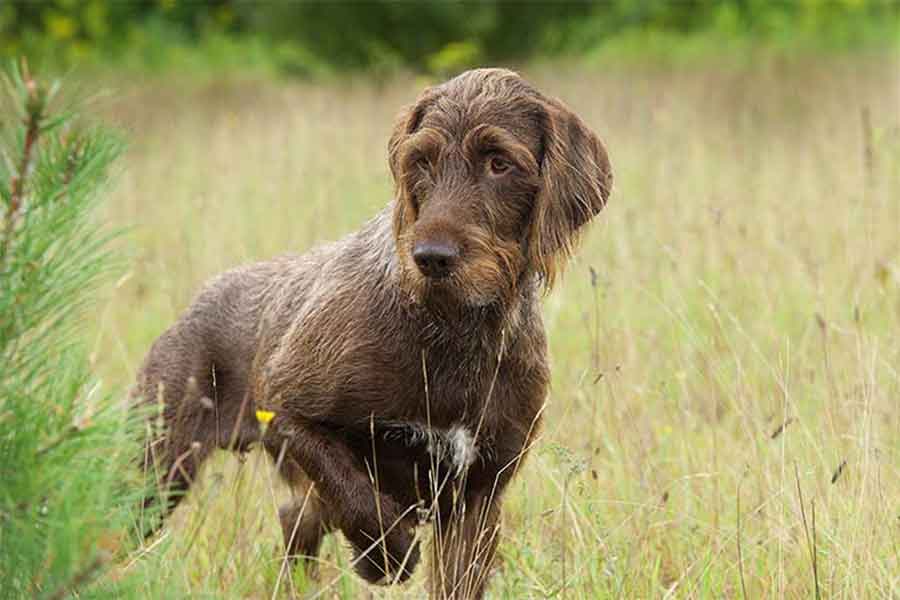
Photo: Pudelpointer by https://www.akc.org/dog-breeds/pudelpointer/

Physical characteristics

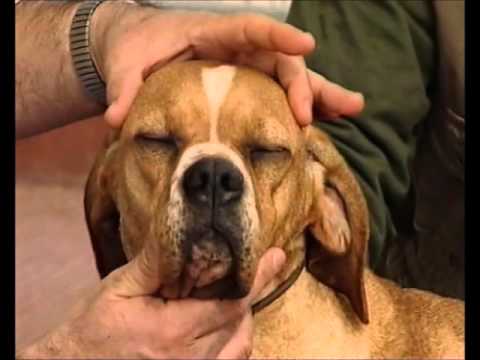
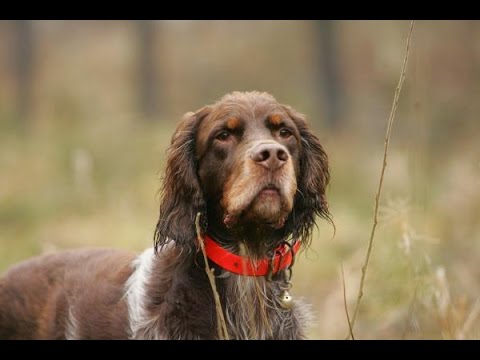
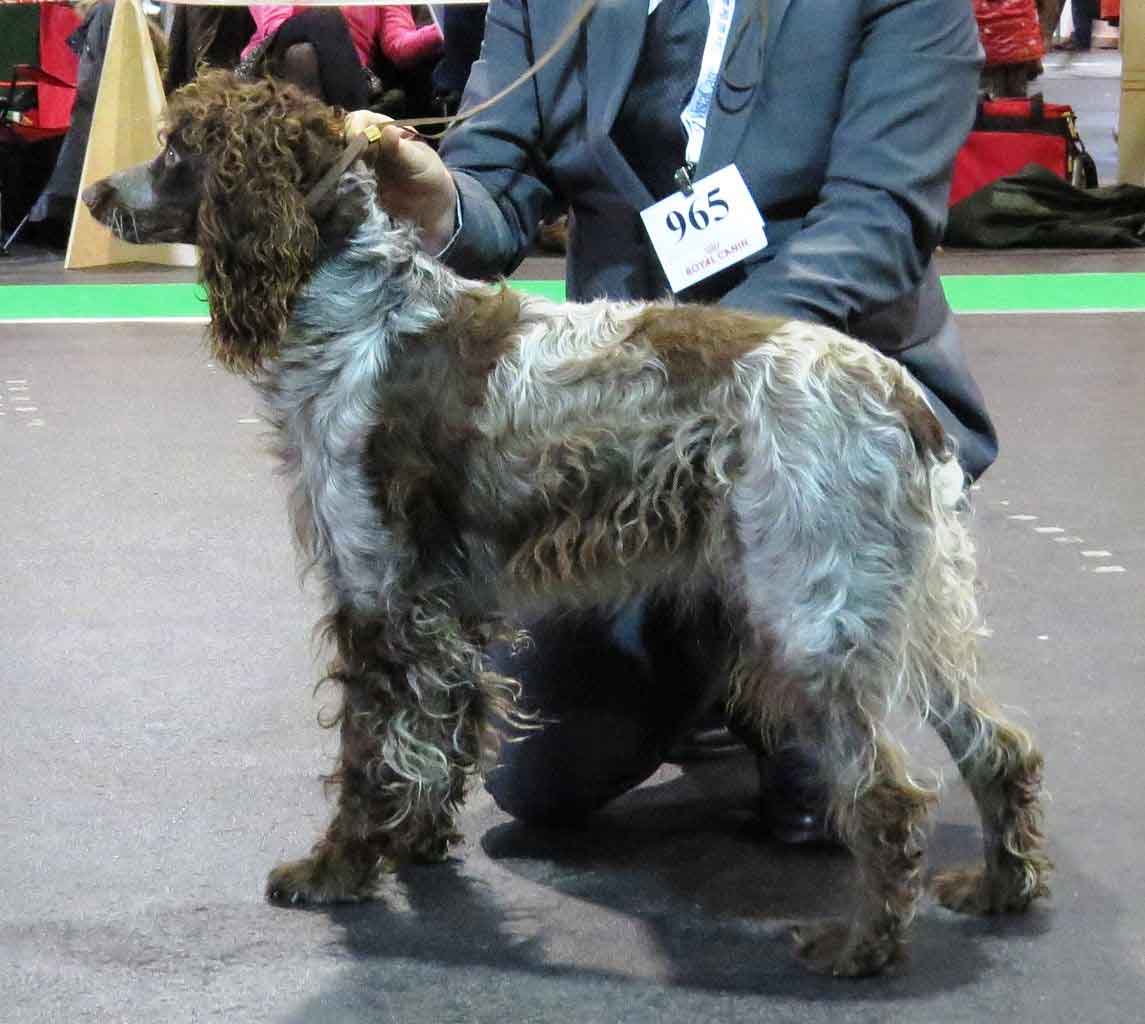
The Pudlepointer It is a breed of dog weighs between 20 and 30 Kg., measured between 53 and 66 cm.. on the shoulder and comes with liver colored fur, brown and occasionally black. The ideal coat is hard, lean and dense.

The Pudelpointer it is a large hunting dog that weighs between 20 and 30 Kg and measures between 53 and 66 cm.. The ideal type has the construction of a heavy pointer. The tail extends the rump in a regular line without breaking.. The tail can be shortened for hunting and, if the law allows it, the length should reach the lower edge of the vulva in females or cover the testicles in males. The length of the skull is equal to that of the muzzle. The ears are medium in size, hanging ears are high and close to the head. The tip of the ear is slightly rounded. Located on the sides, eyes are large and dark amber.

Covering the whole body, medium length hair is rough, close and close to the body, with a thick undercoat. The head has a beard and a toupee with curly streaks. The hair must provide protection against the cold, water and injuries. The coat is solid black, brown or dead leaf. White spots are allowed. These dogs shed very little hair.

Character and skills

Of the English Pointer, inherited the subtle nose, the burning and the lively gait. The Poodle gave him the vivacity of the spirit, the talent of transporter and the taste of water.

Energetic dog, very enthusiastic tracker and retriever at work, is comfortable on all terrains and can tolerate all weather conditions quite easily.

Health

Germany, the country of origin of the Pudelpointer, attaches special importance to the health status of the breed with special emphasis on the prevention of hip dysplasia (HD) and epilepsy in the breed. Some dogs may face these health challenges in their lives, but most of the Pudelpointers they are healthy dogs. Working with a responsible breeder, future owners can get the education they need to learn about specific health concerns within the breed.

Grooming

The Pudelpointer has a close layer, flat, hard and rough of medium length with a dense undercoat; as a result, seasonally shed. Beyond regular weekly grooming, the occasional bath will keep you clean and looking your best. Grooming can be a wonderful bonding experience for you and your dog..

Strong, fast-growing nails should be trimmed regularly with nail clippers or a nail buffer to prevent excessive growth., breakage and cracking. Ears should be checked regularly to prevent buildup of wax and debris, which can result in infection. Teeth should be brushed regularly.

Exercise

The Pudelpointer, as a hunting breed, need regular exercise. Exercise options may include backyard playtime, preferably fenced, or being taken for walks several times a day. Exercise can also be done in the form of indoor activities, like the hideout, chase a ball rolling on the ground or learn new tricks. Certain outdoor activities such as swimming, hiking or retrieving Frisbees or balls can provide a good outlet for expending energy.

Note: The Pudelpointer absolutely love water! Training for dog sports such as agility, obedience, and the rally can also be a great way to give your dog exercise.

Characteristics "Pudelpointer"

Coexistence is important that you have with your new friend. Before considering the acquisition of a dog of the breed "Pudelpointer" you know certain factors. Not all breeds of dogs are apt to live in an apartment, you must take into account his character, their need for exercise, their interaction with other pets, their care and if you have small children, their level of tolerance towards them.

Adaptation โ“˜

3,0 of 5 stars (based on 1 review)

friendly dog โ€‹โ€‹โ“˜

4,0 of 5 stars (based on 1 review)

hair loss โ“˜

1,0 of 5 stars (based on 1 review)

Affection level โ“˜

4,0 of 5 stars (based on 1 review)

Need for exercise โ“˜

4,0 of 5 stars (based on 1 review)

Social need โ“˜

4,0 of 5 stars (based on 1 review)

Home โ“˜

3,0 of 5 stars (based on 1 review)

Toilet โ“˜

2,0 of 5 stars (based on 1 review)

Friendly with strangers โ“˜

4,0 of 5 stars (based on 1 review)

barking โ“˜

3,0 of 5 stars (based on 1 review)

Health โ“˜

4,0 of 5 stars (based on 1 review)

Territorial โ“˜

2,0 of 5 stars (based on 1 review)

Cat friendly โ“˜

2,0 of 5 stars (based on 1 review)

Intelligence โ“˜

4,0 of 5 stars (based on 1 review)

Versatility โ“˜

3,0 of 5 stars (based on 1 review)

Child friendly โ“˜

4,0 of 5 stars (based on 1 review)

Surveillance โ“˜

2,0 of 5 stars (based on 1 review)

joy โ“˜

3,0 of 5 stars (based on 1 review)

Videos "Pudelpointer"

Pudelpointer - TOP 10 Interesting Facts
Pudelpointer – TOP 10 Interesting Facts
Martha the Pudelpointer - Deliver to Hand
Martha the Pudelpointer – Deliver to Hand

Type and recognitions:

  • FCI CLASSIFICATION:
  • Group :
  • Section : . .

Federations:

  • – FCI – Group 7: Pointing Dogs. – Section 1: Continental Pointing Dogs. 1.1: Braque Type โ“˜
  • – CKC – Grupo 1 – Sporting Dogs โ“˜
  • – UKC – Gun Dogs โ“˜

FCI breed standard "Pudelpointer"

Origin:
Germany

Date of publication of the valid original standard:
09.11.2004

Use:

Hunting dog. Variable with all the characteristics required for the breed. Useful for the field, forest and water.


General appearance:

Ideally, its structure should show the type of a heavy Pointer with a not too long brown coarse coat., dark brown, color of dry leaves or black which protects its entire body.

IMPORTANT PROPORTIONS :

โ€ข The relationship between the length of the body and the height at the withers must be 10 to 9.
โ€ข The ratio of the length of the skull from the occipital protuberance to the stop is equal to the length of the snout from the stop to the nose..


Behavior / temperament:

neither shy nor aggressive. Quiet character, controlled and balanced. Marked hunting instinct without fearing prey or being sensitive to being shot.

Head:

Harmonious length and width according to your height and sex.

Cranial region:
  • Skull: Plano, just a little rounded on the sides, moderately wide, clearly developed eyebrow arch.
  • Depression links (Stop) : Marked.

facial region:

  • Truffle: Its color corresponds to the color of the hair, heavily Pigmented. Well open nasal Windows.
  • Snout : Harmonious relationship between its length and width. It should not be narrow or end in a point. Straight nasal bridge.
  • Lips : Tight, not hanging. In no way should you drool.
  • Jaws / Teeth : Big teeth, strong jaws with a perfect scissors bite, regular and complete in which the upper incisors close in front of the lower ones without losing contact and the teeth are placed vertically in the jaw. With 42 teeth according to the dental formula.

Eyes : Placed on the sides, large, dark amber tones with a lively expression. Eyelids well covered with hair and close to the eyeball.

Ears : Medium-sized, High insertion hangs flat and close to the sides of the skull; They are not fleshy; well covered with hair and rounded ends.

Neck:

Long Middle, strong muscles. The neck line is slightly domed without showing a double chin..

Body:

  • top line : Right.
  • Cross : Marked.Back : Short, straight, rigid with strong muscles.
  • Pork loin : With strong muscles.
  • Rump : Long and moderately inclined, with good musculature.
  • Breast : Wide and deep. Ribs well sprung but not barrel-shaped.
  • Bottom line and belly : retracted back, forming an elegant arch. Delgado.

Tail:

The transition from the rump is even in a line without interruption. Right tail, should not be carried upwards. Cover of rough hair without forming a flag. The tail, for hunting purposes and in accordance with animal protection, In the case of females, it is amputated to the lower edge of the vulva and in males, covering the testicles. In countries where amputation is prohibited by law, the tail can be left natural.. It should reach the joint of the hoof and its carriage should be straight or slightly saber-shaped, somewhat above the top line..

Tips

PREVIOUS MEMBERS :

In general: Seen from the front straight and parallel, seen from the side, limbs straight and well placed under the body. Strong joints and bones.
Shoulder : Well-fitted and muscular scapulae. Shoulders and forearm form a correct angle.
Arm : Long, well muscled and dry.
Elbow : Placed well under the body, well adjusted without turning in or out.
Forearm : Long, well developed muscles, dry and placed vertical. Arm and forearm form a correct angle.
Articulation of the carpus : Strong.
Metacarpus : something directed forward.
Previous foot : Round to oval, closed. Strong and durable pads. The hair on the feet and fingers should not be too long.

LATER MEMBERS :

In general : Hindquarters seen from behind straight and parallel, well muscled, strong bones.
Thigh : Long, width, well muscled.
Knee : Strong. Thigh and leg form a correct angle.
Warm-tarsal joints : Strong, very well angled.
Metatarsus : Short, vertical placement.
Rear foot : Round to oval, closed. Strong and durable pads. The hair on the feet and fingers should not be too long.

Movement:

Harmonic, elastic, with good reach and thrust. Steps that cover the surface well. Forelimbs and hindlimbs straight and parallel, maintaining an upright posture.

Mantle

SKIN : Tight, footprint, without forming folds.

HAIR : Cerrado, glued, hard, medium length with abundant undercoat. The length of the outer hair above the withers is 4 โ€“ 6 cm.. The head with a beard and chip-type curls on the forehead. The hair on the belly is closed and dense. The hard and dense coat should provide, as much as possible, good protection against inclement weather and injuries..

COLOR : Unicolor.

โ€ข Brown.
โ€ข Colors of dry leaves.
โ€ข Negro.

Small white marks allowed.


Size and weight:

Height to the cross :

  • Males : 60 to 68 cm.,
  • females : 55 to 63 cm..


Fouls:

Any deviation from the aforementioned criteria is considered a fault and the severity of it is considered to the extent of the deviation from the standard and its consequences on the health and well-being of the dog..
In particular :

โ€ข Sunken or steep back.
โ€ข Elbows turned outward or inward.
โ€ข Cow's hooves, sickle or together both standing and moving.
โ€ข Stiff movement or with short steps.
โ€ข Hair that is too long, too thin, absence of inner fleece.

DISQUALIFYING FOULS:

โ€ข Shyness towards prey, nervousness, aggressiveness, teether out of fear.
โ€ข Unsuitable temperament for hunting, especially fear of being shot.
โ€ข Prognathism, enognatismo, crossbite. Narrowly placed canines.
โ€ข Lack of teeth except P1.
โ€ข Entropion, ectropion of any type.
โ€ข Upper eyelids without eyelashes as well as eyelids devoid of hair.
โ€ข Short hair.
โ€ข Absence of beard.
โ€ข Any other color or markings of another color than that described by the standard.

Any dog โ€‹โ€‹showing clear signs of physical or behavioral abnormalities must be disqualified..


N.B.:

Males should have two normal-appearing testicles fully descended into the scrotum..

Source: F.C.I - International Cynological Federation

Alternative names:

1. Pudelpointer (English).
2. Pudelpointer (French).
3. Pudelpointer (German).
4. Pudelpointer (Portuguese).
5. Pudelpointer (espaรฑol).

โ–ท The world of Pets: Dogs, cats, birds, reptiles, amphibians

Burgos Pointer
Espaรฑa FCI 90 . Braque Type

Perdiguero de Burgos

The Burgos Pointer is smart and learns easily, above all, tracking tasks.

Content

History

The Burgos Pointer It is a breed of dog Spain. Originally from Castile, especially in the province of Burgos, This rustic breed is intended for hunting and has exceptional characteristics for hunting small game..

It is an ancient breed from the Castilian tableland, is widespread, and according to some connoisseurs of the breed, it is likely that it has participated in the creation of other breeds of hunting dog, not only Spain.

The truth is that lot of documented material that speaks of this breed there is. Veterinary geneticist, Josรฉ Manuel Sanz rudder, has dedicated several lines to the history of this breed and in a document that appears cited in many web, speaks of the Origins and Ancient History (Until 1911). You can read the complete material on the website of the Spanish Association of el Perro Perdiguero de Burgos. Here we will only mention what refers to the word ยซPerdigueroยป and to the different theories about the origin but very briefly…

"The word ‘perdiguero‘ It occurs frequently in classical texts on venatoria and its reference corresponds to the generic Hunter dog of partridges, "perdicero" or "perdigero", but it cannot be lightly assumed that this dog was a Burgos Pointer. In numerous current texts we can read various theories about the origin of the race. The more absolute confusion arises from a whole once analysed separately. The most common mistakes that demonstrate a poor work of research are as follows:

  • Associate the word perdiguero the race Burgos Pointer.
  • Believing that the Pointing Dogs, as the Spanish classics tell us, they were Burgos Pointers and forget that they were other races.
  • Define like Burgos Pointer to the dogs that authors from Velรกzquez to Goya have been captured in numerous canvases where hunting dogs are reproduced.
  • Define incomprehensibly and lightly when Burgos Pointer as the origin of English Pointer, either in a display of patriotic enthusiasm, consider him further as the father of all European Braquesยซ.

"The authors, as often happens, they do not manage to agree on the theories about the origins of animals and while some affirm that the sample dog is originally from Italy, others say that France or Spain (according to the nationality of the author) which they were born.

On the formation of the current dog Burgos Pointer the news is null and we can only apply the parameters that are studied to form a race, they are:

  • Time and place of training.
  • Genetic basis provided the race.
  • Adaptation to the environment in which is born.
  • Geographical isolation and inbreeding operated.

With regard to the first of them, not a breed created by man ex process are being, with measured doses of one or another blood, both the time and the place of training are uncertain. A race not be based in short periods of time and having no initial selection at a single point, "We cannot think that the place of birth has only been a certain place."

(Author: Josรฉ Manuel Sanz rudder).

Physical characteristics

While the Burgos Pointer, It is not as robust and defined muscular level, like its relative the English Pointer, their appearance shows the strength of the race.

It has the ears long and the tail It tends to be cut one-third of its original length.

Its fur It has variants that can form different ranges within the basic color. The basic colors of the hair are the white and the liver. These colors mingle regularly, giving variegated layers that tend to liver, gray liver, mosqueados in liver and other various combinations, depending on whether the liver or white color is predominant and depending on whether the white spots are open or closed.

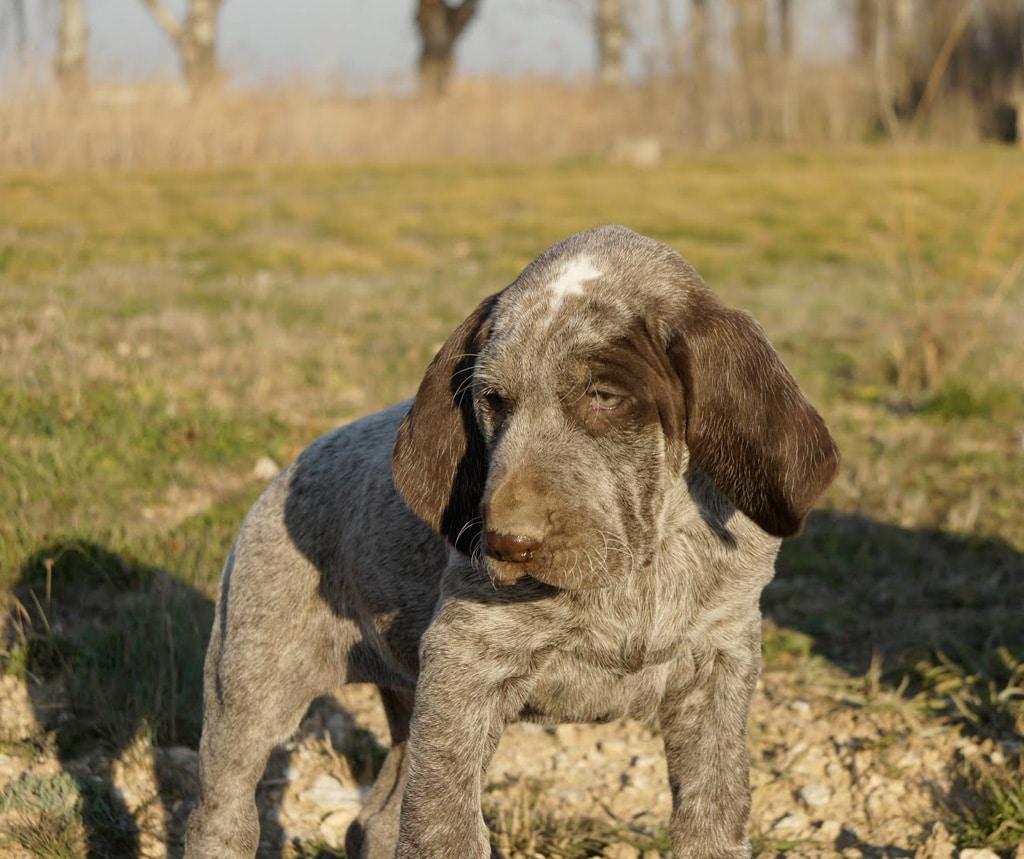
It is a very common feature (Although non-binding layer), that have a clear white spot on the forehead and the ears always spotted with a homogeneous liver color. Liver-colored hairs can form sharp, well-defined liver-colored patches, regularly distributed by the layer of the animal

Its the mantle is short, thick and soft. The hair is thinner in the head, ears and limbs.

The skin is elastic, but not printing, thick, abundant, pinkish spotless. All Oris they will be Brown, never black.

The height males will of 62 to 67 cm and females 59 to 64 cm to the cross. Thinking of 25 to 30 kg.

It is an animal that as all, It requires a dose of daily exercise. A long walk, and a few races in the open air will keep you happy.

Character and skills

It is a very friendly and quiet dog, not afraid easily. It is smart and learns easily, especially in tracking work.

It is not a dog that adapts very well to urban environments.

It is used for small game (rabbits, hares, etc.).

It's perfect for hunting in any field (no matter how hard it is), since it has an enviable physical resistance and a great speed.

The Burgos Pointer it is highly appreciated by hunters who want a rustic dog, hard in any terrain and type of hunting, obedient, strong and above all excellent winds and method of hunting, due to his calm and poise in the search, as well as his sample and his impeccable collection.

Although used for small game pieces not dismisses pieces of hunting trail, in which he demonstrates great bravery.

Characteristics "Burgos Pointer"

Coexistence is important that you have with your new friend. Before considering the acquisition of a dog of the breed "Burgos Pointer" you know certain factors. Not all breeds of dogs are apt to live in an apartment, you must take into account his character, their need for exercise, their interaction with other pets, their care and if you have small children, their level of tolerance towards them.

Adaptation โ“˜

3,0 of 5 stars (based on 1 review)

friendly dog โ€‹โ€‹โ“˜

3,0 of 5 stars (based on 1 review)

hair loss โ“˜

2,0 of 5 stars (based on 1 review)

Affection level โ“˜

3,0 of 5 stars (based on 1 review)

Need for exercise โ“˜

4,0 of 5 stars (based on 1 review)

Social need โ“˜

3,0 of 5 stars (based on 1 review)

Home โ“˜

2,0 of 5 stars (based on 1 review)

Toilet โ“˜

1,0 of 5 stars (based on 1 review)

Friendly with strangers โ“˜

3,0 of 5 stars (based on 1 review)

barking โ“˜

2,0 of 5 stars (based on 1 review)

Health โ“˜

3,0 of 5 stars (based on 1 review)

Territorial โ“˜

4,0 of 5 stars (based on 1 review)

Cat friendly โ“˜

2,0 of 5 stars (based on 1 review)

Intelligence โ“˜

4,0 of 5 stars (based on 1 review)

Versatility โ“˜

3,0 of 5 stars (based on 1 review)

Child friendly โ“˜

4,0 of 5 stars (based on 1 review)

Surveillance โ“˜

2,0 of 5 stars (based on 1 review)

joy โ“˜

4,0 of 5 stars (based on 1 review)

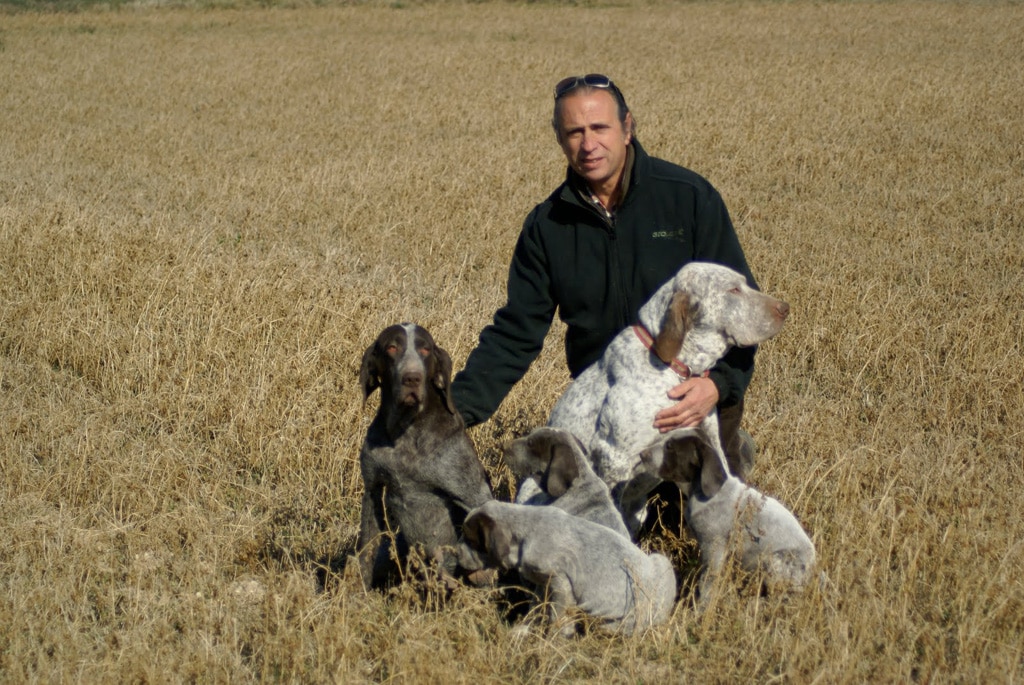
Images: Burgos Pointer

Videos: Burgos Pointer

Type and recognitions:

  • FCI CLASSIFICATION:
  • Group :
  • Section : . .

Federations:

  • – FCI – Group 7: Pointing Dogs. – Section 1: Continental Pointing Dogs. 1.1: Braque Type โ“˜

FCI breed standard "Burgos Pointer"

Origin:
Spain

Date of publication of the valid original standard:
26.05.1982

Use:

Hair and Feather Pointer Dog. The Perdiguero de Burgos is highly appreciated by hunters who want a rustic dog., hard in any terrain and type of hunting, obedient; strong and above all excellent winds and method of hunting, due to his calm and poise in the search, as well as his sample and his impeccable collection. Although used for small game game, does not discard the trail of game pieces, in which he demonstrates great bravery.


General appearance:

Hunting dog of good size, eumetric and medioline. Well developed head, compact trunk and strong limbs. Droopy ears and short hair. Longitudinal diameter as close as possible to the height at the withers. Proportionality and functional harmony must be sought, both in static and in motion


Behavior / temperament:

Rustic, balanced, calm and sitting; turns out to be a great show dog, especially suitable for hunting hair and feathers. Fresh look, very noble, it is a breed of excellent character, docility and intelligence.

Head:

As a whole : Big and strong, well developed skull; strong face and muzzle and corkscrew ears.

The cranium, seen from above, It must be moderately rectangular with a progressive decrease towards the nose, without giving feeling of pointed snout. The ratio of the length of the skull to that of the face is 6:5. The craniofacial lines are divergent.


Cranial region:
  • Skull : Width, strong, domed and convex profile; well marked central groove, shallow occipital crest. Accused frontal sinuses.
  • Depression links (Stop) : Soft, little sharp.

facial region:

  • Truffle : dark brown, wet, big and wide with wide open windows.
  • Snout : Straight profile or with a very slight curve towards the nose. Width throughout its length, it should not give the impression of being pointed. Wide muzzle.
  • Lips : Sagging without sagging. The upper one will cover the lower one well. The bottom is marked labial commissure. The mucous membranes must be brown.
  • Jaws / Teeth : Strong teeth, white and healthy; scissor bite. All premolars exist.
  • Eyes : Medium, macaroons, preferably dark hazelnut, noble and sweet look, sometimes giving a feeling of sadness. The skin of the eyelids is moderately thick, pigmented like the mucous membranes in brown. The lower eyelid should be as close as possible to the eyeball.
  • Ears : long, drooping and triangular in shape. Inserted at eye line level, at rest they fall gracefully in corkscrew. Without exerting traction, they must reach the corner of the mouth and will not reach the nose.. Soft and soft to the touch, they have fine skin and hair; marked venous network. In higher insertion care and flatter frontal conformation.
  • Palate : Pink mucous with well marked beads.

Neck:

Strong and powerful; wide part at the head and continues with a slight widening to the trunk. Slightly arched top edge. Lower border with well defined dewlap that, starting from both lip corners, It is presented double without being exaggerated.

Body:

  • As a whole : Square, strong and robust, powerful chest and ribs, giving a feeling of power and agility.
  • Cross : Well defined.
  • top line : Straight and horizontal or desirable with a slight drop from the withers. Never saddled and no oscillations during movement.
  • Back : Powerful and muscular.
  • Pork loin : Medium-, broad and muscular, giving a feeling of power.
  • Rump : Wide and strong. Its inclination will be less than 45ยฐ with respect to the dorsal lumbar line and the floor.. Height at the croup equal to or less than the height at the withers;
  • Breast : Wide and deep, reaches elbow level; muscular and powerful. Tip of the sternum marked. Well developed ribs, rounded, not flat. Well marked and wide intercostal spaces as we move towards the floating ribs. The chest perimeter must be equal to the height at the withers plus ยผ of it.
  • Bellies and flanks : Belly moderately tucked towards the genitals. Low sides and well marked flanks.

Tail:

Thickness birth and average insertion. It is amputated between a third and a half of its length.

Tips

PREVIOUS MEMBERS :

  • As a whole : Perfectly Plumb, straight and parallel. Strong bones with short pasterns and well developed feet.
  • Shoulder : Moderately oblique, muscular. The scapula should be approximately the same length as the arm
  • Arm : Strong and well muscled; its length will be 2/3 of the forearm.
  • Elbows : Glued to the trunk.
  • Forearm : Strong bone, with marked tendons. Straight and well plumb. Its length is double the total length from the carpus to the ground.
  • Metacarpus : Seen little laterally inclined, is practically the continuation of the forearm. Strong bone.
  • Front feet : Of cat, tight fingers, high and strong phalanx. dark nails. Robust plantar tuber, very wide and hard pads. Moderate interdigital membrane.
  • Angles : Scapulo-humeral angle close to 100ยฐ,Humero-radial angle close to 125ยฐ.

LATER MEMBERS :

  • As a whole : Powerful and muscular, strong bone and well poised with correct angles, well marked and angulated hocks, giving a feeling of power and solidity.
  • Thigh : Very strong and with a clear appreciation of the muscles, well marked and developed. Its length is ยพ of the leg.
  • Leg : Long and strong of bone twice the length of the metatarsal.
  • Hocks : Well marked with clear appreciation of the tendon.
  • Metatarsus : Strong bone and perpendicular to the ground.
  • Rear feet : Cat as in the forelimbs, although slightly more elongated.
  • Angles : Coxo-femoral angle close to 100ยฐ,Femoro-tibial angle close to 120ยฐ ,Open hock angle greater than 130ยฐ.

Movement:

The typical gait of the breed is an economical trot, loose and powerful without tendency to laterity and without ambling.

Mantle

SKIN :
Elastic but not detached, thick, abundant, pinkish spotless. All mucous membranes will be brown, never black.

HAIR : Bushy, medium thickness, short, smooth and distributed throughout the body to the interdigital spaces. Finer on the head, ears and limbs.

COLOR : The basic hair colors are white and liver.. These colors are mixed unevenly, giving marbled layers in liver, gray liver, liverwort and various other combinations, depending on whether the liver or white color is predominant and whether the white spots are more widespread or closed. A very common feature of the coat, although not necessary, It is the clear white spot on the forehead and the ears always stained with a homogeneous liver color.. Liver-colored hairs can form clear, well-defined spots of that color distributed irregularly across the animal's coat.. The same can happen with white hairs that can form gaps of this color on the coat without being extremely extended.. Black colorations or fires on the eyes and limbs are never allowed.


Size and weight:

Height to the cross :

  • Males of 62 to 67 cm.,
  • females of 59 to 64 cm..

A high rate of sexual dimorphism is observed in this breed., being the males more homogeneous and the females of more variable height and less corpulent in general.


Fouls:

Any deviation from the aforementioned criteria is considered as a fault and the severity of this is considered to the degree of the deviation to the standard and its consequences on the health and well-being of the dog..

MINOR FAULTS

โ€ข Profile of the snout fleshy without excess.
โ€ข Absence of any premolar.
โ€ข Pincer bite.
โ€ข Conjunctiva ligerรญsimamente visible.
โ€ข Belfos or double chin that, without being excessive, are very marked.
โ€ข Poorly solid dorso-lumbar line.
โ€ข Metacarpos, weak metatarsals or feet, but not excessively.
โ€ข Scars, wounds and abrasions during hunting season.

SERIOUS FAULTS

โ€ข Light appearance, fragile or excessively heavy and lymphatic.
โ€ข Parallel craniofacial axes.
โ€ข Poor or small heads.
โ€ข Narrow skull.
โ€ข Pointed snout.
โ€ข Absence of several premolars and canines not due to trauma.
โ€ข Very pronounced ectropion or entropion, light eyes.
โ€ข Ears that are too long or set too low.
โ€ข Belfos or exaggerated jowls.
โ€ข Saddled dorso-lumbar line.
โ€ข Height at the rump noticeably higher than the height at the withers.
โ€ข Incorrect positions, weak or deviant.
โ€ข Detached elbows.
โ€ข Cow hocks.
โ€ข Wavy or very long hair.
โ€ข Unbalanced character.

MISS PLAYOFFS

โ€ข Aggressive or fearful dog.
โ€ข Decidedly convergent craniofacial axes.
โ€ข Depigmentation in the truffle.
โ€ข Broken or black nose.
โ€ข Any degree of lower prognathism.
โ€ข Excessive upper prognathism.
โ€ข Albinism in the coat accompanied by the mucous membranes.

Any dog โ€‹โ€‹showing clear signs of physical or behavioral abnormalities must be disqualified..


N.B.:

Males should have two normal-appearing testicles fully descended into the scrotum..

Source: F.C.I - International Cynological Federation

Alternative names:

1. Perdiguero de Burgos, Burgalese Pointer (English).
2. Retriever de Burgos, Braque de Burgos, Perdiguero (French).
3. Burgos-Hรผhnerhund (German).
4. Pointer espanhol, Pointer de Burgos (Portuguese).
5. Perdiguera (espaรฑol).

โ–ท The world of Pets: Dogs, cats, birds, reptiles, amphibians

Portuguese Pointer
Portugal FCI 187 . Braque Type

Portuguese Pointer

The Portuguese Pointer He is extremely affectionate and very attached to children, it is also a very submissive dog.

Content

Characteristics "Portuguese Pointer"

Coexistence is important that you have with your new friend. Before considering the acquisition of a dog of the breed "Portuguese Pointer" you know certain factors. Not all breeds of dogs are apt to live in an apartment, you must take into account his character, their need for exercise, their interaction with other pets, their care and if you have small children, their level of tolerance towards them.

Adaptation โ“˜

4,0 of 5 stars (based on 1 review)

friendly dog โ€‹โ€‹โ“˜

2,0 of 5 stars (based on 1 review)

hair loss โ“˜

2,0 of 5 stars (based on 1 review)

Affection level โ“˜

5,0 of 5 stars (based on 1 review)

Need for exercise โ“˜

4,0 of 5 stars (based on 1 review)

Social need โ“˜

3,0 of 5 stars (based on 1 review)

Home โ“˜

4,0 of 5 stars (based on 1 review)

Toilet โ“˜

1,0 of 5 stars (based on 1 review)

Friendly with strangers โ“˜

2,0 of 5 stars (based on 1 review)

barking โ“˜

2,0 of 5 stars (based on 1 review)

Health โ“˜

2,0 of 5 stars (based on 1 review)

Territorial โ“˜

4,0 of 5 stars (based on 1 review)

Cat friendly โ“˜

2,0 of 5 stars (based on 1 review)

Intelligence โ“˜

3,0 of 5 stars (based on 1 review)

Versatility โ“˜

4,0 of 5 stars (based on 1 review)

Child friendly โ“˜

3,0 of 5 stars (based on 1 review)

Surveillance โ“˜

3,0 of 5 stars (based on 1 review)

joy โ“˜

2,0 of 5 stars (based on 1 review)

History

The Portuguese Pointer arose from Perdigueiro Peninsular, an ancient breed of Iberian dogs, its presence is documented since the 10th century, Its first appearance in art is on a Visigothic-Arab tombstone of the Church of San Juan Bautista de Tomar. Its evolution was the result of several factors such as adaptation to the climate, the type of hunting, the terrain and the selection introduced through the Portuguese cultural specificity.

In the fourteenth century, It was bred in the royal kennels and used for hunting Altaria, being known as ยซPodengo de mostraยป, showing already the possibility of stopping before the hunt. In the 16th century (reign of D. Sebastian) its use by the popular classes was common (although prohibited). The constant bleeding in the working arms caused by the discoveries, the abandonment of the fields, hunger and change of habits, led the population to resort more to hunting for food and, as a result, to the use of Pointing Dogs, that they were "prohibited" for causing, thanks to its excellent qualities, serious damage to the vested interests of the royal house and the nobility.

In the 18th century, Many English families established a presence in the Porto region in the business of wine production and came into contact with the breed being brought to England where it played an important role in the origin of the English Pointer.

At the end of the 19th century it suffered a certain decline, due to serious social upheavals and new tastes and contacts with the outside world, that gave projection to the foreign races that were then in fashion. But it is still represented in art objects (tinaja painted by D. Fernando II of Saxe-Coburg, Pena-Sintra), painting of King D.Luis and the princes in hunting clothes in the Palace of Ajuda, Lisbon), painting of a hunting trip of an Englishman in the Douro (Quinta de Gatรฃo, Duero) or in artistic ceramics by the Real Fรกbrica do Rato (Pimenta Palace, Lisbon).

Only in 1920 some breeders strove to save the breed, locating some of the dogs in the inaccessible north of Portugal. The Portuguese pedigree book was then established in 1932 and the breed standard in 1938. For at least a thousand years, this dog always had the same square head, triangular ears and compact look.

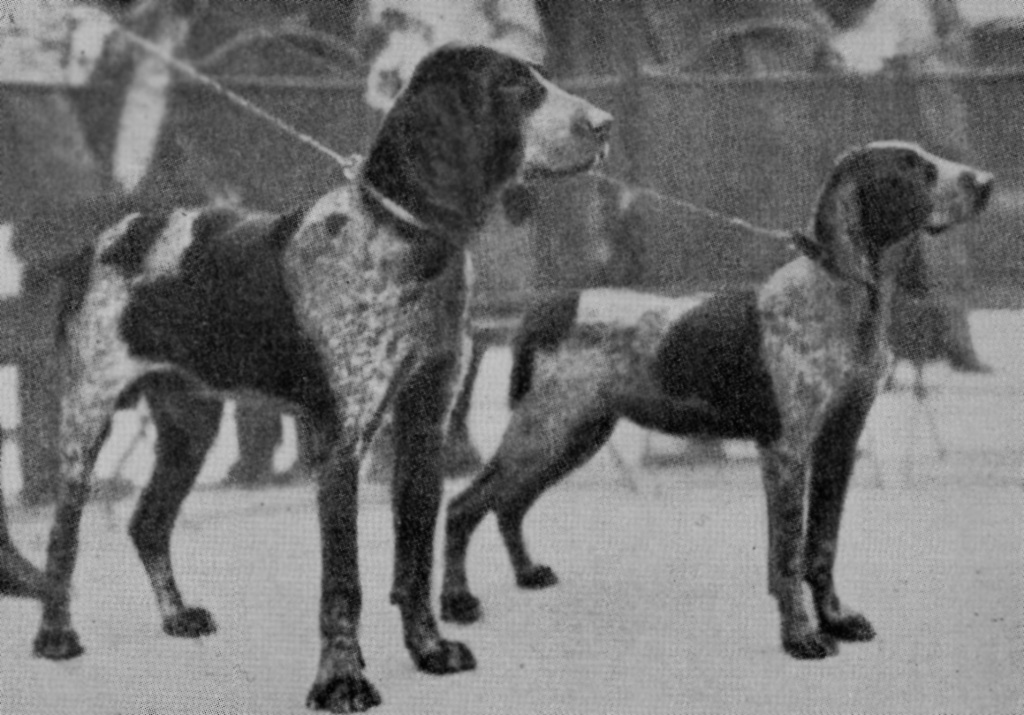
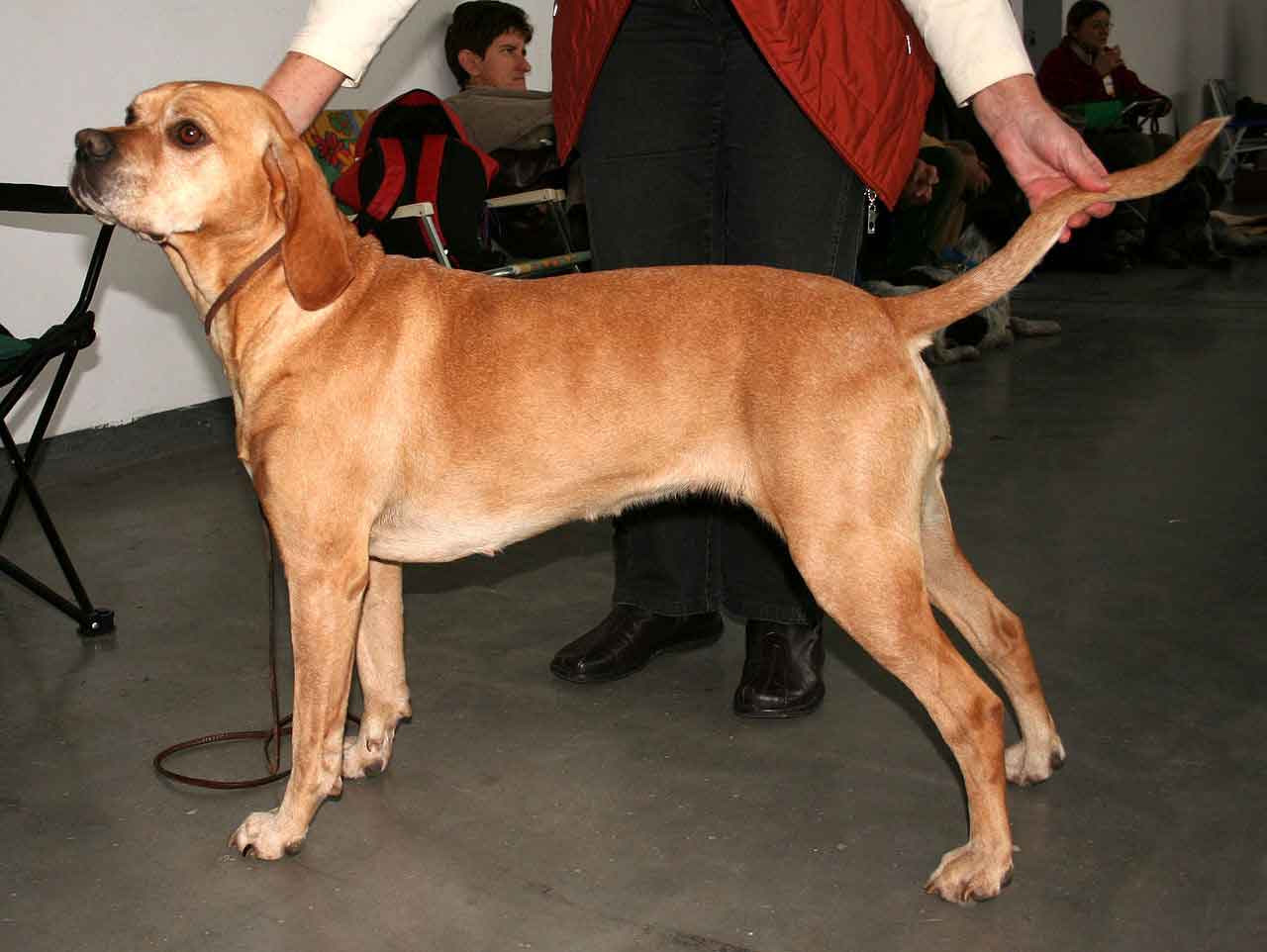
Photo: ยซPortuguese Retrieverยป during the Dog World Show in Poznaล„. by Pleple2000, CC BY-SA 3.0, via Wikimedia Commons

Physical characteristics

The Portuguese Pointer comes in average proportions, straight, good guy, robust but with a harmonic conformation allied to the manifest elasticity of the movements.

The head is proportionate in relation to the body, well shaped and harmonious; seems to be big on the set. A little thick, However, it is neither bony nor thick and has loose and thin skin.

The coat is short and thick in most dogs., with a velvety texture on the ears and face .

Yellow in light varieties, common and dark, solid or white spotted on the head, the neck, chest and footwear.

In males, the height at the withers is 52 to 60 centimeters, the weight is 20 to 27 kg. In females the height is 48 to 56 centimeters and the weight is 16 to 22 kg.

Character and skills

Portuguese Pointer
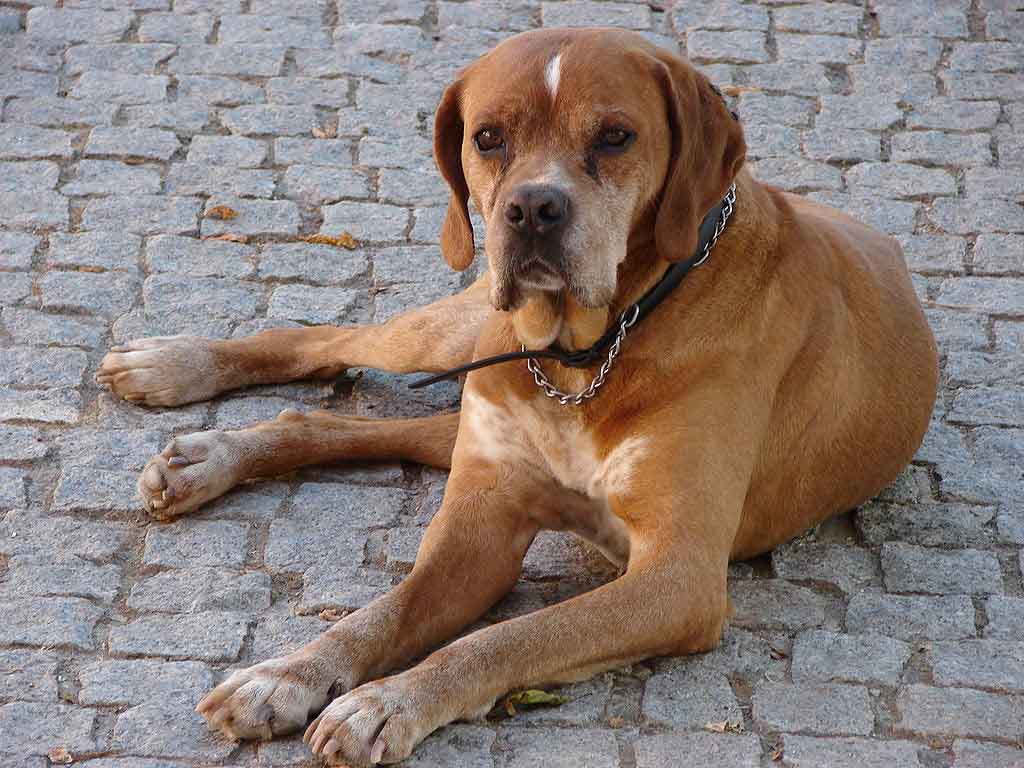
An image of a โ€œPortuguese Retrieverโ€, a Portuguese hunting dog breed. The animal in the photo had 11 years when it was photographed.

The Portuguese Pointer he is an extremely gentle and affectionate dog, with great delivery capacity and very resistant. It is quiet, very sociable and a bit petulant in relation to other dogs. Works with vivacity and persistence and is curious by nature. He always keeps in touch with his hunter.

He moves with an easy step and is graceful. It is versatile in its function and very adaptable to various terrains, climates and types of hunting.

Extremely affectionate and very attached to children, it is also a very submissive dog. Can, for lack of education, do not obey gestures or orders. But, it's easy to train.

Health

The Portuguese Pointer has an average life expectancy of 14 years. It is considered a hardy breed with no specific health problems.. But, hip dysplasia, lunation of the patella, cancer and autoimmune diseases are potential health problems for dogs of this size.

Videos "Portuguese Pointer"

The Portuguese partridge, a versatile dog.
O Perdigueiro portuguรชs, um cรฃo polivalente
Main characteristics of the Portuguese Perdigueiro
Main characteristics of the "Portuguese Perdiguero"

Type and recognitions:

  • FCI CLASSIFICATION:
  • Group :
  • Section : . .

Federations:

  • – FCI – Group 7: Pointing Dogs. – Section 1: Continental Pointing Dogs. 1.1: Braque Type โ“˜
  • – AKC – Bracco โ“˜

FCI breed standard "Portuguese Pointer"

Origin:
Portugal

Date of publication of the valid original standard:
04.11.2008

Use:

---


General appearance:

Extremely kind and affectionate, strong, of great resistance and devotion. Calm and very sociable but somewhat haughty towards other dogs. curious by nature, work with persistence and vivacity. Always an enthusiastic hunting dog, staying in close contact with the hunter.


Behavior / temperament:

Extremely kind and affectionate, strong, of great resistance and devotion. Calm and very sociable but somewhat haughty towards other dogs. curious by nature, work with persistence and vivacity. Always an enthusiastic hunting dog, staying in close contact with the hunter.

Head:

Proportionate to body size, well built and harmonious in its dimensions. It gives the impression of being bigger than it is. Something big never bony nor fleshy. Loose, thin skin cover without forming wrinkles. Straight in profile and square seen from the front. Converging superior longitudinal craniofacial axes.

Cranial region:
  • Skull : Square, almost flat in its top line seen from the front and slightly arched in its profile. With a length that should not exceed 6 / 10 of the total length of the head, Therefore it gives us a 60 % cephalic index.
    Seen from the front, the foreface is flat, high, wide and symmetrical, slightly arched in profile. Well-developed superciliary ridges. Wide but not deep front pleat. Barely visible occipital protuberance.
  • Depression links (Stop) : Well defined (90 โ€“ 100ยบ).

facial region:

  • Truffle : The angle between the bridge of the nose and the upper lip is 90ยบ.. Good conformation nose, well developed with large nostrils, moist and wide open. black.
  • Snout : Rectilinear and horizontal, appropriately wide with the same width throughout its length that is 4 / 10 the length of the head.
  • Lips : Pendulous upper lip, square in profile forming a right angle to the bridge of the nose, semicircular on the edge seen in profile; seen from the front it forms a sharp angle at the lower edge. Upper lip joint is loose, folded corners with drooping edges. Moderate mouth opening with irregular pigmentation of the membranes (Oris), normal occlusion allowing natural overlap of the upper lip.
  • Jaws / Teeth : Healthy, correct, full dentition, scissor bite.
  • Cheeks : Parallel. Barely noticeable retrocommissural fold with complete parotid area (Ej.: Well filled under the ears).

Eyes : Expressive, happy talk, brown, of a darker color than hair, oval shape tending to be round, big but too much, level insertion completely occupying the orbit. Thin, wide-open eyelids with black pigmentation.

Ears : Inserted above eye level at the back of the head, pendants, almost flat surface with one or two longitudinal folds when in attention. Triangular, wider at the base than at the tips in a proportion of 2.5 to 1 and with rounded tips. The length of the ears should be slightly longer than the length of the skull. Fine, soft, covered with fine hair, bushy and very short.

Neck:

It is straight, slightly arched at the top, not very thick, rather elongated and has a short dewlap along the underside. It should be attached to the head in an elegant way, following an inclination of approximately 90ยฐ; its union to the thorax must be without appreciable transition, so that it constitutes a harmonious and perfect whole.

Body:

  • top line : Rectilinear, rising slightly from the rump to the withers.
  • Cross : It is not very high.
  • Back : Short, wide, rectilinear and slightly inclined towards the lumbar region, to which it must join without appreciable transition.
  • Pork loin : Short, very wide, very muscular and slightly arched, in perfect union with the rump.
  • Rump : Its amplitude is proportional to the lumb region
  • ar. It has a harmonious conformation and a slightly oblique axis, so it is slightly fallen
  • Breast : It is tall and wide; the broad thoracic cavity should be more developed in depth and length than in width. Descends to the elbow. It is delimited by very wide and well-fitted ribs that draw a well-pronounced curve at the top., imparting to the thoracic cavity the shape and cross section of a front horseshoe, whose lateral faces join below.
  • Bottom line and belly : Slightly elevated from sternum to groin. The thin belly joins the hip forming a circumference; The distance that separates the hip from the last rib gives the flanks a short and well-united appearance.

Tail:

  • Natural: of medium length exceeding below the hock. Right, middle insertion, thick at the base tapering slightly towards the tip. Well inserted in perfect continuity with the line of the rump. At rest it hangs naturally but never between the thighs. In movement it rises horizontally or slightly above the top line but never vertically or in the shape of a sickle.. Side to side movement.
  • amputee: To cover the genitals without going over them.


Tips

PREVIOUS MEMBERS : Rights seen from the front and perfectly parallel to the line of the body. Profile view, plumb and giving a general appearance of great stability, support and easy, natural movement.

  • Shoulder : They're long, medium inclination. Well placed and with strong muscles. Scapula โ€“ humerus angle 120ยบ.
  • Arms : They appear attached to the chest. Its length must be in relation to the scapula and the angulation is proportional..
  • Elbows : Separated from the thorax by the armpit, the elbows should be well lowered and clearly outlined, but without convergence, nor divergence in relation to the chest. Radius โ€“ humerus angle 150ยบ.
  • forearms : They are separated from the trunk; they are long, straight and, from the static point of view, They appear clearly perpendicular to the ground, both seen from the front, as in profile.
  • Carpi : In perfect continuity with the forearm.
  • Metacarpus : Widths, slightly oblique and of appropriate length.
  • Previous feet : Proportional to the size of the members, tending to be more round than long but without resembling climbing shoes. Well-shaped fingers, tight, uniform and robust to provide good support. Strong, well-developed pads with a black skin, thick, hard and resistant. Strong nails, hard, preferably black.

LATER MEMBERS : Plumb seen from behind and perfectly parallel to the line of the body, normal poise seen in profile.
Thighs: Preferably long, widths, muscular. The gluteus forms a curve, but the least accentuated, long and with somewhat elastic muscles. Hip-femur angle: 95ยบ.

  • Knee : It is located a little below the abdomen, but not very separate from it. It is slightly protruding and somewhat deviated outwards..
  • Femur โ€“ tibia angle: 120ยบ.
  • Leg : Well aligned; Its length is proportional to the length of the thigh. Its obliquity should be in proportion to the inclination of the rump.
  • Hock : It is normally angled and in an appropriate position.. Must be well built, width, and strong. Tibia โ€“ tarsus angle 145ยบ.
  • Metatarsals : They are short, vertical, almost cylindrical, regular size and thin.
  • Rear foot : Identical to the previous one but a little longer.

Movement:

With normal steps, easy and elegant. Versatile in its work and adaptable to different terrains, time or sport. The movement is changing between a simple suspended gallop and an extended, rhythmic trot..

Mantle

HAIR : It must be short, strong, glued and dense. It's not very soft.
It is well distributed throughout the body and is almost uniform except in the armpit., in the region of the anus and near the genital parts, where it is sparse and softer. It is fine and flat on the head, especially in the ears, where it is very soft to the touch, as if it were velvet. There is no presence of an internal layer of hairs.

COLOR : Yellow in shades from light, medium to dark, solid or with white spots on the head, neck, chest, lower extremities of the limbs, under the elbows and hocks and on the tip of the tail if it is not docked.


Size and weight:

Height to the cross :

  • Males 56 cm..
  • females 52 cm..

With a tolerance of 4 cm more or less.

Weight :

  • Males : 20-27 Kg.
  • females : 16-22 Kg.


Fouls:

Any deviation from the above criteria is considered missing and the seriousness is considered to the extent of the deviation to the standard and their effect on the health and welfare of the dog.

โ€ข Behavior : Shyness
โ€ข Head : skull relationship / snout slightly different from 6/4. Strait. Pronounced occipital Protuberance. Very developed frontal sinus. Pronounced front crease. Presence of wrinkles.
โ€ข Nose: Any other color that is not black.
โ€ข muzzle: short or long.
โ€ข Lips: Non-square upper lip. Non-perceptible commissure. Incorrect pigmentation of mucous membranes.
โ€ข Jaws / Teeth: Bite in clamp.
โ€ข Eyes: Small, clear, expressionless, too round.
โ€ข Ears: Middle insertion, very big or very small, pointed edges.
โ€ข Neck: Too short. No double chin or too much double chin.
โ€ข Body: insufficient breast development.
โ€ข Cola: Too short if it is natural, insertion too low or with an atypical bearing. (vertical or sickle-shaped)-
โ€ข Limbs and Feet: Tilted in or out, open foot.
โ€ข For the: Soft.

SEVERE FAULTS

โ€ข Behavior : too shy.
โ€ข Head: skull relationship / very different snout 6 / 4. Stop visible only, Parallel upper facial skull axes.
โ€ข muzzle: Tilted.
โ€ข Eyes: Inclined. Squint. (look this / West, crossed)
โ€ข Ears: Fleshy, low insertion excessive folds.
โ€ข Body: Saddled or saddled top line. Croup too inclined. Leather too long, round chest. Agalgado.
โ€ข For the: White spots outside the limits described by the standard.
โ€ข Size: Below or above established limits.

MISS PLAYOFFS

โ€ข Behavior : Aggressive or fearful dog.
โ€ข Head : Atypical head with convex snout, too wide or too cut, very narrow skull. Divergent upper facial skull longitudinal axes.
โ€ข Nose : Total absence of pigmentation.
โ€ข Jaws : Upper or lower prognathism.
โ€ข Eyes : uneven eyes, both in the form, as in size. Eyes gazeos, congenital blindness...
โ€ข Deafness : Congenital or acquired.
โ€ข Body : Completely atypical showing signs of some crossbreeding with another breed.
โ€ข For the : Different from the characteristic of the breed.
โ€ข Color : albinism, any other color than described above.

Any dog โ€‹โ€‹showing clear signs of physical or behavioral abnormalities must be disqualified..


N.B.:

Males should have two normal-appearing testicles fully descended into the scrotum..

Source: F.C.I - International Cynological Federation

Alternative names:

1. Perdigueiro Portuguรชs, Portuguese Pointer Dog (English).
2. Perdigueiro Portugais (French).
3. Perdigueiro Portuguรชs, Portugiesisch (German).
4. Perdigueiro portuguรชs (Portuguese).
5. (Perdigueiro Portuguรชs en portuguรฉs) (espaรฑol).

โ–ท The world of Pets: Dogs, cats, birds, reptiles, amphibians

Picardy Spaniel
Francia FCI 108 . Spaniel type

Docile and resistant, happy with little, the Picardy Spaniel however needs the constant attention of your caregiver.

Content

History

The French Spaniel and the Picardy Spaniel the two races of Spaniel oldest on the European continent. Both seem to descend from the "oyys dog" described in the works of Gaston Fรฉbus (siglo XIII). At that time, Hunting was one of the most popular activities of the French nobility and the Spaniel French type was one of the most popular breeds. The breed is represented in paintings from this period by artists such as Alexandre-Franรงois Desportes and Jean-Baptiste Oudry. It is also the first dog breed to be admitted to exhibitions..

The breed became more popular after the French Revolution, since hunting is no longer an activity reserved exclusively for the nobility. Although it is found throughout the country, a large contingent is present in the northwest of the country, where its water resistant coat makes it an ideal breed for hunting in forests and swamps. During the 19th century, English hunters crossed the English Channel and traveled to northwestern France to hunt in these famous lands. So they brought their own hunting dogs, that the French gradually adopted, thus endangering Picardy Spaniel. It also, the infusion of blood from English Setter in the race created the Blue Picardy Spaniel.

The Picardy Spaniel it is a very rare breed of dog, which is almost only found in metropolitan France.

The Picardy Spaniel is recognized by a wide variety of canine clubs and associations such as the International Canine Federation, even abroad like him North American Kennel Club, the American Rare Breed Association, the United Kennel Club. All these associations use the FCI standard. It is also recognized by the Continental Kennel Club, but unlike the Blue Picardy Spaniel, which is closely related to him, is not recognized by the Canadian Kennel Club.

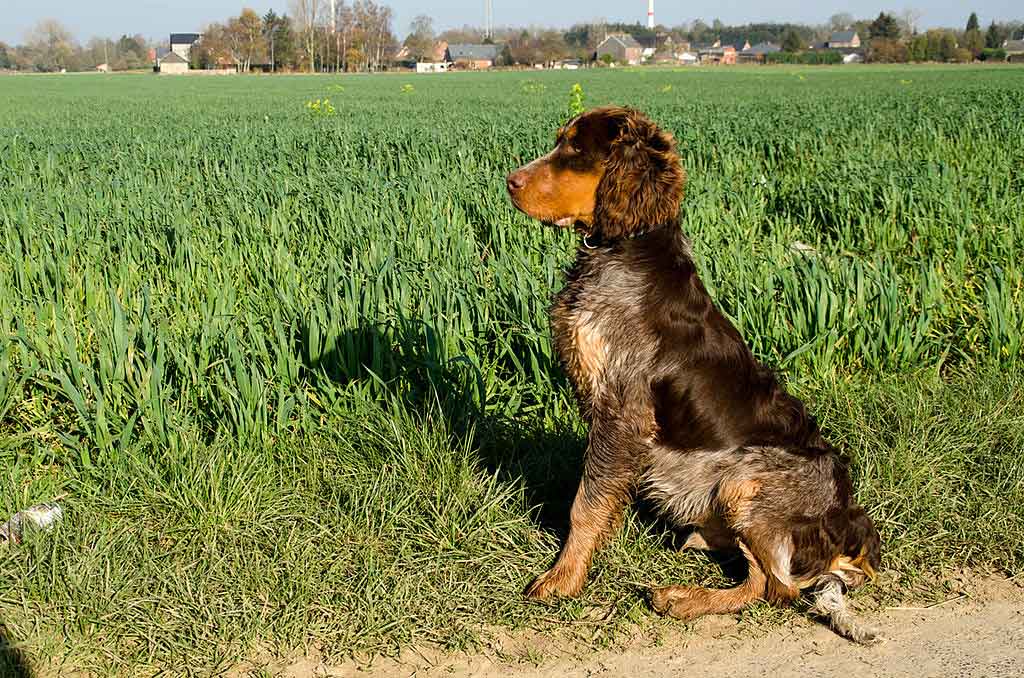
Photo: ยซSpaniel Picardoยป in the World Canina Exhibition of Poznaล„ Pleple2000, CC BY-SA 3.0, via Wikimedia Commons

Physical characteristics

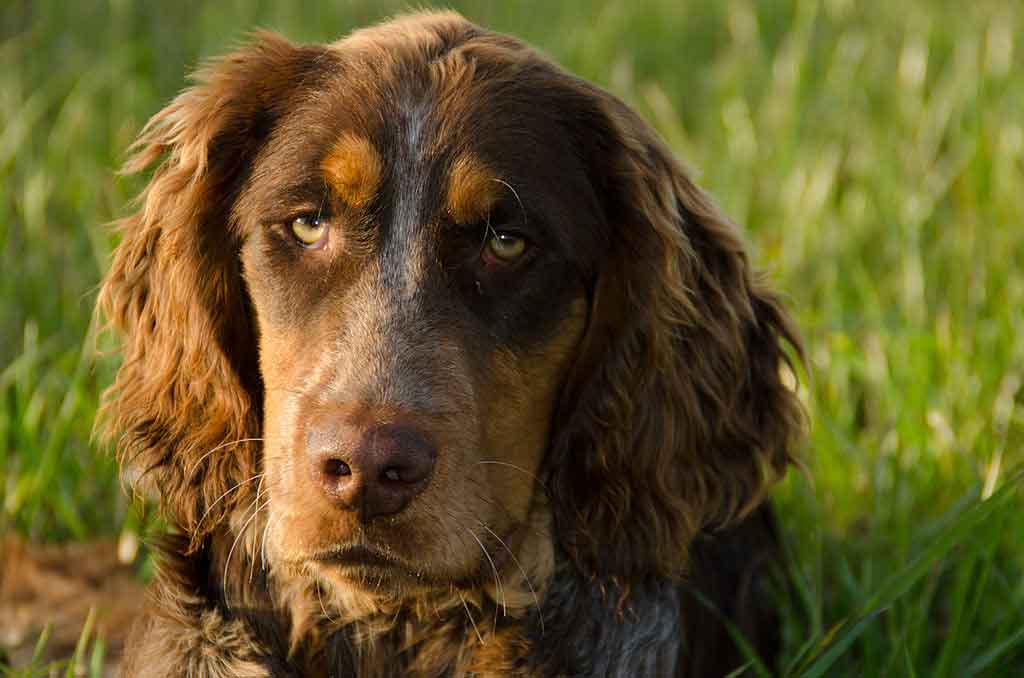
The Picardy Spaniel he is a beautiful dog, strong, elegant, nervous, solid and well muscled. Its coat is gray with brown spots on the different parts of the body and often tan on the head and legs.. Her dark amber eyes go wide giving you an expressive look. Its abundant and slightly wavy coat gives it protection, allowing you to work in the toughest places, especially in the water. The ears are long, quite low, located on the eye line and decorated with beautiful fringes. The tail, adorned with beautiful fur, worn with distinction. Its size ranges from 55 and 60 cm..

Character and skills

The FCI breed standard does not describe a typical temperament for the Picardy Spaniel. The Picardy Spaniel it is considered a docile breed of dog that loves to play with children, and easily bond with your caregiver. Generally described as a docile dog, good-natured and easy to train.

Above all, They are hunting dogs that need a lot of exercise to express their energy., resistance and rusticity.

His training is natural; the Picardy Spaniel they work to please their caregiver. Report, on land and in deep water, it's a pleasure for him. The rewards, caresses and compliments are the basis of his education.

Utility

The Picardy Spaniel is a hunting dog, that needs daily departures.

The Picardy Spaniel are used for hunting, in the woods for pheasant or in the swamps where they hunt, in particular, the snipe. It is also an effective dog for duck hunting, the hare or the rabbit. They are especially effective in swamps, where they do not hesitate to jump into the water. If required, can also recover hunting. This dog loves wide spaces where he can exercise, but you can also settle for smaller spaces and you can live very well in the city. The hair is abundant and slightly wavy, allowing you to hunt in dense vegetation and enter the water without any difficulty.

These docile dogs make great companion dogs., but they require a lot of physical exercise.

Health

There are no known hereditary genetic diseases in dogs Picardy Spaniel. Its longevity is of 14 years on average. The Picardy Spaniel is especially sensitive to ear infections, like most floppy eared dogs, like other breeds of โ€œSpaniels or Bassetsโ€. The Picardy Spaniel tend to gain weight quickly if overfed.

Characteristics "Picardy Spaniel"

Coexistence is important that you have with your new friend. Before considering the acquisition of a dog of the breed "Picardy Spaniel" you know certain factors. Not all breeds of dogs are apt to live in an apartment, you must take into account his character, their need for exercise, their interaction with other pets, their care and if you have small children, their level of tolerance towards them.

Adaptation โ“˜

3,0 of 5 stars (based on 1 review)

friendly dog โ€‹โ€‹โ“˜

3,0 of 5 stars (based on 1 review)

hair loss โ“˜

3,0 of 5 stars (based on 1 review)

Affection level โ“˜

5,0 of 5 stars (based on 1 review)

Need for exercise โ“˜

5,0 of 5 stars (based on 1 review)

Social need โ“˜

3,0 of 5 stars (based on 1 review)

Home โ“˜

3,0 of 5 stars (based on 1 review)

Toilet โ“˜

2,0 of 5 stars (based on 1 review)

Friendly with strangers โ“˜

3,0 of 5 stars (based on 1 review)

barking โ“˜

3,0 of 5 stars (based on 1 review)

Health โ“˜

4,0 of 5 stars (based on 1 review)

Territorial โ“˜

2,0 of 5 stars (based on 1 review)

Cat friendly โ“˜

2,0 of 5 stars (based on 1 review)

Intelligence โ“˜

4,0 of 5 stars (based on 1 review)

Versatility โ“˜

4,0 of 5 stars (based on 1 review)

Child friendly โ“˜

4,0 of 5 stars (based on 1 review)

Surveillance โ“˜

2,0 of 5 stars (based on 1 review)

joy โ“˜

4,0 of 5 stars (based on 1 review)

Images "Picardy Spaniel"

Picardy Spaniel

Our "Spaniel Picardo", Gibbs des Chaumes de Thiรฉrache to the 6 meses by Rachelle Vafidis, CC BY-SA 3.0, via Wikimedia Commons

Picardy Spaniel

Our "Spaniel Picardo", Gibbs des Chaumes de Thiรฉrache to the 6 meses by Rachelle Vafidis, CC BY-SA 3.0, via Wikimedia Commons

Videos "Picardy Spaniel"

Spaniel picardo (Picardy Spaniel) - Breed of dog
Spaniel picardo (Epagneul picard) – Breed of dog
Picardy Spaniel (Picardy Spaniel)
Picardy Spaniel (Epagneul Picard)

Type and recognitions:

  • FCI CLASSIFICATION:
  • Group :
  • Section : . .

Federations:

  • – FCI – Group 7: Pointing Dogs. – Section 1: Continental Pointing Dogs. 1.2: Spaniel type โ“˜
  • – โ€‹KC – Hunting dog โ“˜
  • – UKC – Gun Dog โ“˜

FCI breed standard "Picardy Spaniel"

Origin:
France

Date of publication of the valid original standard:
30.10.1964

Use:

Pointing Dogs.


General appearance:

Very compact dog, With strong and muscular members, sweet and expressive; Hears his head with a cheerful and high attitude. Its previous members are well developed.


Behavior / temperament:

---

Head:

---

Cranial region:
  • Skull : Round and wide, with well -pronounced occiput; Parietal bones are flattened.
  • Fronto-nasal depression (Stop) : Well inclined, Without forming a right angle.

facial region:

  • Truffle : Brown in color, medium, quite rounded.
  • Snout : Long, quite wide, He gradually thin.
  • Lips : Moderate thickness; The upper lip falls a bit on the lower, but without hanging.

Eyes : Dark amber color, Well open with a frank and expressive look.

Ears : Low enough to frame your head well; The hairs are beautiful, silky and undulating.

Neck:

With good placement and well muscular.

Body:

The hips are located a little lower than the cross.

  • Back : Moderately long, slightly sunk after the cross.
  • Pork loin : Well straight, not too long, broad and thick.
  • Rump : Very slightly inclined and rounded.
  • Breast : Deep and quite wide; It clearly descends to the elbow level.
  • Flanks : Plans, But deep, quite raised.

Tail:

The insertion of the tail is not very high; form two concave and convex light curves; It is not very long and is covered with a beautiful silky hair.

Tips

PREVIOUS MEMBERS : Straight and with strong muscles, adorned with fringes.

  • Shoulder : Quite long shoulder blades, rather straight and endowed with strong muscles.
  • Arms : Well muscled.
  • Elbows : Well located.

LATER MEMBERS : Presence of good hair strip to the warm-Tarsian joint.

  • Hips : Prominent, At the level of the sword and the spine.
  • Thighs : Straight, well descended, wide and well muscled
  • Warm-tarsal joints : Little angled.
  • Metacarpus : Straight.

FEET : Round, widths, together, With a little hair between the fingers.

Movement:

---

Mantle

SKIN : Quite fine and flexible.

HAIR : Thick, Not too silky, head, slightly undulating the body.

COLOR : Mottled gray, With brown plates on different parts of the body and at the birth of the tail; more frequently marked fire in the head and feet.


Size and weight:

Height to the cross : 55 to 60 cm..

Tolerance is admitted to 62 cm in males.


Fouls:

Any deviation from the aforementioned criteria is considered as a fault and the severity of this is considered to the degree of the deviation to the standard and its consequences on the health and well-being of the dog..

โ€ข Pear -shaped head, Very narrow.
โ€ข Square skull, narrow or short.
โ€ข Very straight front-nose depression angle.
โ€ข Black truffle, sharp, closed; double nose.
โ€ข Muzzle too short, Very convex.
โ€ข Too thick lips, very tight.
โ€ข Too light eyes, Very sunk, at the level of the head, oblique; Malignant look.
โ€ข narrow ears, short, too high implantation, very curly hair covers or lacking silky hair.
โ€ข Very long neck, too short or very thin.
โ€ข Very long or reilled back.
โ€ข Loin too long, very narrow or very weak.
โ€ข Very inclined rump.
โ€ข Very narrow or not deep enough chest.
โ€ข Round flanks, very raised or very fallen.
โ€ข Saber -shaped tail, too long, hair too curly, of very high or very low insert.
โ€ข Previous members without stripes, skinny; Closed or separate elbows.
โ€ข Very short scapulae, Too many straight or inclined, directed very backward.
โ€ข Very thin arm.
โ€ข Carpo firing forward.
โ€ข Very high hips, Very low, Too close.
โ€ข Narrow thigh, without hair stripes.
โ€ข Tibio-Tarsian joints too angled or cow-shaped.
โ€ข Narrow feet, crushed, Very separate fingers.
โ€ข Too thick skin.
โ€ข Fine fur, silky, Crespo or too short.
โ€ข Too brown color, White or black spots.

FALTAS DESCALIFICANTES:

โ€ข Aggressiveness or extreme shyness.
โ€ข Any dog โ€‹โ€‹showing clear signs of physical or behavioral abnormalities.


N.B.:

โ€ข Males must have two normal-appearing testicles fully descended into the scrotum..
โ€ข Only functionally and clinically healthy dogs, with the typical conformation of the breed, should be used for parenting.

Source: F.C.I - International Cynological Federation

Alternative names:

1. Epagneul picard (English).
2. ร‰pagneul picard (French).
3. Epagneul Picard (German).
4. (em francรชs: Epagneul Picard) (Portuguese).
5. Epagneul picard (espaรฑol).

โ–ท The world of Pets: Dogs, cats, birds, reptiles, amphibians

Pont-Audemere Spaniel
Francia FCI 114 . Spaniel type

Pont-Audemere Spaniel

The Pont-Audemere Spaniel he is a gentle dog, very balanced and obedient. energetic, smart and loyal, they are easy to train.

Content

History

The Pont-Audemere Spaniel is originally from the Pont-Audemer region, looking for the Marais Vernier, in Normandy, where it is traditionally used for hunting waterfowl. In 1886, the Kennel Club of Le Havre began to select him. After the Second World War, only a few copies of this small brown spaniel remained and crosses were made with the Irish Water Spaniel to save the race.

The Pont-Audemere Spaniel It's very weird. The total population of the breed is about three hundred individuals in France. Some breeders perpetuate the breed, mainly in Normandy and Picardy.

Photo: Riga, Baltic Winner 2013, 9-10 Nov by Thomas, CC BY-SA 3.0, via Wikimedia Commons

Physical characteristics

The Pont-Audemere Spaniel he is a stocky and vigorous Spaniel, whose body is almost square. Placed almost at the level of the line of the loins, the tail is carried quite straight. It is usually cut in the third; when the tail is not cut, It should be of medium length, a little curved. Dark amber or hazelnut, the eyes are rather small. The upper part of the skull and the long ears are well provided with curlers that frame the head, giving the impression of wearing a wig.

Hair is slightly rough on the body, wavy, neither flat nor curly. The fur is brown, preferably brown and speckled gray, with reflections of dead leaves.

Height and weight

  • Male size: Of 52 to 58 cm.
  • female size: Of 52 to 58 cm.
  • Male weight: Of 19 to 20 kg
  • female weight: Of 17 to 19 kg

Character and skills

The Pont-Audemere Spaniel is loving and displays unwavering loyalty to his masters. But, if they don't get their regular dose of care, these dogs can often get anxious, which is an important trait of his personality.

These dogs are especially good with children and are very sociable. They are also great playmates and family companions.. But, if you are looking for a good watchdog, it may not be the best option, as they are too friendly and quiet to keep an eye on something or someone.

This breed gets along very well with other dogs, but does not get along with dogs of the same breed that do not belong to the same pack or group. It is also not very friendly with other pets.. But, puppies of this breed mix easily with other pets and are known to have a friendly demeanor towards them.

Training and education

The training of the Pont-Audemere Spaniel It is easy. This dog is very obedient and loyal to the orders of the master. But, training sessions should be short, since the dog hates any long and repetitive task.

Exercise of Pont-Audemere Spaniel

This dog has aggressive exercise needs, which means that even long walks don't usually satisfy you. The most satisfaction you would get would be from any long hunting session. But, if hunting is not a reality, this dog should be allowed to romp in controlled areas so that it burns enough calories to meet its exercise requirements.

Health

Like the rest of the animals, this breed has health conditions to watch out for. canine hip dysplasia, a condition related to the hip cavities, can cause arthritis in dogs. These dogs are also prone to Von Willebrand's disease (a bleeding disease related to clotting), and hyperthyroidism (overproduction of hormones in the thyroid).

Apart from these problems, patella luxation and dental problems are the most common in this breed. alopecia, a skin disease caused by ringworm or other parasites, can also affect these dogs.

In summary, the following health problems are not uncommon in the breed Pont-Audemere Spaniel:

  • canine hip dysplasia
  • Von Willebrand disease
  • Hyperthyroidism
  • Dental disease
  • Patella dislocation
  • Alopecia

Grooming

The fur and skin of these dogs may look like they need a lot of grooming, but in reality, this breed needs little to no maintenance. A regular brushing once or twice a week is all you need.

But, the dog's ears need to be cleaned whenever necessary and are at risk of infection if not kept clean.

Characteristics "Pont-Audemere Spaniel"

Coexistence is important that you have with your new friend. Before considering the acquisition of a dog of the breed "Pont-Audemere Spaniel" you know certain factors. Not all breeds of dogs are apt to live in an apartment, you must take into account his character, their need for exercise, their interaction with other pets, their care and if you have small children, their level of tolerance towards them.

Adaptation โ“˜

3,0 of 5 stars (based on 1 review)

friendly dog โ€‹โ€‹โ“˜

3,0 of 5 stars (based on 1 review)

hair loss โ“˜

3,0 of 5 stars (based on 1 review)

Affection level โ“˜

5,0 of 5 stars (based on 1 review)

Need for exercise โ“˜

5,0 of 5 stars (based on 1 review)

Social need โ“˜

3,0 of 5 stars (based on 1 review)

Home โ“˜

3,0 of 5 stars (based on 1 review)

Toilet โ“˜

2,0 of 5 stars (based on 1 review)

Friendly with strangers โ“˜

3,0 of 5 stars (based on 1 review)

barking โ“˜

4,0 of 5 stars (based on 1 review)

Health โ“˜

4,0 of 5 stars (based on 1 review)

Territorial โ“˜

2,0 of 5 stars (based on 1 review)

Cat friendly โ“˜

2,0 of 5 stars (based on 1 review)

Intelligence โ“˜

4,0 of 5 stars (based on 1 review)

Versatility โ“˜

4,0 of 5 stars (based on 1 review)

Child friendly โ“˜

4,0 of 5 stars (based on 1 review)

Surveillance โ“˜

2,0 of 5 stars (based on 1 review)

joy โ“˜

5,0 of 5 stars (based on 1 review)

How much does it cost to have a Pont-Audemere Spaniel?

Cubs Pont-Audemere Spaniel usually cost between 1000 and 1300 EUR.

Images "Pont-Audemere Spaniel"

Photos

1 – ยซPont-Audemรจre Spanielยป at the World Dog Show in Poznaล„ by Pleple2000, CC BY-SA 3.0, via Wikimedia Commons
2 – The Epagneul Pont Audemer is a french pointing dog by Alephalpha, CC BY-SA 3.0, via Wikimedia Commons
3 – Head profile of a Pont-Audemer Spaniel male by Canarian, CC BY-SA 3.0, via Wikimedia Commons
4 – A Pont-Audemer Spaniel male by Canarian, CC BY-SA 3.0, via Wikimedia Commons
5 – Pont-Audemer Spaniel male by Canarian, CC BY-SA 4.0, via Wikimedia Commons
6 – โ€œPont-Audemere Spanielโ€ by https://worlddogfinder.com/es/razas/spaniel-de-pont-audemer

Videos "Pont-Audemere Spaniel"

Type and recognitions:

  • FCI CLASSIFICATION:
  • Group :
  • Section : . .

Federations:

  • – FCI – Group 7: Pointing Dogs. – Section 1: Continental Pointing Dogs. 1.2: Spaniel type โ“˜
  • – Central Canine Society – Gun Dog โ“˜

FCI breed standard "Pont-Audemere Spaniel"

Origin:
France

Date of publication of the valid original standard:
6.05.1964

Use:

Pointing Dogs.


General appearance:

It is vigorous and plump.


Behavior / temperament:

---

Head:

---

Cranial region:
  • Skull : Redondo, developed at the top; prominent occipital crest; the parietals are rather round. The forehead rises towards the pompadour; the head is covered with frizzy, pompadour hair, which reaches the top of the skull, leaving the forehead bare.
  • Depression links (Stop) : Make a slight angle, but the stop is marked.

facial region:

  • Truffle : Brown in color, significantly exceeds the front of the upper lip, rather sharp.
  • Nose cane : Long, with a prominence in the middle.
  • Lips : Fine and a little hanging, making the snout rather pointed.

Eyes : Dark amber or hazelnut color, rather small, well placed in its orbit; frank and kind look.

Ears : Moderately thick, plan, inserted mmmm further down so that they clear the cheeks, Long adorned with frizzy silky hair, which, along with the pompadour hair, forms a beautiful curly wig that frames the head well.

Neck:

A little arched, well delineated, muscular, finely inserted in the head and solidly in the shoulders.

Body:

  • Back : Straight or slightly convex.
  • Pork loin : Pretty short, width, solid, muscular.
  • Rump : Very slightly sloping.
  • Breast : Deep, broad, drops completely to elbow level; long ribs, outstanding, approaching the hip on her back.
  • Flanks : Flat and a little raised.

Tail:

Inserted almost at the height of the spine line, carried quite straight, usually cut into a third; thick at its insertion; is covered in curly hair and there must be hair around the tail. When the tail is not docked, should be medium length and slightly curved.

Tips

The limbs should be rather short, so that the dog is somewhat close to the ground, but without looking like the Cocker.

PREVIOUS MEMBERS :

  • Shoulder : Strong, long, oblique, closed at their junction with the spine.
  • Arms : Strong and muscular.

LATER MEMBERS :

  • Hips : Outgoing, reaching the level of the back.
  • Thighs : Straight, well descended, muscular, very strong with well developed pants. Protruding thigh tip.
  • Warm-tarsal joints : Wide and straight, without drifting in or out.
  • Metatarsals : Rather short, specially adorned at the back by a fringe of curly hair. Avoid dewclaws.

FEET : Round, well Plumb, covered in long curly hair between fingers.

Movement:

---

Mantle

HAIR : Curly and slightly felt.

COLOR : Brown, preferably brown and mottled gray, with dry leaf tones.


Size and weight:

Of 52 to 58 cm..


Fouls:

Any deviation from the aforementioned criteria is considered as a fault and the severity of this is considered to the degree of the deviation to the standard and its consequences on the health and well-being of the dog..

โ€ข Skull flattened on the sides, forehead parallel to the muzzle; absence of pompadour, pompadour that reaches the browbone or formed by fallen hairs.
โ€ข Angle of the naso-frontal depression (Stop) too straight.
โ€ข Black truffle, pale, round or with white spots.
โ€ข Short or overly arched nose canal.
โ€ข Thick and hanging lips.
โ€ข Eyes too light, at head level or very sunken; aggressive or sullen look.
โ€ข thick ears, enrolladas, too short, insertion very high, carried forward or backward.
โ€ข Very heavy neck, flattened at its top line, thick to its junction to the head.
โ€ข Long back, narrow or saddled.
โ€ข Long loin, narrow or flat.
โ€ข Croup dropped or very straight.
โ€ข Chest with lack of depth, too rounded, sunken; ribs flat or close together.
โ€ข Rounded flanks, very low.
โ€ข Insertion queue too high or too low, very curved, carried in the form of a saber or with a plume.
โ€ข Short shoulders, straight, separated near the top.
โ€ข Thin arm.
โ€ข Low hips.
โ€ข Flat thigh.
โ€ข Deviated tibiotarsal joints, straight lines, too far apart or too close together.
โ€ข Long metatarsals, leaning back to front or skewing to the right or left, no fringes.
โ€ข Narrow feet, too long, very hairy; very thick pads.
โ€ข Very straight hair, too curly, very hard or very fine; no curly topknot or with hairs that fall as in the Poodle.
โ€ข Color negro, black and white, black and tan.

FALTAS DESCALIFICANTES:

โ€ข Aggressiveness or extreme shyness.
โ€ข Any dog โ€‹โ€‹showing clear signs of physical or behavioral abnormalities.


N.B.:

โ€ข Males must have two normal-appearing testicles fully descended into the scrotum..
โ€ข Only functionally and clinically healthy dogs, with the typical conformation of the breed, should be used for parenting.

Source: F.C.I - International Cynological Federation

Alternative names:

1. Epagneul Pont-Audemer, Setter of Pont-Audemer (English).
2. ร‰pagneul de Pont-Audemer (French).
3. Epagneul de Pont-Audemer (German).
4. (em francรชs: epagneul de Pont-Audemer) (Portuguese).
5. Epagneul du Pont-Audemรจre (espaรฑol).

โ–ท The world of Pets: Dogs, cats, birds, reptiles, amphibians

Poitevin hound
Francia FCI 24 . Large-sized Hounds

Poitevin hound

In the past, the Poitevin hound was also used as a wolf hunter.

Content

History Poitevin hound

The most widespread hypothesis about the origin of this breed of dog is that it was Viscount ร‰mile de La Besge who began to breed the Poitevin hound in the first half of the 19th century. Their dogs, that he had received as a present from an uncle, were the result of a union between Chiens Blancs du Roi and Larryes. The viscount bred no other dog until rabies killed him in 1842. He lost all his animals except two bitches.

To restore its population, ร‰mile de La Besge had six dogs brought to him from England (probably English Foxhound). But, then tried to roll back his influence by strict inbreeding. Thus the two males were born, Talbot and Rochester, and the two females, Tartane and Turbulente. Talbot and Turbulent They had a daughter, Dashing, who became famous for her particularly fine nose and speed. Mated with Traveller, an English male bred by him Conde Le Couteulx and gave birth to puppies of exceptional quality. It is assumed that Poitevin of today are all descendants of Fringante and Traveller. But, a certain earl Henri de La Porte stated that his uncles Auguste and Paul had already begun to fix the race in 1835, and that in the beginning there were quite a few others, namely, the male Tรฉnor and the female Ravissante.

The Poitevin hound was not accepted as a purebred dog for a long time. In the famous French hunting manualParforce, published in 1890 by the count Le Couteulx de Canteleu, only "bastards of the Haut-Poitouยซ, although the ability of dogs to hunt wolves was certainly appreciated. Besides the royal white dogs and the English Foxhound, it is said that the disappeared Larryes and Cรฉris contributed to the creation of the breed. It was a Scent hound medium size white and orange. It is said that he resembled greyhounds and was a very good hare hunter.. Perhaps it is from him that the special elegance of the Poitevin hound. Some cynologists also believe that it comes from Larrye, who is said to have had greyhounds in his ancestral line.

Photos:

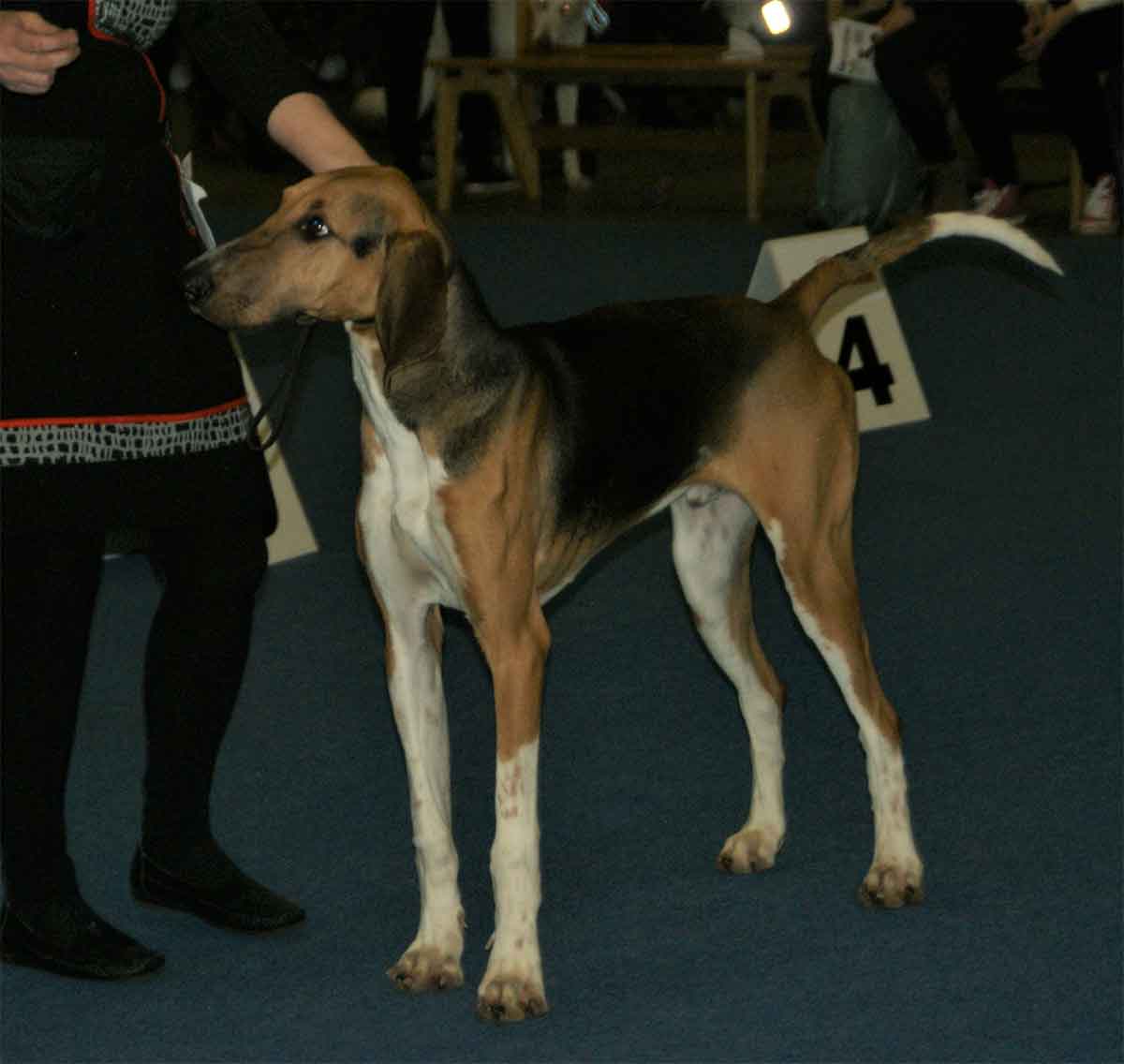
1 – A Poitevin by Canarian, CC BY-SA 4.0, via Wikimedia Commons

Physical Characteristics Poitevino Hound

The coat of these pedigree dogs is short and shiny.. Dogs are usually tricolor and have black fur or large black spots. Some specimens can also be two-tone orange and white or wolf-colored.. In general, the physique is powerful and elegant. The expressive dark eyes give the Poitevin a serious look.

Height to the cross: For males between 62 and 72 cm., for females 60 to 70 cm..

Weight: Approx.. 30 kg.

Character and skills Poitevin hound

The character of Poitevin hound is characterized by its resistance and toughness. This pedigree dog is not deterred even by rough terrain. The race Poitevin is brave. He's kind to humans.

Dogs of this breed were bred for hunting and, usually, they are not satisfied with a life as a couch dog. Ideally, these dogs should be hunters. If you want to have a dog of this type, but do not use him to hunt, you must offer these animals a suitable occupation and sufficient exercise.

Aptitudes

In the past, the Poitevin hound he specialized mainly in hunting wolves. He was tirelessly in the way of his difficult prey. But today this beautiful hunting dog, that is strong, elegant and light at the same time, can be used for hunting all animals. The forest of La Mouliรจre, where did he born Poitevin hound ago 150 years under the aegis of the Viscount of La Besge, it was not easy terrain. The dogs had to be able to wander through the dense, thorny undergrowth without hesitation and were not allowed to be disturbed by overhanging branches., gorse and the like. And to this day the breed has retained its special strength and tenacity., allowing you to complete a task in any circumstance.

Poitevin hound
Poitevin hound

It also, the Poitevin hound I needed a proper portion of courage, because I had to put the wolf, as well, and it was much bigger than his own Poitevin. The Poitevin they even had to chase especially robust wolves, sometimes almost 100 km. During the night they and the dogs rested, but the next morning the Poitevin they had to be able to follow the trail again. For this they needed an extremely pronounced sense of smell.

Has been used to living in a kennel for a long time, so this is still the ideal way to keep the Poitevin hound. But, the kennel should be so large that the dogs that live in it have enough space to vent. One should strictly pay attention to the hygiene and cleanliness of his place.

Also outside the hunting season the Poitevin hound needs plenty of space and enough opportunities to run and play, a park would be ideal. If dogs live in a kennel, visit them as often as possible, because the relationship with humans should not be neglected.

Poitevin hound health and care

The Poitevin is considered a dog with robust health. Little maintenance required. The short coat can be brushed from time to time. The ears should be checked regularly for parasites and cleaned. Dog owners who want to cover themselves as best as possible are advised to have medical insurance for dogs and liability insurance for dogs.

Poitevin hound Nutrition

This dog eats for two, especially during hunting season. But he is not very picky and is satisfied with simple food. Daily 200 g of vegetables with 200 g of dog or rice flakes and 400 g of meat. offal such as liver, the kidneys and heart are particularly suitable. Especially for puppies and young dogs. Eggs also contain many valuable nutrients. They can be fed both cooked and raw. In certain circumstances, even with the shell. During hunting season, which is very hard for dogs, you must feed them fatty bacon. Of course, the dog must always have fresh water available. An automatic irrigation system is recommended here.

Where to buy a Poitevin hound

If you are interested in this breed of Scent hound and are looking for the right Poitevin hound breeder, you may need to plan a little more time for the search. These French hunting dogs are not too common outside of their country of origin.. For this reason, interested parties should look for a breeder in France.

Videos "Poitevin hound"

Poitevin hound ๐Ÿถ๐Ÿพ Everything Dog Breeds ๐Ÿพ๐Ÿถ
Poitevin hound ?? Everything Dog Breeds ??
Your Ideal Pet The Poitevin

Type and recognitions:

  • FCI CLASSIFICATION:
  • Group :
  • Section : . .

Federations:

  • – FCI – Group 6: Scent hounds, and related breeds. – Section 1.1: Large-sized Hounds. โ“˜
  • – Central Canine Society โ“˜

FCI breed standard "Poitevin hound"

Origin:
France

Date of publication of the valid original standard:
17.11.1978

Use:

Hound


General appearance:

This is a very distinguished dog, that brings together, with a high degree of perfection, characteristics such as strength, elegance and agility, combined with a set of very attractive colors.


Behavior / temperament:

---

Head:

It is elongated, but without excess. It is not very wide, and the bones protrude with a slight protuberance at the back of the skull.

Cranial region:

Craging: It is flatter than domed and descends in a slight slope towards the nasal cannula..

facial region:

  • Trufa: Very strong, wide and prominent.
  • Caรฑa nasal: Slightly swollen. It is elongated, although not in excess.
  • Belfos: The upper lip covers the lower lip well. The snout is somewhat sharp.
  • Ojors: Large, browns, black bordered. The look is expressive.
  • Obars: Medium width. They are thin and their insertion is a little low. They are medium long and somewhat crooked.

Neck:

It is long, delgado, and does not have a double chin.

Body:

  • Espalda: It is well muscled and appears well attached to the body..
  • Pork loin: Well muscled.
  • Coscaffold: long.
  • Flalso: They are slightly raised, although the belly is quite developed.

Tail:

Medium length. It's thin, and it is not spike-shaped (towards the tip, around the tail, a few longer and thicker hairs slightly distant). It appears well attached to the spine, and has a slightly curved shape. The dog carries it with elegance.

Tips

PREVIOUS MEMBERS: Straight, well muscled. They are thin, strong, flat and wide.

Hormbro: Long, flat and oblique. It appears attached to the body.

LATER MEMBERS:

  • Ancas: Slightly oblique, solid and long.
  • Thighs: Very muscular.
  • Corvejรณn: It is located close to the ground. It is well poised, although it is slightly angled.

PIIS: wolf foot, rather elongated and very resistant.

Movement:

It's very loose. The dog gallops easily, High effortlessly and moves very well in the undergrowth.

Mantle

PIEL: The truffle is black. The skin of the testicles varies between white and black.

Plink: short and bright.

Colorr: Tricolor, with a black cloak or with large spots; sometimes it is white or orange. Many specimens have wolf-colored hair.


Size and weight:

Height to the cross of 62 to 72 cm in males, and 60 to 70 cm in females.


Fouls:

Any deviation from the aforementioned criteria is considered as a fault and the severity of this is considered to the degree of the deviation to the standard and its consequences on the health and well-being of the dog..

FALTAS DISQUALIFYING:

  • Aggressiveness or extreme shyness.
  • Any dog โ€‹โ€‹showing clear signs of physical or behavioral abnormalities must be disqualified..
  • Cobarday, aggression toward owner.
  • black and white dogs.
  • Chin presence.
  • Dogs with mild underprognathism will not be eliminated.
  • In equal quality, dogs with a normal jaw are preferred.


N.B.:
  • Males should have two normal-appearing testicles fully descended into the scrotum..
  • Only functionally and clinically healthy dogs, with the typical conformation of the breed, should be used for parenting.

Itlatest changes are in bold.

Source: F.C.I - International Cynological Federation

Alternative names:

1. Haut-Poitou (English).
2. Chien du Haut-Poitou (French).
3. Haut-Poitou (German).
4. Pictava (Portuguese).
5. Poitevino (espaรฑol).

โ–ท The world of Pets: Dogs, cats, birds, reptiles, amphibians

Petit Gascon Saintongeois
Francia FCI 21 - Medium-sized Hounds

Petit Gascon Saintongeois

The Petit Gascon Saintongeois was destined, in its origins, mainly hunting the hare.

Content

History

Of French origin, named after the provinces of Gascuรฑa and Saintonge.

By mid-century 20, some large game hunters in the Southwest selected the smallest specimens from their litters of Gascon Saintongeois and they fixed this variety, destined, in its origins, mainly hunting the hare.

Photo: Little Gascon de Saintonge by Jรฉrรดme BARDIAU, CC BY-SA 3.0, via Wikimedia Commons

Physical characteristics

Medium-sized dog, well proportioned and distinguished.

Size:

Males: 56 to 62 cm..
females: 54 to 59 cm..

Character and skills

Multi-purpose dog used for rifle hunting. Because of its origin it hunts especially the hare, but it is also very good for hunting big game.

Characteristics "Petit Gascon Saintongeois"

Coexistence is important that you have with your new friend. Before considering the acquisition of a dog of the breed "Petit Gascon Saintongeois" you know certain factors. Not all breeds of dogs are apt to live in an apartment, you must take into account his character, their need for exercise, their interaction with other pets, their care and if you have small children, their level of tolerance towards them.

Adaptation โ“˜

2,0 of 5 stars (based on 1 review)

friendly dog โ€‹โ€‹โ“˜

3,0 of 5 stars (based on 1 review)

hair loss โ“˜

2,0 of 5 stars (based on 1 review)

Affection level โ“˜

2,0 of 5 stars (based on 1 review)

Need for exercise โ“˜

5,0 of 5 stars (based on 1 review)

Social need โ“˜

4,0 of 5 stars (based on 1 review)

Home โ“˜

2,0 of 5 stars (based on 1 review)

Toilet โ“˜

1,0 of 5 stars (based on 1 review)

Friendly with strangers โ“˜

2,0 of 5 stars (based on 1 review)

barking โ“˜

3,0 of 5 stars (based on 1 review)

Health โ“˜

4,0 of 5 stars (based on 1 review)

Territorial โ“˜

2,0 of 5 stars (based on 1 review)

Cat friendly โ“˜

2,0 of 5 stars (based on 1 review)

Intelligence โ“˜

4,0 of 5 stars (based on 1 review)

Versatility โ“˜

5,0 of 5 stars (based on 1 review)

Child friendly โ“˜

4,0 of 5 stars (based on 1 review)

Surveillance โ“˜

2,0 of 5 stars (based on 1 review)

joy โ“˜

4,0 of 5 stars (based on 1 review)

Videos "Petit Gascon Saintongeois"

HTTPS://youtube.com/watch?v=aM1D0Ttrupo
Petit Gascon Saintongeois
HTTPS://youtube.com/watch?v=p_qCOkxxHPs
Little Gascon Saintongeois

Type and recognitions:

  • FCI CLASSIFICATION:
  • Group :
  • Section : . .

Federations:

  • – FCI – Group 6: Scent hounds, and related breeds. – Section 1.2: Medium-sized Hounds. โ“˜
  • – Central Canine Society โ“˜

FCI breed standard "Petit Gascon Saintongeois"

Origin:
France

Date of publication of the valid original standard:
06.03.2007.

Use:

Gran Gascon Saintongeois: Used for rifle hunting and sometimes for small game, big game and also hare. It is generally used in a pack or alone, as a tracker.

Pequeรฑo Gascon Saintongeois: Multi-purpose dog used for rifle hunting. Because of its origin it hunts especially the hare, but it is also very good for hunting big game.


General appearance:

Gedge: Very well built dog, which gives at the same time an impression of strength and elegance. He is of a very French type when it comes to the head, fur and expression.

Psmall: Medium-sized dog, well proportioned and distinguished.

PROPORCIONES IMPORTANT:

Height at withers/scapulo-ischial length in a ratio of 10/10.5 The length of the muzzle is equal to the skull.


Behavior / temperament:

Pack dog par excellence, up to the sense of smell, bold, gifted with a beautiful voice. He joins the pack by instinct. It's calm, affectionate and obeys orders easily.

Head:

The lines of the skull and the nasal passage are divergent.

Cranial region:
  • Craging: Seen from the front, It is arched and rather narrow; the occipital protuberance is well marked. Seen from above, the back has a pronounced ogival shape.
  • Dnaso-frontal depression: Little pointed.

facial region:

  • Trufa: black, well developed, the windows wide open.
  • Labios: They cover the lower jaw, the corner is discreet. The edge of the lips is black.
  • Cnasal year: Powerful, slightly arched.
  • Jaws: Scissor joint. The incisors are at right angles to the jaws..
  • Cheeks: Thin.

OJOS: Oval, browns. The edge of the eyelids is black. The expression is sweet and confident.

OREJAS: Fine, bent. They must reach at least the end of the truffle. They occur below the eye line, quite far back, leaving the skull very clear.

Neck:

Of medium length and thickness. It is slightly arched and has little dewlap.

Body:

  • lynand the top: It is firm and not excessively long.
  • Lomo: It is well attached to the body. It is slightly convex, quite muscular and not too long.
  • Glikeness: Slightly oblique, wide enough.
  • Pecho: Large, long, descends to the level of the elbows. The front part of the chest is quite open.
  • Costillas: Slightly rounded and long.
  • Flank: It's a little raised.

Tail:

It is thick at the base; very thin at its end. Reaches to the tip of the hock. The elegant bearing, Sabre-shaped.

Tips

PREVIOUS MEMBERS:

  • Ageneral appearance: The previous room is powerful.
  • Hshoulder: Rather long, muscular, moderately oblique.
  • Elbow: Well adhered to the body.
  • Aforearm: Strong bones.
  • Pinis previous: Slightly elongated oval shape. The fingers are thin and close together. The foot pads and nails are black.

LATER MEMBERS:

  • Ageneral appearance: The hindquarters are well proportioned.
  • Thighs: Long and well muscled.
  • Corvejรณn: Width, well angled. Well inclined, visibly directed towards the axis of the body.
  • Pinis later: Slightly elongated oval shape. The fingers are thin and close together. The foot pads and nails are black.

Movement:

Uniform and loose.

Mantle

PIEL: Stretchy and not too thick. It is white with black spots.

Plink: Short and dense.

Codor: The background is white, with black spots; sometimes it is speckled, although not in excess. Two black spots are usually present on each side of the head.; cover the ears, surrounding the eyes and cheeks-reach. The cheeks are color fire, preferably pale.

Two fire-colored brands, located on the top of the eyebrows, They simulate โ€œfour eyesโ€. They are also observed, tan traces on the inner surface of the ear and specks along the extremities. Some tawny hairs may appear on the top of the ear, without this giving the head a tricolor appearance. Sometimes a typical dead leaf spot is observed on the lower part of the thigh., known as โ€œroe deer markโ€.


Size and weight:

Height to the cross:

Grand:

  • Males: 65 to 72 cm..
  • females:62 to 68 cm..

Petit:

  • Males: 56 to 62 cm..
  • females: 54 to 59 cm..

    With a tolerance of approximately 1 cm..


Fouls:

Any deviation from the aforementioned criteria is considered as a fault and the severity of this is considered to the degree of the deviation to the standard and its consequences on the health and well-being of the dog..

Cthey are not coming:

  • Short.
  • Wide skull.
  • Short ears; ears that stand high.
  • Total absence of fire color.

Cfamily:

  • Absence of volume.
  • Flabby upper margin.
  • sunken croup.
  • Deviated tail.

Members:

  • Bone structure that is not sufficiently developed.
  • Shoulders that are too oblique or too straight.
  • crushed feet.
  • Straight posterior angulation.
  • closed hock, seen from behind.

FALTAS DISQUALIFYERS:

  • Aggressiveness or extreme shyness.
  • Any dog โ€‹โ€‹showing clear signs of physical or behavioral abnormalities.
  • Lack of type, and in particular wide and round skull.
  • Upper or lower prognathism.
  • light eyes.
  • Any other layer other than that established in the standard.


N.B.:
  • Males should have two normal-appearing testicles fully descended into the scrotum..
  • Only functionally and clinically healthy dogs, with the typical conformation of the breed, should be used for parenting.

Source: F.C.I - International Cynological Federation

โ–ท The world of Pets: Dogs, cats, birds, reptiles, amphibians

Posavac Hound
Croacia FCI 154 . Medium-sized Hounds

Posavac Hound

The Posavac Hound was registered in 1955 under the name "Kras Basin Hound"

Content

History

It is an ancient breed of running dog, originally from Croatia, whose origin is lost in the dark prehistory. The frescoes (1474, Chapel of Our Lady in Beram, near Pazin), the Chronicles (1719, Bishop Bakic of Djakovo, 1859 the vet Franjo Bertic also from Djakovo) and the books (Joze Kristen) bear witness to it.

The Posavac Hound They were bought in Croatia under the name ยซboskiniยป and were highly appreciated in neighboring areas. In 1924 this breed was presented for the first time at a dog show. The first entries in the Croatian pedigree book date back to 1929 and the FCI recognized this breed in 1955. The first standard with the correct name of the breed dates back to 1969; underlines the origin of the race in the wide and dense valley of the River Sava in the southeast of Zagreb.

Photos: Cropped image of young Posavac hound female by Strojovodjazg, CC BY-SA 4.0, via Wikimedia Commons

Physical characteristics ยซSave Valley Houndยป

One Posavac Hound can weigh up to 20 kg and measure around 58 height cm. This Croatian dog is of strong constitution and of medium body proportions. His fur is typically red., reddish or wheat-colored. White markings appear on the head area, the neck, the chest, the lower part of the limbs and the end of the tail. The hair itself has between 2-3 cm long, rigid and dense in nature, and always very lying. On the backs of the limbs, as well as on the underside of the belly and tail, hair gets slightly longer.

Character and abilities ยซSave Valley Houndยป

The Posavac Hound is prized as an extremely hardy hound dog, specialized in hunting hares and foxes. His constitution is perfectly adapted to the conditions of his native region, the vast forests of the Savetal. Here you can find areas of difficult access and a lot of undergrowth, lands that are suitable for Posavac Hound with his height.

This dog is very loyal and affectionate with his master. He is a passionate hunter with a moderately lively temperament.

Care and maintenance of the โ€œSave Valley Houndโ€

Posavac Hound small
Posavac Hound small

It is enough to brush it once a month to maintain the beauty and protective properties of its coat.

Loss of hair

Hair loss is moderate.

Nutrition of the โ€œSave Valley Houndโ€

The daily rations of the croatian: posavski goniร„ย, as it's also called, must adapt to your daily life. This is especially true for hunting season.

One meal a day is enough for him.. It is better to give it to him at night so that he does not work on a full stomach. This reduces the risk of stomach disorders.

Videos "Posavac Hound"

Posavac Hound ๐Ÿถ๐Ÿพ Everything Dog Breeds ๐Ÿพ๐Ÿถ
Posavac Hound ?? Everything Dog Breeds ??
Posavski gonic (mala)

Type and recognitions:

  • FCI CLASSIFICATION:
  • Group :
  • Section : . .

Federations:

  • – FCI – Group 6: Scent hounds, and related breeds. – Section 1.2: Medium-sized Hounds. โ“˜
  • – UKC – Scenthound Group โ“˜
  • – Croatian Kennel Club

FCI breed standard "Posavac Hound"

Origin:
Croatia

Date of publication of the valid original standard:
03.11.2014

Use:

It is a hound with excellent resistance, especially suitable for hare hunting, the Fox, the boar, but can also be used as a trail dog.


General appearance:

Strong Hound Build, medium-sized dog with harmonious movements. Its characteristic reddish wheat color comes in all its shades.. White markings are found on the head, in the neck, on the forechest and on the chest, in the womb, on the lower parts of the limbs and on the tip of the tail. The difference between both sexes must be well marked.

important proportions

  • rectangular body, the length of the body exceeds the height at the withers.
  • The height to the elbow is approximately 50 % the height at the withers.
  • The length of the skull slightly exceeds that of the snout.


Behavior / temperament:

This breed is easily trained. It is a universal hound with a clear and melodic voice suitable for hunting in any area.. Docile, He is not nervous or aggressive, moderately lively temperament. Very attached to his master.

Head:

---

Cranial region:
  • Head: The head is well-proportioned to the body. It has slightly divergent lines.
  • Skull: Slightly longer than the snout, the widest part is the area between the ears. The temporal zone is slightly arched. The width of the skull exceeds its depth. The occipital protuberance and frontal sulcus are slightly marked.

facial region:

  • Truffle: Strong, with wide open nostrils. The entire nose and the inside of the nostrils should be black or dark brown..
  • Snout: Strong, square and full, somewhat shorter than the skull, gradually tapers from the naso-frontal depression to the nose, without being too pointy.
  • Belfos: Medium thick, well adjusted to the jaw, the lip corner is not visible. The pigmentation of the lips is completely in accordance with the color of the truffle.
  • Nasal bridge: The nasal cannula is straight or slightly convex (slightly fleshy nose).
  • Jaws / Teeth: The jaws are strong and well developed, the teeth are white and arranged in the jaw in a regular way. Scissor-shaped denture; the incisors are inserted into the jaws vertically. It is desirable that the denture be complete (42 teeth in accordance with the dental formula). The lack of premolars PM1 and molars M3 is not taken into consideration. It is not desirable for other teeth to be missing.
  • Cheeks: The chewing muscles and the zygomatic bone should not be too marked.

Eyes: Medium-sized, moderately separated, placed on the semi-front part with an angle of between 10 and 15 degrees with respect to the horizontal line. Oval in shape and dark brown in color; smart expression. The eyelids should not be sagging or show signs of entropion or ectropion.. The pigmentation of the edge of the eyelids must be completely in accordance with the color of the nose.

Ears: Pendants, fall close to the head, inserted at eye level. The ear is triangular in shape with a rounded tip., of medium length and thickness. When stretched forward they should reach the corner of the mouth.. The ears should not have folds, be curled or protrude. They are covered with short hair.

Neck:

Strong, well muscled and at an angle 45 degrees with respect to the horizontal line. It narrows towards the head. The skin is tight, without double chin or very marked folds.

Body:

  • Generality: The body must be strong.
  • Cross: Marked.
  • Back: Strong, well muscled, straight.
  • Pork loin: Of average length, width, good muscular, strong and well attached to the rump.
  • Rump: Well musculada, strong, flat and inclined at an angle between 25 and 30 degrees with respect to the horizontal line. Something lower than the cross.
  • Breast : Deep, wide but not too wide or barrel-shaped. The rib cage should reach to the elbow.
  • Ribs: Ribs well arched.
  • bottom line: Bottom line with slight retraction, from sternum to flanks.

Tail:

Inserted in the extension of the rump line. Strong in insertion, It gradually tapers towards the tip and is of medium length. If you stretch down, reaches at most to the hock. Saber-shaped with carriage below the top line. A higher tail is tolerated when the dog is in action.. The tail is well covered with hair, slightly longer at the bottom, preferably as small brushes.

Tips

Former members

  • Generality: Seen from the front, The forelimbs must be well proportioned with respect to the body and have regular angles..
  • Shoulder: Of average length, muscular. The shoulder angle is between 115 and 120 degrees.
  • Elbow: Well attached to the body.
  • Forearm: Strong, rounded bones with strong muscle tone. Parallels seen from the front.
  • Carpo: Short and elastic.
  • Metacarpus: Elastic, slightly inclined.
  • Front feet: Oval, with fingers together and strong pads. Nails should preferably be pigmented.

Later members

  • Generality: Strong and elastic in movement.
  • Thigh: Strong, wide and muscular.
  • Leg: They form an angle of about 40 degrees with respect to the horizontal line.
  • Knee: It is wide.
  • Metatarsus: Almost vertical with respect to the ground, firm and elastic.
  • Hock: Strong and firm.
  • Rear feet: Oval, with fingers together and strong pads. Nails should preferably be pigmented.

Movement:

Reach is essential, with good push. The movement must be harmonious, no sudden movements. The ideal is that the top line moves as little as possible and that the feet do not cross.

Mantle

Skin: Elastic, รโ€รยต medium thickness, adheres well to the entire body, without wrinkles.

Fur: The hair is hard, thick, shiny and should be very close to the body. It has a length of between 2 and 3 cm.. The hair is a little longer on the back of the thighs (until 4 cm.), on the belly and under the tail, where it is preferred to form the so-called "brushes".

Color: The base color is reddish wheat in all its shades., with white marks on the head, in the neck, in the backsplash, on the chest, in the womb, on the lower parts of the limbs and on the tip of the tail. They are never dark brown or chocolate, since they are not allowed. The total surface area of โ€‹โ€‹the white spots cannot exceed more than one third of the total surface area of โ€‹โ€‹the body. The white color must be clear and not have splashes of the base color..

The characteristic white spots are located on :

- Head, in the form of a running cord or a strip (no white on the ears).
- The neck, as a necklace (complete or partial) or strip-shaped.
โ€“ On the parapet, as narrower or wider white surface.
- In the womb, a white strip.
โ€“ In the extremities, white surface on paws; also sock-shaped on the pasterns.
- In the queue, like a white tip.

It is desirable that all the white markings be in the indicated points and that they be distributed symmetrically on the dog's body.. The absence of white marks in the indicated points is considered a fault. White marks cannot appear on other parts of the body.


Size and weight:

Height to the cross

  • For males: 50 cm-56 cm.
  • for females: 47 cm-53 cm.

A difference of +/- 2 cm in males and females of exceptional type and conformation.


Fouls:

Any deviation from the above mentioned criteria is considered to lack, and the severity of this is considered the degree of deviation from the standard and its consequences on the health and well-being of the dog and the dog's ability to perform its traditional task.

disqualifying fouls:

โ€“ Aggressiveness or extreme shyness.
โ€“ Converging head lines.
โ€“ Muzzle longer than the skull.
โ€“ Atypically short snout.
- Superior or inferior prognathism, twisted bite.
- Blue eyes.
โ€“ Truffle, completely depigmented eyelids or lips.
โ€“ Body length less than the height at the withers.
โ€“ Dog with short limbs, of Achondroplastic type.
โ€“ Curled or deviated tail curved on one side.
โ€“ Body hair over 5 cm length.
โ€“ Dog of a single color (solid), absence of white spots.
โ€“ Gray or black spots on the body, presence of a third color.
โ€“ White spots splashed with the base color.
โ€“ Size above or below the norms established by the standard.


N.B.:

โ€ข Any dog โ€‹โ€‹showing clear signs of physical or behavioral abnormalities should be disqualified..
โ€ข The aforementioned fouls that are more pronounced or more marked are eliminatory..
โ€ข Males must have two normal-appearing testicles fully descended into the scrotum..
โ€ข Only functionally and clinically healthy dogs, with the typical conformation of the breed, should be used for parenting.

Source: F.C.I - International Cynological Federation

Alternative names:

1. Croatian: posavski goniฤ (English).
2. Chien courant de Posavatz, chien courant du bassin de Kras (French).
3. Huidige hond van de Save Vallei, Posavski Goniฤ, Save-Bracke, Savetalbracke (German).
4. Em croata: Posavski gonic (Portuguese).
5. Sabueso de Posavaz (espaรฑol).