โ–ท The world of Pets: Dogs, cats, birds, reptiles, amphibians

Bosnian and Herzegovinian - Croatian Shepherd Dog
Bosnia & Herzegovina CroaciaFCI 355 . Molossoid . Mountain

Pastor de Bosnia-Herzegovina y Croacia

The Bosnian and Herzegovinian - Croatian Shepherd Dog It is a very sensitive and quiet dog.

Content

History

The Bosnian and Herzegovinian - Croatian Shepherd Dog, also called Tornjak, it is an ancient breed of dog, and its exact origin is lost in the meanders of history. Most specialists agree that it is one of the descendants of the Tibetan Mastiff (Do-Khy), that arrived in Europe several thousand years ago.

Some accounts suggest that it already existed in the Dinaric Alps (in present-day Bosnia) at the time of the Roman Empire, almost ago 2000 years. But, the first descriptions of a dog corresponding to the Bosnian and Herzegovinian - Croatian Shepherd Dog can be found in documents of the Bosnian Catholic Church dating from 1067.

Three centuries later, in 1374, Petar Horvat, then bishop of Dakovo, Croatia, He also described a dog that resembled the Bosnian and Herzegovinian - Croatian Shepherd Dog in all aspects, size, color and function. At that time it was called Canis Montanis ("mountain dog") and I was already working with the shepherds, leading flocks of sheep in the mountain pastures and, above all, protecting them from the attacks of wolves.

The name Tornjak first appeared in 1752 in the writings of Father Petar Lukic, member of the Dakovo Catholic Church. It is said to derive from the Croatian word ยซTorยป, which could be translated as "flock of sheep".

This dog was found mainly in present-day Bosnian territory, and to a lesser extent in Croatia. The first scientific references to it date back to the beginning of the 20th century., and more precisely to 1905, when Austrian dog fan Franz Laska accurately identified a mountain dog seen in Bosnia, call Tornjak by the locals. But, the Tornjak remained confined to the mountains for a long time. It even declined sharply in the following decades as lifestyles changed and grazing decreased.. Its population grew from several thousand in the nineteenth century to just under a hundred in the decades of 1960 and 1970, when a few Croatian and Bosnian enthusiasts conducted a census to preserve the breed.

If most of the identified specimens then came from Bosnia, it was in Croatia that a breeding program was established in the late 80. In 1979, in Zagreb (Croatia), the Yugoslavia Canine Association officially recognized the breed, and in 1982 the first litter with a complete pedigree was born as a result of this breeding program. Despite this almost rebirth, the Tornjak he was not at the end of his problems, since the explosion of Yugoslavia in 1991 and the civil war that followed caused him many difficulties.

The new Croatian Canine Association decided to identify a breed Tornjak croata, while his counterpart in Bosnia-Herzegovina spoke of the Tornjak bosnio. Although these dogs were in all respects the same, the fact that they were considered two separate breeds prevented them from breeding with each other, for example.

Was not up 2003 that the two organizations unified their standards under the name of Tornjak. In 2007, the Fรฉdรฉration Cynologique Internationale (FCI) provisionally recognized the Tornjak, that took the name of Bosnian and Herzegovinian - Croatian Shepherd Dog. At that moment, there was 1800 specimens recorded in Croatia, and 2700 in Bosnia.

After this recognition, the breed timidly began to make a name for itself outside the countries of the former Yugoslavia. El American United Kennel Club (UKC) accepted it in 2011, while the American Kennel Club (AKC), the other reference organization in the country, included it in 2012 in his Foundation Stock Service (FSS), a preliminary step before full recognition, what has not yet been produced to date. The first specimens arrived in Great Britain in 2013, and steps were taken to gain recognition from the prestigious and influential Kennel Club (KC), the reference body of the country. They haven't been successful yet. in Canada, the Canadian Kennel Club (KC) does not recognize the Bosnian and Herzegovinian - Croatian Shepherd Dog. But, year 2017 marked its final acceptance by the CFI.

Very popular in his home region, the Bosnian and Herzegovinian - Croatian Shepherd Dog struggles to win over audiences beyond his native region. It is extremely rare in North America, and it is not very common in Western Europe either. In France, He came in 2010. At the end of this decade, there were an average of fifty registrations per year in the Livre des Origines Franรงais (LOF).

Physical characteristics

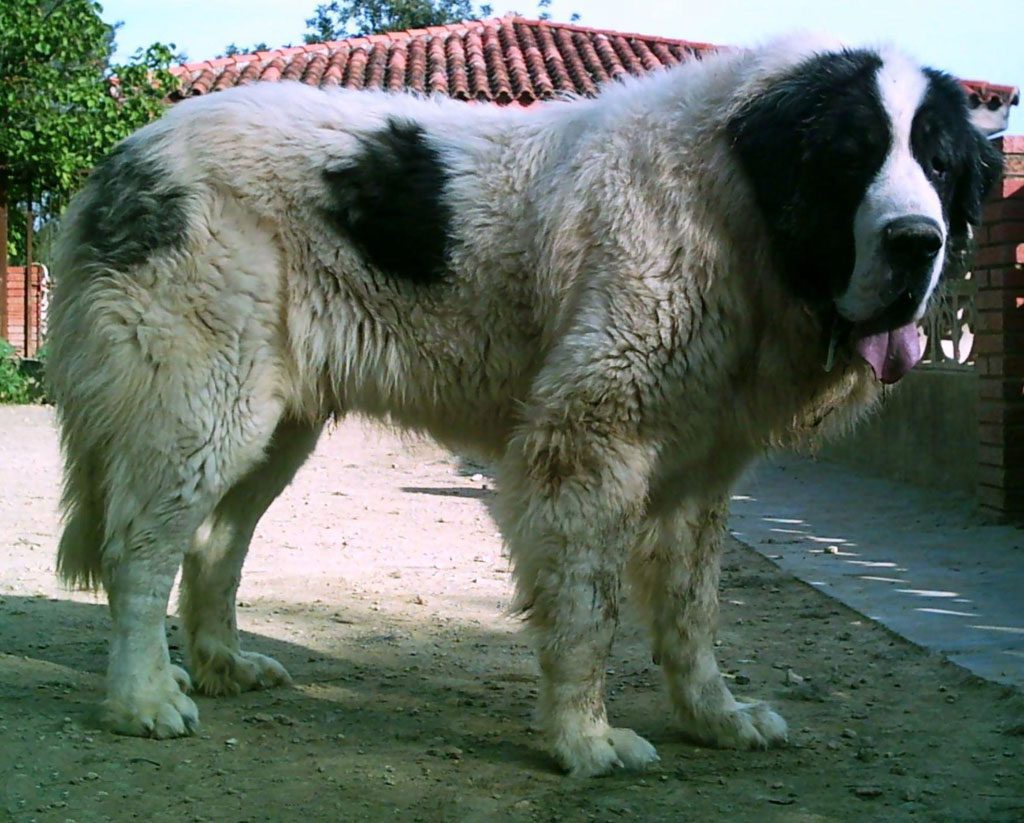
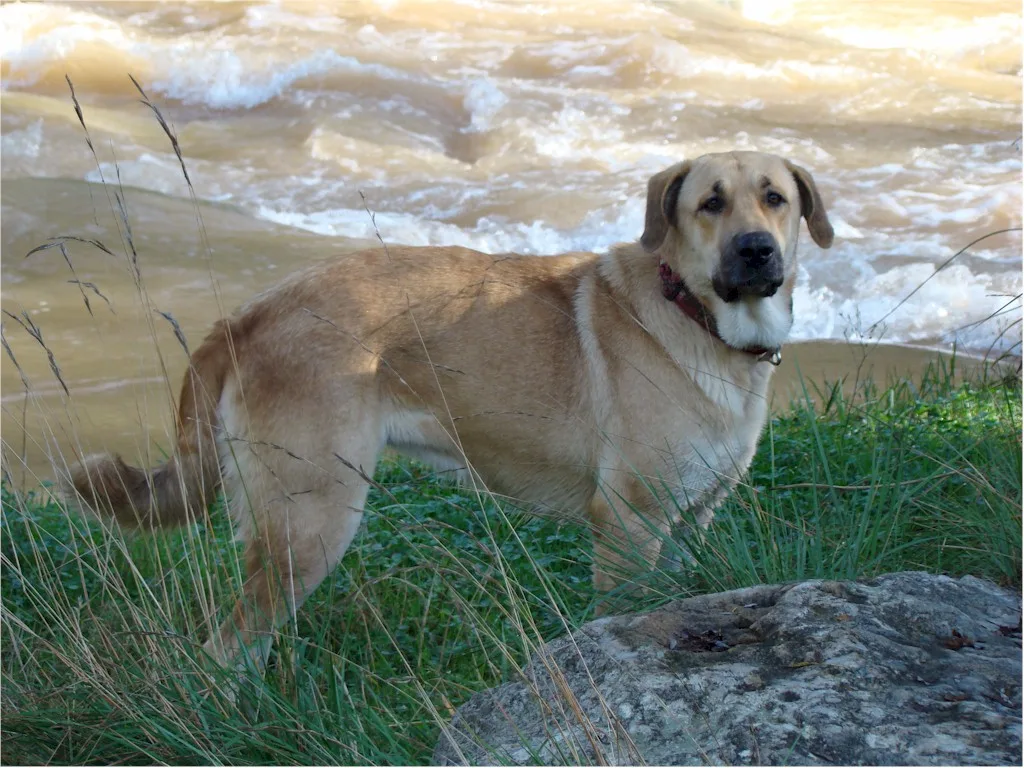
Great and powerful, the Tornjaks retain above-average agility and flexibility for a mountain dog.

They have an almost square shape, with strong bones that are not heavy, giving them a harmonious overall appearance. The tail is long, very mobile and bushy. When falling to rest, rises well above the level of the back when in action, which is uncommon in mountain dogs. Legs are powerful, parallel and raised.

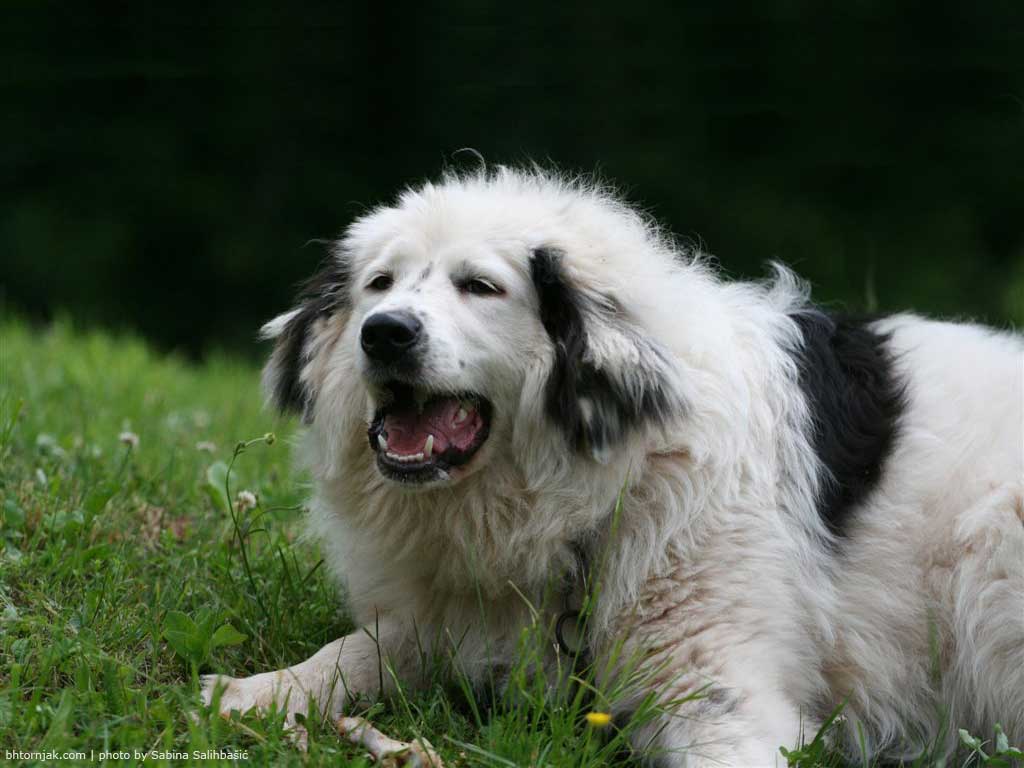
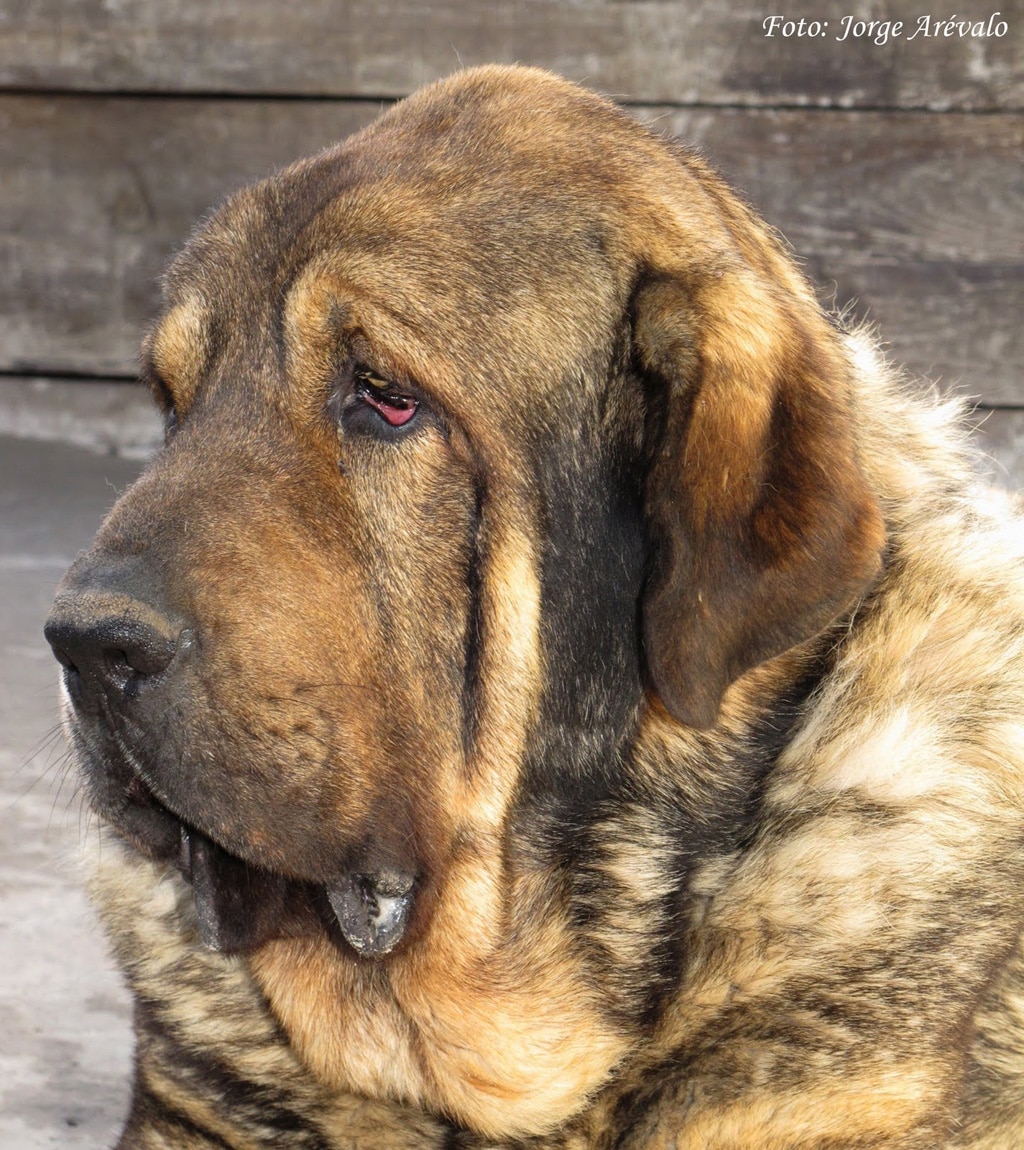
The head is elongated, with a slight stop. The muzzle is rectangular and ends in a dark nose with wide nostrils.. The eyes are also dark and almond-shaped. The ears, triangular and hairy, stand tall and fall along the cheeks.

The undercoat is dense and thick, with a woolly texture in winter. The stiff top coat is long all over the body, except on the face and front of the legs. It is particularly abundant on the neck, forming a mane that protects it from predator bites.

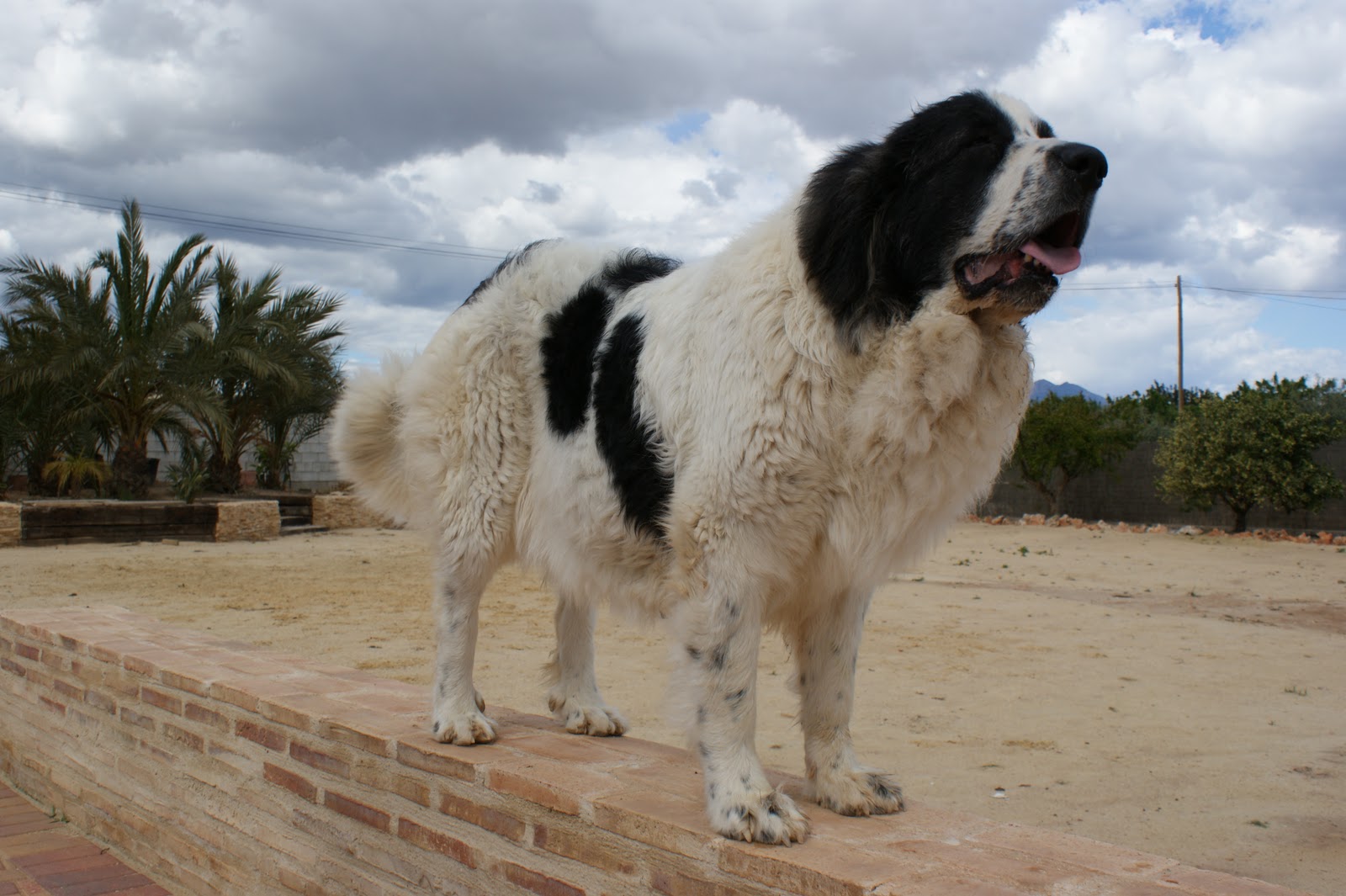
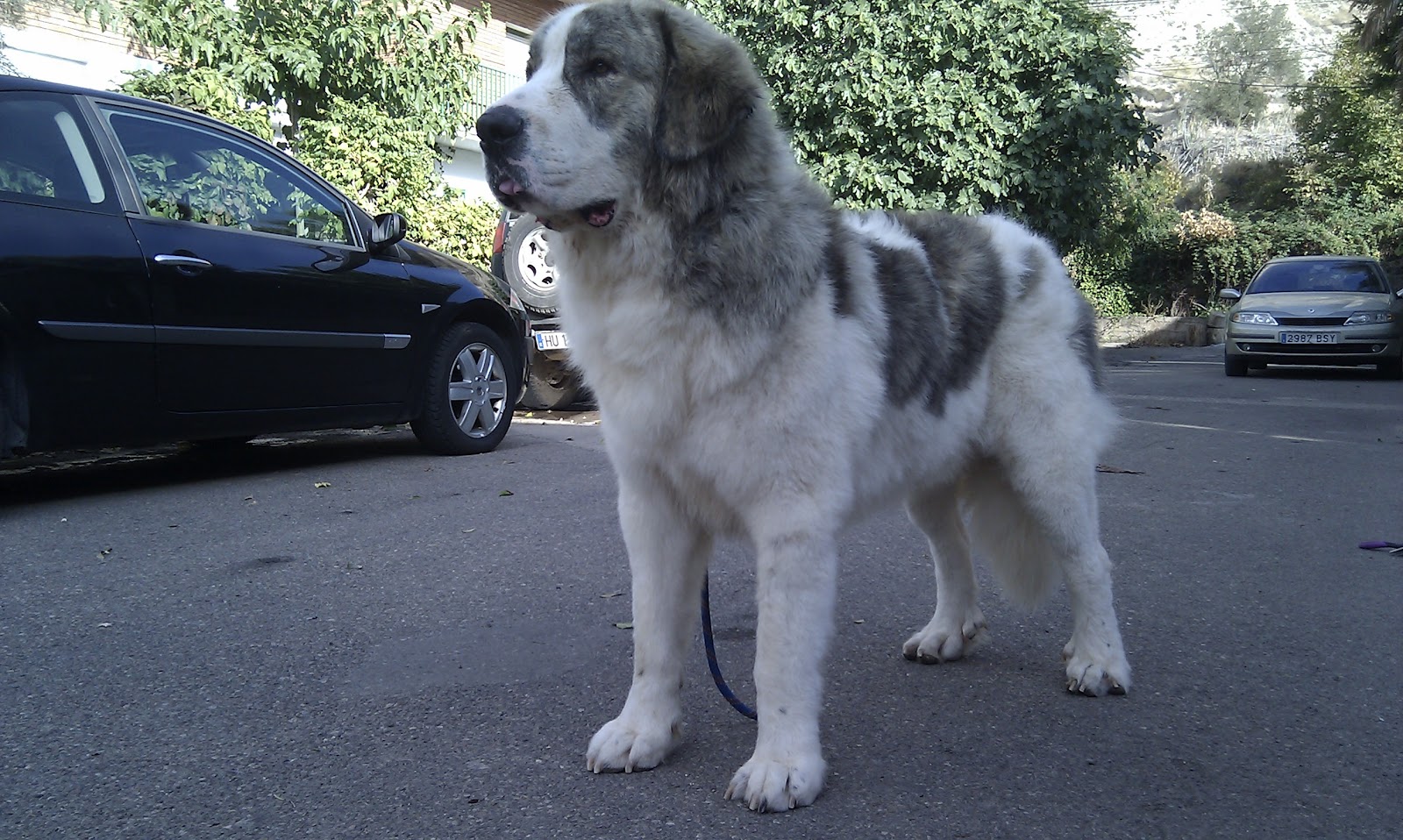
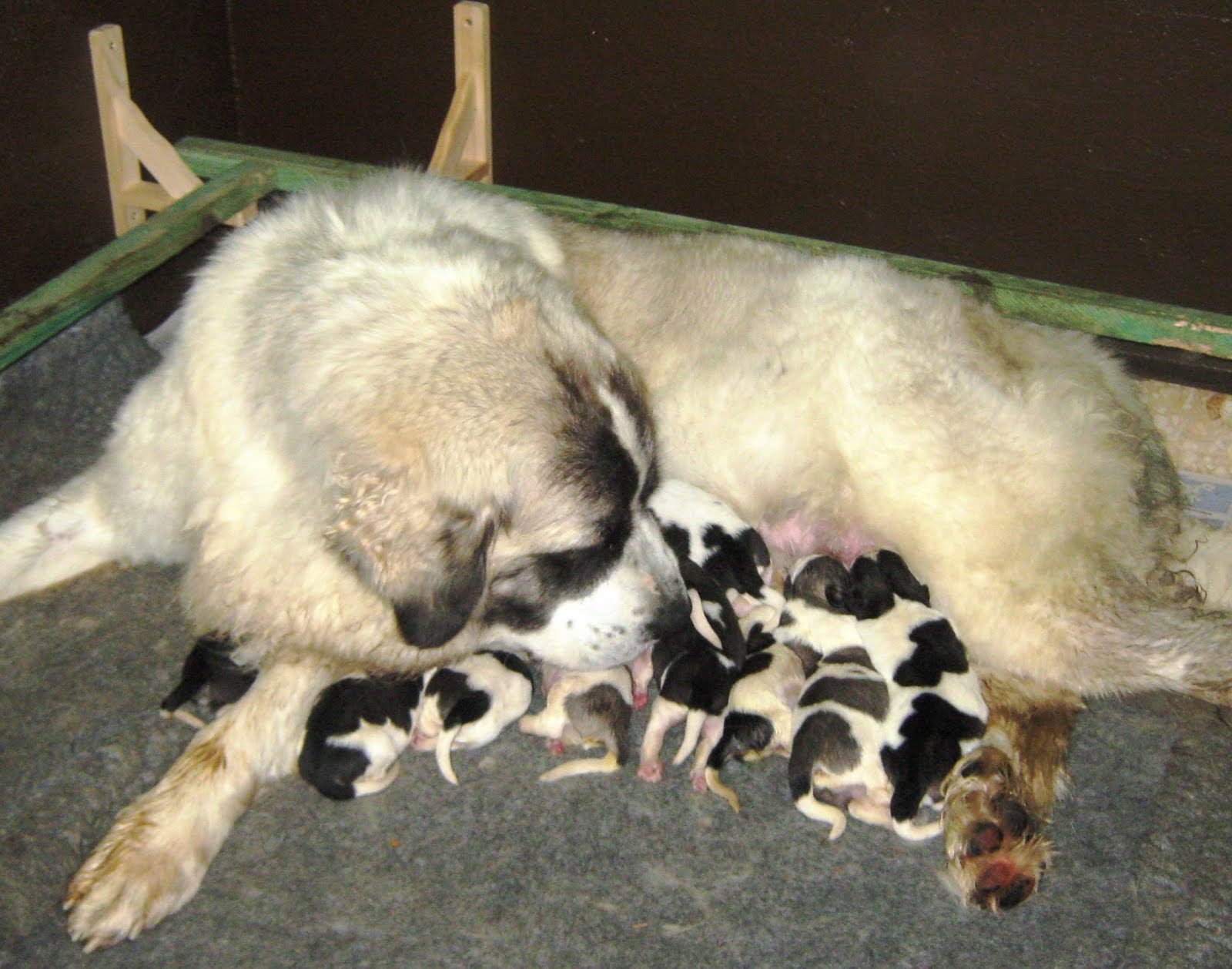
The Bosnian and Herzegovinian - Croatian Shepherd Dog and the Croatian Sheepdog are the ones that most often have a particular color, although there are white subjects, with only a few small spots of color. White is the most common background color, with markings of various colors: black, brown, cervato… More rarely, some individuals have a black coat stained with white.

Last, sexual dimorphism is well marked in this breed: the female is not only smaller on average by about 5 cm., but also less massive.

Character and skills

The Tornjak he is surprisingly outgoing and caring for a shepherd who has worked for centuries in the mountains. He likes to spend time with his family, and is willing to play with older and smaller animals. In fact, he is a dog that adores children, and can spend hours entertaining them – The opposite also is true. But, due to its size and power, could easily inadvertently push a small child, so it is better if you are already a certain age, especially since then he is more likely to learn to behave with an animal and to respect it. In any case, a young child should never be left alone with a dog, regardless of race.

His attachment to the family he grew up with also means he can hardly get used to life in a new home if life's perils mean he has to change owners.. You are likely to have the greatest difficulty recovering from abandonment.

In addition to their great closeness to their caregivers, the Bosnian and Herzegovinian - Croatian Shepherd Dog he's also surprisingly personable with strangers. It barks when they approach and perfectly fulfills its guardian mission, but do not hesitate to go greet them and accept some caresses once their carer has validated their arrival.

But, it would be a mistake to forget that their main function is to protect their flock. Under his cheerful and friendly airs, hides boundless courage and amazing strength. However, is not aggressive and is content to bark when a threat approaches. But if the threat becomes clearer and your family is in danger, does not hesitate to force its non-aggressive nature and take action; few things can stop it. It also, a malicious person would have no chance to persuade and corrupt him with sweets and caresses, because he is infallibly loyal.

His sociability is also expressed against his peers, to the point that you can generally share your home perfectly with one or more dogs. It also, has no predatory instinct, so it does not see cats or rodents as prey, and therefore is not inclined to chase them. However, the difference in size means that cohabitation can sometimes be dangerous. In practice, if there are small animals in the house, it's better for him Bosnian and Herzegovinian - Croatian Shepherd Dog live outside.

This would not be to displease you. In fact, used to large spaces, not really made for indoor living. You do not need to do a lot of intensive exercises every day, but must be able to move at any time, so it is not at all suited to apartment living, even if his master takes him out for more than an hour a day. Needs a large enclosed garden, where I can patrol, run, to play…

If it can be easily installed outdoors it is because, like any mountain dog, is independent and tolerates loneliness well. It can easily stay at home while its owners are out for the day, and does not suffer from separation anxiety if this absence lasts for a weekend. But, under no circumstances should it be constantly left alone in the garden throughout the day. You need to spend time with your family, and two or three daily walks of at least half an hour each are ideal.

Games and sports activities are also great ways to bond with him., while being physically and mentally stimulated. With an excellent memory that allows you to easily assimilate tricks and commands, has the potential to shine in dog sports like flyball, obedience or agility.

But, you cannot start too early with physically demanding activities. In effect, given its size, when is a puppy, you experience growth spurts during which you need to slow down your burning, or at least avoid any overly intense strain on your joints and skeleton. Otherwise, there is a real risk of injury (sometimes with lifelong sequelae) or malformations.

If you live in a residential area, it is better that the fence that surrounds the garden is solid, to avoid accidents. Similarly, walks in parks and relatively crowded places should always be done on a leash, so you can hold back if you sense a threat. On the other hand, in an environment where encounters are rare (for example, in the mountains), can be free, If and when, of course, has assimilated the withdrawal orders.

Finally, the Bosnian and Herzegovinian - Croatian Shepherd Dog has a serious and powerful bark that can be heard from a distance. Can be heard from a distance, and is also heard when approaching a stranger or when you perceive a suspicious noise. This is reassuring and enjoyable when living in an isolated area., but can quickly cause neighborhood problems in a residential neighborhood.

Education

Like all dogs, the Tornjak should be socialized as soon as you get to your new home. Give you the opportunity to meet all kinds of people, animals and situations during your first months helps you become familiar with the unknown, and to avoid being surprised or even reacting badly as an adult. So, you should not hesitate to take any opportunity to meet the neighbors, friends, dealers, the vet… but also other animals, be it dogs, cats, rodents, horses, cows… You also have to deal with situations that you are not yet used to., especially the ones you will have to deal with regularly afterwards: travel by car, walk around the city, go out in a hectic environment…

It also, given its size, it is advisable to accustom it from an early age to being handled obediently. Brush, bathing or even clipping the claws can turn into moments of complicity with your caregiver, instead of being dreaded tests each time by both protagonists. In any case, trying to groom or bathe a dog 50 kg not accommodated can quickly become an adventure…

Although they have the independent character of herding dogs, to the Bosnian and Herzegovinian - Croatian Shepherd Dog they like to please their owners. It also, as his intelligence and memory are admirable, a caregiver who combines patience and know-how can go a long way in your education, even teaching them many tricks. But, although easier to handle than most mountain breeds, this does not make him a recommended dog for a novice sitter. But, It can be an interesting option for a person with a little experience who wants to face the challenge of a large independent dog..

In any case, traditional training methods should not be used with the Tornjak, as they only reinforce their independent side instead of developing their potential. On the other hand, positive reinforcement, with the help of caresses, treats and stimuli, motivates you to want to learn more and more and allows you beautiful moments of complicity.

The assimilation of memory is of particular importance: given its size, it is better for such a dog to obey the finger and the eye when his handler asks him to stop pulling on the leash or to come back to him. This is the essential condition so that you can enjoy nature with total freedom, without being put on a leash.

On the other hand, protection of the pack is instinctive in the Tornjak: you don't really need any training to play this role perfectly.

Health

The Tornjak it is an extremely robust breed of dog, with a life expectancy much higher than the average of dogs of its size, to the point that some specimens reach the 15 years of age.

The thick, woolly coat of the Tornjak helps protect you from cold and bad weather, as well as the rays of the sun. It is clearly a dog made to live outdoors, who is not afraid of low temperatures as long as he has a place to take refuge. On the other hand, when the mercury rises and the heat wave sets in, it is better to limit your activities and make sure you have the opportunity to rest in a shady place.

Although they are generally healthy, the Bosnian and Herzegovinian - Croatian Shepherd Dog they are not exempt from certain problems, especially those that affect larger dog breeds. They are predisposed to ...:

  • Hip and elbow dysplasia, joint problems whose origins can be hereditary and cause more or less severe locomotor difficulties;
  • gastric dilation-torsion, which often follows too rapid ingestion of large amounts of food, and it's fatal if a vet doesn't intervene quickly;
  • protein intolerance, what can take, among other things, to a deterioration of the coat.
  • Other diseases have been reported occasionally in some subjects, but they are still exceptionally rare. These include anemia or von Willebrand disease, a hereditary condition.

    To limit the risk of having a puppy with a hereditary and / or congenital problem, nothing better than adopting from a breeder Tornjak serious and responsible. In particular, the professional must present an updated health or vaccination record, that allows to verify the vaccines received by the animal, as well as a certificate of good health signed by a veterinarian. But, the professional should also be asked to provide the results of the genetic tests performed to both the parents and the child.

    It also, the floppy ears of Tornjak can quickly become nests of infection if not cleaned weekly.

    It also, how you spend most of your time outdoors, their fur is likely a breeding ground for parasites: even more than most tornjaks, it is imperative to be rigorous in the administration of regular pest control treatments to avoid this type of inconvenience.

    Last, the fact that he is generally in good health does not exempt him from wearing it regularly (at least every year) to a routine check-up at the vet, just to keep it healthy. This not only ensures that you are up to date on your vaccinations, it also allows early detection of any health problems.

    Grooming

    The Tornjak rarely poses problems regarding your health, but its maintenance requires some effort.

    First of all, its thick coat needs to be brushed once or twice a week to avoid knots and remove dirt, and its size means that this task takes some time.

    During their annual molt periods in the spring and fall, a lot of undercoat is shed, and brushing should then become a daily routine to deal with the large amount of dead hair.

    Brushing is also an opportunity to inspect your skin and make sure it is not injured., Court, sore or irritation. Spending most of the time outdoors, he is more exposed to this type of problem than his peers who live in an apartment and only go out for half an hour each day.

    In any case, if grooming is done regularly, can remove a large part of the dirt from their fur, keeping it relatively clean and odorless. So, it is not necessary to bathe your dog often. Unless, of course, got particularly dirty, you can be content with doing it twice a year, at the time of the move. It is necessary to use a mild shampoo designed specifically for dogs every time.

    On the other hand, as with any dog โ€‹โ€‹with floppy ears, special care is required to prevent dirt from building up and causing infection. So, at least once a week, brushing his coat should be followed by cleaning his ears with a clean cloth.

    You should also take the opportunity to check your eyes and clean them, to limit the risk of eye infection, although, unlike ears, are not particularly susceptible to it.

    To end the beauty maintenance session, a teeth cleaning is de rigueur. Itร‚ยดs, in effect, the best way to effectively protect them against dental plaque formation, cavities and other problems at this level. Ideally, it should be done daily.. No matter how often you do it, always use a toothpaste specially designed for dogs.

    It may also be necessary to trim your dog's claws from time to time. Even if your dog lives outdoors, natural wear and tear is not always enough to file its strong claws. If you hear them hitting the ground when you walk, have grown too long and could injure or break: it's time to cut them with a special tool.

    Although all these operations do not require any particular knowledge, it is better to learn to do them correctly, especially to avoid hurting or even injuring your partner. It can be useful the first time to have the help of a veterinarian or a professional groomer to learn the correct gestures to perform.

    Buy a โ€œShepherd from Bosnia-Herzegovina and Croatiaโ€

    The price of a puppy Bosnian and Herzegovinian - Croatian Shepherd Dog is of some 1000 EUR, but it's a mean: the sale price varies according to the prestige of the breeding, the ancestry of the animal, but also and above all its characteristics. On the other hand, there is not a big difference according to sex: males and females are generally priced similarly.

    Having said that, the Bosnian and Herzegovinian - Croatian Shepherd Dog still hard to find outside the countries of the former Yugoslavia. So, it may be wise to turn to a Croatian breeder, Slovenian, Bosnian or Serbian to find the right one. The sale price will not necessarily be much cheaper, but then import costs must be added to the budget, registration and transportation.

    It is possible to find hatcheries in the United States, but it is also still very rare there.

    Characteristics "Bosnian and Herzegovinian - Croatian Shepherd Dog"

    Coexistence is important that you have with your new friend. Before considering the acquisition of a dog of the breed "Bosnian and Herzegovinian - Croatian Shepherd Dog" you know certain factors. Not all breeds of dogs are apt to live in an apartment, you must take into account his character, their need for exercise, their interaction with other pets, their care and if you have small children, their level of tolerance towards them.

    Adaptation โ“˜

    2,0 of 5 stars (based on 1 review)

    friendly dog โ€‹โ€‹โ“˜

    4,0 of 5 stars (based on 1 review)

    hair loss โ“˜

    3,0 of 5 stars (based on 1 review)

    Affection level โ“˜

    5,0 of 5 stars (based on 1 review)

    Need for exercise โ“˜

    3,0 of 5 stars (based on 1 review)

    Social need โ“˜

    3,0 of 5 stars (based on 1 review)

    Home โ“˜

    3,0 of 5 stars (based on 1 review)

    Toilet โ“˜

    3,0 of 5 stars (based on 1 review)

    Friendly with strangers โ“˜

    4,0 of 5 stars (based on 1 review)

    barking โ“˜

    3,0 of 5 stars (based on 1 review)

    Health โ“˜

    2,0 of 5 stars (based on 1 review)

    Territorial โ“˜

    3,0 of 5 stars (based on 1 review)

    Cat friendly โ“˜

    3,0 of 5 stars (based on 1 review)

    Intelligence โ“˜

    3,0 of 5 stars (based on 1 review)

    Versatility โ“˜

    3,0 of 5 stars (based on 1 review)

    Child friendly โ“˜

    4,0 of 5 stars (based on 1 review)

    Surveillance โ“˜

    3,0 of 5 stars (based on 1 review)

    joy โ“˜

    3,0 of 5 stars (based on 1 review)

    Images of the ยซPastor of Bosnia-Herzegovina and Croatiaยป

    Photos:

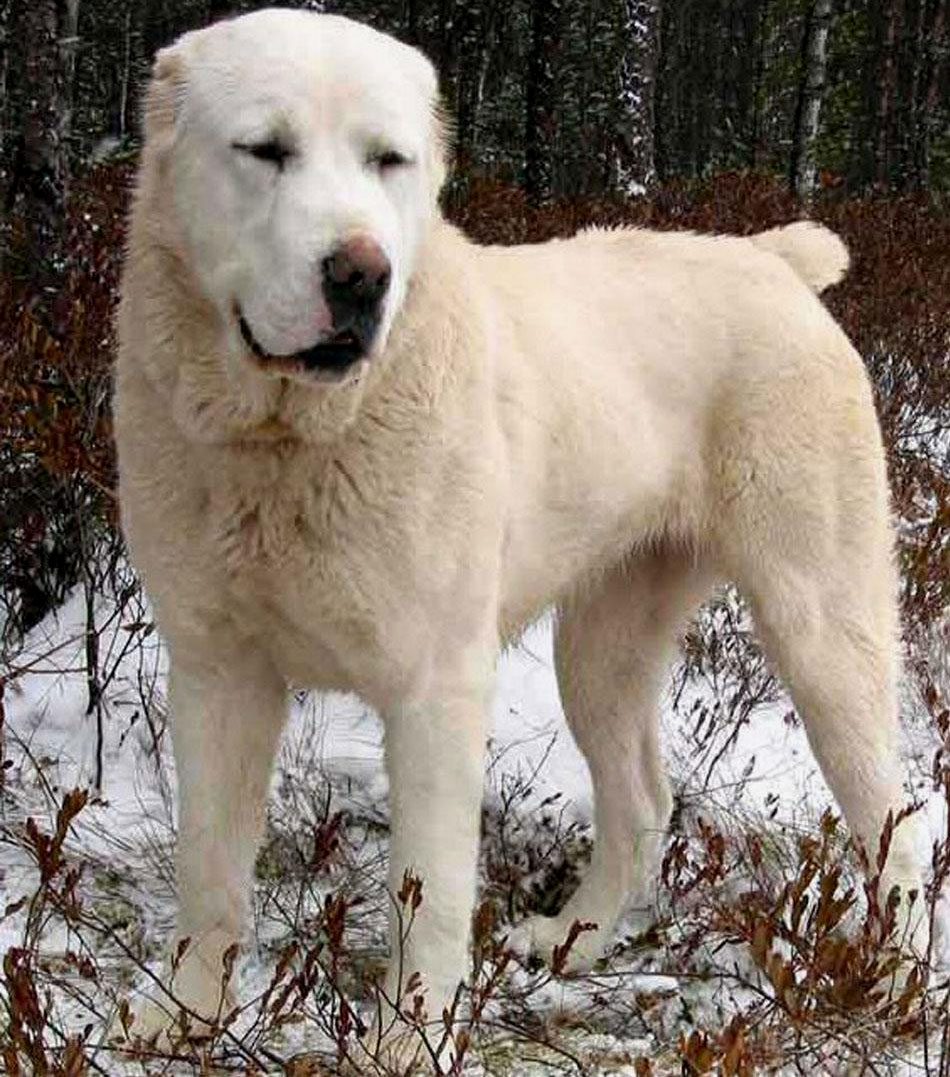
    1 – ยซPastor of Bosnia-Herzegovina and Croatiaยป by https://commons.wikimedia.org/wiki/File:Bosniantornjak.jpg
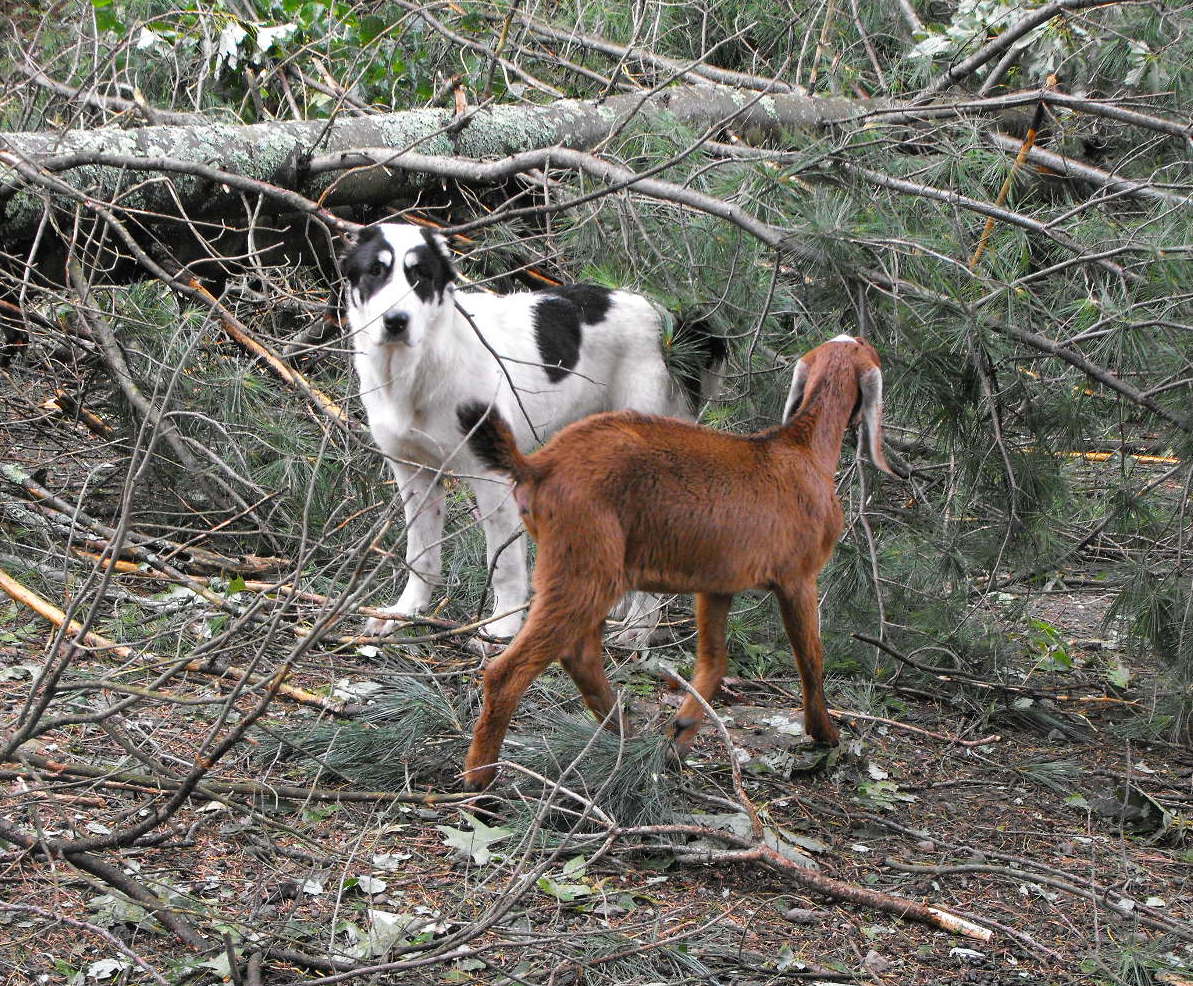
    2 – And little Tornjak. Colour: white & black by Canarian, CC BY-SA 4.0, via Wikimedia Commons
    3 – And little Tornjak. Colour: white & brown by Canarian, CC BY-SA 4.0, via Wikimedia Commons
    4 – A Croatian Tornjak (aka Croatian Mountain Dog or Bosnian and Herzegovinian – Croatian Shepherd Dog) female by Canarian, CC BY-SA 3.0, via Wikimedia Commons
    5 – And little Tornjak. Colour: white & black by Canarian, CC BY-SA 4.0, via Wikimedia Commons
    6 – Toro the Tornjak. Photo taken in a dog shelter in Zadar, Croatia by Mirta12, CC BY-SA 3.0, via Wikimedia Commons

    Videos of the ยซPastor of Bosnia-Herzegovina and Croatiaยป

    Type and recognitions:

    • FCI CLASSIFICATION:
    • Group :
    • Section : . .

    Federations:

    • FCI – Pinscher and Schnauzer-Molossoid type dogs – Swiss Mountain Dogs and Cattledogs. Section 2.2 Molossoid, mountain type. โ“˜
    • AKC(FSS) โ“˜

    FCI breed standard "Bosnian and Herzegovinian - Croatian Shepherd Dog"

    Origin:
    Bosnia y Herzegovina, Croatia

    Date of publication of the valid original standard:
    19.11.2007

    Use:

    Herding and protection of livestock and farm pens and guard dog.


    General appearance:

    The Tornjak is a large and powerful dog, well proportioned and agile. The body is almost square in shape. The bone is not light, but it's not heavy or rough anyway. Standing and moving is strong, harmonious and well balanced. The coat is long and thick.

    IMPORTANT PROPORTIONS:
    The body is almost square. The length of the body must not exceed its height by more than one 8 %. The radius between the length of the skull and the muzzle is 1:1.


    Behavior / temperament:

    Of good disposition, friendly, brave, obedient, Intelligent, full of dignity and confidence. Fierce looking after the property entrusted to him, cannot be bribed and is suspicious of strangers. Devoted to his master and very calm in his presence. Very affectionate with the people who live in his environment. Learn quickly and keep this learning in your memory for a long time. Pleasantly performs the tasks assigned to you. It is easy to train.

    Head:

    Elongated. The radius between the skull and the muzzle is 1:1.

    Cranial region:

    The upper lines of the skull and snout are divergent.
    Supra-orbital arches are slightly visible.
    The back of the skull is elongated but moderately wide.
    The area between the supra-orbital arches and the occiput is flat.
    The occipital protrusion is very slight.

    • Nasal frontal depression (stop): Slightly pronounced.

    facial region:

    Nose: Grand, with nostrils wide enough. Must have dark pigmentation. Pigmentation must be in harmony with the color of the coat. Depigmentation is not allowed.
    Snout: Rectangular. The bridge of the nose is perfectly straight.
    Lips: Tight, with dark pigmentation.
    Jaws/teeth :The jaws are very long and strong. Perfect scissor bite, full dentition.
    Eyes: Almond biscuits, attached eyelids, dark color. Dark pigmentation on the edge of the eyelids.
    Ears: Medium-sized, triangular, bent and earrings, high insertion. Carried close to the cheeks. With shorter hair.

    Neck:

    Medium length, powerful, carried slightly low. Well attached skin. With abundant and long hair forming a mane.

    Body:

    Cross: Moderately developed.
    Back: Short, the court, moderately wide and straight.
    Pork loin: The connection between the chest and the rump is short, moderately wide; in females it is a little longer.
    Rump: Long Middle, wide and slightly inclined.
    Breast : Very spacious, deep, wide and oval. Lower chest reaches at least elbows. Never barrel shaped. The chest is strong with the tip of the sternum moderately pronounced.
    bottom line: Well muscled abdomen. The lower line is not retracted but gradually rises from where the sternum ends towards the posterior.

    Tail:

    Long, inserted at a medium height, very mobile. When at rest it is always hanging and in motion it is always above the level of the upper line, this is a characteristic of the breed. With abundant hair and characteristic fringe.

    Tips

    Strong and well angled.

    PREVIOUS MEMBERS:well developed, with strong bone and tight muscles. Parallel and straight when stationary.

    Blades:Long Middle, well leaning back. The scapulo-humeral angle is approximately 120ยบ..
    Humeri:Muscular and strong, almost the same length as the scapulae.
    Elbows:Moderately close to the body.
    forearms:Strong bones and developed, straight muscles.
    Metacarpus:With slight inclination.
    Previous feet:Fingers arched and together. Pigmented nails, desirable dark pigmentation. Elastic pads, hard and compact, dark pigmentation is desired. Front feet are more developed than rear feet.

    LATER MEMBERS:Strong and parallel. Straight when standing with proper angulation. Well angled knees.

    Thighs:Widths, strong, good muscular.
    Warm:With good bodybuilding, strong wide and the same length as the femur.
    Tarsos:Firms. Insertion a little high.
    Metatarsals:Strong. They can have spurs.
    Hind feet:Fingers arched and together. Pigmented nails, dark pigmentation is desirable. Elastic pads, hard and compact, dark pigmentation is desirable.

    Movement:

    The Tornjak is a trotter. The movement is well balanced, stretchy and powerful, harmonious and with great drive. In motion the top line is firm.

    Mantle

    SKIN: The skin is thick, well adhered throughout the body.

    Fur: In general, the Tornjak is a long-haired dog, thick, rustic and straight. It is especially long at the top of the rump; over shoulders and back can be slightly wavy. It is short on the muzzle and face, above the imaginary line that connects the ears, over the ears and on the front of the legs and feet.

    It is especially abundant around the neck (mane), dense and long over the thighs. Forms fringes on the forearms. In well-coated dogs, it is also especially abundant on the back of the metatarsals.. The tail is very bushy with very long hair. The winter undercoat is long, very thick and with a pleasant woolly texture. The hair is thick and dense and should not split in two along the top line.

    Color: As a rule, the Tornjak is of split color with characteristic markings in various solid colors.. Generally the dominant background color is white. There may be dogs with a black coat and white markings that usually appear around the neck, over the head and along the legs. There may also be almost entirely white dogs with only small markings.


    Size and weight:

    Height to the cross:

    Males: 65 โ€“ 70 cm.
    females: 60 โ€“ 65 cm.

    Tolerance+/- 2cm.


    Fouls:

    Any deviation from the aforementioned criteria is considered as a fault and the severity of this is considered to the degree of the deviation to the standard and its consequences on the health and well-being of the dog..

    • Too thin or too heavy bone.
    • Very fine or very coarse head.
    • Missing ears (inclusion, long, hair).
    • Bite in clamp.
    • Absence of 2 p2, 2 p3.
    • Absence of more than 2 p1.
    • Very long back.
    • Curved or saddled top line.
    • Obviously exaggerated dog.
    • Angulations with faults.
    • Elbows in or out.
    • Tail resting on the back.
    • Tail with little hair.
    • Hair with insufficient length.
    • dark mask.
    • Weak feet.

    FALTAS DESCALIFICANTES:

    • Aggressiveness or extreme shyness.
    • Any dog โ€‹โ€‹showing clear signs of physical or behavioral abnormalities must be disqualified..
    • Lack of type (atypical dogs).
    • Sexual type deviation.
    • Anomalies in eye color and shape (wattled eyes, vicious expression, different colored eyes).
    • Entropion, ectropion.
    • Prognathism or enognatismo.
    • Absence of any other tooth than those mentioned as missing.
    • Too short hair.
    • Lack of undercoat.
    • Broken tail.
    • Absence of tail.
    • Solid color dogs.
    • albinism.
    • Atypical distribution of colors on the body.
    • Differences in the limits of the indicated heights (including tolerance).
    • Cosmetic treatment in the dog or evidence of cosmetic or surgical treatments.


    N.B.:
    • Males should have two normal-appearing testicles fully descended into the scrotum..
    • Only functionally and clinically healthy dogs, with the typical conformation of the breed, should be used for parenting.

    Source: F.C.I - International Cynological Federation

    Alternative names:

    1. Tornjak (English).
    2. Tornjak (French).
    3. Tornjak, Bosnien und Herzegowina und Kroatien (German).
    4. Tornjak (Portuguese).
    5. Tornjak (espaรฑol).

    โ–ท The world of Pets: Dogs, cats, birds, reptiles, amphibians

    Pyrenean Mastiff
    Espaรฑa FCI 92 - Molossoid . Mountain

    Mastรญn del Pirineo

    The Pyrenean Mastiff he is very tolerant and sweet with children, Watch them as if they were his flock.

    Content

    History

    The Pyrenean Mastiff is a trotting dog breed, originally from the Aragonese Pyrenees (Spain). By its large size and strength the FCI included it within the Group 2 / Section 2 – molosoids and mountain dogs.

    It comes, as all molosoides, Asian dog who came to Europe centuries ago. The first breed standard, It was approved only in the year 1946, since to date the breed had been totally ignored by the official dog world, even though the Pyrenean Mastiff, it had been from its first dawn a very important breed for local development, given that for centuries was used to defend livestock from the attack of bears and wolves.

    For a long time the Pyrenean mastiff accompanied flocks of sheep on their transhumance routes from the Aragonese and Navarrese Pyrenees to the Maestrazgo. Its main function was the keep herds and their masters from attacks by wolves and thieves.

    During the 20th century and especially after the Spanish civil war, due to economic difficulties, the Mastiff went into decline as it was very expensive to keep a dog of its size.

    Over the years 70 a group of fans began a work to recover the breed through the few specimens that were in the field and that still had typical characteristics of the old Molossian.

    In the year 1977 created the Spanish Pyrenean Mastiff Club, which organizes the selection and breeding program of the breed. Currently the breed has great international recognition as evidenced by the existence of clubs in many European countries and in the United States..

    Physical characteristics

    The Pyrenean Mastiff is a large size dog, well proportioned, powerful, muscular and skeletal structure compact. Its head is large, strong and slightly long, with a crรกneo-hocico relationship of 5:4.

    It has eyes small, almond-shaped, ranging from color avellana to dark brown (what is the most common). The ears are triangular, medium-sized and hanging attached to the head.

    The tail is thick at the base, strong, flexible and hangs until the Hock.

    Regard to the size, In fact, there is no maximum limit because the idea is that the specimens are as large as possible. But according to the standard, yes, there are some minimums that cannot be lowered. according to standard, years. At that time, the minimums are 77 cm for males (Although it is preferable that they be above the 81 cm.) and 72 cm for the Herms (Although it is preferable that they exceed the 75 cm.).

    The the mantle of the Pyrenean Mastiff is thick and quite long (of 6 to 9 cm length). Being longer on the shoulders, the neck and belly. It is hair must be rough to the touch, not soft and woolly.

    The color base is white, with a well-defined mask. Some examples are brands of the same color as the mask, irregularly shaped but with sharp contours.

    Favorite colors (according to standard) for the mask, and stains are soft grey, intense Golden Fawn, Brown, black and grey silver.

    The the tail and distal parts of the legs They must be always white.

    Observations

    It is a breed that is still in the reconstruction phase and on the recommendation of the Club del Pyrenean Mastiff from Spain, not yet been included in the show ring, because he is expected to make the media playback smoother.

    Character and skills

    Although at the beginning of their walks among us, the Pyrenean Mastiff was used as a guardian of livestock, the time change and animals over time, so today he is a perfect house keeper.

    It is a dog aware of its strength and power, reason why never shows aggressiveness, But if you feel threatened, He or his family can be really fearsome.

    Let's not forget that it protected livestock from wolves and bears...

    Despite the passage of time, The Pyrenean Mastiff preserves its "rusticity" in full form and this means that it does not adapt well to life outside its natural environment, which is the countryside and its tenants..

    For that reason, If we decide to integrate a Pyrenean Mastiff into our family, it will be important comply with it as it is, without imposing conditions of life that cercenen your happiness, how would it beโ€ฆ life in a small apartment in the middle of the city. That would play against your emotional balance, and with the size that has this dog, Perhaps the best is to have it happy and balanced (that all animal).

    Something characteristic of the Pyrenean Mastiff is that wherever he is with children he is always sweet and very tolerant.. Because the converted part of his flock and the cares much.

    He is also super careful with them, because as we said above, he is aware of his strength and might.

    Images of the Pyrenean Mastiff

    Videos of the Pyrenean Mastiff

    Type and recognitions:

    • FCI CLASSIFICATION:
    • Group :
    • Section : . .

    Federations:

    • FCI – Pinscher and Schnauzer-Molossoid type dogs – Swiss Mountain Dogs and Cattledogs. Section 2.2 Molossoid, mountain type. โ“˜
    • AKC – Dogs working โ“˜
    • โ€‹KC – Working dogs โ“˜
    • UKC – Watchdog โ“˜

    FCI breed standard "Pyrenean Mastiff"

    Origin:
    Spain

    Date of publication of the valid original standard:
    26.05.1982

    Use:

    Nursery and defense. In the past it was used as a defense against vermin, especially the wolf and the bear. Currently fulfills perfectly the task of guardian of estates and people, being very receptive to training.


    General appearance:

    It is a dog of great height, hypermetric and of medium proportions. Well proportioned, extremely powerful and muscular. compact skeleton. Discreetly long hair. Despite its enormous size it should not be clumsy or lymphatic.


    IMPORTANT PROPORTIONS:

    Media structure. Proportional and harmonious in all circumstances.

    • Body length slightly greater than the height at the withers.
    • The relationship between the length of the skull and the muzzle should be 5/4.
    • The width of the skull should be equal to or slightly greater than its length.
    • The relationship between the raised to the cross and the chest perimeter must be approximately 7/10.


    Behavior / temperament:

    Loving, tame, noble and particularly intelligent, he is both brave and fierce in front of strangers, to whom he never backs down In his relationships with other dogs he is benevolent, aware of its unique power. The case is revealed in the fight, denoting the patterns of behavior acquired after centuries of fighting the wolf. His bark is deep and deep and his expression is awake.

    Head:

    Grand, strong and moderately long. The relationship between the length of the skull and that of the muzzle should be 5/4. Cranio lines- moderately divergent facials, prone to parallelism. The skull-face set seen from above must be long and uniform, without a very marked difference in width between the base of the snout and the temples. Seen from the side it must be deep, not hosted.

    Cranial region:
    • Skull : Width, strong, sub-convex profile. The width of the skull should be equal to or slightly greater than its length. Marked occipital Crest.
    • Depression links (Stop): Soft, little sharp, but defined.

    facial region:

    • Truffle: black, wet, big and wide.
    • Snout: Straight profile. Seen from above it appears discreetly triangular, wide at birth, gradually decreasing towards the truffle but without being pointed.
    • Lips: The upper one should cover the lower one well but without sagging. The lower one forms marada lip commissure. The mucous membranes must be black.

      Jaws / Teeth: Scissor bite. White teeth, strong and healthy. Big fangs, long, sharp and well crossed for prey. Very dimensioned and powerful molars. Rather small incisors. All premolars exist. Black palate, very marked stretch marks.

    • Eyes: Small, macaroons, Hazelnut coloured, preferably dark. With a watchful eye, noble, friendly and intelligent, but of extraordinary severity before an adversary. The eyelids are pigmented in black and preferably attached to the eyeball with the animal in attention. It is typical a faint relaxation of the lower eyelid that shows a discreet conjunctiva portion when the dog is at rest.
    • Ears : Mediums and falls, form triangular, plan, inserted above the eye line. At rest falling and attached to the cheeks. At attention clearly separated from the face and partially erect in its third-posterior. They should not be amputated.

    Neck:

    Truncated cone, width, strong, muscular and flexible. Thick and somewhat detached skin. Double gill well defined but not excessively abundant.

    Body:

    Rectangular. Very strong and robust, denoting great power but flexible and agile.

    • top line: Straight, horizontal, even on the move.
    • Cross: Well marked. Back: Powerful, musculada.
    • Pork loin: Long, wide and powerful; narrows as it reaches the ijar.
    • Rump: Wide and strong. Its inclination is about 45ยฐ in relation to the horizontal.. Elevation to the rump equal to the elevation to the cross.
    • Breast : Width, deep, muscular and powerful. The tip of the sternum marked. Ribs with wide intercostal spaces and rounded, not flat. The relationship raised to the chest cross/perimeter must be approximately 7/10.
    • Belly and flanks: Belly moderately tucked up; lowered flanks and very broad flanks.

    Tail:

    Thick born, middle insertion. Strong, flexible and heavily populated with decidedly long and soft hair, forming a showy plume. At rest, his bearing is rather low, fully reaching the hocks and always angled in its final third. When the animal is moving or excited, it lifts it in a saber, with an obvious thread at the end, but never fully folded or resting on the rump.

    Tips

    PREVIOUS MEMBERS:

    • As a whole: Perfectly Plumb, viewed from the front straight and parallel, clearly perceiving muscles and tendons. The length of the forearm should be three times that of the metacarpus. Bone strong with powerful metacarpo.
    • Back: Oblique, very muscular. Longer than the forearm. Scapulo-humeral angle close to 100ยฐ.
    • Arm: Very powerful.
    • Elbows: Strong and glued to the rib cage. Humero-Radial Angle next 125 ยฐ.
    • Forearm: Of strong bones. Straight and powerful.
    • Metacarpus: Seen from the side with little inclination. It is practically the continuation of the forearm.
    • Previous feet: Of cat, Tight toes. Strong phalanges, high and well arched. Robust and hard nails and pads. Moderate interdigital membrane with hair.

    LATER MEMBERS:

    • As a whole: Powerful, muscular. Seen from the side proper joints. Seen from the side and back, correct feet. Hocks without deviations. They must be able to easily propel the dog, strength and elegance.
    • Thigh: Strong and muscular. Coxo-femoral angle close to 100ยฐ.
    • Knee: FEMORO-TIBIAL ANGULO NEAR 120 ยฐ.
    • Leg: Long, muscular and strong-boned.
    • Hock: Open angle, close to 130 ยฐ.
    • Metatarsus: Well marked, with clear appreciation of the tendon. Presence or not of spurs that can be single or double, admitting your amputation. With equal merits, the presence of double spurs should be preferred..
    • Hind feet: Of cat, slightly oval. Slightly longer than the front feet.

    Movement:

    The preferred gait is the jog that must be harmonious, powerful and elegant with no tendency to laterity. Without ambling The preferred gait is the trot that must be harmonious, powerful and elegant with no tendency to laterity. Without ambience.

    Mantle

    Elastic, thick and pinkish, with darker pigmentations. All mucous membranes must be black.

    • Fur: Bushy, thick and moderately long. The ideal average length set on the center of the upper line is 6 to 9 cm., being longer on the back, the neck, under the belly and behind arms and legs, in addition to the tail plume, whose texture is not as piggy as in the rest of the body. The hair must be piggy, not woolly.
    • Color: Basically white and always with a well-defined mask. Eventually patches of the same color as the mask unevenly distributed throughout the body, but well marked. Ears always stained. Tricolor specimens or whites are not desirable. Always white ends and ends. The mask must be very concrete and the edges of the spots preferably well defined. Hairline should be as clear as possible, being the white ideal. The most appreciated colors are, in order of preference, pure white or snow white with medium gray spots, deep yellow gold, brown, black, grey silver, Light beige, sand, marbled. Red-yellow spots are not desirable for stains or a yellowish-white background.


    Size and weight:

    There is no maximum limit in size, always being more valuable, equal proportions, the largest specimens.


    Height to the cross:

    Minimum limits:

    • Males: 77 cm.,
    • females: 72 cm..

    However, it is to be hoped that these figures are greatly exceeded. It is considered convenient to exceed the 81 cm males and 75 cm. females.


    Fouls:

    Any deviation from the aforementioned criteria is considered as a fault and the severity of this is considered to the degree of the deviation to the standard and its consequences on the health and well-being of the dog..


    MINOR FAULTS:

    • Muzzle profiles carried without excess.
    • Bite in clamp; absence of any premolar.
    • Distorted and undulating back-lumbar line during march, not in excess.
    • For something wavy; hair that slightly exceeds 9 cm in the upper line.
    • Very slight shyness.

    SERIOUS FAULTS:

    • Fragile or lymphatic appearance.
    • Snout pointed or overly blunt.
    • Moderate upper prognathism.
    • Absence of several premolars or canines not due to trauma.
    • Small incisor lace defects.
    • Excessive entropy or ectropion.
    • Amputation in ear.
    • Upper lines.
    • Height at the rump significantly higher than the height at the withers.
    • Tail resting on the rump; tail plumeless; tail not angled at its end; tail docking.
    • Wrong limbs.
    • Metacarpus, metatarsals and weak feet in general.
    • Cow hocks during walking or in season.
    • Lateral braceos during operation.
    • Very wavy or curly hair. Hair length slightly less than 6 cm in the upper line or slightly higher than 11 cm.
    • Discoloration in the ears.
    • General unbalanced character.

    FALTAS DESCALIFICANTES:

    • Aggressiveness or extreme shyness.
    • Any dog โ€‹โ€‹showing clear signs of physical or behavioral abnormalities must be disqualified..
    • Depigmented truffle and mucosa.
    • Split nose.
    • Excessive undergrowth or undergrowth.
    • Hair length equal to or less than 4 cm or more 13 cm above the upper line.
    • Absence of white color, ends and ends not white.
    • Completely white layer Absence of mask.
    • Diffuse spots that do not stand out from the background and indicate interbreeding.


    N.B.:

    Males should have two normal-appearing testicles fully descended into the scrotum..
    Only functionally and clinically healthy dogs, with the typical conformation of the breed, should be used for parenting.

    Source: F.C.I - International Cynological Federation

    Alternative names:

    1. Mostรญn d’o Pireneu, Mostรญn, Mostรญn dโ€™Aragรณn, Mastรญ dellโ€™Aragรณ, Gos ramader, Mastรญn Espaรฑol del Pirineo (English).
    2. Mastรญn del Pirineo (French).
    3. Mastรญn del Pirineo (German).
    4. Mastin d’Argon, Mastรญn del Pirineo (Portuguese).
    5. Mastรญn del Pirineo (espaรฑol).

    โ–ท The world of Pets: Dogs, cats, birds, reptiles, amphibians

    Dogo Argentino
    Argentina FCI 292 - Molossoid - Dogo

    He is a fierce guardian and defender. It is not convenient to stimulate their aggressiveness.

    Dogo Argentino

    Content

    Characteristics "Dogo Argentino"

    Coexistence is important that you have with your new friend. Before considering the acquisition of a dog of the breed "Dogo Argentino" you know certain factors. Not all breeds of dogs are apt to live in an apartment, you must take into account his character, their need for exercise, their interaction with other pets, their care and if you have small children, their level of tolerance towards them.

    Adaptation โ“˜

    3,0 of 5 stars (based on 1 review)

    friendly dog โ€‹โ€‹โ“˜

    1,0 of 5 stars (based on 1 review)

    hair loss โ“˜

    3,0 of 5 stars (based on 1 review)

    Affection level โ“˜

    3,0 of 5 stars (based on 1 review)

    Need for exercise โ“˜

    4,0 of 5 stars (based on 1 review)

    Social need โ“˜

    3,0 of 5 stars (based on 1 review)

    Home โ“˜

    1,0 of 5 stars (based on 1 review)

    Toilet โ“˜

    1,0 of 5 stars (based on 1 review)

    Friendly with strangers โ“˜

    1,0 of 5 stars (based on 1 review)

    barking โ“˜

    2,0 of 5 stars (based on 1 review)

    Health โ“˜

    3,0 of 5 stars (based on 1 review)

    Territorial โ“˜

    5,0 of 5 stars (based on 1 review)

    Cat friendly โ“˜

    1,0 of 5 stars (based on 1 review)

    Intelligence โ“˜

    3,0 of 5 stars (based on 1 review)

    Versatility โ“˜

    2,0 of 5 stars (based on 1 review)

    Child friendly โ“˜

    3,0 of 5 stars (based on 1 review)

    Surveillance โ“˜

    3,0 of 5 stars (based on 1 review)

    joy โ“˜

    5,0 of 5 stars (based on 1 review)

    History

    The Dogo Argentino (Argentine Mastiff) is a breed of dog, created by the Argentine doctor Antonio Nores Martรญnez, looking for an animal suitable for the hunting of common species in Argentina, such as wild boars, peccaries and red foxes. Courage, courage and nobility are qualities that are maximized in this breed.

    The Dogo Argentino It is the only living Argentine dog breed (see footnote two extinct races), defined by its creator, The doctor. Antonio Nores Martinez, as "the best dog among all prey dogs and the most prey dog โ€‹โ€‹among all the dogs in the world".

    In the Decade of 1920, Antonio Nores Martinez (helped by his brother Agustรญn, his father Antonio and uncles) decided to create a breed of prey that would bring together the best qualities of the ยซCordoba Fighting Dogยซ, but with superior dimensions and physical strength. It also, he set out to achieve a dog that had aptitudes for hunting in packs, especially of wild boars, but that he was able to beat or stop the prey in combat alone until the arrival of his master or the rest of the pack.

    Antonio used as a base the ยซCordoba Fighting Dogยซ, a mixture of races introduced in the Argentina by English residents, Bull Terrier and Bulldog, with breeds that the Spanish had brought, Spanish Alano and Spanish Mastiff. At these crossing, He was unbeaten in the fights of dogs, Antonio added bloodlines Bull Terrier and Pyrenean Mastiff. Like this, in the thirteenth generation, Antonio realized that he had created a perfect "war machine.", an invincible battle dog. Antonio's white dogs became famous because no other dog could beat them in the ring..

    This is how the Araucana family is created. Then Antonio set out to legalize the dog he had created, because the fighting, Despite being his passion, they were prohibited throughout the world. On the other hand, He was fascinated by the idea of directly killing a dog to lift, continue and captured the dam. The Araucana family was not good for hunting because they were very aggressive towards each other., very heavy in relation to their height and lacked smell. Then Antonio introduced blood Pointer, creating the Guaranรญ family. These Dogos maintained the fighting spirit of the Araucana family, but they were more resistant to pursue prey, they had a better sense of smell and it was possible to make them not fight.

    They spent several years crossing, selections and adequate functional gymnastics until towards the end of the Decade of 1940, Antonio managed to consolidate the current Argentine dogo, recognized as the most excellent hunting dog.

    In 1946 a public fight for the presentation of the breed was organized between Aรฑรก, an extraordinary specimen of Dogo Argentino and a breeding boar 5 years. It was a tough race for Aรฑa, the fight came out victorious, then surrendered it in forty minutes, finishing the fight in perfect physical condition. The battle was filmed and woke up in the cinรณfilos a great admiration for the Doge ("He Dogo Argentinoยซ, by Paolo Vianini, Vecchi publishing, 2006.).

    In 1947 Agustรญn organized a match at the Club de los Espaรฑoles in Morรณn between Chino, a Dogo Argentino and a Creole Black Bull, great fighter. After a while of combat, that it caused him to Chinese femur fracture, He managed to turn the nose of the bull, which, in a few minutes, He could not resist more pain and knelt. Chinese not dropped. The end was really a party for the Spanish public. Francisco, another brother of Antonio, He entered the arena and spoke to Chinese who burst into their prey and continued limping ("He Dogo Argentinoยซ, by Paolo Vianini, Vecchi publishing, 2006.).

    Agustรญn was a great diffuser of the race, finally achieving its recognition as such (see letter from Dr. Agustรญn Nores Martรญnez to the FCA). The standard was published in the magazine ยซDianaยป in 1947. The official recognition in Argentina took place in 1964, and the international in 1973. You can read the letter sent by Dr. Agustรญn Nores Martinez1 to the Argentine Cynological Federation requesting the opening of genealogical records of the breed, where he makes a detailed account of the virtues and potential of Dogo Argentino.

    In the last decades the Dogo Argentino It has been introduced with great success in the United States and several European countries.. Today you can find very good breeders in different countries of the world and of course in Argentina, cradle of the Doge, that there are breeders of excellence. He is currently one of the regulatory dogs for the police in Lebanon.

    Physical characteristics

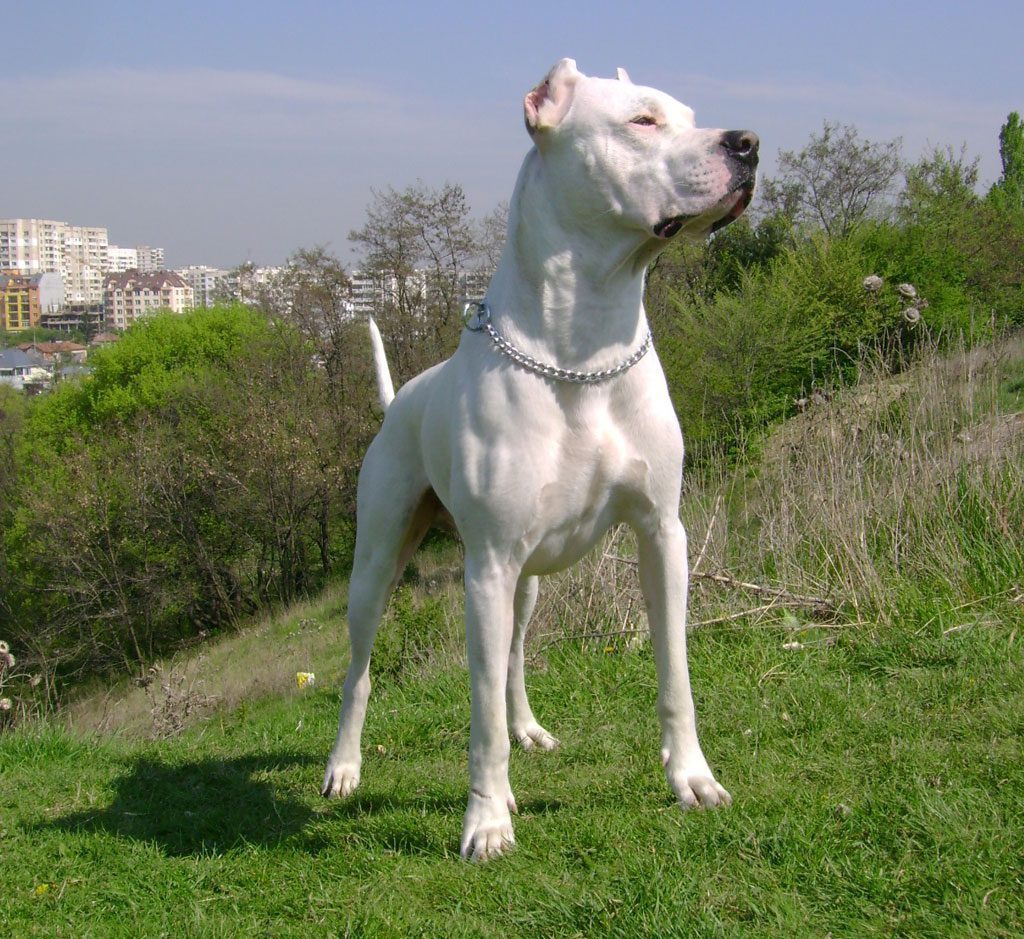
    It is a very strong and sturdy dog, structure solid and muscular in all parts of the body, insensitive to pain, capable of combat with animals larger than himself and kill them. With the completely white layer, to distinguish it easily in the Mt., the Dogo Argentino it differs from other dogs also by its behavior: ladra rarely, almost for not wanting to note their presence, but when attacked, is devastating.

    The head is large with a massive skull. The truffle is black. Slightly concave snout, with thin lips to the bite and catch prey allows, continue breathing. brown eyes, well separated between them. Ears upright or semierguidas, triangular and cut. The neck is powerful, thick and arched.

    The chest is wide and deep. The very high back line at the shoulders that then slopes towards the hips. The limbs are straight, with muscular thighs, short hocks, United and short fingers. The tail is long and thick. The male must measure between 60 and 66 cm., and the female between 60 and 62 cm.; weight the male should be between the 48 to 54 kg, the female 45 kg. Always white mantle, and without spots, the pigmentation is not desired. The Dogo Argentino is an athlete, for which it should be kept light and light and not with a tendency to obesity as if it were a Mastiff.

    By your skin should not remain long time exposed to the Sun. For a perfect maintenance of your fur brushing with a glove of crin or rubber that drag the loose hair is necessary. Skin problems are fairly common, particularly a disease called demodexia, It tends to occur mainly in the exemplary young immunosuppressed.

    Character and skills

    It is the most quintessential hunting dog. Bulldogs work in a pack, usually four members. When a bulldog winds the boar, aims it to achieve this and it turned on in the snout, ears, neck or legs, without releasing it despite the punishment that would receive the beast. The Dogo Argentino is a very powerful bite, a great resistance and much courage, qualities that allow him to fight with the animal until the end or until the other dogs of the pack arrive or the hunter who will finish off the boar with a knife.

    In some cases, crosses of bulldogs with greyhounds are incorporated into the pack, called "noose", to have dogs for both faster and lighter but they do not replace pure Doges, many more powerful and resistant.
    In recent years the Dogo Argentino I gain greater fame in hunting, given that can match in strength to the puma and another partner kill him. These copies are very strong and you don't feel the pain.

    Like all working dog, is very faithful to his master. In house usually behave well and almost never ladra. It is quiet and balanced. He is very loyal and affectionate with people. It tends to be aggressive toward their peers if it is not educated properly from an early age.

    You need to exercise, and be well comfortable space. It is not uncommon to find specimens with deafness. Their eyes should be cared, cleansing should be daily to avoid any type of inflammation.

    As any large breed, needs a strong and constant education but without violence. It is important to teach him not to attack other dogs and other domestic animals with whom he must be able to live in harmony. The hombre-perro relationship is a relationship of submission, Thus the hierarchical order must establish clear, who is charge.

    Once achieved this, the Dogo Argentino will be an exceptional companion, faithful to his master that will give his life if necessary. It is a dog that his role is very awake instinct, in fact, in the small farms, they wake up the instinct, Therefore, it is a dog that as a pet should always be on a leash when walking it..

    Dogo Argentino Health

    All dogs have the potential to develop genetic health problems, just as all people have the potential to inherit diseases. Steer clear of any breeder who does not offer a health guarantee on puppies, to tell you that race has no known problems, or keep the cubs isolated from the main part of the home for health reasons. A reputable breeder will be honest and open about the health problems of race and incidence occurring with.

    Conditions that have been seen in the breed include hypothyroidism and deafness. Bulldogs can also be prone to glaucoma and laryngeal paralysis. Y, like many big and giant races, the Dogo Argentino can develop hip dysplasia.

    Hip dysplasia is an inherited defect of the hip socket. It may be mild, causing little or no pain, or it can lead to severe lameness. Bulldogs with hip dysplasia can move slowly or avoid jumping. Depending on the severity of the condition, weight loss, medication or surgery may help relieve pain. Bulldogs that will be bred must have a hip x-ray and triage by a veterinary orthopedic specialist at two years of age..

    Do not buy a puppy from a breeder who cannot provide you with written documentation showing that the parents were exempt from health problems affecting the breed.. Having dogs โ€œvet examinedโ€ is not a substitute for genetic health testing. Find your puppy elsewhere.

    Careful breeders test their breeding dogs for genetic diseases and only breed the healthiest and best looking dogs., but sometimes mother nature has other ideas. A puppy can develop one of these diseases despite good husbandry practices. Advances in veterinary medicine mean that in most cases dogs can still live a good life. If you are going to have a puppy, ask the breeder about the ages of the dogs in their lines and what are the most common causes of death.

    Remember that after you have welcomed a new puppy into your home, has the power to protect you from one of the most common health problems: the obesity. Keeping a Dogo Argentino at the right weight is one of the easiest ways to extend its life.. Make the most of your preventive skills to help ensure a healthier dog for life.

    Care of the Dogo Argentino

    Grooming the Dogo Argentino is easy due to its short coat, although its large size means it's a great job. One bath every three months (or when it's dirty) using a mild dog shampoo is a good idea. Brush your stylish coat with a natural bristle brush or glove once a week. Use hair conditioner / polisher to shine.

    The rest is basic care. You have to check their ears every week and clean them if necessary and cut their toenails once a month. Regular brushing with a soft toothbrush and vet-approved dog toothpaste keeps teeth and gums healthy. It is essential to introduce the grooming to the Dogo Argentino when it is very young so that it learns to accept the handling and to make the fuss with tranquility.

    Images "Dogo Argentino"

    Videos "Dogo Argentino"

    Type and recognitions:

    • FCI CLASSIFICATION:
    • Group :
    • Section : . .

    Federations:

    • FCI – Pinscher and Schanuezer dogs. Molossian type Dogs and Swiss Mountain and Cattle Dogs. , Section 2.1: Molossoid, mastiff type. โ“˜
    • AKC – Working dogs โ“˜
    • UKC – Watchdog โ“˜

    FCI breed standard "Dogo Argentino"

    Origin:
    Argentina

    Date of publication of the valid original standard:
    10.11.2011

    Use:

    Big game hunting dog


    General appearance:

    It is an athletic dog, meso morpho, standard type, harmonic proportions. Of powerful musculature, is agile, its external appearance gives the feeling of power, energy and strength, contrasting with his expression of friendship and meekness. All white, may have a single dark spot on the skull.


    IMPORTANT PROPORTIONS:

    • Mesocephalus, the muzzle must be the same length as the skull.
    • The height at the withers should be slightly higher than the height of the rumpChest height should represent fifty percent, at least the height at the withers.
    • The length of the body must exceed up to ten percent (no more) the height at the withers.


    Behavior / temperament:

    It must be silent, never bark on the trail, good smell, venteador, agile, strong, rustic and above all things brave.

    You should never be aggressive towards human beings, characteristic that will be strictly observed. It must be delivered to its master without conditions or reservations.

    Head:

    Strong and powerful looking meso cephalic type. Its facial skull axes are convergent.

    Cranial region:
    • Craging: Massif, convex in the anteroposterior and transverse direction due to the reliefs of the chewing muscles and the neck.
    • Occipucio: Its relief is not observed, because the powerful muscles in the back of the neck completely erase it.
    • Ston: Defined, must not be deep or at right angles.

    facial region:

    As long as the cranial region, That is, the line that joins the two orbital processes of the frontal is at an equal distance from the occiput and the alveolar edge of the upper jaw..

    • Trufa: Heavily pigmented black, wide nostrils.
    • Horcico: The same length as the skull, with its concave top line.
    • Labios: Suspenders, free edges, black pigmented, never pendulums.
    • Jaws / Teeth: They are composed of well-developed and strong correctly placed jaws, without prognathism or enognatismo, with healthy teeth, large and normally implanted. A full denture is recommended. The bite is in scissors accepting in pincer.Cheeks: Spacious, marked, covered by strong skin, without folds. Well-developed potters.
    • Ojors: Medium-sized, almendrada form, dark or hazelnut, with preferably black pigmented eyelids. Its position is sub-frontal, well separated, alive and intelligent look but with marked hardness at the same time.
    • Obars: Lateral and high insertion, with good separation between the two, given by the width of the skull. Functionally, must be cut and erect, triangular in shape and not exceeding 50% from the anterior border of the natural pinna.

    Without amputating, they are of medium length, wide, thick flat and rounded at their apex. Smooth coat, somewhat shorter than the rest of the body and where small non-penalized spots may appear. Naturally worn hanging, covering the posterior region of the cheeks. On alert it has semi-erection capacity.

    Neck:

    Thick, arched, very thick throat skin, forming wrinkles, with soft folds, without forming double chin. The elasticity of the neck skin is due to the fact that the cellular tissue is very loose.

    Body:

    Rectangular. The length of the body (measured from the tip of the shoulder to the tip of the ischium) can only exceed up to ten percent of its height at the withers, no more.

    • Lรญnand Superior: Higher at the withers and inclined towards the rump on a gentle slope. Adult specimens have a medium channel along the spine, given by the relief of the spinal muscles. Seen from the side, it should not be given.
    • Cruz: Strong, well marked and high.
    • Espalda: Very strong and with great muscular reliefs.
    • Itmor: Short, width, of great musculature.
    • Glikeness: Wide and strong. Of average inclination.
    • Pecho: Broad and deep. Seen from the front and profile, the sternum should extend below the line of the elbows, thereby giving maximum respiratory capacity. Long thorax with moderately arched ribs.
    • Lรญnlower ea and belly: Something gathered above the lower line of the chest, never agalgado, strong and with good muscle tension.

    Tail:

    Long, without exceeding the hocks, thick middle insert. At rest a fall is naturally observed; in attention or in motion, arched, wide curved up.

    Tips

    PREVIOUS MEMBERS:

    • ApGeneral arience: Straight, well Plumb, with short, well-knit fingers.
    • Hormbros: Oblique scapulas, with large muscular reliefs, without exaggerations.
    • BRAwithors: Humero of equal length to the scapula, with good inclination.
    • Elbows: Robust, covered in somewhat thicker and more elastic skin, no creases or wrinkles. Naturally located against the costal wall.
    • Antebra: As long as the arms and perpendicular to the ground, of robust bone and straight with good muscular development.
    • Carpal Joints: Long and in the same line with the forearms, free of bone reliefs and roughness
    • Metacarpus: Somewhat flat, good bone, seen from the profile, with a slight inclination, never expired.
    • Pinis previous: With short, tight fingers. With strong foot pads, thick and rustic; preferably black pigmented.

    LATER MEMBERS:

    • ApGeneral arience: Muscular, with short hock and tightly closed fingers without spurs. Medium angulation.
    • Thighs: Provided to the set. Strong, with significant muscular development in sight.
    • Rodinllto: With good inclination.
    • PinScheme: Slightly shorter than the thighs, strong and muscular.
    • Corvejรณn: The tarsal metatarsal joint is short, strong and firm, ensuring the propulsion force of the hind limb. Robust tarsus, with the point of the hock evident. Robust metatarsals, almost cylindrical and plumb, No Spurs.
    • Pinis later: Similar to the previous ones but slightly smaller and slightly longer, maintain the same characteristics.

    Movement:

    Agile and firm, with noticeable changes in showing interest in something, moment when he becomes erect and fast with reflexes, typical of the breed. Slow step. Wide jog, good front suspension and powerful rear propulsion. In the gallop he shows all his energy and develops all the power he has.. Its displacement is agile, insurance, in the step, trot the canter. Must be harmonious and balanced, showing solid body construction. Ambulance not accepted (pasuqueo), what is considered a serious defect.

    Mantle

    • Skin: Homogeneous, thick, but elastic. Attached to the body by semi-loose subcutaneous tissue, elastic, without forming wrinkles; except in the throat, where the subcutaneous cell tissue is more lax.

    Copies with black pigmented lips and eyelids are preferred. Black pigmented skin is not penalized.

    • Plink: Uniform, short, smooth, with an approximate length of 1,5 to 2 cm.. Its density and thickness varies depending on the climate.
    • Colorr: All white. Only a black or dark spot is allowed on the skull.

    It can also be located in one of your ears, or around one of his eyes. The size of the stain must keep an adequate proportion not exceeding ten percent of the size of the head. Between two copies of the same conditions, you should choose the whitest.


    Size and weight:

    Alturto the cross:

    • Males: 60 to 68 cm..
    • females: 60 to 65 cm..

    Alturto ideal:

    • Males: 64 to 65 cm..
    • females: 62 to 64 cm..

    Pthat: Approximate:

    • Males: 40 to 45 kg.
    • females: 40 to 43 kg.


    Fouls:

    Any deviation from the aforementioned criteria is considered as a fault and its severity is considered to the degree of deviation from the standard and its consequences on the health and well-being of the dog and the dog's ability to perform its traditional task..


    FALTAS GRAVES:

    • Lack of muscle bone development (weakness).
    • Partially pigmented truffle in adult specimens
    • Small teeth, weak or sick
    • Presence of ectropion or entropion on your eyelids
    • Round looking eyes by the shape of your eyelids, bulging eyes, clear or yellow.
    • Barrel Chest.
    • Quill chest Very flat ribs.
    • Lack of chest depth, that does not reach the line of the elbows
    • Lack of angulation of any of your locomotive trains
    • Rump higher than the cross.
    • Amble movement.
    • Males and females whose weight does not conform to what is established herein and is not related to their tall

    FALTAS DISQUALIFYING:

    • Aggressiveness or extreme shyness.
    • Any dog โ€‹โ€‹showing clear signs of physical or behavioral abnormalities must be disqualified..
    • Prognathism higher than the bottom
    • deaf
    • Lack of typicity.
    • Long hair.
    • Total lack of pigmentation in the nose in specimens older than two years
    • Brown truffle.
    • Pendulum lip.
    • Hair spots on the body.
    • More than one stain on the head
    • Size smaller or greater than the established
    • Eyes of different color or zarco
    • Lack of sexual dimorphism.


    N.B.:
    • Males should have two normal-appearing testicles fully descended into the scrotum..
    • Only functionally and clinically healthy dogs, with the typical conformation of the breed, should be used for parenting.

    TRANSLATION: Jorge Nallem

    Source: F.C.I - International Cynological Federation

    Alternative names:

    1. Argentine Dogo, Dogo (English).
    2. Dogo argentino (French).
    3. Dogo Argentino (German).
    4. Dogue argentino, Mastim argentino (Portuguese).
    5. Argentine Mastiff, Mastรญn Argentino (espaรฑol).

    1 – Argentine Dogo dog by joseltr / CC0
    2 – Dogo argentino by https://pxhere.com/es/photo/66875
    3 – Argentine mastiff – Name: Ridge Owner: – Fred, of Domaine Salvator by Wikipedia
    4 – Dogo Argentino during dogs show in Katowice, Poland by Lilly M / CC BY-SA
    5 – Dogo Argentino by Paul Hermans / CC BY-SA
    6 – Eggon taking his daily walk by Blabriel / CC BY-SA

    โ–ท The world of Pets: Dogs, cats, birds, reptiles, amphibians

    Central Asian Shepherd Dog
    Rusia FCI 335 - Molossoid . Mountain

    Pastor de Asia Central

    The Central Asian Shepherd Dog It is a cat with dog skin, sensitive and partner.

    Content

    History

    The dog Central Asian Shepherd Dog (ัั€ะตะดะฝะตะฐะทะธะฐั‚ัะบะฐั ะพะฒั‡ะฐั€ะบะฐ or Sredneaziatskaya Ovtcharka, also known as, Volkodav or The Crusher Wolf) is recognized by the FCI, as a breed of molosser dog Russia, where most of the copies.

    Russian cynological clubs agree that this is one of the most popular breeds in the country, on many occasions, considering it the number 1 in the ranking of Russian dog breeds.

    The Central Asian Shepherd Dog It probably originated in a geographical area between the Urals, the Caspian Sea, Asia minor, and the Northwest of the border of China. The Central Asian Shepherd Dog, as well as mixtures with other breeds, yet, can be found in their countries of origin, as Kyrgyzstan, Tajikistan, Turkmenistan, Kazakhstan, Afghanistan, Uzbekistan and neighboring countries.

    Some serve as guardians of livestock, some protect their owners, and some are used for dog fighting, which is a national tradition in many countries of the region. Russian scientists and biologists have studied the local dog population since the 18th century., so far.

    After the Communist revolution, the Soviet Government focused on the working dog breeds for the Red Army, and imported the best representatives of the race to Russia accordance with the requirements of the army and guard dogs. For decades, This practice has harmed the local population. In addition to a large number of casualties, the introduction of new breeds to the region led to crossbreeding. With the time, purebred dogs were only left with some pastors and race enthusiasts, but in other places there was an excess of crosses.

    But, and despite all, today the population of purebred dogs Central Asian Shepherd Dog remains stable, in general, and the reproduction of some true quality dogs that do honor to his capacity for work has been, regardless of country of origin.

    In Europe, the Central Asian Shepherd Dog is relatively unknown, but in the countries of Central Asia it is still used as a working dog and accompanies shepherds on their walks through the steppes.

    Physical characteristics

    This breed has many varieties that differ in the size, the color, head types, and the types of fur. For these reasons it is very difficult to establish an official standard of the breed.

    The Central Asian Shepherd Dog it is a dog of large or medium size, of rough constitution and strong musculature. Its coat is composed of the hard and smooth top layer and the abundant and dense inner layer. The top layer can be short (3 – 5 cm.) or slightly longer (7 – 10 cm.). With a longer top layer forms a distinctive mane around the neck. Due to a well developed undercoat and different lengths of the top coat, dogs adapt well to different weather conditions.

    The coat color of the Central Asian Shepherd Dog it's very diverse: it comes in the colors white, black, grey, red fox, Brown grey, straw yellow, mackerel, spotted and mottled.

    The ears are triangular, low-set and pendulous. The tail is thick at the base and set quite high. The natural tail is long and is carried like a sickle tail. Tail and ear docking is still practiced in the countries of origin.

    Although there are unique characteristics of the purebred breed of dog Central Asian Shepherd Dog, such as being extremely flexible, This is very notable in their joints, have false ribs, the very strong neck and a large Chin.

    Some have a black mask. The head is very solid, the neck is of low insertion, short, with double chin. The body is quite broad and proportionate with very flat muscles.. The ribcage appears very long, because they have their famous false ribs. The legs are straight, typical movement is a gallop.

    He has expressive eyes, almost human, revealing his inimitable intelligence.

    According to the qualities of work required by the owners, the modern Pastor of Central Asia has been raised in different directions, trying to highlight specific skills. Within the traditional area of origin of these canes, the dog fights were always, but they were never so cruel and destructive as the fights of type Pit Bull Terrier.

    Every year the shepherds of the area would gather to organize dog fights Central Asian Shepherd, but unlike the bloody and ruthless fights of which we are used to hearing news, in this case they were fighting for the guardianship of a herd, and the winner was the dog that eventually, it was done with the control of it. It was about 'domination' instead of destroying each other's own kind.

    Dogs rarely hurt each other, minor scratches were caused in most cases. only true leaders, In fact, you measured through a real fight, but that was not the most common. The primary task of these dogs has always been the defence of the flock to the attacks of various predators and venomous snakes.

    The Pastor of Central Asia, It is one of the most powerful group of livestock guardian dogs dogs, after the Caucasian Shepherd Dog, the Kangal, Akbash, for example.

    The height at the cross 60 to 65 cm.. And weigh in 37 to 50 kg.

    Character and skills

    In the news, rural people continue to demand and use the Central Asian Shepherd Dog like cattle watchdog, Although not as well as old.

    These dogs, to varying degrees, are protectors against human intruders, they are very territorial, excellent with children, shall ensure them as if were his flock were. Love and respect for older people are some of its characteristics, to protect all small animals from predators, they are very kind and attached with the members of the family.

    They do not need any complicated training to learn the basic rules of the house but they are quite stubborn and very independent dogs., the Central Asian Shepherd Dog It must be able to work as a team to protect sheep against predators, therefore, If the animal has an overly aggressive character, both other dogs as with people outside the family, they cannot be members of a Pack, and it would not pass the simple test for the fulfillment of the object origin of the race.

    The Central Asian Shepherd Dog can come from build lines which print a very different character: of work, combat, and livestock guardian, and act accordingly, regardless of the country of origin.

    According to the different kennel clubs, the classification within the groups varies, The Russian Kennel Club classifies the Central Asian Shepherd Dog like a working dog, that is reflected in the exceptional results in obedience, protection and training relating to the army.

    Modern reproduction of the main Canine Clubs of Russia requirements, require to register copies of Central Asian Shepherd Dog a mandatory temperament test and an accredited training certificate, Besides show rating. In these tests the ability of the dog stands for fit and adapt to dog guardians shepherds of other flocks, not be cause for conflict between dogs. The FCI classifies Central Asian Shepherd Dog in the group of dogs Molossoid.

    While it is a good dog to live, We must not forget that the Pastor of Central Asia is a livestock protection dog, people and possessions, He was raised to solve single problems, is independent-minded, strong, brave and responsible.

    It is a large but agile dog, sometimes described as a cat with dog skin, for that reason, and taking into account his strong instinct for protection and territoriality, It may not be a recommended breed for a novice owner.

    Sensitive and Intelligent, the Central Asian Shepherd Dog You will respond better to someone who can inspire loyalty in you as well as strong leadership..

    Heavy-handed training will be counterproductive with this breed, but respectful training, reflexive will result in a dedicated and inseparable companion.

    The Central Asian Shepherd Dog he spent a considerable amount of time moving around in his homeland, and this kind of slow but steady exercise is what he likes more.

    With a work to be done and a piece of property to protect, is the highest point of happiness and will always keep an eye on everything that happens.

    Central Asian Shepherd Dog Health

    the breed is still considered very healthy and extremely robust. Owners should not fear the typical diseases of the breed. But, from time to time, like in all big dogs, joint problems occur, especially on the knees.

    Central Asian Shepherd Nutrition

    Although many joint diseases are inherited, symptoms can often be prevented or at least relieved with the help of proper diet and posture. Particularly in the growth phase of dogs, care must be taken that animals do not shoot too fast. Too rapid growth due to excessive protein intake in the growing months is considered one of the most common causes of later joint diseases. In addition to a fairly low protein food, given in small amounts about three or four times a day, young dogs should also be physically preserved during this phase. Stairs or long walks should be avoided..

    Meat as the main component of food

    When the Central Asian Shepherd Dog is fully developed, the protein content of the feed can be increased again. The main component of dog food should be – like in all dogs – high quality meat. It can be cooked or raw or, if industrially produced food mixtures are used, can be dry or wet. Regardless of the feeding method preferred by the respective owner, it is important that the content and composition of the food is adapted to the needs of the dog. According to age, sex, size, activity level and living environment, the composition of the necessary nutrients can vary considerably. There is no correct food for Central Asian Shepherd Dog.

    How much food does he need? Central Asian Shepherd Dog?

    Nor can the question of the amount of food for all dogs of this breed be answered in general. If the composition of the food is correct, the Central Asian Shepherd Dog can cope with surprisingly small portions. So, two meals a day are usually enough for an adult dog, which should be given at fixed times if possible. Portions too large, too many "snacks" between meals and not resting after feeding can increase the risk of stomach torsion.

    Central Asian Shepherd Dog care

    Like nomadic dog, the Central Asian Shepherd Dog it's quite undemanding, this applies not only to the size of your food portions, but also in your care. Short to medium length coat proves to be very resistant and requires little grooming. But, should be brushed regularly to remove dirt and maintain healthy hair structure. The claws should also be trimmed to avoid injury and teeth, ears and eyes should be checked and cleaned regularly.

    Central Asian Shepherd Dog Education

    The purchase of a Central Asian Shepherd Dog must be well considered – although this applies to all breeds of dogs, it is especially true for this breed from Central Asia. It is not a family dog รขโ‚ฌโ€นรขโ‚ฌโ€นin the classical sense nor is it suitable for a city life. This freedom-loving and independent dog finds it difficult to cope with living conditions in European industrial nations.

    Who is this breed suitable for?

    In the hands of livestock keepers and keepers who live in remote and isolated places, this protective dog of the pack is still in the best hands. Also people who live far from the city, own a large lot and wish to have a capable watchdog, can be considered as owners of this Central Asian Shepherd Dog. But, experience and some knowledge in dog training should be prerequisites to keep this breed. It also, an owner needs above all time and patience, because the socialization and education of this self-confident four-legged friend, who doesn't think much about blind obedience, It is hard work. How Central Asian dogs tend to dominate, they need a trainer who constantly sets limits for them and who shows them with the necessary empathy (not to be confused with willingness to compromise) that it is worth trusting and following your human.

    Can a harmonious coexistence succeed?

    The Central Asian Shepherd Dog certainly not a family dog รขโ‚ฌโ€นรขโ‚ฌโ€นin the classical sense, so its maintenance as a pure house and companion dog is absolutely inadvisable. This does not mean that a Owtscharka can't live together with humans. In a family that appreciates its natural instinct for vigilance and protection and gives it its original task of guarding the house, the yard and the cattle, the Central Asian Shepherd Dog is quite adaptable and human-oriented. A basic socialization, that is to say, early contact with other people and animals, is as important to harmonious coexistence as sufficient opportunities for running and consistent parenting.

    Central Asian Shepherd Dog Pictures

    Central Asian Shepherd Dog Videos

    Type and recognitions:

    • FCI CLASSIFICATION:
    • Group :
    • Section : . .

    Federations:

    • FCI – Pinscher and Schnauzer-Molossoid type dogs – Swiss Mountain Dogs and Cattledogs. Section 2.2 Molossoid, mountain type. โ“˜
    • AKC – FSS โ“˜
    • ANKC – Group 6 (utility dogs) โ“˜
    • NZKC – Utility dog โ“˜
    • UKC – Watchdog โ“˜

    FCI breed standard "Central Asian Shepherd Dog"

    Origin:
    Russia

    Date of publication of the valid original standard:
    13.10.2010

    Use:

    Guard and surveillance dog.


    General appearance:

    The Central Asian Shepherd Dog is of a harmonious build and great stature, moderately long (never with a long or short body). Robust and muscular body, bulky but not with visible muscles.

    Clearly defined sexual dimorphism. Males are thicker and more courageous than females with a more pronounced cross and a larger head.. Full maturity is reached at the age of three.

    IMPORTANT PROPORTIONS: The length of the body only slightly exceeds its height at the withers. Increased height is desired but proportional structure must remain. Length of forelimbs to elbows is 50 โ€“ 52% the height at the withers.

    The length of the snout is less than ยฝ the length of the head but more than 1/3.


    Behavior / temperament:

    Self-confidence, silent, balanced, proud and independent. Dogs have great courage and high capacity for work, resistance and a natural instinct for territoriality. Courage in the face of large predators is one of its characteristics

    Head:

    Solid and well balanced with the overall appearance. The shape of the head is rectangular, top and side view.

    Cranial region:
    • Skull: deep. The antecara is flat and the skull area is flat and long. Occiput well defined but hardly visible due to well-developed musculature. Supraorbital arch moderately defined.
    • Depression links (Stop): Moderately defined.

    facial region:

    • Truffle: Grand, well developed but not exceeding the general outline of the muzzle. The color is black but in white and beige dogs the truffle may be somewhat lighter.
    • Snout: The muzzle is blunt and of moderate length., it is rectangular seen from above and the sides tapering slightly towards the nose. The muzzle is bulky, deep and well filled under the eyes. Wide nasal bridge, straight and sometimes slightly sunken. Well developed chin.
    • Lips: Thick. Upper lip tight, covering the bottom when the mouth is closed. Full black pigmentation preferred.
    • Jaws / Teeth: The jaws are strong and wide. Teeth are big, white and next to each other, 42 in total. Incisors positioned aligned. Scissor bite accepted, reverse clip and scissors. Canines positioned well apart. An injury to a tooth that does not affect the use of the bite is of no consequence.
    • Cheeks: Cheek bones are long and well developed, without interfering with the straight rectangular shape of the head.
    • Eyes: Medium size, oval-shaped, placed well apart, looking well ahead. Moderately sunken placement. Eye color from dark brown to hazel. Darker color is preferred. The eyelids are thick and preferably with the lower eyelid not too loose. The third eyelid should not be visible. The edge of the eyelids is preferred fully pigmented. Whatever the hair color, the eyelids must be black. His expression is confident and dignified.
    • Ears: Medium size, Triangular shape, thick, low insert and pendants. Your lower level or slightly below your eyes. Traditionally amputated ears as illustrated on the first page, which is practiced in the country of origin and in countries where it is not prohibited by law.

    Neck:

    Neck is medium length, very strong, oval transversely, well muscled and low set. The dewlap is a characteristic of the breed.

    Body:

    • top line: Well proportioned and well sustained. In the posture you must maintain the typical upper line.
    • Cross: Well defined, especially in males, muscle, long and tall with a well defined transition to the back.
    • Back: Straight, width, good muscular; the length is ยฝ of the length of the withers to the insertion of the tail.
    • Pork loin: Short, width, muscle, slightly arched.
    • Rump: Moderately long, wide, well muscled, slightly inclined towards the tail insert. Height at withers exceeds height above hip in 1 โ€“ 2 cm..
    • Breast : Deep, long, width, well developed, rib cage widening to the posterior. False long rib. Lower chest at elbow level or slightly below. The forechest extends slightly in front of the humerus/scapula joint.
    • Bottom line and belly: Moderately retracted abdomen.

    Tail:

    Thick at the base and somewhat high insertion. The natural tail is carried curved in the shape of a sickle or curved in a loose ring that begins in its last third.. When alert, the tail rises to the level of the back or slightly higher. Traditionally the tail is docked in the illustrated manner which is practiced in the country of origin or in countries where it is not prohibited by law.. Natural glue is valued the same as amputated.

    Tips

    PREVIOUS MEMBERS:

    • General appearance: Right members of strong bones, viewed from the front parallel and not very close to each other. Seen on side, the forearm is straight.
    • Shoulder: Long scapula, well inclined, forming an angle with the forearm of approximately 100ยฐ. Well muscled.
    • Forearm: Oblique, long and strong.
    • Elbows: Tight fitting without turning in or out. Arm: Straight, very strong bone, long, oval transversely.
    • Metacarpus: Moderately long, width, strong, rights.
    • Previous feet: Large, rounded, arched toes, bulky and thick pads; nails can be any color.

    LATER MEMBERS:

    • General appearance: Viewed from behind straight and parallel, placed somewhat more apart than the previous ones.
    • Thigh: Width, moderately long and with strong musculature.
    • Knee: Without turning neither inwards nor outwards. Its angulation is moderate.
    • Leg: Always the same length as the thigh.
    • The Hock joint: Moderately angled.
    • Metatarsals: Very strong and of moderate length, perpendicular. Without spurs.
    • Hind feet: Large, round, arched toes, bulky and thick pads; nails can be any color.

    Movement:

    Well balanced and elastic. Jog with free reach of the forelimbs and strong push from the rear. Top line remains firm during movement. All joints tilt effortlessly. The angulations of the posterior are more defined during the movement than during the stop..

    Mantle

    SKIN: Thick, loose enough to prevent injury during combat against predators.

    • Fur: Abundant, smooth, thick with well-developed inner hair. The hair on the head and on the front of the limbs is short and thick.. The hair on the cross is sometimes longer. Outer hair may be short or slightly longer. Depending on the length of the outer hair there may be shorter hair (3 โ€“ 5 cm.), covering the entire body or longer hair (7-10 cm.) forming a mane on the neck, feathers behind the ears and on the back of the limbs and on the tail.
    • Color: All except genetic blue or genetic brown in any combination and black cloak on fire.


    Size and weight:

    Height to the cross:

    • Males: Minimum 70 cm..
    • females: Minimum 65 cm..

    The largest size is desired but the proportional structure remains.

    Weight:

    • Males: Minimum 50 Kg.
    • females: Minimum 40 Kg


    Fouls:

    Any deviation from the aforementioned criteria is considered as a fault and the severity of this is considered to the degree of the deviation to the standard and its consequences on the health and well-being of the dog..

    • Slight deviation from the typicality of the breed.
    • Females with male type tendencies.
    • Rounded skull, narrow snout, narrow lower jaw, small nose.
    • Oblique eye placement or eyes close together, loose eyelids.
    • High insertion of the ears.
    • Thin or hanging lips.
    • Height above rump. Slightly short rump.
    • Narrow forehead.
    • Exaggerated angulations of the posterior.
    • Open foot and long toes.
    • Hackney movement, slightly unbalanced movement.
    • Too short hair.

    SERIOUS FAULTS:

    • Too nervous.
    • Significant deviations from the type and structure required.
    • Long-limbed appearance, Lightweight bones, soft muscles.
    • Very light eyes or protruding eyes.
    • Top line descended.
    • Croup much higher than the cross.
    • Narrow rump, short and steep.
    • Naturally short tail, broken tail.
    • Very high metacarpus, low.
    • Hindquarters placed too far apart under the body.
    • Height to the cross 2 cm less than the minimum required in the standard.

    FALTAS DESCALIFICANTES:

    • Aggressiveness or extreme shyness.
    • Any dog โ€‹โ€‹showing clear signs of physical or behavioral abnormalities must be disqualified..
    • Shy or overexcited.
    • Male female type.
    • Prognathic or clearly enognathic bite.
    • Different colored eyes, blue or green eyes, bizco.
    • Loose joints.
    • Hair of any combination of genetic brown or genetic blue.
    • Fire color with a black cloak.
    • Cloak the soft or smooth.
    • Unbalanced movement.


    N.B.:

    Males should have two normal-appearing testicles fully descended into the scrotum..

    Only functionally and clinically healthy dogs, with the typical conformation of the breed, should be used for parenting.

    Source: F.C.I - International Cynological Federation

    Alternative names:

    1. Alabai, Central Asian Ovtcharka, CAO Aziat (English).
    2. Chien de berger d’Asie centrale (French).
    3. Zentralasiatischer Owtscharka (German).
    4. Tรผrkmen Alabaรฝ, mastim-da-รกsia-central (Portuguese).
    5. Perro Pastor de Asia Central (espaรฑol).

    โ–ท The world of Pets: Dogs, cats, birds, reptiles, amphibians

    Spanish Mastiff
    Espaรฑa FCI 91 - Molossoid . Mountain

    Spanish Mastiff

    The Spanish Mastiff, He is regarded as the oldest Spanish race.

    Content

    History

    The Spanish Mastiff (also called Leonese Mastiff) is a breed of dog trotting type of large size, originally from Spain where it was abundant in almost the entire country and today is in a particular way in Leรณn, Zamora, Asturias and Cantabria. One of its varieties is the Pyrenean Mastiff.

    This is a very old dog and like the other broadcast, descends from the molosser of Tibet (Tibetan Mastiff) He came to Europe via Asia minor.

    Theories about the breed maintain that at least four thousand years ago the shepherds who inhabited the peninsula already used them as livestock guard dogs..

    The natural resources and climate of the Iberian Peninsula gave rise to transhumance, for which reason, for many centuries the Spanish Mastiff has played the role of protector of flocks, especially from herds of 'merino sheep' whose history is closely linked to that of this dog breed. In some places it is known as the 'merinero dog' because it accompanies the Merino sheep..

    The Spanish Mastiff, He is regarded as the oldest Spanish race.

    The transhumant wandered through the royal canyons of Leรณn, crossing the Iberian Peninsula from North to South., and the Spanish Mastiff went with them defending the cattle from the attack of the wolf, the dog in addition to with its imposing nature, He had the protection of his abundant jowls as well as carlancas or carranclas, they are a species of thick metal with spiky necklaces.

    Videos of the Spanish Mastiff
    SPANISH MASTIFF. A NOBLE RACE.
    Mastin Spanish /Spanish mastiff puppies in kennel Tornado Erben

    At the end of the 19th century with the gradual disappearance of the grazing and transhumance, the Spanish Mastiff became 'unnecessary', if we add to that the Spanish Civil War and its consequent period of scarcity and -also- the sharp decline in the number of wolves, as a result we have that this breed of dog was on the verge of extinction.

    During that time many specimens of Spanish Mastiff were sacrificed, Some were emasculated and other so many purchased by enthusiasts that breeders, guided more by love of the race than by knowledge, start you a totally disorganized parenting.

    After the debacle, fortunately, the recovery of the breed has been achieved though with great difficulty.

    The first standard of the Spanish Mastiff was approved by the International Cinological Federation in the year 1946, based on the characteristics of three specimens from central Spain, These specimens were a light type, that still remained in the cattle farms and that were also used for hunting big game, they were of good size, with long legs and her weight was around the 50 kg.

    In 1981 a new standard was approved whose main objective was to recover the much larger Mastiff that was used in transhumance livestock.

    That same year (1981) was founded the Spanish Association of the Spanish Mastiff Dog (AEPME) as official club of the breed.

    Physical characteristics

    It is a dog of large size, braquicรฉfalo and mesomorfo. Well proportioned, very powerful and muscular. Big and heavy, with skeleton compact.

    There are no exact size limits., but they must be harmonious, in the males expected a height that not is lower to 77 cm. the cross and in the females, not less to 72 cm.. Those are the bare minimum., but always expected greater height.

    The head is significantly large, has a crรกneo-hocico relationship of 6:4. If we look at the skull from the top is a square and uniform.

    It has eyes small, almond-shaped and hazelnut or chestnut colour.

    It has the ears triangular, median, flat and pendants. The legs are long, straight and fitted with good musculature.

    The tail, inserted at medium altitude is very thick, flexible and wears it down, arriving at the height of the Hock.

    Its the mantle This thick a thick hair hard, semilargo and smooth. The colors the most prized hair are uniforms (or solids), they may be dirty white, leonado, reddish, black, gray wolf, brown. Are also supported in the standard the atigrados, or white spotted robes.

    Observations

    As it's a race in recovery process, is very difficult to find perfect copies (that is to say, adjusted completely to the standard).

    It is not a dog suitable for beginners, but it could be a very rewarding challenge for some enthusiast with the desire to breed a dog with a long history and gigantic potential like the Spanish Mastiff..

    Character and skills

    The Spanish Mastiff is a rustic dog, loving, tame, noble, very firm and self-confident.

    It is generally quiet and affectionate, He is very loyal and devoted to their masters. It is-especially- suitable for children, for those who feel special attraction. As well, usually get along well with other dogs.

    Essentially, is a calm and balanced guardian, but it can be very scary if they perceived danger to its owner and properties.

    These dogs are very happy living in the open air, and especially given the opportunity for long and quiet walks, that will be necessary if we want our Mastiff to be happy and balanced.

    Observations

    As we mentioned in the โ€œHistoryโ€ section, the vicissitudes of the recovery of the race has led to chaos at the beginning of it..., and all that lack of control in the breeding, It has had a direct effect on the character of dog, it is for this reason that today we can find too aggressive specimens, and other, maybe more shy.

    Fortunately, the great work which is carrying out the Spanish Association of the Spanish Mastiff Dog, focused on selection in breeding is very hopeful since good results are being obtained, and over time the problem will be eliminated.

    Images of the Spanish Mastiff

    Videos of the Spanish Mastiff

    Type and recognitions:

    • FCI CLASSIFICATION:
    • Group :
    • Section : . .

    Federations:

    • FCI – Pinscher and Schnauzer-Molossoid type dogs – Swiss Mountain Dogs and Cattledogs. Section 2.2 Molossoid, mountain type. โ“˜
    • AKC – FSS โ“˜
    • UKC – Watchdog โ“˜

    FCI breed standard "Spanish Mastiff"

    Origin:
    Spain

    Date of publication of the valid original standard:
    26.05.1982

    Use:

    Nursery and defense. This breed is closely linked to transhumance and especially to merino cattle., whom he accompanied already in times of the Mesta, defending you from the wolf and other predators throughout all your movements and places, grass shelves in different seasons and location zones. Currently accompanies numerous herds, both shelves and transhumants, performing its ancestral function. It also performs the function of guard and defense of farms, people and properties in general.


    General appearance:

    It is a dog of large size, hypermetric and of medium proportions. Sublongilinear structure. Well proportioned, very powerful and muscular. compact skeleton. Large head and body with semi-long hair. Proportionality and functional harmony must be sought, both static and moving. His bark is hoarse, serious and deep, of great intensity, perceiving yourself at a considerable distance.

    IMPORTANT PROPORTIONS: Body length greater than the height at the withers. The ratio of the length of the skull to that of the muzzle should be 3/2


    Behavior / temperament:

    It is a very intelligent dog, not devoid of beauty; his expression shows both qualities.

    Rustic, loving, meek and noble, turns out to be a very firm dog against vermin and strangers, especially when he is defending farms or cattle. In its behavior you can see that it is a self-confident dog., metering of his forces for being aware of his enormous power.

    Head:

    As a whole: Grand, strong and broad-stem pyramidal. The skull-muzzle set, seen from above, must be square and uniform, and without a very marked diminution between the base of the snout and the temples. Moderately divergent craniofacial lines.

    Cranial region:
    • Skull : Width, strong, sub-convex profile. The width of the skull must be equal to or greater than its length. Accentuated frontal sinuses. Marked occipital Crest.
    • Depression links (Stop): Soft, little sharp.

    facial region:

    • Truffle: black, wet, big and wide.
    • Snout: Straight profile. Seen from above it appears moderately rectangular, gradually decreasing towards the truffle, maintaining a conspicuous width. In no case pointed.
    • Lips: The upper one should widely cover the lower one ; the lower one with detached mucosa forms a very loose lip corner. The mucous membranes must be black.
    • Jaws / Teeth: Scissor bite. White teeth, strong and healthy. Big fangs, sharp and forming good prey. Strong and powerful molars. Rather small incisors. All premolars exist. Black palate, with very marked ridges.
    • Eyes: Small in relation to the skull, preferably dark, Hazelnut coloured, watchful eye, noble, sweet and smart, of great severity before a stranger. Thick-skinned eyelids, Pigmented in black. The lower eyelid reveals part of the conjunctiva.
    • Ears: Mediums and falls, form triangular, plan, inserted above the eye line. At rest they droop and stick to the cheeks, without being too attached to the skull. At attention separated from the face and partially erect in its superior-posterior third. They should not be amputated.

    Neck:

    Truncated cone, width, strong, muscled, flexible. Thick and detached skin. Widely developed double chin.

    Body:

    • As a whole: Rectangular. Strong and robust, denoting great power, but flexible and agile.
    • top line: Straight, horizontal, even on the move. Cross: Well marked.
    • Back: Powerful, musculada.
    • Pork loin: Long, wide and powerful, narrows as it reaches the ijar.
    • Rump: Wide and strong. Its inclination is about 45ยฐ in relation to the horizontal.. Elevation to the rump equal to the elevation to the cross.
    • Breast : Width, deep, muscular and powerful. The tip of the sternum marked. Ribs with wide intercostal spaces and rounded, not flat. The ratio of height at the withers/minimum thoracic perimeter should be approximately 1/3.
    • Belly and flanks: Very moderately tucked up belly; the flanks lowered and the flanks very wide.

    Tail:

    • As a whole: Rectangular. Strong and robust, denoting great power, but flexible and agile.
    • top line: Straight, horizontal, even on the move. Cross: Well marked.
    • Back: Powerful, musculada.
    • Pork loin: Long, wide and powerful, narrows as it reaches the ijar.
    • Rump: Wide and strong. Its inclination is about 45ยฐ in relation to the horizontal.. Elevation to the rump equal to the elevation to the cross.
    • Breast : Width, deep, muscular and powerful. The tip of the sternum marked. Ribs with wide intercostal spaces and rounded, not flat. The ratio of height at the withers/minimum thoracic perimeter should be approximately 1/3.
    • Belly and flanks: Very moderately tucked up belly; the flanks lowered and the flanks very wide.


    Tips

    PREVIOUS MEMBERS:

    • As a whole: Perfectly Plumb, straight and parallel viewed from the front. The length of the forearm should be three times that of the metacarpus. Strong bones with powerful pasterns.
    • Back: Oblique, very muscular. Longer than the forearm. Scapulo-humeral angle close to 100ยฐ.
    • Arm: Strong, similar in length to the scapula.
    • Elbow: Well attached to the chest. Humero-radial angle close to 125ยฐ.
    • Forearm: Strong, perpendicular bone.
    • Metacarpus: Seen from the side with little inclination. It is practically in continuation of the forearm; bone fort.
    • Previous feet: Of cat. Tight toes. Strong phalanges, high and well arched. Robust and hard nails and pads. Moderate interdigital membrane with hair.

    LATER MEMBERS:

    • As a whole: Powerful, muscular. Seen from the side suitable angulations in the form of wide articular angles. Correct poise, seen from behind and in profile. Hocks without deviations. They must be able to easily propel the dog, strength and elegance.
    • Thigh: Strong and muscular. Coxo-femoral angle close to 100ยฐ.
    • Knee: Femoro-tibial angle close to 120ยฐ Leg: Long, muscular and strong bone. Hock: Open angle, close to 130ยฐ.
    • Metatarsus: Well marked, with clear appreciation of the tendon. Presence or not of spurs that can be single or double, admitting your amputation.
    • Hind feet: Of cat. Slightly oval.

    Movement:

    The preferred way is the trot, it must be harmonious, powerful with no tendency to laterality. Without ambience.

    Mantle

    • SKIN: Elastic, thick, abundant and pinkish, with darker pigmentations. All mucous membranes must be black.
    • Fur: Bushy, thick, semilargo, smooth, scattered throughout the body to interdigital spaces.

    Two types of hair are distinguished, one of coverage on the back and another of protection on the ribs and flanks. Shorter on the limbs and longer and silkier on the tail.

    • Color: Indeterminate, uniform colors are most appreciated, yellow, leonados, red, blacks, cubs and fawns. Combined colors are also appreciated, p. e.g.. atigrados, peaks and ties.


    Size and weight:

    There are no maximum size limits, being appreciated within harmonious proportions, the largest specimens.

    Height to the cross: Minimum limits:

    • Male 77cm
    • females 72 cm..

    These lifts of wishes are largely overcome, being convenient to pass the males 80 cm and females 75 cm..


    Fouls:

    • Males should have two normal-appearing testicles fully descended into the scrotum..
    • Only functionally and clinically healthy dogs, with the typical conformation of the breed, should be used for parenting.

    Any deviation from the aforementioned criteria is considered as a fault and the severity of this is considered to the degree of the deviation to the standard and its consequences on the health and well-being of the dog..

    MINOR FAULTS

    • Carried muzzle profiles, without excess.
    • Bite in clamp; absence of any premolar.
    • Weak dorso-lumbar line, distorted and undulating during the march.
    • Metacarpus, metatarsals and weak feet, not in excess.
    • Shyness, not overly accented.

    SERIOUS FAULTS:

    • Exaggerated fragile or lymphatic appearance.
    • Pointed snout.
    • Moderate upper prognathism.
    • Absence of several premolars or canines if not due to trauma.
    • Excessive entropy or ectropion.
    • Ear amputation.
    • Tail resting on the rump.
    • Saddled dorso-lumbar line.
    • Height at the rump significantly higher than the height at the withers.
    • Tail docking.
    • Wrong limbs: weak or deviant.
    • Cow hocks, during the march or in station.
    • Lateral braceos during operation.
    • Wavy hair, curly or excessively long.
    • Unbalanced character, excessive shyness, cowardice or exaggerated aggressiveness.

    FALTAS DESCALIFICANTES:

    • Aggressiveness or extreme shyness.
    • Any dog โ€‹โ€‹showing clear signs of physical or behavioral abnormalities must be disqualified..
    • Aggressive or fearful dog.
    • Light eyes accompanied by truffle or depigmented mucosa.
    • Split nose.
    • Any degree of lower prognathism; excessive upper prognathism.
    • light eyes.


    N.B.:
    • Males should have two normal-appearing testicles fully descended into the scrotum..
    • Only functionally and clinically healthy dogs, with the typical conformation of the breed, should be used for parenting.

    Source: F.C.I - International Cynological Federation

    Alternative names:

    1. Spanish mastiff, Mastรญn espaรฑol de campo y trabajo, Mastรญn ganadero, Mastรญn Leonรฉs, Mastรญn Extremeรฑo (English).
    2. Mastin Leones (French).
    3. Spanischer Mastiff, Mastรญn aus Leรณn (mastรญn leonรฉs), Mastรญn der Extremadura (mastรญn extremeรฑo), Mastรญn der Mancha (mastรญn manchego) (German).
    4. Mastรญn espaรฑol (Portuguese).
    5. Mastรญn Leonรฉs, mastรญn espaรฑol de campo y trabajo, mastรญn ganadero (espaรฑol).

    โ–ท The world of Pets: Dogs, cats, birds, reptiles, amphibians

    Dogue de Bordeaux
    Francia FCI 116 - Molossoid - Dogo

    Dogo de Burdeos

    The Dogue de Bordeaux It is very faithful to its owner and loving with children.

    Content

    History

    The Dogue de Bordeaux, it is a medium to large size molossian from France. The Molossoid type has been known since ancient times and played a considerable role in various cultures of the ancient world.. The Babylonians carved their molosser out of granite. They served rulers like Hammurabi as war dogs. Molosses are strong and heavy dogs. They have a commanding head with a short snout and long lips.. The ears are usually worn hanging. According to the traditions of antiquity in words and images, the main characteristics of the molossian have remained essentially the same for thousands of years.

    The range of their tasks in the service of man has also remained constant for a long time. The ancestors of the Dogue de Bordeaux served as a hunting dog for large, well-fortified game, especially as a saupacker. They had to catch and corral the dangerous boar until the hunter could kill it with the boar feather, a special spear. This required speed, resistance, much courage and strength. The Dogue de Bordeaux served and continues to serve today as a guard and protection dog. In the Middle Ages it was used for the arenas of animal fighting. Large and small mollusks have always been scattered across Europe. The Dogue de Bordeaux was created as an independent breed with the emergence of modern dog breeding as a separate breed of dog. In 1863 The first French dog show was held at the Paris Acclimatization Garden.

    The Dogue de Bordeaux it was already shown there under its current name. The name must be derived from the fact that these dogs were most often seen in the butcher shops of the city of Bordeaux.. At that time the Dogue de Bordeaux they were not so big however, heavy and as wrinkled as today. The monochromaticity required today was also missing. The award-winning male in Paris in 1883, ยซBatailleยป, he had a wrinkle-free head with a black mask. The Dogue de Bordeaux often had to suffer the political turmoil of mankind. During the French Revolution in 1789 was almost exterminated, because he was considered the dog of the rich. During the two world wars, the dogs had to suffer so much that their breed was endangered after the wars. Since the decade of 1960 has been experiencing a new boom. To revive the race, it is said that they were crossed with the St. Bernard shorthair.

    Physical characteristics

    The Dogue de Bordeaux It has an impressive appearance, despite or perhaps because it is not as big and heavy as a Mastiff or Saint Bernard. But, you can see the power it presents in majestic serenity. The standard establishes a height at the withers of 60 to 68 cm for males and 58 to 66 cm for females. The weight of the males is "at least 50 kg" and that of females of "at least 45 kgยป. Unfortunately, the standard does not provide an upper weight limit. So today we see specimens with 70 kg and more.

    Especially such gigantism is at the expense of dogs' fitness and health.. Belgian Earl Bylandt gives 1894 as weight for the male 54 – 60 kg. German cynologist Richard Strebel reports in 1905 of 54 – 55 kg as the best weight for a male and 45 – 46 kg for a female. Such a weight would also do the current Dogue de Bordeaux very well.. The coat of the Dogue de Bordeaux must be thin, short and soft to the touch. It should be "solid in all shades of fawn from mahogany to Elizabethan". White spots on the chest and extremities of the limbs are allowed when they are not very extensive. This color restriction is also not very beneficial for the gene pool of the Dogue de Bordeaux. All this leads to the fact that today the Dogue de Bordeaux is one of the most ephemeral dogs..

    Character

    serious and sure of himself, but with an underlying sense of humor, the Dogue de Bordeaux is a vigilant and brave companion. It has several personalities: distant, outgoing, funny, sweet, wrestler, quick to learn, each one belongs to a different dog.

    In the best case, the Bulldog is calm and gentle, but it can also be stubborn. When a dog this size is stubborn and wants to get away with it, can be difficult to treat. The Dogue de Bordeaux Must have early and extensive socialization combined with strong leadership from its owner, or it can become aggressive towards other dogs, smaller animals or even people. If you want to live with a Dogue de Bordeaux, you must be willing to learn to work with him, to control it and earn its respect.

    A Bulldog who has an owner whom he respects is a wonderful family dog. Enjoy spending time with them, even in bed and sofa. It is not an active dog and is content to be in the house, making sure everyone is safe. Short walks and game moments are just your speed. But don't be fooled. If someone approaches the door, the Dogue de Bordeaux is there to protect you from harm.

    With young children, is loving, Protector, gentle and tolerant. Unlike many large breeds, they can be too rowdy with young children, the Bulldog is usually careful with them. But, large dogs are not appropriate for childcare, and all interaction between the two must be supervised.

    The perfect Dogue de Bordeaux not prepared by the breeder. any dog, no matter how pleasant it, detestable levels can develop barking, excavation, counter-browsing and other undesirable behaviors if you are bored, is not trained or is not supervised. And any dog รขโ‚ฌโ€นรขโ‚ฌโ€นcan be a test that live during adolescence.

    Start training your puppy the day you bring him home. Even at eight weeks old, He is able to absorb everything you can teach him. Don't wait until you have 6 months to start train or have to deal with more stubborn dog. If possible, Take it to a trainer when you have between 10 and 12 weeks, and socializes, socialice, socialice. But, Note that many kinds of training puppies require certain vaccinations (such as kennel cough) stay up to date, and many veterinarians recommend limited exposure to other dogs and public places until puppy vaccinations (including rabies, distemper and parvovirus) They are completed. Instead of formal training, You can start training your puppy to socialize at home and among family and friends until immunizations are completed in the puppy.

    Talk to the breeder, Describe exactly what you want in a dog and ask for help choosing a puppy. Breeders see puppies daily and can make incredibly accurate recommendations once they know something about their lifestyle and personality. Regardless of what you want from a Dogue de Bordeaux, look for one whose parents have nice personalities and who has been well socialized since the puppy's first stage.

    Dogue de Bordeaux fitness

    The Dogue de Bordeaux it is somewhat more demanding in its maintenance. Not suitable for an apartment. Although it is not a very agitated dog, he really likes having a little freedom of movement, for example in a garden. Here he likes to spend several hours sleeping and watching. You need a lot of space, because he wants to be able to move freely. Appreciate long walks and short bike rides. You need your daily exercise, but she is not an athlete. Physical and mental exertion should be avoided in hot weather. Also keep in mind that dogs as large and strong as the Dogue de Bordeaux in our current society, supposedly animal friendly, often meet with great rejection, sometimes aggressive. Some people simply fear him out of ignorance. This is one of the reasons why it is not advisable to keep it in the big city.. One must have a sufficient budget to be able to pay a lot of good food and, in case of doubt, also the vet bills.

    Dogue de Bordeaux Education

    The Dogue de Bordeaux can be trained very well, in regards to the basic rules of behavior. He must also be well educated from the age of a puppy to be able to always run this center of power.. She does not like to learn tricks whose meaning is not clear to her. Even more than with most other dogs, an intimate relationship of trust with your master or lover is the basis for a successful education. There are also consequences, because the Dogue de Bordeaux is intelligent, he notices every little discrepancy and knows how to use it for his own purposes. The Dogue de Bordeaux it is also very sensitive. Do not forget the injustices. Always keep in mind that the leash of these dogs is only a symbolic control. The Dogue de Bordeaux he would easily have the power to maneuver the other end of the leash at will, If I wanted. But it doesn't.

    Health Dogue de Bordeaux

    Like any giant breed with a short snout, the Dogue de Bordeaux have health problems. The breed's limited gene pool creates a dog susceptible to extreme temperatures, to heart diseases such as dilated cardiomyopathy and aortic stenosis, and ectropion, a condition in which the eyelid fades out. Dogue de Bordeaux is also prone to foot pad hyperkeratosis.

    Not all of these conditions are detectable on a growing puppy, and it is impossible to predict if an animal will be free of these diseases, so you need to find a reputable breeder who commit to raise healthier animals possible. Must be able to produce independent certification that the dog's parents (and grandparents, etc.) have been examined for common defects and considered healthy for breeding. That's where health records come in..

    Remember that after you have welcomed a new puppy into your home, has the power to protect you from one of the most common health problems: the obesity. Keeping a Dogue de Bordeaux at the right weight is one of the easiest ways to extend its life.. Make the most of your preventive skills to help ensure a healthier dog for life.

    Dogue de Bordeaux grooming

    The short coat of the Dogue de Bordeaux it is easy to care. Brush it once a week with a rubber brush to remove dead hair..

    But there is more to grooming than caring for the coat. The Dogue de Bordeaux you have wrinkles and need special care to avoid becoming infected. Clean them with a damp cloth or baby wipe, and then dry the folds thoroughly to avoid skin infections.

    Bring a hand towel to clean your wrinkled face after every meal or drink of water. When he shakes that big head, throw chunks of slime everywhere. It also comes off a lot, so you will spend a lot of time sweeping and vacuuming.

    The rest is basic care. Check ears weekly and clean if necessary, brush your teeth as often as possible, and cut your nails regularly, usually every few weeks.

    Nutrition / Food

    As with all these heavy dogs, especially in the growth phase, diet and composition must be carefully considered. Later this is not problematic. The risk of stomach torsion must be taken into account.

    The life expectancy of the Dogue de Bordeaux

    The average life expectancy of Dogue de Bordeaux It, Unfortunately, extremely low, of 6 to 8 years. It would be good for the race to do everything humanly possible to correct this.

    Buy a Dogue de Bordeaux

    A puppy should only be purchased personally from a reputable breeder.. This can be planned for a few 1.500 – 2.500 EUR. You should look closely at the litter and parents, as well as obtain information about the ancestors. You must pay attention to the age of the ancestors, and that they are not too heavy or too wrinkled.

    Characteristics "Dogue de Bordeaux"

    Coexistence is important that you have with your new friend. Before considering the acquisition of a dog of the breed "Dogue de Bordeaux" you know certain factors. Not all breeds of dogs are apt to live in an apartment, you must take into account his character, their need for exercise, their interaction with other pets, their care and if you have small children, their level of tolerance towards them.

    Adaptation โ“˜

    3,0 of 5 stars (based on 1 review)

    friendly dog โ€‹โ€‹โ“˜

    2,0 of 5 stars (based on 1 review)

    hair loss โ“˜

    3,0 of 5 stars (based on 1 review)

    Affection level โ“˜

    5,0 of 5 stars (based on 1 review)

    Need for exercise โ“˜

    2,0 of 5 stars (based on 1 review)

    Social need โ“˜

    3,0 of 5 stars (based on 1 review)

    Home โ“˜

    1,0 of 5 stars (based on 1 review)

    Toilet โ“˜

    4,0 of 5 stars (based on 1 review)

    Friendly with strangers โ“˜

    1,0 of 5 stars (based on 1 review)

    barking โ“˜

    2,0 of 5 stars (based on 1 review)

    Health โ“˜

    5,0 of 5 stars (based on 1 review)

    Territorial โ“˜

    5,0 of 5 stars (based on 1 review)

    Cat friendly โ“˜

    3,0 of 5 stars (based on 1 review)

    Intelligence โ“˜

    3,0 of 5 stars (based on 1 review)

    Versatility โ“˜

    3,0 of 5 stars (based on 1 review)

    Child friendly โ“˜

    3,0 of 5 stars (based on 1 review)

    Surveillance โ“˜

    2,0 of 5 stars (based on 1 review)

    joy โ“˜

    5,0 of 5 stars (based on 1 review)

    Images "Dogue de Bordeaux"

    Photos:

    1 – Dogue de Bordeaux puppy 10 weeks old by publicdomainpictures.net
    2 – Dogue de Bordeaux Harley by publicdomainpictures.net
    3 – Bordeaux is comfortably in the garden by publicdomainpictures.net
    4 – Portrait of a Dogue de Bordeaux by publicdomainpictures.net
    5 – A portrait of a Dogue de Bordeaux (French Mastiff) by spaceodissey from Parma, Italy / CC BY
    6 – Harley and Doutzen – Dogue de Bordeaux and bulldog playing together by publicdomainpictures.net

    Videos "Dogue de Bordeaux"


    Type and recognitions:

    • FCI CLASSIFICATION:
    • Group :
    • Section : . .

    Federations:

  • FCI – Pinscher and Schnauzer-Molossoid type dogs – Swiss Mountain Dogs and Cattledogs. Section 2.1 Molossoid, mastiff type. โ“˜
  • AKC – Dogs working โ“˜
  • ANKC – Group 6 (utility dogs) โ“˜
  • โ€‹KC – Working dogs โ“˜
  • NZKC – Utility dog โ“˜
  • UKC – Watchdog โ“˜

  • FCI breed standard "Dogue de Bordeaux"

    Origin:
    France

    Date of publication of the valid original standard:
    04.11.2008

    Use:

    Watchdog, defense and deterrence


    General appearance:

    Typical brachycephalic molossus with concave lines. The Dogue de Bordeaux is a very strong dog with a very muscular body but maintaining a harmonious general line.. Its structure is rather close to the ground, The sternum-floor distance is somewhat less than the depth of the chest.. Well-built, athletic and imposing, his appearance is very dissuasive.


    IMPORTANT PROPORTIONS:

    • The length of the body measured from the tip of the shoulder to the tip of the ischium is greater than the height at the withers in a proportion of 11 / 10.
    • Chest depth is greater than half the height at the withers.
    • The maximum length of the muzzle is equal to one third of the length of the head.
    • The minimum length of the snout is equal to one quarter of the length of the head..
    • In males, The perimeter of the skull corresponds more or less to the height at the withers.


    Behavior / temperament:

    An old fighting dog, the Dogue de Bordeaux is suitable as a guardian,
    what he assumes with attention and great courage but without aggressiveness.
    A good companion, very attached to his master and very affectionate. Calm, balanced with a high stimulus. The male usually has a dominant character.

    Head:

    Voluminous, angular, wide, rather short, trapezoid top and front view. The longitudinal axes of the skull and the nasal bridge are convergent (forward). The head is covered in wrinkles, on both sides of the central groove. These deep wrinkle cords are mobile depending on whether the dog is vigilant or not. The fold that goes from the internal angle of the eye to the angle of the mouth is typical. If present, the crease from the outer corner of the eye to the corner of the mouth or double chin must be inconspicuous.

    Cranial region:
    • In the male: The perimeter of the skull measured at the maximum width level corresponds approximately to its height to the cross.
    • In females: may be less.
    • Its volume and shape are the consequence of a very important development of the storms, supra orbital arches, zygomatic arches and lower jaw spaces. The upper region of the skull is slightly convex from one side to the other. The frontal groove is deep, decreasing towards the posterior end of the head.. The foreface dominates the head, but it does not exceed it. Anyway, it is wider than it is tall.
    • Stop: Very pronounced, almost forming a right angle with the muzzle. (95ยบ - 100ยบ)

    facial region:

    • Truffle: Wide, nostrils wide open, well pigmented according to the color of the mask. An upturned truffle is allowed but not if it is backwards, directed towards the eyes.
    • Snout: Strong, width, thick, but not fleshy under the eyes, rather short, upper profile somewhat concave with pleats moderately visible. Its width decreases slightly towards the tip; top view has a general square appearance. In relation to the upper part of the skull the snout line forms an ascending very obtuse angle.

    When the head is held horizontally, the tip of the snout, truncated and thick at the base, is opposite a vertical tangent to the front of the truffle.

    Its perimeter is usually two thirds to the head. Its length varies between a third and minimum a quarter of the total length of the head, from the truffle to the occipital crest. The established limits (maximum one third and minimum a quarter of the total length of the head) are allowed, but not wanted, the ideal muzzle length should be between these two ends.

    • Jaws: Strong and wide jaws. Prognathism (Prognathism is a characteristic of race). The back of the lower incisors are anterior and not in contact with the anterior aspect of the upper incisors.

    The lower jaw is curved up. The chin is well marked and must never be excessively covered or covered by the upper lip.

    • Teeth: Strong, particularly the canines. Lower canines positioned well apart and slightly curved. Incisors ok aligned especially in the lower jaw where they form a seemingly straight line.
    • Lips: Thick upper lip, moderately pendulum, retractable. Viewed profile shows a rounded lower line. Covers the lower jaw than the sides. In front the edge of the lip upper lip is in contact with the lower lip, then it falls to both sides which forms a wide and inverted V.
    • Cheeks: Prominent due to the very strong development of the muscles.


    • EYES: Oval shaped placed well apart. The space between the two inner angles of the eyelids is equal to twice the length of the eye (eye opening). Frank expression. The third eyelid must not be visible.

    Color: hazelnut to dark brown for a dog with a black mask, lighter color tolerated, but it is not sought after in dogs with a brown mask or without a mask.

    • EARS: Relatively small in color somewhat darker than the mantle. In its insertion, the front of the base of the ear is slightly raised. They must be falls, but don't hang up; the front edge stuck to the cheeks when the dog is attentive. The edge of the ears slightly rounded; should not go below the eye. High enough insertion, at the top line of the skull which further accentuates its wide.

    Neck:

    Very strong and muscular, almost cylindrical. The skin is thin, flexible, abundant and loose. The average of its circumference almost equal to that of the head. It is separated from the head by a slightly accentuated transverse fold, slightly curved. The upper edge is slightly convex. The well defined double chin begins at throat level forming folds towards the chest, without hanging excessively. The neck, very wide at its base smoothly fuses with the shoulders.

    Body:

    • top line: Well held. Cross: Well marked.
    • Back: Wide and muscular.
    • Pork loin: Width. Rather short and solid.
    • Rump: Moderately descending towards the base of the tail.
    • Breast : Strong, long, deep, width, descending below the level of the elbows. Wide and strong sneak whose lower line (inter armpit) it is convex towards the end. Ribs well lowered and well arched but not barrel-shaped. The chest circumference should be between 25 to 35 cm.. more than the height at the withers.
    • Bottom line and abdomen: Curved from the deep chest to a somewhat retracted and firm abdomen. It should never be pendular or too withdrawn.

    Tail:

    Very thick at the base. The tip preferably reaching the height of the hock and not below. Low bearing, never broken or curved but flexible. Pendant when the dog is calm, generally rising from 90ยบ to 120ยบ from that position when the dog is in action without curlying on the back or curling.

    Tips

    PREVIOUS MEMBERS: Strong bone structure, very muscular limbs.

    • Shoulder: Strong, prominent muscles. The inclination of the middle scapula (approx.. 45ยบ of the horizontal), angle of the scapulo-humeral joint somewhat greater than 90ยบ.
    • Arm: Very muscular.
    • Elbows: On the axis of the body, never too close to the chest or leaning out.
    • Forearm: Seen from the front, straight or slightly inclined towards inside approaching the median plane, especially in dogs with a very broad chest. Seen from vertical profile.
    • Metacarpus: Strong. Seen in profile somewhat inclined. Seen from the front, sometimes slightly outward compensating for slight inward tilt of the forearm.
    • Previous feet: Strong. Closed fingers, strong curved nails, well developed and elastic pads: the Dogue de Bordeaux stands well on its fingers despite its weight.

    LATER MEMBERS: Robust limbs with strong bone structure. Well angulated. Seen from behind, the posterior ones are parallel and vertical which gives the impression of strength., even though the back is not as wide as the front.

    • Thigh: Highly developed, thick with visible musculature.Knee: In a plane parallel to the median plane or slightly outwards.Leg: Relatively short, musculada, descendant.
    • Hock: Short, tendinoso, its moderately open angle.Metatarsus: Robust, No Spurs.
    • Hind feet: Somewhat longer than the previous ones, tight fingers.

    Movement:

    Elastic for a moloso. When walking the movement is free and elastic, glued to the ground. Good push from the rear, good extension of the forelimbs especially during jogging which is the preferred movement.When jogging is accelerated the head tends to drop, la lรญnea superior se inclina hacia el frente y los pies anteriores se juntas mรกs hacia el plano medio dando pasos hacia fuera con un movimiento de largo alcance de los miembros anteriores. The gallop with quite a vertical movement. Capable of high speed over short distances glued to the ground.

    Mantle

    • SKIN: Thick, loose enough, without excessive folds.
    • Fur: Up, short and soft to the touch.
    • Color: All shades of leonado from mahogany to isabella. Good pigmentation is desired. Delimited white spots on the forehead and limbs are allowed.

    Mask:

    • Black mask: The mask is usually only slightly extended and should not invade the cranial region. There may be a slight black shading on the skull, ears, neck and upper body. The truffle is black.

    • Brown mask: (Usually called red or bistre). The truffle is brown, pigmentation of the eyelids and the edge of the brown lips. May have non-invasive brown shading; each hair must have a tawny or sand-colored area and a brown area. In this case the inclined parts of the body are of a lighter color.

    • Without mask: The hair is tawny: the skin appears red (Previously called "Red Mask"). The nose may be reddish.


    Size and weight:

    The height must correspond to the perimeter of the skull or less.

    • Height to the cross:
    • Males: 60 โ€“ 68 cm..

    females: 58 โ€“ 66 cm.. Tolerated 1 cm.. below or 2 cm.. above these limits.

    Weight:

    • Males: Minimum 50 Kg.
    • females: Minimum 45 Kg.

    females: Identical characteristics, but less accentuated.


    Fouls:

    • Any deviation from the aforementioned criteria is considered as a fault and the severity of this is considered to the degree of the deviation to the standard and its consequences on the health and well-being of the dog..


      SERIOUS FAULTS

    • Males should have two normal-appearing testicles fully descended into the scrotum..
    • Only functionally and clinically healthy dogs, with the typical conformation of the breed, should be used for parenting.
  • Disproportionate head (too small or excessively bulky).
  • Hypertipo Bulldog: (flat skull, snout less than a quarter of the total length of the head, bulging folds (scrolls) behind the truffle). Important folds around the head.
  • Significant lateral deviation of the lower jaw.
  • Permanently visible incisors when the mouth is closed. Very small incisors, uneven placement. Arched back (Convex).
  • Fused tail vertebrae, but not deviated.
  • Front feet tilted inward (even slightly).
  • Front feet leaning too far out.
  • Flat thighs.
  • Corvejรณn angle too open (Straight angulation).
  • Corvejรณn angle too closed, The dog standing under himself in the posterior.
  • Cow hock or crowded.
  • Forced or severe undulating movement of the posterior.
  • Excessively short breath, cleared my throat.
  • White at the tip of the tail or in the front area of รขโ‚ฌโ€นรขโ‚ฌโ€นthe forelimbs, over the carpus (wrist) and tarsus (Hock) or white without interruption in the front of the body from the chest to the throat.


    FALTAS DESCALIFICANTES

  • Aggressiveness or extreme shyness.
  • Any dog โ€‹โ€‹showing clear signs of physical or behavioral abnormalities.
  • Long narrow head with insufficiently pronounced stop, with a muzzle measuring more than a third of the total length of the head (absence of typicality of the head).
  • Spine parallel to the upper line of the skull or convex.
  • Twisted jaw.
  • Non-prognostic mouth.
  • Canine constantly visible when the mouth is closed.
  • Tongue constantly visible when the mouth is closed.
  • Blue eyes. Protruding eyes.
  • Tail knotted and deflected to the sides, twisted. (curled tail, ravine).
  • Stunted tail.
  • Violin front and short tarsi.
  • Hock angle open backwards (inverted hock).
  • White on the head or body, any other color of the mantle than tawny (shaded or not) and in a particular brindle or solid brown called โ€œchocolate.โ€ (every hair totally brown).
  • Identifiable disability defects.


  • N.B.:
    • Males should have two normal-appearing testicles fully descended into the scrotum..
    • Only functionally and clinically healthy dogs, with the typical conformation of the breed, should be used for parenting.

    Source: F.C.I - International Cynological Federation

    Alternative names:

    1. Bordeaux Mastiff, French Mastiff, Bordeauxdog (English).
    2. Dogue de Bordeaux (French).
    3. Dogue de Bordeaux (German).
    4. Mastim francรชs (Portuguese).
    5. Dogo de Burdeos (espaรฑol).

    โ–ท The world of Pets: Dogs, cats, birds, reptiles, amphibians

    German Pinscher
    Alemania FCI 184 . Pinscher and Schnauzer type

    Pinscher Alemรกn

    The German Pinscher is a dog, extremely, active and lively, alert and vigilant.

    Content

    History

    The German Pinscher (from the German pinscher "biter") It is a breed of dog that belongs to the family of Pinscher.

    This race, whose origins date back to the 15th century and which is also related to the Schnauzer, It was originally a dog used by the farmers of Germany to control rodent pests. It is believed that he is descended from crosses between old German dogs and some black Terrier used to hunt rodents.

    It is also the breed that arose the Dobermann and the so-called Miniature Pinscher. In Germany, due to the fame that were acquiring the dog shows in the rest of Europe and America, a standard of the breed was established in the year 1879, year in which it was also recognized as a race.

    Currently, the Pinscher It is considered more of a companion and guard dog than a hunting dog or vermin controller. As a companion dog it is ideal, its size enables live perfectly in a flat in city, although, like any other dog, you need to do exercise.

    In its role as a guard dog, of course, is not as imposing as his descendant the Dobermann, but their functions.

    The use of Pinscher as a watchdog it is very satisfying, It is a dog that defends well property without falling (insofar as it is well educated) in the territoriality to his master, staying true to this at all times.

    Although it has always been considered that the Pinscher it is a very attractive breed of dog, It has never exceeded the popularity of his descendants: the Pinscher the Dobermann and miniature. In fact, according to a study conducted by the Kennel Club, the Pinscher miniature is almost 8 some times larger than the Pinscher and the Doberman 138 times more popular than this.

    Physical characteristics

    The Pinscher is a dog of size medium, between 45 and 50 cm., proud bearing and strong muscles, with a weight around the 18 kg (14 to 20 kg).

    It has a head thin and snout elongated, ears median, slightly bent at birth, they hang from the head of the dog and they are generally cut.

    Neck of average length, wide and strong, trunk slim and elegant lines. Regard to the tail, like the ears, also tends to be amputated.

    The fur, It is short and rough, it comes in shades of red, brown or black, and fire in the belly and chest.

    Their fur is short and smooth, does not require much care, just brushing regularly to remove dead hair.

    Character and skills

    Because of its vitality require quite some exercise outdoors, You can fix left him free in an open field so that it can run and romp.

    As well, related to the latter, It is a suitable dog to accompany people who practice physical exercise, such as running or cycling.

    It is a dog, extremely, active and lively, alert and vigilant. It is often wary of strangers.

    It would also be necessary, given his character slightly dominant, teach him to respect rules and who is charge at home.

    We need to socialize from very small, because the dominant character leads him to not tolerate the presence of other dogs too. Then, If he is raised with another dog from a young age, they will have a duo of inseparable barkers at home.

    German Pinscher Health

    All purebred dogs have the potential to develop genetic health problems, just as all people have the potential to inherit a particular disease. Run, do not walk, from any breeder that does not offer a health guarantee on puppies, to tell you that the breed is 100 percent healthy and has no known problems, or tell you that your puppies are isolated from the main part of the home for health reasons. A reputable breeder will be honest and open about the breed's health problems and the incidence with which they occur in their lines..

    Having said that, the German pinschers they are quite healthy, and breeders want to keep them that way.

    Do not buy a puppy from a breeder who cannot provide you with written documentation that the parents have been cleared of health issues affecting the breed. Getting dogs "vet checked" is not a substitute for genetic health testing.

    Remember that after bringing a new puppy home, has the power to protect you from one of the most common health problems: the obesity. Keep a german pinscher with a proper weight is one of the easiest ways to prolong your life. Make the most of your preventive skills to help ensure a healthier dog for life.

    German Pinscher Grooming

    The short and smooth coat of the German Pinscher makes it easy to style. One bath every three months (or when it gets dirty) with a mild shampoo is all you need, in addition to brushing once a week with a natural bristle brush or glove. Use hair conditioner / polisher to brighten hair.

    The rest is basic care. Trim nails as needed, usually once a month. Brush your teeth frequently for general good health and fresh breath. Check ears weekly for dirt, redness or odor that may indicate an infection. If the ears look dirty, clean them with a cotton ball moistened with a mild, pH-balanced ear cleaner. Enter the toilet of the German Pinscher when I'm too young to learn to accept it, especially the nail cut, with patience.

    Characteristics "German Pinscher"

    Coexistence is important that you have with your new friend. Before considering the acquisition of a dog of the breed "German Pinscher" you know certain factors. Not all breeds of dogs are apt to live in an apartment, you must take into account his character, their need for exercise, their interaction with other pets, their care and if you have small children, their level of tolerance towards them.

    Adaptation โ“˜

    3,0 of 5 stars (based on 1 review)

    friendly dog โ€‹โ€‹โ“˜

    3,0 of 5 stars (based on 1 review)

    hair loss โ“˜

    3,0 of 5 stars (based on 1 review)

    Affection level โ“˜

    4,0 of 5 stars (based on 1 review)

    Need for exercise โ“˜

    4,0 of 5 stars (based on 1 review)

    Social need โ“˜

    3,0 of 5 stars (based on 1 review)

    Home โ“˜

    3,0 of 5 stars (based on 1 review)

    Toilet โ“˜

    2,0 of 5 stars (based on 1 review)

    Friendly with strangers โ“˜

    3,0 of 5 stars (based on 1 review)

    barking โ“˜

    3,0 of 5 stars (based on 1 review)

    Health โ“˜

    4,0 of 5 stars (based on 1 review)

    Territorial โ“˜

    5,0 of 5 stars (based on 1 review)

    Cat friendly โ“˜

    3,0 of 5 stars (based on 1 review)

    Intelligence โ“˜

    4,0 of 5 stars (based on 1 review)

    Versatility โ“˜

    4,0 of 5 stars (based on 1 review)

    Child friendly โ“˜

    3,0 of 5 stars (based on 1 review)

    Surveillance โ“˜

    4,0 of 5 stars (based on 1 review)

    joy โ“˜

    5,0 of 5 stars (based on 1 review)

    German Pinscher Images

    German Pinscher videos

    Type and recognitions:

    • FCI CLASSIFICATION:
    • Group :
    • Section : . .

    Federations:

    • FCI – Pinscher and Schanuezer dogs. Molossian type Dogs and Swiss Mountain and Cattle Dogs. , Section 1: Pinscher and Schnauzer. โ“˜
    • AKC – Dogs working โ“˜
    • ANKC – Group 6 (utility dogs) โ“˜
    • CKC – Group 6 – Non-Sporting โ“˜
    • โ€‹KC – Working dogs โ“˜
    • NZKC – Utility dog โ“˜
    • UKC – Terrier โ“˜

    FCI breed standard "German Pinscher"

    Origin:
    Germany

    Date of publication of the valid original standard:
    06.03.2007

    Use:

    Guard and company.


    General appearance:

    The German Pinscher is short-haired and straight, medium-sized, of proud presence, contour of flowing lines, elegant and square construction. He is strong like the Schnauzer and his well developed musculature is clearly evident during the movement given his short and smooth coat.


    IMPORTANT PROPORTIONS:

    • The construction should as much as possible appear square in relation to body length and the height to the cross.
    • The total length of the head (from the tip of the truffle to the occipital protuberance) you must keep a relationship of 1:2 with body length (from the cross to the tail insert).


    Behavior / temperament:

    With a lot of temperament, liveliness, self-assurance, mental balance and intelligent prudence coupled with perseverance make him an excellent family dog, guard and company.

    Head:

    ---

    Cranial region:
    • Skull: Strong and elongated, with the back of the little marked head. The occiput should not be too marked; the forehead is flat and parallel with the nasal cannula.
    • Depression links (stop): Soft, although clearly marked.

    facial region:

    • Truffle: Well developed and always black.
    • Snout: It ends in a truncated crib. The nasal cannula is straight.Belfos: Blacks, rest firm and plans on the jaws; the corner of the lips is closed.
    • Jaws / Teeth: Powerful upper jaw and lower. The bite is scissors, strong and full (42 clean teeth and white according to the dental formula of dogs). They should close well. The chewing musculature is strongly developed without forming bothering cheeks.


    • EYES: dark, oval and with adherent and pigmented black eyelids.
    • EARS: Bent and falls, high insertion, โ€œVโ€ shaped; the inside edges of the ears rest on cheeks. The ears are directed forward in the direction of the temple. The parallel fold should not exceed the top line of the skull.

    Neck:

    Of aristocratic porte, not too short; without interruption, must flow harmoniously towards the cross; dry, without dewlap and loose in the throat skin. The skin of the throat is firm, without wrinkles.

    Body:

    • top line: Descending slightly from the withers backwards.Cross: It is the highest point of the top line.
    • Back: Strong, short, firm.
    • Pork loin: Short, strong, deep. The distance from the last rib to the hip is short so that the dog appears compact.Rump: Slightly rounded, imperceptibly towards the tail insert.
    • Breast : Moderately wide, oval cut, deep up to elbows. The parapet is especially marked by the tip of the breastbone.
    • bottom line: Flanks not excessively gathered so as to provide a nice wavy line along the lower part of the thorax..

    Tail:

    Natural, the goal being to make it Sabre or sickle-shaped.

    Tips

    PREVIOUS MEMBERS: The forelimbs are, seen from the front, vigorous, straight and placed not too close together. Seen side forearms are straight.

    • Shoulder: The scapula is firmly resting on the chest. Well muscled on both sides of the spine of the bone, stands out for above the vertebrae of the spine in its thoracic section. As much as possible and lean back, forms an angle of 50ยบ with the horizontal.
    • Arm: Well on the body, strong and muscular; forms an angle of approximately 95ยบ to 105ยบ with the scapula.
    • Elbows: Tight, not rotated or outward or inwardForearm: Straight seen from front and profile; strongly developed and well muscled.Carpo: Strong and stable.
    • Metacarpus: Strong and slightly elastic, seen from the front straight, of slightly oblique profile in relation to the ground.
    • Previous feet: Short and round, fingers pinched each others and arched (cat feet), strong pads, short nails, black and strong.

    LATER MEMBERS: Views of oblique profile, from the back, they are parallel and not too close together.

    • Thigh: Moderately long, width, and strongly muscled.Knee: Must not be turned neither inward nor outward.
    • Leg: Long and strong, sinewy, continuing in a powerful Tarsus.
    • Hock: Well angled, strong, firm, not turned neither inward nor outward.
    • Metatarsus: Perpendicular in relation to the ground.
    • Hind feet: A little longer than the previous ones. Fingers tightened one another well arched; nails short, black.

    Movement:

    The German Pinscher is a jogger. During the movement the back remains firm and relatively quiet. The beginning of the movement is harmonious, insurance, full of strength, free and good range. It is typical for trotters to have great ground coverage with clean, fluid movement., with a powerful drive and a wide front extension.

    Mantle

    • SKIN: Firm throughout the body.

    MANTLE

    • Fur: Short and bushy, shiny and tight to the body, without bald regions.

    Color:

    • Unicolor: Red Deer, red-brown to dark red-brown.black and tan: black hair lacquer with fiery red to brown markings. It is desirable that the trade marks are possible dark, saturated and well-defined. Fire marks are located: on the eyes, on the underside of the neck, in the Metacarpus, in feet, on the inner faces of the hind and the perineum. In the sill, two triangles of equal size clearly separated one from the other.


    Size and weight:

    Height to the cross: Males and females: 45 until 50 cm.. Weight: Males and females: 14 until 20 kg.


    Fouls:

    Any deviation from the aforementioned criteria is considered as a fault and the severity of this is considered to the degree of the deviation to the standard and its consequences on the health and well-being of the dog..


    In particular:

    • Heavy or light appearance, petizo or patilargo.
    • Heavy or round skull.
    • Wrinkles on the forehead.
    • Short snout, pointed or narrow.
    • Bite in clamp.
    • light eyes, too small or too big.
    • Inclusion of low or very long ears, ears carried different from each other.
    • Strongly prominent cheek bones.
    • The throat loose skin.
    • Too long back, collected or soft.
    • Encarpado back.
    • fallen group.
    • Long feet.
    • Amble step.
    • High way.
    • Fine animal hair.
    • eel line, Dark saddle, mantle clear.
    • 1 cm.. above the upper limit of height or 1 cm.. below the lower height limit.

    SERIOUS FAULTS:

    • Lack of type in the expression of sex (for example, male female).
    • Lightweight aspect.
    • Lack of parallelism skull/snout.
    • Amanzanado skull.
    • Elbows rotated out.
    • After not quite angled or barrel.
    • Hocks rotated inwards.
    • Deviation between 1 and 3 cm above the upper limit or lower limit of height.

    FALTAS DESCALIFICANTES:

    • Aggressiveness or extreme shyness.
    • Any dog โ€‹โ€‹showing clear signs of physical or behavioral abnormalities.
    • Evil, exaggerated suspicion, nervous behavior.
    • Any deformity.
    • Markedly inverted sexual characteristics.
    • Lacking bite, upper or lower prognathism, incisor arcade deviated.
    • Miss runner in each region as construction defects, hair and color.
    • Diversion of more than 3 cm.. of the upper and lower height limits.


    N.B.:
    • Males should have two normal-appearing testicles fully descended into the scrotum..
    • Only functionally and clinically healthy dogs, with the typical conformation of the breed, should be used for parenting.

    The latest changes are in bold.

    Source: F.C.I - International Cynological Federation

    Alternative names:

    1. Deutscher Pinscher (English).
    2. Deutscher Pinscher (French).
    3. Deutscher Pinscher (German).
    4. (em alemรฃo: Deutscher Pinscher) (Portuguese).
    5. Pinscher Mediano, Pinscher Estรกndar, Pinscher de pelo รกspero, Mordedor alemรกn (espaรฑol).

    โ–ท The world of Pets: Dogs, cats, birds, reptiles, amphibians

    English mastiff
    Inglaterra FCI 264 - Molosoids โ€“ Doge

    Mastรญn Inglรฉs

    The English mastiff He is extremely loyal and faithful to his family.

    Content

    History

    The English mastiff It is a breed of dog of large size type trotting and English origin.

    The history of this dog goes back to the year 55 to. c., time when the legions invaded Great Britain and to his surprise had to face an enemy that had two curious assistants, two dogs with striking characteristics.

    One of them was strong and robust both body and members, with a large head and a short but powerful jaw.

    That dog is possibly the ancestor of the Bulldog, and part of the current Bullmastiff.

    The other dog had dimensions that were scary, looked more like a lion than a dog. This specimen was a direct descendant of the Mastiffs 'Asiriobabilonians' who had traveled to England by the Phoenicians five centuries before the Roman invasion.

    Before this beanpole, the 'molossians of Epirus' which the Romans brought with them as their war dogs, they looked like Chihuahuas...

    So once conquered 'Britain', the Romans, they expanded his army with several copies of those giant and fearful dogs who called "Pugnaces Britannici" and they used them, mainly in typical shows of the time...

    They faced these dogs with huge wild beasts in the arenas of circuses, there they participated in bloody fights against bulls, bears and other dogs. As well, they were used as guardians of herds, bodyguard, protectors and companions.

    The English Mastiff or Mastiff, is descended directly from those dogs.

    A Mastiff arrived in America aboard the Mayflower, name of the ship that transported the so-called "Pilgrims" from England (United Kingdom), to the coast of what is today the United States of America, in the year 1620.

    They were the first settlers, in settling on the coast of Massachusetts, forming the Plymouth Colony, and with them the English Mastiff.

    There is documentary evidence that the English Mastiff first arrived in America on the Mayflower., but the standardization of the breed in United States did not occur until the end of the 19th century.

    By the end of the second world war, the mastiffs were almost extinct in England. But, with the flow of imports of United States and Canada, the breed resurfaced and today its existence is not in any danger in England and has gained much popularity in North America..

    Physical characteristics

    This is a race of powerful composition, burly, wide skull and the head usually has a square appearance.

    Of size It must be very large and give the impression of power and strength, viewed from any angle. The body must be massive with great width and depth, especially between the Forelegs, cause these are well separated. While no height or weight have been specified for this race, the approximate height of 70 to 80 cm and the weight of 80 kg to 90 kg.

    His hair is short and glued to the body and color may vary, while its snout, ears and nose, around the eyes is always black.

    This is a particularly large dog that requires a correct diet and exercise. Normally live in 10 to 12 years.

    Different colors are possible, for example, sand color, striped, brown or gray. Unfortunately the human tends to extremes and the mastiff was not spared from this.. So it has been raised bigger and heavier in recent decades.. His head has become increasingly massive and many folds have also been made. Giants could no longer reproduce naturally, they could no longer walk properly, his life expectancy was dramatically reduced.

    Character and skills

    Videos of the English Mastiff
    Handsome English Mastiff
    English Mastiff Samson Snaps Tree Branch!Lightbox for Video by VideoLightBox.com v1.11

    The Mastiff breed is a combination of greatness, dignity, and bravery; calm and affectionate towards his owner, but capable of protecting.

    He is a well-mannered dog but you need enough field to stretch his long body. It is an extremely loyal breed and, Although it shows no excessively, It is true to his family and is very good with children.

    But, It can be very jealous for the protection of owners and should be handled sensibly, as it is exceptionally powerful and can be difficult to control.

    Seeks proximity to its humans. It is a reliable protector for them. In case of acute threat to your humans, will try to keep danger away from them by facing the attacker with his body, but it won't attack him anymore. His calm and serene temperament makes him a loyal and child-friendly companion, who forgives everything. It gets along very well with other pets.

    English Mastiff Education

    Keep in mind that in an adult mastiff the leash is only symbolically a control. The mastiff easily has the power to maneuver the other end of the line at will.. But you don't want to do it, at least if you have enjoyed the basics of a good education. The Mastiff is very easy to train. Only their stubbornness has to be broken here and here a consistent softness is needed.. He wants to follow his master and caretaker and he does it very reliably. It is an elementary duty of the owner of a Mastiff to pay attention to a consequent education already in the puppy. This alone and not the strap makes wonderful walks in nature possible, that together with this four-legged friend become a balm for the soul of agitated people.

    Care and health English Mastiff

    Caring for a healthy mastiff is not problematic. Brushing the coat once a week is enough.

    Typical diseases

    Gigantism with copies of more than 90 kg, sometimes up to 120 kg, unbalances the entire natural dog building plan. Serious gait damage is just one consequence, and life expectancy is also greatly reduced. Bad habit of strong folding of the head and body often leads to chronic inflammations. As in most large dogs, we see hip or elbow dysplasia. Eye and heart disease can occur more frequently with mastiffs – the rule is always: the more serious, the greater the risk.

    Nutrition / Food

    You need a lot of high quality food. Especially in the growth phase you need a professional nutrition plan. It is helpful to have a feeding bowl in a high position to counteract the risk of stomach twisting. You should always pay close attention to their weight.

    Characteristics "English mastiff"

    Coexistence is important that you have with your new friend. Before considering the acquisition of a dog of the breed "English mastiff" you know certain factors. Not all breeds of dogs are apt to live in an apartment, you must take into account his character, their need for exercise, their interaction with other pets, their care and if you have small children, their level of tolerance towards them.

    The life expectancy of the English Mastiff

    Breeding errors, especially the tendency to gigantism, they have cost this dog, once extremely robust, many years of his life expectancy. Before they were 12, Today are 7 – 9 years.

    Buy an English Mastiff

    Buying a mastiff should be long-term and well-considered. You should carefully check if you have all the requirements to be able to spend many wonderful years with this giant.. If you are looking for a puppy, you must pay special attention that the dogs are not too massive. One should wonder about ancestors, its appearance, their illnesses, your age. Also to get a Mastiff with a stable character, you should just look directly at a serious breeder. For animal welfare reasons one should refrain from buying puppies from parents of more than 90 kg. Very occasionally there is also a mastiff in the animal shelter. Puppies raised in serious conditions cost around 2000 EUR.

    Characteristics "English mastiff"

    Adaptation โ“˜

    5,0 of 5 stars (based on 1 review)

    friendly dog โ€‹โ€‹โ“˜

    3,0 of 5 stars (based on 1 review)

    hair loss โ“˜

    3,0 of 5 stars (based on 1 review)

    Affection level โ“˜

    5,0 of 5 stars (based on 1 review)

    Need for exercise โ“˜

    2,0 of 5 stars (based on 1 review)

    Social need โ“˜

    3,0 of 5 stars (based on 1 review)

    Home โ“˜

    3,0 of 5 stars (based on 1 review)

    Toilet โ“˜

    2,0 of 5 stars (based on 1 review)

    Friendly with strangers โ“˜

    3,0 of 5 stars (based on 1 review)

    barking โ“˜

    1,0 of 5 stars (based on 1 review)

    Health โ“˜

    4,0 of 5 stars (based on 1 review)

    Territorial โ“˜

    5,0 of 5 stars (based on 1 review)

    Cat friendly โ“˜

    5,0 of 5 stars (based on 1 review)

    Intelligence โ“˜

    3,0 of 5 stars (based on 1 review)

    Versatility โ“˜

    3,0 of 5 stars (based on 1 review)

    Child friendly โ“˜

    5,0 of 5 stars (based on 1 review)

    Surveillance โ“˜

    2,0 of 5 stars (based on 1 review)

    joy โ“˜

    5,0 of 5 stars (based on 1 review)

    Images ยซEnglish Mastiffยป

    ยซEnglish Mastiffยป Videos

    Type and recognitions:

    • FCI CLASSIFICATION:
    • Group :
    • Section : . .

    Federations:

    • FCI – Pinscher and Schnauzer-Molossoid type dogs – Swiss Mountain Dogs and Cattledogs. Section 2.1 Molossoid, mastiff type. โ“˜
    • AKC – Dogs working โ“˜
    • ANKC – Group 6 (utility dogs) โ“˜
    • CKC – Group 3 – Working dogs โ“˜
    • โ€‹KC – Working dogs โ“˜
    • NZKC – Utility dog โ“˜
    • UKC – Watchdog โ“˜

    FCI breed standard "English mastiff"

    Origin:
    United Kingdom

    Date of publication of the valid original standard:
    13.10.2010

    Use:

    Defense and guard dog.


    General appearance:

    View from any angle, the head, in its outline it appears well square. Width is a sought after characteristic and the width of the skull is equal to two thirds of the total length of the head.

    The body, width, alto, long and strong build. The limbs are well apart and in aplomb. The musculature is clearly drawn.

    The size ishighly desiredbut onlyif it is on par with the build qualityand the correction is not maintained at all. Height and substance are two important points if they are correctly combined. Grand, powerful, well built.

    IMPORTANT PROPORTIONS: The length of the body from the tip of the shoulders to the tip of the ischium is greater than its height at the withers.


    Behavior / temperament:

    Combination of nobility and courage. Take it easy, affectionate with their owners, but good guardian.Usually indifferent to strangers, shyness is unacceptable.

    Head:

    ---

    Cranial region:
    • Skull: The skull is wide between the ears. The forehead is smooth but wrinkles when the dog is attentive.. Eyebrows (supra-orbital arches) are slightly raised. The temporalis and masseter muscles are well developed. The cross section of the skull describes an arch. From the middle area between the eyes, a depression can be traced through the center of the forehead and extends to the middle of the skull., following the sagittal axis.
    • Depression links (Stop): Stop between the eyes well marked but not abrupt.

    facial region:

    • Truffle: black. The nose, seen from the front, it is wide offering wide open nostrils and a profile view, it's flat (It is neither pointed nor retracted.).
    • Snout: The snout is short, width between the eyes, remaining this wide to the end of the nose.

    The muzzle is truncated, that is to say, cut into square, Its anterior surface forms a right angle with the upper line of the snout., having a great width from the upper anterior border to the lower jaw. The length of the muzzle is equal to one third of the total length of the head. Muzzle circumference, measured at the midpoint between the eyes and the nose, represents three fifths of the head, measured in front of the ears.When is at rest, any exaggeration of folds or excess skin is unacceptable in adult dogs.

    • Lips: The lips are divergent, forming an obtuse angle in relation to the nasal septum (Septum). They are slightly hanging to offer a square profile.
    • Jaws / Teeth: The lower jaw is wide to the end. Healthy canines, powerful and well separated.Level incisors (bite clamp, edge to edge) or lower projection in front of the upper ones (reverse scissor bite) but never so much that they are visible with the mouth closed.
    • Cheeks: Well-developed temporal masseter and cheek muscles.

    Eyes: Moderate size, well separated. Hazel eyes, as dark as possible. The conjunctiva not visible.Highly undesirable are the loose eyelids. Free from obvious eye problems.

    Ears: Small, fine to the touch, well separated from each other.

    High on the sides of the skull, in the form of prolonging the transverse upper profile. At rest, are placed flat adjacent to the cheeks.

    Neck:

    Slightly arched profile, medium length, very muscular. Its circumference is less around2,5 to 5 cm.of the head, measure in front of the ears.

    Body:

    • top line: Level.
    • Back: Wide and muscular.
    • Pork loin: Wide and muscular, flat and very wide in females, slightly arched in males.
    • Breast : Chest width, deep and well descended in the sternal region. Ribs well arched and well rounded. False ribs are long and well developed towards the back of the chest.
    • Bottom line and belly: Flanks heavily lowered.

    Tail:

    High implanted, descending to the hocks or a little lower. Wide at birth and tapering to the extreme. Hangs right at rest, but in action it forms a curve, the end straightens; but it is never carried on the back.

    Tips

    PREVIOUS MEMBERS:

    • General appearance: Balanced and in harmony with the hind limbs.
    • Shoulder: They are slightly oblique, powerful and very muscular.
    • Arm: Slightly inclined, heavy and muscular. Elbows: Elbows are on the axis of the body.
    • Forearm: Strong Member, rights placed well apart, big bones.
    • Metacarpus: They are poised.
    • Previous feet: Large, roundand tight. Well arched fingers. black nails.

    LATER MEMBERS:

    • General appearance: Very wide and muscular.Strength in the hind limbs is of utmost importance, cow hock in adult dogs is unacceptable.
    • Legs: Well developed.
    • Metatarsals: Angled hocks, well separated and always in aplomb both in season and on the move.
    • Hind feet: Large, roundand tight. Well arched fingers. black nails.

    Movement:

    Powerful with easy limb extension. Push from the rear, fluid, Right, steps covering the surface. Top line stays level during movement. The tendency to pasuqueo is undesirable. Absolute correction is essential.

    Mantle

    Fur: Short and flat on the body.But rough on the neck and shoulders.

    Color: Tawny, apricot, or striped. In all cases the muzzle, ears and nose should be blackand the eyes are surrounded by blackextending upward.Excessive white color on the body is unacceptable, chest or feet.


    Size and weight:

    ----


    Fouls:

    Any deviation from the aforementioned criteria is considered as a fault and the severity of this is considered to the degree of the deviation to the standard and its consequences on the health and well-being of the dog..

    FALTAS DESCALIFICANTES:

    • Aggressiveness or extreme shyness.
    • Any dog โ€‹โ€‹showing clear signs of physical or behavioral abnormalities must be disqualified..


    N.B.:
    • Males should have two normal-appearing testicles fully descended into the scrotum..
    • Only functionally and clinically healthy dogs, with the typical conformation of the breed, should be used for parenting.

    The latest changes are in bold.

    TRANSLATION: Brรญgida Nestler / Original version: (IN).

    Technical supervision: Miguel Angel Martinez

    Source: F.C.I - International Cynological Federation

    Alternative names:

    1. Mastiff, Old English Mastiff (English).
    2. Old English Mastiff (French).
    3. Old English Mastiff (German).
    4. Mastiff inglรชs, Mastim inglรชs, Canis molossus, ะก. mastivus gladiator, Mastife inglรชs (Portuguese).
    5. Old English Mastiff (espaรฑol).