โ–ท The world of Pets: Dogs, cats, birds, reptiles, amphibians

Bombay cat
Recognized by the CFA, cTIC, ACF, ACFA/CAA, CCA-AFC

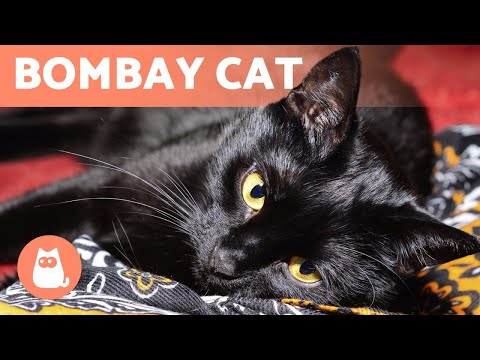
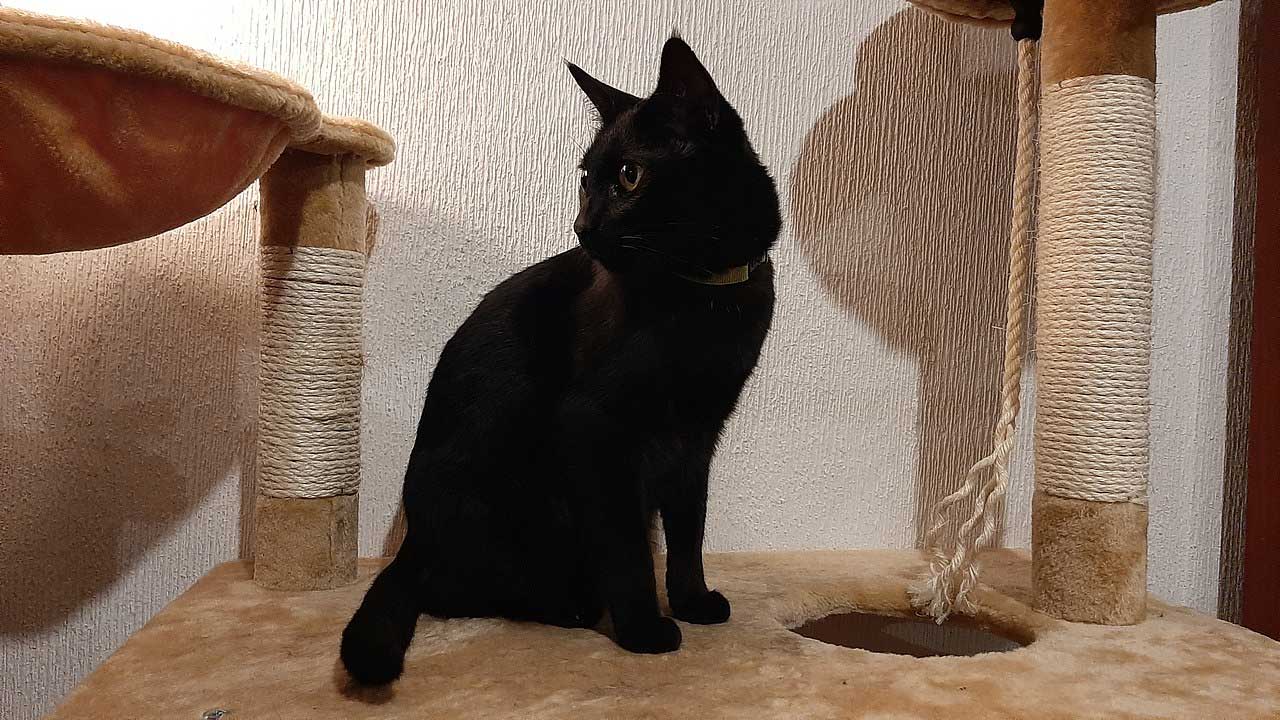
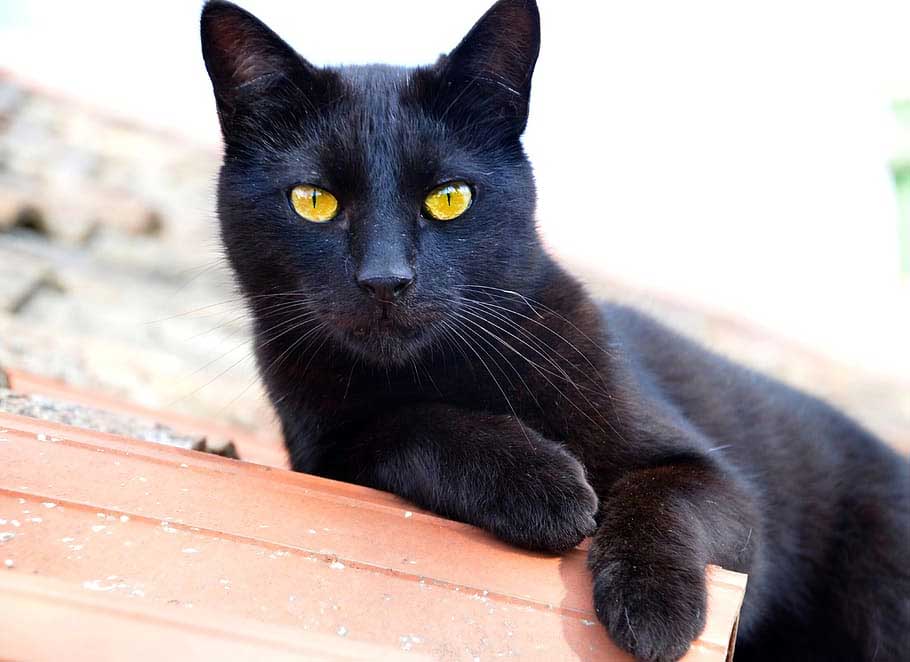
Although the Bombay looks like a little panther, does not have the character of a: it is neither wild nor aggressive.

Bombay cat

Content

History

The Bombay cat it was created in 1958 by Nikki Homer, a breeder of American shorthair cat based in Kentucky, United States. Dreaming of having a cat similar to a black panther, but in miniature and as meek as a lamb, That year he decided to cross specimens from his breeding program with the American Burmese Cat.. His morphology seemed perfectly adapted to his project, since like the panther, this breed has a very apparent musculature.

A first mating was carried out between a female sand-colored American Burmese Cat and a American shorthair cat black, which was followed by other marriages between representatives of the two races. But, the results were not really satisfactory. The resulting cats looked more like the American shorthair cat black than the little panthers. Nikki Homer decided to neuter them and sell them as pets.

But, did not give up and tried again a similar breeding in 1965. After two years of selective breeding, he got the black cat he had imagined: a majestic look, coppery eyes and a very shiny ebony black fur. He named it after Bombay, in honor of the Indian city of the same name (now mumbai), where you can see black panthers in the Sanjay Gandhi National Park, which is part of the city.

Among 1967 and 1972, managed to produce nothing less than 27 litters and allowed the birth of some 100 kittens. But, only kept the kittens from the breeding program of the Bombay who met the criteria that she herself had established; the others were given away as pets.

Delighted with the result, dedicated himself to gaining recognition for the breed he had created. It took him a few more years to achieve his goal, but his efforts were finally crowned with success: in 1976, the American Cat Fan Association (CFA) became the first feline organization to take the step of recognizing the Bombay.

After putting so much energy into the cat for almost 20 years, Nikki Homer wanted to move on. Decided to stop raising the Bombay.

But, other American breeders who fell in love with the little black panther took up the torch. Among them, Suzanne y Herb Zwecker played an especially important role, investing a lot of time and effort in the development and recognition of the breed. They decided to create additional new lines from scratch, instead of just using existing copies.

But, despite the best efforts of everyone involved, the breed had a hard time breaking through. Superstitions about black cats and the reluctance of American Burmese cat breeders, who saw the newcomer as a competitor. But, interest in the black cat became more important when in 1985 Luv It Black, one of the copies presented by Suzanne y Herb Zwecker, was honored by the CFA in the events organized by the organization.

But, the development of Bombay cat was also hampered by genetic issues. Because breeders are the American shorthair cat, the American Burmese cat or the same Bombay cat, and in the same litter the Bombay and kittens with different coat colors and eyes, more in line with those of the American shorthair cat. These are systematically withdrawn from the breeding program and sold as pets..

In France, the breed's arrival dates back to 1989. It was in that year when the first pair of specimens was introduced into the country., Opium and Bagheera. A breeding program was created and imported 10 more copies in the next five years.
Bombay cat
Bombay cat

The recognition of "Bombay cat"

Although the Bombay still pretty weird, is recognized by many organizations, starting with the most important on an international scale.

Having been created in the United States, no wonder the breed was first recognized by the Cat Fanciers’ Association (CFA), the country's leading feline institution. This was done in 1976, and neighboring Canadian Cat Association (CCA) followed suit in 1988. Many other national organizations followed suit, like the french Livre Officiel des Origines Fรฉlines (LOOF), the Australian Cat Association (ACF) wave New Zealand Cat Fancy (NZCF).

The International Cat Association (TICA) awarded him recognition in 1979, making it part of a group that also includes the American Burmese Cat. The World Cat Federation also accepts it.

On the other hand, the Fรฉdรฉration Internationale Fรฉline (FIFรฉ), which brings together organizations from around forty countries -among them Felis Belgica, from Belgium, y the Swiss Feline Federation (FFH), from Switzerland-, does not recognize the Bombay.

There is also an English version of the breed, which was developed in Britain in the decade of 1980 and that differs substantially from American Bombay. It is recognized since 1994 by the Governing Council of the Cat Fancy (GCCF), the main feline organization in the country. The GCCF considers it a variety of the Asian race, along with the Asian Smoke Cat, Asian tabby cat, Burmilla and Tiffany. But, does not recognize the Bombay, that can be found all over the world.

Physical characteristics
Bombay cat
Bombay cat

When crossing the American shorthair cat Black and American Burmese Cat, the creator of Bombay, Nikki Homer, I wanted to create a cat that looked like a โ€œminiature black panther.โ€. It's fair to say the gamble paid off. Y, like is logic, the resulting breed has inherited most of the physical traits of its ancestors.

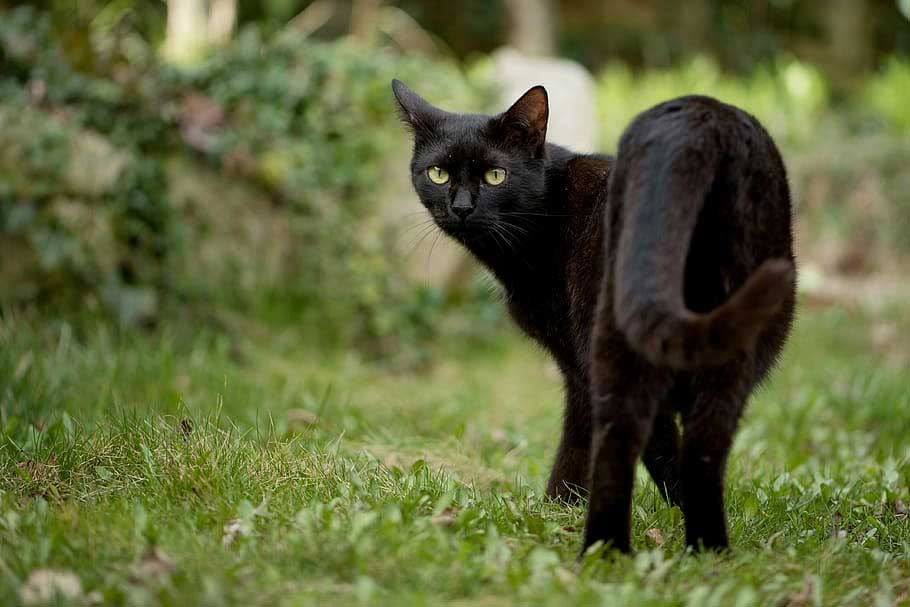
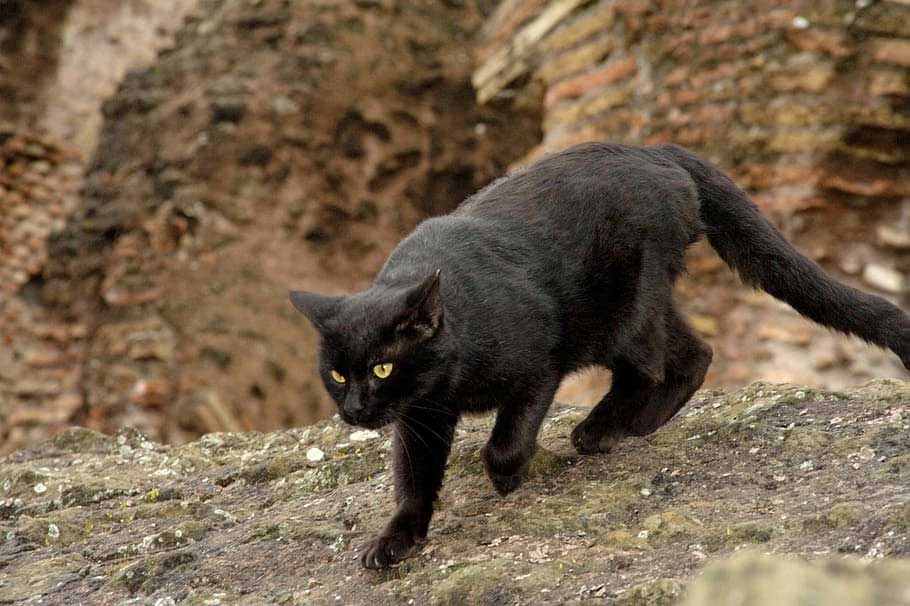
The elegant Bombay It is a stocky breed with a medium-sized body and a greater weight than one might think at first glance.. It must be said that it has a fairly strong bone structure, on which also rests an important and very apparent musculature. The chest it is round and wide, the back straight from shoulder to rump. The tail is straight and of medium length, tapering to the tip.

The legs are proportionate to the body, good muscular, and they last in feet round with black pads.

The head It is medium and round in size. On the top of the head are the ears well spread and moderately large. They are wide at the base, rounded at the tip, and lean slightly forward giving the dog an alert look.

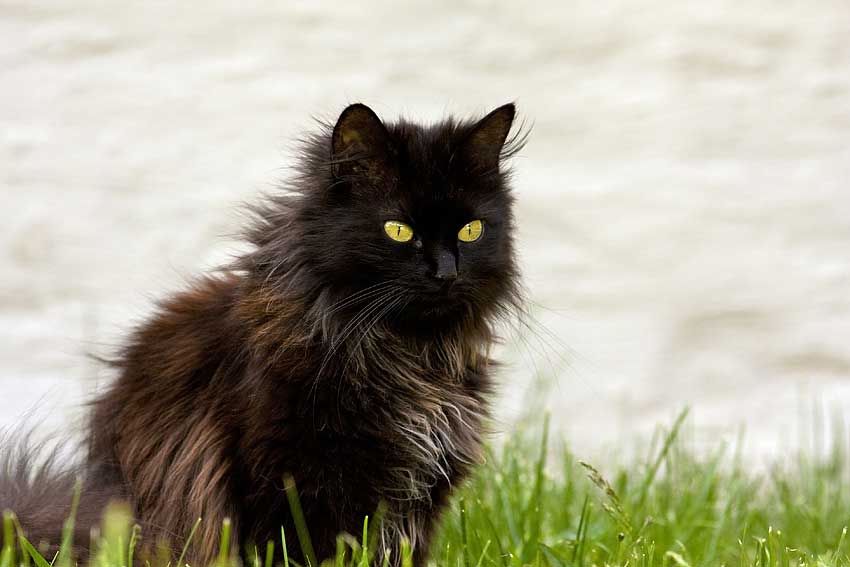
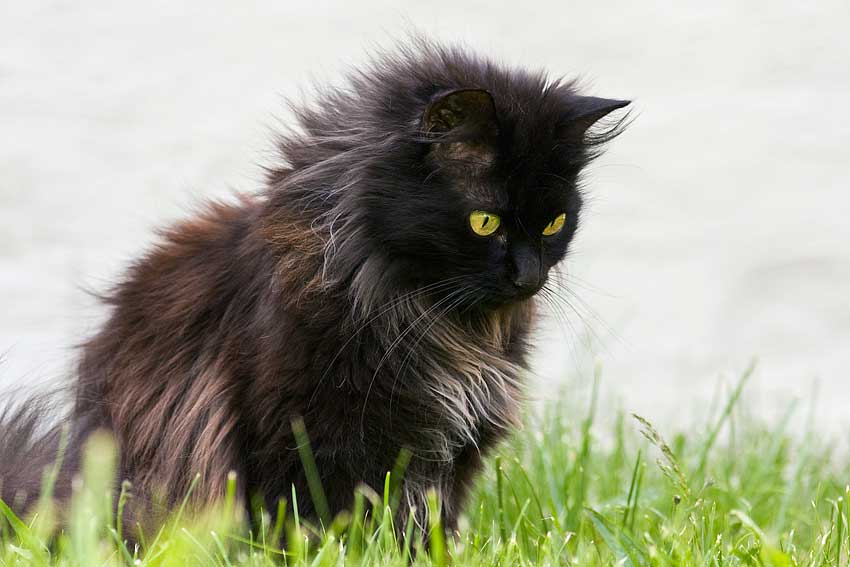
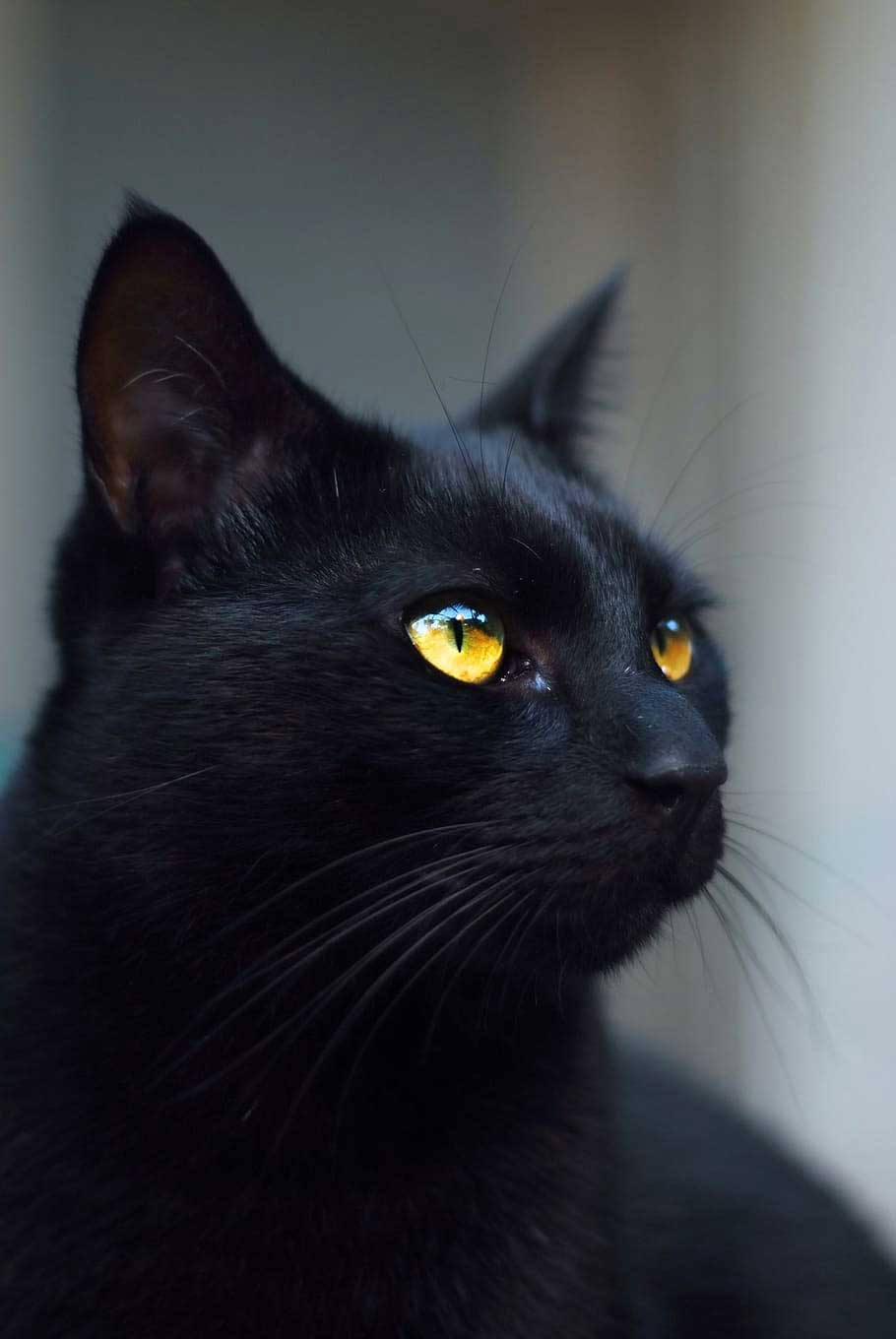
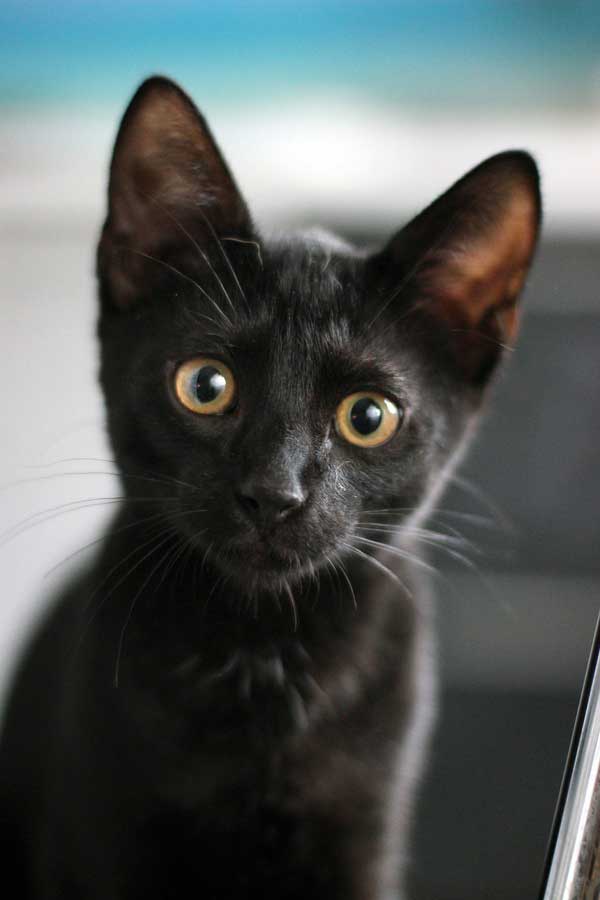
It is said that the Bombay cat has the eyes as round as shiny copper coins. In fact, they are big, round and located in the extension of the base of the ears. Its bright color ranges from copper to gold, being the first the most appreciated. They are even more beautiful because they contrast with the totally black fur, and this combination is a distinctive feature of the breed.

The profile also shows a slight stop, and nose has a slightly rounded tip. The nose is black and is crowned by a snout short, wide and rounded. The chin is well developed, but it is neither prominent nor sunken.

The Bombay practically does not have undercoat. The upper coat is short, dense but fine, silky and satin, What is another characteristic of the breed?. This is another characteristic of the breed. The fur of this cat should be shiny like patent leather.

It is also jet black from root to tip., and this cat is the only breed that is consistently black. But, It is not until they are two years old when they acquire their final color: are born with a slightly lighter coat, that gets darker as they grow, until it turns into a deep black.

There is also a slight sexual dimorphism in this breed. Males and females are very similar in size, but its weight differs more. The male can weigh up to 5 kg, while the female must not exceed 4 kg.

Last, It is worth mentioning the English version of the Bombay, having some specific physical characteristics. In effect, while his american cousin is cobby type, this one is midline type (a slightly less slim body type). So, has thinner legs, ending in oval feet. Its head is triangular and slightly hollow. It is also distinguished by its almond-shaped eyes., whose color varies from golden yellow to green. But, Apart from these few features, the American Bombay and the English Bombay they are physically quite similar.

Size and weight
  • Male size: 20 – 25 cm.
  • female size 20 – 25 cm.
  • Male weight: 3 – 5 kg
  • female weight: 3 – 4 kg

  • Bombay cat
    Bombay cat

    Character and skills

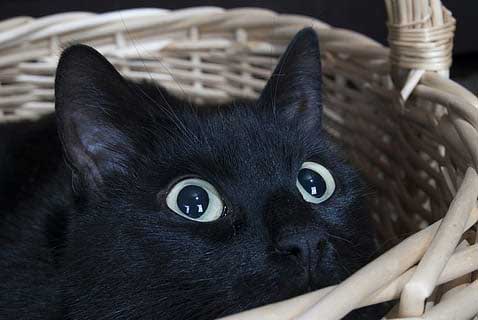
    Although the Bombay looks like a little panther, does not have the character of a: it is neither wild nor aggressive. On the other hand, He is very sociable and affectionate, and it is an ideal option for those looking for a cat to live in the family, so much that he seeks the company of humans. He is especially attached to the person who cares the most for him, without being a one-man cat: your closeness to a particular person does not prevent you from giving affection to all family members.

    He also likes to be caressed, and this is good: caressing him is really very nice, since her hair has the texture of silk. And since he especially likes warm places, it is not uncommon for him to get under the covers in bed, or snuggle up on the couch with one of your family members.
    Bombay cat
    Bombay cat

    To the Bombay he likes attention and pampering. If you feel neglected, will call out to your family members with gentle vocalizations that don't break the ground. In other words, this cat can be talkative to claim attention, but their meows have the good taste not to be shrill.

    They like to play with children and are patient with them, provided they are treated with respect. With a little boy, there is a real risk that this condition will not be met, so it is better never to leave him alone with a small child, without adult supervision. The safety of both parties is at stake, and this is valid for any breed of cat.

    The Bombay He is a very affectionate cat that needs the attention and love of those around him. He loves to interact with his surroundings and follows his owner everywhere: in the classroom, the bedroom, the kitchen…

    This, coupled with his intelligence and very active temperament, explains that he is an excellent student for anyone who wants to teach their cat tricks such as, for example, to look for an object.

    But, also needs alone time and can be left alone for a few hours at home, This does not mean that you should not provide your cat with games when he is out, to keep you busy and not suffer from anxiety when your owners are away too long. Invest in interactive games, like the puzzles, it's a great way to stimulate your high brainpower, whether you play with them alone or with your family.

    Having him share his home with a small companion is also a sensible way to make the absences of his owners more bearable.. In fact, the Bombay cat cohabits easily with peers or even a dog, as long as you feel loved and receive the care you need. This coexistence is all the better if it is established from the earliest age of the two protagonists. If that is not the case, at least it's better to make sure they get to know each other little by little, so that they get used to each other and each find their place.

    On the other hand, it is less appropriate to make him live with a bird or a small rodent, since the Bombay has a highly developed predatory instinct: he is an excellent hunter. If you must spend some time with that animal, it is better to place it in a cage inaccessible to the cat, or even better, in a room reserved for him. This will avoid unpleasant surprises..

    As for the unknown humans, the Bombay cat seems to be often torn between his spontaneous distrust of them (hence he is not one of those who approach them immediately) and his intrinsic curiosity. As soon as you feel comfortable, the latter is in charge of encouraging him to approach them to smell the new scents and to ask for some caresses from time to time. In any case, it is essential that you have a cat tree at your disposal: it is a place where you feel safe and can take refuge at any time, either to observe your surroundings from your perch or simply to rest in peace.

    Like any cat, the Bombay need rest periods, but he has plenty of energy. Living in a house with a garden that can be accessed at any time through a cat flap is ideal for him.: so he can roam and climb trees all he wants, which helps your head feel as good as your legs.

    It is not surprising, because, that his facet of ferret and / or his hunting instinct lead him to explore other territories or to follow a prey outside his domain: that does not stop him from being happy to return to his cozy nest, where caresses and good food await you.

    As long as he is surrounded by his owners, this cat can be relatively flexible in terms of living environment: as long as it is spacious enough for you to play, run and expend your energy, can adapt very well to a flat life. But, it is important to note that they generally accept being walked on a leash, as long as they get used to them from a young age: for people who live in such a household, This can be a good option for your little feline to discover new horizons and to roam outside.

    Whether you have access to the outside or not, the Bombay you should be able to do your first steps whenever you want, like all his classmates. So, it is essential that you have a scratching post available at all times: this saves you from having to turn to furniture or curtains to satisfy this irrepressible need.

    Last, It is worth mentioning that the English version of the Bombay cat has the same character traits as their American counterparts, inherited largely from their ancestors burmese.

    Bombay cat
    Bombay cat

    Care and Cleaning of the "Bombay cat"

    The Bombay has a dense but short top coat, and its bottom layer is very light. This explains that their coat does not require much maintenance.: you only have to brush it once a week to remove dead hairs and maintain its characteristic shiny appearance. The shedding periods, in spring and autumn, they are not very important, but it is necessary to brush two or three times a week to keep the coat healthy and beautiful.

    It is necessary to check the ears of the Bombay once a week and wash them with a clean, damp cloth to remove dirt and limit the risk of infection.

    The weekly maintenance session should also be an opportunity to check the eyes. They are more likely to be dirty if the Bombay is prone to epiphora (excessive tearing). In this case, it is essential to clean the corners of the eyes with a damp cloth to minimize the risk of infection.

    Regular brushing of the teeth of the Bombay it is essential to avoid all kinds of health problems in this area. This is true of any breed, but the risk of improper maintenance is even greater for the Bombay cat, since it is prone to gingivitis. Regular brushing with a special cat toothpaste prevents plaque buildup, which can cause more or less serious diseases when it becomes tartar. Once a week is the minimum, but daily is the ideal.
    Bombay cat
    Bombay cat

    You should get used to checking the length of your claws. Bombay each month. As long as you have access to the outside, natural wear and tear is usually sufficient. If that is not the case, it is necessary to cut them manually: if they get too long, they are likely to break, that bother you or even hurt you. It also, there should be a scratching post available at all times so that you can satisfy your irresistible need to scratch, instead of having to resort to furniture…

    coat care, the ears, the eyes, the teeth and claws of the Bombay does not require any special skills. But, instead of doing it only the first time, the expertise of a veterinarian or cat groomer may be helpful. Learning the correct gestures from a professional, the probability of not only being ineffective is greatly reduced, but also and above all to act clumsily and thus injure or even traumatize your pet.

    It also, It is essential that your pet is used to these grooming sessions from his first months: the sooner they become part of your routine, more easily accept them throughout your life. Like this, he and his owner are in the best position to make them spend special moments together, and the opportunity to caress and hug. Being very affectionate and close to its owner, appreciates being groomed even more.

    Indoor or outdoor cat?

    The Bombay cat it is an excellent indoor cat. In any case, prefers to be with his humans and does not have a great desire for freedom. In a big and cozy apartment for cats, with a scratching post, a litter tray and a feeding area, nothing stands in the way of a happy life together.

    You must avoid unrestricted access to the outside, since this open minded and curious cat is not afraid of anything. Unfortunately, this also includes cars and receivers. Ideally, let the black cat run in a safe garden or on a balcony.

    Some representatives of the breed can even be taught to walk on a leash like a dog. With a little practice, these smart and loving cats will do as well as a dog. But, this depends on the individual character, as well as the conditions of the "walk" area. You should not walk your cat where there are many dogs or other dangers.

    How much activity does he need? "Bombay cat"?

    How many members of the breed are indoor cats, need a certain amount of activity. This mini panther appreciates emotions and loves to play with children or other cats. Both classic cat toys and learning tricks are fun for these cats.

    With a challenging intelligence toy, the Bombay they are also very busy. The most important thing is that you offer your cat variety. He is a human-oriented cat and should not be left alone too often either.. Should be pampered regularly.

    Health and nutrition

    Both the American and British lines enjoy, in general, Of good health.

    It also, this little cat can live in all climates, except in the coldest. But, must be well protected from cold and drafts at low temperatures, since its scarce undercoat means that it is not ideally equipped for winter weather.

    On the other hand, the Bombay have a tendency to be overweight and even obese. This is even more true if you don't have access to the outdoors., since then you have fewer opportunities to exercise. It is not a matter to be taken lightly, since being overweight can cause illnesses or worsen existing ones.

    In any case, to adopt a Bombay in the best conditions, it is essential to contact a breeder worthy of the name. In effect, a serious professional cares about genetic testing of proposed breeders (in particular, for the hypertrophic cardiomyopathy and the facial cleft syndrome media), in order to rule out those who could give birth to unhealthy kittens. It is also concerned with offering kittens an ideal environment for their physical and mental balance., and strives to develop their sociability from the first weeks. This is absolutely crucial for the rest of their lives.. In any case, at the time of adoption, the breeder must be able to provide a certificate of good health issued by a veterinarian, as well as the health card (or vaccination) in which the vaccines the cat has received are recorded.

    To keep your cat healthy throughout its life, it is important that you take him to the vet for a complete check-up at regular intervals, although everything seems to be fine. These reviews give the professional the opportunity to detect as soon as possible any possible problem other than (yet) visible, allowing you to treat it in optimal conditions. It is also an opportunity to carry out any necessary booster shots.. These visits must be scheduled at least once a year, and even more as the animal ages.

    At the same time, the owner is also tasked with protecting his little feline against parasites throughout the year, remembering to renew your deworming treatments each time it is time to do so. It is important to remember that even a cat that lives in an apartment can contract parasites and must be dewormed..
    Bombay cat
    Bombay cat

    Life expectancy

    12 to 18 years

    Food

    Like any other cat, the Bombay you need a diet adapted to your nutritional needs, both in terms of quality and quantity. So, should be chosen with your age in mind, your state of health and your level of physical activity.

    It is advisable to monitor the amounts of food that are given, because unlike many of his peers, the Bombay does not know how to regulate itself. Greedy and a little gluttonous, have a true propensity for obesity. So, it is not possible to leave food in self-service, at the risk of gorging. That is why, the best solution is to offer two meals a day, given at fixed times and rigorously weighed.

    Bombay cat
    Bombay cat

    It is perfectly possible to give him industrial food, as long as they are of good quality and carefully chosen to suit your needs. On the other hand, you have to be very careful with human food, although do not hesitate to ask, for example, during their owners' meals. Not only is there little chance that the nutritional intake provided corresponds exactly to your needs, rather, some foods appreciated and regularly consumed by humans are toxic to cats. This also explains why it is best to avoid giving him the table scraps or letting him rummage through the trash..

    Last, the fact that you tend to gain weight easily makes it essential to monitor your weight every month. If the weight gain is confirmed or even increased during several consecutive weighings, it is necessary to visit the vet. In effect, only a healthcare professional can diagnose the cause of the problem (improper diet, disease, side effect of a medication, etc.) and, Therefore, determine how to remedy it.

    To finish, like any cat, the Bombay you should have fresh water available at all times so you can drink as soon as you feel the need.

    For sale "Bombay cat"

    Before purchasing a Bombay cat, you need to make sure you have enough time for the people-facing cat. The first obstacle to overcome is the lack of breeders in Europe. It is best to do research on the internet and contact a private breeder. But, beware of fake offers and take a good look at the breeder. Observe the kitten's parents and siblings, as well as the accommodation conditions. For a healthy kitten, vaccinated and dewormed, will pay about 750 EUR.

    Characteristics "Bombay cat"

    Coexistence is important that you have with your new friend. Before considering the acquisition of a cat of the breed "Bombay cat" you know certain factors. You must take into account their character, their need for exercise, their interaction with other pets, their care and if you have small children, their level of tolerance towards them.

    Joy

    4,0 of 5 stars (based on 1 review)

    Activity level

    3,0 of 5 stars (based on 1 review)

    Friendliness to other pets

    3,0 of 5 stars (based on 1 review)

    Friendliness to children

    4,0 of 5 stars (based on 1 review)

    Grooming requirements

    1,0 of 5 stars (based on 1 review)

    Vocality

    2,0 of 5 stars (based on 1 review)

    Need for attention

    3,0 of 5 stars (based on 1 review)

    Affection towards its owners

    4,0 of 5 stars (based on 1 review)

    Docility

    4,0 of 5 stars (based on 1 review)

    Intelligence

    3,0 of 5 stars (based on 1 review)

    Independence

    2,0 of 5 stars (based on 1 review)

    Hardiness

    3,0 of 5 stars (based on 1 review)

    Videos "Bombay cat"

    BOMBAY CAT ๐Ÿฑ Characteristics, Care and Health! ๐Ÿพ
    BOMBAY CAT Characteristics, Care and Health!
    BOMBAY CAT ๐Ÿฑ Features, care and health! ๐Ÿพ
    GATO BOMBAY ? ยกCaracterรญsticas, cuidados y salud!

    โ–ท The world of Pets: Dogs, cats, birds, reptiles, amphibians

    Maine Coon cat
    Federations: LOOF, CFA, ACF, ACFA, TICA, FIFรฉ, WCF

    The tallest cat in the world, with 123 centimeters in length, was Stewie, a Maine Coon from the State of Oregon. After his death to the 13 years, the cat Maine Coon Omar from Melbourne successfully took his place.

    Maine Coon

    Content

    Characteristics "Maine Coon cat"

    Coexistence is important that you have with your new friend. Before considering the acquisition of a cat of the breed "Maine Coon cat" you know certain factors. You must take into account their character, their need for exercise, their interaction with other pets, their care and if you have small children, their level of tolerance towards them.

    Joy

    4,0 of 5 stars (based on 1 review)

    Activity level

    3,0 of 5 stars (based on 1 review)

    Friendliness to other pets

    4,0 of 5 stars (based on 1 review)

    Friendliness to children

    4,0 of 5 stars (based on 1 review)

    Grooming requirements

    4,0 of 5 stars (based on 1 review)

    Vocality

    1,0 of 5 stars (based on 1 review)

    Need for attention

    3,0 of 5 stars (based on 1 review)

    Affection towards its owners

    4,0 of 5 stars (based on 1 review)

    Docility

    4,0 of 5 stars (based on 1 review)

    Intelligence

    4,0 of 5 stars (based on 1 review)

    Independence

    4,0 of 5 stars (based on 1 review)

    Hardiness

    5,0 of 5 stars (based on 1 review)

    History

    The origins of the Maine Coon

    The Maine Coon It is a natural breed native to the northeastern United States, and more specifically the state of Maine, of which is the "official cat" since 1985. But, its exact origins are unclear, and many more or less far-fetched legends surround it.

    The most widespread, but also the least credible, is the origin of his name: the myth that it is the result of a cross between domestic cats and wild raccoons (ยซRaccoonsยป o ยซCoonsยซ) Is very nice, but genetically impossible.

    Another popular theory is that the Maine Coon descends from six Turkish Angora Cats owned by the French queen Marie Antoinette (1755-1793). Preparing to flee France after the French Revolution, entrusted them to the care of a certain captain Nathaniel Clough, that took them across America to Wiscasset, Maine. The queen was unable to escape and retrieve her cats, so they stayed in Maine and began to breed with the local felines, giving rise to this race.

    Although unlikely, this theory is believable. In fact, it is now accepted that the Maine Coon is the result of the crossing between shorthair cats present in North America and longhair cats coming from europe. But, due to lack of actual evidence, it is impossible to know if these cats arrived with the Norwegian Vikings in the 11th century (which would explain its striking resemblance to the Norwegian Forest Cat ), with English sailors in the 19th century (like the captain Charles Coon) or with the fishermen of New England around the same time.

    Recognition of the ยซMaine Coonยป

    Maine Coon
    Maine Coon

    Whatever its exact origin, Since the beginning of the 19th century, Maine farmers and fishermen appreciated the ability of the Maine Coon to hunt mice and other rodents. useful and resistant, This cold-hardy cat began to be exhibited at local agricultural shows beginning in the 1980s. 1850.

    The first references to Maine Coon appeared in 1861 and they were referring to a black and white cat named Captain Jenkins of the Marine Corps. In 1895, a female of Maine Coon call Cosey was exhibited at the first North American Cat Show, held in the Madison Square Garden from New York, where he won a silver necklace engraved with his name, as well as the title of โ€œBest in Showโ€.

    But, the popularity of Maine Coon decreased greatly in the early 20th century due to the emergence of more exotic breeds, as the Persian cat and the Siamese cat, and its decline was so severe that at the beginning of the decade of 1950 the breed was declared extinct. This statement was premature and exaggerated., but it made cat lovers aware of the seriousness of the situation. Under the leadership of Ethylin Whitemore, Alta Smith y Ruby Dryer, the Central Maine Cat Club, who worked hard to promote the breed at various shows and competitions, and developed its first standard in 1960.

    This was followed by the official recognition of the American Cat Fanciers Association (CFA) in 1976, the International Cat Association (TICA) in 1979, the Fรฉdรฉration Internationale Fรฉline (FIFรฉ) in 1982 and the British Governing Council of the Cat Fancy (GCCF) in 1993. Like this, in just a few decades, the Maine Coon not only rose from the ashes, it became one of the most popular cat breeds in the world.

    The popularity of the "Maine Coon" in the world

    For many years, the Maine Coon has been one of the five most popular cat breeds in America, but now it is also one of the most common cats in Europe. In Great Britain, for example, the Maine Coon has firmly established itself as one of the 5 most popular breeds in the country.

    But it is above all in France where his success has been most dazzling.: from 2011, it is the most popular cat breed among the French. Year after year, it even ends up widening the gap that separates it from its rivals: With almost 14.000 inscriptions in the Official Book of Feline Origins in 2018 (versus almost three times less than the Sacred Cat of Burma (Birman), the first of his rivals), alone accounts for more than a third of new births recorded during the year. It also, There is more than 2.500 hatcheries of Maine Coon assets in France, that is to say, that have registered at least one litter in the last two years.

    Physical characteristics

    Maine Coon
    Maine Coon

    The Maine Coon he is an imposing cat, to the point that their representatives regularly hold the record for largest cat in the world: Some male specimens reach 12 kg of weight and 120 cm length! But, these are exceptional cases: although it is indeed much larger than a "normal" cat, a Maine Coon does not usually reach these record dimensions. The vast majority are similar in size to norwegians, breed with which they share many characteristics.

    Rather long and rectangular, their body he is muscular and harmonious, While their legs, Of medium height, they are strong, with a solid and wide foot: as such, they are a kind of long and powerful cat. The tail it is one of the most distinctive features of this breed: dense and carried high, is as long as the body and tapers to the tip.

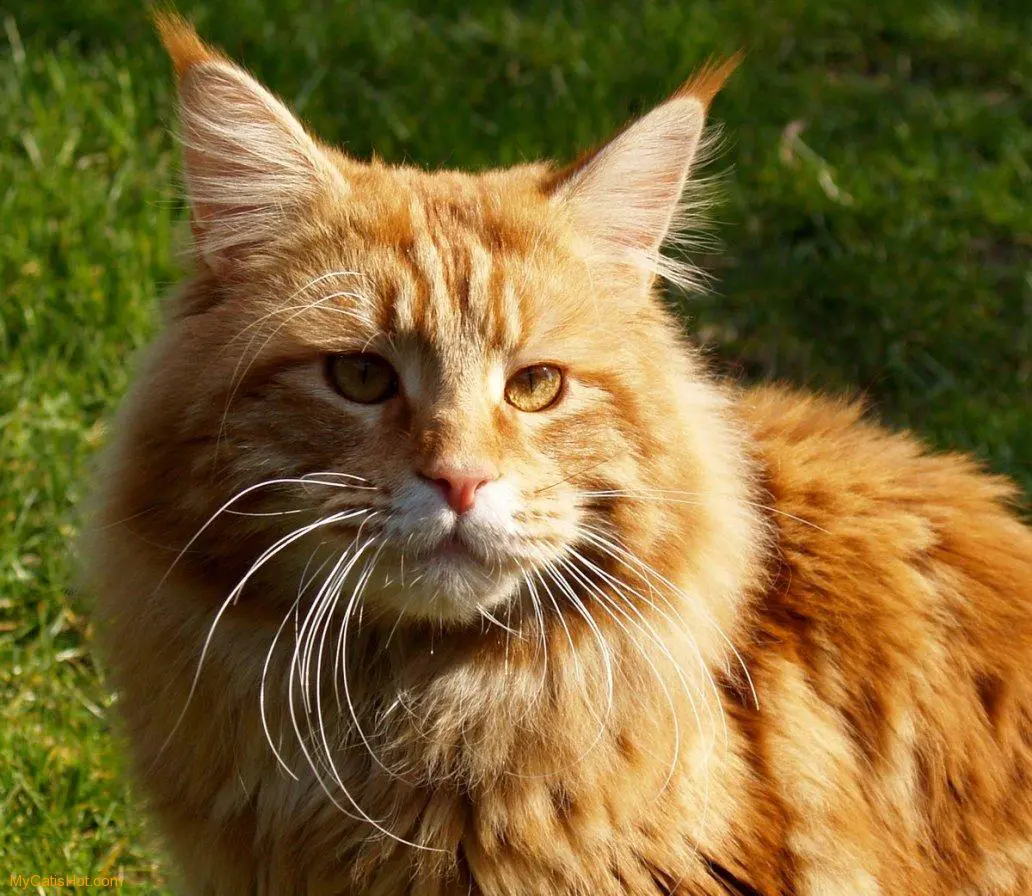
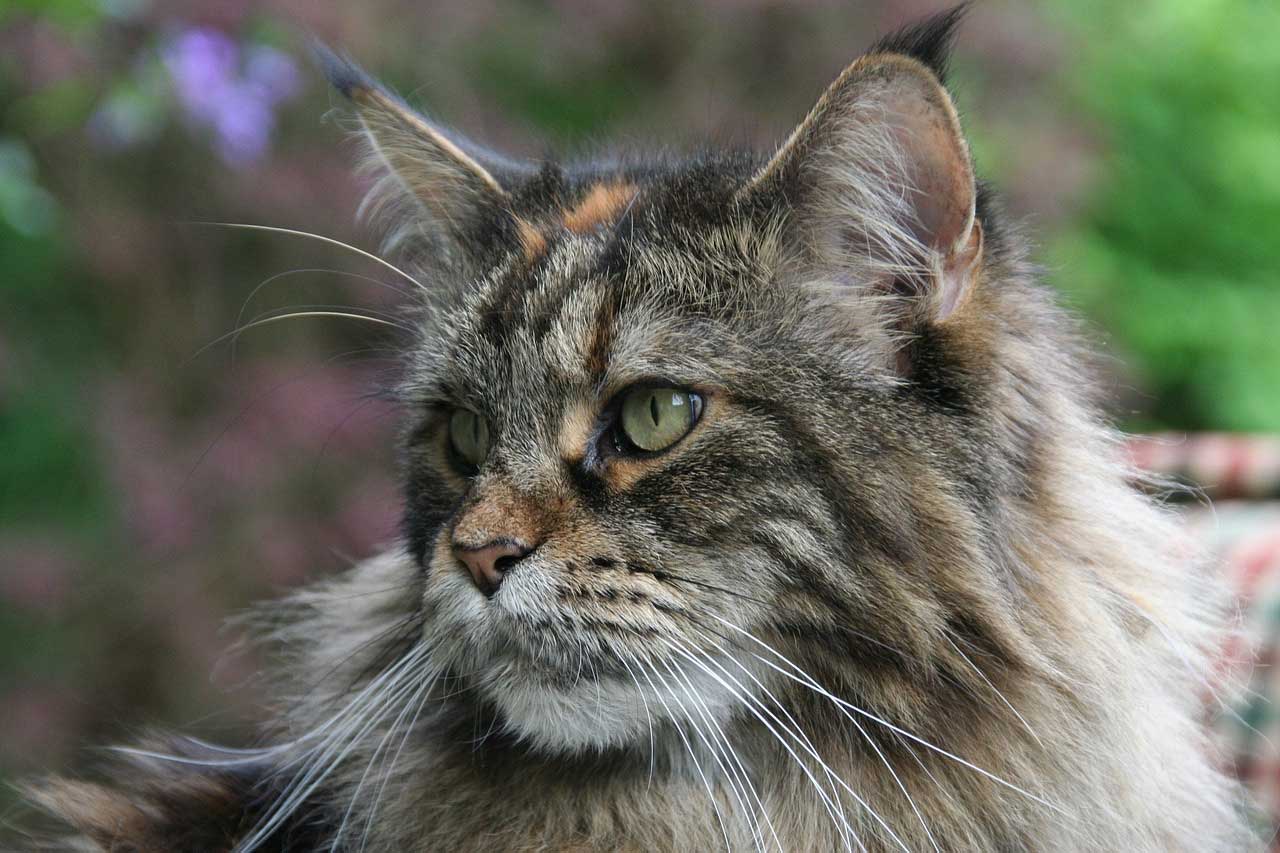
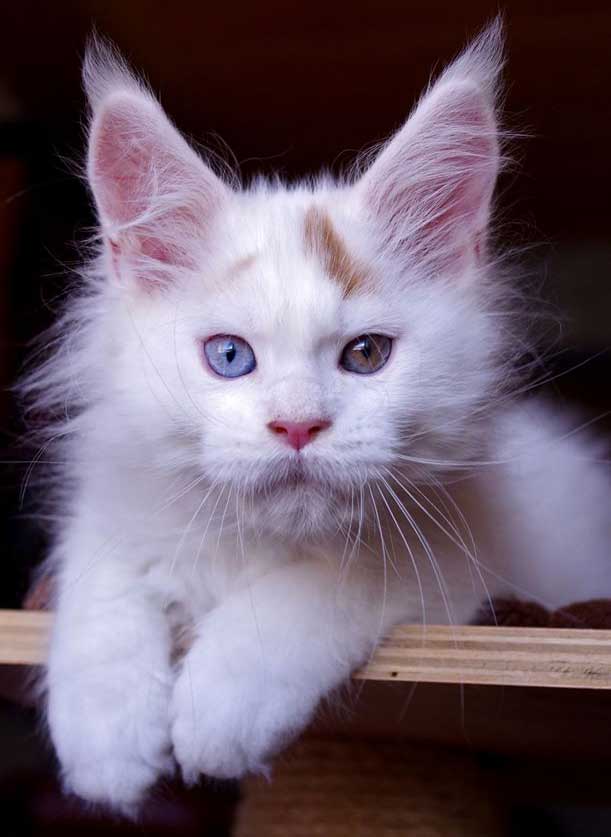
    The cheekbones they are tall and prominent. Side view, the forecrown is subtly rounded and the line of the nose forms an unbroken, slightly concave curve. Seen from the front, their snout angular looks square; its large and expressive eyes, angled, appear round when attentive and can be any shade of green, dorado, copper or yellow. In white individuals, they can be even blue or mint (that is to say, of two different colors). Its big ears, broad based and moderately pointed, are placed on the top of the head, with the inner hairs extended horizontally out. Looking for plumes on the tips of the ears, similar to the lynx.

    The fur semilargo, denso e impermeable, offers good protection against inclement weather. It is shorter at the head and shoulders, but gradually lengthens on the sides. The undercoat it is less dense than that of other long-haired breeds, but it becomes denser in winter to protect it from the cold. The Maine Coon It then has a dense ruff that resembles the mane of a lion. The coat can be of different colors, usually tabby, although single color raccoons are also accepted. The brown tabby color is the most common. But, some coat colors, like chocolate or lavender, are not accepted by all standards.

    The sexual dimorphism it is quite marked: females are significantly smaller than males, whose tilted ears seem smaller.

    Last, the Maine Coon it is a slow growing animal, that does not reach its adult size until 3-4 years of age.

    Size and weight

    • Male size: 30 to 45 cm.
    • female size: 25 to 40 cm.
    • Male weight: 6-10 kg
    • female weight: 4-7 kg

    Varieties of the ยซMaine Coonยป

    Existing since the early days of the breed, the Maine Coon polydactyl is recognized as a variety in its own right by TICA (International Cat Association). As the name suggests, this cat may have extra claws or fingers.

    The polydactyly in cats it exists in many breeds, but the Maine Coon it is clearly one of the most affected breeds, estimating that it affects a 2% of individuals. Some historians believe it is a trait inherited from sea cats, that needed better balance and grip to resist pitching boats.

    Character and skills

    Maine Coon Silver Tabby
    Maine Coon Silver Tabby, two year old breeding male – T. Bjornstad, CC BY-SA 4.0, via Wikimedia Commons

    The Maine Coon he is a calm cat, smart and loving who easily adapts to different lifestyles and personalities. They are very attached to their owners and enjoy their company., but they do not require special attention: they like to be caressed, but they are just as happy sitting next to their owner or supervising their actions. It is common for him to follow you around the house or wait patiently behind a closed door. On the other hand, he is much more suspicious of people he does not know.

    Smart and close to its owner, the Maine Coon is a good candidate for training: armed with a healthy dose of patience and your favorite treats, it is quite possible to teach your cat tricks.

    It also, coexistence with other cats and even with dogs is not a problem, as long as the latter are accustomed to cats. The Maine Coon it is also an ideal cat breed for children, since he adores them, He is very affectionate with them and enjoys playing with them. They are very playful and, even as adults, they will chase a ball or toys.

    On the other hand, thanks to its dense and waterproof coat that protects it from inclement weather, It is a breed of cat that does not fear the cold, nor the humidity.

    To much Maine Coon they are fascinated by water: perhaps a memory of his ancestors who traveled in New England fishing boats? No doubt aided by their waterproof coat, they like to lie on the floor of a still wet shower or touch the bath water with their curious paw. But, Most of the time, this attraction does not go further: to the Maine Coon does not particularly like swimming, and he is not one of those who follows his master in the bath or shower.

    Last, meows very little or not at all, but it emits a high-pitched screech that is surprising for an animal of this size.

    Grooming and caring for the "Maine Coon cat"

    Despite having a dense and relatively long coat, the silky texture of the hair of the Maine Coon prevents excess tangling. But, it is recommended to brush the cat with a stainless steel comb weekly, to detangle hair and evenly distribute skin secretions.

    A cat grooming rake (o peine) also useful for removing dead undercoat, which can cause tangles if it builds up. This tool should be used gently, especially in the belly, where the skin is most sensitive.

    In any case, the Maine Coon she changes a lot, especially during the molting season (Fall and Spring). So, not recommended for people who want to have a perfectly clean interior at all times.

    The underside of the tail should also be checked daily to make sure there is no residual droppings embedded in the coat.. If required, can be cleaned with a baby wipe. Many owners choose to cut their hair in this area to avoid this inconvenience..

    Last, maintenance of your cat's ears is recommended every 2-3 weeks, checking that they are clean and infection-free. You should also brush your cat's teeth regularly to remove food debris and prevent tartar build-up.. Maintenance sessions are also an opportunity to check if your claws need to be trimmed.

    Indoor or outdoor cat?

    Maine Coon
    Giants Challenge – Maine Coon America – Fabrizio NeitzkeFlickr

    Despite its large size, the Maine Coon can live in a flat. Less inclined to vertical scanning than its peers, prefers to stay on the floor or on the sofa rather than climb up the curtains or furniture. Given its size, this is not necessarily a bad thing…

    On the other hand, as soon as the opportunity presents itself, his hunting instinct is awakened and he chases mice and other small rodents without hesitation. It is especially known for its ability to hunt mice. In fact, coexistence with domestic rodents such as hamsters should be ruled out, guinea pigs or other small animals, since it will most likely end badly.

    How much activity does he need? "Maine Coon cat"?

    In general, the Maine Coon it is quite unproblematic in its maintenance. The cat may doze for 16 hours in a row without getting bored. But, even sleepy little ones need a helping of activity once in a while. Especially if they are kept indoors, regular exercise is essential.

    When these clever cats (especially the males) they are bored, they come up with all kinds of nonsense. Games with a fishing rod, toy mice or balls next to their humans provide enough exercise. They also strengthen the bond between two-legged and four-legged friends..

    If you don't have much time and you have to do other things apart, you can turn to intelligence toys for cats. Here, the Maine Coon can be occupied for a time under supervision. As one of the few breeds of cats, the Maine Coon they have some affinity for water and can also be wonderfully busy with a leaky faucet.

    Health and nutrition

    The Maine Coon it is rather a robust cat breed with strong health. But, there are some risks.

    First of all, has a predisposition to feline hypertrophic cardiomyopathy (Ho Chi Minh City), the most common form of heart disease in domestic cats, that usually affects adult cats. Since almost one in three individuals is a carrier of the gene, cardiac myosin-binding protein mutation screening recommended to reduce HCM risk, but not to remove it.

    The risk of renal polyquistosis, a slowly progressive disease that can lead to fatal kidney failure, it is also more pronounced than in other breeds. It is advisable to learn about the health of the parents before adopting a kitten Maine Coon, since this disease is hereditary.

    The spinal muscular atrophy, affecting the muscles of the trunk and limbs, is another genetic disease this cat is susceptible to. But, not deadly, and most affected individuals live comfortably for many years. There is a test to detect carrier specimens and affected kittens.

    It also, like all big cat breeds, the Maine Coon are at increased risk of Hip Dysplasia. According to a study titled "Demography of hip dysplasia in cats Maine Coon" Made in 2015 in the United States for the Orthopedic Fundation for Animals in more than 2.500 cats Maine Coon, the 24,9% of subjects had hip dysplasia. The prevalence is higher in males (27,3%) that in females (23,3%).

    Some professionals believe that this epidemic of Dysplasia it is due to the fashion of cats Maine Coon giants at the end of the first decade of the 21st century. To meet the demand, many breeders of Maine Coons they tried to create larger and larger individuals by selecting the largest individuals for breeding, but also by providing them with a very high protein diet to promote rapid growth. The latter is dangerous for the joints.

    It also, keep in mind that the Maine Coon has a very low reproduction rate, with litters limited to 2 or 3 kittens.

    Life expectancy

    9 to 15 years

    Food

    The Maine Coon behaves very well with industrial cat food, both dry and wet (cans and trays). But, whatever food is given, it is important to make sure it is of good quality and provides you with the items you need. So, should be high in protein, low carbohydrate content and less than 20% of fat, but it must also contain all the vitamins and nutrients that the cat cannot synthesize.

    It is also possible to prepare your meals at home, for example with a BARF type diet consisting mainly of raw meat, organs and bones. In this case, it is essential to consult the vet to ensure that a diet is established that provides all the necessary nutrients and vitamins for the cat, and does not suffer from vitamin or mineral deficiencies.

    Except in special cases (cat disease or obesity), the cat Maine Coon self-regulates, so food and water must be available at all times. On the other hand, chlorine-rich water can damage the cat's kidneys and lead to kidney failure; if this is the case, it is therefore advisable to filter it or even prefer bottled water.

    Maine Coon
    Maine Coon reclining

    For sale "Maine Coon cat"

    The price varies according to the color of the fur, but generally a kitten Maine Coon female is sold for about 1400 to 1500 EUR, while a kitten Maine Coon male is more likely to sell for 1600 to 1800 EUR.

    Interesting facts and curiosities

    • In 2012, ยซHank the Catยป was about to reach the Virginia Senate. Initially intended as a joke for an animal welfare campaign, the cat got a whopping of 7.319 votes, coming third in the election.
    • In the Harry Potter movies, la Sra. Norris, caretaker's cat Argus Filch, is represented by a Maine Coon red.
    • The tallest cat in the world, with 123 centimeters in length, was Stewie, a cat Maine Coon from Oregon. After his death to the 13 years, the cat Coonie Omar from Melbourne successfully took his place. With 1,20 meters long and 14 weight kg, He is currently the largest cat in the world and a true celebrity on the net.

    Videos "Maine Coon cat"

    The life of a Maine Coon cat breeder

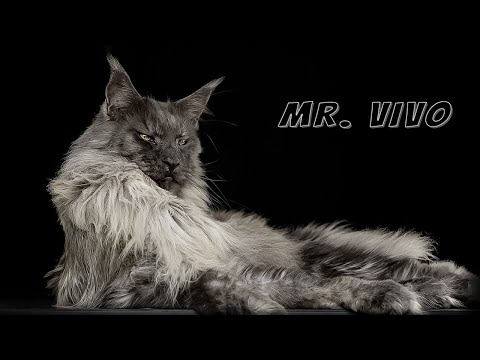
    Mr. ViVo | Most handsome Maine Coon cat in the world.

    Alternative names:

    Maine Coon
    Female Maine coon smoke red van with minnow eyes – Alixia Pain-Brun, CC BY-SA 4.0, via Wikimedia Commons

  • Coon Cat
  • Maine Cat
  • Maine Shag
  • American Longhair
  • American Coon Cat
  • American Forest Cat
  • Gentle giants
  • Coonie
  • Maine coon
  • Mancoon
  • giant cat


  • โ–ท The world of Pets: Dogs, cats, birds, reptiles, amphibians

    Somali cat
    Federations: LOOF, CFA, ACF, ACFA, TICA, FIFรฉ, WCF

    Content

    Characteristics "Somali cat"

    Coexistence is important that you have with your new friend. Before considering the acquisition of a cat of the breed "Somali cat" you know certain factors. You must take into account their character, their need for exercise, their interaction with other pets, their care and if you have small children, their level of tolerance towards them.

    Joy

    5,0 of 5 stars (based on 1 review)

    Activity level

    5,0 of 5 stars (based on 1 review)

    Friendliness to other pets

    3,0 of 5 stars (based on 1 review)

    Friendliness to children

    2,0 of 5 stars (based on 1 review)

    Grooming requirements

    3,0 of 5 stars (based on 1 review)

    Vocality

    1,0 of 5 stars (based on 1 review)

    Need for attention

    4,0 of 5 stars (based on 1 review)

    Affection towards its owners

    4,0 of 5 stars (based on 1 review)

    Docility

    1,0 of 5 stars (based on 1 review)

    Intelligence

    4,0 of 5 stars (based on 1 review)

    Independence

    3,0 of 5 stars (based on 1 review)

    Hardiness

    2,0 of 5 stars (based on 1 review)

    History

    No one knows for sure when and where the first somali cat; some advocates think that the long coat was a spontaneous natural mutation of the Abyssinian cat. Genetic studies indicate, However, that Somali probably originated around the turn of the century in England, when breeders, few breeders, they used longhair cats in their breeding programs Abyssinians.

    At the end of the decade 1910 and at the end of the decade of 1940, during the aftermath of World Wars I and II, when so many races had dwindled to near extinction, breeders were forced to mix other breeds into their bloodlines abisinias to keep the race. Raby Chuffa of Selene, a Abyssinian cat male who came to the United States from Great Britain in 1953, and that appears in the pedigrees of many Abyssinians, is considered the father of the somali race on this continent; all the somalis Canadians and Americans can be traced to this cat.

    Somali cat
    somali cat, female – FinnFrode, CC BY-SA 4.0, via Wikimedia Commons

    The pedigree of Raby Chuffa It dates back to Roverdale Purrkins, a female Abyssinian cat English whose mother, Mrs. Mews, was of unknown ancestry and probably carried the gene for Longhair. Mrs. Mews was given to the breeder Janet Robertson by a sailor during WWII. Mrs. Mews later had two kittens: Roverdale Purrkins, registered as Abyssinian, and an unregistered black male.

    Robertson used to Purrkins to start his kennel of Roverdale. Your cats and others Abyssinians of British origin were exported to Europe, Australia, New Zealand, Canada and United States. When long-haired kittens appeared in the litters of Abyssinians (which was possible whenever two Abyssinians who carried the longhair recessive gene), the kittens were discreetly given away, since no breeder wanted their Abyssinian lines to be thought to be "contaminated" with the longhair gene.

    It was not until the decade of 1960 when breeders, seeing the appeal of a longhair version of a breed that was rapidly gaining popularity in North America, they began to seriously try to turn these castaways into a race of their own. At the same time, breeders of Canada, Europe, Australia and New Zealand also began working with the new breed. Some breeders of Abyssinians They wanted nothing to do with these long-haired mavericks and they didn't want to foster the connection that the name "longhair abyssinianยป would produce.

    the Abyssinian breeder Evelyn Mague, one of the first American breeders to work with the long haired breed after discovering that two of his Abyssinians, Lynn-Lee’s Lord Dublin and Lo-Mi-R’s Trill-By, they were carriers of the long hair gene.

    He came up with the name โ€œSomaliโ€ because Somalia borders Ethiopia., the country that used to be called Abyssinia and that gave its name to the Abyssinian cat. In 1972, Mague founded the Somali Cat Club of America and began to gather the enthusiasts of the somalis.

    In 1975, the International Somali Cat Club was founded, affiliated with the CFA. La CFA. recognized the breed in 1978. Lynn Lee’s Picasso and Lynn Lee’s Pearl, two somalis from the hatchery of E. Mague, arrived in France in 1979. The FIFe approved the breed in 1982.

    This cat is very popular with a growing audience.

    Physical characteristics

    "Somali cat"

    Gato Somali
    Picture of a ruddy Somali cat – AbuDun91919, CC BY-SA 4.0, via Wikimedia Commons

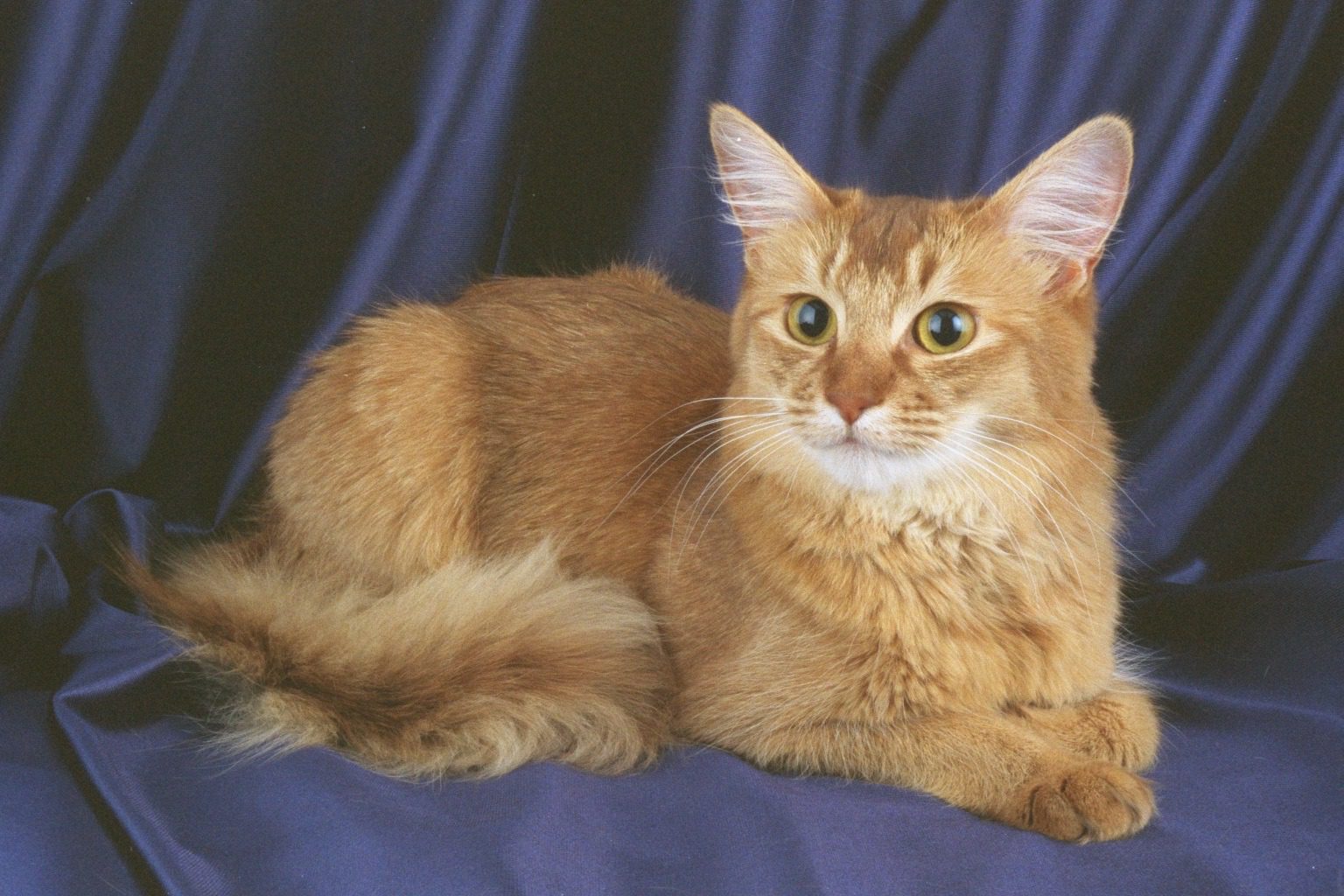
    The complexion of the Somali cat It is similar to the race it comes from, with long legs and agile and muscular body. Long hair may have up to twelve alternate stripes of dark marks in each hair, What produces an impressive brightness when the cat has all the fur. As all cats, silent substantially in spring, and in the year's hottest months or in warm climates, It may seem almost of short hair. With its winter coat, the tail becomes very hairy, and thanks to its color and complexion it has earned the nickname "fox cat".

    Size and weight

    • Size: 30 cm.
    • Weight: 3,5 to 5,5 kg

    Breed standard

    The breed standards are documents established by official bodies that list the conditions that a dog must meet. Somali cat to be fully recognized as belonging to the race:

    BODY

    Medium long torso, agile and elegant, showing well-developed muscle strength. The rib cage is rounded; the back is slightly arched, giving the appearance of a cat about to jump; flank is level, without it being collected. The conformation falls somewhere between the extremes of the elongated and slender types.

    HEAD

    Modified wedge, slightly rounded, without blueprints; the eyebrows, cheeks and profile lines show a smooth contour. A slight lift from the bridge of the nose to the forehead, which should be of a good size with a width between the ears that flows into the arched neck without interruption. The muzzle should follow a smooth contour in accordance with the skull, seen from the front profile. The chin must be complete, neither lower nor higher, with a rounded appearance. The muzzle should not be very pointed, and there should be no evidence of a bite, rash or pinch on whiskers.

    EARS

    Large, alerts, moderately pointed, wide and hollowed out at the base. The ears should be placed in a line towards the back of the skull. The inner ear should have horizontal strands that reach almost to the other side of the ear.; it is desirable that there are tufts.

    EYES

    Almond-shaped, large, bright and expressive. Skull opening not round or oriental. Eyes accentuated by dark skin on the eyelid surrounded by a light-colored area. On each of them a short dark vertical stroke with a dark pencil line that continues from the upper eyelid to the ear. The color of the eyes is gold or green, the richer and deeper the color, best.

    LEGS & PAWS

    Legs in proportion to the torso; oval and compact feet. When it is stopped, the Somali gives the impression of being agile and fast. Toes five in the front and four in the back.

    TAIL

    With a full brush, thick at the base and slightly tapered. Its length is balanced with the torso.

    COAT

    Very soft texture to the touch, extremely thin and double-layered. The denser the fur, best. Length: a medium length cloak, except on the shoulders, where slightly shorter length is allowed.

    COLOR

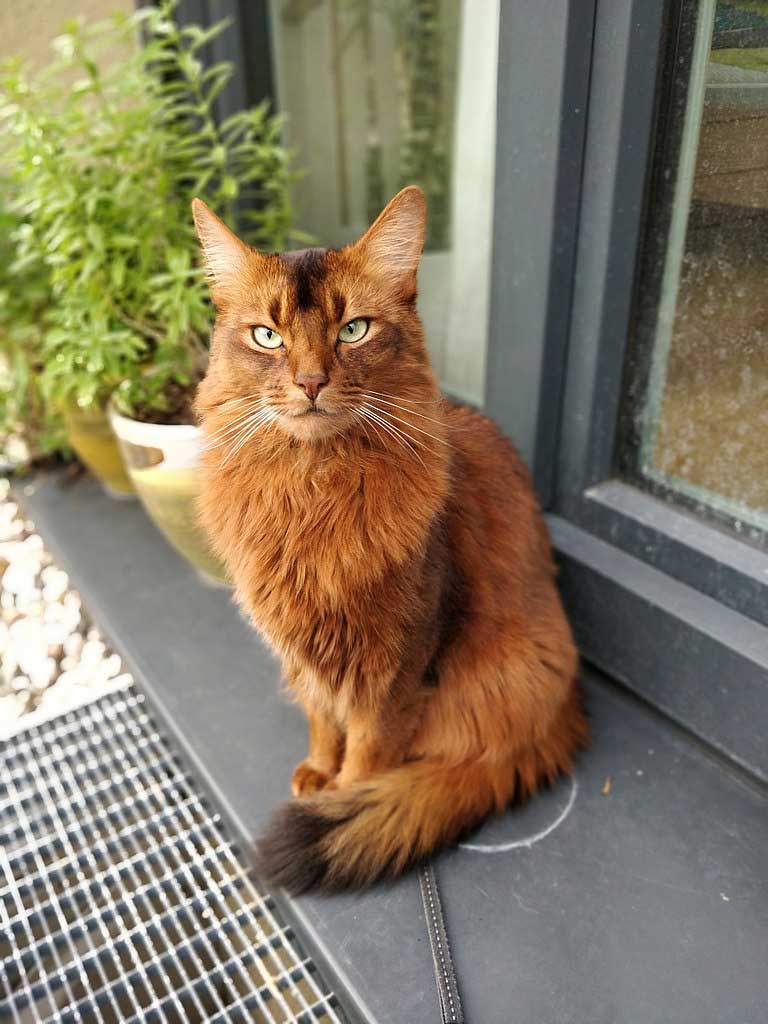
    Ruddy, red, blue and tawny. Warm and glowing.

    • Ticking: distinct and uniform, with dark colored bands contrasting with lighter colored bands on the hair shafts. Undercoat color is clear and bright relative to skin. Deeper color tones are desired, However, ticking intensity should not be sacrificed for color depth. Preference is given to cats without markings on the underparts, chest and legs; tail without rings.
    • Markings: darker shading along spine continuing to tip of tail; darker shading on the hocks, shading is allowed at the tip of the elbow; dark lines extending from the eyes and eyebrows, shading on cheekbones, dots and shading on whisker pads are desirable enhancements, eyes accentuated by a fine dark line, surrounded by a light colored area.

    Character and skills

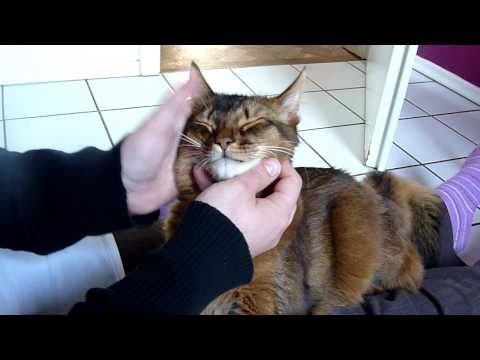
    Under his apparent shyness, he is an intelligent cat and sometimes capable of being bold. Very alert, lively and active, it is not exuberant. He is a lovely companion, whose behavior is often compared to that of a little fox.

    Tender and very affectionate, demands a lot of attention, but is said to be less possessive than the Abyssinian cat. Although he is somewhat afraid of the cold, Somali do not tolerate confinement and, Therefore, he does not like life on the flat very much. As a great hunter, a garden is better for him than a flat.

    Grooming

    The maintenance of its coat only requires a weekly brushing. During the molting period, must be brushed daily.

    Videos "Somali cat"

    httpv://www.YouTube.com/watch?v=NraQzF2–VI

    Muffin - The Somali Cat - My daily grooming

    Alternative names:

  • Fox cat; long-haired Abyssinian
  • โ–ท The world of Pets: Dogs, cats, birds, reptiles, amphibians

    California Spangled cat
    Federations: TICA

    Despite his wild looks, the California Spangled cat is perfectly tame. It is one of the rarest cat breeds in the world.

    California Spangled

    Content

    History

    The breed name is a conjunction of California, the US state. where it originated, and Spangled, a term used to describe the round, dark spots on the plumage of some birds.

    In the Decade of 1970, a Hollywood screenwriter, Paul Casey, during a trip to Tanzania, learned that the last male leopard in the region had been killed, partly because of her skin. Very saddened to learn of the local extinction of this species, he undertook on his return the creation of a domestic cat similar to the spotted wild cats of Africa, reminiscent of the leopard, with the aim of dissuading people from killing them for their skin.

    As such, began a long breeding and selection program. The California Spangled cat It was thus created from crosses between Siamese twins (for its morphology), british shorthair and american shorthair (for its fur), and some stray cats from Egypt and Southeast Asia.

    It took a total of fifteen years and eleven generations of cats to establish the breed as envisioned by Paul Casey and as it is still known today.: was not up 1986 when it was first introduced to the public.

    Although it is recognized by some feline organizations, like TICA (The International Cat Association, one of the largest feline organizations in the world tasked with setting breed standards and pedigrees), still one of the rarest feline breeds, and even an endangered breed. In fact, Though a few enthusiasts still keep it alive, It is estimated that there are currently only a few 200 cats Californian Spangled in the world.

    Physical characteristics

    Californian Spangled
    A California Spangled Cat – Flamingice007sg, Public domain, via Wikimedia Commons

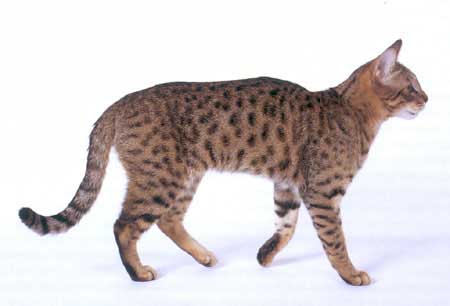
    The California Spangled cat he's a lanky cat. Its body lean and muscular gives an impression of power. The tail is medium in size with rings.

    The fur short can be 8 different colors: black, brown, blue, bronze, dark grey, red, gold or silver. It is "dotted" with round spots, arranged in triangle or rectangle, and evenly distributed throughout the body. Head and throat are scratched.

    The head has a triangle shape, with rounded forehead. The eyes they are big, oval and slightly almond shaped, and they go from amber to brown. The ears they are medium in size and set high and back.

    Size and weight

  • Size: 30 cm..
  • Male weight: 5,5 to 7 kg
  • female weight: 4,5 to 6 kg

  • Varieties

    There is a variety of California Spangled cat with a white fur stained with black, which is also distinguished by its blue eyes: it's called the version Snow Leopard.

    Character and skills

    Despite his wild looks, the California Spangled cat is perfectly tame. Intelligent, loving and sensitive, knows how to come to receive caresses and is able to anticipate certain wishes of his master.

    However, is a lively and energetic cat, very active without being aggressive, that needs a lot of activity.

    Health

    The California Spangled cat it is a rare breed, and at present very little is known about her. Possible hereditary diseases are still being investigated.

    In any case, vaccinating your cat is essential to protect him from certain life-threatening diseases.

    Life expectancy

    10 to 14 years

    Grooming

    The beautiful coat of the Californian Splangled requires very little maintenance: a weekly brushing is enough.

    For sale "California Spangled cat"

    The rare is expensive, as the saying goes. The Californian Spangled It is a rare breed of cat., and it is no exception to the rule, since the price of a cat of this breed ranges between 600 and 2.000 EUR.

    Characteristics "California Spangled cat"

    Coexistence is important that you have with your new friend. Before considering the acquisition of a cat of the breed "California Spangled cat" you know certain factors. You must take into account their character, their need for exercise, their interaction with other pets, their care and if you have small children, their level of tolerance towards them.

    Joy

    5,0 of 5 stars (based on 1 review)

    Activity level

    5,0 of 5 stars (based on 1 review)

    Friendliness to other pets

    4,0 of 5 stars (based on 1 review)

    Friendliness to children

    4,0 of 5 stars (based on 1 review)

    Grooming requirements

    2,0 of 5 stars (based on 1 review)

    Vocality

    2,0 of 5 stars (based on 1 review)

    Need for attention

    2,0 of 5 stars (based on 1 review)

    Affection towards its owners

    4,0 of 5 stars (based on 1 review)

    Docility

    2,0 of 5 stars (based on 1 review)

    Intelligence

    4,0 of 5 stars (based on 1 review)

    Independence

    3,0 of 5 stars (based on 1 review)

    Hardiness

    4,0 of 5 stars (based on 1 review)

    Videos "California Spangled cat"

    California Spangled Cat by HourPhilippines.com
    California Spangled Cat by HourPhilippines.com
    Kitty & Nina

    โ–ท The world of Pets: Dogs, cats, birds, reptiles, amphibians

    Minskin cat
    Federations: TICA

    Even in his homeland, United States, the Minskin remains unknown. Breeders of the breed can be counted on the fingers of one hand, so the annual number of births is extremely limited.

    Content

    Characteristics "Minskin cat"

    Coexistence is important that you have with your new friend. Before considering the acquisition of a cat of the breed "Minskin cat" you know certain factors. You must take into account their character, their need for exercise, their interaction with other pets, their care and if you have small children, their level of tolerance towards them.

    Joy

    5,0 of 5 stars (based on 1 review)

    Activity level

    4,0 of 5 stars (based on 1 review)

    Friendliness to other pets

    5,0 of 5 stars (based on 1 review)

    Friendliness to children

    4,0 of 5 stars (based on 1 review)

    Grooming requirements

    1,0 of 5 stars (based on 1 review)

    Vocality

    3,0 of 5 stars (based on 1 review)

    Need for attention

    4,0 of 5 stars (based on 1 review)

    Affection towards its owners

    5,0 of 5 stars (based on 1 review)

    Docility

    4,0 of 5 stars (based on 1 review)

    Intelligence

    4,0 of 5 stars (based on 1 review)

    Independence

    2,0 of 5 stars (based on 1 review)

    Hardiness

    4,0 of 5 stars (based on 1 review)

    History

    the atypical Minskin is the result of the will of Paul McSorley, an American breeder of Munchkin based in Boston (Massachusetts) that one day he set out to create a breed of cat with no hair and short legs, hence the name he gave it, given that "minยป is short for ยซminiatureยป and ยซskinยป refers to your skin.

    To achieve your goal, in 1998 crossed a specimen from his kennel with a Sphynx cat (Canadian Sphynx). In fact, the most striking feature of Munchkin cat is having very short legs, while that of the Sphynx is having skin without hair or with hair on the ends (legs, tail, ears and face mask). This crossover allowed him to combine the two characteristics he wanted.

    Next, continued his breeding program by introducing the American Burmese cat and the Devon Rex. He wanted to expand the genetic pool and recover certain physical and temperamental traits of these breeds.

    How the first generations did not give the expected results, Paul McSorley had to wait until July 2000 to get the first kitten that met your expectations. For the next five years, were born no less than 50 short-legged, hairless cats.

    Recognition by official bodies

    "Minskin cat"

    Minskin
    Minskin kitten photo taken in Massachusetts by Minskin breed founder Paul McSorley – Paulmcsorley, CC BY-SA 3.0, via Wikimedia Commons

    The short legs of the Minskin, characteristic that it shares with its ancestor Munchkin cat, correspond to a delay in the growth of bones that contain. Thus, all four limbs do not grow as large as the rest of the body, which has a medium size.

    This is due to a spontaneous genetic mutation associated with a dominant gene.. In other words, an individual only needs to have one copy of the gene to have this particularity. This also implies that kittens can inherit the gene even if only one parent has it..

    This morphological characteristic explains that the Munchkin has always been a source of debate and controversy. Following the example of the International Cat Association (TICA) or Livre Officiel des Origines Fรฉlines (LOOF), some feline reference organizations have recognized it, but other associations, on the other hand, refuse to take the plunge: the fact that the race is based on a genetic anomaly puts them back.

    It is no wonder that the Minskin has inherited the controversies associated with his ancestor: the fact that it is a recent feline breed is by no means the only explanation why its recognition by global or national feline institutions remains almost non-existent at the moment.

    The TICA was an exception and recognized it as an experimental breed in 2008. Next, closely followed by the organization's genetics committee, whose mission is to control the work of the breeders and supervise the development of the breeds. In 2019, the organization eventually reversed its decision and no longer recognizes the breed.

    Popularity

    The Minskin it is one of the rarest cat breeds in the world. The fact that it is not (yet?) recognized by the main feline organizations does not favor, Obviously, its development, not to mention that some breeders are reluctant to develop a breed based on a genetic abnormality.

    Even in his homeland, United States, the Minskin remains unknown. Breeders of the breed can be counted on the fingers of one hand, so the annual number of births is extremely limited.

    Physical characteristics

    The Minskin has a particularly original look, and rarely leaves anyone indifferent. Almost hairless, it is small in size and has short legs that keep it close to the ground.

    Minskin
    Minskin – The Discerning Cat

    Size and weight

    • Male size: 18 to 20 cm.
    • female size: 18-20 cm.
    • Male weight: 2 to 3 kg
    • female weight: 2 to 3 kg

    Morphology

    The Minskin it is a medium length dog (semi-cobby). Long but small to medium in size, his body is made of solid bones and strong muscles. The chest is broad and strong. As it grows, keeps her cute kitty look.

    The Minskin it is distinguished by its very short legs of equal length. They can make your body appear longer than it actually is, but they do not impede their agility: it is quite comparable to other cats.

    The feet are round and compact, in line with the legs and pointing forwards, which gives the cat a solid foundation.

    However, It should be noted that this particularity inherited from his ancestor the Munchkin cat is not exempt from debate. It is the result of a genetic mutation that corresponds to a delay in the growth of the bones of the four extremities.

    Tail

    The back of the Minskin it is flat and ends in a tail slightly larger than the body, tapering from base to tip. The tail is somewhat blunt.

    Head

    Supported by a neck well developed, the Minskin's head is wider than it is long. Its shape is rounded, so much that there is no flat surface. The profile shows a slight stop.

    The ears they are especially large and are located on the top of the head or on the sides. They have a wide, open base and a rounded tip.

    The eyes they are far apart, they are big, round and open. They give the dog a gentle air that melts those who cross its path, but also an alert and intelligent expression.

    The nose it is neither straight nor bulky. It is prolonged in its alignment by a strong and firm chin.

    Whisker pads are prominent, and the whiskers themselves can be very dense, scarce or absent altogether.

    Shelter

    The Minskin has short fur on the limbs (legs, tail, ears and face mask), while the rest of the body has a small barely visible down or is completely naked. But, the hair on the legs may rise a little on the shoulders, hips or hindquarters. The hair on the temples is very sparse, but sometimes there are tufts of hair at the entrance of the ears. The belly is always totally hairless.

    In all cases, this peculiarity is not the result of genetic manipulation or skin disease: it simply corresponds to a natural genetic mutation that has existed for a long time in the feline species, and that in this case he has inherited from his ancestor the Sphynx cat (Canadian Sphynx). The corresponding gene is recessive: to have this particularity, an individual must carry two copies of the gene. This also means that only two parents with hairless or lightly fluffy fur can give birth to offspring that also have these characteristics. (but not necessarily all).

    The skin of the Minskin may be wrinkled, especially when he's still a kitten. The texture is similar to that of cashmere.

    layer colors

    The coat of the Minskin can be of any pattern and color; there are no restrictions in this regard.

    Character and skills

    Minskin
    Minskin
    Closeness to their owners

    The Minskin not only distinguished by its unusual physique, but also because of his very affectionate character.

      In fact, it is an ideal cat for a family, since he loves and seeks the company of humans, being very loving and affectionate with everyone. He is not stingy with his affection, and expresses their attachment by waiting outside the door to greet their owners when they enter. May show slight preference for human referent (the person who cares the most for you), but he is not one of those who are dedicated to a single cat, so he has a good relationship with all members of the household.

      They like pampering and care, and they are very good at making themselves understood when they feel the need to be taken care of, without being too loud or intrusive.

      Get satisfaction more easily because stroking it is very pleasant: her almost hairless and warm skin gives the sensation of touching cashmere. The absence of a coat makes him seek the warmth of others: doesn't hesitate to snuggle up against one of their own to warm up and soak up the sun.

    Ability to endure loneliness
      Very attached to his family, the Minskin can't stand being alone for hours or even days, even if you share your home with another cat or dog.

      If you want to adopt this cat, I better have a more homey lifestyle, otherwise you could develop behavioral problems.

    Get along with children
      The Minskin it is a good companion for children, since he likes to play with them and is patient.

      But, not necessarily a good companion for a very restless child. In fact, both its small size and its bare skin make it especially exposed and require it to be treated delicately.

      In any case, no cat, Whatever your race, must be left alone with a very young child, without adult supervision: the safety of both partners is at stake.

    Get along with strangers
      As this cat is still new and underdeveloped, some character traits remain unclear. This is especially true in his relationship with unknown humans., which can vary greatly from one subject to another.

      Waiting to see it clearer, it is important to ensure that you are never forced and that you always have a workaround. A cat tree is an essential accessory to allow you not only to exercise, but also observe the world around you and evaluate situations from above, so that you feel calm. If you want to meet the visitor, can approach him.

    Need for exercise
      Contrary to what her short-legged appearance might suggest, the Minskin is relatively athletic and has a fairly high exercise need.

      He especially likes to run, and is capable of going much faster than you would expect. He also likes to climb, and here too its particular morphology does not harm it much.

      All this explains that you need a certain space to be comfortable: it is not a matter of living within the four walls of a very small apartment.

    Recommended activities
      To the Minskin he likes children because he is very playful. It is not enough to caress it and give it affection, but you also have to challenge your intelligence through various games. Thus, it is recommended to spend twenty minutes two or three times a day playing with the dog and thus stimulate it not only physically but also intellectually.

      Leave interactive toys, like puzzle, it's also a good way to keep you busy when you're out and about.

    Sound level
      The Minskin knows how to communicate and make himself understood by his family when he has a request to make, for example if you want a hug. But, not the type to meow excessively (or even for no reason), and the volume of his meows is quite reasonable.

      In other words, does not hesitate to express himself when necessary, but he does it gently.

    Adaptation to change
      Moving houses or going on vacation does not have to upset a Minskin as much as he usually does with his peers. In fact, his curiosity makes him adapt quite easily to changes in his environment: he does not stop touring his new home and quickly finds his place in it.
    Getting along with other cats
      Usually, the Minskin has no difficulty living with a travel companion: this makes him a playmate and makes his masters' absences less painful.

      But, if the two dogs have not known each other since they are puppies, it is preferable to accustom them in stages, so that everyone can find their place and feel comfortable.

      It also, as the Minskin barely has hair, your skin is more prone to small wounds. So, you should check your dog's nails regularly and trim them as soon as they get too long, to prevent inadvertent scratching.

    Get along with dogs
      The Minskin gets along very well with canines, If and when, of course, a cat-friendly breed of dog is chosen. Sharing a home with another animal is a great way to give your Minskin a playmate and make him feel less lonely when his owners are away.

      Things go better if the coexistence is established from the earliest age of the two protagonists. If that is not the case, it is better to start the relationship gradually, so that everyone finds their place and thus minimizes the risk of conflict.

      In any case, it is important to regularly trim the claws of your(s) pet(s), since the absence of hair means that your skin is not really protected: could inadvertently hurt her when playing together.

    Ideal home

    Minskin
    Minskin – stealyourheartexotics.com
    Apartment
      The Minskin is a suitable jack for a floor, as long as it is large enough to allow you to exercise comfortably. Don't let its short legs fool you: this cat is no less athletic than any other. Can run under the ground, but that doesn't stop you from moving quickly, like any cat. He is also quite capable of climbing and jumping, and does not miss the need to find another route to get where he wants.

      On the other hand, the fact that you live indoors protects you from external aggressions: cold, Sun, bad weather… In effect, your almost bare skin can easily be burned by ultraviolet rays in case of prolonged exposure to the sun, and makes you especially sensitive to cold when mercury drops.

    In the garden?
      Although Minskins they are perfectly in a flat, they are never happier than when they live in a big house with free access to the outside, thanks to a cat flap that allows them to come and go as they please.

      But, you have to take certain precautions, due to its lack of fur. When the temperatures are low, it is useful to equip him with a cat coat and/or not leave him outside during the coldest hours. This accessory also has the advantage of protecting your skin, to avoid injury to tree branches, the bushes, etc. During the hot season, it is essential to apply a sun cream designed for felines, and it is better to avoid leaving it in the sun when it is at its peak.

    as first cat?
      The Minskin needs their owners to be present by their side, and his skin almost or totally devoid of hair makes it need more care and attention.

      So, it is a quite demanding breed, not necessarily recommended for a first adoption.

    For a person with little time?
      It is clear that the Minskin not a good choice for an unavailable person, since its proximity to its humans means that it does not cope well with their prolonged absences: can cause real separation anxiety.

      The problem is less likely to arise if you share your home with another cat or canine representative, but it is still true that it needs human presence and daily care.

      Thus, before adopting a cat of this breed, it is important to think about the time that you will be able to dedicate, at the risk of ending up with an unhappy partner.

    for an older person?
      The Minskin it is very suitable for an older person, as long as you are willing to go the extra mile to take proper care of it, including daily skin care.

      They are close to people, loving and cuddly, without being "drinkable". It also, although it is playful, also appreciates long rest periods.

      So, cohabitation can be very beneficial for both parties.

    For a person with allergies?
      As the Minskin has almost hairless skin, sometimes comes across as a hypoallergenic breed.

      It's about forgetting that no breed is totally hypoallergenic.. In fact, cat allergies are caused by proteins (especially the Fel d 1, the most allergenic) found in urine, tallow, saliva, perspiration and in certain skin cells. All cats produce them and, Therefore, are likely to cause an allergic reaction.

      But, It is true that the fact that the Minskin almost completely hairless means that it does not shed and, Therefore, does not leave allergens everywhere in its path.

      Since zero risk does not exist, an allergic person should not do without a test in real life, which consists of spending several hours with the animal you are considering adopting.

    For a small budget?
      What is rare is expensive, and the Minskin is no exception. So, at the time of purchase, far from a budget-friendly breed.

      It also, the amount spent on their diet tends to be slightly higher than average. In effect, his lack of hair makes, to maintain a body temperature between 40ยฐ and 41ยฐC at all times (that is to say, two degrees higher than most other races), should burn more calories, Therefore, eat more.

    Grooming and caring for the "Minskin cat"

    "Minskin cat"

    Minskin
    Minskin
    coat care
      As the Minskin it only has hair on the limbs and the rest of the body is completely lacking or covered by a very light down, your skin is especially exposed and requires certain care.

      Ideally, clean the skin daily with a soft, damp cloth to keep it healthy. Frequent bathing is also essential.

    Bathroom
      The Minskin you should bathe approximately once every fortnight. This is because the light fluff that covers the skin is not enough to absorb all the sebum that the dermis emits. (the underside of the skin), and the skin becomes fatty. Washing the skin removes the accumulation of oil and keeps the skin tissue soft and clean. As in the case of any cat, this requires the use of a moisturizing shampoo specially designed for felines.

      Once soaped and rinsed thoroughly to avoid skin irritation, a soft towel should be used to dry the cat. An electric dryer is not appropriate, as it can cause burns.

    ear care
      the ears of Minskin should be checked and cleaned weekly. Removing dirt with a damp cloth will help prevent infection (starting with the ear).

      This is especially important, since the Minskin has little or no hair to protect it.

    Eye care
      as with the ears, it is necessary to check the eyes of the Minskin weekly.

      If they are not clean, it is essential to clean the corners with a damp cloth: This will prevent the accumulation of dirt., that can cause disease.

    Teeth care
      As in the case of any race, maintenance of the teeth of the Minskin. Helps prevent plaque build-up, that can cause not only bad breath, but also serious diseases.

      Brushing once a week with a toothpaste designed specifically for small felines is a minimum, but the ideal is to do it daily.

    Nail care
      The length of your nails Minskin should be checked at least once a month, even if you have access to the outside. This is because natural wear and tear may not be enough.. If the claws are too long, they can get in the way, break or even hurt the dog. So, if they have grown too much, you have to cut them manually.

      It also, like any cat, the Minskin you should be able to scratch whenever you feel the need. So, a scratching post is essential; otherwise, you may have no choice but to fall on the furniture or curtains.

    Introduction to hairdressing

    Whether the skin, the ears, the eyes, teeth or claws, caring for a Minskin it's not very complex. But, it is essential to master the correct gestures, at the risk of hurting or even injuring you. So, it is best to learn them the first time from a vet or professional groomer.

    In any case, the Minskin has the advantage of loving to be handled. So, easily accept these grooming moments, And he is all the more receptive and cooperative if his master knows how to make these occasions special moments of caresses and tenderness.. Things also go better if you get used to it from a young age.

    Health and nutrition

    Resistance to cold and heat
      The completely or almost completely bare skin of the Minskin makes it especially sensitive to low temperatures and sunlight. Although the body of the Minskin is covered by a small, almost invisible coat, this is not enough to protect you from the elements, and not just the weather.

      So, during the summer months, you should apply sunscreen to your cat's body and avoid letting it go outside during the hottest hours. This will prevent sunburn, burns and possible skin cancer.

      The other way, It is also essential to invest in a small coat to keep your cat warm in low temperatures, or even sickness. In any case, it is best to avoid keeping it outside during the coldest hours of winter, first thing in the morning or in the evening.

      There should always be a place in the house where the cat can be kept warm, away from cold and drafts.

    Diseases

    As the Minskin it is a recent breed and is not yet widespread, information about your health is missing.

    But, like any race, is more prone to certain diseases. In your case, is about:

    • The Hypertrophic cardiomyopathy, which corresponds to a thickening of the heart muscle. May cause respiratory problems, severe fatigue and difficulty exercising. It is caused by a genetic mutation and can be detected by a DNA test. But, it is impossible to know when symptoms will start to appear;
    • Lordosis, that is to say, an excessive curvature of the spine;
    • The excavated breast, a concave deformation of the rib cage. This leads to compression, which can cause breathing or heart problems;
    • Cutaneous mastocytosis, a skin disease causing lesions that require treatment, usually on time. The causes of this condition are not well known..
    Healthy adoption
      As in the case of any race, it is essential to go to a trusted breeder to have the best chance of adopting a kitten Minskin healthy. It is also a guarantee that the little feline has been raised and socialized in an environment that allows him to be healthy in the head and legs..

      A serious professional will ensure that certain genetic tests are performed on the proposed breeders, to ensure that they are not carriers of a genetic disease that can be passed on to their offspring. It will not hesitate to exclude from its breeding program any individual that presents such a risk..

      In addition to the results of the tests carried out on the stallions, must be able to present a certificate of good health issued by a veterinarian, as well as the list of vaccinations administered to the kitten, that have been registered in your vaccination or health card.

    Maintain good health
      Once adopted, the new owner is responsible for keeping the kitten healthy throughout its life.

      This includes taking the dog to the vet for a regular checkup.. Once a year is enough for the first few years, but this frequency should be increased as the animal ages.

      These checks allow the vet to diagnose potential problems, sometimes even before they appear (and, Therefore, treat them in optimal conditions), but also carry out the necessary vaccination reminders.

      They are likely to be carried out without too much difficulty: it is known that the Minskin enjoys handling and is not one to put up a lot of resistance when examined.

      The owner must also ensure that their cat is treated for parasites as often as necessary throughout the year.. This preventative effort is essential to ensure that your dog is always protected against parasites., even if I live between four walls. Although the probability is significantly lower, an indoor cat can get parasites.

    Minskin
    Minskin –
    madpaws.com.au

    Life expectancy

    12 – 14 years.

    Food

    Like any other cat, the Minskin should be fed a diet that meets their nutritional needs, both quantitatively and qualitatively. This means that it differs according to your age, activity level and health status.

    In any case, is distinguished by its appetite, which is slightly higher than that of most of its congeners, as it happens with his ancestor the Sphynx cat (Canadian Sphynx). In effect, his almost bare skin forces him to continuously maintain a body temperature between 40 y 41ยฐC, that is to say, two degrees higher than most other cat breeds. As such, have to burn more calories… and, Therefore, eat more.

    This is most noticeable in winter, when you need to feed more, especially if you have access to the outside. In any case, to avoid underfeeding or giving him more than he needs, it is best to consult a veterinarian to find out the daily dose to be given.

    Industrial foods can perfectly meet your needs, as long as they are of good quality. On the other hand, you should avoid giving food intended for humans, Unless you select them carefully to match your needs. Not to mention the risk of foods that are popular with humans but toxic to cats.. In other words, although he knows how to soften his owners, they should refrain from systematically giving him food scraps and offering him access to bins, who does not hesitate to delve with relish if the opportunity is offered.

    Last, as in the case of any small cat, it is essential that the Minskin have fresh water at your disposal at all times, so you can quench your thirst when you feel the need.

    For sale "Minskin cat"

    The Minskin it is a very rare recent breed. The fact that it is not recognized by any major feline organization (mainly due to the controversy over the genetic mutation associated with short legs) explain that it is difficult for him to develop.

    In fact, in Europe , currently there are no breeders of the breed.

    To adopt a Minskin, you have to go to the United States, your country of origin. There are only a handful of breeders there, that they usually offer their little ones between 1.500 and 2.400 USD.

    But, adopting a cat abroad implies finding out about the regulations that regulate the importation of pets in the country where you live, to avoid unpleasant surprises. It also, It is important to note that administrative and transport costs will be added to the purchase price.

    In any case, the latter can differ considerably depending on the reputation of the breeding, of the line from which the animal comes, but also its intrinsic characteristics, in particular its physical characteristics. This last point justifies the differences, sometimes significant, within the same litter.

    Videos "Minskin cat"

    This Cat Breed Looks Like A Kitten For Its Whole Life! | Cats 101

    New Cat Breeds: Meet the Hairless SphynxieBob And BamBob

    Alternative names:

  • Teddy Rex
  • โ–ท The world of Pets: Dogs, cats, birds, reptiles, amphibians

    Tennessee Rex cat
    Federations: TICA

    The Tennessee Rex is a new breed of naturally mutated cat that started in 2004.

    Content

    Characteristics "Tennessee Rex cat"

    Coexistence is important that you have with your new friend. Before considering the acquisition of a cat of the breed "Tennessee Rex cat" you know certain factors. You must take into account their character, their need for exercise, their interaction with other pets, their care and if you have small children, their level of tolerance towards them.

    Joy

    4,0 of 5 stars (based on 1 review)

    Activity level

    3,0 of 5 stars (based on 1 review)

    Friendliness to other pets

    3,0 of 5 stars (based on 1 review)

    Friendliness to children

    4,0 of 5 stars (based on 1 review)

    Grooming requirements

    3,0 of 5 stars (based on 1 review)

    Vocality

    4,0 of 5 stars (based on 1 review)

    Need for attention

    3,0 of 5 stars (based on 1 review)

    Affection towards its owners

    4,0 of 5 stars (based on 1 review)

    Docility

    4,0 of 5 stars (based on 1 review)

    Intelligence

    4,0 of 5 stars (based on 1 review)

    Independence

    3,0 of 5 stars (based on 1 review)

    Hardiness

    4,0 of 5 stars (based on 1 review)

    History

    Franklin Whittenburg discovered the breed when a normal stray cat came into his life. He called his new pet Satin Surprise, and it gave him a real surprise.

    Soon she gave birth to a litter of beautiful kittens, but two looked very different. Two red kittens were born with him curly hair, and they seemed to have a shine on their fur. The glitter couldn't be washed off the kitties, and the shine of the kittens gave the fur a satin look.

    Franklin I had never raised cats, but i knew there was something unique about kittens. Contacted a cat breeder, with a cat geneticist, with the TICA and with some breeders about their kittens. After a lot of work and research, it was concluded that these kittens had a recessive gene the only one that caused not only a curly fur, but also the satin effect of the hair.

    The race Tennessee Rex had begun and a new and beautiful cat was added to the fashion.

    Physical characteristics

    The Gato Rex Tennessee it is a medium to large cat, with a body type semi-cobby and a short thick neck. The ears are medium to moderately large in size with slightly rounded tips and broad at the base. The eyes are large almond-shaped at rest and round when alert. The eyes they can be of different colors. The nose must be straight and without relief. The chest is full with curly hair, extending from the chest to the stomach. The torso is large, long, rectangular, but not thin, very curly from the base of the ears and wavy hair towards the hips. The body he is muscular and athletic. The legs are in proportion to the body, large, round. The tail It is three-quarters of the entire body and completely curly.

    Character and skills

    They are affectionate cats that really want to be on your lap.. The Tennessee Rex cat wants to be part of the family and makes an effort to be in bed, on the couch or following you around the house.

    They like other pets, but they will need some time to adjust to new environments and animals (but most cats are like that). In general, he is a calm cat, but it will make noise when it wants your food or your attention. Of course, we always respond to noise with love.

    Grooming and care

    The Tennessee Rex require some pet care. In most cases, you have to clean their ears monthly. Some do not have accumulated wax, but many do. Using a clean Q-tip in the ears about once a month will keep the ears clean..

    They eat like any other normal cat, so they do not need a special diet. They get used to the litter box very quickly and love all the beds that can be provided.. Cat toys, cat trees and scratching posts are highly appreciated by the Tennessee Rex cat and will use them daily.

    The Tennessee Rex cat has two types of fur: some have the shorthair and others have the Longhair. They both like to be brushed, but those with long hair need to be brushed more frequently to keep the hair fluffy.

    They don't usually need a bath, but bathe the of Longhair will make the curls more prominent. The longhair cats they also show satin and curls better than short hair.

    โ–ท The world of Pets: Dogs, cats, birds, reptiles, amphibians

    Chantilly-Tiffany cat
    Federations: ACFA, AFC / CCA , TICA

    The Chantilly-Tiffany Cat has only existed for a few 50 years, and has struggled to gain recognition compared to other recent cat breeds that have quickly achieved success.

    chantill/ytiffany

    Content

    History

    The Chantilly He is originally from the United States. His story began when, in 1967, a breeder from New York, Jennie Robinson, came across some pretty unusual items at a yard sale: two cats of an unknown breed whose owner had recently died. I buy them, motivated by the desire to save them from a worse fate.

    The two animals had semi-long chocolate-colored hair and golden eyes.. They were very similar, which led Mrs. Robinson to assume that they had at least one parent in common. Estimated Thomas's age, the male, in a few 18 months and that of the female, Shirley, in a few 6 months. Neither of us was neutered.

    In May of 1969, Thomas and Shirley had their first litter of 6 kittens. Like his parents, the kittens were all smooth, with a medium chocolate-colored coat and pink pads on the legs.

    Jennie Robinson realized that these cats did not belong to any recognized breed.. They seemed beautiful and decided to start a breeding program. He also promoted them, showing Thomas and some of the kittens at various cat shows in the New York area in the early years 70.

    In 1970, the American Cat Association (ACA) agreed to register Thomas, Shirley and her offspring as Sable Foreign Longhair.

    The first litter was followed by many more, so that in just 7 years the Neotype kennel (Jennie Robinson's name for her kennel) saw the birth of some 60 kittens. Other Connecticut and Long Island breeders became interested in the new breed and bought some of the kittens, which in turn were exhibited in exhibitions.

    Many professionals were convinced that the Sable Foreign Longhair He was a descendant of the Burmese cat. More concretely, they thought it was just the long-haired version. This confusion continued for many years and was later expanded.

    In fact, in the mid 70, Jennie Robinson gave up breeding him Sable Foreign Longhair. He sold the cats he still owned to a Florida breeder, Sigyn Lun, which in turn started a breeding program. This breeder basically bred burmese cats, which contributed to the belief that the Sable Foreign Longhair was a Long Haired Burmese cat.

    But, in some of the exhibitions in which these cats were shown, the judges commented that the name was too vague to designate a breed. Sigyn Lun decided to call them Tiffanie in reference to the eponymous theater in Los Angeles, a symbol of luxury and glamor for her. In fact, considered the cat to be the very embodiment of elegance and grace.

    But, how the cat had become too weird, the ACA stopped accepting your registration.

    In 1979, the International Cat Association (TICA) recognized the Burmese and formed a group with him Burmese and the Tiffanie, which was recognized at the same time. In other words, even a major international feline organization was convinced that the second was simply a long-haired equivalent of the first.

    At the beginning of the Decade of 1980, Sygin Lun decided to stop raising the cat Tiffanie, that was on the verge of extinction. But a Canadian breeder probably saved the breed…

    A salvation from Canada

    Chantilly-Tiffany cat
    Photograph of a Tiffany cat called Kumori (Cloudy). Tsukuba, Japan – Jennie Kondo (Jennie Valdivieso Kondo – Grialte), CC BY-SA 3.0, via Wikimedia Commons

    The second life of the Chantilly-Tiffany Cat started in canada, more specifically in the province of Alberta, When in 1973 a chocolate-colored cat with golden eyes came to give birth on a farm. She gave birth to a litter of kittens, all of them chocolate-colored and similar to Tiffanie. The farm was owned by a breeder, Tracy Oraas, who decided to start raising cats after falling in love with their grace and beauty.

    Before embarking on this new project, and noting the similarities with the Burmese cats, tried to establish if there was any link, and got in touch with Jennie Robinson and Sygin Lun. Based on your research and the information provided to you, concluded that Tiffanie They had no relationship with the Burmese cats.

    He teamed up with a Siamese breeder friend, Jan de Regt, to create a breeding program. They decided to cross the Tiffanie with the Angora cat, the Havana Brown cat Brown, the Somali cat and the Nebelung cat. In effect, given the small population of the breed, These marriages made it possible to expand the gene pool and, Therefore, develop it in the best conditions, reducing the risks of inbreeding. They also offered the possibility of diversifying the range of coat colors, since thanks to them the cinnamon colors were added, leonado, lilac and blue.

    Since the beginning of the years 80, other breeders joined the program. The exchanges between all these enthusiasts allowed the Chantilly progress slowly but surely in Canada.

    But, just when the information about the Chantilly it was finally clearing up, since it was no longer confused with the Burmese, in 1992 Canadian breeders were asked to choose another name. The name "Tiffanie" was used in Great Britain to refer to a new breed in development.. Although the spelling was not exactly the same, it was confusing. Tracy Oraas decided to change the name of Tiffanie for that of Chantilly to keep the idea of รขโ‚ฌโ€นรขโ‚ฌโ€นelegance and refinement, while remembering the idea of รขโ‚ฌโ€นรขโ‚ฌโ€นa floaty coat.

    The cat regained importance in the United States in 2001, when an Illinois foodie, Anne Davenport-Parini, founded the Amorino kennel. Hershey Nugget, a handsome chocolate-colored male, he was the father of the first generation of kittens. Also in this case several matings with representatives of other races were necessary.. It's about him brown havana (for its beautiful chocolate color), The somali (for his thicker fur in his pants, the gola and the tail), the Abyssinian (origin of the somali) and, finally, the Nebelung (by the length and texture of its fur).

    In 2012, the hatchery was completely destroyed by a fire. One of the surviving cats, Frosty, was purchased by a Norwegian Nebelung breeder, Norma Hubenbecker. Norma Hubenbecker tried to start a breeding program for the Chantilly, but his attempt was unsuccessful. Frosty only sired a puppy, called Acey. In 2015, Frosty died of cancer and the breeder castrated Acey, ending the experiment.

    In fact, it seems that the Chantilly-Tiffany cat he wasn't exactly born under a lucky star: from its inception to today, its history has been full of pitfalls and confusion, which has inevitably greatly limited its growth.

    Today, there are less than twenty breeders (concentrated in Canada and the United States) who are dedicated to the breed and give all their energy to try to develop and perpetuate it.

    Chantilly recognition

    The Chantilly-Tiffany Cat has only existed for a few 50 years, and has struggled to gain recognition compared to other recent cat breeds that have quickly achieved success.

    Since 1967, the beginning of its history, his path has been complicated and has been strewn with pitfalls, which obviously did not facilitate its recognition by the different recalcitrant official bodies. In addition to the various twists, the latter also noted the successive name changes, which obviously didn't help things.

    However, the International Cat Association (TICA) granted recognition in 1979, at the same time as Burmese: formed a group composed of these two races, considering that one was the long-haired version of the other. But, realizing that this was not really the case and that the population of Tiffanie didn't really take off, in 1992 backtracked on acknowledging the latter.

    Two years later, in 1994, TICA accepted it again, this time as a different race and with the name of Chantilly… before changing my mind shortly after.

    In the year 2000, another change: the organization recognized him Chantilly as an experimental breed. This allowed their representatives to appear in the halls organized under the auspices of the organization., without entering competition. A few years later, the breed suffered another setback: while admission as an experimental breed is usually the prelude to full recognition, the association simply stopped recognizing the Chantilly, due to lack of enough specimens.

    The Canadian Cat Association (CCA) accepted the Chantilly as an experimental breed in 1992, and granted him full recognition in 1996. But, observing that its population did not increase -and even decreased-, downgraded her to the rank of experimental breed in 2011.

    Either internationally or nationally, other important feline organizations such as the Fรฉdรฉration Internationale Fรฉline (FIFรฉ), the American Cat Fanciers’ Association (CFA), the British Governing Council of the Cat Fancy (GCCF) or the Livre Officiel des Origines Fรฉlines (LOOF) they don't recognize the Chantilly.

    Like this, more than half a century after the creation of this breed, almost everything remains to be done in terms of recognition.

    Physical characteristics

    The Chantilly-Tiffany cat It is of medium size and semi-linear type.

    • Its body it is rectangular in shape with a flat back and a rounded rump. His moderate musculature is based on a medium bone structure.
    • The tail is proportional to the length of the body. Tapers from base to tip and has a coat of feathers.
    • The legs they are of equal length in front and behind. They end in oval feet.
    • The head it is medium in size and harmonious in outline, resting on a rather short and thick neck. The skull is rounded and the forehead a little flattened. The profile shows a slight stop just below the eyes.
    • The ears they are widely spaced and medium in size, slightly angled outwards and forwards. Wide at the base, tapers to a rounded tip. The breed standard states that it is desirable that they have hair on the inside.
    • The eyes they are also widely separated and oval in shape. Its color ranges from dark yellow, gold and amber. In any case, it is preferable that it is as intense as possible, and a green ring is accepted around the pupil. The upper lash line is straight, while the lower one is rounded.
    • The cheeks they are tall and prominent.
    • The nose it is moderately long and ends in a broad muzzle, short and square. Whisker pads are flat. The complexion is dominated by wide jaws and a slightly prominent chin..
    • This cat has no undercoat, but it is distinguished by its semi-long coat, silky, light and very soft. This is what gives this animal its elegance, since its coat is reminiscent of an airy and vaporous whipped cream.

      Should have 5 cm length, but it can be a bit longer as long as the texture remains light and silky. In any case, up to two years of age this cat does not have its final coat. The fur appears first on the tail and then on the rest of the body. The male has a fuller ruff and a heavier coat than the female.. Regardless of gender, the hair on the hind legs is similar to that of the feathers, forming a small petticoat on the legs.

    Originally, the Chantilly-Tiffany cat appeared with a chocolate brown fur, which is still the most popular today. But, crosses with the Angora Cat, the Oriental, the havana, the Nebelung and the Somali have expanded the range of colors. There's also Chantilly black, blue, cinnamon, tawny and lilac. The coat patterns are also more varied: may be agouti, stained or tabby.

    In all cases, the color should be bright and deep. But, lighter shades of brindle on throat and muzzle are acceptable.

    Last, there is true sexual dimorphism in this breed, since the male is bigger and heavier than the female.

    Size and weight

  • Male size: Of 25 to 30 cm.
  • female size: 20-25 cm.
  • Male weight: 4-5 kg
  • female weight: 3 to 4 kg

  • Varieties:

    The Canadian Cat Association (CCA) is the only official body that recognizes the Chantilly, with experimental character, by the way. Allows crosses with the following breeds:

  • Angora ;
  • Brown havana ;
  • Nebelung ;
  • Oriental Longhair cat and Oriental shorthair cat;
  • somali.
  • <a href="https://Commons.wikimedia.org/wiki/file:Tiffany1.jpg">Jennie Kondo (Jennie Valdivieso Kondo - Grialte)</a>, <a href="https://creativecommons.org/licenses/by-sa/3.0">CC BY-SA 3.0</to>, via Wikimedia Commons
    Photograph of a Tiffany cat called Kumori (Cloudy). Tsukuba, Japan –

    Character and skills

    The Chantilly-Tiffany cat it is an ideal cat for a family, since its balanced character makes it adorable and easy to live with.

    He is especially attached to the person he considers his teacher. Devoted and faithful, follows her everywhere and scrutinizes her every move at all times. It can also be perfectly placid, for example, snuggling into or against your lap for hours, or inviting himself to her bed. He likes to be caressed and gives all the attention he receives, But it's clearly not for someone who doesn't want a "sticky" companion..

    Although they have a very strong relationship with their owner, this cat has a broader love for all humans in the home, and you need your company to be happy. This makes it an excellent companion for the whole family., since it is the type of cat that establishes a good relationship with each member of the family. He will be happy to play with them or to seek pampering.

    Playing is also a favorite activity, making it an excellent entertainment companion for children. You just have to make sure children treat you with respect, like any other cat. In any case, for the good of both parties, a young child should never be left alone with a cat without adult supervision, regardless of race.

    Very comfortable in your family environment, the Chantilly-Tiffany cat It, on the other hand, much more reserved with strangers. Without being fearful, prefers to stay away when strangers enter its domain. A tree for cats, essential for every small cat, it is an ideal place to take refuge on those occasions.

    The fact that this cat loves the company of its humans goes hand in hand with the fact that it does not like to be alone.. Obviously, not recommended for owners who are away for long periods of time. In fact, if left alone for hours, quickly becomes anxious and melancholic. Leaving him toys cannot replace the presence of the people who usually surround him and allow him to flourish..

    On the other hand, having him share his home with a small companion is an interesting option. In fact, tends to live easily with another cat, delighted as he is to share moments of play with him. Living under the same roof as a dog is usually not a problem, especially if it is a breed of dog that gets along well with cats. But, in either case, it is always preferable that the two of you join at a young age: then the other is considered a full member of the family from the beginning, and the relationship is much better for it. Otherwise, it is preferable to establish coexistence gradually, to minimize the risk of problems.

    The Chantilly-Tiffany cat it can also live in the same house as birds or small rodents. They are quiet, peaceful and not aggressive. But, some caution must be exercised when the animal is outside: should be kept in a separate room or cage.

    It also, Even if I'm not the hyperactive type, this cat is very playful and needs his little crazy moments. Providing a variety of interactive toys is a great way to satisfy their curiosity and develop their skills.. But, this does not mean that you do not have to play with your cat: he likes very much to interact with the people around him in this way.

    As long as your need for entertainment is met and you have enough space to play, the Chantilly-Tiffany cat you can live both in a flat and in a house with a garden. On this last case, It is highly recommended to install a cat flap so that you can come and go as you please.

    In any case, like any cat, must have an easily accessible scratching post. In effect, scratching is a compelling need that you cannot give up; without this accessory, would have no choice but to resort to furniture or curtains, for example.

    Last, the Chantilly is known to be a very talkative cat. As he follows his master throughout the day and shares his activities, does not hesitate to tell you his life and give his opinion on everything. His way of communicating is, However, nice, since its meow is not very loud and is comparable to a screech.

    Chantilly-Tiffany cat
    ยซBlack smokeยป. Our cat ยซSarahยป outside our house in the suburb of Selfors, in Rana municipality, Nordland, Norway. – Magne Aga, CC BY-SA 4.0, via Wikimedia Commons

    Health

    Because the breed's population has always been very small, little is known about the health of Chantilly-Tiffany cat. But, appears to be in robust health.

    It also, is able to adapt to all climates and, Therefore, to live in almost all latitudes. It is only important to ensure that you always have access to fresh water and a shady area during hot periods., and to a sheltered and warm place when the temperature is very low.

    But, it is known to have a delicate digestion and is especially sensitive to cellulose, that decomposes with difficulty during assimilation and digests poorly. So, It is important not to hesitate to consult a veterinarian or a nutritionist to identify the most suitable food and, in any case, to avoid, for example, those based on corn, containing a large amount of cellulose.

    It is also important that you always receive the same food, even if it is left in a cattery when its owners are away. In any case, even more than with other breeds, a change in the cat's diet (for example, for health reasons) requires a very gradual transition to the new food, so that the digestive system can gradually get used to the new food.

    On the other hand, the Chantilly-Tiffany cat have an unfortunate tendency to be overweight or even obese, especially if you live indoors and, Therefore, are less likely to exercise. This problem should not be taken lightly, as excess weight can both aggravate existing diseases and cause new ones.

    Ears of the Chantilly they also require special attention. In fact, the presence of hair makes it less able to clean itself in this area. Thus, wax and dirt can build up and lead to ear infections (for example, otitis).

    As in the case of any race, turning to a serious breeder is the best way to adopt a healthy and well-endowed kitten. In effect, a professional worthy of the name spares no effort to socialize the little ones from a very young age and make them grow up in an ideal environment. In any case, at the time of sale, must be able to present a certificate of good health issued by a veterinarian, as well as the list of vaccines applied to the animal, registered in the health or vaccination card of this.

    Once the adoption is done, it is the responsibility of the new owner to take care of the health of his little companion while he is alive. Taking the cat to the vet at least once a year is one of the golden rules to keep it healthy. In fact, this not only allows the administration of the necessary booster vaccines, but also a complete health check of the animal, which sometimes makes it possible to detect a possible problem and treat it in the best conditions. It also, do not hesitate to increase the frequency as the cat grows.

    Continuing with the theme of prevention, the owner must ensure that his partner's antiparasitic treatments are regularly renewed, so that you are continuously protected. This applies even to cats that do not have access to the outdoors.: even if the risk is lower, are still exposed to certain parasites.

    Life expectancy

    14 to 16 years

    Chantilly-Tiffany cat
    A black cat on a chair – Scott, CC BY-SA 2.0, via Wikimedia Commons

    Grooming

    The Chantilly-Tiffany cat has no undercoat and sheds very little. On the other hand, their fluffy, silky fur tangles easily. Brushing every other day not only removes dead hair, it also avoids tangles, allowing the dog to maintain its appearance. During their shedding periods, in autumn and spring, it is even preferable to brush daily.

    It is also essential to check your ears once a week. This is because the tufts of hair at the entrance of the ears make it difficult to clean the dog and, Therefore, facilitate the accumulation of earwax and dirt. If cleaned with a damp cloth, impurities that may become infected will be removed.

    This weekly grooming session should be used to check the eyes. If they are dirty, wiping the corners of the eyes with a damp cloth is necessary to remove dirt and prevent infection.

    The maintenance of a cat's teeth is also very important, whatever the race. This is because it helps prevent plaque build-up., which can cause more or less serious diseases when it becomes tartar. So, you should brush your pet's teeth at least once a week, but the ideal is to do it daily. In any case, it is essential to use a toothpaste specially designed for felines

    Whether your cat lives exclusively indoors or has access to the outdoors, it is also essential to inspect your nails once a month. If the natural wear and tear is not enough and they become too long, must be trimmed manually. This will prevent them from getting in the way or even breaking and / or injuring the dog. But, It should be noted that caring for your cat's nails does not mean you don't have to provide a scratching post. If you don't, You shouldn't be surprised if your cat falls on furniture or curtains..

    coat care, the ears, the eyes, the teeth and claws of his Chantilly-Tiffany cat does not require any special skills. But, it is a good idea to learn from a cat groomer or vet the first time, so you can learn the right techniques and then do it yourself. In this way, better results are achieved and the risk of injuring or even traumatizing the animal is reduced..

    As long as the owner does it correctly and does not hesitate to add caresses, the grooming sessions of the Chantilly-Tiffany cat will become privileged moments between the two protagonists. In fact, by liking the proximity of its owner, delighted that they pay attention to him and even more that they caress him, you probably appreciate it. It is common for him to let you know with sweet little meows.

    Chantilly-Tiffany cat
    ยซBlack smokeยป. Our cat ยซSarahยป outside our house in the suburb of Selfors, in Rana municipality, Nordland, Norway. – Magne Aga, CC BY-SA 4.0, via Wikimedia Commons

    Food

    Like any cat, the Chantilly-Tiffany cat you need a diet that matches your nutritional needs, both qualitatively and quantitatively. As such, must suit your age, your level of physical activity and your health status.

    In any case, the tendency to be overweight - and even obese- forces you to carefully define your daily food intake. It also, unlike most of his peers, has difficulty regulating himself, so it is better to avoid giving free access to food, since it is likely that he will binge and eat the entire ration for the day in a few minutes. Fixed meal times are a much better solution.

    Industrial cat foods are suitable, as long as they are of good quality. But, the choice should not be made at random, since your cat has a delicate digestion. In particular, avoid corn-based products, since they contain a lot of cellulose, which is difficult for the cat's body to digest. Ideally, seek the help of a veterinarian or feline nutrition specialist to identify the most appropriate.

    In any case, once you have found a suitable product, it is best to avoid changing it, unless, Of course, that your health justifies it. This is true of any cat, but even more so for cats whose digestive system has a harder time adjusting to a change in diet.

    Unless carefully selected, human food is not made for cats: is unlikely to meet your nutritional needs and, on the other hand, it can be a source of deficiencies or excesses. It also, in the case of Chantilly-Tiffany cat, there is also the problem of its digestion capacity. Like this, give small pieces during the meal, table scraps at the end of the table or letting him rummage through the trash is not a gift to keep him healthy. Some foods that are popular with humans are even toxic to cats.

    Your propensity for obesity also means you have to control your weight by weighing it every month. If successive weighings indicate that your cat is getting fat, it is important to take him to the vet. Only a healthcare professional can reliably diagnose the cause of the problem, which may be a feeding problem, but also a disease or a reaction to medication.

    Last, like any cat, the Chantilly-Tiffany cat you must have fresh water at all times.

    Chantilly-Tiffany cat
    Photograph of a Tiffany cat called Kumori (Cloudy). Tsukuba, Japan – Jennie Kondo (Jennie Valdivieso Kondo – Grialte), CC BY-SA 3.0, via Wikimedia Commons

    Buy a โ€œChantilly-Tiffany Catโ€

    The Chantilly-Tiffany cat it is one of the rarest cat breeds in the world, and it is almost impossible to find one outside the United States or Canada. Even in these countries, you have to be prepared to sometimes wait for many months and / or travel long distances to be able to adopt a cat of this breed.

    in Canada, there are very few breeders and they usually sell their kittens between 500 and 800 canadian dollars.

    One solution is to look at the United States, where there are just under a dozen breeders. The price of a Chantilly-Tiffany cat usually oscillates between 300 and 600 USD.

    In the case of an adoption abroad, must take into account, However, that transport costs and administrative costs are added to the purchase price. It is also necessary to know and comply with the legislation regarding the importation of animals.

    whatever the country, the asking price depends on the reputation of the breeding, from the line from which the animal descends and, above all, its intrinsic characteristics, especially the physical ones. For this reason, quantity can vary within a litter.

    Characteristics "Chantilly-Tiffany cat"

    Coexistence is important that you have with your new friend. Before considering the acquisition of a cat of the breed "Chantilly-Tiffany cat" you know certain factors. You must take into account their character, their need for exercise, their interaction with other pets, their care and if you have small children, their level of tolerance towards them.

    Joy

    5,0 of 5 stars (based on 1 review)

    Activity level

    4,0 of 5 stars (based on 1 review)

    Friendliness to other pets

    4,0 of 5 stars (based on 1 review)

    Friendliness to children

    4,0 of 5 stars (based on 1 review)

    Grooming requirements

    2,0 of 5 stars (based on 1 review)

    Vocality

    2,0 of 5 stars (based on 1 review)

    Need for attention

    4,0 of 5 stars (based on 1 review)

    Affection towards its owners

    4,0 of 5 stars (based on 1 review)

    Docility

    3,0 of 5 stars (based on 1 review)

    Intelligence

    4,0 of 5 stars (based on 1 review)

    Independence

    2,0 of 5 stars (based on 1 review)

    Hardiness

    4,0 of 5 stars (based on 1 review)

    Videos "Chantilly-Tiffany cat"

    Chantilly | Cats 101
    Chantilly | Cats 101
    Rosco the Chirping Chantilly Cat!
    Rosco the Chirping Chantilly Cat!

    โ–ท The world of Pets: Dogs, cats, birds, reptiles, amphibians

    Munchkin cat
    Federations: LOOF, TICA

    Content

    Characteristics "Munchkin cat"

    Coexistence is important that you have with your new friend. Before considering the acquisition of a cat of the breed "Munchkin cat" you know certain factors. You must take into account their character, their need for exercise, their interaction with other pets, their care and if you have small children, their level of tolerance towards them.

    Joy

    5,0 of 5 stars (based on 1 review)

    Activity level

    4,0 of 5 stars (based on 1 review)

    Friendliness to other pets

    5,0 of 5 stars (based on 1 review)

    Friendliness to children

    4,0 of 5 stars (based on 1 review)

    Grooming requirements

    3,0 of 5 stars (based on 1 review)

    Vocality

    2,0 of 5 stars (based on 1 review)

    Need for attention

    5,0 of 5 stars (based on 1 review)

    Affection towards its owners

    5,0 of 5 stars (based on 1 review)

    Docility

    4,0 of 5 stars (based on 1 review)

    Intelligence

    5,0 of 5 stars (based on 1 review)

    Independence

    1,0 of 5 stars (based on 1 review)

    Hardiness

    3,0 of 5 stars (based on 1 review)

    History

    The Munchkin cat is a recent American feline breed, but the existence of short-legged cats has been documented several times throughout the 20th century. These may include, already in the decade of 1930, en el Reino Unido, These cats lived for four generations before disappearing during WWII. Over the years 50, in St. Petersburg (Russia), a short-legged cat appeared, nicknamed the "Stalingrad Kangaroo" for its propensity to sit on its hips and box with its small front legs. Another short-legged cat was also observed in the 1990s. 1970 in new england, United States.

    But it was in 1983, in Louisiana ((UNITED STATES)UU.), when a music teacher called Sandra Hockenedel found two pregnant short-legged cats under a truck and called them Blackberry and Blueberry. Found a home for Blueberry, but he stayed with Blackberry. Blackberry gave birth to a litter of normal and short-legged kittens. One of the latter was named after Toulouse, in honor al pintor Toulouse-Lautrec, that conserved the legs of a child in the body of an adult, and gave it to her friend Kay LaFrance, who lived nearby.

    All the Munchkins current descendants of the various encounters of Blackberry and Toulouse with others domestic cats. In fact, their owners allowed them to roam freely on the plantations, and their various encounters with other domestic cats resulted in many litters with kittens of the same anatomical peculiarity. Like this, a colony of short-legged cats soon developed in the area. Hockenedel and LaFrance they decided to call the cats Munchkin, in honor of the inhabitants of Munchkinlandia in Victor Fleming's film 1939 The Wizard of Oz, and they got in touch with him Dr. Solveig Pflueger for me to study them.

    He discovered that the short legs of the Munchkin cat were due to a natural genetic mutation that makes the upper leg bone short. This gene is dominant, which means that it is enough for one of the two parents to be a carrier, and therefore have this physical characteristic, so a kitten is likely to have it too. Aware of possible health risks, several breeders asked the teacher David Biller, from the University College of Veterinary Medicine at the University of Kansas, to X-ray the spines of several Munchkins. He concluded that there was nothing wrong with these cats, but that the results of his work could not be considered definitive, since the breed was too new.

    At the same time, breeders examined the paws of some of the older cats - also with X-rays- and found no damage to the joints or bones. They concluded that the mutation did not pose a risk to cats, sparking a debate that continues to divide cat lovers around the world..

    "Munchkin cat"

    Munchkin cat
    Munchkin cat – Sasha Krotov, CC BY 3.0, via Wikimedia Commons

    In 1991, the Munchkin cat was presented to the general public at a cat show held at the Madison Square Garden from New York, and the breeders began to pressure the TICA (International Cat Association) to recognize the race. The TICA refused at first (in 1991), but four years later it took a turn: in 1994, granted the breed the official status of a new breed in development, despite protests from Katherine Crawford, TICA judge for many years, who resigned arguing that this recognition was an affront to ethics.

    Indifferent to the heated debates that sparked, the Munchkin they continued to live their feline life and conquer the public, obtaining in particular in 2003 full recognition of the TICA, and therefore the possibility of competing in the exhibitions organized under the aegis of the organization.

    This remains the only major feline association to have recognized the breed.. The American Cat Fanciers’ Association (CFA) has not taken the step, the Fรฉdรฉration Internationale Fรฉline (FIFรฉ) says he refuses to recognize a race 'based on a genetic disease', and the British Governing Council of the Cat Fancy (GCCF) has held a similar position since 1991 advising against the importation of these cats, adding that "it is not intended to recognize a race based on a genetic abnormality".

    In other words, the dispute of Munchkin is far from over. But, it would be too easy to summarize, as some do, as a dispute between "retrograde feline organizations that do not accept change", on the one hand, and "feline organizations that do not think about the welfare of cats and only seek novelty", for another. All renowned feline organizations are committed to the health of the feline population, but they have different approaches: some prefer to take time to study any new mutation to make sure it is safe before recognizing a breed that carries it, while others choose to recognize it quickly to establish a framework for breeders and study the new mutation.

    It's not the first time, not the last, that these debates shake up the world of cat lovers. But, if the discussions around the Munchkin cat they are so virulent and they take so long, it is mainly due to the attitude of some unscrupulous breeders who take advantage of the situation to make easy money without worrying about the health of the animals. Like this, although they know perfectly well that in that case a quarter of the litter never passes the fetus phase, some do not hesitate to raise two Munchkins, with the sole objective of not obtaining a litter with half the "normal" cats that are not sold.

    At the end, despite the mistrust it generates, the Munchkin cat is present all over the world. But, due to lack of recognition and, Therefore, official registration of the breed's representatives in the registries, it is difficult to get an exact idea of โ€‹โ€‹its true popularity. But, the countless photos and articles on the net suggest that this cat at least arouses great curiosity.

    In France, where the Livre Officiel des Origines Fรฉlines (LOOF) is one of the few national associations that recognizes the breed (in two different varieties, depending on the length of your hair) and, Therefore, keep a record, between 2011 and 2019 were registered 134 Munchkin shorthair and 198 Munchkin longhair. The trend is up, nails on 50 registrations per year, but race only represents something more than 0,1% of the country's feline population.

    Physical characteristics

    munchkin cat
    munchkin cat – Tasy Hong, CC0, via Wikimedia Commons

    The Munchkin cat has a midline morphology semi-foreign. His body is muscular but not compact, and ends in a tapered tail about the same length as the rest of the body.

    The legs they are short (between 5 and 10 cm shorter than a normal cat), and the upper bone is approximately the same length as the lower. They are straight, with a medium bone structure and proportionate musculature.

    The head is slightly rounded, with cheekbones well defined. The ears are of a size proportionate to the rest of the body and end in a slight curve. The eyes they are almond-shaped and can be of any color.

    The fur of the Munchkin cat can be short (Munchkin shorthair) or semi-wide (Munchkin longhair). Some organizations, as the TICA (International Cat Association), They even consider them two different breeds that compete in two different categories at cat shows., but they share the same standard. This is not the position of the LOOF (Livre Officiel des Origines Fรฉlines) French, for whom they are simply two varieties of the same breed. In any case, long hair coat has a silky texture, while the one with short hair looks shiny.

    All are allowed colors and fur patterns, including the typical pattern colourpoint of the Siamese cat.

    Last, the sexual dimorphism is marked, the female being smaller than the male.

    But, it is important to point out that today many crosses of Gatos Munchkins with other races and others domestic cats, both long-haired and short-haired. This diversifies the breed's gene pool to avoid health problems, but it also means that the aspect of the breed is not fixed and can continue to evolve in the future.

    It also, if even 2015 short legs were officially considered the exclusiveness of the Munchkin cat, and that any cat that presented this particularity and corresponded to the standard (regardless of their origins) could be recognized as Munchkin cat, It's not like that. In fact, Since this date, los ยซMunchkins with Persian appearance" are regarded as a breed in their own right by the TICA (The International Cat Association): the Minuet (or Napoleon).

    Size and weight

    • Male size: 16 to 20 cm.
    • female size: 15 to 18 cm.
    • Male weight: 3 to 4 kg
    • female weight: 2 – 3,5 kg

    Breed standard

    The breed standards are documents established by official bodies that list the conditions that a dog must meet. Munchkin cat to be fully recognized as belonging to the race:

    Varieties

    "Munchkin cat"

    Munchkin Cat
    Munchkin Cat – Flickr

    There is a Munchkins shorthaired and Munchkins longhair. The TICA (The International Cat Association), the only world association that recognizes the Munchkin cat, even consider that they are two different races. On the other hand, for the French reference body, the LOOF (Livre Officiel des Origines Fรฉlines), they are simply two varieties of the same breed.

    The Long-haired Munchkin cat has the same origin as the short haired munchkin cat. It is not known if Blackberry, the original female rescued by Sandra Hochenedel in Louisiana, he had the gene for long hair, but the subsequent wide variety of crosses with pedigree and non-pedigree cats may have introduced him to this breed at an early stage, Surely with all the colors and known patterns of the feline world.

    The Long-haired Munchkin cat has a semi-long, silky coat and a moderate undercoat. The hair is described as suitable for all climates, although most breeders recommend that this tiny cat be kept indoors. In other respects, the long-haired variety is very similar to short hair. It has a body size medium and rounded, wedge-shaped head and large eyes. Despite his small stature, they are very active, they have a curious nature and strong personality.

    It also, the Munchkin cat has crossed with him Persian cat to create the Minuet, sometimes called Napoleon, a new breed of feline accepted by the TICA in 2016.

    in addition, it has also been crossed with other cats to create new breeds. But, unlike in the Minuet, the results of these crosses are not yet recognized by any official body. This is how he crossed Munchkin cat with the :

    Character and skills

    munchkin cat
    A munchkin cat grooming herself – in:User:Pockle, CC BY-SA 3.0, via Wikimedia Commons

    The various organizations that recognize race allow a Munchkin cat grew up with another Munchkin cat, with a European shorthair cat (Common european cat) or with a Domestic cat (that is to say, no pedigree, but owned by a family that normally guarantees his good health). But, some people do not hesitate to break this rule and organize breeding with individuals of other breeds. How the short leg gene is dominant, some of the kittens born from these unions have short legs, so they are considered Gatos Munchkins.

    Knowing this diversity of origins, it is easy to understand that it is difficult to define the character traits that are shared by all representatives of the breed. In fact, the personality of the Gatos Munchkin varies greatly from individual to individual, since they may have more or less preserved the traits of the races from which they came. Like this, some are very attached to their family, while others are much more independent. In general, they can be especially lonely or, on the other hand, very sociable.

    Most individuals, However, are in the latter case, being very attached and affectionate with both adults and children.

    They also greatly appreciate the company of their peers and enjoy playing with them., without its anatomical specificity being perceived as a disadvantage by any of the protagonists. They also get along perfectly with the presence of a canine companion, provided that it belongs to a breed of dog adapted to cats, and therefore refrain, for example, of chasing him around the house. On the other hand, coexistence with small animals is not recommended, since many Gatos Munchkins they have retained their hunting instincts.

    It also, many owners of Gatos Munchkin have noticed that their pet has a special attraction to shiny objects, like jewels, who does not hesitate to steal and hide in a place that only he knows. They are more likely to do so because they are usually very curious and observant. There is also a point common to all representatives of the breed: they are active and surprisingly agile and lively cats. Their little legs do not prevent them from being very fast and are a definite advantage when taking a sharp turn or making a sudden change of direction. It's hard not to smile when you see a Munchkin cat running at full speed after a ball around the house and making incredible turns.

    If you prefer to stay at ground level and, usually, do not venture beyond the sofa or coffee table, unlike many other breeds, it's more by choice than obligation. In fact, even though they may not be able to jump as spectacularly as their long-legged counterparts, they are especially agile and resourceful, so that they always end up finding a way to reach in several jumps the furniture that another race will have reached in one.

    in addition, their short legs do not prevent them from climbing a cat tree, and they are very likely to end up on the curtain rod, leaving their owners wondering how they got so high.

    The Munchkin cat has developed the habit of sitting on its hind legs, adopting a position similar to that of the suricata to observe your surroundings. This feature has already been observed in 1956 in the ยซStalingrad kangarooยป, a short-legged cat discovered in Russia, that is not related to the current ones Gatos Munchkin, which suggests that it is an adaptation to its physical particularity.

    The Munchkin cat it is rather a breed of indoor cat, that is to say, designed for life in a flat, especially since its short legs are a disadvantage on the outside, where it is more likely to suffer accidents or predation than another breed. But, they like to be walked on a leash under the supervision of their owner.

    With everything, the Munchkin cat leads a normal life as a cat and is not particularly affected by his condition. His peers consider him completely as one of their own, and he himself doesn't seem to know the difference. So, the difference is mainly in the eyes of humans.

    Health

    Munchkin cat
    Munchkin cat – Fedorov078, CC BY-SA 4.0, via Wikimedia Commons

    All the Gatos Munchkins have acondroplasia, a genetic condition associated with dwarfism. But, it is not clear whether this genetic mutation, responsible for the short legs of the breed, has any other impact on the health of affected individuals.

    Studies have shown that homozygous embryos (carriers of two mutated genes) are not viable and die in utero, while heterozygous individuals (carriers of a single mutated gene) they do not appear to be affected and lead a completely normal life. This means that when two intersect Gato Munchkins, the 25% of embryos fail to mature and die in the womb: it is precisely to avoid it that they allow themselves, and are even encouraged, crosses with domestic cats, versus breeding between two representatives of the breed.

    It also, although this cat is recent and, Therefore, be wary of jumping to conclusions, some conditions seem to affect you especially:

    • The lordosis, an excessive curvature of the spine;
    • The excavated breast, a deformation of the rib cage inwards, causing compression leading to breathing difficulties and/or heart problems.

    Last, as with any indoor cat, obesity is a serious risk to the health of the Munchkin cat. May cause other illnesses and / or aggravate existing health problems. Thus, a good owner should regularly check that his cat maintains a normal weight, and quickly correct it if it isn't.

    Life expectancy

    12 to 14 years

    Grooming

    The maintenance of Munchkin cat it's relatively easy, especially for short-haired cats. In the case of short-haired cats, just brush its coat once a week. The long-haired variety needs to be brushed a little more frequently, once every two or three days.

    In both cases, It is also advisable to spend a few minutes each week checking your teeth for cavities and tartar., and quickly clean their eyes and ears with a damp cloth.

    Last, when they have gotten too long, you need to trim your cat's nails, to avoid being hampered in your movements.

    Food

    In general, the Munchkin cat it does not pose any problem in terms of feeding and is perfectly in line with the industrial cat food available on the market. To provide your cat with all the nutrients it needs for good health, it is recommended to give him a quality food, adapted to your age and activity level.

    It also, to avoid obesity risks, it is advisable to control your daily rations. If your cat is overweight, you should consult a veterinarian to establish a feeding program to help you lose weight.

    For sale "Munchkin cat"

    A kitten Munchkin cat it usually costs about 800 euros for a male and 700 euros for a female.

    Videos "Munchkin cat"

    Can Munchkin Cats Walk On Foil?

    How FAST can munchkin cats run?