▷ The world of Pets: Dogs, cats, birds, reptiles, amphibians

Majorero
España Not recognized by the FCI

The Majorero is affectionate with their masters, Sometimes something distant.

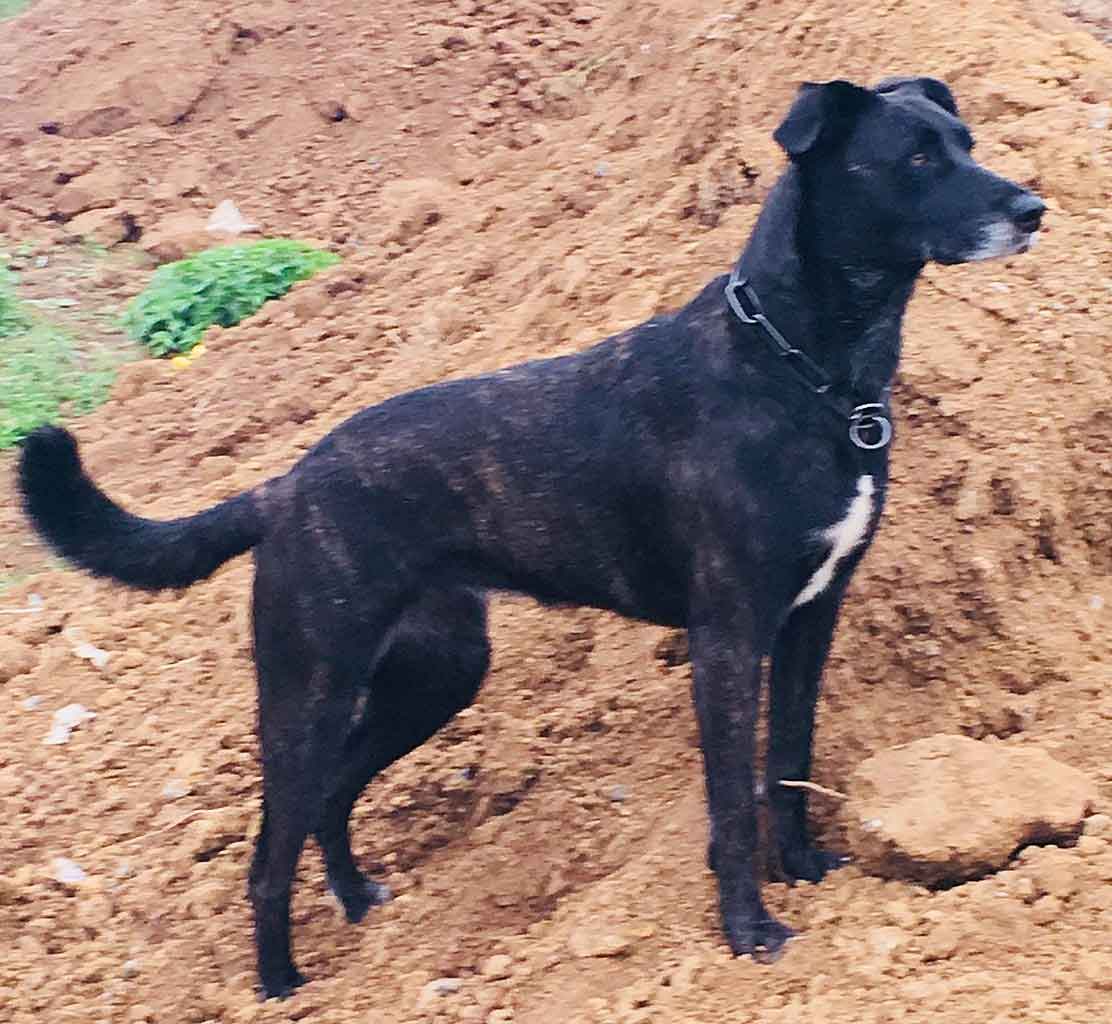
Bardino Majorero
Bardino Majorero – Addi12, CC BY-SA 4.0, via Wikimedia Commons

Content

History

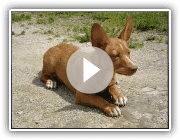
The Majorero dog (or Bardino Majorero) is a Spanish breed of dog, originally from the island of Fuerteventura in the Canary Islands, where he is referred to in popular form as Dog Bardino. Currently, It is a race dog is in danger of extinction. Traditionally, It has been used as a cattle dog and especially as a watchdog.

The first cattle dogs arrived in Fuerteventura with the conquerors of Spain, along with cattle beef, sheep and horse year 1404. Various historical references attest to this origin. Cattle dogs, Dam dogs, perdigueros dogs, the podencos, and other races, they were introduced in the Canary Islands as they were conquered and colonized by Spain.

Since the early days of colonization, in the agreements of the Cabildos of Betancuria (Fuerteventura) and Tenerife is repeatedly referred to "cattle dogs", to the "dogs of prey", to the "retrievers", and "hunting dogs".

In 1979, held in Gran Tarajal, in the municipality of Tuineje, the first monograph of the race bringing together farmers, experts and judges, being the beginning of the process for the recognition of the breed by the Royal Canine society of Spain, Thanks to the work of recovery and dissemination of the race by the protective society of Bardino (S.P.B.) Fuerteventura Island.

But, is not to the 14 in April of 1994 When the Royal Canine society of Spain recognized finally to the «Asociación Canaria Protectora del Perro Majorero Toto». Is this recognition and to the first five years of the new century, When the majorera race enters a deep decline in the island, that he takes it to the brink of extinction. There was no specific breeding and selection plan that would change the fate of the Perro Bardino Majorero. Existing speculation had also diminished racial quality..

Currently has founded the «Asociación para la Conservación del Perro Majorero» (ACPM), He was born as an initiative from the hands of several breeders, owners and enthusiasts, with the aim of safeguarding and promoting the survival of Perro Bardino Majorero.

Video "Majorero"

EL PERRO MAJORERO

Some of its objectives, How to get started to cement the hobby by this breed of dog in the island of Fuerteventura, they are getting.

The Majorero Cattle Dog, as we know it today, was the result of the crossing of dogs brought by the Spanish conquistadors, with tenants.

These dogs, for almost six hundred years have been essential partners of farmers and peasants majoreros. As a company, guardians of houses, farm and livestock.

  • Otros nombres: Majorero / Bardino Majorero

Physical characteristics

The Majorero It is a dog of medium size and robust. The standard marks a height to the cross of 57 to 63 cm in males, the females are slightly smaller and its height is of 55 to 61 cm.. In both sexes, there is a margin of tolerance of 2 cm above or below. The weight of the males is of 30 to 45 kg, and in females in 25 to 35 Kg.

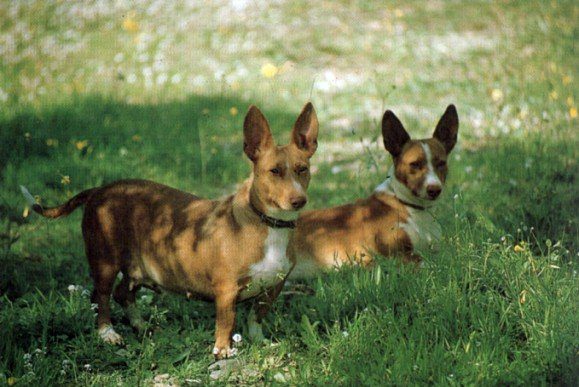
The fur is soft and short hair, the hair color is Jet Black with beige and grey which gives the tone striped. A curious feature of the breed is that they are the single or double spurs on the hind legs. They often have white spots on extremities, referred to in shoes, and from the lower lip to the chest, Sometimes the belly. The hair should be of medium length, soft, and with subpelo.

The skin should be thick and loose, especially in the dorsal part of the dog.

Character and skills

They have a very strong temperament, and that makes them dangerous to strangers who roam without warning in the territories they take care of...

Traditionally (and now), in the Canary Islands has been used for saves and conduction of the goats, sheep and cattle, and as guardian in country houses and estates. In the past, by his bellicose nature was used as a dog fight, and it is often crossed with dogs of prey. It is affectionate with their masters, Sometimes something distant, and he likes to be with children, to protect as if they were her pups and tolerate their own age cruelties. It is not a submissive dog, quite the contrary.

In the news, tends to be used as a watchdog, in villas, farms, industrial estates, etc. It is an active dog who is always alert distrustful by nature is, very territorial with other dogs.

His gaze is serious, but not severe, is of few friends. It is a very confident dog, and a correct and coherent education is essential when it is used as a companion dog, because it is very independent, and you need that they mark clear guidelines.

Images of the "Majorero"

Videos of the "Majorero"

▷ The world of Pets: Dogs, cats, birds, reptiles, amphibians

Andalusian Hound Maneto
España Not recognized by the FCI

The Andalusian Hound Maneto It is a dog of a single master, with this he will be very affectionate, but not sticky…

Maneto

Content

History

The Andalusian Hound Maneto It is an autochthonous breed from the south of Andalusia., of the Provinces of Cádiz and part of the border towns of the Province of Málaga with Cádiz, Although their highest concentration is found in the Campo de Gibraltar.

One of their ancestors is the Andalusian Hound, has medium-sized, possibly due to a genetic mutation known as basetismo or dwarfism, what gives the so characteristic shape to this breed.

As it is the case in almost all breeds of dog native Spanish, Andalusian Hound Maneto It is the name with which is popularly called by hunters and people who do know in the provinces of Cadiz and Malaga, places where this variety of the Andalusian Hound.

To learn more about the race: manetoslosbrujos

Dogs breeds: Andalusian Hound Maneto

Physical characteristics

The Andalusian Hound Maneto it is a small-bodied dog, short legs, long and very compact, the members are short in relation to body length. Is strong structure, muscular and compact.

Videos "Andalusian Hound Maneto"

Untitled

Podenco

The coat is short and smooth, bright and compact, covers the entire body equally and presents the same length in all body regions. They can be Tan, that goes from the clear range to the darker, as in gradient. Or white and cinnamon.

Its height to the cross is between 30 and 35 cm. (both males and females). Y, the weight, is of 9 to 11 Kg.

The dog Andalusian Hound Maneto because of its morphological structure, It has been used exclusively in the game, in special, the rabbit. It is specially adapted to the mount under Mediterranean with Bramble patches, streams and tight gorges.

One of its characteristics in hunting, is perseverance and willingness to, his body help, post that allows you to have access to complicated terrain of low and thick shrubs, area to which other native dogs of Andalusia, they couldn't even get in... For that reason, Historically, It has been used for the hunting of rabbits.

It is also very good bird Hunter, as Partridge and quail, as, as well, to collect the ducks in the water, It is a great collector in all areas of tight mount, the Aeneas and shrubs, in the water.

Character and skills

The Andalusian Hound Maneto It is a dog of a single master, with this it will be very affectionate and sought his affection and attention but not empalagar, and also- is very independent.

He is a confident dog., Moody, with a highly developed sense of “possession” What makes it to be highly territorial with other dogs, from very early ages.

It will be necessary to know Maneto very well and develop a strong bond of trust in order to assess his intelligence and bravery., both in hunting work and at home and in its role as a companion dog.

You would love to live in a home (will be adapted without problems), but you will always want to take a country walk to be able to show off their hunting instinct.

Images Andalusian Hound Maneto

Andalusian Hound Maneto videos

Federations:

  • RSCE – Group 5 Section 7 (Provisionally recognized)

▷ The world of Pets: Dogs, cats, birds, reptiles, amphibians

Pachón Navarro
España Not recognized by the FCI

Pachón Navarro

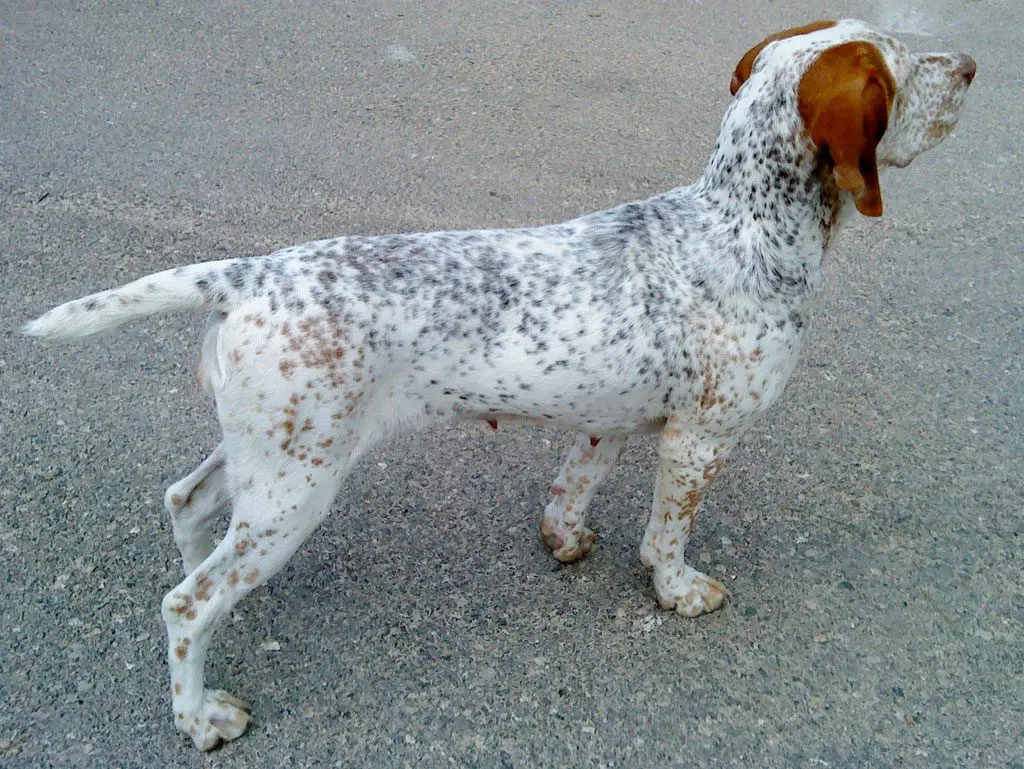
The Pachón Navarro has a conspicuous split on the nose that is also called a 'double nose'.

Content

History

The Pachón Navarro It is a Spanish breed of dog originating in Navarra, This is a sample dog used in small pen and hair game.

Scholars of the race, the popularity of this breed of dog reached its peak popularity in the pose, especially among the Spanish nobility in the 18th and 19th century. After the Spanish Civil War, the race was on the verge of extinction.

It was then, When a race enthusiasts decided to begin work on the recovery of the same. The first step was to travel the country and locate all the specimens of Pachón Navarro that had survived the social disaster.

That is why, the Pachón Navarro current is the product of the recovery through specimens from the Old Spanish Pointing Dog (Old Spanish Pointer), that is the theory maintained by classical authors during the last centuries.

In fact, Old dog sample Spanish, It is one of the seven breeds that appears as a show dog in the classification carried out by the Royal Canine Society of Spain., in the year 1911.

Within the documentation of its origins, Some theories suggest that the Pachón Navarro descends from the Talbot Hound and other hunting dogs., whose origin dates back to the 12th century.

Currently the Pachón Navarro, still in recovery phase.

Otros nombres: Old Spanish Pointer / Perdiguero Navarro / Pointer Navarro / Pachón de Victoria.

Dogs breeds: Pachón Navarro

Physical characteristics

It is a dog of robust body, rectangular, It has the large head and strong, square muzzle, the limbs are rather short, the trunk is cylindrical and its hair has a hard texture and a misaligned appearance.

It is a large size dog, weighs around 27-33 kilos and has a height the cross of 48 to 57 centimeters.

Pachón Navarro is a hunting dog whose most striking feature is one split in the truffle It is also called 'double nose'.

Apparently, that peculiar nose gives Pachón Navarro heightened olfactory sensitivity, being that one of the reasons why he was chosen as hunting dog.

Its hair short may be the color liver and white, or orange and white. The spots of the head and a large part of the layer are, generally, solid color.

While, in most of the specimens of the breed the short coat predominates, it is possible to find specimens with longer or “sedeño” fur.

Their ears they are long.

The Federation Cynologique Internationale, and the main Cinológicas federations in Europe, they do not recognize Pachón Navarro, as a race official.

Character and skills

Pachón Navarro is a dog Intelligent, quiet, docile. It is very sociable with both humans and other dogs.

Its largest state of happiness is in the field, there he will trot vigorously, giving gala of its wide resistance and its nature of Hunter. If plays his role as Hunter, will be an excellent companion.

Given your Hunter instinct, It is a dog that needs a lot of exercise., you will always have a torrent of energy that you need to expend, even running through the fields.

Anyway, It can adapt to the home life in very affectionate with his family although independent, and You will enjoy a lot being in the open air giving a few good rides.

Observations

You can find extensive information of the race in the web of the Pachón Spanish club.

Pachón Navarro images

Pachón Navarro videos

▷ The world of Pets: Dogs, cats, birds, reptiles, amphibians

Andalusian Hound
España Not recognized by the FCI

Podenco Andaluz

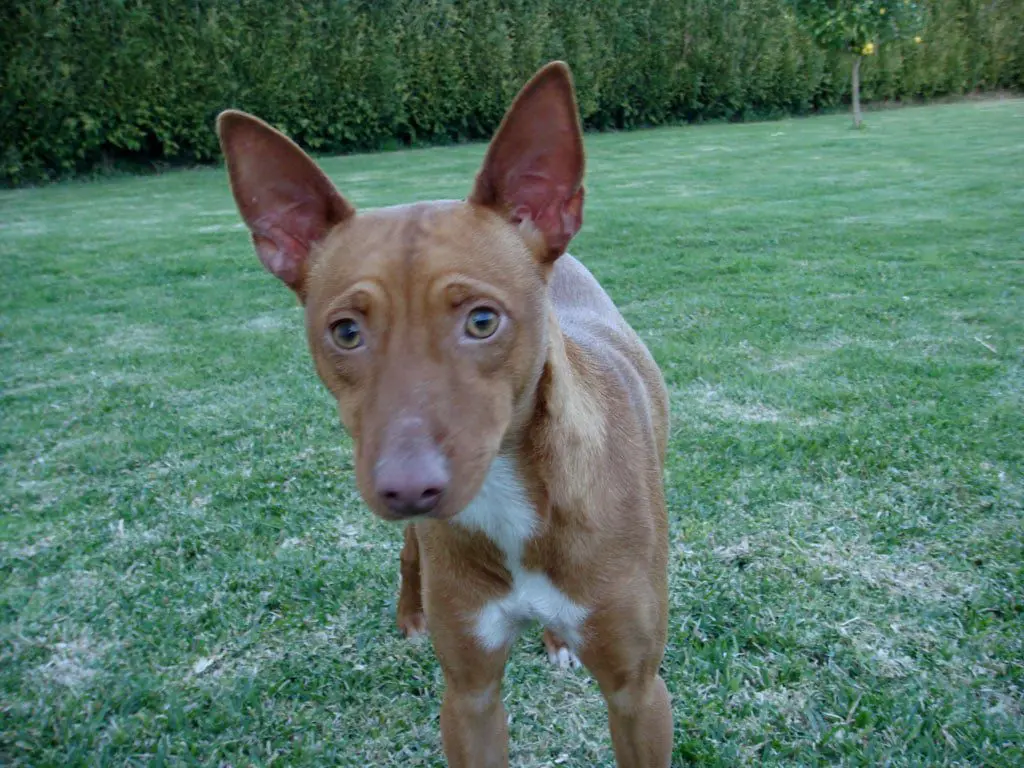
The Andalusian Hound It is a dog with a lively character and very balanced..

Content

History

Native to the Andalusian region of southern Spain, It is believed that the Andalusian Hound probably descended from the European hunting dog. It had been speculated that it was one of the ancient races represented in the cave paintings of the Iberian Peninsula thousands of years ago., but recent genetic studies have made this theory unlikely.

This breed was not officially recognized in Spain until 1990, when a group of races was created. Due to the lack of any unique distinguishing features and the similarities it shares with other dog breeds, in particular with him Portuguese Podengo, the Andalusian Hound not usually recognized in its own right outside its country of origin.

Traditionally used as hunting dogs, your senses of sight, hearing and smell have developed a lot over the years, and have the ability to withstand the hot and dry conditions of the arid landscape from which they originate. They are known to be successful and methodical hunters.. The Andalusian Hound smallest traditionally hunts hares or rabbits, while the larger variants can be used to hunt wild boar. They usually hunt in packs.

The race not is recognized by the FCI or by no other international Cynological Association given the large number of matches with the standard of the Portuguese Podengo, It causes doubt dealt or not, really, of different races.

Physical characteristics

As in the Portuguese Warren Hound, the Andalusian hound distinguishes three sizes and three types of hair, factors whose combination may cause up to nine different varieties.

Bearing in mind the size varieties are:

  • Great Andalusian Hound
  • Medium-Andalusian Hound
  • Small Andalusian Hound

If we consider the different types of hair, We have the following varieties:

  • Andalusian Hound hair Sardinia or hard.
  • Andalusian hound Solorio or long hair.
  • Andalusian Hound of smooth or short hair.

There is a variety derived from the short-haired medium Andalusian Podenco, which receives the name of Andalusian Hound Maneto, due to its short and sturdy legs, phenomenon known in the field of cynology as bassetismo, alluding to the Basset. Currently the Maneto is accepted as a breed by the RSCE provisionally.

The basic color of the layer is white or cinnamon, either consisting of both colors. The white color exists in its variants silver, mate and ivory; and the cinnamon can vary from clear to cinnamon ignition.

With regard to the size and weight of the three varieties, below we specify:

Height to the cross:

  • Size large: males of 54 to 64 cm and females in 53 to 61 cm..
  • Size medium: males of 43 to 53 cm and females in 42 to 52 cm..
  • Small size: males of 35 to 42 cm and females 32 to 41 cm..

Weight:

  • Size large: 27 kg. (+ – 6 kg).
  • Size medium: 16 kg. (+- 6 kg).
  • Small size: 8 kg. (+ – 3 kg).

The Andalusian Hound, is a harmonic dog, compact, very rustic and well plumbed.

Character and skills

The Andalusian Hound, has a great intelligence, nobility, sociability and is always alert. It is a dog alive and well balanced character, reacts only to important stimuli.

It is a dog fast, par b. Hunt, with an excellent sense of smell and very resistant to fatigue, not mannish before anything, he is methodical and quick in his search, both hunting and in a minor, being an excellent collector's hair or feather, whether in water or rough terrain.

The Andalusian Hound like the other podencos it has a highly developed sense of sight, hearing and smell which makes them good hunters especially when it comes to rabbit hunting.

The shakes of hunting practiced in the center and south of Spain the podencos constitute the nucleus of the rehalas (Group of hunting dogs, whose number ranges from 20 and 24), which are usually made up of large hounds for harassment and some medium-sized specimens such as point or search dogs.

In the small game hunting used medium and girl varieties, either on an individual basis, in pairs or forming arcades (gang of hunting dogs).

One of the most typical functions of the large hound, is that of mascaras, accompanying the colleras of greyhounds during the hunting of the Hare. Its work is, first, getting up and doing the rabona from your bed or hiding out, making it available to the greyhounds and, after finished the lance, remove the piece of the Greyhound to bring it to its owner.

In the Andalusian farmhouses of large size were used as dogs guardians and the girl size as cleaners of rodents.

It is very loving, submissive and fair with the owner, but break that bond in the face of unjust punishment. As well, It has a great capacity for training.

«Andalusian Hound» images

«Andalusian Podenco» videos

Federations:

  • RSCE – Group 5 Section 7 (Provisionally recognized)

▷ The world of Pets: Dogs, cats, birds, reptiles, amphibians

Ratonero Mallorquín
España Not recognized by the FCI

Ratonero Mallorquí

The Ratonero Mallorquín It is a great companion dog and an excellent guard..

Content

History

The Majorcan Buzzard Dog, is a small dog, originally from the island of Majorca, Spain.

The origin of this breed is not at all clear, but its link with the Gos Rater Valencià or Valencian Ratonero Dog is very evident given the geographical proximity and historical references.

Read more

▷ The world of Pets: Dogs, cats, birds, reptiles, amphibians

Spanish greyhound
España FCI 285 . Short-haired Sighthounds

Galgo espanol

The Spanish greyhound is highly appreciated for your discretion and sincere affection, never inordinate, that he professes for his owner.

Content

History

The Spanish greyhound it is an ancient breed of hunting dog. His specialty is hunting hares and other small game in difficult terrain.. The Spanish greyhound They are persistent and fast sight hunters. Type dogs Greyhound already described in the first reports of antiquity. They represent one of the oldest types of dog and have not changed their basic design for thousands of years. Its resemblance to the ancient Egyptian hunting dog Tesem, one of the oldest and also fairly well documented dog breeds of all, it's amazing.

Of 1930 to 1935, the wealthy landowners of southern Spain imported Greyhounds from England and raised here with the Greyhounds original. As the races of Greyhounds had become popular on English racecourses, saw an advantage in the crossing of the fast racing greyhounds. But, It was overlooked that these extremely high speeds of a greyhound occurred on flat tracks. In the changing, uneven and stony hunting grounds of a Spanish greyhound they are rather a disadvantage. Like a sports car off the road. But, This wave of imports meant that the real Spanish greyhound in the sense of purity and original function. It also, in his homeland little attention was traditionally paid to purity in the modern upbringing sense. Mixtures with Warren hound, for example, are standard. Plus, a large part of the population lives relatively self-determined anyway. All this is not a disadvantage for the quality and well-being of the dogs, not even for the race. And rather it favors the old Greyhound almost finds himself again and the influences of the Greyhound.

In the past, most dogs were bred according to this almost classical principle of selection for suitability, around the world. Mainly performance for the purpose counted. So, the breed can also be considered healthy in essence, healthier than many of the "high breeders" of pure race. The FCI, the world dog breeding association, officially recognized the breed Spanish greyhound in 1971. In 1982 a revised standard was written. It describes an anatomy that does justice to the special use of a hunting whippet in sight for persistent hare hunting in the field.

Popular mixes

There are many more mixes of Spanish greyhound which pure breeds according to the specifications of the dog breeding. Many of the stray dogs in the Iberian Peninsula descend from the Spanish greyhound, that -like the Warren hound– they are simply abandoned after being used by hunters. These dogs have developed a marked aptitude and cunning, that they used especially in their constant search for food.

Physical characteristics

The Spanish greyhounds show the typical appearance of a European greyhound. In Spain they are ubiquitous, but above all as street dogs and according to the pedigree breeding criteria above all mixes. This does not have to be a disadvantage with these dogs.. Along the centuries, have established themselves very well and have developed their type. But, the greyhounds they also have an official standard as purebred dogs for a long time 50 years. The official standard describes them like this:

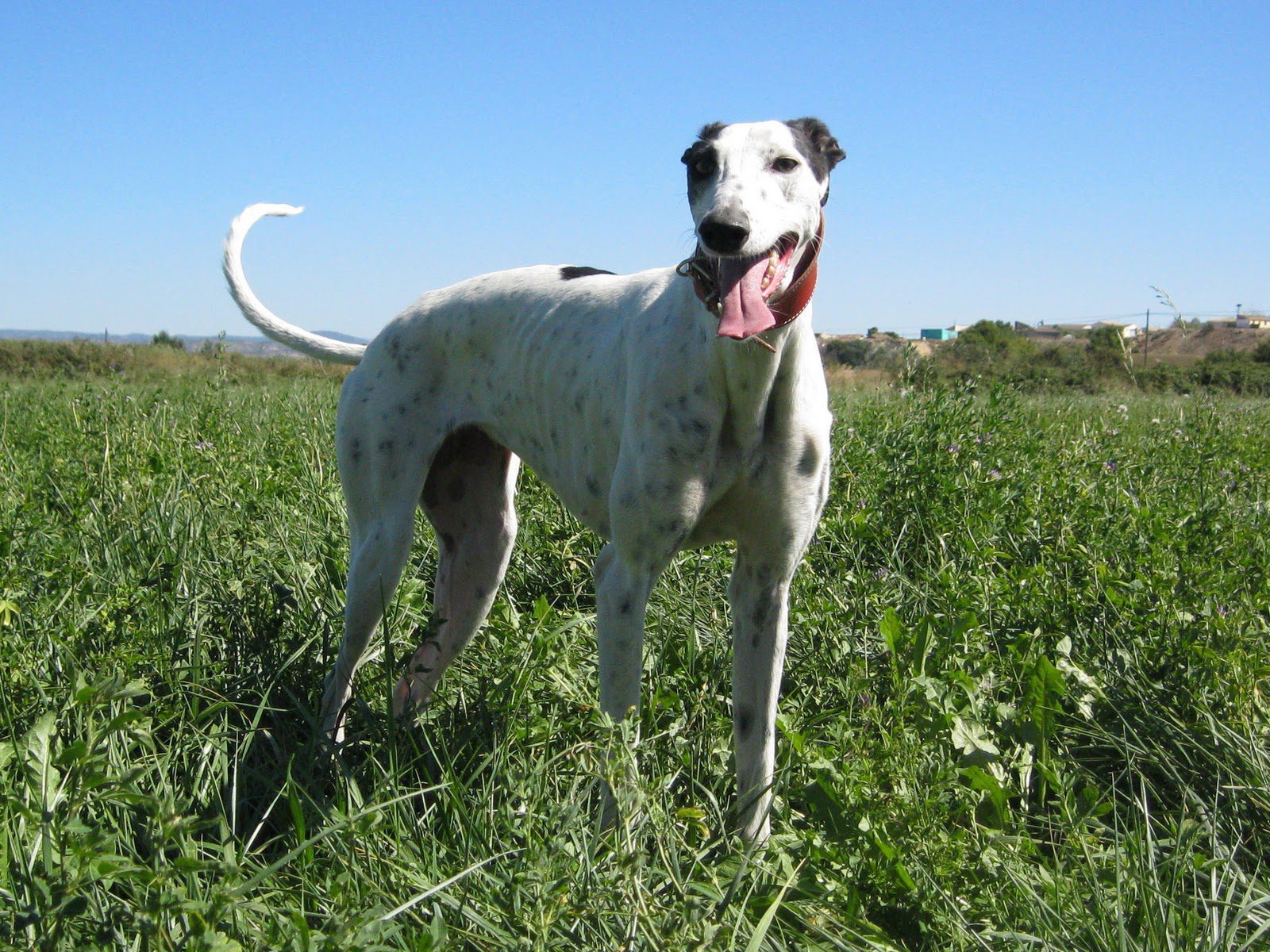
The Spanish greyhound is of considerable size, medium format, slightly convex profile, elongated, with elongated skull. compact skeleton, long narrow head, spacious chest, belly very tucked up and very long tail. Clearly vertical and muscular hindquarters.

He wears thin and short hair or -very rarely- semi-long and rough. The Spanish greyhound they do not have undercoat, what can be a problem in the harsh winters of northern Europe. All colors are permitted. The ears should form a wide, triangular-shaped base. When you are alert, the ears are half prick in the first third with the folded ends pointing to the sides. When they are at rest (relaxed) form a rose ear near the head.

What is the size of a "Spanish greyhound"?

No weight is prescribed, but yes the desired size. The Spanish greyhound must have a height at the cross of 62 to 70 centimeters for males and 60 to 68 centimeters for females.

How old is a "Spanish greyhound"?

There are no exact figures on the life expectancy of Spanish greyhounds. But, life expectancy can be considered very high, specifically of 12 to 15 years or more, provided there is no inbreeding.

Character and skills

The Spanish greyhound they are hunting dogs and greyhounds at the same time. They are very agile and alert. Almost nothing escapes your keen senses. Especially when they are young dogs, nervously yearn for exercise and experiences, ideally of a hunting nature and above all with the option of being able to run freely. As they tend to have a strong hunting instinct, this need so ingrained in the dogs of our latitudes can rarely be satisfied in nature.

It is an experience to see the greyhounds run in freedom. They can sprint quickly, even on difficult terrain, and they can make amazing hooks.

The Spanish greyhound they are very intelligent and docile. They quickly know what is allowed and what is taboo. They are kind and open with people. They have a good-natured character and can be charmingly cuddly.. They seek a close bond with their owners and are loyal to them. But they also go their own ways. Due to the harsh performance-oriented selection in their home country, they are very hard and resistant. In the specimens that were socialized as street dogs and then taken to other countries, a drive for freedom is often observed that should not be underestimated. The belt, which on the other hand gives the dogs a feeling of security, perceived as a threat and a constriction.

Many of these dogs find life in densely populated cities stressful., more than the usual struggle for survival in their home country. This also applies to restrictions on dogs. They can become so fearful and shy, who are under constant stress. They are challenges for the dog, and the owners, but in many cases they can be solved well with canine sense and a little affection. But, we cannot recommend them as a beginner dog.

What care does a "Spanish greyhound" need?

The Spanish greyhound he is extremely frugal. It is enough to brush the coat with a spiked glove from time to time.

Are there typical diseases of the "Spanish greyhound" race?

Against the background of performance-oriented selection in its country of origin and fluid genetic boundaries there with corresponding unknown inbreeding, his health is extremely robust and exemplary. This can be different sometimes with show dogs bred in other countries. The Spanish greyhound they do not have undercoat. They need professional clothing when it is very cold.

What food is better for a "Spanish greyhound"?

The Spanish greyhound has no special dietary requirements. It is a true omnivore. Of course, high quality food is good for your health and you like it too. The Spanish greyhound It is also suitable for "professional barfing".

Activities with the "Spanish greyhound"

How much exercise does a Spanish Greyhound need??

The Spanish greyhound it is a real hunting dog and sighthound. The Sighthound Association offers the opportunity to participate in sighthound races or coursing events with Spanish greyhound to keep the dog busy and physically active. Other dog sports, like agility, are also suitable. Due to his strong motivation for hunting, training requires a lot of patience and empathy.

Considerations before adopting a "Spanish greyhound"

Where can a "Spanish greyhound" be adopted?

If you want to share your life with a Spanish greyhound, you should look up a breeder or local animal shelters well before you buy one and make contacts here. The breeder must be trusted. Please, do not buy a Greyhound online, as there is a high risk that the puppy comes from a dog vendor disguised as an animal welfare organization. You can easily find greyhound-type dogs at a trusted animal shelter near you..

Characteristics "Spanish greyhound"

Coexistence is important that you have with your new friend. Before considering the acquisition of a dog of the breed "Spanish greyhound" you know certain factors. Not all breeds of dogs are apt to live in an apartment, you must take into account his character, their need for exercise, their interaction with other pets, their care and if you have small children, their level of tolerance towards them.

Adaptation ⓘ

3,0 of 5 stars (based on 1 review)

friendly dog ​​ⓘ

2,0 of 5 stars (based on 1 review)

hair loss ⓘ

3,0 of 5 stars (based on 1 review)

Affection level ⓘ

5,0 of 5 stars (based on 1 review)

Need for exercise ⓘ

5,0 of 5 stars (based on 1 review)

Social need ⓘ

3,0 of 5 stars (based on 1 review)

Home ⓘ

2,0 of 5 stars (based on 1 review)

Toilet ⓘ

1,0 of 5 stars (based on 1 review)

Friendly with strangers ⓘ

2,0 of 5 stars (based on 1 review)

barking ⓘ

1,0 of 5 stars (based on 1 review)

Health ⓘ

4,0 of 5 stars (based on 1 review)

Territorial ⓘ

2,0 of 5 stars (based on 1 review)

Cat friendly ⓘ

2,0 of 5 stars (based on 1 review)

Intelligence ⓘ

3,0 of 5 stars (based on 1 review)

Versatility ⓘ

3,0 of 5 stars (based on 1 review)

Child friendly ⓘ

4,0 of 5 stars (based on 1 review)

Surveillance ⓘ

2,0 of 5 stars (based on 1 review)

joy ⓘ

3,0 of 5 stars (based on 1 review)

Images "Spanish greyhound"

Photos:

1 – "Spanish greyhound" by https://pixabay.com/es/photos/galgo-español-rápido-perros-3799630/
2 – "Spanish greyhound" by https://pixabay.com/es/photos/perros-jugando-galgo-español-saluki-3799600/
3 – «Spanish greyhound» by Netspy, CC BY-SA 3.0, via Wikimedia Commons
4 – "Spanish greyhound" by https://pixabay.com/es/photos/greyhound-galgos-4890924/
5 – «Spanish greyhound» by https://www.pxfuel.com/es/free-photo-xeivz
6 – "Spanish greyhound" by https://pixabay.com/es/photos/perro-galgo-mascotas-3765523/

Videos "Spanish greyhound"


Type and recognitions:

  • FCI CLASSIFICATION:
  • Group :
  • Section : . .

Federations:

  • FCI – Group 10: Section 3: Short-haired Sighthounds
  • RSCFRCE

FCI breed standard "Spanish greyhound"

Origin:
Spain

Date of publication of the valid original standard:
26.05.1982

Use:

Hare hunting dog on the run, in quick pursuit and guiding into sight. It has also been used and can harass other hair pieces such as rabbits, foxes and even wild boars; but the main use of the breed has been and is hunting hares on the run.


General appearance:

Good-sized Greyhound, eumétrico, subconvexo, sublonguilíneo and dolicocéfalo. Compact skeleton, long narrow head, large capacity thorax, Very retracted belly, and very long tail. Well poised and muscular rear train. Fine and short or hard and semi-long hair.

    IMPORTANT PROPORTIONS : Sublonguilinear structure; longitudinal diameter slightly greater than elevation at the withers. Proportionality and functional harmony should be sought, both in static and in motion.


Behavior / temperament:

Serious and withdrawn; Sometimes although in hunting a great energy and vivacity.

Head:

Provided with the rest of the body, long, lean and dry. The skull-muzzle relationship is 5/6 : skull length 5, muzzle length 6. Divergent skull-facial lines. The skull-muzzle assembly seen from above must be very elongated and uniform; with long snout, Strait.

Cranial region:
  • Skull: Small width and sub-convex profile. The width of the skull will not reach the measurement of its length. The skull is crossed by a well-marked central groove in its first two thirds; the frontal sinuses and occipital crest are simply marked.
  • Depression links (Stop): Soft, very little accentuated.

facial region:

  • Truffle: Small, Wet and black mucous membranes.
  • Snout: Long, sub-convex profile, with slight brushing of the upper edge towards the nose. Narrow muzzle.
  • Lips: Very lean. The upper one will just cover the lower one. The lower one will not present a marked lip corner. Fine, tense and dark mucous membranes.
  • Jaws/Teeth: Strong teeth, white and healthy. Scissor bite. Highly developed canines. All premolars exist.
  • Eyes: Small, oblique, macaroons; preferably dark, Hazelnut coloured. Quietly, sweet and reserved.
  • Eyelids: Thin-skinned and dark mucous membranes. Very attached to the eyeball.
  • Ears: Wide base, triangular, fleshy in its first third and thinner and finer towards the end that will be in a round tip. High implementation. At attention semi erect in the first third with the tips bent to the sides. At rest in pink, glued to the skull. By exerting traction, they will reach very close to the corner of both lips.
  • Palate: The color of the mucous membranes with very marked ridges.

Neck:

Long, oval section, plane, slender, strong and flexible. Narrow in the head part, continuing with slight widening towards the trunk. Slightly concave top edge. Nearly straight lower edge with slight central convexity.

Body:

  • Seen as a whole: Rectangular, strong and flexible, giving a feeling of strength, agility and endurance. Widely developed chest, belly very collected.
  • top line: With slight concavity on the back and convexity on the spine. No sudden interruptions and no oscillations during movement, giving a feeling of great elasticity.
  • Cross: Simply marked.
  • Back: Straight, long and well defined.
  • Pork loin: Long, strong, not very wide and arched upper edge with compact and long musculature, giving a feeling of elasticity and strength. The height of the spine in its central part may exceed the height at the withers.
  • Rump: Long, powerful and on a desk. Its inclination is greater than 45 ° with respect to the horizontal line.
  • Breast : Powerful, although not very wide; deep without reaching the elbow and very long to the floating ribs. Tip of the sternum marked.
  • Ribs: Ribs with wide and flattened intercostal spaces. The ribs must be well visible and marked. The chest perimeter will be slightly superior to the lodging to the cross.
  • Belly and flanks: Belly sharply drawn from the sternum; whippety. Short and dry sides; well developed flanks.

Tail:

Strong-born and low-set, It runs glued between the legs, gradually refining until it ends in a very fine point. Flexible and very long; far beyond the hock joint. At rest in the form of a hoz with a very accused and laterally inclined final hook. Tucked between legs with final hook that almost brushes the ground in front of the hindquarters; it is one of the postures that confer more typicality to the breed.

Tips

PREVIOUS MEMBERS

  • Seen as a whole: Perfectly Plumb, fine, straight and parallel; short and thin pasterns; hare feet.
  • Back: Dry, cut and slanted. The scapula must be significantly shorter than the arm.
  • Arm: Long, longer than the scapula, very muscled, with free elbows but close to the trunk.
  • Forearm: Very long; straight and parallel, well defined bones, with well marked tendons. Highly developed carpal pads.
  • Metacarpus: Slightly inclined, thin and short.
  • Previous feet: Of hare. High and tight fingers. Strong and long phalanges. Well-developed, hard tubers and pads. Moderate webbing and well developed nails.
  • Angles: Scapulo-Humeral angle : 110°. Humer-radial angle : 130°.

LATER MEMBERS

  • Seen as a whole: Powerful, well defined bones, muscular with long and well developed muscles. Perfectly plumb and with correct angulations. Well marked hocks; metatarsals short and perpendicular to the ground; hare feet with high toes.
  • The rear members give a sensation of power and agility in the impulse.
  • Thighs: Very strong, long, muscular and tense. The femur as perpendicular as possible. Seen from behind they will present a very marked musculature to the naked eye; long, flat and powerful, its length is 3/4 of the leg.
  • Leg: Very long, of marked and fine bone. Muscled on your part
  • top; less in the lower zone, with clear appreciation of veins and tendons.
  • Hocks: Well marked with clear appreciation of the tendon that will be very developed.
  • Metatarsus: Up, short and perpendicular to the ground.
  • Hind feet: Of hare, as in the previous members.
  • Angles: Lame-femoral angle : 110°. Femoral-tibial angle : 130°. Hock angle : higher than 140 °

Movement:

The typical movement is naturally gallop. The trot must be long, flush to ground, elastic and powerful. Without tendency to laterality and without ambling.

Mantle

SKIN: Very close to the body in all its areas, strong and flexible; Pink. The mucous membranes must be dark.

HAIR: Bushy, very delicate, short, smooth; distributed throughout the body to the interdigital spaces. Slightly longer at the back of the thighs. The semi-long wire-haired variety has greater roughness and hair length, which can be variable; although always evenly distributed throughout the body, it comes to present a beard and mustaches on the face, over eyebrows and toupee on the head.

COLOR: Indeterminate. The following are considered as typical and in order of preference:

  • Barcinos and brindle more or less dark and with good pigmentation.
  • Blacks.
  • Dark and light wafers.
  • Toasted.
  • Canelas.
  • Yellow.
  • Red.
  • Whites.
  • Pronghorn and pios.


Size and weight:

Height at the withers :

  • Males of 62 to 70 cm.
  • females of 60 to 68 cm.

A margin of 2 cm for specimens of excellent proportions.


Fouls:

Any deviation from the Any deviation from the aforementioned criteria is considered as faulty and the seriousness of it is considered to the degree of the deviation to the standard and its consequences on the health and well-being of the dog..

MINOR FAULTS:

  • Slightly broad or slightly chiseled head.
  • Straight muzzle profile, pointed snout.
  • Accused parietals.
  • Absence of some premolar.
  • Bitefork clamp.
  • Slightly short tail, poorly overhanging the hock.
  • Scars, wounds and decorations during hunting season.

SERIOUS FAULTS:

  • Big head.
  • Excessively broad skull and pointed muzzle.
  • Very marked nasal-frontal depression.
  • Parallel craniofacial axes.
  • Belfos and marked dewlap.
  • Moderate upper prognathism.
  • Absence of canines not due to trauma.
  • light eyes, round, prominent heels.
  • Ectropión, entropion.
  • Short ears, Oh raised pequeñas.
  • Short round neck.
  • Saddled dorso-lumbar line.
  • Kidney lift lower than withers lift.
  • Short croup, round or slightly sloping.
  • Scarce chest perimeter.
  • Barrel ribs.
  • Short flanks.
  • Very globular muscles, round and slightly elongated.
  • Wrong limbs, fingers apart, cow hocks.
  • Weak pads.
  • Tail and ears docked.
  • Strong line appearance, heavy or inflexible.
  • Unbalanced character.

MISS PLAYOFFS:

  • Aggressive or fearful dog
  • Lack of typicality.
  • Split nose.
  • Pronounced upper prognathism or lower prognathism.
  • Very wide back-lumbar line, flat and straight.
  • Chest that widely exceeds the elbow.
  • Any other typicity sign that you remember or indicate
  • miscegenation.
  • albinism

Any dog ​​showing clear signs of physical or behavior abnormalities must be disqualified.

The aforementioned criteria is considered as a fault and its severity is considered to the degree of the deviation to the standard and its consequences on the health and well-being of the dog.


N.B.:

Males should have two normal-appearing testicles fully descended into the scrotum..

Source: F.C.I - International Cynological Federation

Alternative names:

1. Spanish Galgo, Galgo (English).
2. Galgo espagnol (French).
3. Galgo, Galgo español (German).
4. Galgo español (Portuguese).
5. Lebrel español, Galgo (español).

▷ The world of Pets: Dogs, cats, birds, reptiles, amphibians

Spanish Water Dog
España FCI 336 . Water Dogs

Perro de Agua Español

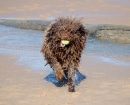
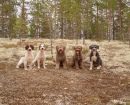
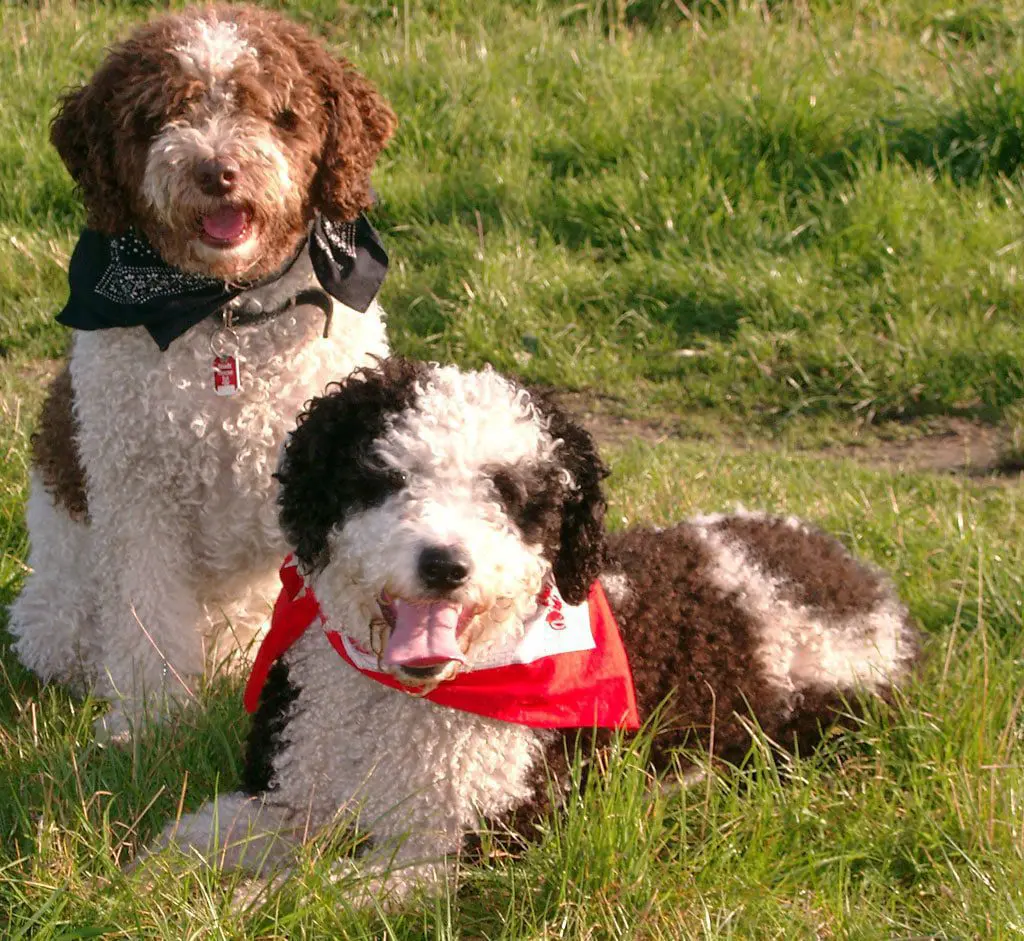
The Spanish Water Dog is a faithful dog, obedient, joyful, laborious, courageous and balanced. It is a breed little seen outside of Spain.

Content

History

Little is known about the origins of Spanish Water Dog. Some dog experts believe they are descended from African dogs or are related to other European spaniels., as the Portuguese Water Dog, or with Turkish or Hungarian herding and herding breeds.

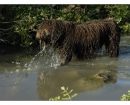
Dogs of this type were hardworking helpers on Spanish farms., in the mines and in the fishing villages, where they performed many functions, like grazing, the recuperation, rat patrol and protection. Your physical characteristics, especially its fur, they are adapted to the variations of humidity and dryness of the marshy regions. This makes him a versatile dog., able to adapt to the needs not only demanded of a shepherd dog, but also a fishing dog and a waterfowl hunter.

With mechanization and migration of people to cities from rural areas, dogs were less necessary for their traditional work, but people interested in the breed strove to preserve it, starting in 1975 with collecting a variety of dogs from various areas, selective breeding to maintain its appearance and working capacity, and directing their talents towards new jobs such as search and rescue and drug and bomb detection.

In the news, its densest population is in Andalusia, where it is usually used as a sheepdog. In this part of Spain it is usually known as the "Turkish dog.".

Physical characteristics

The Spanish Water Dog it's rustic, Middleweight eumétrico, subgilinear proportions, harmonic, Athletic complexion and muscular well due to the constant functional gym exercising; subconvex profile with a tendency to rectilinear; view, highly developed sense of smell and hearing.

The height at the withers is between 44 and 50 cm for males and 40 to 46 cm., for females. Males weigh in 18 to 22 kg and females in 14 to 18 kg.

His head is strong, of elegant porte; the relationship between length of skull and face will be approximately 1.5 / 1. Flat skull with some marked occipital Crest. Soft and little sharp frontal trough. Subconvex face profile with a tendency to rectilinear. Nose with nostrils well defined, It truffle pigmented equal to or stronger than the darker tone of his coat. Lips; the maxilla and mandibular contact in a very defined lip corner.

Well formed teeth, soft, developed tusks. Slightly oblique eyes, very expressive look; Hazelnut color to Brown IRIS, still desired a tonality according to the layer; apparent ocular conjunctiva. Triangular ears and drop of medium insertion. Short and muscular neck, with perfect Union to the trunk without jowl. Robust trunk, arched ribs, with great breathing capacity bicostal diameter. Little pronounced cross. Powerful chest, collected belly, well linked to the rump steak, slightly inclined grupa.

The tail is of average insertion. Puppies are born with or without, in your case you must amputate from the second to the fourth coccygeal vertebra. The preferred way is the trot, Although he develops a range of careers, jumps, highly spectacular twists and turns that demonstrate inexhaustible energy.

Its skin is flexible, fine and well attached to the body. Can be pigmented in chestnut, black, or despigmentada according to the darker tone of his coat, like all the mucous membranes.

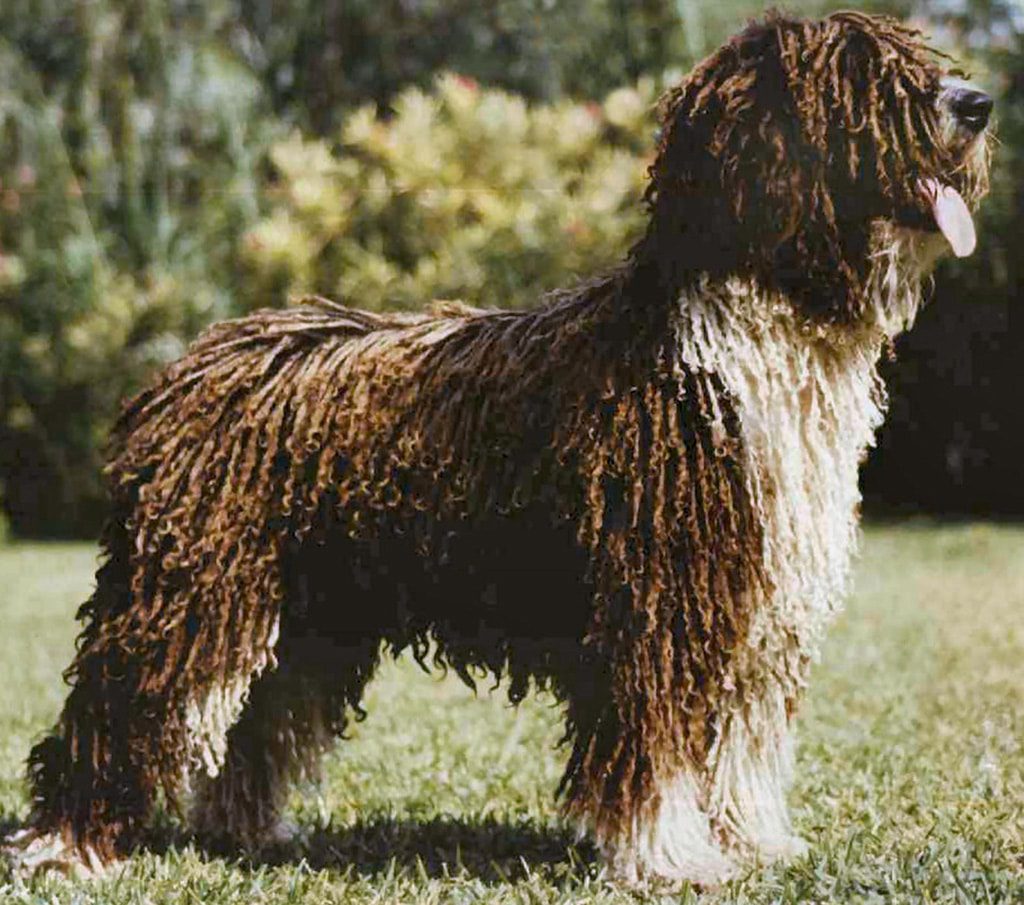
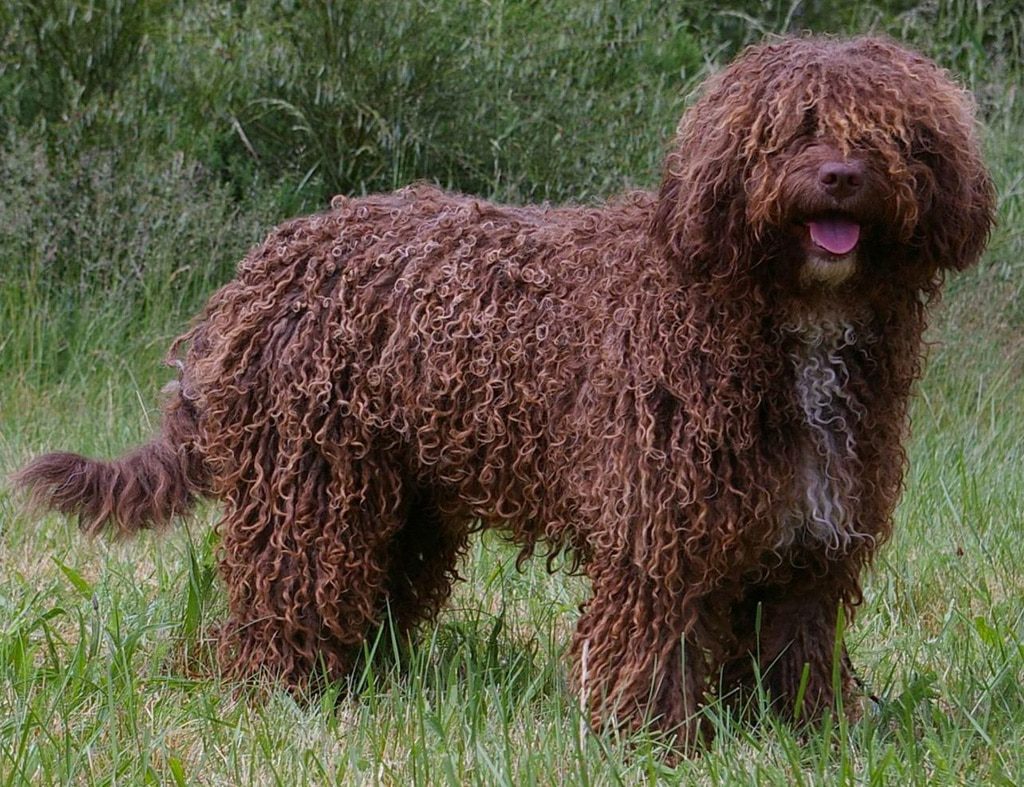
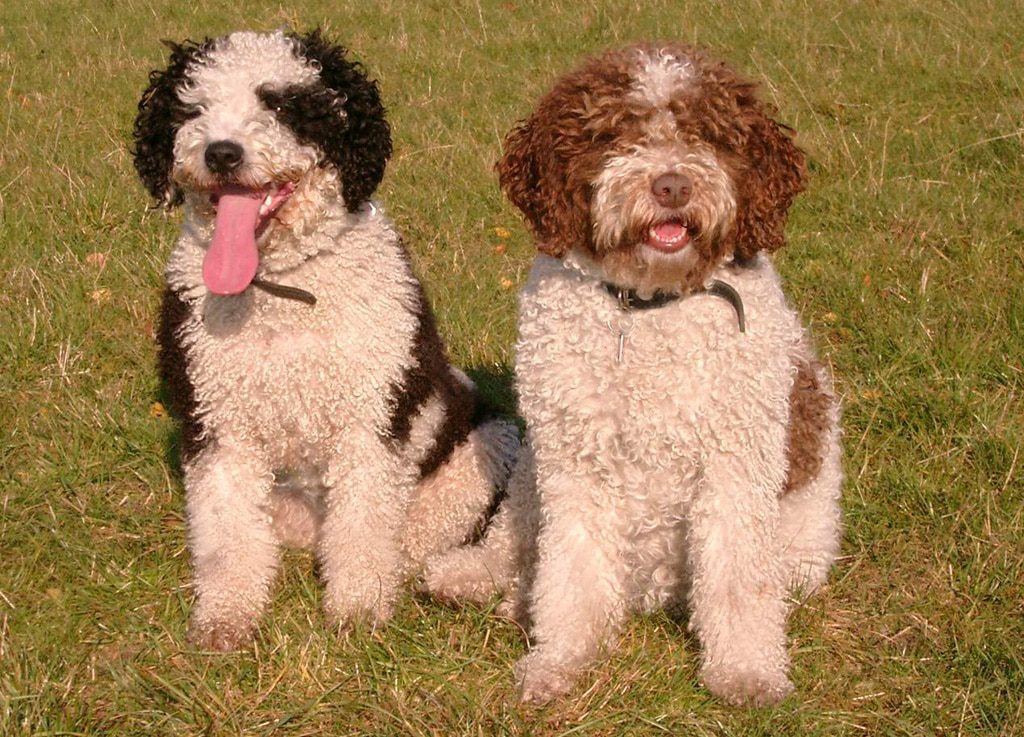
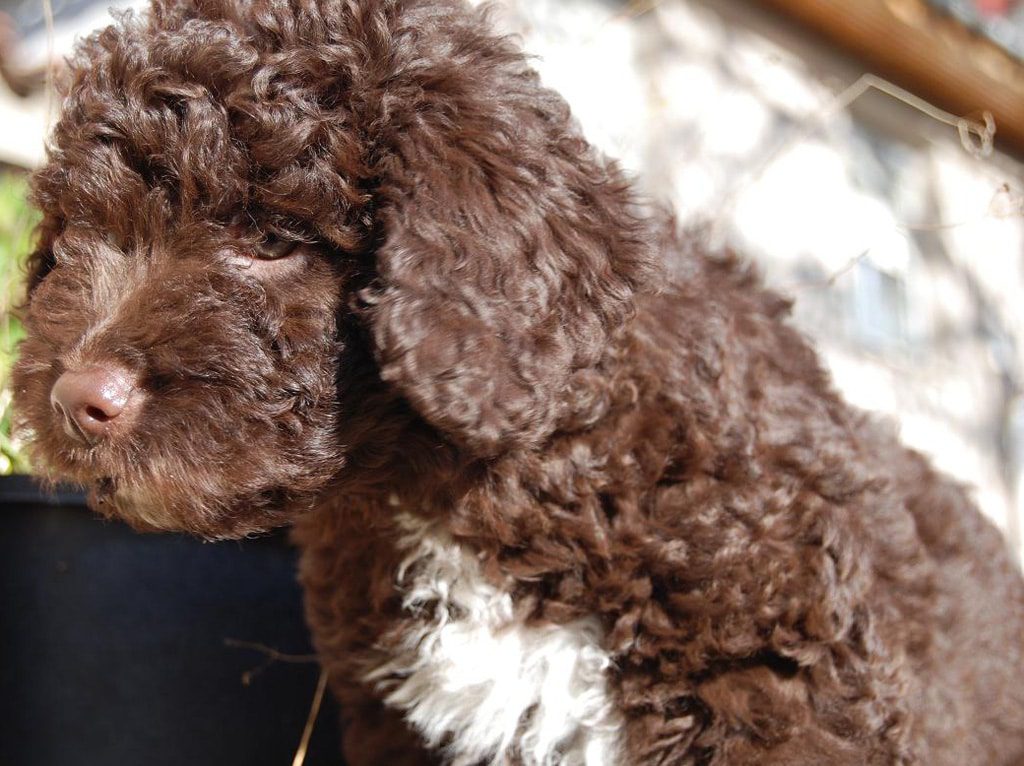
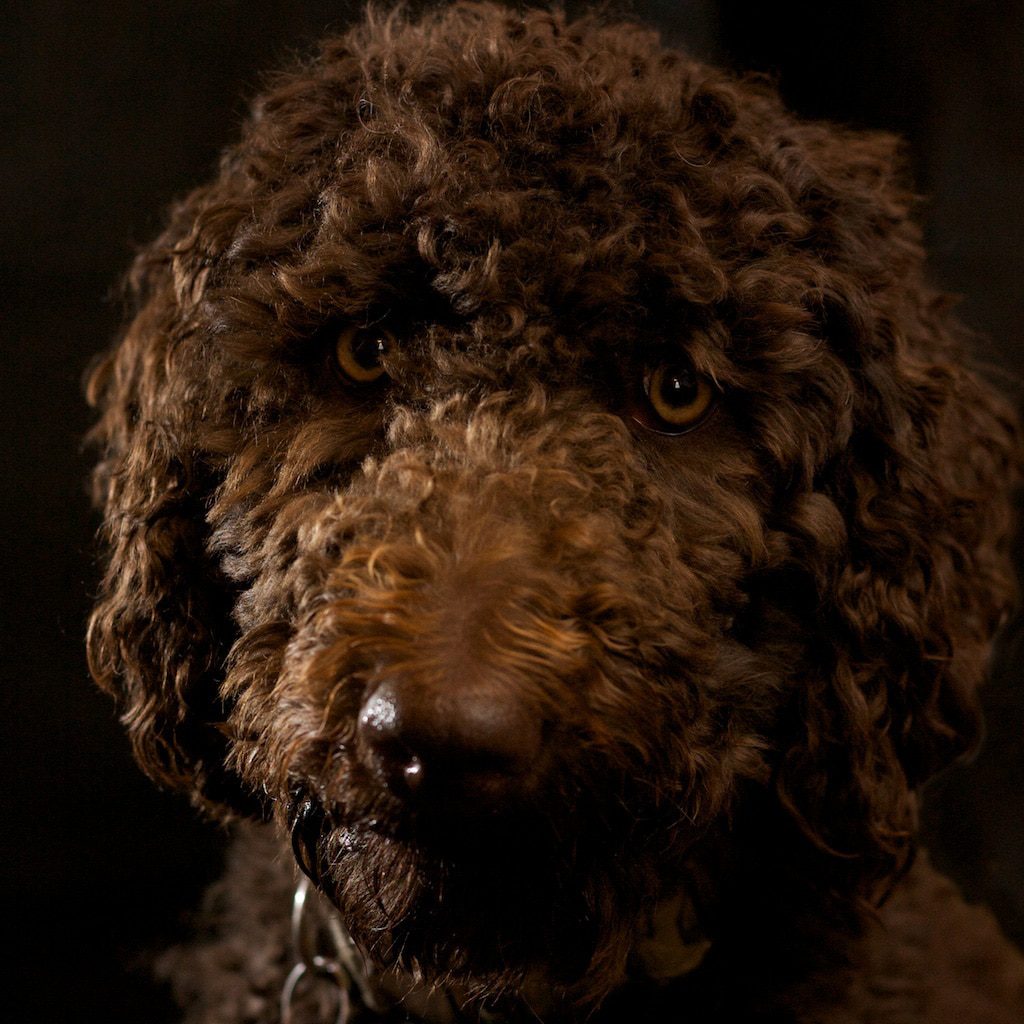
The hair is long and uniform in all its bodily forms always curly and Bristly consistency. Copies of long hair will be accepted, well sheared, as well as those who have their hair cut off, hands and feet; under no circumstances aesthetically sheared.

With regard to the fur, all monocolores layers and bi-coloured compound uniforms are allowed, being always present white. Any Spanish Water Dog puppy should be skinned between three and four months of age wherever it is, North or South. The following bare will be per year, that is to say, to the 15 or 16 months of the animal. And so on until an annual peeling is achieved as a rule in spring..

Character and skills

The Spanish Water Dog belongs according to the FCI classification to Group VIII, section 3, that is to say, is considered a collection dog and more - specifically- a water dog. However, they have traditionally been used as shepherds dogs, in the conduct of sheep and goats, as well as in pigs and cattle.

Because of their great capacity for learning it is currently used by the bodies of Spanish firefighters in their rescue and rescue teams, having spoken specimens of this breed in the disaster caused by Hurricane Mitch. It is also possible to see them in the company of the Civil Guard in search of drugs and explosives in airports., ports and customs.

Within the canine sport, the Spanish Water Dog is finding a place in the world of agility, with some Spain champions and world runner-up in Elite Finland, Ubrique. The agility, It is not a classical proof of work in which copies of race can only participate, but that is rather a combination of competition and show open to all sorts of dogs. The owner also participates in the proof accompanying your dog. Cooperation and good friendship between the members of the team are determinants (dogs and people).

It is a faithful dog, obedient, joyful, laborious, courageous and balanced; of great capacity for learning by his extraordinary understanding, amoldable to different situations and conditions.

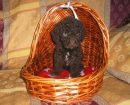
Thanks to its appearance of Teddy, as well as its active nature, Intelligent, cheerful and balanced, has achieved a position within the companion races, they are highly valued in Northern Europe and United States.

Health

All dogs have the potential to develop genetic health problems, like all people have the potential to inherit a certain disease. Huya, do not walk, from any breeder who does not offer a health guarantee on their puppies, to tell you that the breed is 100% healthy and has no known problems, or tell you that your puppies are isolated from the main part of the house for health reasons. A reputable breeder will be honest and open about the health problems of the breed and the incidence with which they occur in their lines..

The Spanish Water Dog can develop certain health problems, among them

  • Allergies
  • Hip Dysplasia
  • Glaucoma
  • Hypothyroidism
  • Progressive retinal atrophy

The main problems observed in the breed are hip dysplasia and allergies. Other problems seem to occur less frequently. Other conditions that can be seen in the breed are exocrine pancreatic insufficiency, Addison's disease, congenital hypothyroidism with goiter, myasthenia gravis and seizures.

These conditions are not necessarily widespread in the breed., but you must know them when looking for your puppy.

Careful breeders screen their breeding dogs for genetic diseases and breed only the healthiest and best-looking dogs, but sometimes mother nature has other ideas and a puppy develops one of these diseases despite good husbandry practices. Advances in veterinary medicine mean that, in many cases, dogs can live well. If you are getting a puppy, ask the breeder about the age of the dogs in his line and what they have died of.

Will you have your Spanish Water Dog some or all of these diseases? Not necessarily, but it's smart to know the possibilities.

Remember that after you have welcomed a new puppy into your home, you have the power to protect him from one of the most common health problems in all dogs: the obesity. The breed standard requires that the Spanish Water Dog weigh between 9 and 15 kg. If you can't see the waist of your Spanish Water Dog the feel (but not see) his ribs, it's time to talk to your vet about a weight management program. Keep a Spanish Water Dog at a proper weight is one of the easiest ways to protect your overall health. Take advantage of diet and exercise to help ensure a healthier dog for life.

Grooming

The Spanish Water Dog has only one coat, which means that it has little or no undercoat. Does not change much, although it does lose hair, just like people. The unique, curly coat often leads people to believe that the Spanish Water Dog it is hypoallergenic, but all dogs produce allergens to some extent in their dander, saliva and urine. If you have allergies, you should spend time with several dogs of this breed to determine if he reacts to them.

The toilet of the Spanish Water Dog It is easy. Usually, the coat is trimmed once or twice a year to about 2 centimeters all over the body, including head and ears. Between one cut and another, no need to comb, brushing or drying the coat, as all this can damage the texture and shape of the curls.

However, it is important to check the coat regularly for specks and hot spots, especially behind the ears and in the area where the legs join the body. The incidence of mats can be reduced by separating the fingers when stroking the dog and not rubbing the coat in a circular motion.

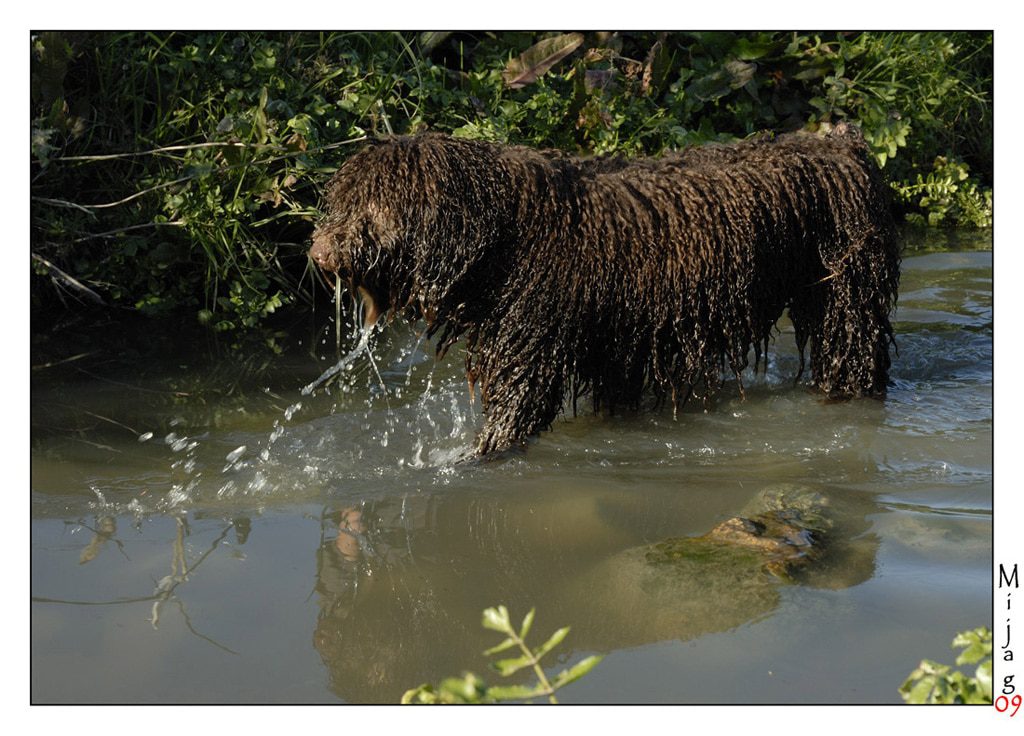
If it is allowed to grow, the fur of the Spanish Water Dog can be cordoned off, forming long tight curls that look like dreadlocks. Some work and supervision is needed to ensure the laces are formed properly and groomed properly. Your dog's breeder can explain how it is done and how to maintain a corded coat..

When your Spanish Water Dog get dirty, bathe him with a gentle, pet-safe shampoo. Gently apply to fur, like hand washing a cashmere sweater. Rinse well with lukewarm water and, then, use your hands to wring out excess water. Dry the fur with a towel, being careful not to rub it roughly. Let your dog air dry in a warm, draft-free place.

The rest is basic care. Trim his nails every week or two and brush his teeth often—with a vet-approved pet toothpaste- for good general health and fresh breath.

Characteristics "Spanish Water Dog"

Coexistence is important that you have with your new friend. Before considering the acquisition of a dog of the breed "Spanish Water Dog" you know certain factors. Not all breeds of dogs are apt to live in an apartment, you must take into account his character, their need for exercise, their interaction with other pets, their care and if you have small children, their level of tolerance towards them.

Adaptation ⓘ

3,0 of 5 stars (based on 1 review)

friendly dog ​​ⓘ

3,0 of 5 stars (based on 1 review)

hair loss ⓘ

1,0 of 5 stars (based on 1 review)

Affection level ⓘ

5,0 of 5 stars (based on 1 review)

Need for exercise ⓘ

4,0 of 5 stars (based on 1 review)

Social need ⓘ

2,0 of 5 stars (based on 1 review)

Home ⓘ

3,0 of 5 stars (based on 1 review)

Toilet ⓘ

2,0 of 5 stars (based on 1 review)

Friendly with strangers ⓘ

3,0 of 5 stars (based on 1 review)

barking ⓘ

3,0 of 5 stars (based on 1 review)

Health ⓘ

3,0 of 5 stars (based on 1 review)

Territorial ⓘ

4,0 of 5 stars (based on 1 review)

Cat friendly ⓘ

3,0 of 5 stars (based on 1 review)

Intelligence ⓘ

3,0 of 5 stars (based on 1 review)

Versatility ⓘ

3,0 of 5 stars (based on 1 review)

Child friendly ⓘ

2,0 of 5 stars (based on 1 review)

Surveillance ⓘ

3,0 of 5 stars (based on 1 review)

joy ⓘ

4,0 of 5 stars (based on 1 review)

«Spanish water dog» images

«Spanish Water Dog» Videos

Type and recognitions:

  • FCI CLASSIFICATION:
  • Group 8: Retrievers, Hunting Lifting Dogs, Water Dogs.
  • Section 3: Water Dogs. .

Federations:

  • FCI – Group 8: Retrievers - Flushing Dogs - Water Dogs – Section 3: Water Dogs
  • AKCSporting
  • ​KC – Gundog
  • NZKCGundog
  • UKCGun Dogs

FCI breed standard "Spanish Water Dog"

Origin:
Spain

Date of publication of the valid original standard:
01.10.2019

Use:

Shepherd dog, Hunter and Assistant of fishermen.


General appearance:

rustic dog, eumétrico (medium-sized), sweetheart, sublongilinear proportions, harmonic of forms, beautiful print, Athletic complexion and muscular well due to the constant functional gym exercising; rectilinear profile; view, highly developed smell and hearing.

important proportions

- Body length / size (height to the cross) = 9/8.
- Chest depth / size (height to the cross) = 4/8.
- Length of muzzle / length of skull = 2/3.


Behavior / temperament:

Faithful, obedient, joyful, laborious, courageous and balanced; of great capacity for learning by his extraordinary understanding, adaptable to all situations and temperaments.

Head:

Strong, of elegant porte.

Cranial region:
  • Skull: Flat with slightly marked occipital crest. The axes of the skull and muzzle are parallel.
  • Depression links (Stop): Soft and not very accentuated.

facial region:

Nasal cane with rectilinear profile.

  • Truffle: Nose with nostrils well defined. The pigmented truffle in the same color or stronger than the darkest shade of the coat.
  • Lips: Picked up; well-defined corner of the mouth.
  • Teeth: Well formed, whites and developed fangs.
  • Eyes: Slightly oblique, very expressive look; Hazelnut color to Brown IRIS, being desirable a tonality that agrees with the layer; ocular conjunctiva not apparent.
  • Ears: Middle insertion, triangles and falls.

Neck:

Short, muscular and without dewlap. Well inserted at the back.

Body:

Robust.

  • top line: Straight.
  • Cross: Little pronounced.
  • Back: Straight and strong.
  • Rump: Gently sloping.
  • Breast : Width, deep. Well arched ribs; wide chest perimeter that denotes great respiratory capacity.
  • bottom line: Slightly gathered belly.

Tail:

Middle insertion. The tail must be amputated from the second to the fourth vertebra. There are brachyurus specimens.


Tips

Former members

Solid and correct poles.

  • Shoulder: Muscular and oblique.
  • Arm: Powerful.
  • Elbows: Well attached to the chest and parallel.
  • Forearm: Straight and strong.
  • Carpus and metacarpus:  Straight. Being rather short.
  • Front feet: Rounded, with fingers tightly joined; nails with different shades; consistent pads.
Later members

Perfectly Plumb, with rear angulations that are not excessively pronounced and muscles capable of giving the body sudden momentum in running and easy and elegant jumps.

  • Thigh: Long and muscular.
  • Leg: Well developed.
  • Hock: Well descended.
  • Metatarsus: Short, dry and perpendicular to the ground.
  • Rear feet: With the same characteristics as the previous ones.

Movement:

The preferred gait is the trot.

Mantle

Skin

Flexible, fine and well attached to the body. Can be pigmented in chestnut, black or no pigment, according to the tone of your cape, like all the mucous membranes


Fur

Always curly and woolly in consistency. Curly when short, to form strings when it is long. Shorn specimens will be admitted, This must be complete and uniform and under no circumstances will "aesthetic" shearings be admitted..
The maximum recommended length for exposures is 12 cm. (15 cm spreading curls) and the minimum is 3 cm., to appreciate the quality of the curls.
Puppies are always born with curly hair.


Color
  • Unicolores: White, black and brown in their different shades.
  • Bicolour: Black and white or white and brown, in its different shades.

The tricolor, black and tan and hazelnut and tan are not admitted.


Size and weight:

Height to the cross

  • Males: 44 - 50 cm..
  • females: 40 - 46 cm..

In both sexes a maximal variation of 2 cm is therefore allowed for the dog to have general proportions compatible with its height at the withers.

Weight

  • Males: 18 - 22 kg.
  • females: 14 - 18 kg.


Fouls:

Any deviation from the above criteria is considered missing and the seriousness is considered to the extent of the deviation to the standard.


Serious misconduct
  • Manifestly saddled dorso-lumbar line.
  • Wrong limbs.
  • Hanging or excessively gathered belly.


ELIMINATING fAULTS
  • Aggressive or fearful dog.
  • Upper or lower prognathism.
  • Presence of dewclaws.
  • Smooth u wavy hair.
  • albinism.
  • Spotted or spotted coat, black and tan or hazelnut and tan.
  • Unbalanced character.


Any dog ​​showing clear signs of physical or behavioral abnormalities must be disqualified..


N.B.:

Males should have two normal-appearing testicles fully descended into the scrotum.

Source: F.C.I - International Cynological Federation

Alternative names:

1. SWD, Perro de agua español (English).
2. Perro de Agua Español, Chien turc (French).
3. Perro de Agua Español, Türkenhund, Andalusischer Türke (German).
4. (em castelhano perro de agua español) (Portuguese).
5. Turco andaluz, Perro turco, Churrino (español).

▷ The world of Pets: Dogs, cats, birds, reptiles, amphibians

Burgos Pointer
España FCI 90 . Braque Type

Perdiguero de Burgos

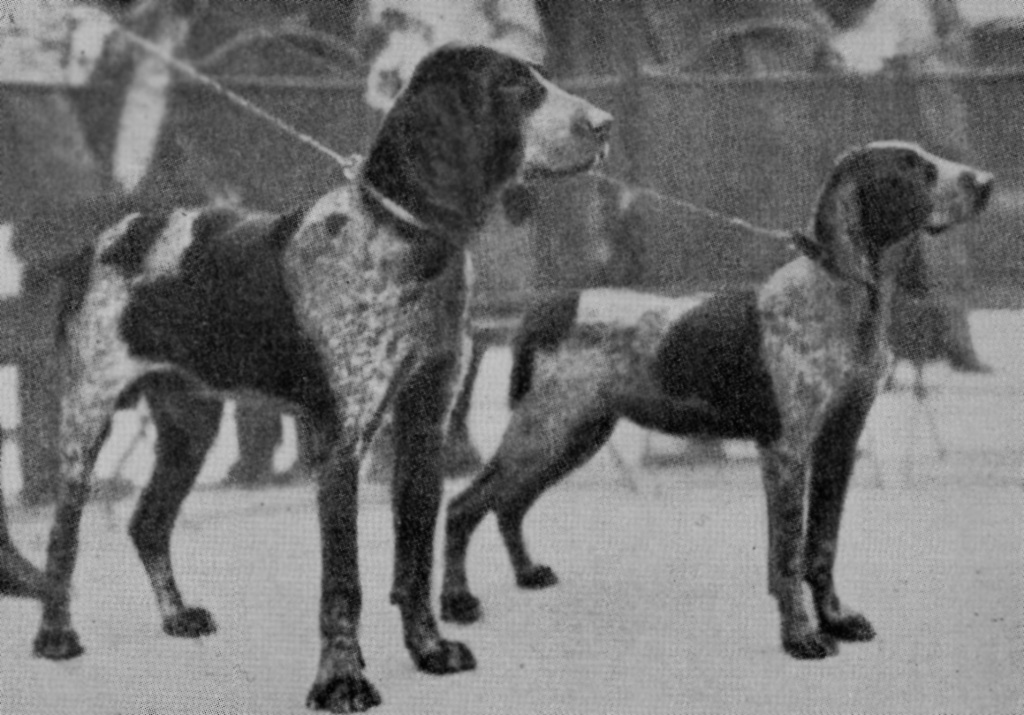
The Burgos Pointer is smart and learns easily, above all, tracking tasks.

Content

History

The Burgos Pointer It is a breed of dog Spain. Originally from Castile, especially in the province of Burgos, This rustic breed is intended for hunting and has exceptional characteristics for hunting small game..

It is an ancient breed from the Castilian tableland, is widespread, and according to some connoisseurs of the breed, it is likely that it has participated in the creation of other breeds of hunting dog, not only Spain.

The truth is that lot of documented material that speaks of this breed there is. Veterinary geneticist, José Manuel Sanz rudder, has dedicated several lines to the history of this breed and in a document that appears cited in many web, speaks of the Origins and Ancient History (Until 1911). You can read the complete material on the website of the Spanish Association of el Perro Perdiguero de Burgos. Here we will only mention what refers to the word «Perdiguero» and to the different theories about the origin but very briefly…

"The word ‘perdiguero‘ It occurs frequently in classical texts on venatoria and its reference corresponds to the generic Hunter dog of partridges, "perdicero" or "perdigero", but it cannot be lightly assumed that this dog was a Burgos Pointer. In numerous current texts we can read various theories about the origin of the race. The more absolute confusion arises from a whole once analysed separately. The most common mistakes that demonstrate a poor work of research are as follows:

  • Associate the word perdiguero the race Burgos Pointer.
  • Believing that the Pointing Dogs, as the Spanish classics tell us, they were Burgos Pointers and forget that they were other races.
  • Define like Burgos Pointer to the dogs that authors from Velázquez to Goya have been captured in numerous canvases where hunting dogs are reproduced.
  • Define incomprehensibly and lightly when Burgos Pointer as the origin of English Pointer, either in a display of patriotic enthusiasm, consider him further as the father of all European Braques«.

"The authors, as often happens, they do not manage to agree on the theories about the origins of animals and while some affirm that the sample dog is originally from Italy, others say that France or Spain (according to the nationality of the author) which they were born.

On the formation of the current dog Burgos Pointer the news is null and we can only apply the parameters that are studied to form a race, they are:

  • Time and place of training.
  • Genetic basis provided the race.
  • Adaptation to the environment in which is born.
  • Geographical isolation and inbreeding operated.

With regard to the first of them, not a breed created by man ex process are being, with measured doses of one or another blood, both the time and the place of training are uncertain. A race not be based in short periods of time and having no initial selection at a single point, "We cannot think that the place of birth has only been a certain place."

(Author: José Manuel Sanz rudder).

Physical characteristics

While the Burgos Pointer, It is not as robust and defined muscular level, like its relative the English Pointer, their appearance shows the strength of the race.

It has the ears long and the tail It tends to be cut one-third of its original length.

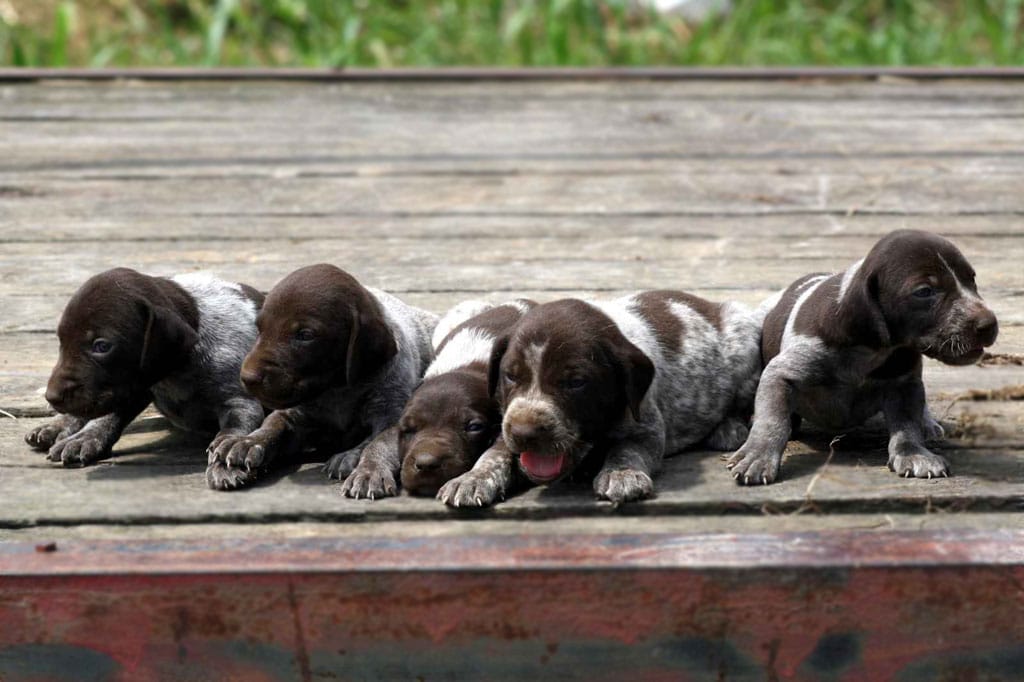
Its fur It has variants that can form different ranges within the basic color. The basic colors of the hair are the white and the liver. These colors mingle regularly, giving variegated layers that tend to liver, gray liver, mosqueados in liver and other various combinations, depending on whether the liver or white color is predominant and depending on whether the white spots are open or closed.

It is a very common feature (Although non-binding layer), that have a clear white spot on the forehead and the ears always spotted with a homogeneous liver color. Liver-colored hairs can form sharp, well-defined liver-colored patches, regularly distributed by the layer of the animal

Its the mantle is short, thick and soft. The hair is thinner in the head, ears and limbs.

The skin is elastic, but not printing, thick, abundant, pinkish spotless. All Oris they will be Brown, never black.

The height males will of 62 to 67 cm and females 59 to 64 cm to the cross. Thinking of 25 to 30 kg.

It is an animal that as all, It requires a dose of daily exercise. A long walk, and a few races in the open air will keep you happy.

Character and skills

It is a very friendly and quiet dog, not afraid easily. It is smart and learns easily, especially in tracking work.

It is not a dog that adapts very well to urban environments.

It is used for small game (rabbits, hares, etc.).

It's perfect for hunting in any field (no matter how hard it is), since it has an enviable physical resistance and a great speed.

The Burgos Pointer it is highly appreciated by hunters who want a rustic dog, hard in any terrain and type of hunting, obedient, strong and above all excellent winds and method of hunting, due to his calm and poise in the search, as well as his sample and his impeccable collection.

Although used for small game pieces not dismisses pieces of hunting trail, in which he demonstrates great bravery.

Characteristics "Burgos Pointer"

Coexistence is important that you have with your new friend. Before considering the acquisition of a dog of the breed "Burgos Pointer" you know certain factors. Not all breeds of dogs are apt to live in an apartment, you must take into account his character, their need for exercise, their interaction with other pets, their care and if you have small children, their level of tolerance towards them.

Adaptation ⓘ

3,0 of 5 stars (based on 1 review)

friendly dog ​​ⓘ

3,0 of 5 stars (based on 1 review)

hair loss ⓘ

2,0 of 5 stars (based on 1 review)

Affection level ⓘ

3,0 of 5 stars (based on 1 review)

Need for exercise ⓘ

4,0 of 5 stars (based on 1 review)

Social need ⓘ

3,0 of 5 stars (based on 1 review)

Home ⓘ

2,0 of 5 stars (based on 1 review)

Toilet ⓘ

1,0 of 5 stars (based on 1 review)

Friendly with strangers ⓘ

3,0 of 5 stars (based on 1 review)

barking ⓘ

2,0 of 5 stars (based on 1 review)

Health ⓘ

3,0 of 5 stars (based on 1 review)

Territorial ⓘ

4,0 of 5 stars (based on 1 review)

Cat friendly ⓘ

2,0 of 5 stars (based on 1 review)

Intelligence ⓘ

4,0 of 5 stars (based on 1 review)

Versatility ⓘ

3,0 of 5 stars (based on 1 review)

Child friendly ⓘ

4,0 of 5 stars (based on 1 review)

Surveillance ⓘ

2,0 of 5 stars (based on 1 review)

joy ⓘ

4,0 of 5 stars (based on 1 review)

Images: Burgos Pointer

Videos: Burgos Pointer

Type and recognitions:

  • FCI CLASSIFICATION:
  • Group :
  • Section : . .

Federations:

  • FCI – Group 7: Pointing Dogs. – Section 1: Continental Pointing Dogs. 1.1: Braque Type

FCI breed standard "Burgos Pointer"

Origin:
Spain

Date of publication of the valid original standard:
26.05.1982

Use:

Hair and Feather Pointer Dog. The Perdiguero de Burgos is highly appreciated by hunters who want a rustic dog., hard in any terrain and type of hunting, obedient; strong and above all excellent winds and method of hunting, due to his calm and poise in the search, as well as his sample and his impeccable collection. Although used for small game game, does not discard the trail of game pieces, in which he demonstrates great bravery.


General appearance:

Hunting dog of good size, eumetric and medioline. Well developed head, compact trunk and strong limbs. Droopy ears and short hair. Longitudinal diameter as close as possible to the height at the withers. Proportionality and functional harmony must be sought, both in static and in motion


Behavior / temperament:

Rustic, balanced, calm and sitting; turns out to be a great show dog, especially suitable for hunting hair and feathers. Fresh look, very noble, it is a breed of excellent character, docility and intelligence.

Head:

As a whole : Big and strong, well developed skull; strong face and muzzle and corkscrew ears.

The cranium, seen from above, It must be moderately rectangular with a progressive decrease towards the nose, without giving feeling of pointed snout. The ratio of the length of the skull to that of the face is 6:5. The craniofacial lines are divergent.


Cranial region:
  • Skull : Width, strong, domed and convex profile; well marked central groove, shallow occipital crest. Accused frontal sinuses.
  • Depression links (Stop) : Soft, little sharp.

facial region:

  • Truffle : dark brown, wet, big and wide with wide open windows.
  • Snout : Straight profile or with a very slight curve towards the nose. Width throughout its length, it should not give the impression of being pointed. Wide muzzle.
  • Lips : Sagging without sagging. The upper one will cover the lower one well. The bottom is marked labial commissure. The mucous membranes must be brown.
  • Jaws / Teeth : Strong teeth, white and healthy; scissor bite. All premolars exist.
  • Eyes : Medium, macaroons, preferably dark hazelnut, noble and sweet look, sometimes giving a feeling of sadness. The skin of the eyelids is moderately thick, pigmented like the mucous membranes in brown. The lower eyelid should be as close as possible to the eyeball.
  • Ears : long, drooping and triangular in shape. Inserted at eye line level, at rest they fall gracefully in corkscrew. Without exerting traction, they must reach the corner of the mouth and will not reach the nose.. Soft and soft to the touch, they have fine skin and hair; marked venous network. In higher insertion care and flatter frontal conformation.
  • Palate : Pink mucous with well marked beads.

Neck:

Strong and powerful; wide part at the head and continues with a slight widening to the trunk. Slightly arched top edge. Lower border with well defined dewlap that, starting from both lip corners, It is presented double without being exaggerated.

Body:

  • As a whole : Square, strong and robust, powerful chest and ribs, giving a feeling of power and agility.
  • Cross : Well defined.
  • top line : Straight and horizontal or desirable with a slight drop from the withers. Never saddled and no oscillations during movement.
  • Back : Powerful and muscular.
  • Pork loin : Medium-, broad and muscular, giving a feeling of power.
  • Rump : Wide and strong. Its inclination will be less than 45° with respect to the dorsal lumbar line and the floor.. Height at the croup equal to or less than the height at the withers;
  • Breast : Wide and deep, reaches elbow level; muscular and powerful. Tip of the sternum marked. Well developed ribs, rounded, not flat. Well marked and wide intercostal spaces as we move towards the floating ribs. The chest perimeter must be equal to the height at the withers plus ¼ of it.
  • Bellies and flanks : Belly moderately tucked towards the genitals. Low sides and well marked flanks.

Tail:

Thickness birth and average insertion. It is amputated between a third and a half of its length.

Tips

PREVIOUS MEMBERS :

  • As a whole : Perfectly Plumb, straight and parallel. Strong bones with short pasterns and well developed feet.
  • Shoulder : Moderately oblique, muscular. The scapula should be approximately the same length as the arm
  • Arm : Strong and well muscled; its length will be 2/3 of the forearm.
  • Elbows : Glued to the trunk.
  • Forearm : Strong bone, with marked tendons. Straight and well plumb. Its length is double the total length from the carpus to the ground.
  • Metacarpus : Seen little laterally inclined, is practically the continuation of the forearm. Strong bone.
  • Front feet : Of cat, tight fingers, high and strong phalanx. dark nails. Robust plantar tuber, very wide and hard pads. Moderate interdigital membrane.
  • Angles : Scapulo-humeral angle close to 100°,Humero-radial angle close to 125°.

LATER MEMBERS :

  • As a whole : Powerful and muscular, strong bone and well poised with correct angles, well marked and angulated hocks, giving a feeling of power and solidity.
  • Thigh : Very strong and with a clear appreciation of the muscles, well marked and developed. Its length is ¾ of the leg.
  • Leg : Long and strong of bone twice the length of the metatarsal.
  • Hocks : Well marked with clear appreciation of the tendon.
  • Metatarsus : Strong bone and perpendicular to the ground.
  • Rear feet : Cat as in the forelimbs, although slightly more elongated.
  • Angles : Coxo-femoral angle close to 100°,Femoro-tibial angle close to 120° ,Open hock angle greater than 130°.

Movement:

The typical gait of the breed is an economical trot, loose and powerful without tendency to laterity and without ambling.

Mantle

SKIN :
Elastic but not detached, thick, abundant, pinkish spotless. All mucous membranes will be brown, never black.

HAIR : Bushy, medium thickness, short, smooth and distributed throughout the body to the interdigital spaces. Finer on the head, ears and limbs.

COLOR : The basic hair colors are white and liver.. These colors are mixed unevenly, giving marbled layers in liver, gray liver, liverwort and various other combinations, depending on whether the liver or white color is predominant and whether the white spots are more widespread or closed. A very common feature of the coat, although not necessary, It is the clear white spot on the forehead and the ears always stained with a homogeneous liver color.. Liver-colored hairs can form clear, well-defined spots of that color distributed irregularly across the animal's coat.. The same can happen with white hairs that can form gaps of this color on the coat without being extremely extended.. Black colorations or fires on the eyes and limbs are never allowed.


Size and weight:

Height to the cross :

  • Males of 62 to 67 cm.,
  • females of 59 to 64 cm..

A high rate of sexual dimorphism is observed in this breed., being the males more homogeneous and the females of more variable height and less corpulent in general.


Fouls:

Any deviation from the aforementioned criteria is considered as a fault and the severity of this is considered to the degree of the deviation to the standard and its consequences on the health and well-being of the dog..

MINOR FAULTS

• Profile of the snout fleshy without excess.
• Absence of any premolar.
• Pincer bite.
• Conjunctiva ligerísimamente visible.
• Belfos or double chin that, without being excessive, are very marked.
• Poorly solid dorso-lumbar line.
• Metacarpos, weak metatarsals or feet, but not excessively.
• Scars, wounds and abrasions during hunting season.

SERIOUS FAULTS

• Light appearance, fragile or excessively heavy and lymphatic.
• Parallel craniofacial axes.
• Poor or small heads.
• Narrow skull.
• Pointed snout.
• Absence of several premolars and canines not due to trauma.
• Very pronounced ectropion or entropion, light eyes.
• Ears that are too long or set too low.
• Belfos or exaggerated jowls.
• Saddled dorso-lumbar line.
• Height at the rump noticeably higher than the height at the withers.
• Incorrect positions, weak or deviant.
• Detached elbows.
• Cow hocks.
• Wavy or very long hair.
• Unbalanced character.

MISS PLAYOFFS

• Aggressive or fearful dog.
• Decidedly convergent craniofacial axes.
• Depigmentation in the truffle.
• Broken or black nose.
• Any degree of lower prognathism.
• Excessive upper prognathism.
• Albinism in the coat accompanied by the mucous membranes.

Any dog ​​showing clear signs of physical or behavioral abnormalities must be disqualified..


N.B.:

Males should have two normal-appearing testicles fully descended into the scrotum..

Source: F.C.I - International Cynological Federation

Alternative names:

1. Perdiguero de Burgos, Burgalese Pointer (English).
2. Retriever de Burgos, Braque de Burgos, Perdiguero (French).
3. Burgos-Hühnerhund (German).
4. Pointer espanhol, Pointer de Burgos (Portuguese).
5. Perdiguera (español).