▷ The world of Pets: Dogs, cats, birds, reptiles, amphibians

Hungarian hound (Transylvanian Scent Hound)
Hungría FCI 241 - Medium-sized Hounds

Transylvanian Scent Hound

It is used in hunting fox and hare; the larger size variety is used in wild boar hunting, deer and lynx.

Content

History

The Transylvanian Scent Hound it is a very old hungarian breed, whose development has been influenced by climatic conditions, the nature of the terrain and hunting methods in this part of the world.

The breed had its golden age in the Middle Ages, When the Hungarian hound He was the favorite hunting dog of the nobility. The development of agriculture and forestry moved away from hunting grounds, and its use moved to the inaccessible mountains and forests of the Carpathians.

This change in territory and habit has led to the creation of two different varieties of Transylvanian Scent Hound: one bigger and one smaller.

  • Long-legged variety: height 56-66 cm.; black with white markings on the front, chest, feet and tip of tail. Used for fox and hare.
  • Short-legged variety: height 46-51 cm.; red-brown base color with white markings. Used in bear, deer and lynx.

Both varieties were always bred together. Originally, the great Hungarian hound it was used to hunt big game: first buffalo, later bear, boar and lynx. The "small tone" were used to hunt minor hunting (foxes, hares) on covered land and to hunt "suede" in rocky areas.

In the early 20th century, the threatened Transylvanian Scent Hound almost completely disappeared, but it was recovered in 1968. Today there are a large number of dogs of Transylvanian Scent Hound in Hungary and neighboring Romania. The variety of "small size" has been extinguished.

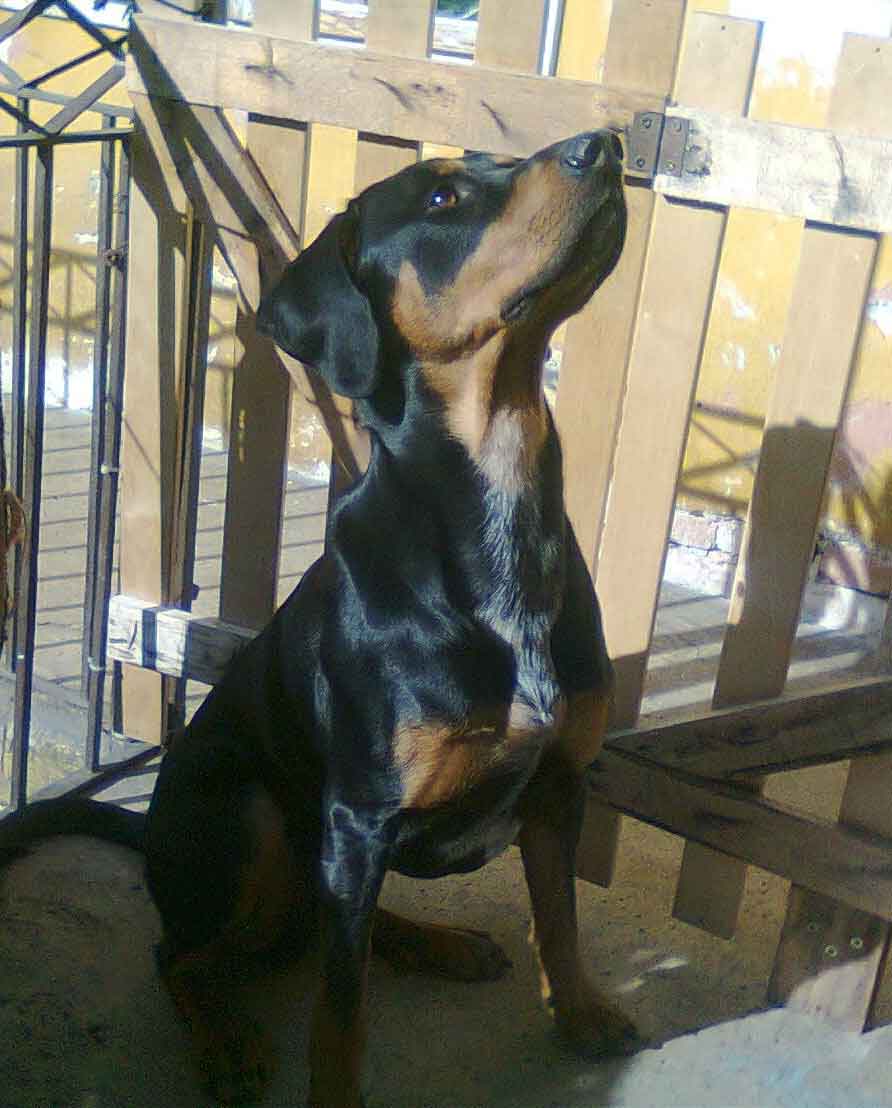
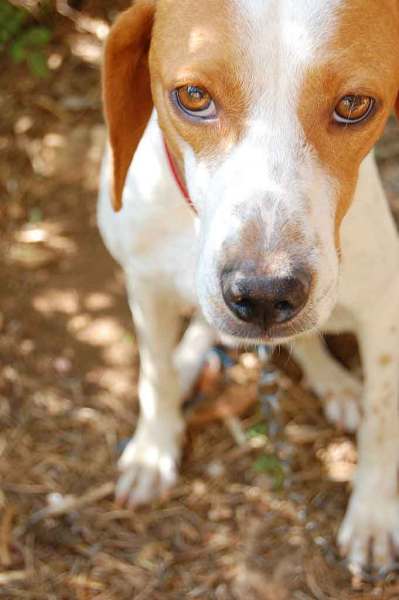
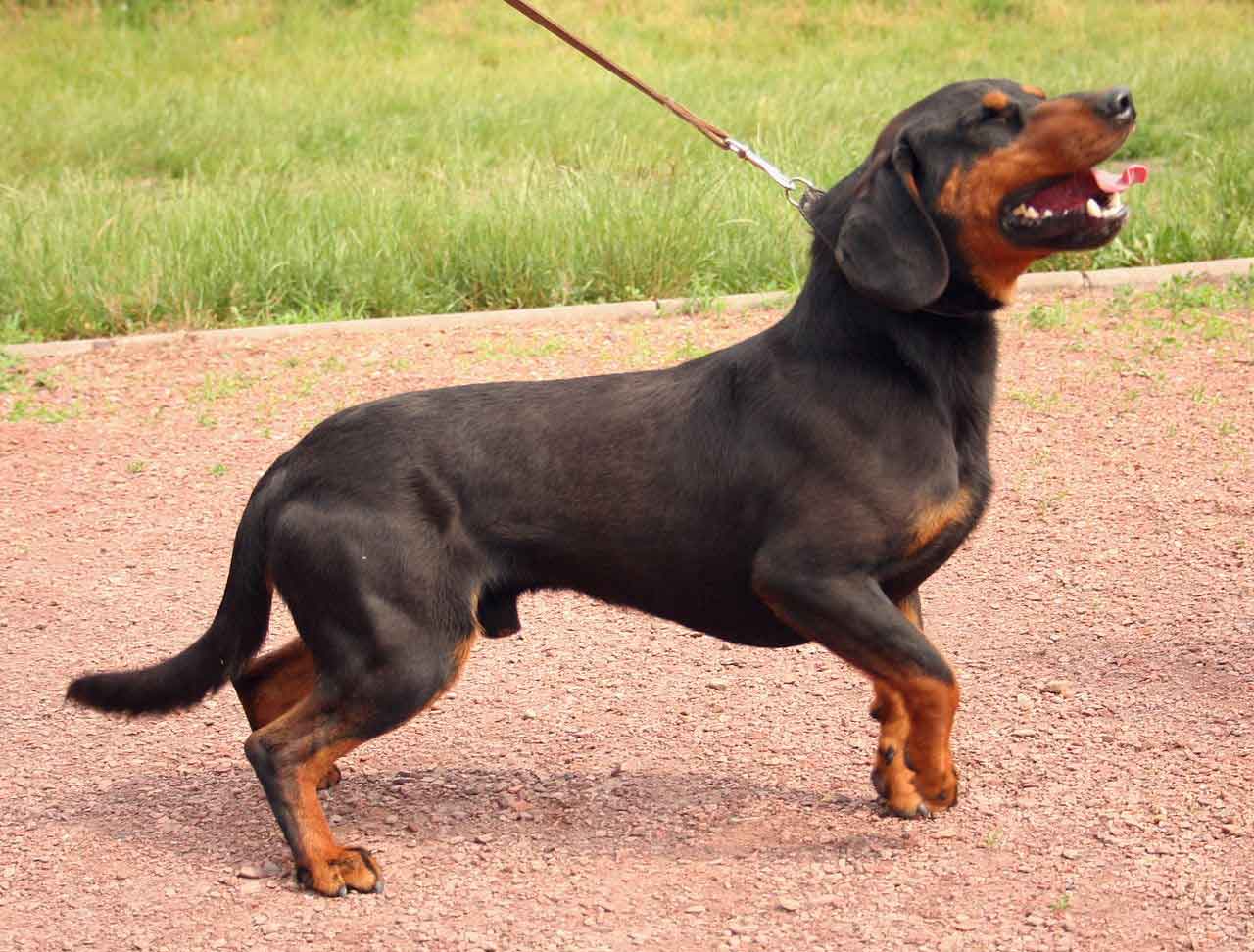
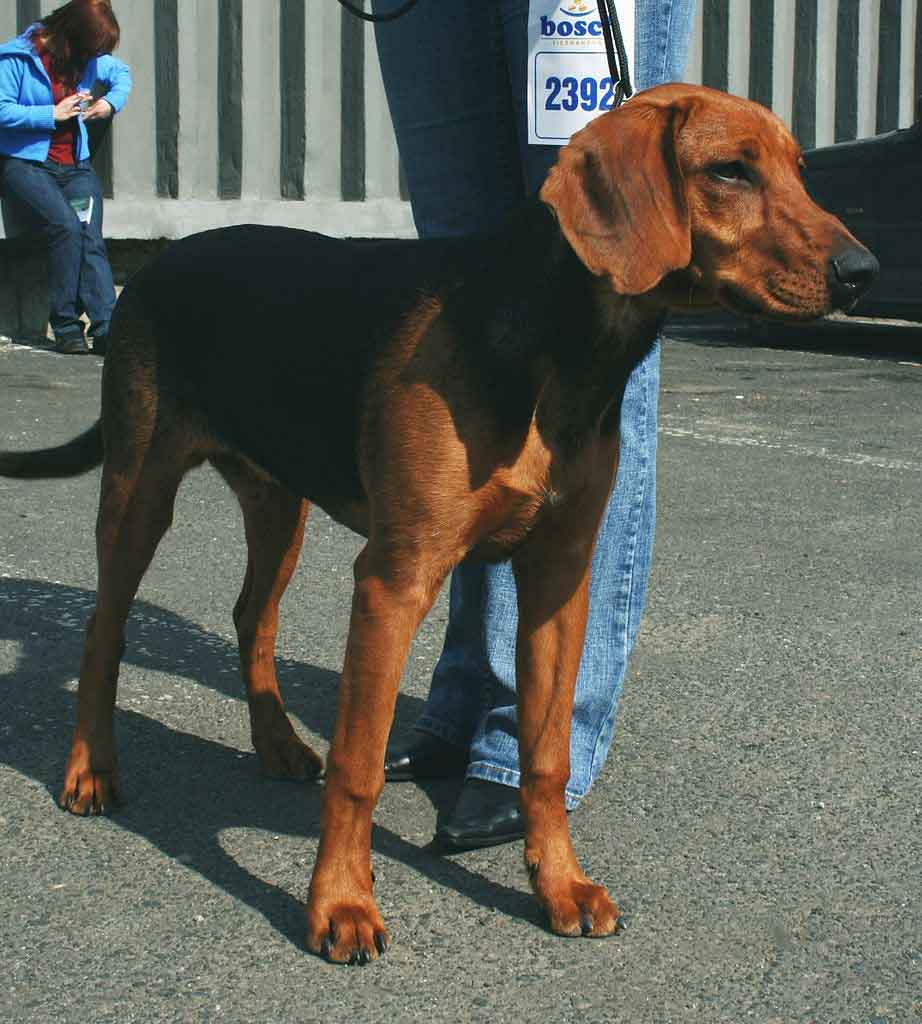
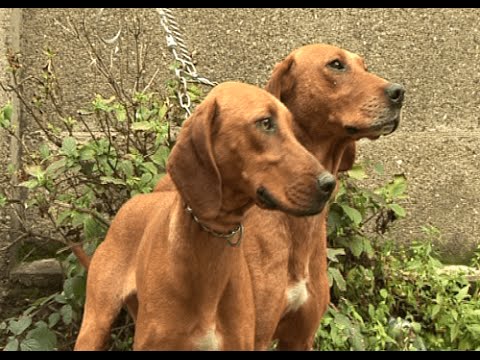
Photos: Male, 1 year old Transylvanian Hound, in Hungary by Jahnna river, CC BY-SA 3.0, via Wikimedia Commons

Physical characteristics "Transylvania's hound"

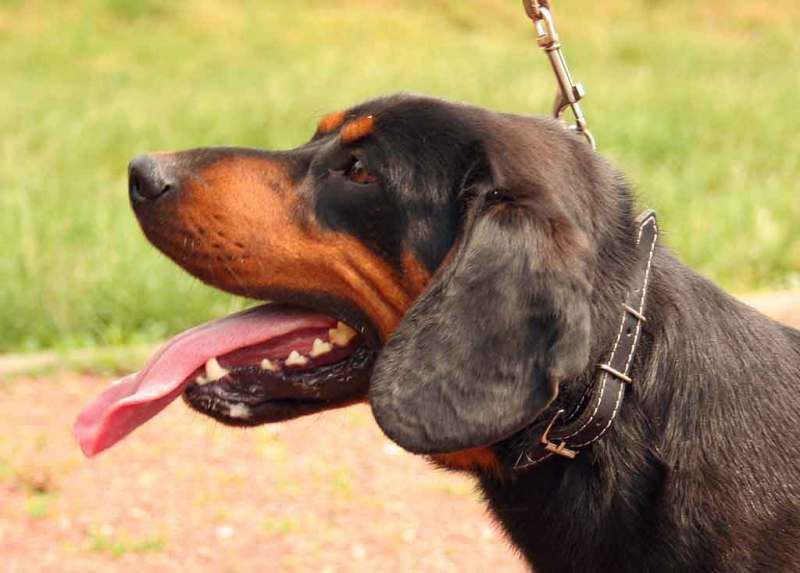
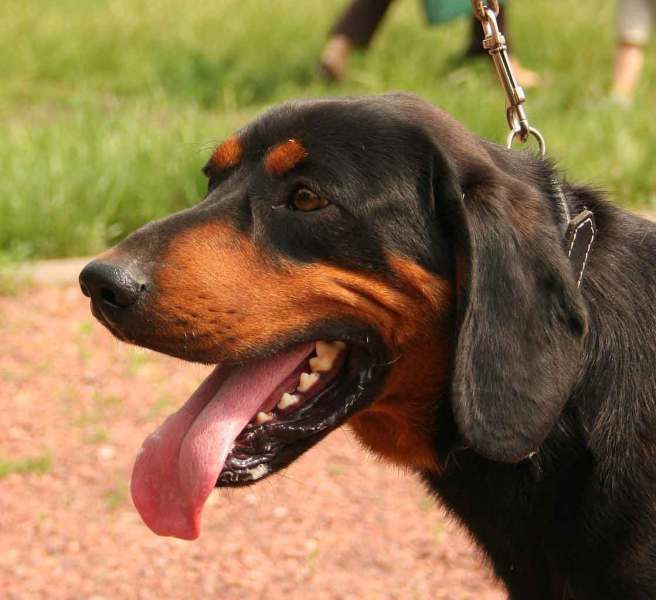
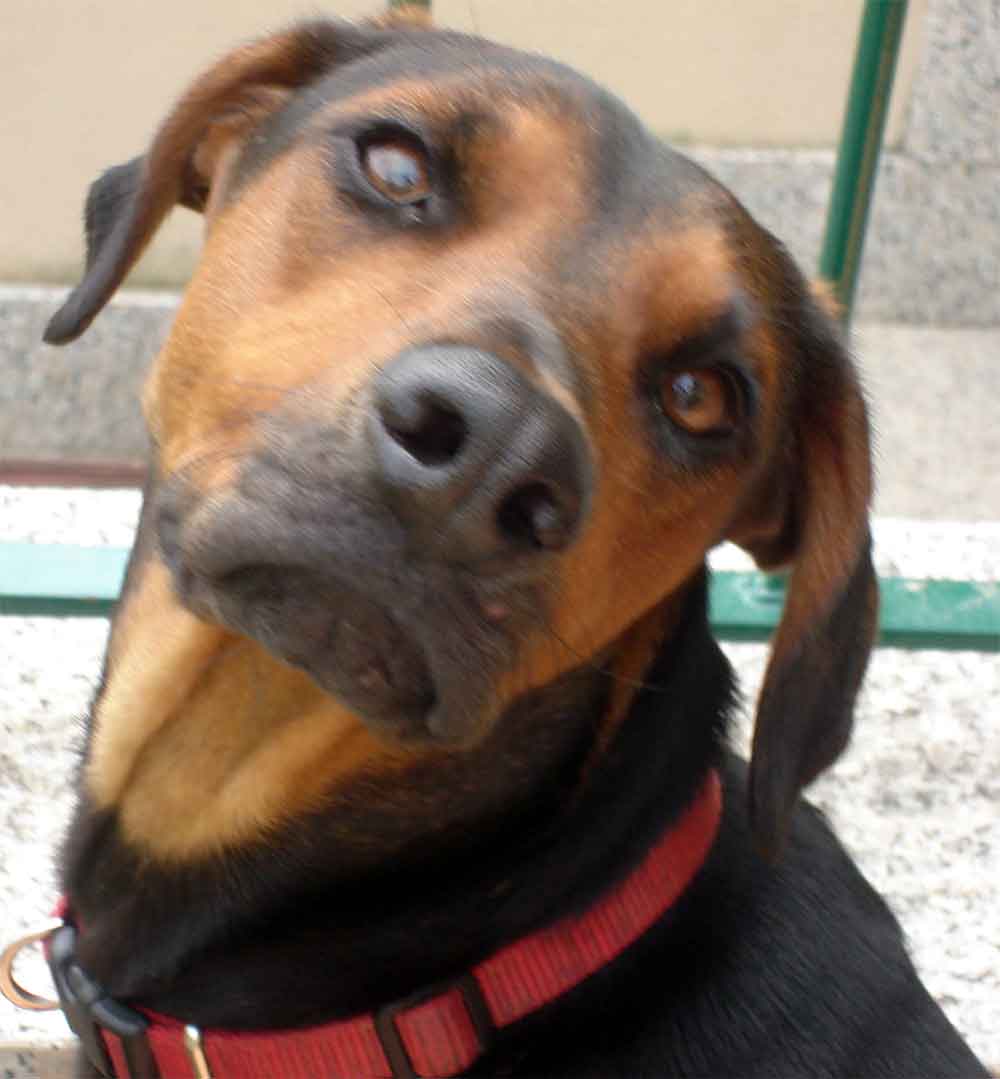
The dog Carpathian Hound grows up 65 cm and weighs at least 25 kg. Whole body, including lower belly, is covered in short hair, dense, smooth and thick that rests well against the body. The basic color is black with tan on the muzzle and legs. The tail is and is carried above the top line when it wakes up, slightly bent up. The hanging ears, set at mid-height, lie close to the cheeks without wrinkles, put forward barely cover the eyes.

Character and skills "Transylvania's hound"

Expressive and loving nature – a dog with very good skills.

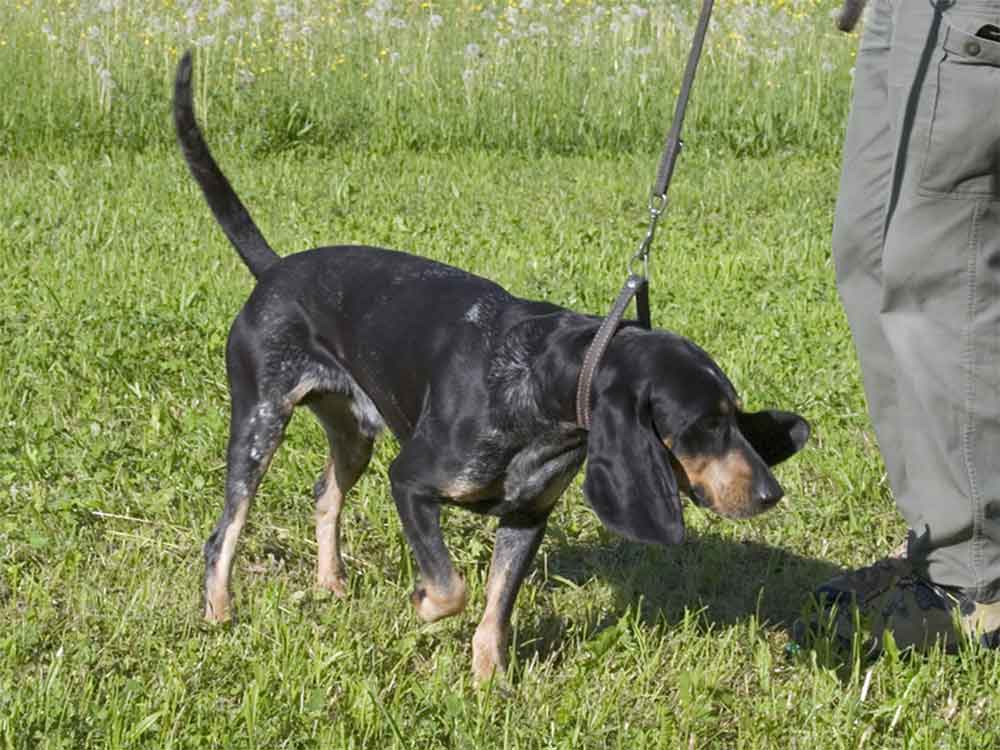
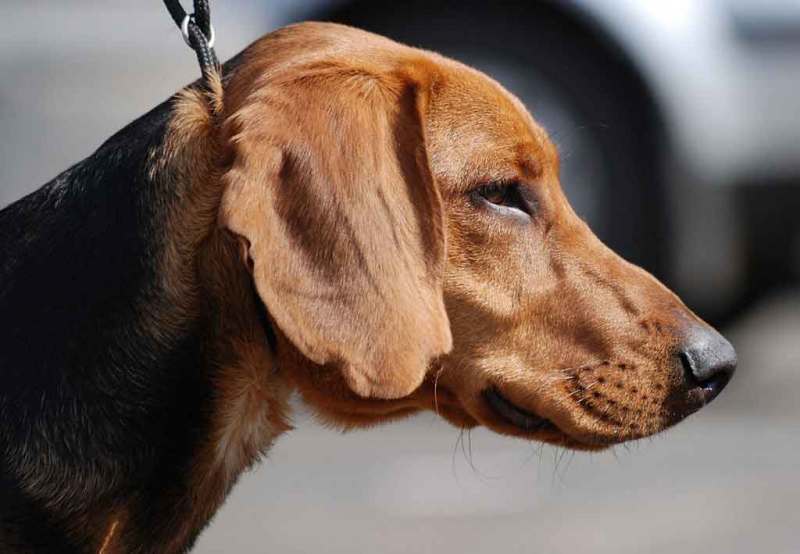
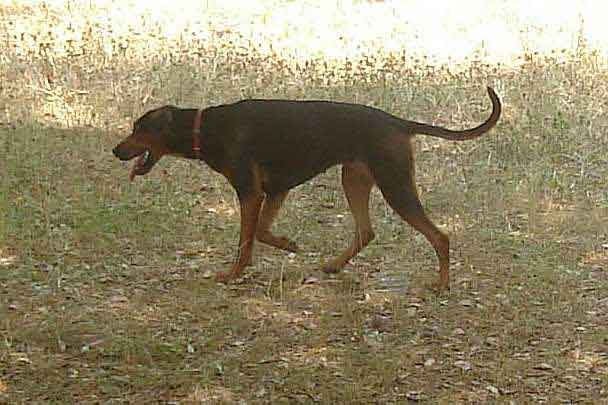
Transylvanian hound female
Transylvanian hound female by Lnko2323, CC BY-SA 3.0, via Wikimedia Commons

The Transylvanian Scent Hound adapted perfectly to the extreme climatic conditions of his homeland. Here the robust breed had to contend not only with the cold and snowy winters, but also with the hot summer days. Hunting in the Carpathians was very demanding due to the dense and hardly accessible mountains. To be able to work all year round in these treacherous areas, the Hungarian hound developed not only his physical stature but also his mental abilities.

With its marked sense of smell, his extraordinary sense of direction, his great resistance and his enormous dexterity, This race, in addition to qualities such as self-confidence and predatory instinct, provides everything an excellent hunting dog needs. They are capable of making smart decisions in almost all hunting situations and communicate their success with a clear voice. Like many hound dogs, the Hungarian hound is a professional at hard work.

At home, the Transylvanian Scent Hound he is a very friendly and calm dog, that is closely tied to its owner, to children and family members. As it is also highly regarded as a guard dog, behaves suspicious of strangers, at first it tends to be a bit reserved, but it doesn't seem dangerous or aggressive at all.

If the dog is well socialized and educated at a young age, relaxed demeanor is expressed, obedient and social, also together with the conspecifics.

The Transylvanian Scent Hound need plenty of exercise, preferably combined with work, such as hunting. Their owners must have an active lifestyle to meet the requirements of keeping a hunting dog.. If sufficient conditions for exercise and employment are met, this breed can be kept in the house or apartment without problems.

Characteristics "Hungarian hound (Transylvanian Scent Hound)"

Coexistence is important that you have with your new friend. Before considering the acquisition of a dog of the breed "Hungarian hound (Transylvanian Scent Hound)" you know certain factors. Not all breeds of dogs are apt to live in an apartment, you must take into account his character, their need for exercise, their interaction with other pets, their care and if you have small children, their level of tolerance towards them.

Adaptation ⓘ

3,0 of 5 stars (based on 1 review)

friendly dog ​​ⓘ

4,0 of 5 stars (based on 1 review)

hair loss ⓘ

4,0 of 5 stars (based on 1 review)

Affection level ⓘ

5,0 of 5 stars (based on 1 review)

Need for exercise ⓘ

3,0 of 5 stars (based on 1 review)

Social need ⓘ

4,0 of 5 stars (based on 1 review)

Home ⓘ

4,0 of 5 stars (based on 1 review)

Toilet ⓘ

3,0 of 5 stars (based on 1 review)

Friendly with strangers ⓘ

4,0 of 5 stars (based on 1 review)

barking ⓘ

4,0 of 5 stars (based on 1 review)

Health ⓘ

4,0 of 5 stars (based on 1 review)

Territorial ⓘ

5,0 of 5 stars (based on 1 review)

Cat friendly ⓘ

2,0 of 5 stars (based on 1 review)

Intelligence ⓘ

4,0 of 5 stars (based on 1 review)

Versatility ⓘ

4,0 of 5 stars (based on 1 review)

Child friendly ⓘ

2,0 of 5 stars (based on 1 review)

Surveillance ⓘ

5,0 of 5 stars (based on 1 review)

joy ⓘ

5,0 of 5 stars (based on 1 review)

Videos "Hungarian hound (Transylvanian Scent Hound)"

Transylvanian Hound - Wild boar Dogs [Transylvanian Hound]
Transylvanian Hounds -Wild boar Dogs
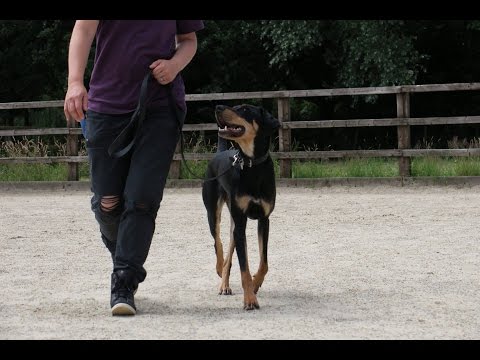
Hector - Transylvanian Hound - 3 Weeks Residential Dog Training
Hector – Transylvanian Hound – 3 Weeks Residential Dog Training

Type and recognitions:

  • FCI CLASSIFICATION:
  • Group :
  • Section : . .

Federations:

  • – FCI – Group 6: Scent hounds, and related breeds. – Section 1.2: Medium-sized Hounds. ⓘ
  • – UKC – Scenthounds ⓘ

FCI breed standard "Hungarian hound (Transylvanian Scent Hound)"

Origin:
Hungary

Date of publication of the valid original standard:
06.04.2000

Use:

Dog used for hunting (Hound). You are able to hunt a great distance from your guide. He is especially gifted at locating and following a trail. When you discover a fresh trail, emits high-pitched barks in a pitiful tone. During crawl, bark loudly with a resonant sound in the distance. After the beat, for the prey excellently. Usually works alone or with a partner.


General appearance:

The shape and bearing of the head, the proportions of the body, The powerful and muscular members and the insertion of the tail correspond to the characteristics of the type of hound of central Europe. It is a medium-sized hound. The structure of the Hungarian hound body adapts to work with long races ; is athletically built, neither heavy nor fine of bone.

IMPORTANT PROPORTIONS

• The relationship between the length of the skull and that of the snout is close to 1:1.
• The relationship between the height to the cross and the length of the body is 10:11


Behavior / temperament:

Is of good temperament, brave, persistent. Essentially the behavior of the Hungarian hound is still, balanced, also determined and full of temperament. It is able to withstand extreme weather conditions.

Head:

The head is that of a hound, elongated but not pointed ; Differences according to sex are marked.

Cranial region:

The skin on the head is tight and wrinkle free.

  • Skull : Slightly domed. The occipital protuberance is not marked. Supraciliary arches are poorly developed.
  • Depression links (Stop) : Bit strong.

facial region:

  • Truffle : The truffle is not cut too abruptly ; its color is black. The wings of the nostrils are mobile. Windows are wide.
  • Snout : The nasal helm is straight.
  • Lips : Dry and firmly adherent. The color of the mucosa is black.
  • Jaws / Teeth : The jaws are strong. Teeth are strong, well developed. Scissor bite, complete and in accordance with the dog's dental formula.
  • Cheeks : Rounded, only underdeveloped.

Eyes : Medium size, macaroons, slightly oblique cut. Color is dark brown. The eyelids rest firmly on the eyeball.

Ears : Inserted at medium height, not very heavy. They hang without wrinkles resting next to the cheeks. From their insertion they widen and then along their extension, fine-tune until ending in a rounded end. Put forward they cover their eyes, although in general, its length does not exceed them too much.

Neck:

Strongly muscled, long Middle. The skin is slightly wrinkled on the lower face of the neck. A slight double chin is admitted but not desired.

Body:

The body is shaped like a lying rectangle.

  • top line : Straight.
  • Cross : Marked Back : From the cross, straight and well developed musculature.
  • Pork loin : A slightly longer loin is allowed in females.
  • Rump : Slightly descending.
  • Breast : The sternum is not protruding. The rib cage is wide, long and not too deep. Sectional, the rib cage is oval, almost rounded, to allow good breathing.
  • Bottom line and belly : The belly is slightly tucked.

Tail:

Middle insertion, strong. At rest, the distal third of the tail curves gently upward ; it is desirable that it reaches 1-2 cm.. from tarsal level down. Being excited, The dog carries folded on the dorsal line ; however, it should not be rolled over the back. The tail must not be cut off.

Tips

PREVIOUS MEMBERS : The forelimbs support the body as if they were columns. Head on, forelimbs look parallel, depending on the wide thorax correspondingly separated.

  • Shoulder : The scapula is well muscled, correspondingly long and moderately oblique.
  • Elbow : Supported next to the rib cage.
  • Forearm : Straight and symmetrical.
  • Front feet : They are large, with fingers together, strong and arched. The pads are big, firm and well padded. Nails are strong and as black as possible.

LATER MEMBERS : In stop position, the back is slightly stretched back, good muscular.

  • Thigh : Long.
  • Hock : Low.
  • Metatarsus : Straight and parallel.
  • Rear feet : The fingers are strong and close together. The pads are big, firm and well padded. Nails are strong and as black as possible. Spurs will need to be removed.

Movement:

Good range passage and good ground coverage, never with short steps. The trot is wide. During work he is remarkably constant in gallop.

Mantle

Hungarian hound skin is average thickness ; particularly around the neck somewhat loose, though never wrinkled. The skin is dark pigmented. Hairless areas of skin are black.

HAIR : Whole body, including the belly area, it is covered by a short hair, thick, smooth and well supported. In the neck, on the cross, on the back edge of the thighs and on the underside of the tail, hair is slightly longer than the rest of the body. Features swirls and ridges in the hair. The coat feels coarse and is shiny. Under the outer layer of hairs, features internal wool.

COLOR : The basic color of the Hungarian hound fur is black. Always have a tan brand not too dark, point-shaped, over the orbital arches. Tan markings on muzzle and extremities. Fire color must have well -differentiated limits of black. A white spot may appear on the nose ; It can be continued in line on the forehead, on the neck and button on the chest, under breast, under the limbs and on the feet. There may also be a white spot on the tip of the tail. It is not desirable for the white color to cover more than a fifth of the total surface of the body.


Size and weight:

HEIGHT AT THE WITHERS : of 55 until 65 cm..
The height measured in centimeters, will not be in any way decisive, but the harmony of the whole.

WEIGHT Minimum 25 kg.


Fouls:

Any deviation from the aforementioned criteria is considered as a fault and the severity of this is considered to the degree of the deviation to the standard and its consequences on the health and well-being of the dog..

MISS PLAYOFFS

• Aggressive or fearful dog.
• Very narrow skull and facial region, very long or rounded.
• Naso-frontal depression (Stop) soft or very marked.
• Short snout
• Incorrect bite
• Light ears, terrier or lebrel.
• Wire hair, soft fur, wavy, insufficient.
• Brown or blue color with brands.

Any dog ​​showing clear signs of physical or behavioral abnormalities must be disqualified..


N.B.:

Males should have two normal-appearing testicles fully descended into the scrotum..

Source: F.C.I - International Cynological Federation

Alternative names:

1. Hungarian: (Erdélyi kopó), Transylvanian Bloodhound, Hungarian Hound (English).
2. Hungarian: (Erdélyi kopó), Brachet hongrois (French).
3. Hungarian: (Erdélyi kopó), Siebenbürger Bracke (German).
4. Hungarian: (Erdélyi kopó) (Portuguese).
5. Hungarian: (Erdélyi kopó), Braco húngaro, Cazador húngaro, Sabueso de los Cárpatos (español).

▷ The world of Pets: Dogs, cats, birds, reptiles, amphibians

Lucerne Hound
Suiza FCI 59 . Medium-sized Hounds

Lucerne Hound

The Lucerne Hound is a lively dog, but gentle and docile. Very attached to his master.

Content

History

The breed was originally bred in the Lucerne area, Switzerland. Already in appearance it is closely related to the dog Bloodhound. It can be assumed that the Small Blue Gascony may also have played a role in the development of the breed: Striking colored coat with speckled pattern suggests this. It is one of the four Swiss Hounds, that have been combined by the FCI under a single breed standard, but they are judged separately in the exhibitions. The other varieties of the breed are:

Physical characteristics

Height at the withers up to 59 cm..
The ears are far back, very large, heavy, bent and turned.
Fur: Short, thick and thick, Fox fur
color: blue, of a combination of black and white hairs, very mottled, with black spots or a black chair.

Character and skills

The Lucerne Hound is a lively dog, but gentle and docile. Very attached to his master.

Like all dogs Swiss hounds, this breed is also relatively small. This is partly due to the fact that environmental conditions in the mountains, where were these dogs born, they are extremely hard, so animals with low energy requirements survived better than larger dogs. The Lucerne Hound used for a wide variety of hunting, from wild boars to deer and hares. Although the dense fur protects the dog from the cold and he likes to live outdoors, look for comfort; therefore he feels comfortable in the city, but needs a lot of activity and enough exercise. There is an almost identical breed with shorter legs – the Small Lucerne Hound, one of the varieties of Small swiss hound. It is suitable as a working dog, hunting and company.

Characteristics "Lucerne Hound"

Coexistence is important that you have with your new friend. Before considering the acquisition of a dog of the breed "Lucerne Hound" you know certain factors. Not all breeds of dogs are apt to live in an apartment, you must take into account his character, their need for exercise, their interaction with other pets, their care and if you have small children, their level of tolerance towards them.

Adaptation ⓘ

4,0 of 5 stars (based on 1 review)

friendly dog ​​ⓘ

4,0 of 5 stars (based on 1 review)

hair loss ⓘ

3,0 of 5 stars (based on 1 review)

Affection level ⓘ

4,0 of 5 stars (based on 1 review)

Need for exercise ⓘ

5,0 of 5 stars (based on 1 review)

Social need ⓘ

4,0 of 5 stars (based on 1 review)

Home ⓘ

4,0 of 5 stars (based on 1 review)

Toilet ⓘ

2,0 of 5 stars (based on 1 review)

Friendly with strangers ⓘ

3,0 of 5 stars (based on 1 review)

barking ⓘ

4,0 of 5 stars (based on 1 review)

Health ⓘ

4,0 of 5 stars (based on 1 review)

Territorial ⓘ

4,0 of 5 stars (based on 1 review)

Cat friendly ⓘ

2,0 of 5 stars (based on 1 review)

Intelligence ⓘ

4,0 of 5 stars (based on 1 review)

Versatility ⓘ

4,0 of 5 stars (based on 1 review)

Child friendly ⓘ

4,0 of 5 stars (based on 1 review)

Surveillance ⓘ

4,0 of 5 stars (based on 1 review)

joy ⓘ

5,0 of 5 stars (based on 1 review)

Videos "Lucerne Hound"

chiens courant lucernois entrainement 2
chiens courant lucernois entrainement 1

Type and recognitions:

  • FCI CLASSIFICATION:
  • Group :
  • Section : . .

Federations:

  • – FCI – Group 6: Scent hounds, and related breeds. – Section 1.2: Medium-sized Hounds. ⓘ
  • – UKC – Scenthounds ⓘ

FCI breed standard "Lucerne Hound"

Origin:
Switzerland

Date of publication of the valid original standard:
28.11.2001

Use:

It is a small game hound that hunts hares, deer, foxes and sometimes wild boars. He is an independent hunter by hunting with a bark. Searches and corners its prey with great safety even in difficult terrain.


General appearance:

It is a dog with medium height at the withers. Your body structure indicates strength and tenacity. Its slim head with long snout and long ears give it an expression of nobility.

There are four varieties of Swiss Hound :

  • Bernese Hound
  • Jura Hound
  • Lucerne Hound
  • Schwyz Hound

IMPORTANT PROPORTIONS :

• Body length : Height at withers = approx. 1.15 : 1.
• Height of the withers : chest depth = approx. 2 : 1.
• Length of the nasal shank : skull length = approx. 1 : 1.


Behavior / temperament:

Lively and passionate about hunting. Sensitive, manageable and faithful.

Head:

---

Cranial region:
  • Skull : Long, narrow, delgado, noble. Bulging skull, visible occipital protrusion. The direction of the longitudinal axis of the skull and the muzzle shows a slight divergence. No frontal groove, no folds or wrinkles.
  • Depression links (Stop) : Not too developed.

facial region:

  • Truffle : Completely black, well developed; nostrils wide open.
  • Snout : Nobly developed, narrow ; it is not square or pointed ; the muzzle is straight or very slightly convex.
  • Lips : Moderately developed, the upper lips perfectly cover the lower jaw ; slightly open corner.
  • Jaws / Teeth : Powerful jaw. Powerful scissor bite, regular and complete, that is, the upper incisors overlap the lower ones without leaving space between them and the teeth are implanted vertically in the maxilla. Pincer bite allowed. The lack of one or two PM1 or PM2 is acceptable (premolars 1 or 2) . M3 are not taken into account (molars).
  • Cheeks : Loose, non-protruding supraciliary arches.

Eyes : They are more or less light or dark brown depending on the color of the coat ; they are medium in size and slightly oval. The edges of the eyelids are well pigmented. The eyelids are well adherent. The expression is sweet.

Ears : Placed below the eye line, in the posterior part of the cranial region and never implanted in its maximum width. Its length must reach at least the tip of the nose. The pinna is not prominent. The ears are thin. He wears them down, bent and twisted ; they are rounded at the bottom and have a fine, soft coat.

Neck:

Long, elegant, with good musculature ; throat skin is loose without forming a noticeable dewlap.

Body:

  • top line : The neck, the back, The rump and tail form a harmonious and noble line.
  • Cross : Bit strong, free and elegant neck insert.
  • Back : Firm and straight. : Muscular and slightly arched.
  • Rump : Elongated, extends the line of the back harmoniously and descends gently. It is not higher than the cross. The crest of the iliac bone is not too prominent.
  • Breast : Deeper than wide, well descended, reaches to the tips of the elbows. Elongated rib cage with slightly arched ribs.
  • Bottom line and belly : Belly slightly pulled back ; full flanks.

Tail:

Inserted in the extension of the croup. It is of medium length and tapers towards the tip ; at its end it has a slight incline up ; noble. In general, it remains hanging at rest and when walking calmly, without showing an important bend ; When he is attentive or in action he carries it along the line of his back , but never resting in it nor in a curled way. Is well covered with hair, but it doesn't have a spike shape.

Tips

PREVIOUS MEMBERS :

  • As a whole : They are well muscled, thin and not heavy in appearance. Seen from the front they are parallel and from the side they look vertical ; his bones are strong with his feet pointed forward.
  • Shoulder : Long oblique shoulder blades, closely linked to the rib cage. The ideal angulation of the scapulohumeral joint is approximately 100°.
  • Arm : A little longer than the shoulder blade, placed obliquely, closely attached to the chest. His musculature is fine.
  • Elbows : Naturally glued to the side.
  • Forearm : Straight, strong, delgado.
  • Carpo : Strong, wide metacarpus : Relatively short; Seen from the front it is located on the perpendicular line of the forearm; seen from the side it is slightly inclined.
  • Front feet : Rounded, with compact fingers ; hard and rough pads ; strong nails whose color depends on the color of the coat.

LATER MEMBERS :

  • As a whole : They have strong muscles and are in a balanced relationship with the forelimbs ; seen from behind the hind legs are vertical and parallel.
  • Thigh : Long and oblique, powerful although his muscles are thin. The angulation of the coxofemoral joint is approximately 100°.
  • Knee : No inward or outward deviations. Angulation of the femoral-tibian joint approximately 120°.
  • Leg : Relatively long, thin, visible muscles and tendons under the skin.
  • Hock : Tibiotarsal joint angulation approximately 130°.
  • Metatarsus : Pretty short, placed vertically and parallel. Without spurs, except in countries, in which amputation is not allowed by law.
  • Rear feet : Rounded, with compact fingers, hard and rough pads ; strong nails whose color depends on the color of the coat.

Movement:

It is unfolded, regular, harmonious and with good scope. Has good impulse from the hindlimbs. Drive the limbs parallel and straight. The cross moves smoothly and regularly up and down, the back remains straight and the head and neck wobble slightly from side to side.

Mantle

SKIN : Fina, flexible, well adherent, whose color varies in each of the four varieties.

• Bernese Hound : Skin is black under black hair and blackish-white marbling under white hair.
• Jura Hound : She is black under black hair and lighter under tan hair..
• Lucerne Hound : She is black under black hair and lighter under blue-flecked hair..
• Schwyz Hound : It is dark gray under the orange hair and blackish-white marbling under the white hair..

HAIR : Is short, smooth, thick, very fine on the head and ears.

COLOR :

• Bernese Hound : White with black spots or a black saddle-shaped spot. Tan color from pale to intense over the eyes, cheeks, on the inside of the ears and around the anus. Sometimes very lightly splattered (black splash).

• Jura Hound : Tan with black cape, sometimes nuanced black or black with tan over the eyes, cheeks, around the anus and on the extremities ; sometimes with a small white spot on the chest ; this stain may be splattered (black or gray splashes).

• Lucerne Hound : Called blue, with a mixture of black and white hairs, intensely splashed, with black spots or a saddle-shaped spot ; tan color from pale to intense over the eyes, cheeks, on the chest, around the anus and on the extremities ; a black cape is allowed.

• Schwyz Hound : White with orange or orange "saddle" spots, sometimes with orange splashes ; an orange coat is allowed.


Size and weight:

Height to the cross :

  • Males : 49-59 cm..
  • females : 47-57 cm No tolerance.


Fouls:

Any deviation from the aforementioned criteria is considered as a fault and the severity of this is considered to the degree of the deviation to the standard and its consequences on the health and well-being of the dog..

• Rough appearance, vulgar, weak body structure.
• Discordant proportions between body length, the height of the withers and the height of the chest.
• Skull too wide, too convex or too flat.
• Stop too marked.
• Very short or very long snout, too square or pointed.
• Concave nasal bridge.
• Lack of more than two premolars PM1 or PM2. Los M3 (molars 3) are not taken into account.
• Thick lips.
• Light eyes, acute expression, non-adherent eyelids.
• Ears that are too short or flattened, thick or set very high.
• Very short neck.
• Double chin too marked.
• Saddled or arched back (carp back).
• Croup too inclined or too short.
• Rib cage not deep enough, too flat or barrel-shaped.
• Retracted belly, fallen flanks.
• Tail with poor insertion, carried too high, very bent, stooped, very coarse or spike-shaped tail.
• Extremities with bones that are too thin or in a bad position.
• Very sloping shoulders, arm too short.
• Weak carpal joints.
• Insufficient angulations of the hind limbs ; cow or barrel shaped limbs.
• Dewclaws on the hind limbs, except in countries in which amputation is not permitted by law.
• Rough coat, not smooth.
• Flaws in color and markings.

  1. Bernese Hound : Too many black splashes on the white. Tan or white on the outside of the ears.
  2. Jura Hound : Uniform color. Noticeable white patch or heavily speckled patch on the chest.
  3. Lucerne Hound : Lack of « blue » splash. Tan on the outside of the ears.
  4. Schwyz Hound : Too many orange splashes on the white. Uniform color. White on the outside of the ears.

• Slightly fearful or aggressive behavior.

MISS PLAYOFFS

• Excessively fearful or aggressive dog.
• Atypical general appearance of the breed.
• Completely depigmented nose.
• Upper or lower prognathism, incisor arcade deviated.
• Ectropion, entropion (even if it had been operated).
• Horn tail, threaded, knotty the hook.
• Size above or below tolerance.

Any dog ​​showing clear signs of physical or behavioral abnormalities must be disqualified..


N.B.:

Males should have two normal-appearing testicles fully descended into the scrotum..

Source: F.C.I - International Cynological Federation

Alternative names:

1. Lucerne Hound (English).
2. Courant lucernois (French).
3. Blausprenkel (German).
4. Sabujo Lucerna (Portuguese).
5. Perro sabueso suizo de Lucerna (español).

Varieties of «Swiss Hounds»

The four varieties of Swiss Hounds have their own specific hunting characteristics.:

– The Bernese Hound, with her beautiful throat ("the howler of the Jura"), demanding, mainly used for hares;
– He "Jura Hound«, an excellent recuperator
– The "Hound of Lucerne", reminiscent of Small Blue Gascony, he is an active and passionate dog that hunts deer very well;
– The Schwyz Hound, less widespread outside of Switzerland, is reserved for rabbits and hares.

▷ The world of Pets: Dogs, cats, birds, reptiles, amphibians

Schwyz Hound
Suiza FCI 59 . Medium-sized Hounds

Schwyz Hound

The Schwyz Hound they are a very lively and energetic breed that requires a significant amount of daily exercise.

Content

History

The Schwyz Hound has ancient origins, the details are a bit confusing though. Dogs of this type are represented in mosaics dating from the Roman Helvetian era and the first specimens of the breed were highly sought after in Italy during the 15th century and then by the French during the 18th century..

It is believed that the Schwyz Hound It was influenced by the French Hounds brought to Switzerland by traveling mercenaries and eventually became one of the five varieties of "Swiss Hound.". More specifically, the Schwyz Hound it is one of the four breeds sometimes referred to – the other varieties are:

The first breed standard for the Schwyz Hound was established in 1882 and reviewed in 1909. The breed was accepted by the FCI under the name of Schweizer Laufhund in 2001.

Physical characteristics

It is a dog with medium height at the withers. Your body structure indicates strength and tenacity. Its slim head with long snout and long ears give it an expression of nobility.

Size: Males: 49-59 cm.. females: 47-57 cm..

Color: White with orange or orange "saddle" spots, sometimes with orange splashes; an orange coat is allowed.

Character and skills

The Schwyz Hound it is a friendly breed that can do well in a family environment as long as its exercise requirements are consistent. These dogs get along well with other dogs and can also be gentle with children. Just be careful around cats and other household pets because these dogs have strong hunting instincts – raising pets together and working on early socialization will help. You should also make sure your dog gets plenty of mental and physical exercise to avoid the kind of boredom that can lead to destructive behavior..

The Schwyz Hound they are a very lively and energetic breed that requires a significant amount of daily exercise. These dogs need at least an hour of moderate to vigorous exercise each day and will also appreciate having time to run around in a fenced yard.. This breed can also be a good candidate for dog sports, if you are looking for opportunities to get you some extra exercise.

Training

The Schwyz Hound has strong hunting instincts that can be developed and controlled through training. These dogs are trained to hunt in packs., so they are a bit independent by nature and can be stubborn at times. Keeping your training sessions short and offering plenty of food rewards will help ensure training success., in addition you must maintain a firm and consistent hand in leadership with this breed. Early socialization is also important for this breed.

Characteristics "Schwyz Hound"

Coexistence is important that you have with your new friend. Before considering the acquisition of a dog of the breed "Schwyz Hound" you know certain factors. Not all breeds of dogs are apt to live in an apartment, you must take into account his character, their need for exercise, their interaction with other pets, their care and if you have small children, their level of tolerance towards them.

Adaptation ⓘ

3,0 of 5 stars (based on 1 review)

friendly dog ​​ⓘ

4,0 of 5 stars (based on 1 review)

hair loss ⓘ

3,0 of 5 stars (based on 1 review)

Affection level ⓘ

5,0 of 5 stars (based on 1 review)

Need for exercise ⓘ

5,0 of 5 stars (based on 1 review)

Social need ⓘ

4,0 of 5 stars (based on 1 review)

Home ⓘ

4,0 of 5 stars (based on 1 review)

Toilet ⓘ

2,0 of 5 stars (based on 1 review)

Friendly with strangers ⓘ

4,0 of 5 stars (based on 1 review)

barking ⓘ

4,0 of 5 stars (based on 1 review)

Health ⓘ

4,0 of 5 stars (based on 1 review)

Territorial ⓘ

4,0 of 5 stars (based on 1 review)

Cat friendly ⓘ

2,0 of 5 stars (based on 1 review)

Intelligence ⓘ

4,0 of 5 stars (based on 1 review)

Versatility ⓘ

3,0 of 5 stars (based on 1 review)

Child friendly ⓘ

4,0 of 5 stars (based on 1 review)

Surveillance ⓘ

4,0 of 5 stars (based on 1 review)

joy ⓘ

5,0 of 5 stars (based on 1 review)

Videos "Schwyz Hound"

Willie de Schwyzer Hound 2
Willie de Schwyzer Laufhund 2
Willie de Schwyzer Hound
Willie de Schwyzer Laufhund

Type and recognitions:

  • FCI CLASSIFICATION:
  • Group :
  • Section : . .

Federations:

  • – FCI – Group 6: Scent hounds, and related breeds. – Section 1.2: Medium-sized Hounds. ⓘ
  • – UKC – Scenthounds ⓘ

FCI breed standard "Schwyz Hound"

Origin:
Switzerland

Date of publication of the valid original standard:
28.11.2001

Use:

It is a small game hound that hunts hares, deer, foxes and sometimes wild boars. He is an independent hunter by hunting with a bark. Searches and corners its prey with great safety even in difficult terrain.


General appearance:

It is a dog with medium height at the withers. Your body structure indicates strength and tenacity. Its slim head with long snout and long ears give it an expression of nobility.

There are four varieties of Swiss Hound :

  • Bernese Hound
  • Jura Hound
  • Lucerne Hound
  • Schwyz Hound

IMPORTANT PROPORTIONS :

• Body length : Height at withers = approx. 1.15 : 1.
• Height of the withers : chest depth = approx. 2 : 1.
• Length of the nasal shank : skull length = approx. 1 : 1.


Behavior / temperament:

Lively and passionate about hunting. Sensitive, manageable and faithful.

Head:

---

Cranial region:
  • Skull : Long, narrow, delgado, noble. Bulging skull, visible occipital protrusion. The direction of the longitudinal axis of the skull and the muzzle shows a slight divergence. No frontal groove, no folds or wrinkles.
  • Depression links (Stop) : Not too developed.

facial region:

  • Truffle : Completely black, well developed; nostrils wide open.
  • Snout : Nobly developed, narrow ; it is not square or pointed ; the muzzle is straight or very slightly convex.
  • Lips : Moderately developed, the upper lips perfectly cover the lower jaw ; slightly open corner.
  • Jaws / Teeth : Powerful jaw. Powerful scissor bite, regular and complete, that is, the upper incisors overlap the lower ones without leaving space between them and the teeth are implanted vertically in the maxilla. Pincer bite allowed. The lack of one or two PM1 or PM2 is acceptable (premolars 1 or 2) . M3 are not taken into account (molars).
  • Cheeks : Loose, non-protruding supraciliary arches.

Eyes : They are more or less light or dark brown depending on the color of the coat ; they are medium in size and slightly oval. The edges of the eyelids are well pigmented. The eyelids are well adherent. The expression is sweet.

Ears : Placed below the eye line, in the posterior part of the cranial region and never implanted in its maximum width. Its length must reach at least the tip of the nose. The pinna is not prominent. The ears are thin. He wears them down, bent and twisted ; they are rounded at the bottom and have a fine, soft coat.

Neck:

Long, elegant, with good musculature ; throat skin is loose without forming a noticeable dewlap.

Body:

  • top line : The neck, the back, The rump and tail form a harmonious and noble line.
  • Cross : Bit strong, free and elegant neck insert.
  • Back : Firm and straight. : Muscular and slightly arched.
  • Rump : Elongated, extends the line of the back harmoniously and descends gently. It is not higher than the cross. The crest of the iliac bone is not too prominent.
  • Breast : Deeper than wide, well descended, reaches to the tips of the elbows. Elongated rib cage with slightly arched ribs.
  • Bottom line and belly : Belly slightly pulled back ; full flanks.

Tail:

Inserted in the extension of the croup. It is of medium length and tapers towards the tip ; at its end it has a slight incline up ; noble. In general, it remains hanging at rest and when walking calmly, without showing an important bend ; When he is attentive or in action he carries it along the line of his back , but never resting in it nor in a curled way. Is well covered with hair, but it doesn't have a spike shape.

Tips

PREVIOUS MEMBERS :

  • As a whole : They are well muscled, thin and not heavy in appearance. Seen from the front they are parallel and from the side they look vertical ; his bones are strong with his feet pointed forward.
  • Shoulder : Long oblique shoulder blades, closely linked to the rib cage. The ideal angulation of the scapulohumeral joint is approximately 100°.
  • Arm : A little longer than the shoulder blade, placed obliquely, closely attached to the chest. His musculature is fine.
  • Elbows : Naturally glued to the side.
  • Forearm : Straight, strong, delgado.
  • Carpo : Strong, wide metacarpus : Relatively short; Seen from the front it is located on the perpendicular line of the forearm; seen from the side it is slightly inclined.
  • Front feet : Rounded, with compact fingers ; hard and rough pads ; strong nails whose color depends on the color of the coat.

LATER MEMBERS :

  • As a whole : They have strong muscles and are in a balanced relationship with the forelimbs ; seen from behind the hind legs are vertical and parallel.
  • Thigh : Long and oblique, powerful although his muscles are thin. The angulation of the coxofemoral joint is approximately 100°.
  • Knee : No inward or outward deviations. Angulation of the femoral-tibian joint approximately 120°.
  • Leg : Relatively long, thin, visible muscles and tendons under the skin.
  • Hock : Tibiotarsal joint angulation approximately 130°.
  • Metatarsus : Pretty short, placed vertically and parallel. Without spurs, except in countries, in which amputation is not allowed by law.
  • Rear feet : Rounded, with compact fingers, hard and rough pads ; strong nails whose color depends on the color of the coat.

Movement:

It is unfolded, regular, harmonious and with good scope. Has good impulse from the hindlimbs. Drive the limbs parallel and straight. The cross moves smoothly and regularly up and down, the back remains straight and the head and neck wobble slightly from side to side.

Mantle

SKIN : Fina, flexible, well adherent, whose color varies in each of the four varieties.

• Bernese Hound : Skin is black under black hair and blackish-white marbling under white hair.
• Jura Hound : She is black under black hair and lighter under tan hair..
• Lucerne Hound : She is black under black hair and lighter under blue-flecked hair..
• Schwyz Hound : It is dark gray under the orange hair and blackish-white marbling under the white hair..

HAIR : Is short, smooth, thick, very fine on the head and ears.

COLOR :

• Bernese Hound : White with black spots or a black saddle-shaped spot. Tan color from pale to intense over the eyes, cheeks, on the inside of the ears and around the anus. Sometimes very lightly splattered (black splash).

• Jura Hound : Tan with black cape, sometimes nuanced black or black with tan over the eyes, cheeks, around the anus and on the extremities ; sometimes with a small white spot on the chest ; this stain may be splattered (black or gray splashes).

• Lucerne Hound : Called blue, with a mixture of black and white hairs, intensely splashed, with black spots or a saddle-shaped spot ; tan color from pale to intense over the eyes, cheeks, on the chest, around the anus and on the extremities ; a black cape is allowed.

• Schwyz Hound : White with orange or orange "saddle" spots, sometimes with orange splashes ; an orange coat is allowed.


Size and weight:

Height to the cross :

  • Males : 49-59 cm..
  • females : 47-57 cm No tolerance.


Fouls:

Any deviation from the aforementioned criteria is considered as a fault and the severity of this is considered to the degree of the deviation to the standard and its consequences on the health and well-being of the dog..

• Rough appearance, vulgar, weak body structure.
• Discordant proportions between body length, the height of the withers and the height of the chest.
• Skull too wide, too convex or too flat.
• Stop too marked.
• Very short or very long snout, too square or pointed.
• Concave nasal bridge.
• Lack of more than two premolars PM1 or PM2. Los M3 (molars 3) are not taken into account.
• Thick lips.
• Light eyes, acute expression, non-adherent eyelids.
• Ears that are too short or flattened, thick or set very high.
• Very short neck.
• Double chin too marked.
• Saddled or arched back (carp back).
• Croup too inclined or too short.
• Rib cage not deep enough, too flat or barrel-shaped.
• Retracted belly, fallen flanks.
• Tail with poor insertion, carried too high, very bent, stooped, very coarse or spike-shaped tail.
• Extremities with bones that are too thin or in a bad position.
• Very sloping shoulders, arm too short.
• Weak carpal joints.
• Insufficient angulations of the hind limbs ; cow or barrel shaped limbs.
• Dewclaws on the hind limbs, except in countries in which amputation is not permitted by law.
• Rough coat, not smooth.
• Flaws in color and markings.

  1. Bernese Hound : Too many black splashes on the white. Tan or white on the outside of the ears.
  2. Jura Hound : Uniform color. Noticeable white patch or heavily speckled patch on the chest.
  3. Lucerne Hound : Lack of « blue » splash. Tan on the outside of the ears.
  4. Schwyz Hound : Too many orange splashes on the white. Uniform color. White on the outside of the ears.

• Slightly fearful or aggressive behavior.

MISS PLAYOFFS

• Excessively fearful or aggressive dog.
• Atypical general appearance of the breed.
• Completely depigmented nose.
• Upper or lower prognathism, incisor arcade deviated.
• Ectropion, entropion (even if it had been operated).
• Horn tail, threaded, knotty the hook.
• Size above or below tolerance.

Any dog ​​showing clear signs of physical or behavioral abnormalities must be disqualified..


N.B.:

Males should have two normal-appearing testicles fully descended into the scrotum..

Source: F.C.I - International Cynological Federation

Varieties of «Swiss Hounds»

The four varieties of Swiss Hounds have their own specific hunting characteristics.:

– The Bernese Hound, with her beautiful throat ("the howler of the Jura"), demanding, mainly used for hares;
– He "Jura Hound«, an excellent recuperator
– The Lucerne Hound, reminiscent of Small Blue Gascony, he is an active and passionate dog that hunts deer very well;
– The "Hound of Schwyz", less widespread outside of Switzerland, is reserved for rabbits and hares.

▷ The world of Pets: Dogs, cats, birds, reptiles, amphibians

Istrian Shorthaired Hound
Croacia FCI 151 . Medium-sized Hounds

Istrian Shorthaired Hound

There is also a "Wire-Coated Istrian Hound" of slightly larger size..

Content

History

The Istrian Shorthaired Hound is an ancient breed of hound dog originating from Istria, whose origins are lost in dark prehistory. The frescoes (1474, Chapel of the Virgin Mary in Beram, near Pazin), the paintings (including Titian, first half of the 18th century), and the chronicles (1719, Bishop Bakic of Djakovo) bear witness to it.

The Istrian Shorthaired Hound, highly appreciated for its excellent hunting qualities, was sold from Istria to neighboring countries. The first inscriptions in the herd book date from 1924, the breed was recognized by the FCI already in 1949, but the standard wasn't published until 1973.

Today, the Istrian Shorthaired Hound it is quite common in and around Istria and is still very popular with hunters due to its excellent characteristics.

Photos:

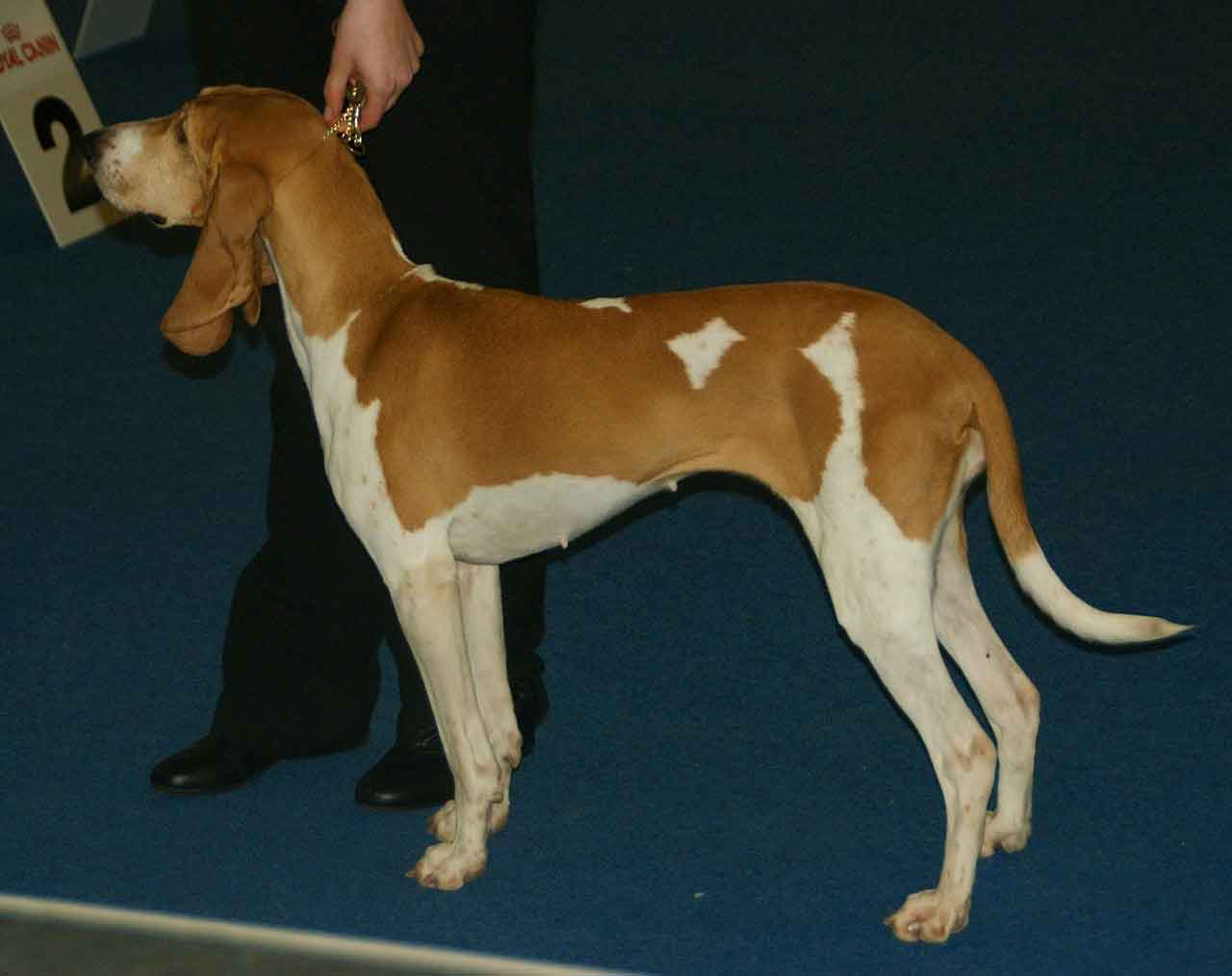
1 – Istrian Shorthaired Hound at a dog show in Zadar, Croatia (CACIB 2006.) by Mirta12, CC0, via Wikimedia Commons

Physical Characteristics Istrian Shorthaired Hound

The Istrian Shorthaired Hound he is a medium sized running dog, who appears elegant and distinguished in his build and movements. The height at the withers in both males and females is between 44 and 56 cm., the weight of the dogs is 14 to 20 kg, the optimum is 18 kg.

The coat of these dogs is thin, dense and, as the name reflects, short. This short-haired variant is somewhat smaller than the wire-haired version of the Istrian Hound.. The basic color of the coat is white with orange yellow tints. As a whole, the coat is shiny.

The life expectancy of dogs is 12 – 14 years.

Character and skills Istrian Shorthaired Hound

The characteristic of Istrian Shorthaired Hound it's his distinctive hunting instinct. The dogs have always been used as hunting dogs and still show corresponding characteristics today.. This includes his liveliness and his passion for hunting itself.. Like most hunting dogs, these dogs have little instinct for protection and are therefore quite unsuitable for guarding and protection tasks.

While the Istrian Shorthaired Hound be able to live your hunting instinct and feel fully occupied, has a gentle and friendly disposition. It is obedient and loyal to its owner. Your posture is nice.
It also, these dogs are smart and insightful, so they must be challenged in this regard as well. If the dogs are not kept according to their nature, they often get stubborn and sometimes even start poaching.

Keeping an Istrian Shorthaired Hound

The Istrian Shorthaired Hound It, by its nature, first of all a tracking dog. It is particularly suitable for hunting foxes and hares and is used almost exclusively for this purpose in its native country.. It is important that the dogs of this breed are kept by a hunter and encourage them to go hunting and take the trail., so it should be considered as an example for animals. Despite your gentle nature, they are not suitable as pure family dogs, as their pronounced hunting instinct would be neglected too.

Images "Istrian Shorthaired Hound"

Photos:

2 – Luri the Istrian Shorthaired Hound in a dog shelter in Zadar, Croatia by Mirta12, CC BY-SA 3.0, via Wikimedia Commons
3 – Luri the Istrian Shorthaired Hound in a dog shelter in Zadar, Croatia. He was underweight when the photo was taken by Mirta12, CC BY-SA 3.0, via Wikimedia Commons
4 – Luri the Istrian Shorthaired Hound in a dog shelter in Zadar, Croatia. He was underweight when the photo was taken by Mirta12, CC BY-SA 3.0, via Wikimedia Commons
5 – Istrian Shorthaired Hound Luri in a dog shelter in Zadar. When the photo was taken, he was underweight by Mirta12, CC BY-SA 3.0, via Wikimedia Commons
6 – Istrian Shorthaired Hound puppies at a dog show in Zadar, Croatia (CACIB 2006.) by Mirta12, CC BY-SA 3.0, via Wikimedia Commons

Videos "Istrian Shorthaired Hound"

Type and recognitions:

  • FCI CLASSIFICATION:
  • Group :
  • Section : . .

Federations:

  • – FCI – Group 6: Scent hounds, and related breeds. – Section 1.1: Large-sized Hounds. ⓘ
  • – UKC – Scenthound Group ⓘ

FCI breed standard "Istrian Shorthaired Hound"

Origin:
Croatia

Date of publication of the valid original standard:
3.11.2014

Use:

tireless hound, especially suitable for hare hunting, foxes and wild boars, although it can also be used as a tracking dog.


General appearance:

It is noble looking, with its snow white fur interspersed with yellow-orange spots. The hair is satin and fine. The head is long, narrow and thin. The body is agile. The tail is thin and slightly curled, Sabre-shaped.
This hound barks persistently, usually in a high pitched tone.

IMPORTANT PROPORTION : The length of the body must exceed the withers by a maximum of 10%.


Behavior / temperament:

Sweet character, docile, quiet, very attached to his master. Is energetic, and very passionate while hunting.

Head:

The length of the head fluctuates between 20 and 24 cm.. The forehead has no folds.

Cranial region:
  • Skull : In profile, the occipital protrusion is pronounced. The forehead is slightly arched, presenting a smooth transition towards the nasal bridge, which is straight. View from the top, the forehead is long and rather narrow, with an apparent frontal groove.
  • Depression links (Stop) : Outfit, no sharp sinking.

facial region:

  • Truffle : It is black, or at least brown. The nostrils are wide open.
  • Snout : It is long, width at the base, gradually tapering towards the limb. The nasal helm is straight.
  • Teeth : They're strong. The joint is in the form of scissors, uniform. Teeth are complete.
  • Eyes : They have an oval shape; they do not appear nor sunk, nor protruding. The iris should be as dark a color as possible. The eyelids are black or brown. The look is clear and expressive.
  • Ears : They are fine, with a broad ligament, implanted slightly above the horizontal line of the eyes; become narrower at the end. They are considered long, when carried forward along the bridge of the nose, they reach the canines; they are very long, when the canines exceed. They must be at least semi-long and reach the zygomatic arches.

Neck:

The upper profile is slightly arched in the nape region. The junction with the head is perceptible in the posterior part of the occipital protuberance. The neck is obliquely inserted into the trunk. Neck contour is compact. From the occipital protuberance to the withers, the neck measures of 15 to 20 cm.. The skin is stretched, no jowls or folds

Body:

The upper margin gently descends from the withers towards the rump.

  • Back : It is wide, straight and muscular.
  • Pork loin : Wide and short.
  • Rump : Long and wide; slightly inclined or horizontal. It is longer in females than in males. In the region of the rump the height is about one finger less than in the region of the withers. The haunches are barely noticeable.
  • Breast : Well inclined; reaches at least to the elbow. Normally, its circumference exceeds the height at the withers by some 12 cm.. The ribs are rounded. The front of the chest is well developed, but the tip of the sternum is barely visible.
  • Belly and flanks : The superior margin rises gently from the sternum to the inguinal region, therefore, the belly is slightly raised.

Tail:

Thick at its base, diminishing in its limb. The finer the tail, the greater the noble aspect of the dog. It is high implantation, of medium length and does not exceed the level of the hock. It comes slightly curled up.

Tips

PREVIOUS MEMBERS :

  • Shoulder pads : Long, oblique and well attached to the chest.
  • Elbows : Well applied to the body.
  • forearms : Perfectly vertical, well muscled.
  • Carpi : They are barely distinguishable from the forearm.
  • Metacarpus : They are straight and short. They can be slightly inclined, but the angle they form with the vertical never exceeds 10°.
  • Front feet : They look more like a cat's foot than a hare's. They are light, with fingers together. The pads are arched and firm; nails are solid.

LATER MEMBERS : Seen from the back, thigh, Leg, the hock tendon and the metatarsal are on the same vertical.

  • Thigh : Is short, wide and muscular.
  • Knee : The kneecap is wide, set high.
  • Legs : long, oblique and well muscled.
  • Hock : It's compact.
  • Metatarsals : Short, vertical or very slightly inclined, forming an angle of 10° to 20° with the vertical.
  • Hind feet : Similar to the forwards. However, they are a little longer.

Movement:

It is agile, uniform, loose.

Mantle

SKIN : Is elastic, is well applied over the entire body. Does not form folds. It is a pinkish color.

HAIR : It is flat, fine and shiny. Sometimes longer on the back of the thighs and on the inside of the tail, but this characteristic is not valued.

COLOR : The background color is snow white. In principle, the ears are orange; color that extends beyond the base of the ears and covers both sides of the forehead to the eye region, which gives the face its characteristic mask appearance. We mean a star if, on the upper part of the forehead there is a more or less large spot of the same orange color. The ears may also be dotted with orange spots, which is highly appreciated and considered as a sign of purebred. Yellow-orange spots can be seen in the form of specks or strips spread over any part of the body, but more often in the region of the tail ligament. They should never be so numerous as to dominate the white background color. The tone of the spots should be accentuated, never pale, nor dark, not even brown, which would show signs of a mixture of races. The presence of a third color is not allowed, not even in some hairs. The coat may be uniform white, without any stain.


Size and weight:

Height to the cross : It is of 44 to 56 cm..

Ideal size

  • for males : 50 cm.,
  • for females : 48 cm..

Weight : In an adult male it is about 18 kg.


Fouls:

Any deviation from the aforementioned criteria is considered as a fault and the severity of this is considered to the degree of the deviation to the standard and its consequences on the health and well-being of the dog..

MINOR FAULTS

• Spots with partial depigmentation on the nose or on one eyelid. Nose with a very clear pigmentation.
• Convex or slightly sunken back.
• Croup too oblique.
• Thin or too solid belly.

MISS PLAYOFFS

• Aggressive or fearful dog.
• Lack of proportion between body length and height at the withers.
• Head too short.
• Spots with abundant depigmentation, or total depigmentation of the nose.
• Muzzle too short, very pointed or obtuse.
• Upper or lower prognathism.
• Incorrect joint.
• Different colored eyes.
• Ligament of the ears set very high.
• Curled tail, deviated to one side or corkscrew. Cropped tail.
• Elbows too far apart.
• Twisted forearms.
• Pasterns too oblique.
• Hair that is too long.
• Any color other than yellow-orange.
• Size above or below the norms established by the standard.

Any dog ​​showing clear signs of physical or behavioral abnormalities must be disqualified..


N.B.:

Males should have two normal-appearing testicles fully descended into the scrotum..

Source: F.C.I - International Cynological Federation

Alternative names:

1. Original name – Istarski Kratkodlaki Gonič (English).
2. Chien courant d’Istrie à poil ras (French).
3. Istarski Kratkodlaki Gonič (German).
4. Istarski kratkodlaki gonic (Nome original) (Portuguese).
5. Nombre original – Istarski Kratkodlaki (español).

▷ The world of Pets: Dogs, cats, birds, reptiles, amphibians

Slovakian Hound
Eslovaquia FCI 244 - Medium-sized Hounds

Slovakian Hound

The Slovakian Hound stands out for its extraordinary sense of direction, which is considered the best among the canine breeds.

Content

History

It has remote and completely unknown origins.: its official recognition dates back to after World War II, but the breed already existed for centuries.

While there are no historical records, the Slovenský Kopov is widely believed to have existed in central Europe for many hundreds of years and to have descended from other local breeds, including the Austrian Black and Tan Hound and the Polish Hound.

Not widely kept for any purpose other than hunting, the Slovakian Hound He has honed his hunting skills over the centuries and is respected within Slovakia for his tracking ability and endurance. Despite its proven track record in the field, rarely seen internationally. curiously, when seen internationally, It is sometimes called the "Black Forest Dog.", a completely wrong name, since the Slovakian Hound it's not now, and has never been, native to the Black Forest region.

Like many other breeds of dogs of the time, the population of the Slovakian Hound decreased dramatically during the period of the World Wars. It is attributed to a Slovak named Koloman Snail having brought the race from the brink of extinction at this time, by establishing successful breeding programs nationwide.

Officially accepted as a breed in the decade of 1870, the first club of the breed Slovakian Hound was recently formed in 1988, in the capital of Bratislava. The Slovakian Hound it is so popular in its birthplace that it has been named the national breed of Slovakia.

Photo: Slovakian Hound during dog’s show in Racibórz,Poland by Pleple2000, CC BY-SA 3.0, via Wikimedia Commons

Physical characteristics

Always black with fire marks, the Slovakian Hound have solid bones despite their fairly slight stature. The body is in the shape of an elongated rectangle. His eyes reflect vivacity and courage. They are dark and almond-shaped. The ears are of medium length, rounded at the tip and falls flat against the head. This dog is notable for its constancy in following a cool trail or trail for hours, giving the voice without hesitation. They are also distinguished by their bite, so they are used in their native country to hunt wild boars and other carnivores.

He is endowed with a lively temperament. Your sense of direction is extraordinarily well developed.

Hair is 2-5 cm long, medium thick, well lying, dense. Longer in the back, neck and tail. The undercoat is dense, especially during the winter months; However, it should not be absent in summer either.

SIZE AND WEIGHT :

Males 45-50 cm.

females 40-45 cm.

Weight: 15-20 kg

Character and skills

This determined hunter must be tenacious when on the road and courageous when facing the animals he hunts., like the boar and the deer. They have excellent olfactory abilities and will painstakingly trace a scent back to the source. An independent animal that is happy to work with a minimum of human interaction, the Slovakian Hound need little direction. Despite this, they are obedient, and they will happily follow their master's plans when necessary.

The Slovakian Hound it's a good watchdog, as he is continuously alert and observant. This, along with the fact that they become devoted to their owners, means they are often protective, and can be used successfully as watchdogs, becoming potentially aggressive if the situation calls for it. Barking can be a problem and is a common complaint of many owners.. Excessive barking can be prevented by ensuring that the Slovakian Hound you are not under-exercised and have plenty of activities and jobs to fill your day.

Health

The Slovakian Hound it is a very resistant dog. In the country of origin the owner has a dog, rarely from, who does not live in a kennel but in contact with the master from morning to night, often used as a general purpose dog, taking care of the house as well as the cattle, and of course hunting. It is adapted to outdoor life and has an iron constitution.

Care and maintenance

The Slovakian Hound it is a very resistant dog, no particular grooming problems. Short hair, when he comes back from hunting he will be the happiest in the world if you give him the necessary brushstroke for a superficial cleaning at the level of the spikes, caught between the pads, ticks possibly not yet attached.

He will quickly get used to coming to you for this cleaning because he is looking for contact with his master.

Qualities

It's a farm dog, the quintessential farm dog. Bad guys just do that. The good ones are able to give the voice, to take the lead by yelling or barking directly at any stranger before coming into view. A good Slovakian Hound should give voice instantly. Not after ten minutes (although, depending on the conditions…). The smell of Slovakian Hound it's excellent, as fine as that of the best Hounds, but his hunting style leads him to voice only in the moment, and of course staring.

The Slovakian Hound is a search engine, a hunting finder. Hunting instinct is among the best hounds, really very developed, off the beaten path as in some Warren hound and some representatives of primitive races.

Farm dog, you don't need to see the animal, the wild boar to bark after, like some pointing dogs that only bark at sight, or to the noise. With experience, depending on origins, will start barking after turning around to make sure the animal is ten meters away, or more. Once you have fired the bark it will zoom in pretty quickly, but always with care, always staying safe. The Slovakian Hound is not a brave and daring specialist like some races of German Hunting Terrier or pointing dogs, who are inevitably injured frequently. With the, used in its specificity, theoretically, no need for a boar vest, because he knows how to handle attacks. Some are never hurt, if used properly, alone or as a couple.

The Slovakian Hound is a dog that is easy to start with the boar. Because it's in their nature, to bark, and the only animal that does not automatically flee but goes to meet is the wild boar. If you are accustomed to hunting on hunts where wild boar are rare but deer are numerous, you will enjoy easily guiding your animals for half an hour or more, but as soon as he perceives that there is a wild boar in the area, will leave this animal too elusive to go and do what it was designed to do.

A good Slovakian Hound, alone or as a couple, it is rarely caught by a wild boar. Otherwise, in dog teams he becomes a vulnerable dog like any other because his passion is terrible, and there, better equip it with a vest…

Characteristics "Slovakian Hound"

Coexistence is important that you have with your new friend. Before considering the acquisition of a dog of the breed "Slovakian Hound" you know certain factors. Not all breeds of dogs are apt to live in an apartment, you must take into account his character, their need for exercise, their interaction with other pets, their care and if you have small children, their level of tolerance towards them.

Adaptation ⓘ

4,0 of 5 stars (based on 1 review)

friendly dog ​​ⓘ

3,0 of 5 stars (based on 1 review)

hair loss ⓘ

3,0 of 5 stars (based on 1 review)

Affection level ⓘ

4,0 of 5 stars (based on 1 review)

Need for exercise ⓘ

4,0 of 5 stars (based on 1 review)

Social need ⓘ

4,0 of 5 stars (based on 1 review)

Home ⓘ

4,0 of 5 stars (based on 1 review)

Toilet ⓘ

2,0 of 5 stars (based on 1 review)

Friendly with strangers ⓘ

2,0 of 5 stars (based on 1 review)

barking ⓘ

5,0 of 5 stars (based on 1 review)

Health ⓘ

4,0 of 5 stars (based on 1 review)

Territorial ⓘ

5,0 of 5 stars (based on 1 review)

Cat friendly ⓘ

2,0 of 5 stars (based on 1 review)

Intelligence ⓘ

4,0 of 5 stars (based on 1 review)

Versatility ⓘ

4,0 of 5 stars (based on 1 review)

Child friendly ⓘ

4,0 of 5 stars (based on 1 review)

Surveillance ⓘ

4,0 of 5 stars (based on 1 review)

joy ⓘ

4,0 of 5 stars (based on 1 review)

Images "Slovakian Hound"

Photos:

1 – SLOVENSKÝ KOPOV Rantafejs Cezary Av Fileddy MyDOG, Nordens största hundevenemang: www.mydog.se by Svenska Mässan from Sweden, CC BY 2.0, via Wikimedia Commons
2 – A female Slovakian Hound. by Canarian, CC BY-SA 3.0, via Wikimedia Commons
3 – Slovakian Hound during dog’s show in Racibórz,Poland by Pleple2000, CC BY-SA 3.0, via Wikimedia Commons
4 – Slovakian Hound during dog’s show in Racibórz,Poland by Pleple2000, CC BY-SA 3.0, via Wikimedia Commons
5 – Slovakian Hound during dogs show in Katowice, Poland by Lilly M, CC BY-SA 2.5, via Wikimedia Commons
6 – Chien courant slovaque sur fond blanc by Desaix83, d'après le travail de Canarian, CC BY-SA 3.0, via Wikimedia Commons

Videos "Slovakian Hound"

Type and recognitions:

  • FCI CLASSIFICATION:
  • Group :
  • Section : . .

Federations:

  • – FCI – Group 6: Scent hounds, and related breeds. – Section 1.2: Medium-sized Hounds. ⓘ
  • – UKC – Scenthounds ⓘ

FCI breed standard "Slovakian Hound"

Origin:
Slovakia

Date of publication of the valid original standard:
16.04.1963

Use:

Hound. This breed is characterized by continuing to bark a warm track (recent) or a trail steadily for hours. It is also characterized by its bite and that is why it is used in its place of origin especially for hunting wild boar and animals of prey..


General appearance:

They are always one color : black with “fire” markings. Rather light body structure; However, has strong bones. Elongated rectangular body shape.


Behavior / temperament:

It is of a spirited nature. Exceptionally developed sense of orientation.

Head:

---

Cranial region:
  • Skull : Bulging at the top; its shape is square and elongated; superciliary arches and frontal sulcus are notable; occipital protuberance is poorly marked. The longitudinal axes of the muzzle and skull are parallel.
  • Depression links (Stop) : About 45°.

facial region:

  • Truffle : Always black, relatively large, moderately pointed; moderately open windows.
  • Snout : Straight nose cane, corresponding to the long and not very wide skull.
  • Lips : They are not hanging; they are together, skinny, with a visibly open corner.
  • Jaws / Teeth : on regular basis, firm; well developed full bite.

Eyes : dark, a little deep. His expression denotes vivacity and animosity. Eyelids are always black; almond-shaped eye opening.

Ears : Inserted a little above the eye line, laid flat on the sides of the head, rounded at their ends, medium long.

Neck:

Well inserted, carried at an angle of approximately 135°, rather short, muscular and no loose skin.

Body:

  • Back : Straight, medium long.
  • Pork loin : Not too long, very wide, firm and muscular.
  • Rump : Not too long, average width, rounded.
  • Breast : Wide and well filled windowsill. Medium deep, of a suitable width and relatively long.
  • Chest : Rounded ribs, placed obliquely.
  • Belly and flanks : Moderately withdrawn.

Tail:

Rather low set, a little below the line of the back; of adequate strength; slimming to tip; reaches up to the tibio-tarsal joint; at rest it is carried hanging; When excited, it is curved upwards in the shape of a sickle up to an angle of 150°..

Tips

PREVIOUS MEMBERS :

  • Scapula and Arm : Rather short, well-developed and muscular. Shoulder angle approximately 110°.
  • Forearm : Vertically placed, delgado.
  • Articulation of the carpus : Short.
  • Metacarpus : Not very long, a little inclined.
  • Previous feet: Oval, well arched fingers; nails always black and strong; dark pads, well developed.

LATER MEMBERS :

  • Thigh : Moderately wide and long, muscular.
  • Leg : Wide, of a suitable length and with good muscles.
  • Warm-foot joint : Located approximately at a height of 15 cm.; moderately wide. The angle of the tibiotarsal joint is approximately 150°.
  • Metatarsus : Approximately from 8 cm long; moderately leaning forward; No Spurs.
  • Hind feet : Oval, fingers close together and well arched; well developed pads, black.

Movement:

Lively and balanced.

Mantle

SKIN : From dark brown to black, footprint, no loose skin folds.

HAIR : Of 2 – 5 cm long, moderately hard, glued and dense. It is longer on the back, neck and tail. Dense internal fluff especially in the winter months, although his presence should not be lacking during the summer.

COLOR : Black with tan to mahogany markings on limbs.


Size and weight:

Height to the cross :

  • In males : 45 – 50 cm..
  • In females : 40 – 45 cm..

Weight : 15 – 20 kg.


Fouls:

Any deviation from the aforementioned criteria is considered as a fault and the severity of this is considered to the degree of the deviation to the standard and its consequences on the health and well-being of the dog..

• Rough figure, plump or chubby.
• Head too heavy.
• Hanging lips.
• Incomplete bite.
• Superior or inferior progantism.
• Light eyes, loose eyelids, eyelids too tight.
• Ears too light, pointy.
• Loose skin on the neck.
• Back too weak.
• Flattened chest (severe deficiency).
• Visibly long tail, also carried at rest above the line of the back.
• Defective position of the extremities.
• Weak feet.
• Coat too short, that's lanilla interna; hair too long, wavy.
• Another color other than black, white markings, unclear delimitation of “tan” colored spots.
• Excessive size.

IMPORTANT PROPORTIONS (IDEAL TYPE)

  • Weight 16 kg
  • Height at the withers in males 46 cm.
  • Height at the withers in females 43 cm.
  • Total length of the head 22 cm.
  • Length of the muzzle 9 cm.
  • Length of the skull 13 cm.
  • Skull width 10,5 cm.
  • Width of chest 16,5 cm.
  • Chest height 22 cm.
  • Chest depth 31,5 cm.
  • body length 55 cm.
  • Chest circumference behind the last free rib 54 cm.
  • Limb angulations : Angle between the scapula and the arm 110°
  • Angle between the arm and forearm 140°
  • Angle between hip and thigh 130°
  • Angle between thigh and leg 130°
  • Tibio-tarsian joint angle 145°

Any dog ​​showing clear signs of physical or behavioral abnormalities must be disqualified..


N.B.:

Males should have two normal-appearing testicles fully descended into the scrotum..

Source: F.C.I - International Cynological Federation

Alternative names:

1. Black Forest Hound, Slovak Hound (English).
2. (slovenský kopov en slovaque) (French).
3. Slowakische Schwarzwildbracke (German).
4. Cão da floresta (Portuguese).
5. Cazador eslovaco (español).

▷ The world of Pets: Dogs, cats, birds, reptiles, amphibians

Schiller Hound
Suecia FCI 131 - Medium-sized Hounds

Schiller Hound

The spread of Schiller Hound is regular in your country of origin, but very small abroad.

Content

History

The Schiller Hound It is a working breed that has existed in Sweden since the Middle Ages. But, the breed was not really established and recognized until 1952. This recognition is due in large part to a breeder, Per Schiller, who gave the breed its name.

In 1886, at the first Swedish dog show, they were shown 189 hounds. Among them were Tamburini and Ralla I, a brother and sister belonging to Per Schiller. They were descended from the famous hounds of the Kaflas estate. These dogs probably came from southern Germany: rather small, fawn in color with black fur and slight white markings.

The Schiller Hound they were then based on the crossing of Swiss dogs, German and Austrian, as well as in British hunting dogs, especially the Harriers, to produce a fast and light breed that quickly acquired its type. curiously, Per Schiller worked alongside a Swedish doctor named Adolf Hamilton, and also led to the development of a similar dog named Hamilton Hound, that can be differentiated from Schiller Hound for its tricolor coat.

Still very rare outside his native country, the Schiller Hound was recognized by the Swedish Kennel Club in 1907.

The Schiller Hound has been traditionally used as a sniffing dog, although some describe it as a hunting dog. The breed is known for both its speed and superior olfactory ability; able to quickly track its prey and then howl loudly when its master approaches, alerting of its position. It is a hardy dog ​​that can tolerate the cold Swedish winters well.. Often, they work individually rather than in a pack and typically hunt rabbits and foxes. Even today, many dogs still work as hunters, although they are equally good household pets.

Photos: Schiller Hound during International show of dogs in Katowice – Spodek, Poland by Pleple2000, CC BY-SA 4.0, via Wikimedia Commons

Physical characteristics

The conformation of Schiller Hound it's that of an athletic dog, and with his well-muscled body and strong limbs, you are clearly well suited to your job role. Its head is relatively small but long and has a well defined stop. The bridge of your nose should be straight and the nose itself is black with wide nostrils. His dark brown eyes are bright and alert, set deep in your face. His medium-sized, high-set ears hang close to his face and do not extend beyond his lower jaw.. Its long and thin limbs are parallel and are surely one of the main reasons for its impressive speed; giving them a very long stride. Their body is rectangular in shape and they have a deep chest with a robust and solid back.. Its long, tapered tail should not be carried too high in the exhibition ring..

The shiny, straight coat of the Schillerstövare fits perfectly to his skin. The top coat is actually quite tough, although the shorter fur on his face and ears is softer to the touch. Predominantly tan in color, the coat also has a prominent black coat. Only small white spots are allowed on the coat. Their fur is expertly designed to protect them in icy weather conditions.

The Schiller Hound It is a medium to large sized hound for hunting fox and hare, what does it measure 53-61 cm to the withers and weighs 18-25 kg . The coat is rough and not too short, and it's close to the body.

Character and skills

These vivacious dogs live life to the fullest and are a pleasure to be around. Always alert, they need a lot of attention and crave human companionship. The Schiller Hound they will form a close bond with their family, and although they tolerate children well, require supervision when with younger children, as they can be quite disruptive.

The Schiller Hound are normally kept indoors and can be calm and polite housemates, although they can bark melodiously at times. The watchful nature of this dog means that it will always alert its owner to any unannounced guests., However, they are not territorial enough to be used as guard dogs. This dog's distrust of new people can be a problem, although this can usually be overcome by early and thorough socialization.

Although it is not conventionally worked in packs of dogs, the Schiller Hound can socialize well with other dogs if given the opportunity. Of course, smaller animals are not safe in their company and are likely to be seen as little more than prey.

Health

Most members of the breed live into their teens and tend to be in good health.. There are a couple of conditions to consider when it comes to Schiller Hound:

Hip Dysplasia

Malformed hips result in an uneven gait, lifelong muscle loss and discomfort. Affected canines are treated with a variety of therapies, including physiotherapy, hydrotherapy and pharmaceutical pain relief. Prudent screening programs in adult dogs of breeding age may help reduce the overall incidence in the population. If a breeding-age dog gets a low hip score, must be neutered and removed from the kennel.

ear infections

The floppy ears of hunting dogs are a magnet for infections as they create moist environments inside the ear canal for bacteria and yeast to thrive.. Keeping the ears clear and dry can reduce the potential for infection.. If wax builds up, an ear cleaner should be used. Infections should not be allowed to become infected and should be treated as soon as they are noticed. Chronic and whiny infections can pose a real challenge to healing and make the dog very uncomfortable and unhappy while they persist.

Characteristics "Schiller Hound"

Coexistence is important that you have with your new friend. Before considering the acquisition of a dog of the breed "Schiller Hound" you know certain factors. Not all breeds of dogs are apt to live in an apartment, you must take into account his character, their need for exercise, their interaction with other pets, their care and if you have small children, their level of tolerance towards them.

Adaptation ⓘ

3,0 of 5 stars (based on 1 review)

friendly dog ​​ⓘ

4,0 of 5 stars (based on 1 review)

hair loss ⓘ

2,0 of 5 stars (based on 1 review)

Affection level ⓘ

5,0 of 5 stars (based on 1 review)

Need for exercise ⓘ

4,0 of 5 stars (based on 1 review)

Social need ⓘ

3,0 of 5 stars (based on 1 review)

Home ⓘ

4,0 of 5 stars (based on 1 review)

Toilet ⓘ

1,0 of 5 stars (based on 1 review)

Friendly with strangers ⓘ

2,0 of 5 stars (based on 1 review)

barking ⓘ

4,0 of 5 stars (based on 1 review)

Health ⓘ

5,0 of 5 stars (based on 1 review)

Territorial ⓘ

3,0 of 5 stars (based on 1 review)

Cat friendly ⓘ

2,0 of 5 stars (based on 1 review)

Intelligence ⓘ

4,0 of 5 stars (based on 1 review)

Versatility ⓘ

4,0 of 5 stars (based on 1 review)

Child friendly ⓘ

4,0 of 5 stars (based on 1 review)

Surveillance ⓘ

3,0 of 5 stars (based on 1 review)

joy ⓘ

4,0 of 5 stars (based on 1 review)

Images "Schiller Hound"

photos:

1 – A female Schiller Hound by Canarian, CC BY-SA 3.0, via Wikimedia Commons
2 – A female Schiller Hound by Canarian, CC BY-SA 3.0, via Wikimedia Commons
3 – Schiller Hound (Schiller's wanted poster) International Dog Show in Katowice 28 – 30. 03.2008 by Lilly Mreal name: Małgorzata Miłaszewska, CC BY-SA 3.0, via Wikimedia Commons
4 – Schiller Hound during dogs show in Katowice, Poland by Lilly M, CC BY-SA 2.5, via Wikimedia Commons
5 – «Sabueso Schiller» by https://pixabay.com/es/photos/cachorro-hound-schillerstövare-837998/
6 – Schiller Hound (Schiller's wanted poster) International Dog Show in Katowice 28 – 30. 03.2008 by Lilly Mreal name: Małgorzata Miłaszewska, CC BY-SA 3.0, via Wikimedia Commons

Videos "Schiller Hound"

Cora the Schiller duster chases hares as a young dog.
Schillerstøveren Cora jager hare som unghund.
Collection of hares with the Schillerstøveren Tilda
Uttak på hare med Schillerstøveren Tilda

Type and recognitions:

  • FCI CLASSIFICATION:
  • Group :
  • Section : . .

Federations:

  • – FCI – Group 6: Scent hounds, and related breeds. – Section 1.2: Medium-sized Hounds. ⓘ

FCI breed standard "Schiller Hound"

Origin:
Sweden

Date of publication of the valid original standard:
17.07.1997

Use:

Bloodhound-type dog that barks on the trail and is used to hunt hares and foxes.. It is not a pack dog, nor hunt in pairs; It is not used for deer hunting either..


General appearance:

He is a well proportioned dog, tendinoso, noble looking. Shows speed and strength.

IMPORTANT PROPORTION : Slightly rectangular body.


Behavior / temperament:

Lively and attentive.

Head:

Elongated. View from the front and profile, the head should have a triangular appearance, without the snout being pointed.

Cranial region:
  • Skull : Only slightly arched and wider between the ears.
  • Depression links (Stop) : Well defined.

facial region:

  • Truffle : black, with well-developed nostrils.
  • Snout : Elongate, with straight nasal passage parallel to the line of the skull.
  • Lips : They must be tight and well glued.
  • Jaws/Teeth : Scissor bite, strong, well-developed teeth.

Cheeks : They are not prominent. Eyes : Dark brown in color, with lively expression.

Ears : High insertion; when pulled forward, the ears do not reach the middle of the snout; raises them slightly when attentive. They're soft, They fall flattened with their anterior edge attached to the cheeks.

Neck:

Long and strong, gently melts towards the shoulders. The skin that covers the neck is tight and flexible.. The top line of the neck should be well arched in males..

Body:

  • Cross : Well marked.
  • Back : Straight and strong.
  • Pork loin : Muscular and slightly arched.
  • Rump : Slightly inclined, long and wide.
  • Breast : Deep, long and well developed; should reach up to the elbows. Ribs moderately sprung.
  • Bottom line and belly : Belly only slightly retracted.

Tail:

Inserted in continuation with the line of the back. Carried straight or slightly curved in the shape of a saber. It is thick at the root and thins towards the tip, reaching the tibio-tarsal joints.. When is the dog moving, It is preferable that the tail is not carried above the level of the back.

Tips

PREVIOUS MEMBERS :

  • General information : Strong bones in harmony with the overall appearance of the dog. Viewed from the front, they are straight and parallel.
  • Shoulder : Long, muscular, well directed backwards and well attached.
  • Arms : Long, forming a right angle with the shoulders.
  • Elbows : Well attached to the body, without exceeding the line of the chest.
  • Metacarpus : Elastic, slightly angled towards the forearms.
  • Previous feet : Oval, with fingers well angled and together.

LATER MEMBERS :

  • General information : Seen from the back, They are strong and parallel.
  • Thighs : Covered with well-developed muscles; viewed profile, thighs are wide.
  • Knees : Well angulated.
  • Warm-tarsal joints : Well angulated.
  • Metatarsus : Short, slim and upright.
  • Hind feet : Similar to the previous; dewclaws are undesirable.

Movement:

Parallel, strong, spans space.

Mantle

HAIR : Rough, not too short, very well attached to the body. Over the head, ears and front part of the limbs, the coat should be short and soft. The outer layer of hair may be longer below the tail and on the back of the thighs.

COLOR : Tawny (fire) with a well-defined black coat that covers the back and sides of the neck, the sides of the trunk and the top of the tail. Some white markings on the chest and toes are allowed.. Black hairs mixed in the fawn color are not allowed. (fire) in adult dogs. But, yes black marks are allowed on the cheeks.


Size and weight:

Height to the cross :

  • Male : 53-61 cm.. Ideal size 57 cm. (22,5 inches).
  • females : 49-57 cm.. Ideal size 53 cm. (21 inches).


Fouls:

Any deviation from the aforementioned criteria is considered a fault and the severity of it is considered to the extent of the deviation from the standard and its consequences on the health and well-being of the dog..

• Incorrect proportions between body length, the height to the withers and the depth of the thorax.
• Undefined sexual characteristics.
• Wide skull, pronounced occiput.
• Concave nasal cane.
• Upper or lower prognathism, level bite.
• Prominent cheeks.
• Light eyes.
• Short croup, inclined.
• Tail carried above the line of the back.
• Obtuse angle between the scapulae and arms.
• Restricted posterior movement.
• Indefinite coat with abundant presence of brown hair.
• Dense black mantle that covers the chest, the sides of the body, shoulders and thighs.

MISS PLAYOFFS

• Cowardice, aggression toward owner.
• Very reserved dog, fearful.
• Pronounced upper or lower prognathism.
• Height of the withers that exceeds the maximum or minimum limits.

Any dog ​​showing clear signs of physical or behavioral abnormalities must be disqualified..


N.B.:

Males should have two normal-appearing testicles fully descended into the scrotum..

Source: F.C.I - International Cynological Federation

Alternative names:

1. Schiller Bracke, Schillerstövare (English).
2. Schillerstövare (French).
3. Schiller-Bracke, Schillerstövare (German).
4. Schillerstövare (Portuguese).
5. Schillerstövare (español).

▷ The world of Pets: Dogs, cats, birds, reptiles, amphibians

Serbian hound
Serbia FCI 150 . Medium-sized Hounds

Serbian hound

The Serbian hound, Also known as "Balkan Hound", is broadcast only in your country.

Content

History

This breed belongs to the group of hounds that spread throughout the Balkan territory. The hounds of Asia Minor are believed to have played an important role in its creation. The first description of this breed under the name "Balkan Hound" dates back to 1905 ; we owe it to Franz Laska, who described this breed among other hound dogs.

The first standard was written in 1924, but it wasn't until the Bled session of the 14 in May of 1940, that the F.C.I. adopted the standards already announced in Estol as in 1939, and among which was that of the "Balkan Hound". Since this is the most widespread breed in Serbia, it is the Yugoslav Cynological Association that controls its breeding and proceeds to the inscriptions in the official book of origins.

The 12 in November of 1996, during their meeting in Copenhagen, the General Committee of the F.C.I.. discussed the proposal accepted by the general assembly of the Yugoslav Cynological Association and accepted that the appellation "Balkan Hound" be replaced by Serbian hound.

Source: fci

Photo: Face of Serbian Hound female 2 year old by Android90, CC BY-SA 3.0, via Wikimedia Commons

Physical characteristics «Serbian hound»

Serbian hound
Female Serbian Hound 2 years old by Android90, CC BY-SA 3.0, via Wikimedia Commons

The Serbian hound is a breed of hunting dog used in packs in Serbia, medium-sized, also known as "Balkan Hound".

his physique is strong, his lively and energetic charisma. The breed's shoulder height in males is between 46 and 56 cm., preferably between 51 and 52 cm.. Bitches have a height at the withers between 44 and 54 cm., being the ideal size of 48 to 49 cm.. The weight of the Serbian hound is between 11 and 22 kg.

Your head is flat and tilted, its pointed snout.

What attracts attention are the large floppy ears of the animals, which are typical of hunting dogs.

The coat of dogs is thick, luxurious and has undercoat. It is short and close to the body. Coat color is a shade of red ranging from yellowish red to fox red, and dogs often have a black coat or saddle.

As a whole, his fur is shiny.

Life expectancy Serbian hound is of 12 to 13 years.


Character and skills «Serbian Hound»

Tireless, continuing with lively y, the Serbian hound they have a balanced temperament and good character.

They are also very docile dogs with a high and often deep voice..

These sturdy built dogs are calm and dignified, eager to please their master.

But, need firm authority in their training, space and lots of exercise.

The "Balkan Hound" can be a good companion dog, although its primary function is that of a hunting dog (running / searching or tracking). They are remarkably tenacious in the field.

Videos "Serbian hound"

Serbian Hound (Serbian Hound)
Serbian Hound (Srpski Gonič)
Serbian Hound (Serbian Gonic) - Breed of dog
Sabueso Serbio (Srpski Gonic) – Raza de Perro

Type and recognitions:

  • FCI CLASSIFICATION:
  • Group :
  • Section : . .

Federations:

  • – FCI – Group 6: Scent hounds, and related breeds. – Section 1.2: Medium-sized Hounds. ⓘ

FCI breed standard "Serbian hound"

Origin:
Serbia

Date of publication of the valid original standard:
25.03.2003

Use:

Hound


General appearance:

He is of medium size and robust constitution. He has a great temperament and is full of energy and vitality..

IMPORTANT PROPORTIONS :
The length of the body, measured from the end of the shoulder to the end of the haunch, exceeds in a 10% the height at the withers. The perimeter of the chest exceeds the height at the withers by one 20%. The length of the head corresponds to a 45% the height at the withers.


Behavior / temperament:

It is nice, of an energetic temperament. Self-confidence, shows remarkable tenacity.

Head:

Dolicocephalic; the upper lines of the skull are divergent.

Cranial region:
  • Skull : Seen from the front and profile, is slightly arched and the frontal furrow is pronounced. The occipital crest is poorly marked. The width between the ears is less than or equal to the distance between the naso-frontal depression and the occipital protuberance. Superciliary arches are pronounced.
  • Depression links (Stop) : Bit strong.

facial region:

  • Truffle : Well developed. It is always black.
  • Snout : Cuneiform, somewhat shorter than the skull : a relationship of 9 to 10 between the length of the muzzle and the length of the skull. The muzzle progressively decreases from the naso-frontal depression to the nose. The nasal spout is straight.
  • Lips : They are moderately developed and moderately thick, They are well adapted to the jaw. The border must be black. The upper lip slightly exceeds the lower; the commissure is firm.
  • Jaws / Teeth : The jaws are powerful. Teeth are strong, with a uniform and complete scissor joint. Is accepted in the form of clip joint.
  • Cheeks : Flat.

Eyes : Medium in size and oval in shape. They appear slightly oblique. The edge of the eyelids is dark (preferably black). The iris should be as dark as possible.

Ears : High are presented. Moderately long and wide, pendants, well attached to the cheeks. Its limb is more or less oval in shape. They are thinner than thick.

Neck:

Powerful. Its length is approximately equal to that of the head. The top line is slightly arched. Forms an angle of 45 at 45° to the horizontal.

Body:

The body is elongated, its length exceeds by 10% the height at the withers.

  • Top margin : It is straight.
  • Cross : Little pronounced.
  • Back : She is very muscular, straight, powerful and long.
  • Pork loin : Well muscled. Its length is approximately equal to that of the rump.
  • Rump : Slightly inclined (of 20 at 25° relative to the horizontal). Is powerful, well muscled and wide.
  • Breast : Strong ; its height corresponds to 50% from the height to the cross and its perimeter exceeds this by a 20%.
  • Bottom margin and belly : The oval end of the sternum is slightly pronounced. The belly is slightly raised.

Tail:

Extends the line of the rump. It is thick at the ligament and gradually tapers to the limb, that reaches the level of the hock. Curls slightly upward and occurs below the back margin. It is covered by abundant hair.

Tips

PREVIOUS MEMBERS :

  • As a whole : Powerful, well muscled, parallel.
  • Omóplato : Its length corresponds approximately to that of the arm. He's muscular, solid and well attached to the chest wall. Forms an angle of 45 at 50° relative to the horizontal.
  • Arm : Powerful, muscular, approximately the same length as the shoulder blade.
  • Elbow : Solid, well attached to the body. The distance from the elbow to the ground corresponds to a 50% the height of the cross.
  • Forearm : Powerful, flat and muscular.
  • Carpo : Solid.
  • Metacarpus : Powerful, slightly oblique (until 15% in relation to the vertical).
  • Previous foot : Jack's foot, with fingers together and solid. Nails are strong and black.

LATER MEMBERS :

  • As a whole : They're strong, plans, well muscular and parallel.
  • Thigh : Well muscular and flat.
  • Babilla : Solid, parallel to the median plane of the body. Its angle measures around 120°.
  • Leg : Well muscled. Its length is approximately equal to that of the thigh.
  • Hock : Powerful, well inclined. Its angle is 135 a 140°.
  • Metatarsus : Powerful, almost vertical.
  • Rear foot : A little longer than the previous one, with fingers together and solid. Nails are strong and black. The bearings are strong and sufficiently elastic.

Movement:

To step, a good extension of the forelimbs is observed. The preferred gait is the loose and brisk trot. The limbs move in a plane parallel to the median plane of the body.

Mantle

SKIN : It is elastic and well pigmented, adheres well to the body.

HAIR : Short, abundant, shiny and smooth over the whole body. An inner layer of hair is observed. The hair is slightly longer on the back edge of the thighs and on the underside of the tail..

COLOR : Red (like fox hair), ranges from yellowish red to a moldy hue, with a blanket or Chair black. The blanket or chair reaches up to the head, showing black marks on both sides of the temples ; a round white mark on the sill is acceptable that does not exceed a diameter of 2 cm..


Size and weight:

Height to the cross:

  • Males: of 46 to 56 cm., the ideal height is between 51 and 52 cm..
  • females: of 44 to 54 cm., the ideal height is between 48 and 49 cm..


Fouls:

Any deviation from the aforementioned criteria is considered as a fault and the severity of this is considered to the degree of the deviation to the standard and its consequences on the health and well-being of the dog..

MISS PLAYOFFS

• Aggressive or fearful dog.
• Absence of a tooth. The absence of two premolars is tolerated 1 (PM1).
• Upper or lower prognathism.
• Different colored eyes.
• Body too long.
• Curled tail, set high or hunched over the back. Tip of tail hook-shaped or diverted laterally.
• White spot on the sill larger than the accepted size or presence of a white spot elsewhere.
• Height at the withers higher or lower than that established by the standard.

Any dog ​​showing clear signs of physical or behavioral abnormalities must be disqualified..


N.B.:

Males should have two normal-appearing testicles fully descended into the scrotum..

Source: F.C.I - International Cynological Federation

Alternative names:

1. (Serbian: српски гонич/srpski gonič), Balkan Hound (English).
2. Chien courant des Balkans (French).
3. Serbische Bracke, Balkanbracke (German).
4. (em sérvio: srpski gonic) (Portuguese).
5. Cazador de los Balcanes, Sabueso de los Balcanes (español).

▷ The world of Pets: Dogs, cats, birds, reptiles, amphibians

Bloodhound
Bélgica FCI 84 - Large-sized Hounds

Bloodhound

The Bloodhound It is the dog with thinner smell of the planet.

Content

History

The Bloodhound (Bloodhound) It is a breed of dog originally from Belgium, more specifically in the region of the Ardennes. It is one of the different breeds of hound recognized by the FCI in Group 6.

Has been traditionally considered to the monks of the monastery of St. Hubert as the creators of the race (for this reason also, are known as St. Hubert Hound), and they based their selection on the hunting dogs used by the monk Hubert, founder of the order and which later to be canonized became the patron saint of hunters. King William the Conqueror took copies of this breed to England when he ascended to the throne. The descendants of these specimens, They were known in the country as Bloodhound, referring to the purity of their blood.

Did you know??

The name "Bloodhound" does not come from this dog's ability to track game and people, but from a long history of carefully recorded bloodlines. In other words, He is a "blood" hound, a kind of dog of the aristocracy, if it can be said like that.

This legend has it that a rich nobleman hunted in a good Friday accompanied by a group of noisy dogs, and in the distance he could see a deer and when he was about to shoot he saw the image of the cross of Jesus Christ drawn on its antlers and since then he retired from his dissipated life to dedicate his fortune to good works. Since then usually give the nobles, the best specimen of his beloved dogs. Today the tradition continues, but now is a religious service and gives blessing to copies, continuing with the exposure of the race in the community of St. Hubert at Belgium.

After the race was introduced in the United States where one of his missions was the search and hunt down the fugitive slaves. For many years the recognition by a Bloodhound incriminating evidence was considered by American courts.

Physical characteristics

The Bloodhound is a powerful hunting dog. The back is very strong compared to the size of the dog. The head is long and narrow. The muzzle is long with a nose of black. Deeply sunken eyes and drooping eyelids. The Chin is very pronounced.

The Bloodhound is a dog with a nose finest of the planet.

Despite its size, is an agile dog. His body is longer than high. Wrinkles on the head and jowls are perhaps one of the most characteristic features, along with the length of its hanging ears. The accepted colors are black and fire, Brown and red in its different shades and fire.

The appeal is of 67 cm for males and 60 cm for females.

It has been documented that they are capable of following a trail of up to fifteen days, because of the enormous sensitivity of their sense of smell, caused by the internal folds of their nostrils. For that reason it is used as a police dog in tracking tasks..

These hounds cannot be kept in a yard without fences. There is a good chance that your tracker instinct carried them wander and get away until the end of their trail.

It is a dog that needs to be exercised (like all dogs), and usually live more happily in large spaces, Although adapts very well to home life.

The Blodhound (Bloodhound), Despite the allusion to the term blood contained in its name (blood), It is one of the animals most affable that exists. It is a dog of noble nature, can be shy around strangers. He is very patient and persevering when looking for a trail…

It is excellent Playmate for children, defend them from any danger. They tend to be very well with other dogs and pets.

Pictures Bloodhound

Videos Dog of St. Hubert

Characteristics "Bloodhound"

Coexistence is important that you have with your new friend. Before considering the acquisition of a dog of the breed "Bloodhound" you know certain factors. Not all breeds of dogs are apt to live in an apartment, you must take into account his character, their need for exercise, their interaction with other pets, their care and if you have small children, their level of tolerance towards them.

Adaptation ⓘ

3,0 of 5 stars (based on 1 review)

friendly dog ​​ⓘ

5,0 of 5 stars (based on 1 review)

hair loss ⓘ

5,0 of 5 stars (based on 1 review)

Affection level ⓘ

5,0 of 5 stars (based on 1 review)

Need for exercise ⓘ

5,0 of 5 stars (based on 1 review)

Social need ⓘ

5,0 of 5 stars (based on 1 review)

Home ⓘ

1,0 of 5 stars (based on 1 review)

Toilet ⓘ

5,0 of 5 stars (based on 1 review)

Friendly with strangers ⓘ

5,0 of 5 stars (based on 1 review)

barking ⓘ

5,0 of 5 stars (based on 1 review)

Health ⓘ

5,0 of 5 stars (based on 1 review)

Territorial ⓘ

1,0 of 5 stars (based on 1 review)

Cat friendly ⓘ

5,0 of 5 stars (based on 1 review)

Intelligence ⓘ

5,0 of 5 stars (based on 1 review)

Versatility ⓘ

3,0 of 5 stars (based on 1 review)

Child friendly ⓘ

5,0 of 5 stars (based on 1 review)

Surveillance ⓘ

5,0 of 5 stars (based on 1 review)

joy ⓘ

1,0 of 5 stars (based on 1 review)

Type and recognitions:

  • FCI CLASSIFICATION:
  • Group :
  • Section : . .

Federations:

  • FCI ⓘ,
  • AKC ⓘ,
  • ANKC ⓘ,
  • CKC ⓘ, ​
  • KC ⓘ,
  • NZKC ⓘ, UKC ⓘ

  • FCI breed standard "Bloodhound"

    Origin:
    Belgium

    Date of publication of the valid original standard:
    13.03.2001

    Use:

    Big Game Hound, trail dog and family dog. It was and still is a hunting dog, that due to his remarkable sense of smell is above all a tracker, used both to find the trail of the injured small game, in search of the trail as well as to search for missing persons, in police operations. For its functional construction, the Chien de Saint-Hubert is endowed with great resistance as well as an exceptional smell, allowing you to easily follow a track over a long distance and over rough terrain.


    General appearance:

    Massive plus size hunting and tracker dog, the most powerful of hunting dogs. Its lines are harmonious and it is equipped with strong bones, well muscled and full of substance, although without giving the impression of heaviness. Its structure is elongated and the body is shaped like a rectangle. The set is imposing and full of nobility. His attitude is solemn. Head and neck draw attention to abundant skin, flexible and thin that hangs in deep folds. His movements are impressive, rather slow and with a certain sway, though flexible, elastic and loose. No characteristic can be exaggerated to the point of breaking the harmony of the whole., to give an impression of coarseness, far from harming the health or well-being of the dog. Possible exaggerations may be mentioned: very sunken or very small eyes; distended eyelids; excessively thick, loose skin, with too many folds and too deep; too much double chin; very small head. Large dogs are also undesirable, very heavy or very solid body, since this affects its use.

    IMPORTANT PROPORTIONS

    • body length / height to the cross: 10/9.
    • Chest height / height to the cross: 1/2.
    • Head length / body length: 3/7.
    • Length of the muzzle / head length: 1 /2.


    Behavior / temperament:

    Is meek, calm and gentle with people. Particularly attached to his master. Tolerant of his cage mates and other pets. Rather reserved and stubborn in temperament. He's so sensitive to praise, as to corrections. Is never aggressive. His voice is serious, but he is not barking.

    Head:

    It is the most characteristic aspect of the breed; imposing, majestic and full of nobility. Is high, but narrow in relation to its length, and long in relation to the length of the body. The bone structure is well visible. The lateral faces are flat and the profile is square. The nasal ridge is visibly parallel to the long upper line of the forehead.. The skin, fine and abundant, forms deep wrinkles and folds on the forehead and cheeks that fall when the head is down and extend into the folds of the double chin, which is highly developed. In females, the skin is less abundant.

    Cranial region:

    The skull is tall, long, rather narrow, and the side faces are flat. Superciliary arches are not very prominent, although they may seem so. The occipital protuberance is well developed and clearly protruding.

    Depression links (Stop): Bit strong.

    facial region:

    • Truffle: Black or brown in color; always black in black and tan dogs. It is wide, well developed and windows are wide open.
    • Snout: High; as long as the skull. It is wide near the nostrils and of uniform width throughout its length. The
      Nasal cane is either straight or slightly arched (slight ram's nose). Lips: They are very long and loose. The upper lip hangs over the
      bottom and forms a right angle to the front of the muzzle, which imparts a square profile to the muzzle. Behind the corners they turn into fleshy lips (less pronounced in females), that blend imperceptibly with the double chin, which is abundant. The edge of the upper lip descends a few 5 cm lower than the lower jaw. The edge of the lips is well pigmented black or brown, depending on the color of the truffle.
    • Jaws / Teeth: Complete denture, correct "scissor" joint; strong, white teeth set evenly in well-developed jaws. “Clamp-shaped” dentures are accepted.
    • Cheeks: Sunken and thin, especially under the eyes.

    EYES: Dark brown or hazelnut color, of a lighter shade (amber) in dogs without a chair or black blanket. Medium-sized; oval, not tearful, nor outgoing, nor sunk in the orbits, thus leaving the iris completely visible. The eyelids, no irregularities in its contour, are normally adapted to the eyeball. Tolerated, However, lower eyelids somewhat distended, so that the conjunctiva is a little visible. The eyelashes cannot under any circumstances touch the eyes, nor hinder them. Your expression is sweet, gentle and dignified, the look a little melancholic.

    EARS: Thin, and flexible, covered with short hairs, fine and velvety to the touch. The pavilion is very long, exceeding at least the tip of the nose when placed on the top of the nasal bridge. Very low implantation, at eye level or below, on the sides of the head, falling in funny folds, castled in and back (corkscrew).

    Neck:

    It is long, so that the dog can keep track of it while keeping the truffle on the ground. Well muscled; throat skin is loose and extremely developed, presented a double chin, although this is less pronounced in females.

    Body:

    The top and bottom margin lines are almost parallel.

    • Cross: Slightly marked.
    • Back: Straight, wide, long and solid.
    • Pork loin: Width, solid, short, very slightly arched.
    • Rump: Well muscled, almost horizontal, never sunk. It is very wide and quite long.
    • Breast : It has an oval shape. It is broad, alto, clearly forming a keel between the forelimbs. The rib cage is long enough; the front of the thorax and the point of the shoulder are well protruding. The ribs are well sprung, ni planas, nor barrel-shaped.
    • Bottom line and belly: The bottom margin is almost horizontal; the lower part of the chest is well lowered. The flanks are very solid, wide and lowered. The belly is very little raised.

    Tail:

    It is long, strong, thick, set high; It is located in the extension of the dorsal line, and gradually becomes thinner towards the limb. It comes in the shape of a saber. When is the dog in action, forms a graceful curve above the dorsal line; never kinks, nor does it deviate laterally. His part covered with rougher hair, of about 5 cm., that gets progressively shorter towards the limb.

    Tips

    PREVIOUS MEMBERS:

    • General appearance: They are well muscled. The forelimbs are straight, powerful and perfectly parallel.
    • Shoulder: Long, well oblique and well muscled, although not heavy.
    • Arms: Oblique lengths, forming a good angle with the shoulders.
    • Elbows: They are well applied, or peeled, or together.
    • forearms: Straight, strong and round bones. Carpi: His firms.
    • Metacarpus: Robust; seen from the front, they are leaden. Seen in profile, they are slightly inclined towards the front.
    • Previous feet: They are compact and very solid; they do not deviate even inwards, nor out. The fingers are well arched, well articulated and together (Jack's foot). The pads are thick and solid, and short and strong nails.

    LATER MEMBERS:

    • General appearance: They are solid, powerfully muscular, in harmony with previous members. Seen from behind, are
      perfectly parallel, or together, nor separated.
    • Thighs: Of good length and well muscled.
    • Knees: Well angulated; they do not deviate even inwards, nor out.
    • Legs: Long enough and well muscled.
    • Hock: Solid, well angled; comes close to the ground. Metatarsals: Strong and short.
    • Hind feet: As the front.

    Movement:

    The judging of the marches, very typical of Chien de Saint-Hubert, it's extremely important. During the normal step, that is to say, the trot, the movement is uniform, steps provided; it is elastic and loose, covering more ground than any other hunting dog, and something that is very characteristic, with a balance, although not through. Hind limbs are directed well back, with good rear third drive. The amplitude of the movements of the forelimbs and hindlimbs is uniform and the upper line remains horizontal. The members move in parallel, but at a higher speed the feet get closer. The tail is high, Sabre-shaped, not too kinky though. The Chien de Saint-Hubert must be able to maintain a long trot without showing signs of fatigue.

    Mantle

    Flexible over the whole body, loose and elastic. Thin skin is very characteristic, very loose and abundant on the head. On the forehead and lateral faces of the muzzle, the skin forms hanging folds that are even more marked when the head is down. But, Very pronounced wrinkles and folds on the forehead and superciliary arches should never obstruct the eyes. Folds on the body caused by overly extended skin are undesirable.

    Fur: On the body the hair is straight, short, dense, quite hard and resistant to inclement weather. Over the ears and head, it is very short and soft to the touch. The lower part of the tail has slightly longer and rougher hairs.

    Color:

    We can distinguish three colors in the fur:

    • the bicolor black and tan («black and tan»),
    • liver and fire («liver and tan»
    • solid red («red»).

    In black and tan dogs, the black varies, depending on whether it is a blanket or a chair. In a dog with a blanket, black predominates; the fire (leonado), occurs only on the muzzle, cheeks, on top of the eyes, on the front of the thorax, in the limbs and in the perianal region. A dog with a chair has a more widespread tan color, since the black is more or less limited to the dorsal part. The same arrangements of color zones are present in bicolor liver and tan dogs.. Colors are not always well defined, nor clearly delimited. In the darkest parts, longer or badger hairs may be scattered. This mix of different color hairs is accepted. In unicolor dogs, red can vary from light to dark. Faded tan is not desirable in bicolor dogs, nor the faded red in single-colored dogs. Tolerated, although it is not favored, a little white on the front of the chest, on the fingers and the tip of the tail.


    Size and weight:

    Height to the cross:

    The ideal height is:

    • 68 cm for males,
    • 62 cm for females.

    Tolerance: 4 cm more or less.

    Weight:

    • the males, a few 46 - 54 kg,
    • the females, approximately 40 - 48 kg.

    Size and weight must be in harmony.


    Fouls:

    • Any deviation from the aforementioned criteria is considered as a fault and the severity of this is considered to the degree of the deviation to the standard and its consequences on the health and well-being of the dog..
    • General aspect: appearance of heaviness; little substance; Lightweight bones; body raised or close to the ground; rather square than rectangular construction; absence of nobility.
    • Head: broad and bulky or excessively narrow skull; elusive forehead; forehead skin that deviates too much; shallow occipital protrusion; marked naso-frontal depression; concave muzzle; snout short or lacking in altitude; very little hanging upper lip.
    • Nose and lips: loss of pigmentation.
    • Teeth: absence of teeth.
    • Eyes: too small, deep in their orbits; too hanging lower eyelid, highly visible conjunctiva.
    • Ears: too short, very thick; occur above eye level; too close to the head or too flat.
    • Neck: short; delgado, with little double chin.
    • Body: short or too long; slightly lowered chest; anterior part of the thorax little protrusion seen in profile; flat or barrel ribs; loose or arched back, rump very raised or sunken; belly too raised.
    • Tail: appears low; squirrel tail, ring-shaped, threaded; tail knotted or folded; hooked or deviated.
    • Members: too little or too angled; short arms; incorrect poise, viewed profile (eg., Very oblique pasterns or weak carpals), front (for ex. feet that turn inward or outward, bowed forearms, elbows off), the one behind (eg., hind limbs together, separated or in barrel, hock closed or open); open feet, hare or flat.
    • Movement: closed or open; pass crossed; short steps or rigid movement; little drive, the back does not provide a good transmission.
    • Hair color: light or faded colors.
    • Character: insecurity or nervousness.

    FALTAS DESCALIFICANTES:

    • Aggressiveness or extreme shyness.
    • Any dog ​​showing clear signs of physical or behavioral abnormalities must be disqualified..
    • General aspect: absence of racial type.
    • Teeth: undershot or overshot; Cross occlusion; crooked mouth.
    • Nose and lips: excessive depigmentation or pink color; colors other than black in “black and tan” dogs; other colors than brown or black in dogs without a chair or black blanket
    • Eyes: light yellow (raptor eyes).
    • Hair color: all colors not corresponding to the descriptions: widespread white markings, such as white that reaches the wrists or hocks, or too widespread white color in the front part of the thorax: white patches somewhere other than the front of the chest, on the fingers and the tip of the tail, as for example, a white snout, a white stripe, etc.
    • Size: outside tolerance limits.
    • A dog that shows any signs of physical abnormality should be eliminated.


    N.B.:
    • Males should have two normal-appearing testicles fully descended into the scrotum..
    • Only functionally and clinically healthy dogs, with the typical conformation of the breed, should be used for parenting.

    Source: F.C.I - International Cynological Federation

    Alternative names:

    1. Sleuth hound, St. Hubert Hound (English).
    2. bloodhound (French).
    3. Bluthund, Bloodhound (German).
    4. Cão-de-santo-humberto, Chien de St. Humbert, Bloodhound (Portuguese).
    5. Perro de San Huberto (español).