โ–ท The world of Pets: Dogs, cats, birds, reptiles, amphibians

Cirneco dell'Etna
Italia FCI 199 . Primitive type - Hunting Dogs

Cirneco del Etna

This lively and friendly Sicilian Greyhound makes an excellent companion and keeper requiring regular exercise – 20 to 30 minutes a day –

Content

History

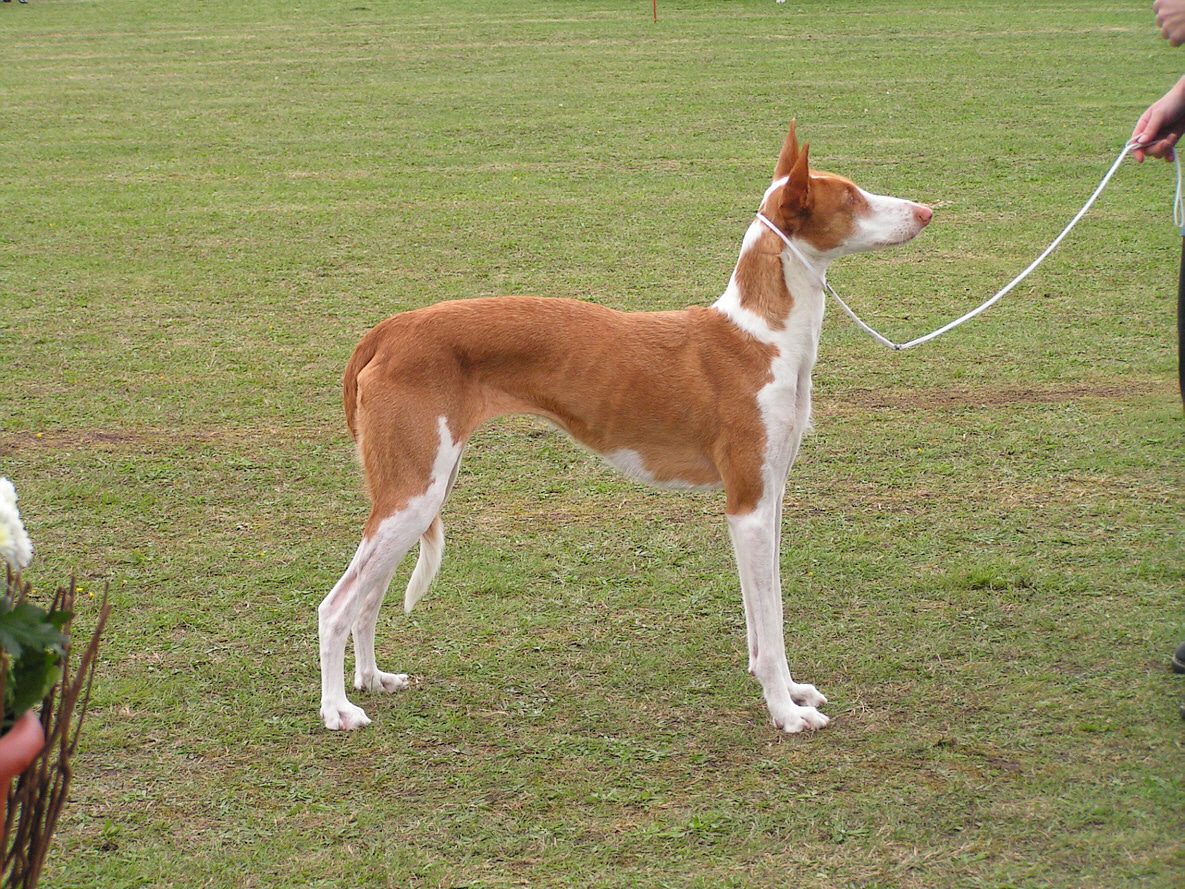
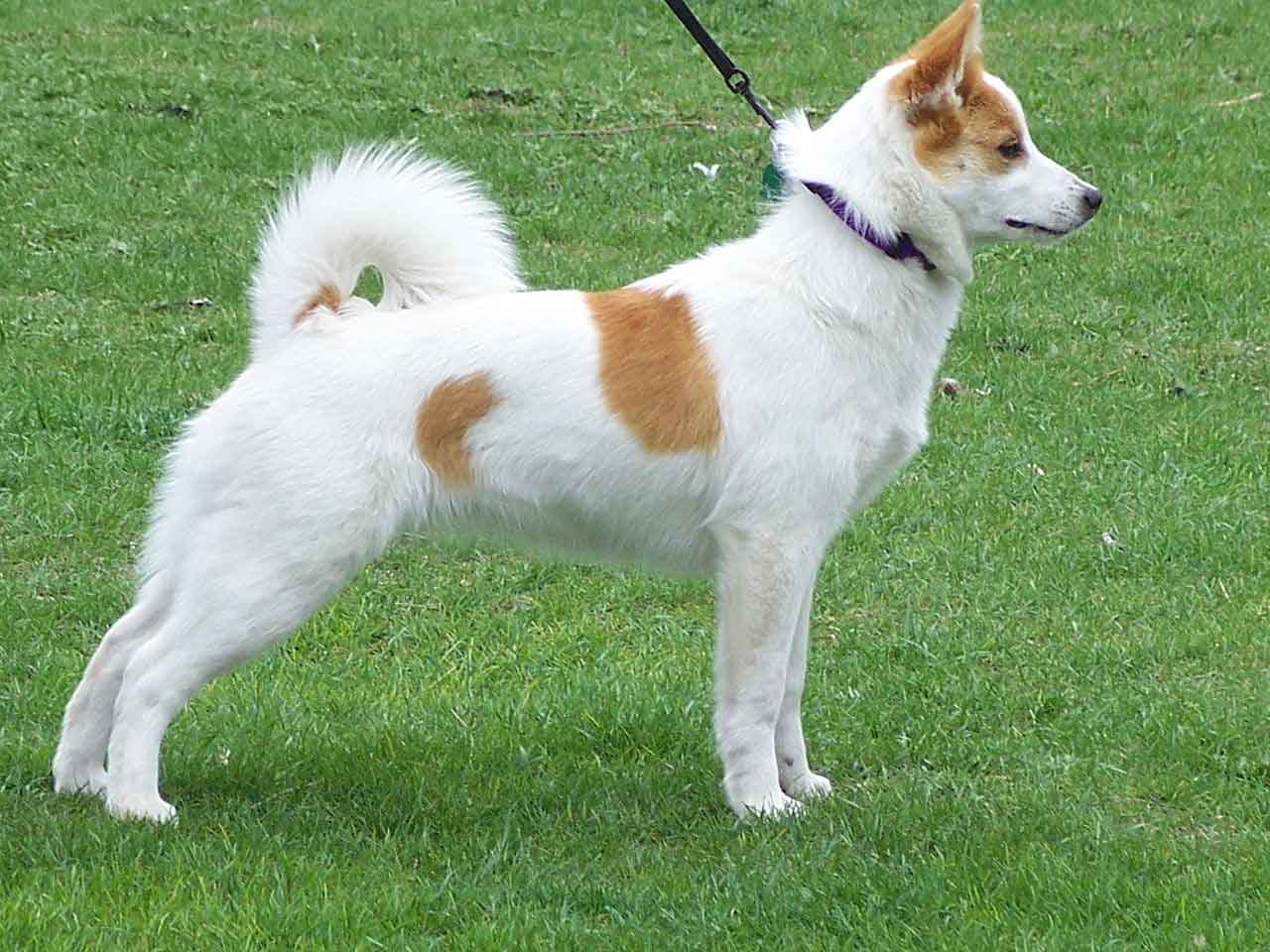
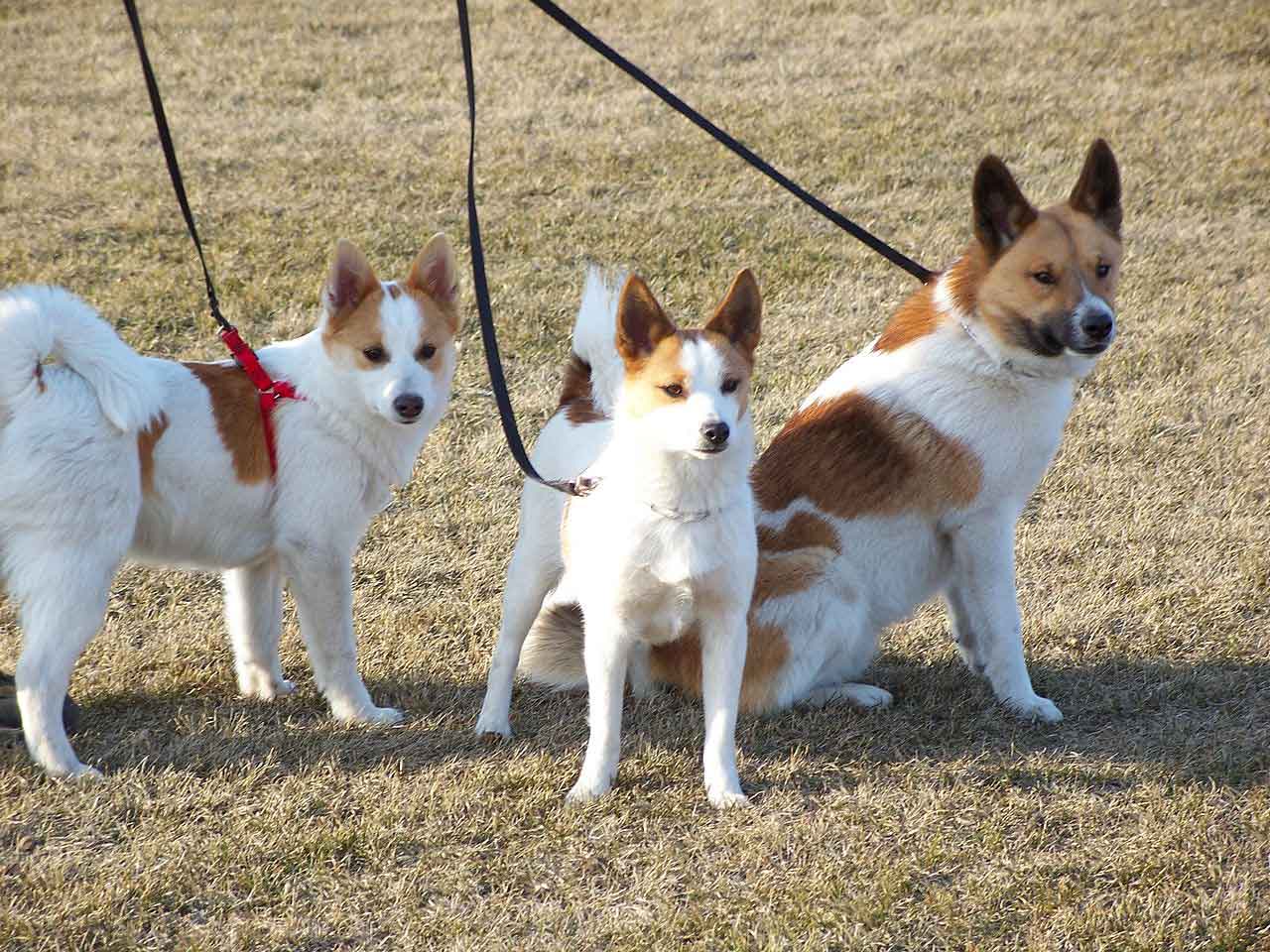
He "Cirneco dell'Etnaยซ, also it is known as the Sicilian Greyhound, it can resemble a small Pharaoh Hound, but it is a different breed of Italian origin, with its own color markings, shaped tail and ears in a triangle. Named after Mount Etna, on the Italian island of Sicily, where their ancestors hunted rabbits and hares. Lurks silently, So you can even sneak up on birds.

A Mediterranean dog of ancient origin probably descended from hunting dogs that existed at the time of the pharaohs in ancient Egypt and were introduced to the Mediterranean basin by the Phoenicians, Sicily as the region chosen for adoption. Evidence of the presence of the Cirneco on the island is given by its representation in currencies, engravings and mosaics that date back many centuries BC and was always considered the oldest hunting dog, select and highly respected.

Today, This rare breed is predominantly a family companion.

Physical characteristics

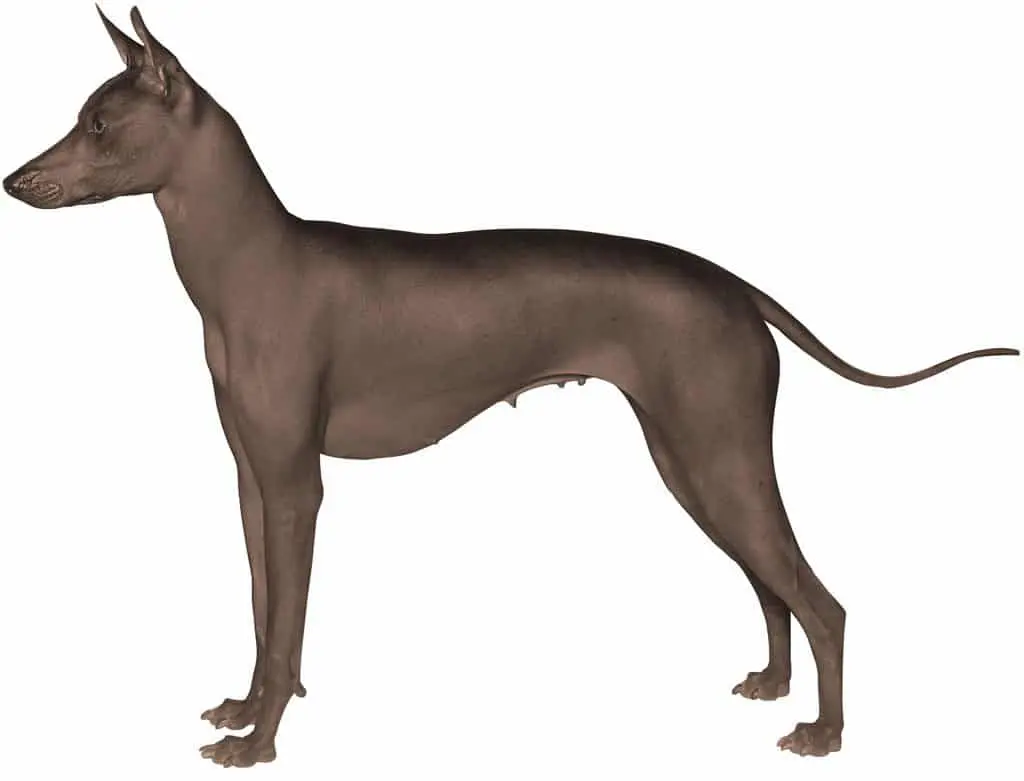
It is primitive and elegant shapes and graceful. Their size is medium and compact body, robust with a thin layer of hair and ears pricked, always alert. Its structure is sub longilinear.

Thanks to his innate athletic ability, It has a natural agility and ability to run after a complaint. The Cirneco It has a reputation for being easier to train than others hounds, provided that the training sessions are short.

SIZE AND WEIGHT:

Height to the cross: Males: 46 โ€“ 50 cm.. females: 44 โ€“ 48 cm.. tolerance 2 cm below the minimum and above the maximum height. Weight: Males: 10 โ€“ 13 kg. females: 8 โ€“ 11 kg.

Character and skills

The breed standard requires that the Cirneco be alert and be gentle, with an independent temperament. In this curious and playful greyhound loves to be with people. It's also smart and trainable, especially if positive reinforcement techniques are used as praise, games and goodies. Although small, the Cirneco is a hunter by nature. Always keep a tight leash, If you see a hare, the chase. But, a stern tone of voice should be enough to bring him back.

Start training your puppy the day you bring him home. Even at eight weeks old, He is able to absorb everything you can teach him. Don't wait until you have 6 months to start training him or you'll have to deal with a more stubborn dog. If possible, take it to school for puppies when you 10 or 12 weeks of age, y socialize, socialize, socialize. But, Note that many kinds of training puppies require certain vaccinations (such as kennel cough) stay up to date, and many veterinarians recommend limited exposure to other dogs and public places until puppy vaccinations (including rabies, distemper and parvovirus) They are completed. Instead of formal training, you can start training your puppy to socialize at home and among family and friends until immunizations are completed in the puppy.

Health

As there are so few of these dogs, Little is known about the health of Cirnechi. In general, They seem to be a tough race, but they can suffer muscle injuries and the toes to the running. A reputable breeder will show potential health problems, including any conditions you have noticed on your own lines.

Careful breeders their dogs examined for genetic diseases, and they only breed the best looking specimens, but sometimes Mother Nature has other ideas and a puppy can develop a genetic condition. In most cases, can still live a good life, thanks to advances in veterinary medicine. And remember that you have the power to protect your Cirneco one of the most common health problems: the obesity. It keep a proper weight is a simple way to extend the life of its Cirneco.

Grooming

The Cirneco has a bright coat, brown to brown, it is easy to care: Brush it weekly using a dog mitt or rubber hair brush. If you constantly brush, shouldn't need a bath very often.

The rest are taken care routine: Often brush their teeth with a toothpaste pet approved by the veterinarian for general good health and fresh breath, and cut nails every week or two.

Characteristics "Cirneco dell'Etna"

Coexistence is important that you have with your new friend. Before considering the acquisition of a dog of the breed "Cirneco dell'Etna" you know certain factors. Not all breeds of dogs are apt to live in an apartment, you must take into account his character, their need for exercise, their interaction with other pets, their care and if you have small children, their level of tolerance towards them.

Adaptation โ“˜

5,0 of 5 stars (based on 1 review)

friendly dog โ€‹โ€‹โ“˜

5,0 of 5 stars (based on 1 review)

hair loss โ“˜

3,0 of 5 stars (based on 1 review)

Affection level โ“˜

5,0 of 5 stars (based on 1 review)

Need for exercise โ“˜

4,0 of 5 stars (based on 1 review)

Social need โ“˜

3,0 of 5 stars (based on 1 review)

Home โ“˜

5,0 of 5 stars (based on 1 review)

Toilet โ“˜

2,0 of 5 stars (based on 1 review)

Friendly with strangers โ“˜

3,0 of 5 stars (based on 1 review)

barking โ“˜

3,0 of 5 stars (based on 1 review)

Health โ“˜

1,0 of 5 stars (based on 1 review)

Territorial โ“˜

2,0 of 5 stars (based on 1 review)

Cat friendly โ“˜

3,0 of 5 stars (based on 1 review)

Intelligence โ“˜

3,0 of 5 stars (based on 1 review)

Versatility โ“˜

3,0 of 5 stars (based on 1 review)

Child friendly โ“˜

3,0 of 5 stars (based on 1 review)

Surveillance โ“˜

3,0 of 5 stars (based on 1 review)

joy โ“˜

3,0 of 5 stars (based on 1 review)

Images "Cirneco dell'Etna"

1. Cirneco dellโ€™Etna during International show of dogs in Katowice – Saucer, Poland by Pleple2000 / CC BY-SA
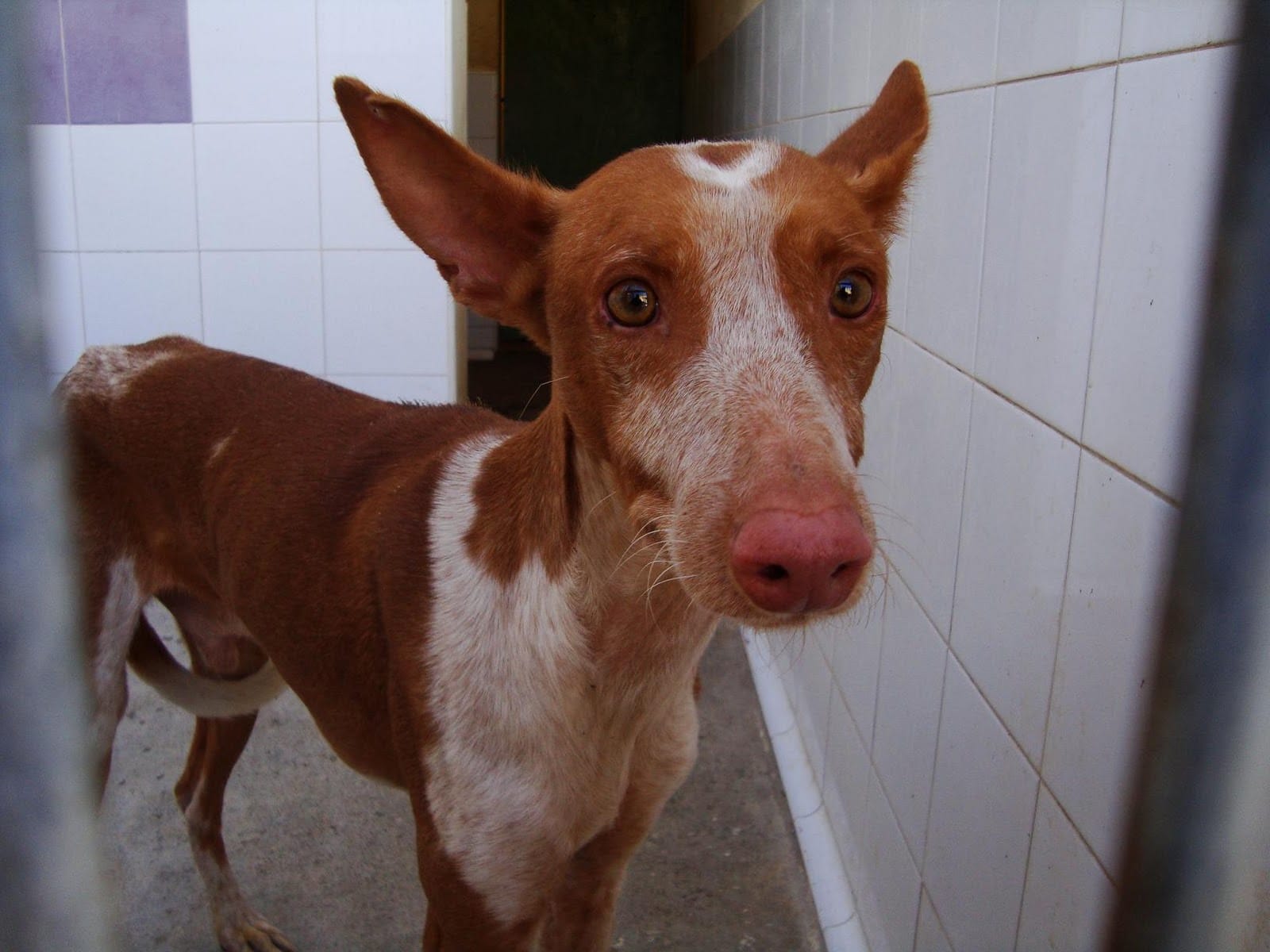
2. Cirneco Dell Etna by Jan Eduard
3. Cirneco dellโ€™Etna during International show of dogs in Katowice – Saucer, Poland by Pleple2000 / CC BY-SA
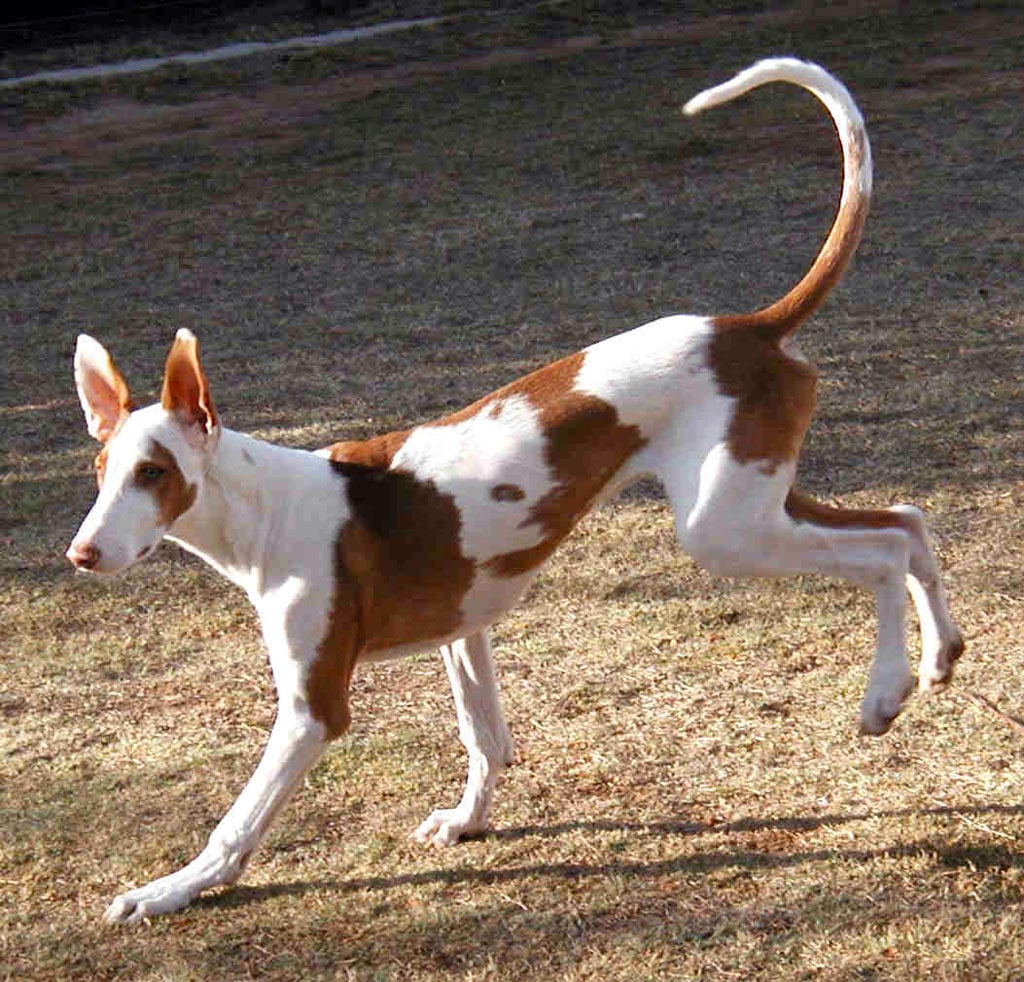
4. Cirneco dellโ€™Etna during dogs show in Katowice, Poland by Pleple2000 / CC BY-SA
5. Cirneco dell'Etna by Night-thing (Flickr)
6. Cirneco by Oknolaz / CC BY-SA

Videos "Cirneco dell'Etna"

Type and recognitions:

  • FCI CLASSIFICATION:
  • Group :
  • Section : . .

Federations:

  • FCI โ“˜, AKC โ“˜, ANKC โ“˜, โ€‹KC โ“˜, UKC โ“˜

  • FCI breed standard Cirneco dell'Etna

    FCIFCI - Cirneco dell'Etna
    Cirneco

    Alternative names:

    1. Cirneco (English).
    2. Cirneco (French).
    3. Cirneco (German).
    4. Cirneco (Portuguese).
    5. Cirneco (espaรฑol).

    โ–ท The world of Pets: Dogs, cats, birds, reptiles, amphibians

    Swedish Lapphund
    Suecia FCI 135 - Nordic Watchdogs and Herders.

    In experienced hands the Swedish Lapphund is a loyal and robust companion.

    Content

    Origin and history

    The "Swedish dog of Lapia" shares its ancestors with the Finnish Lapphund. They are descended from dogs bred by the Lapps and Sami specifically to herd their large herds of reindeer.. For centuries they have served as indispensable working dogs in this way.

    Breeding became increasingly specialized for weather resistance and independence. The dogs had to perform very well physically. Persevering and willing to work, They formed the perfect partners for the herd owners. With this they ensured their livelihood for these people.

    Only in the 20th century were three independent dog breeds formed and recognized from these dogs. In addition to the Swedish and Finnish Lapphound, there is also the Lapponian Herder today. This one has a shorter coat and short hair.

    As technology progressed, the Swedish Lapphund was gradually replaced by snowmobiles. Due to its faithful and pleasant character, the breed remained, however, preserved. Today they are highly valued as family and companion dogs.. But they are also suitable for hunting, like watchdogs, and even as search and rescue dogs.

    Physical characteristics

    The breed is recognized by the FCI and belongs to the group 5 of "Spitz type dogs and primitive type". The relationship with Spitz can be easily seen in the appearance of the Swedish Lapphund. Distinctive triangular head and ears frame large, alert eyes. With a height between 43 and 48 centimeters, belongs to the breeds of medium-sized dogs.

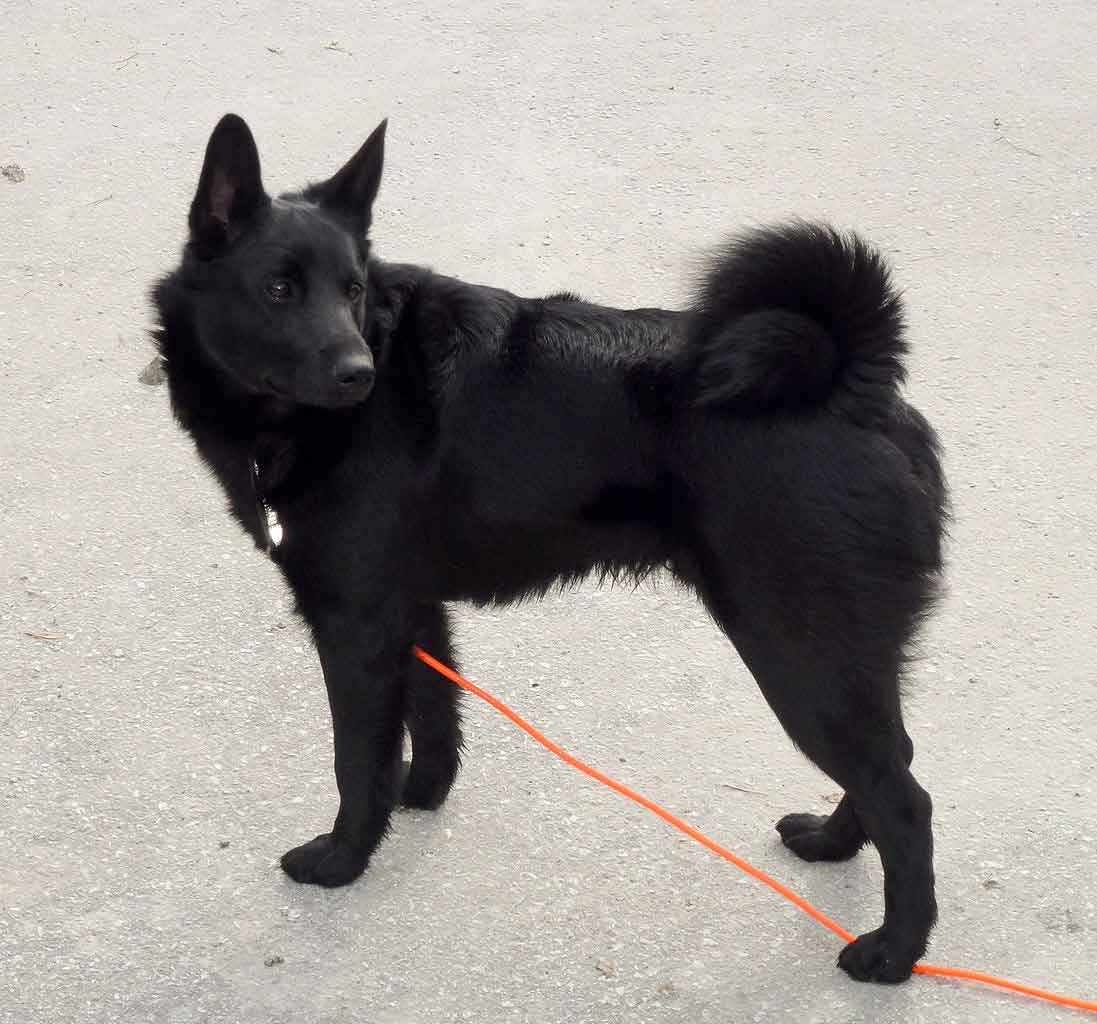
    His coat is always black. Only occasionally can small white markings be found on the legs or chest. Like all Nordic dogs, has a double coat with a very dense undercoat and a long coat. This coat makes it very insensitive to almost all weather conditions.

    Character and skills

    Swedish Lapphund
    The largest dog event in the Nordics: www.mydog.se

    In his character, the Swedish Lapphund he is very attentive, lively and friendly. It is well adapted as a family dog. But it is often used for dog sports too, hunting or as a watchdog. Your original task as a herding dog is, Unfortunately, hardly needed today.

    Like an intelligent and persistent dog, it is important that you are always physically and mentally disabled. Due to its independent character, consistent training is necessary. In experienced hands the Swedish Lapphund is a loyal and robust companion.

    The Swedish Lapphund tends to bark, what is beneficial to use as a watchdog. If you start early with education, the barking can also be well contained. Generally friendly with other animals.

    Correct nutrition

    The Swedish Lapphund has no special restrictions on feeding. It can be well fed with any quality food. Attention should be paid to a good nutrient composition. The sugar, However, has no place in feeding.

    Awards are not absolutely necessary for the motivation and education of the Swedish Lapphund. But, is particularly happy with the natural chewy sticks, like cowhide or pig's ears. Attention should also be paid to dental care.

    Care of the "Swedish dog of Lapia"

    Although the coat of Swedish Lapphund it is as abundant as it is impressive, his toilet is not elaborate. The coat is very dense and offers perfect protection against the weather. Firm structure of the top layer is dirt repellent. So, it is enough to brush the Swedish Lapphund from time to time to remove coarse dirt or sticks.

    Only during the change of coat is daily brushing necessary. One should use dog shampoo very sparingly with this dog.. So, should only be bathed in the absolutely exceptional case. It also, a haircut is not normally necessary. Like any other dog, their claws should be checked regularly and, if required, cut. The ears should also be cleaned from time to time to avoid infections..

    Videos "Swedish Lapphund"

    Type and recognitions:

    • FCI CLASSIFICATION:
    • Group :
    • Section : . .

    Federations:

    • FCI – Group 5 – Section 3 Nordic Watchdogs and Herders.. โ“˜

    FCI breed standard "Swedish Lapphund"

    Origin:
    Sweden

    Date of publication of the valid original standard:
    26.06.2000

    Use:

    Herding dog, Today it remains rather as a company dog.


    General appearance:

    Typical spitz dog slightly lower than middle size and carrying the head proud. His coat is resistant to temperature.

    IMPORTANT PROPORTIONS :

    The body is rectangular.


    Behavior / temperament:

    Lively, alert, kind and affectionate. The Lapland Swedish Dog is very receptive and eager to work. His skills like a good guardian dog and pastor make him extremely useful in reinde. It is extremely versatile, suitable for obedience training, agility, grazing, tracking, etc. It is easy to train, full of stamina and character.

    Head:

    ----

    Cranial region:

    Skull: Slightly longer than wide; the forehead is rounded and the occiput is not clearly defined.
    Depression links (stop) : Very well marked.

    facial region:

    Truffle: Preferably dark, or very black.
    Snout: A little longer than a third of the length of the head, well filled and tapering towards truffle. The nasal bridge is straight.
    Belfos: Tight. The palate and lips are heavily pigmented.
    Mandible / Teeth: Scissor bite with well developed and regular teeth.

    Eyes: Separated from each other, round, rather large. Cafรฉs, preferably dark brown and very expressive. Well pigmented eyelids.
    Ears: Triangular, widen the base, small, upright, tips slightly rounded, Insertion well separated from each other and very mobile. Pointed ears are undesirable but not a disqualifying foul.

    Neck:

    Of average length, no double chin and powerful.

    Body:

    Well coupled, slightly longer than the height at the withers.

    Back: Straight, strong, muscular and flexible.
    Pork loin: Short and broad.
    Rump: Proportionally long and wide, slightly downward and muscular.
    Breast : Preferably deep reaching up to the elbow. The rib cage is proportionally long, long with well developed back ribs. The sill is well developed; with well defined sternum.
    Belly: Withdrawn.

    Tail:

    Rather high insertion, reaching the hock when stretched. Carrier rolled over the back when on the go.

    Tips

    PREVIOUS MEMBERS: The forelimbs should be angled enough at the shoulders and elbows to provide good reach..

    Shoulder: Scapulae should be well back.
    Elbows: They must be close to the chest.
    Forearm: Straight, strong and parallel, in static and in motion.
    Metacarpus: They have an oblique position.
    Previous feet: Strong, oval-shaped, with fingers close together, strong and elastic bearings; well covered with hair even between the bearings. Nails and bearings must be heavily pigmented.

    LATER MEMBERS: Well angulated in the knees and tibi-tarsal joints, but not excessively.

    Leg: Muscled.
    Hock joint: Low set to provide propulsion power. Undesirable accessory fingers.
    Hind Feet: Same as previous.

    Movement:

    Light and elastic, with good momentum, covering a lot of ground.

    Mantle

    HAIR: Profuse double coat. The hair is straight from the body and is finely curled at the bottom. The hair is short on the head and the front of the limbs. It's long on the chest, the back of the thighs and on the tail. Abundant, dense and long on the tail. In the neck and in the throat it forms a necklace.

    COLOR: Usually solid black; The brown color is typical. The brown color was known for a long time.
    White color on the chest, on the feet and on the tip of the tail is allowed, but more white is undesirable.


    Size and weight:

    • Ideal size in males: 48 cm..
    • Ideal size in females: 43 cm..

    With a tolerance of plus and minus 3 cm..


    Fouls:

    Any deviation from the above mentioned criteria is considered to lack, and the gravity of this refers to the degree of deviation to the standard and its impact on the health and well-being of the dog.

    SEVERE FAULTS

    โ€ข Under non -existent hair.

    MISS PLAYOFFS

    โ€ข Cowardice, aggression toward owner.
    โ€ข Atypicity.
    โ€ข Abnormalities.

    Any dog โ€‹โ€‹showing clear signs of physical or behavioral abnormalities should be disqualified..


    N.B.:

    Males should have two normal-appearing testicles., fully descended into the scrotum.

    Source: F.C.I - International Cynological Federation

    Alternative names:

    1. Svensk lapphund (English).
    2. Chien suรฉdois de Laponie (French).
    3. Schwedischer Lapphund (German).
    4. Lapphund (Portuguese).
    5. Pastor lapรณn de Suecia (espaรฑol).

    โ–ท The world of Pets: Dogs, cats, birds, reptiles, amphibians

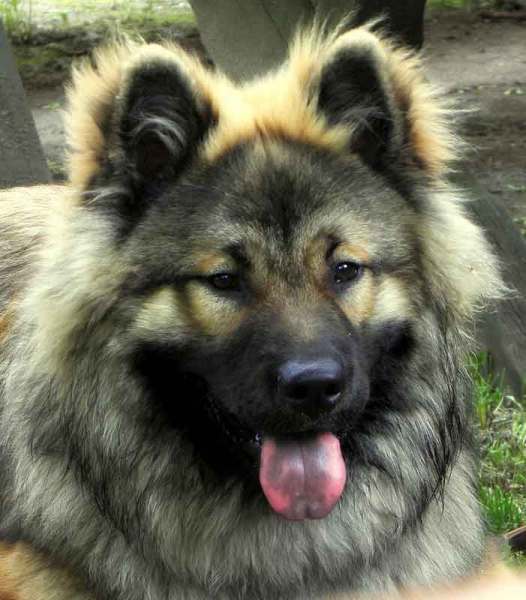
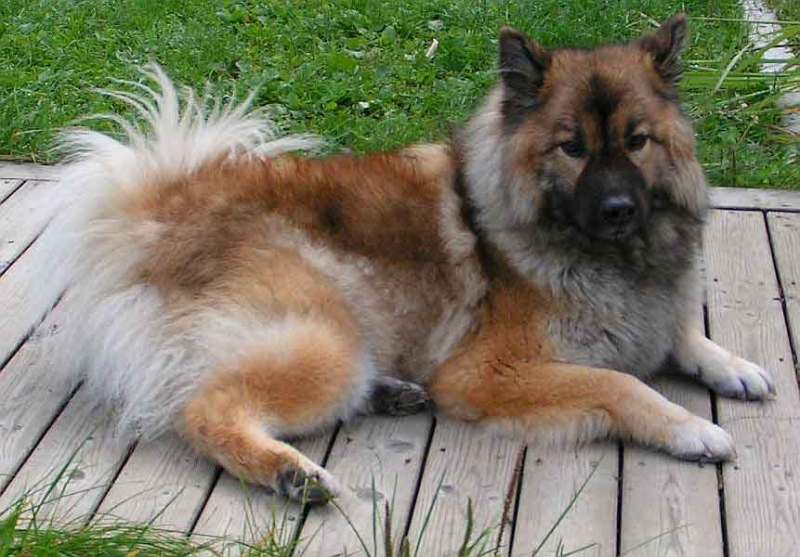
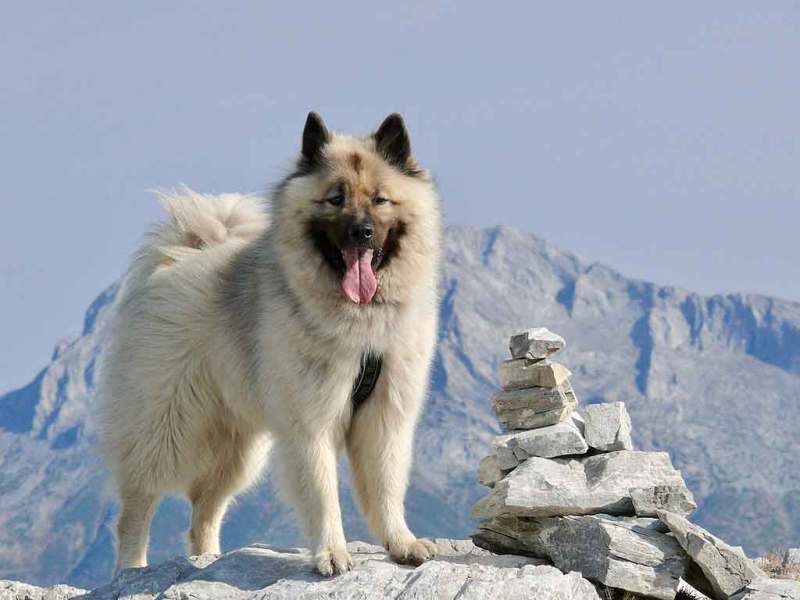
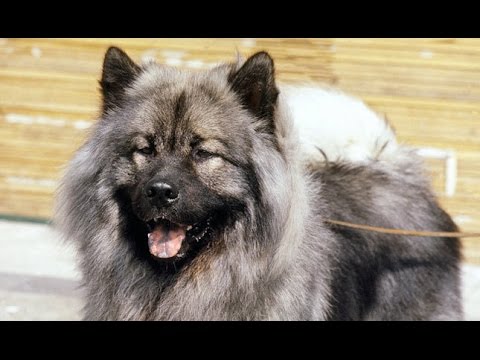
    Keeshond
    Holanda FCI 97 . European Spitz

    Keeshond

    Even today the Keeshond is a breed known for its faithfulness and loyalty.

    Content

    History

    Are ยซWolfsspitzยป and ยซKeeshondยป identical?

    This question repeatedly leads to confusion among experts and laymen alike.. Although most cynologists today use the Dutch name Keeshond and the german name Wolfsspitz as a synonym for the same breed of dog, a closer look reveals some differences between Wolfsspitz and Keeshond. These may include, the Wolfsspitz is usually slightly larger than the Keeshond, while the latter has slightly longer and even more voluminous fur. But how can such differences exist??

    A look at history helps

    To understand the development of Wolfsspitz or Keeshond, the origin of the dog breed is worth taking a look at. Because it is true that both variants have a common origin and this goes back a long time.. The Spitz, probably descended from the Stone Age peat dog, It is considered one of the oldest dog breeds in Germany and, thanks to his outstanding achievements as a house dog, yard and guard, has become an indispensable everyday companion for many generations.

    Dutch People's Party mascot

    The dutch Cornelis "Kees" de Geyzelar, the leader of the Dutch People's Party, he also had an extremely loyal companion in his Wolfspitz. In 1781 the dog of Kees became a symbol of the patriotic revolution. Since then dogs of this type were called ยซKeeshond" in Holland. Today this name is used in the Netherlands as a generic term for the five variants of the German Spitz. For a more exact differentiation, name extensions are used here, as "Dwergkeeshondยป (= spitz enano), ยซGrote Keeshondยป (= large spitz) o ยซWolfsgrijze Keeshondยป (= spitz lobo).

    From Germany and the Netherlands to the whole world

    From Germany and the Netherlands, the breed eventually made its way to other European countries and the US., where, depending on the origin of the dogs, the name of Keeshond or Wolfsspitz. Over time, two different breeding lines were developed, each of whom preferred different characteristics. In direct comparison with the Keeshond dutch and the Wolfsspitz German, subtle differences are observed, like a smaller stick size and a longer fur on the Keeshond against longer runs and a slightly shorter coat on the Wolfsspitz. But, an exact differentiation of both phenotypes was never successful due to the abundance of similarities.

    Depending on the country, the terms Keeshond or Wolfsspitz are therefore used very differently. While "Keeshoundยป is used in the Netherlands as a generic term for ยซSpitzยซ, the name in Great Britain and in the US. refers exclusively to the variant of the Wolfsspitz. In scandinavia, both names are common and represent different variants. German cynologists and breeders often use the name ยซWolfsspitzยป to describe both types. To differentiate it from the ยซKeeshoundยซ, that was developed more abroad, The German Wolfsspitz is sometimes also called the "Old German type".

    Physical characteristics

    The docile and friendly nature of the Keeshond contrasts with its original appearance, almost wild. The dense coat, average length, has abundant undercoat and is silver gray with black hair tips. The cloudy gray fur, reminiscent of the drawing of a wild wolf, is typical of this breed of dog, which also has the "Wolf" in its name.

    With a height at the cross of 43 to 55 cm el Keeshond is one of the largest representatives of the German Spitz. Compared to other dog breeds, is of medium height.

    As is typical of a Spitz, the Keeshond also has a pointed snout, like that of a fox. The muzzle and ears are usually black, the bushy mane surrounding the shoulder ring is a lighter silver gray and darkens again on the back and belly. The tail is very bushy and is carried confidently from the back.

    Character and skills

    In order not to cause further confusion in the following breed description, we use the names of the breed ยซKeeshondยป y ยซWolfsspitzยป as synonyms at this point. After all, both variants are hardly distinguished in the description of their character and appearance. But what is it that really distinguishes the character of these dogs??

    Faithful and loving guard dog

    Even today the Keeshond is known for his faithfulness and loyalty. Along with their high level of care, his distrust of strangers and his early attack, These characteristics made it an excellent and extremely popular watchdog with farmers and other large landowners.. Even as today's family dog รขโ‚ฌโ€นรขโ‚ฌโ€นand companion, has retained his loyal and caring nature and vigilance. The Keeshond he is extremely needy of love and always seeks the closeness of his humans. Of course, being alone is not in his nature. Thanks to his pronounced โ€œwill to pleaseโ€, that is to say, the desire to please their humans and their undemanding nature, can fortunately accompany his humans (almost) everywhere. It is capable of adapting to the living conditions and daily life of its owners and hardly demands anything from its owners., as long as you know your loved ones closely.

    Uncomplicated family dog

    Properly, He also does not demand much from his movement and is also content with "lazier days". But, is very open to long walks or even dog sports. If you are allowed to share these experiences together with your human, the Keeshond proves to be an extremely lively and spirited companion, who is sometimes even said to have a certain high spirit. So, in the case of young children it is better not to leave it unattended (which applies to almost all dog breeds). But, the Keeshond it is an uncomplicated family dog, who tends to get along very well with children and other pets.

    Education

    But, so that your balance and frugality are developed to the maximum, a good and consistent education is required, and this applies to all dogs in principle. Apart from learning the most important basic commands, it is often a matter of limiting your barking pleasure. The Keeshond, that carries the guard in the blood, attacks early and tends to become a thief, especially when bored. But, by socializing as soon as possible, consistently showing your limits and working harder to use your temper, you can significantly reduce their barking and make sure your Keeshond only hit when really necessary. At the same time, you would do well to get your cuddly four-legged friend used to being alone as soon as possible, even for a short time.

    Basically, the Keeshond is considered very docile, intelligent and above all people-oriented. If the dog-human relationship is correct, that is to say, if the necessary mutual trust prevails, you Keeshond will always try to please you and will soon dismiss any behavior you don't like.

    Care

    Despite the dense fur, spending on care remains within limits with the Keeshond. The undercoat is not prone to knots or tangles, so it is enough to brush it regularly and briefly. An advantage of Keeshond is that their fur has very little odor. So you don't have to worry about strong dog odors with this breed..

    as with all dogs, the eyes, the legs, teeth and ears should be checked and cleaned regularly. You should also get annual checkups at the vet, vaccinations and deworming.

    Keeshond Health

    Diseases typical of the breed are not known to occur in the Keeshond. The original dog breed is very robust and undemanding. An age of 15 years and more is not uncommon in him. This is probably due to the fact that the breed has never been overgrown. Although it was quite popular in difficult times, especially during WWII, due to its frugality, the wild and original Keeshond He never became a "fashion dog".

    The breeding and purchase of Keeshond

    Until today, the Keeshond it is a rather rare breed of dog. So it may take a while to find breeders of Keeshond they are expecting puppies. Use this time to optimally prepare for your new four-legged roommate.. In addition to the necessary initial equipment, like a bowl and a blanket for the dog, it should also clarify important issues like: ยซWho will take care of my dog โ€‹โ€‹if I have to travel or am sick?ยป, ยซWhat vaccines are necessary?ยป and ยซWhat food does my dog โ€‹โ€‹need??ยป. If he Keeshond it's your first dog, you should learn the most important basics about dog training and breeding before you buy it. In addition to informational texts from the Internet or books, it is often very helpful to talk to experienced breeders or dog owners. You can make contacts, for example, with a registered dog club for him German Spitz, dog schools and breeders.

    Wolfsspitz nutrition

    An important question that dog owners must ask themselves over and over again is, what dog food does my four legged friend need? Although it is considered that Keeshond is not very demanding and it is said that they were content with one potato a day during the Second World War, you need to make sure your dog receives all the important nutrients. Nutritional requirements not only vary from dog to dog, they also depend on the age of the dog. These may include, a puppy that is still growing will naturally need a different food than an adult dog or an old man who spends most of his time lying on his blanket. It also, the amount and type of exercise, as well as the size, weight and health, will affect the dog's needs. In case of doubt, consult your veterinarian or breeder to determine your dog's exact needs.

    Dry food, wet food or BARF method?

    There are now a number of dry or wet feed providers offering feed mixes that are specifically tailored to the needs of a breed, specific age or body size. Pay attention to the high proportion of high quality meat and vegetables in the feed. You should avoid meat scraps in the food that do not provide the dog with any significant content.. Another indication of inferior quality is an excessively high proportion of cereals. Although the risk of being overweight in the Keeshond bigger is not as high as in the spitz enano, for example, also starts comparatively fast – like all German Spitz. A healthy alternative to conventional dog food is the BARF, but this feeding method requires some knowledge and experience.

    Characteristics "Keeshond"

    Coexistence is important that you have with your new friend. Before considering the acquisition of a dog of the breed "Keeshond" you know certain factors. Not all breeds of dogs are apt to live in an apartment, you must take into account his character, their need for exercise, their interaction with other pets, their care and if you have small children, their level of tolerance towards them.

    Training ?

    3,0 of 5 stars (based on 1 review)

    Suitability of the apartment ?

    3,0 of 5 stars (based on 1 review)

    Can be alone all day ?

    1,0 of 5 stars (based on 1 review)

    Suitable as a first dog ?

    4,0 of 5 stars (based on 1 review)

    Weight gain ?

    4,0 of 5 stars (based on 1 review)

    Health ?

    5,0 of 5 stars (based on 1 review)

    Intelligence ?

    5,0 of 5 stars (based on 1 review)

    Kindness with child ?

    4,0 of 5 stars (based on 1 review)

    Tendency to bite ?

    3,0 of 5 stars (based on 1 review)

    Tendency to bark ?

    5,0 of 5 stars (based on 1 review)

    Tendency to flee ?

    2,0 of 5 stars (based on 1 review)

    hair loss strength ?

    5,0 of 5 stars (based on 1 review)

    Suitable as a guard dog ?

    5,0 of 5 stars (based on 1 review)

    Joy ?

    5,0 of 5 stars (based on 1 review)

    Cat friendliness ?

    4,0 of 5 stars (based on 1 review)

    Power level ?

    4,0 of 5 stars (based on 1 review)

    Suitable as a family dog. ?

    4,0 of 5 stars (based on 1 review)

    Energetic ?

    3,0 of 5 stars (based on 1 review)

    Tendency to drool ?

    2,0 of 5 stars (based on 1 review)

    Hunting instinct ?

    2,0 of 5 stars (based on 1 review)

    Hold the heat ?

    3,0 of 5 stars (based on 1 review)

    withstand the cold ?

    3,0 of 5 stars (based on 1 review)

    Suitable as a sniffer dog ?

    3,0 of 5 stars (based on 1 review)

    Suitable as an assistance dog. ?

    2,0 of 5 stars (based on 1 review)

    obedience. ?

    4,0 of 5 stars (based on 1 review)

    Type and recognitions:

    • FCI CLASSIFICATION:
    • Group :
    • Section : . .

    Federations:

    • FCI – Group 5 – Section 4 European Spitz. โ“˜
    • AKC – Non-Sporting โ“˜
    • ANKC – Non-Sporting โ“˜
    • CKC – Non-Sporting โ“˜
    • โ€‹KC – Utility dogs โ“˜
    • NZKC – Non-Sporting โ“˜
    • UKC – Northern races โ“˜

    FCI breed standard "Keeshond"

    Origin:
    Netherlands

    Date of publication of the valid original standard:
    05.03.1998

    Use:

    Surveillance and companion dog.


    General appearance:

    Spitz are striking for their beautiful separated coat with the presence of a very dense undercoat. The neck surrounded by an abundant mane and the tail covered with long hair is striking., turned up and spread boldly on the back. The head is similar to that of the fox with diligent eyes and small pointed ears. The ears, placed very close to each other, give the Spitz its characteristic relaxed appearance.
     
    IMPORTANT PROPORTIONS: Proportion of 1:1 between the height at the withers and the length of the dog.


    Behavior / temperament:

    The German Spitz is constantly on the lookout, is active and exceptionally dependent on his master. Learn quickly and can be trained easily. His distrust of strangers and his lack of interest in hunting allow him to be considered the ideal watchman for the house and farm.. Its most notable characteristics are its resistance to weathering., its robustness and longevity.

    Head:

    ---

    Cranial region:
    • Skull: The skull of the Spitz is size medium; viewed from above seems to swell back becoming more narrow wedge shaped to the tip of the nose.
    • Depression links (Stop): Little steep until marked, but never abrupt.

    facial region:

    • Truffle: Round, small, black; in all Brown Spitz is dark brown.
    • Snout: Not very long, Neither coarse nor pointed; It presents a good proportion in relation to the skull (in the Spitz type Keeshond/Wolf, in the large Spitz and medium Spitz the ratio snout/skull is approximately 2/3, in the small Spitz and the Spitz/Pomeranian dwarf is approximately 2/4).
    • Lips: They are not hanging; they are well bonded and do not form folds in the corners. They are black in all colours, the Brown Spitz are brown.
    • Jaws / Teeth: The jaws are normally developed and show a complete scissors bite with 42 teeth, It is to say that the upper incisors fall closely ahead of the lower, teeth being implanted perpendicular to the jaws. In small and dwarf Spitz/Pomeranian the loss of a few promolars is tolerable. One bite iron on all varieties of Spitz.
    • Cheeks: The cheeks are slightly round and are not prominent.
    • Eyes: The eyes are medium-sized, elongated, a little oblique, dark colored. The eyelids have a black pigmentation in all varieties of color and are only dark brown in the Brown variety Spitz.
    • Ears: The pointed ears in the shape of a pointed triangle are small and rather closely placed together.. Its inclusion is high. They always remain erect with a rigid tip.

    Neck:

    The neck is moderately long and presents a broad inclusion with shoulders; the neck is slightly convex, without dewlap and covered with a mane shaped collar.

    Body:

    • top line: The top line begins at the tip of the erect ears and passes in a gentle arc over the short, straight back.. The deployed and with abundant fur tail partially covers the back and rounded silhouette.
    • Cross / Back: The high cross falls imperceptibly on the short back, straight and strong.
    • Pork loin: Short, wide and strong.
    • Rump: The rump is short and wide, unexpired.
    • Breast : Deep chest, well arched; the apron is well developed.
    • Bottom line and belly: The chest is expanded as much as possible back; the abdomen is moderately retracted.

    Tail:

    The tail has a high insertion and a medium length; bends upward from the root and rolls over the back, spreading firmly. Well covered with thick hair. A double loop in the tip of the tail is acceptable.

    Tips

    PREVIOUS MEMBERS:

    • As a whole: Straight, large on the front.
    • Shoulder: The scapula is long, placed backwards at an angle. The arm, showing almost the same length, with the scapula forms an angle of approximately 90 degrees. Shoulders with good musculature are closely linked with the chest.
    • Arm: Medium length, robust and fully straight on the trunk, covered with long hair in the form of pen in the posterior region.
    • Elbows: The elbow joint is strong, close to the chest without bending inward or outward.
    • Metacarpus: The Metacarpus strong and medium length, forms an angle of approximately 20ยฐ in relation to the perpendicular line.
    • Front feet: The front feet are as small as possible, round, compact, as cat with well arched toes feet. Pads and nails are black in all varieties of Spitz, and they are only dark brown on brown dogs.

    LATER MEMBERS:

    • As a whole: The hindquarters are very muscular, covered with very long hair up to the Hock joint. The hind limbs are straight and parallel to each other..
    • Thigh and leg: They have approximately the same length.
    • Knee: The knee joint is strong, slightly angled and, during the movement, It does not twist outward or inward.
    • Metatarsus: Medium length, very strong, maintains a position perpendicular to the ground.
    • Rear feet: The hind feet are as small as possible, round, with toes well arched and together, as cat feet. Pads are hard. The color of nails, pads is much darker.

    Movement:

    The Spitz moves with enough coordination, with a good push and almost floating in light trot.

    Mantle

    HAIR: The Spitz have a double layer of hair-covered: the outer layer is long-haired, straight and separate and the inner layer is short-haired, dense and woolly. The head, ears, front face of the anterior and posterior members and toes are covered by short dense pile (velvety). The rest of the body is long and abundant hair. The hair should not be wavy, chino, or form hair, You must not present a stripe on the back. A thick mane covers the neck and shoulders. The rear face of the forelimbs has hair in the form of feathers. The hindquarters should be covered with long hair from the rump to the Hock joint. The queue must be covered with hair is long and abundant.
     
    COLOR:
     
    to) Wolfspitz / Keeshond: Grayish.
    b) Grossespitz (Giant or Large Spitz) : Negro, brown, white.
    c) Mittelspitz (Standard or Medium Spitz): Negro, brown, white, orange, grey, other colors.
    d) Kleinspitz (Miniature or Small Spitz): Negro, brown, White Orange, grey, other colors.
    and) Spitz enano/ Pomeranian: Negro, brown, white, orange, grey, other colors.
     
    Black Spitz: The fur of the black Spitz should be dark in the skin as well as internal NAP and the color of the outer layer should be jet black color without any white spot.
     
    Brown Spitz: The Brown Spitz should have a uniform dark brown color.
     
    White Spitz : The hair should be pure white, no yellowish tones that can often occur in the ears.
     
    Orange Spitz: The Orange Spitz should have a single uniform colour in the average range of the RAL (Registration International of the color scale).
     
    Grey Spitz / Keeshond: Gray is understood as grey silver with black hair tips. Snout and ears are dark. Around the eyes there is a drawing in the shape of glasses consisting of a delicate black line. (It extends from the outer corner of the eye to the lower part of the inclusion of the ear) or in broken lines and shading that draw short eyebrows, but expressive. Mane and ring shoulders are a tone clear. The anterior and posterior members are grey silver unmarked black below the elbows and knees, except delicate stripes on your fingers (pencilling). The tip of the tail is black. The lower part of the tail and the buttocks are grey Silver clear.
     
    Spitz other colours: Under this description all tones are included as: cream-coloured, cream-saber, anaranjado-Sable, black with tan and stained. The spotted must have a white background color. Black stains, brown, grey or Orange must be distributed throughout the body.


    Size and weight:

    Height to the cross:
     
    to) Wolfspitz / Keeshond: 49 cm ยฑ 6 cm.
    b) Grossespitz (Giant or Large Spitz) : 46 cm ยฑ 4 cm.
    c) Mittelspitz (Standard or Medium Spitz): 34 cm ยฑ 4 cm.
    d) Kleinspitz (Miniature or Small Spitz): 26 cm ยฑ 3 cm.
    and) Zwergspitz (Toy or Dwarf Spitz) / Pomeranian : 20 cm ยฑ 2 cm. (are undesirable specimens measuring less than 18 cm.)

    WEIGHT: Any variation in the size of the German Spitz should have a corresponding variation in weight.


    Fouls:

    Any deviation from the above criteria is considered missing and the seriousness is considered to the extent of the deviation to the standard.
     
    SERIOUS FAULTS:

    • Defects in the Constitution.
    • Head too flat or sharp Apple-shaped.
    • Truffle, eyelids and lips of flesh-colored.
    • Defects in the premolars in Spitz Wolf/Keeshond, Medium and large Spitz.
    • Eyes too big or clear or very outgoing.
    • Defects in the movement.
    • Absence of classic drawing of the face in greyish Spitz.

     
    MISS PLAYOFFS:

    • Open fontanel.
    • Upper or lower prognathism
    • Entropion or ectropion.
    • Floppy ears.
    • Visible white stains on all non-white Spitz.


    N.B.:

    Males should have two normal-appearing testicles fully descended into the scrotum..

    Source: F.C.I - International Cynological Federation

    Alternative names:

    1. Kees, Dutch Barge Dog, Smiling Dutchman, German Spitz, Deutscher Wolfspitz, Wolfspitz (English).
    2. spitz loup, keeshond (French).
    3. (German).
    4. Spitz alemรฃo, Chien Loup, Spitz lobo (Portuguese).
    5. Wolfspitz, Deutscher Wolfsspitz, Dutch Barge Dog (espaรฑol).

    โ–ท The world of Pets: Dogs, cats, birds, reptiles, amphibians

    Canarian Warren Hound
    Espaรฑa FCI 329 . Primitive type - Hunting Dogs

    Podenco Canario

    The Canarian Warren Hound is brave, decided to, generous and extremely loyal to his master.

    Content

    History

    The Canarian Warren Hound It is a breed canine Spanish Canary.

    The Canarian Warren Hound, It is one of the oldest breeds known today., According to scholars of the breed, it dates from approximately 7000 years. This realize the numerous found vestiges of its representation in engravings, statues and bas-reliefs.

    A native of Egypt, probably, He was taken by the Phoenicians, greeks, the same Egyptians to the Canary Islands and Carthaginian, where it is currently easy to see in the larger islands (Gran Canaria and Tenerife).

    Since its inception, the Canarian Warren Hound has been placed in the wild and in the possession of the peasant who needed to hunt to survive. Given the perfect hunting qualities of this dog: his sense of smell, his hearing and his clear vision, as his great speed in the race after the dam, the peasant has had, always, a wonderful ally, It has been able to take advantage of.

    The Canarian Warren Hound, as its name suggests it is found in the Canary Islands, and a dog is little known and disseminated outside their place of origin, It is not easy to find puppies.

    Today, is perfectly adapted, both the flat lands as stony and mountainous, sandy, or soft like the prairies or very hard; You can both enter caves that penetrates in Lava Tubes or galleries, in thickets or forests, in the end, does not shy away from any obstacle.

    Outside the hunting season, the living conditions of animals are very different: Well-kept dogs can be found and fed on clean kennels, as well as miserably neglected and malnourished chained dogs. Animals that are not or are no longer fit for hunting often suffer a cruel fate.
    For this reason, dogs are increasingly placed abroad by animal protection organizations and individuals – an understandable and well-meaning activity, What, However, brings with it some problems: Dogs, who are usually already grown up, sometimes they are taken out of their simple rural living environment and taken to big cities. Noise and haste can be very harsh for them, his frequent lack of trust in humans further complicates it. His pronounced passion for hunting makes the free will, which would be absolutely necessary for the maintenance of the animals and to reduce stress, is often difficult or impossible. It also, in many cases are infected with so-called travel or Mediterranean diseases, that often require long and costly treatment.

    Physical characteristics

    The Canarian Warren Hound, is a dog from size medium, very light but tough.

    The height to the cross males will of 55 to 64 cm and the females of 53 to 60 cm.. These measures have 2 cm tolerance up or down.

    Has the muscles hyper developed and as it does not present adipose panniculus it is very easy to appreciate the rib cage, the spine and hip bone.

    Has the head elongated with little pronounced stop, the eyes are small, almond-shaped and oblique.

    Their ears they are rather large, When the Earth State of arousal keeps them in erect and fall backwards when it is at rest, they are wide at the base and end up in tip.

    The limb perfectly Plumb, they are straight, has fine but strong bones. The tail is low, You can take the low or sickle-shaped, but does not exceed Hock.

    The hair the Podenco Canario is smooth, tight and short. In the layer color combinations within the following are supported colors: Red and white, with more or less intense red, and finally, Orange to mahogany.

    Observations

    :

    These dogs start to hunt from an early age, giving cases of animals less than three months that show strong hunting instinct.

    When they discover and/or they chase prey, emit a characteristic short, repetitive bark, known to local hunters as "singing a rabbit".

    Character and skills

    The Canarian Warren Hound is an animal that shows no aggression normally, extremely loyal and noble to teammate, restless, independent, stubborn, worker and intelligent.

    Itร‚ยดs brave and decided to, the race is fast and very agile, generous and extremely fell to its owner.

    There are no guard and defense attitudes, at home it is "friend of all strangers", what makes it ideal as a pet.

    If raised inside a Home, Once overcome the first six months of hyperactive life, shown as a quiet animal and customize, attitude changes drastically once comes to the field of hunting.

    In its role of Hunter It has always been dedicated to the rabbit house and its most important feature is its ability to adapt to any type of terrain. It is capable of detecting the presence of the press inside cracks thorny bushes or stone walls, the Podenco Canario only to follow the trail of the prey with the sense of smell but without catching it.

    Observations:

    In the Canary Islands is used in conjunction with the huron, since the latter catches the rabbit by the throat.

    Caring for Canarian Warren Hound

    As already mentioned, the dog should be given a housing environment that corresponds to its predisposition. Rural areas with low traffic and a manageable hunting density are appropriate.
    Proper exercise in any weather with as much free running as possible is a must for this active dog.

    The short coat is very easy to care for; just brush from time to time.

    Canarian Warren Hound Health

    The breed is basically a robust dog with low susceptibility to disease; therefore, breed-specific diseases are largely unknown.

    But, the Canarian Warren Hound can suffer from the typical travel or Mediterranean diseases of dogs (among others, leishmaniosis, dirofilariasis, babesiosis, ehrlichiosis) like all the other dogs.
    Many animals are chronically infected without showing symptoms of disease. But, these dogs are unhealthy and can infect other animals through vectors (ticks and blood-sucking insects).
    So, imported dogs should always be thoroughly examined for the diseases mentioned (the so-called "travel profile").

    The average life expectancy is about 12 years.

    Images Canarian Warren Hound

    Canarian Warren Hound videos

    Type and recognitions:

    • FCI CLASSIFICATION:
    • Group :
    • Section : . .

    Federations:

    • FCI – Group 5: Spitz-type dogs and primitive type – Section 7: Primitive type โ€“ Hunting dogs.. โ“˜

    FCI breed standard "Canarian Warren Hound"

    Origin:
    Spain

    Date of publication of the valid original standard:
    24.06.1987

    Use:

    It is used for rabbit hunting and adapts perfectly to the multiple variations of the terrain for this purpose., using their prodigious sense of smell as well as sight and hearing. Withstands high temperatures and hunts tirelessly from dawn to dusk. You can detect the presence of rabbits inside cracks with your sense of smell or hearing., stone walls, majano, volcanic tubes and thorny scrub. Its extraordinary preservation is undoubtedly due to its gifts, which have made it necessary throughout the centuries.. It is primarily a trail dog and should not bark or flap the part during tracking.. It is also used with the help of a ferret, modality allowed on the islands. It also usually catches rabbits by tooth.


    General appearance:

    It is a medium-sized dog, slightly elongated, leptosomatico, light, very resistant. The skeleton is well developed. The absence of adipose panniculus allows us to appreciate the relief of the rib cage, spine and hip bones. The muscles are highly developed, spandrel, transluciendo contractions through the skin.

    IMPORTANT PROPORTIONS: Slightly longer than high. Well developed chest, without reaching the elbow. Muzzle slightly longer than the skull.


    Behavior / temperament:

    Brave, nervous, restless and radiating a dynamism. Noble, never aggressive. Selflessly addicted to its owner. Stoically supports more rigorous sessions without the less fatigue.

    Head:

    Elongated. Truncated cone shaped, very provided with the body, measuring length 21 to 22 cm.. Parallel craniofacial lines.

    Cranial region:
    • Skull: Longer than width, plane, with prominent occipital bone.
    • Depression links (Stop): Not very marked.

    facial region:

    • Truffle: Wide, sand color, harmonized with the coat color, slightly open nostrils.
    • Snout: Prominent and wide, dull finish, flesh-colored with more or less intensity in harmony with the color of the coat.
    • Lips: Fine and collected, harmonized with the color of the nose.
    • Teeth: Bite in scissors, in perfect opposition and well-developed.
    • Eyes: Oblique, almond-shaped and small. More or less dark amber depending on the intensity of the color of the layer. His gaze is smart and noble.
    • Ears: Rather large. Carried erect in attention, slightly divergent. Take them back to sleep. Wide at its base and pointy at the end.

    Neck:

    Muscular, straight, with smooth skin, without jowl, rounded and flexible.

    Body:

    • Back: Strong, muscular, suitable for the race and exercise of hunting.
    • Pork loin: Somewhat elongated.
    • Rump: Something solid bones of the rump, more visible in the exemplary weak or in full hunting season.
    • Breast : Chest with no outgoing sternum, well developed, But however it does not reach the elbow. Oval ribs.
    • Chest perimeter more in 5 to 8 cm as height on the cross.
    • Belly: picked up, without being the Greyhound. Well marked flanks.

    Tail:

    Lowest insertion, as a continuation of the rump. Rounded, It descends somewhat lower than the Hock. Fallen or carried in the shape of a sickle. Something sharp at the tip which is usually white in color. Never screwed. Desirable not to raise in excess to the March.

    Tips

    PREVIOUS MEMBERS: Perfectly Plumb, straight, vertical and parallel, fine but solid bone. Cat feet, generally something diverted outwards. Strong and somewhat oval pads.

    Angles:

    • Angles scapulo-humeral: close to 110ยฐ.
    • Humeral-radial angles: close to 140ยฐ.

    LATER MEMBERS: Plumb, straight, strong, muscular, rather high Hock (some 18 cm from the ground). Straight feet, of cat, with strong and slightly oval pads. Without the presence of spurs.

    Angles:

    • Lame-femoral angle: about 110ยฐ.
    • Femoral-tibial angle: about 120ยฐ.
    • Hock angle: about 130ยฐ.

    Movement:

    You must have a fast trot, long and very light.

    Mantle

    SKIN: Consistent, attached to the body and without wrinkles.

    HAIR: Smooth, short and tight.

    COLOR: Preferably red and white, the Red can be more or less intense coming from Orange to dark red (Mahogany). All combinations of these colors.


    Size and weight:

    Height to the cross:

    • For males: of 55 to 64 cm..
    • for females: of 53 to 60 cm..

    These measures may vary due to the different land where living and hunting, therefore to accept differences in 2 cm above or below the maximum or minimum size, as long as the specimens are typical and with the prototype of the breed.


    Fouls:

    Any deviation from the aforementioned criteria is considered as a fault and the severity of this is considered to the degree of the deviation to the standard and its consequences on the health and well-being of the dog..

    SERIOUS FAULTS

    • Excessively wide head.
    • Too marked stop.
    • Hanging lips.
    • Lack of premolars.
    • Prognathism.
    • Ears very divergent.
    • Flat chest.
    • Outgoing sternum.
    • Threaded queue.
    • Low or cow hocks.
    • Crossing of front feet and hocks in gear.
    • Aggressive temperament.
    • Any dog โ€‹โ€‹showing clear signs of physical or behavioral abnormalities must be disqualified..

    FALTAS DESCALIFICANTES:

    โ€ข Aggressiveness or extreme shyness.
    โ€ข Any dog โ€‹โ€‹showing clear signs of physical or behavioral abnormalities.


    N.B.:

    โ€ข Males must have two normal-appearing testicles fully descended into the scrotum..
    โ€ข Only functionally and clinically healthy dogs, with the typical conformation of the breed, should be used for parenting.

    Source: F.C.I - International Cynological Federation

    Alternative names:

    1. Canary Island Podenco, Canary Island Hound, Podenco Canario (English).
    2. Podenco canario (French).
    3. Podenco Canario (German).
    4. Podenco Canario (Portuguese).
    5. Podenco Canario (espaรฑol).

    โ–ท The world of Pets: Dogs, cats, birds, reptiles, amphibians

    Finnish Lapphund
    Finlandia FCI 189 - Nordic Watchdogs and Herders.

    Finnish Lapponian Dog

    In southern Europe it has been known for very recently, and is likely to succeed when its qualities are discovered.

    Content

    History

    The Finnish Lapphund is a robust archetype of dog. In his native Finland he is called Suomenlapinkoira, which is also his official name. In Germany his friends call him Lappi To abreviate. He originally comes from the herding dogs for the reindeer herds of the samis, Laponia, the settlement area of รขโ‚ฌโ€นรขโ‚ฌโ€นthe Sami, extends over large parts of the northern Scandinavian peninsula. Herding the fast and agile reindeer in the rugged landscapes around the Arctic Circle is no easy task. Like this, over many centuries, an extremely robust and reliable working dog was created. Apart from grazing, the Finnish Lapphund accompanied humans during the hunt. In the fields he guarded and protected the families of the samis, who had lived as nomads for a long time. In the shops he warmed his people at night.

    This dog, that we hardly know today, it is one of the oldest dog breeds described in literature. Already the great Swedish natural scientist Carl von Linnรฉ described the Lapp dog about 1750 with the highest recognition, to mention just one example. About 1900 the Finnish Lapphund was discovered by local Finnish and Swedish dog lovers as a companion dog. It had already become very rare then. First there was the problem of finding the right dogs to create a kennel according to the ideas of modern pedigree dog breeding.. Because the Finnish Lapphund it was a little different in each tribe sami and as in all ancient races, was quite diverse in itself.

    A first definition of race was made in 1945 by the Finnish Kennel Club. There he was still called the lappish herding dog. In 1955 was officially recognized by the fCI (International Cynological Federation). In 1967 the name was changed to Lapphund. In 1993 received its current name from Finnish Lapphund. Like the name, also changed the determination of this original and ancient type of dog. Of the herding and hunting dog, modern breed dog breeding made a companion. The appearance was unified and her coat was made considerably longer. But, has remained the herding dog, since he has lived for thousands of years as a companion of samis.

    This rustic and very exciting dog is enjoying, with good reason and luck, growing in popularity in recent years.

    Physical characteristics

    The Finnish Lapphund is a medium-sized representative of the original type dogs. It is a classic Nordic dog, which still shows its former role as a herding dog for herds of reindeer, hunting dog and guard dog. His charisma is breathtakingly sovereign. The Finnish Lapphund currently has a long and robust coat, insensitive to weather. It is a double coat with a rough top coat. It should not be curly. Males also have abundant mane. All coat colors are allowed, but a basic color must be clearly recognizable.

    The Finnish Lapphund It has a height at the withers of about 49 centimeters in males and 44 centimeters in females. It is valid that the type is more important than the size. Weight is not prescribed by the standard. Their ears are usually upright. The tail is of medium length and abundantly provided with long hair.. In movement the tail should be curved over the back or to one side, at rest it can be carried hanging. The official standard describes the current Finnish Lapp in this way:

    A little smaller than the average size dog, of strong constitution in relation to its size, whose body length slightly exceeds the height at the withers.

    Character and skills

    The Finnish Lapphund has remained a typical northern dog in its nature. He combines originality and familiarity with his humans in a special way. The loop is not a "one -man dog", Although initially reserved with strangers. Usually announced with loud barks . It is a friendly member of the whole family. Has the qualities of a working dog and a family dog รขโ‚ฌโ€นรขโ‚ฌโ€นat the same time. But, this requires certain storage conditions (see below). The Finnish Lapphund it still has the features that have made it indispensable as a versatile village helper sami for thousands of years. So it can be understood that this original dog finds its way in the modern world without any problem and is even used successfully as an assistance or therapy dog..

    The Finnish Lapphund he is a great companion, simple and docile that radiates a fresh character, rustic and sovereign. it's very peaceful. In general, there is still a lot of hunting instinct alive in Lapps. But, this is pronounced individually very differently. In any case, should generally be easy to control with a bit of common sense. The official standard briefly describes its nature as:

    "Bright, brave, calm and eager to learn. Pacific and reliable ยป. The Lapp is a great friend who deserves a much more important role in the world of dogs. The Finnish Lapphund caresses the soul of his master and caretaker.

    Fitness

    The Finnish Lapphund easy to train and manage. He is very willing and sometimes forgives mistakes. So it is suitable like hardly any other Nordic dog also for a committed beginner.. The Finnish dog it is not a dog for a flat. The ideal would be a house with a garden. Because at Lapp he likes to stay out, where you want to spend the night or in winter you like to roll up and have it snow. A great experience. The garden should not be thought of as an ornamental garden. To the Lapps they like to dig and dig a little cave.

    The Finnish Lapphund they still have the qualities of a herding dog and can still do this job today. But, unlike many other ancient herding dog breeds, is undemanding and does not need constant employment. But, likes to accept challenges, also in the different disciplines of sport for dogs. To the Lapps they do very well as tracking dogs. The lush fur of the Finnish Lapphund requires intensive grooming, especially during the change of coat in spring and summer. Then, especially your house, his car and his clothes will be full of his long hair, even if you brush it every day. The Lapps they are very family oriented and very child friendly. They are excellent companions and at the same time bring a piece of wild nature into our lives..

    Education

    The Finnish Lapphund is very eager to learn and to learn and turns to us humans. So that I can be well trained. But, you have to accept the challenge, even love him, to mentally engage with this original dog, self-confident, to empathize with his character. Not only will you accept your caregiver, it will also be dedicated to him. You have to get fully involved in the experience with this confident breed, typically Nordic herding and guard dogs.

    Through a loving but consistent upbringing, you Lappi must be aware of his position in the family from puppyhood. It is ideal if you are active with your Lapp dog in dog sports or follow-up work. In this way, you can experience this wonderful experience of an intimate bond between man and dog, especially when you have a close and intimate relationship with your dog.

    Care and health

    The lush, double coat of the Finnish Lapphund requires intensive care, especially during the change of coat in spring and summer.

    Typical diseases

    The Finnish Lapphund it is a robust breed of dog. Due to the very small breeding base, be aware of consanguinity and the results of predisposition tests for inherited diseases. Serious breeders will be happy to provide this data.

    Nutrition / Food

    The Finnish Lapp he has no problems in his nutrition.

    The life expectancy of a Finnish Lapland Dog

    The breed has a life expectancy of more than 12 years according to the Kennel Club.

    Buying a Finnish Lapland Dog

    If you are interested in a Finnish Lapphund, you should get information from a local breeder affiliated with a Nordic Dog club. You should plan here long term, because puppies from serious kennels – and only the ones you should buy – they are hard to get. A puppy of this breed costs around 1.200 EUR.

    Characteristics "Finnish Lapphund"

    Coexistence is important that you have with your new friend. Before considering the acquisition of a dog of the breed "Finnish Lapphund" you know certain factors. Not all breeds of dogs are apt to live in an apartment, you must take into account his character, their need for exercise, their interaction with other pets, their care and if you have small children, their level of tolerance towards them.

    Training ?

    4,0 of 5 stars (based on 1 review)

    Suitability of the apartment ?

    2,0 of 5 stars (based on 1 review)

    Can be alone all day ?

    1,0 of 5 stars (based on 1 review)

    Suitable as a first dog ?

    3,0 of 5 stars (based on 1 review)

    Weight gain ?

    3,0 of 5 stars (based on 1 review)

    Health ?

    4,0 of 5 stars (based on 1 review)

    Intelligence ?

    4,0 of 5 stars (based on 1 review)

    Kindness with child ?

    5,0 of 5 stars (based on 1 review)

    Tendency to bite ?

    1,0 of 5 stars (based on 1 review)

    Tendency to bark ?

    4,0 of 5 stars (based on 1 review)

    Tendency to flee ?

    2,0 of 5 stars (based on 1 review)

    hair loss strength ?

    3,0 of 5 stars (based on 1 review)

    Suitable as a guard dog ?

    4,0 of 5 stars (based on 1 review)

    Joy ?

    4,0 of 5 stars (based on 1 review)

    Cat friendliness ?

    4,0 of 5 stars (based on 1 review)

    Power level ?

    4,0 of 5 stars (based on 1 review)

    Images "Finnish Lapphund"

    Photos:

    1 – Finnish Lapland Dog by https://pxhere.com/en/photo/721341
    2 – Finnish Lapland Dog by https://pxhere.com/en/photo/676715
    3 – Finnish Lapland Dog by https://pxhere.com/en/photo/1136704
    4 – Finnish Lapland Dog by https://flic.kr/p/cuPwW
    5 – Finnish Lapland Dog by https://pixabay.com/es/photos/perro-perro-de-pastoreo-frontera-1806039/
    6 – Finnish Lapland Dog by https://pixabay.com/es/photos/frontera-perro-pastor-britรกnico-1913373/

    Videos "Finnish Lapphund"

    Type and recognitions:

    • FCI CLASSIFICATION:
    • Group :
    • Section : . .

    Federations:

    • FCI – Group 5 – Section 3 Nordic Watchdogs and Herders.. โ“˜

    FCI breed standard "Finnish Lapphund"

    Origin:
    Finland

    Date of publication of the valid original standard:
    30.09.2016

    Use:

    Originally a shepherd and guard dog, used in the reindeer shelter. Today it is also a popular breed as a company dog.


    General appearance:

    Smaller than medium, conformation is strong in relation to size; is slightly longer than the height at the withers.

    Long, thick fur with erect ears

    PROPIMPORTANT ORTIONS: The depth of the body is slightly less than half the height at the withers. The muzzle is slightly shorter than the skull. The skull is slightly longer than it is wide; its depth corresponds to its width.


    Behavior / temperament:

    Awake, courageous, calm and eager to learn. Friendly and loyal.

    Head:

    Strong in its outline, rather wide.

    Cranial region:
    • Skull: Width, slightly convex. The forehead is slightly domed The frontal furrow is clearly defined.
    • Depression links (Stop): Clearly defined.

    facial region:

    • Trufablack or brownharmonizing with the coat color.
    • Horcico: Strong, wide and straight; seen from above and in profile, thins evenly, but only slightly towards the tip.
    • Belves: Tight.
    • Jaws / Teeth: The jaws are strong. Scissor bite.
    • Cheeks: The zygomatic arches are clearly marked.
    • OjorsDark brown oval shapeharmonizing with the coat color. The expression is soft and friendly.
    • Obars: Medium-sized, carried erect or semi-erect, implanted rather separate, rather wide at the base, Triangularly and very mobile.The interior covered in hair. Itร‚ยดs equally acceptable for one ear to be erect and the other semi- erecta.

    Neck:

    Medium long, strong and covered with great abundance of hair.

    Body:

    • Cross: Muscular and wide, onlyslightly marked
    • Back: Strong and straight.
    • Pork loin: Short and muscular.
    • Rump: Of a medium length, well developed, only slightly oblique
    • Breast : Deep, rather long, almost reaching up to the elbows,
    • not very wide. The ribs are slightly arched; the sill is clearly visible, not very strong
    • Bottom line and belly: Slightly retracted.

    Tail:

    Rather high implantation, average length, covered with a lot of long hair. The tip of the tail can have a hook in the form of "J". In movement the tail is bent over the back or to the side; in idle can hang.

    Tips

    PREVIOUS MEMBERS:

    • General appearance: Powerful with strong bones Seen from the front they are straight and parallel.
    • Shoulder: Slightly oblique
    • Arm: As long as the scapula The angle between the arm and the shoulder is rather open.
    • ElbowsApproximately levelof the lower border of the rib cage, pointing straight back.
    • Forearm: Rather strong, vertical.
    • Carpo: Flexible
    • Metacarpus: Of average length, slightly oblique.
    • Previous feet: Well arched, rather oval than round, covered with abundant hair. The pads are elastic with the sides covered with abundant hair.

    LATER MEMBERS:

    • General appearance: Strong bones, powerful, seen from behind they are straight and parallel Angulations are markedwithout exaggeration.
    • Thigh: Of more wide medium length with well developed muscles.
    • Knee: Pointed forward; angulation is clearly marked.
    • Leg: Relatively long and with strong tendons.
    • Hock: Moderately low implantation, angulation is clearly marked, but not too much.
    • Metatarsus: Rather short, strong and vertical.
    • Hind feetSame as previous.

    Movement:

    Effortless. Gallop's jogging easily. The limbs move parallel. When he works he is agile and fast.

    Mantle

    SKIN: Tight, over the whole body, without wrinkles.

    Fur: Abundant; especially males have an abundant mane. The outer layer of hair is long, straight and rough. On the head and on the front of the limbs, the coat is shorter. Must have a soft and dense undercoat of hair.

    Color: All colors are allowed. The basic color must be dominant. Other colors different from the basic one can be presented on the head, neck, chest, lower body, limbs and tail.


    Size and weight:

    Alturto the cross:

    • Ideal height for males: 49 cm.,
    • Ideal height for females: 45 cm.. With a tolerance of +/- 3 cm..

    Type is more important than size.


    Fouls:

    Any deviation from the aforementioned criteria is considered as a fault and the severity of this is considered to the degree of the deviation to the standard and its consequences on the health and well-being of the dog..

    • Non-male males, non-female females.
    • Light head.
    • Insufficient fronto-nasal depression.
    • Fallen ears
    • Tail carried continuously below the level of the back.
    • Back angle too angled or too straight.
    • Lack of fur inner layer
    • Short-haired fur.
    • Outer layer of curly hairs.
    • Undefined basic color.

    FALTAS DISQUALIFYING:

    • Aggressiveness or extreme shyness.
    • Any dog โ€‹โ€‹showing clear signs of physical or behavioral abnormalities must be disqualified..
    • Upper or lower prognathism.
    • Broken tail.
    • Completely fallen ears


    N.B.:
    • Males should have two normal-appearing testicles fully descended into the scrotum..
    • Only functionally and clinically healthy dogs, with the typical conformation of the breed, should be used for parenting.

    Itlatest changes are in bold.

    Source: F.C.I - International Cynological Federation

    Alternative names:

    1. Finnish Lapphund, Lapinkoira, Suomenlapinkoira (English).
    2. Suomenlapinkoira (French).
    3. Suomenlapinkoira, Lapinkoira (German).
    4. Suomenlapinkoira (Portuguese).
    5. (espaรฑol).

    โ–ท The world of Pets: Dogs, cats, birds, reptiles, amphibians

    Kishu
    Japรณn FCI 318 - Asian Spitz and related breeds

    Kishu

    The Kishu of Japanese hunting are characterized by their resistance, intelligence, great courage and, usually, a strong hunting instinct.

    Content

    History

    The Kishu It has its origins several thousand years ago in the mountains of the ยซKii Peninsulaยซ, a region of Japan that extends over present-day Mie prefectures, Wakayama y Nara. In the past, the dogs did not have a uniform name, but were differentiated and named according to individual sections of the mountainous region of the "Kii Peninsula": Kumano Inu (kumano dog), Taji Inu (taji dog), Ouchiyama Inu (Ouchiyama dog).

    From Hidaka to Arita the Kishus they were white and their names were Hidaka-Ken. In 1934 all these dogs were grouped under the name of the region and were called Kishu. Due to the remoteness of the mountainous regions, there were no crosses with other races or other race-changing phenomena in the Kishu Ken. For this reason, the Kishu it is one of the most original breeds of Japan, and one of the oldest dog breeds in the world.

    In 1934 the breed was declared a natural monument of Japan and is therefore under state protection. Until the seventies it was forbidden to sell Kishu of Japan. Dogs could only be passed as gifts.

    Although at the beginning of the breeding around the 70 percent of Kishus they weren't white, this is today the most common color within the breed. This is partly due to the fact that white dogs are easier to recognize when hunting.. Outside of Japan the breed has barely spread. There are a handful of breeders in the US.. and only a few dozen in Europe. The Kishu has some similarities with the Shikoku, the Kai Ken and especially with the Hokkaido, that are also not outside of Japan.

    Physical characteristics of the Kishu

    The Kishu measures approximately 46 centimeters tall, and weighs around 28 kg, is a medium-sized dog. The fur color is generally white. The fur is short, straight and thick with a layer of thickness. The ears are inclined forward and are rather small. This breed is strong, flexible and user-friendly.

    Kishu's character and abilities

    The Kishu is a hunting dog. In the Kishu region, dogs were used to hunt wild boar., deer, bears, hares and birds. according to the game, there were three directions of Kishus: deer, hare and boar / bear. The Kishu roe deer and hares hunter had a slightly lighter complexion that favored them on the hunt. Due to the non-optimal suitability of the breed, especially for hunting hares and small prey, this category did not prevail. Today almost all Kishu Kens historically they originate from hunting wild boar (and secondarily also) of bears. These Kishu Kens have a stronger physique, more pronounced musculature and a wild to sharp disposition.

    In the old way of hunting, the hunter stayed in a place with only one dog and waited for the prey. Later hunting methods prefer game to be brought in by the Kishu Ken. The dog follows the game independently and silently. Like most Nordic hunting dogs, the Kishu only reports when you have placed the game. The dog's task is to "keep the game under control" until the hunter can shoot from a short distance.. Especially German hunters are often skeptical or incredulous about the abilities of the Kishu Ken to hunt the physically superior boar. In Japan, However, the skills of Kishu Ken they are highly valued. His ferocity and indomitable attitude make him so popular for boar hunting in Japan.. In Japan there has been an expression for decades that illustrates the special suitability of the Kishus as hunters:
    ยซichiju – ikkuยป – "a weapon – a dog".

    Character:

    Representatives of this Japanese hunting breed are characterized by their resistance, intelligence, great courage and, usually, a strong hunting instinct. They are considered as one-person dogs, who form a strong bond with their two-legged companion and behave loyally. The kishus tend to dominate behavior, which can lead to problems with congeners, especially among males. His dominance is sometimes displayed on his own four walls, where they often want to have everything in sight. The Kishus they are not submissive to their owners and always keep their own head. This leads to the fact that they normally only perform tasks when they see meaning in them.. Towards strangers they behave aloof to shy. They are conditionally suitable as watchdogs.

    Kishu education

    It takes a lot of knowledge and patience to educate a Kishu, because intelligent animals tend to be stubborn and domineering. But, if you are consistent and have the necessary calm, the Kishu they will recognize you. Toughness is out of place in education. Don't expect submissive behavior from this proud four-legged friend. Pay attention to the control and management of hunting behavior, sometimes very distinctive. But, It must be taken into account that it will be difficult to let a Kishu without a leash, because even optimally trained representatives of the breed are often not available when they watch the hunt.

    Work to confidently keep it at bay when you encounter the game. It also, the four-legged friend's social compatibility should be the center of attention during parenting. Puppy play classes and dog schools in general offer a good opportunity, because here the young Kishu You can already come into contact with conspecifics of different sizes and thus strengthen your social skills. Please, note that the Kishu you must be physically and mentally exhausted if you don't want to engage in an unpleasant alternative activity – for example, destroying home furnishings or poaching.

    Kishu Health

    Some kishus have a tendency to hypothyroidism, that is to say, an insufficient supply of thyroid hormones, usually due to limited thyroid function. Symptoms include fatigue and reduced performance. The owners of a Kishu they should have their thyroid gland examined by a vet if these symptoms occur. This disease is not life threatening and can usually be treated well with administration, mostly daily, of an appropriate medication. Because of the shape of your eyes, the breed also has a greater genetic disposition for eyelid malpositions, what can, However, be corrected by surgery. Dogs Kishu they also have a tendency to food and environmental allergies. Otherwise, This Japanese breed is considered robust and has an average life expectancy of 13 years.

    The Diet of Kishu

    The best health precaution, in addition to buying from a responsible breeder, It is a high quality and appropriate nutrition for this breed. This specifically means that you should choose a dog food in which meat is the main component and is listed accordingly at the top of the claim. The grain should not be included – not just a bottom fill, it can also trigger allergies in some Kishus. If fed high-quality feed from the beginning, the risk of food intolerances is reduced. Even with previously unseen representatives of the breed, no sudden food changes should be made, but offer a new food slowly. Mix increasing amounts of the unfamiliar food with the familiar one and watch for your dog to show intolerance reactions. Of course, fresh drinking water should always be available for your Kishu.

    If it is suspected that you Kishu have a food allergy, a unique diet makes sense to find out what your companion animal is sensitive to. For this you must be patient and consult your veterinarian, because you should only give a certain food during a predetermined period of time. If the complaints improve with feeding, you can try another feeding. If the symptoms worsen, contact your veterinarian to clarify the subsequent procedure. This way you can find out which ingredients you are allergic to. Kishu. Attention: No treatments should be given during this time if possible.

    Kishu care

    Brushing once a week is usually enough to keep this breed's coat in optimal condition.. But, during the coat change twice a year, you should use the brush more often to remove dead hairs. This also has the positive side effect of the quadruped losing less fur on the ground.. Dirt can be brushed off as soon as it has dried, or washed with a damp cloth. Compared to other breeds, the Kishus they are considered very clean dogs. When you groom your dog at least once a week, take a look at their ears to clean them with a dog ear cleaner, if required, and check its claws. The latter should be shortened if they become too long. This is usually only the case for Kishus older that move less, or dogs that walk mainly on very soft ground.

    Where can I find my desired Kishu?

    The breed is very rarely found outside of Japan. But, there may be a dog breeder living in your region who has dedicated their work to this breed. In addition to a handful of breeders in the US. and russia, there are a few in europe, especially in the czech republic, the Netherlands, Poland, Finland and Lithuania. In Germany no official litters of Kishu in recent years. So be prepared for long journeys, if you have decided to adopt a Kishu – and learn more about adopting a puppy abroad before. Be sure to avoid advertisers who claim to sell you a pup from Kishu – they are usually only interested in making a quick profit and you will hardly get a Kishu in this way.

    It is unlikely that a Kishu adult outside of Japan, you should be very lucky if you are looking for a purebred dog. But, even if you have fallen in love with a Kishu, it might make sense to look for similar breeds of the Spitz type or corresponding hybrids at animal shelters – this also applies to puppies, of course. The chance of success is much higher and you've also given a homeless four-legged friend a new home. Find out in advance about the known history and character of the potential new family member – often, as in the case of their own Kishu, some experience with dogs is important here to allow a successful coexistence and avoid communication problems between the animal and the human.

    Characteristics "Kishu"

    Coexistence is important that you have with your new friend. Before considering the acquisition of a dog of the breed "Kishu" you know certain factors. Not all breeds of dogs are apt to live in an apartment, you must take into account his character, their need for exercise, their interaction with other pets, their care and if you have small children, their level of tolerance towards them.

    Training ?

    2,0 of 5 stars (based on 1 review)

    Suitability of the apartment ?

    2,0 of 5 stars (based on 1 review)

    Can be alone all day ?

    2,0 of 5 stars (based on 1 review)

    Suitable as a first dog ?

    1,0 of 5 stars (based on 1 review)

    Weight gain ?

    1,0 of 5 stars (based on 1 review)

    Health ?

    4,0 of 5 stars (based on 1 review)

    Intelligence ?

    4,0 of 5 stars (based on 1 review)

    Kindness with child ?

    2,0 of 5 stars (based on 1 review)

    Tendency to bite ?

    3,0 of 5 stars (based on 1 review)

    Tendency to bark ?

    3,0 of 5 stars (based on 1 review)

    Tendency to flee ?

    5,0 of 5 stars (based on 1 review)

    hair loss strength ?

    4,0 of 5 stars (based on 1 review)

    Suitable as a guard dog ?

    3,0 of 5 stars (based on 1 review)

    Joy ?

    3,0 of 5 stars (based on 1 review)

    Cat friendliness ?

    2,0 of 5 stars (based on 1 review)

    Power level ?

    3,0 of 5 stars (based on 1 review)

    Videos "Kishu"

    HTTPS://youtube.com/watch?v=e7jivgljnps
    Kishu (Kishu Inu) / Breed of dog
    HTTPS://youtube.com/watch?v=B8TL4HWQGRw
    Kishu Ken (Kishu Inu)

    Type and recognitions:

    • FCI CLASSIFICATION:
    • Group :
    • Section : . .

    Federations:

    • FCI – Group 5: Spitz-type dogs and primitive type – Section 5: Asian Spitz and related breeds. โ“˜

    FCI breed standard "Kishu"

    Origin:
    Japan

    Date of publication of the valid original standard:
    20.12.1994

    Use:

    Hunting dog and company.


    General appearance:

    medium size dog, well proportioned with developed muscles. Its ears are erect and its tail is curled or sickle-shaped.. Its constitution is robust and compact with strong bones..

    IMPORTANT PROPORTION : The relationship between the height of the withers and the length of the body is 10 : 11.


    Behavior / temperament:

    Remarkably durable, with a spontaneous character, but noble and worthy. His temperament is faithful, docile and very awake.

    Head:

    ---

    Cranial region:
    • Skull : Wide forehead.
    • Depression links (Stop) : Rather marked, with inconspicuous frontal furrow.

    facial region:

    • Truffle : Black; in white-coated dogs, liver-colored truffle is allowed. Straight nose cane.
    • Snout : very thick, cuneiform, gradually tapering towards the tip.
    • Lips : Very adherent.
    • Jaws / Teeth : Powerful scissor bite.
    • Cheeks : Relatively well developed.
    • Eyes : Proportionately small, almost triangular, well separated, dark brown.
    • Ears : Small, triangular, slightly directed forward and carried vigorously erect.

    Neck:

    Strong and muscular.

    Body:

    • Cross : High.
    • Back : Straight and short.
    • Pork loin : Wide and muscular.
    • Breast : Deep, moderately arched ribs.
    • Belly : Well withdrawn.

    Tail:

    High insertion, thick, He carries it vigorously curled or in the shape of a sickle on his back. The tip of the tail should reach approximately to the hocks..

    Tips

    PREVIOUS MEMBERS :

    • Shoulder : Moderately obliques covered with well-developed muscles. The scapulohumeral joint presents a moderate angulation.
    • Elbows : Well adhered to the body.
    • Forearm : Straight.
    • Metacarpus : Slightly inclined.

    LATER MEMBERS :

    • Thigh : Long.
    • Leg : Short.
    • Warm-foot joint : Strong and resistant.

    FEET : Well arched and compact fingers; thick, elastic pads. Hard nails and preferably dark in color.

    Movement:

    Light and elastic.

    Mantle

    HAIR : The hair of the outer coat is hard and straight, the undercoat is soft and dense. The hair on the cheeks and tail is relatively long..

    COLOR : White, rojo o sesame (red-fawn hair with black tips).


    Size and weight:

    Height to the cross :

    • In males : 52 cm.,
    • In females : 46 cm..

    A variation of +/- 3 cm..


    Fouls:

    Any deviation from the aforementioned criteria is considered as a fault and the severity of this is considered to the degree of the deviation to the standard and its consequences on the health and well-being of the dog..

    โ€ข Inverted sexual characteristics.
    โ€ข Wide.

    MISS PLAYOFFS

    โ€ข Aggressive or fearful dog.
    โ€ข Pronounced upper or lower prognathism.
    โ€ข Short tail, hanging tail.
    โ€ข Shyness.

    Any dog โ€‹โ€‹showing clear signs of physical or behavioral abnormalities must be disqualified..


    N.B.:

    Males should have two normal-appearing testicles fully descended into the scrotum..

    Source: F.C.I - International Cynological Federation

    Alternative names:

    1. Kishu-Ken, Kishu-Inu (English).
    2. Kishu-Ken, Kishu-Inu (French).
    3. ็ด€ๅทž็Šฌ, Kishลซ-Inu, Kishu-Ken (German).
    4. Kishu-Ken, Kishu-Inu (Portuguese).
    5. Kishu-Ken, Kishu-Inu (espaรฑol).

    โ–ท The world of Pets: Dogs, cats, birds, reptiles, amphibians

    Pharaoh Hound
    Malta FCI 248 . Primitive type

    Pharaoh Hound

    The Pharaoh Hound in family is smart, friendly, affectionate and playful.

    Content

    History

    The Pharaoh Hound it is a hunting dog like those of hunting dog breeds, formerly at home in many areas of the Mediterranean. It is also called Kelb-tal-Fenek. ยซKelb-tal-Fenekยป is Maltese and means ยซRabbit dogยป.

    Like all Warren hound, is the specialist in rabbit hunting. But, does not go to the burrow like the Dachshund or the terriers. Because the Pharaoh Hound and Warren hound they hunt on land when they see them. They are agile like a hunting dog and can launch attacks fast as lightning. As a group, surround their prey. In this way, knock down dozens, even hundreds of rabbits in a short time. The Pharaoh Hound they often work completely independently without guidance from the hunter. In Malta they also help with herding the goats and are useful as all-rounders for all tasks around the home and on the farm..

    The Pharaoh Hound was created in Great Britain in the decade of 1960 as an independent breed of dog. It is an offshoot of the population of these dogs, that have existed for thousands of years in the northern and eastern Mediterranean. Besides of Pharaoh Hound, the Warren hound are other descendants of these dogs, each of which is now an independent race. Its roots go deep into the past.. But, its exact origin is not clear. Its resemblance to the ancient Egyptian hunting dog Tesem, one of the oldest documented dog breeds, it's amazing. But, It is neither proven nor probable that they are "pure" descendants of Tesem. This type of dog probably existed everywhere, since it already served the people of the ancient world in its current role.

    With the time, regional strains were developed that, However, repeatedly mated with each other. The World Canine Federation, Fรฉdรฉration Cynologique Internationale, took this into account when establishing a collection standard for Mediterranean breeds up to 1977. Great Britain then created the breed of dogs Pharaoh Hound and later handed over the patronage to Malta. There it was even declared a national dog in 1974. In 1991 was officially recognized by the Fรฉdรฉration Cynologique Internationale as an independent race.

    (See study on canine genome).

    Physical characteristics

    Haughty and delgado, the Pharaoh Hound is a dog from size medium with very defined lines, elegant and noble porte.

    The height in the males is of 55 to 63 cm., and weigh in 10 to 12 kg; the females measure of 52 to 61 cm to the cross, and weigh in 8 to 10 kg. If born with a tail does not lack that ampute you.

    The belly is fine and the back straight and strong. The body is made up of long muscles, of dry lines.

    Has the head triangular, almost without stop, the eyes Amber blend with the mantle, they are oval and slightly sunken. The ears they are inserted to half-height, Reprint alert to carry them, they are wide at its base and thin and long.

    The tail is curved and carries low, but when he is happy he has been in high.

    Its fur is fine, short and glossy. In some cases it may be a little rough to the touch. The color fur is reddish brown clear to reddish brown dark with white markings. According to the standard, the white tail is highly desirable.

    As well, is supported in the standard to submit a white mark on the chest and white fingertips, including a white stripe down the center line of the face.

    Character and skills

    The Pharaoh Hound he is a hunting dog and a hound at the same time. They are sometimes used in their homeland as watchdogs or herding dogs for goats.. Before genetic separation from the total population, many dogs had to struggle for scraps of human food and often suffered from hunger. These original living conditions still determine its nature today.. They are very agile and alert. Almost nothing escapes your keen senses. Especially like young dogs who crave exercise and experiences, ideally hunting and first of all the option of free running. As they tend to have a strong hunting instinct, this deep-rooted need of dogs in our latitudes can only be satisfied on rare occasions.

    It is an experience to see him Pharaoh Hound running freely. Because they can sprint fast and especially capture prey in extremely courteous races. the Pharaoh Hound hunt with all three senses: Odor, view, ear. The standard describes its nature in this way:

    Vigilant and passionate hunter who uses both sight and smell. When working short distance, he also uses his ears in a remarkable way.

    The Pharaoh Hound they are very intelligent and docile. They quickly learn what is allowed and what is taboo. They are friendly and open-minded with people. Towards humans there is no aggression; towards other dogs, However, this may be different, particularly with males. The Pharaoh Hound they have a kind and playful nature. They seek intimate connection with their masters and are loyal to them.. Even in spite of its thinness, they are very hard and resistant.

    Observations

    The Pharaoh Hound is very similar to the Cirneco dell'Etna Italian.

    Fitness

    Basically the Pharaoh Hound it's good to keep it. It is very suitable as a family dog รขโ‚ฌโ€นรขโ‚ฌโ€นand friend of children and wants to be seen as a member of their family. But, generally not suitable for a flat in the big city. You need long daily walks in nature, better several times a day. Here your senses are at their highest level. He is a dedicated and alert hunting dog. You need at least here and there the possibility of being able to exhaust yourself while running free.

    One Pharaoh Hound maintained in a species appropriate manner is calm and gentle in the home. Then you can rest relaxed in your basket or on the sofa. It also, is very playful. Some specimens are extremely alert and like to bark.. Also in another way barking is used very happily for communication and to express their feelings. It should also be noted that the Pharaoh Hound It does not have an undercoat and by nature it has little insulating fat and is therefore sensitive to cold..

    Education

    One Pharaoh Hound well socialized can be trained very well. Your senses alert, his intelligence and friendly affection make it easy for him to understand humans. He also wants to please us and live in harmony. Of course it always requires a just consequence. He realizes his master's lack of care immediately and uses him mercilessly. So he'll use every inattention to steal an unprotected gift.. For proper occupation and physical workload for dogs, the greyhound association offers the possibility of participating with Pharaoh Hound in Greyhound racing or hunting dogs. Other dog sports such as agility are also suitable. Due to his strong hunting motivation, training requires patience and empathy.

    Care and health

    The Pharaoh Hound he is very frugal. Brushing the coat from time to time is enough.

    Typical diseases

    There are no exact data on the typical diseases of this rare breed of dogs.. One problem could be inbreeding.

    Nutrition

    The Pharaoh Hound he is usually very gluttonous. you have to be careful here. Otherwise, They are very austere breeds in terms of the type of food..

    The life expectancy of โ€œPharaohโ€™s Dogโ€

    There are no figures on the life expectancy of Pharaoh Hound. But, should be around 12 years.

    Buy a "Pharaoh's Dog"

    If you want to spend your life with a Pharaoh Hound, you should first check if you can guarantee all the conditions for it, especially if you have the possibility to let it run regularly. Otherwise, you should look for very similar dogs in animal shelters, in serious animal protection organizations.

    Characteristics "Pharaoh Hound"

    Coexistence is important that you have with your new friend. Before considering the acquisition of a dog of the breed "Pharaoh Hound" you know certain factors. Not all breeds of dogs are apt to live in an apartment, you must take into account his character, their need for exercise, their interaction with other pets, their care and if you have small children, their level of tolerance towards them.

    Training ?

    2,0 of 5 stars (based on 1 review)

    Suitability of the apartment ?

    2,0 of 5 stars (based on 1 review)

    Can be alone all day ?

    2,0 of 5 stars (based on 1 review)

    Suitable as a first dog ?

    1,0 of 5 stars (based on 1 review)

    Weight gain ?

    4,0 of 5 stars (based on 1 review)

    Health ?

    4,0 of 5 stars (based on 1 review)

    Intelligence ?

    4,0 of 5 stars (based on 1 review)

    Kindness with child ?

    3,0 of 5 stars (based on 1 review)

    Tendency to bite ?

    2,0 of 5 stars (based on 1 review)

    Tendency to bark ?

    4,0 of 5 stars (based on 1 review)

    Tendency to flee ?

    5,0 of 5 stars (based on 1 review)

    hair loss strength ?

    3,0 of 5 stars (based on 1 review)

    Suitable as a guard dog ?

    4,0 of 5 stars (based on 1 review)

    Joy ?

    4,0 of 5 stars (based on 1 review)

    Cat friendliness ?

    1,0 of 5 stars (based on 1 review)

    Power level ?

    5,0 of 5 stars (based on 1 review)

    Images ยซPharaoh's Dogยป

    ยซPharaoh's Dogยป Videos

    Type and recognitions:

    • FCI CLASSIFICATION:
    • Group :
    • Section : . .

    Federations:

    • FCI – Group 5: Spitz-type dogs and primitive type – Section 6: Primitive type. โ“˜

    FCI breed standard "Pharaoh Hound"

    Origin:
    Malta

    Date of publication of the valid original standard:
    09.08.1999

    Use:

    He is an alert and enthusiastic hunter, that hunts for smell and sight, using your hearing to a significant degree when working near prey.


    General appearance:

    Medium-sized, noble bearing and well-defined lines. Funny, although also powerful. Very fast with free and easy movements. Alert expression.


    Behavior / temperament:

    Is alert, Intelligent, friendly, affectionate and playful.

    Head:

    The muzzle is slightly longer than the skull. The top line of the skull is parallel to the facial region; the entire head represents a blunt wedge when viewed in profile and from above.

    Cranial region:
    • Skull : Long, close-knit and well chiseled.
    • Stop : Light.

    facial region:

    • Truffle : Only flesh colored, similar to coat color.
    • Jaws / Teeth : Powerful jaws with strong teeth. Scissor bite, that is to say, that the upper incisors closely overlap the lower incisors and are implanted vertically in the jaws.

    Eyes : amber in color, harmoniously similar to coat color; oval, set moderately deep, with an intelligent and applied expression.

    Ears : Medium high set, carried upright when the dog is alert, but very mobile; they are wide at their base, thin and long.

    Neck:

    Long, delgado, muscular and slightly arched. Throat line is well joined.

    Body:

    The length of the body from the point of the shoulder to the point of the buttock is slightly greater than the height at the withers. Flexible, with an almost straight top line.

    • Rump : Slightly inclined tail root.
    • Breast : Deep extending down to the tip of the elbow. Well arched ribs.
    • Abdomen : Moderately withdrawn.

    Tail:

    Middle insert, quite thick at the base and tapering towards the tip (similar to a whip); at rest it reaches just below the hock. When the dog is active, takes it high and curved. The tail must not be carried between the hind limbs. Corkscrew tail is undesirable.

    Tips

    PREVIOUS MEMBERS : Straight and parallel.

    • Shoulder : Strong, long and well directed back.
    • Elbow : Well tucked.
    • Metacarpus : Strong.

    LATER MEMBERS : Seen from the back, rear limbs are parallel; strong and muscular.

    • Knee : Moderate angulation.
    • Leg : Well developed.

    FEET : Strong, well arched and firm, without drifting out or in. Hard pads. Spurs can be removed.

    Movement:

    Free and fluid; the head is carried high enough and the wide movement of the dog should cover the ground well without apparent effort. The limbs and feet should move in line with the body; any tendency to turn the feet to the side or action in high steps (๏‚ฒhackney action ๏‚ฒ) it's very undesirable.

    Mantle

    HAIR : Short and shiny, varies from being fine and close to a little rough; no feathers.

    COLOR : Reddish brown to dark reddish brown with white markings allowed in the following regions : the white tail is highly desirable. White on the chest (called ๏‚ฒstar๏‚ฒ). White on fingers. A narrow white spot is allowed (list) on the center line of the face. Mottled or white color in regions other than those mentioned are undesirable.


    Size and weight:

    • Height in males : ideal 56 cm. (from 56 until 63,5 cm = 22 โ€“ 25 inches).
    • Height in females : ideal 53 cm. (from 53 until 61 cm =21 โ€“ 24 inches).


    Fouls:

    Any deviation from the above criteria is considered missing and the seriousness is considered to the extent of the deviation to the standard, and its consequences on the health and well-being of the dog.

    FALTAS DESCALIFICANTES:

    โ€ข Aggressiveness or extreme shyness.
    โ€ข Any dog โ€‹โ€‹showing clear signs of physical or behavioral abnormalities.


    N.B.:

    โ€ข Males must have two normal-appearing testicles fully descended into the scrotum..
    โ€ข Only functionally and clinically healthy dogs, with the typical conformation of the breed, should be used for parenting.

    Source: F.C.I - International Cynological Federation

    Alternative names:

    1. Kelb tal-Fenek (English).
    2. Lรฉvrier du pharaon (French).
    3. Pharaoh Hound, Kelb tal-Fenek (German).
    4. Cรฃo de coelho, Kelb-tal fenek (Portuguese).
    5. Podenco faraรณnico, Pharaoh hound (espaรฑol).

    โ–ท The world of Pets: Dogs, cats, birds, reptiles, amphibians

    Lapponian Herder
    Finlandia FCI 284 - Nordic Watchdogs and Herders.

    Lapponian Herder

    It barks a lot, especially when he is working.

    Content

    History

    The similarities of Lapponian Herder with the Finnish Lapphund they are big: The ancestors of both races served the Sami, which were also called "lamps" in honor of their hometown in past times, like hunters and watchdogs.

    As reindeer herding was particularly important to many Sami, this breed next to this town and with the increasing domestication of reindeer, developed more and more in herding dogs. The agile and intelligent ancestors of the Lapponian Herder they mastered this task brilliantly. In the not yet coordinated brood, it wasn't so much appearance that mattered, but rather the character and herding abilities of the dogs. As a result, there was no uniform appearance for a long time. In the middle of the 20th century the first standards were developed. But at that moment, the Lapponian Herder and the Finnish Lapphund they were still considered as one race.

    Only in december 1966 the Lapponian Herder was recognized as an independent breed. But, its importance as a reindeer herding dog diminished more and more with time and with the advent of snowmobiles. Today the breed is largely unknown outside of Scandinavia.. In his homeland., However, there are some friends of these dogs, who appreciate this breed as a member of the family. These dogs are mostly kept as companion dogs., but some of them still perform faithful shepherding services.

    Physical characteristics

    ยซAs a mixture of Border collie and German Shepherdยป – this is the appearance of a Lapponian Herder. But, the trained eye recognizes above all the similarity with other Nordic races such as the Alaskan Malamute.

    The Lapponian Herder is a slim and athletic dog of the type Spitz with a height of about 51 cm at the withers in males and about 46 cm in females. It weighs some 25 kg, the weight is not fixed in the standard. This breed is rather long than tall, which means that the length of the body exceeds the height at the withers by one 10 per cent. The Finnish Shepherd of Lapland wears his ears pricked, the long hairy tail hanging at rest, slightly curved when moving. Coat color varies from black to various shades of gray and brown. White markings on the neck are allowed, chest and legs. The breed's coat consists of two layers: a dense, fine undercoat and a stiffer, longer outer coat.

    Character and skills

    The Lapponian Herder they are great for heavy work like herding dogs. They unerringly track lost cattle and have repeatedly proven themselves to be perfect assistants to herders and cattle breeders.. Animals are considered to be very eager to learn, they are smart and they bark. Due to their pronounced attention they are also excellent watchdogs.. In addition to the courage attributed to him, these dogs are also agile and strong. They are considered good dressage dogs and can also be kept in families. It should be noted, However, that the Lapponian Herder requires a high degree of exercise and effort.

    Health of the Lapponian Herder

    This parent breed is considered robust and hardy and almost never causes inherited diseases.. If you are looking for such a dog, You should definitely support the efforts of serious breeders and only buy a puppy from one of them.. Because responsible breeders place importance on caring for the health of parents, as well as the type and character. Because the coat is adapted to the Nordic climate, the dog should never be asked to perform at its best in temperatures above 15 degrees. Basically, in summer it is advisable to change the longest exercise units to the morning and afternoon hours. Representatives of this breed reach an age of twelve to fourteen years.

    Nutrition of the Lapponian Herder

    The Lapponian Herder it is a muscular animal that likes to move. So adjust the amount of food to your constitution and your actual load. The information on the packaging can only be a guide.. Keep an eye on the slim waist so that you can take measurements in time if you Finnish shepherd start eating bacon. Give the pup up to four servings per day. One Lapponian Herder adult can get by on two meals.

    Important:

    Give your dog a break after his ration, so always feed him after exercising. It's not just the amount that counts: Be sure to use a high-quality dog โ€‹โ€‹food where meat is the main ingredient.. You can recognize this by the fact that meat is at the top of your diet and cheap fillers like grain have been avoided.. This applies to both dry and wet foods..

    To meet your dog's chewing needs, can offer you regular dry dog รขโ‚ฌโ€นรขโ‚ฌโ€นchews, like cow's ears. Like candy or other snacks, remember to include them in your dog's daily ration to avoid overweight. When it comes to snacks, opt for sugar-free treats like jerky servings or rewards with added benefits like dental care snacks. Your pet should always have access to cool drinks.

    Lapponian Herder care

    The Lapponian Herder has many thick hairs, that it shares relatively generously with its surroundings, that is to say: misses. But, the more often you use a brush, less hair will end up on your four walls. During the change of coat twice a year she loses a lot of hair, But brushing shortens the "furry period". Better to comb dirt from the coat when it is dry. You should only bathe your reindeer dog when absolutely necessary. So use a mild dog shampoo.. Regularly check the length of eye hairs, the ears and the length of the claws and, if required, use eye and ear cleaners or dog claw scissors. Especially dogs that walk a lot on soft ground can tend to have long claws, which can cause them to get painfully stuck.

    Activities with the Lapponian Herder

    Of course: all dogs love being in nature. The Lapponian Herder it's a true all-rounder in this sense. When you have grown up and have had proper training, makes a wonderful jogging companion, cycling or horse riding – and of course on long and extensive walks. Dog sports in a club can also be a lot of fun with the Lapponian Herder: agility, obedience, olfactory work or use as a rescue dog often suits him well. Try what you and your Lapponian Herder enjoy more. Of course, the breed is also predestined for the tasks of herding dogs. It is important to accustom your four-legged friend to regular rest periods., despite proper use of the species, so you don't try too hard and stay balanced.

    Where can I buy my Finnish Lapland Shepherd?

    Are you decided that one will move with you? Lapponian Herder and you can offer him everything he needs for a happy and complete dog life? Cheers! But, you may still have a hurdle to overcome, because: The Lapponian Herder are very rare outside of Finland and Scandinavia. Find out more about potential breeders of a Nordic dog club to make your first contacts. If only overseas breeders are considered, first read the basics of adopting a puppy from abroad and the entry conditions. Although it may be a long way, you should definitely choose a dog from a reputable breeder to support healthy and responsible breeding of the breed. If the search for a puppy of this breed seems too complicated for you, you should also look for other breeds or dogs in animal shelters. Similar to the Lapponian Herder It, of course, the Finnish Lapphund, which is also not common outside Scandinavia, but at least not as rare as its close relative.

    Characteristics "Lapponian Herder"

    Coexistence is important that you have with your new friend. Before considering the acquisition of a dog of the breed "Lapponian Herder" you know certain factors. Not all breeds of dogs are apt to live in an apartment, you must take into account his character, their need for exercise, their interaction with other pets, their care and if you have small children, their level of tolerance towards them.

    Training ?

    4,0 of 5 stars (based on 1 review)

    Suitability of the apartment ?

    2,0 of 5 stars (based on 1 review)

    Can be alone all day ?

    1,0 of 5 stars (based on 1 review)

    Suitable as a first dog ?

    3,0 of 5 stars (based on 1 review)

    Weight gain ?

    3,0 of 5 stars (based on 1 review)

    Health ?

    5,0 of 5 stars (based on 1 review)

    Intelligence ?

    4,0 of 5 stars (based on 1 review)

    Kindness with child ?

    5,0 of 5 stars (based on 1 review)

    Tendency to bite ?

    1,0 of 5 stars (based on 1 review)

    Tendency to bark ?

    4,0 of 5 stars (based on 1 review)

    Tendency to flee ?

    2,0 of 5 stars (based on 1 review)

    hair loss strength ?

    4,0 of 5 stars (based on 1 review)

    Suitable as a guard dog ?

    4,0 of 5 stars (based on 1 review)

    Joy ?

    3,0 of 5 stars (based on 1 review)

    Cat friendliness ?

    4,0 of 5 stars (based on 1 review)

    Power level ?

    4,0 of 5 stars (based on 1 review)

    Type and recognitions:

    • FCI CLASSIFICATION:
    • Group :
    • Section : . .

    Federations:

    • FCI – Group 5 – Section 3 Nordic Watchdogs and Herders.. โ“˜

    FCI breed standard "Lapponian Herder"

    Origin:
    Finland

    Date of publication of the valid original standard:
    12.03.1999

    Use:

    Reindeer herder.


    General appearance:

    A herding Spitz, medium-sized, clearly longer than the height at the withers. Osamanta and muscles are strong. The dog is muscular, but it should not give the impression of being heavy. Sex must be clearly defined. The coat must be well adapted to arctic climates.

    IMPORTANT PROPORTIONS : Body length is approximately 10% longer than the height at the withers. The depth of the body measures about half the height at the withers.


    Behavior / temperament:

    Docile, calm, friendly, energetic and eager to serve. He barks with pleasure when he is working.

    Head:

    Elongada; the muzzle is slightly shorter than the skull.

    Cranial region:
    • Skull : Only slightly convex. The frontal sulcus is marked and the superciliary arches are clearly defined.
    • Depression links (Stop) : In the form of a gentle slope.

    facial region:

    • Truffle : Preferably black, but harmonizing with the color of the coat.
    • Snout : The nasal helm is straight. Viewed from above and in profile the muzzle tapers evenly towards the nose.
    • Belfos : Tight.
    • Jaws / Teeth : Jaws and teeth are strong. Scissor bite. Normal teeth.
    • Cheeks : The zygomatic arches are clearly marked.

    Eyes : Preferably dark in color, but harmonizing with the color of the coat. Alive and rather of separate implantation. Oval in shape. Intelligent expression, in females it is also devoted.

    Ears : erected, average length, preferably separate implantation, rather wide at insertion. The inside of the ears is covered with abundant hair, particularly at the base.

    Neck:

    Strong and medium length; smooth implantation on the shoulders. No double chin.

    Body:

    • Cross : Marked.
    • Back : Strong and muscular.
    • Pork loin : Short and muscular.
    • Rump : Rather long and slightly oblique.
    • Breast : Deep, long and spacious, not very wide. The ribs are clearly arched.
    • bottom line : Slightly collected.

    Tail:

    Medium in length, set low and covered with abundant hair. At rest the tail hangs; in motion is carried in the form of a loose curve, but it should not be raised on the back. The tail movement can also be circular.

    Tips

    PREVIOUS MEMBERS :

    • As a whole : Powerful, United to the body with strong muscles, but free in their movements. Muscular and well angled. Viewed from the front they are straight and parallel.
    • Shoulder : Oblique and muscular.
    • Elbows : Turned neither in nor out, close to the body. Pointing back.
    • Forearm : Vertical.
    • Carpi : Flexible and tendinous.
    • Metacarpus : Seen in profile they are slightly oblique, thus allowing a flexible movement.
    • Previous feet : Rather oval on all sides, even below; covered with abundant hair. The fingers are well arched, the pads are elastic and thick.

    LATER MEMBERS :

    • As a whole : Well angled. Viewed from behind they are straight and parallel.
    • Thigh : Rather long and wide with well developed muscles.
    • Knee : Pointing to the front, angulation is clearly marked.
    • Hock : Rather low, angulation is clearly marked.
    • Metatarsus : Rather short, vertical and parallel.
    • Hind feet : Same as previous. Preferably without dewclaws.

    Movement:

    PREVIOUS MEMBERS :
    • As a whole : Powerful, United to the body with strong muscles, but free in their movements. Muscular and well angled. Viewed from the front they are straight and parallel.
    • Shoulder : Oblique and muscular.
    • Elbows : Turned neither in nor out, close to the body. Pointing back.
    • Forearm : Vertical.
    • Carpi : Flexible and tendinous.
    • Metacarpus : Seen in profile they are slightly oblique, thus allowing a flexible movement.
    • Previous feet : Rather oval on all sides, even below; covered with abundant hair. The fingers are well arched, the pads are elastic and thick.
    LATER MEMBERS :
    • As a whole : Well angled. Viewed from behind they are straight and parallel.
    • Thigh : Rather long and wide with well developed muscles.
    • Knee : Pointing to the front, angulation is clearly marked.
    • Hock : Rather low, angulation is clearly marked.
    • Metatarsus : Rather short, vertical and parallel.
    • Hind feet : Same as previous. Preferably without dewclaws.


    Mantle

    SKIN : Tight over the entire body and without wrinkles.

    HAIR : The outer coat is long or medium long, straight, rather separate and rough. The undercoat of hair is fine and dense. Hair is generally thicker and longer on the neck, chest and back of thighs.

    COLOR : Black in different shades, even greyish or dark brown with a lighter hue than the basic color; grayish or brownish markings usually on the head, the lower parts of the body and limbs. White markings on the neck, chest and limbs are allowed. The undercoat of hairs must be black, grayish or brownish.


    Size and weight:

    Height to the cross :

    Ideal size :

    • Males : 51 cm.
    • females : 46 cm..

    With a tolerance of +/- 3 cm..


    Fouls:

    Any deviation from the aforementioned criteria is considered as a fault and the severity of this is considered to the degree of the deviation to the standard and its consequences on the health and well-being of the dog..

    โ€ข Non -masculine males, female females.
    โ€ข Very clear eyes in black dogs.
    โ€ข Ears with fallen tips (semi-erected).
    โ€ข curved or curved tail on the back.
    โ€ข Soft fur, wavy or smooth.
    โ€ข Lack of internal hair cover.

    MISS PLAYOFFS

    โ€ข Aggressive or fearful dog.
    โ€ข Superior or inferior progantism.
    โ€ข Fallen ears.

    Any dog โ€‹โ€‹showing clear signs of physical or behavioral abnormalities must be disqualified..


    N.B.:

    Males should have two normal-appearing testicles fully descended into the scrotum..

    Source: F.C.I - International Cynological Federation

    Alternative names:

    1. Lapland Reindeer-Dog, Reindeer Herder, lapinporokoira (Finnish), lapsk vallhund (Swedish) (English).
    2. Lapinporokoira (French).
    3. Finnischer Lapplandhirtenhund, Lapinporokoira (German).
    4. Lapinporokoรฏra, Pastor de renas da Lapรดnia (Portuguese).
    5. Lapland, Perro pastor finlandรฉs, Pastor lapรณn (espaรฑol).