โ–ท The world of Pets: Dogs, cats, birds, reptiles, amphibians

Norwegian Hound (Dunker)
Noruega FCI 203 - Medium-sized Hounds
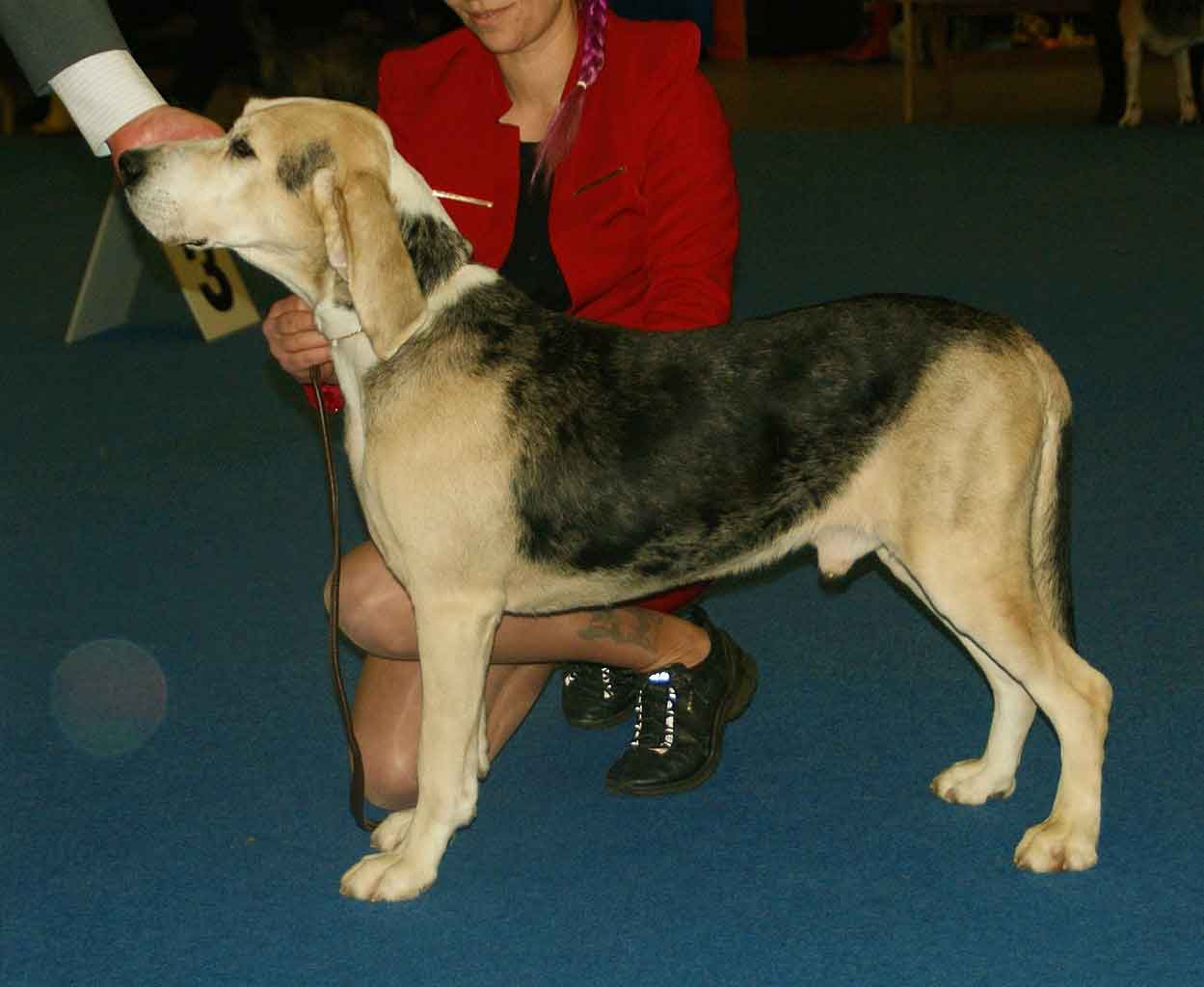
Norwegian Hound

The Norwegian Hound (Dunker) is found only in its country of origin and is virtually unknown outside its borders.

Content

History

The Norwegian Hound was originally called Dunker, in honor of the Norwegian captain and breeder Wilhelm Conrad Dunker (1806-1860), who established the first breed standard in 1850. During the first half of the 19th century, there was a large population of hounds in norway, including various types used for hare hunting. Wilhelm Dunker selected those with the keenest sense of smell and crossed them with a Russian Harlequin Hound to produce a versatile hound, able to hunt rabbits and hares by smell rather than sight, and tough enough to withstand the harsh weather conditions of Norway.

In 1902 was founded the Norsk Harehundklub, a club dedicated to hounds. That same year the hounds were divided into two main groups, known today as Dunker y Hygenhounds. The first was the most numerous and included local dogs from all over the country., providing a wide and varied breeding base.

Although Norway was less affected by World War II than other European countries, the demand for these dogs dropped dramatically, which made it difficult for the breeders to continue their work properly. As a result, the number of specimens decreased significantly.

After the conflict is over, the Dunker regained some popularity and was officially recognized by the Fรฉdรฉration Cynologique Internationale (FCI) in 1956.

But, this bounce was only short lived: lost ground again from the decade of 1970, due to competition from foreign breeds of hunting dogs imported into the country.

Things did not improve much in the 80, to the point that inbreeding problems began to appear. In fact, the decline in its population led many breeders to resort to inbreeding to continue breeding. This led to a high rate of congenital deafness.. For this reason, in 1987, the breeding committee Norwegian Hound asked the Norsk Kennel Klubb (NKK), the reference canine organization in Norway, permission to cross the Dunker with other races, but they denied it. But, how things did not improve much, the NKK finally gave his approval for some crosses two years later. This resulted in a more varied and healthy genetic makeup, while maintaining the characteristic traits of the breed.

The United Kennel Club (UKC) recognized it in 1996. But, the other American reference organization, the American Kennel Club (AKC), has not done the same to this day – nor does the neighboring Canadian Kennel Club (CKC) or the prestigious British Kennel Club (KC). In fact, at the global level, recognition of the breed is still quite partial.

It's the same for broadcast. Even in the other Scandinavian countries, is almost absent, with the exception of Sweden, where the Svenska Kennelklubben records a number of births each year that can be counted on the fingers of one hand, compared to around twenty in the early nineties. In France, not a single entry was made in the Book of French Origins (LOF) during the first two decades of the 21st century.

In Norway, The number of Dunkers recorded each year in the NKK has been around 150 since the mid-decade 2000. But, this marks a halving of the number compared to the change in years 90. This limited number is partly explained by the deafness problem present in this breed.: almost the 75% of its population suffers from deafness.

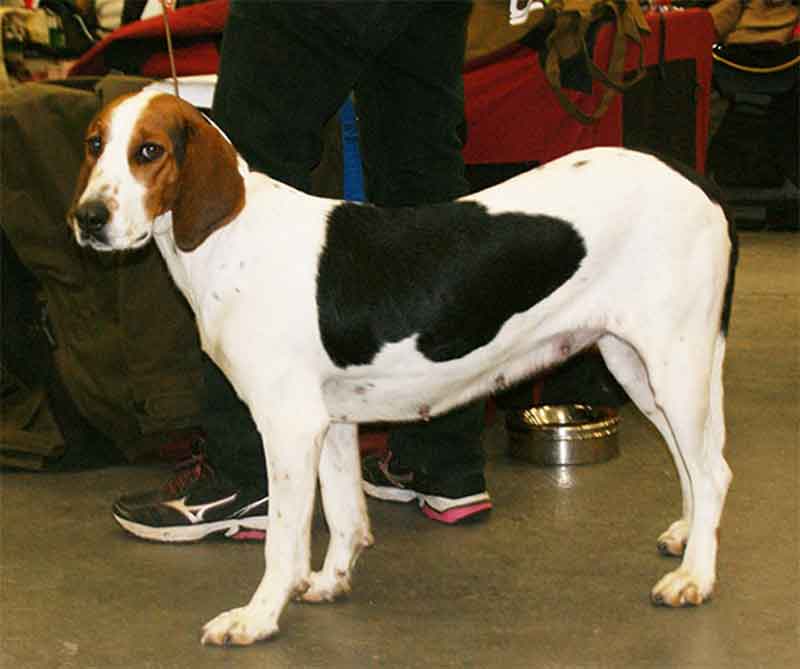
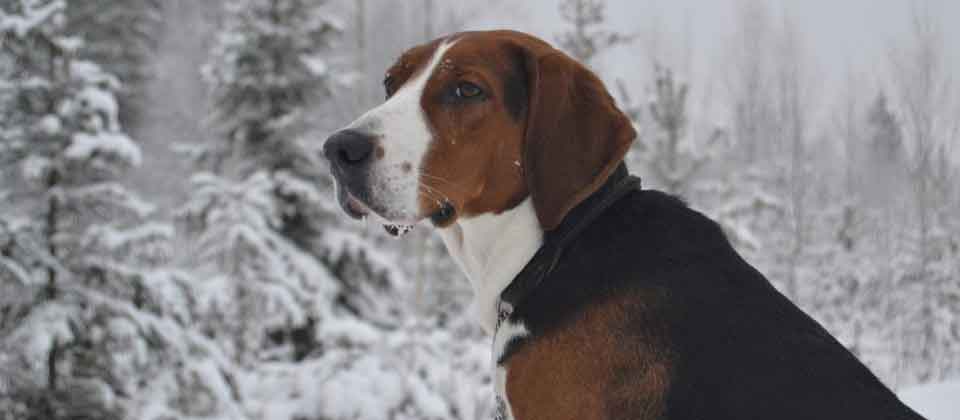
Photo: A Norwegian Hound by Canarian, CC BY-SA 4.0, via Wikimedia Commons

Physical characteristics ยซNorwegian hound (Dunker)ยป

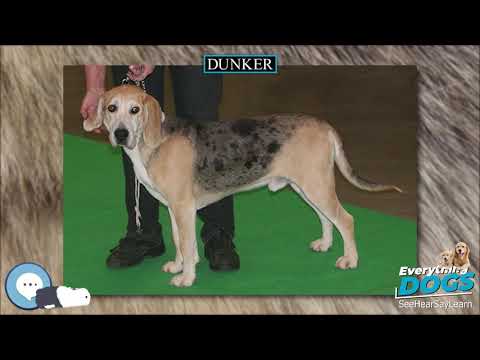
The Norwegian Hound It is a medium-sized dog distinguished by its long, well-proportioned body, his energetic and clear walk and his light weight. They have solid bones, giving an impression of strength and endurance. The back is straight, firm and long enough to give length to the rib cage. Lets on strong, dry front legs. The tail is wide and thick at the base and tapers at the tip. Descends to the hock or slightly protrudes from the hock.
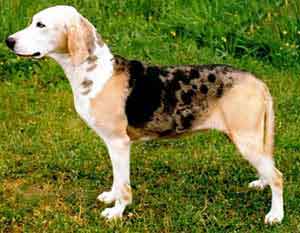
Dunker
Dunker

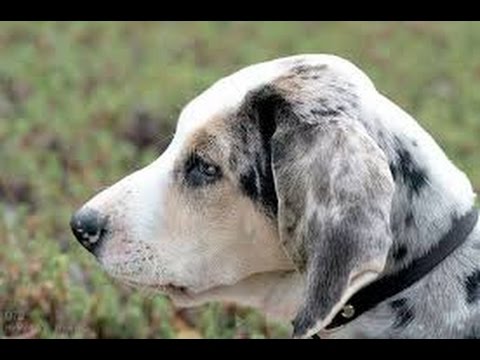
Quite long, its head is characterized by a slightly domed skull and a marked stop. Located at half height, the ears are flat, without folds, hanging and soft to the touch. medium width, taper towards its tip, which is rounded. Its mouth has scissor-shaped teeth dominated by a square, well-developed snout., a black nose and wide nostrils.

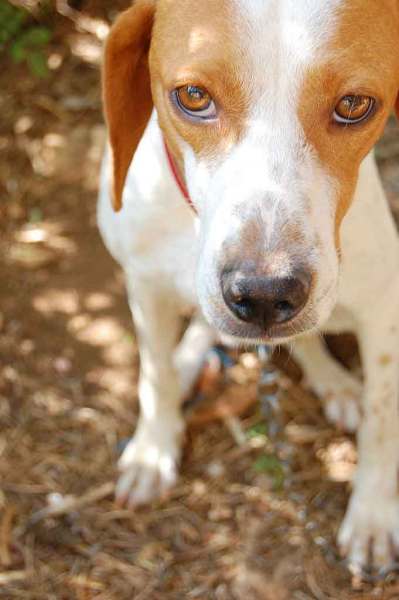
His eyes are round, large and very penetrating. Although they are usually dark in color, there are also individuals with one or two blue eyes, a characteristic that is associated with an increased risk of deafness. Minnow eyes are allowed in blue individuals (variegated). Regardless of the color of the eyes, the eyes express calm and seriousness.

The coat of the Dunker consists of short hair, hard, tight and dense. Its coloration is a distinctive sign of the breed: they are either black with light fawn and white spots, or blue merle (ยฟbigarros?) and mottled with light fawn and white spots. Jet black coats with dark tawny markings are less desirable, and those in which white predominates (to the point of representing at least the 50% Of the surface) are considered undesirable by the norm.

Last, sexual dimorphism is not very marked in this breed: males and females are quite similar in size and weight.

Life expectancy: 12 years of age.

Size of Norwegian Hound

    – female weight: Of 24 to 25 kg
    – Male weight: Of 24 to 25 kg
    – female size: Of 47 to 53 cm.
    – Male size: Of 50 to 55 cm.

Character and skills ยซNorwegian Hound (Dunker)ยป

The Norwegian Hound is a fast and tenacious hunter with an above-average olfactory ability. They excel particularly in hunting hare and rabbit.

Being also gentle, loving, cheerful and friendly, they have all the qualities required to be an excellent companion dog. balanced, patients, tolerant and devoid of aggressiveness, they are very good playmates for children. But, it is important to note that a dog should never be left alone with a small child without adult supervision, and this applies to all races.

His total lack of aggressiveness and his attraction to humans, even for those you don't know, make it totally impossible to use as a guard dog. In effect, not reserved at all, shy, fearful or aggressive with strangers, rather they tend to welcome them positively and trust them. They are more likely to greet a malicious person with curiosity and licking them rather than barking to warn their master or make them understand that they better go their way.

His sociability extends to other dogs too. So, it is quite possible to share a house with a dog companion without fearing that conflict situations will multiply, and is generally friendly with those he meets on his walks.

With cats and other animals, things are a little more complicated. His hunting instinct naturally leads him to chase any small furry animal that is not part of the canine species.. Although he has grown up with him and must consider his little companion as a member of the family and not as a potential prey, risk can never be ruled out, so it is better to avoid such cohabitation. As for those that can be found on your walks, you probably want to chase them. So, it is preferable to keep it on a leash during excursions, to avoid any accident.
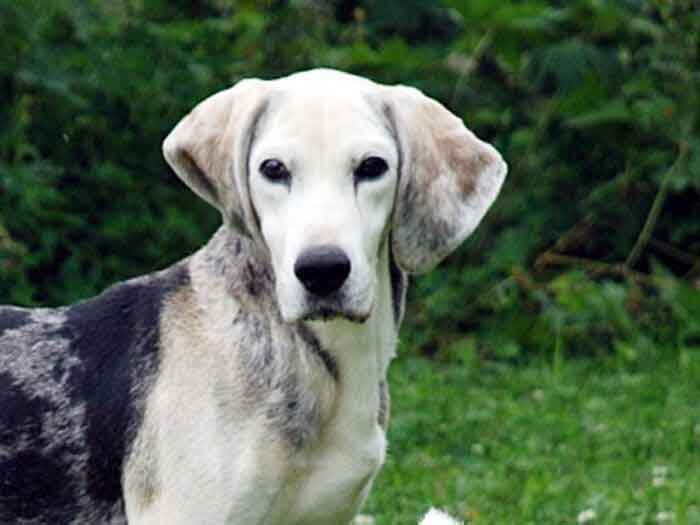
Dunker
Dunker

In any case, the fear that it will chase other animals does not mean that you should not take it out enough each day, knowing that you need a lot of activity to spend your great energy. Need at least 45 minutes of exercise per day, but his stamina makes him happy to go further if given the chance. It also, it is preferable to vary the pleasures to allow him to fully expend his energy: long walks, run through the park, sports with dogs, etc. Sports that require running (like canicross) and those that appeal to your senses (like tracking) they are the most recommended. In fact, this dog is very happy when he has to mobilize his physical and mental capacities. In any case, in addition to allowing you to exercise, all these activities reinforce the relationship with his master, which is especially important if you are hearing impaired.

From the above it follows that the Dunker not suitable for an elderly or very sedentary person, that I couldn't give you all the exercise you need. The ideal for him is a master of sport, and willing to take his partner in his various activities. Retirees may be right for him, if they are active enough.

In any case, life in the city is not ideal for him, that needs large spaces to fully develop. A house with a garden in the country is a much more appropriate environment to live in.. But, it is important to ensure that the garden is well fenced and that the environment is safe, as his instincts and hunting instincts soon lead him to follow leads and flee.

Once your need for exercise is satisfied, the Norwegian Hound has an easy and docile character; is far from being as stubborn as many hunting dog breeds. But, your sense of smell can make training difficult, as he is easily distracted by a scent and not really responsive to his master's commands.

Their propensity to bark can also be quite annoying. He is particularly prone to doing it if his master is away for a long time without having given him any exercise beforehand and without having the means to do it himself.. In fact, inactivity can be a burden and cause those behavior problems, as well as destruction, for example. But, as long as you have something to take care of in the absence of your family, not the type of dog that suffers a lot from separation anxiety.

Education ยซNorwegian Hound (Dunker)ยป

Like all the other hounds, the Norwegian Hound must be socialized from an early age. In other words, so that he becomes a balanced adult and has no trouble finding his place, should be given without delay a maximum of opportunities to meet all kinds of humans (veterinary, neighbors, delivery man, etc.), Other animals, but also to face various noises, smells and situations. This is even more important since he is easily distracted by his sense of smell..

The rules established in your education should also be taught to you from an early age, when your ability to learn and docility are at their best. As with any race, bad habits pick up quickly when he's still a puppy and become real problems when he gets older.

In any case, the Dunker it is a breed of dog that is easy to train and that listens to its master, as long as he uses a dog-friendly training method. Treatments generally prove to be very effective in positively reinforcing your good deeds and facilitating learning. But, sometimes it is necessary to show firmness and affirm your own authority to prevent this dogged dog from doing what he pleases. It can also be difficult to get their attention., given their tendency to be distracted by their sense of smell.

Since it has a strong inclination to follow its nose and to chase passing small animals, Teaching your dog to call back is especially important to avoid the risk of a frantic tug on the leash or running away if it moves freely.

It may also be helpful to try to teach him to channel his propensity to bark.. But, as it is deeply ingrained in him, should not be expected to be the calmest of dogs. If it is impossible to make him understand that some things do not necessarily require him to bark, at least he can be taught to stop on command.

Last, if the dog is deaf from birth, as is the case with a significant fraction of the representatives of the breed, the master must obviously adapt to this restriction: Training a deaf dog is not done in the same way as training another dog that is able to hear its master's voice.. Trust is then even more crucial in the relationship between the animal and its master., so that you can learn and live in good conditions despite your disability. Of course, communication is then done through non-verbal communication, and it's up to the teacher to adopt explicit body language, based on gestures and precise mimicry, specific for each indication you want to give.

Health ยซNorwegian Hound (Dunker)ยป

The Norwegian Hound is very resistant, generally have excellent health and very good longevity.

Used to living in harsh Norwegian weather, can tolerate cold and damp without difficulty. Their coat is naturally waterproof and offers good protection from the elements. On the other hand, shows some intolerance to high temperatures, even if it is able to adapt to a Mediterranean climate. You simply need to lighten up your activities during hot flashes, or at least privilege those that are carried out inside, to ensure that you always have access to a place in the shade or even air conditioning and to avoid any excessive physical exertion in the hottest hours.

Its small population and its limited diffusion prevent a very important deterioration of health, but it has been shown that it is predisposed to certain problems:

  • deafness, what is a hereditary disease. According to the Orthopedic Foundation for Animals (OFA), almost the 75% of the population of the breed is today deaf in at least one, if not both ears;
  • hip dysplasia, a joint malformation that may be characterized by a hereditary predisposition. It can cause joint pain as well as difficulty moving;
  • Elbow dysplasia, which can also be favored by a hereditary predisposition. It is painful and leads to difficulty moving and the development of osteoarthritis;
  • progressive retinal atrophy, a hereditary and incurable eye disease. Causes loss of night vision first, then loss of daytime vision, to the point that the dog becomes totally blind;
  • Demodecic scabies, a contagious parasitic disease that causes itching and true discomfort to the dog, gradually losing appetite and sleep;
  • ear infections (otitis, etc.), due to its hanging shape.
  • It also, individuals used for hunting are exposed to the various risks associated with this activity: wounds, parasites, thorns, etc.

    It also, the Dunker has a strong appetite. How it is usually active, this is not usually a problem. But, if it is not, soon becomes overweight.

    Given the hereditary conditions to which the breed is predisposed, the breeder's work plays a decisive role in the adoption of a Norwegian Hound that he is in perfect health and that he will probably remain so. In addition to the results of genetic tests performed on the parents and the puppy to reduce the risk of such diseases, every serious and responsible breeder must be able to present a certificate of good health established by a veterinarian, as well as documents related to the vaccines administered.

    It also, when the dog is small and still growing, your bones and joints are particularly fragile: therefore, any excessively intense or prolonged physical exercise should be avoided, since I could pay it off one day or another, with potentially permanent sequelae (malformations, etc.).

    Last, it is necessary to consult a veterinarian at least once a year to ensure that the dog is in good health or, on the other hand, to be able to detect as soon as possible any problem whose symptoms are not yet visible. This health check is also an opportunity to carry out your immunization reminders, which are another essential lever to keep the dog in good health. Still on the prevention registry, it is the owner's responsibility to renew the antiparasitic treatments whenever necessary throughout the year, so your partner is never unprotected.

    Care and maintenance ยซNorwegian Houndยป

    A tough breed, the Norwegian Hound do not require much maintenance.

    But, they lose a lot of hair, so brushing your hair twice a week is not too much to help remove dead hairs and keep it in good condition. During their molting periods in spring and fall, when it should be done more often (even daily) to prevent hair growth throughout the house.

    Since his hair is not very dirty and therefore does not have a strong odor, bathing him two or three times a year is generally sufficient. In any case, a too frequent bath will make the sebum naturally present on the skin disappear, insulates and protects it from the elements. Having said that, do not hesitate to give him a bath if he has gotten very dirty, for example during a particularly muddy hunting trip. In any case, you can only use a shampoo specially designed for dogs, at the risk of damaging your skin.
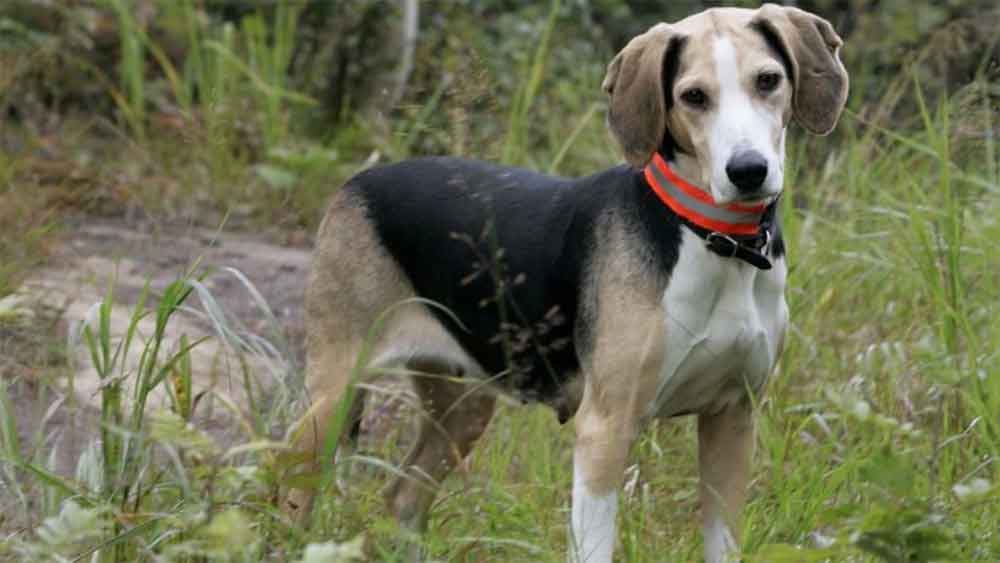
    Dunker
    Dunker

    The ears, on the other hand, require special attention, since its hanging shape implies an increased risk of infections (ear infections, etc.). They must be cleaned every week with a damp cloth or a cleaning product specially designed for this purpose.. They should also be dried after each bath or after a long period of time in a damp place..

    Their eyes they must also be examined weekly and cleaned if necessary with a damp cloth.

    It is also necessary to brush the teeth of your dog every week or even every day to avoid the formation of dental plaque and its possible consequences (bad breath, diseases, etc.). A toothpaste specially designed for dogs should always be used.

    It also, it is important to regularly check your dog's claws to make sure they are not getting too long and to trim them if this is the case. This could not only hinder your walking, but you could also break and potentially injure yourself at the same time. Having said that, while you're active and spending long hours outdoors, natural wear and tear is usually enough to file them.

    To know how to proceed during maintenance sessions, it is useful to benefit from the experience of a veterinarian or a groomer the first time. In fact, whether the various procedures for grooming the coat, the ears, the eyes, your pet's teeth or claws are not done properly, not only will satisfactory results not be obtained, but the owner may even injure or injure his pet. It also, the owner should get used to his pet very soon, so that throughout his life he accepts to be manipulated without being rebellious.

    It also, when your pet returns from a long time in the wild, it is a good idea to systematically take a little time to inspect it carefully: parasites, spikes or dirt may have gotten into their fur, and may also have been injured.

    What price does a โ€œNorwegian Houndโ€ cost?

    In Norway, a puppy Dunker It costs around 7000 Norwegian crowns (a few 650 EUR). The sale price varies from one individual to another depending on the prestige of the breeding, the lineage of the dog and its intrinsic characteristics.

    Since the breed does not have a wide international distribution, it is almost impossible to find a breeder of it outside of its country of origin.

    So, whether you are in France, Belgium, Switzerland, Canada or elsewhere, who wants to adopt a Norwegian Hound you must opt รขโ‚ฌโ€นรขโ‚ฌโ€นfor the import solution. In this case, keep in mind that transportation and administrative costs are added to the purchase price and, of course, you must respect the regulations to import a dog from abroad.

    Characteristics "Norwegian Hound (Dunker)"

    Coexistence is important that you have with your new friend. Before considering the acquisition of a dog of the breed "Norwegian Hound (Dunker)" you know certain factors. Not all breeds of dogs are apt to live in an apartment, you must take into account his character, their need for exercise, their interaction with other pets, their care and if you have small children, their level of tolerance towards them.

    Adaptation โ“˜

    2,0 of 5 stars (based on 1 review)

    friendly dog โ€‹โ€‹โ“˜

    4,0 of 5 stars (based on 1 review)

    hair loss โ“˜

    4,0 of 5 stars (based on 1 review)

    Affection level โ“˜

    4,0 of 5 stars (based on 1 review)

    Need for exercise โ“˜

    4,0 of 5 stars (based on 1 review)

    Social need โ“˜

    4,0 of 5 stars (based on 1 review)

    Home โ“˜

    4,0 of 5 stars (based on 1 review)

    Toilet โ“˜

    2,0 of 5 stars (based on 1 review)

    Friendly with strangers โ“˜

    4,0 of 5 stars (based on 1 review)

    barking โ“˜

    4,0 of 5 stars (based on 1 review)

    Health โ“˜

    4,0 of 5 stars (based on 1 review)

    Territorial โ“˜

    4,0 of 5 stars (based on 1 review)

    Cat friendly โ“˜

    2,0 of 5 stars (based on 1 review)

    Intelligence โ“˜

    3,0 of 5 stars (based on 1 review)

    Versatility โ“˜

    3,0 of 5 stars (based on 1 review)

    Child friendly โ“˜

    4,0 of 5 stars (based on 1 review)

    Surveillance โ“˜

    2,0 of 5 stars (based on 1 review)

    joy โ“˜

    4,0 of 5 stars (based on 1 review)

    Videos "Norwegian Hound (Dunker)"

    norwegian hound (Dunker) - Breed of dog
    Sabueso Noruego (Dunker) – Raza de Perro
    Dunker ๐Ÿถ๐Ÿพ Everything Dog Breeds ๐Ÿพ๐Ÿถ
    Dunker ?? Everything Dog Breeds ??

    Type and recognitions:

    • FCI CLASSIFICATION:
    • Group :
    • Section : . .

    Federations:

    • – FCI – Group 6: Scent hounds, and related breeds. – Section 1.2: Medium-sized Hounds. โ“˜
    • – UKC – Scenthounds โ“˜

    FCI breed standard "Norwegian Hound (Dunker)"

    Origin:
    Norway

    Date of publication of the valid original standard:
    12.03.1999

    Use:

    Hound


    General appearance:

    Medium-sized; obviously rectangular, strong structure, without giving the impression of being heavy. Must show the ability to be tenacious and resilient.

    IMPORTANT PROPORTIONS :
    The depth of the chest should be approximately half the length of the height at the withers.


    Behavior / temperament:

    The Norwegian Hound is considered the tough and robust trail dog of the old days., a dog with an excellent temperament. The breed is characterized by nerves of steel and for being especially sociable and trusting.. They are known to have performed well in hunting tests.. In this way, They can be characterized as an excellent combination of a hunting and companion dog.. Due to his good temperament and open character, the breed is also easy to train.

    Head:

    You should not carry it high. Clean, carried with dignity, with good length and parallel lines, non-cuneiform.

    Cranial region:
    • Skull : Slightly bulky, prominent occipital protuberance. If the snout is long and well developed, the skull is allowed to be wider, especially in males, as long as it does not lose its parallel planes.
    • Depression links (Stop) : Marked, but not deep or abrupt.

    facial region:

    • Truffle : black, well open Windows.
    • Snout : Rather long than short, square cut. Straight and evenly wide nose cane.
    • Jaws / Teeth : Scissor bite. Complete denture.
    • Cheeks : clean, no prominent cheekbones.

    Eyes : dark colored, round, rather big, but not outstanding. Expressive eyes, brilliant intelligence, calm and gravity. Close-fitting eyelids. Doe eyes are allowed in ยซBlue merleยป dogs.

    Ears : Medium implementation, rather low than high. soft, moderate width, tapering towards the rounded tip. Flat, without folds. Hanging close to the face. Long enough to reach the middle of the snout when stretched forward.

    Neck:

    Relatively long, no visible double chin.

    Body:

    • top line : Level.
    • Back : Straight, firm and not too long.
    • Loins : Wide and well muscled, not convex.
    • Rump : With a slight drop, well muscled, not too short.
    • Breast : Large capacity, with well arched ribs; the last ribs must be particularly well developed, making the chest look long.
    • Bottom line and abdomen : Slightly gathered.

    Tail:

    Implementation at the top line level. Thick at its root, tapering towards the tip. It should be straight and carried with a slight upward curvature; reaching to the hock or a little below it.

    Tips

    PREVIOUS MEMBERS :

    • As a whole : Strong, thin and sinewy.
    • Shoulder : Muscular, wide and inclined scapula, well attached to the trunk; tips of shoulder blades close together at the top. Well-angled shoulder and elbow joints.
    • Arm : Straight.
    • Metacarpus : Slightly inclined.
    • Front feet : Closed and arched fingers with a lot of fur between them. Durable pads. Feet should point forward.

    LATER MEMBERS :

    • As a whole : Well angled, parallel in standing position. Without being too angled or with a "cow" hock.
    • Thigh : Large.
    • Knee : Well angled.Leg : Wide.
    • Hocks : Thin and low position, wide if seen from the side.
    • Rear feet : Like the front feet.

    Movement:

    Libre, with good scope. The extremities, views from behind, they are parallel; without cow hocks and without being too angled.

    Mantle

    HAIR : Straight, hard, dense and not very short. The back of the thighs and tail may have more hair, as long as the rest of the body has good fur.

    COLOR : Black or "Blue merle" with pale fawn or whitish markings. The intense brown or predominantly black color, reaching from the snout lower than the hocks with a so-called mask is less desirable. When the white, increasing too much, reaches below the shoulders to the lower belly or to the feet (socks), These are correct and accepted brands.


    Size and weight:

    Height to the cross:

    • Males: 50-58 cm., ideal 52-54cm
    • females: 47-54cm., ideal 49-51 cm..


    Fouls:

    Any deviation from the aforementioned criteria is considered as a fault and the severity of this is considered to the degree of the deviation to the standard and its consequences on the health and well-being of the dog..

    โ€ข When in black or light fawn dogs the white reaches the middle of the back, or if blue-merle dogs show white markings, The rating of these dogs should be decreased in proportion to the extent of the target's extent..

    MISS PLAYOFFS :

    โ€ข Aggressiveness.
    โ€ข Predominantly white color (50% or more).

    Any dog โ€‹โ€‹showing clear signs of physical or behavioral abnormalities must be disqualified..


    N.B.:

    Males should have two normal-appearing testicles fully descended into the scrotum..

    Source: F.C.I - International Cynological Federation

    Alternative names:

    1. Dunker (English).
    2. Dunker (French).
    3. Dunkerbracke, Dunkerlaufhund (German).
    4. Dunker (Portuguese).
    5. Cazador noruego, Dunker, Sabueso de Dunker (espaรฑol).

    โ–ท The world of Pets: Dogs, cats, birds, reptiles, amphibians

    Istrian Shorthaired Hound
    Croacia FCI 151 . Medium-sized Hounds

    Istrian Shorthaired Hound

    There is also a "Wire-Coated Istrian Hound" of slightly larger size..

    Content

    History

    The Istrian Shorthaired Hound is an ancient breed of hound dog originating from Istria, whose origins are lost in dark prehistory. The frescoes (1474, Chapel of the Virgin Mary in Beram, near Pazin), the paintings (including Titian, first half of the 18th century), and the chronicles (1719, Bishop Bakic of Djakovo) bear witness to it.

    The Istrian Shorthaired Hound, highly appreciated for its excellent hunting qualities, was sold from Istria to neighboring countries. The first inscriptions in the herd book date from 1924, the breed was recognized by the FCI already in 1949, but the standard wasn't published until 1973.

    Today, the Istrian Shorthaired Hound it is quite common in and around Istria and is still very popular with hunters due to its excellent characteristics.

    Photos:

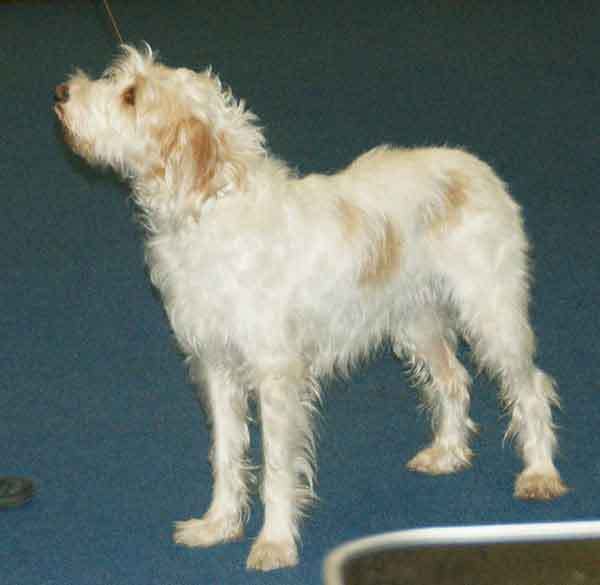
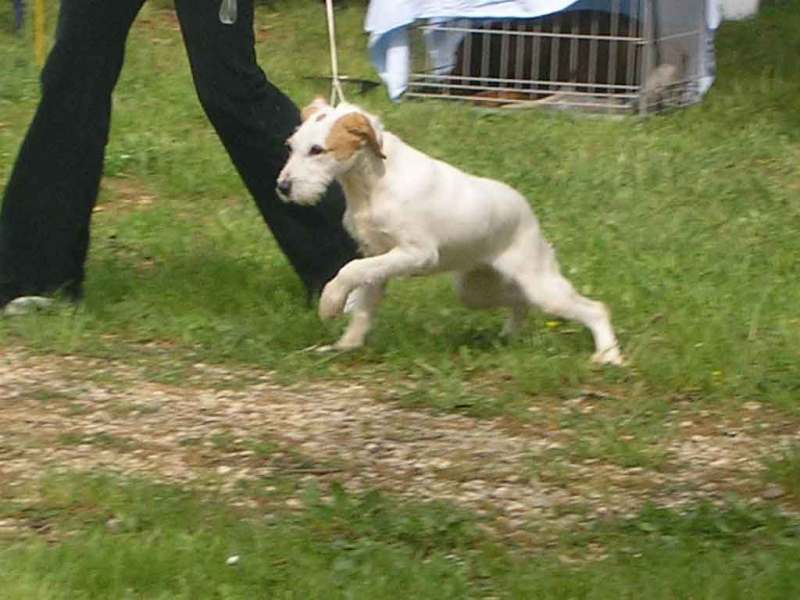
    1 – Istrian Shorthaired Hound at a dog show in Zadar, Croatia (CACIB 2006.) by Mirta12, CC0, via Wikimedia Commons

    Physical Characteristics Istrian Shorthaired Hound

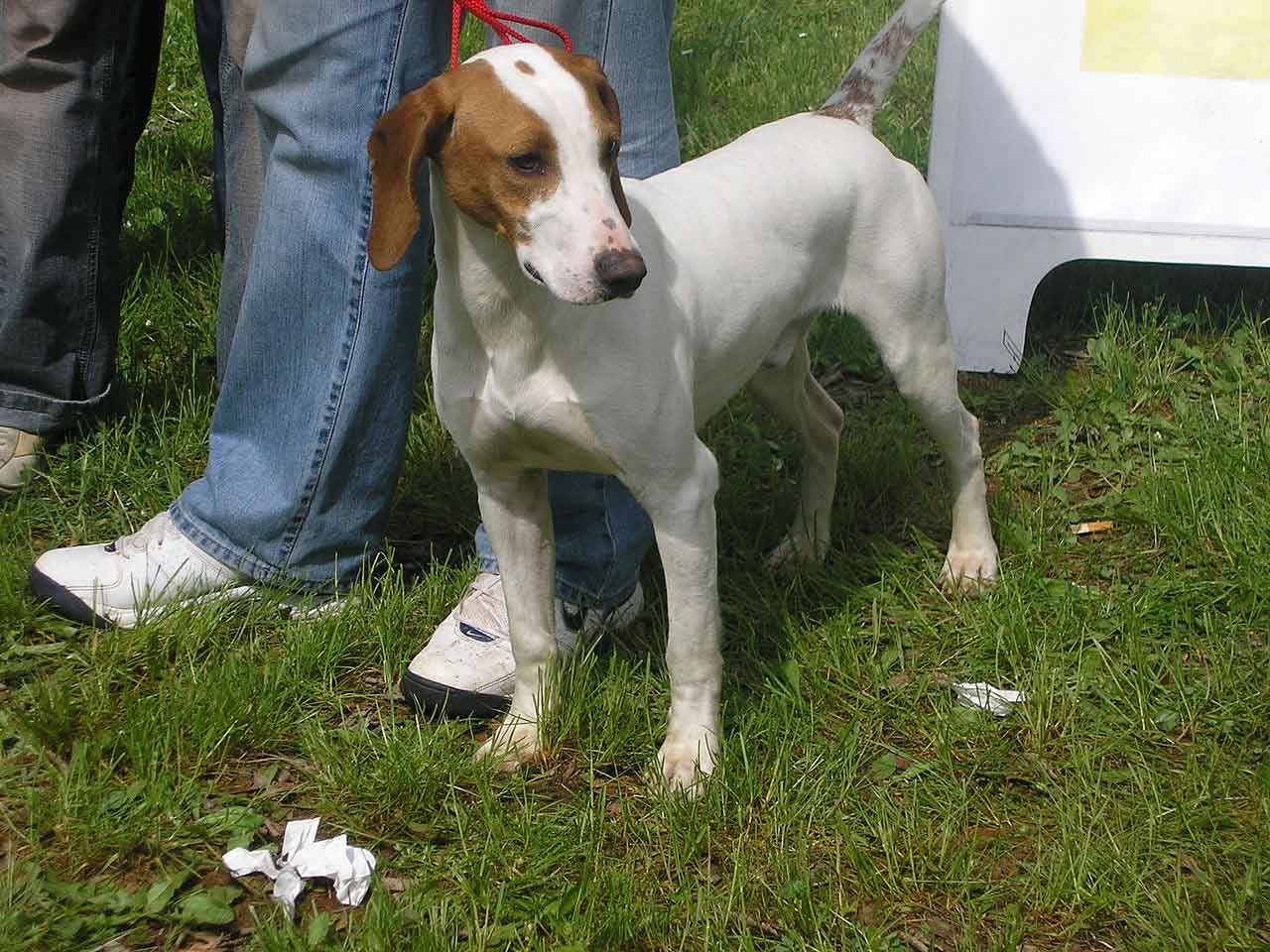
    The Istrian Shorthaired Hound he is a medium sized running dog, who appears elegant and distinguished in his build and movements. The height at the withers in both males and females is between 44 and 56 cm., the weight of the dogs is 14 to 20 kg, the optimum is 18 kg.

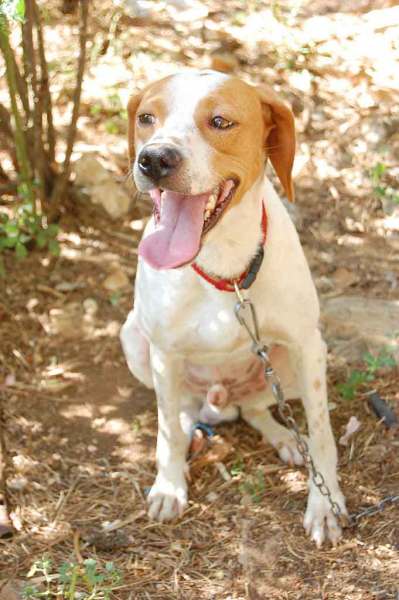
    The coat of these dogs is thin, dense and, as the name reflects, short. This short-haired variant is somewhat smaller than the wire-haired version of the Istrian Hound.. The basic color of the coat is white with orange yellow tints. As a whole, the coat is shiny.

    The life expectancy of dogs is 12 – 14 years.

    Character and skills Istrian Shorthaired Hound

    The characteristic of Istrian Shorthaired Hound it's his distinctive hunting instinct. The dogs have always been used as hunting dogs and still show corresponding characteristics today.. This includes his liveliness and his passion for hunting itself.. Like most hunting dogs, these dogs have little instinct for protection and are therefore quite unsuitable for guarding and protection tasks.

    While the Istrian Shorthaired Hound be able to live your hunting instinct and feel fully occupied, has a gentle and friendly disposition. It is obedient and loyal to its owner. Your posture is nice.
    It also, these dogs are smart and insightful, so they must be challenged in this regard as well. If the dogs are not kept according to their nature, they often get stubborn and sometimes even start poaching.

    Keeping an Istrian Shorthaired Hound

    The Istrian Shorthaired Hound It, by its nature, first of all a tracking dog. It is particularly suitable for hunting foxes and hares and is used almost exclusively for this purpose in its native country.. It is important that the dogs of this breed are kept by a hunter and encourage them to go hunting and take the trail., so it should be considered as an example for animals. Despite your gentle nature, they are not suitable as pure family dogs, as their pronounced hunting instinct would be neglected too.

    Images "Istrian Shorthaired Hound"

    Photos:

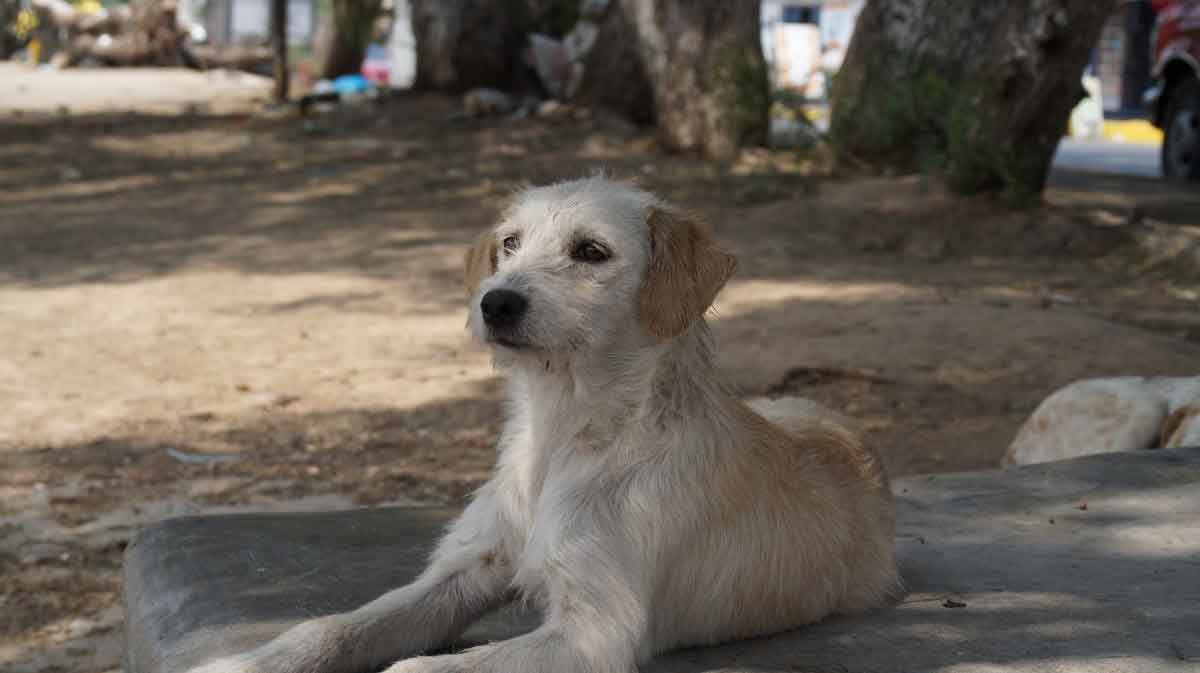
    2 – Luri the Istrian Shorthaired Hound in a dog shelter in Zadar, Croatia by Mirta12, CC BY-SA 3.0, via Wikimedia Commons
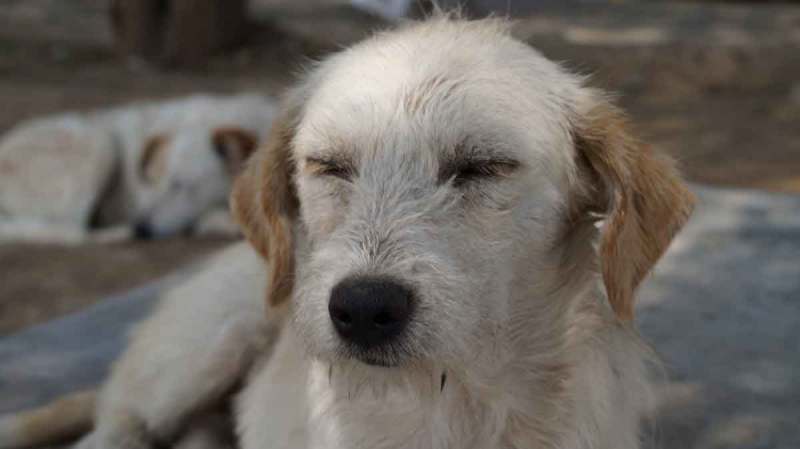
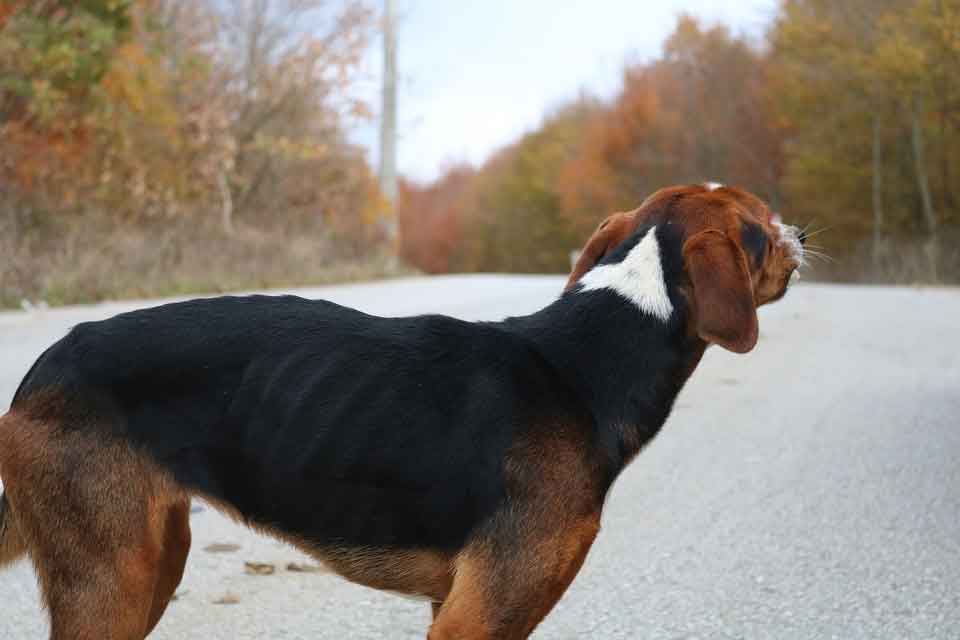
    3 – Luri the Istrian Shorthaired Hound in a dog shelter in Zadar, Croatia. He was underweight when the photo was taken by Mirta12, CC BY-SA 3.0, via Wikimedia Commons
    4 – Luri the Istrian Shorthaired Hound in a dog shelter in Zadar, Croatia. He was underweight when the photo was taken by Mirta12, CC BY-SA 3.0, via Wikimedia Commons
    5 – Istrian Shorthaired Hound Luri in a dog shelter in Zadar. When the photo was taken, he was underweight by Mirta12, CC BY-SA 3.0, via Wikimedia Commons
    6 – Istrian Shorthaired Hound puppies at a dog show in Zadar, Croatia (CACIB 2006.) by Mirta12, CC BY-SA 3.0, via Wikimedia Commons

    Videos "Istrian Shorthaired Hound"

    Type and recognitions:

    • FCI CLASSIFICATION:
    • Group :
    • Section : . .

    Federations:

    • – FCI – Group 6: Scent hounds, and related breeds. – Section 1.1: Large-sized Hounds. โ“˜
    • – UKC – Scenthound Group โ“˜

    FCI breed standard "Istrian Shorthaired Hound"

    Origin:
    Croatia

    Date of publication of the valid original standard:
    3.11.2014

    Use:

    tireless hound, especially suitable for hare hunting, foxes and wild boars, although it can also be used as a tracking dog.


    General appearance:

    It is noble looking, with its snow white fur interspersed with yellow-orange spots. The hair is satin and fine. The head is long, narrow and thin. The body is agile. The tail is thin and slightly curled, Sabre-shaped.
    This hound barks persistently, usually in a high pitched tone.

    IMPORTANT PROPORTION : The length of the body must exceed the withers by a maximum of 10%.


    Behavior / temperament:

    Sweet character, docile, quiet, very attached to his master. Is energetic, and very passionate while hunting.

    Head:

    The length of the head fluctuates between 20 and 24 cm.. The forehead has no folds.

    Cranial region:
    • Skull : In profile, the occipital protrusion is pronounced. The forehead is slightly arched, presenting a smooth transition towards the nasal bridge, which is straight. View from the top, the forehead is long and rather narrow, with an apparent frontal groove.
    • Depression links (Stop) : Outfit, no sharp sinking.

    facial region:

    • Truffle : It is black, or at least brown. The nostrils are wide open.
    • Snout : It is long, width at the base, gradually tapering towards the limb. The nasal helm is straight.
    • Teeth : They're strong. The joint is in the form of scissors, uniform. Teeth are complete.
    • Eyes : They have an oval shape; they do not appear nor sunk, nor protruding. The iris should be as dark a color as possible. The eyelids are black or brown. The look is clear and expressive.
    • Ears : They are fine, with a broad ligament, implanted slightly above the horizontal line of the eyes; become narrower at the end. They are considered long, when carried forward along the bridge of the nose, they reach the canines; they are very long, when the canines exceed. They must be at least semi-long and reach the zygomatic arches.

    Neck:

    The upper profile is slightly arched in the nape region. The junction with the head is perceptible in the posterior part of the occipital protuberance. The neck is obliquely inserted into the trunk. Neck contour is compact. From the occipital protuberance to the withers, the neck measures of 15 to 20 cm.. The skin is stretched, no jowls or folds

    Body:

    The upper margin gently descends from the withers towards the rump.

    • Back : It is wide, straight and muscular.
    • Pork loin : Wide and short.
    • Rump : Long and wide; slightly inclined or horizontal. It is longer in females than in males. In the region of the rump the height is about one finger less than in the region of the withers. The haunches are barely noticeable.
    • Breast : Well inclined; reaches at least to the elbow. Normally, its circumference exceeds the height at the withers by some 12 cm.. The ribs are rounded. The front of the chest is well developed, but the tip of the sternum is barely visible.
    • Belly and flanks : The superior margin rises gently from the sternum to the inguinal region, therefore, the belly is slightly raised.

    Tail:

    Thick at its base, diminishing in its limb. The finer the tail, the greater the noble aspect of the dog. It is high implantation, of medium length and does not exceed the level of the hock. It comes slightly curled up.

    Tips

    PREVIOUS MEMBERS :

    • Shoulder pads : Long, oblique and well attached to the chest.
    • Elbows : Well applied to the body.
    • forearms : Perfectly vertical, well muscled.
    • Carpi : They are barely distinguishable from the forearm.
    • Metacarpus : They are straight and short. They can be slightly inclined, but the angle they form with the vertical never exceeds 10ยฐ.
    • Front feet : They look more like a cat's foot than a hare's. They are light, with fingers together. The pads are arched and firm; nails are solid.

    LATER MEMBERS : Seen from the back, thigh, Leg, the hock tendon and the metatarsal are on the same vertical.

    • Thigh : Is short, wide and muscular.
    • Knee : The kneecap is wide, set high.
    • Legs : long, oblique and well muscled.
    • Hock : It's compact.
    • Metatarsals : Short, vertical or very slightly inclined, forming an angle of 10ยฐ to 20ยฐ with the vertical.
    • Hind feet : Similar to the forwards. However, they are a little longer.

    Movement:

    It is agile, uniform, loose.

    Mantle

    SKIN : Is elastic, is well applied over the entire body. Does not form folds. It is a pinkish color.

    HAIR : It is flat, fine and shiny. Sometimes longer on the back of the thighs and on the inside of the tail, but this characteristic is not valued.

    COLOR : The background color is snow white. In principle, the ears are orange; color that extends beyond the base of the ears and covers both sides of the forehead to the eye region, which gives the face its characteristic mask appearance. We mean a star if, on the upper part of the forehead there is a more or less large spot of the same orange color. The ears may also be dotted with orange spots, which is highly appreciated and considered as a sign of purebred. Yellow-orange spots can be seen in the form of specks or strips spread over any part of the body, but more often in the region of the tail ligament. They should never be so numerous as to dominate the white background color. The tone of the spots should be accentuated, never pale, nor dark, not even brown, which would show signs of a mixture of races. The presence of a third color is not allowed, not even in some hairs. The coat may be uniform white, without any stain.


    Size and weight:

    Height to the cross : It is of 44 to 56 cm..

    Ideal size

    • for males : 50 cm.,
    • for females : 48 cm..

    Weight : In an adult male it is about 18 kg.


    Fouls:

    Any deviation from the aforementioned criteria is considered as a fault and the severity of this is considered to the degree of the deviation to the standard and its consequences on the health and well-being of the dog..

    MINOR FAULTS

    โ€ข Spots with partial depigmentation on the nose or on one eyelid. Nose with a very clear pigmentation.
    โ€ข Convex or slightly sunken back.
    โ€ข Croup too oblique.
    โ€ข Thin or too solid belly.

    MISS PLAYOFFS

    โ€ข Aggressive or fearful dog.
    โ€ข Lack of proportion between body length and height at the withers.
    โ€ข Head too short.
    โ€ข Spots with abundant depigmentation, or total depigmentation of the nose.
    โ€ข Muzzle too short, very pointed or obtuse.
    โ€ข Upper or lower prognathism.
    โ€ข Incorrect joint.
    โ€ข Different colored eyes.
    โ€ข Ligament of the ears set very high.
    โ€ข Curled tail, deviated to one side or corkscrew. Cropped tail.
    โ€ข Elbows too far apart.
    โ€ข Twisted forearms.
    โ€ข Pasterns too oblique.
    โ€ข Hair that is too long.
    โ€ข Any color other than yellow-orange.
    โ€ข Size above or below the norms established by the standard.

    Any dog โ€‹โ€‹showing clear signs of physical or behavioral abnormalities must be disqualified..


    N.B.:

    Males should have two normal-appearing testicles fully descended into the scrotum..

    Source: F.C.I - International Cynological Federation

    Alternative names:

    1. Original name – Istarski Kratkodlaki Goniฤ (English).
    2. Chien courant d’Istrie ร  poil ras (French).
    3. Istarski Kratkodlaki Goniฤ (German).
    4. Istarski kratkodlaki gonic (Nome original) (Portuguese).
    5. Nombre original – Istarski Kratkodlaki (espaรฑol).

    โ–ท The world of Pets: Dogs, cats, birds, reptiles, amphibians

    Estonian Hound
    Estonia FCI 366 - Medium-sized Hounds
    Estonian Hound

    The Estonian Hound they are extremely hardy hunting dogs accustomed to long days in the forest

    Content

    History

    The history of Estonian Hound (or Eesti Hagijas in the language of your country of origin) begins at the beginning of the 20th century in Estonia, when the crossing of english hounds, Poles and Finns used by local hunters gave rise to a large dog unofficially considered regional and ancestor of the current Eesti Hagijas.

    Given the sharp decline in the population of large game and in order to reestablish it, in 1937 A law was passed prohibiting hunting with dogs over 45 cm to the cross, which in fact caused a change of orientation towards smaller animals, like foxes and hares. Therefore, Estonian hunters and breeders had to breed smaller dogs than they had then, so they were introduced in the breeding program the Beagles, the Dachshund and Swiss Hounds.

    This law was amended three years later, in 1940: the maximum size was increased to 55 cm., and breeders stopped their efforts to miniaturize local hunting dogs.

    In 1947, when Estonia was part of the USSR, The Soviet Ministry of Agriculture decided that all the "republics" that made up Estonia should have a local breed of dog. The Estonian hunting dog population was then estimated at around 900, and intense selection helped stabilize the characteristics of the breed that would become the Estonian Hound.

    In 1954, the Ministry of Agriculture sent a specialized commission to Estonia to study the 648 specimens submitted by local breeders, and were clearly convinced: the first breed standard was approved by the Ministry a few months later. This year marked the official introduction of the Estonian Hound like a race, whose stamina and formidable nose were immediately emphasized.

    After the collapse of the Soviet regime, Estonia gained independence and in 1998 la Estonian Kennel Club, the main canine association in the country, recognized race. Being the only native of the country, it was not surprising that it was granted national dog status.

    The organization set out to make the breed known and recognized internationally. His efforts were crowned with success in 2019, cuando the International Cynological Federation (FCI) provisionally accepted the breed and published a standard. Having said that, there is still a long way to go, since it is not recognized, for example, by the prestigious British Kennel Club, nor by American reference organizations such as the United Kennel Club (UKC) o el American Kennel Club (AKC).

    The Estonian Hound is popular in an area encompassing Estonia and nearby Russian regions, and its population is estimated at about 1200 individuals. It is still used there as a hunting dog and has also made a place for itself in many homes as a pet.. But, hasn't conquered the rest of the world yet. Rare in europe, even in Estonia's neighboring countries, is practically absent from the North American continent.

    Photo: Estonian Hound by Marcin Bล‚aszkowski, Public domain, via Wikimedia Commons

    Physical characteristics

    Estonian-hound
    Estonian Hound

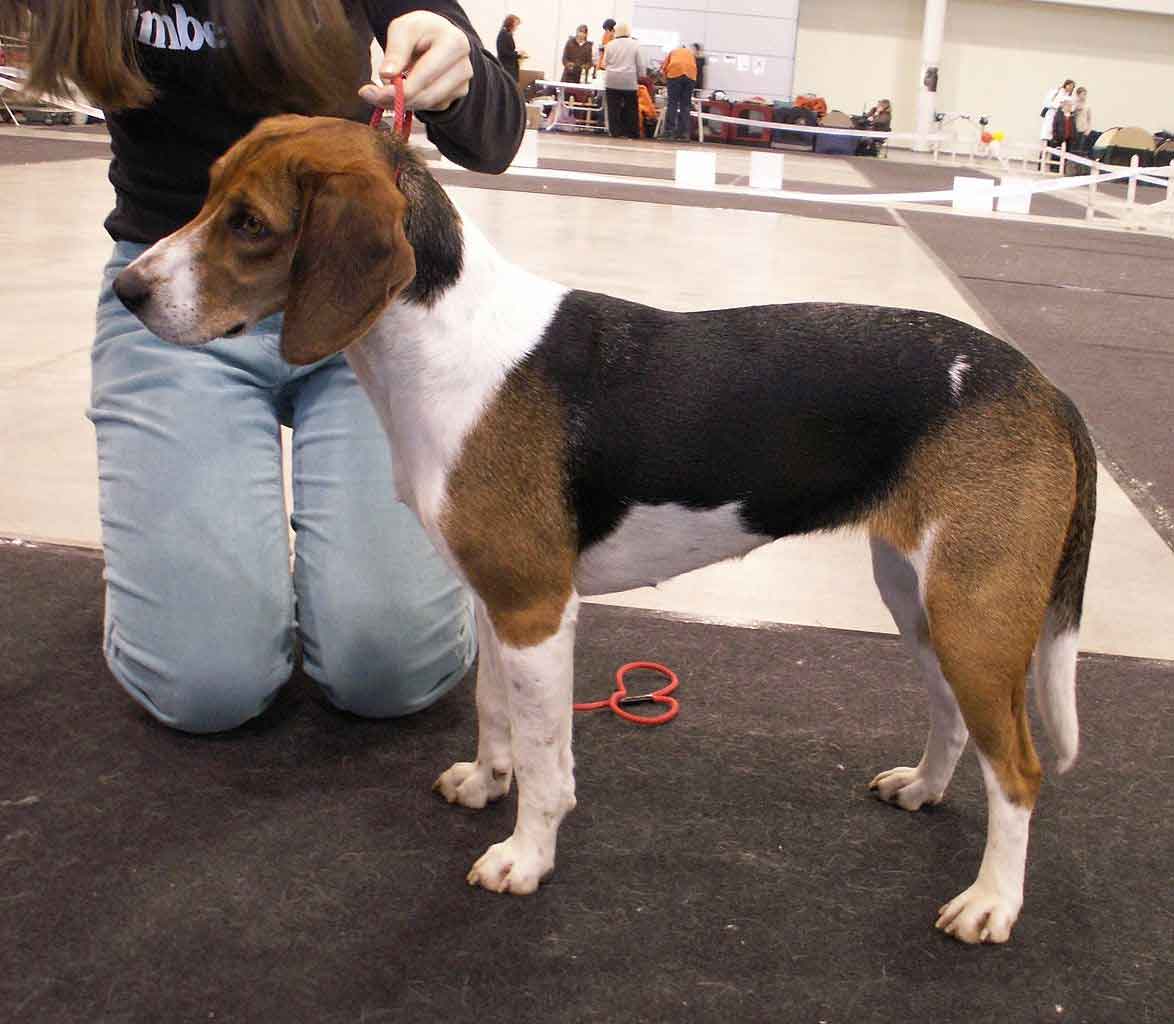
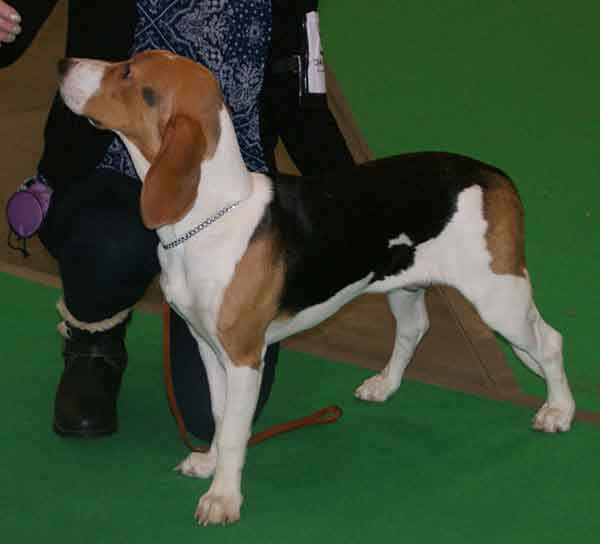
    The Estonian Hound They are medium-sized hunting dogs that can easily be mistaken for the Beagle, one of the races that helped create them. But, they are bigger than the Beagle and they have a more pointed snout.

    His powerful and muscular body is very long. Its solid bone legs are straight and almost half the size at the withers.. Saber-shaped tail flicks when in motion and remains fairly low, no higher than back level.

    The head is quite wide at the level of the skull and the long muzzle ends in a very black nose. His slightly oblique eyes are more or less dark brown, while her long, thin ears fall along her cheeks.

    The coat of the Estonian Hound is short, rough and shiny, with a moderately dense undercoat. Their fur is usually tricolor, with black spots with more or less wide red edges on a white background. But, the standard accepts bicolor individuals with completely red spots, without any trace of black. In all cases, the tips of the legs and tail should be white, as well as the throat and chest.

    Sexual dimorphism is marked, the female being slightly longer than the male, which is taller in the legs and wider.

    Physical characteristics

    Estonian Hound
    Estonian Hound

    The Estonian Hound he is particularly devoted to his family, who likes to spend time with. They are a breed of dog especially recommended for children: they love to interact with them and are very patient with them, they even accept having their tails or ears pulled. But, you should remember that interactions between a young child and a dog of any breed must be under the supervision of an adult.

    This strong attachment to his family makes him not like loneliness, which can lead to separation anxiety. If you are often left home alone for long periods of time, not surprisingly you may experience destructive behavior.

    One solution for a caregiver who is regularly absent during the day may be to provide a playmate. Made to hunt in a pack, the Estonian Hound they enjoy the company of other dogs. If they are used to its presence from an early age, They can also make friends with any feline in the house. On the other hand, as they have a strong hunting instinct, should not live with rabbits or other rodents.

    Rather shy and not fond of novelty, the Estonian Hound they tend to bark at strangers and then observe their master's behavior from a distance. If he invites the newcomer to the house, comes to greet you politely, but stay reserved.

    Extremely hardy hunting dogs used to long days in the woods, they need a lot of exercise to expend their great energy: a daily walk of one hour is a minimum for them. It is recommended to always keep it tied during these outings, as your excellent sense of smell often allows you to find an interesting track that you are likely to want to follow for hours, ignoring withdrawal orders. A dog owner who still wants to let him walk freely right now should equip him with a GPS dog collar, so you can easily get your hands back on it if it disappears.

    The Estonian Hound you can live in an apartment as long as you are outdoors often enough to satisfy your need for exercise, but he is much happier when he has a garden where he can patrol and play. But, this outdoor space must be well fenced to eliminate the risk of escape if you see potential prey to pursue.

    A peculiarity of this dog is its need for routine and its aversion to novelty, which makes their behavior sometimes compared to that of domestic cats. This is not at all an appropriate choice for a master who wants to take their dog on vacation.: he is a poor traveler, you get stressed out when you get in the car and you don't like spending time in a place you don't know at all.

    Last, it is a breed of dog that barks often and forcefully. For the peace of the neighborhood, it is necessary to teach him from a young age not to bark for any reason and to shut up when ordered to do so.

    Education

    Estonian Hound
    Estonian Hound

    Like all its fellow men, the Estonian Hound must be socialized from an early age. This requires spending as much time with him as possible so that he meets all kinds of people (neighbors, family, friends, strangers…) And animals, but also so that you get used to the situations that you may face later.

    This need to become very quickly acquainted with the outside world is all the more pronounced as it is fearful by nature. In particular, to prevent future vet visits from becoming a nightmare to handle, it is recommended to get used to traveling by car as soon as possible.

    Addressing the barking issue at an early age is also imperative, so that you understand that it is not necessary to bark for hours at every unfamiliar noise.

    It is also important to teach your dog to remember to bark, as you will not hear any more commands once you have sniffed the trail of a game animal and go in pursuit. Hunting instinct is well established in this breed, so it does not require any specific training to be able to follow a trail for hours and be an excellent hunter.

    Relatively independent and headstrong, the Estonian Hound require patience to be trained, but they like to please their master and usually end up listening to him. If necessary, be firm to assert your dominant position and show your dog who is the master, traditional training methods should be avoided, at the risk of damaging the relationship of trust. It is preferable to opt for a learning technique based on positive reinforcement.

    Health

    As the Estonian Hound it is a relatively new breed and not very widespread, there is still no real and in-depth study of their possible health problems. But, looks quite robust, no doubt thanks to a reasoned breeding program that has given priority to the personality and abilities of individuals rather than their appearance.

    But, you have probably inherited from Beagle and the Foxhound a certain predisposition to the following diseases:

  • Progressive retinal atrophy, a breakdown of the eye tissue that can eventually lead to blindness;
  • entropion and ectropion, problems with the eyelids that cause itching and / or irritation of the eye, but can be surgically corrected;
  • dislocation of the patella, which affects the kneecap and causes walking difficulties. It can also be responsible for premature arthritis;
  • Elbow or hip dysplasia, that can cause lameness.
  • It also, the Estonian Hound is sensitive to allergies and sinusitis. These ailments are not serious in themselves, but they can cause a certain amount of stress to the dog, as this breed relies heavily on its sense of smell. So, a temporary loss of your sense of smell is likely disorienting you.

    Finally, like most hunting dogs, the Estonian Hound have a ferocious appetite that can lead to overweight or even obesity if they don't get enough exercise.

    Grooming

    Despite her short hair and sparse undercoat, the Estonian Hound require some maintenance. Brushing twice a week is recommended to remove dead hairs and avoid finding them all over the house. This also helps to distribute sebum on the skin to better protect it against infectious agents..

    During moulting periods, in autumn and spring, it is even necessary to opt for a daily frequency, to deal with the large amount of hair you lose during this period.

    On the other hand, it is only necessary to bathe your dog when it is particularly dirty, for example, if he has rolled in the mud.

    Besides keeping your coat, it is recommended to check your teeth once a week to make sure there are no cavities, and cleaning your eyes with a damp cloth to remove any dirt that could cause an infection.

    Weekly ear care is especially important: like any dog โ€‹โ€‹with floppy ears, the Estonian Hound have a higher risk of infections and ear infections.

    Buy an โ€œEstonian Houndโ€

    The price of a puppy Estonian Hound is of some 700-800 euros in your country of origin, and there is no price difference between male and female puppies.

    But, hard to find outside of Estonia, but the situation may change rapidly after the breed is recognized by the FCI in 2019.

    Characteristics "Estonian Hound"

    Coexistence is important that you have with your new friend. Before considering the acquisition of a dog of the breed "Estonian Hound" you know certain factors. Not all breeds of dogs are apt to live in an apartment, you must take into account his character, their need for exercise, their interaction with other pets, their care and if you have small children, their level of tolerance towards them.

    Adaptation โ“˜

    3,0 of 5 stars (based on 1 review)

    friendly dog โ€‹โ€‹โ“˜

    4,0 of 5 stars (based on 1 review)

    hair loss โ“˜

    3,0 of 5 stars (based on 1 review)

    Affection level โ“˜

    4,0 of 5 stars (based on 1 review)

    Need for exercise โ“˜

    4,0 of 5 stars (based on 1 review)

    Social need โ“˜

    4,0 of 5 stars (based on 1 review)

    Home โ“˜

    3,0 of 5 stars (based on 1 review)

    Toilet โ“˜

    2,0 of 5 stars (based on 1 review)

    Friendly with strangers โ“˜

    3,0 of 5 stars (based on 1 review)

    barking โ“˜

    3,0 of 5 stars (based on 1 review)

    Health โ“˜

    4,0 of 5 stars (based on 1 review)

    Territorial โ“˜

    3,0 of 5 stars (based on 1 review)

    Cat friendly โ“˜

    2,0 of 5 stars (based on 1 review)

    Intelligence โ“˜

    4,0 of 5 stars (based on 1 review)

    Versatility โ“˜

    3,0 of 5 stars (based on 1 review)

    Child friendly โ“˜

    3,0 of 5 stars (based on 1 review)

    Surveillance โ“˜

    3,0 of 5 stars (based on 1 review)

    joy โ“˜

    3,0 of 5 stars (based on 1 review)

    Videos "Estonian Hound"

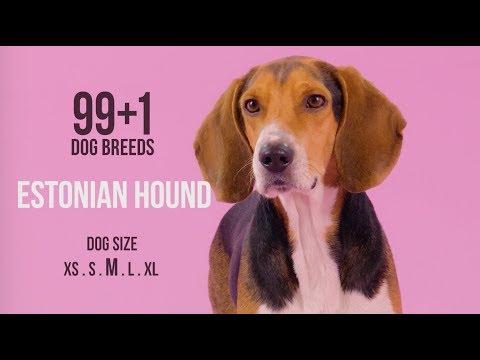
    Estonian Hound / 99+1 Dog Breeds
    Estonian Hound / 99+1 Dog Breeds
    ESTONIAN HOUND PUPPIES
    ESTONIAN HOUND PUPPIES / ESTONIAN HUNDRED PUPPIES

    Type and recognitions:

    • FCI CLASSIFICATION:
    • Group :
    • Section : . .

    Federations:

    • – FCI – Group 6: Scent hounds, and related breeds. – Section 1.2: Medium-sized Hounds. โ“˜

    FCI breed standard "Estonian Hound"

    Origin:
    Estonia

    Date of publication of the valid original standard:
    04/09/2019.

    Use:

    Hound used to hunt hares, foxes and lynxes.


    General appearance:

    Medium sized proportional hound, strong and dry constitution. Strong bones, well-developed feet and muscles. White markings are clearly visible and help to see the dog better when working in the field. Sexual dimorphism is well defined.

    important proportions

    • The length of the body clearly exceeds the height at the withers. Females may be slightly longer than males.
    • The length of the legs is approximately the 50% the height at the withers.


    Behavior / temperament:

    In good mood, flexible and user-friendly. Very well developed sense of smell and game detection and a pronounced passion for hunting guarantee good results in finding prey and tracking in difficult terrain. Resonant voice helps locate dog from long distance.

    Head:

    View from the top, forms a blunt wedge, wider at the back and slightly tapered towards the snout.

    Cranial region:
    • Head: Seen from above, forms a blunt wedge, wider at the back and tapering slightly towards the muzzle.
    • Skull: Moderate width, slightly curved. Superciliary arches well developed but not prominent.
    • Depression links (stop): Moderately pronounced, never prancing.

    facial region:

    • Truffle: Wide, totally black. Dogs with coat color that has golden or tan spots may have a lighter colored nose, never liver brown.
    • Snout: Long, straight and in proportion to the skull.
    • Belfos: Dried, tight, not outstanding, no flap at the corner of the mouth. Fully pigmented lip edges.
    • Jaws / Teeth: The teeth are white and large. The jaws normally develop with a complete set of 42 teeth and a full scissor bite, that is to say, the upper teeth closely overlap the lower teeth and fit the jaws. Bite level due to aging and wear of undesirable incisors.
    • Cheeks: Flat.

    Eyes: Slightly sloping, dark brown, dark edges.

    Ears: Thin, pendants, placed at a medium height, close to the cheeks, rounded edges and covered with short hair. When pulled towards the nose, reaches about half the length of the muzzle.

    Neck:

    Medium long and moderate high, round in cross section, muscular, dry skin without folds.

    Body:

    • Cross: Rising above the back line.
    • Back: level, broad and muscular.
    • Pork loin: Short, width, arched and muscular.
    • Rump: Wide, average length, muscular and slightly sloping. Height at the croup 1-1.5 cm less than at the withers.
    • Breast : Oval, long and spacious, that reaches up to the elbow. Well developed ribs.
    • bottom line: The sternum is long and the belly only slightly tucked.

    Tail:

    Saber shape, thick at the base, tapering slightly towards the end and reaching to the hocks. Active movement when moving, the base of the tail should never be raised above the line of the back.

    Tips

    Former members

    Generality   Dried, muscular with strong bone. Viewed from the front the front legs are straight and parallel. The length of the legs is approximately the 50% the height at the withers.
    Shoulder   The angulations in the shoulder joint are of 115-120 degrees.
    Elbow   Strong, tight, without turning in or out, but firmly relaxed.
    Forearm   Medium length oval bone. Robust in relation to the body, that is to say, neither thin nor too heavy and completely straight.
    Metacarpus   Large, flexible and almost straight.
    Front feet   Arcuate, oval and tight. Strong nails and turning down. Thick pads.

    Later members

    Generality   Dried, muscular with strong bone. Seen from the back, the legs are straight and parallel and, from the side, they are well angulated.
    Thigh   Approximately equal in length to the lower thigh.
    Leg   Approximately equal in length to the thigh.
    Knee   Strong, moderately bent and not turning either in or out when moved.
    Metatarsus   Of average length, very strong and vertical.
    Rear feet   Arcuate, oval and tight. Strong nails and turning down. Thick pads.

    Movement:

    With good handling, free, in a straight line, that is to say, one-way, fluid and smooth.

    Mantle

    Skin: Tight, but elastic and without folds.

    Fur: Short, uniform, rough and shiny. Moderate inner cover. The tail is covered with even dense hair along its entire length and, therefore, the tail looks thick. At the tip of the tail the hair is somewhat shorter.

    Color: Typical color is black patches with tan markings and vivid white markings (tricolor). The size of the patches is not limited. Lemon to golden tan patches without black are also allowed (bicolor). The patterns can be of various sizes and also form a saddle. Black patches, toasted or lemon, with or without rich tan rims, contrast well with white. White markings must be on the head, in the throat and chest extending to the belly. All feet and tip of tail should be white. All colors should be as bright as possible.


    Size and weight:

    Height to the cross

    • Males: 45 โ€“ 52 cm..
    • females: 42-49 cm..


    Fouls:

    โ€ข Any deviation from the aforementioned criteria is considered a fault, and the severity of this is considered the degree of deviation from the standard and its consequences on the health and well-being of the dog and the dog's ability to perform its traditional task.
    โ€ข The offenses listed must be in accordance with their severity..

    Serious misconduct:

    โ–ท Shy or too agitated.
    โ–ท Too light or too heavy in construction.
    โ–ท Too short or too long in the body, high in the back.
    โ–ท Thick head, flat or domed skull, rounded cheeks.
    โ–ท Nose, eyes or lips with insufficiently pigmented pigment.
    โ–ท Slightly overbite where the incisors are not in contact.
    โ–ท Ears that are too short or too thick, set too high, not lying close to the head or covered with long hair.
    โ–ท Narrow chest, flat rib cage.
    โ–ท Weak top line, steep group.
    โ–ท Queue too long (that reaches more than 3 cm below the hocks) or too short, carried up from the base.
    โ–ท Extended fingers or too long feet (hare foot).
    โ–ท Clearly wavy hair, lack of bottom cover.
    โ–ท Overmarked with white, obvious black or tan in white areas.

    disqualifying fouls

    โ–ท Aggressive or too shy dogs.
    โ–ท Absence of sexual dimorphism.
    โ–ท Size above the limits indicated by the standard.
    โ–ท Exceeding 3 mm and more, or bite below the shot.
    โ–ท Strange eyes or white eyes (blue).
    โ–ท Small ears, punctured or semi-punctured.
    โ–ท Dubbed, or tail defect.
    โ–ท Overmarked with black or tan color, that is to say, lack of white markings.
    โ–ท Brown or brown patches with pigmented nose on the liver.


    N.B.:

    โ€ข Any dog โ€‹โ€‹showing clear signs of physical or behavioral abnormalities should be disqualified..
    โ€ข The aforementioned fouls that are more pronounced or more marked are eliminatory..
    โ€ข Males must have two normal-appearing testicles fully descended into the scrotum..
    โ€ข Only functionally and clinically healthy dogs, with the typical conformation of the breed, should be used for parenting.

    Source: F.C.I - International Cynological Federation

    Alternative names:

    1. (Estonian: eesti hagijas) (English).
    2. eesti hagijas (French).
    3. (estnisch: Eesti hagijas), Estnische Bracke (German).
    4. Eesti hagijas (Portuguese).
    5. Cazador estonio (espaรฑol).

    โ–ท The world of Pets: Dogs, cats, birds, reptiles, amphibians

    Istrian Coarse-haired Hound
    Croacia FCI 152 . Medium-sized Hounds

    Istrian Coarse-haired Hound

    The Istrian Coarse-haired Hound it is an excellent hound for hunting hare and fox.

    Content

    History

    His story matches that of Istrian Shorthaired Hound, but the iconography in words and images is much more limited, as long-haired dogs are generally less attractive for renderings due to their outward appearance. But, the Istrian Coarse-haired Hound was described in detail by B. Laska in 1896 and 1905: under the name of "barbiniยป these hard elo hound dogs were put up for sale in the Pazin and Buzet area in Istria. During World War I the breed was almost extinct. From 1924 these dogs were registered in the Croatian Stallion Book. The FCI recognized the breed in 1948. The first standard dates back to 1969.

    Photos:

    1 – Istrian Wire-haired Hound by https://pxhere.com/es/photo/1583815

    Physical characteristics

    The Istrian Coarse-haired Hound has strong and robust bones. With a stern expression, gives the deceptive impression of being a dark and taciturn animal. His somewhat hairy appearance was the cause of his near disappearance, as he is physically repulsive to some due to his coarse fur. But, its deceptive appearance hides a wonderful character and very beautiful qualities.

    HEIGHT
    Among 45 and 58 cm. (17,72 to 22,83 inches) for the male
    Among 45 and 58 cm. (17,72 to 22,83 inches) for the female

    WEIGHT
    Among 16 and 24 kg (35,27 to 52,91 pounds) for the male
    Among 16 and 24 kg (35,27 to 52,91 pounds) for the female

    COLOR
    Its fur is white with orange spots, more or less big, on the body and often at the beginning of the tail. Their ears are generally orange.

    HAIR
    Her hair is straight, hard and pointed. It usually measures between 5 and 10 cm long.

    MORPHOLOGY
    Its head has a domed skull and a slightly pointed cap. His big eyes are dark. Its slender ears are well set on the cheeks and tend to flare towards the middle. His nose is black. Its tail is quite long and reaches the hock.

    Character and skills

    His character is that of a gentle dog, obedient and calm at home, while hunting is active, independent and passionate. His temperament is moderately lively, expression indicative of a calm and balanced nature, the look is somber. His bark is loud, moderate to deep.

    He stands out for his immense diligence, it is resistant and persistent. It can have excellent performance even in the most difficult terrain and weather conditions.. The track never leaves. It is mainly used for hunting wild boar., deer, foxes and hares.

    Training / Education:

    Education is not that simple. Because when hunting he always depends on himself and cannot wait for the hunter's instructions, is suitable for a wide autonomy, the owner cannot avoid the servile obedience of this breed. You need in this direction a little understanding from the owner or coach.

    No harsh training methods, it would only interrupt her relationship with the man, what a double shame. Requires a certain amount of patience and empathy, benign and yet a totally consistent approach to both education and training. More than punishment it will help stimulate the positive voice (compliment, stimulus) and the material (a treat).

    Care and health

    This robust and resistant dog does not suffer from any genetic disease or any particular pathology associated with the breed.. His health is excellent and he rarely gets sick.

    WATCH OUT

    Its rough appearance requires regular brushing to maintain its coat and ensure good health.

    Images "Istrian Coarse-haired Hound"

    Photos:

    1 – A female Istrian Hound, Coarse-haired. Colour: white & orange by Canarian, CC BY-SA 4.0, via Wikimedia Commons
    2 – Istrian Wire-haired Hound by https://pxhere.com/en/photo/1583811
    3 – Istrian Wire-haired Hound by https://pxhere.com/es/photo/1583803
    4 – Istrian Wire-haired Hound by https://commons.wikimedia.org/wiki/File:Istrian_hound2.jpg
    5 – Istrian Coarse-haired Hound at a dog show in Zadar, Croatia (CACIB 2006.) by Mirta12, CC BY-SA 3.0, via Wikimedia Commons
    6 – ISTARSKI OSTRODLAKI GONIC by www.youtube.com

    Videos "Istrian Coarse-haired Hound"

    Type and recognitions:

    • FCI CLASSIFICATION:
    • Group :
    • Section : . .

    Federations:

    • – FCI – Group 6: Scent hounds, and related breeds. – Section 1.1: Large-sized Hounds. โ“˜
    • – UKC – Scenthound Group โ“˜

    FCI breed standard "Istrian Coarse-haired Hound"

    Origin:
    Croatia

    Date of publication of the valid original standard:
    25.10.2000

    Use:

    Bloodhound par excellence, it is used mainly for hunting hare and fox. Can also be used as a tracking dog. Its constitution is appropriate for hunting in the vast open lands of Istria.


    General appearance:

    Coat color is snow white with yellow-orange markings. The hair is long and smooth. The head is oblong, bushy eyebrows. The body is robust, for strong bones. The tail is thick and a bit saber-shaped. The face is severe and taciturn expression, sometimes even gloomy. The voice is sonorous, medium intonation, which often becomes serious.

    IMPORTANT PROPORTION : The length of the body must exceed the withers by a maximum of 10%.


    Behavior / temperament:

    This is a personable dog, docile and very attached to his master. Of moderate temperament, He is very passionate during the hunt.

    Head:

    It is well proportioned in relation to the body. Its length is 20 to 24 cm.; should not be too light. Pigmentation of visible mucosa is dark.

    Cranial region:
    • Skull : Slightly bulky. The occipital protrusion is well apparent, as well as the frontal sulcus, which is often covered by a tuft of long, straight hair. The forehead is quite wide. The skull becomes narrower in the eye region.
    • Depression links (Stop) : It is not marked.

    facial region:

    • Truffle : It is wide, with well developed nostrils. Pigmentation is dark black.
    • Snout : Thick, rectangular; the muzzle is wide and covered with bushy whiskers. Seen from the front, The jaws give the snout an appearance of roundness.
    • Teeth : Strong; the joint is scissor-shaped. The denture is complete. : They are good together and they are not very thick.
    • Eyes : The iris is dark in color. The eyes are large, but not exhorbitant. The look is gloomy. Since the hairs on the eyebrows are coarse and longer, these are tangled and bushy.
    • Ears : They are not too thick and are covered by shorter hair. They are implanted near the eyes, but they are not high, not near the edge of the upper profile of the skull. The ears are wider in the center and are close to the cheeks. Are long enough; finer and more rounded at the tip. They come forward. They are considered very long when they reach more or less to the nose, and long when they reach the canines. They must be at least semi-long and reach at least to the zygomatic arches.

    Neck:

    In profile, the junction of the neck with the head is marked at the back of the occipital protuberance. Its length is 12 to 15 cm and her skin is stretched, no dewlap.

    Body:

    Seen as a whole, the upper margin slopes slightly towards the rump.

    • Height to the cross : Little pronounced.
    • Back : It's straight and wide. Its length is well proportioned in relation to the height at the withers.
    • Pork loin : Short, muscular and rounded.
    • Rump : Wide, especially in females. Slightly inclined; rounded, since the haunches are apparent.
    • Breast : It's wide and deep. Descends at least to the elbow. Its circumference generally exceeds by 12 to 15 cm height at withers. The ribs are rounded. The tip of the sternum is barely visible. The front of the chest is rounded.
    • Belly and flanks : The lower margin rises progressively, from the xiphoid appendix, towards the ligament of the hind limbs. The belly is slightly raised. The flanks are not very accentuated and should not be crowned.

    Tail:

    Its implantation is not very high. It is thicker at the base and tapers at the tip. Low, with a slight curve towards the top. Reaches to or slightly exceeds the hock.

    Tips

    PREVIOUS MEMBERS :

    • Shoulder : The shoulder blades are oblique, long, muscular and well attached to the thorax. The angle of the scapulohumeral joint is about 90ยฐ.
    • Elbows : They do not deviate inward.
    • forearms : They are upright and well muscled.
    • Carpi : barely visible.
    • Metacarpus : Short, almost vertical; however with a slight incline, which together with the vertical forms an angle of 10ยฐ.
    • Front feet : Jack's foot, Straits, with fingers tight together. The pads are well developed and resistant. Nails are thick.

    LATER MEMBERS :

    • Thighs : Short, wide and muscular.
    • Legs : They are longer than the thighs; oblique and well muscled.
    • Hock : Thick and wide.
    • Metatarsals : They are short and vertical. If there are spurs, these must be removed.
    • Hind feet : As the front ; they are often a little longer.

    Movement:

    It is loose and energetic.

    Mantle

    SKIN : Is elastic, it is well stretched over the whole body, reddish. No presence of wrinkles.

    HAIR : The outer layer of hairs - known as wool hair - is tough. Its length is 5 to 10 cm., es hirsuto, never curled, nor with ripples. Under this layer of coarse hairs lies, especially in winter, an undercoat of abundant, short hairs. The outer layer of hairs is not stretched over the skin but is shaggy. Must not tangle or form felt-like tufts. Hair length and density vary depending on the region of the body..

    COLOR : Snow white is the background color. Ears are usually orange. A star-shaped spot of the same color is often seen on the forehead. The ears may also have orange spots, which is a sign of purebred. Orange spots, more or less extended, or specks of the same color can be seen all over the body, but they are usually found at the base of the tail. These marks should not be abundant, nor spread in such a way that they are more noticeable than the snow white color. The color of the markings must be raised, nor pale, nor dark, nor brown, which would be a sign of miscegenation. A third color is not allowed, not even in some hairs.


    Size and weight:

    Height to the cross : The height to the cross is of 46 to 58 cm Ideal size for males : 52 cm., for females : 50 cm..

    WEIGHT : The weight of a normally fed adult dog, is of 16 to 24 kg. An average weight of about 20 kg.


    Fouls:

    Any deviation from the aforementioned criteria is considered as a fault and the severity of this is considered to the degree of the deviation to the standard and its consequences on the health and well-being of the dog..

    โ€ข Square jaw, seen from the front.
    โ€ข Hanging and sagging lips.
    โ€ข Third eyelid (flashing body, membrana nictitante ) apparent.

    MISS PLAYOFFS :

    โ€ข Aggressive or fearful dog.
    โ€ข Lack of proportion between height at the withers and body length.
    โ€ข Very pink or depigmented nose.
    โ€ข Muzzle too obtuse, pointed or still raised.
    โ€ข Incorrect occlusion of the jaws; pronounced prognathism.
    โ€ข Pink eyelids.
    โ€ข Different colored eyes
    โ€ข Ears that are too short or too far from the head; very high or very low implantation. Too long ear hairs, silky, wavy, curly or with the consistency of felt.
    โ€ข Tail that deviates laterally or has been clipped.
    โ€ข Elbows far away from the body.
    โ€ข Arched forearms.
    โ€ข Very oblique pasterns.
    โ€ข Any color other than yellow-orange. Grayish or blackish marks will never be accepted.
    โ€ข Size above or below norms.

    Any dog โ€‹โ€‹showing clear signs of physical or behavioral abnormalities must be disqualified..


    N.B.:

    Males should have two normal-appearing testicles fully descended into the scrotum..

    Source: F.C.I - International Cynological Federation

    Alternative names:

    1. Istrian Rough-coated Hound, Istrian Wire-haired Hound (English).
    2. Chien courant d’Istrie ร  poil dur (French).
    3. Rauhhaarige Istrische Bracke (German).
    4. Em croata: istarski ostrodlaki gonic (Portuguese).
    5. En croata, istarski oลกtrodlaki goniฤ (espaรฑol).

    โ–ท The world of Pets: Dogs, cats, birds, reptiles, amphibians

    Halden Hound
    Noruega FCI 267 - Medium-sized Hounds

    Halden Hound

    The spread of Halden Hound limited to your country of origin, where it is also little known.

    Content

    History

    Originally from Norway, the Halden Hound takes its name from Halden, the city where it was created.

    Breed selection was initiated by Hans Larsen Bisseberg, an Ostfold County farmer, in 1860. The breed is believed to be the result of various crosses between local hounds and Swedish hounds, Germans and English. The official breed standard was established in the decade of 1950 and it is very rare outside of its country of origin. Most frequently used the Norwegian Hound and the Hygen Hound.

    Photo: A female Halden Hound. Colour: tricolor by Canarian, CC BY-SA 4.0, via Wikimedia Commons

    Physical characteristics ยซHalden Houndยป

    The Halden is similar to the American Foxhound ostensibly, although it is smaller.

    It is a dog whose body can fit in a rectangle, proud, strong but not heavy. The head is medium in size, well balanced. The eyes, dark brown, they are medium in size and have a calm expression. The ears, that are neither too high nor too low, they are turned forward and should reach the middle of the muzzle. The tail, that is neither too high nor too low, it is quite thick and is carried low.

    • Fur: rough, very tight and smooth, with thick undercoat.
    • Color: White with black spots, small, less dark spots on the head, limbs and sometimes between black and white. But, black should not dominate.
    • Size: 52 to 60 cm for the male and 50 to 58 cm for female.
    • Weight: 23 to 29 kg for the male and 20 to 25 kg for females.

    Character and abilities ยซHalden Houndยป

    Kind and caring, the Halden Hound He can make a great companion dog if you take the time to meet his many exercise needs.. It is a nice dog to live, but can be unsociable with children, strangers or even other animals if not well socialized. Very exclusive, he does not like to be surrounded, which makes him a very good watchdog. Excellent hunter, fast and resistant. If you are not hunting, it will be the perfect companion for a sports owner.

    Independent in nature, education should start very early to prevent this dog from developing too many bad habits. Firmness and consistency will be required to achieve results, but beware, no violence towards this sensitive dog will be tolerated.

    Characteristics "Halden Hound"

    Coexistence is important that you have with your new friend. Before considering the acquisition of a dog of the breed "Halden Hound" you know certain factors. Not all breeds of dogs are apt to live in an apartment, you must take into account his character, their need for exercise, their interaction with other pets, their care and if you have small children, their level of tolerance towards them.

    Adaptation โ“˜

    4,0 of 5 stars (based on 1 review)

    friendly dog โ€‹โ€‹โ“˜

    4,0 of 5 stars (based on 1 review)

    hair loss โ“˜

    3,0 of 5 stars (based on 1 review)

    Affection level โ“˜

    4,0 of 5 stars (based on 1 review)

    Need for exercise โ“˜

    4,0 of 5 stars (based on 1 review)

    Social need โ“˜

    3,0 of 5 stars (based on 1 review)

    Home โ“˜

    3,0 of 5 stars (based on 1 review)

    Toilet โ“˜

    2,0 of 5 stars (based on 1 review)

    Friendly with strangers โ“˜

    3,0 of 5 stars (based on 1 review)

    barking โ“˜

    4,0 of 5 stars (based on 1 review)

    Health โ“˜

    4,0 of 5 stars (based on 1 review)

    Territorial โ“˜

    3,0 of 5 stars (based on 1 review)

    Cat friendly โ“˜

    2,0 of 5 stars (based on 1 review)

    Intelligence โ“˜

    4,0 of 5 stars (based on 1 review)

    Versatility โ“˜

    3,0 of 5 stars (based on 1 review)

    Child friendly โ“˜

    2,0 of 5 stars (based on 1 review)

    Surveillance โ“˜

    4,0 of 5 stars (based on 1 review)

    joy โ“˜

    4,0 of 5 stars (based on 1 review)

    Videos "Halden Hound"

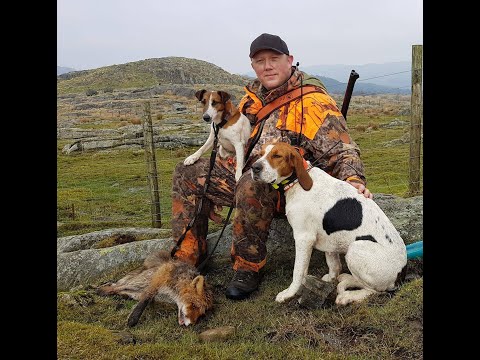
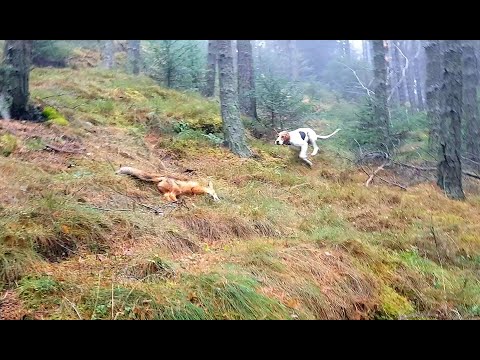
    Fox hunting with halden hound and fox terrier in Norway
    Fox hunting with halden hound and fox terrier in Norway
    Foxhunting with halden hound and fox terrier 07.11.20
    Foxhunting with halden hound and fox terrier 07.11.20

    Type and recognitions:

    • FCI CLASSIFICATION:
    • Group :
    • Section : . .

    Federations:

    • – FCI – Group 6: Scent hounds, and related breeds. – Section 1.2: Medium-sized Hounds. โ“˜

    FCI breed standard "Halden Hound"

    Origin:
    Norway

    Date of publication of the valid original standard:
    09.08.1999

    Use:

    ---


    General appearance:

    Rectangular construction, noble, strong, but not heavy.


    Behavior / temperament:

    ---

    Head:

    Thin, medium sized and well proportioned.

    Cranial region:
    • Skull : Seen from the front and from the side slightly dome-shaped. The occipital protuberance is barely noticeable.
    • Depression links (Stop) : Not abrupt.

    facial region:

    • Truffle : black, open windows.
    • Snout : Not too short; straight muzzle.
    • Lips : Not very hanging.
    • Jaws/Teeth : Scissor bite; complete denture.
    • Cheeks : Relatively flat.

    Eyes : Dark brown in color, medium-sized; calm expression.

    Ears : Its insertion is neither too high nor too low; If they are placed forward they should reach up to the middle of the snout.

    Neck:

    Rather long, strong, thin and without any double chin.

    Body:

    • top line : Straight.
    • Back : Strong.
    • Pork loin : Wide and muscular.
    • Rump : Slightly oblique.
    • Breast : Deep with tight ribs, but not barrel-shaped. The last ribs must be particularly well developed.
    • Belly : Very little withdrawn.

    Tail:

    Insertion neither too high nor too low; rather thick; reaches almost to the hocks. Worn rather low.

    Tips

    PREVIOUS MEMBERS

    • As a whole : Straight, thin limbs with strong bones.
    • Shoulder : Long and oblique shoulder blade, muscular; the tips do not protrude from the back line.
    • Forearm : Straight and thin.
    • Metacarpus : Slightly inclined.
    • Front feet : Oval, well arched, preferably closed, well covered with hair between the fingers.

    LATER MEMBERS

    • Thigh : Broad and muscular.
    • Knee : Well angled.
    • Leg : Long.
    • Hocks : Thin and wide, turned neither in nor out. Well angled.
    • Rear feet : Like the front feet. Rams are allowed, but they are not desirable.

    Movement:

    Light, parallel, covers the ground well.

    Mantle

    HAIR : Rough, very dense and straight, with a dense undercoat of hairs.

    COLOR : White with black spots, shaded tan patches on head, limbs and sometimes between black and white. Black should not predominate. Small black or tan spots are considered a color defect..


    Size and weight:

    Height to the cross :

    • For males : 52-60 cm., ideal 56 cm..
    • for females : 50-58 cm., ideal 54 cm..


    Fouls:

    Any deviation from the aforementioned criteria is considered as a fault and the severity of this is considered to the degree of the deviation to the standard and its consequences on the health and well-being of the dog..

    ELIMINATORY FOULS

    โ€ข Aggressiveness.

    Any dog โ€‹โ€‹showing clear signs of physical or behavioral abnormalities must be disqualified..


    N.B.:

    Males should have two normal-appearing testicles fully descended into the scrotum..

    Source: F.C.I - International Cynological Federation

    Alternative names:

    1. (Norwegian: Haldenstรธver) (English).
    2. Halden (French).
    3. Haldenbracke, Haldenlaufhund, Halden-Stรถvare (German).
    4. (Norueguรชs: haldenstรธver) (Portuguese).
    5. (Noruego: Haldenstรธvare, Haldenstรธver) (espaรฑol).

    โ–ท The world of Pets: Dogs, cats, birds, reptiles, amphibians

    Posavac Hound
    Croacia FCI 154 . Medium-sized Hounds

    Posavac Hound

    The Posavac Hound was registered in 1955 under the name "Kras Basin Hound"

    Content

    History

    It is an ancient breed of running dog, originally from Croatia, whose origin is lost in the dark prehistory. The frescoes (1474, Chapel of Our Lady in Beram, near Pazin), the Chronicles (1719, Bishop Bakic of Djakovo, 1859 the vet Franjo Bertic also from Djakovo) and the books (Joze Kristen) bear witness to it.

    The Posavac Hound They were bought in Croatia under the name ยซboskiniยป and were highly appreciated in neighboring areas. In 1924 this breed was presented for the first time at a dog show. The first entries in the Croatian pedigree book date back to 1929 and the FCI recognized this breed in 1955. The first standard with the correct name of the breed dates back to 1969; underlines the origin of the race in the wide and dense valley of the River Sava in the southeast of Zagreb.

    Photos: Cropped image of young Posavac hound female by Strojovodjazg, CC BY-SA 4.0, via Wikimedia Commons

    Physical characteristics ยซSave Valley Houndยป

    One Posavac Hound can weigh up to 20 kg and measure around 58 height cm. This Croatian dog is of strong constitution and of medium body proportions. His fur is typically red., reddish or wheat-colored. White markings appear on the head area, the neck, the chest, the lower part of the limbs and the end of the tail. The hair itself has between 2-3 cm long, rigid and dense in nature, and always very lying. On the backs of the limbs, as well as on the underside of the belly and tail, hair gets slightly longer.

    Character and abilities ยซSave Valley Houndยป

    The Posavac Hound is prized as an extremely hardy hound dog, specialized in hunting hares and foxes. His constitution is perfectly adapted to the conditions of his native region, the vast forests of the Savetal. Here you can find areas of difficult access and a lot of undergrowth, lands that are suitable for Posavac Hound with his height.

    This dog is very loyal and affectionate with his master. He is a passionate hunter with a moderately lively temperament.

    Care and maintenance of the โ€œSave Valley Houndโ€

    Posavac Hound small
    Posavac Hound small

    It is enough to brush it once a month to maintain the beauty and protective properties of its coat.

    Loss of hair

    Hair loss is moderate.

    Nutrition of the โ€œSave Valley Houndโ€

    The daily rations of the croatian: posavski goniร„ย, as it's also called, must adapt to your daily life. This is especially true for hunting season.

    One meal a day is enough for him.. It is better to give it to him at night so that he does not work on a full stomach. This reduces the risk of stomach disorders.

    Videos "Posavac Hound"

    Posavac Hound ๐Ÿถ๐Ÿพ Everything Dog Breeds ๐Ÿพ๐Ÿถ
    Posavac Hound ?? Everything Dog Breeds ??
    Posavski gonic (mala)
    Posavski gonic (mala)

    Type and recognitions:

    • FCI CLASSIFICATION:
    • Group :
    • Section : . .

    Federations:

    • – FCI – Group 6: Scent hounds, and related breeds. – Section 1.2: Medium-sized Hounds. โ“˜
    • – UKC – Scenthound Group โ“˜
    • – Croatian Kennel Club

    FCI breed standard "Posavac Hound"

    Origin:
    Croatia

    Date of publication of the valid original standard:
    03.11.2014

    Use:

    It is a hound with excellent resistance, especially suitable for hare hunting, the Fox, the boar, but can also be used as a trail dog.


    General appearance:

    Strong Hound Build, medium-sized dog with harmonious movements. Its characteristic reddish wheat color comes in all its shades.. White markings are found on the head, in the neck, on the forechest and on the chest, in the womb, on the lower parts of the limbs and on the tip of the tail. The difference between both sexes must be well marked.

    important proportions

    • rectangular body, the length of the body exceeds the height at the withers.
    • The height to the elbow is approximately 50 % the height at the withers.
    • The length of the skull slightly exceeds that of the snout.


    Behavior / temperament:

    This breed is easily trained. It is a universal hound with a clear and melodic voice suitable for hunting in any area.. Docile, He is not nervous or aggressive, moderately lively temperament. Very attached to his master.

    Head:

    ---

    Cranial region:
    • Head: The head is well-proportioned to the body. It has slightly divergent lines.
    • Skull: Slightly longer than the snout, the widest part is the area between the ears. The temporal zone is slightly arched. The width of the skull exceeds its depth. The occipital protuberance and frontal sulcus are slightly marked.

    facial region:

    • Truffle: Strong, with wide open nostrils. The entire nose and the inside of the nostrils should be black or dark brown..
    • Snout: Strong, square and full, somewhat shorter than the skull, gradually tapers from the naso-frontal depression to the nose, without being too pointy.
    • Belfos: Medium thick, well adjusted to the jaw, the lip corner is not visible. The pigmentation of the lips is completely in accordance with the color of the truffle.
    • Nasal bridge: The nasal cannula is straight or slightly convex (slightly fleshy nose).
    • Jaws / Teeth: The jaws are strong and well developed, the teeth are white and arranged in the jaw in a regular way. Scissor-shaped denture; the incisors are inserted into the jaws vertically. It is desirable that the denture be complete (42 teeth in accordance with the dental formula). The lack of premolars PM1 and molars M3 is not taken into consideration. It is not desirable for other teeth to be missing.
    • Cheeks: The chewing muscles and the zygomatic bone should not be too marked.

    Eyes: Medium-sized, moderately separated, placed on the semi-front part with an angle of between 10 and 15 degrees with respect to the horizontal line. Oval in shape and dark brown in color; smart expression. The eyelids should not be sagging or show signs of entropion or ectropion.. The pigmentation of the edge of the eyelids must be completely in accordance with the color of the nose.

    Ears: Pendants, fall close to the head, inserted at eye level. The ear is triangular in shape with a rounded tip., of medium length and thickness. When stretched forward they should reach the corner of the mouth.. The ears should not have folds, be curled or protrude. They are covered with short hair.

    Neck:

    Strong, well muscled and at an angle 45 degrees with respect to the horizontal line. It narrows towards the head. The skin is tight, without double chin or very marked folds.

    Body:

    • Generality: The body must be strong.
    • Cross: Marked.
    • Back: Strong, well muscled, straight.
    • Pork loin: Of average length, width, good muscular, strong and well attached to the rump.
    • Rump: Well musculada, strong, flat and inclined at an angle between 25 and 30 degrees with respect to the horizontal line. Something lower than the cross.
    • Breast : Deep, wide but not too wide or barrel-shaped. The rib cage should reach to the elbow.
    • Ribs: Ribs well arched.
    • bottom line: Bottom line with slight retraction, from sternum to flanks.

    Tail:

    Inserted in the extension of the rump line. Strong in insertion, It gradually tapers towards the tip and is of medium length. If you stretch down, reaches at most to the hock. Saber-shaped with carriage below the top line. A higher tail is tolerated when the dog is in action.. The tail is well covered with hair, slightly longer at the bottom, preferably as small brushes.

    Tips

    Former members

    • Generality: Seen from the front, The forelimbs must be well proportioned with respect to the body and have regular angles..
    • Shoulder: Of average length, muscular. The shoulder angle is between 115 and 120 degrees.
    • Elbow: Well attached to the body.
    • Forearm: Strong, rounded bones with strong muscle tone. Parallels seen from the front.
    • Carpo: Short and elastic.
    • Metacarpus: Elastic, slightly inclined.
    • Front feet: Oval, with fingers together and strong pads. Nails should preferably be pigmented.

    Later members

    • Generality: Strong and elastic in movement.
    • Thigh: Strong, wide and muscular.
    • Leg: They form an angle of about 40 degrees with respect to the horizontal line.
    • Knee: It is wide.
    • Metatarsus: Almost vertical with respect to the ground, firm and elastic.
    • Hock: Strong and firm.
    • Rear feet: Oval, with fingers together and strong pads. Nails should preferably be pigmented.

    Movement:

    Reach is essential, with good push. The movement must be harmonious, no sudden movements. The ideal is that the top line moves as little as possible and that the feet do not cross.

    Mantle

    Skin: Elastic, รโ€รยต medium thickness, adheres well to the entire body, without wrinkles.

    Fur: The hair is hard, thick, shiny and should be very close to the body. It has a length of between 2 and 3 cm.. The hair is a little longer on the back of the thighs (until 4 cm.), on the belly and under the tail, where it is preferred to form the so-called "brushes".

    Color: The base color is reddish wheat in all its shades., with white marks on the head, in the neck, in the backsplash, on the chest, in the womb, on the lower parts of the limbs and on the tip of the tail. They are never dark brown or chocolate, since they are not allowed. The total surface area of โ€‹โ€‹the white spots cannot exceed more than one third of the total surface area of โ€‹โ€‹the body. The white color must be clear and not have splashes of the base color..

    The characteristic white spots are located on :

    - Head, in the form of a running cord or a strip (no white on the ears).
    - The neck, as a necklace (complete or partial) or strip-shaped.
    โ€“ On the parapet, as narrower or wider white surface.
    - In the womb, a white strip.
    โ€“ In the extremities, white surface on paws; also sock-shaped on the pasterns.
    - In the queue, like a white tip.

    It is desirable that all the white markings be in the indicated points and that they be distributed symmetrically on the dog's body.. The absence of white marks in the indicated points is considered a fault. White marks cannot appear on other parts of the body.


    Size and weight:

    Height to the cross

    • For males: 50 cm-56 cm.
    • for females: 47 cm-53 cm.

    A difference of +/- 2 cm in males and females of exceptional type and conformation.


    Fouls:

    Any deviation from the above mentioned criteria is considered to lack, and the severity of this is considered the degree of deviation from the standard and its consequences on the health and well-being of the dog and the dog's ability to perform its traditional task.

    disqualifying fouls:

    โ€“ Aggressiveness or extreme shyness.
    โ€“ Converging head lines.
    โ€“ Muzzle longer than the skull.
    โ€“ Atypically short snout.
    - Superior or inferior prognathism, twisted bite.
    - Blue eyes.
    โ€“ Truffle, completely depigmented eyelids or lips.
    โ€“ Body length less than the height at the withers.
    โ€“ Dog with short limbs, of Achondroplastic type.
    โ€“ Curled or deviated tail curved on one side.
    โ€“ Body hair over 5 cm length.
    โ€“ Dog of a single color (solid), absence of white spots.
    โ€“ Gray or black spots on the body, presence of a third color.
    โ€“ White spots splashed with the base color.
    โ€“ Size above or below the norms established by the standard.


    N.B.:

    โ€ข Any dog โ€‹โ€‹showing clear signs of physical or behavioral abnormalities should be disqualified..
    โ€ข The aforementioned fouls that are more pronounced or more marked are eliminatory..
    โ€ข Males must have two normal-appearing testicles fully descended into the scrotum..
    โ€ข Only functionally and clinically healthy dogs, with the typical conformation of the breed, should be used for parenting.

    Source: F.C.I - International Cynological Federation

    Alternative names:

    1. Croatian: posavski goniฤ (English).
    2. Chien courant de Posavatz, chien courant du bassin de Kras (French).
    3. Huidige hond van de Save Vallei, Posavski Goniฤ, Save-Bracke, Savetalbracke (German).
    4. Em croata: Posavski gonic (Portuguese).
    5. Sabueso de Posavaz (espaรฑol).

    โ–ท The world of Pets: Dogs, cats, birds, reptiles, amphibians

    Hygen Hound
    Noruega FCI 266 - Medium-sized Hounds

    Hygen Hound

    The spread of Hygen Hound it is very limited even in Norway; outside the country it is practically unknown.

    Content

    History

    The Hygen Hound originated in Norway in the 19th century. It owes its name to its creator Hans Fredrik Hygen, that he wanted a brave and robust dog that could hunt even in the harsh climates of the north. So he decided to cross Swiss and German dogs with local dogs. The Hygen Hound has had a rocky history as the breed all but disappeared in the 1990s 1970 without the intervention of a few passionate breeders. In the Decade of 2000, these breeders made genetic improvements by crossing with the Finnish Hound. Today, the Hygen Hound it is quite rare even in his homeland.

    Photo: Norwegian dog breed hygenhound. Tosstjรธnna’s Nala by Bjรธrn Konestabo, CC BY-SA 3.0, via Wikimedia Commons

    Physical characteristics ยซHygen Houndยป

    The Hygen Hound has a robust and solid gait and a body inscribed in a triangle. Medium-sized, measured between 50 and 58 cm if it is a male and between 47 and 55 cm if it is a female for a weight of about 22 kg according to sex, size and age.

    The Hygen, as it is also nicknamed, stands out for its head of average length and size, that is wedge-shaped and marked width without being excessively heavy. The skull is slightly domed and the stop is accentuated. The eyes express both calm and seriousness. They are medium in size and show dark brown tones. The ears are of medium length and width, taper at the tips and set at a medium height. Fall while spreading and do not stick to the cheeks.

    The Hygen Hound they have rough fur, straight, short, bright and dense. The coat is available in three colors: white with yellow-red markings / brown or black and tan, black and tan with white markings or red-yellow or red-brown with or without white markings and charcoal on the back, head and tail attachment.

    Character and abilities ยซHygen Houndยป

    The Hygen Hound It is a race linked to its social group that is both protective, Gentile, balanced and versatile. Although they specialize in hunting activities, nothing prevents them from being adopted as pets, as long as the exercise is given, the necessary care and education. The worst tolerated punishment is inactivity. He also does not like to be alone despite his slightly independent nature.. To be happy, prefers open spaces over closed ones.

    Characteristics "Hygen Hound"

    Coexistence is important that you have with your new friend. Before considering the acquisition of a dog of the breed "Hygen Hound" you know certain factors. Not all breeds of dogs are apt to live in an apartment, you must take into account his character, their need for exercise, their interaction with other pets, their care and if you have small children, their level of tolerance towards them.

    Adaptation โ“˜

    4,0 of 5 stars (based on 1 review)

    friendly dog โ€‹โ€‹โ“˜

    4,0 of 5 stars (based on 1 review)

    hair loss โ“˜

    5,0 of 5 stars (based on 1 review)

    Affection level โ“˜

    4,0 of 5 stars (based on 1 review)

    Need for exercise โ“˜

    5,0 of 5 stars (based on 1 review)

    Social need โ“˜

    3,0 of 5 stars (based on 1 review)

    Home โ“˜

    4,0 of 5 stars (based on 1 review)

    Toilet โ“˜

    2,0 of 5 stars (based on 1 review)

    Friendly with strangers โ“˜

    4,0 of 5 stars (based on 1 review)

    barking โ“˜

    5,0 of 5 stars (based on 1 review)

    Health โ“˜

    5,0 of 5 stars (based on 1 review)

    Territorial โ“˜

    3,0 of 5 stars (based on 1 review)

    Cat friendly โ“˜

    2,0 of 5 stars (based on 1 review)

    Intelligence โ“˜

    4,0 of 5 stars (based on 1 review)

    Versatility โ“˜

    3,0 of 5 stars (based on 1 review)

    Child friendly โ“˜

    5,0 of 5 stars (based on 1 review)

    Surveillance โ“˜

    3,0 of 5 stars (based on 1 review)

    joy โ“˜

    5,0 of 5 stars (based on 1 review)

    Videos "Hygen Hound"

    Training Milli 130118
    Video Credits: Rolf Hestetreet
    Hygenhund Dog breed
    Hygenhund Dog breed

    Type and recognitions:

    • FCI CLASSIFICATION:
    • Group :
    • Section : . .

    Federations:

    • – FCI – Group 6: Scent hounds, and related breeds. – Section 1.2: Medium-sized Hounds. โ“˜

      • FCI breed standard "Hygen Hound"

        Origin:
        Norway

        Date of publication of the valid original standard:
        09.08.1999.

        Use:

        Hound


        General appearance:

        Medium-sized, solid and compact, rectangular, with firm top line.


        Behavior / temperament:

        ---

        Head:

        Medium in size and moderately wide, but not heavy. Of a medium length, something wedge shaped, but not pointy.

        Cranial region:
        • Skull: Slightly domed, be seen from the front or from the side. The occipital bone is barely visible.
        • Depression links (Stop): Marked.

        facial region:

        Truffle: black.
        Snout: Cleansed, wide and deep, rather short than long. Straight nose cane. Side view, the front of the muzzle should be rounded, not square.
        Lips: Clean, no pendulosos, falling evenly towards the corner of the lips.
        Jaws / Teeth: Scissor bite.
        Cheeks: Clean and flattened.
        Eyes: Dark brown in color, medium-sized, not bulging. Serious and calm expression. The conjunctiva is not visible.
        Ears: Middle insert, neither wide nor long, thinning and rounded at its tip. Thin and smooth, are not glued to the cheeks, but they are somewhat separate. They are directed forward, do not reach more than half the distance to the truffle.

        Neck:

        Of average length, strong, without too much loose skin.

        Body:

        Back: Straight and strong.
        Pork loin: Strong and muscular.
        Rump: Long, wide and slightly rounded.
        Breast : Medium width, long, deep and spacious throughout its length. The last ribs must be particularly well developed, giving the thorax an appearance of length. The depth of the chest corresponds to half the height at the withers.
        Belly: Very little withdrawn.

        Tail:

        When inserted it follows the line of the back. Strong at its roots, thinning towards the limb. It is worn straight or slightly bent up; reaches up to the hocks.

        Tips

        PREVIOUS MEMBERS
         
        As a whole: Clean, solid and tendinous, but not heavy.
        Shoulder: Oblique shoulder blades, well angulated shoulder joint.
        Elbows: Well angled.
        Metacarpus: Widths, rather short than long, slightly inclined.
        Front feet: High; fingers well arched and close together, directed forward. Firm and strong pads. Between fingers and pads well covered with hair.
         
        LATER MEMBERS
         
        Thigh: Wide and muscular.
        Knee: Well angled.
        Leg: Long.
        Hock: Well angled, wide and clean.
        Metatarsus: Short, wide and slightly oblique.
        Rear feet: As the front. Rams are allowed, but double dewclaws are undesirable.

        Movement:

        Libre, parallel viewed from the front or back, with good scope. In movement the rear members are not closed in the shape of a cow and the front members do not execute a lateral-circular movement..

        Mantle

        HAIR: Straight and preferably rather rough to the touch, dense, bright and not too short. The back of the thighs and the tail may have a little more abundant hair, but without exaggeration.
         
        COLOR:
        • Red-brown or yellow-reddish, often shaded black on the head, the back and at the root of the tail, with or without white spots.
        • black and tan, usually combined with white spots.
        • White and mottled with reddish-brown or yellow-reddish spots, or with black and tan spots.
        • All these different colors must be clearly delineated from each other.


        Size and weight:

        Height to the cross:

        • For males : 50-58 cm., ideal height 54 cm..
        • for females : 47-55 cm., ideal height 51 cm..


        Fouls:

        Any deviation from the aforementioned criteria is considered as a fault and the severity of this is considered to the degree of the deviation to the standard and its consequences on the health and well-being of the dog..
         
        ELIMINATING FAULT
        • Aggressiveness.
        Any dog โ€‹โ€‹showing clear signs of physical or behavioral abnormalities must be disqualified..


        N.B.:

        Males should have two normal-appearing testicles fully descended into the scrotum..

        Source: F.C.I - International Cynological Federation

        Alternative names:

        1. Hygenhund (English).
        2. Hygen (French).
        3. Hygenbracke, Hygenlaufhund, Hygenhund (German).
        4. (Em sueco: hygenhund) (Portuguese).
        5. (En sueco: hygenhund) (espaรฑol).

    โ–ท The world of Pets: Dogs, cats, birds, reptiles, amphibians

    Finnish Hound
    Finlandia FCI 51 - Medium-sized Hounds.
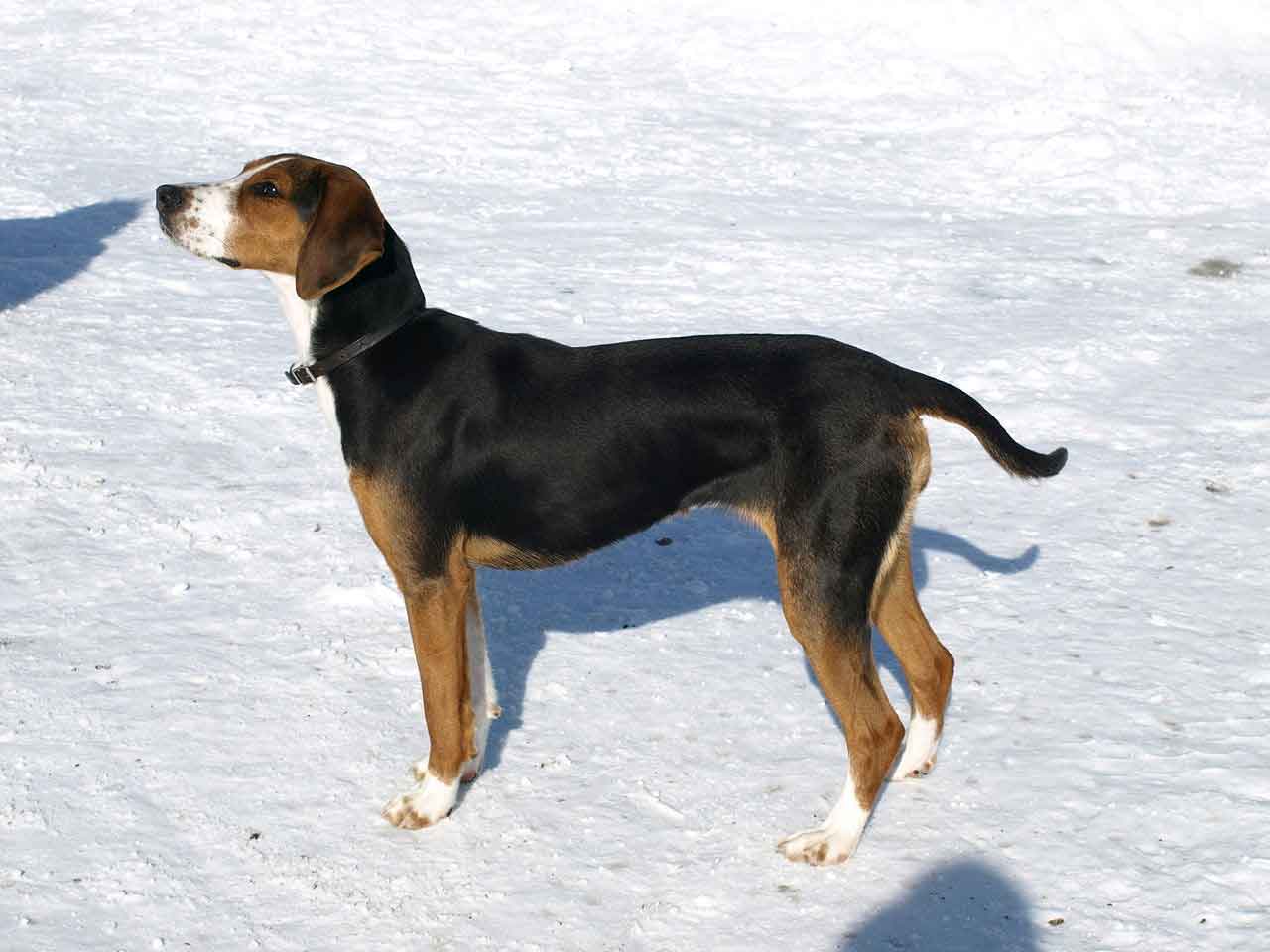
    Finnish Hound

    The Finnish Hound he is friendly, calm and never aggressive. He is energetic in hunting and is a versatile tracker.

    Content

    History

    As its name implies, the Finnish Hound It is a breed of dog native to Finland. His story is the same as that of many other hounds, as it was developed in response to the need for a hunting dog perfectly adapted to its environment.

    It is the result of a breeding program started at the beginning of the 19th century by several breeders who used the English Foxhound and several hounds, as well as French and German hunting dogs. The aim of these crosses was to create an animal capable of withstanding the extreme temperatures of Finnish winters, with excellent resistance in mountainous terrain, a trumpet bark to alert hunters and a particularly developed sense of smell that would allow it to excel at tracking hares and foxes. This breeding program was a success, and the bitch he gave birth to, call Suomenajokoira, quickly gained popularity thanks to his admirable hunting skills and friendly temperament.

    When it was founded Suomen Kennelliitto, Finland's leading dog organization, in 1889, his first initiative was to develop a standardized hound breed from Finland. Many breeders came forward to try to get their production recognized as the standard to follow. Three dogs were selected in the organization's first dog show in 1891, and eight more were added the following year. The first breed standard of Finnish Hound It was established in 1893 based on these individuals. It was decided, among other things, accept only fawn as coat color. But, this color did not completely stabilize, and individuals from successive litters very often had coats of other colors, like black and white. This forced the Kennelliitto to also recognize a tricolor coat (leonado, black and white) early twentieth century, which finally became the norm. The standard evolved again in small touches later, but in its main lines it has remained the same since 1932.

    The Fรฉdรฉration Cynologique Internationale (FCI) recognized the breed in 1954, but I didn't have many emulators. These may include, it wasn't until more than 40 years later, in 1996, that the United Kennel Club (UKC) he did the same. The other reference organization in the United States, the American Kennel Club (AKC), has not yet taken the step.

    In fact, just like the prestigious British Kennel Club or the Canadian Kennel Club (CCC), for example, most national organizations do not yet recognize the Finnish Hound.

    Outside Finland, the Finnish Hound remains totally unknown to the general public.

    On the other hand, the Finnish Hound is much more popular in his native Finland, to the point of appearing in the Top 10 of the most common breeds in the country, which makes it the most widespread national breed. But, with about 1.000 births per year registered in Suomen Kennelliitto, has been in free fall for several decades. In fact, at the dawn of the 21st century the number was more than 2500, and at the end of the 90 even exceeded 4000. This sharp decline is due to increasing urbanization and the decline in hunting activities.

    The same development can be found in the other Scandinavian countries that have adopted the Finnish Hound, namely, Sweden and Norway. In the first, the number of births registered each year in the Svenska Kennelklubben is now within 400, compared with more than double at the end of the 1990. The number of births registered in the Svenska Kennelklubben is now little more than 150 by year, compared to more than triple that number in the late 1990s.

    The Finnish Hound still commonly used as a hunting dog in Finland, Sweden and Norway, but they are practically unknown outside the Scandinavian region.

    Photo: Finnish Hound by RemoteFly, CC BY-SA 3.0, via Wikimedia Commons

    Caracterรญsticas fรญsicas ยซSabueso finlandรฉsยป

    Athletics, resistant and strong, the Finnish Hound he has a robust and muscular silhouette and a medium size. His body is rectangular, with a deep chest and well sprung ribs. The tail is carried low; is wide at the base and tapers to a point at the end.

    The head is well proportioned in relation to the body and slightly domed. A characteristic detail of the breed is the upper lip, that falls to the sides of the mouth forming an N-shaped curve when viewed from the front. His eyes are dark brown with a calm expression. The ears are large, plan, falls and not very long.

    The Finnish Hound have a double coat consisting of a short undercoat, dense and smooth in texture and a medium length top coat, straight and quite hard. The coat is tricolor, mixing black, fawn and white. Specifically, the fur is black, while the head, the outer parts of the legs and shoulders are tawny. At the same time, white markings are generally present on the muzzle, the neck, the chest, the belly, the feet and the tip of the tail.

    Last, sexual dimorphism is only slightly marked in this breed, since the females are on average barely 3 cm smaller than males.

    Carรกcter y aptitudes ยซSabueso finlandรฉsยป

    The Finnish Hound it is above all a true working dog with a highly developed predatory instinct and a strong character.

    Decades of independent hunting have caused them to be stubborn and stubborn. For this reason, not recommended for a novice teacher: only an experienced and firm owner can establish and maintain the appropriate level of authority to elicit acceptable behavior from him.

    This does not detract from its formidable hunting qualities., an activity in which he is alert, energetic and durable. It is mainly used to hunt hare, fox and sometimes wildcat. Regardless of weather and terrain, he is always there and never spares his efforts, able to follow a trail for hours in terrible weather conditions – aided by his highly developed sense of smell. He is also a very vocal hunting dog., appreciated for its characteristic barks, who plays a key role in allowing his master to follow him even when he is out of sight, and to alert of the presence of hunting.

    To counter his unlimited energy while hunting, the Finnish Hound is generally calm and friendly during periods of rest, especially when they are at home.

    Once trained and socialized, the Finnish Hound blends surprisingly well into family life. They are known to be very affectionate and are constantly on the lookout for human company., forming extremely close ties with their owners. He is also a dog that loves children. But, they must be taught to interact with him appropriately and to respect him, since they may not appreciate being mistreated. In any case, a young child should never be left alone with a dog, regardless of race.

    His good relations with humans are not limited to his family circle. He is usually very nice to strangers. In other words, although its thunderous barks might suggest that it is a good watchdog, this is not the case at all.

    The Finnish Hound is also sociable with other hounds, especially if they have been well socialized from a young age. So, it is perfectly conceivable to adopt a second dog to keep him company.

    This is all the more true as his closeness to his masters makes him easily suffer from separation anxiety when left alone for too long., since it needs a lot of attention. The presence of a small playmate can help alleviate the problem.

    In any case, it must not be a cat, rodent, bird or any other small animal. In fact, even if you are used to being around him, it is evident that he would not be safe in his presence, because the predatory instincts of the Finnish Hound they can take control at any time. It also, it is recommended to always keep it on a leash during your daily walks, to prevent you from rushing in pursuit of small animals that would pass.

    The Finnish Hound it is very resistant and extremely active, so you need a lot of exercise every day. In the days when you used to hunt, your tracking activity should be an appropriate amount of exercise. The rest of the time, you need at least an hour of vigorous exercise a day: run, long walks, etc.

    Keeping an active mind is also very important, so it is advisable to train him regularly to follow the tracks or play ball. This helps maintain your mental well-being., In addition to your physical health.

    To be happy, the Finnish Hound needs constant access to a sufficiently large outdoor space in which to run freely. It is essential that the area is fenced in to prevent the Finnish Hound chase the surrounding animals. Not suitable for a small house without a garden or in an apartment. Wherever i live, his hunting nature causes him to bark a lot and can be a source of tension with potential neighbors.

    Educacciรณn ยซSabueso finlandรฉsยป

    The Finnish Hound he is intelligent and full of energy, but it is a difficult breed to train. Accustomed since its creation to hunt alone, over time has developed a strong character, independent and stubborn. He needs to have before him a master who is at least as determined, that is to say, experienced, able to show your dog that he makes up his mind and to keep a firm hand in his education throughout his life. So, not recommended for a beginning teacher, on which he would soon gain the upper hand. It also, if it is important that the rules are clear and defined from the beginning by the master, it is equally important that they are constant over time and consistent from person to person, that is to say, that all members of the house enforce them to the letter.

    The Finnish Hound it's hard to handle, but it shows real sensitivity, as evidenced by his closeness to his family. So, punishments can affect you emotionally; it is preferable to take a positive approach to educate him, using positive reinforcement techniques and therefore the use of rewards: candies, petting, stimuli…

    In any case, hunting practice and the ability to follow a trail require very little training, since they are things that he knows how to do instinctively.

    But, is strongly inclined to want to use his hunting skills in circumstances that do not lend themselves to it, for example, rushing potential small prey on walks. Teaching your dog to remember is therefore of particular importance with the Finnish Hound. But, this can be difficult, because once he's thrown on a track, can be very reluctant to abandon it, completely ignoring the orders of its owner. Feel free to start and perfect your training in a safe, enclosed space such as your home or garden before attempting outdoor exercise..

    It also, It must be remembered that this breed has been encouraged from its beginnings to bark frequently and loudly. If it's not meant to be used for hunting, it is possible to try to teach your dog to refrain from barking. But, although the latter can be reduced by specific training started at a very young age, it is impossible to hunt completely naturally, that is to say, make them disappear completely.

    Finally, like any dog, benefits from being socialized from their first months, to become a balanced adult who knows how to be among humans. In addition to confronting him with a wide range of situations and stimuli (noises, smells, etc.), it should be introduced without delay to the people you will meet later in life (family, friends, neighbors, veterinary, etc.), as well as getting used to cross all kinds of humans, congeners and representatives of other species. Given their hunting instinct, This last point is not unimportant.: the more accustomed you are to the presence of other animals, less likely to hunt them later.

    Salud ยซSabueso finlandรฉsยป

    The Finnish Hound is generally robust and healthy.

    Its dense fur provides excellent protection against cold and weather, but also against the heat. Although they need shade or even air conditioning in hot weather, the Finnish Hound is generally able to adapt to almost any climate.

    The main health problems the breed is most prone to are:

    • Ataxia cerebelosa, generally hereditary, which affects coordination of movements and prevents affected puppies from moving. Then it is necessary to euthanize them;

    Certain heart conditions:

    • Valvular disease, heartworm (Dirofilaria immitis) and cardiomyopathy;
    • Lymphoma, a type of cancer that affects lymphocytes, white blood cells that help the immune system fight infection. Symptoms depend on location and stage, but the most common are lack of appetite, weight loss, general weakness and lethargy, and enlarged lymph nodes in the neck. Treatment with chemotherapy and radiation therapy is usually started, but relapses are common;
    • Hip and elbow dysplasia, orthopedic conditions marked by a hereditary predisposition, where the bones don't fit well. This leads to movement difficulties (limp, etc.);
    • Ear infections (ear infections, etc.), favored by the drooping shape of their ears;
    • Black hair follicular dysplasia, a rare dermatological condition that causes black hair loss in the first weeks of a puppy's life, to the point that it usually disappears before their first birthday. It does not usually affect the health of the dog, but it can irritate the skin and make it susceptible to infection;
    • Atopic dermatitis, an inflammatory skin condition caused by an allergy. It usually has a genetic cause and is manifested by itching, systematic scratching and licking of the paws, armpits and face.

    It also, an individual used for hunting is also more exposed to the risk of injury, parasites, thorns… It is highly recommended to check it every time you return home, to make sure everything is okay.

    Adopting a breeder Finnish Hound serious and responsible (breed club member for example) normally allows to have the best guarantees regarding the present and future good health of the animal. Must be able to present a certificate of good health established by a veterinarian, the history of the vaccines administered and the results of the genetic tests carried out on the parents and / or the puppy in relation to diseases that may have a hereditary dimension.

    It also, as with all dogs, must be taken at least once a year to a veterinarian for a complete health check. This will ensure you stay up to date on your vaccinations and can lead to early detection of any problems.. At the same time, it is important to make sure that you renew your deworming treatments whenever necessary. This is even more important as you spend a lot of time outdoors.

    Utilizaciรณn del ยซSabueso finlandรฉsยป

    The Finnish Hound is a renowned hunting dog in his homeland, where has always been, and it still being, used to hunt rabbits, foxes, wildcats and sometimes even moose. They prefer to work alone and are particularly good at following tracks in the air or on the ground., barking loudly.

    Although the main purpose of breeding this breed has never been to make a pet, fits surprisingly well into family life and can sometimes be kept just for that purpose. But, only suitable for an experienced teacher, who lives in a house with a big garden, often present, and able to meet their high needs for physical activity.

    Last, the Finnish Hound is loyal, Gentile, loving and affectionate with their owners: all the qualities that can make him a good psychological support dog for his owners. Their sensitivity and close bond with their owners allows them to react intuitively to their owners' emotions and offer comfort when they notice something is wrong..

    Comprar ยซSabueso finlandรฉsยป

    In finland, the purchase price of a puppy of Finnish Hound it is usually between 600 and 800 EUR. The amount charged depends on the prestige of the breeding, the lineage from which the animal descends, as well as its intrinsic characteristics, especially physical, so there may be price differences within the same litter.

    As the breed is very difficult to find outside of Scandinavia, importing from abroad is often the only option. In this case, transportation and administrative costs are added to the purchase price, not to mention the cost of possible registration in the national registry of the country of adoption. It also, It is important, of course, ensure that the regulations for importing a dog from abroad are followed.

    Characteristics "Finnish Hound"

    Coexistence is important that you have with your new friend. Before considering the acquisition of a dog of the breed "Finnish Hound" you know certain factors. Not all breeds of dogs are apt to live in an apartment, you must take into account his character, their need for exercise, their interaction with other pets, their care and if you have small children, their level of tolerance towards them.

    Adaptation โ“˜

    4,0 of 5 stars (based on 1 review)

    friendly dog โ€‹โ€‹โ“˜

    3,0 of 5 stars (based on 1 review)

    hair loss โ“˜

    3,0 of 5 stars (based on 1 review)

    Affection level โ“˜

    5,0 of 5 stars (based on 1 review)

    Need for exercise โ“˜

    4,0 of 5 stars (based on 1 review)

    Social need โ“˜

    4,0 of 5 stars (based on 1 review)

    Home โ“˜

    4,0 of 5 stars (based on 1 review)

    Toilet โ“˜

    1,0 of 5 stars (based on 1 review)

    Friendly with strangers โ“˜

    4,0 of 5 stars (based on 1 review)

    barking โ“˜

    4,0 of 5 stars (based on 1 review)

    Health โ“˜

    3,0 of 5 stars (based on 1 review)

    Territorial โ“˜

    4,0 of 5 stars (based on 1 review)

    Cat friendly โ“˜

    2,0 of 5 stars (based on 1 review)

    Intelligence โ“˜

    4,0 of 5 stars (based on 1 review)

    Versatility โ“˜

    4,0 of 5 stars (based on 1 review)

    Child friendly โ“˜

    4,0 of 5 stars (based on 1 review)

    Surveillance โ“˜

    4,0 of 5 stars (based on 1 review)

    joy โ“˜

    4,0 of 5 stars (based on 1 review)

    Images "Finnish Hound"

    Finnish Hound

    Finnish Hound

    Photos:

    1 – Sabueso finlandรฉs by https://pixabay.com/fi/photos/koira-nรคlkรค-pelko-vihainen-5317972/
    2 – Finnish hound by https://www.hankikoira.fi/koirarodut/suomenajokoira

    Videos "Finnish Hound"

    Finnish River Dog drives a fox

    Suomenajokoira ajaa kettua
    Finnish Hound / Finnish Hound

    Finnish Hound / Finnish Hound

    Type and recognitions:

    • FCI CLASSIFICATION:
    • Group :
    • Section : . .

    Federations:

    • – FCI – Group 6: Scent hounds, and related breeds. – Section 1.2: Medium-sized Hounds. โ“˜

    FCI breed standard "Finnish Hound"

    Origin:
    Finland

    Date of publication of the valid original standard:
    17.07.1997

    Use:

    Perro utilizado para seguir el rastro en la cacerรญa de la liebre y la zorra. Su entusiasmo por cazar no declina aรบn en las circunstancias mรกs difรญciles. Trabaja en forma independiente, es un rastreador polivalente que persigue a su presa con un ladrido sonoro.


    General appearance:

    Medium -sized tricolor dog provided to the body which is visibly longer than high at the cross level; It is strong constitution, without being heavy. The support area when standing is as long as the body or slightly longer; View from the front is as wide as the thorax and seen from behind is as wide as seen from the front. Sex characteristics should be well marked.

    IMPORTANT PROPORTIONS :

    โ€ข The relationship between body length and height to the cross is 1.1 to 1.
    โ€ข The height of the thorax reaches half the height to the cross.
    โ€ข The length of the snout is equal to the length of the skull. The length of the skull is equal to its width and depth.


    Behavior / temperament:

    He is a calm dog, energetic and friendly, never aggressive.

    Head:

    ---

    Cranial region:

    Seen from the front, The skull is proportionally wide and bulging in its upper part. The forehead is slightly convex view from the sides. The upper line of the skull is parallel to that of the nasal cane; The groove between the eyes is barely visible; supraciliary arches and occipucio are clearly visible.

    • Depression links (Stop) : Supraciliary arches accentuate the light stop, But well defined.

    facial region:

    • Truffle : Well developed, black; Large and mobile windows.
    • Snout : It is the same length as the skull, It is moderately deep and slightly thinns; the nasal helm is straight. The lower lip forms the lower line, which is almost parallel to the upper line of snout.
    • Lips : Well developed and pigmented. The upper lip is beautifully arched. The lips and corners of the mouth are closely adjusted.
    • Jaws / Teeth : The jaws are strong. The teeth are well developed and placed symmetrically in the jaws. Dentition is normal and complete. Tight scissors bite.
    • Cheeks : Moderately clean.

    Eyes : Medium-sized, not outstanding, slightly oval, dark brown, well directed forward. Calm expression. The eyelids are black.

    Ears : They hang with the front edge glued to the head. They are crooked so that the posterior edge is directed out and the tip of the ear almost forward. They are implanted in the line that goes from the nose to the eyes. They are flat and reach beyond half of the snout when they are forward.

    Neck:

    Of moderate length, muscular, clean; The upper line only slightly arched. When the dog is on feet, The tip of the nose is at the top of the upper line of the neck or slightly higher.

    Body:

    • Back : Medium length, straight and muscular.
    • Pork loin : Rather short and strong.
    • Rump : Well developed, long and strong, slightly tilted. Profile view, The upper back line continues in a beautifully arched rump
    • Breast : Long and deep, Reach to the elbows. Well arched ribs, clearly visible.
    • bottom line : Slightly retracted.

    Tail:

    Low insertion, slightly curved, reaches even the warm-tarsian joints. It is thick at its root and thinns towards the tip. At rest it hangs near the posterior members; During the movement you can lift it, But not above the top line level. The hair that covers the tail is similar to the rest of the body.

    Tips

    PREVIOUS MEMBERS :

    • As a whole : They are well angled. Seen from the front, they are straight and parallel. The forearms are vertical. The deepest point of the chest is at the elbow level. The arm and forearm have the same length.
    • Shoulder : Rather long, oblique and strong; glued to the body but very mobile.
    • Arms : They have the same length as the scapulars, clearly inclined and strong.
    • Elbows : Well directed back, very attached and parallel to the body. : Strong and tendon with oval and strong bones.
    • Metacarpus : Slightly sloping.
    • Previous feet : Slightly oval and high, with toes well arched and together. hard nails, black preferably. Elastic pads, preferably black and covered on the sides of a dense fur.

    LATER MEMBERS :

    • As a whole : They're strong, well angled, straight and parallel, seen from the back.
    • Thigh : Length and width, strong muscles covered.
    • Knee : Points forward. The previous line of the posterior member has a slight curvature.
    • Leg : Moderately wide, sinewy.
    • Warm-tarsal joints : Strong, rather low.
    • Metatarsus : Rather short and strong, vertical.
    • Hind feet : Of equal conformation as the previous feet, Always pointing forward.

    Movement:

    Light and effective trot with strides that cover space. The upper line remains level and firm during movement. The limbs move in parallel.

    Mantle

    SKIN :Thick, Well stuck throughout the body without presenting wrinkles.

    HAIR : The undercoat is short, Dense and soft texture. The outer layer is medium -long, footprint, straight, Dense and rather rough.

    COLOR : It is tricolor. It has a black or intense black mantle on the head, partes inferiores del cuerpo, shoulders, muslos y tambiรฉn en algunas otras partes de los miembros. It usually presents white marks in the head, neck, backsplash, lower parts of the limbs and at the tip of the tail.


    Size and weight:

    Height to the cross :

    • Males 55 โ€“ 61 cm.,
    • hembras desde 52 โ€“ 58 cm..

    Ideal height :

    • Males from 57 โ€“ 59 cm.,
    • hembras desde 54 โ€“ 56 cm..


    Fouls:

    Any deviation from the aforementioned criteria is considered as a fault and the severity of this is considered to the degree of the deviation to the standard and its consequences on the health and well-being of the dog..

    โ€ข Constitution too light or too heavy.
    โ€ข Incorrect sexual characteristics.
    โ€ข Clearly triangular head shape.
    โ€ข Loose skin.
    โ€ข Short or pointed snout.
    โ€ข Bite in clamp or light superior prognathism.
    โ€ข Square or too long body.
    โ€ข Grupa corta y al mismo tiempo empinada.
    โ€ข Long feet, flattened, fingers apart.
    โ€ข Short and remarkably soft fur.
    โ€ข Salpized color.
    โ€ข Clearly interrupted mantle.
    โ€ข A lot of gray hair or wolf hair.
    โ€ข Height at withers 1 cm greater or less than the one established in the standard.
    โ€ข Lightly shy or exaggeratedly gross with other dogs.

    MISS PLAYOFFS

    โ€ข Shyness or aggressiveness.
    โ€ข Total lack of pigment in the truffle.
    โ€ข LOWER PROGNATISM The Marked Superior Prognosis.
    โ€ข Broken tail.
    โ€ข Height to the cross more than 1 cm greater or less than the one established in the standard.

    Any dog โ€‹โ€‹showing clear signs of physical or behavioral abnormalities must be disqualified..


    N.B.:

    Males should have two normal-appearing testicles fully descended into the scrotum..

    Source: F.C.I - International Cynological Federation

    Alternative names:

    1. Finnish Bracke (English).
    2. Chien courant finnois (French).
    3. (Suomenajokoira, Finnenbracke, Finsk Stรถvare) (German).
    4. (em finlandรชs: Suomenajokoira) (Portuguese).
    5. (en finlandรฉs: Suomenajokoira) (espaรฑol).