โ–ท The world of Pets: Dogs, cats, birds, reptiles, amphibians

Jura Hound (Bruno Jura Hound)
SuizaFCI 59 . Medium-sized Hounds

Sabueso del Jura

The Jura Hound It is very distant with strangers and needs firm handling if kept as pets.

Content

History

In the year of 1882 set a standard for each of the five existing varieties of the Swiss Hound. In 1909 reviewed these standards confirming the total disappearance of the Thurgau Hound.
The 22 in January of 1933 established a uniform standard for the 4 varieties of the Swiss Hound. The original range of the Jura hound type St. Hubert has now disappeared.

The Jura Hound It is a domestic dog developed in the middle ages for hunting in the Jura mountains, on the border between Switzerland and France.

Already in Roman times these hounds were known in Switzerland.

The Jura Hound He is known for his tracking abilities and like other hounds he has the ability to follow a perfume for miles through the rocky terrain of the border mountains between France and Switzerland.. It is mainly used for the hunting of the Hare.

There are four varieties of Swiss Hound:

Most kennel clubs and organizations treat these breeds as a single breed with multiple varieties..

Physical characteristics

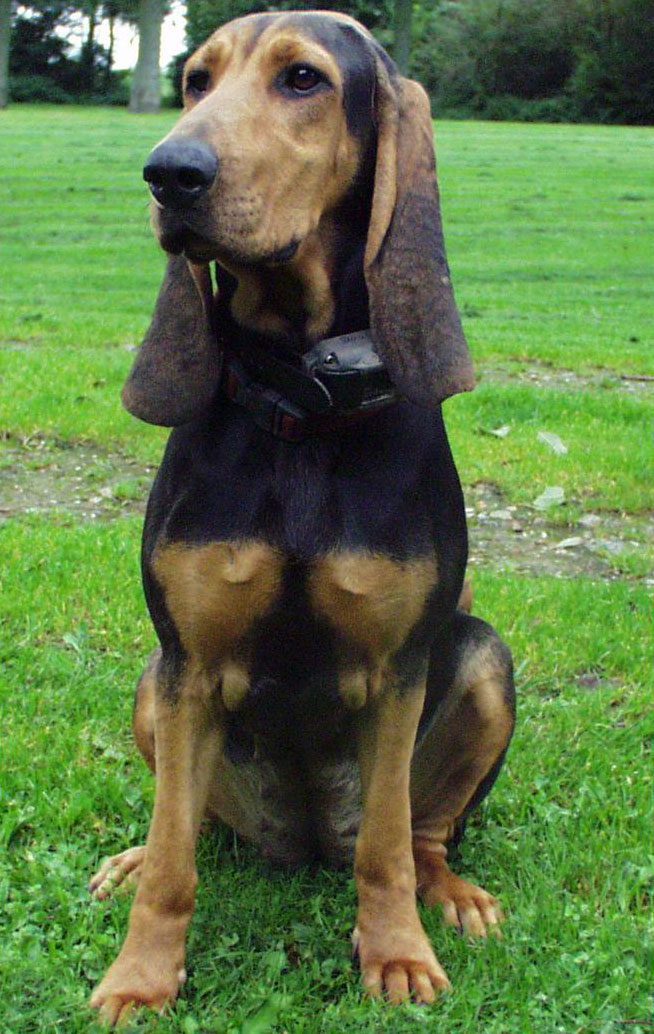
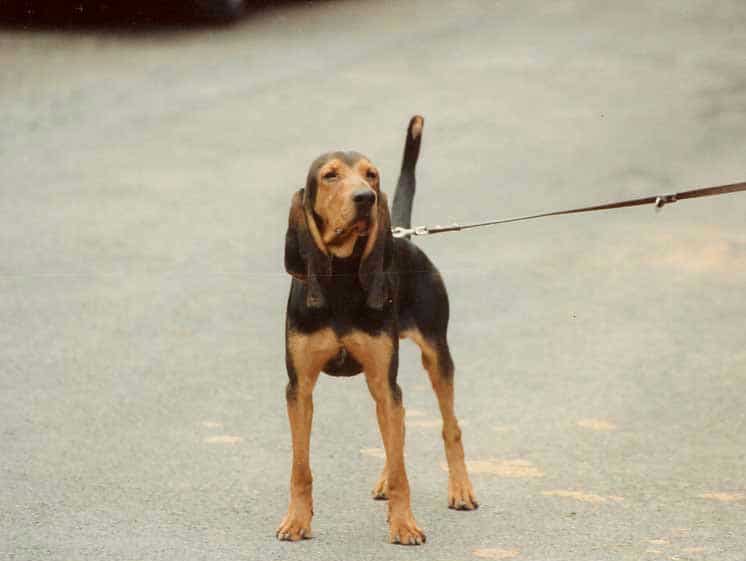
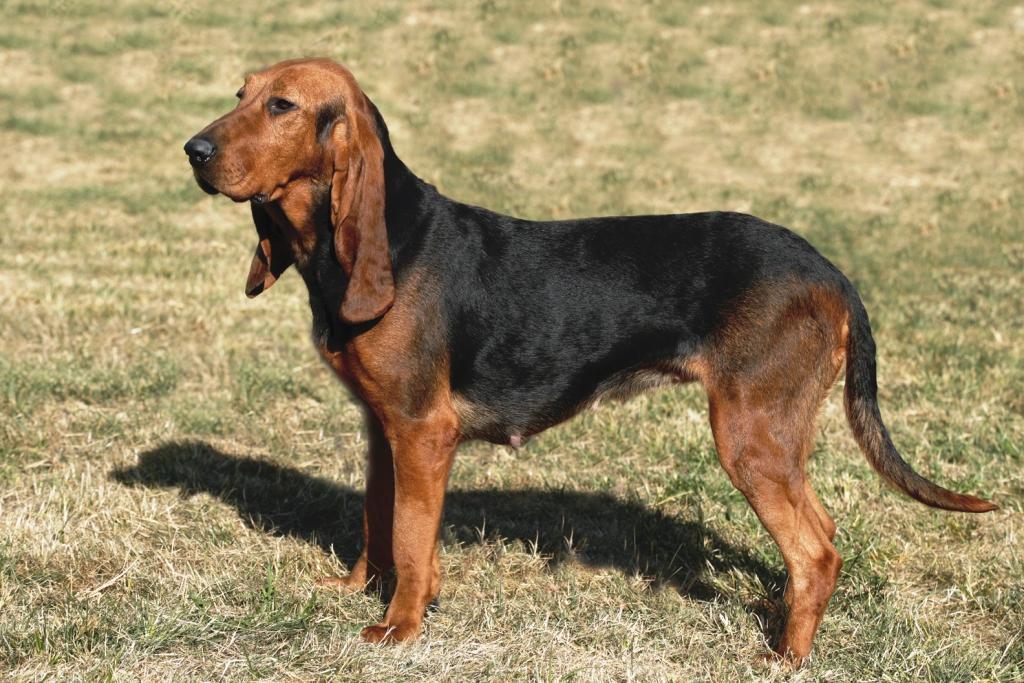
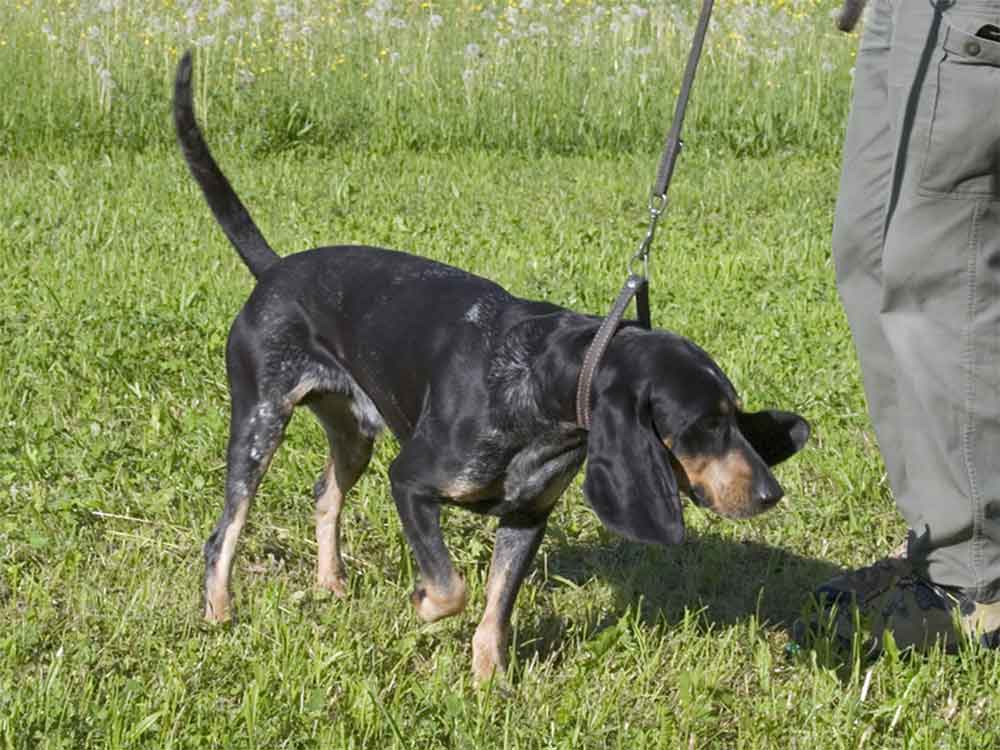
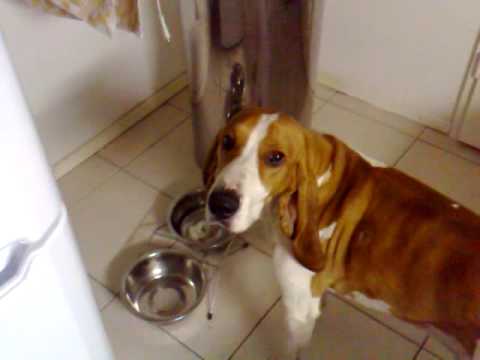
These dogs have a large skull, so their heads seem to be much larger than its small robust bodies. Their ears are flexible and hang down around their muzzle and eyes, giving it a warm and friendly appearance. Your body has some wrinkles around the chest and neck area. Their bodies are elongated and thin and long tail. They are usually a color dark bronze or a reddish Fawn.

Its size is similar to the Bernese Hound, but it differs in the width of your head, being associated with the St. Hubert Hound.

Their life expectancy is of 12 to 13 years, and can weigh between 15 and 20 kg, with a height of 43 to 58 cm. up the cross.

Character and skills

These dogs can be known as little adventurers. They like to explore new and interesting terrain in which have never been before. Son, final ideal for anyone that loves to go on walks and exercise, Since in that environment be shown fully happy. As good Hound, anything, even if it is in its territory.

It is used mainly for hunting hare and wild boar..

They are very protectors and they lash out against anyone trying to do harm to their owners. They are very distant with strangers and need firm handling if kept as pets.

Well trained is a loving, friendly dog with children.

ยซJura Houndยป images

ยซJura Houndยป Videos

Type and recognitions:

  • FCI CLASSIFICATION:
  • Group :
  • Section : . .

Federations:

  • FCI – Group 6: Scent hounds, and related breeds. – Section 1.2: Medium-sized Hounds. [simple_tooltip content=โ€™The International Cynological Federation is the largest international federation of Kennel Clubs in the world. It is responsible for governing and promoting cynology, as well as the rules of dog breeding. consists of 95 member countries with their own pedigrees that train their judges. Each country dictates the norms of the native breeds of the same, which they are supported by the FCI. It is based in Thuin, Belgium.']โ“˜[/simple_tooltip]
  • UKCScenthounds [simple_tooltip content=โ€™The United Kennel Club is an organization that manages one of the largest databases on dog breeds in the world.โ€™]โ“˜[/simple_tooltip]

FCI breed standard "Jura Hound (Bruno Jura Hound)"

Origin:
Switzerland, France

Date of publication of the valid original standard:
28.11.2001

Use:

It is a small game hound that hunts hares, deer, foxes and sometimes wild boars. He is an independent hunter by hunting with a bark. Searches and corners its prey with great safety even in difficult terrain.


General appearance:

It is a dog with medium height at the withers. Your body structure indicates strength and tenacity. Its slim head with long snout and long ears give it an expression of nobility.

There are four varieties of Swiss Hound :

  • Bernese Hound
  • Jura Hound
  • Lucerne Hound
  • Schwyz Hound

IMPORTANT PROPORTIONS :

โ€ข Body length : Height at withers = approx. 1.15 : 1.
โ€ข Height of the withers : chest depth = approx. 2 : 1.
โ€ข Length of the nasal shank : skull length = approx. 1 : 1.


Behavior / temperament:

Lively and passionate about hunting. Sensitive, manageable and faithful.

Head:

---

Cranial region:
  • Skull : Long, narrow, delgado, noble. Bulging skull, visible occipital protrusion. The direction of the longitudinal axis of the skull and the muzzle shows a slight divergence. No frontal groove, no folds or wrinkles.
  • Depression links (Stop) : Not too developed.

facial region:

  • Truffle : Completely black, well developed; nostrils wide open.
  • Snout : Nobly developed, narrow ; it is not square or pointed ; the muzzle is straight or very slightly convex.
  • Lips : Moderately developed, the upper lips perfectly cover the lower jaw ; slightly open corner.
  • Jaws / Teeth : Powerful jaw. Powerful scissor bite, regular and complete, that is, the upper incisors overlap the lower ones without leaving space between them and the teeth are implanted vertically in the maxilla. Pincer bite allowed. The lack of one or two PM1 or PM2 is acceptable (premolars 1 or 2) . M3 are not taken into account (molars).
  • Cheeks : Loose, non-protruding supraciliary arches.

Eyes : They are more or less light or dark brown depending on the color of the coat ; they are medium in size and slightly oval. The edges of the eyelids are well pigmented. The eyelids are well adherent. The expression is sweet.

Ears : Placed below the eye line, in the posterior part of the cranial region and never implanted in its maximum width. Its length must reach at least the tip of the nose. The pinna is not prominent. The ears are thin. He wears them down, bent and twisted ; they are rounded at the bottom and have a fine, soft coat.

Neck:

Long, elegant, with good musculature ; throat skin is loose without forming a noticeable dewlap.

Body:

  • top line : The neck, the back, The rump and tail form a harmonious and noble line.
  • Cross : Bit strong, free and elegant neck insert.
  • Back : Firm and straight. : Muscular and slightly arched.
  • Rump : Elongated, extends the line of the back harmoniously and descends gently. It is not higher than the cross. The crest of the iliac bone is not too prominent.
  • Breast : Deeper than wide, well descended, reaches to the tips of the elbows. Elongated rib cage with slightly arched ribs.
  • Bottom line and belly : Belly slightly pulled back ; full flanks.

Tail:

Inserted in the extension of the croup. It is of medium length and tapers towards the tip ; at its end it has a slight incline up ; noble. In general, it remains hanging at rest and when walking calmly, without showing an important bend ; When he is attentive or in action he carries it along the line of his back , but never resting in it nor in a curled way. Is well covered with hair, but it doesn't have a spike shape.

Tips

PREVIOUS MEMBERS :

  • As a whole : They are well muscled, thin and not heavy in appearance. Seen from the front they are parallel and from the side they look vertical ; his bones are strong with his feet pointed forward.
  • Shoulder : Long oblique shoulder blades, closely linked to the rib cage. The ideal angulation of the scapulohumeral joint is approximately 100ยฐ.
  • Arm : A little longer than the shoulder blade, placed obliquely, closely attached to the chest. His musculature is fine.
  • Elbows : Naturally glued to the side.
  • Forearm : Straight, strong, delgado.
  • Carpo : Strong, wide metacarpus : Relatively short; Seen from the front it is located on the perpendicular line of the forearm; seen from the side it is slightly inclined.
  • Front feet : Rounded, with compact fingers ; hard and rough pads ; strong nails whose color depends on the color of the coat.

LATER MEMBERS :

  • As a whole : They have strong muscles and are in a balanced relationship with the forelimbs ; seen from behind the hind legs are vertical and parallel.
  • Thigh : Long and oblique, powerful although his muscles are thin. The angulation of the coxofemoral joint is approximately 100ยฐ.
  • Knee : No inward or outward deviations. Angulation of the femoral-tibian joint approximately 120ยฐ.
  • Leg : Relatively long, thin, visible muscles and tendons under the skin.
  • Hock : Tibiotarsal joint angulation approximately 130ยฐ.
  • Metatarsus : Pretty short, placed vertically and parallel. Without spurs, except in countries, in which amputation is not allowed by law.
  • Rear feet : Rounded, with compact fingers, hard and rough pads ; strong nails whose color depends on the color of the coat.

Movement:

It is unfolded, regular, harmonious and with good scope. Has good impulse from the hindlimbs. Drive the limbs parallel and straight. The cross moves smoothly and regularly up and down, the back remains straight and the head and neck wobble slightly from side to side.

Mantle

SKIN : Fina, flexible, well adherent, whose color varies in each of the four varieties.

โ€ข Bernese Hound : Skin is black under black hair and blackish-white marbling under white hair.
โ€ข Jura Hound : She is black under black hair and lighter under tan hair..
โ€ข Lucerne Hound : She is black under black hair and lighter under blue-flecked hair..
โ€ข Schwyz Hound : It is dark gray under the orange hair and blackish-white marbling under the white hair..

HAIR : Is short, smooth, thick, very fine on the head and ears.

COLOR :

โ€ข Bernese Hound : White with black spots or a black saddle-shaped spot. Tan color from pale to intense over the eyes, cheeks, on the inside of the ears and around the anus. Sometimes very lightly splattered (black splash).

โ€ข Jura Hound : Tan with black cape, sometimes nuanced black or black with tan over the eyes, cheeks, around the anus and on the extremities ; sometimes with a small white spot on the chest ; this stain may be splattered (black or gray splashes).

โ€ข Lucerne Hound : Called blue, with a mixture of black and white hairs, intensely splashed, with black spots or a saddle-shaped spot ; tan color from pale to intense over the eyes, cheeks, on the chest, around the anus and on the extremities ; a black cape is allowed.

โ€ข Schwyz Hound : White with orange or orange "saddle" spots, sometimes with orange splashes ; an orange coat is allowed.


Size and weight:

Height to the cross :

  • Males : 49-59 cm..
  • females : 47-57 cm No tolerance.


Fouls:

Any deviation from the aforementioned criteria is considered as a fault and the severity of this is considered to the degree of the deviation to the standard and its consequences on the health and well-being of the dog..

โ€ข Rough appearance, vulgar, weak body structure.
โ€ข Discordant proportions between body length, the height of the withers and the height of the chest.
โ€ข Skull too wide, too convex or too flat.
โ€ข Stop too marked.
โ€ข Very short or very long snout, too square or pointed.
โ€ข Concave nasal bridge.
โ€ข Lack of more than two premolars PM1 or PM2. Los M3 (molars 3) are not taken into account.
โ€ข Thick lips.
โ€ข Light eyes, acute expression, non-adherent eyelids.
โ€ข Ears that are too short or flattened, thick or set very high.
โ€ข Very short neck.
โ€ข Double chin too marked.
โ€ข Saddled or arched back (carp back).
โ€ข Croup too inclined or too short.
โ€ข Rib cage not deep enough, too flat or barrel-shaped.
โ€ข Retracted belly, fallen flanks.
โ€ข Tail with poor insertion, carried too high, very bent, stooped, very coarse or spike-shaped tail.
โ€ข Extremities with bones that are too thin or in a bad position.
โ€ข Very sloping shoulders, arm too short.
โ€ข Weak carpal joints.
โ€ข Insufficient angulations of the hind limbs ; cow or barrel shaped limbs.
โ€ข Dewclaws on the hind limbs, except in countries in which amputation is not permitted by law.
โ€ข Rough coat, not smooth.
โ€ข Flaws in color and markings.

  1. Bernese Hound : Too many black splashes on the white. Tan or white on the outside of the ears.
  2. Jura Hound : Uniform color. Noticeable white patch or heavily speckled patch on the chest.
  3. Lucerne Hound : Lack of ยซ blue ยป splash. Tan on the outside of the ears.
  4. Schwyz Hound : Too many orange splashes on the white. Uniform color. White on the outside of the ears.

โ€ข Slightly fearful or aggressive behavior.

MISS PLAYOFFS

โ€ข Excessively fearful or aggressive dog.
โ€ข Atypical general appearance of the breed.
โ€ข Completely depigmented nose.
โ€ข Upper or lower prognathism, incisor arcade deviated.
โ€ข Ectropion, entropion (even if it had been operated).
โ€ข Horn tail, threaded, knotty the hook.
โ€ข Size above or below tolerance.

Any dog โ€‹โ€‹showing clear signs of physical or behavioral abnormalities must be disqualified..


N.B.:

Males should have two normal-appearing testicles fully descended into the scrotum..

Source: F.C.I - International Cynological Federation

Varieties of ยซSwiss Houndsยป

The four varieties of Swiss hounds have their own specific hunting characteristics:

– The Bernese Hound, with her beautiful throat ("the howler of the Jura"), demanding, mainly used for hares;
– The Jura Hound, an excellent recuperator
– The Lucerne Hound, reminiscent of Small Blue Gascony, he is an active and passionate dog that hunts deer very well;
– The Schwyz Hound, less widespread outside of Switzerland, is reserved for rabbits and hares.

Alternative names:

1. Bruno Jura Hound (English).
2. Bruno du Jura (French).
3. (frz. Bruno du Jura) (German).
4. Sabujo Bruno de Jura (Portuguese).
5. Fernando del Jura, Bruno del Jura (espaรฑol).

โ–ท The world of Pets: Dogs, cats, birds, reptiles, amphibians

Bernese Hound
Suiza FCI 59 . Medium-sized Hounds

Bernese Hound

The Bernese Hound It is mainly used for hunting hare.

Content

History

The Swiss Hound has a very ancient origin. Its existence in Switzerland since the time of the Romans is verified thanks to a mosaic discovered in Avanches that represents hunting dogs whose characteristics coincide with the varieties of Swiss Hound. In the 15th century it was appreciated by Italian fans and in the 18th century by the French due to its extraordinary ability to hunt hare.. Its original local breeding was probably influenced by French small game dogs brought to Switzerland by mercenaries.. In the year 1882 a standard was established for each of the five existing varieties of Swiss Hound. In 1909 These standards were revised, confirming the total disappearance of the Thurgau Hound. The 22 in January of 1933 established a uniform standard for the 4 Swiss Hound varieties. The original variety of Jura Hound type St. Hubert has disappeared today.

There are four varieties of Swiss Hound:

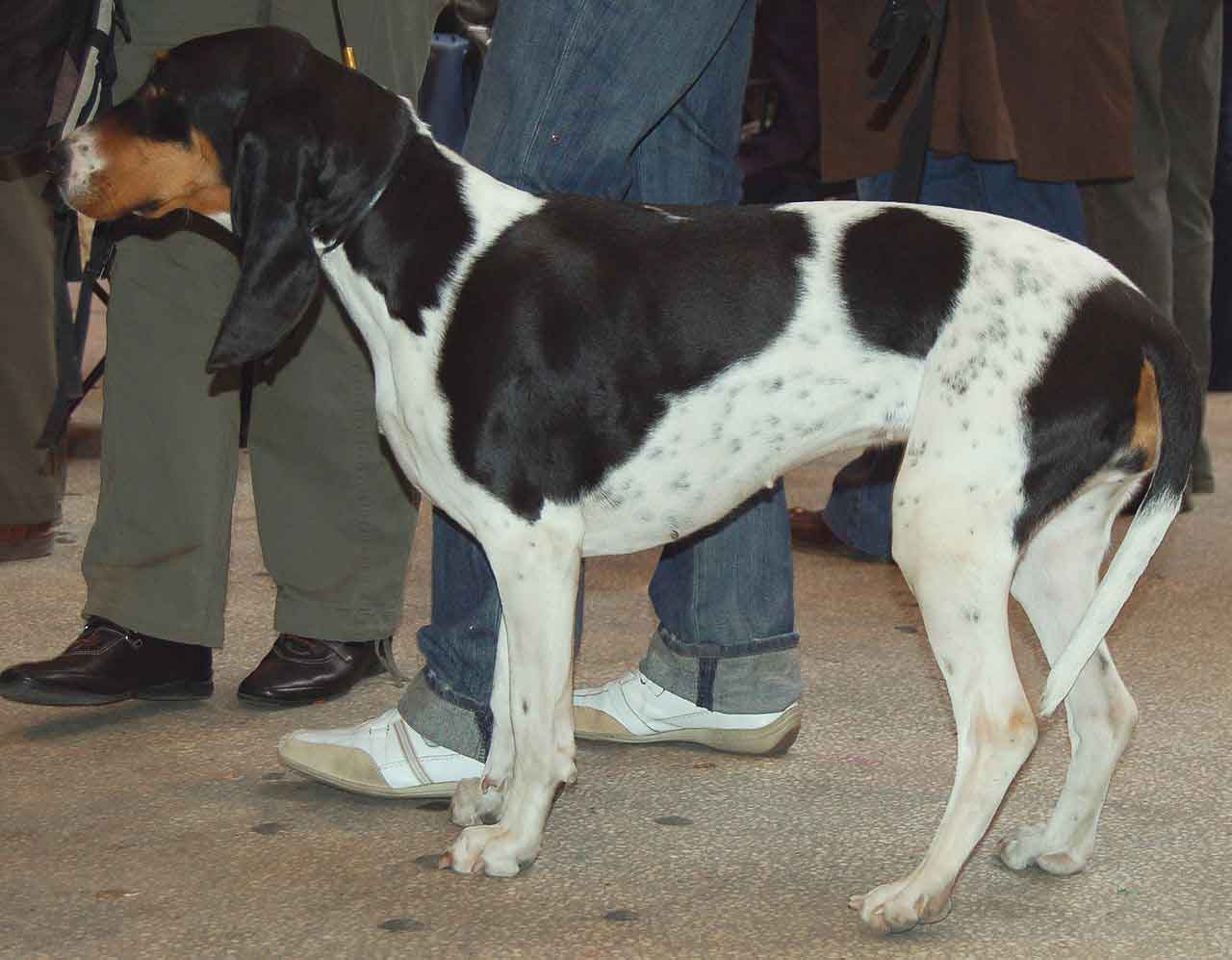
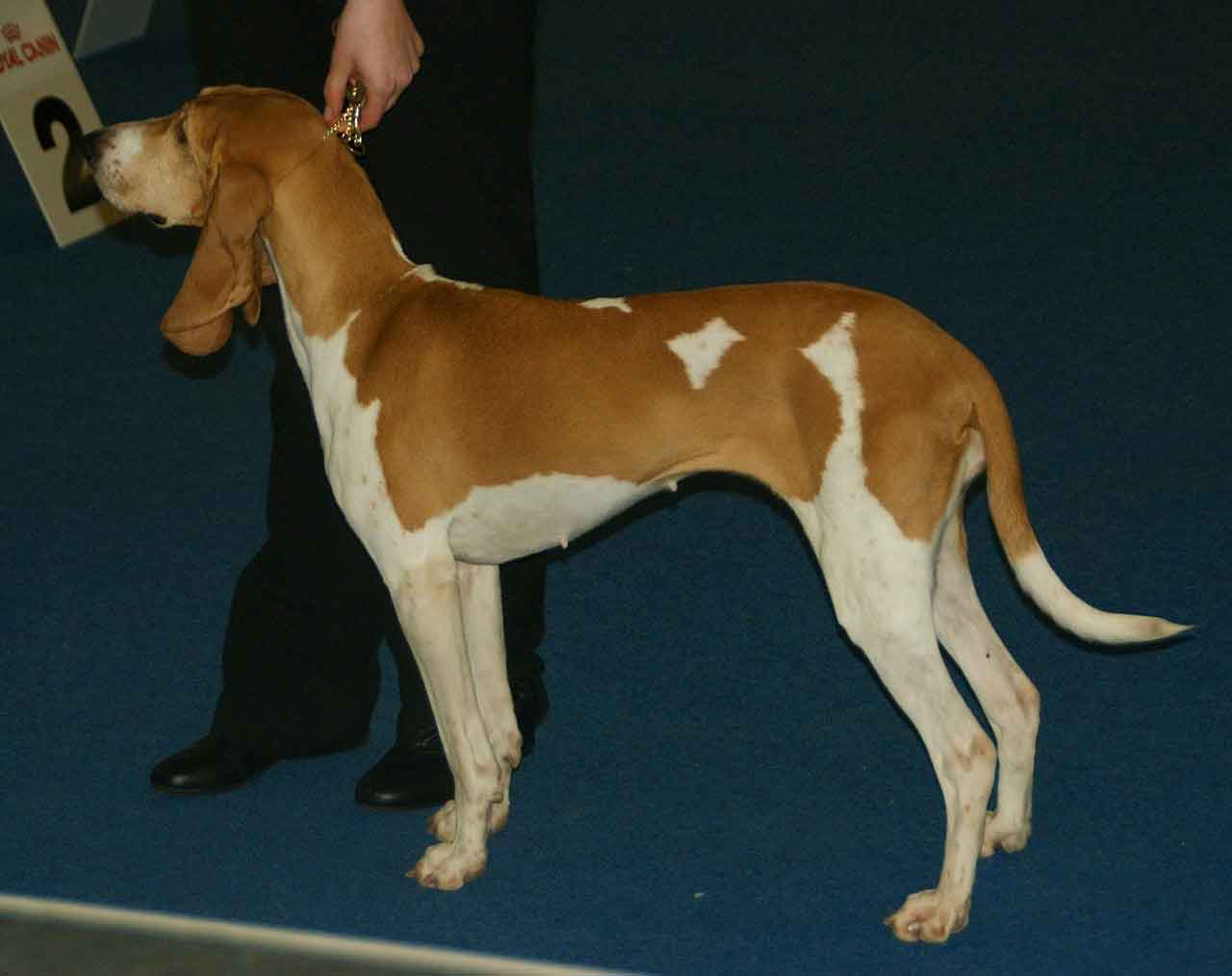
Photo: Bernese Hound during dogs show in Katowice, Poland by Lilly M, CC BY-SA 2.5, via Wikimedia Commons

Physical characteristics

In the Bernese Hound the coat is white with black spots or saddle, sometimes slightly mottled. Light to dark beige marks the upper part of the eyes, cheeks, the inner side of the ears and around the anus.

▷ Male weight: 15 to 20 kg
▷ female weight: 15 to 20 kg
▷ The size of the male: 49 to 59 cm.
▷ female size: 49 to 59 cm.

Character and skills

The Bernese Hound he is alive and passionate. Its sensitivity is valued as positively as its ease of use and its attachment to the dog handler. When you follow a clue, expansive and fluid movements are noticeable, as well as the good thrust of the hindquarters. You can feel strength, stamina and temperament, so her fine nose is closely tied to the track.

Acute smell is atypical for Bernese Hound, whose passion for hunting is so tireless that the dog handler must prevent the dog from exaggerating beforehand. Otherwise, the dog chases the prey until he catches it himself. Diligent search is desirable, but the dog, except when used in the pack, must always remain in the hand of his guide.

While the Bernese Hound he was used in his homeland mainly as a lone deer hunter, foxes and hares; In western Switzerland, wild boar hunts are also carried out with hound dogs. In France and Italy they are more likely to continue to be used for herd hunting of hare, wild boar and deer.

In Switzerland, the Bernese Hound They are mainly used for patent and district hunting. In patent hunting, three to six hunters usually form a hunting party. They are distributed among the different posts and the dogs are tied simultaneously at a previously agreed time. This promotes the independent search of each dog and also the pursuit of hares or deer as a lone hunter.. For the hunt to be successful, the hunter must know which path the game will take to be able to shoot it with a shotgun at a maximum distance of 30 m.
During a hunt on hunting ground there are large groups of up to 30 hunters. The hunt leader distributes the hunters in different positions, while a hunter goes on the hunt with all the dogs, and finally hold all the dogs at once. Here the hunt leader must know how the game flees and, therefore, distribute hunters' positions. While hunting in the hunting ground, the hare, the deer and sometimes also the fox are shot from a maximum distance of 30 m.

Off the hunt, the Bernese Hound he is a nice and quiet family member. with whom you are closely linked.

Characteristics "Bernese Hound"

Coexistence is important that you have with your new friend. Before considering the acquisition of a dog of the breed "Bernese Hound" you know certain factors. Not all breeds of dogs are apt to live in an apartment, you must take into account his character, their need for exercise, their interaction with other pets, their care and if you have small children, their level of tolerance towards them.

[simple_tooltip content=โ€™How easily a dog handles change.โ€™]

Adaptation โ“˜

[/simple_tooltip]
3,0 of 5 stars (based on 1 review)
[simple_tooltip content=โ€™Tendency to enjoy or tolerate other dogs.โ€™]

friendly dog โ€‹โ€‹โ“˜

[/simple_tooltip]
4,0 of 5 stars (based on 1 review)
[simple_tooltip content=โ€™Amount and frequency of dog hair shedding.โ€™]

hair loss โ“˜

[/simple_tooltip]
3,0 of 5 stars (based on 1 review)
[simple_tooltip content=โ€™Amount of warmth or friendliness shown.โ€™]

Affection level โ“˜

[/simple_tooltip]
5,0 of 5 stars (based on 1 review)
[simple_tooltip content=โ€™Level of daily activity required.โ€™]

Need for exercise โ“˜

[/simple_tooltip]
5,0 of 5 stars (based on 1 review)
[simple_tooltip content=โ€™Preferred amount of interaction with other pets and humans.โ€™]

Social need โ“˜

[/simple_tooltip]
4,0 of 5 stars (based on 1 review)
[simple_tooltip content=โ€™Factors such as the size of the dog and its tendency to make noise.โ€™]

Home โ“˜

[/simple_tooltip]
4,0 of 5 stars (based on 1 review)
[simple_tooltip content=โ€™Bath quantity, brushed, even professional grooming necessary.โ€™]

Toilet โ“˜

[/simple_tooltip]
2,0 of 5 stars (based on 1 review)
[simple_tooltip content=โ€™Tendency to welcome new people.โ€™]

Friendly with strangers โ“˜

[/simple_tooltip]
4,0 of 5 stars (based on 1 review)
[simple_tooltip content=โ€™Race vocalization level.โ€™]

barking โ“˜

[/simple_tooltip]
4,0 of 5 stars (based on 1 review)
[simple_tooltip content=โ€™Health that a race usually has.โ€™]

Health โ“˜

[/simple_tooltip]
4,0 of 5 stars (based on 1 review)
[simple_tooltip content=โ€™A dogโ€™s inclination to protect its home, yard or even your car.โ€™]

Territorial โ“˜

[/simple_tooltip]
4,0 of 5 stars (based on 1 review)
[simple_tooltip content=โ€™Trend towards tolerance for cats and lower prey drive.โ€™]

Cat friendly โ“˜

[/simple_tooltip]
2,0 of 5 stars (based on 1 review)
[simple_tooltip content=โ€™A dogโ€™s thinking and problem-solving abilities (not trainable).โ€™]

Intelligence โ“˜

[/simple_tooltip]
4,0 of 5 stars (based on 1 review)
[simple_tooltip content=โ€™Level of ease in learning something new and willingness to try new things.โ€™]

Versatility โ“˜

[/simple_tooltip]
3,0 of 5 stars (based on 1 review)
[simple_tooltip content=โ€™Dogs that tend to be more protective, playful and calm with children, as well as more tolerant of their behavior.']

Child friendly โ“˜

[/simple_tooltip]
4,0 of 5 stars (based on 1 review)
[simple_tooltip content=โ€™A breed that will likely alert you to the presence of strangers.โ€™]

Surveillance โ“˜

[/simple_tooltip]
4,0 of 5 stars (based on 1 review)
[simple_tooltip content=โ€™How happy and energetic a dog tends to be.โ€™]

joy โ“˜

[/simple_tooltip]
5,0 of 5 stars (based on 1 review)

Videos "Bernese Hound"

Bernese Hound (02 June 2012)
Berner Laufhund
Bernese Hound - Celer Cervarius and puppy ๐Ÿ™‚
Berner Laufhund

Type and recognitions:

  • FCI CLASSIFICATION:
  • Group :
  • Section : . .

Federations:

  • FCI – Group 6: Scent hounds, and related breeds. – Section 1.2: Medium-sized Hounds. [simple_tooltip content=โ€™The International Cynological Federation is the largest international federation of Kennel Clubs in the world. It is responsible for governing and promoting cynology, as well as the rules of dog breeding. consists of 95 member countries with their own pedigrees that train their judges. Each country dictates the norms of the native breeds of the same, which they are supported by the FCI. It is based in Thuin, Belgium.']โ“˜[/simple_tooltip]
  • UKCScenthounds [simple_tooltip content=โ€™The United Kennel Club is an organization that manages one of the largest databases on dog breeds in the world.โ€™]โ“˜[/simple_tooltip]

FCI breed standard "Bernese Hound"

Origin:
Switzerland

Date of publication of the valid original standard:
28.11.2001

Use:

It is a small game hound that hunts hares, deer, foxes and sometimes wild boars. He is an independent hunter by hunting with a bark. Searches and corners its prey with great safety even in difficult terrain.


General appearance:

It is a dog with medium height at the withers. Your body structure indicates strength and tenacity. Its slim head with long snout and long ears give it an expression of nobility.

There are four varieties of Swiss Hound :

  • Bernese Hound
  • Jura Hound
  • Lucerne Hound
  • Schwyz Hound

IMPORTANT PROPORTIONS :

โ€ข Body length : Height at withers = approx. 1.15 : 1.
โ€ข Height of the withers : chest depth = approx. 2 : 1.
โ€ข Length of the nasal shank : skull length = approx. 1 : 1.


Behavior / temperament:

Lively and passionate about hunting. Sensitive, manageable and faithful.

Head:

---

Cranial region:
  • Skull : Long, narrow, delgado, noble. Bulging skull, visible occipital protrusion. The direction of the longitudinal axis of the skull and the muzzle shows a slight divergence. No frontal groove, no folds or wrinkles.
  • Depression links (Stop) : Not too developed.

facial region:

  • Truffle : Completely black, well developed; nostrils wide open.
  • Snout : Nobly developed, narrow ; it is not square or pointed ; the muzzle is straight or very slightly convex.
  • Lips : Moderately developed, the upper lips perfectly cover the lower jaw ; slightly open corner.
  • Jaws / Teeth : Powerful jaw. Powerful scissor bite, regular and complete, that is, the upper incisors overlap the lower ones without leaving space between them and the teeth are implanted vertically in the maxilla. Pincer bite allowed. The lack of one or two PM1 or PM2 is acceptable (premolars 1 or 2) . M3 are not taken into account (molars).
  • Cheeks : Loose, non-protruding supraciliary arches.

Eyes : They are more or less light or dark brown depending on the color of the coat ; they are medium in size and slightly oval. The edges of the eyelids are well pigmented. The eyelids are well adherent. The expression is sweet.

Ears : Placed below the eye line, in the posterior part of the cranial region and never implanted in its maximum width. Its length must reach at least the tip of the nose. The pinna is not prominent. The ears are thin. He wears them down, bent and twisted ; they are rounded at the bottom and have a fine, soft coat.

Neck:

Long, elegant, with good musculature ; throat skin is loose without forming a noticeable dewlap.

Body:

  • top line : The neck, the back, The rump and tail form a harmonious and noble line.
  • Cross : Bit strong, free and elegant neck insert.
  • Back : Firm and straight. : Muscular and slightly arched.
  • Rump : Elongated, extends the line of the back harmoniously and descends gently. It is not higher than the cross. The crest of the iliac bone is not too prominent.
  • Breast : Deeper than wide, well descended, reaches to the tips of the elbows. Elongated rib cage with slightly arched ribs.
  • Bottom line and belly : Belly slightly pulled back ; full flanks.

Tail:

Inserted in the extension of the croup. It is of medium length and tapers towards the tip ; at its end it has a slight incline up ; noble. In general, it remains hanging at rest and when walking calmly, without showing an important bend ; When he is attentive or in action he carries it along the line of his back , but never resting in it nor in a curled way. Is well covered with hair, but it doesn't have a spike shape.

Tips

PREVIOUS MEMBERS :

  • As a whole : They are well muscled, thin and not heavy in appearance. Seen from the front they are parallel and from the side they look vertical ; his bones are strong with his feet pointed forward.
  • Shoulder : Long oblique shoulder blades, closely linked to the rib cage. The ideal angulation of the scapulohumeral joint is approximately 100ยฐ.
  • Arm : A little longer than the shoulder blade, placed obliquely, closely attached to the chest. His musculature is fine.
  • Elbows : Naturally glued to the side.
  • Forearm : Straight, strong, delgado.
  • Carpo : Strong, wide metacarpus : Relatively short; Seen from the front it is located on the perpendicular line of the forearm; seen from the side it is slightly inclined.
  • Front feet : Rounded, with compact fingers ; hard and rough pads ; strong nails whose color depends on the color of the coat.

LATER MEMBERS :

  • As a whole : They have strong muscles and are in a balanced relationship with the forelimbs ; seen from behind the hind legs are vertical and parallel.
  • Thigh : Long and oblique, powerful although his muscles are thin. The angulation of the coxofemoral joint is approximately 100ยฐ.
  • Knee : No inward or outward deviations. Angulation of the femoral-tibian joint approximately 120ยฐ.
  • Leg : Relatively long, thin, visible muscles and tendons under the skin.
  • Hock : Tibiotarsal joint angulation approximately 130ยฐ.
  • Metatarsus : Pretty short, placed vertically and parallel. Without spurs, except in countries, in which amputation is not allowed by law.
  • Rear feet : Rounded, with compact fingers, hard and rough pads ; strong nails whose color depends on the color of the coat.

Movement:

It is unfolded, regular, harmonious and with good scope. Has good impulse from the hindlimbs. Drive the limbs parallel and straight. The cross moves smoothly and regularly up and down, the back remains straight and the head and neck wobble slightly from side to side.

Mantle

SKIN : Fina, flexible, well adherent, whose color varies in each of the four varieties.

โ€ข Bernese Hound : Skin is black under black hair and blackish-white marbling under white hair.
โ€ข Jura Hound : She is black under black hair and lighter under tan hair..
โ€ข Lucerne Hound : She is black under black hair and lighter under blue-flecked hair..
โ€ข Schwyz Hound : It is dark gray under the orange hair and blackish-white marbling under the white hair..

HAIR : Is short, smooth, thick, very fine on the head and ears.

COLOR :

โ€ข Bernese Hound : White with black spots or a black saddle-shaped spot. Tan color from pale to intense over the eyes, cheeks, on the inside of the ears and around the anus. Sometimes very lightly splattered (black splash).

โ€ข Jura Hound : Tan with black cape, sometimes nuanced black or black with tan over the eyes, cheeks, around the anus and on the extremities ; sometimes with a small white spot on the chest ; this stain may be splattered (black or gray splashes).

โ€ข Lucerne Hound : Called blue, with a mixture of black and white hairs, intensely splashed, with black spots or a saddle-shaped spot ; tan color from pale to intense over the eyes, cheeks, on the chest, around the anus and on the extremities ; a black cape is allowed.

โ€ข Schwyz Hound : White with orange or orange "saddle" spots, sometimes with orange splashes ; an orange coat is allowed.


Size and weight:

Height to the cross :

  • Males : 49-59 cm..
  • females : 47-57 cm No tolerance.


Fouls:

Any deviation from the aforementioned criteria is considered as a fault and the severity of this is considered to the degree of the deviation to the standard and its consequences on the health and well-being of the dog..

โ€ข Rough appearance, vulgar, weak body structure.
โ€ข Discordant proportions between body length, the height of the withers and the height of the chest.
โ€ข Skull too wide, too convex or too flat.
โ€ข Stop too marked.
โ€ข Very short or very long snout, too square or pointed.
โ€ข Concave nasal bridge.
โ€ข Lack of more than two premolars PM1 or PM2. Los M3 (molars 3) are not taken into account.
โ€ข Thick lips.
โ€ข Light eyes, acute expression, non-adherent eyelids.
โ€ข Ears that are too short or flattened, thick or set very high.
โ€ข Very short neck.
โ€ข Double chin too marked.
โ€ข Saddled or arched back (carp back).
โ€ข Croup too inclined or too short.
โ€ข Rib cage not deep enough, too flat or barrel-shaped.
โ€ข Retracted belly, fallen flanks.
โ€ข Tail with poor insertion, carried too high, very bent, stooped, very coarse or spike-shaped tail.
โ€ข Extremities with bones that are too thin or in a bad position.
โ€ข Very sloping shoulders, arm too short.
โ€ข Weak carpal joints.
โ€ข Insufficient angulations of the hind limbs ; cow or barrel shaped limbs.
โ€ข Dewclaws on the hind limbs, except in countries in which amputation is not permitted by law.
โ€ข Rough coat, not smooth.
โ€ข Flaws in color and markings.

  1. Bernese Hound : Too many black splashes on the white. Tan or white on the outside of the ears.
  2. Jura Hound : Uniform color. Noticeable white patch or heavily speckled patch on the chest.
  3. Lucerne Hound : Lack of ยซ blue ยป splash. Tan on the outside of the ears.
  4. Schwyz Hound : Too many orange splashes on the white. Uniform color. White on the outside of the ears.

โ€ข Slightly fearful or aggressive behavior.

MISS PLAYOFFS

โ€ข Excessively fearful or aggressive dog.
โ€ข Atypical general appearance of the breed.
โ€ข Completely depigmented nose.
โ€ข Upper or lower prognathism, incisor arcade deviated.
โ€ข Ectropion, entropion (even if it had been operated).
โ€ข Horn tail, threaded, knotty the hook.
โ€ข Size above or below tolerance.

Any dog โ€‹โ€‹showing clear signs of physical or behavioral abnormalities must be disqualified..


N.B.:

Males should have two normal-appearing testicles fully descended into the scrotum..

Source: F.C.I - International Cynological Federation

Varieties of ยซSwiss Houndsยป

The four varieties of Swiss Hounds have their own specific hunting characteristics.:

– The Bernese Hound, with her beautiful throat ("the howler of the Jura"), demanding, mainly used for hares;
– He "Jura Houndยซ, an excellent recuperator
– The Lucerne Hound, reminiscent of Small Blue Gascony, he is an active and passionate dog that hunts deer very well;
– The "Hound of Schwyz", less widespread outside of Switzerland, is reserved for rabbits and hares.

โ–ท The world of Pets: Dogs, cats, birds, reptiles, amphibians

Lucerne Hound
Suiza FCI 59 . Medium-sized Hounds

Lucerne Hound

The Lucerne Hound is a lively dog, but gentle and docile. Very attached to his master.

Content

History

The breed was originally bred in the Lucerne area, Switzerland. Already in appearance it is closely related to the dog Bloodhound. It can be assumed that the Small Blue Gascony may also have played a role in the development of the breed: Striking colored coat with speckled pattern suggests this. It is one of the four Swiss Hounds, that have been combined by the FCI under a single breed standard, but they are judged separately in the exhibitions. The other varieties of the breed are:

Physical characteristics

Height at the withers up to 59 cm..
The ears are far back, very large, heavy, bent and turned.
Fur: Short, thick and thick, Fox fur
color: blue, of a combination of black and white hairs, very mottled, with black spots or a black chair.

Character and skills

The Lucerne Hound is a lively dog, but gentle and docile. Very attached to his master.

Like all dogs Swiss hounds, this breed is also relatively small. This is partly due to the fact that environmental conditions in the mountains, where were these dogs born, they are extremely hard, so animals with low energy requirements survived better than larger dogs. The Lucerne Hound used for a wide variety of hunting, from wild boars to deer and hares. Although the dense fur protects the dog from the cold and he likes to live outdoors, look for comfort; therefore he feels comfortable in the city, but needs a lot of activity and enough exercise. There is an almost identical breed with shorter legs – the Small Lucerne Hound, one of the varieties of Small swiss hound. It is suitable as a working dog, hunting and company.

Characteristics "Lucerne Hound"

Coexistence is important that you have with your new friend. Before considering the acquisition of a dog of the breed "Lucerne Hound" you know certain factors. Not all breeds of dogs are apt to live in an apartment, you must take into account his character, their need for exercise, their interaction with other pets, their care and if you have small children, their level of tolerance towards them.

[simple_tooltip content=โ€™How easily a dog handles change.โ€™]

Adaptation โ“˜

[/simple_tooltip]
4,0 of 5 stars (based on 1 review)
[simple_tooltip content=โ€™Tendency to enjoy or tolerate other dogs.โ€™]

friendly dog โ€‹โ€‹โ“˜

[/simple_tooltip]
4,0 of 5 stars (based on 1 review)
[simple_tooltip content=โ€™Amount and frequency of dog hair shedding.โ€™]

hair loss โ“˜

[/simple_tooltip]
3,0 of 5 stars (based on 1 review)
[simple_tooltip content=โ€™Amount of warmth or friendliness shown.โ€™]

Affection level โ“˜

[/simple_tooltip]
4,0 of 5 stars (based on 1 review)
[simple_tooltip content=โ€™Level of daily activity required.โ€™]

Need for exercise โ“˜

[/simple_tooltip]
5,0 of 5 stars (based on 1 review)
[simple_tooltip content=โ€™Preferred amount of interaction with other pets and humans.โ€™]

Social need โ“˜

[/simple_tooltip]
4,0 of 5 stars (based on 1 review)
[simple_tooltip content=โ€™Factors such as the size of the dog and its tendency to make noise.โ€™]

Home โ“˜

[/simple_tooltip]
4,0 of 5 stars (based on 1 review)
[simple_tooltip content=โ€™Bath quantity, brushed, even professional grooming necessary.โ€™]

Toilet โ“˜

[/simple_tooltip]
2,0 of 5 stars (based on 1 review)
[simple_tooltip content=โ€™Tendency to welcome new people.โ€™]

Friendly with strangers โ“˜

[/simple_tooltip]
3,0 of 5 stars (based on 1 review)
[simple_tooltip content=โ€™Race vocalization level.โ€™]

barking โ“˜

[/simple_tooltip]
4,0 of 5 stars (based on 1 review)
[simple_tooltip content=โ€™Health that a race usually has.โ€™]

Health โ“˜

[/simple_tooltip]
4,0 of 5 stars (based on 1 review)
[simple_tooltip content=โ€™A dogโ€™s inclination to protect its home, yard or even your car.โ€™]

Territorial โ“˜

[/simple_tooltip]
4,0 of 5 stars (based on 1 review)
[simple_tooltip content=โ€™Trend towards tolerance for cats and lower prey drive.โ€™]

Cat friendly โ“˜

[/simple_tooltip]
2,0 of 5 stars (based on 1 review)
[simple_tooltip content=โ€™A dogโ€™s thinking and problem-solving abilities (not trainable).โ€™]

Intelligence โ“˜

[/simple_tooltip]
4,0 of 5 stars (based on 1 review)
[simple_tooltip content=โ€™Level of ease in learning something new and willingness to try new things.โ€™]

Versatility โ“˜

[/simple_tooltip]
4,0 of 5 stars (based on 1 review)
[simple_tooltip content=โ€™Dogs that tend to be more protective, playful and calm with children, as well as more tolerant of their behavior.']

Child friendly โ“˜

[/simple_tooltip]
4,0 of 5 stars (based on 1 review)
[simple_tooltip content=โ€™A breed that will likely alert you to the presence of strangers.โ€™]

Surveillance โ“˜

[/simple_tooltip]
4,0 of 5 stars (based on 1 review)
[simple_tooltip content=โ€™How happy and energetic a dog tends to be.โ€™]

joy โ“˜

[/simple_tooltip]
5,0 of 5 stars (based on 1 review)

Videos "Lucerne Hound"

chiens courant lucernois entrainement 2
chiens courant lucernois entrainement 1

Type and recognitions:

  • FCI CLASSIFICATION:
  • Group :
  • Section : . .

Federations:

  • FCI – Group 6: Scent hounds, and related breeds. – Section 1.2: Medium-sized Hounds. [simple_tooltip content=โ€™The International Cynological Federation is the largest international federation of Kennel Clubs in the world. It is responsible for governing and promoting cynology, as well as the rules of dog breeding. consists of 95 member countries with their own pedigrees that train their judges. Each country dictates the norms of the native breeds of the same, which they are supported by the FCI. It is based in Thuin, Belgium.']โ“˜[/simple_tooltip]
  • UKCScenthounds [simple_tooltip content=โ€™The United Kennel Club is an organization that manages one of the largest databases on dog breeds in the world.โ€™]โ“˜[/simple_tooltip]

FCI breed standard "Lucerne Hound"

Origin:
Switzerland

Date of publication of the valid original standard:
28.11.2001

Use:

It is a small game hound that hunts hares, deer, foxes and sometimes wild boars. He is an independent hunter by hunting with a bark. Searches and corners its prey with great safety even in difficult terrain.


General appearance:

It is a dog with medium height at the withers. Your body structure indicates strength and tenacity. Its slim head with long snout and long ears give it an expression of nobility.

There are four varieties of Swiss Hound :

  • Bernese Hound
  • Jura Hound
  • Lucerne Hound
  • Schwyz Hound

IMPORTANT PROPORTIONS :

โ€ข Body length : Height at withers = approx. 1.15 : 1.
โ€ข Height of the withers : chest depth = approx. 2 : 1.
โ€ข Length of the nasal shank : skull length = approx. 1 : 1.


Behavior / temperament:

Lively and passionate about hunting. Sensitive, manageable and faithful.

Head:

---

Cranial region:
  • Skull : Long, narrow, delgado, noble. Bulging skull, visible occipital protrusion. The direction of the longitudinal axis of the skull and the muzzle shows a slight divergence. No frontal groove, no folds or wrinkles.
  • Depression links (Stop) : Not too developed.

facial region:

  • Truffle : Completely black, well developed; nostrils wide open.
  • Snout : Nobly developed, narrow ; it is not square or pointed ; the muzzle is straight or very slightly convex.
  • Lips : Moderately developed, the upper lips perfectly cover the lower jaw ; slightly open corner.
  • Jaws / Teeth : Powerful jaw. Powerful scissor bite, regular and complete, that is, the upper incisors overlap the lower ones without leaving space between them and the teeth are implanted vertically in the maxilla. Pincer bite allowed. The lack of one or two PM1 or PM2 is acceptable (premolars 1 or 2) . M3 are not taken into account (molars).
  • Cheeks : Loose, non-protruding supraciliary arches.

Eyes : They are more or less light or dark brown depending on the color of the coat ; they are medium in size and slightly oval. The edges of the eyelids are well pigmented. The eyelids are well adherent. The expression is sweet.

Ears : Placed below the eye line, in the posterior part of the cranial region and never implanted in its maximum width. Its length must reach at least the tip of the nose. The pinna is not prominent. The ears are thin. He wears them down, bent and twisted ; they are rounded at the bottom and have a fine, soft coat.

Neck:

Long, elegant, with good musculature ; throat skin is loose without forming a noticeable dewlap.

Body:

  • top line : The neck, the back, The rump and tail form a harmonious and noble line.
  • Cross : Bit strong, free and elegant neck insert.
  • Back : Firm and straight. : Muscular and slightly arched.
  • Rump : Elongated, extends the line of the back harmoniously and descends gently. It is not higher than the cross. The crest of the iliac bone is not too prominent.
  • Breast : Deeper than wide, well descended, reaches to the tips of the elbows. Elongated rib cage with slightly arched ribs.
  • Bottom line and belly : Belly slightly pulled back ; full flanks.

Tail:

Inserted in the extension of the croup. It is of medium length and tapers towards the tip ; at its end it has a slight incline up ; noble. In general, it remains hanging at rest and when walking calmly, without showing an important bend ; When he is attentive or in action he carries it along the line of his back , but never resting in it nor in a curled way. Is well covered with hair, but it doesn't have a spike shape.

Tips

PREVIOUS MEMBERS :

  • As a whole : They are well muscled, thin and not heavy in appearance. Seen from the front they are parallel and from the side they look vertical ; his bones are strong with his feet pointed forward.
  • Shoulder : Long oblique shoulder blades, closely linked to the rib cage. The ideal angulation of the scapulohumeral joint is approximately 100ยฐ.
  • Arm : A little longer than the shoulder blade, placed obliquely, closely attached to the chest. His musculature is fine.
  • Elbows : Naturally glued to the side.
  • Forearm : Straight, strong, delgado.
  • Carpo : Strong, wide metacarpus : Relatively short; Seen from the front it is located on the perpendicular line of the forearm; seen from the side it is slightly inclined.
  • Front feet : Rounded, with compact fingers ; hard and rough pads ; strong nails whose color depends on the color of the coat.

LATER MEMBERS :

  • As a whole : They have strong muscles and are in a balanced relationship with the forelimbs ; seen from behind the hind legs are vertical and parallel.
  • Thigh : Long and oblique, powerful although his muscles are thin. The angulation of the coxofemoral joint is approximately 100ยฐ.
  • Knee : No inward or outward deviations. Angulation of the femoral-tibian joint approximately 120ยฐ.
  • Leg : Relatively long, thin, visible muscles and tendons under the skin.
  • Hock : Tibiotarsal joint angulation approximately 130ยฐ.
  • Metatarsus : Pretty short, placed vertically and parallel. Without spurs, except in countries, in which amputation is not allowed by law.
  • Rear feet : Rounded, with compact fingers, hard and rough pads ; strong nails whose color depends on the color of the coat.

Movement:

It is unfolded, regular, harmonious and with good scope. Has good impulse from the hindlimbs. Drive the limbs parallel and straight. The cross moves smoothly and regularly up and down, the back remains straight and the head and neck wobble slightly from side to side.

Mantle

SKIN : Fina, flexible, well adherent, whose color varies in each of the four varieties.

โ€ข Bernese Hound : Skin is black under black hair and blackish-white marbling under white hair.
โ€ข Jura Hound : She is black under black hair and lighter under tan hair..
โ€ข Lucerne Hound : She is black under black hair and lighter under blue-flecked hair..
โ€ข Schwyz Hound : It is dark gray under the orange hair and blackish-white marbling under the white hair..

HAIR : Is short, smooth, thick, very fine on the head and ears.

COLOR :

โ€ข Bernese Hound : White with black spots or a black saddle-shaped spot. Tan color from pale to intense over the eyes, cheeks, on the inside of the ears and around the anus. Sometimes very lightly splattered (black splash).

โ€ข Jura Hound : Tan with black cape, sometimes nuanced black or black with tan over the eyes, cheeks, around the anus and on the extremities ; sometimes with a small white spot on the chest ; this stain may be splattered (black or gray splashes).

โ€ข Lucerne Hound : Called blue, with a mixture of black and white hairs, intensely splashed, with black spots or a saddle-shaped spot ; tan color from pale to intense over the eyes, cheeks, on the chest, around the anus and on the extremities ; a black cape is allowed.

โ€ข Schwyz Hound : White with orange or orange "saddle" spots, sometimes with orange splashes ; an orange coat is allowed.


Size and weight:

Height to the cross :

  • Males : 49-59 cm..
  • females : 47-57 cm No tolerance.


Fouls:

Any deviation from the aforementioned criteria is considered as a fault and the severity of this is considered to the degree of the deviation to the standard and its consequences on the health and well-being of the dog..

โ€ข Rough appearance, vulgar, weak body structure.
โ€ข Discordant proportions between body length, the height of the withers and the height of the chest.
โ€ข Skull too wide, too convex or too flat.
โ€ข Stop too marked.
โ€ข Very short or very long snout, too square or pointed.
โ€ข Concave nasal bridge.
โ€ข Lack of more than two premolars PM1 or PM2. Los M3 (molars 3) are not taken into account.
โ€ข Thick lips.
โ€ข Light eyes, acute expression, non-adherent eyelids.
โ€ข Ears that are too short or flattened, thick or set very high.
โ€ข Very short neck.
โ€ข Double chin too marked.
โ€ข Saddled or arched back (carp back).
โ€ข Croup too inclined or too short.
โ€ข Rib cage not deep enough, too flat or barrel-shaped.
โ€ข Retracted belly, fallen flanks.
โ€ข Tail with poor insertion, carried too high, very bent, stooped, very coarse or spike-shaped tail.
โ€ข Extremities with bones that are too thin or in a bad position.
โ€ข Very sloping shoulders, arm too short.
โ€ข Weak carpal joints.
โ€ข Insufficient angulations of the hind limbs ; cow or barrel shaped limbs.
โ€ข Dewclaws on the hind limbs, except in countries in which amputation is not permitted by law.
โ€ข Rough coat, not smooth.
โ€ข Flaws in color and markings.

  1. Bernese Hound : Too many black splashes on the white. Tan or white on the outside of the ears.
  2. Jura Hound : Uniform color. Noticeable white patch or heavily speckled patch on the chest.
  3. Lucerne Hound : Lack of ยซ blue ยป splash. Tan on the outside of the ears.
  4. Schwyz Hound : Too many orange splashes on the white. Uniform color. White on the outside of the ears.

โ€ข Slightly fearful or aggressive behavior.

MISS PLAYOFFS

โ€ข Excessively fearful or aggressive dog.
โ€ข Atypical general appearance of the breed.
โ€ข Completely depigmented nose.
โ€ข Upper or lower prognathism, incisor arcade deviated.
โ€ข Ectropion, entropion (even if it had been operated).
โ€ข Horn tail, threaded, knotty the hook.
โ€ข Size above or below tolerance.

Any dog โ€‹โ€‹showing clear signs of physical or behavioral abnormalities must be disqualified..


N.B.:

Males should have two normal-appearing testicles fully descended into the scrotum..

Source: F.C.I - International Cynological Federation

Alternative names:

1. Lucerne Hound (English).
2. Courant lucernois (French).
3. Blausprenkel (German).
4. Sabujo Lucerna (Portuguese).
5. Perro sabueso suizo de Lucerna (espaรฑol).

Varieties of ยซSwiss Houndsยป

The four varieties of Swiss Hounds have their own specific hunting characteristics.:

– The Bernese Hound, with her beautiful throat ("the howler of the Jura"), demanding, mainly used for hares;
– He "Jura Houndยซ, an excellent recuperator
– The "Hound of Lucerne", reminiscent of Small Blue Gascony, he is an active and passionate dog that hunts deer very well;
– The Schwyz Hound, less widespread outside of Switzerland, is reserved for rabbits and hares.

โ–ท The world of Pets: Dogs, cats, birds, reptiles, amphibians

Schwyz Hound
Suiza FCI 59 . Medium-sized Hounds

Schwyz Hound

The Schwyz Hound they are a very lively and energetic breed that requires a significant amount of daily exercise.

Content

History

The Schwyz Hound has ancient origins, the details are a bit confusing though. Dogs of this type are represented in mosaics dating from the Roman Helvetian era and the first specimens of the breed were highly sought after in Italy during the 15th century and then by the French during the 18th century..

It is believed that the Schwyz Hound It was influenced by the French Hounds brought to Switzerland by traveling mercenaries and eventually became one of the five varieties of "Swiss Hound.". More specifically, the Schwyz Hound it is one of the four breeds sometimes referred to – the other varieties are:

The first breed standard for the Schwyz Hound was established in 1882 and reviewed in 1909. The breed was accepted by the FCI under the name of Schweizer Laufhund in 2001.

Physical characteristics

It is a dog with medium height at the withers. Your body structure indicates strength and tenacity. Its slim head with long snout and long ears give it an expression of nobility.

Size: Males: 49-59 cm.. females: 47-57 cm..

Color: White with orange or orange "saddle" spots, sometimes with orange splashes; an orange coat is allowed.

Character and skills

The Schwyz Hound it is a friendly breed that can do well in a family environment as long as its exercise requirements are consistent. These dogs get along well with other dogs and can also be gentle with children. Just be careful around cats and other household pets because these dogs have strong hunting instincts – raising pets together and working on early socialization will help. You should also make sure your dog gets plenty of mental and physical exercise to avoid the kind of boredom that can lead to destructive behavior..

The Schwyz Hound they are a very lively and energetic breed that requires a significant amount of daily exercise. These dogs need at least an hour of moderate to vigorous exercise each day and will also appreciate having time to run around in a fenced yard.. This breed can also be a good candidate for dog sports, if you are looking for opportunities to get you some extra exercise.

Training

The Schwyz Hound has strong hunting instincts that can be developed and controlled through training. These dogs are trained to hunt in packs., so they are a bit independent by nature and can be stubborn at times. Keeping your training sessions short and offering plenty of food rewards will help ensure training success., in addition you must maintain a firm and consistent hand in leadership with this breed. Early socialization is also important for this breed.

Characteristics "Schwyz Hound"

Coexistence is important that you have with your new friend. Before considering the acquisition of a dog of the breed "Schwyz Hound" you know certain factors. Not all breeds of dogs are apt to live in an apartment, you must take into account his character, their need for exercise, their interaction with other pets, their care and if you have small children, their level of tolerance towards them.

[simple_tooltip content=โ€™How easily a dog handles change.โ€™]

Adaptation โ“˜

[/simple_tooltip]
3,0 of 5 stars (based on 1 review)
[simple_tooltip content=โ€™Tendency to enjoy or tolerate other dogs.โ€™]

friendly dog โ€‹โ€‹โ“˜

[/simple_tooltip]
4,0 of 5 stars (based on 1 review)
[simple_tooltip content=โ€™Amount and frequency of dog hair shedding.โ€™]

hair loss โ“˜

[/simple_tooltip]
3,0 of 5 stars (based on 1 review)
[simple_tooltip content=โ€™Amount of warmth or friendliness shown.โ€™]

Affection level โ“˜

[/simple_tooltip]
5,0 of 5 stars (based on 1 review)
[simple_tooltip content=โ€™Level of daily activity required.โ€™]

Need for exercise โ“˜

[/simple_tooltip]
5,0 of 5 stars (based on 1 review)
[simple_tooltip content=โ€™Preferred amount of interaction with other pets and humans.โ€™]

Social need โ“˜

[/simple_tooltip]
4,0 of 5 stars (based on 1 review)
[simple_tooltip content=โ€™Factors such as the size of the dog and its tendency to make noise.โ€™]

Home โ“˜

[/simple_tooltip]
4,0 of 5 stars (based on 1 review)
[simple_tooltip content=โ€™Bath quantity, brushed, even professional grooming necessary.โ€™]

Toilet โ“˜

[/simple_tooltip]
2,0 of 5 stars (based on 1 review)
[simple_tooltip content=โ€™Tendency to welcome new people.โ€™]

Friendly with strangers โ“˜

[/simple_tooltip]
4,0 of 5 stars (based on 1 review)
[simple_tooltip content=โ€™Race vocalization level.โ€™]

barking โ“˜

[/simple_tooltip]
4,0 of 5 stars (based on 1 review)
[simple_tooltip content=โ€™Health that a race usually has.โ€™]

Health โ“˜

[/simple_tooltip]
4,0 of 5 stars (based on 1 review)
[simple_tooltip content=โ€™A dogโ€™s inclination to protect its home, yard or even your car.โ€™]

Territorial โ“˜

[/simple_tooltip]
4,0 of 5 stars (based on 1 review)
[simple_tooltip content=โ€™Trend towards tolerance for cats and lower prey drive.โ€™]

Cat friendly โ“˜

[/simple_tooltip]
2,0 of 5 stars (based on 1 review)
[simple_tooltip content=โ€™A dogโ€™s thinking and problem-solving abilities (not trainable).โ€™]

Intelligence โ“˜

[/simple_tooltip]
4,0 of 5 stars (based on 1 review)
[simple_tooltip content=โ€™Level of ease in learning something new and willingness to try new things.โ€™]

Versatility โ“˜

[/simple_tooltip]
3,0 of 5 stars (based on 1 review)
[simple_tooltip content=โ€™Dogs that tend to be more protective, playful and calm with children, as well as more tolerant of their behavior.']

Child friendly โ“˜

[/simple_tooltip]
4,0 of 5 stars (based on 1 review)
[simple_tooltip content=โ€™A breed that will likely alert you to the presence of strangers.โ€™]

Surveillance โ“˜

[/simple_tooltip]
4,0 of 5 stars (based on 1 review)
[simple_tooltip content=โ€™How happy and energetic a dog tends to be.โ€™]

joy โ“˜

[/simple_tooltip]
5,0 of 5 stars (based on 1 review)

Videos "Schwyz Hound"

Willie de Schwyzer Hound 2
Willie de Schwyzer Laufhund 2
Willie de Schwyzer Hound
Willie de Schwyzer Laufhund

Type and recognitions:

  • FCI CLASSIFICATION:
  • Group :
  • Section : . .

Federations:

  • FCI – Group 6: Scent hounds, and related breeds. – Section 1.2: Medium-sized Hounds. [simple_tooltip content=โ€™The International Cynological Federation is the largest international federation of Kennel Clubs in the world. It is responsible for governing and promoting cynology, as well as the rules of dog breeding. consists of 95 member countries with their own pedigrees that train their judges. Each country dictates the norms of the native breeds of the same, which they are supported by the FCI. It is based in Thuin, Belgium.']โ“˜[/simple_tooltip]
  • UKCScenthounds [simple_tooltip content=โ€™The United Kennel Club is an organization that manages one of the largest databases on dog breeds in the world.โ€™]โ“˜[/simple_tooltip]

FCI breed standard "Schwyz Hound"

Origin:
Switzerland

Date of publication of the valid original standard:
28.11.2001

Use:

It is a small game hound that hunts hares, deer, foxes and sometimes wild boars. He is an independent hunter by hunting with a bark. Searches and corners its prey with great safety even in difficult terrain.


General appearance:

It is a dog with medium height at the withers. Your body structure indicates strength and tenacity. Its slim head with long snout and long ears give it an expression of nobility.

There are four varieties of Swiss Hound :

  • Bernese Hound
  • Jura Hound
  • Lucerne Hound
  • Schwyz Hound

IMPORTANT PROPORTIONS :

โ€ข Body length : Height at withers = approx. 1.15 : 1.
โ€ข Height of the withers : chest depth = approx. 2 : 1.
โ€ข Length of the nasal shank : skull length = approx. 1 : 1.


Behavior / temperament:

Lively and passionate about hunting. Sensitive, manageable and faithful.

Head:

---

Cranial region:
  • Skull : Long, narrow, delgado, noble. Bulging skull, visible occipital protrusion. The direction of the longitudinal axis of the skull and the muzzle shows a slight divergence. No frontal groove, no folds or wrinkles.
  • Depression links (Stop) : Not too developed.

facial region:

  • Truffle : Completely black, well developed; nostrils wide open.
  • Snout : Nobly developed, narrow ; it is not square or pointed ; the muzzle is straight or very slightly convex.
  • Lips : Moderately developed, the upper lips perfectly cover the lower jaw ; slightly open corner.
  • Jaws / Teeth : Powerful jaw. Powerful scissor bite, regular and complete, that is, the upper incisors overlap the lower ones without leaving space between them and the teeth are implanted vertically in the maxilla. Pincer bite allowed. The lack of one or two PM1 or PM2 is acceptable (premolars 1 or 2) . M3 are not taken into account (molars).
  • Cheeks : Loose, non-protruding supraciliary arches.

Eyes : They are more or less light or dark brown depending on the color of the coat ; they are medium in size and slightly oval. The edges of the eyelids are well pigmented. The eyelids are well adherent. The expression is sweet.

Ears : Placed below the eye line, in the posterior part of the cranial region and never implanted in its maximum width. Its length must reach at least the tip of the nose. The pinna is not prominent. The ears are thin. He wears them down, bent and twisted ; they are rounded at the bottom and have a fine, soft coat.

Neck:

Long, elegant, with good musculature ; throat skin is loose without forming a noticeable dewlap.

Body:

  • top line : The neck, the back, The rump and tail form a harmonious and noble line.
  • Cross : Bit strong, free and elegant neck insert.
  • Back : Firm and straight. : Muscular and slightly arched.
  • Rump : Elongated, extends the line of the back harmoniously and descends gently. It is not higher than the cross. The crest of the iliac bone is not too prominent.
  • Breast : Deeper than wide, well descended, reaches to the tips of the elbows. Elongated rib cage with slightly arched ribs.
  • Bottom line and belly : Belly slightly pulled back ; full flanks.

Tail:

Inserted in the extension of the croup. It is of medium length and tapers towards the tip ; at its end it has a slight incline up ; noble. In general, it remains hanging at rest and when walking calmly, without showing an important bend ; When he is attentive or in action he carries it along the line of his back , but never resting in it nor in a curled way. Is well covered with hair, but it doesn't have a spike shape.

Tips

PREVIOUS MEMBERS :

  • As a whole : They are well muscled, thin and not heavy in appearance. Seen from the front they are parallel and from the side they look vertical ; his bones are strong with his feet pointed forward.
  • Shoulder : Long oblique shoulder blades, closely linked to the rib cage. The ideal angulation of the scapulohumeral joint is approximately 100ยฐ.
  • Arm : A little longer than the shoulder blade, placed obliquely, closely attached to the chest. His musculature is fine.
  • Elbows : Naturally glued to the side.
  • Forearm : Straight, strong, delgado.
  • Carpo : Strong, wide metacarpus : Relatively short; Seen from the front it is located on the perpendicular line of the forearm; seen from the side it is slightly inclined.
  • Front feet : Rounded, with compact fingers ; hard and rough pads ; strong nails whose color depends on the color of the coat.

LATER MEMBERS :

  • As a whole : They have strong muscles and are in a balanced relationship with the forelimbs ; seen from behind the hind legs are vertical and parallel.
  • Thigh : Long and oblique, powerful although his muscles are thin. The angulation of the coxofemoral joint is approximately 100ยฐ.
  • Knee : No inward or outward deviations. Angulation of the femoral-tibian joint approximately 120ยฐ.
  • Leg : Relatively long, thin, visible muscles and tendons under the skin.
  • Hock : Tibiotarsal joint angulation approximately 130ยฐ.
  • Metatarsus : Pretty short, placed vertically and parallel. Without spurs, except in countries, in which amputation is not allowed by law.
  • Rear feet : Rounded, with compact fingers, hard and rough pads ; strong nails whose color depends on the color of the coat.

Movement:

It is unfolded, regular, harmonious and with good scope. Has good impulse from the hindlimbs. Drive the limbs parallel and straight. The cross moves smoothly and regularly up and down, the back remains straight and the head and neck wobble slightly from side to side.

Mantle

SKIN : Fina, flexible, well adherent, whose color varies in each of the four varieties.

โ€ข Bernese Hound : Skin is black under black hair and blackish-white marbling under white hair.
โ€ข Jura Hound : She is black under black hair and lighter under tan hair..
โ€ข Lucerne Hound : She is black under black hair and lighter under blue-flecked hair..
โ€ข Schwyz Hound : It is dark gray under the orange hair and blackish-white marbling under the white hair..

HAIR : Is short, smooth, thick, very fine on the head and ears.

COLOR :

โ€ข Bernese Hound : White with black spots or a black saddle-shaped spot. Tan color from pale to intense over the eyes, cheeks, on the inside of the ears and around the anus. Sometimes very lightly splattered (black splash).

โ€ข Jura Hound : Tan with black cape, sometimes nuanced black or black with tan over the eyes, cheeks, around the anus and on the extremities ; sometimes with a small white spot on the chest ; this stain may be splattered (black or gray splashes).

โ€ข Lucerne Hound : Called blue, with a mixture of black and white hairs, intensely splashed, with black spots or a saddle-shaped spot ; tan color from pale to intense over the eyes, cheeks, on the chest, around the anus and on the extremities ; a black cape is allowed.

โ€ข Schwyz Hound : White with orange or orange "saddle" spots, sometimes with orange splashes ; an orange coat is allowed.


Size and weight:

Height to the cross :

  • Males : 49-59 cm..
  • females : 47-57 cm No tolerance.


Fouls:

Any deviation from the aforementioned criteria is considered as a fault and the severity of this is considered to the degree of the deviation to the standard and its consequences on the health and well-being of the dog..

โ€ข Rough appearance, vulgar, weak body structure.
โ€ข Discordant proportions between body length, the height of the withers and the height of the chest.
โ€ข Skull too wide, too convex or too flat.
โ€ข Stop too marked.
โ€ข Very short or very long snout, too square or pointed.
โ€ข Concave nasal bridge.
โ€ข Lack of more than two premolars PM1 or PM2. Los M3 (molars 3) are not taken into account.
โ€ข Thick lips.
โ€ข Light eyes, acute expression, non-adherent eyelids.
โ€ข Ears that are too short or flattened, thick or set very high.
โ€ข Very short neck.
โ€ข Double chin too marked.
โ€ข Saddled or arched back (carp back).
โ€ข Croup too inclined or too short.
โ€ข Rib cage not deep enough, too flat or barrel-shaped.
โ€ข Retracted belly, fallen flanks.
โ€ข Tail with poor insertion, carried too high, very bent, stooped, very coarse or spike-shaped tail.
โ€ข Extremities with bones that are too thin or in a bad position.
โ€ข Very sloping shoulders, arm too short.
โ€ข Weak carpal joints.
โ€ข Insufficient angulations of the hind limbs ; cow or barrel shaped limbs.
โ€ข Dewclaws on the hind limbs, except in countries in which amputation is not permitted by law.
โ€ข Rough coat, not smooth.
โ€ข Flaws in color and markings.

  1. Bernese Hound : Too many black splashes on the white. Tan or white on the outside of the ears.
  2. Jura Hound : Uniform color. Noticeable white patch or heavily speckled patch on the chest.
  3. Lucerne Hound : Lack of ยซ blue ยป splash. Tan on the outside of the ears.
  4. Schwyz Hound : Too many orange splashes on the white. Uniform color. White on the outside of the ears.

โ€ข Slightly fearful or aggressive behavior.

MISS PLAYOFFS

โ€ข Excessively fearful or aggressive dog.
โ€ข Atypical general appearance of the breed.
โ€ข Completely depigmented nose.
โ€ข Upper or lower prognathism, incisor arcade deviated.
โ€ข Ectropion, entropion (even if it had been operated).
โ€ข Horn tail, threaded, knotty the hook.
โ€ข Size above or below tolerance.

Any dog โ€‹โ€‹showing clear signs of physical or behavioral abnormalities must be disqualified..


N.B.:

Males should have two normal-appearing testicles fully descended into the scrotum..

Source: F.C.I - International Cynological Federation

Varieties of ยซSwiss Houndsยป

The four varieties of Swiss Hounds have their own specific hunting characteristics.:

– The Bernese Hound, with her beautiful throat ("the howler of the Jura"), demanding, mainly used for hares;
– He "Jura Houndยซ, an excellent recuperator
– The Lucerne Hound, reminiscent of Small Blue Gascony, he is an active and passionate dog that hunts deer very well;
– The "Hound of Schwyz", less widespread outside of Switzerland, is reserved for rabbits and hares.