โ–ท The world of Pets: Dogs, cats, birds, reptiles, amphibians

Monk Parakeet
Myiopsitta monachus

Monk Parakeet

Content

Description:

28-31 cm. length and 120-140 weight g
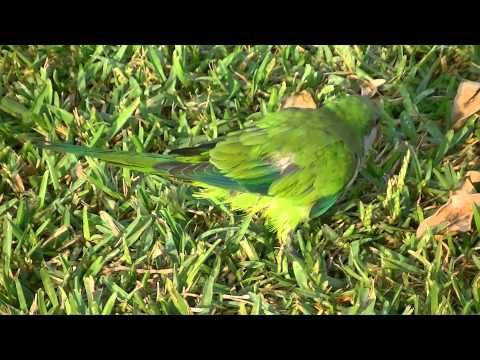
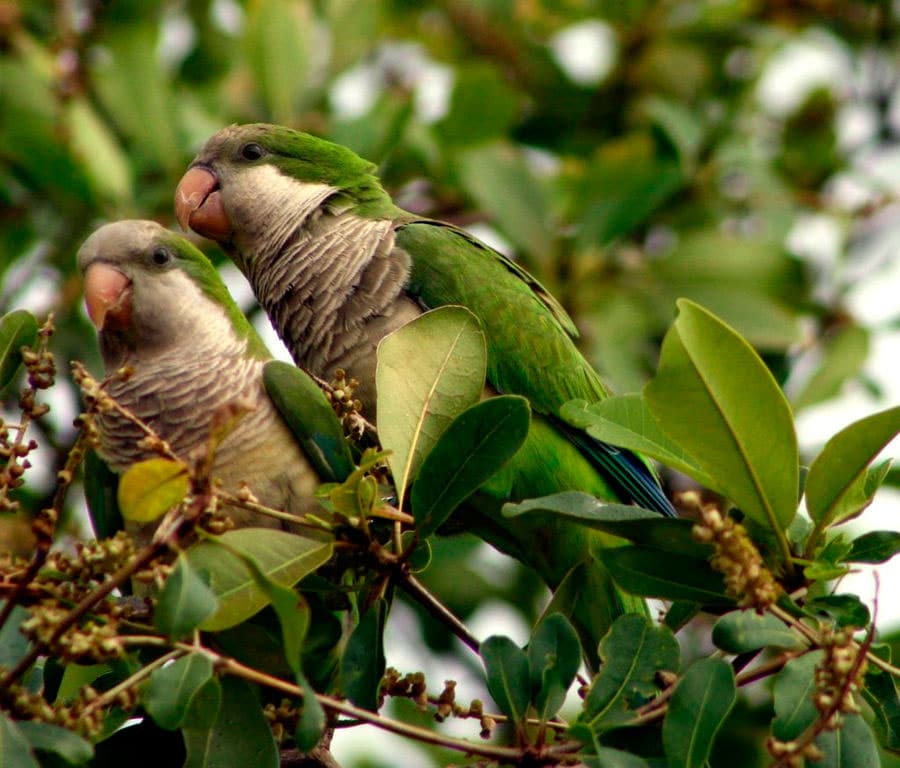
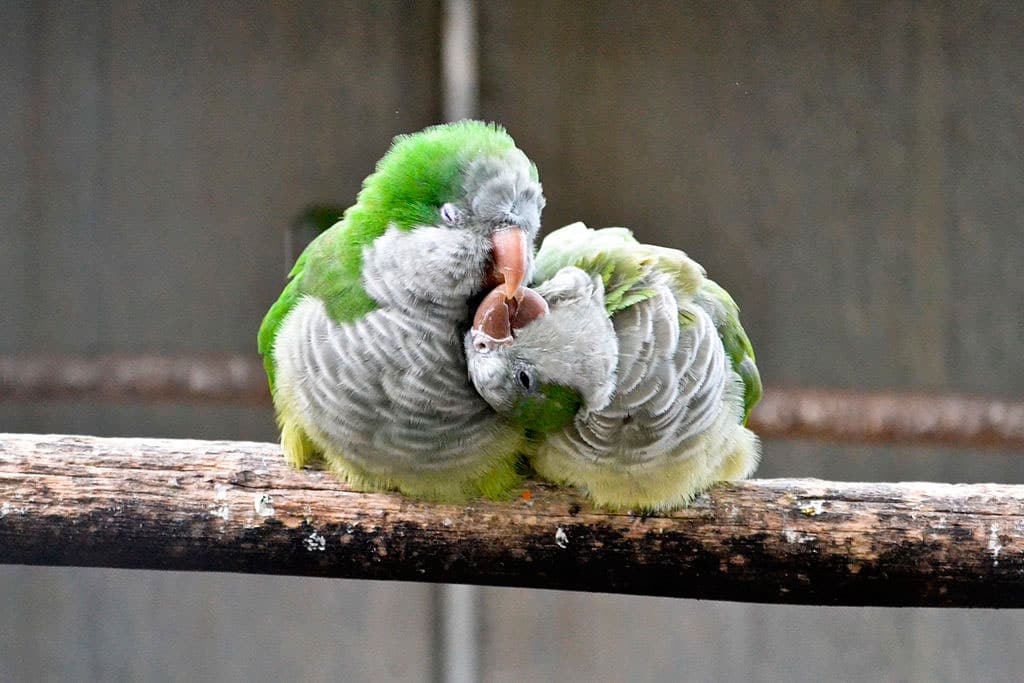
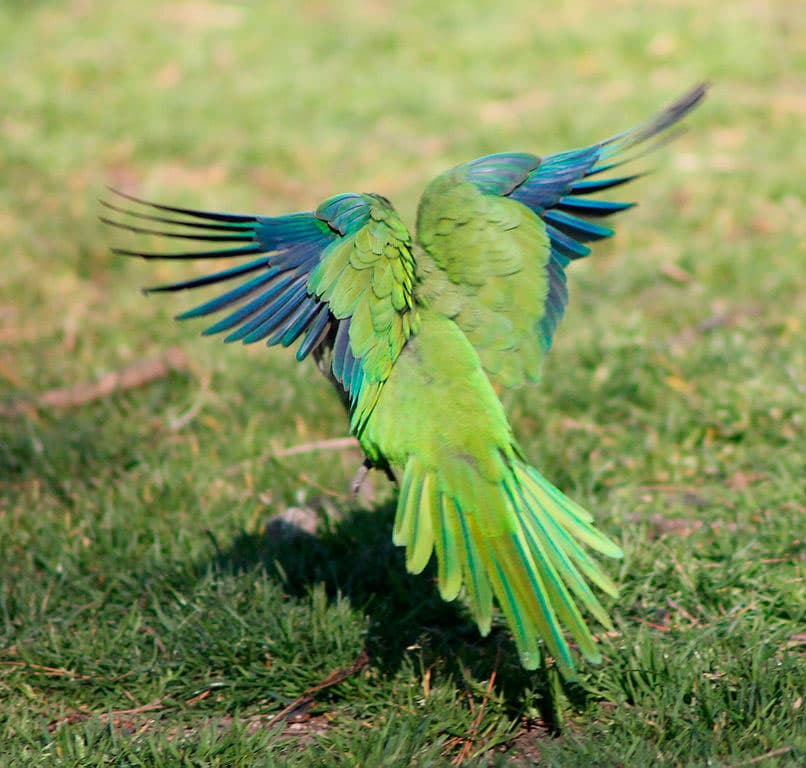
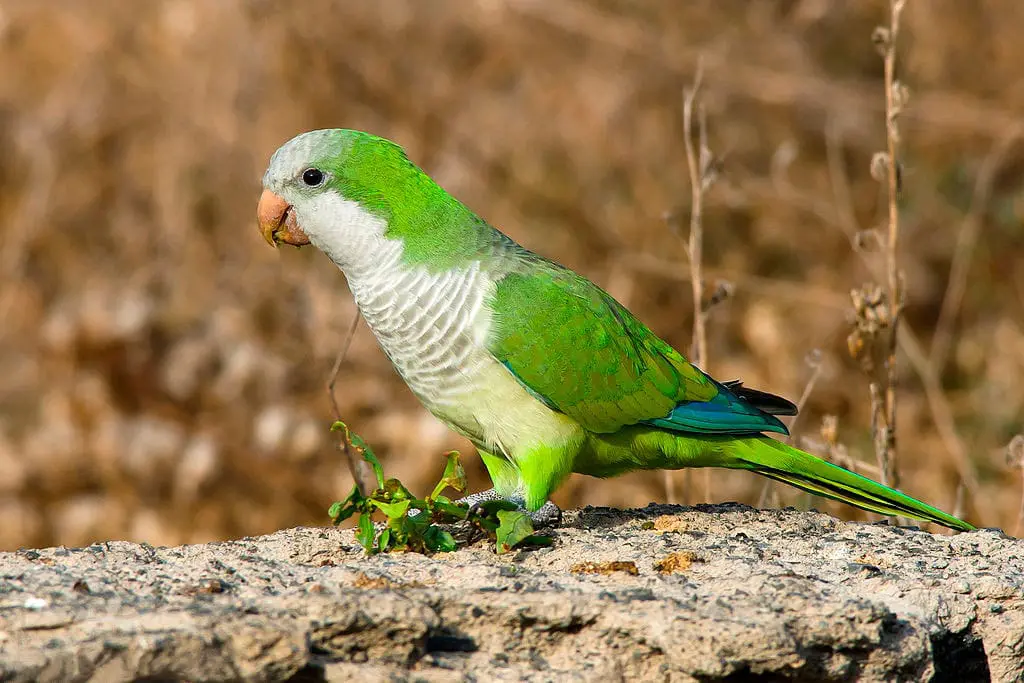
The Monk Parakeet (Myiopsitta monachus) has the forecrown (up to the half of the crown), the lores and cheeks, pale ash gray; the rear of the crown and nape, grass-green, fading to green, slightly more off, in the the mantle, the back and scapulars; rump green. Primary coverts, blue; other coverts, green.
Flight feathers Blue by up. Under the wings has the lesser coverts green, the coverts more large and innerwebs of the the flight feathers, blue. Throat and upper area of the chest, ash gray, with pale edges to the feathers, giving a beaming effect; lower area of โ€‹โ€‹the chest, pale yellow; Abdomen, the thighs and vent, pale green.

Upper, the tail is green with blue in the Center; below, pale bluish-green.
Bill color horn; Brown of the irises; legs grey.
Both sexes are similar.
Immature has the front green-tinted.

Subspecies description:

  • Myiopsitta monachus calita

    (Jardine & Selby, 1830) – Less of the nominal species (27cm.) with wings more blue and head dark gray.

  • Myiopsitta monachus cotorra

    (Vieillot, 1818) – Very similar to the subspecies Myiopsitta monachus calita, but supposedly more bright, belly least yellow.

  • Myiopsitta monachus monachus

    (Boddaert, 1783) – Nominal.

Habitat:

Video – "Monk Parakeet" (Myiopsitta monachus)

ARGENTINE PARROT: Myiopsitta monachus (www.riomoros.com)

The Monk Parakeet is, mainly, in dry wooded areas or fields open with trees, such as gallery forest, isolated thickets, palm groves, forests, linens and areas with thorny thickets with Cactus, also in land cultivation and in urban areas with trees, mainly below 1.000 m.

They tend to be observed in pairs or flocks of 30-50 individuals; with much larger gatherings out of breeding season. Rest communally, Sometimes the nests, While you are not playing.

Note:

    There are reports of transmission lines damaged by birds while nesting. In general, in the area in which have been introduced these birds, the impacts are associated mainly to the behaviors of nesting. This species of birds build large, bulky nests in communications and transmission towers, and distribution poles. In the towers of transmission represent simply a problem of maintenance and does not affect the communications, but in electrical installations can cause blackouts and fires since the nests can create electrical circuits. This problem is intensified in the rainy season and humid climates.. The nests of these birds can cause significant damage to the facilities power including a decrease in electrical reliability, damage to equipment and loss in income due to power outages caused by nests, an increase in maintenance and operating costs associated with removing nests and repairing damaged structures as well as public safety issues (ISC 2011).

Source: Naturalist

Reproduction:

It's the only one, between the parrots, It builds, usually, his nest with twigs (commonly from Celtis shrubs) in branches of tree (sometimes in telephone poles, etc.). Sometimes build nests alone (especially in those areas more dry), Although they are usually communal (until 100 nests, usually around 10) combined to form large structures cluttered of several meters of width, with inputs from the side or by under. Each nest It is built with remains of chewed branches. The nests are sometimes used by them Spot-winged Falconet (Spiziapteryx circumcincta) and other birds, to nest and rest. One nest can get to to weigh 50 kilos and be formed by more than 20.000 remained.

The breeding season, in your area natural's distribution, is between October-December. The clutch generally 4-6 eggs, Although according to some sources, the laying You can understand between 1-11 eggs.

Food:

Its diet includes a wide range of seeds wild and cultivated, wild fruits, as well as various plant material including grass seeds and grains, stems of cactus, estate vegetables and fruits cultivated, sometimes also insects and their larvae. Feeds, both in trees as in the soil, sometimes with other species including pigeons and birds of the genus Molothrus.

Distribution:

Size of the area of distribution (reproduction / resident): 2720000 km2

The Monk Parakeet lives in the lowlands of the South of South America, to the East of the Andes front Bolivia to Rawson Department (Chubut) in Argentina.

Observed in the East and North of Bolivia in the southeast of Peace, to the south, in Cochabamba, West of Santa Cruz, North of Chuquisaca and possibly in other areas (for example, Tarija), Paraguay and South of Brazil, in the South and West of Mato Grosso, Mato Grosso from the South and two-thirds of the southwest of Rio Grande do Sul, in all the Uruguay and in the Argentina, to the South of Rio Negro and probably to the North of Chubut.

Usually common and abundant in Uruguay and Rio Grande do Sul (although it does not play there). It is the most common parrot in much of its range and largely local expansion is due to the plantations of Euralyptus in areas without trees, partial deforestation in other areas, the Elimination of predators and the expansion of crops.

Pursued in several areas, Although the overall effect on its population is apparently slight.

Wild populations established in many towns outside of the range, including Puerto Rico, Florida, New York City (where there are fears it could become a major agricultural pest) and several cities more than them EE.UU. There have also been populations of the Monk Parakeet in Rio de Janeiro (Brazil), berlin (Germany), Austria, Belgium, Italy, Spain (including the Islas Canarias) and several places over the Mediterranean.

Is a trade in these birds, both local, as international, with large numbers of this species in captivity.

Subspecies distribution:

Conservation:

State of conservation โ“˜


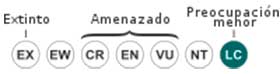
minor concern Minor Concern โ“˜ (UICN)โ“˜

โ€ข Current category of the Red List of the UICN: Least concern.

โ€ข Population trend: Increasing.

Justification of the population

Global population size has not been quantified, but this species is described as ยซcommonยป (Stotz et to the., 1996) and ‘common to abundant‘ (pit et to the., 1997).

Justification of trend

The population is suspected to have increased as a consequence of the creation of new areas of habitat suitable (pit et to the., 1997).

Threats

The species has been marketed strongly: from 1981, When is included in the Appendix II of the CITES, they have been 710.686 individuals captured in the Middle wild for the Commerce International (database CITES from the UNEP-WCMC, January 2005).

"Monk Parakeet" in captivity:

Renowned for her beauty and intelligence, the Monk Parakeet is a pet people, especially in North America, since the 1960's (ISC, 2011). Can learn to imitate great amount of words, but at the same time are very bustling, demanding of attention and affection, with much character, and very territorial, by what not is rare that attack to their own owners when the manipulated or manipulate your cage. In captivity is reproduced with ease, but to the have many colonies in State Wildlife, not be usually stimulate its reproduction in captivity.
Its life expectancy It 3-10 years in freedom and 25 to 35 years in captivity (รlvarez-Romero et al., 2008).

Before trying to acquire one of these birds as a pet, you should know that in many countries its sale is prohibited as it is classified as species invasive.

MINISTRY OF AGRICULTURE, FOOD AND ENVIRONMENT

Royal Decree 630/2013, of 2 of August, which regulates the Spanish catalog of invasive alien species.

Invasive exotic species: exotic species that is introduced or set to an ecosystem or natural or semi-natural habitat, and is an agent of change and threat to native biodiversity, due to its invasive behaviour, or because of the risk of genetic contamination.
Article 7. Effects of the inclusion of a species in the catalogue.

  1. The inclusion of a species in the catalogue, According to the article 61.3 of the law 42/2007, of 13 of December, entails the prohibition generic in its possession, transport, traffic and trade of exemplary living or dead, of their remains or propagules, including the trade exterior. This prohibition is limited to the scope of application specified for each species in the annex.

Alternative names:

– Monk Parakeet, Monk Parakeet (Monk), South American monk parakeet (English).
– Perriche veuve, Conure veuve (French).
– Mรถnchsittich, Mรถnchssittich, Sรผdamerikanischer Mรถnchsittich (German).
– catorra, catorrita, Caturrita, papo-branco, periquito-do-Pantanal (Portuguese).
– Cata Aliazul, Cotorra, Cotorra Argentina, Cotorra Comรบn, Cotorrita, Perico Monje (espaรฑol).
– Cotorra (Argentina).
– Cotorra argentina (Chile).
– Cotorrita (Paraguay).
– Cotorra, Cotorra Comรบn (Uruguay).
– Periquito (Venezuela).

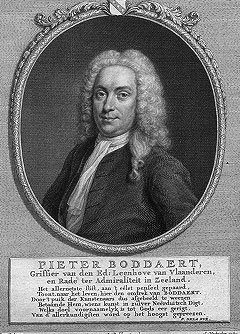
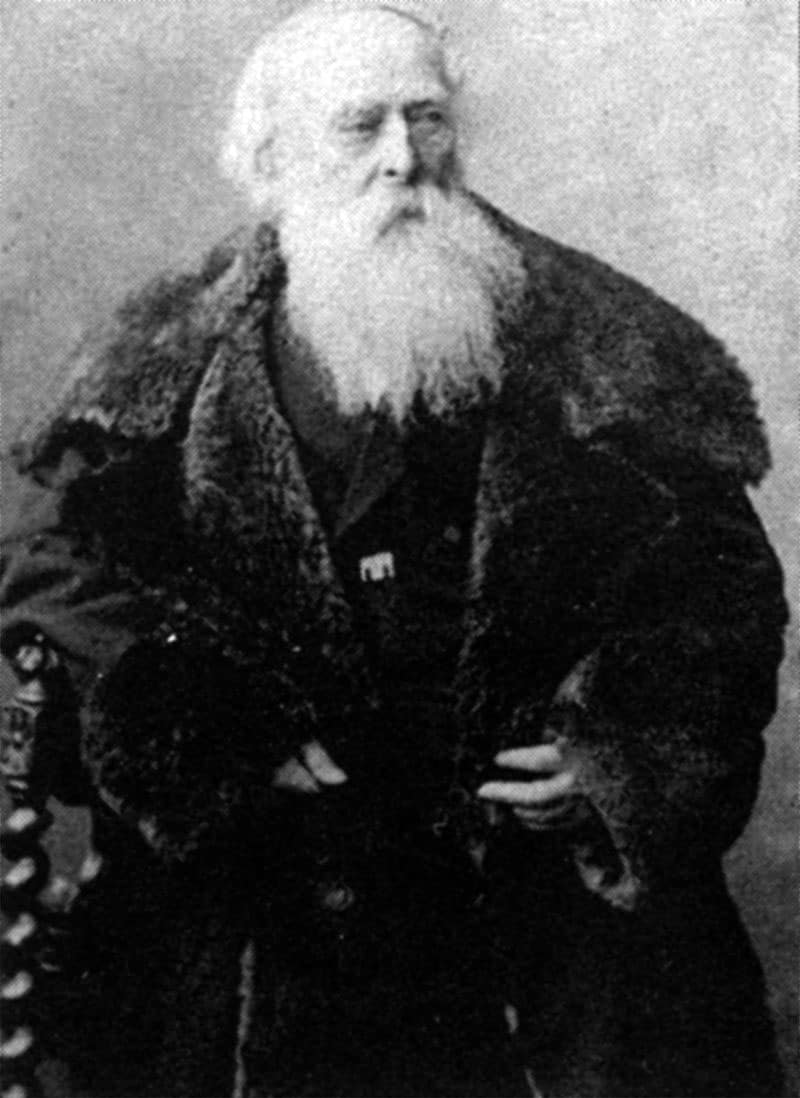
Pieter Boddaert
Pieter Boddaert

scientific classification:


– Order: Psittaciformes
– Family: Psittacidae
– Genus: Myiopsitta
– Scientific name: Myiopsitta monachus
– Citation: (Boddaert, 1783)
– Protonimo: Psittacus monachus


Monk Parakeet images:


Species of the genus Myiopsitta

โ–ท The world of Pets: Dogs, cats, birds, reptiles, amphibians

Dusky-billed Parrotlet
Forpus modestus


Content

Description:

Dusky-billed Parrotlet

13 cm.. length and 28 g. of weight.

Chubby appearance, the Dusky-billed Parrotlet (Forpus modestus) has the forecrown, lores, cheeks and crown, emerald green, forming sometimes a visible mask; the sides and rear of the neck, the the mantle, the upper part of the back and scapulars, rather dark, of color green matte with light color of olive; lower back and rump of color blue cobalt dark: uppertail-coverts dark green. Primaries and larger covers, dark blue. Primaries with innerwebs green; Secondary of color blue dark with tips Green. Under the wings of color blue cobalt dark; flight feather grey-blue. Underparts opaque in color green dark with a light shade of olive. Upper, the tail dark green; undertail, paler.

upper jaw and cere dark gray, lower jaw clearer; Strait ring perioptalmico dark gray; Iris dark brown; legs grey.

Female all green except beige in it forecrown and front of the crown, contrasting with the Green more dark on the back of the crown.

Immature as their respective adult but paler.

Subspecies description:

  • Forpus modestus modestus

    (Cabanis, 1849) – The nominal.


  • Forpus modestus sclateri

    (Gray,GR, 1859) – Similar to the nominal species but from a color green more pale, more yellowish below, male with blue pale in rump and wings ; the face Green Emerald bright.

Habitat:

They inhabit in tropical forest lowlands in clear, margins, coastal growth, forests and marshes, secondary habitats and sheets, mainly in lowlands (150-250 metres in Venezuela, to 500 metres in Colombia), but spreading in sub-tropical forests to 1,500-1, 800 m in the Eastern Andes of Ecuador.

Gregarious; Outside the breeding season, sometimes in flocks of 100 or more individuals

Reproduction:

It nests in hollows and dead trees. breeding season of registered in the month of July in Peru.

Food:

The diet comprises seeds (for example, Cecropia miparia), berries, egg yolks, etc. It takes the banks along with other parrots mineral soil.

Distribution:

Size distribution (reproduction / resident): 2.840.000 km2

Discontinuous distribution. Since the Guianas to the North of Bolivia. Although according to reports in Guyana and French Guiana not there are records (at least not recently). Be distributed by the Basin Amazon East of Brazil in Amapรก, Maranhรฃo and For, and in the Basin Amazon West from the high of the Black river to the North of Mato Grosso; in Venezuela, to the South of the Orinoco, on bass Caura River and Cuyuni River (a record of Carabobo; in the North, is apparently wrong); In East Colombia to the South from the East end of the Guainia (about him Black river) until Caquetรก to the East of Ecuador and East of Peru to the South and to the North of Bolivia at least Beni.

Reasonably frequent in the West of its range (the Forpus most common in the range in Ecuador and Colombia) but scarcer eastward, with few records in Venezuela and Guyanas.

Evidence of decline in the Eastern Amazonia (about Bethlehem) and possible increase in Colombia, perhaps linked to reduction of dense forests.

Rare in captivity.

Subspecies distribution:

  • Forpus modestus modestus

    (Cabanis, 1849) – The nominal.


  • Forpus modestus sclateri

    (Gray,GR, 1859) – Southeast of Colombia to the North of Bolivia and Brazilian Amazon.

Conservation:

State of conservation โ“˜


minor concern Minor Concern โ“˜ (UICN)โ“˜

โ€ข Red List Category: Least concern
โ€ข Population trend: Stable

Justification of the population:

The size of the world population Dusky-billed Parrotlet It has not been quantified, but this species is described as ยซquite commonยป (Stotz et to the., 1996).

Justification of trend:

It is suspected that this species has lost 11,6-12,6% of habitat within its distribution in three generations (12 years) based on a model of Amazon deforestation (Soares-Filho et to the., 2006, Bird et to the., 2011).

Given the susceptibility of the species to hunt or capture, It is suspected that it will fall in <25% durante tres generaciones.

"Dusky-billed Parrotlet" in captivity:

In captive not all known, However, this species is probably similar to other parakeet species โ€“ quite quiet, best with a partner, although, they can be aggressive with other groups of parrots. It has a tendency to obesity.
You can learn to speak, usually up to around. 15 words. Males are generally more loquacious than females. They can also learn to whistle numerous tunes and perform some tricks..

This Parrot is very small, they do not occupy much space, It makes it an ideal pet for people living in apartments, residences, or anywhere else than in small size, do not require a large cage and its maintenance is simple.

Alternative names:

– Dusky-billed Parrotlet, Dusky billed Parrotlet, Sclater’s Parrotlet (English).
– Toui de Sclater (French).
– Schwarzschnabel-Sperlingspapagei (German).
– tuim-de-bico-escuro (Portuguese).
– Catita Enana Oscura, Cotorrita de Sclater, Periquito Piquinegro (espaรฑol).
– Periquito Piquinegro (Colombia).
– Periquito de Pico Oscuro (Peru).
– Periquito Pico Oscuro (Venezuela).


scientific classification:

Jean Louis Cabanis
Jean Louis Cabanis

– Order: Psittaciformes
– Family: Psittacidae
– Genus: Forpus
– Scientific name: Forpus modestus
– Citation: (Cabanis, 1849)
– Protonimo: Psittacula Sclateri


Images Dusky-billed Parrotlet:

Videos of the "Dusky-billed Parrotlet"


Species of the genus Forpus

Dusky-billed Parrotlet (Forpus modestus)


Sources:

– Avibase
– Parrots of the World โ€“ Forshaw Joseph M
– Parrots A Guide to the Parrots of the World – Tony Juniper & Mike Parr
– Birdlife

– Photos:

(1) – Brazil – Crystal River (Amazonia)
(2) – Periquito de pico oscuro en Alta Floresta – MT – Brasil By Hector Bottai (Own work) [CC BY-SA 3.0], via Wikimedia Commons
(3) – Periquito de pico oscuro en Alta Floresta – MT – Brasil By Hector Bottai (Own work) [CC BY-SA 3.0], via Wikimedia Commons
(4) – Forpus modestus by Gunther Eichhorn – Flickr
(5) – Dusky Billed Parrotlets at the end of the branch with Dusky Headed Parrots by Vince Smith – Flickr
(6) – Psittacula sclateri = Forpus modestus, Dusky-billed Parrotlet by John Gerrard Keulemans [Public domain], via Wikimedia Commons

– Sounds: (Xeno-canto)

โ–ท The world of Pets: Dogs, cats, birds, reptiles, amphibians

Rose-faced Parrot
Pyrilia pulchra

Lorito Carirrosado

Content


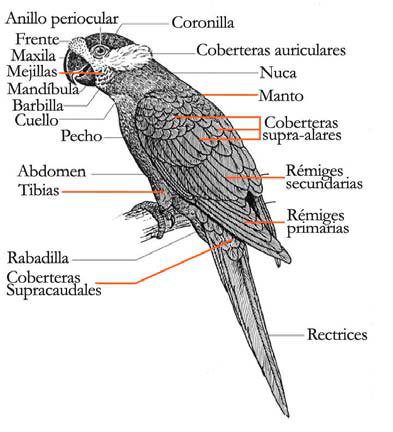
Anatomy-parrots

Description:

23 to 26 cm.. height.

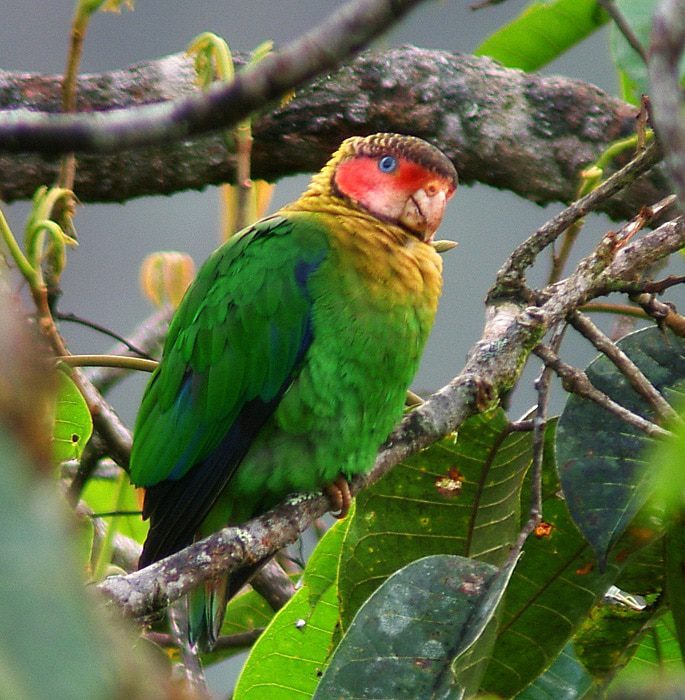
The Rose-faced Parrot (Pyrilia pulchra) be distinguished easily by your face and both sides of neck purple-red with black margin; crown and throat grayish coffee. General green olive in the back and beige in the belly. Wings with the part superior mixed with yellow or red orange and the rest green blue.

Stubby-looking and tail short. The immature they have only have a red line on the eye and the ear While their cheeks are coffee Green.

Habitat:

The Rose-faced Parrot is a parrot little known, which is commonly found between 1,200 and 2,100 m above sea level, Although has been observed at altitudes as low as 200 m. Inhabits humid and semi-deciduous forests of lowlands and temperate. According to the information available, is known that this Parrot is often feed is on the canopy of forests, Although visit disturbed areas and crops. Flying in pairs or groups of size variable up to of 25 or more.

Reproduction:

The data on reproduction are scarce. But, they have observed individuals with gonads developed between November and February in the Chocรณ, in Colombia and Ecuador.

Food:

Its diet It is little known, but some observations indicate that includes in its feeding fruits of Oenocarpus bataua (Arecaceae) and other fruits from species wild and plants cultivated as banana and corn.

Distribution:

Size of the area of distribution (reproduction / resident): 195.000 km2

Are you can observe in freedom from the West of Colombia to the West of Ecuador.

Conservation:


minor concern


โ€ข Current category of the Red List of the UICN: Least concern.

โ€ข Population trend: Stable.

Justification of the population

The population size World has not been quantified, but this species is described as "uncommon and irregularly distributed" (Stotz et to the., 1996).

Justification of trend

It is suspected that the population is stable in absence of evidence of any decline or threatens substantial.

"Rose-faced Parrot" in captivity:

Not usually seen in aviculture. Extremely sensitive, has ever survived more than one couple of months in captivity.

Alternative names:

– Rose-faced Parrot, Beautiful Parrot, Rose faced Parrot (English).
– Caรฏque ร  joues roses (French).
– Rosenwangenpapagei, Rosenwangen-Papagei (German).
– Rose-faced Parrot (Portuguese).
– Cotorra Carirrosada, Lorito Carirrosado, Lorito de Cara Rosada (espaรฑol).

scientific classification:

– Order: Psittaciformes
– Family: Psittacidae
– Genus: Pyrilia
– Scientific name: Pyrilia pulchra
– Citation: von Berlepsch, 1897
– Protonimo: Pionopsitta pulchra

Images "Rose-faced Parrot"

Videos "Rose-faced Parrot"

ยซPink-faced Parrotยป (Pyrilia pulchra)


Sources:

  • Avibase
  • Parrots of the World โ€“ Forshaw Joseph M
  • Parrots A Guide to the Parrots of the World – Tony Juniper & Mike Parr
  • Birdlife
  • Parrot Book, Parrots and macaws Neotropical
  • parrots.org
  • Rodriguezโ€“Mahecha & Hernandezโ€“Camacho 2002

  • Photos:

(1) – photo ยฉstolmstead Flickr.com

โ–ท The world of Pets: Dogs, cats, birds, reptiles, amphibians

Scaly-naped Amazon
Amazona mercenarius

Scaly-naped Amazon

Content

Description


Anatomy-parrots

33 to 38 cm.. tall and 300 g. of weight.

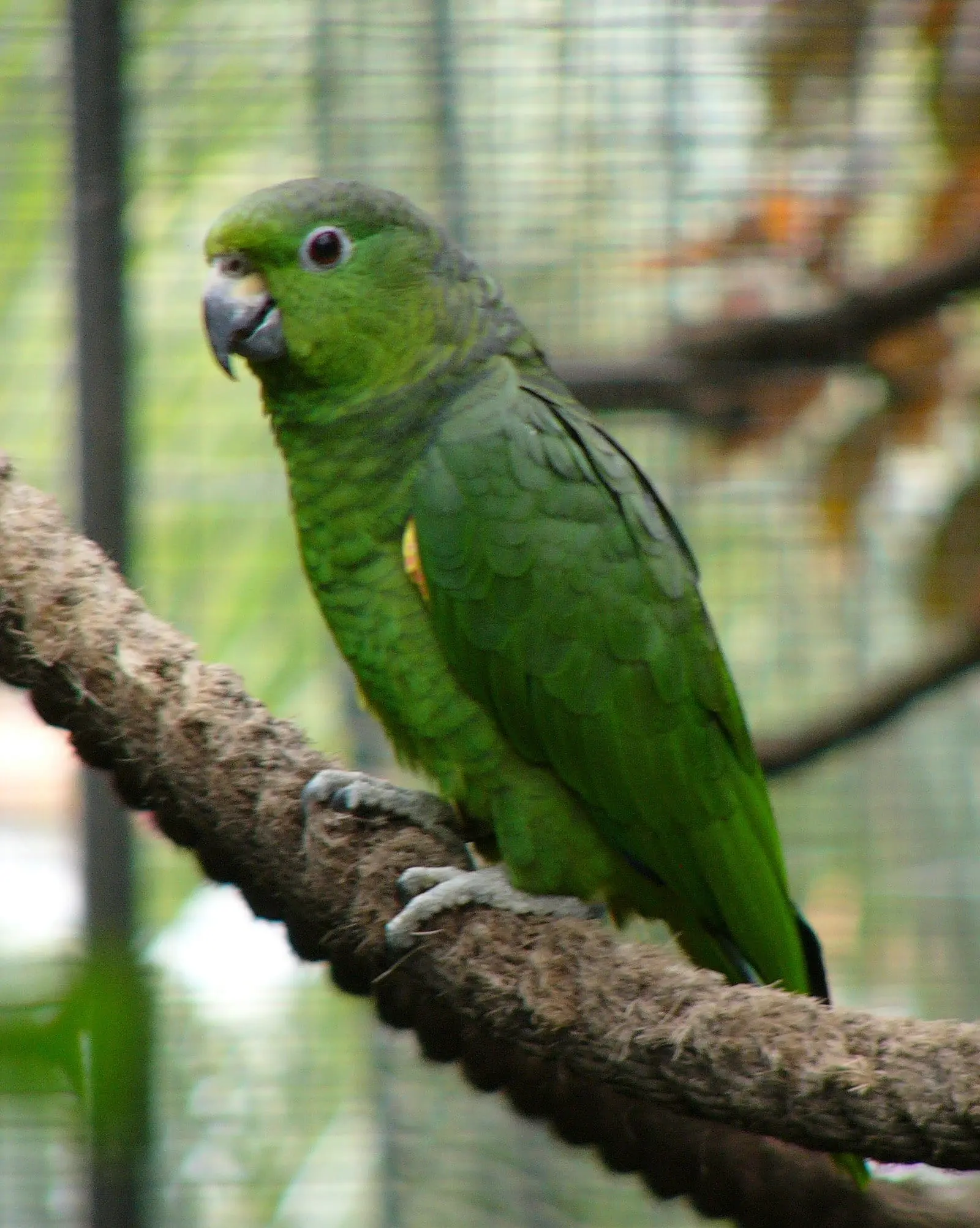
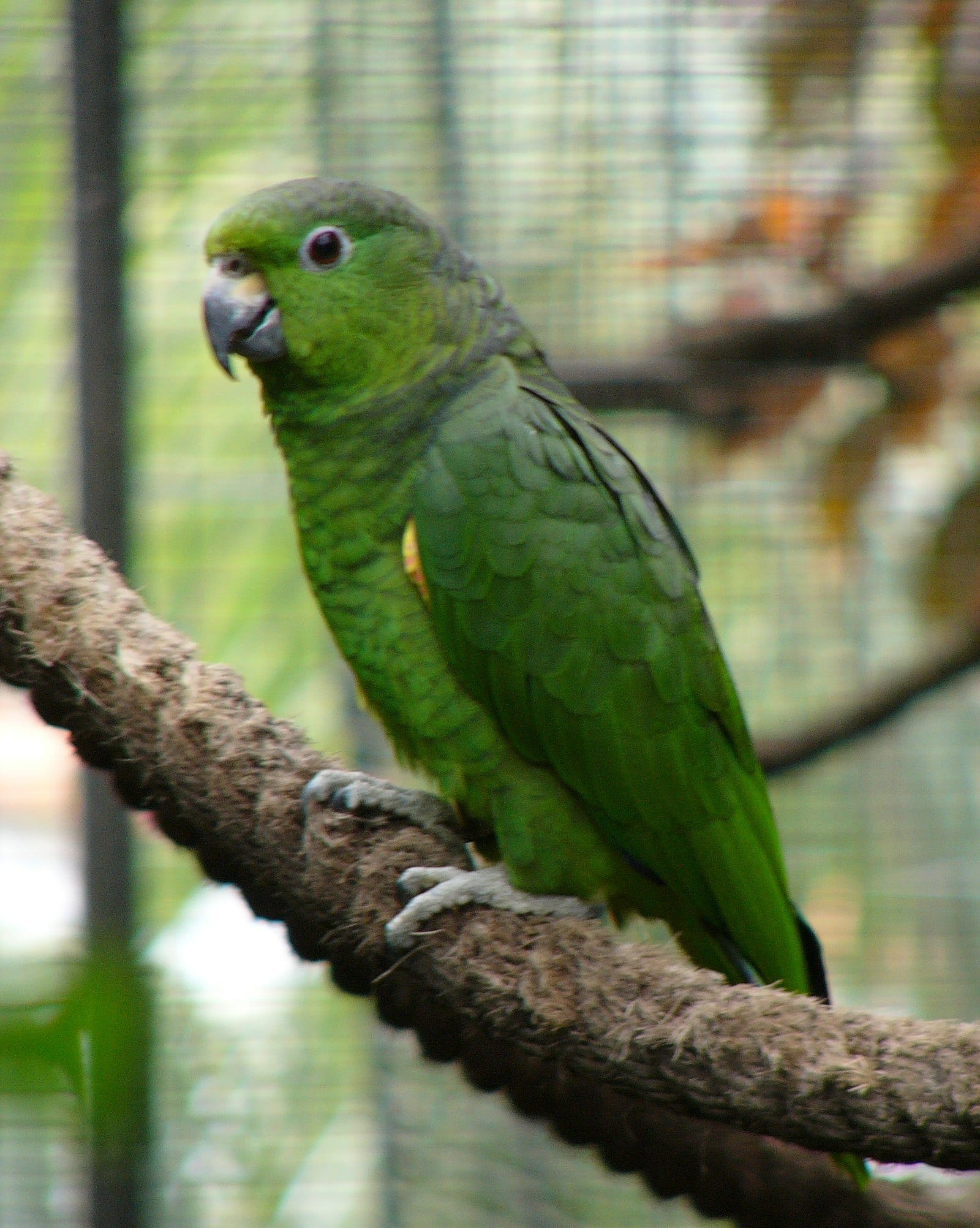
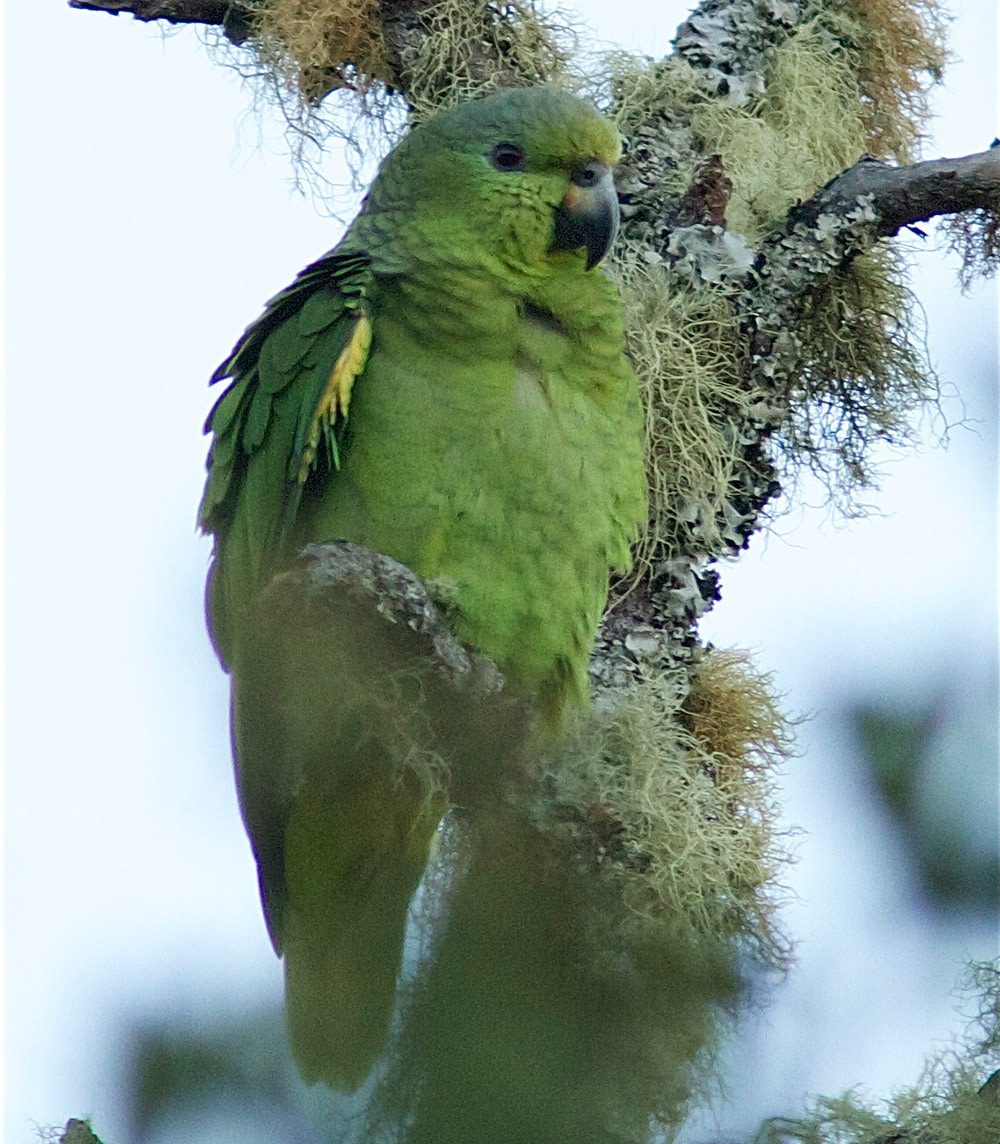
The Scaly-naped Amazon (Amazona mercenarius) it is the only amazon in mountainous areas.

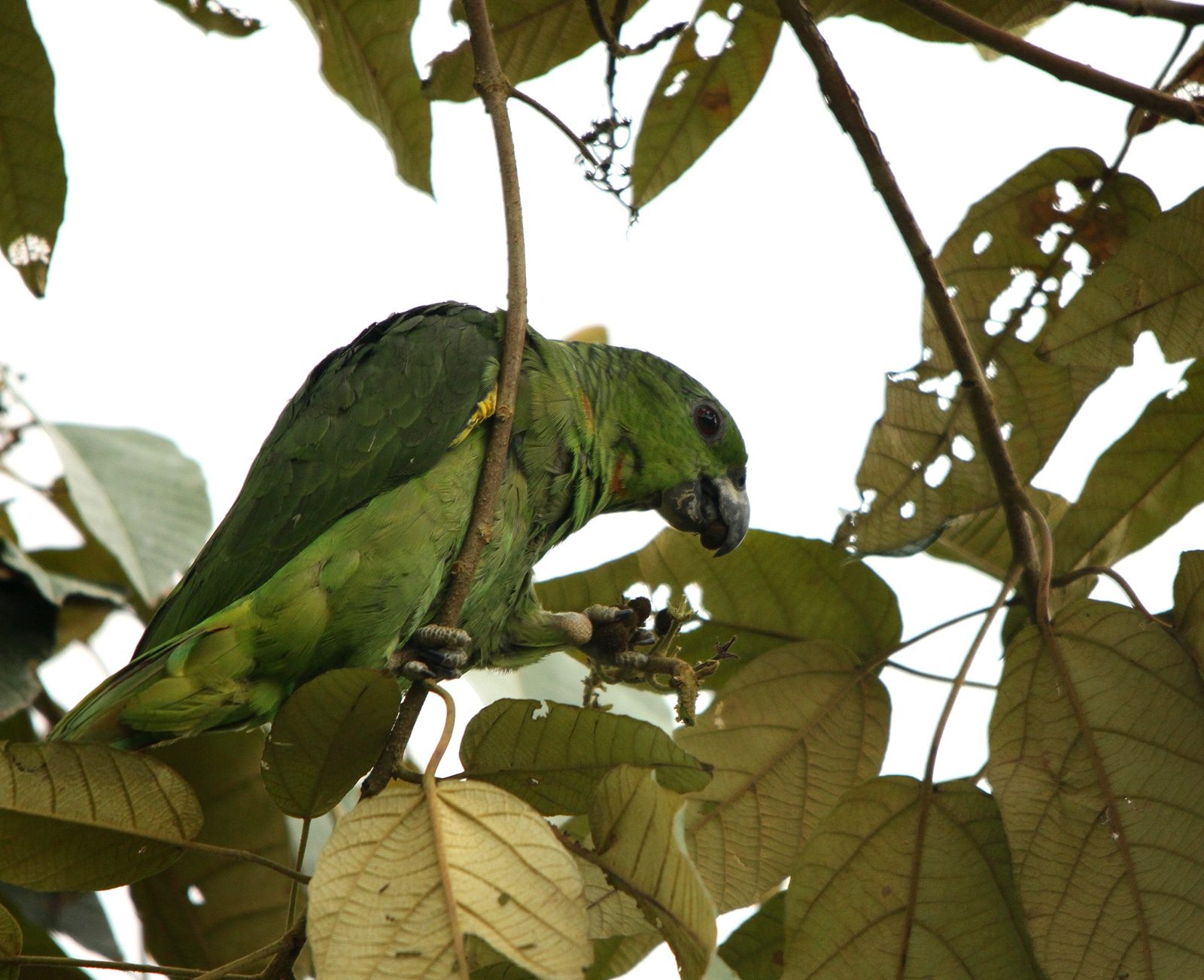
General coloring green, with the feathers of the chest with black border, It is distinguished by having the wingtip yellow with orange spots, and external feathers tail tricolor with blue base, middle part red and yellow tip.

Bill pale gray area at the base of jaw; irises orange; legs brown.

Both sexes are similar. It is thought that immature they are similar to adults.

Description 2 subspecies

  • Amazona mercenarius canipalliata

    (Cabanis, 1874) – Speculum red absent. bases outer secondaries marked with brown spots. Some specimens show scattered red feathers crown, the throat top of the chest.


  • Amazona mercenarius mercenarius

    (Tschudi, 1844) – Nominal.

Habitat:

Video – "Scaly-naped Amazon"

Loro Verde (Mercenary Amazon)

Andean and sub-Andean forests permanently cloudy between 1200 and 3000 m. Occasionally in warm floor and cultivated land.
Usually in pairs or groups of 30 to 40 individuals.

Reproduction:

They have reported evidence reproduction between March and May in Colombia. Nest and eggs not yet described. The incubation period apparently it lasts 25 and 26 days.

Food:

Little information on their diet, but he has seen taking figs and fruit unidentified in Colombia.
In Colombia they have been observed down to attack corn fields.

Distribution:

Size of the area of distribution (reproduction / resident): 3.160.000 km2

Andes from Venezuela to the North of Bolivia.

Distribution 2 subspecies

  • Amazona mercenarius canipalliata

    (Cabanis, 1874) – Andes of Colombia to northwest Venezuela and Ecuador.


  • Amazona mercenarius mercenarius

    (Tschudi, 1844) – Nominal. Andes North of Peru to the North of Bolivia; a single record in Argentina.

Conservation:

State of conservation โ“˜


minor concern Minor Concern โ“˜ (UICN)โ“˜

โ€ข Current category of the Red List of the UICN: Least concern.

โ€ข Population trend: Decreasing.

Justification of the population

The population size World has not been quantified, but this species is described as ยซquite commonยป (Stotz et to the., 1996).

Justification of trend

It is suspected that the population is in decline due to the continuous habitat destruction.

The Amazona Mercenary in captivity:

Very rare in captivity.

Alternative names:

– Scaly-naped Amazon, Mercenary Amazon, Mercenary Parrot, Scaly naped Parrot, Scaly-naped Parrot (English).
– Amazone mercenaire (French).
– Soldatenamazone (German).
– Loro verde (Portuguese).
– Amazona Mercenaria, Amazona Verde, Lora Andina, Loro nuca escamada, Lora paramera (espaรฑol).


scientific classification:

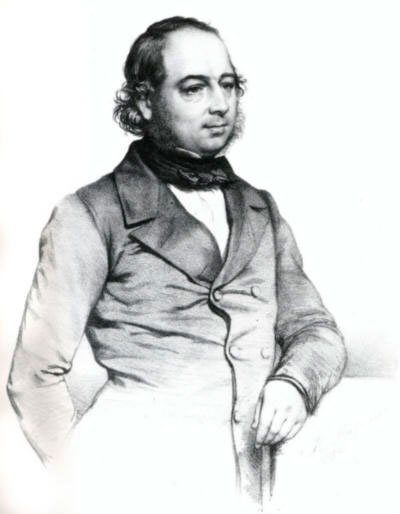
Tschudi-Johann Jakob of

– Order: Psittaciformes
– Family: Psittacidae
– Genus: Amazona
– Scientific name: Amazona mercenarius
– Citation: (Tschudi, 1844)
– Protonimo: parrot hired


Scaly-naped Amazon Pictures:


Species of the genus Amazona


Sources:
– Parrot Book, Parrots and macaws Neotropical
– avibase
– Parrots of the World โ€“ Forshaw Joseph M
– Parrots A Guide to the Parrots of the World – Tony Juniper & Mike Parr
– Birdlife

– Photos: papageien.org, IBC.lynxeds.com , chrislansdell.blogspot.com.es, Flickr.com

– Sound: Hans Matheve

โ–ท The world of Pets: Dogs, cats, birds, reptiles, amphibians

Western corella
Cacatua pastinator

Cacatรบa Cavadora

Content

Description

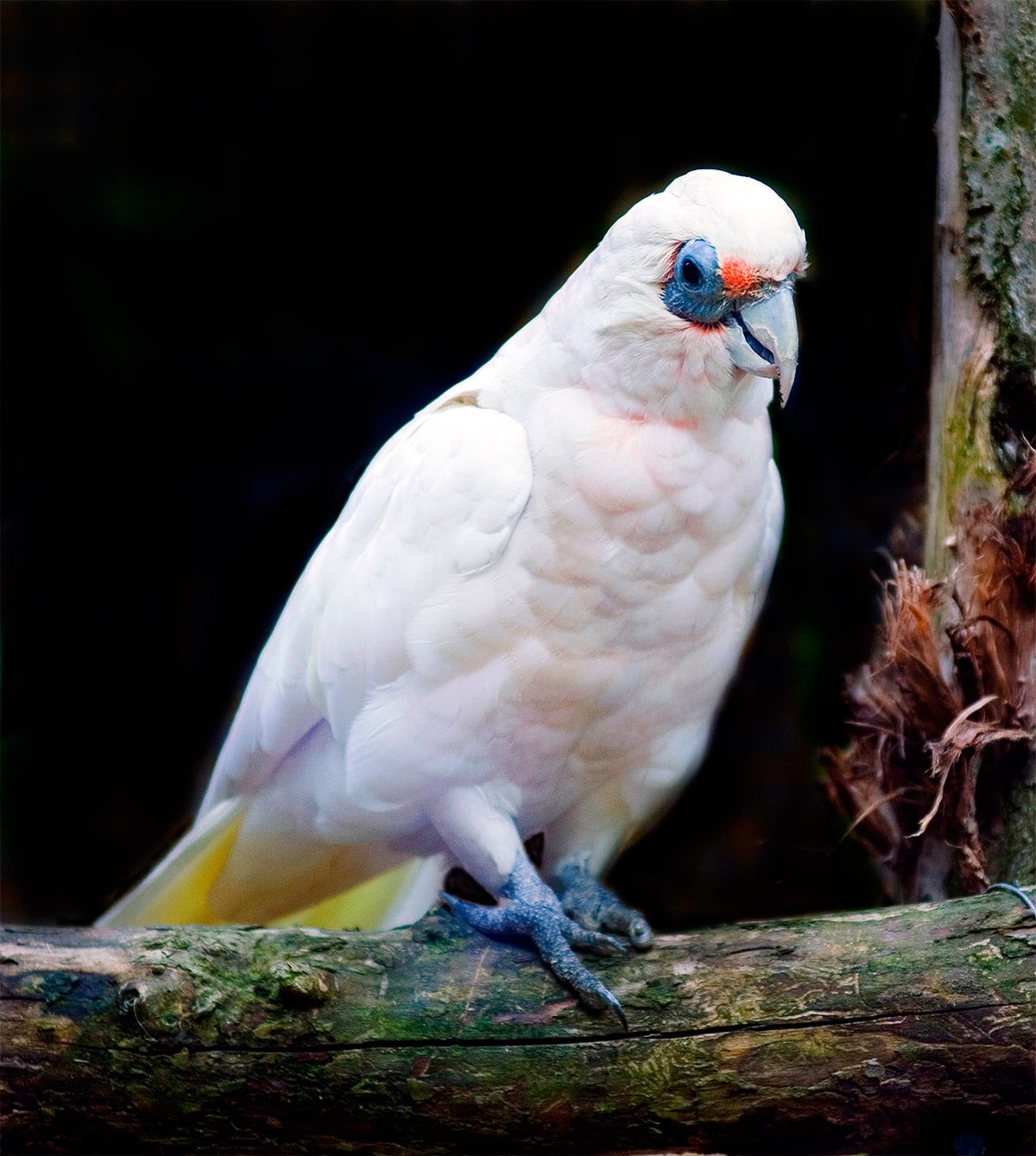
The Western corella (Cacatua pastinator) is a cockatoo of medium size and quite stocky; 43-48 cm.. in length and a weight ranging from 560 and 815 gr.

Mostly white with a wash of red orange color in prominent lores, a strong washing yellow at the bottom of the wings and tail, orbital ring blue-gray; bill pale grey, and legs and feet grey.

It also, the feathers of the head, the neck and the chest have bases red orange that, Although normally hidden, they may be exposed during the Act of grooming or stands by the wind.

The male and female look the same.

The immature They are very similar to adult birds, but they can be distinguished when viewed up close; the texture Nonsquamous bill, washing pale yellow in ear-coverts, the upper jaw shorter and pale and bare periophthalmic less pronounced.

Description 2 subspecies

  • Cacatua pastinator derbyi

    (Mathews, 1916) – Significantly smaller and with a bill shorter.


  • Cacatua pastinator pastinator

    (Gould, 1841) – Nominal.

Habitat:

The habitat of the Western corella seems very fragmented. Much of the original habitat has been lost due to logging, the dieback of the field due to processes as soil salinization and degradation.

the Western corella It is now confined to small remnants of their former habitat, including trees isolated in areas cleared of native vegetation. It has been able to persist in small remnants of habitat in agricultural regions because these regions provide permanent water and an abundant food source., but many of these areas are now being converted into plantations Eucalytpus globulus or vegetable crops, which are not suitable for this species.

Reproduction:

The breeding season, generally, It covers the months from September to November.
It lays its eggs in rotten wood or at the base of a hollow wood dust, or hole in a dead tree trunk, especially eucalyptus (Corymbia calophylla and Eucalyptus marginata).

Pairs may use a different tree hollow for breeding each year or may use the same hollow for up to three consecutive seasons.

The clutches They consist of a four white eggs are incubated for a period of 26 to 29 days.
The role of parents in the incubation of the eggs and the care of young people has not been registered, but it is likely that both parents hatch the eggs and feed the young.

The incipient period and the period of independence It is not registered, but it is likely that the young remain in the nest during 53 to 67 days and become independent three months after leaving the nest.

The survival rates adult and immature birds are unknown, but the younger, they probably die until they are able to reproduce.

Food:

It feeds mainly from seeds but also takes insect larvae, bulbs, tubers, fruits and possibly nectar.

There is little information available about seasonal variation in the diet, but the seeds of cereal grasses are important in summer and early autumn, and seeds and bulbs R. rosea, that they are common in the diet throughout the year, they are probably the main source of food from late autumn to spring.

Itร‚ยดs gregarious. use your upper jaw long to unearth the underground parts of various native plants growing in the forest. Also pulls bulbs when soil is moist, and unearths the cereals in germination.

Distribution:

Size of its range (reproduction / resident): 258.000 km2

Currently is recognized two separate populations, both confined in southwest Western Australia.
You can find up to 400 meters above sea level.

Distribution 2 subspecies

  • Cacatua pastinator derbyi

    (Mathews, 1916) – It is located in the northern wheat belt of Western Australia.


  • Cacatua pastinator pastinator

    (Gould, 1841) – Nominal. It is found in most southwest Australia, to the South of Perth from the rivers Swan and Avon in the North, to Augusta in the west and Broome in the East.

Conservation:

โ€ข Current IUCN Red List category: Least concern.

โ€ข Population trend: Growing

The total world population not known, It is estimated in 3000 individuals, but it is believed that it may be expanding due to the increase in agricultural areas and with it a greater availability of food. The legal protection by the legislation also plays an important role for the survival of these species.

The decrease in the population of the south is attributed to persecution by farmers who regard the species as a pest for crops.

It keeps in captivity in the Perth Zoo and by licensed poultry farmers as part of a captive breeding program initiated by the Department of Conservation and Land Management WA en 1995.

The Burrowing Cockatoo in captivity:

Very rare in captivity.

It can be loud and aggressive with other birds. Has the ability to imitate and creates strong bonds with their caregivers.
In captivity it can live more than 50 years.

Alternative names:

– Western Corella, Bare-eyed Long-billed Corella, Corella, Eastern Long-billed Corella, Western Long-billed Cockatoo, Western Long-billed Corella (ingles).
– Cacatoรจs laboureur, Cacatoรจs ร  nez rose, Cacatoรจs ร  oeil nu, Cacatoรจs ร  oil nu (French).
– Wรผhlerkakadu (German).
– Cacatua-pastinator (Portuguese).
– Cacatรบa Cavadora (espaรฑol).

John Gould
John Gould

scientific classification:


– Order: Psittaciformes
– Family: Cacatuidae
– Genus: Cockatoo
– Scientific name: Cacatua pastinator
– Citation: (Gould, 1841)
– Protonimo: Licmetis pastinato


Images Burrowing Cockatoo:


Species of the genus Cacatua

โ–ท The world of Pets: Dogs, cats, birds, reptiles, amphibians

Blue-eared Lory
Eos semilarvata


Lori de Seram

Content

Description

Is the more small of the gender Eos, with only 24 cm.. length and an approximate weight of 170 gr.

The plumage of the Blue-eared Lory x(Psittacus erithacus) is bright red.

The upperparts of the cheeks and ear-coverts form a band blue violet.

The feathers of abdomen and under the tail are blue, the primaries are black and red color on the inside, the secondaries has black spots, the feathers largest of the shoulder are blue, the back is red-brown, the underparts bright red, their irises are reddish brown, the legs grey and orange red the bill.

The plumage of the youth usually appears paler and duller Red. The mask boils down to a simple pale blue dot under the eye and the mumps. The scapulars are brownish grey with light blue striped uniform. The feathers of abdomen are red with some blue touches. The irises reddish color.

The Blue-eared Lory EOS can be mistaken for other species of the genus, but in its area of distribution, only the Red Lory (Eos Bornea) shows similarity of characters. But, does not display a blue stain in the face or at the bottom of the abdomen.

Habitat:

Frequently not only in primary forests, but also in the Highlands bordering the bare mountain peaks.

This bird usually lives above the 1.200 meters above sea level, area to which the Red Lory (Eos Bornea) fails. But, from time to time is reduced to 800 m, so sometimes they interfere in the same area two species.

The Blue-eared Lory they live alone, in pairs or small family groups.

They feed in the foreign branches of trees in flower.

They are noisy birds in flight, but they are relatively quiet and discrete When feed. When they move they tend to fly at low altitude.

Reproduction:

There is not much information of their reproduction habits in the natural environment. But, It can be assumed that the Red Lory It takes a form of very similar to that of other nesting Loris. These are cavemen, that is to say, you install their nests in tree cavities.

The season of spawning It estimated that the months of September to March.
Usually, they lay two eggs per clutch and its incubation lasts a few 26 days.

Young people are often taken up to 10 weeks before you fly.

Food:

They feed mainly on nectar in the trees in flower in lower altitudes and Heath (Heather, gorse, broom) at higher altitudes.

Distribution:

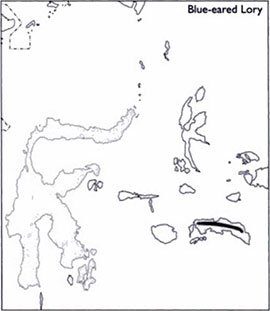
Lori distribution of Seram
The Blue-eared Lory is endemic of the Seram island in the Moluccas (Indonesian).

Conservation:


minor concern

– Current IUCN Red List category: Least concern

– The population trend: Decreasing

The world population It has not been quantified, but the species is estimated that it can range from common to abundant at the local level (pit et to the. 1997). However, justified the population trend, It is suspected to be in decline due to unsustainable levels of exploitation.
The population range is between 5,000 and 50,000 birds released.

Probably the Blue-eared Lory It will always remain a rare specimen in the world of birds.

In March of 1995 the Government of Indonesian stopped the export of these birds.

Its hunting for local trade has become especially intense.. Fortunately, There is no reason to keep to the Blue-eared Lory as a pet on the part of the indigenous population.

"Blue-eared Lory" in captivity:

Since its population is decreasing, any specimen that can not be returned to their natural habitat (natural range) should preferably be placed in a well-managed breeding program to ensure the survival of the species.

Alternative names:

– Blue-eared Lory, Ceram Lory, Blue eared Lory, Seram Lory (ingles).
– Lori masquรฉ, Lori ร  oreilles bleues (French).
– Halbmaskenlori (German).
– Loris Semilarvata (Portuguese).
– Lori de Orejas Azul, Lori de Seram (espaรฑol).

scientific classification:

– Order: Psittaciformes
– Family: Psittaculidae
– Genus: Eos
– Scientific name: Eos semilarvata
– Citation: Bonaparte, 1850
– Protonimo: Eos semilarvata

Images ยซLory of Seramยป:

Videos "Blue-eared Lory"

————————————————————————————————–

ยซLori de Seramยป – (Eos semilarvata)


Sources:

– Avibase
– BirdLife.org
– Oiseaux.NET

– Photos:

– Blue-eared Lory in the Walsrode Bird Park, Germany by Quartl – Wikimedia
– papageien.org
– Blue-eared Lory (Eos semilarvata) at the San Diego Zoo by Leon Mitchell – Wikipedia
– free-pet-wallpapers.com
– kanaria1898tuttlingen.de

– Sounds: Mark Todd (Xeno-canto)

โ–ท The world of Pets: Dogs, cats, birds, reptiles, amphibians

Swift Parrot
Lathamus discolor

Swift Parrot

Content


Anatomy-parrots

Description

The Swift Parrot (Lathamus discolor) has a length of 23 to 28 cm.. and weighs approximately 65 g..

It is a slim Parrot, medium sized wings angular and pointed tail sharpened.
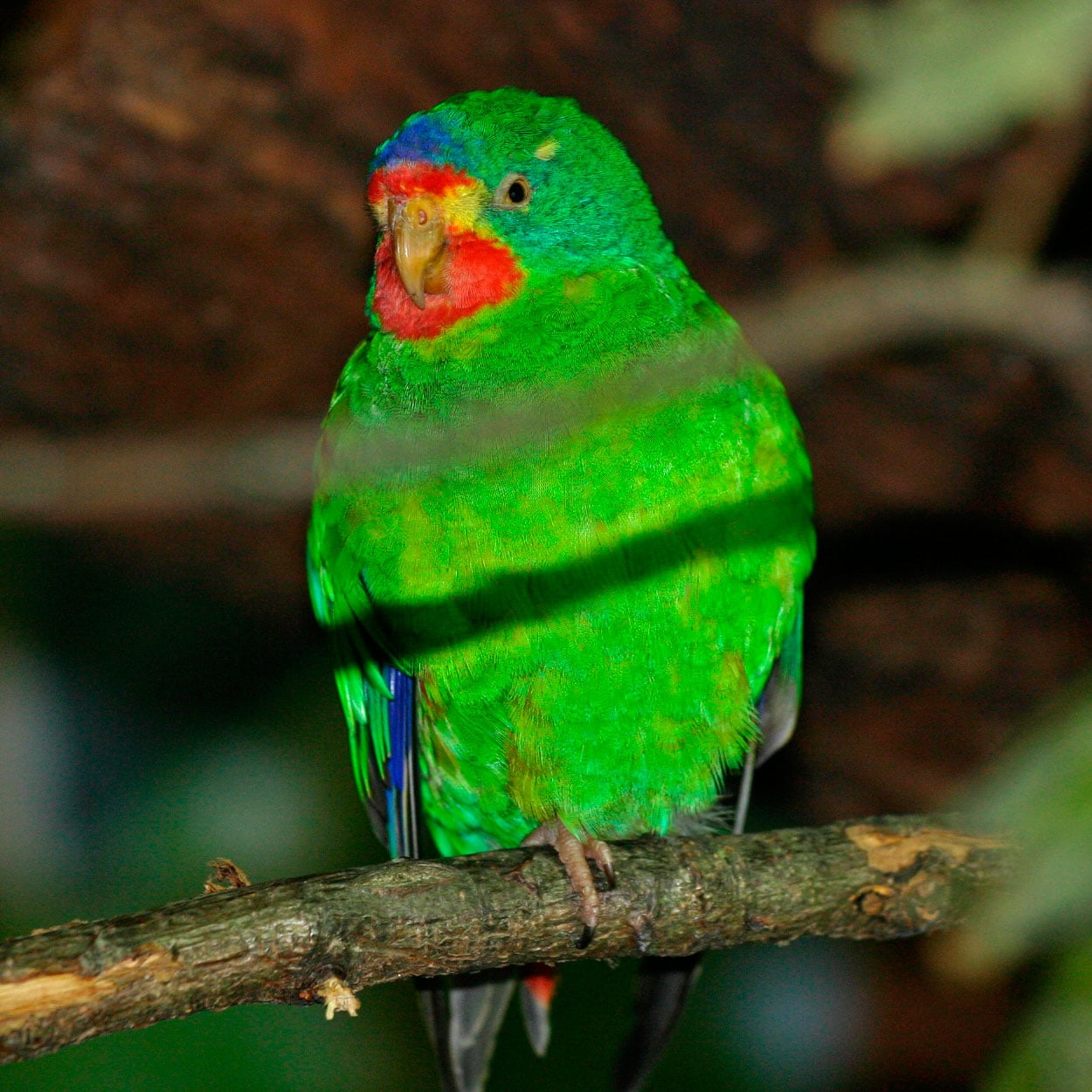
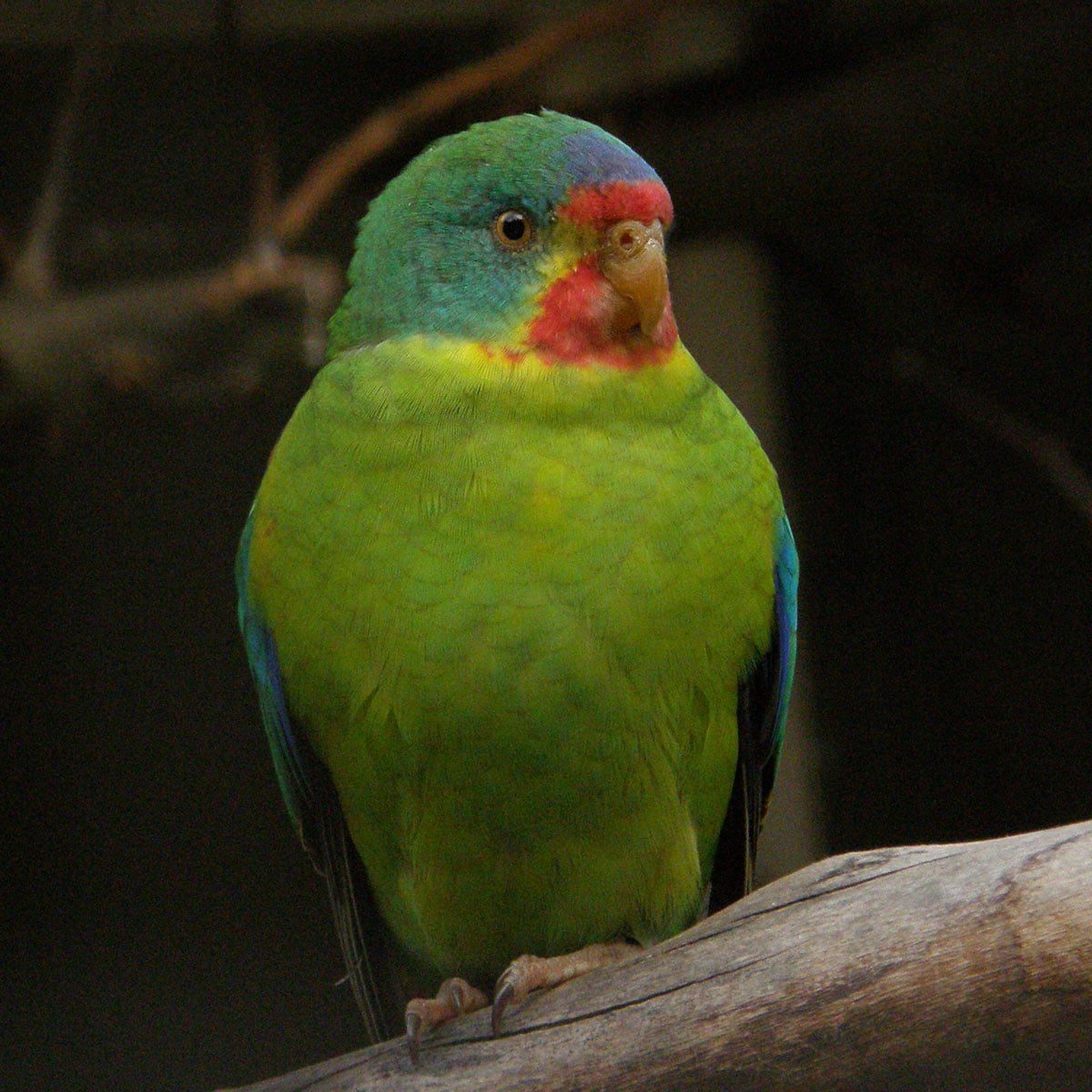
The head is bright emerald green. The forecrown, the chin and center of throat, red; lores bright yellow; centre of crown blue.

The upperparts (rump), bright green. The wing-coverts and feathers under wing They are red. The feathers under the tail They are red with green scales effect. The chest and feathers belly are yellowish green.

The bill Horn is color and irises yellow.

The female is paler and extent of mask Red lower than that of males. The color of the bottom of the tail just have red.

Habitat and behavior:

To the Swift Parrot It is usually seen in small groups of up 30 birds, sometimes in larger flocks (hundreds of birds) around the abundant food sources. There has also been some extraordinary reports in the enumeration of the flocks of more of 1.000 birds.

Son migratory birds. Are reproduced in Tasmania and then move to Australia continental, in autumn, for the non-reproductive season. Most of the population spends the winter in Victoria and New South Wales, before returning to Tasmania in spring. Usually they are gregarious in raising.

The playback area It is always within the 8 km from the coast, largely restricted to an area of less of 500 kmยฒ along the eastern coastal strip between Santa Helena and the Lune River, including offshore islands, as Mary Island and Bruny island.

The higher densities They occur between the After Bernier and Orford and Wellington Ridge about Hobart. A smaller breeding population is located in the North of Tasmania between Launceston and Smithton.

Reproduction:

Reproductive success is strongly related to the intensity and scope of the flowering of the Eucalyptus globulus (Tasmanian Blue Gum). In years of bad bloom, it seems that there is little breeding.

The breeding season It is mid-September to late January. Birds begin to return to Tasmania from your area of wintering on the continent at the beginning of August. Most of the population comes in mid-September. Unpaired birds upon arrival to Tasmania they cannot start breeding until November after finding mates.

The De l'Tmรฑo Nidada is three to five eggs. The female makes the incubation. in cautiverior incubation lasts about 25 days. Young people will fly in around 6 weeks. The presence of juveniles, recently fledged at the end of January and early February suggests double broods may occur. Second hatchlings depend on food availability.

A recent study has shown that the nests of the Swift Parrot often found in close proximity to each other. Nest trees may be to only 10-15 m from, and can support up to four active nests each.

Food:

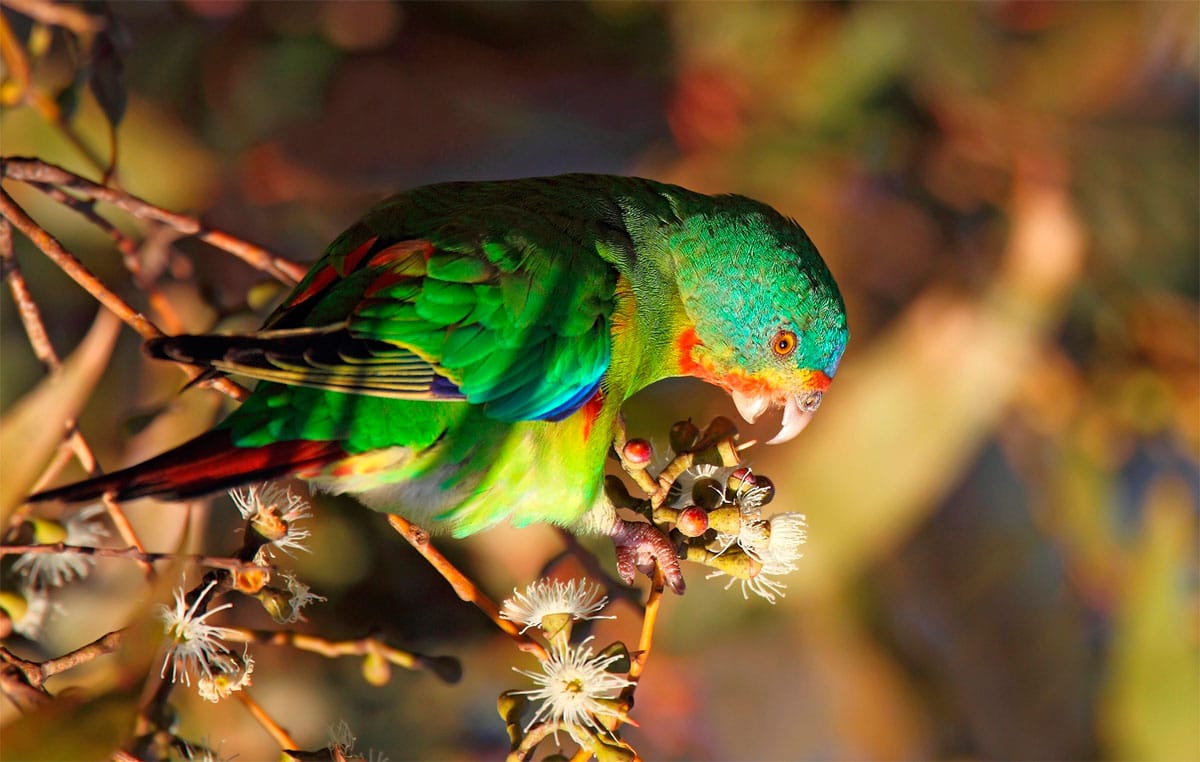
The Swift Parrot It feeds mainly on nectar, mainly of eucalyptus, but also feeds on insects psyllids and lerps, seeds and fruits.

It is a tree Harvester, forages mainly in the eucalyptus, but from time to time low to the ground to feed on seeds, fallen flowers, fruit and Lerp. During the breeding season, the nectar from the flowers of the Eucalyptus globulus (Tasmanian Blue Gum) is the main source of food.

Sometimes they voraciously consume nectar in areas very accessible and this makes them reluctant to fly making them vulnerable to attack by cats, especially when forage among low foliage. His agility and alertness in flight can also be affected by the consumption of large quantities of nectar, possibly increasing the risk of collisions with artificial or hard-to-see objects.

Distribution:

Size of the area of distribution (reproduction / resident): 21.500 km2

The Swift Parrot, as its name suggests, migrates through the bass strait, between Tasmania and the Australian continent. Comes to Tasmania in September and returned to the southeast of Australia between March and April.

You can get to be as far north as the South-East of Queensland and get up to adelaide from the West, Although the most recent sightings are restricted to the southeastern part of the State.

Conservation:

They estimated that the current population probably contains about 2.000 mature individuals and is declining.

The population of this species is suspected to be declining in line with habitat loss and degradation..
The sugar gliders they are the main predators of the broods of the Swift Parrot on the island of Tasmania, being the cause of the 85% of deaths, but they are not present on the Islands Bruny and Maria


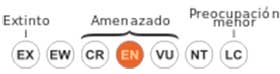
Endangered


โ€ข Current IUCN Red List category: Danger

โ€ข Population trend: Decreasing

The logging of a particular species is also responsible for the decline of population, eucalyptus, which constitute the 90% your diet.

– The Swift Parrot is classified as a species in danger of extinction in the law of conservation of biodiversity and protection of the environment of 1999 of Australia.

– The Migratory Perico It is listed as a threatened species under the Victorian Wildlife Guarantee Act. (1988). According to this law, a state action must be carried out for the recovery and future management of this species.. In addition the Migrator parakeet is classified as endangered on the list of advisory on threatened vertebrate fauna of Victoria of 2007.

"Swift Parrot" in captivity:

There are no populations in captivity, they are being handled or propagated actively by reintroducing. But, the Swift Parrot is easily propagated in captivity, and many of them are housed in private collections.

Alternative names:

– Swift Parrot (ingles).
– Perruche de Latham (French).
– Schwalbensittich, Schwalbenlori (German).
– Periquito-andorinha (Portuguese).
– Periquito Migrado (espaรฑol).

scientific classification:

– Order: Psittaciformes
– Family: Psittaculidae
– Scientific name: Lathamus discolor
– Citation: (Shaw, 1790)
– Protonimo: Psittacus Discolor

ยซMigratory Parakeetยป Images:

Videos "Swift Parrot"

————————————————————————————————

"Migratory Parakeet" (Lathamus discolor)


Sources:

– Avibase
– Parrots of the World โ€“ Forshaw Joseph M
– Parrots A Guide to the Parrots of the World – Tony Juniper & Mike Parr
– BirdLife.org
– Wikipedia
– mundoexotics.com
– environment.gov.au

– Photos:

1 – By original photograph by frank woutersderivitive work Snowmanradio (talk) 18:52, 4 October 2008 (UTC) [CC BY 2.0], via Wikimedia Commons
2 – ยซLathamus discolor-captive-8-ecยป by Lathamus_discolor_-captive-8. jpg: Ernst Viknederivative work: Snowmanradio (talk) – originally posted to flickr at IMG_4454.JPG and uploaded to commons at Lathamus_discolor_-captive-8. jpg. Licensed under CC BY-SA 2.0 via Wikimedia Commons.
3 – ยซLathamus discolor Bruny 1ยป by JJ Harrison (jjharrison89@facebook.com) – Own work. Licensed under CC BY-SA 3.0 via Wikimedia Commons.
4 โ€“ bonapartemadar.hu
5 – Swift Parrot, Lathamus discolor. Photograph Geoffrey Dabb 27.04.2005 at Mount Majura nature reserve – majura.org

– Sounds: Vicki Powys (Xeno-canto)
โ–ท The world of Pets: Dogs, cats, birds, reptiles, amphibians

New Caledonian Lorikeet
Charmosyna diadema

New Caledonian Lorikeet

Content


Anatomy-parrots

Description

18 to 19 cm.. length.

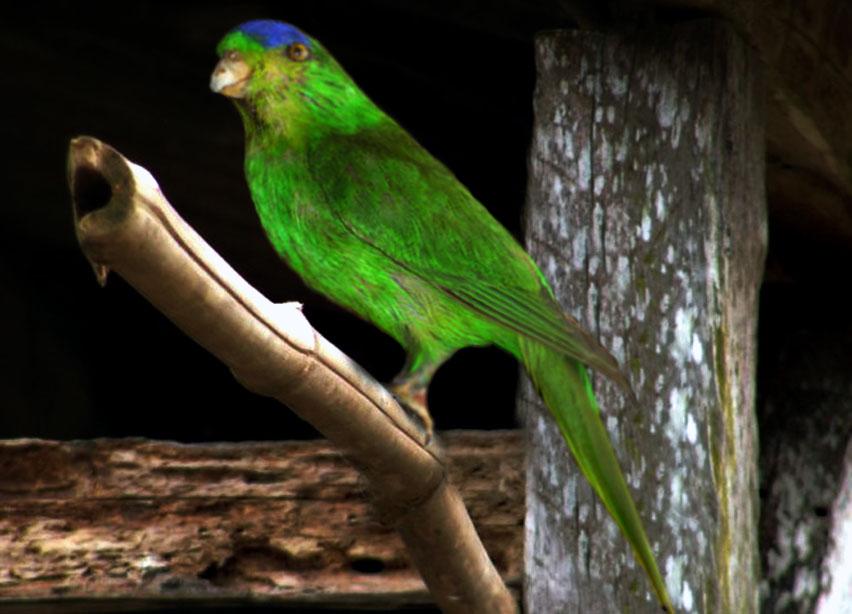
The females of the New Caledonian Lorikeet (Charmosyna diadema) are green in general, with the crown Violet Blue intense and the thighs Blue dark, a face Beige and it bottom side and anal region red. The tail It is green above and yellowish olive below, with the four lateral feathers with red basal markings followed by a band of black, with yellow tip on the bottom. The bill is red-orange, the irises dark orange, probably, similar to the legs.

The males they have not been registered. On the basis of similar species, they probably have a more red coloration, probably including the face, the bottom of the primaries and the sides of the rump; and it is likely to be slightly larger than. The immature should look like females but paler.

Habitat:

This bird is difficult to track because it is Nomad and is relatively little visible. The species is believed to be able to live in moist montane forests but (seasonally). Flying in and out of the lowland forests of Melaleuca. Most reports come from such lowland forests, but this probably reflected only a better accessibility for observation. Mt. Ignambi It is believed that it is an ideal habitat for the species. The report Yacht Lake was an area of low scrub.

Reproduction:

Data playback of the New Caledonian Lorikeet (Charmosyna diadema) are only available the of the Red-flanked Lorikeet (Charmosyna placentis) and the Red-fronted Lorikeet (Charmosyna rubronotata). The breeding season, probably, is from July to December, and possibly until February, or even all year round. They dig in the arboreal nests of termites or in epiphytic ferns. Link gives as a result the implementation of two (sometimes three?) White rounded eggs; the incubation period likely to be similar to other species of Loris.

Food:

The bird apparently is fed into the tops of the trees.
Related species eat nectar, pollen, flowers and sometimes delicate fruits, in pairs or small groups feeding (usually less than 10). The Erythrina is specifically mentioned as plants on which this species feeds.

Distribution:

Size of the area of distribution (reproduction / resident): 1 km2

Possibly extinct. Endemic to New Caledonia and known from two female specimens collected in 1859. The species also could have been observed in the forests of the North of the island in the year 1900. and it was identified by the Islanders with the reference of a picture (at Delacour 1966) of Anthony Stokes in December of 1976. One Islander claimed to see a single individual in the Decade of 1920, and another had observed two the 3 in June of 1976 to the West of Monte Panie. This last observation was made by an experienced observer who noticed the birds by their call, and said it was different to Coconut Lorikeet. The authors are in agreement with Necklace et to the. (1994) in the extension of remaining forests in New Caledonia and the size of the island indicate that this species may well still exist and that observations and studies should be within suitable habitat including the Monte Panie, Mount Humboldt and other forest areas of the Highlands. IN DANGER.

Conservation:


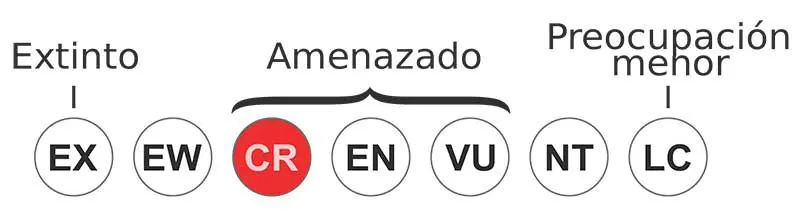
critical hazard


โ€ข Current IUCN Red List category: Critical Hazard

โ€ข Population trend: Unknown

The population It is estimated between 1 and 49 individuals mature.

This species has not been recorded with certainty since 1913, despite specific searches in 1998, and it may have decreased as a result of a number of different threats. But, cannot be assumed that they have become extinct, because there were local reports in the Decade of 1950 and in 1976, and lorites of this genus are notoriously difficult to detect, being discreet and nomadic, more studies are needed. Any remaining population is likely to be small, and for these reasons it is in Critical Hazard.

The montane moist forest is not under threat, but it is possible that this species has a requirement for other habitats, some of which, forests semi-deciduous in particular, the lowlands, they have almost disappeared from the island (Ekstrom et to the. 2000, Ekstrom et to the . 2002). Several Lori headband have suffered severe population decreases and fluctuations by unknown causes (Forshaw 1989). The introduction of any disease is possible (such as malaria, avian) or more likely mammals (especially rats) they may have been one of the causes of the decline of this species.(Bregulla 1992, Ekstrom et to the. 2000, Ekstrom et to the ., 2002).

"New Caledonian Lorikeet" in captivity:

Not found in captivity.

Alternative names:

– New Caledonian Lorikeet, New Caledonia lorikeet (ingles).
– Lori ร  diadรจme, Loriquet ร  diadรจme (French).
– Diademlori (German).
– Lori Diadema (espaรฑol).

scientific classification:

– Order: Psittaciformes
– Family: Psittaculidae
– Genus: Charmosyna
– Scientific name: Charmosyna diadema
– Citation: (Verreaux,J & Des Murs, 1860)
– Protonimo: Psitteuteles diadem


ยซLori Diademaยป (Charmosyna diadema)


Sources:

  • Avibase
  • Parrots of the World โ€“ Forshaw Joseph M
  • Parrots A Guide to the Parrots of the World – Tony Juniper & Mike Parr
  • Birdlife

  • Photos:

1 – Birds-pet-wallpapers – link

  • Sounds: