 FCI 286 - Bull type Terriers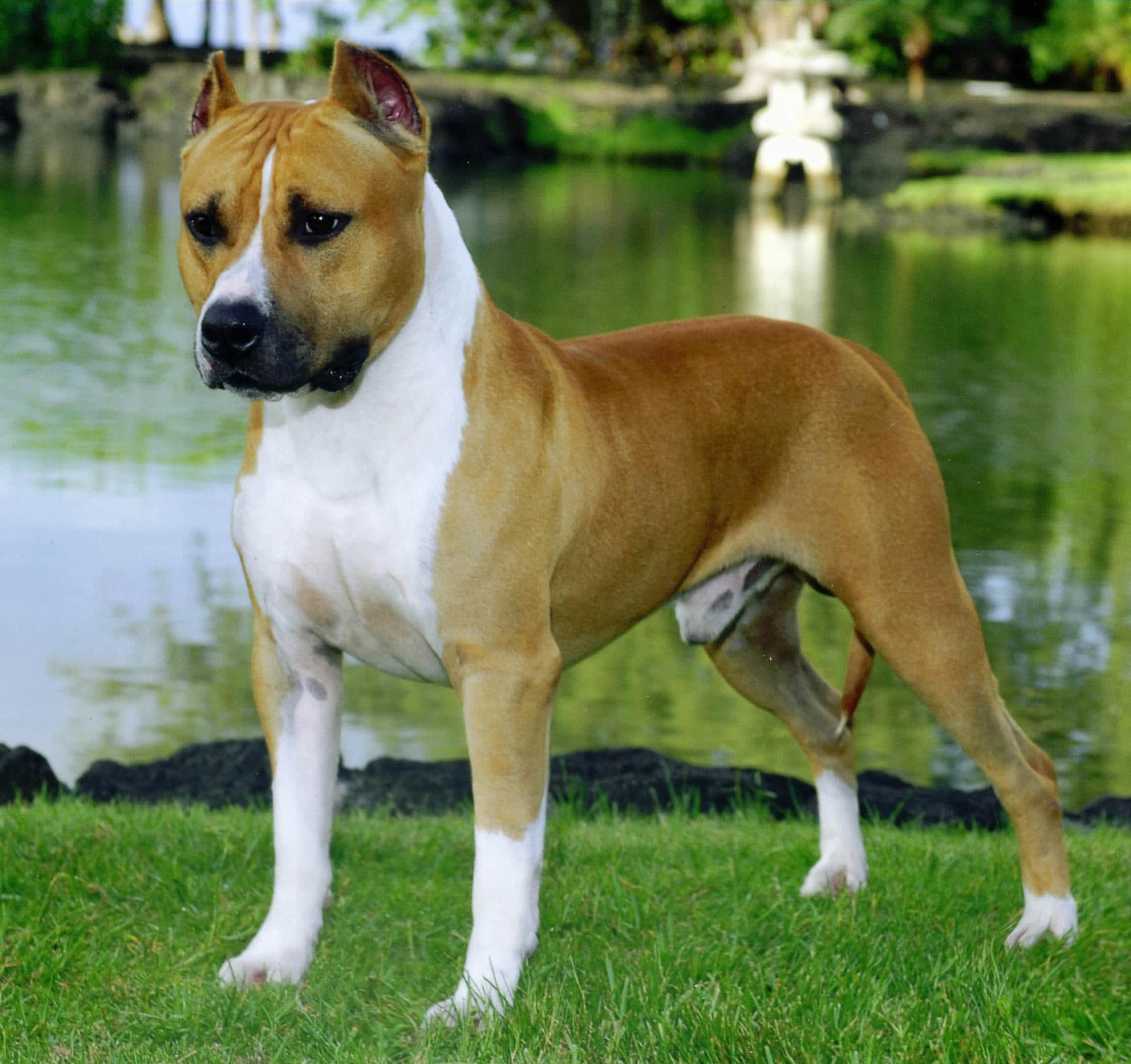
Content |
|---|
Characteristics "American Staffordshire Terrier"
Coexistence is important that you have with your new friend. Before considering the acquisition of a dog of the breed "American Staffordshire Terrier" you know certain factors. Not all breeds of dogs are apt to live in an apartment, you must take into account his character, their need for exercise, their interaction with other pets, their care and if you have small children, their level of tolerance towards them.
[simple_tooltip content=’How easily a dog handles change.’]
Adaptation ⓘ[/simple_tooltip]3,0 of 5 stars (based on 1 review)
|
[simple_tooltip content=’Tendency to enjoy or tolerate other dogs.’]
friendly dog ⓘ[/simple_tooltip]1,0 of 5 stars (based on 1 review)
|
[simple_tooltip content=’Amount and frequency of dog hair shedding.’]
hair loss ⓘ[/simple_tooltip]2,0 of 5 stars (based on 1 review)
|
|---|---|---|
[simple_tooltip content=’Amount of warmth or friendliness shown.’]
Affection level ⓘ[/simple_tooltip]5,0 of 5 stars (based on 1 review)
|
[simple_tooltip content=’Level of daily activity required.’]
Need for exercise ⓘ[/simple_tooltip]3,0 of 5 stars (based on 1 review)
|
[simple_tooltip content=’Preferred amount of interaction with other pets and humans.’]
Social need ⓘ[/simple_tooltip]4,0 of 5 stars (based on 1 review)
|
[simple_tooltip content=’Factors such as the size of the dog and its tendency to make noise.’]
Home ⓘ[/simple_tooltip]2,0 of 5 stars (based on 1 review)
|
[simple_tooltip content=’Bath quantity, brushed, even professional grooming necessary.’]
Toilet ⓘ[/simple_tooltip]1,0 of 5 stars (based on 1 review)
|
[simple_tooltip content=’Tendency to welcome new people.’]
Friendly with strangers ⓘ[/simple_tooltip]4,0 of 5 stars (based on 1 review)
|
[simple_tooltip content=’Race vocalization level.’]
barking ⓘ[/simple_tooltip]3,0 of 5 stars (based on 1 review)
|
[simple_tooltip content=’Level of health problems that a breed usually has.’]
Health ⓘ[/simple_tooltip]3,0 of 5 stars (based on 1 review)
|
[simple_tooltip content=’A dog’s inclination to protect its home, yard or even your car.’]
Territorial ⓘ[/simple_tooltip]3,0 of 5 stars (based on 1 review)
|
[simple_tooltip content=’Trend towards tolerance for cats and lower prey drive.’]
Cat friendly ⓘ[/simple_tooltip]1,0 of 5 stars (based on 1 review)
|
[simple_tooltip content=’A dog’s thinking and problem-solving abilities (not trainable).’]
Intelligence ⓘ[/simple_tooltip]4,0 of 5 stars (based on 1 review)
|
[simple_tooltip content=’Level of ease in learning something new and willingness to try new things.’]
Versatility ⓘ[/simple_tooltip]4,0 of 5 stars (based on 1 review)
|
[simple_tooltip content=’Dogs that tend to be more protective, playful and calm with children, as well as more tolerant of their behavior.']
Child friendly ⓘ[/simple_tooltip]4,0 of 5 stars (based on 1 review)
|
[simple_tooltip content=’A breed that will likely alert you to the presence of strangers.’]
Surveillance ⓘ[/simple_tooltip]4,0 of 5 stars (based on 1 review)
|
[simple_tooltip content=’How happy and energetic a dog tends to be.’]
joy ⓘ[/simple_tooltip]3,0 of 5 stars (based on 1 review)
|
History
The American Staffordshire Terrier or Amstaff (different to the American Pitbull Terrier), is a breed of dog type Terrier well known worldwide.
It is a young breed of dog from the USA.. Among his ancestors are, Besides of Terrier, the Old english bulldog.
In England and North America, dog fighting had a tradition dating back to ancient times.. The Old english bulldog was sent to fight bulls in the arenas of animal fighting. Although Old english bulldog are the forerunners of Bulldogs of today, his physique was much more similar to the current one American Staffordshire Terrier. After animal fighting was officially banned, continued illegally; In the USA. until today. Its origin in the 19th century was the black county of central England, called Staffordshire. Workers from the coal mines and clay pits crossed the Old english bulldog with the terriers. In the official scene of the fight against animals such crosses had been prohibited. It was feared that the fighting power and toughness of the Bulldog will combine with the predatory acuity of the terriers, which would lead to uncontrollable fighting machines. In the illegality of the backyards nobody cared. This is how he was born «Bull and Terrier» and very quickly came to the US. There they liked to call them «Pit Bulls». Pit is the name given to the dogfighting ring.
In 1898 The United Kennel Club was founded (UKC), who wanted to take over the breeding of these dogs. But the UKC was nothing more than a professional dogfighting organizer. So the community was divided around these dogs. Lovers of Pit Bull they condemned dog fighting, they wanted a friendly family dog. In the meantime, the Pit Bulls they had earned a great reputation in US society. In World War, the courage of Pit Bulls became a stimulus for the combat power of American troops. Even celebrities like the President of the United States Theodore Roosevelt showed up with the Pit Bulls.
On cinemas, "The Little Rascals", a gang of kids with a dog, was very popular and was featured in 220 episodes between 1922 and 1944. The dog was the guardian and protector, children's playmate and dildo. This dog was a Pitbull. He later became the first dog registered with the American Kennel Club (AKC) for the new raceStaffordshire terrier«. To draw a clear line at the fighting dog scene, the AKC had insisted on a name change. The first standard was published in 1936. In 1972 there was the second name change to «American Staffordshire Terrier» to distinguish it from its British relative. The Amstaff, what's been called since then, Is higher, bigger and heavier. It is still cared for by the American Staffordshire Terrier Club of America., who from the beginning clearly condemned dog fighting and trusted his upbringing as a family dog.
In many countries, Its social discrimination as a fighting machine and the technically unjustifiable classification as a "dangerous dog breed" have hit it hard..
Popular American Staffordshire Terrier Mixes
Mixtures of American Staffordshire Terrier seriously bred with other dog breeds or hybrids are quite rare. But, there is an abundance of hybrids of all kinds, that remind the Amstaff and are marketed as such or Pitbull. Here I should make a clear distinction. The American Staffordshire Terriers Serious breeding have nothing to do with the general mixes under which troublesome dogs can frolic. Unfortunately, there is a financially strong scene using such dogs as a weapon or to intimidate.
Physical characteristics
How is an American Staffordshire Terrier?
The American Staffordshire Terrier is a dog's size medium, Awesome, very strong and at the same time elegant. has short hair, dense and shiny that sits gently on the body. Emphasizes your muscular and sporty complexion. The standard says: «It must be robust and compact, not of legs or of light construction». Any color, solid, multicolor or speckled is allowed. The standard of the American Staffordshire Terrier is pleasantly different from many other dog breeds, which go into great detail on where hair color or crease is allowed. It is one of the few standards that consistently focus on the healthy dog.. This is emphasized by the "1st American Staffordshire Terrier Club":
We give top priority to performance and health. Beauty is considered desirable but secondary. The correct interpretation of the rule, that is free from crippling regulations, It is our obligation. Muscular, dry dogs with long bones, persistent and fast, are our breeding goal. We categorically reject supercharged “monstrosities”, low with extremely high weights. We consider mental performance to be even more important. Nerve strength and impeccable character are an absolute requirement.
How big is an American Staffordshire Terrier??
El American Staffordshire Terrier mide entre 43 and 48 cm tall and weighs between 20 and 30 kg.
How long can an American Staffordshire Terrier live??
Because the breeding of the American Staffordshire Terrier is not oriented so much to external appearances as to aptitude and character, The American Staffordshire Terrier enjoys a fit constitution into old age and a relatively long life expectancy of about 12 years.
Character and skills
The American Staffordshire Terrier he is a relaxed dog. He is very vigilant and intelligent. It is enormously strong, brave and has great fighting strength potential. At the same time it is extremely adorable, loyal and affectionate, even dedicated to his humans. Is neutral with strangers. Is of good character and has an extraordinarily high threshold for irritation. Can hardly be provoked. As with the English Bulldog and other breeds of dogs that were used in the past in the arenas of animal fighting, these dogs have been given a particularly high level of control and stimulus threshold. It also, these dogs have been used in serious breeding for many generations exclusively as family and companion dogs. Unfortunately this has not protected the dogs from criminals. Especially in the decade of 1990, dogs like Amstaff became aggressive by irresponsible breeders and owners, Savagely crossed and abused like living weapons. the same politicians, who tolerated these illegal practices for a long time, they were then the first to start the discrimination, pointing to American Staffordshire Terrier like a dangerous race, something technically unfounded. Breeding can cause even chihuahuas or caniches toy become aggressive in a few generations. The breed of dogs American Staffordshire Terrier is the victim, not the author. Seriously raised, they make excellent family dogs and careful companions to children.
Caution, health and diseases
How much care does an American Staffordshire Terrier need??
The American Staffordshire Terrier it is absolutely easy to care. Brushing here and there is enough.
Are there any breed-typical diseases in the American Staffordshire Terrier?
The American Staffordshire Terrier enjoy robust health. Sporadically hip or knee problems.
What food is best for an American Stafford Terrier?
The American Staffordshire Terrier has no special dietary requirements. Of course high quality food is good for your health and proof. Like most dogs, he likes a meat bone now and then..
Activities
One American Staffordshire Terrier it is suitable for almost all activities that can be done with a dog.
Considerations before purchase
Where can you buy an American Staffordshire Terrier?
If you want to buy a American Staffordshire Terrier, you should consider that it is a dog from the list. Your whole life has to be prepared for the restrictions of the state and society. You should look at a reputable breeder affiliated with a club that meets the FCI standards. Please, only there and do not buy a puppy from a dubious source. There are many American Staffordshire Terrier and hybrids in refuges. Get tips for choosing your dog here. But, only with a serious breeding dog can you be reasonably certain that your Amstaff has the character qualities described here.
Education and attitude of the American Staffordshire Terrier
¿Me conviene un American Staffordshire Terrier?
The American Staffordshire Terrier is undemanding in his attitude. It is not a dog that only needs to walk around the block for a walk.. Want to exercise mentally and physically. Even with a puppy it should be clear who is in charge of the house. There should be no doubt about it. The Amstaff is a bright and occasionally playful four-legged friend who likes to roam the countryside. It is suitable for dog sports of all kinds. Sometimes it is also used as a rescue dog. Is a good guardian.
The American Staffordshire Terrier is widely on the lists of supposedly dangerous dogs. Travel to the Netherlands or Denmark is prohibited, because there is a risk that dogs will be confiscated on the street and euthanized. On the street you should expect people to harass you because of the dog. That is, Unfortunately, the social reality in Central Europe today.
The American Staffordshire Terrier needs consistent upbringing from puppyhood. Consistency means, especially with this physically very strong dog but at the same time sensitive and intelligent, that the master or caregiver should work on the basis of a deep relationship of trust. The dog wants the guidance of its owner. Find the nearby connection. This should be given with a calm hand, respectful and strong. Coercive measures are counterproductive, certain consequences are intentional. The American Staffordshire Terrier must socialize with other dogs at an early stage. Due to its strength and joy of working, it is not a dog for beginners.. Even experienced dog owners should consciously work with it and preferably attend a suitable dog school. Well mannered, don't just listen to the word, rather, he reads the wishes of his master and caregiver through their eyes.
American Staffordshire Terrier pictures
 CRYROLFE
 Kickii
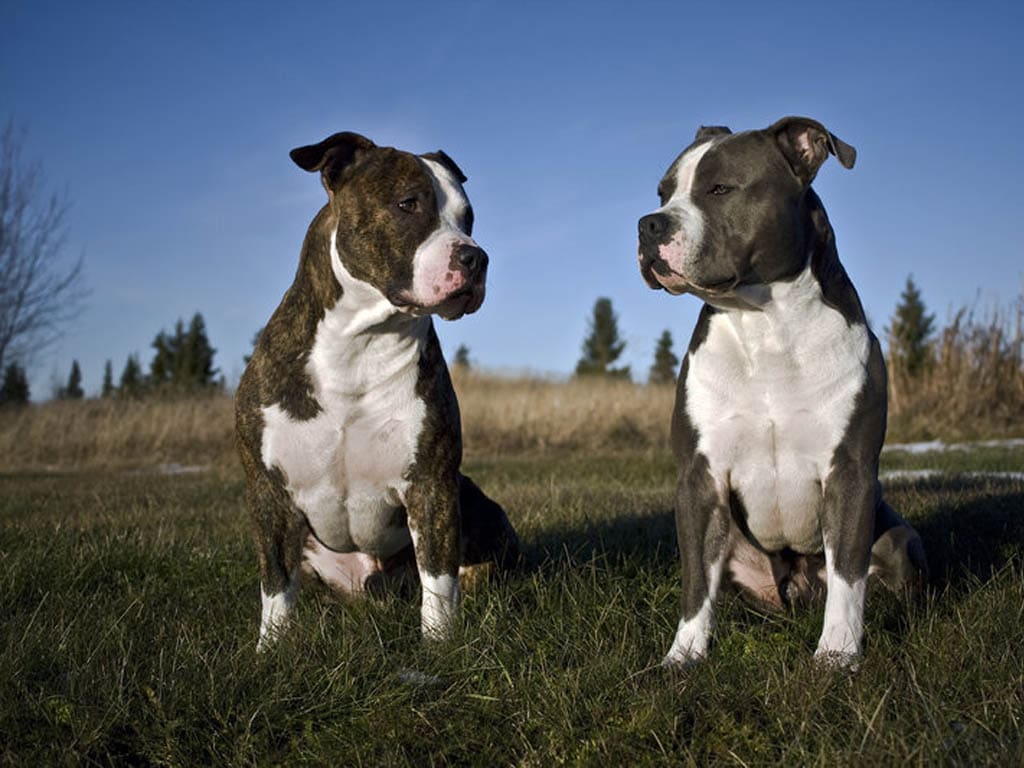 digreeme
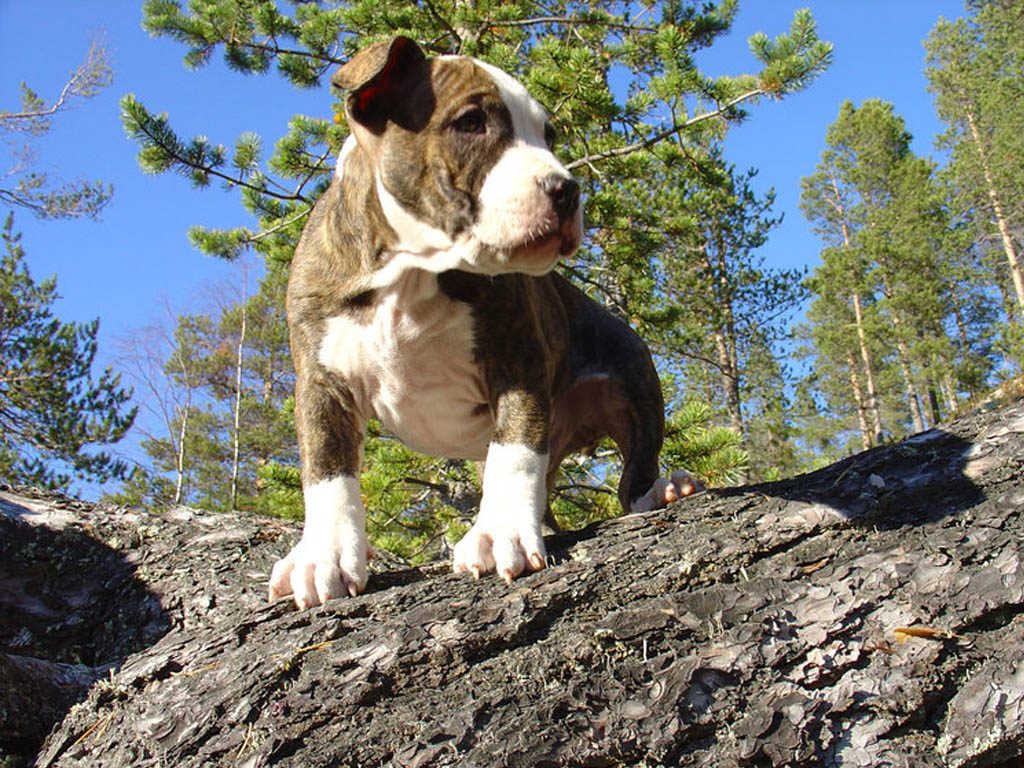 digreeme
Vídeos American Staffordshire Terrier

 American Staffordshire Terrier (AmStaff) AKSA playing at the pond
 American Staffordshire Terrier
 American Staffordshire Terrier – Buddy
 american staffordshire terrier play -madjoker kennel
Type and recognitions:
- FCI CLASSIFICATION:
- Group :
- Section : . .
Federations:
- – FCI – Group 3 – Section 3 Bull type Terriers. [simple_tooltip content=’The International Cynological Federation is the largest international federation of Kennel Clubs in the world. It is responsible for governing and promoting cynology, as well as the rules of dog breeding. consists of 95 member countries with their own pedigrees that train their judges. Each country dictates the norms of the native breeds of the same, which they are supported by the FCI. It is based in Thuin, Belgium.']ⓘ[/simple_tooltip]
- – AKC – Terriers [simple_tooltip content=’The American Kennel Club is a pedigree registry for purebred dogs in the United States. In addition to keeping your pedigree record, this kennel club also promotes and sanctions events …’]ⓘ[/simple_tooltip]
- – ANKC – Terriers [simple_tooltip content=’This is the Australian National Dog Breed Council. Its founding purpose is to promote purity in breeding the different breeds of dogs, as well as your selection, obedience trials and other aspects related to the world of dog in Australia, such as the responsible ownership of dogs by their owners or raising awareness among the political class so that they take all of this into account in their legislative projects and initiatives.']ⓘ[/simple_tooltip]
- – CKC – Terriers [simple_tooltip content=’The Canadian Kennel Club is formed as a non-profit organization whose objective is the promotion and favoring of the breeding of different pure breeds of dogs.’]ⓘ[/simple_tooltip]
- – NZKC – Terriers [simple_tooltip content=’The New Zealand Kennel Club is the main Kennel Club responsible for the registration of dog pedigrees in New Zealand. ‘]ⓘ[/simple_tooltip]
FCI breed standard "American Staffordshire Terrier"
Use:
---
General appearance:
You must give the impression of great strength, in relation to its size. This is a good solid and muscular dog, Although agile and elegant. He is always aware of what surrounds. His body should be collected, Neither lifted nor agalgado. Its value is noticeable.
---
Head:
Medium length, large, view from all sides.- Craging: Large.
- Dnaso-frontal depression (stop): Marked.
facial region:
- Nariz: It's clearly black.
- Horcico: Medium length, rounded on top. It descends in a sharp slope below the eyes.
- Labios: They are joined by the edges and are not loose.
- Jaws / Teeth: They are well defined. The lower jaw must be powerful, so I can hold tight. The upper incisors are in close contact with the anterior aspect of the lower incisors.
- Cheeks: The cheek muscles are very prominent.
- Ojors: They are round, dark colored. They are well sunken and well separated. There should be no depigmentation on the eyelids.
- Obars: High implanted, may or may not be cropped. Ears not cropped are preferable, they must be short, carried in the shape of a rose or semi-erect. Completely hanging ears will be penalized.
Neck:
Heavy, slightly arched. Gradually tapering from shoulders to insertion into head. Is medium length, without jowl.Body:
- Línand the top: The back is quite short. There is a slight slope from the withers to the rump, which slopes slightly to the beginning of the tail.
- Itmor: Slightly arched.
- Pecho: Very deep and wide. The ribs are tight, together and well developed back.
Tail:
It is short, compared to the size of the dog. Low-set, gradually taper to a fine point. It is not presented or curled, nor carried over the back. Nor should it be amputated.Tips
PREVIOUS MEMBERS: They must be straight and strong boned. With good separation to allow a good development of the thorax.
- Hormbros: Strong and muscular. The shoulder blades are broad and oblique.
- Metacarpus: Plumb.
LATER MEMBERS: They are well muscled.
- Corvejones: In low position and should not drift or inward, nor out.
- PinIt: Medium-sized, well arched and compact.
Movement:
It is elastic, without sway or amble.Mantle
- Plink: Is short, tight, hard to the touch and lustrous.
- Colorr: All colors are allowed, but the fur with more than 80% white, the black and tan fur and the liver should not be valued.
Size and weight:
There must be a proportionate correlation between size and weight. Desirable height at withers should be: 46 to 48 cm. (18 to 19 inches) in males and 43 to 46 cm. (17 to 18 inches) in females.
Fouls:
Any deviation from the aforementioned criteria is considered as a fault and the severity of this is considered to the degree of the deviation to the standard and its consequences on the health and well-being of the dog..
- Depigmentation of the truffle in the form of white spots.
- Upper or lower prognathism.
- light eyes.
- Lack of pigmentation on eyelids.
- Tail that is too long or is worn improperly.
FALTAS DISQUALIFYING:
- Aggressiveness or extreme shyness.
- Any dog showing clear signs of physical or behavioral abnormalities must be disqualified..
- Males should have two normal-appearing testicles fully descended into the scrotum..
- Only functionally and clinically healthy dogs, with the typical conformation of the breed, should be used for parenting.
TRANSLATION: IRIS Carrillo (Puerto Rico Kennel Federation).
Source: F.C.I - International Cynological FederationAlternative names:
1. AmStaff, American Staffy (English).
2. American terrier, staff, amstaff (French).
3. Amstaff (German).
4. AST, Staffordshire terrier americano, Amstaff (Portuguese).
5. AmStaff, AST (español).
 FCI 11 . Bull type Terriers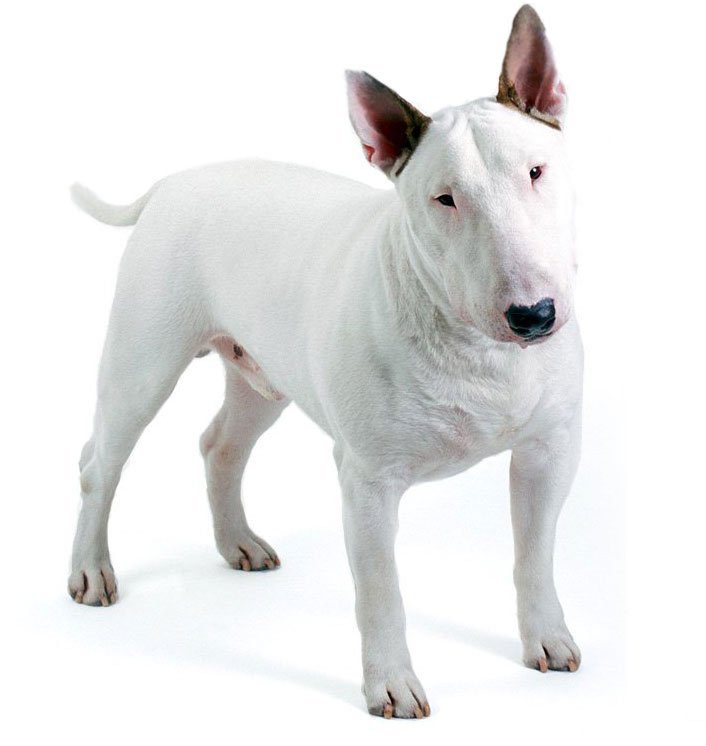

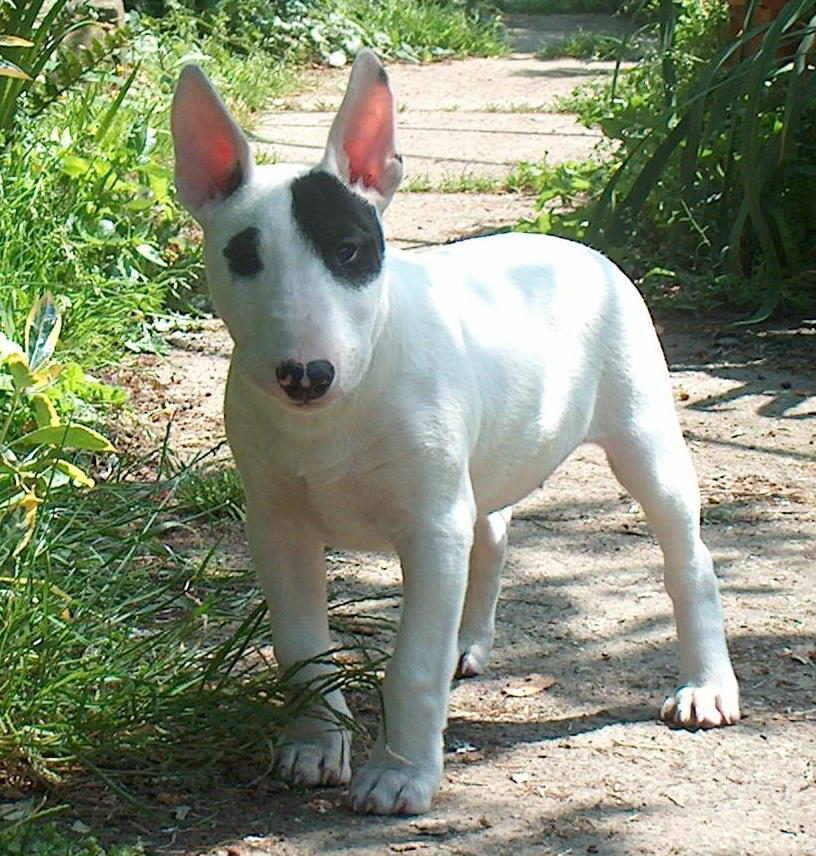
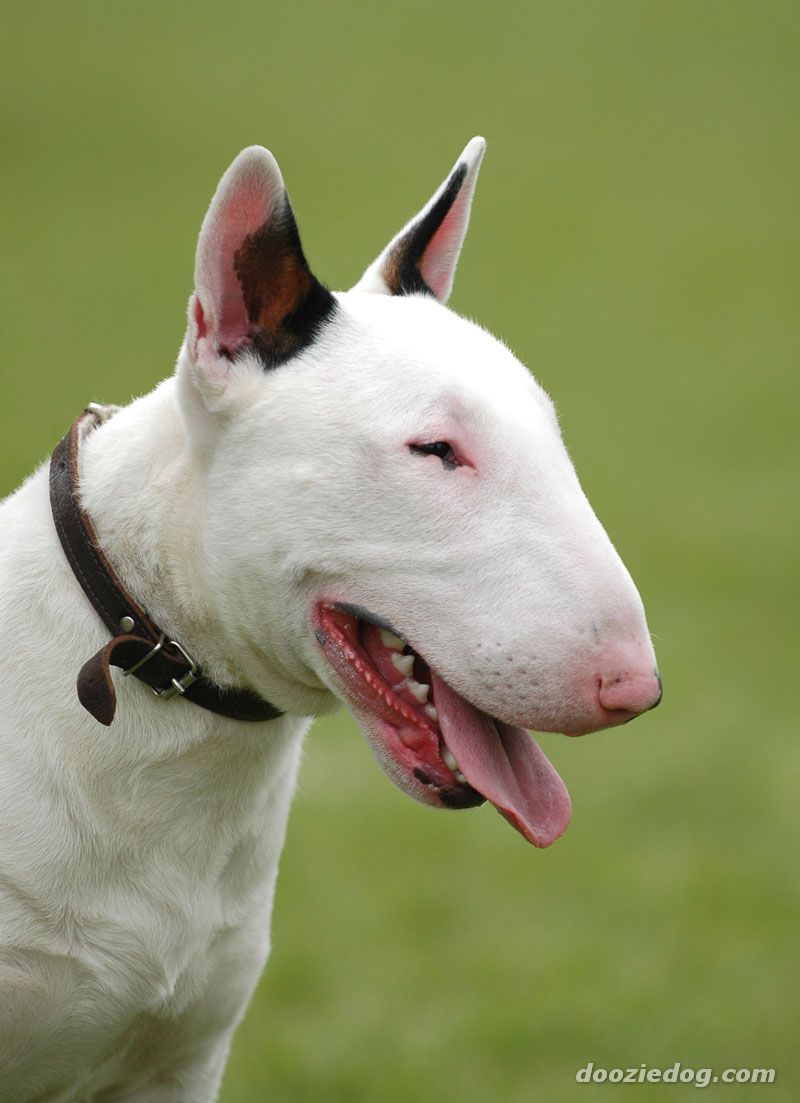

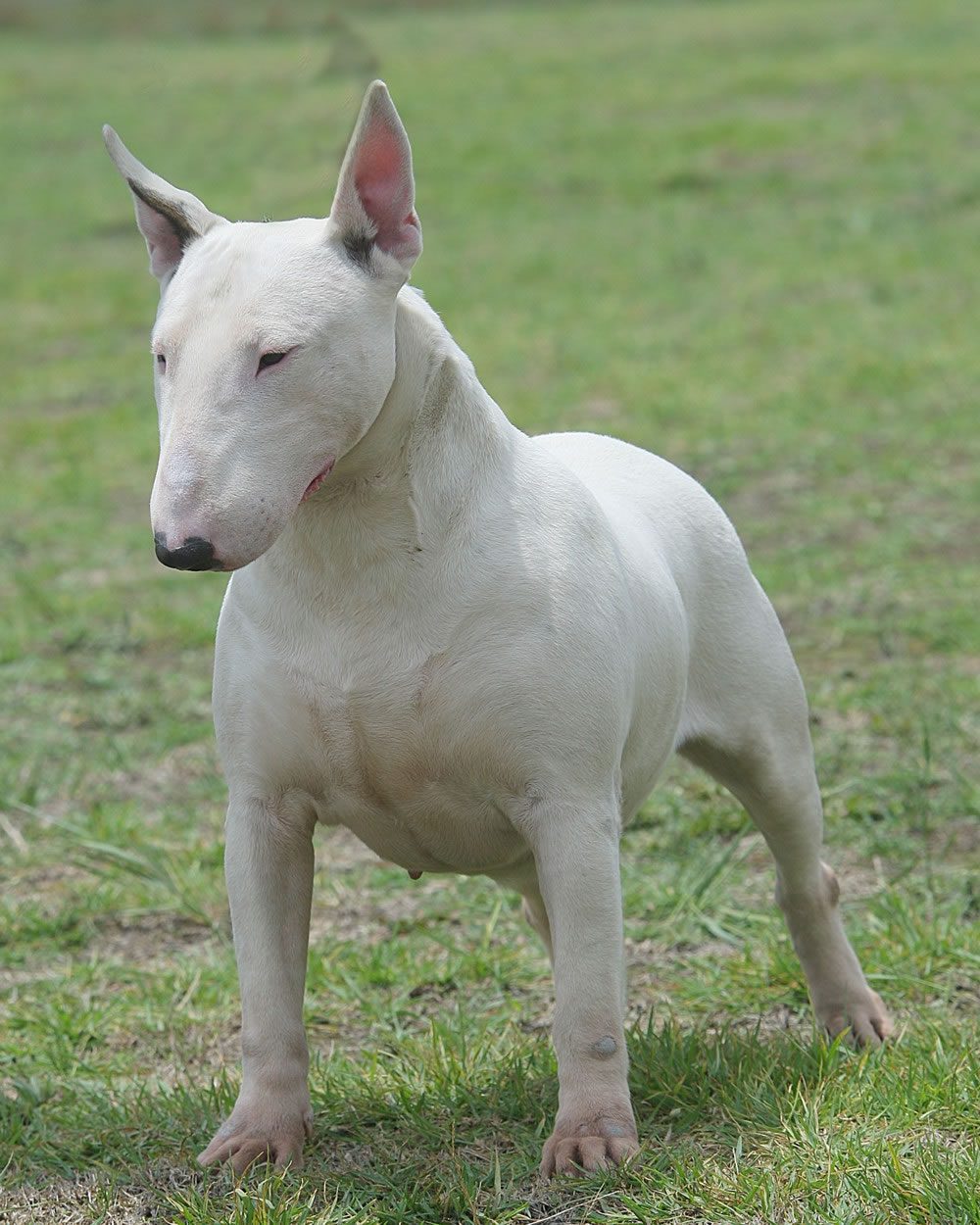


 Dogs 101- Bull Terrier
 ENGLISH BULLTERRIER_xvid.avi
 The Right Companion: Bull Terrier
 Bull Terrier vs Pug