โ–ท The world of Pets: Dogs, cats, birds, reptiles, amphibians

German Hound
Germany FCI 299 . Small-sized Hounds

German Hound

The German Hound it is a fairly common dog in its country but very rare outside its borders.

Content

History

The first written traces of the German Hound date from the 18th century. German breeders wanted to create a versatile hunting dog., but it is very difficult to define precisely the ancestry of the breed. But, the German Hound was originally a descendant of Beagle, English Pointer and English Foxhound. Other breeds like greyhounds, the hounds, he "Westphalian Dachsbrackeยซ, go โ€œHolzbracke de Sauerland tricolorโ€ (small hound for hunting in the forest) and local "Steinbracken" may have contributed to the breed.

Multipurpose hunting and hounds were booming in Germany at the time, after the dismantling of large hunting grounds and the abandonment of traditional hound hunting methods in favor of stalking and stalking.

Over the years, the German Hound has come to be known by a large number of regional variants under different names. The Deutscher Bracken Club was founded in Olpe (North Rhine-Westphalia) in 1896 and included all the varieties of the northwest of the country. In 1900, They were finally grouped into a single race called ยซDeutsche Brackeยป (German Hound).

But, was not up 1964 that was recognized by the Fรฉdรฉration Cynologique Internationale (FCI). The standard currently in force dates from 1987.

Sometimes known as the "Braque d’Olpeยป (the city where one of the variants of the breed was found and where the Deutscher Bracken Club), the German Hound still a very popular hunting dog in his native region, and even in the rest of Germany. But, its distribution outside of Germany remains highly confidential.

That does not prevent it from being recognized by the American Kennel Club (A.K.C.) and the United Kennel Club (U.K.C.) in the United States, as well as by the Kennel Club (K.C.) From great britain.

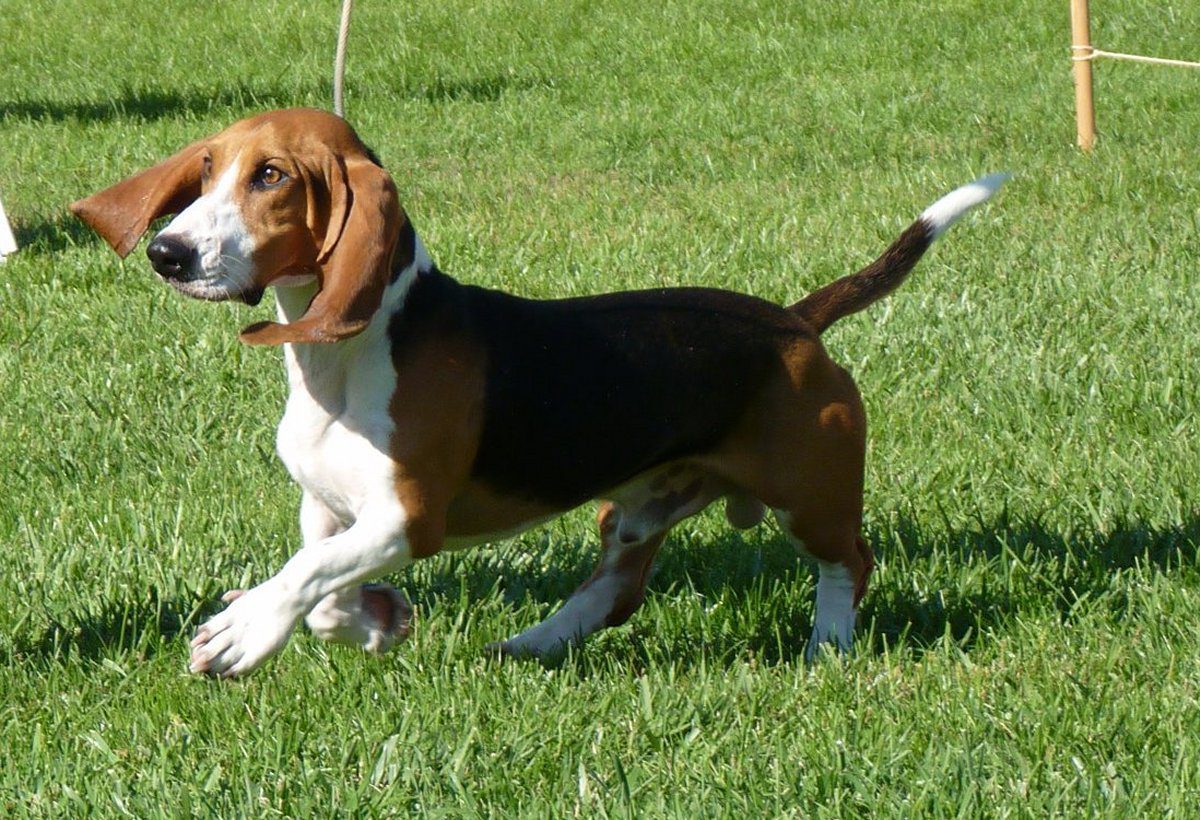
Photo: hundeo.com

Physical characteristics

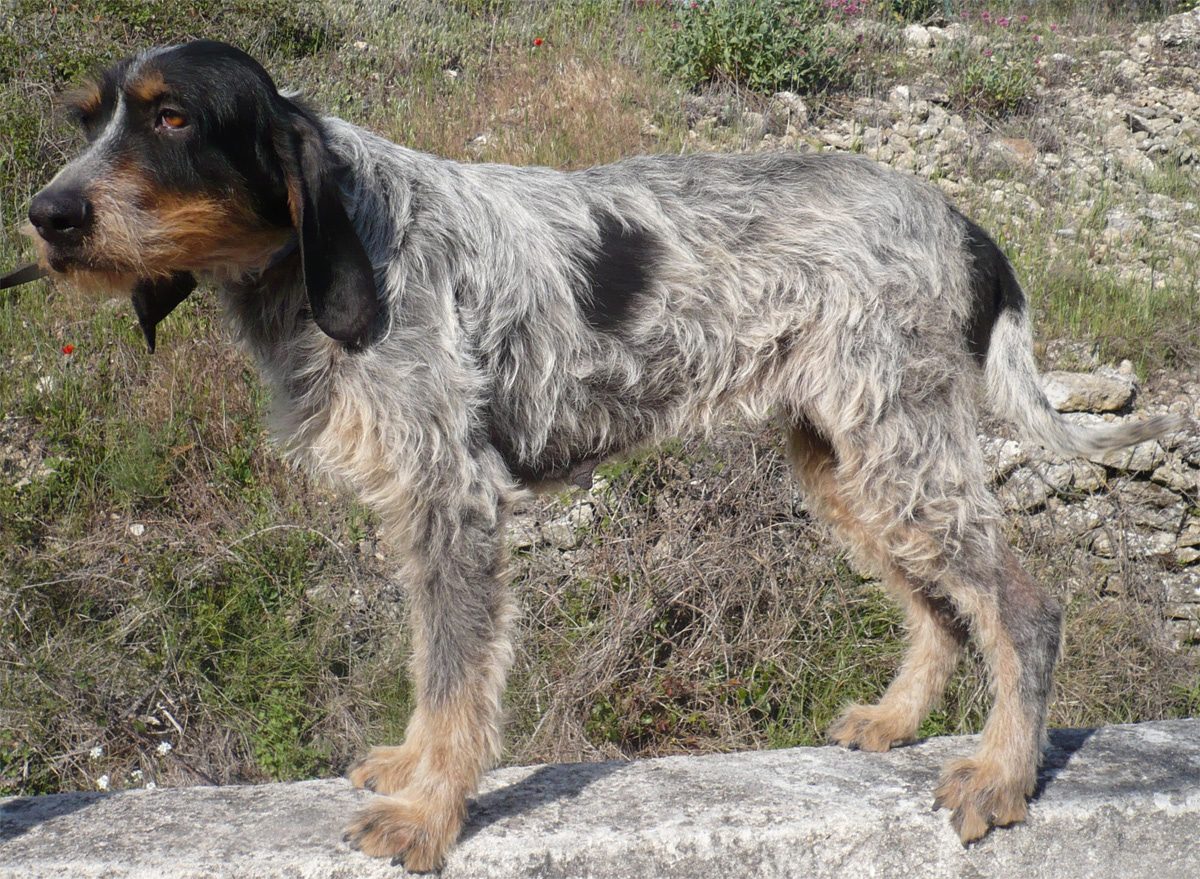
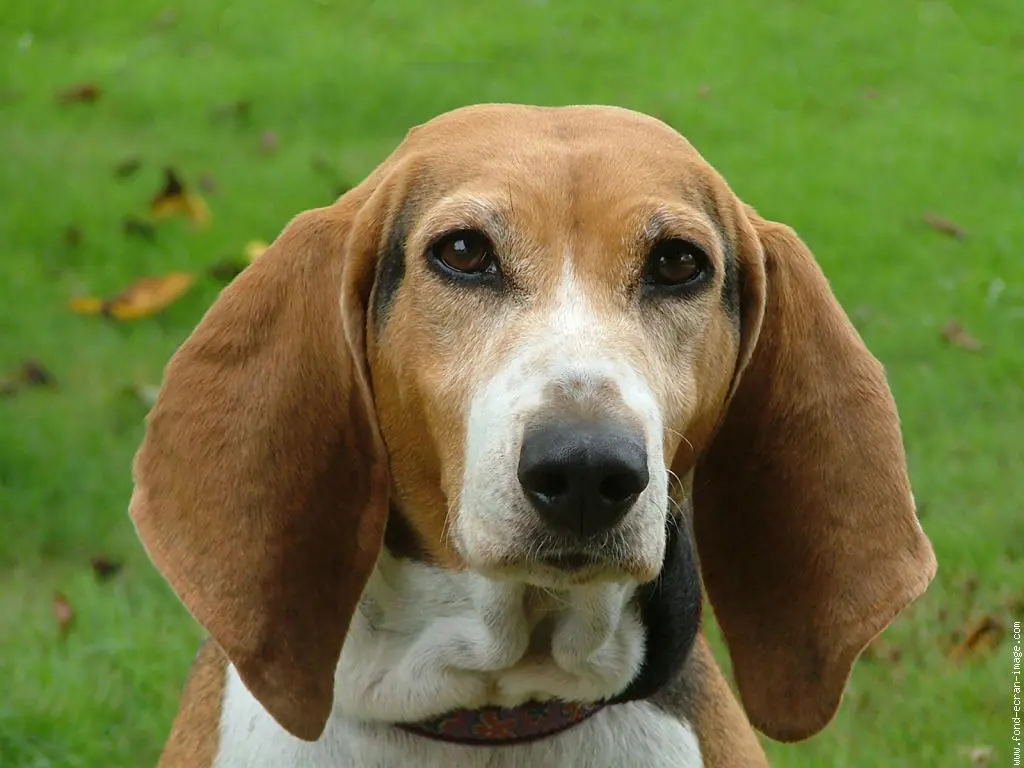
The German Hound it is a light hunting dog, tall and elegant that, However, it is of solid construction. The head is noble and rather light, with medium-sized pendulous ears and a well-carried but relatively thick tail in relation to the line of the body. The abdomen is slightly folded.

The teething of the German Hound is particularly strong and regular, with powerful pointed incisors. The eyes, that are moderately large, they are clear and bright. The head, dry and moderately long, and relatively strong neck (compared to the head) follow each other to achieve a slightly arched top.

The coat is long, very dense and hard, and even covers the belly. It is tricolor: red or fawn, black and white. The saddle and / or coat must be black and well defined. The characteristic white markings of the breed are a continuous list on the muzzle., the neck (a totally white collar is particularly appreciated), chest and limbs. The tip of the tail is also white.

Character and skills

The German Hound He is a medium-sized dog that exudes a great joie de vivre. Attached and endowed with a stable character, is happy when put to work and has plenty of outdoor space. Being able to live in complete freedom in a large fenced garden is essential if your master is regularly away, since he likes to live outdoors and exercise. In fact, you need to vent at least two hours a day to be balanced. If you do not allow your partner to use your energy, the master has every chance of ending up with a stressed dog, overexcited, aggressive or even destructive.

German Hound

It also, even if you have enough opportunities to exercise, the risk of the dog escaping is high with the German Hound, who especially appreciates sneaking out of his house as soon as he gets the chance, whether to explore new environments or follow tempting smells.

The German Hound not at all a suitable breed of dog for apartment living. And unless you have a very large garden – and even then… – it is also not a suitable breed of dog for an elderly or sedentary person. You need an active owner, even sporty, to provide you with the exercise and outings you need.

Nice to live, It can be both a companion dog and a hunting dog, since it is able to adapt to many situations. But, although they love to wander in every corner of the garden, his great passion is still hunting, in which they excel thanks to their particularly developed sense of smell. The German Hound it is above all a tough tracking dog that needs to work hard and work hard. They excel in the pursuit of uninjured game and in the pursuit of wounded prey.

Due to his cautious behavior in front of strangers and his ability to be attentive and alert in any situation, also can, occasionally and as long as it does not last too long (your joviality is likely to regain control), occasionally assume the role of watchdog.

But, whatever your activity at that time, can be easily distracted from your mission by a pleasant smell, in which case it becomes difficult to attract your attention again.

These hunting dogs are passionate about stalking their prey, but they are also very sensitive. They are very close to their family and are very loyal to them. So, should be handled with care and never intimidated, although sometimes they are on guard. Particularly loyal, faithful and sociable, the German Hound proves to be the ideal companion for the whole family, and gets along so well with adults – whose authority and leadership you seek – as with small children, who likes to have fun with. But, should not be left alone with young children, since their overwhelming energy could inadvertently push them, knock them down or knock them unconscious.

Although the German Hound is generally friendly and balanced, meeting other dogs can be a problem in some cases. Although the German Hound has long been accustomed to living with other dogs due to its long use in hunting in packs, some dogs still tend to be dominant, especially when it comes to unfamiliar animals. For this reason, any outing synonymous with a possible dog encounter involves keeping your partner on a leash.

Regarding cohabitation with other pets, especially a cat, it can be hard too. In fact, unless you got used to it too soon, that is to say, created together, tends to regard other animals as potential prey. In other words, not really a recommended dog breed with a cat…

Finally, the German Hound is a noisy dog รขโ‚ฌโ€นรขโ‚ฌโ€นwhose voice extends far. This is a characteristic common to all hunting dogs., since they must communicate with their master at a distance. But this might not be to the taste of the neighbors, who might complain about the dog's barking. It is important to pay attention to this point when training the puppy, to prevent his barking from becoming a problem once he is an adult.

ยซGerman Houndยป Education

Although it is soft, stable and very nice, the German Hound not an easy dog รขโ‚ฌโ€นรขโ‚ฌโ€นbreed to train and obedient. So, requires a strong and early education, but of course without any brutality, as this could only backfire. To get the best of your partner, it is necessary to combine sweetness and firmness, and put special emphasis on the socialization of the dog.

Last, if it is to be used as a hunting dog, learning how to call your dog back is obviously of particular importance.

In any case, training sessions should be short and interesting enough, since the German Hound it can be annoying, especially if tempting smells distract your attention.

For all these reasons, should be reserved for experienced teachers: not a suitable breed as a first dog.

Health ยซGerman Houndยป

The German Hound it is a fairly robust and resistant dog.

But, you are particularly at risk of hip dysplasia, as well as the risk of inversion of the stomach (dilation-torsion).

Whatever the cause, a possible operation should be done with greater vigilance as this dog is very sensitive to anesthesia.

It also, as in any breed of dog with floppy ears, special attention should be paid to the risk of ear infections in the dog.

It also, the absence of descent of one or even both testicles into the scrotum (dog cryptorchidism) it is relatively frequent in this breed. Generally prevents the affected male from reproducing and makes it impossible to confirm the dog.

Finally, the German Hound are frequently found with eye problems, so it is advisable to also pay attention to this point.

ยซGerman Houndยป Care

The German Hound it is an easy breed of dog to keep. Its short coat requires only a minimum of grooming and regular maintenance.. Brushing your dog once a week should be enough to preserve the beauty of his coat.. It also, how the coat naturally repels dirt and water, bathing is not normally necessary.

It also, even during the molting period, loses very little hair.

It also, like any dog โ€‹โ€‹with floppy ears, the inside of them should also be carefully monitored to reduce the risk of ear infections.

This may be an opportunity to inspect your eyes at the same time., to be able to intervene quickly if there is a problem in this area.

Feeding ยซGerman Houndยป

As the German Hound it is a fairly resistant breed, feeding your dog shouldn't pose any particular problems. A meat-based diet, vegetables and starchy foods, or quality croquettes, it will be perfectly adequate.

But, Be careful with the volume of the portions!! If used as a hunting dog, it may certainly be appropriate to increase them by 10 to 20% during hunting season, when you are more active than usual. But they must also adapt to the dog's energy needs when they decrease, to avoid any risk of the dog becoming overweight.

It also, it is important to avoid giving too much food before the dog goes hunting, At risk, for example, to throw up. A little pre-hunt snack is a good thing, but the bulk of the daily ration should be given in the afternoon.

โ€œGerman Houndโ€ Activities

Although they can be nice companion dogs, the German Hound It, above all and by its very nature, a hunting dog specialized more specifically in tracking hares, badgers and big game, whether or not they are injured. These fine hounds are experts in difficult terrain and can withstand all kinds of weather conditions.. They like to chase their prey for hours and hours. Its long snout and extremely sensitive nose are its best allies in this task.. Once the prey has been hunted, its loud and clear bark is highly appreciated by hunters, since it allows them to point out the exact position of the hunted animal.

Although the German Hound it is very suitable for hunting alone, also excels in pairs or small groups of individuals. This is how the breed was originally used.

ยซGerman Houndยป Price

The price to adopt a puppy from German Hound is between 700 and 900 EUR.

Characteristics "German Hound"

Coexistence is important that you have with your new friend. Before considering the acquisition of a dog of the breed "German Hound" you know certain factors. Not all breeds of dogs are apt to live in an apartment, you must take into account his character, their need for exercise, their interaction with other pets, their care and if you have small children, their level of tolerance towards them.

Adaptation โ“˜

3,0 of 5 stars (based on 1 review)

friendly dog โ€‹โ€‹โ“˜

4,0 of 5 stars (based on 1 review)

hair loss โ“˜

1,0 of 5 stars (based on 1 review)

Affection level โ“˜

4,0 of 5 stars (based on 1 review)

Need for exercise โ“˜

5,0 of 5 stars (based on 1 review)

Social need โ“˜

4,0 of 5 stars (based on 1 review)

Home โ“˜

3,0 of 5 stars (based on 1 review)

Toilet โ“˜

1,0 of 5 stars (based on 1 review)

Friendly with strangers โ“˜

3,0 of 5 stars (based on 1 review)

barking โ“˜

5,0 of 5 stars (based on 1 review)

Health โ“˜

5,0 of 5 stars (based on 1 review)

Territorial โ“˜

4,0 of 5 stars (based on 1 review)

Cat friendly โ“˜

2,0 of 5 stars (based on 1 review)

Intelligence โ“˜

4,0 of 5 stars (based on 1 review)

Versatility โ“˜

3,0 of 5 stars (based on 1 review)

Child friendly โ“˜

5,0 of 5 stars (based on 1 review)

Surveillance โ“˜

3,0 of 5 stars (based on 1 review)

joy โ“˜

5,0 of 5 stars (based on 1 review)

Videos "German Hound"

German bracke

Deutsche Bracke
German Bracke Stรถberhund puppies territory excursion forest walk

Deutsche Bracke Stรถberhundwelpen district forest walk excursion

Type and recognitions:

  • FCI CLASSIFICATION:
  • Group :
  • Section : . .

Federations:

  • FCI – Group 6: Scent hounds, and related breeds. – Section 1.3: Small-sized Hounds. โ“˜
  • AKCHound โ“˜
  • โ€‹KCHoundy โ“˜
  • UKCScenthounds โ“˜

FCI breed standard "German Hound"

Origin:
Germany

Date of publication of the valid original standard:
24. 06. 1987

Use:

Hound


General appearance:

Head length in medium-sized dogs is approximately 21 cm., the muzzle to the region between the eyes measures about 9 cm..

GENERAL APPEARANCE:

It is a light and elegant hunting dog with long limbs., possessing a strong body structure with a noble head, relatively light, good ears and a well-carried tail, though strikingly thick in relation to the dog's general noble appearance; the belly is slightly retracted.


Behavior / temperament:

---

Head:

It's light, dry, elongated. View from the front, the head is narrow and elongated, skull only slightly wider than cheek region, which show a very slight transition to the muzzle and are not protruding.

Cranial region:
  • Skull : Slightly domed, occipital protuberance very unremarkable.
  • Depression links (Stop) : Minimum.

facial region:

  • Nose cane : Slightly arched.
  • Truffle : It has a light stripe almost flesh-colored in its middle part, while the nasal wings are pigmented of a more or less dark color.
  • Lips : Moderately hanging; small commissure.
  • Jaws / Teeth : Extremely strong and regular. The incisors overlap one another or the inner surface of the upper incisors is in close contact with the outer surface of the lower teeth. The fangs are especially highly developed.

Eyes : dark, clean, with kind expression.

Ears : long (approx.. 14 cm.) and spacious (approx.. 9 cm.); they are well attached to the head and are rounded at their tips.

Neck:

Moderately long and fairly strong relative to the head.

Body:

  • Back : Slightly arched.
  • Rump : Slightly descending.
  • Breast : Deep, reaches below the elbows; slightly arched with elongated rib cage.

Tail:

Long, not notably strong at its root. It is covered with long and thick hair to protect it against the friction of stems and branches; therefore it is relatively thick although it ends in a point; has a bit of a brush shape. The tail is carried hanging or gently curved upwards.

Tips

PREVIOUS MEMBERS: High, very well formed, skinny, of fine and tendinous bones.

  • Shoulder : Thin.
  • Elbows : Well attached to the body.

LATER MEMBERS:

  • Thighs : The thighs, viewed profile, They are wide and full.
  • Leg : The leg is long and not very wide, well angled.

FEET : Longer than cat's, hard, fingers tightly closed.

Movement:

---

Mantle

HAIR: For a short haired dog, is long, very dense, hard, almost double hair; also the belly is well covered with dense hair; at the bottom of the tail is almost always longer, forming an unremarkable brush; thighs well covered in ยซpantsยป

COLOR: From red to yellow with black saddle or coat and white markings typical of bloodhounds : uninterrupted list, white muzzle with a ring around the neck (it is desirable that the ring is complete), white breast as well as limbs and tip of tail.


Size and weight:

Height to the cross : Of 40 โ€“ 53 cm.. It is allowed to exceed this measurement to a minimum degree.


Fouls:

Any deviation from the aforementioned criteria is considered as a fault and the severity of this is considered to the degree of the deviation to the standard and its consequences on the health and well-being of the dog..

โ€ข Long and low body structure.
โ€ข Dachshund Head
โ€ข Pointy ears, pleated or short.
โ€ข Sickle-shaped or curled tail.
โ€ข Poorly formed limbs.
โ€ข Poorly formed feet, crushed.
โ€ข Color pardo chocolate.
โ€ข Spotted dogs.

Any dog โ€‹โ€‹showing clear signs of physical or behavioral abnormalities must be disqualified..


N.B.:

Males should have two normal-appearing testicles fully descended into the scrotum..

Source: F.C.I - International Cynological Federation

Alternative names:

1. Deutsche Bracke, German Bracke, Olper Bracke, Westphalian Bracke (English).
2. (deutsche bracke en allemand) (French).
3. Westfรคlische Bracke (German).
4. braco alemรฃo, (em alemรฃo: Deutsche Bracke) (Portuguese).
5. Sabueso de sangre de Baviera (espaรฑol).

โ–ท The world of Pets: Dogs, cats, birds, reptiles, amphibians

Westphalian Dachsbracke
Germany FCI 100 . Small-sized Hounds

Westphalian Dachsbracke

The Westphalian Dachsbracke It is mainly a hunting dog that maintains an active temperament and a great need for exercise.

Content

History

The Westphalian Badger Dog was developed in the 17th century in Germany, in the region between the Rhine and the Weser. The result of the cross between the German Hound and various types of Dachsbrack, was created to satisfy the need for a fast dog, small and short, able to cut through bushes and chase prey into burrows. They were the favorite companions of the Germanic nobles, who were so appreciated for their ability to hunt hares, rabbits and foxes as per their friendly disposition.

It is mentioned in the official description of the German Hound in the decade of 1880, and a first standard was established in 1910. But, the breed was not recognized by the German Kennel Club until 1935, and then by the FCI in 1954.

The Westphalian Dachsbracke It, However, rare outside Germany. It also, among the main canine organizations in the Anglo-Saxon world, only the UKC recognizes this breed, and only from 2006.

Photo: Westphalian Dachsbracke by Volbu1, CC BY-SA 3.0, via Wikimedia Commons

Physical characteristics

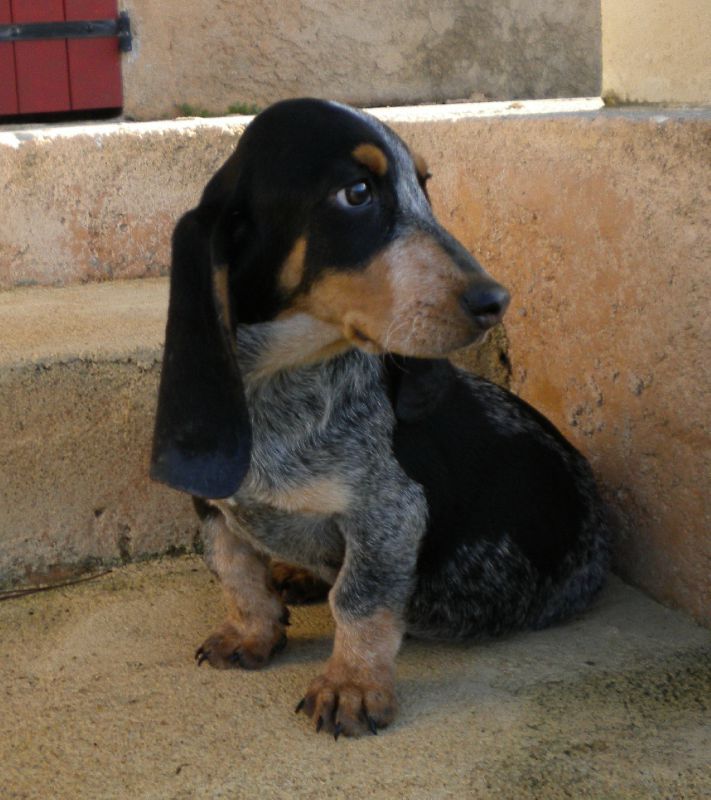
The Westphalian Dachsbracke It is a small hound that measures between 30 and 38 cm at the withers and weighing about 15 kg. It seems to the German Hound, which is even considered a miniature version.

His coat is tricolor, combining black, red and white. White markings are found on the neck, the chest, the snout, paws and tail tip. Bi-color is not accepted. The coat is rough and very tight, medium length in the back, neck and back of the tail, but short in the rest of the body.

With a slightly elongated skull and a slightly accentuated stop, his head clearly evokes his kinship with the other double basses. His eyes are dark, while his ears, big and long, are flat against the head.

The tail, strong and tall at the base, is in perfect extension of the line of the back. It is carried out with a saber blade or hanging.

Character and skills

The Westphalian Dachsbracke he's a smart working dog, stubborn and tenacious who can follow the trail of prey over great distances without hesitation.

They are primarily hunting dogs that maintain an active temperament and a great need for exercise. This need must be met each day to prevent the dog's destructive behavior.. Live in an apartment, although it is not recommended, it is possible as long as the dog can take long walks at least twice a day. During these walks, it is strongly recommended to keep it on a leash, in case you smell prey that takes you off the beaten track. But, ideally it would have access to a garden.

In the home, although he is not the most docile of dogs, the Westphalian Dachsbracke shows a lot of attachment and affection for his master, family loyalty, and gets along very well with children. All these are qualities that make it a very pleasant companion dog.. But, requires a lot of interaction and availability, as he needs constant company and cannot be left alone for a whole day. Playtime and obedience or agility training can keep you busy, but nothing will make you happier than a hunting trip.

Finally, the Westphalian Dachsbracke tolerate other pets as long as they are exposed to your presence from a young age. Otherwise, his hunting instincts take over, and is capable of chasing and hurting them.

Education

Due to its firm character, the Westphalian Dachsbracke can be tough and stubborn in his upbringing. Some commands will take longer to assimilate than with other dog breeds. So, the master must act as the leader of the pack to be heard and obeyed, and under no circumstances allow him to take over the family hierarchy. So, It is clearly important not to be fooled by the small size of this dog and turn it into a "princess", at the risk of experiencing real cohabitation problems in the near future.

At the end, the Westphalian Dachsbracke must be trained early and firmly, while promoting the principles of positive dog training.

Health

The Westphalian Dachsbracke he is a robust dog, healthy and with a good life expectancy. But, their kinship to the Basset family explains why they are prone to back problems, ranging from muscle tension to degenerative disc disease.

It also, you have to be careful with his long and floppy ears, as they are sensitive to ear infections. In case of infection, the dog tends to shake its head and scratch its ear. Other signs are a bad smell and the development of redness around the ear canal.. An ear infection requires a visit to the vet and is treated with prescription medications..

Last, like any working dog, a Westphalian Dachsbracke that participates in hunting is more likely to be injured than a companion dog that is kept at home. But, in the heat of the moment, the dog tends to ignore pain, so it is often only after the owner notices lacerations or bites, for example.

Grooming

One to two weekly brushings are recommended to maintain the very tight and rough-textured coat of the Westphalian Dachsbracke. These dogs should rarely be bathed, since they deprive the coat of its natural oils.

The ears should also be visually inspected at least once a week and they should be dried after soaking in water to limit the risk of infection..

Last, the dog's teeth should be brushed regularly to reduce the risk of periodontal diseases and infections, that one day may require dental extractions.

Characteristics "Westphalian Dachsbracke"

Coexistence is important that you have with your new friend. Before considering the acquisition of a dog of the breed "Westphalian Dachsbracke" you know certain factors. Not all breeds of dogs are apt to live in an apartment, you must take into account his character, their need for exercise, their interaction with other pets, their care and if you have small children, their level of tolerance towards them.

Adaptation โ“˜

2,0 of 5 stars (based on 1 review)

friendly dog โ€‹โ€‹โ“˜

3,0 of 5 stars (based on 1 review)

hair loss โ“˜

3,0 of 5 stars (based on 1 review)

Affection level โ“˜

3,0 of 5 stars (based on 1 review)

Need for exercise โ“˜

3,0 of 5 stars (based on 1 review)

Social need โ“˜

3,0 of 5 stars (based on 1 review)

Home โ“˜

3,0 of 5 stars (based on 1 review)

Toilet โ“˜

2,0 of 5 stars (based on 1 review)

Friendly with strangers โ“˜

3,0 of 5 stars (based on 1 review)

barking โ“˜

3,0 of 5 stars (based on 1 review)

Health โ“˜

3,0 of 5 stars (based on 1 review)

Territorial โ“˜

2,0 of 5 stars (based on 1 review)

Cat friendly โ“˜

2,0 of 5 stars (based on 1 review)

Intelligence โ“˜

4,0 of 5 stars (based on 1 review)

Versatility โ“˜

4,0 of 5 stars (based on 1 review)

Child friendly โ“˜

3,0 of 5 stars (based on 1 review)

Surveillance โ“˜

2,0 of 5 stars (based on 1 review)

joy โ“˜

4,0 of 5 stars (based on 1 review)

Images "Westphalian Dachsbracke"

Westphalian Badger
Westphalian Dachsbracke by Mare.s., CC BY-SA 3.0, via Wikimedia Commons
Donar from the Wild Man, Westphalian Dachsbracke by <a href="https://Commons.wikimedia.org/wiki/file:Donar.jpg">Jรถrg Erich</a>, <a href="https://creativecommons.org/licenses/by-sa/4.0">CC BY-SA 4.0</to>, via Wikimedia Commons
Donar from the Wild Man, Westphalian Dachsbracke by Jรถrg Erich, CC BY-SA 4.0, via Wikimedia Commons

Videos "Westphalian Dachsbracke"

Westphalian Dachsbracke - hunt: Weidmannsheil!
Westfรคlische Dachsbracke – Jagd: Weidmannsheil!
Jersey (Rhodesian Ridgeback) & Lea (Westphalian Dachsbracke) Sparring no. 2
Jersey (Rhodesian Ridgeback) & Lea (Westfรคlische Dachsbracke) Sparring Nr. 2

Type and recognitions:

  • FCI CLASSIFICATION:
  • Group :
  • Section : . .

Federations:

  • FCI – Group 6: Scent hounds, and related breeds. – Section 1.3: Small-sized Hounds. โ“˜
  • UKCScenthounds โ“˜

FCI breed standard "Westphalian Dachsbracke"

Origin:
Germany

Date of publication of the valid original standard:
24.06.1987

Use:

Hound.


General appearance:

The Westphalian Dachshund is a miniature replica of the German Hound.. It essentially corresponds to the shape of its large model, but with the effect of a more compact and stronger dog.

The Westphalian Dachshund is a specimen that measures between 30 to 38 height cm, with the typical moderately long and strong structure of a hunting dog, with a noble medium-sized head and well-set tail, worn during calm walking in the shape of an upward or hanging saber with a small curvature at the tip. The facial expression is that of a faithful dog, friendly, serious and attentive.


Behavior / temperament:

---

Head:

View from the front, same as in the German hound, she is thin, and start. The occipital protuberance is somewhat noticeable.

Cranial region:
  • Skull : The skull is only slightly wider than the facial region.
  • Depression links (Stop) : somewhat noticeable.

facial region:

  • Truffle : It has a light colored line in the middle, almost flesh color, while the lateral parts have more or less dark pigmentation.
  • Snout : Nasal cane slightly arched.
  • Lips : They hang moderately.
  • Jaws / Teeth : Very strong and uniform bite. The upper incisors fall exactly on top of the lower ones. (bite clamp) that is, the inner part of the upper incisors scratches the outer part of the lower incisors (scissor bite). The fangs are especially well developed. The buccal fold is small.

Eyes : dark, clean, friendly expression.

Ears : They are medium in length and wide., well adjacent, forming a slight roundness at the tip.

Neck:

Moderately long, compared to the head quite strong, decreasing when approaching it. Neck skin is loose, but without forming a double chin.

Body:

  • Back : Slightly convex, medium length, a little sunken behind the shoulders.
  • Pork loin : Wide and strongly developed.
  • Rump : obliquely.

Breast : It is thinner than in theDachshund, well supported by the limbs, without hanging deeply between the two. The thorax is long.

Belly : A little gathered in front of the hind limbs.

Tail:

Relatively high implantation, without forming a very noticeable angulation with the back. At the root it is very strong, In its lower part the hair has the appearance of a brush, on the top it is smooth, stuck to the skin, ending in a point like a brush, without pen.

Tips

PREVIOUS MEMBERS : well developed, dry, tendinous and coarse bones. Front views, the front limbs are not curved, but straight, with feet pointed forward.

  • Elbows : They have a good position close to the trunk.

LATER MEMBERS : They have a steeper position than other dogs. The hind limbs, compared to the front, They are much more developed than in the Dachshund.

  • Thigh : Shows strong and notable muscles and, seen both from the back and the sides, It is almost vertical.

FEET : Rough, with short fingers, well closed.

Movement:

---

Mantle

HAIR : All over the body, even at the bottom, very dense, and crude ; in the head, ears and lower part of the extremities is short; on the back, the neck and the inner part of the tail is somewhat longer.

COLOR : From red to yellow, with chair or black cloak, and the typical white markings of hounds : rounded or striped white spot on head, white snout, ring on the neck, chest, white limbs and tip of tail. Two-color dogs are not desirable, as are dogs with black on the head.. Chocolate-brown color is considered missing.


Size and weight:

The Westphalian Dachshund is a small hound that measures between 30 and 38 cm at the withers and weighing about 15 kg.


Fouls:

Any deviation from the aforementioned criteria is considered as a fault and the severity of this is considered to the degree of the deviation to the standard and its consequences on the health and well-being of the dog..

FALTAS DESCALIFICANTES:

โ€ข Aggressiveness or extreme shyness.
โ€ข Any dog โ€‹โ€‹showing clear signs of physical or behavioral abnormalities.

Any dog โ€‹โ€‹showing clear signs of physical or behavioral abnormalities must be disqualified..


N.B.:

Males should have two normal-appearing testicles fully descended into the scrotum..

Source: F.C.I - International Cynological Federation

Alternative names:

1. Westphalian Hound (English).
2. (Westfรคlische Dachbracke en allemand) (French).
3. Westfรคlische Dachsbracke (German).
4. (em alemรฃo: Westfรคlische dachsbracke) (Portuguese).
5. Cazador de Westfalia (espaรฑol).