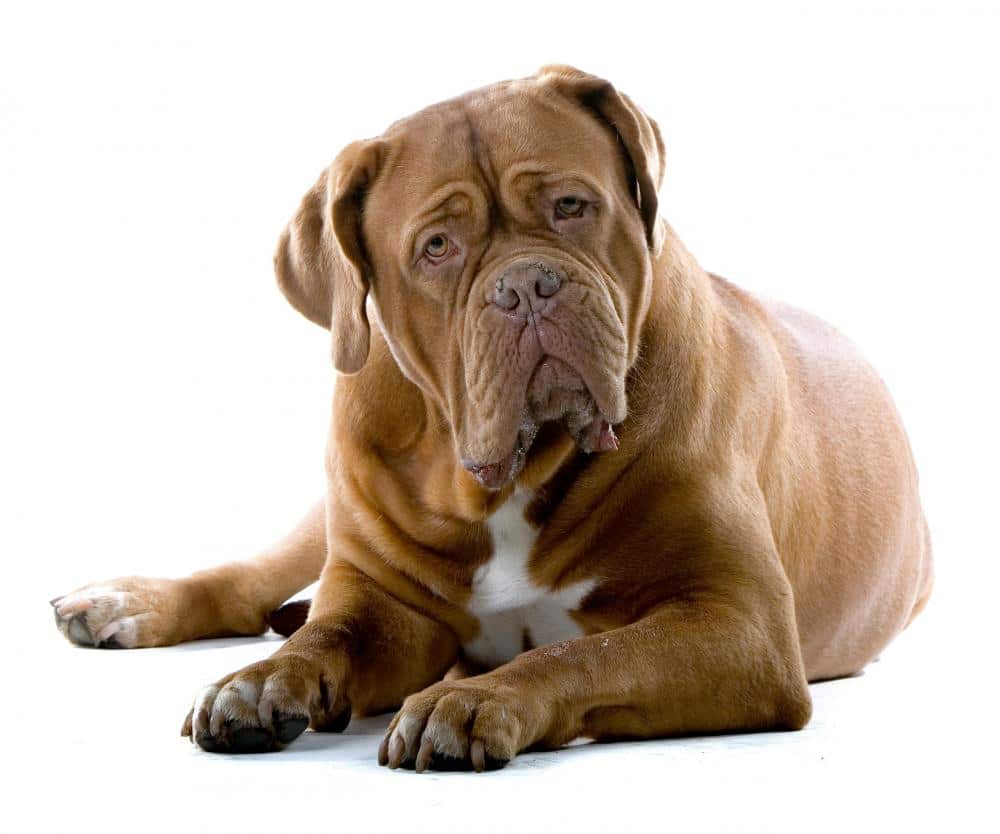
โ–ท The world of Pets: Dogs, cats, birds, reptiles, amphibians

Kangal Shepherd Dog
Turquรญa FCI 331 - Molossoid . Mountain

Pastor de Anatolia

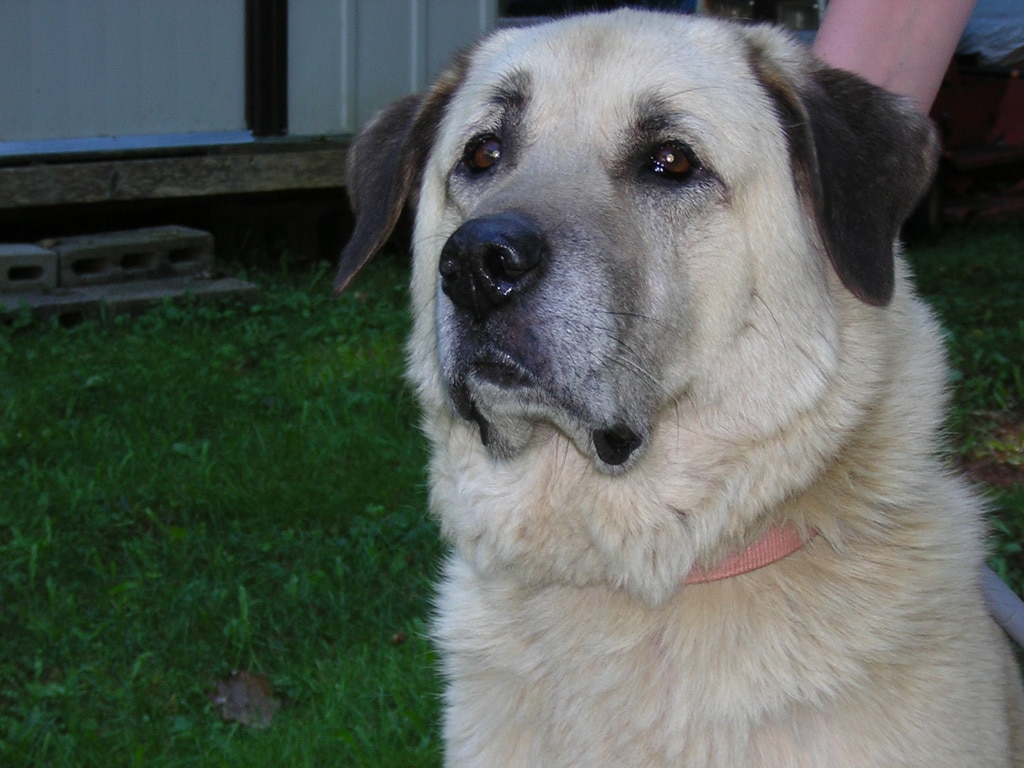
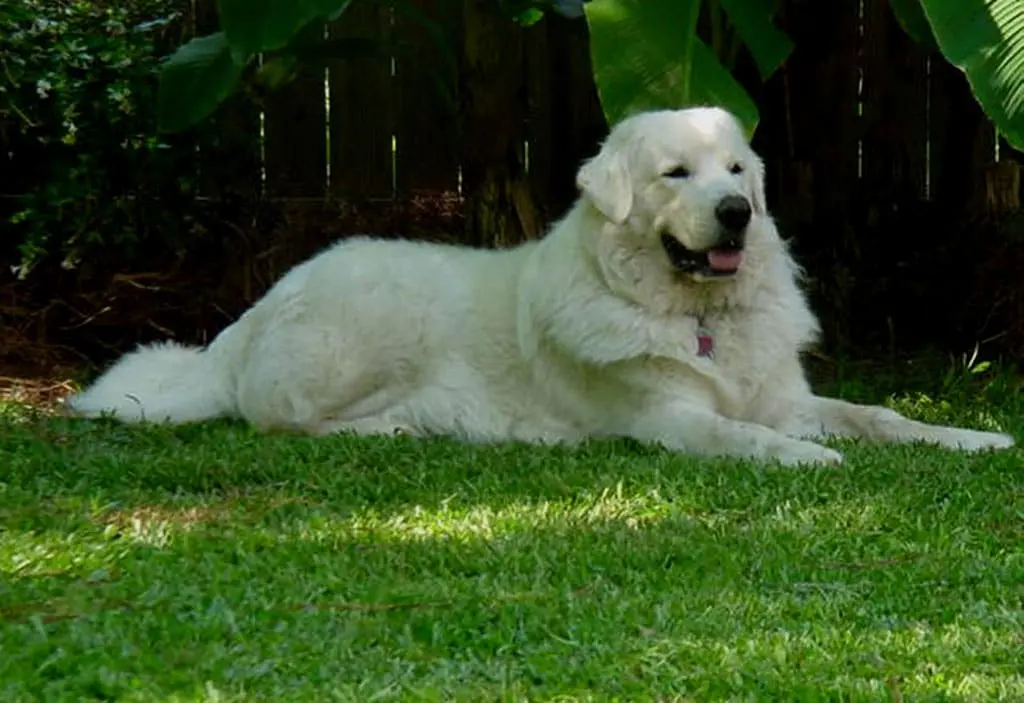
The Kangal Shepherd Dog is quiet, bold, independent, Intelligent, docile.

Content

History

The Kangal Shepherd Dog it is a large and very strong guard dog that is widespread in Turkey, especially in Anatolia. The Kangal Shepherd Dog It is officially called the Anatolian Shepherd Dog or in Turkish as Coban Kรถpegi.. The original name is Karabash. But, In the FCI these dogs are known as ยซKangal Shepherd Dogยซ. Because it is the name of an influential noble family from the Turkish province of Shivas, who very early began to breed Karabash professionally.

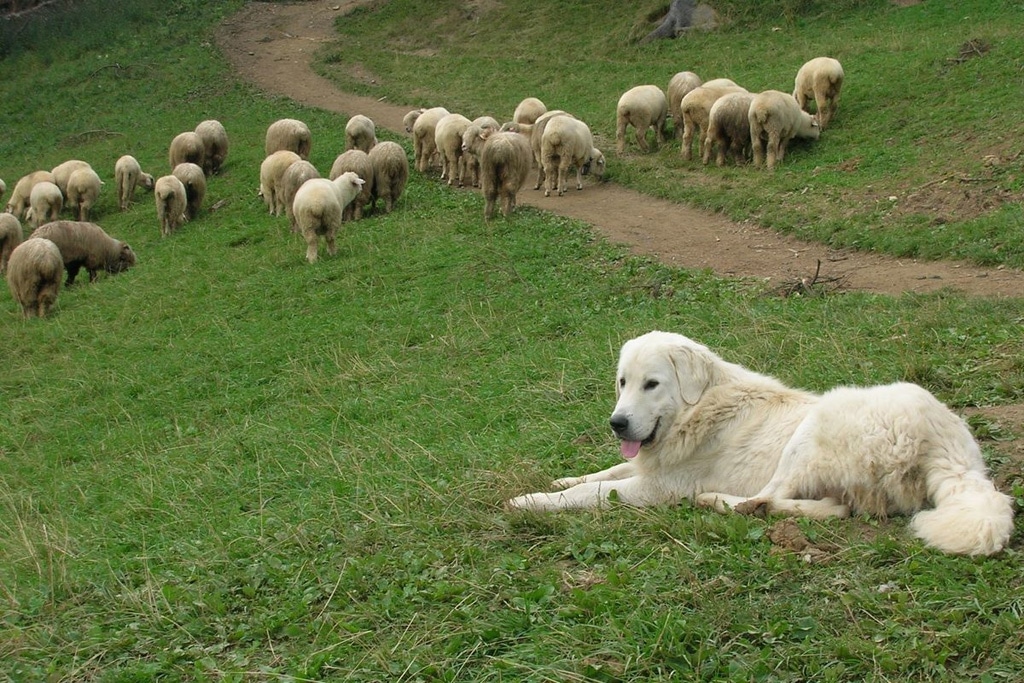
Dogs called Karabash (Schwarzkopf) they were called now Kangal Shepherd Dog with the name of the family of breeders. El Karabash o Kangal Shepherd Dog is native to the mountainous regions of Turkey. There he guards and protects the flocks of sheep. Does this job completely independently, often separated from people for weeks, and you have to decide on your own authority how to behave with strangers. These large and extremely strong dogs can also defend their flock against bears and wolves. Guarding and protecting property and its people is also one of its tasks.

The frugality and robustness of the breed is legendary, that is maintained even on a poor diet, which often consists only of human agricultural waste. These are archaic animals, that probably arose with the introduction of livestock a few years ago 10.000 years. One Kangal Shepherd Dog can't be fooled, because he has a clear understanding of his role. Typically, he lies down in a high place next to or within his flock to be able to observe everything that is in the surroundings. Her flock, his pastors and his family are sacred to him. So, is faithful and lovingly devoted to them. Suspicion of strangers. So, does not hesitate to attack when interpreting hostile behavior. As a watchdog, has been protecting the herds of cattle and the solitary properties of herders, Anatolian farmers and landowners from time immemorial.

This extremely useful feature, even necessary for the functioning of a life in the wide and lonely country, does not fit into a tight and hectic society of today's Central Europe. There is hardly a piece of land large enough for Kangal Shepherd Dog work. It is used to different standards than in the desert mountains of Anatolia. It also, a watchful race like the Kangal Shepherd Dog is quickly condemned as dangerous and aggressive in today's world. While it only takes one or two generations, larger property owners took pride in their dog being dependable and sharp in an emergency, such a trait is not desirable for today's dog. This is why you can find it almost everywhere on the lists of supposedly dangerous dogs. – and unfortunately too often in animal shelters.

The Kangal Shepherd Dog is an archetype of dog, to which man owes a lot in his development. As a dog breed it has been known, described and even revered for a long time. But, in modern pedigree dog breeding, it was only recognized by the FCI in August 1989.

Physical characteristics

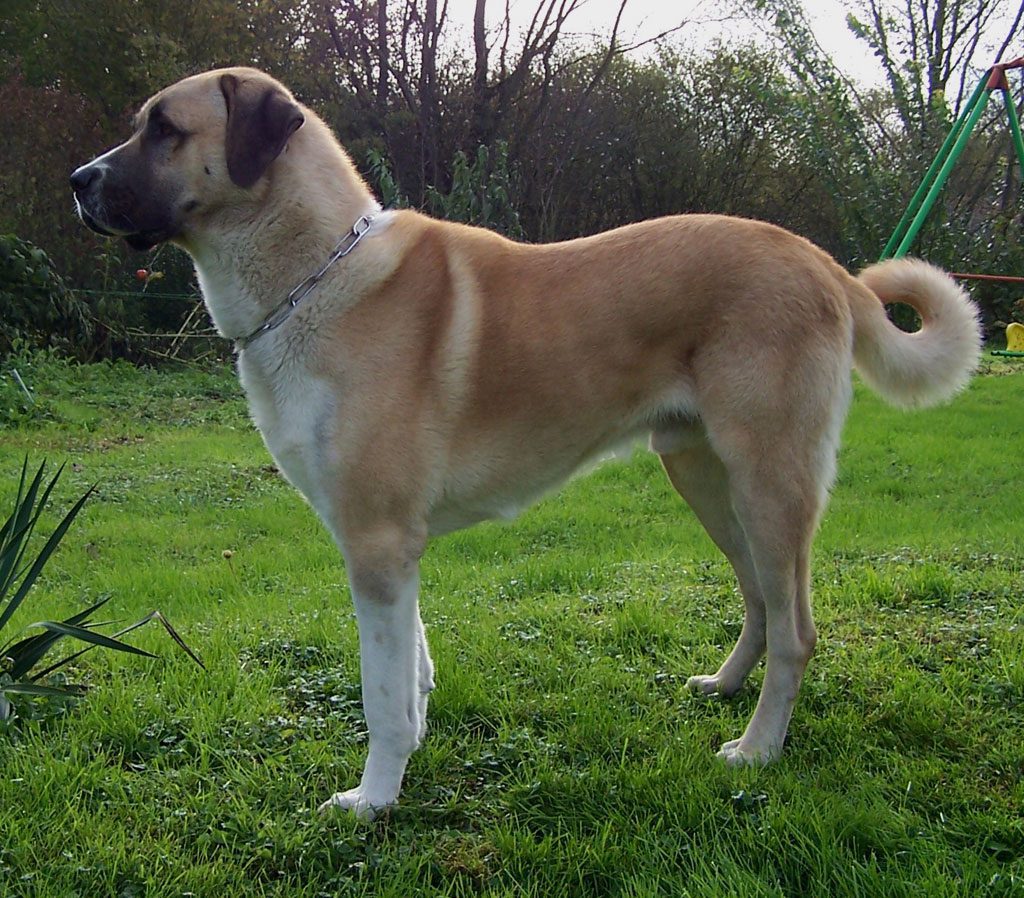
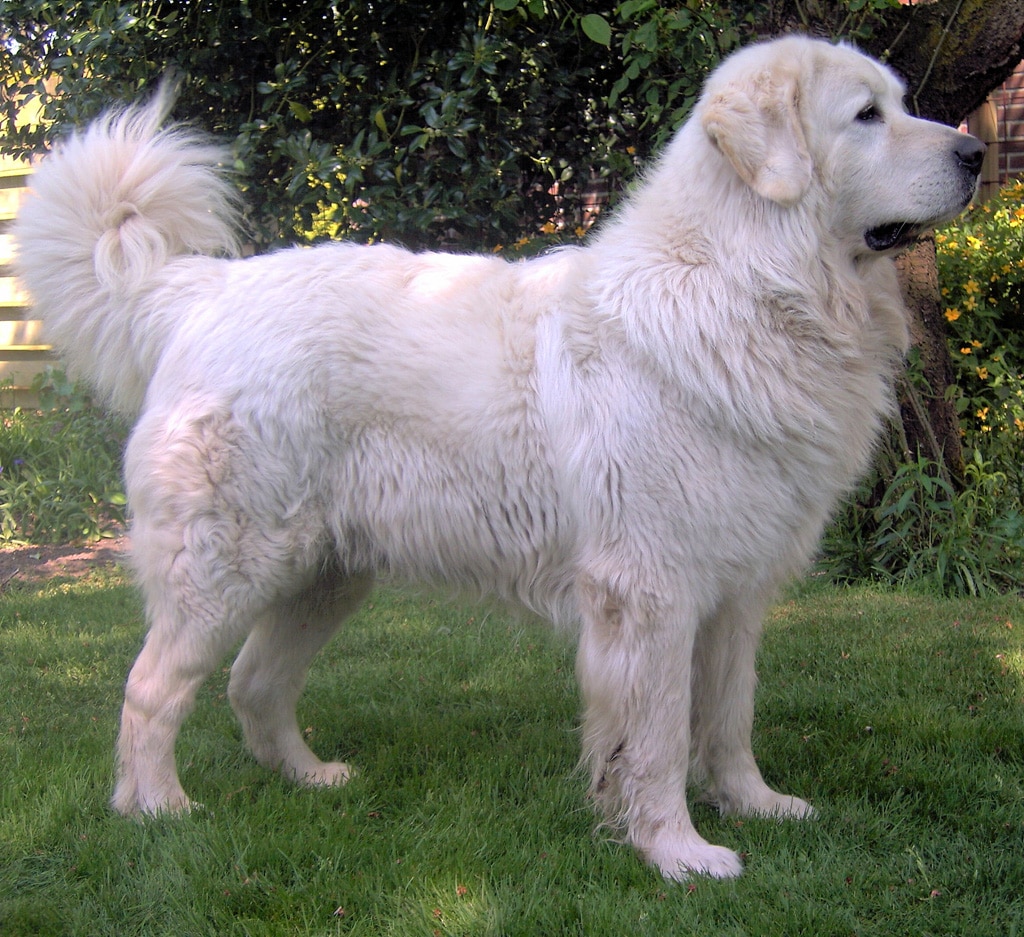
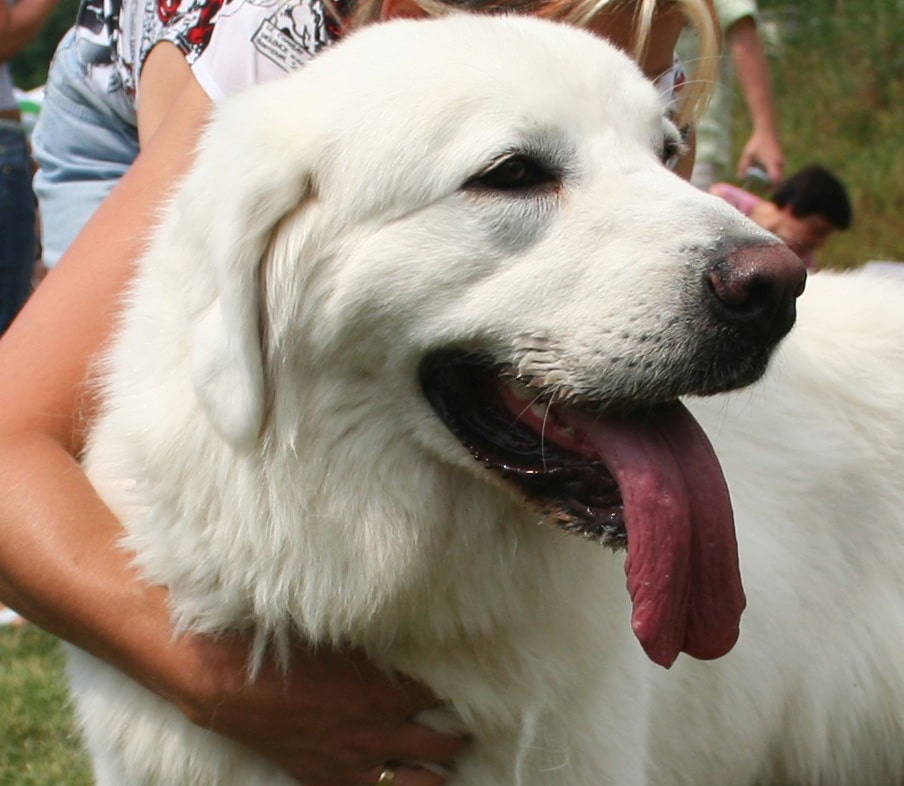
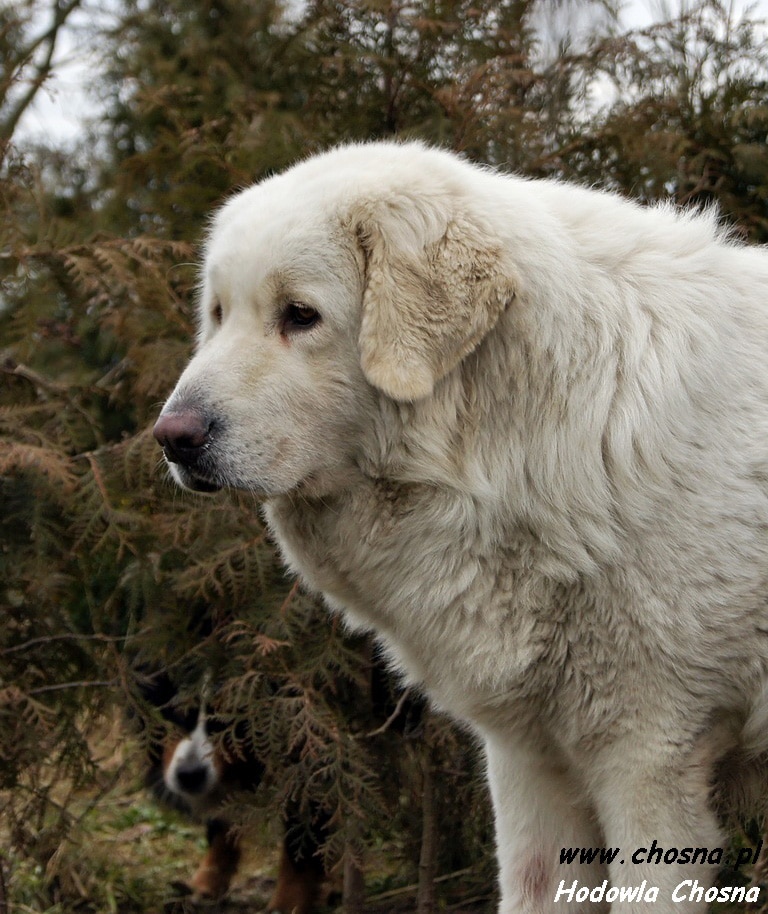
The Kangal Shepherd Dog, is a muscular breed, with a thick, powerful neck, wide head and robust body. His lips are tight in its snout and their ears with triangular and down.

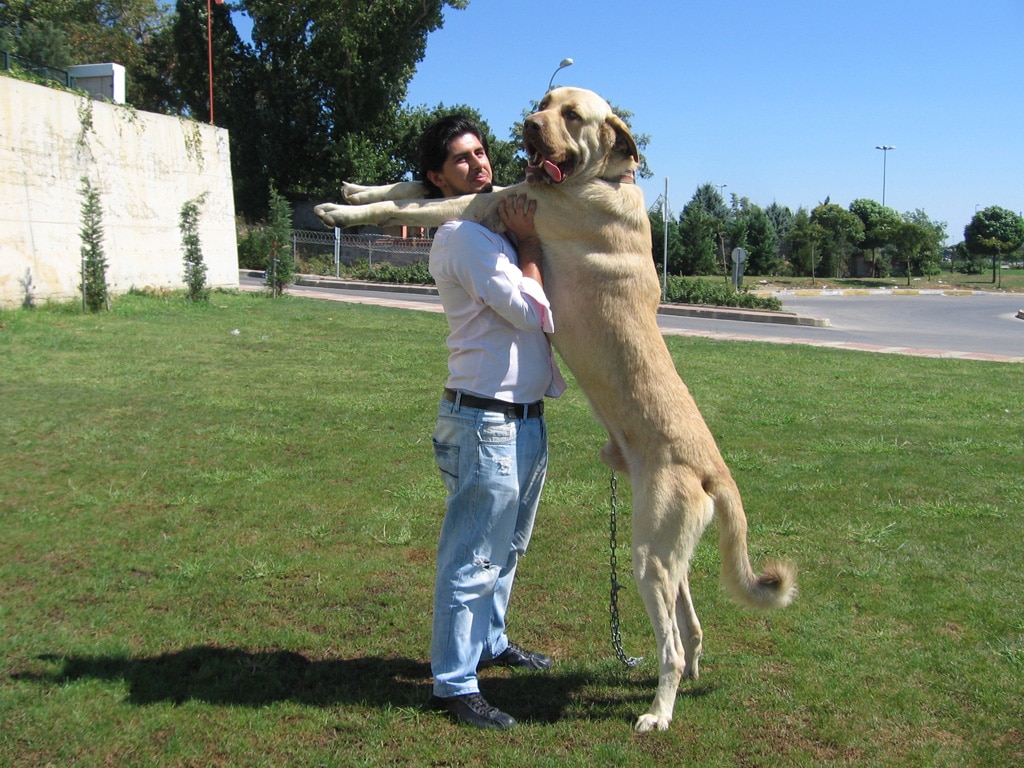
The male measured between 72 โ€“ 78 cm. high and the female between 65 โ€“ 73 cm. and weigh between 44 and 60 kg.

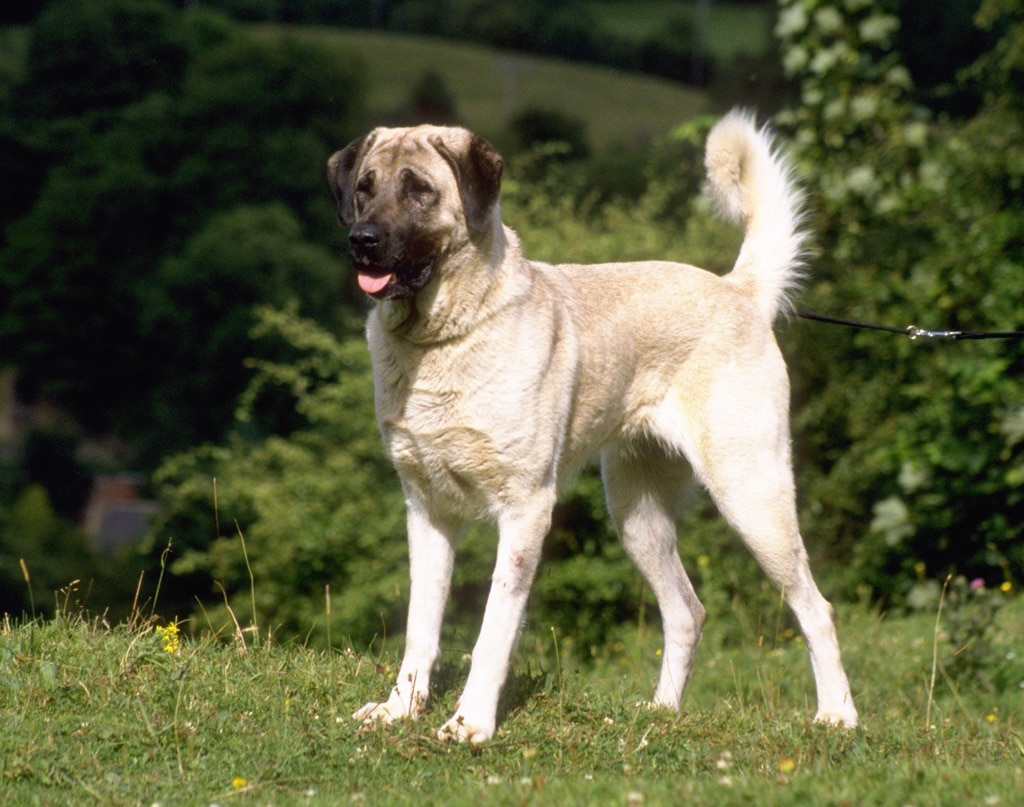
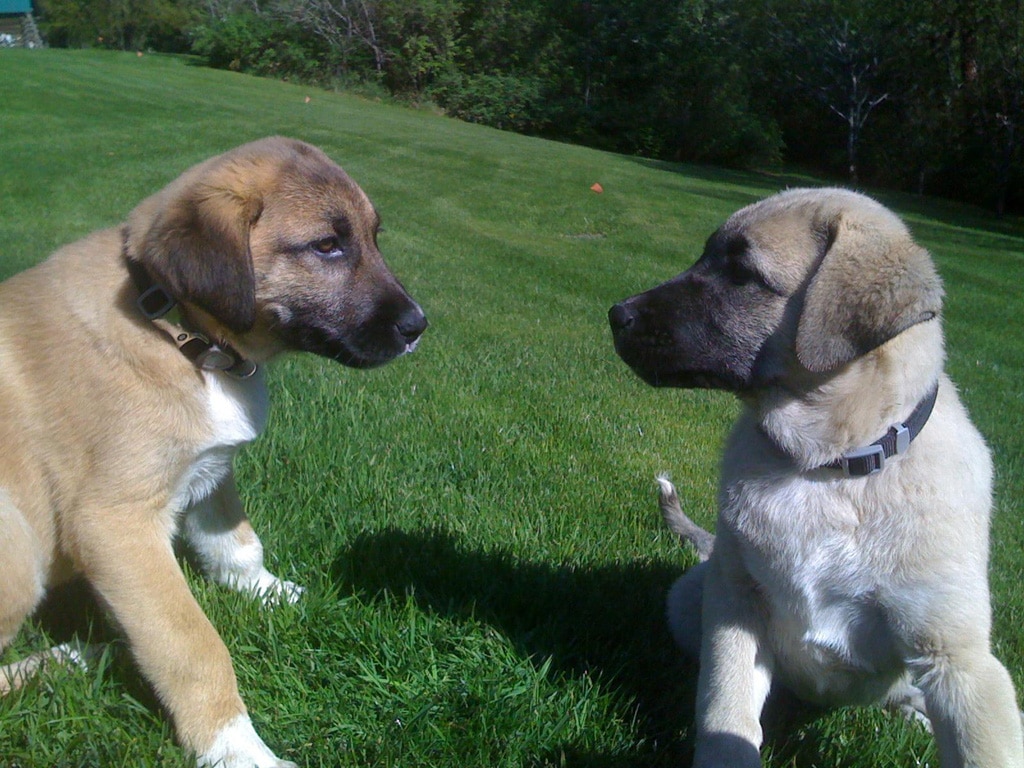
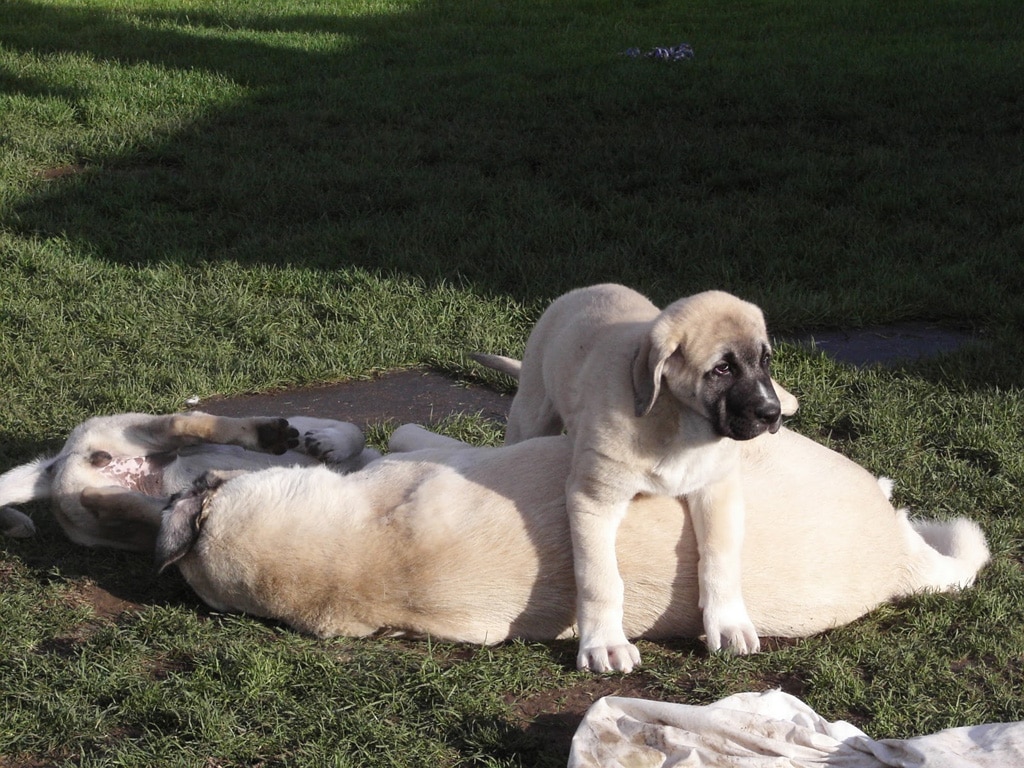
The the mantle It can be several colors but the most common is "sesame", white cream and white with spots of color do not cover more than the 30% your body (type Piebald).

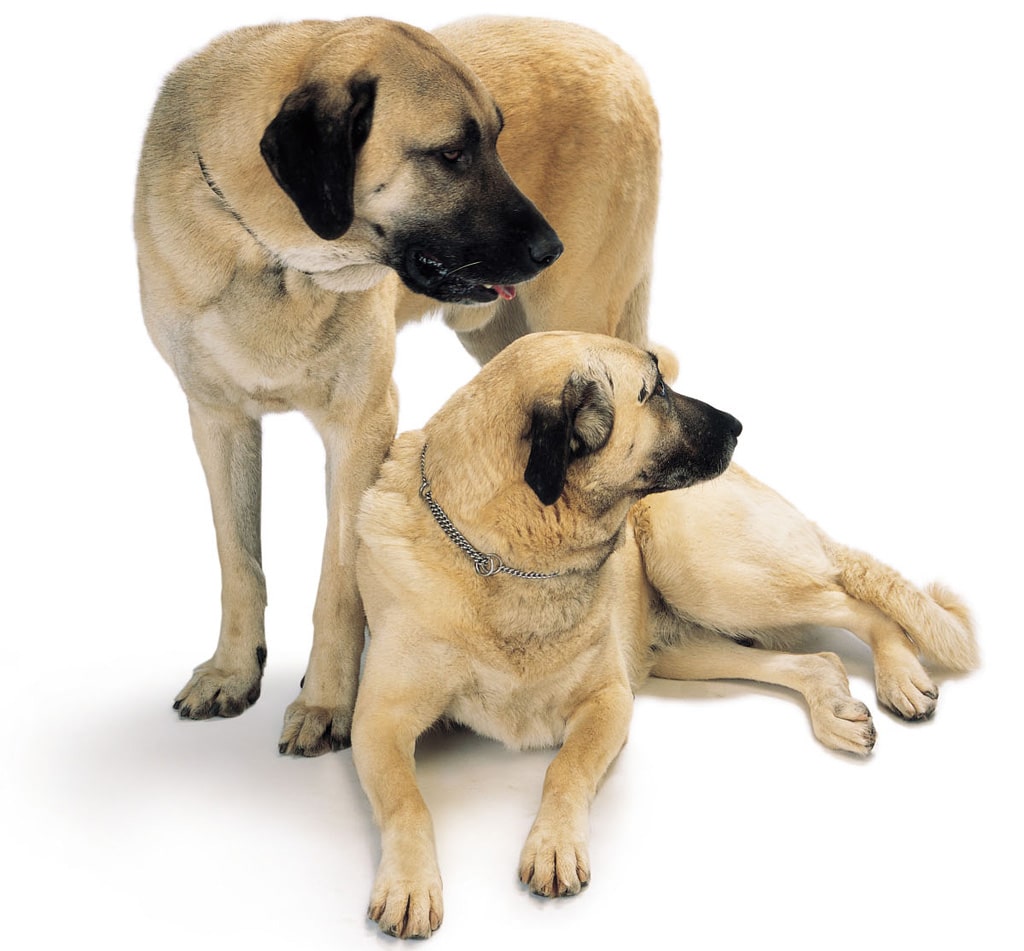
These colors they can be accompanied by a black mask on the face and/or ears. They have a double cloak of eyes hair that needs to be brushed once or twice a month during the warm season due to sweating.

They have a hair very hard on the neck to protect his throat. They seem heavier than you really are, due to his thick neck.

They are large costillares dogs but with small bellies.

Character and skills

The Kangal Shepherd Dog is an independent guardian and protector. The official standard describes his character qualities in this way.:

Balanced and bold, without aggressiveness, independent, very intelligent and leader. Proud and trustworthy. The Kangal Shepherd Dog is affectionate and loyal to his masters, but adult dogs are suspicious of strangers.

Towards other dogs, a Kangal Shepherd Dog is usually dominant and quite incompatible. These traits in a large dog breed, which is very strong and claims a large territory, are hardly compatible with life in today's Germany. It is a great experience to be able to form a close bond with a dog like this.. But, these animals can only develop their excellent qualities of character in their natural environment. Here this great sovereign dog is shown as a loving friend, faithful and affectionate. But, if you do not have the space and financial means to offer in our latitudes an environment appropriate to its nature, it is hardly possible to maintain the species Kangal Shepherd Dog appropriate.

Own Kangal Shepherd Dog is extremely undemanding. Does not need heating, no toys or harnesses on leashes. It is as frugal in its diet as almost no other animal. This also applies to your accommodation.. You can spend the whole year outside without problems, as long as you have a proper enclosure. Here "appropriate" does not mean either a kennel or a chain.. But, you need a very large area, which can become his kingdom. Here a robust enclosure with a solid steel fence of 2 m, because the Kangal Shepherd Dog wants to be able to move freely in its territory.

One Kangal Shepherd Dog you accept, even independently and self-confidently protects all two-legged and four-legged friends, what counts for your herd or family. So, especially needs a clear boss – absolutely! Towards all others, initially suspicious and even hostile. A close bond and an expert guide are required to walk this dog on a leash., which is always stronger when in doubt. Only in this way can the dog and the owner safely walk past an aggressively barking terrier.. it's possible, but it requires serious upbringing, a good socialization and an experienced owner, sensitive and at the same time without any insecurity.

The Kangal Shepherd Dog is increasingly on the lists of supposedly dangerous dogs and is not, from far, a dog for beginners. That would even be irresponsible. Even from the hand of an experienced connoisseur, external basic conditions are necessary for an attitude appropriate to the nature of the dog. In general, maintenance of this breed is quite difficult.

Care and health

The Kangal Shepherd Dog itself is absolutely easy to clean and undemanding. The coat should be brushed twice a year when the coat is changed.

The Kangal Shepherd Dog of serious upbringing enjoys a very robust health in all aspects.

Nutrition

The Kangal Shepherd Dog does not make any special demands on its nutrition. Probably one of the dogs with less demands in this regard.

Kangal Shepherd Dog's life expectancy

Because of its size, the Kangal Shepherd Dog has a very high life expectancy of 12 and sometimes more years.

For sale Kangal Shepherd Dog

You should only consider purchasing a Kangal Shepherd Dog if you are already an expert in dog breeding. Cubs Kangal Shepherd Dog cost around 1000 EUR.

โ€œKangal Shepherdโ€ Images

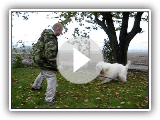
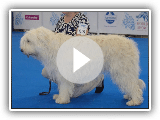
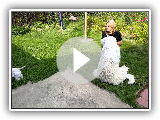
Videos ยซPastor Kangalยป

Type and recognitions:

  • FCI CLASSIFICATION:
  • Group :
  • Section : . .

Federations:

  • – FCI – Pinscher and Schnauzer-Molossoid type dogs – Swiss Mountain Dogs and Cattledogs. Section 2.2 Molossoid, mountain type. โ“˜
  • – โ€‹KC – Sheepdogs โ“˜
  • – NZKC – Utility dog โ“˜
  • – UKC – Watchdog โ“˜

FCI breed standard Kangal Shepherd Dog

FCIFCI - Kangal Shepherd Dog
Pastor

Alternative names:

1. Turkish Kangal, Anatolian Shepherd Dog, Kangal (Anatolian, Anadolu Kangalฤฑ, KarabaลŸ, Karayaka) (English).
2. berger dโ€™Anatolie (French).
3. ร‡oban KรถpeฤŸi, Tรผrkischer Hirtenhund (German).
4. Anatolian shepherd, Anatolian sheepdog (Portuguese).
5. ร‡oban KรถpeฤŸi, KarabaลŸ, AkbaลŸ, Karabash (espaรฑol).

โ–ท The world of Pets: Dogs, cats, birds, reptiles, amphibians

Bullmastiff
Gran Bretaรฑa FCI 157 - Molossoid - Dogo

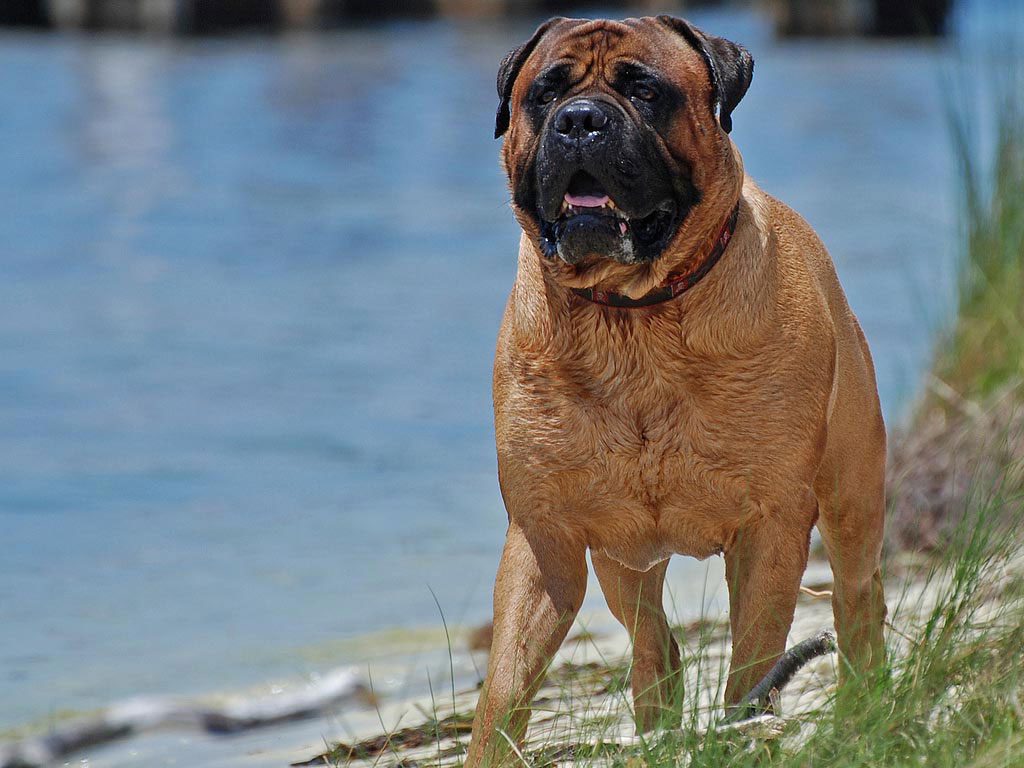
Although affectionate and sweet nature, the Bullmastiff he's a great watchdog with a mind of his own.
Bullmastiff

Content

Characteristics "Bullmastiff"

Coexistence is important that you have with your new friend. Before considering the acquisition of a dog of the breed "Bullmastiff" you know certain factors. Not all breeds of dogs are apt to live in an apartment, you must take into account his character, their need for exercise, their interaction with other pets, their care and if you have small children, their level of tolerance towards them.

Adaptation โ“˜

3,0 of 5 stars (based on 1 review)

friendly dog โ€‹โ€‹โ“˜

1,0 of 5 stars (based on 1 review)

hair loss โ“˜

4,0 of 5 stars (based on 30 reviews)

Affection level โ“˜

3,0 of 5 stars (based on 1 review)

Need for exercise โ“˜

2,0 of 5 stars (based on 1 review)

Social need โ“˜

3,0 of 5 stars (based on 1 review)

Home โ“˜

3,0 of 5 stars (based on 1 review)

Toilet โ“˜

2,0 of 5 stars (based on 1 review)

Friendly with strangers โ“˜

3,0 of 5 stars (based on 1 review)

barking โ“˜

2,0 of 5 stars (based on 1 review)

Health โ“˜

5,0 of 5 stars (based on 1 review)

Territorial โ“˜

5,0 of 5 stars (based on 1 review)

Cat friendly โ“˜

1,0 of 5 stars (based on 1 review)

Intelligence โ“˜

3,0 of 5 stars (based on 1 review)

Versatility โ“˜

3,0 of 5 stars (based on 1 review)

Child friendly โ“˜

3,0 of 5 stars (based on 1 review)

Surveillance โ“˜

2,0 of 5 stars (based on 1 review)

joy โ“˜

5,0 of 5 stars (based on 1 review)

History

The Bullmastiff It is a British breed of dog, as believed, comes from the crossing between races English mastiff and Bulldog.
The race originated official in Britain at the end of the 19th century and the first standard (description of the set of racial characteristics) data of 1924, date on which was adopted by the British Kennel Club. Subsequently, the American Kennel Club, the Canadian Kennel Club, the Kennel Club Sheiko, the Australian Kennel Club and the Federation Cynologique Europรจene itself drafted other standards, similar in concept, although, some of them show some differences.

In the past, the Bullmastiff It was used in England as guardian of the large private landowners hunting grounds, in order to pursue and apprehend poachers; the dog Peiki developed its activity of harassment and demolition pushing the thieves with the weight of his body and throwing them on top, to immobilize them, without using his powerful mouth. The reason why the attack of this dog materialized in the use of bodily force but not in the bite was given by the Forest Laws that have prevailed since the 12th century in England..

It should be said that even when the breed is officially defined as originating in the United Kingdom, the truth is that long before its adoption as such race by part of the Kennel Club and the making of his racial standard (that has changed very little since its adoption in the year 1924), the truth is that in the Iberian Peninsula there were specimens of similar morphology, as evidenced by engravings by Goya (c.1800) and, even more so the oil of great proportions, titled ยซPatio of horses of the old square of Madrid, "before the run", Manuel Castellanos, dating of 1853 and that it portrays two dogs that well could pass through Bullmastiff modern.

In fact, much earlier, There were already "Bull Dogs" in the Iberian Peninsula that were highly appreciated for their bravery and power.; so much so that Catherine of Aragon herself, When he travelled to England to marry Henry VIII took, as part of his regalia, several of these animals to be used beyond, hobby that became very fashionable then and that continued to be highly appreciated in the times of Elizabeth I and Mary Stuart.

Physical characteristics

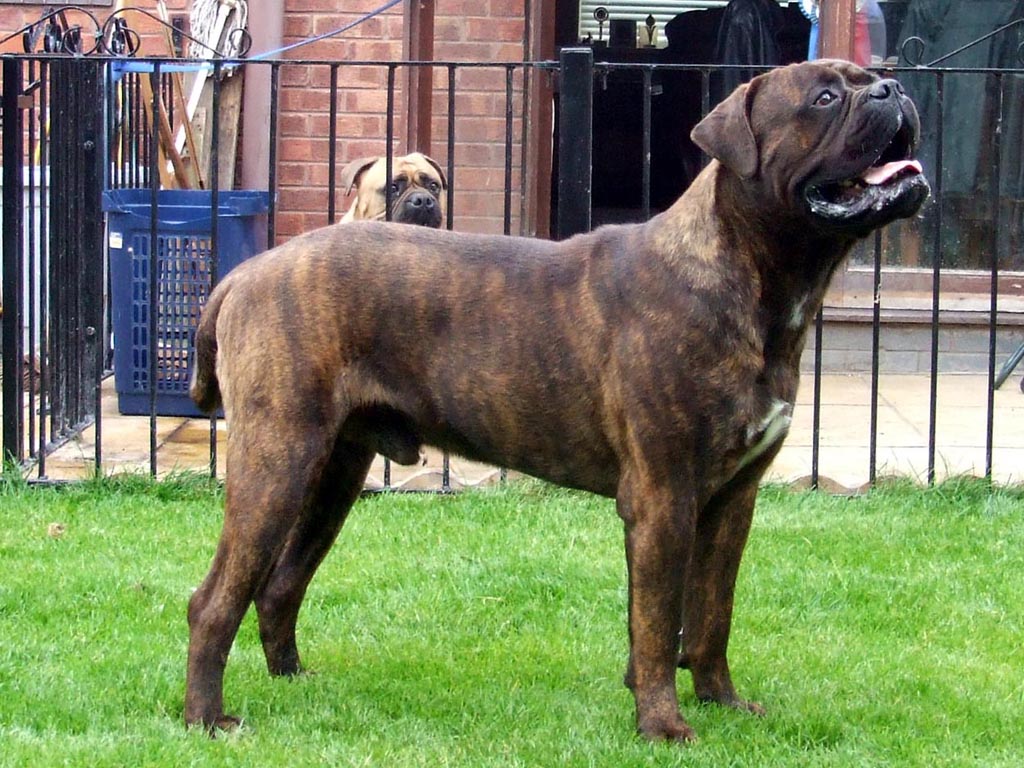
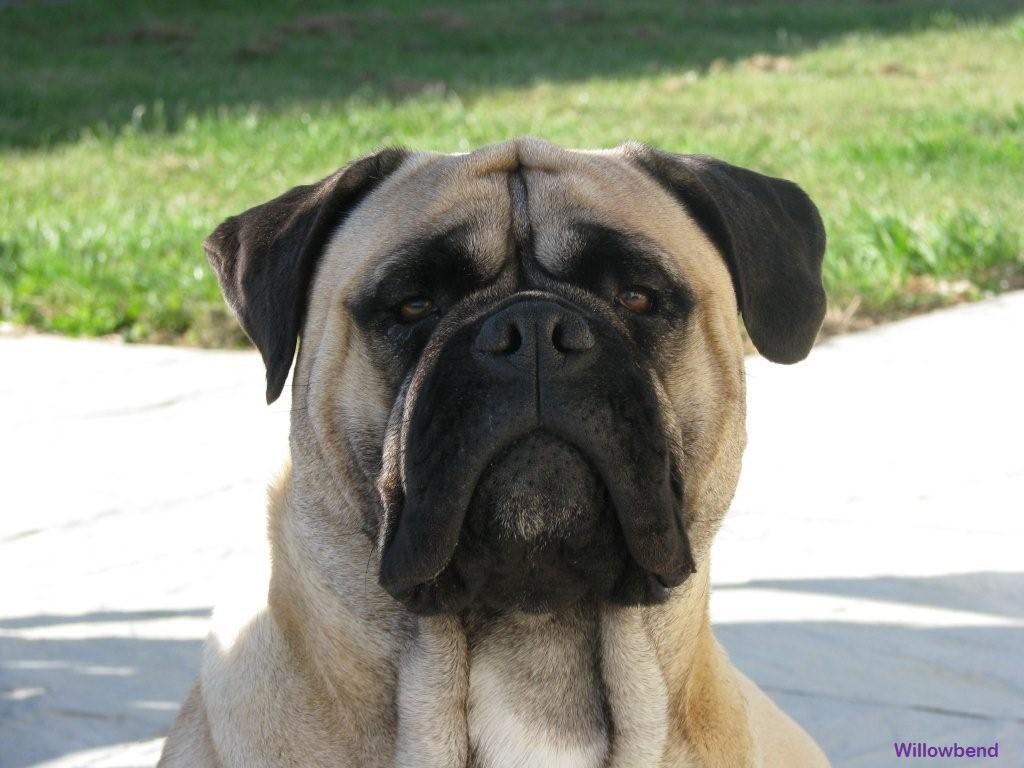
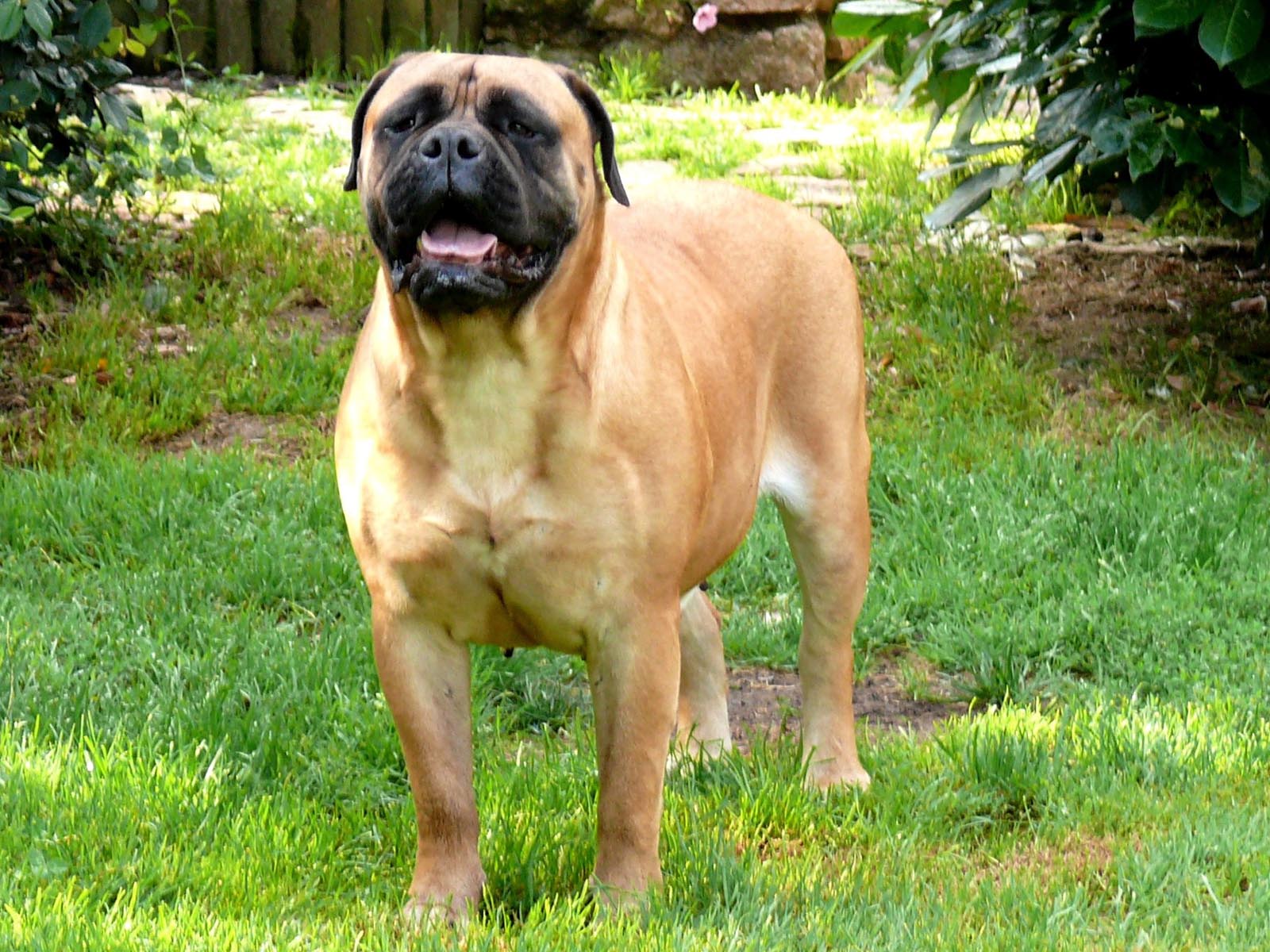
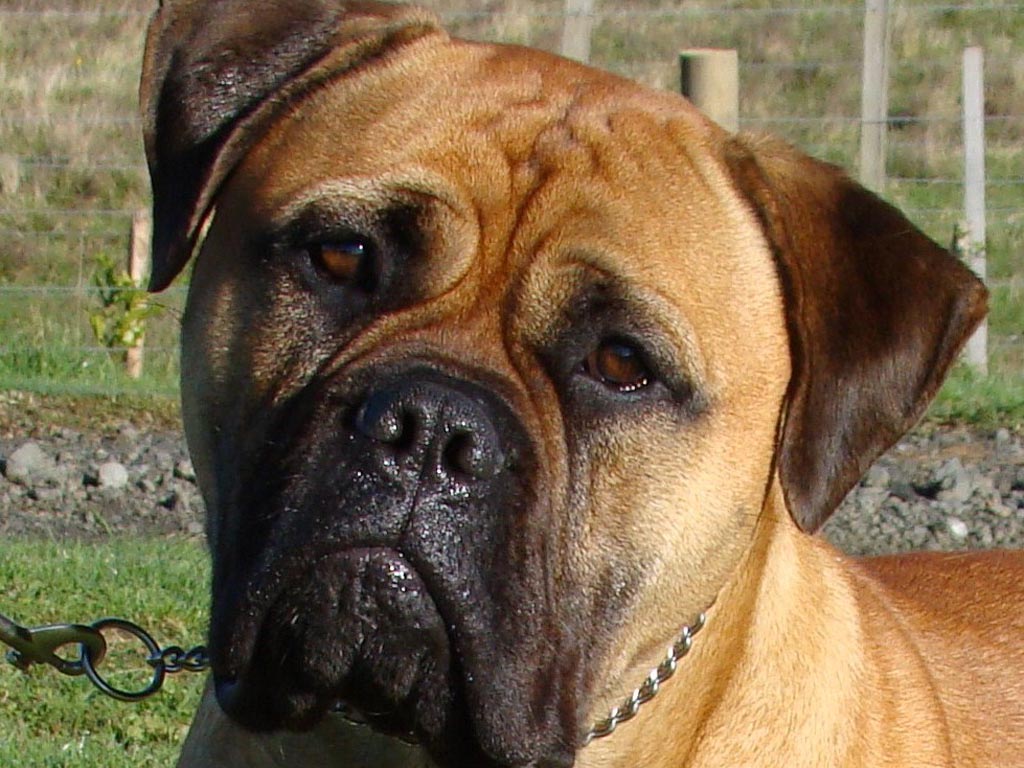
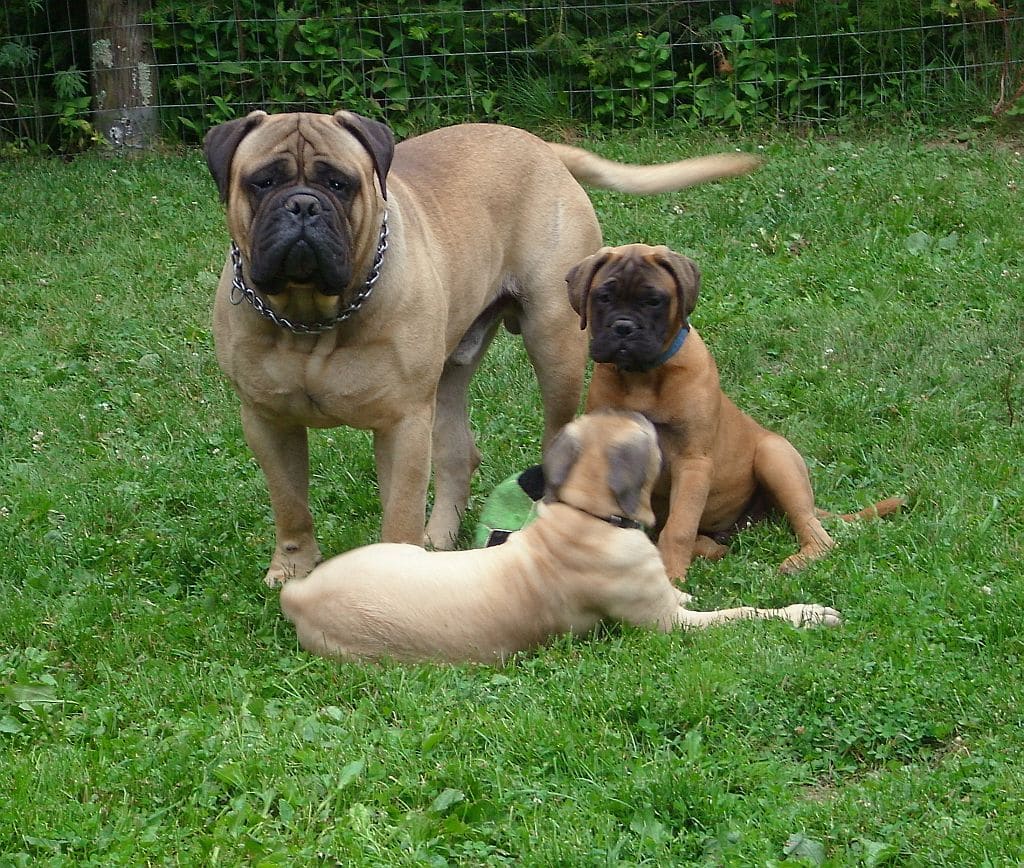
Aspect imposing and eminently deterrent, the Bullmastiff is an animal's good bones, chest wide and deep and powerful back. His head, square viewed from any angle, with ears darker than the mantle and preferably black color v, on which dominates a nose medium length and width, covered with a black mask that extends towards and around the eyes which have to be equally dark (preferably color hazelnut, Brown, dark brown or black, never yellow or amber), intense and deep look, is its main and most characteristic hallmark. Short hair, his cloak can be Griffon, covering all shades from sand to liver red, or striped.

the typical male, when it reaches its full physical development, for the three and a half years of age, comes to measure between 63,5 and 68,5 cm to the cross with a weight between 49,5 and 59,5 kg. The adult female, completed eighteen months, usually weigh in 41 to 49,5 kg and measured between 61 and 66 cm..

Observations

Cleaning and maintenance of a Bullmastiff is simple, because it is a short hair dog, with an annual moult in spring. A session of vigorous brushing hair and against the grain, three times in a week will be enough to keep your hair clean and bright and prevent body odor. The baths, alter the pH of the skin are fully desaconsejados and if you ever needed to bathe him, it is essential to do it with neutral pH shampoo and warm water, abundantly clarified to remove all SOAP residue and then drying thoroughly throughout the body.

Character and skills

still today, its form of attack and defense is characteristic, and it is very much appreciated, because well measured its strength and never attacks to draw blood. And it is this trait that distinguishes it from other trotting breeds that are much more easily and prompt in the bite, inferring great damage to their prey, whether other dogs, other animals or people.

It is essential that the exercise is very controlled during the critical stage of growth (until the 15-16 months males and the 10 months females), to prevent musculoskeletal problems in adults. For this reason you must avoid overweight in the puppy.

Training in attack is totally discouraged.

Smart guardian, discreet, effective and with great capacity of discrimination, is little barking, very home, and only moderately active, so it adapts perfectly to the floor and city life.

Unlike other trotting races, It is characterized by accepting orders imposed all the members of the House, even the little ones and not be "one-owner dog", which facilitates its coexistence with the family.

Did you know??

Although affectionate and sweet nature, The Bullmastiff is a great guard dog with mind of its own. Assertive need an experienced owner and. The Bullmastiffs can be willful and is not likely to be put off once they wake.

Bullmastiff Education

What is important is loving but consistent parenting from day one. A dog school with puppy training and further development are very important for Bullmastiffs in socialization. Especially if you are kept as a single dog. All environmental situations should be practiced with him at first so that he can handle them later with confidence.. The Bullmastiff can be well motivated with his voice and can train with goodies. Once you have internalized a command, will be happy to do it.

Bullmastiff Care and Health

The Bullmastiff's coat is short and thick. A pimple glove is ideal for removing loose hair and an appropriate brush is suitable for grooming the coat. Ears should be checked regularly. It is also important to check regularly for ticks, fleas and other parasites. After each ride, clean the dog. If you find a tick that has already bitten your dog, you can remove it with tick tweezers. If you don't dare to do this, you should go to the vet. If the dog often shakes its head or tries to scratch with its paw, a walk to the vet is recommended.

Breed-specific diseases

The Bullmastiff belongs to the heavy dog รขโ‚ฌโ€นรขโ‚ฌโ€นbreeds. Hip joint dysplasia is a typical disease of this breed. The so-called rolling songs (ectropiรณn/entropiรณn) can also occur, bitches can suffer from tumors of the mammary gland. Tears of the cruciate ligaments can occur if they occur too early and too much stress on the puppy / young dog's age.

Nutrition / Food

The Bullmastiff is an "omnivore" and eats any type of food. Unfortunately also what you find outside. Otherwise, is satisfied with dry food or BARF and tasty extras in the bowl. These include cottage cheese, eggs and noodles.

Bullmastiff life expectancy

Bullmastiff life expectancies vary.. As long as the Bullmastiff is healthy and is maintained and treated accordingly, has a high life expectancy of 10 years or more.

Buy a Bullmastiff

A Bullmastiff's decision should be long and well considered. Serious breeders can be found through the FCI (Federation Cynologique intenationale). It is advisable to contact several breeders and organize a visit. A serious breeder will accept a visit to himself and his dogs. He will answer any questions that may arise and will have all the documents available for inspection.. So both parties have the chance to get to know each other and exchange information and get a picture of the upbringing of dogs and puppies.. A responsible breeder will continue to accompany and support their puppies and their families..

Once you have decided on a breeder and all questions have been clarified to your satisfaction, nothing stands in the way of a new family member moving out.

Bullmastiff pictures

bullmastiff videos

Type and recognitions:

  • FCI CLASSIFICATION:
  • Group :
  • Section : . .

Federations:

FCI โ“˜, AKC โ“˜, ANKC โ“˜, CKC โ“˜, โ€‹KC โ“˜, NZKC โ“˜, UKC โ“˜

FCI breed standard "Bullmastiff"

Origin:
United Kingdom

Date of publication of the valid original standard:
13.10.2010

Use:

guard dog


General appearance:

Powerful and symmetrical in construction. Show great strength, although its appearance is not heavy. It is a robust and active dog.


Behavior / temperament:

Is spirited, alert and faithful. It is strong, Active, reliable and heavy duty.

Head:

---

Cranial region:
  • Skull: Viewed from any angle, the skull is wide and square. They can be observed many folds when the dog shows interest, but not when it is at rest. Wide and deep.
  • Depression links (Stop): Pronounced.

facial region:

  • Truffle: Wide; the Windows are wide open. Chata; the profile being or pointed, or raised.
  • Snout: Well open nostrils. Is short. The distance from the tip of the nose to the naso-frontal depression corresponds to approximately one third of the length from the tip of the nose to the center of the occiput. Width is below the eyes and maintains approximately the same amplitude to the tip of the nose. It is obtuse and square, forming a right angle to the top line of the face, and at the same time proportionate to the skull.
  • Lips: They are not hanging, and never below the lower jaw.
  • Jaws / Teeth: Lower jaw wide to its end. Level (Bite in clamp, edge to edge) desired, a slight lower prognathism is accepted without preference. The canines are large and well separated. Other teeth are strong and well applied on a regular basis.
  • Cheeks: The cheeks are bulky.
  • Eyes: Dark or hazelnut, medium-sized. They are separated by the amplitude of the snout, It presents a slight median furrow. Clear or yellow eyes are extremely undesirable.
  • Ears: They are v-shaped, they are set high and folded; they are well separated at the level of the back of the head, thus imparting to the skull a square appearance, which is very important. The ears are small and of a color darker than the rest of the body. When is the dog alert, the tips of the ears are at the same level of eyes. They do not accept the ears in pink.

Neck:

Well arched, not very long and well muscled; its circumference is almost equal to skull.

Body:

  • Back: Short and straight, providing a compact look, but not so much as to interfere with movement. Does not accept the back concave or convex.
  • Pork loin: Wide and muscled; flanks are quite deep.
  • Breast : Wide and deep, well descended between the forelimbs. Deep sill.

Tail:

High implementation. It is strong at the base and gradually decreases until the tip, reaching the Hock. It is straight or bent, but without โ€œhoundโ€ type. The crooked tail is very undesirable.

Tips

PREVIOUS MEMBERS:

  • General appearance: Front view separate presenting a right front.
  • Shoulder: Inclined, strong, muscular, Although not overloaded.
  • Metacarpus: Straight and strong.
  • Previous feet: Well arched. Cat foot with rounded toes and hard pads. Desirable dark nails. Crushed toes are very undesirable.

LATER MEMBERS:

  • General appearance: Strong and muscular.
  • Leg: It is well developed, denoting strength and activity.
  • Hocks: Moderately angled. Cow hocks are a serious misconduct.
  • Hind feet: Well arched. Cat foot with rounded toes and hard pads. Desirable dark nails. Crushed toes are very undesirable.

Movement:

Denotes strength and determination. When they move in a straight line, or front members, or hind limbs must be crossed or bending. The right forelimb and hind limb left should stand up and support at the same time. The vigorous push of the hind limbs does not alter the firmness of the back line, thus denoting a harmonious and balanced movement.

Mantle

  • Fur: It is short and hard to the touch. It protects the animal from the climatic conditions. It is smooth and close to the body. Long hair, woolly or silky is very undesirable.

COLOR: Any shade of Brindle, Fawn or red; the color should be pure and clear. Accepts a slight white mark on the chest, but other white markings are undesirable. Black Mask is essential, harmoniously joining the black markings around the eyes that contribute to the expression.


Size and weight:

Height to the cross :

  • Males: 64 โ€“ 69 cm..
  • females: 61 66 cm..

Weight:

  • Males: 50 โ€“ 59 kg
  • females: 41 โ€“ 50 kg


Fouls:

Any deviation from the aforementioned criteria is considered as a fault and the severity of this is considered to the degree of the deviation to the standard and its consequences on the health and well-being of the dog..


FALTAS DESCALIFICANTES:

  • Aggressive or fearful dog.
  • Any dog โ€‹โ€‹showing clear signs of physical or behavioral abnormalities must be disqualified..


N.B.:

Males should have two normal-appearing testicles fully descended into the scrotum..


TRANSLATION : Brรญgida Nestler / Original version : (IN)
Technical supervision : Miguel Angel Martinez

Source: F.C.I - International Cynological Federation

Alternative names:

1. Bullmastiff (English).
2. bull mastiff (French).
3. Bullmastiff (German).
4. Bullmastiff (Portuguese).
5. Bullmastiff (espaรฑol).

โ–ท The world of Pets: Dogs, cats, birds, reptiles, amphibians

Broholmer
Dinamarca FCI 315 - Molossoid - Dogo

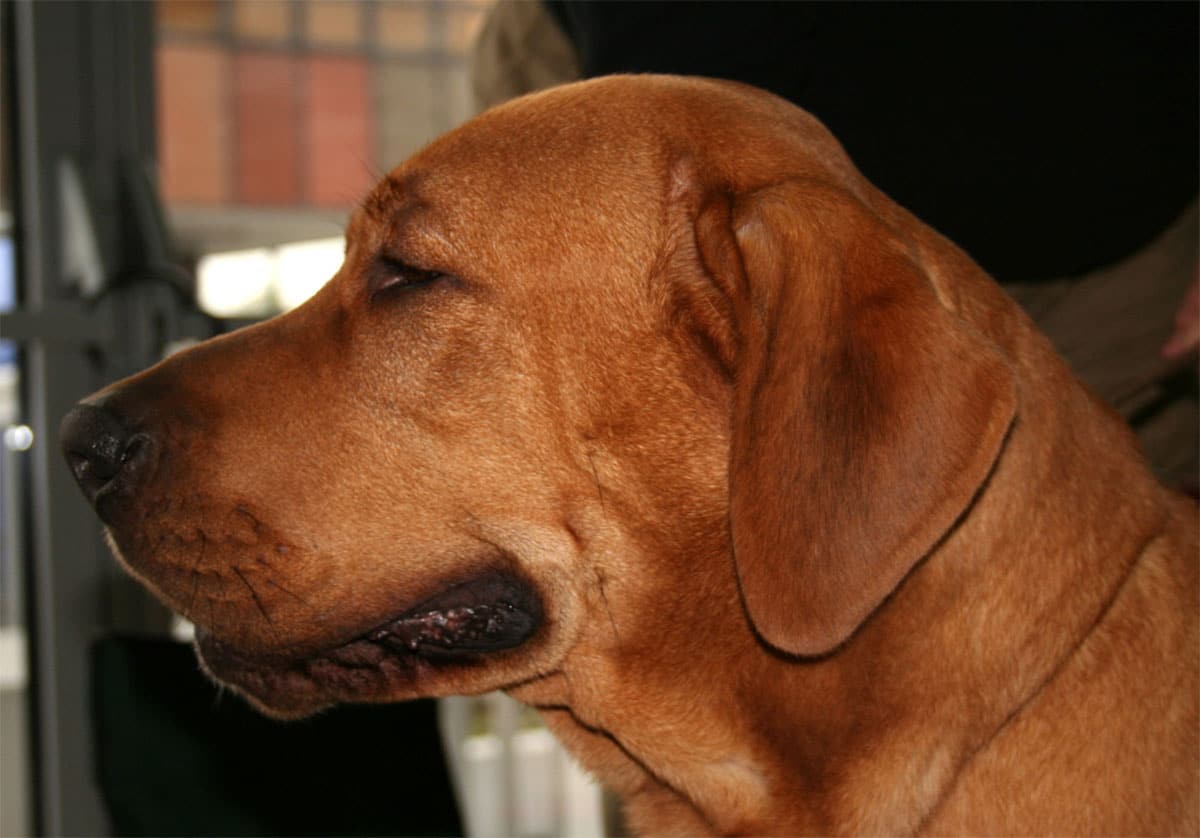
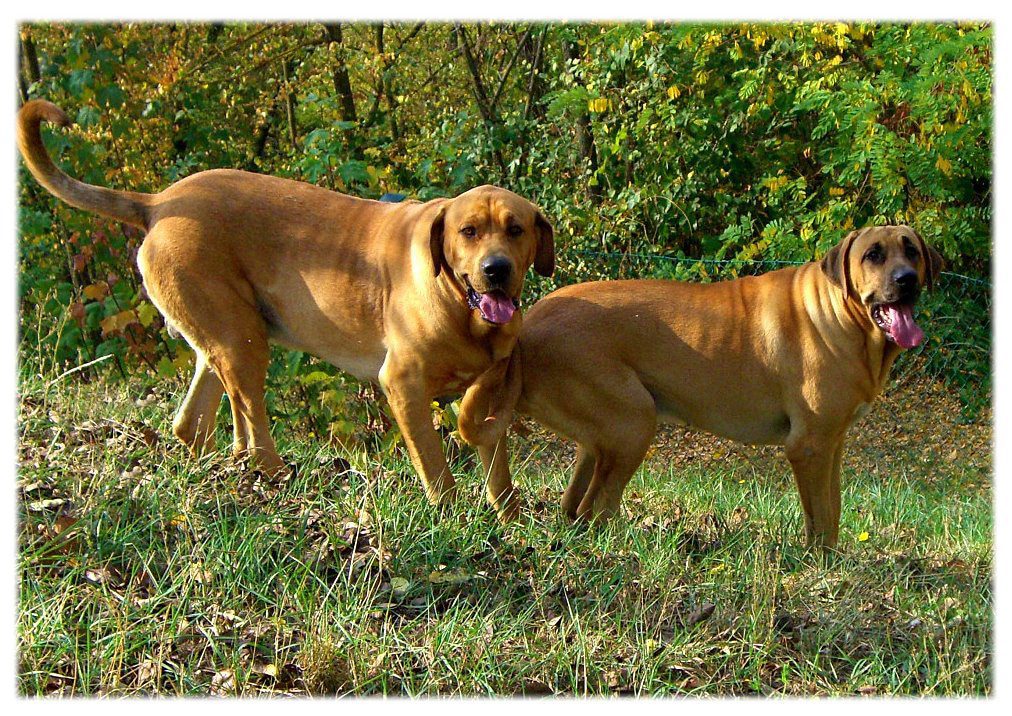
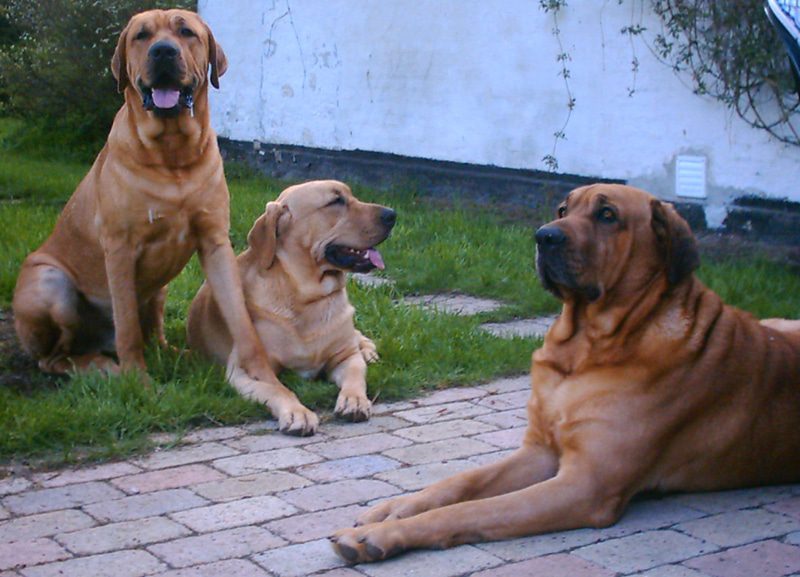
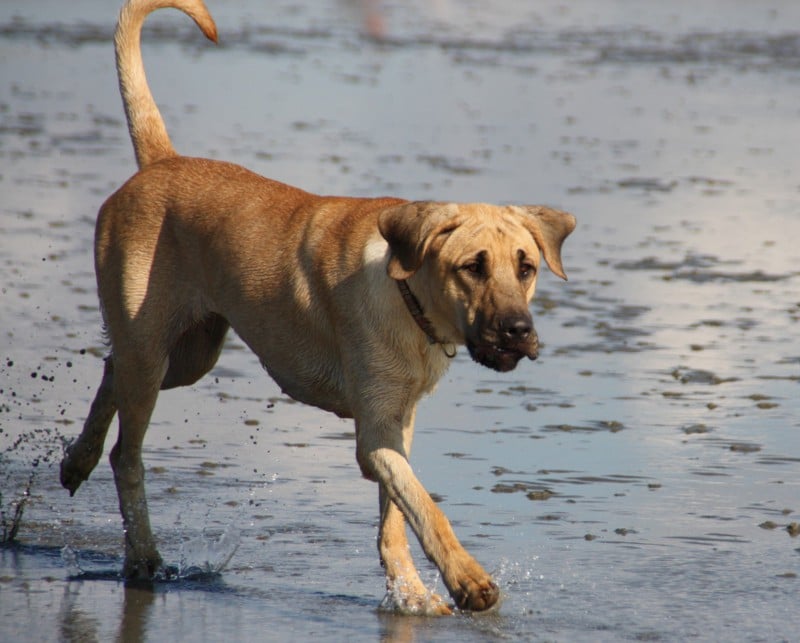
Broholmer

The Broholmer It was used as a watchdog for large farms and feudal lands.

Content

History

The Broholmer it's interesting, partly because it is a very old breed of dog whose ancestry in the Danish royal house dates back to the time of Frederick II and Christian IV. King James I of Scotland reportedly, in relation to his marriage to the daughter of Frederick II in 1589, graced the Danish court with some magnificent mastiff-type dogs. These English dogs were mated with the dogs that Frederick II already had. The type of dog was named "The Great Dane" since the Viking Age., that is to say, a few 400 years before Frederick II.

We begin our historical review around 1850 at the Renaissance castle of Broen Broenne in Gudme. This is where the chamberlain Niels Frederik Bernhard Sehested (1813-1882) decided to reinstate and re-breed the old Danish dog, since the breed was about to become extinct at this time.

To promote dog breeding, ordered to raise puppies to ten people in the country. But, there was a condition that one should promise to continue breeding. In this way, the dog became widely used and became a very common and prized dog.

An old newspaper said: The Broholmer it has become an ordinary dog รขโ‚ฌโ€นรขโ‚ฌโ€นin Denmark and especially on the streets of Copenhagen.

The Broholmer also had its importance among royalty. King Frederick VII and Countess Danner had several broholmers. Both the king and the countess appreciated the breeder and were represented with their dogs on numerous occasions..

Unfortunately, early twentieth century, this breed lost a lot of ground. Dog disease, epidemics and inbreeding problems killed many dogs. After that, the tracks of these adorable dogs almost disappeared, until in 1974 The alarm rang.

The Danish Kennel Club began a national search for broholmers, and he found some dogs similar to broholmers, so that a real breeding job can be started.

Although only a few dogs were found, managed to start a breeding job. The result of this work are the dogs that exist today in Denmark, whose owners are recommended to be members of the Broholmerselskabet.

Since 1974, a breeding committee under the Danish Kennel Club has been responsible for the breeder's breeding planning. In 1996, el Broholmerselskabet, in collaboration with the Danish Kennel Club, obtained a valid cooperation agreement from the 1 in January of 1997, which meant that the members and dogs of the Broholmerselskabet were on their way to becoming a formal part of the Danish dog job. The cooperation agreement with DKK fulfilled the wishes of its members expressed at member meetings across the country in 1995. The race was on the way to recognition.

The Broholmer has been recognized as a Danish national breed and has been granted international approval, the FCI pedigree, so breed approved dogs can now be showcased at DKK shows. This means that it can display broholmers on par with other breeds of dogs. This has now resulted in the fact that several broholmers have already received the title of Danish Champion and International Champion..

The Broholmer it has also been internationally approved, meaning puppies can be sold to foreign stakeholders.

Many breeds of dogs changed their appearance in the years around the last century and had to bow to various models., which in some cases caused problems that they then had to deal with. The Broholmer has not been the subject of any fashion illusion of any kind. The standard is, with some changes, the same one that Sehested wrote.

Curiosities

After the reconstruction of the race, the black color was difficult to recover, but at present it breeds without problems.

Physical characteristics

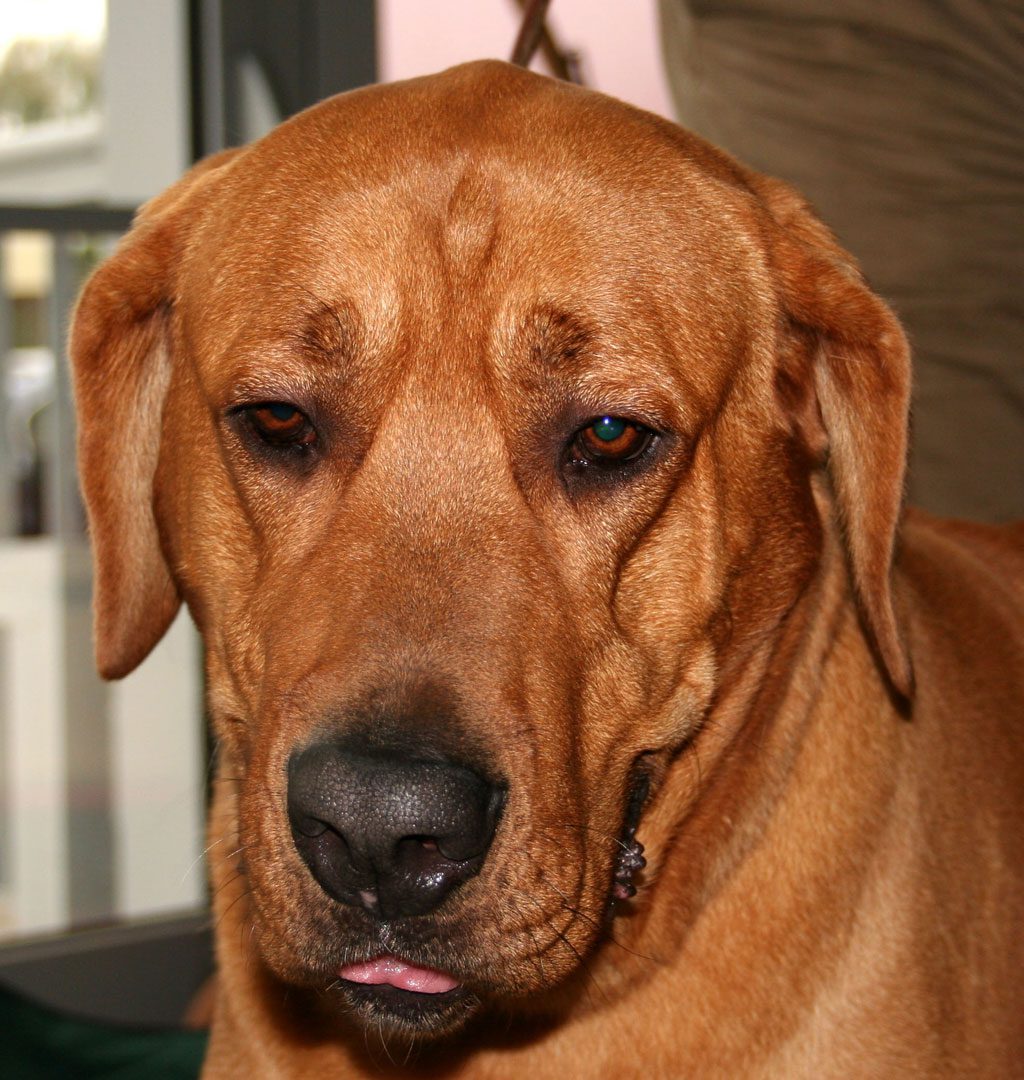
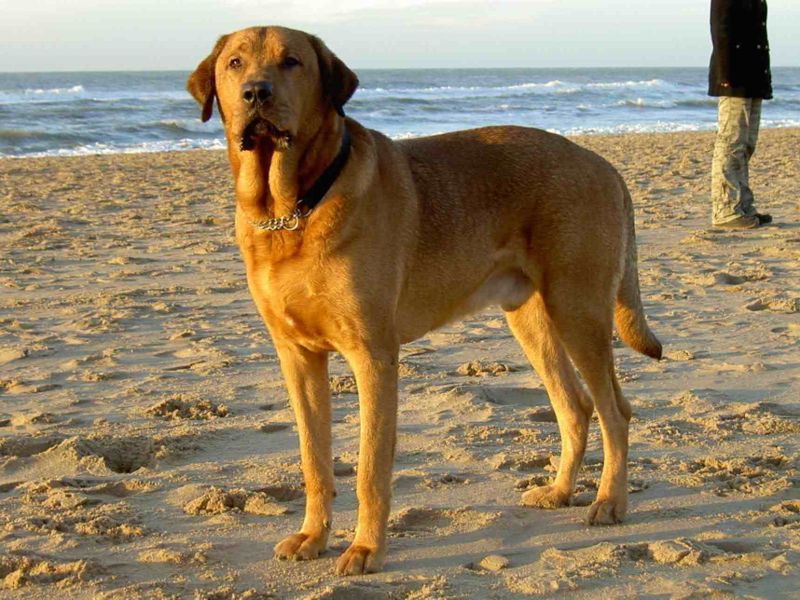
Large dog that can be inscribed in a rectangle; his walks are regular and energetic. The exterior appearance is dominated by a powerful front axle. The head is broad and solid. The neck is strong and has some folds (Spada). The chest is wide and well formed. At rest, his head is very low, leaning towards the ground. If the dog is attentive or excited, raises its head and tail rises above the horizontal. The eyes are round, not too big: color ranges from light amber to dark amber. His expression shows security. The ears, medium size inserted high, fall on the cheeks. At rest, the tail falls in the shape of a saber; on the other hand, when the dog is active it takes it higher, but without reaching the back.

  • Fur: short, with quite thick undercoat.
  • Color: leonado with black mask, golden red or black.
  • Size: males, 75 cm.; females, 70 cm..

Character and skills

The Broholmer he is a very kind and devoted dog. He is very receptive and just wants to make his owner happy. He is a watchful dog and will have a lump in his throat when there are strangers at the door. Act slowly and confidently. The Broholmer It is an excellent family dog รขโ‚ฌโ€นรขโ‚ฌโ€นthat, because of his kind mind, must be treated very carefully.

How much exercise does a Broholmer require?

Because the Broholmer is a big dog, it's important to keep it running. Hours of walking every day are not required, but the dog is always happy to go outside and exercise its muscles.

How to best activate a Broholmer besides walks?

The Broholmer it is a robust and strong dog that is very suitable for pulling. You can make your Broholmer successfully pull a cart or sled. Due to his kind mind, show a lot of affection with the people in their environment. There are examples of Broholmer that are rescue dogs, tracking dogs, shooting, etc.

Is there skin care or the like to pay attention to?

Skin care is minimal. A brush trip once a month is enough. In the molting season it can shed a lot of hair.

Tips for People Considering Buying a Broholmer

As an adult, the Broholmer have a medium level of activity, but the young dog has much more energy, that you; therefore, you must take into account its large size before deciding to purchase a Broholmer. We are talking about a puppy of 40 – 60 kg, who wants to explore the world. The dog must be respected for his great kindness and, therefore, develops best in homes where there is mutual respect between home and dog.

The Broholmer it is for you that …

You want a devoted dog, solid and calm

You want a family dog โ€‹โ€‹that you can feel comfortable with

You want a dog that has a good temperament

Images Broholmer

broholmer videos

Type and recognitions:

  • FCI CLASSIFICATION:
  • Group :
  • Section : . .

Federations:

FCI โ“˜, AKC (The AKC does not have an official breed standard; currently uses the FCI standard) โ“˜, UKC โ“˜

FCI breed standard Broholmer

FCIFCI - Broholmer
Broholmer

Alternative names:

1. Danish Broholmer, Danish Mastiff (English).
2. Broholmer (French).
3. Broholmer (German).
4. Mastiff dinamarquรชs (Portuguese).
5. Mastรญn Danรฉs (espaรฑol).

โ–ท The world of Pets: Dogs, cats, birds, reptiles, amphibians

Polish Tatra Sheepdog (Tatra Shepherd Dog)
Polonia FCI 252 - Sheepdogs

Pastor de Tatras

The Polish Tatra Sheepdog is intelligent, quiet and independent, loyal and protective.

Content

History

The breed of dog Polish Tatra Sheepdog, It originated in the region of Podhale, in the area of the Tatra mountains of Poland, hence its name.

The race lived the Polish mountains since thousands of years ago, but there is no exact date to record the start of the race. There are theories that suggest similar terraces that inhabited the mountains mixed together and from there arose the Polish Tatra Sheepdog.

Other historians, They suggest that it was born from dogs imported by Phoenician traders from the East and probably came to Europe from Africa.. They also argue, that the Phoenicians used these dogs as merchandise to exchange for valuable products, as glass, Silver and tissues.

As well, other historians recount that the Romans used in battles and also as guard of prisoners, and that the nobles used to use it as a companion and guard dog.

Although there is much controversy regarding the origin of Polish Tatra Sheepdog, breeders of race in Poland, they assure that it comes from a Mastiff-type dog.

Historically, the Polish Tatra Sheepdog has been very successful among pastors for various reasons, but one of them, and perhaps the most remarkable - in addition to its inteligencia-es the color of his cloak, that allowed shepherds to quickly identify it from a bear or a wolf, for example.

It also, owners used to trim the dog's hair and use it like wool.

While the grazing of sheep will be the most important task of this dog, Historically, It wasn't the only job I did.. As well, they used it as a personal guard dog, of factories and private in general property.

But despite all these wonders that describe the Polish Tatra Sheepdog, After the world wars was on the verge of extinction.

It was the Federation Cynologique Internationale (FCI) who prevented that you happen starting in the year 1960 an exhaustive breeding program in order to avoid the extinction of the breed.

Thanks to this action, the race was slowly stretching to far and wide throughout Europe, for the year 1981 the race was already present in Canada.

Although it is currently bred more frequently and remains relatively stable, the Polish Tatra Sheepdog still known as a rare breed, It is estimated that there are only 3000 copies of the race around the world. Most are in Poland, they have with 600 registered copies, the if United States with 300 registered copies, and then countries like France, for example in the year 2003 registered 150 births this race.

And in Poland, approximately 150 of those 600 specimens, are they still used for grazing.

Physical characteristics

The Polish Tatra Sheepdog, is a dog from large size, is very similar to the Newfoundland but completely white.

The males they have a height to the cross ranging from 65 to 70 cm. and females -slightly smaller- they have a height ranging from 60 to 65 cm.. The weight is proportional to its size, but it is usually located 39 to 59 kg.

In one head huge, with a wide barrel and slightly arched Vault but with well marked but not abrupt stop.

Their eyes are showy and medium-sized, they transmit - by the general-una smart look, lively, the shape of the eyes is gently almendrada and gives us the feeling of that would sleep, transmits tenderness.

The ears they have an average length and are triangular, fitted with long hair.

The tail, planted at mid-height has a length that reaches at least the hock.

The the mantle of the Pastor of Tatras, is of double layer. The subpelo, is dense and fluffy, and the outer layer is a fairly notorious long mane around the neck.

Character and skills

His instinct, through hundreds of years of ageing, was to protect livestock, reason why easily adopt a family as a herd if it were.

It is a companion dog and very protective of their own (whether families or herds). It is not an attack dog, but perceived threats to the distance and try to scare it through intimidation, using as I support his strong bark.

Although maintained similarities in appearance and temperament with at the Pyrenean Mountain Dog and with the Kuvasz (Hungarian). The Polish Tatra Sheepdog it is less distant than those two races mentioned, tends to be more attached to his offspring and is more attached to his own.

The Polish Tatra Sheepdog, is a quiet dog, very powerful but aware of his strength shows sensitivity to the weakest (for example, children).

Temperament is very balanced, It independent and autonomous but very easy to educate and always ready to learn.

With children is, especially, cheerful and friendly. It will take care of them like its young, displaying its strong protection instinct backed by its history..

Observations

In the mountainous regions of Poland, where this precious dog usually lived, shepherds used to place an iron or spiked collar to protect it from wolves. It was a way to avoid bites that wolves usually allocated to the neck or throat of its prey. In the news, they still used kind of necklaces.

In United States, the dog Polish Tatra Sheepdog it is considered a rare breed. And is not recognized by the American Kennel Club.

Images ยซTatra Shepherdยป

ยซTatra Shepherdยป Videos

Type and recognitions:

  • FCI CLASSIFICATION:
  • Group :
  • Section : . .

Federations:

  • – FCI – Group 1 Herding dogs, Section 1 Sheepdogs โ“˜
  • – UKC – Herding dogs โ“˜

FCI breed standard Polish Tatra Sheepdog (Tatra Shepherd Dog)

FCIFCI - Polish Tatra Sheepdog (Tatra Shepherd Dog)
Pastor

Alternative names:

1. Tatra Mountain Sheepdog, Owczarek Tatrzaล„ski, Owczarek, Podhalaล„ski, Polski Owczarek, Podhalan, Tatra (English).
2. Berger de Podhale (French).
3. Tatra Schรคferhund, Tatrahund, Tatra-Hirtenhund sowie Podhalaner (German).
4. Polski Owczarek Podhalaล„ski (Portuguese).
5. Pastor polaco de Podhale (espaรฑol).

โ–ท The world of Pets: Dogs, cats, birds, reptiles, amphibians

South Russian Ovcharka
Rusia FCI 326 . Sheepdogs

South Russian Ovcharka

The South Russian Ovcharka it is a dog that reacts fast, is strong, balanced and lively, with a tendency to be dominant and very active in defense.

Content

History

The ancestry of the South Russian Ovcharka It comes from the thick-haired bearded dogs that were brought along with fine wool sheep to the steppe regions of the South from Spain. This fact is mentioned in volume XXVI (1830 and., St. Petersburg) from the complete collection of the laws of the Russian Empire. These agile medium-sized dogs, modern-like Catalan Atura dog, they were able to corner the flocks of sheep and protect them. These dogs brought from Spain spontaneously mated with local shepherds and hunting dogs, who had been bred there like sheep since ancient times. Later, these crossbreeds spread throughout the southern regions of Russia and they were even known abroad, In Western countries or in Europe as "the Russian shepherd". In 1867, a gold medal was awarded to Russian Shepherd Dog at the World Fair in Paris for its beauty. But, the real selection started in 1898, in Crimea, en Askania – Nova, the demesne of the Russian baron of German origin Mr. Friedrich von Falz-Fein. He was the person who gave the race typical modern features and called her ยซSouth Russian Ovcharkaยซ.

Numerous breedings with local hounds had led to increased height and dominance of white color, they added some confirming lightness and a few chest flattens typical of fast running dogs, as well as a tucked-in belly and more pronounced angulations of the hindquarters. The latest typical characteristics of conformation and name ยซSouth Russian OvcharkaยปThey were finally assigned to the race in the period of the USSR, in the early decade of 1930, when the first official breed standard was approved. The dogs of South Russian Ovcharka they are easy to maintain and can easily adapt to various weather conditions due to their resistance, and they are always ready to protect their owners and their properties. These dogs are exceptionally loyal and dedicated to their owners., but at the same time it should not be expected that the South Russian Ovcharka be friendly to strangers.

Physical characteristics

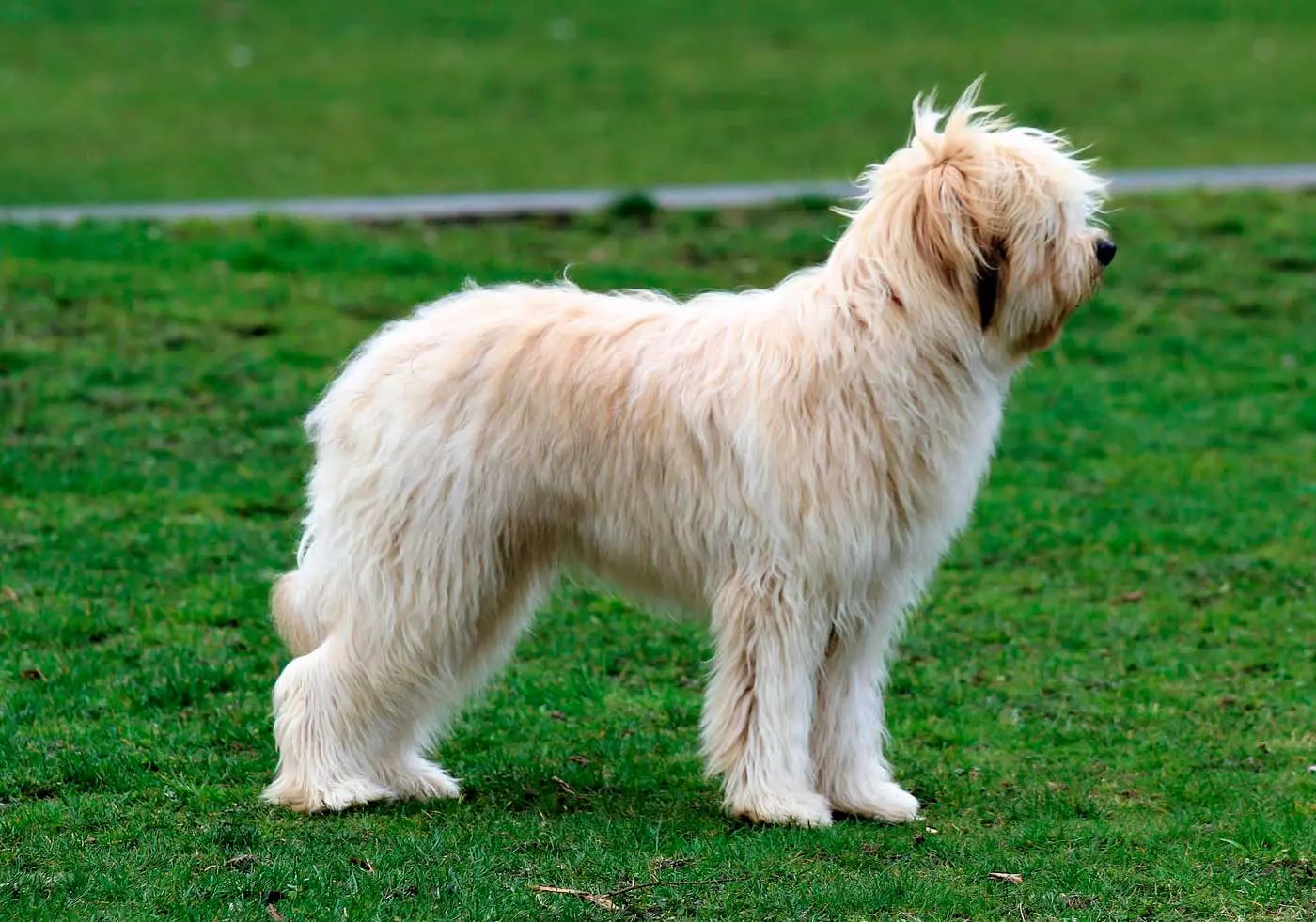
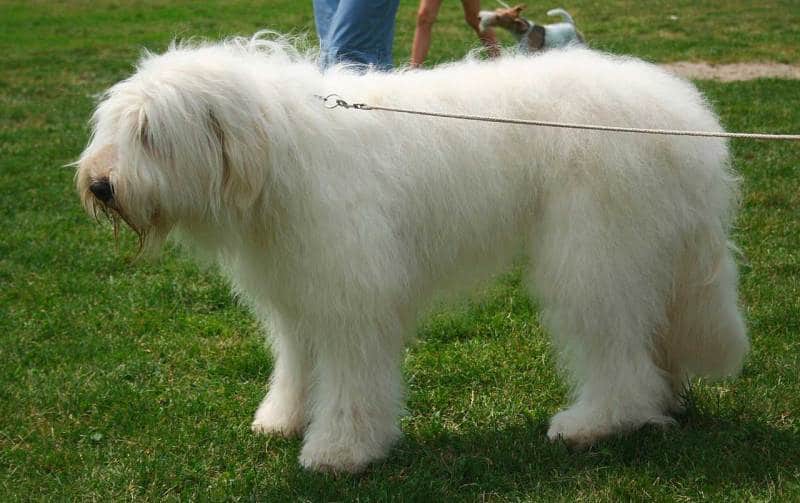
The South Russian Ovcharka it is a medium to large size dog, medium-bodied, not robust, with strong bones and dry, powerful muscles. Sexual dimorphism is well defined, males are more bulky compared to females and have larger heads. The top line is a characteristic feature of the breed; forms a slight curve over the spine. The body, the head, the limbs and tail are covered in thick fur, long and disheveled that gives a deceptive impression of clumsiness and heaviness, but actually the South Russian Ovcharka he is a fast and agile dog. The eyes, slightly almond-shaped, must be dark and horizontally arranged. The ears are relatively small, triangular and hanging.

  • Fur: the cloak is made up of long hair (10-15 cm.), often dense and slightly wavy, hard with abundant undercoat.
  • Color: uniform white allowed, White grey (Ash), white with gray traces, stained gray; fawn white robes are rarer, straw and completely gray.
  • Size: males, minimal 65 cm.; females, minimal 62 cm.. Individuals of 75 cm or more.

Observations and tips

Puppies are sometimes born light gray in color and turn white with the first shedding.

Character and skills

It is a dog that reacts fast, is strong, balanced and lively, with a tendency to be dominant and very active in defense. Very smart and responsive, is very balanced but easily takes action if your family's safety is threatened. It is very good with the owners, children included.

Images "South Russian Ovcharka"

Videos "South Russian Ovcharka"

Type and recognitions:

  • FCI CLASSIFICATION:
  • Group :
  • Section : . .

Federations:

  • – FCI – Group 1 Herding dogs, Section 1 Sheepdogs โ“˜
  • – UKC – Herding dogs โ“˜

FCI breed standard South Russian Ovcharka

FCIFCI - South Russian Ovcharka
Pastor

Alternative names:

1. Yuzhnorรบsskaya Ovcharka, Ukrainian Ovcharka, Ukrainian Shepherd Dog, Yuzhak, South Ukrainian Ovcharka, South Russian Shepherd Dog, South Russian Sheepdog (English).
2. berger de l’Ukraine (French).
3. Juschnorusskaja Owtscharka, Sรผdrussischer Schรคferhund, Ioujnorousskaรฏa Ovtcharka (German).
4. pastor-da-ucrรขnia (Portuguese).
5. Pastor Ucraniano, Pastor del sur de Rusia (espaรฑol).

Photos:

1 – South Russian Shepherd by https://www.pexels.com/es-es/foto/perro-2042862/
2 – South Russian Ovcharka during dogโ€™s show in Racibรณrz, Poland by user:chained / CC BY-SA
3 – South Russian Ovcharka during dogโ€™s show in Racibรณrz, Poland by user:chained / CC BY-SA
4 – South Russian Ovcharka during dogโ€™s show in Racibรณrz, Poland by user:chained / CC BY-SA
5 – Wikimania Images by Sailesh by Sailesh Patnaik / CC BY-SA

โ–ท The world of Pets: Dogs, cats, birds, reptiles, amphibians

Beauceron
Francia FCI 44 . Sheepdogs

Pastor de Beauce

The Beauceron It is one of the best job in the world dogs.

Content

History

The Beauceron, It is a breed of dog originating in the French Brie region; This race is quite old and well known in France.

True that the canine world, the history of this beautiful dog is not of the noveladas. The Beauceron, It was presented for the first time in a dogshow in the year 1897, but the race is actually quite old.

The specimens of Beauceron older, the first to set foot on our land, they had hard and coarse hair, but the characteristic that stood out the most was his marked aggressiveness.

With the passage of time, Select mediantes, breeders have succeeded in lowering the level of aggressiveness, but even so, it is not an easy dog โ€‹โ€‹to train, it retains certain ferocious traits.

At first the Beauceron It was used to hunt wild boar but later developed the ability to guide herds, being able to defend it from any attack by a predator; is a great guardian.

Physical characteristics

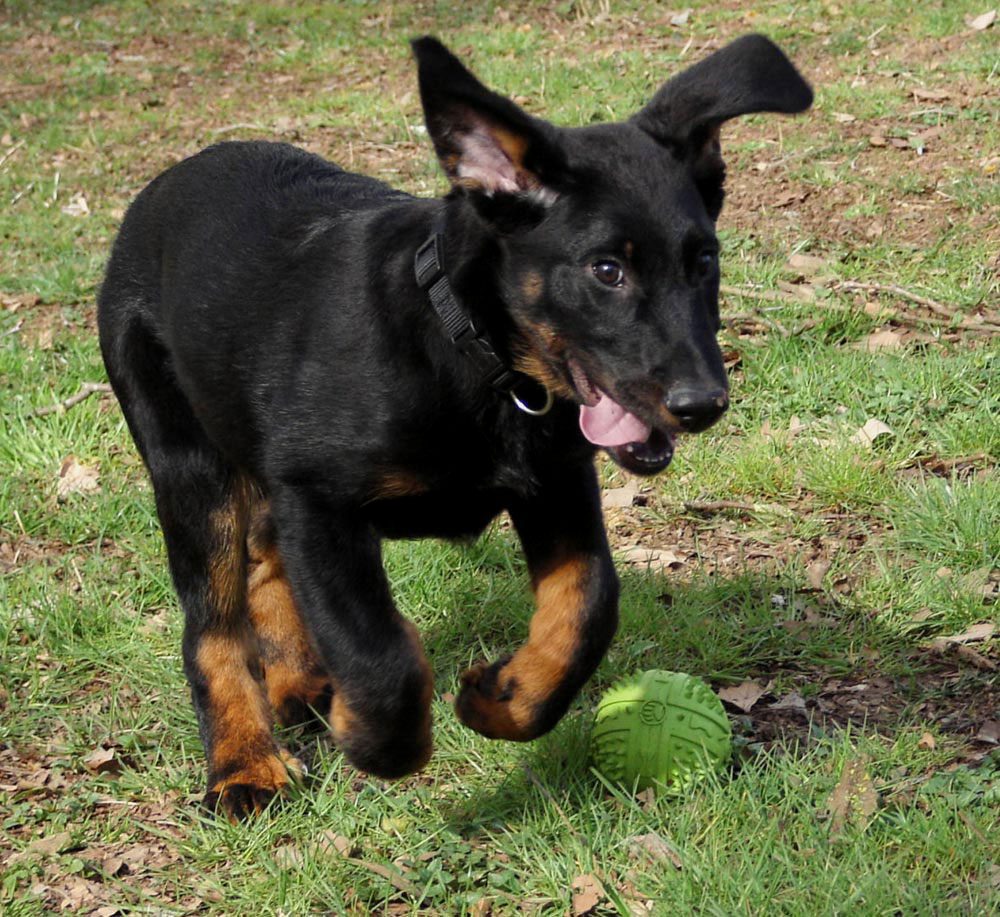
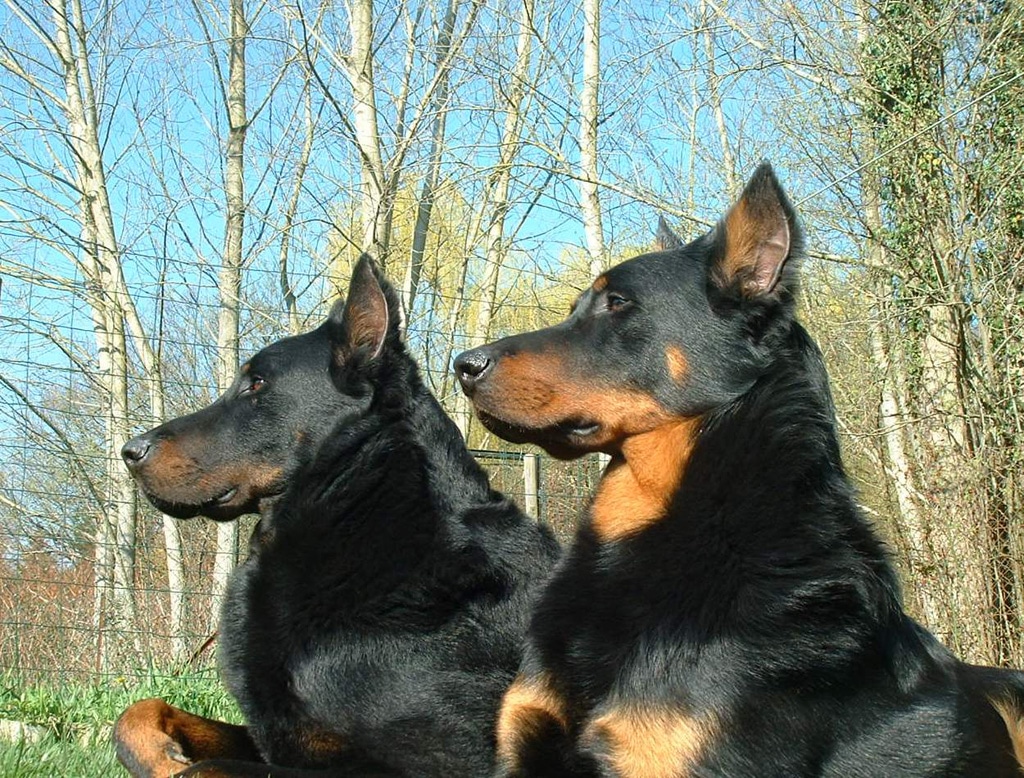
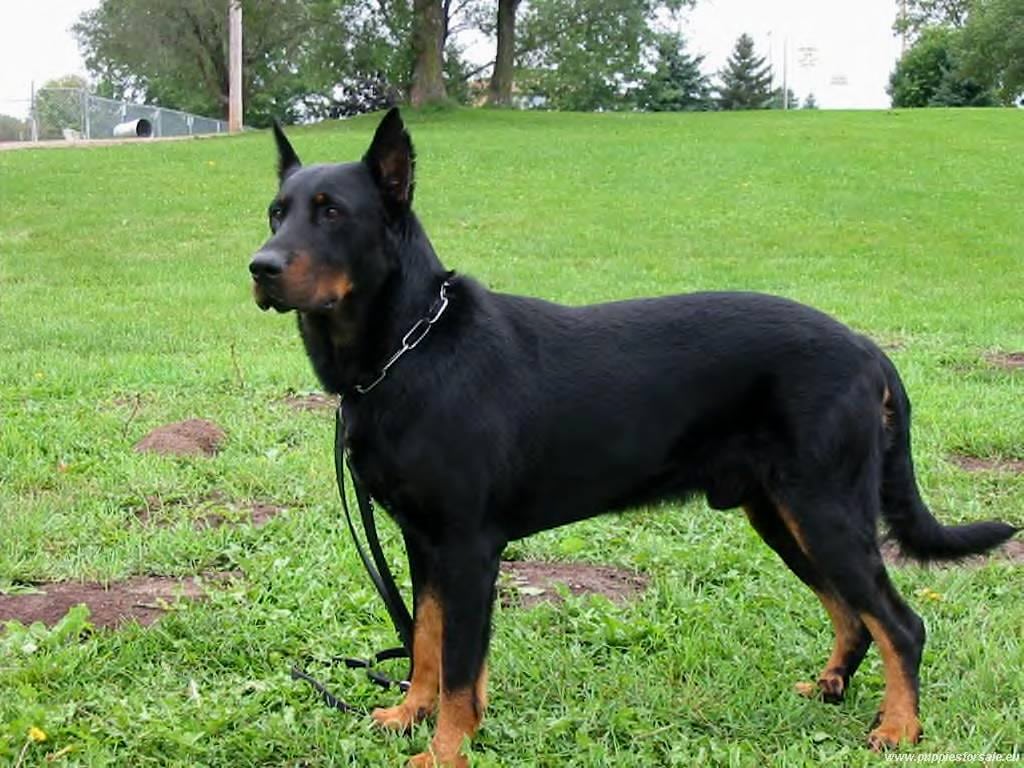
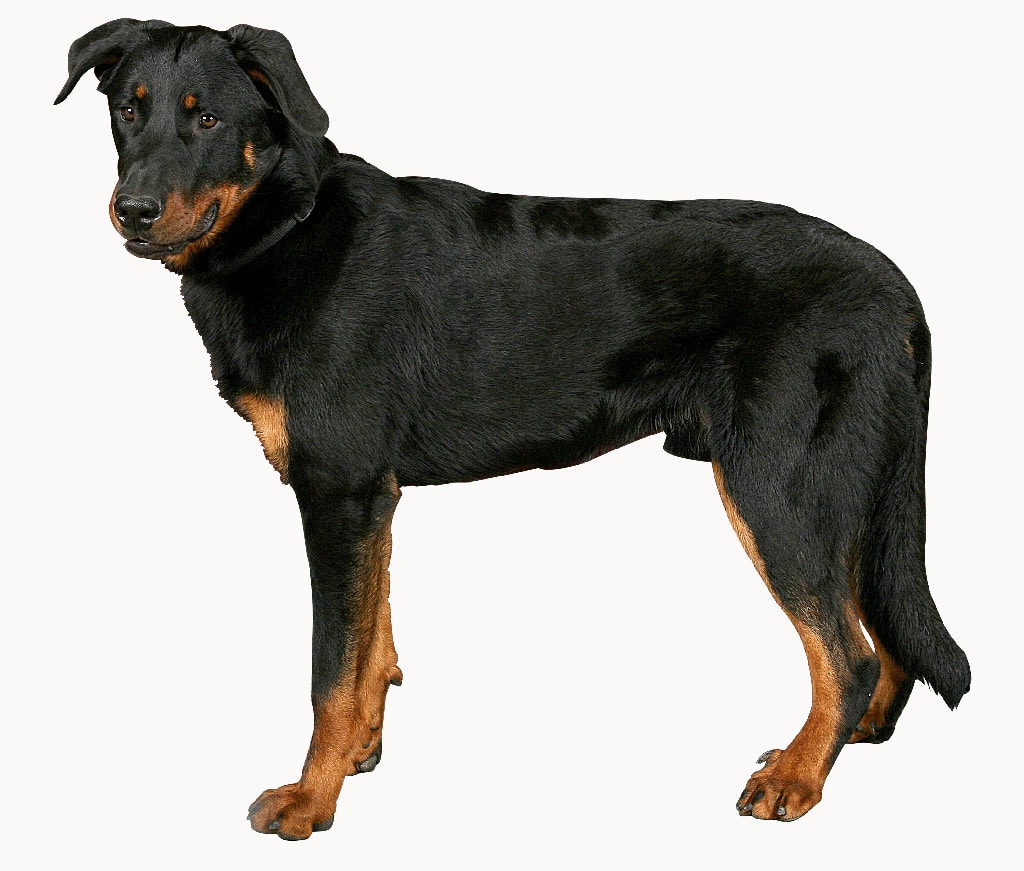
The Beauceron, often confused with the Dobermann due to the combination of color bronze and fire of his cloak. This coincides with the fact that the most widespread variety of the Beauceron.

Despite the similarity in the colors of the coat, it has many differences with him Dobermann, the Beauceron It is a dog with a more rustic and robust structure, the hair is also different and the tail does not cut.

Another differential characteristic, It is that the hind legs should stand double spur. This is one distinctive feature of the race.

The height males will of 65 to 70 cm and the females of 61 to 68 cm.. The approximate weight is between 40 and 50 kg. Females tend to be lighter.

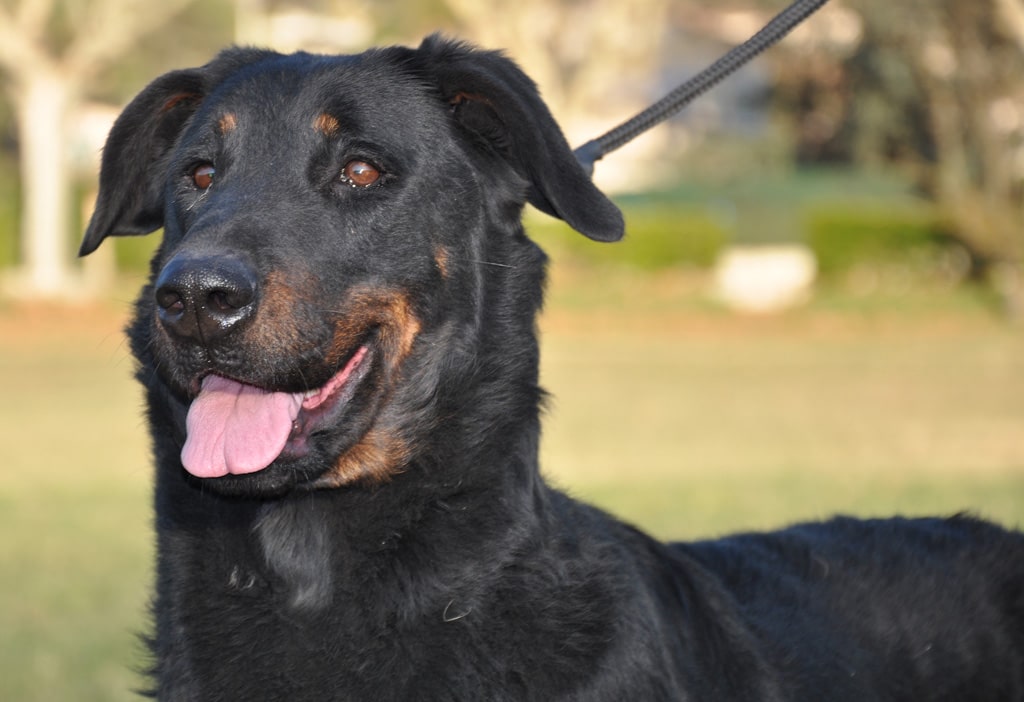
It has a aspect rustic, Wolf. Long head and flat, the muzzle and skull have the same length, dark eyes to harmonize with the fur, their ears hang naturally if they have not been cut.

They have the long neck, the elongated body and deep chest. Their limbs are strong.

The Beauceron has two layers of hair, the exterior is strong, thick, thick and smooth (Although they tend to present ripples around the neck). Internal hair layer is more dense and velvety, color grey mouse and must not be seen through the upper layer.

The colors supported are the black and tan and the Harlequin.

Character and skills

According to experts, It one of the best job in the world dogs, and all dogs of pastor is one who is more prepared for the defense.

Then, his character allows you to carry out defense, foster, useful but it is good to take into account that it is not a dog to be in the hands of inexperienced or too permissive.

He has a very independent character and a strong instinct for responsibility that allows him to make his own decisions. If he notices the slightest insecurity in his master, he will not take long and seconds to make the decisions himself..

With the strangers will be very suspicious, for this reason it is very important that the owner of the dog can control it because if it feels minimally intimidated it can be very biting.

If you receive adequate training and education will be an excellent companion.

Observations

Before purchasing a copy of Beauceron, We must take into account that it is not an easy dog. The person who decides to have a copy of this breed as a pet should be able to train him and raise him with full security.

The dog needs to know who is charge, It is also important to understand that all members of the family are heads of the herd, because if you can not pass it only obey one person whom he recognizes as head of the herd and the rest of the family will ignore or or them even try to impose.

Images of the "Beauce Pastor"

Videos del "Pastor de Beauce"

Characteristics "Beauceron"

Coexistence is important that you have with your new friend. Before considering the acquisition of a dog of the breed "Beauceron" you know certain factors. Not all breeds of dogs are apt to live in an apartment, you must take into account his character, their need for exercise, their interaction with other pets, their care and if you have small children, their level of tolerance towards them.

Adaptation โ“˜

3,0 of 5 stars (based on 1 review)

friendly dog โ€‹โ€‹โ“˜

2,0 of 5 stars (based on 1 review)

hair loss โ“˜

3,0 of 5 stars (based on 1 review)

Affection level โ“˜

4,0 of 5 stars (based on 1 review)

Need for exercise โ“˜

5,0 of 5 stars (based on 1 review)

Social need โ“˜

4,0 of 5 stars (based on 1 review)

Home โ“˜

2,0 of 5 stars (based on 1 review)

Toilet โ“˜

2,0 of 5 stars (based on 1 review)

Friendly with strangers โ“˜

2,0 of 5 stars (based on 1 review)

barking โ“˜

4,0 of 5 stars (based on 1 review)

Health โ“˜

2,0 of 5 stars (based on 1 review)

Territorial โ“˜

5,0 of 5 stars (based on 1 review)

Cat friendly โ“˜

2,0 of 5 stars (based on 1 review)

Intelligence โ“˜

5,0 of 5 stars (based on 1 review)

Versatility โ“˜

5,0 of 5 stars (based on 1 review)

Child friendly โ“˜

3,0 of 5 stars (based on 1 review)

Surveillance โ“˜

4,0 of 5 stars (based on 1 review)

joy โ“˜

5,0 of 5 stars (based on 1 review)

Type and recognitions:

  • FCI CLASSIFICATION:
  • Group :
  • Section : . .

Federations:

  • – FCI โ“˜
  • – AKC โ“˜
  • – โ€‹KC โ“˜
  • – UKC โ“˜

FCI breed standard Beauceron

FCIFCI - Beauceron
Pastor

Alternative names:

  • Alternative names: French Shorthaired Shepherd / Beauce Shepherd / Berger de Beauce / Bas Rouge (Red Stocking)

โ–ท The world of Pets: Dogs, cats, birds, reptiles, amphibians

Old English Sheepdog (Bobtail)
Gran Bretaรฑaa FCI 16 . Sheepdogs

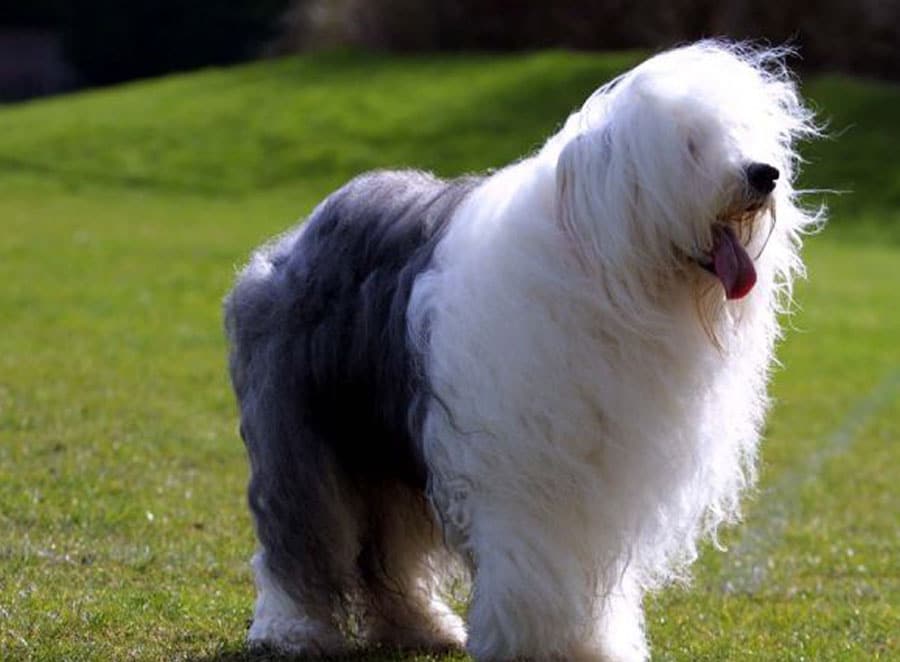
The Old English Sheepdog It is possibly the breed that needs the most care regarding its hair.

Antiguo Perro Pastor Inglรฉs

Characteristics "Old English Sheepdog (Bobtail)"

Coexistence is important that you have with your new friend. Before considering the acquisition of a dog of the breed "Old English Sheepdog (Bobtail)" you know certain factors. Not all breeds of dogs are apt to live in an apartment, you must take into account his character, their need for exercise, their interaction with other pets, their care and if you have small children, their level of tolerance towards them.

Content

Adaptation โ“˜

3,0 of 5 stars (based on 1 review)

friendly dog โ€‹โ€‹โ“˜

3,0 of 5 stars (based on 1 review)

hair loss โ“˜

5,0 of 5 stars (based on 1 review)

Affection level โ“˜

5,0 of 5 stars (based on 1 review)

Need for exercise โ“˜

3,0 of 5 stars (based on 1 review)

Social need โ“˜

5,0 of 5 stars (based on 1 review)

Home โ“˜

1,0 of 5 stars (based on 1 review)

Toilet โ“˜

5,0 of 5 stars (based on 1 review)

Friendly with strangers โ“˜

2,0 of 5 stars (based on 1 review)

barking โ“˜

4,0 of 5 stars (based on 1 review)

Health โ“˜

3,0 of 5 stars (based on 1 review)

Territorial โ“˜

5,0 of 5 stars (based on 1 review)

Cat friendly โ“˜

3,0 of 5 stars (based on 1 review)

Intelligence โ“˜

4,0 of 5 stars (based on 1 review)

Versatility โ“˜

3,0 of 5 stars (based on 1 review)

Child friendly โ“˜

5,0 of 5 stars (based on 1 review)

Surveillance โ“˜

3,0 of 5 stars (based on 1 review)

joy โ“˜

5,0 of 5 stars (based on 1 review)

History

The Old English Sheepdog or Bobtail. It is a breed of dog guard or shepherds dogs family.

The race was created in England, more specifically, in the west, in the mid-19th century, to control the sheep and beef cattle in the rural area. While the race is born and develops in England, there is more than one theory that explains its origin.

Some authors raised the breed descended from dogs brought from Central Europe by the Romans, that over time they were crossing with different English races, including the English mastiff giving rise to Old English Sheepdog.

Other scholars of the race stress that it is a very old dog and possibly his most significant ancestor is the famous Asian Shepherd What, It has helped the existence of the Berger de Brie in France, of the Bergamasco Shepherd in Italy, and of the Komondor in Hungary.

According to this second current, the first copies of Bobtail they were selected for the first time in an era marked by the savage rivalry between England and France, the Of the hundred years ' war (1337-1453).

Y, finally, they pose in their ancestors, appears with total security the Berger de Brie.

In addition to in England this dog took many acceptance and dissemination among the Spanish shepherds in the 19th and 20th centuries by their excellent conditions and skills for the care of livestock.

Physical characteristics

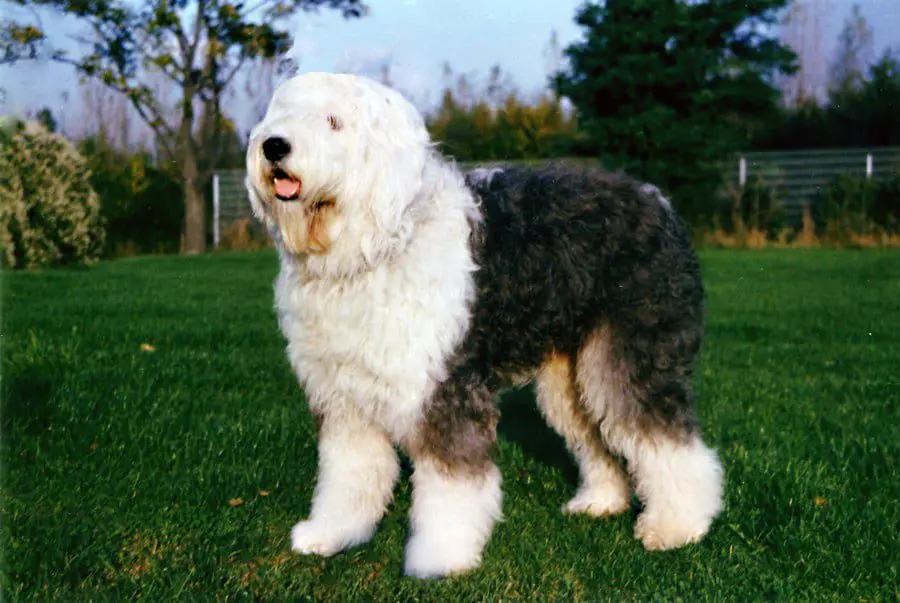
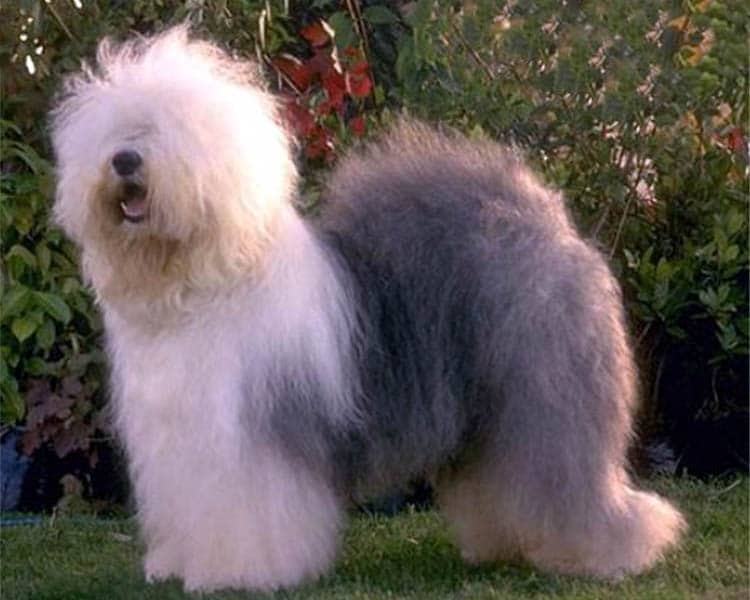
It is a dog great size and scale, with a height around the 63 cm.. and a weight between the 30 and 40 kg.

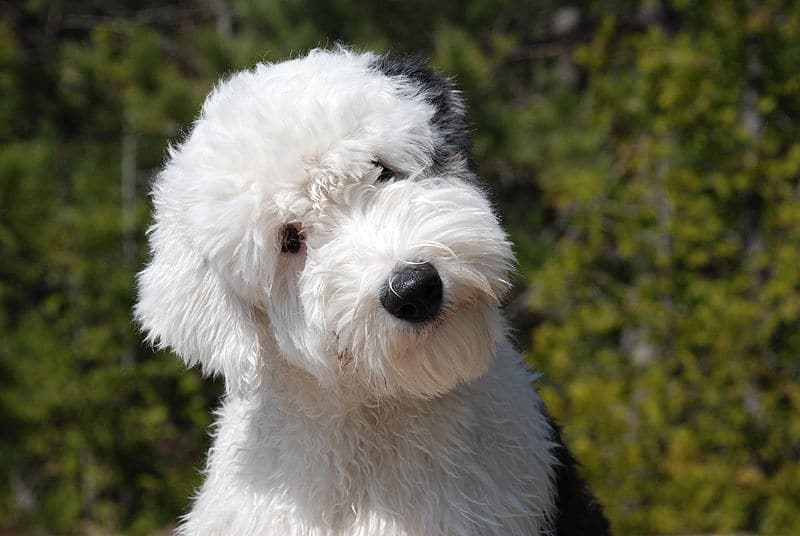
Small and floppy ears, coated with hair, strong and elongated neck, abundant hair desgreรฑado and rough touch, with a range of colors that can range from grey, grey, Blue to blue merle, with or without white markings on the head, bottom of the stomach or forelimbs.

The tail is often be amputated, or are there simply copies that are already born without it, hence its name Bobtail which in means ยซcut tailยซ, The search for this characteristic trait is believed to have been due to the desire of English breeders not to pay taxes., already before the dogs with tails were thought to be luxury goods. This dog has a very characteristic bark in the canine world, serious and pervasive.

Did you know??

There is no upper limit to the height of the Old English Sheepdog. Females usually measure 53 cm , the males 56 cm . That's because the sheep varied in size, so the dogs used to herd them they also varied in size.

Character and skills

Video "Old English Sheepdog (Bobtail)"

The Bobtail, tolerant character, It is an excellent dog for living together with children and other pets. They are able to easily adapt themselves to different conditions.. Faithful and intelligent It adapts to life in an apartment if necessary, always with the company of its owner. It is important to train it well from small, It is to learn fast and responsive dog.

The Old English Sheepdog he is a very good worker and is able to carry out orders, but it won't if the instruction if they believe that they are stronger minded than the human herd members.

They have a strong herding instinct and can treat the flock to shock people, never to bites. It is necessary to learn from an early age that humans are not part of his flock.
This dog is possibly the more care you need for your hair, that should be dealt with by canine professionals. As well, but to adapt to living in small spaces, you need a daily dose of exercise in the open air, because otherwise it could become destructive with the furniture in the house. Due to its thick coat is not a recommended race to live in warm places.

Health

The Bobtail have a predisposition to certain skin conditions:

– atopy ;
– demodecy;
– Furunculosis bacteriana (in the legs).

Life expectancy

13 years

Grooming

The maintenance of "Old English Sheepdog (Bobtail)" it is tedious due to its fur. Grooming is recommended every 4 or 6 weeks, otherwise shearing is inevitable.

Images ยซOld English Sheepdogยป

โ€œOld English Sheepdogโ€ Videos

Home Again Chip saves Texas Old English Sheepdog

Type and recognitions:

  • FCI CLASSIFICATION:Group 1 –> Pastor and Boyeros dogs (except Swiss Cattle Dogs). – Section 1 –> Pastor dogs. Without working trial.
  • FCI 16
  • Federations: FCI โ“˜, AKC โ“˜, ANKC โ“˜, CKC โ“˜, โ€‹KC โ“˜, NZKC โ“˜, UKC โ“˜

FCI breed standard "Old English Sheepdog (Bobtail)"

Origin:
United Kingdom

Date of publication of the valid original standard:
13.10.2010

Use:

Shepherd dog.


General appearance:

It is a strong dog, symmetric, square, very harmonious construction and robust constitution. Absolutely no weakness in the limbs. Completely covered in abundant hair. He is a muscular dog, solid and with a very intelligent expression. Natural shapes should not be artificially modified using scissors or shearing machines.. Of great vitality, presenting a slightly ascending upper line and, seen from above, a pear-shaped body. Has a typical sway when walking with an ambling gait or with a normal gait. His barking has a characteristic timbre.


Behavior / temperament:

It is a docile dog with a good character. Bold, fell, and trustworthy. Not in any way fearful or aggressive if not provoked.

Head:


Cranial region:
  • Skull : Bulky and square in shape. The supra-orbital region is well arched.
  • Depression links (Stop) :  Well defined.

facial region:

  • Truffle : Large and black. The nostrils are wide.
  • Snout :  Strong, square and truncated,
  • Jaws / teeth : Strong teeth, large and well placed. Scissor bite : The jaws are strong and articulated in a perfect scissor shape., regular and complete, that is to say, that the upper incisors cover the lower ones in close contact and are set square in relation to the jaws. Pincer bite is tolerated but undesirable.
  • Eyes :  Separate. Dark-colored eyes or gazey eyes. The two blue eyes are admitted. Light eyes are a flaw. Pigmented eye rim will be preferred.
  • Ears :  Small and stuck to the sides of the head,

Neck:

Good length, strong and gracefully arched.

Body:

Rather short and compact.

  • Pork loin : Very robust, wide and slightly arched.
  • Breast : Well lowered and wide. The ribs are well sprung.

Tail:

Previouslycustom wasamputate the tail or naturally borntailless.
  • amputee: Usually completely amputated.
  • Without amputating : natural size. With good fringes and abundant hard-textured hair.


Tips

Former members
  • Shoulder : The scapulae should be well oblique, more  closer in the area of รขโ‚ฌโ€นรขโ‚ฌโ€นthe cross than in the shoulders. Loaded shoulders are undesirable.
  • Elbows : Tight to the chest.
  • Forearm: Perfectly straight forelimbs ; his skeleton is very strong, holding the body so that it is not close to the ground.
  • Previous feet: They must not be turned either inwards or outwards. They are small and tight. Well arched fingers, thick and solid ear pads.
Former members
  • General appearance: The posterior third is well covered with hairs, round and muscular.
  • Knee : Well angled, but without exaggeration
  • ;Leg : Long and well developed.
  • Hock : Well descended.
  • Metatarsus: Seen from behind, they must be perfectly straight.
  • Rear foot: They must not be turned either inwards or outwards. They are small and tight. Well arched fingers, thick and solid ear pads.
  • Movement:

    When walking, the rear one sways like a bear. At a trot, the extension is easy and the drive given by the rear is powerful. The members move in planes parallel to the axis of the body. Very elastic canter. In slow movements, certain dogs may have a tendency to walk at a walking pace. In motion, the dog may adopt a naturally lower head stature.

    Mantle

    • Fur : Abundant, very rough in texture ;  it is not smooth, but hirsute and free of loops. The undercoat is waterproof. The head and skull are well covered with hair. Ears are moderately covered. Neck well covered, as well as the anterior limbs, especially their surroundings. Hair is more abundant in the posterior third than in the rest of the body. Quality should be given more importance, to hair texture than to length andabundance.
    • Color : Any shade of gray, grayish or blue. The body and posterior third are uniform in color, with or without small white spots on the extremities of the limbs (socks). White spots in solid color areas should be rejected.  The head, the neck, forelimbs and lower belly should be white, with or no stains. Any brown hue is undesirable.


    Size and weight:

    Height to the cross

    • Males:    61 cm ,
    • females:   56  cm .

    The type and balance of shapes are of utmost importance and should not, in no case, be slaughtered for the carving.


    Fouls:

    Any deviation from the aforementioned criteria is considered a fault and its severity is considered to the degree of deviation from the standard and its consequences on the health and well-being of the dog and the dog's ability to perform its traditional task..

    disqualifying fouls
    • Aggressive or fearful dog
    • Any dog โ€‹โ€‹showing clear signs of physical or behavioral abnormalities must be disqualified..


    N.B.:

    Males should have two normal-appearing testicles fully descended into the scrotum..

    The latest changes are in bold.

    Source: F.C.I - International Cynological Federation

    Alternative names:

    1. Shepherd’s Dog, bob-tailed sheep-dog, Bob-tail, Bobtail (English).
    2. Chien de berger anglais ancestral (French).
    3. Stummelschwanz, Schรคferhund, Altenglischer (German).
    4. Old english sheepdog, Ovelheiro-inglรชs (Portuguese).
    5. Antiguo pastor inglรฉs, Bobtail (espaรฑol).

    โ–ท The world of Pets: Dogs, cats, birds, reptiles, amphibians

    Bouvier des Flandres
    Bรฉlgica Francia FCI 191 - Cattledogs (except Swiss Cattle Dogs)

    Boyero de Flandes

    The strong herding instinct of the Bouvier des Flandres manifests itself with its own family

    Content

    History

    Bouvier des Flandres It is a breed of dog of Flanders, It is one of the three regions of Belgium, Wallonia and the Brussels region (Capital of Belgium and Flanders). It is known as Bouvier des Flandres and Toucheur de Boeuf en francรฉs, Vlaamse Koehond in flamenco and Vuilbaard in German.

    There are many disputes as to its origin. For the French, This Boyero comes from the crossing of the Griffon with the old Pastor of Beauce. Belgians claim that it descends from the Boyero Roeselare, certainly it intervened in the construction of the race after extinction after the second world war. The FCI has attributed both origins to this dog, the region of Flanders is part French and part Belgian.

    Physical characteristics

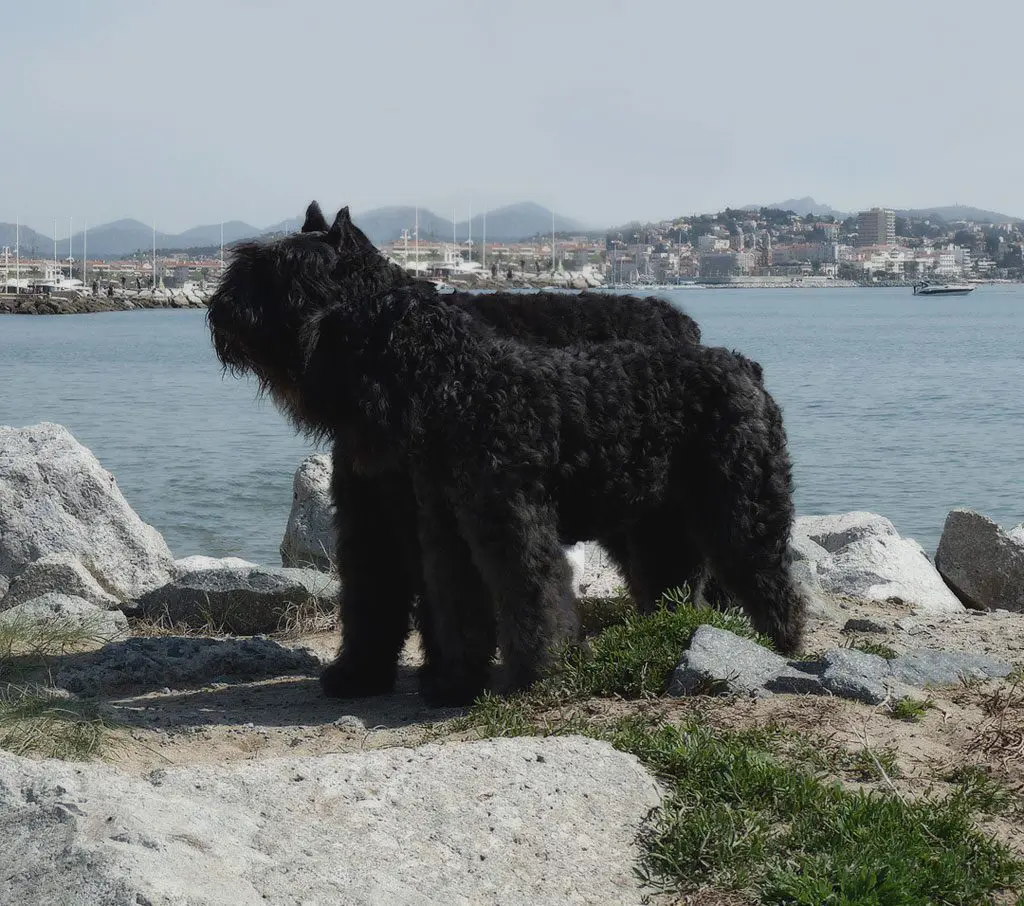
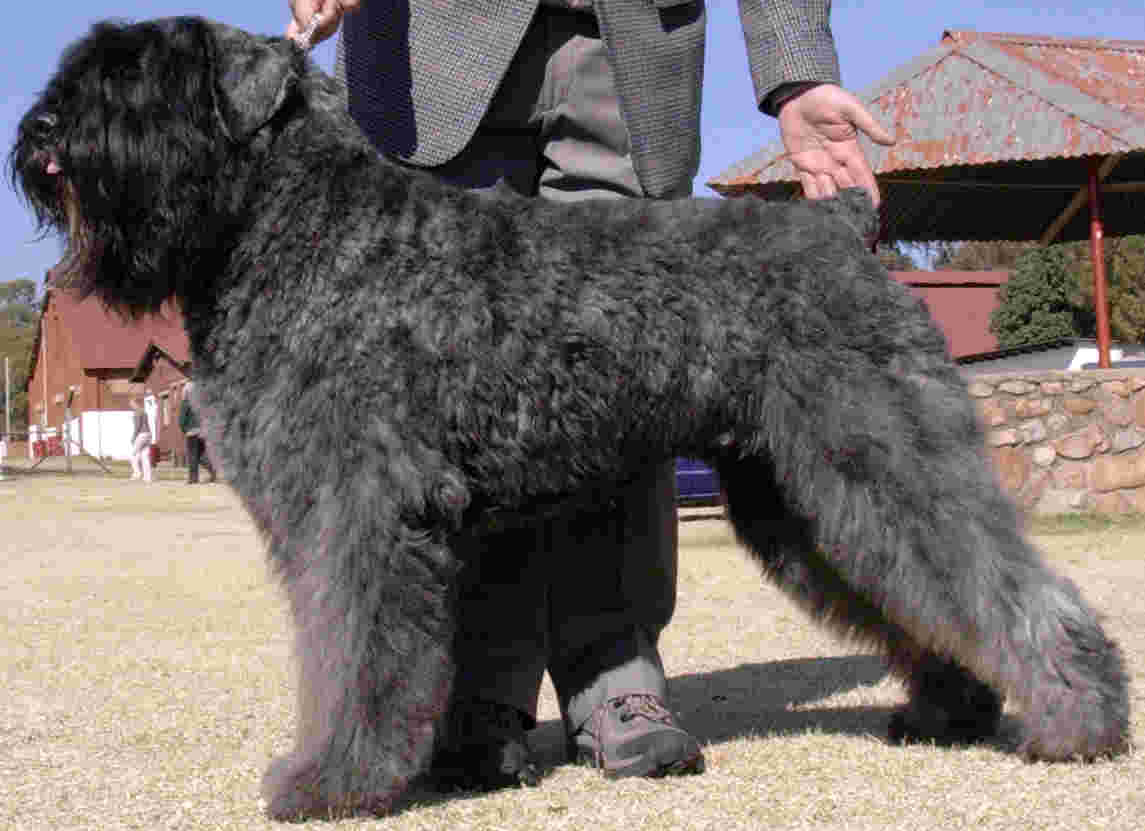
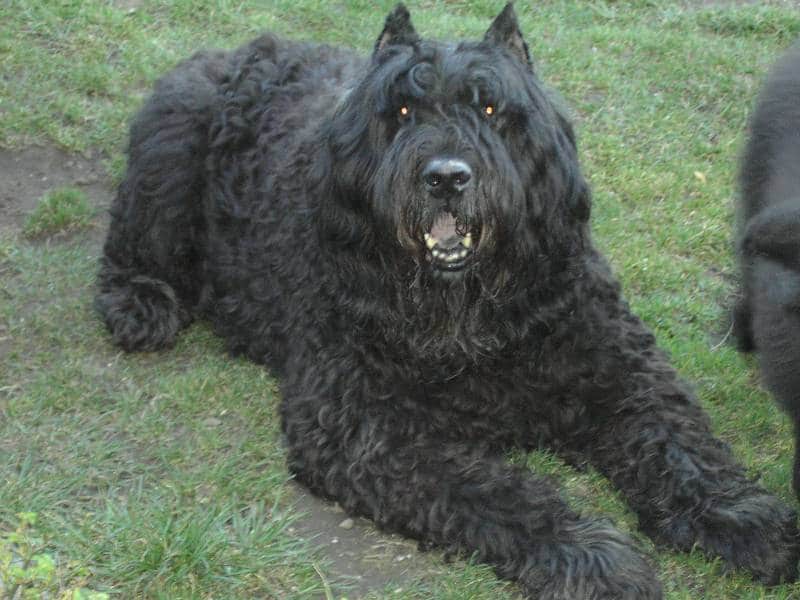
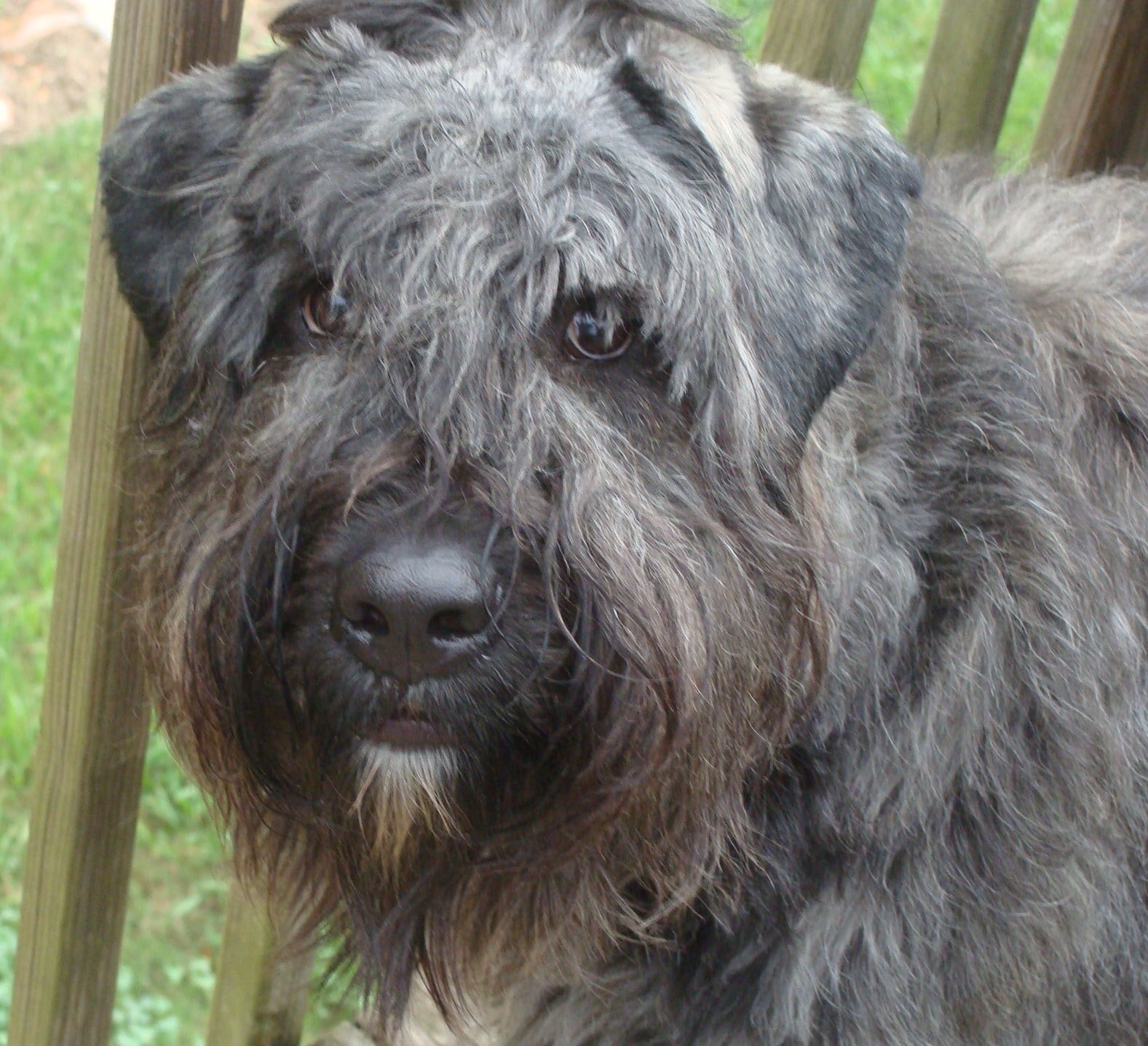
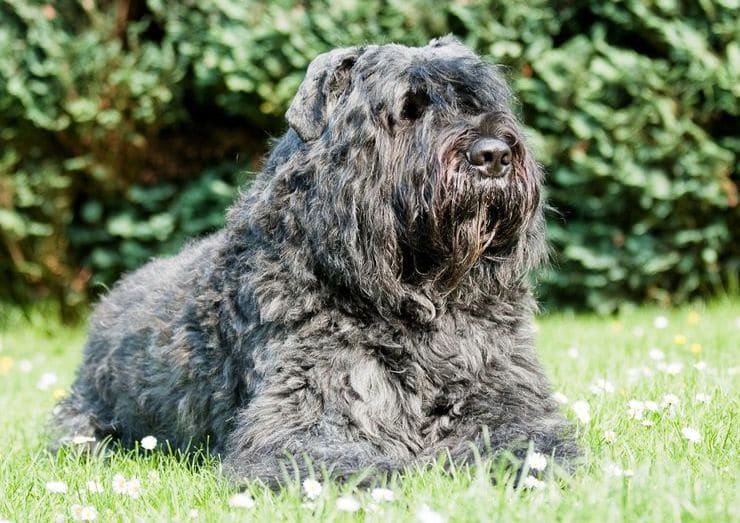
    Traditionally used as cattle herding dog and a guard dog, the Sennenhund Flanders, It is a dog of large size and with the body covered with an abundant layer of long hair. There are several colorations, ranging from light brown (leonado) into the black, passing through several shades of gray, "salt and pepper" and chocolate. The validity in different colors of fur contest is determined by the different associations canรณfilas.

    Boyero Flanders is a robust dog, powerful appearance and large size but without showing clumsiness or heaviness. His most notable feature is his impressive head, accentuated by a bushy beard and moustache. The ears and tail times are cut, Although this practice is falling into disuse. The weight can vary between 36 and 45 kg, the height to cross between 60 and 69 centimeters.

    Bushy fur has a underlying layer and can be anything from a up black Griffon, requiring constant grooming and, in the case of dogs in competition, cut each 6 u 8 weeks.

    Character and skills

    Boyero Flanders has a stable temperament; never shy but never aggressive. It is a worthy dog, calm, rational and, wisely, bold. As dog and surveillance, It may be suspicious and protective with their family or herd.

    His strong herding instinct is manifested with his own family, especially if children are included.

    It is an intelligent dog, He learns fast, although it is also easily bored so it requires constant stimulation and obedience training is essential.

    It is a relatively healthy breed and little predisposed to specific ailments. Like all large breeds it is susceptible to Dysplasia of hip and gastric torsion, and sometimes there may be problems of cataract.

    Characteristics "Bouvier des Flandres"

    Coexistence is important that you have with your new friend. Before considering the acquisition of a dog of the breed "Bouvier des Flandres" you know certain factors. Not all breeds of dogs are apt to live in an apartment, you must take into account his character, their need for exercise, their interaction with other pets, their care and if you have small children, their level of tolerance towards them.

    Adaptation โ“˜

    5,0 of 5 stars (based on 1 review)

    friendly dog โ€‹โ€‹โ“˜

    3,0 of 5 stars (based on 1 review)

    hair loss โ“˜

    3,0 of 5 stars (based on 1 review)

    Affection level โ“˜

    5,0 of 5 stars (based on 1 review)

    Need for exercise โ“˜

    3,0 of 5 stars (based on 1 review)

    Social need โ“˜

    3,0 of 5 stars (based on 1 review)

    Home โ“˜

    1,0 of 5 stars (based on 1 review)

    Toilet โ“˜

    5,0 of 5 stars (based on 1 review)

    Friendly with strangers โ“˜

    2,0 of 5 stars (based on 1 review)

    barking โ“˜

    5,0 of 5 stars (based on 1 review)

    Health โ“˜

    3,0 of 5 stars (based on 1 review)

    Territorial โ“˜

    5,0 of 5 stars (based on 1 review)

    Cat friendly โ“˜

    3,0 of 5 stars (based on 1 review)

    Intelligence โ“˜

    5,0 of 5 stars (based on 1 review)

    Versatility โ“˜

    5,0 of 5 stars (based on 1 review)

    Child friendly โ“˜

    5,0 of 5 stars (based on 1 review)

    Surveillance โ“˜

    3,0 of 5 stars (based on 1 review)

    joy โ“˜

    5,0 of 5 stars (based on 1 review)

    Pictures Bouvier des Flandres

    Videos Bouvier des Flanders

    Type and recognitions:

    • FCI CLASSIFICATION:
    • Group :
    • Section : . .

    Federations:

    FCI โ“˜, AKC โ“˜, ANKC โ“˜, CKC โ“˜, โ€‹KC โ“˜, NZKC โ“˜, UKC โ“˜

    FCI breed standard Bouvier des Flandres

    FCIFCI - Bouvier des Flandres
    Cattle

    Alternative names:

    1. Flanders Cattle Dog, Vlaamse Koehond (English).
    2. bouvier des Flandres (French).
    3. Bouvier des Flandres (German).
    4. Boiadeiro das Flandres (Portuguese).
    5. Boyero de Flandes (espaรฑol).